



Your day does not need a dramatic workout before coffee. It needs your spine to stop complaining.
Ten minute morning yoga flows do that job well. They wake up stiff joints, calm the breath, and give you a little bit of structure before emails, school runs, meetings, or whatever else starts tugging at your attention.
The trick is not intensity. It’s sequence. A few slow cat-cows, a hip opener, a forward fold, one standing balance, maybe a short twist — enough to tell the body it’s time to move without throwing it into a sprint before it’s ready.
I like short morning yoga flows because they respect real life. Some mornings you’ve got time for a full practice and a proper warm-up. Most mornings you’ve got a half-open eye, a mat, and about ten honest minutes. That still counts.
1. Five-Breath Morning Yoga Flow
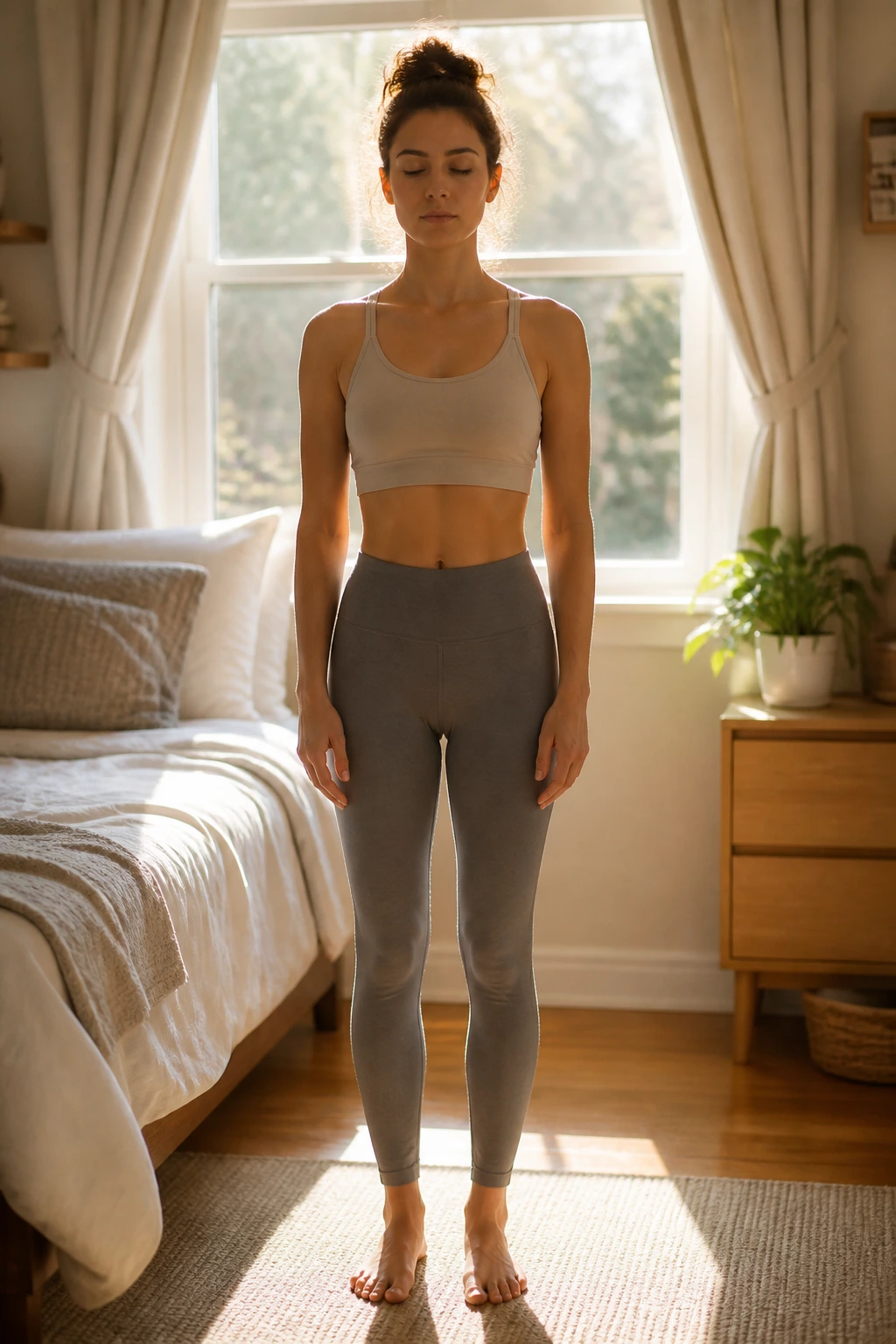
Five breaths can change the whole shape of a morning. Start standing, feet under your hips, and keep the pace slow enough that your exhale finishes before the next shape begins. That sounds almost too easy. It isn’t.
Why This Flow Works
This is the one I reach for when I feel stiff, sleepy, and mentally clogged. Standing first helps you wake up the feet, calves, and ribs without dropping straight to the floor, which can feel a little abrupt if you’re not fully awake yet.
The whole thing is built around long, even breaths. That matters more than a perfect pose. A slow inhale lifts the rib cage, a slow exhale lets the shoulders stop hovering near your ears, and by the third or fourth round you usually notice that your neck has stopped holding its breath too.
- Stand in Mountain Pose for 5 breaths.
- Reach up, side bend right for 3 breaths, then left for 3 breaths.
- Fold forward with soft knees for 5 breaths.
- Half lift with hands on shins or blocks for 5 breaths.
- Roll up slowly, one vertebra at a time, and finish with hands at your chest.
Tip: keep your knees bent in the fold. A deep forward fold before your body is warm can feel less like stretch and more like negotiation.
2. Cat-Cow and Down Dog Spine Reset
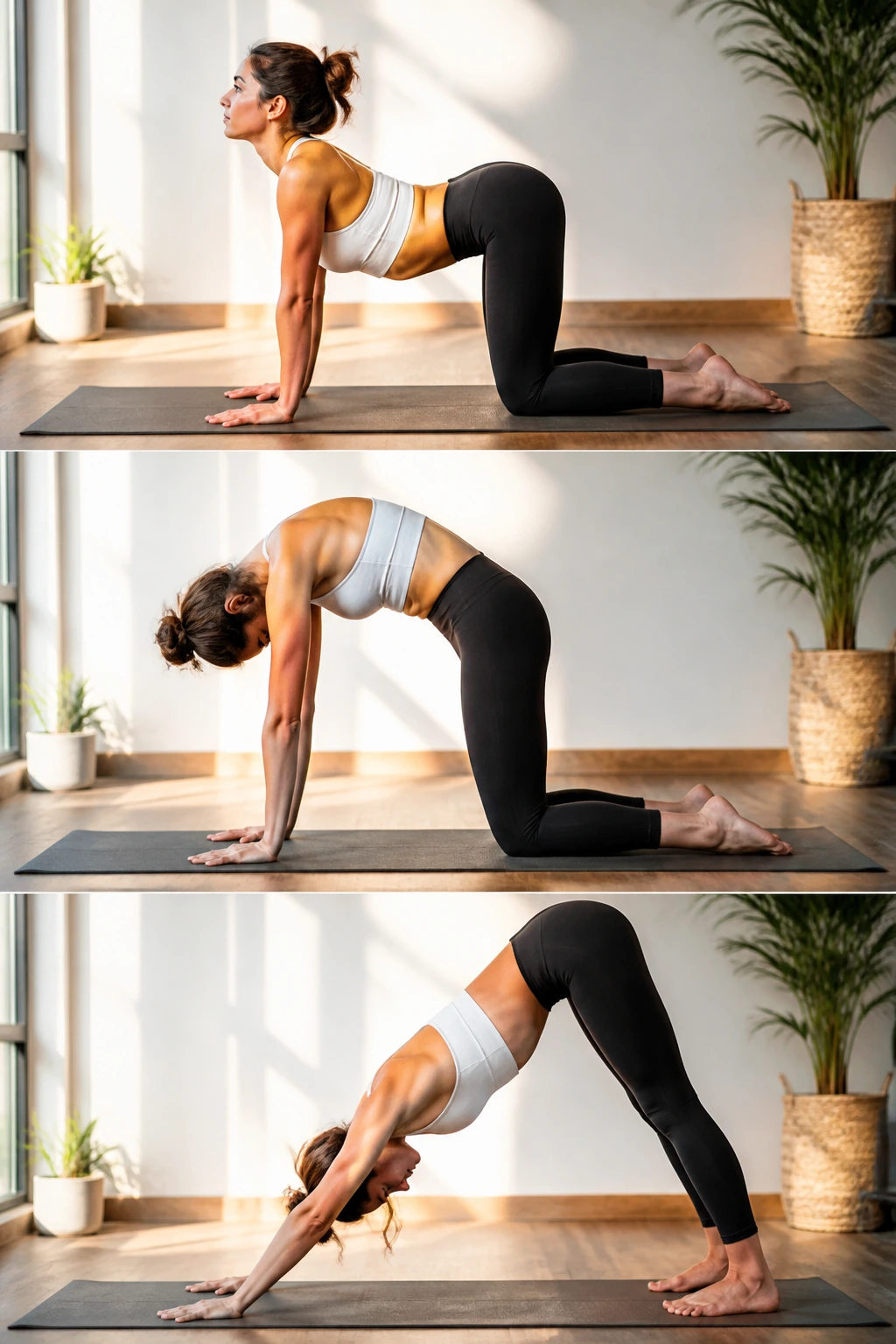
Why does your back feel twice its age before breakfast? Usually because you’ve spent hours sleeping in one shape, then stood up and expected your spine to behave. Cat-cow fixes that better than brute force ever will.
This flow is all about the back line of the body. On hands and knees, the spine moves in two simple directions, then down dog gives the hamstrings and calves a chance to wake up too. No drama. Just motion.
How to Use It
Start on all fours with your hands under your shoulders and your knees under your hips. Inhale into cow pose, letting the chest widen and the tail lift. Exhale into cat pose, pressing the floor away and rounding the back.
After six to eight rounds, tuck your toes and lift into downward-facing dog for 3 to 5 slow breaths. Pedal the heels. Bend one knee, then the other. If your wrists hate this shape, come onto forearms or place your hands on blocks.
Then thread one arm under the other for a gentle twist on each side. That tiny rotation feels good in a way people often underestimate. It’s a small thing. It helps more than it looks like it should.
3. Standing Forward Fold and Half-Lift Wake-Up
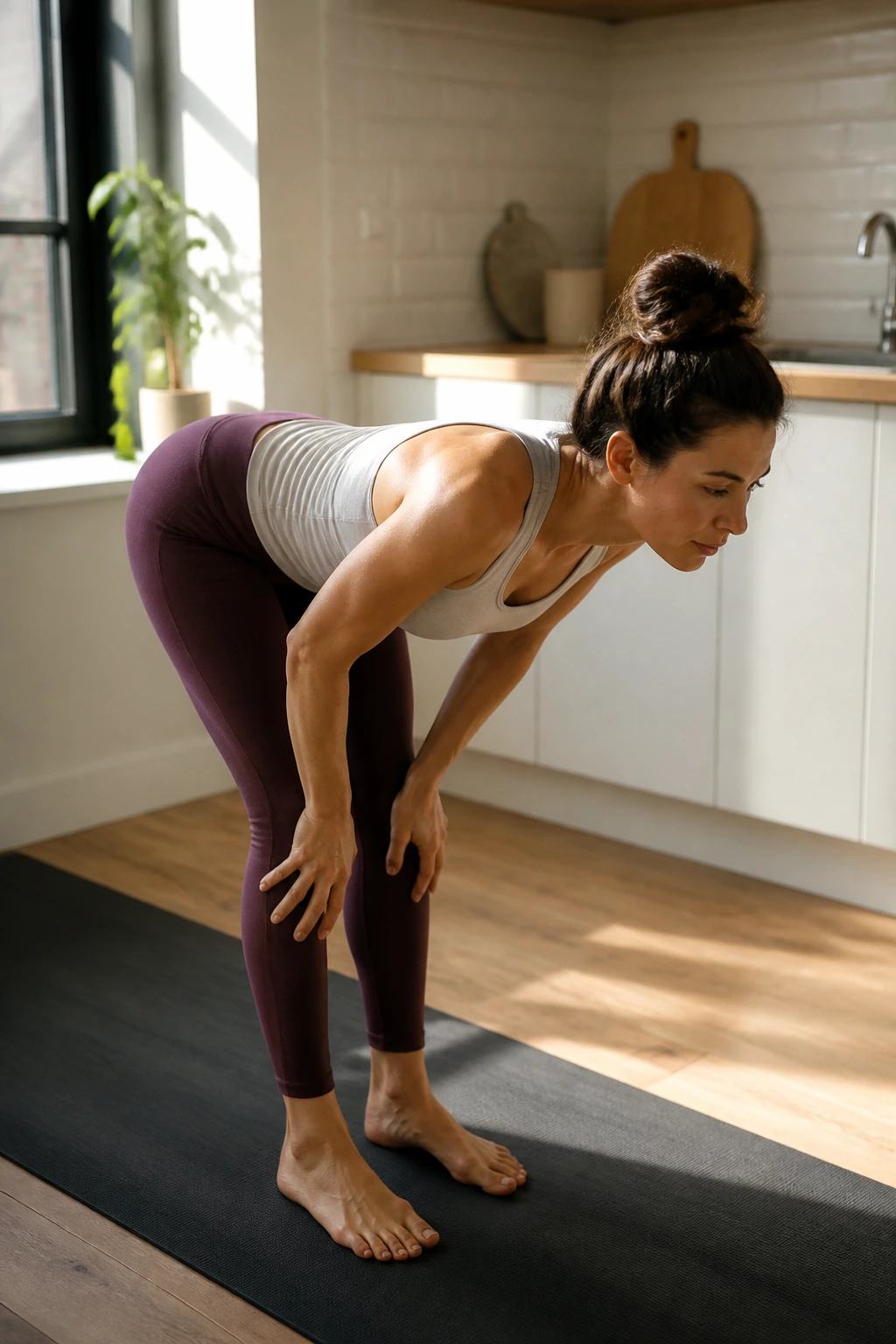
The first thing I notice on a tight morning is the backs of my legs. They feel shorter than they should, and the whole chain from calves to lower back tends to complain at once. A standing fold, done patiently, deals with that without turning into a tug-of-war.
The trick is to treat the fold like a conversation, not a test. Bend your knees. Let your torso hang. Then move into a half lift so the spine can lengthen before you fold again. That back-and-forth is the useful part.
A Simple Sequence
- Stand with feet hip-width apart.
- Fold forward and let your head hang for 3 breaths.
- Inhale to a half lift, hands on shins or blocks, back long.
- Exhale back into the fold.
- Repeat that cycle 3 to 4 times.
If your hamstrings are tight, keep the knees more bent than you think you need. If your lower back feels cranky, stay higher in the half lift and don’t chase the floor. That’s not a failure. It’s smart movement.
A lot of people rush through this shape because it looks simple. It isn’t complicated, but it pays best when you move slowly enough to feel the difference between a rounded back and an honest length through the spine.
4. Low Lunge Hip Opener for Tight Mornings
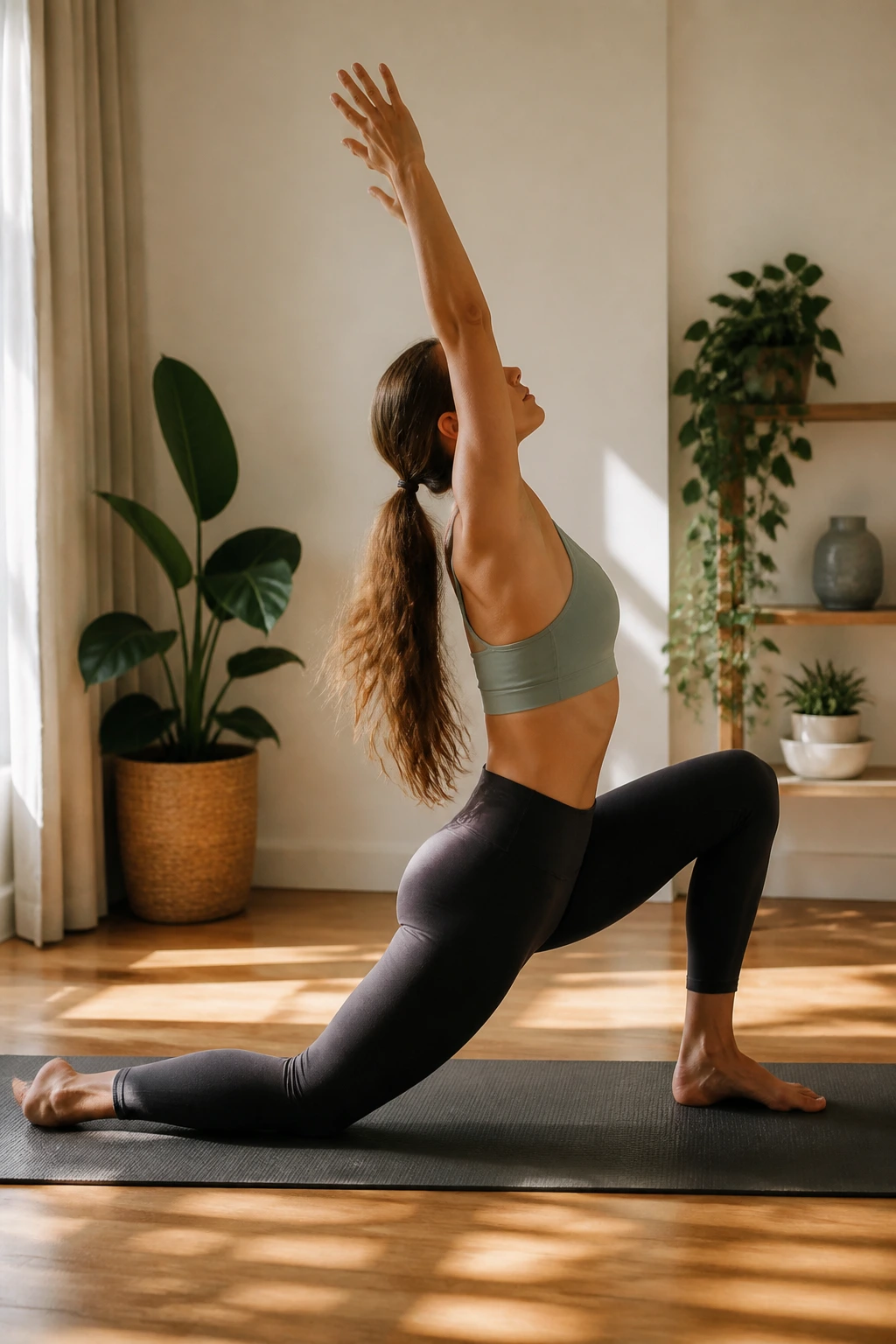
Sleeping hips are stubborn. They love to lock up overnight, and if you sit for work or drive a lot, they may greet the morning like they’re trying to file a complaint. Low lunge opens that whole front line: hip flexors, quads, even the front of the pelvis if you settle in well.
Start from tabletop, step one foot between your hands, and lower the back knee. Keep the front knee stacked over the ankle. That part matters. If the knee shoots too far forward, the stretch turns sloppy and the front leg starts doing work it should not have to do.
Stay for five breaths. Reach both arms up if your shoulders feel fine, or keep your hands on the front thigh if you want something steadier. Then add a tiny shift forward and back. Small pulses. Not bouncing. Just enough to remind the hip where forward and back live.
Switch sides and repeat. If one hip is far tighter than the other, give that side an extra breath or two. I would rather see you stay simple and repeatable than chase a big, dramatic lunge that pulls your back or makes you wobble.
5. A Short Sun Salutation Morning Yoga Flow for Busy Days
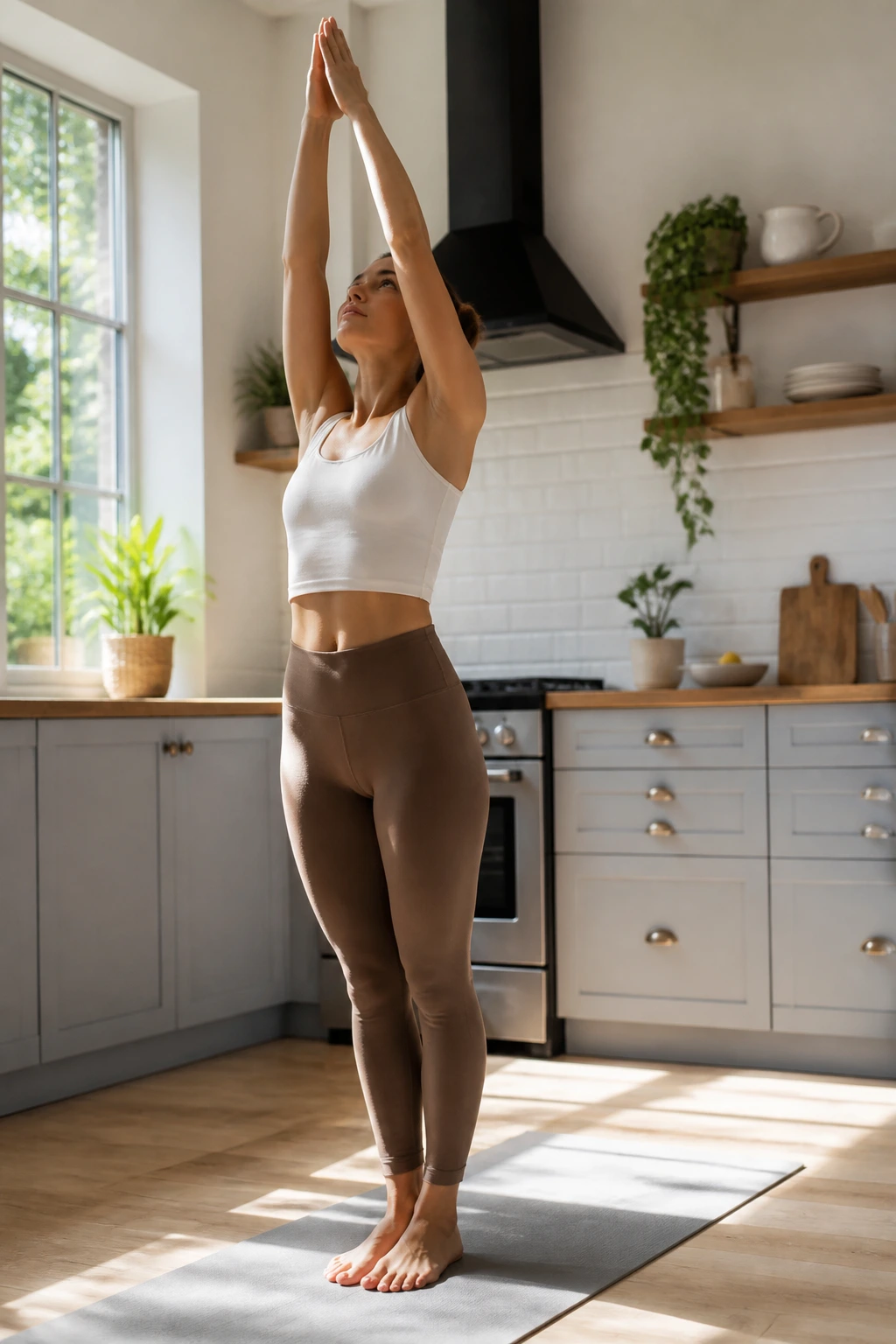
Unlike a long vinyasa class, this version is built for people who want to feel better, not perform better. That is a useful distinction. A short Sun Salutation A can wake up the whole body in ten minutes without turning breakfast into a recovery meal.
The sequence is clean and familiar: standing, folding, half lifting, stepping back, lowering with control, then moving through a mild backbend and back to down dog. If you keep the transitions slow, the whole thing feels more like tuning than training.
A Sensible 10-Minute Version
- Stand in Mountain Pose for 3 breaths.
- Inhale, reach up.
- Exhale, fold.
- Inhale, half lift.
- Step back to plank, then lower knees if needed.
- Lower to the floor, then lift into Cobra or Upward Dog.
- Press back to Downward Dog for 3 breaths.
- Step forward and repeat 3 rounds.
If chaturanga irritates your shoulders, skip it. Lower the knees, then lower all the way down. Clean movement beats a heroic shape that makes the rest of the day grumpy.
This is a good one for mornings when you want heat without chaos. It gets the blood moving, asks the lungs to keep pace, and leaves you feeling more awake without that wired, overcooked feeling.
6. Warrior I Energy Builder Flow
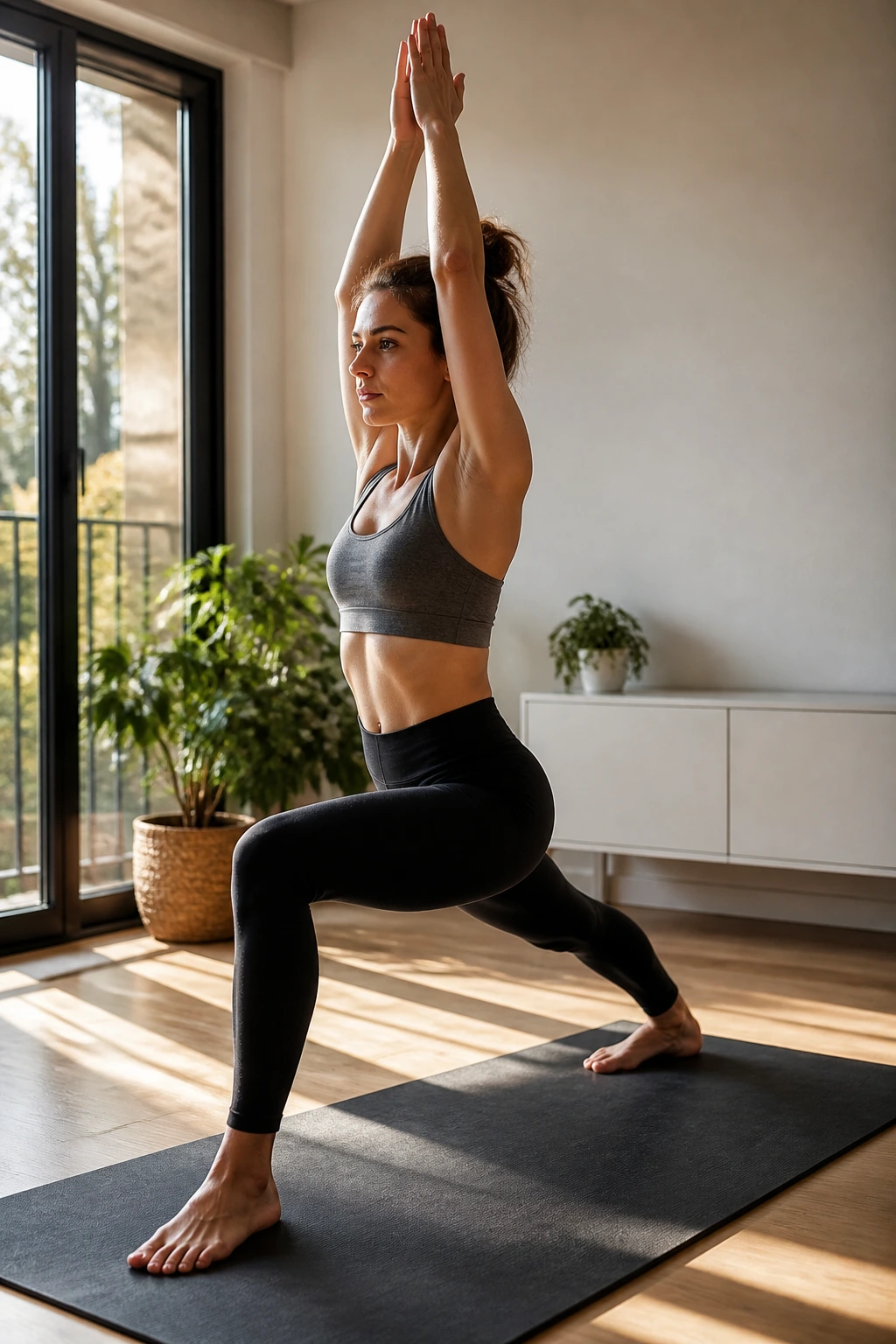
Warrior I wakes up sleepy legs fast. Quads, glutes, calves, feet, even the upper back all get asked to show up. It’s one of those shapes that looks static from the outside and feels like work on the inside.
Start in a lunge, square the hips as much as your body allows, and root the back heel if that feels okay on your ankle. Reach the arms overhead and soften the ribs so you don’t arch the lower back too hard. That’s the part a lot of people skip, and then they wonder why the pose feels pinchy.
Hold for 3 to 5 breaths, then move into Warrior II and reverse Warrior if you want a little more opening through the side body. Keep the front knee tracking over the second toe. Clean alignment here matters less for looks and more for making the shape feel stable instead of messy.
This flow fits mornings when you feel flat and need a little backbone. Not an emotional speech. Just a body that stands up a little straighter. That is enough.
7. Triangle and Side Angle Side-Body Flow
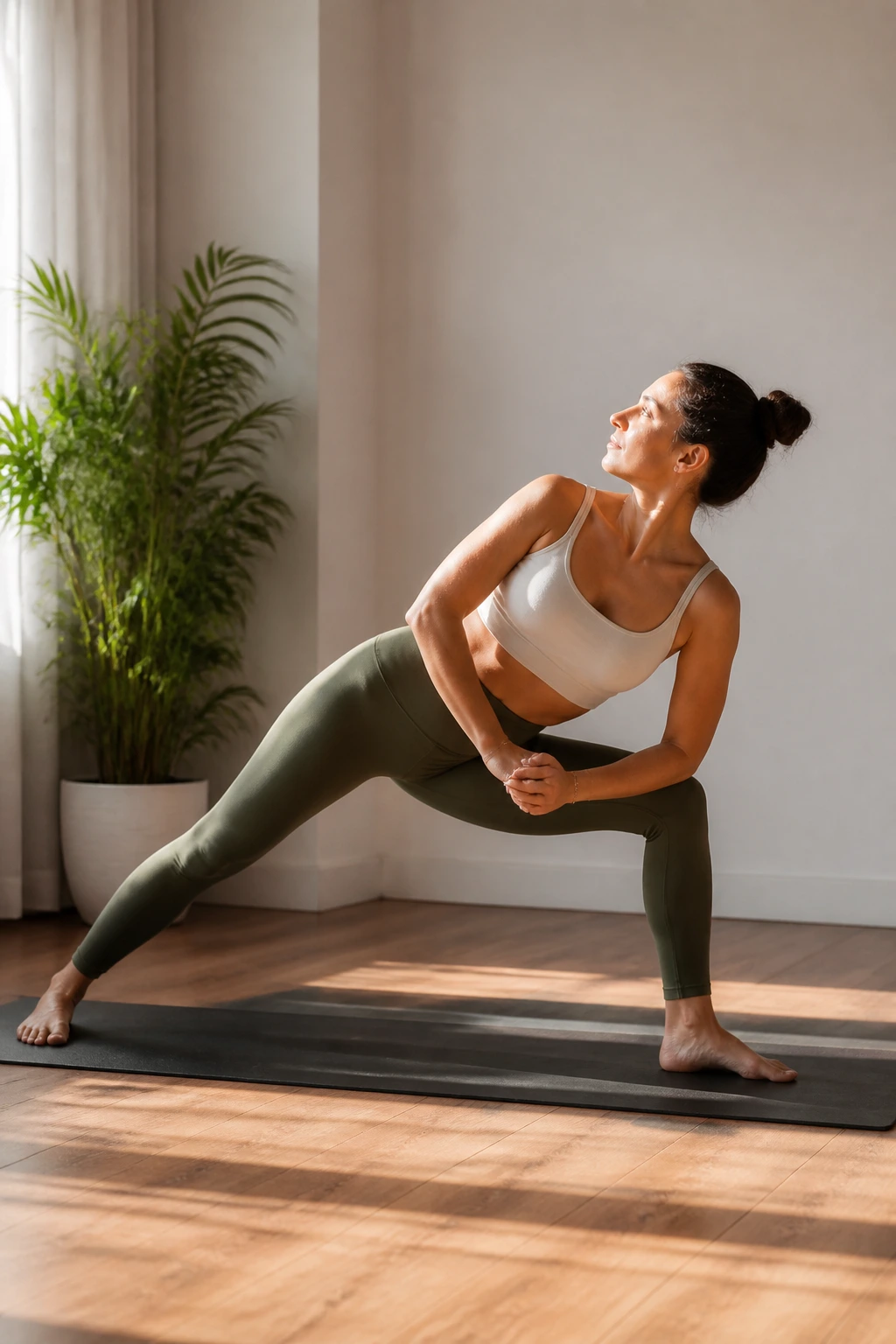
Why spend a morning opening the side body? Because the ribs, waist, hips, and outer legs all talk to each other more than most people realize. When one side feels cramped, breathing can get shallow and your standing posture starts to sag.
Triangle pose and side angle are a nice pair because they lengthen one side while asking the legs to stay awake. That combination feels clear, not fussy. You get stretch and strength at the same time, which is exactly what a busy morning usually needs.
How to Use It
Move from a wide stance into a soft lunge on one side. Come into side angle with the lower forearm on the thigh or a block. Stay for 3 breaths. Then straighten the front leg and shift into triangle. Hold 3 to 5 breaths with the chest open but not over-rotated.
If your balance is shaky, keep the back hand on the hip or block. The floor is not offended. Use it.
A flow like this is good when your torso feels compressed from sleeping curled up or from sitting too much the day before. It opens space through the waist and gives the hips a wake-up that feels a little more elegant than brute force.
8. Chair Pose and Standing Core Flow
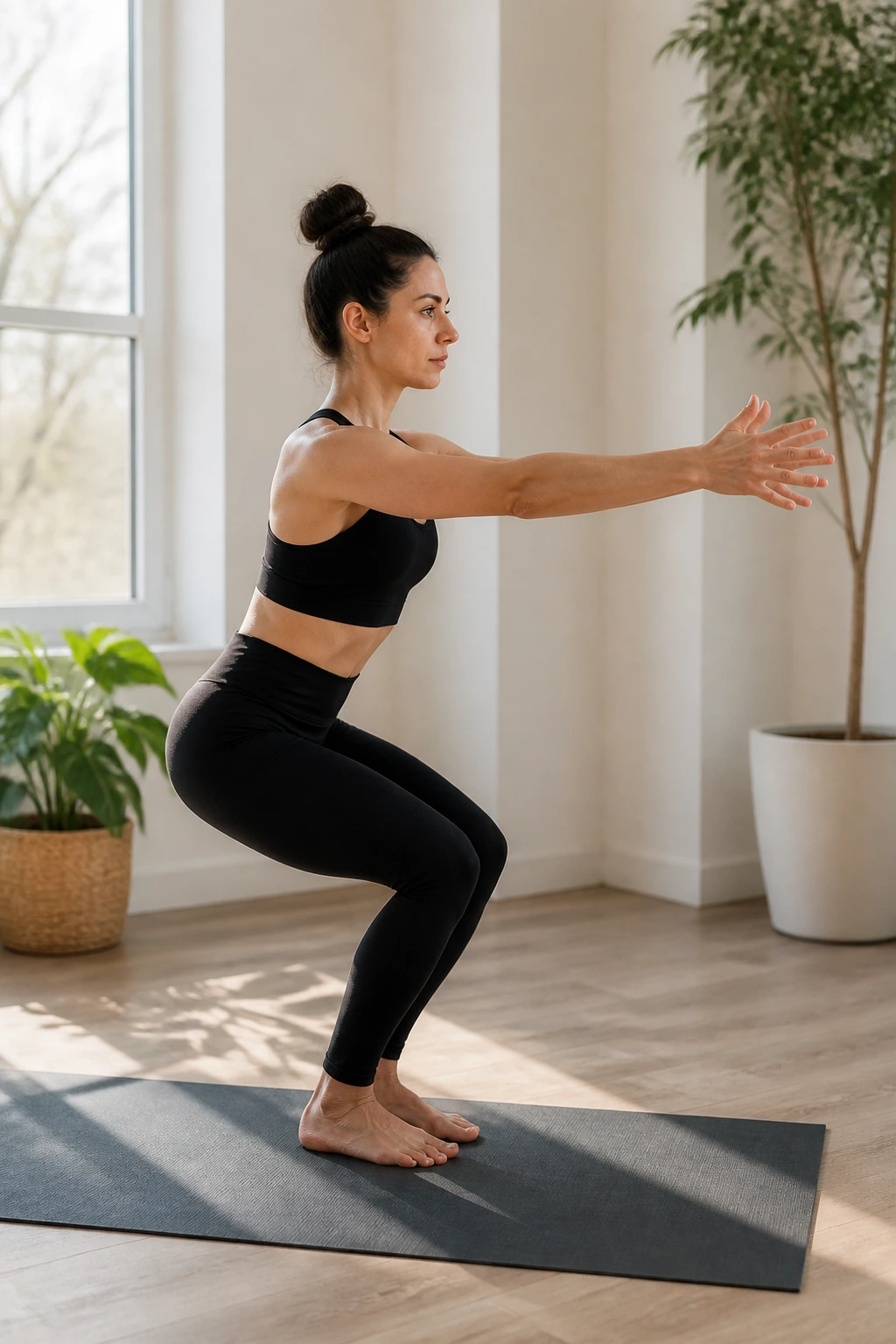
If you wake up flat, Chair pose is annoying in the right way. It gets the thighs, ankles, and belly to engage without needing a jump, a mat full of equipment, or much room at all.
The version I like for busy mornings is short and controlled. Sink into Chair for 3 breaths, then add a gentle twist or arm variation, then stand up and do it again. The point is not depth. The point is that your body has to organize itself while breathing.
- Stand with feet together or hip-width apart.
- Bend the knees and sit back as if lowering into a narrow chair.
- Reach the arms forward or overhead.
- Hold for 3 breaths, then rise.
- Repeat 3 rounds.
- Add a prayer twist on the second round if your back feels fine.
A lot of people avoid Chair because it burns fast. Fair enough. It does burn. But that’s why it works in a ten-minute flow: one or two rounds can switch the nervous system from sleepy to alert without turning the whole practice into cardio.
9. Seated Twist and Neck Release Flow
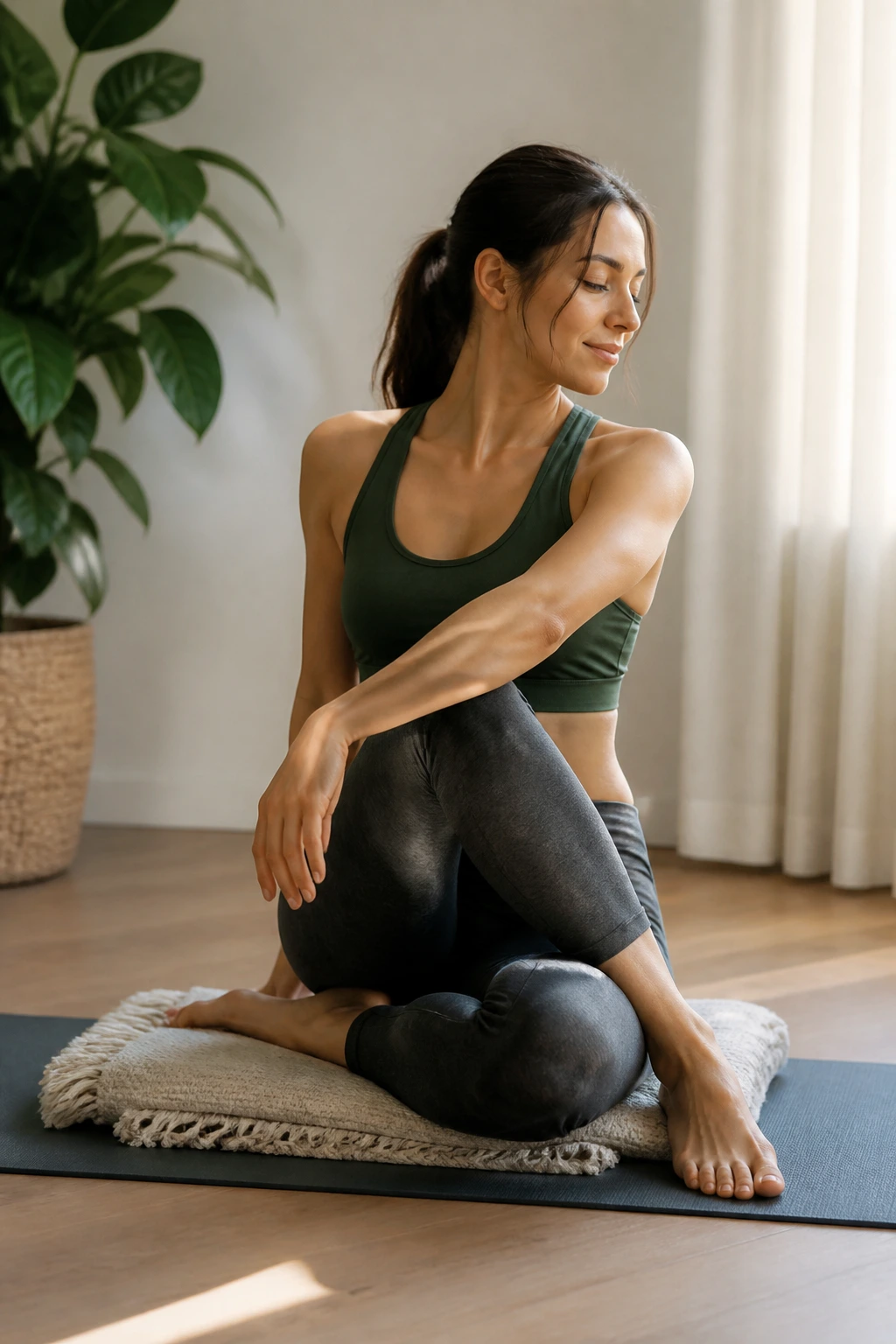
A good morning twist should feel like wringing out stale air, not wrenching your spine. That’s the line. Stay on the gentle side and you’ll get more out of it than forcing a deeper shape.
Sit on a folded blanket if your hips sit low or your lower back rounds easily. Start tall, inhale to lengthen, and exhale into a twist from the ribs, not the neck. Then let your head follow. Not before. That order matters.
After the twist, move into a simple neck release: ear toward shoulder, then a soft turn left and right. Keep the shoulders down. If the muscles along the sides of your neck feel tender, take the stretch even smaller. Sharp pain is a stop sign, not a challenge.
This flow is especially useful if you sleep with your head turned one way or spend a lot of the day staring at a screen. It won’t fix every ache. It does make the top half of the body feel less welded together.
10. Tree Pose Balance and Focus Flow
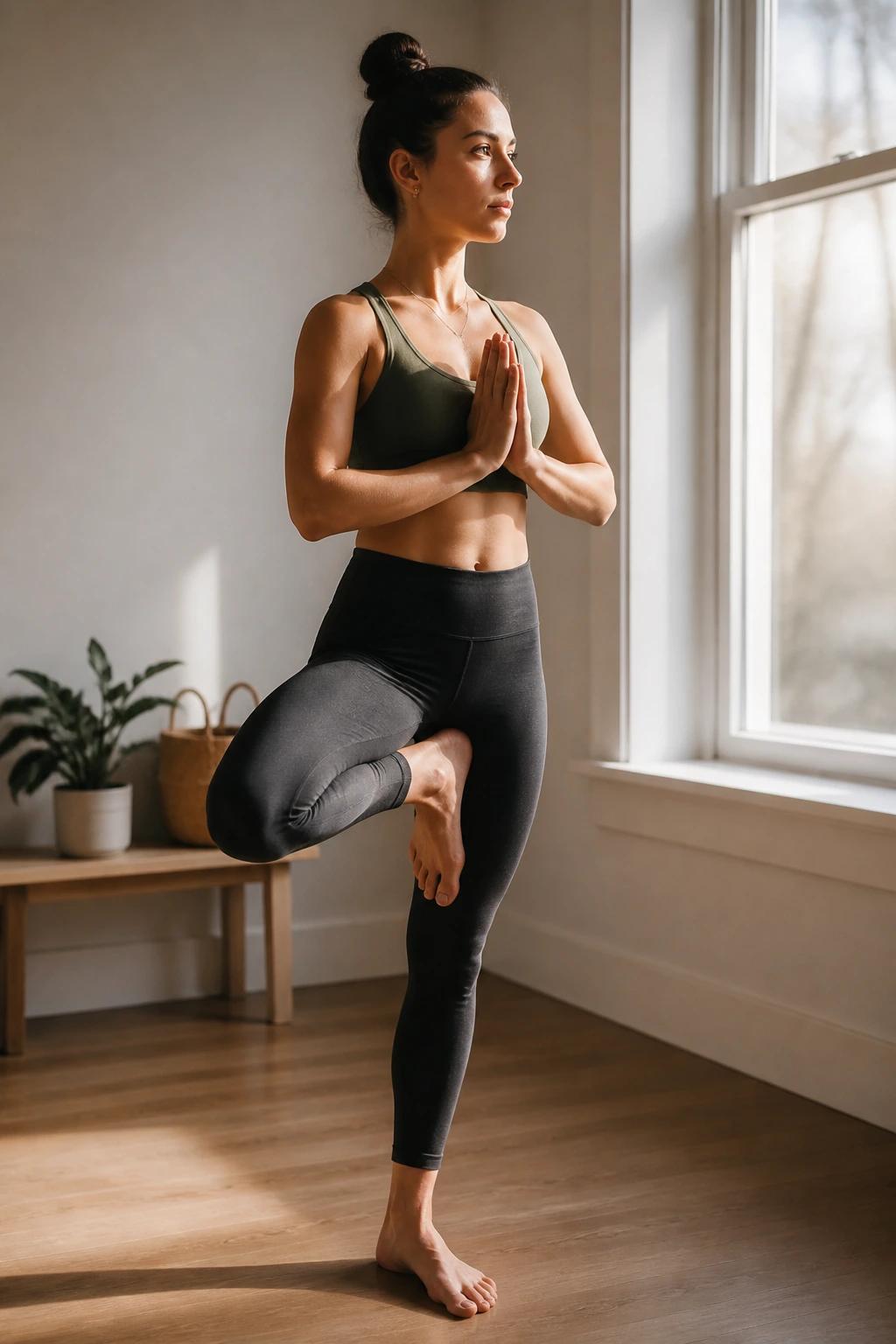
Unlike a sweaty vinyasa, this one asks you to stand still. That sounds easy until you try it before coffee. Tree pose has a way of exposing how busy the mind is and how much the feet want to fidget.
I like this flow on mornings when I need my brain to stop pinging in ten directions. You place one foot on the floor, calf, or inner thigh, pick one spot to stare at, and breathe until the wobble gets smaller. That’s the whole trick.
Use the wall if balance feels off. Seriously. Standing beside a wall or keeping one fingertips’ worth of contact does not make the pose weaker. It makes it usable, which is the whole point before breakfast.
A few breaths in Tree on each side can sharpen focus more than people expect. There’s something about balancing on one leg that makes the rest of the day feel a little less scattered. Not magical. Just practical.
11. Hamstring and Calf Wake-Up Flow
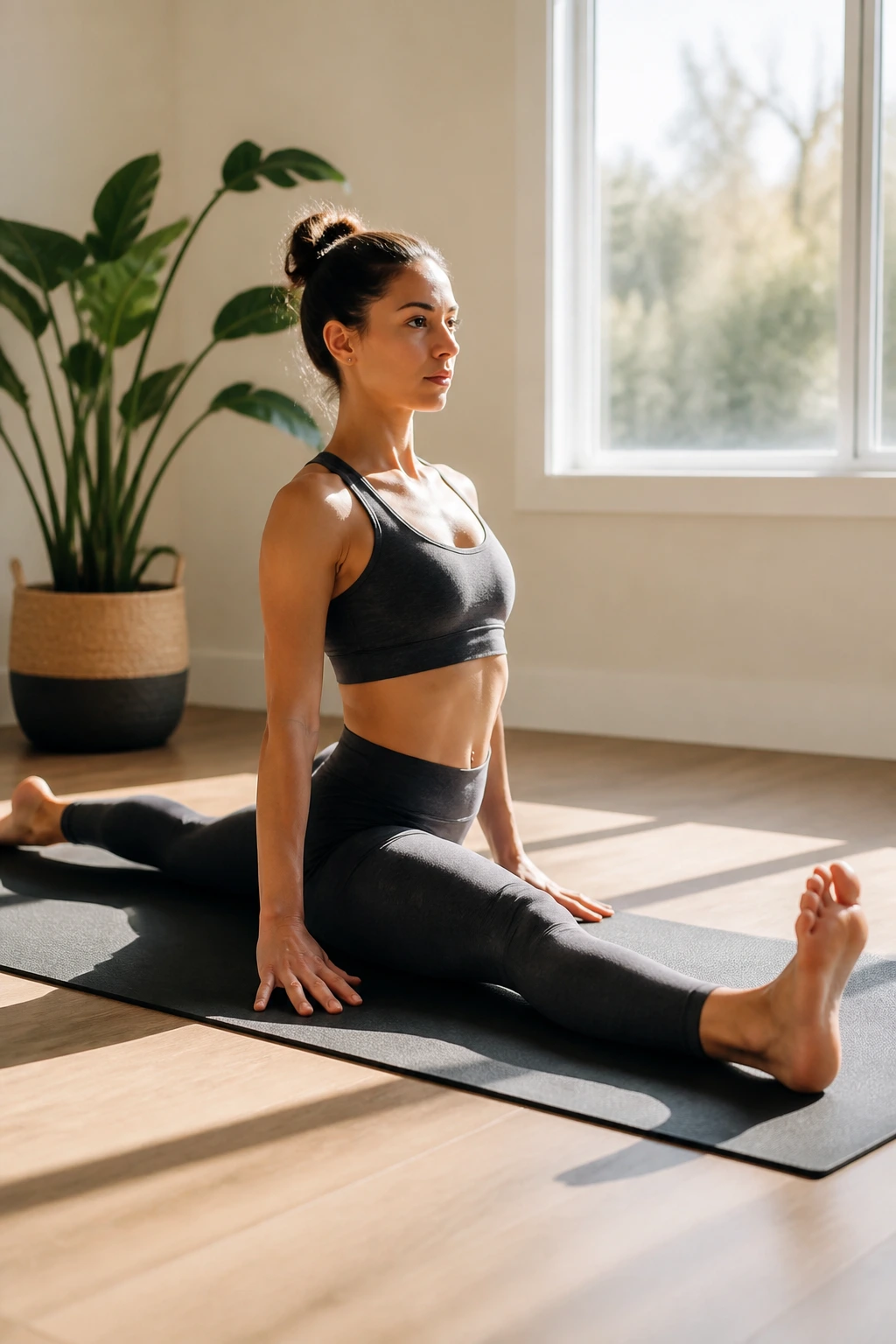
Tight calves can make a whole morning feel clumsy. Tight hamstrings do the same thing from the back of the thighs. If you walk a lot, run, lift, or spend too long in one chair, this is the flow that earns its keep.
Start with a bent-knee forward fold. Then move into half split on the floor, keeping the hips back and the front foot flexed. After that, go to downward dog and pedal the heels. Finish with a calf stretch against a wall or in a low lunge.
- Bent-knee fold: 5 breaths
- Half split: 5 breaths each side
- Down dog with heel pedals: 30 to 45 seconds
- Low lunge calf stretch: 3 breaths each side
- Standing wall calf stretch: 20 to 30 seconds each side
Do not yank on cold hamstrings. That’s the fastest way to make the whole back line guard itself harder. Bend the knees, keep the movement smooth, and let the stretch arrive instead of chasing it.
12. Gentle Backbend Chest Opener Flow
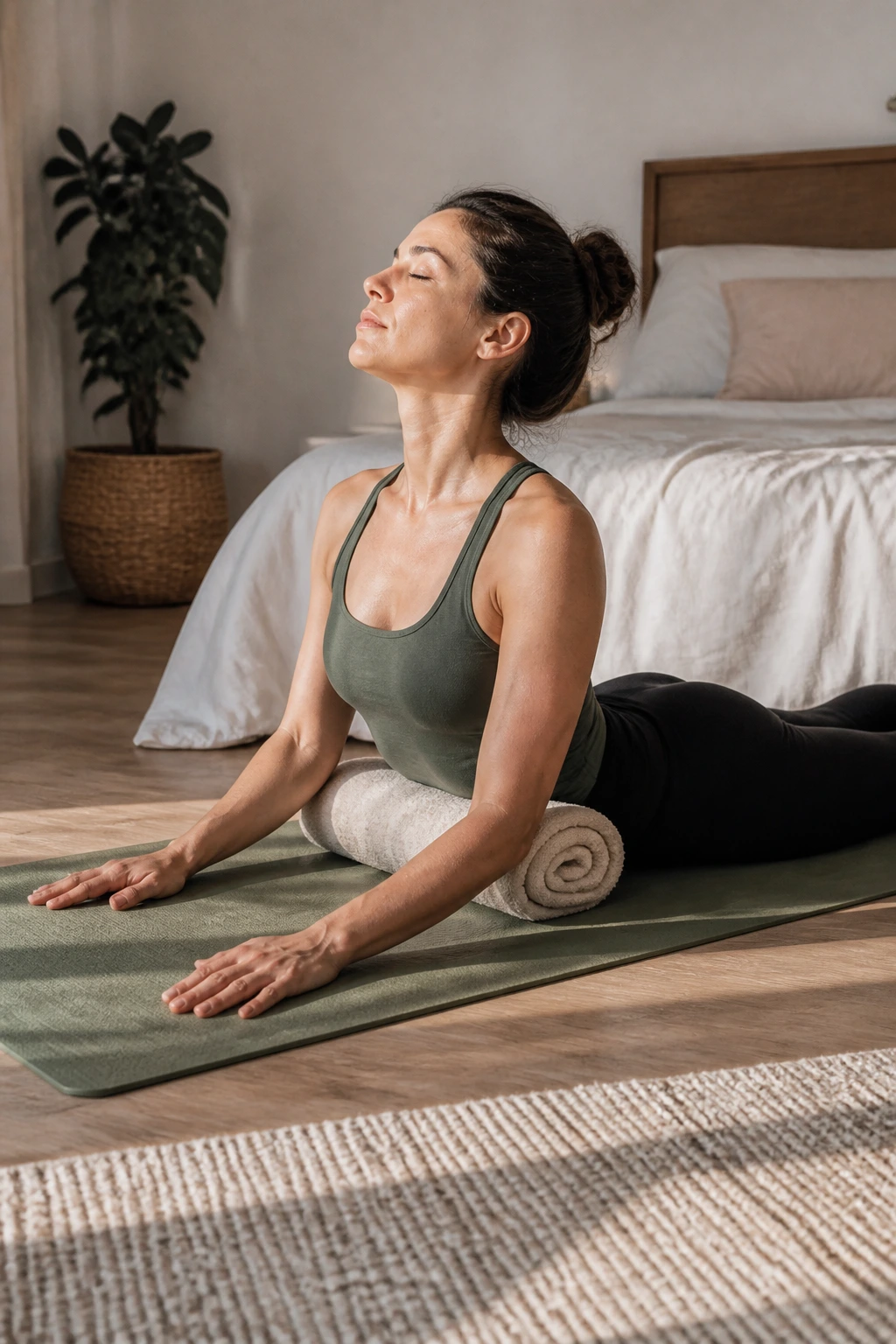
If you slept curled on one side, your front body knows it. Chest, shoulders, upper belly — all of it tends to feel a bit shortened in the morning. Gentle backbends open that up without asking for a full wheel pose or anything dramatic.
Start low. Sphinx is a good first shape because it encourages length through the spine while staying friendly to the lower back. Then move to low Cobra, lifting the chest only as high as it can go without pinching. A rolled blanket under the ribs or a block under the hands can make this feel steadier.
What to Watch For
Keep the back of the neck long.
If the chin juts forward, the backbend gets sloppy fast. Press the tops of the feet into the floor, lengthen the tailbone away from the crown of the head, and stop the lift before the low back starts grabbing all the work. That usually means you are high enough.
This flow suits mornings when you wake up slumped, tight across the chest, or mildly grumpy from sleeping in a compressed shape. It opens the front line of the body and leaves you breathing a little fuller, which is a nicer way to start than hunching over a phone.
13. A Breath-Led Morning Yoga Flow for Rushed Mornings
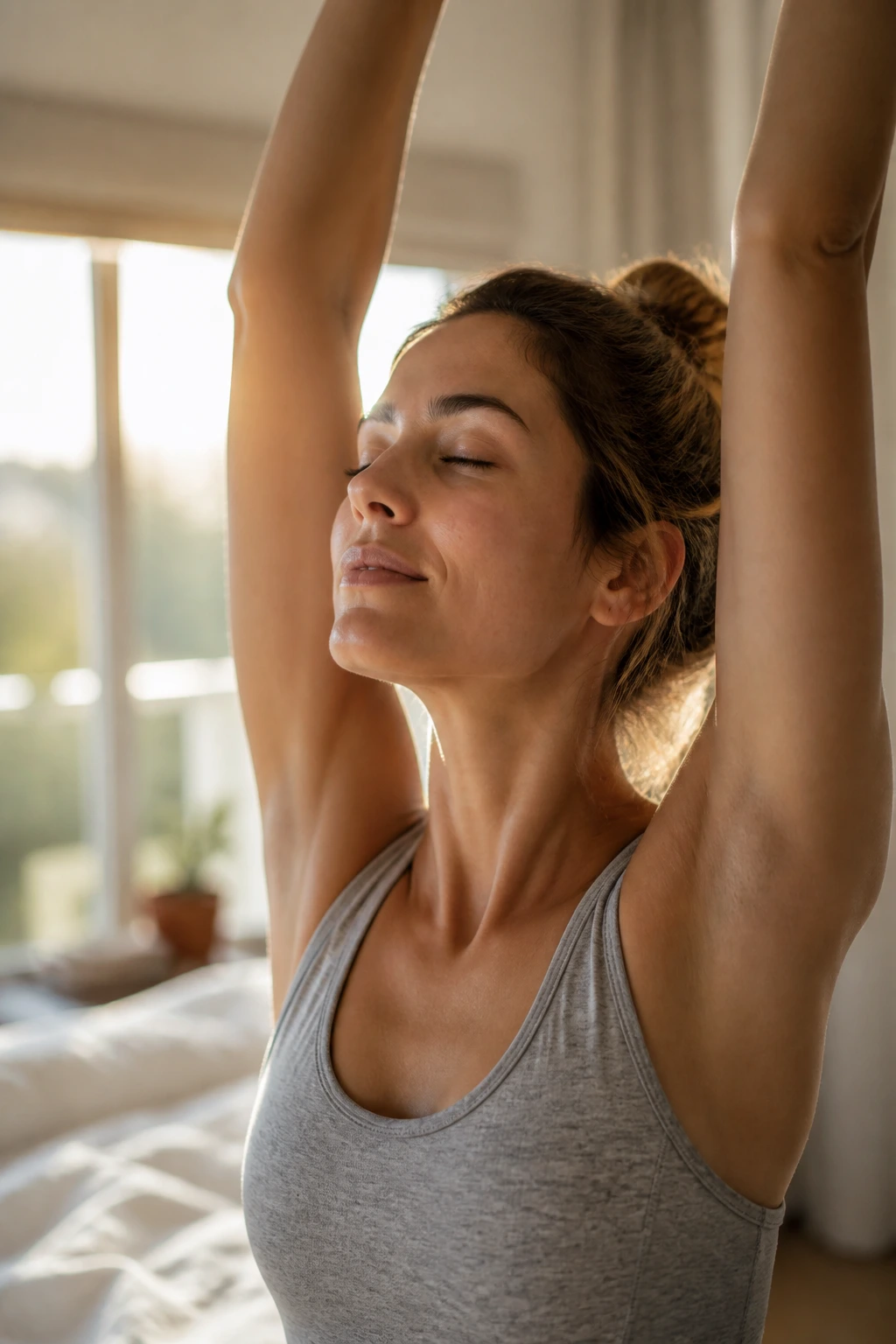
How do you keep a morning practice from turning into a race? Count the breath. That sounds almost too simple, but it works because the breath gives the movement a speed limit.
Try this: inhale for a slow reach overhead, exhale into a fold, inhale into a half lift, exhale into a step back or squat, inhale to lengthen, exhale to settle. The shapes do not need to be fancy. The rhythm does the real work.
How to Use It
Use a 4-count inhale and a 6-count exhale if you want something easy to remember. If that feels too long, make it 3 and 4. The numbers matter less than the ratio. A longer exhale tends to soften the shoulders and jaw, which is often what a rushed morning needs most.
Move from standing to floor and back again while matching each motion to the breath. Three or four rounds is enough. The point is not to chase sweat. It’s to prevent the day from arriving at full speed before your body has joined the conversation.
This one is good when your mind is already ahead of your body. Which happens often. The counting pulls you back into the room.
14. Full-Body Mobility Flow for Sore Mornings
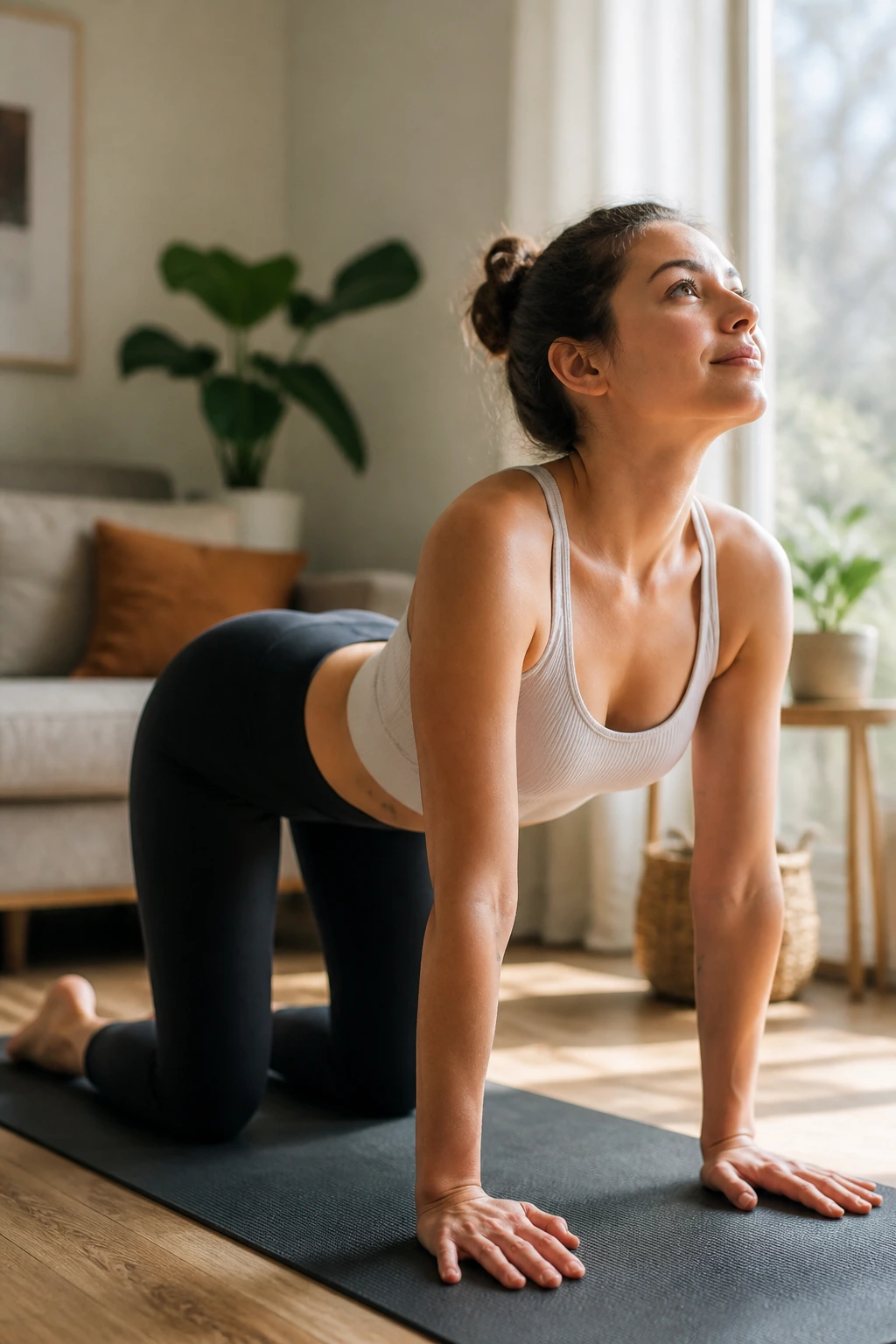
Some mornings everything feels tight at once. Hips, shoulders, back, neck. Those are the days when a simple mobility flow beats anything intense or fancy.
Start small. Roll the shoulders, circle the wrists, move the neck only within a comfortable range, and take a few cat-cows. Then stand, fold, step back into a low lunge, and bring one hand to the ceiling for a gentle twist. That’s enough to touch most of the big joints without overdoing it.
A good sore-morning flow is about range, not depth. You are not trying to win a stretch contest. You are trying to let the joints remember how they move before the rest of the day tightens them again. Keep the movements smooth and the holds short.
If you want a simple order, use this:
- Shoulder rolls and neck circles
- Cat-cow
- Low lunge, both sides
- Standing fold
- Gentle twist in a lunge
- A few slow arm reaches overhead
This flow is one I’d keep in the back pocket for any day that starts stiff in three or more places. It covers enough ground without asking your body to pick a favorite sore spot.
15. Quiet Start Flow for Heavy Days
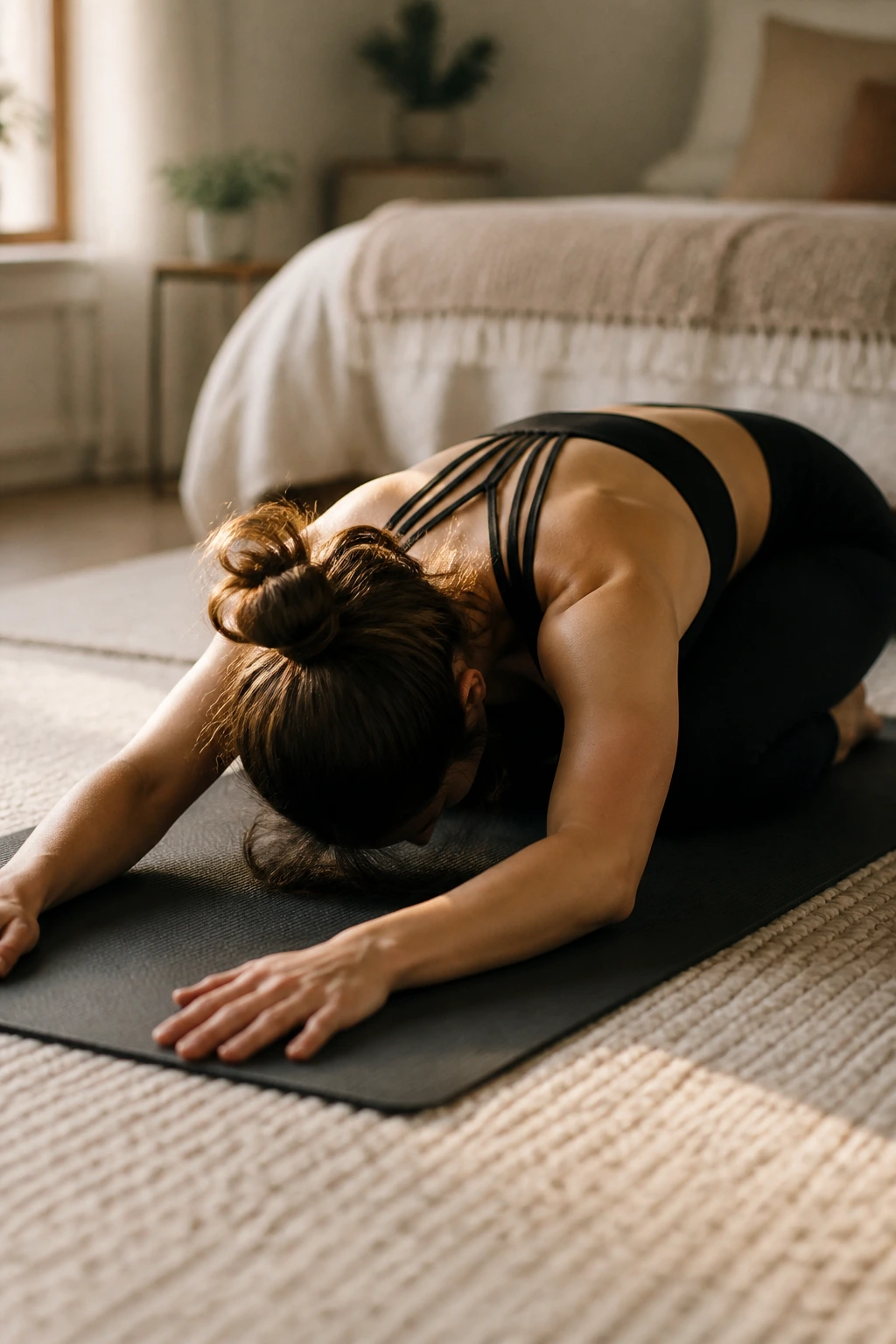
When the body feels heavy, floor work usually wins. Standing can wait. That’s not laziness. It’s a useful adjustment for mornings when low energy or poor sleep make anything demanding feel like too much.
Start in child’s pose, then move to tabletop, then slide into a reclined shape on your back. Happy baby, knees-to-chest, reclined figure four, and a gentle supine twist can fill ten minutes without much effort from the upper body. The nervous system tends to respond well to that kind of low-friction sequence.
This is the flow I’d choose after a rough night or on a morning when you can tell the tank is low before the day has even begun. It is not flashy. Good. You do not need flashy when you already feel worn down.
A simple version:
- Child’s pose for 5 breaths
- Tabletop for 4 cat-cows
- Reclined figure four for 5 breaths each side
- Supine twist for 5 breaths each side
- Knees-to-chest for a final minute
Heavy days need less negotiation. Give them that.
Final Thoughts
The best morning yoga flow is the one you can do before your brain starts bargaining. Keep it short, keep it clear, and match the sequence to the kind of stiffness or fatigue you’re actually carrying.
I’d keep three versions ready: one standing flow, one floor-based flow, and one for days when your body wants the gentlest possible start. That covers a surprising amount of real life without turning your morning into a project.
Ten minutes is enough. Not because it’s tiny, but because it’s repeatable. And repeatable wins.
