



Body weight circuit workouts at home work because they don’t waste time pretending to be fancy. You get a few square feet of floor, a timer, and a handful of honest movements that make your legs, lungs, and core pay attention fast.
That’s the appeal. No commute. No waiting for equipment. No need to build a shrine of dumbbells in the corner.
And if you do them right, home circuits can be sharper than a lot of gym sessions. The trick is simple: keep the reps clean, keep the rest honest, and stop turning every workout into a sloppy sprint. A chair, a mat, a wall, maybe a stair or two — that’s enough to build a serious weekly routine.
Start with the easier options if your form has gone rusty. The harder ones are there when you want your heart rate up and your legs to remember they exist.
1. 20-Minute Beginner Body Weight Circuit Workout at Home
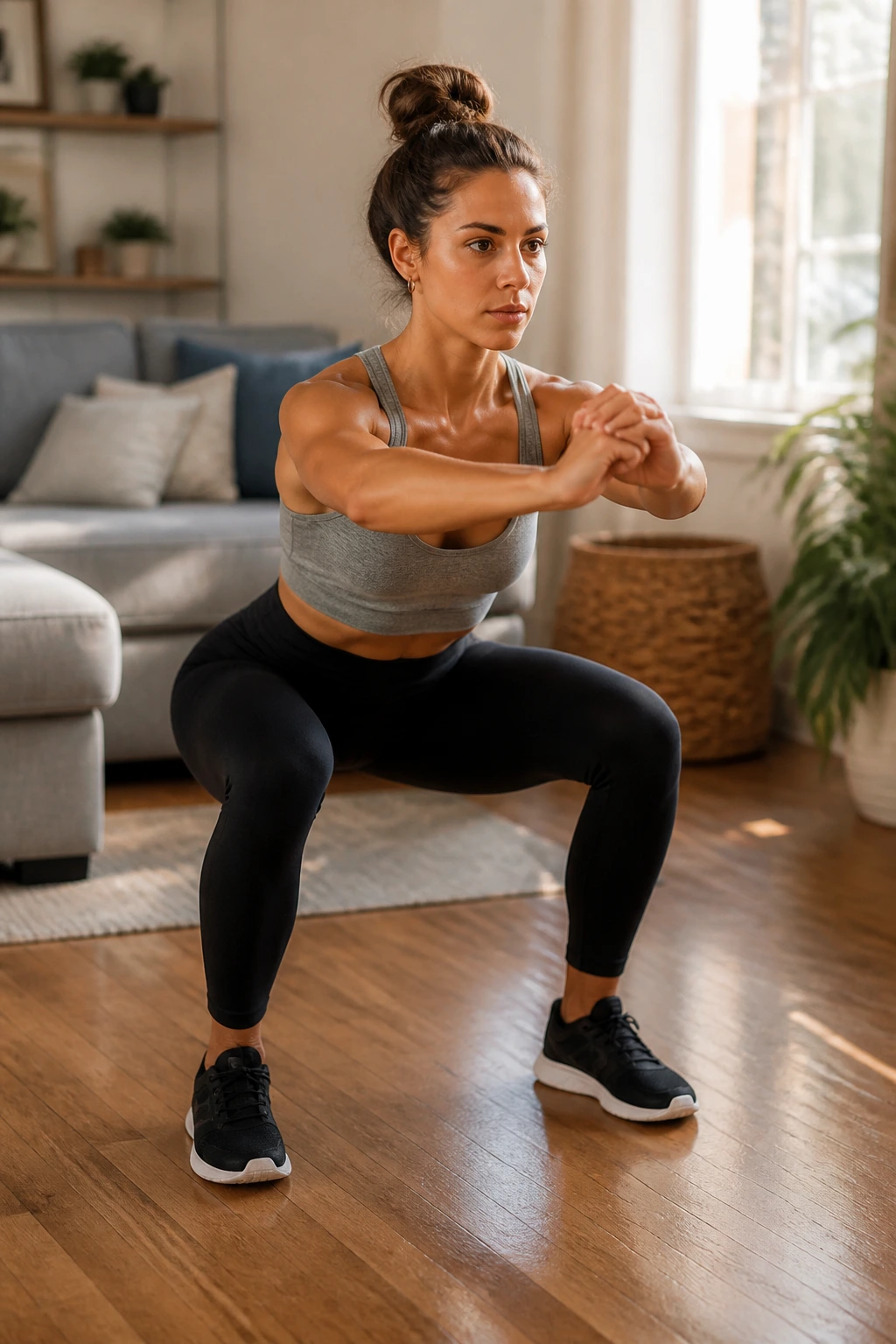
This is the one I’d hand to almost anyone starting from scratch. It’s short, direct, and it doesn’t try to humble you with ten different jumping drills before you’ve even warmed up.
Do 3 rounds of the following with 30 seconds of work and 20 seconds of rest:
- Bodyweight squats
- Incline push-ups on a couch or sturdy table
- Reverse lunges, alternating legs
- Dead bugs
- Forearm plank
Keep your squats smooth and your lunges short if your knees feel cranky. The goal isn’t to collapse at the end; it’s to finish with enough gas left that you could do one more round if someone asked.
One good sign? You can still talk in short sentences. If you’re gasping like you sprinted up three flights of stairs, trim the pace and clean up the form first.
2. Silent Apartment Cardio Circuit

Silent doesn’t mean easy.
This is the workout for thin floors, sleeping kids, or neighbors with suspiciously thin patience. You keep one foot on the ground almost the whole time, but the burn still shows up. Hard.
Run 40 seconds on, 20 seconds off for 4 rounds:
- Fast march with strong arm drive
- Shadow boxing
- Squat to calf raise
- Alternating knee drives
- Plank shoulder taps
The quiet part comes from control. Land softly, keep your feet under you, and don’t fling your body around just to make it feel harder. If you want more intensity, move faster with smaller steps instead of adding jumps.
A lot of people think low-impact means low effort. It doesn’t. It just means your joints get a kinder deal while your lungs still work.
3. Lower-Body Burn With No Equipment
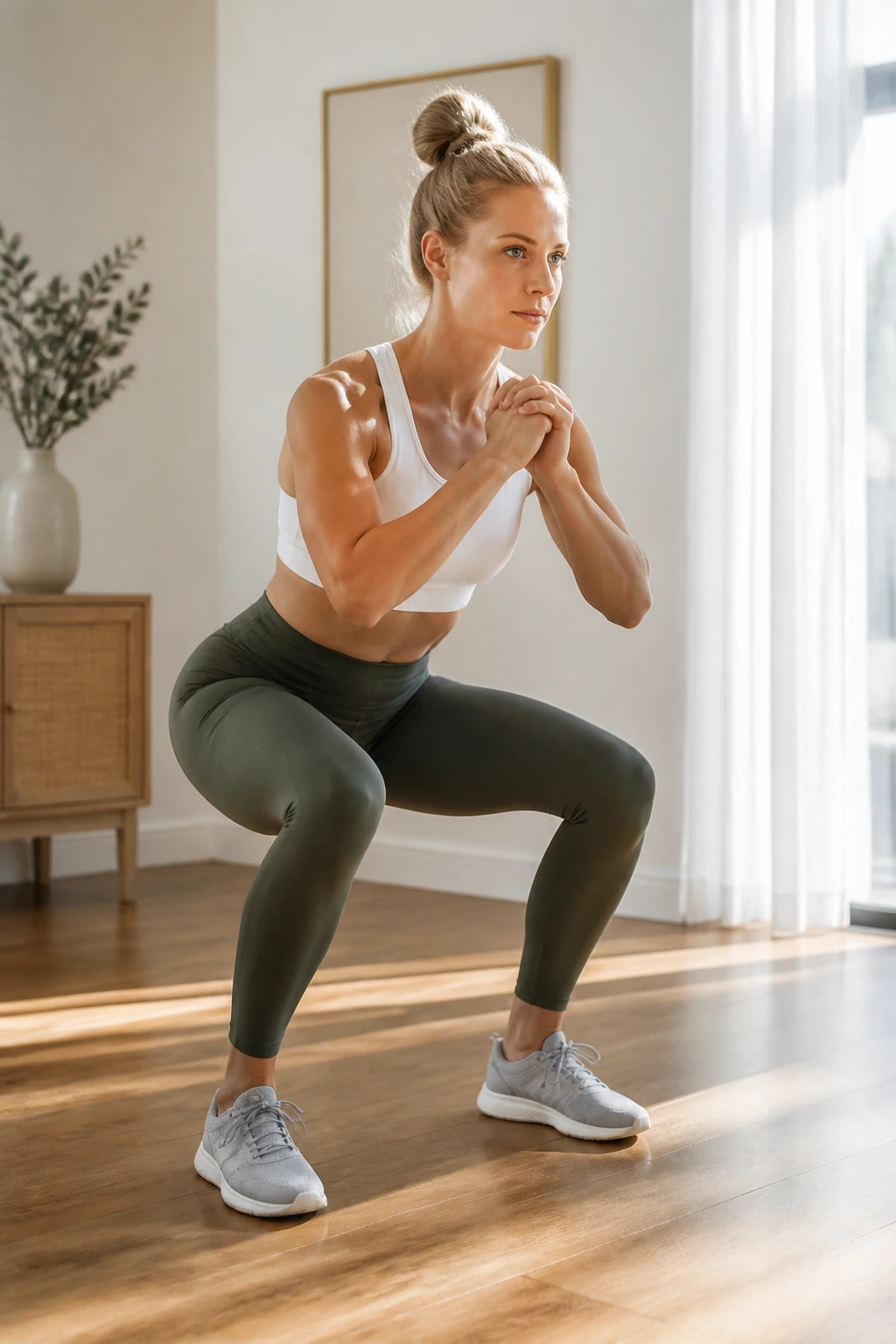
A good lower-body circuit should leave your thighs heavy in a way that feels useful, not random.
Do 4 rounds of:
- 15 squats
- 10 reverse lunges per leg
- 20 glute bridges
- 12 sumo squats
- 20 calf raises
Rest 45 seconds between rounds. If you want more work without changing the exercises, pause for 2 seconds at the bottom of each squat and lunge. That tiny pause turns a normal set into a much meaner one.
What Makes It Work
The squats and lunges hit the quads, glutes, and inner thighs. The glute bridges give your hips a break from all the standing work while still keeping tension on the back side of your body.
Tiny Form Fixes
- Keep your chest tall on squats.
- Let the back knee drop straight down on lunges.
- Press through the whole foot on bridges, not just the toes.
That last part matters more than people think. Toes-only bridge reps turn into cramped hamstrings fast.
4. Upper-Body Push and Plank Circuit

Bodyweight upper-body work can be sneaky. You don’t need huge loads to feel your shoulders start talking back.
Try 3 to 5 rounds of this sequence:
- 8 to 12 push-ups
- 12 shoulder taps per side
- 6 to 10 pike push-ups
- 20-second plank hold
- 8 plank up-downs
If standard push-ups are too much, use a couch edge or kitchen counter. If they’re too easy, slow the lowering phase to 3 seconds on every rep. That changes the whole feel of the set.
The pike push-ups are the real shoulders-and-triceps moment here. They also make people realize how much their midsection has to brace just to keep the body from folding.
Keep your hips steady on the shoulder taps. Swinging side to side looks busy. It’s mostly noise.
5. Core Stability Circuit for Tight Spaces
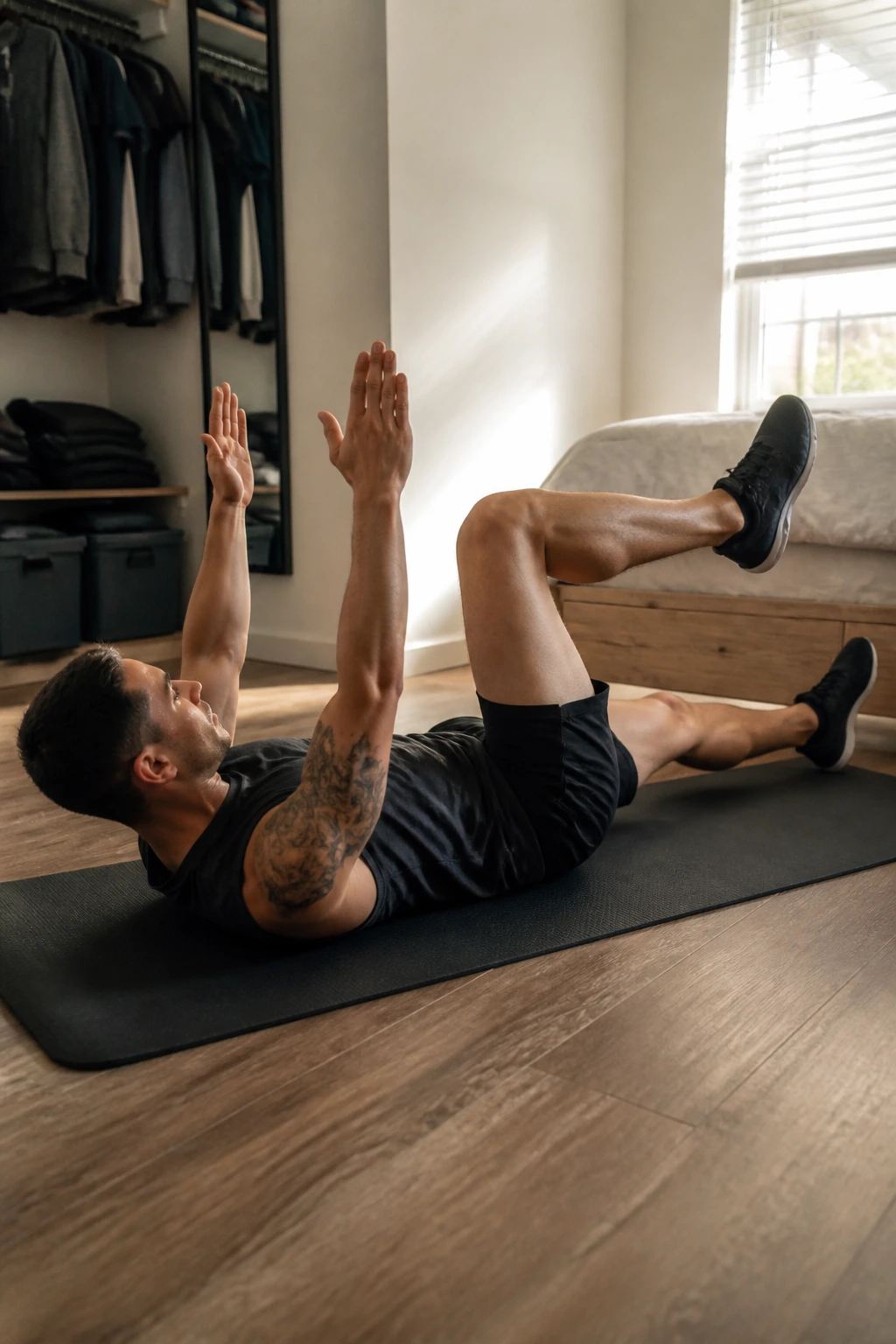
A lot of core workouts are just fast floor flailing. This one is the opposite.
Do 3 rounds with 20 to 30 seconds per move:
- Dead bug
- Bird dog
- Side plank, left
- Side plank, right
- Hollow hold or tucked hollow hold
- Slow mountain climbers
The point is control. Your ribs should stay down, your lower back should not arch, and your breathing should stay calm enough that you can count reps without losing track.
Why This One Sticks
Dead bugs and bird dogs are boring in the best way. They train the body to resist twisting, which matters whether you’re lifting groceries, carrying a kid, or just trying not to fold in half during a plank.
What to Watch For
- If your back pops off the floor, shorten the lever.
- If side planks sag at the hip, bend the bottom knee.
- If mountain climbers turn messy, slow them down.
Clean reps beat frantic reps here, every time.
6. Tabata-Style Bodyweight Burner

Tabata sounds cute until the first round ends.
Use 20 seconds hard, 10 seconds rest for 8 total rounds. Pick two moves and alternate them:
- Burpees
- High knees
- Squat jumps
- Mountain climbers
- Skaters
A simple setup is 4 rounds of one move, then 4 rounds of another. Burpees followed by mountain climbers is a rough but fair combo. If you want less pounding, swap jump moves for fast squats and step jacks.
The Science Behind the Pain
The short work window pushes you to move fast. The tiny rest gives you just enough time to reset your breathing before the next round hits. That’s why Tabata feels sharper than a normal circuit.
Use It Well
Don’t turn every round into a chaotic sprint from the first second. Aim for the first 10 seconds strong, the last 10 seconds stubborn. That pacing keeps the quality from falling apart.
7. 12-Minute EMOM Power Circuit
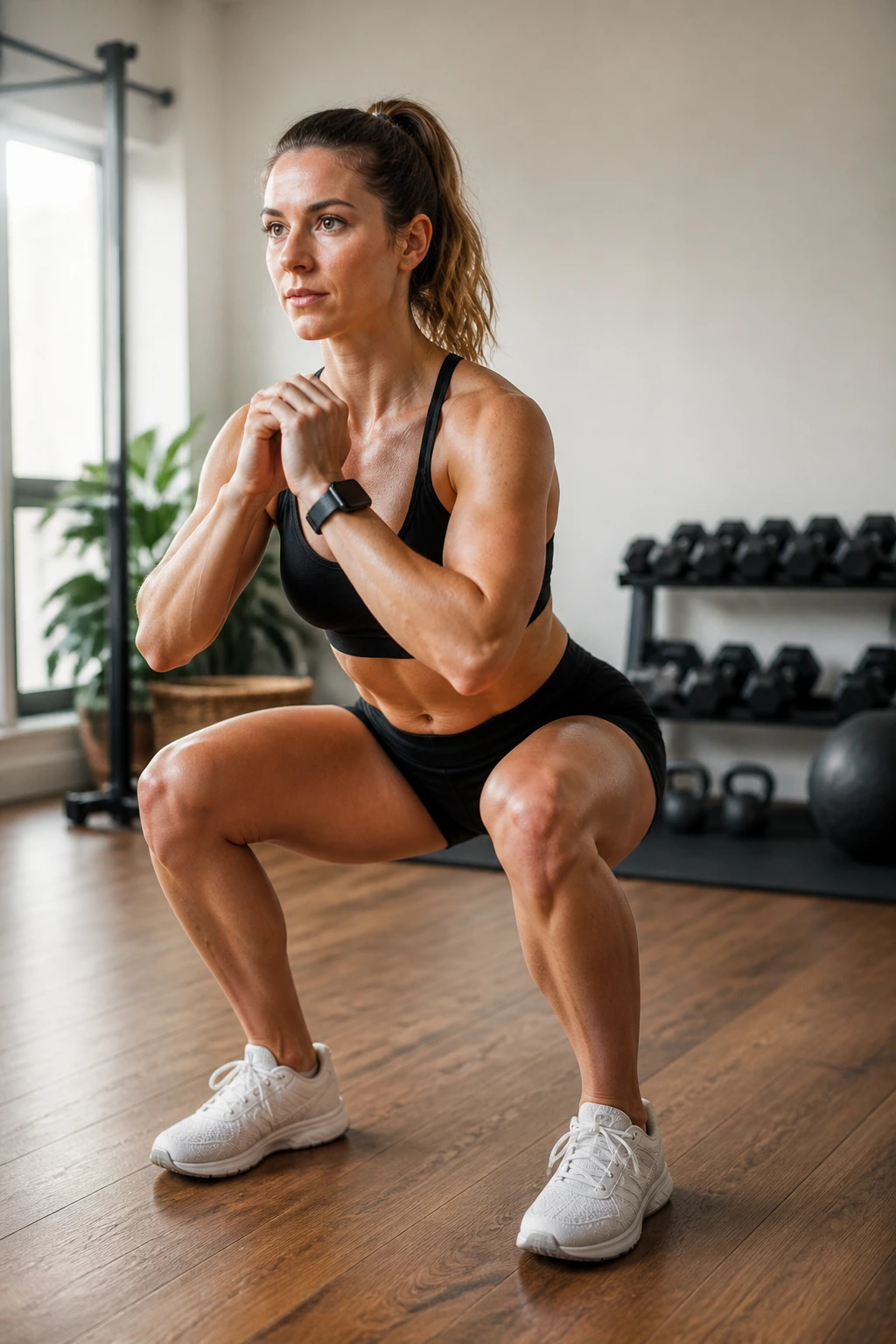
EMOM means “every minute on the minute,” and it’s a clean format when you want structure without a lot of thinking.
Set a timer for 12 minutes. At the start of each minute, do the assigned work, then rest for whatever time is left.
- Minute 1: 12 squats
- Minute 2: 10 push-ups
- Minute 3: 12 alternating reverse lunges
- Repeat four times
You should finish each minute with at least 15 to 20 seconds to breathe. If you don’t, the reps are too high.
The nice part about EMOM training is the built-in honesty. You can’t hide. Either you get the work done and recover, or you don’t. And if you want progression, you trim rest first before you add more reps.
8. 15-Minute AMRAP Sweat Session
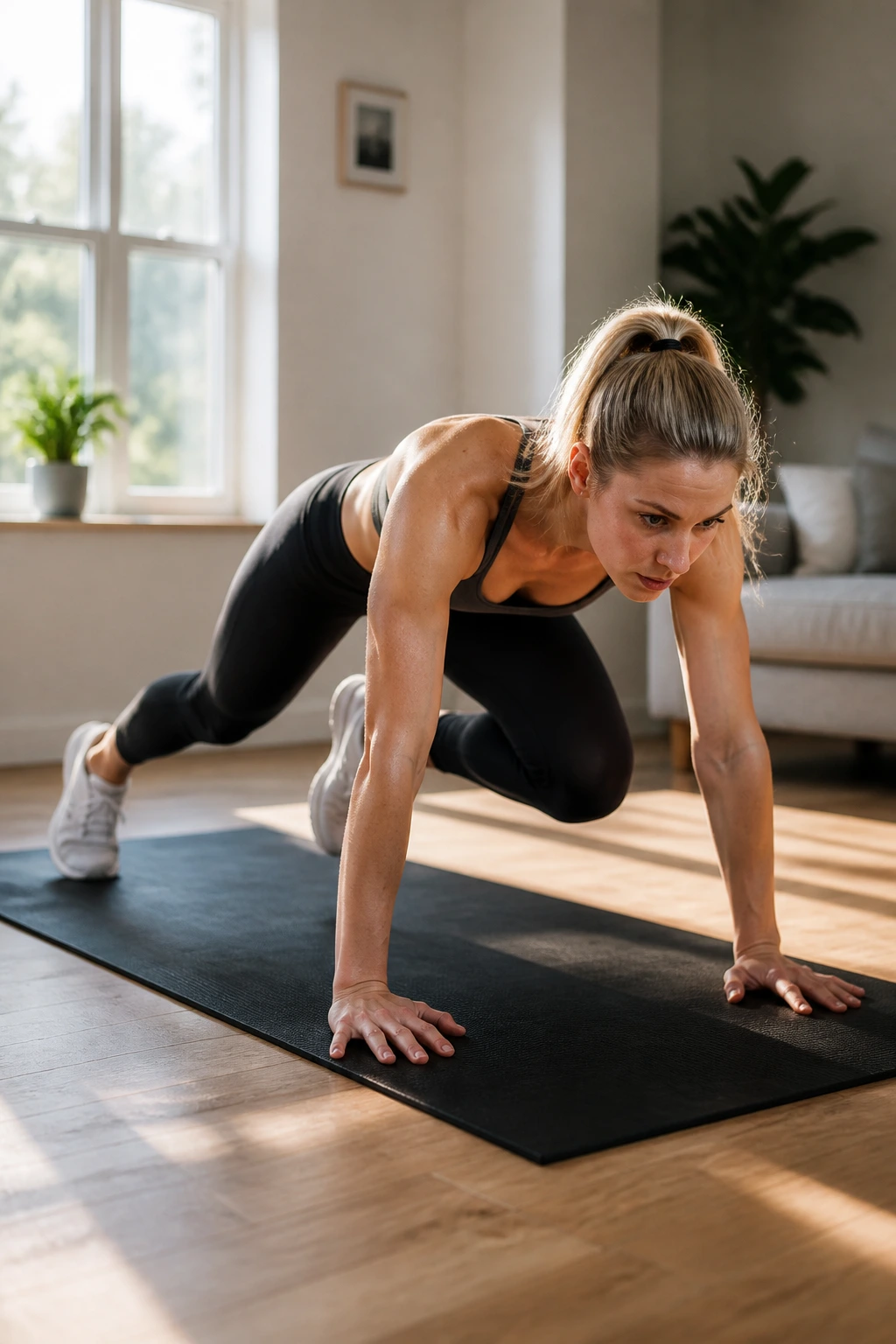
AMRAP is simple: as many rounds as possible in a set time. It’s less about speed for its own sake and more about holding a steady pace while fatigue creeps in.
Set a timer for 15 minutes and cycle through:
- 8 squats
- 6 push-ups
- 10 alternating lunges
- 8 shoulder taps per side
- 12 mountain climbers per side
Move smoothly, not recklessly. The first round should feel manageable, the third should feel businesslike, and the last five minutes should make you focus on breathing instead of trivia.
Unlike Tabata, AMRAP rewards pacing. If you blow up in minute two, the rest of the workout turns into a grim little walk. Keep the first round at about 7 out of 10 effort, then build from there.
9. Glute Bridge and Hamstring Floor Circuit
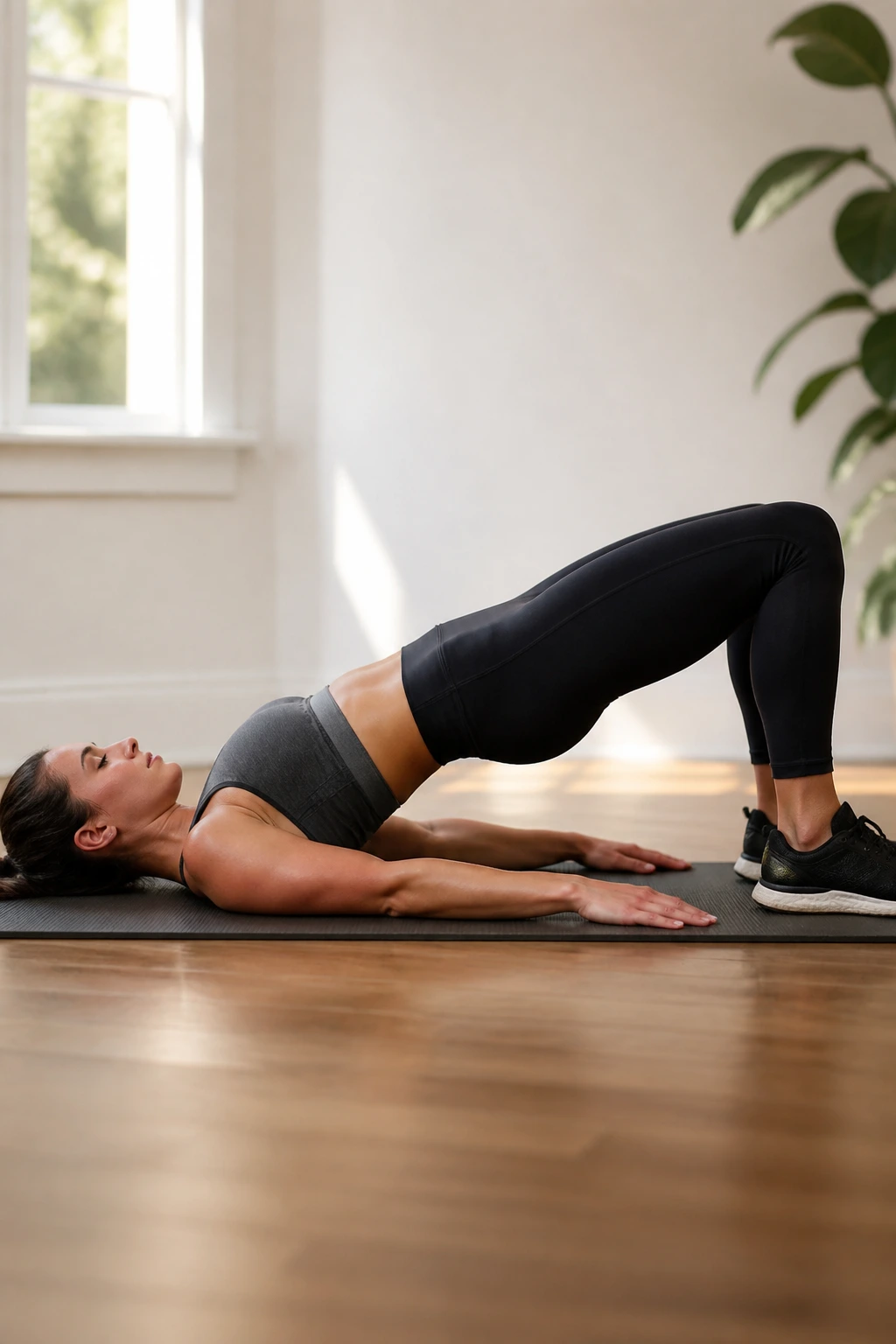
If your legs sit all day, this one wakes up the back side without needing a single piece of equipment.
Do 3 to 4 rounds of:
- 20 glute bridges
- 12 single-leg glute bridges per side
- 15 frog pumps
- 10 donkey kicks per side
- 12 fire hydrants per side
Rest 30 to 45 seconds between rounds. Use a mat if your floor is unforgiving; your hips will thank you.
The floor-based moves keep tension on the glutes without the balance challenge of standing work. That makes it a nice choice on days when you want muscle work, not cardio chaos.
A small pause at the top of each bridge matters. Squeeze for 1 full second before lowering. That tiny squeeze is where a lot of the benefit lives.
10. Stair Workout With Bodyweight Moves

Stairs are not glamorous. They are, however, brutally useful.
Use a staircase or a single sturdy step for 4 rounds:
- 10 step-ups per leg
- 8 split squats per leg
- 10 incline push-ups with hands on the step
- 20 stair climbers
- 30-second wall sit
Hold the rail lightly if you need balance, but don’t lean on it. The work should stay in your legs, not your arms dragging you around like luggage.
What Makes Stairs Worth It
They raise the heart rate fast while giving the legs a long range of motion. That’s a nice combo. Step-ups also train coordination in a way that flat-floor circuits sometimes miss.
Small Detail, Big Difference
Drive through the whole foot on each step-up. If you push mostly through the toes, your calves take over and the glutes do less of the job.
11. Low-Impact Fat-Burn Circuit

What if you want a sweaty session without the jump-scare feeling in your knees?
Do 45 seconds work, 15 seconds rest for 4 rounds:
- March in place with arm swings
- Bodyweight squats
- Standing knee drives
- Slow climbers from a plank
- Alternating curtsy lunges
This is the kind of circuit that looks mild from across the room and feels serious once you’re three minutes in. The trick is continuous motion. Don’t pause between reps unless the movement needs it.
I like this format for anyone who wants conditioning but hates the bounce of traditional HIIT. It’s also easier to do first thing in the morning, when your joints are still acting like they need a memo.
Keep the range of motion full, though. Lazy half-squats turn the workout into a warm-up with a stopwatch.
12. Mobility and Strength Blend

Some workouts are for sweating. Some are for moving better. This one does a bit of both, which is why I keep coming back to it.
Move
Start with inchworms, cossack squats, and lunge-with-reach patterns for 2 rounds of 6 to 8 reps each.
Work
Then do 3 rounds of:
- 8 push-ups
- 10 reverse lunges per leg
- 20-second side plank per side
- 12 glute bridges
The first half loosens things up. The second half asks the body to keep that same shape while working harder. That combination feels better than blasting hard reps on stiff hips and tight ankles.
If one side of your body feels clunkier, spend an extra rep or two there. Human bodies love that kind of unevenness. No point pretending otherwise.
13. Ladder Circuit From 5 to 1

Ladders are a nice mental trick. The numbers go down, so your brain stays calmer while your body starts bargaining.
Run each move for 5 reps, then 4, then 3, then 2, then 1:
- Push-ups
- Squats
- Reverse lunges per leg
- Pike push-ups
- Burpees or step-backs
Rest 20 to 40 seconds between rounds if needed. If you want a longer session, go back up the ladder after you finish.
The beauty of a ladder is that it starts with a bite-sized task. Five reps feels harmless. Then the pile of work gets bigger than you expected, and suddenly you’re paying attention.
This is a good workout when you want a clear finish line. There’s something clean about working your way down to one rep and knowing you’ve earned the last one.
14. Isometric Hold Circuit

Static holds are underrated because they’re unflashy. They also make weak spots obvious fast.
Do 3 rounds of:
- Wall sit, 30 to 60 seconds
- Push-up bottom hold, 10 to 20 seconds
- Forearm plank, 30 to 45 seconds
- Split squat hold, 20 to 30 seconds per side
- Glute bridge hold, 30 seconds
Isometrics train you to stay tight when movement stops. That matters more than people think, especially in the middle of a hard set when your form starts to leak.
What to Feel
Your thighs should shake a little in the wall sit. Your core should feel braced, not pinched, in the plank. The split squat hold should land like a sting in the front leg, not a knee complaint.
Easy Mistake
Don’t chase longer holds by letting posture collapse. A clean 30-second hold beats a saggy 60-second one every time.
15. Athletic Conditioning Circuit

This one feels like training, not just sweating.
Do 4 rounds of 30 seconds on, 15 seconds off:
- Bear crawl forward and back
- Skater steps
- Inchworm to push-up
- Alternating lateral lunges
- Fast plank jacks or step-outs
Keep the moves crisp. Athletic conditioning is about changing positions under control, not just seeing how ragged you can get.
I like this style because it wakes up the whole body. Your shoulders stabilize during crawling, your hips work during lateral lunges, and your core has to keep the chaos from spilling over into the rest of the rep.
If your floor is short, cut the crawl distance to 2 or 3 steps each way. You do not need a football field. You need a little bit of space and decent intent.
16. Recovery-Day Movement Circuit
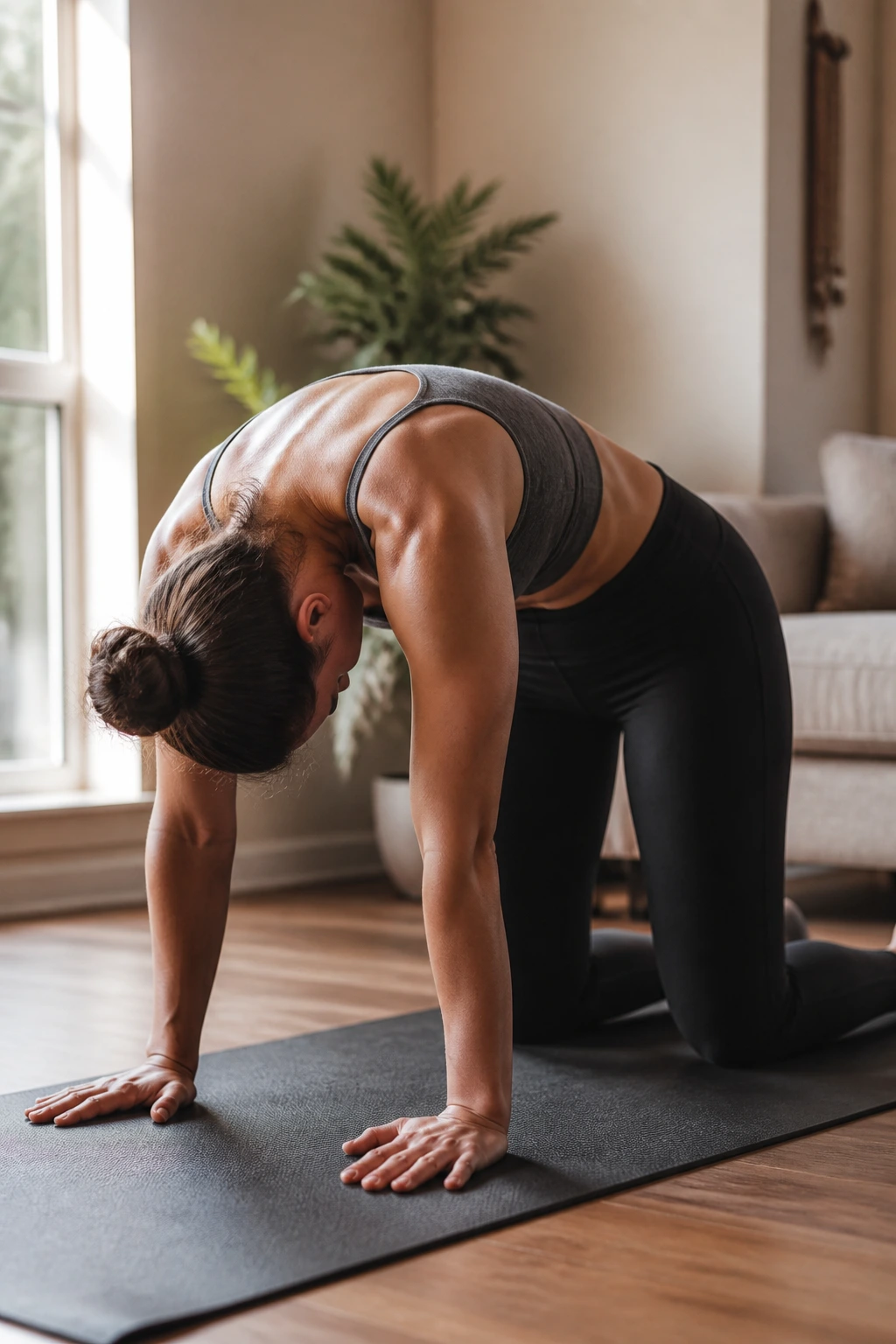
Not every circuit should leave you staring at the ceiling.
This recovery version is gentle on purpose. Do 2 to 3 rounds of:
- Cat-cow, 8 reps
- Hip circles, 8 each direction
- Bodyweight squat, 10 reps
- Dead bug, 6 each side
- Child’s pose breathing, 5 slow breaths
The pace should feel almost too easy. That’s the point. You’re trying to loosen stiff hips, calm a cranky back, and keep blood moving without adding stress.
A lot of people skip recovery work because it doesn’t feel impressive. Fine. It also tends to make the next hard workout feel smoother, and that part is hard to argue with.
If you sit a lot, this one is worth keeping around. Your hips and spine tend to notice the difference faster than your ego does.
17. Small-Space Travel Circuit Workout at Home
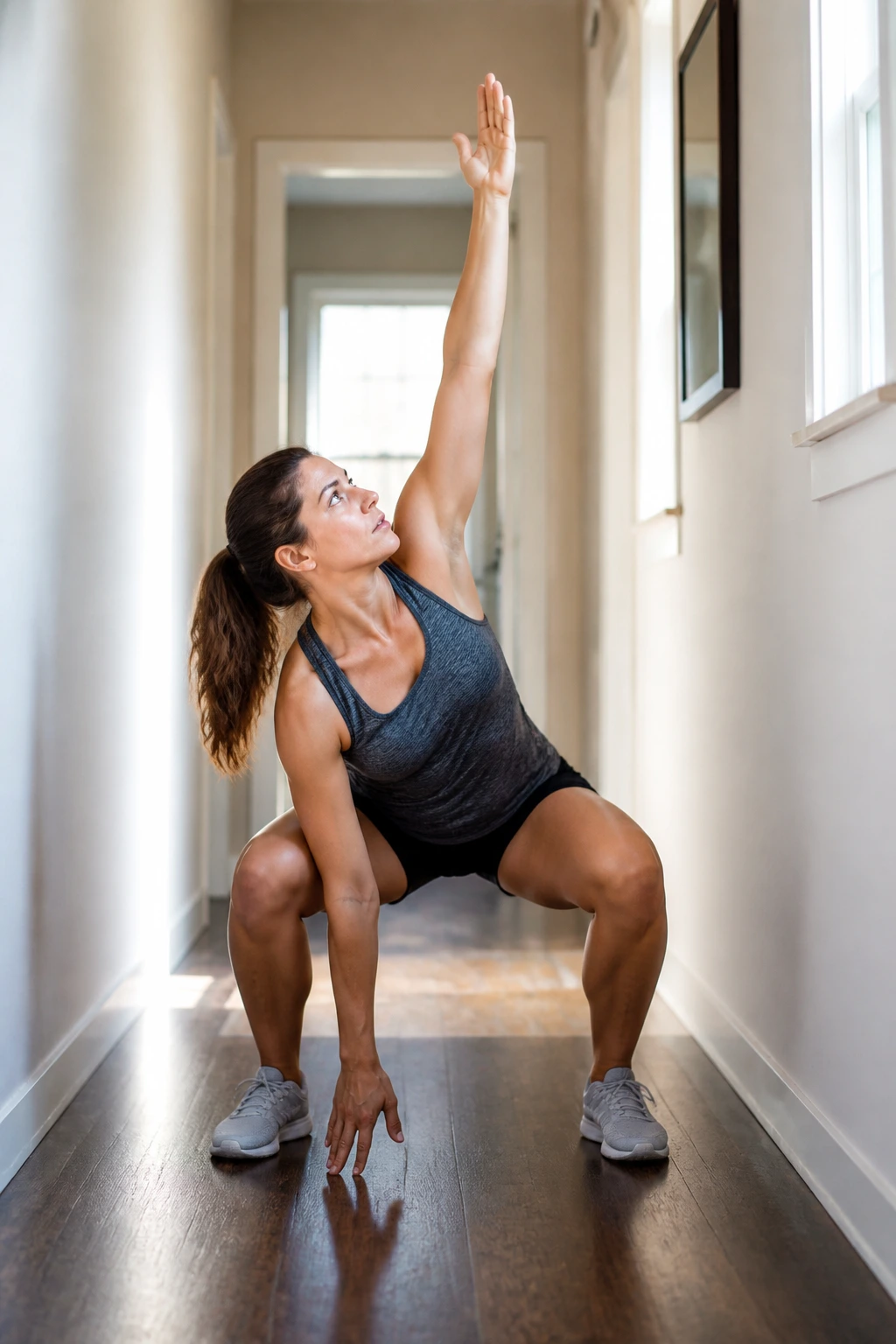
You don’t need much room for this one. A 6-by-6-foot patch of floor is enough.
Set 3 rounds of 40 seconds work, 20 seconds rest:
- Squat to reach
- Standing cross-body knee drives
- Push-ups
- Alternating reverse lunges
- Plank shoulder taps
- Glute bridges
That format is tidy, which is useful when your workout space is a hallway, a corner, or the gap beside a bed. The standing moves keep things from feeling cramped, and the floor work keeps the session from turning into a marching drill.
Travel workouts need two things: low fuss and repeatability. This one has both. If you only have time for two rounds, do two. If your room is tiny, keep the moves narrow and controlled.
Seriously, a small space can still do a lot of work.
18. 10-Minute Micro-Circuit

Short on time? Good. That does not excuse a weak workout.
Do 2 rounds of 40 seconds on, 20 seconds off:
- Squats
- Push-ups
- Mountain climbers
- Glute bridges
- Plank hold
That’s ten minutes total if you move with purpose. No warm-up fluff, no wandering around the room pretending you’re “getting in the zone.”
How to Make It Count
Use the first round to find your pace. Use the second to stay there. If your form breaks in minute six, shorten the range of motion a little instead of trying to force speed.
When This Works Best
It’s a good fit for busy days, but it also works as a finisher after a walk or mobility session. The workout is small. The effect isn’t, if you actually push the work intervals.
19. Push-Up Progression Circuit
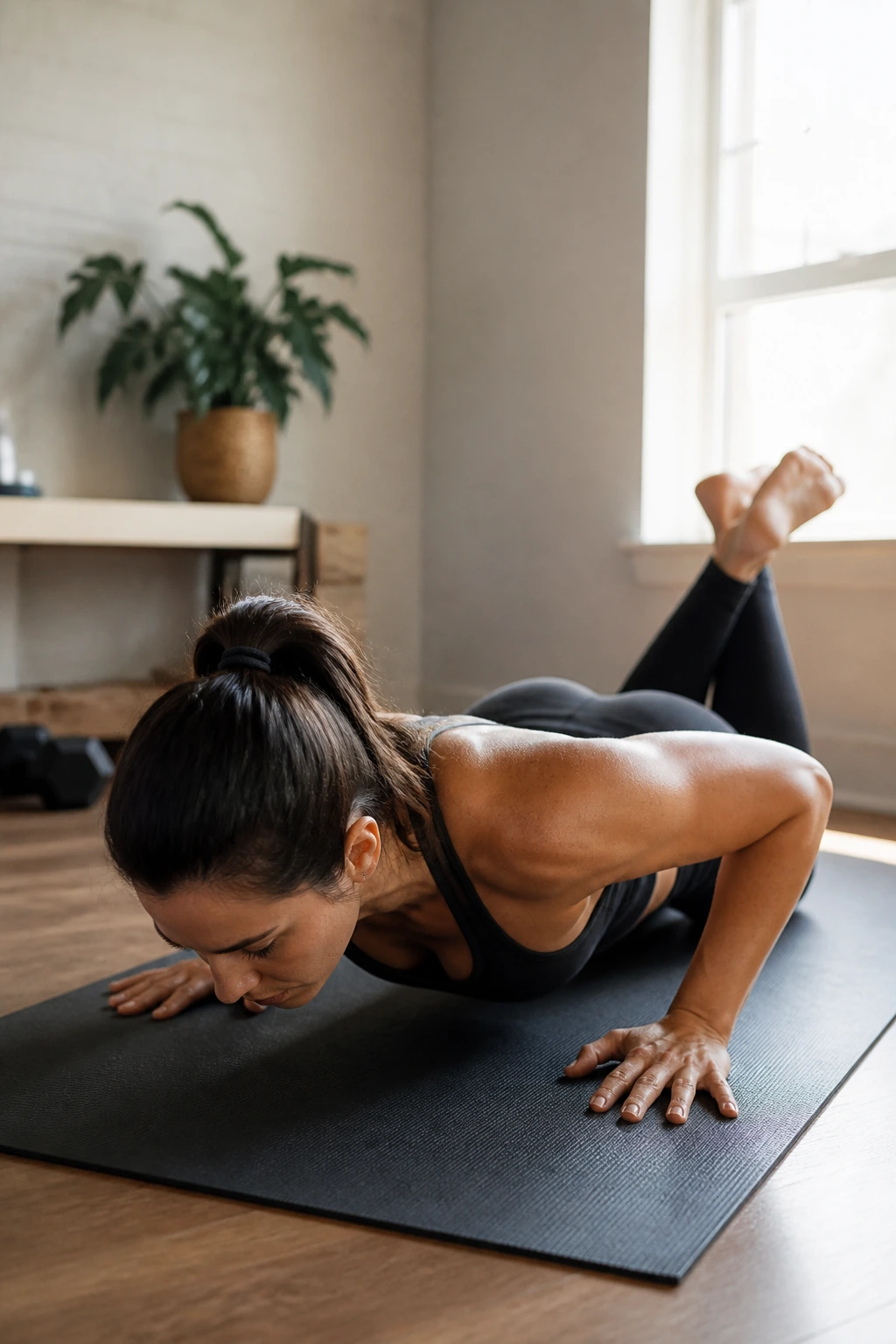
A lot of people stall on push-ups because they keep trying the full floor version and then wondering why it feels stuck. Build the pattern instead.
Do 3 rounds of:
- 8 wall push-ups
- 8 incline push-ups
- 5 knee or floor push-ups
- 3 slow eccentric push-ups
- 20-second plank
The comparison here matters. Wall push-ups teach the shoulder path. Incline push-ups build strength with less load. Slow eccentrics force control on the way down, which is where most people collapse anyway.
If floor push-ups are already fine, cut the wall version and start at incline plus eccentrics. If they’re not, keep the wall work and get patient.
That patience pays off. Strong pressing usually comes from cleaner positions, not from throwing yourself at the floor harder.
20. Squat and Lunge Endurance Circuit
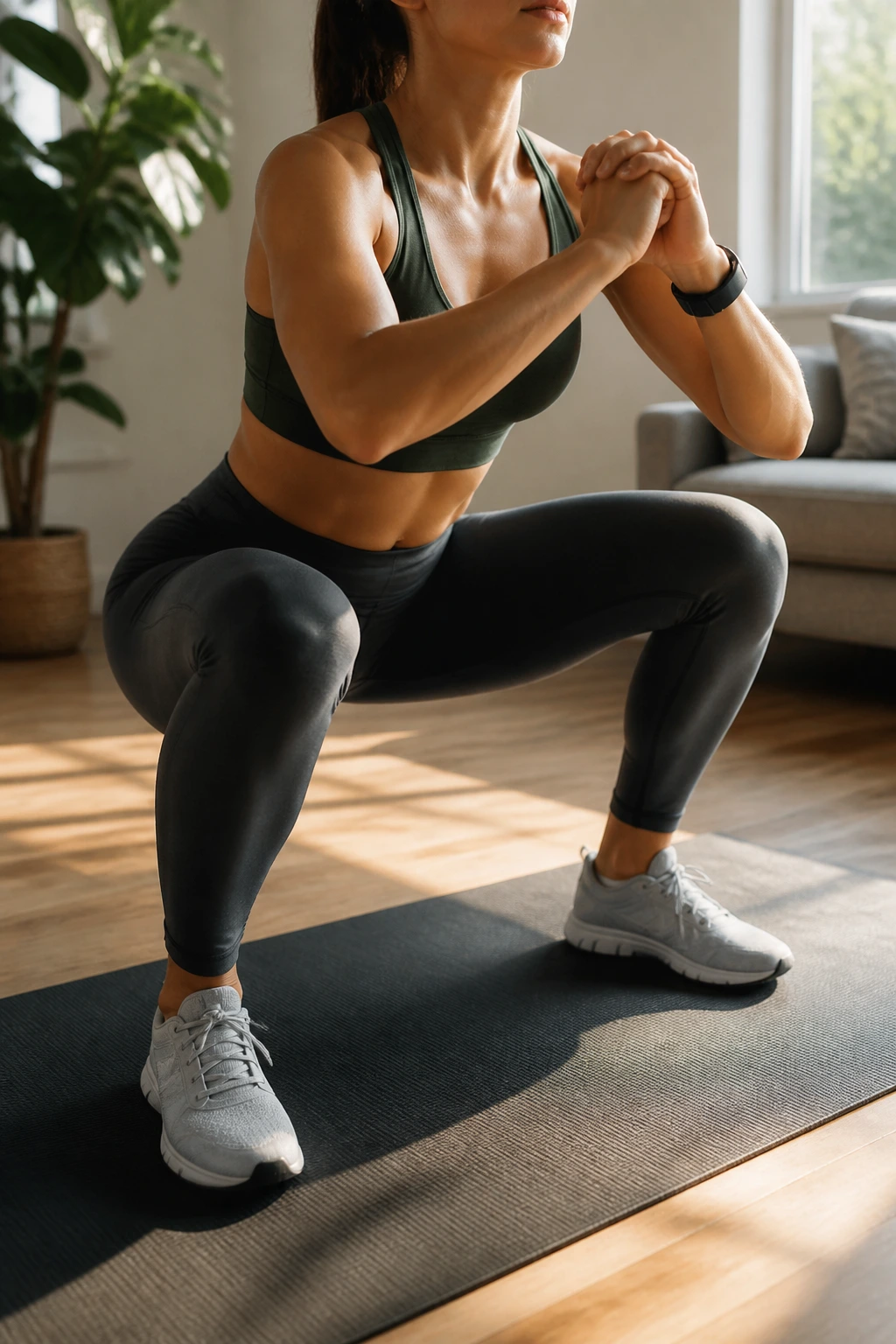
Leg endurance is its own kind of annoyance.
Do 4 rounds of:
- 20 squats
- 12 reverse lunges per leg
- 20 pulse squats
- 10 split squats per leg
- 30-second wall sit
Rest 45 to 60 seconds between rounds. You’ll want it. The burn in your quads is the point, but it should be controlled, not sloppy.
This circuit works because it keeps changing the angle on the same muscles. Squats hit the big pattern. Lunges and split squats make each leg work on its own. The wall sit finishes the job with a long hold that tests patience as much as strength.
If your knees dislike deep ranges, shorten the squat depth slightly and keep the torso upright. Don’t force a range that turns every rep into a wince.
21. Full-Body Pyramid Circuit
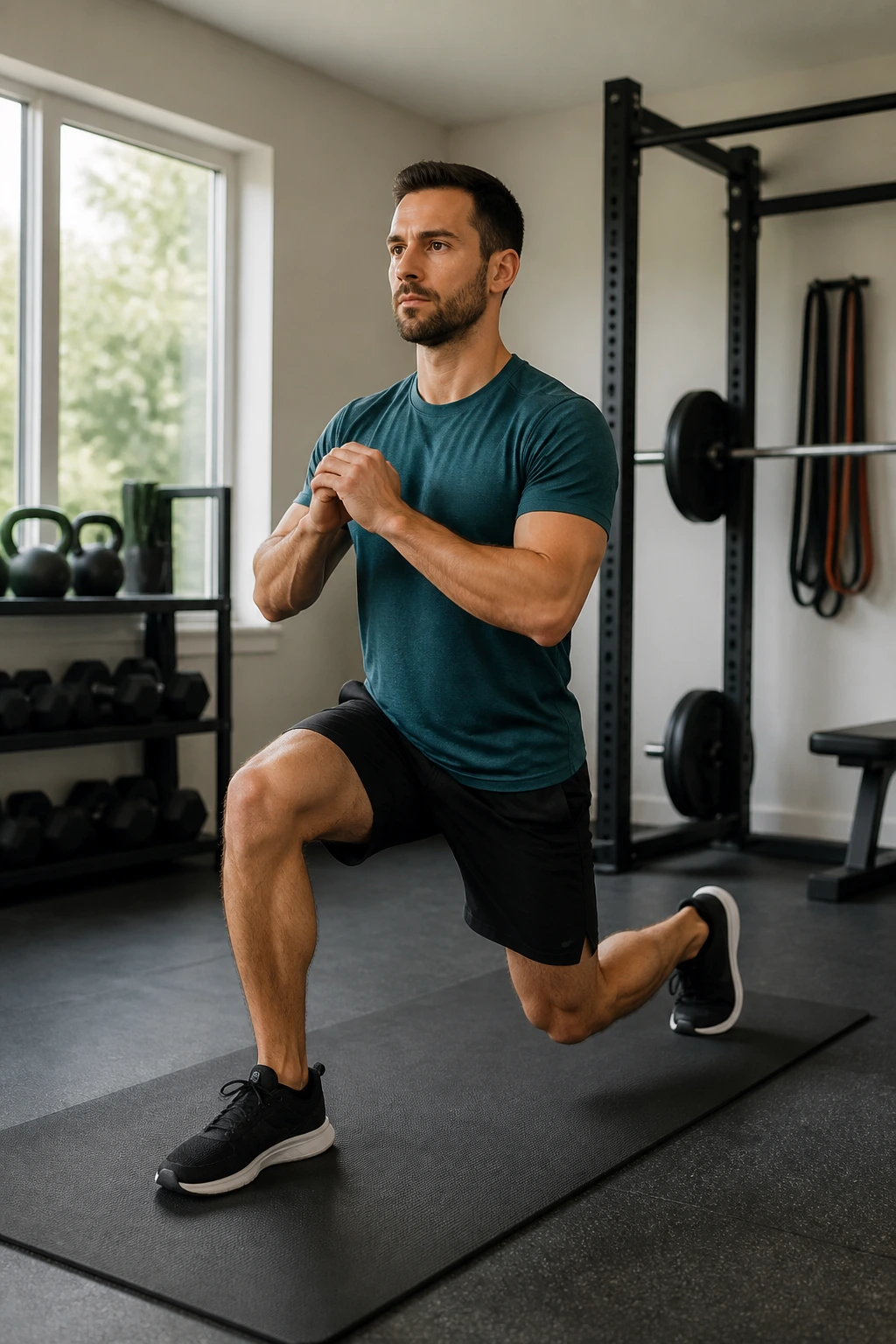
Pyramids are neat because they change the pace without changing the rules too much.
Try 2-4-6-8-10-8-6-4-2 reps of:
- Squats
- Push-ups
- Alternating lunges per leg
- Mountain climbers per side
You can either run the pyramid once or treat the whole thing as one longer workout with 60 seconds rest between each rung. The increasing middle makes the session feel like it’s building rather than just dragging on.
Why the Shape Helps
The early sets warm you up. The middle sets do the main work. The last few feel hard because fatigue is already in the room, not because the reps are weirdly high.
Best Use
This works well when you want a full-body session that has a clear middle and end. There’s less mental drift than in a free-form circuit, which is useful on days when motivation is half asleep.
22. Boxing-Style Cardio Circuit

Throwing punches in place sounds simple until your shoulders start complaining.
Set 3 rounds of 3 minutes on, 1 minute off:
- Jab-cross combinations
- Slip-step footwork
- Fast knees
- Squat to punch
- Sprawl or step-back burpee
Keep your hands up between combinations. The stance matters. If you stand loose and lazy, the drill becomes arm waving. If you stay light on the balls of your feet, it turns into real cardio.
I like this circuit because it blends rhythm with effort. You’re not just chasing reps; you’re moving in patterns. That keeps the mind engaged long enough to forget about the clock for a little while.
If full sprawls feel rough, step one leg back at a time. The session stays alive without beating up the wrists.
23. Core and Cardio Combo Circuit

This one sits in the middle ground: enough intensity to sweat, enough control to keep the movement honest.
Round One: Move
Do 30 seconds each of:
- High knees
- Mountain climbers
- Squat jumps or fast squats
Round Two: Control
Then do 30 seconds each of:
- Side plank hip lifts
- Hollow hold
- Bird dog
Repeat the two-round block 3 times.
The pairing matters. The hard minute raises your heart rate. The control minute keeps your midsection from turning into a noodle. That alternating rhythm keeps the session from feeling one-note, which is nice when you’re working out in the same room where you eat dinner.
If your lower back starts arching in the hollow hold, bend the knees and shorten the lever. That’s not a cheat. That’s smart.
24. Total-Body Density Circuit
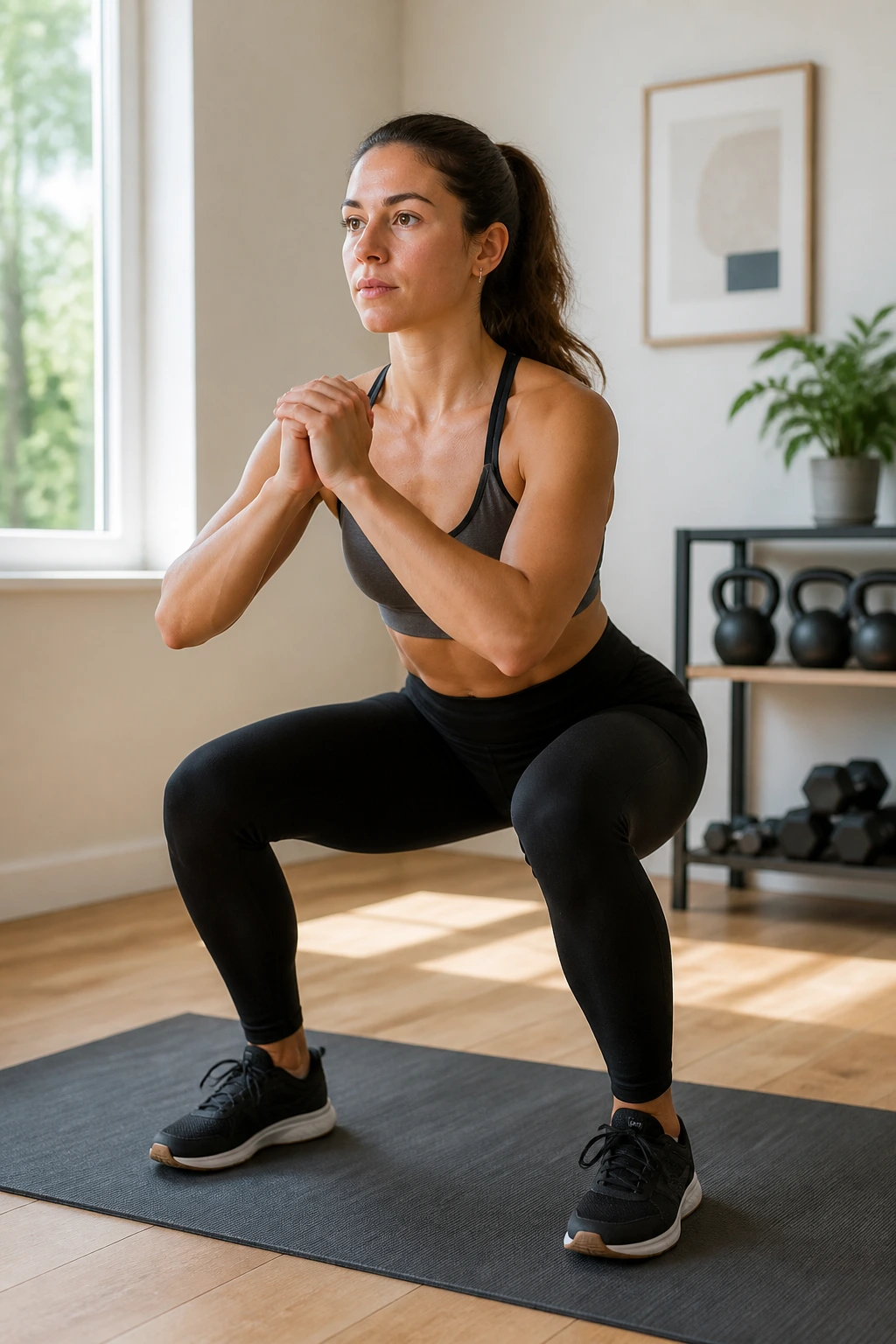
Density training is a tidy way to squeeze more work into less time without turning the workout into a mess.
Set a timer for 12 minutes and cycle through:
- 10 squats
- 8 push-ups
- 12 alternating lunges
- 15 glute bridges
- 20 mountain climbers
The goal is to complete as many quality rounds as you can before the timer ends. Don’t race the clock so hard that your reps get ugly. A steady pace usually wins here.
This style is useful when you want a measurable session. Write down your round count. Next time, try to beat it by one clean rep, not by turning into a flailing machine.
It’s not fancy. It works because the rules are simple and the clock is unforgiving.
25. Weekly Rotation Body Weight Circuit Workout at Home

A good weekly plan beats random hard workouts. Every time.
Use the circuits above as building blocks. Put a harder conditioning day next to a strength day, then follow both with something quieter so your joints and nerves don’t feel mugged.
A simple rotation looks like this:
- Day 1: Lower-body strength circuit
- Day 2: Silent apartment cardio or recovery movement
- Day 3: Upper-body push and plank circuit
- Day 4: Rest or mobility blend
- Day 5: EMOM, AMRAP, or Tabata
- Day 6: Core and cardio combo
- Day 7: Easy walk, stretch, or glute bridge floor work
That’s the part people skip. They chase the hardest workout in the list and then wonder why they feel cooked after three days. Better to mix intensity, keep one or two sessions lighter, and give the body a reason to come back ready.
If you want a very clean rule, use this: one strength-focused circuit, one conditioning circuit, one recovery or mobility circuit each week. Everything else is a bonus, not a requirement. The body responds better to consistency than to dramatic overreach, and that never gets old.
