



The best workout for a woman just starting out is usually the one she can do again three days later. Not the one that leaves her flattened on the floor. Not the one that looks impressive on paper. The one she can repeat without dreading the next session.
That sounds almost too plain, but plain is exactly what works at the beginning. Too many beginners try to earn soreness, then wonder why they quit after a week. A smarter start feels a little underwhelming at first — a brisk walk, a set of squats to a chair, a few push-ups against a wall, some gentle core work — and then it starts paying off in steadier energy, better balance, and the strange satisfaction of feeling your body wake up.
There’s also a practical truth most people learn the hard way: the first month of exercise is less about crushing workouts and more about building a habit your joints, lungs, and schedule can tolerate. Short sessions. Clear movements. Enough challenge to matter, not enough punishment to scare you off. That’s the sweet spot, and it’s a lot less glamorous than social media makes it sound.
So let’s keep this grounded, specific, and useful. These are 20 effective workouts for women just starting out — the kind that build confidence, strength, and conditioning without asking you to be an athlete on day one.
1. Brisk Walking Intervals for Women Just Starting Out
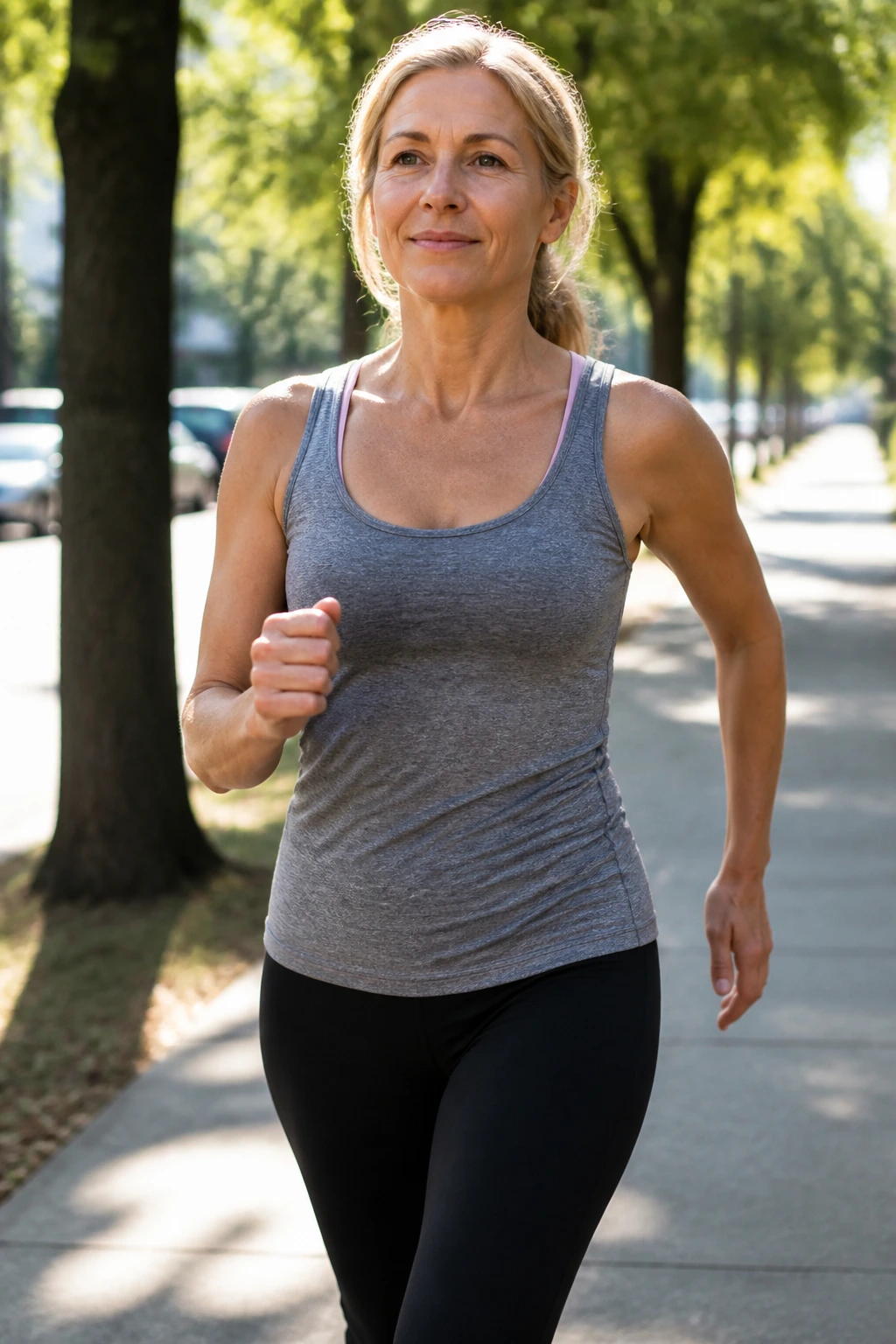
Brisk walking is the workout most beginners underrate, and honestly, that’s a mistake. When you turn a regular walk into intervals — a faster minute here, an easier recovery there — you get heart work, leg work, and a real training effect without the pounding that can make new exercisers ache in all the wrong places.
How to Set It Up
Start with 5 minutes at an easy pace. Then alternate 1 minute brisk / 2 minutes easy for 6 to 8 rounds. Finish with another 5 minutes of easy walking. That gives you a session that feels manageable but still leaves a mark.
The brisk part should feel like you’re hurrying to catch up with someone across the street. You should still be able to talk, but not in long paragraphs. If your shoulders are creeping up toward your ears, slow down and loosen your hands.
What Makes It So Useful
Walking hits a rare sweet spot: low impact, low cost, easy to repeat, and easy to scale. A flat route is fine. A treadmill works too. If you want a bit more challenge, add a small hill or a slight incline, but don’t make day one a mountain climb.
Pro tip: wear shoes that feel stable through the heel and forefoot. Sloppy shoes make walking feel harder than it should.
2. Chair Squats That Teach Real Leg Strength
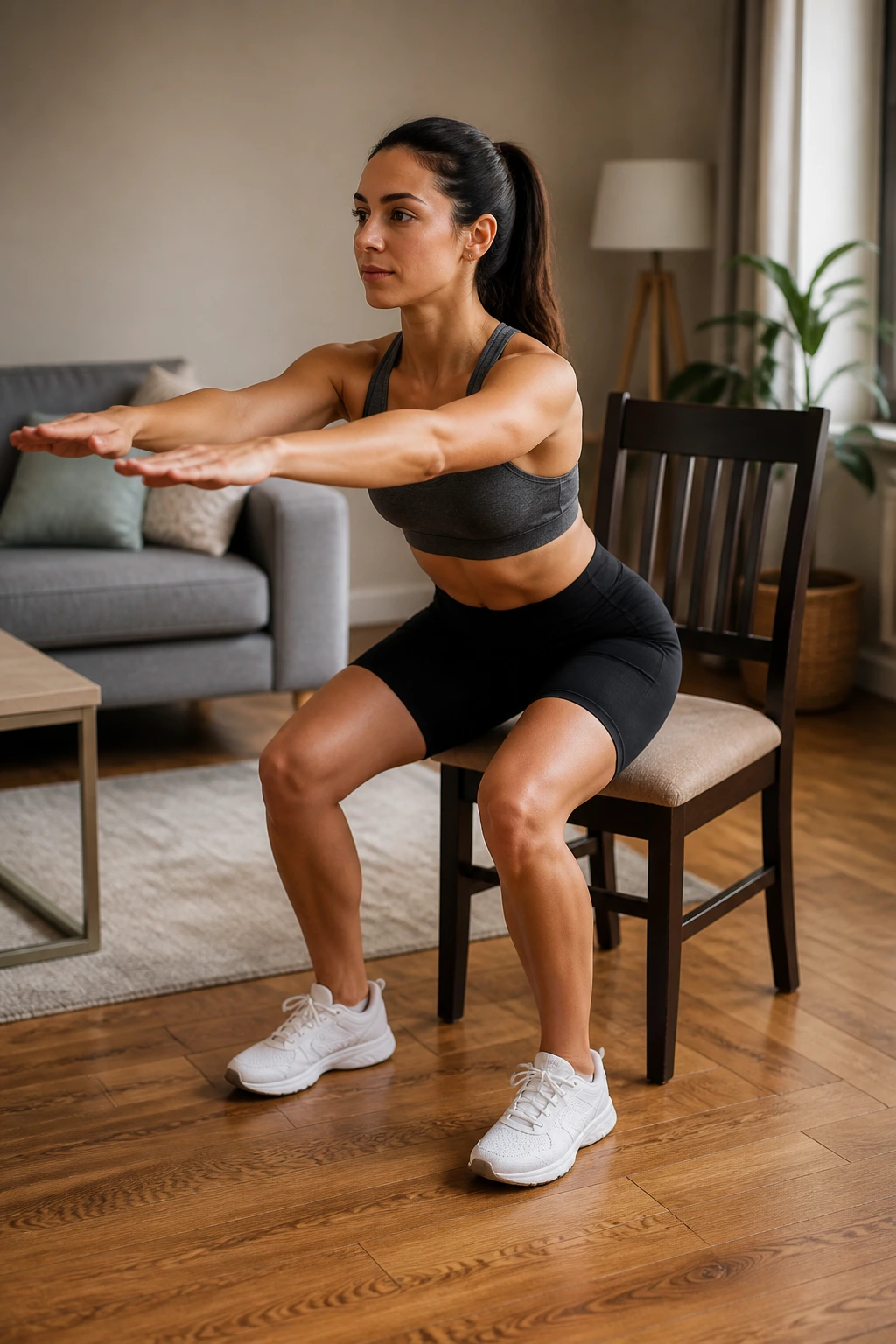
Chair squats are one of those exercises that look almost too simple until you do them correctly. Then your thighs start paying attention. They train your legs, glutes, and balance in a way that carries over into daily life — sitting, standing, climbing stairs, carrying groceries, all of it.
A stable chair gives you a clean target and removes the fear factor. You’re not dropping into a deep squat and hoping for the best. You’re learning the pattern first. That matters.
Stand in front of the chair with your feet about shoulder-width apart, then sit back slowly until you lightly tap the seat. Drive through your heels to stand back up. Keep your chest lifted and your knees tracking in line with your toes, not caving inward. Two to three sets of 8 to 12 reps is a strong starting point.
If the chair feels too low, stack a firm cushion on top. If it feels too high, use a lower seat or work on the control of the descent first. The goal is a smooth sit-and-stand, not a crash landing.
3. Incline Push-Ups on a Wall, Counter, or Bench
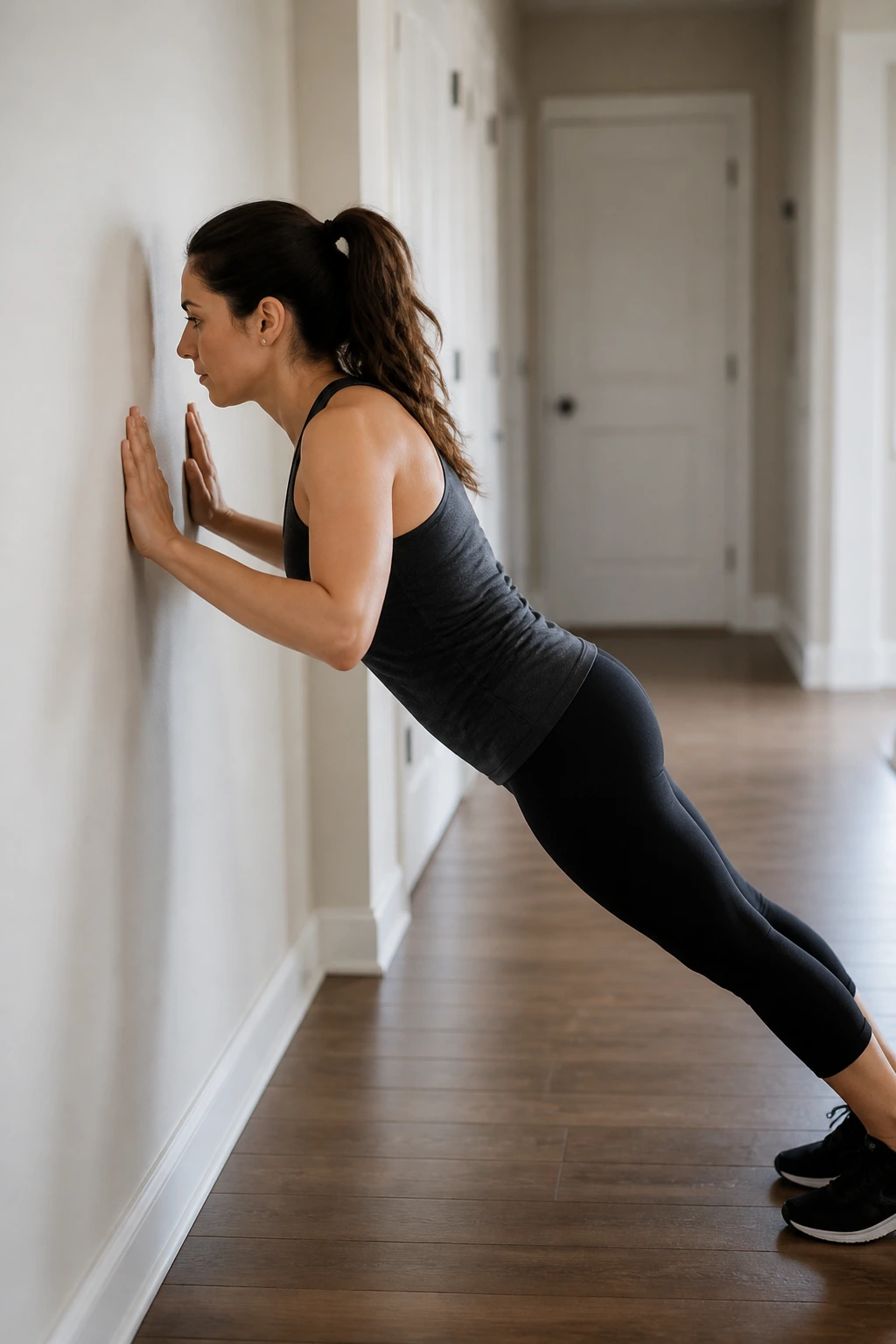
Can’t do a floor push-up yet? Good. Start higher. Incline push-ups are a better beginning than grinding through sloppy floor reps, because they let you learn body alignment without collapsing through your shoulders or lower back.
Try them against a wall for the easiest version, then move to a counter, sturdy table, or bench as you get stronger. Your body should move as one piece. No sagging hips. No neck craning forward like you’re peering over a fence.
A Small Progression That Actually Works
Start with 2 to 3 sets of 6 to 10 reps. Lower your hands to a less elevated surface only when you can keep the same clean form. That tiny change in angle can make the workout feel dramatically harder.
The best cue here is simple: your chest leads the movement, not your chin. Lower under control, press the surface away, and stop the set when your form starts to fray. That’s how you build strength without turning the exercise into a shoulder complaint.
4. Glute Bridges for Hips That Need More Work
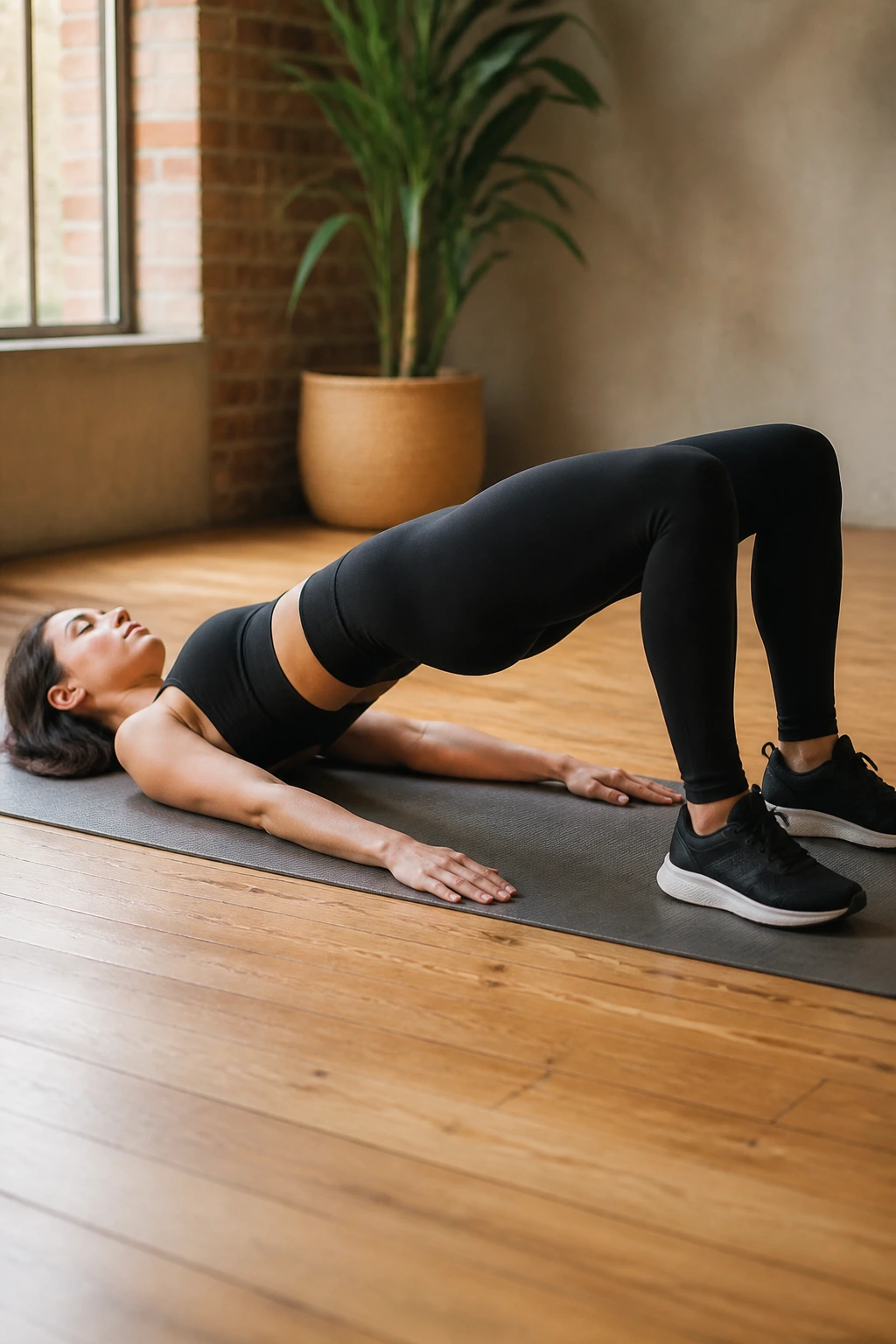
Glute bridges are quiet, almost unassuming, and then they surprise you. The movement wakes up the glutes, helps the hips do their job, and gives the back a break from doing all the work it’s been unfairly asked to do for years.
Lie on your back with your knees bent and your feet flat on the floor, about hip-width apart. Squeeze your glutes and lift your hips until your body makes a straight line from shoulders to knees. Lower slowly. Pause for 1 to 2 seconds at the top so the work stays where it belongs.
What to Feel
You should feel this mostly in your glutes and the back of your thighs, not in your lower back. If your back is taking over, bring your feet a little closer to your hips and shorten the lift.
- 2 to 3 sets of 10 to 15 reps
- Keep your ribs down, not flared
- Press through your heels, not your toes
- Stop if you feel pinching in the lower back
A tiny pause at the top makes this far more effective than racing through the reps.
5. Resistance Band Rows for Women Just Starting Out
Rows are the workout a lot of beginners skip, which is a shame because they do so much for posture, upper-back strength, and shoulder comfort. If you sit at a desk, carry a bag on one shoulder, or just want your upper body to feel less slumped, rows deserve a place in your week.
Loop a resistance band around a sturdy post, door anchor, or your own feet if you’re sitting on the floor. Pull the band toward your ribs with your elbows close to your sides, then return slowly. The pull should feel controlled, not jerky.
What Makes Them Different
Unlike push-ups, which work the front of the body, rows train the pulling muscles that help you stand tall. That balance matters more than people think. Stronger upper-back muscles make everyday movement feel easier.
Start with 2 to 3 sets of 10 to 15 reps. If the last few reps feel too easy, step farther away from the anchor or use a thicker band. If your neck tightens, you’re probably shrugging. Drop the shoulders and try again.
6. Low-Impact Marching Cardio in a Small Space
A small room is enough. Seriously. Marching cardio sounds almost too basic, but once you lift your knees with purpose, swing your arms, and keep moving without bouncing all over the place, it becomes a useful cardio session that doesn’t demand a treadmill, bike, or class schedule.
March in place for 30 to 45 seconds, then recover with an easier march or a light side step for 15 to 30 seconds. Repeat for 10 to 15 minutes. If you want more variety, add knee lifts, heel digs, or step-touches. Keep the impact low and the rhythm steady.
The beauty of this workout is that it works on days when motivation is low. You can do it barefoot on a mat, in sneakers on a hard floor, or while watching something on TV. If your knees feel cranky, shorten the step and slow the tempo.
One good session is better than a perfect plan you never start.
7. Dead Bugs for a Quiet, Strong Core
Why do dead bugs matter so much? Because they teach your core to stay steady while your arms and legs move, which is what real life asks for all the time. Reaching, lifting, bending, carrying — those aren’t crunches. They’re controlled movement under load.
Lie on your back, bring your legs into a tabletop position, and raise your arms toward the ceiling. Lower one arm and the opposite leg slowly, then return and switch sides. Your lower back should stay gently pressed toward the floor. If it arches hard, the range is too big.
How to Keep It Honest
Move slower than you think you need to. That’s not a joke. Dead bugs become more useful when the motion is measured and deliberate.
- 2 to 3 sets of 6 to 10 reps per side
- Keep your ribs down
- Exhale as the arm and leg lower
- Stop the set if your lower back starts popping off the floor
The exercise looks simple. That’s part of the trick.
8. Step-Ups on One Stair
A single stair can give you a whole lower-body workout if you use it well. Step-ups train your quads, glutes, balance, and coordination at the same time, which is a nice return for a movement that uses very little space.
Place one foot fully on the step, lean slightly forward, and press through that foot to stand up tall. Bring the other foot up with control, then step back down. Swap sides each rep or do a full set on one leg before changing. Start with 2 sets of 8 reps per leg.
What to Watch For
Use a step that feels safe and stable. A shaky step is not a challenge; it’s a bad idea. Keep your knee aligned over the middle toes and avoid pushing off too much from the back foot. The working leg should do the work.
- Start with a low stair
- Keep the whole foot on the step
- Move slowly on the way down
- Hold a wall or railing if balance feels unsteady
This is one of those exercises that teaches strength and confidence together. Nice combo.
9. Dumbbell Romanian Deadlifts With a Light Weight
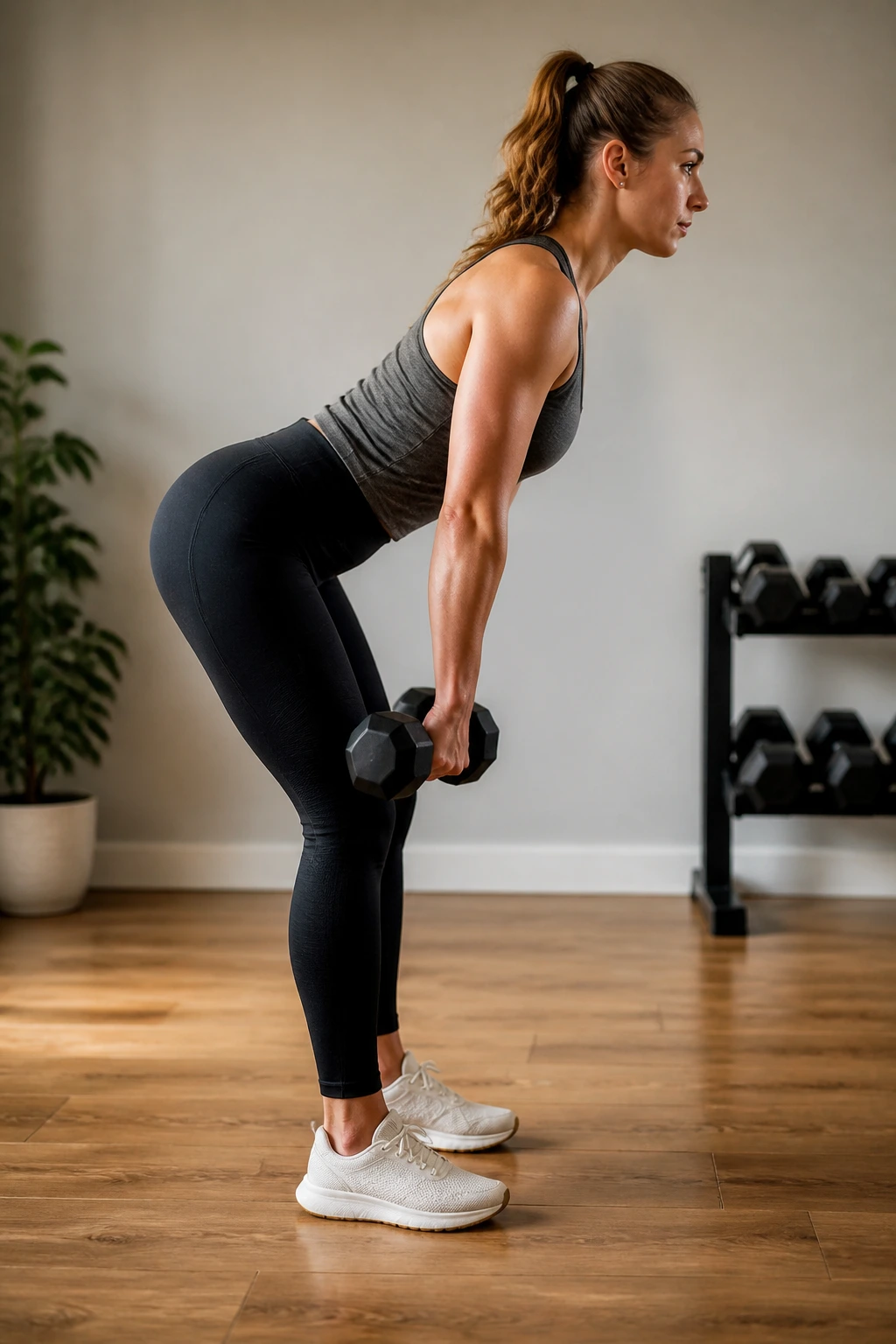
Most beginners think leg training means squats only. It doesn’t. Romanian deadlifts, or RDLs, train the back of the body — hamstrings, glutes, and the hinge pattern that helps you pick things up without rounding your spine like a frightened cat.
Hold a pair of light dumbbells in front of your thighs. Soften your knees, then push your hips back as the weights slide down toward your shins. Keep your back flat and your neck long. Stand back up by squeezing your glutes. Two to three sets of 8 to 10 reps is a good start.
The movement should feel like folding at the hips, not bending at the waist. If the weights drift far from your legs, the exercise gets sloppy fast. Keep them close.
Why It’s Worth Learning Early
The hinge pattern shows up everywhere — lifting a laundry basket, reaching into a car trunk, picking up a child, even setting down a heavy grocery bag. Learning it early makes almost every other strength exercise cleaner.
Start light. Lighter than you think. Form is the whole point here.
10. Knee Planks That Build Core Stamina
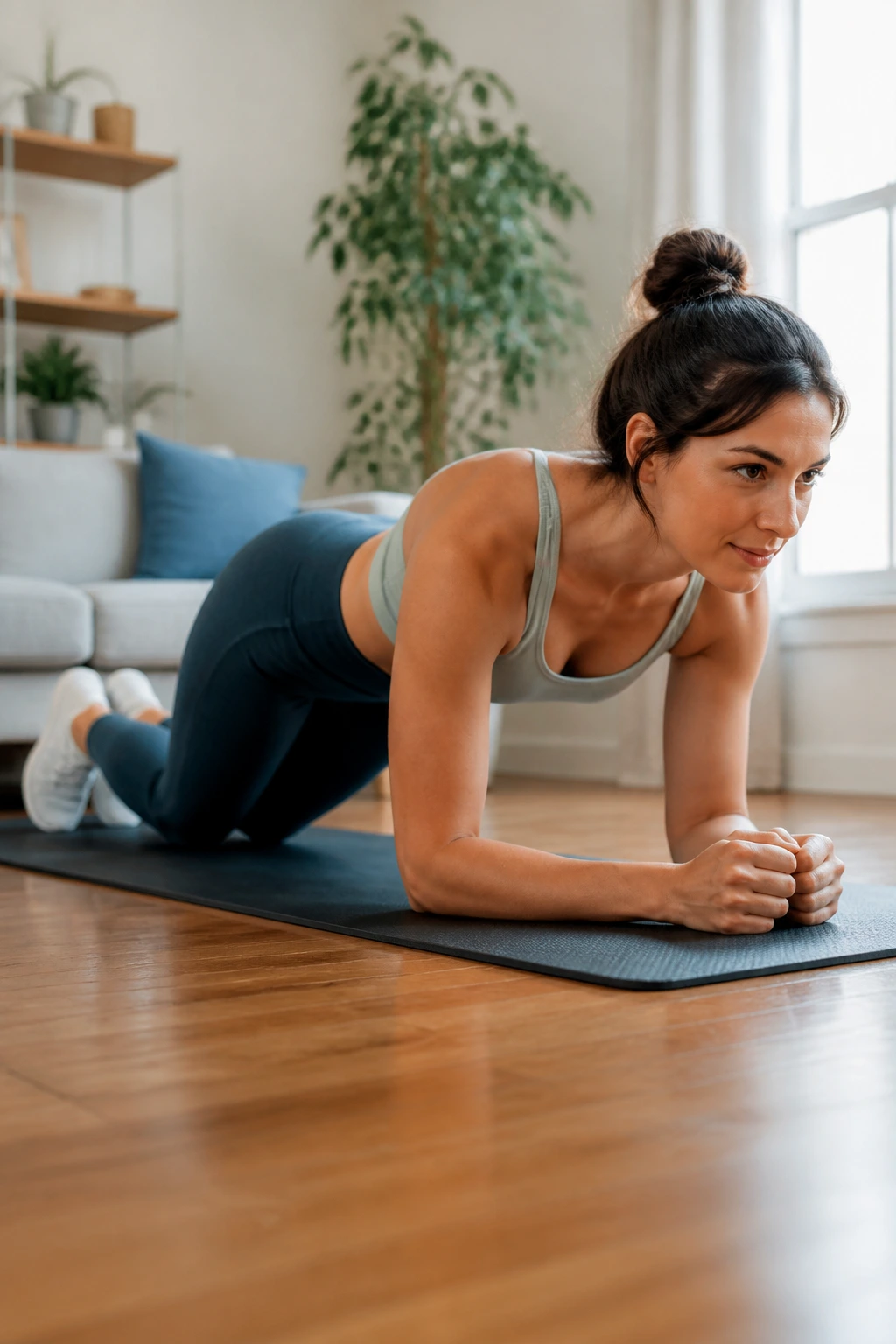
The plank is not a contest. You do not get extra points for holding a shaky position until your lower back starts complaining. A well-done knee plank beats a sloppy full plank every time.
Set your forearms on the floor, knees down, and body in a straight line from head to knees. Brace your stomach like someone is about to tap you in the midsection. Hold for 10 to 20 seconds, rest, then repeat for 3 to 5 rounds.
Short Holds Beat Sloppy Long Ones
Once you start losing your shape — hips sagging, shoulders shrugging, breathing turning choppy — stop. That’s your ceiling for now.
- Keep your elbows under your shoulders
- Press the floor away
- Squeeze your glutes lightly
- Breathe through the hold instead of bracing so hard you freeze
If knee planks feel easy after a couple of weeks, raise the challenge by extending the hold time before moving to a full plank. That order matters more than people think.
11. Low-Impact Dance Cardio That Feels Less Like Exercise
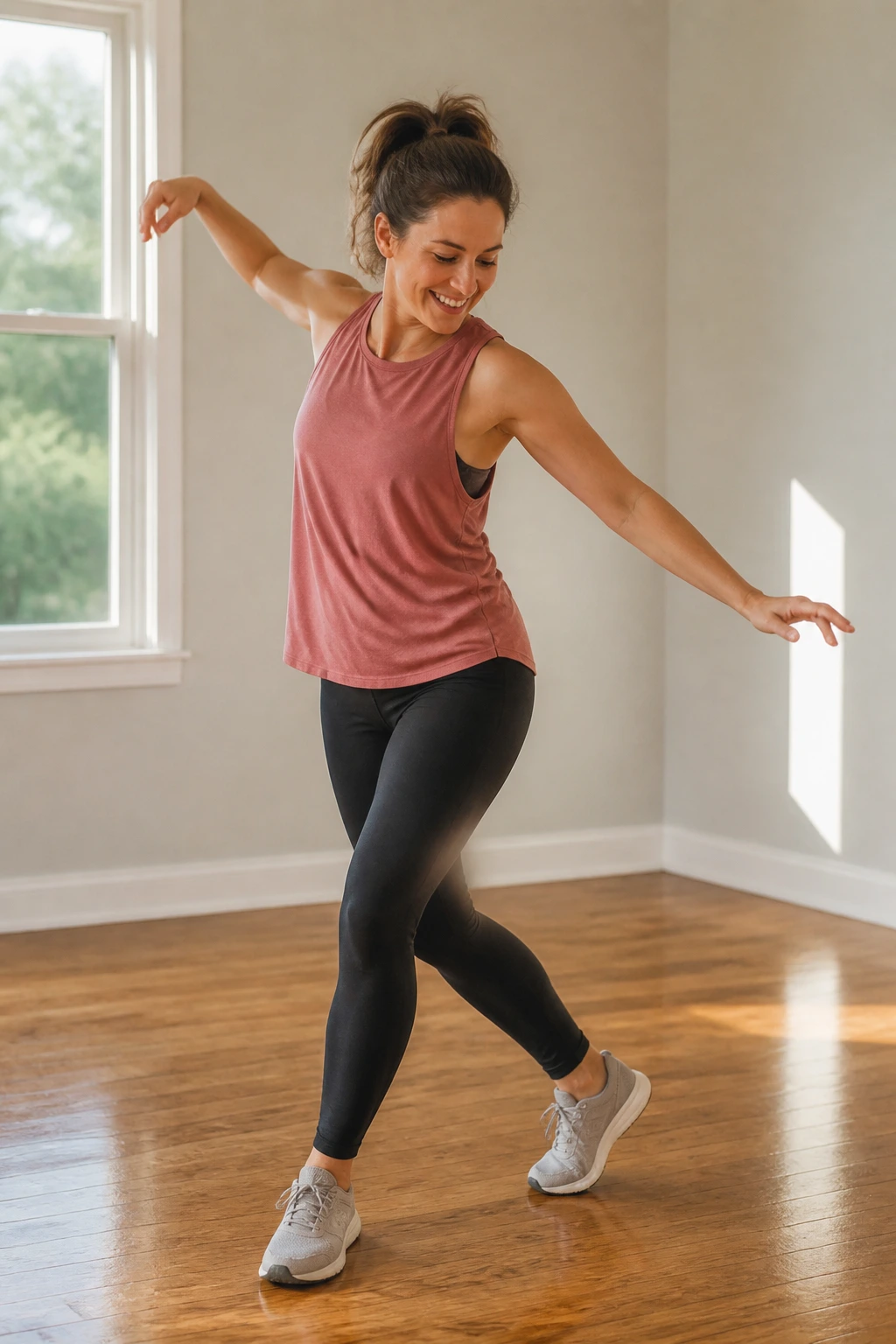
Put on a song with a steady beat and you have a workout. Step-touches, side reaches, gentle turns, toe taps, knee lifts — they all add up when you keep moving for 15 to 25 minutes. The fun part is not fluff. It’s what helps you stay consistent.
A good dance cardio session should feel lively but not chaotic. Keep the bounce low and the steps simple. If you’re landing hard, the movement is too aggressive. If you can’t keep the beat, it’s too complicated for a starter session.
Simple sequences work best. Try four counts of step-touch, four counts of march, four counts of side reach, then repeat. You can build a whole workout from four moves and still get sweaty.
This is also one of the easier ways to sneak in more movement on days when “exercise” feels like too much of a project.
12. Stationary Bike Intervals for Easy Knee-Friendly Cardio
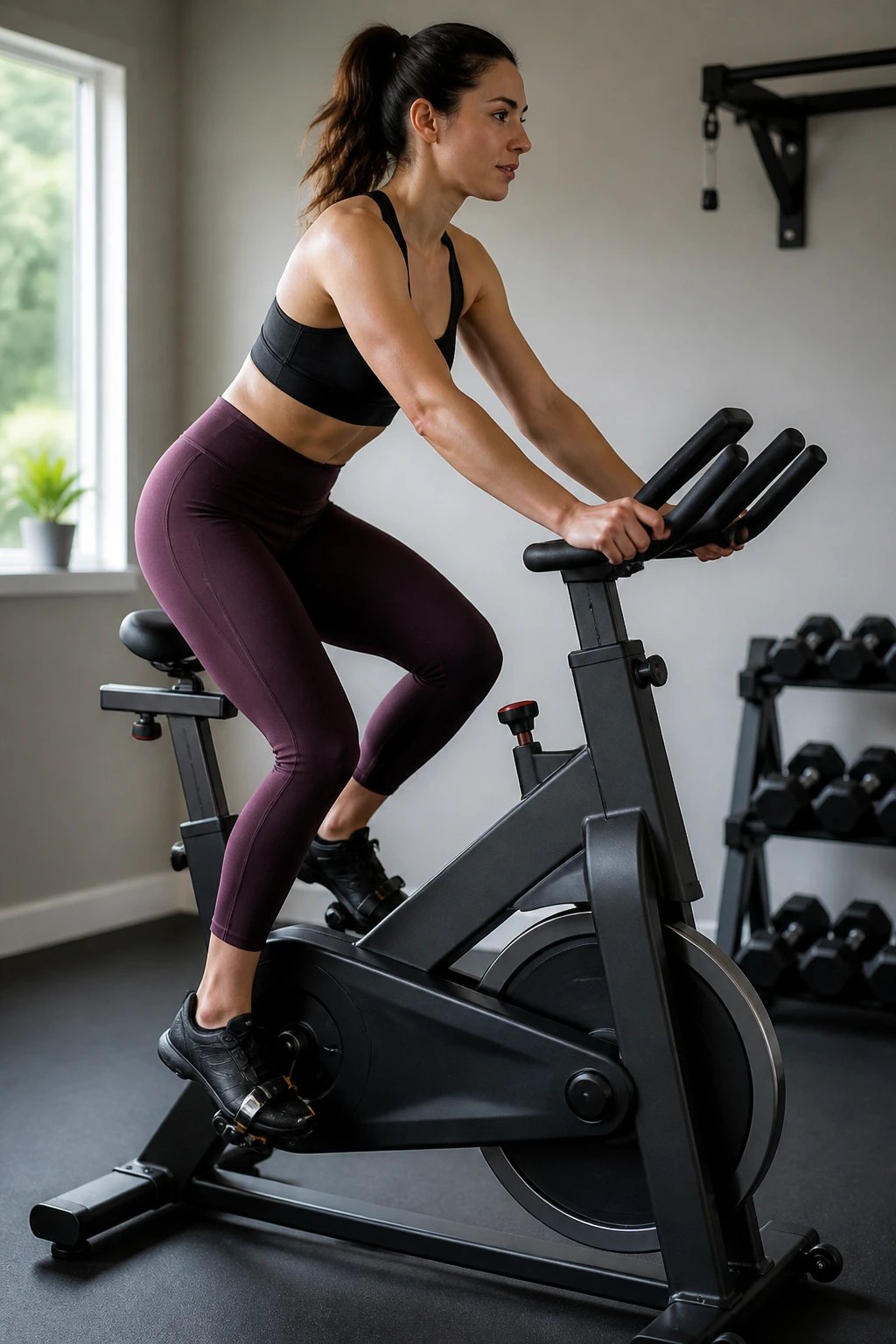
Want to breathe harder without hammering your knees? The bike is one of the cleanest answers. It gives you cardio, leg endurance, and a predictable pace that doesn’t ask your ankles and hips to absorb much impact.
Start with 5 minutes of easy pedaling. Then do 30 seconds at a challenging pace followed by 90 seconds easy for 6 to 8 rounds. Keep the resistance moderate, not extreme. You should be working, but not grinding.
How to Tell if It’s Set Right
If your hips are rocking side to side, the seat is too high or the resistance is too heavy. If your knees feel jammed at the top of the stroke, the seat may be too low. Tiny bike adjustments matter more than people expect.
A bike session is useful on days when walking feels boring or the weather makes outdoor movement awkward. It also works well when you want a clear start and stop, which helps if you’re building a habit from scratch.
13. Bird Dogs for Balance and Back Support
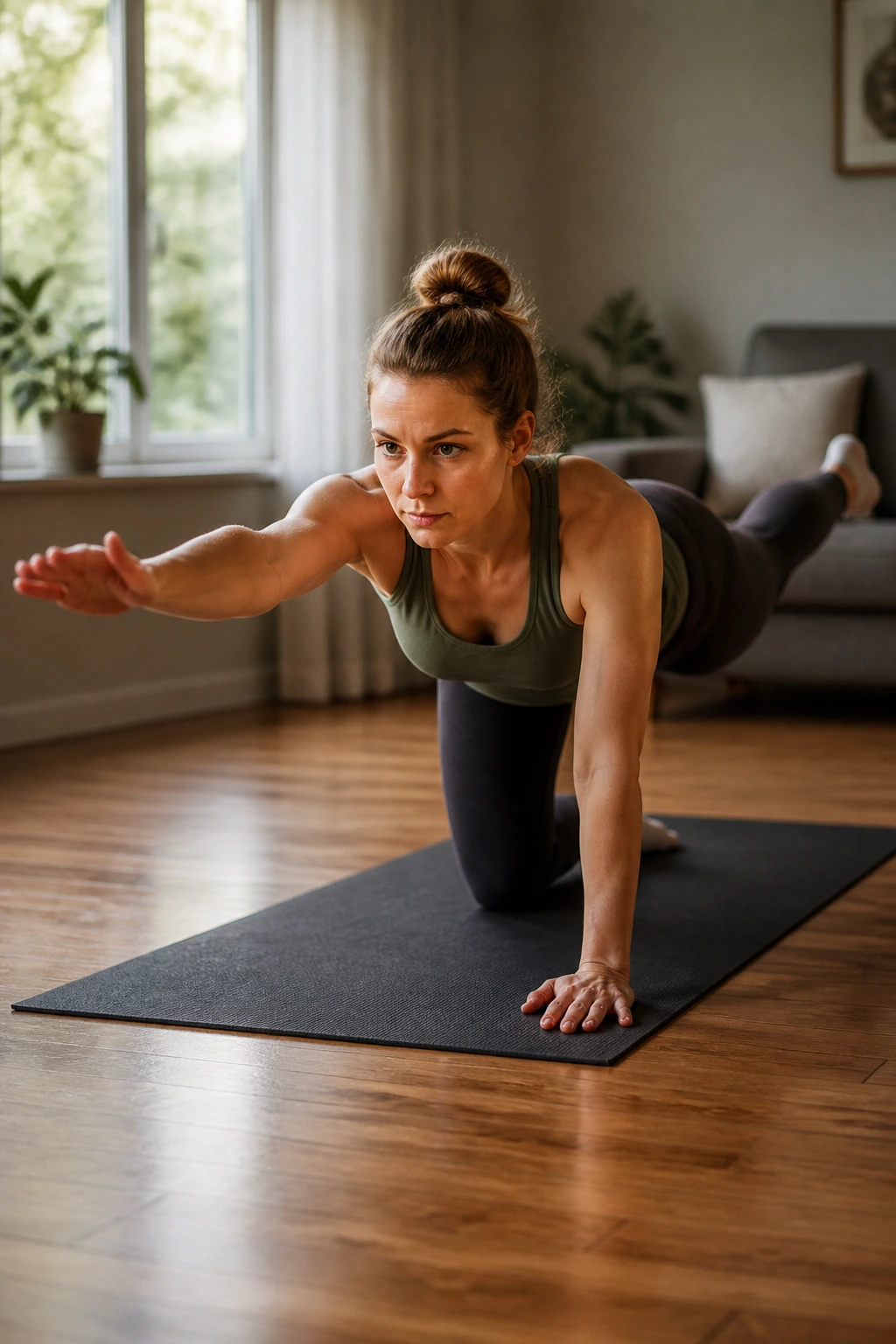
A bird dog looks almost too calm to matter. Then you try to hold your spine steady while one arm and the opposite leg reach away, and suddenly the exercise has your full attention.
Start on hands and knees. Extend one arm forward and the opposite leg back, then pause for 1 to 2 seconds before returning to center. Keep your hips square to the floor. Do not twist to one side just because the lifted leg feels heavy.
The Quiet Payoff
Bird dogs train coordination, core control, and the muscles that support your lower back. That makes them especially useful for beginners who want strength without a lot of strain.
- 2 to 3 sets of 6 to 8 reps per side
- Reach long, not high
- Keep your neck in line with your spine
- Move slowly enough that you can correct wobbles
If balancing both limbs at once feels too hard, extend just the arm or just the leg for a few reps first. That’s still a win.
14. Farmer Carries With Two Dumbbells or Heavy Bags
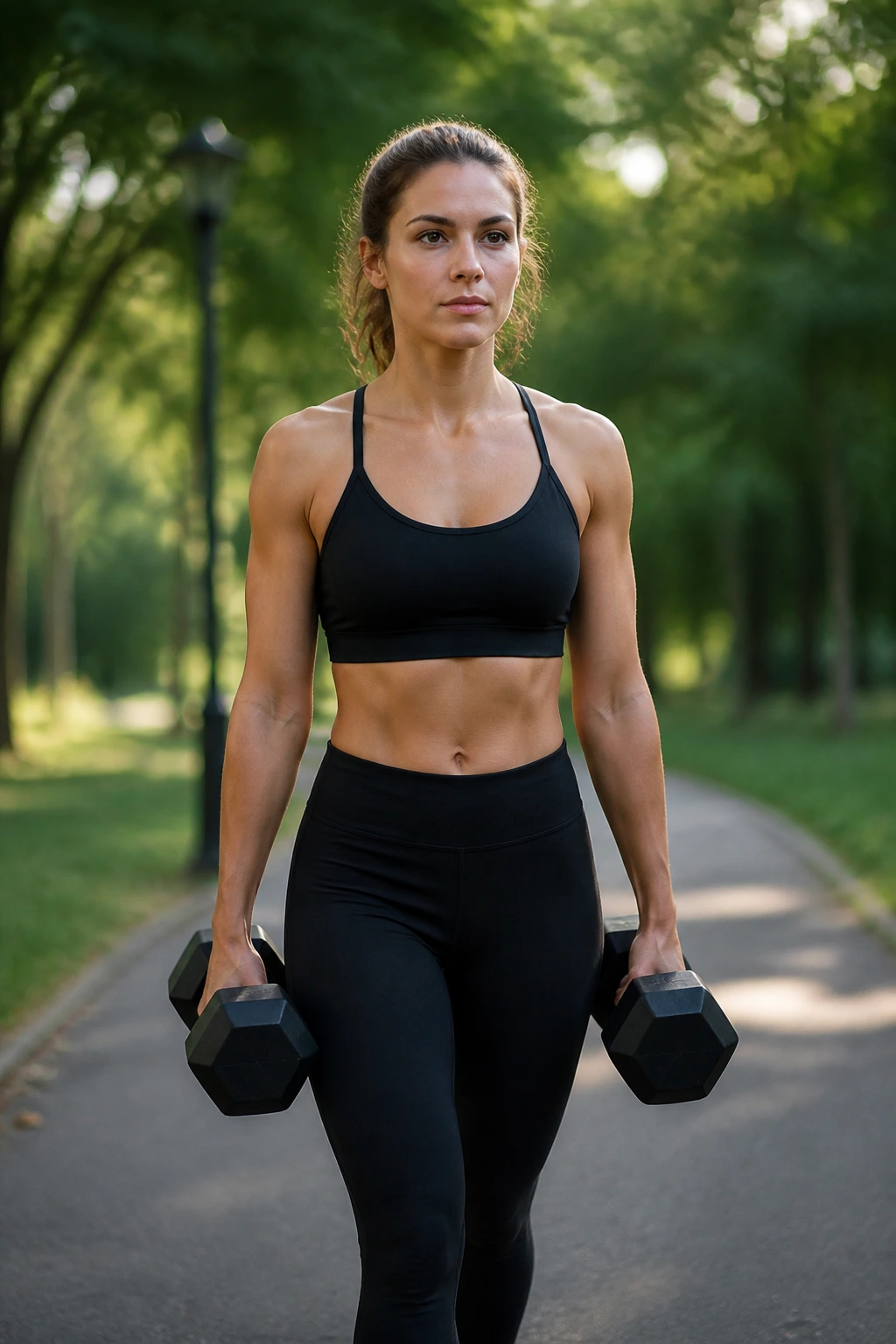
Carries are sneaky. You pick up some weight and walk, and suddenly your grip, core, shoulders, and posture are all getting involved. Unlike crunches, which stay in one place, carries ask your body to hold itself together while moving. That’s useful in a very real way.
Hold a pair of dumbbells, kettlebells, or even two heavy grocery bags at your sides. Stand tall, ribs stacked over hips, and walk for 20 to 40 seconds. Rest, then repeat for 3 to 5 rounds. Keep the steps smooth and your shoulders down.
This workout is particularly good if you want strength without a lot of technical fuss. There’s no complicated setup. No fancy angle. Just pick up, walk, and stay upright.
If one side starts to feel heavier than the other, that’s worth noticing. It often means your posture is drifting. Reset, shorten the carry, and keep the line straight.
15. Modified Pilates Core Work That Trains Control
If crunches make your neck grumpy, Pilates-style core work usually feels smarter. The emphasis is on control, breathing, and small movements that keep your trunk steady while your limbs move around it. That kind of work pays off fast for beginners.
A simple starter sequence can include toe taps, heel slides, and a modified hundred. Keep your lower back gently connected to the floor, move slowly, and breathe in a steady rhythm instead of holding your breath like you’re under pressure.
A Clean Mini Sequence
- Toe taps: lower one foot at a time from tabletop
- Heel slides: extend one heel out, then return
- Modified hundred: pump the arms while keeping the knees bent and the head down if needed
Do 6 to 10 reps of each movement or run the trio for 2 rounds. The point is not to burn your abs into submission. It’s to teach control, which is the thing most new exercisers are missing.
Small movements. Big payoff.
16. A Short Yoga Flow for Mobility and Recovery
Yoga doesn’t need to be a long, silent ordeal to count. A short flow can loosen tight hips, open the upper back, and bring your breathing under control after a harder workout or a tense day. That matters more than another hour of random stretching.
Try cat-cow, downward dog, low lunge, and child’s pose. Move through each position for 3 to 5 slow breaths. Keep the motions gentle and unforced. If a pose feels pinchy, back out of it a little.
A useful flow should leave you feeling more open, not more tortured. There’s a difference. One is recovery. The other is a bragging rights contest nobody needs.
You can use this as a warm-up too, especially before walking, strength work, or bike intervals. It works best when you treat it like maintenance instead of a performance.
17. Goblet Squats to Bridge the Gap to Real Strength Work
Goblet squats are the natural next step after chair squats. Instead of sitting back to a target, you hold a light dumbbell or kettlebell at your chest and squat down under your own control. The load helps teach posture, and the exercise feels like actual strength training without needing a barbell.
Hold the weight close to your chest, elbows angled down. Lower until your thighs are about parallel to the floor, or as far as your mobility allows with good form. Stand up by pressing through the whole foot and squeezing your glutes. Two to three sets of 6 to 10 reps is plenty for a starter workout.
Use a light weight first. That sounds boring, but it keeps your torso from folding and your knees from doing weird things. If you can do ten clean reps and still have a little gas left, you picked the right load.
This is a solid “I’m ready for more” exercise. Not because it looks fancy. Because it teaches the body to handle load with control.
18. Water Walking or Pool Laps for Joint-Friendly Conditioning
Chest-deep water changes everything. Your feet feel lighter, your joints take less pounding, and even simple walking turns into resistance work because the water pushes back on every step. For beginners who hate impact, this can be a gift.
Walk forward, backward, and sideways in the pool for 10 to 20 minutes. If you prefer laps, keep them short and easy — no race pace needed. The goal is steady effort, not breathless drama.
Why Water Helps So Much
The water supports your body while still giving you resistance. That means you can work on conditioning without the pounding that comes from running or jumping. If you’re coming back after a long break, this can feel far kinder than most land workouts.
A lot of people forget how tiring water movement can be. The resistance is subtle, but it adds up fast. Keep your steps deliberate and your posture tall, and don’t rush the first few minutes. Your body needs a moment to find the rhythm.
19. Shadow Boxing for Cardio, Coordination, and Stress Relief
Shadow boxing is one of my favorite low-pressure cardio workouts because it feels active without being clumsy. You throw straight punches into open air, keep your feet light, and let your heart rate rise while your brain stays engaged enough to avoid boredom.
Stand with one foot slightly in front of the other, knees soft, hands up near your cheeks. Jab, cross, jab, step. Work for 30 seconds, rest for 30 seconds, and repeat for 8 to 10 rounds. Keep the punches controlled and the shoulders relaxed.
What to Watch For
Don’t lock your elbows at full extension. Don’t twist so hard that your knees cave inward. And don’t make it a wild flailing session — that’s how shadow boxing turns into awkward cardio with bad form.
- Keep your chin tucked
- Rotate lightly through the torso
- Stay on the balls of your feet
- Use quick combinations, not huge haymakers
It’s a useful workout when you want to vent a little stress and still count it as training. That’s not a small thing.
20. A Simple Full-Body Circuit for Women Just Starting Out
A good starter circuit should feel clear, not theatrical. You want a handful of movements that cover the big patterns: squat, push, pull, hinge, core, and a little cardio. Put them together and you have a session that checks a lot of boxes without needing a complicated plan.
Try this sequence for 2 rounds to start:
- 10 chair squats
- 8 incline push-ups
- 10 resistance band rows
- 12 glute bridges
- 6 dead bugs per side
- 2 minutes of brisk walking or marching in place
Rest 30 to 60 seconds between moves if needed, and take 1 to 2 minutes between rounds. If that feels too long, shorten the reps first rather than rushing the form. The whole circuit should take about 20 to 25 minutes.
What makes this effective is the balance. Your legs work. Your upper body works. Your core works. Then your heart rate gets a little lift from the walk or march at the end. It’s simple enough to repeat, and repeatability is the whole point when you’re new.
Final Thoughts
The smartest start is usually the least dramatic one. Walking, squats, rows, bridges, carries — these are not flashy, but they build the kind of base that makes everything else feel possible.
Pick three or four workouts from this list and rotate them across the week instead of trying to do all twenty at once. A beginner plan that you can actually follow beats a perfect-looking plan that falls apart by Thursday.
If you want one practical rule to keep nearby, use this: finish most sessions feeling worked, not wrecked. That leaves enough in the tank to come back and do it again, and that second session is where the habit starts to stick.
