



A good EMOM feels clean. A bad one feels like panic with a timer.
That difference matters more than people think. EMOM means every minute on the minute, and for total body strength it works best when the reps are crisp, the load is honest, and you still have a little gas left when the minute ends. If you turn every set into a grind, you stop training strength and start surviving the clock.
The sweet spot is usually a short burst of work — often 20 to 40 seconds per minute — followed by real recovery before the next round starts. That gives you enough density to build muscle and strength, but not so much fatigue that your form falls apart halfway through. It’s one of the reasons EMOM training shows up in so many solid strength programs: it keeps the session focused, and it keeps nonsense out.
So here are 25 EMOM workouts for total body strength that actually make sense in the real world — with barbells, dumbbells, kettlebells, bodyweight, odd objects, and a few no-excuse setups for small spaces.
1. Front Squat, Push Press, and Row EMOM

This is the one I’d hand to someone who wants a straight-up strength session and doesn’t want to fuss around with five different stations. Three big patterns — squat, press, pull — cover a lot of ground fast.
How to run it
- Minute 1: 4 front squats
- Minute 2: 5 push presses
- Minute 3: 6 barbell rows
- Minute 4: Rest
Repeat that cycle 5 times for a 20-minute session.
Use a load that lets you move well on the first round and the last one. If rep 4 of the front squat turns into a slow, ugly stand-up, the bar is too heavy. Keep the core braced on every rep, and keep the rows strict enough that you’re not yanking with your lower back. A nice detail here: the push press should feel snappy, not sloppy. If you’re dipping like you’re trying to launch a rocket, the weight’s too ambitious.
2. Kettlebell Clean, Squat, and Swing EMOM
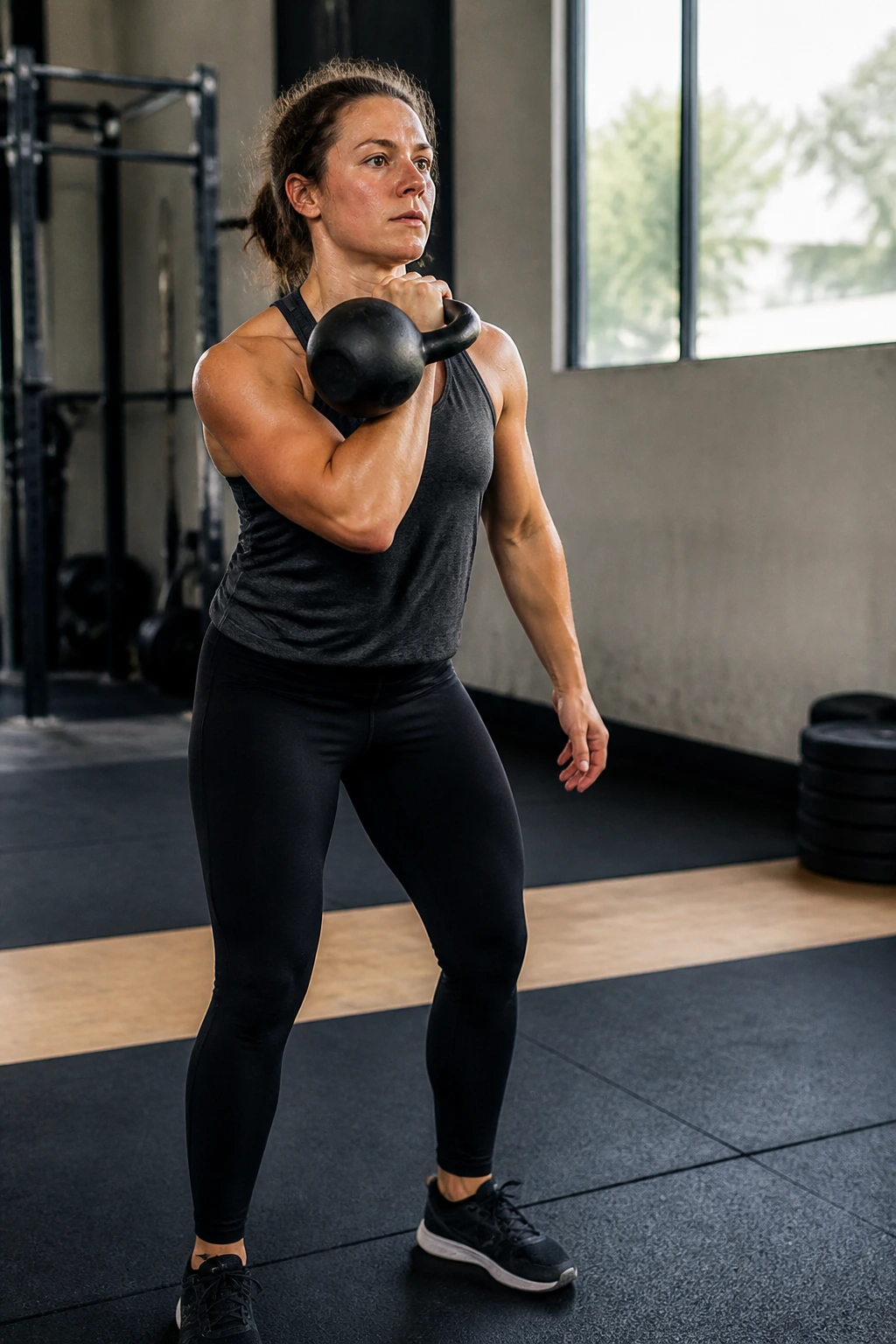
Want a kettlebell workout that hits hips, legs, and upper back without beating up your joints? This is the one. It has a strong, athletic feel, and it doesn’t require a ton of equipment or floor space.
The pattern is simple: one explosive move, one squat pattern, one hinge finish. That’s enough to light up your whole body if the bell is heavy enough and your rest stays honest.
How to use it
- Minute 1: 5 kettlebell cleans per side
- Minute 2: 8 goblet squats
- Minute 3: 12 kettlebell swings
- Minute 4: Rest
Run 4 to 6 rounds. If the clean feels clunky, drop the weight and clean it with a quieter hand. The bell should land softly, not slap your forearm like a mistake. For the swing, think hips back, then hips through. That snap is the whole point.
3. Bodyweight Push-Up, Split Squat, and Row EMOM
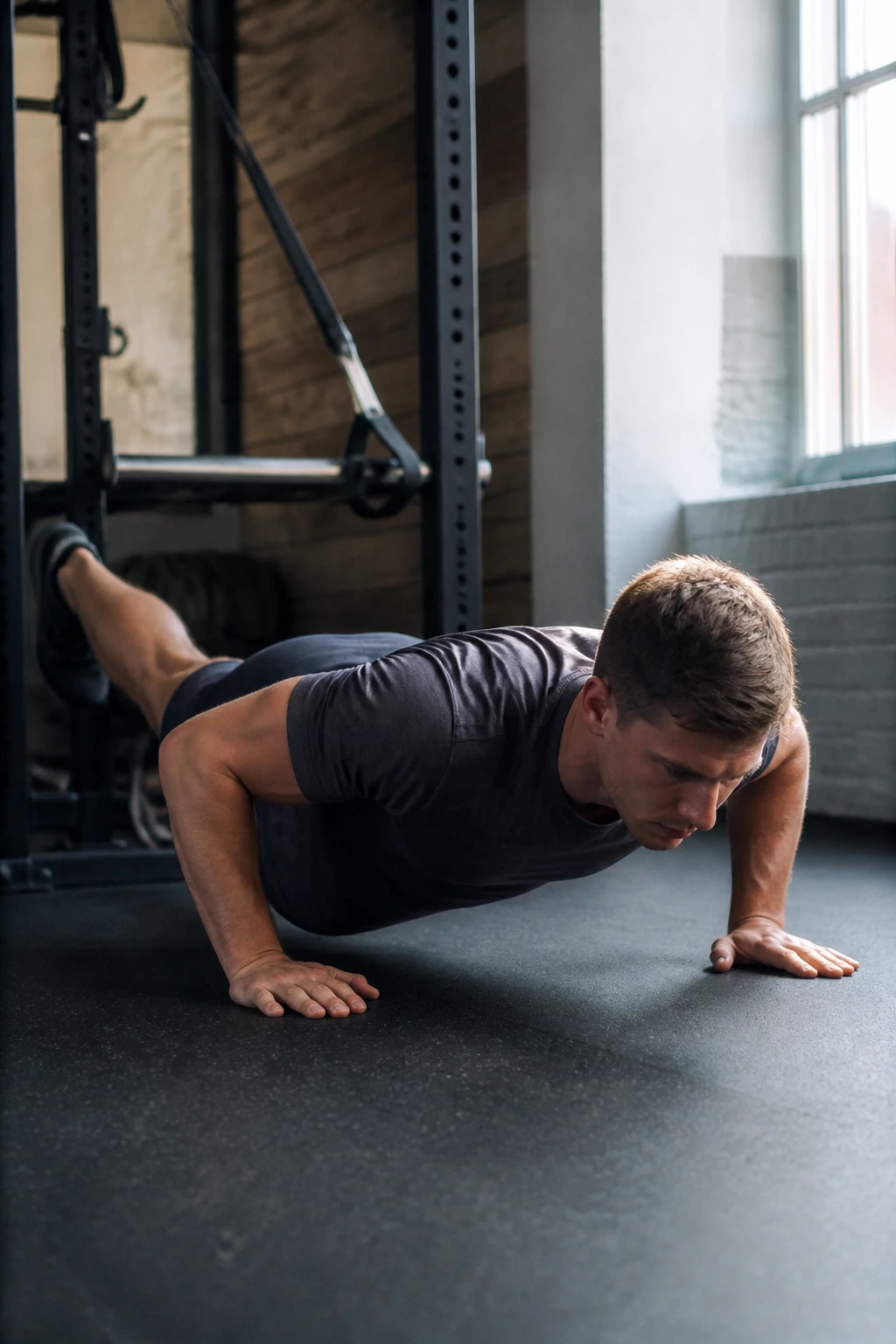
No rack. No problem. This bodyweight EMOM is the one I like when a room is small, the schedule is messy, or the dumbbells have somehow wandered off.
The surprise here is that bodyweight work can still feel like strength work if the positions are hard enough. Put one foot behind you, keep the push-ups strict, and row from something stable enough that you don’t spend the whole minute just trying not to wobble.
Quick layout
- Minute 1: 10 split squats, 5 per side
- Minute 2: 8 strict push-ups
- Minute 3: 8 inverted rows
- Minute 4: 20-second hollow hold, then rest
Do 4 to 5 rounds. If the push-ups are easy, elevate your feet or slow the lower phase to 3 seconds. If the rows are too tough, raise the bar, rings, or table edge so you can keep your chest proud. The split squats should burn in the front leg, but your torso should stay tall.
4. Dumbbell Thruster, Renegade Row, and RDL EMOM
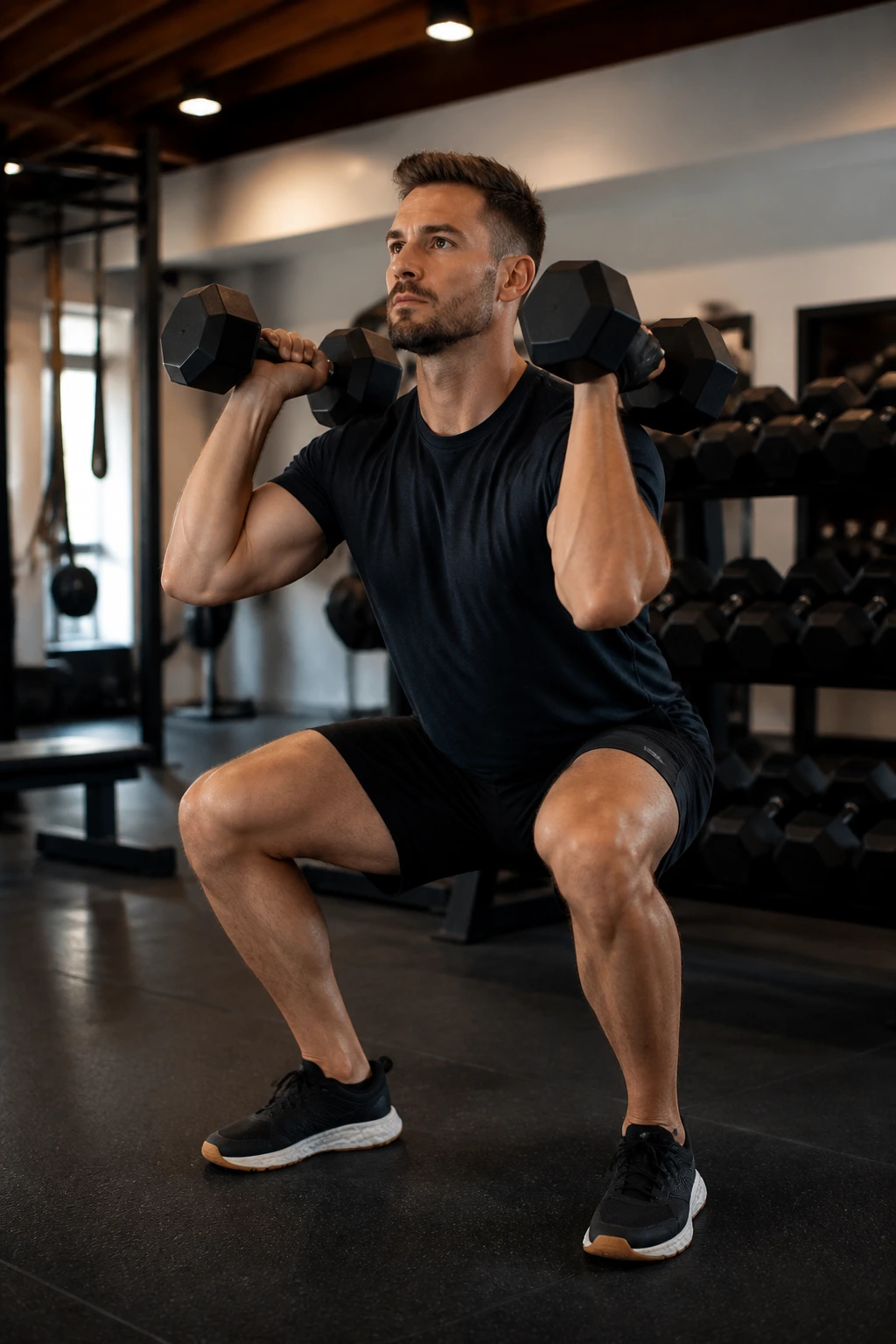
Dumbbells make this feel dense in a good way. They also expose weak spots quickly, which is useful whether you like it or not.
This one mixes a squat-to-press pattern, a row that punishes sloppy bracing, and a hinge that catches lazy hamstrings. It’s a strong all-rounder for total body strength because you’re asking different parts of the body to work hard without giving any one pattern all the attention.
Best if you want…
- Legs under tension
- Shoulders that don’t fold halfway through a press
- A hinge that builds the back of the body
Format:
- Minute 1: 6 dumbbell thrusters
- Minute 2: 8 renegade rows total
- Minute 3: 10 Romanian deadlifts
- Minute 4: Rest
Repeat 5 times. The renegade row is the sneaky hard part. If your hips twist like a broken hinge, widen your stance a little and slow down. That’s not cheating. That’s smart.
5. Sandbag Bear-Hug Squat and Carry EMOM
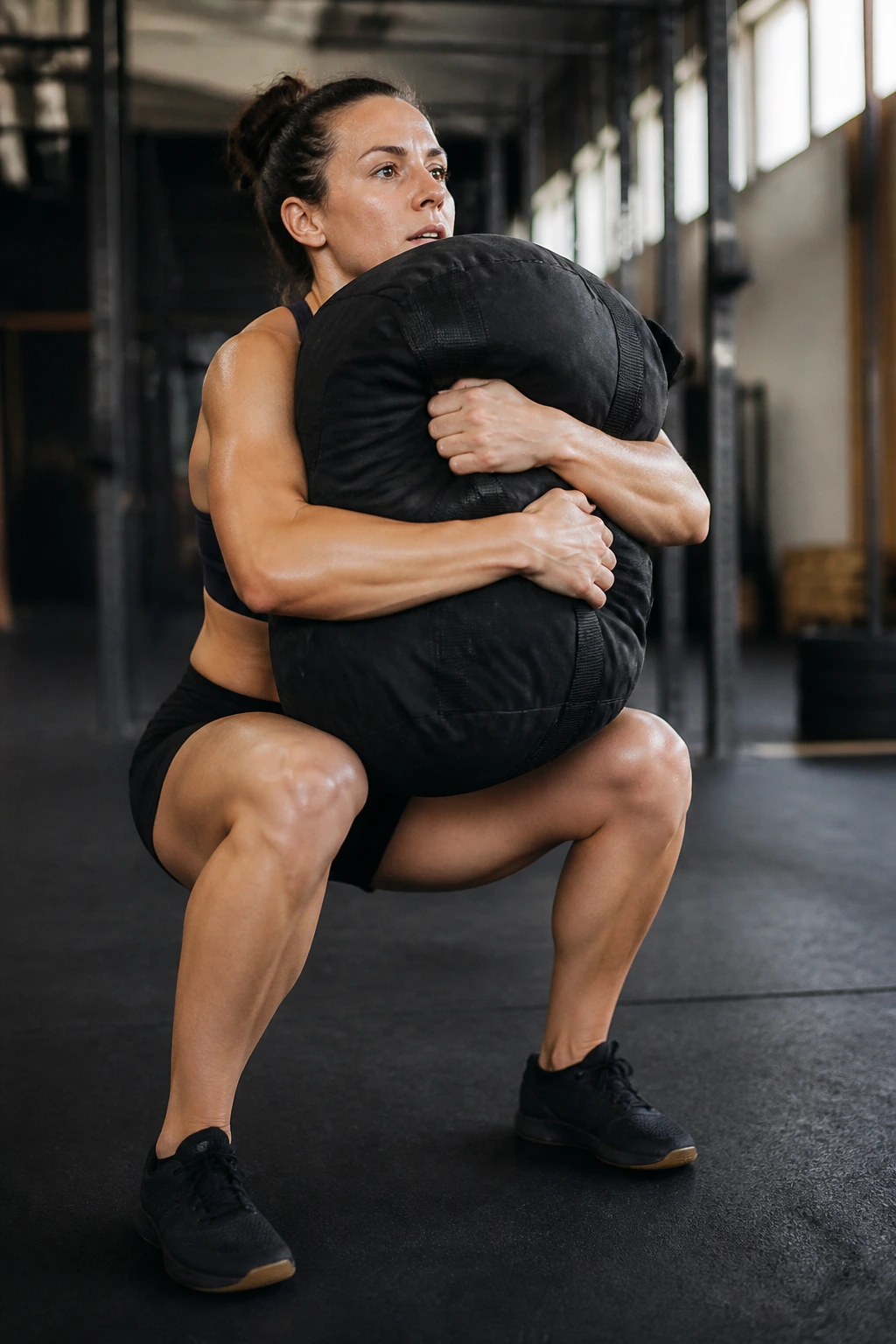
Sandbags are ugly in the best possible way. They shift. They sag. They fight back. And that makes them excellent for total body strength, because your trunk has to work harder than it does with a neat little dumbbell.
The bear-hug position also changes things in a nice, old-school way. Your arms don’t get to do much. Your ribs, abs, upper back, and legs have to earn their keep.
How it runs
- Minute 1: 8 bear-hug squats
- Minute 2: 20 to 40 meters bear-hug carry
- Minute 3: 6 sandbag deadlifts
- Minute 4: Rest
Repeat for 4 to 5 rounds. The carry should feel heavy enough that you need to stand tall and breathe into your sides. Not your shoulders. Your sides. If the sandbag slips low and turns into a midsection wrestling match, reset your grip and tighten the hug before the next minute starts.
6. Pull-Up, Goblet Squat, and Dead Bug EMOM
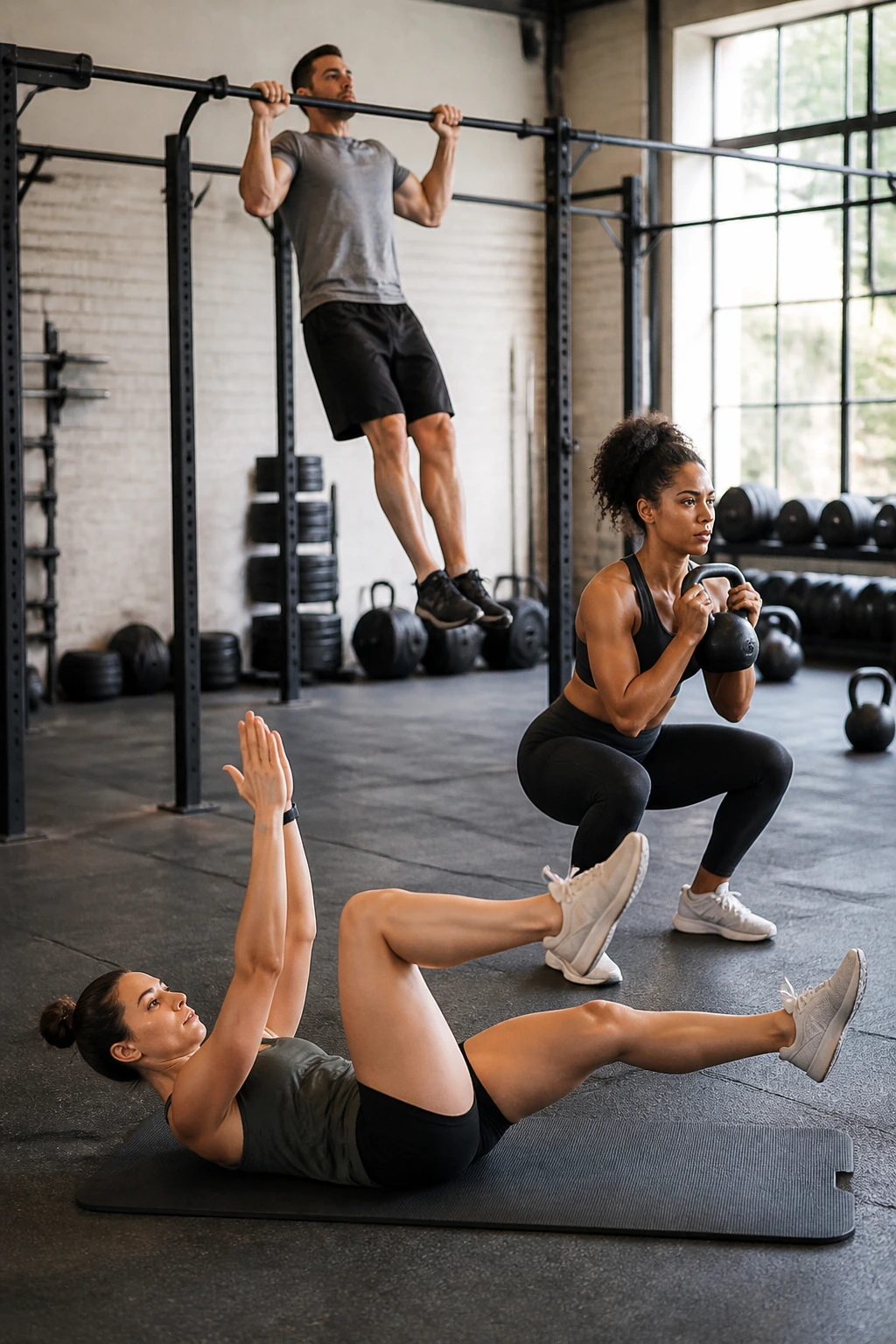
Some workouts look simple on paper and end up teaching you a lot. This is one of them.
The pull-up gives you upper-body pull strength, the goblet squat keeps the lower body honest, and the dead bug ties the whole thing together by forcing the trunk to stay quiet while the limbs move. That last piece matters more than people admit. A strong body that leaks force through the middle is just an expensive mess.
The setup
- Minute 1: 4 to 8 pull-ups
- Minute 2: 10 goblet squats
- Minute 3: 8 dead bugs per side
- Minute 4: Rest
Run 4 to 6 rounds. If pull-ups are a weak point, use a band or do controlled negatives. The dead bug should be slow enough that your lower back stays glued to the floor. If it arches, shorten the range and clean it up. That’s the rep that counts here.
7. Single-Leg Strength EMOM
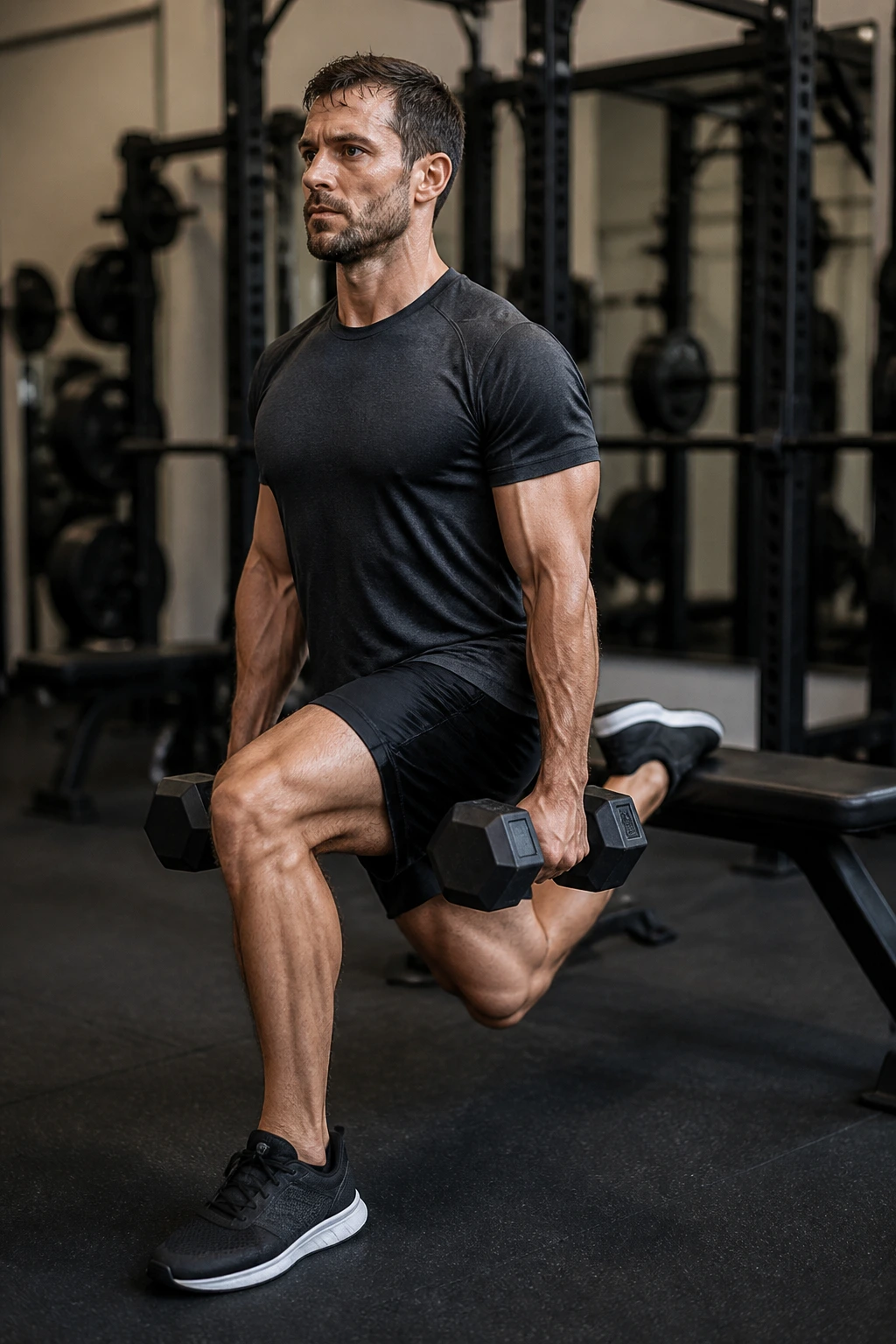
Unilateral work is where a lot of people find out the truth about their left and right sides. One side always wants to be the boss. Fine. Let it reveal itself.
This EMOM is built to clean up imbalances without turning into a rehab session. It challenges the quads, glutes, hamstrings, and upper body in a way that stays practical. No circus moves. Just hard, honest reps.
How to run it
- Minute 1: 6 Bulgarian split squats per leg
- Minute 2: 6 single-leg Romanian deadlifts per leg
- Minute 3: 10 push-ups or 8 dumbbell presses
- Minute 4: 30-second farmer hold
- Minute 5: Rest
Repeat 4 times for a 20-minute session. Keep the split squat knee tracking over the middle toes, and don’t rush the single-leg RDL. A tiny pause near the bottom helps you stay balanced and actually feel the hamstring. If one side is weaker, start there and match the stronger side to the same rep count. No freelancing.
8. Upper-Body Pull and Press EMOM
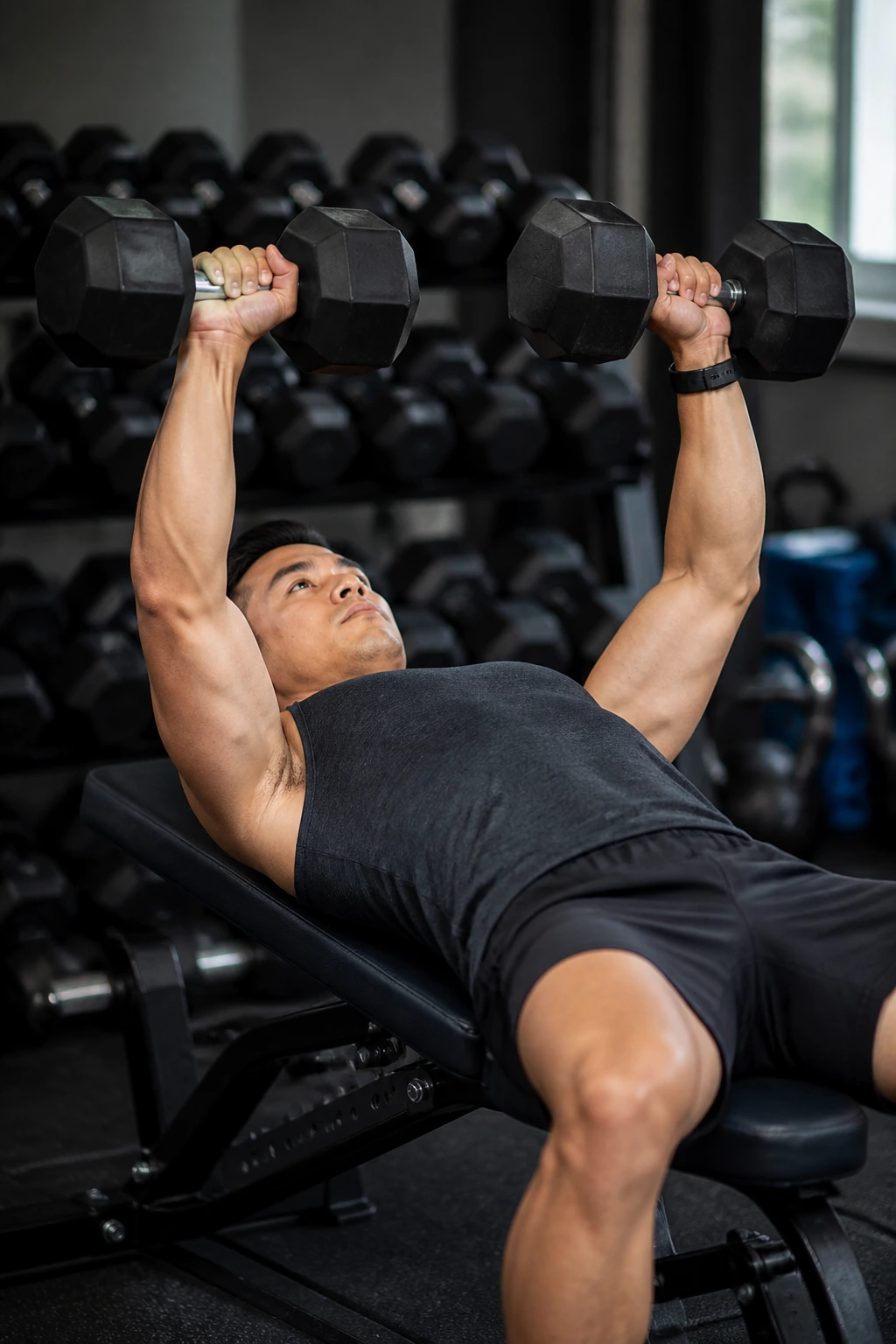
Here’s a useful truth: shoulders tend to like balance. If you press a lot, pull a lot. If you pull a lot, press a lot. The body notices.
This EMOM keeps the upper body busy without ignoring the legs, because the lower body still has to stabilize everything. It’s a good choice when you want a bit more upper-body work than a standard full-body circuit, but you still want the legs and trunk involved.
A clean version
- Minute 1: 8 dumbbell bench presses or floor presses
- Minute 2: 8 to 10 rows
- Minute 3: 6 half-kneeling presses per side
- Minute 4: 30-second plank
- Minute 5: Rest
Do 4 rounds. The half-kneeling press is the quiet star here. It exposes rib flare fast, which is handy if your pressing pattern likes to turn into a standing backbend. Keep the front glute tight and the ribs down. That cue sounds boring. It works.
9. Deadlift, Step-Up, and Plank Drag EMOM

Heavy hinges deserve respect. So do carries, step-ups, and anything that makes your midsection work while your arms are occupied.
This one starts with a powerful lower-body pull, then moves into a single-leg move, then finishes with a core drill that forces anti-rotation strength. That’s a nice trio for anyone who wants more than just a sweaty session.
How to use it
- Minute 1: 3 to 5 deadlifts
- Minute 2: 8 step-ups per leg
- Minute 3: 8 plank dumbbell drags total
- Minute 4: Rest
Repeat 5 times. Use a box or bench height that lets you drive through the whole foot on the step-up. If the knee caves inward, lower the box a little. The plank drag should be slow enough that your hips barely move. If they rock side to side like a boat in rough water, widen your feet.
10. Core-Bracing EMOM With Carries and Crawls

Core training gets oversold all the time. The best versions are often the ones that don’t look like core training at all.
Carries, crawls, and side planks teach you to resist twisting, sagging, and collapsing under load. That matters when you’re squatting, pressing, or pulling heavy things in real life. It also matters when you’re tired and your posture starts to fray.
- Minute 1: 30 to 40 meters farmer carry
- Minute 2: 30-second side plank per side
- Minute 3: 20 bear crawl steps
- Minute 4: Rest
Run 4 to 5 rounds. The carry should feel heavy enough that your hands notice, but not so brutal that you lose your ribs. The bear crawl is the sneaky one — keep the knees low and the back flat. If it turns into a sprint, the quality drops fast.
11. High Pull, Box Jump, and Push Press EMOM

This one leans into power. Not sloppy cardio. Power.
The goal is to move the load fast and clean, with enough recovery between minutes that each round looks like it belongs in the first third of the workout. If the reps slow down and get messy, you’ve gone too far. Speed is the point here.
How it runs
- Minute 1: 4 hang high pulls
- Minute 2: 3 box jumps
- Minute 3: 5 push presses
- Minute 4: Rest
Repeat 4 to 5 rounds. Keep the box jump height modest unless you’re landing like a cat. A knee-high box that you can own beats a bigger box that turns into a question mark. The push press should drive from the legs, then finish with the arms. If it becomes a strict press, the load is probably too ambitious for this format.
12. Minimal-Equipment Backpack EMOM
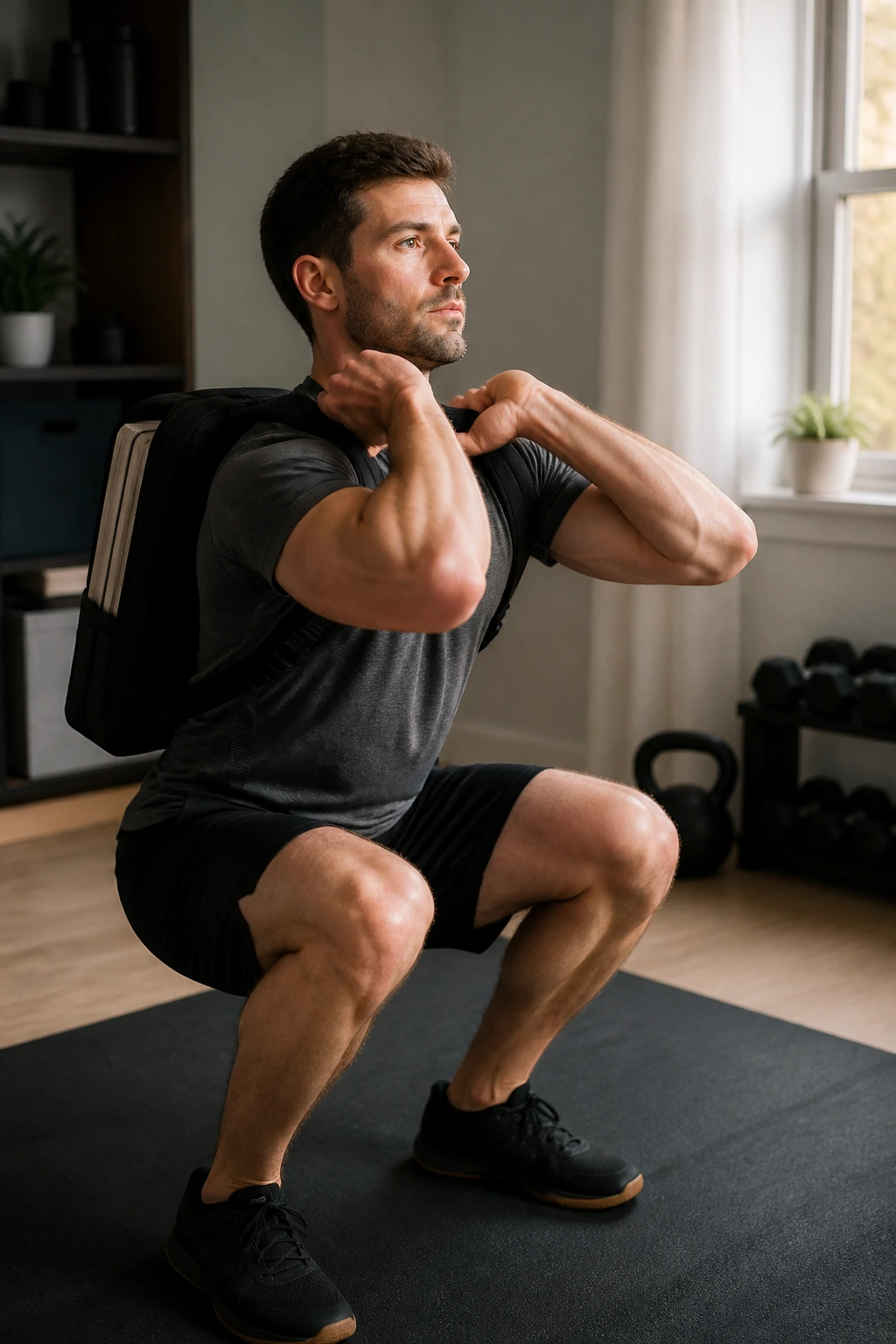
Sometimes the heaviest thing in the room is a backpack with books in it. Good. That’s enough.
This is a smart option for tiny spaces, travel days, or home setups where the equipment stash is thin. The trick is to slow the movements down and make the positions matter. A backpack front squat with a 3-second lower can sting in a way that surprises people.
Simple setup
- Minute 1: 12 backpack front squats
- Minute 2: 10 push-ups
- Minute 3: 12 towel rows or table rows
- Minute 4: 15 glute bridges
- Minute 5: Rest
Repeat 3 to 4 times. If the backpack feels too light, add books, water bottles, or canned goods. The rows should stay controlled; don’t yank on a towel like you’re trying to start a lawn mower. Keep the shoulders down and the chest open. Strange how often that one cue fixes the whole thing.
13. Heavy Three-Move Barbell EMOM

Some days, you do not need variety. You need good lifting and enough rest to keep the bar moving well.
This is the barbell session for people who want a heavier feel without turning the gym into a circus. The short list of movements gives you more focus, and the lower reps help preserve speed. That’s the whole point. Strong reps. Clean reps. No survival lifting.
How to run it
- Minute 1: 3 front squats
- Minute 2: 3 bench presses
- Minute 3: 5 barbell rows
- Minute 4: Rest
Do 5 rounds. Pick loads that feel challenging but repeatable. The front squat should be the most technical piece, so don’t chase a number that makes you fold over. On the bench, keep the feet planted and the shoulder blades pinned. Rows should be strict enough that you can pause for a beat at the top.
14. Reverse Lunge, Overhead Press, and Hollow Hold EMOM

This workout has a nice push-pull between lower-body work and trunk control. It’s a little more graceful than some of the other entries here, but don’t confuse that with easy.
The reverse lunge lets you load the legs without quite as much knee stress as a forward lunge. The overhead press asks for stable ribs and decent shoulder control. Then the hollow hold reminds the midsection that it’s not allowed to nap.
Minute by minute
- Minute 1: 6 reverse lunges per leg
- Minute 2: 6 standing overhead presses
- Minute 3: 20 to 30 seconds hollow hold
- Minute 4: Rest
Repeat 5 times. The best clue for the press is simple: if your lower back arches hard enough to notice, lower the load. Hollow holds should feel like the front of your body is working to stay flat, not like your hip flexors are cramping out of spite. If you need to bend the knees a touch, do it.
15. Pull-Up, Dip, and Swing EMOM

This one has a sharp upper-body feel, but the kettlebell swing keeps it from becoming too vertical and stuck in the shoulders. It’s a good mix.
Be honest about the dips. If your shoulders hate them, swap in push-ups or close-grip presses. No prize is handed out for stubbornness. The point is to keep the body working as a unit, not to win an argument with your joints.
The schedule
- Minute 1: 5 pull-ups
- Minute 2: 6 to 8 dips
- Minute 3: 15 kettlebell swings
- Minute 4: Rest
Run 4 rounds. If the pull-ups are clean but slow, that’s fine. If they’re loud and jerky, use a band or cut the reps in half. For swings, the bell should feel like it’s floating from the hips, not being lifted by the arms. That difference matters more than people want to admit.
16. Total Body Hypertrophy EMOM

Strength and muscle size are cousins. Not twins. This EMOM sits in the middle, with enough volume to make your muscles work and enough structure to keep the session from becoming junk volume.
The rep targets are a little higher, the loads are a little lighter, and the rest windows stay honest. That means the sets need to look good even when they start to burn.
How to run it
- Minute 1: 10 goblet squats
- Minute 2: 10 dumbbell floor presses
- Minute 3: 10 one-arm rows per side
- Minute 4: 12 Romanian deadlifts
- Minute 5: Rest
Repeat 4 times. Keep the tempo controlled, especially on the lowering phase. The load should feel like you could do a few more reps if you had to, but you’d rather not. That’s a useful zone for this style of work. If the rows start tugging your torso around, lower the dumbbells and clean up the brace.
17. Travel Room Tempo EMOM
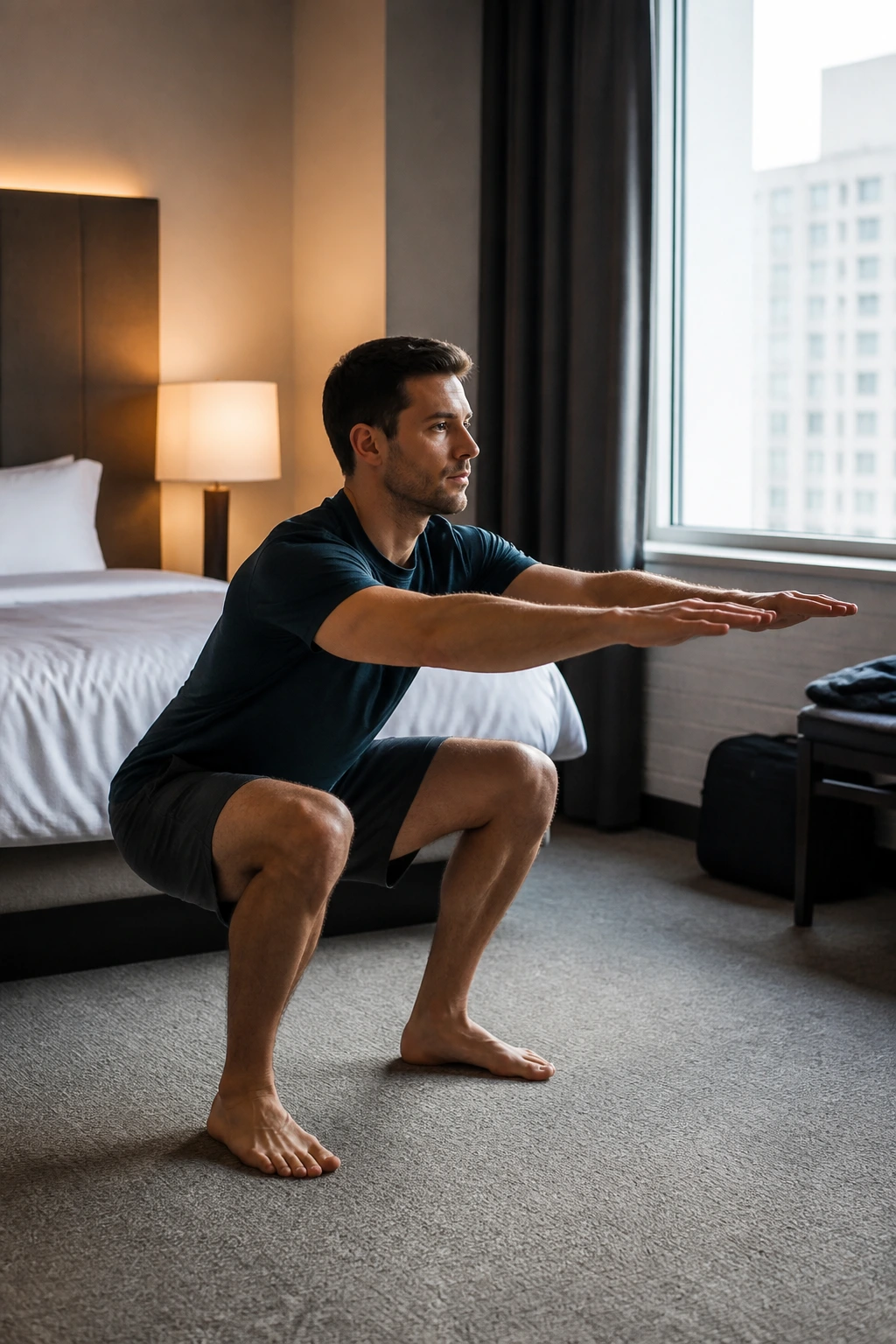
Small room? Thin floor? Limited gear? Fine. Use tempo and single-sided work to make ordinary movements count.
This one is built for a space where noise matters and storage is basically a joke. A slow squat, a controlled push-up, a hard glute bridge, and a carry or march can do more than people expect if you respect the pace.
How it runs
- Minute 1: 8 tempo air squats with a 3-second lower
- Minute 2: 6 to 10 incline push-ups
- Minute 3: 12 glute bridge marches
- Minute 4: 30-second suitcase hold or march
- Minute 5: Rest
Repeat 3 to 4 rounds. If you’ve got a backpack, load it and hold it on one side for the suitcase work. If not, do a hard side plank instead. The whole session should feel quiet but serious. No jumping around. No chaos. Just controlled tension and solid positions.
18. Farmer Carry and Core EMOM
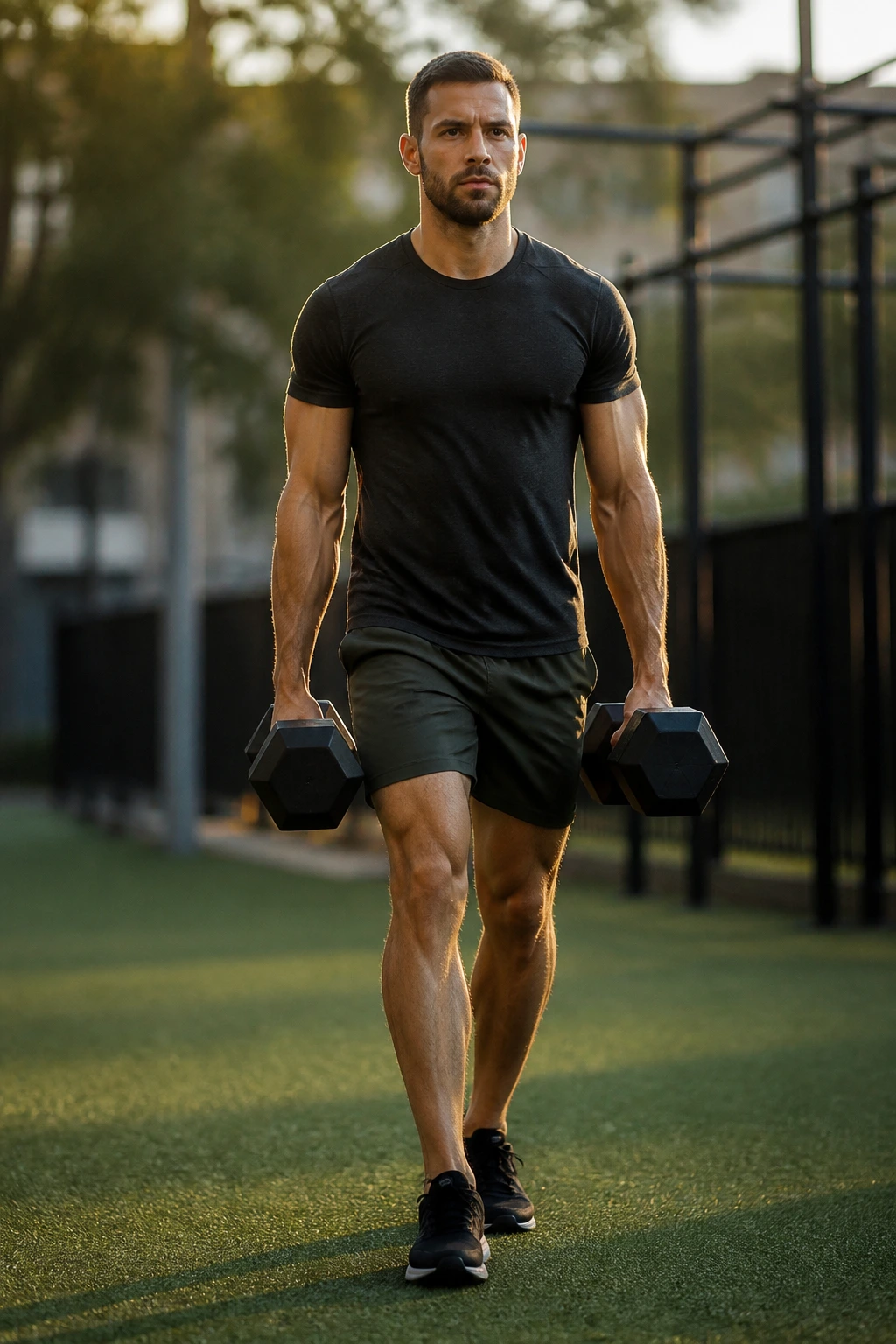
Carrying heavy things while staying upright is one of the cleanest tests of real-world strength. It also happens to be brutally honest.
This workout keeps the main focus on grip, posture, and trunk stiffness. That sounds dull until the last round, when your hands start talking back and your ribs want to flare. Then it becomes interesting.
Best format
- Minute 1: 40-meter farmer carry
- Minute 2: 30-second rack carry, right side
- Minute 3: 30-second rack carry, left side
- Minute 4: 20 marching glute bridges
- Minute 5: Rest
Do 4 rounds. Keep the shoulders down and the chin level on the carries. The rack carry is a little nastier than the farmer carry because the load sits off to one side. That’s the point. It teaches your body not to fold when life gets uneven, which feels more useful than it sounds.
19. Barbell Complex EMOM

Complexes are not for ego. They’re for people who can move a bar well under fatigue and want a compact session that hits nearly everything.
The nice thing about a barbell complex is that you don’t keep setting the bar down every 10 seconds. The not-so-nice thing is that it gets demanding fast. Choose a load you could normally clean for solid reps, then go lighter than your pride wanted.
How to run it
- Minute 1: 1 complex = 3 deadlifts, 3 hang cleans, 3 front squats, 3 push presses
- Minute 2: Rest
- Minute 3: Repeat the complex
- Minute 4: Rest
Continue for 12 to 16 minutes total. That means 6 to 8 complexes. The bar should move smoothly from one lift to the next. If the clean gets sloppy after the deadlift, lower the load and tighten the sequence. A complex like this works best when it feels controlled, not theatrical.
20. Dumbbell Ladder EMOM

Dumbbells make a beautiful middle ground between heavy strength work and pure conditioning. You can build a lot with a pair of them if you choose the reps with some care.
This ladder is simple enough to remember, but the movements ask different things from the body. Hips, shoulders, back, lungs — they all get a turn.
The ladder
- Minute 1: 4 clean and presses per side
- Minute 2: 6 reverse lunges per side
- Minute 3: 8 floor presses
- Minute 4: 10 bent-over rows
- Minute 5: Rest
Repeat 4 rounds. The clean and press should stay sharp; if you’re swinging the bells like suitcases in a storm, the load is too high. Reverse lunges are a nice place to catch weak glutes, and the floor press keeps the shoulders in a safer range for most people. The rows should feel strict and deliberate. No hip hitching. None.
21. Beginner-Friendly EMOM
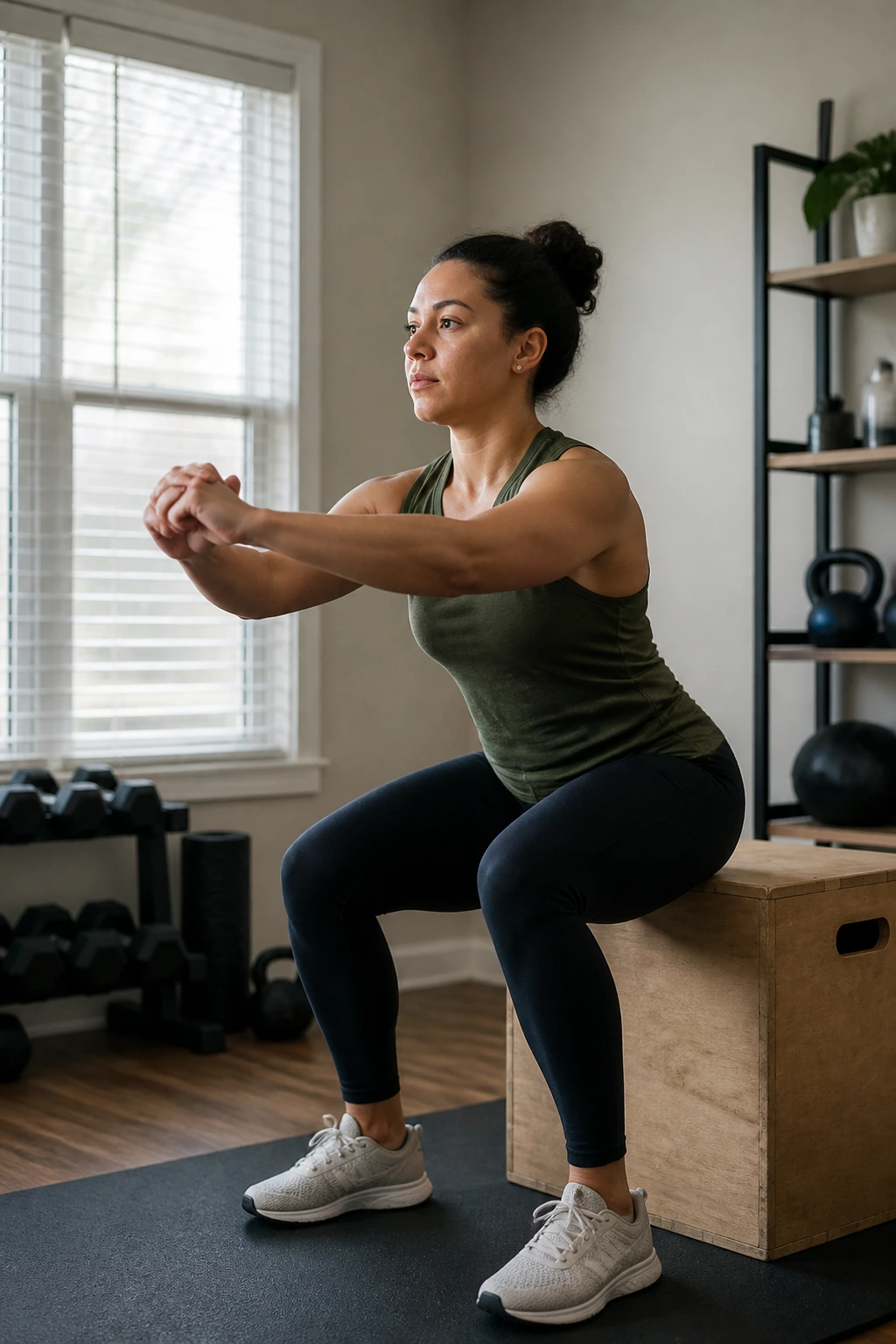
Beginners do not need punishment. They need clean reps, a manageable plan, and enough success to come back tomorrow.
This EMOM keeps the patterns obvious and the load choices friendly. It still trains the whole body, which is the part people sometimes underestimate. A solid beginner session should leave you feeling worked, not wrecked.
Setup
- Minute 1: 8 box squats or sit-to-stands
- Minute 2: 6 to 10 incline push-ups
- Minute 3: 10 band rows
- Minute 4: 12 glute bridges
Run 3 to 4 rounds. If the incline push-ups are still too much, use a higher surface. If the box squat feels too easy, slow the descent to 3 seconds and pause for a beat on the box before standing. Simple doesn’t mean lazy. It means you can actually own the reps.
22. Advanced Heavy EMOM

This one is for the lifter who already has movement quality and wants a harder barbell day without turning it into a max-out session.
Heavy EMOMs work well when the lifts are familiar and the ego stays parked. The goal is to handle meaningful weight with enough rest to keep bar speed honest. Once the reps grind, the session has drifted too far.
How it runs
- Minute 1: 3 heavy front squats
- Minute 2: 3 heavy push presses
- Minute 3: 3 weighted chin-ups
- Minute 4: 3 trap-bar deadlifts
- Minute 5: Rest
Repeat 4 rounds. The trap-bar deadlift belongs here because it lets many lifters push load without the same technical mess as a straight bar deadlift under fatigue. Keep every set crisp. If any lift turns into a rep you have to fight through inch by inch, lower it the next round. Strong is good. Sloppy is expensive.
23. Anti-Rotation EMOM
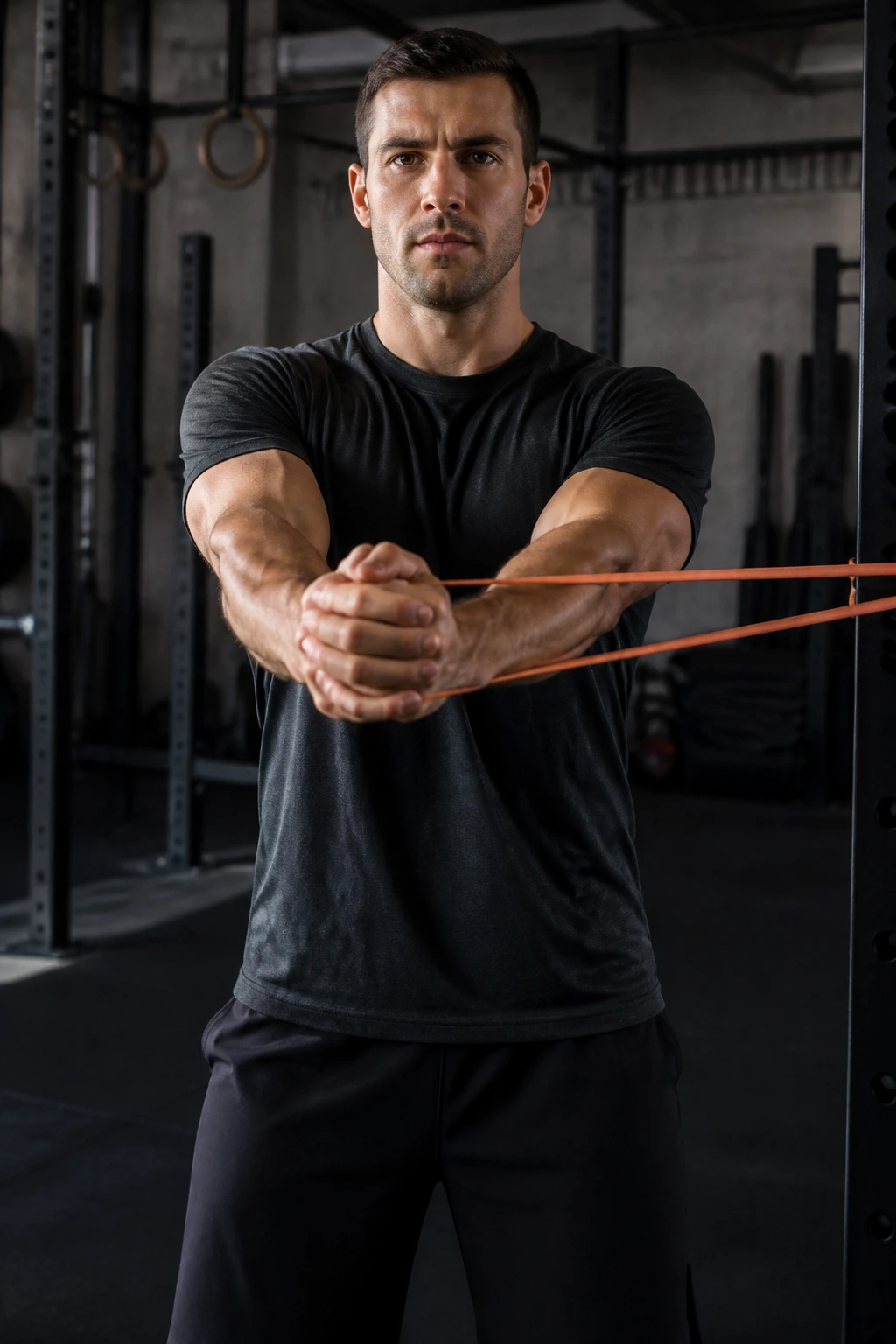
If your trunk twists every time a load gets awkward, this is the session you probably need more than another ab circuit.
Anti-rotation work teaches the body to resist movement. That sounds dry, but it pays off in squats, presses, carries, and even plain old standing around with groceries. A strong middle is often a quiet one.
Why it works
The body has to stop a load from pulling it sideways. That means the obliques, glutes, and deep trunk muscles do more than just “feel the burn.” They organize the whole posture.
How to use it
- Minute 1: 5 suitcase deadlifts per side
- Minute 2: 10 Pallof presses per side
- Minute 3: 8 split-stance rows per side
- Minute 4: 20 marching glute bridges
- Minute 5: Rest
Run 4 rounds. Keep the suitcase deadlift tall — no leaning toward the load. For Pallof presses, press straight out and don’t let the band yank you around. If your shoulders and hips stay square, you’re doing it right. That’s the whole game.
24. Athletic Power EMOM

Not every strength workout needs to feel slow. Some should feel sharp, springy, and clean.
This one is built for people who want a little more speed work in the mix without losing the full-body focus. The effort should feel explosive, but the volume stays low enough that technique can survive the minute.
The structure
- Minute 1: 6 med ball slams
- Minute 2: 5 jump squats
- Minute 3: 10 kettlebell swings
- Minute 4: 8 hand-release push-ups
- Minute 5: Rest
Repeat 3 to 4 times. If you have a sled, swap the jump squats for a 15- to 20-meter push. That’s a nice upgrade. The hand-release push-up keeps the range honest and cuts down on half-reps that look busy but don’t do much. Keep the jumps low and crisp. You’re after intent, not altitude.
25. Full-Body Test EMOM

A good final workout should tell you something. Not just leave you tired.
This one works as a repeatable benchmark. Use the same load, the same reps, and the same clock spacing for a few weeks, and you’ll know whether your strength, work capacity, and recovery are moving in the right direction. The session is balanced enough to show where you’re strong and where things fall apart.
The test
- Minute 1: 5 front squats
- Minute 2: 8 push-ups
- Minute 3: 6 rows
- Minute 4: 8 reverse lunges per leg
- Minute 5: 30-meter farmer carry
- Minute 6: Rest
Repeat that 4 times for a 24-minute session. If you finish round one looking neat and round four looking like a mess, that tells you something useful. If the reps stay clean and the carry feels steadier, that tells you something too. Use the same workout again after a few training blocks and compare the feel, not just the numbers.
Final Thought
EMOM workouts are at their best when they feel controlled. Not cute. Not frantic. Controlled.
Pick one or two of these, run them for a few weeks, and keep your eyes on the quality of the last round. If it looks like the first round, you picked the right load. If everything falls apart halfway through, the fix is usually smaller reps, lighter weight, or a shorter cycle — not more grit.
That’s the part people miss. Strength gets built in the reps you can still own, not the ones you have to survive.
