



Bigger arms usually start with cleaner curls, not heavier ones.
If your dumbbell bicep workouts turn into a little hip swing, a shoulder shrug, and a prayer, the weight is probably doing too much of the job. Dumbbells are perfect for fixing that because each arm has to earn its own rep, and the wrist can rotate into the position that feels strongest and most natural. That alone changes the game.
The biceps aren’t a one-note muscle, either. The long head, short head, brachialis, and forearms all show up in different ways depending on grip, elbow angle, and body position. A curl done with your arm behind your torso feels nothing like a strict preacher curl or a neutral-grip hammer curl. Good programming uses that difference instead of fighting it.
One more thing. The lowering phase matters more than most lifters want to admit. A controlled descent with a 20-pound dumbbell can build more honest arm tension than a sloppy 35-pound rep with a body English festival attached. Keep that in mind while you work through these exercises, because the best dumbbell bicep workouts for bigger stronger arms usually look a little boring from the outside and feel brutal in the last few reps.
1. Standing Alternating Dumbbell Curl
This is the curl most people should learn first, and it’s still useful long after the beginner stage. The alternating rep pattern lets you focus on one arm at a time, keep the elbow path clean, and get a real feel for how much weight you can control without leaning back.
Why it works: each rep gives you a chance to reset your shoulder, brace your ribs, and turn the palm up hard at the top. That last part matters more than people think. Supination — that twist from neutral to palm-up — helps the biceps do its job.
What to watch for
- Keep your elbows close to your sides.
- Curl until the dumbbell is near the front shoulder.
- Lower for 2 to 3 seconds instead of dropping it.
- Use 3 to 4 sets of 8 to 12 reps per arm.
Best cue: imagine your elbow staying pinned to one spot. The hand moves. The upper arm barely does.
2. Standing Double Dumbbell Curl
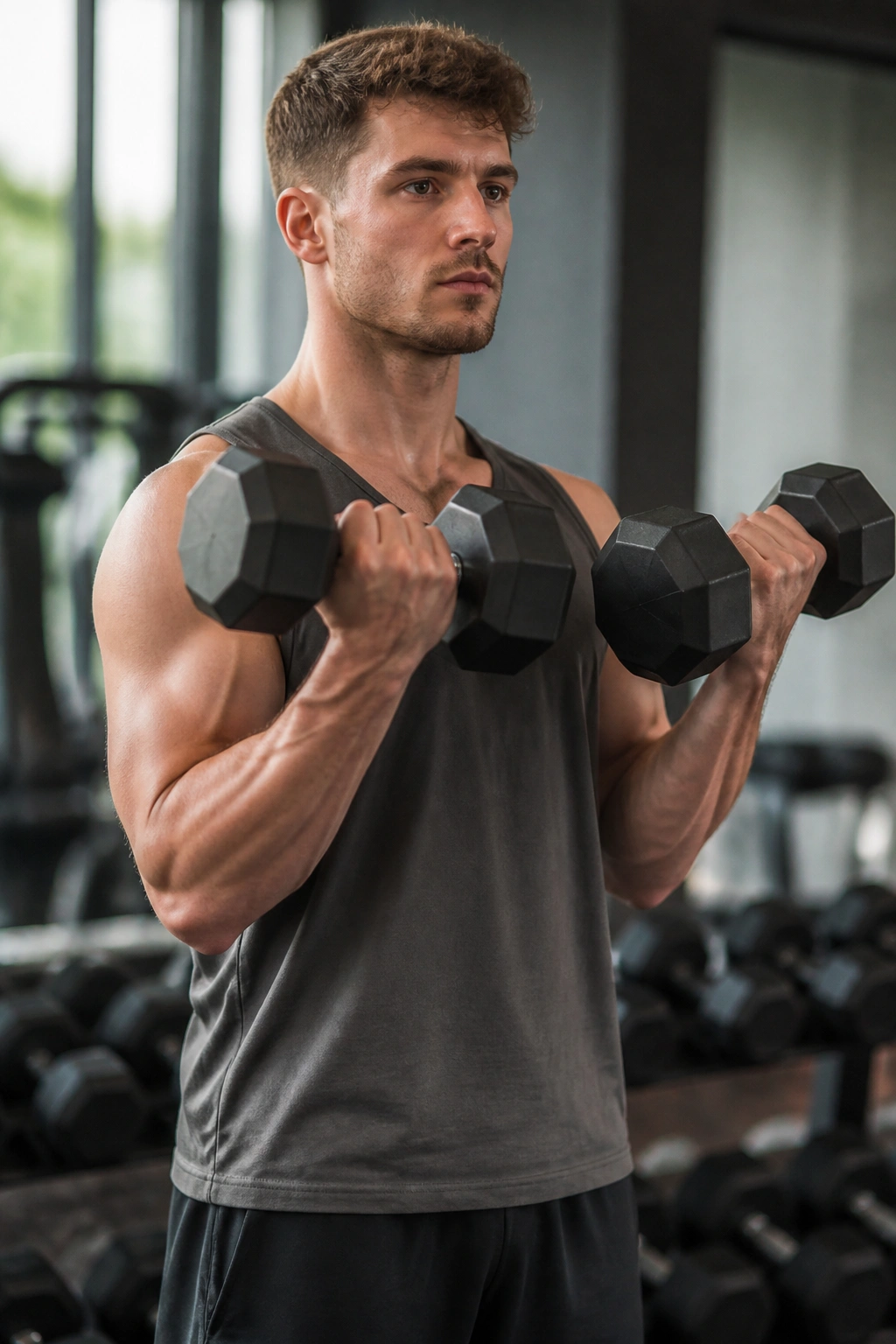
Want more total tension without turning the set into a wrestling match? Curl both dumbbells at the same time. The bilateral version makes it harder to cheat with torso rotation, and it often feels heavier than alternating curls at the same load because both arms are working together through the same rep.
The tradeoff is simple: you need more trunk control. If your ribs flare and your lower back arches, the set got too heavy. Keep your feet planted, squeeze your glutes, and let the biceps do the work.
A lot of lifters like this one for mid-range reps because it feels smooth and direct. Use 3 to 4 sets of 6 to 10 reps when you want a little more load, or 8 to 12 reps if you’re chasing a fuller arm pump. Either way, don’t rush the lowering phase. That’s where the real work lives.
No hip drive.
3. Hammer Curl
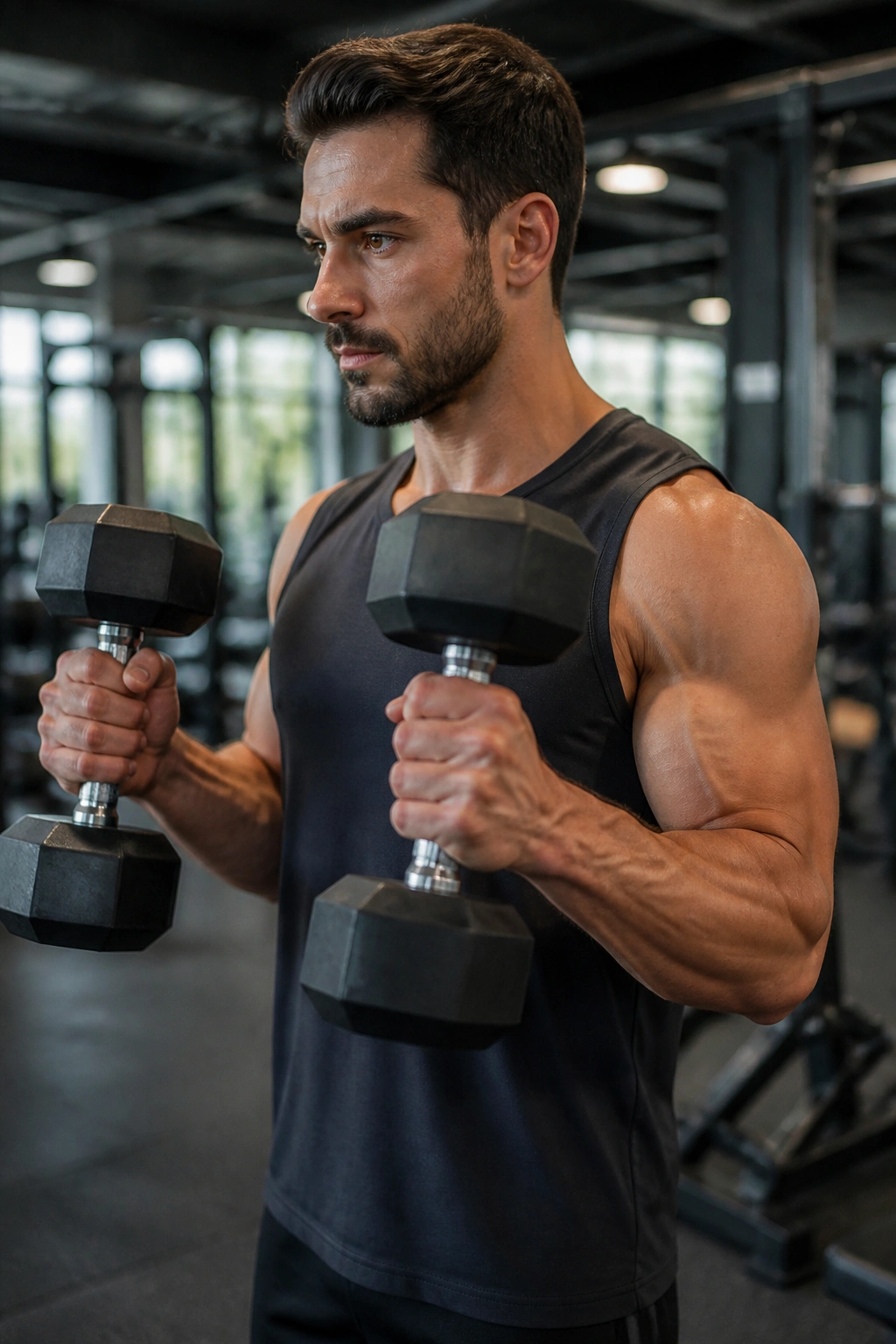
Not every arm builder needs a palm-up grip. The hammer curl uses a neutral grip, which puts a bigger share of the load on the brachialis and brachioradialis. That matters because those muscles add thickness under and beside the biceps, and thicker arms look bigger even when the shirt sleeve is doing a bad job of hiding them.
The movement is straightforward: palms face in, thumbs point up, and the dumbbells travel in a clean line without twisting. Keep your wrists stacked. If they bend back, the forearms will complain and the set will lose its punch.
Quick way to use it
- 3 to 5 sets of 10 to 12 reps
- Slightly heavier than strict supinated curls
- Pause for half a second at the top
- Stop the descent before the dumbbell crashes down
Hammer curls are especially nice if straight curls make your elbows grumpy. They usually feel kinder on the wrist, too.
4. Cross-Body Hammer Curl
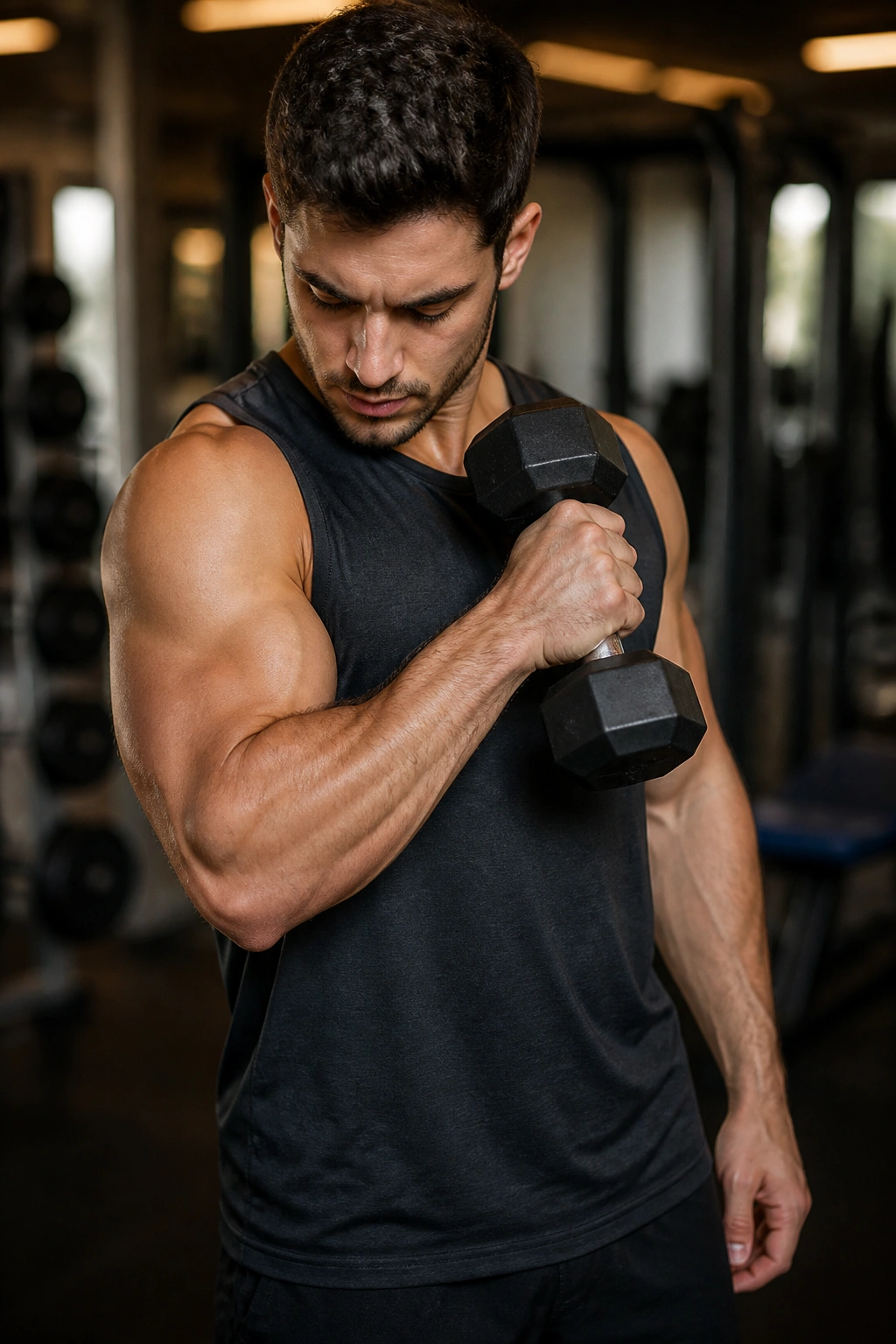
When a lifter says regular curls feel awkward, this is often the first variation I reach for. Instead of curling straight up, drive the dumbbell diagonally toward the opposite shoulder. That small shift changes the line of pull and makes the movement feel tighter through the outer arm and forearm.
The cross-body path keeps the upper arm honest. It also cuts down on the temptation to fling the weight forward. You’ll feel the brachialis light up fast, and the rep tends to stay controlled even when the load is moderate.
How to do it well:
- Start with the dumbbell beside your thigh.
- Curl toward the opposite chest or front shoulder.
- Keep the elbow from drifting far forward.
- Use 3 to 4 sets of 8 to 12 reps per side.
This one can sneak up on you. The weight won’t look dramatic, but the last few reps will make your forearm feel dense and full.
5. Concentration Curl
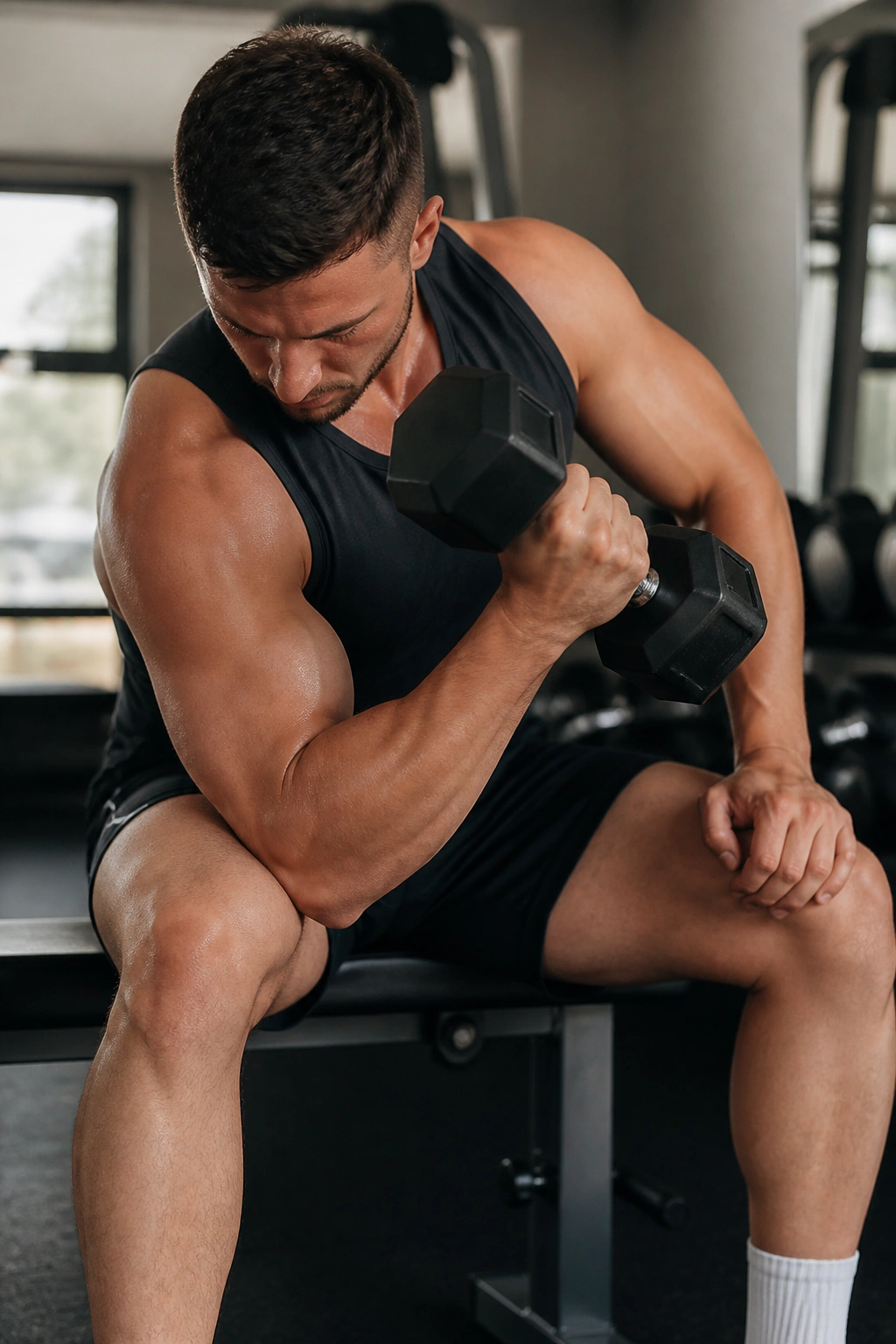
Sit down, brace the upper arm against the inner thigh, and the cheating stops fast. That’s the whole charm of the concentration curl. It strips away momentum and makes the top squeeze feel obvious, almost exaggerated, which is exactly why people keep coming back to it.
Why the brace matters
The thigh support gives your elbow a fixed place to live. That means the biceps has to finish the rep instead of the shoulder helping out at the top. The movement is small, but the tension is sharp, and the contraction feels easy to find even with lighter dumbbells.
Form cues
- Sit with your feet flat and torso slightly leaned forward.
- Let the arm hang fully before each rep.
- Curl until the pinky gets close to the shoulder.
- Lower slowly and keep the shoulder quiet.
Use 3 sets of 10 to 15 reps. This is not the curl for ego lifting. It’s the curl for making the muscle work while the rest of the body stays out of the way.
6. Seated Incline Dumbbell Curl
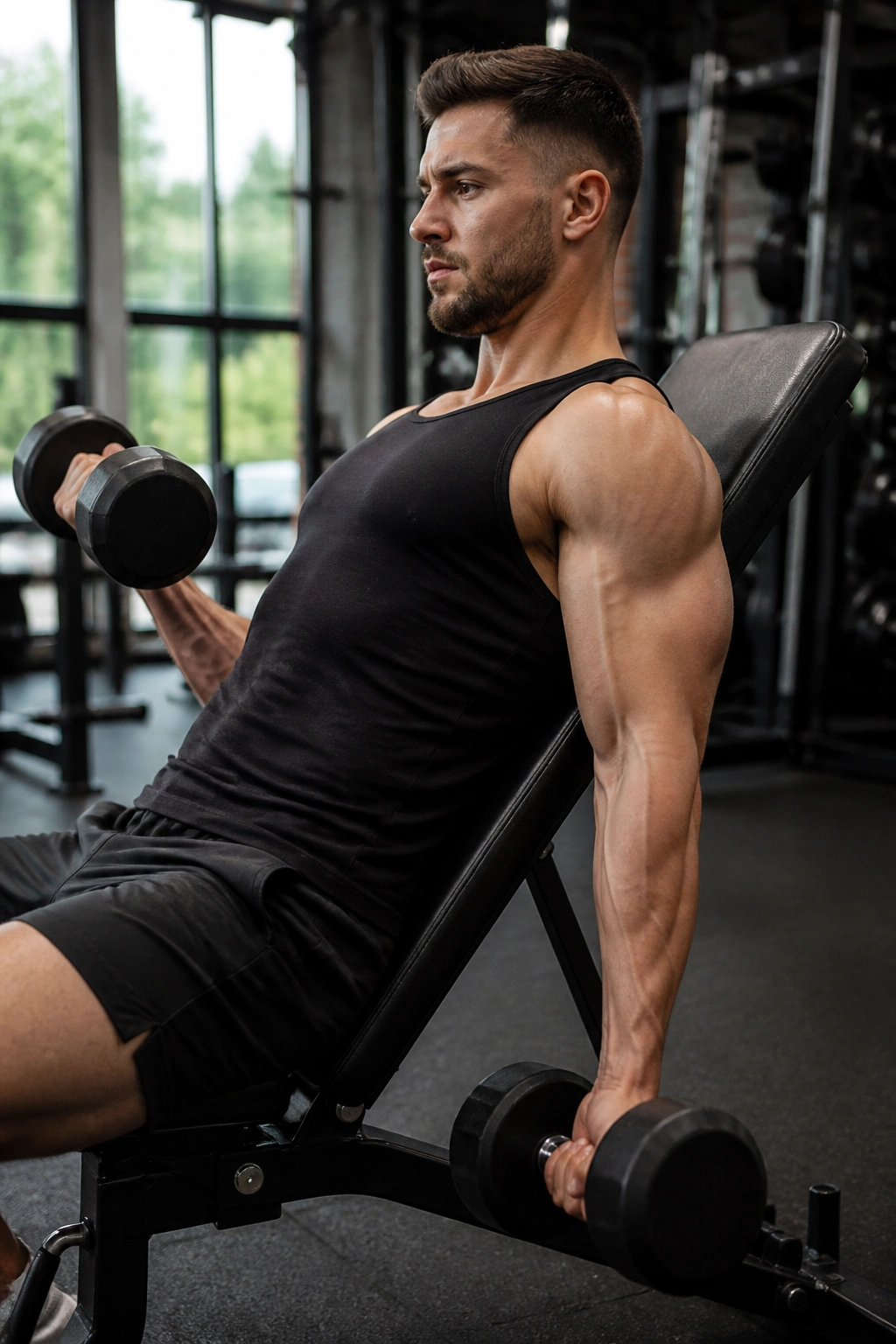
This is one of the best dumbbell bicep workouts for size because it puts the arms in a stretched position right from the start. Sit on an incline bench set around 45 to 60 degrees, let the arms hang behind your torso, and the long head of the biceps gets loaded in a way standing curls rarely match.
That stretch is the whole point. If you rush the bottom or swing the shoulder forward to shorten it, you lose the benefit. Start with a lighter pair than you think you need. Seriously. This curl punishes sloppy form fast.
I like 3 to 4 sets of 8 to 12 reps here, with a slow lower and a clean turn of the palm as you curl. You should feel tension near the bottom of the rep, not just at the top. If the elbow drifts forward on every rep, lower the weight and fix it.
7. Behind-the-Body Dumbbell Curl
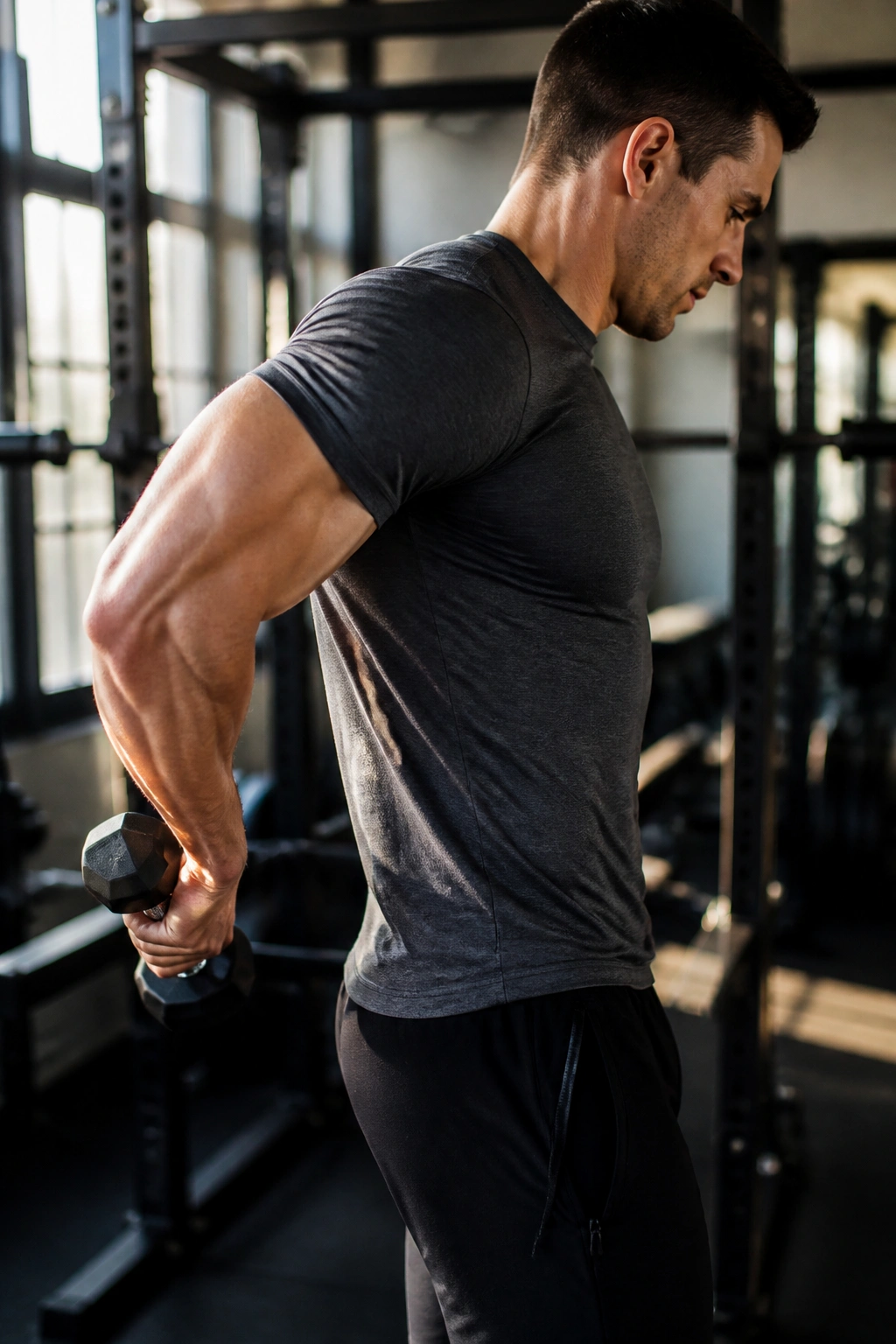
What if the arm starts a few inches behind your torso instead of hanging straight down? You get more stretch and a longer pull through the first half of the rep. That’s the main reason this variation deserves a spot in a serious arm plan.
Set one foot slightly forward, lean a touch, and let the upper arm sit just behind the hip line. Then curl without letting the shoulder roll forward. The movement feels a little odd the first time, then it starts to make sense fast. The long head tends to light up because the muscle is working from a stretched starting point.
Use it like this: 3 sets of 10 to 15 reps, one arm at a time. Keep the torso still and the wrist neutral until the palm turns up. If you try to rush the turn, the dumbbell will swing. That’s the part to avoid.
8. Zottman Curl
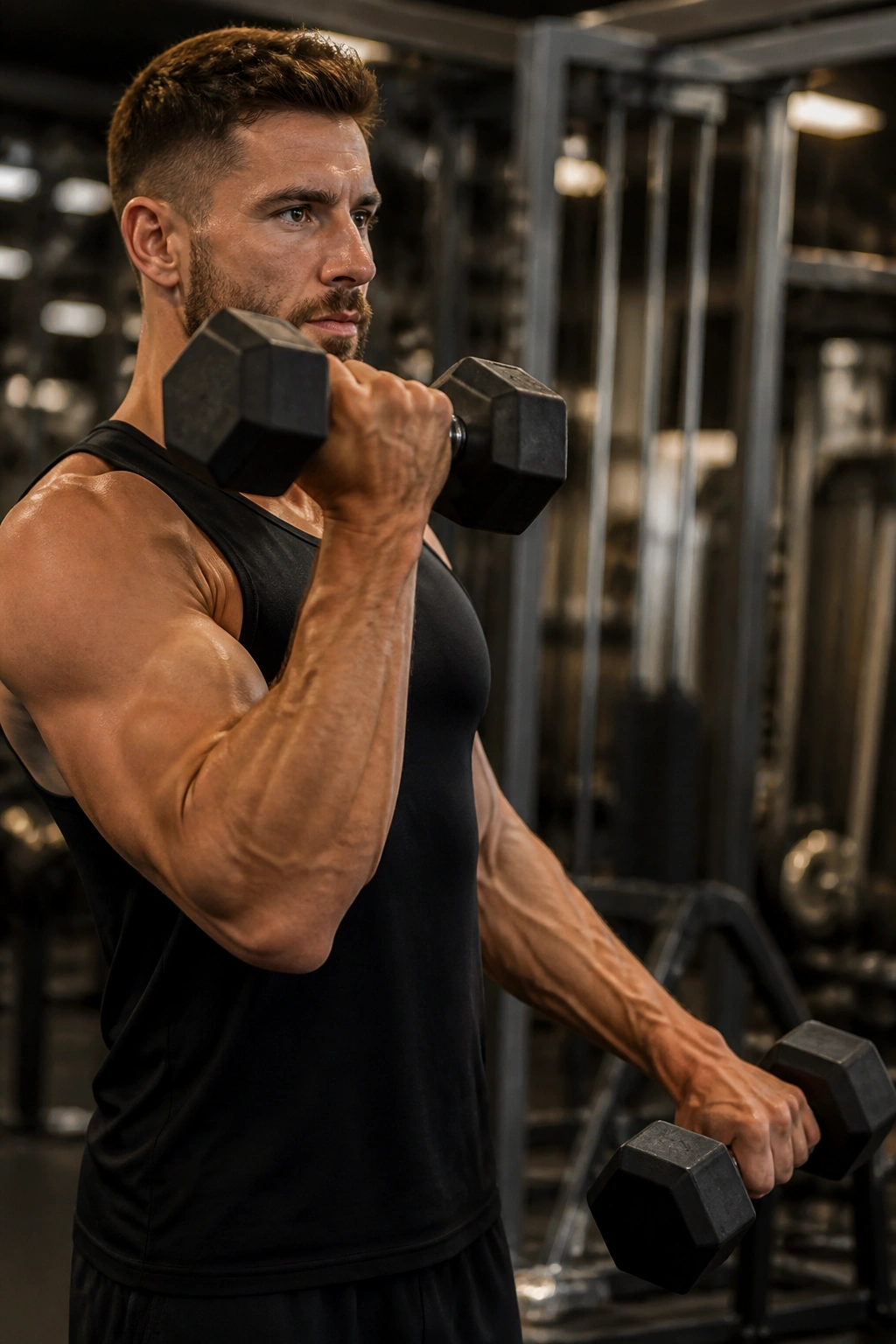
The biceps get the lift, the forearms pay on the way down. That’s the Zottman curl in one sentence.
Curl the dumbbells up with palms facing forward, then rotate at the top so your palms face down before lowering. The descent becomes a reverse curl, which hammers the forearms and brachialis while still giving the biceps a clean concentric rep. It’s a neat little two-for-one, and it works better than it looks on paper.
Use lighter weight than you would for standard curls. The pronated lowering phase is humbling, and that’s normal. If your wrists collapse, the load is too much.
Best use
- 3 sets of 8 to 10 reps
- Slow the lowering to 3 seconds
- Keep elbows tucked
- Stop if the wrists feel strained
This one is especially useful if your pulling work needs better grip strength.
9. Spider Curl
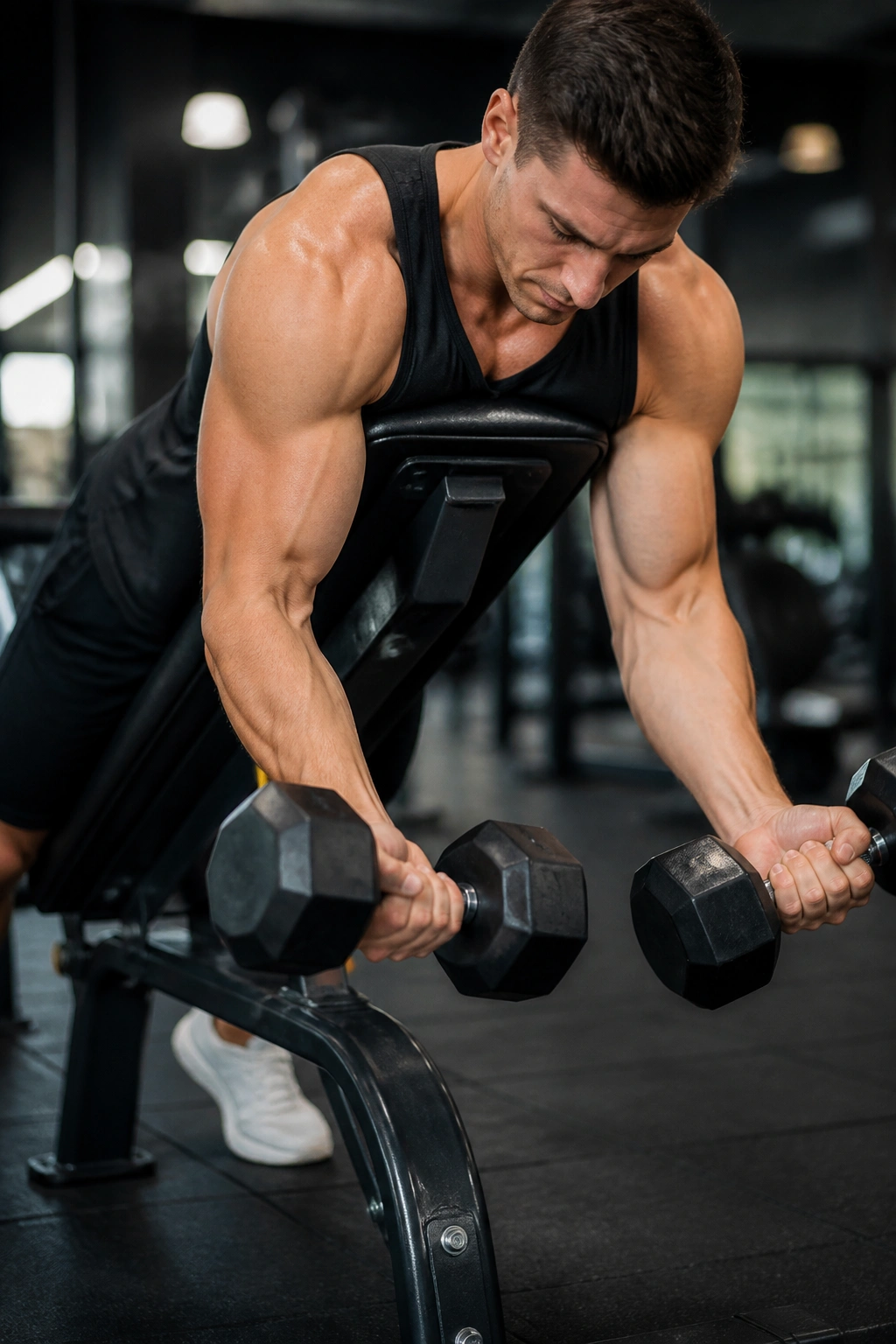
Put your chest on an incline bench and the cheating disappears fast. That’s the appeal of the spider curl. Your arms hang in front of your body, the shoulder stays quiet, and the curl becomes a pure elbow-flexion exercise with almost no room for body swing.
The setup also changes where the tension feels strongest. Many lifters notice a hard squeeze near the top because the arm position keeps the biceps short and active through the finish. Use a lighter pair than you’d use for standing curls. The bench does the policing for you, so there’s no reason to load it up and ruin the rep.
A clean spider curl usually lives in the 10 to 15 rep range. Keep the chest glued to the pad, curl until the dumbbells are near the front of the shoulders, and lower until the arms are nearly straight without snapping the elbows.
10. Dumbbell Preacher Curl
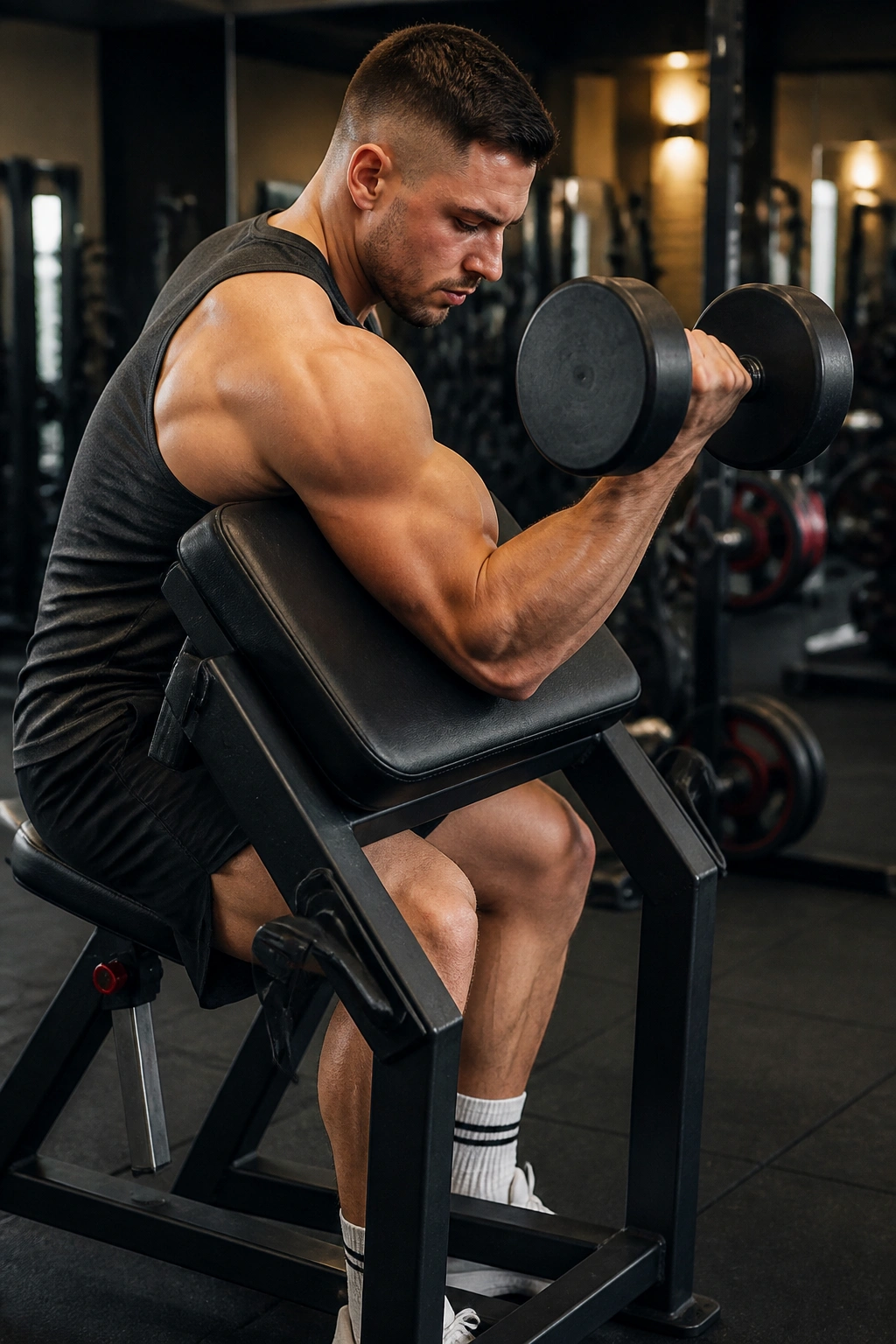
This one punishes sloppy range. Good.
A preacher setup — either a preacher bench or a high incline bench you can brace against — locks the upper arm in place and makes the lower half of the curl feel much harder. That’s useful because a lot of people get lazy near the bottom of the rep. The preacher position takes that escape route away.
You don’t need to slam into full lockout every time. In fact, a tiny bit of elbow bend at the bottom keeps tension on the muscle and keeps the joint happier. Smooth reps win here.
Quick notes
- 3 to 4 sets of 8 to 12 reps
- Lower under control, around 2 to 4 seconds
- Stop just short of locking out
- Keep the shoulder from rolling forward
If you want a strict, honest curl that makes the front of the arm burn, this is one of the best places to spend your energy.
11. Drag Curl
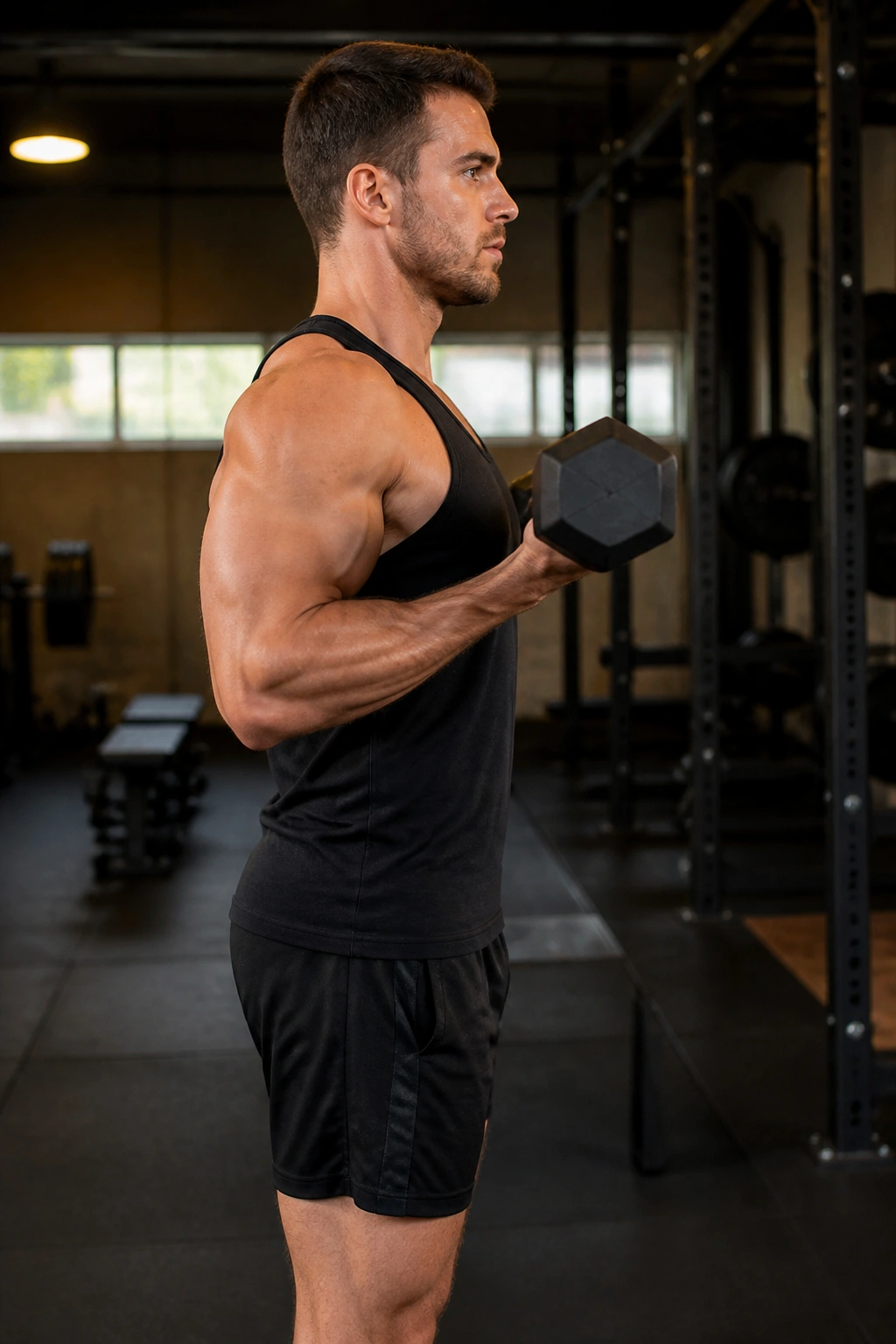
What if the elbows travel back instead of out in front? That’s the drag curl, and it feels weird in the best way. The dumbbells stay close to the torso as you curl, almost brushing the shirt, which changes the tension enough to make a familiar movement feel new again.
This is one of those exercises that looks simple and turns nasty after a few reps. Because the elbows drift behind the body, the biceps stays under tension through a longer slice of the movement. You’ll usually need less weight than you think. That’s fine. This is not the place for ego.
Why lifters keep it around
- It’s strict without feeling stiff.
- It keeps the shoulder from taking over.
- It’s a good choice when regular curls feel stale.
Use 3 sets of 8 to 12 reps and keep the dumbbells close. If they swing away from your body, you’ve lost the whole point.
12. 21s With Dumbbells
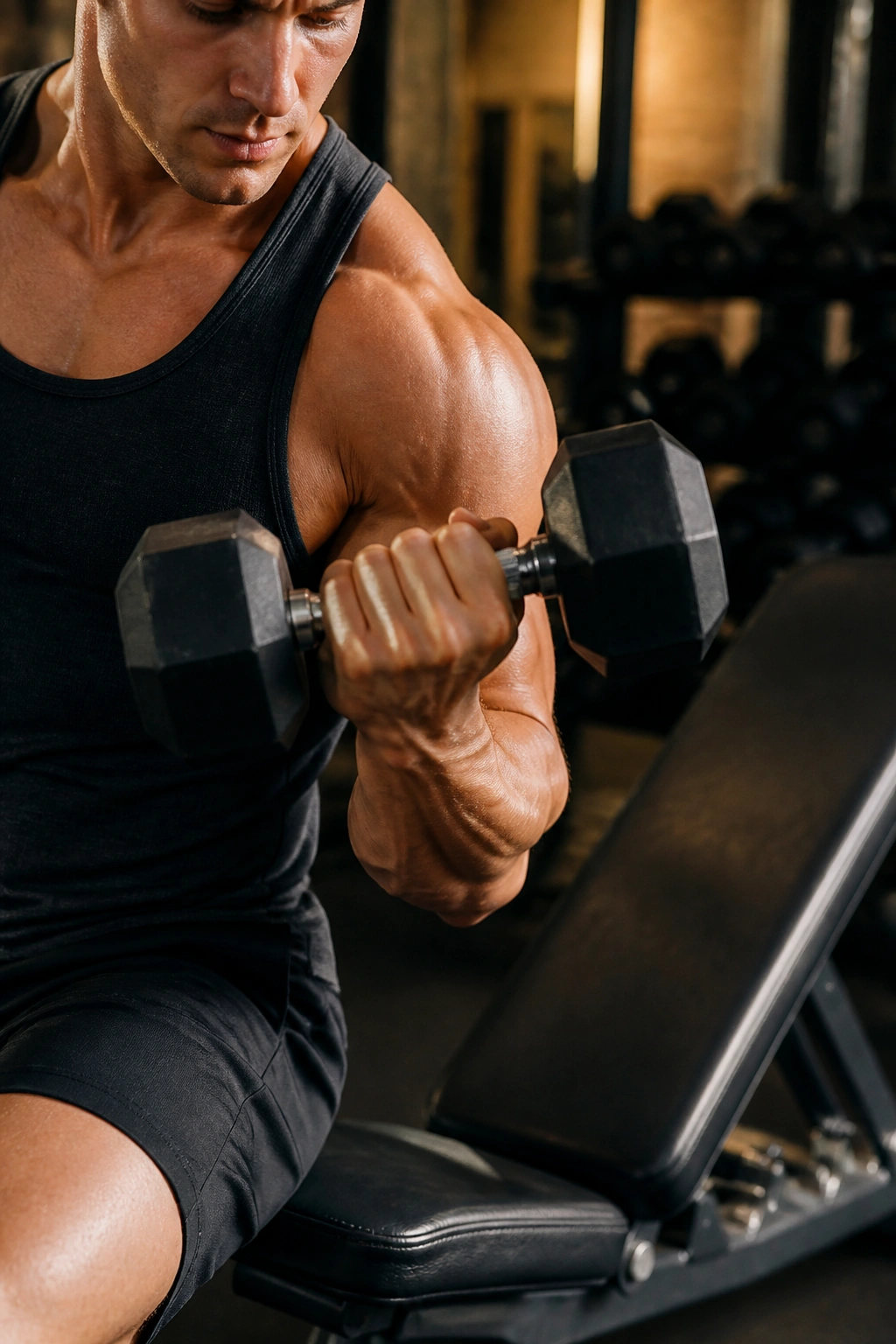
Seven reps from the bottom. Seven from the top. Seven full reps. It sounds like a silly little finisher until your arms start filling with blood and the last seven reps feel like you borrowed the wrong arms from somebody else.
The beauty of 21s is that they attack the curl from three different ranges. The bottom half teaches you to move through the start of the rep without cheating. The top half keeps the squeeze brutal. The full reps stitch the whole thing together once fatigue is already high.
The three parts
- 7 lower-half reps from straight arms to about 90 degrees.
- 7 upper-half reps from 90 degrees to the top.
- 7 full-range reps through the whole curl.
Pick a weight that feels almost too light at first. Then the second set will prove you wrong. Two to three rounds are enough for most people.
13. Slow-Eccentric Dumbbell Curl
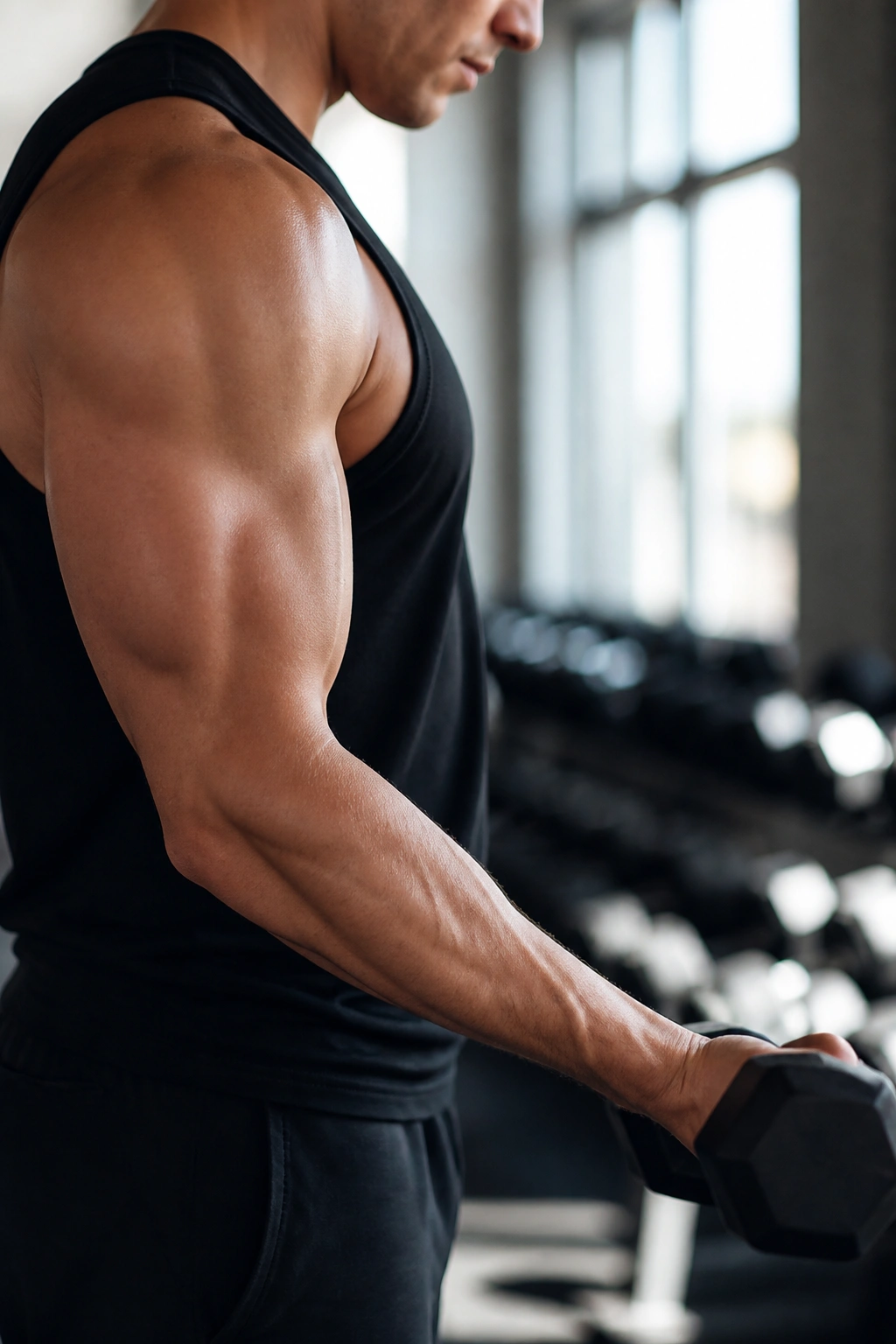
A slower lowering phase builds control fast. That’s the simplest way to think about slow-eccentric curls.
Choose a manageable dumbbell, curl it up with clean form, and lower it for 3 to 5 seconds. The biceps has to resist the load for longer, which makes the rep feel denser and more demanding without needing a huge weight jump. If you’re the type who rushes the way down, this variation will expose that habit in a hurry.
Keep the shoulders still and the ribs down. If the body starts leaning back to help the descent, the tempo got too aggressive or the dumbbell got too heavy. There’s no prize for lowering a weight with drama.
This works especially well in the 8 to 10 rep range. The set should feel controlled from the first rep, then quietly awful by the last two.
14. Pause Curl at 90 Degrees
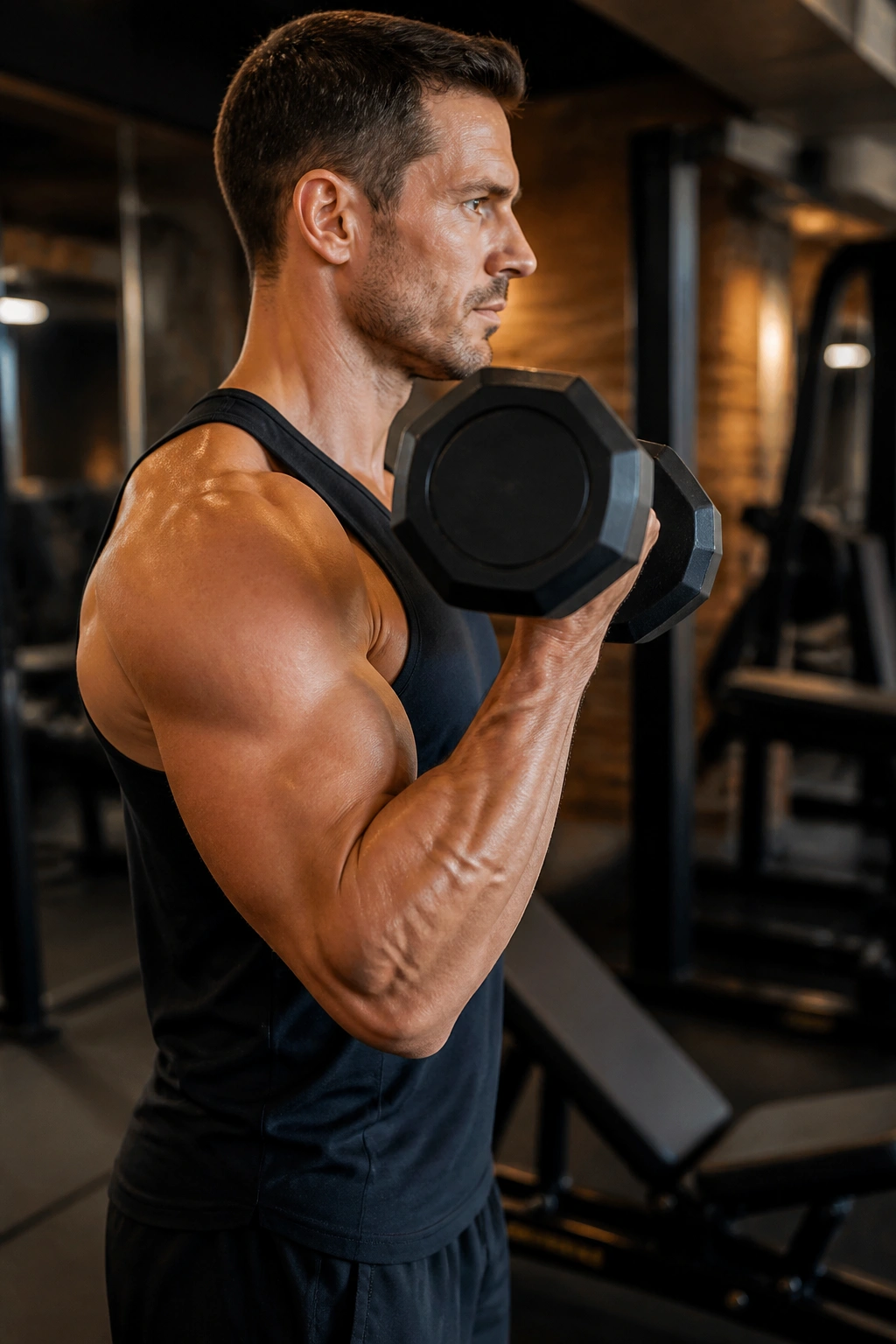
Can you hold the halfway point without shrugging? That’s the real test here.
Pause curls put an isometric hold at the part of the rep where a lot of lifters get lazy. Bring the dumbbell up to roughly 90 degrees of elbow bend, hold for 2 to 3 seconds, then finish the curl. The pause forces the biceps to keep tension where momentum usually sneaks in.
Where to use the pause
- Midway up for sticking-point strength
- Near the top for extra squeeze work
- At the bottom only if you want a brutally strict start
Use 3 sets of 8 to 10 reps, and don’t turn the pause into a shrug. The shoulders should stay low. The forearm might tremble a little. That’s the rep telling you it’s doing something useful.
This is a good choice if your curls always look fine on rep one and messy on rep six.
15. One-and-a-Half Rep Curl
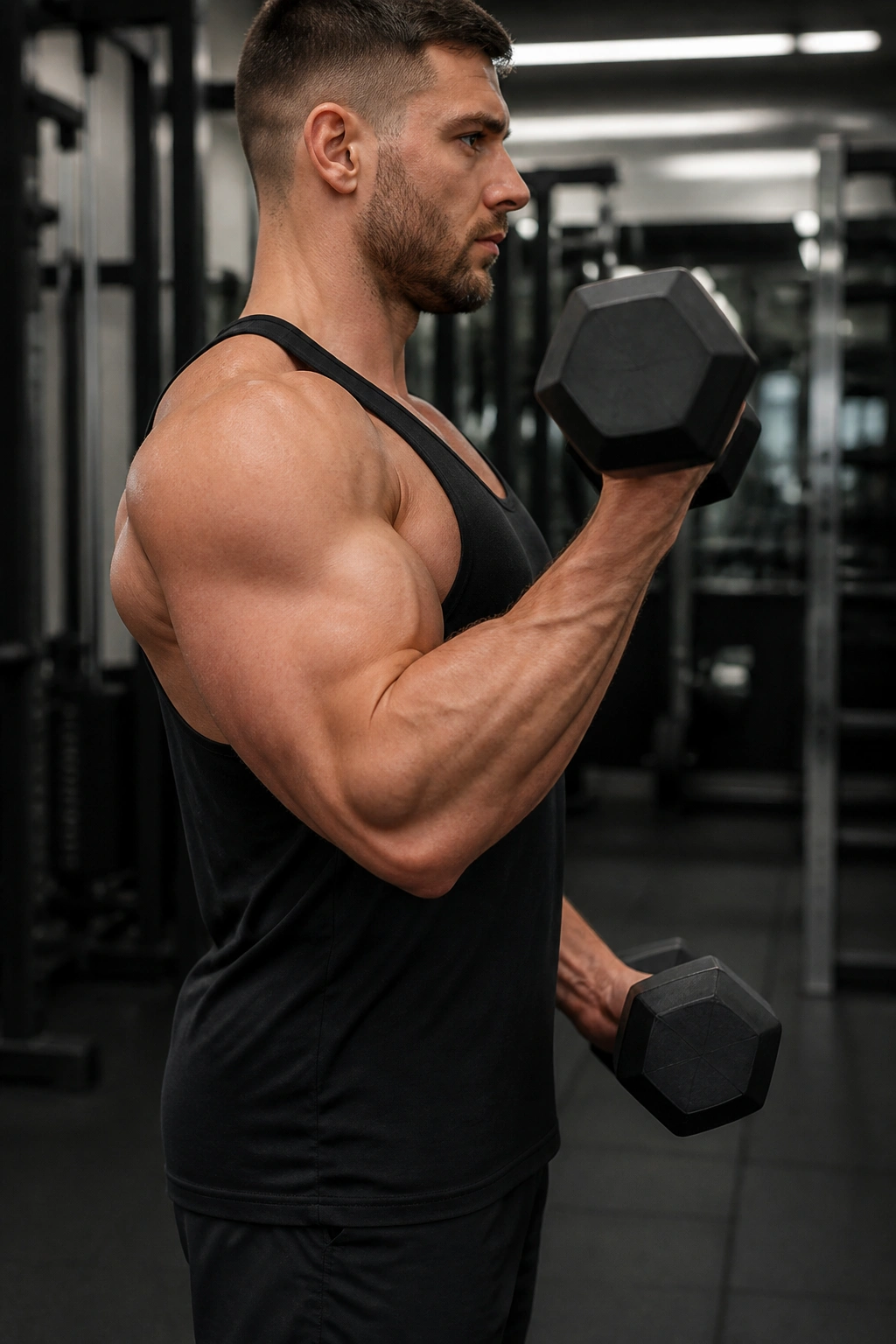
Up, halfway down, back up, then all the way down. Simple to explain. Brutal to do.
The one-and-a-half rep style keeps the muscle under tension for longer without needing a ton of load. You get an extra squeeze at the top and an extra battle through the middle, which is where a lot of lifters lose shape and start cheating. The movement also teaches control. Fast.
Use a weight you can move cleanly for 6 to 8 reps. If you try to load this like a normal curl, the set gets ugly almost immediately. Keep the elbow fixed, make the halfway descent deliberate, and avoid bouncing off the bottom. That bounce is the whole problem.
This one is mean enough to earn its place as a finisher. It’s also one of the quickest ways to make a light dumbbell feel like a bigger one.
16. Reverse Curl
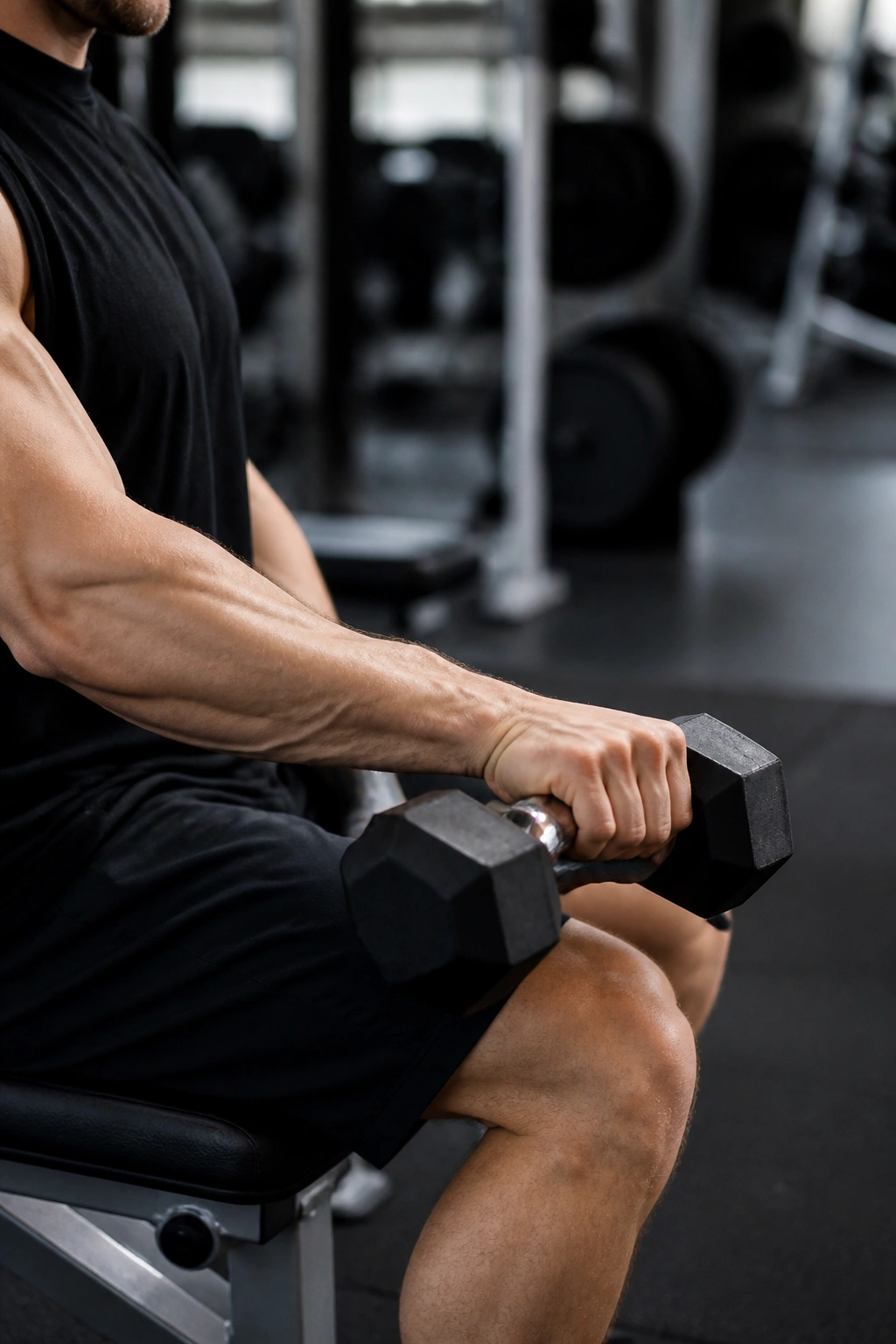
A palm-down curl looks small, but the burn shows up fast. The reverse curl shifts more work to the brachioradialis and brachialis, which gives the upper arm and forearm more thickness over time. It also changes the stress on the elbow in a way some people actually prefer.
The grip needs to stay firm and flat. Don’t let the wrists fold back. That’s where the trouble starts. Keep the motion smooth, the elbows pinned, and the range honest. The dumbbells won’t travel as high as they do in a supinated curl, and that’s fine.
Good reasons to keep it in rotation
- Builds forearm size and grip endurance
- Helps balance all the palm-up curling
- Gives the elbow a different stress pattern
Use 3 sets of 10 to 15 reps with moderate weight. If the wrists start yelling, lighten the load and clean up the line of motion.
17. Squeeze Curl
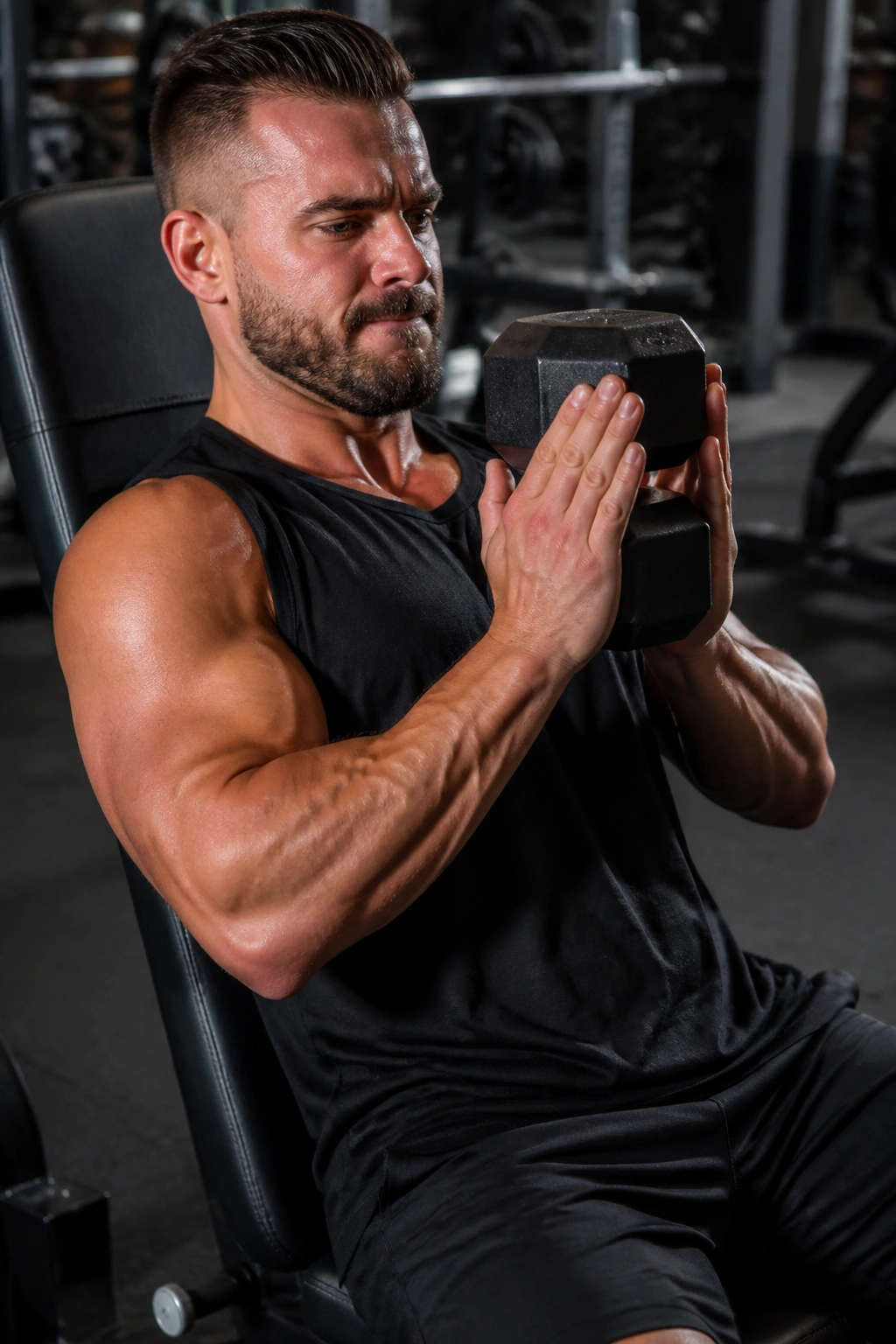
Press the dumbbells together and the curl gets nastier. That’s the whole trick.
Use two hex dumbbells if you’ve got them, press the inner heads together, and keep that pressure while you curl. The constant squeeze keeps tension where it belongs and cuts down on sloppy rep speed. The movement feels a little awkward at first, then the biceps and forearms start complaining in unison.
This is a smart finisher when the usual curl patterns start to feel stale. It’s not the heaviest option in the room, but it can be one of the most tiring because there’s no real rest point. The hands stay active the entire time.
Try 3 sets of 8 to 12 reps and keep the dumbbells touching from start to finish. If they separate, the squeeze is gone and the exercise turns into a normal curl with extra steps.
18. Alternating Isometric Hold Curl
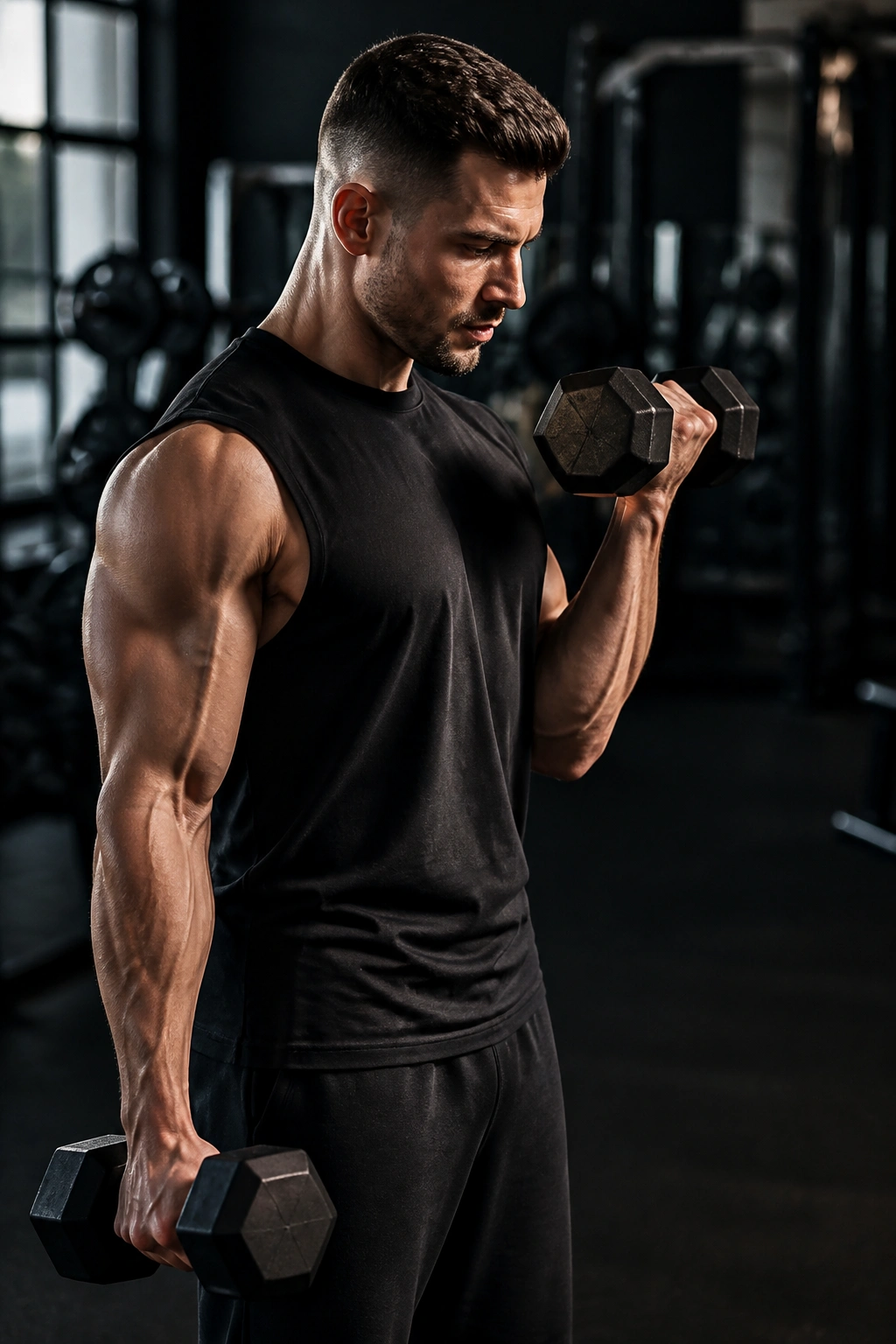
What happens when one arm works while the other just hangs there burning? You get a brutally effective finisher that doesn’t need much weight at all.
Curl one dumbbell and hold it at about 90 degrees or near the top while the other arm performs 8 to 10 controlled reps. Then switch. The holding arm gets a long isometric burn, the working arm gets full-range reps, and the whole set feels longer than it should. That’s a good sign.
This is a nice way to end a biceps session when you want one more hard effort without loading the joints too heavily. Keep the hold honest. Don’t let the shoulder creep up or the wrist fold back. If the dumbbell starts drifting, lower it, reset, and keep the tension clean.
Use 2 to 3 rounds. Enough to finish the job. Not enough to turn your form into soup.
The Bottom Line
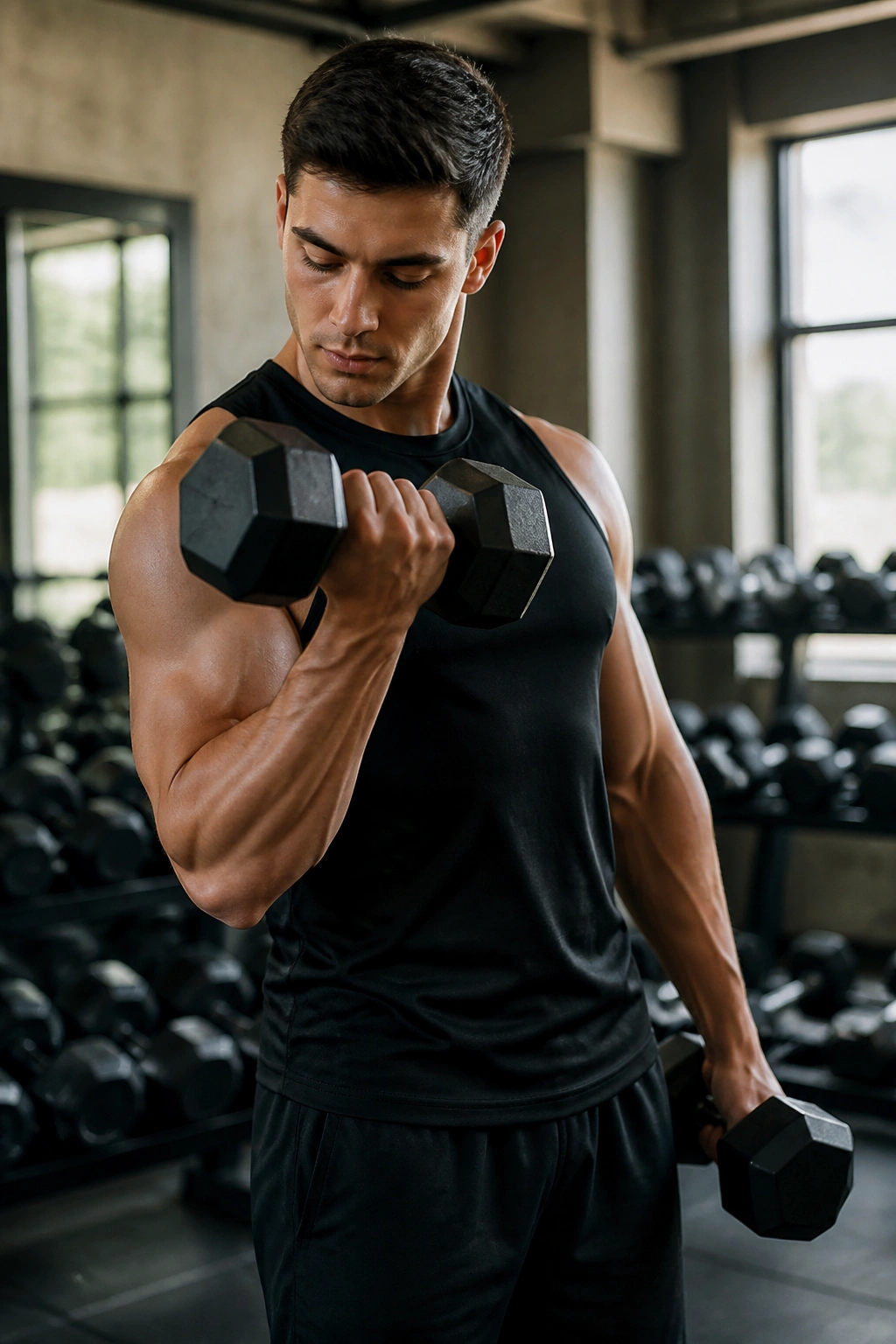
A bigger biceps session doesn’t need eighteen exercises at once. It needs a few smart ones chosen for different jobs. One strict curl. One stretched curl. One neutral-grip move. One finisher if you still have gas in the tank.
If I were building a simple arm day from this list, I’d start with a standing curl, add an incline or behind-the-body variation, then finish with a hammer curl or reverse curl. That gives you the straight-up biceps work, the stretch, and the thicker-arm stuff that sits underneath it. Clean reps beat random variety every time.
Pick the versions that match your elbows, your equipment, and your patience. Then load them gradually, keep the lowering phase honest, and stop trying to make every rep look heroic. The dumbbell doesn’t care about the show. It cares about tension.
