



Crunches get dismissed for one annoying reason: most people do them badly, fast, and with a neck that’s doing half the work. Done that way, they feel pointless. Done with the right tempo, setup, and variation, they become a sharp little tool for training the abs, building endurance through the midsection, and making a fat-loss circuit feel like real work.
The honest part comes first. No crunch variation burns belly fat on its own. Fat loss doesn’t work like a remote control where you press the “abs” button and the body obliges. If the waist is going to change, the bigger drivers are total calorie intake, daily movement, strength training, and enough consistency to let body fat come down over time.
That does not make crunches useless. Far from it. The right crunch variations can help you train the rectus abdominis and obliques with better control, higher rep quality, and more tension than people usually give them credit for. They can also slot neatly into a circuit, keeping your heart rate up while your core stays under load. That combination matters when you want a workout that feels dense, not fluffy.
The trick is picking the right version for the right job. Some crunches are cleaner and safer for beginners. Some let you add weight and progress like any other lift. A few are better as finishers when your abs are already tired and you want that deep, gritty burn that makes you stop checking your phone between sets.
1. The Classic Floor Crunch Done Slowly
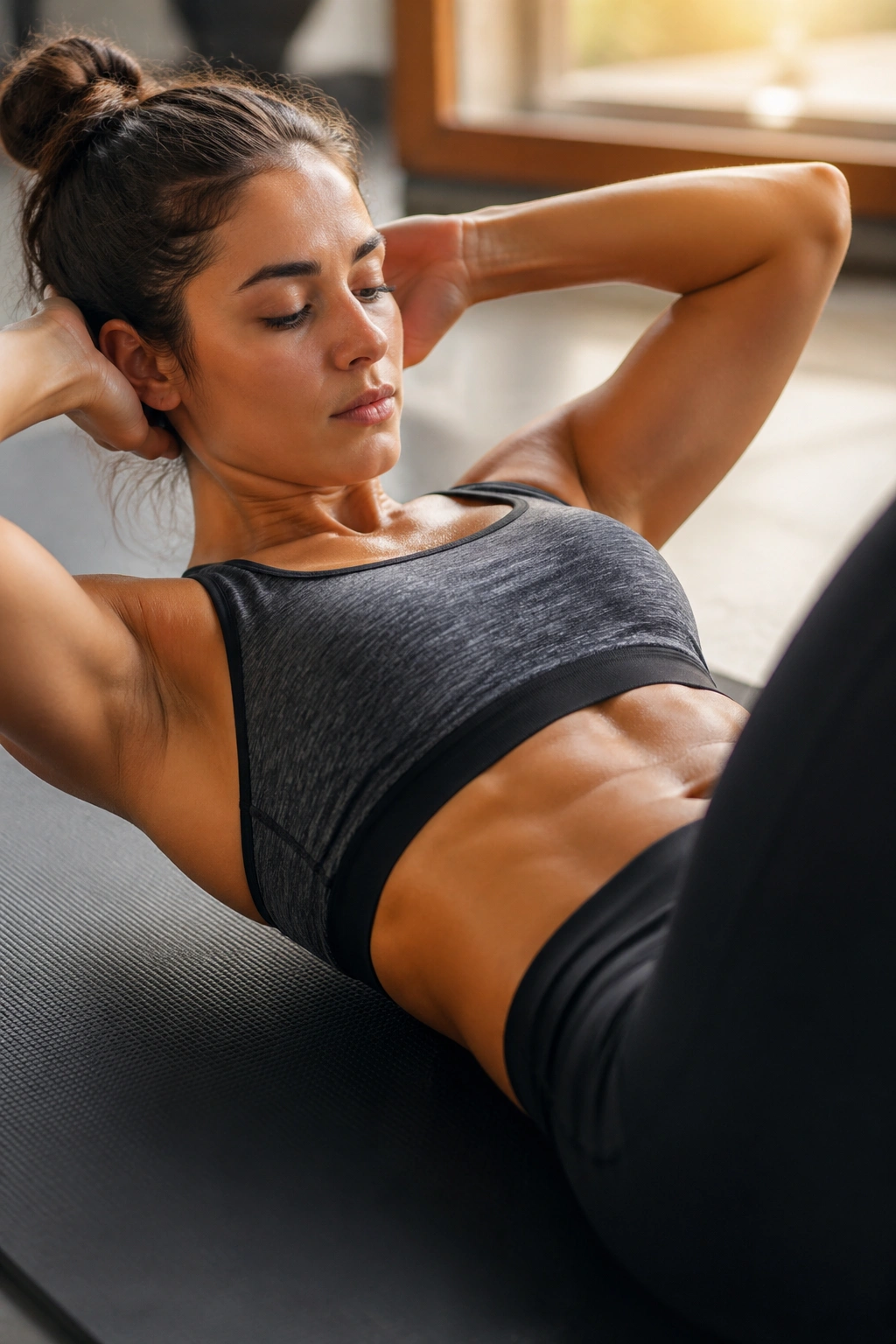
The basic floor crunch gets mocked because it looks too simple. That’s a mistake. When you slow it down, strip out the momentum, and keep the movement short and honest, it becomes a solid starting point for anyone who wants to train the abs without turning the session into a circus.
Why It Still Earns a Place
The floor crunch keeps your body stable, which means the abs have to do the work instead of the hips stealing it. You are not trying to sit all the way up. You’re curling the rib cage toward the pelvis, squeezing for a second at the top, and lowering under control.
That small range is the whole point. If your lower back gets fussy or your neck tends to take over, the floor crunch is a good place to clean things up before you chase harder variations.
How to Do It
- Lie on your back with knees bent and feet flat.
- Place one hand lightly behind your head or cross your arms over your chest.
- Exhale as you lift your shoulder blades a few inches off the floor.
- Pause for 1 to 2 seconds at the top.
- Lower with control until your shoulder blades touch down again.
Use 3 sets of 15 to 20 reps if your form stays tight. If you can crank out 30 sloppy reps, you’re going too fast.
A clean floor crunch should feel like a deep squeeze through the front of the abdomen, not a tug in the neck. That’s the feeling you want to keep.
2. Reverse Crunches for a Harder Lower-Ab Story
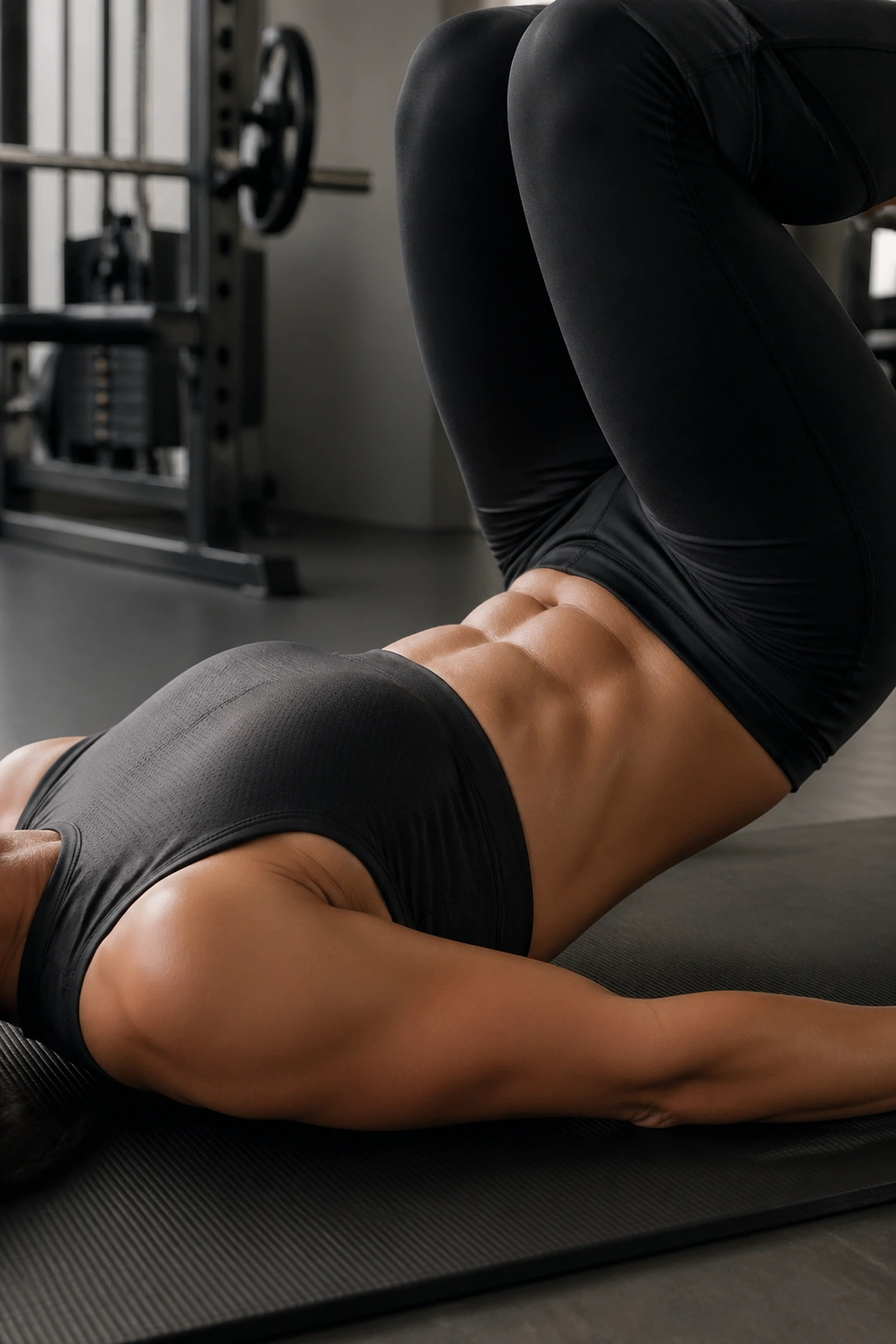
Reverse crunches are the move people underestimate, and then they feel them the next day in places they did not expect. They look gentle. They are not. When done right, they shift the work into the lower portion of the abs by curling the pelvis off the floor instead of yanking the shoulders upward.
What makes them useful is the hip tilt. You start by bringing the knees in, then you use the lower abs to roll the pelvis up a few inches. That tiny roll is the money part. If you swing the legs and fling the hips, the movement turns into nonsense fast.
Keep the tempo slow. A lot of people throw their feet up and call it done. Better to think of it as a tiny controlled curl, almost like you are trying to peel the tailbone off the floor one inch at a time.
Best rep range: 10 to 15 controlled reps for 3 sets.
Best cue: knees in, pelvis up, down with control.
Common mistake: letting the feet crash down and flatten the low back.
If your hip flexors keep barking, shorten the range and slow the lower phase. Reverse crunches reward precision. They punish sloppiness.
3. Bicycle Crunches Without the Neck Yanking
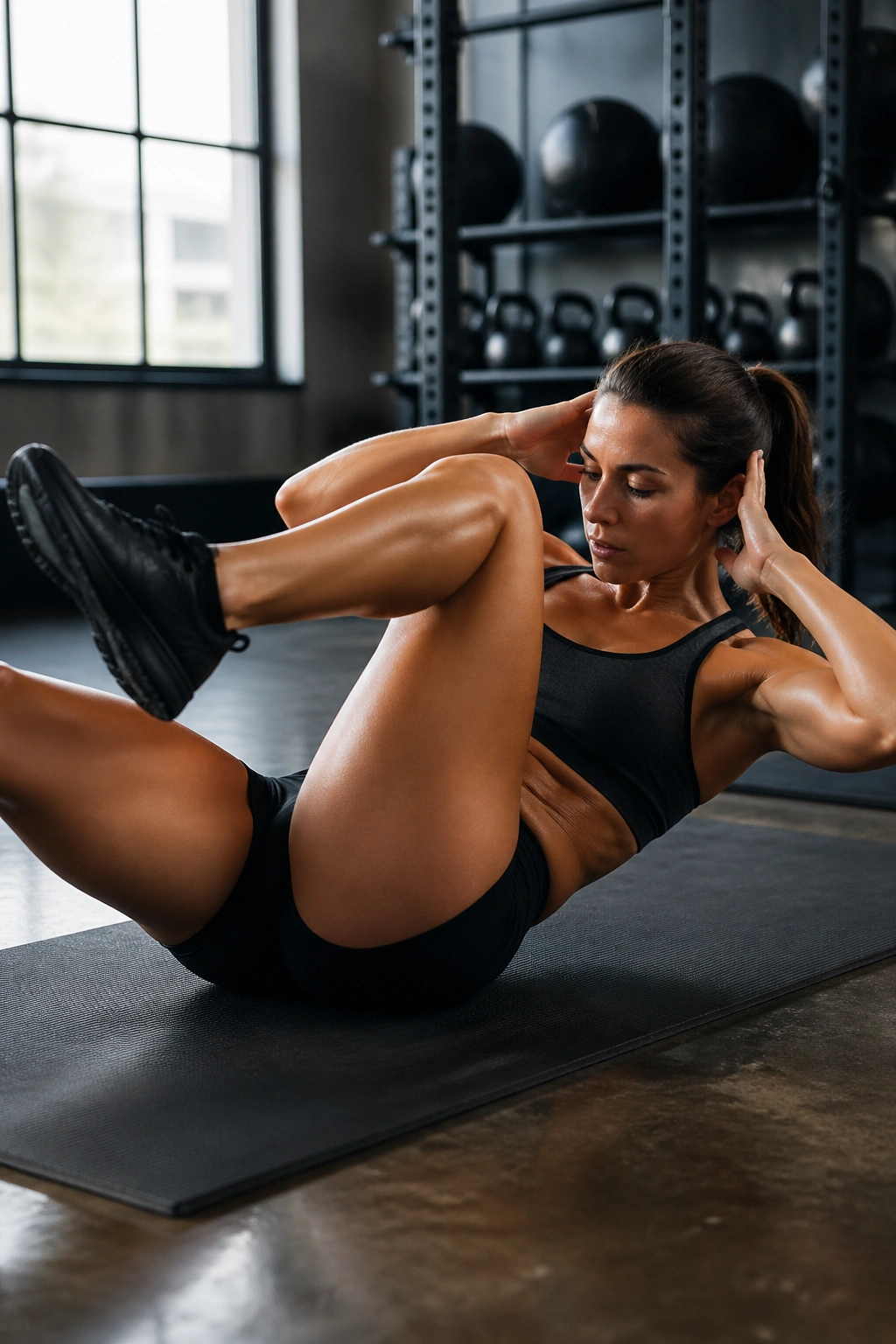
Bicycle crunches can be excellent, and they can also turn into a frantic elbow-waving contest where the abs barely work. The difference comes down to speed. Fast bicycles usually train momentum. Slow bicycles train the midsection.
The real value here is the combination of rotation and anti-rotation. You are not just moving one elbow toward the opposite knee; you are resisting the twist while the torso stays braced. That makes them a useful choice when you want a core workout that feels more athletic than the standard crunch.
What to Watch For
- Keep the chin slightly tucked, not jammed into the chest.
- Rotate through the rib cage, not just the elbow.
- Extend the opposite leg fully, but don’t let the lower back arch hard.
- Move at a pace where every rep still looks controlled in a mirror.
Twenty to 30 total reps is plenty for most people. Past that, form usually slips unless you’re moving with real discipline.
Slow bicycles can light up the sides of the waist more than people expect. The catch is simple: if your shoulders are flying around and your knees are flailing, the movement is mostly noise.
4. Stability Ball Crunches for a Longer Range of Motion
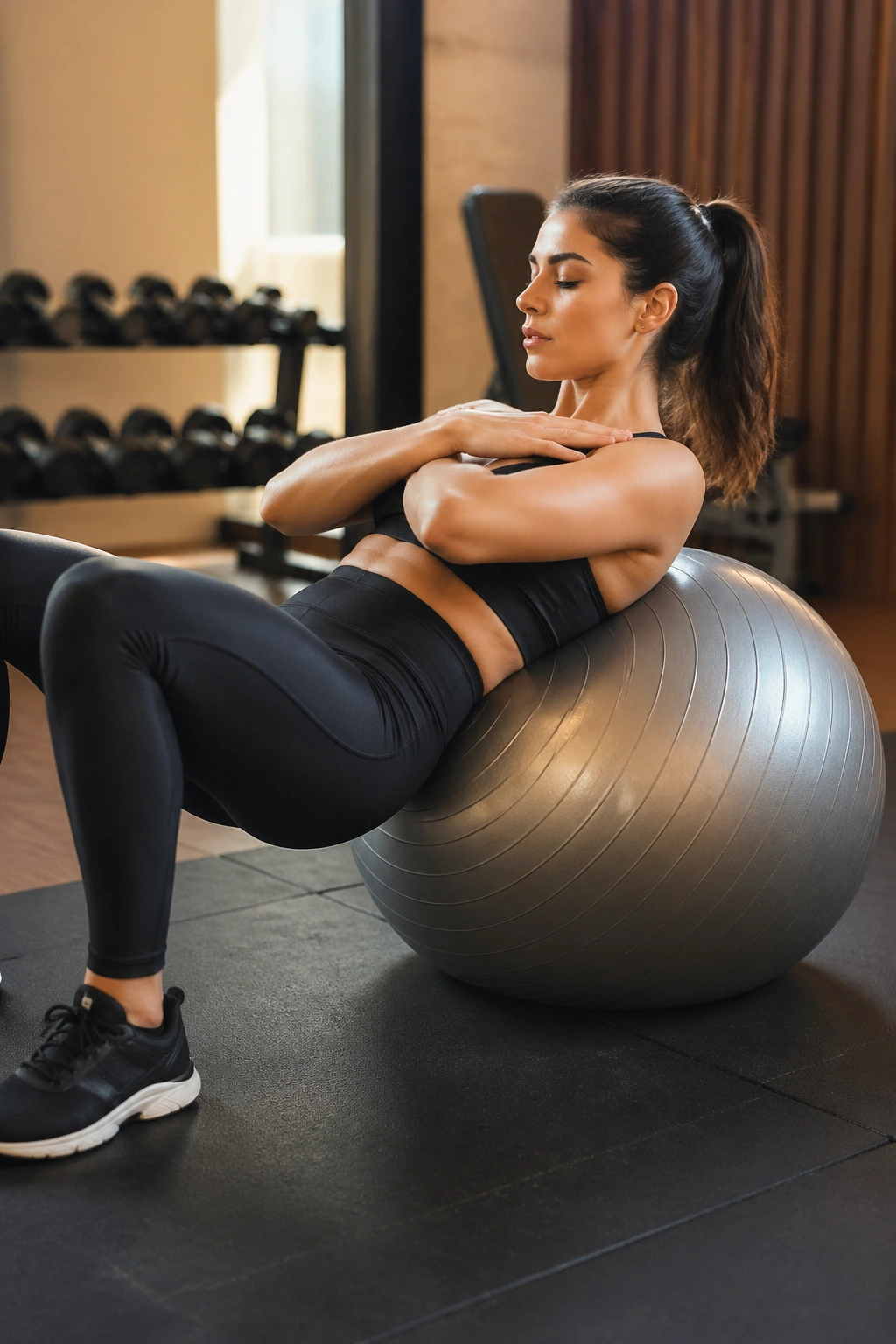
A stability ball changes the game because it lets your spine move through a slightly bigger arc. The upper back opens over the curve of the ball, and then the abs have to pull you back to the top. That longer range often makes the exercise feel harder than the plain floor version, even with no weight at all.
The ball also reduces the urge to jerk the neck. There’s less temptation to haul yourself up with your hands because the setup naturally supports the upper back. That said, you still need to stay honest. If you fling your ribs upward and arch too much at the bottom, the whole thing turns sloppy.
A good starting load is bodyweight only for 12 to 15 reps. Once that feels clean, hold a small plate or dumbbell at your chest. No need to get fancy. A 5- to 10-pound plate is enough to make the movement much tougher.
The ball version is especially good if you want crunches that feel more like a true abdominal exercise and less like a floor drill you rush through. It’s also one of the better choices for people who want a softer surface under the spine without giving up tension.
5. Cable Crunches That Let You Add Real Weight
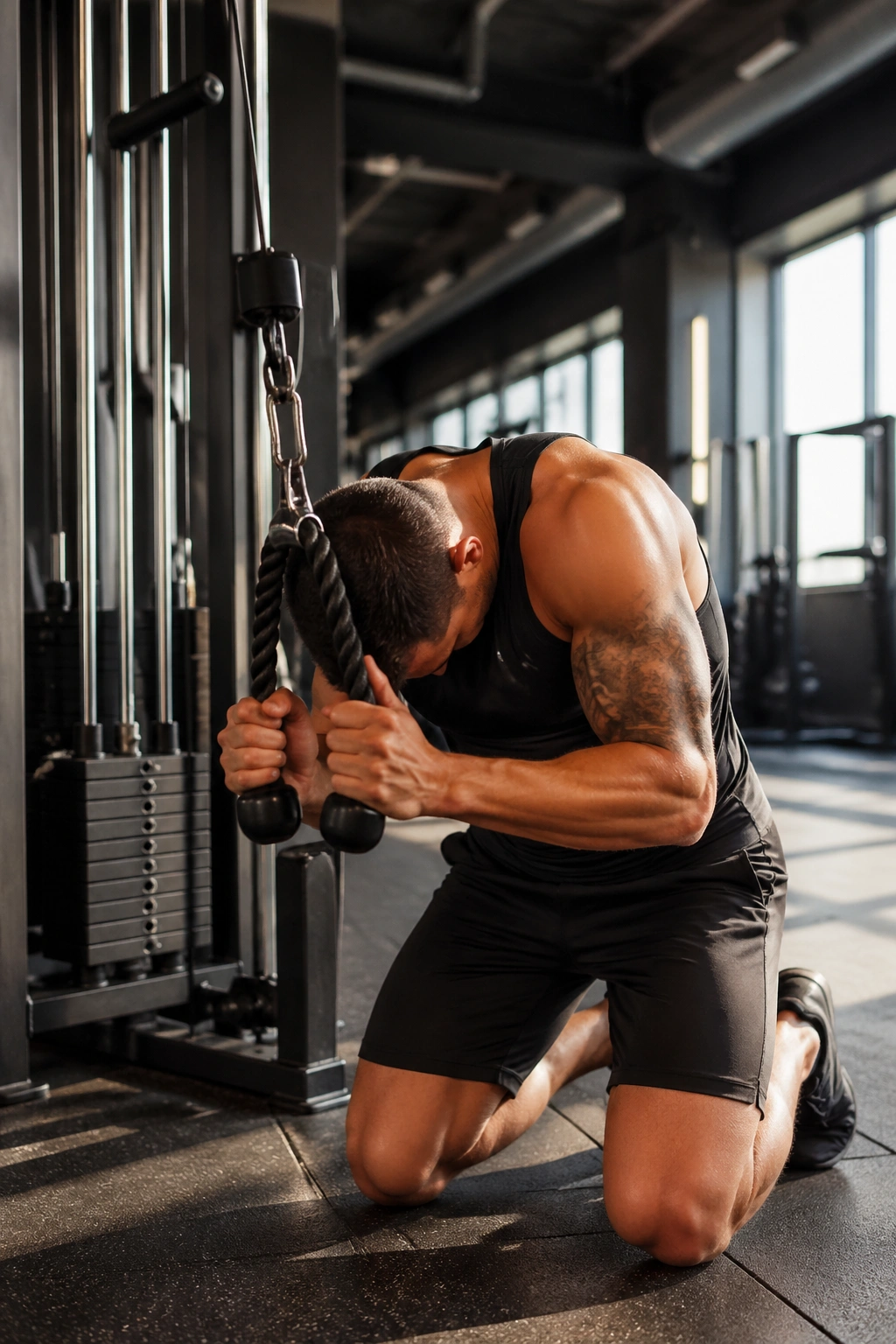
Cable crunches are the adult version of the movement. They let you load the abs the way you’d load a squat or a row, which is why they’re so useful if you care about progression and not just the burn. If you want something that can actually get heavier over time, this is one of the best places to start.
Stand or kneel facing the cable stack, grab the rope attachment, and fold your torso down by curling the ribs toward the pelvis. The arms stay mostly fixed. The abs drive the motion. That part matters, because plenty of people turn cable crunches into a triceps-and-shoulder event. Wrong target.
Load It Like a Real Lift
- Start with a weight you can handle for 10 to 12 clean reps.
- Kneel far enough from the stack that the cable stays taut at the top.
- Exhale hard as you crunch down.
- Pause for a second when your torso is fully curled.
- Let the stack rise slowly on the way back up.
A loaded cable crunch should feel heavy in a good way. The abs should be bracing hard, and the top of the movement should feel cramped and compressed, not rushed.
If you only ever do bodyweight crunches, you can stall fast. Cable work gives you a way around that. Simple. Effective. No drama.
6. Decline Bench Crunches That Turn Up the Load
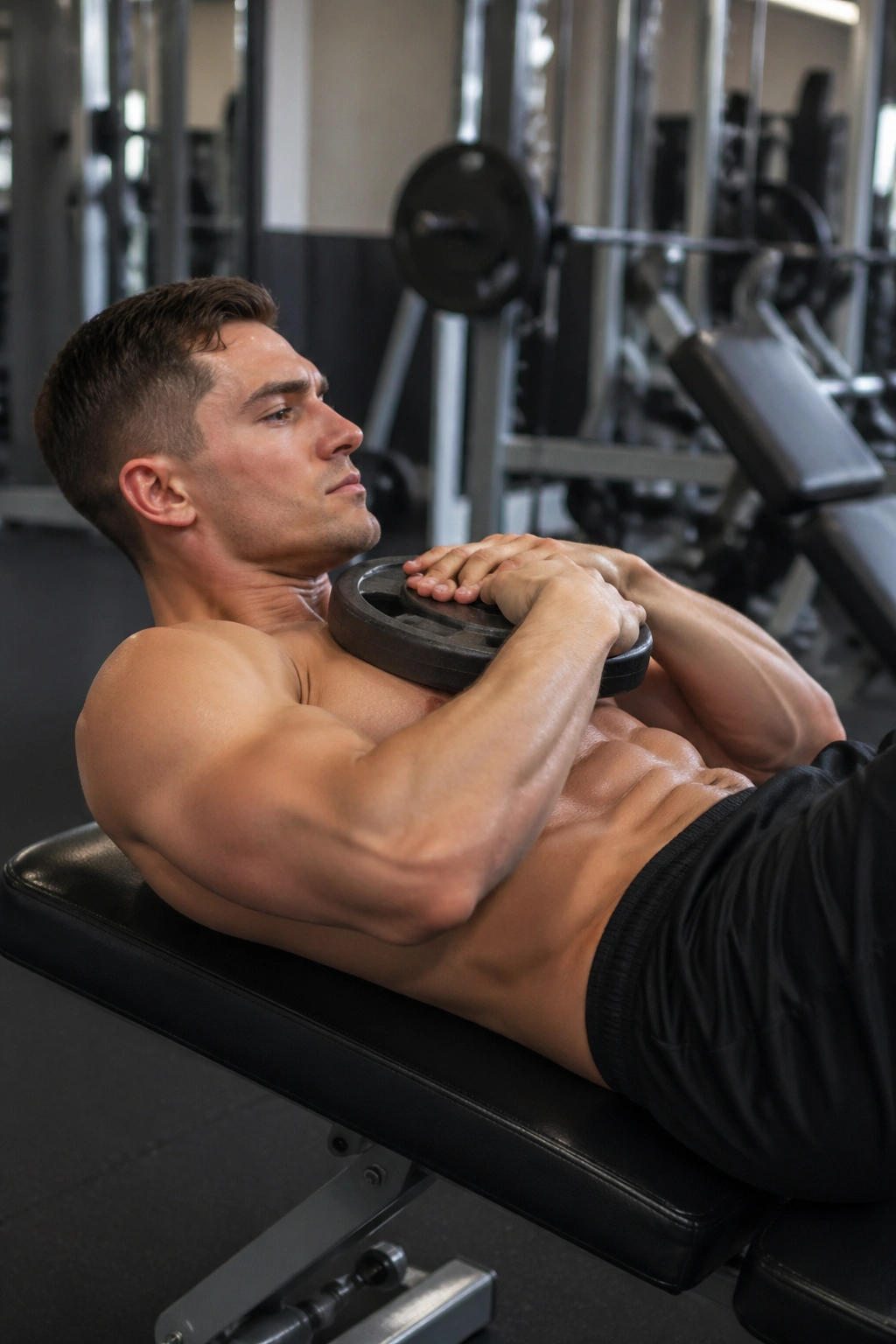
A decline bench makes a bodyweight crunch feel much harder without changing the movement much at all. That’s the appeal. The angle puts you in a position where gravity works against you more aggressively, so each rep demands more from the front of the core.
You can keep your hands across your chest or hold a light plate at the sternum. Don’t chase range for its own sake. On a decline bench, the temptation is to yank all the way up because the setup feels dramatic. Better to stop when the rib cage has curled and the abs are fully squeezed.
This version is a nice middle ground between the floor crunch and a loaded cable crunch. It gives you more resistance than the floor, but it doesn’t require a machine or a stack. That makes it useful in a home gym or a busy commercial gym where the cable stations are packed.
Try 3 sets of 8 to 12 reps if you add a plate. Keep the tempo slow enough that you can feel the descent. If the movement turns into a sit-up, the bench angle is too steep or you’re using too much momentum.
7. Weighted Plate Crunches for Straightforward Progression
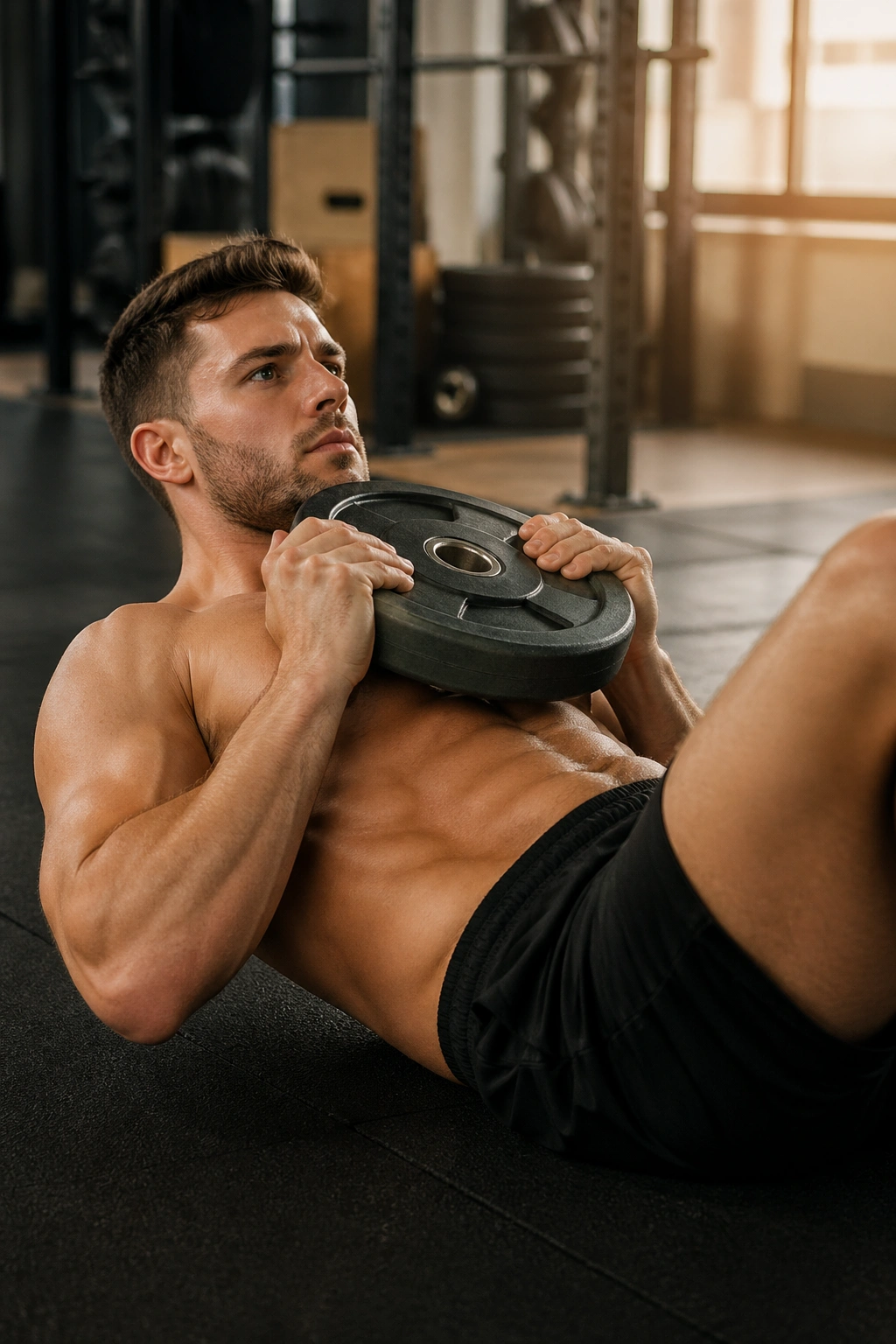
A weighted plate crunch is almost boring, and that’s why I like it. No cables. No fancy angle. Just a plate held against the chest or behind the head if your shoulders tolerate it. The simplicity makes it easy to track progress, which is exactly what most ab routines lack.
You can use a 5, 10, or 25-pound plate depending on your strength and how strict your form is. Start lighter than your ego wants. If the plate causes your neck to crane forward or your ribs to flare, it’s too heavy.
What Makes It Different
The load stays close to the torso, which keeps the crunch pattern clean. That makes the exercise feel more like a direct strength move than a cardio drill. It’s also easy to pair with reverse crunches or bicycle crunches in a short circuit.
How to Get the Most From It
- Hold the plate tight to your chest.
- Exhale before you start the rep, not halfway through it.
- Lift the shoulder blades just enough to get the abs working.
- Lower for a count of 2 to 3 seconds.
Weighted crunches are one of the simplest ways to keep making the exercise harder without changing the movement every week. Clean reps, small increase in load, repeat. That’s the whole play.
8. Toe-Touch Crunches for a Tight, Fast Burn
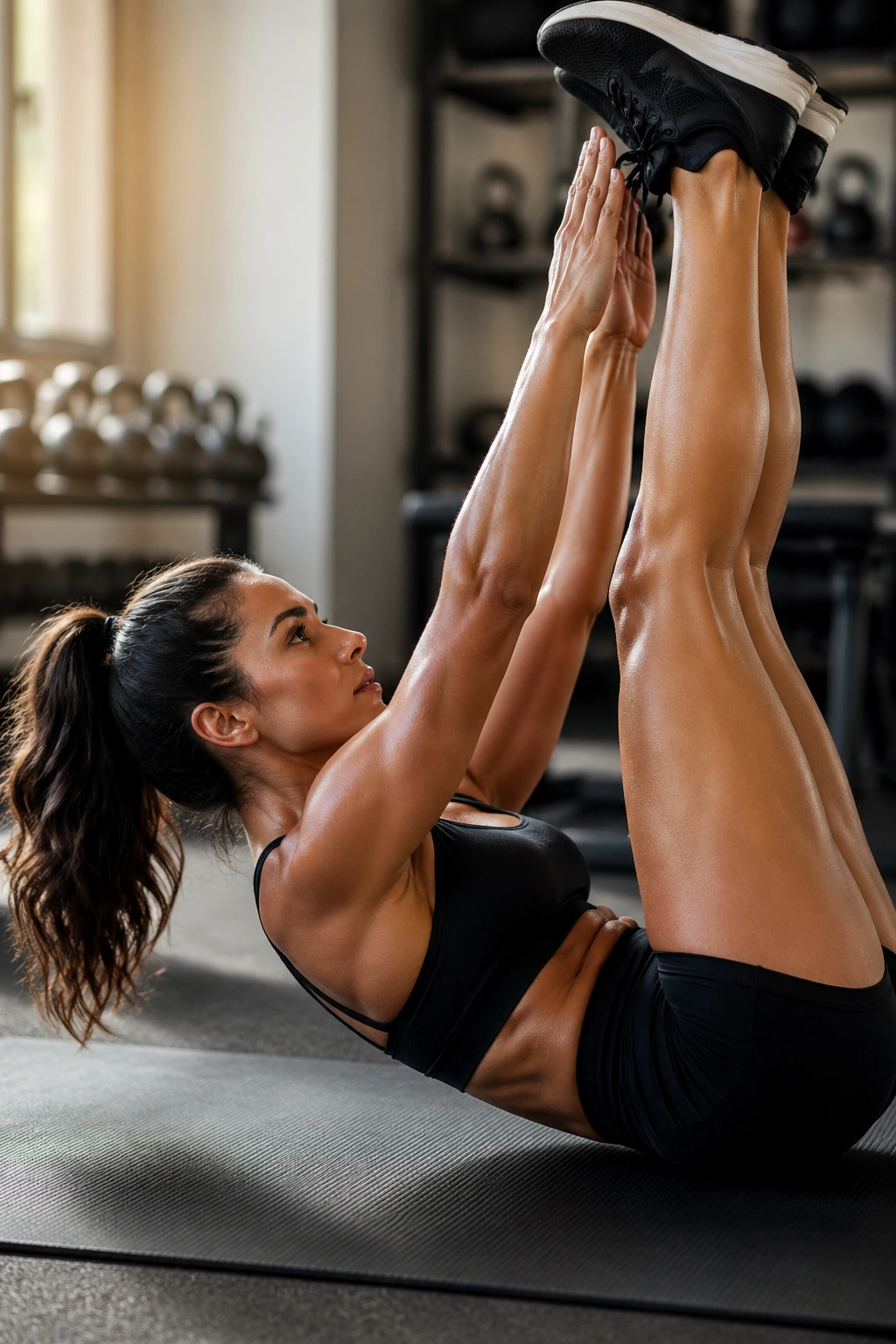
Toe-touch crunches look a bit like an old-school fitness class move, but they’re still useful when you want a fast, high-rep abdominal drill. The legs go up, the hands reach toward the toes, and the torso curls off the floor in a compact motion that keeps the abs under continuous tension.
Are they awkward at first? Yes. Especially if your hamstrings are tight or your lower back wants to arch. But they become a nice option once you learn to keep the movement small and deliberate.
Why They Work
The lifted legs shorten the body, which changes the leverage and makes the upper abs work harder to pull the shoulders up. At the same time, the lowered ribs have to stay braced so the spine doesn’t just flop around. It feels like a short, sharp contraction — not a big one.
How to Use Them
- Lie on your back with legs straight up.
- Reach toward your toes as you curl the shoulders off the floor.
- Keep the chin tucked and the neck relaxed.
- Lower slowly and reset before the next rep.
Eight to 12 reps is enough for most people. If you turn this into a sloppy 30-rep marathon, your low back will usually tell on you before your abs do.
9. Cross-Body Crunches for the Sides of the Waist
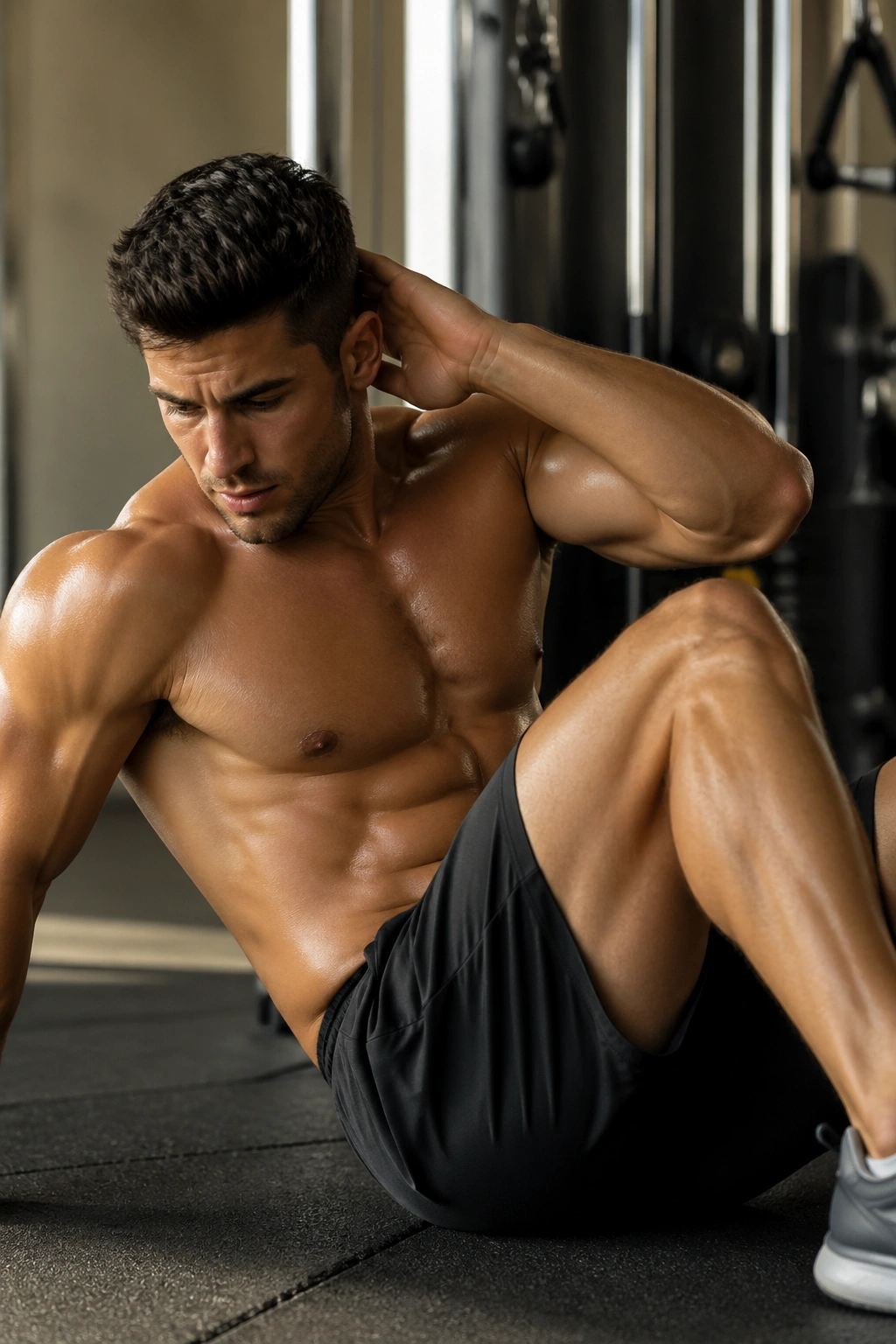
Cross-body crunches hit differently because the rotation changes the line of work. You are not just curling up. You are bringing one shoulder toward the opposite hip, which asks more from the obliques and the deeper stabilizers along the waist.
The movement should feel like a controlled twist, not a bicycle-crunch scramble. One side of the torso shortens while the other resists. That tension is the whole reason people use this variation in a core workout.
The best reps are almost quiet. No jerking. No elbow swinging. No head-banging nonsense.
What to Feel
- The rib cage should rotate first.
- The hip on the working side stays heavy on the floor.
- The reaching shoulder should rise only a few inches.
- The waist should feel like it’s cinching, not crushing.
Use 12 to 16 reps per side. If one side feels wildly easier than the other, that’s useful information. It usually means your rotation pattern is uneven or one side of your trunk is doing most of the work.
This is one of those exercises that looks mild until you slow it down. Then it bites.
10. Heel-Tap Crunches for High-Rep Finisher Work
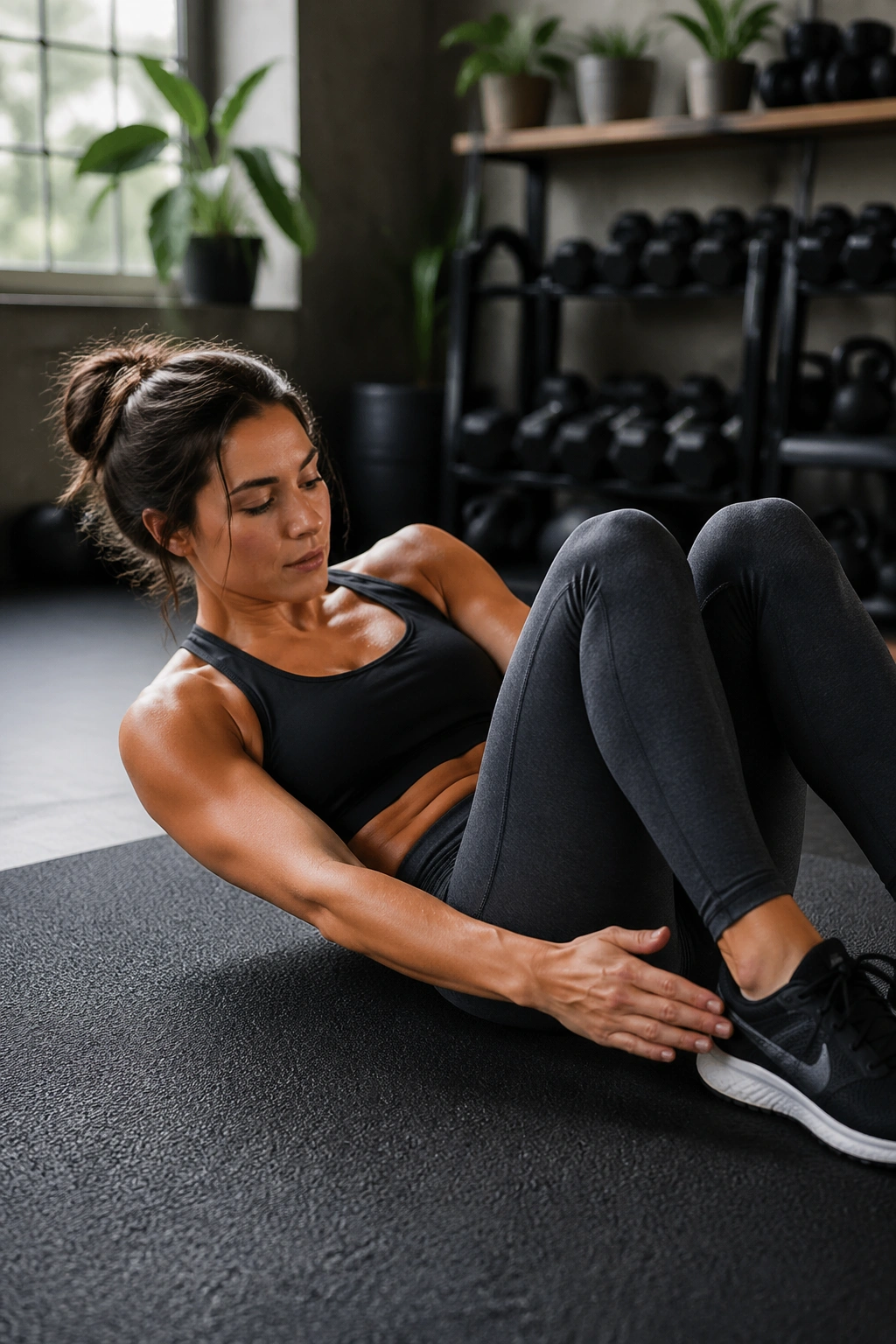
Heel taps are what I reach for when a workout needs a short finisher that burns without beating up the body. The motion is small, the rep count climbs fast, and the abs stay under tension the whole time if you keep your shoulders slightly off the floor.
Picture this: your lower back stays planted, knees bent, feet on the floor, and you reach one hand at a time to tap the heel on the same side. It’s almost too easy at first glance. Then the midsection starts to shake.
That tiny range is the point. You are not chasing a giant crunch. You’re holding a stable torso while the obliques and front abs keep the rib cage from flopping side to side.
A good finisher looks like 20 to 30 taps with almost no rest. If your shoulders keep dropping to the floor, reset and shorten the set. Quality matters more than the number printed in your notebook.
Heel taps are also nice for people who get tired of aggressive twisting work. There’s rotation here, but it’s mild. The burn comes from time under tension, not drama.
11. Frog Crunches That Take Pressure Off the Hip Flexors
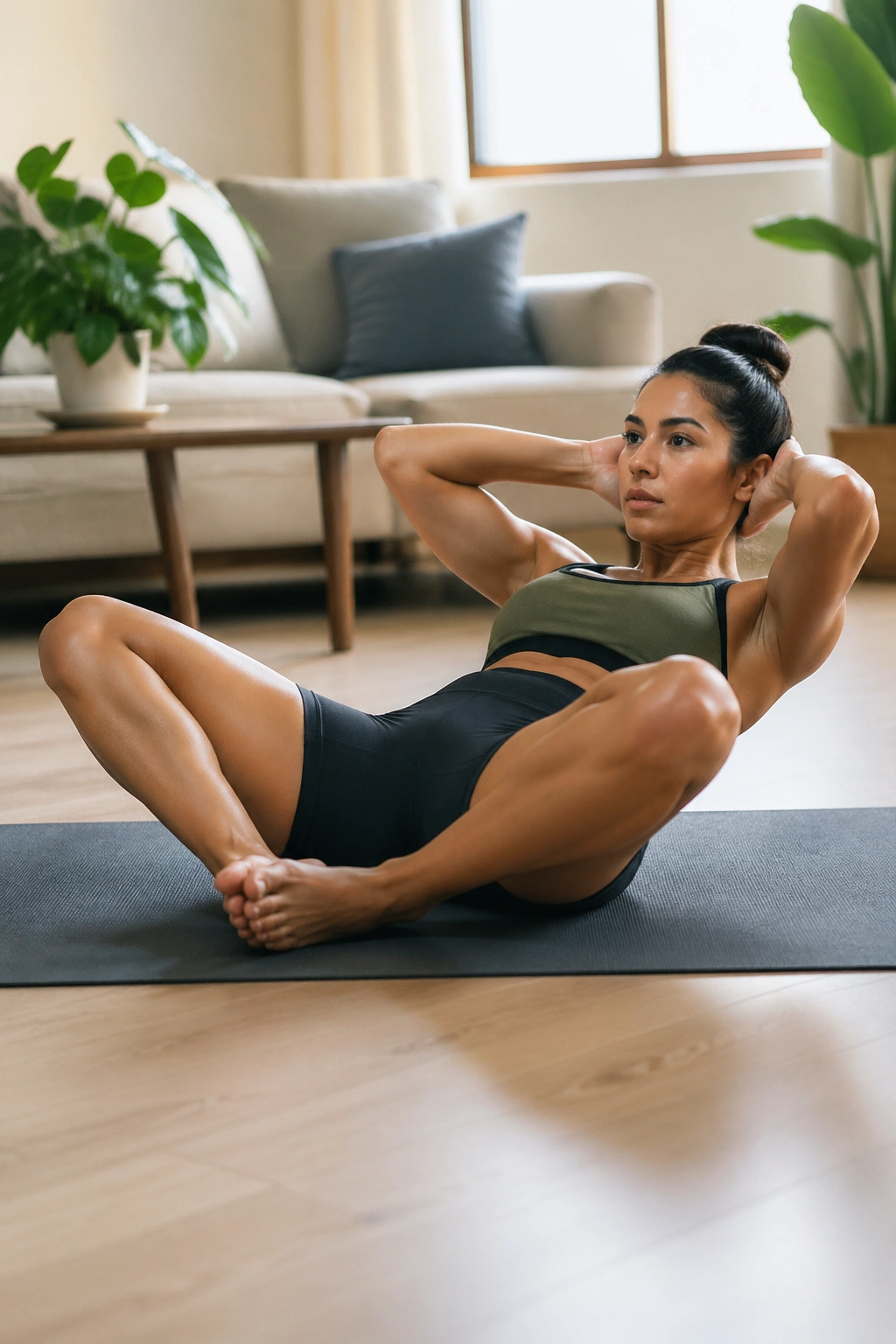
Frog crunches look odd the first time you see them, and that’s fine. The knees open out to the sides, the soles of the feet touch, and the torso curls upward in a compact crunch that often feels friendlier on the hip flexors than a straight-leg setup.
Why does that matter? Because a lot of people think their abs are weak when the real problem is that the hip flexors are grabbing the wheel. Frog crunches can help by changing the leg position and making it easier to isolate the front of the trunk.
The movement should still be short. Don’t try to sit up. Curl, squeeze, lower. That’s enough.
Useful Cues
- Bring the soles of the feet together and let the knees fall open.
- Keep the lower back heavy on the floor.
- Lift the shoulder blades and ribs only a few inches.
- Exhale on the way up to keep the trunk braced.
This variation is a nice fix when regular crunches feel like they’re all hips and no abs. It won’t solve everything, but it often makes the exercise feel cleaner within a rep or two.
12. Dead Bug Crunches for a Smarter Core Burn
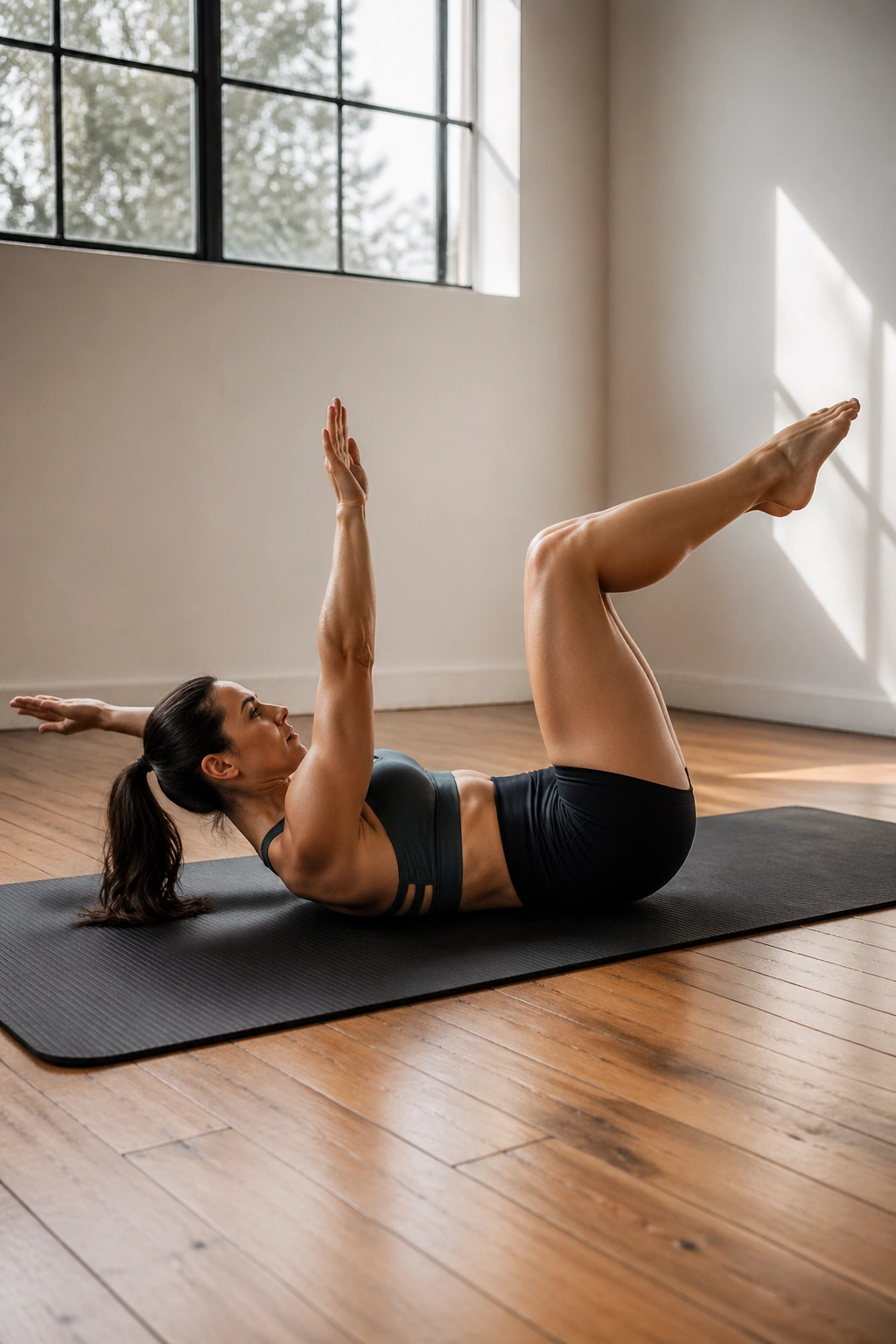
Dead bug crunches are not flashy. Good. Flashy is overrated here. What they give you is a stricter core drill that blends abdominal bracing with controlled limb movement, which makes them a smart choice for people who want their midsection to work without the lower back complaining.
You lie on your back, lift the legs, and then alternate extending one arm and the opposite leg while keeping the trunk quiet. Add a small crunch or rib tuck, and the abs have to fight to stop the spine from arching. That makes the movement feel more like control training than pure burn work.
Why I Rate Them So Highly
They teach you to keep the ribs down under motion. That matters in every other crunch variation, because once the ribs flare, the abs stop doing their job.
A Clean Setup
- Press the low back gently into the floor.
- Keep the knees bent at about 90 degrees.
- Extend one arm and the opposite leg slowly.
- Return to center before switching sides.
Try 3 sets of 6 to 8 reps per side. Slow enough that you can breathe. Fast enough that you stay honest. If your back arches, shorten the leg reach immediately.
13. Pulse Crunches for the Last 30 Seconds of a Circuit

Pulse crunches are ugly in the best way. Small range. Constant tension. No rest worth speaking of. They are the kind of movement you use when the abs are already tired and you want to squeeze out one more layer of work before the set ends.
The body barely moves. That’s the trick. You lift the shoulders an inch or two, lower halfway, and repeat in a tight rhythm. The abs never fully relax, which creates that deep, sticky burn people usually notice around rep 15 and then pretend they are enjoying.
Nope. It stings.
Pulse crunches are best as a finisher, not a main lift. If you start your session with them, you’ll just fry yourself early and lose quality on everything else. Put them at the end of a circuit or after a heavier move like cable crunches.
A simple dose is 20 to 30 seconds. Short. Mean. Useful. If your neck is leading, stop and switch to floor crunches or reverse crunches. There is no prize for sloppy pain.
14. Long-Lever Crunches That Make Bodyweight Feel Heavy
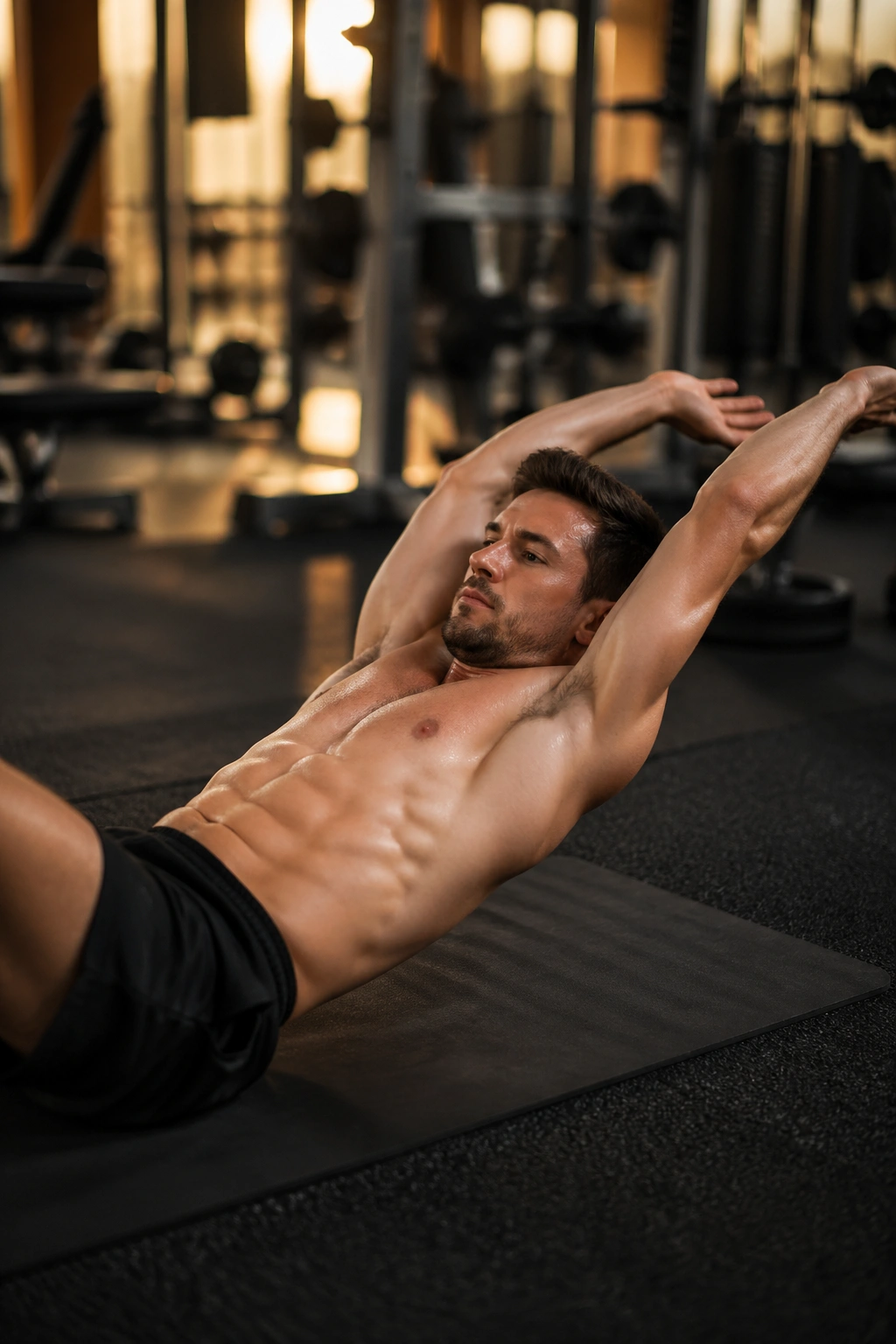
A long-lever crunch is what happens when you extend the arms overhead or lengthen the body position just enough to make the lever harder. It sounds subtle. It is not. A few inches of arm position can make the exercise feel dramatically heavier because the abs have to fight a less forgiving setup.
Think of lying on the floor with your arms stretched back behind you. From there, the crunch begins. The torso still only curls a few inches, but the work ramps up fast because the body has more leverage against it. That’s why this version is sneaky-hard even without any added weight.
What It Teaches
- Better rib control.
- Cleaner bracing through the front wall of the core.
- Less reliance on arm momentum.
- A more obvious burn when you’re already warm.
Use 8 to 12 slow reps. If the lower back arches hard, shorten the arm reach a little. This one should feel demanding, not dangerous.
Long-lever crunches are a neat bridge between basic floor crunches and loaded work. They give you progression without needing a single piece of equipment.
15. Standing Band Crunches for a Back-Friendly Finish
What if your back hates floor work, but you still want a hard ab finisher? Standing band crunches solve that pretty cleanly. You anchor a resistance band overhead, hold the ends near your shoulders, and crunch the torso down against the band’s pull. The movement is compact, but the resistance stays smooth all the way through.
This variation is especially handy at the end of a workout because it lets you train the abs without lying down again. That sounds minor until you’ve done a long circuit and every transition starts to feel like a negotiation. Standing crunches keep the session moving.
How to Set It Up
- Anchor the band securely overhead.
- Stand with feet hip-width apart.
- Brace the ribs down before each rep.
- Crunch the torso a few inches, then return under control.
Keep the knees soft and the glutes lightly tight. If you lock the legs and arch the back, the movement gets weird fast.
A set of 12 to 15 reps is plenty here, especially if you use the move as a final burn after heavier core work. It’s simple, direct, and kinder to people who prefer not to spend the last five minutes of a workout on the floor.
If you want to build a full routine from these crunch variations, pair one loaded move, one rotation-based move, and one finisher. Cable crunches plus bicycle crunches plus heel taps is a clean combination. So is reverse crunches, long-lever crunches, and standing band crunches. Keep the reps strict. Keep the rest short. And keep the bigger fat-loss pieces of the puzzle in view, because the abs can be trained hard without pretending they control where body fat disappears first.
