



Stress belly fat in women has a frustrating habit of showing up when life already feels full. The jeans get tighter, the waistband digs in, and somehow the middle seems to change faster than the rest of the body. That is usually not a sign that you need to punish yourself harder. It’s a sign that stress, sleep, food timing, movement, and hormones are piling up in the same place.
Crunches do not fix that. Neither does skipping meals all day and then raiding the kitchen at night.
What tends to help is less dramatic and more useful: strength training that builds muscle, walking that calms blood sugar, meals that keep hunger steady, sleep that is taken seriously, and a few habits that lower the body’s pressure dial instead of keeping it stuck on high. Women also have an extra layer here, because menstrual cycles, perimenopause, and hormone shifts can make the waistline respond in ways that feel maddeningly unfair. They are not imaginary. They just need a smarter response.
1. What Stress Belly Fat in Women Usually Really Means
Stress belly fat is a blunt phrase for a real pattern. The belly often changes when chronic stress, poor sleep, inconsistent eating, and low activity all start feeding each other. Sometimes the change is fat gain. Sometimes it’s a mix of bloating, water retention, and actual fat around the midsection. Either way, the mirror tells you something is off.
The first thing to accept is this: you cannot spot-reduce belly fat with core work alone. You can make your abs stronger, and that matters for posture and support, but fat loss happens across the body, not in one stubborn patch. The waist usually leans out when overall habits shift in the right direction.
There’s also a messy little truth people skip. A woman can eat “not that much” and still gain belly fat if sleep is short, stress is high, steps are low, and meals are too skimpy to keep hunger in check. That’s not a character flaw. It’s a pattern.
A quick reality check helps:
- If your waist feels puffier after salty food, alcohol, or a rough night of sleep, some of that is water and bloating.
- If your waist has changed slowly over months, think about total lifestyle load.
- If the change was sudden, painful, or tied to missed periods, hair changes, or fatigue, get checked by a clinician.
2. Why Heavy Strength Training Changes the Midsection

Strength training is the closest thing to a quiet reset button for stress belly fat. Not because it melts fat off your waist in some magical way. It helps because muscle changes how your body handles food, stress, and energy. More lean tissue usually means better insulin sensitivity, steadier appetite, and a body that is less eager to cling to every extra bite.
The sweet spot is not endless gym time. Three sessions a week is enough for many women if the workouts are focused. Think squats, deadlifts or hip hinges, rows, presses, lunges, and loaded carries. The magic is in doing them with enough load that the last 2 reps feel hard, while form still looks clean.
What to do in the gym
Use 4 to 6 exercises per session.
Do 3 sets of 6 to 10 reps on the main lifts.
Rest 60 to 120 seconds between sets.
Add a little weight, one extra rep, or one extra set when the current load starts to feel easy.
That sounds almost too plain, and that’s why it works. No circus. No 90-minute punishment workout. Just progressive overload, repeated often enough to matter.
If you like structure, a simple lower-body and upper-body split works well. If you prefer full-body training, that works too. The best plan is the one you’ll repeat without dreading it every time you lace up your shoes.
3. The After-Meal Walk That Calms Blood Sugar

A 10- to 15-minute walk after eating can be boring in the best possible way. It lowers the “I need a nap and a snack” feeling that hits after a big meal, and it helps your muscles use glucose instead of letting it sit around unused. That matters because blood sugar swings can stir up hunger, cravings, and that weird late-day crash that sends a lot of people straight to the pantry.
The easiest version is almost laughably simple. Walk after lunch. Walk after dinner. Use the hallway, the block, the driveway, the office stairs, whatever you have. The pace should be brisk enough that you’re moving with intent, but not so hard that you’re gasping.
Why the timing matters
A walk after a meal is more useful than the same walk three hours later.
It gives your muscles a reason to pull in glucose right when it tends to rise.
It also interrupts the sit-eat-sit pattern that keeps stress high and digestion sluggish.
One of my favorite things about this habit is how low-friction it is. You do not need a special app, expensive gear, or a perfect schedule. You need shoes and 10 minutes. That’s it.
And if you can stack steps all day, even better. A woman who gets 7,000 to 10,000 steps spread across the day usually does better than one who sits for 10 hours and then tries to “make up for it” with one hard workout.
4. Protein Portions That Keep Hunger From Roaring Back
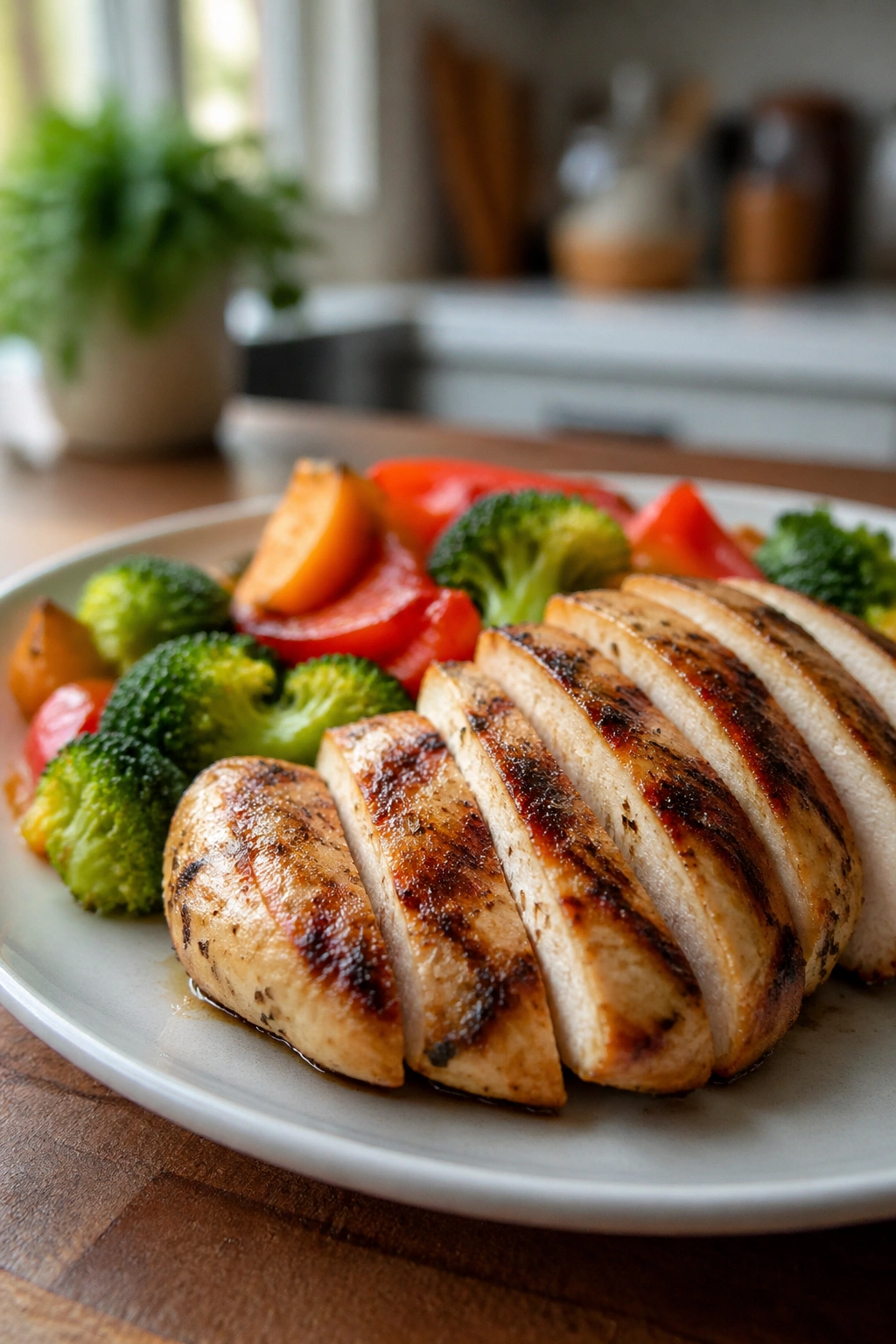
Protein is not a magic fat burner, but it is a hunger stabilizer. That distinction matters. When meals have enough protein, you usually stay full longer, lose less muscle while losing fat, and have fewer of those feral snack urges that show up two hours after lunch.
For many women, aiming for 25 to 35 grams of protein at each meal is a useful target. Smaller women may do well a little lower, and active women sometimes need more. The point is not perfection. The point is to stop building meals that are basically toast with a personality.
A few practical plates:
- 2 eggs plus 1 cup Greek yogurt
- 5 to 6 ounces chicken or turkey with vegetables and rice
- 1 cup cottage cheese with berries and chia
- 6 to 8 ounces tofu or tempeh with noodles and greens
- A protein shake paired with fruit and nuts, not used as the entire meal
Protein at breakfast matters more than people think. A pastry and latte can feel harmless in the moment, then the belly starts screaming by noon. A real breakfast keeps the rest of the day calmer.
If you struggle to hit protein, build around it first. Pick the protein, then add the vegetables, then the carbs. That order helps more than trying to “eat better” in some vague way.
5. The Fiber Habit That Makes Meals Feel Bigger
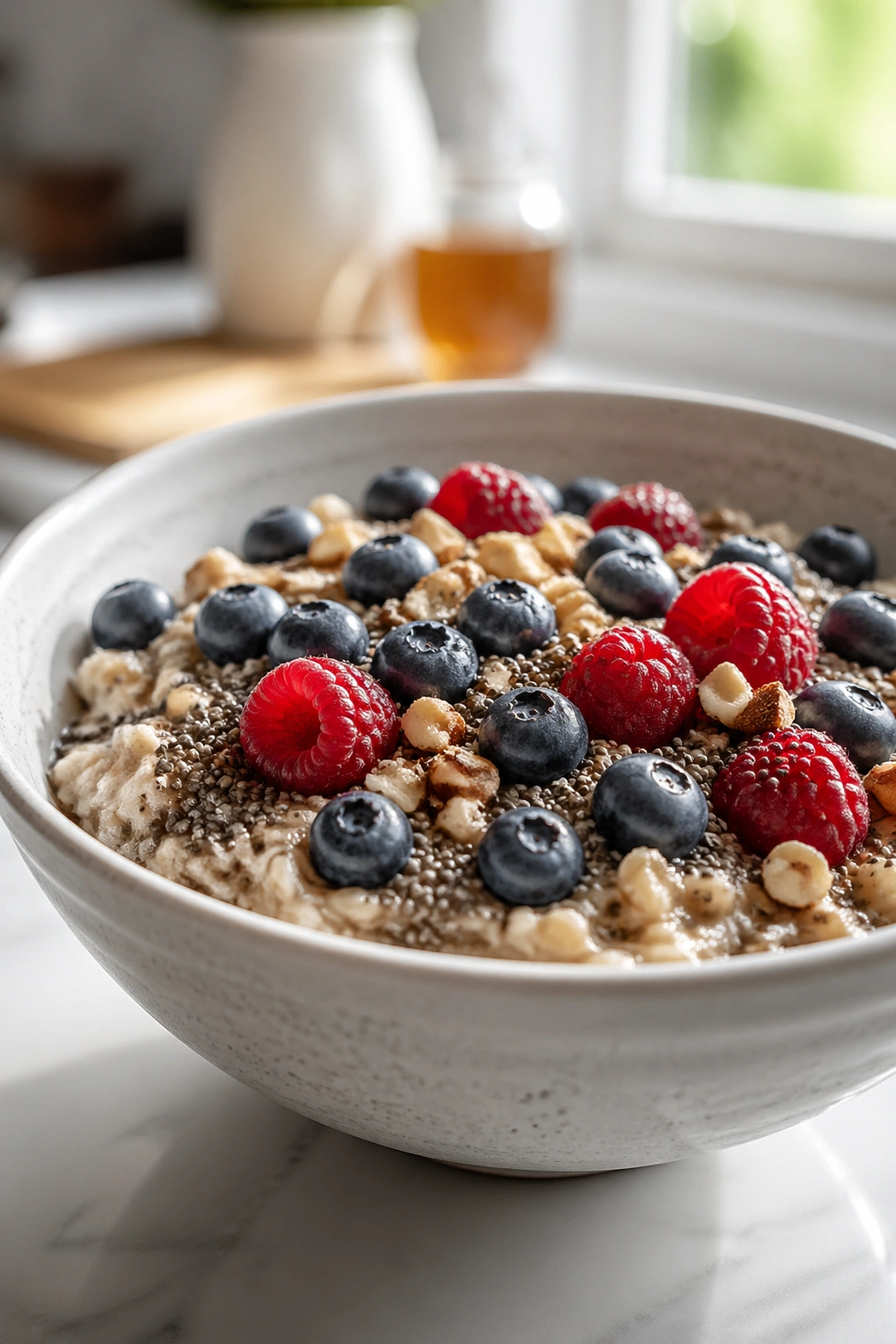
Fiber gets overlooked because it is not flashy. It should be. Fiber slows digestion, helps appetite feel more manageable, and keeps meals from disappearing in 15 minutes. That alone can make a difference when stress eating starts getting loud.
A useful range for many women is 25 to 35 grams of fiber a day. If you jump from low-fiber eating straight to a bean-heavy marathon, your stomach may protest. Increase it over a couple of weeks and drink enough water so the fiber can do its job without making you feel like a balloon.
Best places to get it
- Beans and lentils
- Berries, pears, apples, and oranges
- Oats and barley
- Chia seeds and ground flaxseed
- Broccoli, Brussels sprouts, carrots, and leafy greens
- Potatoes and sweet potatoes with the skin on
The trick is to stop treating fiber like a side note. Put vegetables into lunch and dinner in a way that actually changes the plate. Add berries to breakfast. Use beans in soup or salad. Stir chia into yogurt. Small moves, repeated often, are what turn into visible waist changes later.
One caution. Too much fiber with too little water can leave you bloated and miserable. That does not mean fiber failed. It means your body needs a little more fluid and a slightly slower increase.
6. Why Tiny Lunches Backfire by Late Afternoon

A tiny lunch looks disciplined right up until 4 p.m. Then the wheels come off.
A sad salad with a few leaves, one cherry tomato, and a spoonful of dressing is not a meal. It is a down payment on a snack attack. Women who under-eat earlier in the day often pay for it with larger portions at night, louder cravings, and that “I deserve something” feeling that shows up after work.
What works better is a lunch that includes protein, fiber, and a real carb source. Think grilled chicken, roasted vegetables, quinoa, and olive oil. Or salmon, potatoes, and a big pile of greens. Or tofu, rice, edamame, and crunchy vegetables. The goal is steady energy, not food martyrdom.
A lot of stress eating is really rebound eating. You spend all day trying to be “good,” then your body collects the bill. That is why regular, satisfying meals often beat a hard calorie clamp.
Nope, you do not need to eat huge portions. You do need meals that feel finished. That sense of enough matters more than people admit.
If afternoons are your danger zone, make lunch the anchor meal of the day. Build it on purpose instead of hoping a few bites will hold you together until dinner.
7. Breathing Work That Helps Stress Belly Fat Back Off

Stress is not only emotional. It is physical. When your nervous system stays in gear all day, the body acts like it’s bracing for a problem that never ends. Cravings get louder. Digestion can get weird. Sleep gets lighter. And the belly tends to be the place where all of that shows up first.
A short breathing practice sounds almost annoyingly simple, but it can help you shift out of that wired state. The point is not to become a monk. The point is to teach your body that the alarm can shut off.
A 2-minute reset
Inhale through the nose for 4 counts.
Exhale for 6 to 8 counts.
Repeat for 6 to 10 rounds.
That longer exhale is the part that matters. It nudges the body toward calm. Do it before dinner, after work, or right before you open the fridge out of habit. I like this because it creates a pause. Pauses save people from a lot of mindless snacking.
Other useful downshifts:
- 5 minutes outside without your phone
- Legs up the wall
- A short stretch after work
- Writing down the top 3 things rattling around in your head
None of these burn calories in the usual sense. They do something arguably more useful: they make stress eating less automatic. That is a bigger win than it sounds.
8. Sleep Habits That Keep the Waistline From Dragging

Sleep is one of the most underrated tools for fat loss, especially for women whose weeks are already overloaded. Short sleep tends to leave appetite louder the next day, and people often notice more sugar cravings, more snacking, and less patience for cooking. The body gets pushy when it’s tired.
A few habits matter more than fancy gadgets:
- Keep a fairly steady wake time.
- Get bright light in the morning.
- Dim lights 1 to 2 hours before bed.
- Keep the room cool and dark.
- Stop caffeine early enough that it does not mess with sleep.
- Leave the phone out of reach if scrolling turns into 45 minutes of nothing.
If you wake up at 3 a.m. and then spend the next day chasing sugar, the issue might not be willpower. It might be sleep debt. That’s the part people hate hearing because it means changing boring things. Boring things work.
I also like a calmer evening meal for people who sleep badly. Huge, greasy, late-night meals can sit like a rock. A solid dinner is fine. A giant feast right before bed often is not.
One sentence here: sleep loss makes fat loss harder than it needs to be.
9. Alcohol, Sweet Drinks, and the Belly Fat Equation

Alcohol has a sneaky way of doing two jobs at once. It adds calories, and it makes people care less about the extra crackers, fries, or dessert that appear an hour later. That’s a rough combination if you’re trying to trim the waist.
Sugary drinks have a different problem. They go down fast, do not fill you up, and can keep blood sugar bouncing around. Juice, fancy coffee drinks, sweet teas, soda, and creamy blended drinks can quietly add up before lunch is even over.
This does not mean you have to live on sparkling water and regret. It means being honest about what actually moves the needle. A glass of wine every night is not the same as a drink once in a while with dinner. A giant sweet coffee is not the same as black coffee or one with a splash of milk.
Better swaps that do not feel punishing
- Sparkling water with lime
- Unsweetened iced tea
- Coffee with milk and cinnamon
- Water with cucumber or berries
- A spritz-style drink with more ice and less alcohol
The biggest win is not moral purity. It is reducing the combo of liquid calories and sleep disruption. Those two show up fast around the waist.
10. Cardio That Helps Stress Belly Fat Without Burning You Out
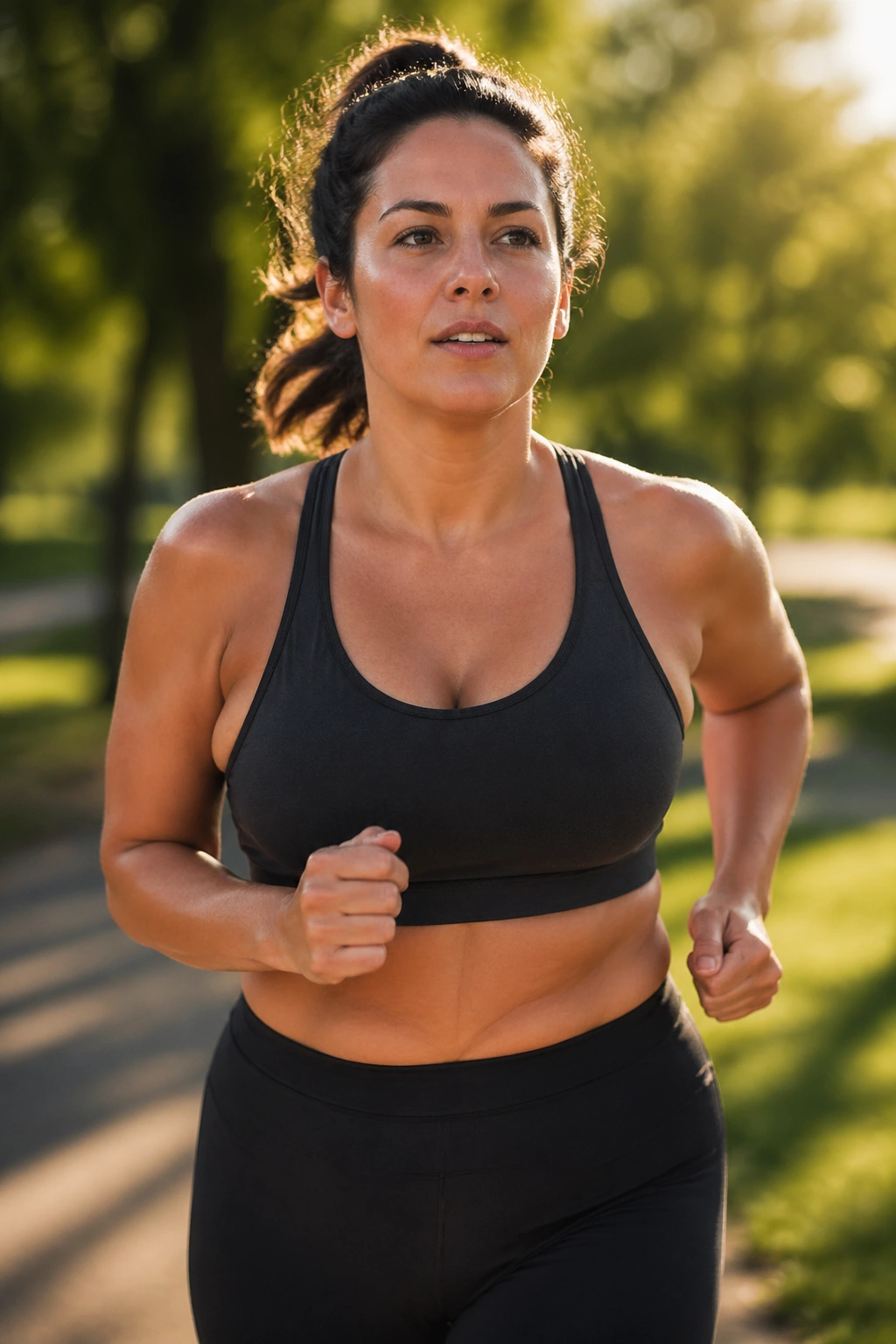
Cardio is useful. Too much of the wrong kind can leave a woman hungrier, more tired, and less eager to move the next day. That is why the best plan is usually not “more cardio at all costs.” It is the right kind, repeated consistently.
Steady cardio—brisk walking, incline treadmill work, easy cycling, rowing at a controlled pace—usually plays nicely with stress management. You can breathe, recover, and still accumulate plenty of energy burn across the week. Intervals have their place too, but they should not be the only tool if they leave you cooked.
Steady work vs. hard intervals
Steady cardio:
- 20 to 45 minutes
- You can still talk in short sentences
- Easier to recover from
- Less likely to trigger rebound hunger
Hard intervals:
- Short bursts, often 20 to 60 seconds
- Useful for fitness
- Better in small doses
- Can be too much when life stress is already high
A good middle ground for many women is 2 or 3 steady sessions each week, plus one shorter interval workout if recovery is good. If you end cardio ravenous and edgy, dial it back. That’s not failure. That’s feedback.
11. How to Eat Carbs Without Spiking Cravings

Carbs are not the villain here. The issue is usually carbs eaten alone, in huge portions, after long gaps between meals. That tends to hit harder when stress is high, because the body is already looking for a fast fix.
Balanced carb choices help a lot. Rice, oats, potatoes, fruit, beans, and whole-grain breads can fit well when they are paired with protein and a bit of fat. The combination slows things down and keeps your energy steadier than a naked carb hit at 3 p.m.
What a balanced plate looks like
- 1/2 plate vegetables
- 1/4 plate protein
- 1/4 plate starch or fruit
- A small amount of healthy fat
That formula is not a prison. It is a starting point.
A woman who trains hard may need more carbs than a woman who mostly walks. A woman who sleeps poorly may need fewer weird, blood-sugar-rollercoaster meals and more regular ones. The point is not carb fear. The point is not letting carbs arrive in a shape that sets off a snack spiral.
If you’ve been avoiding potatoes or rice because you think that will flatten your stomach faster, consider this: a sensible portion of carbs eaten with protein often beats a chaotic day of under-eating followed by a big nighttime raid.
12. The Sneaky ‘Healthy’ Foods That Add Up Fast

Some of the most troublemaking foods wear a halo. Granola. Nut butter. Trail mix. Smoothies. Protein bars. They look healthy, and many of them can be part of a good routine, but portions matter more than the label suggests.
I have seen this pattern over and over: a woman eats a small breakfast, grabs a smoothie that contains fruit, yogurt, nut butter, oats, and honey, then adds a bar “just in case” before lunch. By the time the day is over, she has eaten more calories than expected and still feels weirdly unsatisfied. Liquid meals and snack foods can do that.
Foods worth measuring once or twice
- Granola, which can be dense fast
- Nut butters, where 2 tablespoons are smaller than most people think
- Trail mix, because dried fruit and nuts stack calories quickly
- Smoothies, especially if they include juice, honey, or multiple add-ins
- Protein bars, which vary a lot in sugar and fiber
Measuring these foods for a week is not obsession. It is calibration. After that, you usually get a much better eye for portions.
The fix is not to ban them. The fix is to stop pretending a “healthy” label makes portion size disappear. It doesn’t.
13. Training With Your Cycle Instead of Fighting It

Women often notice that their energy, hunger, and workout tolerance shift across the month. Some phases feel strong and springy. Others feel flat, hungry, or impatient. That does not mean your body is broken. It means you are a woman, not a machine.
If your cycle is regular, you can pay attention to the weeks when harder training feels easier and the weeks when recovery matters more. During higher-energy stretches, push the lifting a bit harder, add a set, or use a heavier dumbbell. During lower-energy days, keep the habit alive with walking, lighter lifting, mobility work, or shorter sessions.
How to use it
- Track energy, appetite, and cravings for 2 to 3 cycles.
- Notice when hard workouts feel smooth and when they feel heavy.
- Plan intense sessions for the days you usually feel more capable.
- Keep a simpler backup workout for the days when you feel flat.
That little bit of planning can save a lot of shame. Too many women blame themselves for having an off day when their body is doing exactly what bodies do.
If cycles are irregular, absent, extremely painful, or paired with major weight changes, that is a different conversation. Get it checked. Don’t shrug it off.
14. Setting Up Your Kitchen for Fewer Stress-Eating Moments
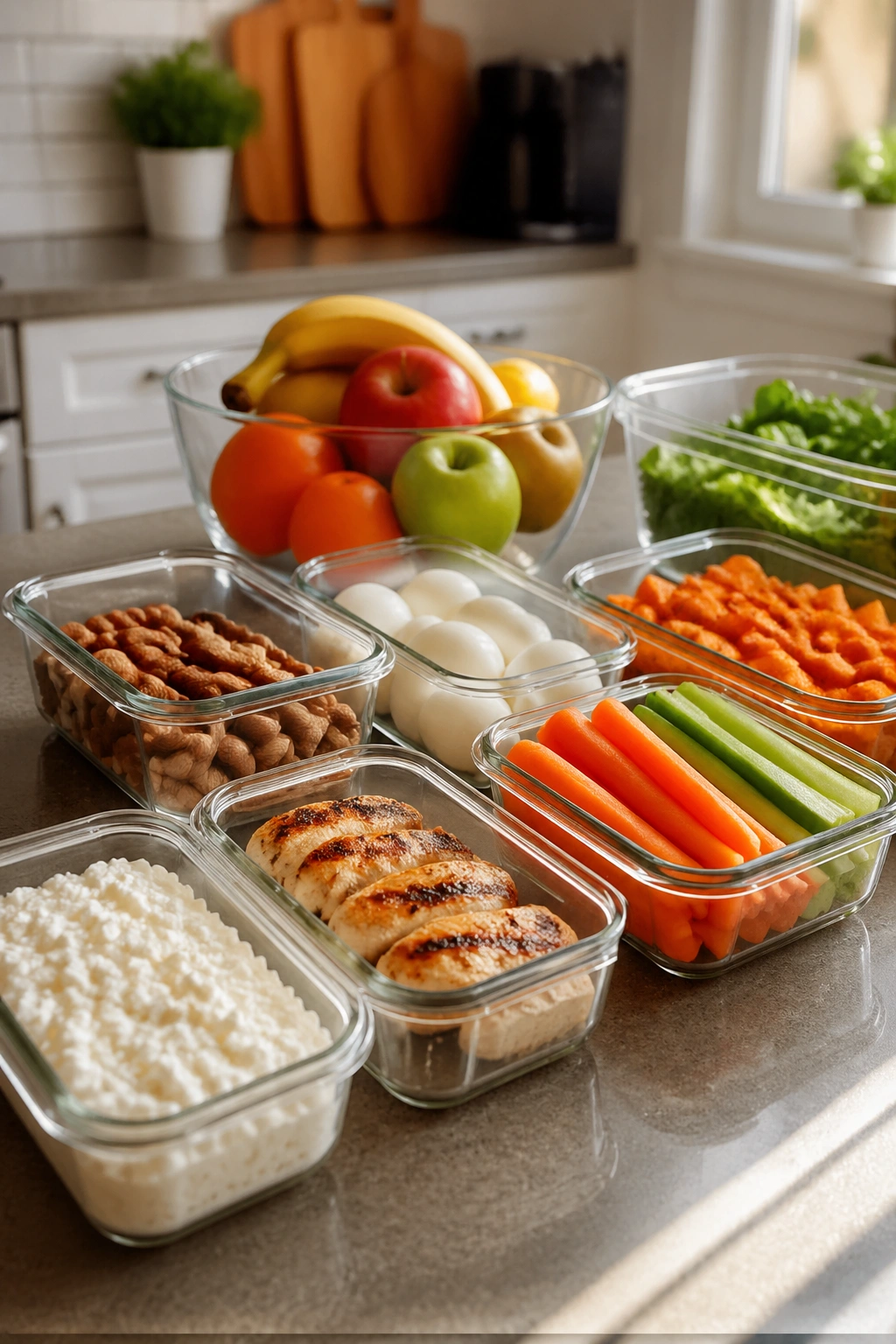
Willpower is a flimsy plan when you’re tired. Your environment matters more than most people want to admit. If the easiest thing in your kitchen is chips, cookies, and random snack bars, you will eventually act like a person who lives in a kitchen with chips, cookies, and snack bars.
A better setup cuts friction. Keep protein visible. Keep fruit washed and ready. Put chopped vegetables somewhere you can actually see them. Pre-portion snacks instead of eating from the bag. Make the easier choice the better choice.
Small changes that help
- Put Greek yogurt, eggs, cottage cheese, and deli meat at eye level.
- Keep a bowl of apples, oranges, or bananas on the counter.
- Put chips, sweets, and candy into single-serving containers.
- Cook one extra protein on purpose so tomorrow’s lunch is half done.
- Keep a “late-night rescue” option ready: yogurt, fruit, or a protein shake.
This is not about making the house joyless. It is about reducing the number of moments where stress can grab the steering wheel.
One more thing: if a food tends to trigger binge-y behavior, do not keep it in a giant bag on the counter and act surprised later. That setup is not neutral. It is a trap with a nice wrapper.
15. Tracking the Signs That Stress Belly Fat Is Changing
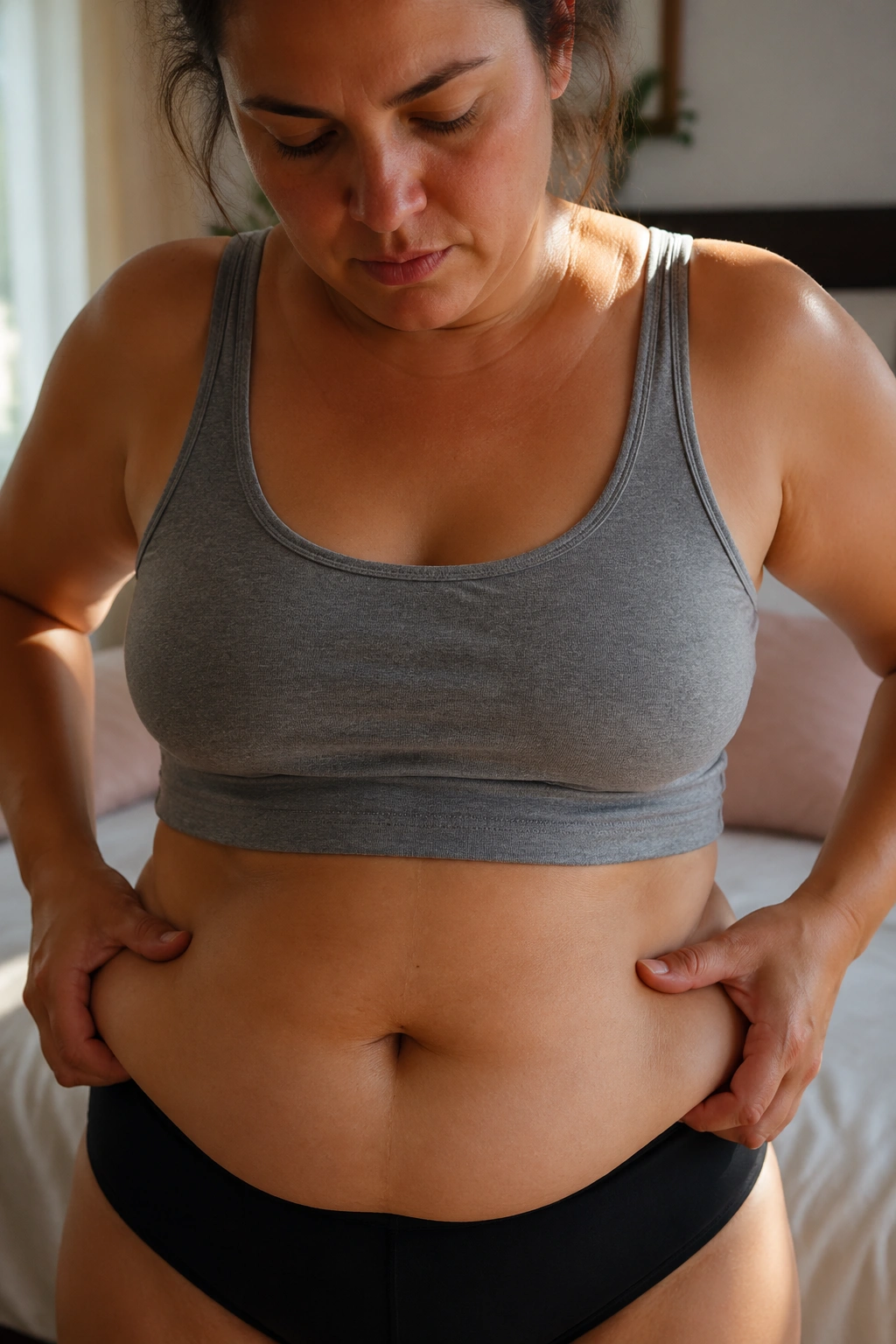
The scale is not useless, but it is a noisy friend. Water, digestion, salt, soreness, and the menstrual cycle can all shove it around. If you want to know whether your plan is working, track more than one thing.
What to record for 2 weeks
- Waist measurement at the navel, first thing in the morning, once a week
- Body weight, if you want it, taken under the same conditions
- Strength progress in 3 or 4 core lifts
- Daily steps
- Sleep length and quality
- Hunger spikes or evening snacking patterns
- Cycle timing and any big shifts in appetite or bloating
That combination tells a story the scale cannot tell alone. If waist size is steady, strength is rising, sleep is better, and snack urges are easing, you are moving the right direction even if the mirror is being slow and annoying.
And if something feels off—sudden belly gain, missed periods, ongoing fatigue, hair thinning, acne, pain, or stubborn bloating that does not match your normal pattern—get medical help. Thyroid issues, PCOS, insulin resistance, medication effects, and hormone changes can all muddy the waters. Fixing the stress piece is smart. Ignoring the medical piece is not.
The women who make the most progress usually stop chasing dramatic fixes. They get calmer about food, stronger in the gym, and more honest about sleep. That combination looks unglamorous. It works anyway.
