



Dancer legs are built with control, not chaos. The sleek look people chase with dancer leg workouts for long lean legs usually comes from a mix of strong calves, steady hips, quiet knees, and enough ankle control to make every step look deliberate.
A lot of people go looking for that look in the wrong place. They hammer endless heavy squats, panic when they don’t feel a dramatic burn, and forget that dancers spend a huge amount of time on small, precise work — relevé holds, pulses, balance drills, slow lowers, and odd little positions that look easy until you try them for three rounds straight. Those moves matter because they train the shape of the leg, not just the size of the muscle.
There’s another piece people miss. “Long” is mostly about line: posture, hip placement, foot position, and the way your leg moves through space. “Lean” is about muscle tone and body composition, which workouts support but don’t control on their own. So the smartest lower-body training for this goal is not random burn. It’s targeted, clean, and a little ruthless about form.
1. Relevé Calf Raises at the Barre
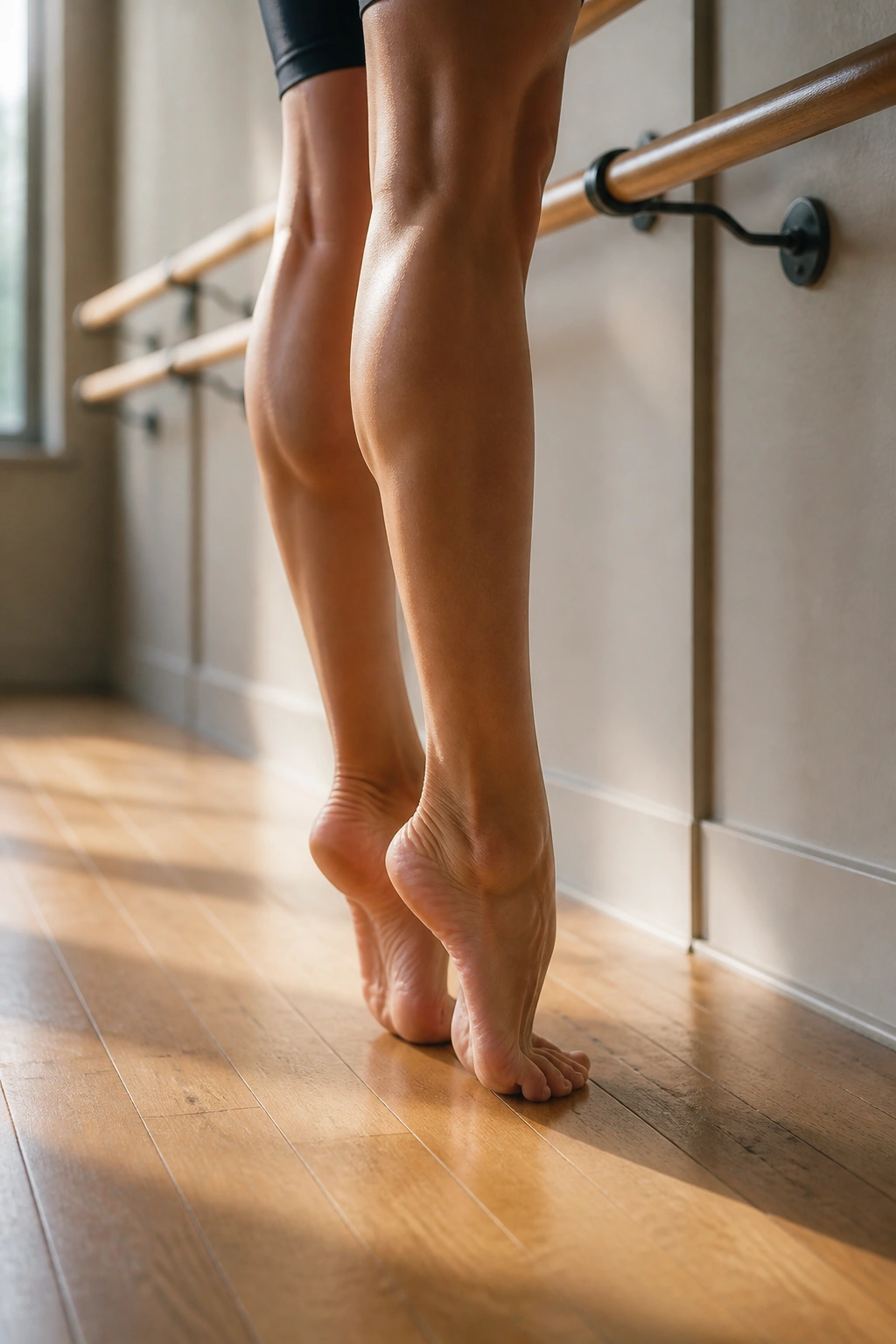
Relevés are the first thing I reach for when someone wants legs that look sharper in motion. They train the calves, sure, but they also clean up the foot-ankle line, and that’s a bigger deal than most people realize.
Why It Works
Stand in first position or parallel, hold a barre, wall, or sturdy chair, and rise onto the balls of your feet for a 2-count. Pause. Lower for a slow 3-count. That slow return is where the work hides. Three sets of 15 to 25 reps is a solid place to start, and if your feet cramp, shorten the range instead of rushing through it.
The real goal is control. Your weight should stay over the big toe and second toe, not collapse to the outer edge of the foot. Keep the ankles stacked and the knees soft but not bent. If your shoulders creep up, the line gets messy fast.
- Best tempo: 2 counts up, 3 counts down
- Best setup: Barefoot on a flat floor or in socks on a non-slip surface
- Best cue: Lift through the crown of the head as the heels rise
- Common mistake: Rolling onto the pinky toes and wobbling
Pro tip: Add a 10-second hold at the top on the last rep. It makes the calves shake in a way that tells you the set actually did something.
2. First-Position Plié Pulses
Plié pulses look small. They are not small in effect. This is the kind of work that teaches your thighs to stay awake without making your movements clunky.
A deep first-position plié with short pulses hits the quads, inner thighs, and glutes while forcing the hips to stay organized. Keep your heels down, knees tracking over the second toe, and pelvis neutral. Drop into a comfortable plié, then pulse an inch up and down for 20 to 30 pulses. Rest for 20 seconds. Do 3 rounds.
The burn shows up fast, but the form matters more than the sweat. If your knees cave inward, the whole thing turns sloppy. If your lower back arches, you’re stealing from the glutes and dumping the work into the spine. Small corrections fix a lot here.
What I like about this move is that it teaches you to work from a stable base. Dancers rely on that all the time. A clean plié is one of those boring skills that keeps paying rent later, especially when you move into jumps, turns, or single-leg work.
3. Side-Lying Leg Lifts That Keep Your Hips Stacked
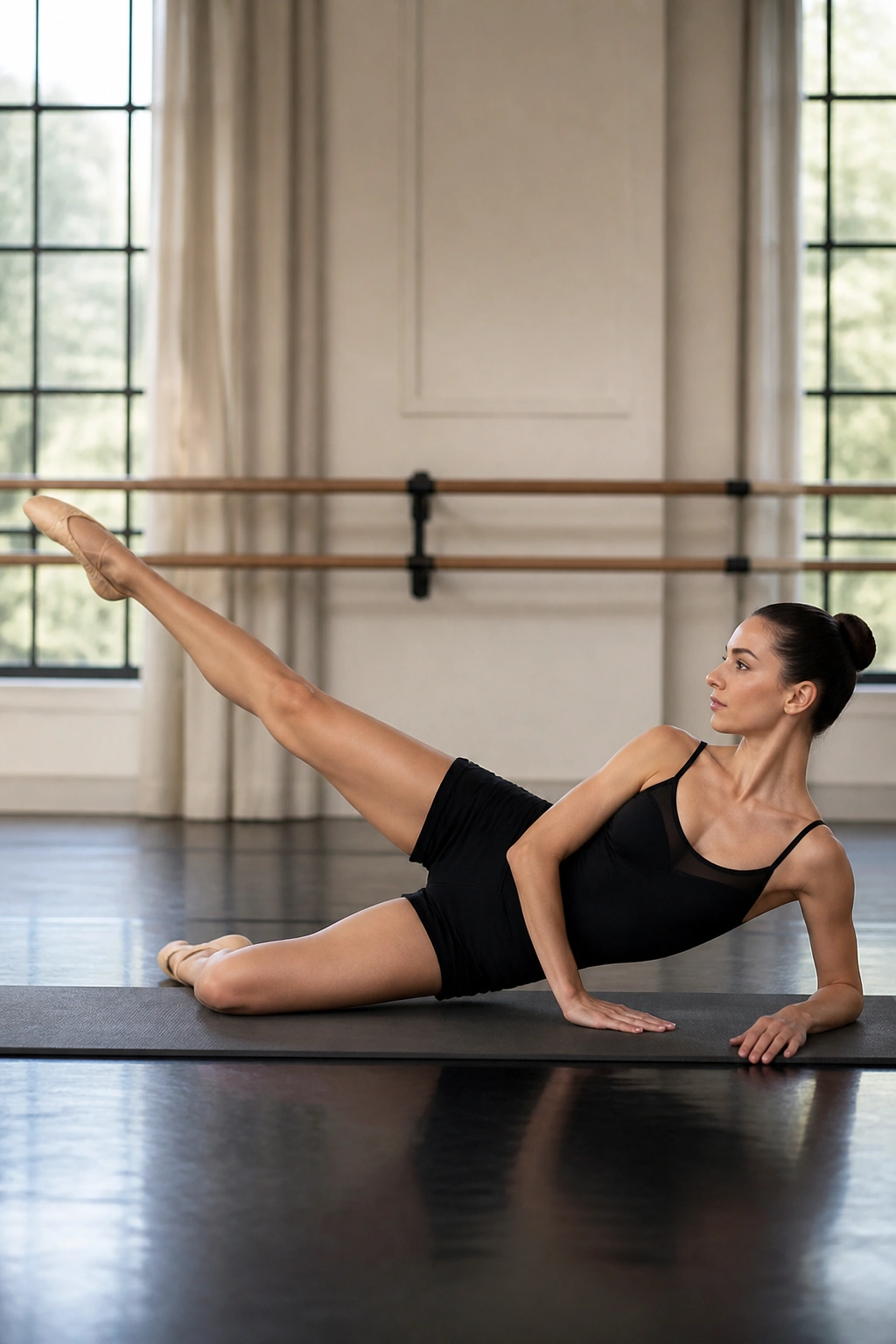
Ever noticed how one side of the body can look smooth and strong while the other side feels wobbly and overworked? Side-lying leg lifts are a blunt little answer to that problem.
Lie on your side with your bottom knee bent for support and your top leg long. Lift the top leg 12 to 18 inches, then lower it with control. Don’t swing it. Don’t fling it. Keep the toes pointed or softly flexed, depending on what feels more natural on your hips. Two or three sets of 15 reps per side works well, and you can finish each set with 10 tiny circles in each direction.
How to Use It
The trick is in the pelvis. Stack the hips, then slightly roll the top hip forward so you’re not dumping into the low back. That tiny adjustment changes everything. You should feel the outer hip working, not the front of the thigh taking over.
Add a light ankle weight only if your form stays clean. Too much load here turns into cheating fast. And once cheating starts, the workout stops being about a dancer line and turns into a very expensive way to swing your leg around.
4. Slow Single-Leg Romanian Deadlifts
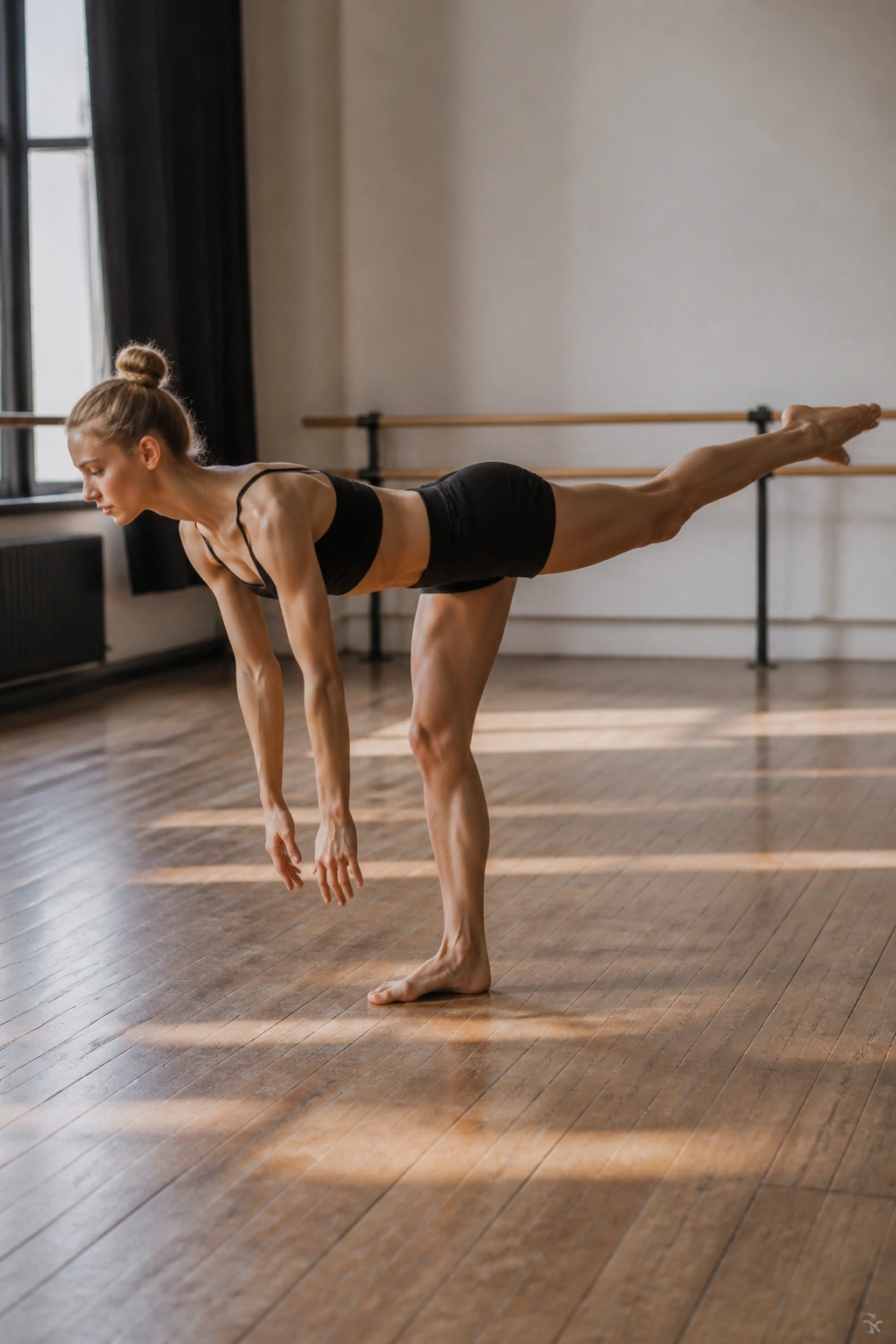
A dancer who can hinge on one leg without wobbling has a leg that looks grounded and elegant at the same time. That’s why I keep coming back to single-leg Romanian deadlifts.
Picture this: you’re reaching one leg behind you while your torso tips forward like a seesaw, and nothing rushes. The standing leg stays soft, the back leg stays long, and the hips stay square. Lower for 4 seconds, pause for 1 second, then rise. Do 3 sets of 6 to 8 reps per side.
- Best use: Hamstrings, glutes, and ankle balance
- Best load: Bodyweight first; a 5- to 15-pound dumbbell only when balance is solid
- Best cue: Keep the back leg as a reach, not a kick
- What to avoid: Twisting the hips open
The hamstrings love this move, but so do your balance muscles. That matters because the cleaner your hip control is, the less “heavy” the lower body tends to look when you walk, lunge, or rise onto demi-pointe. Slow hinges also teach patience, and patience is half the battle with graceful leg training.
5. Curtsy Lunge to Balance Hold
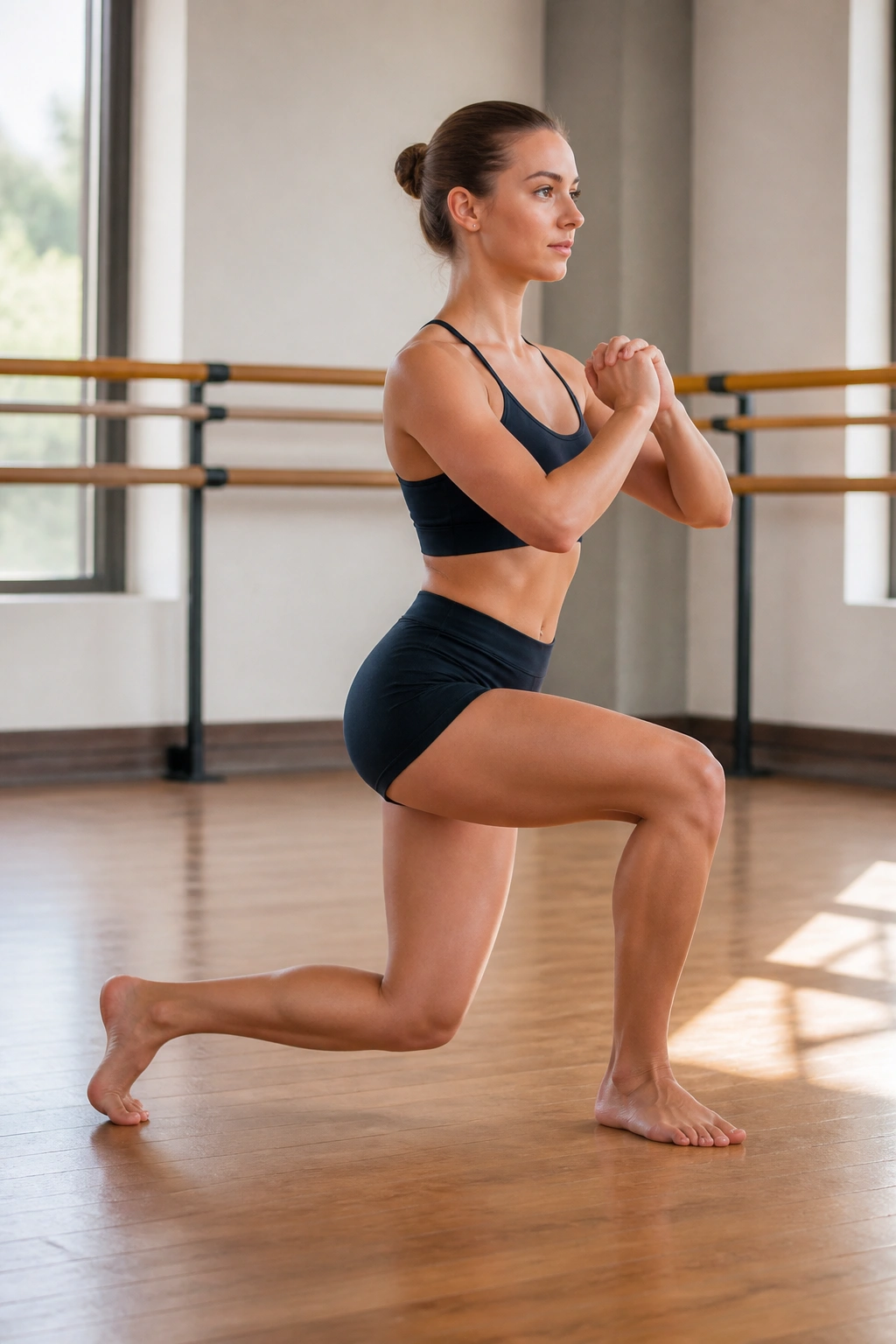
Curtsy lunges have a reputation problem. People either love them or swear them off because they’ve seen one too many sloppy versions. I’m in the middle: done well, they’re excellent. Done badly, they’re a knee annoyance.
Step one leg behind and slightly across the other, then lower into a shallow curtsy. Drive up through the front heel and hold one second at the top on one leg before resetting. That little balance pause makes the move look and feel much more dance-like. Three sets of 8 to 10 reps per side is enough.
The crossed angle asks more from the glute med and outer hip than a straight lunge does. It also challenges your adductors, which helps with a neat inner-thigh line. Keep the front knee tracking forward, not collapsing inward. And if your knee feels cranky, reduce the depth or swap in a reverse lunge.
This is one of those exercises that rewards precision more than effort. You don’t need a huge range. You need a clean one.
6. Glute Bridge March for a Cleaner Hip Line
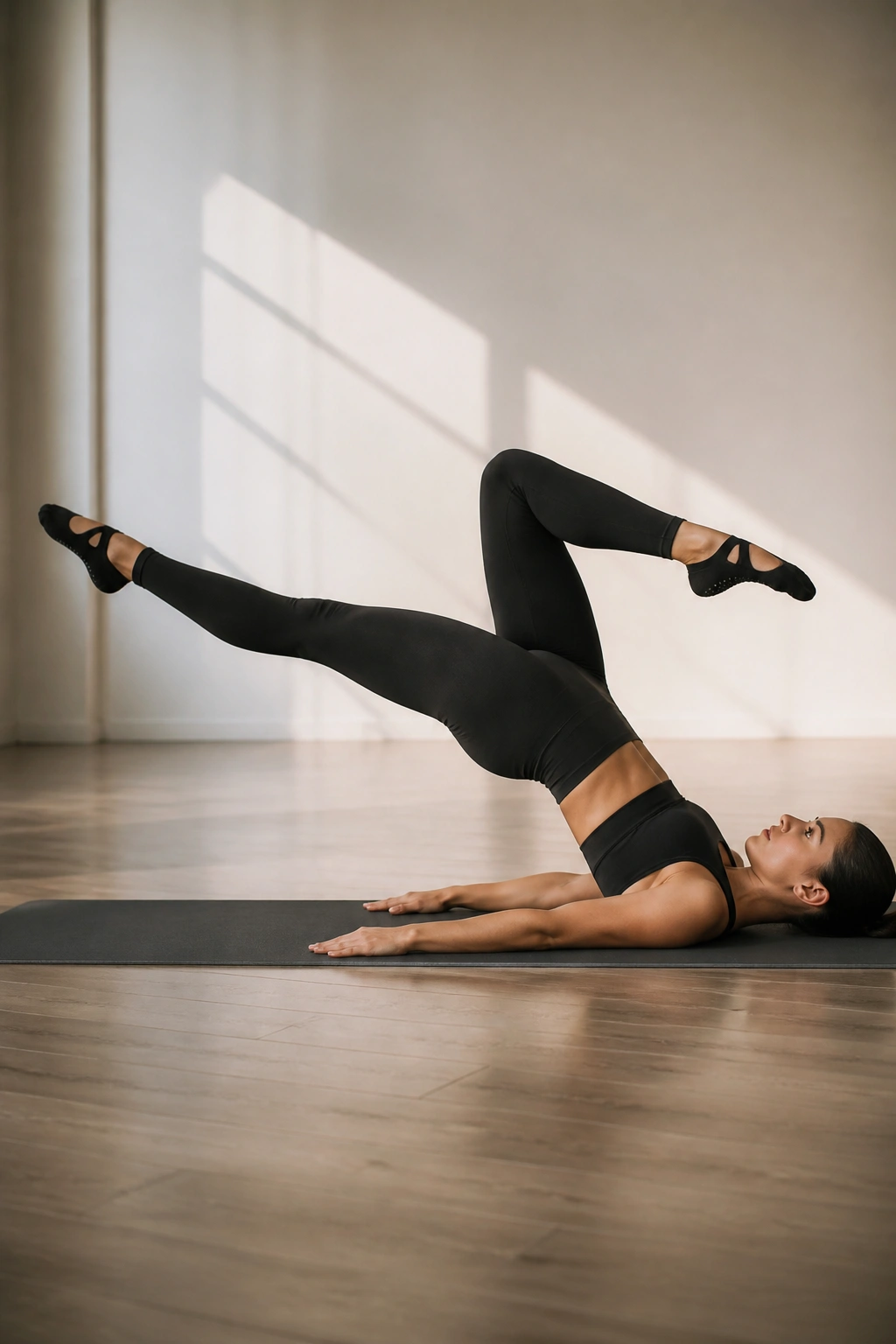
A regular bridge is fine. A bridge march is better if your goal is control that shows up in the way your legs move and look.
Unlike a standard glute bridge, the march forces one leg to stay lifted while the pelvis refuses to wobble. That’s the whole point. You set up in a bridge, lift one knee toward your chest without letting the hips tilt, lower it, then switch sides. Three rounds of 10 marches total is enough to make the glutes and deep core pay attention.
What Makes It Different
The regular bridge teaches you to extend the hips. The march teaches you to keep that extension while the body gets unstable. That extra demand is gold for dancers, runners, and anyone who wants the legs to look long through the front of the hip instead of short and collapsed.
Keep your ribs down, press through the heels, and stop if the lower back starts doing the heavy lifting. A good bridge march feels like your pelvis is floating on rails. A bad one feels like a teeter-totter.
If you only have time for one floor move, this is a strong pick. It’s simple, and that’s part of why it works so well.
7. Inner Thigh Ball Squeeze Bridges
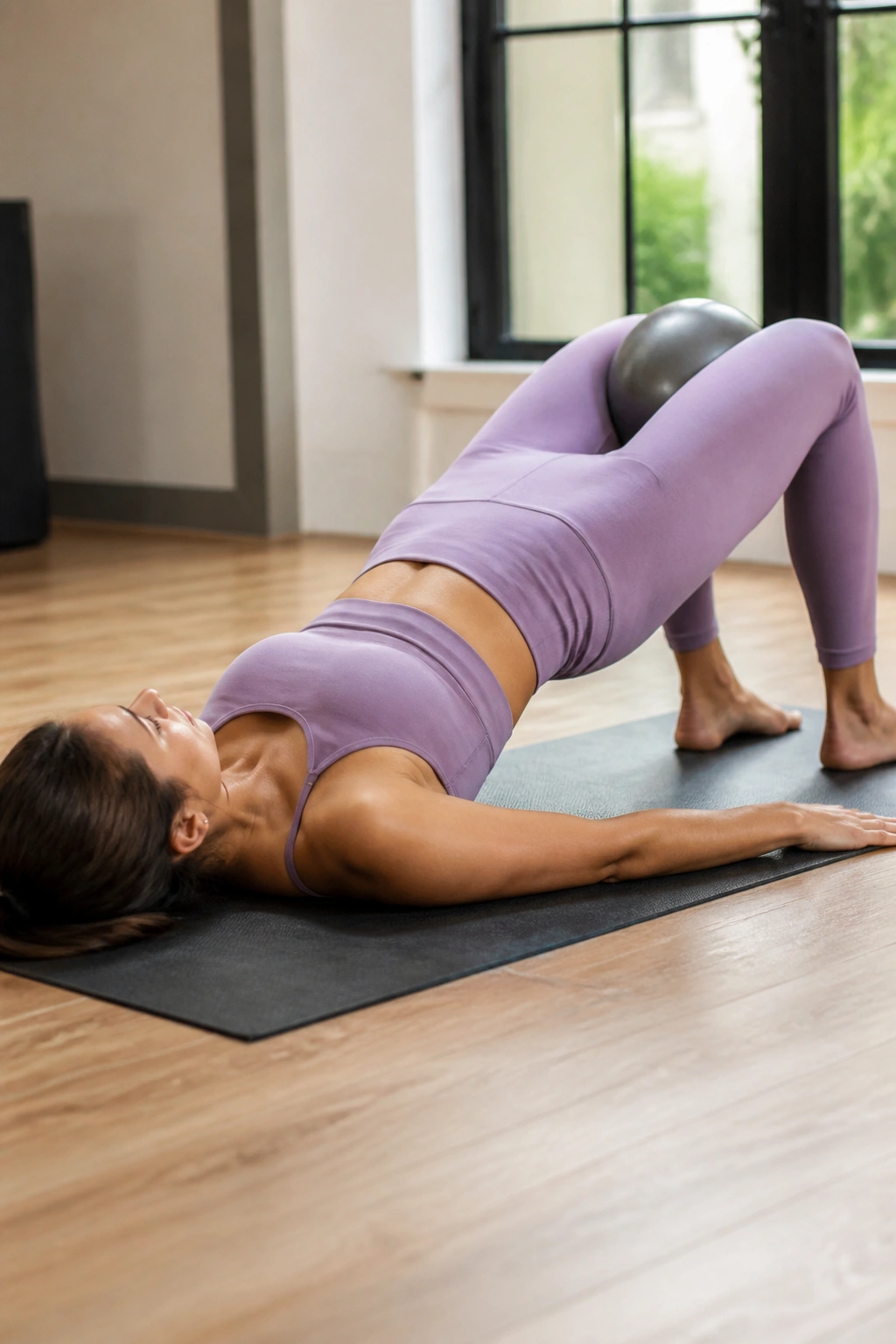
This one looks almost too easy until your inner thighs start shaking. Then the truth comes out.
Place a small Pilates ball, a yoga block, or even a firm pillow between your knees while lying on your back with knees bent. Squeeze the object as you lift into a bridge, hold the squeeze for 2 seconds at the top, then lower slowly. Two to three sets of 12 to 15 reps usually lands in the sweet spot.
Why It Deserves a Spot
The adductors — your inner-thigh muscles — don’t just fill space. They help stabilize the pelvis and keep your legs tracking cleanly when you walk, jump, or turn. If they’re weak, your whole lower body can look a little loose around the edges. This move tightens that up without needing a big load.
Keep the squeeze even. Don’t crush the ball so hard that your breathing gets choppy. You want steady pressure, not a white-knuckle press. And if you feel the neck tightening, tuck your chin slightly and lower the bridge height a touch.
It’s a small move. It changes a lot.
8. Fire Hydrants with a Mini-Band
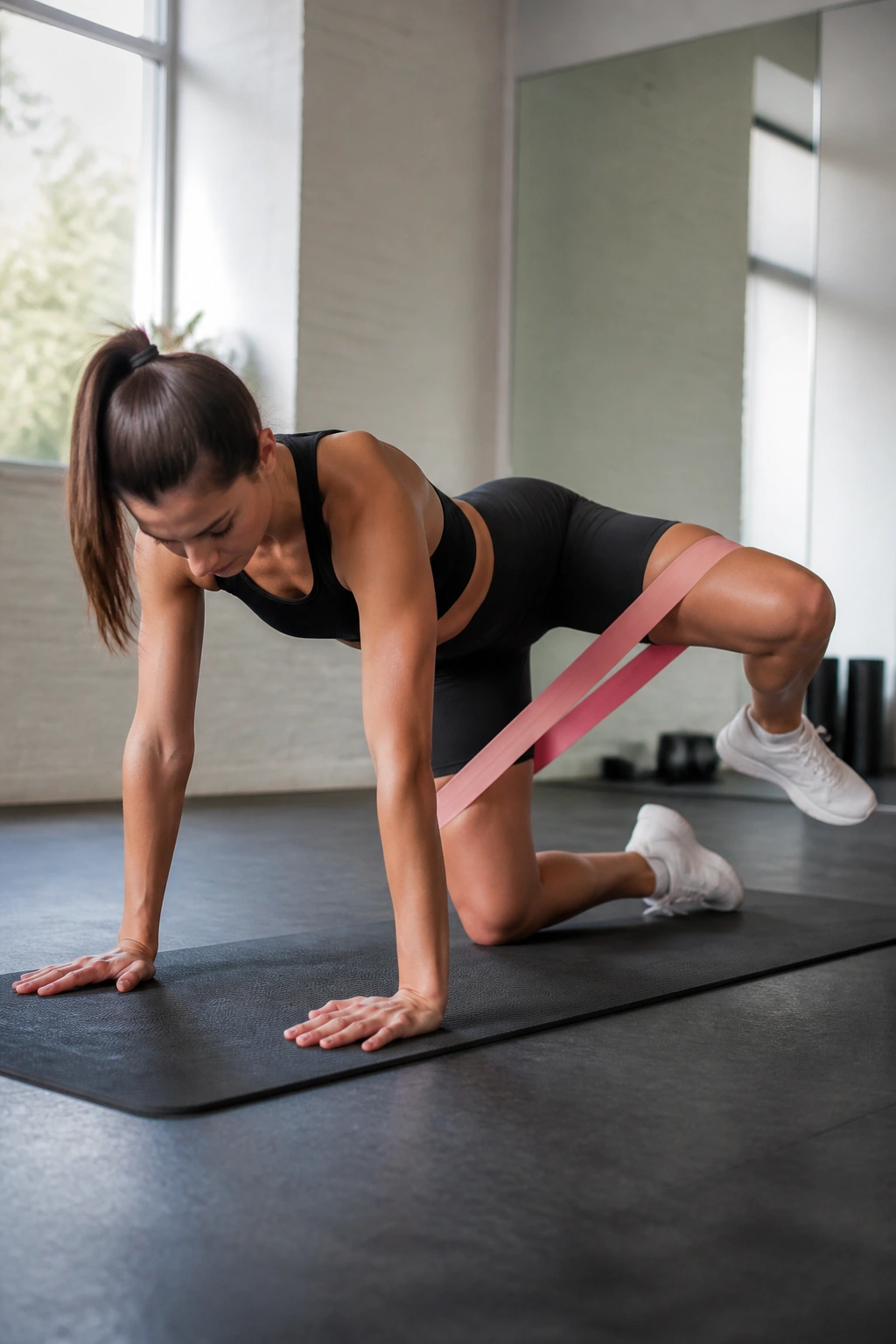
Fire hydrants are one of those exercises that look silly right up until your hip starts complaining in the best possible way. Put a mini-band above the knees if you want more work, but don’t rush that part.
Get on hands and knees, brace the core, and lift one knee out to the side without rotating the torso. Lower it with control. Two or three sets of 12 to 20 reps per side can be brutal if you keep the motion honest. The band should add a challenge, not turn the move into a hip hike.
Here’s the part people miss: the leg should lift from the hip, not from a twist through the low back. Keep your hands rooted and your ribs quiet. If your weight shifts hard to one side, the glute med never gets the clean job it was supposed to do.
I like this workout because it improves the side hip in a way that helps with knee tracking, balance, and that lifted look around the outer glute. It’s one of the ugliest-looking good exercises I know.
9. Step-Ups with a Slow Lowering Phase
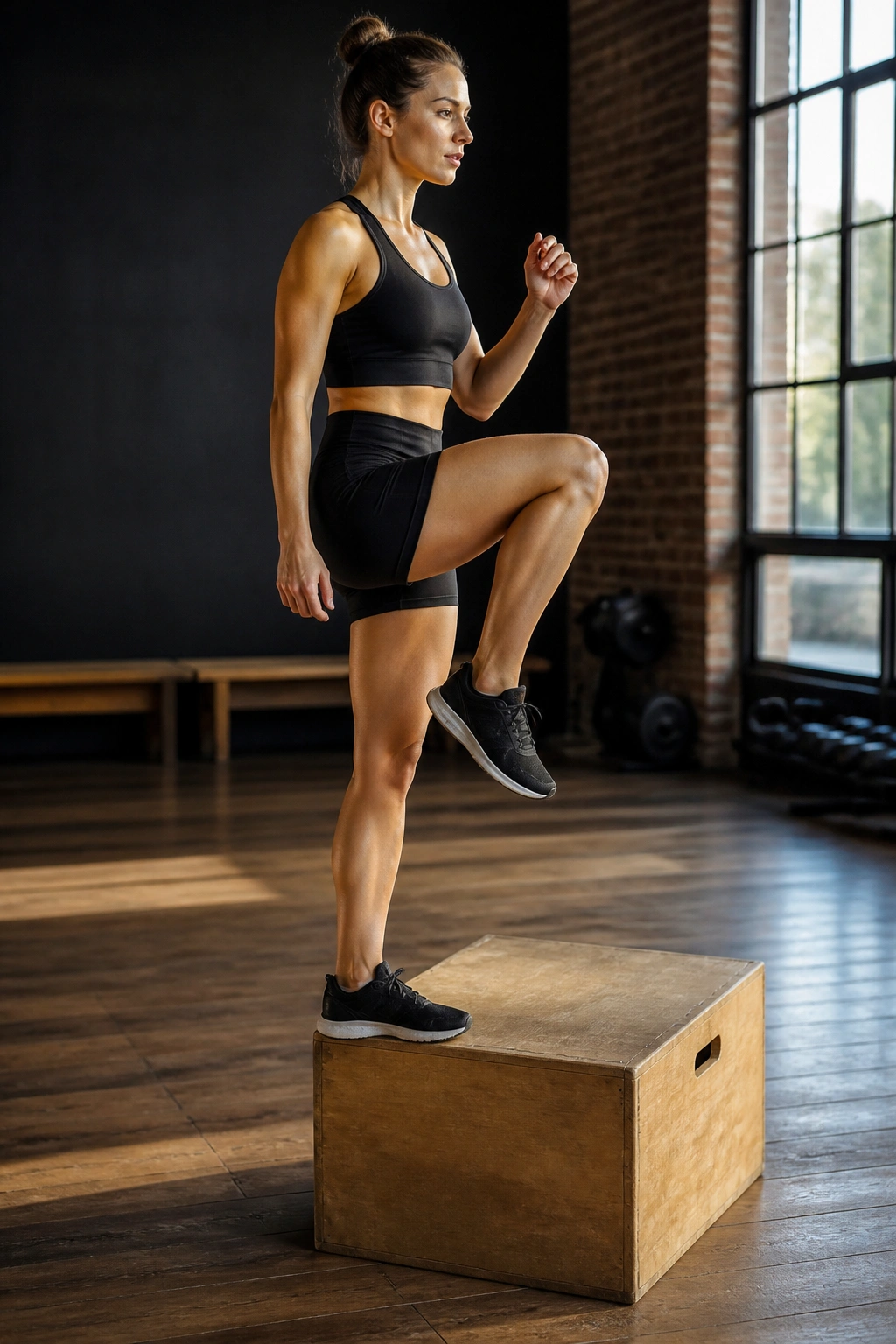
If you want legs that can climb, jump, and land without looking sloppy, step-ups earn their keep. They’re also one of the most useful exercises for making a lower body look disciplined instead of loose.
Use a box or bench around knee height or a little lower. Step up with one foot, drive the opposite knee up, then lower down for a slow 3-count instead of dropping. That lowering phase matters more than the climb. Three sets of 8 reps per side is a strong start.
How to Get the Most From It
Choose a box that lets you keep the whole foot on top. Half a foot hanging off the edge is a mess waiting to happen. Push through the heel and midfoot, not the toes. The working leg should do the lifting; the bottom leg should not bounce you up.
A lot of people rush the descent, and that’s where they miss the point. The slow lower builds control through the quads and glutes, and it teaches the leg to resist gravity instead of collapsing under it. That’s good training for dancers and good training for anyone who wants a cleaner leg shape.
Use bodyweight until the pattern feels solid. Then add light dumbbells. Light. This is not the place to get heroic.
10. Hamstring Slider Curls
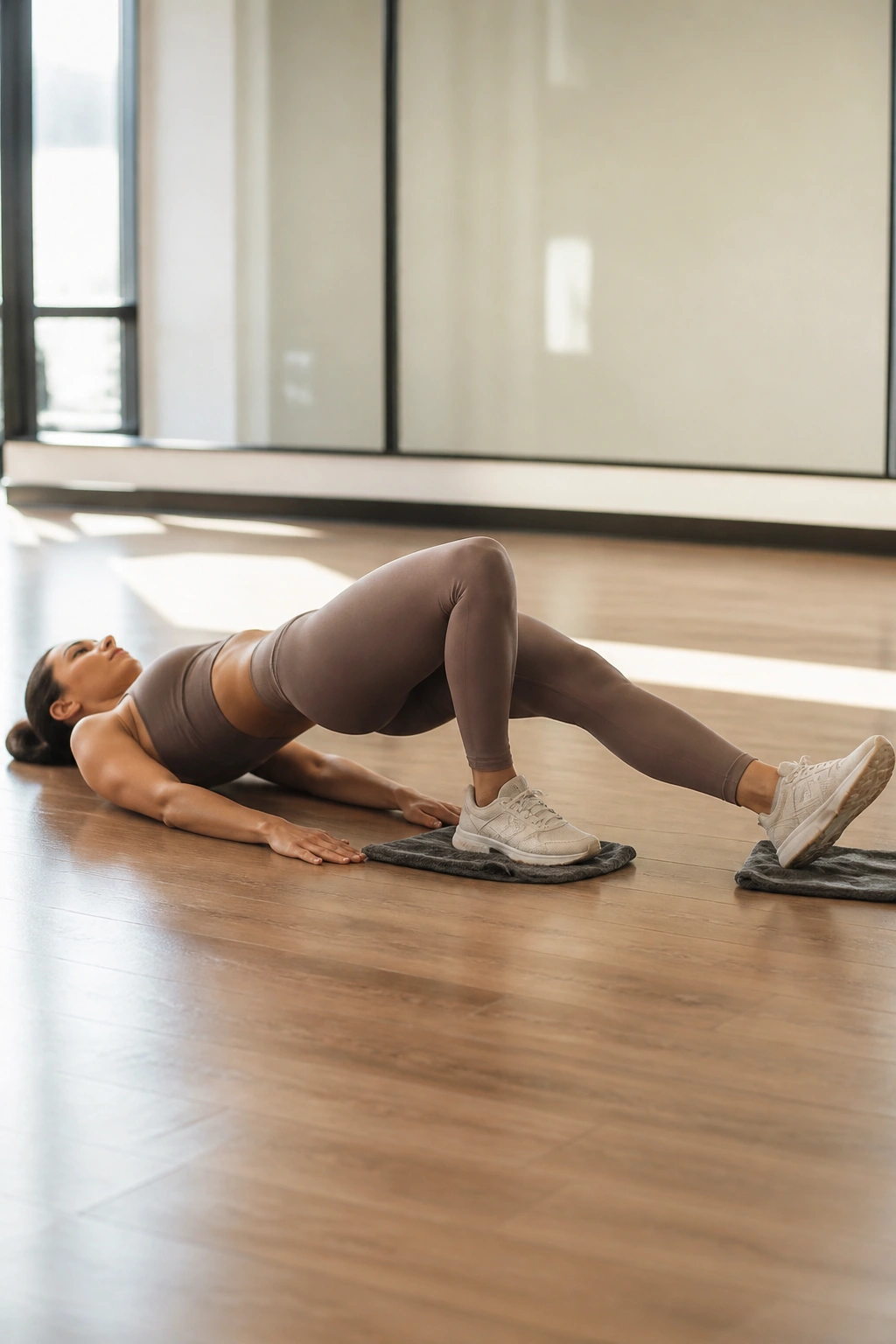
On paper, hamstring sliders look mild. On a smooth floor, they feel like a trap.
Lie on your back with your heels on towels, socks, furniture sliders, or paper plates on a slick surface. Lift into a bridge, then slide the feet out slowly until the legs lengthen, and pull them back in using the hamstrings. Three sets of 8 to 12 reps is plenty.
The important part is that your hips stay lifted. If they sag every time your legs extend, the hamstrings lose the battle and the low back picks up the bill. Keep the ribs knit down and move with control.
These are excellent for the back of the legs, which people often forget when they’re chasing a sleek front view. Balanced hamstring work helps the thigh look more athletic and keeps the knees happier during all the other dance-style leg work. It also teaches a leg to lengthen under tension, which is a big part of that long, clean dancer look.
No fancy gear. Just a floor and enough patience to avoid rushing.
11. Arabesque Pulse Holds
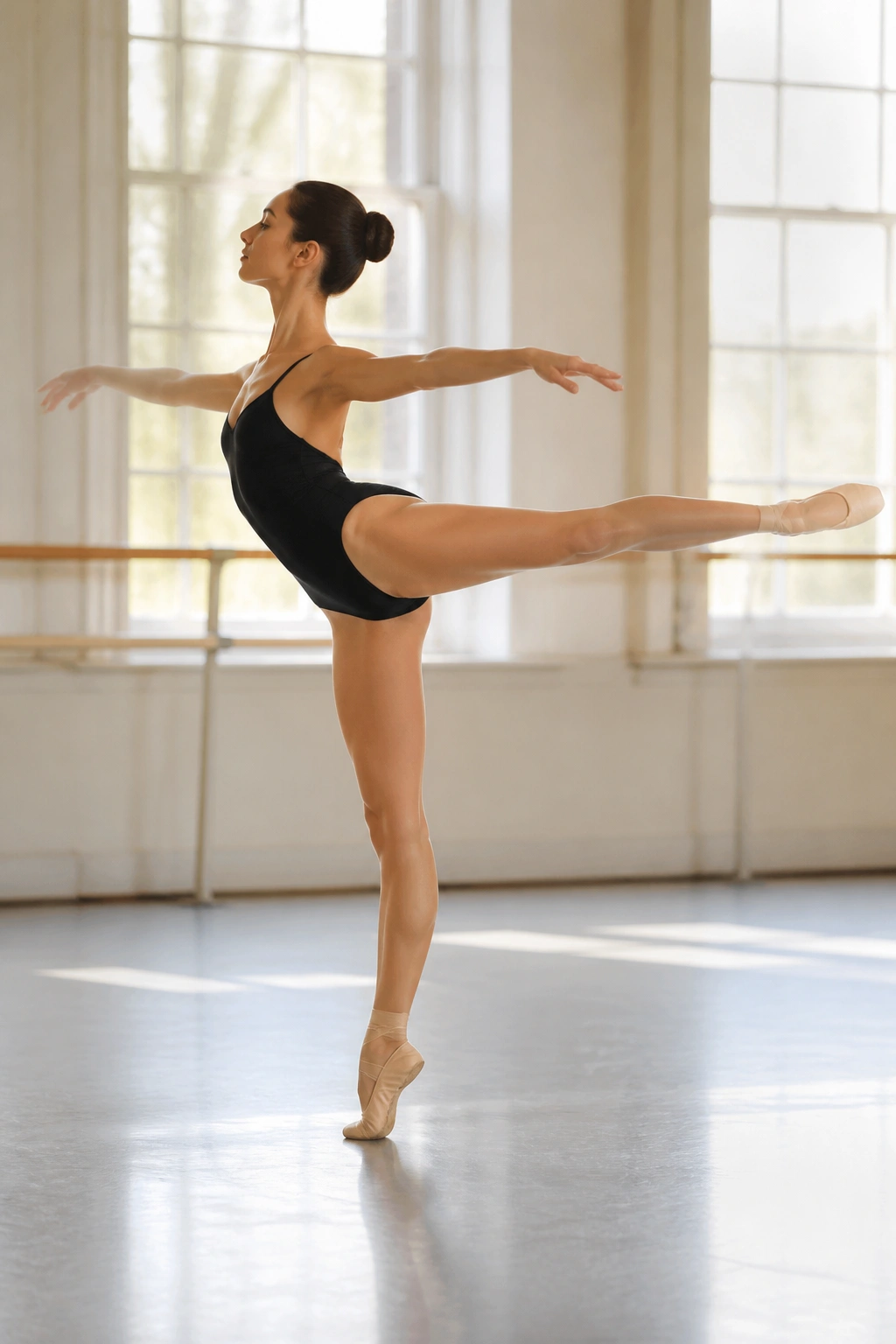
Arabesque pulse holds are where dancer training starts to feel like dancer training. You’re balancing, hinging, and lifting one leg behind you while trying to keep the whole shape calm.
Stand tall, hinge slightly from the hips, and lift one leg behind you to hip height or lower. From there, pulse the leg up an inch or two for 15 to 20 small pulses, then hold for 10 seconds before switching sides. Two to three rounds is usually enough.
The leg in back should feel long, not aggressive. Avoid arching the lower back to fake height. The ribs stay stacked, the standing knee stays soft, and the pelvis faces the floor as much as possible. If you’re wobbling like crazy, hold a wall at first.
This move is all about line. The standing leg works hard to keep you upright, the glute on the lifted side fires, and the whole thing teaches you to stay graceful under fatigue. That matters when you want a leg workout that looks as good as it feels.
12. Wall Sit with Heel Lifts
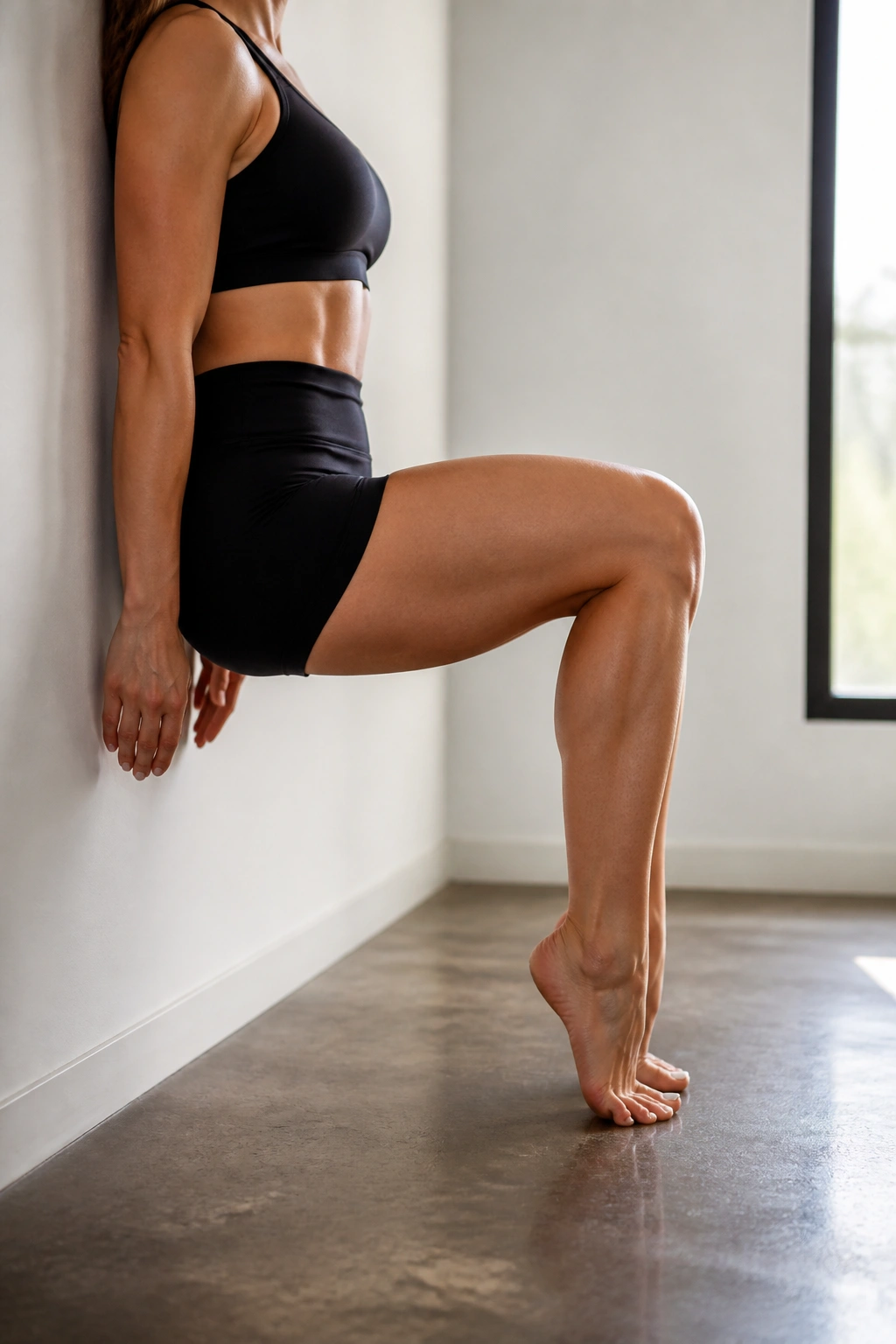
A wall sit is humble. Add heel lifts, and it becomes a sneaky lower-leg and quad burner with a dancer feel.
Sit your back against a wall, knees bent around 90 degrees, feet flat and hip-width apart. Once you’re set, lift the heels slowly and lower them again without changing the knee angle. That tiny shift loads the calves while the quads keep the position alive. Two rounds of 30 to 45 seconds works well, or do 15 heel lifts inside each hold.
What Makes It Different
A regular wall sit trains endurance in the thighs. Heel lifts add ankle and calf work, which changes the feel of the whole lower leg. The posture challenge also makes you pay attention to rib position and pelvis control, which is half the game in dance-style training.
If your knees drift inward, reset the feet. If your low back flattens hard against the wall, ease the squat a little. The goal is a steady burn, not a collapse.
This one is plain, maybe even boring. It still gets the job done, and that’s why I like it.
13. Pilates Side Kick Series
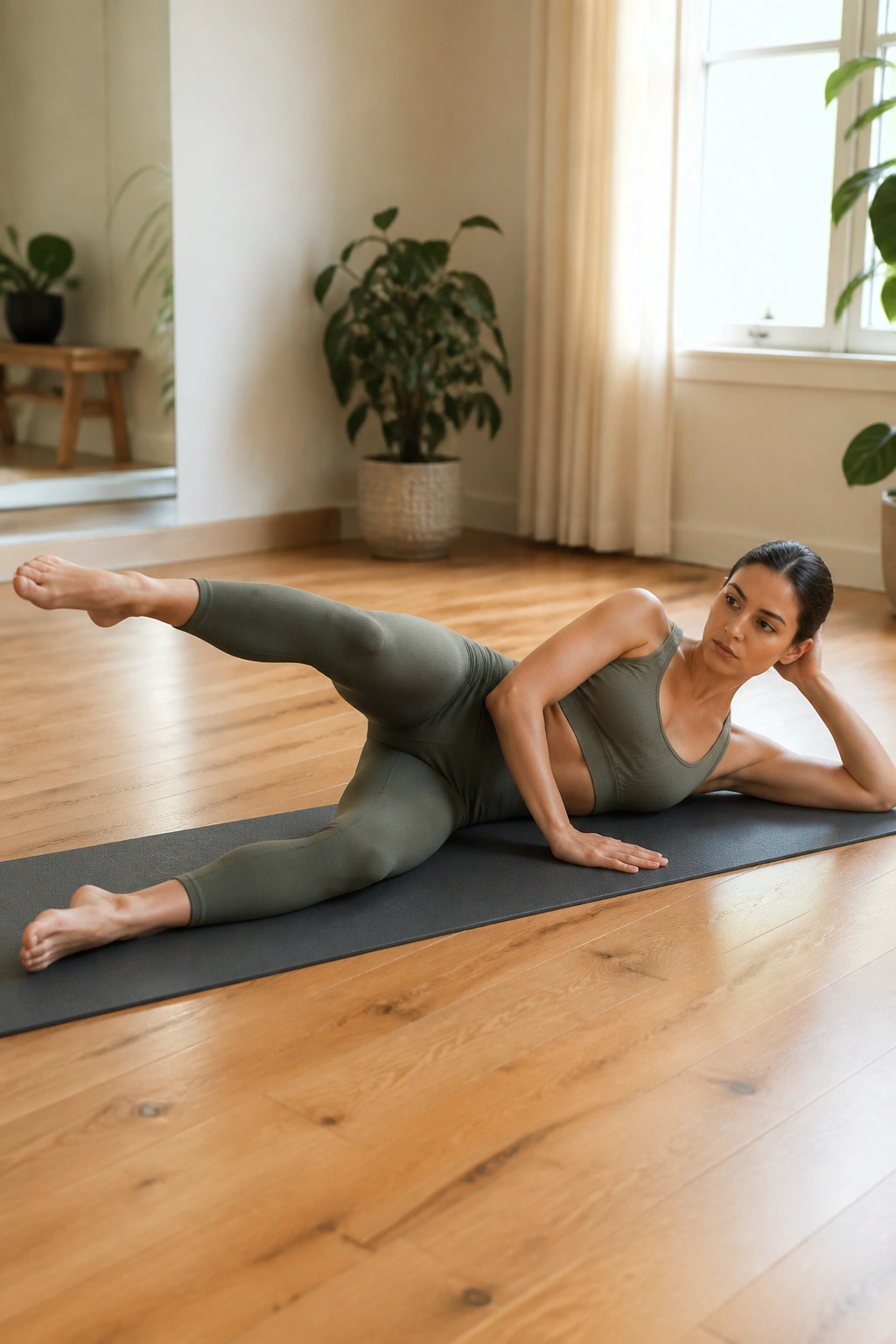
Pilates side kicks are one of the cleanest ways to train the outer hip, inner thigh, and hip flexors without beating up the joints. The movements look small, but small is the point.
Lie on one side, prop your head if you need to, and sweep the top leg forward and back with control. Then lift and lower it, or make tiny circles if you want a second layer of work. Ten front-and-back swings, 10 lifts, and 10 circles each direction is a solid mini-series.
Why It Belongs in a Dancer Leg Plan
The side kick series teaches the leg to move while the trunk stays quiet. That separation is gold. A lot of leg workouts fail because the torso does all the stabilizing while the hips barely show up. Here, the hips have to earn their keep.
Keep the waist lifted off the mat and avoid slamming the leg down on the return. You should feel the side glute, the hip flexor, and the inner thigh taking turns. If the front of the hip pinches, reduce the range. That’s not a move to bully through.
This is one of my favorite mat sequences for people who want long lines without heavy loading. It’s smooth, sharp, and surprisingly tiring.
14. Split Squat Pulses
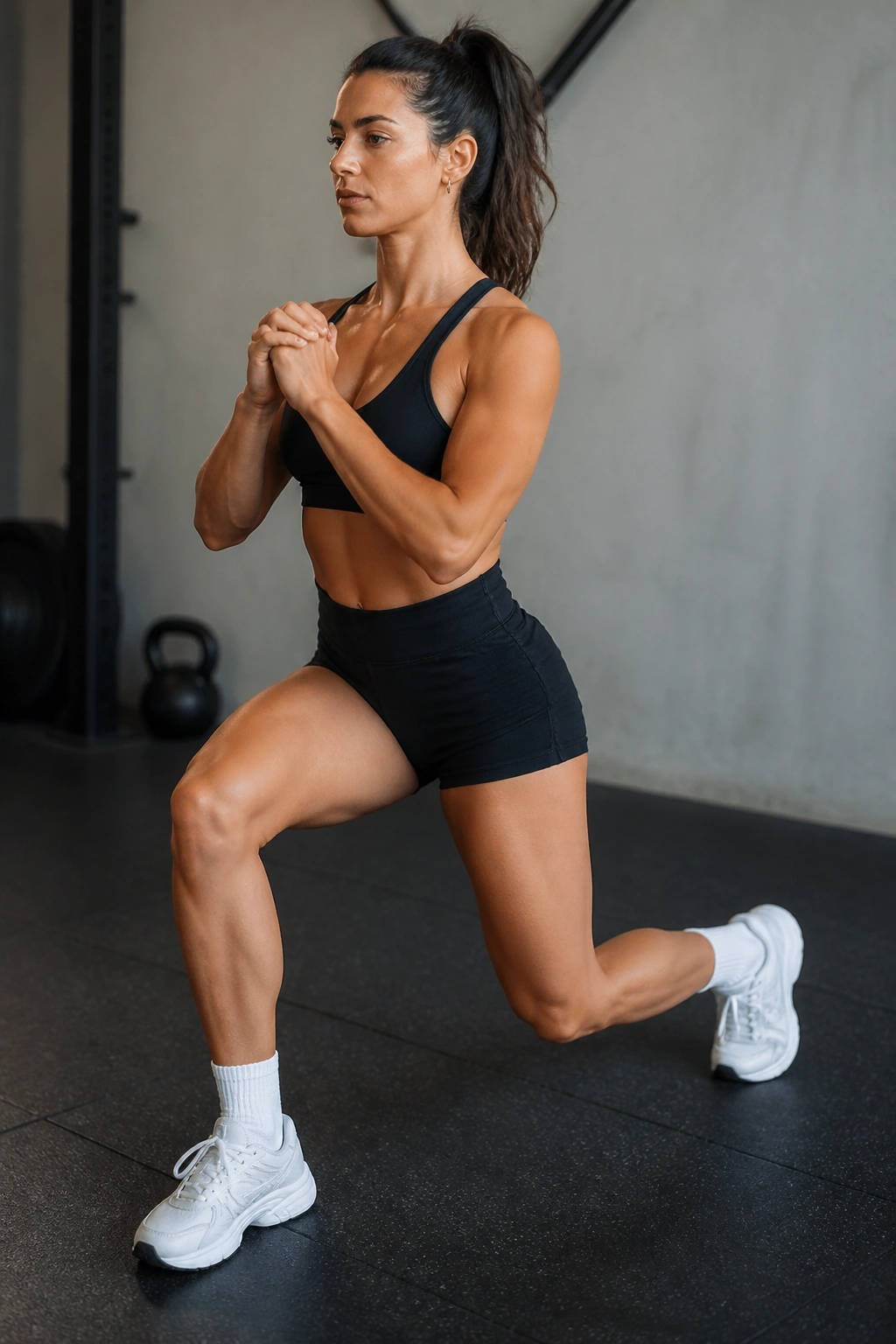
Split squat pulses are where the leg work stops pretending to be easy. They’re direct, simple, and a little rude in the best way.
Set up in a split stance, lower into a lunge, and pulse an inch up and down with the torso tall. Keep most of the weight in the front foot and the back heel lifted. Three sets of 12 to 20 pulses per side is enough to make the front thigh complain. Good.
The front leg gets the quad and glute work, while the back leg helps with balance and hip extension. The nice part is that the line stays long through the back leg, which gives the whole position that dancer feel even though it’s basically a strength drill.
Don’t bounce wildly. That ruins the point and makes the movement look frantic. A tiny pulse with a stable torso does more for the shape of the leg than a sloppy deeper drop.
If you’ve been skipping unilateral work, start here. It exposes imbalances fast.
15. Skater Step-to-Reach
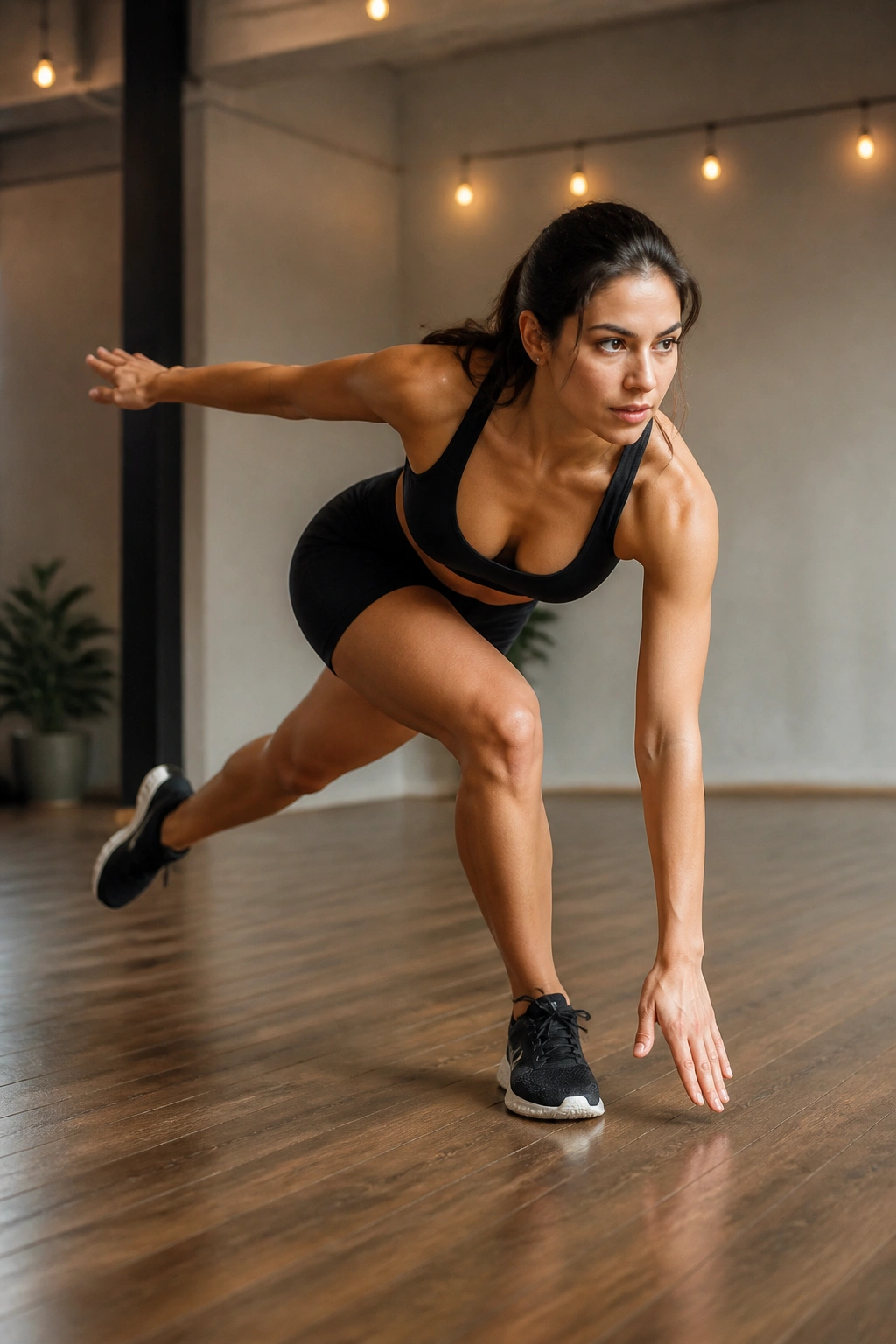
Skater steps bring a lateral push that many leg workouts miss. They train side-to-side control, glute power, and the ability to land without looking like you got tripped by invisible furniture.
Step or hop sideways, land softly on one leg, and reach the opposite hand toward the floor or the planted foot. Then push back the other way. Keep the landing quiet and the knee tracking over the toes. Three sets of 10 to 12 reps per side works well.
How to Use It
The move is part power, part balance, part coordination. The glutes have to catch your weight, and the ankle has to stabilize before the next push. That’s useful if your goal is a lower body that looks agile instead of stiff.
Start with a step if jumping feels rough on your knees. You can add a small hop later. The reach helps you hinge properly, which stops the torso from flopping upright and makes the whole pattern look cleaner.
This is a good reminder that long-looking legs aren’t only about straight lines. They also need good transitions. How you move between positions matters just as much as the positions themselves.
16. Standing Attitude Lifts
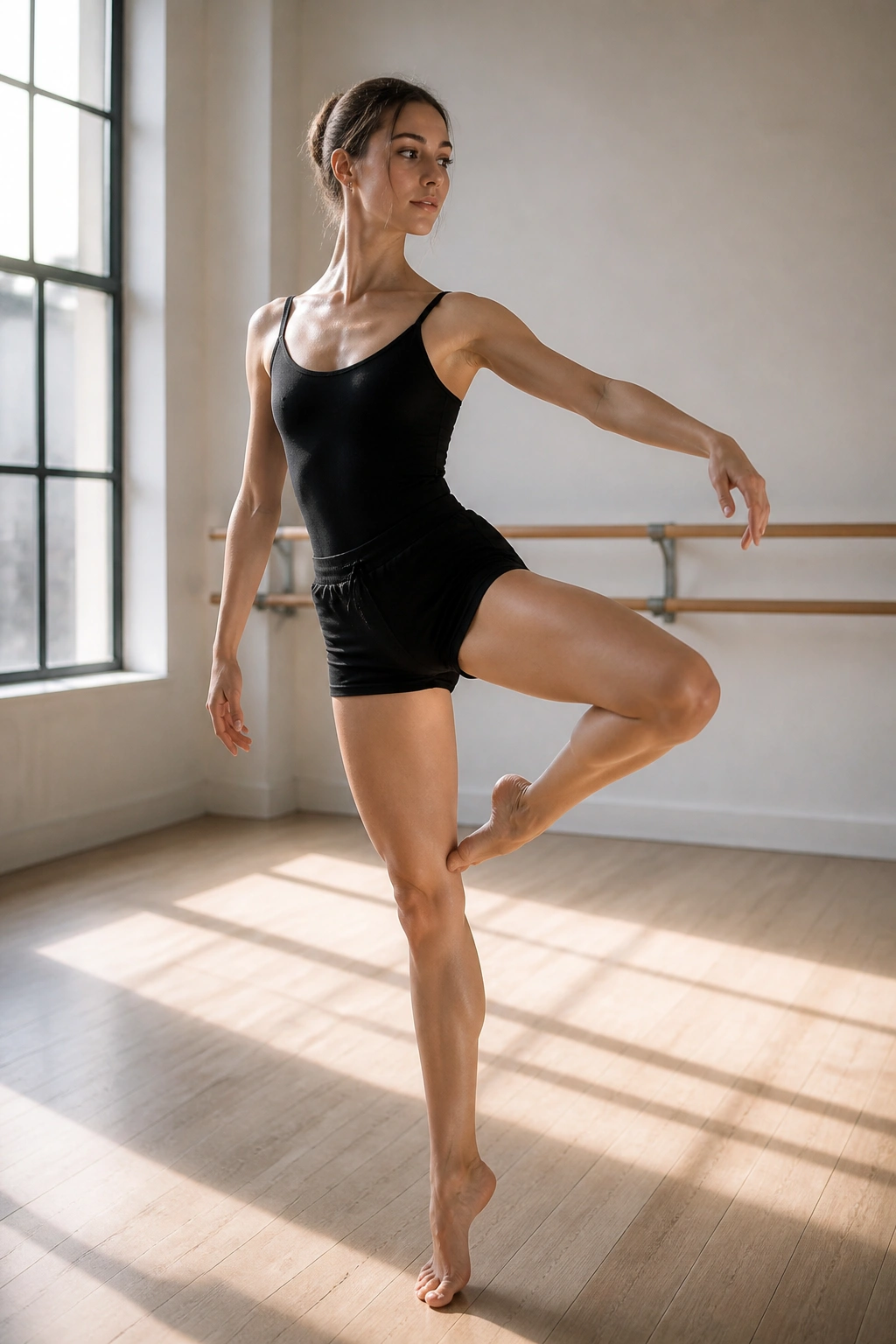
Standing attitude lifts bring a more ballet-like shape into the mix, and I’m a fan of that because the bent-knee position often lets people feel the glute without overusing the low back.
Stand tall, bend one knee behind you, and lift that knee slightly while keeping the thigh turned out as much as your hips allow. The bent leg should feel active, not thrown. Do 15 to 20 lifts per side, then hold the top position for 10 seconds on the last rep.
The reason this works so well is simple: the bent leg position shortens the hamstring’s leverage just enough to shift the work into the glute. That can be a relief if straight-leg kicks make your back talk too much.
Keep the pelvis square. If you open the hip too much, the line looks bigger but the work gets fuzzy. A small, controlled attitude lift says more than a giant swing ever will. It also looks better in motion, which is kind of the whole point.
17. Resistance Band Walks in Parallel and Turnout
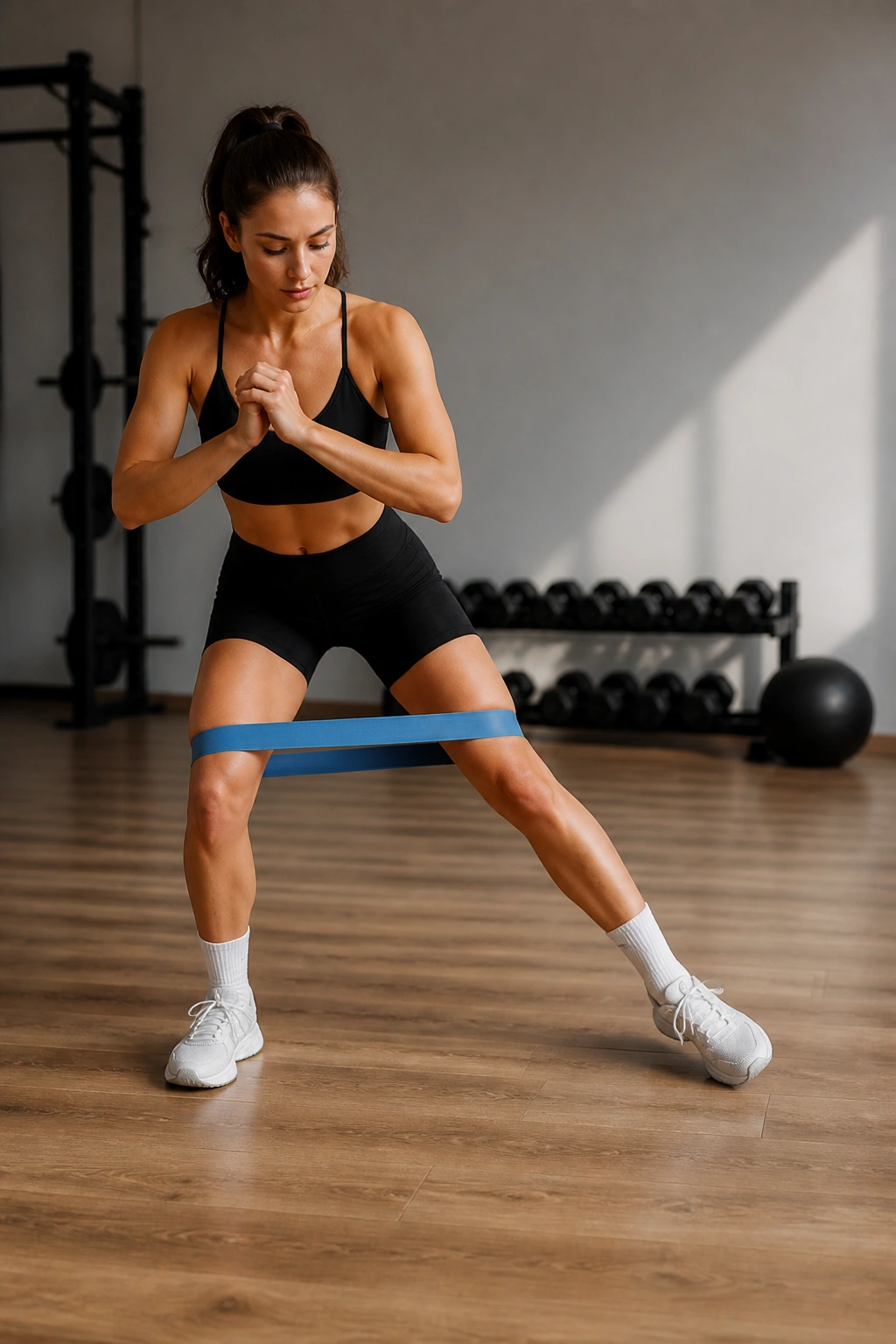
Band walks are often treated like a warm-up, and fair enough. But if you do them with enough control, they become a serious lower-body tool.
Place a mini-band above the knees or around the ankles. Walk 8 to 12 steps to the right, then 8 to 12 back to the left. Do one round in parallel and another with a mild turnout, as long as your feet and knees stay in a sane position. Two to four rounds can light up the outer hips fast.
What to Watch For
Don’t let the feet drag. Don’t let the knees cave inward. And don’t turn the feet out so far that the ankles collapse. A small turnout is more honest than a forced one. The goal is to wake up the glute med and teach the legs to stay aligned under load.
This kind of work matters because it helps your legs track more cleanly in squats, lunges, jumps, and even walking. That cleaner tracking is part of what makes a lower body look sleek instead of noisy.
I like band walks as a primer before heavier work or as a finisher after it. They’re small, but they change how the hips behave.
18. Foot Doming and Toe Spreads
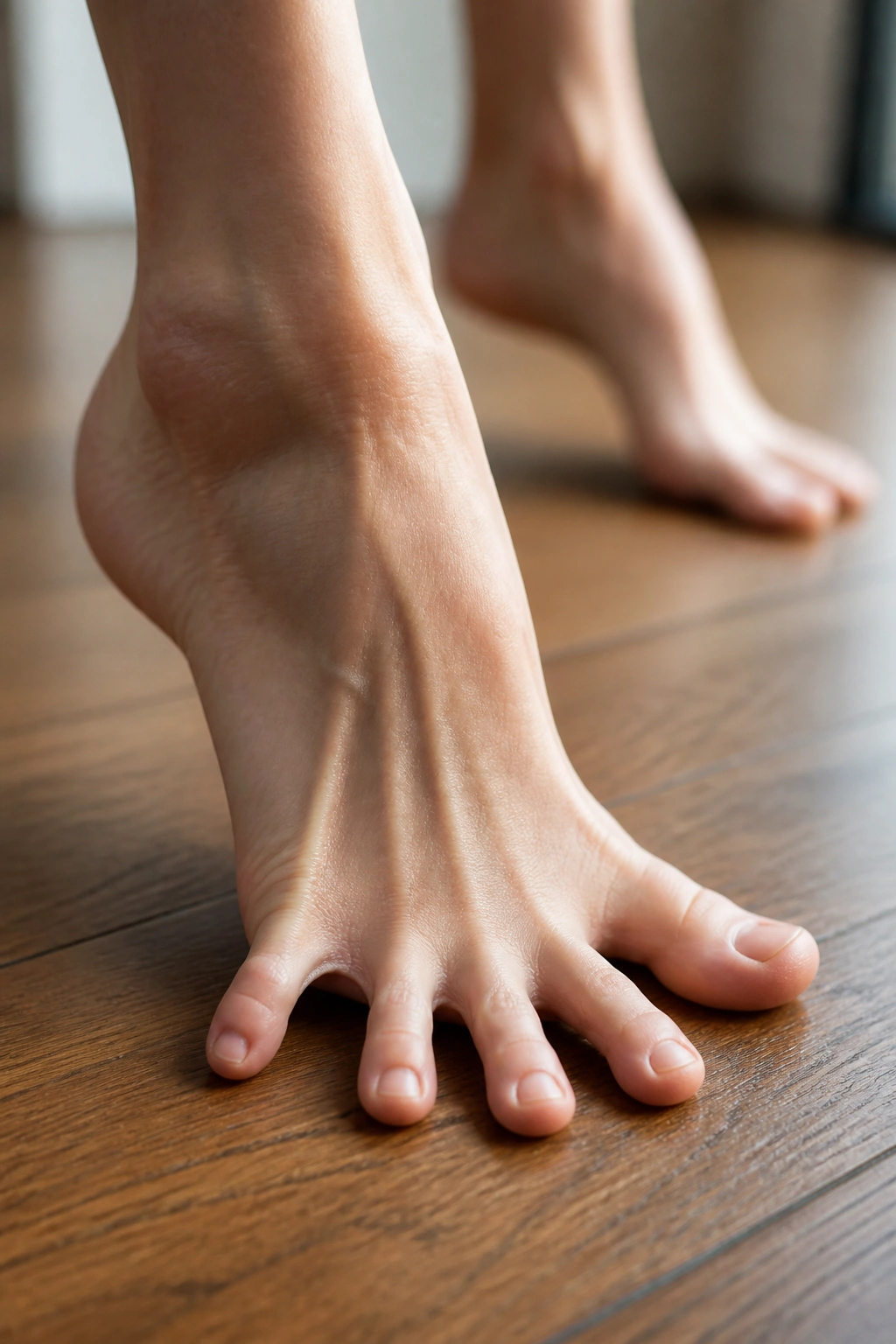
People love to talk about thighs and calves. Fine. But if the feet are weak, the whole leg line takes a hit.
Sit or stand barefoot and practice “doming” the arch: keep the toes relaxed while gently lifting the arch toward the top of the foot. Then spread the toes wide without clawing the floor. Hold each shape for 5 to 10 seconds, repeating 8 to 10 times per foot.
The foot is the base of the chain. If it collapses, the ankle rolls, the knee follows, and the hip works harder to rescue everything. A stronger arch and better toe spread can make balance work feel less slippery and make relevés look cleaner.
This is not a flashy exercise. It’s the kind of thing dancers do because they know the boring details pay off later. If your toes cramp, back off and use shorter holds. If one foot is much weaker, spend an extra round there.
Simple. Useful. Underappreciated.
19. Small Sautés and Plié Jumps
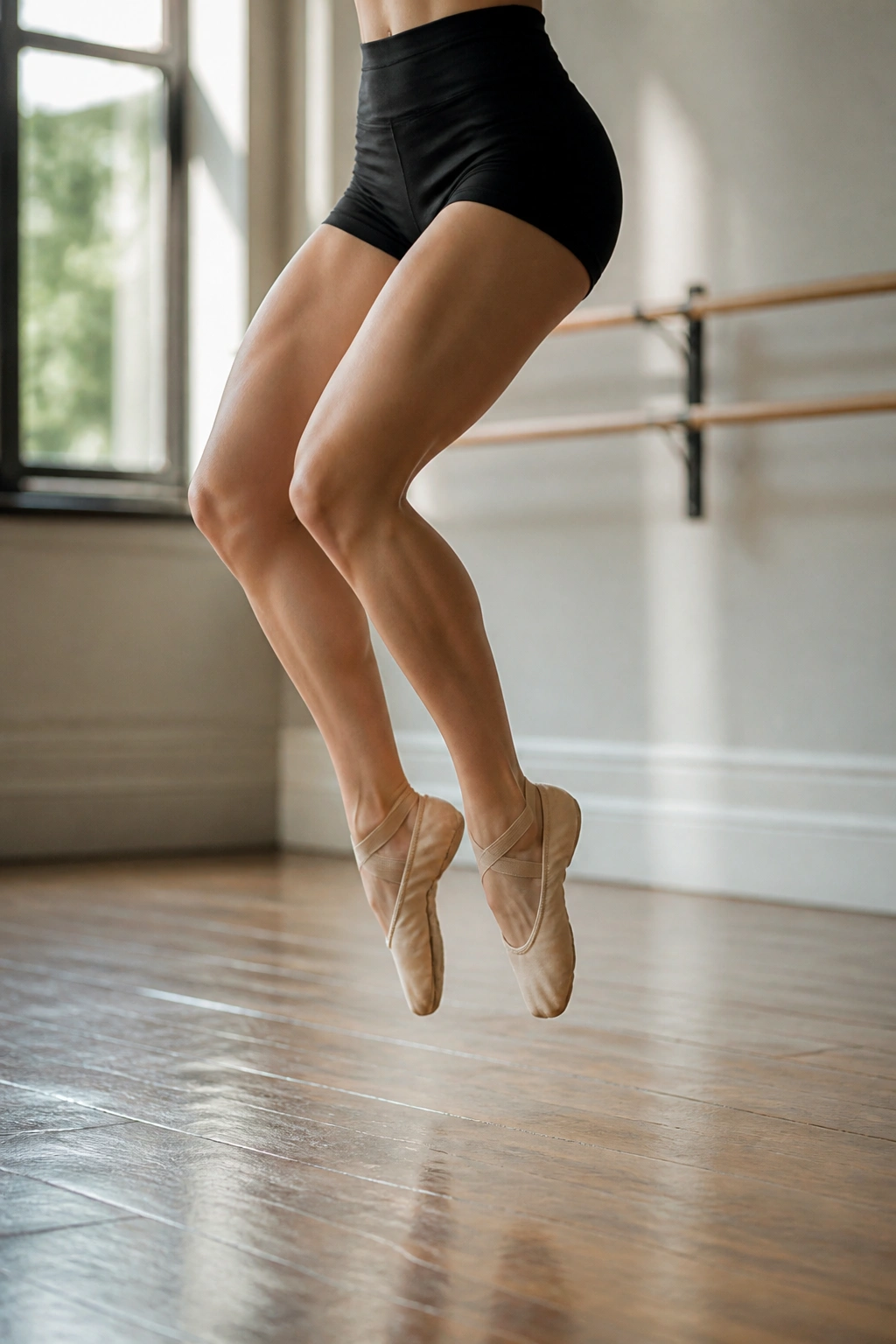
Small jumps are where leg endurance meets spring. They’re light, quick, and more about elasticity than height.
Start in a soft plié, then make tiny jumps or sauté hops, landing quietly with bent knees and stacked ankles. Think “barely leaving the floor” rather than launching. Two to three sets of 20 to 30 seconds is enough if you keep the landings quiet.
Why They Matter
Plyometric work like this teaches the legs to absorb force and push back without looking stiff. That springy quality is a big part of dancer movement. It also raises the demand on the calves, quads, and glutes in a way that pure strength work doesn’t.
Stay light on the feet. If the landing sounds loud, you’re probably dropping too hard. If the knees cave inward, reset before the next set. Good jumps are controlled from the floor up.
This isn’t the place for max effort. It’s the place for rhythm, quick contacts, and quiet landings. And yes, your calves will know about it the next day.
20. Barre Combo Finisher with Plié, Relevé, Kick, and Hold
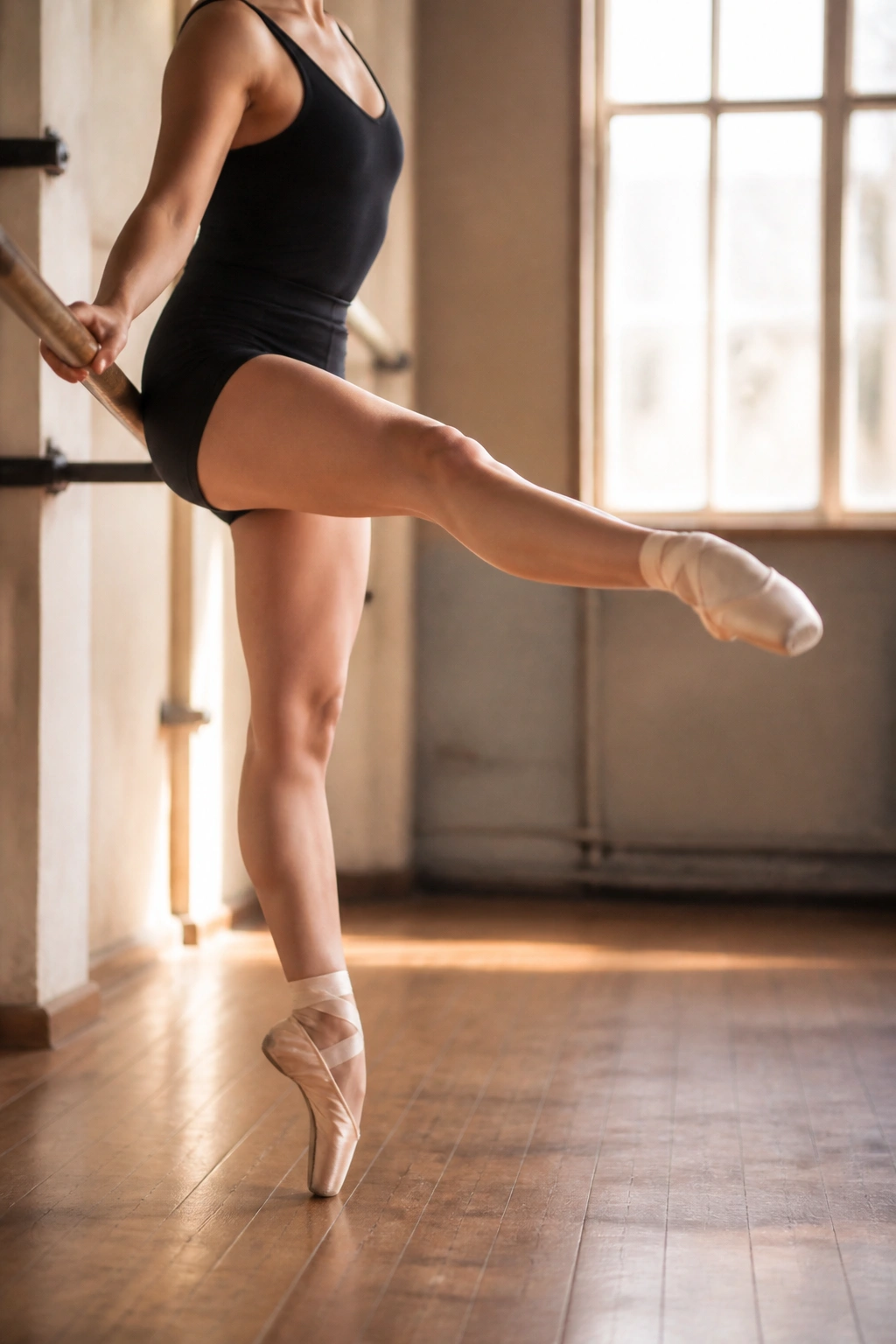
This is the kind of finisher I like because it ties the whole lower-body pattern together instead of chasing one muscle in isolation. It feels like a tiny dance phrase, which is probably why it works so well for the dancer look.
Hold a barre or chair and cycle through a deep plié, a rise to relevé, a small front or side leg lift, and a 5-second balance hold. Move slowly enough that you never lose your line. Do 4 to 6 rounds per side, resting 15 to 20 seconds between sides.
The combo hits the quads in the plié, the calves in the relevé, the hip flexors or outer hip in the leg lift, and the balance system during the hold. That mix is useful because a polished leg shape comes from coordination as much as strength. One muscle never tells the full story.
Keep the transitions clean. That matters more than making the lift huge. A smaller kick with a steady torso looks and feels better than a big one with a wobble. Finish with both feet flat, a few slow ankle rolls, and a breath or two before you walk away. That last minute is where the whole session settles into place.
