



Couples workouts at home work best when they’re simple enough to start without a debate and hard enough to leave both of you breathing a little harder. A timer, a mat, and maybe one chair are enough for most of them.
The trick isn’t finding the fanciest routine. It’s picking movements that fit two bodies in one room without turning the space into a traffic jam. I like workouts that let one person lead for a minute, then the other take over, because it keeps things moving and cuts down on that awkward “what do we do now?” pause that kills momentum.
A good shared session should do three things: raise the heart rate, give both of you a real job, and leave room for a laugh or two. That last part matters more than people admit. If a routine feels like punishment, you’ll both start making excuses by the third round.
Clear a strip of floor, move anything breakable, and keep water nearby. If wrists, knees, or lower backs are touchy, pick the lower-impact versions below and skip the hero stuff; a workout you can repeat beats an impressive one you hate.
1. Couples Workouts: Side-by-Side Squats and Reaches
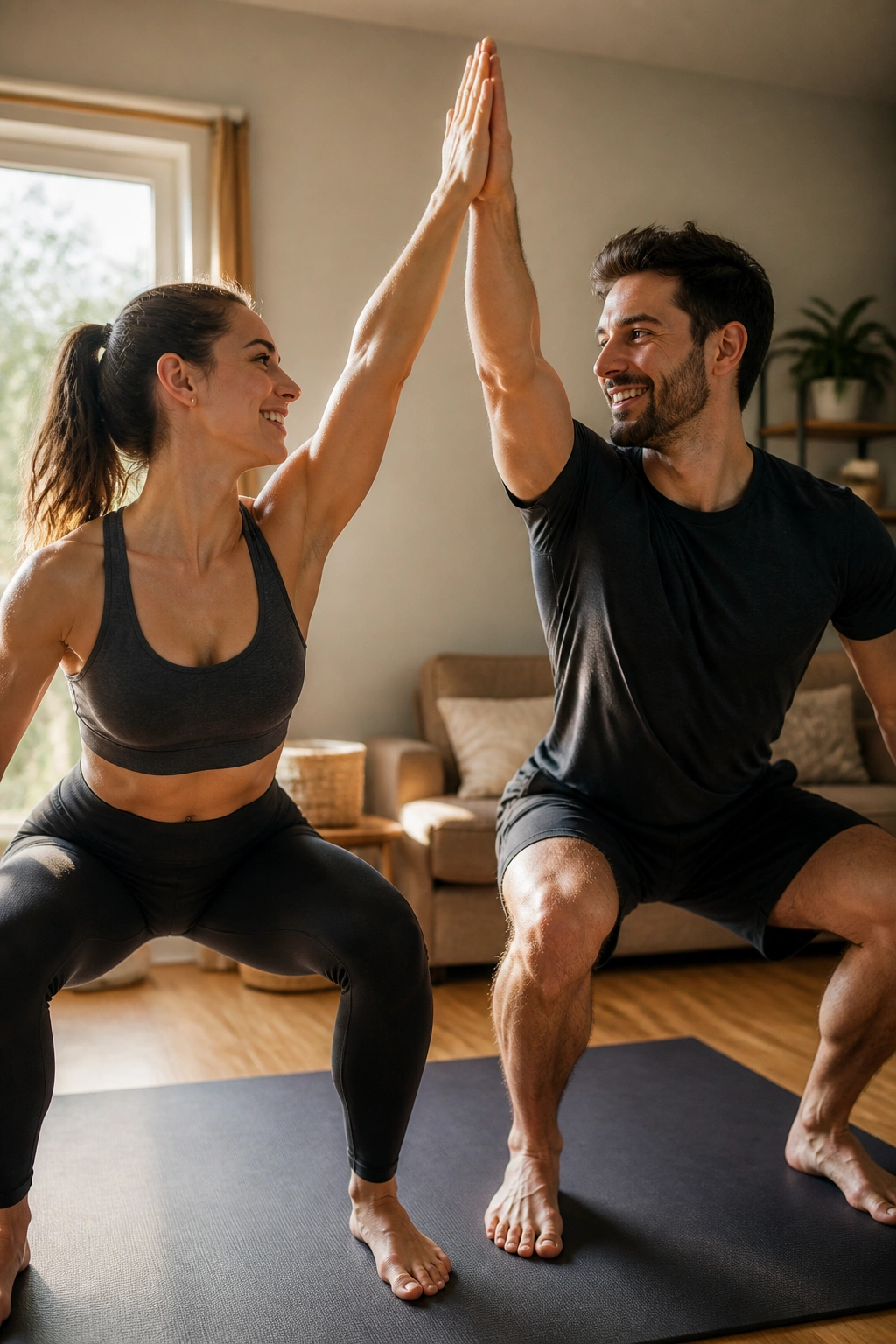
This is the one I’d hand to a couple starting from zero.
Stand shoulder to shoulder, about an arm’s length apart, and squat at the same pace. At the top, reach both arms overhead and tap hands if your timing lines up. It looks almost too easy for the first ten seconds. Then your legs wake up.
Why It Works
Squats hit the big muscles that actually burn through energy: glutes, quads, and inner thighs. The overhead reach opens the chest and keeps the movement from turning stiff, which matters when you’re doing several rounds and your form starts getting lazy.
The side-by-side setup also helps with pacing. You can see each other’s depth, so one person doesn’t sink three inches while the other barely bends their knees. That little bit of visual feedback is more useful than most people expect.
- Do 3 rounds of 10 to 15 reps.
- Keep your feet about hip-width apart.
- Sit back as if you’re reaching for a chair.
- Exhale on the way up.
- Tap hands only if the reach feels smooth, not rushed.
Tip: If one of you tends to tip forward, hold the arms out in front on the way down and save the overhead reach for the top.
2. Mirror Shadowboxing Rounds
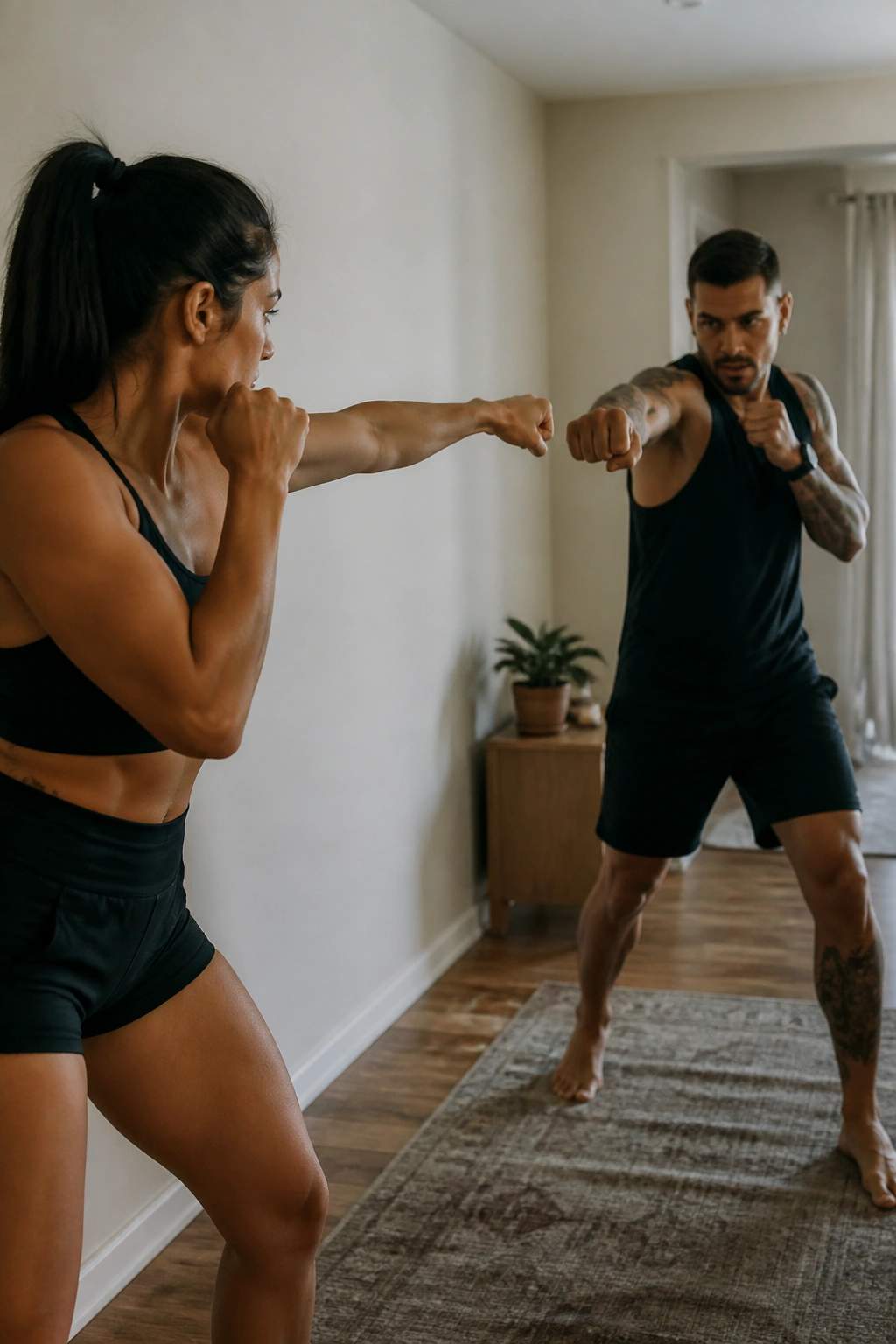
Shadowboxing is the fastest way to make a small room feel like a real workout.
One of you leads with light jabs, crosses, hooks, or knee lifts, and the other mirrors every move. Then swap roles after each round. The whole thing feels playful for about thirty seconds, and then your shoulders start to heat up.
The nice part is how little space it needs. You can do this in a hallway, beside the couch, or in the slice of floor between the coffee table and the wall. Keep the punches controlled. This is not the place for wild swings that clip a lamp or jam your elbow.
Do 6 rounds of 45 seconds on and 15 seconds off. Use round one for simple jabs and crosses, round two for hooks, round three for upper-body feints, and so on. If you want more cardio, add a quick knee drive after each combo.
No one needs perfect boxing form here. You need rhythm, a steady pace, and enough breathing room to keep moving without stomping around like you’re angry at the floor.
3. Partner Plank Hand-Taps
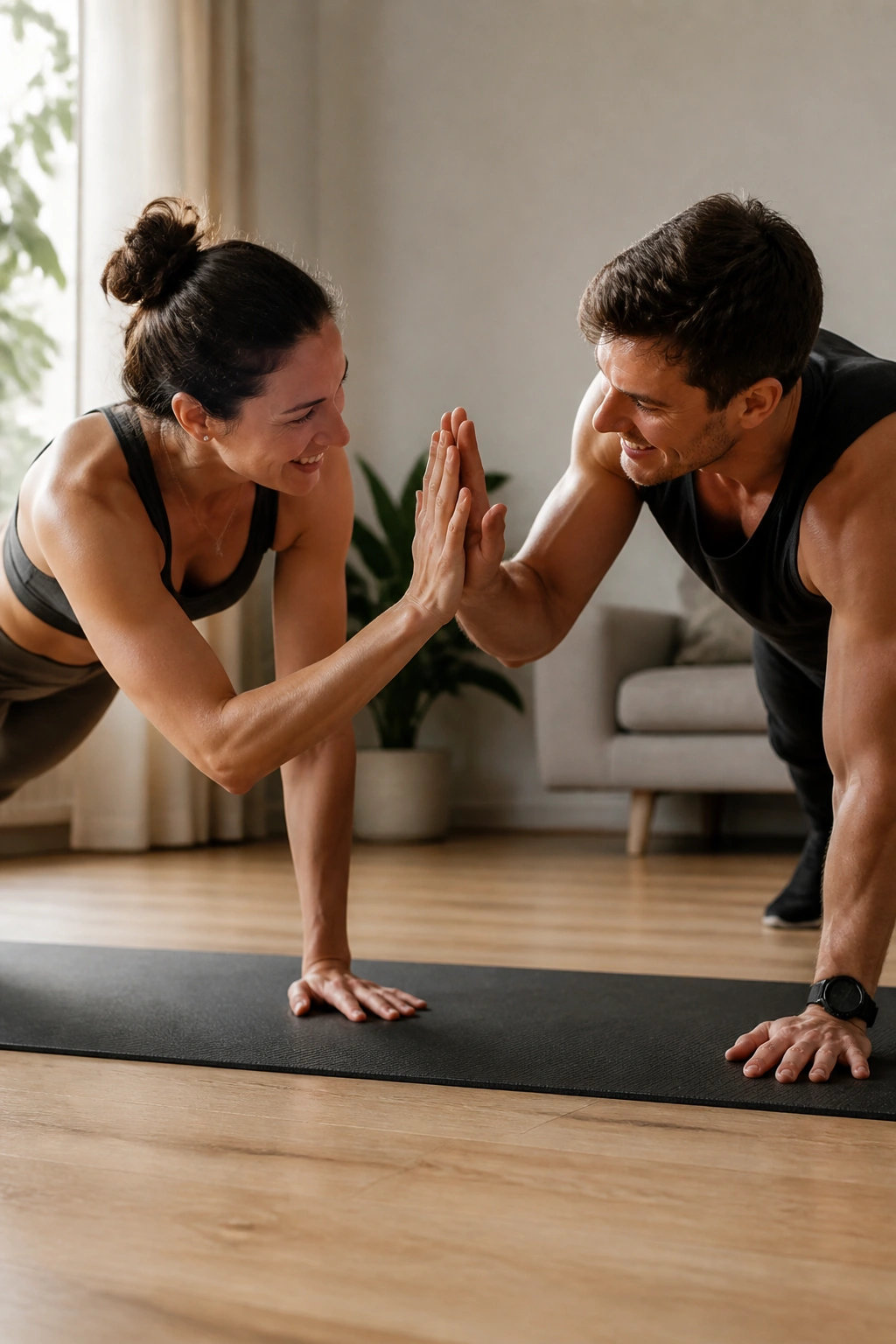
Why does a hand tap make a plank feel twice as hard?
Because your body has to fight rotation. The second you lift one hand, your core has to stop your hips from swinging side to side, and that tiny wobble adds up fast. It’s a sneaky little drill, and it punishes sloppy alignment in about five seconds.
Start in a high plank facing each other, hands under shoulders, feet a little wider than usual. Tap opposite hands, return to the floor, then switch sides. Go slow enough that your hips stay level. If your lower back sags, shorten the range or drop to your knees.
How to Use It
- Do 3 sets of 20 total taps.
- Keep your neck long and eyes a few inches ahead of your hands.
- Press the floor away from you.
- Breathe out on each tap.
- Stop if your shoulders start shrugging toward your ears.
A wider foot stance makes this move far more manageable. Narrow feet look harder, sure, but they also turn the drill into a balance mess. And if one of you needs a regression, there’s no shame in doing taps from the knees. Clean reps beat shaky ones every time.
4. Back-to-Back Squat Holds
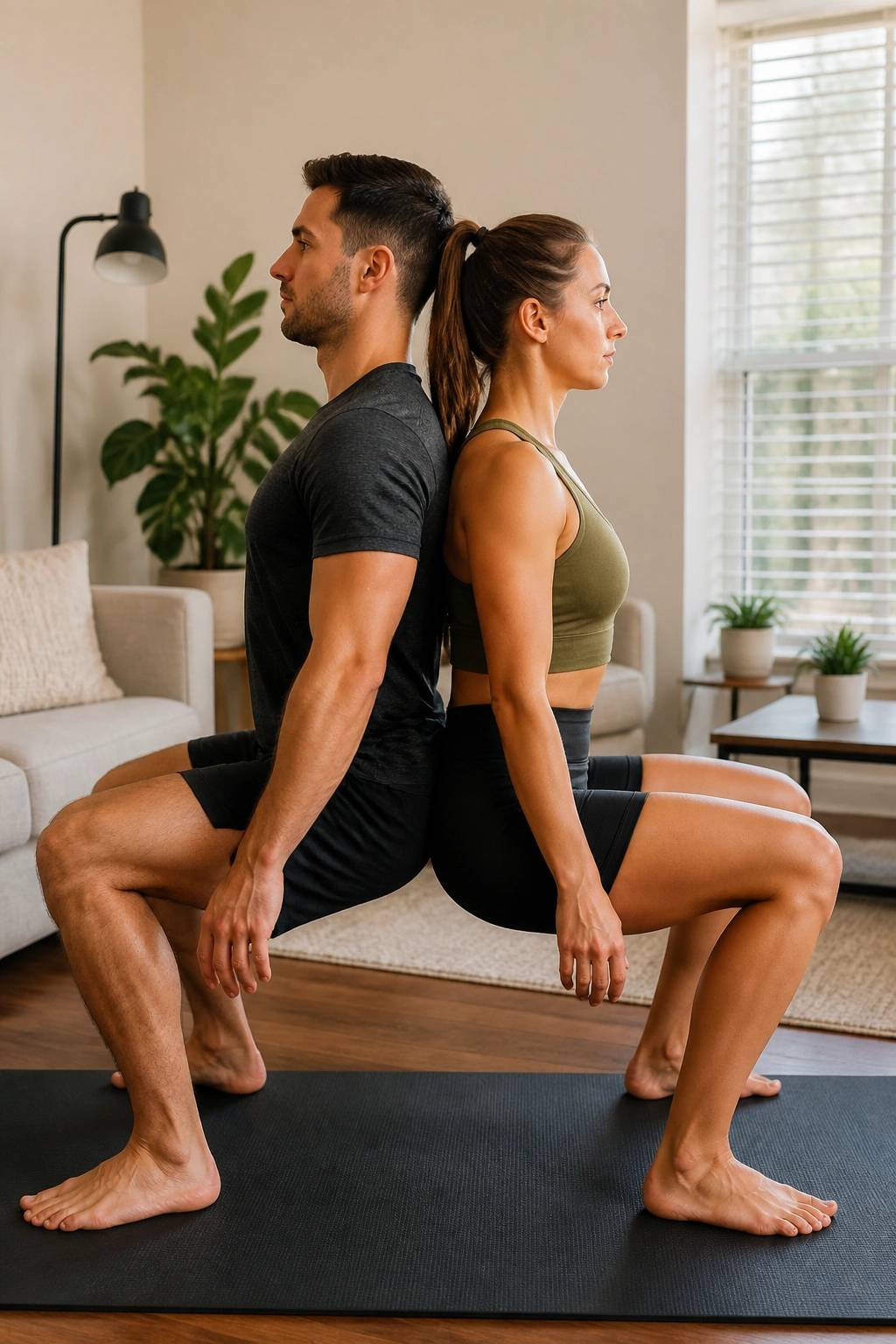
One of my favorite low-tech options is a back-to-back squat hold.
Stand with your backs pressed together, feet slightly forward, and slide down until both knees land around a 90-degree bend. You’ll feel the burn in your thighs fast, but the partner contact keeps people honest. Nobody can bounce out early without the other person noticing.
This works well on days when one of you wants something quiet and the other wants something competitive. It’s a challenge, yes, but it’s also weirdly grounding. There’s a tiny bit of trust in it. You feel each other shift, brace, and breathe.
- Hold for 30 to 60 seconds.
- Do 3 to 5 rounds.
- Keep weight in the heels.
- Don’t let the knees cave inward.
- Reset fully between rounds.
If you want more work, press your palms together at chest level while holding the squat. That adds a small upper-body isometric squeeze and makes the hold feel longer than it should. A little miserable. Still useful.
5. Towel Row Resistance Drill
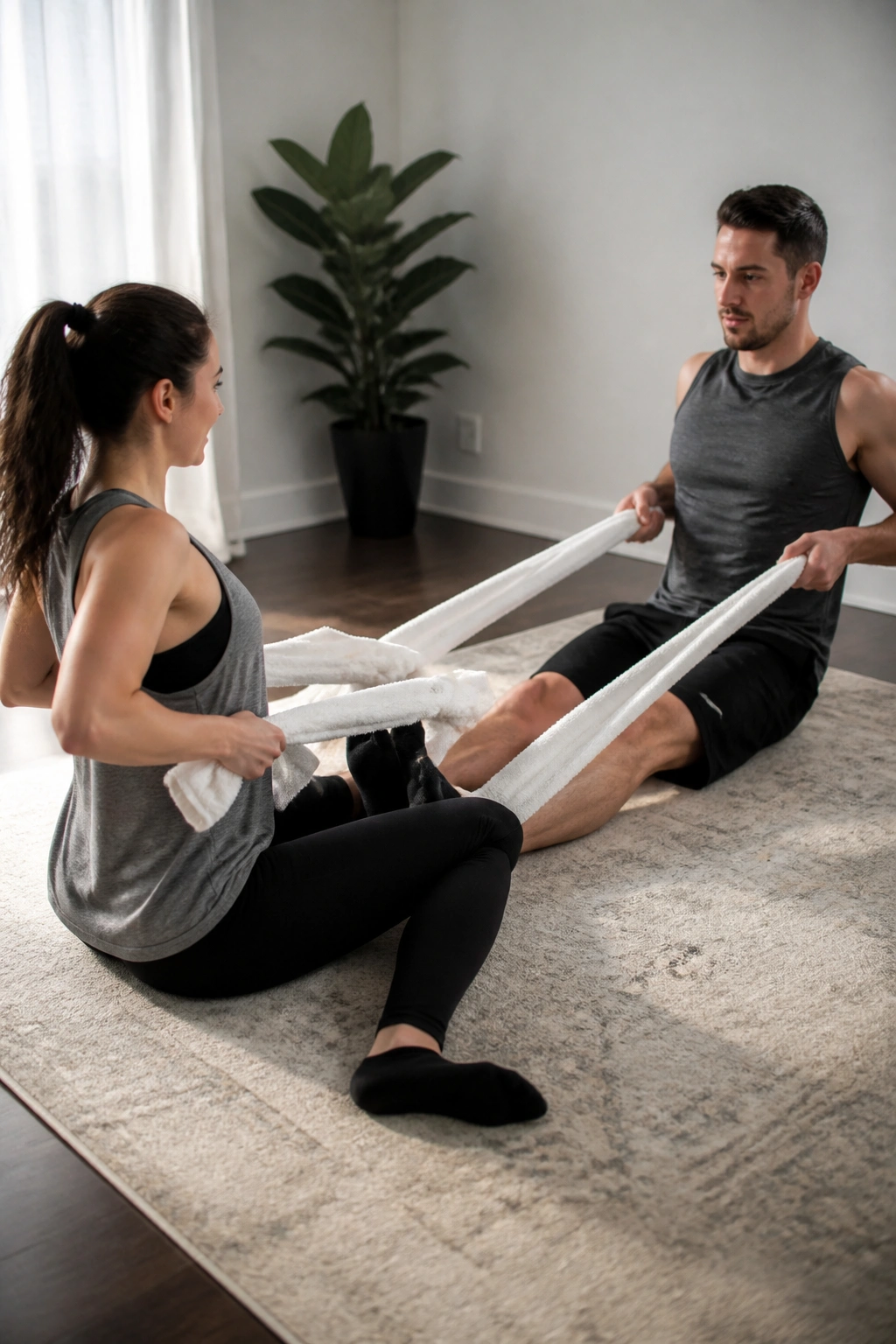
Unlike a cable machine, a towel row doesn’t care how fancy your setup is.
Sit facing each other with knees bent and a towel looped around both pairs of feet, or sit with one person anchoring the towel while the other rows. Pull the elbows back close to the ribs, pause for one count, then return slowly. The key is steady tension, not a sudden yank.
This is a solid choice if you spend too much time hunched over a desk. The movement wakes up the upper back, the rear shoulders, and the muscles between the shoulder blades. Those are the spots that usually go dull first.
Use a thick bath towel if you don’t have a band. It won’t give the same smooth resistance, but it works well enough for controlled reps. Aim for 3 sets of 8 to 12 rows per person.
Best for couples who want strength work without jumping around. Not ideal if someone has very cranky elbows, since hard pulling can flare that up. Keep the grip relaxed and the motion slow. That alone fixes half the problems people create.
6. Alternating Lunge and Reach
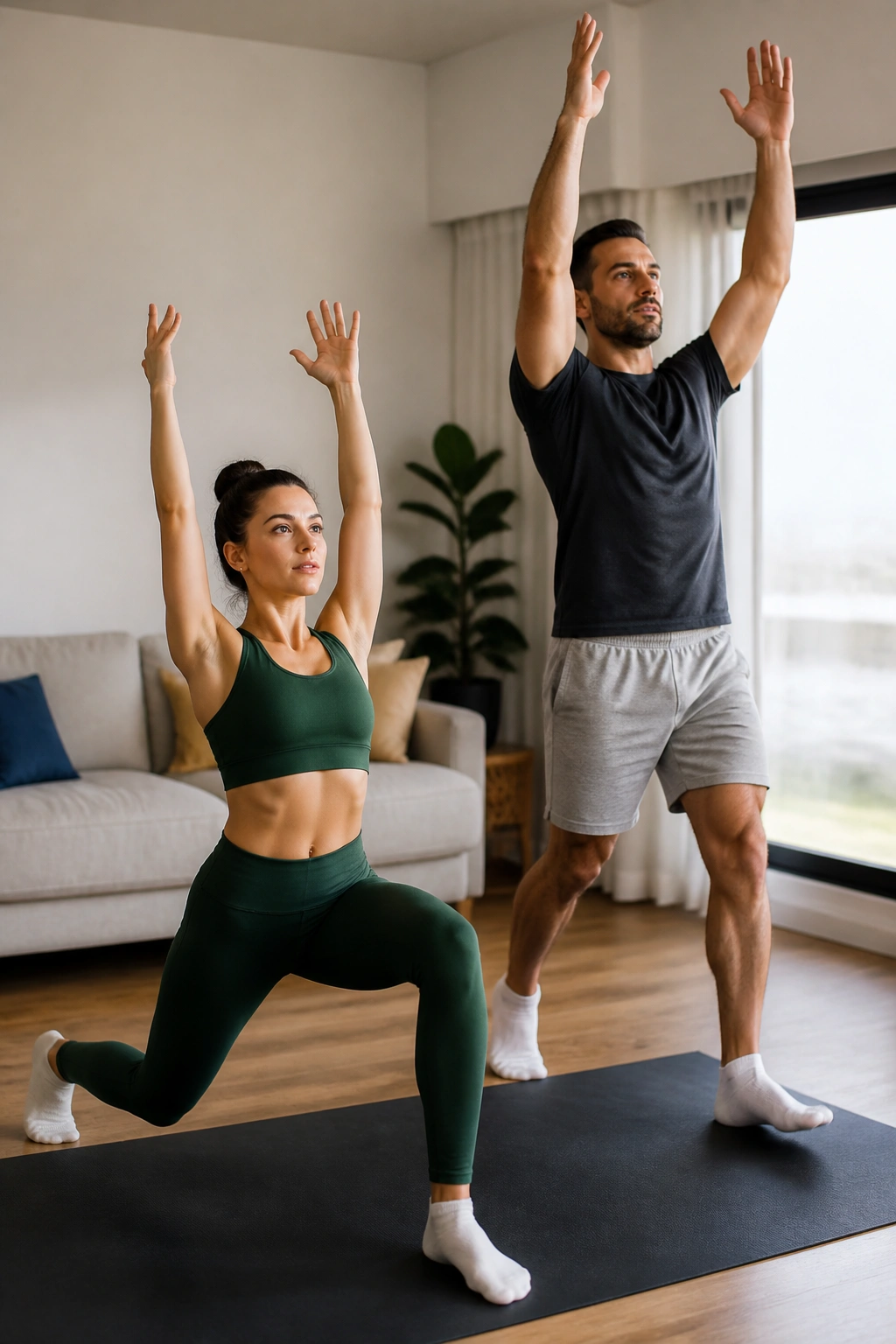
The first thing you notice is the stretch through the hip. The second is how fast your breathing changes.
Take a long step back into a reverse lunge, then reach both arms overhead as you rise. Your partner does the same on the opposite side, so one of you is lowering while the other is coming up. That rhythm keeps the room moving and keeps both of you engaged without a lot of talking.
A reverse lunge is kinder to the knees than a forward lunge for many people, which makes it a smart starting point. Keep the front foot flat and the front shin fairly vertical. The back knee should hover just above the floor, not slam into it. If balance is shaky, hold a wall or countertop with one hand.
Do 3 sets of 8 reps per side. Add the overhead reach only if your ribs don’t flare hard when you lift your arms. A forward reach works fine too. The point is control, not drama.
And no, you do not need giant steps. A clean, medium-length lunge will do more good than a giant wobble that makes both of you laugh and miss the target.
7. Push-Up High-Fives
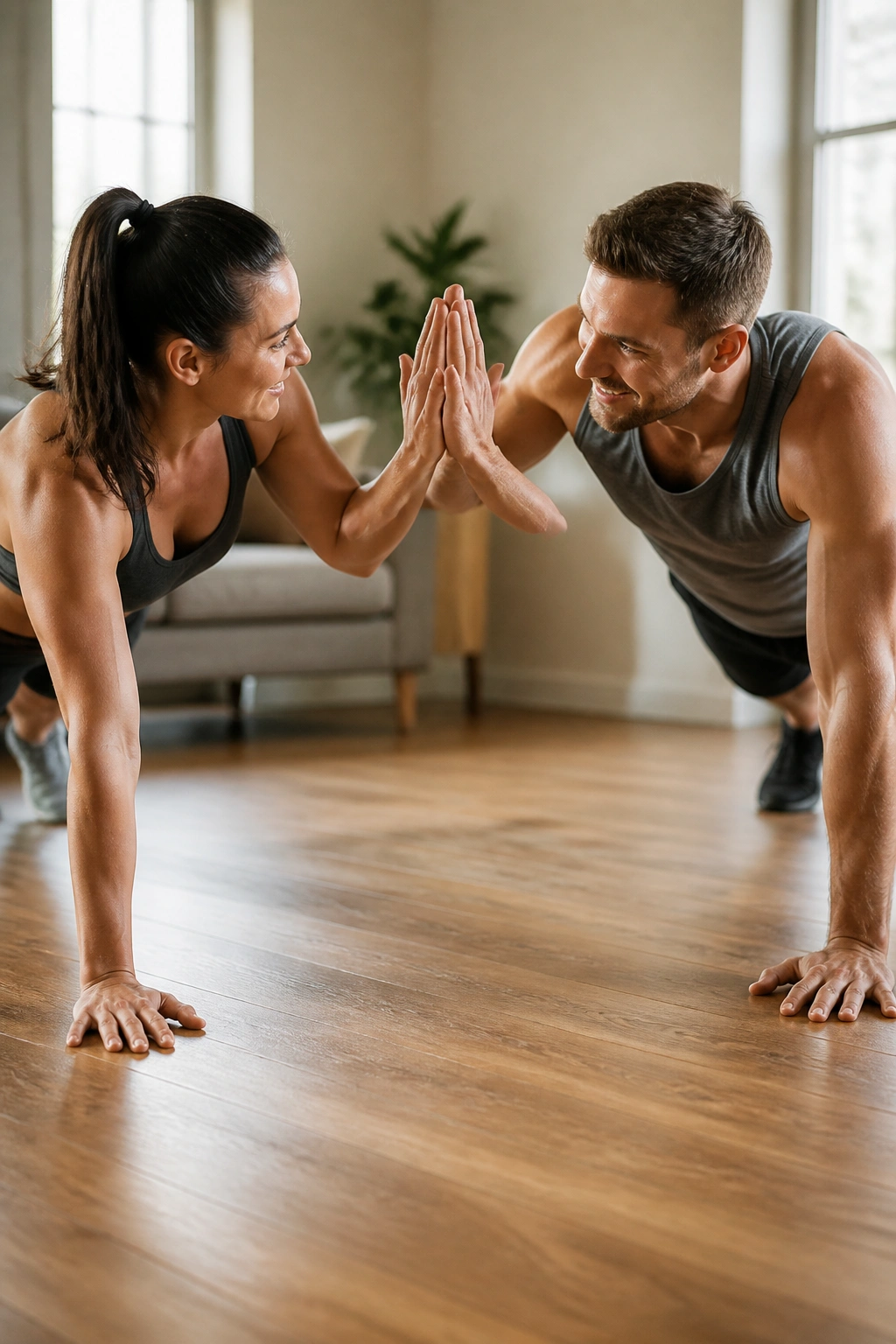
You know a push-up is serious when a simple hand tap changes the whole rep.
Do your push-up together, then tap opposite hands at the top before lowering again. If standard push-ups are too much, put your hands on a couch edge or sturdy coffee table and keep the same pattern. The tap adds a tiny pause, which means the set burns longer without needing extra reps.
What Makes It Useful
The push-up itself trains chest, shoulders, triceps, and core. The high-five adds a balance check, because your weight shifts just enough to force better control through the ribs and hips. It’s a nice reminder that strength isn’t only about moving fast.
- 3 sets of 6 to 10 reps is plenty.
- Keep feet wider than shoulder-width for stability.
- Tap after the top of the rep, not in the middle.
- Use an incline if the floor version breaks form.
- Stop if the lower back starts sagging.
Small but useful detail: don’t chase speed. Fast taps look fun, but slow reps teach the body to hold shape under load. That matters more than the extra noise.
8. Pillow Pass Sit-Up Twists
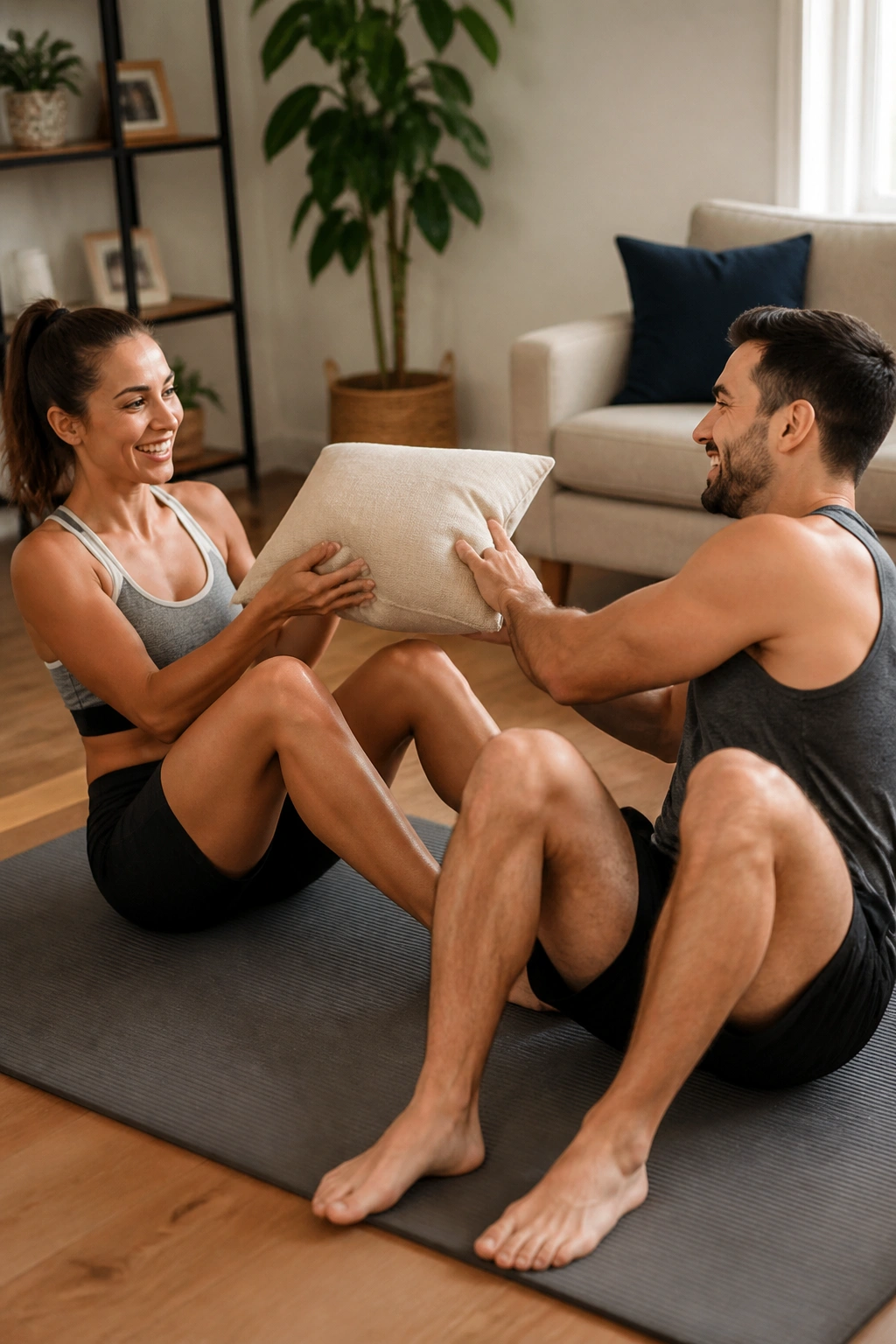
A pillow looks harmless until you’re passing it side to side for 40 seconds.
Sit facing each other, knees bent, feet lightly on the floor, and pass the pillow from one side to the other at the top of each sit-up or twist. If full sit-ups bother your neck, stay in a V-sit or half-reclined position and rotate through the torso instead. The goal is to keep the core braced while the arms move.
This one tends to turn competitive in a good way. You start tracking who can keep the pace smoothest, who cheats on the twist, who forgets to breathe. That little bit of play is useful because it keeps the set from feeling endless.
Try 3 rounds of 20 total passes. Use a firm throw pillow or a folded towel, not something heavy enough to smack someone in the face. And keep the movement crisp. If the pillow starts dropping every other rep, slow down and shorten the range.
If your lower back rounds hard on sit-ups, switch to a dead-bug pass instead. Same spirit. Less spine grumbling.
9. Glute Bridge March and Foot Press
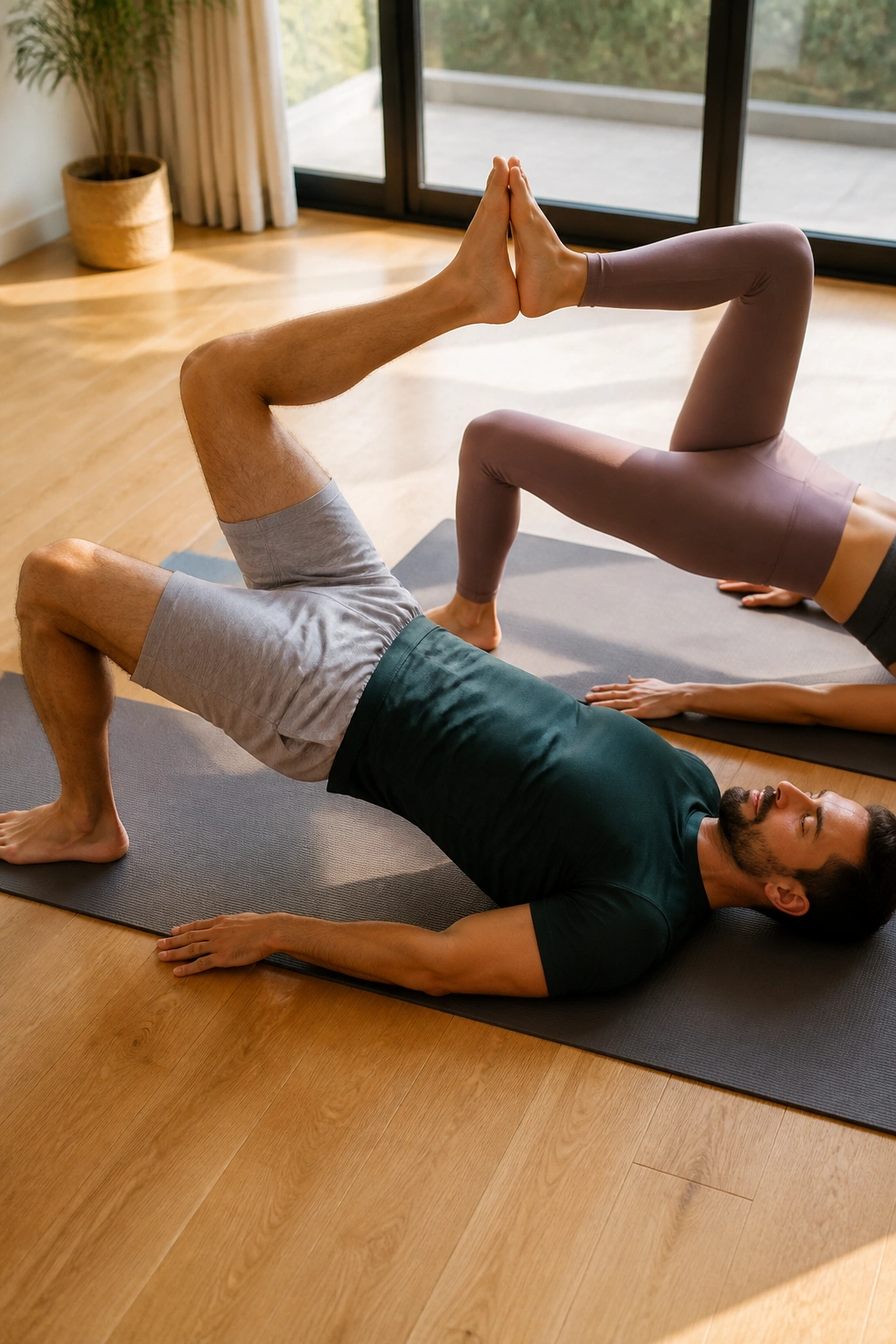
Why does a tiny bridge march light up the backside so fast?
Because your hips have to stay level while one leg moves. That means your glutes are working to stop the pelvis from wobbling, and your hamstrings join in as soon as the hold gets sloppy. It’s one of those floor exercises that looks calm until the first leg lift.
Lie on your backs with knees bent and feet flat. Lift into a glute bridge, then march one foot at a time without letting your hips drop. If you want a partner version, press your soles together lightly at the top and take turns marching while the other person keeps the bridge steady and calls out the tempo.
How to Get It Right
- Do 3 sets of 10 marches per person.
- Keep the ribs down.
- Squeeze the glutes at the top.
- Move one foot only a few inches off the floor.
- Pause if the lower back starts taking over.
The bridge should feel like work in the butt and hamstrings, not a back bend. If you feel it in your lumbar spine, lower the hips a little and slow down. A smaller bridge with better control is the smarter choice.
10. Couples Workouts Stair Intervals
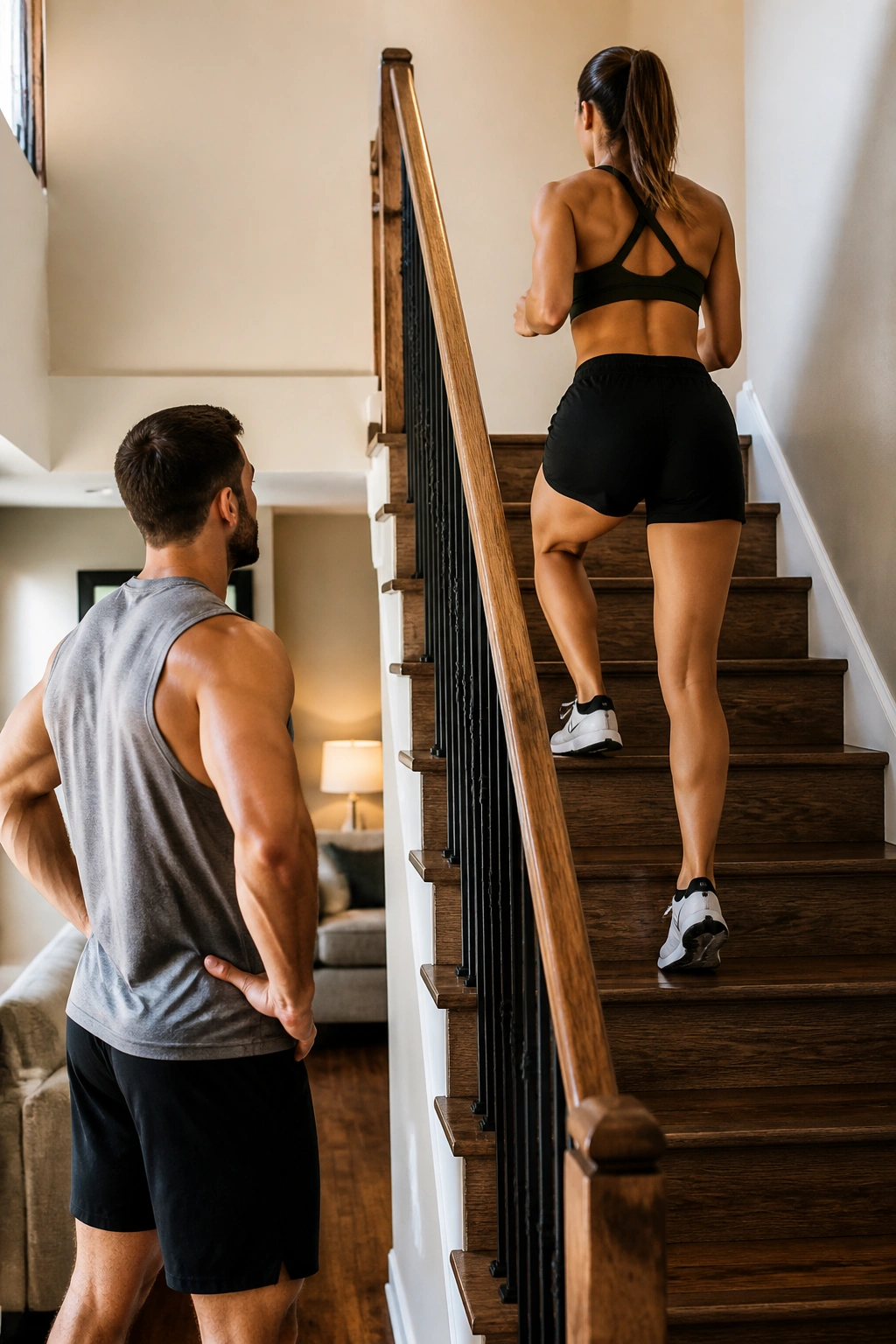
If you have stairs, use them.
One person goes up and down for a set interval while the other rests, counts, and recovers. Then swap. You can keep it simple with 20 seconds hard, 40 seconds easy, or run a more challenging 30-second sprint and 30-second walk pattern if the stairway is wide and safe.
The appeal is plain. Stairs are honest. They raise your heart rate without needing gear, and they punish sloppy footwork fast. Wear shoes with decent grip, keep the handrail close, and don’t try to win a race on a slick staircase.
- Do 6 to 10 rounds.
- Stay upright; don’t lean hard into the steps.
- Land softly through the whole foot.
- Keep the area clear at top and bottom.
- Swap quickly so the rest interval doesn’t drift.
No stairs? Hallway shuttles work. Pick two markers about 10 to 15 feet apart and jog, fast-walk, or high-knee between them. The point is simple bursts, not perfection.
11. Yoga Flow With Breath Matching
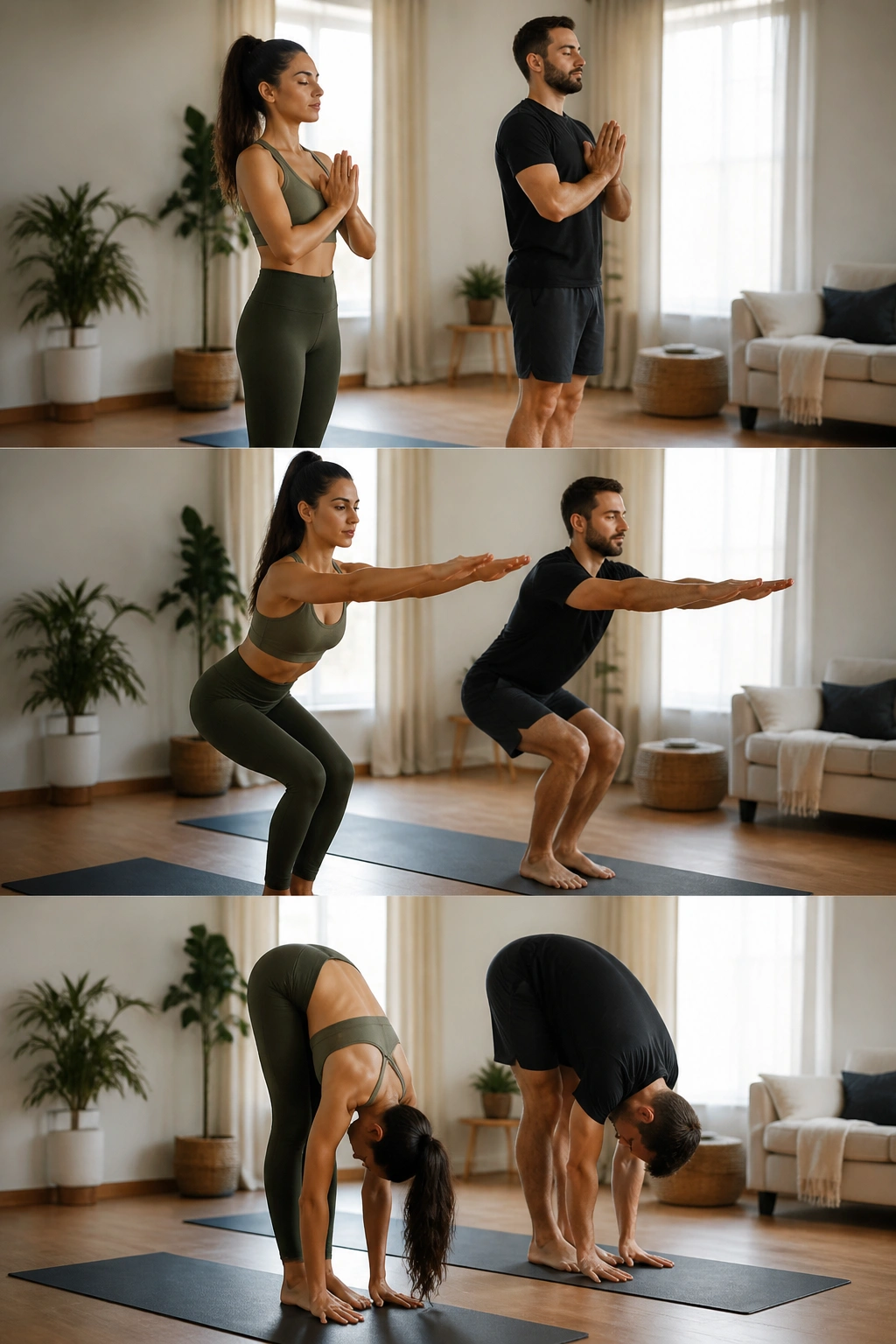
Not every couples workout has to sound like footfalls and timers.
A mirrored yoga flow can be more useful than people think, especially if one of you carries tension in the shoulders and the other lives with tight hips. Stand side by side on mats, breathe in together on the lift, and breathe out together on the fold. That shared rhythm makes the whole thing feel calmer without turning it into a nap.
Use a short sequence: mountain pose, chair pose, forward fold, low lunge, downward dog, then switch sides. Hold each shape for 3 to 5 breaths, not because that sounds elegant, but because the breathing keeps people from rushing through their stiffest spots. If one partner has deeper range, they should back off a little. Chasing someone else’s flexibility is a fast way to get irritated.
The best part is how easy it is to adjust. Want more work? Add slow chair pulses. Want less? Skip the deep fold and keep the knees soft. This is one of those shared sessions that can feel like a reset and still count as movement.
Keep the tone light. Nobody needs to sound sacred about downward dog.
12. Wheelbarrow Walks and Bear-Crawl Relays
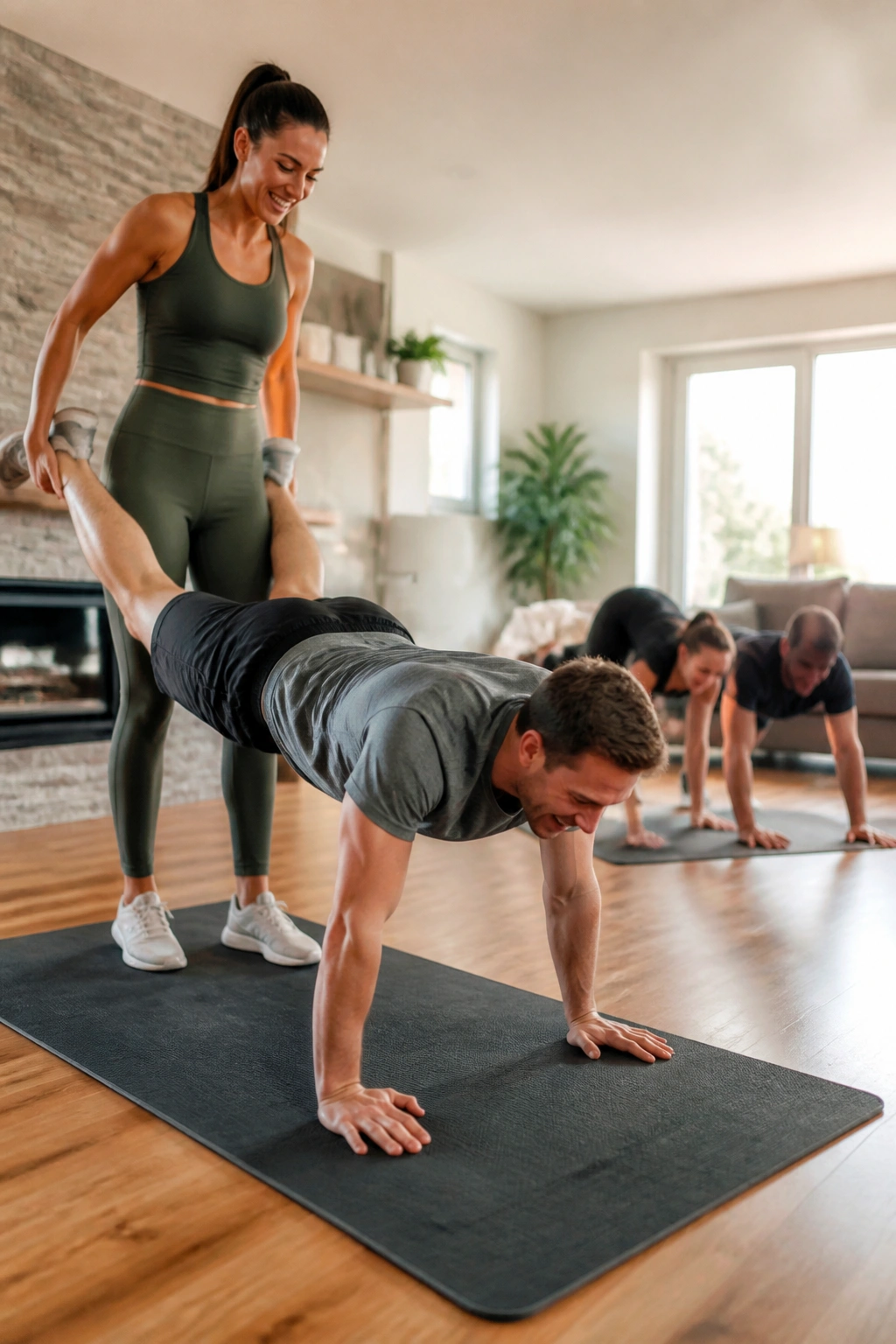
Unlike a steady treadmill walk, this one is messy, noisy, and a little ridiculous.
One person holds the other at the ankles while the “walker” supports themselves on their hands and takes 5 to 8 steps forward. Then switch. After that, both of you can finish with a bear crawl across the room, knees hovering a few inches off the floor. It’s part strength drill, part coordination test, part reminder that adult exercise can still be playful.
This is best for couples who don’t mind laughing when the path gets crooked. It’s not my first choice if wrists are sensitive or the floor is slippery. Use a mat or carpet, and keep the distance short. Short matters here. Long wheelbarrow walks get ugly fast.
- Do 2 to 4 passes each.
- Keep the walker’s core tight.
- The partner holding the ankles should bend the knees slightly, not yank upward.
- Stop if the shoulders start shrugging.
- Use a soft landing area.
A bear crawl relay is the easier fallback. It still works the shoulders, core, and legs, and it doesn’t require one person to play human forklift.
13. Standing Wood-Chop Rotations With a Pillow
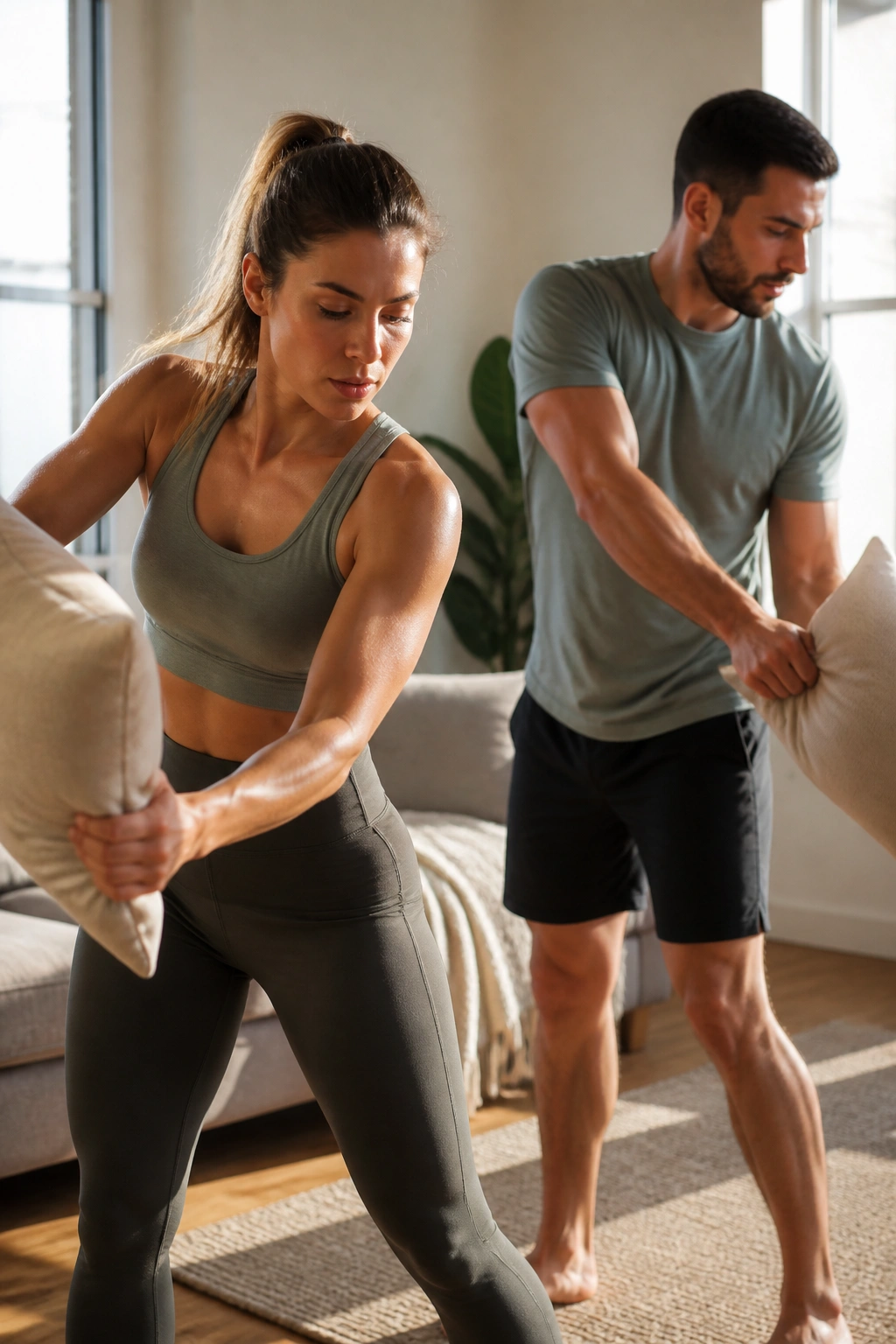
If you want core work without lying on the floor, this is a clean option.
Stand side by side and pass a pillow, rolled towel, or light backpack from one shoulder down toward the opposite hip, then bring it back up in a controlled chop. It looks simple. It isn’t. Your obliques, hips, and shoulders all have to coordinate, which is exactly why it works.
Why It Works
Rotational work matters because life is full of reaching, twisting, and carrying bags at awkward angles. A controlled chop teaches the trunk to resist sloppy movement while still turning. That’s the useful part. Not the sweat. The control.
- Use 3 sets of 10 chops per side.
- Keep the hips mostly square.
- Rotate through the ribs, not just the arms.
- Move slowly on the way down.
- Hold the object close to the body if balance is off.
A backpack with one or two water bottles inside gives more resistance than a pillow, but start light. People usually load rotational moves too aggressively and then complain that their back feels cranky. That’s not a mystery. It’s a load problem.
14. Chair Dip and Knee-Drive Combo
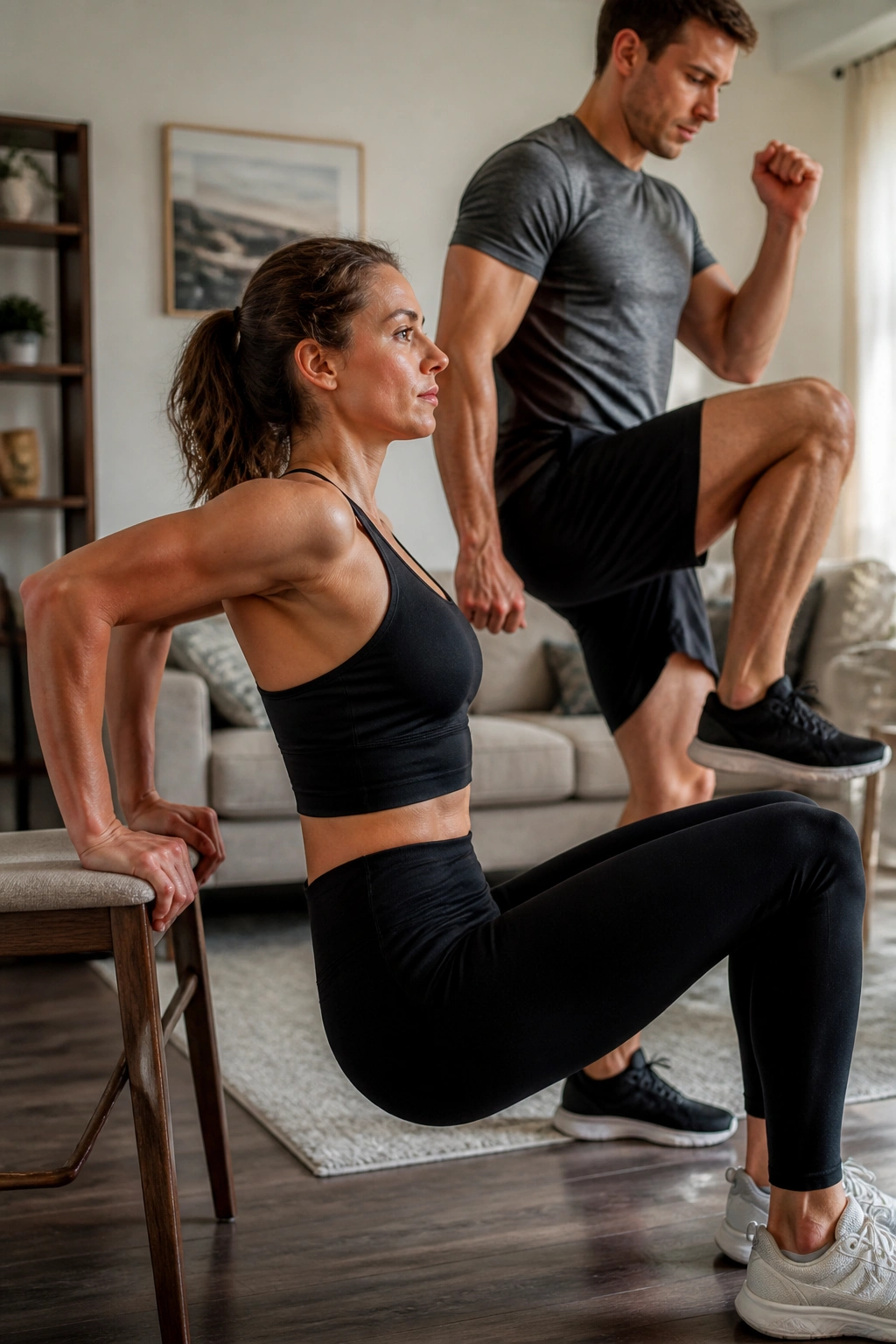
This is a sneaky arm-and-cardio pairing, and it bites in about 40 seconds.
One person does triceps dips on a sturdy chair while the other drives alternating knees up at a brisk pace. Then swap. The dip work attacks the back of the arms; the knee drives keep the heart rate from drifting down. Put them together and you get a short, sharp burst that fits in a tiny room.
Use a chair that doesn’t slide. Set it against a wall if needed. Hands should point forward, fingers gripping the edge, and elbows should bend straight back rather than flare out wide. If the shoulders feel pinchy, stop the dip lower than you think and keep the movement short.
Try 3 rounds of 8 to 12 dips and 20 to 30 knee drives per side. If full dips are too much, bend the knees less and keep the hips close to the chair. A smaller range is still a real set.
This is one of those exercises where ego gets in the way fast. People want a bigger dip than their shoulders can handle. Don’t. Smooth reps with a tight core are the better trade.
15. Partner Resistance-Band Presses
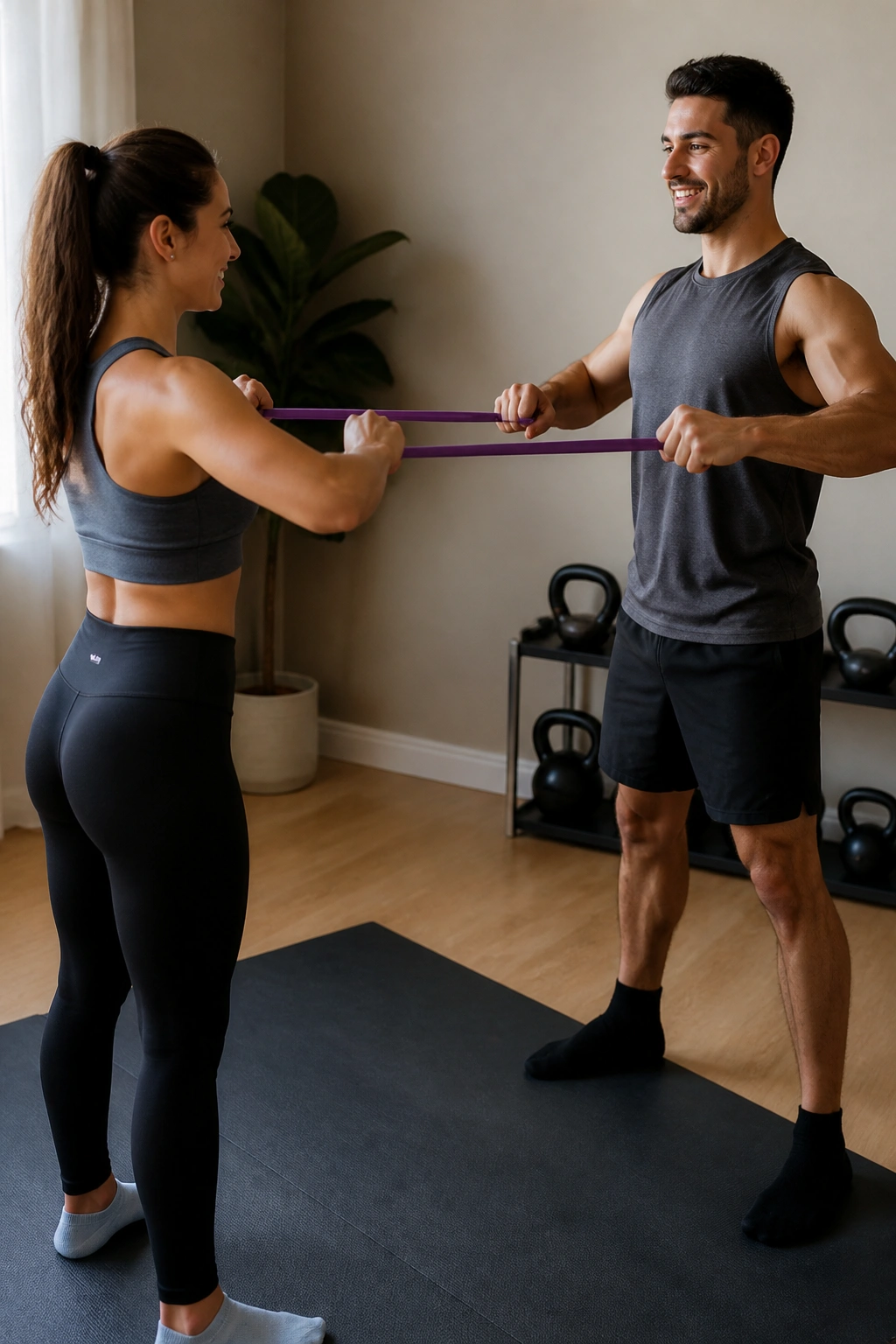
Why use a band when you have a whole other person in the room?
Because a band gives smooth resistance and a cleaner line of tension. Face each other, hold the ends of a resistance band at chest height, and press outward together until the arms are nearly straight. Pause for one count, then return with control. You can also turn this into a row by starting with arms extended and pulling the elbows back.
How to Use It
- Choose a light or medium band first.
- Do 2 to 4 sets of 12 presses.
- Keep wrists straight.
- Stand with soft knees and a braced belly.
- Step wider if the band feels too easy.
The press should feel steady, not jerky. If the band snaps back fast, the resistance is too much or the grip is too loose. That’s the whole caution right there. Smooth band work is useful; flinging a rubber loop around the room is not.
This one is especially nice for couples who want upper-body training without dropping to the floor. It also works well when one person is stronger than the other, because you can adjust stance width and band tension without changing the exercise itself.
16. Dance Cardio to One Song
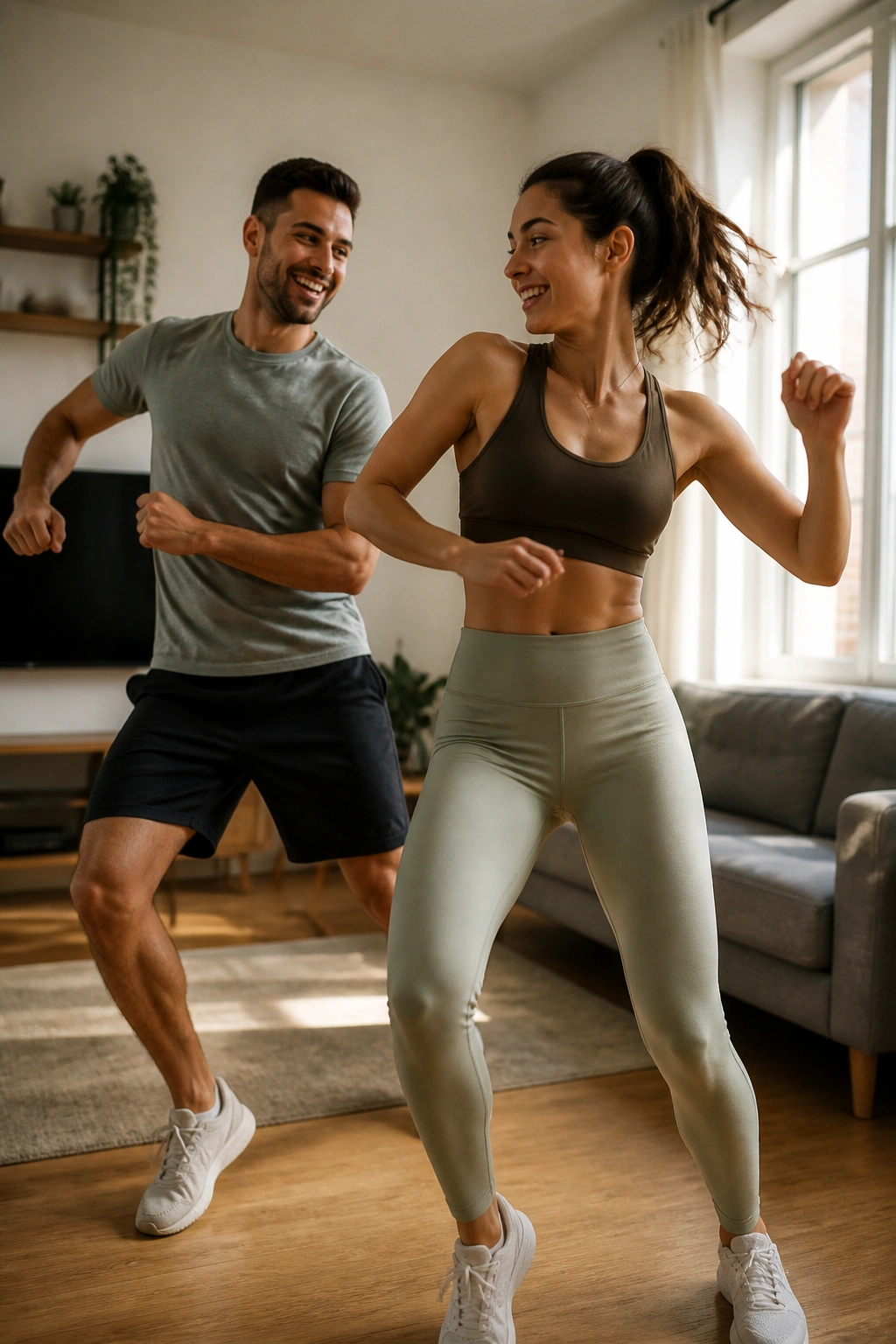
A single song can do more for motivation than a fancy plan.
Pick one track, agree on a few moves, and keep moving until the song ends. Step touches, grapevines, squat pulses, marching knees, and side shuffles are enough. One person can lead for the first half, then the other takes over. If you want more structure, assign one movement to each chorus and change it when the verse starts.
The best dance sessions aren’t polished. They’re a little messy and a little funny. That’s part of the point. Nobody is judging footwork in a living room. If anything, the goal is to stay moving long enough for the heart rate to climb and the mood to lift.
- Use 2 to 4 songs for a short session.
- Keep steps low-impact if the floor is hard.
- Add arm swings to raise intensity.
- Choose shoes with grip if the surface is slick.
- Let each person pick at least one song.
A good dance workout ends with both of you slightly breathless and slightly amused. That’s a fine outcome.
17. Single-Leg Balance and Pass Challenge
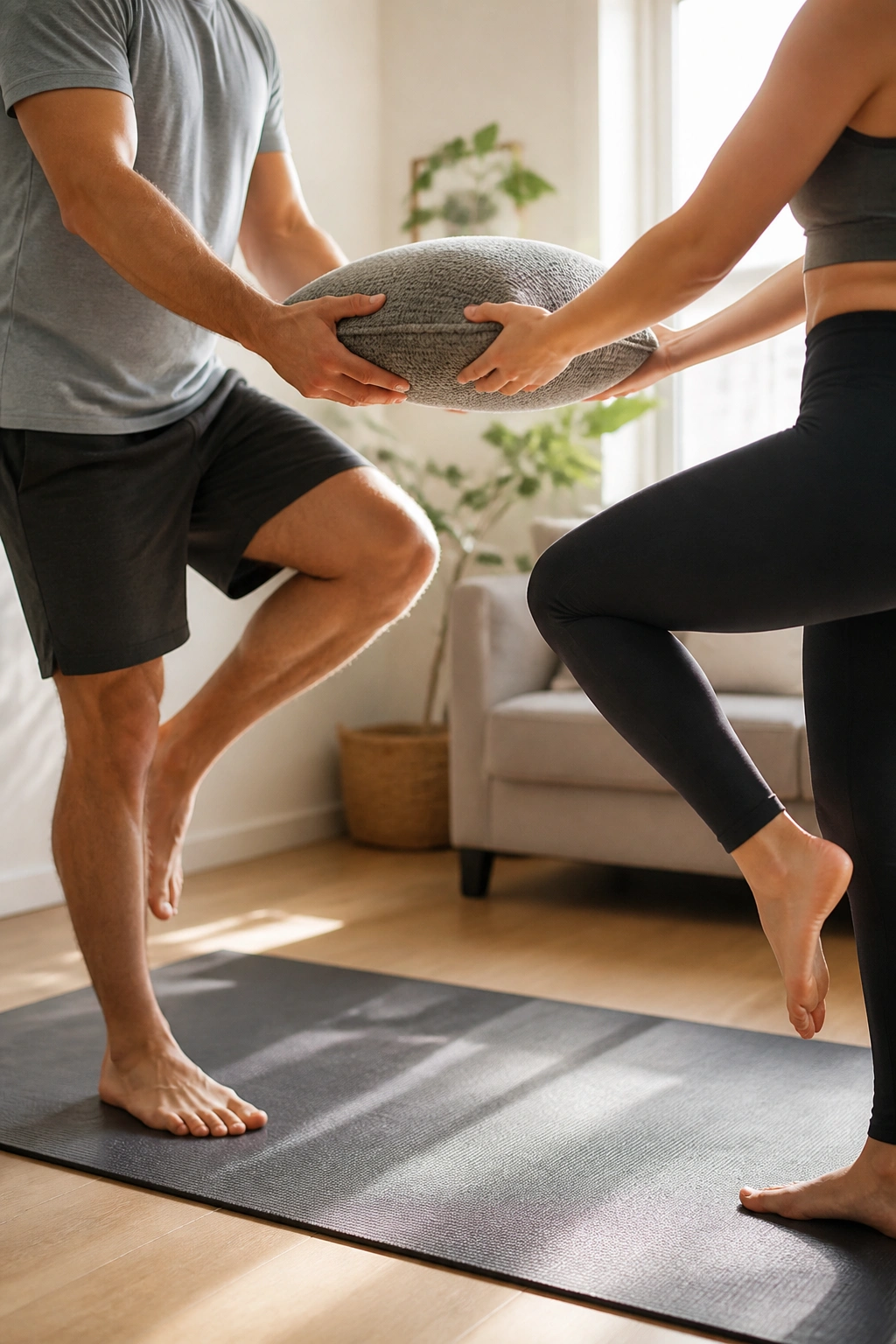
This one looks easy until the ankle starts wobbling.
Stand on one leg and pass a pillow, folded towel, or light book back and forth with your partner while keeping your standing knee soft and your hips level. You can stay face to face or stand side by side and pass across your body. The moment the object leaves your hands, your balance changes, and that’s the point.
Balance work is underrated because it exposes weak links in the feet and hips. If one side is shakier, you feel it immediately. That’s not failure. It’s feedback. Use a fixed point on the wall to keep your gaze steady if the wobble gets annoying.
Try 30 seconds per leg, then switch. Do 2 to 3 rounds. Bare feet can help on carpet or a non-slip mat, but if the floor is slick, keep shoes on. And keep the pass gentle. This is not catch-and-throw practice.
A small note: if one of you has a history of ankle issues, hold the chair back lightly with one hand while doing the drill. That turns it from a circus act into useful training.
18. Core Dead Bug Mirror Drill
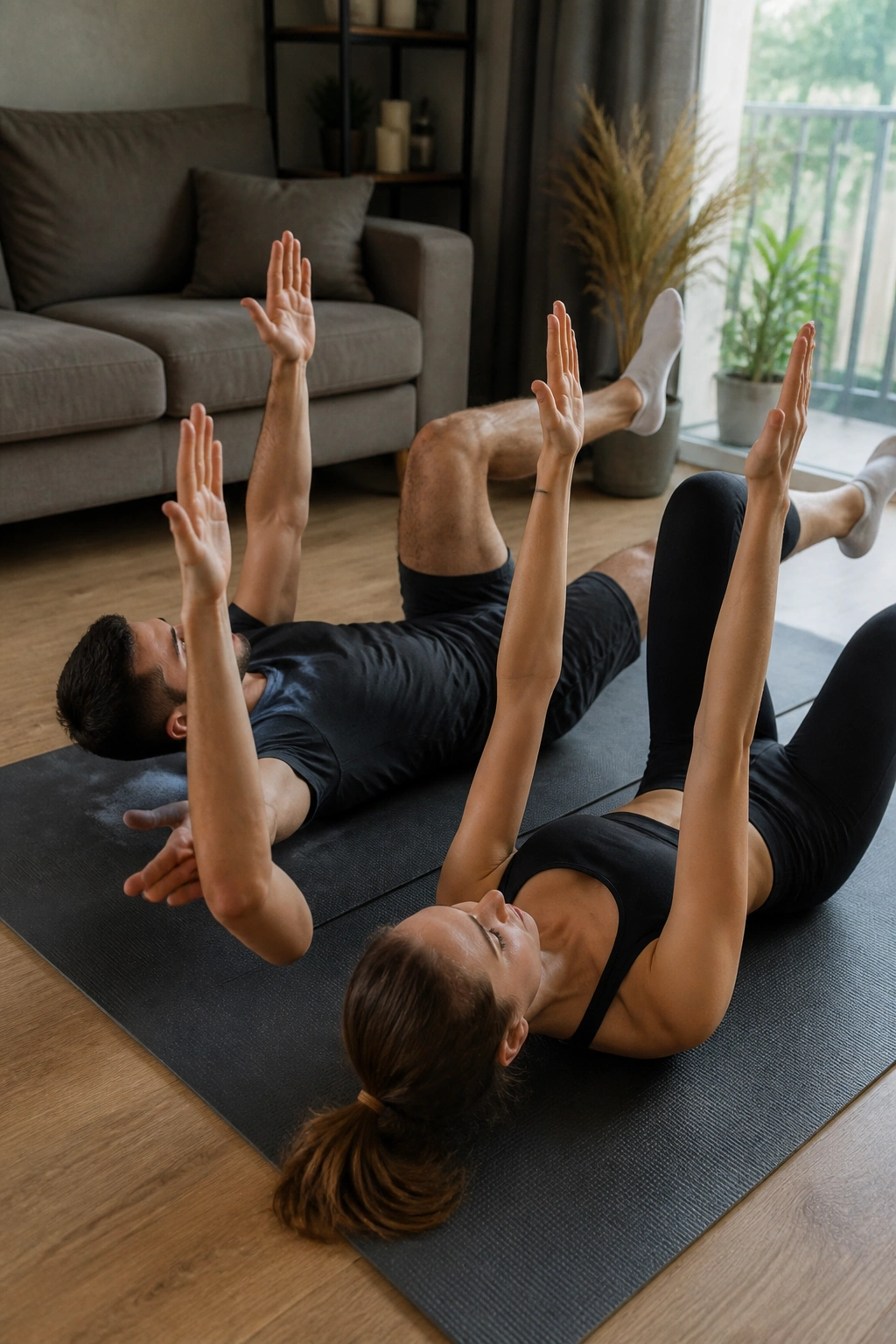
Unlike crunches, dead bugs keep the lower back honest.
Lie on your backs with arms pointed toward the ceiling and knees bent at 90 degrees, then lower opposite arm and leg while the other person mirrors the move. Exhale as the limb extends. Keep the lower back gently pressed into the floor. If it pops up, the range is too big.
This is one of the best shared core drills because it’s quiet, controlled, and easy to coach. You can watch each other and spot sloppy movement in seconds. The exercise also plays nicely with a tired body. No jumping. No impact. Just control.
What to Watch For
- 8 reps per side is a fine start.
- Keep the ribs from flaring.
- Move slowly, not with momentum.
- Reach long through the heel and opposite hand.
- Stop before the low back arches.
People often turn dead bugs into a leg-lowering contest. Don’t. That just shifts the work into the hip flexors and the spine. The slower version is the useful one. It’s also the one that leaves you able to do the next workout.
19. Mini Circuit With Timer Swaps
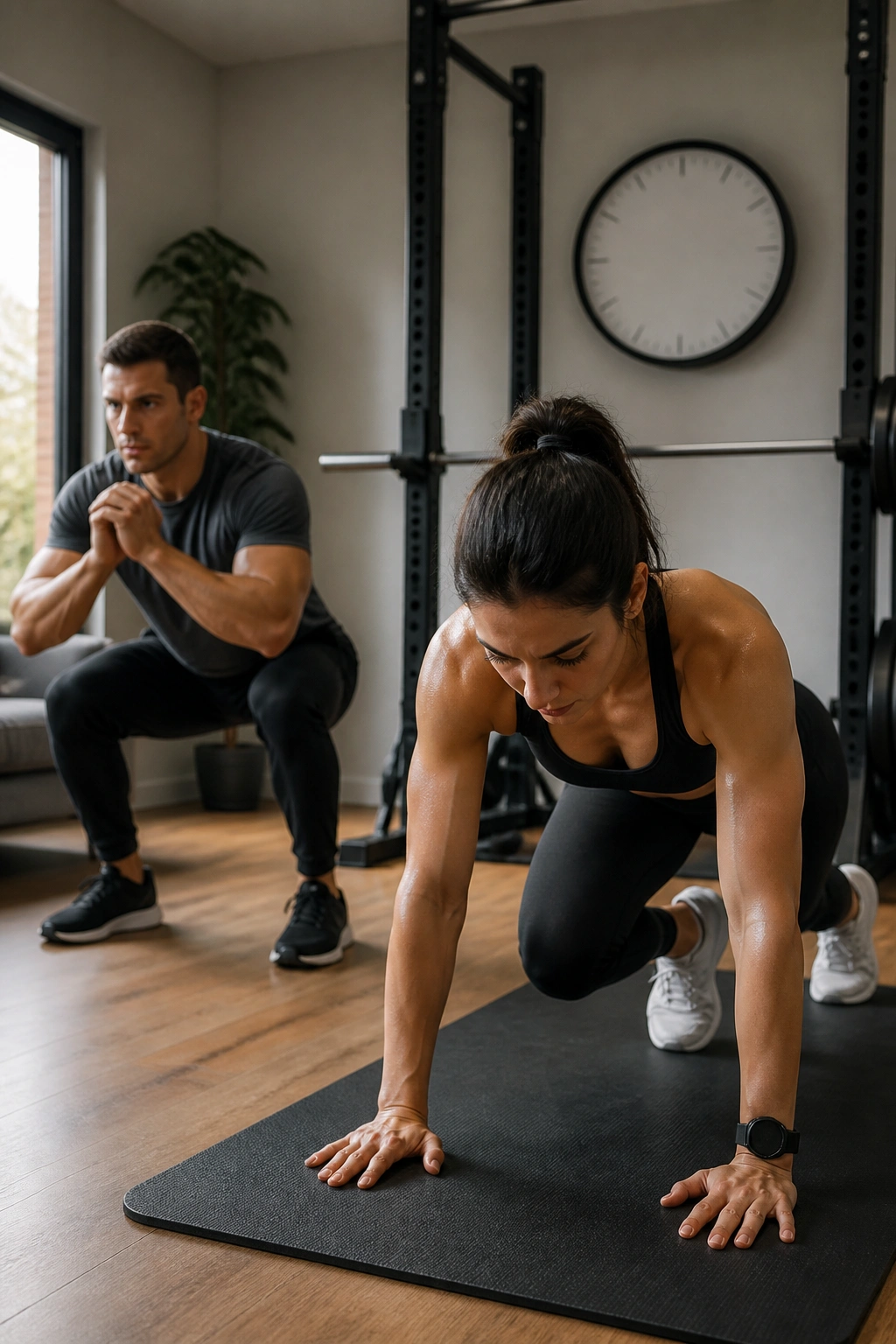
Some nights you don’t want one more clever idea. You want a timer and four moves.
Set up a simple circuit: squats, plank shoulder taps, reverse lunges, and mountain climbers. Do 30 seconds of work and 15 seconds to switch. One person starts on station one, the other on station three, then you swap after each interval. That keeps both of you moving, but not doing the same exact thing at the same time, which makes the room feel less crowded.
Why It Works
The swap gives the circuit a little energy without turning it into chaos. You get strength, cardio, and core work in one block, and nobody stands around wondering what comes next. A good timer does half the thinking for you.
- Run 3 full rounds.
- Keep the transitions short.
- Use water bottles for squat-to-press if you want more load.
- Pick the knee-down plank if form gets ugly.
- Walk, don’t sprint, between stations if the room is tight.
This format is easy to change. If your shoulders are tired, replace plank taps with dead bugs. If your legs are cooked, swap lunges for glute bridges. Same structure. Different stress. That flexibility is what makes the circuit worth keeping around.
20. Couples Workouts 10-Minute EMOM Finish
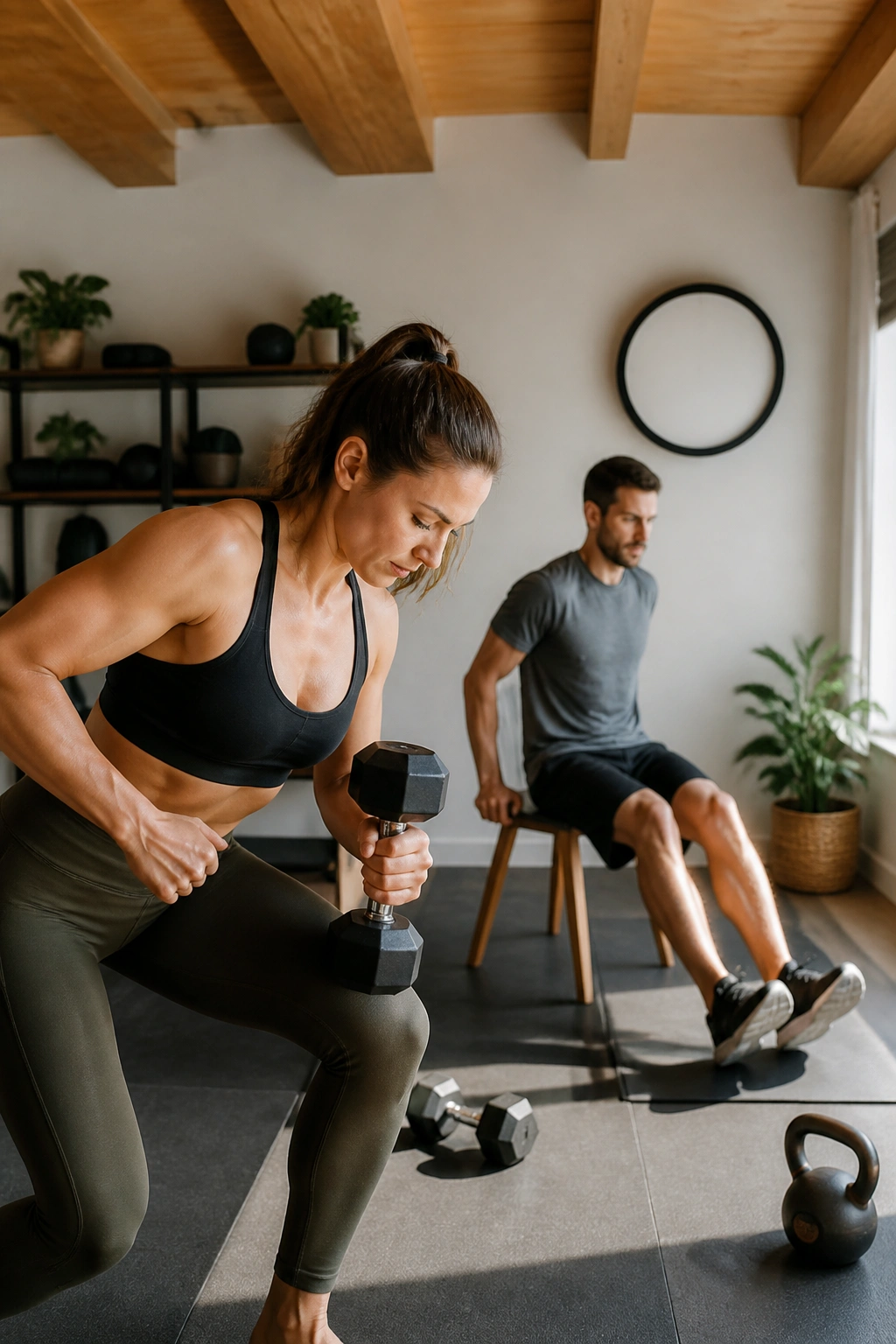
If you only have ten minutes, this is the one I keep coming back to.
An EMOM means “every minute on the minute.” You do the reps at the start of the minute, then rest until the next one begins. For a couples version, one person can do the listed move while the other does the same move, or you can split the work and alternate roles each minute. Keep it clean and keep it moving.
Use this simple layout:
- Minute 1: 12 squats
- Minute 2: 8 push-ups or incline push-ups
- Minute 3: 20 mountain climbers per side
- Minute 4: 12 glute bridges
- Minute 5: 30-second plank
- Repeat once
That’s it. No drama. No complicated transitions. If the reps take less than 30 seconds, rest for the remaining half-minute. If they take almost the full minute, trim the numbers a little next round. The goal is to finish each minute with enough breath to keep quality intact.
I like this finish because it works for mixed fitness levels. One of you can do floor push-ups while the other uses the couch edge. One of you can hold a full plank while the other drops to the knees. The structure stays the same, which makes it easy to repeat next time without rethinking the whole thing.
A final small rule: stop while both of you still have a little gas left. That’s the version you’ll come back to.
