



You can run five days a week and still feel flat. The legs get mileage, sure, but they don’t get the little shocks that teach them to stay quick, strong, and honest.
That’s the trap for runners who just keep running. The calendar fills with easy miles, long miles, and the occasional race, then one day the pace that used to feel smooth suddenly feels glued to the road. Workouts for runners don’t have to mean punishment. They can be short, sharp, low-drama sessions that make the next easy run feel better instead of worse.
Boring miles alone do not fix tired mechanics.
What usually helps is a mix: a little speed, a little strength, a little tissue-friendly work that doesn’t batter the joints. Sometimes that means 10-second hill sprints. Sometimes it means a 20-minute tempo. Sometimes it means a bike ride, a rower, or a set of split squats that leaves your quads humming in a good way. The point is not to turn every week into a race week. The point is to stop running in one gear.
Start with the smallest dose, then build toward the sessions that change how your whole week feels.
1. Strides That Wake Up a Sleepy Run

Strides are the simplest fix in the whole bunch, and that’s part of why people ignore them. A few fast, relaxed accelerations at the end of an easy run sharpen your mechanics without turning the day into a grind.
Why They Work
Think of strides as a tune-up for your nervous system. You are not trying to sprint. You’re teaching your body to turn over faster, stand taller, and land more cleanly when the pace rises. Four to eight reps of 15 to 20 seconds is enough for most runners, and the recovery should be generous — walk or jog until your breathing settles.
How to Do Them
- Do them after 20 to 60 minutes of easy running.
- Accelerate smoothly for the first few seconds.
- Hit fast, relaxed form, not a desperate scramble.
- Rest 60 to 90 seconds between reps, longer if the legs feel sloppy.
The best strides feel crisp. You should finish thinking, I could do one more, not I need to lie down. That’s the target.
2. Hill Sprints That Make Your Stride Snappier

Why does a 10-second hill sprint matter more than another plodding mile? Because steep running asks for force, posture, and quick contact time all at once. Flat ground lets you drift. A short hill does not.
Pick a hill that is short enough to reach the top in about 8 to 12 seconds. It should be steep enough to make you work, but not so steep that you’re climbing like a hiker. Drive up with force, keep the torso tall, and walk back down fully before the next rep. That full recovery matters. If you turn hill sprints into a gasping interval set, you’ve missed the point.
What to Feel
- Feet landing under you, not far ahead.
- Arms working hard, but not flailing.
- Calves and glutes doing more of the lifting.
- Breathing staying controlled because the reps are short.
Six to ten reps is plenty. Do them after an easy run or on a separate day with a long warm-up. Short hills are about power, not suffering. There’s a big difference.
3. Longer Hill Repeats for Real Strength

Short sprints are one thing. Longer hill repeats are another animal entirely. These are the sessions that make flat running feel less expensive because the legs have learned to push against resistance for longer than a few seconds.
Use a hill that takes 45 to 90 seconds to climb at hard but controlled effort. Jog or walk back down, then give yourself enough time to feel ready again. If you start the next rep with rubber legs and a crooked posture, the workout turns into a form-failure festival.
The beauty here is that you get conditioning and strength at the same time. A lot of runners think they need only cardio. They do not. They need glutes that can keep driving late in a long race, calves that do not fold, and hips that keep the stride from turning into a shuffle. Long hill repeats help with all of that.
A Practical Setup
- Warm up for 12 to 15 minutes.
- Run 4 to 8 repeats.
- Keep effort around 5K to 10K race effort, depending on the length of the hill.
- Cool down with at least 10 minutes of easy running.
These reps can leave your legs pleasantly smoked. Not destroyed. Smoked is fine.
4. Fartlek Between Lamp Posts and Mailboxes

If you hate intervals that feel like a lab test, use landmarks instead. Fartlek gives you speed work without the stiff little rules that make some runners shut down mentally before the workout even starts.
A city block, a row of lamp posts, a long trail stretch, a bend in the road — all of that works. Run hard to one landmark, ease off to the next, then repeat. The effort can be short and punchy, or longer and more controlled. That’s the whole charm. You get to improvise.
A Simple City-Block Version
- Warm up for 10 to 15 minutes.
- Run hard for 1 minute, easy for 1 minute.
- Repeat 10 times.
- Finish with 5 to 10 minutes easy.
Or try 30 seconds on / 30 seconds off for 12 to 20 rounds if you want something brisk but not punishing. The watch matters less here than the rhythm. Fast should feel fast, but you should still be able to shape the session as you go.
Fartlek is good when your brain is tired but your legs still have a little spark. That happens more often than people admit.
5. Tempo Runs That Teach You to Hold Back and Still Move

Tempo runs do more for everyday racing than most runners want to admit. They teach you to sit at a hard, steady effort without spiraling into panic, and that skill shows up everywhere — from a 5K to a marathon.
The pace should feel comfortably hard. You can speak in short phrases, but you do not want to chat. If the first five minutes feel heroic, you started too fast. Most tempo runs work best as 20 to 40 minutes continuous, or split into chunks like 2 x 15 minutes with 2 minutes easy between them.
The common mistake is turning the tempo into a race against your watch. Don’t. You’re looking for rhythm, not drama. A controlled tempo leaves you a little sharpened. A bad one leaves you cooked for two days.
What Good Tempo Feels Like
- Breathing steady but firm.
- Form still tidy in the last third.
- No desperate surge near the end.
- A sense that you could hold it longer if asked.
That last part matters. If you’re hanging on by your teeth, the pace is too hot.
6. Progression Runs That Finish Fast Without Breaking You

Unlike a tempo run, a progression run starts almost insultingly easy. That is the whole point. You spend the first part holding yourself back, then gradually tighten the screws until the last stretch feels purposeful instead of chaotic.
A good progression run might be 45 to 90 minutes long. The first third stays easy, the middle section drifts toward steady running, and the final 10 to 20 minutes inch toward marathon pace or just under it. It should feel like you are finishing with intent, not stumbling into a time trial by accident.
A Simple Way to Pace It
- First 30 minutes: easy conversational pace.
- Middle 20 minutes: steady, smooth, no straining.
- Final 10 to 15 minutes: controlled, quicker, but still in control.
This workout is sneaky. It trains patience, which is a skill a lot of runners ignore until race day exposes them. It also teaches your body to run faster when some fatigue is already in the legs. That’s useful. More useful than it sounds, honestly.
7. Cruise Intervals That Make Threshold Work Less Ugly

The first time you split a tempo into chunks, the whole workout stops feeling like a dare. Cruise intervals still live near threshold, but the short breaks let you stay cleaner and finish stronger.
A classic version is 4 to 6 x 5 minutes at tempo effort with 60 to 90 seconds of easy jogging between reps. You can also do 3 x 8 minutes if you prefer fewer, longer pieces. The goal is not to redline. The goal is to spend a solid amount of time at a pace you can sustain without falling apart.
Why Runners Like These
- The mental load is lower than a straight tempo.
- The stride usually stays smoother.
- It’s easier to correct pace mid-session.
- The workout fits into a weekday without stealing the whole evening.
By the last rep, your breathing should be firm and your focus narrow, but your form should still look like running, not survival. If the pauses feel too short, lengthen them by 30 seconds. That’s not cheating. It’s good coaching.
8. Track Repeats That Put Sharpness Back in Your Legs

Do you need the track to get faster? Not exactly. But the track makes pacing honest, and honesty helps when you’ve been drifting through a lot of easy miles.
For runners who need speed, track repeats are still hard to beat. 400s build turnover and leg speed. 800s build strength at a faster pace for longer. You can also mix them. That keeps the session from feeling like a canned recipe.
400s or 800s?
400-meter reps are better when you want quickness without much grinding. Try 8 to 12 x 400 meters at around 5K pace, with 200 meters easy jog between reps.
800-meter reps ask more from your aerobic system. Try 4 to 6 x 800 meters at 5K to 10K effort with 2 to 3 minutes easy recovery.
The trick is not to make the first few reps heroic. Controlled speed beats messy speed every time. If your shoulders creep up around your ears, the reps are too fast. If the last two reps look cleaner than the first two, that’s a good sign you paced it well.
9. Marathon-Pace Blocks Hidden Inside Long Runs

Long runs are where a lot of marathon hope lives — and where many runners waste an opportunity. A long run that is all easy pace has its place, but a few marathon-pace blocks teach your body what race rhythm feels like when the legs are already carrying some fatigue.
A clean version is 2 x 20 minutes at marathon pace inside a longer run, with 5 to 10 minutes easy between blocks. Another version is to keep the first half easy and run the final 20 to 30 minutes at goal pace. Either way, the effort should feel steady and controlled, not frantic.
Marathon pace is tricky because it often feels too easy at first and too expensive later. That’s normal. What matters is that you can settle into it without forcing each step. This is also a good chance to practice fueling: a gel before the first block, maybe another during the easy section, and water if the run is long enough.
One sentence here matters more than the rest: don’t turn the pace blocks into tempo runs. Marathon pace is smoother, less sharp, and more patient.
10. An Easy Run Followed by Drills That Clean Up Your Form

A 35-minute easy run plus a few minutes of drills can feel almost too simple. That’s often the mark of a useful workout. You finish with a little more bounce, better posture, and cleaner mechanics without needing a nap.
A Short Drill Sequence
After your easy run, try:
- A-skips for 2 x 20 meters
- High knees for 2 x 15 seconds
- Butt kicks for 2 x 15 seconds
- Straight-leg bounds for 2 x 20 meters
- 4 strides of 15 seconds each
Do the drills on a flat stretch where you can move without feeling rushed. Keep the motions crisp, not sloppy. If one drill feels awkward, shorten the range and keep going. You do not need a gymnastics routine.
The point is to rehearse the parts of running that disappear when you’re just piling on miles. Knee drive. Foot placement. Relaxed arms. The run is still easy, but your legs leave the session with a little more instruction than they arrived with.
11. A Recovery Run That Stays Genuinely Easy

A recovery run is not a badge of toughness.
It is a tool for absorbing the work you already did, and if it feels like work, something is off. Keep it to 20 to 40 minutes, stay on soft ground if you can, and run at a pace where you could breathe through your nose most of the time without fighting for it. If that sounds painfully slow, good. Recovery pace is supposed to feel almost underwhelming.
Many runners ruin recovery runs by chasing a watch pace from a better day. Don’t. The purpose here is circulation, joint movement, and muscle reset. You want to leave with your legs feeling less tight than when you started, not more impressive.
One useful check: if you can’t imagine having an easy conversation the whole way, slow down.
12. Plyometric Jumps That Teach Your Legs to Pop

Want springier ankles without tacking on more miles? Plyometrics are the smallest dose of chaos that still pays off. They teach tendons and muscles to store and release force quickly, which is exactly the sort of thing runners need when they want a snappier stride.
Keep the total contact count low. That part matters. Two sets of a few clean exercises is enough. You’re looking for bounce, not exhaustion.
A Simple Plyo Circuit
- Pogo jumps: 2 x 15 seconds
- Skipping bounds: 2 x 20 meters
- Squat jumps: 2 x 6 reps
- Single-leg hops: 2 x 5 each side
Do these on a flat, forgiving surface after a warm-up. Land softly. Stop if the landings start getting loud or crooked. Calves and Achilles tendons can be touchy with plyos, so start small and keep the session short. Fresh legs only. Tired legs and jumping do not mix well.
13. Strength Training with Squats, Deadlifts, and Split Squats

Free weights do not replace running, and running does not replace strength. They solve different problems. One builds the engine; the other helps the frame hold up under load.
A good runner’s strength day should focus on simple lifts that make the hips, hamstrings, glutes, and calves do more of their share. You do not need a circus of machines. You need a few movements you can load gradually and repeat without guessing.
A Simple Lower-Body Session
- Goblet squat or back squat: 3 x 5 to 6 reps
- Romanian deadlift: 3 x 6 to 8 reps
- Reverse lunge or split squat: 3 x 8 each leg
- Standing calf raise: 3 x 12 to 15 reps
- Side plank: 2 x 30 to 45 seconds each side
Rest long enough to keep the form sharp. Heavy enough to matter, not so heavy that the last reps turn ugly. That distinction is easy to miss. If you’ve got to twist, bounce, or heave the weight around, it’s too much for this setting.
A runner who lifts well usually shows it in the final third of a long run. Less wobble. Better push-off. Fewer weak spots.
14. Single-Leg Balance and Foot Strength That Fix the Small Leaks
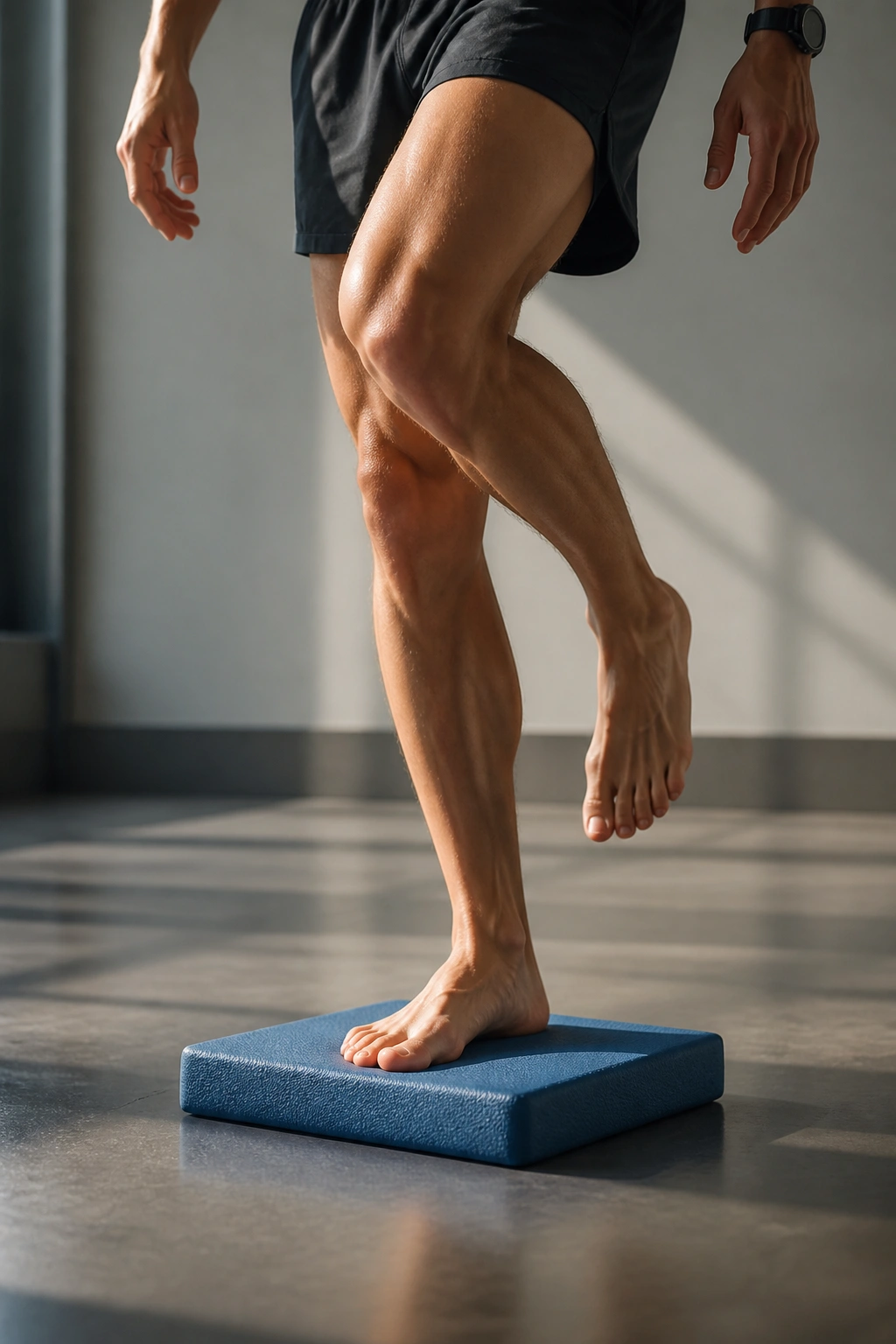
The weird little exercises matter when one side always feels a touch looser than the other. Running is a single-leg sport, after all, so a bit of wobble is not a tiny issue. It’s the kind of small leak that turns into a bigger annoyance over time.
Foot strength and balance work are best kept short and specific. You are not trying to become a barefoot acrobat. You’re teaching the foot to stay active, the ankle to stabilize, and the hip to stop dumping force into the ground in messy ways.
Foot Work That Actually Earns Its Keep
- Single-leg balance: 3 x 30 seconds each side
- Short-foot holds: 3 x 10 seconds each side
- Single-leg calf raises: 3 x 10 to 12 reps
- Single-leg RDL: 3 x 8 each leg
- Step-downs from a 6- to 8-inch step: 2 x 8 each side
Do these slowly. If you rush, you miss the point. The foot should feel active, not crushed. The ankle should feel steady, not floppy. A few minutes here, done consistently, often does more than a random heroic workout once in a while.
15. Core Work That Stops the Late-Race Wobble
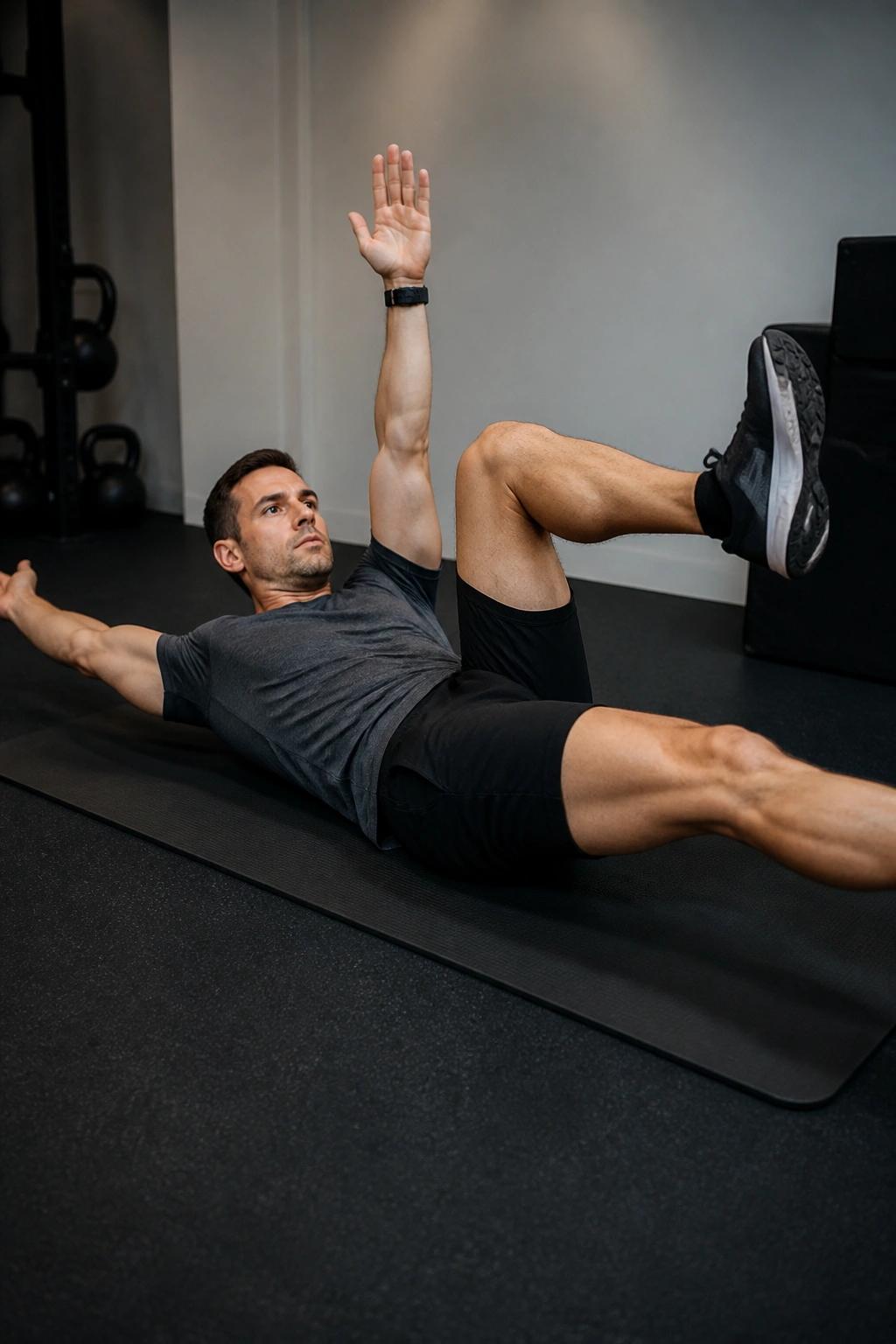
The best core work for runners is boring. That’s the uncomfortable truth.
You are not chasing six-pack theater. You’re trying to keep the rib cage stacked over the hips when fatigue starts to pull you apart. Anti-rotation work, side support, and controlled bracing matter far more than flashy crunch marathons.
A Runner-Friendly Core Circuit
- Dead bug: 2 x 8 each side
- Side plank: 2 x 30 seconds each side
- Pallof press: 2 x 10 each side
- Bird dog: 2 x 8 each side
- Suitcase carry: 3 x 30 to 40 meters each side
Move slowly enough that your lower back stays quiet. If the low back takes over, the set is too hard. That warning saves a lot of sloppy work. You can finish this circuit in 15 to 20 minutes, which is about right. Longer usually means the form is slipping.
These exercises do not feel dramatic. They work anyway.
16. Stair Workouts That Feel Like a Shortcut to Strength

A stadium stair set looks harmless from the bottom. Then you climb it twice and remember that gravity has opinions.
Stairs are a lovely mix of cardio and leg strength. They ask for upward drive, quick steps, and a bit of patience on the way back down. You can use a stadium, a set of outdoor steps, or even a long apartment staircase if that’s what you’ve got access to.
Run up with tall posture and quick turnover. Walk down carefully. Don’t rush the recovery just because the stairs are right there. A useful set might be 8 to 12 repeats of 20 to 30 seconds up, with enough recovery to feel ready again.
I like stair sessions for runners who get bored on flat ground. They’re honest. They also make the quads complain in a way that feels useful rather than random. If your Achilles is touchy, start gently. Stair work can be sneaky on the calves.
17. Treadmill Incline Sessions When Outdoor Hills Are Not Practical

The treadmill is not a consolation prize. It’s a controlled way to train force, pacing, and incline without traffic, weather, or bad footing getting in the way.
Set the incline between 4 and 8 percent for most sessions. Go too steep and the workout turns into a calf burner that changes your mechanics. A session like 6 x 3 minutes at a hard but sustainable effort, with 2 minutes easy flat walking or jogging between reps, is plenty for most runners.
A Few Details That Matter
- Run hands-free if you can.
- Don’t lean on the rails.
- Keep cadence quick and posture tall.
- Use the easy segments to reset your shoulders and breathing.
The treadmill teaches discipline because the belt does not let you drift. That can be annoying. It can also be useful. If you tend to start hill repeats too aggressively outside, the treadmill’s fixed pace might save your legs from your own enthusiasm.
18. Cycling Workouts That Build Engine Without More Impact

Can a bike make a runner fitter without wrecking the legs? Yes. That’s one of the best uses of cross-training, especially when you want aerobic volume but your joints are complaining about every extra step.
A bike session can be pure easy spinning or something more structured. Keep cadence around 85 to 95 rpm for most work, and resist the urge to mash giant gears unless you specifically want that strength stimulus. For runners, smooth spinning is usually the friendlier choice.
Two Good Options
Steady ride: 45 to 90 minutes at an effort where breathing is relaxed but active.
Interval ride: 10 minutes easy, then 4 x 8 minutes at a strong steady effort with 3 minutes easy between reps, then 10 minutes easy.
The bike is especially useful after a hard run week because it lets you keep the heart and lungs busy while the pounding drops away. Your legs may feel worked, but they usually recover faster than they do after another run.
19. Rowing Sessions That Make the Whole Body Work

If you want full-body cardio, the rower is brutally honest. It asks for legs, hips, core, and back all at once, and it tells on sloppy technique fast.
The key is to drive with the legs first, then open the hips, then finish with the arms. On the return, reverse that order. Short, choppy rowing with bent wrists and weak leg drive usually turns into a back workout in the worst possible sense. Clean strokes feel smoother and more powerful.
A simple session: 10 minutes easy, then 5 x 4 minutes at a strong steady effort with 2 minutes easy, then a cool-down. Keep stroke rate around 24 to 28 strokes per minute for the hard parts if you’re new to the machine. Faster is not always better.
What to Watch For
- Shins near vertical at the catch.
- Relaxed shoulders.
- Legs finishing the drive before the arms do much work.
- No yanking the handle with the upper body.
Rowing is a solid choice when weather, soreness, or sheer boredom make running feel like a bad idea that day.
20. Swimming and Aqua Jogging for Tired Legs
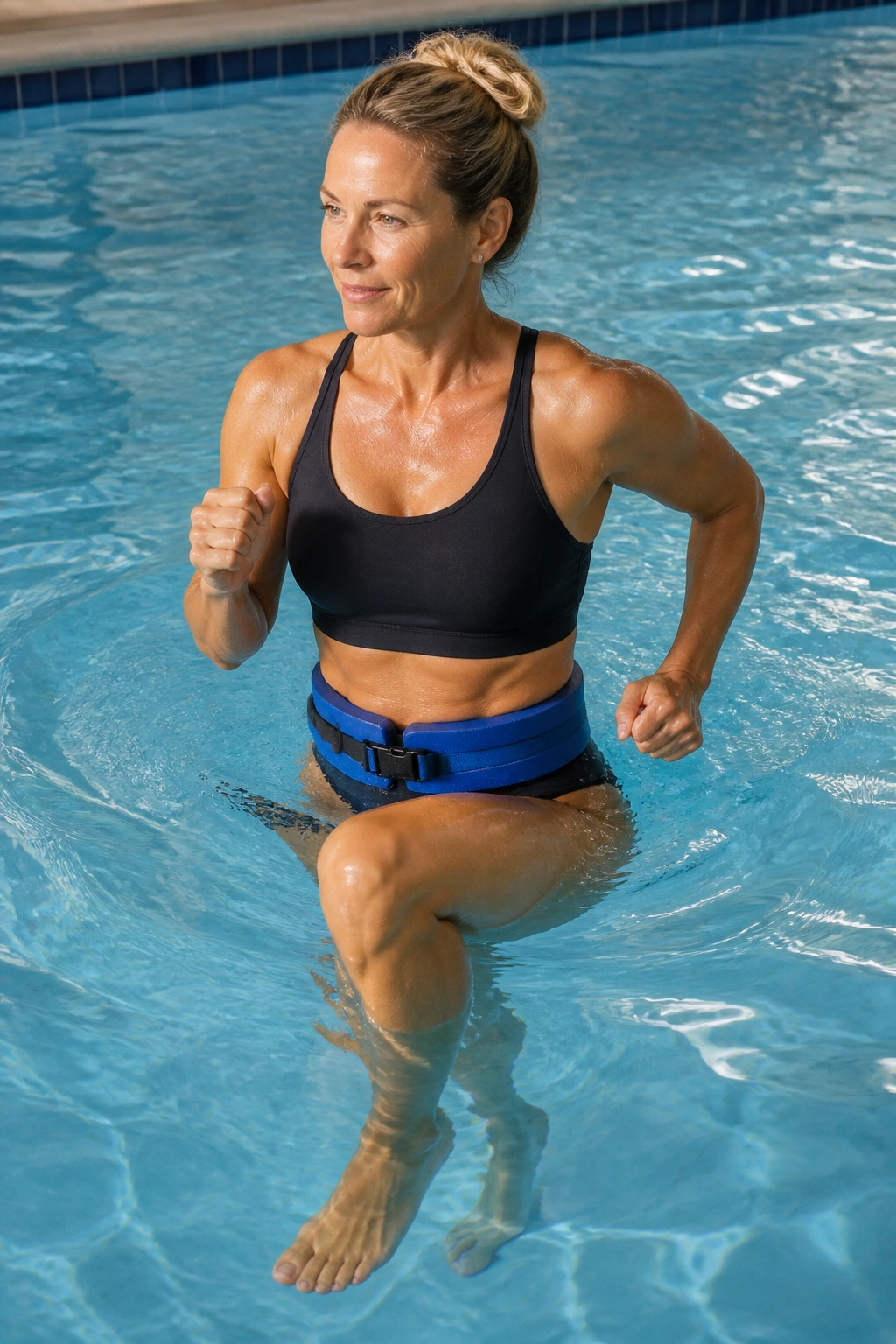
Pool work saves more running weeks than most people think.
Swimming and aqua jogging let you keep the aerobic system working while the joints get a break. That matters after a hard interval block, during a calf flare-up, or on days when your legs feel like they’ve been sanded down. Aqua jogging especially keeps a running-like motion without the impact, which makes it useful for injured or overloaded runners.
A pool session can be as simple as 20 to 30 minutes of continuous easy swimming, or a set like 10 x 50 meters with short rest if you want more structure. Aqua jogging can be done in intervals too — 1 minute hard, 1 minute easy for 15 to 20 rounds is plenty for most people.
The odd thing about pool work is that it can feel easier than running while still leaving you pleasantly spent. That’s a good sign. If the goal is to keep the engine warm while the legs calm down, the water does the job.
21. Yoga and Mobility Flow for Tight Hips, Ankles, and Hamstrings

Do not turn mobility into a performance. You are not trying to fold yourself into a shape for applause. You’re trying to make hips, ankles, and ribs move a little more freely so your stride stops fighting you.
A runner-friendly flow should be short, calm, and repeatable. Fifteen to 25 minutes is enough. Focus on the spots that get stiff from steady mileage: hip flexors, calves, glutes, hamstrings, and thoracic spine.
A Simple Flow
- Couch stretch: 45 seconds each side
- 90/90 hip switches: 8 slow reps
- Ankle rocks: 10 each side
- Downward dog pedals: 30 seconds
- Pigeon or figure-four stretch: 45 seconds each side
- Thoracic rotations: 6 each side
Breathe through the stretch and stay out of sharp pain. Deep forcing is a waste of time. A calm 20-minute flow done a few times a week tends to help more than one dramatic session after you’re already stiff. The body likes steady reminders.
22. The Maintenance Circuit You Can Keep Coming Back To

Some weeks call for one workout that covers the cracks. Not a monster session. Not a race disguise. Just a practical circuit that keeps strength, coordination, and durability from slipping while the running stack keeps growing.
Here’s the version I’d hand to a runner who wants one session that never feels useless:
The Maintenance Circuit
- Goblet squat: 8 reps
- Push-up: 8 to 12 reps
- Dumbbell row: 10 reps each side
- Reverse lunge: 8 reps each leg
- Standing calf raise: 15 reps
- Front plank: 30 to 40 seconds
Do 2 to 3 rounds with 60 to 90 seconds between exercises if needed, or move through it as a steady circuit if you prefer a faster pace. Keep the weights moderate. You should finish feeling worked, not wrecked. That difference is the whole game.
This is the session for weeks when life gets messy, sleep gets short, or your legs are carrying a little more mileage than usual. It keeps the body honest without stealing the next run. And that, more than any single flashy workout, is what helps runners who keep running keep running well.
