



A spare room, a cheap timer, and a pair of shoes can deliver a tougher cardio session than a lot of people expect.
Cardio routines you can do at home do not need a treadmill, a studio mirror, or a block of time that feels like a second job. They need a clear structure, a little honesty about effort, and enough variety that your body stops coasting. If you can only speak in short phrases, you’re in the hard zone. If you can sing, you’re taking it too easy.
The nice part about home cardio is that it can be bent around your space instead of fighting it. Thin floors? Pick low-impact moves. Tiny room? Stay mostly in place. Knees grumpy? Use step patterns instead of jumps. And if you have a jump rope, a sturdy stair, or even a taped line on the floor, fine — but you do not need much to make your heart work.
Start with marching intervals. They look plain, and that is exactly why they work so well.
1. Marching Intervals in Place
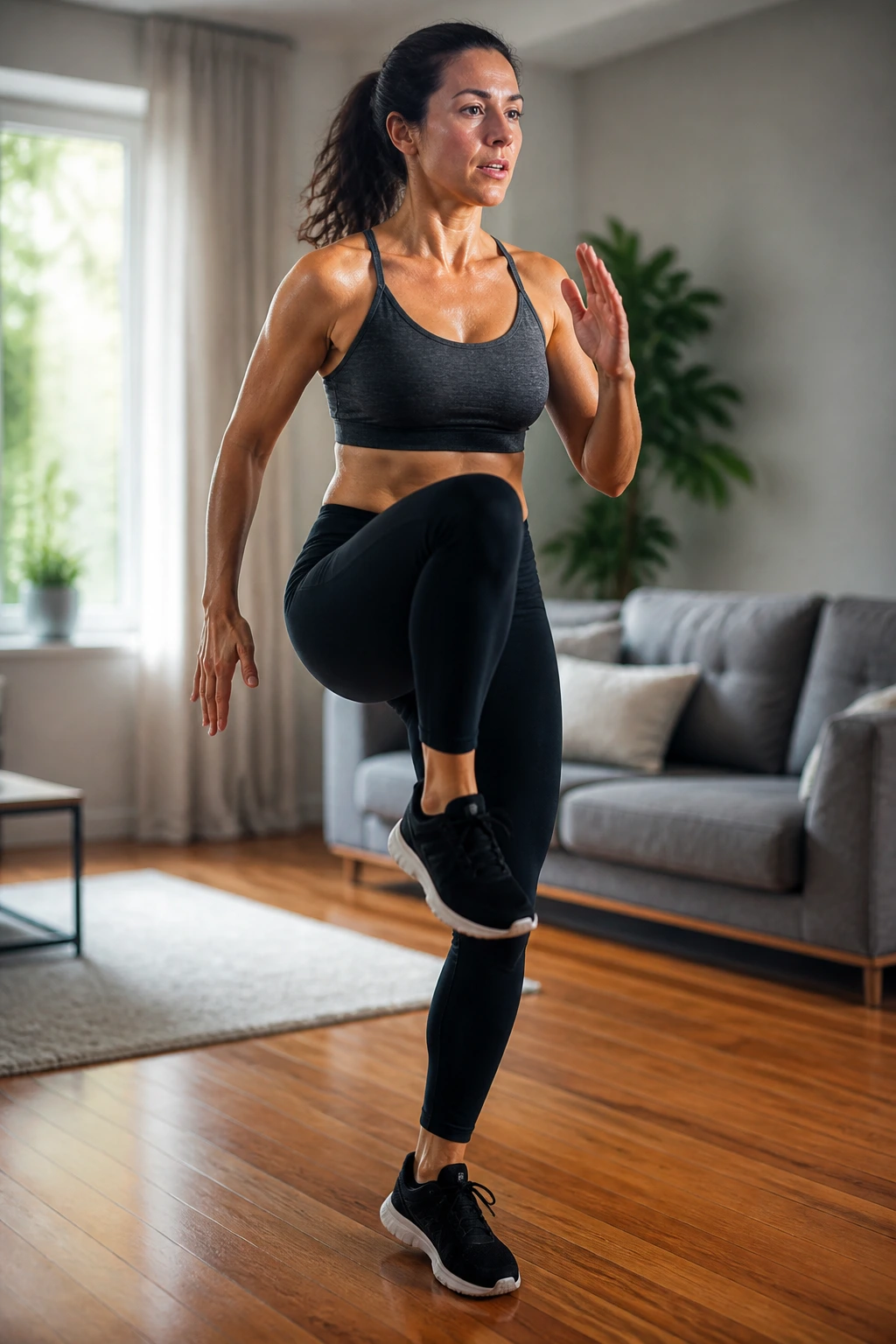
Marching gets overlooked because it looks tame on paper. Then you keep it going for eight minutes with real arm drive, and it stops looking tame pretty fast.
The key is not height. It’s rhythm. Lift one knee, plant it, drive the opposite arm forward, and keep the steps quick enough that your feet barely pause on the floor. If you can, lean slightly forward from the ankles and keep your ribs stacked over your hips. That little detail matters more than people think.
How to Make Marching Count
- Use 30 seconds on / 30 seconds off for a beginner-friendly set.
- Build to 45 seconds on / 15 seconds off once the pace feels smooth.
- Swing your arms with purpose; lazy arms turn this into a warm-up.
- Keep your steps quiet. If your feet are thudding, you’re bouncing too much.
Pro tip: march in a small box pattern instead of staying frozen in one spot. It keeps the move from feeling stale.
2. Jump Rope Rounds for Tight Spaces
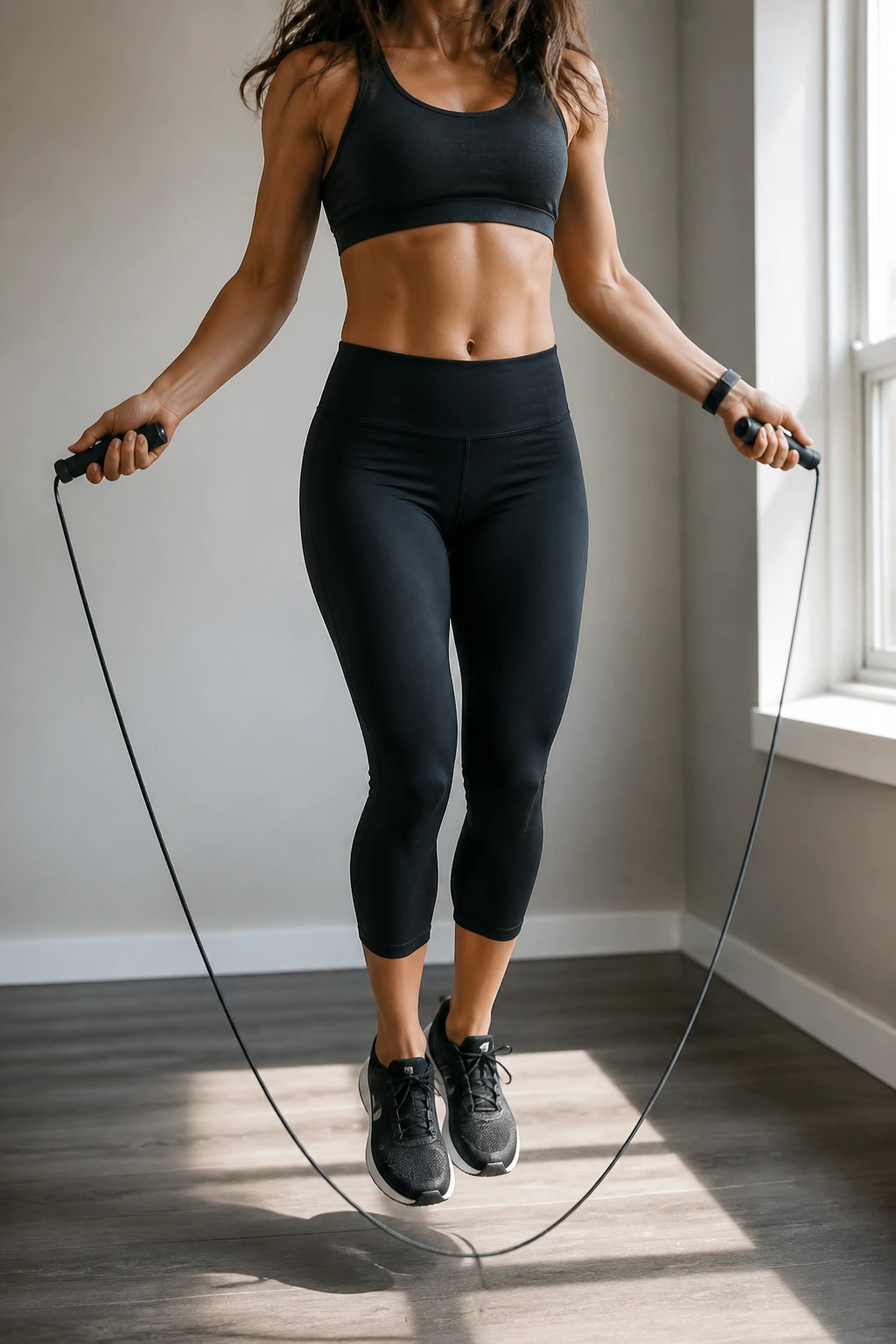
A jump rope is still one of the fastest ways to turn a quiet room into a real cardio session. It’s cheap, it takes almost no space, and it asks your ankles, calves, and lungs to work together.
Start with tiny hops. Tiny. The rope should clear the floor by a hair, not by a heroic leap. Turn the rope with your wrists, not your shoulders, and land softly on the balls of your feet. If you’re doing 20-second bursts, the goal is clean rhythm, not a high bounce that beats up your shins.
No rope? Use the same foot pattern without the cord. That “ghost rope” version still works because the timing and foot speed are doing the job. A lot of people are surprised by that, but it makes sense once you try it. The body doesn’t care whether plastic is spinning under you. It cares that your feet keep moving.
One good format: 20 seconds hard, 40 seconds easy, repeat 8 times.
3. Shadow Boxing Combos That Raise the Pulse Fast
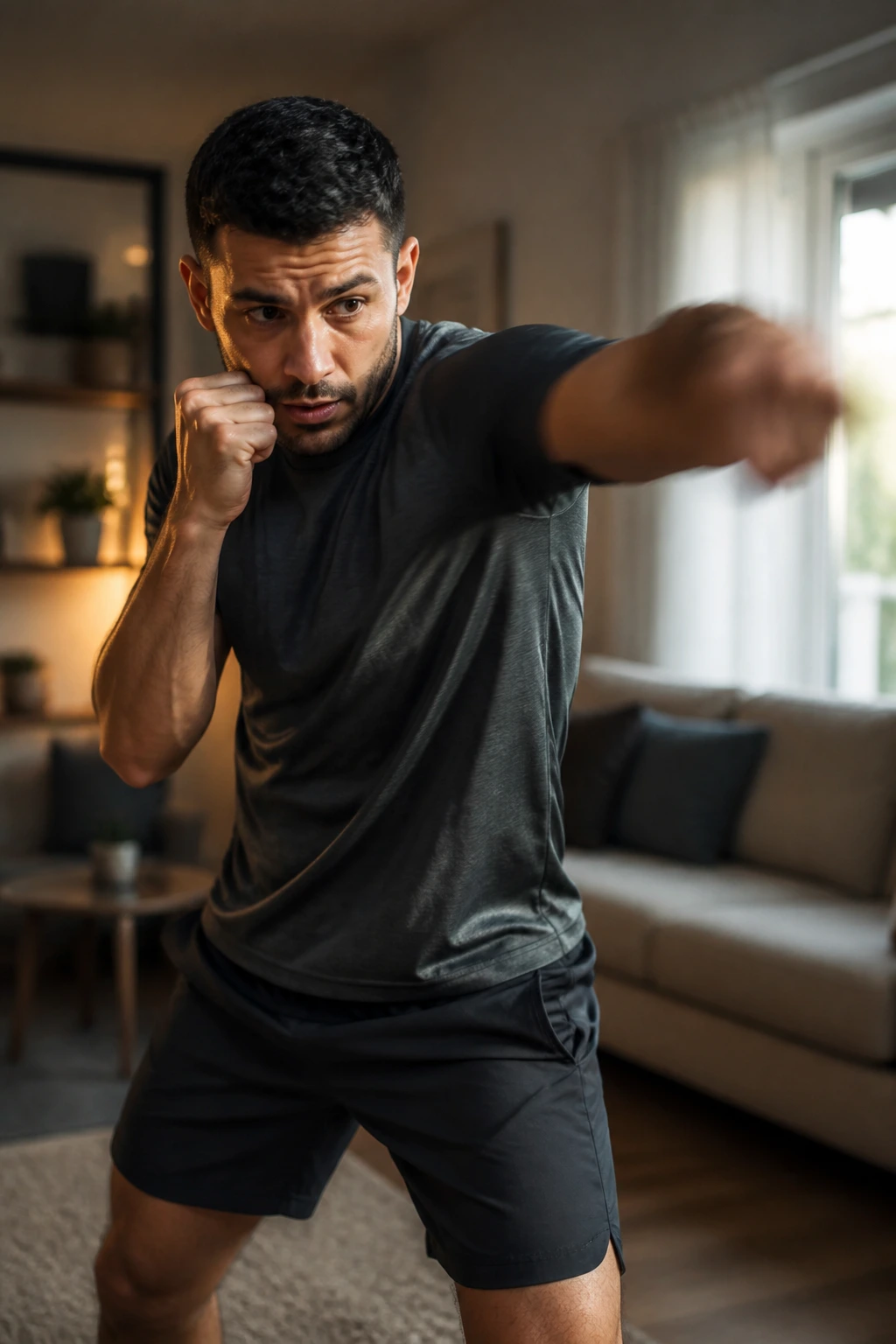
Why does shadow boxing leave people winded so quickly? Because it refuses to let one part of the body rest while the rest keeps working. Your legs are bouncing, your core is braced, your shoulders are busy, and your breathing has no easy corner to hide in.
Throw light, fast punches. A jab-cross-hook is enough to start. Add a slip to the left, a step back, then another jab-cross. The point is to keep moving between combinations so the set feels continuous instead of chopped into separate gestures. Keep your fists loose until the moment of contact, and bring your hands back to guard after each strike.
A Simple 2-Minute Round
- 30 seconds: jab-cross repeat
- 30 seconds: jab-cross-hook
- 30 seconds: step left, punch, step right, punch
- 30 seconds: light bounce and reset
How to use it: do 4 rounds with 30 seconds of rest. If your wrists feel cranky, punch at chest height and keep the motion crisp.
4. Step Jack Bursts When You Want Low Impact
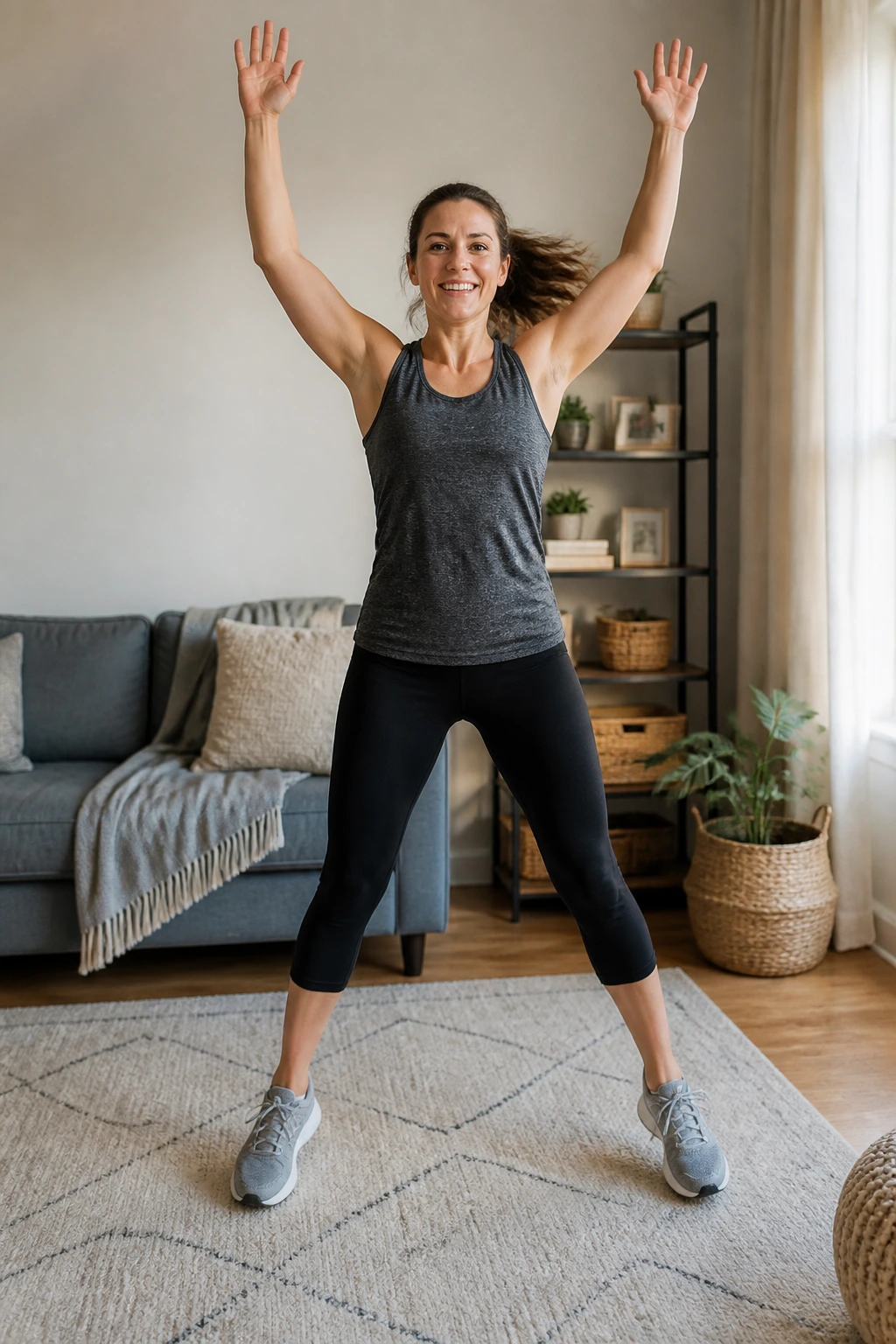
If jumping jacks make too much noise or feel rough on your joints, step jacks give you the same broad rhythm without the pounding.
Step one foot out to the side, bring the other foot to meet it, and swing your arms overhead. Then reverse the pattern. It sounds almost too easy until you do it fast for 40 seconds straight and realize your breathing has climbed anyway. The side-to-side motion also keeps your hips awake in a way that straight-ahead moves often miss.
Use 40 seconds of work and 20 seconds of rest. That ratio is kind to beginners, but it still asks for focus. Keep your knees soft, not locked. Reach your hands all the way up without shrugging your shoulders into your ears.
- Stay light on the floor.
- Step wider as you warm up.
- Shorten the arm path if your shoulders get tired.
- Keep the pace honest.
Tiny changes make this one much harder than it looks.
5. Stair Climbs and Step-Ups That Feel Like Real Work
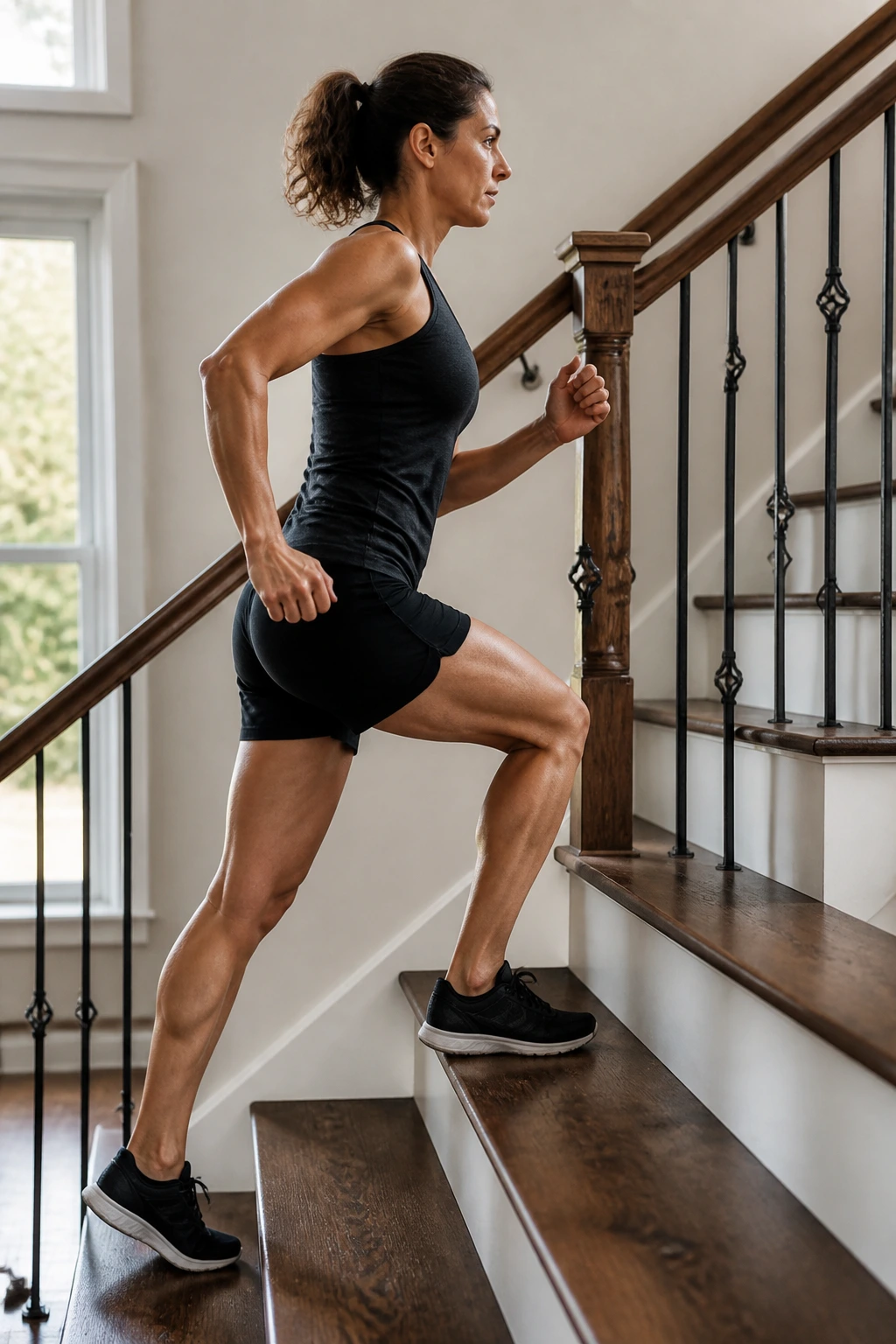
One flight of stairs can beat a lot of fancy equipment if you use it with a plan. Stair climbs get your heart rate up fast, and step-ups let you control the pace a little better when the jumpier stuff feels like too much.
Use the rail only for balance, not as a crutch. Drive through the whole foot, not just the toes, and stand tall at the top instead of folding over your thighs. A steady bottom stair is enough for most people. You do not need a heroic step height; something around mid-shin to knee level is plenty, and lower is often smarter if you’re new to it.
Do 1 minute up, 1 minute easy walk, and repeat for 10 minutes. Or set a timer for 20 step-ups per leg and take short rests between sets. The stepping itself is straightforward. The breathlessness sneaks up because the legs never get a real break.
Do not use a wobbly chair. That is a bad trade.
6. High-Knee Runs for Short, Hard Bursts
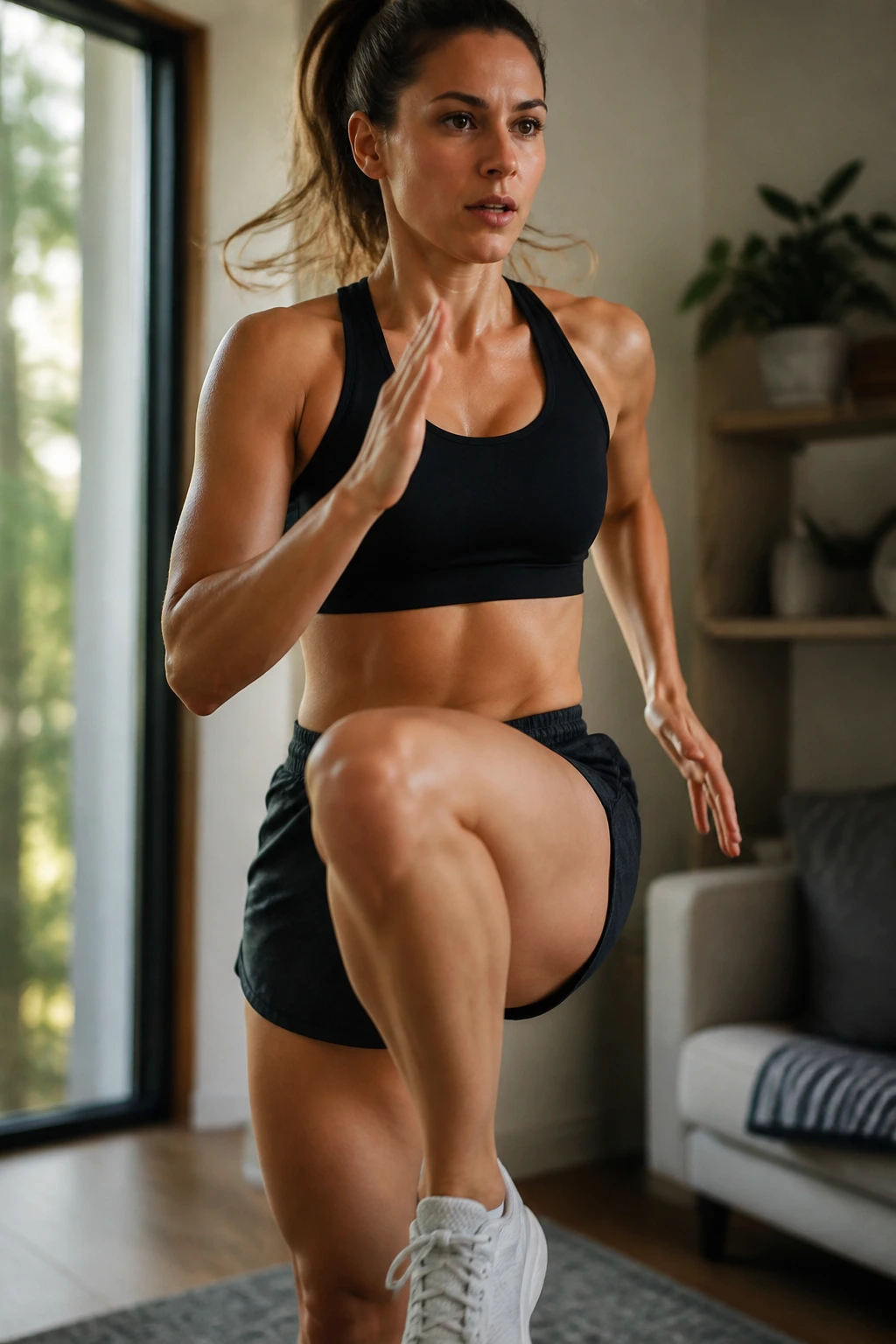
High knees look like a drill athletes do for fun. They are not fun by minute three.
Unlike marching, high-knee runs ask for faster foot turnover and a sharper arm swing. That difference matters. You’re not lifting the knees as high as possible and pausing there. You’re popping the feet up and down in a quick, lively rhythm while keeping the torso tall and the core tight.
Speed beats height here. If your room starts shaking, you’re landing too hard.
Try 15 seconds hard, 45 seconds easy for the first few rounds. If you can hold good form, work up to 20 seconds hard, 40 seconds easy. Drive one knee while the opposite arm punches forward, and keep the feet landing under your body instead of far out in front. That keeps the move snappy rather than sloppy.
Best use: short sessions, maybe after a warm-up or in the middle of a mixed circuit. It’s a small move with a loud effect.
7. Mountain Climbers That Tax Your Arms and Core
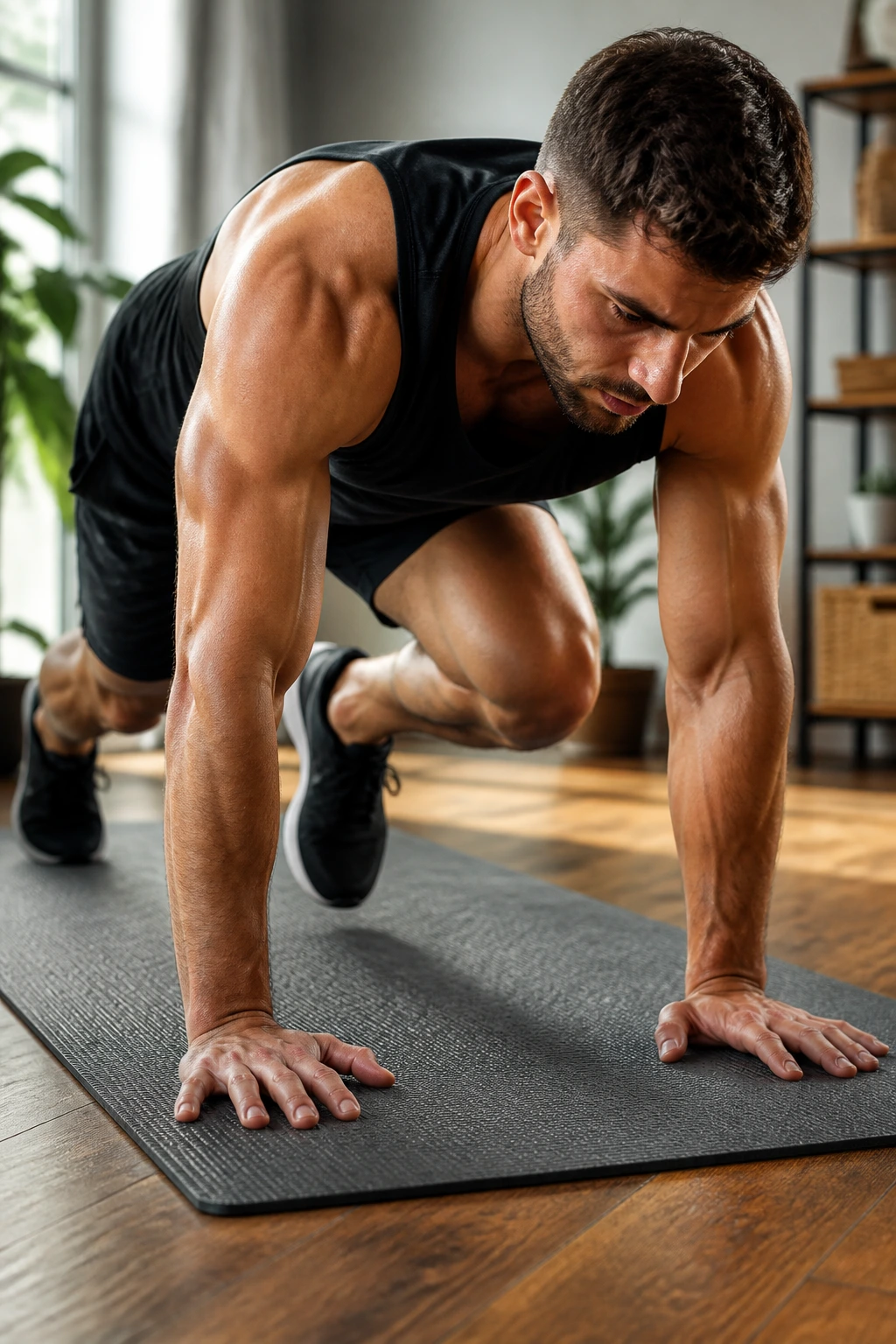
Mountain climbers look simple. They are not. Your shoulders hold you up, your core tries to stop your hips from wobbling, and your legs keep firing one after the other until your breathing gets choppy.
Set your hands under your shoulders and walk your feet back into a strong plank. Then drive one knee toward your chest, switch, and keep the exchange quick. The biggest mistake is letting your hips shoot up because that turns the move into a half-leaning march. Keep your body long. You’ll feel the difference in the first 20 seconds.
A slower version still counts. In fact, slow climbers with clean form can be harder than fast sloppy ones because your trunk has to stabilize each rep. Cross-body climbers — knee toward the opposite elbow — add a little more oblique work and keep the pattern from getting boring.
One clean format: 20 seconds hard / 40 seconds easy, 8 rounds. Then rest. Your wrists earned it.
8. Dance Cardio Routines Built Around Three Songs
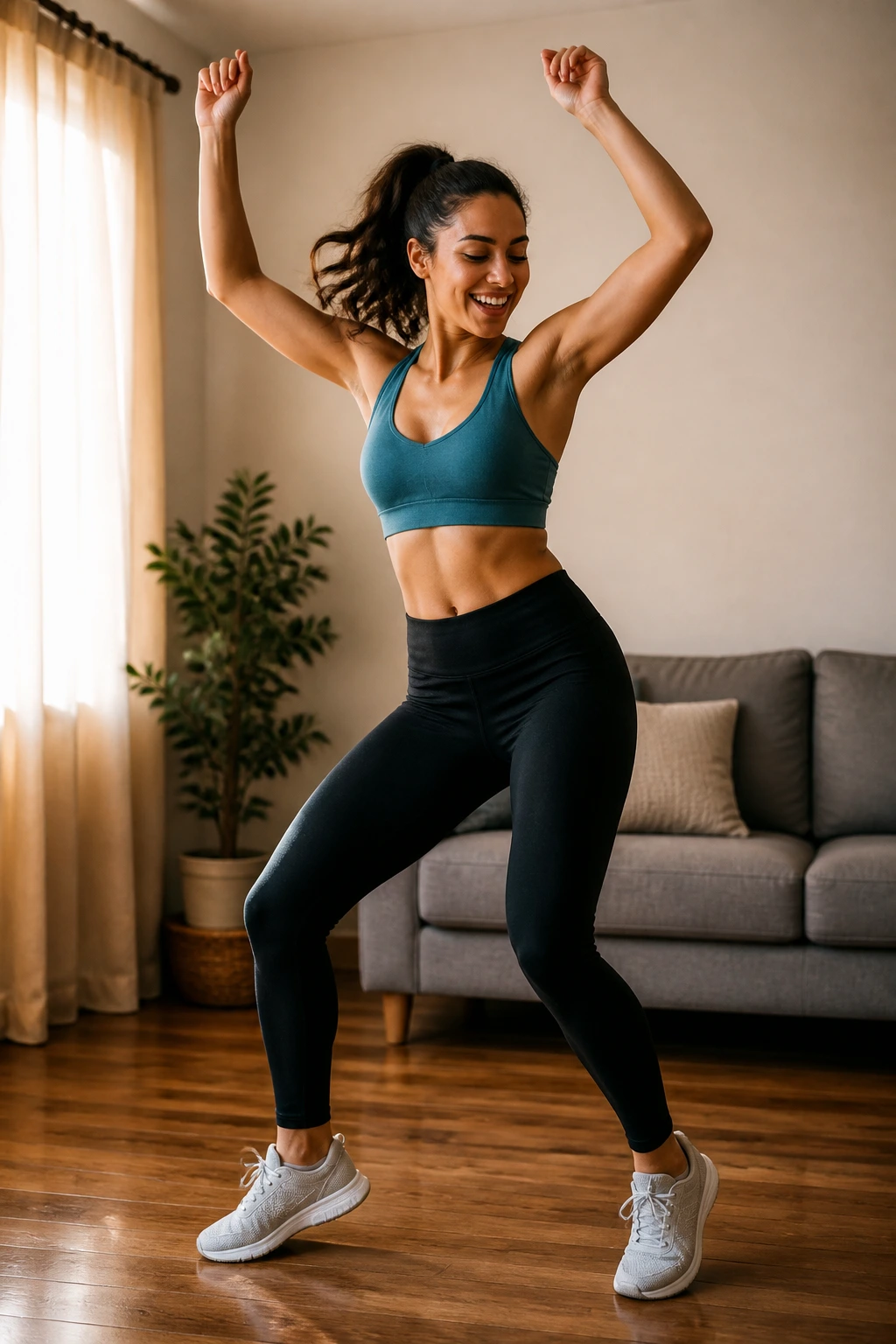
If you hate counting reps, steal the rhythm from music. Dance cardio works because the beat does half the planning for you, and your brain stops arguing after the first song.
Pick three tracks. Use the first for warm-up steps, the second for your hardest work, and the third to keep moving without collapsing. Grapevines, knee lifts, side reaches, toe taps, and quick squats are enough to build a solid session. You do not need choreography that looks like a stage routine. You need movement that keeps your feet busy.
How to Build a 15-Minute Set
- Song 1: side step, reach overhead, light march
- Song 2: knee lift, punch, pivot, repeat
- Song 3: squat pulse, step touch, arm sweep, repeat
If a chorus hits harder, use that stretch as your sprint. If a verse feels easier, let it act as recovery. That kind of self-adjusting pace is why dance cardio can be so useful on days when strict intervals feel annoying.
And yes, you can absolutely do this in socks if the floor is safe.
9. Skater Hops for Side-to-Side Power
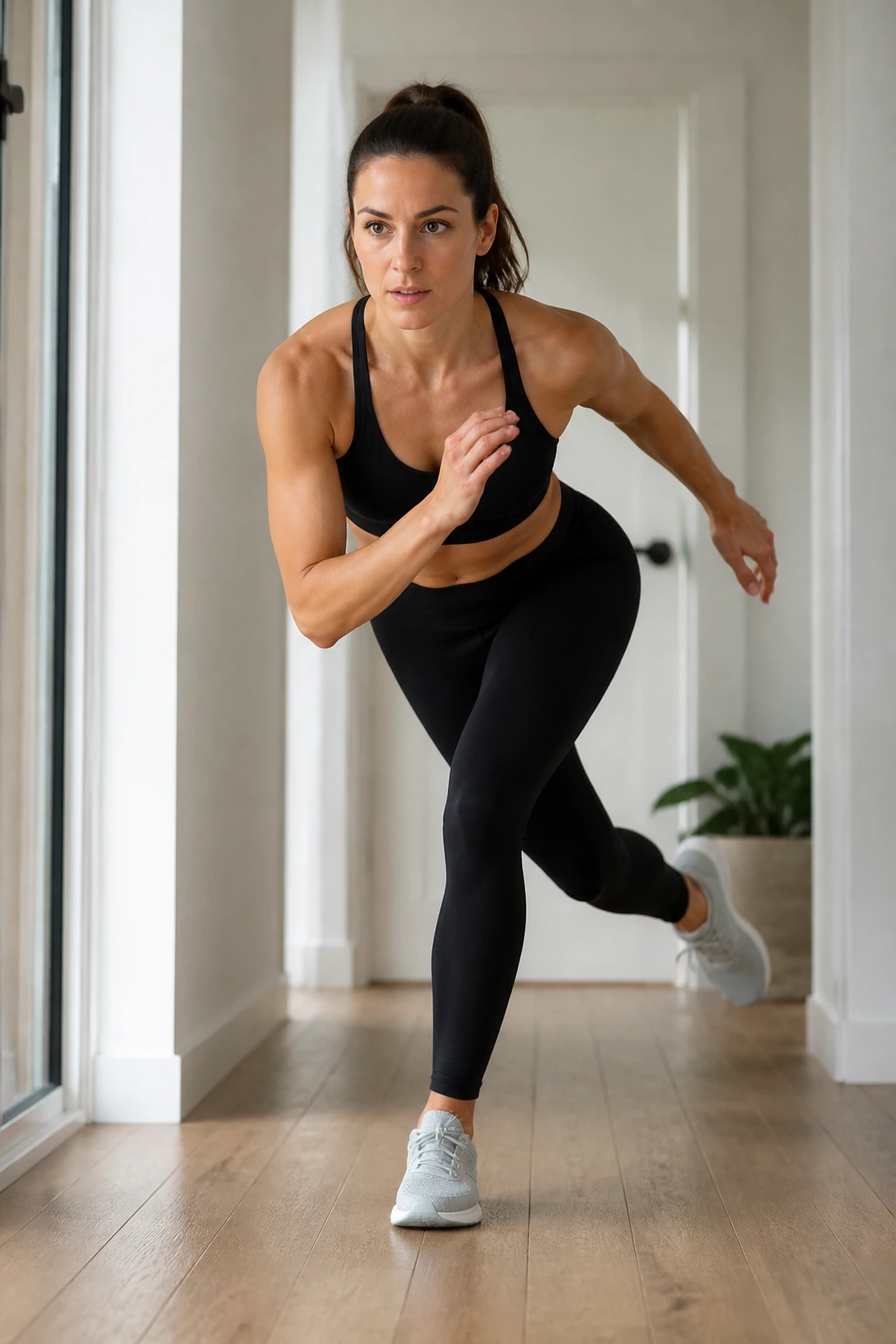
If you want a move that feels athletic instead of repetitive, skater hops earn their place fast. They train side-to-side power, which a lot of home cardio routines ignore, and they wake up the outer hips in a way straight-line moves often miss.
Picture a wide step or hop from one side to the other, landing on one leg while the other leg sweeps behind you. Keep your hips back a little, like you’re sitting into the landing. That keeps the move from becoming a knee slam. If the hop feels rough, step instead of jumping and still keep the lateral reach.
- Start with a small side-to-side distance.
- Touch the floor lightly if balance is shaky.
- Keep your chest from collapsing forward.
- Use 30 seconds on / 15 seconds off when you want a harder set.
The low-impact version is underrated. It still hits the hips and keeps the heart working, and you can layer speed on later. That’s the smarter way to build it.
10. Bodyweight Cardio Circuits With No Equipment
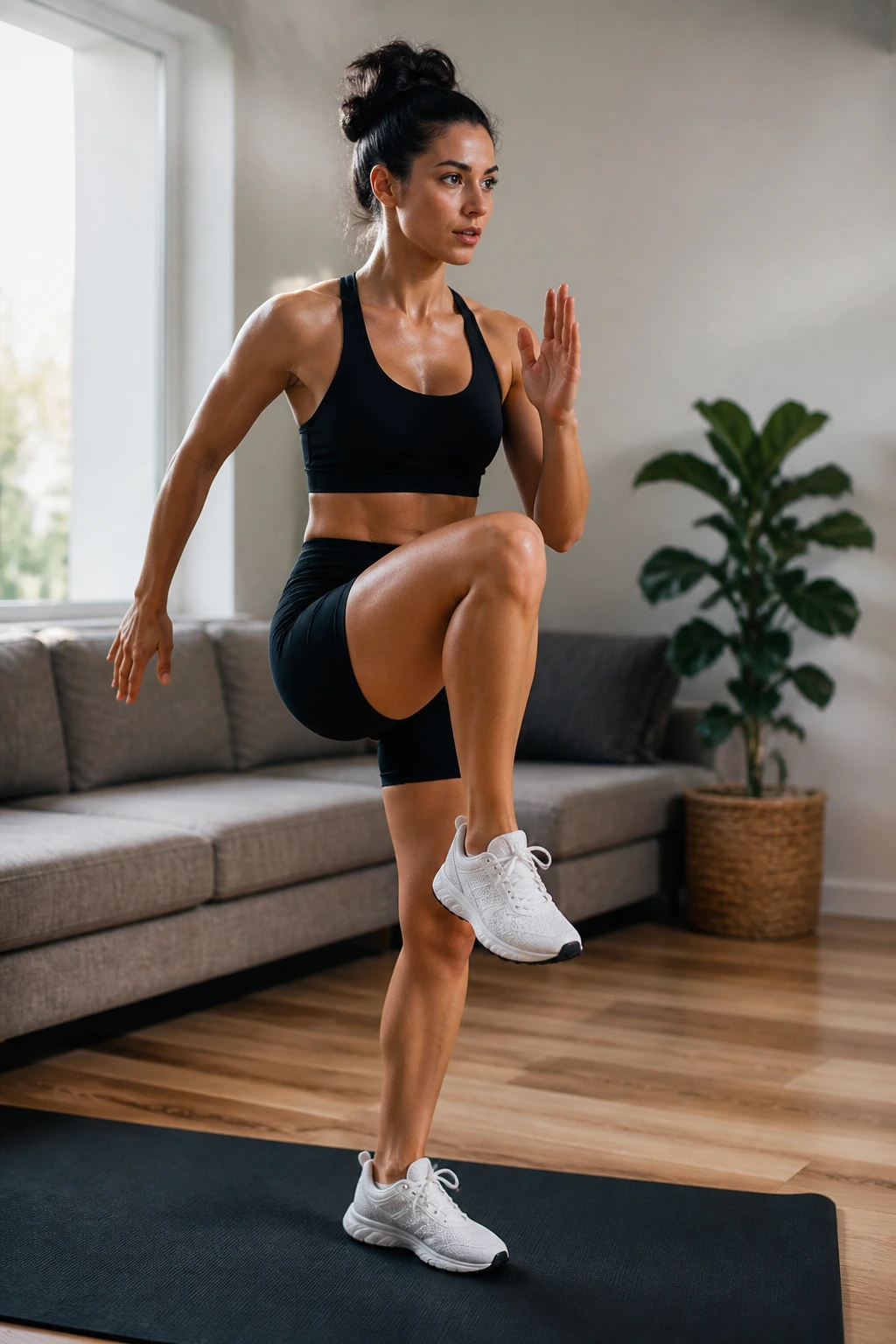
A good bodyweight circuit works because it keeps changing the demand before your body gets comfortable. That tiny bit of variety is what turns ordinary movements into a real home cardio workout.
A simple circuit might look like 30 seconds squat to knee drive, 30 seconds plank shoulder taps, 30 seconds alternating reverse lunge, 30 seconds fast feet, 30 seconds inchworm walkout. Rest for 60 seconds, then repeat for 3 rounds. You’re not chasing fancy moves. You’re chasing a steady rise in breathing and a little burn in the legs.
The nice thing about a circuit is that every move buys a different kind of fatigue. Squats tax the legs. Shoulder taps make the torso work to stay quiet. Fast feet make your brain pay attention. Inchworms turn the floor into a full-body reset and then immediately take it away again.
Keep the rests short enough that your pulse doesn’t fully settle. Too much rest turns the circuit into a pile of separate exercises.
11. Fast Feet Drills on a Tape Line
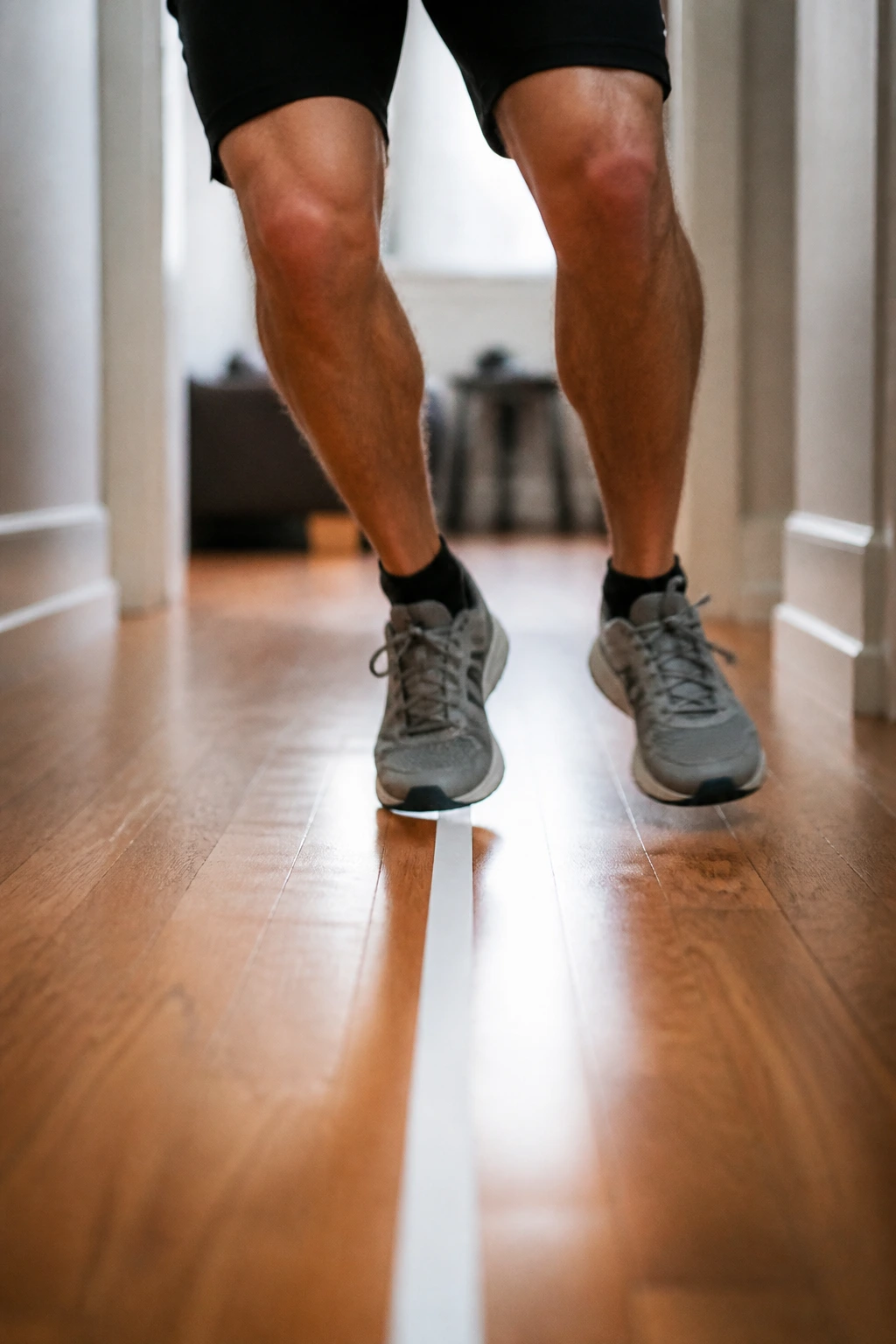
Unlike high knees, fast feet drills stay low and quick. They’re about reaction and foot speed more than big leg drive, which makes them a strong choice when you want intensity without a lot of jumping.
A strip of painter’s tape works well. So does a seam in the floor. Stand with both feet on one side of the line, then step or hop them over to the other side as fast as you can for 10 to 20 seconds. Rest briefly, and do it again. You can keep it simple or add shuffles where the feet move side to side without crossing too far.
This routine is sneaky. It looks tame because the steps are tiny. Then your calves start talking.
Best use: a small room, a hallway, or any spot where you want quick turnover without needing much travel. Keep the knees bent a little and the chest lifted. If your upper body locks up, the speed drops fast.
12. Burpee-Lite Ladders for a Fast Heart Rate
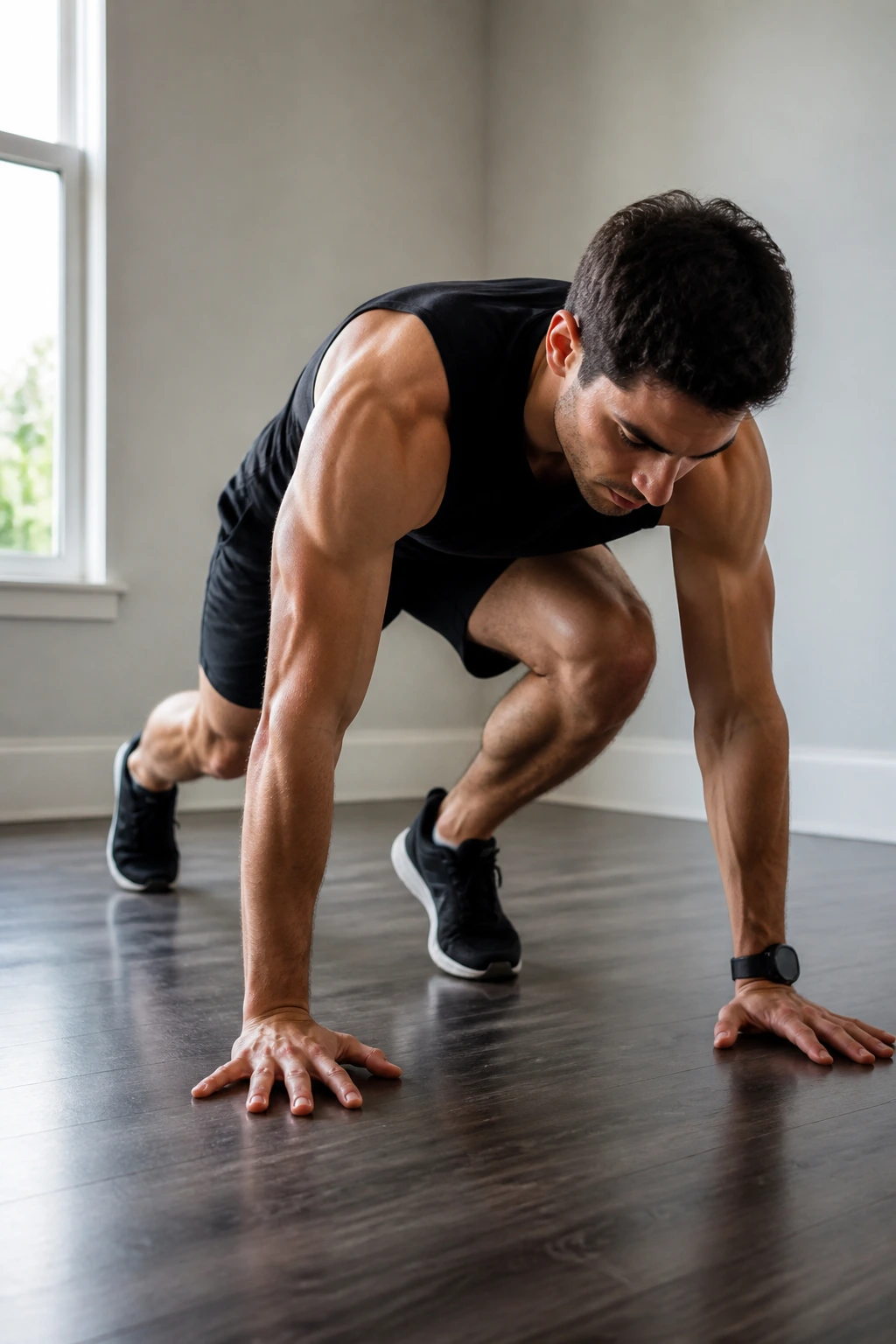
Do burpees have to be full burpees? No. That’s the mistake people make. The hard part is the repeated down-and-up pattern, not the dramatic jump at the top.
A burpee-lite version keeps the floor work but removes the part that usually wrecks form. Walk your hands out to plank, step your feet back in, stand tall, and maybe add a small reach overhead instead of a jump. From there, build a ladder: 2 reps, 4 reps, 6 reps, 4 reps, 2 reps. Rest 20 to 30 seconds between rungs.
The Version I’d Hand to Most People
- No push-up required.
- No full jump needed.
- Step back, don’t flop back.
- Keep the core braced when you stand.
That setup keeps the heart rate up without making the move a joint tax. If your back rounds hard on the way down, slow the descent and shorten the range a bit. Clean reps beat ugly speed every time.
13. Kickboxing Rounds That Keep Your Hands Busy
A pair of hands and a little foot pivot can raise the pulse faster than people expect. Kickboxing rounds work because they mix punch speed, lower-body movement, and a fair amount of coordination.
Use a basic pattern: jab, cross, front kick, reset. Then add a hook, a knee drive, or a slip. Keep the hands up near your face between strikes, and let the hips turn when the punch comes across the body. That pivot is the part that makes the move feel crisp instead of arm-only.
A clean three-round setup:
- Round 1: punches only
- Round 2: punches plus front kicks
- Round 3: punches, kicks, and defensive slips
Do 2 minutes on, 30 seconds off. If your knees dislike kicking high, keep the kicks low and snap them forward only a little. It still works. The goal is rhythm and continuous motion, not a movie-scene spinning kick.
14. Low-Impact Aerobic Flows for Quiet Floors
If you live above someone with a baby, this routine matters. Quiet floors still deserve a cardio session, and low-impact aerobic flow is the easiest way to get one.
The idea is to keep one foot moving nearly all the time while the body never has to absorb a sharp landing. March, side step, toe tap, knee lift, reach, boxer step, repeat. Put those pieces together in one long loop and you get something that feels smooth but still pushes your breathing if you keep the pace honest.
Why It Still Counts
The intensity comes from continuity. There’s no big jump to hide in, no long pause between moves, and no full recovery built into the pattern. That means the heart keeps working while the joints get a break.
Try 8 to 12 minutes nonstop. If that sounds easy, make the arm reaches bigger and the steps quicker. If it sounds too easy after a minute, shorten the pause between transitions until it feels like one long song with no breath breaks.
15. Bear Crawl Blocks That Light Up the Whole Body
Bear crawls are not pretty. They are useful, though, and sometimes that matters more.
With your hands under your shoulders and your knees hovering a few inches off the floor, crawl forward 5 to 8 feet, then crawl back. Keep the back flat and the hips steady. The moment the hips swing side to side like a loose gate, the move gets messier and the core gets less useful. Clean bear crawls are a shoulder, core, and leg challenge all at once.
- Work for 20 seconds.
- Rest for 40 seconds.
- Repeat for 6 to 8 rounds.
- Use a yoga mat if the floor is hard.
Wrist discomfort can show up here fast, so start small. A short crawl across one rug is enough to prove the point. If your shoulders are shaking by the third round, that’s normal. If your lower back starts sagging, stop and reset.
16. Sprint-in-Place Intervals With Real Intensity
Can you get a real sprint workout without going anywhere? Yes. Not a fake one. A real one, if the bursts are hard enough.
Sprint in place with a slight forward lean, fast knees, and aggressive arm drive. The feet should land lightly and quickly. Think of the ground as something you want to leave as soon as possible. That’s the feeling. Keep the upper body tall, not hunched, and shorten the ground contact time until the move feels sharp.
Use 10 to 15 seconds hard, then 45 to 60 seconds recovery. That rest is not optional. Sprint work needs recovery or the quality falls apart fast. Eight rounds is plenty for most people.
Short is the point.
If you make the bursts longer than that, the pace usually drops and the move turns into clumsy jogging in place. Better to go brief, fast, and clean.
17. Cardio Core Ladders That Move You From Floor to Standing
Core work does not have to be slow. It can be breathless if you stop treating the floor like a resting place.
A cardio core ladder moves you from standing to floor and back again while keeping the rest intervals short. Try 10 standing cross-body punches, 10 squat-to-knee drives, 10 mountain climbers each side, 10 plank shoulder taps, then reverse the order. Or build a seconds-based ladder: 20, 30, 40, 30, 20 seconds with only 15 to 20 seconds between rounds.
How to Run the Ladder
- Start standing and finish standing.
- Use the floor as part of the sequence, not a break.
- Keep the transitions quick but controlled.
- Stop the set if your low back starts to take over.
This one earns its keep because the heart rate stays up while the trunk has to keep organizing the movement. You’re not just flexing abs. You’re moving through positions with purpose, and that’s what makes it feel like cardio instead of a mat routine.
18. Couch or Chair Step-Ups for Steady Conditioning
A sturdy chair or couch edge can work for cardio, but only if the surface is actually sturdy. That part matters more than people admit.
Pick a step height that lets you plant the whole foot without wobbling. Step up with one leg, stand tall, then step down under control. Alternate the lead leg every set so one side does not hog all the work. Adding a knee drive at the top makes the movement feel sharper, but only if your balance is solid.
Never use a soft cushion or a chair that slides. That turns a simple workout into a dumb injury risk.
Try 12 reps per leg with 30 seconds of rest, or use 45-second work intervals if you want to keep the pace moving. The beauty here is the steady output. You can make this feel like a climb without needing an actual staircase.
It’s one of the best home options when you want something more controlled than jumps and less boring than marching.
19. Mixed-Modal Tabata Sets for Short Workouts
Tabata works because the rest is so short that your body never gets a full reset. Twenty seconds feels manageable at the start. Then round five arrives and has opinions.
Pick four moves that don’t all hit the same place. Squat jumps, mountain climbers, shadow boxing, and skater hops make a good mix. Run each one for 20 seconds, rest for 10 seconds, and repeat until you finish 8 total intervals. That gives you one full Tabata block. If you want more, rest for 2 minutes and do a second block with different moves.
A Clean Four-Move Rotation
- 20 seconds squat jumps
- 20 seconds shadow boxing
- 20 seconds mountain climbers
- 20 seconds skater hops
The important part is not the exact lineup. It’s the contrast. If every move is a jump, your legs will quit early. If every move is floor work, your shoulders get all the misery. Mixed-modal Tabata spreads the load around and keeps the whole session from getting stale halfway through.
20. Room-to-Room Shuttle Runs for Small Hallways
If you have 15 feet of clear space, you have a real cardio workout.
Set two markers at opposite ends of a hallway or room — shoes, water bottles, folded towels, whatever stays put. Run, jog, or power walk from one end to the other, touch the line, turn, and come back. The turn matters. So does the touch. That tiny target gives the drill structure and keeps it from turning into random pacing.
Use 30 seconds on / 30 seconds off for a straightforward set, or do 10 to 12 rounds if you want a session that feels honest fast. If sprinting feels too sharp, power walk the shuttles with quick arm drive and fast turns. If you want more bite, add a backpedal on the return trip. That changes the demand without needing more space.
This is one of those home cardio routines that looks almost silly until your breathing says otherwise. Then it feels like the simplest idea in the room, which is usually a good sign.
