



The treadmill is the most common piece of equipment in the gym, and for many people, it is also the most despised. It isn’t because cardio itself is bad; it’s because the monotony of staring at a wall while moving your legs in place kills motivation. If you feel like your fitness progress has stalled, or if you simply dread the idea of another thirty minutes of “steady-state” drudgery, you are likely suffering from a lack of variety.
Your heart does not care if you are running, cycling, or jumping; it cares about the demand you place on it and how you sustain that effort over time. The key to staying consistent is rotating your methods so your body never settles into a comfort zone. When you constantly switch up the stimulus, you avoid repetitive stress injuries, you keep your brain engaged, and you maintain a higher level of intensity because you aren’t bored to tears by your own routine.
Here are twenty cardio approaches, broken down by intensity and equipment, to help you shake up your training and actually look forward to your next workout.
1. Interval Power Walking
Walking often gets a bad reputation in the fitness world as being “too easy,” but that is usually because people do it at a casual, sightseeing pace. To turn walking into a legitimate cardio session, you need to introduce intervals. This isn’t about speed; it’s about shifting the demand on your cardiovascular system through heart rate spikes and recovery periods.
How to Structure Your Walk
Find a treadmill or a flat outdoor path. Set a timer. You will alternate between two distinct speeds:
- The Push: Walk at 3.5 to 4.0 miles per hour, or a brisk pace where you are breathing heavily but still able to speak a few words. Do this for two minutes.
- The Recovery: Slow down to 2.5 miles per hour for one minute.
- Repeat: Cycle through these intervals for a total of 25 to 30 minutes.
The secret here is the incline. If you are using a treadmill, set the grade to 2% or 3%. It might sound negligible, but it changes the biomechanics of your stride and forces your calves and glutes to work significantly harder than they would on a flat surface. This routine is fantastic for beginners who want to build a base or for experienced lifters who need a low-impact day that still gets the heart pumping.
2. Stationary Bike Tabata Sprints

The stationary bike is arguably the most efficient tool for high-intensity work because you don’t have to worry about the impact forces that come with running. You can push your legs to total failure without your joints screaming in protest. Tabata is a protocol that uses a very specific work-to-rest ratio: 20 seconds of all-out effort followed by 10 seconds of rest.
The Physics of the Pedal
You need to be ruthless with the resistance dial. If you are spinning your legs at 120 RPM but there is no tension, you aren’t working your heart—you’re just flapping your feet around. Crank the resistance up to a point where your legs feel heavy and powerful. You should feel like you are pushing a heavy object through mud, not spinning a free-wheeling gear.
- Warm-up: 5 minutes of moderate, easy spinning.
- The Work: 20 seconds of maximum effort (stand up, push hard) / 10 seconds of very light coasting.
- The Goal: Complete 8 rounds. That is only 4 minutes of work. If you did it correctly, you should be dripping sweat and struggling to catch your breath by the end. This is “cardio” in the shortest possible package.
3. Jump Rope Endurance Blocks

Jumping rope is not just for boxers or middle schoolers. It is a full-body engagement tool that forces you to be light on your toes and maintains an upright posture. Most people make the mistake of jumping too high, which tires out the calves immediately and leads to tripping. You only need to clear the rope by an inch or two.
Troubleshooting Your Rhythm
If you trip, stop, breathe, and reset. Do not get frustrated. The cardiovascular benefit of jumping rope comes from the sustained rhythm, not the speed of the rotation. Focus on keeping your elbows tucked into your ribs and letting the wrist motion, not your entire arm, swing the rope.
Try the “10-minute challenge”: Jump for 60 seconds, rest for 30 seconds, and repeat until you hit the 10-minute mark. If you find your shins starting to ache, stop immediately. That is a sign your calves are fatigued and your form is breaking down. It is better to stop early and try again in two days than to push through shin splints and end up sidelined for weeks.
4. Bodyweight Cardio Circuit
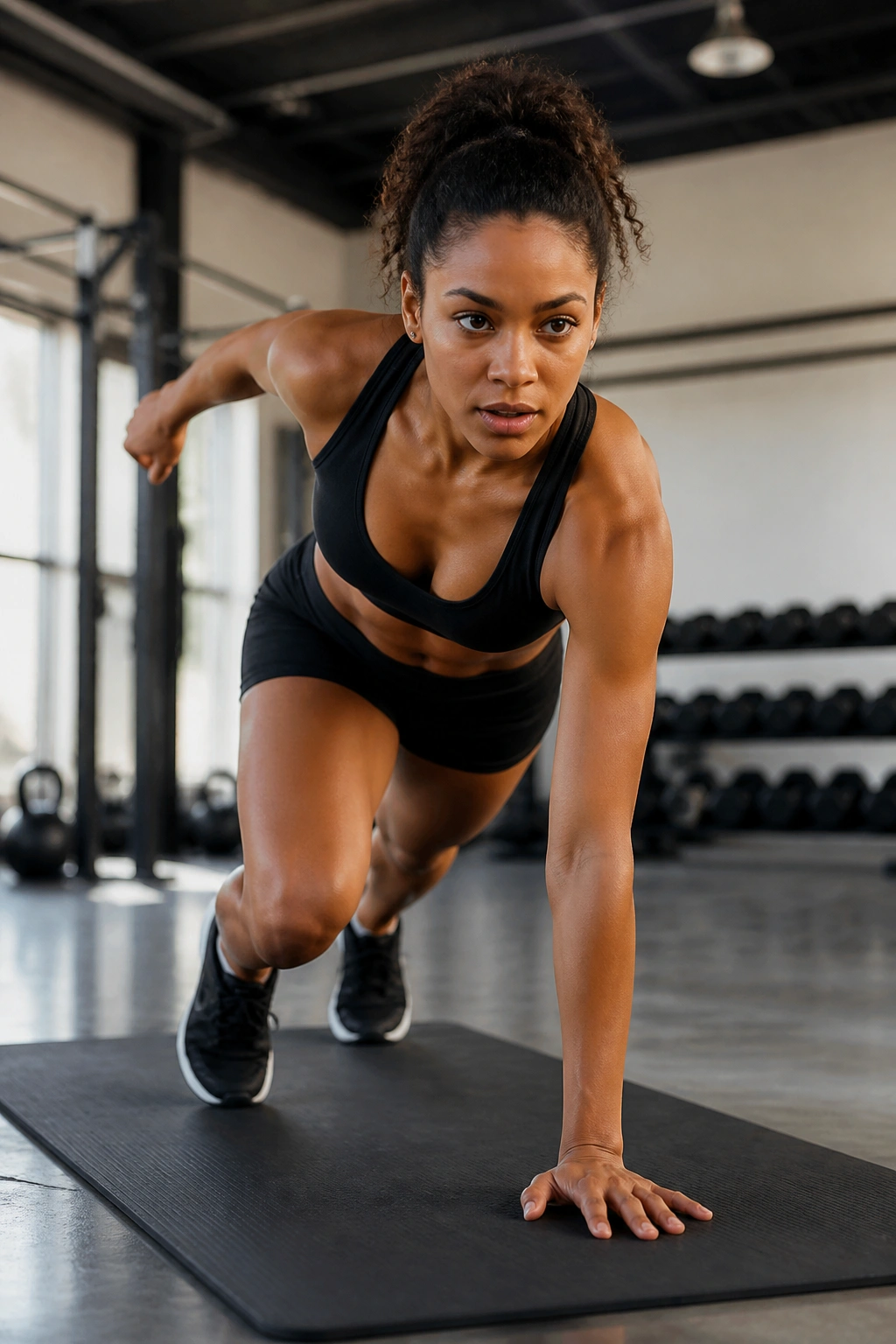
You do not need a gym, a membership, or fancy footwear to get an incredible cardio workout. A bodyweight circuit uses compound movements that keep your heart rate elevated by constantly switching between muscle groups, preventing blood from pooling in one area and forcing your heart to work overtime to circulate it.
The Non-Stop Flow
Choose four movements: Jumping jacks, mountain climbers, high knees, and squat jumps. Perform each exercise for 40 seconds, then move immediately to the next one with zero rest. Once you finish all four, rest for 60 seconds. That is one round.
- Round 1: High intensity but controlled.
- Round 2: Push the speed on the mountain climbers.
- Round 3: Keep the squat jumps explosive.
- Round 4: Empty the tank.
If you are doing this correctly, you should feel a burning sensation in your lungs and a heavy feeling in your legs. The constant change in body position—from standing to floor to standing—is what keeps the heart rate high.
5. Swimming Laps (Interval Style)

Swimming is unique because it is non-weight-bearing, but it provides significant resistance on every single movement. The mistake many swimmers make is thinking they need to swim slow, long-distance laps to get “cardio.” Instead, treat the pool like a track. Use a pace clock or a waterproof watch.
The Breath Control Factor
Swimming forces you to manage your breathing cycle, which is a major limiter for most people. If you swim a lap, stop, and pant for 30 seconds, you are holding your breath too much. Try to incorporate a rhythmic breathing pattern—inhale on the side, exhale while your face is in the water.
- The Routine: Swim 4 lengths of the pool (2 laps) at a hard pace.
- Rest: Take 30 seconds of active rest (treading water or slow walking in the shallow end).
- Goal: Complete 10 sets.
You will find that your heart rate stays elevated even during the “rest” period because your body is working to keep you afloat. It is a deceivingly exhausting way to train.
6. Rowing Machine Steady State

Rowing is a masterclass in coordination. If your technique is sloppy, you are only working your arms, and you will tire out before you get a real cardio workout. To get the heart rate up, you have to use your legs. The stroke should be 60% legs, 20% core, and 20% arms.
Finding Your Stroke Rate
Watch the monitor on the rower. Most people try to row as fast as possible, increasing their stroke rate to 35 or 40 strokes per minute. This is usually ineffective. Aim for a lower stroke rate, somewhere between 20 and 24, but pull with more power. This keeps your heart rate consistent and prevents you from becoming winded too early.
Think of it as a push, not a pull. Push with your legs until they are fully extended, then lean back and pull the handle to your chest. The recovery phase is just as important—slow down on the way forward. Let the machine do the work for a split second, then drive again.
7. Stair Climber Intervals

The stair climber—or the “StepMill”—is the gold standard for pure leg and heart-rate conditioning. It mimics the natural movement of climbing, which is incredibly taxing. If you find yourself gripping the handrails for dear life, you are leaning too far forward and taking the load off your glutes.
The Handrail Rule
You should be able to hover your hands over the rails without falling. If you are putting your full body weight on your arms, you aren’t doing the work; you are cheating the machine. Keep your chest up and your core braced.
- Routine: 1 minute at a steady, moderate pace. Then, 1 minute where you take two steps at a time (this forces the glutes to fire harder).
- Duration: 20 minutes total.
This specific routine targets the posterior chain—your glutes, hamstrings, and lower back—while keeping your heart rate in the “suffering” zone. If you have bad knees, keep the intensity moderate and avoid the “two-steps-at-a-time” variation.
8. Elliptical Resistance Training

The elliptical is often mocked as the “easy” machine, but that is only true if you keep the resistance at zero. With no resistance, you are just moving your limbs through empty space. To make this a legitimate cardio routine, you have to crank the resistance up until it feels like you are pushing through sand.
The “Hands-Off” Challenge
For an added core workout, try to let go of the handles for 30-second intervals while maintaining your pace. This forces your core to stabilize your entire body as you move. It changes the dynamic from a push-pull machine to a total-body balance and stability challenge.
- The Setup: Set the resistance to a level where you can sustain a pace for 3 minutes, then drop to a “sprint” resistance where you can only go for 1 minute.
- Variation: Go backward. Pedaling in reverse changes the muscle activation in your quads and calves, keeping the workout fresh and engaging different stabilizers.
9. Outdoor Jogging (The Conversation Test)

Jogging outdoors is fundamentally different from a treadmill because you have to navigate terrain, wind, and psychological hurdles. You can’t just press a “stop” button when you get tired; you have to run back home. This creates a natural forced endurance.
Gauging Intensity
The “conversation test” is the best way to monitor your pace. If you are jogging and cannot speak a full sentence without gasping for air, you are running too fast. Slow down. You should be able to hold a conversation—or at least mutter a sentence—while maintaining your pace.
Don’t worry about distance. Worry about time on your feet. Start with 20 minutes, regardless of how slow you have to go. Consistency beats speed. If you are new to running, use the “run-walk” method. Run for 3 minutes, walk for 1 minute. Repeat. This allows you to accumulate a longer total duration without your heart rate spiking into an unsustainable zone.
10. Kettlebell Swing Conditioning

Kettlebell swings are a powerful cardio-strength hybrid. Because the movement is explosive and hinges at the hips, it raises your heart rate faster than almost any other weighted exercise. This is metabolic conditioning at its finest.
The Hinge Mechanic
The swing is not a squat. It is a hip hinge—a snap of the hips. If you are squatting to get the bell moving, you are using your quads, not your glutes and hamstrings. Keep your back flat and your shoulders packed.
- The Routine: Perform 15 swings, then immediately set the bell down and perform 15 jumping jacks.
- Rest: 30 seconds.
- Volume: 10 rounds.
This is brutal, effective, and takes less than 20 minutes. It builds explosive power and cardiovascular endurance simultaneously. Just be careful with your lower back—if you feel your form breaking down, stop immediately.
11. Shadowboxing Combos

You don’t need a heavy bag or a partner to get a fantastic cardio workout from boxing. Shadowboxing is all about constant movement and rhythm. The goal is to keep your arms moving and your feet shuffling for the entire duration of the round.
Structuring Your Rounds
Set a timer for 3-minute rounds, just like a professional boxing match.
- Round 1: Focus on footwork. Move forward, backward, left, right.
- Round 2: Add simple punches. Jab, cross, jab. Keep your core tight when you punch to maximize the rotation.
- Round 3: Pick up the speed. High intensity, moving your feet, throwing combinations.
The burning sensation in your shoulders will surprise you. Because you are holding your arms up in a “guard” position for the entire time, you are engaging your deltoids and core continuously. It’s a great way to improve hand-eye coordination while burning calories.
12. Hiking With Incline

Hiking is nature’s stair climber. The beauty of hiking is that the terrain is never uniform, which means your stabilizer muscles—the tiny muscles around your ankles and knees—are constantly firing to keep you upright. This is “active” cardio that feels less like work because you are moving through a landscape.
Picking the Right Route
Don’t worry about the distance. Look for elevation gain. A two-mile hike with 500 feet of elevation gain is a much better cardio workout than a five-mile flat walk. If you want to increase the intensity, carry a backpack with 10 to 15 pounds of weight.
This is a functional cardio routine. It mimics real-world tasks, like carrying groceries or moving luggage, while providing all the heart-health benefits of a sustained, moderate-intensity cardio session. Just make sure you have supportive footwear, as the downhill sections can be hard on the knees.
13. The Burpee Pyramid

Burpees are the love-to-hate exercise. They involve dropping to the floor, pushing up, jumping back to your feet, and leaping into the air. It is basically every movement humans shouldn’t like, packaged into one exercise. But they are undeniably effective.
Managing the Volume
Doing 100 burpees at once is a recipe for disaster. Try a pyramid:
- Perform 1 burpee. Rest.
- Perform 2 burpees. Rest.
- Continue climbing until you hit 10 burpees in a row.
- Work your way back down (9, 8, 7…).
This structure tricks your brain. You aren’t doing 100 burpees; you are just climbing a ladder. The rest periods will get shorter as you get tired, which forces your heart to work harder to recover. It’s an endurance test disguised as a simple counting game.
14. Battle Ropes Blast

Battle ropes are intimidating, but they are one of the few pieces of equipment that allow you to go at 100% intensity without needing to coordinate complex footwork or worry about impact. They are purely about output.
The “Wave” Technique
To get the ropes moving effectively, you need to create a wave that travels all the way to the anchor point. If you just flop your arms around, the ropes won’t move. You need to use your core and your legs to generate the power.
- The Routine: 30 seconds of “power slams” (both arms at once).
- Rest: 30 seconds.
- Volume: 10 minutes total.
Your arms will feel like they are made of lead after two minutes. That is the goal. It is a fantastic way to train muscular endurance in the shoulders and back while keeping your heart rate pegged in the high zone.
15. Road Cycling Cadence Work

If you have a bicycle, you have the ultimate cardio machine. The key to effective cycling isn’t just distance—it’s cadence, or RPM. Many casual riders bike in too high a gear, mashing the pedals slowly. This builds leg muscle but does very little for your aerobic capacity.
Shifting for Performance
Find a gear where you can spin the pedals at 80 to 90 RPM comfortably. That is your “sweet spot.”
- The Drill: Find a moderate hill. Maintain your cadence on the way up. Do not shift into an easier gear immediately.
- The Return: On the downhill or flat, keep that same high-cadence spinning motion.
By focusing on RPM rather than speed, you force your heart and lungs to manage the oxygen demand, which is the definition of cardiovascular training. It turns a casual ride into a focused aerobic session.
16. Dance Cardio

Don’t write this off as “fluff.” Dance cardio is one of the most underrated forms of sustained activity. It requires constant movement, rhythm, and coordination. Because you are focused on the steps or the music, you are often distracted from the fact that you have been moving for 45 minutes straight.
Why It Works
You are moving in multiple planes—lateral, forward, backward, rotational. Most gym cardio is linear (front-to-back, like running). Moving laterally is vital for hip health and ankle stability.
If you don’t want to join a class, look for high-energy dance workout videos. The specific style doesn’t matter; the intensity does. Keep your arms involved, keep your feet moving, and keep your heart rate up for the duration of the set. It is an excellent way to get an hour of cardio in without staring at a clock.
17. Rowing Machine Sprints

This is different from the steady-state rowing we discussed earlier. This is anaerobic capacity training. You are going for maximum power output, which is going to be incredibly taxing on your energy systems.
The Sprint Protocol
- The Work: Row 250 meters as fast as you physically can. This should take you about 45 to 60 seconds.
- The Rest: 90 seconds of complete rest.
- Volume: 8 rounds.
This is a high-intensity interval session. You should feel like you are gasping for air after the second round. Because you are resting longer than you are working, you are able to keep your intensity high for every single sprint. This builds the type of cardiovascular engine that makes everyday activities feel effortless.
18. Incline Walking (The 12-3-30 Method)
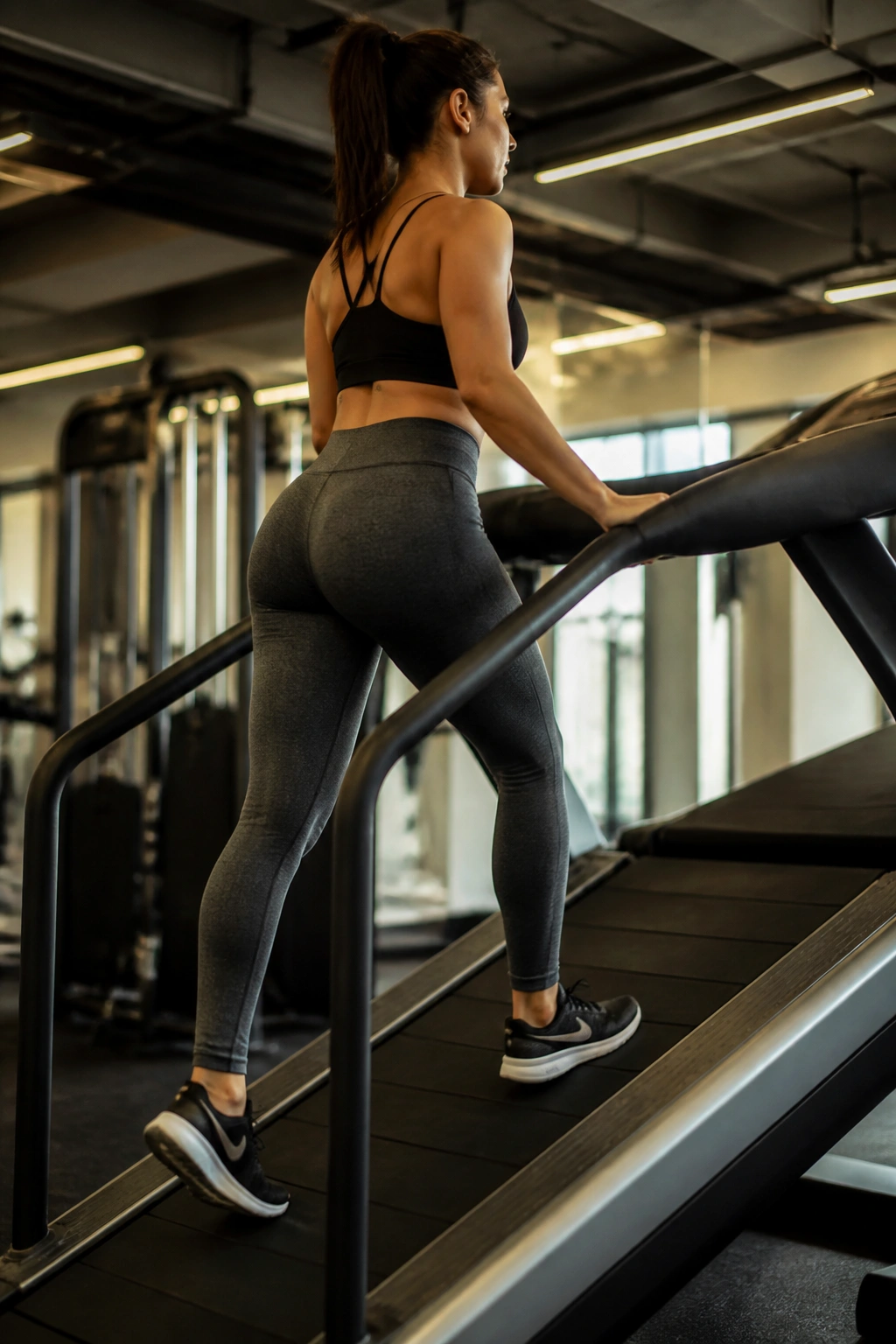
This has become a widely adopted routine, and for good reason—it works, it’s simple, and it’s low impact. The setup is specific: incline the treadmill to 12, set the speed to 3 miles per hour, and walk for 30 minutes.
Why It’s Effective
It forces you to walk at a pace that is fast enough to get your heart rate up but slow enough that you aren’t forced into a running stride. The steep incline places the load on the glutes and hamstrings, protecting the knees while ensuring the heart rate stays in the fat-burning zone.
If 12 is too steep, start at 8 or 10. The goal isn’t the number on the machine; the goal is to maintain the pace for the full 30 minutes without holding onto the rails. If you have to hold on, the incline is too high for your current level.
19. Plyometric Jumps

Plyometrics involve explosive movements—jumping, bounding, hopping. These exercises are meant to train your nervous system to be fast and powerful. Because they are so demanding, they also function as an excellent cardio tool when performed in succession.
Safety First
Do not do this if you have joint issues or if you are significantly overweight, as the impact forces are high. If you are clear to proceed, focus on the landing.
- The Routine: 10 box jumps, followed by 10 skater jumps (side to side).
- Rest: 60 seconds.
- Volume: 5 rounds.
The landing is where the work happens. You want to land softly, like a cat, absorbing the impact through your muscles, not your joints. If you hear a loud “thud” when you land, you are doing it too hard and need to focus on landing quieter.
20. Tabata Bodyweight Squats

This is the ultimate finisher. It is simple, it requires zero equipment, and it is brutally efficient. You are doing bodyweight squats, but you are doing them with the Tabata protocol (20 seconds on, 10 seconds off).
Getting the Depth
Don’t sacrifice range of motion for speed. A shallow squat is a waste of time. Your hip crease should drop below your knees.
- The Routine: 20 seconds of as many good-form squats as you can do.
- Rest: 10 seconds.
- Volume: 8 rounds.
This will make your legs feel like they are on fire by round 5. Your heart rate will be high because you are using the largest muscle group in your body repeatedly. It is the perfect cardio routine for when you have absolutely no time but still want to move.
Final Thoughts

The “best” cardio routine is simply the one you will actually do consistently. If you force yourself to run but you hate running, you will stop. If you try to force yourself to swim but you find the pool inconvenient, you will quit.
Pick three of the routines from this list and rotate them through your week. Do one high-intensity day (like the rower sprints or bike Tabata), one moderate-intensity day (like the incline walk or hiking), and one active recovery day (like the walking intervals). This rotation keeps your heart rate responsive, your muscles balanced, and your mind curious. Don’t look for the perfect workout—look for the routine that keeps you moving forward, week after week.
