



Most people treat the treadmill as a glorified clothes rack, a dusty piece of machinery that sits in the corner of a bedroom or garage, holding up hoodies and half-finished projects. It is a tragedy of wasted potential. If you actually bother to step on the belt, punch in a few settings, and move with intention, a treadmill is one of the most precise tools available for physical conditioning. It does not care about the weather, it does not have traffic, and it does not allow you to cheat on your pace once you hit “start.”
You can build endurance, sharpen your top-end speed, or simply recover after a heavy training week, all within the span of thirty minutes. The secret isn’t in the machine’s display screen or its pre-programmed settings—those are almost always mediocre at best. The secret lies in how you manipulate incline, speed, and timing to force your cardiovascular system to adapt. If you have been walking at a flat 3.0 miles per hour for six months and wondering why you have hit a plateau, the problem is not your fitness. It is your lack of variety.
Below are twenty distinct approaches to using your treadmill that go far beyond just mindlessly logging miles. Some are brutal, some are measured, and some are designed specifically for those days when your legs feel like lead.
1. The Pyramid Intervals
This is the classic, reliable, and incredibly effective standard for building speed endurance. You start slow, ramp up to an uncomfortable pace, and then descend back down. It forces you to control your intensity rather than just sprinting until you burn out.
How to Execute
Start with a five-minute warm-up at a comfortable, conversational pace. From there, increase your speed by 0.5 miles per hour every two minutes until you reach a pace that is challenging—something you could only hold for about sixty seconds. Once you hit that peak, reverse the process, decreasing your speed by 0.5 mph every two minutes until you return to your starting warm-up pace.
Why This Works
The pyramid structure mimics the natural fatigue cycle. By the time you reach the peak, your heart rate is elevated, making the descent feel more difficult than it actually is. This trains your body to maintain form when you are tired. Pro tip: Do not jump off the treadmill at the end of your set. Keep the belt moving at a very slow walk for two minutes to let your heart rate drop naturally.
2. The Incline Power Walk
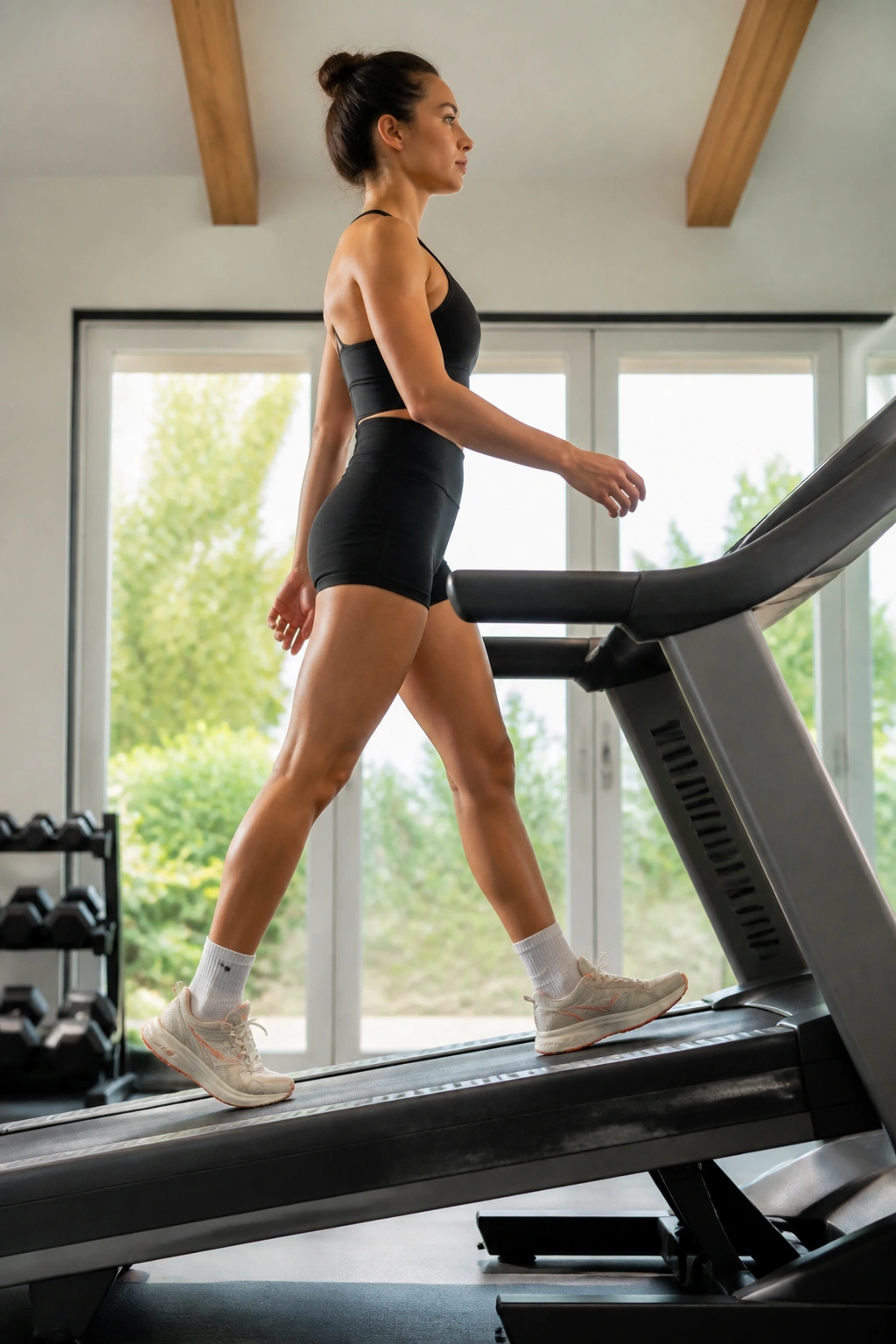
Forget about running for a moment. Sometimes, the most intense cardiovascular work happens at a brisk walk, provided you manipulate the grade of the belt. This workout targets the posterior chain—your glutes, hamstrings, and calves—far more effectively than flat-ground running.
Set your treadmill to a 10% or 12% incline. Keep your speed between 3.0 and 3.5 mph. Do not hold onto the handrails. If you need to hold on to keep your balance, your incline is too steep, or your speed is too high. You need to swing your arms naturally, just as you would walking up a real hill outside.
The key is to maintain a steady, upright posture. Most people hunch over when the incline goes up, which defeats the purpose. Keep your shoulders back and your core braced. Aim for a twenty-minute duration initially, as this puts significant load on your lower legs. Your calves will likely burn within the first five minutes. That is exactly what we are looking for.
3. The Hill Repeats Endurance Session

You cannot fake your way through hill repeats. These are designed to build raw power and cardiovascular capacity by forcing you to overcome gravity. Unlike the power walk, this is a run, and it requires focus.
The Protocol
- Warm up for 10 minutes at a flat grade (0%).
- Set the incline to 5%. Run at a pace that feels like a moderate effort (not a sprint) for 3 minutes.
- Drop the incline to 0% and walk or light jog for 2 minutes to recover.
- Repeat this cycle 6 to 8 times.
This isn’t about setting speed records; it is about keeping your turnover high while the belt is tilted. If you feel like your form is breaking down—if you are dragging your feet or slouching—drop the speed slightly. Form always trumps intensity on the treadmill.
4. The 30-Second Sprint Ladder

This is a high-intensity interval training (HIIT) staple that keeps your heart rate spiked. Because the work intervals are short, you can push your speed significantly higher than you would in a sustained run.
Start with a solid 10-minute warm-up. You want your muscles warm and your joints lubricated before you ask them to handle sprint velocities. Set the treadmill to a speed that feels like a hard effort—not your absolute maximum, but definitely out of your comfort zone.
Run for 30 seconds, then immediately step off the belt or drop the speed to 2.0 mph for 30 seconds. Do not pause the treadmill entirely if you can avoid it; keeping the belt moving saves time. Repeat this 10 to 15 times. The recovery is the same duration as the work, which means you never fully recover. That is the point. You are keeping your heart rate in the anaerobic zone for the duration of the workout.
5. The Steady-State Recovery Jog

Some days, the goal is not to punish yourself. In fact, training hard every single day is a sure path to burnout and injury. This workout is about blood flow, clearing out metabolic waste from previous harder sessions, and keeping your joints moving.
Pick a speed where you could talk in full sentences without gasping for air. For many people, this is between 4.5 and 5.5 mph. Set the incline to 1%—just a tiny bump to mimic the wind resistance you would face running outdoors.
Stay at this constant speed for 30 to 45 minutes. Turn on a podcast, watch a show, or just stare at the wall. The monotony is part of the training. It builds the mental discipline to sustain activity when it isn’t “exciting.” If you find yourself checking your watch every minute, you are going too fast. Slow down until you can settle into a rhythm that feels almost boring.
6. The “Descending” Pace Run

Negative splits—running the second half of a workout faster than the first—are the gold standard for distance runners. This workout trains you to stay disciplined early on so you have the energy to finish strong.
Begin at a moderate pace, perhaps 1 mph slower than your normal training pace. Every 5 minutes, increase your speed by 0.2 mph. By the end of the session, you should be running at a pace that feels quite hard, significantly faster than where you started.
It requires a fair bit of math or at least a good understanding of your treadmill’s console, but the payoff is immense. You are essentially learning to manage your energy reserves. If you find yourself unable to hold the pace increase in the final 10 minutes, you started too fast. Adjust your starting baseline lower next time.
7. The Incline Pyramid (Strength and Stamina)

This is a variation on the standard speed pyramid, but here, we manipulate the incline. It is arguably tougher because you cannot simply lower the speed to recover. You have to endure the grade.
Start at a 1% incline. Every 3 minutes, increase the incline by 1% until you reach 6%. Hold that 6% for 3 minutes, then drop the incline by 1% every 3 minutes until you are back at 1%. Keep your speed constant throughout the entire workout.
This is a lesson in patience. When the incline hits 5% or 6%, your breathing will become ragged. Fight the urge to grab the handrails. Use your arms to drive your momentum. If you cannot maintain your speed at the 5% mark, slow down the speed, but do not stop the incline climb. Completing the full pyramid is a massive win for your lower body conditioning.
8. The HIIT Sprint/Walk Combo

If you struggle with the mental aspect of long, steady runs, HIIT is your best friend. This workout is essentially a series of short bursts followed by recovery, and it is over before you know it.
Set your treadmill to a “work” speed that you can hold for one minute. Then set a “rest” speed that is a slow walk. Use the “Quick Speed” buttons on your treadmill if you have them, as manually adjusting the speed on a touch screen during a sprint is a recipe for a trip.
Spend 1 minute at your sprint speed, then 1 minute at your walk speed. Do this for 20 minutes total. The goal is to reach a level of fatigue by minute 15 where you are genuinely looking forward to the 1-minute walking break. If you finish feeling like you could go for another 20 minutes, you need to turn up your sprint speed.
9. The Fartlek Style Play

“Fartlek” is Swedish for “speed play,” and it is the antithesis of the rigid, calculated intervals above. This is about instinct. You dictate the pace based on how you feel in the moment.
Start your treadmill at a moderate jogging speed. Pick a landmark—maybe a car in the parking lot visible through a window, or a timer, or a specific song on your playlist. Speed up to a hard run until you reach that goal, then slow down to a walk or light jog until you feel recovered.
There is no prescribed set of intervals here. You might sprint for 20 seconds, or you might hold a fast pace for 2 minutes. You might walk for 30 seconds, or you might walk for 5 minutes. It is a fantastic way to reconnect with your body’s internal signals of effort and fatigue, rather than being a slave to the machine’s display.
10. The Tempo Run for Threshold Building

The tempo run is the holy grail of conditioning for runners, but it is often misunderstood. It isn’t a sprint, and it isn’t a casual jog. It is “comfortably hard.” It is that pace you can hold for about an hour if you had to, but you would be very happy to stop at 45 minutes.
Warm up for 10 minutes. Then, increase to your tempo pace—usually about 85-90% of your maximum heart rate. Hold this speed steady for 20 to 30 minutes.
You should not be able to hold a full conversation during this segment. You should be focused, breathing rhythmically, and locked into the effort. If you find your mind wandering, you might be going too slow. This workout builds your lactate threshold, which is the ceiling for how long you can maintain a high-intensity effort. It is miserable while you are doing it, but it creates the biggest gains in aerobic performance.
11. The Side-Shuffle Agility Warm-up

Most people run forward on a treadmill, which is obvious. But the treadmill can also be used for lateral movement, which engages the stabilizer muscles in your hips and core that rarely get worked during forward-only training.
Safety Warning: Be extremely careful. Start with the treadmill speed very low—1.5 to 2.0 mph. Stand sideways on the belt, holding the side rails for support. Shuffle your feet laterally, one after the other.
Do 30 seconds facing left, then turn around and do 30 seconds facing right. Repeat for 5 minutes. This is a warm-up, not a main workout. It improves your hip mobility and activates the gluteus medius, a crucial muscle for injury prevention in any runner or walker. Never attempt this without holding the rails firmly.
12. The “Walk-to-Run” Progression

If you are returning from an injury or just starting a fitness routine, the “couch to runner” concept is the most effective way to progress. Do not try to run for 30 minutes straight on your first day.
Create a ratio. For example: 3 minutes of brisk walking followed by 2 minutes of light jogging. Repeat this for 30 minutes. Over the course of several weeks, change the ratio. Next week, make it 2 minutes walking, 3 minutes jogging. The week after, 1 minute walking, 4 minutes jogging.
This gives your tendons, ligaments, and bones time to adapt to the impact of running, which is far more stressful on the body than walking. It is a slow, steady progression, but it is how you avoid the shin splints and stress fractures that derail most beginners.
13. The Long Slow Distance (LSD) Session
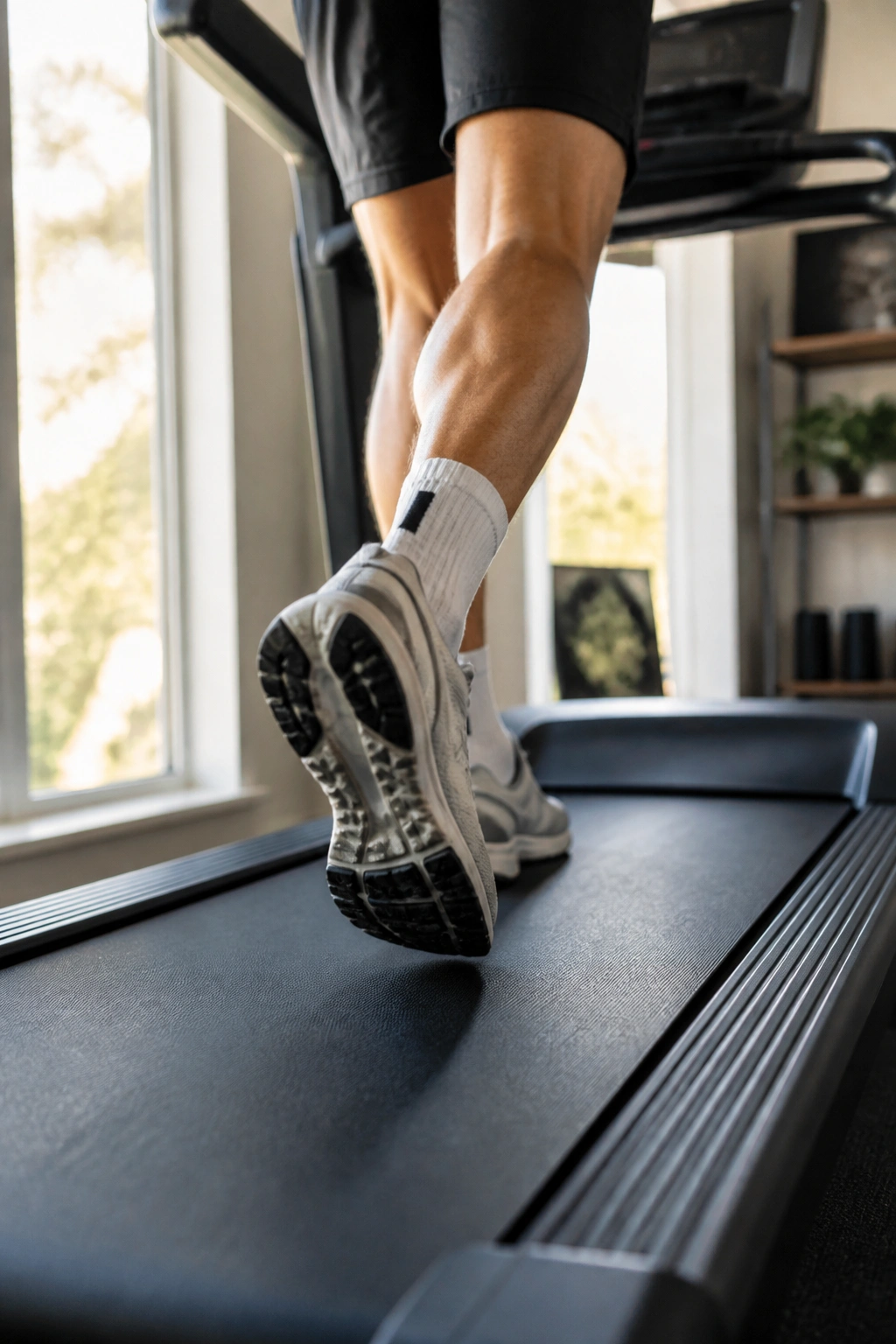
This is the antithesis of the interval workout. It is about volume. On a treadmill, this can be mentally grueling, so have a good book, a show, or a solid playlist ready.
The goal is to stay on the treadmill for 60 to 90 minutes at a very low intensity. Your heart rate should stay in Zone 2—the zone where you can easily breathe through your nose the entire time.
Why stay on the treadmill for this long? Because sometimes you just need to get the time on your feet. It builds capillary density in your muscles and improves mitochondrial efficiency. It is the foundation upon which all speed is built. If you can’t endure the boredom of an hour-long steady-state treadmill session, you haven’t mastered your mental game yet.
14. The Heart Rate Zone Control Run

If your treadmill has those metal sensors on the handrails, ignore them—they are notoriously inaccurate. Instead, invest in a chest strap heart rate monitor that syncs to your watch or phone. This workout is all about keeping your body in a specific physiological state.
Pick a Zone 3 heart rate—this is usually around 70-80% of your maximum heart rate. Your goal is to keep your heart rate in that range for the entire workout, adjusting your treadmill speed (or incline) constantly to keep it there.
If your heart rate creeps up, slow down. If it drops too low, speed up. You will find that on days when you are tired or stressed, you have to run much slower to keep your heart rate in the target zone. This is a great way to learn how external stressors impact your physical performance.
15. The Negative Split Challenge

This workout is designed to test your ability to finish a run when you are already fatigued. It’s similar to the descending pace run, but with more aggressive jumps in speed.
Break your treadmill session into three 10-minute blocks.
- Block 1: Moderate pace (warm-up level).
- Block 2: Increase speed by 0.5 mph.
- Block 3: Increase speed by another 0.5 mph.
The challenge is to hold the speed in Block 3. It will feel fast. Your lungs will be working, and your legs will be heavy. The temptation will be to hit the stop button early. Don’t. This is where the mental conditioning happens. Finishing that last 10-minute block at the fastest speed builds immense confidence.
16. The Tabata-Inspired Treadmill Sprints

Tabata is a specific protocol: 20 seconds of maximum effort followed by 10 seconds of rest, repeated for 8 rounds. That equals 4 minutes total. It is brutal.
Because a treadmill takes time to speed up and slow down, traditional Tabata (which usually involves bodyweight exercises) is tricky here. Instead, set the treadmill to your sprint speed beforehand.
Jump onto the moving belt for your 20-second sprint, then jump off (feet on the side rails) for your 10-second rest. Do this for 8 rounds. Warning: Only do this if you are a confident runner. You must be comfortable with the treadmill moving fast before you step on. If you are a beginner, stick to the slower interval workouts.
17. The Alternating Incline Power Walk
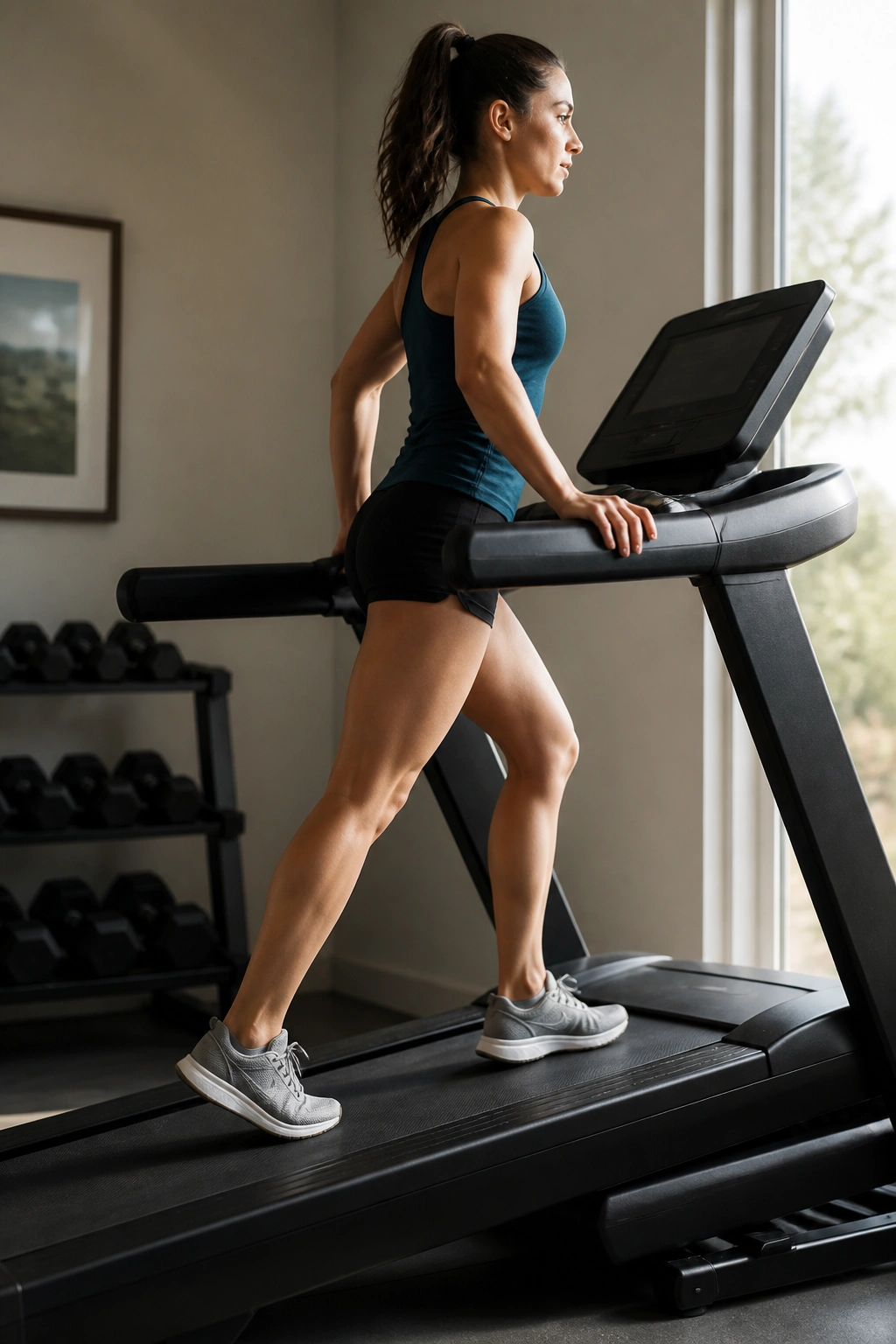
This is a high-volume version of the incline workout that keeps your heart rate high without the impact of running. It is excellent for fat oxidation and endurance.
Set your treadmill to a 5% incline. Walk at a brisk pace (3.5 mph). Every 2 minutes, bump the incline up to 10% for 1 minute, then drop it back to 5% for 1 minute. Do this for 30 minutes.
The constant shifting of the grade forces your legs to adjust their muscular recruitment pattern. When you are on the 10% grade, lean slightly into it. When you drop to 5%, focus on getting your stride length back to normal. It is a dynamic, engaging workout that feels more like hiking than gym work.
18. The “Over-Under” Tempo Workout

This is a classic performance drill for runners who want to get faster at their race pace. It teaches your body to clear lactate while running at a high intensity.
Run for 5 minutes at your “goal” pace (a pace that feels hard but sustainable). Then, for the next 2 minutes, increase the speed by 0.3 to 0.5 mph (going “over” your threshold). Return to the goal pace for 5 minutes.
This oscillation—going slightly above your threshold and then settling back to it—is immensely effective at training your cardiovascular system to handle and clear metabolic byproducts. By the end of 30 minutes, your body will be a master at regulating effort under stress.
19. The Marathon Pacing Drill

This is less about intensity and more about calibration. If you have a goal pace for a race, you need to be able to hit that speed on command, without checking the display constantly.
Run for 1 minute at your target race pace, then run for 1 minute at a pace 0.5 mph slower. Do this for 40 minutes. The goal is to feel the difference between “race pace” and “recovery pace.”
Many people run their easy runs too fast and their hard runs too slow. This workout helps you find the “middle” gear. By the end of the session, your body will have a much clearer physical sense of what that specific race speed actually feels like. You won’t need to look at the screen to know you’re hitting your numbers.
20. The “Pyramid Down” Finish

This is the ultimate finisher. It’s best used at the end of a longer training session when you want to empty the tank. It is essentially a speed ladder, but you start fast and finish slow.
Start at your fastest speed for 1 minute. Drop by 0.5 mph for 2 minutes. Drop by another 0.5 mph for 3 minutes. Keep dropping the speed and increasing the duration until you are walking at a snail’s pace.
It feels counterintuitive to start fast and end slow, but it’s a brilliant way to finish a session. You get the high-intensity work done when you are fresh, and the progressively easier intervals allow you to cool down and recover while still moving. It leaves you feeling like you accomplished something substantial without the typical “bonk” that comes from ending a workout on a sprint.
Final Thoughts

The treadmill is only as limited as your imagination. If you find yourself staring at the display, counting down the seconds, you are probably doing the same workout over and over again. These twenty protocols cover the spectrum from recovery to high-intensity anaerobic conditioning, and each one offers a different physiological challenge.
Try to rotate through three or four of these throughout a standard week rather than sticking to just one. Your body will adapt to specific demands, and by switching the stimulus—moving from hill repeats to tempo runs to incline walks—you keep your cardiovascular system guessing and improving. Don’t look at the treadmill as a chore. Look at it as a piece of equipment that is ready to deliver whatever kind of sweat, effort, or stamina you are willing to demand from it. The machine is ready; all you have to do is show up.
