



The living room floor has a way of becoming a gym if you let it. You do not need a rack of kettlebells, a treadmill that takes up half the bedroom, or a subscription to a luxury app to get your heart rate up. Cardio is, at its fundamental level, about moving your body in a way that demands oxygen and sustains an elevated heart rate. That is it. It is movement, it is sweat, and it is entirely accessible, provided you have a few square feet of space and the willingness to get a little uncomfortable for twenty or thirty minutes.
Most of us struggle with the “where to start” phase. We think if the workout doesn’t look like a choreographed production, it doesn’t count. That is a dangerous mindset. A fifteen-minute session of basic, unadorned movement in your pajamas does more for your cardiovascular health and metabolic rate than a high-tech gym membership you never visit. The key is removing the friction. No driving, no packing a bag, no waiting for machines. Just you, the floor, and a timer.
The following list prioritizes movements that require absolutely zero equipment. They rely on gravity, your own body weight, and simple, repeatable mechanics. Whether you have five minutes between work calls or a full hour on a Sunday morning, you can string these together in ways that challenge your endurance and improve your conditioning. Remember that consistency is always the real goal. One workout is a blip. A routine built on these fundamentals is a foundation.
1. Classic Jumping Jacks
The jumping jack is the workhorse of home cardio. It feels basic, almost like a warm-up, but if you increase your speed and focus on the vertical reach of your arms, it becomes a high-intensity burner. You start standing with your feet together and arms at your sides. When you jump, your feet land wider than shoulder-width, and your hands clap above your head.
Why They Work
The mechanism here is full-body coordination. You are moving your limbs against gravity while maintaining a constant bounce. It forces your heart to pump blood to both your upper and lower body simultaneously. This increases blood flow faster than isolated movements, like simple squats or crunches.
Form Tips for Success
- Land softly on the balls of your feet. Do not stomp.
- Keep your core tight. It prevents your lower back from arching when your arms go up.
- Keep the rhythm steady. If you lose your breath in the first thirty seconds, you are going too fast. Find a pace you can maintain for two minutes straight.
2. Mountain Climbers
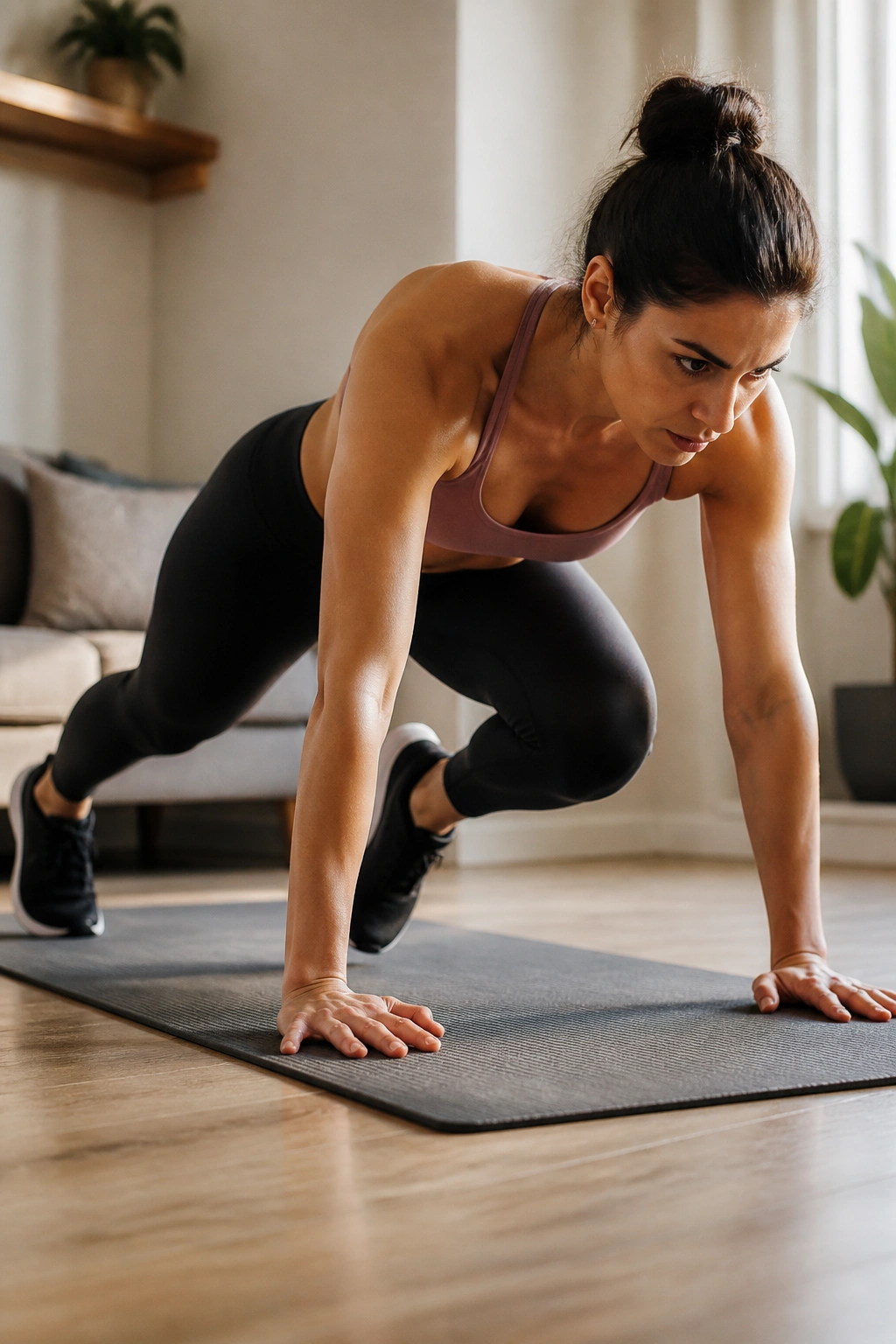
This is a core-focused cardio movement that mimics the motion of sprinting while in a plank position. You start in a push-up position, hands directly under your shoulders. Keep your back flat—imagine a glass of water sitting on your lower back. Drive one knee toward your chest, then switch legs quickly, as if you are running horizontally.
Managing Intensity
Most people make the mistake of bouncing their hips into the air. That kills the core engagement and turns it into a clumsy hop. Keep your hips low. The lower your hips, the harder your abs have to work to stabilize your body.
A Quick Timing Strategy
Try this: 40 seconds of movement followed by 20 seconds of rest. Do this for four rounds. It is much more effective than mindlessly counting reps until you are exhausted. The clock provides the structure, and your focus stays on maintaining perfect form, not just speed.
3. High Knees
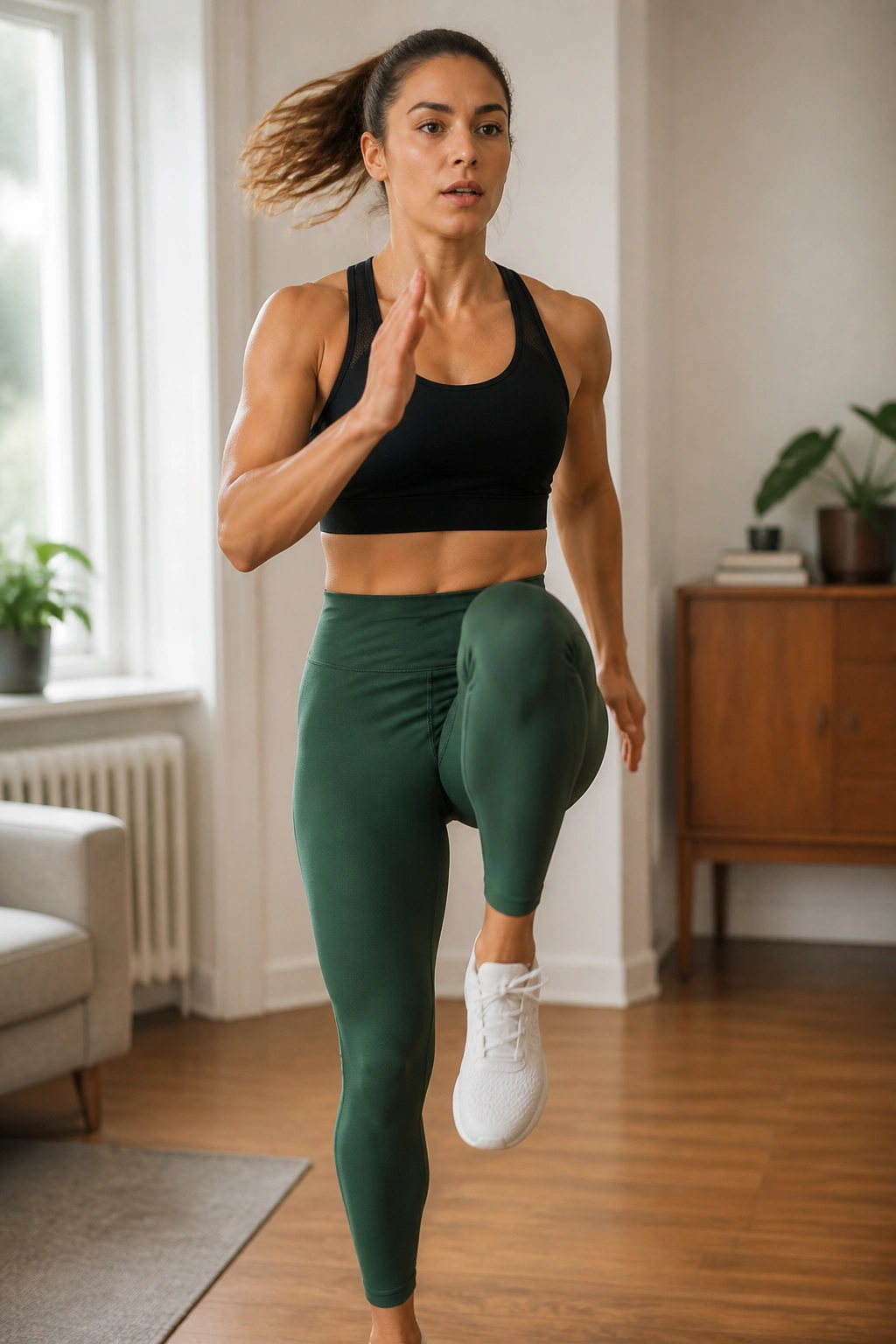
Standing in place, you are essentially sprinting without moving forward. Lift your knees toward your chest, alternating legs with a rapid, rhythmic cadence. Use your arms to pump in rhythm with your legs. It is louder than it looks, especially if you have neighbors below you, so be mindful of your landing.
The Key to Intensity
Do not just lift your legs; drive them. Imagine you are trying to smash a button on the floor with your foot, then bringing that knee up to waist height. If you are not sweating after sixty seconds, you are not driving the knees high enough.
Why It’s Effective
This is one of the best movements for unilateral balance. Because you are constantly shifting your weight from one foot to the other in a rapid cycle, your stabilizer muscles in your ankles and hips get a serious workout. It also spikes your heart rate very quickly, making it an excellent movement to insert between slower, strength-based exercises.
4. Burpees
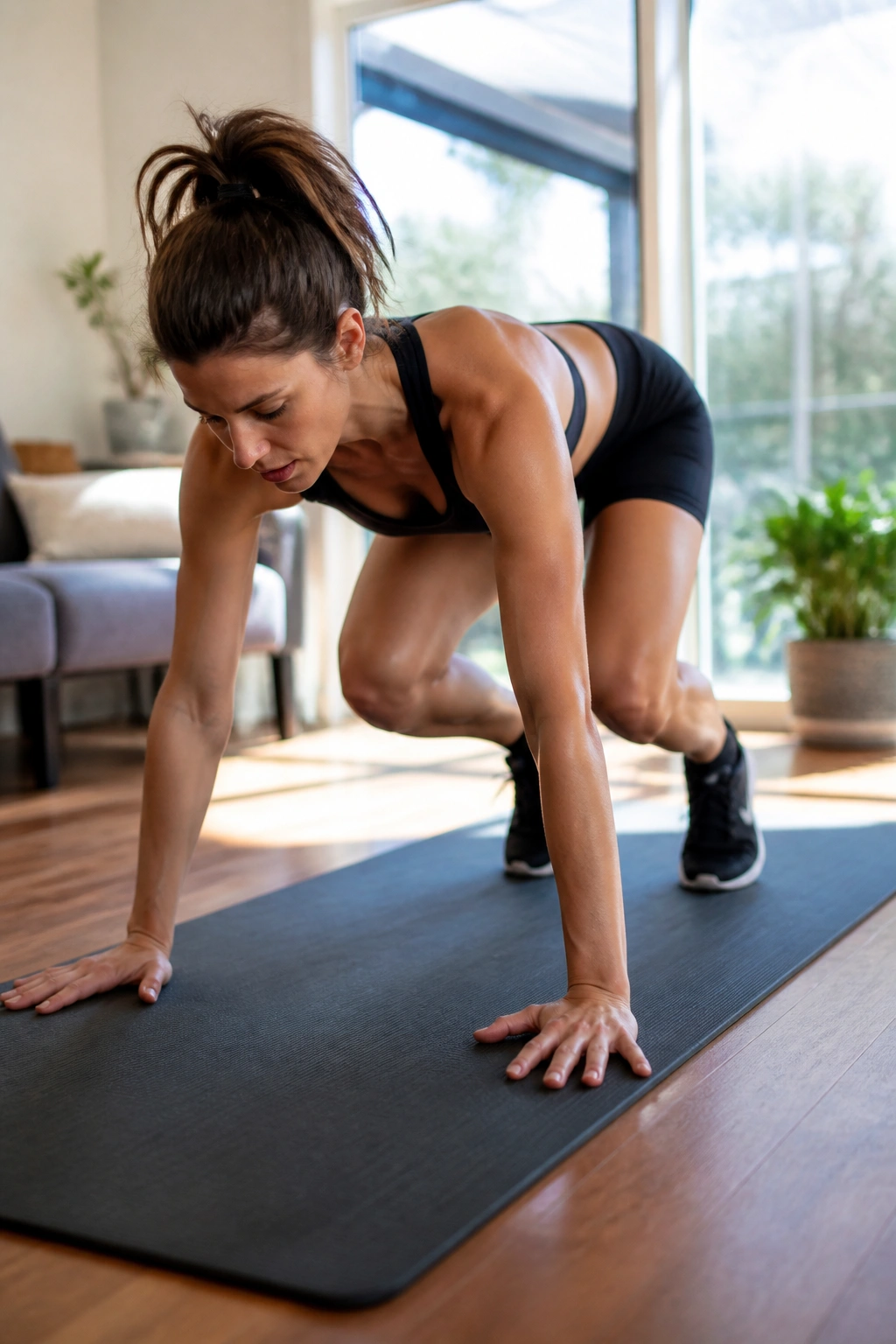
The burpee is a love-hate movement. It is effective because it hits every muscle group: legs for the jump, core for the plank, and chest/arms for the push-up. Drop into a squat, place your hands on the floor, kick your feet back into a plank, perform a push-up if you want, hop the feet back to the hands, and finish with a vertical jump.
A Note on the “Push-Up” Version
You do not have to perform a full chest-to-floor push-up every single time unless you want to. Many people find the push-up makes the burpee too slow, turning it into a strength move rather than a cardio one. If you want a faster cardio burn, skip the push-up and just focus on the speed of the transition from floor to jump.
Managing Fatigue
Burpees are taxing. When your heart rate hits the ceiling, your form usually starts to deteriorate. The second your back begins to round during the plank phase, stop. Take five seconds. Fix your form. It is better to do five perfect burpees than twenty messy ones.
5. Lateral Skaters
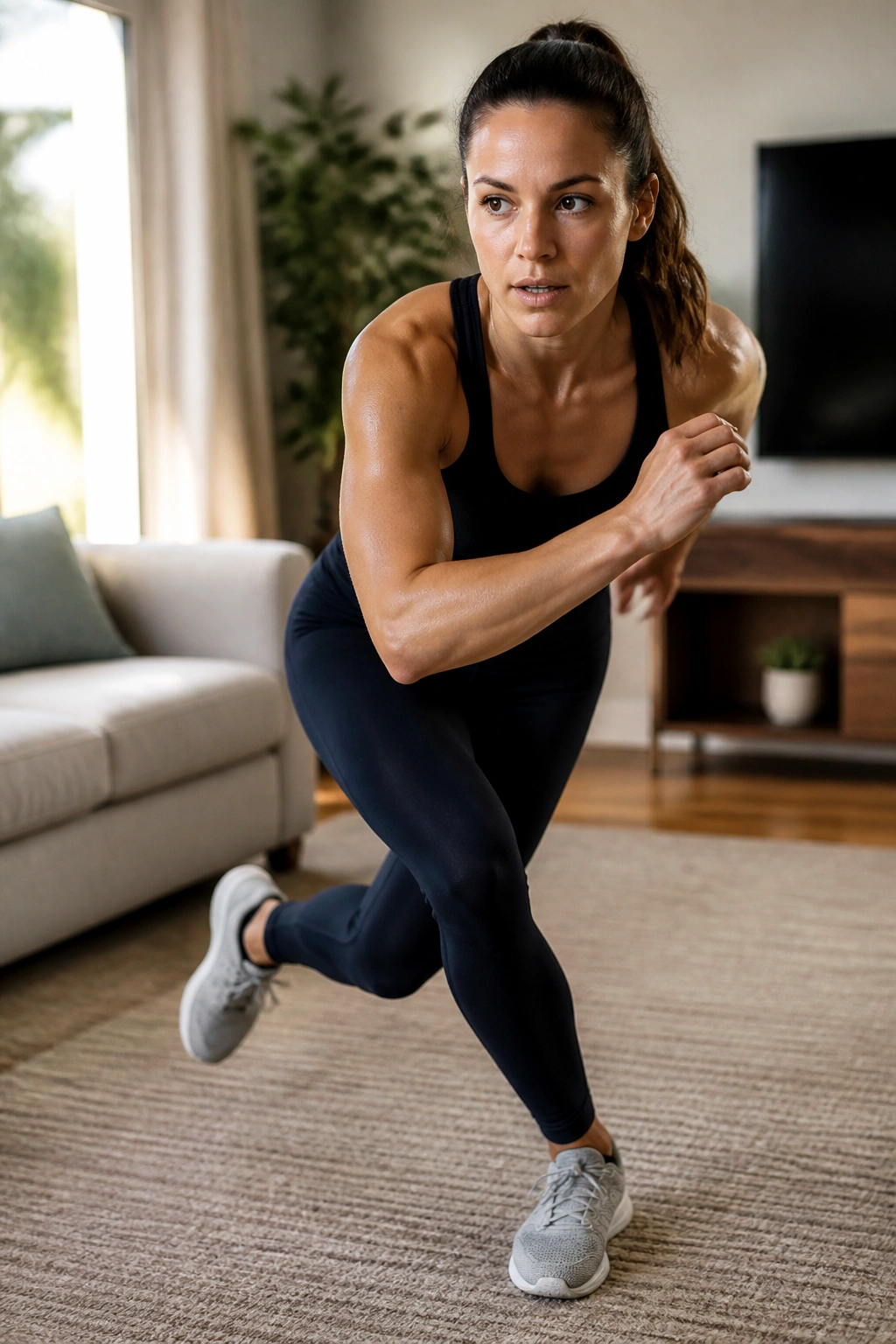
Start standing, then leap to your right, landing on your right foot with your left leg sweeping behind you in a curtsy motion. Immediately explode off the right foot and leap to the left. You are essentially skating on ice without the skates. Use your arms to swing across your body for momentum.
Why Lateral Movement Matters
Most of our daily life and exercise happens in the forward-and-backward plane. We walk forward, we squat, we run. Lateral skaters force your body to move sideways, which engages the gluteus medius—a crucial muscle for hip stability. It is an uncomfortable movement because it is unnatural for most people, but that is exactly why it is so good for conditioning.
Making It Harder
If you want to increase the challenge, hover your back foot in the air during the landing. Do not let it touch the ground. This turns every landing into a balance exercise, which significantly increases the demand on your core.
6. Squat Jumps
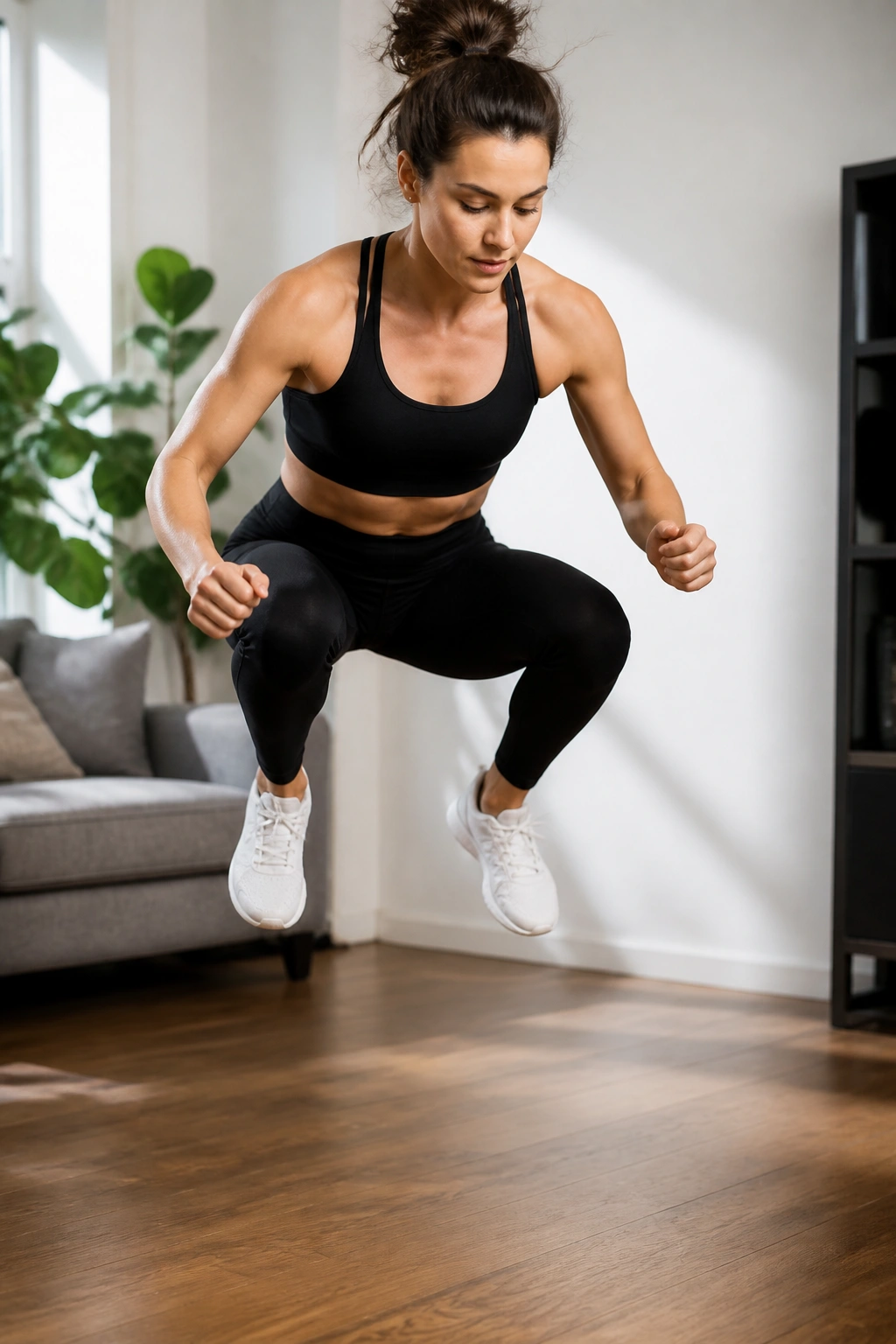
Squats are great, but adding an explosive jump at the top turns them into a plyometric cardio powerhouse. Lower into a standard squat, keeping your weight in your heels and your chest up. Then, explode upward, leaving the floor entirely. Land softly with bent knees, immediately sinking back into the next squat.
The Danger Zone
The landing is where most people get injured. You must land with soft, bent knees to absorb the shock. If you land with locked-out, straight legs, you are sending a massive jolt of impact through your knees and lower back. Imagine landing on a sponge—silent and controlled.
Why They Burn
Plyometrics are exhausting because they require a fast-twitch muscle response. Your body has to recruit a huge number of muscle fibers simultaneously to generate that lift. This “all-out” effort forces your body to consume more oxygen rapidly, which is why your lungs burn after just ten or twelve reps.
7. Butt Kicks
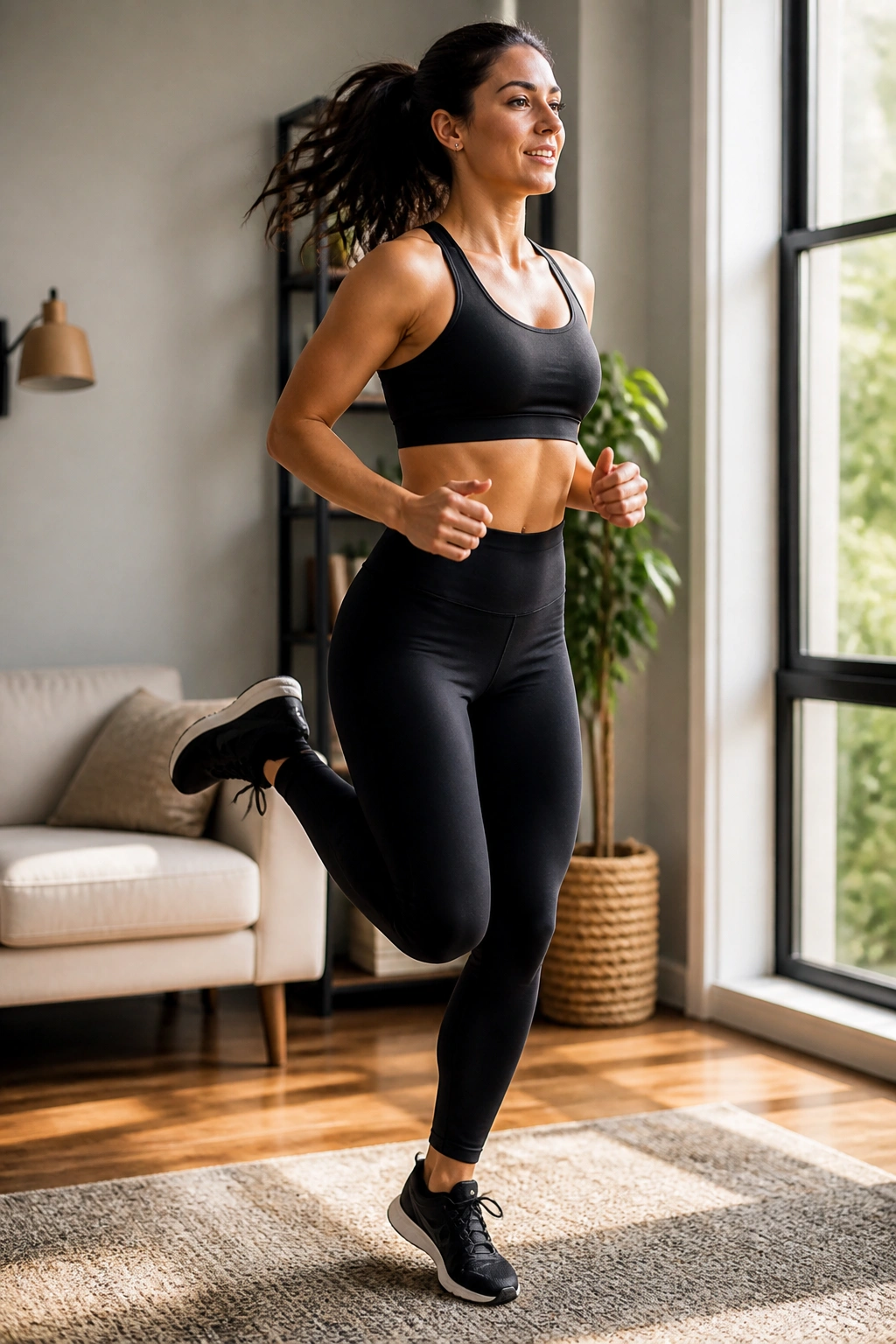
This is the lower-impact cousin to high knees. Stand tall and jog in place, but instead of bringing your knees up, you aim to flick your heels toward your glutes. Your arms should pump naturally at your sides.
The Focus
Focus on the hamstring contraction. When your heel comes up, you should feel a distinct squeeze in the back of your thigh. It is easy to go through the motions without really engaging the muscle, so make sure you are actively pulling the heel up rather than just letting gravity do it.
Why Include Them
These are excellent if you are dealing with minor joint pain or just need a lower-impact active recovery movement. You can speed them up significantly to get a real cardio effect without the heavy impact of jumping on the floor. It is about speed and frequency rather than high-intensity force.
8. Jump Rope (Shadow)
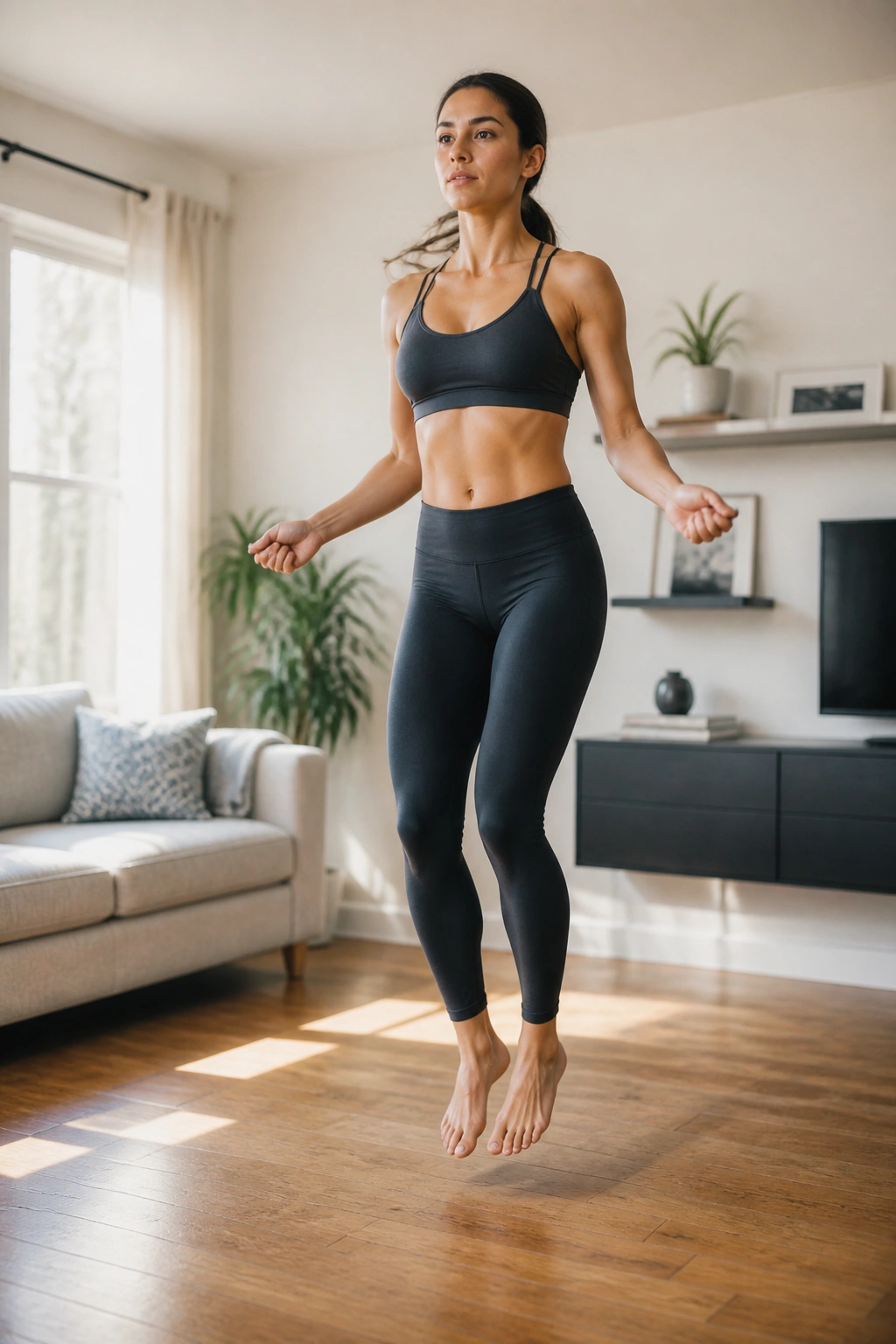
You do not actually need a rope. The act of “shadow jumping”—mimicking the motion—is just as effective and eliminates the frustration of tripping over a cord. Keep your elbows tucked in, wrists loose, and bounce lightly on the balls of your feet.
Building Rhythm
The key here is coordination. Even without a rope, you need to maintain a consistent beat. Try playing a song and timing your jumps to the snare drum. It creates a psychological anchor that helps you last longer than if you were just staring at the wall.
Variation
Change your footwork every thirty seconds. Do basic bounces, then switch to a “boxer shuffle” (shifting weight from foot to foot), then try jumping on one leg. This keeps the brain engaged and prevents the boredom that often sets in during steady-state cardio.
9. Bicycle Crunches
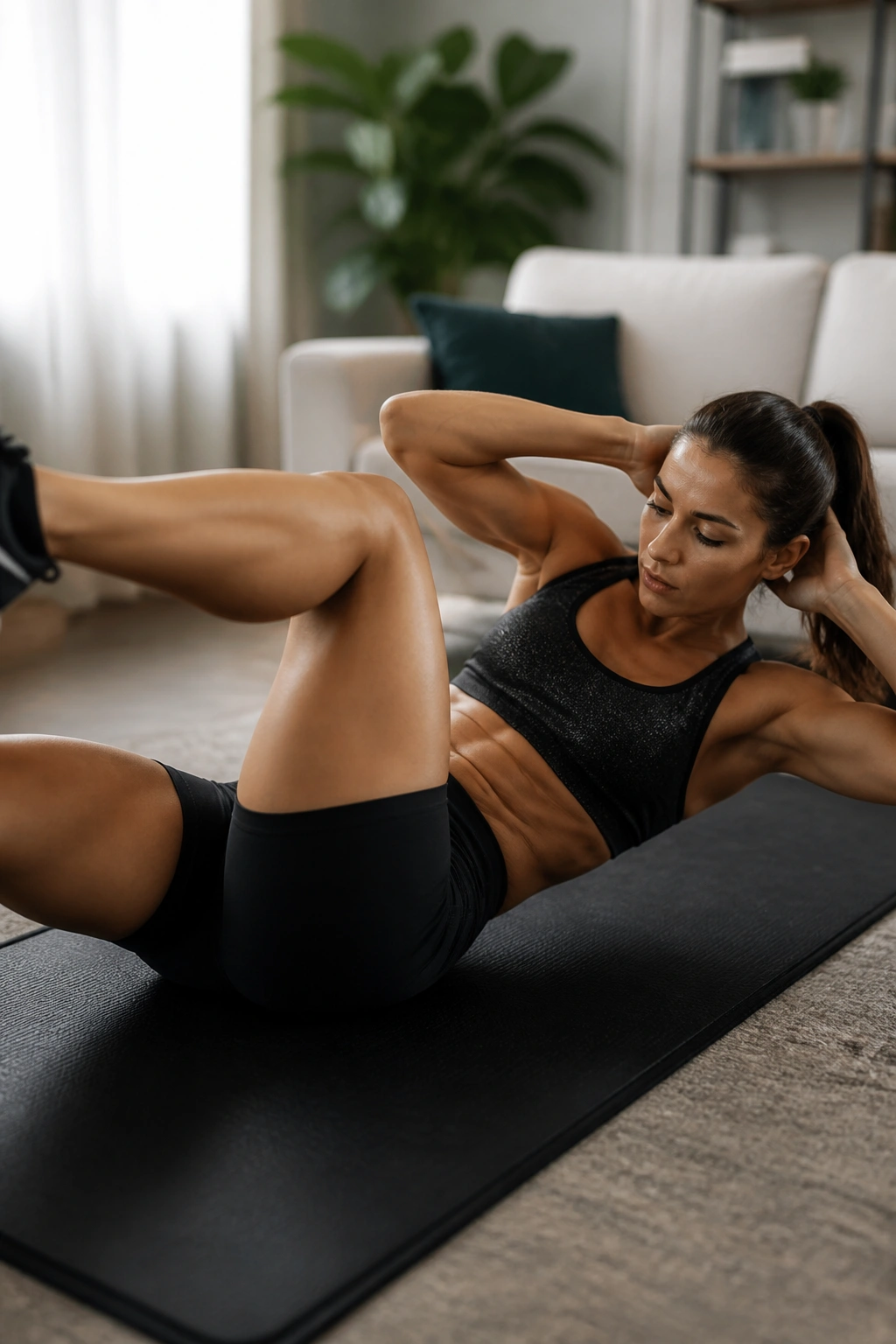
While often categorized as an abdominal exercise, when done for time rather than reps, they are a fantastic cardio movement. Lie on your back, hands behind your head. Bring your right elbow to your left knee while extending the right leg straight out. Switch rapidly.
The Secret to Cardio Success
Speed. Most people perform these in slow motion to “feel the burn.” If you want cardio, you need to accelerate the tempo. Keep the motion continuous. Think of it as pedaling a bicycle while lying down.
Key Details
- Never pull on your neck. Your hands are just there for support.
- Keep the extended leg low to the ground—the lower the leg, the harder the abs work.
- Breathe rhythmically. Inhale for two cycles, exhale for two cycles.
10. Plank Jacks
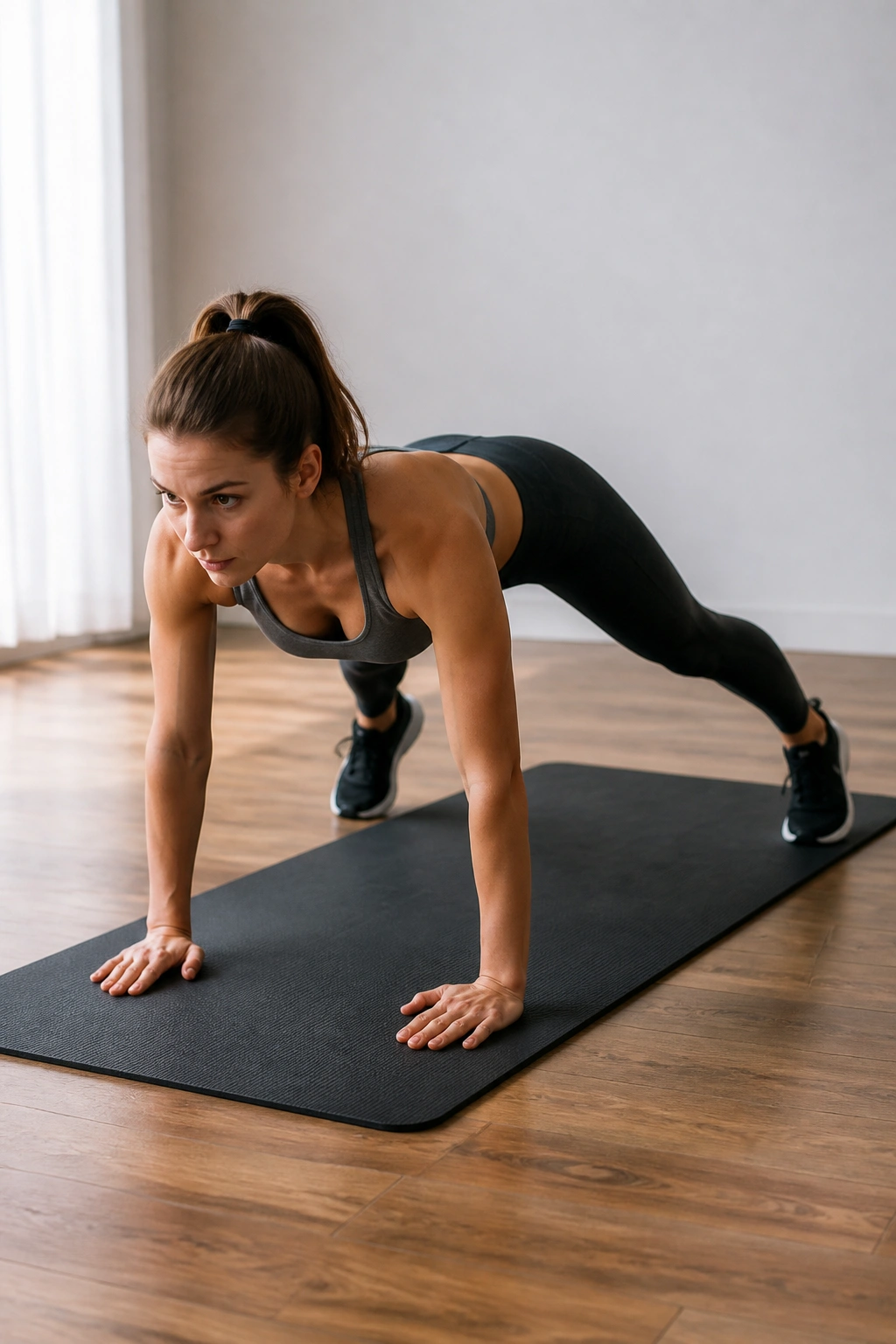
Start in a standard push-up plank position. Keeping your upper body completely still, jump your feet apart and back together, just like you would with a jumping jack. The upper body remains a statue while the lower body does the cardio work.
Avoiding the Sag
The biggest mistake is letting the hips bounce up and down with the feet. Your core should be braced so tightly that if someone pushed your shoulder, you wouldn’t budge. If your hips are bobbing, widen your stance slightly to gain more stability.
Why This Is Effective
It is a deceptive movement. It requires intense stabilization of the core (the plank) while simultaneously burning through calories (the jump). It is a two-for-one efficiency move.
11. Shadow Boxing
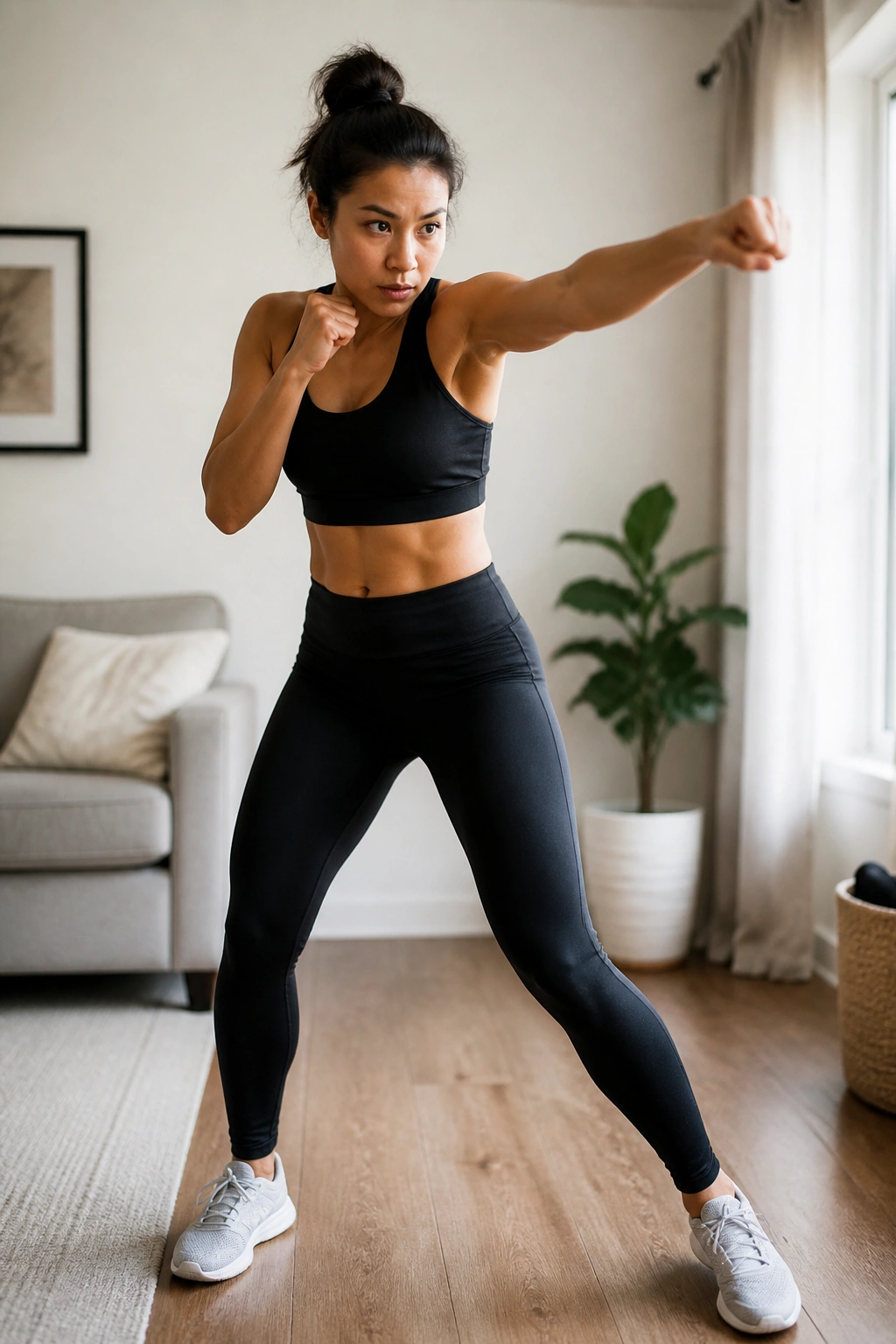
Stand with feet shoulder-width apart, knees slightly bent. Throw jabs, crosses, hooks, and uppercuts into the air. The secret here is not just moving your arms; it is rotating your torso with every punch. The power and the cardio burn come from the core rotation, not the biceps.
Developing Flow
Don’t worry about “proper” technique like a professional fighter. Just keep moving. Bounce on your toes. Shuffle forward and backward. Throw combinations: jab-jab-cross. Keep it moving for three minutes straight, simulating a boxing round.
The Mental Aspect
This is one of the few cardio movements that forces you to think. You have to coordinate which hand moves, how your feet shuffle, and how you rotate your hips. This “brain-work” makes the time pass much faster than just running in place.
12. Step-Ups
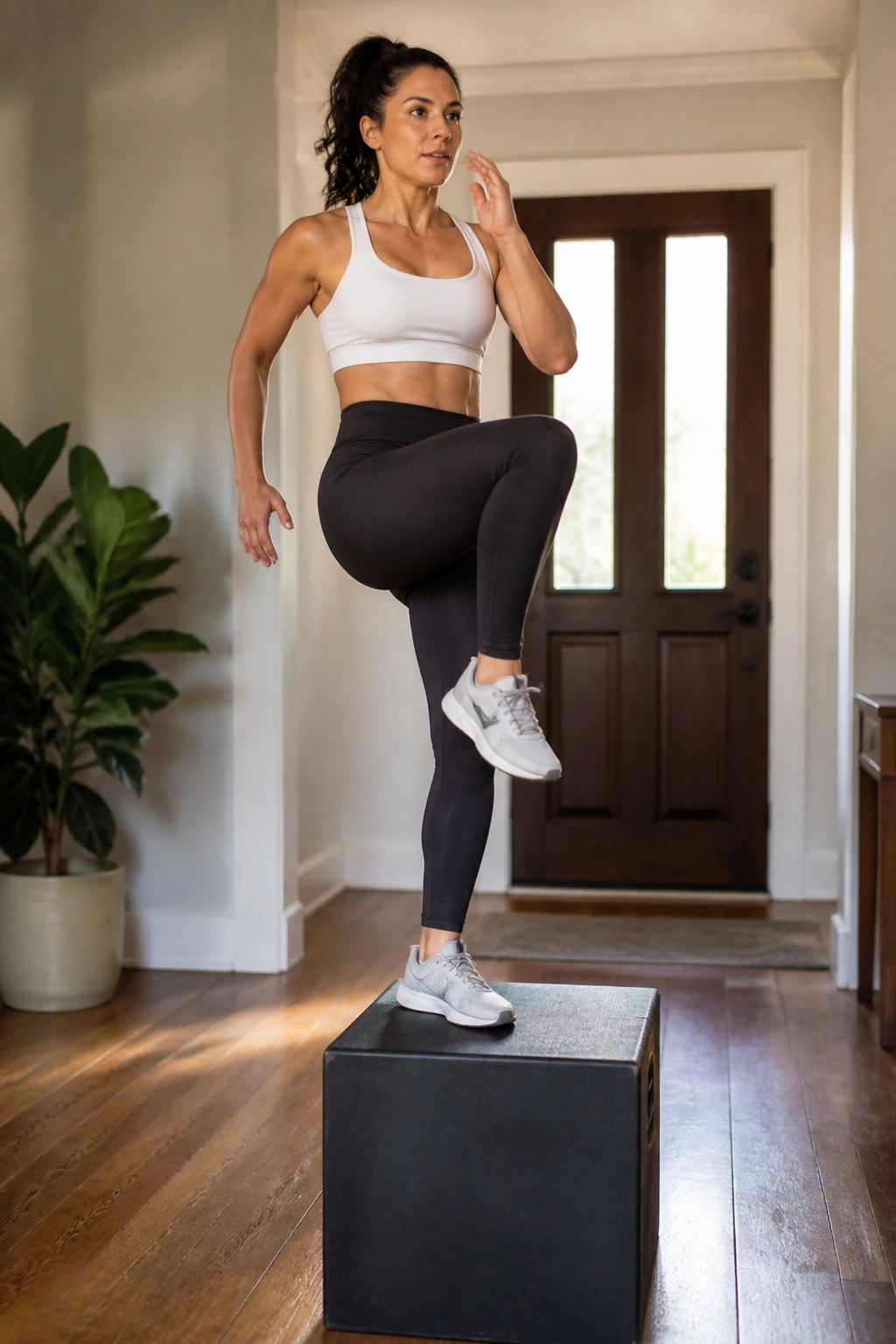
Find a sturdy chair or a sturdy box. Step one foot up onto it, drive your knee up, and step back down. Alternate legs. If you don’t have a chair, you can do this on a low step.
Safety First
Check your equipment. If your chair slides on the floor, push it against a wall. A chair that slips is a recipe for a twisted ankle. Use a non-slip rug underneath it if you are worried.
Why It Works
Step-ups work the quadriceps and glutes heavily. Because you are physically lifting your body weight against gravity every single rep, it elevates the heart rate much faster than lateral movements. It is functional strength combined with high-intensity cardio.
13. Speed Skater Hops
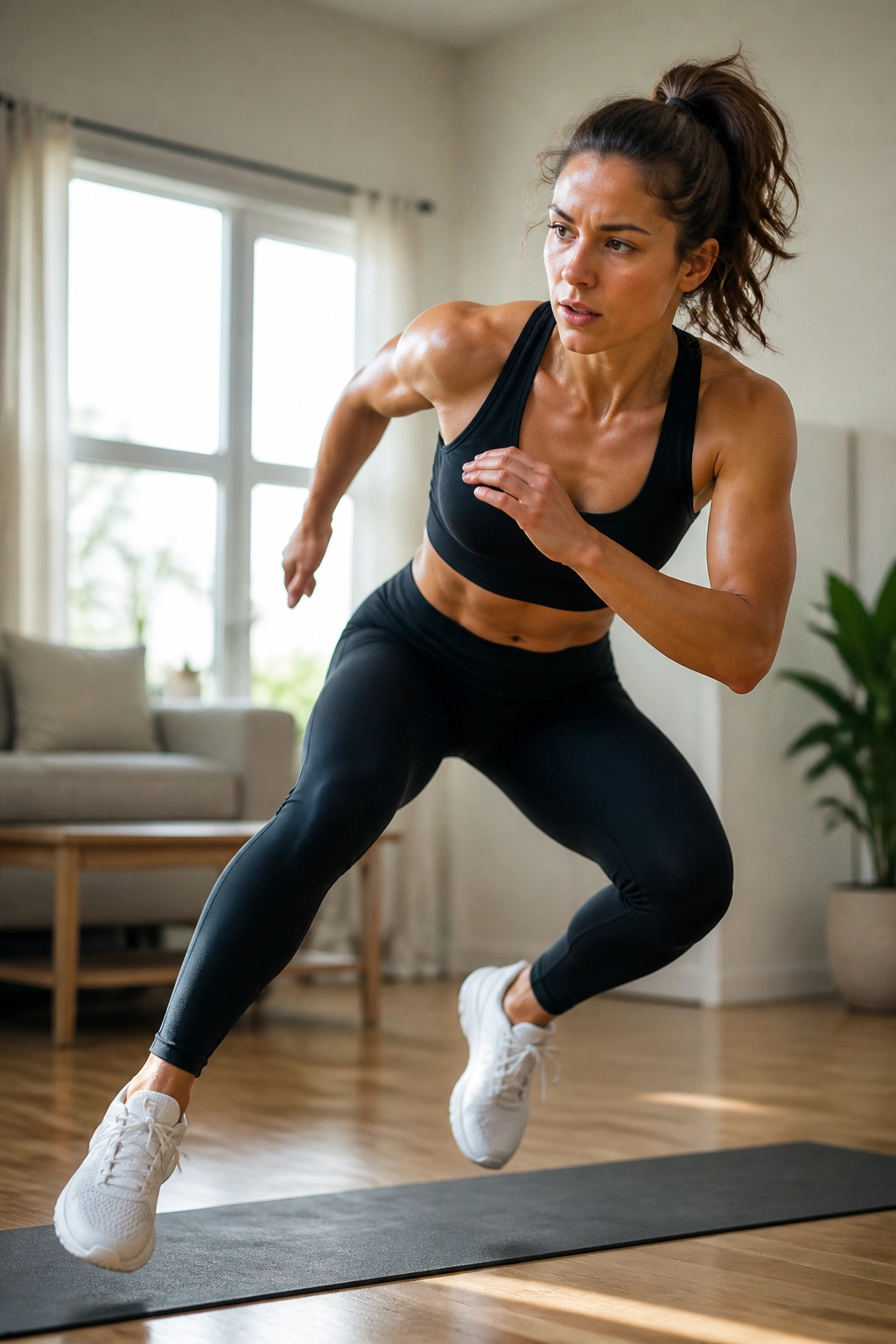
Similar to lateral skaters, but focus on the explosive hop. You are jumping as far to the side as you can, not just stepping. This requires more power and results in a higher calorie burn.
Form Checklist
- Eyes forward. If you look down at your feet, you will lose your balance.
- Use your arms. Swing them aggressively to help you gain distance on the jump.
- Land on a bent knee. It acts like a shock absorber for your hip and knee joints.
Consistency
This is a high-intensity move. Don’t try to do it for 5 minutes straight. Do 30 seconds of maximum effort, then 30 seconds of light jogging in place to catch your breath. Repeat this interval style five or six times.
14. Frogger Jumps
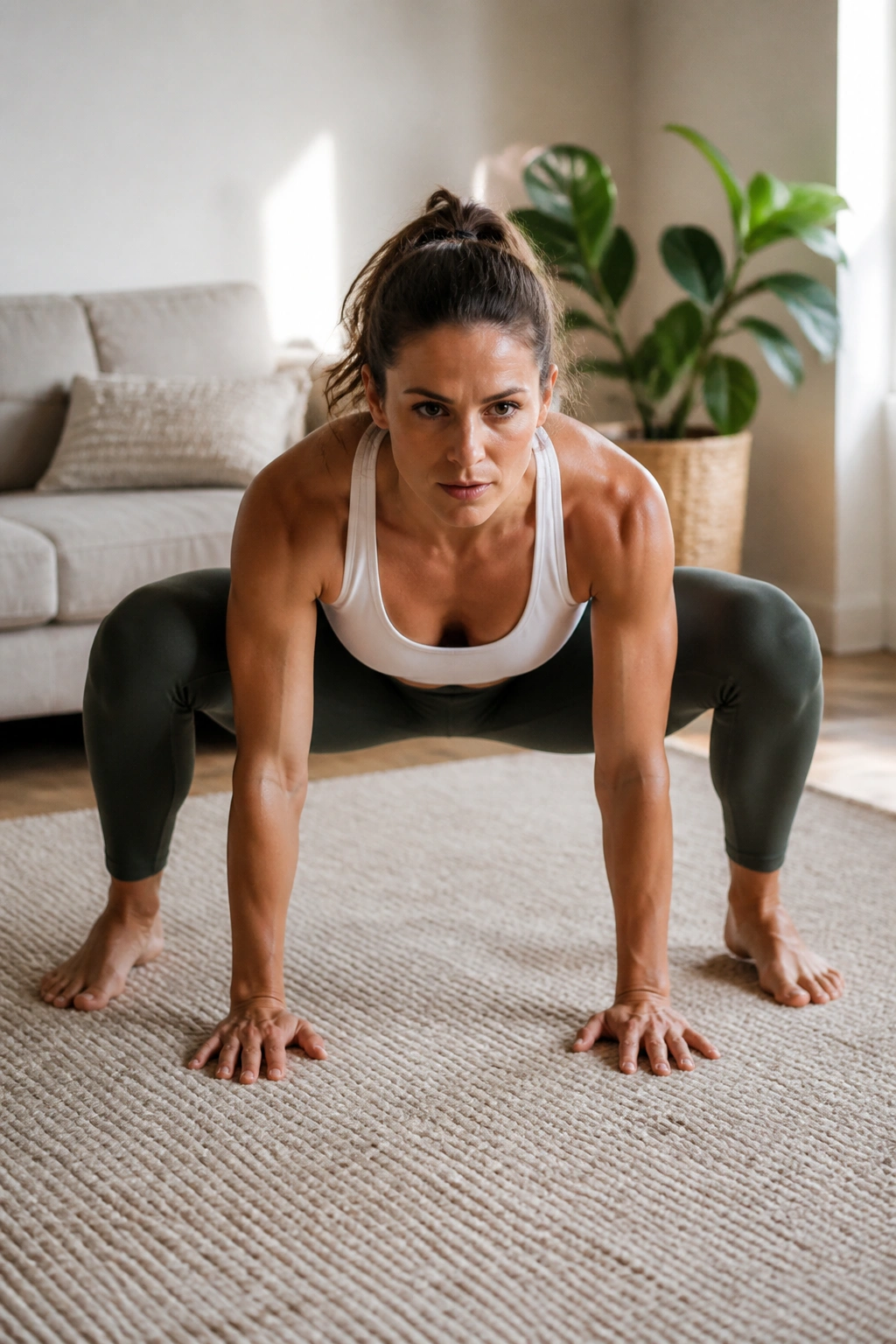
Start in a wide-legged squat, touching the floor with your fingers. Explode forward in a small hop while staying low, then hop back. It’s a mix of a squat and a broad jump, keeping your hips parallel to the floor the entire time.
Why It’s Unique
Most cardio exercises are vertical. Frogger jumps are horizontal and low. This keeps the legs under constant tension. Your quads will scream, and your heart will race because there is no “break” at the top of the movement.
The Experience
Expect this to feel grueling. It hits the legs harder than almost anything else on this list. Start with just 20 seconds. Trust me, that is enough to leave you gasping if you do it with intensity.
15. Inchworms
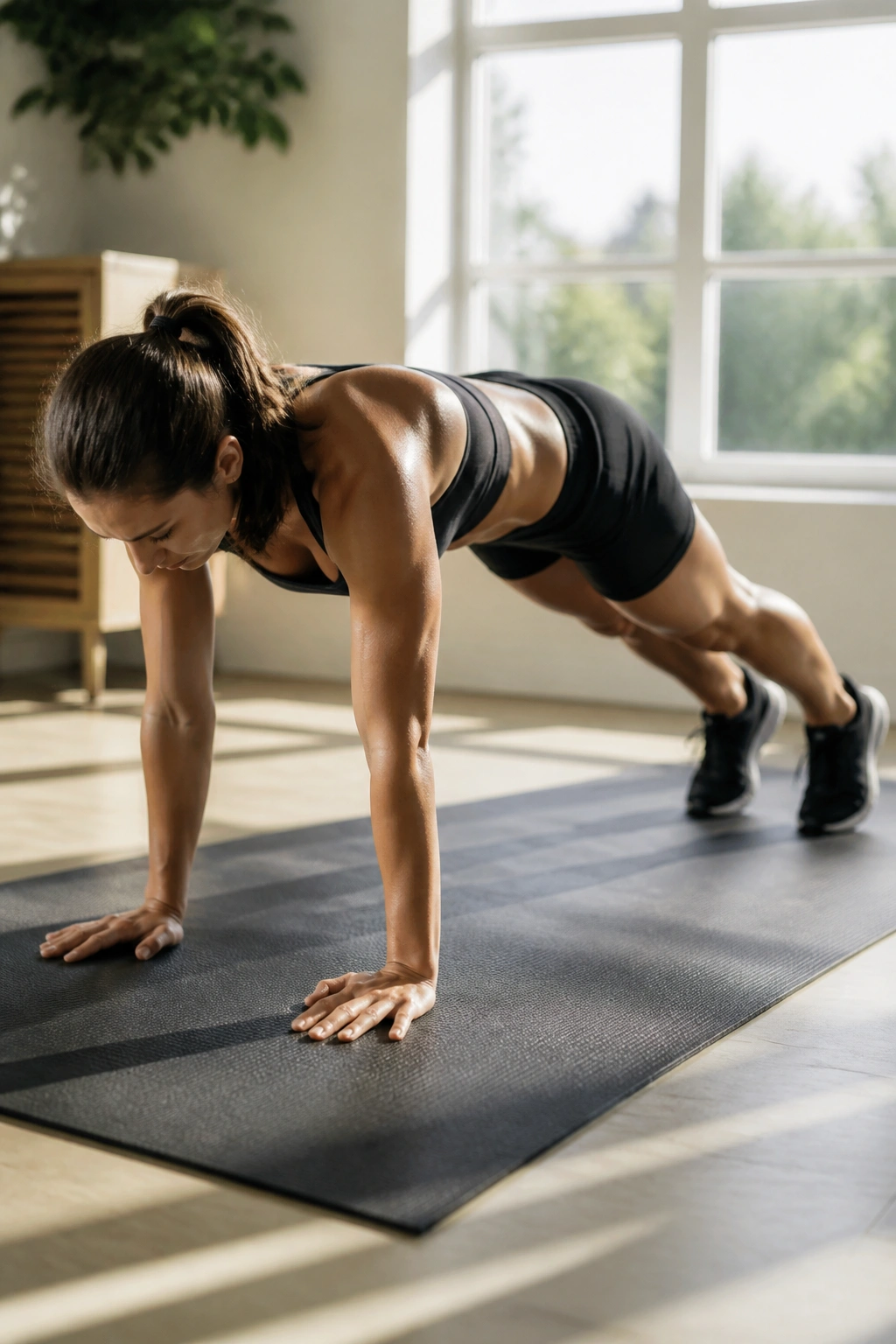
Start standing. Fold forward, placing your hands on the floor. Walk your hands out until you are in a plank position. Walk your hands back to your feet and stand up.
The “Cardio” Modification
To make this a cardio move rather than just a stretch, move quickly. Do not linger in the plank. Walk out, touch the plank, walk back, and stand up immediately. Do not pause at the bottom.
Flexibility and Flow
This is a great movement because it combines active stretching with heart-rate elevation. It is perfect if you feel stiff or haven’t moved in a while. The act of reaching for the floor and walking out your hands lubricates the shoulders and opens up the hamstrings.
16. Star Jumps
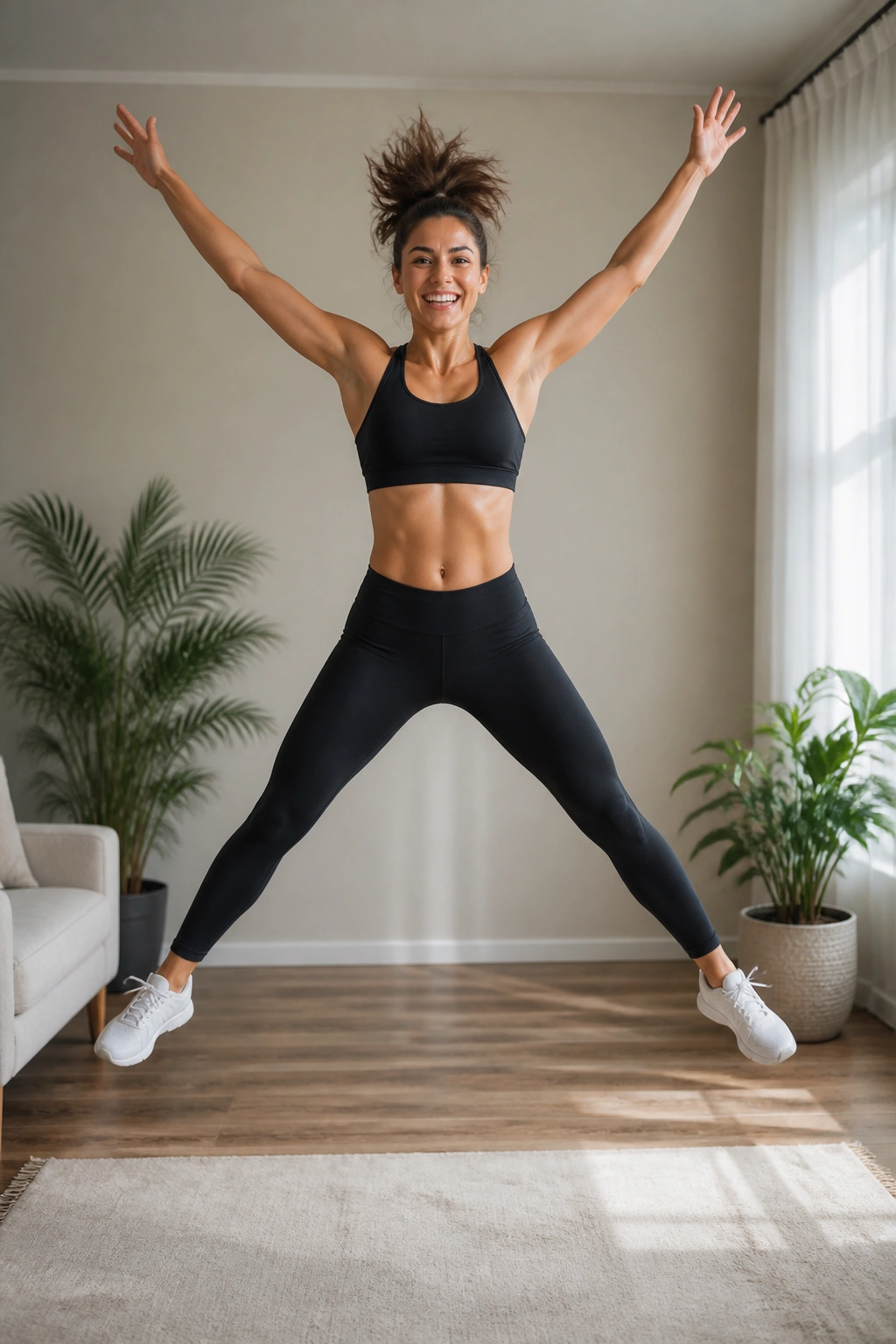
This is essentially a jumping jack on steroids. Start in a deep squat, hands touching the floor or tucked near your chest. Explode upward, spreading your arms and legs out into a “star” shape in the air. Land back in the squat.
The Explosive Demand
This is a high-impact, high-intensity move. Only do this if your joints feel healthy. It requires significantly more power than a standard jumping jack.
Why It’s Effective
The explosive power required for a star jump is immense. You are moving your entire body weight vertically. This is an anaerobic-heavy exercise, meaning it will fatigue you very quickly. Limit these to short bursts, maybe 15-20 seconds at a time, followed by active recovery.
17. Bear Crawls
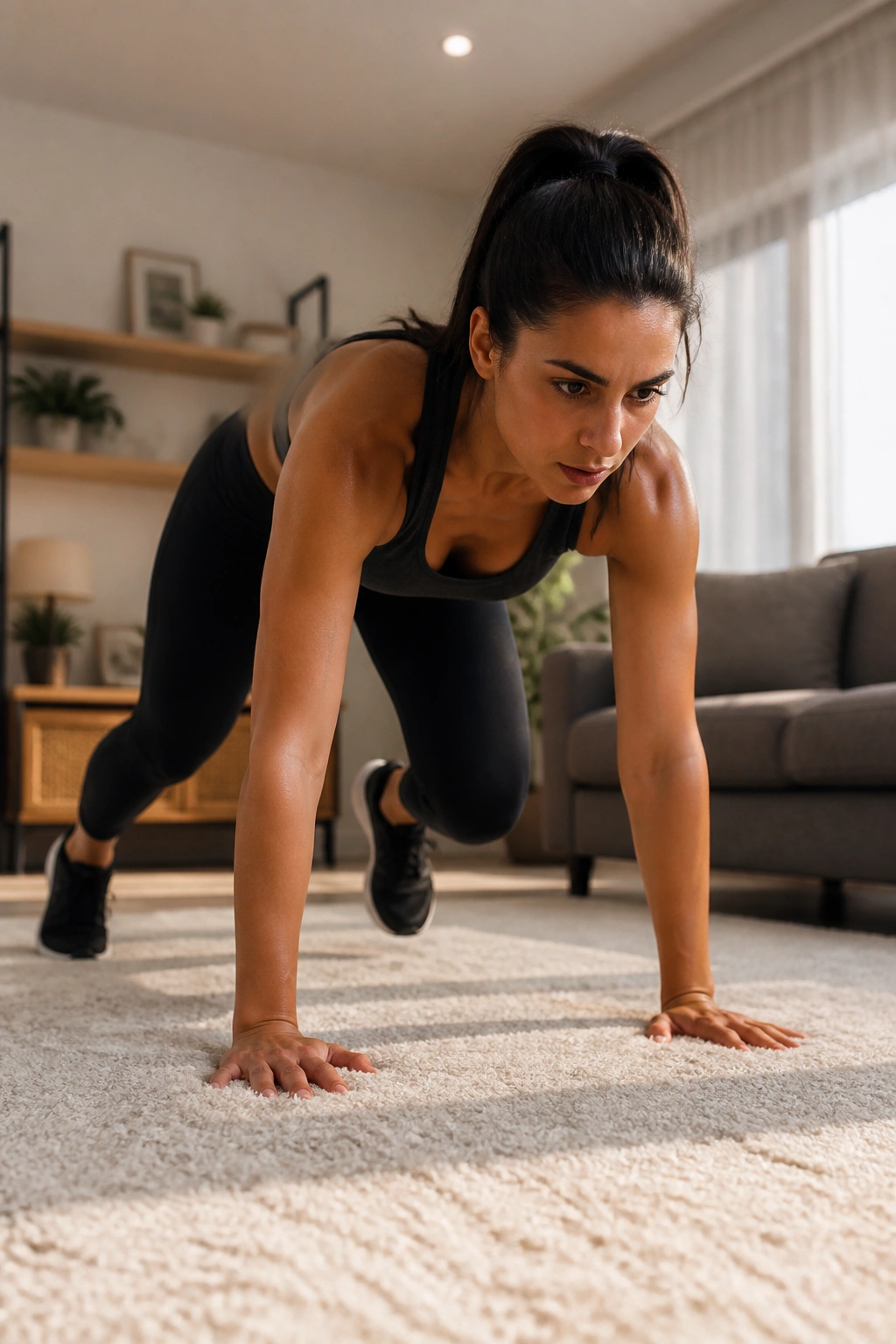
Get on the floor on all fours. Lift your knees two inches off the ground. Crawl forward, moving opposite hand and opposite foot. Keep your back flat.
The Coordination Challenge
Moving opposite limbs is harder than it sounds. It requires concentration. If you feel like you are stumbling, slow down. The cardio benefit comes from the sustained tension of holding your body off the floor, not from moving fast.
Where to Do Them
You don’t need much space. Crawl forward for five steps, crawl backward for five steps. That is enough to get your heart rate up. It is a fantastic full-body movement that builds shoulder stability and core strength while challenging the cardiovascular system.
18. Dancing
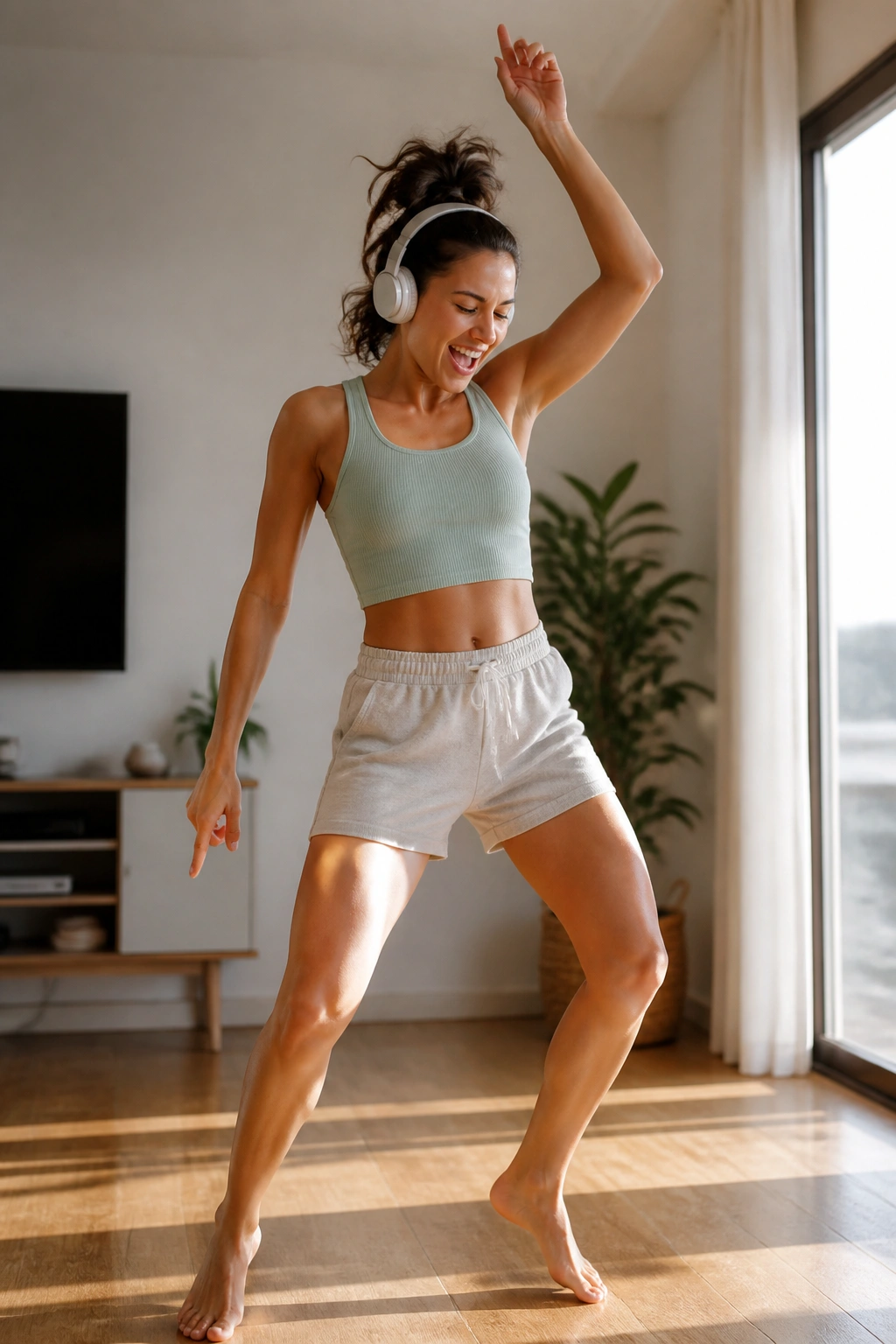
It sounds silly, but putting on three of your favorite high-tempo songs and just moving is legitimate cardio. You are jumping, shuffling, spinning, and swinging your arms. There is no right or wrong way to do it.
Why It’s Sustainable
The “fun factor” is the biggest variable in exercise adherence. If you are having fun, you will do it longer. You don’t have to count reps, worry about form, or check the clock. You just have to move.
The Setup
Pick songs that have a consistent beat—around 120-130 beats per minute is perfect for sustained movement. Don’t worry about what you look like; no one is watching. The goal is continuous motion for the duration of the tracks.
19. Speed Walking in Place
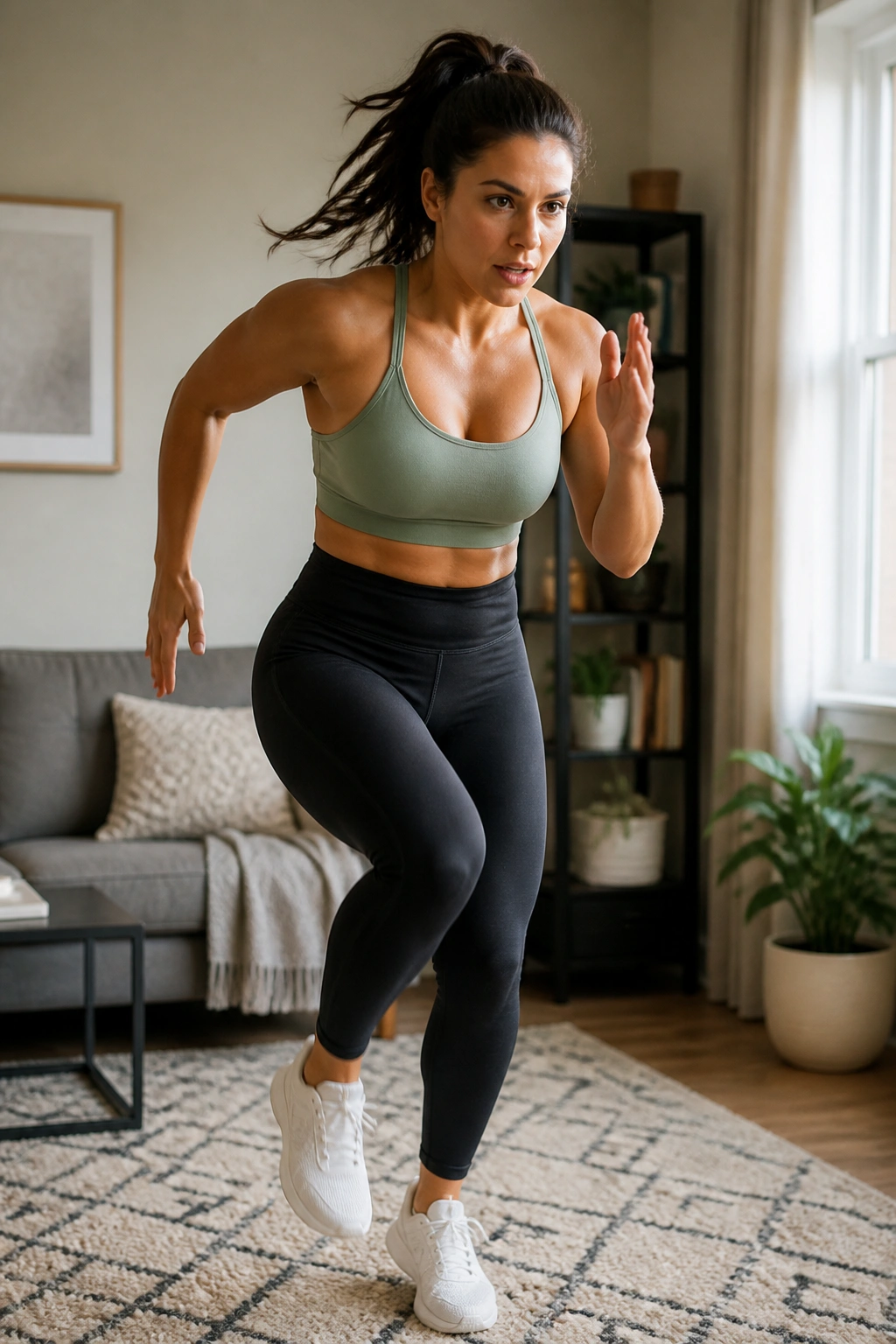
This is the lowest-impact cardio option. It is not “marching”; it is walking as fast as you possibly can without lifting your feet off the ground. Pump your arms aggressively.
The Nuance
To make this effective, you have to exaggerate your arm swing and your core engagement. You are not just taking a stroll. You are pretending you are late for a train. Your torso should be slightly forward, and your glutes should be engaged with every step.
Who Is This For?
This is perfect for days when you feel sore or exhausted but still want to keep the habit of moving. It keeps the blood flowing and the metabolism up without punishing your joints.
20. Toe Taps
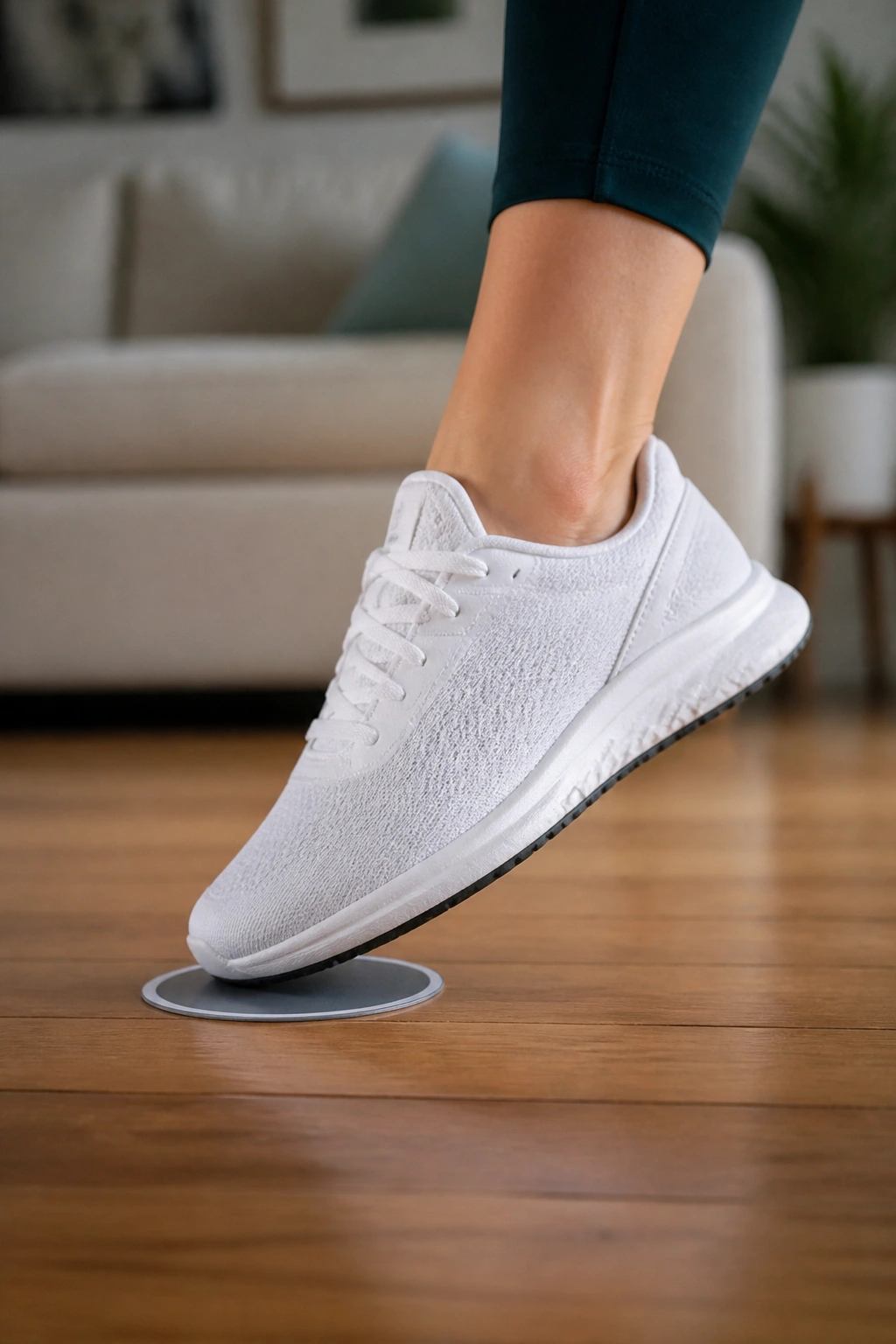
Find a low object—a sturdy book, a step, or just mark a spot on the floor. Tap your right toe on it, then switch, tapping your left toe. Keep alternating as fast as you can.
The Rhythm
Think of this as a rhythmic drill. It improves your foot speed and agility. It feels easy at first, but try doing it for two minutes straight without stopping. Your calves will be on fire.
Making It Work
Keep your upper body tall and relaxed. The movement is purely in the lower legs and feet. It is an excellent way to finish a workout, as it allows you to get a final burst of heart rate elevation without needing a massive amount of physical space or power.
Final Thoughts
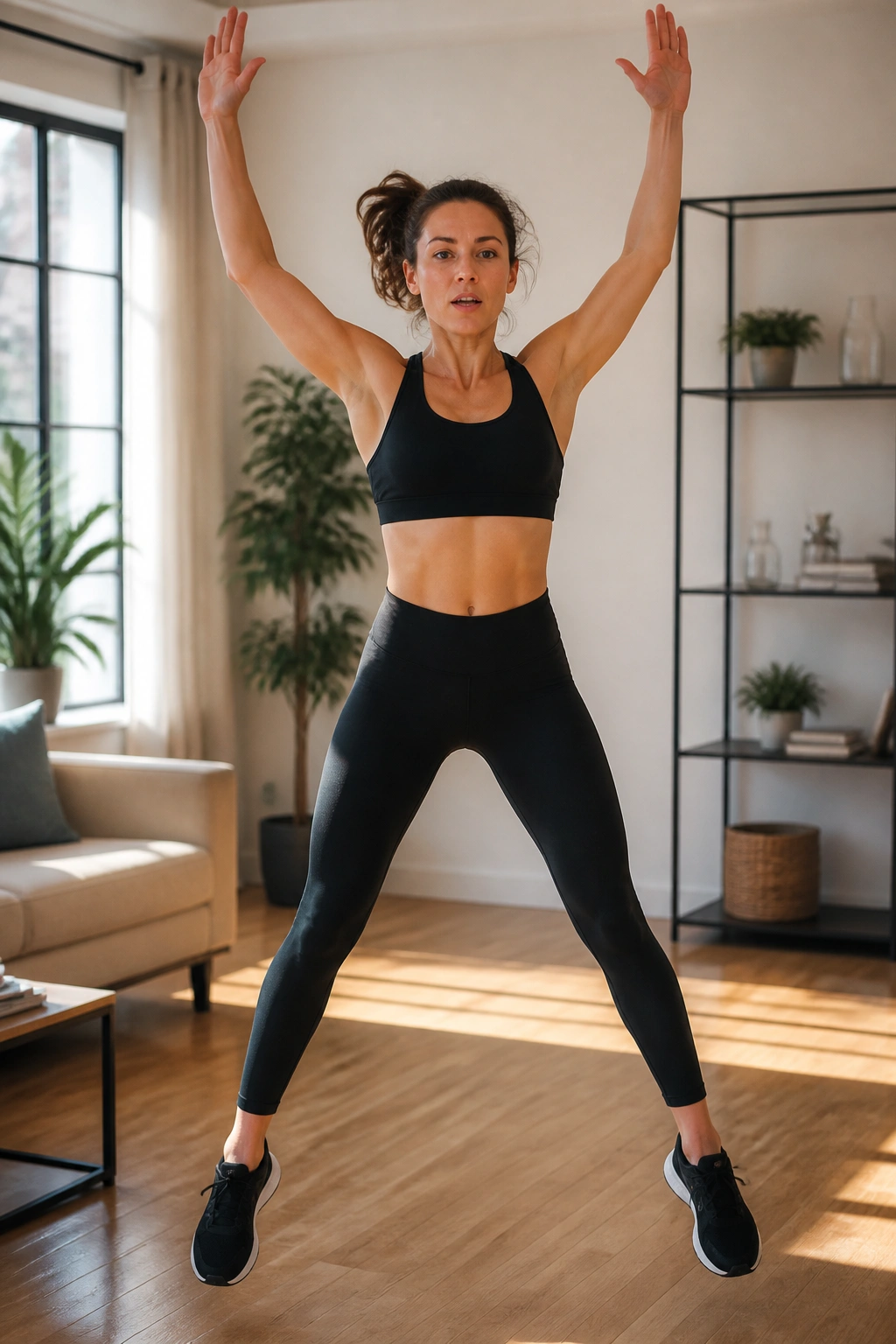
The most important workout is the one you actually finish. It does not matter how many of these exercises you combine or how intense the session is; what matters is that you started and you completed the movement. Consistency, over weeks and months, is the only thing that changes your baseline fitness.
If you are feeling overwhelmed, pick three movements from this list. Do them for 45 seconds each, rest for 15 seconds, and repeat that circuit four times. That is a twelve-minute workout. It is effective, it is done at home, and it is entirely within your control. You do not need anything else. Just start.
