



Crunches won’t flatten a belly by themselves. Sorry.
The best belly fat workouts are the ones that make your whole body work, push your heart rate up, and leave you able to show up again tomorrow. Spot reduction is a stubborn promise people keep selling, but fat loss happens across the body, not just where you feel the burn. That means the real job is a mix of cardio, strength, and core work that keeps muscle on your frame while your energy use climbs.
Public-health advice has stayed fairly steady for a long time: regular moderate movement, a few tougher bursts, and strength work a couple of times a week. That combination is boring in the best way. It works because it’s repeatable.
A lot of people get stuck hammering sit-ups, then wonder why the waistline barely changes. The middle responds better when your legs, back, chest, and lungs all get dragged into the job. Fifteen workouts sit below, but nobody sensible does all fifteen in one week. Pick a few hard sessions, add lower-impact days when your joints need a break, and let one easy day stay easy.
1. Brisk Incline Walk Intervals for Belly Fat
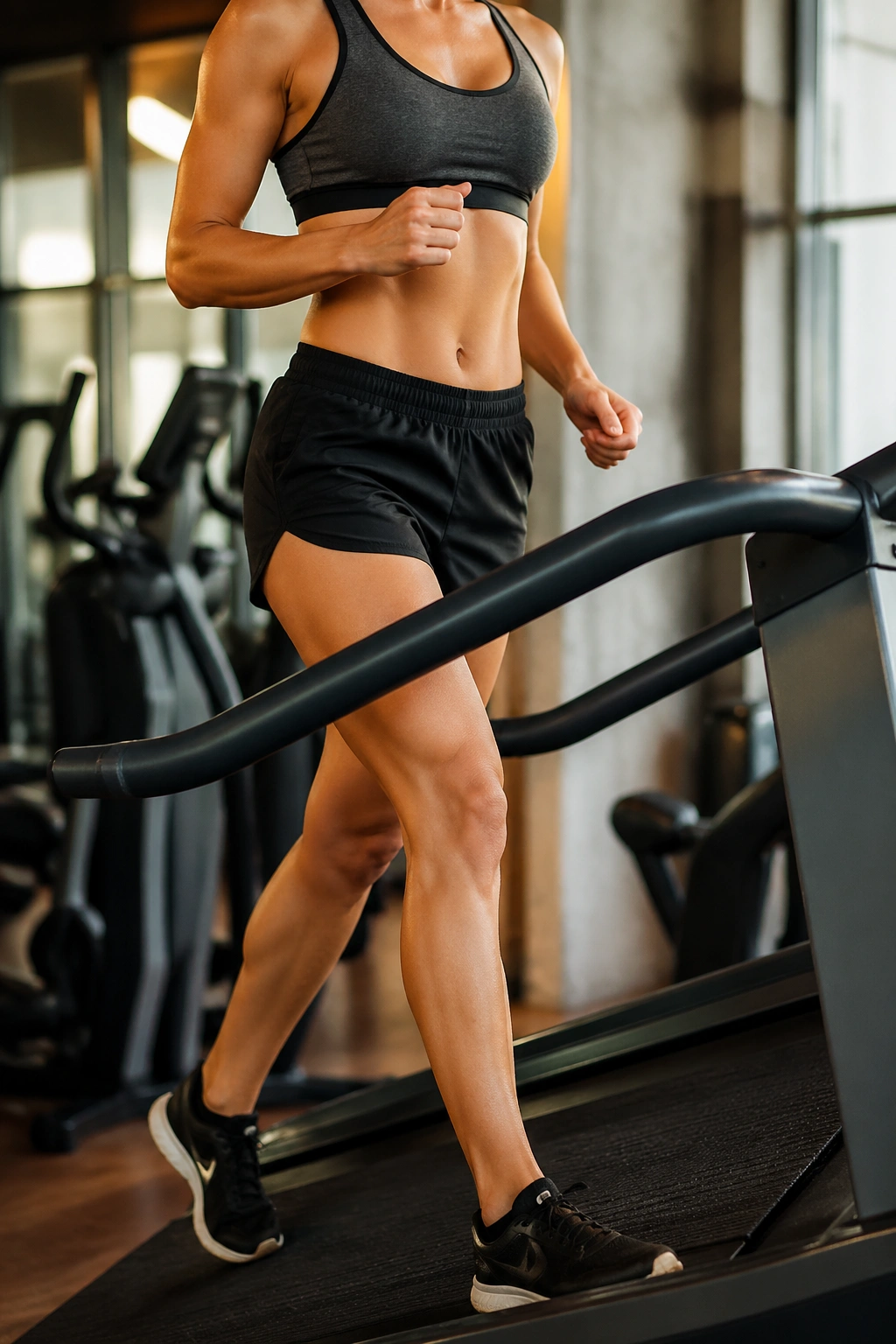
If running leaves your shins barking, put the treadmill up a few notches and walk. Incline walking looks plain, which is exactly why people underestimate it. Five minutes in, your breathing changes, your glutes wake up, and the whole session starts feeling like work.
Why the Incline Matters
A flat walk is fine for recovery. An incline walk is different because the slope forces more hip extension and makes your legs carry more of the load. You’re still keeping impact low, which matters if your knees, ankles, or lower back get cranky fast.
I like this one for people who quit workouts too early because they think “hard” has to mean jumping. It doesn’t. A 4% to 8% incline with a brisk pace can push your heart rate into a useful zone without turning the session into a joint tax.
A Simple 25-Minute Version
Try 2 minutes at a brisk incline, 1 minute at a flat recovery pace, and repeat that cycle 8 times. If you’re new to it, stay at a pace where you can speak a short sentence but not chat comfortably. That sweet spot matters more than the exact speed.
- Keep your chest tall.
- Let your arms swing.
- Don’t lean on the rails.
- Use a pace that makes breathing deeper by minute 3.
Pro tip: If you hold the handrails the whole time, you’re stealing work from your legs. Light touch is fine. Hanging on is not.
2. Jump Rope Rounds That Spike Your Heart Rate
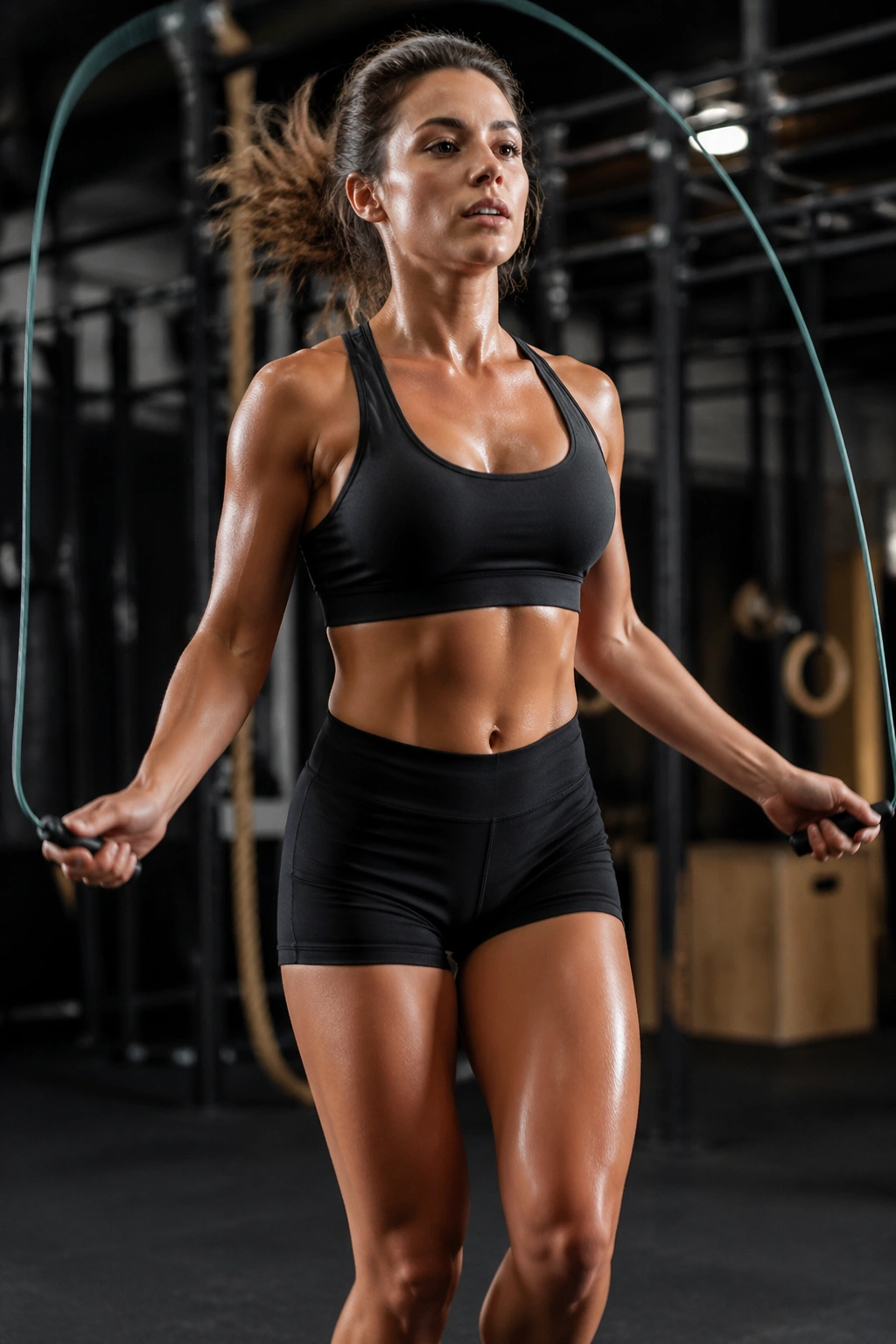
Jump rope hits hard, fast, and without much setup. It is one of those workouts that makes a tiny space feel oddly unforgiving. That’s the charm.
A clean rope session can turn into a full-body hit in under 15 minutes. The calves work, the shoulders stay busy, and the core has to keep you from wobbling all over the floor. Thirty seconds can feel like a minute if your rhythm is off, which is why the rope is so useful for fat-loss conditioning.
Try 30 seconds on, 30 seconds off for 10 to 15 rounds. If single jumps feel messy, use a boxer step and keep each hop small. You do not need huge jumps. Big jumps waste energy and beat up your calves faster than they need to.
The trick is to stay smooth. Crisp wrists. Soft knees. Quiet feet. If your rope keeps catching, slow the speed down instead of forcing it. That tiny adjustment usually saves the whole session.
And if your calves cramp early, cut the work interval to 15 seconds for the first few rounds. That is not cheating. It’s smart pacing.
3. Kettlebell Swing Bursts That Hit the Hips Hard

One good kettlebell swing set can humble you fast. The move looks simple from a distance, then your heart rate shoots up and your glutes start doing the talking.
What Makes It Different
Swings are not arm lifts. They’re a hip hinge with force. The bell floats because your hips snap forward, not because your shoulders yank it up. That matters. A swing done right trains the posterior chain, spikes the pulse, and keeps the core braced without turning the session into a sit-up festival.
How to Run the Set
Use a bell you can control for crisp reps. Start with 10 swings every 30 seconds for 10 rounds. If that feels too twitchy, do 15 swings with 45 seconds of rest. The goal is strong, clean reps, not frantic ones.
Quick Form Checks
- Hinge back, don’t squat down.
- Keep the neck long.
- Snap the hips through.
- Stop the set when your back starts rounding.
Bold tip: If you feel swings mostly in your arms, the bell is too light or your hinge is off. The hips should be the engine.
4. Bodyweight Squat and Push-Up Circuit for Belly Fat
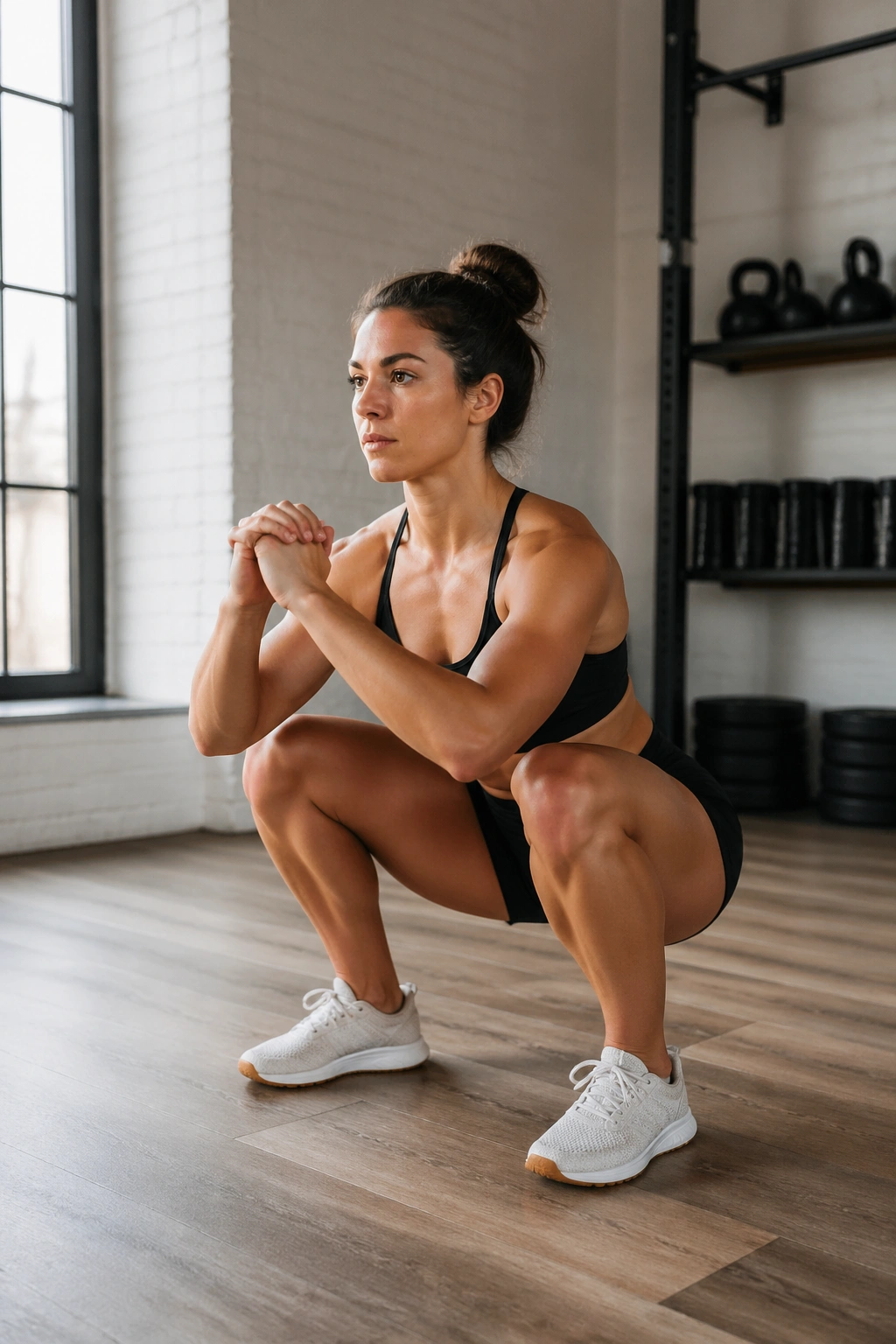
A plain bodyweight circuit can be brutally effective when the pace is tight and the rest is honest. No fancy gear. No excuse to stop after the warm-up. Just work.
The reason this kind of circuit earns its place in belly fat workouts is simple: large muscle groups burn energy fast when they’re asked to keep going in short bursts. Squats load the legs and glutes. Push-ups load the chest, shoulders, and trunk. Add a little cardio between them, and the whole body has to stay on.
Try 3 rounds of 12 squats, 8 to 12 push-ups, and 20 high knees per side. Rest 45 to 60 seconds between rounds. If full push-ups are rough, use a bench or countertop. I’d rather see good incline push-ups than ugly floor reps with sagging hips.
The best part is how easy this is to scale. Want it harder? Slow the squat down on the way down and stand up fast. Want it gentler? Cut the reps and keep the rest a little longer. That flexibility is why bodyweight work gets ignored and then quietly outlasts the flashier stuff.
A clean circuit leaves you breathing harder, not broken. That’s the target.
5. Mountain Climber Intervals That Light Up the Core
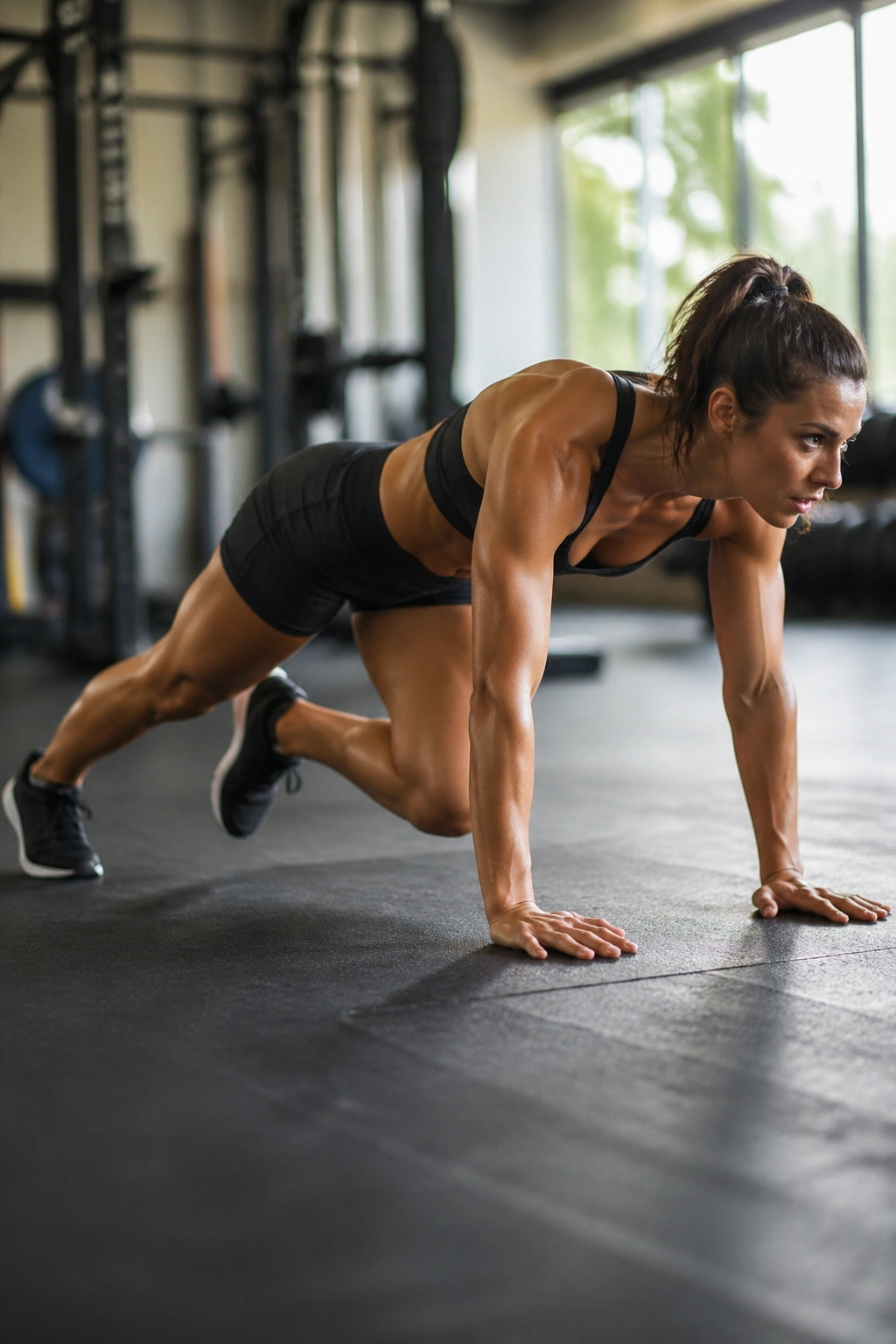
Why do mountain climbers show up in so many fat-loss plans? Because they make the trunk work while the legs keep moving. That combination is awkward in the best possible way.
What the Core Is Doing
The move is not just about speeding your knees toward your chest. Your shoulders have to hold steady, your ribs need to stay tucked, and your hips must resist bouncing around like a loose shopping cart wheel. That anti-wobble demand is what makes mountain climbers far more useful than they look.
How to Use Them
Set a timer for 20 seconds hard, 40 seconds easy and repeat for 10 to 12 rounds. Keep your hands under your shoulders and your feet light. If your hips shoot up, slow down. If your lower back starts sagging, slow down. Faster is not better if the shape falls apart.
A few clean cues help:
- Drive one knee at a time.
- Keep the neck long.
- Breathe out on the drive.
- Keep the floor “quiet” under your feet.
How to get the most from it: Pair mountain climbers with a lower-body or upper-body strength move. The contrast keeps the workout from feeling repetitive, and it pushes your conditioning without piling on boredom.
6. Rowing Machine Sprints for Full-Body Fat Burn
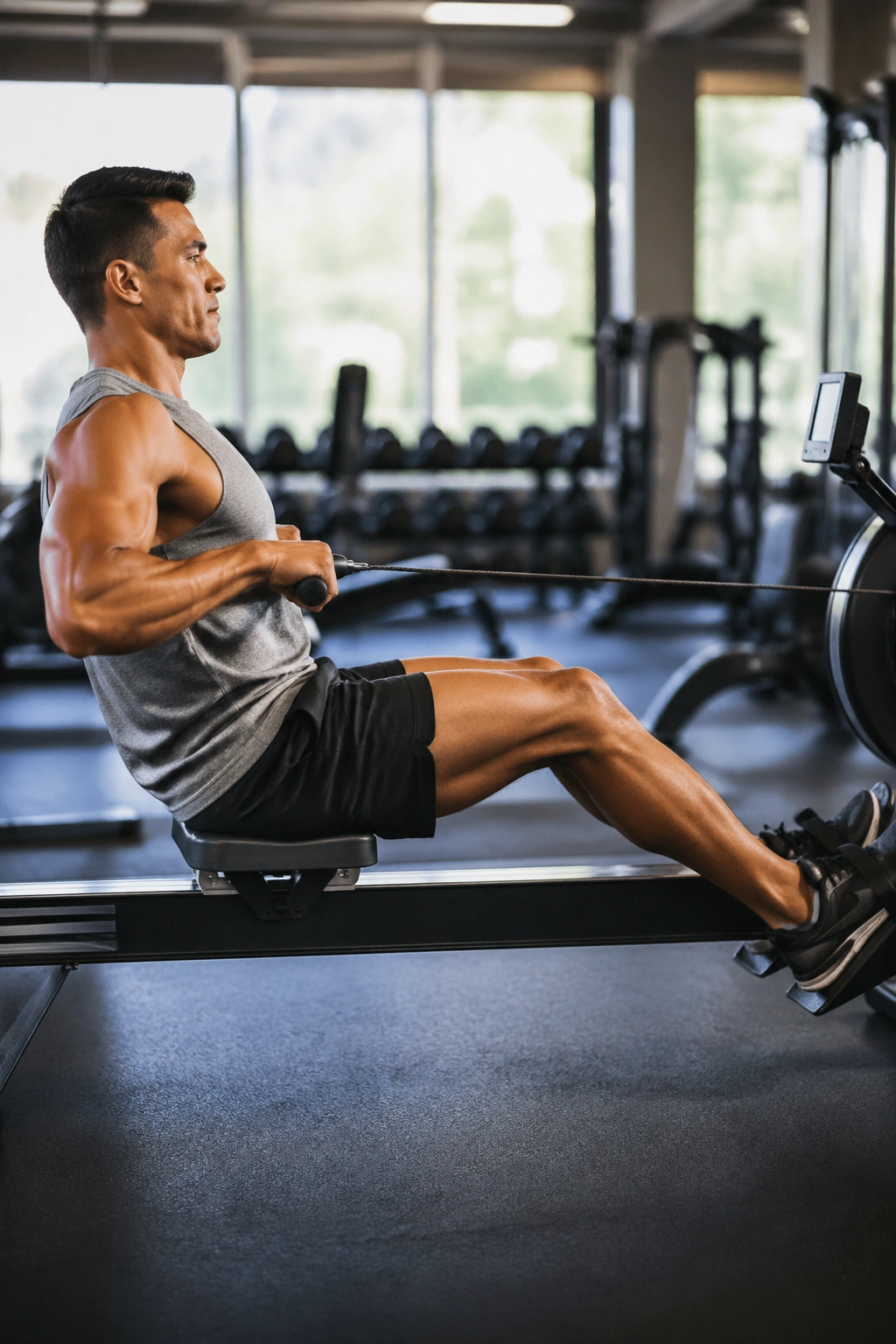
Rowing looks calm from across the gym. Then you sit down, pull ten hard strokes, and your opinion changes.
A rower is one of the cleaner choices for people who want calorie burn without pounding their joints. Your legs drive first, then your hips, then your arms finish the pull. That sequencing matters because it makes the machine a whole-body effort, not just an arm workout with a seat.
Try 8 rounds of 30 seconds hard and 90 seconds easy. Set the damper in a middle range, not at maximum. A lot of beginners assume more resistance means more fat loss. It doesn’t. It usually means sloppier strokes and an early fade.
I like rowing for two kinds of people: the ones who hate running and the ones who want a hard session without foot strike. The back stays active, the hamstrings help, and the heart rate climbs without the jolting feeling some cardio machines create.
One clean stroke beats five sloppy ones. Drive, finish, recover, repeat. If the chain sounds like a slap machine, slow down and fix the rhythm.
7. Stair Climb Power Sets for a Fast Cardio Hit
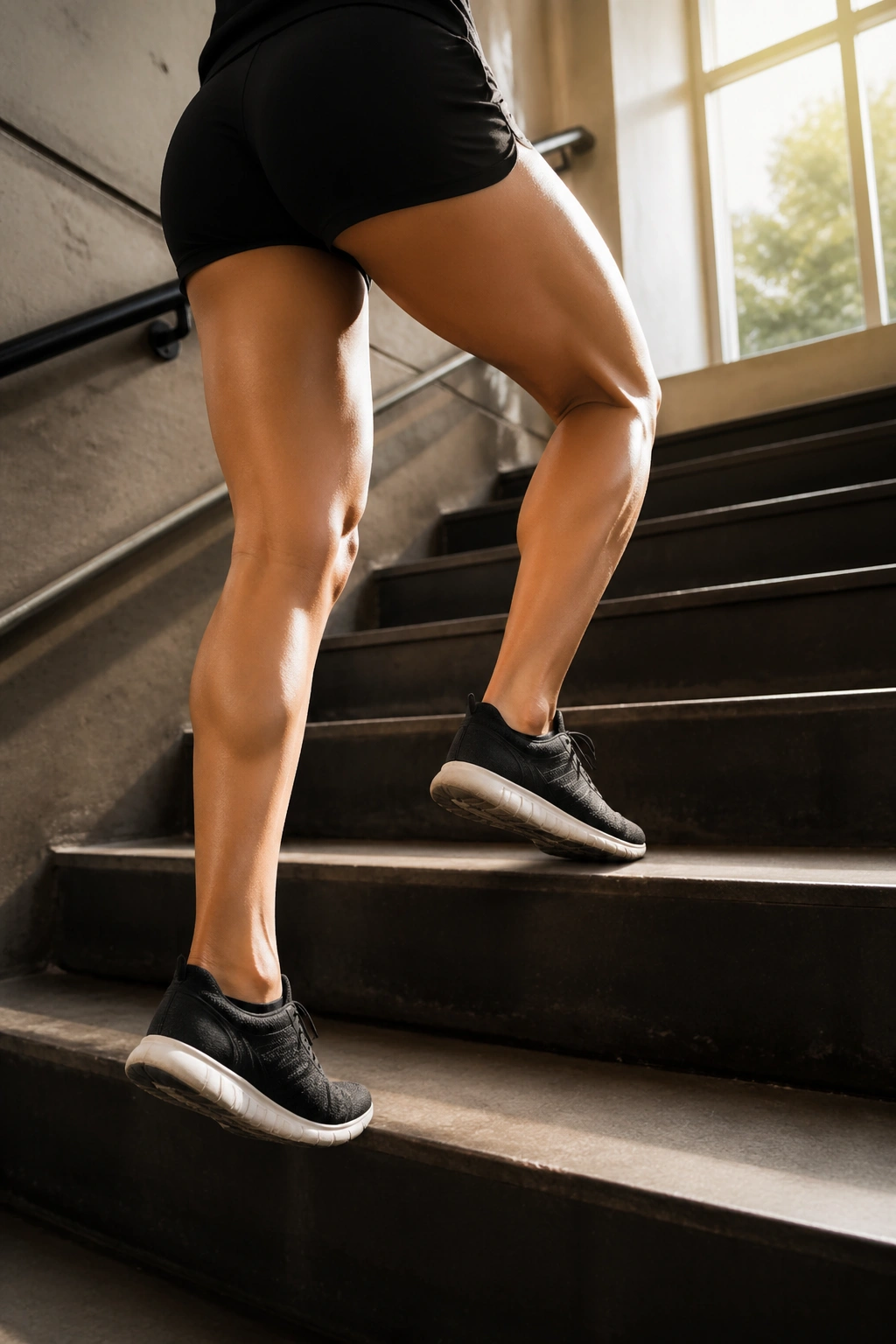
A flight of stairs looks harmless right up until the third trip. Then the legs start voting against you.
Where This Workout Shines
Stairs are brutally simple. Every step asks your glutes, quads, and calves to lift your body against gravity, which is exactly why the session gets your breathing under control fast. You don’t need a gym to do it, either. A building stairwell works. A stair machine works. Even a sturdy outdoor set of steps can do the job.
A Solid Starter Format
Try 30 seconds up, walk down to recover, repeat 8 to 12 times. Stay tall through the chest and drive through the whole foot. Don’t hang on the rail unless you need a light touch for balance. Leaning your weight onto the rail turns the workout into a half-version of itself.
What You’ll Feel
- Calves burn early.
- Glutes light up on the drive up.
- Breathing gets choppy by round 4 or 5.
- The descent should stay controlled.
One caution: If your knees complain on the way down, shorten the steps and slow the descent. The workout still counts.
8. Dead Bug and Plank Core Combo
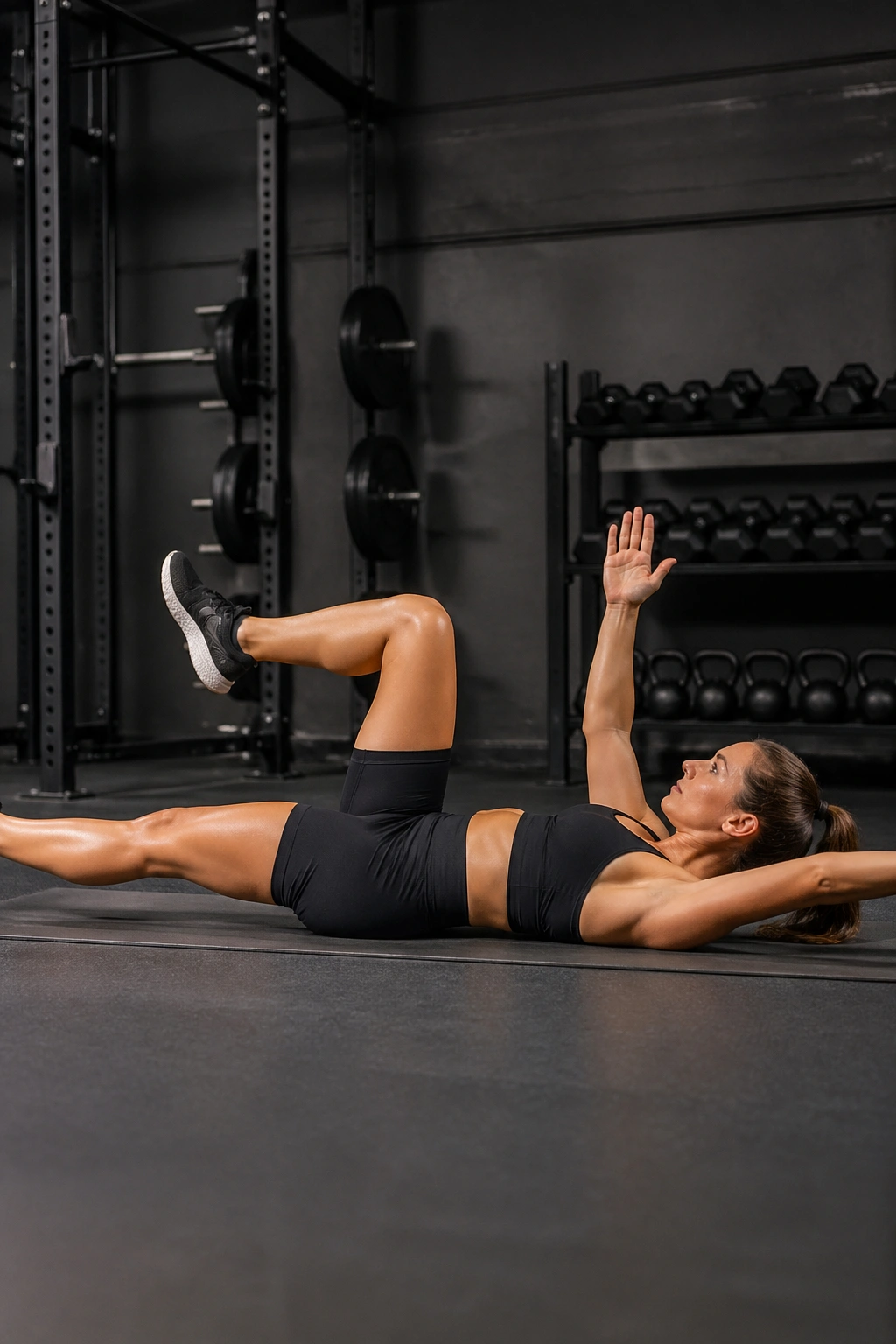
Crunches are easy to love because they feel obvious. The dead bug and plank combo is more honest. It asks you to brace well and keep still while your limbs move around you.
What Makes the Core Work Hard Here
The dead bug teaches the ribs and pelvis to stay stacked. That means your lower back doesn’t dump into the floor every time an arm or leg reaches away. The plank then asks you to hold that same shape under time, which is where the real trunk work shows up. No drama. Just tension.
A 6-Minute Round
Do 8 dead bugs per side, then 20 seconds of front plank, then 20 seconds of side plank on each side. Rest 30 to 45 seconds and repeat for 3 rounds. That’s enough to matter without turning the session into a crawl.
- Exhale as the opposite arm and leg extend.
- Press the lower back gently into the floor.
- Keep the glutes on during the plank.
- Stop the set before the hips sag.
Important: This is not the workout that burns the most calories in the moment. It matters because it makes every other workout cleaner. Stronger core control usually means better squats, better swings, and less wasted energy.
9. Dumbbell Complex Circuit Without Putting the Weights Down
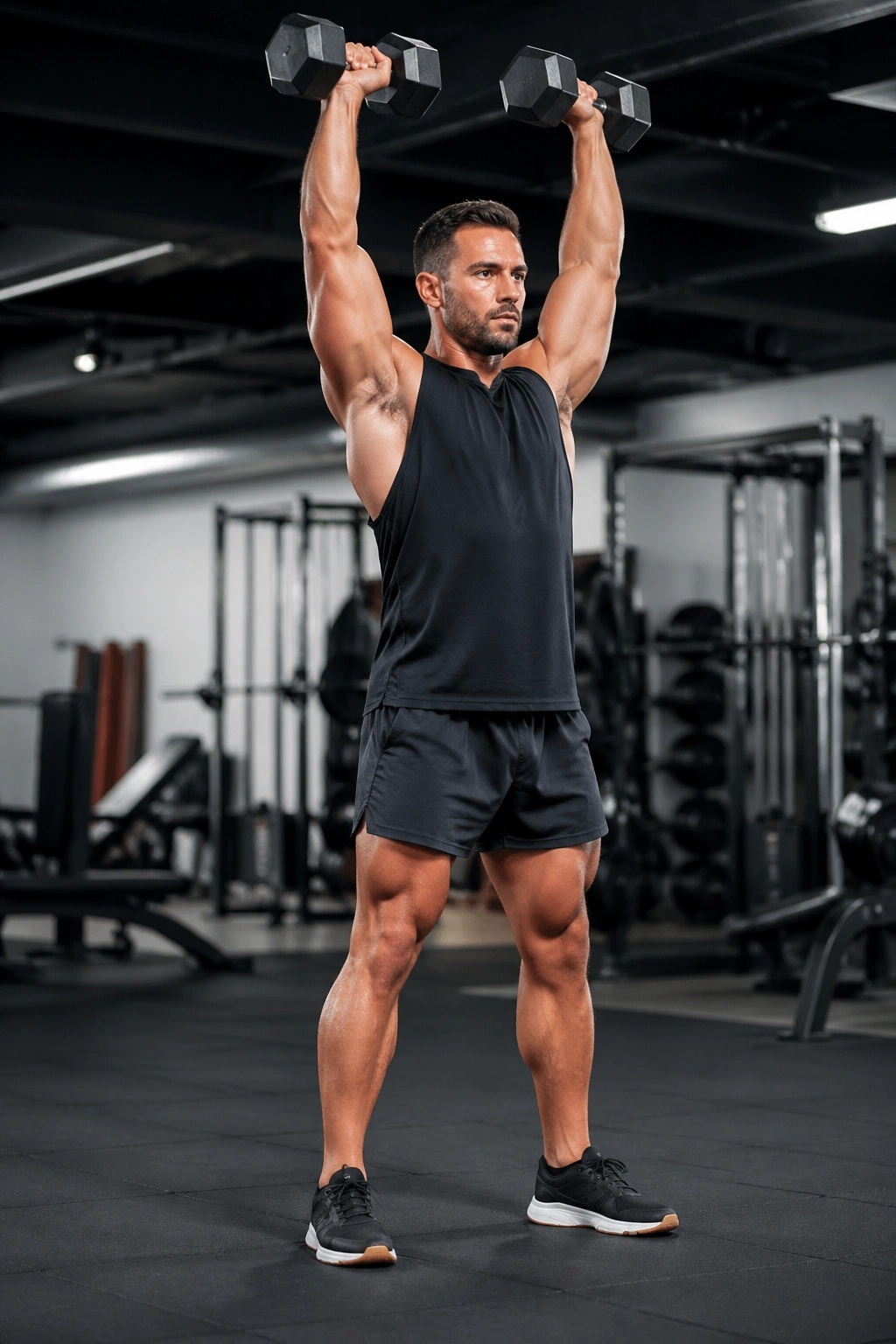
One pair of dumbbells can make you sweat harder than a room full of machines. That’s the appeal of a complex: move from one exercise to the next without dropping the weights.
Start with a pair you can handle for all the movements without grip panic. A simple sequence works well: 6 Romanian deadlifts, 6 rows, 6 front squats, 6 push presses. Rest 90 seconds, then repeat for 4 rounds. The point is not to show off. The point is to keep a heavy-enough load moving long enough that the heart rate climbs and stays there.
I like complexes because they force honesty. If the last move gets sloppy, the weight is too heavy. If you finish and feel fresh, the weight is probably too light. There’s no hiding in the middle.
The best complexes leave your upper back warm, your legs tired, and your breathing loud. They also tend to beat up your ego a little, which I count as a bonus.
Practical note: If you’ve never done one, cut the set to 3 rounds and keep the reps at 5 each. Clean reps beat heroic mess.
10. Cycling Hill Intervals That Save the Knees
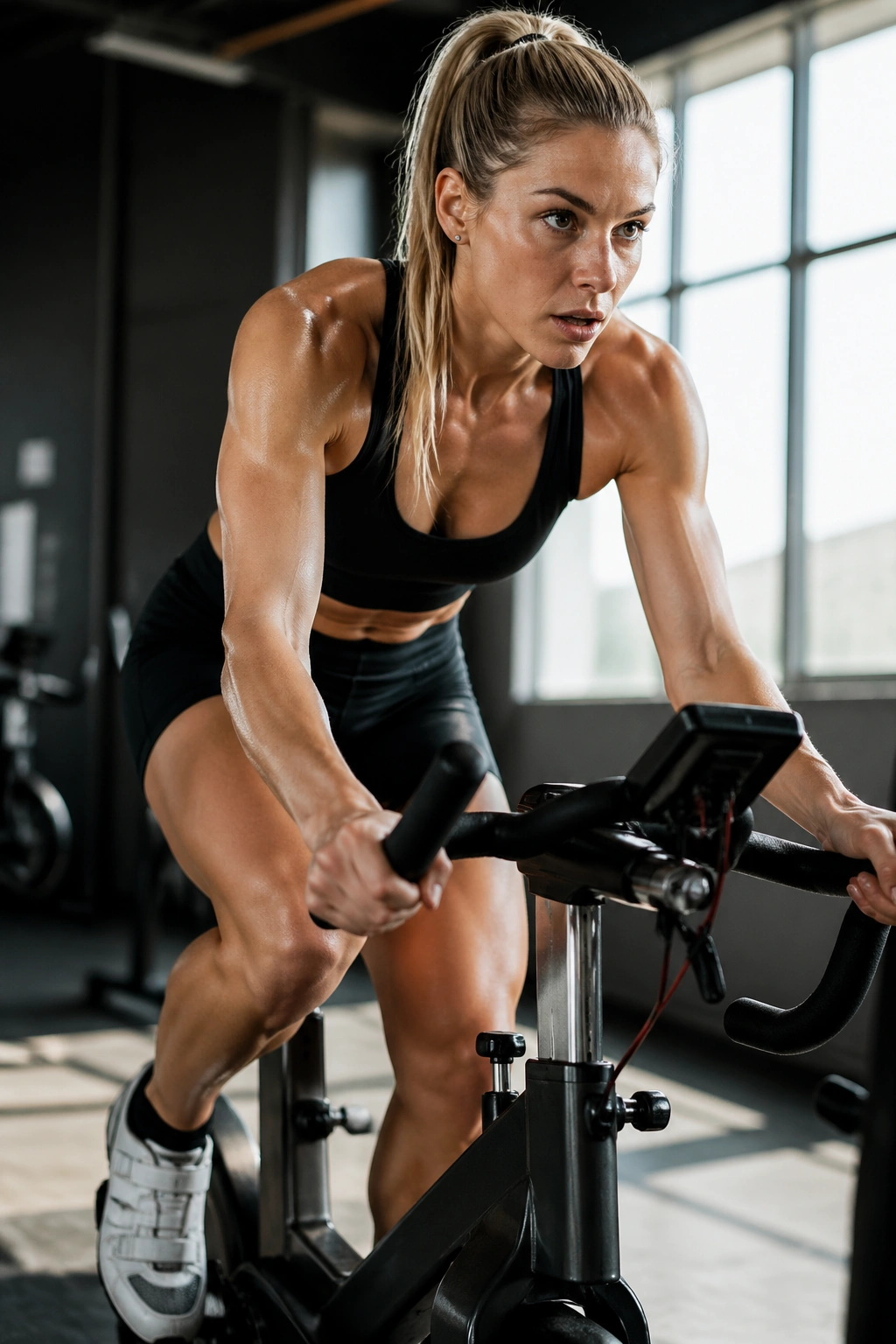
The bike punishes laziness without punishing your joints. That’s why I keep coming back to it.
Stationary cycling gives you a way to stack hard effort into short windows while keeping the impact low. The legs take the load, the lungs feel it, and your feet never leave the pedals. Outdoor hill repeats work too, but the indoor bike is easier to control if you want a repeatable session.
Try 40 seconds hard, 80 seconds easy for 10 rounds. On the hard efforts, turn the resistance up enough that your legs have to push, but not so high that your cadence dies. Smooth circles are better than mashing. If you want a longer climb, use 3 minutes steady hard, 2 minutes easy for 5 rounds.
A small detail matters here: keep your upper body quiet. No rocking side to side. No death grip on the bars. The cleaner the pedal stroke, the less energy leaks out of the session.
Cycling is one of the better belly fat workouts for people who need intensity and a little mercy at the same time. That combination is not boring. It’s practical.
11. Sled Push or Treadmill Push Walk
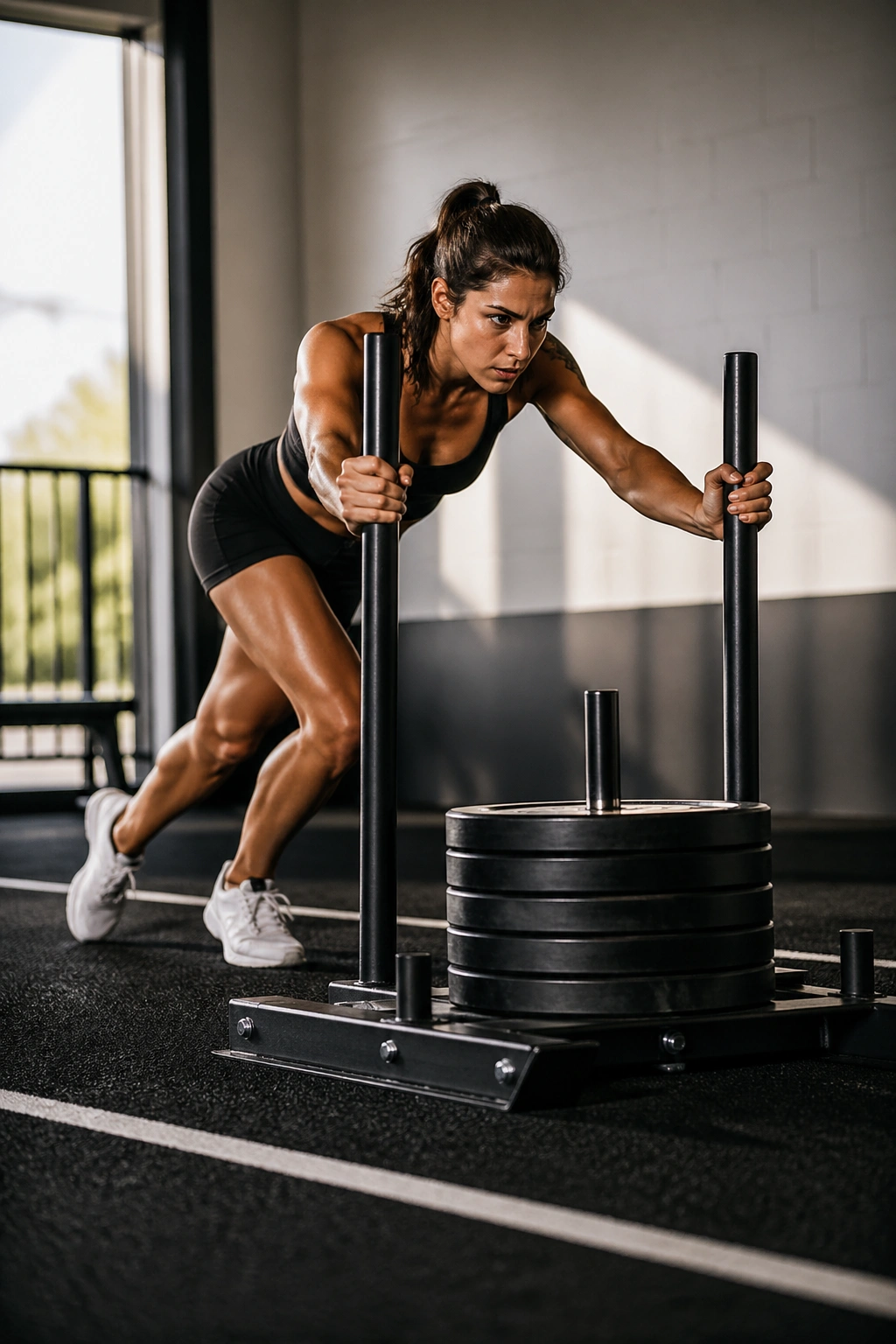
If you have a sled, use it. If you don’t, a treadmill push walk gets surprisingly close to the same feeling.
Sled Pushes
The sled is straightforward: drive the feet into the floor, keep your torso angled forward, and push for 20 to 30 meters. Rest long enough to breathe, then repeat for 6 to 10 runs. The legs and lungs both get dragged into the work, and because there’s no bouncing, the impact stays low.
Treadmill Push Walks
No sled? Set a treadmill to a steep incline and walk fast enough that the effort feels heavy but controlled. Think 1 to 2 minutes of push walking, then 1 minute easy, repeated 8 times. The key is posture. If you hunch and hang on, the session turns sloppy. Tall chest. Short strides. Strong arms.
What I like about both versions is the same thing: they make you work without the chaos of jumping. People chasing fat loss often need that middle ground. Hard enough to matter. Gentle enough to repeat.
Best for: lifters who want conditioning without a run, or anyone whose knees protest when the workout gets bouncy.
12. Turkish Get-Up Practice for Strength and Stability
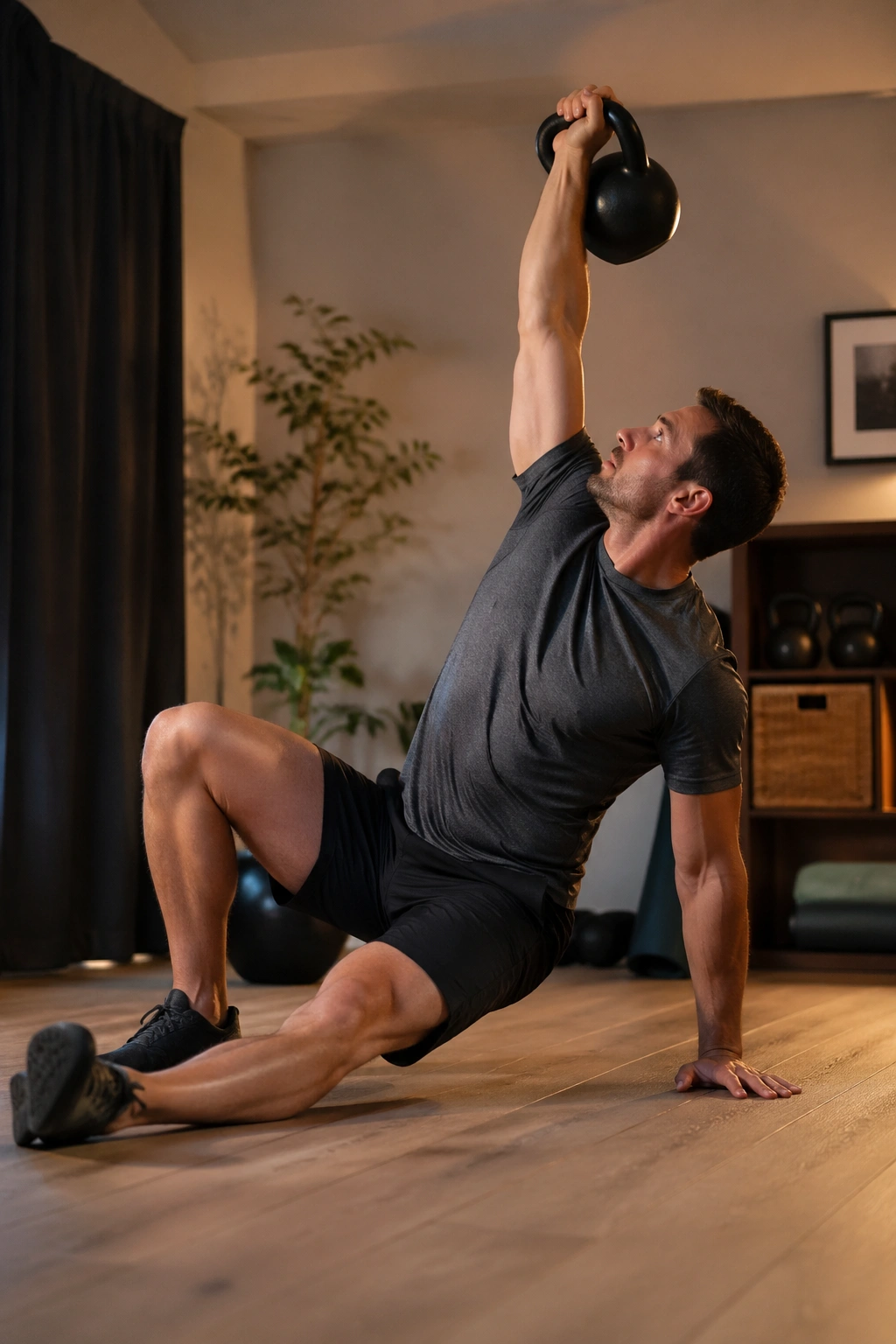
Why would a slow, technical lift show up in a fat-loss week? Because it teaches the whole body to stay tight while you move through awkward positions. That’s a rare skill.
The Turkish get-up is not about speed. It’s about control. You move from the floor to standing, then back down, while holding a weight overhead. Every part of that path asks for stable shoulders, a braced trunk, and coordinated hips. It looks almost calm. It isn’t.
Start Light
If you’re new to it, practice without weight first or balance a shoe on your fist. That sounds silly. It helps. Once the pattern feels clean, use a light kettlebell and do 1 rep per side for 3 rounds. Rest 60 to 90 seconds between sides if needed.
What to Watch For
- Keep your eyes on the bell.
- Move through the transitions slowly.
- Plant the hand firmly before you sweep the leg.
- Do not rush the stand-up.
The get-up won’t spike your pulse like hill sprints, but it does something useful for a fat-loss block: it teaches tension, balance, and control. That pays off when everything else gets harder.
13. Medicine Ball Slams With Short Rest
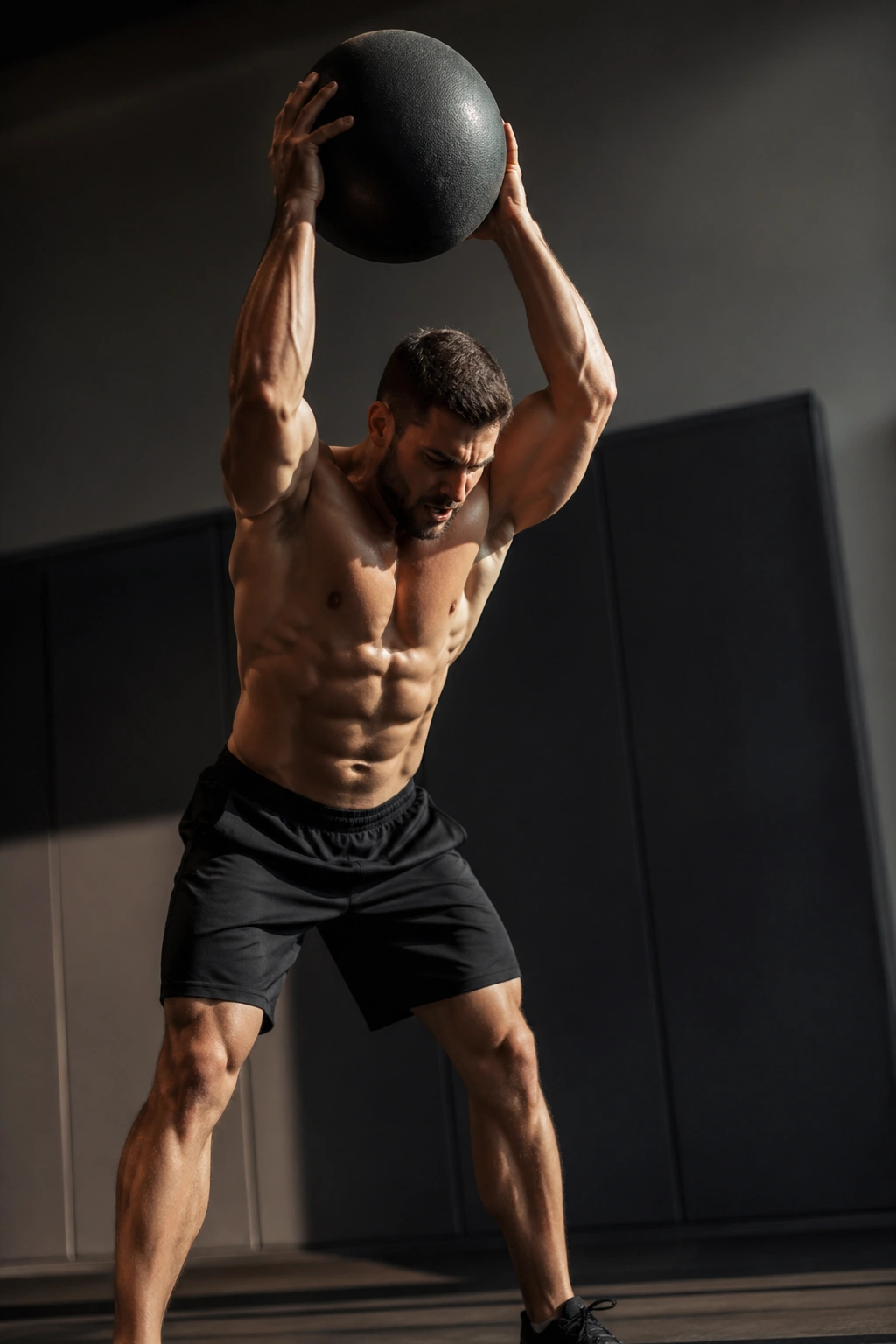
Some workouts feel polite. Slams are not polite.
A medicine ball slam gives you a clear target, a loud finish, and a way to channel a lot of force in a few seconds. It’s a power move, which means the whole body has to contribute. The core braces, the hips drive, the arms guide, and the ball hits the floor with a satisfying thud.
Try 8 rounds of 10 slams with 20 to 30 seconds of rest. Use a ball that feels heavy enough to matter but light enough to keep the shape crisp. If the ball rebounds too much, your floor or ball choice is wrong. A proper slam ball should handle repeated hits without turning into a risk.
A few setup notes matter more than people think:
- Stand with feet about hip-width apart.
- Reach tall before the slam.
- Hinge slightly at the hips as you drive down.
- Keep the lower back from arching hard.
A blunt warning: Don’t use a hard basketball or a medicine ball that can split. That’s a fast way to wreck a floor and annoy everyone nearby.
14. Low-Impact Shadow Boxing Intervals
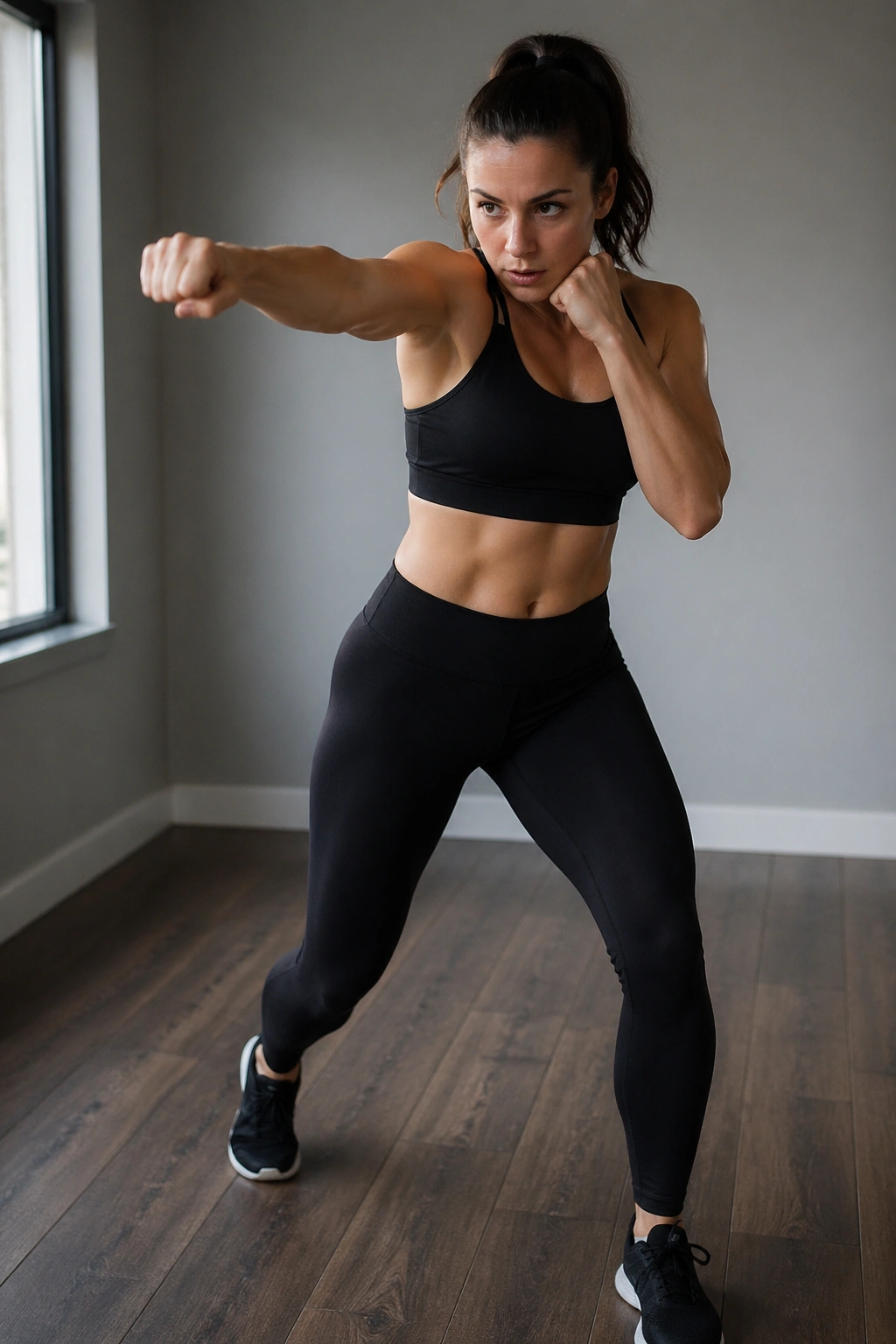
Shadow boxing can smoke your lungs without beating up your joints, and that makes it a sneaky good choice for fat-loss training. It looks easy. It is not easy once you keep moving for more than a few rounds.
The trick is to treat it like footwork plus punches, not just flailing arms in the air. Your stance stays light, your guard stays up, and your torso rotates enough to make the punches come from the body, not the shoulders alone. That rotation pulls the core into the work.
Try 45 seconds of boxing, 15 seconds of rest for 10 rounds. Rotate through simple combinations: jab-cross, jab-cross-hook, jab-jab-cross, or a quick body shot mixed with a pivot step. Don’t add hand weights unless you already box comfortably. Those tiny weights can turn sloppy fast and irritate the shoulders.
I like shadow boxing because it has rhythm. A good round feels almost musical—step, punch, breathe, reset, move again. That kind of session keeps people engaged when plain cardio starts feeling stale.
If coordination is rough: slow the tempo down and focus on clean punches first. Speed comes later.
15. Recovery Walk and Mobility Flow for Belly Fat Loss
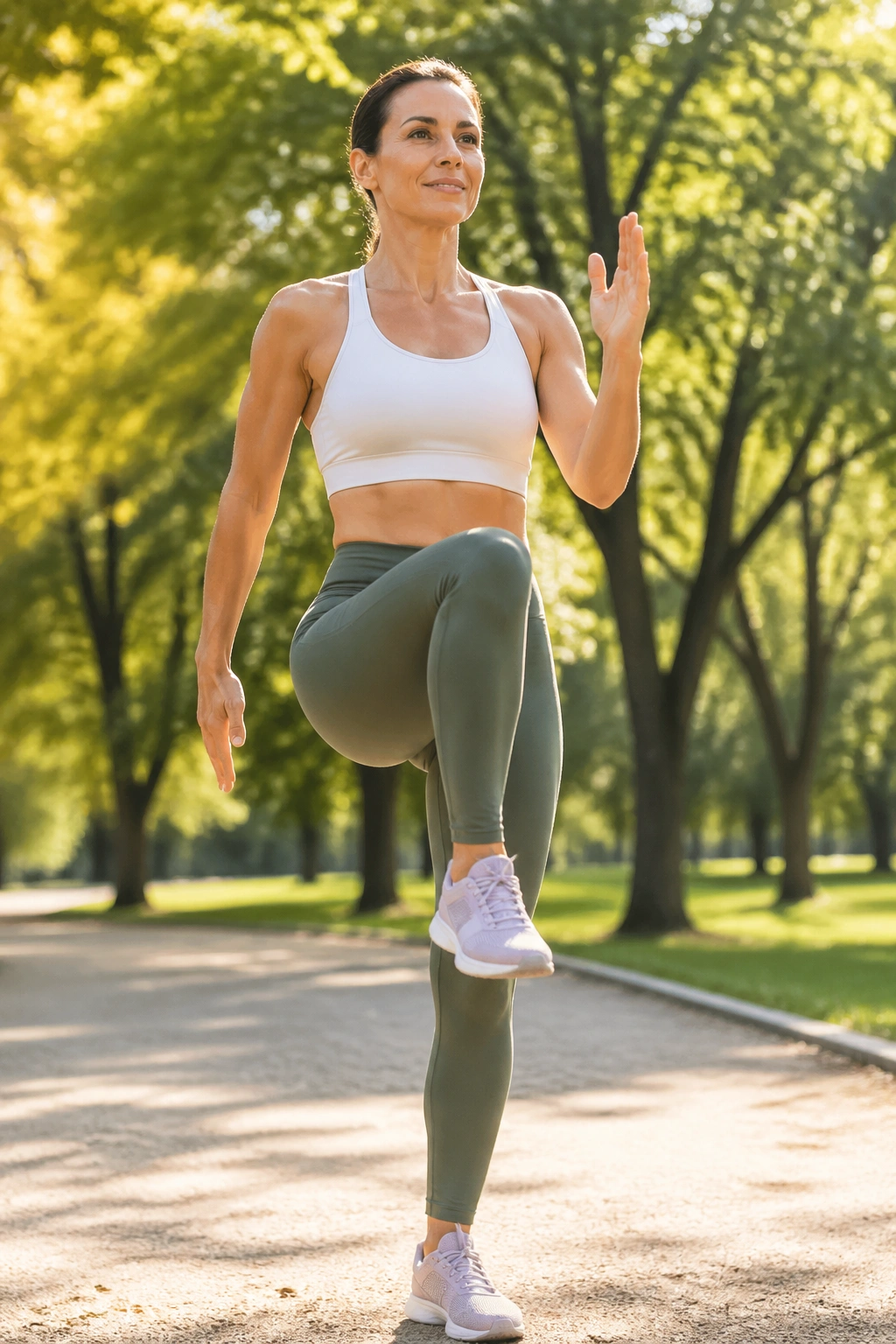
A week built only on hard sessions usually falls apart by the middle. The body gets sore, the mind gets annoyed, and the couch starts looking suspiciously attractive. A recovery walk and mobility flow is what keeps the whole plan from collapsing.
This is the day people skip, then complain the next week feels harder than it should. I get why. It doesn’t look flashy. It doesn’t leave you drenched. But a 20- to 45-minute brisk walk paired with 8 to 10 minutes of mobility work can make a real difference in how often you show up for the harder stuff.
Keep the walk easy enough that you can breathe through your nose for at least part of it. Then do a simple mobility sequence:
- 30 seconds per side of hip flexor stretching
- 8 to 10 thoracic rotations per side
- 10 calf raises
- 30 to 60 seconds in a deep squat hold, if it feels okay
- 5 slow bodyweight good mornings
This kind of session helps you recover, keeps daily movement high, and takes the edge off the stiffness that tends to build around the hips and lower back. And yes, it still counts. People act like walking is a consolation prize. It isn’t. It’s often the thing that keeps the rest of the week on track.
A flatter waist usually comes from the work you can repeat without dreading it. That’s the part people forget.
