



A boxing workout should leave your shoulders warm, your breathing up, and your feet a little more awake than when you started. If it leaves you tangled, flailing, or guessing at every punch, it is too complicated for a beginner.
That matters even more when you’re looking for boxing workouts for beginner women, because the first few sessions should build trust, not chaos. You want clean repetition, a simple timer, and enough rest that your form stays tidy when you start to tire.
No sparring required. No fancy setup either.
A mirror helps. So do hand wraps, supportive shoes, and a stop-watch or interval app. The smartest beginner boxing sessions spend more time on stance, guard, and footwork than they do on power, because power without balance is mostly noise. And yes, your shoulders will complain before your lungs do. That’s normal.
Start with the work that teaches control first. The rest gets better fast once your feet know where to go.
1. Shadowboxing With a Stance Check
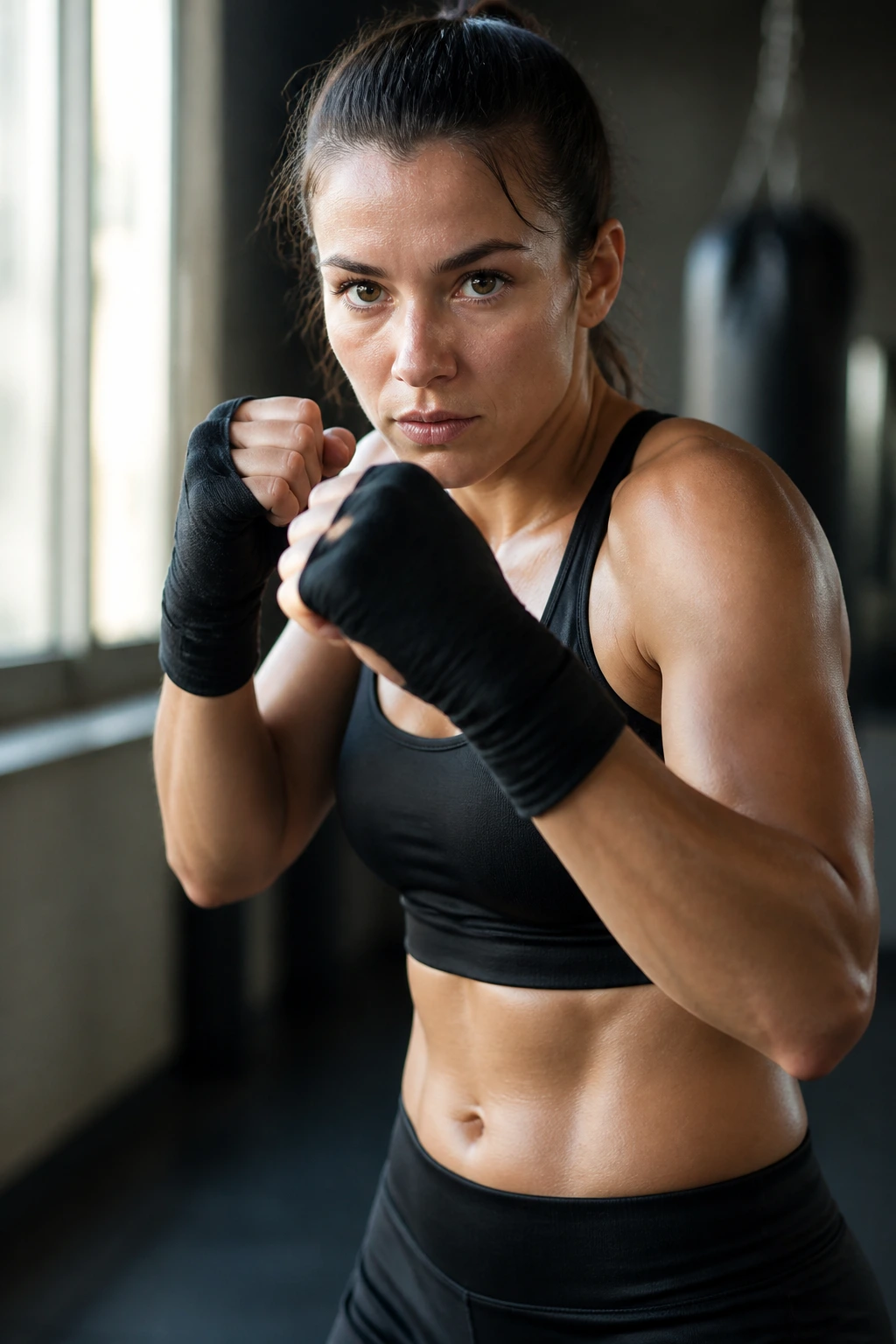
Shadowboxing is the cleanest place to begin because nothing is hitting back. You can slow down, reset, and notice what your body is doing instead of chasing the next punch. That makes it one of the best boxing workouts for beginner women who want to learn form without the pressure of a bag or a partner.
What to watch for
Keep your feet about shoulder-width apart, your knees soft, and your chin tucked a little. Your hands should come back to your face after every punch — not drift somewhere near your ribs like they’re on a coffee break.
Use a timer for 3 rounds of 2 minutes with 1 minute of rest between rounds. In the first round, only move and guard. In the second, add jabs and crosses. In the third, try a few hooks, but keep them small and crisp.
- Exhale when each punch lands.
- Pivot the back foot on the cross.
- Stay light on the balls of your feet.
- Reset after every combination.
Best cue: if you can still keep your hands up in the last 30 seconds, the pace is right.
2. Jab-Cross Rounds on a Timer
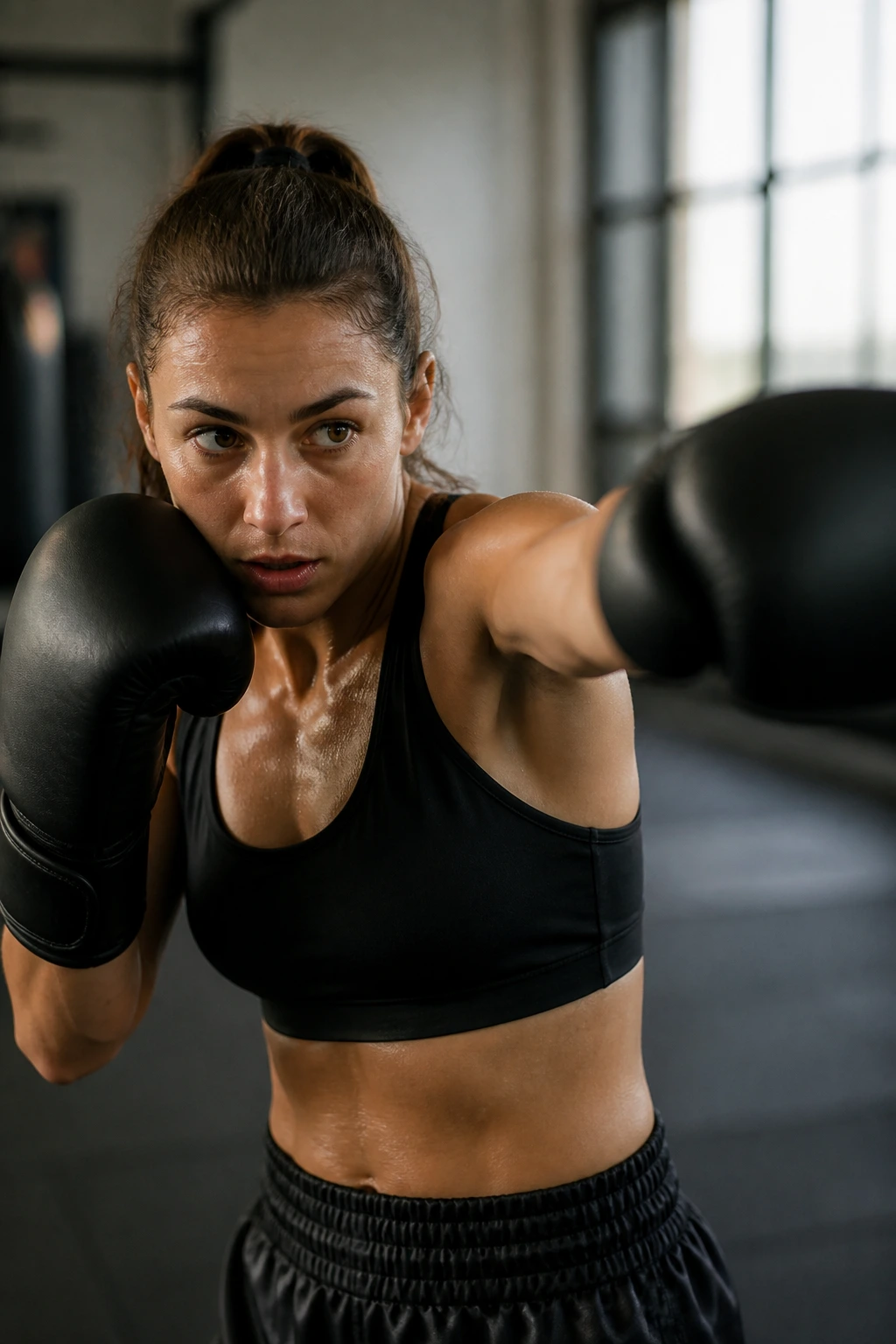
Why start with only two punches? Because the jab-cross pair teaches almost everything that matters early on: distance, rhythm, rotation, and returning to guard. It is plain, and that’s the point.
Do 4 rounds of 90 seconds with 45 seconds of rest. Throw one jab, one cross, then step out or reset your stance. Don’t rush the second punch. The cross should feel like it comes from the floor, not from your shoulder alone.
How to run it
- Round 1: jab only, stepping in and out.
- Round 2: jab-cross at half speed.
- Round 3: jab-cross with a small pivot after each combo.
- Round 4: jab-cross with a quick guard reset.
If your front shoulder starts creeping up near your ear, slow down. That usually means you’re tensing up and punching from the neck instead of the legs. The better version feels more controlled and less dramatic. Less drama is good here.
3. Tape a Footwork Square on the Floor
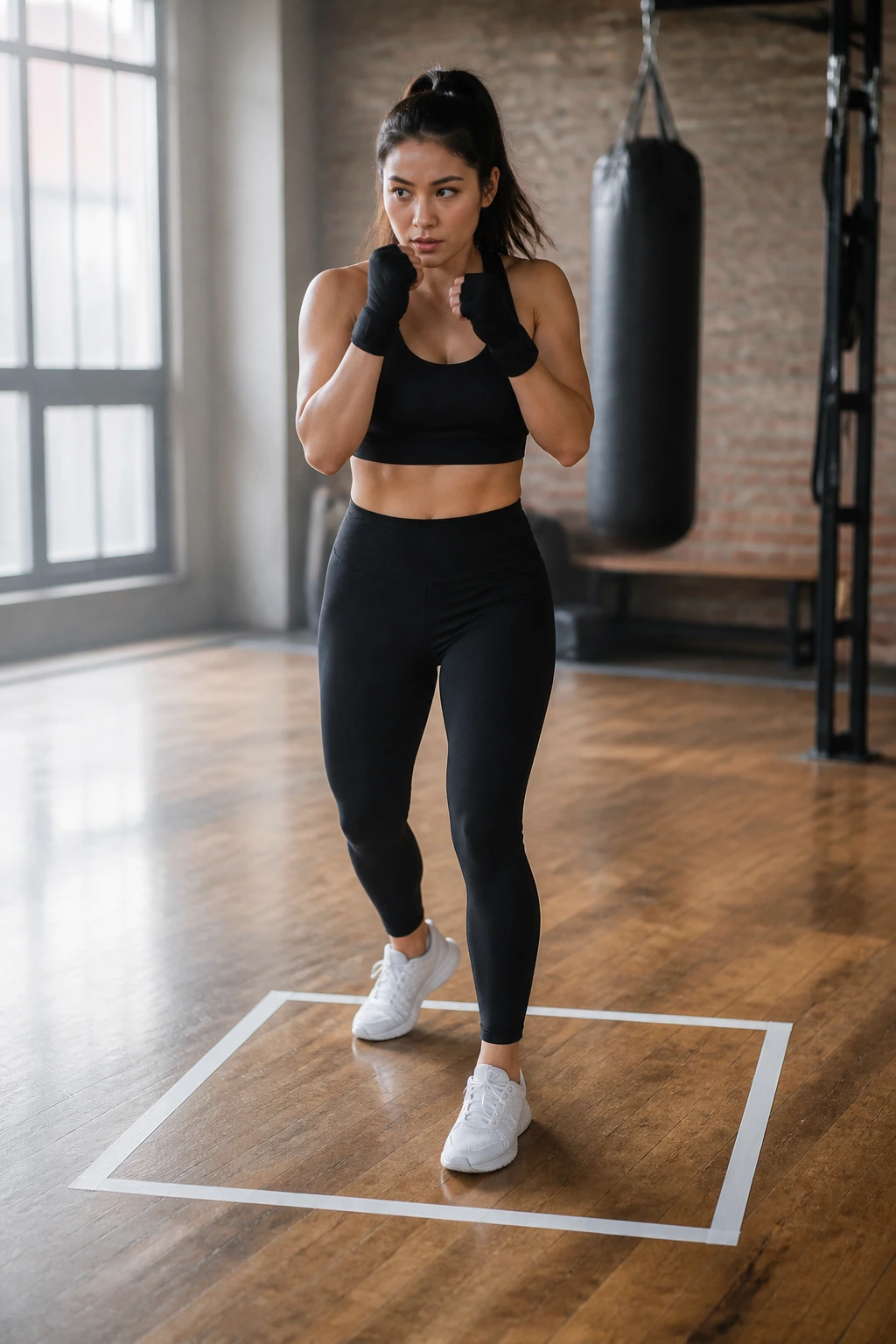
A strip of tape on the floor can tell you more than a long speech about boxing stance. Tape a square that’s about 2 feet by 2 feet, then practice stepping forward, back, left, and right without crossing your feet.
This works because beginner boxers often learn the punches first and then stand like furniture. Footwork fixes that. It teaches you to stay balanced after every move, which matters when the workout gets faster and your breathing gets louder.
Move for 3-minute rounds, with 1 minute off, and keep the steps small. Tiny steps are easier to control. Big, stompy steps usually throw your weight too far forward, and then the punches start feeling late.
One-sentence truth: small steps beat flashy steps almost every time.
Try this pattern in the square: step forward, jab; step back, guard; step left, jab-cross; step right, reset. If you can keep your head level while doing it, you’re doing better than you think.
4. Mirror Guard Drill
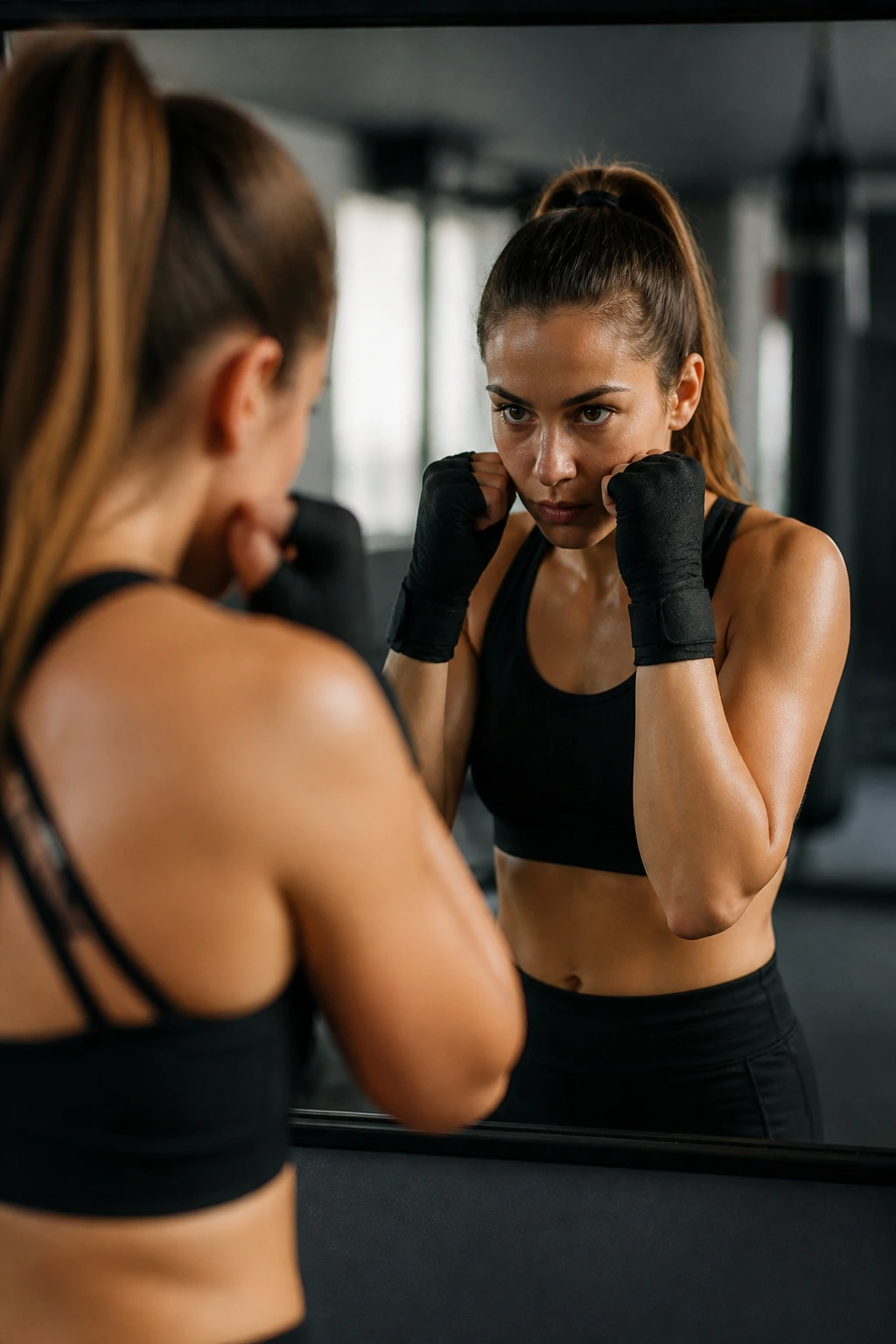
A mirror can be more useful than a bag. It shows you the habits you can’t feel yet — dropped elbows, drifting chin, hands that wander after a punch, shoulders that creep up under stress.
Stand in front of a mirror and do 3 rounds of 2 minutes. Keep the session simple: guard up, jab, cross, hook, reset. After each combo, check your shape. Your back heel can turn a little on the cross, but your chest should not flop open like you’re trying to hug the whole room.
This drill is boring in the best way. It teaches discipline.
What to look for
- Your chin should stay slightly tucked.
- Your hands should return to cheek height.
- Your elbows should stay closer to your ribs than to the mirror.
- Your weight should feel split, not dumped onto the front foot.
If the reflection makes you tense, shorten the round to 60 seconds and keep the pace easy. The mirror is not there to judge you. It’s there to catch the little leaks before they become bad habits.
5. Slip Line and Roll Under Drill
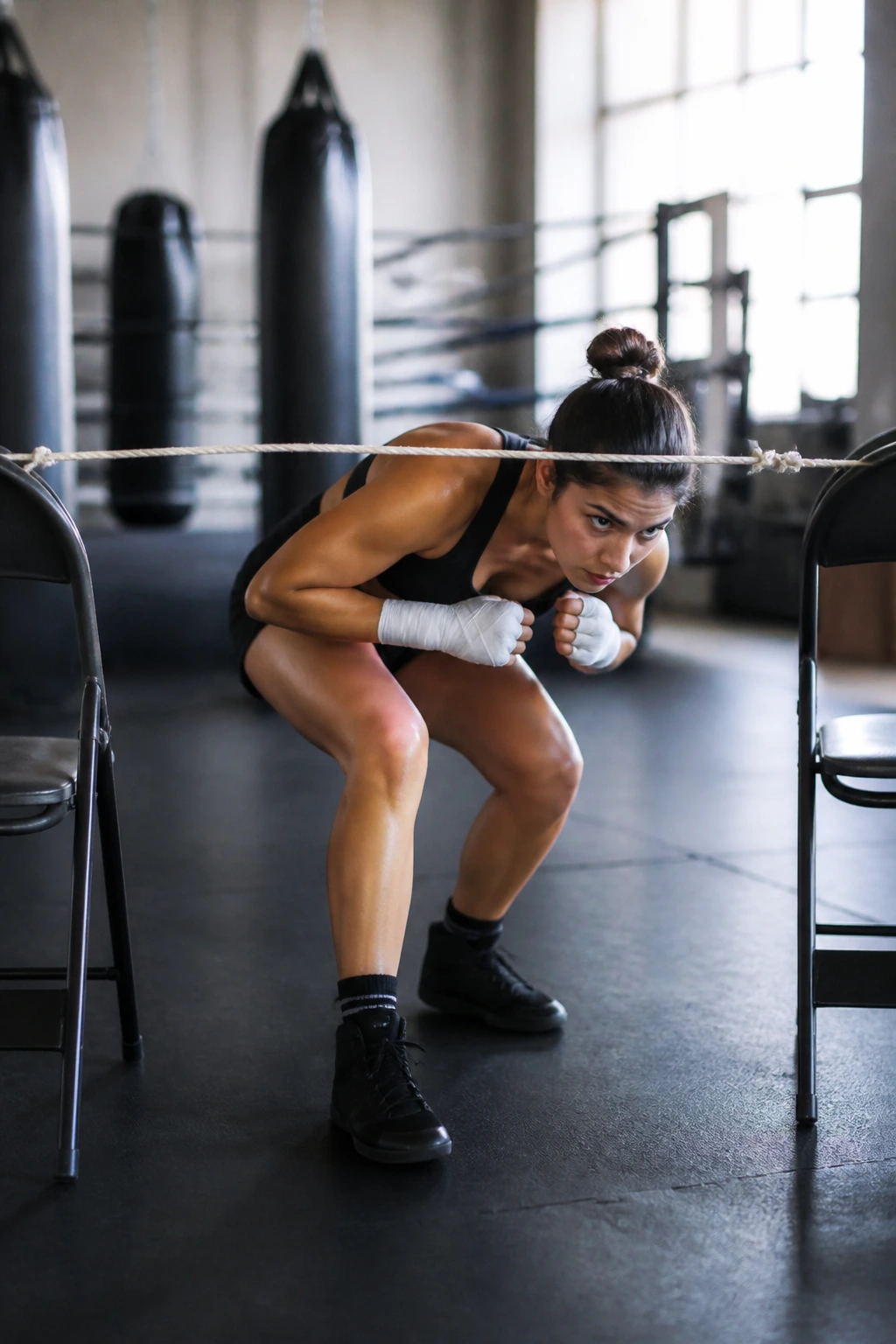
Defense makes you look faster before you are faster. That’s why a slip-line drill belongs early in a beginner boxing routine. It teaches your body to move your head without losing your stance, which is harder than it sounds and way more useful than throwing random punches for five straight minutes.
String a rope, band, or even a broomstick between two chairs at about nose height. Then move under it with small bends in the knees, not a deep fold at the waist. The head should travel just enough to get off the line, then come back to center.
Set the line
- Slip left and right for 30 seconds.
- Add a roll under for 30 seconds.
- Slip, roll, then throw a light jab-cross for 30 seconds.
- Rest for 30 to 45 seconds and repeat.
Keep the movement smooth. If your lower back starts doing the work, you’re bending too much. Your legs should carry the job, not your spine.
This one feels awkward the first few times. That’s fine. Awkward is often where learning lives.
6. Heavy-Bag Starter Rounds
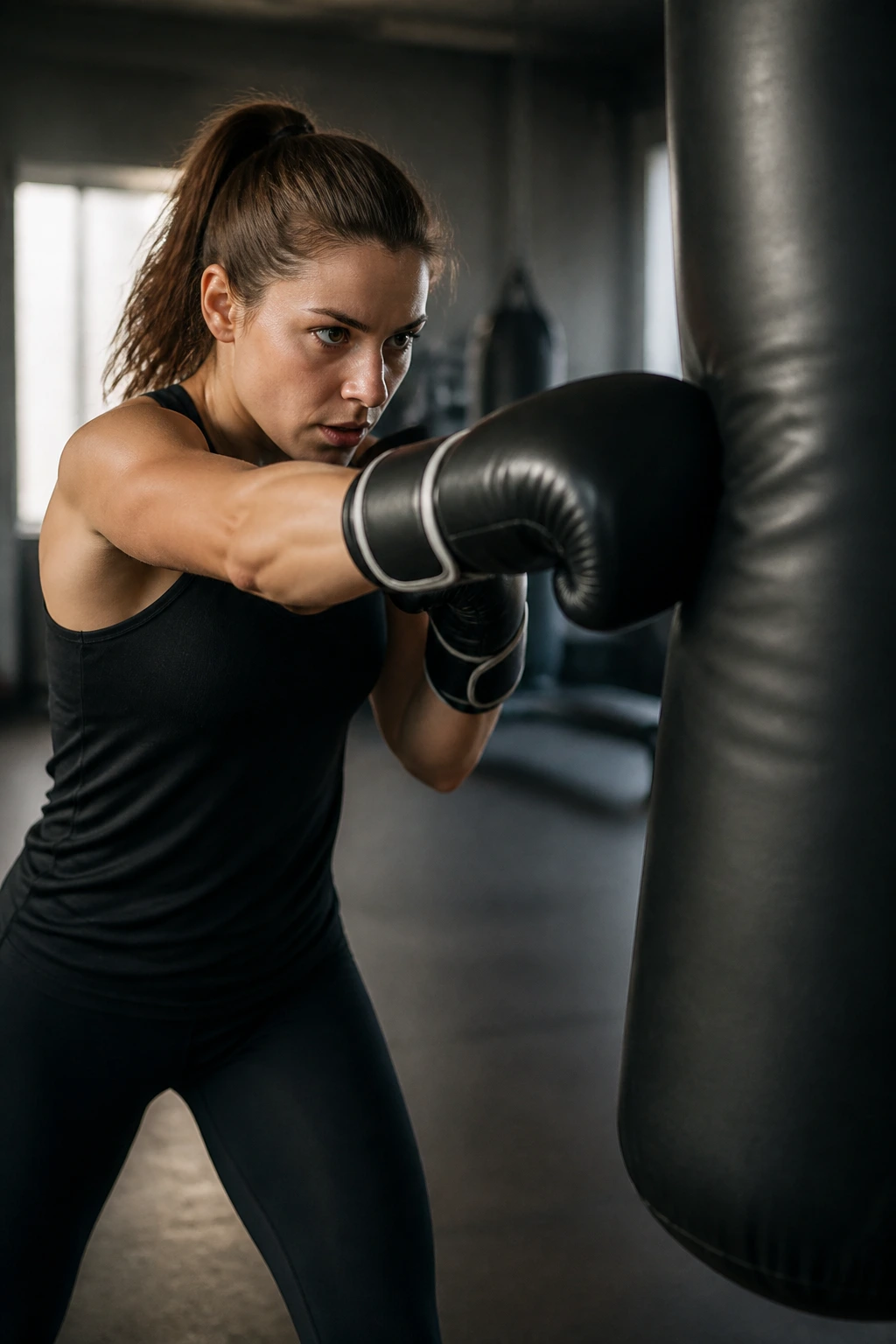
The first time you hit a heavy bag, don’t try to prove anything. Keep the power at about 60 percent and focus on clean contact, a tight wrist, and a full return to guard. A lot of beginners swing too hard on the first round and spend the second round wondering why their shoulders feel cooked.
Wrap your hands before you touch the bag. Seriously. The extra two or three minutes are worth it.
Do 3 rounds of 2 minutes with 1 minute of rest. Use one simple combo: jab, cross, step out. Then jab, cross, lead hook, step out. The bag should move a little, not swing like a wrecking ball.
One thing that matters
If your wrist bends when you land the punch, back off and slow down. The knuckles, wrist, and forearm should stay in one line.
A clean bag round feels loud but controlled. You’ll hear the bag thud, feel your feet plant, and notice your breathing kick up in a good way. That’s the sweet spot.
7. Fast Hands, Small Steps
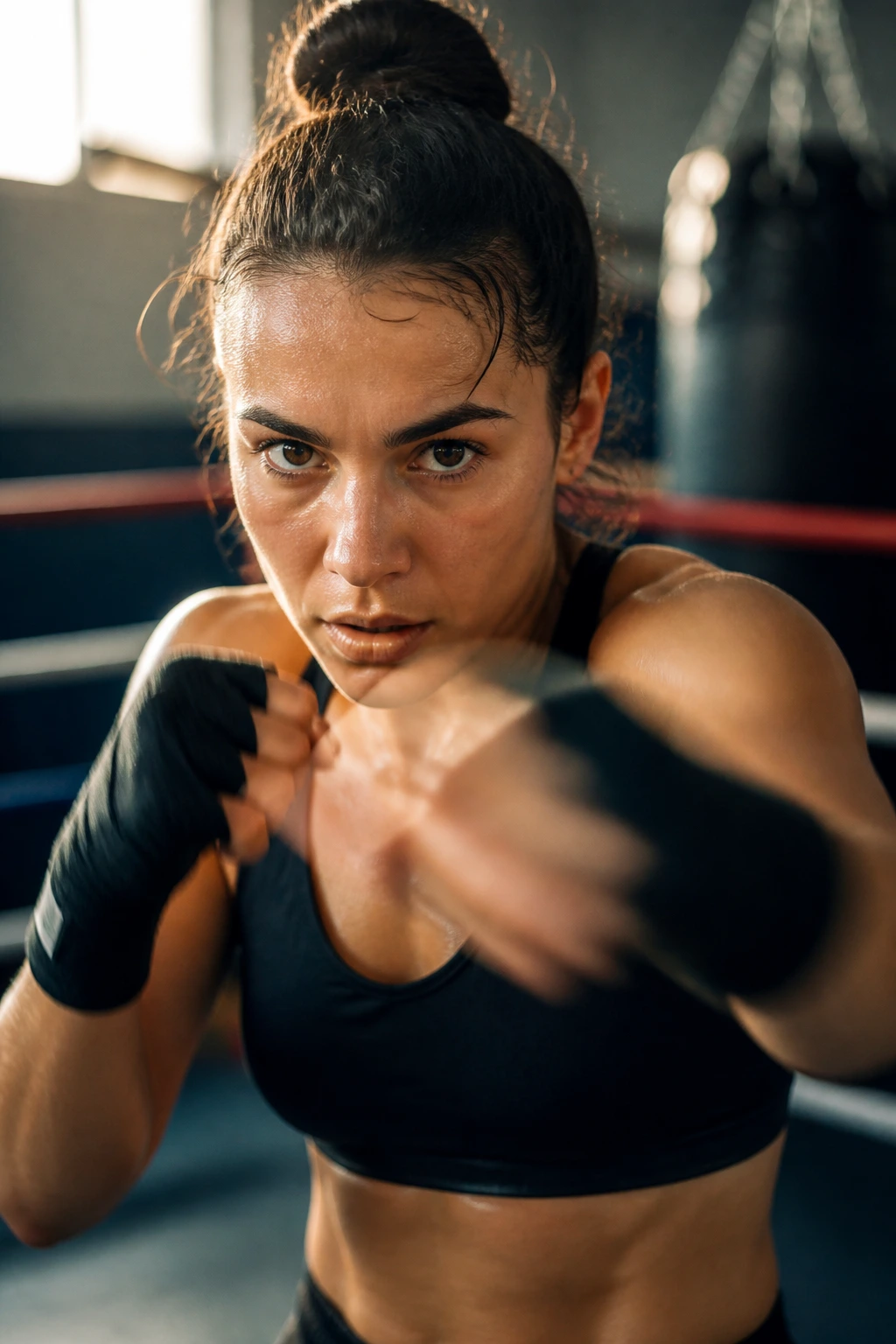
Fast, not wild.
That’s the whole game in this workout. You’re not trying to punch harder. You’re trying to move your hands faster while keeping your feet calm enough that the rest of your body doesn’t turn into soup.
Set a timer for 10 rounds of 20 seconds on, 20 seconds off. During the work periods, throw straight punches only — jab, cross, jab-cross, or a quick five-punch flurry if your form stays clean. During the rest periods, shake out your hands and take three slow breaths.
The tempo
- Round 1: light speed, clean returns.
- Round 2: slightly quicker hands.
- Round 3: keep the same speed, but move your feet.
- Round 4: speed bursts of 3 punches, then reset.
A speed round should make you feel springy, not sloppy. If your shoulders climb toward your ears, you’re forcing it. A relaxed hand snaps faster than a tight one. That part surprises people, but it shouldn’t.
8. Combo Ladder: One Through Four
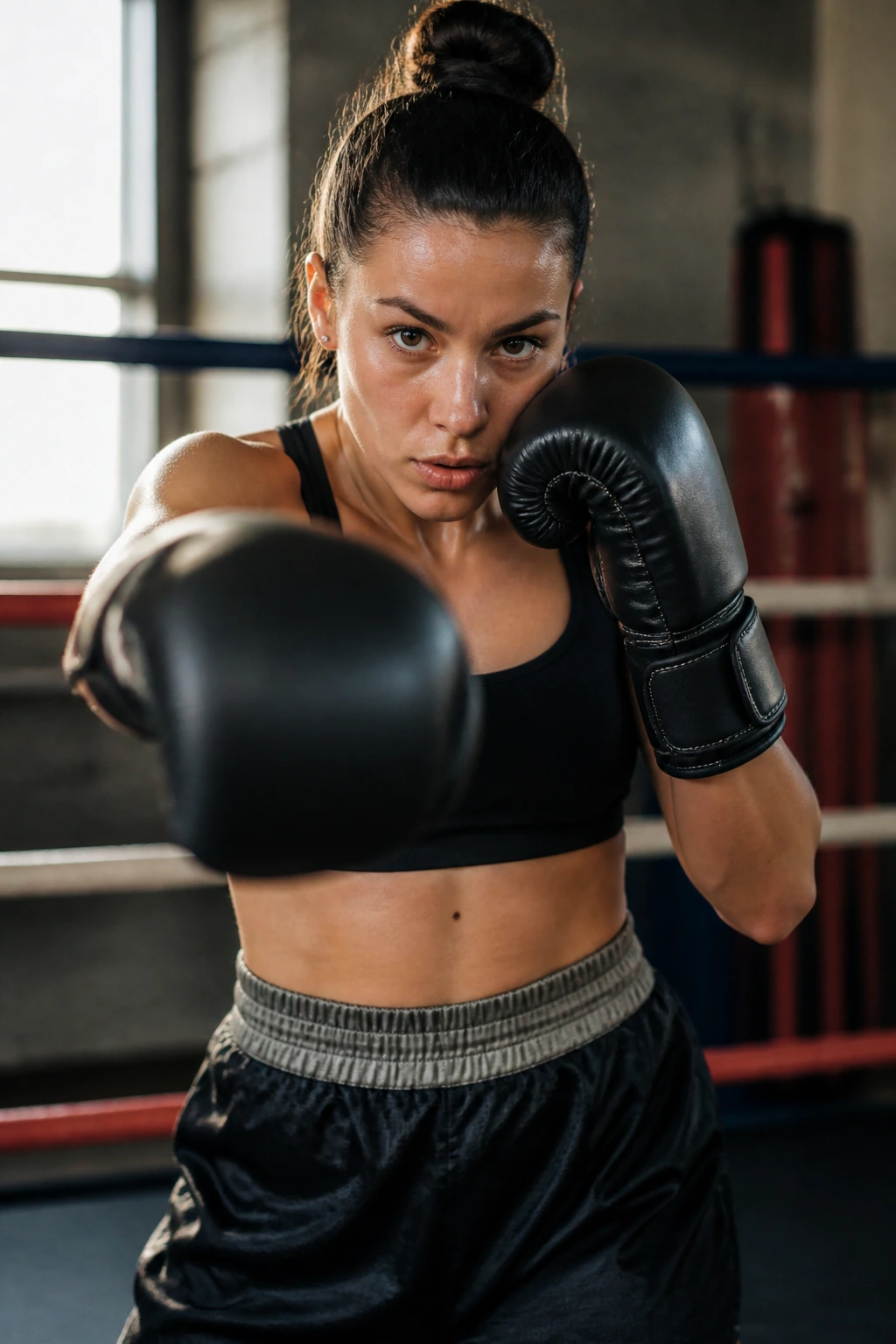
Start with one punch, then climb. No need to get fancy right away.
A combo ladder is a neat beginner workout because it gives your brain a job and keeps you from staring at the timer. Throw 1 punch, then 2 punches, then 3, then 4, with a short reset after each set. It sounds almost too simple. It isn’t.
Climb the ladder
- 1 jab.
- 1 jab-cross.
- 1 jab-cross-hook.
- 1 jab-cross-hook-cross.
Run the ladder for 3 to 5 rounds, spending 90 seconds on each round. Rest for 45 to 60 seconds between rounds. Keep the first pass slow enough that you can remember what you’re doing. The second pass can be a little sharper. The third pass is where you check whether your form survives a mild spike in speed.
If you lose balance on the fourth punch, that’s useful information. It usually means your feet are too narrow or you’re reaching with your arm instead of rotating through the hips.
9. Punch-Out Finisher
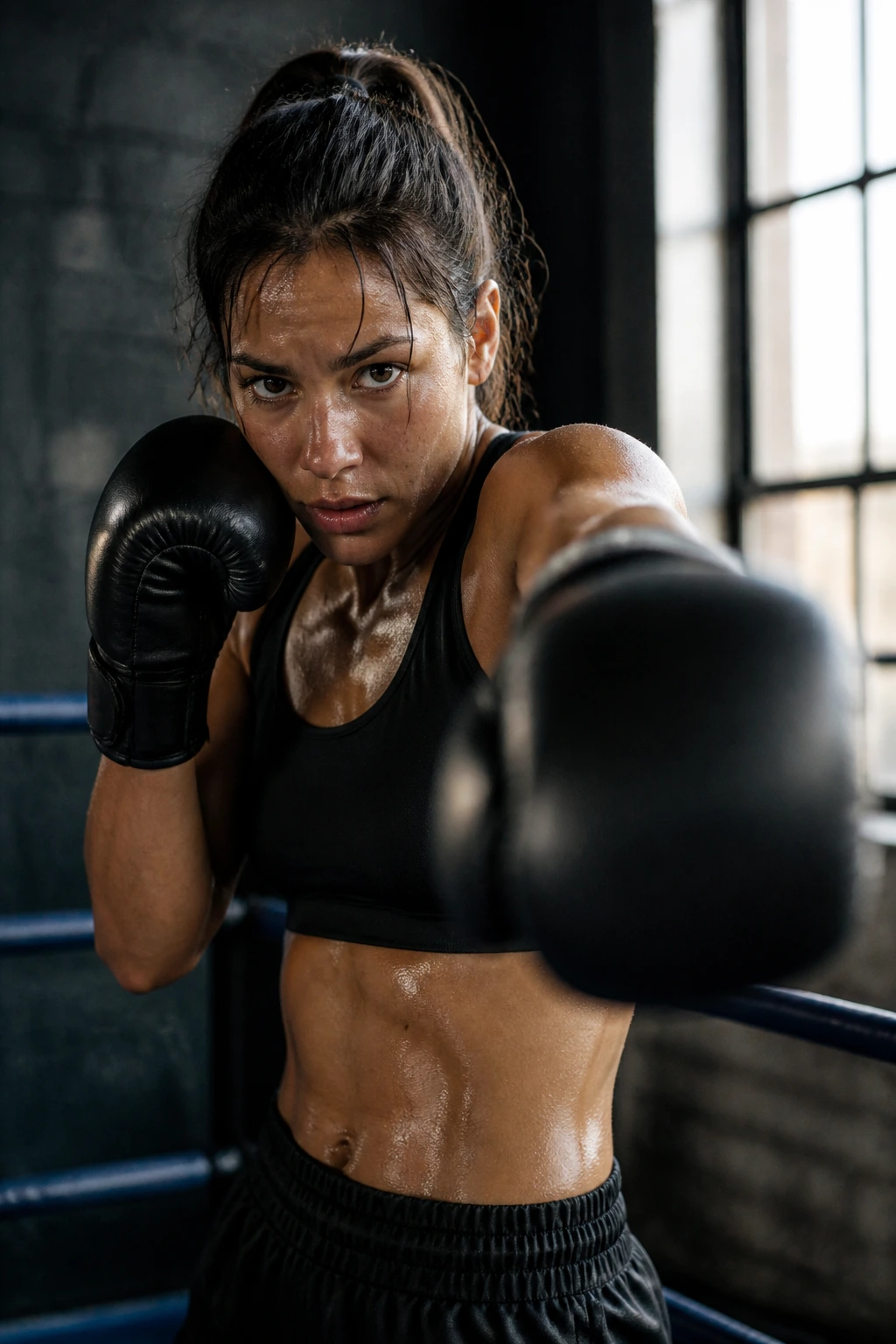
Save this one for the end, when your tank is low and your form has already been tested. A punch-out finisher is short, ugly, and effective. It’s the kind of thing that makes the last few minutes of a workout feel earned instead of endless.
Set a timer for 6 rounds of 15 seconds on, 45 seconds off. On each work interval, throw straight punches as fast as you can while still staying inside your stance. You can use a bag, shadowbox, or a wall-free corner of the room.
Keep one rule in mind: if the shoulders start shrugging and the punches get wild, stop the burst early. That’s not quitting. That’s protecting good form.
This drill will light up your upper body fast, which is exactly why it works at the end. The short rest lets you recover enough to hit the next burst with purpose. Long, sloppy brawls do not build the same kind of conditioning.
10. Jump Rope and Shadowbox Intervals
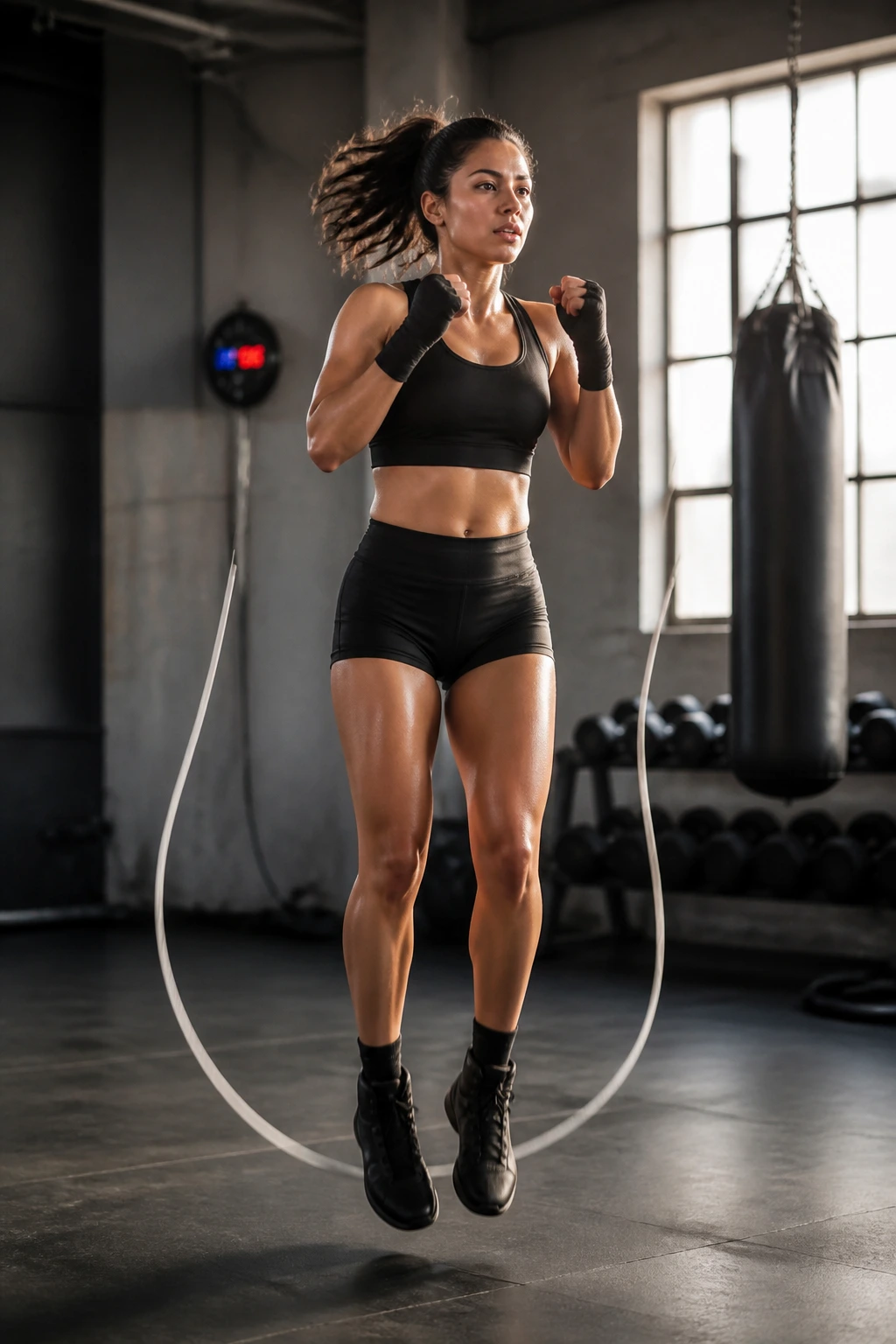
Can you box without a bag and still get sweaty? Absolutely. Pair jump rope with shadowboxing and you get footwork, rhythm, and cardio in the same workout, which is a nice trade if you like simple setups.
Do 8 total rounds. Start with 1 minute of jump rope, then 1 minute of shadowboxing. Rest for 30 seconds after each pair. If jumping rope feels rough on your calves, cut the rope time to 30 seconds and keep the shadowboxing at a full minute.
Circuit
- Round 1: easy jump rope, then light jabs.
- Round 2: alternate feet on the rope, then jab-cross.
- Round 3: double-step rope, then footwork and guard.
- Round 4: freestyle rope, then quick flurries.
Use supportive shoes if you’re on a hard floor, and keep your jumps low. The goal is a quiet bounce, not a high hop. If the rope catches your toes every 10 seconds, slow the rhythm and shorten the session. That fixes most beginner frustration right away.
11. Core-and-Punch Circuit
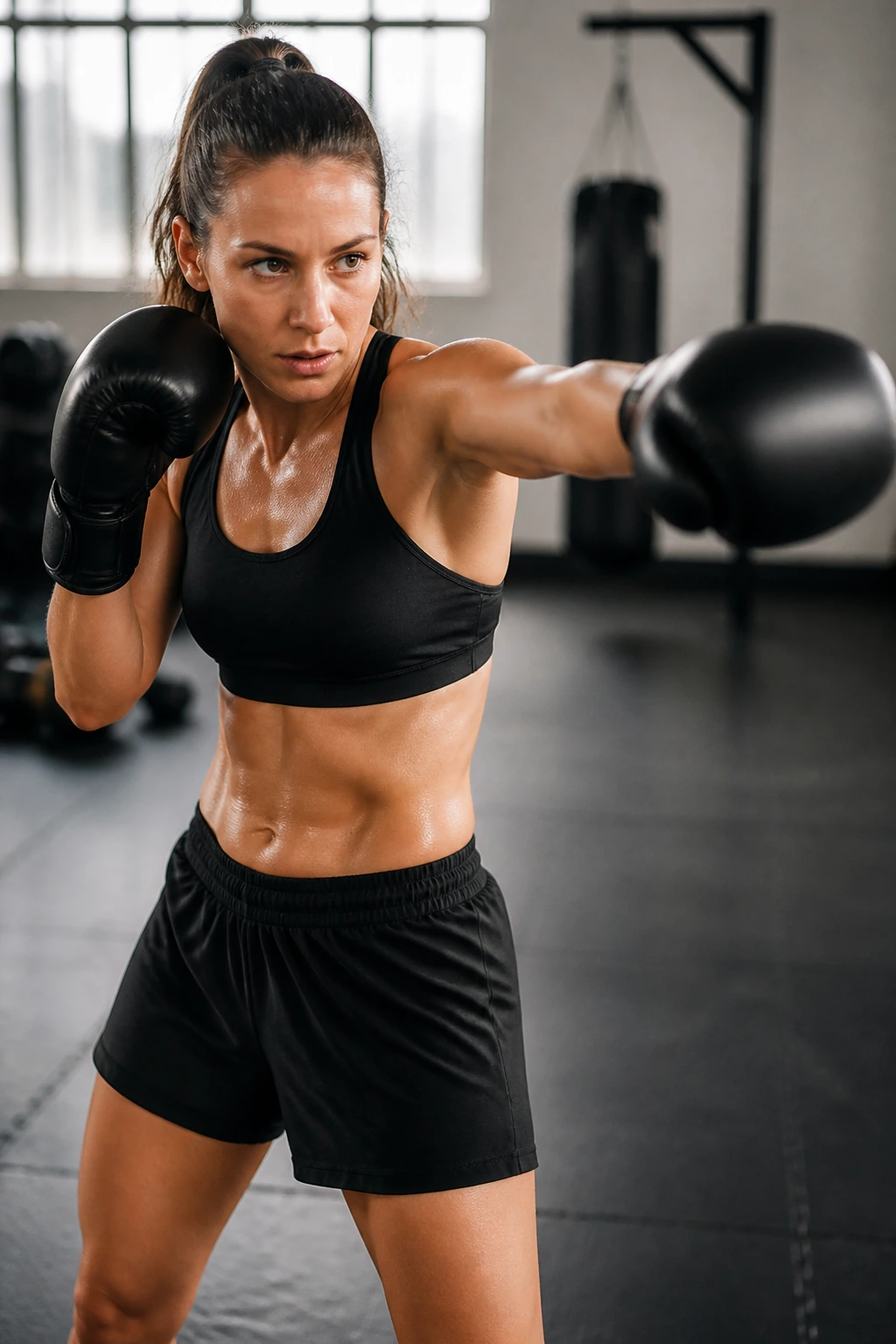
Dead bugs, planks, and short punch flurries belong in the same session more often than people think. Boxing is full-body work, and the core is the bit that helps your upper and lower halves stay connected when you’re tired.
Try 4 rounds of this circuit:
- 30 seconds of dead bugs.
- 30 seconds of plank shoulder taps.
- 30 seconds of shadowboxing.
- 30 seconds of mountain climbers.
- Rest for 60 seconds.
That gives you a clean minute and a half of work, then a proper break. If your lower back arches during the plank or dead bug, shorten the lever and slow the movement down. No medal for rushing bad form.
Why the core matters
Punches don’t start in the fists. They travel through the hips and trunk first. When your midsection is stable, your arms can move faster and with less waste. When it isn’t, every punch feels like arm day at the gym, and that gets old fast.
12. Squat, Punch, and Push-Up Circuit
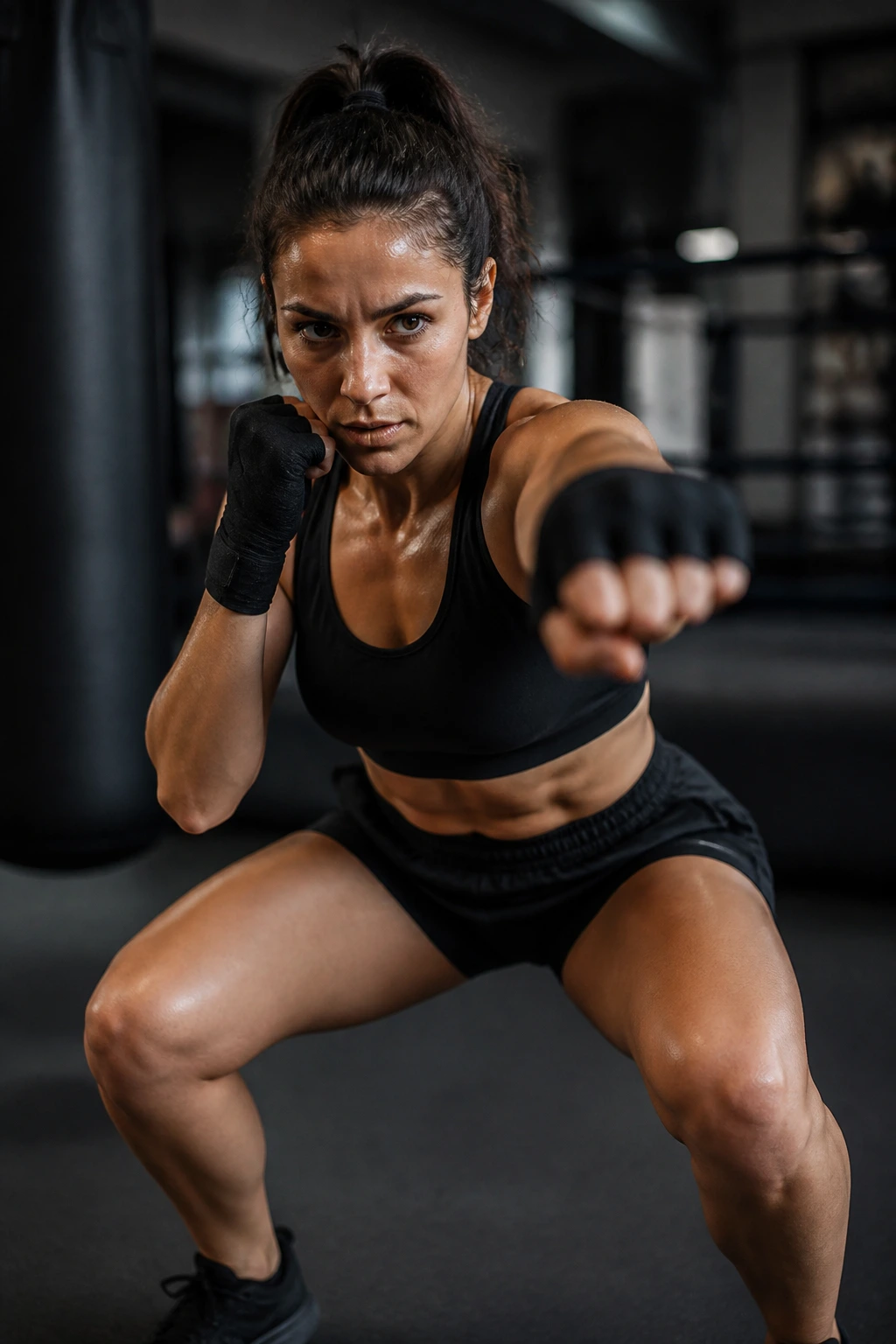
Boxing is not only upper-body work. If your legs are weak for the day, your punches lose pop and your footwork gets lazy. That’s why a lower-body circuit fits so well beside punching drills.
Do 3 to 5 rounds of:
- 10 bodyweight squats.
- 20 straight punches in shadowboxing.
- 6 to 8 incline push-ups.
- 20 seconds of quick feet.
- Rest for 60 seconds.
The squats wake up the legs, the punches connect that effort to the upper body, and the push-ups build the shoulders and chest without turning the workout into a pure strength session. Use a bench or wall for the push-ups if the floor version feels too sharp.
One good habit here: stand up from the squats with your ribs stacked over your hips. If you stand like a bent hanger, the punches that follow will feel cramped. Tall posture helps more than people expect.
13. Partner Mitts for Two
If a friend can hold mitts, the session gets sharper fast. Mitt work gives you a target, a little pressure, and feedback on whether your punches actually land where you think they do.
The holder does not need to be fancy. They do need to be steady. Hold the mitts at face height, elbows soft, and call out simple combinations: jab, cross, jab-cross, jab-cross-hook. Keep the round short at first — 60 to 90 seconds — because beginners tend to overdo mitt sessions and then lose their shape.
What a good holder says
- “Jab.”
- “Cross.”
- “Reset.”
- “Move.”
- “Again.”
That’s enough. A messy mitt holder makes the drill harder in the wrong way, so keep the calls simple and the targets still. After each round, switch roles or rest for a full minute.
If the wrist feels jammed after a punch, the mitt may be turning too much or the punch is landing off-center. Tiny corrections matter here. They save a lot of irritation later.
14. Double-End Bag Rhythm Round
The ball snaps back at your face fast. That’s the whole appeal of the double-end bag, and also the reason it exposes sloppy timing almost immediately.
If you have one, do 4 rounds of 2 minutes with 1 minute of rest. Start with straight punches only. Don’t rush the hooks until you can track the rhythm without blinking at every rebound. The bag should teach you to see a moving target and keep your hands alive, not chase it like you’re trying to swat a fly.
What to feel
Your eyes stay up. Your shoulders stay loose. Your feet keep a tiny bounce so you can adjust to the return.
This drill gets better when you stop trying to hit hard. Soft, quick punches land better than heavy ones on a moving target, and the feedback is immediate. If the bag keeps knocking your hands off line, that’s useful too — it tells you your guard is drifting.
No double-end bag at home? Skip it without guilt. It’s a nice tool, not a requirement.
15. Body-Shot Focus Rounds
Why do body shots matter for beginners? Because they teach you to change levels without falling apart at the waist, and that skill carries over into almost everything else in boxing.
Shadowbox or work a bag for 3 rounds of 2 minutes, aiming low on purpose. Pick the ribs, the lower sides, or the imaginary body line just under the elbows. Punch with a slight bend in the knees, then come back up to guard. Don’t reach down from your back. Bend your legs and let your torso stay organized.
Aiming low
- Jab to the body.
- Cross to the body.
- Hook to the body.
- Reset to head height.
The body-shot round can feel a little weird at first because it asks you to trust your legs more than your arms. That’s a good trade. It also tends to open the shoulders and free up stiffness that creeps in during straight-up-and-down punching.
If your neck starts to crane forward, shorten the range and keep the head behind the knees. Small adjustment, big payoff.
16. Upper-Body Endurance Burner
A straight punch can hurt more than a big hook when it is repeated for three minutes. That’s why endurance work belongs in beginner boxing. It teaches the shoulders to stay useful after the first flush of excitement wears off.
Use a timer for 5 rounds of 1 minute, with 30 seconds rest. Each round has one rule: keep punching the whole time, but never faster than your guard can handle. Mix jab-only intervals, jab-cross intervals, and a short burst of hooks at the end.
I like this one because it exposes where fatigue shows up first. For some people it’s the front shoulder. For others it’s the grip, which gets sloppy and makes the hands feel heavy. If that happens, shake out your fingers during the rest and relax the jaw too. Tiny tension leaks everywhere.
One-sentence truth: your face should not be a target for your own elbows. If the hands drift, shorten the combo and keep the punches straight for the rest of the round.
17. Recovery Shadowboxing Flow
Slow work counts.
A recovery shadowboxing flow is what you do when you want the boxing habit without the punishment. It’s light enough to use after a harder session and useful enough to stand alone on a day when your body wants movement but not a fight.
Keep the pace easy
Spend 10 to 15 minutes moving through your stance with low-impact punches. Circle the room, step forward and back, and throw single jabs, single crosses, and very small hooks. The goal is to feel loose at the end, not wrecked.
- Keep the guard relaxed, not rigid.
- Breathe through your nose when you can.
- Move the head just a little.
- Let the hands return to face level.
This is also a nice place to clean up any tiny habits that show up when you’re tired. If you always drop your lead hand on the jab, you’ll spot it here. If your shoulders tense when you turn, you’ll spot that too. Recovery work can be honest in a way hard sessions can’t.
18. Tabata Boxing Intervals
20 seconds on, 10 seconds off sounds easy until the fourth round.
That’s why Tabata-style boxing intervals are best after you’ve spent some time with the simpler drills. Use 8 rounds total if you want a true Tabata block, or do 2 blocks with a full minute between them. Choose one combination and stick to it for the whole block — jab-cross, jab-cross-hook, or straight punches only.
One clean setup
- 20 seconds of punches.
- 10 seconds of rest.
- Repeat 8 times.
The short rest keeps the heart rate high, which makes this workout feel punchy and fast. The catch is that sloppy technique shows up quickly, so keep the combinations short. If your punches become flabby, cut the speed a little and keep the shape.
This one is not the best place to experiment with fancy combinations. Save the fancy stuff for a day when your feet aren’t already yelling at you.
19. The Full Five-Round Beginner Session
Put the pieces together.
This is the kind of workout that makes sense once you’ve tried a few drills and know what your body likes. It blends skill, conditioning, and a bit of grit without becoming a giant mess.
Round map
- Round 1: shadowboxing with stance checks.
- Round 2: jab-cross on a bag or in the air.
- Round 3: footwork square or rope work.
- Round 4: defense drill with slips or rolls.
- Round 5: punch-out finisher.
Use 2 minutes per round with 1 minute of rest. If that feels too long, cut each round to 90 seconds and keep the same order. The point is not to survive a brutal session. The point is to move through the basic parts of boxing in a way your body can actually repeat next week.
A nice detail here: keep a notebook or phone note with one line after the workout — what felt easy, what felt awkward, and which round you’d like to improve. That tiny record is more useful than most people expect.
20. The Repeatable At-Home Mix
The hardest part is not the workout. It’s picking one and doing it again next week.
This final mix is the one I’d hand to a beginner who wants something simple, sweaty, and repeatable. Set a timer for 20 minutes and cycle through 4 rounds of shadowboxing, 4 rounds of footwork, 4 rounds of jab-cross, and 4 short bursts of fast hands, with 30 to 45 seconds of rest between rounds. If you have time left, finish with one slow recovery round.
The beauty of this format is that it stays flexible. On tired days, keep the punches light and the feet easy. On stronger days, add speed only after the first half of the session feels clean. You don’t need to chase exhaustion every time. You need a session you can come back to without dreading it.
If you want one rule to carry forward, use this: form first, speed second, power last. That order keeps beginner boxing useful instead of messy, and it’s the reason these boxing workouts for beginner women work so well in the real world.
