



A beginner no equipment workout does not need a gym badge, a cable stack, or a row of shiny machines staring you down. It needs a clear plan, a timer, and a little willingness to feel awkward for the first minute.
That sounds almost too plain, and that’s the point. The best bodyweight work is built from simple moves done with enough honesty that your breathing changes, your legs wake up, and your core has to pay attention. A squat is still a squat when there’s no bar on your back. A plank still asks your midsection to hold its shape. Basic does not mean easy.
The trick is matching the workout to the day. Some sessions should leave you warm and alert. Others should burn in a neat, controlled way that you could repeat without limping to the kitchen afterward. If you want something that fits a beginner, that also scales cleanly for stronger bodies, and that doesn’t need a single piece of gear, you’re in the right place.
Start with the one that feels almost too easy. That’s usually the right place.
1. The 5-Minute Wake-Up March
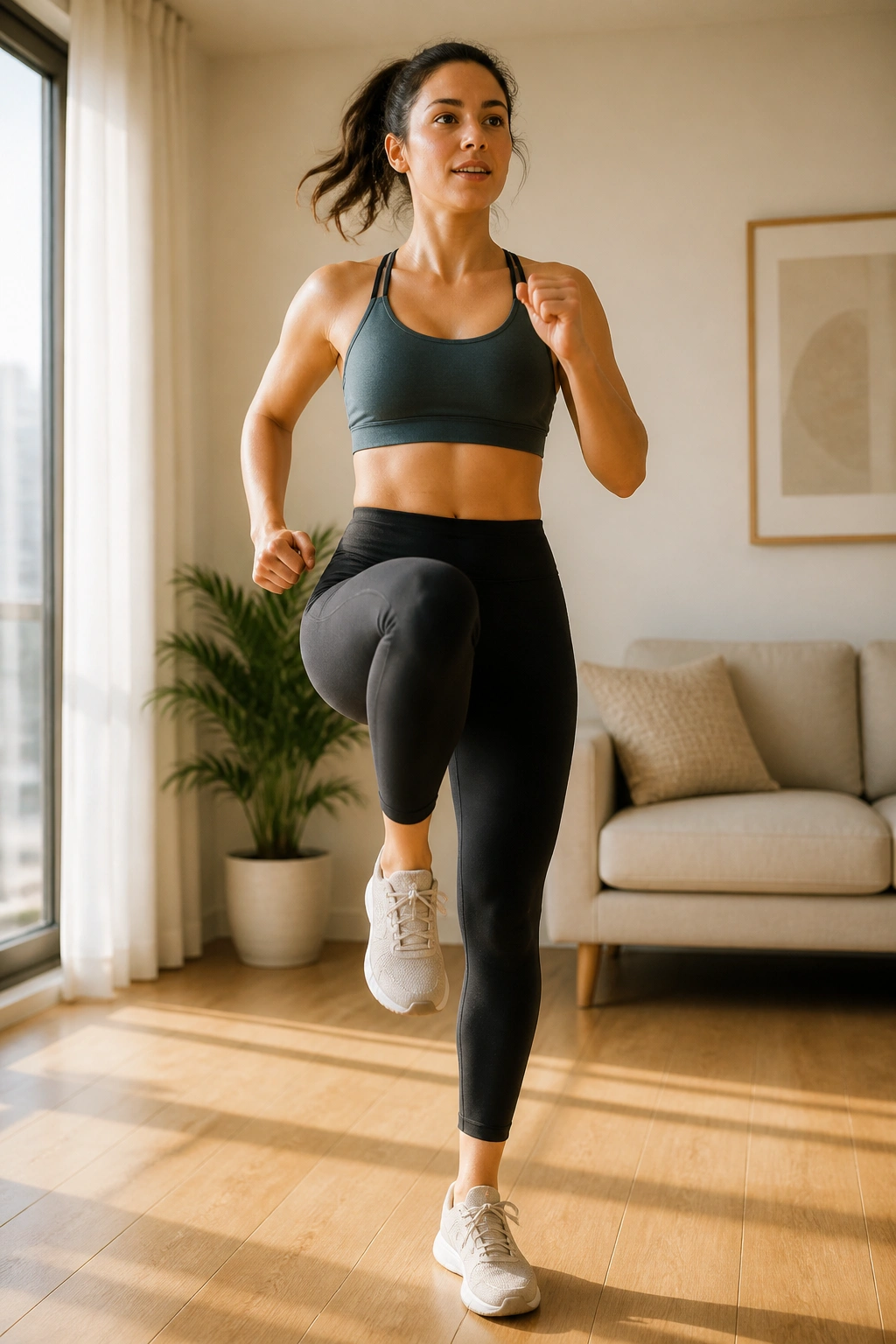
A five-minute march sounds almost silly until you do it properly. Keep your feet light, swing your arms on purpose, and make the pace brisk enough that your breathing changes by the second minute. This is the kind of no equipment workout I like for people who think they “aren’t warm-up people.” You will be after this.
How to run it
Set a timer for five minutes and cycle through these moves:
- 30 seconds brisk march in place
- 30 seconds arm swings across the chest
- 30 seconds step-touches with a reach overhead
- 30 seconds knee lifts, one side at a time
- 30 seconds torso twists with soft knees
Repeat the circuit once.
Keep the steps quiet. Keep the ribs stacked over the hips. If your shoulders creep up toward your ears, slow down and reset. That tiny detail matters more than people think.
Best use: before a full-body bodyweight workout, or on a day when you need to stop feeling stiff without draining yourself.
2. The Squat and Reach Ladder
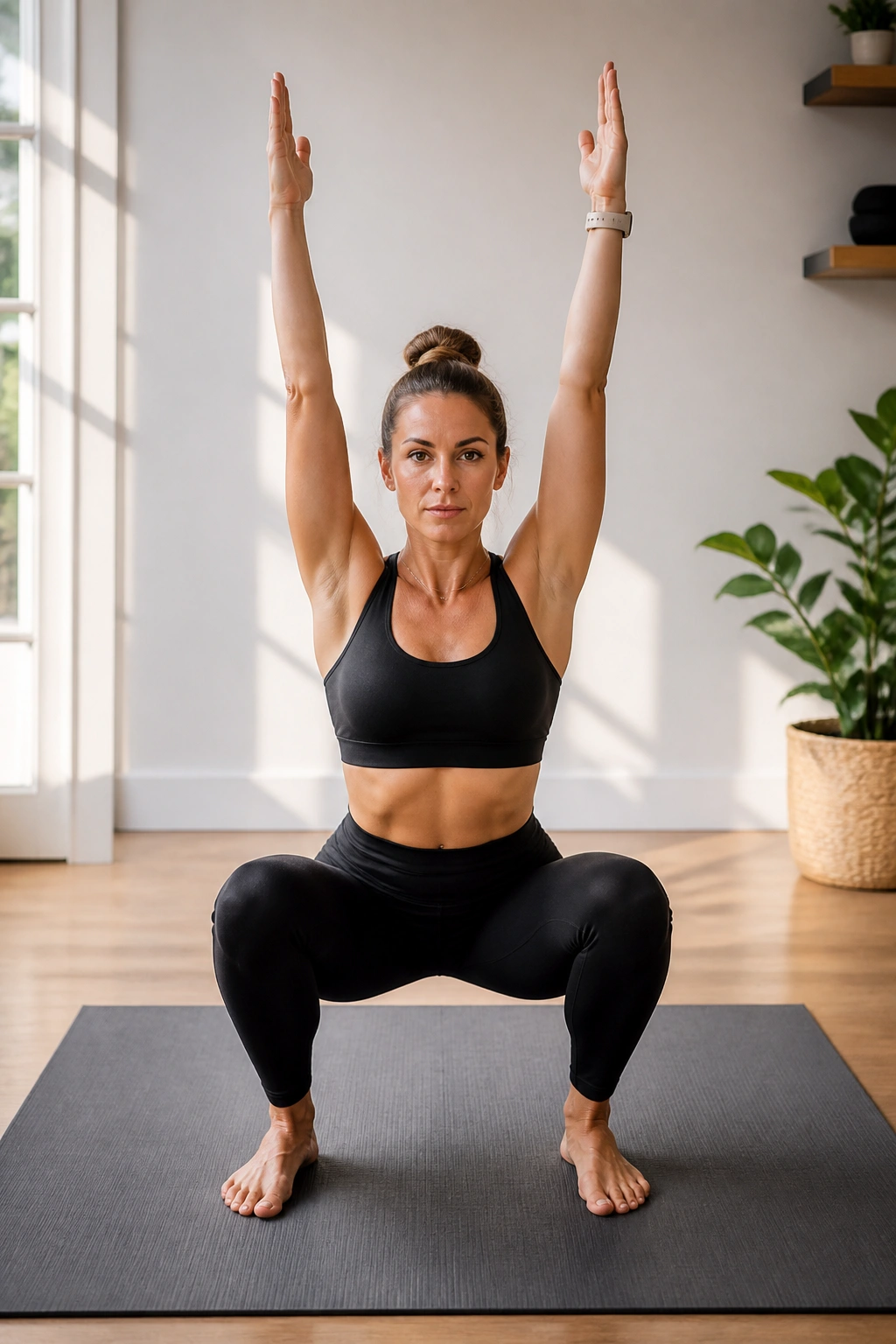
A squat ladder is one of the easiest beginner no equipment workouts to explain and one of the easiest to scale badly if you rush it. Don’t rush it. Sink down under control, stand up through your whole foot, and reach overhead at the top like you’re lengthening your spine instead of showing off.
Try 8 squats, rest 20 seconds, then 10, then 12. If that feels too spicy, run the ladder backward: 12, 10, 8. If it feels too easy, slow the lowering phase to three counts on the way down.
The reach is not decoration. It helps open the front of the body and keeps the movement from turning into a sloppy half-sit. A lot of beginners stop at the bottom and lose their chest position. That’s where the work gets messy.
Easier version: sit onto a box-height squat depth in your mind, not a literal box.
Harder version: pause for one count at the bottom and drive up fast.
3. Wall Push-Ups, Then Floor Push-Ups
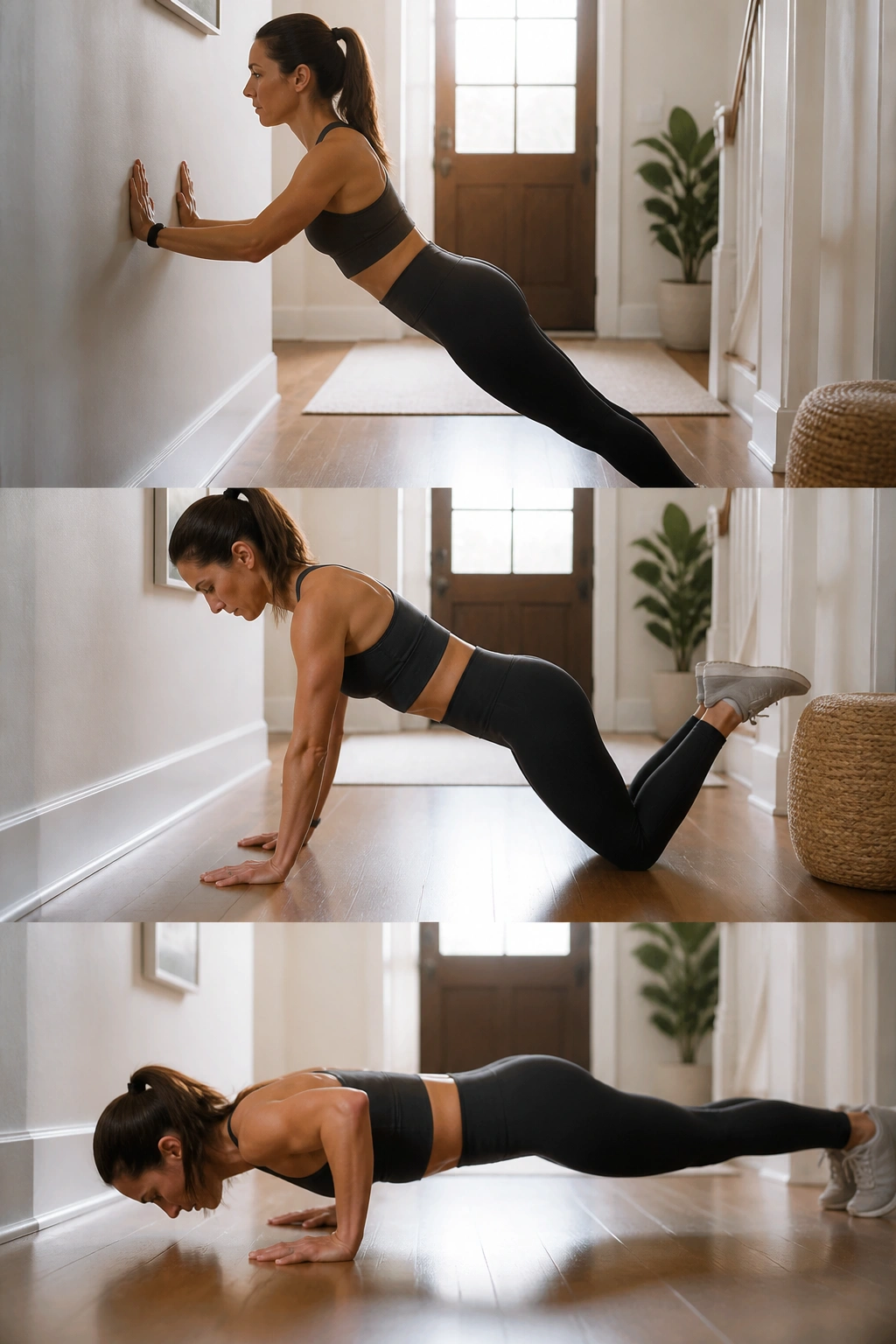
Can a push-up workout still count if you start at the wall? Absolutely. That’s the smart version, especially if your wrists, shoulders, or core need time to catch up. The angle changes the load more than most people expect, which is why wall push-ups are not “baby” push-ups. They’re just a better starting point.
Why this progression works
Do 8 to 12 wall push-ups, then 6 to 10 knee push-ups, then 3 to 8 floor push-ups if you have them. Rest about 30 seconds between rounds. Keep your body in one long line from head to heel or knee. No sagging. No neck craning.
A clean rep looks boring. Good. Boring form is usually what keeps shoulders happy.
How to scale it
- Hands higher on the wall = easier
- Hands lower on the wall = harder
- Slow lowering phase = harder
- Shorter range of motion = easier on tired days
If your elbows flare straight out, tuck them a little closer to your sides. You’ll feel stronger almost immediately.
4. Dead Bug and Bird Dog Core Pair
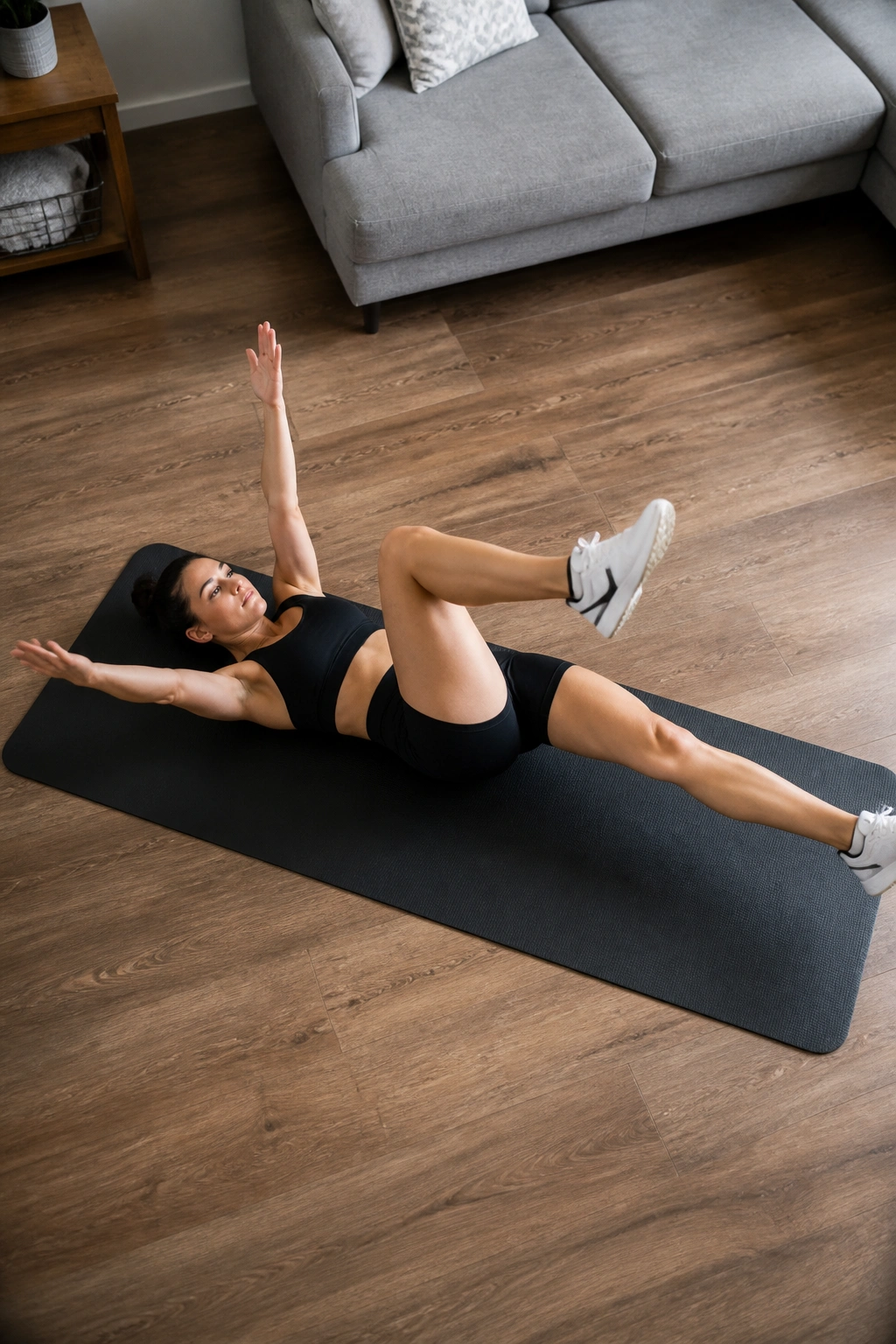
This one is small, quiet, and sneaky. You lie on the floor, move opposite limbs with control, and suddenly your core has to keep everything from wobbling apart. It is one of the best no equipment workouts for people who hate crunches but still want a stronger midsection.
Start with 6 dead bugs per side, then 6 bird dogs per side. Rest for 20 seconds, and repeat for three rounds. Move slowly enough that your lower back stays flat on the floor during the dead bug. If your back arches, shorten the reach. That is the correct adjustment, not a failure.
The bird dog is where balance sneaks in. Reach long through the heel and hand, then bring them back under control instead of dropping them. The goal is steadiness, not speed.
- Dead bug: slow, controlled, back pressed down
- Bird dog: reach long, pause for one count
- Rest: short enough to keep your trunk warm
Pro tip: breathe out as the arm and leg extend. That little exhale helps your ribs settle.
5. Reverse Lunge and Knee-Drive Flow
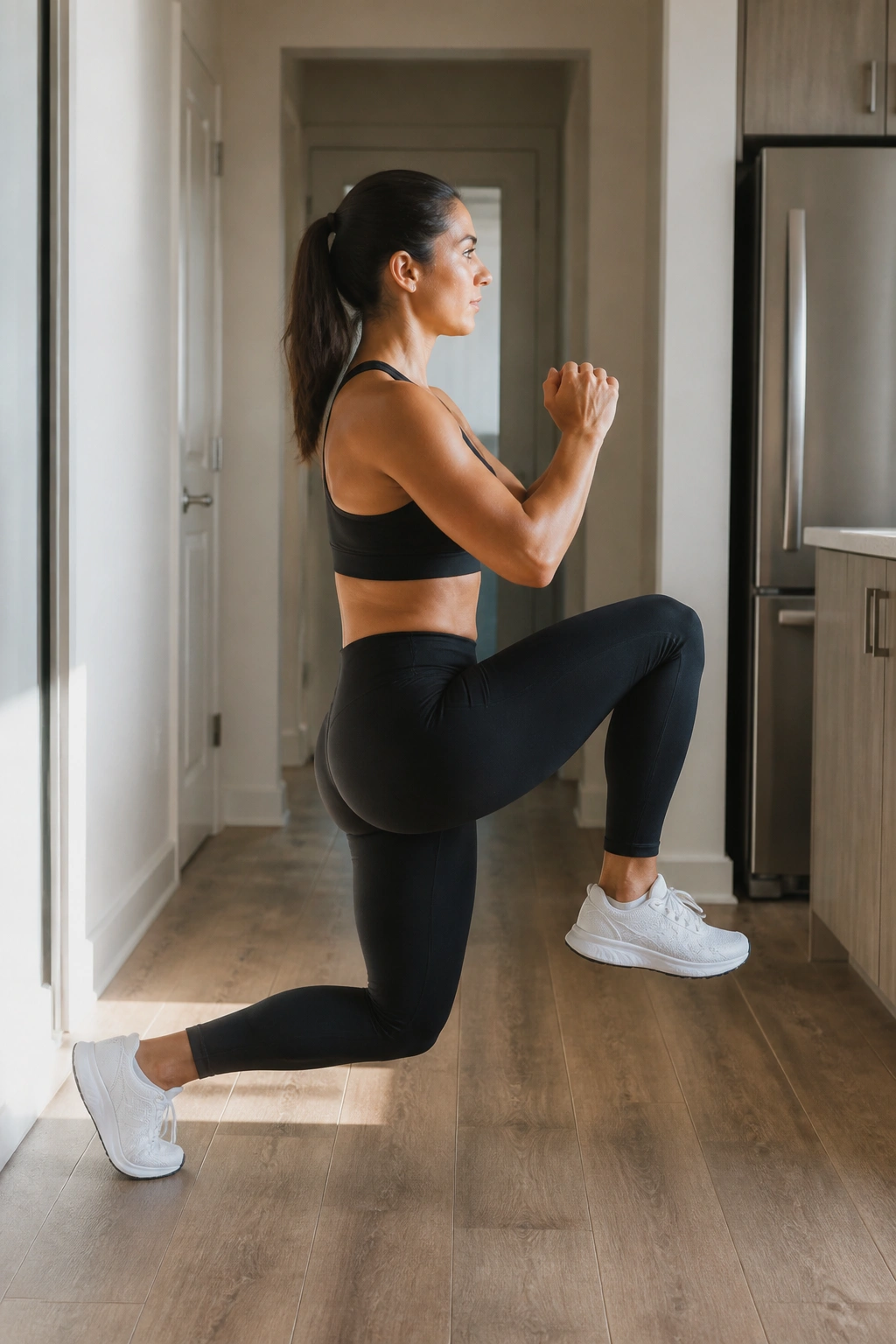
Reverse lunges are kinder to most beginners than forward lunges, and I’ll die on that hill. Stepping back tends to feel steadier on the knee, cleaner on the balance, and less like you’re chasing the floor. Add a knee drive at the top and the move becomes a full-body drill, not just a leg exercise.
Do 8 reps per side. Step back softly, drop the back knee toward the floor, then press through the front heel to stand. Finish by driving the back knee up in front of you for one beat. That last part wakes up the hip flexors and balance muscles without any gear at all.
The mistake I see most is leaning too far forward and turning the lunge into a bow. Keep the torso tall. Your front shin does not need to stay perfectly vertical, but your chest should stay proud.
A simple round here can stand alone, or you can pair it with marching in place for 30 seconds between sides. Feels plain. Works hard.
6. The Glute Bridge Burner
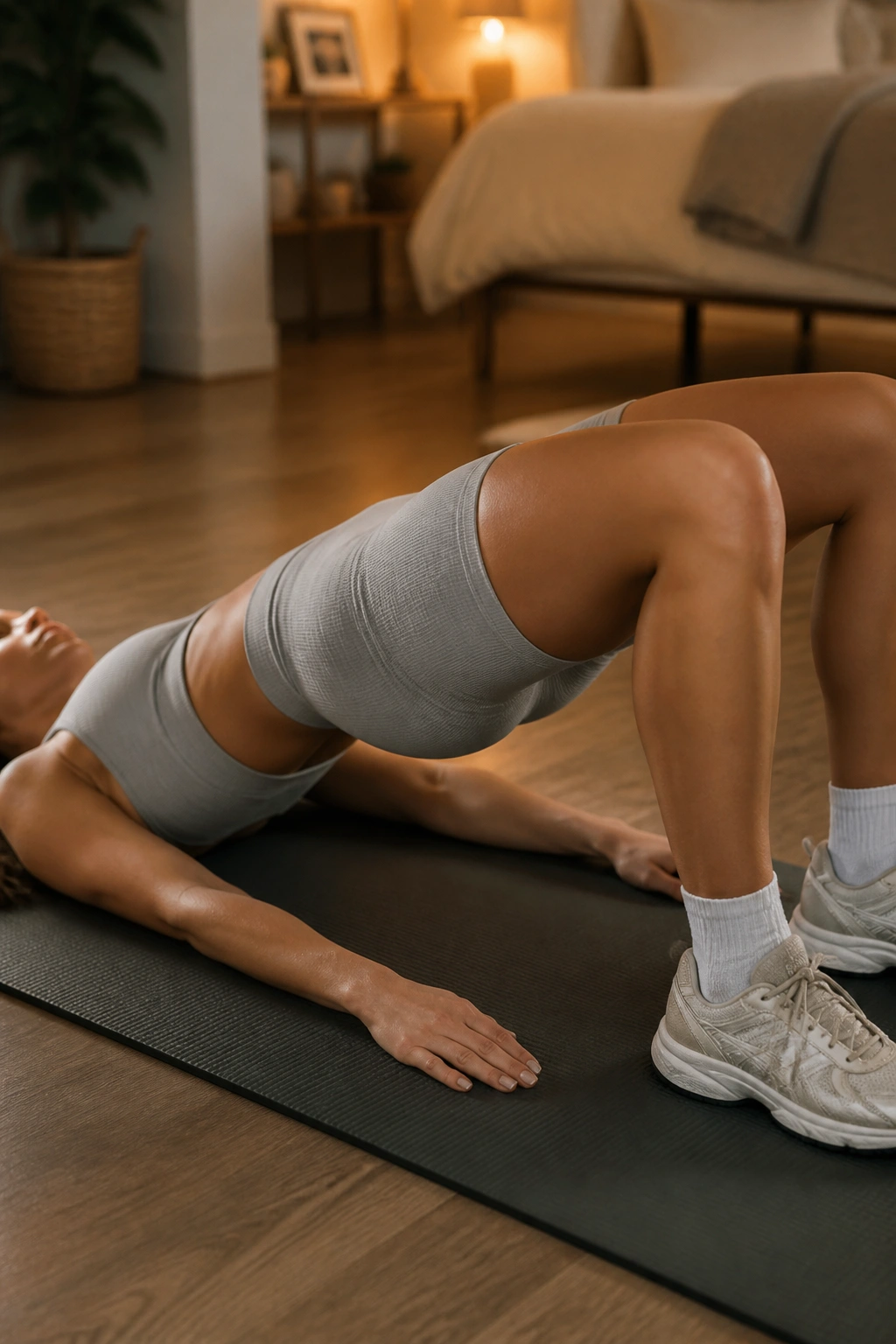
Unlike squat-heavy work, this one gives your knees a break while making your backside do the heavy lifting. Lie down, plant your feet, and press your hips up until your body forms a straight line from shoulders to knees. That is the basic glute bridge. The hard part is not the lift. It’s the control.
Try 12 regular bridges, then 10 small pulses at the top, then a 15-second hold. Rest 30 seconds and repeat for three rounds. If your hamstrings cramp, move your feet a little farther from your hips and squeeze your glutes before lifting. That tiny foot adjustment fixes a lot.
Best way to feel it
You want the work in your glutes, not your lower back. If the back arches hard, lower the hips and reset. If the feet slide, press them into the floor a bit more firmly. Nothing fancy here.
Best for: beginners who sit a lot, runners who need hip work, and anyone who wants a quiet, low-impact session that still feels useful.
7. The Plank Ladder
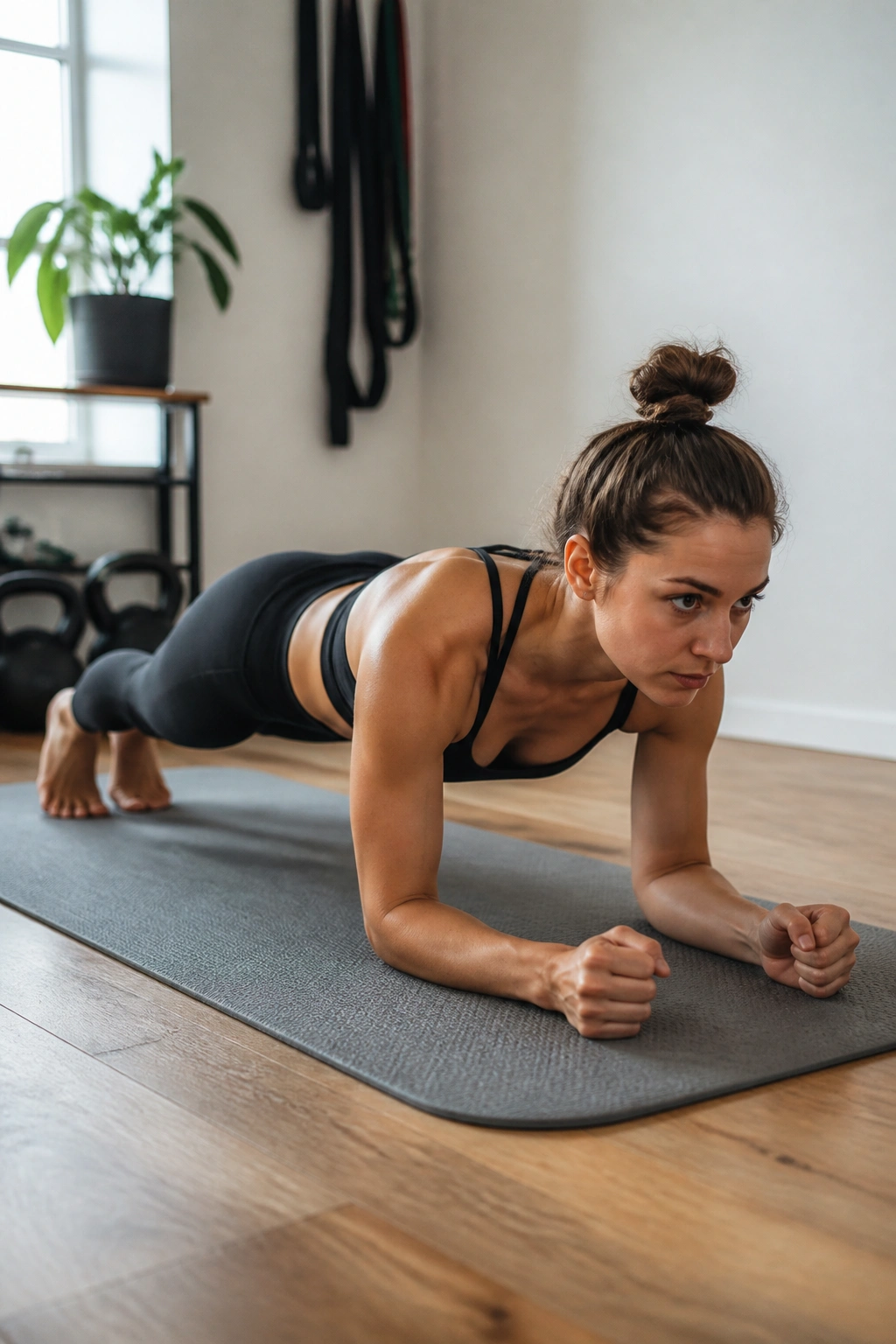
A plank ladder is one of those workouts that looks simple on paper and gets real in a hurry. Hold for a short burst, rest briefly, then climb the time up in small steps. It builds staying power without demanding perfect push-up strength first.
How to build the ladder
- 20 seconds forearm plank
- 20 seconds rest
- 30 seconds forearm plank
- 20 seconds rest
- 40 seconds high plank
- 30 seconds rest
- 30 seconds side plank each side
Keep the glutes lightly squeezed and the neck long. If your hips drop, shorten the hold. If your breathing turns into a panic gasp, that’s a sign to back off a little and clean up the shape.
A lot of people hate planks because they treat them like a punishment. Better to think of them as a bodyline drill. Straight body. Quiet ribs. Firm belly.
One honest note: shaking is normal. Sagging is not.
8. Shadow Boxing Rounds
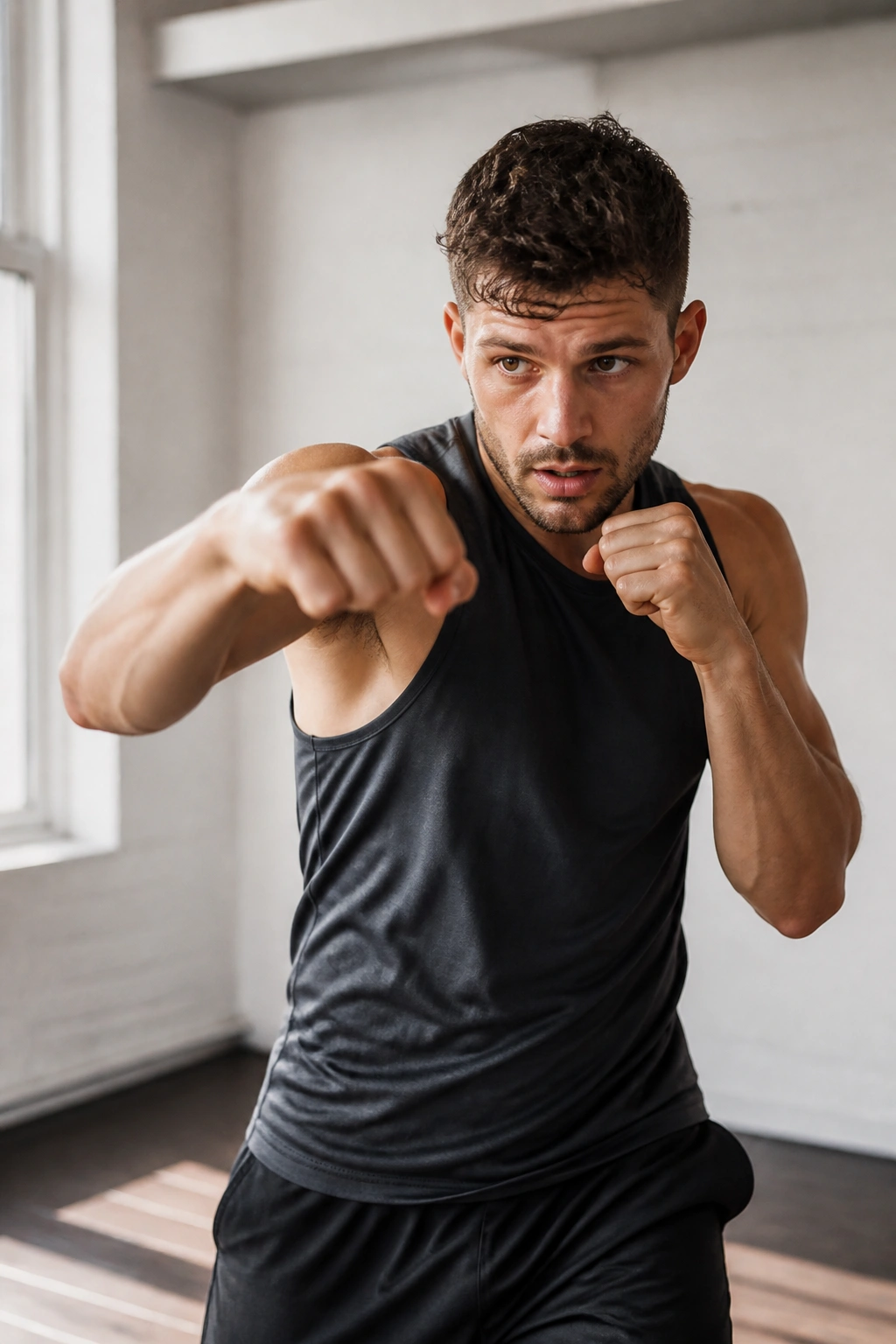
Shadow boxing is the workout people underestimate until their shoulders, lungs, and feet are all talking at once. No gloves, no bag, no ring. Just stance, hands up, and clean punches thrown in the air with enough snap to keep the heart rate climbing.
Do 6 rounds of 30 seconds on and 15 seconds off. Throw jabs, crosses, hooks, then add two slips or a duck between combinations. Keep your feet light and your chin tucked. If you stand flat-footed, the whole thing turns sluggish.
This is a beautiful low-impact cardio option because you can choose your intensity without losing the shape of the workout. Beginners can stay with single punches and simple movement. Stronger folks can add faster hands, more footwork, and longer rounds.
A tiny detail makes a big difference: turn the rear hip a little when you throw the cross. It gives the punch more life and wakes up your torso.
9. The Bear Crawl Sequence
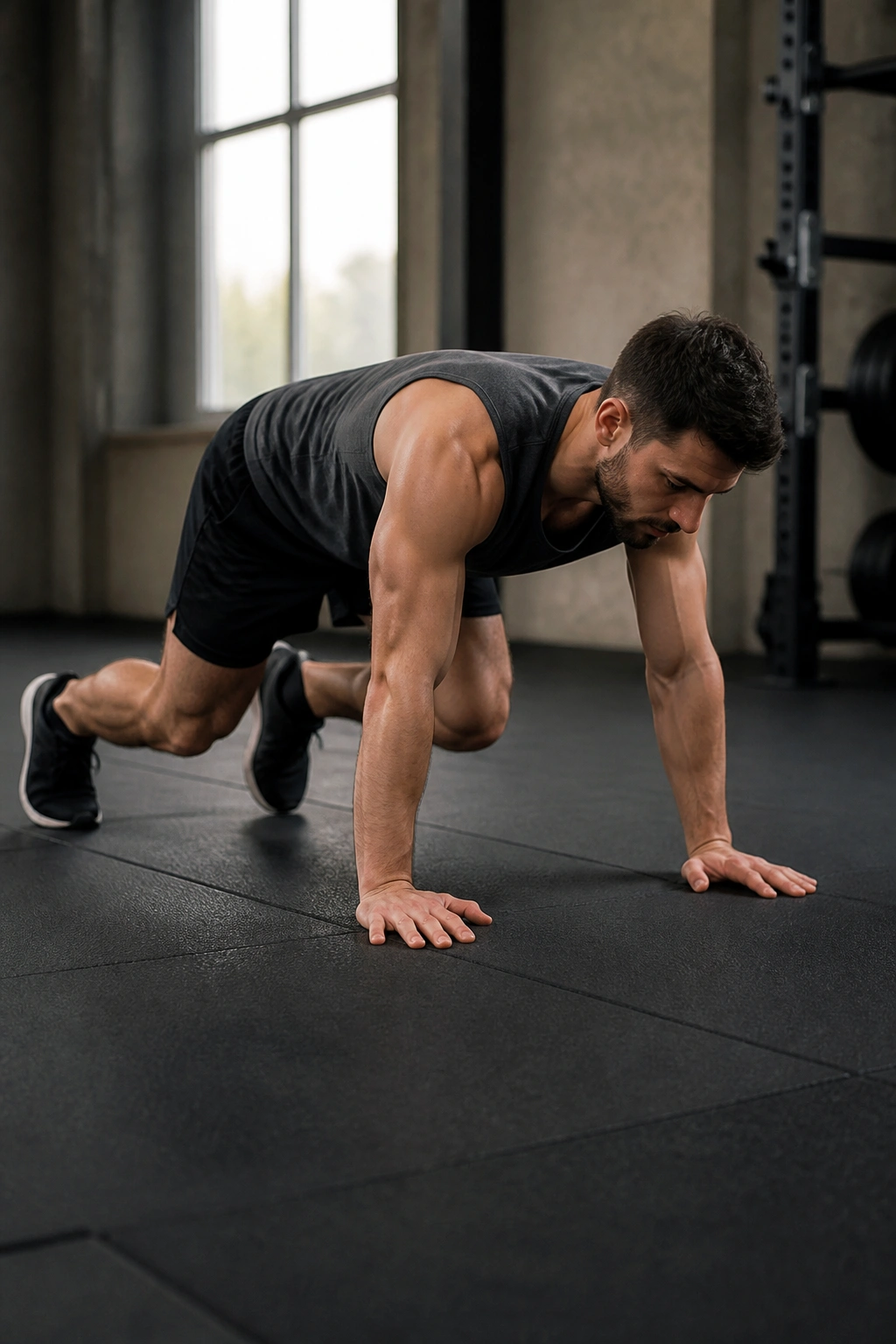
Bear crawls are awkward in the nicest possible way. Hands under shoulders, knees hovering an inch or two off the floor, spine steady, and you move opposite hand and foot without letting your hips bounce around like a shopping cart with one bad wheel.
Start with 20 seconds of a bear hold, then 20 seconds crawling forward, then 20 seconds crawling back. Rest for 30 seconds. Repeat three to four times. If that’s too much, just hold the position and breathe for 15 to 20 seconds. That still counts.
The magic here is in the shoulders and core. Your body has to coordinate, not just move. That makes this a real beginner no equipment workout for all levels because you can keep the same pattern and simply change the distance or duration.
Keep your steps short. The farther you reach, the more wobbly it gets. Short, deliberate steps are better.
10. Mountain Climber Paces
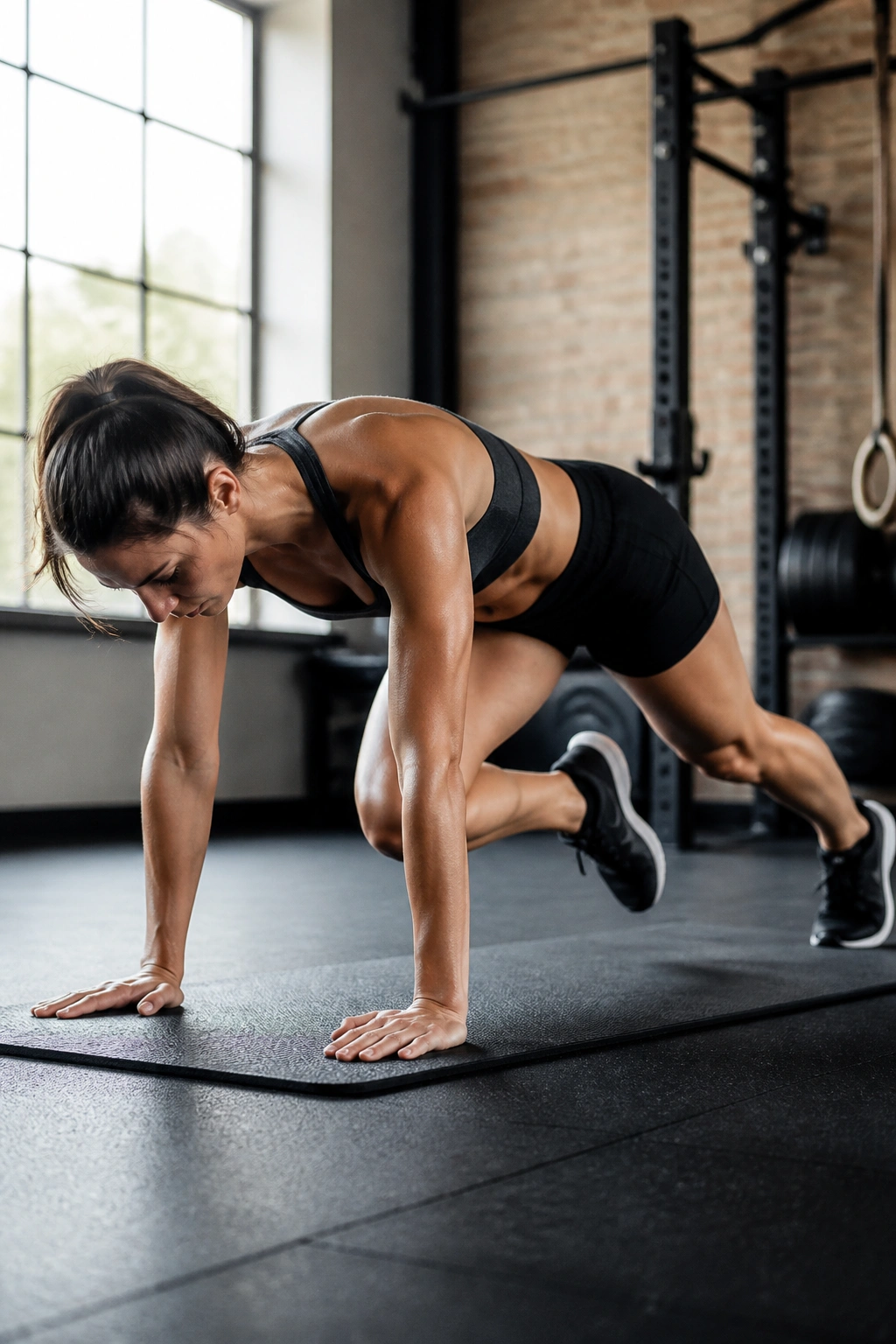
Why do mountain climbers show up in so many bodyweight workouts? Because they’re easy to start, easy to scale, and hard to fake. Your hands stay planted while your legs drive in and out, which means your core has to brace while your heart rate climbs.
Try three paces in one round:
Slow, medium, fast
- 20 seconds slow climbers, one knee at a time
- 20 seconds medium pace
- 20 seconds cross-body climbers
- 20 seconds rest
Repeat three rounds.
Slow climbers teach control. Medium pace builds rhythm. Cross-body climbers hit the obliques a little more, which gives the move some bite without needing speed for speed’s sake. Keep your shoulders over your wrists and don’t let your hips jump all over the place.
If your wrists dislike the floor, use a slight fist position or do the move on a higher incline like a sturdy counter. That still keeps it no-equipment in the way most people mean it.
11. Side Plank and Reach Series
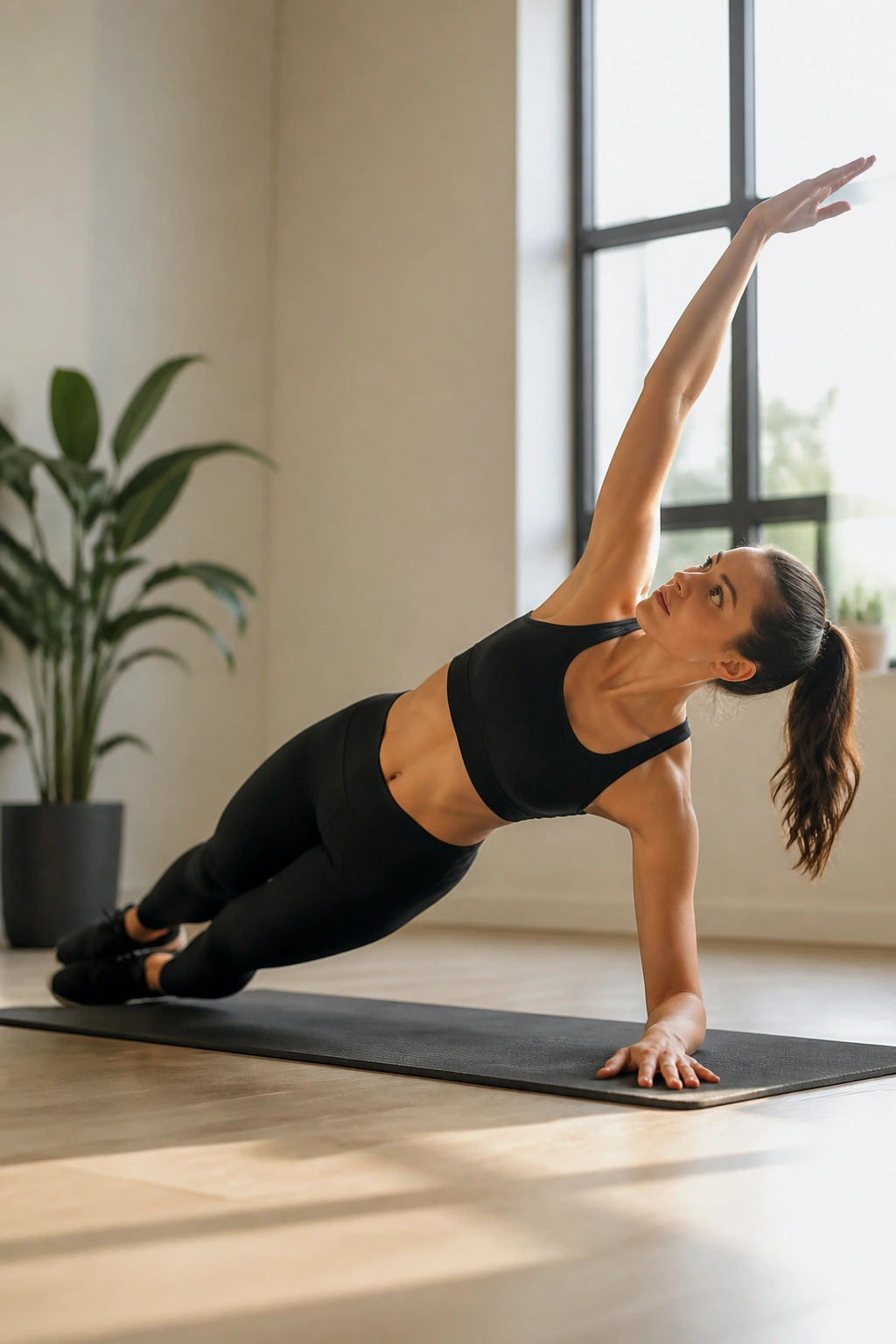
Side planks are where a lot of beginners discover that the side of the body exists. That sounds cheeky, but it’s true. The obliques, hip muscles, and shoulder stabilizers all have to work together to keep you from tipping.
Start on your forearm with knees bent if you need a gentler angle. Hold for 15 to 20 seconds, then add a top-arm reach over the body and back up again. Do 2 rounds per side. If that feels stable, straighten the top leg or move to a full side plank.
What to watch
- Shoulder stacked over elbow
- Hips lifted, not rolled backward
- Neck long, jaw loose
- Breath steady, not held
The reach makes the position feel more complete because it asks you to resist rotation. That’s the useful part. A side plank isn’t only about hanging there. It’s about staying square while your arm moves.
A short hold done neatly beats a long hold done crooked. Every time.
12. Split Squat Strength Sets
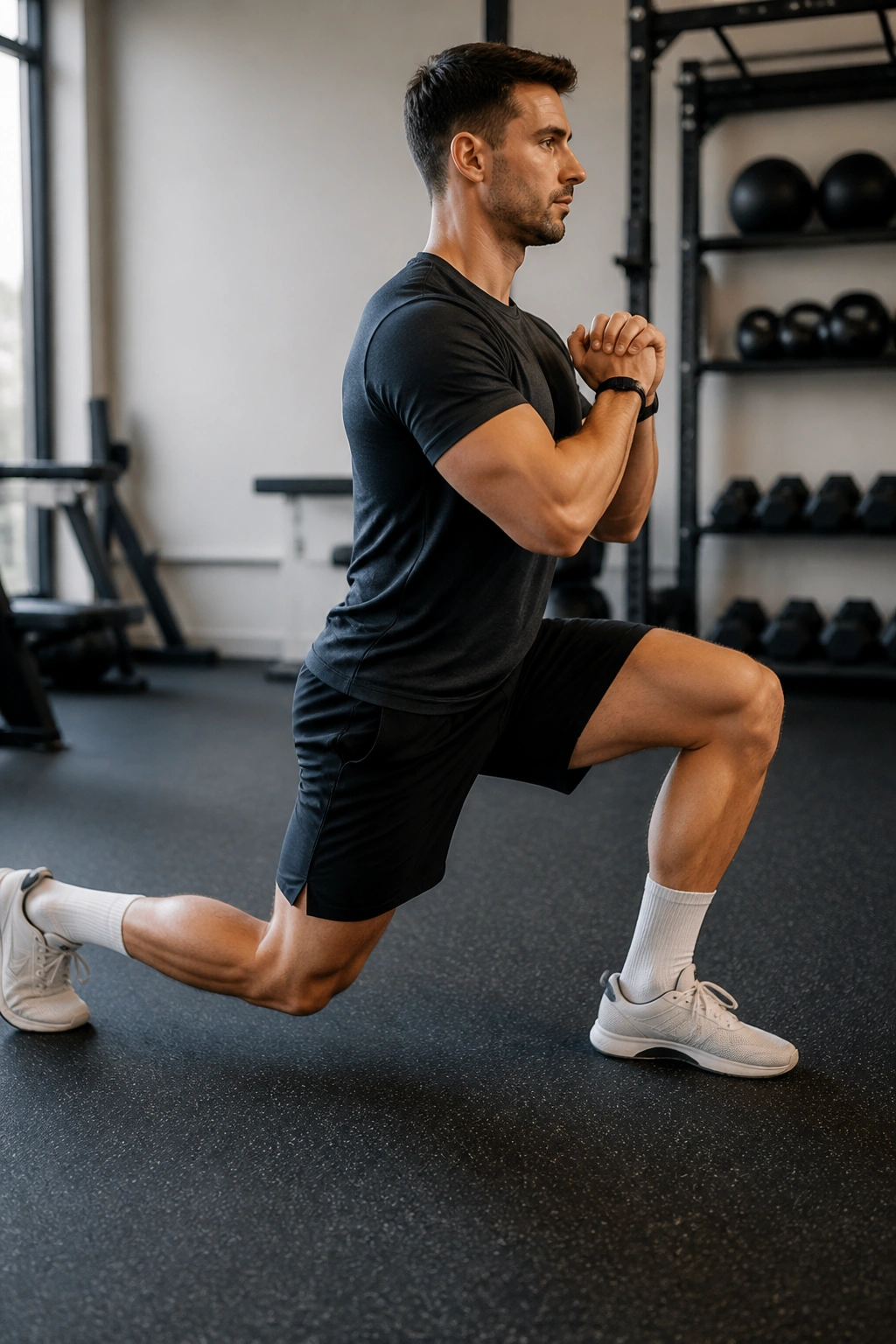
Split squats look plain. Then you do six reps per side and realize plain can sting. One foot stays forward, the other stays back, and your body lowers like a piston. Because the feet stay planted, balance is easier than in a lunge, which makes this a good beginner no equipment workout for all levels.
Use a 3-1-1 pace: three seconds down, one second pause, one second up. Do 6 to 8 reps on each side for three rounds. Keep most of your weight in the front heel and midfoot. If the back knee taps the floor softly, that’s fine. If your front knee caves inward, reset and track it over the toes.
The slow lower is the whole point. It teaches control and makes a bodyweight move feel a lot heavier than it looks.
A nice bonus: this one carries over well to walking hills, stairs, and getting up off the floor without grumbling.
13. Standing Abs and Balance Combo
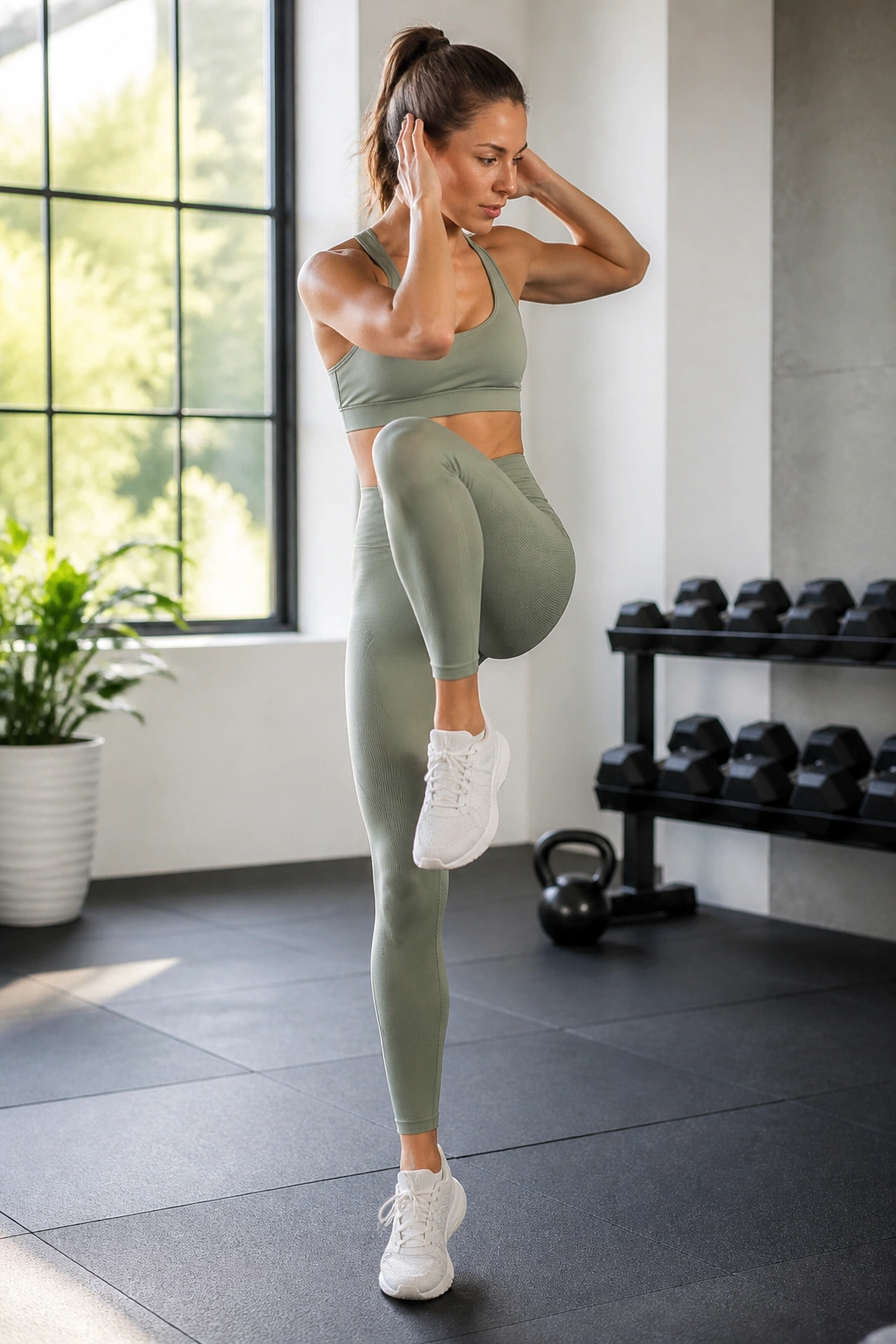
Not every core workout needs to happen on the floor. In fact, standing work is underrated because it trains the trunk the way you actually use it: upright, shifting, balancing, and breathing at the same time.
Stand tall and alternate 10 knee drives per side with opposite elbow taps. Then move into 10 standing side crunches per side, followed by 20 seconds of single-leg balance. Repeat two to four rounds. The pace should be crisp but not rushed. You want control at the top of each lift, not just flailing knees.
This style is great if your wrists, neck, or lower back dislike floor work. It also sneaks in some coordination, which beginners often need more than another hard finisher.
Small cue: keep the standing foot “heavy.” If the arch collapses, you lose balance fast. A firm foot gives the whole sequence a better base.
14. The Full-Body EMOM
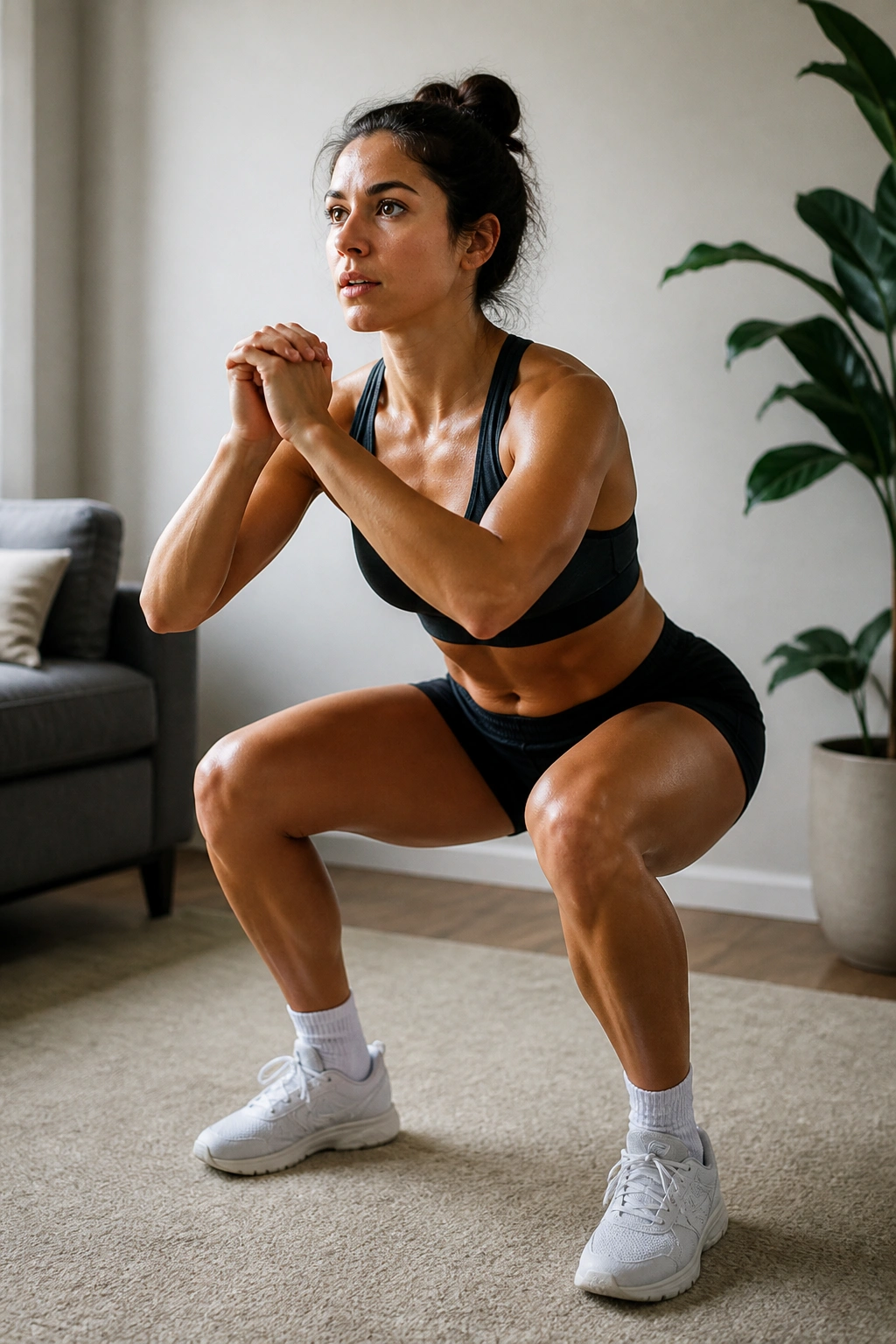
An EMOM is “every minute on the minute,” and it’s one of my favorite no equipment structures because it keeps the workout honest without making it complicated. You do a short burst of work, rest with whatever time remains in the minute, then start the next task on the next minute mark.
Minute by minute
- 10 squats
- 8 push-ups or wall push-ups
- 12 mountain climbers per side
- 12 glute bridges
Repeat for three to five rounds.
That’s it. No drama. The rest periods are built in, which is why beginners often tolerate this format better than they expect. If 10 squats leaves you breathless, cut to 6. If you finish with 30 seconds left, slow the next round slightly or add a pause.
The EMOM works because the clock tells you when to move on. You don’t have to negotiate with yourself every 15 seconds, which is half the battle on tired days.
15. The Yoga-Style Mobility Flow
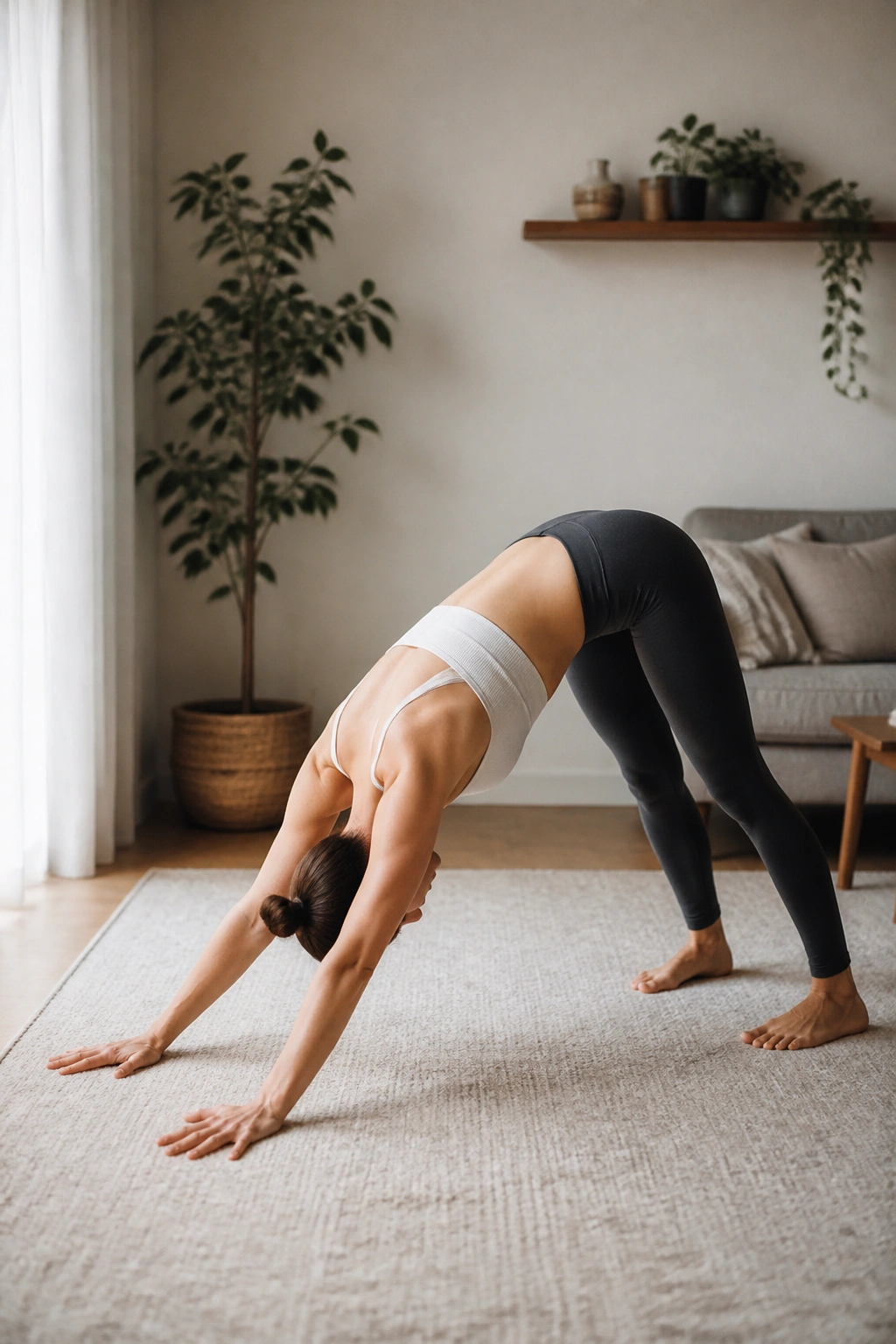
Can a mobility session count as a workout? If it gets you sweating a little, opens the hips, and leaves your back feeling less cranky, I say yes. This kind of flow is the thing to use when your body feels stiff but you still want a real session.
Start on the floor with 5 cat-cows, then move to downward dog and pedal the heels for 30 seconds. Step one foot forward into a low lunge, lift the chest, and rotate the torso toward the front leg. Hold 20 seconds per side, then return to child’s pose and breathe for three slow breaths.
Do two to three rounds. Keep the motion smooth. Nothing needs to be deep or dramatic. If your hamstrings are tight, bend the knees. If the lunge pinches, shorten the stance. That is not cheating; that is making the flow fit your body.
A mobility workout like this is what lets the harder days happen later without your joints complaining.
16. Tabata Bodyweight Basics
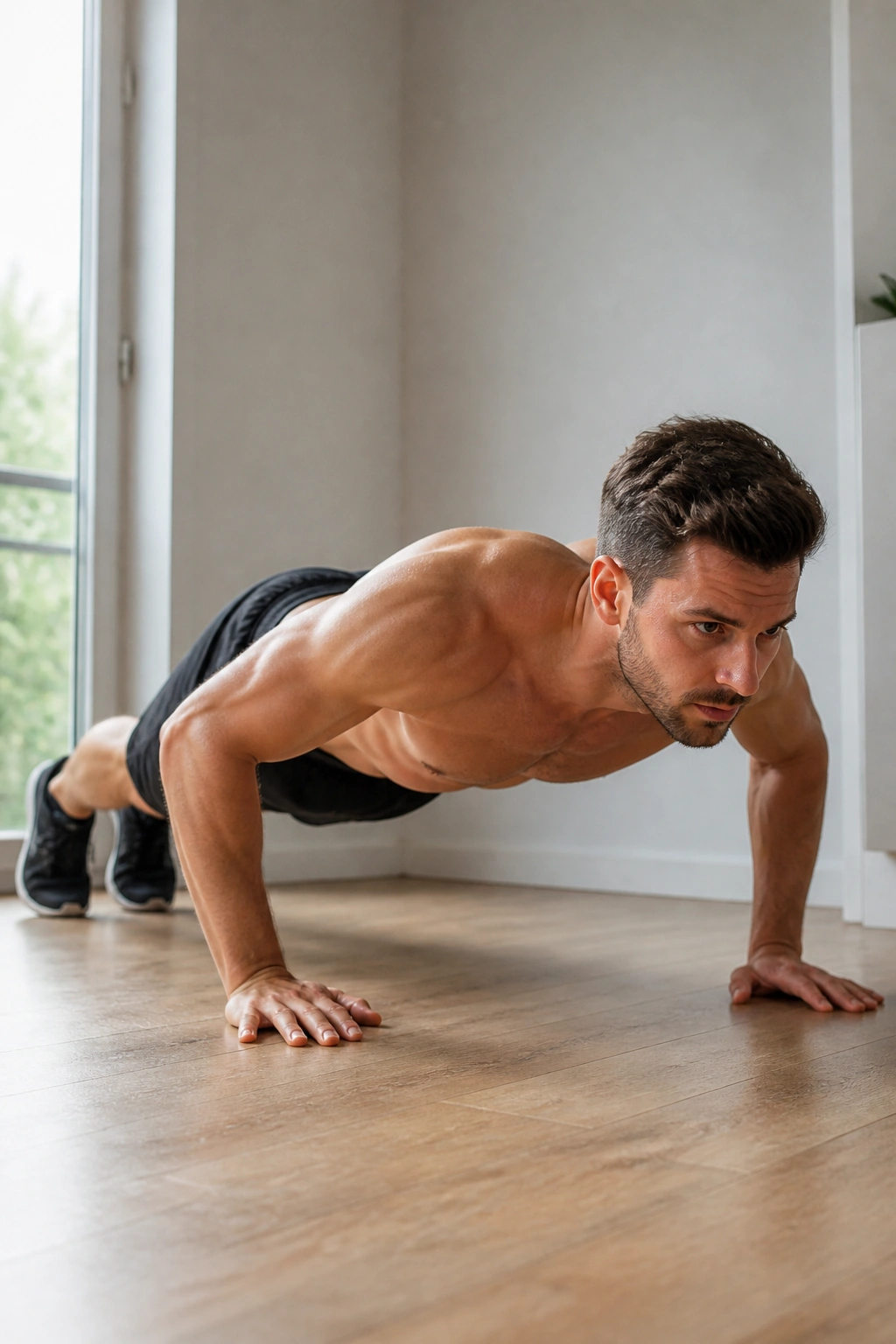
Tabata gets thrown around a lot, and people often turn it into a mess. The real format is tight: 20 seconds of work, 10 seconds of rest, repeated for 8 rounds. Four minutes total. That’s the whole structure. Short, blunt, and surprisingly effective when the exercises are chosen well.
Pick two moves and alternate them:
- Squat jacks or regular squats
- Push-ups or wall push-ups
- Fast marches or mountain climbers
- Alternating reverse lunges
Because the work windows are short, this format suits beginners who want a quick sweat without a long mental commitment. It also scales well. A slower pace still counts if the effort is there. You do not need to sprint from the first second.
The catch is that bad form shows up fast in Tabata. If your knees collapse or your lower back arches, slow the pace and keep the reps cleaner. Four honest minutes beat four sloppy ones.
17. The Slow Tempo Strength Circuit
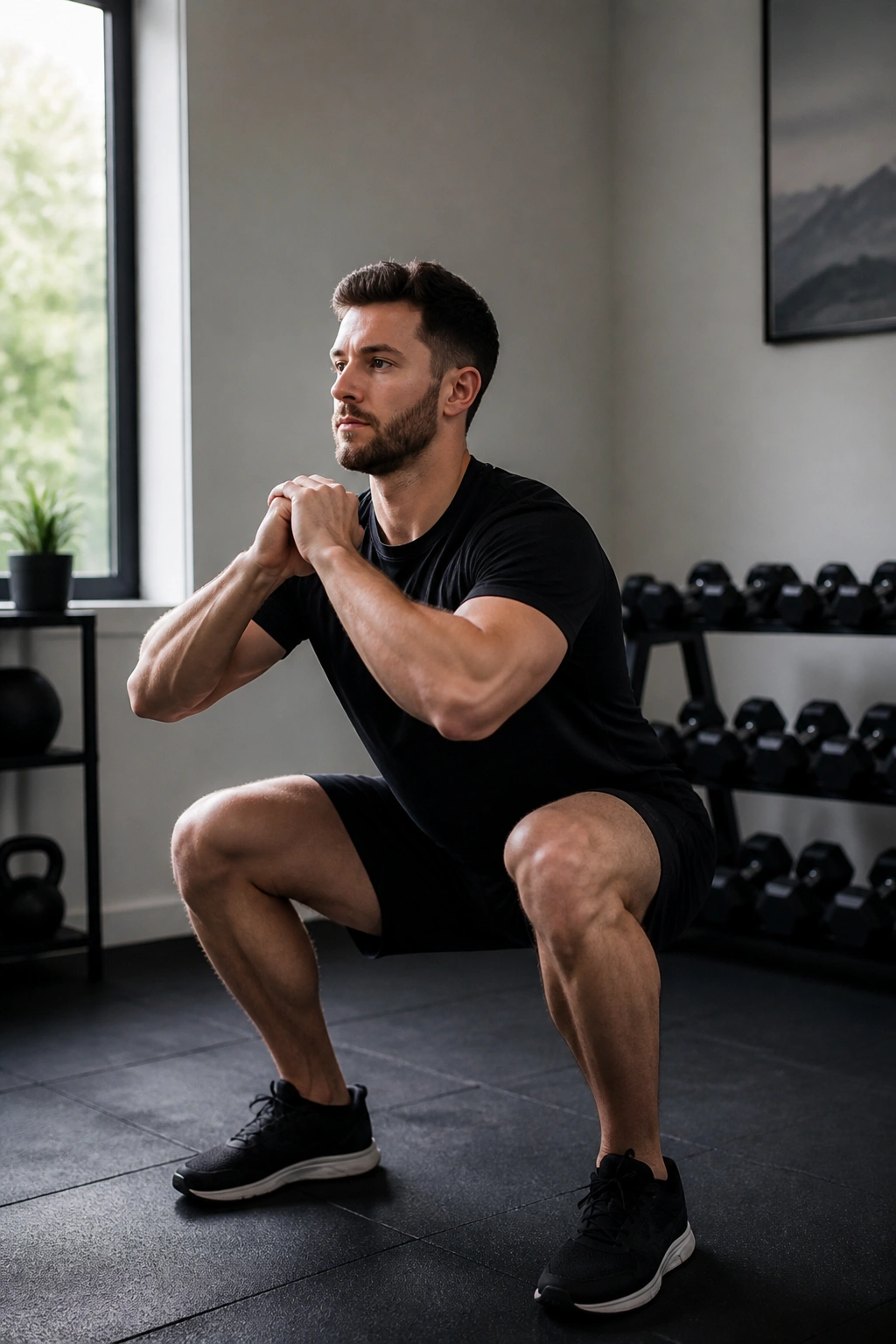
Most people think bodyweight training gets easier if you slow it down. Then they try a 4-second lowering phase and change their mind. Slow tempo work is sneaky. It strips out momentum, which makes even familiar moves feel heavy.
Use three moves: squats, push-ups, and alternating lunges. Lower for four seconds, pause for one, then rise for one. Do 6 reps of each for three rounds. Rest 45 seconds between rounds.
What makes it hard
- No bouncing out of the bottom
- More time under tension
- Better control through the full range
- Less chance to cheat a rep
This is a solid choice for beginners who want strength without jumping. It also fits stronger people on days when joints need a kinder session. The slowness is the workout. Not the number of reps. Not the sweat. The slowness.
If you only try one slow-tempo session, make it this one. It teaches you where your form falls apart.
18. Stairless Cardio With Skater Steps
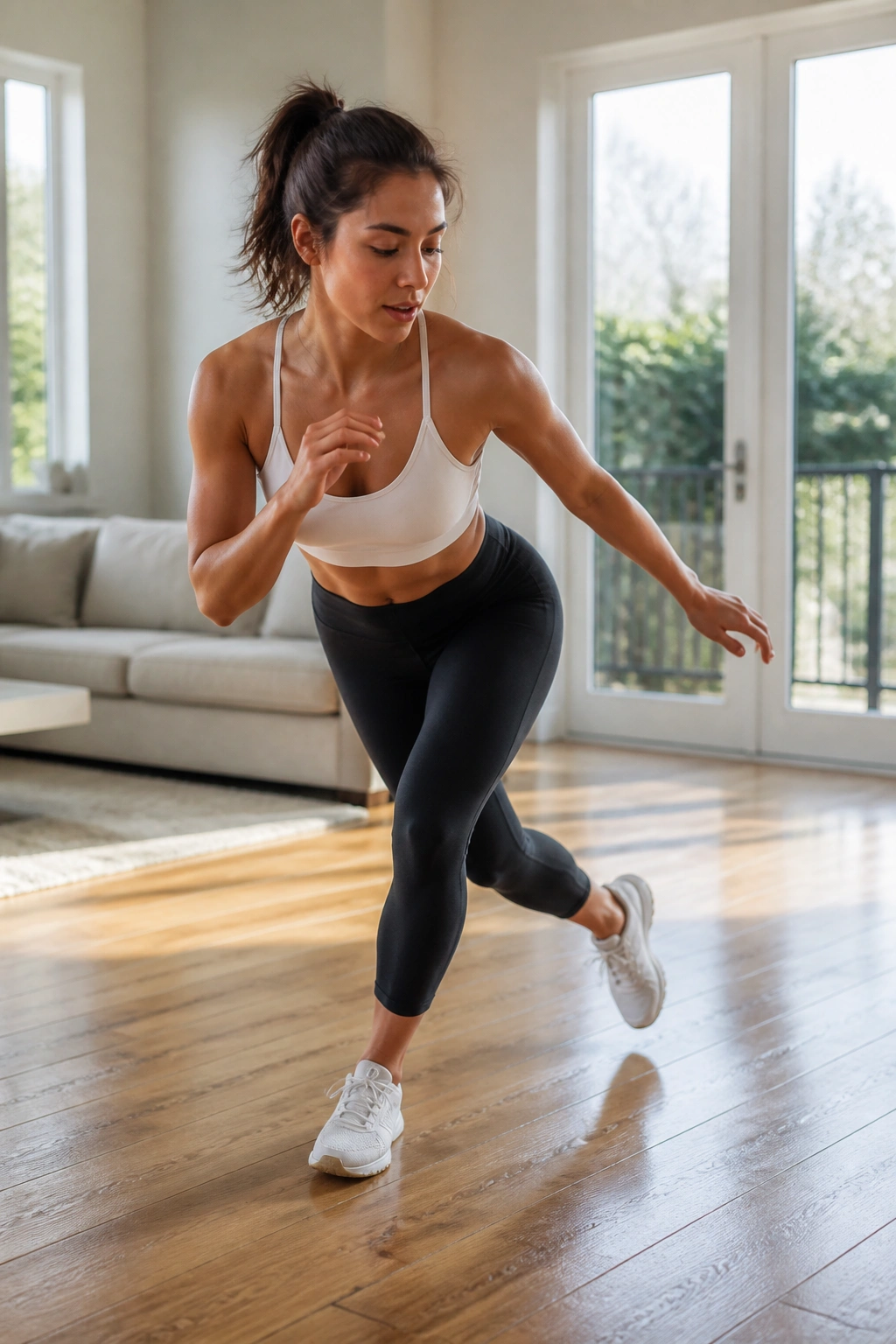
You do not need stairs, a treadmill, or a jump rope to get your breathing up. Side-to-side skater steps, fast marches, and a few low squats can build a sweaty cardio circuit on bare floor space.
Try 40 seconds of skater steps, 20 seconds of fast march, then 40 seconds of squat-to-reach, followed by 20 seconds of rest. Repeat four rounds. Keep the skater step low if you want less impact, or widen the step if you want more challenge.
The side-to-side motion wakes up the hips and makes the body work in a plane that plain forward-and-back walking ignores. That’s useful. Bodies like variety, even simple variety.
If you need a gentler option, tap the foot out instead of hopping. If you want more, speed up the arm drive. Tiny changes add up fast here.
19. The 1-2-3-4 Ladder Finisher
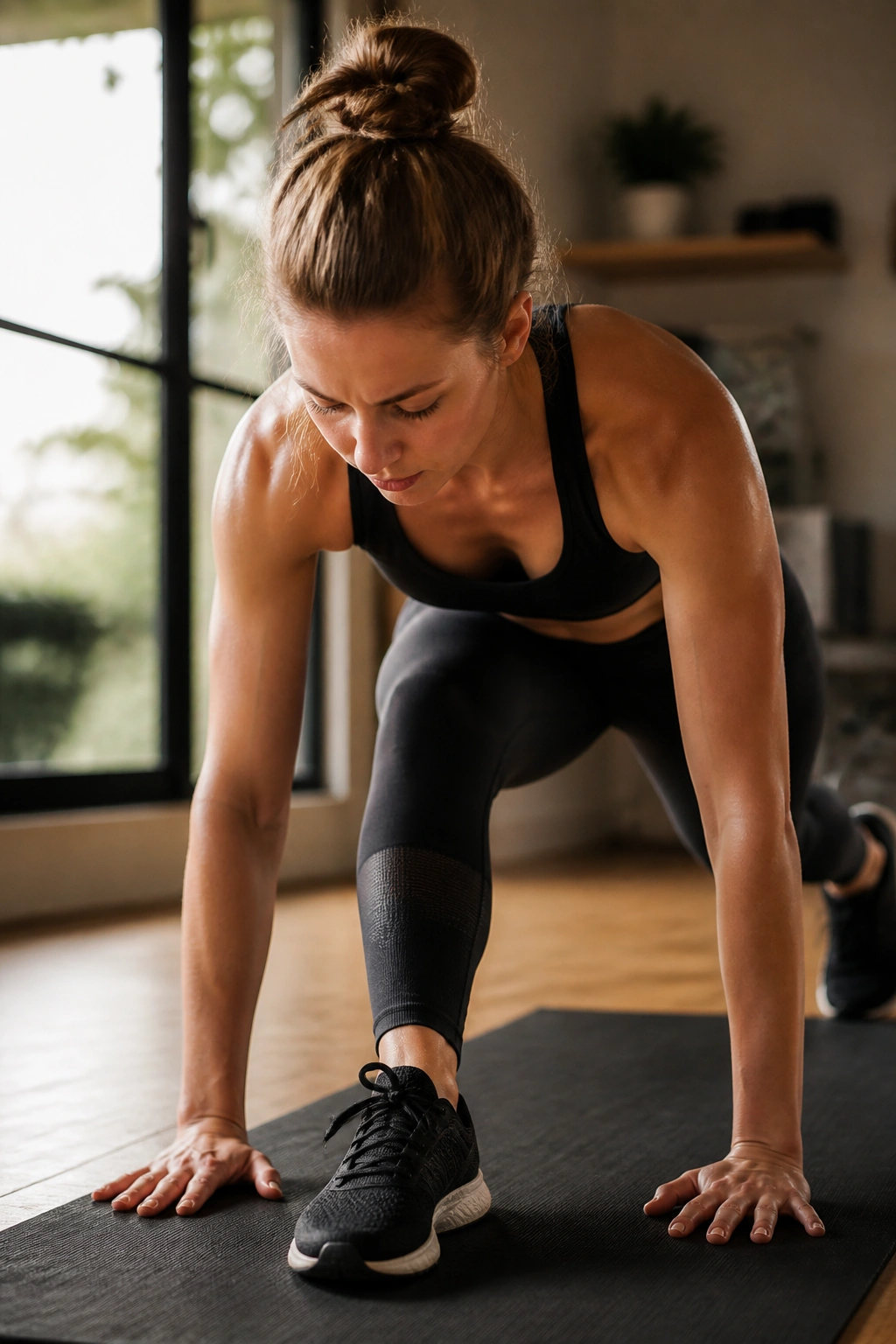
A ladder finisher is a nice way to end a session without needing another full block of time. The format is simple: do 1 rep of each move, then 2, then 3, then 4, then back down if you want a longer set.
Use four exercises: squats, push-ups, dead bugs, and reverse lunges. Keep the reps clean and the rest short, around 15 to 20 seconds between moves. If you want a five-minute version, climb to 5 and stop. If you want more, come back down the ladder.
How to use it
- 1 squat, 1 push-up, 1 dead bug per side, 1 lunge per side
- 2 of each
- 3 of each
- 4 of each
The structure is nice because it gives beginners a finish line. Once you hit the top number, you’re done. No guessing. No wandering around the room trying to decide whether you “should” do more.
It’s also one of the easiest ways to build consistency, since the session feels short even when it’s honest.
20. The Recovery Reset and Stretchdown
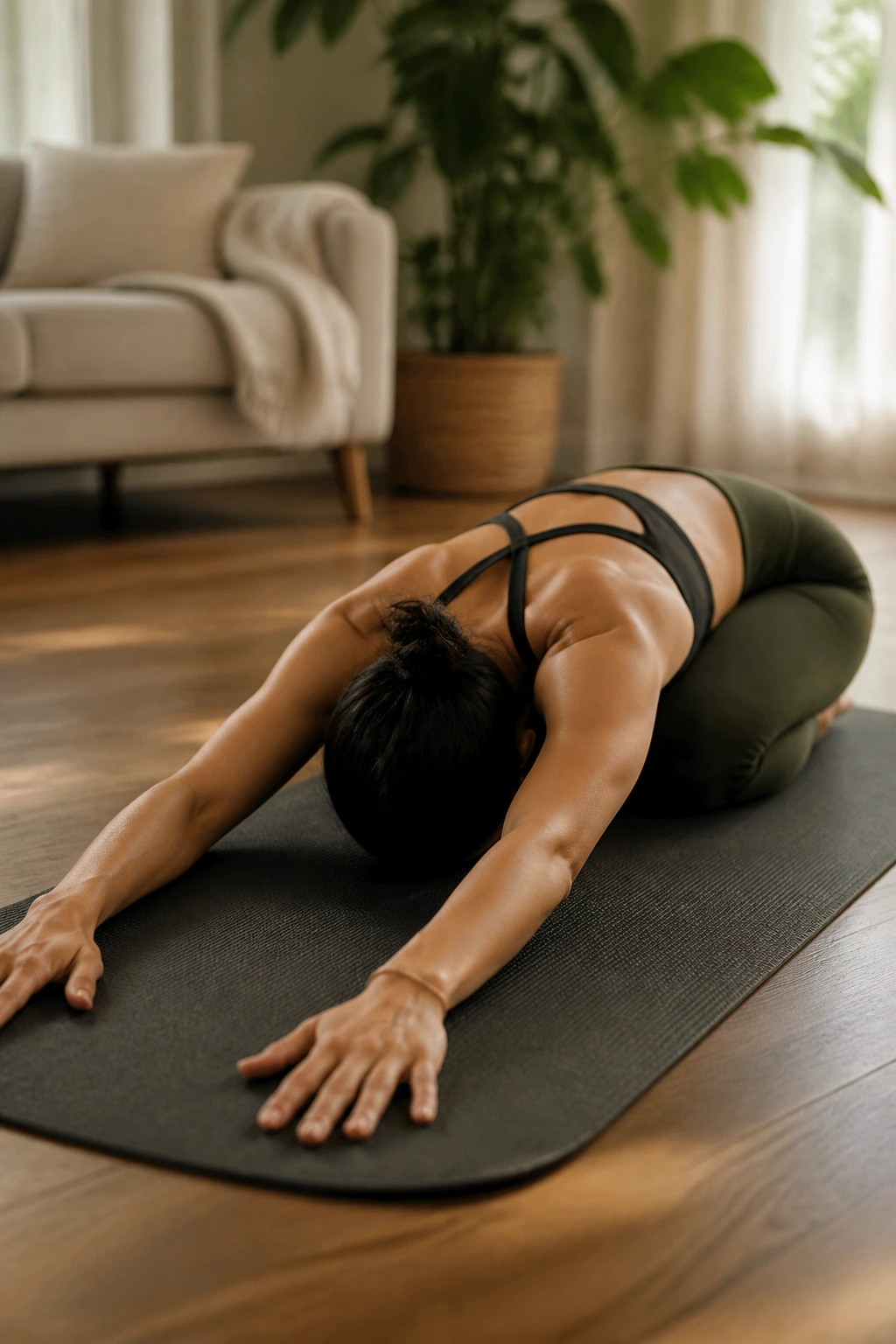
A recovery workout is not a consolation prize. It is the session that keeps you moving tomorrow. On days when your legs feel heavy, your shoulders are tight, or your motivation is wearing thin, this kind of no equipment workout keeps the habit alive without beating you up.
Go through cat-cow, child’s pose, low lunge, hamstring fold, wall angels, and a slow march in place. Spend 20 to 30 seconds on each shape, and breathe out longer than you breathe in. If one side feels tighter, stay there a beat longer. No need to force symmetry for the sake of symmetry.
This is the workout I’d keep in my back pocket for sore mornings and restless evenings. It helps after harder sessions, but it also works on its own when all you want is to loosen up and feel a little more put together.
A simple body can do a lot. It does not need much. A floor. A timer. A few honest moves. And if you keep returning to that, you’ll build a lot more than fitness—you’ll build a routine that doesn’t fall apart the first time the room gets quiet.
