



Boxing strength workouts for women work best when they feel sharp, not sloppy. One pair of dumbbells, a bag, a band, or a clear patch of floor can build more useful power than a pile of random exercises done half-heartedly.
A punch is not an arm move. It starts in the floor, climbs through the legs and hips, tightens through the trunk, and only then lands in the fist. Miss one link and the whole thing leaks power. That’s why so many people feel tired in the shoulders before they ever feel strong in the strike.
The best sessions mix force, speed, balance, and control. Heavy squats matter. So do rotation drills, carries, push work, and awkward little balance challenges that make your core wake up and stop freeloading. Not glamorous. Very useful.
Some of the workouts below need a heavy bag or medicine ball. Some need nothing more than space, a timer, and a willingness to work for short, honest bursts. Keep the reps clean. Keep the rests real. That’s where the good stuff lives.
1. Floor-Drive Power Circuit
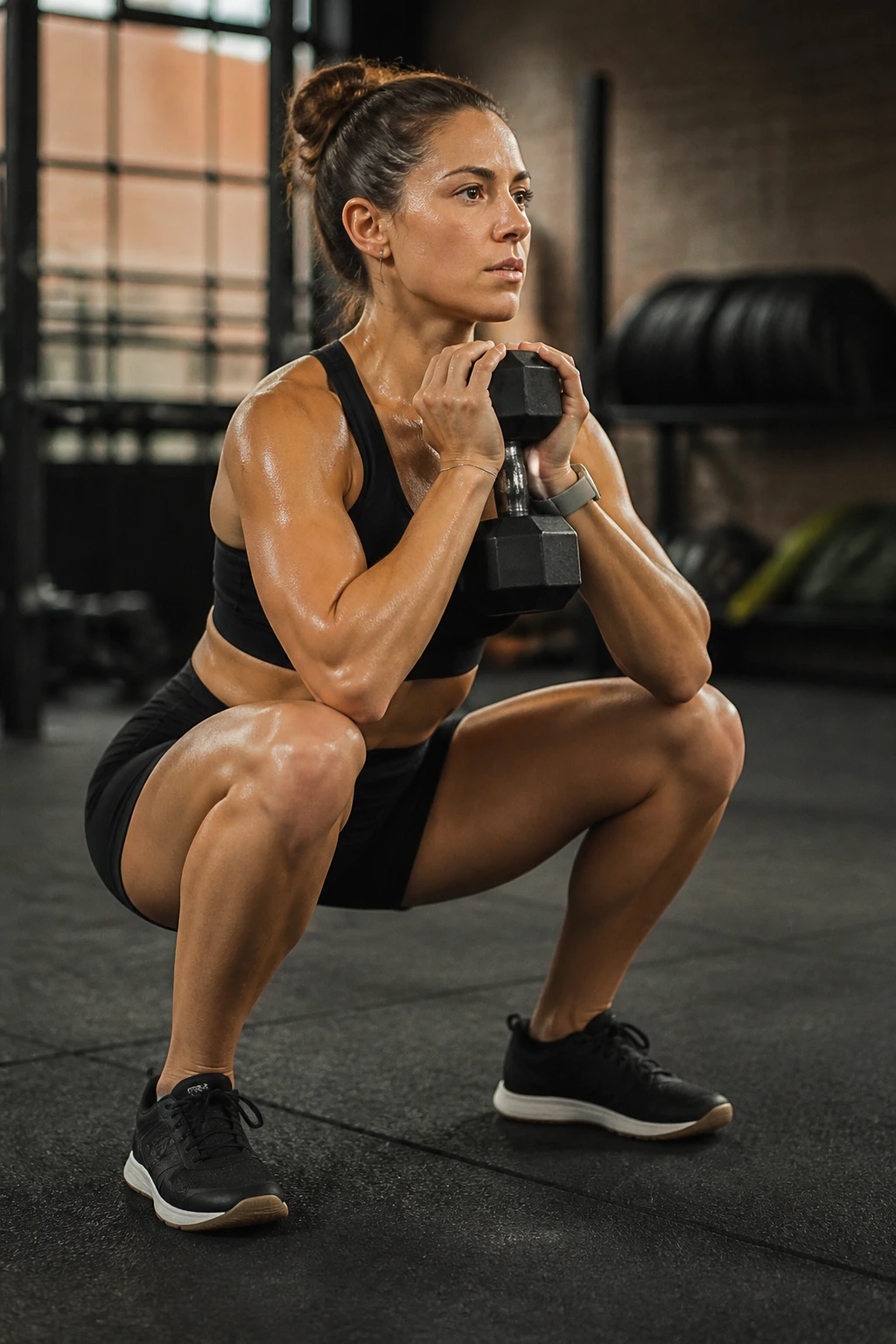
Strong punches start lower than most people think. If your feet don’t push the ground well, your hands end up doing all the work, and that gets old fast.
This circuit is built to teach clean force from the floor up. Use a moderate dumbbell for the squats, bodyweight for the push-ups if needed, and a timer for the boxing burst at the end. Move with intent, not speed for its own sake.
How to run it
- 6 goblet squats
- 8 push-ups
- 10 reverse lunges, alternating legs
- 20-second plank shoulder taps
- 30 seconds of fast shadowboxing
Do 4 rounds with 60 to 75 seconds of rest between rounds. Your last two punches in each boxing burst should still look crisp. If your shoulders are hunching and your breath turns ragged, the pace is too hot.
Best cue: drive through the floor on every rep. That feeling should carry straight into the shadowboxing.
2. Heavy Bag Power Rounds
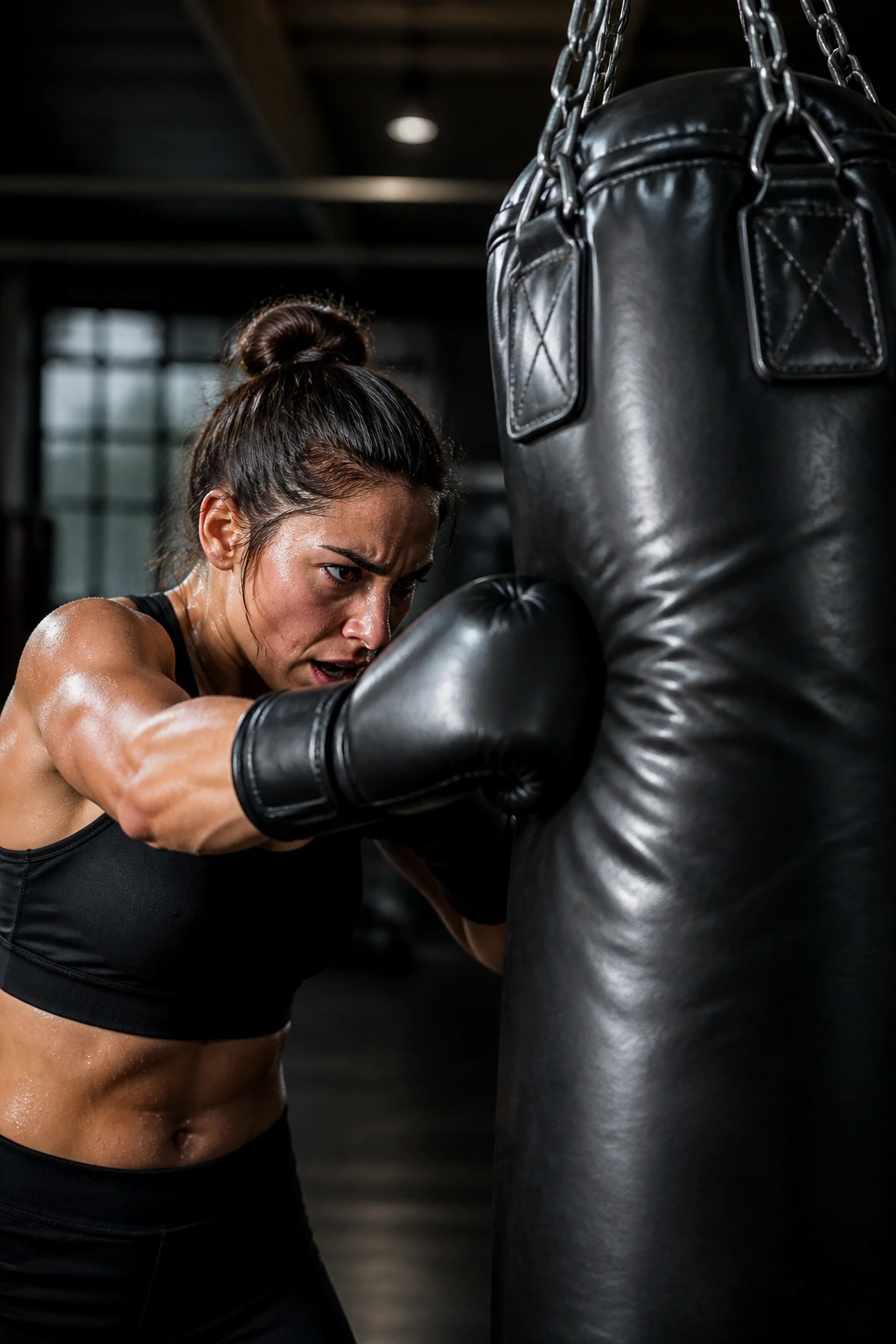
The heavy bag tells the truth. If your stance is shaky or your hips are late, the bag barely moves and your arms get burned for no reward.
Use 6 to 8 rounds of 2 minutes with 1 minute of rest. In each round, throw 4 to 6 hard combinations, then reset with a few controlled steps. Don’t turn the whole thing into a blur. Power needs a little space around it.
A clean round structure
- 20 seconds jab-cross
- 20 seconds jab-cross-hook
- 20 seconds cross-hook-cross
- 20 seconds body shot to head shot
- Repeat until the round ends
You want the bag to snap, not swing wildly. That difference matters. A bag that whips around the room usually means the punch landed loose, not heavy.
One hard rule: protect your wrists with wraps and gloves that fit snugly. A sloppy glove can ruin a good session.
3. Rotational Medicine Ball Slams
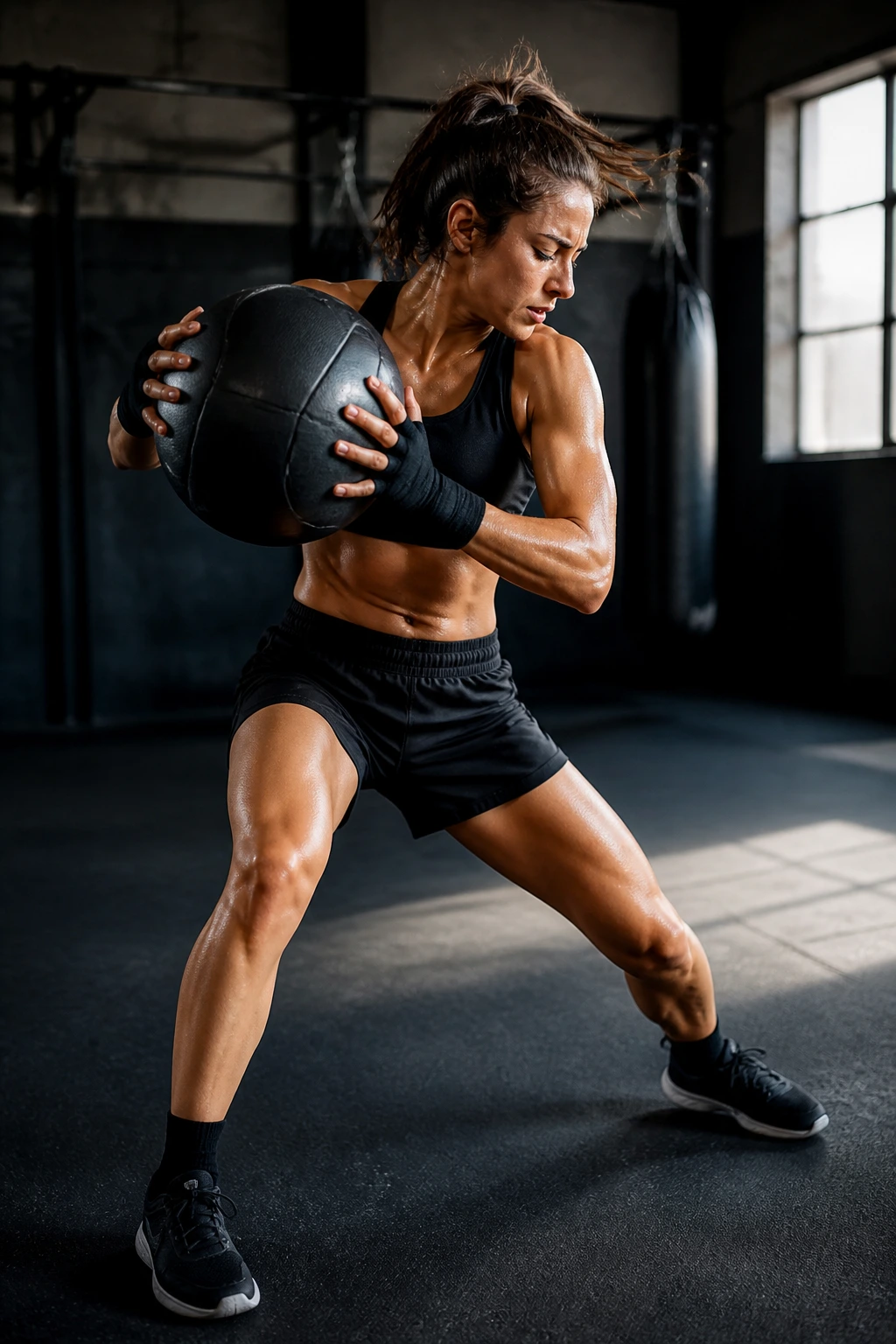
Why do so many boxing workouts ignore rotation? They shouldn’t. The punch is a twist, and the med ball slam teaches the body to twist hard without falling apart.
Use a 6- to 10-pound medicine ball if you’re new to this. Stand with one foot slightly forward, rotate the torso, then slam the ball down and across the body. The key is to keep the ribs stacked and the hips loaded, not flung open.
What to look for
- The ball should travel fast, then stop hard
- Your back heel can turn, but the knee should stay stable
- Exhale sharply at the top of the slam
- Pick the ball up with a squat, not a rounded back
Do 4 sets of 8 slams per side, with 45 to 60 seconds of rest. Finish each set with 10 quick shadow punches on the side you just trained.
The floor should feel like an opponent you are trying to move through. That sounds dramatic. It also works.
4. Split-Stance Dumbbell Presses
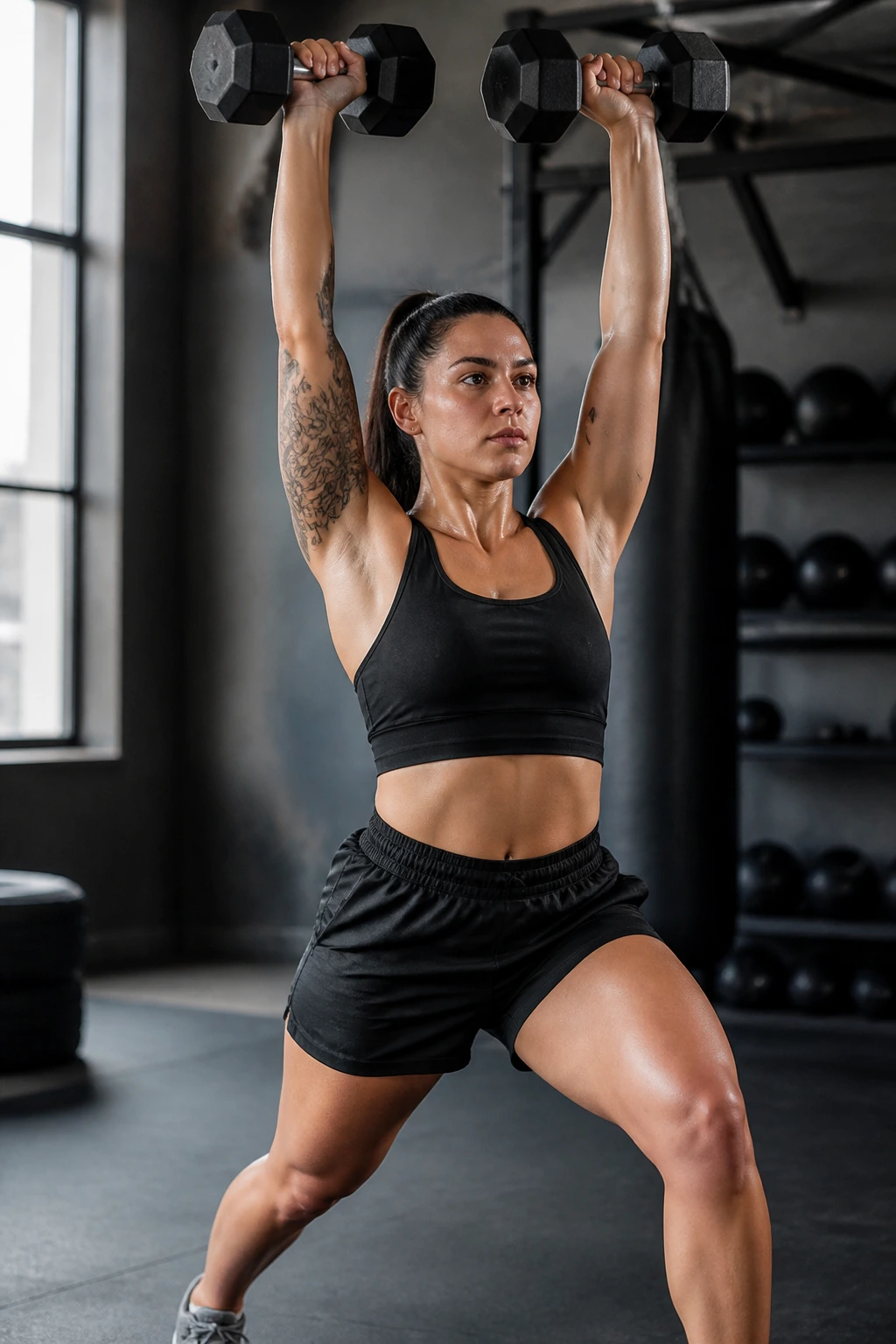
A boxing stance is already split, so training in a split stance makes a lot of sense. It forces your hips and trunk to stabilize while your upper body does the pushing.
Stand with one foot forward and the back heel slightly lifted. Hold dumbbells at shoulder height and press one arm at a time, or press both if your balance is solid. The front foot should stay planted. No rocking. No leaning back and pretending that counts.
This one is sneaky. It looks simple, then your core starts complaining halfway through the set.
Use it like this
- 3 sets of 8 presses per side
- Rest 45 seconds between sets
- Use a weight that leaves 2 clean reps in reserve
- Keep your front knee soft, not locked
After the presses, throw 20 seconds of sharp jab-cross work in the same stance. The point is to keep your body honest under load, then make it fire while tired. That transfer matters.
5. Kettlebell Swings and Hook Bursts
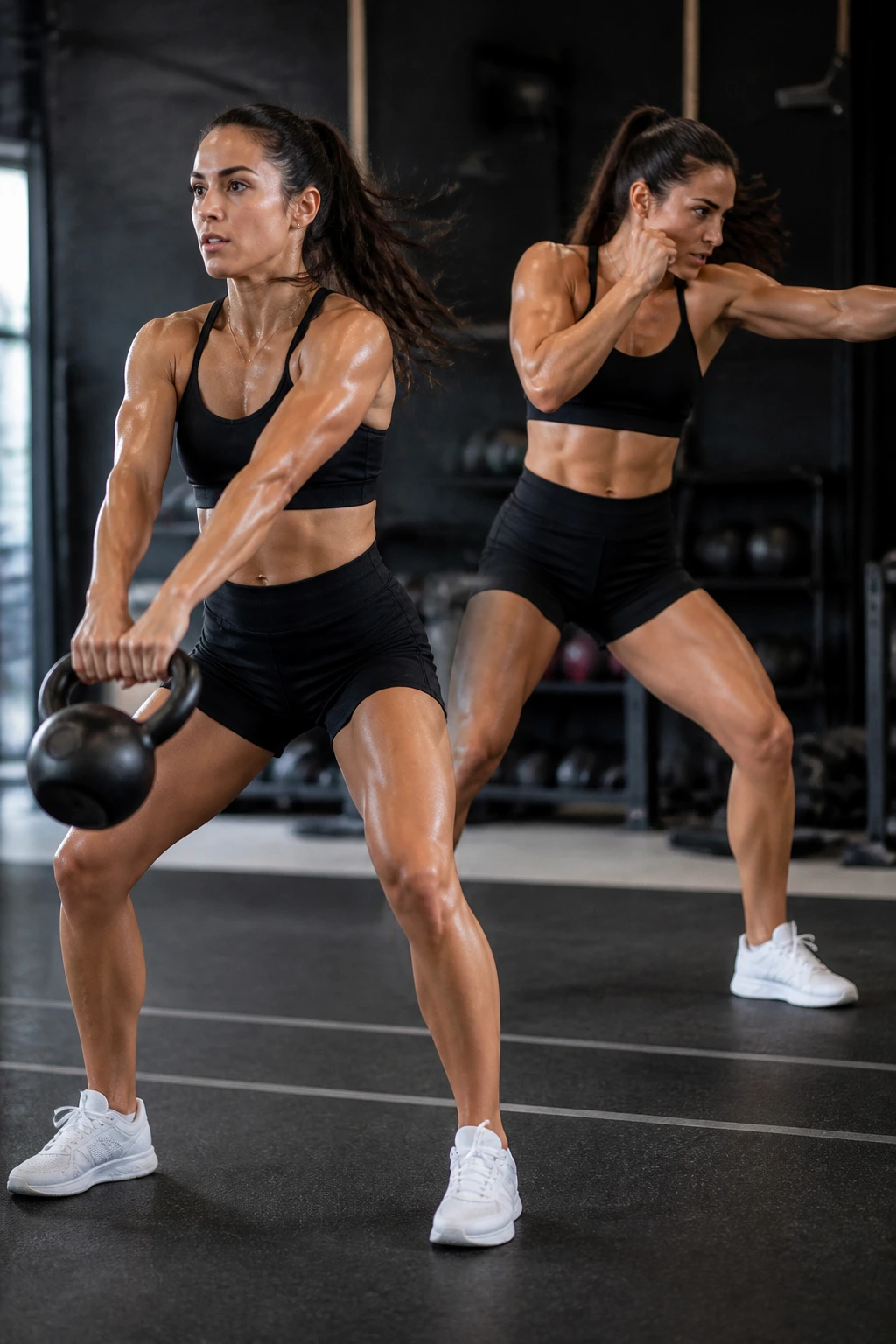
The kettlebell swing is one of the cleanest ways to build hip snap without beating up the joints. Pair it with hook punches and you get a hard little mix of hinge power and rotation.
Use a kettlebell you can swing smoothly for 12 reps without hitching your shoulders. The swing should feel like a spring, not a front raise. Your arms guide the bell; your hips do the work.
Then jump straight into hooks on the bag or in the air. Short and violent. Not wild. Just fast enough to make your midsection tighten.
Set structure
- 12 kettlebell swings
- 10 left hooks
- 10 right hooks
- 30 seconds rest
Repeat for 5 rounds. If your lower back starts to feel the swing more than your glutes and hamstrings, the bell is too heavy or the hinge is off.
This pairing is good for women who want more pop in their shots without spending all day in the gym. It’s blunt. It’s efficient. It works.
6. Battle Rope Punch-Out Intervals
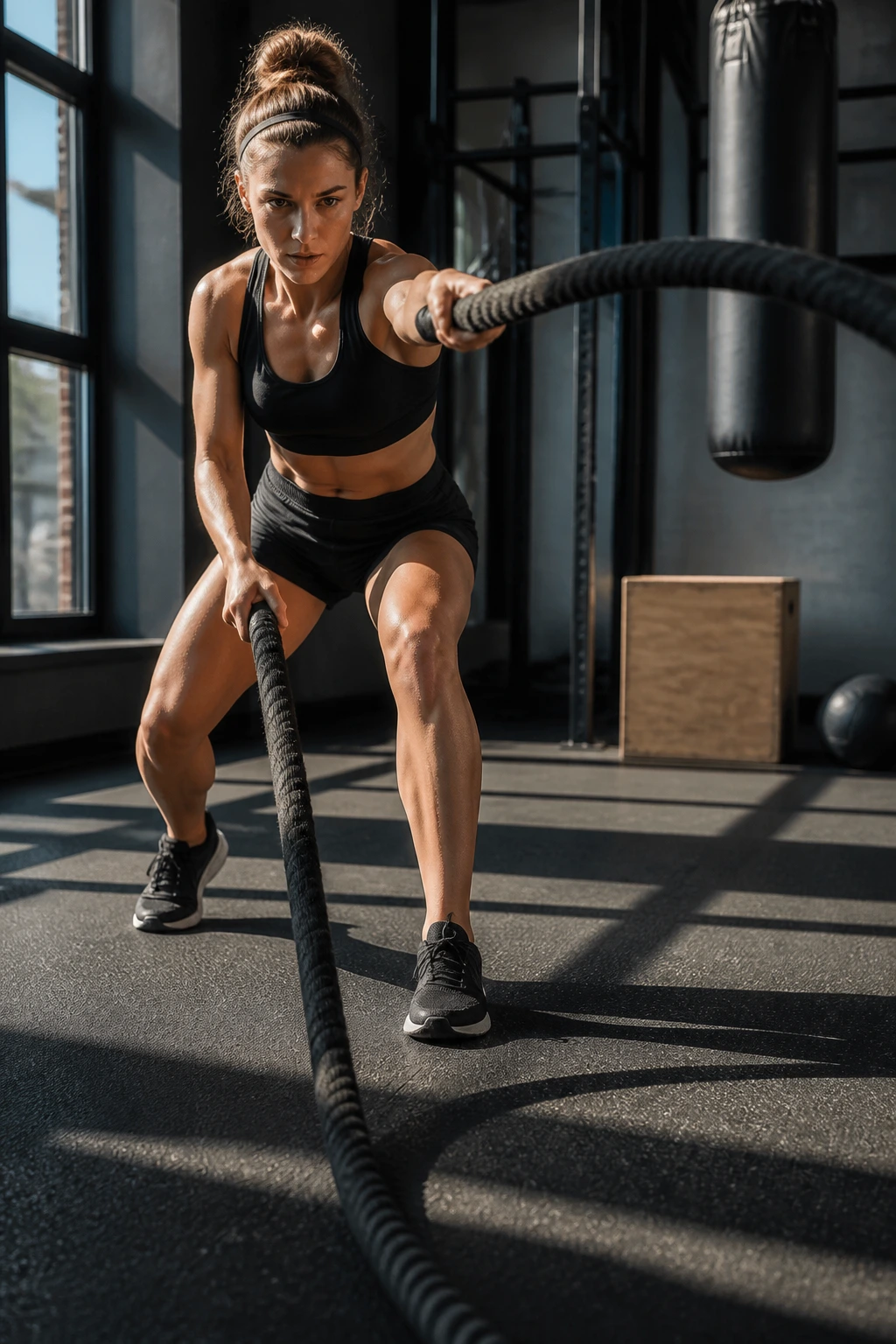
Battle ropes look flashy, but the useful part is simple: they teach the shoulders to work hard while the trunk stays braced. That’s a useful boxing skill.
Set the ropes down in a staggered stance. One foot forward, knees soft, ribs down. Start with double waves, then switch to alternating punch-outs with the ropes, keeping the hands moving in straight lines like fast jabs.
Interval plan
- 20 seconds hard work
- 40 seconds rest
- 10 rounds total
You can rotate through double waves, alternating waves, outside circles, and rope punch-outs. Keep the neck relaxed. If your traps are climbing toward your ears, slow the shoulders down and tighten the core more.
A lot of people rush battle ropes and turn them into a mess of flailing arms. Don’t. The ropes should feel controlled even when they’re noisy. That’s the whole trick.
7. Renegade Rows with Stance Switches
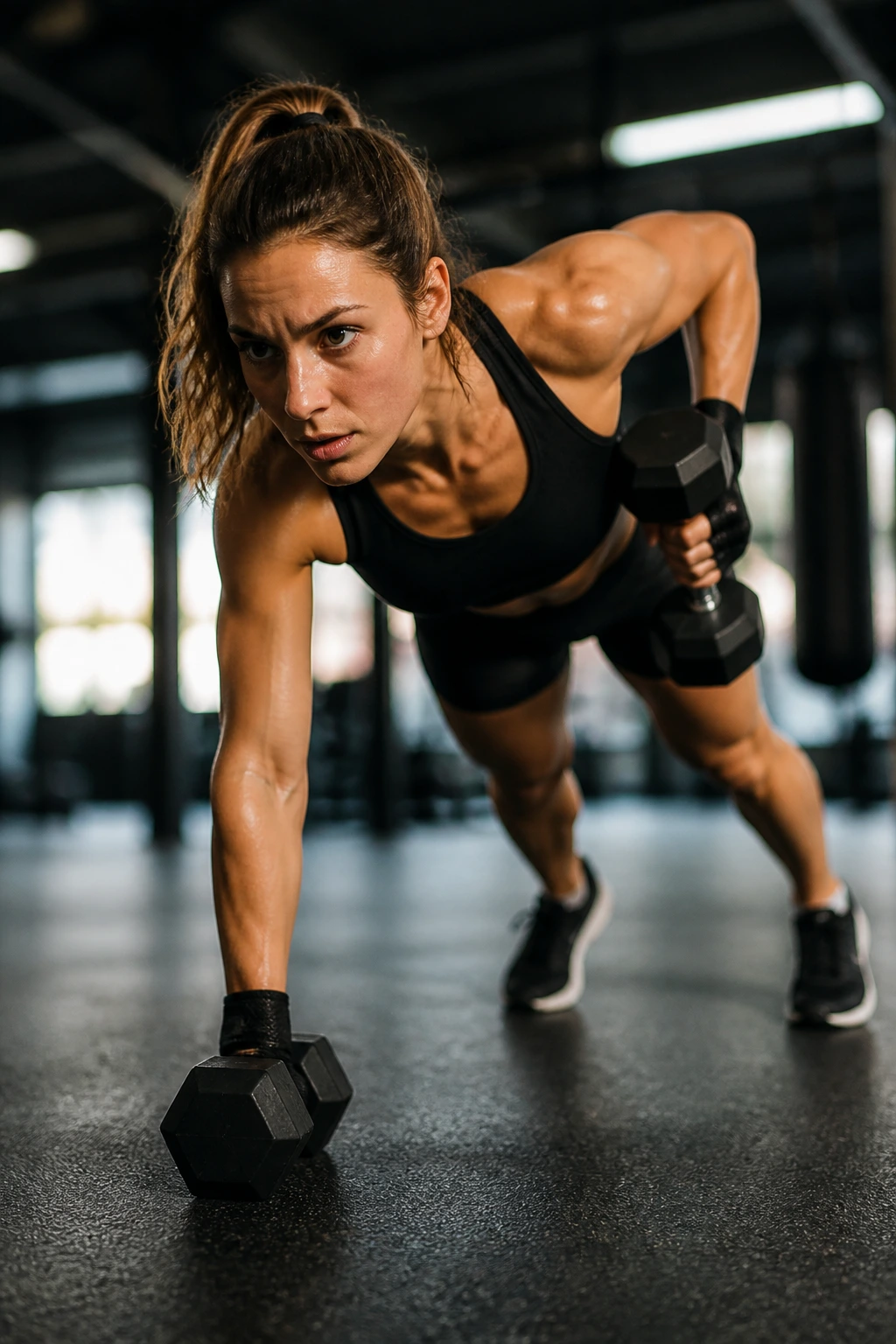
Renegade rows punish bad balance. That is why they’re worth doing.
Start in a plank with dumbbells under your hands. Row one weight, set it down, then switch your feet into a boxing stance before rowing the other side. The stance switch keeps your body from settling into one easy pattern.
Why it helps
- Builds anti-rotation strength
- Trains the core to resist twisting
- Teaches shoulder control under load
- Feels a little annoying, which is a good sign
Do 4 rounds of 6 rows per side. After each row pair, hold a plank for 10 seconds and breathe through your nose if you can. That little pause keeps the workout from turning into chaos.
Use lighter dumbbells than you think you need. Heavy weights make the hips swing and the torso twist. Clean reps are the goal here, not bragging rights.
8. Plyo Push-Ups into Shadowboxing
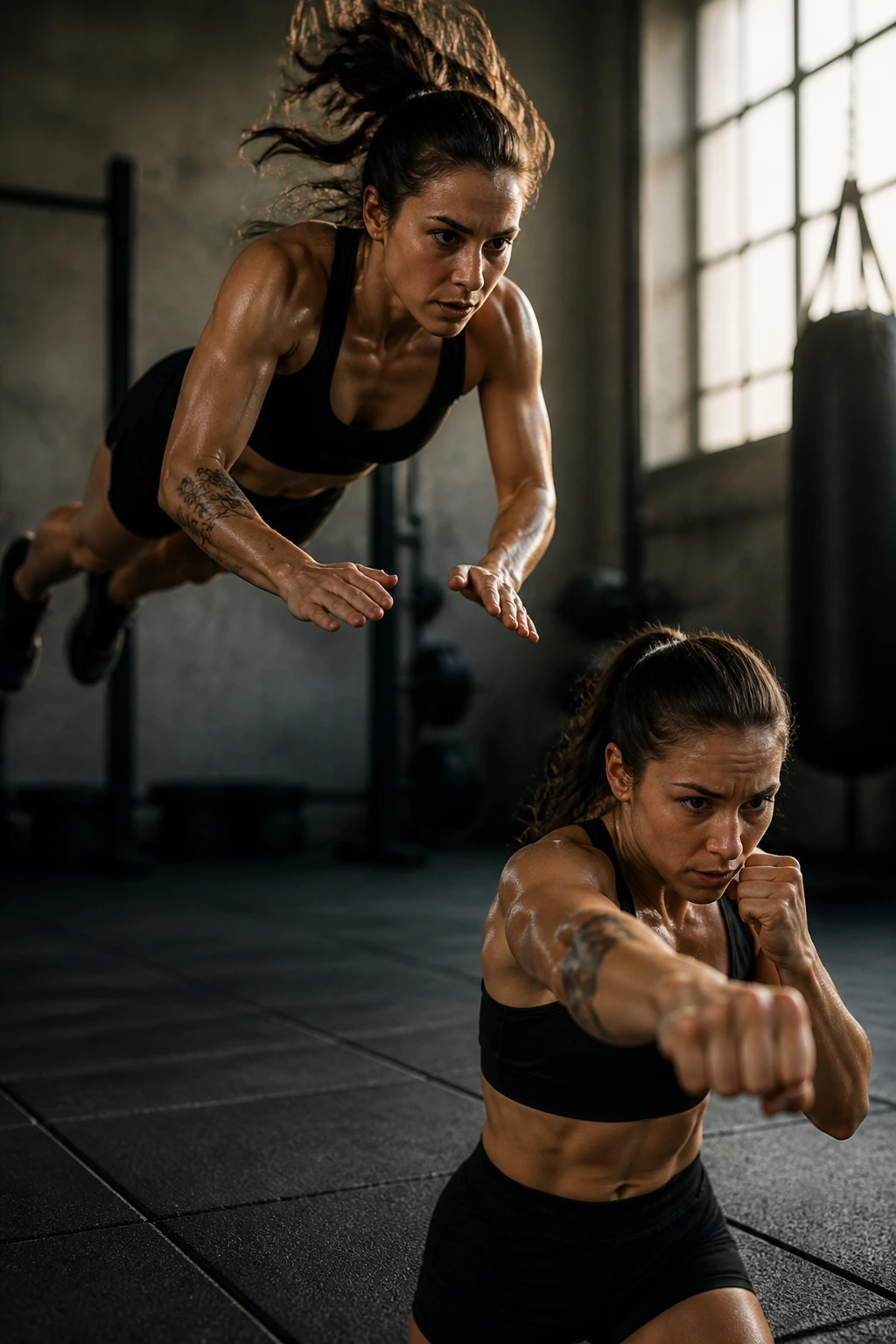
This is where upper-body power starts to feel fast.
A plyo push-up trains you to push your body away from the floor with speed. Then shadowboxing teaches that same snap to show up in the hands. It’s a neat pairing, and it’s one I like for people who have decent shoulder health and want more punch speed without losing strength.
Drop to the floor, do 5 explosive push-ups, then stand up and shadowbox for 30 seconds with hard, snappy straight shots. Repeat for 5 rounds. If a full plyo push-up is too much, do a fast hand-release push-up instead.
Watch for this
- Elbows track about 30 to 45 degrees from the body
- Chest lowers in one piece
- Hands leave the floor only if the landing stays soft
- Shadow punches should stay sharp even when breathing gets ugly
No sloppy shoulders. No sagging hips. That’s the standard.
9. Reverse Lunges with Overhead Reach
A good boxing stance starts with good legs, and good legs start with single-leg control. Reverse lunges build that without wrecking your knees.
Hold a dumbbell in one hand or both, step back into a reverse lunge, then reach the same-side arm overhead as you stand. The reach opens the ribs a bit, but do not lean back like you’re trying to show off. Keep the ribcage stacked over the pelvis.
The move teaches hip stability, shoulder mobility, and balance all at once. That’s a lot for one drill, which is why it belongs in boxing training.
Simple format
- 3 sets of 8 reps per side
- Rest 30 to 45 seconds
- Use light to moderate dumbbells
- Finish with 20 seconds of jab-cross on each side
The back knee should hover close to the floor. The front foot should stay grounded from heel to big toe. If the front knee caves inward, slow down and clean it up.
10. Sandbag Carries and Front Holds
Sandbags are ugly in the best way. They shift, wobble, and force you to brace harder than a dumbbell ever will.
Pick up a sandbag in a bear-hug hold and walk for distance or time. Then stop, hold it still at chest height for 20 seconds, and breathe without losing your posture. That stillness is the point. Boxing rewards people who can stay tight when the body is tired.
Try this structure
- 4 carries of 30 meters
- 20-second bear-hug hold after each carry
- 60 seconds rest between rounds
Keep the shoulders down and the neck long. If the bag digs into your ribs, that’s part of the game. Shift it a little, but don’t bail out of the brace.
This workout is not glamorous. Fine. It builds the kind of midline strength that keeps punches from folding at the waist.
11. Landmine Rotational Presses
Landmine work is one of my favorite answers for people who want upper-body power without trashing the shoulders. The angled bar path feels natural, and the rotation fits boxing better than a straight overhead press in a lot of cases.
Set one end of the barbell in a landmine attachment or a corner, load the free end lightly, and press it in an arc across the body. Step into the press with a small hip turn. The back foot can pivot, but the torso should stay organized.
What makes it useful
Unlike a flat bench press, the landmine press asks you to push and rotate at the same time. That combination is gold for hooks and crosses. It also tends to feel friendlier on cranky shoulders.
Do 4 sets of 8 reps per side. Rest 45 seconds. If the bar path starts wobbling, lower the weight and clean up the angle before you chase more load.
A good rep feels like a solid shove, not a shoulder grind.
12. Bear Crawl to Jab Reach
Bear crawls are awkward. That’s why they’re useful.
Start in a bear crawl position with knees hovering a few inches off the floor. Crawl forward for 20 seconds, then freeze and throw 10 controlled jab-cross reaches from that low position. It forces the trunk to stay tight while the shoulders work from a weird base.
You’ll know it’s working when your breathing gets loud and your wrists start reminding you they exist.
Round recipe
- 20 seconds bear crawl
- 10 punch reaches
- 20 seconds rest
- Repeat 6 times
Keep the hips level. Don’t swing side to side like a loose gate. The more still the body stays under that load, the more useful the drill becomes for boxing balance.
This one is especially good if you spend a lot of time seated. It wakes up the whole front line of the body.
13. Jump Rope and Medicine Ball Squat Tosses
Jump rope belongs in boxing training for a reason. It sharpens foot rhythm, calf endurance, and timing. Pair it with squat tosses and you get a nice blend of bounce and force.
Use a light medicine ball and a sturdy wall or open space. Jump rope for 90 seconds at a steady pace, then do 8 squat tosses from chest height, tossing the ball into a wall or up in a controlled arc if your space allows. Catch it softly and repeat.
How to keep it clean
- Land on the balls of the feet, not the heels
- Keep the shoulders loose while jumping
- Squat down with the hips back, not the knees forward
- Toss the ball with speed, then reset your brace
Do 6 rounds with 45 seconds of rest. If your calves cramp, shorten the jump rope interval to 60 seconds and keep the tosses crisp.
It sounds simple. It gets hard fast.
14. Step-Ups with Knee Drive and Cross
Step-ups are underrated. They look almost too basic until your glutes and lungs remind you they have opinions.
Use a box or bench that lets your front thigh stay roughly parallel to the floor. Step up with one leg, drive the opposite knee high, then throw a cross as the knee peaks. That small punch at the top teaches the body to stay stable while moving power from the leg into the hand.
A good version looks like this
- 3 sets of 10 reps per side
- Use bodyweight or light dumbbells
- Hold the top position for half a second
- Rest 30 to 45 seconds
The standing leg should do the work. Don’t bounce off the back foot. If you need a little help at first, tap the back toe lightly on the floor and keep going.
This drill is sneaky in the best way. It builds legs, balance, and boxing rhythm all at once.
15. Turkish Get-Ups with Guard Holds
If I had to pick one awkward full-body drill that pays off in boxing, the Turkish get-up would be near the top. It teaches shoulder stability, hip control, and slow strength through several positions.
Hold a light kettlebell or dumbbell overhead, roll to your elbow, post to your hand, bridge the hip, sweep the leg, then stand. On the way up, keep the free hand in a guard position for a beat at each transition. That guard hold makes the movement feel more boxing-specific and less like random gym choreography.
Use this structure
- 3 reps per side
- 1 to 3 sets
- Go slowly enough to feel each position
- Rest 60 seconds between sides
Do not rush this one. Seriously. A rushed get-up turns into a shoulder shrug and a back twist, which is the opposite of what you want.
The payoff is steady, sturdy, and not flashy. That’s fine.
16. Push-Presses with Front-Rack Marches
The push-press is a nice bridge between leg drive and upper-body force. The front-rack march adds a balance challenge that keeps the core awake.
Clean or hold dumbbells at the shoulders, dip a few inches, drive them overhead, then bring them back to the rack and march in place for 20 steps. The march forces you to resist side bending and keep the ribs from flaring.
Set structure
- 4 sets of 6 push-presses
- 20-step front-rack march after each set
- 60 seconds rest
- Use a weight you can control without wobble
The bar or dumbbells should move smoothly. If you’re throwing your low back into the press, the weight is too heavy or the dip is too deep.
This workout is especially good for women who want stronger shoulders without spending forever on isolation work. It gives you load, rhythm, and posture all in one go.
17. Sled Pushes and Straight-Punch Finishes
A sled push is one of the cleanest ways to build hard legs without the pounding of sprinting. Add straight punches after each push and you’ve got a mean little boxing-strength combo.
Drive the sled for 15 to 20 meters at a heavy but moving pace. Walk back, shake out the arms, then throw 20 straight punches in the air or on a bag. The legs will be hot, the trunk will be tight, and the punches will show whether you can stay organized under fatigue.
No sled?
Use a steep hill walk, a treadmill incline walk with hands free, or a heavy prowler if you have access to one. The point is forceful leg drive.
Do 6 rounds. Rest enough to keep the pushes honest. If every round turns into a sloppy crawl, shorten the distance before you add more work.
This is one of those sessions that leaves you tired in a useful way. Different from being wrecked. Better, too.
18. Band-Resisted Punch-Outs and Rows
Bands are cheap, portable, and brutal when used with intent. They let you hit high-rep punching work without needing a bag, and they’re great for shoulder endurance.
Anchor a band at chest height. Step into a boxing stance, punch straight out for 30 seconds, then perform 12 controlled rows. The punch-out should feel fast. The row should feel like a clean squeeze between the shoulder blades, not a yanking motion.
Why this pairing works
The punches teach repetition and speed. The rows remind the upper back to keep the shoulders from rolling forward. That matters more than people think, especially if your day already involves too much sitting or driving.
Do 4 to 5 rounds with 30 to 45 seconds of rest. Keep the ribs down and the chin tucked. If the band jerks you backward, step a little closer and reduce tension.
Short. Sharp. Useful.
19. Burpee to Hook Rotation Ladders
Burpees are not glamorous, and that’s exactly why they show up here. They build heart rate, trunk stiffness, and the ability to move from the floor to the fight stance without losing your mind.
Use a simple ladder: 2 burpees, 2 hooks each side. Then 4 and 4. Then 6 and 6. Then 8 and 8. Walk back down if you still have gas. Keep the hooks tight and the elbows in line with the shoulders, not flying wide.
A few things to watch
- Land softly on the burpee
- Stand up with your chest stacked, not folded
- Make the hooks snap, then stop
- Breathe on purpose between ladders
This workout is a little ugly. Good. Boxing often is. The trick is not to look perfect, but to keep the body working while the lungs argue with you.
If you want a shorter session, stop at 6. If you want a tougher one, pause only long enough to keep form from falling apart.
20. The Full Fight-Shape Strength Finisher
Some workouts are about one skill. Others are about making the whole body work like one piece. This is the second kind.
Put together a short circuit that hits legs, push strength, core control, and rotation without letting any one area coast. Keep the movements simple and the rest short. The goal is to finish with your form still intact, not to collapse into the floor and call it training.
Final circuit
- 8 goblet squats
- 8 push-ups
- 10 alternating reverse lunges
- 10 med ball slams
- 30 seconds shadowboxing
Do 3 rounds with 60 seconds of rest between rounds. If you have a bag, swap the shadowboxing for 30 seconds of straight punches and hooks. If you’re exhausted before the last round starts, cut the reps in half and keep the quality high.
This is the session I’d save for days when you want a clean, full-body dose of boxing strength without a long setup. It’s plain. It works. And it leaves you with enough left in the tank to train again.
Final Thoughts
The smartest boxing strength work is usually the least fussy. Heavy enough to matter. Fast enough to keep the punch alive. Short enough that you can repeat it without dreading the next session.
A lot of women get sold tiny weights and endless reps. That gets old, and it does not build the kind of power that shows up in a cross, a hook, or a hard drive off the floor. Pick a few of these workouts, run them with clean form, and give yourself enough rest to stay sharp.
Strong punches are built, not guessed at.
