



High-Intensity Interval Training often gets a bad reputation as being the exclusive domain of elite athletes or people who enjoy suffering for sport. If you search for HIIT online, you are usually met with images of people gasping for air on the floor or sprinting until their lungs burn. This creates a barrier to entry that prevents a lot of people from trying one of the most efficient forms of exercise available. You do not need to be a track star to reap the cardiovascular benefits of interval training. You just need to be willing to control your own intensity.
The magic of this training style is not in the maximum level of effort; it is in the contrast between your “work” periods and your “rest” periods. When you are new to cardio, your body is essentially learning how to process oxygen and clear out metabolic waste more efficiently. By alternating between short bursts of movement and intentional recovery, you allow your heart rate to climb and then settle. This rhythmic oscillation is far more manageable—and frankly, more sustainable—than trying to force yourself into a steady-state run for thirty minutes when your body is not ready for it.
Approaching these workouts requires a shift in mindset. You are not competing against a clock or an invisible rival. You are working within your own capacity to move safely and effectively. Some of the best results come from people who start slow, focus on their form, and only increase the intensity once their movement patterns feel ingrained. The following workouts are designed specifically to meet you where you are, using equipment that is accessible and movements that prioritize safety without sacrificing the efficiency that makes this style of training so popular.
1. The Classic 30/30 Interval
This is the foundational building block for almost every beginner-friendly HIIT program. The math is simple, which allows your brain to stay focused on your movement rather than trying to calculate complex splits. You alternate thirty seconds of activity with thirty seconds of rest, repeated for a set duration.
Why It Works for Beginners
The beauty of the 30/30 split is the recovery time. By matching your rest to your work, you give your heart rate enough time to drop back down into a moderate zone. This prevents the “redlining” effect where you feel like you cannot catch your breath. It turns a workout into a conversation with your body rather than a fight against it.
How to Execute the Session
- Pick a movement: Walking, cycling, or shadow boxing are excellent choices.
- The Work: Move at a pace where you can talk, but maybe only in short sentences. Do not sprint.
- The Rest: Come to a complete stop or move very slowly. Focus on deep, belly-driven breaths.
- The Goal: Start with 10 minutes total. If that feels easy after a few sessions, extend it to 15 or 20 minutes.
Pro tip: Do not skip the warmup. Even with an easy interval ratio, your joints need a few minutes of low-intensity movement to prepare for the repetitive nature of the activity.
2. Bodyweight Tabata Lite
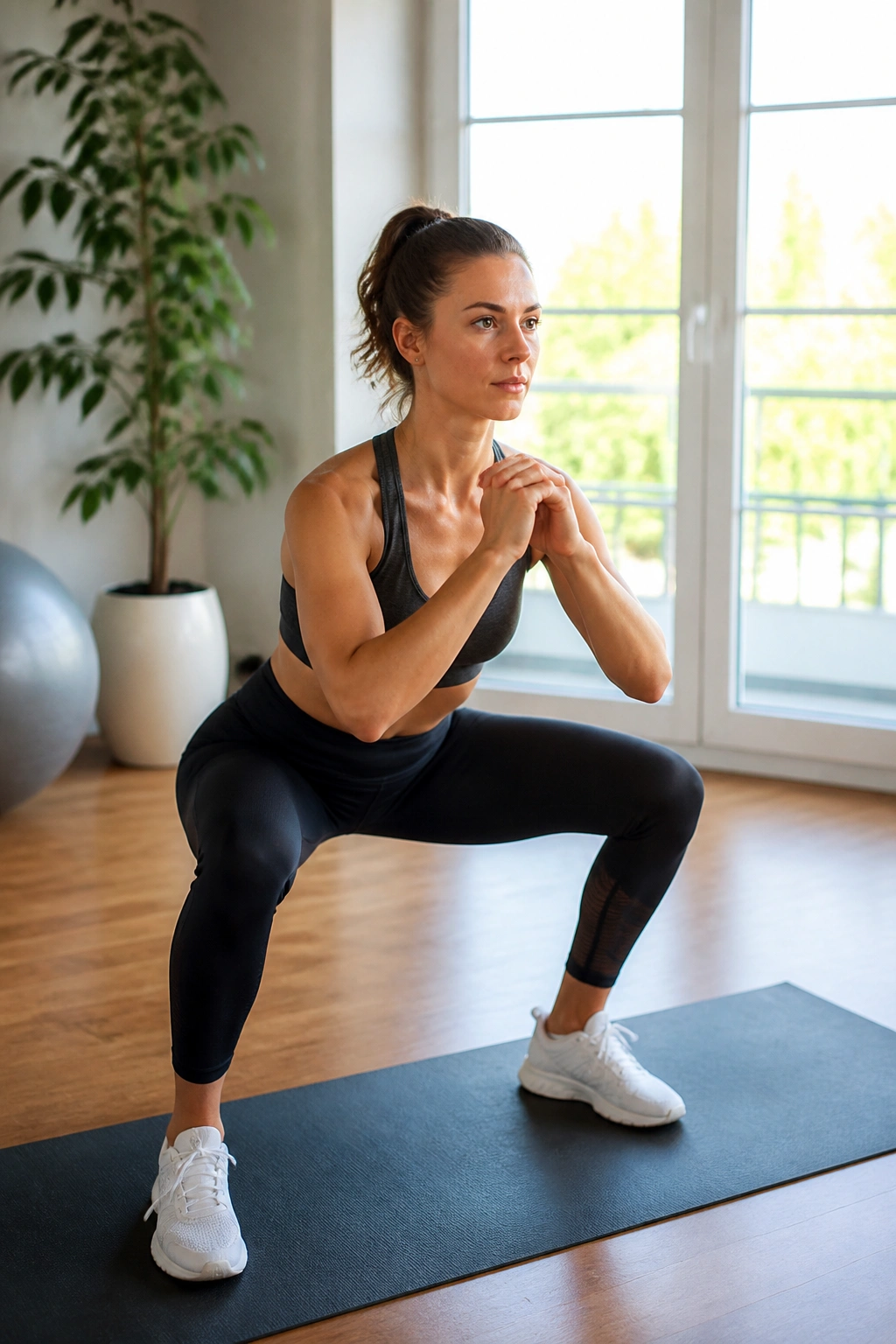
Traditional Tabata is a brutal 20 seconds of all-out effort followed by 10 seconds of rest. For a newcomer, that 10-second rest is often not enough. We are adjusting the ratio here to a “Lite” version, keeping the structure but easing the pressure.
The Modified Structure
Instead of the standard 20/10 ratio, you are going to use 20 seconds of movement followed by 20 seconds of rest. This gives you a full cycle of 40 seconds. You will do this for 8 rounds, which equals 5 minutes and 20 seconds of work. It is short, intense, and over before your motivation has a chance to flag.
Movement Selection
- Bodyweight Squats: Focus on depth and keeping your heels planted.
- High Knees (Step-to-the-Side Variation): March in place with intent, engaging your core.
- Wall Push-Ups: Keep your elbows tucked near your ribs to protect your shoulders.
What to watch for: The urge to go too fast in the first two rounds is high. Resist it. Treat the first four rounds as a warmup and save your slightly higher effort for the last four. You should feel slightly winded, not incapacitated, by the time the timer hits zero.
3. The Walk-Jog Pyramid

Pyramid workouts are excellent because they build a sense of progress into the session. You start with short intervals, build to a peak, and then climb back down. It makes the workout feel shorter than it actually is because the duration of the work periods changes constantly.
Building the Pyramid
You will structure this as a progression of time. Start with 30 seconds of work, then 45, then 60. That is your peak. Then you go back down: 45, 30. Between every single work block, you will take 60 seconds of walking recovery. This keeps the total work manageable but forces you to sustain movement for longer as you hit the middle of the workout.
Why This Beats Steady-State Cardio
Steady-state walking or jogging can become monotonous, which is why people often quit. By changing the duration, you keep your brain engaged. You are focused on the clock, waiting for the “change” to happen, which distracts you from the discomfort of the effort. It is a psychological trick that works wonders for consistency.
Practical application: If you are outside, use landmarks—like telephone poles or trees—to mark your intervals instead of a watch. The visual cue is often better than a digital one.
4. Low-Impact Stepper Sprints
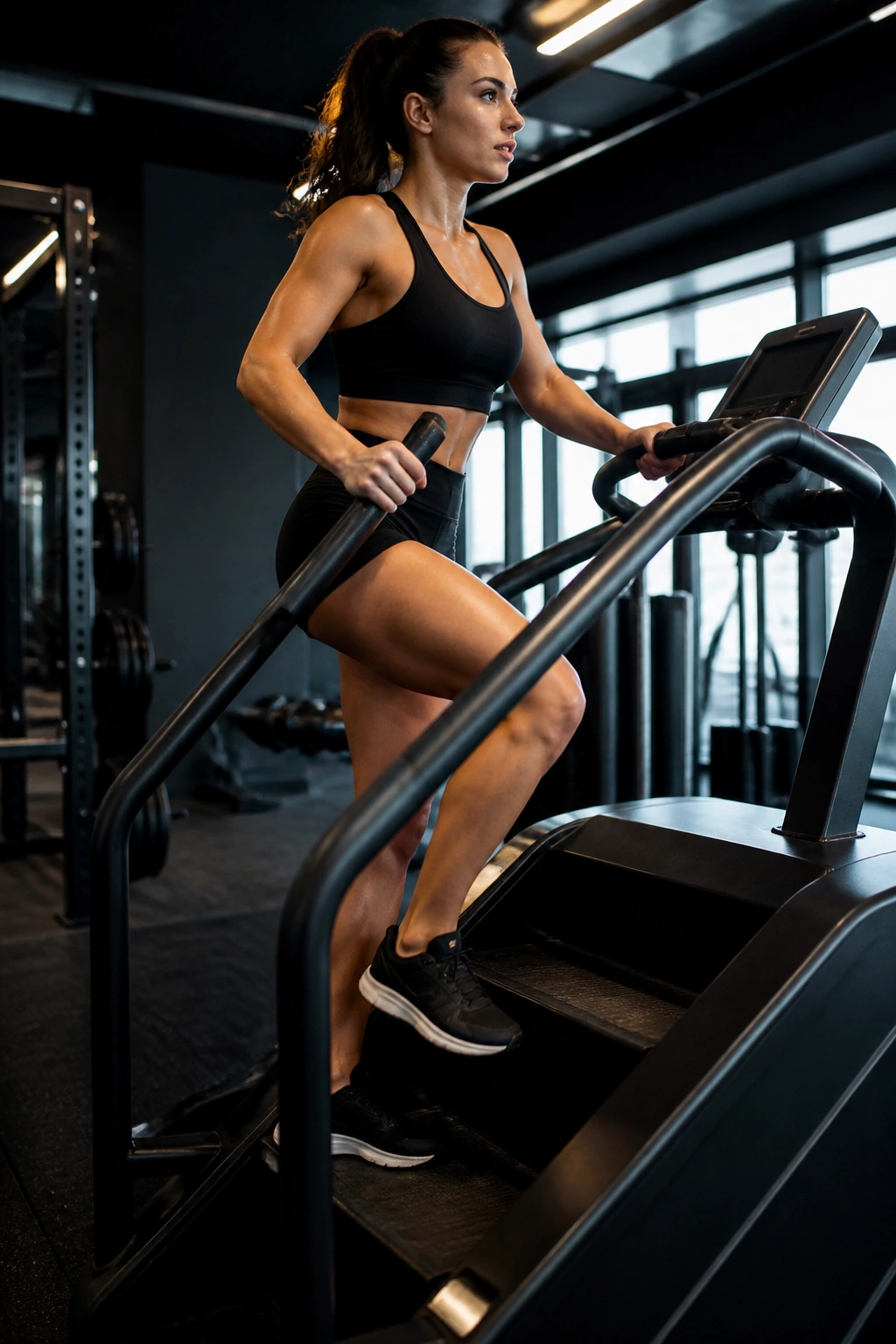
If you belong to a gym or have access to a stair climber or elliptical, you have the ultimate low-impact tool. The biggest limitation for beginners is often joint pain, not cardiovascular fitness. Using a machine that supports your weight removes the impact stress from your knees and ankles.
The Mechanics of “Sprint”
When we say “sprint” here, we are not talking about speed; we are talking about resistance. Increase the resistance setting on your machine so that you have to push harder to make it move. This mimics the feeling of sprinting without the high-impact landing that comes with running on pavement.
Key Performance Cues
- Posture: Stay upright. Do not lean on the handrails; that takes the work away from your legs and core.
- Stride: Focus on a full range of motion. Pushing all the way down through your heel on a stepper ensures your glutes are doing the work.
- Consistency: Keep your tempo steady. Even if the resistance is high, try not to let your cadence drop to a crawl.
Safety note: If you find yourself gripping the console with a white-knuckle hold, the resistance is too high. Lower it. You should be able to keep your torso upright and your hands lightly resting on the grips.
5. The 4-Minute Kettlebell Swings

Kettlebell swings are a phenomenal hinge movement that builds posterior chain strength and heart rate simultaneously. Because it involves a complex hip-hinge pattern, beginners must master the movement before trying to go fast.
Learning the Hinge
Before you start any interval, perform 20 slow, deliberate swings with a light weight. Focus on the snap of your hips. The weight does not go up because you are lifting it with your arms; it goes up because you are driving your hips forward like a forceful standing long jump.
The Interval Pattern
For this, set a timer for 10 rounds of 15 seconds of work and 15 seconds of rest. That is five minutes total. It seems short, but done correctly, 15 seconds of steady swinging is enough to get your heart rate up significantly.
The Golden Rule: If you feel the movement in your lower back, stop immediately. Reset your feet, tighten your stomach, and re-engage your glutes. The movement should feel like an athletic thrust, not a lower-back extension exercise.
6. EMOM (Every Minute On the Minute) Basics

EMOM training is a staple in many training protocols because it is structured and honest. You have one minute to complete a task. Whatever time is left in that minute is your rest. If you finish in 40 seconds, you get 20 seconds of rest.
Setting Up Your Minute
A good beginner EMOM for cardio might look like:
- 10 Bodyweight Squats
- 10 Jumping Jacks
- Rest for the remainder of the minute.
Repeat this for 10 minutes. This creates an automatic pacing system. If you start too fast, you will finish the squats and jacks in 30 seconds and be too tired for the next round. If you go too slow, you will have no rest. You will naturally find the pace that works for your current level.
Adjusting for Capability
The beauty of the EMOM is that you can scale it instantly. If the workout feels too easy, add two more squats. If it is too hard, reduce the reps to 8. You do not have to change the entire workout; you just change the volume of the work within the fixed time window.
Expert Insight: Use a dedicated timer app that beeps at the start of every minute. Knowing exactly when the minute resets keeps you disciplined.
7. The Stationary Bike “Speed Play”
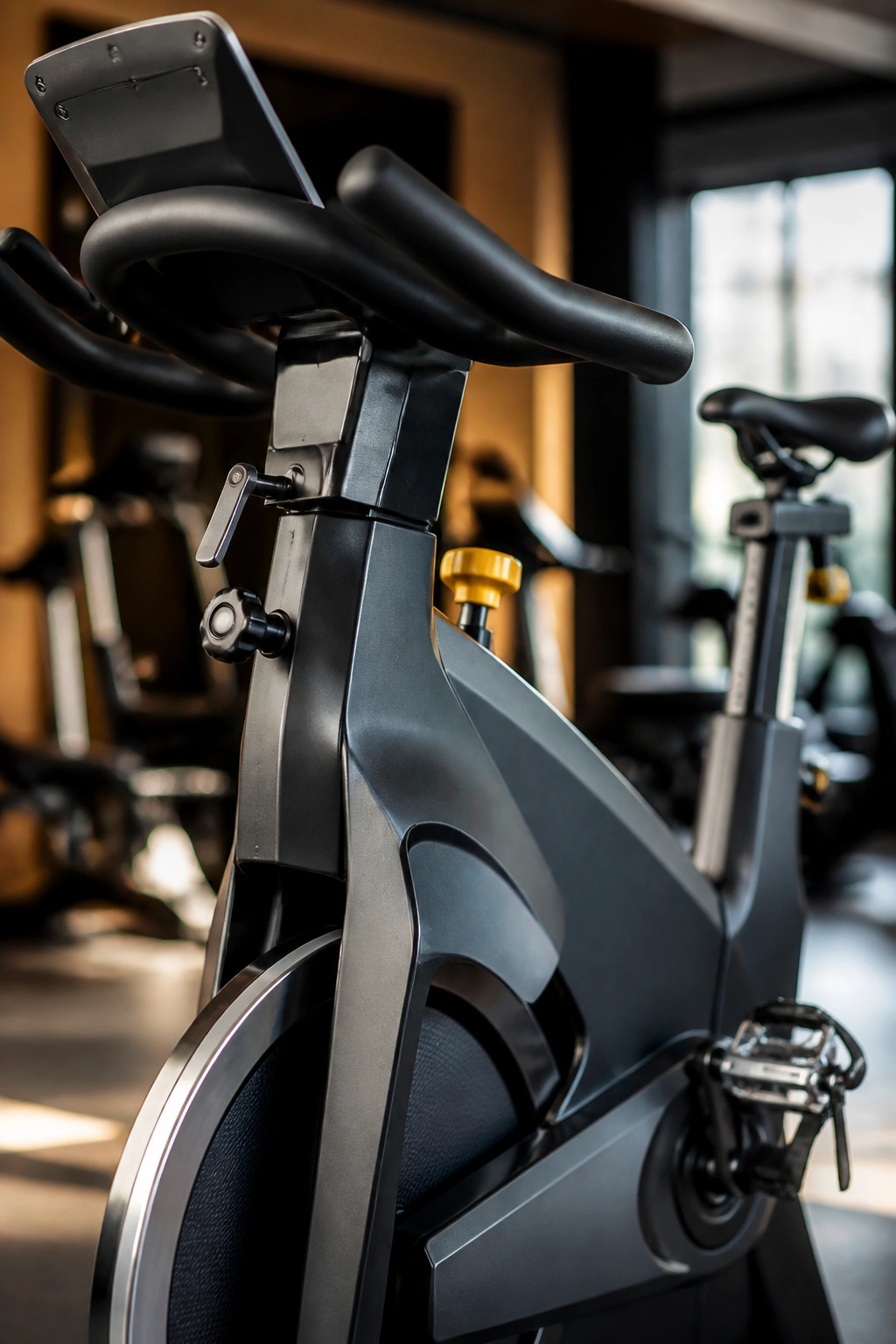
Stationary bikes are often underrated because they are so simple. But they are the safest way to practice high-intensity effort because there is zero risk of tripping or falling. You can safely push yourself to your absolute limit.
The “Speed Play” Technique
In this workout, you will pedal at a comfortable pace for two minutes. Then, you will perform 30 seconds of high-effort pedaling (increase the tension, or just speed up the revolutions). Follow that with 90 seconds of slow, easy pedaling.
Why It Builds Endurance
This specific ratio—30 seconds of intensity followed by 90 seconds of recovery—is designed to help you build aerobic capacity. You are spending significantly more time in the recovery phase, which allows your body to clear lactate and recover properly between efforts.
Pro tip: Keep a towel draped over the handlebars. When you are doing intervals, even the shorter ones, you will warm up faster than you expect.
8. Dumbbell Circuit Intervals
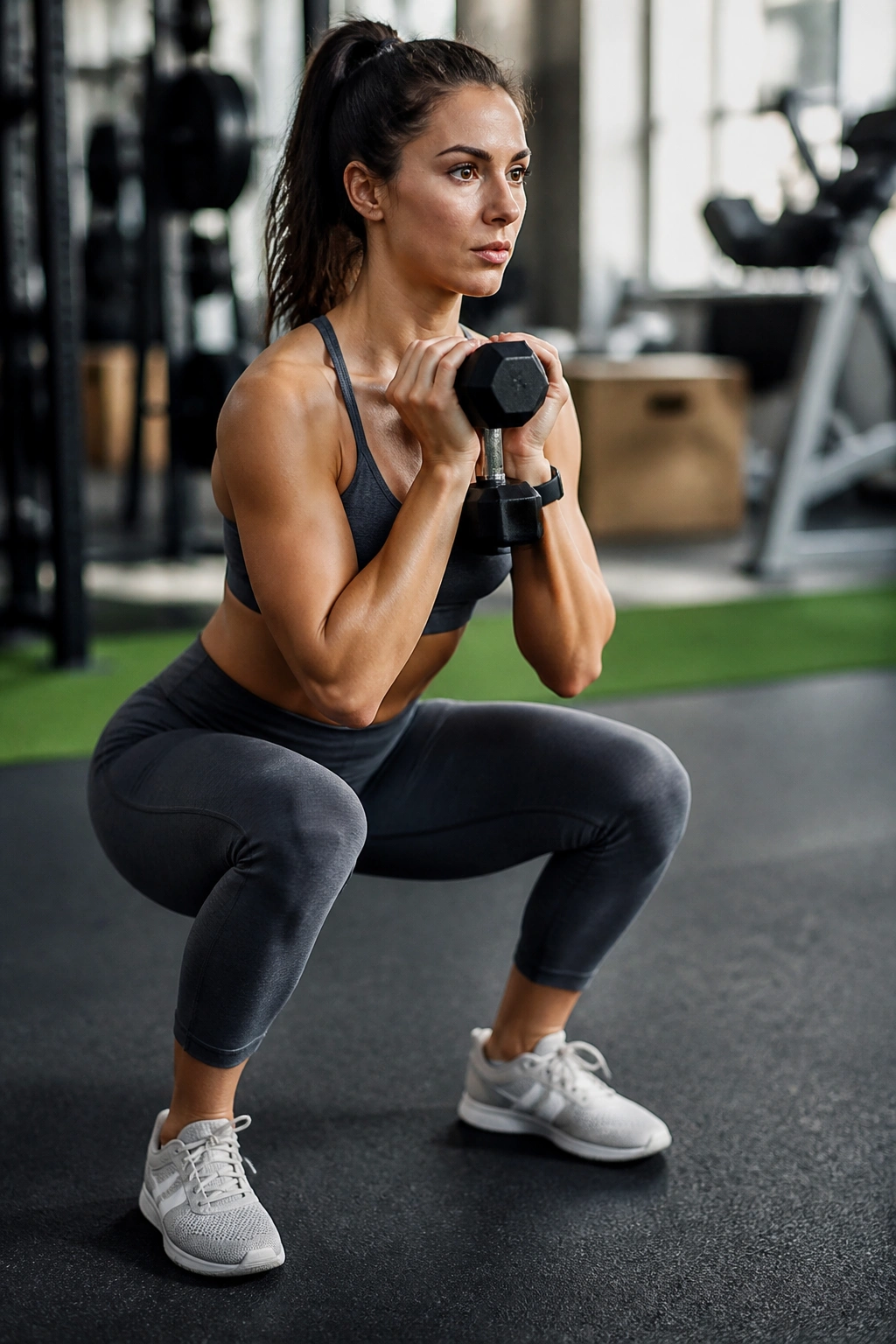
This workout bridges the gap between resistance training and cardio. You will use a pair of light dumbbells—something you can easily press overhead for 15 reps. The goal is to move continuously, not to lift heavy.
The Circuit Moves
Do each of these for 45 seconds, resting for 15 seconds between moves.
- Dumbbell Goblet Squats: Hold one weight against your chest.
- Overhead Press: Keep your core braced.
- Dumbbell Marching: Hold the weights at your sides and march in place with high knees.
Staying in Motion
The secret here is to keep moving throughout the 45 seconds. Do not pause at the top or bottom of the movement. Rhythm is key. If you are doing the overhead press, don’t lock your elbows out with a jerk; keep the motion fluid and continuous.
Why this works: The added load of the dumbbells increases the metabolic demand on your body compared to bodyweight alone, making the workout feel more intense without requiring a high-impact run.
9. Lateral Movement Cardio

Most cardio is forward-and-back: running, cycling, walking. But life happens in all directions. Lateral movement, like shuffling side-to-side, engages different muscles in your hips and improves your balance.
How to Practice
Set up two points about ten feet apart. Start at one end. Shuffle rapidly (but safely) to the other side, touch the ground or an imaginary line, and shuffle back. Do this for 30 seconds, rest for 30 seconds.
Benefits Beyond Cardio
- Ankle Stability: Changing directions frequently strengthens the stabilizing muscles in your ankles.
- Coordination: It forces your brain to pay attention to your feet, which improves your overall movement quality.
- Hip Engagement: Shuffling recruits the glute medius—a muscle often ignored during running—which helps prevent hip and knee pain.
Safety note: Keep your center of gravity low. The lower you get, the more stable you are. If you stand too upright, you increase the risk of catching a toe or losing your balance.
10. Stair Climbing Intervals

If you have access to a staircase in your home or a nearby park, you have access to one of the most effective cardiovascular tools ever created. Gravity provides the resistance, and the steps provide the pacing.
Walking the Stairs
For beginners, do not run up the stairs. Walk up them with intent. Put your whole foot on the step—don’t just climb on your toes, which puts massive strain on your calves and achilles tendons. Drive through your heel to engage your glutes and hamstrings.
The Interval Strategy
Walk up at a steady pace for 45 seconds. Walk down slowly for 45 seconds. The “work” is the climb; the “rest” is the descent. This keeps your heart rate elevated throughout the entire workout because you never truly stop moving.
Caution: The descent is where most people get clumsy. Keep your eyes on your feet for the first few sessions. As you get more comfortable, you can look forward, but always respect the descent.
11. The “1-2-3” Bodyweight Shuffle

This is a rhythm-based workout that feels more like a dance or a drill than a grind. It is excellent for people who get bored with traditional exercises because it keeps you moving through different planes of motion.
The Sequence
- 10 Mountain Climbers: Get into a push-up position and drive your knees toward your chest.
- 20 High Knees: Stand up and march in place with speed.
- 30 Second Plank: Hold steady.
Managing the Flow
This is a “reps to time” hybrid. The mountain climbers and high knees are based on count, and the plank is based on time. Once you finish the plank, rest for 30 seconds and repeat. You are aiming for quality movement here. If your form on the mountain climbers breaks down, slow them down.
Why it’s effective: It combines a core-focused movement with a heart-rate-elevating movement, keeping your upper body, lower body, and core working together.
12. Shadow Boxing Intervals

You do not need a bag or gloves to get a great cardio workout from boxing. Shadow boxing allows you to work on coordination and speed without the impact of hitting a heavy bag.
Technique for Beginners
Keep your hands up, near your chin. Throw straight jabs and crosses. Do not focus on power; focus on the extension of your arm and the rotation of your torso. If you just wave your arms, you won’t get a workout. If you rotate your shoulders and hips into every punch, you will get a fantastic full-body session.
The Interval Pattern
Go for 60 seconds of punching, focusing on breathing. Rest for 60 seconds. Do this for 10 rounds. This is essentially 10 minutes of active movement that leaves your shoulders burning and your heart rate elevated.
Pro tip: Stand in front of a mirror if you can. It helps you check your posture and ensure you aren’t hunching over as you get tired.
13. Medicine Ball Slam/Sprint

This is a power-based movement that is surprisingly good for cardio. Medicine ball slams involve lifting a ball overhead and slamming it into the floor. It is a full-body exertion that recruits the lats, core, and glutes.
The Work Interval
Perform 10 slams, then immediately run in place (or jog to a nearby tree and back) for 20 seconds. This combination of an explosive power movement followed by steady-state movement is a great way to tax your cardiovascular system.
Why Slams are Unique
Most cardio focuses on endurance. Slams focus on explosive power. By combining these, you are training your body to recover from intense bursts of power. This is a very athletic way to train that makes everyday tasks—like lifting groceries or carrying boxes—feel significantly easier.
Safety: Use a “dead” medicine ball—the kind that does not bounce. If you use a bouncy ball, you risk it hitting you in the face.
14. The “Down-Up” Floor-to-Standing Drill
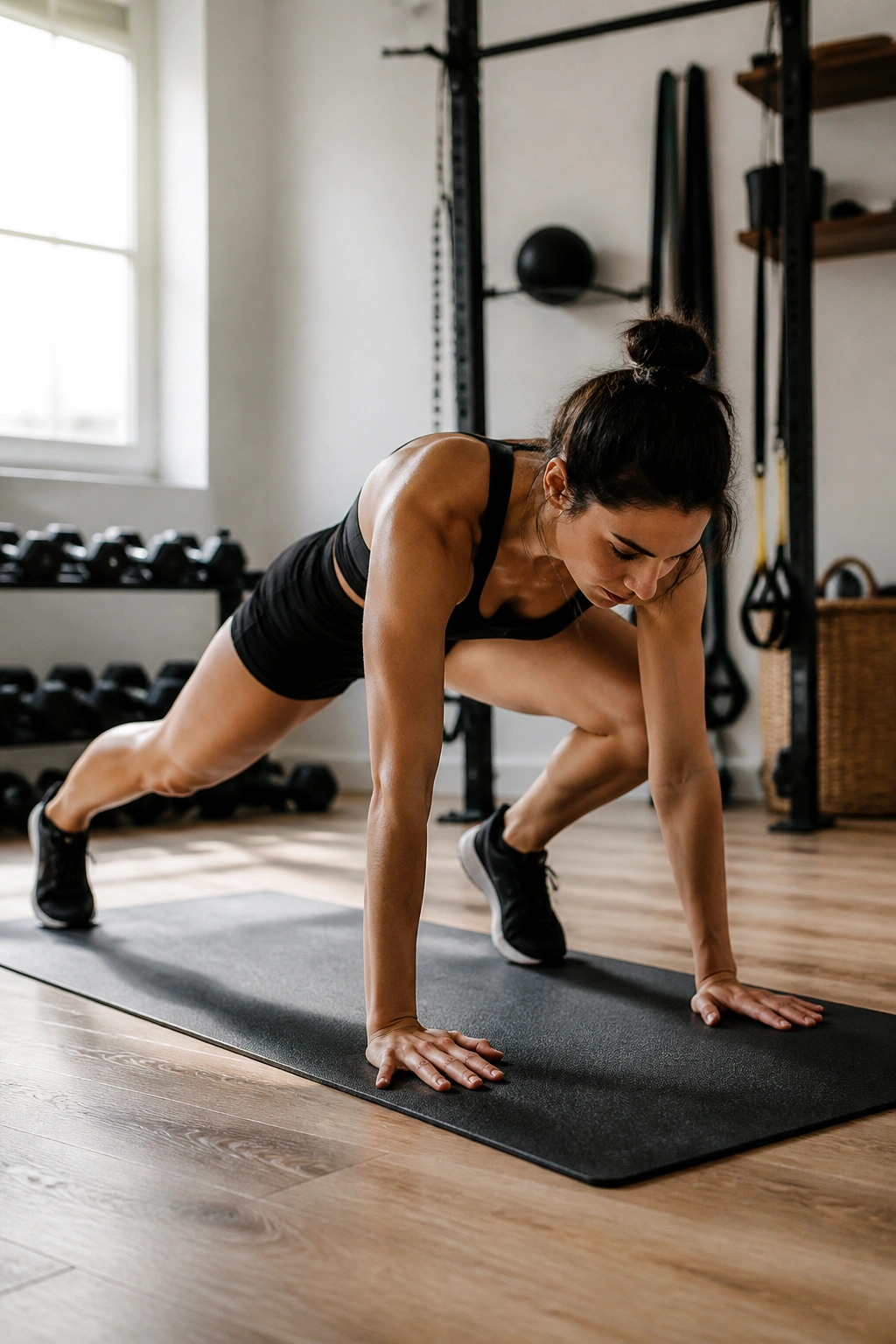
This is essentially a simplified burpee. The standard burpee is often too complex and high-impact for beginners, leading to sloppy form and injury. This “Down-Up” version focuses on the mechanics of getting to the floor and back up.
The Mechanics
- Reach down and place your hands on the floor.
- Step your feet back into a plank position.
- Step your feet back forward.
- Stand up.
That’s it. Do not jump. Do not add a push-up unless you are very comfortable with them. Just move your body from standing to the floor and back up.
Finding the Pace
Do this for 30 seconds. Count how many reps you get. Rest for 30 seconds. Try to match that number for the next round. It is a simple, effective way to get your heart rate up and practice functional movement.
Why it matters: The ability to get to the ground and stand back up is one of the most important metrics of long-term physical health. Practicing this, even slowly, builds massive amounts of resilience in your hips and core.
15. Rowing Machine “Hard & Easy”

The rower is the king of cardio machines because it is truly full-body. It uses your legs, your back, and your arms. Because it uses so many muscles, it drives your heart rate up faster than almost any other piece of equipment.
The “Hard & Easy” Setup
You do not need to look at the numbers on the screen.
- The Hard: Row with intensity for 20 strokes. Focus on the drive—push with your legs, lean back, pull the handle.
- The Easy: Row with very light pressure for 40 strokes. Just enough to keep the flywheel spinning.
Mastering the Sequence
Do this for 15 minutes. It is a very simple pattern that teaches you how to regulate your output. Most beginners try to row hard all the time and gas out within three minutes. This 20/40 split forces you to learn that “hard” does not mean “always maximum effort.”
Pro tip: Focus on the leg drive. Your legs are the strongest muscles in your body. If you feel the burn in your arms, you are doing it wrong. Push with your legs, let the handle follow, and let your core stabilize the finish.
Final Thoughts

Building a cardiovascular base does not require you to turn your life into a misery-filled slog of high-intensity sweat. It requires patience and a willingness to play with your intensity. When you are new to this, the best workout is simply the one you can show up to and complete without feeling completely destroyed.
Consistency beats intensity every single time. If you can perform three of these workouts a week, consistently, for a month, you will see more progress than if you go all-out for one week and then quit because you are sore, tired, and burned out. Listen to your body, give yourself permission to move slowly, and focus on the fact that every interval you finish is building a stronger, more capable heart. You are not training for a specific competition; you are training for the long game of your own health. Stay within your limits, track your progress by how you feel, and keep moving.
