



Twenty minutes is enough for a real strength workout. Not a fake one.
If you keep rest tight, choose compound moves, and stop pretending every session needs to feel like a two-hour event, 20-minute strength workouts can hit legs, chest, back, shoulders, and core hard enough to matter. The sweet spot is usually two or three big movements, a load that leaves one or two reps in reserve, and a timer that keeps you honest. Nothing fancy. Just work.
What matters most is matching the workout to the day. Some sessions should be heavy and blunt, like deadlifts and presses. Others should be fast and messy in a good way — dumbbells, kettlebells, bands, bodyweight, whatever’s available and movable in a small space. Set a timer, clear a little floor space, and don’t waste the first five minutes debating your plan.
Start with the first one if you want the easiest entry point. It’s simple, balanced, and hard to mess up.
1. Dumbbell Squat, Push-Up, and One-Arm Row Circuit
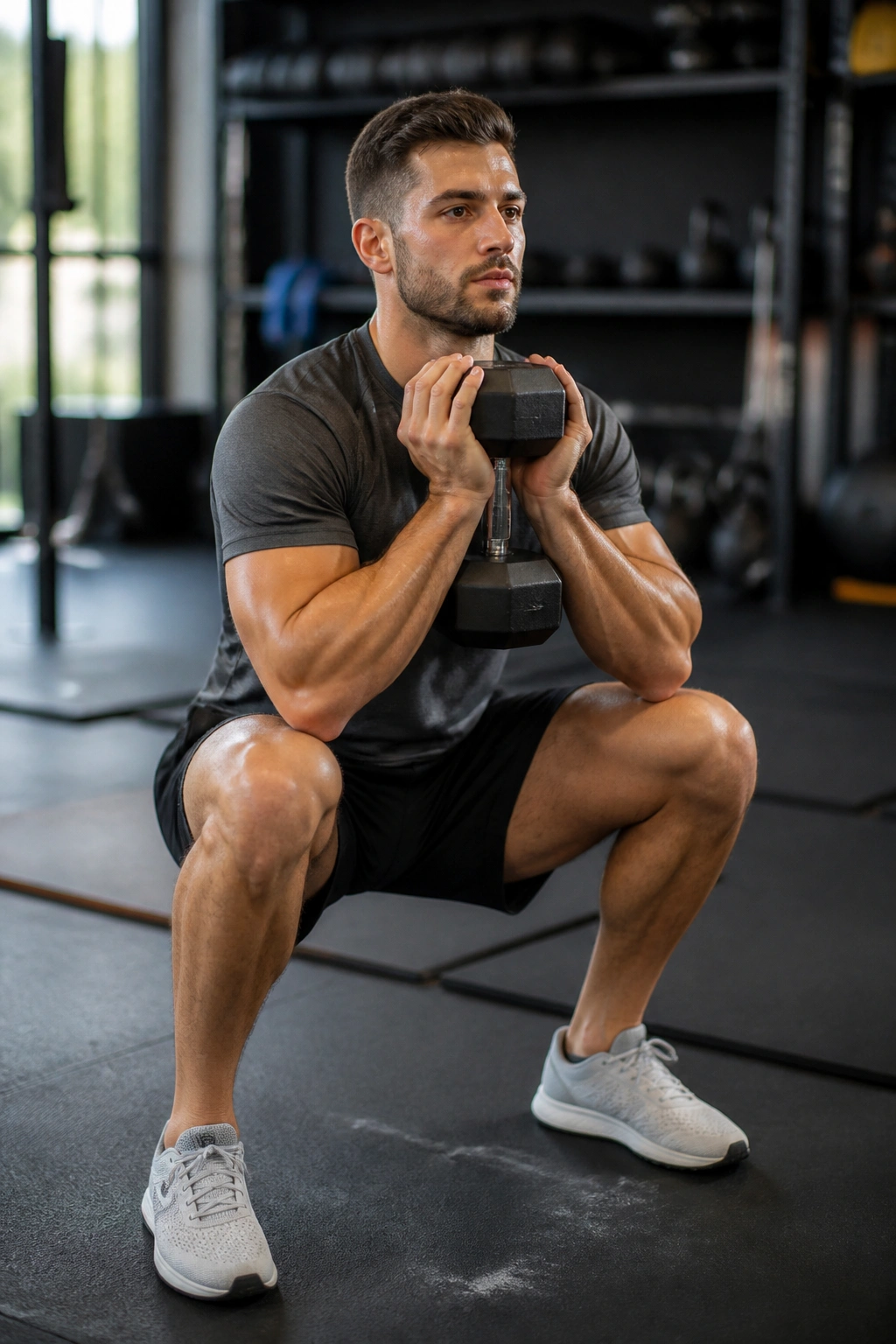
This is the workout I’d hand to someone who wants a full-body strength circuit without a complicated setup. Two dumbbells, a bit of floor space, and a timer are enough.
How to Run the Timer
Work through 3 rounds of the following:
- 8 goblet squats
- 8 push-ups
- 8 one-arm dumbbell rows per side
- 30 seconds of rest between rounds
Keep the whole thing inside 20 minutes by taking only the rest you need to keep form clean. The squats hit the legs, the push-ups cover the push pattern, and the rows keep the shoulders and upper back from getting ignored. That balance matters. A lot.
Use a weight that feels sturdy on the last two reps but still lets you move cleanly. If your torso starts twisting on rows or your push-ups turn into neck dives, the load is too ambitious. Too many people chase a number here and end up turning a good circuit into a sloppy one.
Pro tip: put the dumbbells close to the mat before you start. Sounds tiny. Saves time every round.
2. Barbell Deadlift and Overhead Press Superset
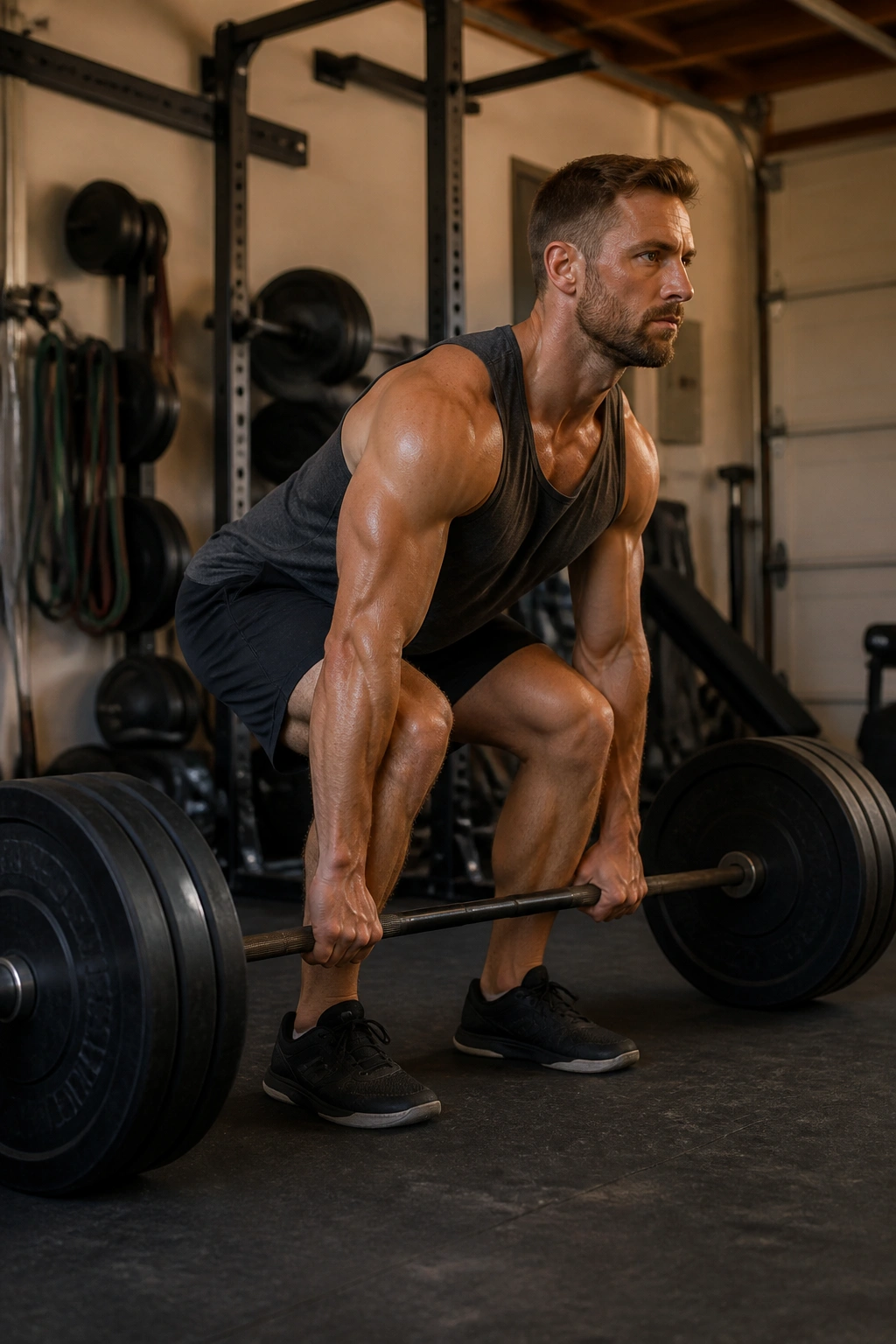
If you want the most work from the fewest reps, this is the blunt instrument. Deadlifts and overhead presses are not cute, but they get a lot done fast.
Run 5 rounds of 3 deadlifts and 5 strict presses, resting about 60 seconds between rounds. The deadlift opens the session by loading the whole back side — glutes, hamstrings, upper back, grip. The press then forces the shoulders and trunk to do their job when you are already a little tired. That combination feels honest in a way machine work often doesn’t.
Use a barbell you can move with crisp form. If the deadlift starts looking like a shrug with a handle, the bar is too heavy for a 20-minute session. Same with the press. Keep the ribs down, squeeze the glutes, and avoid the weird lower-back lean that shows up when people try to muscle the bar overhead with bad posture.
The best use for this workout is a day when you want low repetition, heavier loading, and no nonsense. It’s especially good if you train in a garage or a simple gym and want to leave without feeling like you wasted the hour. One heavy pair of lifts. That’s enough.
3. Kettlebell Swing, Clean, and Front Squat Complex
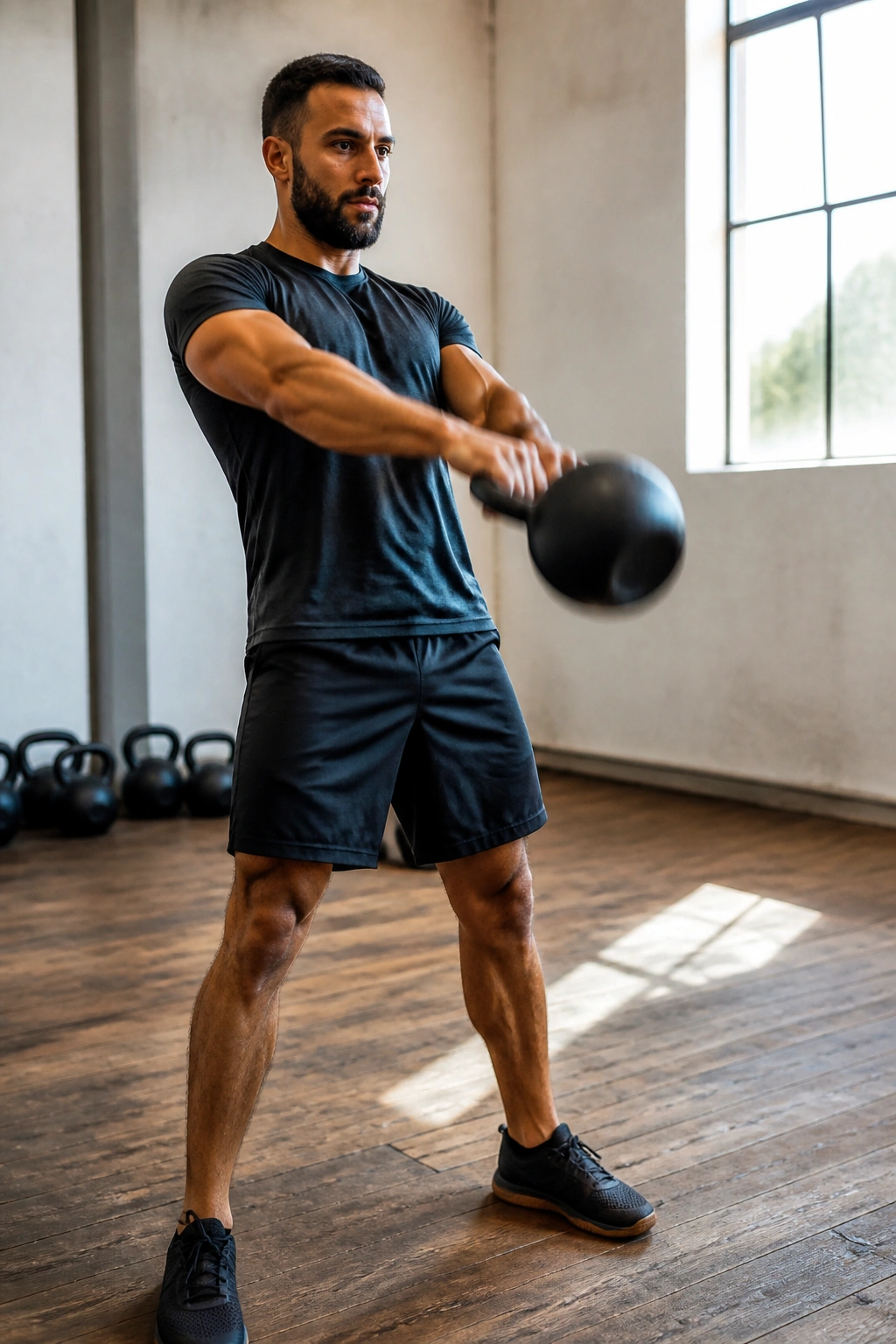
Can one kettlebell carry a whole strength workout? Yes, if you pick the right complex and stop trying to make it easy.
Do 6 rounds of 6 swings, 4 cleans per side, and 4 front squats per side, resting 45 to 60 seconds after each round. The swing gives you hip snap, the clean teaches control and timing, and the front squat asks your legs and core to stay organized under load. It feels athletic because it is athletic.
How to Use It
Choose a kettlebell you can rack comfortably for several reps without your forearm getting battered. A lot of people grab a bell that looks heroic and then spend half the workout surviving the grip. Don’t do that. The front rack should feel firm, not like you’re wrestling the handle.
This works especially well when you want a strength session that also raises your breathing a little without turning into a full conditioning grind. The bell should move smoothly between each piece. If the clean gets noisy and the squat gets shallow, the weight is too much or the rest is too short.
A small detail matters here: keep your feet planted on the squat, then reset your hinge before the next swing. That little reset keeps the set strong instead of frantic. Clean reps. Better output. Less mess.
4. Split Squat and Push-Press Ladder
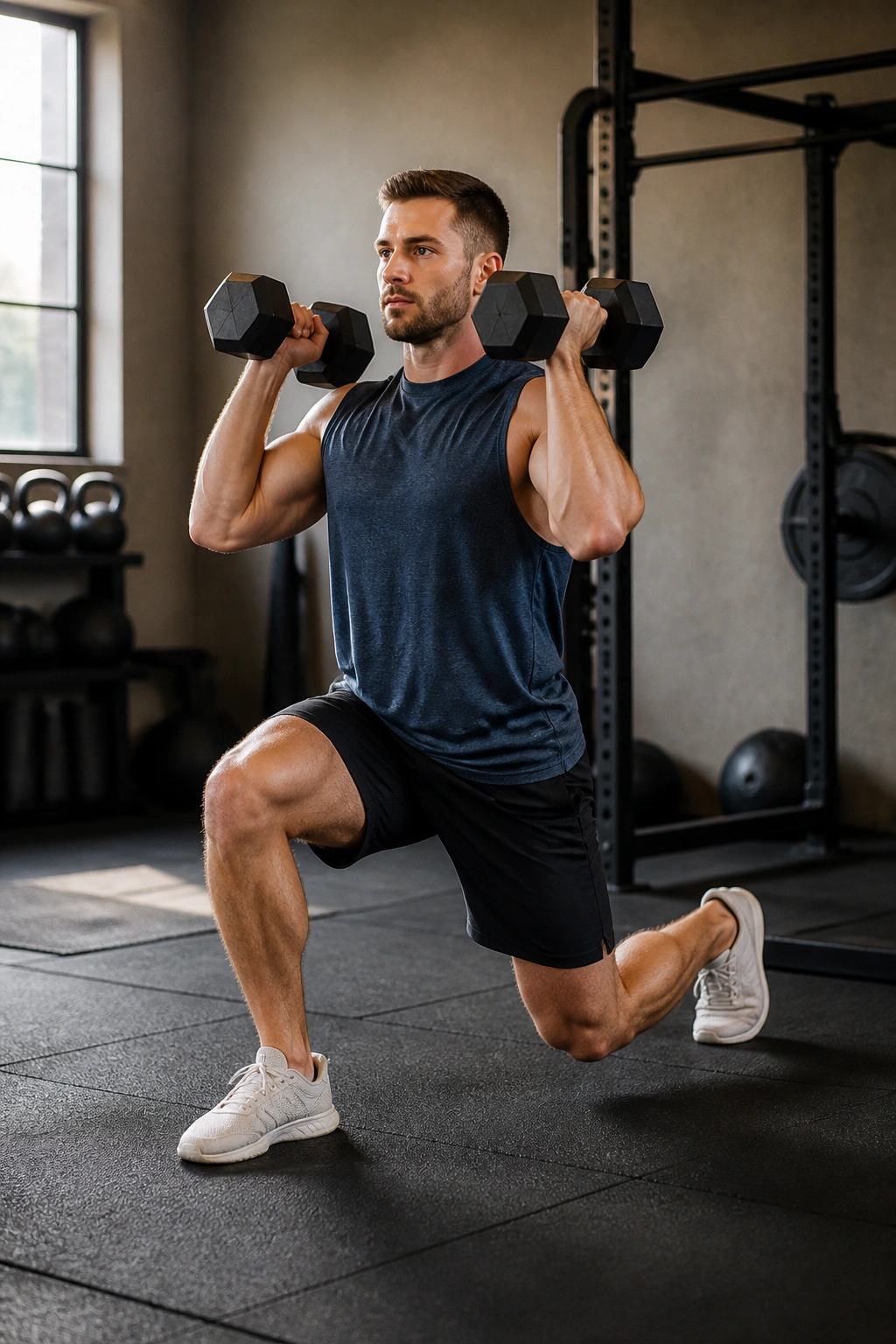
One side always feels a little weaker than the other. That’s normal, and this ladder makes the difference impossible to ignore.
Set a timer for 20 minutes and climb this ladder on each side: 6 split squats, 5 push-presses, 5 split squats, 4 push-presses, 4 split squats, 3 push-presses. Use dumbbells or kettlebells, and switch sides after one full ladder. The structure keeps tension on the legs while the push-press adds a bit of power from the hips.
The split squat is the quiet hero here. It exposes balance issues, ankle stiffness, and that annoying habit of dumping weight into the front knee. The push-press brings in a small dip and drive, so the shoulders get work without needing a full strict press every time. Nice pairing. Tough pairing too.
- Keep the front foot flat.
- Drop straight down, not forward.
- Use just enough leg drive to start the press.
- Rest 30 seconds between ladder rungs if form stays sharp.
Best tip: if your knee caves inward, shorten the stance slightly and slow the lowering phase. That usually fixes more than people expect.
5. Pull-Up and Dip Density Block

A lot of upper-body workouts are really chest workouts in disguise. This one is not.
Spend 12 minutes alternating between pull-ups and dips in a density block: do 2 to 5 reps of each, rest only as needed, and keep moving for the full window. If you have more gas, add a light weight belt or a dumbbell between the feet. If not, use bodyweight and own the range you’ve got. The goal is not to redline. The goal is to collect clean reps under fatigue.
Pull-ups hit the lats, biceps, and upper back; dips bring the chest, shoulders, and triceps into the room. Put them together and you get one of the few fast sessions that actually feels like an upper-body balance check. The grip gets taxed too, which is a bonus most people underestimate until their last set.
If dips bother your shoulders, shorten the range and keep the torso slightly forward. If pull-ups are still a grind, use a band or do slow negatives — three to five seconds down. That still counts. It counts a lot, actually.
Leave a few reps in the tank on every set. Density works because you can keep repeating it. If you bury yourself in the first four minutes, the rest of the session turns into a rescue mission.
6. Dumbbell Floor Press and Row Contrast Set
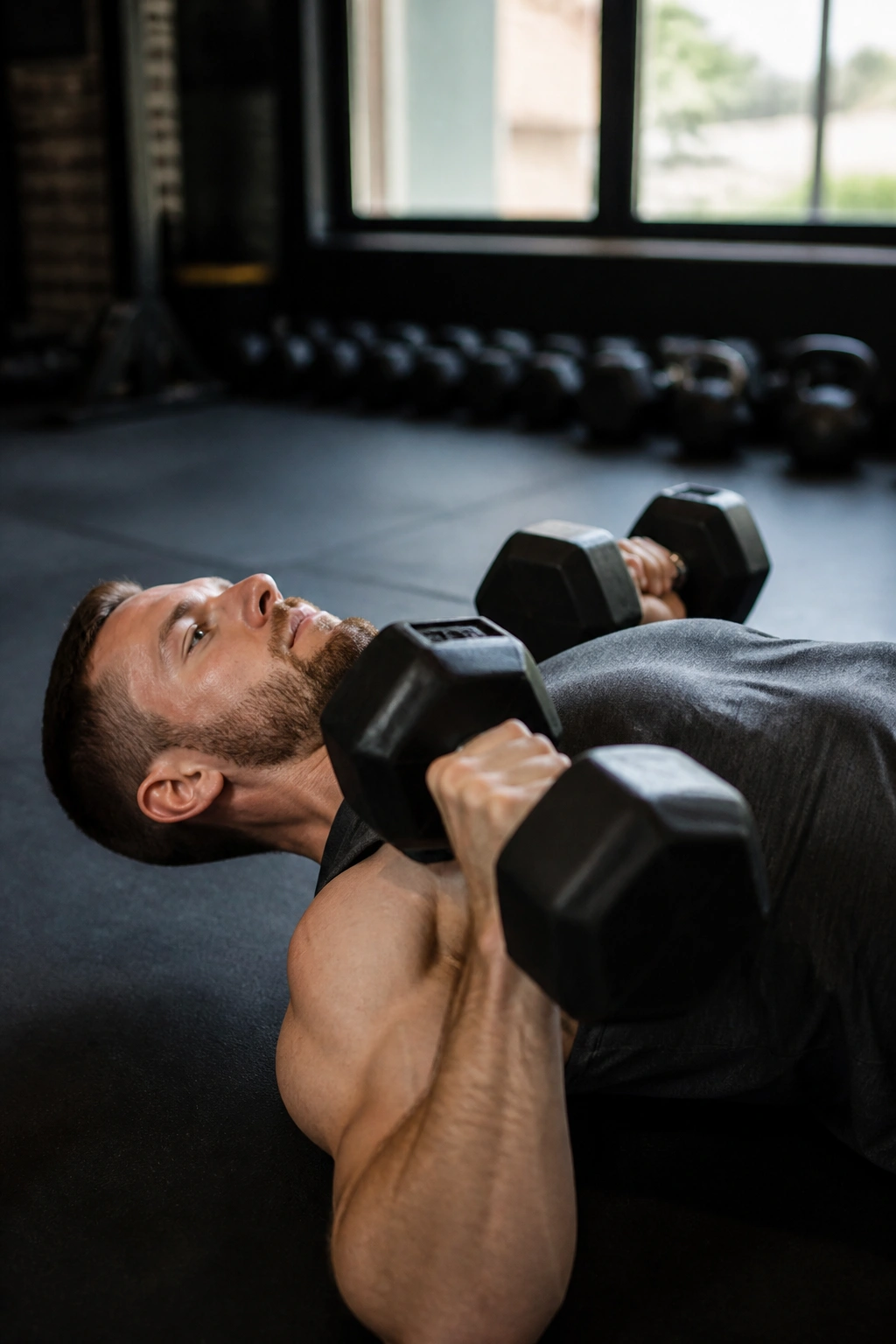
Unlike a bench-heavy chest day, this one keeps your shoulders honest and your back involved from the start.
Run 4 rounds of 8 dumbbell floor presses and 10 bent-over rows, resting 45 seconds between rounds. The floor press limits range just enough to be shoulder-friendly, while the row balances all that pressing so the upper body doesn’t fold into the same hunched shape people get from too much desk time and too many push movements.
Use a bench only if the floor press feels too short for your elbows. Most people do fine on the floor, and I like it better because the pause at the bottom forces the press to come from the chest and triceps, not a bounce. The rows should feel controlled, with the dumbbells traveling toward the hip rather than the armpit. Small difference, better lat engagement.
Who is this for? Pretty much anyone who wants a straightforward upper-body strength block without turning the workout into a shoulder circus. It’s especially good if you have a pair of adjustable dumbbells and not much else. Keep the torso fixed on the row. Press hard. Rest briefly. Repeat.
7. 20-Minute Tempo Bodyweight Strength Session

No weights? Fine. Slow the reps down and let bodyweight work earn its keep.
Do 3 rounds of 8 tempo squats, 6 tempo push-ups, 8 reverse lunges per side, and a 20-second hollow hold, resting 45 seconds between rounds. The tempo matters more than most people think. A three-second lower on the squat, a one-second pause near the bottom, and a strong stand-up make bodyweight feel heavier fast. Same idea on push-ups. Slow down, then own the finish.
Why Tempo Changes the Feel
The muscles spend longer under tension, which is what makes a light movement feel like real work. You do not need a mountain of equipment to make a session useful. You need control.
Keep the hollow hold short and crisp. If your lower back starts arching off the floor, stop the hold and reset. That position is supposed to build trunk strength, not turn into a sloppy arch contest. Small sets are fine here. Quality is the point.
This is a smart choice on travel days, cramped apartment days, or any day when the garage gym is unavailable and you still want to train hard. Quiet, too. No weights clanking. Just you, the floor, and a clock.
8. Resistance Band Full-Body Circuit
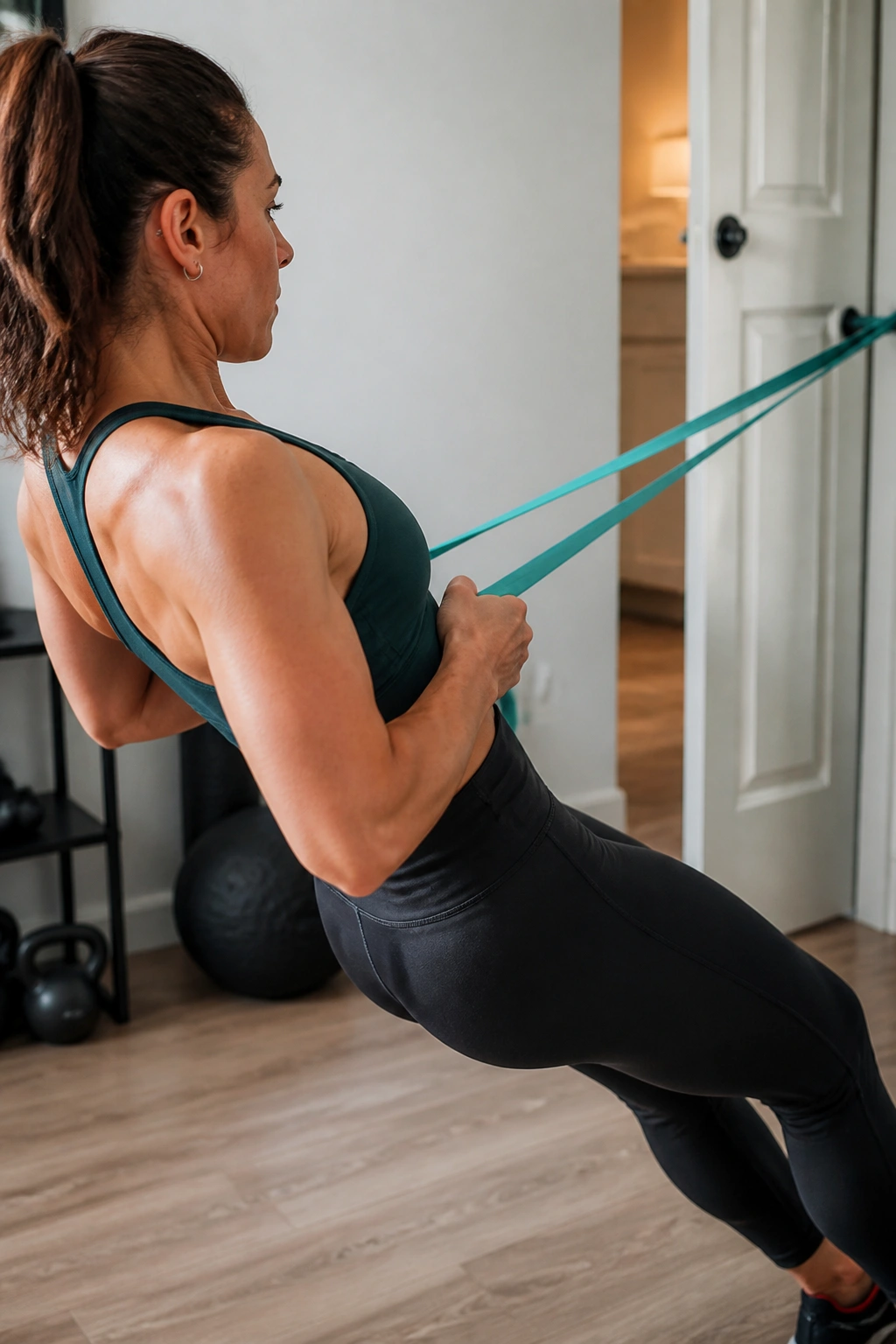
Bands look harmless until the last few reps turn your arms to rubber.
Set up 4 rounds of 12 band rows, 10 band front squats, 10 band chest presses, and 12 band pull-aparts, taking 30 to 40 seconds of rest after each round. If you anchor the band low and step on it, the squats and presses get useful resistance without needing a rack, bench, or pile of plates. That makes this one of the easiest 20-minute strength workouts to travel with.
The hidden value of band work is tension through the whole range. A dumbbell gives you gravity. A band gives you constant pull. That’s useful for the upper back, especially on pull-aparts and rows, where the finish matters as much as the start. A lot of people race through band reps. Bad idea. Slow the return phase and let the band pull you into control.
Use a heavy loop band if you want more resistance, or double up lighter bands if the space setup is awkward. The goal is not to create chaos. It’s to keep the body honest when the joints need a kinder option.
Short, simple, and sneaky hard.
9. Barbell Complex Without Putting the Bar Down
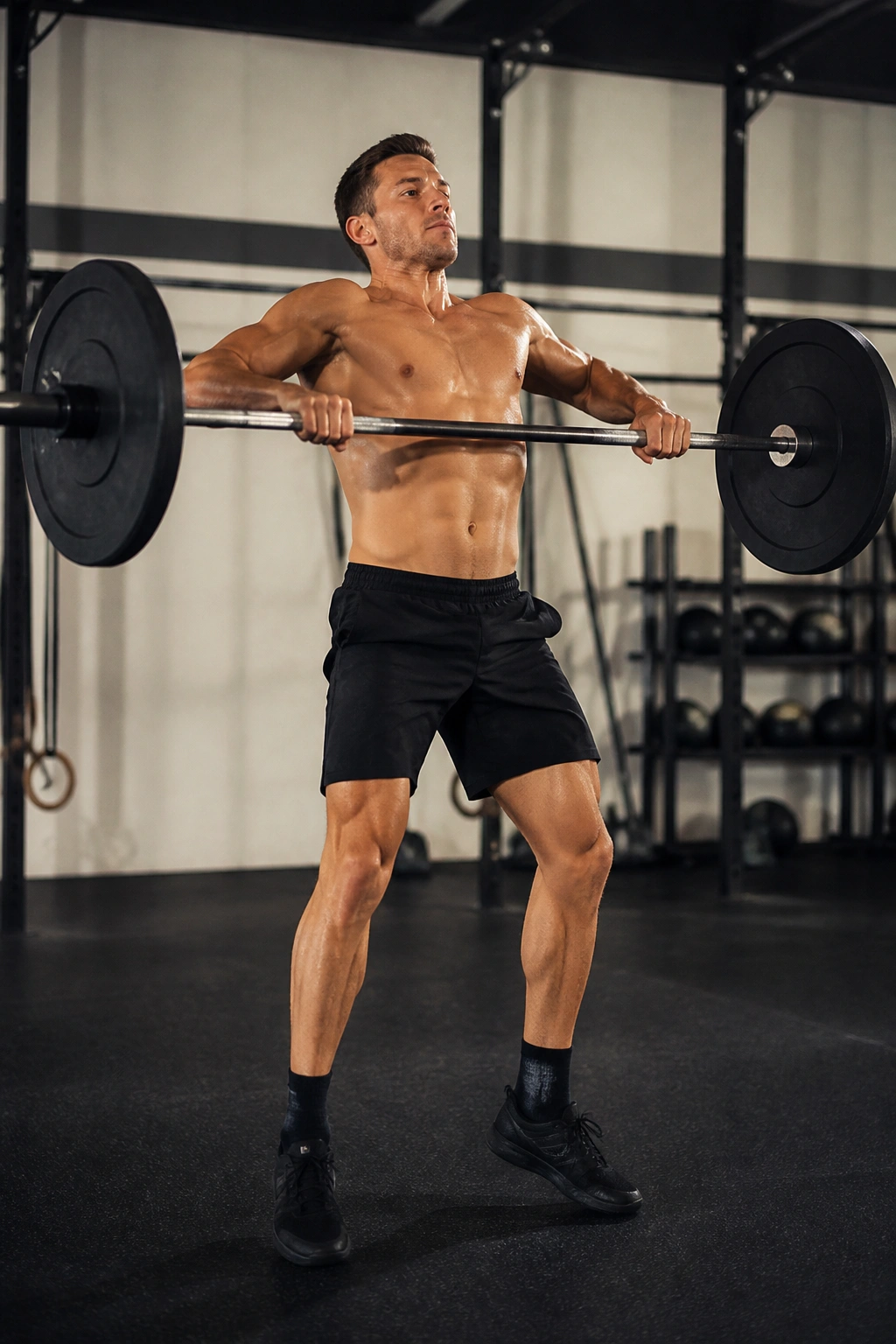
A barbell complex is a little rude in the best way. Once the bar leaves the floor, it stays there until the round ends.
Load a bar with a weight you can safely press and squat for 5 rounds of: 6 Romanian deadlifts, 6 bent-over rows, 6 hang cleans, 6 front squats, and 6 push presses. Rest 90 seconds between rounds. The full-body demand is huge, but the structure is tidy. One piece flows into the next, and the whole body has to stay braced while fatigue climbs.
Use a lighter load than your ego wants. Seriously. A complex punishes sloppy setup more than almost anything else on this list. If your hinge falls apart on the rows or the front rack collapses during the squats, the bar is too heavy. Drop the plates and keep the movement clean. That’s the whole game.
This is best for intermediate lifters who know how to move a barbell without turning every rep into a guess. It’s also a good tool when time is tight but you still want a dense session that feels like strength work, not cardio in lifting shoes. The round should leave you breathing hard, but the bar path should still look organized.
10. Sandbag Bear-Hug Circuit
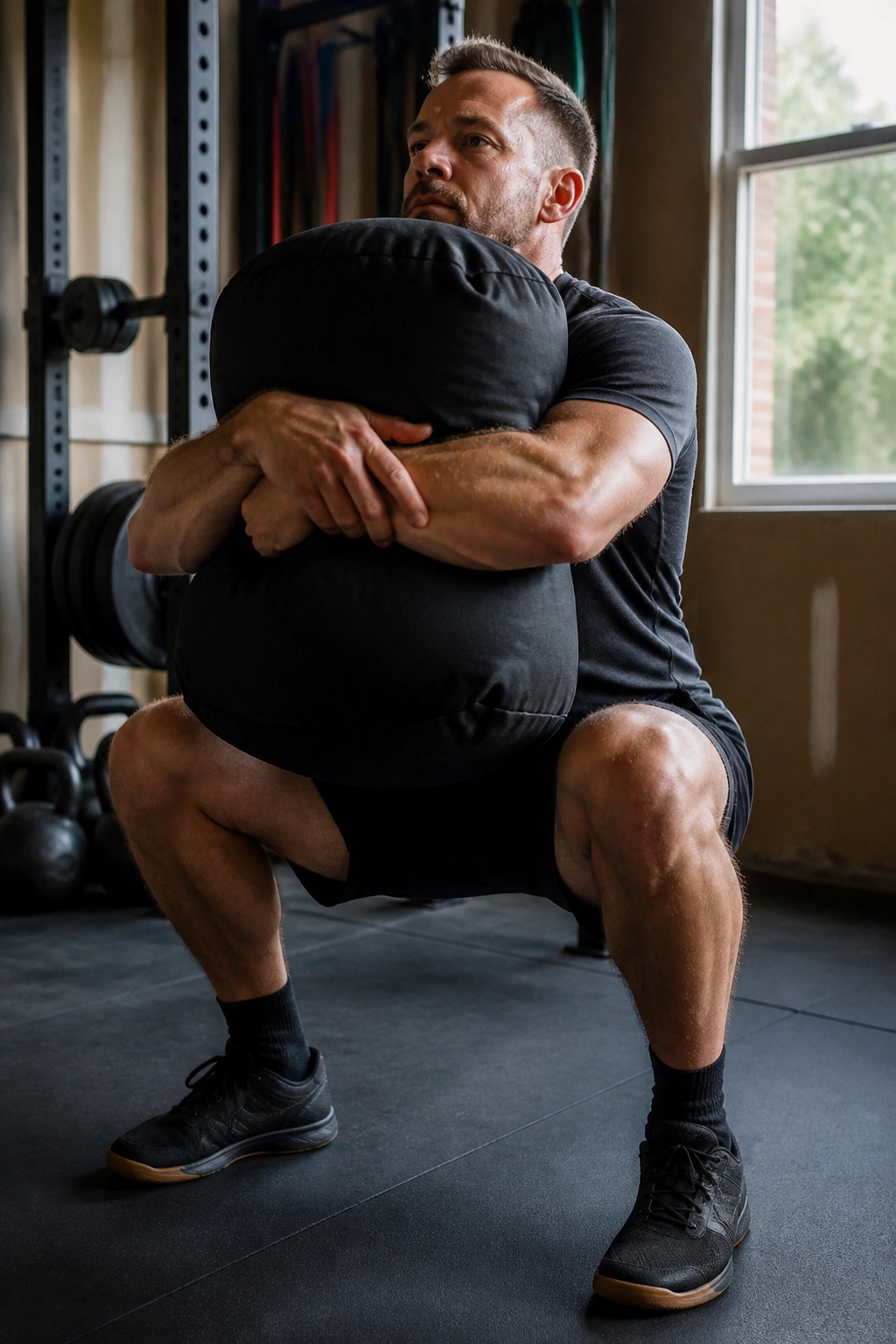
Sandbags are awkward, and that is the point.
Spend 15 minutes cycling through 5 bear-hug squats, a 30-foot carry, 5 shouldering reps per side, and 5 bear-hug good mornings. Rest as needed, but keep the pace steady. The sandbag shifts, the load compresses against your torso, and your core has to brace in a way dumbbells often don’t force. It’s a strong reminder that real-life strength rarely comes in a neat shape.
This workout is especially good if you want a grip challenge without hammering the wrists. The bag sits in the lap, against the chest, or on one shoulder, and the body has to keep reorganizing around it. That shifting load is rough in a useful way. Your breathing gets involved, your forearms wake up, and your trunk stops pretending it’s along for the ride.
Use a bag that fits close to your body. Too small, and it turns flappy. Too large, and it gets awkward for the wrong reasons. A good sandbag should feel hard to stabilize but still manageable to pick up from the floor.
If you only have one odd object in the garage, make it this one.
11. Single-Arm Carry and Core Strength Workout
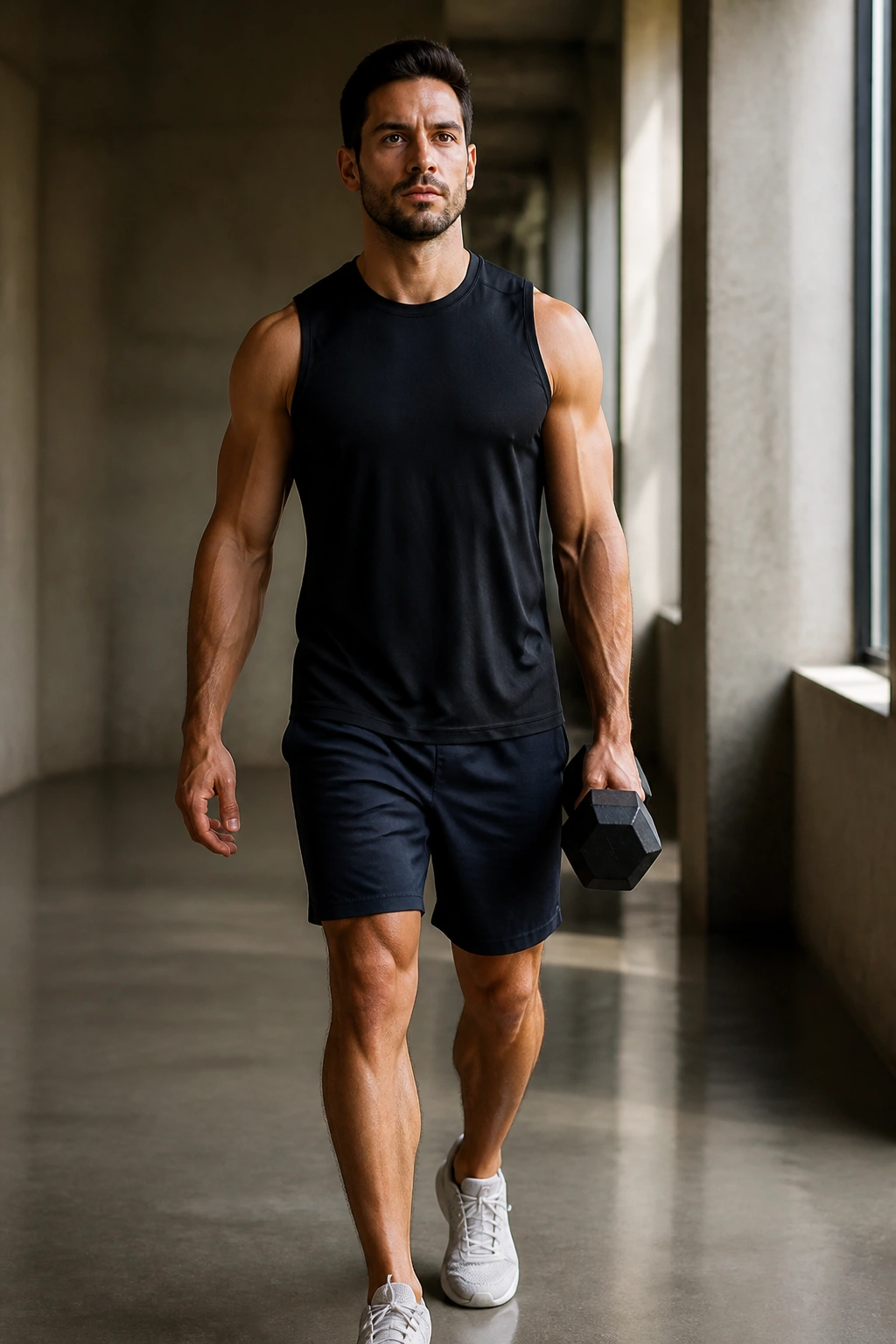
Carries look simple until your torso starts leaking sideways.
Run 6 rounds of 30 seconds of suitcase carry on the right side, 30 seconds on the left, 8 dead bugs per side, and 10 single-arm presses per side, resting 30 seconds after each round. The suitcase carry — one weight in one hand — trains anti-lateral flexion, which is a fancy way of saying your body learns not to bend like a cheap lawn chair under uneven load.
This workout is quieter than a squat session but no less hard. The core has to stop the pelvis from drifting. The glutes help. The obliques help. Even the feet help, which is why people who rush carries always miss the real challenge. Walk slowly enough that the weight doesn’t drag you off line. That’s where the work is.
Dead bugs keep the trunk from cheating during the floor portion, and the single-arm press keeps shoulder stability in play. If you only have one dumbbell, this one is your friend. If you have two, even better — just use one at a time and make each side earn the same amount of attention.
One rule: do not lean away from the weight. If you do, the carry has already beaten you.
12. Machine Strength Circuit
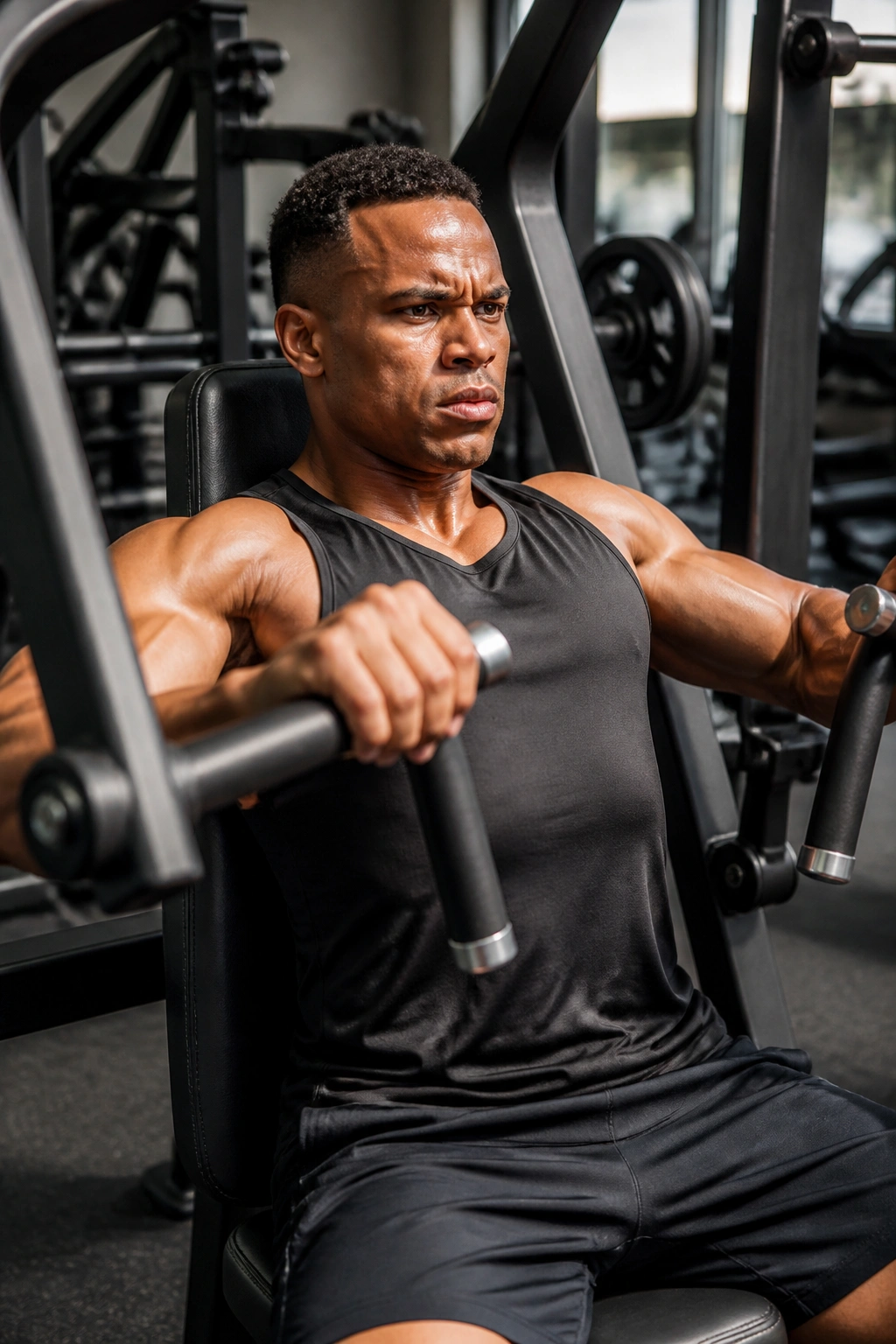
Machines are not a lesser option. Sometimes they’re the smart one.
Choose 3 machines — say leg press, chest press, and seated row — and do 3 rounds of 8 to 10 reps on each, resting 30 seconds between stations and 60 seconds after each round. The setup is clean, the loading is easy to track, and the pattern lets you push hard without worrying about balance or complicated bracing cues.
Unlike free weights, machines let you focus on force production with less setup. That makes this a good choice for beginners, for people coming back after a layoff, or for anyone whose joints prefer a little guidance. The machine should still feel challenging near the final reps, though. If the stack barely moves, pick more resistance. If your range gets choppy, pick less.
The best machine circuits are blunt and direct. Don’t overcomplicate the order. Push, pull, legs. Or legs, push, pull. Pick a sequence and keep it steady so you can track progress from one week to the next. That’s the part people skip, and it’s a shame, because machines are easy to measure when you use them like you mean it.
Boring? Maybe. Effective? Absolutely.
13. Glute Bridge and Hamstring Curl Builder
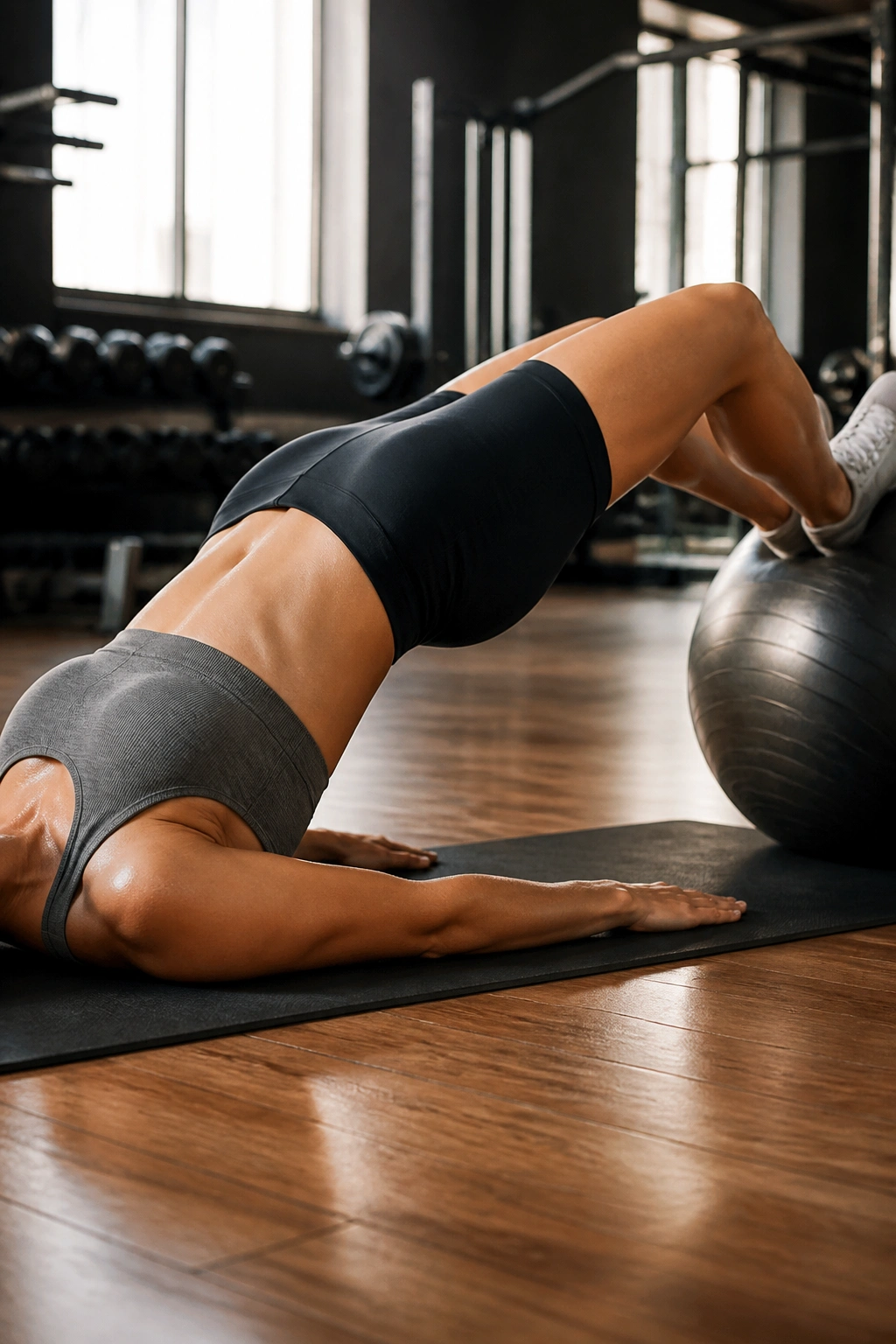
Back side strength gets ignored more than it should, especially in short workouts.
Do 4 rounds of 12 glute bridges, 10 hamstring curls, 8 single-leg bridges per side, and a 20-second top hold, resting 30 to 45 seconds between rounds. If you have a stability ball or sliders, use them for the curls. If not, do sliding towel curls on a smooth floor. The key is resistance through the hamstrings while the hips stay lifted.
This session looks gentle for about thirty seconds. Then the hamstrings wake up. Hard. The glute bridge gets the hips high and teaches the posterior chain to fire without overusing the lower back, and the curl variation adds knee-flexion strength that helps balance all the squatting and hinging most people already do.
Keep the ribs down during the bridge. If the lower back arches hard at the top, you’re turning a glute drill into a back extension. Not the same thing. Also, slow the lowering phase on single-leg bridges; that’s where the useful strain lives.
A lot of runners, cyclists, and desk workers benefit from this one because the backside tends to get sleepy. This wakes it up without needing a barbell.
14. Isometric Hold Workout
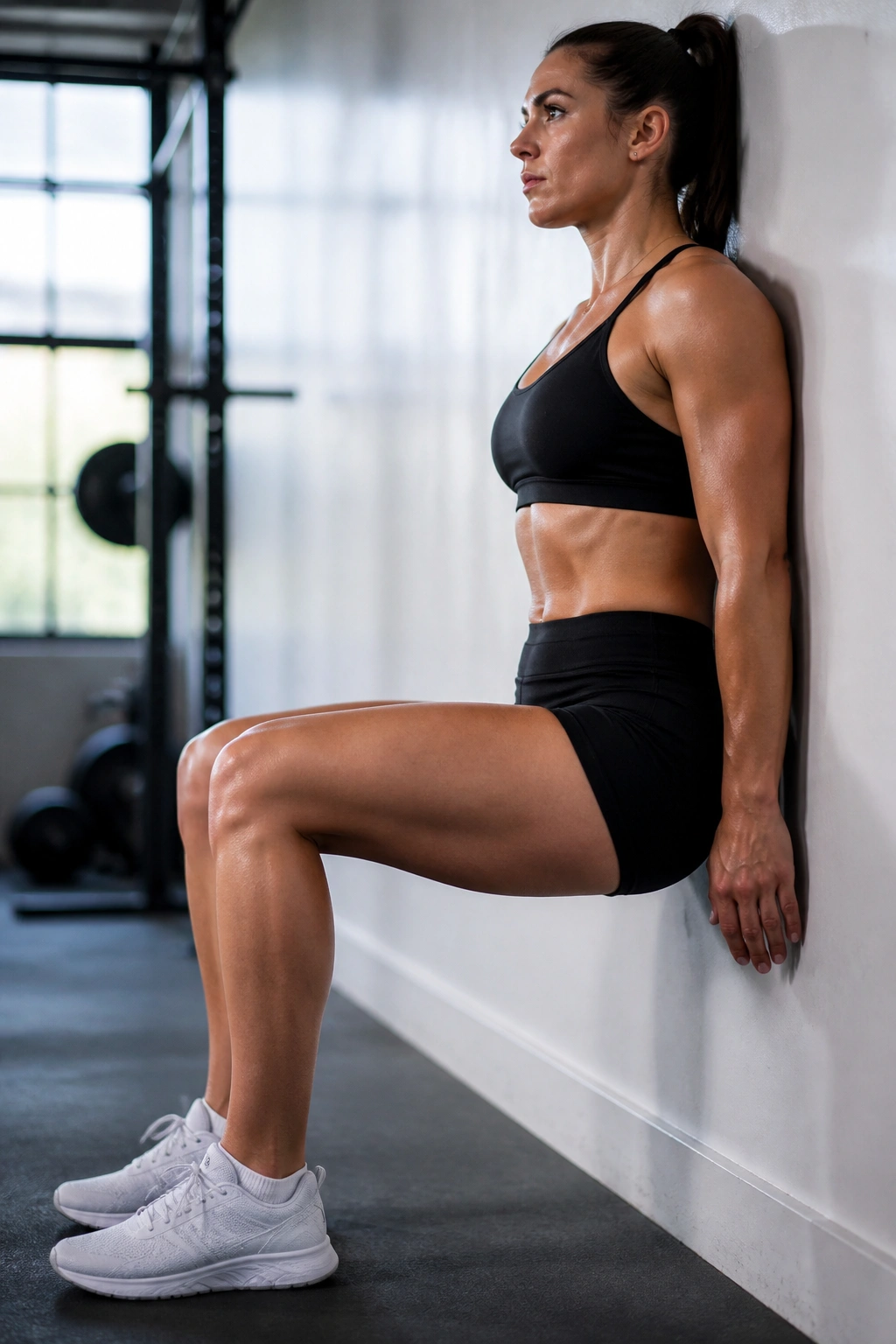
Hold-based strength work looks tame from across the room. It is not tame.
Pick 4 positions and hold each for 30 to 45 seconds: a wall sit, a split squat hold, a plank with shoulder taps removed, and a dead hang or flexed-arm hang. Repeat the circuit 3 times with 20 to 30 seconds of rest between holds. The point is simple: stay under tension long enough for the muscles to stop hiding.
Isometrics build a kind of strength that feels different from reps. The legs burn in a wall sit. The core shakes in a plank. The grip starts to fade on a hang. That fixed position can be useful when joints need a break from more dynamic loading or when you want to train without a lot of space and noise.
The split squat hold is the sleeper here. Stay low, keep the front heel down, and resist the urge to bob up just to get relief. That tiny bit of suffering is where the adaptation sits. Same idea with the dead hang — shoulders packed gently, not yanked loose.
This is one of those workouts you finish and think, That was shorter than expected. Then the next morning says otherwise.
15. Trap Bar Deadlift and Lunge Pairing
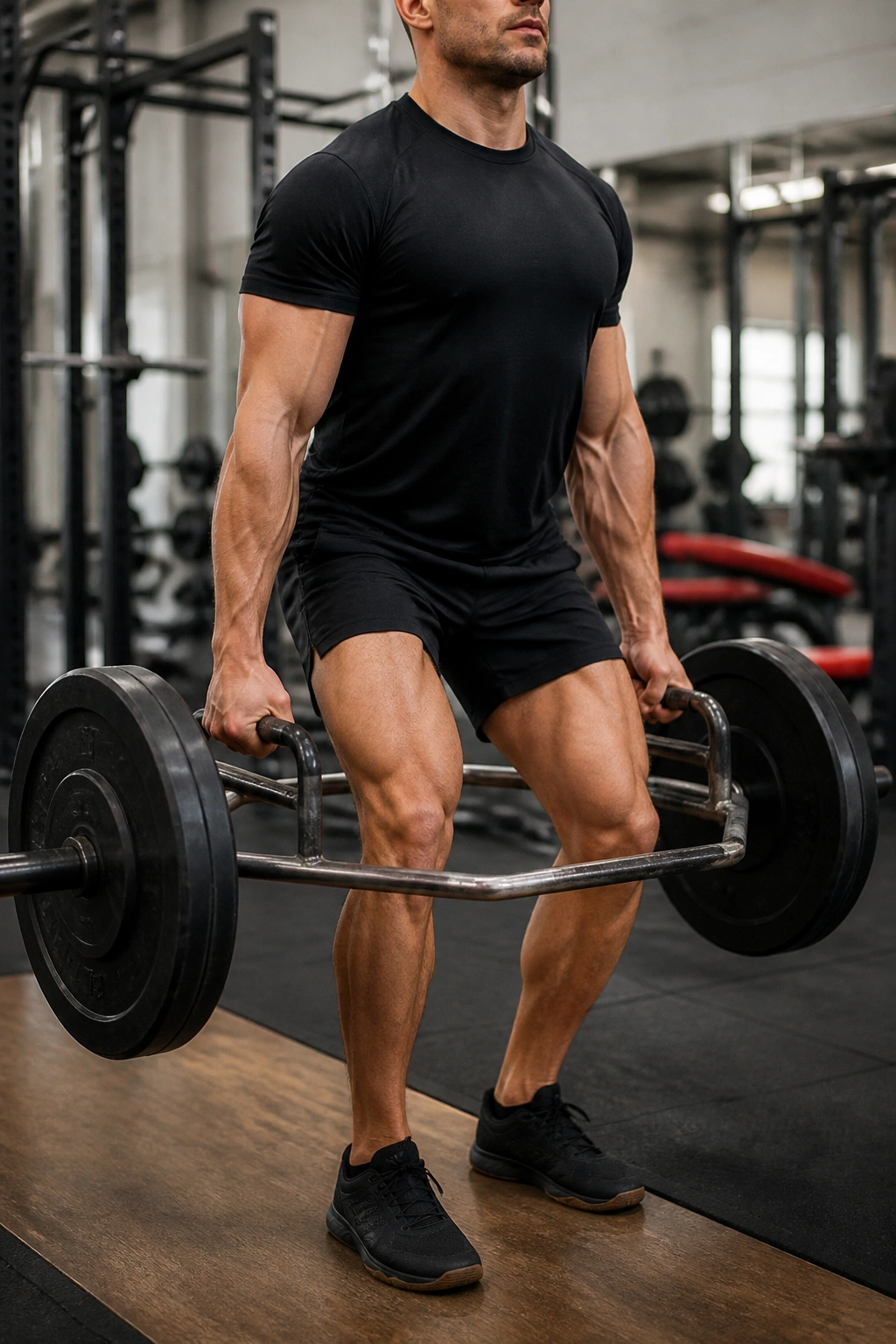
Trap bars are friendly in a way straight bars are not always friendly. Friendly, but still serious.
Run 5 rounds of 4 trap bar deadlifts and 6 reverse lunges per leg, resting 60 seconds between rounds. The trap bar lets you stay more upright, which often feels better on the back and keeps the load centered. Pairing it with reverse lunges adds single-leg work without turning the session into a balance circus.
How to Load It
Start with a weight you can move fast on the deadlift for all five rounds. If the bar speed drops off a cliff after round two, you’ve gone too heavy. The lunges should feel controlled, with the back knee moving toward the floor and the front foot planted cleanly.
This workout is great when you want lower-body strength but don’t want the spinal fatigue that can come with conventional deadlifts. The reverse lunge is a good match because it loads the quads and glutes while giving the hips a cleaner path than a forward lunge usually does.
Keep the torso tall on the lunge and push through the whole front foot when you stand. That one cue fixes a lot of wobbly reps. If your gym has a trap bar and you’ve been ignoring it, this is your excuse to stop.
16. Upper-Body Push-Pull EMOM

Every Minute on the Minute sounds neat on paper. It also burns through excuses fast.
Set a 12-minute EMOM: minute one is 6 push-ups or dumbbell presses, minute two is 6 inverted rows or cable rows, minute three is 6 overhead presses, and minute four is 6 pull-ups or band-assisted pull-ups. Repeat the cycle three times. The remaining time in each minute is your rest. Simple. Ruthless if you choose the right load.
This format works because the clock keeps the pace honest. You can’t drift, and you can’t wander into long rest breaks disguised as “breathing.” The push and pull balance keeps the shoulders from getting grumpy, and the short sets let you stay sharp without needing huge weights.
If a minute feels too easy, add one rep. If form gets shaky by round two, pull one rep off each set and own the speed. The temptation here is to overdo the first cycle because it feels clean. Resist that. EMOMs punish overconfidence.
A good EMOM leaves a little room in the minute, not a full scramble. If you’re still staring at the clock with 15 seconds left, the load may be too light. If you’re late every round, it’s too heavy.
17. Lower-Body Power and Strength Ladder
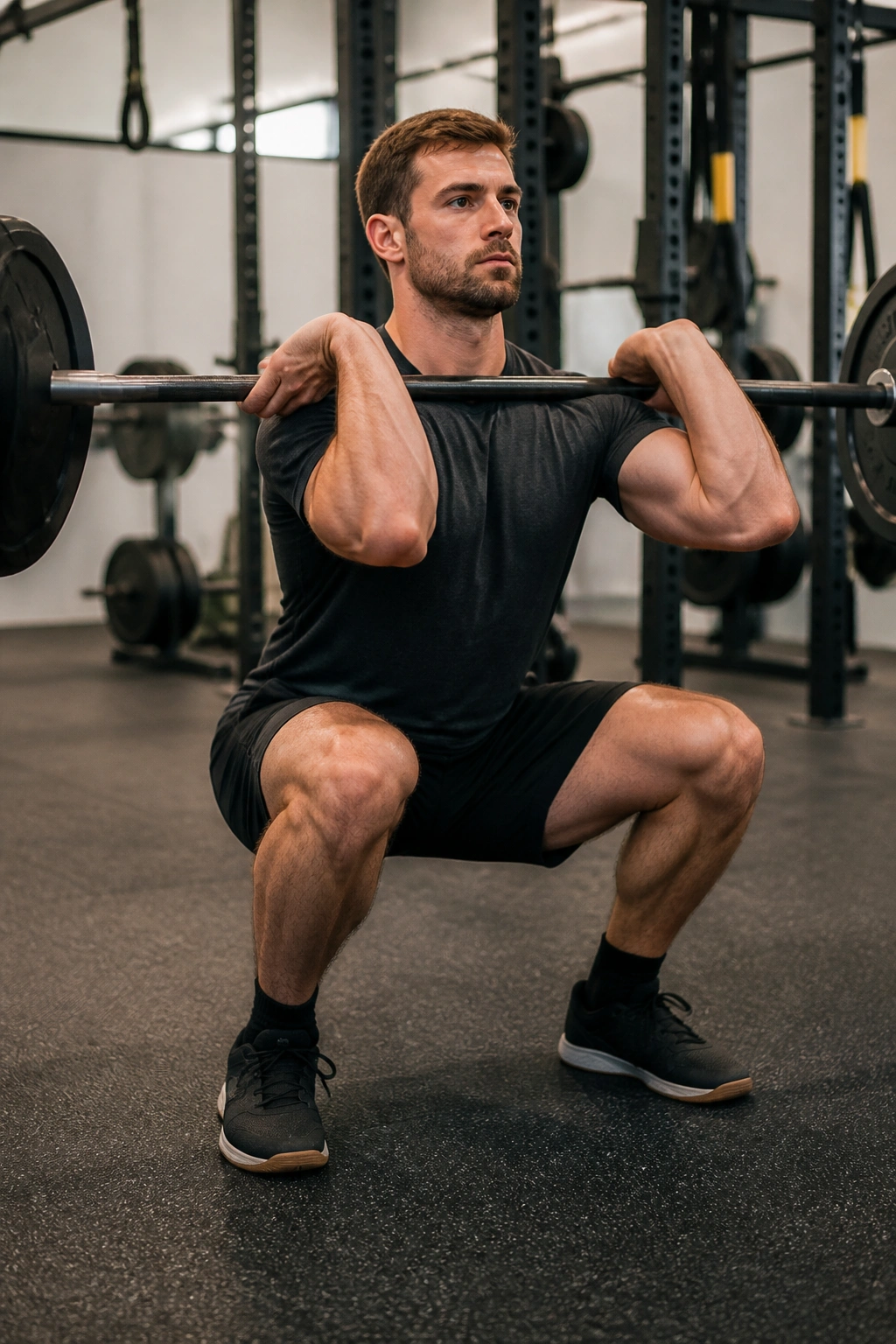
Heavy, then faster. That contrast is the whole workout.
Do a ladder of 5 reps, 4 reps, 3 reps, 2 reps, 1 rep for front squats and then repeat the same ladder for jump squats or kettlebell goblet squats, depending on your equipment. Rest 45 seconds between rungs and 90 seconds between the two ladders. The first half builds strength; the second half asks the body to move that strength with a little speed.
The front squat keeps the torso upright and taxes the quads hard. The jump squat, if your joints tolerate it, turns that load into a quick burst of force. If jumping isn’t a good fit, a goblet squat with an explosive stand-up still gives you a useful power emphasis without the landing.
Keep the ladder clean. No grinding on the heavy rungs. No sloppy jumps. The whole point is to keep the movement quality high while the effort rises. If your heels slam or your torso folds, slow down and lower the load. A good ladder should feel like a climb, not a rescue.
This is a strong choice for lifters who want strength without losing a sense of athletic pop. Short, direct, and a little spicy.
18. Final 20-Minute Strength Reset
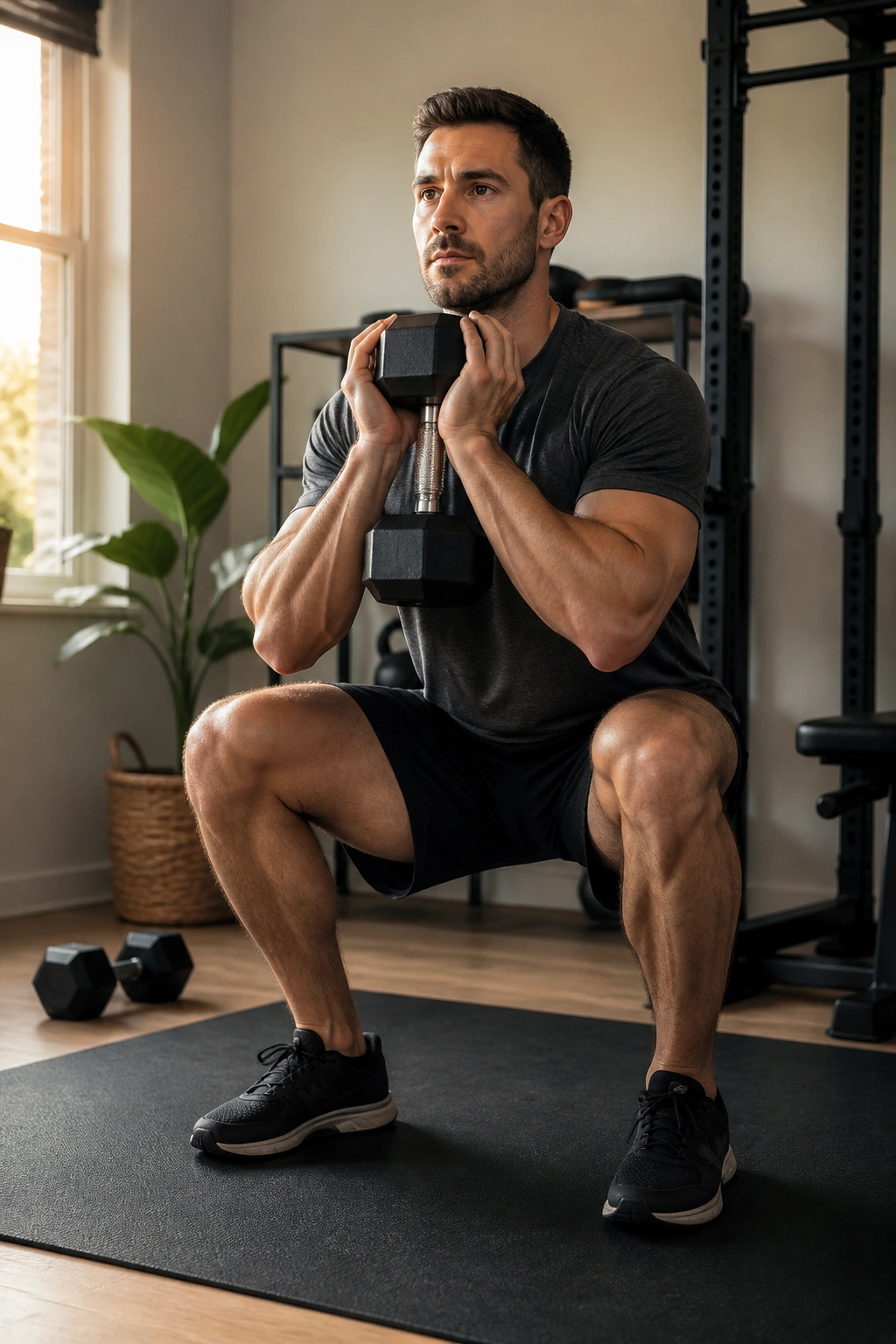
Unlike the heavier templates above, this one is the workout I’d keep for days when the tank isn’t full but skipping training feels worse.
Set a timer for 20 minutes and cycle through 8 goblet squats, 8 dumbbell floor presses, 8 Romanian deadlifts, and 30 seconds of farmer carries. Move at a steady pace, not a frantic one. The point is to leave the room feeling better organized than when you walked in — legs awake, trunk braced, upper body switched on.
This is the version that works when decision fatigue is high. One pair of dumbbells. One simple sequence. No drama. The squats cover the lower body, the floor press handles the push pattern, the RDL keeps the hamstrings and glutes involved, and the carry brings the whole thing together. If you want a repeatable strength session you can come back to often, this is the one I’d keep in the pocket.
Use it as a baseline. Add load when the last two rounds feel smooth. Shorten the rests only if your form stays clean. And if you have extra energy left at the end, don’t turn it into a random junk finisher. Save that for another day. A workout that ends with a little room left in the tank is often the one you can repeat most consistently.
