



There is a specific kind of burn that ballet dancers understand—a searing, localized heat that settles deep into the small muscles surrounding the joints. It isn’t the breathless, gasping exhaustion of a high-intensity interval training session. Instead, it is a quiet, trembling intensity. When you stand at your kitchen counter, hand resting lightly on the marble as if it were a studio barre, and you engage your core to hold your leg in a sustained, controlled extension, you are doing something far more sophisticated than simply “exercising.” You are restructuring your posture from the inside out.
Ballet-inspired fitness, often referred to as barre, strips away the flashy choreography of stage performance and keeps the mechanics that make dancers strong, lean, and balanced. The beauty of these movements lies in their subtlety. A movement that looks small—a slight pulse in a squat or a slow, drawing line of the toe across the floor—requires a massive amount of internal bracing. You are teaching your body to support itself, creating long lines through muscle engagement rather than just through stretching.
You do not need a studio, a floor-to-ceiling mirror, or even a pair of specialized shoes to replicate these results at home. All you truly need is a sturdy surface at about waist height, a little bit of floor space, and the discipline to prioritize form over range of motion. Ballet fitness is unforgiving of poor technique; if you cheat your alignment, you lose the benefits. But if you commit to the precision of these twenty exercises, you will find a level of strength that is remarkably functional, durable, and refined.
1. Mastering the Perfect Plié
The plié is the foundation of everything you will do at the barre. It is far more than a simple squat. At its core, a plié is about the external rotation of the hips—the famous “turnout.” Stand with your heels together and toes turned outward, forming a V-shape. As you bend your knees, they must track directly over your second and third toes.
The Mechanics of Engagement
If your knees cave inward, you lose the structural integrity of the movement and invite injury. Keep your back absolutely vertical, as if you are sliding your spine down an invisible wall. Do not lean forward to counter the weight. As you straighten your legs, imagine squeezing a hundred-dollar bill between your inner thighs. This isometric squeeze is what tones the adductors and keeps the engagement continuous.
Pro tip: Think of the movement as moving from the top of your head down, rather than shifting your hips back. It is a vertical descent, not a hinge.
2. Relevé for Ankle Stability
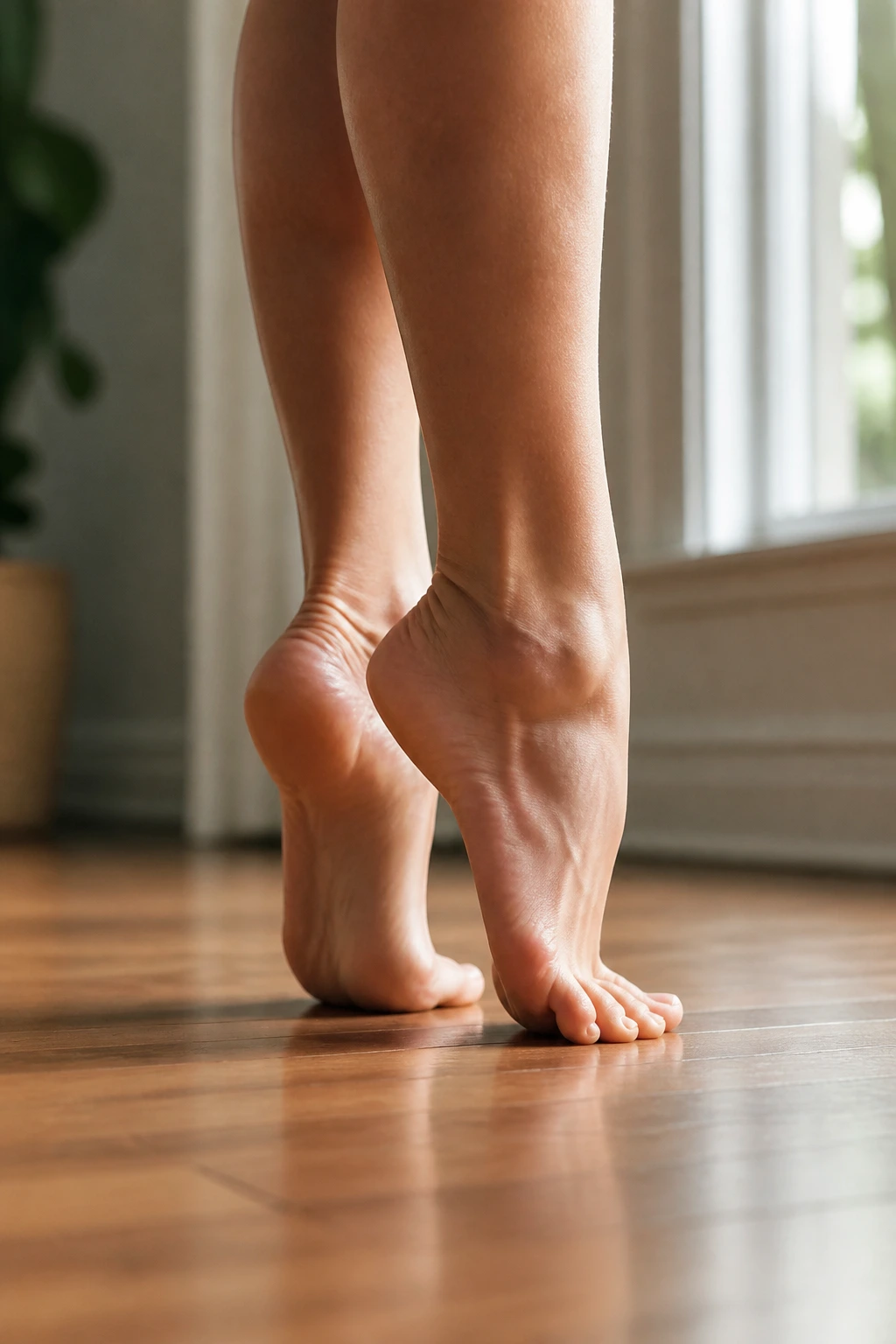
Relevé simply means “to rise.” It is the act of lifting your heels off the floor while maintaining a straight, engaged leg. This is the primary exercise for building the lower leg and foot strength necessary to maintain balance. Perform these in a narrow V-shape, lifting high enough that you feel the muscles in your calves working against the resistance of your own body weight.
Precision Matters
Your heels must stay forward. A common mistake is allowing the weight to shift toward the pinky toe, which causes the ankles to roll outward. Keep the pressure on the big toe and the second toe. The goal is a clean, vertical line. When you lower back down, do not simply drop your heels. Control the descent as if you are moving through water, lengthening the calf muscle as the heel approaches the floor.
3. Tendue for Foot Articulation
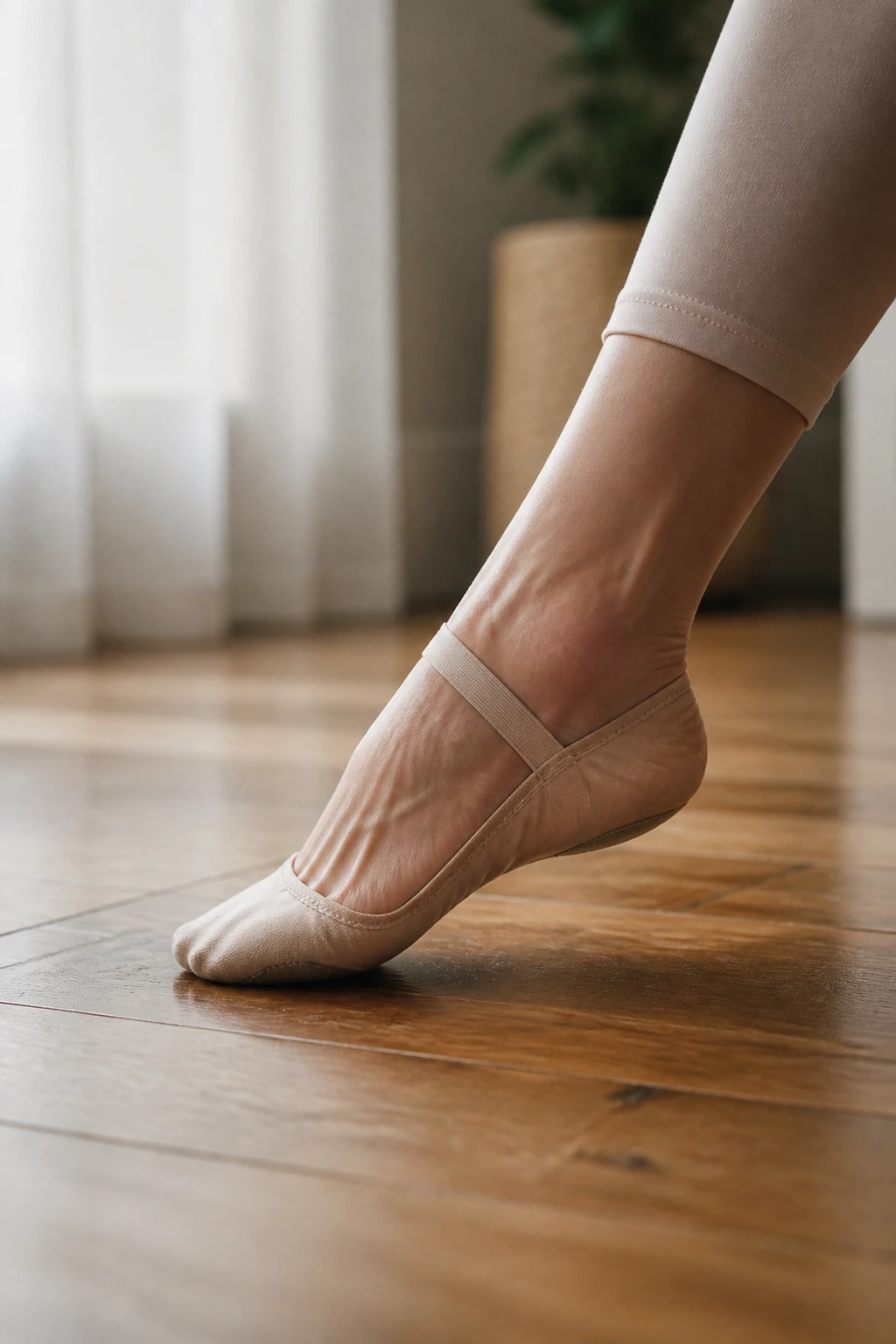
A tendue is a movement where the foot stretches along the floor until only the tip of the big toe remains in contact. It looks deceptively simple, but it is the primary tool for shaping the entire leg. Start from a closed position and slide the foot forward, side, or back. You must lead with the heel when going forward and lead with the toe when going back.
The Power of the Point
The resistance should come from the floor itself. As you push your foot away, imagine you are scraping something heavy across the ground. This creates tension in the quads and hamstrings. The moment your foot is fully extended, point your toe as hard as you can, creating a beautiful, arching line. This exercise is not about speed; it is about the quality of the stretch through the arch of your foot and the activation of the muscles wrapped around your thigh bone.
4. Battement Tendu Glissé
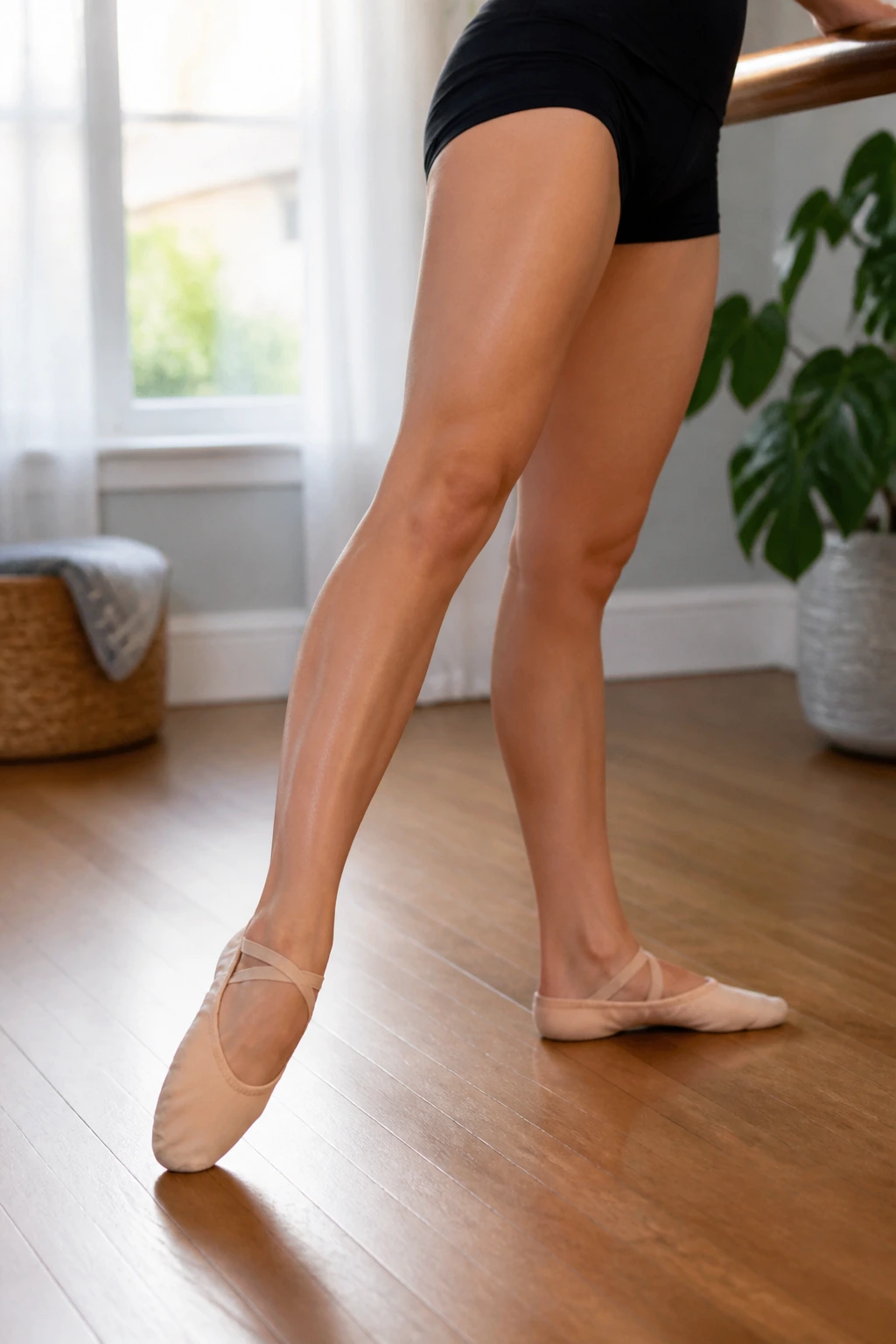
Once you have mastered the slow, controlled tendue, the glissé (meaning “glided”) adds a layer of agility. This involves a rapid, sharp strike of the foot against the floor, extending to just a few inches off the ground. The movement is quick, precise, and rhythmic. It targets the stabilizers in the hip and strengthens the reactive muscles in the lower leg.
Controlling the Snap
The tendency here is to let the movement become sloppy or to use momentum to flick the leg up. Avoid this. Every glissé must have a distinct beginning and end. You start at the floor, you snap the leg to its point of extension, and you instantly return. The movement should be clean, like the cracking of a whip, but fully controlled by your core. If your hips are shifting or wobbling while you do this, you are working too fast. Slow down until you can keep your torso rock-solid.
5. Arabesque for Gluteal Isolation
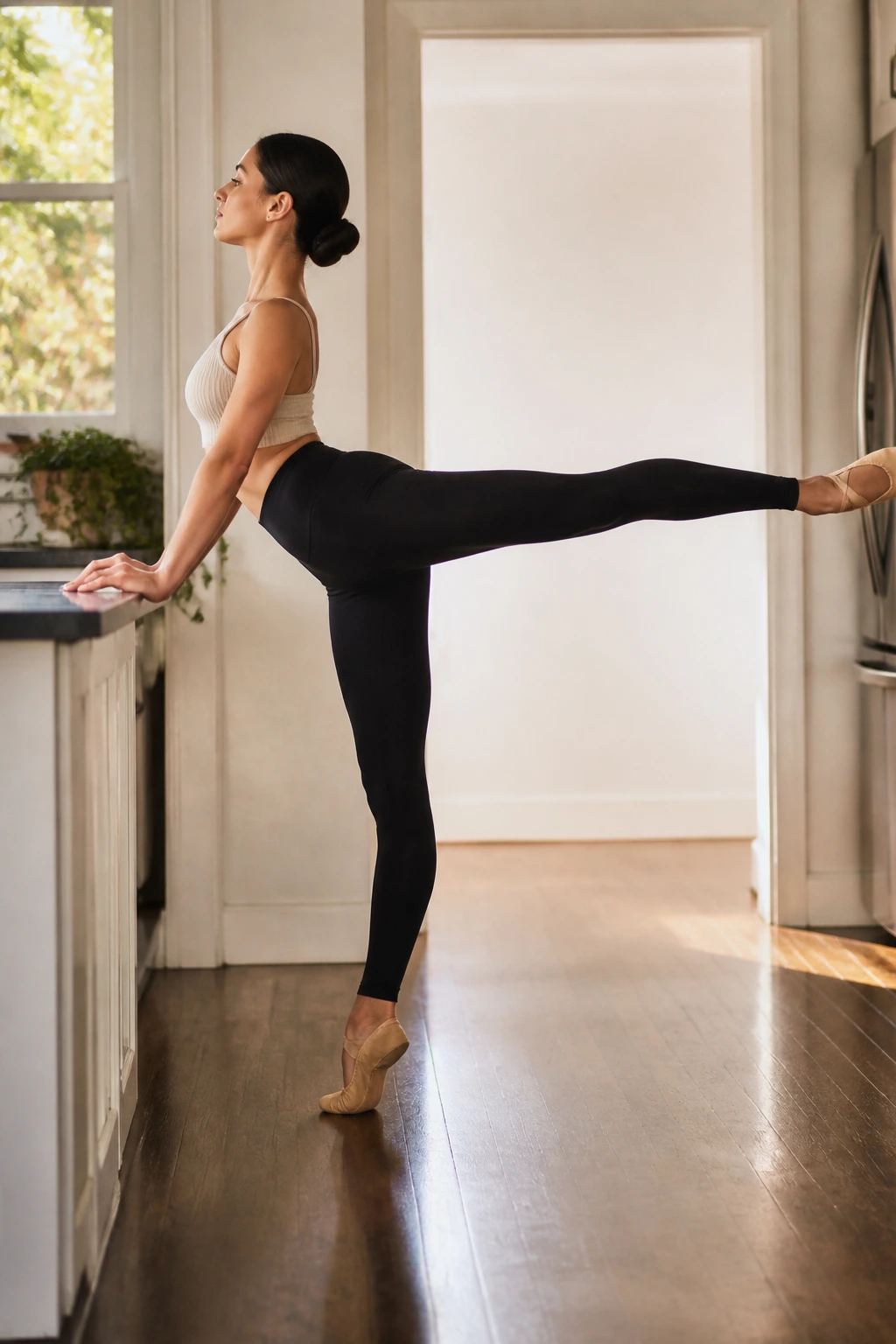
The arabesque is perhaps the most iconic ballet shape: one leg supporting the body, the other extended straight behind. At home, you will use your counter or a chair for balance. The key here is not height; it is length. You want to reach your leg so far back that it feels like it is pulling out of your hip socket.
Avoiding the Arch
Most people try to force the leg high by crunching their lower back. This is incorrect and uncomfortable. Instead, think about the glute-hamstring tie-in. Squeeze the glute of the working leg firmly. If you keep the glute engaged, the leg will lift naturally. Keep your hips square to the floor. If your hip rotates open, you lose the targeting of the gluteus medius and maximus, which are the muscles responsible for that lifted, sculpted look.
6. Attitude for Oblique Engagement
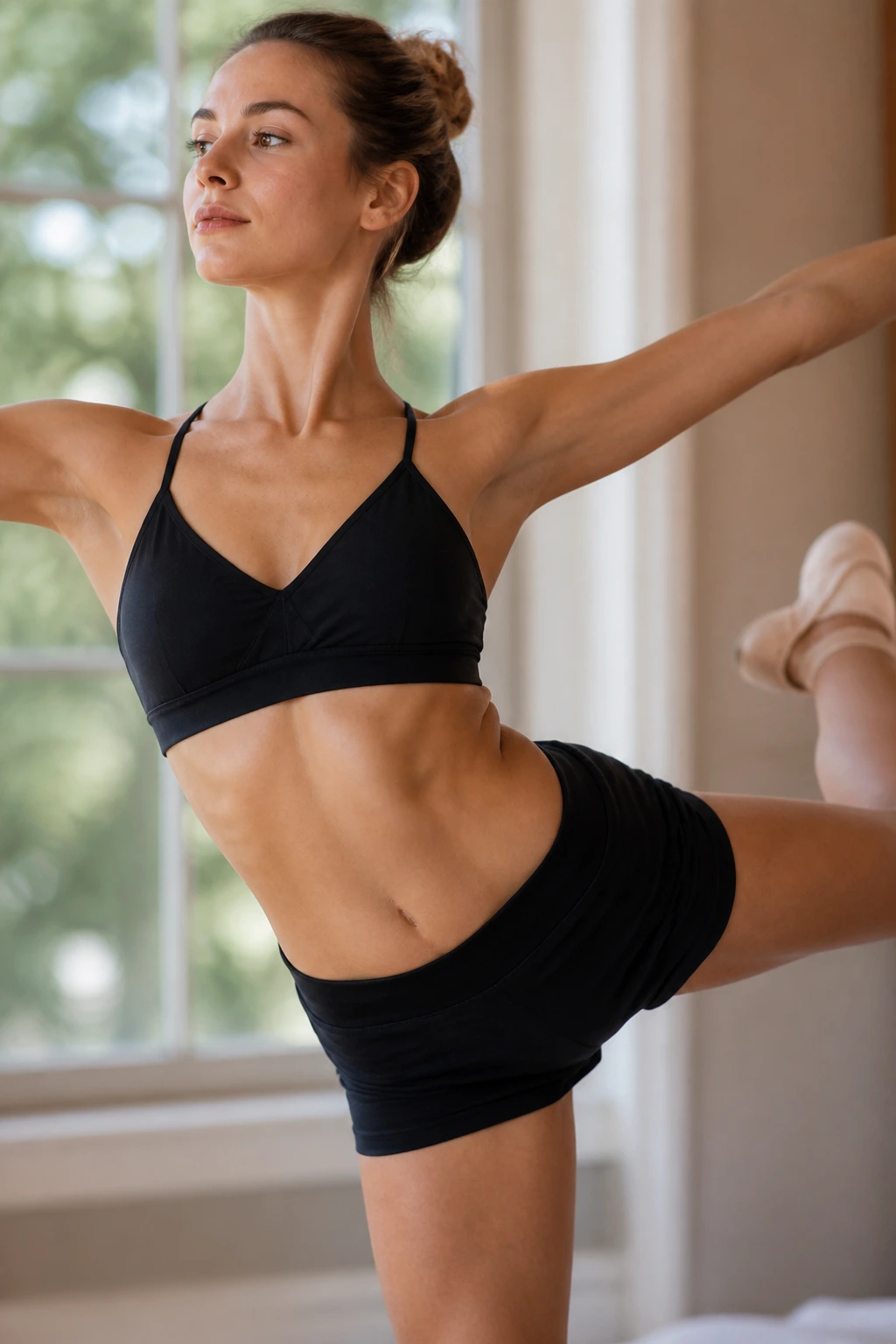
An attitude is similar to an arabesque, but the leg is bent at the knee. The angle of the knee should be soft and rounded, not a sharp, geometric shape. This position is brilliant for hitting the muscles of the side body and the lower back. As you hold the leg in this lifted, bent position, try to pulse it slightly upward, initiating the movement from the deepest part of your hip and glute.
Mind-Body Connection
Because the leg is bent, the weight is closer to your center of gravity, which allows you to focus on the contraction of the oblique muscles. Keep your ribs knit together. Do not let them flare open as you lift the leg. The sensation should be one of constant lengthening—even though the leg is bent, your knee is trying to reach across the room.
7. Passé for Core Stability
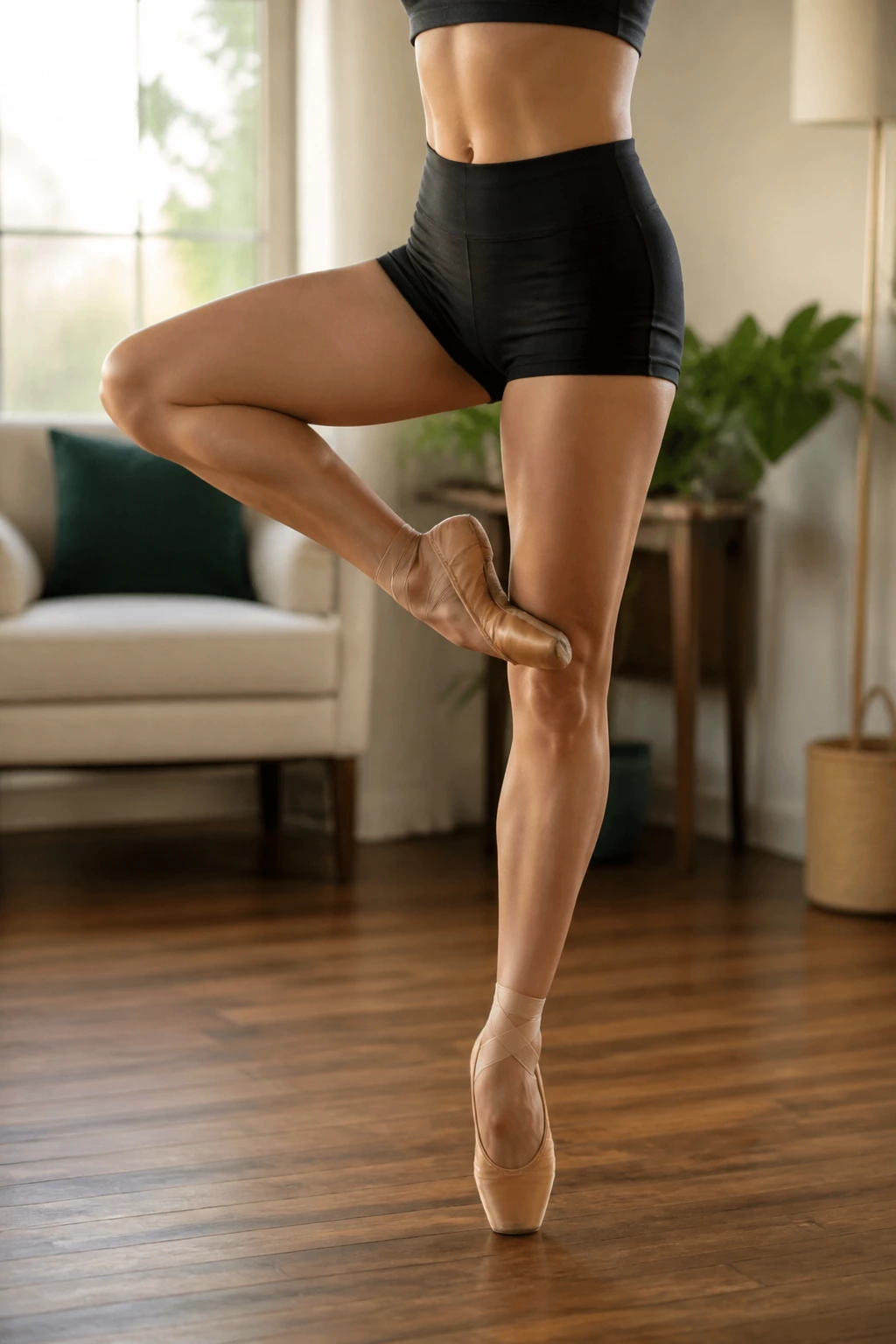
Passé (often called retiré) involves bringing the toe of one foot to rest at the knee of the supporting leg. The standing leg must be rock-solid, and the turned-out knee of the working leg should be pointing directly to the side. This is an exercise in pure balance and hip mobility.
Holding the Triangle
As you balance, your core must work overtime to prevent the hip of the working leg from hiking up toward your shoulder. Keep your pelvis level. This move forces you to engage your pelvic floor and the deep transverse abdominal muscles. If you find yourself shaking, that is a good sign. It means your stabilizer muscles are waking up to keep you upright.
8. Port de Bras for Upper Body Strength
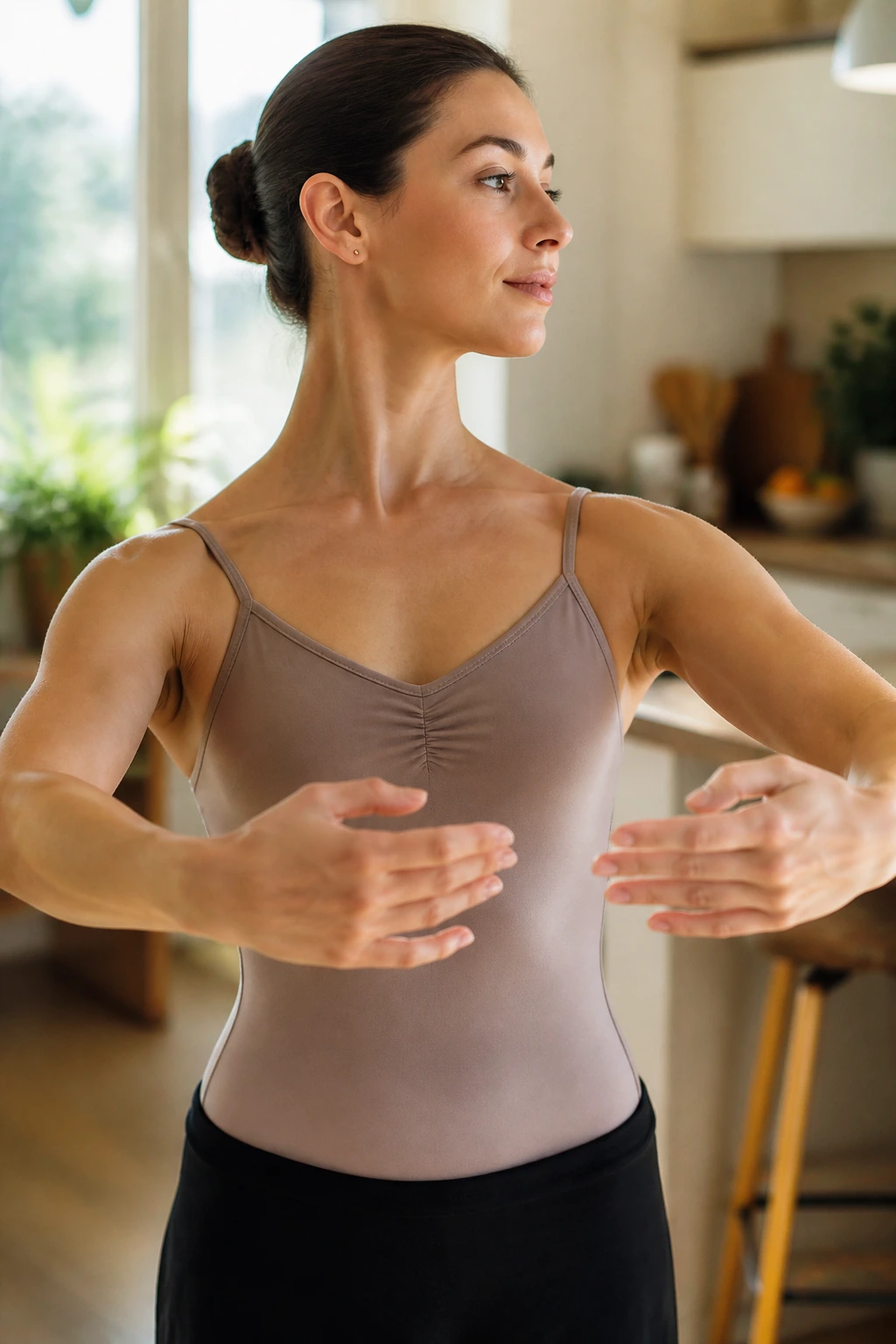
Ballet isn’t just about the legs; the arms (port de bras) provide resistance and counter-balance. Even without weights, holding your arms in a rounded, curved position requires sustained muscular effort. Your shoulders must remain down, away from your ears, and your shoulder blades should be tucked into your back pockets.
The Illusion of Weightlessness
Keep your fingers soft but active, as if you are holding a delicate flower. When you move your arms, imagine they are moving through thick honey. This resistance is what tones the shoulders and lats. You are creating a frame for your body, and maintaining this frame while your legs are working is the secret to the graceful, long-necked look associated with dancers.
9. Grand Battement for Dynamic Power
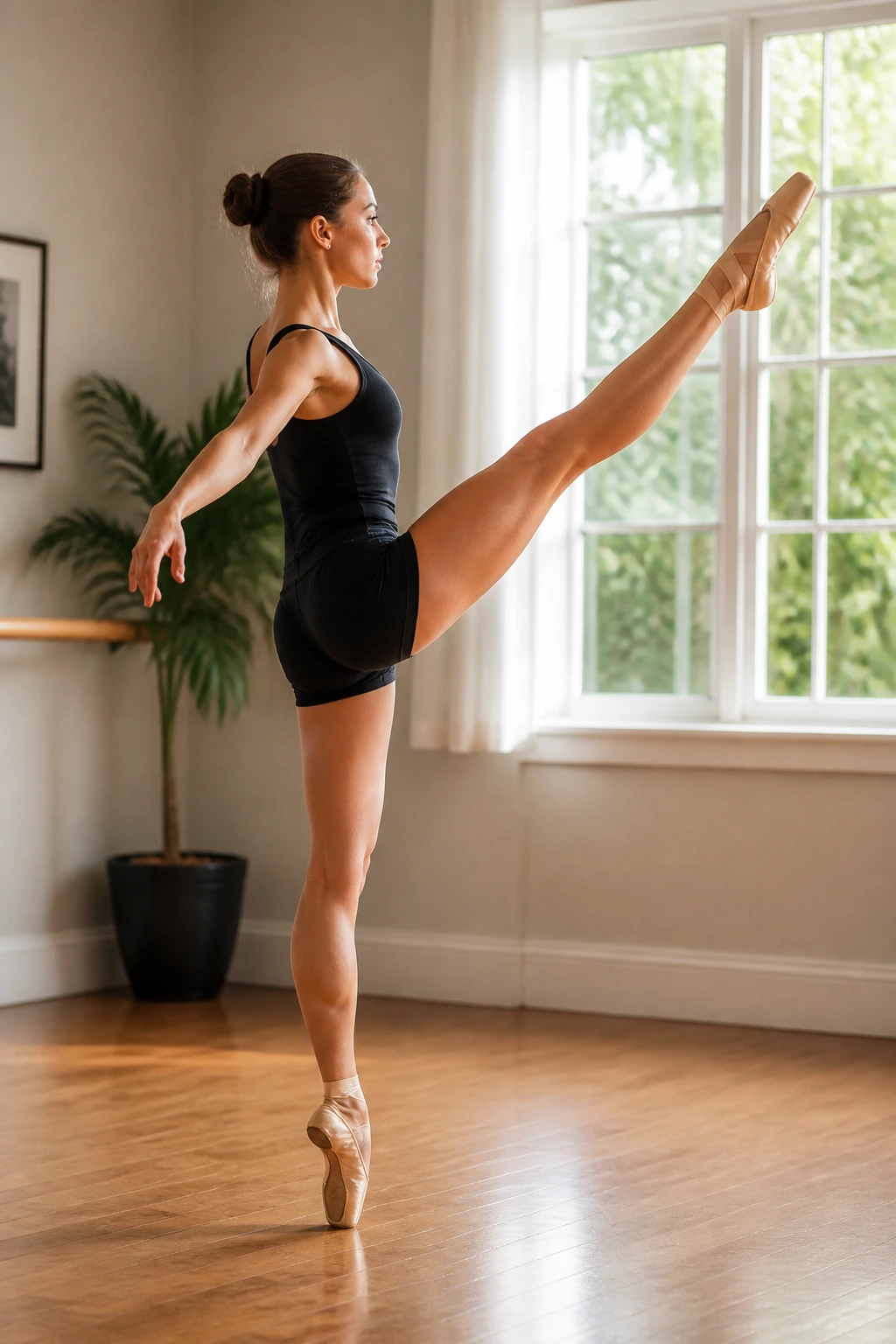
A grand battement is a large, sweeping kick. It uses the same mechanics as the tendue and the glissé, but with significantly more range of motion. The leg brushes the floor, explodes into the air, and returns to the floor with control. This is a ballistic movement, but it must remain controlled throughout the entire arc.
Controlled Momentum
The return to the floor is just as important as the kick itself. Do not let gravity take over. Use your muscles to guide the leg back down, resisting the descent. If you simply let your leg drop, you lose the eccentric strengthening phase of the exercise. Keep your torso completely still; the movement should be isolated entirely to the hip joint.
10. Rond de Jambe for Hip Mobility
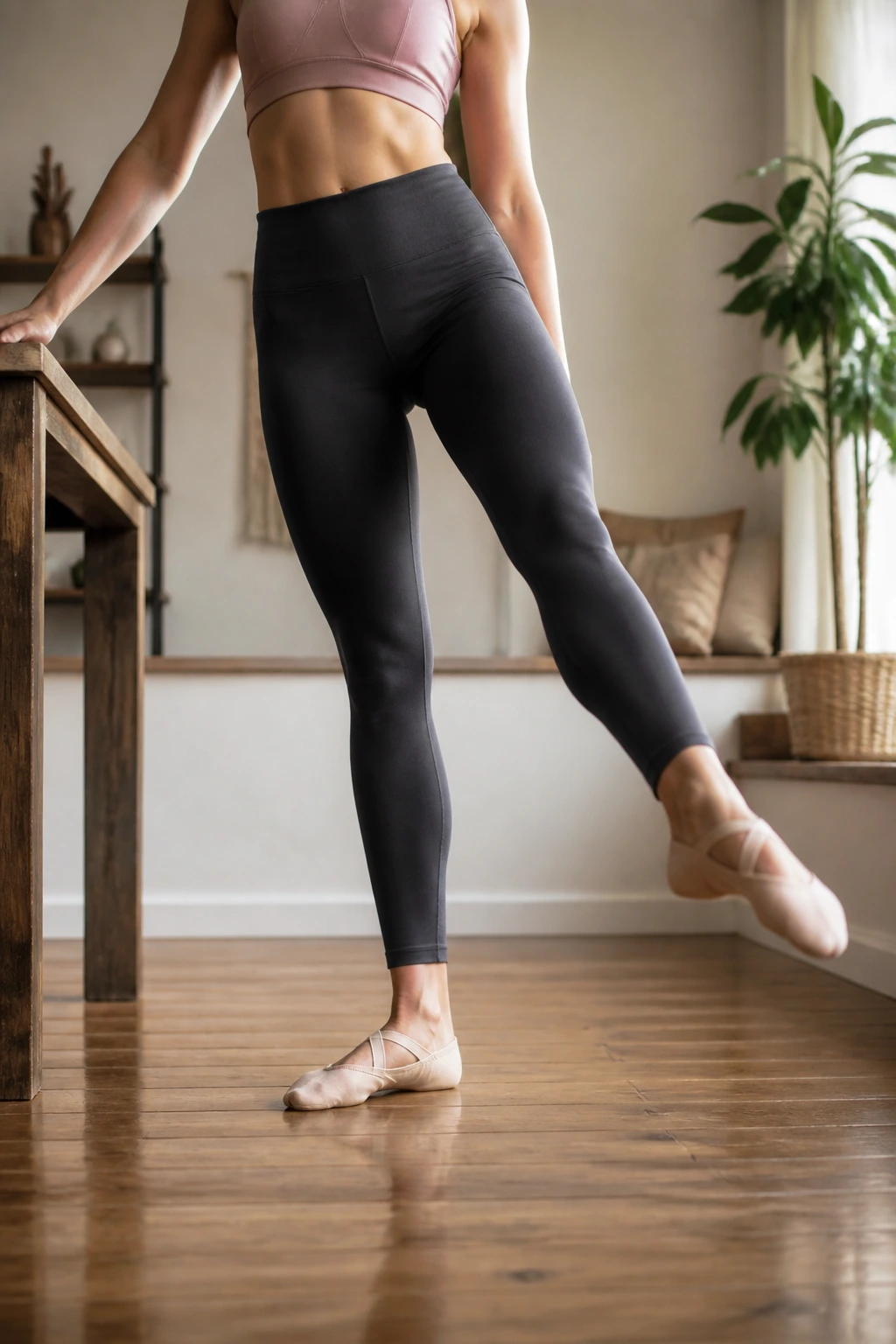
Rond de jambe means “round of the leg.” You are tracing a semi-circle on the floor with your toes, passing through front, side, and back positions. This is a fantastic exercise for increasing the range of motion in the hip joint and strengthening the muscles that rotate the femur.
The Continuous Sweep
The key is to keep the standing leg perfectly still. Most beginners allow their torso to rock back and forth as the working leg moves from front to back. Keep your weight centered over the ball of your standing foot. The circle should be smooth and unbroken, like the hands of a clock moving around the dial.
11. Glute Bridge for Floor Strengthening
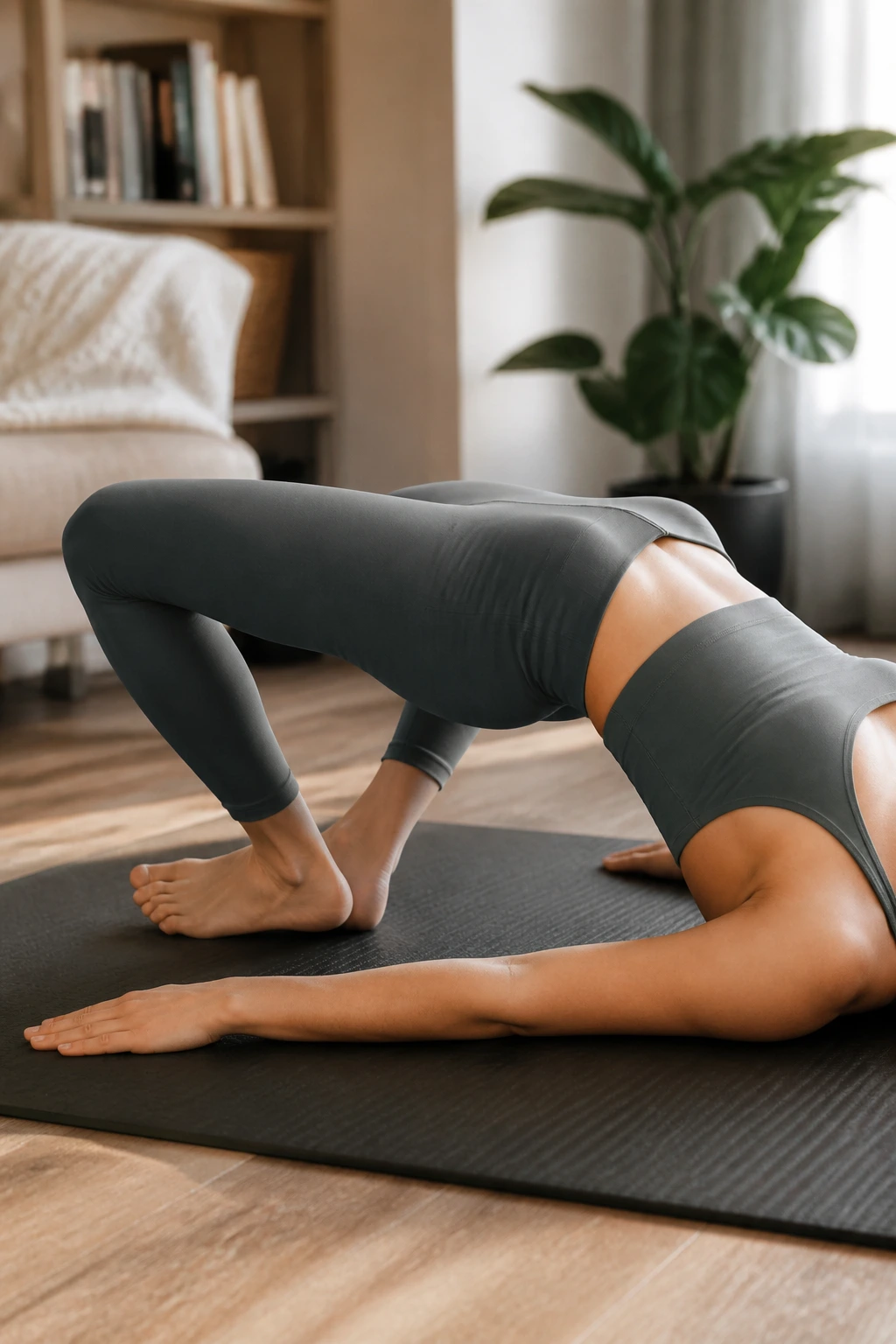
While ballet is usually done standing, floor work is essential for conditioning. A ballet-inspired glute bridge involves lying on your back with your legs turned out (heels together, toes out). As you lift your hips, focus on the squeeze of the glutes rather than the strength of your lower back.
The Turned-Out Lift
Because the legs are turned out, you are recruiting different muscle fibers in the glutes compared to a standard gym bridge. Keep your ribs down and your pelvis tucked. If you feel this in your lower back, lower your hips slightly and re-engage your core. The burn should be concentrated entirely in the seat and the back of the thighs.
12. Plank with a Ballet Tweak
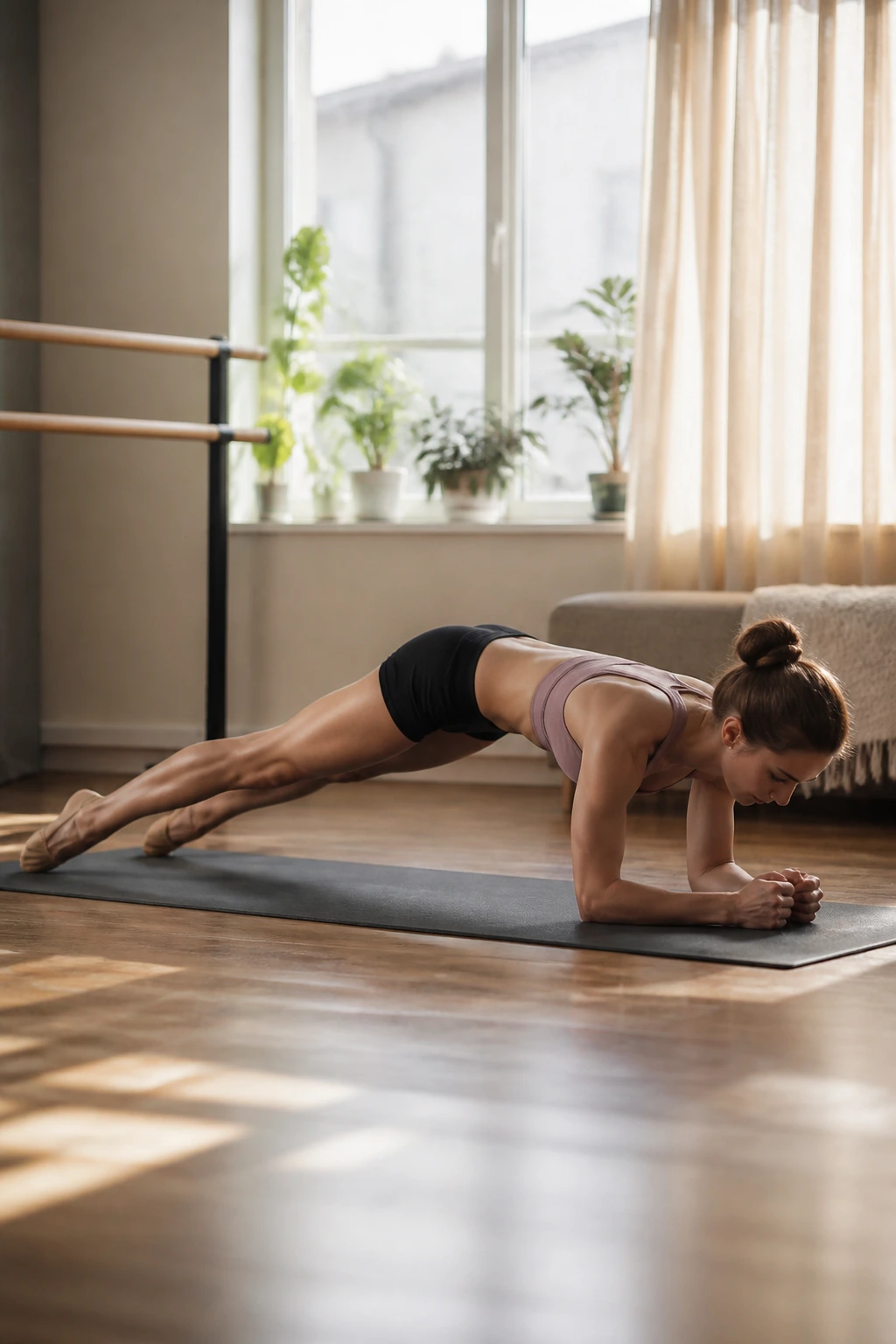
Standard planks are effective, but adding a ballet element makes them harder. Start in a forearm plank, but instead of keeping your feet hip-width apart, try to squeeze your inner thighs together, turning your legs out slightly if your flexibility allows. This small change shifts the tension into the deep lower abdominals.
The Pelvic Tuck
Keep your tailbone tucked. If your lower back sags, you are losing the core engagement. Imagine that your navel is being pulled toward your spine, and you are trying to lift your hips just an inch higher than your shoulders. Hold for 30 to 60 seconds, maintaining steady, calm breathing throughout the hold.
13. Piqué for Coordination
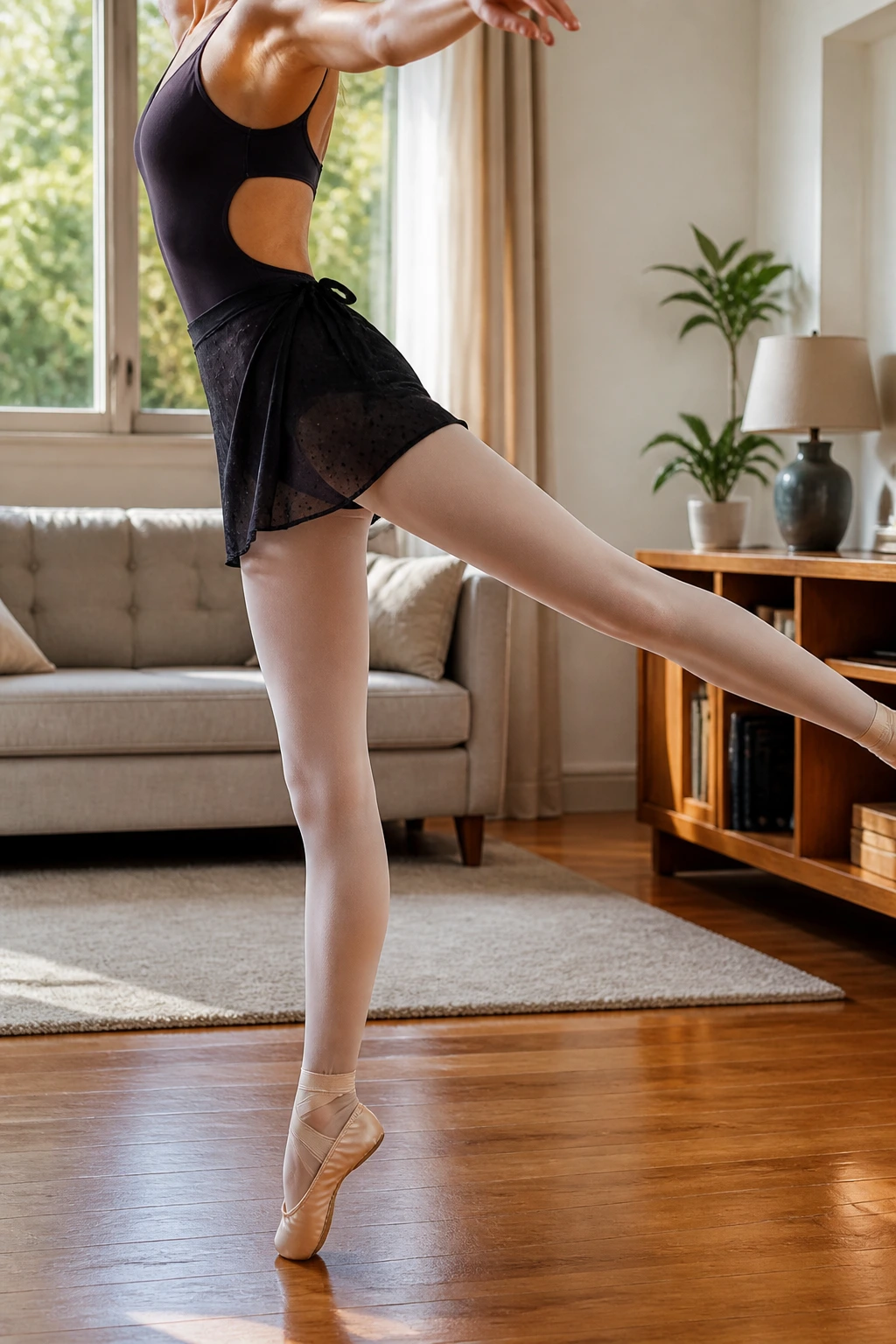
Piqué means “pricked.” It is a step where you transfer weight onto a straight leg, often lifting the other leg behind you. Practicing this at home helps with weight transfer and coordination. It is a quick, sharp movement that forces you to engage your muscles instantly to catch your balance.
Finding the Center
The movement requires you to commit your weight fully to the supporting leg the moment you step. If you hesitate or stay between your two feet, you will lose your balance. It is a confidence exercise as much as a physical one. Start slowly, stepping and lifting, then gradually increase the speed as your stability improves.
14. Sauté for Cardiovascular Health
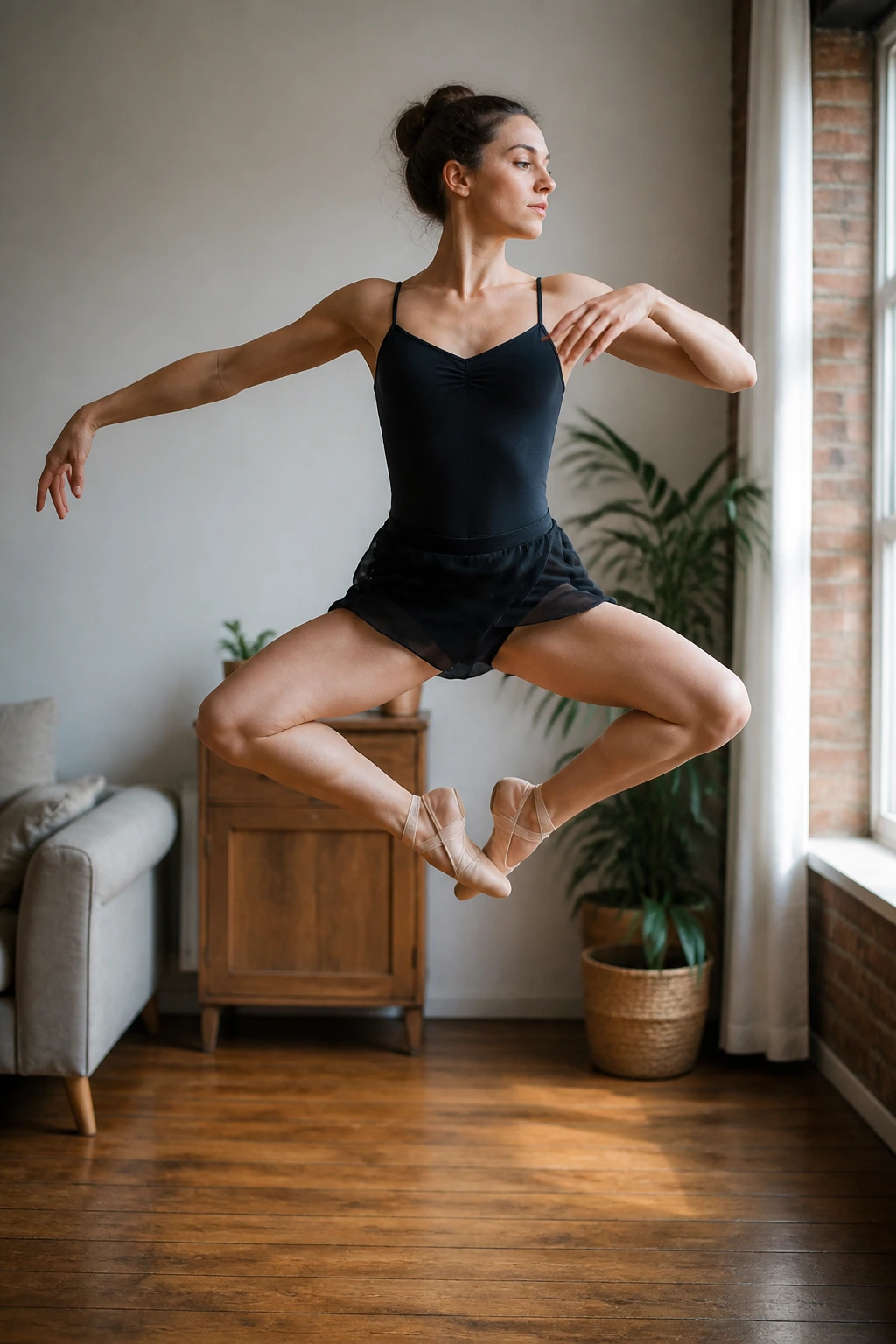
Ballet fitness is largely low-impact, but the sauté (jump) introduces a cardiovascular element. Stand in a plie, jump vertically, and land softly in the same plie. The landing is the most important part. You must roll through the ball of the foot, to the arch, to the heel. Never land flat-footed.
The Sound of Silence
A quiet landing indicates you are using your muscles to absorb the shock, not your joints. If your landing makes a loud thud, you are jumping too high or not engaging your legs on the way down. Keep your core tight during the jump to protect your lower back and maintain a long, elegant posture in the air.
15. Glissade for Lateral Movement
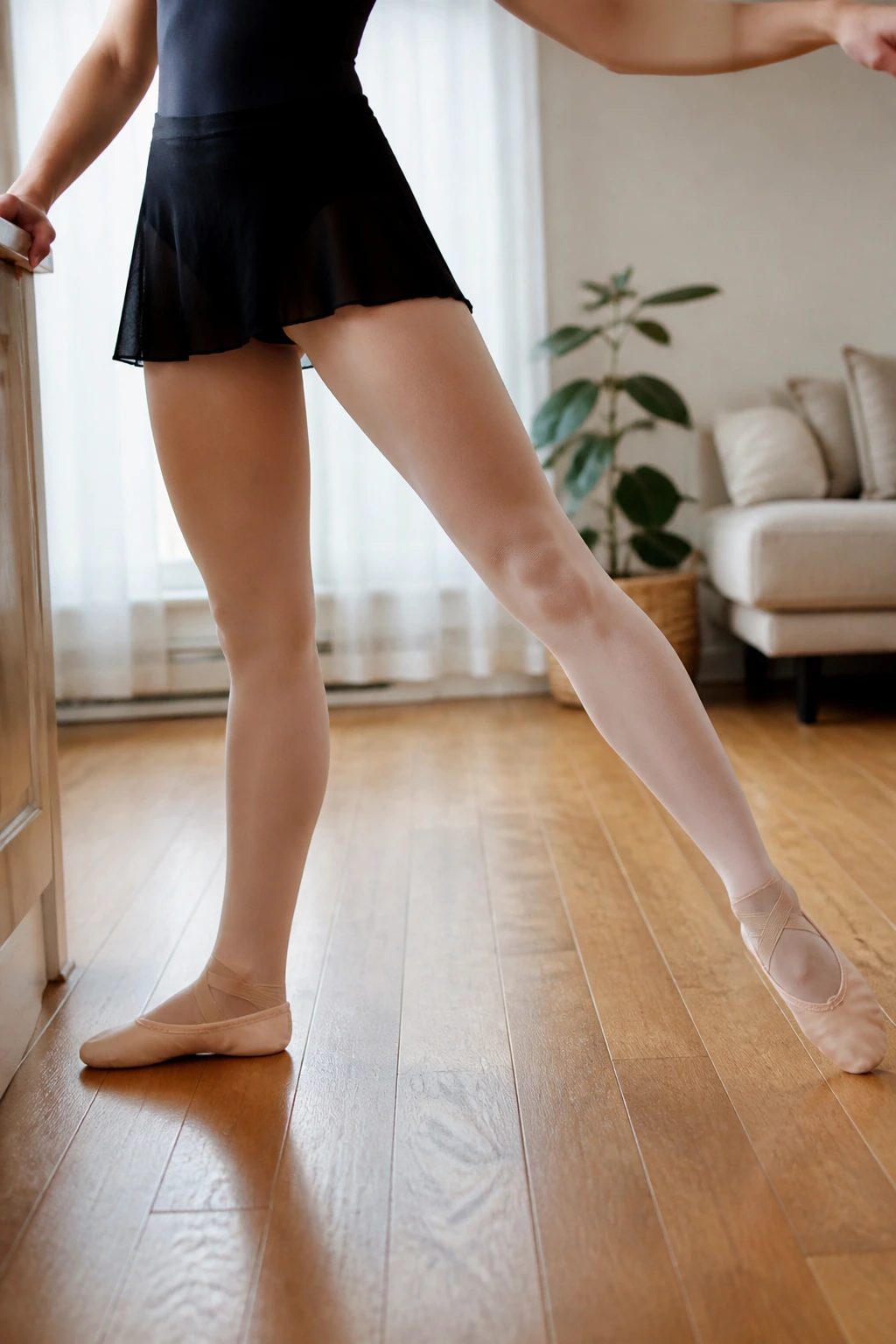
Glissade is a traveling step—a smooth glide across the floor. It involves a slight brush of the foot, a transfer of weight, and a closing of the legs. At home, you can practice this in a small space, focusing on the weight transfer and the fluidity of the movement.
Smooth Transitions
The goal is to move as if you are weightless. Do not stomp or lunge. Think of the movement as continuous, like a piece of silk sliding over a surface. As you move laterally, keep your hips level. This challenges your stabilizing muscles in the side glutes, as they have to catch your weight with every step.
16. Developpé for Slow, Sustained Power
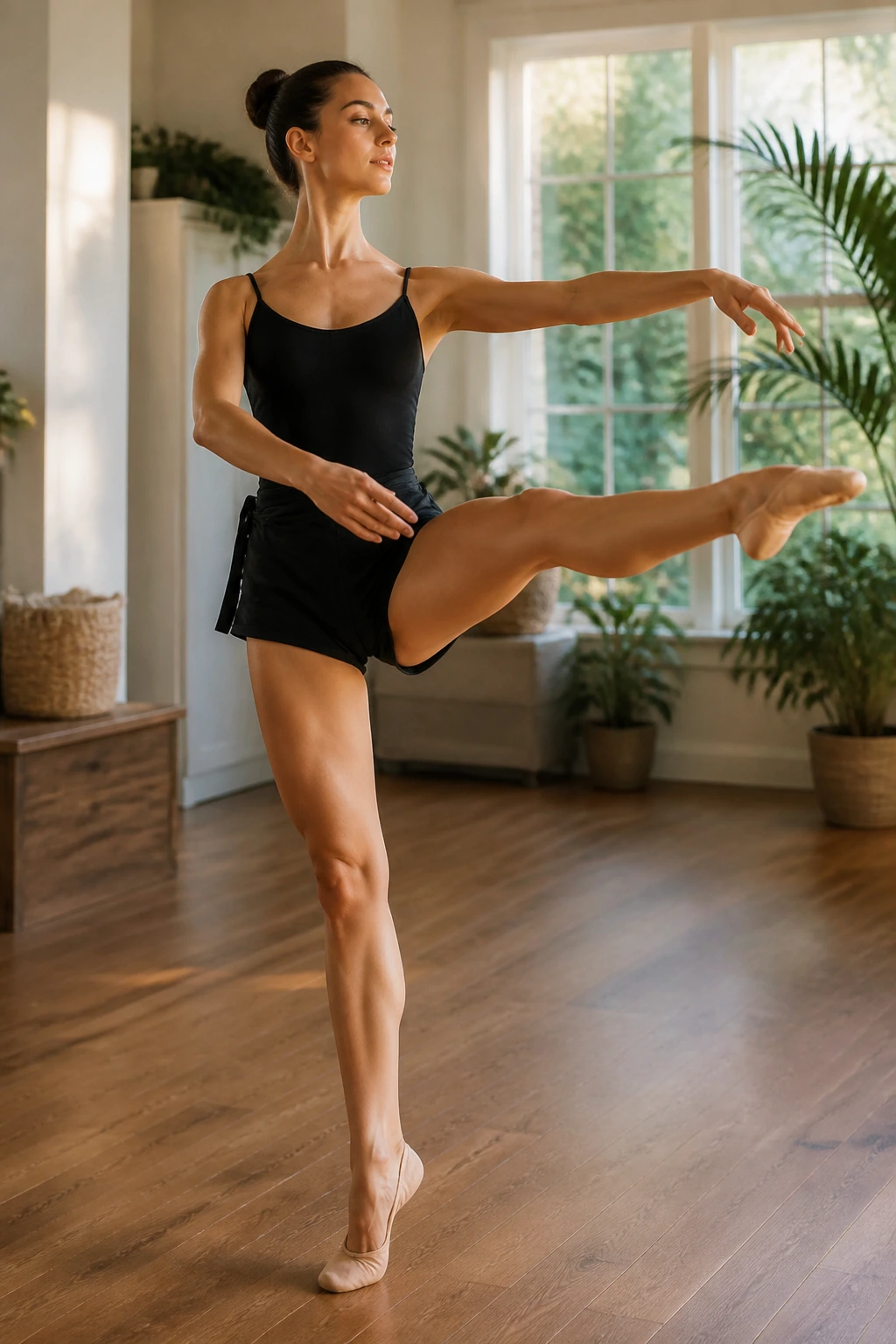
A developpé is the ultimate expression of control. You draw your working foot up the supporting leg to the knee, and then slowly extend it out into the air. This move takes strength, flexibility, and immense concentration. There is no momentum involved; every inch of the extension is muscle-driven.
The Unfolding Line
As you extend the leg, maintain the height of your knee. Do not let it drop as you straighten the leg. The sensation should be one of “growing” your leg longer. Keep your standing leg pressed into the floor, rooted and stable. This is a peak movement—if you can do this with control, you are using every muscle in your leg and core simultaneously.
17. Echappé for Rhythm
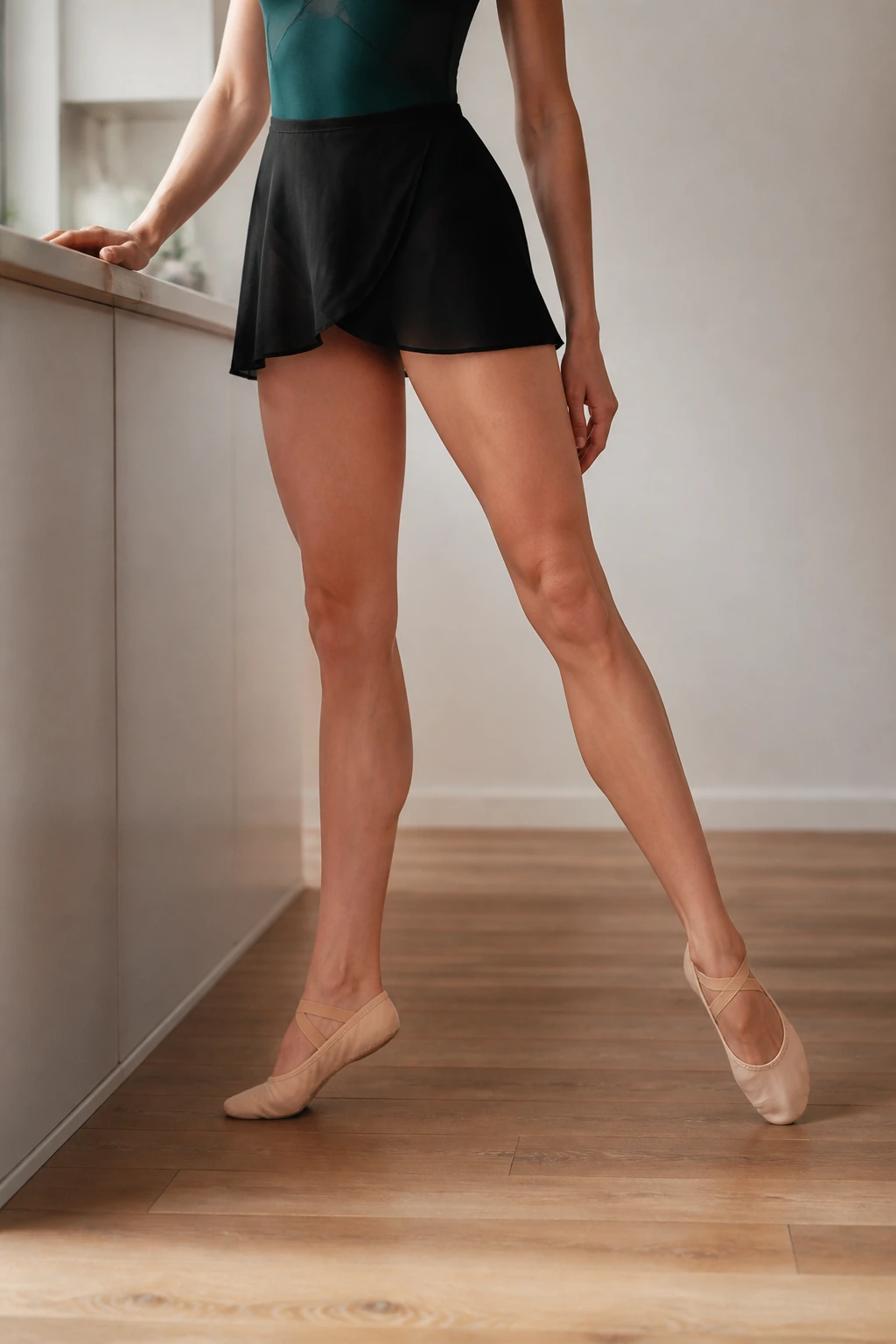
Echappé means “to escape.” It is a move where you jump (or step) from a closed position to an open position, and then back. This exercise is excellent for training your body to move rhythmically and precisely.
Precise Positions
Whether you choose to jump or step, your positions must be exact. In the closed position, your legs are tight. In the open position, your feet are placed firmly and your turnout is maintained. Practice this slowly at first to ensure your turnout is consistent in both positions. It is easy to let the turnout slip when moving back and forth, but consistency is key to muscle development.
18. Sous-sus for Alignment
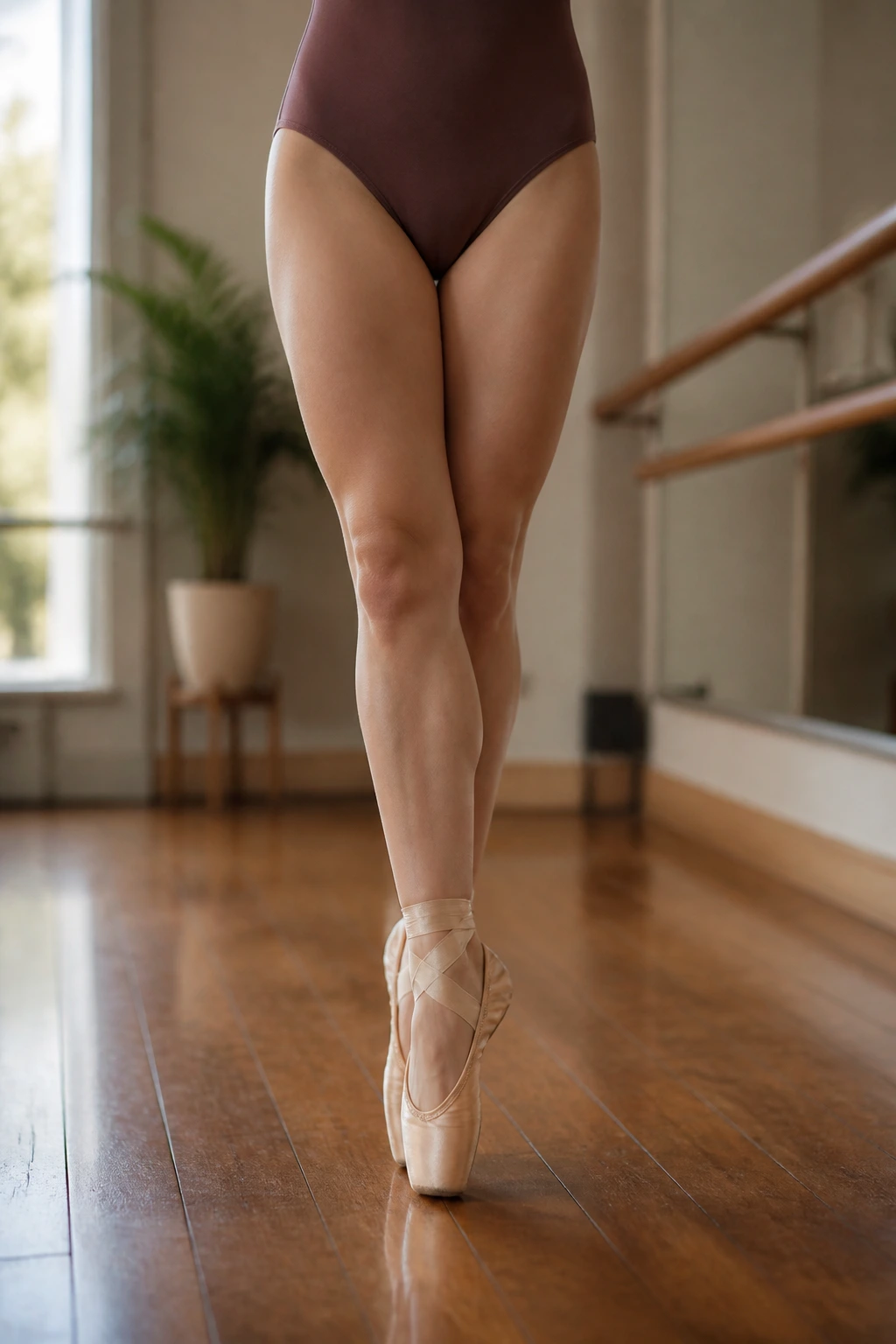
Sous-sus is a tight fifth position relevé. You cross your feet tightly, one in front of the other, rise onto the balls of your feet, and squeeze your legs together so they look like one single leg. This is the ultimate test of your alignment.
Creating the Vacuum
Imagine that you are trying to squeeze any air out from between your legs. When you rise, you are not just balancing; you are pulling your body upward, away from the floor. This activates the entire line of the leg. Hold this for as long as you can, keeping your breath steady. It is a simple position, but one of the most effective for sculpting the legs.
19. Cambré for Lateral Flexibility
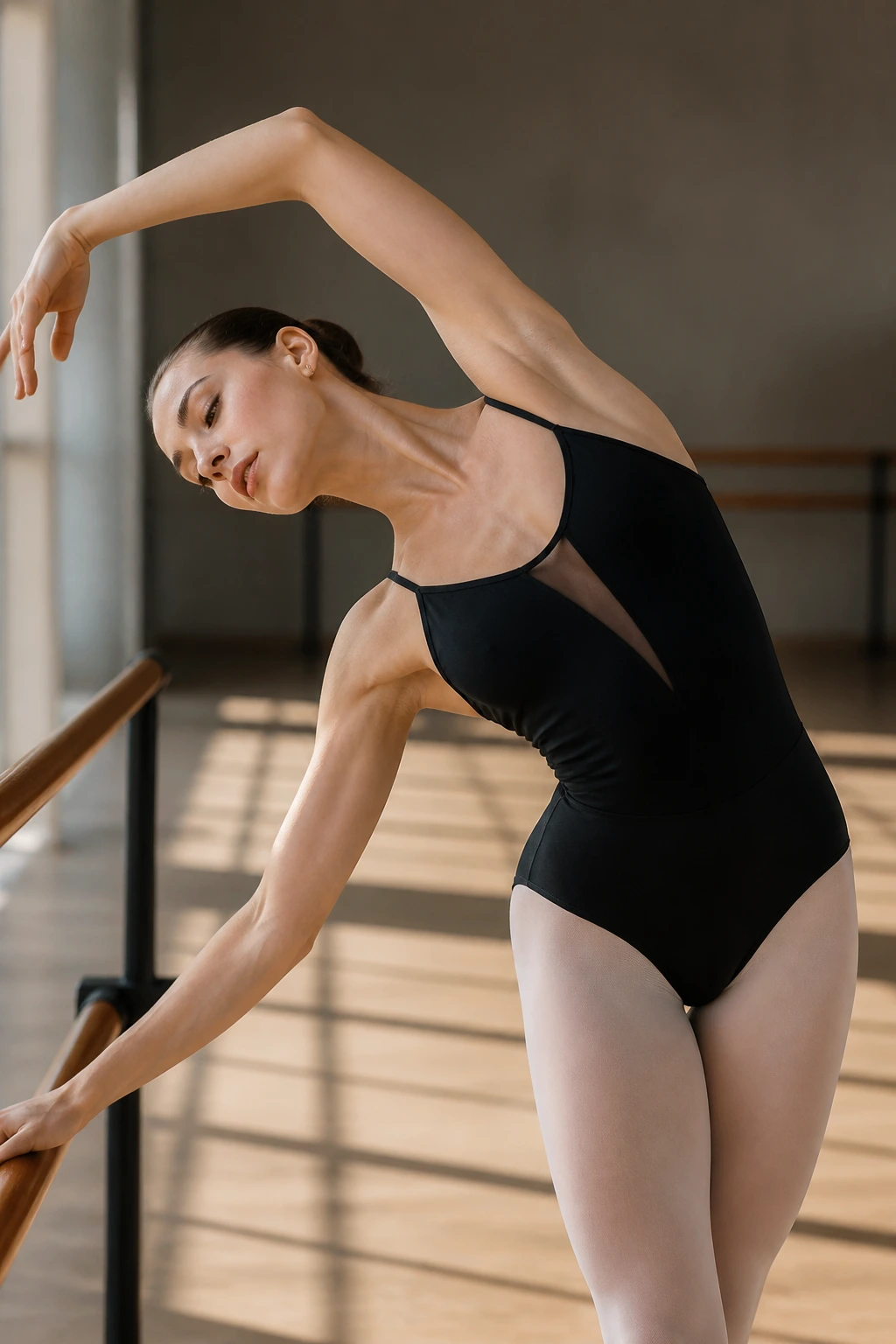
The cambré is a bend of the torso. You can do this at the barre or standing in center. Bend to the side, maintaining the length of your spine. Do not collapse into your side; instead, imagine you are bending over a large beach ball.
The Spiral Stretch
This move opens up the rib cage and strengthens the muscles between the ribs (intercostals) and the obliques. It provides a necessary counter-movement to all the intense muscular contraction of the leg work. Move with fluidity, and ensure you are bending from the waist, not just dropping your shoulder.
20. The Cool Down and Release
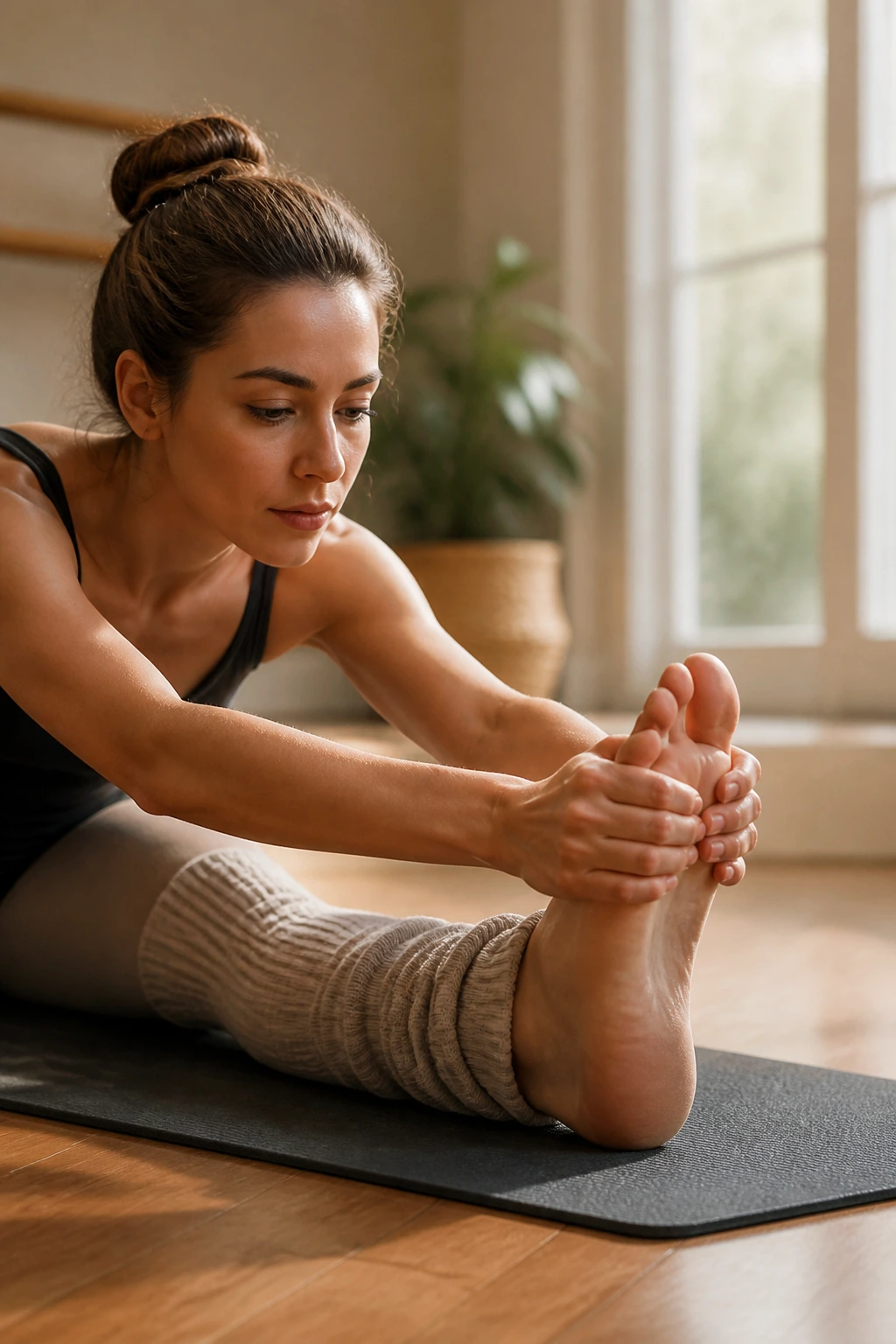
Never skip the end of your session. Ballet fitness involves a lot of constant muscular tension. A proper cool down allows your muscles to reset and regain their length. Perform gentle stretches for your calves, hamstrings, and hip flexors.
The Importance of Lengthening
Do not bounce in your stretches. Hold them steady for at least 30 to 60 seconds. Breathe deeply into the areas that feel tight. This is your reward for the hard work you just did. It is the phase where you transition from “work mode” back to “recovery mode,” ensuring that you wake up the next day feeling strong rather than just stiff.
Final Thoughts
Consistency is the quiet engine of ballet-inspired fitness. You will not see dramatic changes after a single thirty-minute session, but if you return to these movements repeatedly, your body will begin to change. You will notice a shift in how you hold yourself while standing in line at the grocery store or sitting at your desk. You will find that the “shake” you feel during a plié translates into a sense of grounded, effortless stability in your daily life.
Treat these movements with respect, and they will give back to you in kind. Avoid the temptation to rush through the reps just to get the workout finished. The value here is not in the calorie count or the number of sets; it is in the time spent under tension and the precision of your form. Take your time, focus on your alignment, and enjoy the process of becoming more connected to your own physical capabilities.
