



Back strength workouts matter because posture does not fall apart all at once. It leaks. A chin creeps forward during email, shoulders round while you drive, and the middle of your back starts complaining after a long day at a desk, a sink, or a steering wheel.
That complaint usually has a few culprits. The mid-back gets lazy. The shoulder blades stop gliding the way they should. The glutes stop helping. The deep core goes from “steady” to “barely there,” and the lower back picks up the slack. No surprise there. Bodies are efficient, not sentimental.
The fix is not endless crunches or a dozen wild back bends. It’s a mix of rows, carries, hinges, wall drills, and slow holds that teach your back, ribs, and shoulder blades to stay organized when you’re tired. Small loads. Clean reps. A little patience. Sharp pain, numbness, or pain that shoots down an arm or leg is not a cue to push harder—that’s a cue to get checked.
Tiny moves matter.
1. Wall Angels for Pain-Free Posture
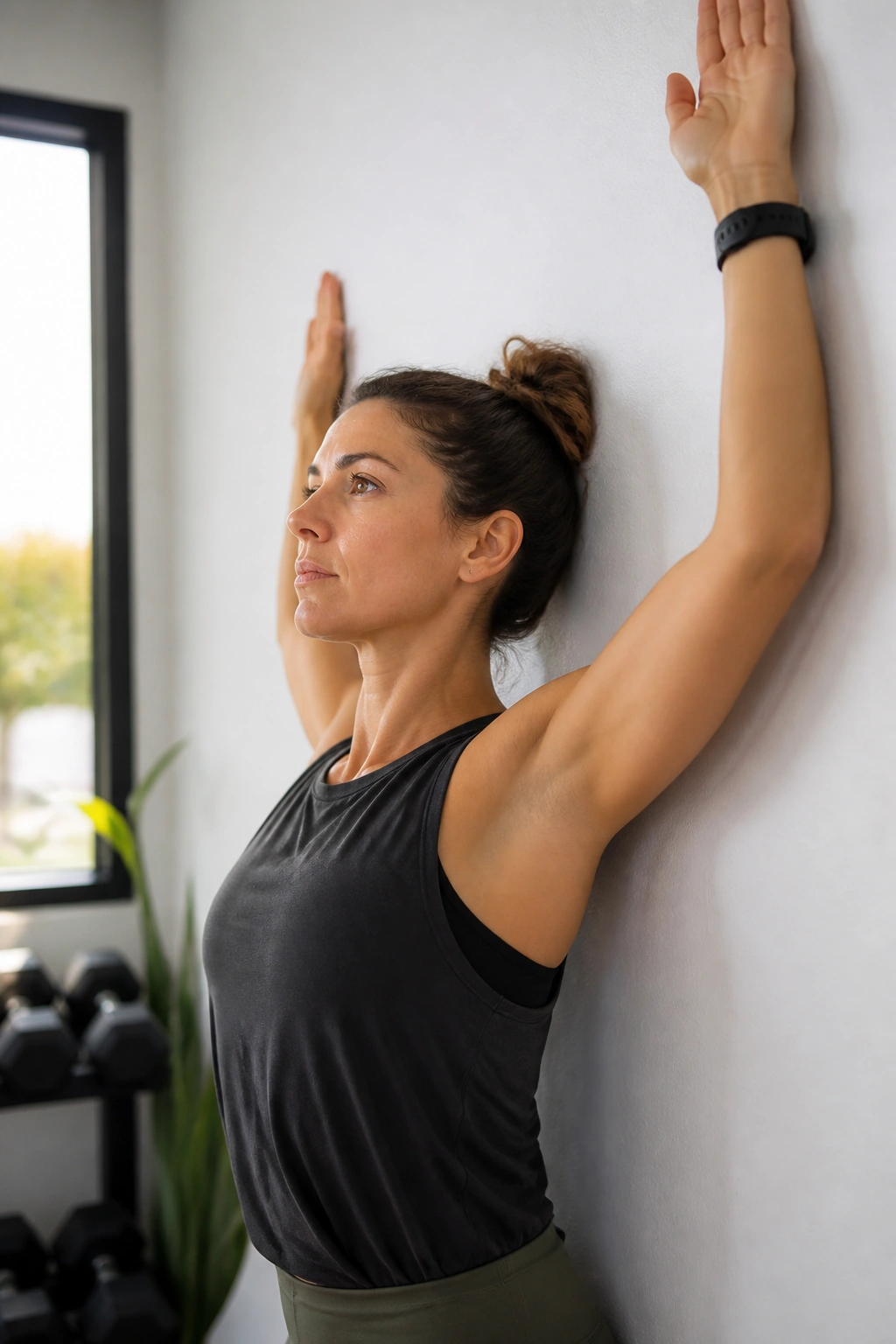
Wall angels look almost too easy, and that is exactly why they work so well. Stand with your heels a few inches from a wall, keep your ribs tucked, and slide your arms from shoulder height to overhead without letting your lower back arch or your chin poke forward. The goal is not to force your hands flat against the wall. The goal is to teach your upper back and shoulder blades to move in a cleaner pattern.
What To Feel
You should feel a light stretch across the chest and a slow burn between the shoulder blades. If your lower back starts doing the job, the range is too big. Cut it down and keep the movement smooth.
- Do 2 to 3 sets of 6 to 10 slow reps.
- Keep your neck long and your chin level.
- Exhale as the arms rise.
- Stop the set when your ribs pop forward.
Best cue: keep the back of your ribs quiet.
Do these as a warm-up before rows or carries, or use them on days when your posture feels glued into one position. They work best when you move like you mean it, not like you’re trying to impress anyone with flexibility.
2. Band Pull-Aparts
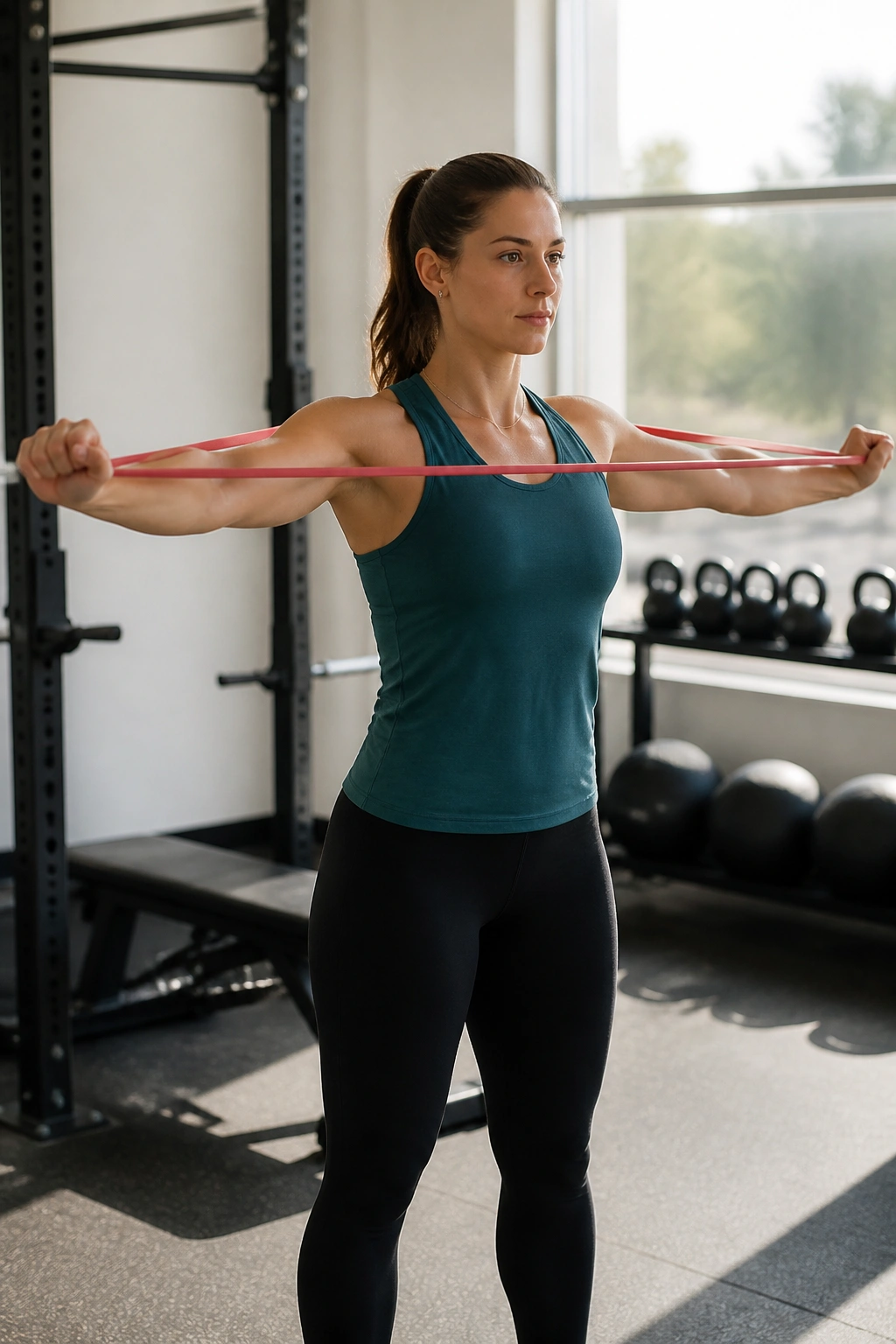
A light resistance band can smoke the upper back faster than people expect. Hold the band at chest height, pull it apart until your arms open wide, then return under control. The movement should come from the shoulder blades, not from a shrug or a big rib flare.
Tiny band. Big payoff. Band pull-aparts wake up the rear delts, rhomboids, and mid traps, which are the muscles that help keep your shoulders from drifting forward all day. If you sit a lot, this one earns a spot in the rotation.
Do 2 to 4 sets of 15 to 20 reps. Use a band that lets you keep your shoulders down; if you have to heave and jerk it apart, it’s too heavy. Try one set with palms up and one with palms down. The palms-up version tends to feel a little kinder on the shoulders.
A lot of people rush these. Don’t. Pause for one second when the band is fully open, then let it return slowly. That pause is where the work lives.
3. Bird Dog Holds
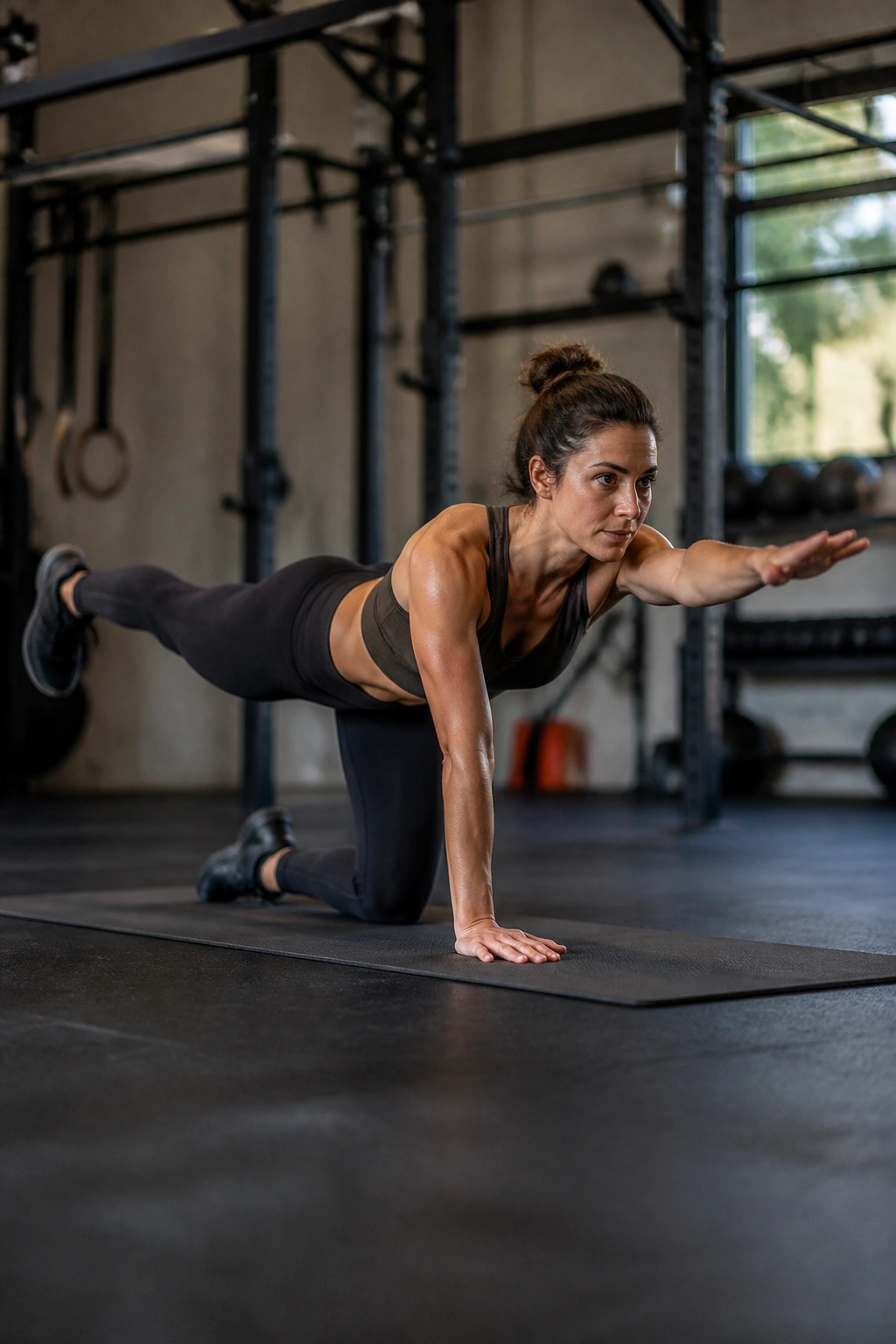
Ever notice how one side of your body wants to twist the second you lift an arm and leg? Bird dogs catch that mistake early. Start on hands and knees, reach one arm forward and the opposite leg back, then hold the position without letting your hips tilt or your lower back sag.
The exercise looks calm. It is not easy. Your trunk has to stay steady while your limbs move, and that skill carries over into walking, standing, lifting groceries, and just plain existing without a bent-over slump.
How To Use It
- Hold each rep for 5 to 8 seconds.
- Do 5 to 8 reps per side.
- Keep your eyes on the floor a few inches ahead of your hands.
- Reach long, not high.
If your back pinches, shorten the reach and slow down. A clean, smaller bird dog beats a dramatic, sloppy one every time. I like this move as a reset on days when the lower back feels tired but you still want to train.
4. Chest-Supported Dumbbell Rows
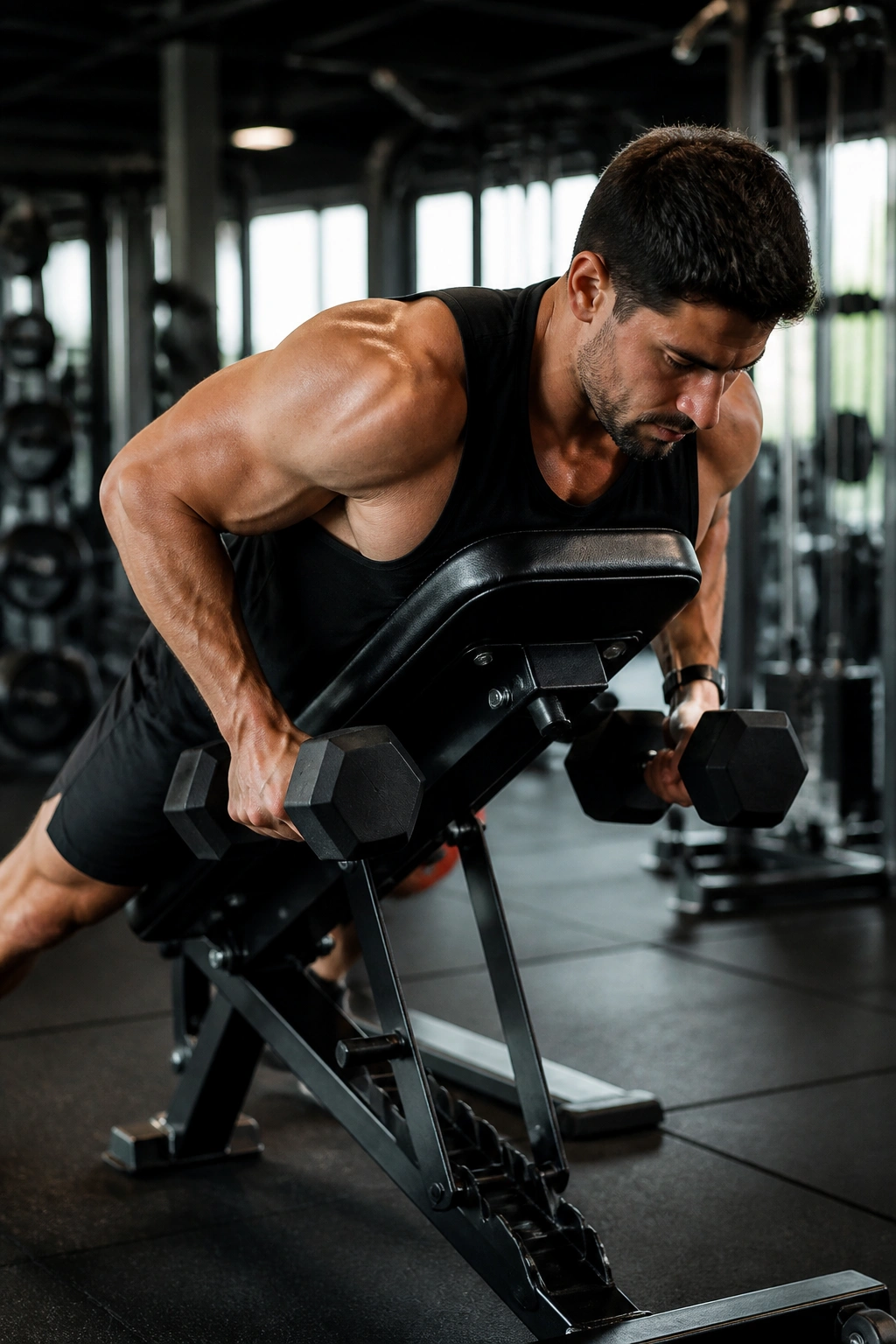
Rows are a backbone exercise, literally and otherwise, but chest support makes them far cleaner. Lie face down on an incline bench set around 30 to 45 degrees, let your chest stay planted, and row the dumbbells toward your hips. No swinging. No leg drive. No ugly heave from the lower back.
That’s the point. Your upper back gets to work without help from momentum, and you can actually feel the shoulder blades retract and then glide forward again under control. It’s a much better choice than a sloppy bent-over row when posture is the goal.
Use 3 sets of 8 to 12 reps. Pick a load that lets you pause for one second at the top without losing your neck position. If you start shrugging, the weight is too heavy.
What Makes It Worth Doing
- Better for strict form than a free-standing row.
- Easier to load than bodyweight pulling.
- Good for beginners and seasoned lifters alike.
- Easy to progress by adding 2.5 to 5 lb at a time.
If I had to choose one row for someone with a desk job and a tight lower back, this would be near the top of the list.
5. Face Pulls with External Rotation
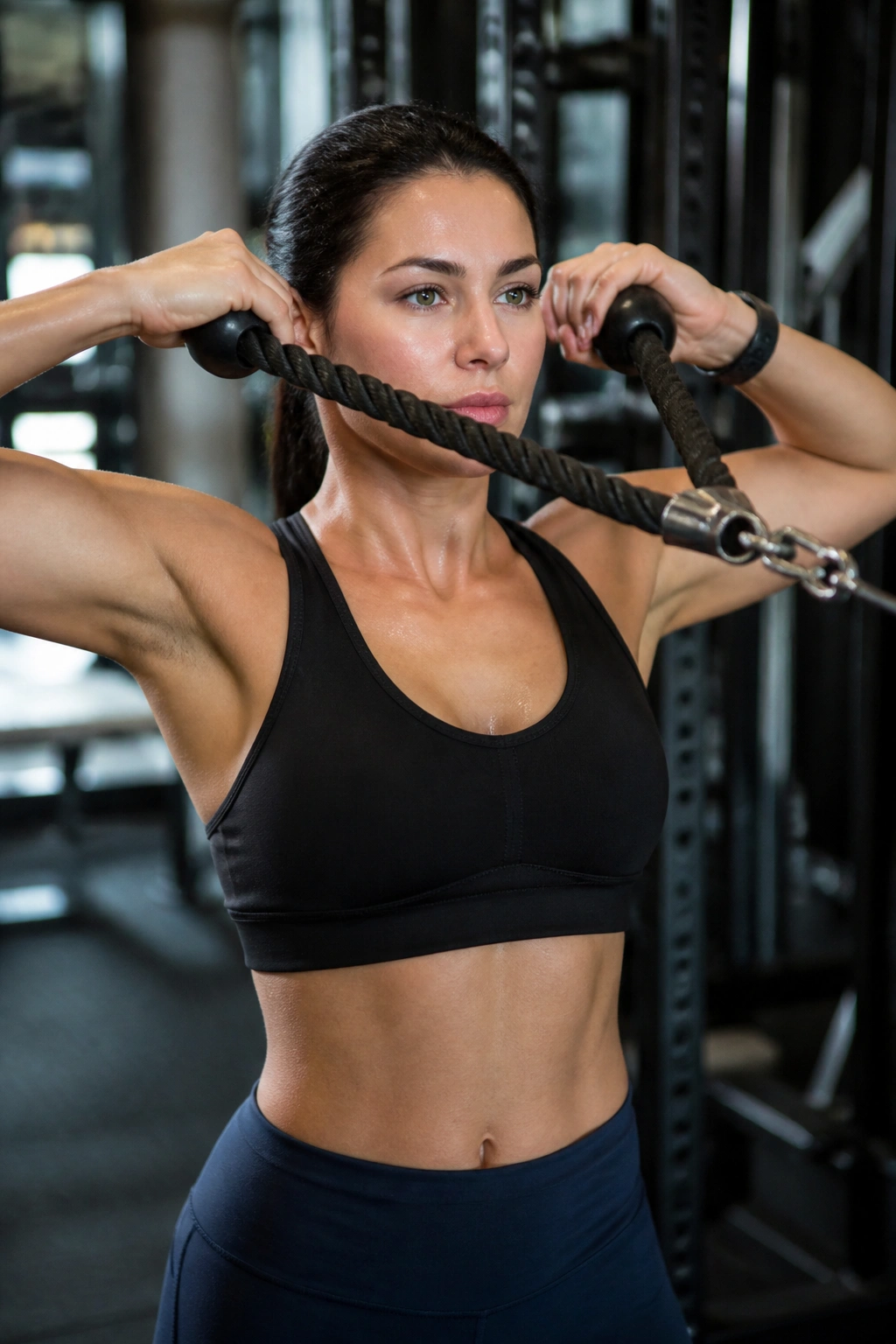
Face pulls are the kind of exercise people mock until their shoulders stop riding up around their ears. Set a rope at upper-chest or face level, pull it toward your eyebrows, then rotate your hands back so your knuckles finish slightly behind your ears. That extra rotation is not flair. It teaches the rear delts and rotator cuff to do their part.
Unlike a basic row, a face pull asks your shoulders to open without dumping all the work into the lats. That matters if your upper body spends most of the day rolled inward. The movement feels small, but the burn can creep in fast.
Do 3 sets of 12 to 15 reps with a weight that lets you stay smooth. If your lower back leans back to finish the rep, the stack is too heavy. Keep your ribs stacked over your pelvis.
This is one of those rare moves that works well as both a warm-up and a finisher. I like it when the last few reps feel like a controlled shrug in reverse.
6. Prone Y-T-W Raises
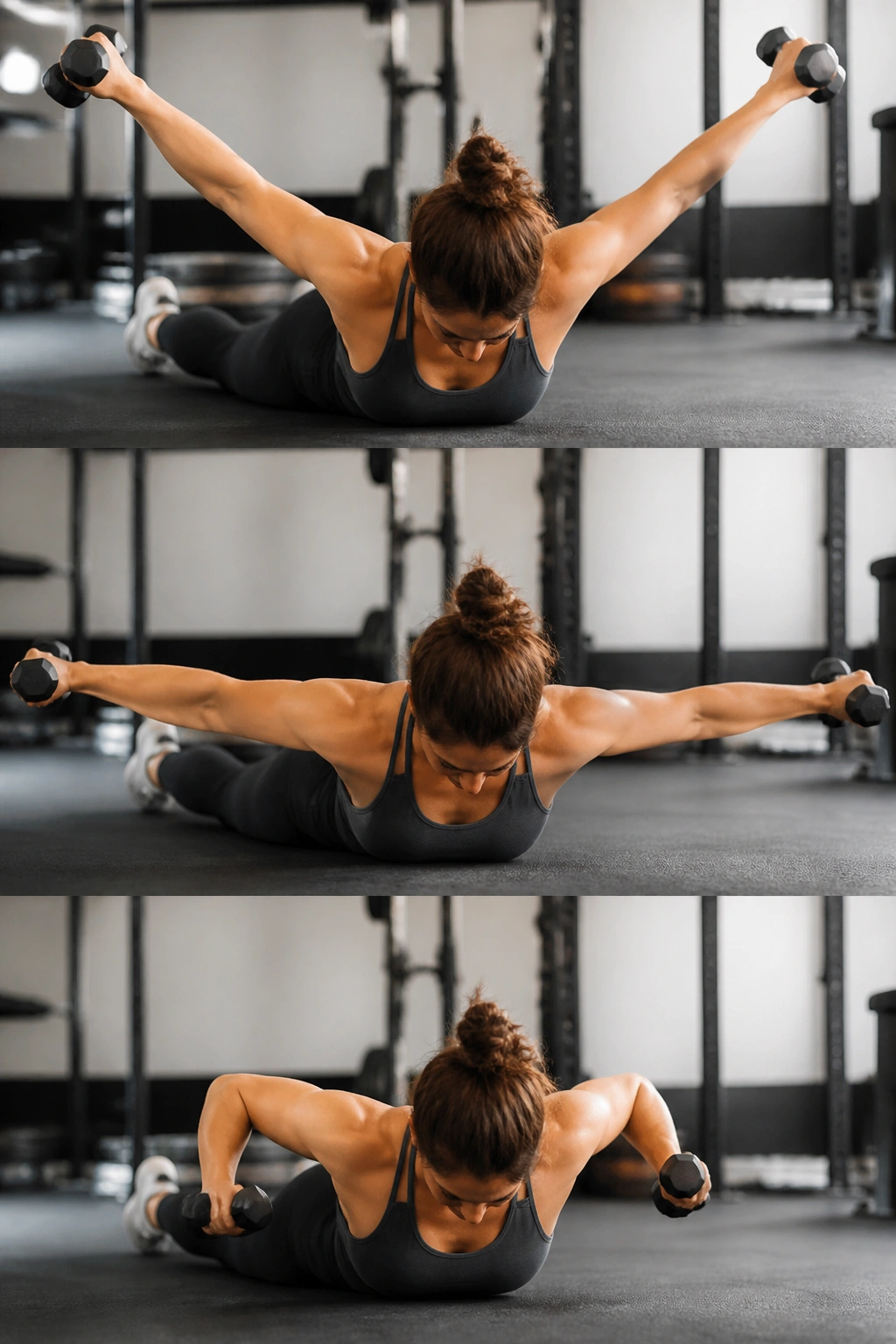
Prone Y-T-W raises are old-school and a little boring. Good. Boring is fine when the point is to teach the lower traps and mid-back to hold shape without drama. Lie face down on a bench or the floor and make your arms into a Y, then a T, then a W, pausing briefly in each shape.
Why It Works
The lower traps do a lot of quiet work that people only notice when they stop doing it. They help the shoulder blades sit where they belong and keep the upper back from collapsing into a rounded heap. The loads here should be tiny—sometimes no weight at all is the right choice.
Use 5 to 8 reps in each position. If you’re holding light plates or dumbbells, think 1 to 5 lb, not more. The movement should feel precise, almost fussy.
A clean rep looks like this: chest stays down, neck stays long, hands lift only a few inches, and you don’t fling the arms around. If the shrug starts, you’ve gone too far. Strip the range down and own the top half.
7. Dead Bug Reaches
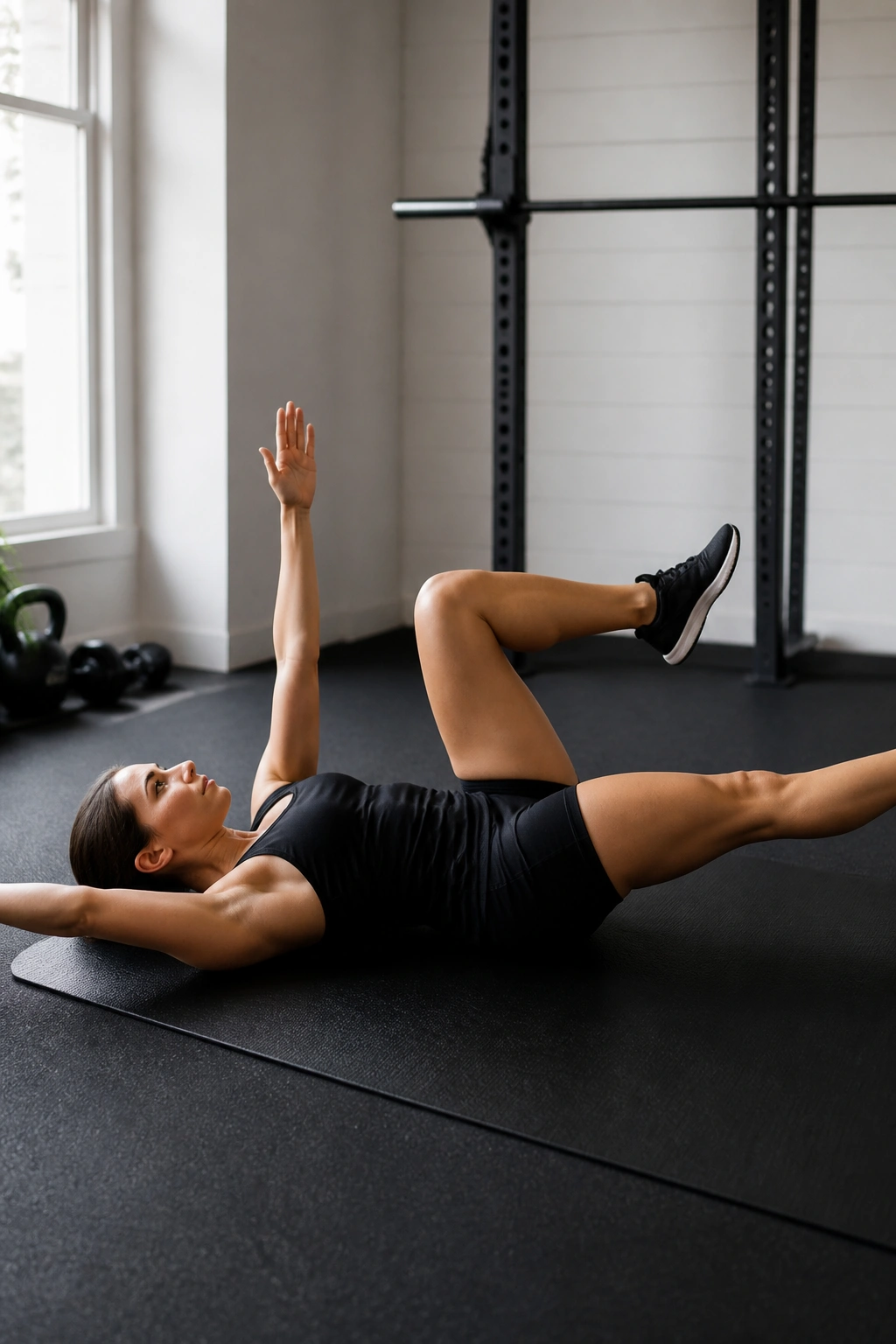
Why does a core drill belong in a back-strength list? Because your spine does not work in a vacuum. Dead bug reaches teach the ribs to stay stacked while the arms and legs move, which takes pressure off the lower back and keeps posture from turning into a ribs-flared mess.
Lie on your back with your knees over your hips. Reach one arm overhead as the opposite leg extends away, then switch sides. The low back should stay heavy against the floor. If it arches, the rep is too hard or too fast.
How To Do It Cleanly
- Perform 3 sets of 6 to 8 reps per side.
- Move on a slow exhale.
- Keep your lower ribs from popping up.
- Shorten the leg reach if needed.
This is one of the best “quiet” exercises in the bunch. No sweating, no theatrics, no ego. Just control. And control tends to show up later as better standing posture and less crankiness in the lumbar spine.
8. Romanian Deadlifts
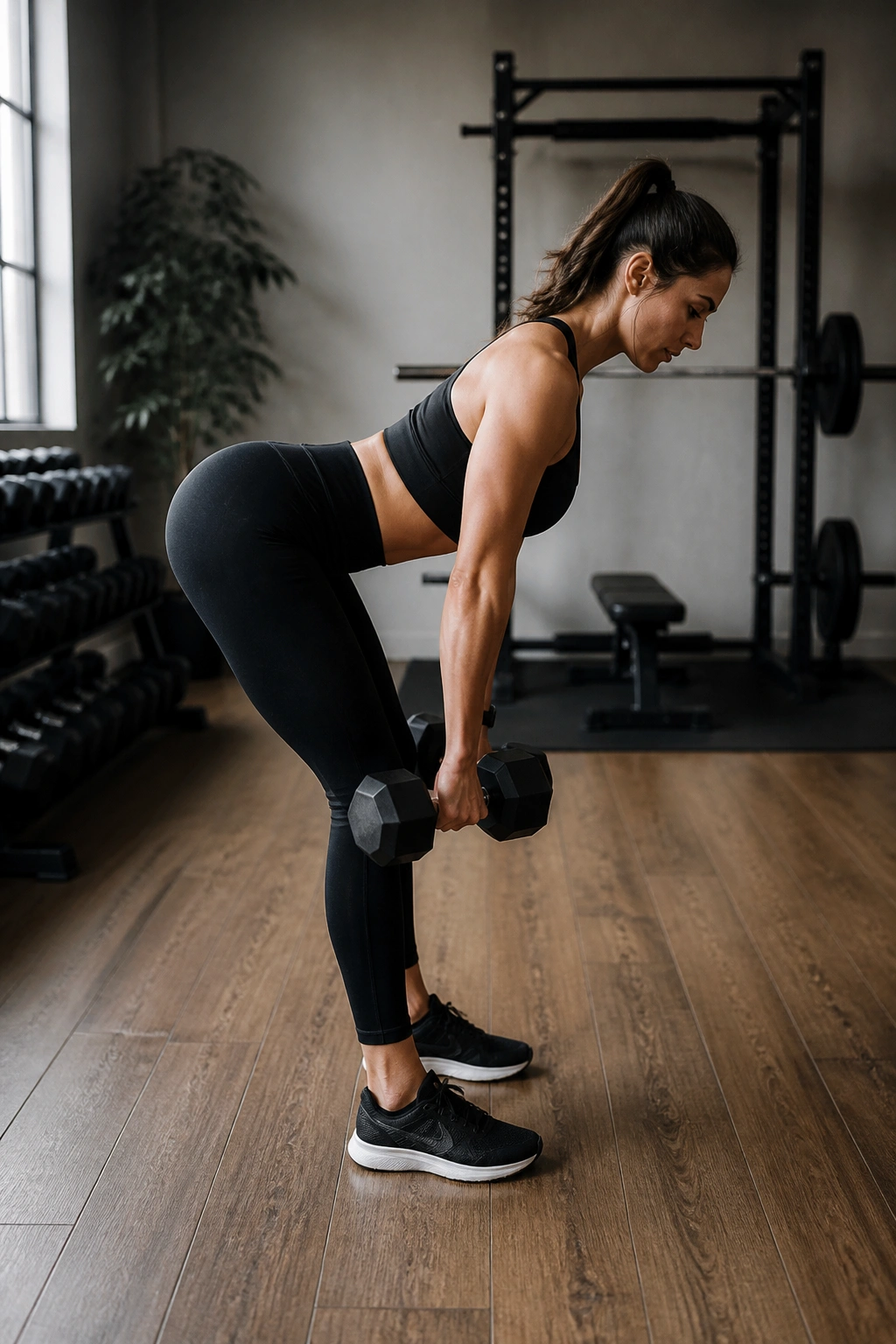
Romanian deadlifts are a hinge exercise, not a squat, and that distinction matters. Start standing with dumbbells, kettlebells, or a barbell, soften the knees, then send your hips back until you feel a strong stretch in the hamstrings. The back stays long. The weights slide close to the legs. The shin angle barely changes.
This move strengthens the glutes, hamstrings, and spinal erectors together, which is a nice way of saying it trains the whole backside to support posture from the ground up. If you only do upper-back work, your lower body keeps freeloading. Not ideal.
Use 3 to 4 sets of 6 to 10 reps. Lower the weight slowly for about 2 to 3 seconds, then stand up by driving through the floor and squeezing the glutes. You should feel tension, not a yank in the low back.
Do not chase range just to reach the floor. Stop when your back wants to round.
9. Glute Bridge Marches
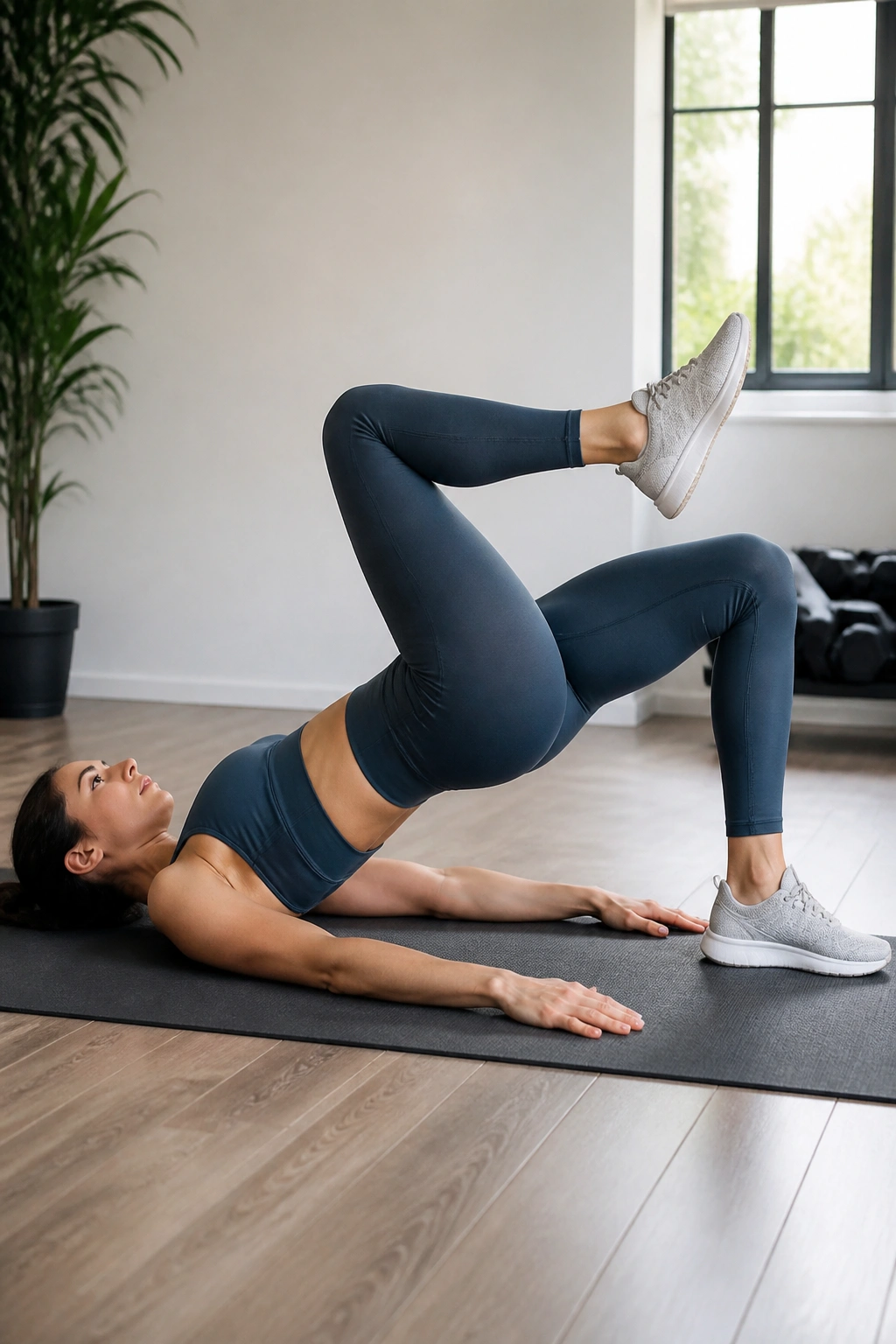
If your pelvis wobbles every time you stand on one leg, posture gets messy fast. Glute bridge marches fix that in a simple, sneaky way. Start in a bridge, hips high, then lift one knee a few inches without letting the pelvis tip or the lower back sag.
It sounds mild. It isn’t. One side of the glute has to stay switched on while the other leg moves, and that pattern shows up everywhere from walking to climbing stairs to staying upright at a sink for ten minutes without shifting around.
What To Watch For
- Keep the ribs down.
- Lift the foot only 1 to 2 inches.
- Hold the top position for 1 to 2 seconds on each march.
- Do 2 to 3 sets of 8 marches per side.
If hamstrings take over, move your feet a little closer to your hips. If the neck tightens, drop the shoulders and breathe out. I like this one because it feels like a bridge and a posture drill at the same time.
10. Suitcase Carries for Pain-Free Posture
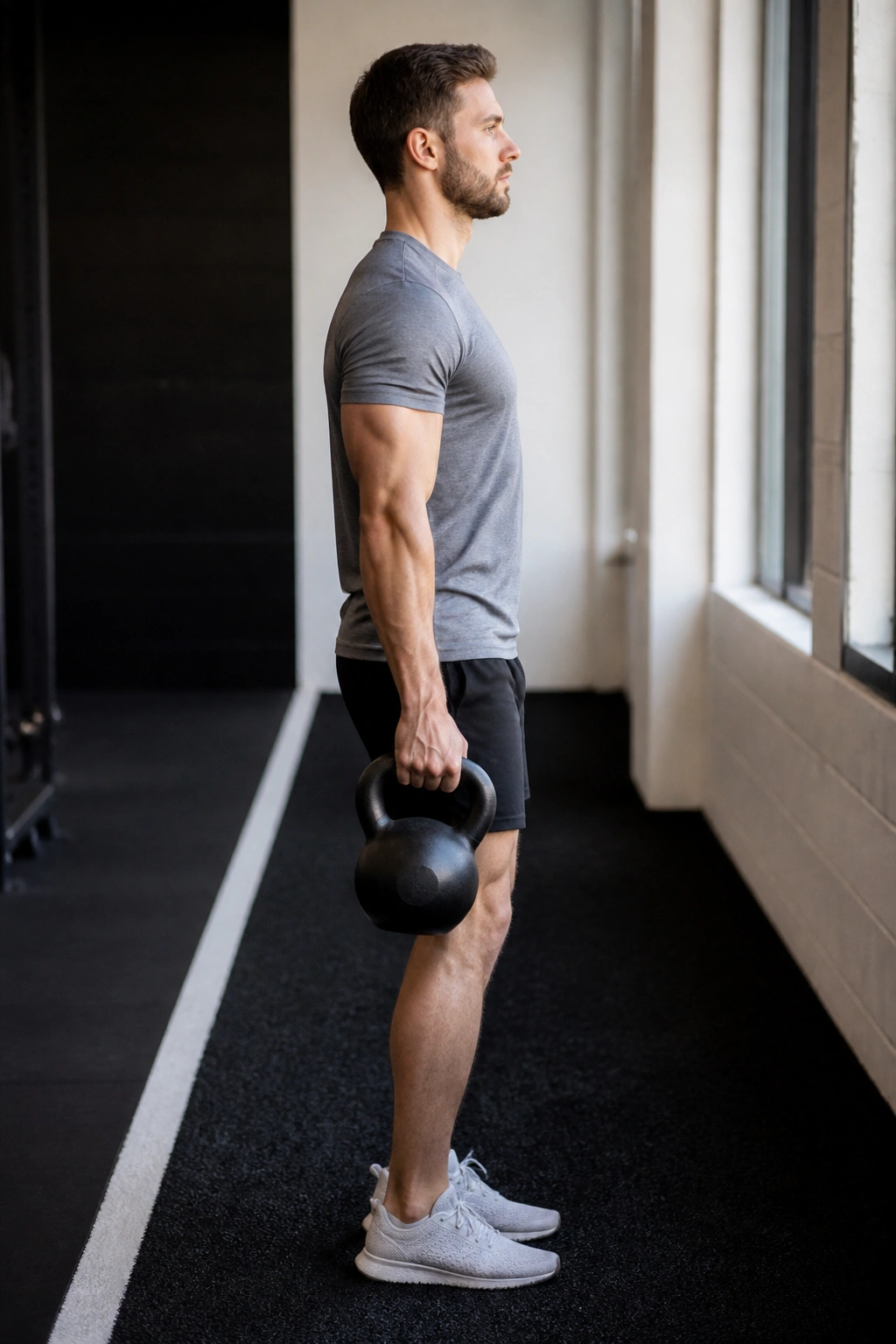
A suitcase carry is brutally simple: pick up one heavy kettlebell or dumbbell and walk without leaning. That’s it. The challenge is staying tall while one side of your body wants to collapse toward the weight. Your obliques, quadratus lumborum, glutes, and upper back all chip in.
One weight. No leaning. That asymmetry is the magic. It teaches your torso to resist side-bending, which is a skill most people never train, even though daily life is full of one-sided bags, backpacks, and awkward carries.
Walk 20 to 40 meters per side for 2 to 4 rounds. Keep your shoulder packed down and your eyes on the horizon. If you’re tilting, the weight is too heavy or the walk is too long.
This is one of my favorite posture tools because it’s honest. You either stand tall or you don’t. There’s nowhere to hide.
11. Seated Cable Rows with a 2-Second Pause
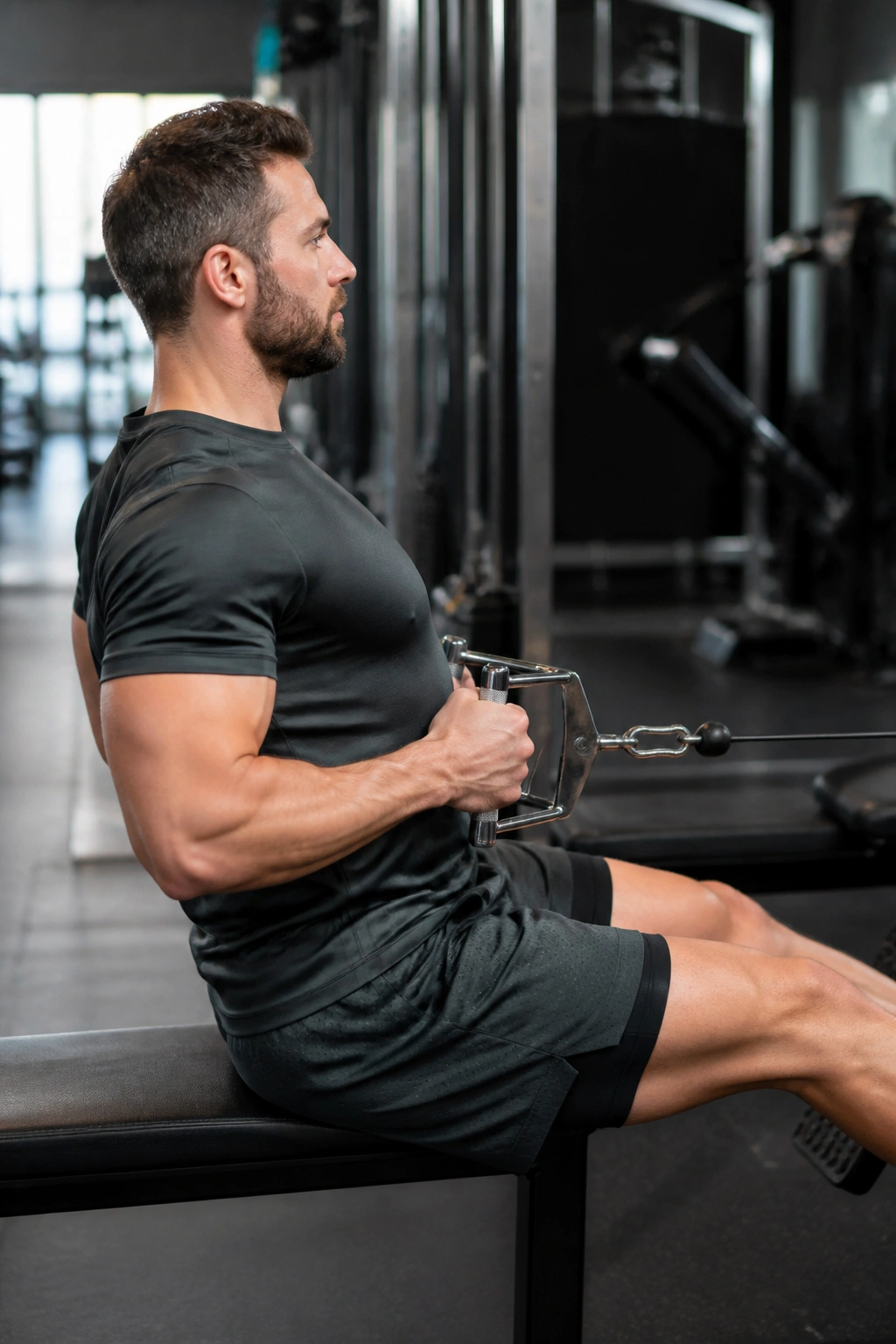
Cable rows can turn into a sloppy yanking contest fast, so slow them down. Sit tall, brace your feet, and pull the handle toward your lower ribs. Hold the squeeze for 2 full seconds, then let the shoulder blades slide forward under control.
Why the Pause Matters
The pause teaches your back to finish the job instead of stopping halfway. Without it, people often yank the handle and let the stack slam back. That builds momentum, not posture.
Use 3 sets of 10 to 12 reps. Keep the chest up, but do not arch your lower back to fake a bigger pull. If the cable wants to drag your torso forward, lighten the load and keep your legs quiet.
A neutral grip usually feels best for most shoulders. Wide overhand grips have their place, but they can turn into a shrug-fest if you’re tired. The two-second hold forces honesty, which is why I like it so much.
12. Inverted Rows
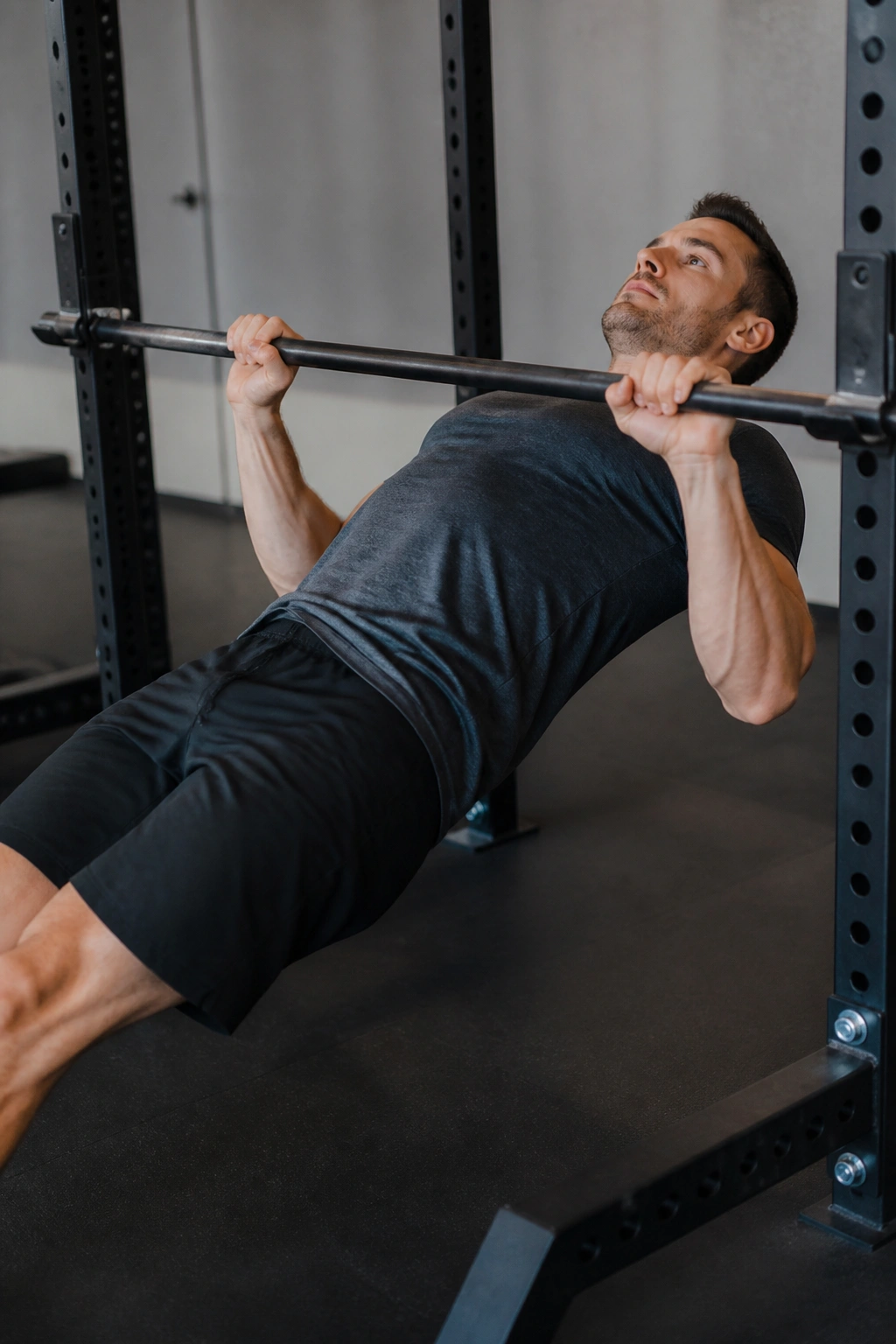
Bodyweight rows are underrated. Set a bar in a rack or use a suspension trainer, lean back under it, and pull your chest toward the bar while keeping your body in one straight line. Bent knees make it easier. Straight legs make it tougher.
Unlike a vertical pull, the inverted row trains horizontal pulling and shoulder blade control at the same time. That’s useful if you spend most of your day hunched over a keyboard. The motion teaches the upper back to pull you open instead of folding you inward.
Do 3 sets of 6 to 10 reps. Pause for one count at the top, then lower slowly. If your hips sag, shorten the lever by bending the knees a bit more.
Best Use
- Beginner upper-back strength.
- Warm-up before heavier pulling.
- A home option when you do not have a machine.
- A way to build up toward pull-ups.
It’s plain. It works. No drama.
13. Dumbbell Reverse Flyes
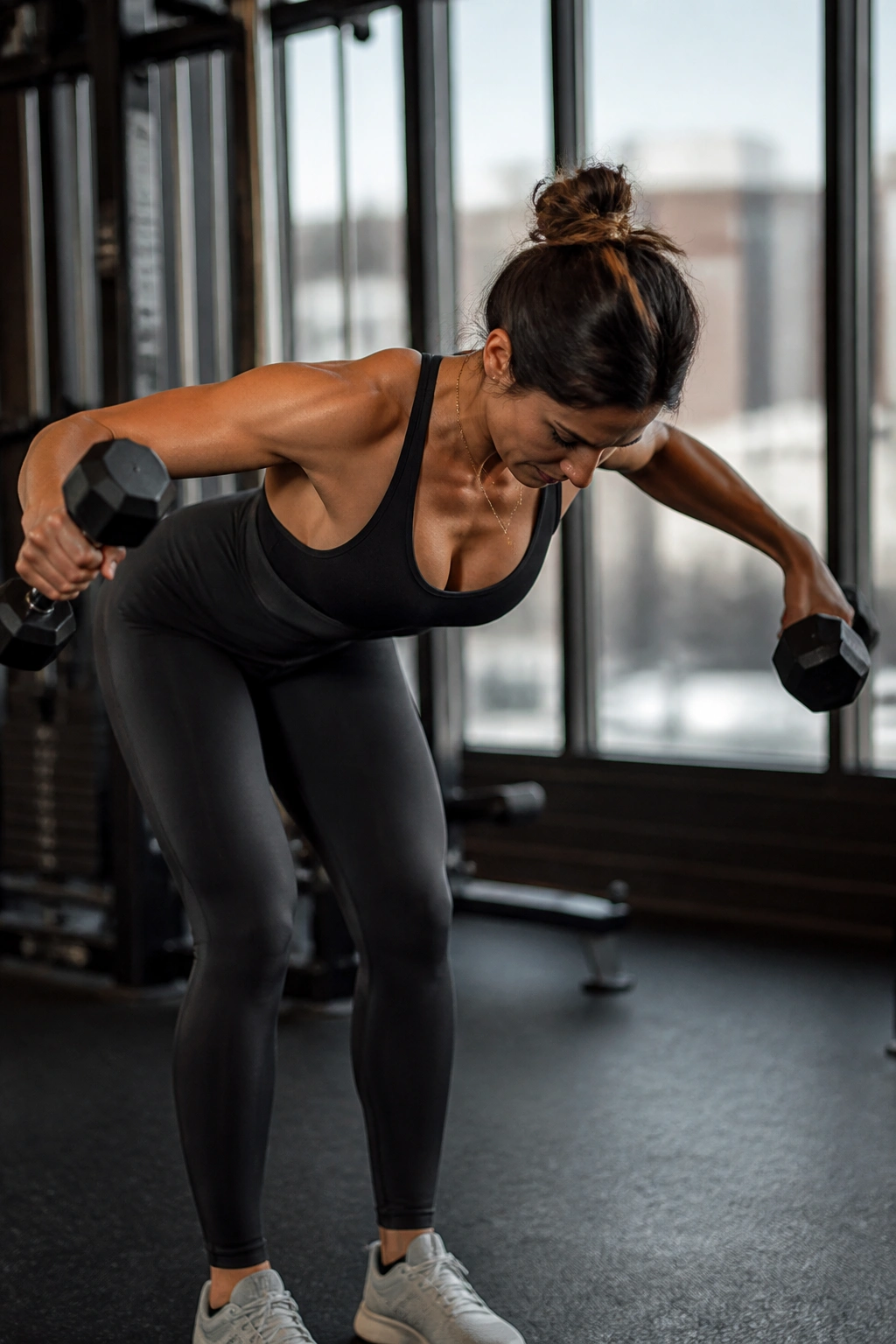
Reverse flyes feel like the shoulder version of a microscope job. Hinge at the hips, keep a soft bend in the elbows, and open the arms out to the sides until they line up roughly with your shoulders. The movement is small, and that’s the point. Heavy weights usually ruin it.
You should feel the rear delts and upper back light up, not your traps grabbing everything. If your neck starts to creep upward, lower the load. A pair of 5- or 8-lb dumbbells can be plenty.
Sensory Check
The backs of your shoulders should feel warm and busy. Your hands should travel on a wide arc, almost like you’re drawing a shallow crescent in the air. The lower back stays still.
Do 2 to 3 sets of 12 to 15 reps. Slow the lowering phase for two full seconds. That eccentric control matters more here than in most moves. If you rush it, the form collapses and the exercise turns into flailing with weights.
This is a small accessory exercise, but small muscles need practice too.
14. Neutral-Grip Lat Pulldowns
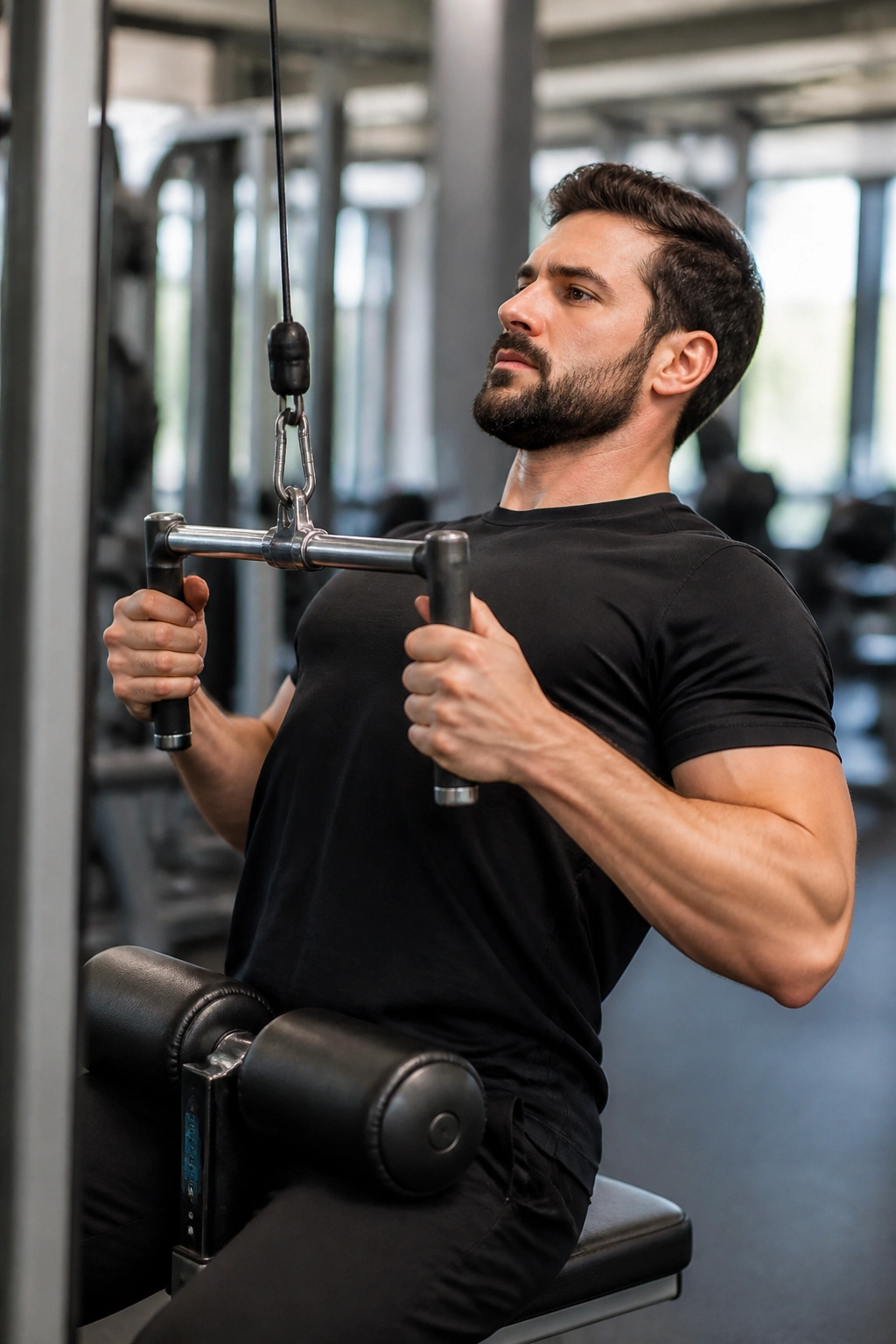
Can a lat pulldown help posture? Yes, if you keep it strict. Sit tall, grab the handles with palms facing each other, and pull them to the upper chest while keeping the ribs from flaring. The lats do more than build a wide back; they help the torso stay organized when the arms move overhead.
A neutral grip is usually kinder to the shoulders than a wide grip. It also tends to make it easier to keep the elbows tracking in a cleaner line. If you lean back like you’re trying to turn the exercise into a row, the movement loses its point.
Use 3 sets of 8 to 12 reps. At the top, let the shoulders rise just enough to get a full stretch, then pull down without yanking. The rep should feel long and controlled, not fast.
If you want a simple rule, use this one: pull the bar with your back, not your body weight. That alone cleans up a lot of sloppy pulldowns.
15. Dowel Good Mornings
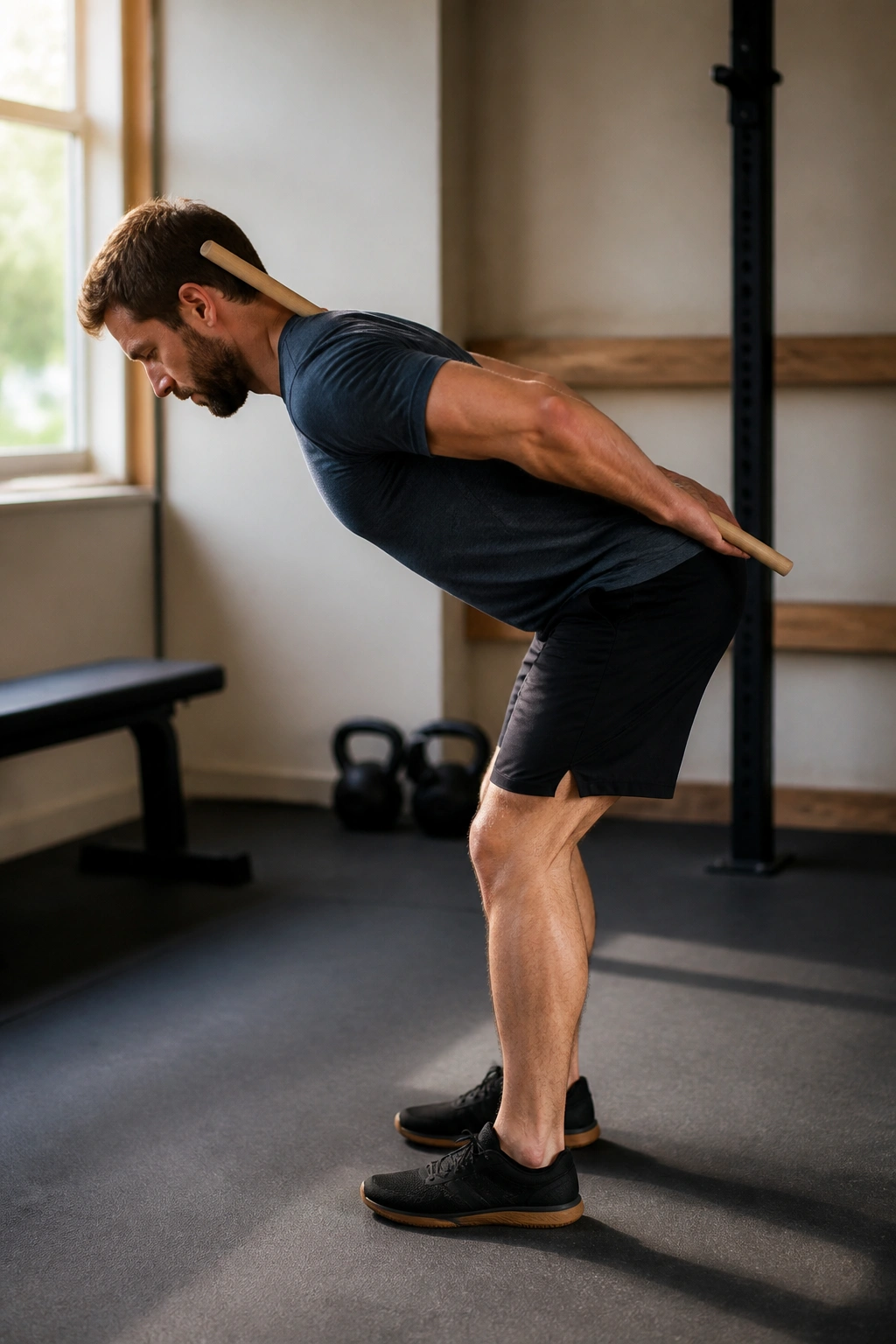
A good morning with a dowel looks modest, and that’s what makes it useful. Hold a broomstick or dowel against your head, upper back, and tailbone, then hinge at the hips until the hamstrings load up. The three contact points should stay in place the whole time.
This drill teaches the hip hinge without the noise of a barbell. That’s a gift if your back rounds when you bend over to pick things up. You learn what neutral feels like before adding load. Once that pattern sticks, deadlifts and kettlebell work get cleaner.
What To Feel
- Stretch in the hamstrings.
- Ribs staying stacked.
- Spine staying long.
- Hips moving back, not down.
Do 2 to 3 sets of 8 to 10 reps. Keep the knees soft, not locked. If the dowel loses one of its contact points, stop and reset. A little patience here saves a lot of ugly reps later.
I like this one as a teaching drill before heavier hinges. It’s not fancy. It’s useful.
16. Superman Hovers
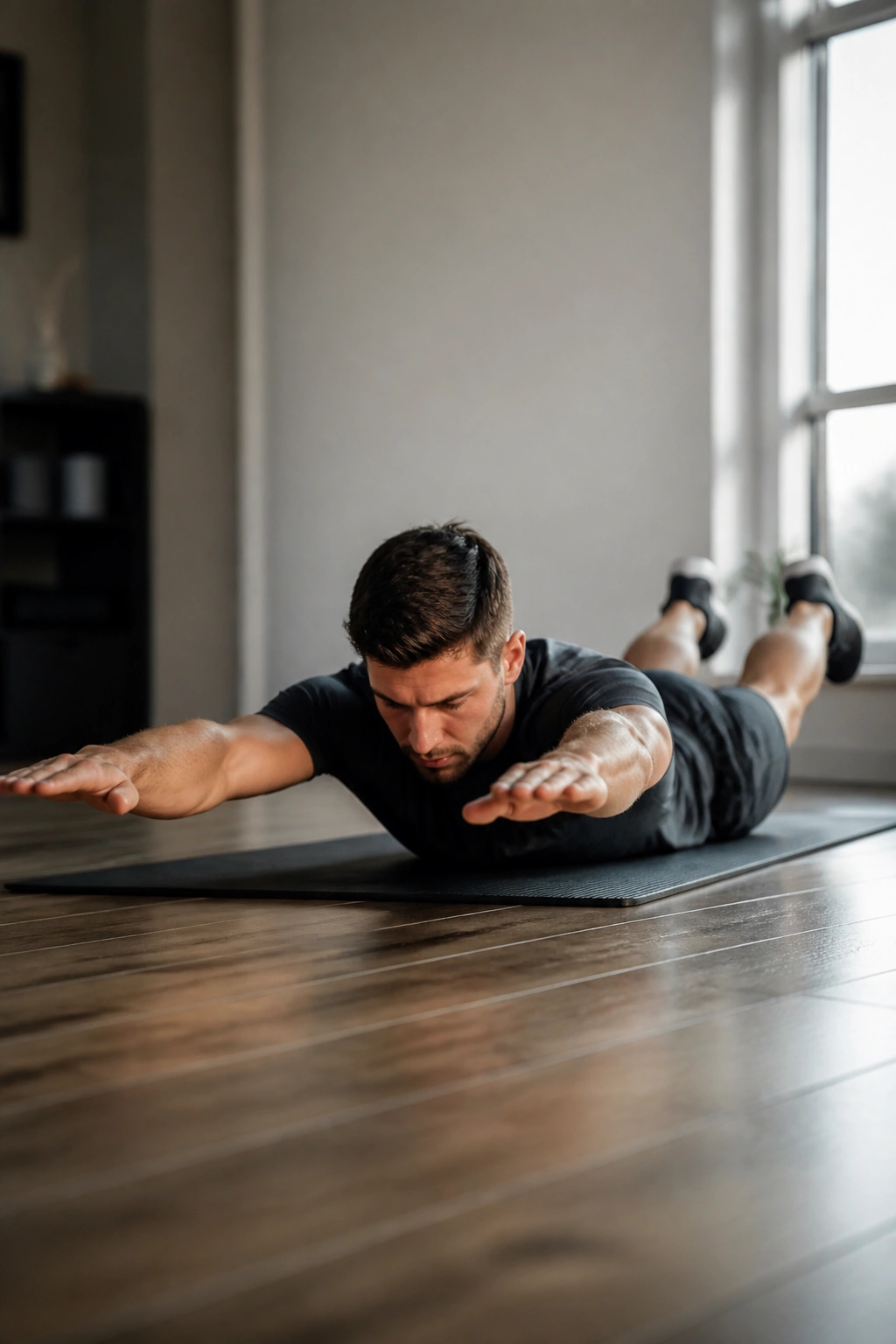
Superman hovers are divisive, and fair enough. Done badly, they can turn into a lower-back crank fest. Done carefully, they build endurance in the spinal erectors, glutes, and upper back. Lie face down, lift the chest and thighs just a couple of inches, and hold for a short count.
What To Watch For
If your low back pinches or the movement feels pinchy instead of strong, stop. Use a smaller hover or swap in a sphinx hold with less lift. You do not get extra credit for making it dramatic.
Try 6 to 8 holds of 5 to 10 seconds. Keep your gaze down and your neck long. The goal is a smooth, quiet contraction, not a big arch.
This move helps some people a lot and others not much. That’s fine. I would rather you use a smaller posterior-chain drill and keep training than force a flashy version that makes your back angry for two days.
If you try it, keep it humble. Humble works.
17. Scapular Push-Ups
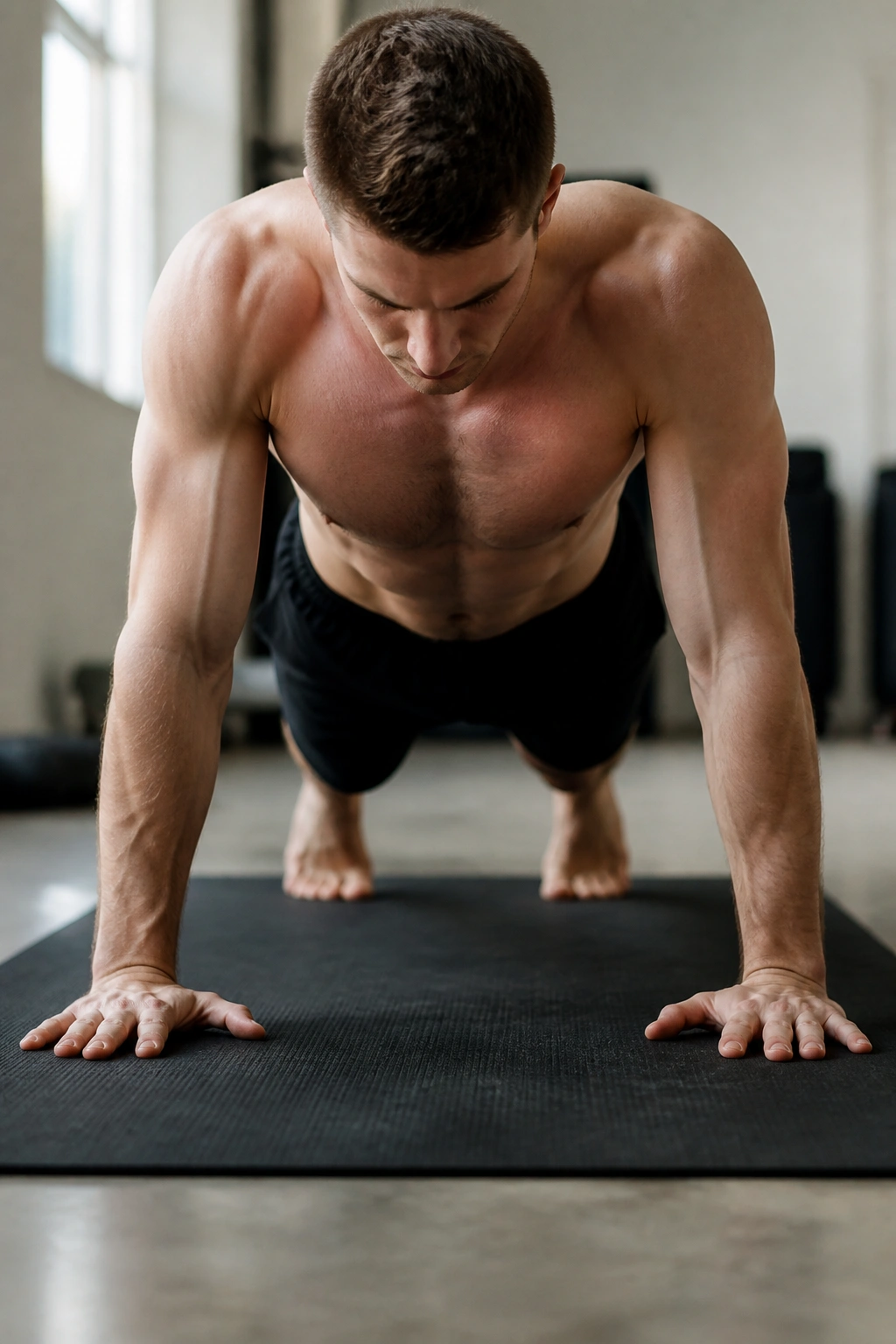
Scapular push-ups are a shoulder-blade drill disguised as a push-up. Start in a plank from toes or knees, lock the elbows, then let the chest sink slightly between the shoulder blades before pressing the floor away so the upper back rounds a bit and the shoulder blades spread apart.
That protraction and retraction pattern matters because posture is not only about pulling muscles. The serratus anterior helps the shoulder blade sit and move well on the rib cage, which makes the whole upper body feel more connected.
Use 2 to 3 sets of 10 to 15 reps. Keep the neck relaxed and the hips level. If your elbows bend, you’ve turned it into a push-up. If your lower back sags, shorten the set or drop to your knees.
Good Signs
- Smooth shoulder blade motion.
- No neck strain.
- A clean plank line.
- No shrugging at the top.
It’s a small move, but a very useful one.
18. Half-Kneeling Single-Arm Rows
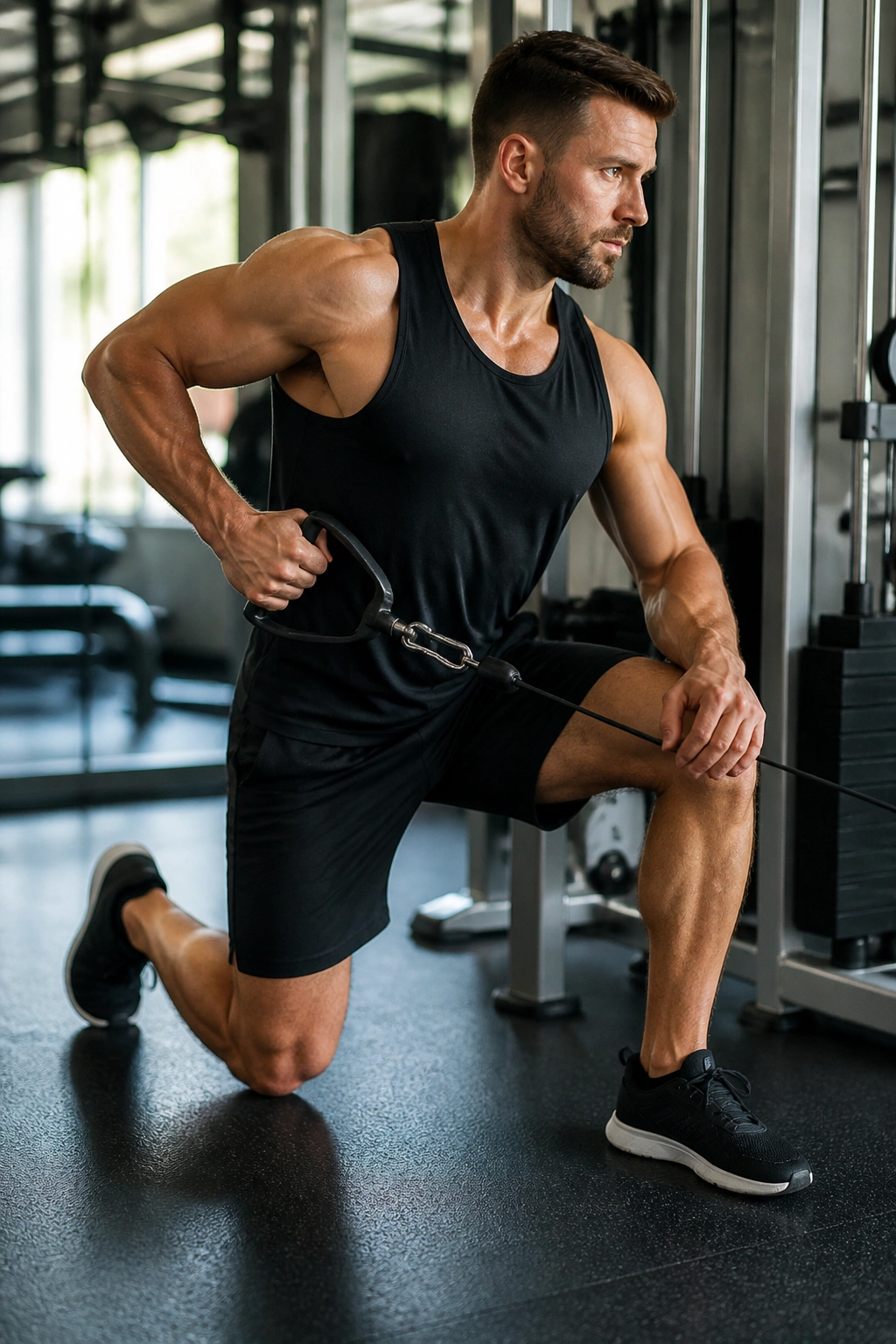
Half-kneeling rows are sneaky because they train your back while forcing your torso to stay honest. Set one knee down, squeeze the glute of the back leg, and row a cable or band with one arm without twisting toward the pull. The half-kneeling stance strips out a lot of cheating.
That anti-rotation work matters for posture. If one side of your body always wins, the spine and shoulders often compensate by drifting. This setup makes the core stay active while the pulling side works.
Do 3 sets of 8 to 10 reps per side. Pause at the top for one second and keep the shoulder away from the ear. If your torso swings, the load is too heavy or your stance is too loose.
I like this version more than a basic standing row for people who lean on one hip or always carry a bag on the same side. It tells on those habits fast.
19. Wall Slides with Lift-Off
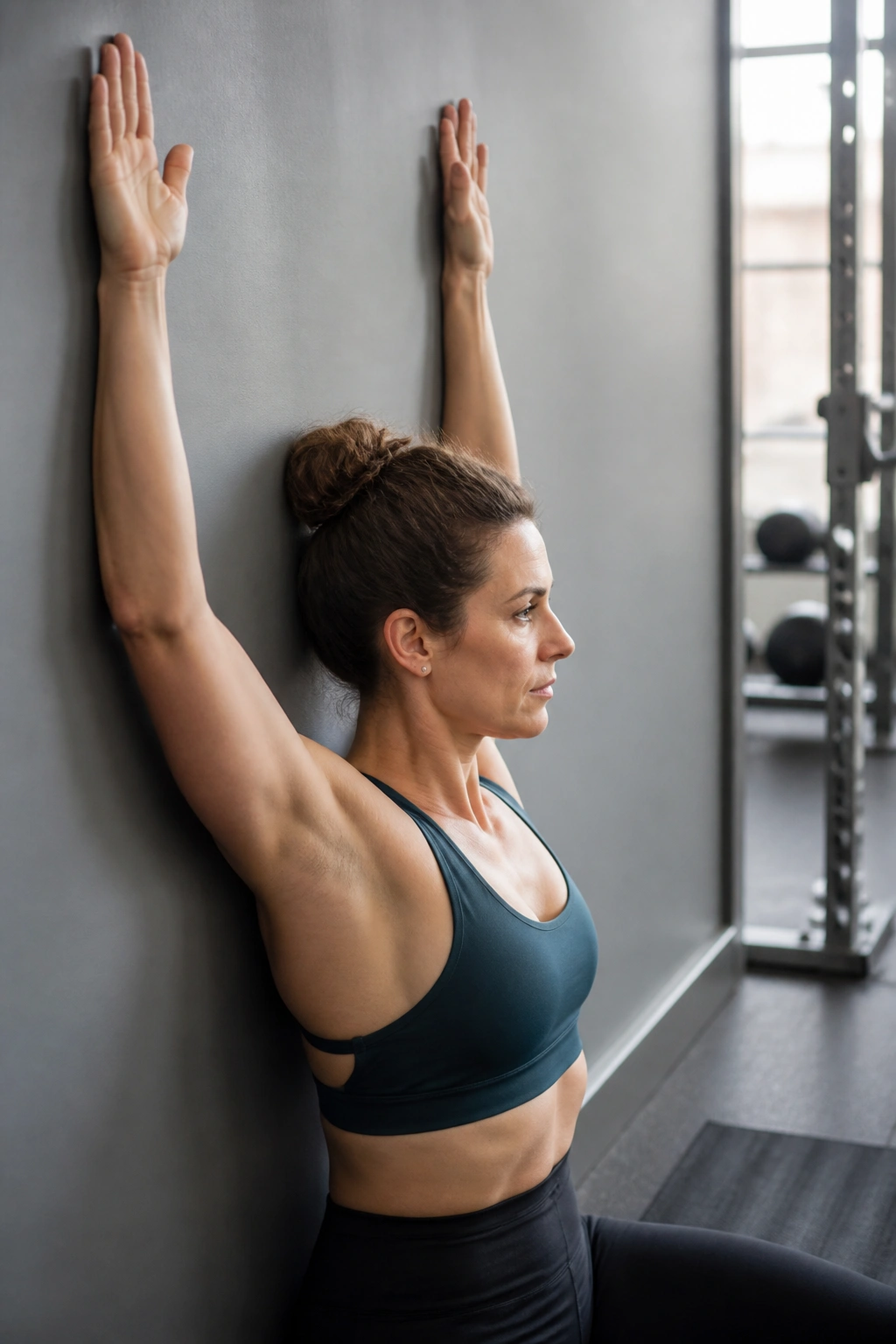
Wall slides with lift-off are a clean way to train upward rotation without turning the exercise into a circus. Stand with your back against a wall, forearms up, then slide your arms overhead while keeping the ribs down. At the top, lift the hands an inch off the wall for a brief pause, then lower slowly.
The lift-off is the useful part. It forces the lower traps and serratus to keep the shoulder blades moving well instead of pinning them down and calling it “posture.” A lot of people feel this in the upper back almost immediately.
How To Keep It Clean
- Use 2 to 3 sets of 8 reps.
- Keep the lower back from arching.
- Exhale as the arms rise.
- Stop before the shoulders shrug.
If you cannot stay against the wall, stand a little farther away and reduce the range. Clean reps matter more than touching every point of contact. That obsession with perfection can be a trap.
20. Front Rack Carries for Pain-Free Posture
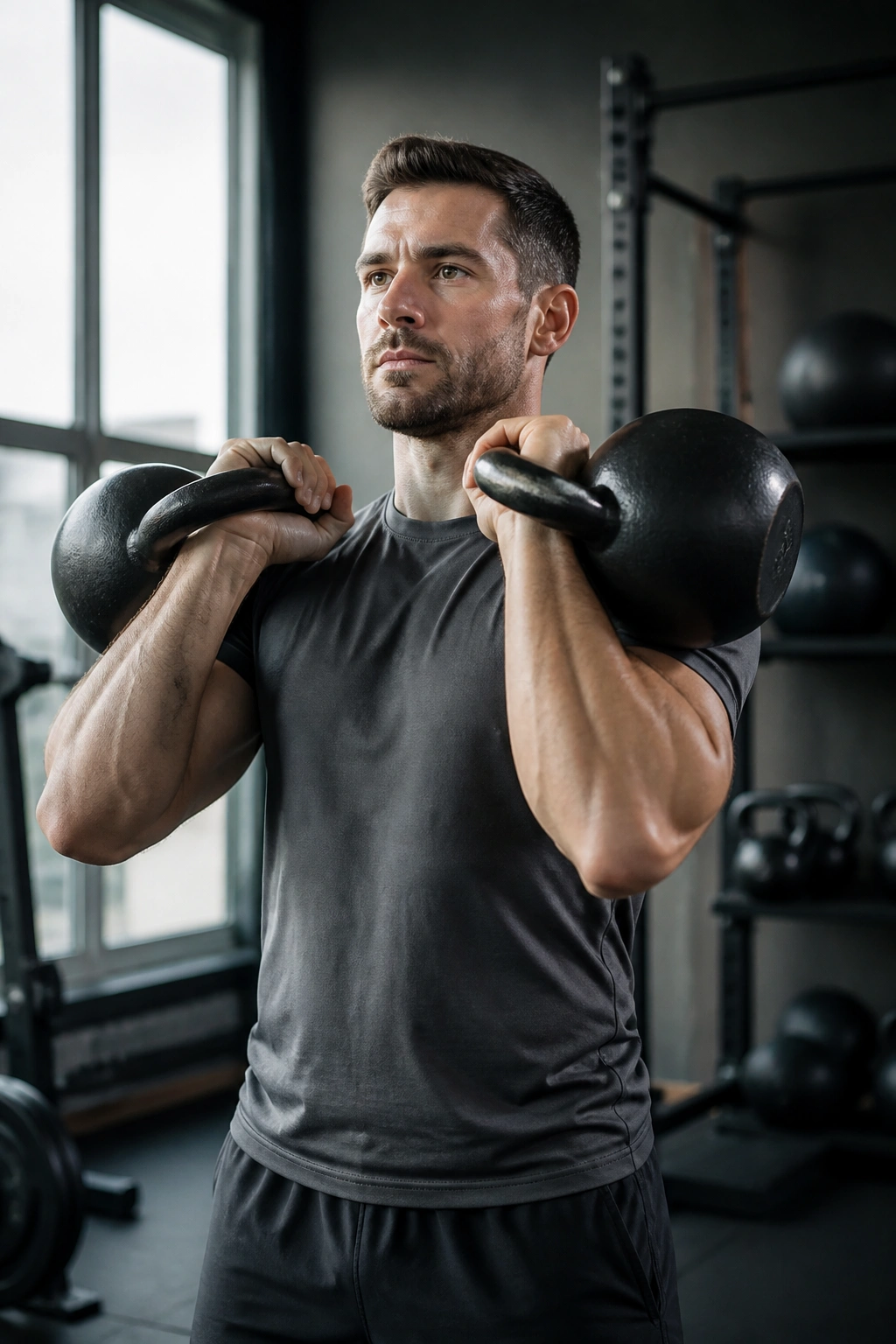
Front rack carries are a strong finish because they ask the upper back to stay tall while the core braces and the breathing stays calm. Hold two kettlebells or dumbbells at shoulder height, elbows slightly forward, then walk with steady steps. The front load wants to pull you into flexion. Your job is to refuse.
Unlike suitcase carries, which fight side-to-side collapse, front rack carries challenge your posture in the front of the body. The upper back has to stay lifted, the ribs have to stay stacked, and the forearms get a little work too. It’s a full-body posture test.
Walk 20 to 30 meters for 3 to 5 rounds. Choose a load that lets you keep a quiet torso and a steady breath. If you start leaning back or flaring the ribs, drop the weight.
This is a strong place to end a session. Simple. Heavy enough to matter. Clean enough to keep your back happy.
If your posture tends to crumble when life gets busy, rotate three or four of these moves into your week and keep the rest on standby. The win is not perfection. It’s a back that stays organized when you sit, stand, walk, and lift without having to think about it all day.
