



A good at-home workout does not need a treadmill, a stack of plates, or a spare room that looks like a boutique gym. It needs a few moves that can be made easier or harder on demand, plus the honesty to keep going when the first set feels awkward.
That is the part most people miss. Home exercise works best when the same basic pattern can meet you where you are — beginner, rusty, sore, bored, short on time, or itching for a hard sweat. A chair, a wall, a backpack, a set of stairs, a towel, a cheap resistance band: those are enough to build a real home workout plan if you use them with intent.
The neat trick is that almost every useful movement has a built-in scale. A squat can be to a chair, a lunge can be held with one hand on the wall, a push-up can start against the counter, and a cardio drill can become low-impact without turning into a nap. That flexibility matters more than fancy equipment ever did.
So here’s the practical stuff. These are 20 at home workouts you can do at any level, each one built to be adjusted on the fly, depending on your joints, your space, and how much fire you want in your legs.
1. A Squat Ladder That Builds Real Home Workout Leg Strength
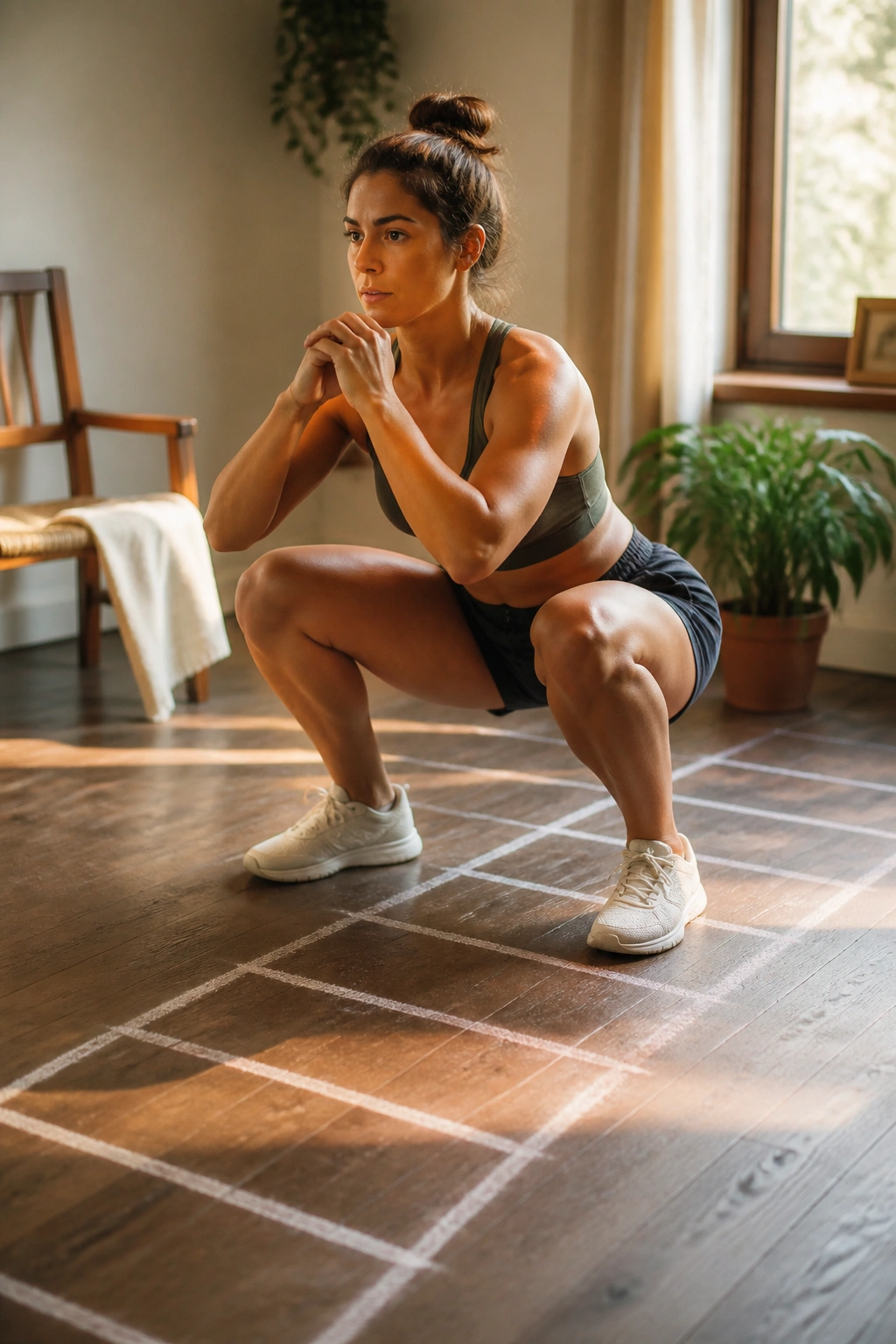
Squats are plain, which is exactly why they work. If you can sit down and stand up from a chair, you already know the movement pattern; the workout comes from making that pattern more deliberate, slower, and a little more demanding.
Why the ladder format works
A ladder keeps the set from getting stale. Try 10 squats, rest 20 seconds, then 8, 6, 4, and 2. If that feels too easy, slow the lowering phase to 3 seconds or hold the bottom for 1 count before standing. If it feels too hard, cut the ladder in half and keep the movement clean.
A chair behind you can help beginners learn depth without collapsing. More advanced versions can use a backpack hugged to the chest or a 2-second pause at the bottom. Either way, your feet stay flat and your knees track in the same direction as your toes. No drama. No bouncing.
Quick cues that matter
- Keep your chest tall.
- Press through the whole foot, not just the toes.
- Stop the set when your lower back starts doing the job your legs should be doing.
Best use: 3 rounds of a squat ladder on lower-body days, or 1 round as part of a longer full-body circuit.
2. Incline Push-Ups That Meet You Where You Are
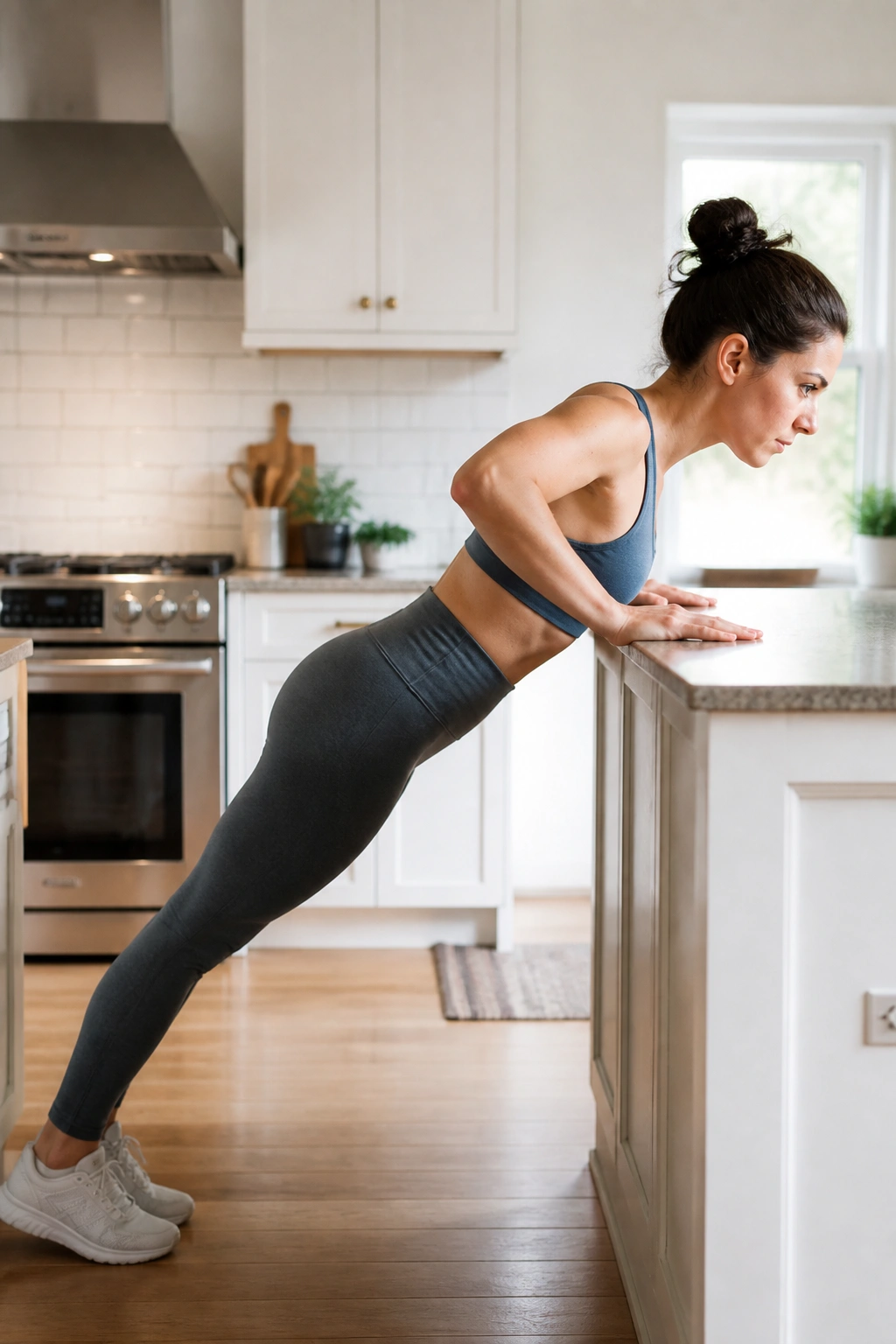
If push-ups on the floor feel impossible, the fix is not to quit. Raise your hands first.
A countertop, a sturdy table, the arm of a couch, even a wall can turn a miserable push-up attempt into a productive one. The higher your hands, the easier the move; the lower your hands, the harder it gets. That simple angle change is why incline push-ups are one of the smartest at home workouts you can keep in rotation.
Start with 8 to 12 reps on a surface that lets you keep a straight line from head to heels. Lower until your chest is a few inches from the edge, then press back without letting your hips sag. If you want more work, slow the descent to 3 seconds. If you want less, use the wall and build from there.
The nice thing here is that the same pattern teaches shoulder control, chest strength, and core tension at once. You are not just “doing push-ups.” You’re learning how to hold your body while it moves.
A small warning: if your shoulders shrug up toward your ears, the surface is probably too low for where you are today. Raise it and keep going.
3. Reverse Lunge and Reach for Balance, Legs, and a Quiet Core
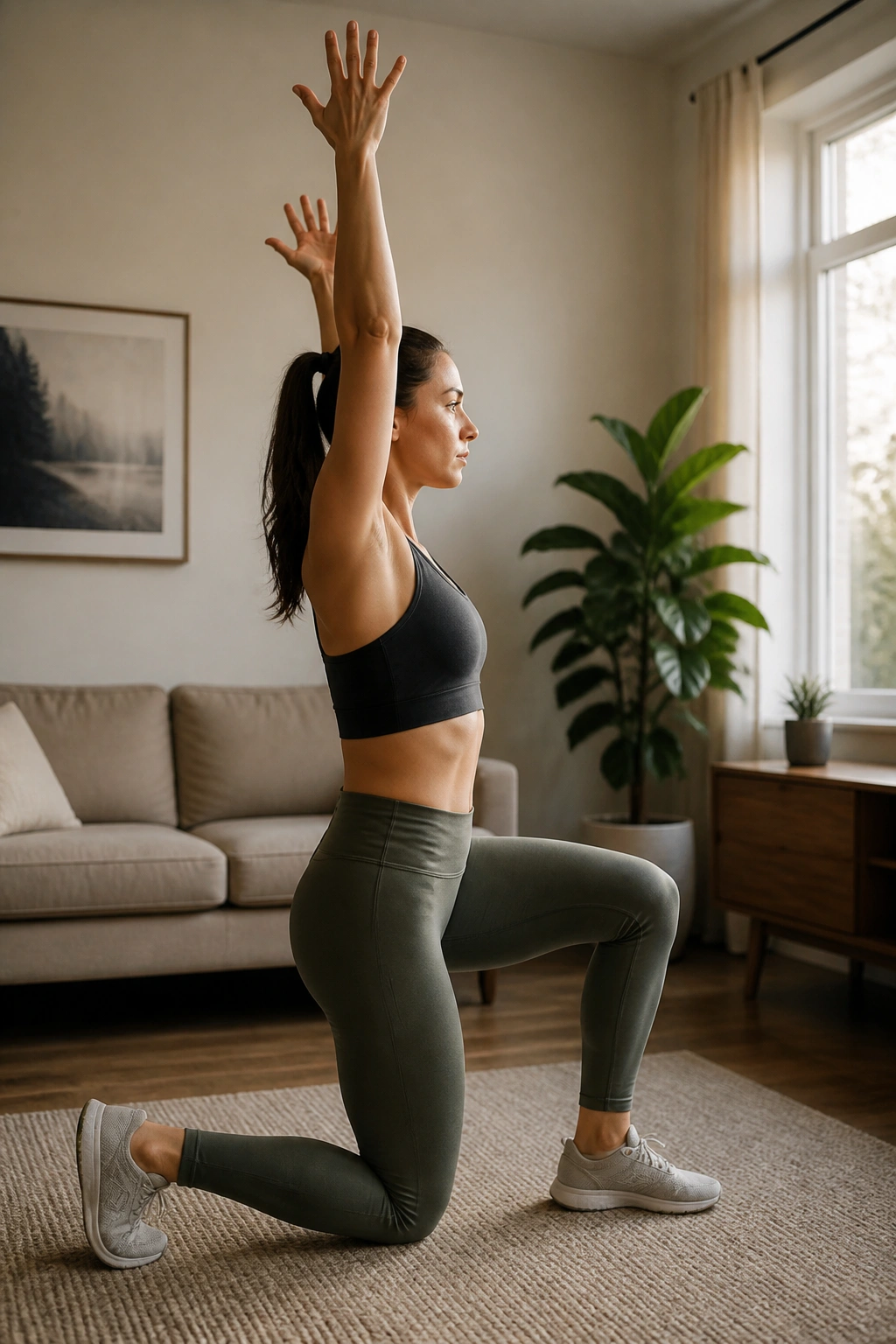
Why do reverse lunges get so much love from coaches? Because stepping back usually feels kinder on the knees than stepping forward, and the reach overhead adds balance work without needing anything but floor space.
How to use it
Do 6 to 10 reps per side, stepping back softly and dropping the back knee toward the floor with control. On the way up, reach both arms overhead for a beat, then bring them down as you reset. That reach sounds simple, but it changes the whole exercise. Your ribs want to flare, your lower back wants to arch, and your core has to keep the whole thing from turning sloppy.
A few ways to scale it
- Beginner: hold onto a wall or countertop with one hand.
- Intermediate: add a 2-second pause at the bottom.
- Advanced: hold a backpack at chest height or add a knee drive at the top.
The move is honest. If your balance is shaky, you will know right away. That’s not a flaw. That’s the workout talking back to you.
4. Glute Bridges That Wake Up the Back Side of Your Body
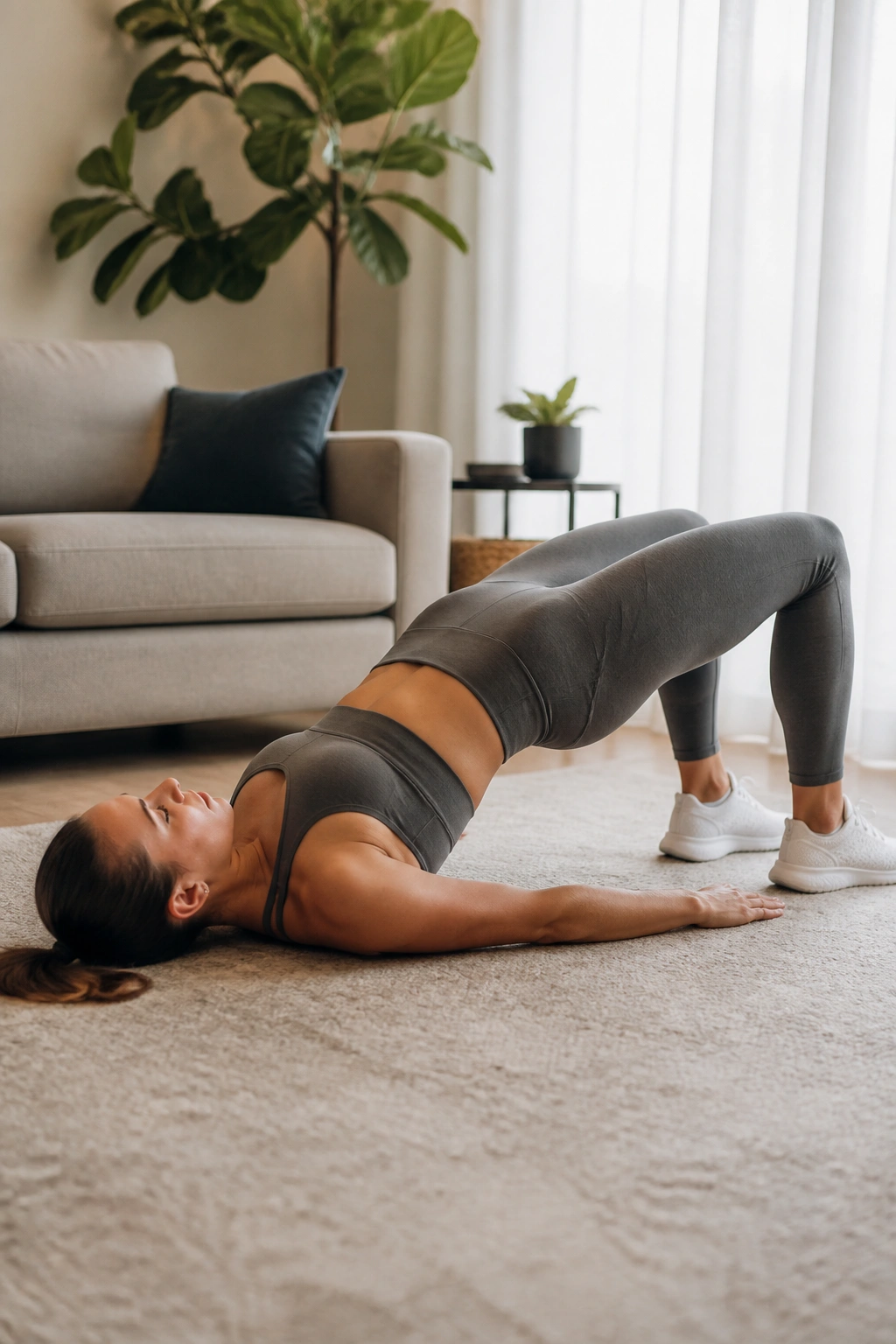
If your lower back tends to do the work your hips should be doing, glute bridges are one of the cleanest fixes around. They look almost too easy on paper. Then you hold the top for a few seconds and your hamstrings start complaining in a useful way.
Lie on your back with your knees bent and feet about hip-width apart. Press through your heels, lift your hips until your body makes a straight line from shoulders to knees, and squeeze your glutes for 2 seconds at the top. Lower with control. Do 12 to 15 reps, or 30 seconds nonstop if you want more of a burn.
A good bridge should feel like the work is in the glutes and hamstrings, not jammed into your lower back. If your back arches hard at the top, bring your ribs down and tuck your pelvis slightly before you lift. That small adjustment matters.
- Feet about 12 to 18 inches from your hips.
- Heels stay heavy.
- One-leg bridges make it much harder fast.
These are boring until they aren’t.
5. Plank Variations That Train Bracing Without Fancy Gear
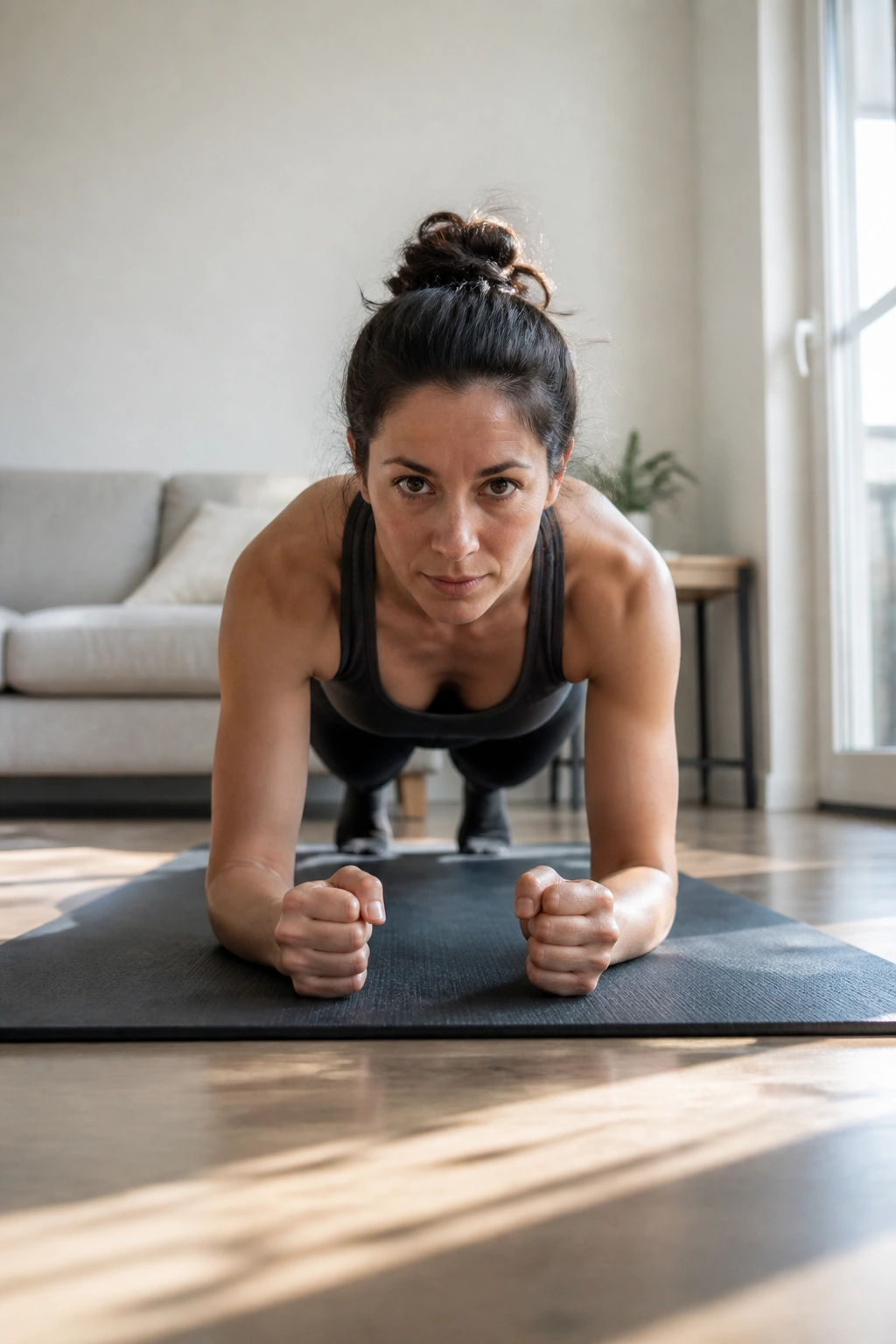
A plank is not a test of how long you can suffer. It is a test of whether you can stay organized while your muscles get tired.
Start with a front plank on forearms for 20 to 30 seconds. If that’s too much, drop to your knees and keep your hips from sagging. From there, add side planks, shoulder taps, or a plank reach to make the core work in different directions. Short, sharp sets are better than one sloppy minute with your back hanging low.
The best part about planks is the way they teach full-body tension. Your abs are not working alone. Your shoulders, glutes, and even your feet are part of the deal. When everything is on, the plank feels smaller and harder at the same time.
I like a simple ladder: 20-second front plank, 15 seconds each side, 8 shoulder taps per side, then rest 30 seconds. Repeat 3 times. If the body shakes a little near the end, fine. If the low back takes over, stop and reset.
A clean 20-second plank beats a messy minute every time.
6. Mountain Climbers for Small-Space Cardio That Actually Hits
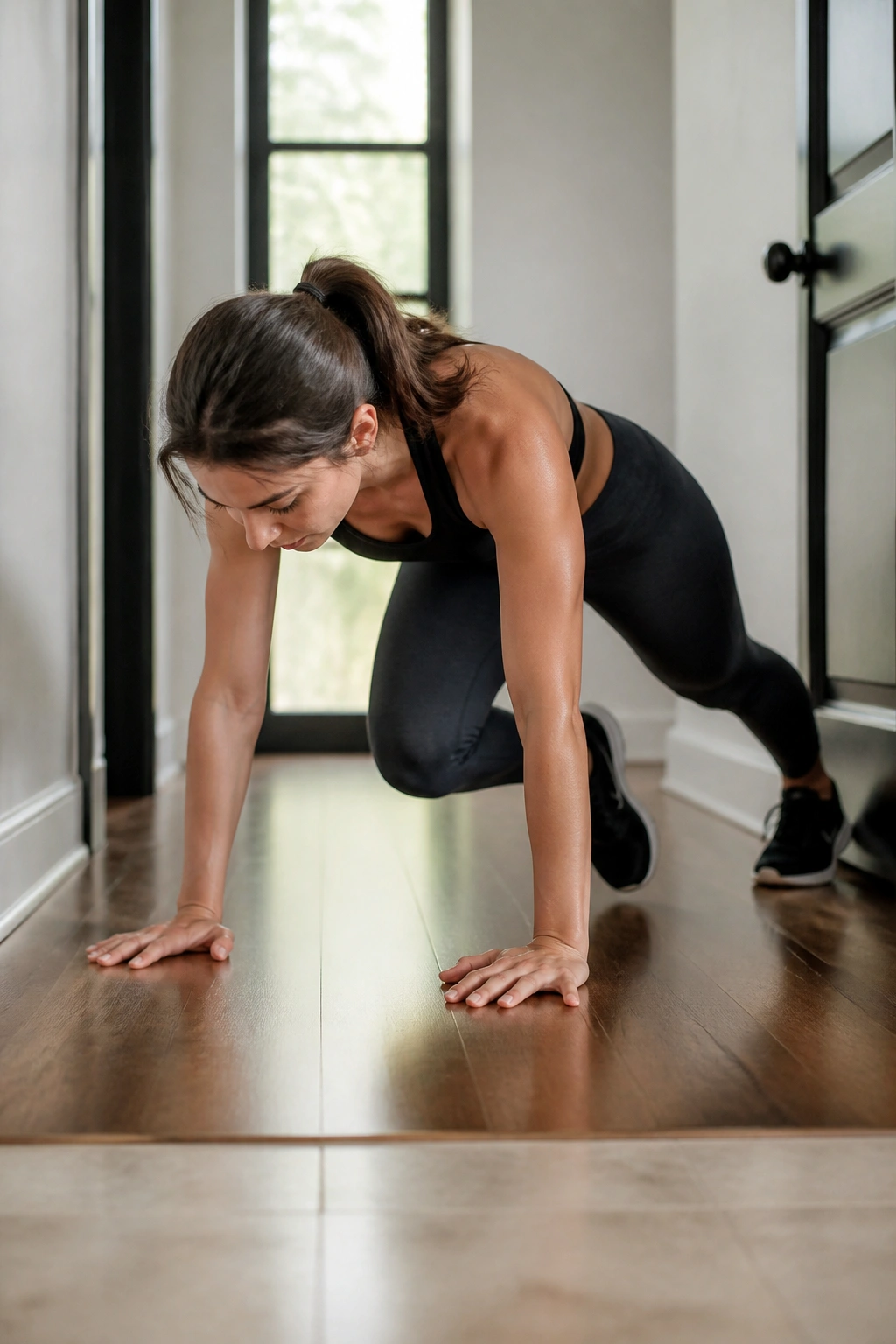
Mountain climbers are not just “running in a plank.” Done well, they ask your shoulders to hold steady while your hips and knees move fast underneath you.
That is why they hit harder than a casual march in place. Your heart rate climbs, your core has to keep your body from wobbling all over the floor, and your wrists get a little work too. For people who want a short, sweaty home workout without jumping, this one earns its spot.
Try 20 seconds hard and 40 seconds easy for 6 to 8 rounds. If full-speed climbers wreck your form, slow them down and bring one knee in at a time with a brief hold. You still get the conditioning benefit without turning the exercise into a scramble.
Who it suits best
- People who want a cardio drill with a strength feel.
- Anyone with limited space.
- Folks who want to keep impact lower than burpees or jump squats.
Unlike running in place, mountain climbers force the upper body to stay in charge. That makes them a better full-body option when you want more than just breathlessness.
7. Shadow Boxing Rounds That Feel Light but Sneak Up on You

Shadow boxing is one of my favorite apartment-friendly workouts because it looks easier than it is. Two minutes in, your shoulders are working, your feet are busy, and your breathing has already shifted.
Start with 3-minute rounds and 1 minute of rest. Throw simple combinations: jab-cross, jab-cross-hook, double jab-cross. Keep the hands coming back to your face and stay light on the balls of your feet. You do not need to punch hard. You need to punch clean.
How to make it harder
Add footwork. Step forward, step back, pivot left, pivot right. Then shorten the rest to 30 seconds. If you want more upper-body work, keep the guard up for the last 20 seconds of each round and throw only straight punches.
A lot of people skip shadow boxing because it feels too playful. That’s a mistake. It builds coordination, conditioning, and shoulder endurance without beating up your joints. Also, it’s harder to fake than people think. Bad footwork shows up fast.
8. Stair Climb Intervals for Legs, Lungs, and a Sharp Burn
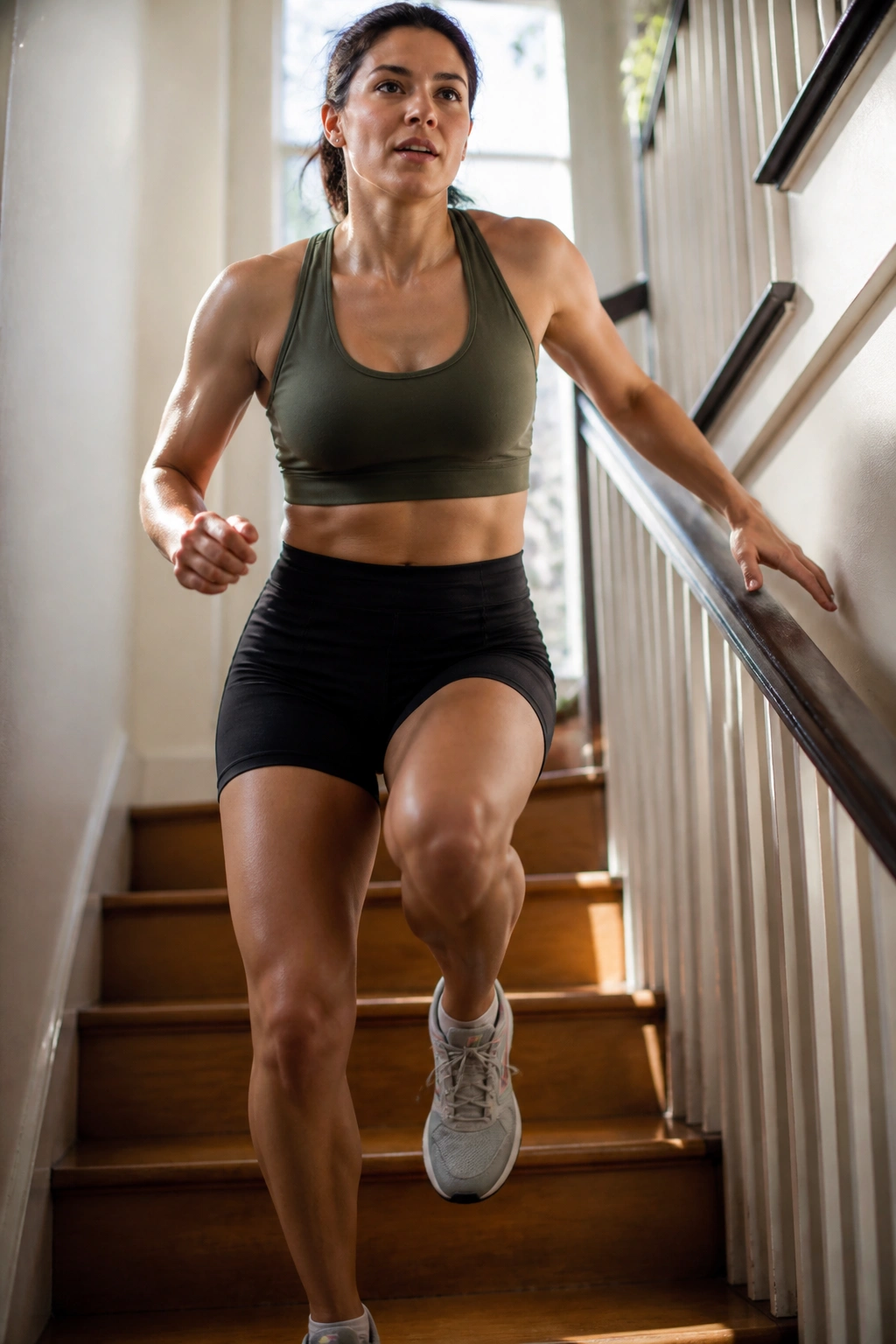
Stairs are rude. That’s part of the appeal.
A short stair session can turn into serious conditioning in a tiny footprint. Walk up one flight at a steady pace, walk down slowly, and repeat for 8 to 12 rounds. If you want more intensity, take the stairs two at a time, but only if your knees and balance are fine with it.
A smart setup
- Warm up with 2 minutes of marching first.
- Keep one hand near the rail if the steps are steep.
- Stop short of sprinting until your landing is quiet and controlled.
The nice thing about stair work is how easy it is to scale. Beginners can treat it like brisk walking with a purpose. Intermediate folks can make the climb quicker. Advanced exercisers can turn it into intervals: 30 seconds fast up, easy walk down, repeat 10 times.
Don’t stare at your phone on the way down. That’s how people miss a step, and stairs only need one chance.
9. Low-Impact March and Step Jack Circuits for Beginners and Recovery Days
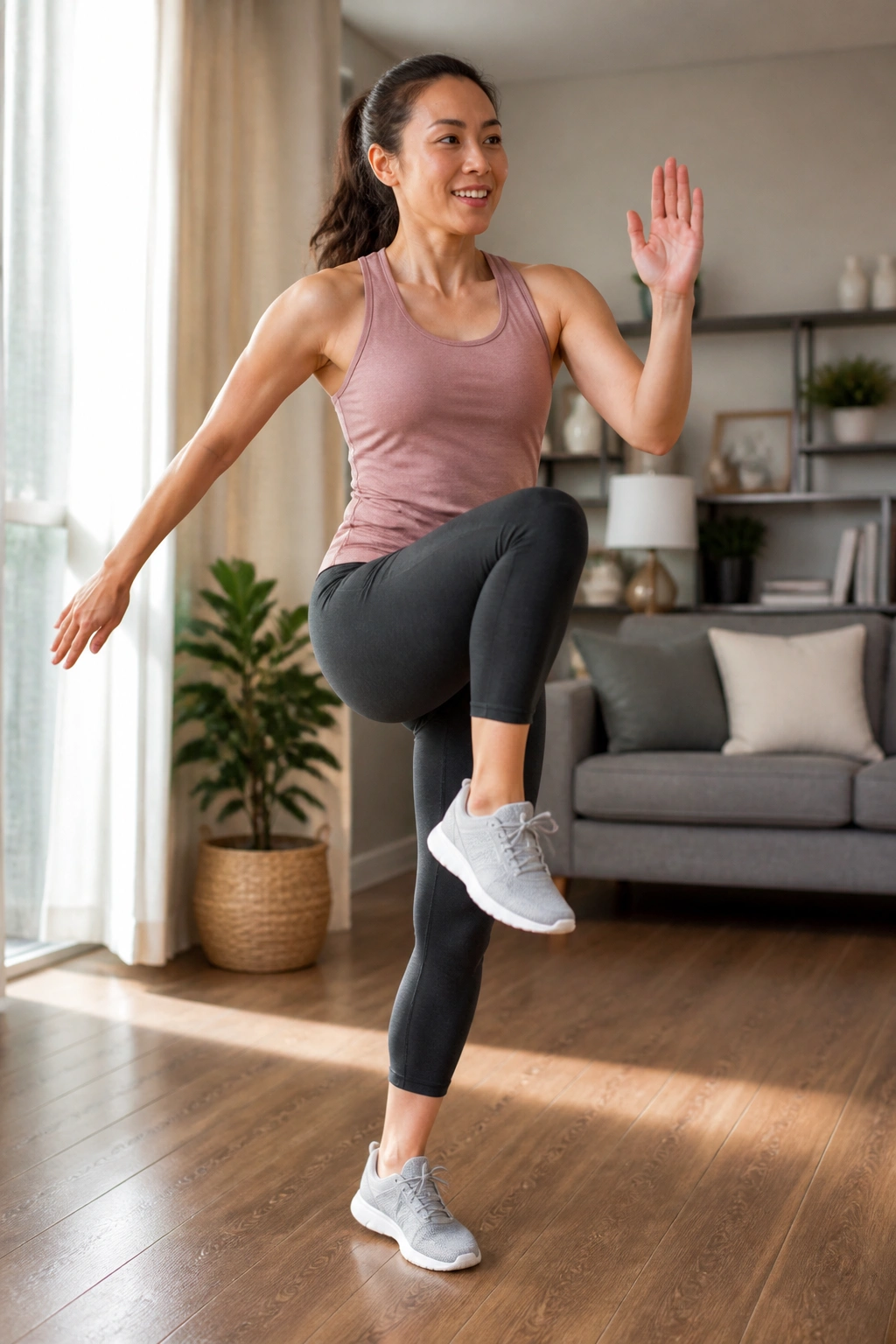
Low-impact does not mean low effort. It just means you are not jumping.
A march in place with big arm swings can get the heart rate moving fast enough for a warm-up or a main set, especially when you pair it with step jacks, knee lifts, and side steps. I like this format for people who are getting back into exercise or for days when the joints feel a little cranky but the body still wants to move.
Try 45 seconds of marching, 30 seconds of step jacks, 30 seconds of side steps, and 15 seconds of fast feet in place. Rest 30 to 45 seconds and repeat 3 to 5 times. The pace should feel lively, not chaotic.
Keep the steps small enough that you can stay upright and breathe through your nose for part of the set if you want to. If that stops happening, back off for a round and pick it up again.
This kind of home workout gets underestimated because it looks mild from across the room. It isn’t mild once the clock keeps ticking.
10. Resistance Band Rows and Presses for a Complete Home Workout
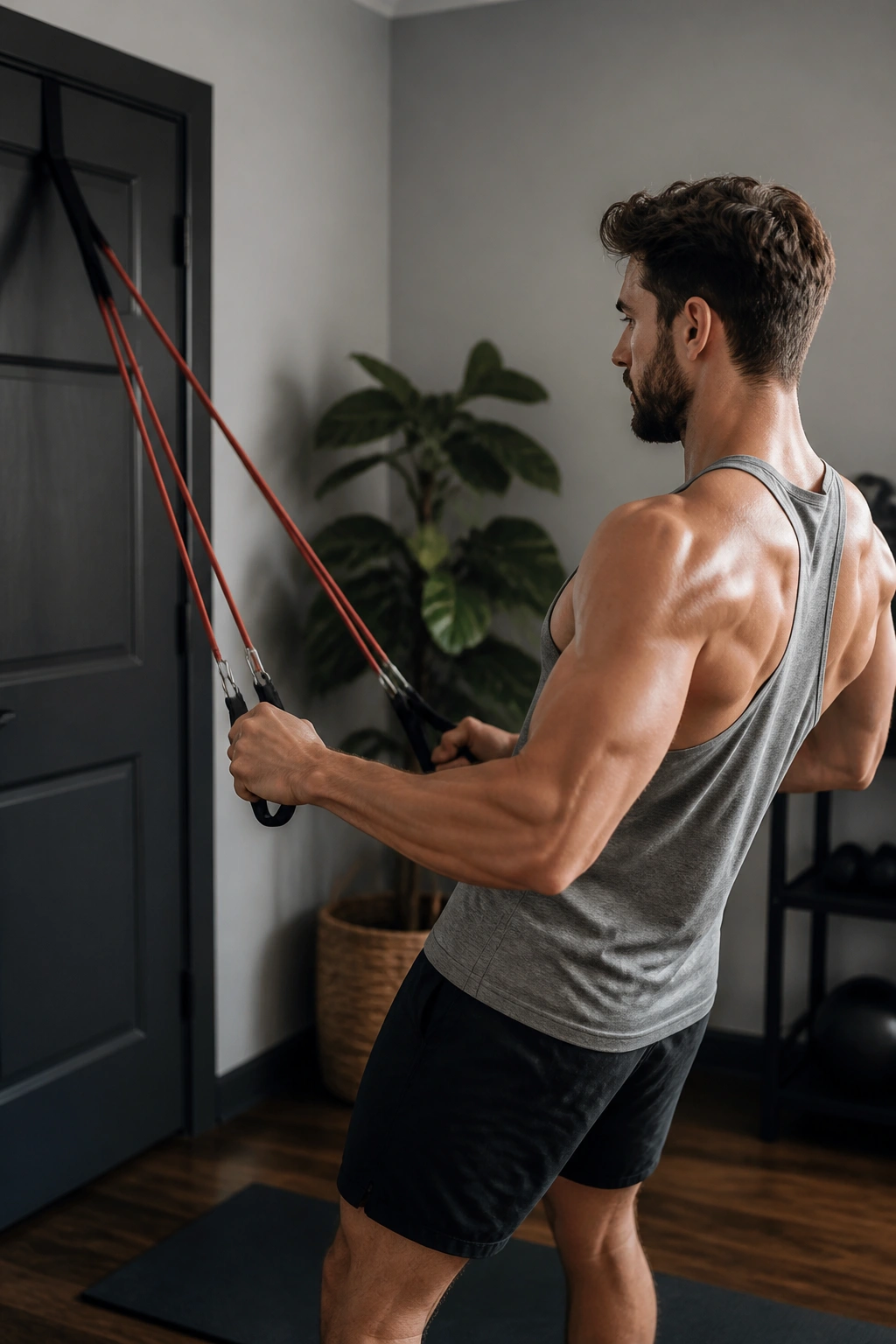
A cheap band can do more for your upper body than a lot of people expect. It gives you pull work, press work, and enough tension to make your back pay attention.
Why bands are worth keeping around
Rows train the muscles that pull your shoulders back. Chest presses train the pushing pattern that push-ups use, just with a different feel. Pull-aparts and face pulls round things out by making the upper back do its share. If you sit a lot, these are the moves your body tends to thank you for.
A simple circuit
- 12 band rows
- 10 band chest presses
- 15 pull-aparts
- 12 face pulls
Rest 45 seconds, then repeat 3 rounds. Beginners can use a lighter band and stand closer to the anchor point. More advanced people can slow the return phase to 3 seconds, which makes the band feel harder without changing anything else.
If you anchor the band in a door, check the latch first. I know that sounds obvious. It still gets missed.
11. Backpack Strength Work That Turns Household Stuff Into Load
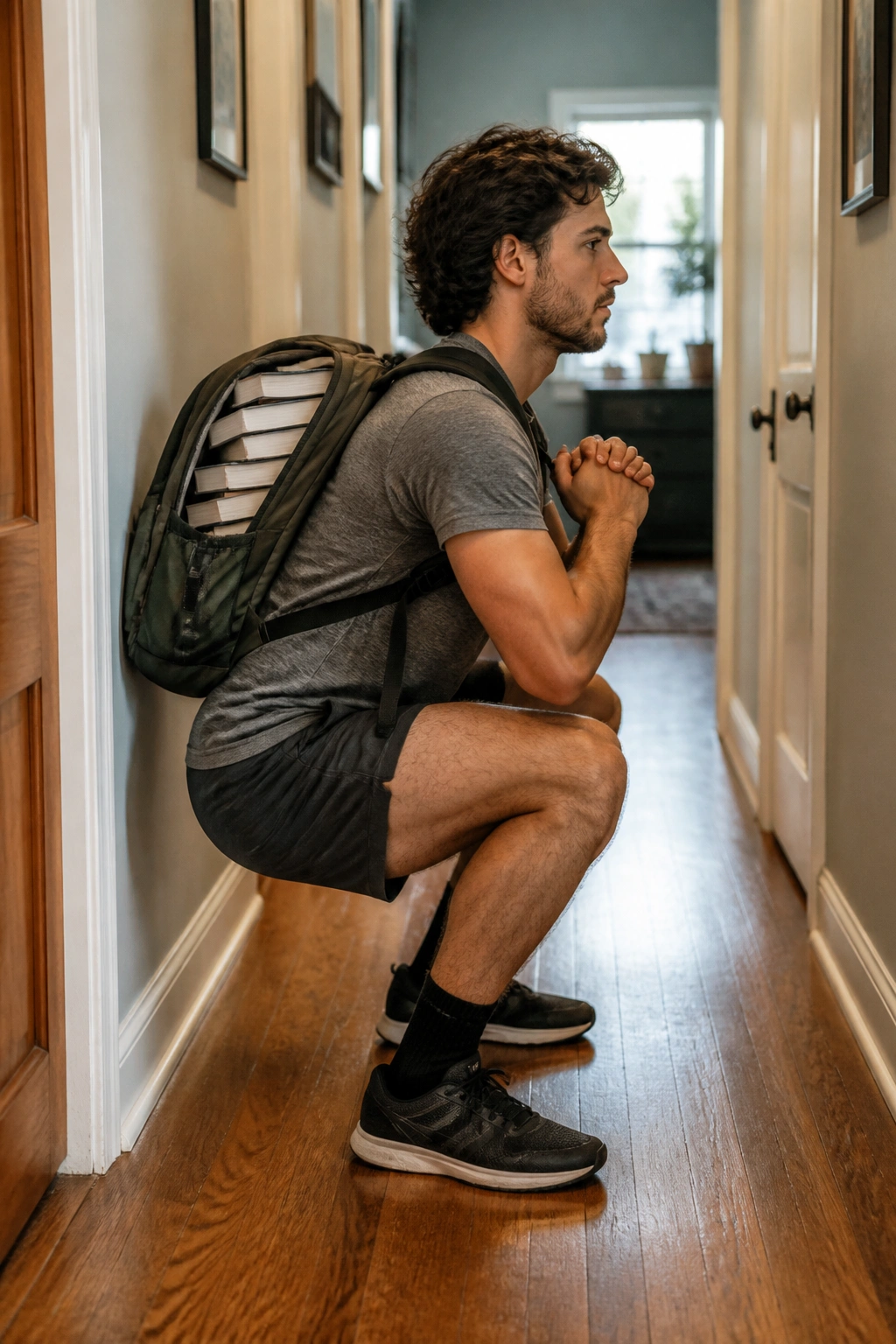
A backpack full of books is not glamorous. It is also a perfectly useful piece of training gear.
The nicest thing about backpack workouts is the control. You choose the load, stuff a towel inside so the books do not bounce around, and keep the exercises simple: squats, bent-over rows, good mornings, carries. You can use a light load for speed or a heavier load for slow, grinding strength work.
A starter circuit
- 10 backpack squats
- 10 bent-over rows
- 10 good mornings
- 30-second front carry march
Do 3 to 4 rounds and rest about a minute between rounds. If the backpack digs into your shoulders, hold it at chest height instead of on your back. That small change makes the work feel cleaner and usually easier to control.
The point is not to fake the feel of a gym barbell. The point is to add resistance you can actually live with. A stable backpack, a few books, and a hallway are enough.
12. Chair-Based Leg and Triceps Work for Safer Home Exercise
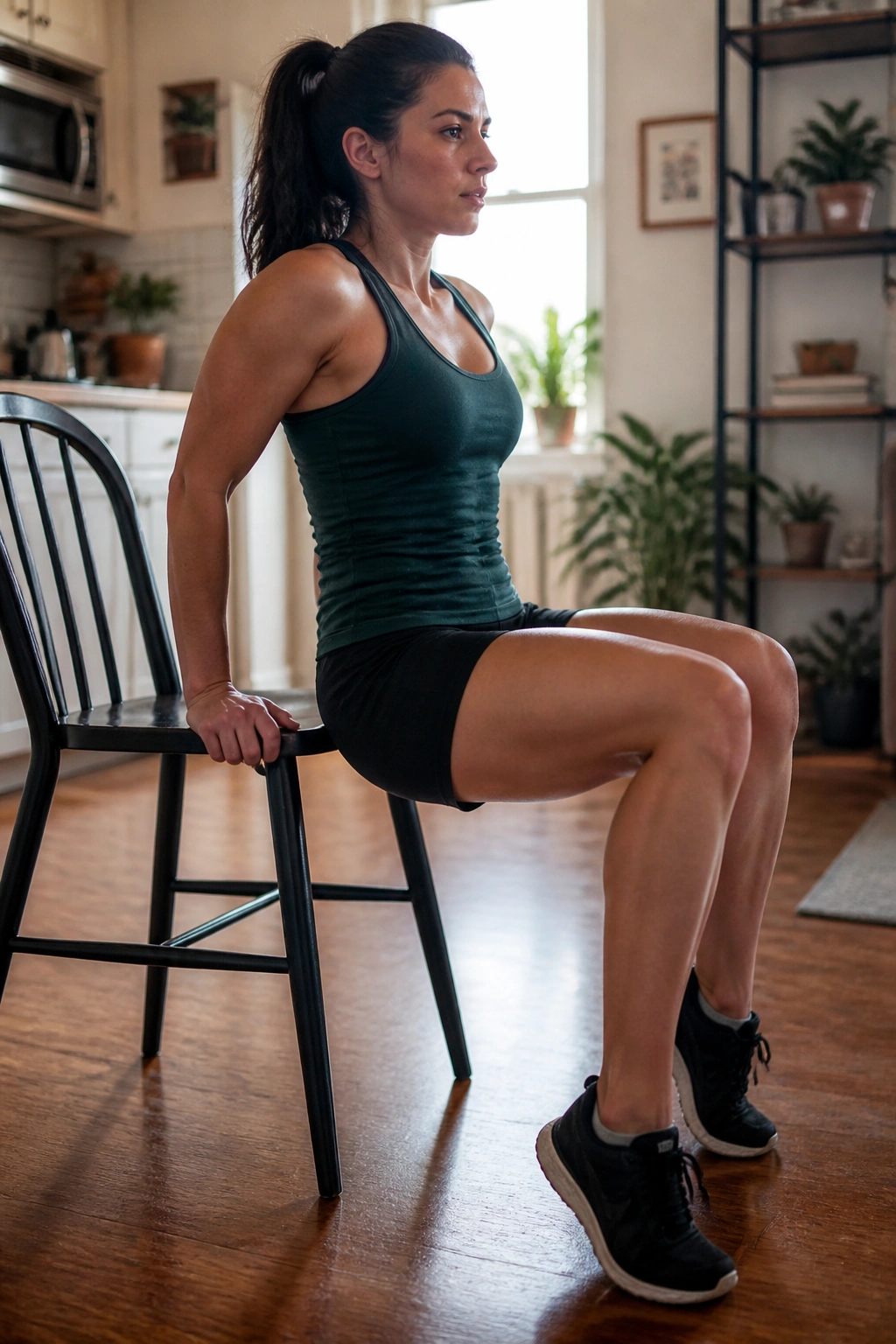
A sturdy chair changes everything. It gives beginners something to trust and gives stronger people a way to make simple movements more precise.
Chair sit-to-stands are the obvious one, but step-ups, supported split squats, and triceps dips can all live here too. The chair takes a little pressure off balance, which lets you pay more attention to the legs, elbows, and shoulder angle. That is where the learning happens.
For legs, try 8 to 12 sit-to-stands with a 2-second pause just above the seat before standing fully. For upper body, keep triceps dips conservative; if your shoulders feel pinchy, skip them and use close-grip push-ups against the counter instead. That is a better choice than grinding through pain for the sake of variety.
A chair workout is not flashy. Good. It does not need to be. It just needs to help you move with less wobble and more control.
13. Bear Crawls and Crab Walks for Core Control That Feels Odd at First
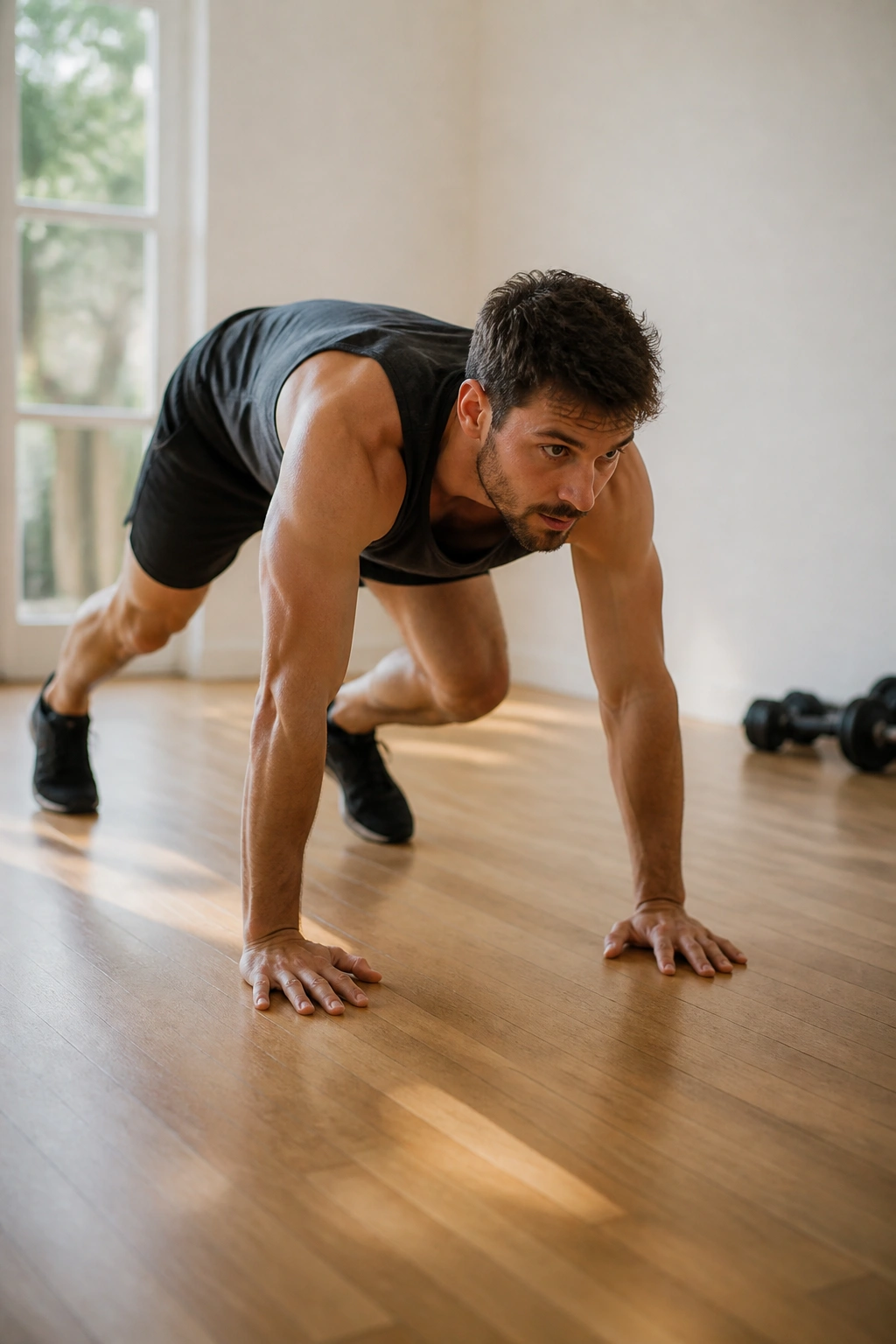
Why crawl when you could do crunches? Because crawling trains more of the body at once, and it teaches coordination in a way the floor crunching trend never quite did.
Bear crawls ask your shoulders, hips, and core to work together while your knees hover just off the floor. Crab walks flip you around and challenge the back of the body. Both moves make you think about where your hands and feet are, which sounds small until you try to move without collapsing.
How to keep it smooth
- Start with 10 to 20 seconds of bear crawl in place.
- Move forward only a few steps if space is tight.
- Switch to crab walks for the same time.
- Rest 30 to 45 seconds and repeat 4 rounds.
If the knees hate it, stay more upright and shorten the range. If the wrists hate it, use softer flooring or skip one of the directions for the day. No prize exists for forcing ugly reps.
Crawling looks a little strange. That’s fine. Strange is often useful.
14. A Yoga Strength Flow That Blends Mobility With Real Work
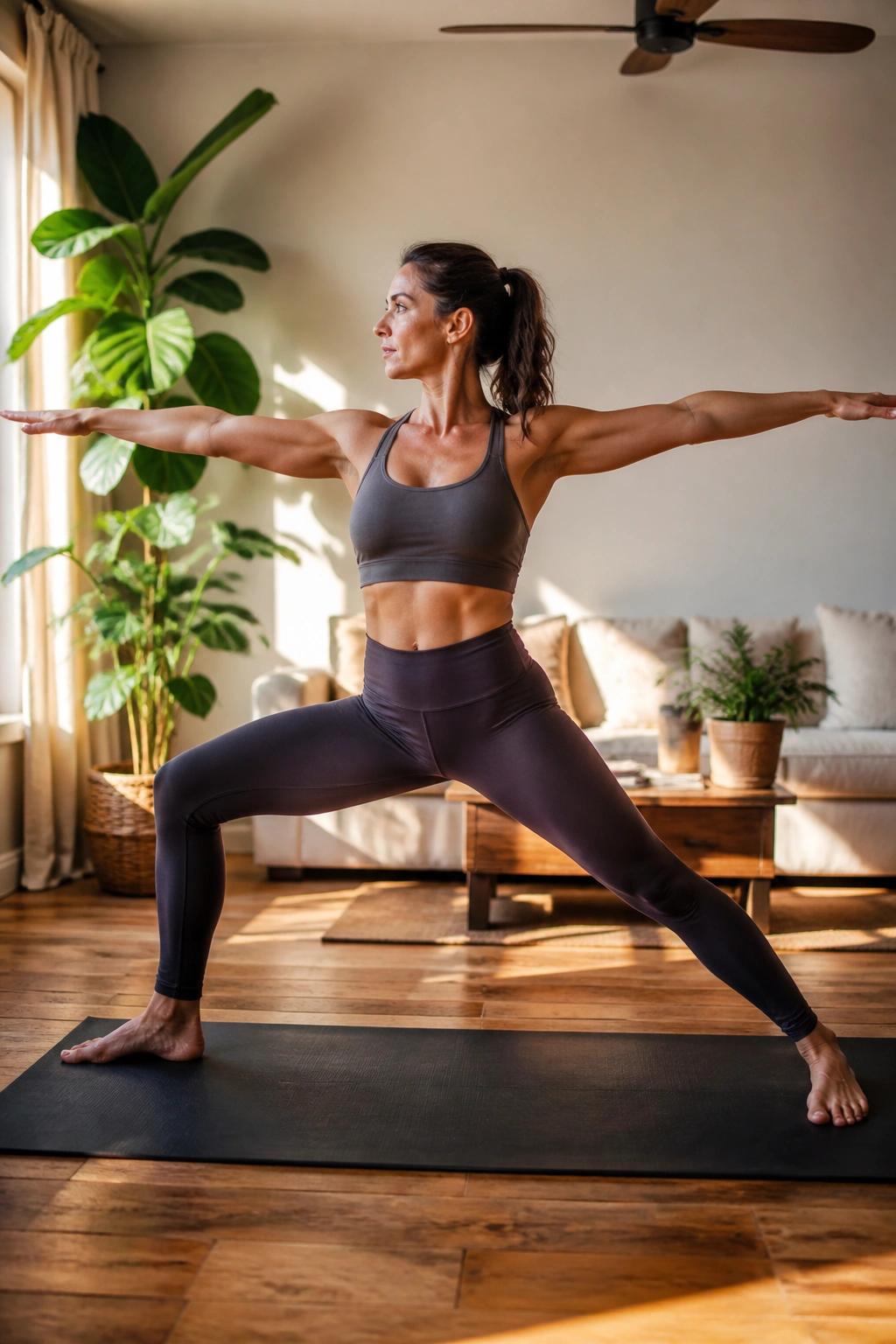
A yoga session can be a workout when you stop treating it like stretching with music.
Downward dog into plank, low lunge into crescent, warrior 2 into side angle — those positions ask for leg strength, shoulder stability, and a lot more control than people expect. Move slowly enough that you feel the shift from one shape to the next. If you rush, the flow becomes a blur. If you slow down, it becomes work.
One reason I like this style of home workout is that it scales cleanly. A beginner can keep the back knee down in a lunge. A more advanced person can hold each position for 3 to 5 breaths and add a slow reach or twist. Block support helps too. So does shortening the stance if your hips feel tight.
A one-minute hold in warrior 2 can feel like a leg day set if you keep your foot planted and your ribs from drifting. That is the whole point. Strength does not need to shout.
15. Pilates Core Series That Hits the Deep Muscles, Not Just the Showy Ones
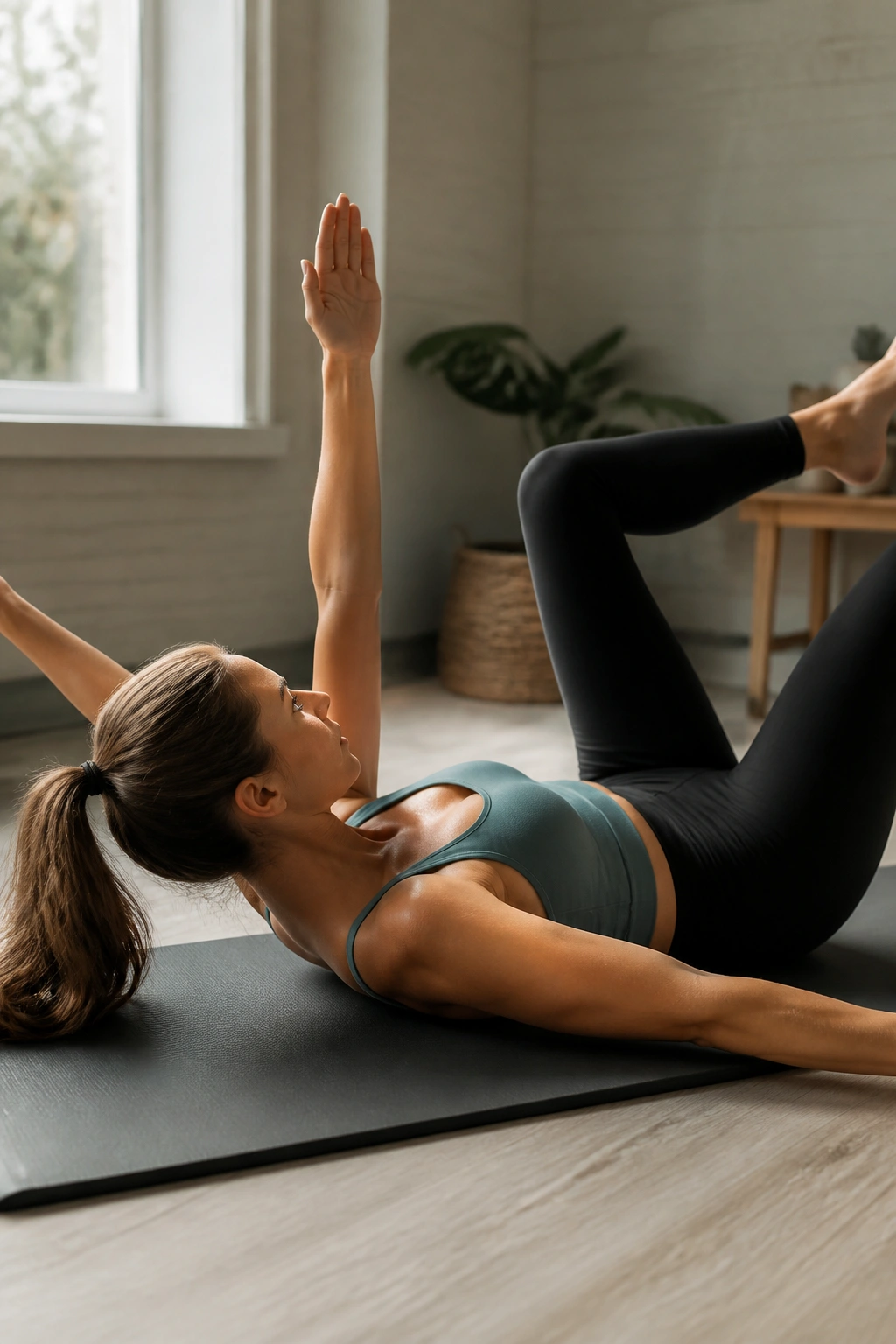
Pilates has a reputation for being gentle. Sometimes it is. Sometimes it is sneaky.
The better core work here comes from small, controlled moves like toe taps, dead bugs, leg lowers, and hundred variations. These exercises teach the ribs to stay down, the pelvis to stay steady, and the lower back to stop taking over. That matters more than chasing high-rep crunches.
A solid starter sequence
- 8 dead bugs per side
- 10 toe taps per side
- 8 slow leg lowers
- 20 to 30 pulses in a hundred-style hold
Rest as needed, then do 2 or 3 rounds. The rule is simple: if your neck starts yanking forward or your back arches hard off the floor, the movement has gone too far. Shorten the lever. Bend the knees. Keep it tidy.
I like Pilates-style home workouts because they punish sloppiness without needing speed. You feel the difference in the first minute. Then you feel it in the next one too.
16. Dumbbell or Water Jug Complexes for a Fast Full-Body Hit
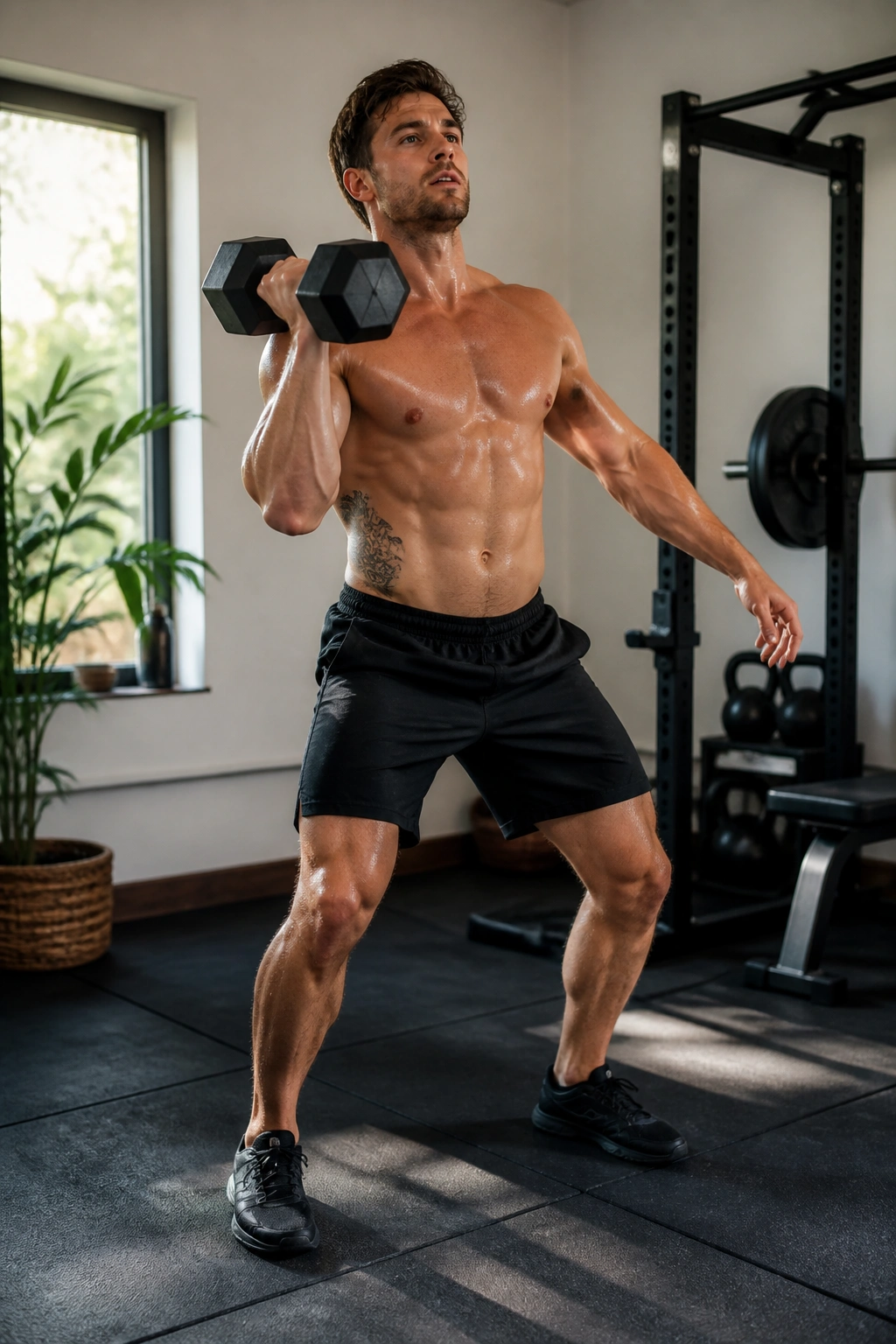
If you do have weights — dumbbells, water jugs, even two sturdy grocery bags with equal load — a complex can get a lot done in a little time.
The rule is simple: use the same weight for a chain of moves without setting it down. Deadlift, row, clean, press, squat, reverse lunge. That continuous work makes your grip, breathing, and legs all show up together. It is efficient without feeling rushed.
Start with 5 reps of each move and keep the weight light enough that your form stays sharp through the whole chain. If your shoulders lose shape on the press, the load is too heavy. If the squat turns into a back bend, same answer. The whole point is smooth transitions.
Good options by level
- Beginner: one light jug or one dumbbell at a time.
- Intermediate: two moderate weights, 2 to 4 rounds.
- Advanced: 3 to 5 rounds with no extra rest between exercises.
The cleanest complexes leave you breathing hard but still standing tall. That’s the sweet spot.
17. Wall Sit and Calf Raise Ladders for a Quiet, Brutal Burn
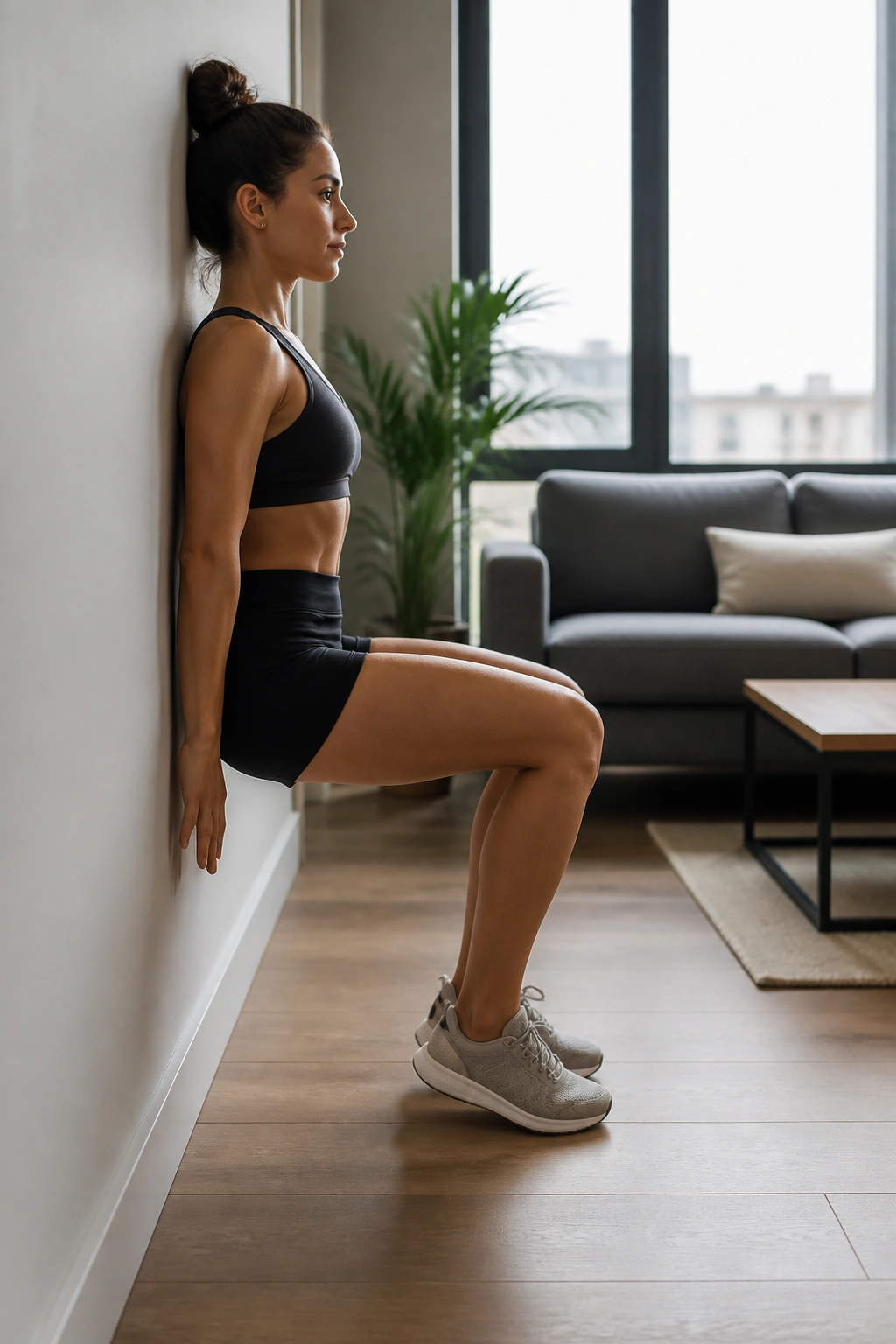
Wall sits look harmless until the clock crosses 30 seconds. Then your thighs start sending messages.
Lean your back against a wall, slide down until your knees are close to 90 degrees, and hold for 20 to 45 seconds. Follow that with slow calf raises — 15 to 25 reps, full stretch at the bottom, controlled lift at the top. Pairing the two gives you a lower-body session that feels simple and ends up being anything but.
A ladder that works well
- Wall sit: 20 seconds
- Calf raises: 15 reps
- Wall sit: 30 seconds
- Calf raises: 20 reps
- Wall sit: 40 seconds
Rest 60 seconds and repeat once or twice. Beginners can make the wall sit shallower. Stronger people can hold a plate, backpack, or water jug on the thighs. The pain arrives fast. That is the feature here.
Calf raises deserve more respect than they get. Do them slowly and you’ll feel every rep near the ankle and lower leg. No bouncing. No rushing. That ruins the point.
18. Farmer Carry Marches for Grip, Posture, and Core Bracing
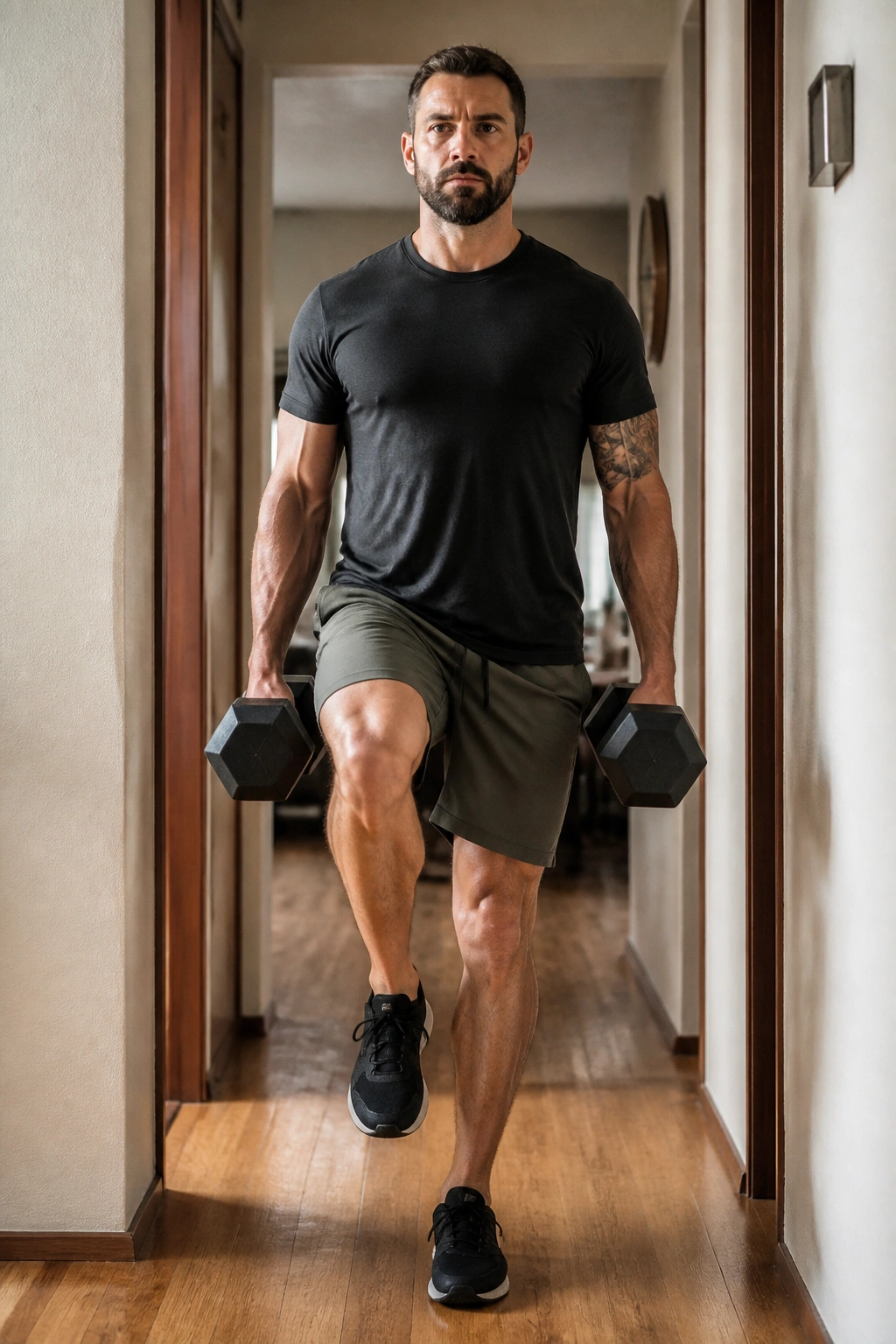
Walking while holding weight sounds too simple to matter. Then you try it with real load and notice your abs are clenched, your shoulders are steadying the load, and your grip is working hard the whole time.
Farmer carries can be done with dumbbells, buckets, water jugs, or heavy grocery bags. Walk 20 to 40 steps, turn around, and come back. If space is tiny, do marching carries in place for 30 to 45 seconds. Keep the ribs down and the shoulders relaxed rather than shrugged up to your ears.
How to make it harder
Use one side only for a suitcase carry. That forces the torso to resist tipping. Or slow the march down and hold each knee at hip height for a beat before stepping. Both versions make the core work more than people expect.
This kind of workout is a favorite of mine because it feels real. You are carrying something. Your body understands that. The stimulus is simple, direct, and a little rude in the best way.
19. Mobility Reset Flow for Days When Your Body Feels Stiff and Wired
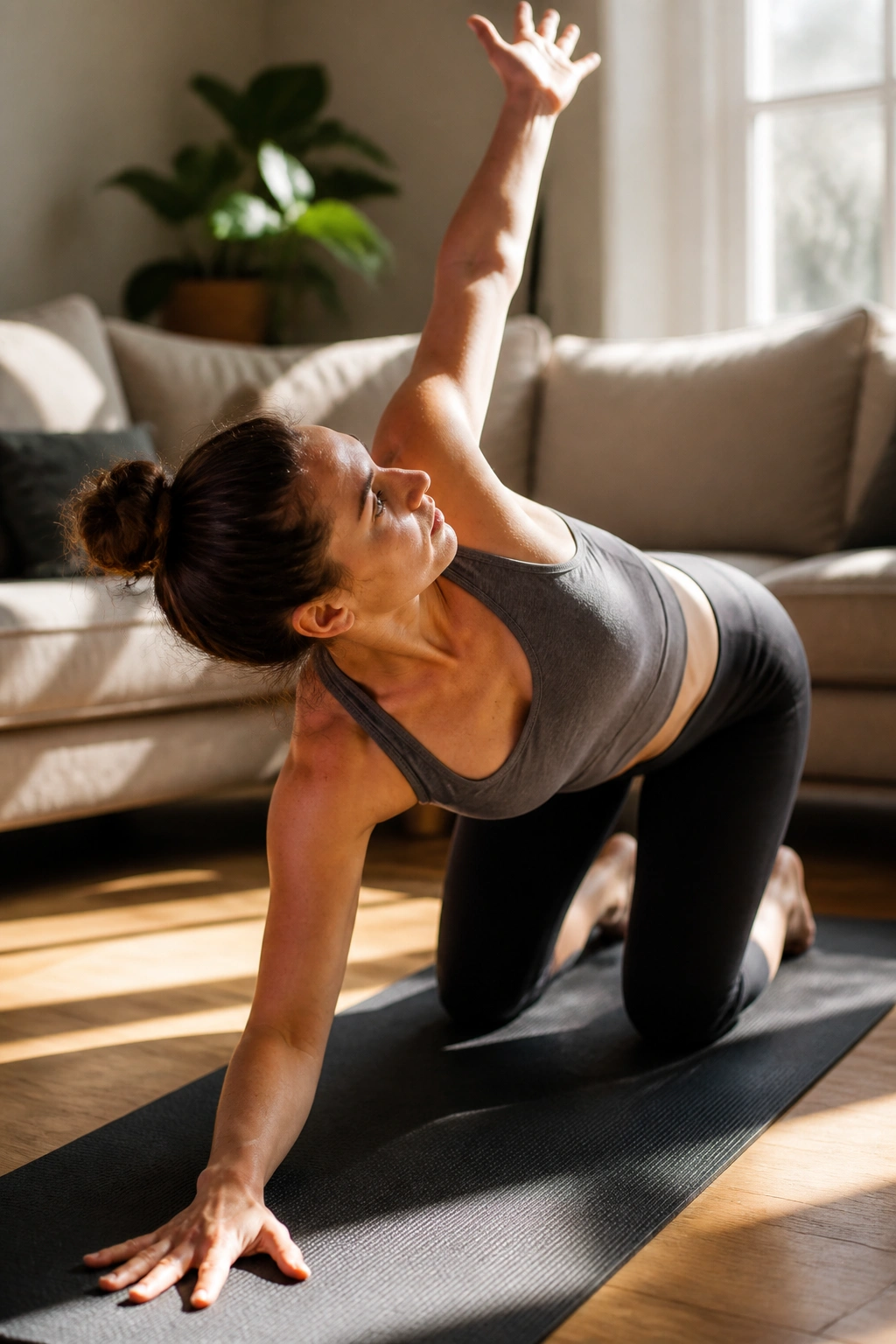
Some days call for effort. Other days call for a reset that still counts as training.
A mobility flow can be a workout if you give it structure. Start with neck nods, then thoracic rotations on all fours, ankle rocks, 90/90 hip switches, and a couch stretch for the hip flexors. Keep each position for 20 to 40 seconds and move with intent, not laziness.
The point is not to flop around on the floor and hope for the best. The point is to open the joints that get sticky from sitting, walking, lifting, or just existing in one position too long. A slow lunge with a reach overhead can wake up the front of the hips. A deep squat hold with one hand on a doorframe can ease the ankles. Small things add up.
I like this as a standalone home workout or as a 10-minute add-on after something harder. It leaves you feeling looser without erasing the fact that you trained.
20. The Mixed Circuit That Ties the Whole At-Home Workout Together
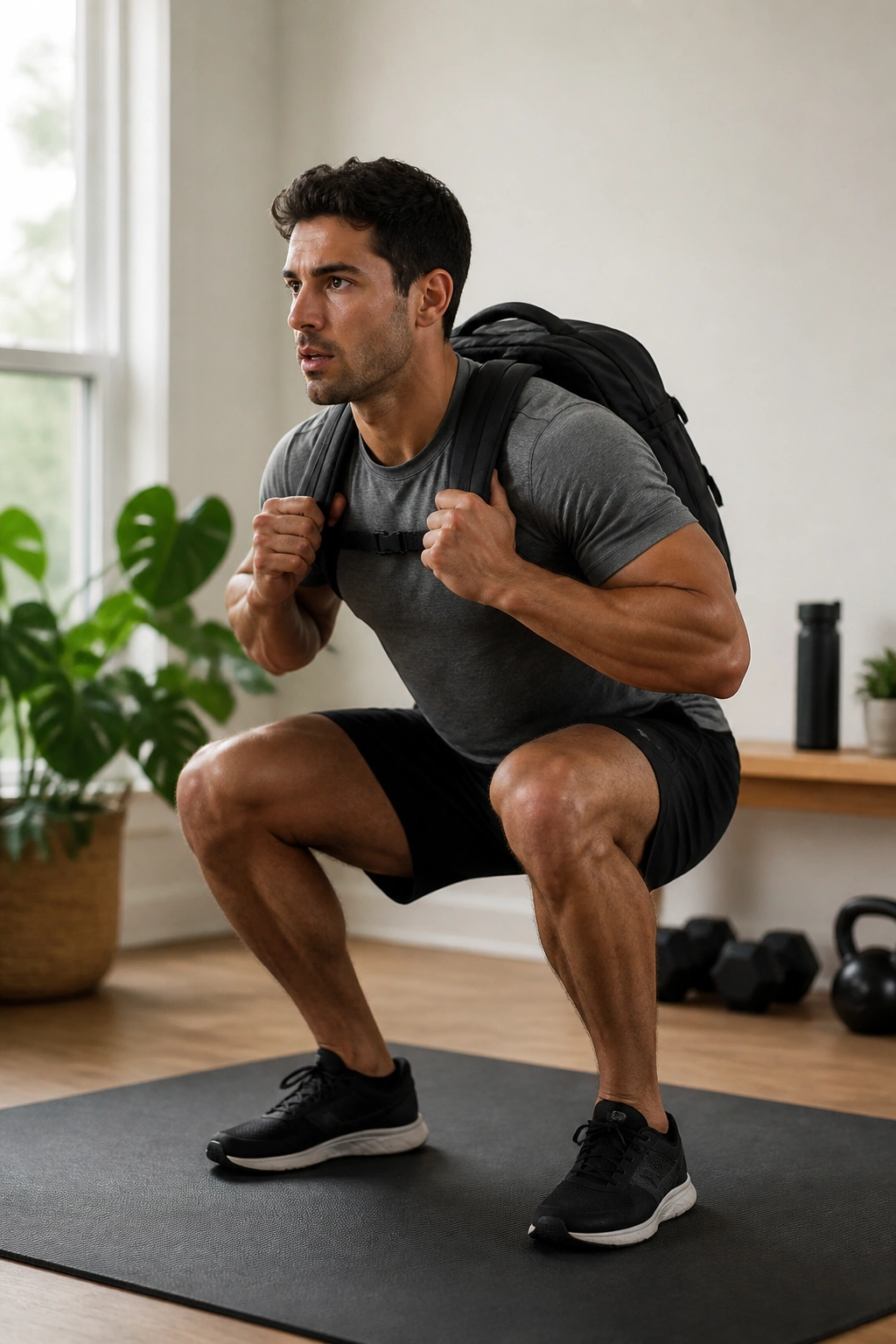
A mixed circuit is the easiest way to stop overthinking home exercise. Pick a squat, a push, a hinge, a core move, and one cardio piece. Keep the list short. Repeat it long enough that the body has to settle in.
Try this for 20 minutes:
- 8 squats
- 6 incline push-ups
- 10 reverse lunges per side
- 20 mountain climbers per side
- 20-second plank
- 30 seconds of marching or shadow boxing
Move through the list at a steady pace, rest only when you need to, and repeat until the clock runs out. Beginners can cut the reps in half and take 30 seconds between moves. Stronger people can add a backpack for squats or lower the push-up angle. The structure stays the same; the load changes.
That is why this kind of home workout matters. It lets one room, one mat, and one small pile of equipment cover strength, cardio, and core work without making the session feel like a chore. Keep one version of it on standby for busy days, and another one a notch harder for days when you want to finish sweaty and a little annoyed in a good way.
