



A home reformer changes Pilates fast. The first time you lie down on it in a quiet room—no studio chatter, no borrowed music, no instructor walking past your head—you start noticing things you could ignore before. One foot sits a little crooked on the bar. A rib pops up. A shoulder creeps toward the ear. The carriage is honest about all of it.
That honesty is why at home reformer Pilates workouts are so satisfying. You can repeat a short sequence often, make tiny changes, and feel the difference in your hips, ribs, and neck within a few sessions. The machine rewards precision. It also punishes rushing, which is annoying for about ten seconds and then strangely addictive.
I’ve always liked reformer work more than people expect. Not because it is flashy. It isn’t. Because the good stuff is buried in the details: spring tension, foot placement, the way your exhale softens the front of the ribs, the way the carriage moves a little cleaner when your inner thighs do their job instead of your lower back. That’s the real draw of a home setup. You can go back to the same sequence and get better at it.
So the list below leans into that. Some are warm-ups. Some are full-body burners. Some are the sort of small, tidy reformer Pilates exercises that make your whole practice feel sharper the next day. Start with the feet on the bar. It’s the cleanest place to hear what your body is doing.
1. Heavy-Spring Footwork Ladder
Footwork is never boring if you pay attention. On a home reformer, it’s the quickest way to check whether your knees track cleanly, whether your heels stay heavy, and whether your pelvis wants to rock when the carriage moves.
Why it works so well
Put the carriage on a heavy spring setting that feels steady, not twitchy. Lie down, place the balls of your feet on the bar, and press out for 10 slow reps. Then move to heels, then wide V, then a Pilates first-position shape with the heels together and toes slightly apart.
Each change shows you something different. Toes challenge the ankles. Heels ask for hamstring and glute support. The wide position catches any tendency to dump weight into the outer edge of the foot. Simple. Brutal. Useful.
- Reps: 8 to 10 per foot position
- Tempo: 2 counts out, 2 counts back
- Cue: Keep the carriage silent on the return
- Watch for: knees collapsing inward or feet gripping the bar
Tip: If your hips pinch, shorten the range before you touch the springs.
2. Frog Kicks in the Straps
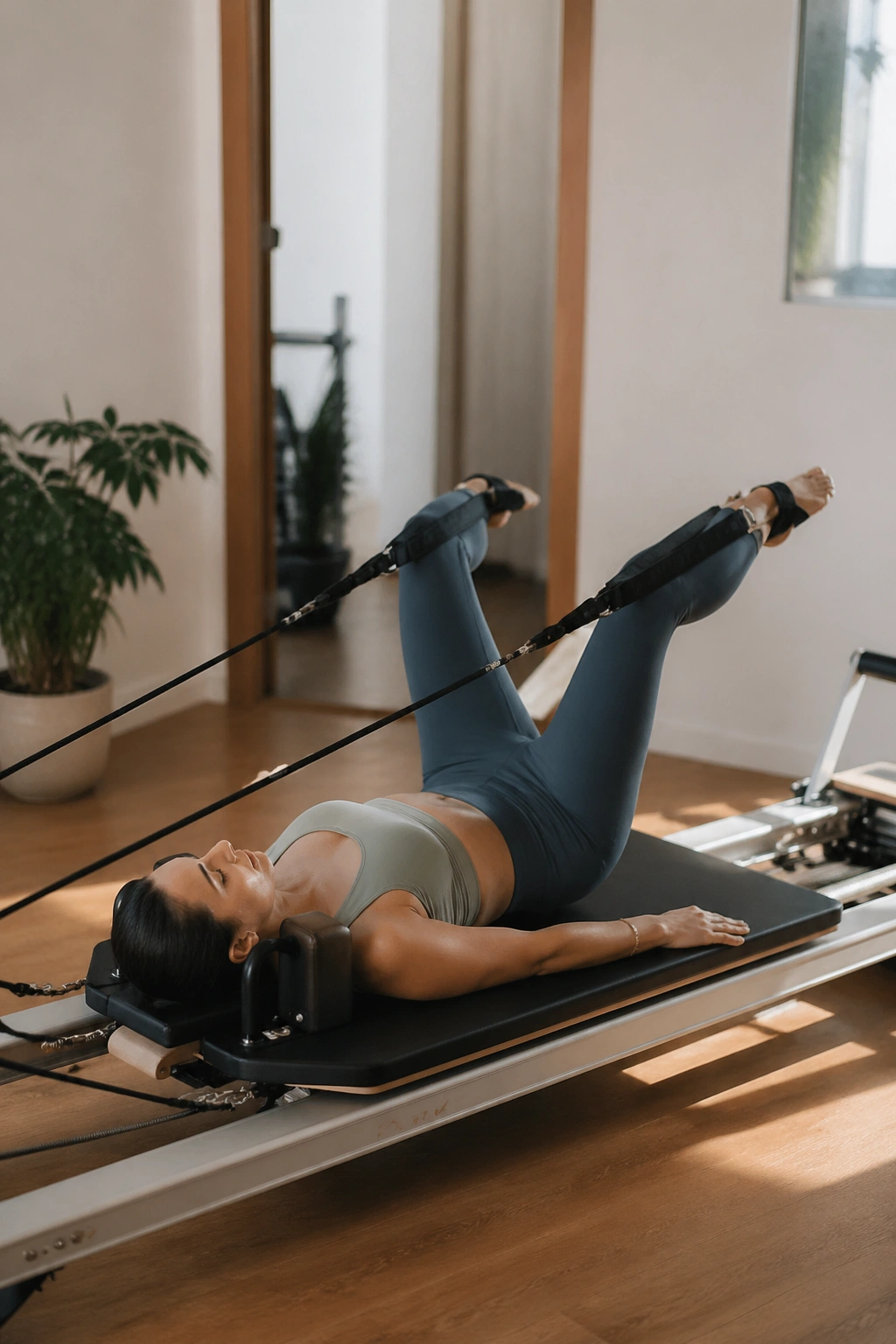
Frog kicks are sneaky-hard. They look soft, almost polite, until the lower abs and inner thighs have to hold the pelvis still while the legs move away from you.
Hook the straps onto your feet, start with a light-to-medium spring, and bring the knees into tabletop. Press the legs out to a low diagonal, then bend back in through the heels. The best version feels smooth, not snappy. The feet stay relaxed. The pelvis stays quiet. If your back arches, the range is too big.
After 8 to 12 reps, add small circles. Keep them no larger than a dinner plate. Big circles are usually just sloppy circles. Small circles make the deep hip muscles work without turning the whole thing into a backbend.
Use this one when you want the front of your hips to work less and your center to work more. It is also nice after long sitting, because it reminds the legs how to move without dragging the spine along for the ride. Clean, tidy, no drama.
3. Hundred Prep With Tabletop Breath
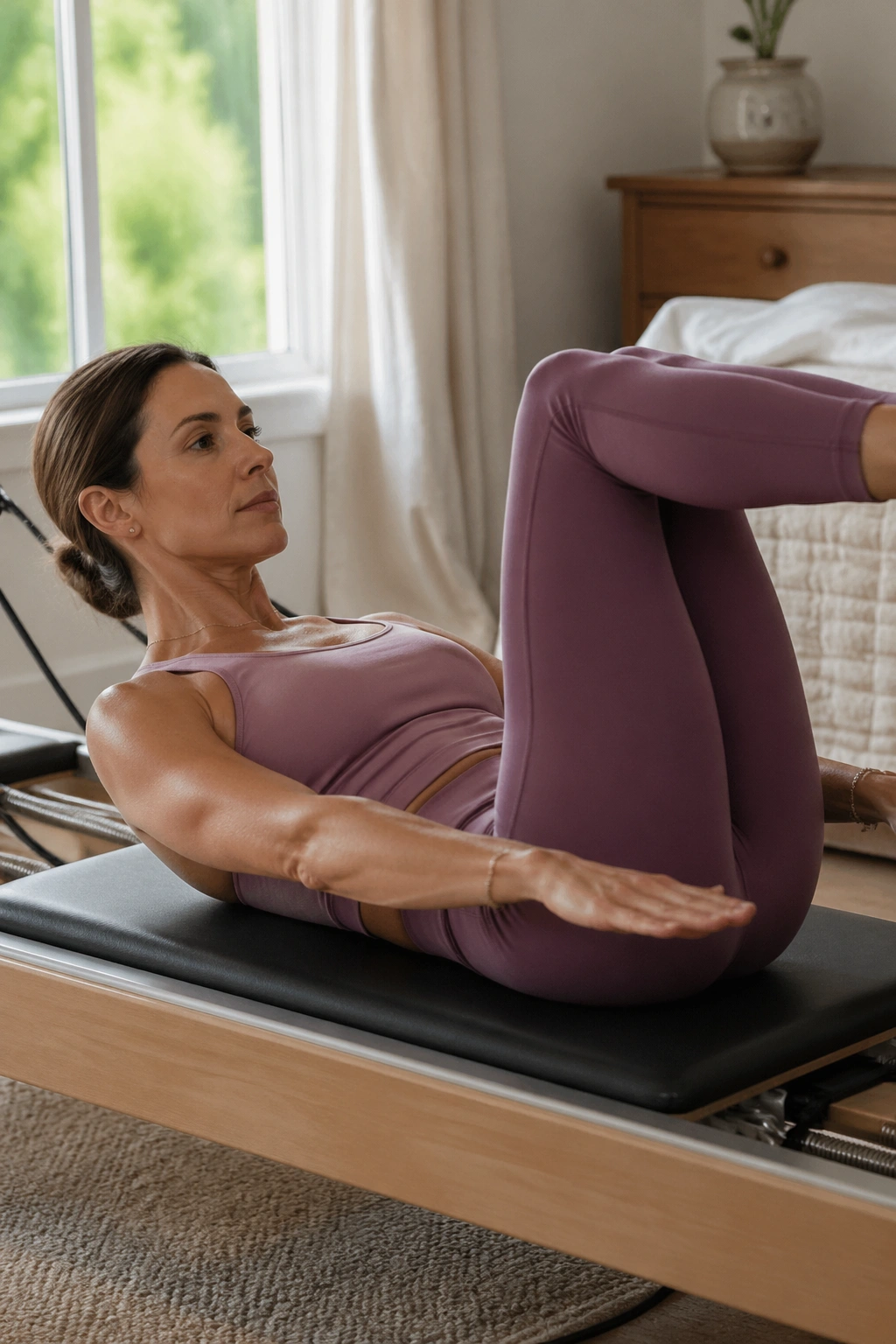
Why does the Hundred prep feel so good at home? Because it strips the move down to the part that matters most: breath and rib control. You do not need to fling your head or beat your arms like you are trying to win a sprint.
Lie down with the headrest down if your neck prefers that, or up if your machine setup needs it. Bring the legs to tabletop and curl the head and shoulders only as high as you can keep the neck long. Reach the arms straight, then pump them small and fast for 5 breaths in, 5 breaths out. If your lower back starts to pop off the carriage, place the feet on the footbar instead.
How to use it
- Start with 3 to 5 breath cycles
- Keep the pumps tiny, almost annoying in how small they are
- Exhale fully and feel the ribs slide down
- Stop the second your neck starts doing the work of your abs
The point here is not to prove anything. The point is to teach your torso how to stay stacked while the limbs move. That lesson carries into every other Pilates reformer workout on the machine.
4. Shoulder Bridge With Articulation
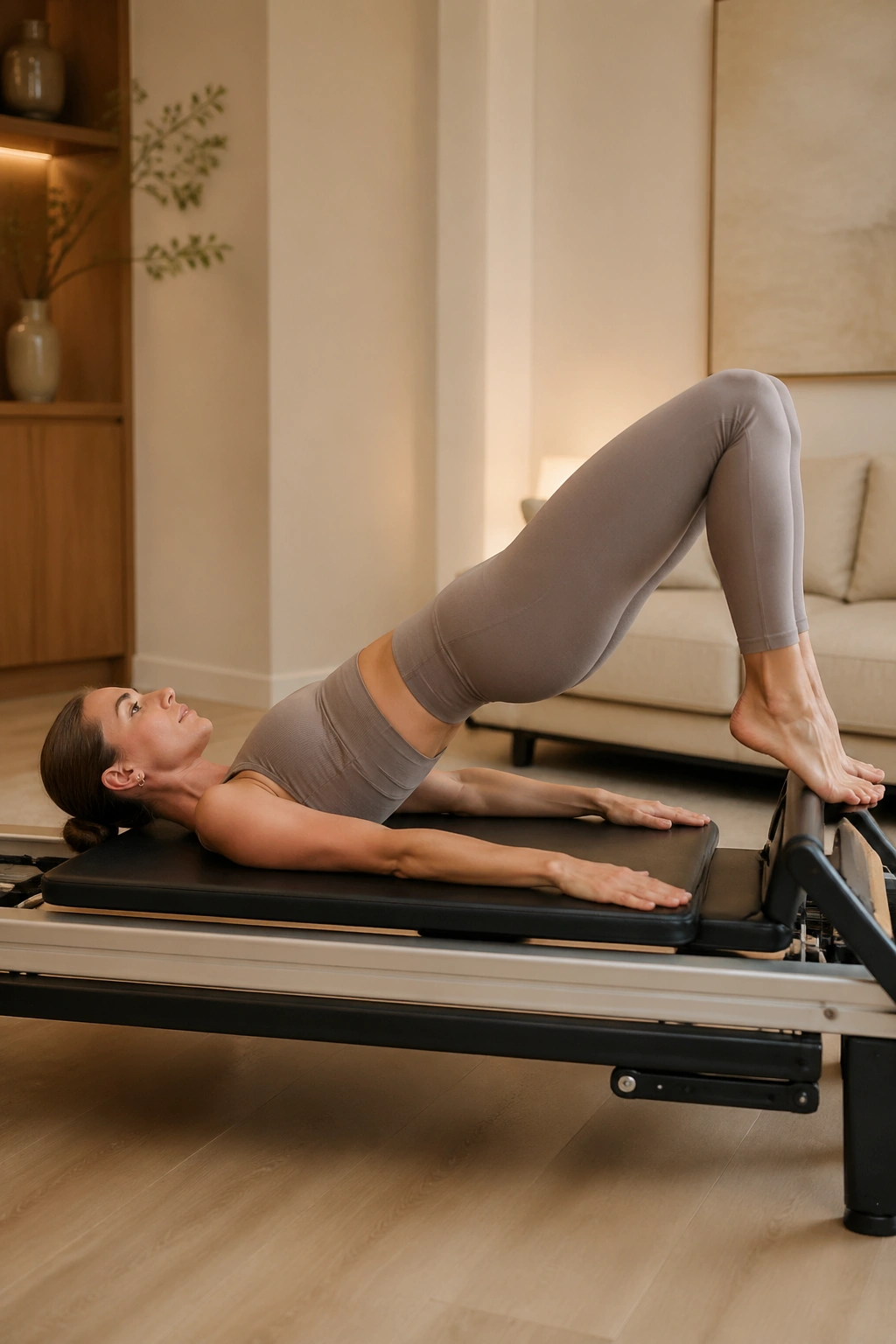
If your lower back feels cranky after sitting, bridge work is usually the first place I’d look. Not because it fixes everything. Because it tells you, fast, whether your glutes wake up before your spine starts trying to overhelp.
Keep the springs light to medium, feet on the bar, and roll the spine up one bone at a time. Pause at the top for one breath. Then lower through the upper back, mid-back, and finally the tailbone. No dropping. No slamming. The carriage should stay still.
You can do 6 to 8 controlled reps, then hold the top for 10 to 20 seconds on the last one. If your hamstrings cramp, bring the feet a little closer to your seat. If the neck tightens, soften the shoulders into the mat and stop trying to arch higher.
- Best cue: lift through the back of the pelvis, not the ribs
- Best range: the one where your ribs stay closed
- Best feeling: glutes working before the hamstrings take over
That last point matters. Too many bridge sets become a hamstring survival contest. Don’t let that happen.
5. Long Stretch Plank Series
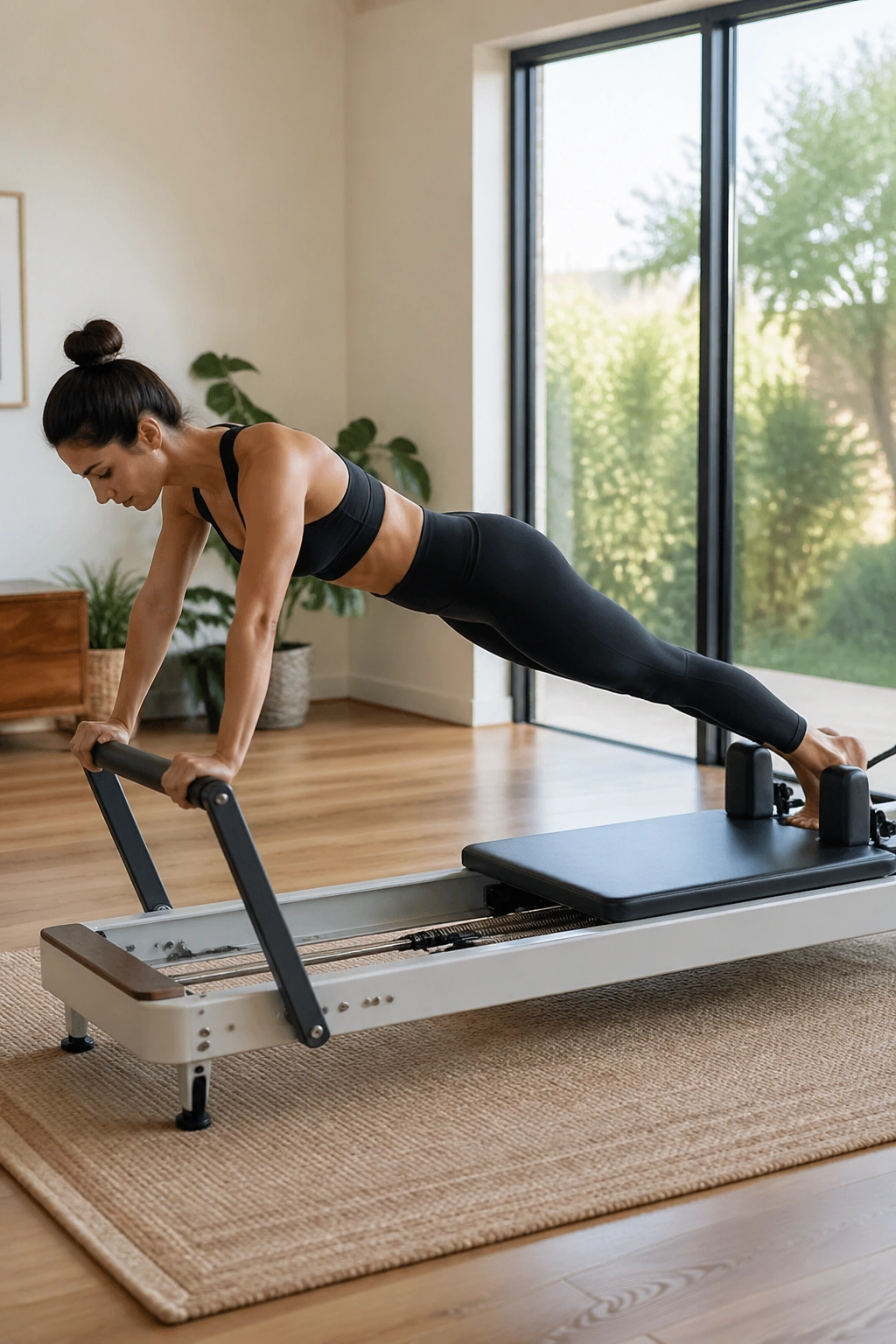
The first time someone does long stretch on a home reformer, they usually assume it’s about arm strength. It isn’t. Not really. It’s about staying connected while the carriage wants to run away from you.
Hands on the footbar, toes on the shoulder rests, and body in a strong plank. Press the carriage back 4 to 6 inches, then bring it home without losing the line from crown to heel. The hips should feel level. The ribs should stay in. The shoulders should sit broad, not jammed forward.
What makes it useful
The plank version is the cleanest place to notice whether your core is working or merely pretending. If the machine feels unstable, slow down. If the wrists complain, move the hands slightly wider and press through the knuckles instead of hanging in the joints. If the neck tightens, look a few inches in front of the bar, not at your toes.
A short set is enough here. Three to five controlled reps, then rest. The quality drops fast once fatigue hits. And honestly, that’s part of the lesson.
6. Kneeling Arm Pull With Straps
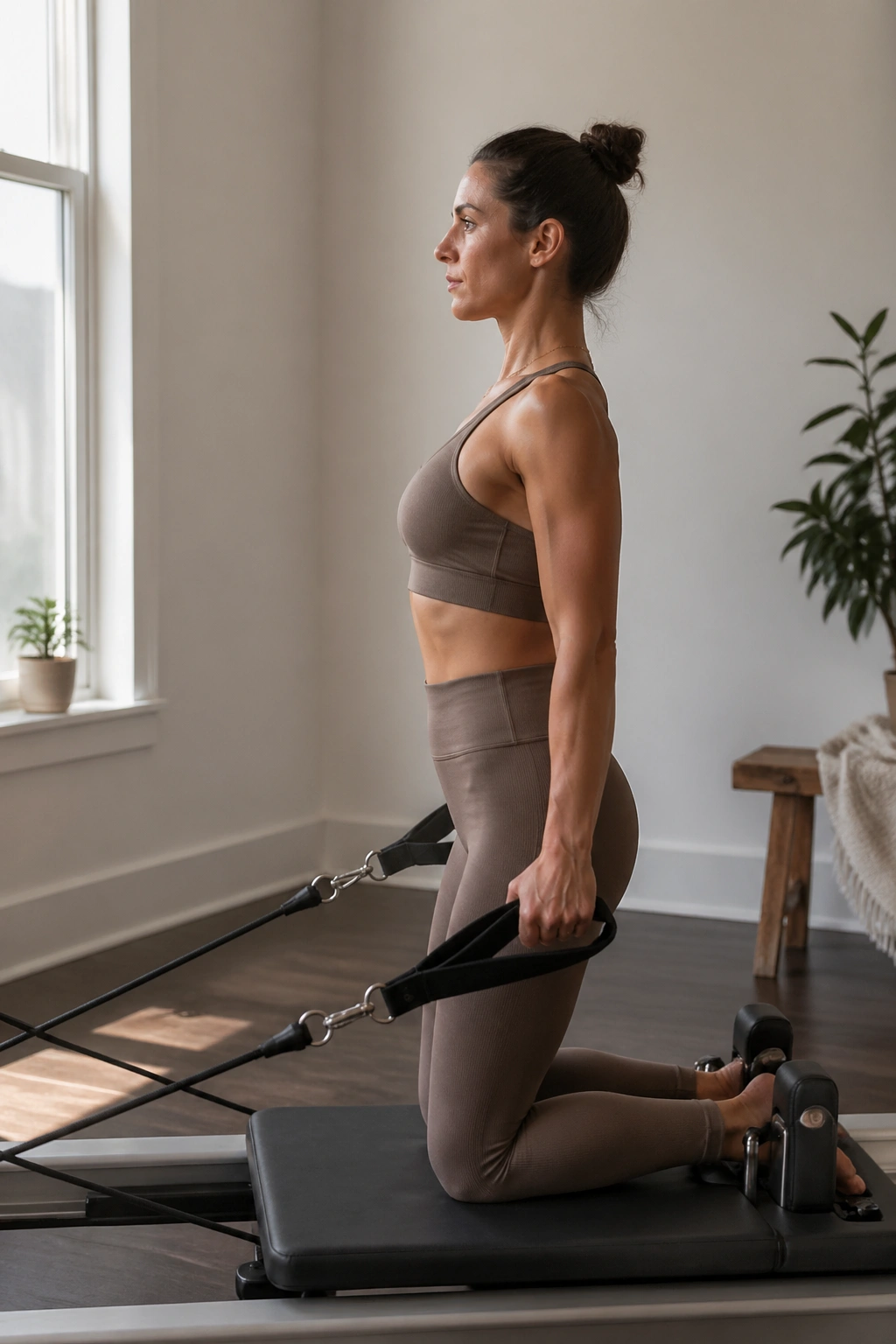
Unlike mat arm work, kneeling strap work gives you feedback from the carriage the whole time. That makes it much harder to fake good posture. Which is exactly why I like it.
Kneel facing the straps with the carriage on a light spring. Hold the straps with straight wrists and pull the arms down beside the ribs, then return them with control. Keep the pelvis heavy over the knees and the ribs stacked over the hips. If you lean back to cheat the pull, the springs will tell on you immediately.
How it feels different from standing band work
- The knees remove leg momentum
- The reformer carriage punishes wobble
- The straps force clean shoulder blades
- Small range beats big flinging every time
Do 8 to 12 pulls, then mix in a T-shape or a low triceps press. If your shoulders live near your ears, lower the spring tension. I’d rather see a smaller pull with real control than a big range with a neck that looks angry.
7. Round-Back Knee Stretch Series
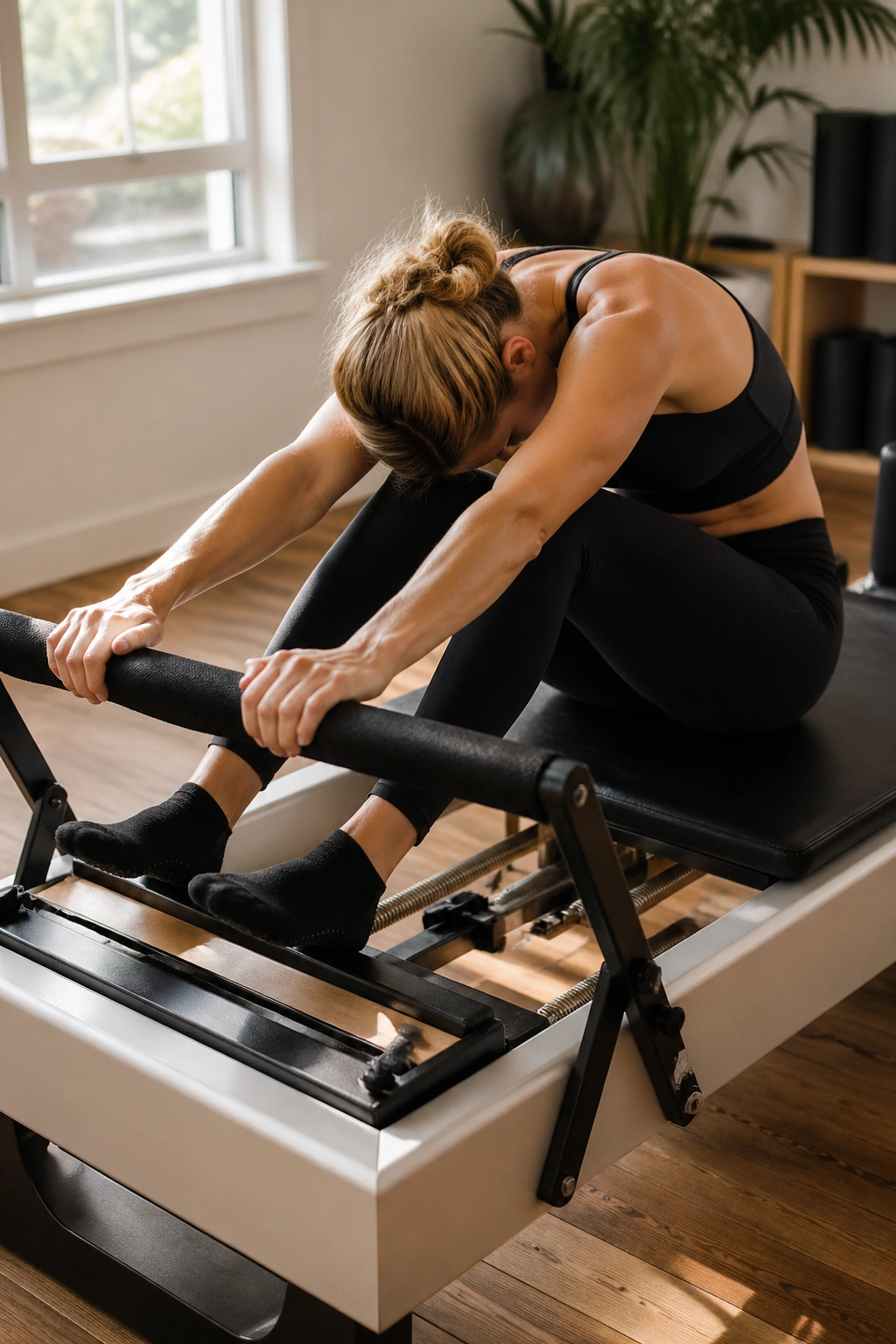
Knee stretches are one of those reformer Pilates exercises that look easy until you try to keep the spine honest. Round-back version first. Flat-back later. Don’t rush it.
Set the carriage with a light spring and kneel with hands on the footbar. Round the lower spine slightly, like you are zipping up the front ribs. Then press the carriage back a few inches and bring it home without changing the curve. The movement comes from the hips and abdominals, not from flinging the whole torso around.
Do 8 slow reps. If your shoulders start carrying the load, shift more weight into the hands and soften the elbows a touch. If the thighs cramp, your range is too big or the spring is too light. People often blame core weakness here when the real problem is sloppiness. Not the same thing.
A nice extra: move from round-back into flat-back and notice the difference. Round-back usually feels more abdominal. Flat-back usually asks more of the glutes and shoulder stabilizers. That comparison alone is worth the set.
8. Side-Lying Inner Thigh Series
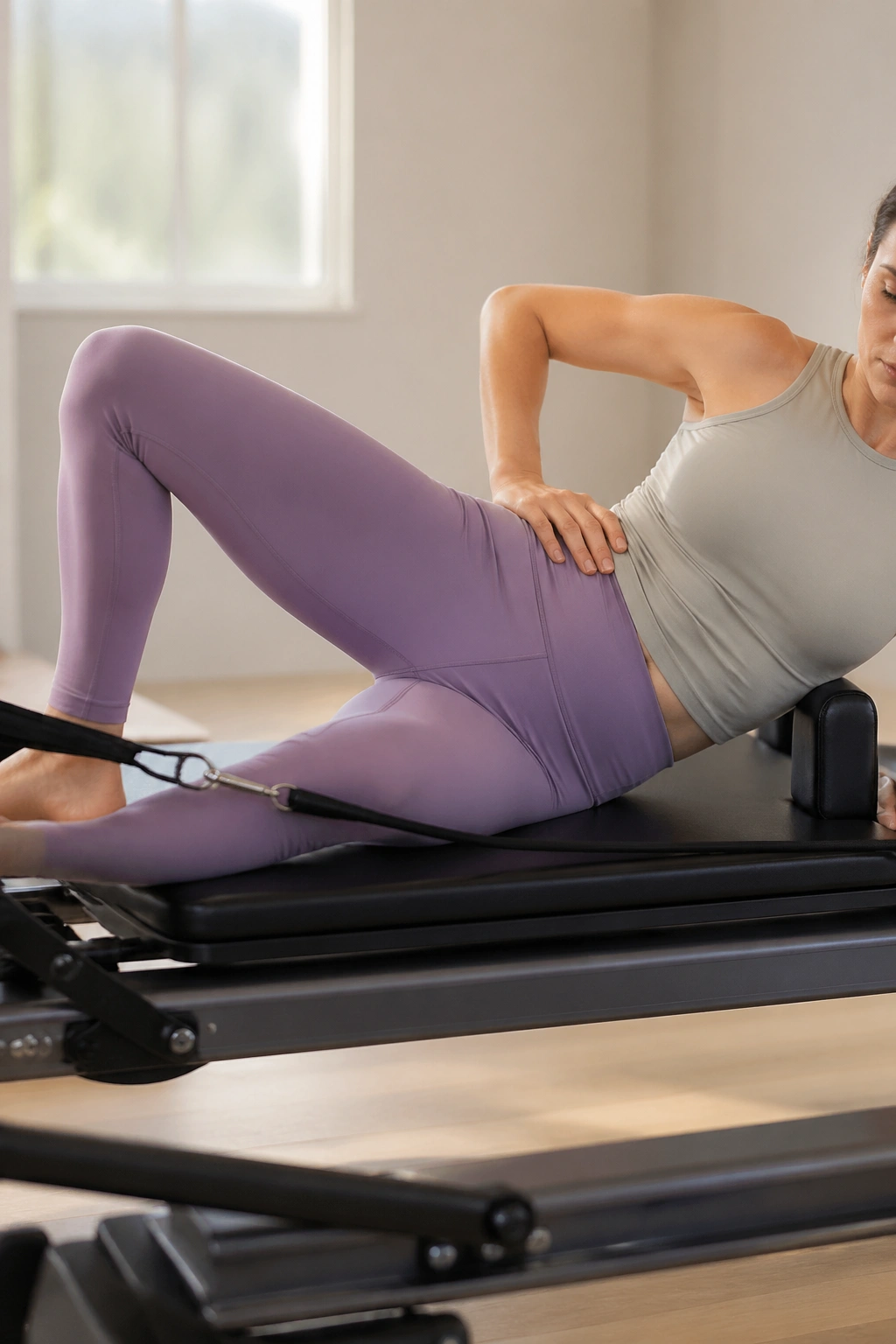
A side-lying strap series is one of the best home reformer Pilates workouts for the hips because it gets into the boring muscles people skip. The adductors matter. A lot. They help with pelvic stability, walking, and keeping the legs from splaying open when you get tired.
Lie on your side with the bottom leg in the strap and the top leg bent in front for support. Start with the bottom leg extended low, then lift and lower it in a tiny arc. Keep the pelvis stacked. Keep the foot relaxed. The temptation is to swing the leg from the hip socket like a pendulum. That’s not the point.
After 8 to 10 reps, hold the leg at hip height for 5 seconds. Then pulse 5 times. Small pulses. Not circus pulses.
The work should feel deep inside the inner thigh and low seat. If you feel it in your neck, your body has gone off the rails a bit. Reset. Re-stack. Start smaller.
9. Elephant Into Small Pike Prep
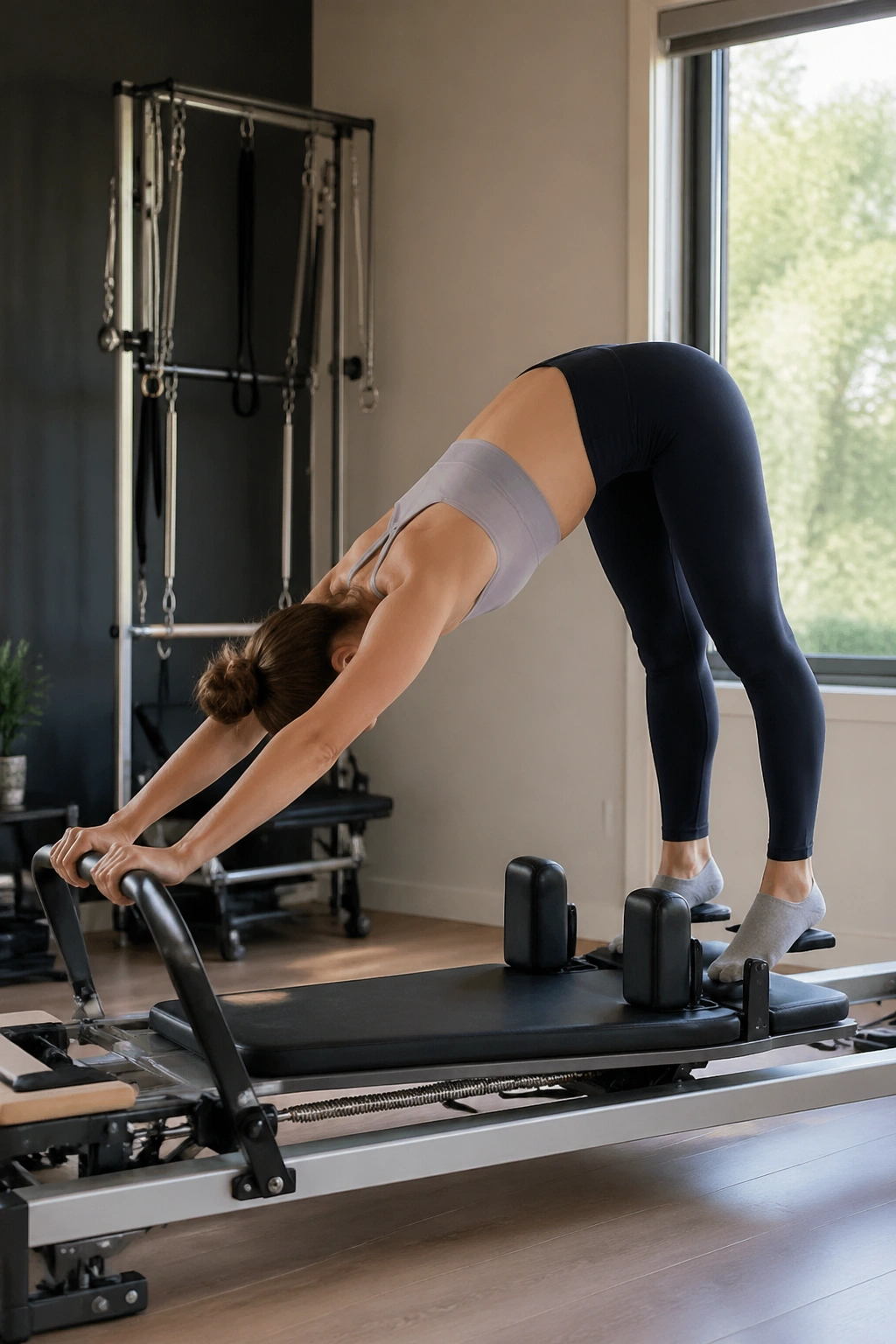
This one is a wake-up call for the back of the body. Elephant feels like a hamstring stretch, but the useful part is the control you need to keep the carriage from slamming back.
Stand on the reformer with hands on the footbar, heels lifted or flat depending on your flexibility, and hips folded so the torso is long. Press the carriage back with straight legs, then pull it in using the hamstrings and lower abs. Keep the spine long rather than rounding hard. Think of making the carriage move without letting the shoulders collapse.
When that feels steady, add a tiny pike prep. Bring the hips up just a bit as the carriage comes in, then return to the original long shape. Four to six reps is enough.
A lot of people turn elephant into a back-of-the-body tug of war. Better to keep it small and precise. The feet stay rooted, the ribs stay knit, and the movement looks almost quiet. Almost. The effort is hidden under the control.
10. Mermaid Twist and Side Bend
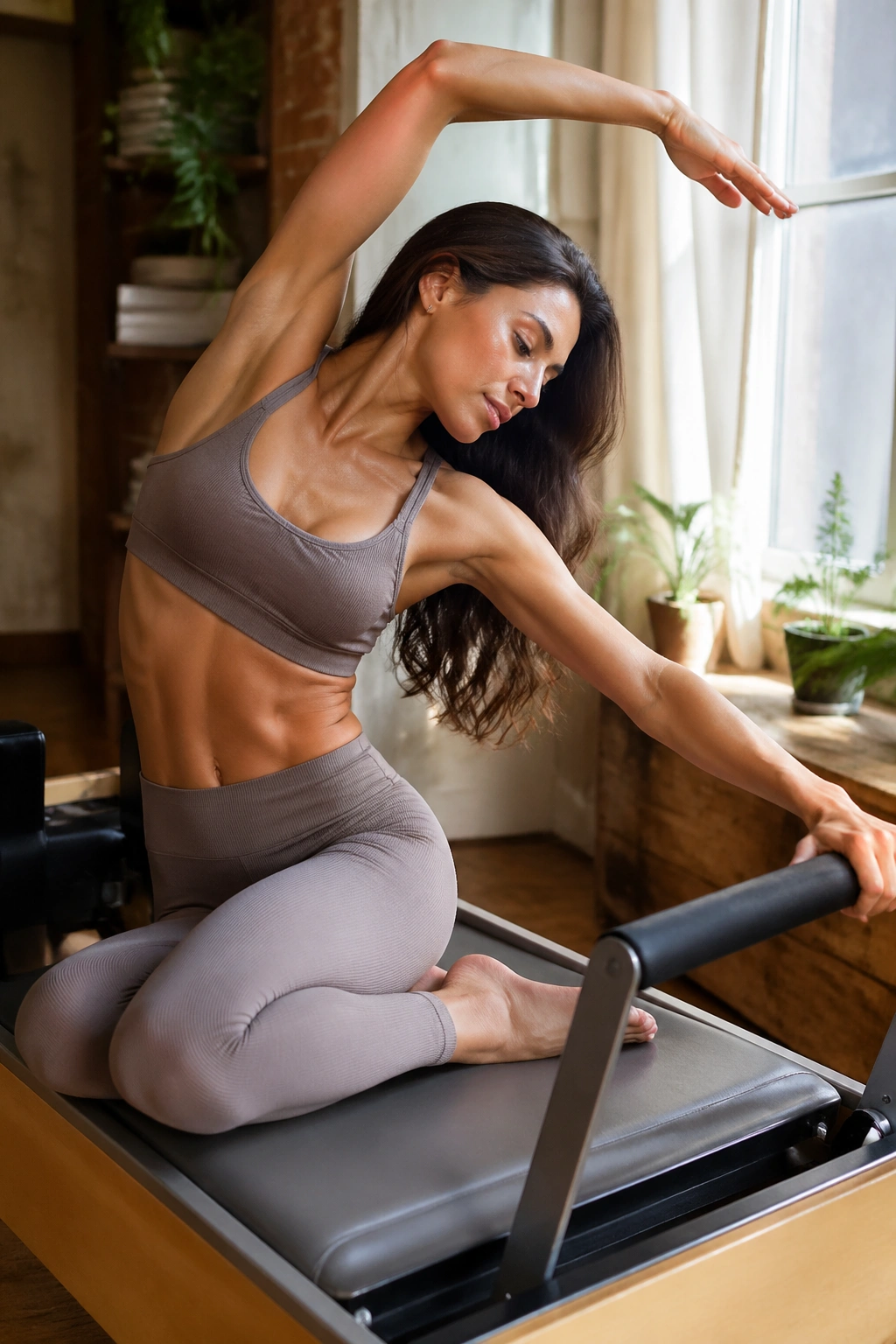
Mermaid gives the machine a little grace after all the straight-line work. It’s also one of the nicest ways to open the side body without yanking on the spine.
Sit sideways on the carriage, one hand on the footbar, the other reaching overhead. Glide the carriage out as you side bend away from the bar, then pull back to upright. Add a gentle twist toward the footbar if your ribs and shoulders can stay calm. If the sitting bones start sliding, sit on a box or pad first.
The move works because it asks the obliques to lengthen and contract in the same sequence. That sounds technical, but in practice it just feels like breathing into the side ribs while keeping one hip grounded. You should feel space under the armpit and along the waist.
This is a good mid-session reset, especially if the planks and arm series have made you feel a little square. The body likes this shape more than people expect.
11. Running and Calf Stretch Reset
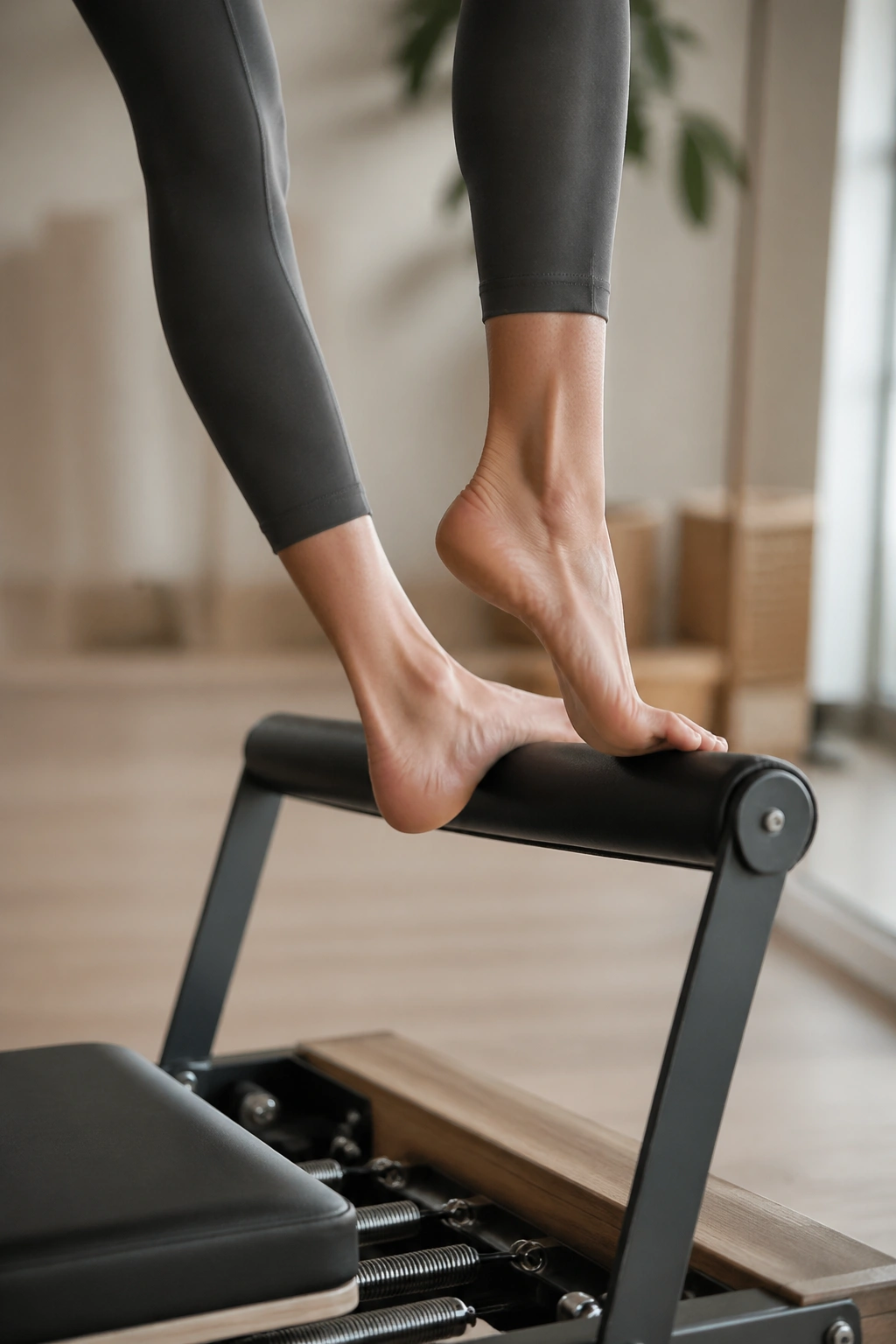
Running on the reformer is not about speed. It’s about letting the ankles articulate while the pelvis stays calm. That combination is rarer than it sounds.
Set up on the bar, press into the balls of the feet, and alternate lowering one heel while the other stays lifted. Keep the carriage still. Let the ankles do the talking. After 10 to 12 switches, pause both heels low for a slow calf stretch, then lift back up with control.
You can think of this as a reset between harder sets. The calves lengthen, the feet wake up, and the lower legs stop acting like stiff posts. If the knees lock or the arches collapse, slow down and use a smaller heel drop.
A tiny detail matters here: keep the toes long instead of clawing the bar. Toe grip is a common cheat, and it spreads tension all the way up the chain. Relax the toes. Let the feet be feet.
12. Scooter Lunges for the Glutes
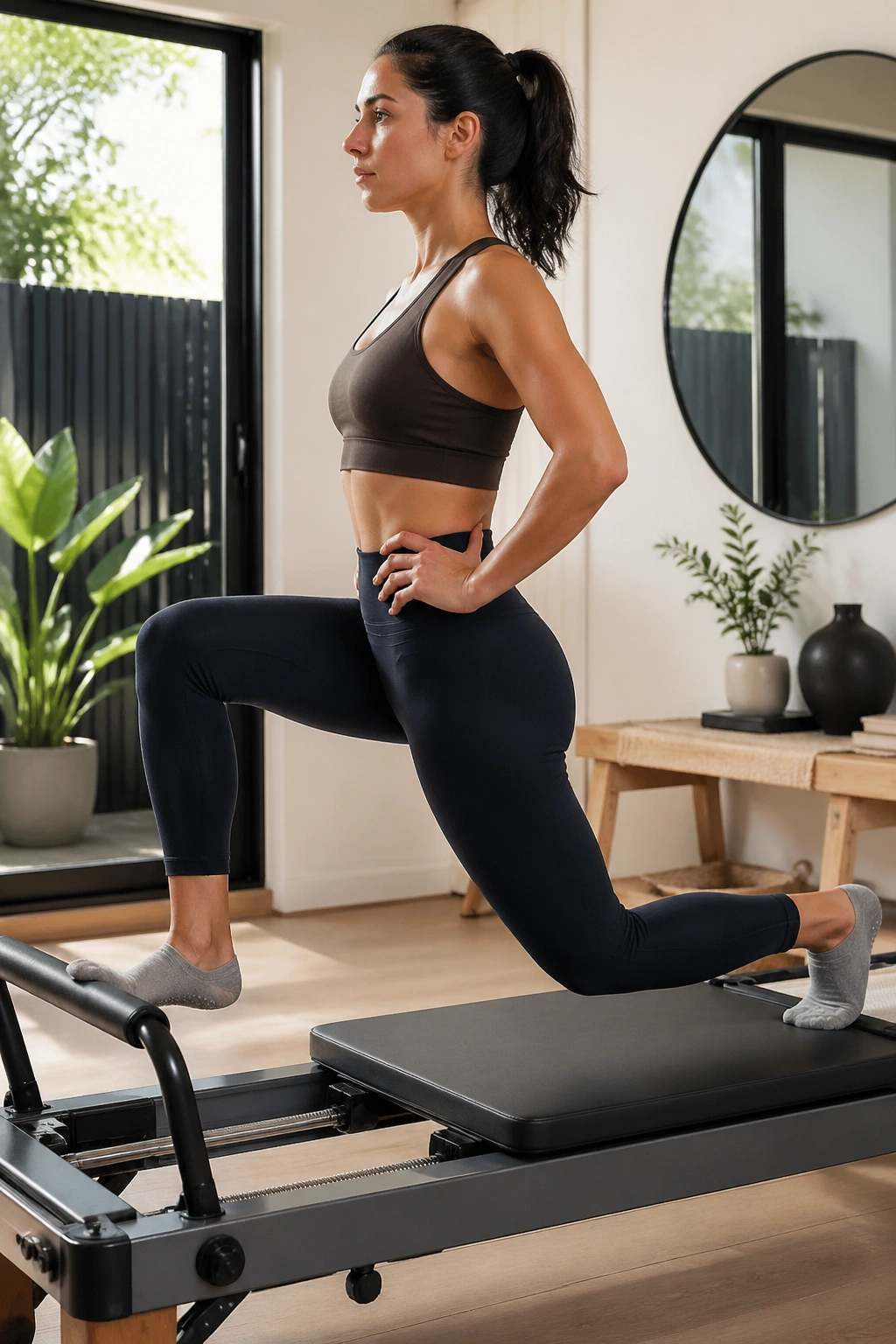
Scooter work looks innocent. It is not. The standing leg has to stabilize the pelvis while the moving leg drives the carriage back, and that can light up the glute fast if the setup is clean.
Stand on the platform with one foot on the carriage and hold the bar lightly. Bend the standing knee, keep the torso tall, and press the moving leg back in a controlled line. The spring should feel challenging but not jerky. One heavy spring or medium-heavy tension usually works well on a home machine.
What to watch for
- Keep the hips square to the front
- Do not lean the chest forward to fake range
- Press through the heel of the standing leg
- Keep the moving knee softly bent, not locked
Six to eight reps per side is enough to feel it. If the standing hip collapses inward, reduce the range and hold the bar more firmly. The goal is a steady pelvis, not a dramatic push.
13. Chest Expansion and Triceps Press
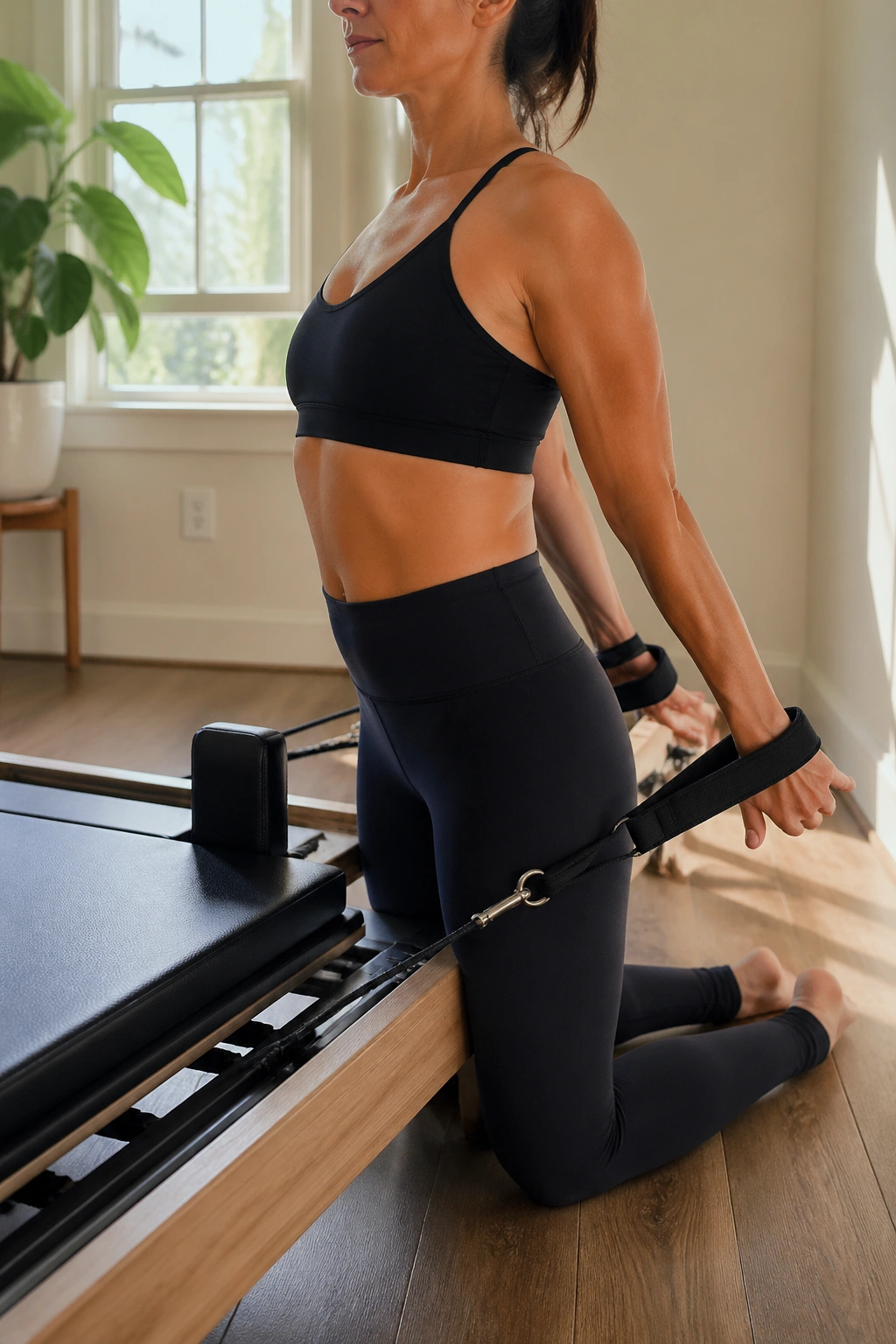
Chest expansion is one of those classic reformer Pilates exercises that people overlook until their upper back starts to change shape. Better posture. Less neck tension. A little more room across the collarbones. Nice trade.
Kneel facing the carriage with the straps in hand, arms by the sides, and palms turned back. Press the arms slightly behind the body, hold for a beat, then return without letting the ribcage flare. It is a small motion. That’s the point. You want the shoulder blades to slide down and together, not jam into a military pose.
Then add triceps press: arms lifted slightly, elbows bend, and forearms press back. The upper arm stays still while the forearm moves. If the shoulders creep up, the spring is too heavy or the set is too long.
A clean set of 6 to 10 reps can change the way your upper body feels when you stand up. Not dramatic. Just better organized.
14. Tendon Stretch Balance Holds
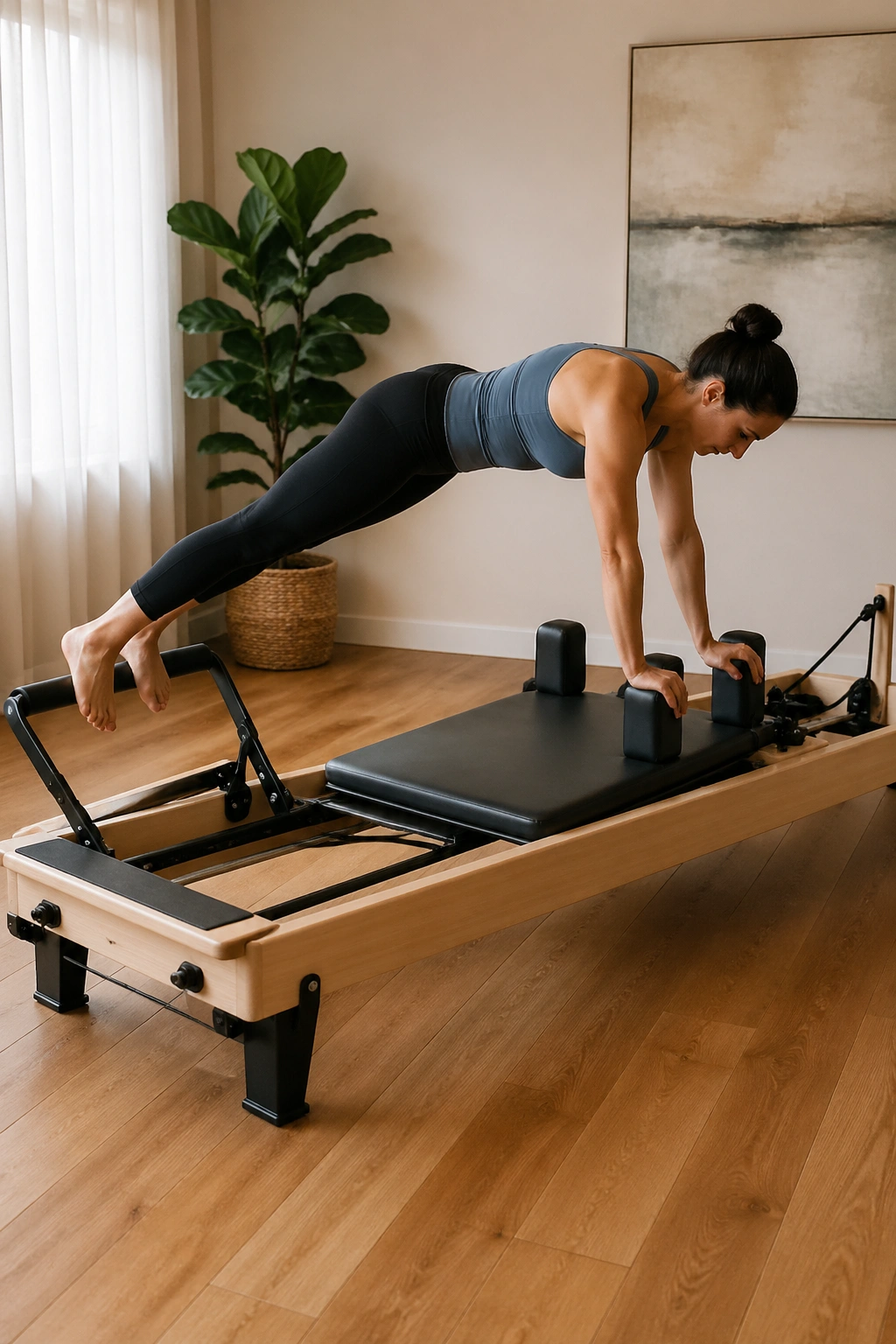
Tendon stretch is the one people want to skip because it looks a little awkward. Then they do it properly and realize it catches the feet, ankles, abs, and shoulder line all at once.
Place the toes on the bar or shoulder rests depending on your machine setup, lift into a long plank, and press the carriage out. Then pull it back in while keeping the heels high and the hips steady. On the last rep, hold the out position for 10 to 15 seconds and breathe.
The balance challenge is the whole point. You’ll feel the calves working hard, but the real test is whether the ribs stay controlled while the machine wobbles. If the lower back takes over, shorten the hold. If the wrists complain, redistribute more weight toward the fingertips and keep the shoulders broad.
This move is a little mean. I mean that in a good way.
15. Stomach Massage Pulses
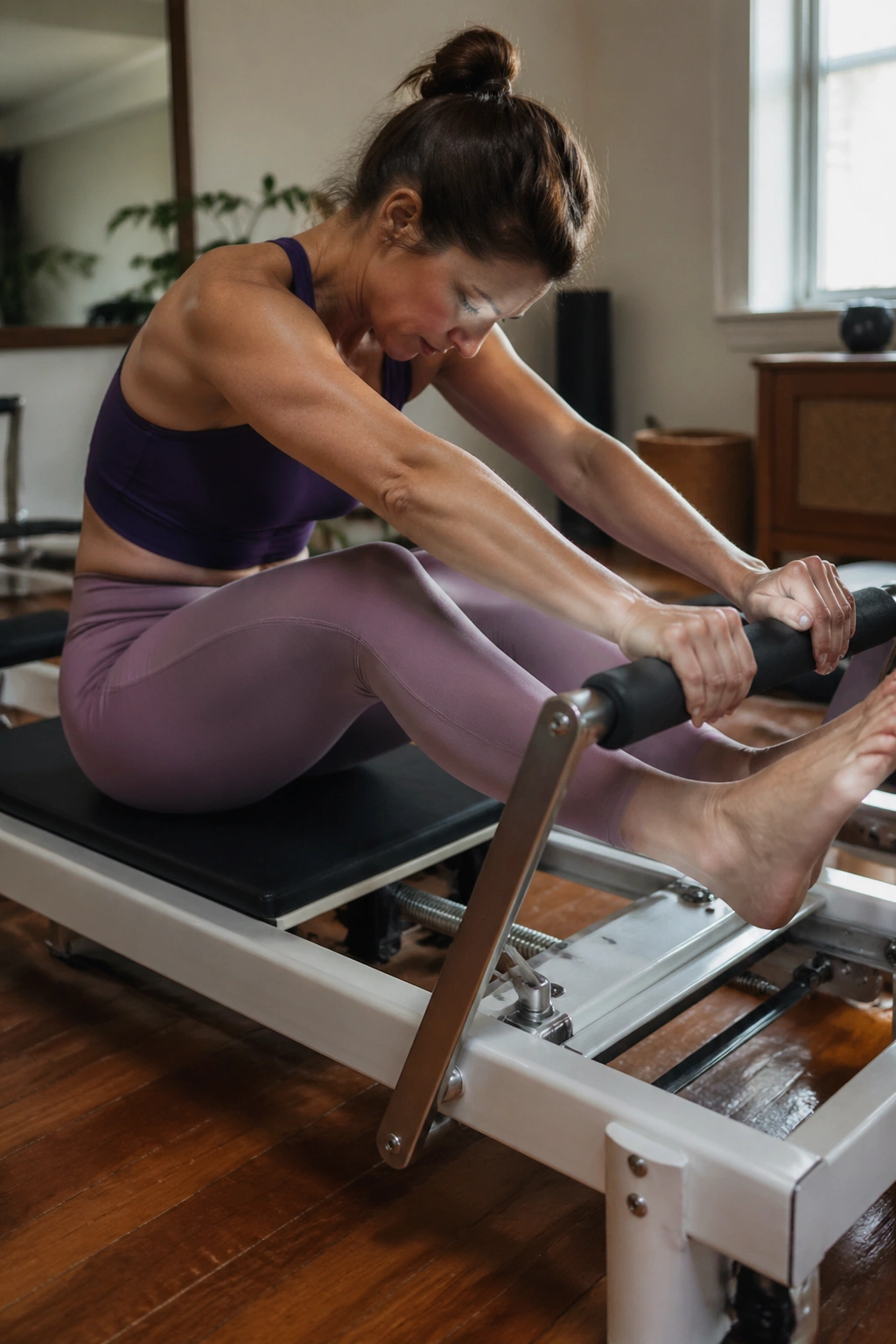
Stomach massage sounds like spa work. It is not. It is a strong, tidy abdominal drill that asks you to stay curled while the carriage moves under you.
Sit near the front edge of the carriage, hands on the bar, feet on the footbar, and round the spine slightly. Press the carriage out a few inches, then bring it back in. Keep the heels pressing down and the stomach drawing back. The movement is tiny. Tiny enough that sloppy form sticks out immediately.
You can do 5 to 8 controlled pulses in each foot position: heels on, toes on, wide V, and maybe a parallel stance if your setup allows it. If the hips grip, reduce the spring or sit a touch farther back. If the neck feels strained, check that the chin isn’t jamming forward.
Why it’s worth the fuss
- It teaches control under compression
- It wakes up the front line of the body
- It exposes weak pelvic support fast
- It rewards patience more than effort
That last line matters. People try to muscle through it and end up looking busy. Better to move less and stay organized.
16. Long Box Pulling Straps
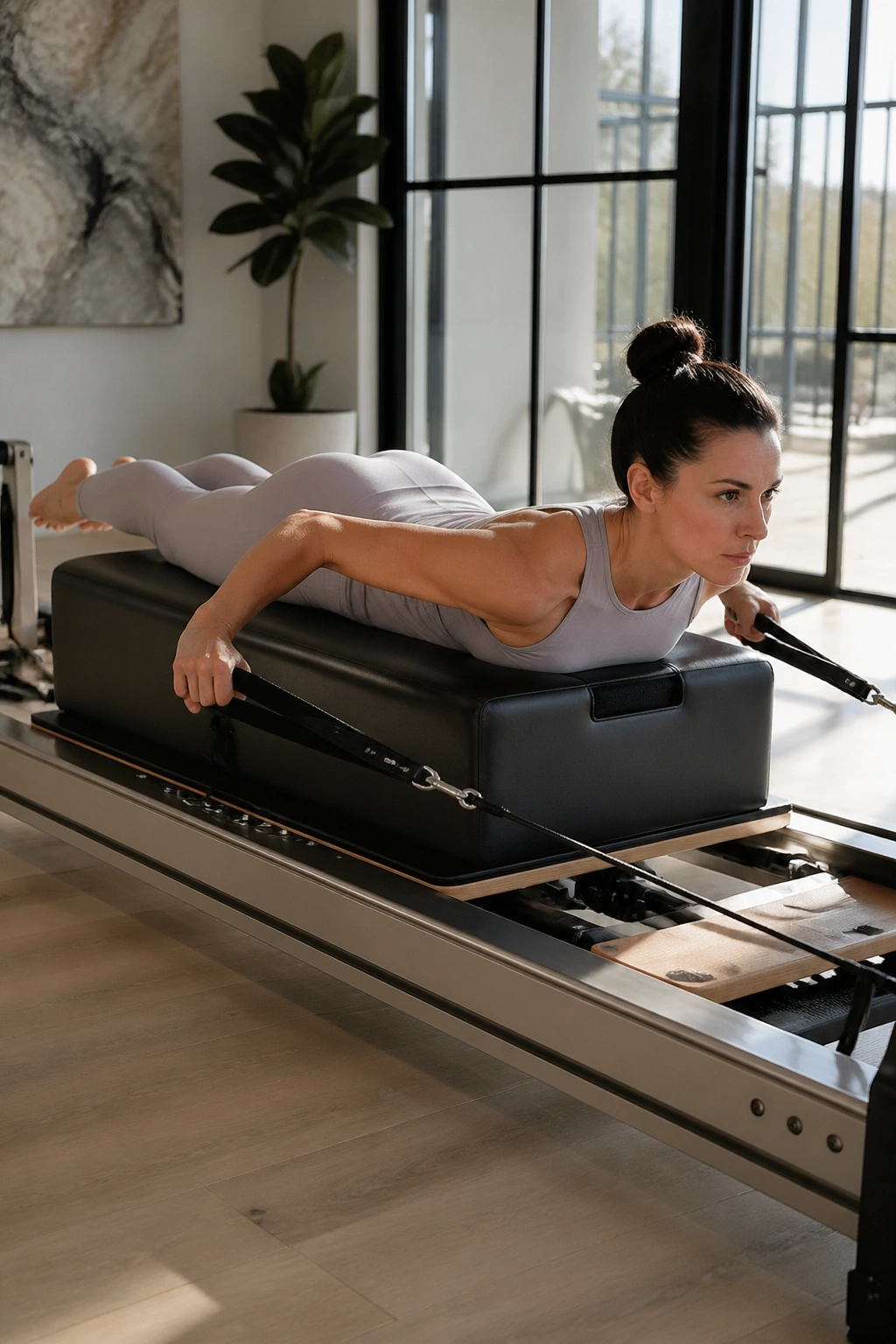
Long box pulling straps is one of my favorite home reformer Pilates workouts because it gives the upper back a job without turning the neck into the star of the show.
Lie face down on the long box with the chest just off the front edge, straps in hand, and arms reaching long to start. Pull the arms back beside the ribs while the chest hovers and the shoulder blades slide down. Return with control. The head stays in line with the spine or lightly lifted if your neck likes that.
The best version feels like length, not crunching. If the low back compresses, lower the chest a bit or reduce the range of the arm pull. Keep the legs long and active, with the inner thighs gently drawing together. That tiny leg engagement helps anchor the pelvis.
A set of 6 to 8 reps can feel like a full event if you do it honestly. It should. The back line is working from shoulders to hamstrings.
17. Hamstring Stretch With Square Hips
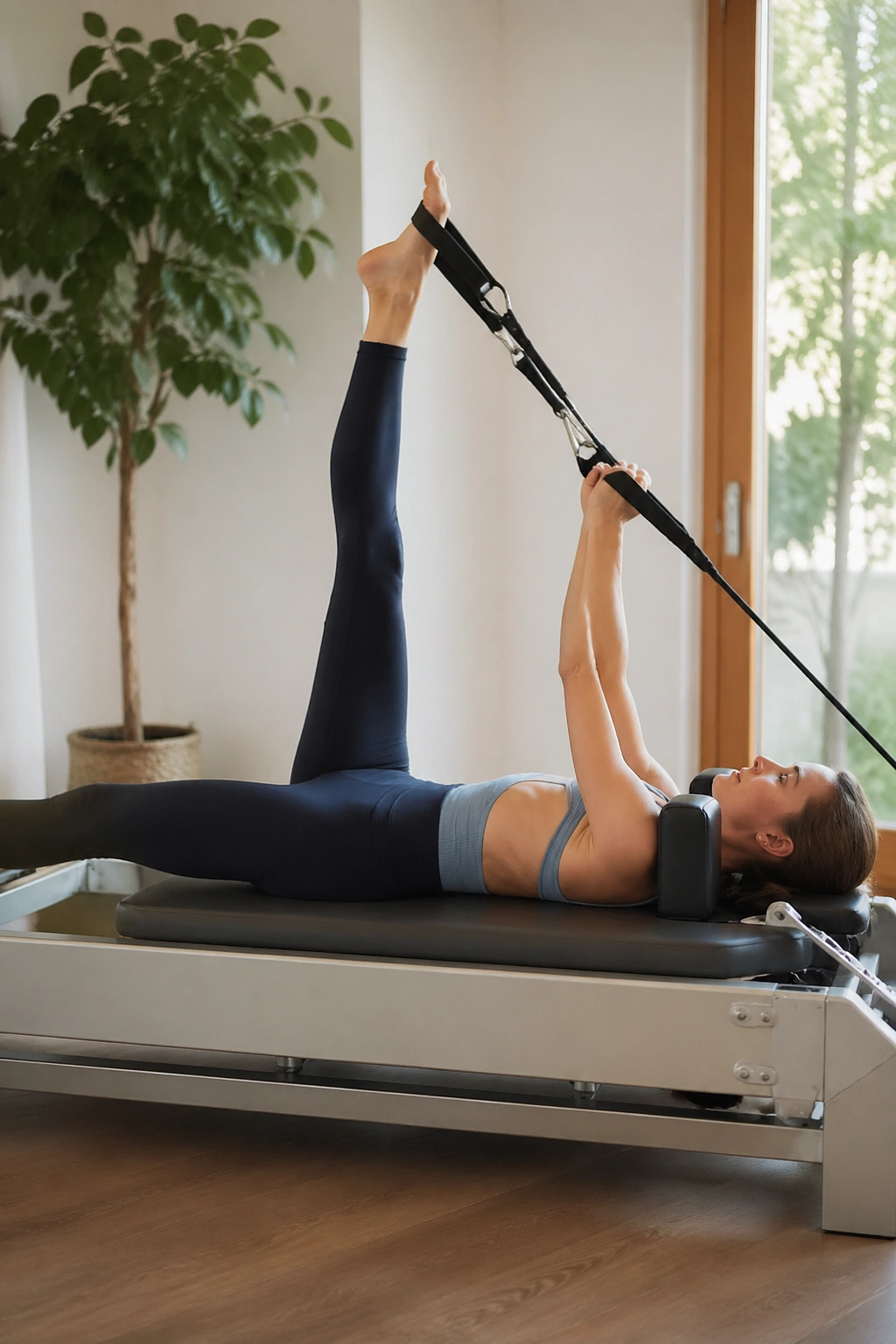
Hamstring stretching on a reformer can be beautiful or messy. The difference is whether the hips stay square. Messy usually looks easier. Beautiful usually feels more annoying at first.
Put one foot in a strap and extend the leg toward the ceiling or a high diagonal. Keep the opposite leg long and heavy. Flex and point the foot a few times, then hold the stretch for 20 to 30 seconds while keeping the pelvis level. If the hips tilt, lower the leg a little. There is no prize for pulling it higher.
How to tell if you’re doing it right
- You feel a long stretch in the back of the thigh, not a sharp pull behind the knee
- The low back stays quiet
- The opposite hip does not pop upward
- The breath stays easy enough to count
A lot of people chase range and lose the point. Better to own a smaller angle and keep the pelvis honest. That usually opens the hamstrings more cleanly anyway.
18. Side-Kneeling Arabesque
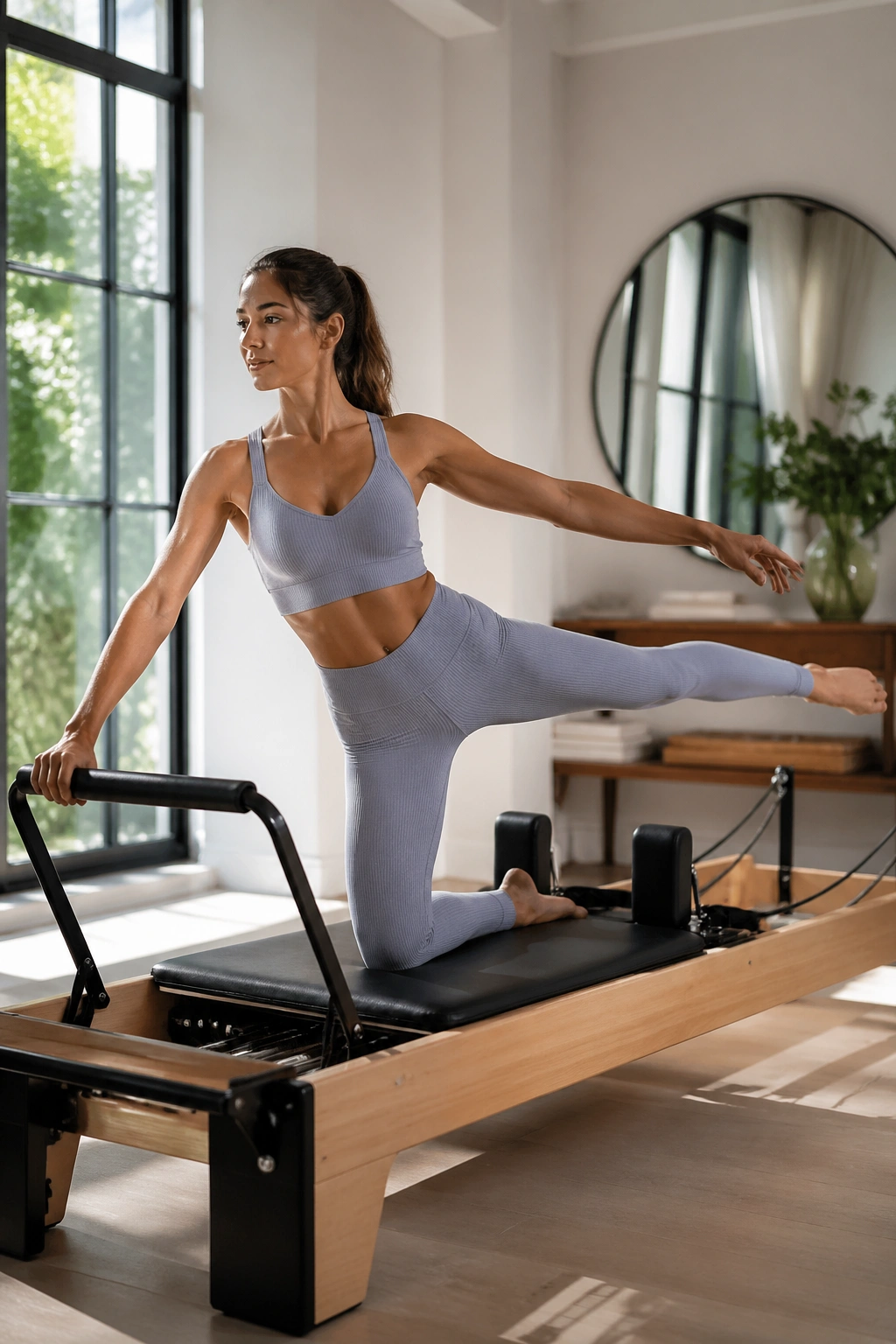
Side-kneeling arabesque is a bit of a showoff move, but a useful one. It trains the glute on the standing knee and the stability muscles around the waist at the same time.
Kneel sideways on the carriage, hold the bar lightly, and extend the outer leg behind you or press it back through the spring range if your setup allows it. Keep the chest lifted and the waist long. The moving leg should trace a smooth line, not a wild kick.
This one is good for people who like standing work but need a less frantic version. The kneeling position removes some balance chaos and lets you feel the hip working more clearly. If the low back arches hard, shorten the range and bring the ribs down. If the standing knee complains, pad it.
Three to five controlled reps per side can be plenty. Slow work here beats fancy work.
19. Standing Split-Lunge Reformer Flow
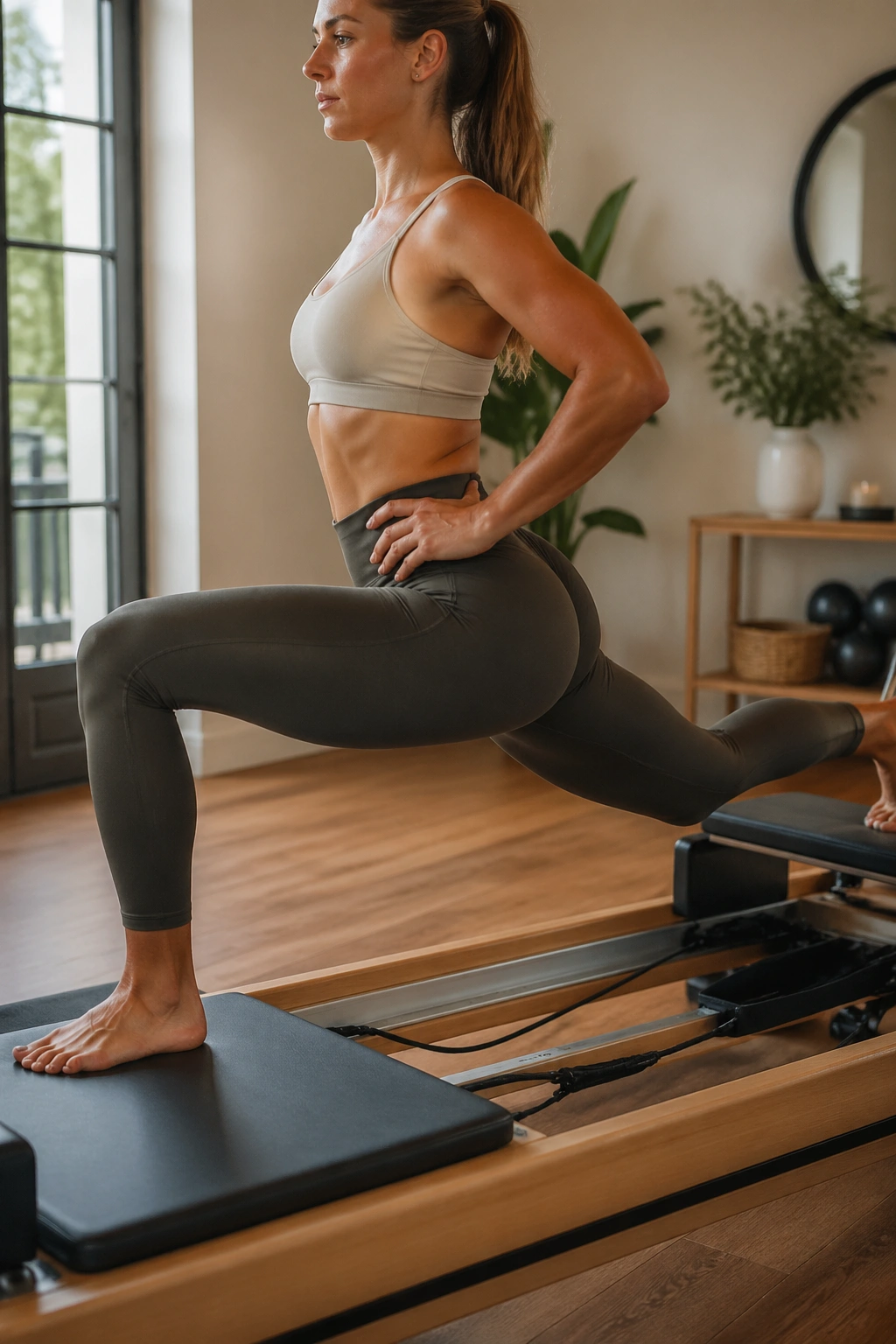
Standing split-lunge work is where the machine starts to feel a little athletic. It also shows you quickly whether your front leg can stabilize while the back leg does the push.
Place one foot on the carriage and the other on the platform. Lower into a split stance, then press the carriage back and forth with a steady torso. Keep the front knee tracking over the second or third toe. The back leg pushes from the heel, not the toes.
You can run this as a short flow: 6 presses, 6 small pulses at the bottom, then a 10-second hold. Switch sides. The movement should stay smooth enough that your shoulders don’t begin to brace in the neck.
If you like your Pilates a little more grounded and a little less floaty, this one delivers. It’s one of the few moves here that makes me think about stairs, hiking, and standing up from a low chair without using your hands.
20. Five-Minute Full-Body Circuit
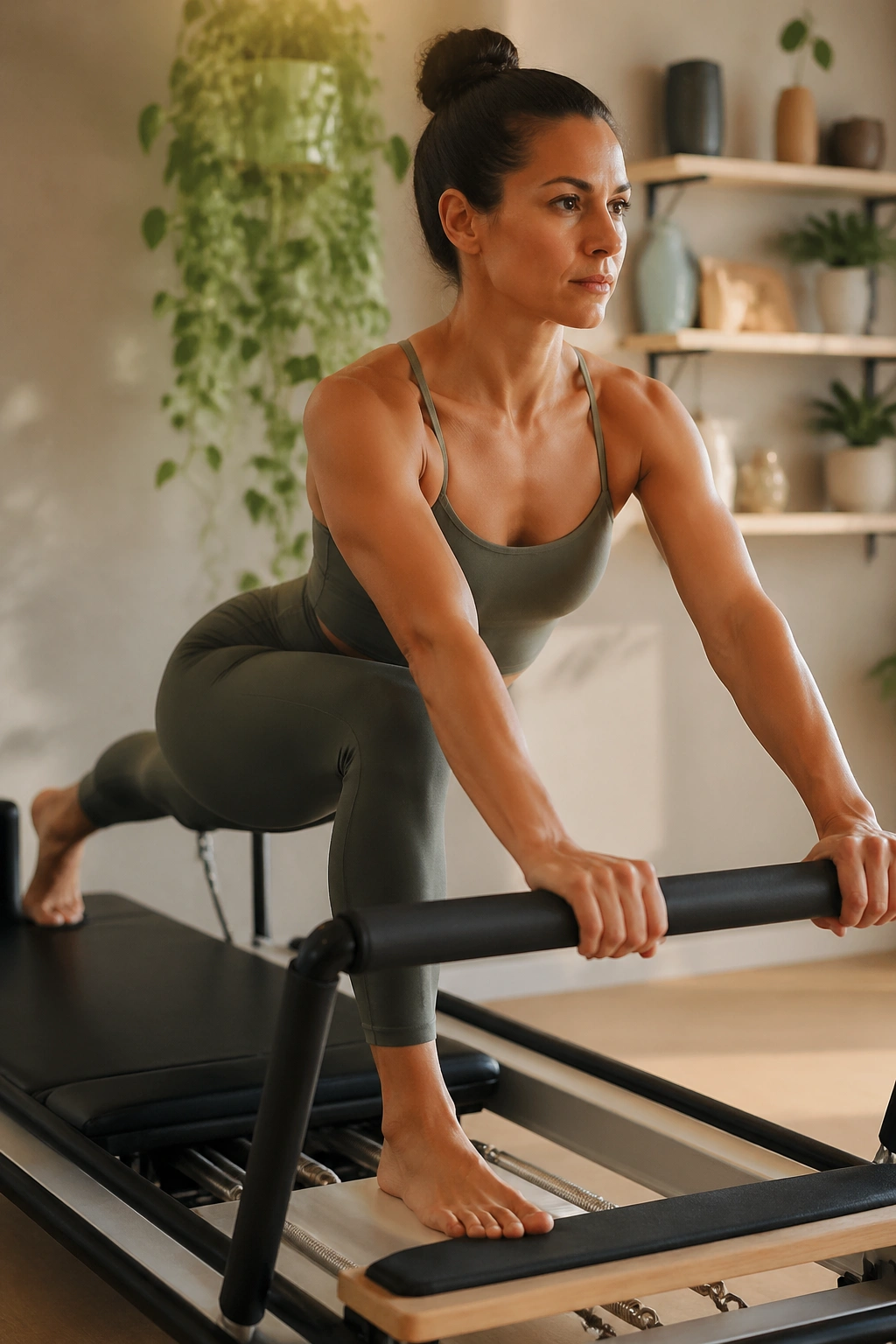
A short circuit can be the smartest way to finish a home reformer session. Not because it exhausts you. Because it ties the machine together before you get off it.
Use one moderate spring and cycle through three moves: 6 footwork presses, 6 frog presses in the straps, and 6 kneeling arm pulls. Rest for one breath between rounds. Repeat the trio two or three times. Keep the pace steady and the transitions clean.
What this finishing circuit should feel like
- The legs are awake but not fried
- The arms feel connected to the back
- The center keeps organizing the body between exercises
- The carriage moves more quietly on the last round than the first
That quiet carriage matters. It tells you the work is cleaner, not louder. If your form starts slipping, cut the round short. A neat finish beats a sloppy extra minute every time.
Final Thoughts
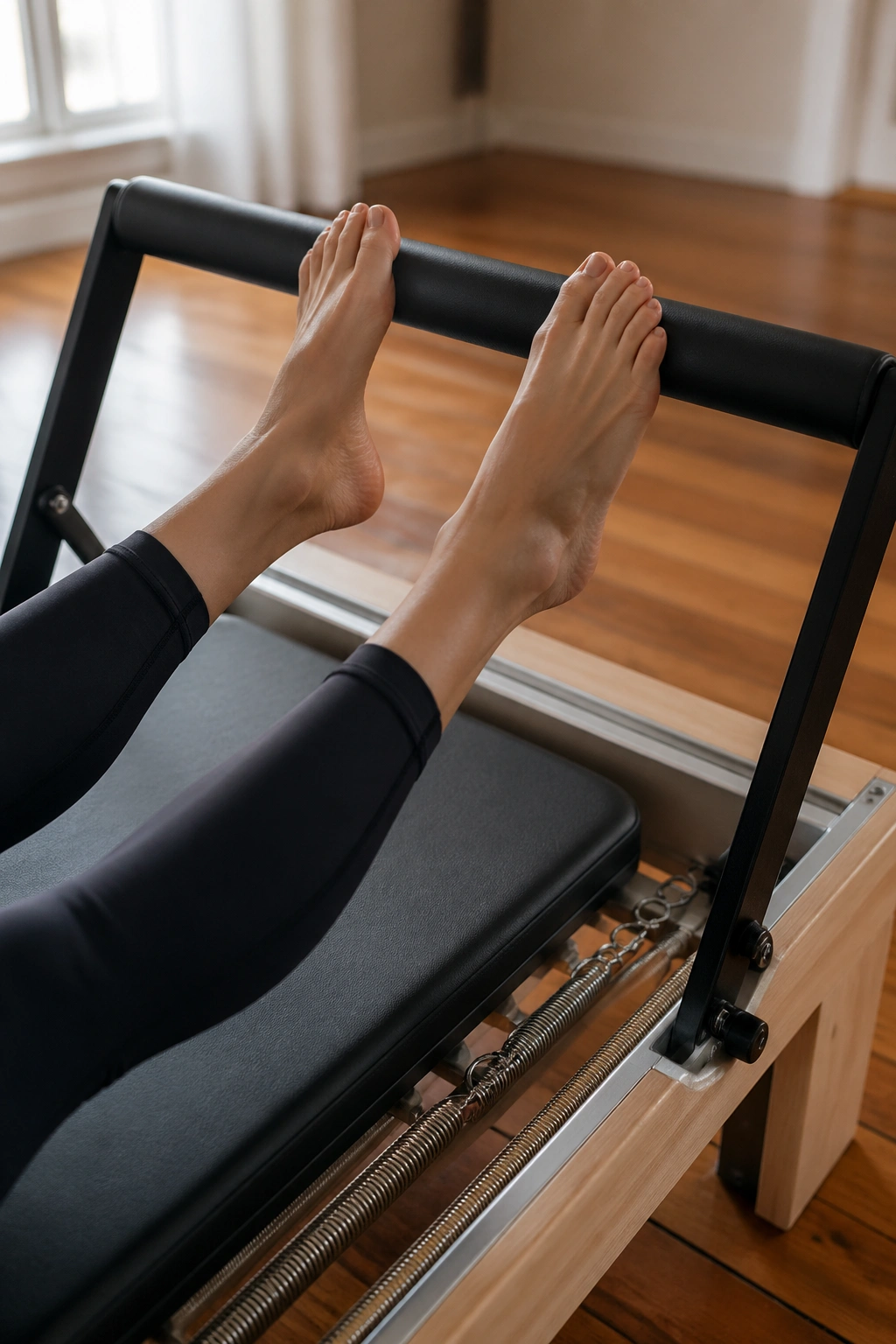
A home reformer gives you something a crowded studio rarely does: repetition without rush. That matters more than most people think. The machine starts to feel less like equipment and more like a mirror, and that is where the useful changes show up.
Pick three or four of these workouts and keep them on a short rotation for a couple of weeks. Write down the spring settings that feel smooth, the foot positions that keep your knees happy, and the moves that make your ribs flare or your neck grip. That little notebook ends up being more useful than any shiny plan.
And if a sequence feels off, shrink it. Smaller range. Cleaner breath. Less show. The reformer rewards the person who can stay precise when the springs start talking back.
