



The best strength training workouts for women are not tiny circuits with pink dumbbells and a timer yelling in your ear. They are the sessions that ask your body to do real work: squat, press, pull, hinge, carry, rest, repeat.
That sounds almost too plain, which is probably why so many plans miss it. Too much of the fitness world still hands women a pile of random moves and calls it strength. It isn’t. If the weight never gets hard, if the reps never get tracked, and if the rest never lets you breathe, you’re doing exercise, not building strength.
And strength matters for more than looking lean or “toned.” It shows up when you hoist a suitcase into an overhead bin, pick up a kid without your back barking, or walk into a room and know your body can handle force. Loaded squats, presses, rows, and deadlifts ask your muscles and bones to adapt. That is the point.
Some of the workouts below are short and blunt. Some are more technical. A few are made for a crowded gym, a home floor, or a day when you want to lift heavy and leave feeling like you actually did something. Start where you are, keep the form honest, and let the numbers climb over time.
1. Full-Body Dumbbell Ladder
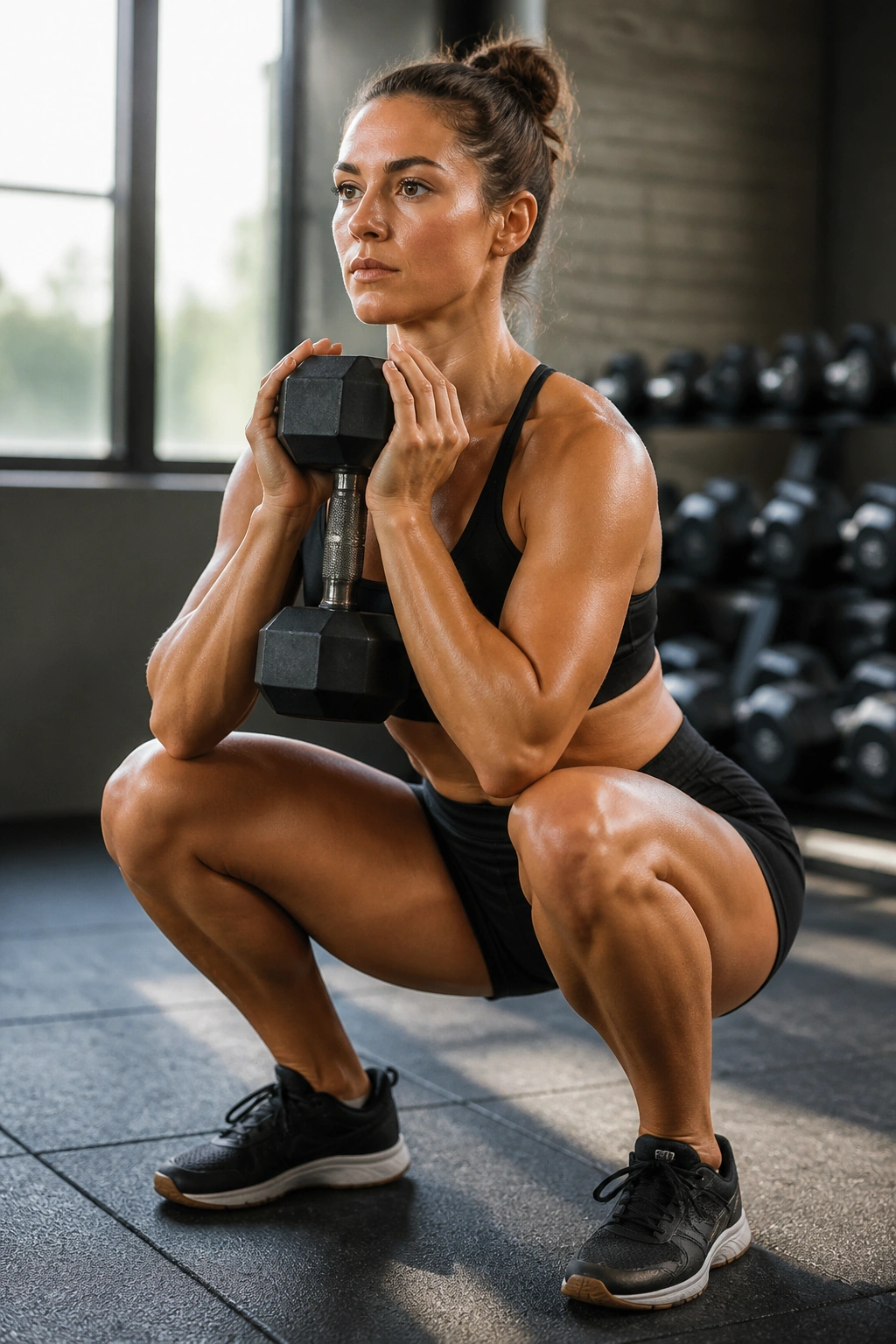
If you only had two dumbbells and 35 minutes, this is the first session I’d hand you. It covers the whole body without turning into cardio cosplay, and it works because the reps climb while fatigue builds in a controlled way.
How to run it
Use 3 rounds of the same five moves. Start at 8 reps, then go to 10, then finish at 12. Pick a load that makes the last two reps of each round slow but clean.
- Goblet squat
- Dumbbell Romanian deadlift
- Dumbbell floor press
- One-arm row
- Reverse lunge, 8 each side
Finish with a 30-second plank after each round.
Simple. Honest. Effective.
The ladder setup gives you a little more work each round without needing a complicated plan. It’s a good fit if you want a full-body strength training workout for women that still feels tight and focused. If your knees complain, shorten the lunge stride. If your grip goes first, lower the row weight and keep the pace steady.
2. Glute-Building Split Squat and Hip Thrust Day
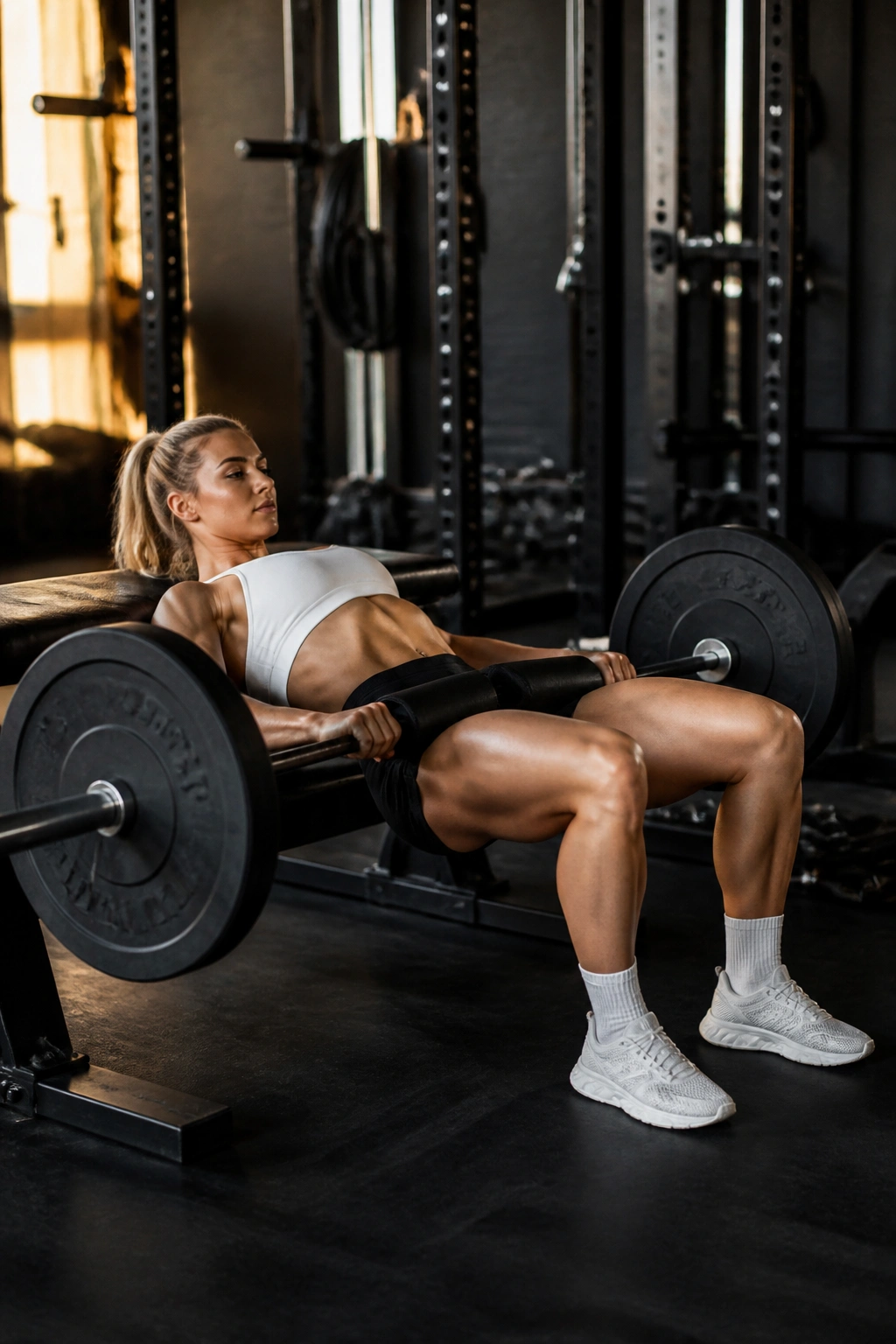
No, glutes do not need fourteen band moves before they get strong. They need load, range of motion, and enough patience to let the muscle do the work.
This workout leans hard into the two lifts that usually earn their keep: hip thrusts and Bulgarian split squats. The first lets you load the glutes with a direct squeeze at the top. The second builds one leg at a time, which is where a lot of hidden weakness shows up.
A solid structure looks like this: 4 sets of 8 hip thrusts, 3 sets of 8 split squats per leg, then 3 sets of 10 Romanian deadlifts and 2 sets of 15 cable or band abductions. Rest about 90 seconds between big sets.
The glute work should feel deep, not frantic. If you only feel your lower back, shorten the thrust setup, tuck the ribs, and stop arching like you’re trying to impress someone. You’re after tension. Not drama.
3. Upper-Body Strength Training Workout for Stronger Presses
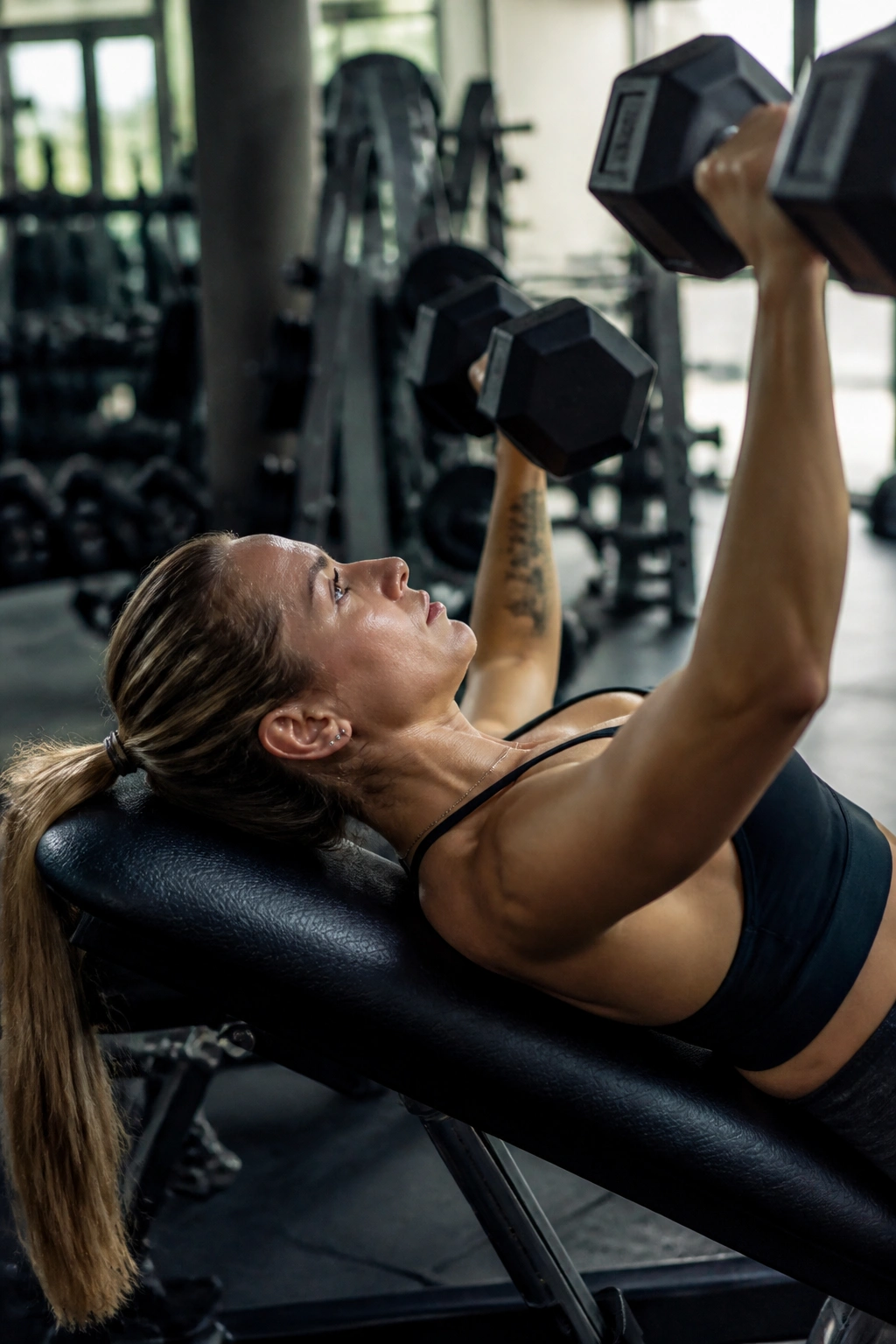
Why do so many upper-body days feel like decoration? Because they’re built around light shoulder raises and endless triceps kickbacks instead of actual pressing work.
A proper push workout starts with a dumbbell bench press or barbell bench press, moves into an overhead press, and then uses accessories to clean up the weak spots. That gives you chest, front delts, triceps, and the upper-back stability needed to press without flaring all over the place.
Try 4 sets of 6 bench presses, 3 sets of 8 overhead presses, 3 sets of 10 incline push-ups, and 2 sets of 12 lateral raises. Add rope pressdowns if your elbows feel fine and you want a little more triceps volume.
Pressing strength is useful in ways people underestimate. It makes push-ups less miserable, helps you get things from high shelves, and gives the shoulders a real job. Keep the elbows under control, lower the weight slowly, and don’t chase a sloppy last rep. That rep always costs more than it looks.
4. Row, Pull, and Posture Day
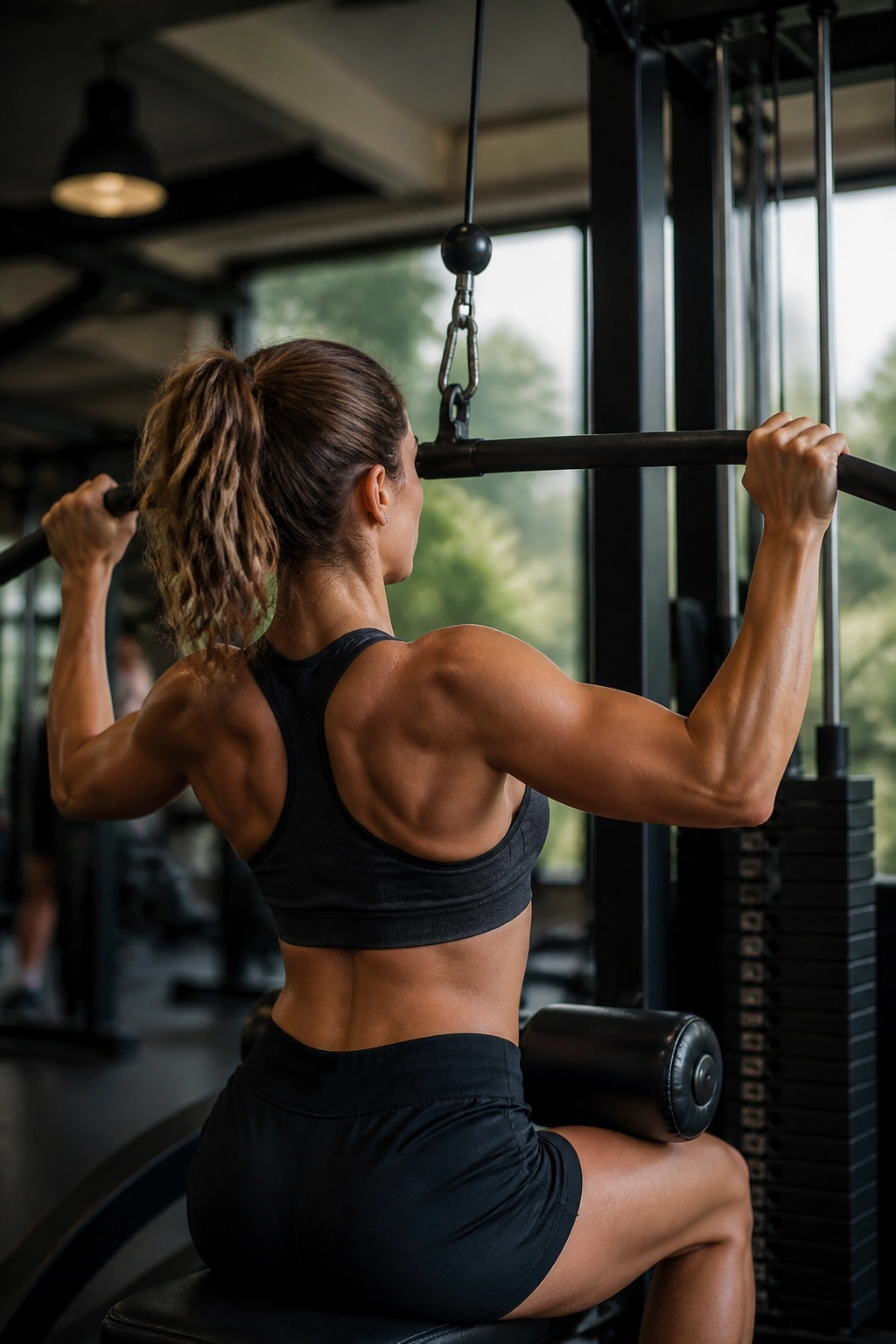
Stand at a desk too long and your shoulders start creeping forward like they’re tired of holding themselves up. This session gives them a better job.
The goal here is not “perfect posture,” which is a silly phrase anyway. The goal is a stronger upper back, better scapular control, and enough pulling volume to balance all the pressing you do in life and training. A good version starts with a lat pulldown or assisted pull-up, then moves to a chest-supported row, a face pull, and a rear delt fly.
A simple build:
- Lat pulldown: 4 sets of 8
- Chest-supported row: 3 sets of 10
- Face pull: 3 sets of 12
- Rear delt fly: 2 sets of 15
- Dead hang: 3 holds of 20 to 30 seconds
The dead hang is the part people skip. That’s a mistake. It teaches grip, shoulder control, and a little humility, which never hurts.
5. Kettlebell Swing Circuit for Strength and Conditioning
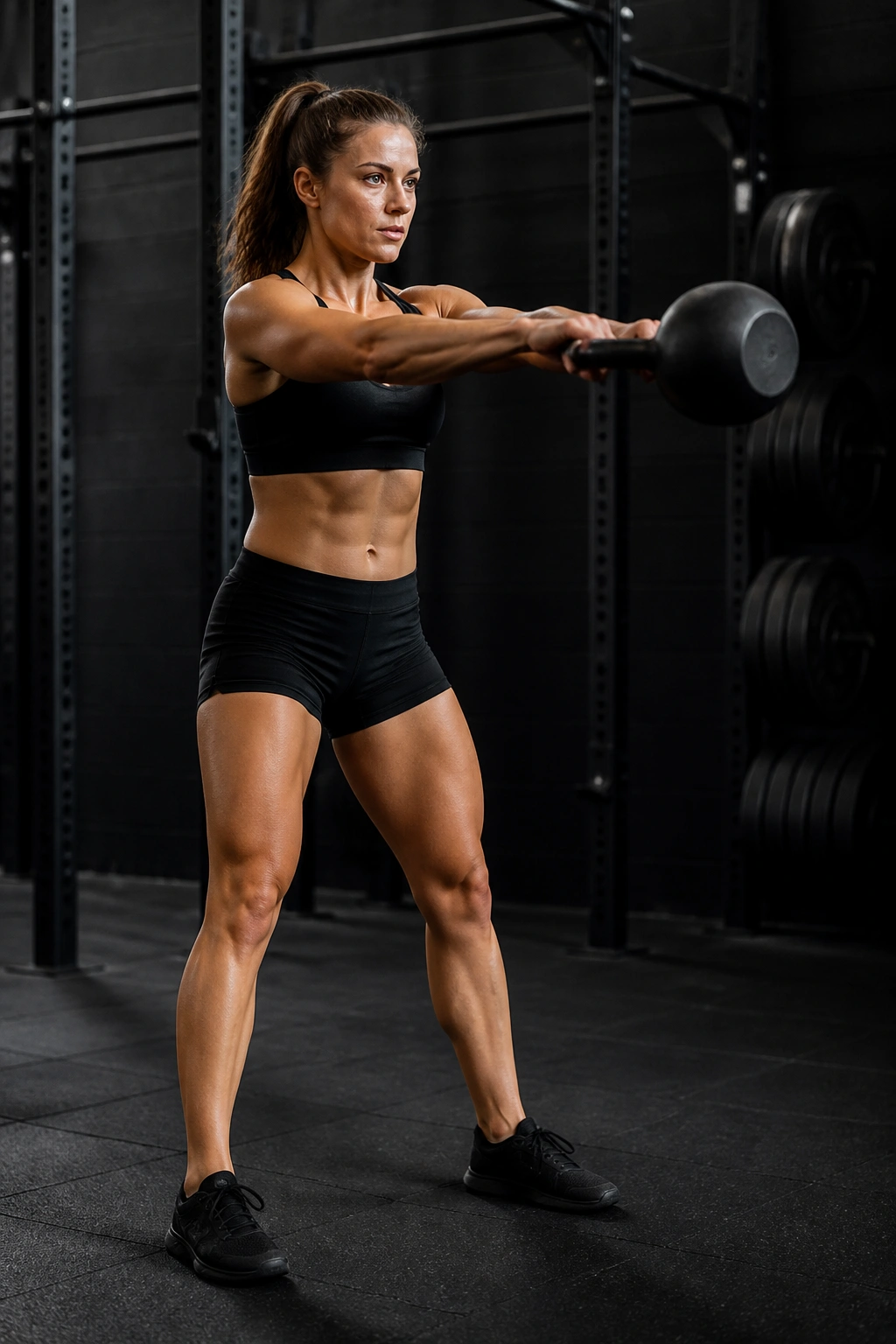
Can one workout make you stronger and leave you breathing hard? Yes, if you stop treating kettlebells like tiny dumbbells with a handle.
The swing is a hip hinge, not a squat. That distinction matters. If you’re bending your knees way too much, you’re stealing power from the hips and turning the move into a weird partial squat. The hinge should feel crisp, explosive, and a little snappy at the top.
How to run it
Do 4 rounds of:
- 15 kettlebell swings
- 8 goblet squats
- 6 push presses per side
- 10 dead bugs per side
- 30 seconds of rest
Pick a kettlebell that makes the last few swings sharp, not slow. If your lower back feels it more than your glutes and hamstrings, lighten up and fix the hinge first.
This is a smart choice when you want a short strength training workout for women that doesn’t waste time. It builds power without the pounding of jump-heavy circuits. And it has a nice side effect: your conditioning improves without swallowing the whole session.
6. Barbell Squat, Bench, and Deadlift Day
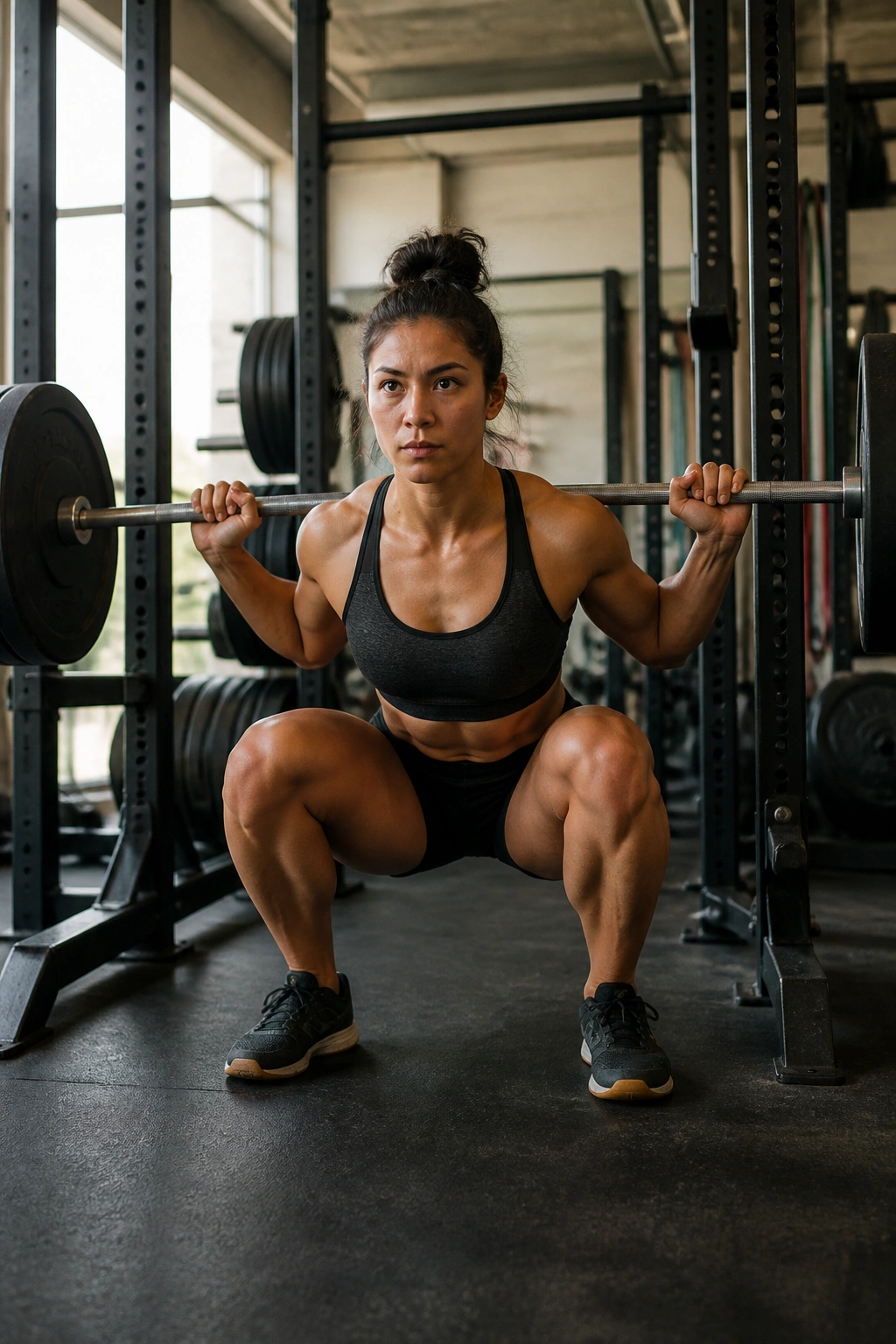
If you want measurable strength, barbell basics still rule. Not because they’re trendy. Because they give you a clean number to beat next week.
This is the day for squat, bench, and deadlift work done with real rest and real focus. Start with one main lift and give it the most energy. Then keep the other two in a slightly lighter range so form stays crisp.
A straightforward template looks like this:
- Back squat: 5 sets of 3
- Bench press: 4 sets of 5
- Deadlift: 3 sets of 3
- Optional row or split squat: 2 sets of 8
Rest 2 to 3 minutes on the big lifts. More, if you need it. Less rest usually just means you’re training fatigue, not strength.
Heavy work can feel plain, almost boring. That’s part of the appeal. No fluff. No random burn. Just load, brace, stand back up, repeat.
7. Machine-Based Strength Workout for Busy Gym Days
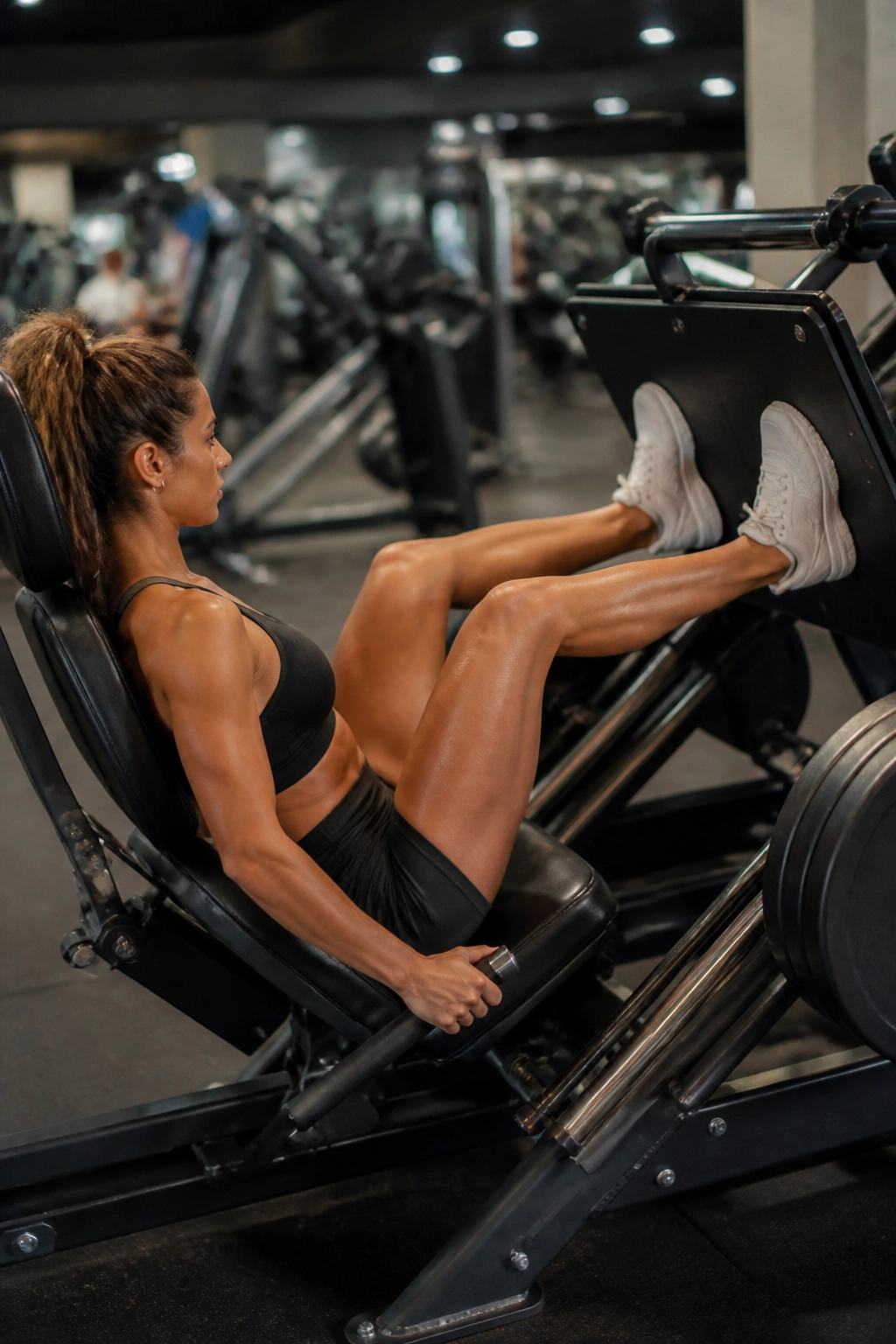
Crowded gym? Limited time? Machines are not a downgrade. They are a tool, and sometimes a better one than pretending you need a perfect free-weight setup.
A machine workout lets you train hard with less fuss over balance and setup. That means you can push closer to failure on each set without worrying about whether the dumbbell drifts or the bar path gets messy. For a lot of women, that makes the session cleaner and more repeatable.
Try this lineup
- Leg press: 4 sets of 10
- Seated row: 4 sets of 8
- Chest press: 3 sets of 10
- Hamstring curl: 3 sets of 12
- Shoulder press: 3 sets of 8
- Standing calf raise: 2 sets of 15
Use 60 to 90 seconds of rest. On leg press, put your feet slightly higher if you want more glute and hamstring work. Lower if you want more quad work.
This style works well when you need a no-nonsense gym workout and don’t want to fight for a rack.
8. Bodyweight Strength Workout You Can Do at Home
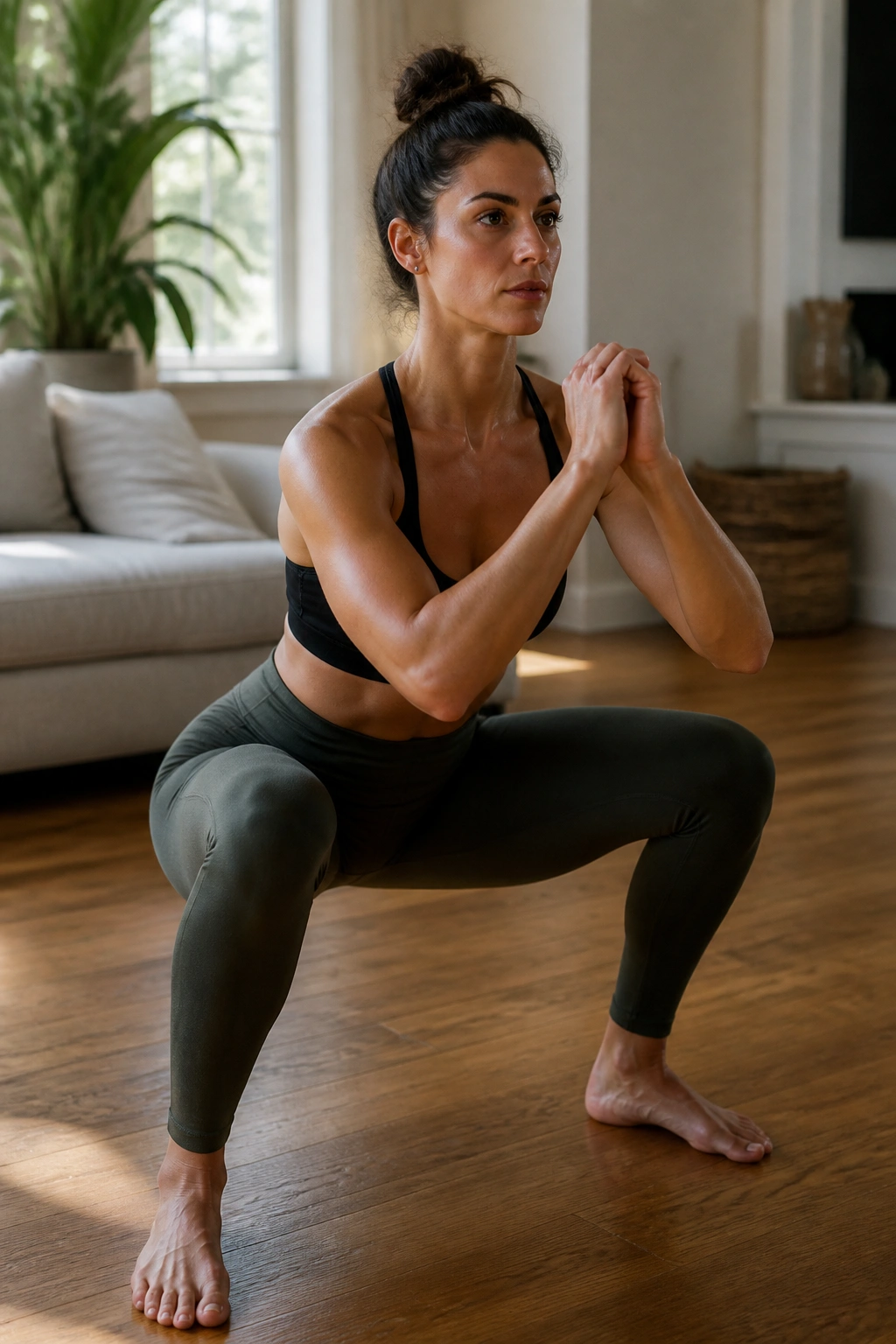
No equipment does not mean no strength work. It means you need to be smarter about tempo, angles, and how much of your bodyweight you’re asking a muscle to control.
A home workout gets harder fast when you slow the lowering phase. Take 3 seconds to lower into a squat. Pause for 1 second at the bottom of a push-up on the wall or bench. Hold the top of a glute bridge for a full count. Those little pauses add up.
Try this:
- Tempo air squat: 4 sets of 12
- Incline push-up: 4 sets of 8
- Split squat: 3 sets of 10 per leg
- Glute bridge: 3 sets of 15
- Towel row or band row: 3 sets of 12
- Plank: 3 holds of 30 seconds
The split squat is the sleeper here. It looks plain, then one leg starts shaking and you remember why it belongs in the plan. Good. That means it’s working.
9. Dumbbell Superset Workout That Cuts the Wait Time
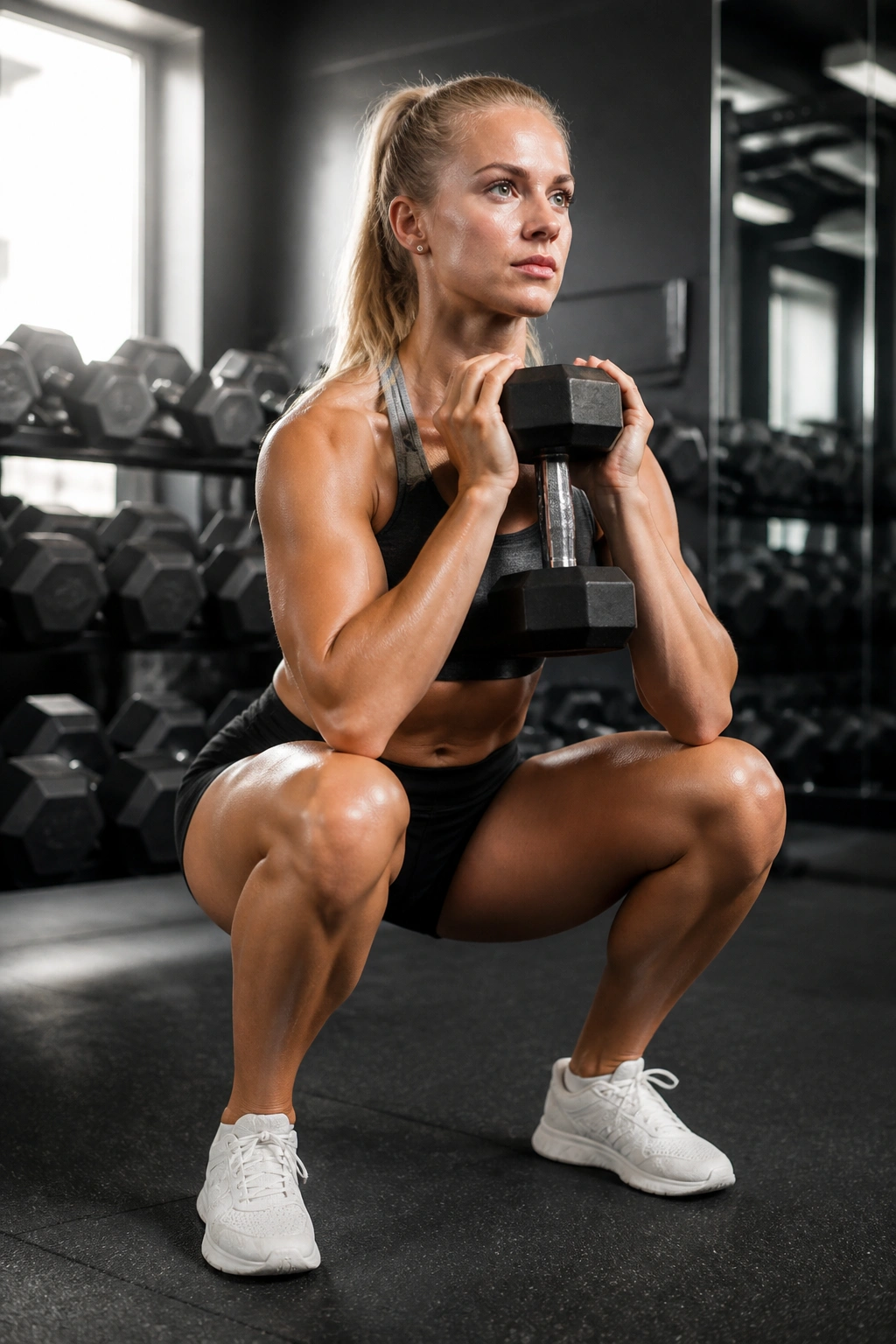
Unlike straight sets, supersets keep the workout moving without turning it into a mess. You pair two moves, rest after the pair, and keep going. It saves time, but only if you keep the weights honest.
A useful way to build this session is to pair a lower-body move with an upper-body pull or push. That gives one area a break while the other works, which is why supersets feel efficient instead of chaotic.
Sample pairings
- Goblet squat + one-arm row
- Dumbbell press + Romanian deadlift
- Walking lunge + push-up
- Farmer carry + side plank
Do 3 to 4 rounds of each pair, with 45 to 75 seconds of rest after the pair.
The trap to avoid is turning every superset into a cardio contest. Don’t rush the transitions so much that form falls apart. A good superset should feel brisk, not sloppy. If you’re doing it right, the room feels busy and your muscles feel watched.
10. EMOM Strength Workout for Tight Schedules
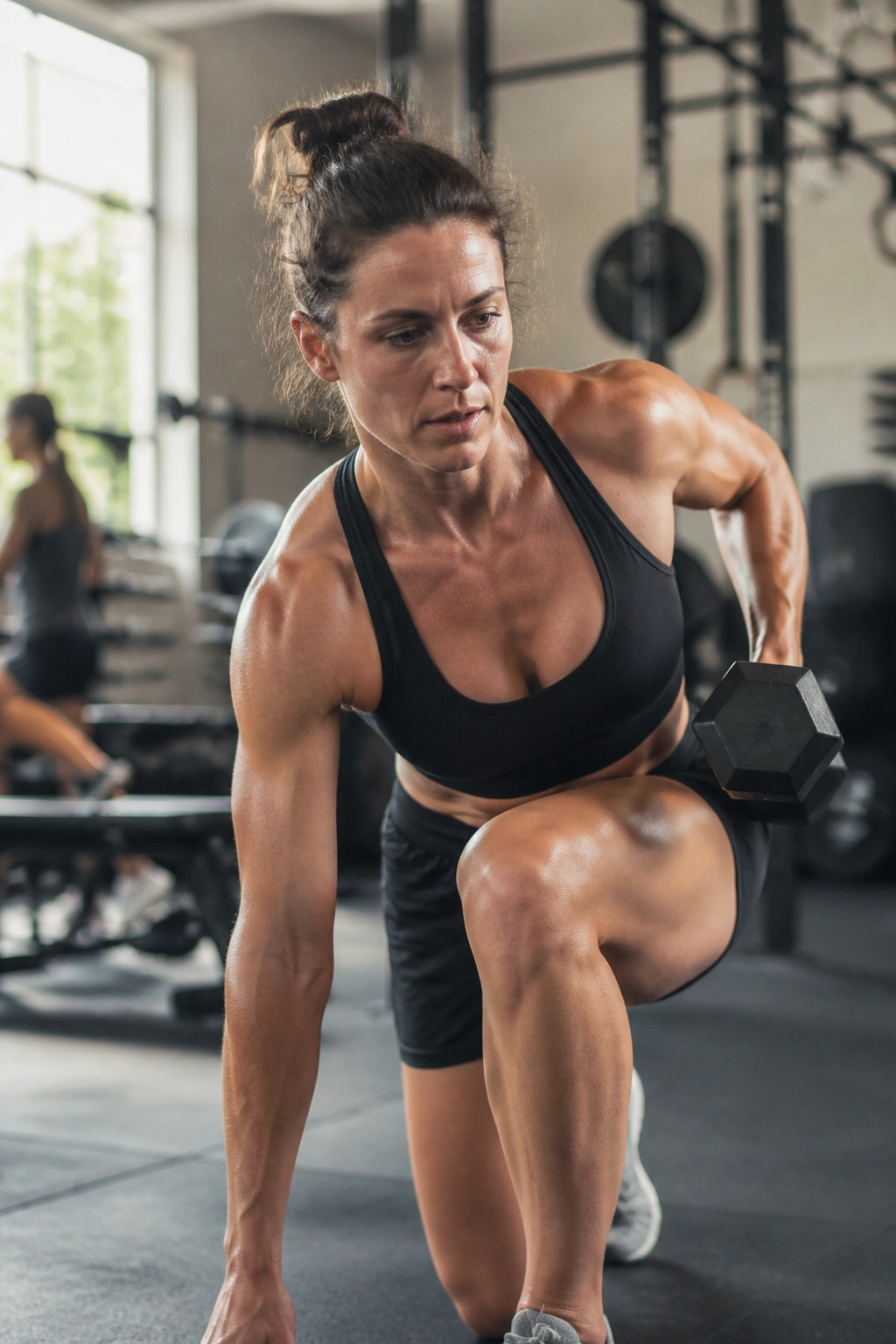
Twenty minutes can be enough if the clock does the counting for you. EMOM stands for every minute on the minute, and it is one of the cleanest ways to keep a workout sharp.
Pick a move, do the reps at the start of each minute, then rest for whatever time is left before the next minute begins. If you can finish in 15 to 20 seconds, the load is probably in the right place. If you’re still grinding when the clock resets, the weight is too high.
How to keep it honest
Run 5 stations for 4 rounds:
- Goblet squat — 6 reps
- Dumbbell press — 6 reps
- Row — 8 reps
- Deadlift — 6 reps
- Carry or plank — 30 seconds
The beauty of EMOM work is that it gives structure without needing a long list of decisions. You show up, the minute starts, and you move. That’s all. For busy weeks, this is one of the most practical strength training workouts for women who still want to train with intent.
11. Core and Carry Workout for a Strong Midsection
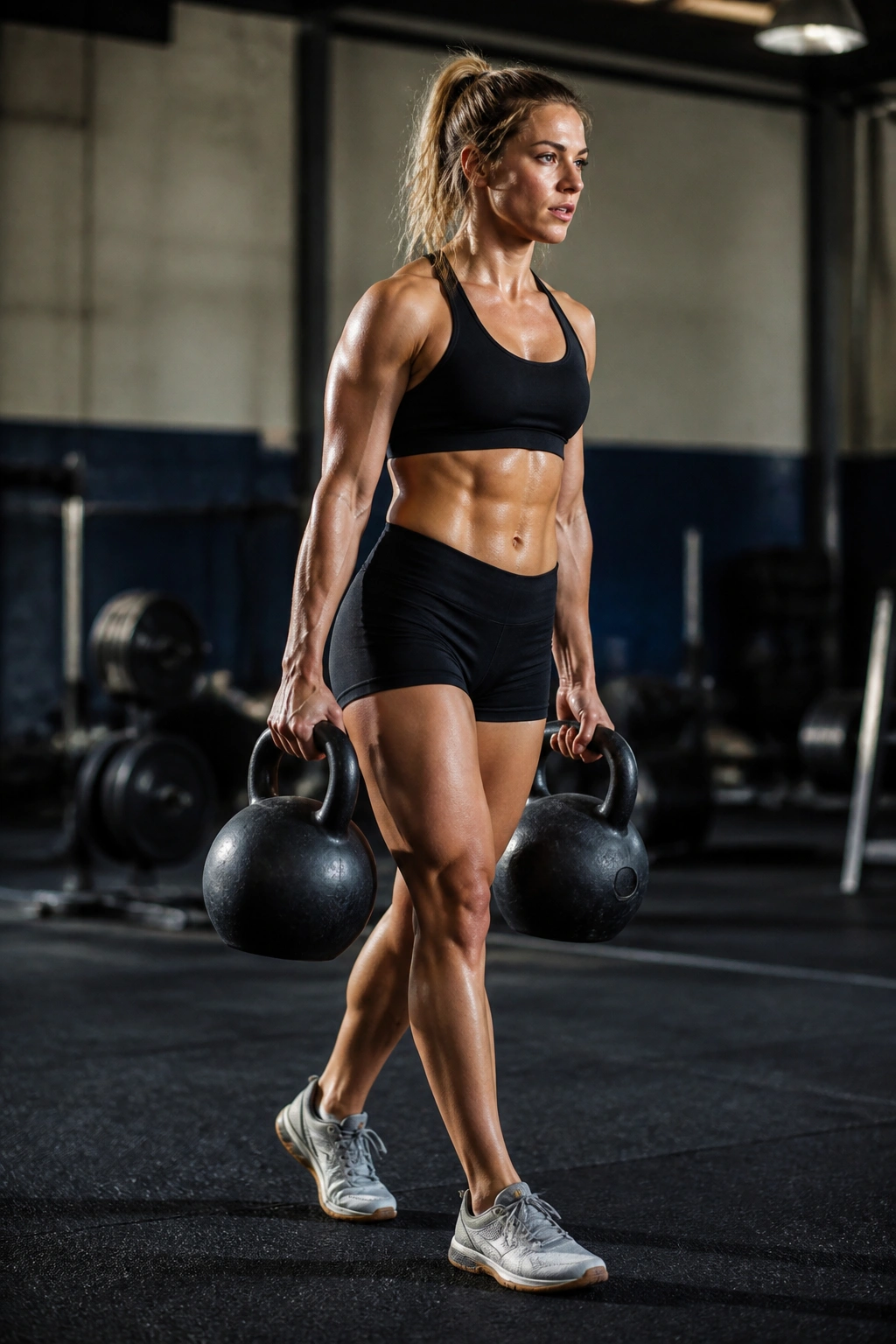
Want a stronger midsection without doing crunches until you hate your own mat? Train your trunk like it has a job. Because it does.
Carries and anti-rotation moves teach the body to resist twisting, tipping, and collapsing under load. That matters more than endless sit-ups ever will. A strong core is not about how much it burns. It’s about how well it holds.
How to run it
- Farmer carry: 4 trips of 30 to 40 yards
- Suitcase carry: 3 trips per side
- Pallof press: 3 sets of 10 per side
- Dead bug: 3 sets of 8 per side
- Side plank: 3 holds of 20 to 30 seconds per side
Walk tall on the carries. Don’t lean away from the weight. Don’t let the ribs flare. The whole point is to stay controlled while one side of the body tries to pull you off line.
This one feels understated while you’re doing it, then shows up later when your lower back is calmer and everything else feels more solid. That’s the tell.
12. Glute Medius and Hip Stability Workout
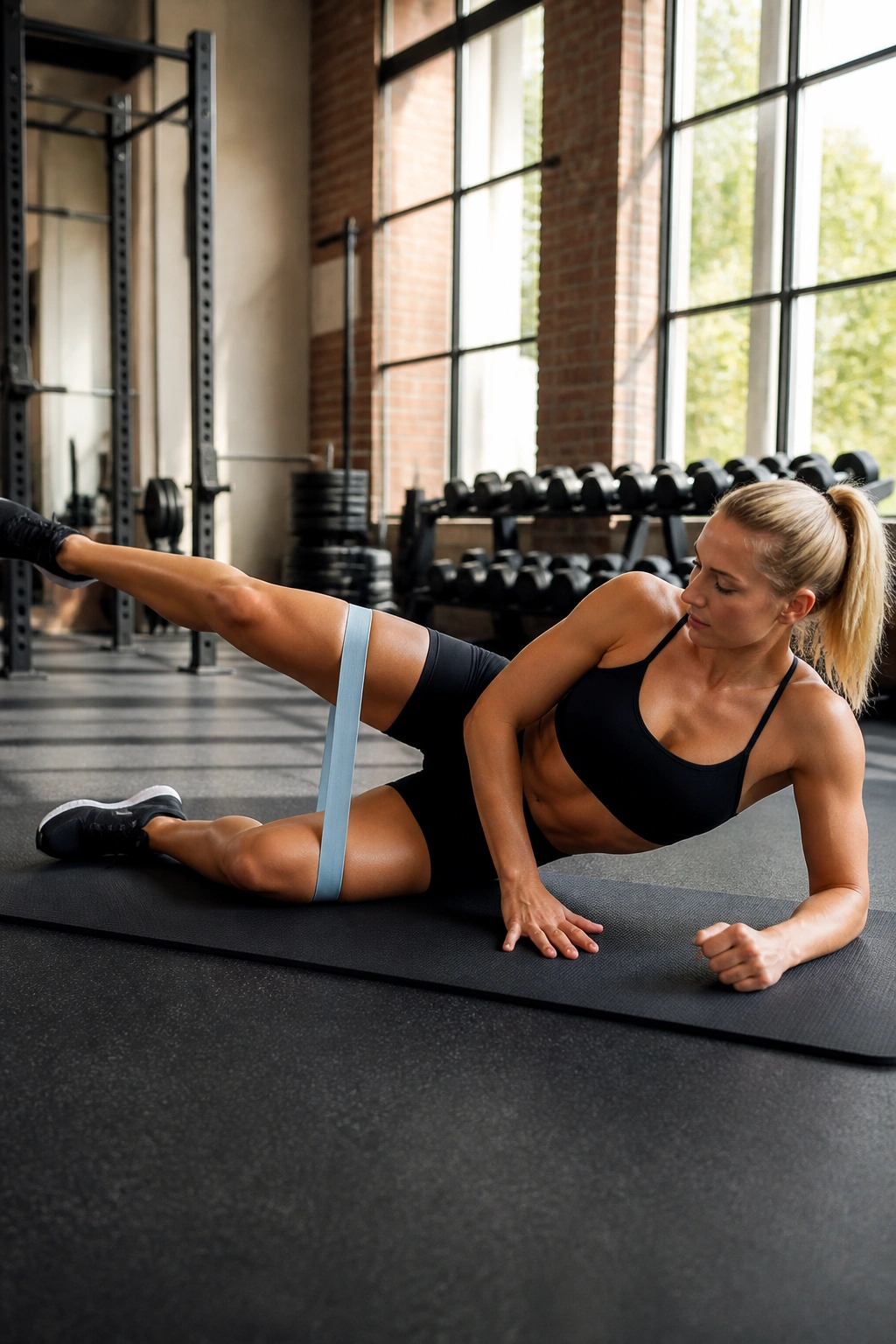
The first time your knee caves in on a split squat, or your hips wobble on a step-down, the problem is usually not drama. It’s stability.
The glute medius helps keep the pelvis level and the knee tracking well. When it’s undertrained, squats and lunges can feel loose in a way that’s hard to explain until you see it. This workout cleans that up.
Use moves like:
- Banded lateral walks
- Side-lying hip abductions
- Step-downs
- Single-leg RDLs
- Curtsey lunges
Keep the reps in the 10 to 15 range and move slowly. The burn should build on the side of the hip, not in the front of the hip flexor.
This is one of those sessions that feels almost too small while you’re doing it. Then your squat looks better, your knees feel less wobbly, and your single-leg work stops falling apart so fast. Small muscles, loud consequences.
13. Pull-Up Progression Workout for Real Upper-Body Strength
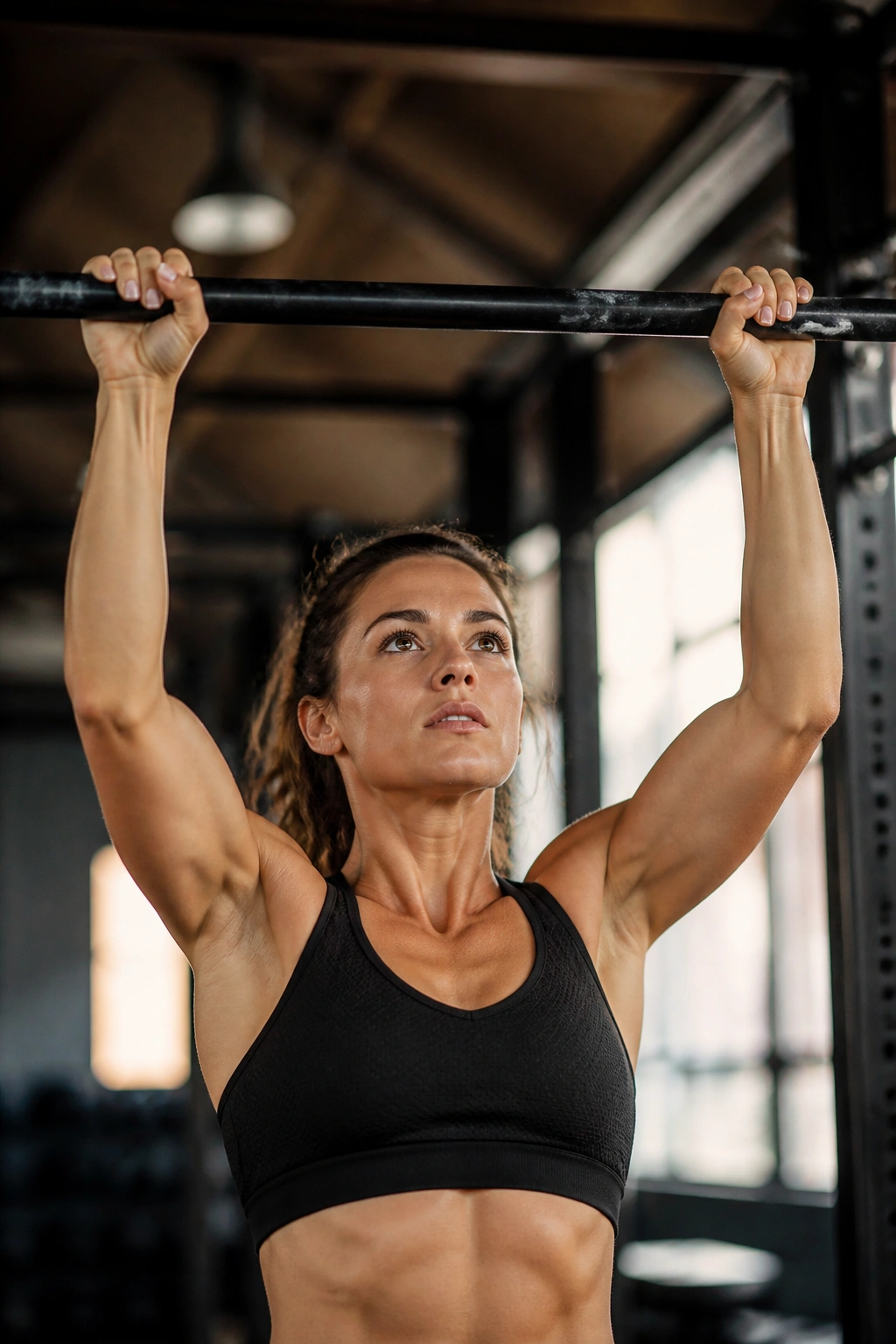
Unlike endless lat pulldowns, pull-up practice teaches your body to move as one piece. That’s why it feels awkward at first and satisfying later.
You do not need to start with a full pull-up. Start with what you can control. A good progression begins with dead hangs, then scapular pull-ups, then assisted pull-ups or negatives, then inverted rows to build more pulling volume.
How to progress
- Dead hang: 3 holds of 15 to 30 seconds
- Scapular pull-up: 3 sets of 5
- Assisted pull-up: 4 sets of 4 to 6
- Negative pull-up: 3 sets of 3
- Inverted row: 3 sets of 8 to 10
Add one rep, a little less assistance, or five extra seconds of hanging each week. Not all three. That’s where people get greedy and stall.
A pull-up looks like one movement from the outside. Inside the gym, it is a pile of smaller skills stitched together. Grip, lats, upper back, rib control, patience. All of it matters.
14. The Simple 5×5 Progressive Overload Workout
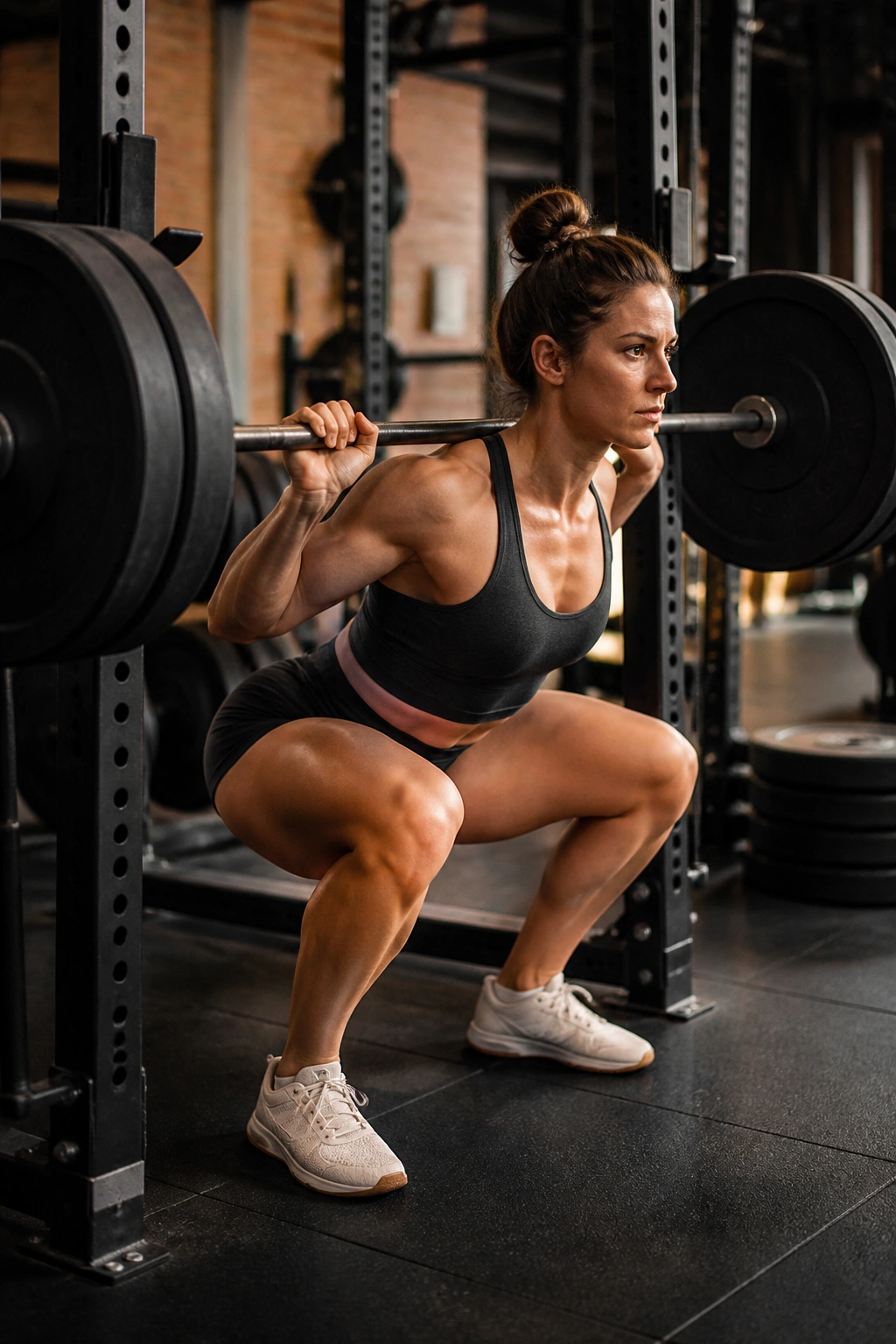
Five sets of five is old-school for a reason. It gives you enough volume to grow and enough load to keep the work honest.
This is a good fit if you want a clean plan with a number to chase. Pick one or two big lifts and build them over time. A classic full-body version uses squat, bench press, and row on one day, then deadlift and overhead press on another.
A simple rule works well: if all five sets land with good form, add 2.5 to 5 pounds next time. If the last reps turn ugly, hold the weight steady until they don’t.
Five-by-five is not flashy. That’s part of why it works. You’re not guessing. You’re stacking clean reps, one week at a time. And when the numbers go up, the mirror usually follows in its own slow way.
15. Low-Impact Metabolic Strength Circuit
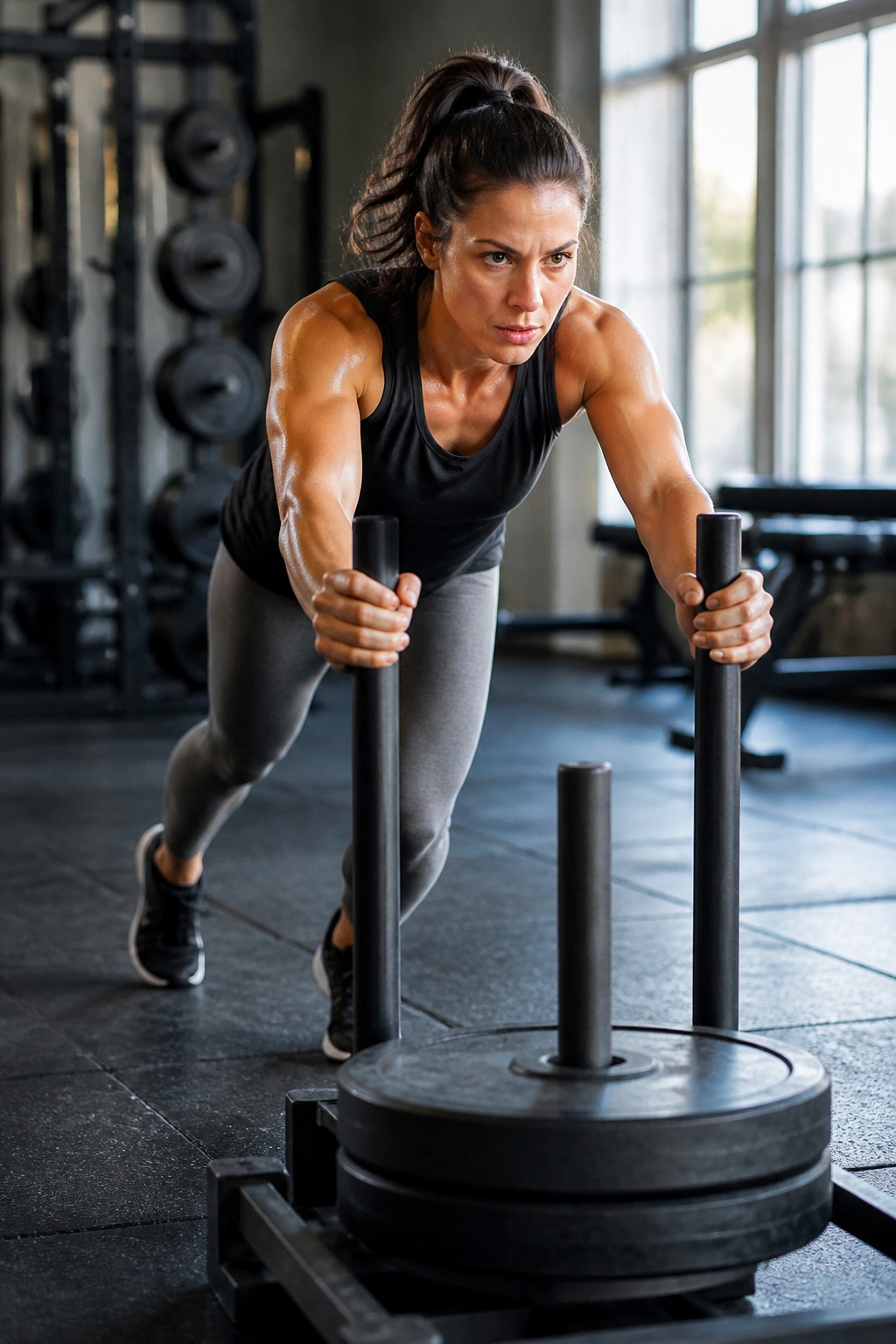
You can train hard without jumping around like the floor owes you money. Low-impact work still counts, and in some cases it’s the smarter choice.
This session keeps the heart rate up while protecting the joints. Think sled pushes, step-ups, landmine presses, cable rows, and bike sprints. You get the sweat and the load without the pounding.
A sample round might be:
- Sled push: 20 yards
- Step-up: 10 each leg
- Landmine press: 8 each side
- Cable row: 10 reps
- Bike sprint: 20 seconds
Do 3 to 5 rounds, resting 60 seconds between rounds.
The feel is different from a pure strength day. More breathing. Less grunting. But the muscles still have to work, and the legs still get cooked if the load is right. This is the kind of workout that fits women who want strength and conditioning without the floor-impact hangover.
16. Single-Leg Strength Workout That Exposes Weak Spots
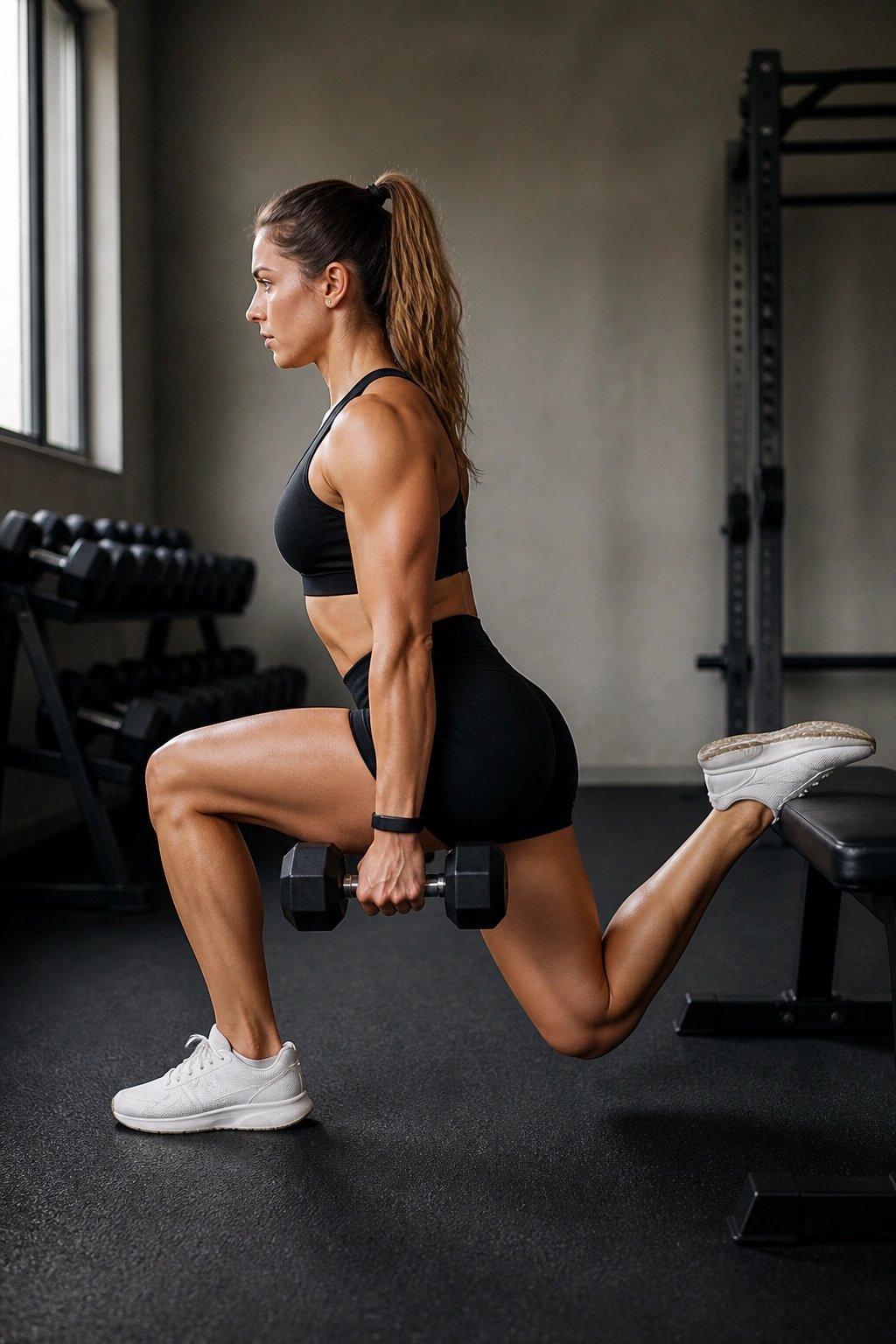
One leg at a time is a rude little truth serum. The first split squat side always tells you what the other side was hiding.
Single-leg work is great for balance, yes, but that’s not the main point. The real win is force production without your stronger side stealing the show. That makes it useful for glutes, quads, and hamstrings all at once.
Build it like this
- Front-foot elevated split squat: 3 sets of 8 per side
- Step-up: 3 sets of 10 per side
- Single-leg Romanian deadlift: 3 sets of 8 per side
- Lateral lunge: 2 sets of 10 per side
- Calf raise: 2 sets of 15 per side
Start with the weaker side. Match the stronger side to it. Don’t let the stronger leg get extra reps just because it feels nicer.
This workout is excellent when bilateral lifts start to hide problems. Hips drifting, knees wobbling, one side taking over. Single-leg training shines a light on all of that, and honestly, that’s useful even when it’s annoying.
17. Hamstring and Deadlift Focus Workout
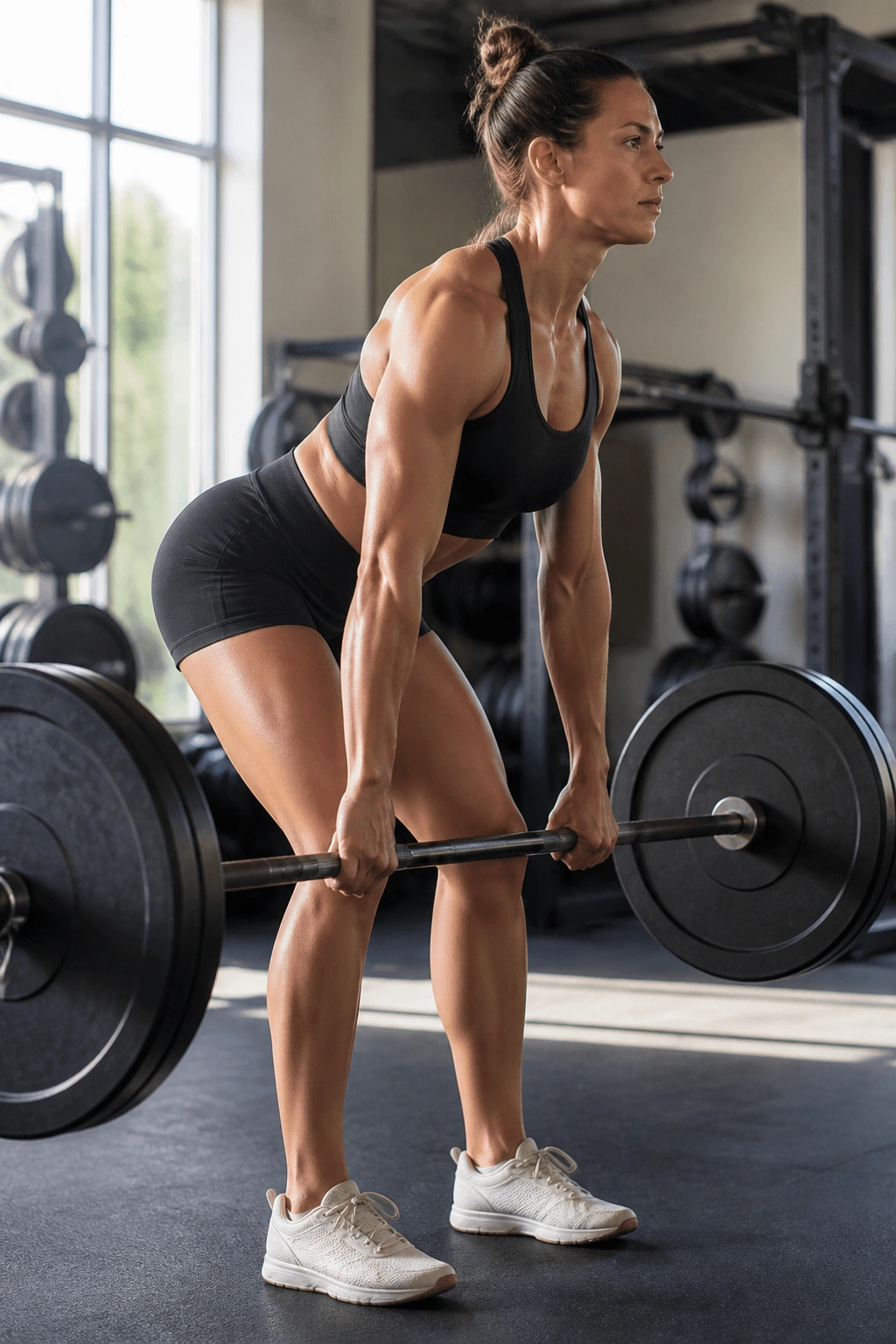
Do your hamstrings ever feel like they’re getting almost no attention? Then this is the day that fixes it.
Strong hamstrings help with hip extension, deadlift power, and the kind of back support that shows up when you pick things up off the floor. They also tend to get undertrained when people live on squats and glute bridges alone.
A solid hamstring day might look like this:
- Trap-bar deadlift or conventional deadlift: 4 sets of 4
- Romanian deadlift: 3 sets of 8
- Lying hamstring curl: 3 sets of 12
- Back extension: 2 sets of 10
- Glute bridge hold: 3 holds of 20 seconds
What to watch for
Keep the spine neutral on hinges. Stop the set when your lower back starts stealing the work. And do not rush the lowering phase on curls — that’s where the hamstrings earn their keep.
This workout has a darker, slower feel than a glute-pump day. That’s good. Posterior-chain strength should feel deliberate.
18. Upper-Body Press and Pull Balance Workout
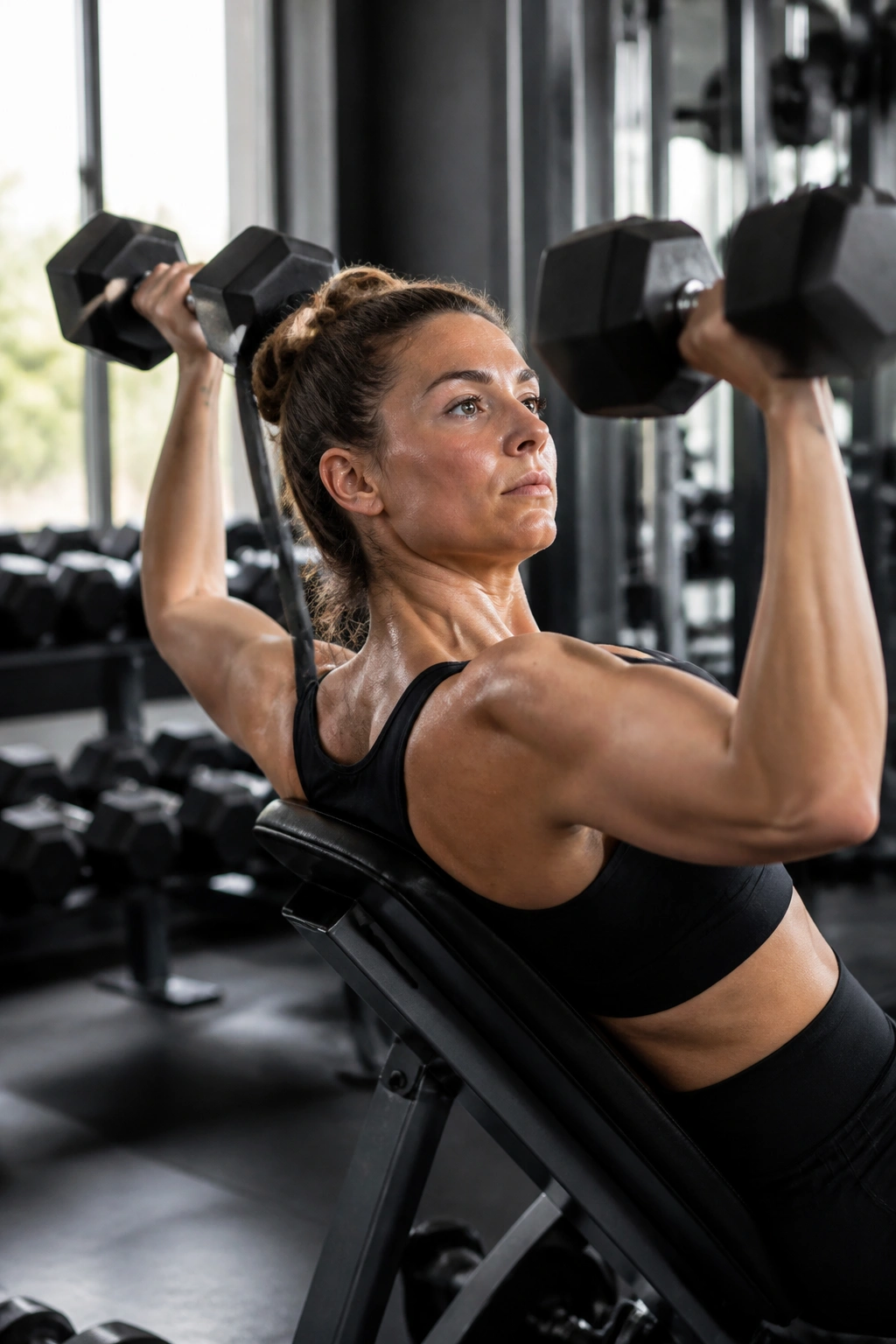
Your shoulder work probably needs more pulling than pressing. That’s not a moral statement. It’s just what many bodies seem to handle better.
A balanced upper-body session pairs each press with a pull so the shoulders stay happier and the upper back keeps up. You do not need a perfect 2:1 ratio forever, but getting close is a smart move if you sit a lot or your shoulders get cranky.
A useful sequence is incline dumbbell press, one-arm row, push-up, lat pulldown, face pull, and rear delt fly. Keep the presses moderate and the pulls crisp. Use 8 to 12 reps for most of the work.
This is one of those workouts that feels tidy from start to finish. Not because it’s easy, but because everything has a job. Press, pull, steady the shoulders, repeat. There’s a reason good upper-body plans come back to that pattern again and again.
19. Leg Press and Split Squat Gym Workout
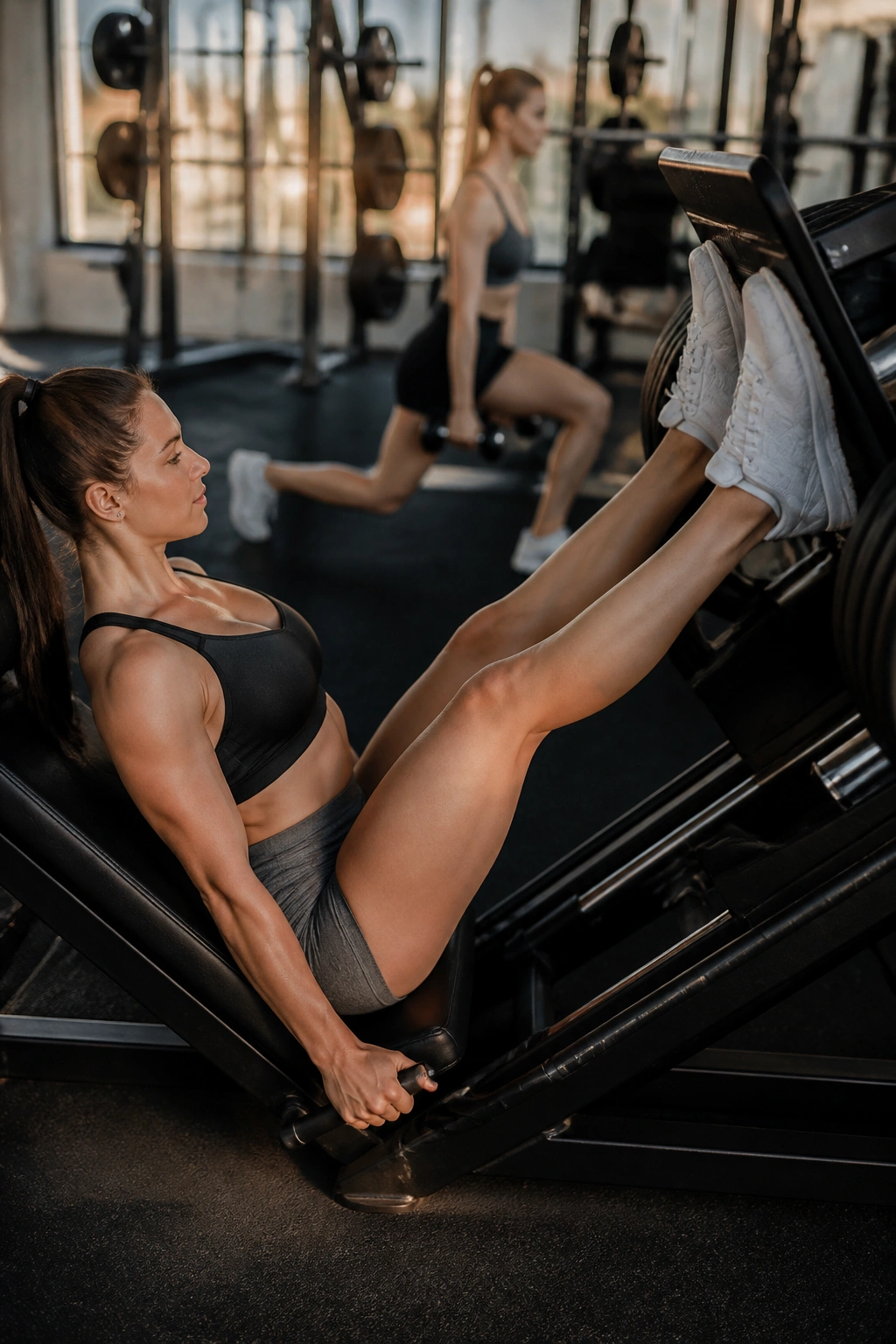
If you want a leg day without a barbell on your back, this is the move. Machines can be brutally effective when you use them with enough intent.
Start with the leg press and treat it like a main lift, not a warm-up toy. Then move into a split squat, a hack squat or goblet squat, hip thrusts, hamstring curls, and calf raises. That gives you quads, glutes, and hamstrings without a lot of setup drama.
Try this structure:
- Leg press: 4 sets of 10
- Split squat: 3 sets of 8 per side
- Hip thrust: 3 sets of 10
- Hamstring curl: 3 sets of 12
- Calf raise: 3 sets of 15
On the leg press, your foot position changes the feel a lot. Higher on the platform shifts more to glutes and hamstrings. Lower moves more into the quads. Keep the range deep enough to matter, but don’t let your hips curl off the pad just to chase depth.
20. Power-First Workout With Jumps and Heavy Sets
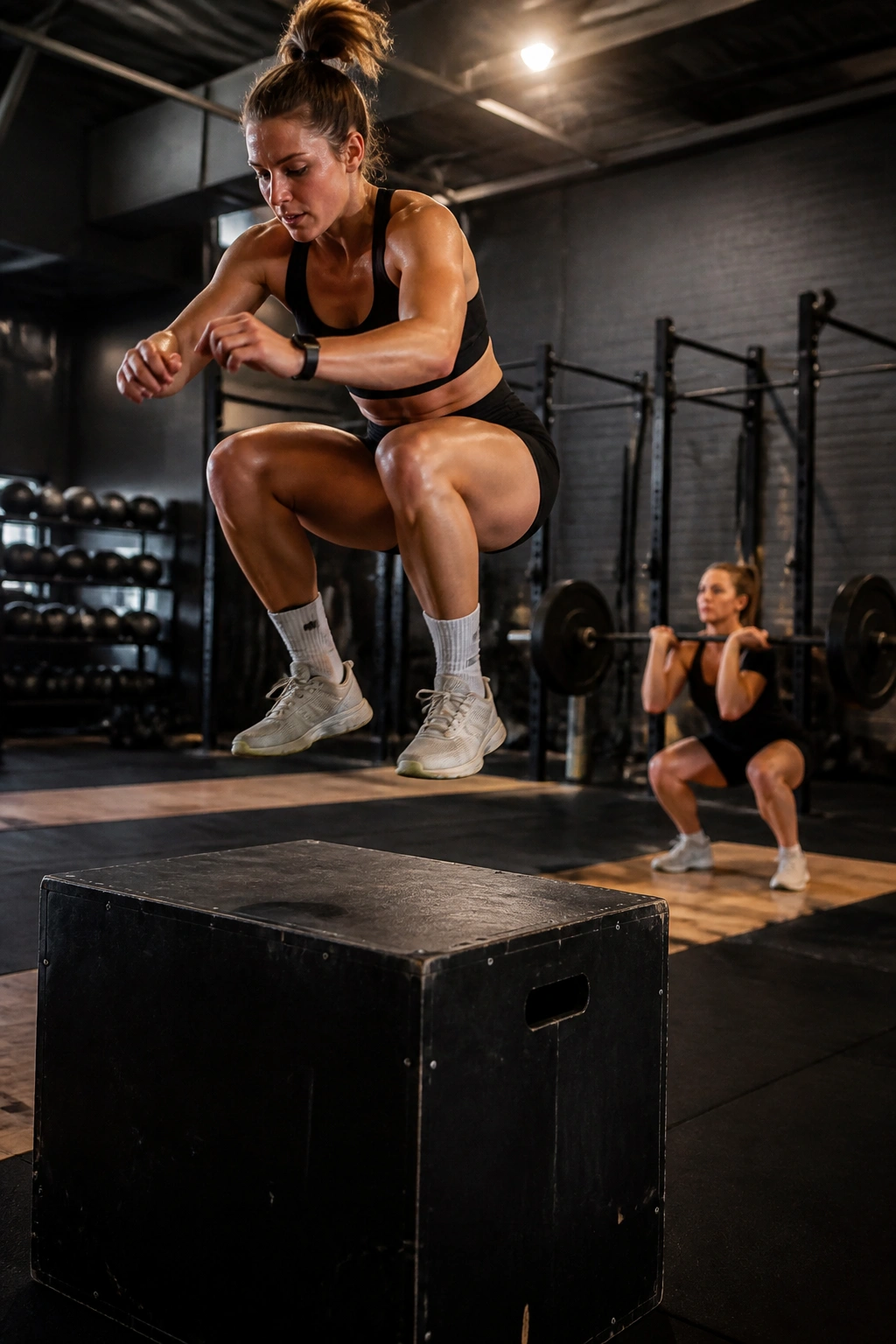
Power work belongs early, when your legs are fresh and your brain is still awake. Once fatigue piles up, jump height drops and the movement gets muddy.
This workout starts with something explosive: box jumps, medicine ball slams, or kettlebell swings. Then you move into a heavy compound lift like a front squat or push press. The sequence matters. Speed first, strength second, then a little accessory work if you still have juice.
How to keep it crisp
- Box jump: 5 sets of 3
- Medicine ball slam: 4 sets of 5
- Push press: 4 sets of 4
- Front squat: 3 sets of 5
- Row or carry: 2 to 3 sets
Rest long enough to keep the reps snappy. If the jump turns into a clumsy hop, stop. Power is about quality, not quantity.
This is a good workout for women who want athletic strength, not just slow grinding. It has a bit more snap to it, and that changes how the whole session feels.
21. Beginner Strength Training Workout for Women Who Are New to Lifting
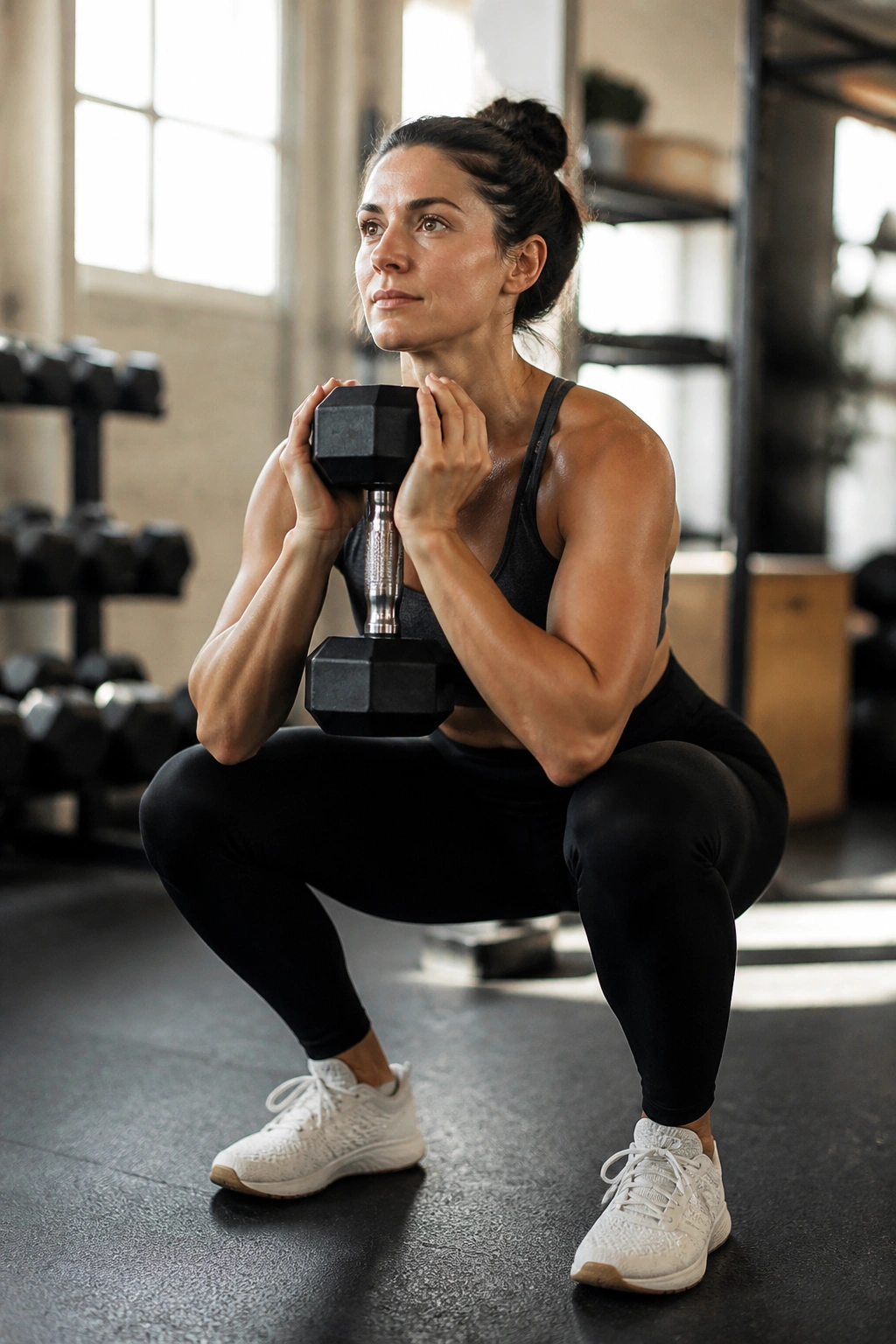
Starting small is smart. Starting random is not. A beginner needs movements that feel learnable on day one and still leave room to grow for months.
This workout should be plain on purpose. Use a box squat or goblet squat, an incline push-up, a cable row or dumbbell row, a glute bridge, and a carry. Keep the reps in the 8 to 10 range, use 2 to 3 sets, and stop with about 2 reps left in the tank.
Keep it simple
- Squat pattern
- Push pattern
- Pull pattern
- Hip hinge or bridge
- Carry or plank
That’s enough. You do not need seven core moves and four finishers to get started. You need practice, consistency, and weights that feel manageable but not silly.
New lifters often want to “feel the burn” every time. Ignore that urge. The first wins come from learning the shape of the lifts and repeating them cleanly.
22. Heavy Lower-Body Strength Day
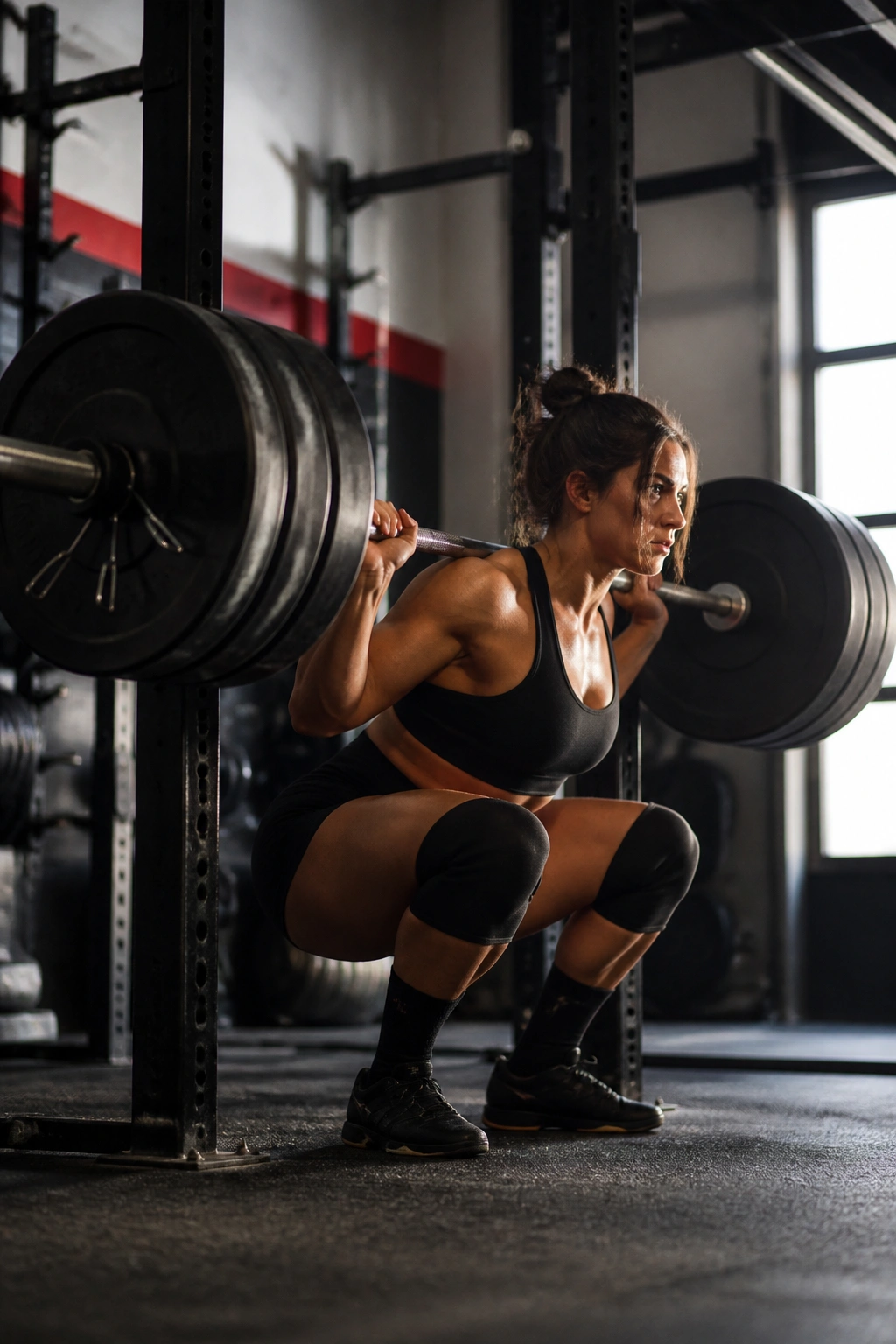
This is not a glute pump session. This is the day you load up and let your legs deal with it.
Heavy lower-body work usually lives in the 3 to 5 rep range on the main lift, with longer rests and fewer total exercises. That keeps the focus on force production rather than just fatigue. The session might begin with a back squat or front squat, then move into a deadlift variation, a walking lunge, and a hamstring curl.
A clean setup looks like this:
- Squat: 5 sets of 3
- Deadlift or trap-bar deadlift: 4 sets of 4
- Walking lunge: 3 sets of 8 per leg
- Hamstring curl: 3 sets of 10
- Optional calf work: 2 sets of 12
Take your rest seriously here. Two minutes is a starting point. Three is fine. The goal is to move well under load, not survive a tired mess.
Heavy lower-body days are where strength gets obvious. If the bar speed improves and your stance feels more stable, you know the work is landing.
23. Shoulder-Friendly Upper-Body Workout
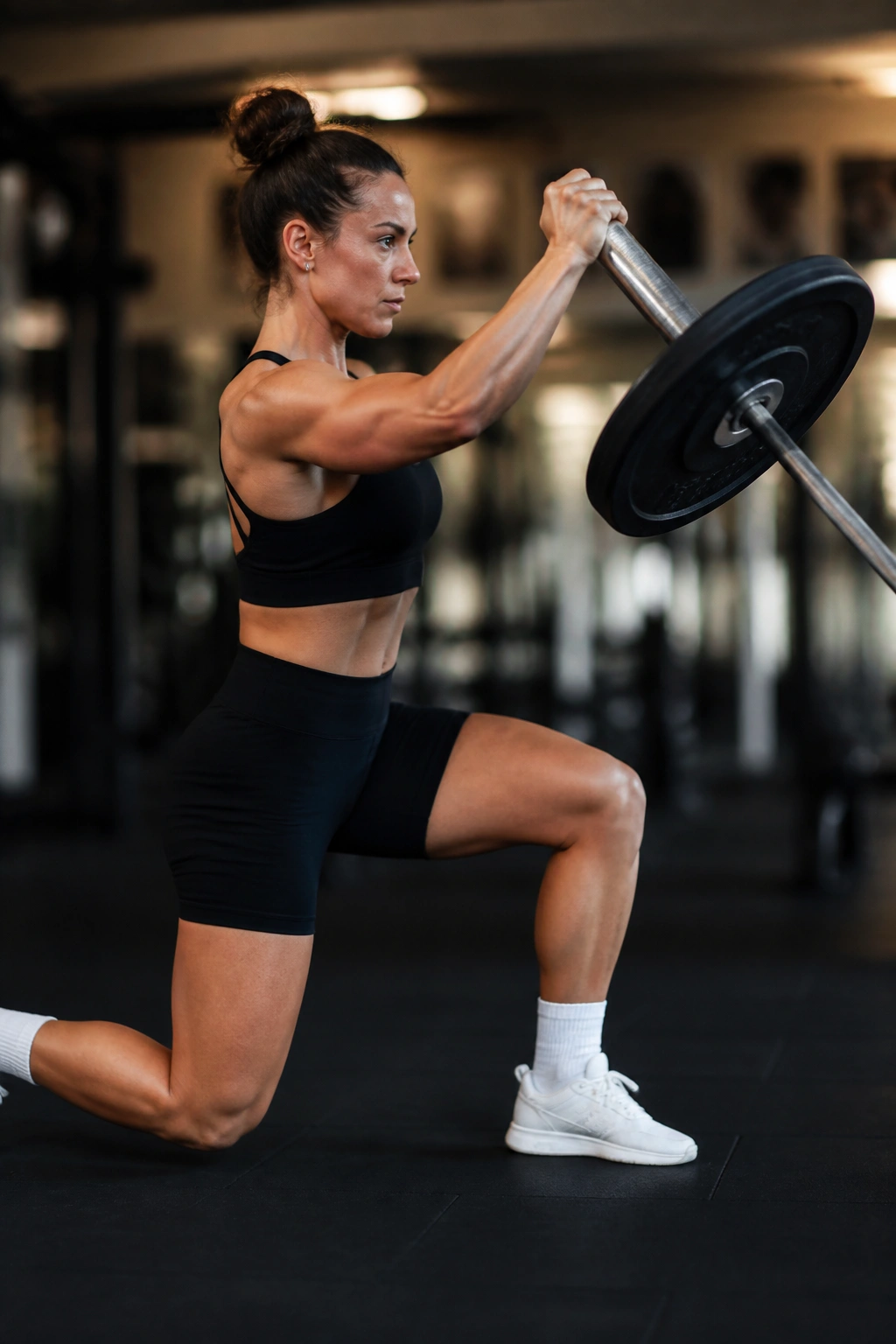
What if overhead pressing bugs your shoulders? Then you don’t force it. You change the angle and keep training.
A shoulder-friendly workout often uses a landmine press, neutral-grip dumbbell press, and plenty of upper-back work. The landmine path feels kinder because the arm doesn’t travel straight overhead. It’s a cleaner choice when straight pressing feels cranky.
Try this mix:
- Landmine press: 4 sets of 8
- Neutral-grip dumbbell press: 3 sets of 8
- Chest-supported row: 4 sets of 10
- Face pull: 3 sets of 12
- Serratus wall slide: 2 sets of 10
- Lateral raise in the scapular plane: 2 sets of 12
If a movement causes pain, not just effort, skip it. That’s not weakness. That’s common sense.
This workout is useful for women who want upper-body strength without turning every session into a shoulder complaint. The key is angle, control, and enough pulling volume to keep things balanced.
24. Travel Hotel Gym Strength Workout
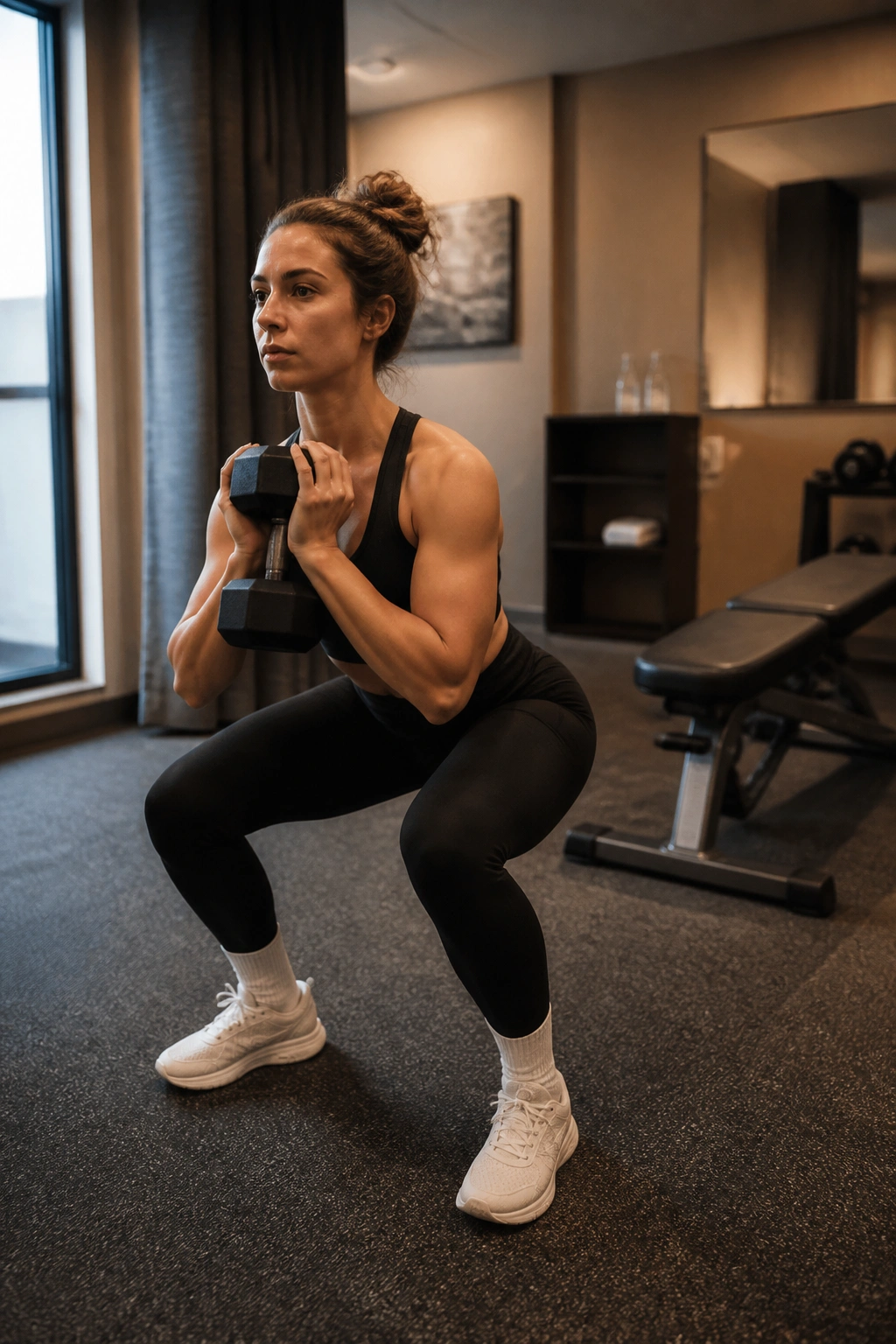
One bench, one rack, a pair of dumbbells, and thirty minutes. That’s enough to keep your strength from sliding when you’re away from your usual setup.
Travel workouts work best when the exercises are simple and the transitions are fast. You do not need novelty. You need a plan that fits the room you’re in. Dumbbells, bodyweight, and one cable machine can cover almost everything.
Use this lineup
- Goblet squat: 3 sets of 10
- Dumbbell Romanian deadlift: 3 sets of 10
- Push-up or dumbbell press: 3 sets of 8
- One-arm row: 3 sets of 10 per side
- Split squat: 2 sets of 8 per side
- Suitcase carry: 3 trips per side
Keep rest around 45 to 60 seconds. If the dumbbells are too light, slow the lowering phase to 3 seconds and pause at the hardest point.
Travel sessions are less about crushing PRs and more about keeping your rhythm. That matters more than people admit.
25. The Repeatable Weekly Anchor Full-Body Workout
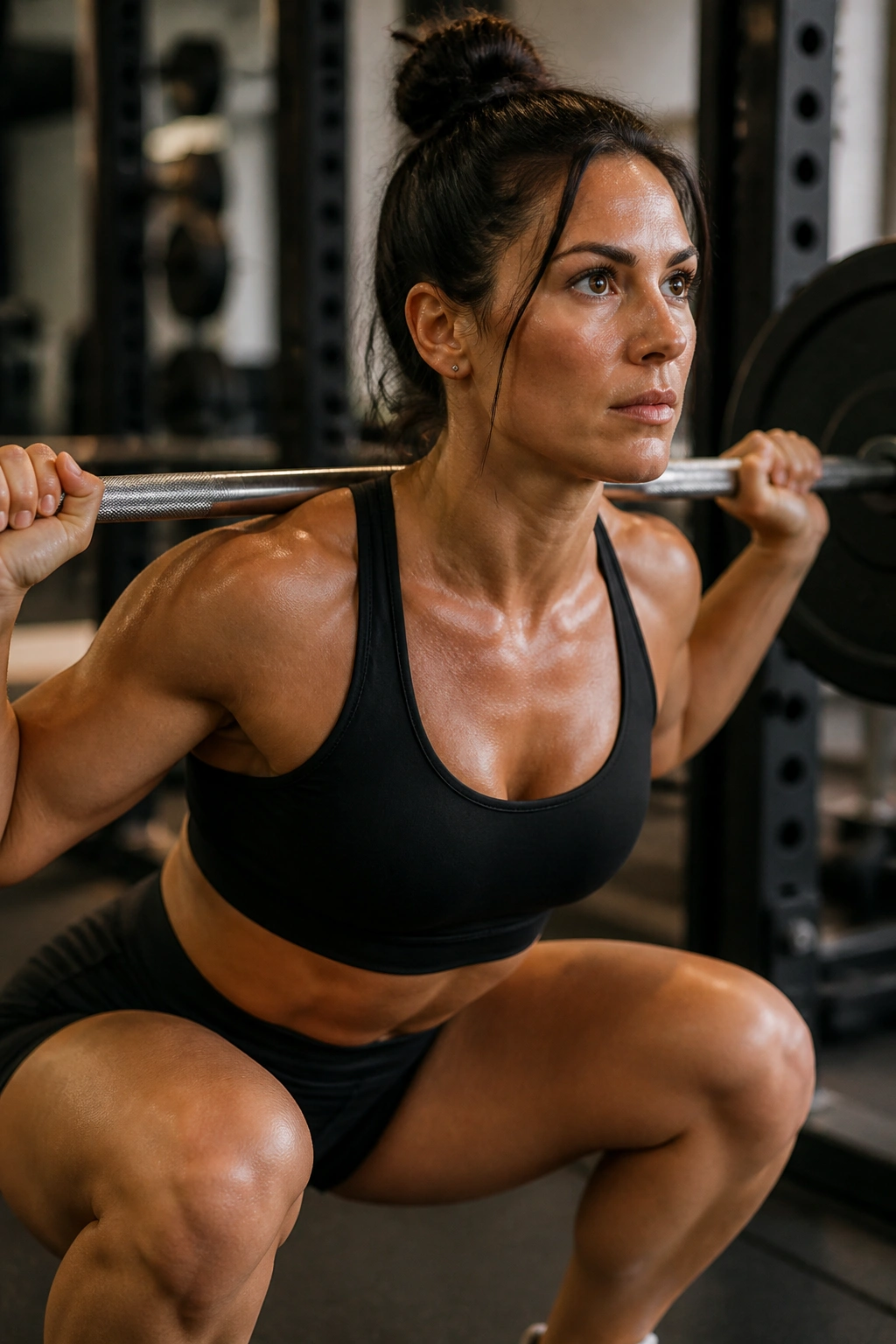
Every good lifting week needs one session you can trust. The one you come back to when life is noisy, the gym is crowded, or you do not want to overthink anything.
This workout should hit the big patterns once each: squat, hinge, press, pull, and carry. Pick lifts you know well and keep them in the moderate rep range, usually 6 to 8 reps for the main work. That gives you enough load to matter without grinding yourself into dust.
A solid version looks like this
- Squat or leg press: 3 sets of 6 to 8
- Romanian deadlift or trap-bar deadlift: 3 sets of 6 to 8
- Dumbbell bench press or push-up: 3 sets of 8
- Row or pulldown: 3 sets of 8
- Farmer carry: 3 trips of 30 yards
- Plank or dead bug: 2 sets
Track the numbers. That part matters more than people like to admit. If the reps rise or the load creeps up while your form stays tidy, the plan is working.
Use this as your anchor, then swap one movement at a time when you get bored or stall. Don’t tear the whole thing apart just because you had one good week. Consistency beats reinvention, and boring progress is still progress.
