



Arm training gets messy fast for beginners. A lot of people start with endless curls, then wonder why their elbows ache and their triceps still look flat. The better move is simpler: learn a few arm exercises for people who are new to lifting, keep the weights modest, and let the joints learn the path first.
You do not need a circus of machines. A dumbbell, a cable stack, a bench, and a little patience cover most of the useful work. Standard beginner strength advice from groups like the ACSM is boring for a reason: use loads you can control, keep the reps clean, and stop before the last rep turns into a sway.
Arms also respond fast to small fixes. Move your elbows half an inch, change your grip, slow the lowering phase, and the same weight suddenly feels harder in the right way. That matters more than chasing a huge dumbbell on day one.
Pick a handful of these exercises, not all twenty. One curl, one triceps move, one grip drill, and maybe one compound press is plenty to start. The rest become options you can rotate in as your form gets steadier.
1. Standing Dumbbell Biceps Curl
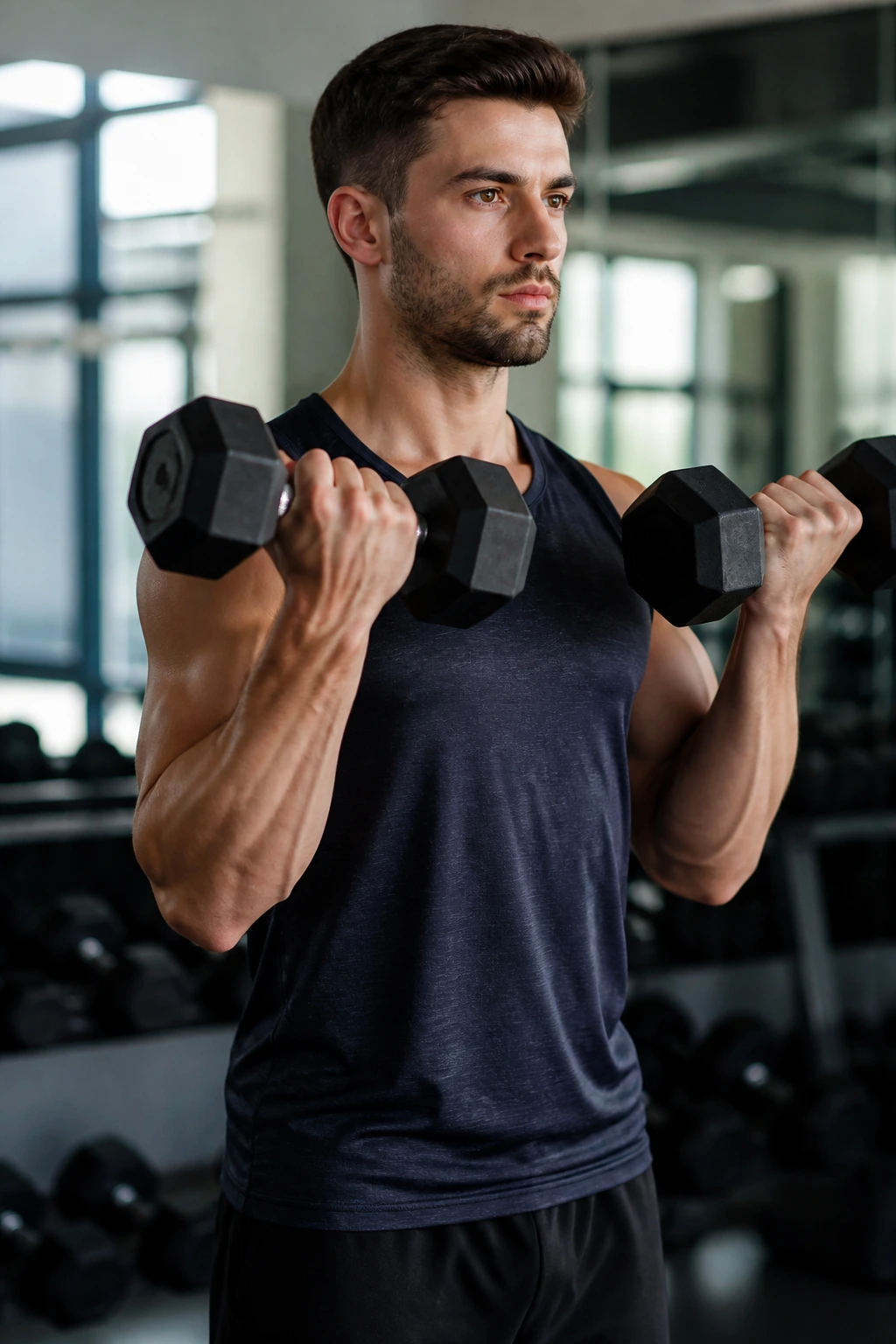
If you learn only one curling pattern first, make it this one. The standing dumbbell biceps curl teaches the basic elbow flexion motion without hiding behind a machine or a bar that forces your hands into one position.
The reason it works so well for new lifters is plain: you can see everything. Your wrists, elbows, shoulders, and even your hips all try to cheat a little, and the mirror catches it fast. Keep your upper arms close to your ribs, turn your palms up as you lift, and stop the dumbbells around shoulder height.
What to Watch in the Mirror
- Elbows stay near your sides, not drifting forward with every rep.
- Wrists stay straight, not bent back like you’re carrying a tray.
- Shoulders stay quiet; if they’re rising, the weight is too heavy.
- Lower the dumbbells under control for about 2 to 3 seconds.
Tiny movement. Big payoff.
For beginners, I like this lift in the 8 to 12 rep range with a weight that leaves one or two clean reps in the tank. If the last two reps look like a small backbend, back off. That isn’t strength work anymore; it’s just a shrug with a curl attached.
2. Hammer Curl
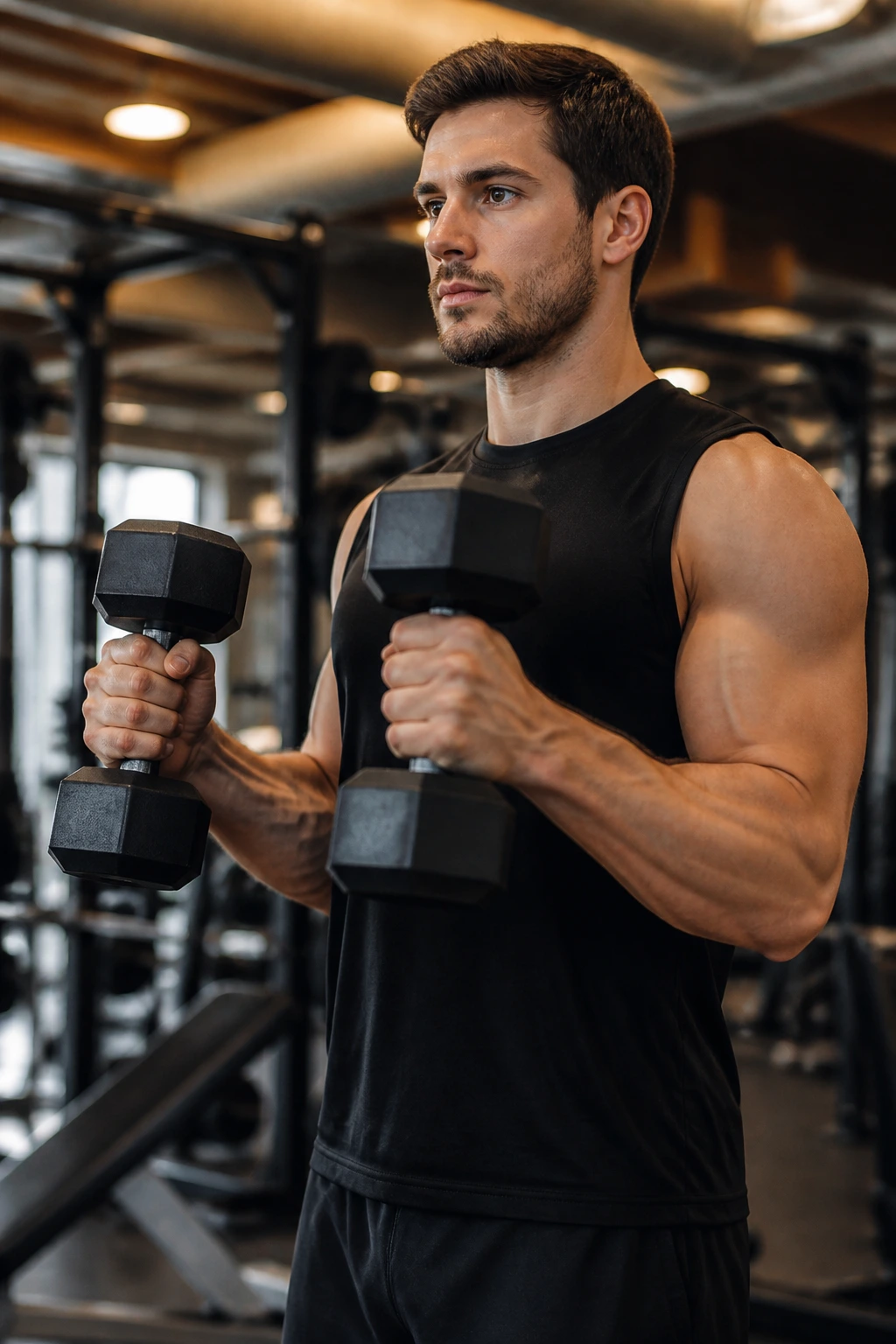
Why do hammer curls feel friendlier on the elbows? Because the neutral grip takes some stress off the wrist and changes the load a little, which is exactly what a lot of new lifters need when regular curls feel weird.
You hold the dumbbells with your palms facing each other, like you’re carrying two narrow water bottles. That position hits the brachialis and brachioradialis harder than a traditional palm-up curl, so the upper arm and forearm both get involved. The movement also tends to feel steadier, which matters if your wrists are still getting used to loaded work.
Less drama. More work.
Use a slow lower and a brief pause at the top. If you bounce the dumbbells off momentum, the exercise turns into a half-hearted shrug, and that defeats the point. Hammer curls are a good choice when your regular curls feel cranky or when you want an arm day that includes a bit more forearm work without adding another exercise.
3. Cable Curl
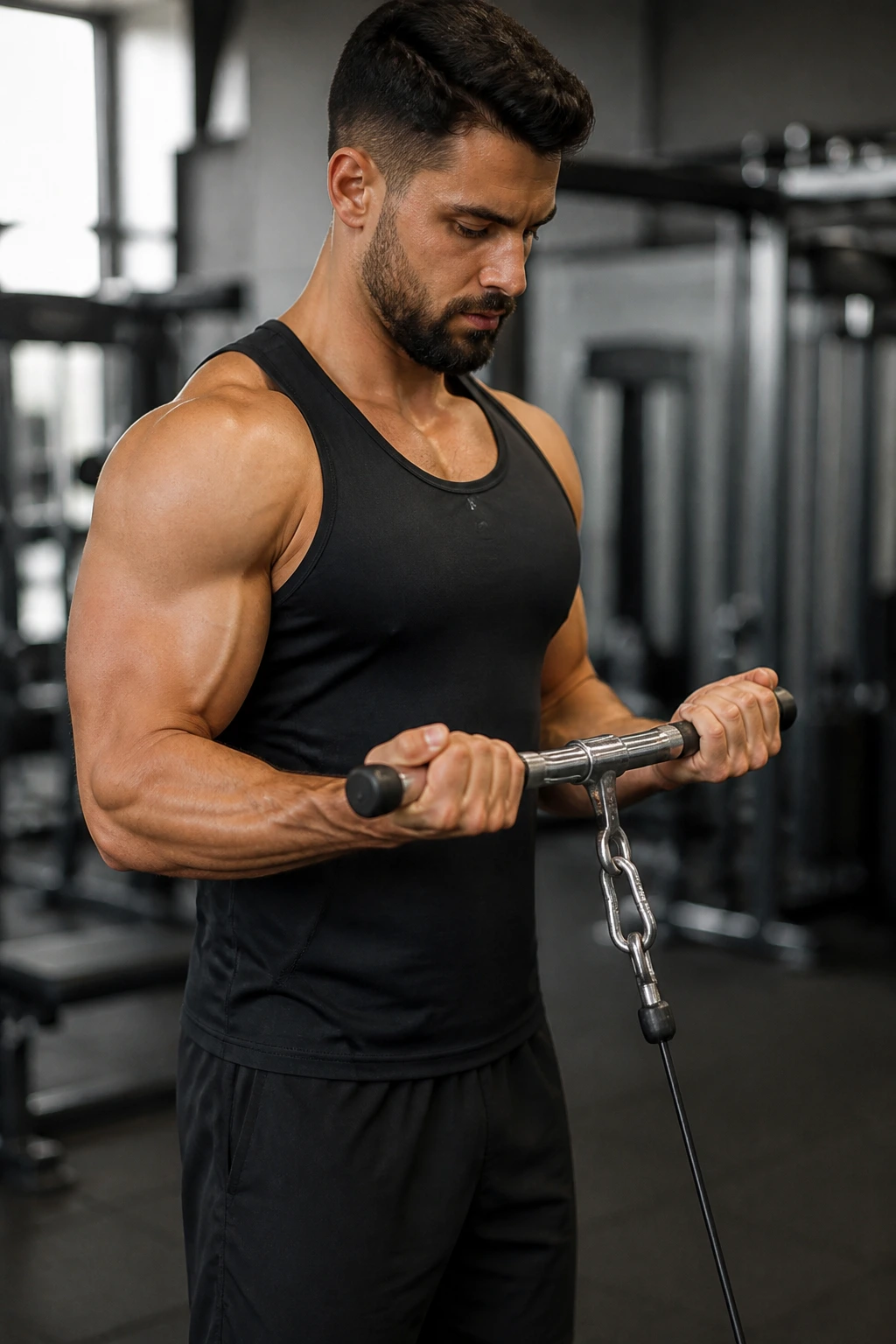
If your dumbbell curl turns into a hip swing, the cable curl is the cleaner fix. The stack keeps tension on the biceps from the bottom of the rep to the top, which means you can’t hide in the easy part of the lift.
Set the pulley low, grab a straight bar or a rope, and step forward just enough that the weight doesn’t drag you back. The cable should line up with your forearms, not pull you off balance. That constant pull is useful for beginners because it teaches control, and control is usually the missing piece.
How to Set It Up
- Set the pulley all the way down or close to it.
- Stand tall with a soft bend in the knees.
- Keep your elbows still, almost pinned to your sides.
- Stop the rep before the stack slams down.
A cable curl also gives you a nice chance to practice a smooth lowering phase. That part matters. The weight may feel lighter than a dumbbell, but the tension stays honest, so sloppy reps show up fast. If you’re learning arm training from scratch, that honesty is useful.
4. EZ-Bar Curl
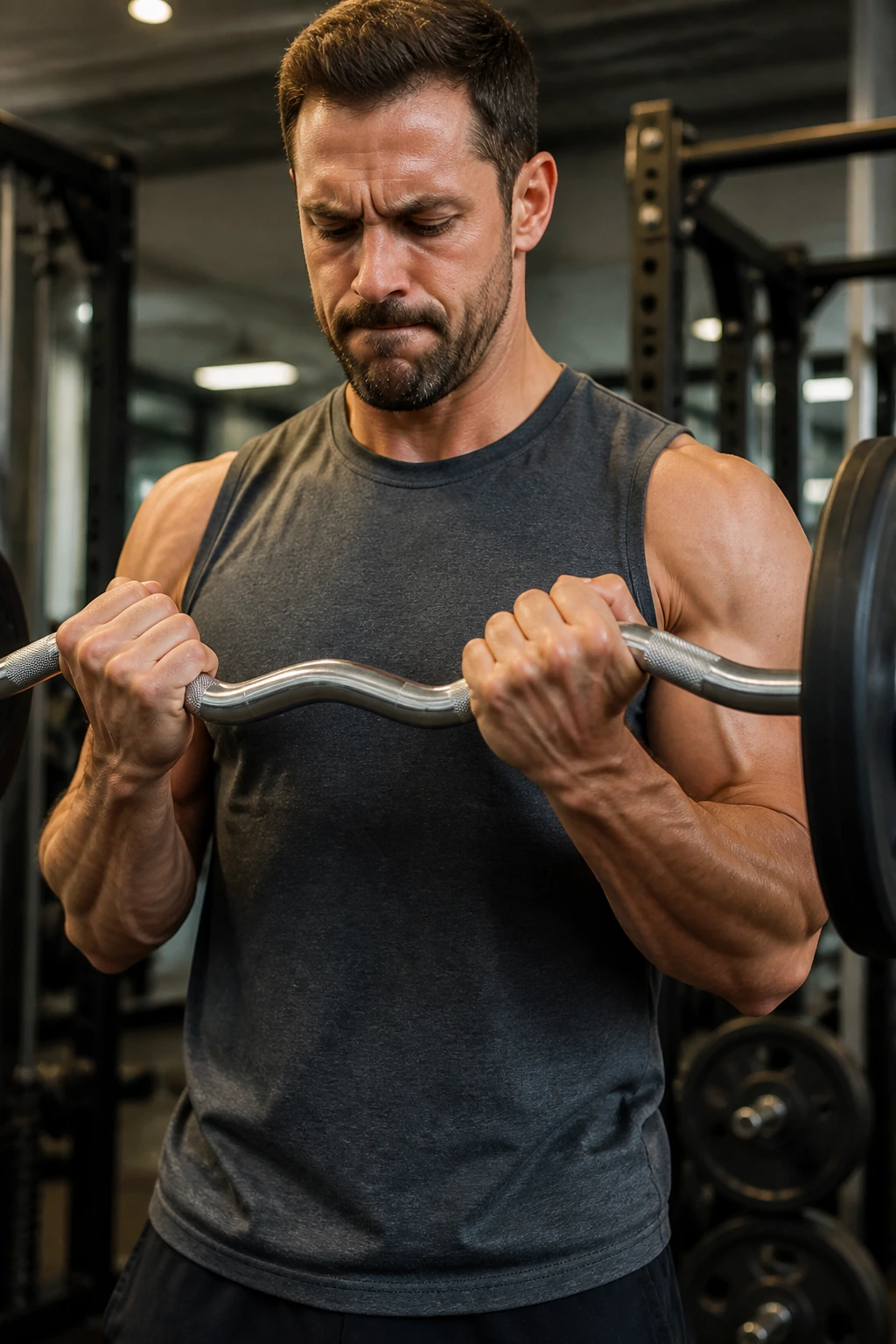
The crooked bar earns its keep. An EZ-bar curl often feels easier on the wrists than a straight bar curl, which is a big deal when you’re new and your forearms haven’t adapted to every grip yet.
The angled handles let your hands sit in a more natural position. That doesn’t make the movement magical. It just removes some of the annoying stress that can creep into a straight bar curl, especially if your wrists like to extend backward when the load gets heavy. Keep your hands on the inner bends or the middle bends of the bar, not crammed too wide.
The setup is simple, but the load can climb fast, so stay honest. If the bar starts turning into a body heave, it’s too much. Beginners usually do better with a moderate weight and strict reps of 8 to 10, because the bar itself adds enough challenge without needing extra ego.
5. Incline Dumbbell Curl
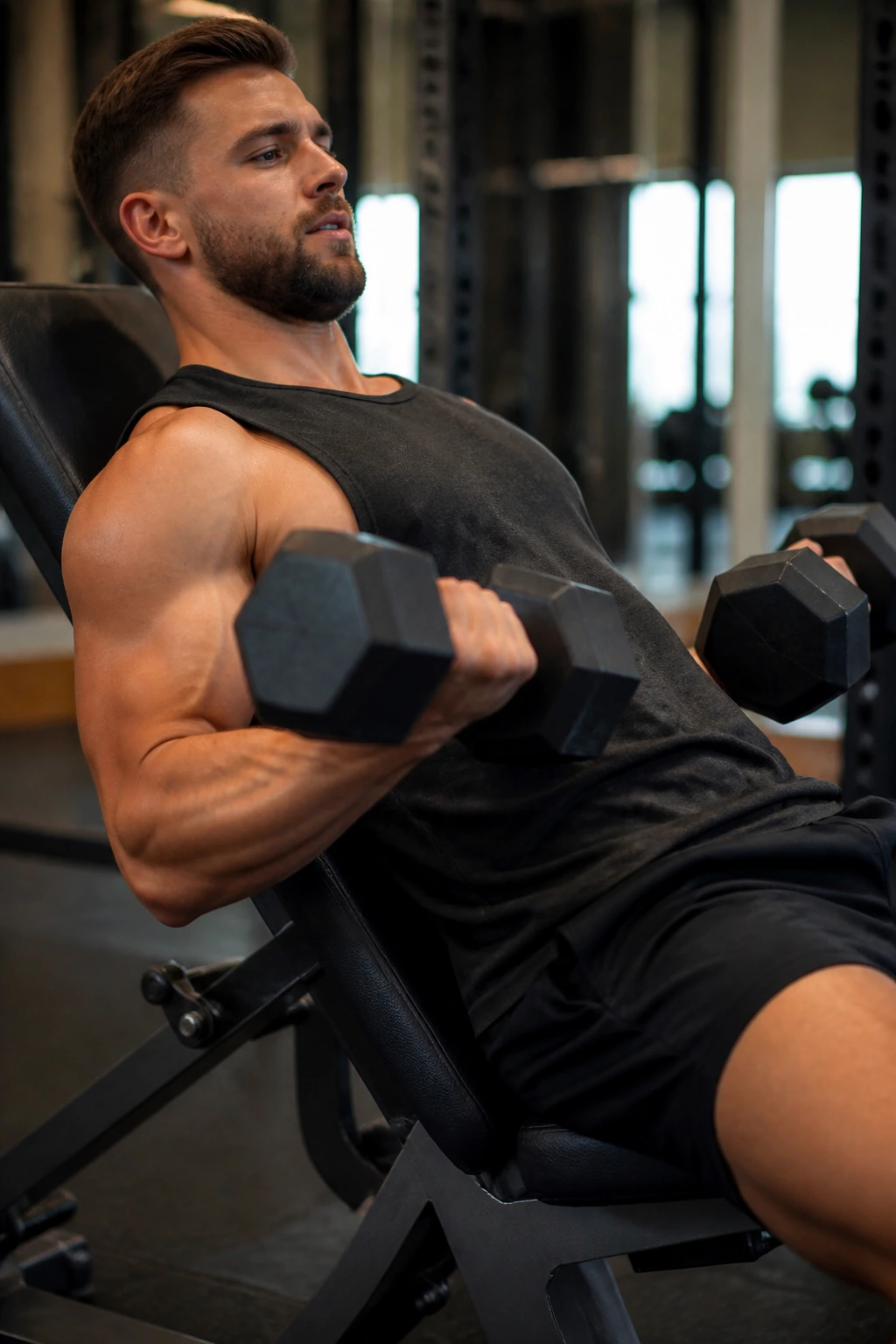
The incline dumbbell curl feels different the moment you sit back. Your arms hang slightly behind your torso, and that stretch changes the start of the rep in a way standing curls can’t match.
That longer starting position matters for the long head of the biceps, which is part of why this lift earns a place on a beginner arm day once basic curls feel smooth. Sit on a bench set around 45 to 60 degrees, let the dumbbells hang, and keep your shoulders from rolling forward as you curl. The temptation is to lean and shorten the range. Don’t.
Tiny setup, bigger stretch.
I like this one with lighter dumbbells than most people expect. The stretch at the bottom makes the exercise feel harder without adding more weight, and that’s useful when you’re still learning how much tension your elbows can handle. Slow down the lowering phase and let the dumbbells return almost all the way down before the next rep. Not slammed down. Just lowered with control.
6. Concentration Curl
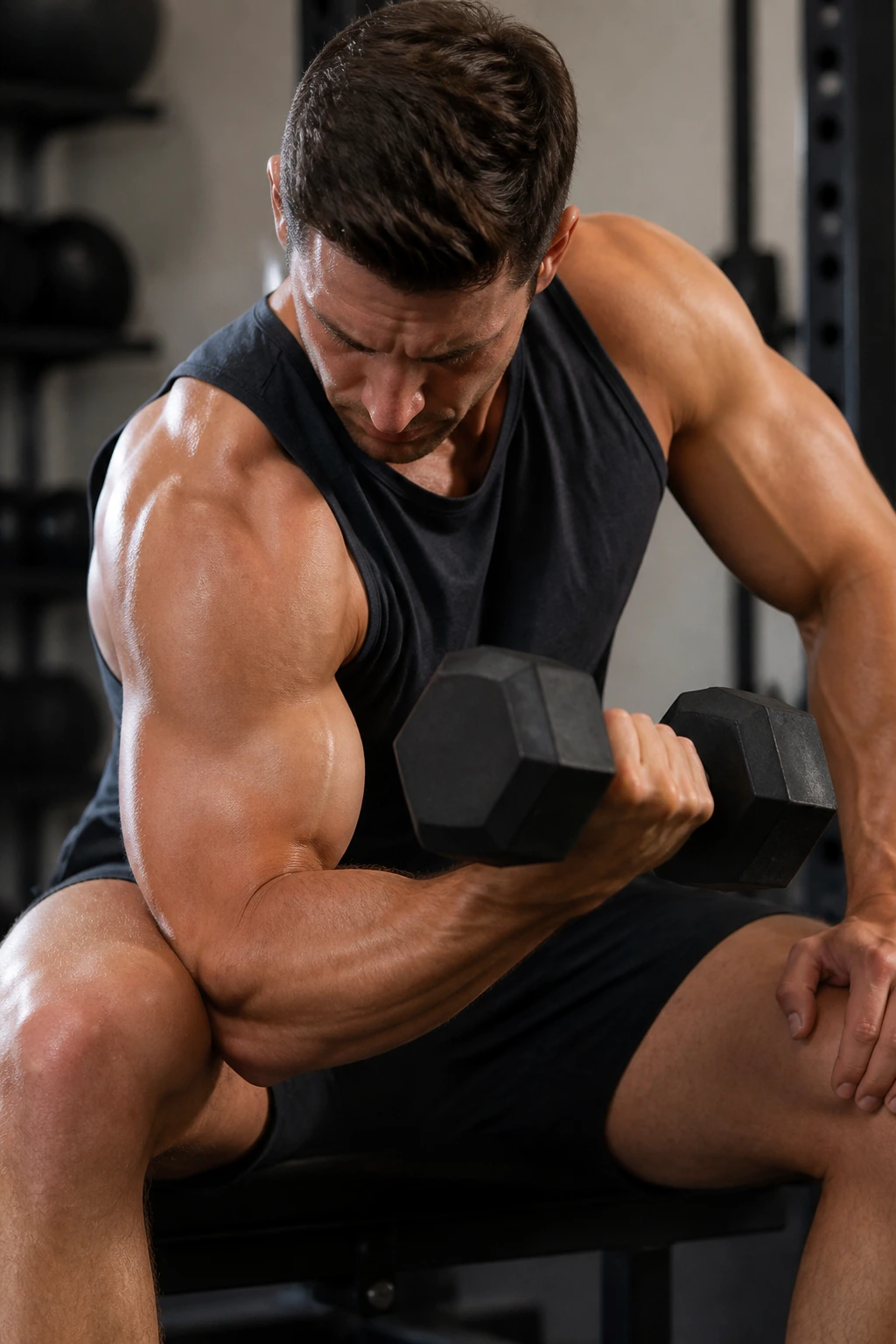
Unlike standing curls, the concentration curl gives you almost no room to cheat. You sit down, brace the working arm against the inside of your thigh, and curl with the kind of focus that makes sloppy reps obvious.
That’s why it works so well for beginners who keep feeling their shoulders or lower back taking over. The elbow stays anchored, the upper arm stays put, and the biceps have to do the actual lifting. It also teaches you what a real squeeze feels like near the top of the movement, which sounds small until you compare it with a half-baked swingy curl.
I’d use this one as a finishing move, not a heavy first lift. One arm at a time, 10 to 15 controlled reps is enough to make it count. If your torso starts twisting to help the dumbbell up, the load is too heavy or the rep range is too ambitious. Keep it clean. This exercise is about shape, not brute force.
7. Reverse Curl
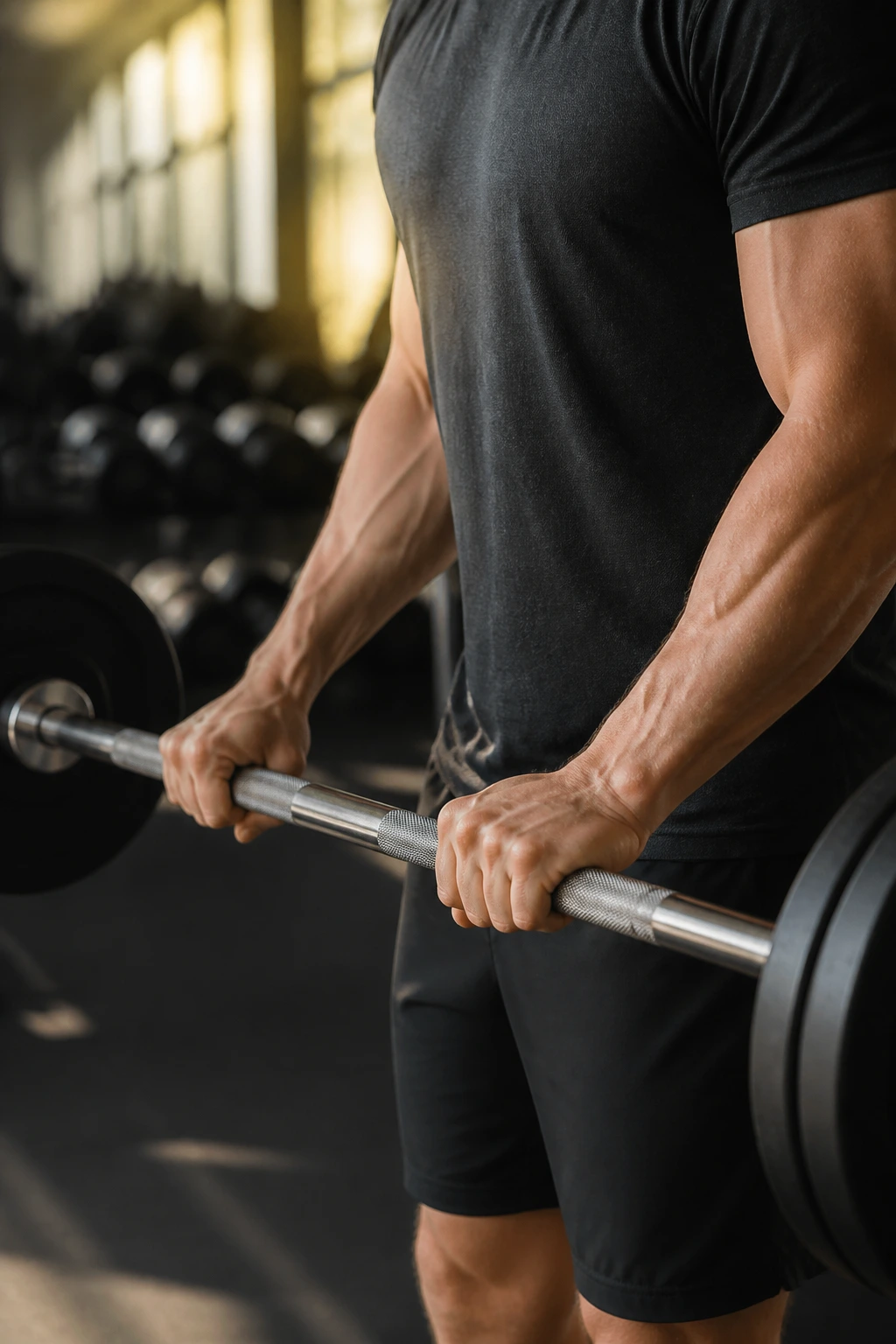
If your forearms are the weak link, reverse curls tell the truth fast. The overhand grip shifts the work away from the classic biceps emphasis and hits the brachioradialis and wrist extensors much harder.
The first surprise is how small the weight has to be. People who can curl a decent dumbbell palms-up sometimes need to cut the load in half when they flip the grip. That’s not a problem; it’s the point. Use a straight bar or an EZ-bar, keep the wrists straight, and let the elbows do the bending while the forearms stay active.
What Makes It Different
- Pronated grip instead of palms up.
- More forearm demand than a standard curl.
- Usually less total weight than you think.
- Best done with slow, clean reps.
This is a smart arm exercise for beginners who want their forearms to catch up with their upper arms. It also pairs well with regular curls because the two movements don’t feel the same at all. One builds the obvious part. The other fills in the stuff people miss.
8. Preacher Curl Machine
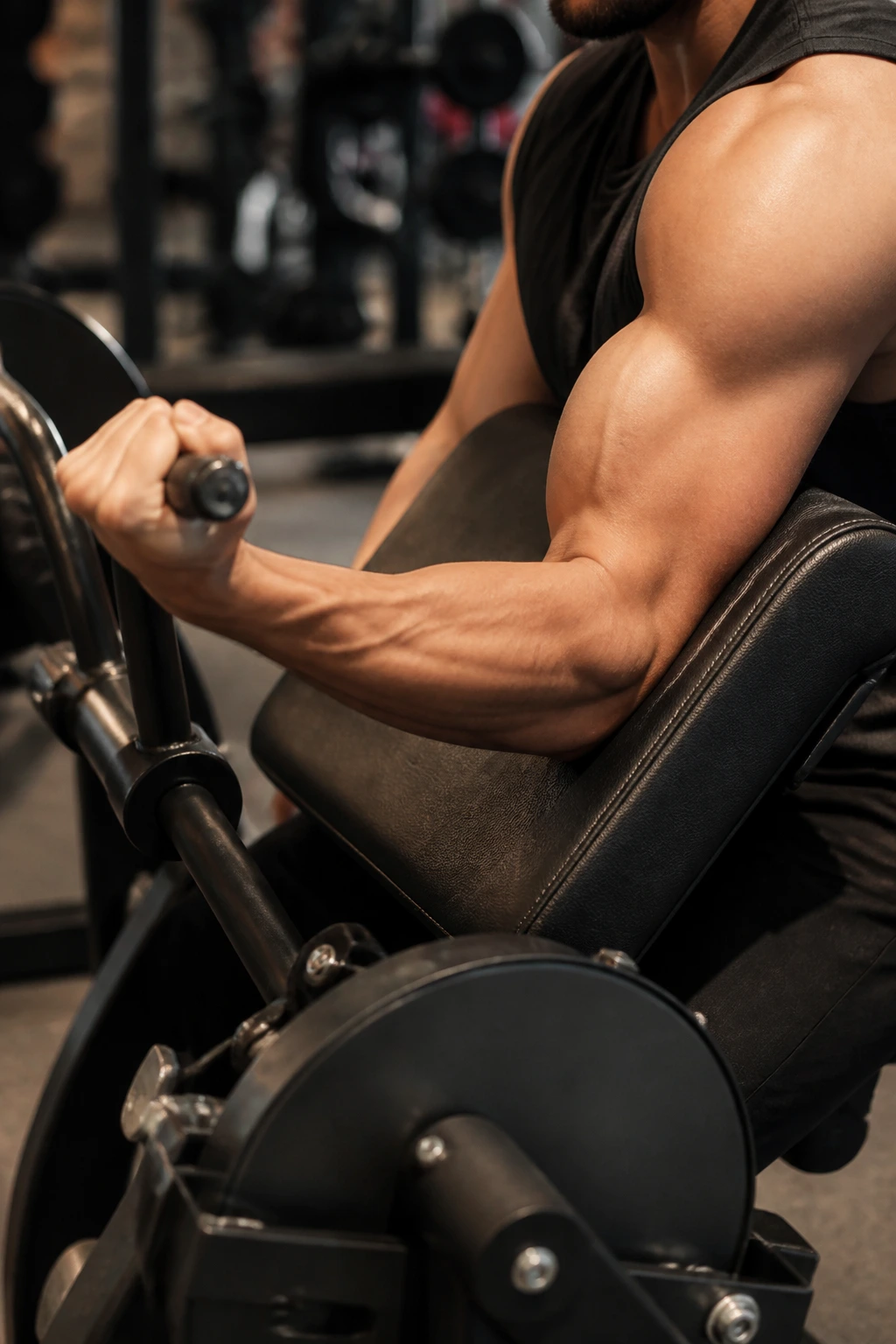
What happens when you want to stop cheating? The preacher curl machine is one of the easiest answers. It fixes your upper arm in place, so the biceps have to do the work without much help from your shoulders or back.
That fixed path is useful for beginners because it makes the curl feel tidy. You sit down, plant your upper arm on the pad, and curl from a dead stop. The machine also tends to be kinder than a loose barbell version, especially if you’re still figuring out elbow comfort. Still, keep the load modest. The bottom position can feel sharp if you drop too far and bounce off the pad.
Setup Notes
- Adjust the seat so your armpits sit comfortably above the pad.
- Keep the upper arm in contact with the pad the whole time.
- Stop just short of slamming into full elbow lockout.
- Use a grip width that lets your wrists stay neutral.
A preacher curl is a good reminder that strict work is not boring. It’s honest. There’s nowhere to hide, which is exactly why it belongs in a beginner arm routine.
9. Resistance Band Curl
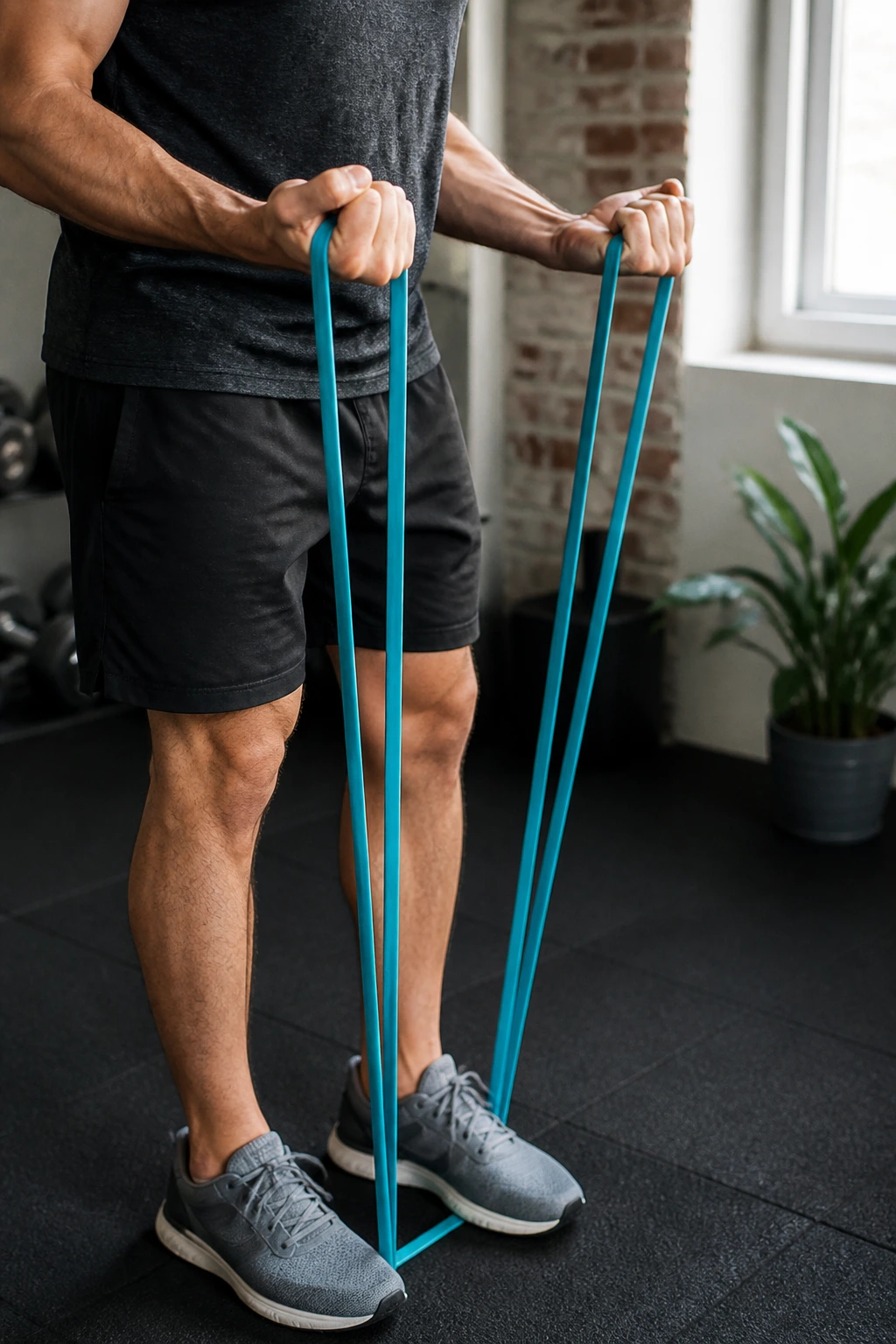
A resistance band curl is the kind of exercise that looks too simple until the last third of the rep bites back. Bands get harder as they stretch, so the top of the curl becomes the hardest part instead of the easiest.
That makes them useful at home, while traveling, or as a warm-up before heavier dumbbell work. Stand on the band, hold the handles or the ends, and curl with the same elbow position you’d use for dumbbells. The band should stay under tension the whole time. If it goes slack, reset your footing.
This one is easy to scale. Use a thin band for higher reps or a thicker band if you want a tougher finish without loading your joints with metal. Beginners often like 12 to 20 reps here because the band keeps the reps smooth and the burn shows up fast. Nothing fancy. Just steady tension and a clean path.
10. Close-Grip Push-Up
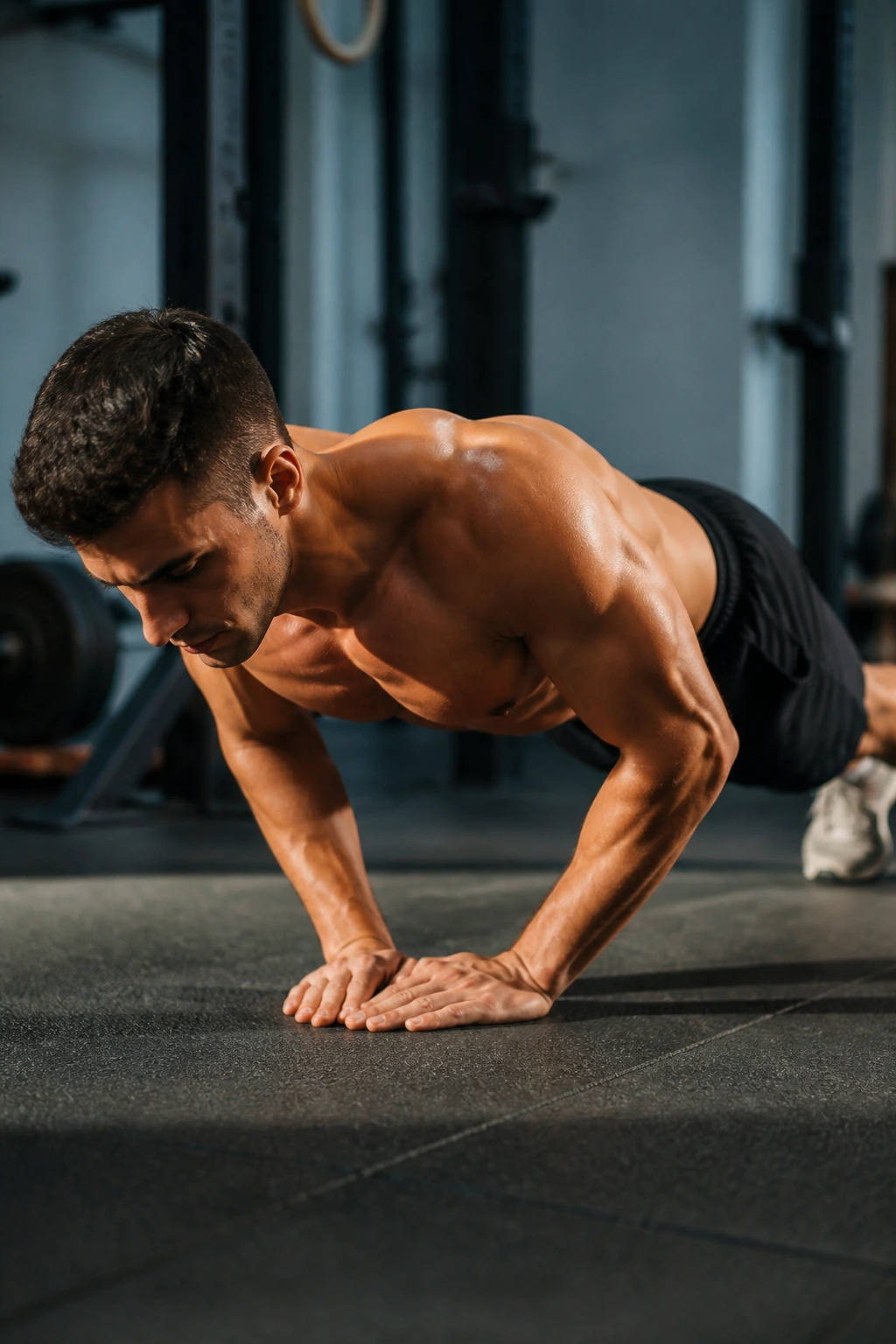
A close-grip push-up is a triceps exercise that also teaches body control, which is a nice bonus for someone new to lifting. Unlike a standard push-up, your hands sit a little closer together, and that shifts more of the work toward the triceps.
Keep the hands just inside shoulder width, not jammed together like a diamond unless your wrists and shoulders are happy with that. Lower with your elbows tracking back, not flaring out wide. If the floor version feels too hard, put your hands on a bench or a sturdy box and keep the same body line.
A lot of beginners like this because it feels like a real strength move, not just an arm isolation drill. That said, it only works if you keep your torso rigid. Sagging hips and flared elbows turn it into a messy push-up, and the triceps lose their clean line of work.
Use a higher surface first if full floor reps collapse your form. There’s no prize for grinding ugly push-ups. The better push-up is the one you can repeat the same way three sets in a row.
11. Rope Triceps Pushdown
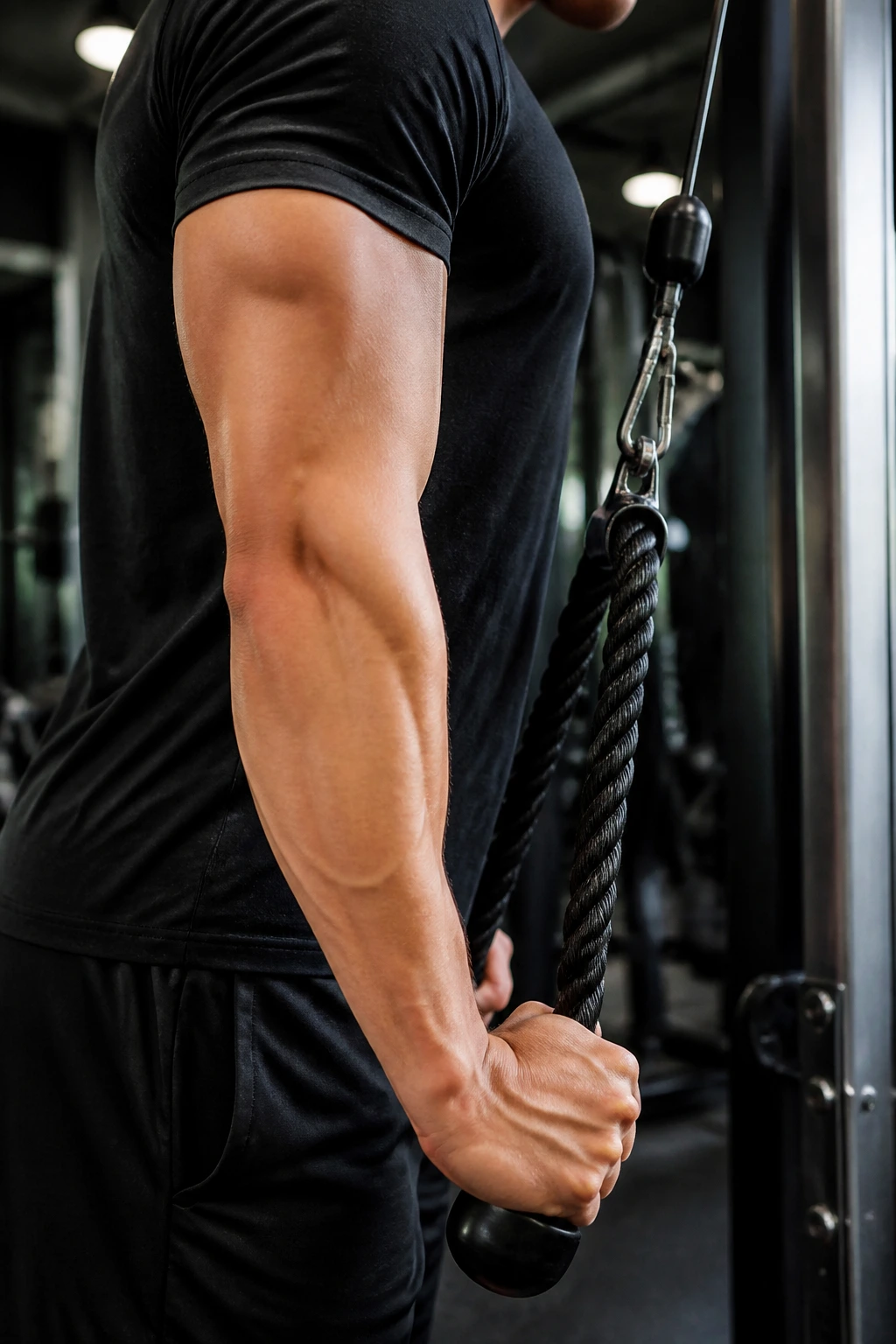
The rope triceps pushdown has a clean, satisfying finish when you do it right. The rope separates at the bottom, your elbows stay pinned, and the triceps contract hard without the rest of your body taking over.
Set the cable high, grab the rope, and start with your elbows tight to your sides. Push the rope down until your arms are straight, then split the ends apart a little at the bottom. That last bit gives you a small extra squeeze, but don’t turn it into a chest shove or a body lean. The movement should look calm. Almost boring.
What the Rope Should Feel Like
- A smooth press down, not a shove.
- Elbows staying in place.
- A hard squeeze at full extension.
- No lower-back arch to help the weight.
This is one of the best beginner triceps exercises because it’s easy to feel when the form is off. If you’re rocking back and forth, lighten the stack. The cable doesn’t care how strong you feel in your head. It only cares what your elbows do.
12. Overhead Dumbbell Triceps Extension
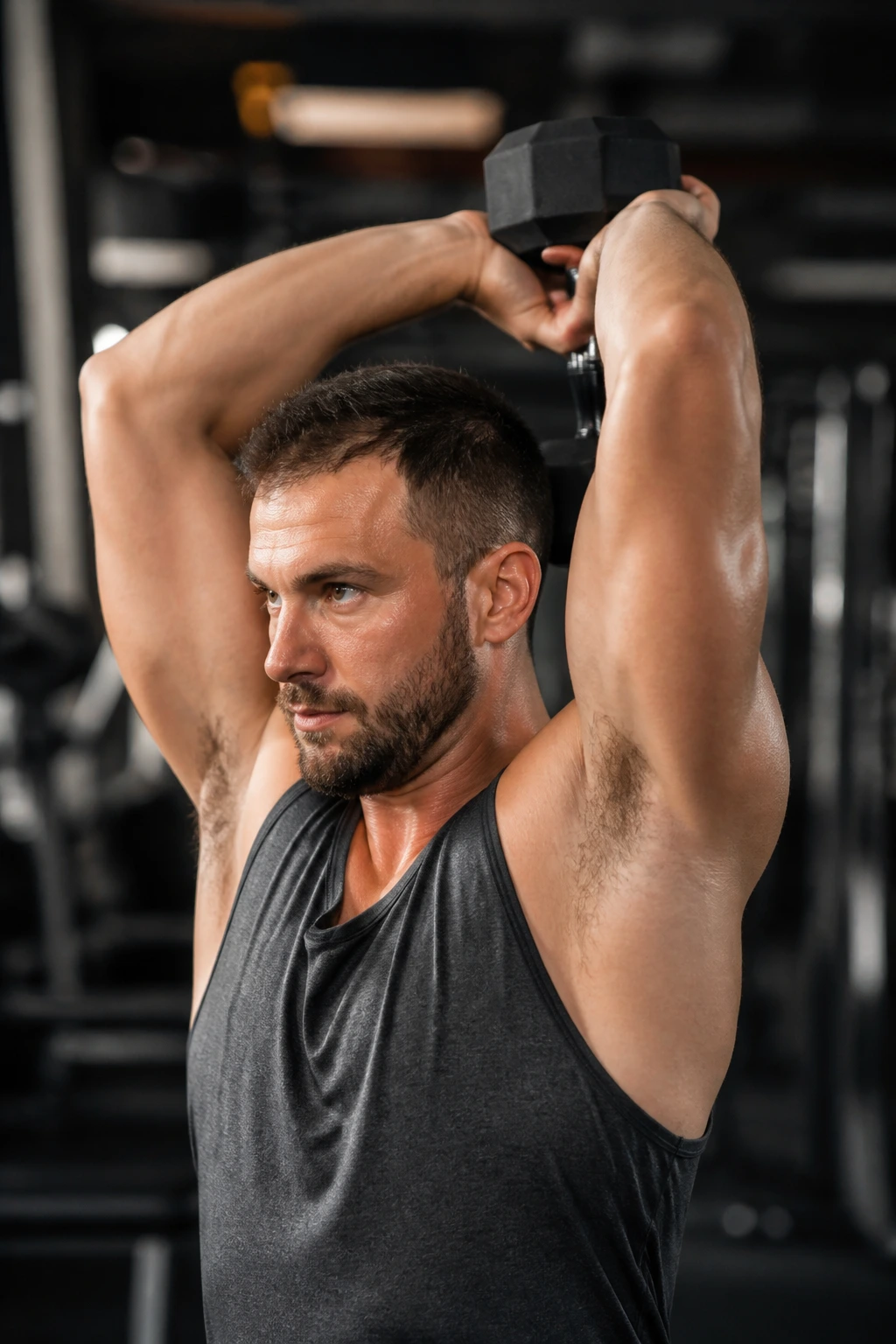
Want the long head of the triceps to work harder? Put your arms overhead. The overhead dumbbell triceps extension stretches that part of the muscle more than a pushdown does, which is why the two exercises don’t feel interchangeable.
You can hold one dumbbell with both hands or use one dumbbell per arm if you’re doing it single-sided. Keep your ribs down, because the biggest cheat here is a big lower-back arch. The elbows should point mostly up, and the movement should happen at the elbow joint, not from flinging your whole torso around.
The top of the motion should feel strong but controlled. The bottom position can get sloppy fast if you lower too far and lose elbow position, so start with a range that feels smooth. A light-to-moderate dumbbell usually beats a heavy one here. Heavy overhead extensions get messy in a hurry, and messy overhead work is a bad trade for new lifters.
13. Bench Dip
I like bench dips less than most people do. There, I said it. They can be useful, but they also have a habit of irritating the front of the shoulder if you sink too deep or if the bench height doesn’t suit your body.
That doesn’t mean they’re banned. It means you should treat them carefully. Keep your hands on the bench edge, legs bent if you need help, and lower only as far as your shoulders stay comfortable. If the front of the shoulder gives you that sharp pinchy feeling, skip them and choose a push-up variation or a pushdown instead.
Safer Bench Dip Setup
- Keep the descent short and controlled.
- Stay close to the bench.
- Use bent knees before adding more range.
- Stop immediately if the shoulder feels pinched.
Bench dips are a decent triceps option for some people, but they are not my first pick for beginners. Honest opinion: if a move keeps asking for perfect shoulder mobility right away, there are cleaner ways to train the same muscles.
14. Dumbbell Kickback
Why do kickbacks feel awkward? Because the exercise punishes every lazy inch of movement. If your upper arm drifts or your torso swings, the triceps stop doing the work and the dumbbell just becomes a tiny pendulum.
That’s also why kickbacks are useful. They force precision. Hinge at the hips, brace one hand on a bench or use a split stance, and keep the upper arm level with your torso. From there, extend the elbow until the arm is straight and squeeze hard for a second before lowering. The dumbbell should stay light. Really light.
How to Stop Swinging
- Lock the upper arm in place.
- Use a weight you can move without momentum.
- Pause briefly at full extension.
- Keep the neck relaxed instead of craning forward.
Kickbacks are not a big-load exercise, and beginners sometimes hate that. Fine. But when you want to learn how the triceps finish a rep, they do the job cleanly. The burn arrives fast, and it usually tells you the form is honest.
15. Single-Arm Cable Triceps Extension
A single-arm cable triceps extension is one of my favorite choices when I want to see whether each arm is doing the same thing. The cable gives you steady resistance, and one arm at a time makes cheating harder.
Set the handle high, face the machine or turn slightly away depending on the station, and press the handle down or back until the elbow straightens. Keep your shoulder quiet. The motion should come from the elbow, not from a torso twist. If one side feels weaker or less coordinated, that’s useful information, not a problem.
This version also gives your elbows a friendlier path than some free-weight triceps moves. You can adjust your stance, step back a little, and find the angle that feels smooth. It’s a strong choice for beginners who like the cable pushdown but want a little more control and a little less upper-body compensation.
16. Lying Dumbbell Triceps Extension
The lying dumbbell triceps extension — a lot of people call it a skull crusher, though I never love that name — is excellent when it’s done with care. It can also annoy the elbows if you go too heavy too soon, so this one deserves respect.
Lie on a bench or even the floor if you want a shorter range and a more forgiving setup. Start with the dumbbells above your shoulders, then bend at the elbows and lower the weights toward the sides of your head. The upper arms should stay mostly still. If they drift wildly, the triceps lose the job and the elbows take a beating.
Start lighter than you think. That’s the whole game here.
A floor version is a smart beginner choice because the range stops naturally when the upper arms hit the ground. Less drama. Less joint stress. If you do use a bench, keep the descent smooth and the elbows from flaring out. A little bend in the upper arm is fine; a wild swing is not.
17. Assisted Chin-Up
A chin-up is not just a back move. It’s a biceps and grip exercise with a lot of extra work packed in, which is why I like an assisted version for beginners who are ready to try more than curls alone.
Use a band, an assisted pull-up machine, or even a foot-supported setup if that’s what your gym has. Underhand grip. Palms facing you. That grip brings the biceps into the pull more than a wide overhand grip would, and it gives you a strong sense of how your arms and back share the load.
Beginner-Friendly Versions
- Band-assisted chin-ups for home or simple gym setups.
- Machine-assisted chin-ups when you want a fixed counterweight.
- Slow negatives if you can get to the top but not yet complete a full rep.
The key is control on the way down. A slow lower builds strength fast enough to matter, and it teaches your elbows how to handle your bodyweight without panicking. If you can only do one or two partial reps, that still counts. Stronger pulling starts somewhere.
18. Zottman Curl
The Zottman curl is sneaky. You curl up with your palms facing up, then rotate your wrists at the top and lower the dumbbells with your palms facing down. It looks like two exercises sharing one rep, and that’s basically what it is.
That combo makes it a nice bridge between a regular curl and a reverse curl. The biceps handle the lift, the forearms work hard on the way down, and your grip learns to stay honest. For beginners, the biggest lesson is usually weight selection. Use a lighter dumbbell than you’d use for a normal curl, because the pronated lowering phase gets serious fast.
The movement should feel smooth from top to bottom. If your wrists are snapping around or your shoulders are helping, the dumbbell is too heavy. I like this one when someone wants arm work that feels a little more complete without adding five separate drills. It’s one rep pattern, but it asks a lot from the forearms and biceps at the same time.
19. Wrist Curl
The forearm burn arrives fast here. A wrist curl is small, local work, and that’s exactly why it belongs on a beginner arm day if your grip gives up before the rest of you does.
Sit down and rest your forearms on your thighs or on a bench with your hands hanging off the edge. Palms face up, dumbbells in hand, and then move only the wrists. Don’t turn it into a curl of the whole arm. The range is short on purpose. Let the dumbbells roll down into the fingers a bit, then close the hand and curl the wrist up for a controlled squeeze.
A reverse wrist curl uses the same setup with palms down, and that swap can help balance the muscles around the forearm. You do not need to chase a huge load here. Light dumbbells, clean motion, and a lot of patience work better than trying to brute-force the movement.
This is a good finisher if you spend a lot of time gripping bars, dumbbells, or even a desk edge. The forearms notice everything.
20. Farmer’s Carry
A farmer’s carry is brutally simple: pick up heavy dumbbells and walk. That’s it. And it works because your hands, forearms, biceps, shoulders, and trunk all have to stay switched on while you move.
Stand tall, grab a pair of dumbbells that challenge your grip without wrecking your posture, and walk for 20 to 60 seconds or about 20 to 40 meters. Keep your ribs stacked over your hips, shoulders down, and steps smooth. Don’t lean back. Don’t let the weights drag your arms into a slump. The carry should look calm from across the gym, even when your forearms are getting cooked.
This is the exercise I’d keep at the end of a beginner arm session more often than not. It reinforces grip strength, helps the forearms catch up, and teaches you how to hold tension without flailing around. If you want a simple way to build real arm durability, this is hard to beat. Pick four to six moves from the list, repeat them for a few weeks, and let the boring work stack up. That’s where arm size and control usually start to show themselves.
