



A medicine ball looks almost too plain to matter until it knocks the wind out of you. Then you remember why coaches keep going back to it: it can train power, strength, rotation, balance, and conditioning without a lot of equipment or setup.
The trick is using it for more than abs work. A good medicine ball session can light up your legs, glutes, chest, shoulders, back, and core in the same workout, and it does it with a kind of fast, athletic stress that dumbbells and machines sometimes miss. That’s why the best medicine ball exercises feel useful in a way a thousand crunches never will.
Weight choice matters more than people think. A ball that’s too light turns into flailing; too heavy, and your throws get slow and sloppy. For fast moves like slams and passes, a lighter ball in the 4-8 pound range usually makes sense. For squats, carries, hinges, and bridge work, 8-15 pounds is often more practical, depending on your strength and the grip texture of the ball.
The other thing worth saying: a slam ball is not the same as a stitched medicine ball. Slam balls are built for hard drops and repeated impact. Traditional medicine balls can work for presses, carries, squats, and throws, but they may bounce, roll, or feel awkward on repeated overhead slams. Use the right ball for the job. Your ceiling, floor, and shins will thank you.
1. Medicine Ball Squat to Press
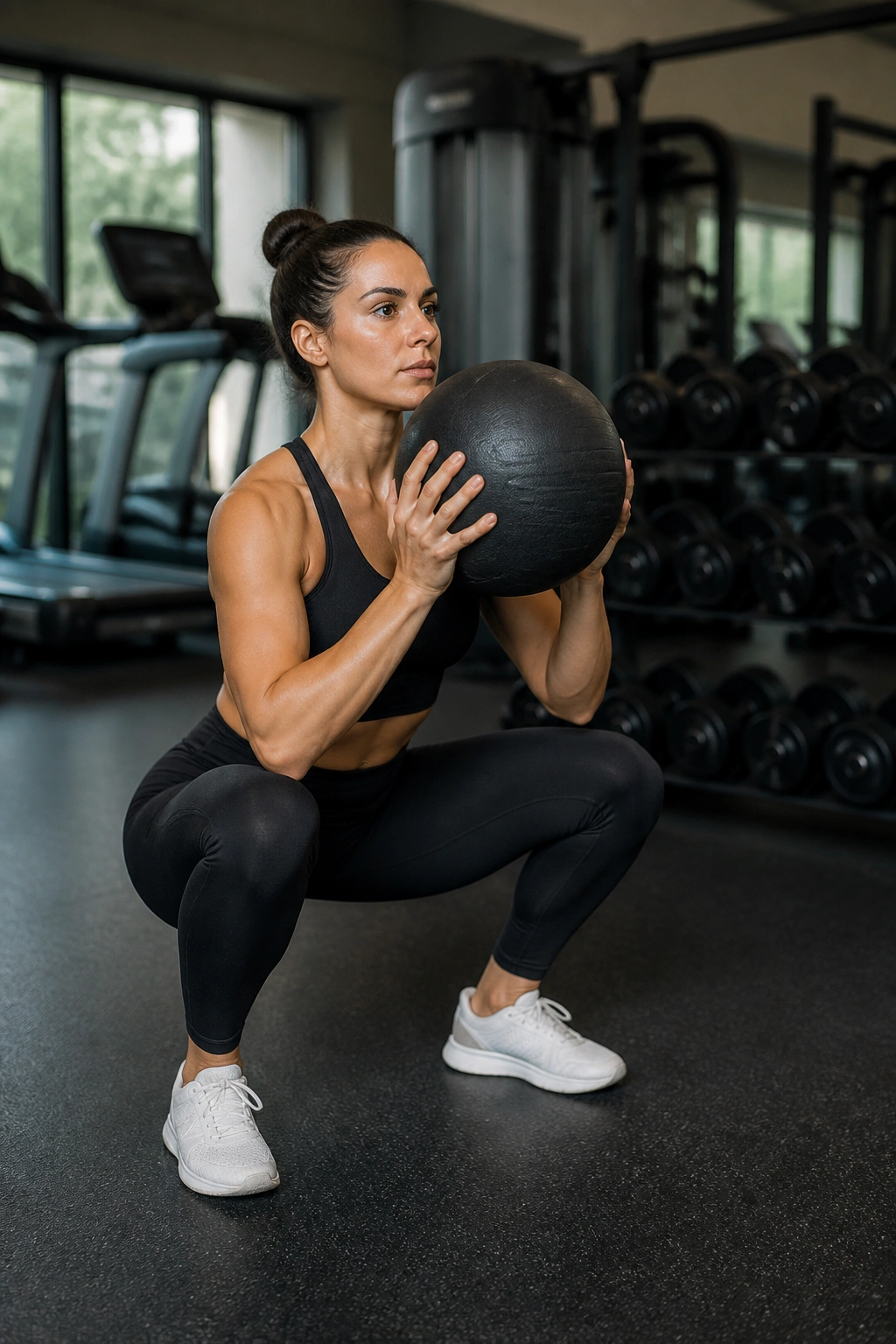
This is the kind of movement that makes a small ball feel sneaky. Your legs do the heavy lifting on the way up, then your shoulders finish the job overhead, and your midsection has to stay braced the whole time.
What It Trains
- Quads and glutes drive the squat and stand phase.
- Shoulders and triceps handle the press.
- Core muscles keep your ribs from flaring open when the ball goes overhead.
How to Do It
- Hold the ball at chest height with both hands.
- Sit down into a squat until your thighs are at least parallel to the floor, or as low as your hips allow with control.
- Stand up hard.
- As you reach the top, press the ball overhead in one smooth motion.
- Lower it back to your chest and repeat for 8 to 12 reps.
Keep your chest proud, but not puffed out. That difference matters. If your lower back arches every time you press, the ball is too heavy or you’re rushing the move.
My favorite cue: drive the floor away, then punch the ball to the ceiling. That mental shift keeps the sequence clean.
2. Medicine Ball Slams
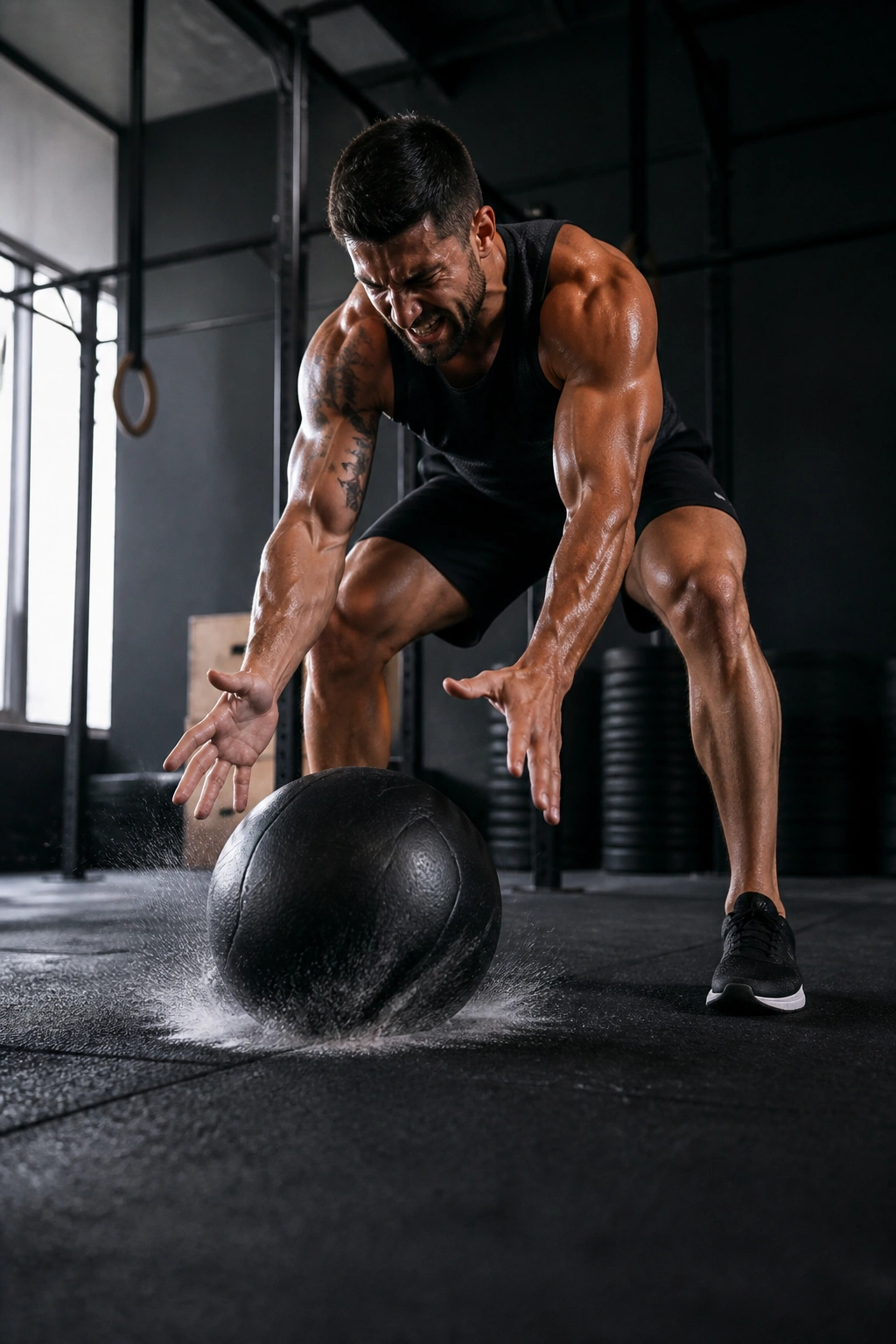
A slam is simple, brutal, and honest. If you’re half asleep, it wakes you up. If you’re annoyed, it gives you somewhere to put it. And if you think core training has to be slow and careful, this move will change your mind fast.
The power comes from the whole body, not the arms alone. You load the hips, whip the torso, and finish with a hard exhale as the ball hits the floor. Done well, slams hit the lats, abs, shoulders, quads, and even the calves a little because the whole body is bracing and unloading in one shot.
Use 3 to 5 sets of 6 to 10 reps with a slam ball or a durable ball made for impact. A soft stitched medicine ball can work for light training, but it’s not the same thing. If the ball bounces unpredictably or feels too light to make you work, it’s the wrong tool.
One detail people miss: the slam starts on the way down, not at the bottom. Reach tall, brace hard, then snap the ball down with intention. Don’t just throw your arms and hope for the best. That version looks busy and trains very little.
3. Medicine Ball Chest Pass to Wall
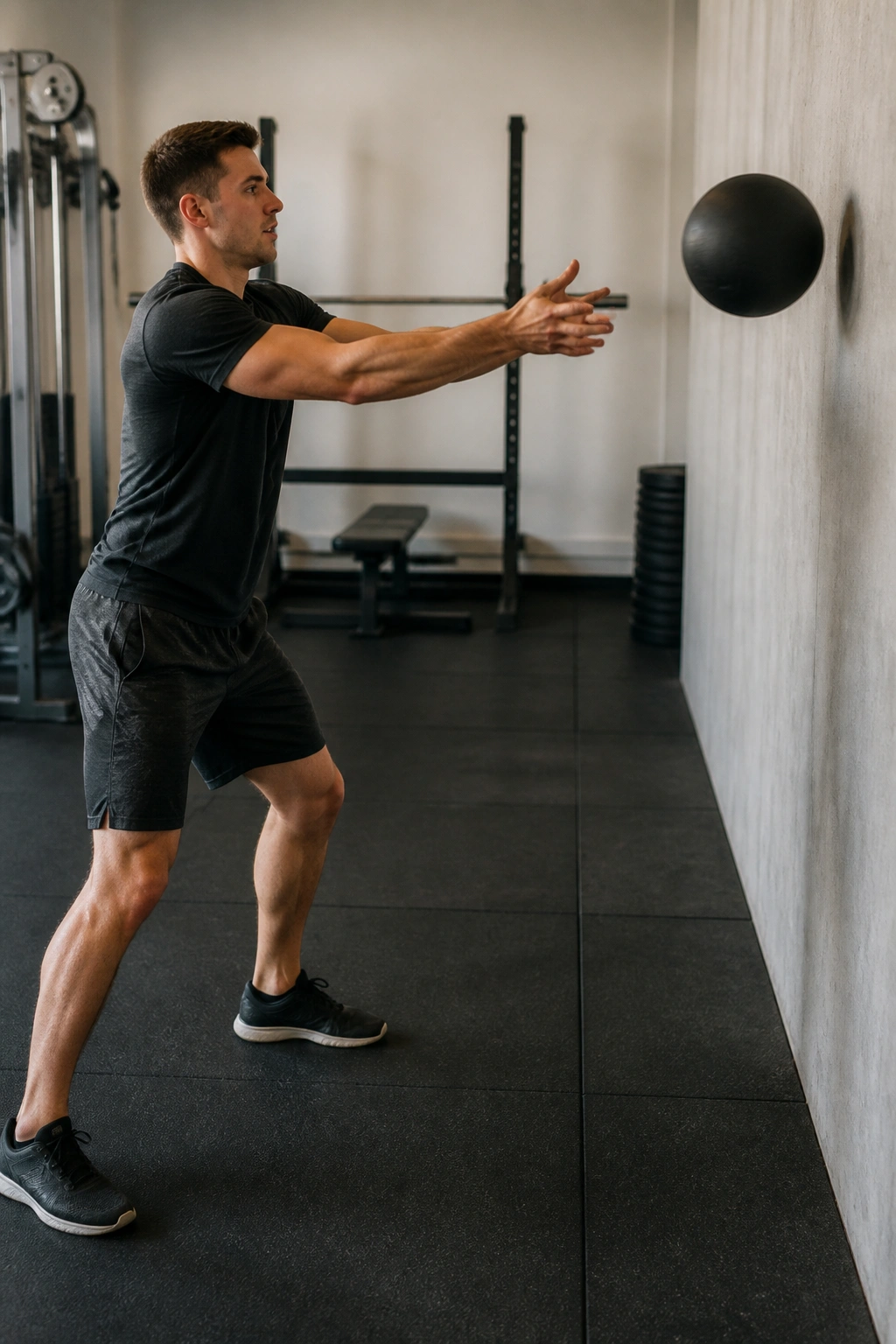
Want an upper-body move that feels more athletic than a slow press? This is it. A chest pass to the wall trains power through the chest, triceps, shoulders, and core, and the catch makes your whole front side work harder than a basic throw.
Set-Up
Stand 6 to 8 feet from a solid wall with your feet about shoulder-width apart. Hold the ball at your sternum, elbows relaxed, and brace your stomach before you throw. The throw should be fast enough that the ball comes back to you with some snap, but not so fast that you lose control.
Why the Catch Matters
The catch is where people get lazy. Don’t let the ball crash into your hands with loose shoulders. Meet it softly, absorb the force, and reset your stance right away. That little bit of control is what turns the drill into a real full-body power exercise.
A lighter ball works better here. 4 to 8 pounds is plenty for most people. If the throw slows down halfway out of your hands, you’re too heavy. If it feels like you’re tossing a pillow, go up a notch.
4. Medicine Ball Push-Up

A medicine ball push-up looks modest until your body has to stay rigid on a round, unstable surface. Then the chest, triceps, front delts, and deep core all start negotiating with gravity at once.
Place both hands on top of the ball and set your feet on the floor in a strong plank. Lower your chest in a straight line, keeping your elbows around a 30 to 45 degree angle from your sides. Press back up without letting the ball roll away under you.
If that’s too much wobble, start with one hand on the ball and one hand on the floor, then switch sides on the next rep. That version still challenges stability, but it’s less likely to turn into a wrist fight.
A single smooth rep is better than a messy set of ten. If your hips sag or your head shoots forward, stop there. The ball should raise the demand, not destroy the form.
5. Overhead Medicine Ball Triceps Extension
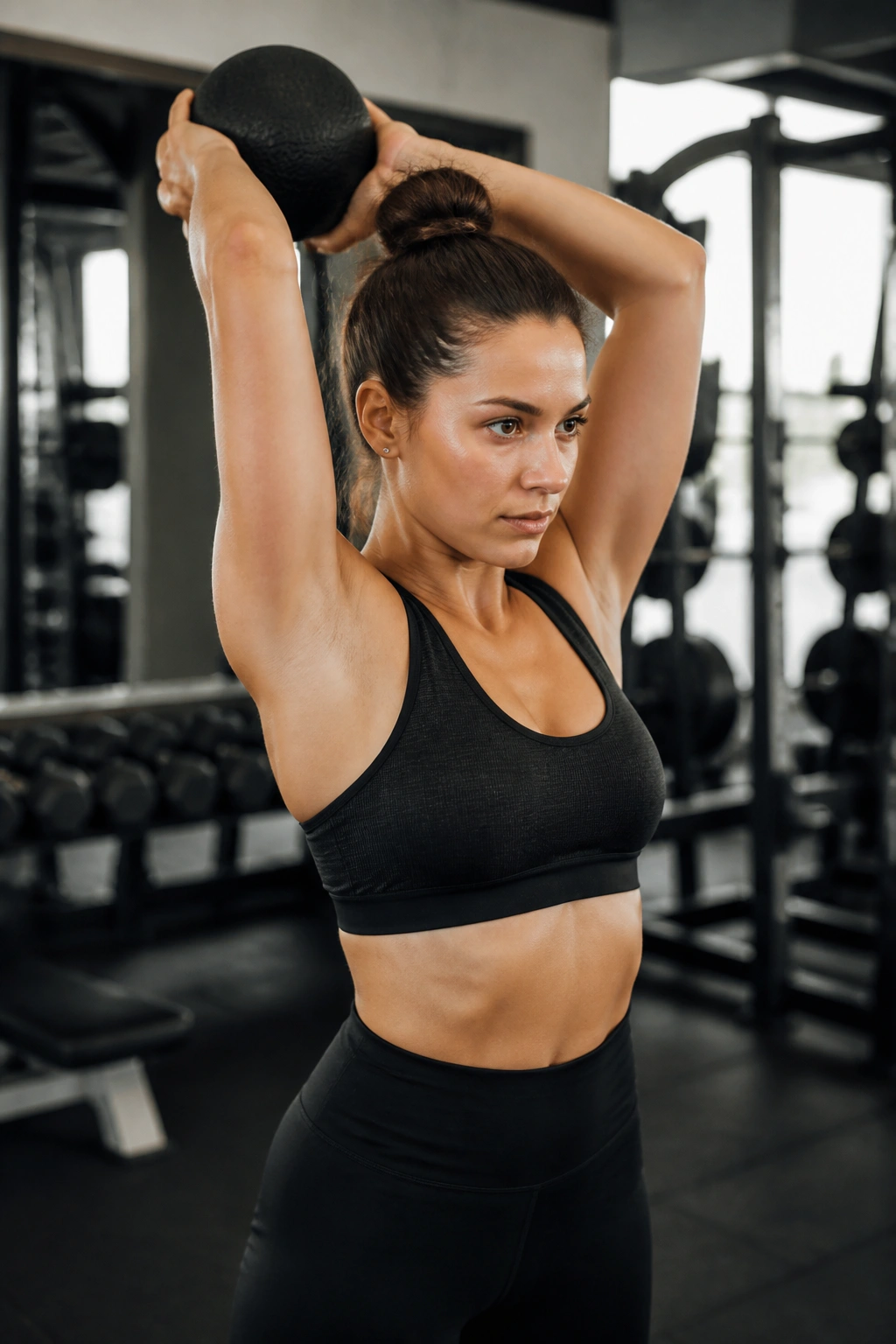
This one is plain old useful. If your triceps are the weak link in presses, push-ups, or overhead work, a controlled overhead extension lets you isolate them without a lot of fuss.
Hold the medicine ball above your head with both hands, elbows pointing forward rather than flaring wide. Bend at the elbows and lower the ball behind your head until you feel a stretch through the back of the arms. Then extend back to full lockout.
Keep your ribs down and your glutes lightly squeezed. That keeps your lower back from doing the work your triceps were hired for. If you feel the movement in your shoulders more than your arms, the ball is probably too heavy or your elbows are drifting apart.
This works well for 10 to 15 reps. Slow beats fast here. A one-second pause at the bottom can make a light ball feel much heavier, which is the whole point.
Best use: accessory work after presses, push-ups, or overhead carries.
6. Medicine Ball Russian Twist
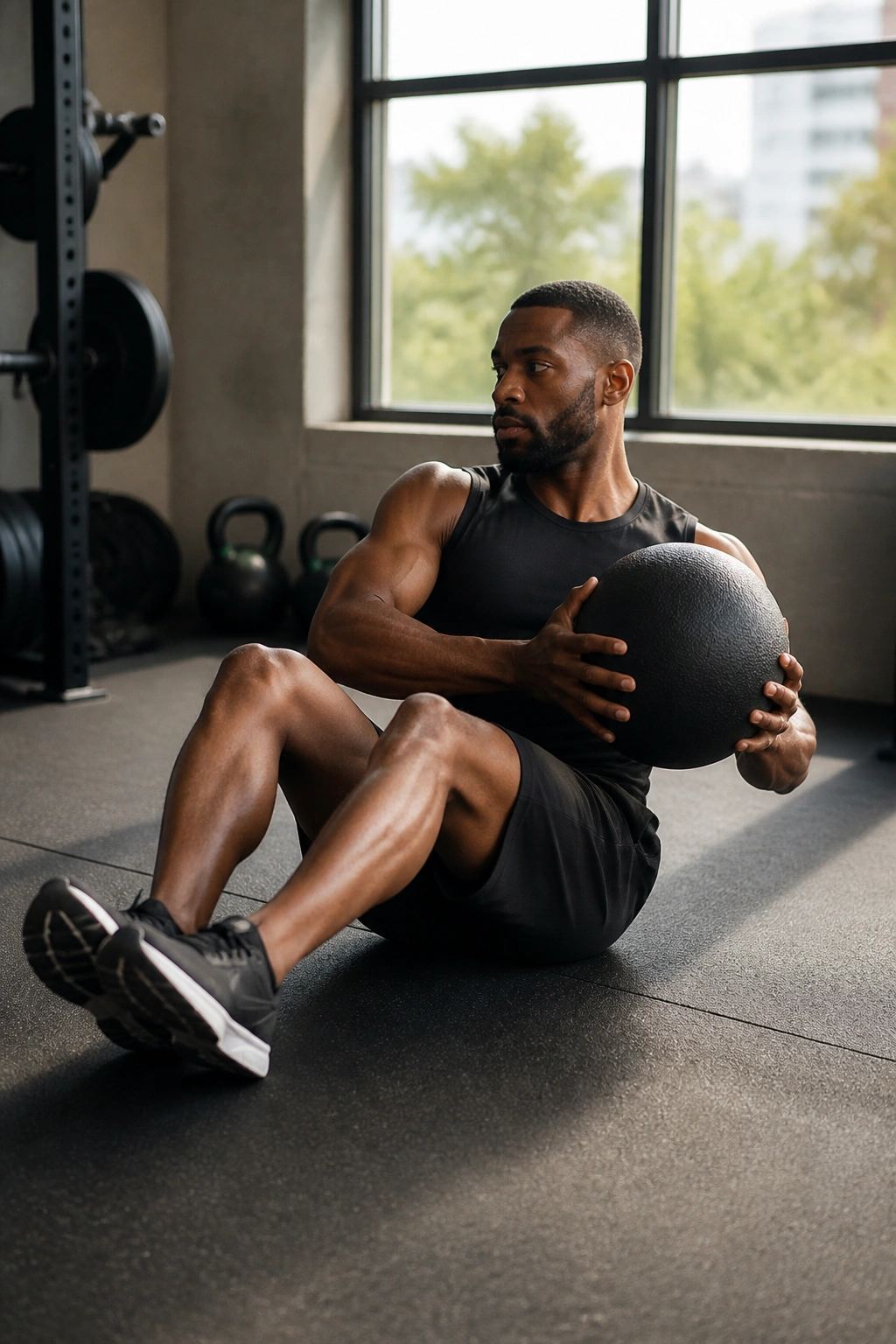
People love to turn this into a speed contest. Bad idea. The Russian twist works best when you control the rotation instead of whipping through it like you’re trying to win something.
Why It Works
The twist trains the obliques, the deep muscles around your trunk, and the hip flexors if your feet are lifted. More important, it teaches your torso to rotate without collapsing. That matters for throwing, swinging, turning, and even running with better posture.
How to Use It
Sit down, lean back a few inches, and hold the ball in front of your chest. Rotate the ball from side to side with control, keeping your chest open and your lower back long. Feet can stay down if you want a cleaner version. I usually prefer that for beginners.
If you do lift your feet, keep the angle small. A big reclined position turns the move into a hip-flexor burn and not much else. That may feel hard, but hard is not the same as useful.
Try 8 to 12 twists per side. Move like you mean it, not like you’re trying to finish the set before your spine notices.
7. Medicine Ball Wood Chop

A wood chop looks like a twist’s more serious cousin. Same family, different job. Instead of spinning the torso for the sake of spinning, you’re loading and unloading the hips, shoulders, and obliques together.
Start with the ball high near one shoulder and chop it down toward the opposite hip. Let your feet pivot a little so the hips can help. That pivot is not cheating; it’s how the body actually rotates under load.
What Makes It Different
Unlike a Russian twist, the wood chop lets you train rotation through a longer path and with a more obvious force curve. You feel the core working, but you also feel the shoulders and glutes join the party. It’s a more complete pattern.
Use 8 to 10 reps per side and keep the movement crisp. If your arms are doing all the work, the load is too light or your hips are asleep. If your lower back is taking over, slow down and shorten the range.
I like this one when I want rotation that feels more like sport and less like ab training.
8. Medicine Ball Reverse Lunge with Rotation
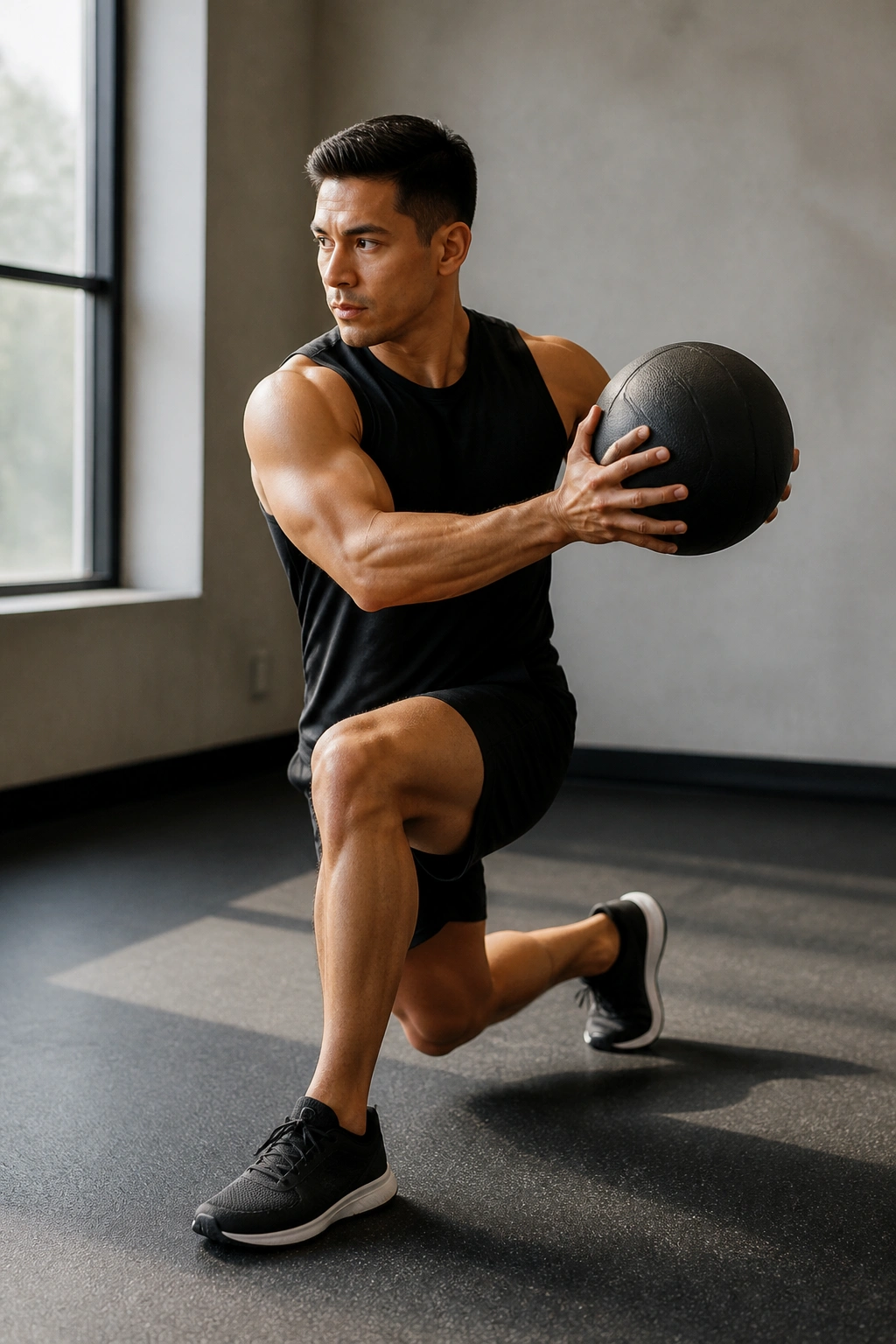
There’s a good reason this move keeps showing up in serious warm-ups and conditioning sessions. It trains the legs and core at the same time, but it also makes balance part of the job, which changes everything.
Hold the ball at chest height. Step back into a reverse lunge, then rotate your torso toward the front leg while staying tall through the spine. Push through the front heel to stand, and keep the front knee tracking over the toes.
Why It Feels So Different
The reverse lunge already asks the glutes and quads to work. Add rotation, and now the obliques and hip stabilizers have to stop the body from wobbling side to side. That’s where the exercise gets interesting.
A few form cues help a lot:
- Keep the ball close to your chest.
- Rotate from the upper torso, not from a yanked lower back.
- Use a short step back if your balance is shaky.
- Finish each rep with both hips facing forward again.
Go with 6 to 8 reps per side. The move should feel controlled, not theatrical.
9. Medicine Ball Dead Bug Press
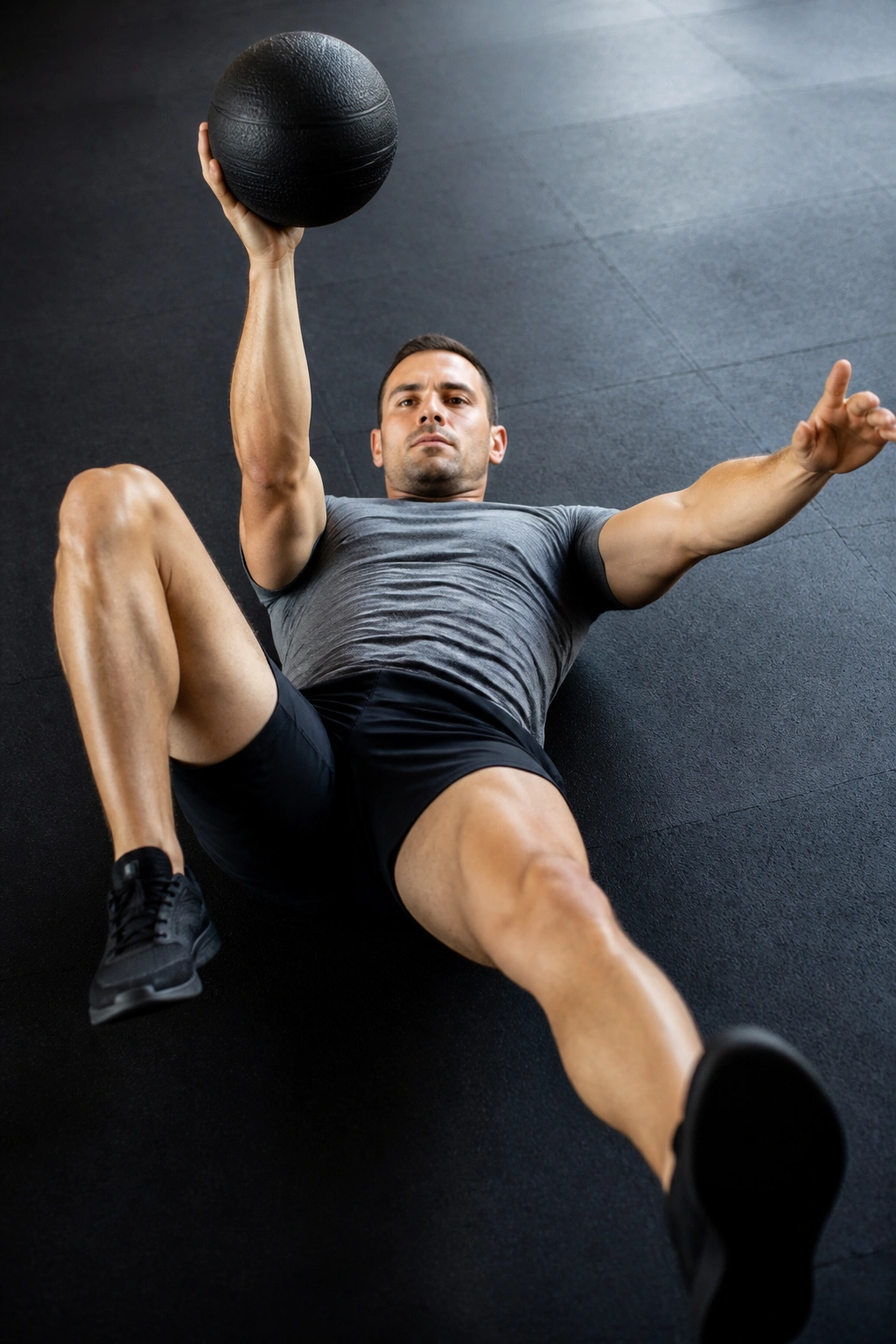
This is one of those exercises that looks almost too calm to matter. Then your low back starts trying to arch off the floor, and you realize how much work your core was hiding from you.
Lie on your back with your knees in tabletop position and hold the ball straight over your chest. Press the ball upward as you slowly lower the opposite arm and leg, then return to center and switch sides. The ball gives you a target and a little extra load, which makes the anti-extension demand more obvious.
The key is that your lower back stays heavy against the floor. If it pops up, shorten the reach. Don’t chase range at the expense of position. That trade is never worth it.
This move also hits the hip flexors and shoulders in a quiet way, which is why I like it before harder core work. 6 to 10 reps per side is plenty when the form is honest.
10. Medicine Ball Bent-Over Row
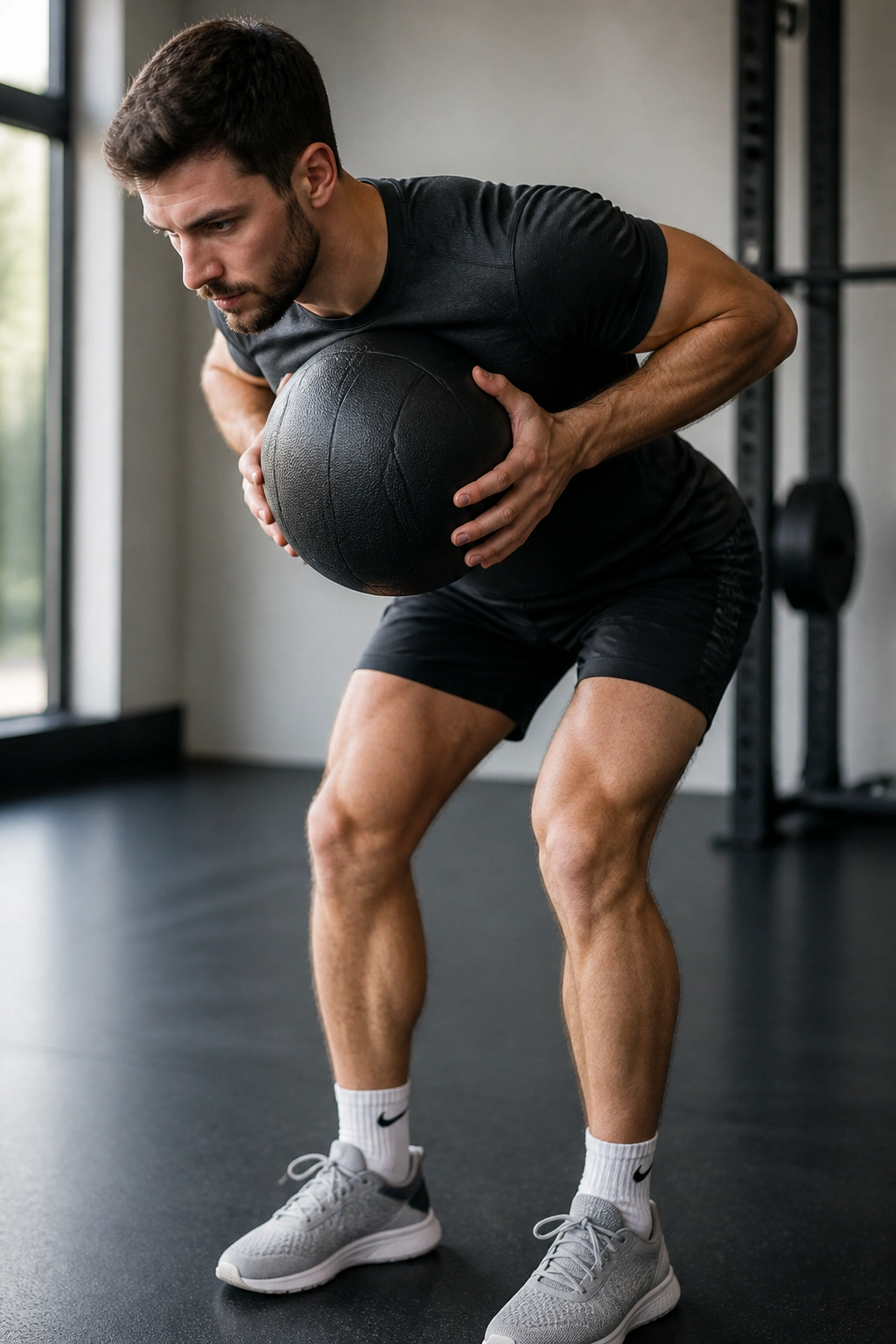
A medicine ball row is a little awkward, which is exactly why it’s worth doing. Because the ball is round and not built with handles, you can’t grip it the same way you would a dumbbell, so your upper back has to work harder to keep the path clean.
Hinge at the hips until your torso is about 30 to 45 degrees from the floor. Hold the ball with both hands, pull it toward your lower ribs, and squeeze your shoulder blades together for a beat at the top. Lower it under control.
What to Watch For
- Don’t turn it into a shrug.
- Keep the neck long.
- Let the elbows travel back, not out to the sides.
- Stop if your lower back rounds.
A textured ball helps a lot here. A slick ball makes the grip fight louder than the back work, and that gets annoying fast. Use 8 to 12 reps if you want upper-back endurance, or a slightly heavier ball for 6 to 8 controlled reps.
11. Medicine Ball Romanian Deadlift
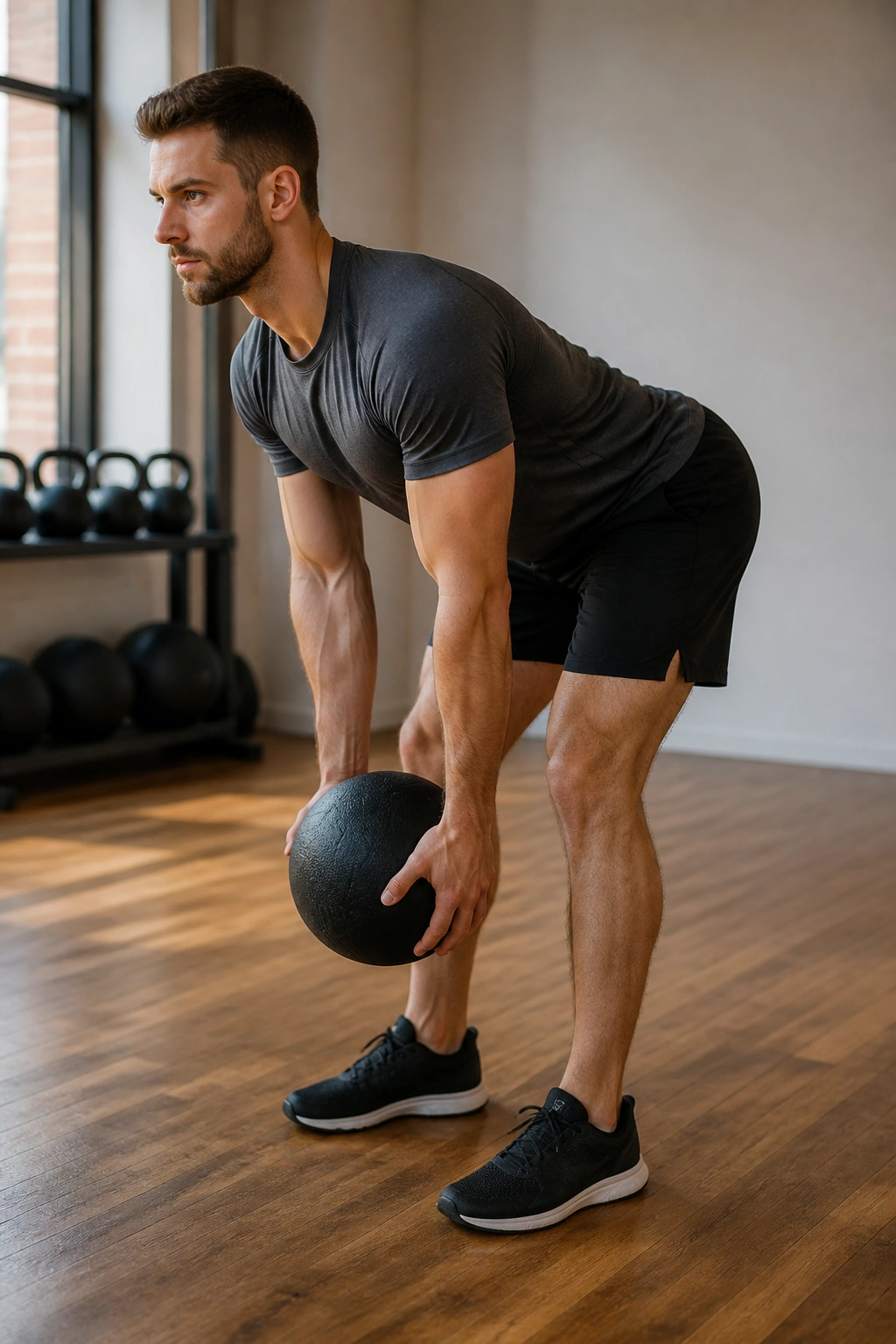
This is the hinge move I reach for when someone needs hamstrings and glutes without a barbell. It teaches the hips to travel back while the spine stays long, which sounds basic until you watch people try it.
Hold the medicine ball in front of your thighs and soften the knees. Push the hips back, keep the ball close to the legs, and lower until you feel a strong stretch in the hamstrings. Stand by driving the hips forward and squeezing the glutes at the top.
Hips Back, Not Chest Down
That sentence matters. A lot.
If your torso just folds over while the hips stay still, you’re not hinging. You’re bending. The ball should travel down your thighs in a near-straight line, and your shins should stay almost vertical. That keeps the work where it belongs.
Use 8 to 12 reps with a ball that feels demanding but not sloppy. You want tension in the back of the legs, not a tug in the lower back. If you lose that distinction, lighten the ball and slow the descent.
12. Medicine Ball Single-Leg Reach
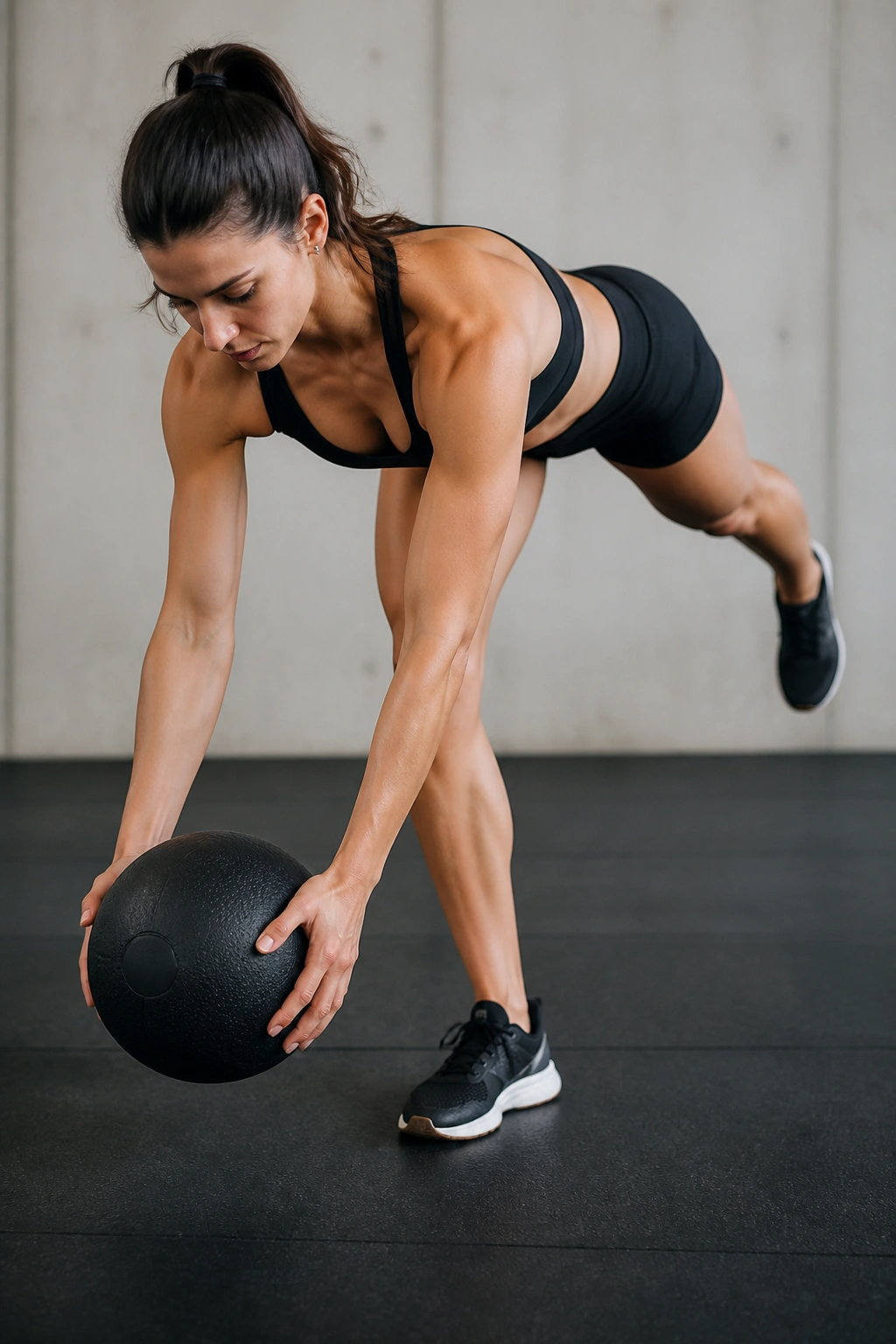
A single-leg reach is the kind of move that exposes fake balance immediately. The first rep feels fine. The second one usually tells the truth.
Stand on one leg and hold the ball with both hands, or in the opposite hand if you want more challenge. Hinge at the hip, send the free leg back, and reach the ball toward the floor while keeping the standing knee softly bent. Return to standing by driving through the glute of the planted leg.
This loads the glutes, hamstrings, calves, and small stabilizers around the ankle and hip. You’ll also feel your foot working hard to stay planted. That’s a good thing. People forget that good balance is built in the feet as much as the core.
Use a wall lightly with one finger if you need it. I’d rather see a clean single-leg hinge with a little support than a sloppy one-leg circus act. 6 to 8 reps per side is enough to make the point.
13. Medicine Ball Mountain Climber Drag

If your plank work has gone stale, this one wakes it back up. A mountain climber drag combines shoulder stability, core control, and a little bit of grimy coordination.
Set up in a high plank with the ball just outside one hand. Reach across with the opposite hand, drag the ball under your chest to the other side, plant the hand again, and switch sides. Keep your hips as square as you can while the ball moves.
What to Feel
Your shoulders should feel steady, not jammed. Your core should feel like it’s trying to keep the middle of your body quiet while the arms do something messy. The hip flexors and quads jump in too, especially if you move quickly.
A few quick cues help:
- Spread your fingers on the floor.
- Don’t let the hips sway side to side.
- Breathe out during the drag.
- Use a lighter ball if the plank collapses.
Try 20 to 30 seconds or 8 to 12 drags per side. The movement should look sharp, not frantic.
14. Medicine Ball Halo
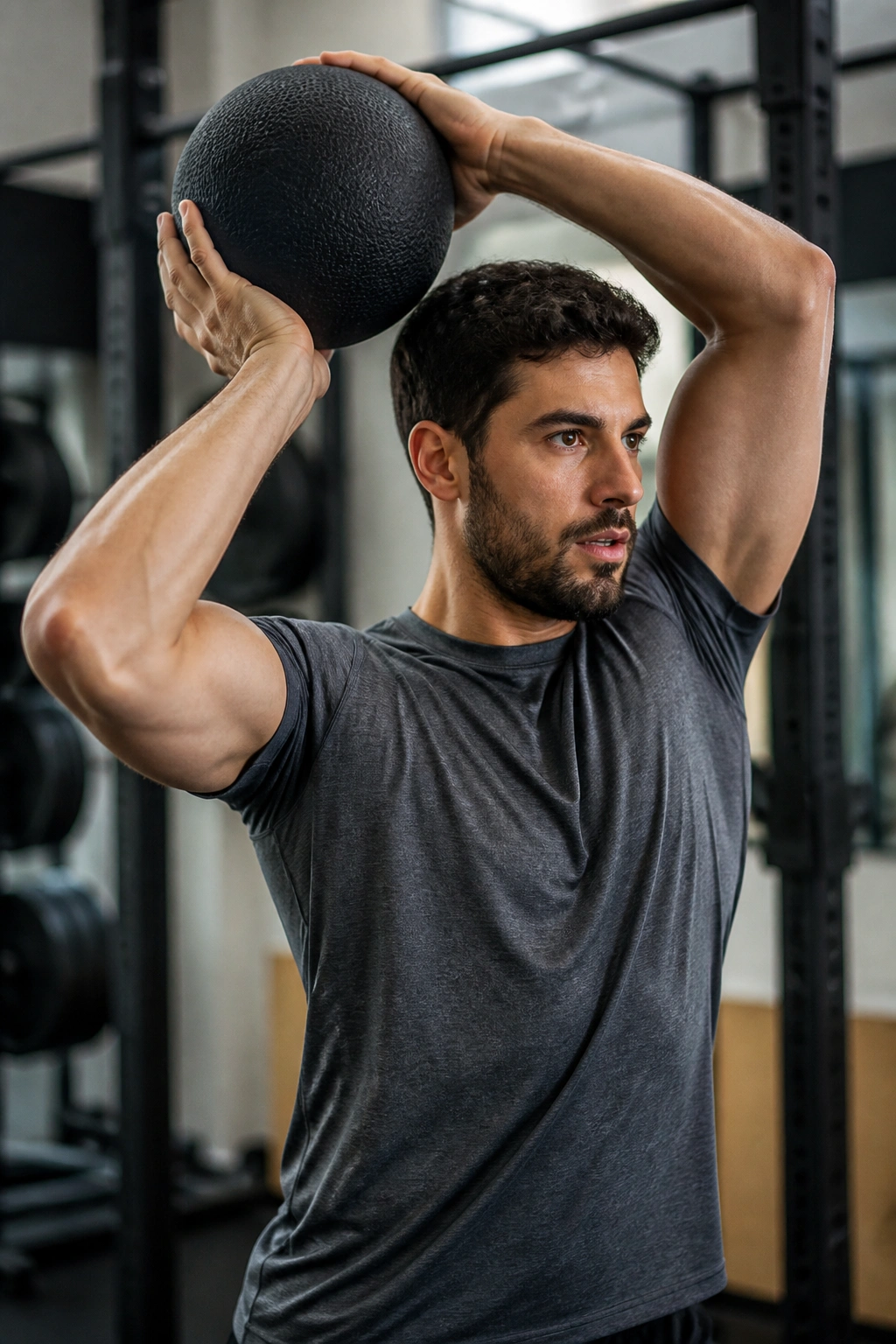
Halos are easy to underestimate. They look like a warm-up, and they are, but they also do a clean job of teaching the shoulders and upper back to move without the rib cage popping up like a jack-in-the-box.
Hold the ball at chest height, then circle it around your head in a smooth loop. Keep your elbows bent and your neck relaxed. The motion should stay controlled, with the ball passing close to the crown of your head without actually touching it.
I like halos because they sneak in shoulder control while the trunk stays honest. If your ribs flare or your lower back arches, the ball is too heavy or the circle is too big. Shrink the loop and slow it down.
Do 5 to 8 circles each direction. Use it before pressing, throwing, or even squatting if your shoulders tend to feel stiff. It’s not flashy. It works.
15. Medicine Ball Side Throw
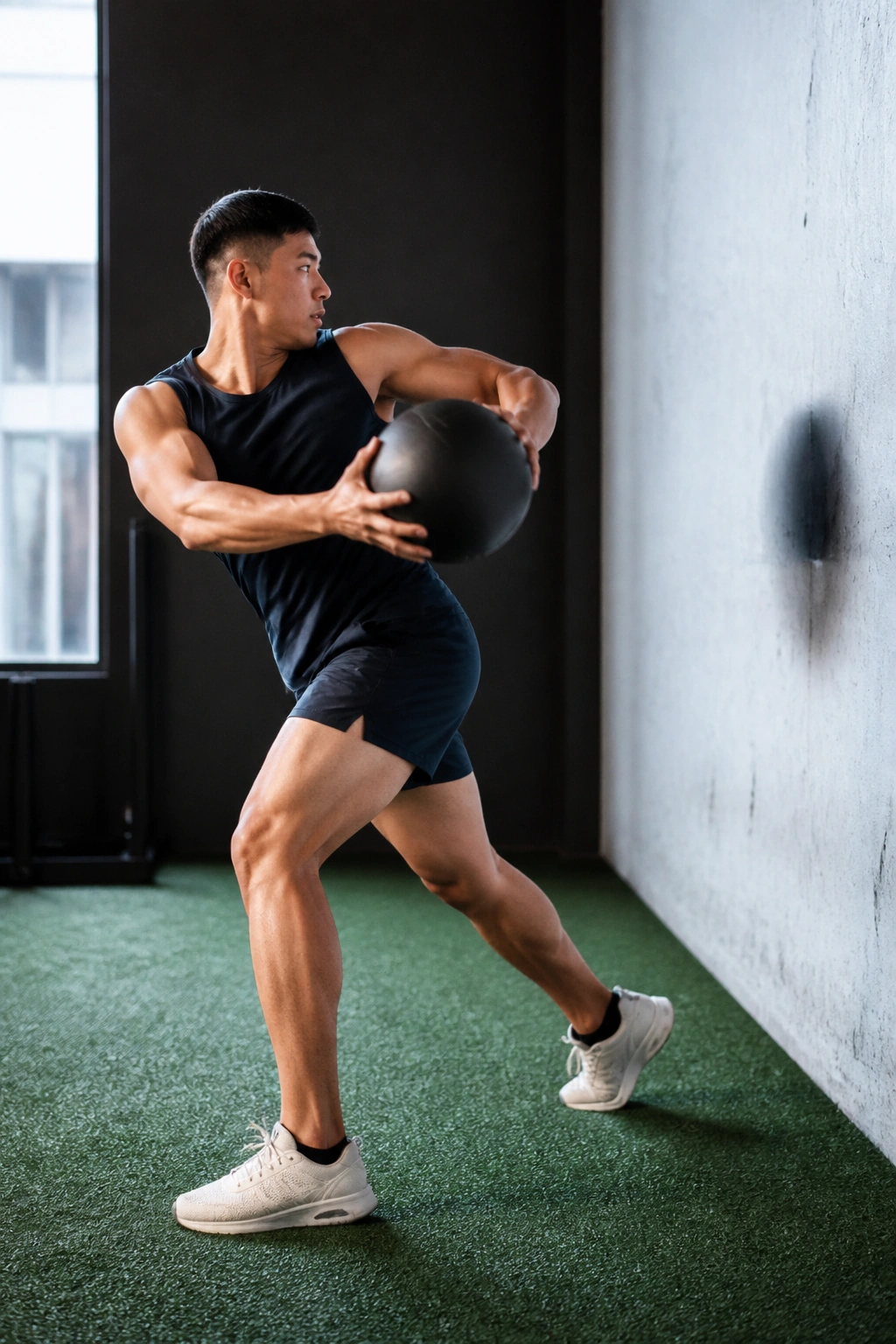
This is rotation with a little violence in it, which is why it feels so good when the room allows it. A side throw trains the obliques, hips, shoulders, and the quick transfer of force from the floor to the hands.
Set-Up
Stand side-on to a sturdy wall with the ball at your hip or chest. Load the back hip, then explode through the front foot and throw the ball sideways into the wall. Catch it if it rebounds cleanly, or retrieve it and reset if the bounce is messy.
What Makes It Worth Doing
This isn’t about arm strength. It’s about timing. The hips start the move, the torso follows, and the arms finish. If the ball leaves your hands without the lower body helping, the throw gets weak fast.
Use a lighter ball than you think. 4 to 6 pounds is often enough. Speed matters more than brute load here. I’d rather see crisp throws than a heavy ball that moves like wet cement.
If you have no wall, a partner pass works too. A rotational slam is the closest solo substitute.
16. Medicine Ball Glute Bridge Squeeze
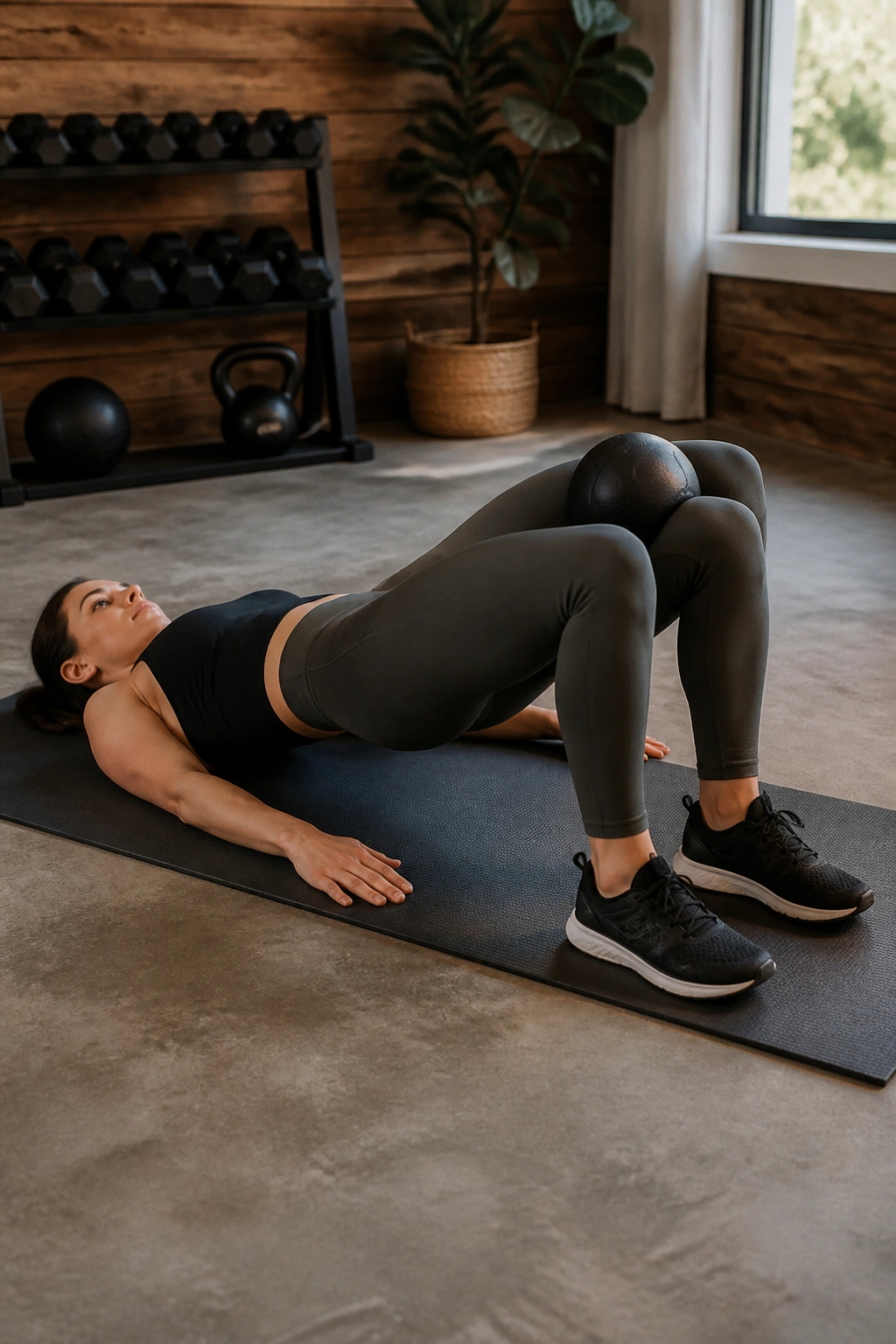
A lot of people treat bridges like a filler exercise. That’s a mistake. They’re one of the cleanest ways to load the glutes without beating up the joints, and the ball adds a useful twist.
Place the ball between your knees and lie on your back with your feet flat on the floor. Squeeze the ball gently as you drive your hips up, then pause at the top for one to two seconds before lowering. The squeeze should keep the knees from drifting outward and help the inner thighs join in.
If you want more glute load, you can also place the ball on your hips and hold it there with your hands. That version removes some of the adductor work and makes the top of the bridge feel heavier. Both are worth using.
I like 10 to 15 reps with a solid pause. When done well, you feel it in the glutes, hamstrings, and lower abs, not in the low back. That’s the whole game.
17. Medicine Ball Clean to Front Squat
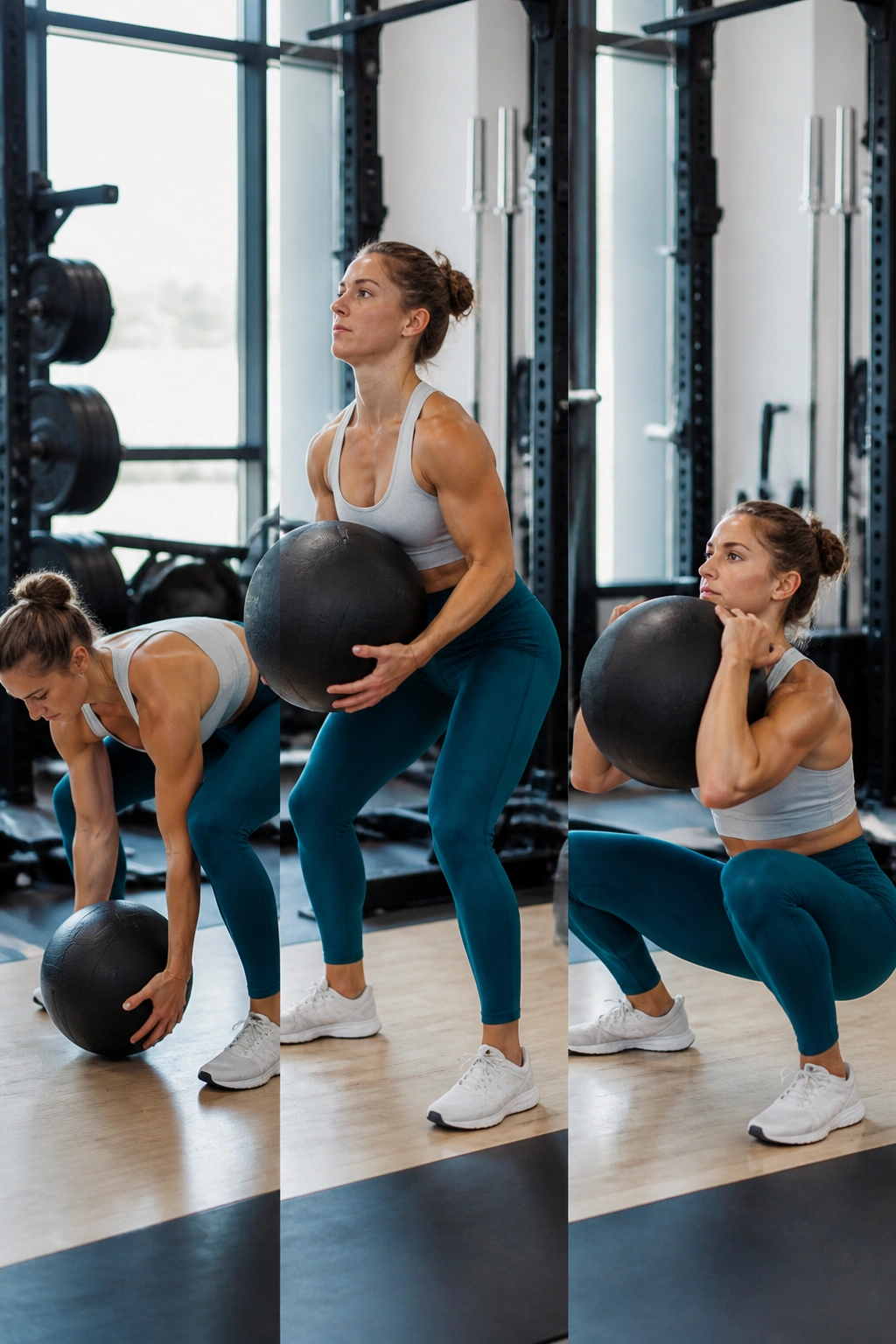
This is the move that makes the medicine ball feel like a real training tool instead of a prop. A clean to front squat links the hips, legs, upper back, and arms in one continuous pattern, and it rewards crisp timing more than brute strength.
The Pull
Start with the ball between your feet or slightly in front of you. Hinge, grab it, and drive through the hips so it travels up the front of your body. Keep it close. If it swings away, the whole thing gets clumsy.
The Catch
As the ball rises, let your elbows come forward and catch it at chest height. Don’t slam the elbows down. The catch should feel tight and organized, not floppy.
The Squat
Once the ball is racked at the chest, sit into a front squat and stand back up. That combination hits the quads, glutes, core, upper back, and even the grip. It’s a lot. That’s why low reps work best.
Try 3 to 5 reps per set. This is a power move, not a cardio drill. When the speed drops, stop the set.
18. Medicine Ball Bear-Hug Carry March
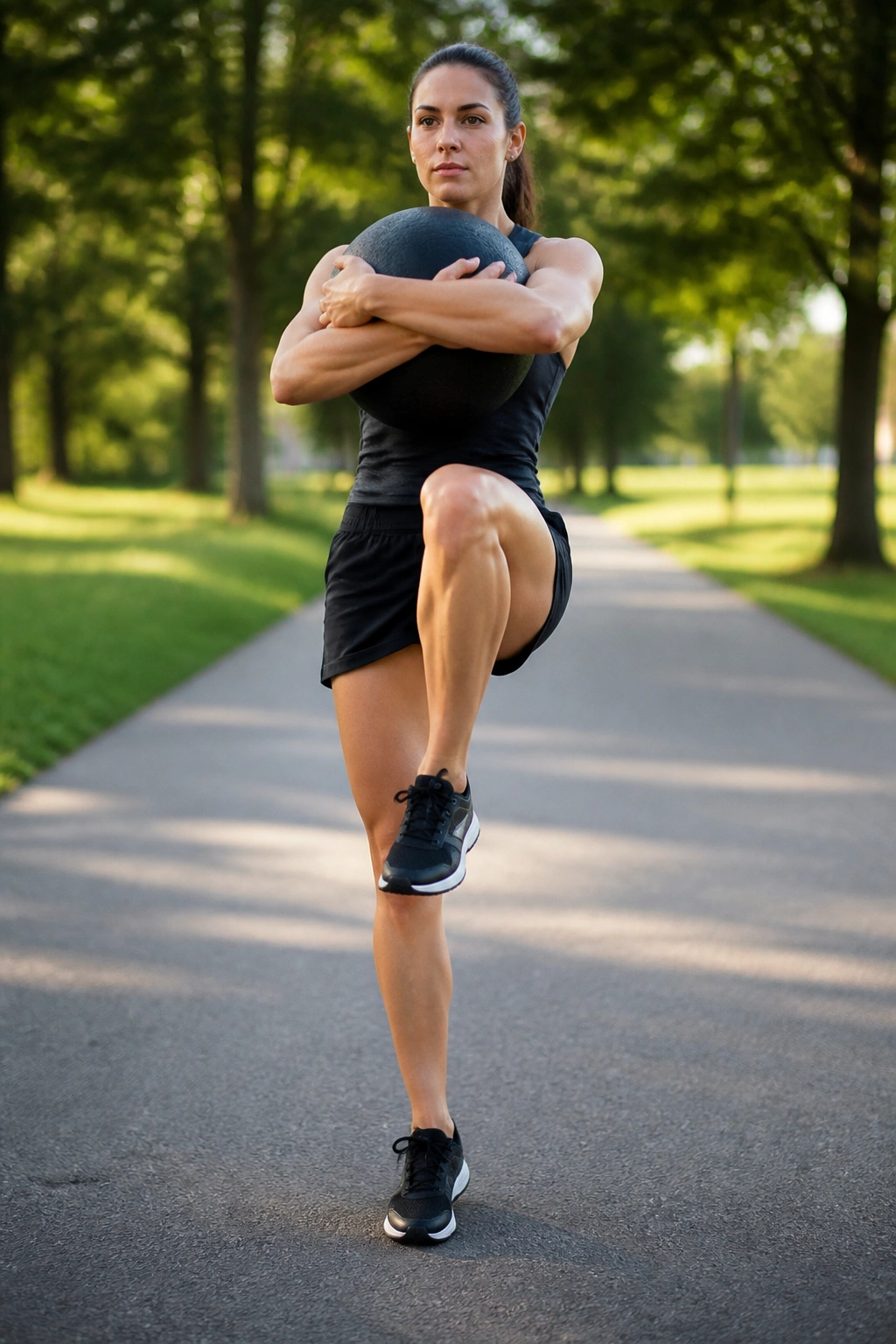
Some exercises look quiet and still manage to bully your trunk, your grip, and your breathing all at once. The bear-hug carry is one of them.
Wrap both arms around the ball and hold it tight against your chest. Stand tall, brace your ribs, and march in place or walk forward with short, controlled steps. Keep the ball high enough that you have to fight for posture, but not so high that your shoulders creep into your ears.
This move hits the core, upper back, forearms, glutes, and quads while making your posture honest. It also teaches you how to breathe under tension, which is one of those boring skills that pays off everywhere else. If you lose your stance, the carry gets sloppy fast.
Use 30 to 60 seconds or 20 to 40 steps. Heavy enough that it matters, light enough that you can stay tall. If you only have room for one finisher after a full medicine ball workout, this is the one I’d keep.
