



Aerobics workouts do not need to mean nonstop bouncing, loud music, or a room full of people who already know the choreography. The useful ones are the ones you can scale: easy enough for a stiff morning, lively enough to raise your heart rate, and clear enough that you do not spend half the session wondering where your feet are supposed to go.
That flexibility is why aerobics still holds up. A good cardio session can be a march in place, a side step, a set of quick jabs, or a careful step-up on a stair. The shape changes, but the goal stays the same: steady movement, enough rhythm to keep you going, and enough variety that you do not dread the next round.
The best part is that you can start where you are. If your knees get grumpy, you keep the impact low. If you want more burn, you add arm speed, bigger steps, or shorter rests. Simple. No drama.
1. March in Place
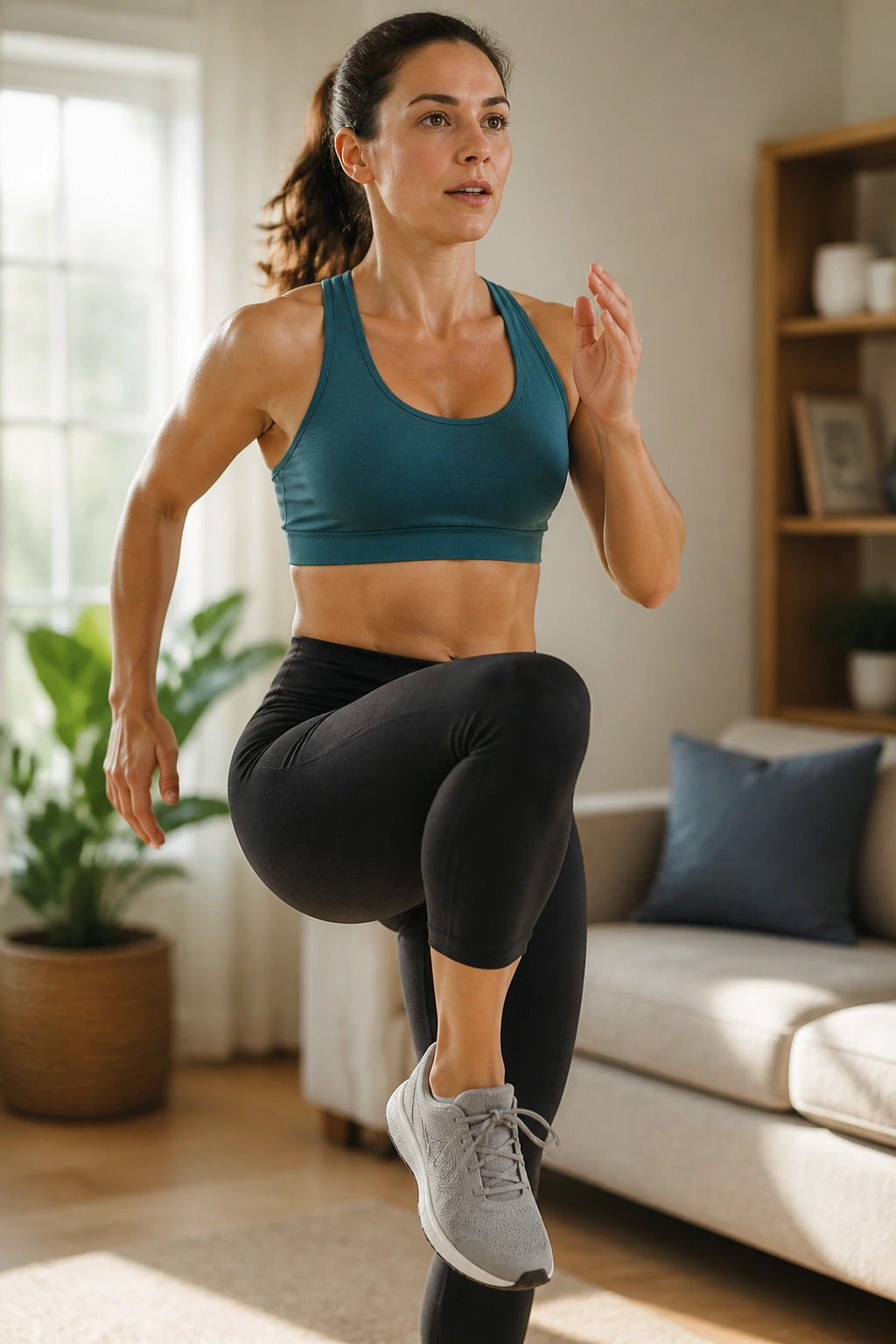
If your body feels stiff before breakfast, marching in place is the least dramatic way to get moving, and that is exactly why it works. You get the warmth, the blood flow, and the easy cardio effect without asking your joints to do anything flashy.
A strong marching routine is more than a lazy walk with lifted knees. Pump your arms, stay tall through the crown of your head, and land softly through the middle of your foot. Thirty seconds of easy marching, then 30 seconds of brisk marching, makes a surprisingly solid warm-up.
How to make it count
- Lift each knee to about hip height if that feels good.
- Swing your arms from the shoulders, not from the elbows alone.
- Keep your feet under you, not way out in front.
- Breathe through your nose for the easy rounds, then through your mouth when the pace rises.
Best use: as a 5-minute warm-up, a recovery break, or a low-impact stand-alone session when you want movement without impact.
2. Step-Touch Side-to-Side
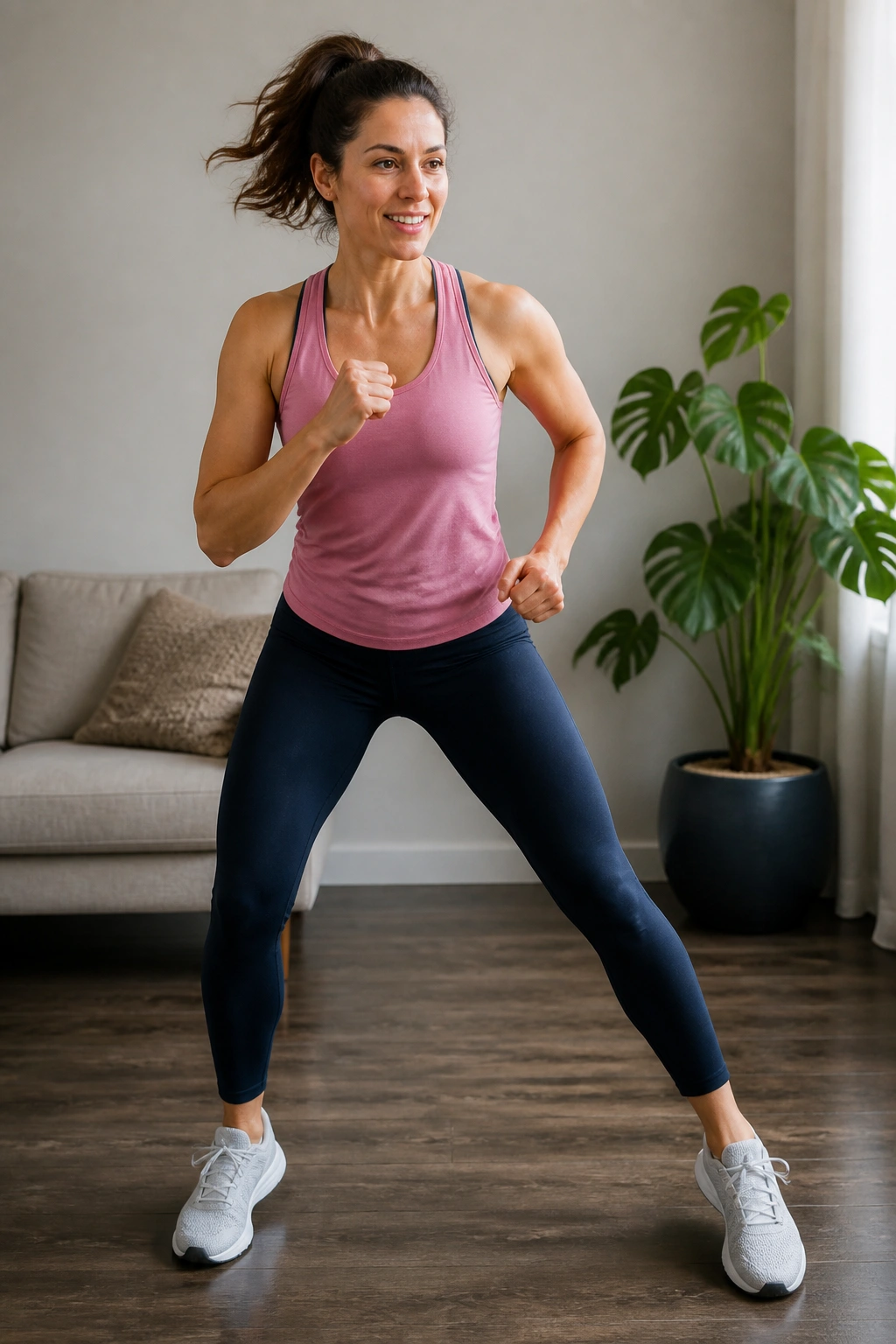
Why does a side step feel so modest and still leave you warm? Because step-touch keeps you moving continuously while asking your hips, calves, and ankles to work in a clean, simple pattern.
Start with one step to the right, bring the left foot in, then repeat to the left. That basic rhythm can carry a whole workout if you layer in arm reaches, shoulder-height punches, or overhead sweeps. It is friendly to beginners, but it does not stay easy for long once you speed it up.
A nice detail here: the step-touch is one of the best ways to ease people into lateral movement. A lot of folks move forward and backward all day, then act surprised when sideways work feels awkward. This fixes that.
How to keep it interesting
- Add a clap on every second beat.
- Reach both arms overhead for four counts, then switch to chest-level punches.
- Use a low bend in the knees if you want more leg work.
- Keep your toes pointed mostly forward so the hips do not twist too much.
3. Grapevine
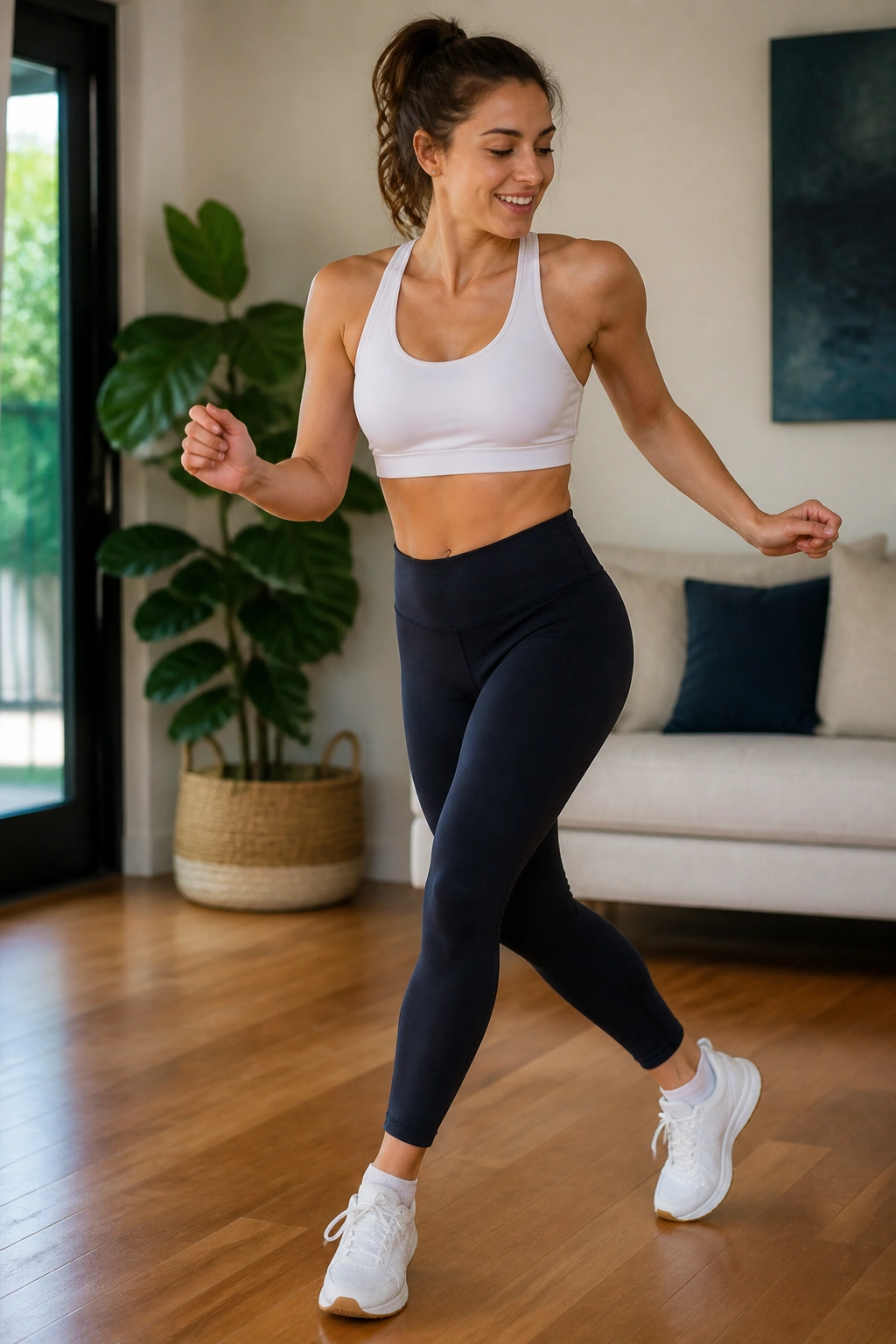
A grapevine looks like a dance move because it is one, and that is the point. It trains coordination, rhythm, and side-to-side control without needing impact or speed to feel effective.
The pattern is simple: step to the right, cross the left foot behind, step right again, then tap the left foot in. Reverse it to the other side. That crossing step wakes up muscles people forget about until they go hiking or chase a bus and realize their hips are not as ready as they thought.
How to use it
- Start slow and count it out: step, cross, step, tap.
- Keep your chest lifted so the movement stays smooth.
- Let the arms travel with the feet rather than freezing them at your sides.
- If crossing behind feels wobbly, shorten the step and make the pattern smaller.
Small warning: don’t let the feet tangle. A grapevine should feel tidy, not like you are trying to untie yourself.
4. Low-Impact Jumping Jacks
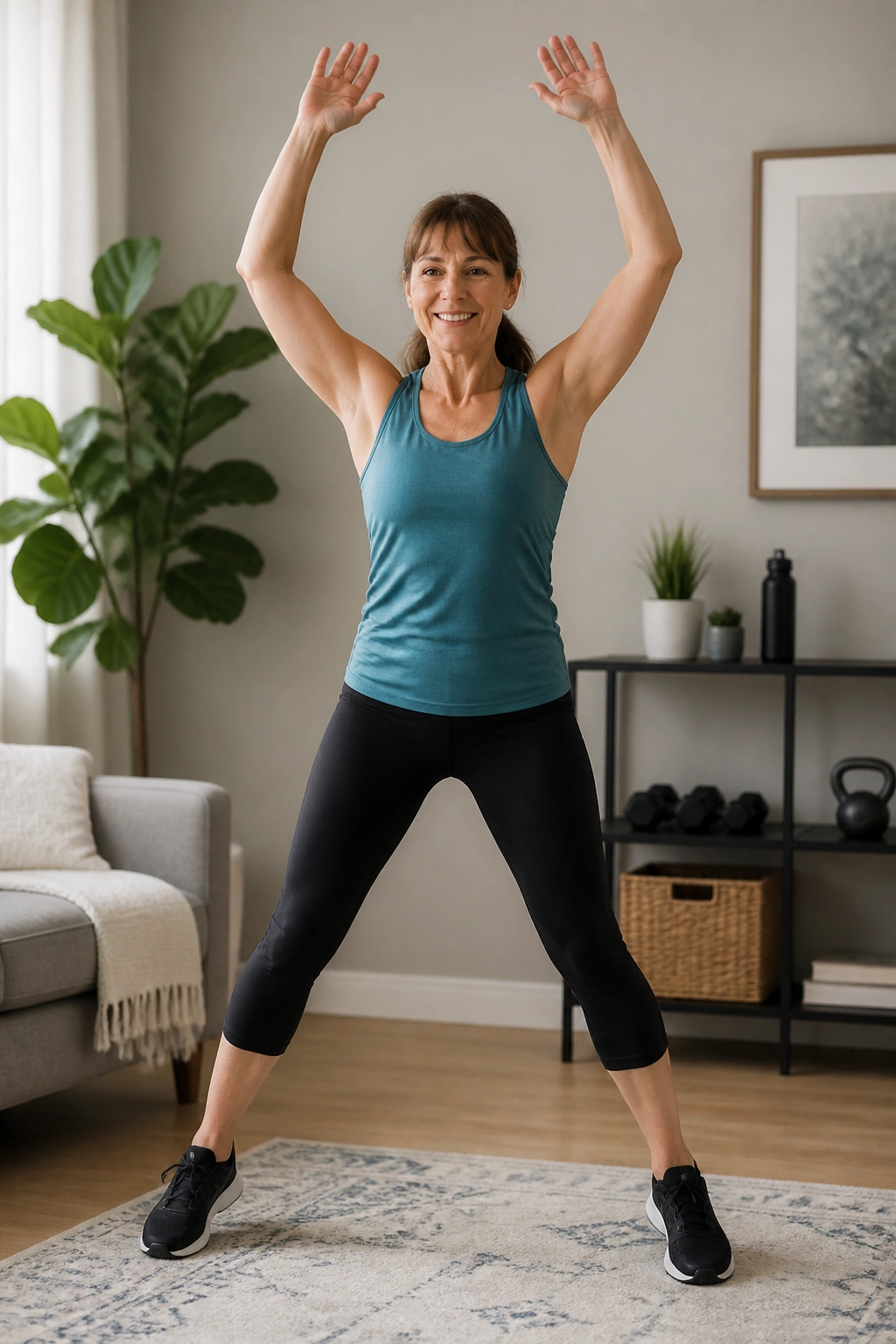
Low-impact jumping jacks solve a problem that comes up all the time in cardio: you want the arm swing and the heart-rate bump, but you do not want the pounding. This version gives you the movement without the hop.
Step one foot out to the side while both arms rise overhead, then bring the foot back in as the arms lower. Switch sides. The motion is simple, but when you keep it steady for 30 to 60 seconds, your shoulders, calves, and upper back all start talking.
The nice thing about this move is how easy it is to scale. You can make it slow and controlled, or you can turn it into a brisk cardio block with fast hands and quicker feet. Either way, it stays joint-friendlier than the classic jump.
- Keep the landing soft.
- Do not fling the arms from the neck.
- Use a wider step if you want more work through the hips.
- Use a shorter step if balance is shaky.
5. Knee Lifts with Reach
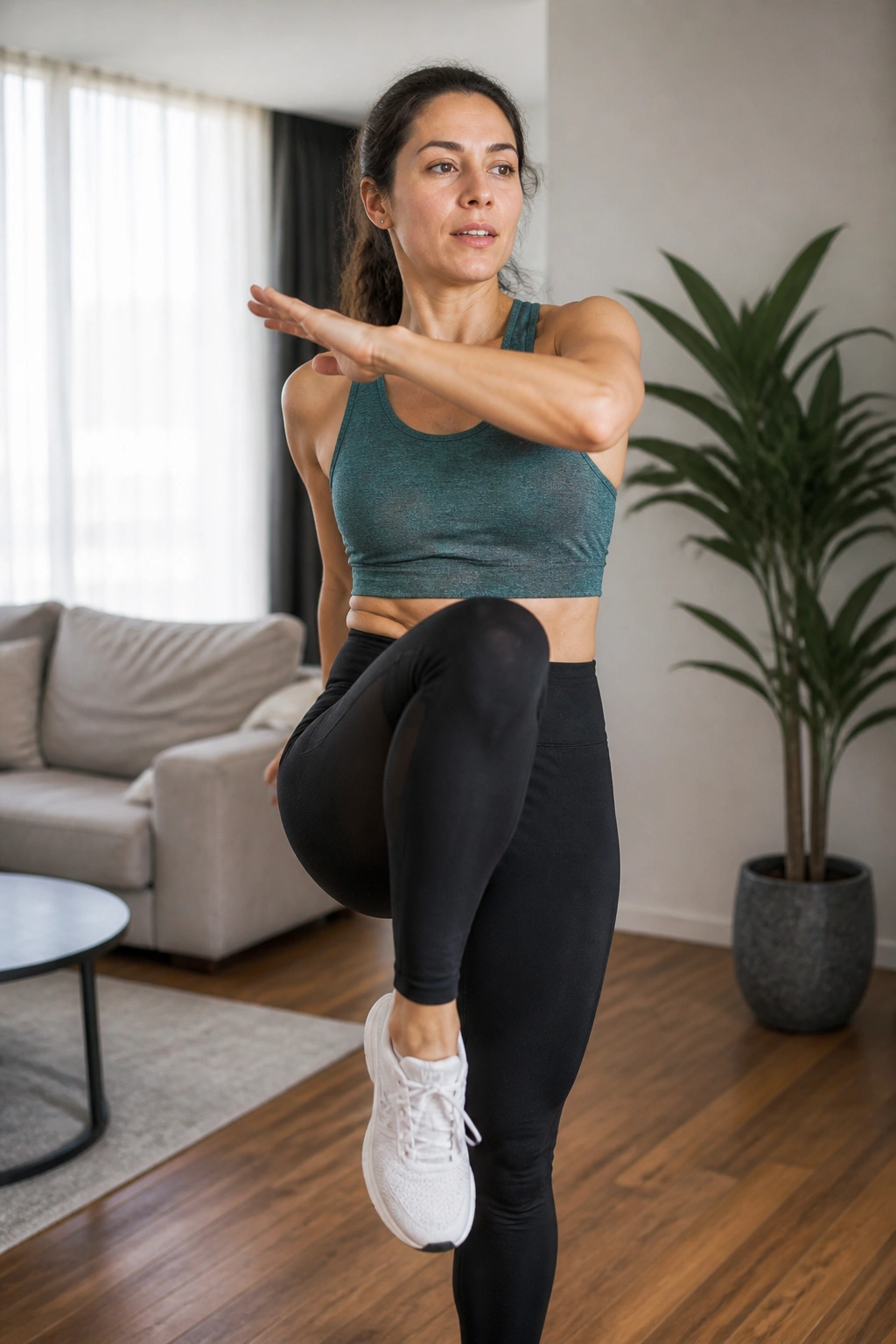
Knee lifts are my go-to when I want easy cardio that still wakes up the hips and the middle of the body. The move is simple: lift one knee, reach the opposite hand across or overhead, then switch sides.
That cross-body reach matters. It turns a plain march into a movement that asks your trunk to stabilize while your leg drives up. It also gives you a built-in pace check, because if you rush too hard, the motion gets sloppy fast.
You can keep this almost meditative at first. Then, once the rhythm is there, add a stronger arm drive and a little twist through the torso. No need to throw your body around. Clean form beats wild speed.
Make it tougher
- Drive the knee a little higher each round.
- Add a tiny hop on the standing leg if your joints like impact.
- Hold light dumbbells, one to three pounds, only if your shoulders are stable.
- Alternate slow knees for 30 seconds with faster knees for 15 seconds.
6. Heel Digs and Hamstring Curls
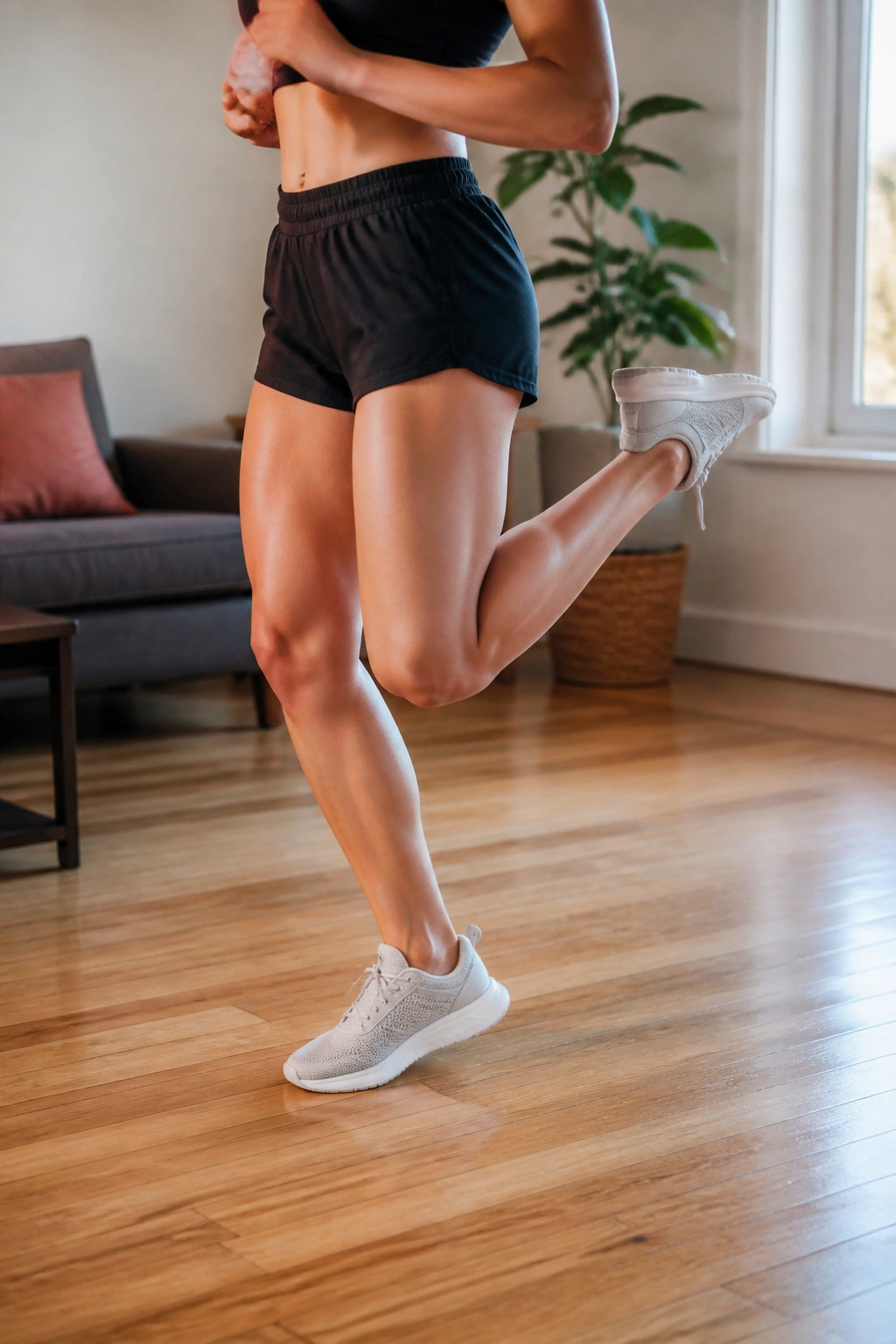
Heel digs and hamstring curls are old-school for a reason. They feel rhythmic, they are easy to learn, and they let you keep moving without punishing the ankles or knees.
A heel dig sends one heel forward with the toes lifted, almost like you are tapping the ground in front of you. A hamstring curl brings the heel toward the seat. Put them together with a steady beat, and you have a lower-body combo that warms the legs from front to back.
This is one of those routines that looks plain until you do it for two or three minutes. Then the calves start waking up, the hamstrings tighten in a good way, and the movement gets into a pleasant groove.
- Dig right, dig left, curl right, curl left.
- Add a light arm swing to keep the upper body engaged.
- Keep your torso tall; do not lean back to force the curl.
- If balance is an issue, hold onto a wall or chair.
7. Shadow Boxing
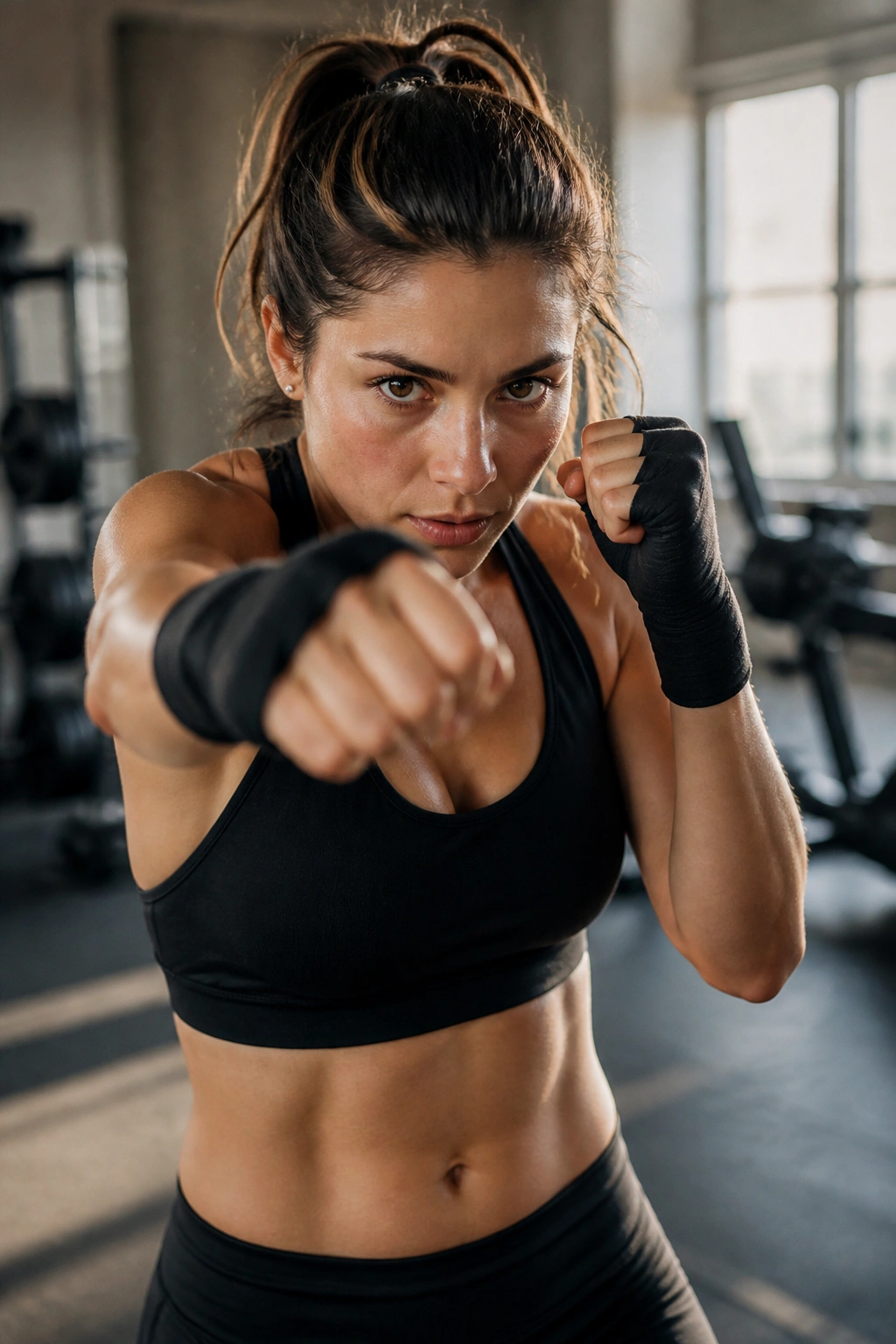
Shadow boxing sounds aggressive until you try it at a pace you can control. Then it becomes one of the cleanest aerobics workouts around, because the footwork, punches, and breathing all work together.
Start with a basic jab-cross combo. Step lightly as you punch, keep the hands returning to guard, and stay loose through the shoulders. After a minute or two, add hooks, uppercuts, or a quick slip to the side. The whole point is rhythm, not pretending you are in a ring.
A simple round format
- 1 minute of jabs and crosses
- 30 seconds of hooks
- 30 seconds of light footwork
- 1 minute of mixed combinations
One good rule: keep your wrists straight when you punch. Bent wrists are a fast way to annoy yourself later, and this workout should feel sharp, not sloppy.
8. Dance Cardio Freestyle
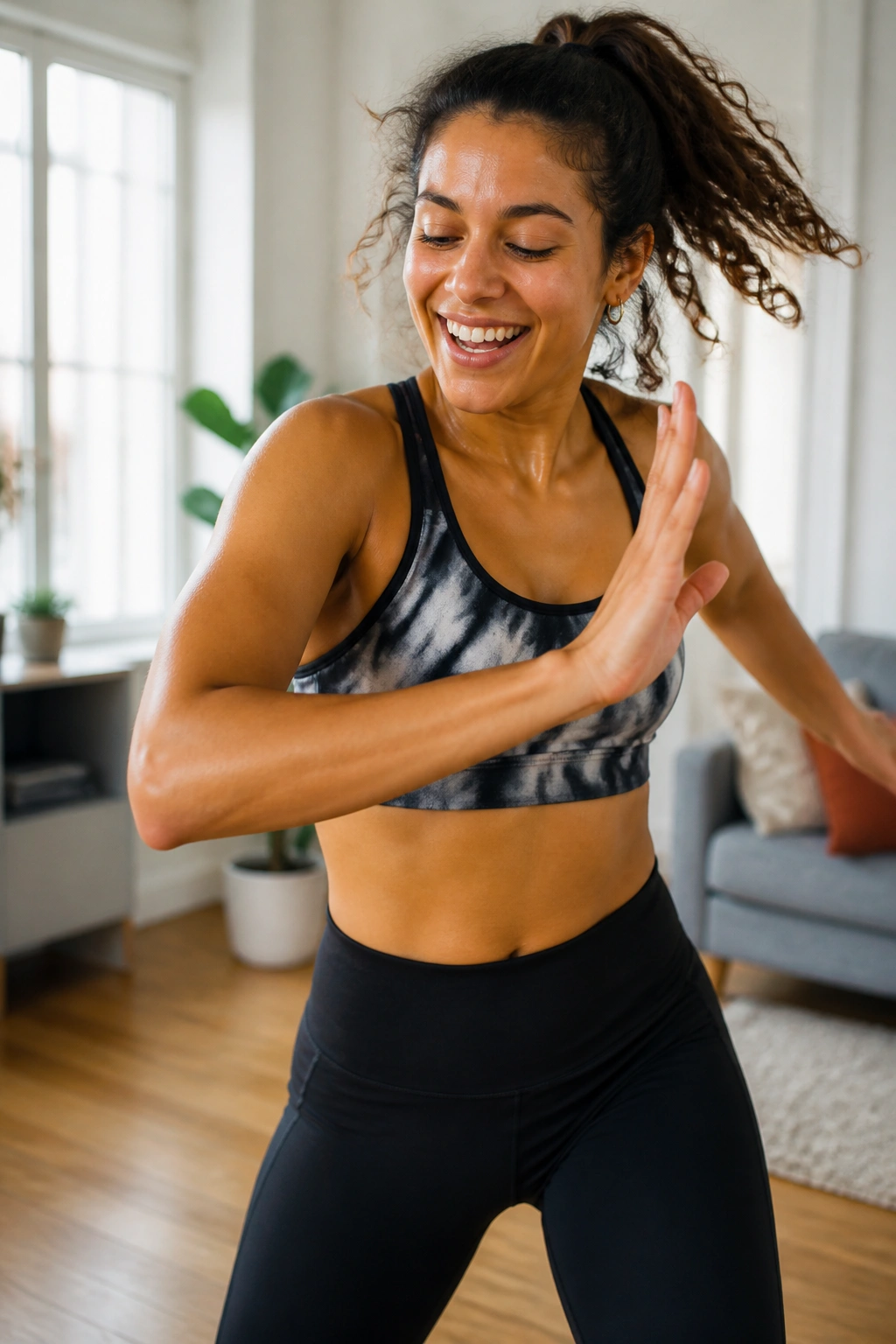
Put on a steady song and dance cardio becomes more serious than it sounds. Not because it has to look polished — it doesn’t — but because it sneaks in a lot of cardio through repetition, arm movement, and constant weight shifts.
This is a good choice for people who hate rigid counting. Pick three or four moves you like, then loop them through an entire song. Step-touch, grapevine, knee lifts, and a side reach can carry you farther than you’d expect. The magic is in sticking with the beat long enough for your breathing to rise and settle.
What to focus on
- Choose music with a clear, even pulse.
- Repeat the same 4-move pattern for one full song.
- Keep the steps simple so you can keep moving without thinking.
- If you want more effort, use bigger arm sweeps and deeper knee bends.
Dance cardio works because it gives your brain something fun to do while your lungs do the actual work. That matters more than people admit.
9. Stair or Step-Up Intervals
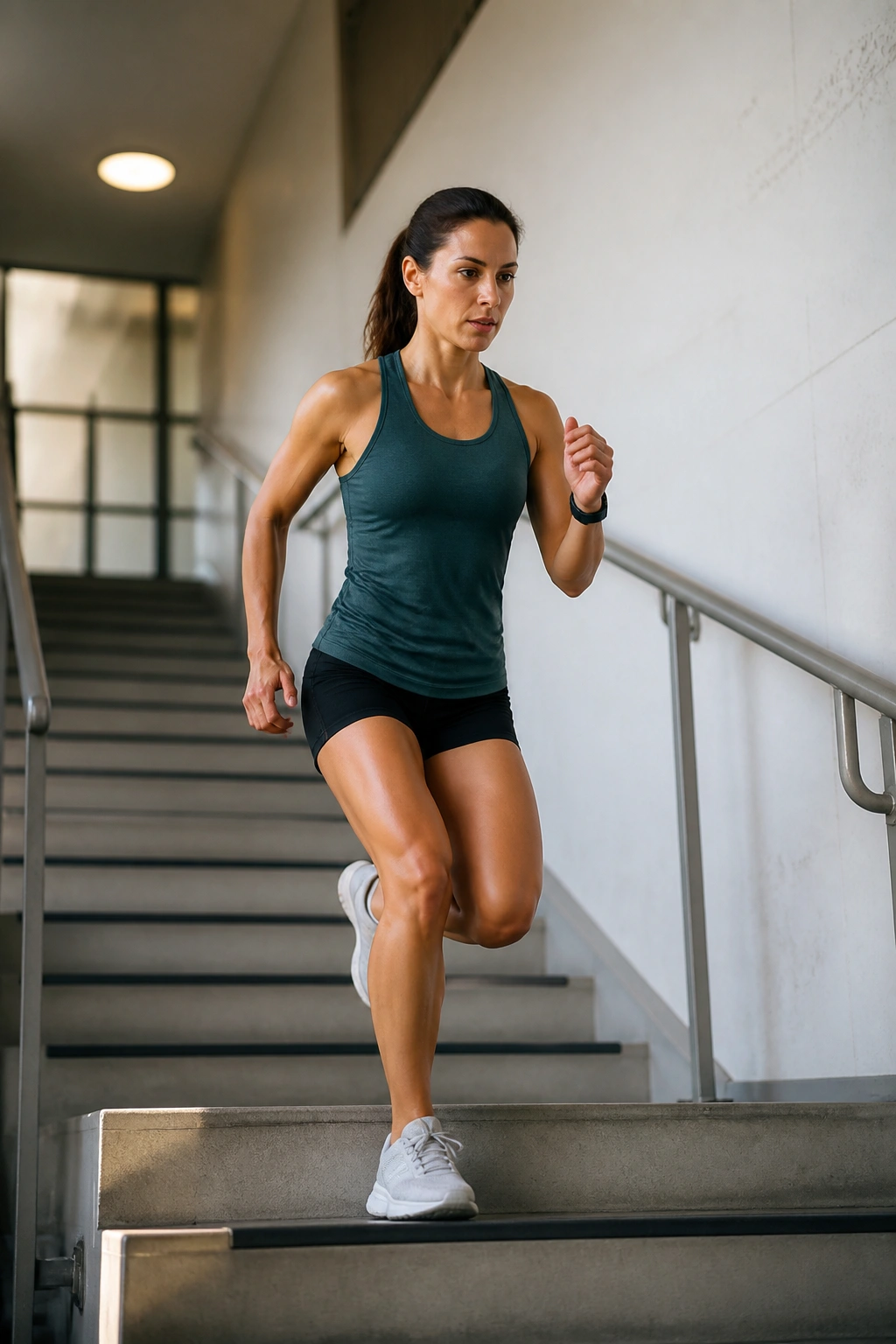
A sturdy step or a single flight of stairs can turn an ordinary hallway into a cardio station. Step-ups hit the quads, glutes, calves, and heart rate all at once, which is why they feel efficient even when the motion is basic.
Use a step that feels stable under both feet. Step up with one foot, bring the other up, then step down with control. You can alternate the lead leg each round or stick with one side for a stronger leg-focused block. A 20-second hard effort followed by 40 seconds easy is enough to make the work obvious.
Stairs are not the place to get careless. Use a railing if you need it, and keep the whole foot on the step. A partial foot on a slick edge is asking for trouble.
Better ways to use steps
- Begin with 5 minutes of easy marching before you start.
- Add a knee drive at the top for more intensity.
- Use lower steps if your knees prefer less bend.
- Slow the descent. That’s where a lot of people rush.
10. Skater Steps
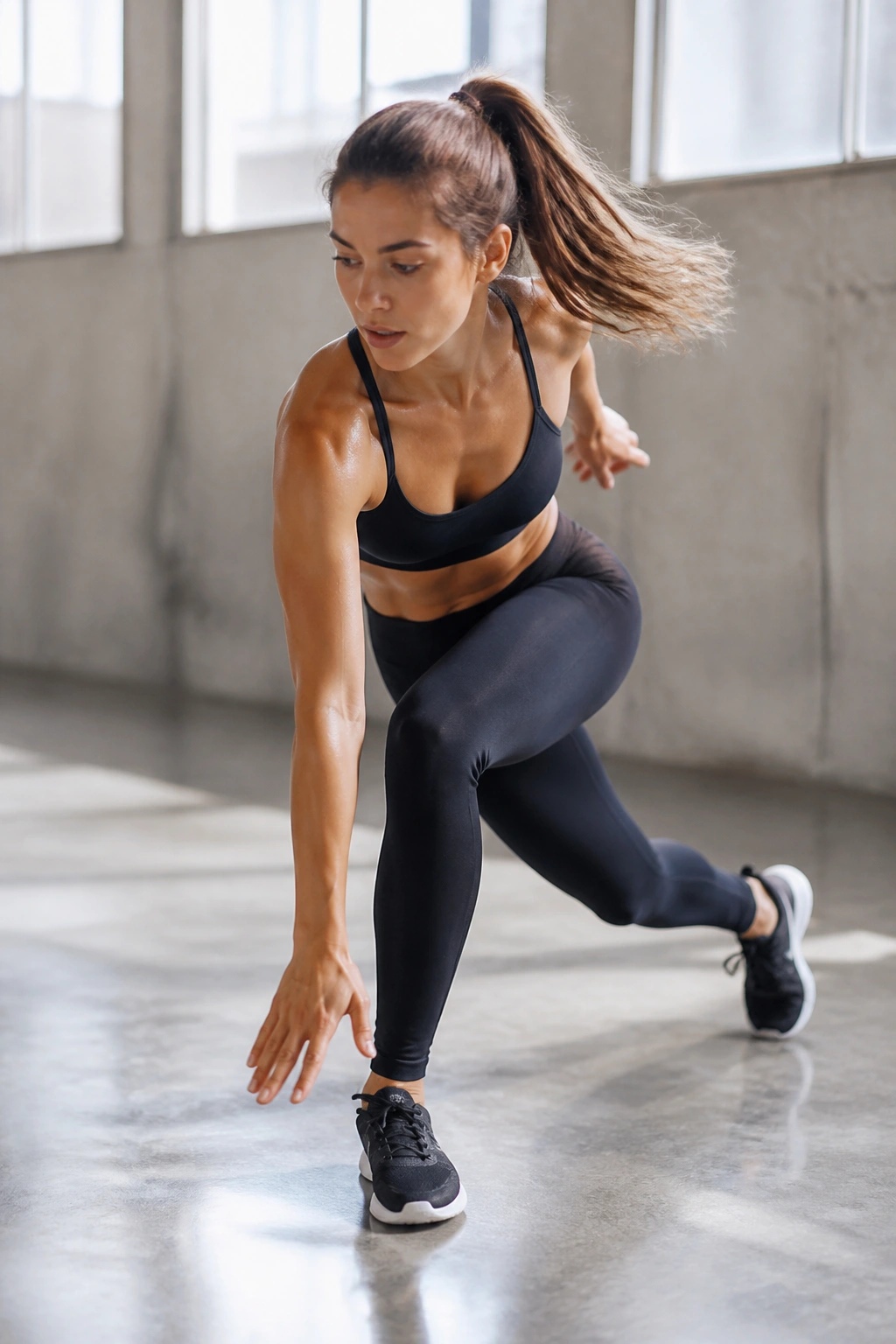
Skater steps borrow from speed skating, but you do not need ice to feel them. The lateral push and the side-to-side reach make them a smart aerobics move for balance, coordination, and hip strength.
Start by stepping or lightly hopping to one side, then send the other leg behind you in a gentle sweep. Touch the opposite hand toward the floor or toward the standing leg. The move can stay low-impact, or it can turn athletic fast if you add a bigger push and a deeper bend in the standing knee.
A lot of people enjoy skaters because they feel athletic without being complicated. There is a nice stretch through the outer hip, and the side-to-side drive keeps your heart rate up faster than a plain march.
- Keep the chest from collapsing forward.
- Land softly through the standing foot.
- Reach only as low as your balance allows.
- If hopping feels too much, step wide instead of jumping.
11. Squat-to-Reach Combo
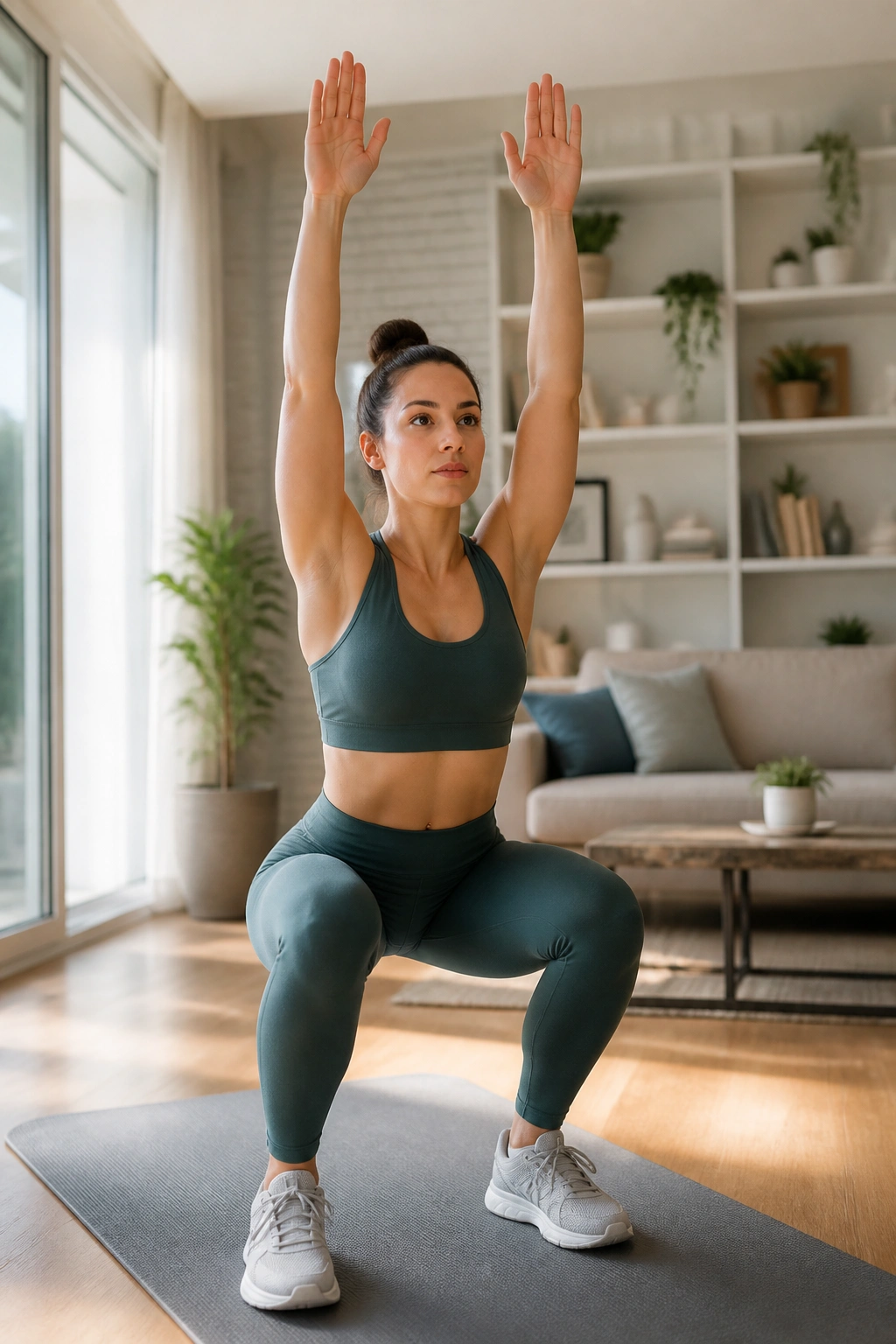
Squat-to-reach combos work because they link two useful actions: sitting back into the legs and opening the upper body. That makes them a strong cardio choice when you want movement that feels full-body instead of just fast.
Drop into a shallow squat, stand back up, and reach both arms overhead. Repeat at a steady pace for 30 to 60 seconds. You can turn the move into a true workout if you keep the transitions smooth and avoid pausing at the top.
The squat does not need to be deep. A chair-height squat is enough for many people, especially if knees or hips are sensitive. The reach is there to lengthen the body and keep the motion from feeling like plain leg work.
Keep the form clean
- Push the hips back first.
- Keep the heels down if possible.
- Reach overhead without shrugging the shoulders.
- Use a narrower range of motion if your back complains.
12. High Knees
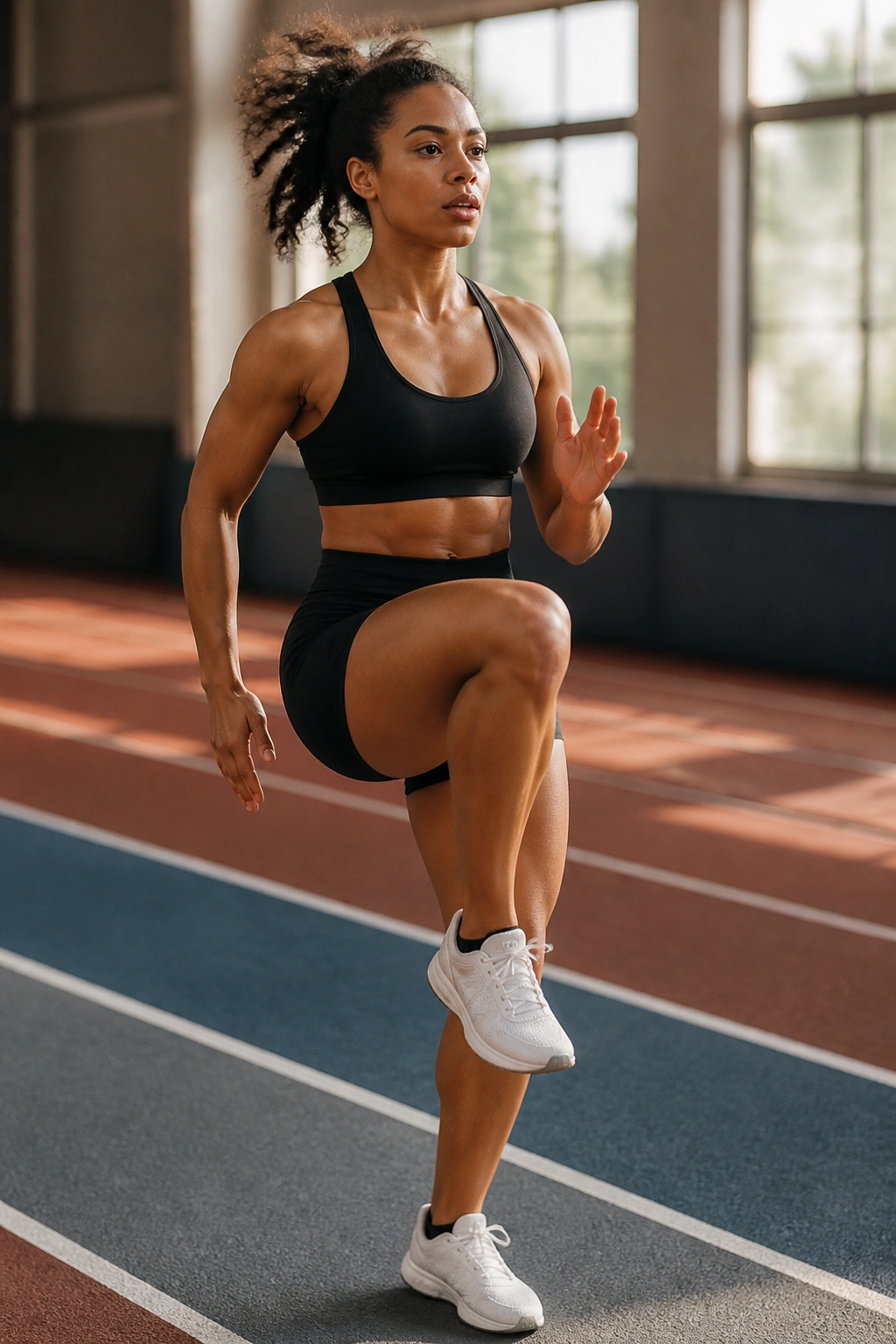
What makes high knees hard is not the lift. It’s the repeat.
One knee drive is nothing. A minute of them, especially when you are trying to stay light and quick, is where the work shows up. High knees are a classic for a reason: they drive the heart rate up fast and they ask for coordination, timing, and a bit of grit.
How to scale the burn
If you are new to the move, march the knees up one at a time. If you have more gas, add a small hop. If you want to really feel it, shorten the rest and keep the arms pumping hard.
A useful pattern is 20 seconds on, 20 seconds off for 6 rounds. That gives you enough intensity to matter without turning the session into a sloppy sprint.
- Keep the torso tall.
- Pull the belly in lightly so the back stays stable.
- Land under your body, not way in front of you.
- Stop if the impact turns sharp in the knees or shins.
13. Kickboxing Cardio
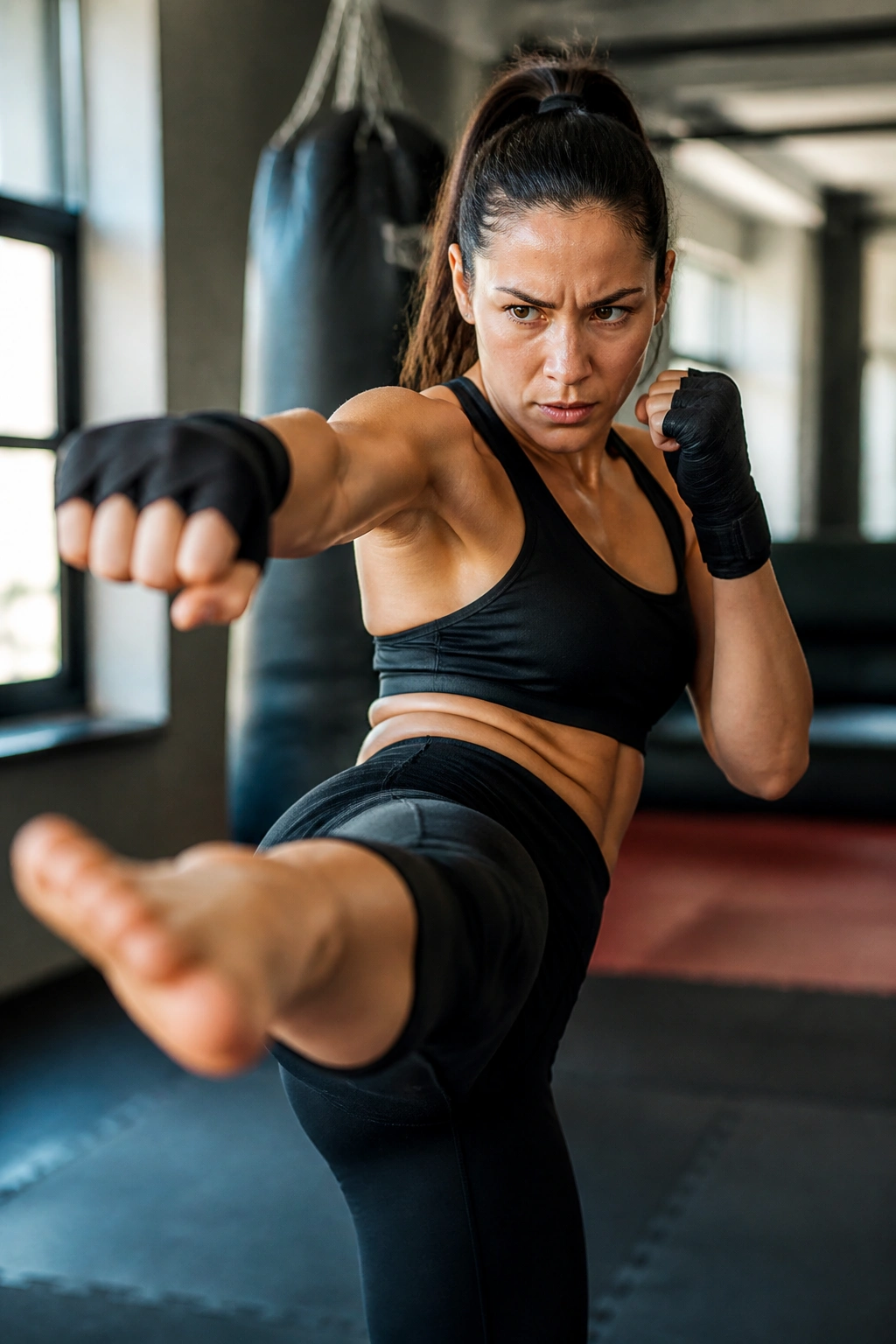
Kickboxing cardio is the rare workout that makes people forget they’re exercising. You are too busy throwing combinations, shifting your stance, and keeping your balance to obsess over the clock.
A basic round can include jabs, crosses, front kicks, knee strikes, and a few defensive moves like a slip or guard raise. The punches drive the upper body, the kicks wake up the hips, and the stance keeps your core honest. That blend makes it useful for anyone who wants more than a plain walk-in-place session.
Compared with shadow boxing, kickboxing feels more deliberate through the legs. The kicks ask for control on the return, and that return matters as much as the strike itself.
Simple round idea
- 30 seconds jabs and crosses
- 30 seconds front kicks
- 30 seconds knees
- 30 seconds light footwork and guard
Tip: kick low at first. Waist-high kicks are plenty. Higher is not automatically better, and sloppy high kicks are a fast way to irritate a hip flexor.
14. Chair Aerobics
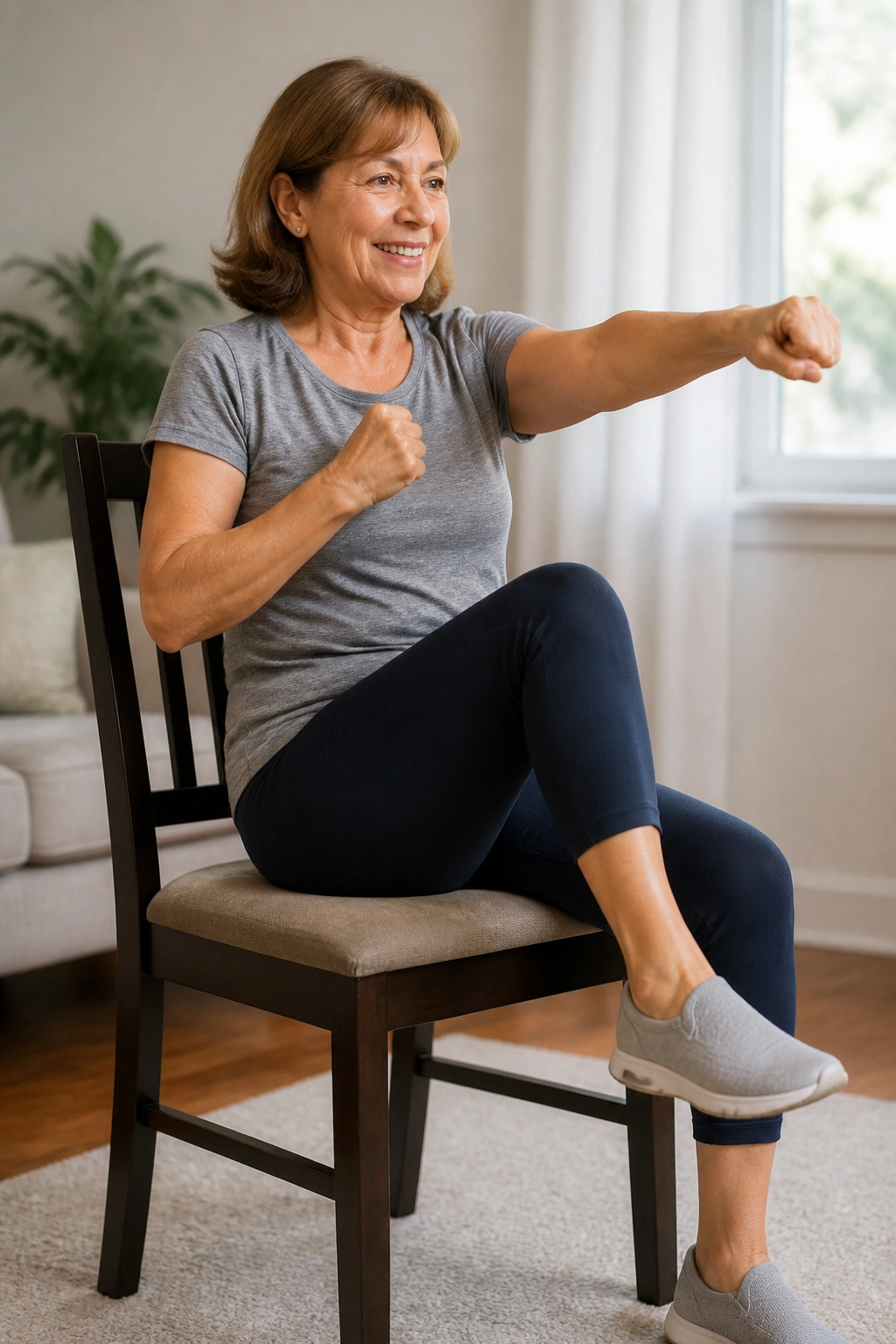
Chair aerobics deserve more respect than they get. They are not a fallback for “real” exercise; they are a smart way to keep moving when balance, fatigue, travel, or joint pain gets in the way of standing work.
Sit tall in a sturdy chair and start with marching feet, then add arm punches, knee lifts, heel taps, and seated twists. The point is to keep the rhythm continuous. If you breathe a little harder by the end of a 10-minute block, the session did its job.
Who should start here
- People who are returning to movement after a long break
- Anyone who needs a lower-impact option
- Travelers with a tight hotel room
- Busy people who want a short, no-fuss cardio block
A good seated routine is not sleepy. Push your arms with intent, sit away from the backrest if you can, and keep the feet active. That alone changes the whole feel.
15. Mini-Band Aerobics
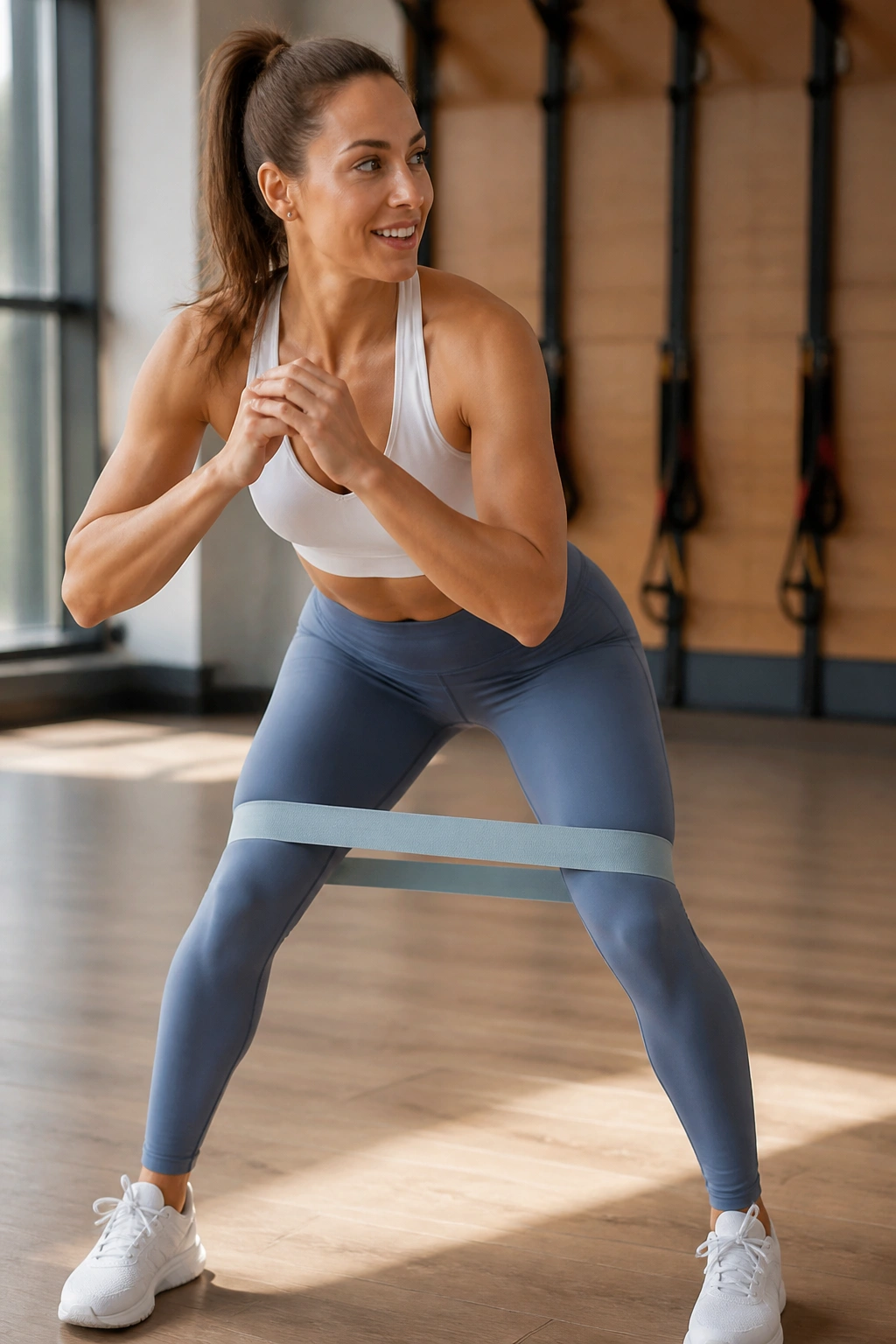
A mini-band changes the whole feel of aerobic work. Add one around the thighs or just above the ankles, and the simplest moves start asking for more control.
Try banded step-touches, standing marches, jack steps, or side-to-side squats. The band keeps tension on the outer hips, which means your glutes work harder during every shift. That extra resistance can turn a light cardio block into something more leg-focused without needing heavy equipment.
Band placement matters more than people think. Higher on the thighs usually feels kinder and easier to manage. Lower on the ankles creates more challenge, but it also makes form errors louder.
- Keep the knees tracking over the toes.
- Use small, controlled steps.
- Don’t let the band snap you into sloppy rebounds.
- Pick a light band first; too much tension makes the moves ugly fast.
16. Tabata-Style Aerobics
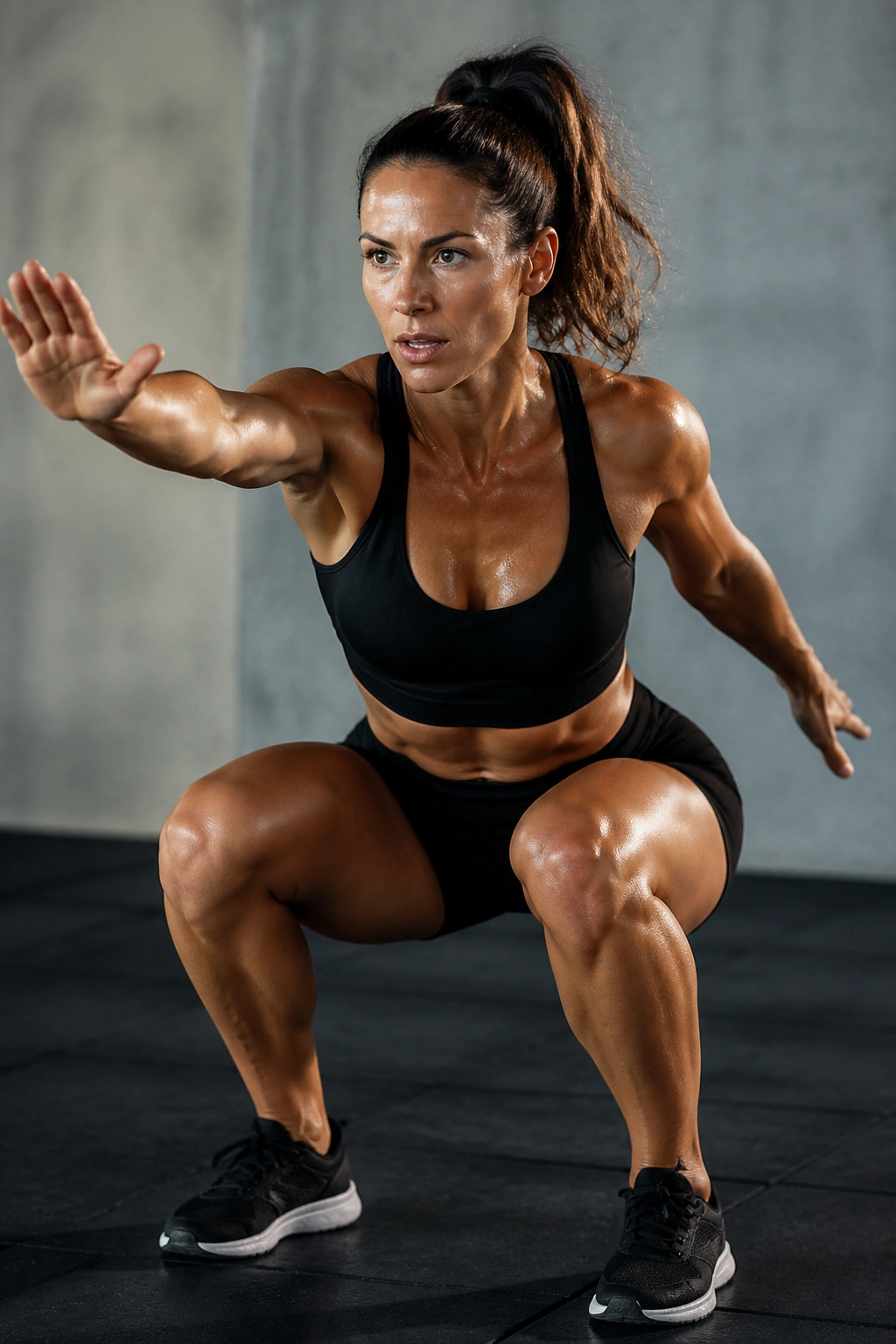
Tabata-style aerobics is the one section here that demands honesty. Twenty seconds on and 10 seconds off sounds short until you are four rounds in and your lungs start making their opinion known.
The format is simple: choose one move, work hard for 20 seconds, rest for 10, and repeat for 8 rounds. That makes a 4-minute block. You can do one block or stack two with a longer rest between them. The catch is that you need a move you can perform cleanly when tired — fast march, squat reach, skater steps, or low-impact jacks all work well.
How to pace it
- Start at about 7 out of 10 effort, not 10 out of 10.
- Keep the first two rounds smooth.
- Save the fastest version for the last half if form stays clean.
- Rest 1 to 2 minutes between blocks.
Tabata is not the place to show off. It’s the place to keep good shape while moving hard.
17. Step Aerobics
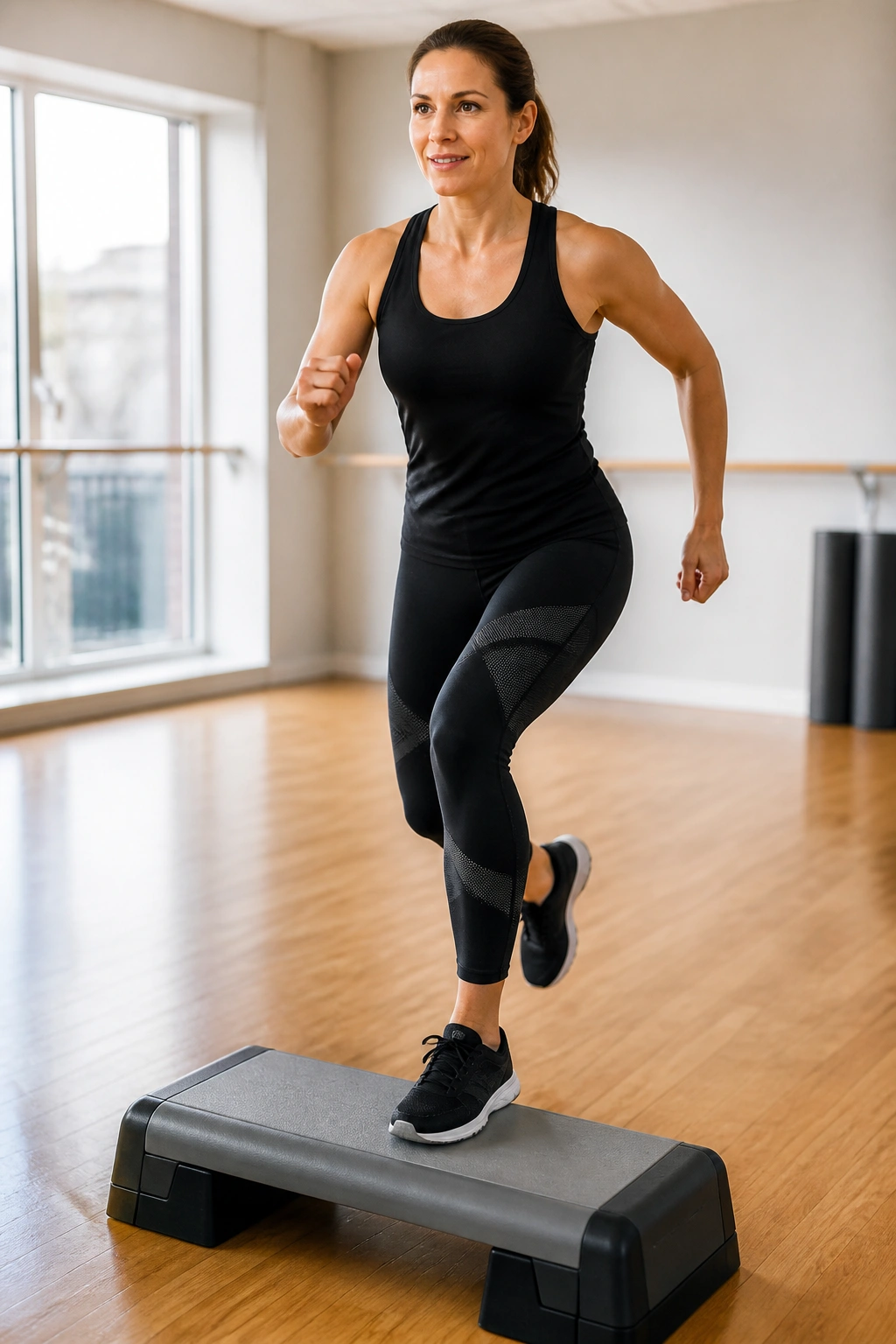
Step aerobics looks simple from the side. Then you try it for 15 minutes and realize the platform, the pattern changes, and the arm work all stack up fast.
Use a low, stable step and begin with the basic step-up pattern: right foot up, left foot up, right foot down, left foot down. Once that feels natural, add repeater knees, corner taps, side straddles, and knee lifts. A 4- to 8-inch platform is enough for most people; taller steps raise the challenge, but they also raise the demand on the knees and balance.
What makes it work
- The constant up-and-down action keeps the heart rate steady.
- The platform gives you a clear target, which helps rhythm.
- The arms help more than people expect, especially in longer sets.
Use a mirror if you have one. Foot placement gets sloppy faster than most folks realize, and a mirror makes that obvious early.
18. Core-Driven Aerobics Combo
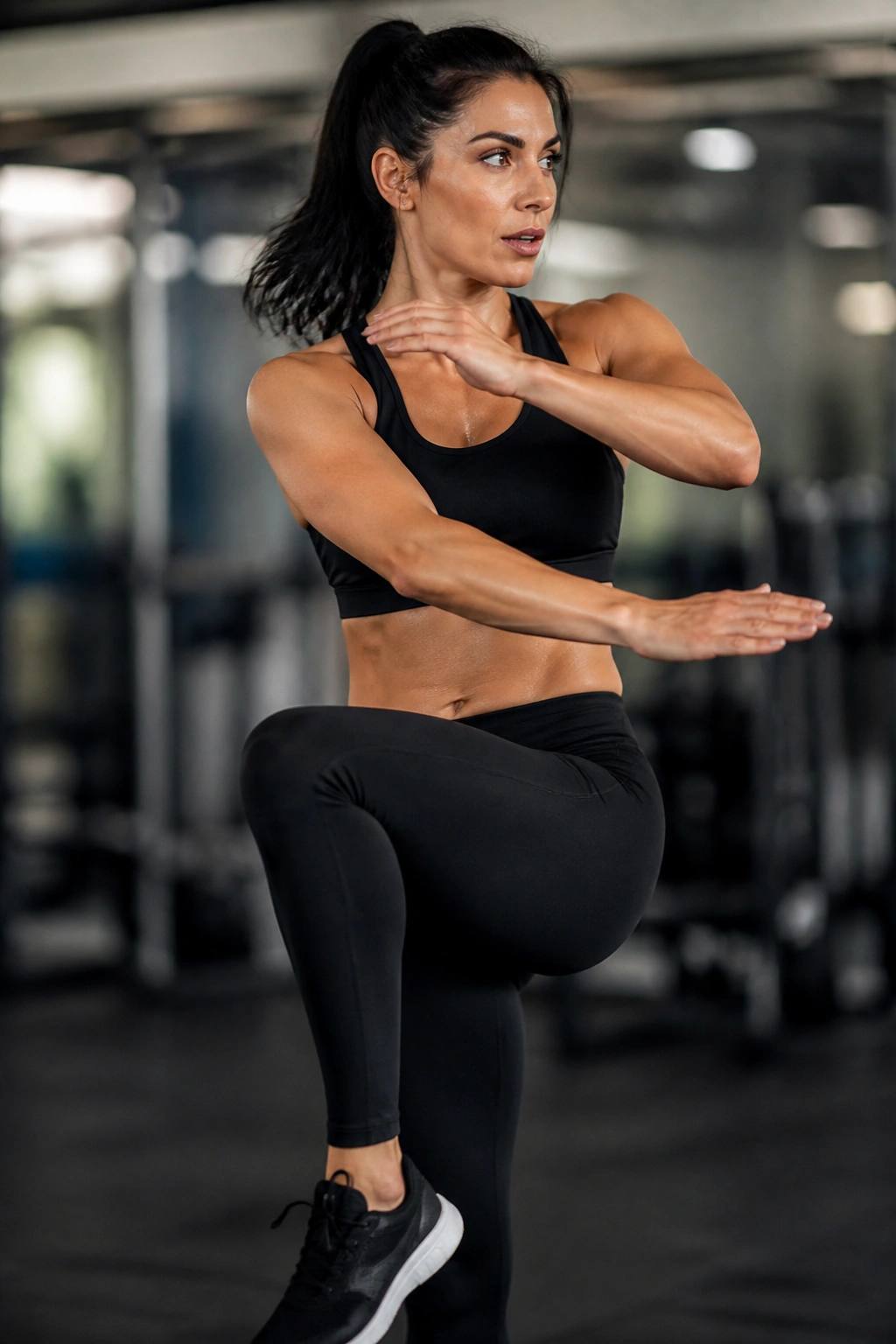
Core-driven aerobics is where people stop thinking about “cardio” and start thinking about control. Standing knee drives, cross-body chops, torso twists, and standing bicycles ask the middle of the body to stay awake while the legs keep the pace moving.
A clean combo might look like this: knee drive right, reach left hand down, switch sides, then add a twist through the shoulders on the next round. The movement stays upright, which is useful if floor work is not your thing or if you want a standing block that still hits the trunk.
This kind of work is underrated because it does two jobs at once. It raises the heart rate and it teaches the body not to collapse when the pace rises.
- Keep the rib cage stacked over the hips.
- Avoid yanking the shoulders across the body.
- Move slowly enough that you can feel the trunk working.
- Add speed only after the pattern feels stable.
19. Mirror or Partner Circuit
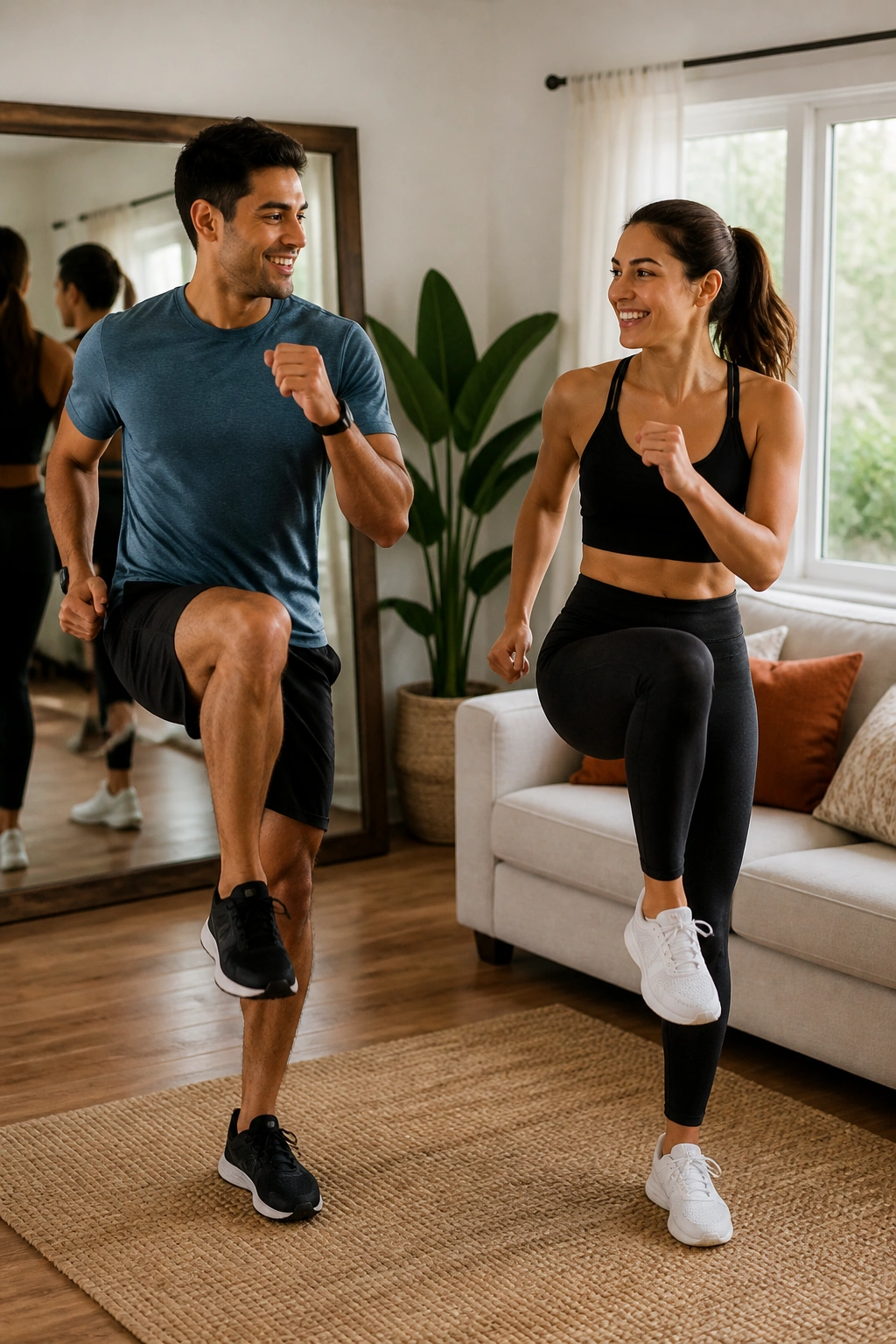
Mirror and partner circuits fix one of the biggest problems with home workouts: boredom. When someone else is calling the move, or when you are copying yourself in a mirror, you stop overthinking and start moving.
Build a 4-move circuit and repeat it for 3 to 5 rounds. A simple set might be step-touch, knee lifts, low-impact jacks, and shadow boxing. If you have a partner, trade off who leads every round. If you’re alone, face a mirror and treat it like a follow-along class without the noise.
The real advantage is consistency. Most people stick with a workout longer when it feels social, even if the “social” part is a mirror and your own stubbornness.
Easy circuit structure
- 45 seconds work, 15 seconds rest
- 4 moves per round
- 3 to 5 rounds total
- 1 longer rest between rounds if needed
20. Cool-Down Flow
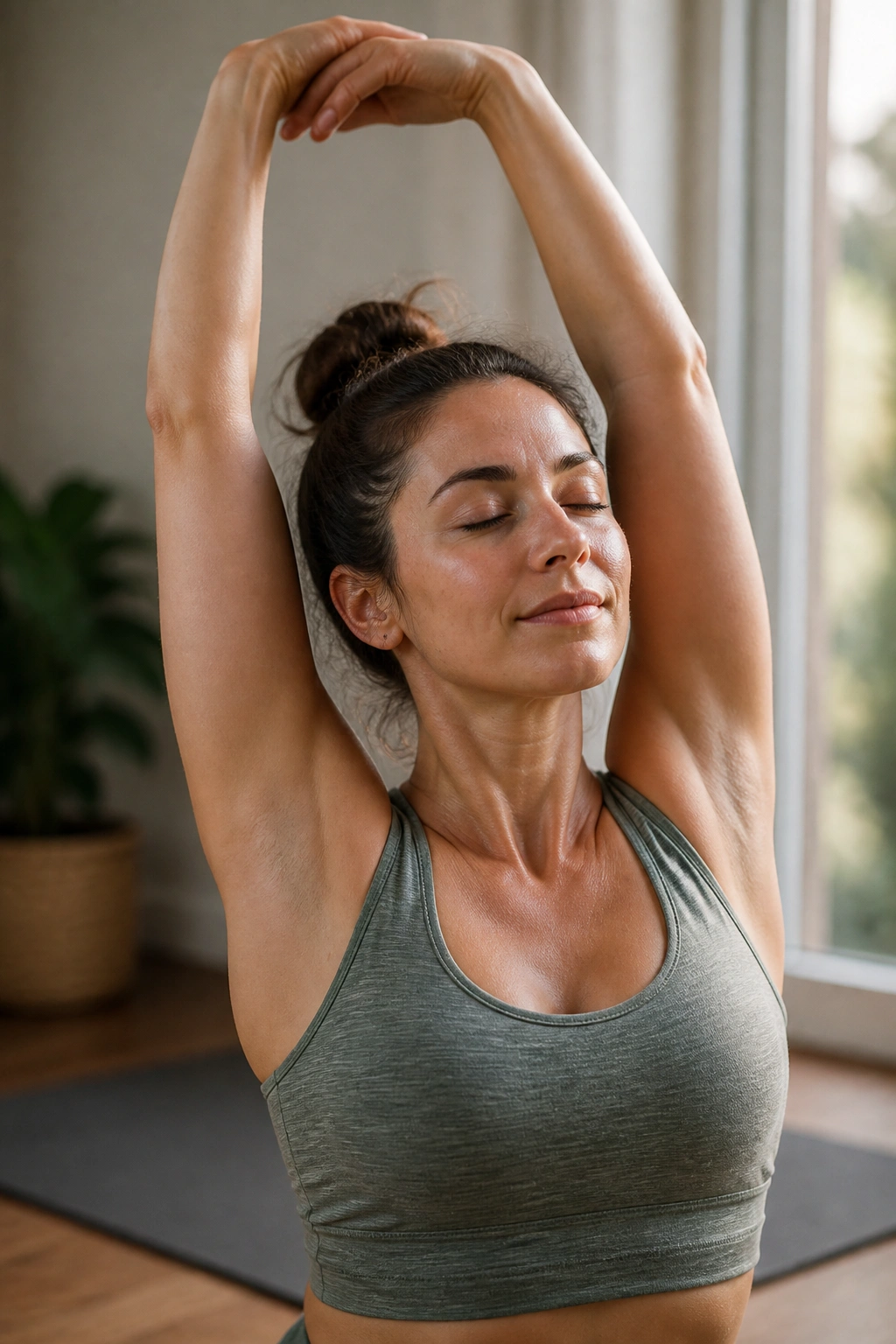
The cool-down is not dead time. It is the part where your breathing settles, your pulse drops, and your body gets the memo that the work is done.
Start with a slow march in place for 1 to 2 minutes, then move into calf raises, gentle side steps, overhead reaches, and light hamstring stretches. Keep everything easy and unforced. The goal is to leave the session feeling loose, not stretched to the point of strain.
A good cool-down also tells you something useful: whether the workout felt too hard, too easy, or just right. If your breathing never got away from you, bump the next session with a faster pace or a few shorter rests. If your form fell apart halfway through, make the intervals longer or choose lower-impact moves. That feedback matters more than any fancy calendar plan.
Finish with slow breaths, shoulders down, feet flat. Then walk away from the workout with enough energy left to do it again tomorrow.
