



A lot of men treat ab day like punishment. Twenty sloppy crunches after chest day, a few fast twists, then home. That routine does almost nothing except make your neck sore and your patience short.
The better path is less glamorous and a lot more effective. Ab workouts for men at the gym work when they load the midsection the same way you’d load anything else: with control, tension, and progression. A set of cable crunches, a hard carry, or a strict hanging raise will do more for your waistline, bracing strength, and visible definition than a hundred lazy reps on the floor.
One thing gets missed all the time. Your abs are not one flat muscle doing one job. The rectus abdominis flexes the spine, the obliques help with rotation and side-bending, and the deeper core muscles keep everything from wobbling when you squat, pull, press, or sprint. Miss that, and you end up training movement instead of muscle.
Cable stacks help. So do pull-up bars, benches, landmines, straps, wheels, and heavy dumbbells. Start with the moves you can own cleanly, then work your way toward the nastier stuff.
1. Hanging Knee Raise
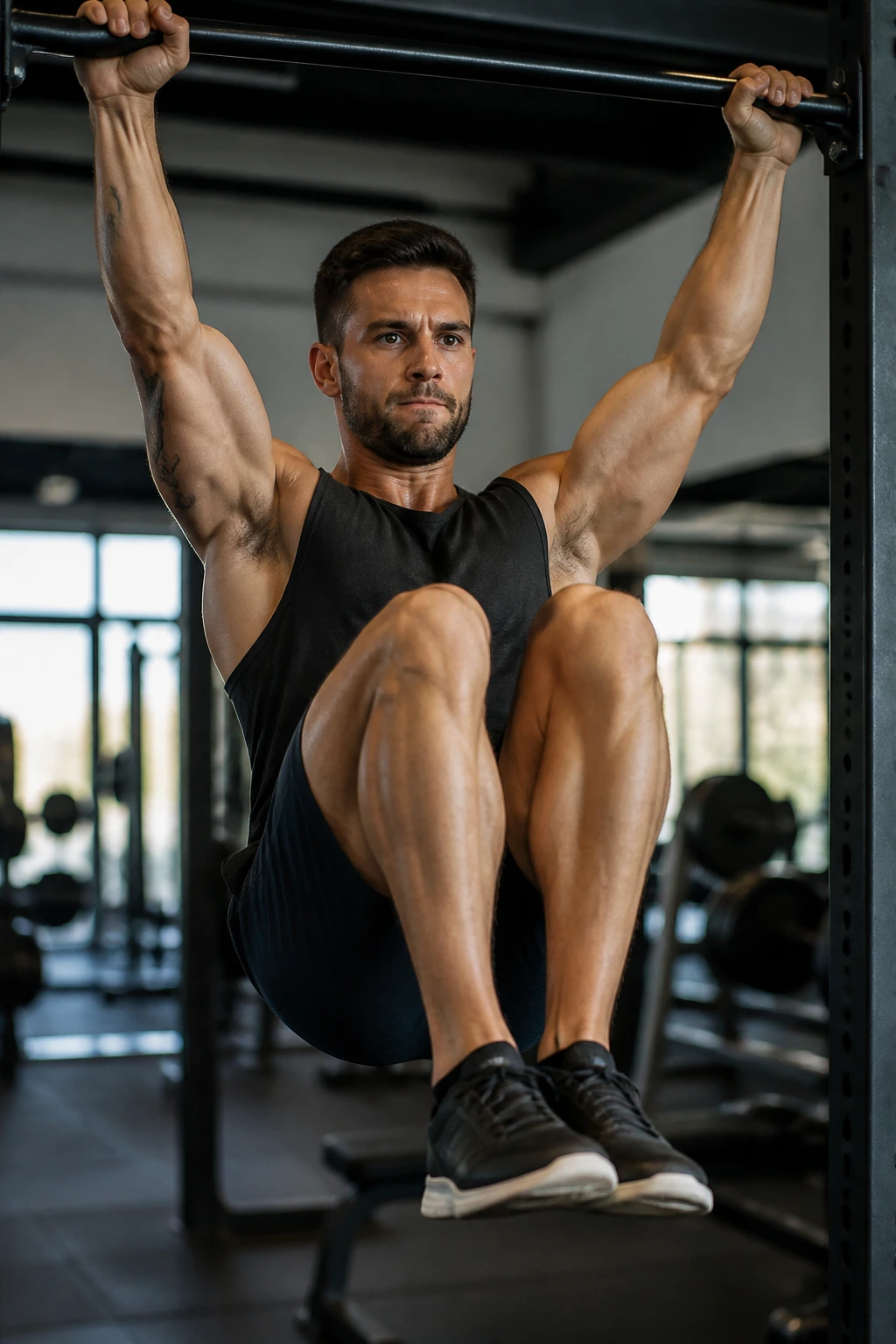
The hanging knee raise is the cleanest first stop if you want your abs to do real work instead of your hip flexors stealing the show. It looks simple. It isn’t.
Why It Works
Hang from a pull-up bar with your shoulders packed down and your legs quiet. From there, bring your knees up while curling your pelvis slightly backward at the top. That little pelvic tuck is the whole point; it turns the rep from a leg swing into an actual abdominal contraction.
- Good starting target: 3 sets of 8 to 12 reps
- Best cue: think “ribs down, knees up”
- Common mistake: rocking the body to fake momentum
- Best progression: hold a light dumbbell between the feet only after strict reps feel easy
A clean knee raise should feel like your lower torso is doing the work, not your thighs. If the bar starts swinging like a playground rope, stop and reset. That swing is a cheat, and it usually means the abs are along for the ride rather than leading the rep.
One strict rep beats five sloppy ones. Especially here.
2. Hanging Leg Raise
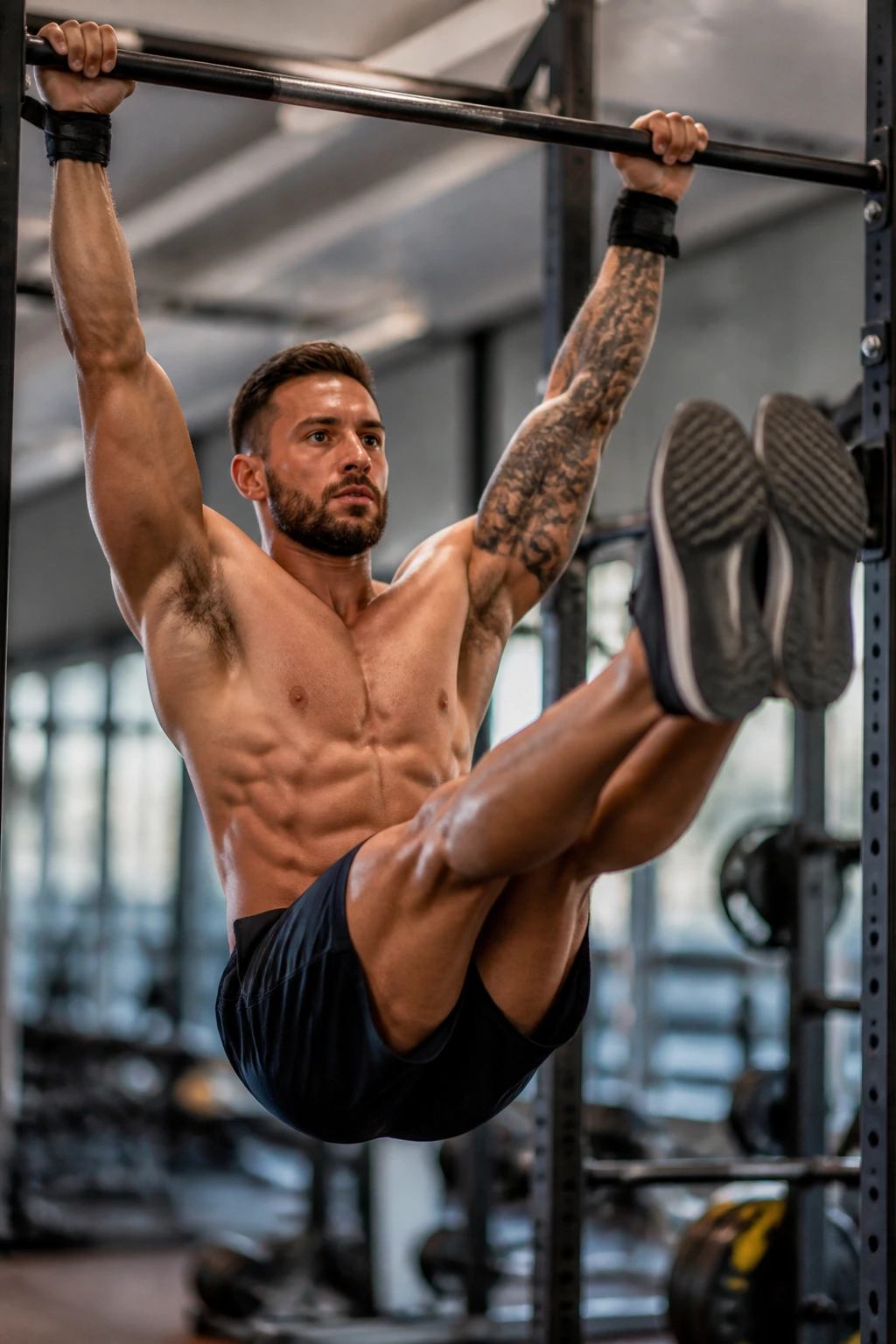
Can you keep your pelvis tucked when your legs go long? That’s the test here. Once the knees straighten, the exercise gets mean in a hurry.
The hanging leg raise asks for more than the knee version because the lever is longer. Your abs have to stop the lower back from arching while your hip flexors try to take over. If you lose position, the whole move turns into a leg-lift contest, and that’s not what you want.
Start with a slight bend in the knees if full straight-leg raises are too ugly. Lift until the legs are roughly parallel to the floor, pause for a beat, then lower under control for 2 to 3 seconds. The lowering phase matters as much as the lift. That’s where a lot of the tension lives.
If you can only do five clean reps, that’s fine. If you can do fifteen while swinging like a metronome, that’s not.
3. Kneeling Cable Crunch
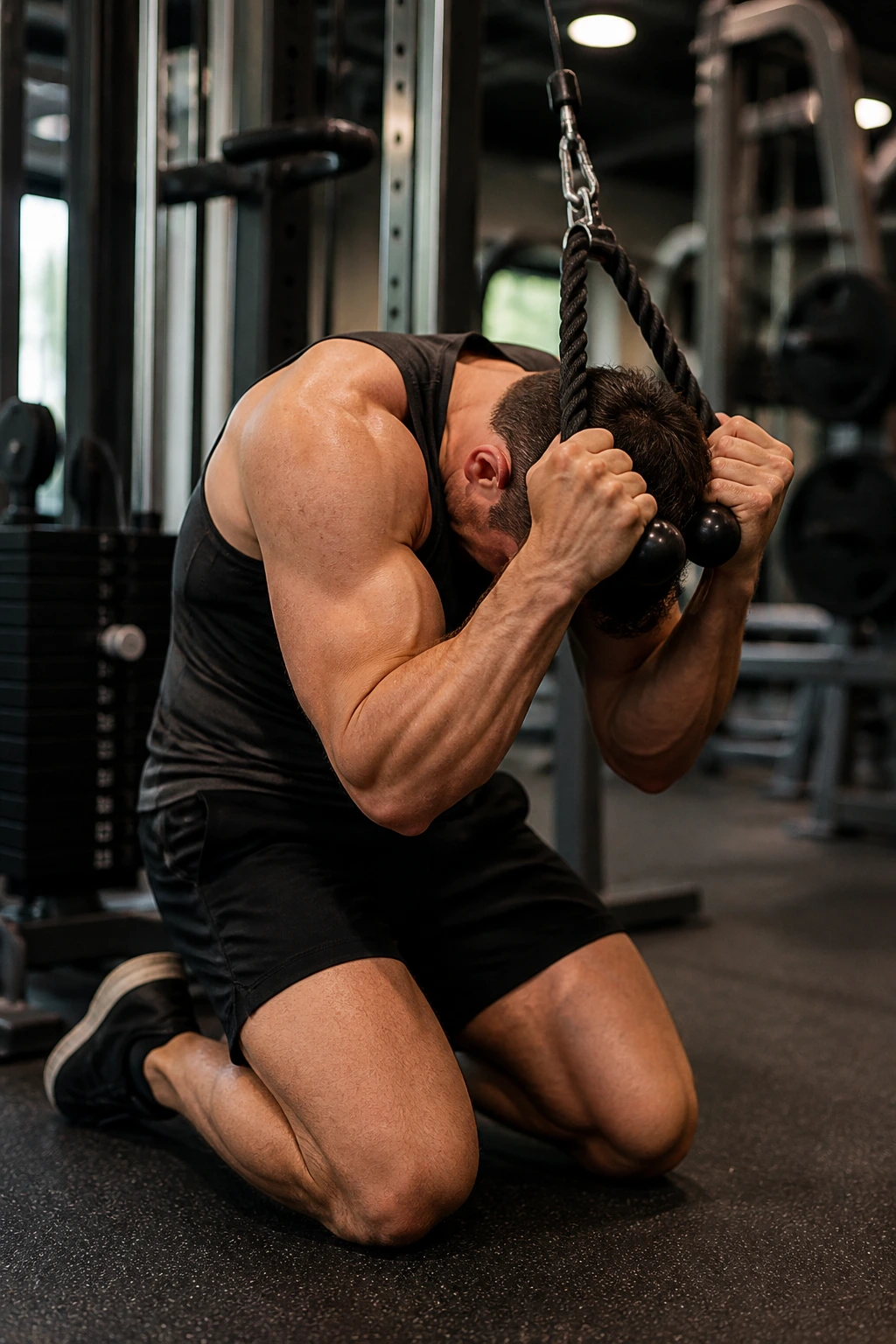
If regular crunches feel too easy, put a cable stack in front of you and watch your opinion change fast. A kneeling cable crunch loads spinal flexion in a way bodyweight work usually can’t.
How to Use It
Set the rope at the top pulley, kneel about arm’s length away, and keep your hips locked in place. Pull your ribs toward your pelvis by curling the spine, not by dropping the hips back. The elbows move because the torso moves. Not the other way around.
- Rep range: 10 to 15 controlled reps
- Load choice: enough weight that the last 2 reps slow down
- Best setup: kneel on a pad or folded towel to save your knees
- What to avoid: yanking with the arms or sitting back into the heels
This is one of my favorite ab gym staples because it’s easy to progress in tiny jumps. A cable stack lets you add 5 or 10 pounds, then feel the difference right away. That makes it useful for long-term strength and size, not just a burn.
Curl the ribs down. That cue alone fixes half the bad reps I see.
4. Decline Bench Sit-Up
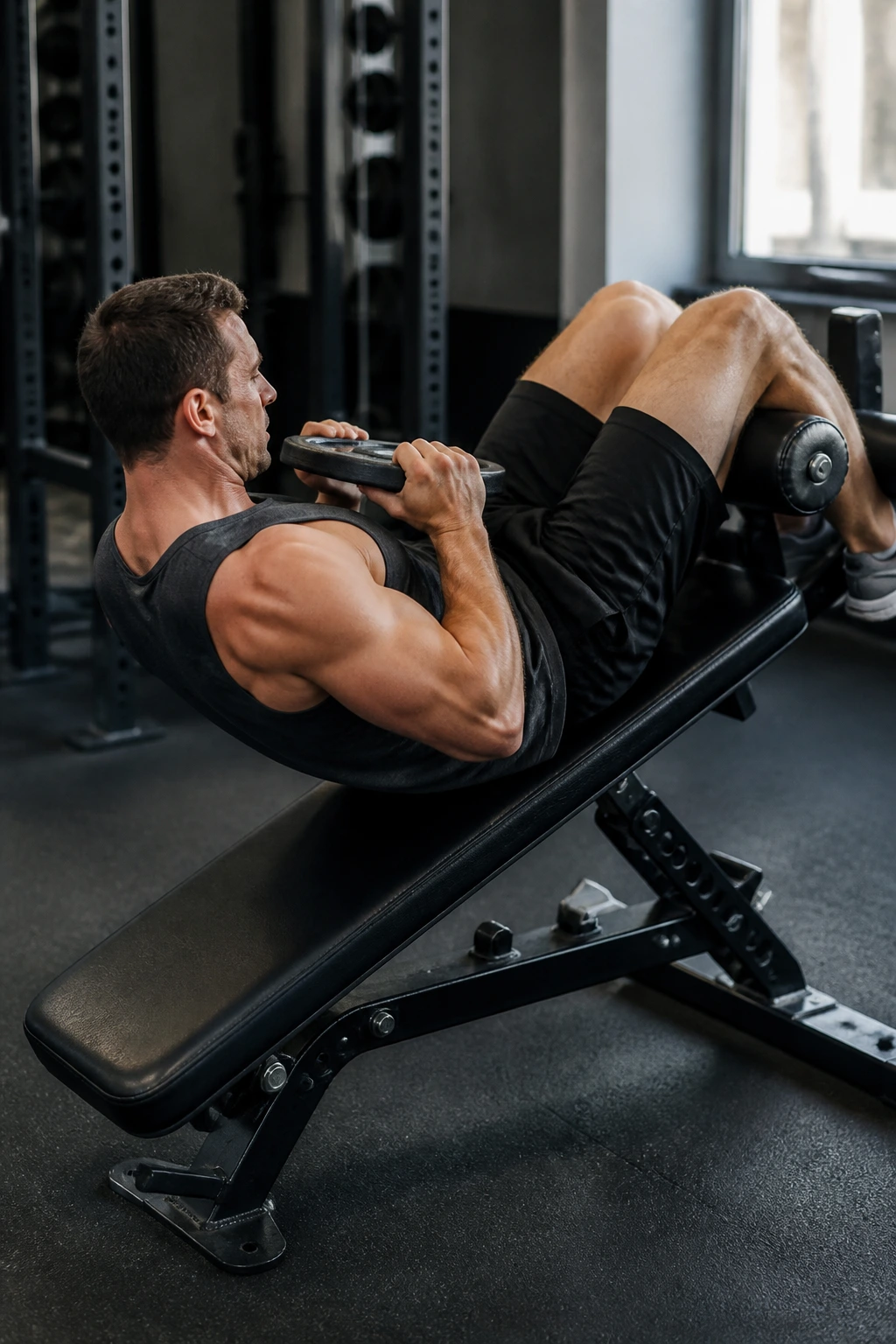
Sit-ups are not the enemy. Sloppy sit-ups are. On a decline bench, the movement gets harder, the range gets longer, and the abs have to earn the rep instead of coasting through it.
The decline angle gives you a bigger challenge than a flat-floor sit-up without needing weird speed or jerky momentum. Hold a plate at your chest or behind your head if your neck tolerates it, but don’t start heavy. A lot of guys jump straight to a 25-pound plate and then turn the rep into a hip-flexor tug-of-war.
You want the torso to curl up, then lower with control until your shoulder blades just touch the bench. Feet should stay anchored lightly, not welded down by a partner who’s overhelping. If your lower back starts to pinch, shorten the range and slow down. That usually fixes more than people expect.
I like this move for anyone who wants a straightforward loaded flexion drill without cable machines.
5. Ab Wheel Rollout
The ab wheel feels smooth for about three seconds. Then your ribs start to flare, your core starts shaking, and the truth comes out.
That’s why I like it. The rollout is one of the best anti-extension exercises in the gym, which means it teaches your torso not to collapse when your arms reach forward. Start on your knees, squeeze your glutes hard, and keep your ribs pulled down before you move the wheel even an inch. Roll only as far as you can return from without losing shape.
What to Watch For
The big mistake is chasing distance. Don’t. A short rollout with a hard brace is worth more than a long one where your low back sags halfway through. If your belly drops toward the floor, the abs have checked out and the lumbar spine is taking the hit.
A good starting version is 2 to 4 sets of 5 to 8 reps. Slow the lowering to 3 seconds. Pause for a second at the furthest point you can own. Then pull back by tightening the abs, not by jerking your hips.
Short range, strict control. That’s the sweet spot.
6. Reverse Crunch on Bench
Twelve slow reverse crunches can light up the midsection harder than 30 fast floor crunches. The difference is simple: the pelvis has to move.
Lie on a flat or slight incline bench and hold behind your head or grip the bench top for support. Bring your knees toward your chest, then curl the tailbone up so the lower back lifts slightly off the pad. That extra posterior tilt is what turns the movement from a knee tuck into an ab exercise.
Common Traps
- Swinging the legs instead of curling the pelvis
- Dropping too fast on the way down
- Using momentum from a big hip drive
- Crunching the neck because the hands are pulling
Keep the motion small and deliberate. If the bench feels too easy, slow the lowering phase to 3 seconds or hold a dumbbell between the feet, but only after the strict version is clean. You should feel the lower abs working hard without the lower back complaining.
It’s a quiet exercise. Then it starts burning.
7. Captain’s Chair Knee Raise
Unlike hanging raises, the captain’s chair gives your upper body a brace, which is useful when grip fails before the abs do. That makes it a smart option for beginners, tired lifters, or anyone whose shoulders dislike dead hangs.
Plant your forearms on the pads, press the back into the support, and keep the torso from swinging. Raise the knees until the pelvis starts to tuck, then lower with control. The machine shouldn’t rock. If it does, the rep got messy.
The nice part is the steadiness. You can focus on the abdominal curl without fighting your grip or worrying about a bar spin. The downside is also obvious: people get lazy on it and start using the pads to bounce through reps. Don’t do that. The pads are there for stability, not leverage.
A clean target is 3 sets of 10 to 15 reps. If you want more challenge, hold the top position for 2 seconds on each rep. That tiny pause changes the whole exercise.
8. Pallof Press
Stand sideways to a cable stack and let the machine try to twist you. That’s the whole game.
The Pallof press trains anti-rotation, which is one of the most useful things your core can do. Instead of moving through a big flashy rep, you resist movement. You press the handle straight out from your chest and keep your torso square while the cable tries to drag you around. If your ribs drift or your hips swing, the weight is too heavy.
How to Set It Up
- Stand with feet about shoulder-width apart.
- Set the cable at chest height.
- Step far enough away to feel real tension before you press.
- Hold the handle for 10 to 20 seconds, or press for 8 to 12 slow reps.
Breathe behind the brace. That matters. A lot of guys hold their breath so hard they turn purple, then wobble anyway. Keep the abs tight, but let the lungs do some work too.
This is not a glamorous drill. It’s a smart one. And smart core work tends to show up later under the bar.
9. Cable Woodchop
This is not a full-body swing. If it looks like you’re chopping firewood with your shoulders, the movement has gone off the rails.
A cable woodchop can run high-to-low or low-to-high, and both versions are worth using. The job is to move through the trunk under tension while keeping the arms long enough to act like a handle rather than a biceps curl. Turn the torso, let the hips help a little, and stop before the motion turns into a fling.
High-to-Low vs Low-to-High
High-to-low tends to feel a bit more like a powerful diagonal crunch. Low-to-high asks the obliques to lift and rotate the torso against the cable line. I like both, but I prefer starting lighter than most people think. Once the weight gets dumbbell-heavy, form gets ugly fast.
Use 8 to 12 reps per side and keep the pace controlled. The finish should feel sharp, not wild. If the cable stack is making you jerk or lean, back off. A cleaner rep with a moderate load gives better work and less nonsense.
10. Russian Twist with Plate
Should you twist for abs? Sure — if you keep the load sane and the speed under control. The Russian twist gets trashed a lot because people turn it into a fast, sloppy flail with a heavy plate and a rounded lower back.
Sit on the floor or a low bench, lean back just enough to feel your abs engage, and keep the chest lifted. Hold a plate or medicine ball and rotate the torso from side to side. The hands follow the chest. They do not lead the whole show.
A good version uses light-to-moderate load and a steady tempo. Feet can stay down if you want more stability, or lift slightly if your back can handle it and your form stays locked in. If your low back starts complaining, cut the range and slow down. No exercise is worth feeding a cranky spine for the sake of ego.
This one is best for controlled, rotational core work. Fast twists? Useless. Controlled twists? Different story.
11. Suitcase Carry
One heavy dumbbell can smoke your obliques harder than a set of crunches. The suitcase carry proves it every time.
Hold a dumbbell in one hand and walk tall without leaning toward or away from the weight. The body wants to tip. Your job is to stop that from happening. The obliques, quadratus lumborum, and deep trunk muscles fire hard to keep the spine stacked while the legs keep moving.
Use 20 to 40 meters per side to start, or about 20 to 30 seconds if your gym is cramped. The dumbbell should feel annoying by the halfway point. If you can stroll like you’re carrying groceries with no issue, go heavier.
A few cues make a big difference:
- Ribs stacked over pelvis
- Shoulders level
- No side bend
- Slow, even steps
This is one of those exercises that looks almost too easy until it isn’t. Then your side starts talking.
12. Farmer’s Carry
Unlike the suitcase carry, this one loads both sides equally. That makes it feel more balanced, but not easier. Not even close.
Grab two heavy dumbbells or kettlebells and walk with your chest tall and your ribs locked in. The abs are still working, but so are the grip, upper back, and lats. That’s why this move shows up in serious strength programs so often. It teaches the whole trunk to stay tight while you move.
The best part is how transferable it feels. If you squat, deadlift, press, or carry anything awkward in real life, this movement pays off fast. I like using heavy farmer’s carries for 3 to 5 trips of 30 to 60 meters. Rest long enough to keep the next walk crisp.
No shrugging. No leaning back. No wobbling side to side. If the dumbbells start pulling your shoulders into your ears, reset and shorten the set. Clean posture matters more than looking tough with giant implements.
13. Landmine Rotation
A barbell jammed into a landmine attachment or a solid corner looks basic. Then the first few reps hit, and the obliques wake up.
The landmine rotation sends the bar in a controlled arc from one hip toward the opposite side of the body. That angle is useful because it lets you train rotation without the chaos of a wild swing. The shoulders, core, and hips all have to stay coordinated, but the spine should still feel stacked and safe.
Key Cues
- Keep the feet planted.
- Let the hips and torso turn together.
- Finish with control, not speed.
- Use lighter plates than you think.
I like this movement for lifters who want more rotational work than a Pallof press gives, but less mess than fast medicine-ball spins. It’s especially handy if you play a sport, throw, punch, or just want the obliques to do more than sit there and look important.
If the bar path looks like a chopped-up baseball swing, reduce the weight and tighten the arc.
14. TRX Body Saw
If your abs start shaking after 15 seconds, good. That means the body saw is doing what it’s supposed to do.
The TRX version puts your feet in the straps and your forearms on the floor, then asks you to glide the body backward and forward while keeping the plank shape intact. The motion is tiny. The tension is not. Your job is to resist spinal extension while the lever keeps changing.
This is one of the more honest anti-extension drills in the gym because it punishes sloppy bracing fast. Start with a short range and a 20-second hold. Then add tiny saw motions if you can keep the ribs down and the glutes squeezed. If the lower back sags, the set is done.
I like this better than a long standard plank for people who need a stronger challenge without adding much load. The instability makes the core work, but it also forces the shoulders and hips to stay on task. Messy reps are easy to spot. That’s useful.
15. Dragon Flag
Three clean dragon flags beat 20 ugly ones. Every time.
This is one of the hardest ab moves in a gym, and it earns that reputation. You grip a bench or post above your head, lift the body into a rigid line, and lower under control while the trunk stays braced like a plank. The movement demands huge tension from the abs, lats, glutes, and upper back all at once.
How to Progress
Start with a bench knee tuck or a negative only. Lower the body as far as you can while keeping the line from shoulders to knees or ankles as straight as possible. If the hips fold, stop there. The negative is enough.
- Best rep count: 1 to 5 slow reps
- Best rest: long enough to recover fully
- Best rule: quality only; no flinging
- What to avoid: arching the back or dropping uncontrolled
This is not a volume exercise. It’s a skill-strength move, and the skill part matters. Treat it like a heavy lift, not a burner.
16. V-Up on Bench
Can you fold at the hips without yanking your neck? That’s the real question here.
The V-up asks your torso and legs to come together at the same time, which creates a strong flexion hit across the whole front of the body. A bench version can make the movement a little easier to control because you get a fixed surface and a better setup for your back and shoulders. Lie flat, reach both hands overhead, then lift the legs and torso toward each other in one crisp motion.
Keep the neck relaxed. That is the part people mess up most. The chin should not be jammed into the chest like you’re trying to win a bad posture contest. Exhale as you rise, pause for a beat at the top, then lower under control.
A clean set looks athletic, not frantic. Use 8 to 15 reps, and if your hamstrings are tight, bend the knees a little rather than forcing a straight-legged circus act. The abs don’t care about your pride.
17. Cable Lift
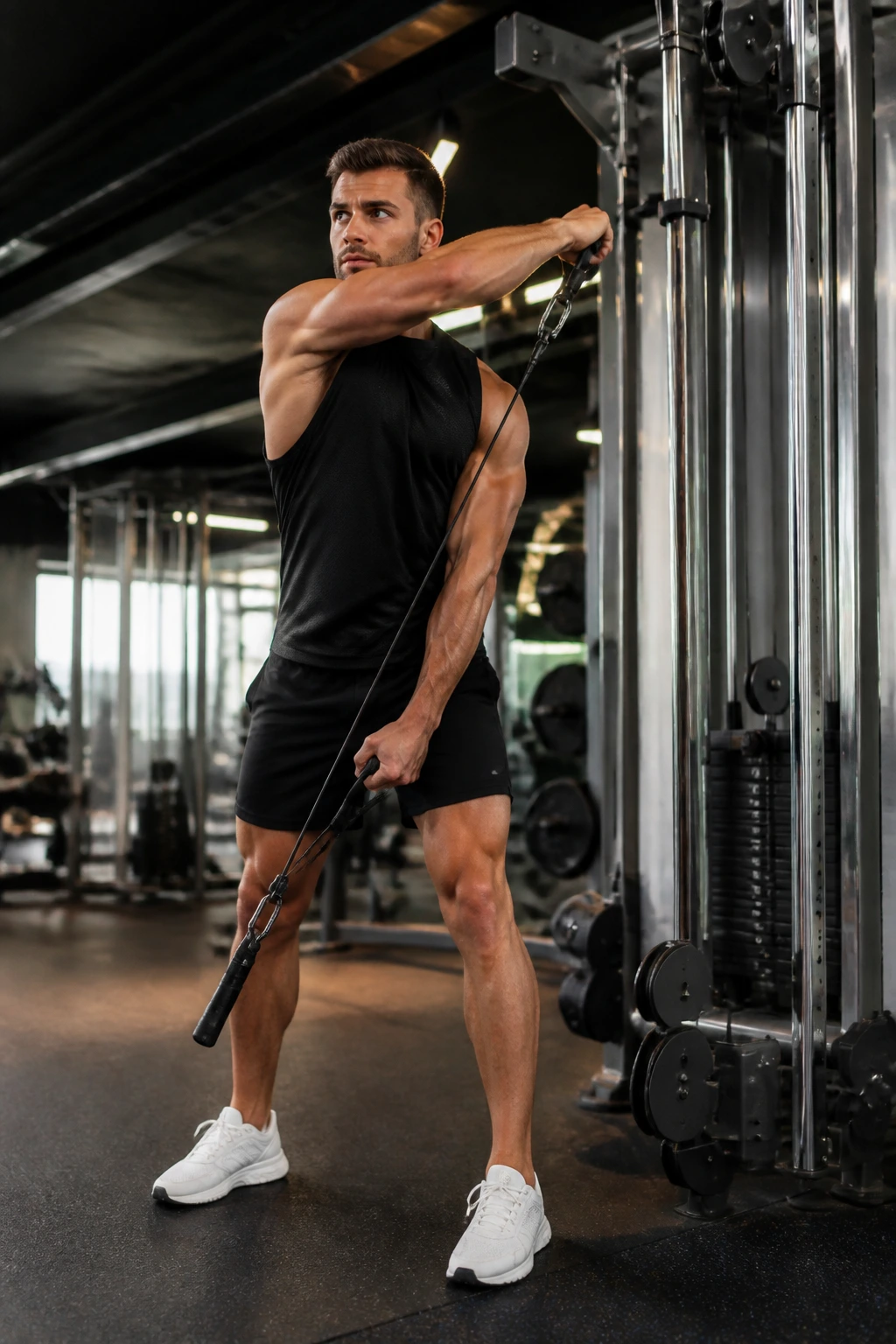
The cable lift is the missing half of the woodchop. If the chop goes high-to-low, the lift goes low-to-high, and that angle matters more than people think.
Set the handle low near one ankle, stand tall, and sweep the cable up across the body toward the opposite shoulder. Keep the arms long and the ribs stacked so the movement comes from the trunk and hips, not from a shrugging shoulder pull. The obliques work hard here, but so does the control that keeps the spine from getting yanked around.
This movement feels especially good when you want rotational work that doesn’t look or feel like a blur. It’s slower than a chop and usually a bit cleaner for people who already press a lot in the gym. I like it for 8 to 12 controlled reps on each side.
If the cable is pulling you forward off balance, widen your stance slightly and lighten the load. A small stance change often fixes the whole thing.
18. Stability Ball Stir-the-Pot
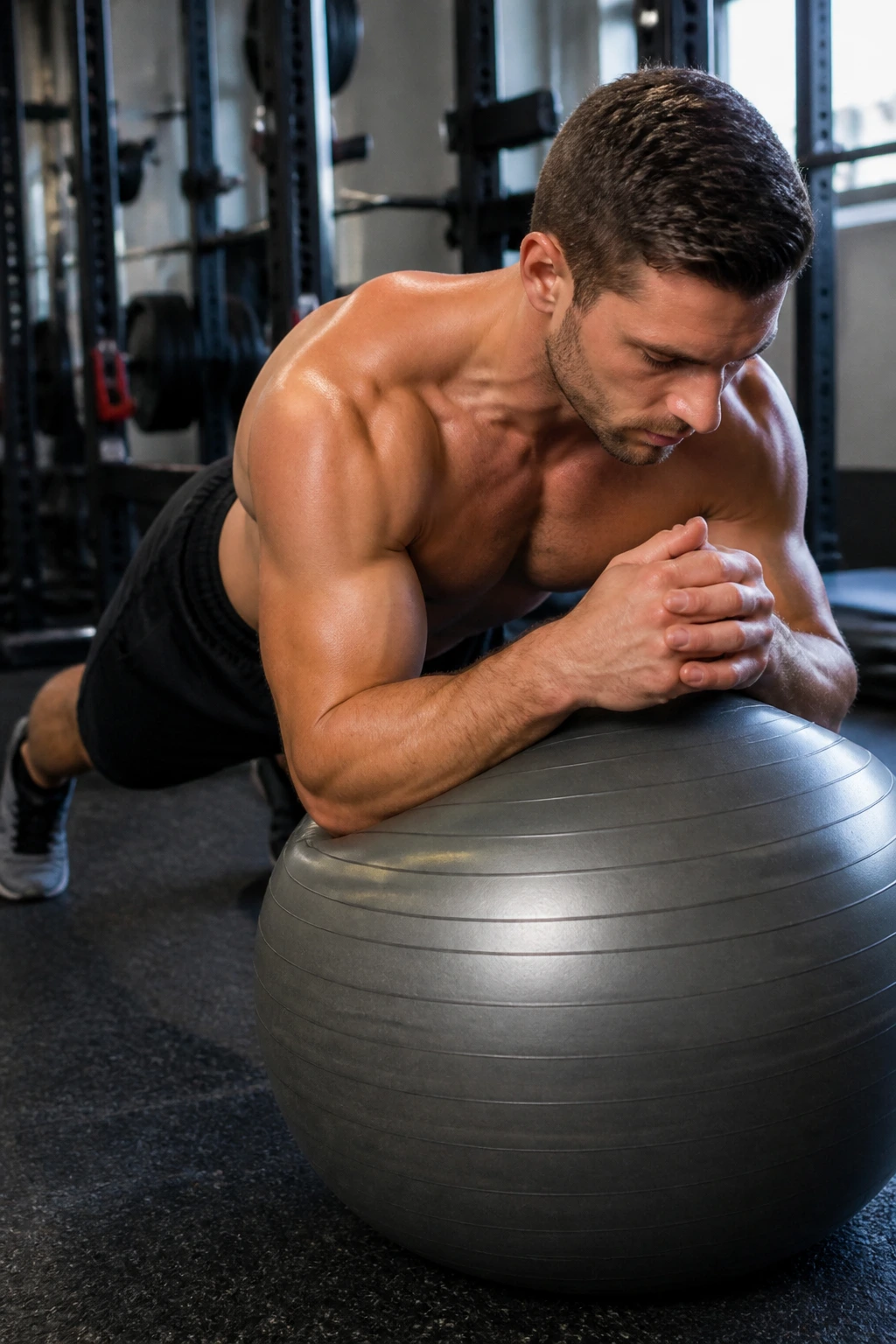
A plank doesn’t move. This one forces the plank to earn its keep.
With forearms on a stability ball, you make small circles or small forward-back motions while the midsection fights to keep the body from collapsing. The ball adds a kind of controlled wobble that lights up the abs, shoulders, and serratus in one shot. Keep the circles tiny at first. There is no prize for dramatic motion.
What Makes It Different
- Anti-extension under instability
- Shoulder support plus trunk control
- Easy to scale by circle size
- Useful for timed sets of 20 to 40 seconds
If your hips sag, the range got too big. If the lower back feels like it is doing the work, stop and reset. The best reps feel smooth for about five seconds and then increasingly hard to own as the clock runs.
This is a sneaky tough finisher for guys who think planks are boring. The ball changes that fast.
19. Hanging Windshield Wiper
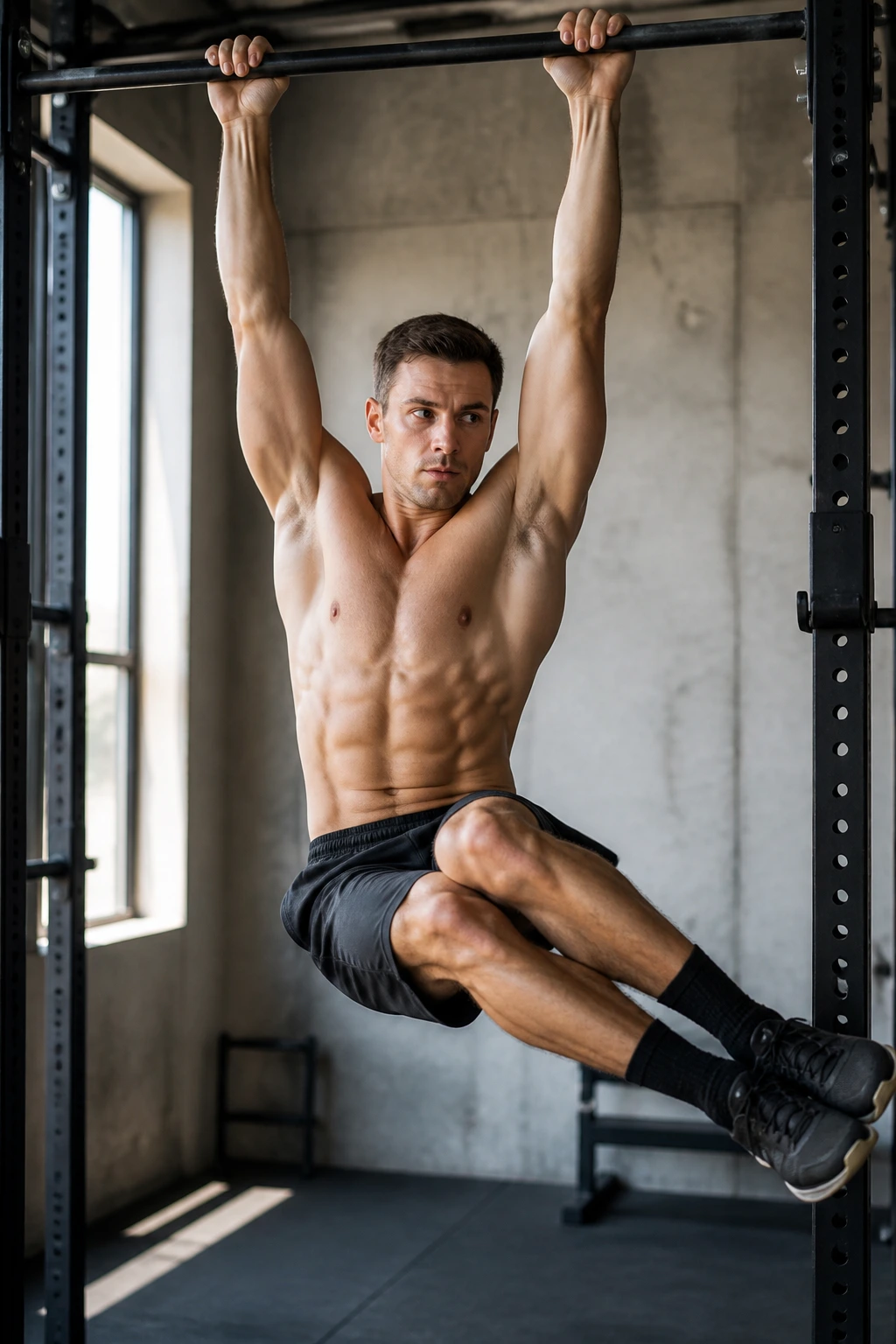
If you can hold a dead hang and control a leg raise, then try the windshield wiper. If you can’t, skip ahead and come back later.
This is a serious oblique movement. Hanging from a pull-up bar, bring the legs up and rotate them side to side in a controlled arc. The challenge is not the swing. The challenge is resisting the swing while moving the legs through space. That makes the lower torso and obliques work together hard, and the grip has to keep up too.
Safety Notes
- Start with bent knees.
- Keep the range small.
- Avoid jerking into each side.
- Stop if the low back arches or pinches.
A lot of guys chase the full straight-leg version too soon and end up using momentum from the shoulders. That turns the drill into chaos. Bent-knee windshield wipers are a far better starting point, and they still hit the right tissue.
Use low reps. Seriously. This is a quality move, not a marathon.
20. Machine Crunch
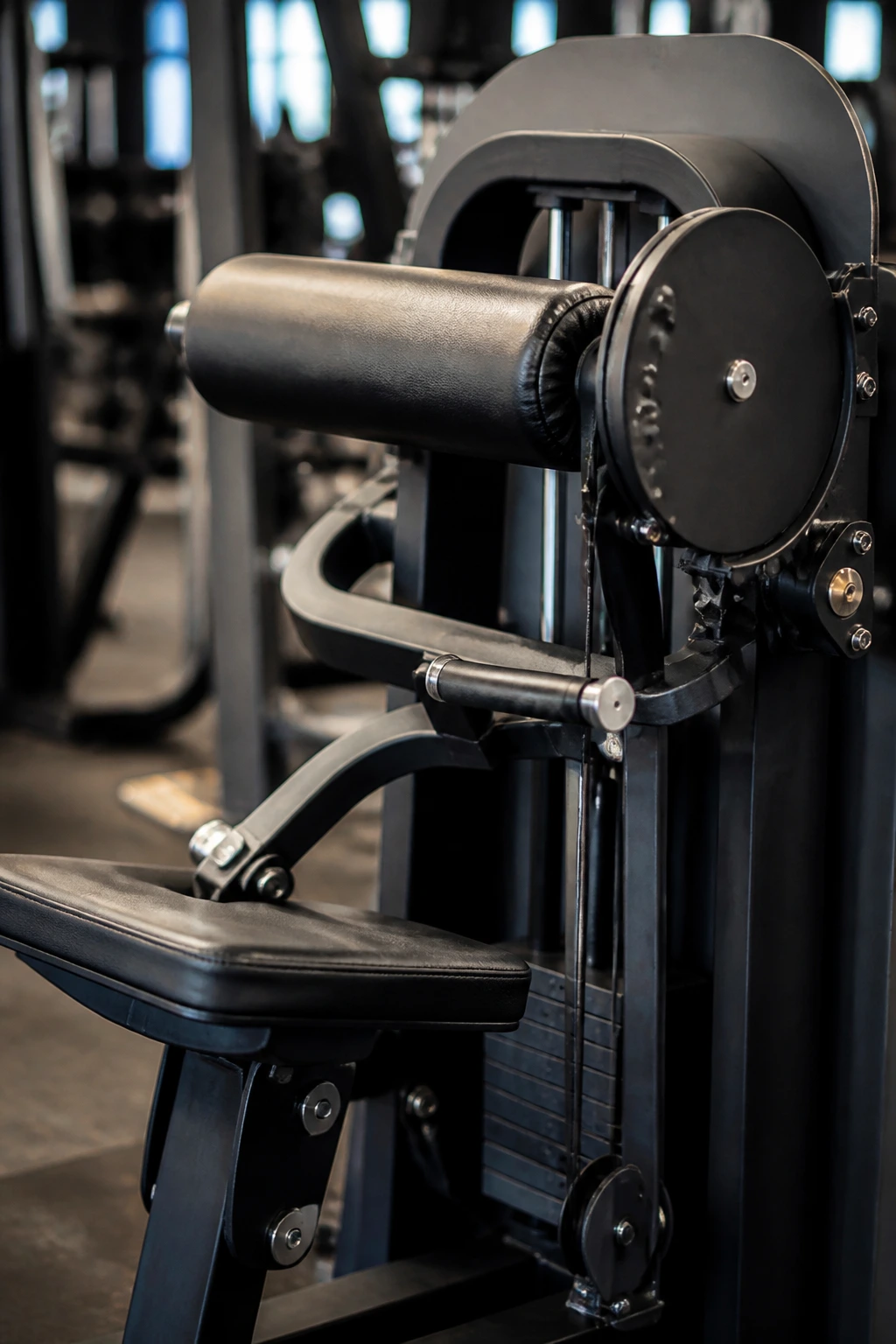
The ab machine is not cheating. It is honest load, and that’s why it deserves a spot.
A good machine crunch lets you lock the hips, set the torso, and add weight in small jumps. That makes progressive overload easy, which matters more than people want to admit. If you want thicker abs or a stronger brace under heavy lifts, the machine gives you repeatable tension without much drama.
Why It Deserves a Spot
The setup is everything. Sit so the pad lands where it should, anchor the pelvis, and curl the ribs down through the movement. If the seat is off or the range is sloppy, the machine turns into a pile of wasted effort. But when it’s dialed in, it’s one of the best ab tools in the gym.
I like this for 3 to 4 sets of 10 to 15 reps with a slow lowering phase. Add weight only when the full range stays clean. That sounds basic because it is basic, and basic often wins.
If you want visible abs and a stronger brace, pair one loaded flexion move with one anti-rotation drill twice a week. The machine crunch is a fine place to keep score.
