



Slider workouts look harmless until your second rep. A towel on a hardwood floor can light up your abs, quads, hamstrings, and glutes in a way a lot of fancier gear never does.
Cheap tools. Serious work.
That’s the charm here. A pair of furniture sliders, microfiber cloths, or even paper plates on a smooth floor turns ordinary bodyweight moves into exercises that demand control from your core and legs at the same time. The slide removes the easy part of the rep — the part where you can coast — and leaves you with the bit that matters: tension, balance, and a slow, honest return.
They also fit home training well. No rack. No dumbbells. No bouncing around. Just a floor, a little room, and the willingness to move carefully enough that the muscles have to do their job. If the surface is too sticky, the rep gets ugly fast. If it’s too slick, you fly around like you’re on roller skates. The sweet spot sits in the middle.
Pick three or four of the moves below, string them into a circuit, and you’ll have a lower-body-and-core session that feels much bigger than the equipment suggests.
1. Slider Mountain Climbers for a Harder Plank
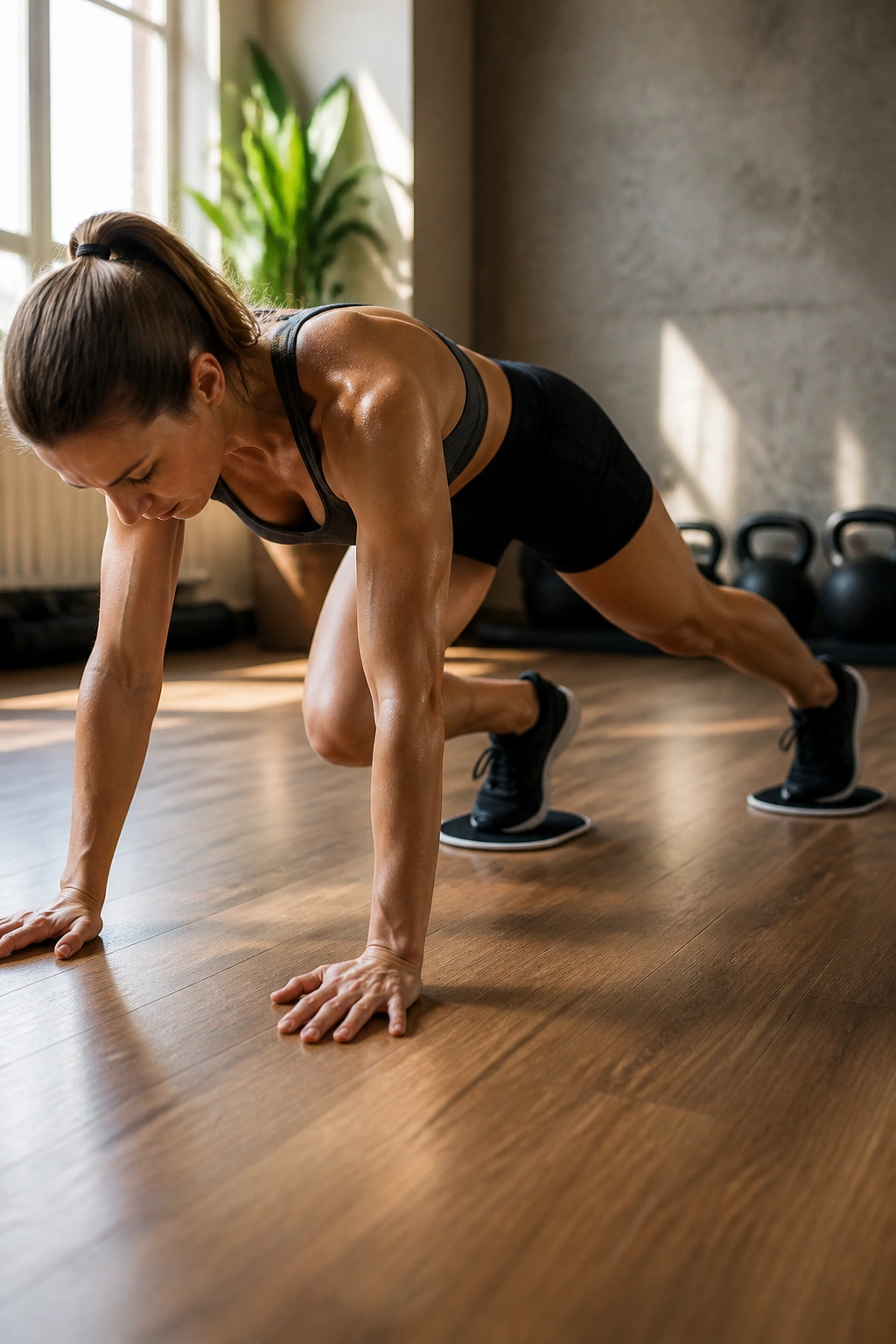
Slider mountain climbers look like a cardio move, and then your abs start shaking. The moving foot makes your plank less about surviving time and more about controlling every inch of hip motion, which is why this version hits the deep core and hip flexors so well.
How to do it
Start in a high plank with both feet on sliders. Drive one knee toward your chest, then slide it back to the starting point before switching sides. Keep your shoulders stacked over your wrists and your hips level — the goal is a quiet torso, not fast feet.
Quick facts that matter
- Dose: 20 to 40 seconds, or 8 to 12 controlled reps per side
- Best cue: press the floor away and keep your ribs pulled in
- Common mistake: letting the hips bounce up and down
- Easy version: move one leg at a time with a short range
- Harder version: pause for one beat at full knee drive
Tip: if your low back starts to arch, slow down before you chase speed. That tiny reset saves the rep.
2. Reverse Slider Lunges for Quads, Glutes, and Balance
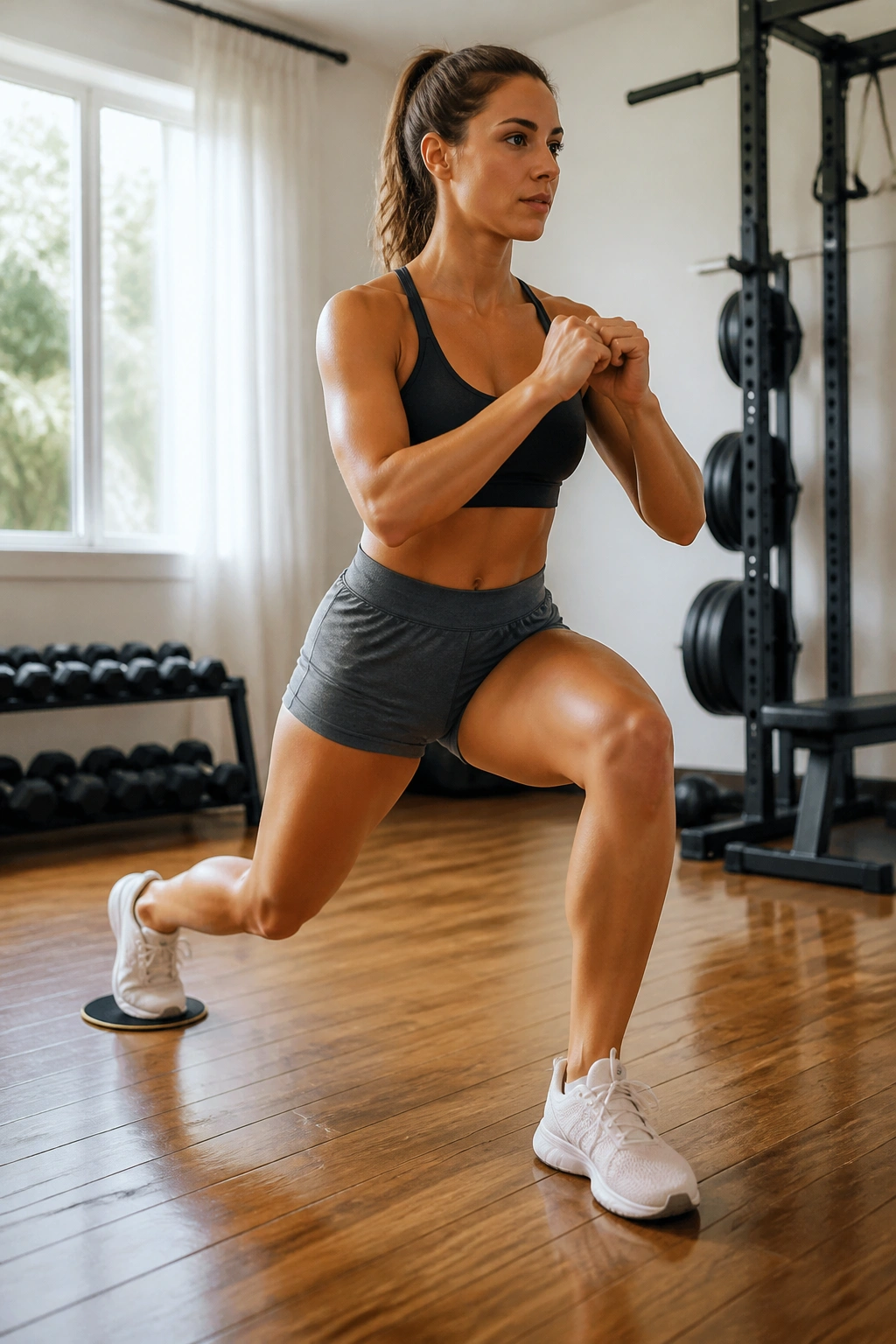
Reverse slider lunges are one of the cleanest ways to load a leg without dumbbells. The front leg does the work, the sliding leg stays under control, and the whole move forces you to stay tall instead of collapsing into the bottom position.
Stand with one foot on a slider and the other planted firmly. Slide the back foot straight behind you, lower into a lunge, then drive through the front heel to return. The slide makes the descent smoother, but it also asks for more control from the front quad and glute than a normal reverse lunge does.
Use a slow 3-second lower on this one. That matters. A rushed lunge turns into a knee bend with no tension; a slow lunge gives you time to feel the front glute load, the thigh stay honest, and the torso stay upright.
Try 3 sets of 6 to 10 reps per side. If you want more burn, keep the rear foot light and travel a little farther back. If your knee caves inward, shorten the range and think about pushing the knee over the middle toes.
3. Sliding Hamstring Curls That Teach Your Hips to Lift
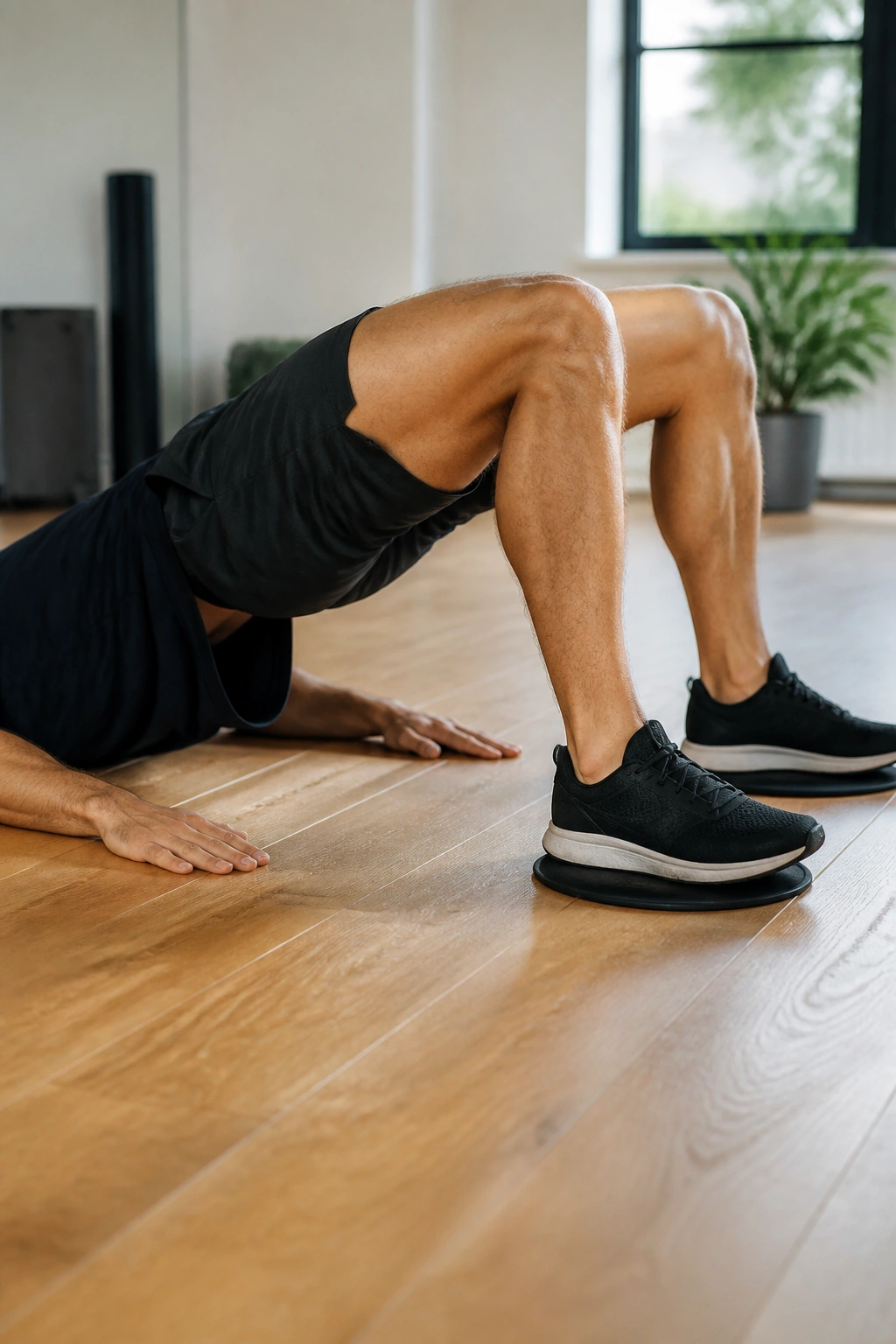
Why do slider hamstring curls feel so nasty? Because they train the hamstrings in two jobs at once: knee flexion and hip extension. That’s a lot for one muscle group, and the floor gives you no place to hide.
Lie on your back with your heels on the sliders, knees bent, and hips lifted into a bridge. Slide your heels away until your legs are almost straight, then pull them back in without dropping the hips. The hard part isn’t the outward slide. It’s keeping the pelvis from sagging when the legs get long.
How to use it
Start with 6 to 8 slow reps. Rest 45 to 60 seconds. If that feels easy, add a 2-second pause in the fully extended position before you curl back in. That pause lights up the back of the thighs fast.
A small setup change helps a lot: keep your arms flat on the floor and press your hands down. That gives the ribs and pelvis a better anchor.
4. Slider Pike Plank for Strong Abs and Tight Hip Flexors
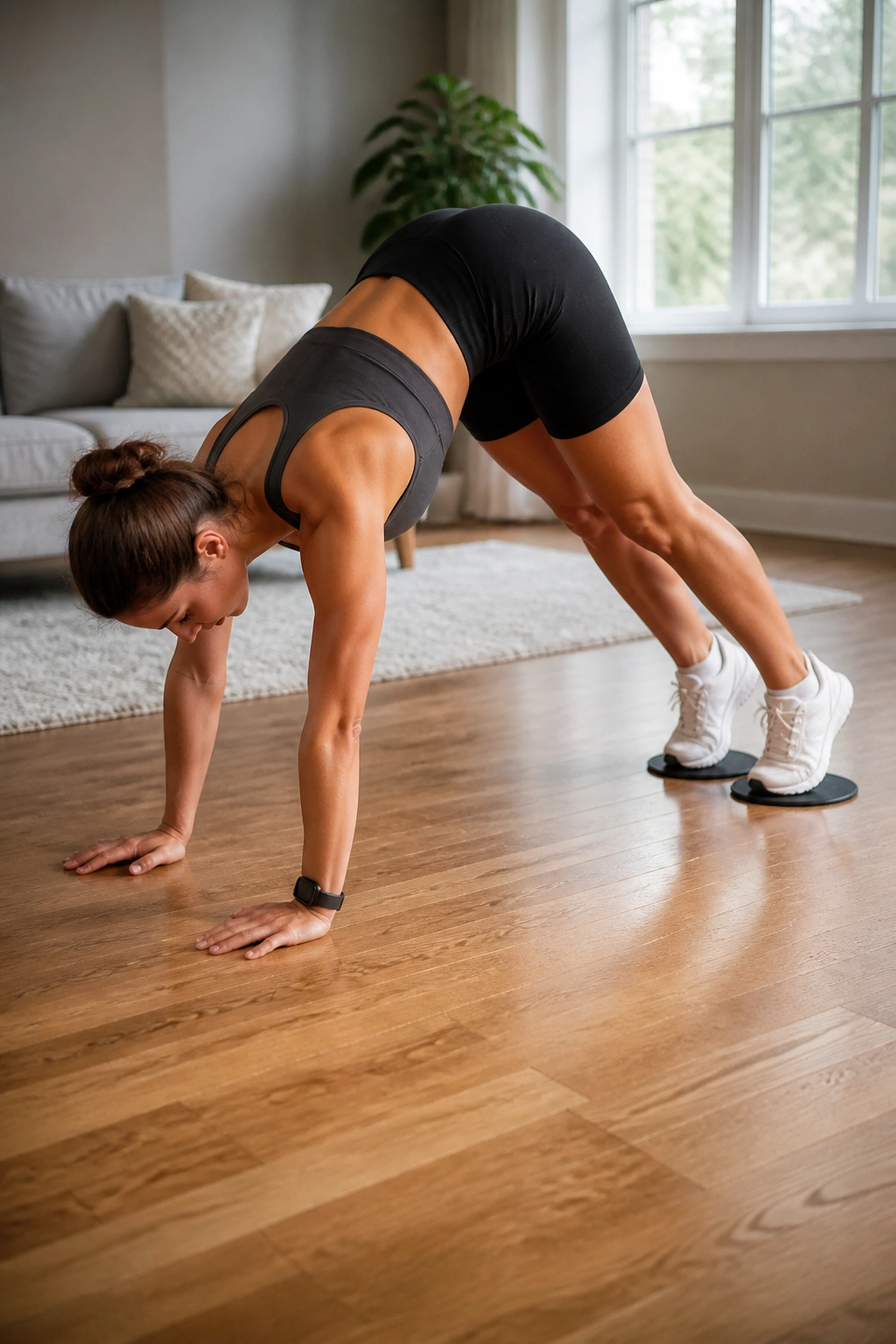
If a regular plank feels like a warm-up, the slider pike plank will change your mind in about five seconds. The body has to fold at the hips while the shoulders stay stable, and that combination makes the abs work harder than they do in a static hold.
Set up in a high plank with your feet on sliders. Keep your legs mostly straight, then slide your feet forward so your hips lift into a pike shape. Think of making a small upside-down V, not a sloppy fold. The move should feel crisp, not wild.
- Keep your elbows straight but not locked
- Exhale as the hips rise
- Stop the rep when your shoulders begin to drift past your wrists
- Do 5 to 8 slow reps, or 15 to 25 seconds
- Use a shorter range if your hamstrings are tight
The pike looks like a core exercise, and it is, but the hip flexors work hard too. That’s useful for people who sit a lot and feel their front hips get sleepy during regular plank work.
5. Lateral Slider Lunges for Inner Thighs and Side-to-Side Control
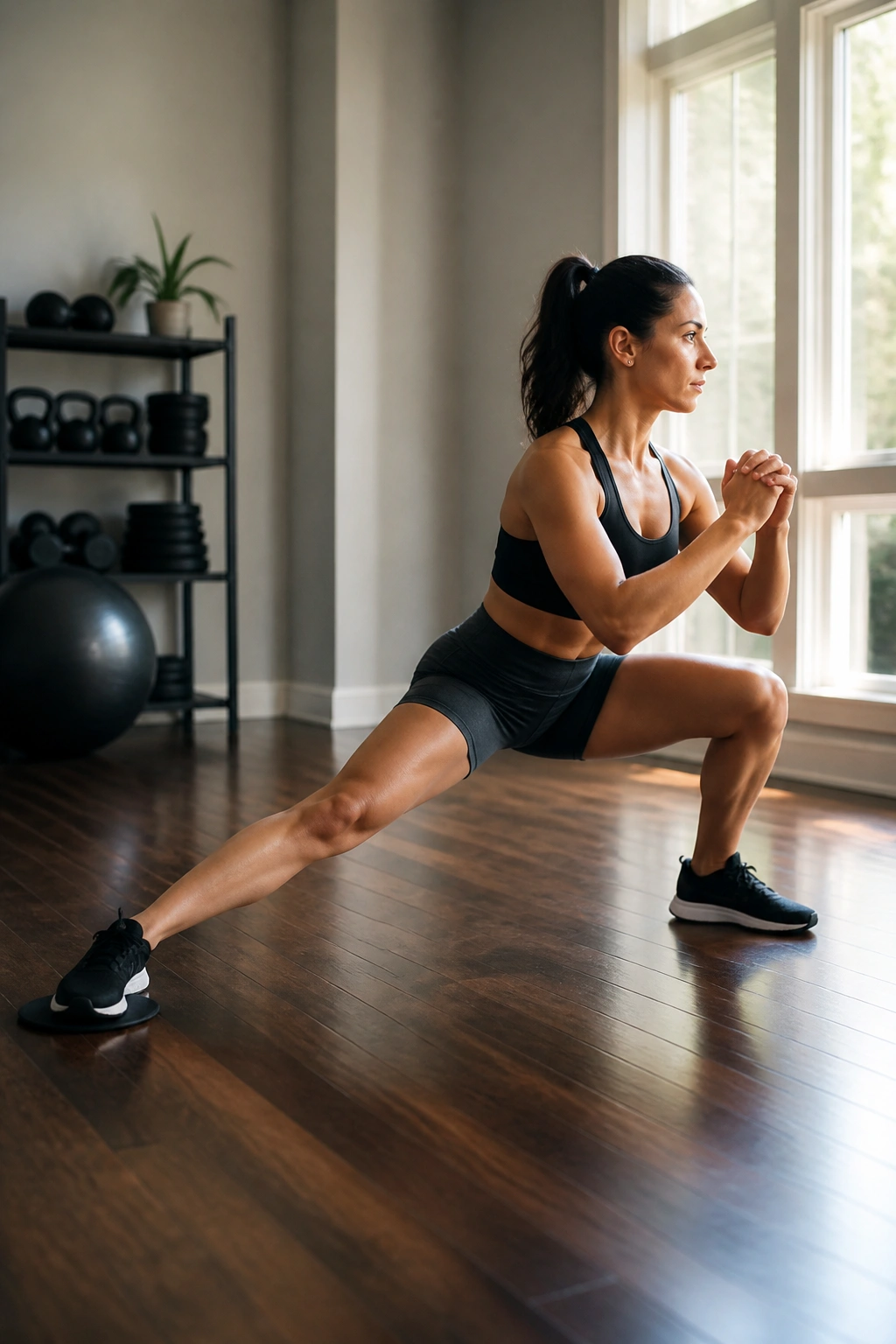
Side-to-side slides expose weak links fast. A lateral slider lunge asks the adductors, glute med, and quads to work together, and it punishes sloppy knee tracking in a way a straight-line lunge never will.
Stand tall with one foot on a slider. Slide that leg out to the side, keep the standing leg bent, and sit your hips back as the moving leg lengthens. The planted foot should feel like an anchor. The sliding leg should feel long, heavy, and controlled.
Small movement. Big consequence.
You do not need a giant range here. In fact, a shorter slide often works better because it keeps tension where you want it. Aim for 8 to 12 slow reps per side, and think about pushing the floor away as you return to center. If your knee dives inward, cut the range by half and rebuild.
These are especially useful when your inner thighs feel weak in split-squat work. The side load changes the game.
6. Body Saw Planks That Make Your Core Fight Back
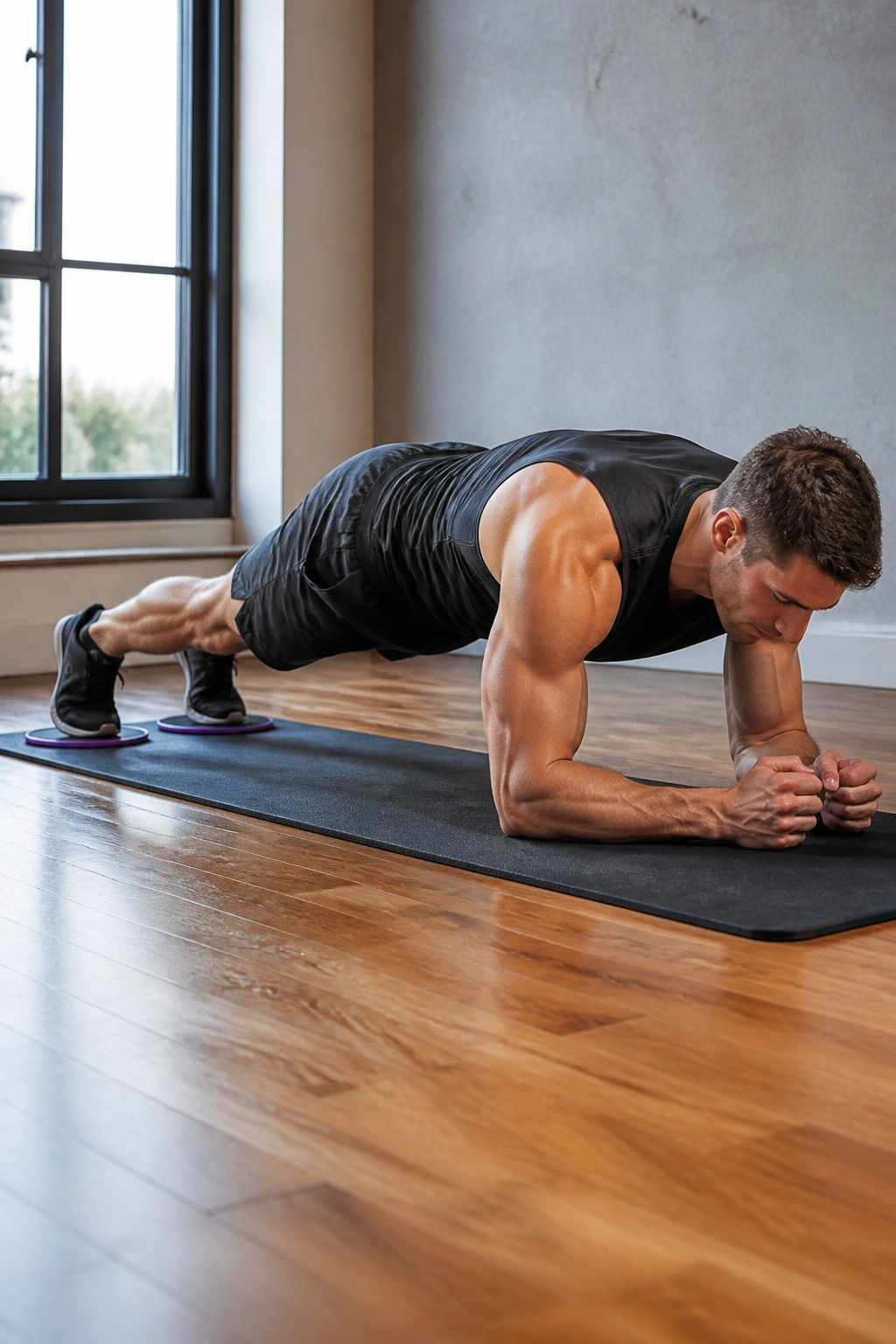
Unlike mountain climbers, the body saw keeps your elbows planted and shifts your whole body backward and forward. That sounds subtle. It isn’t. The abs have to stop the rib cage from flaring while the shoulders and serratus keep everything tight.
Get into a forearm plank with both feet on sliders. Push your body a few inches back by sliding the feet away from your elbows, then pull yourself forward to the start. The motion should be small enough that your lower back stays flat. If the hips sag, the rep has gone too far.
Why it feels harder than it looks
The body saw is an anti-extension drill. That means your core is fighting the urge to arch. You feel that fight most in the lower abs, but the whole trunk gets involved. It’s one of the best choices for people who want ab work without a ton of spinal bending.
Use 8 to 12 slow seesaw reps, or 20 to 30 seconds of work. Keep the movement smooth. Jerky reps turn the drill into a shoulder shuffle.
7. Curtsy Slider Lunges for Glute Med Work
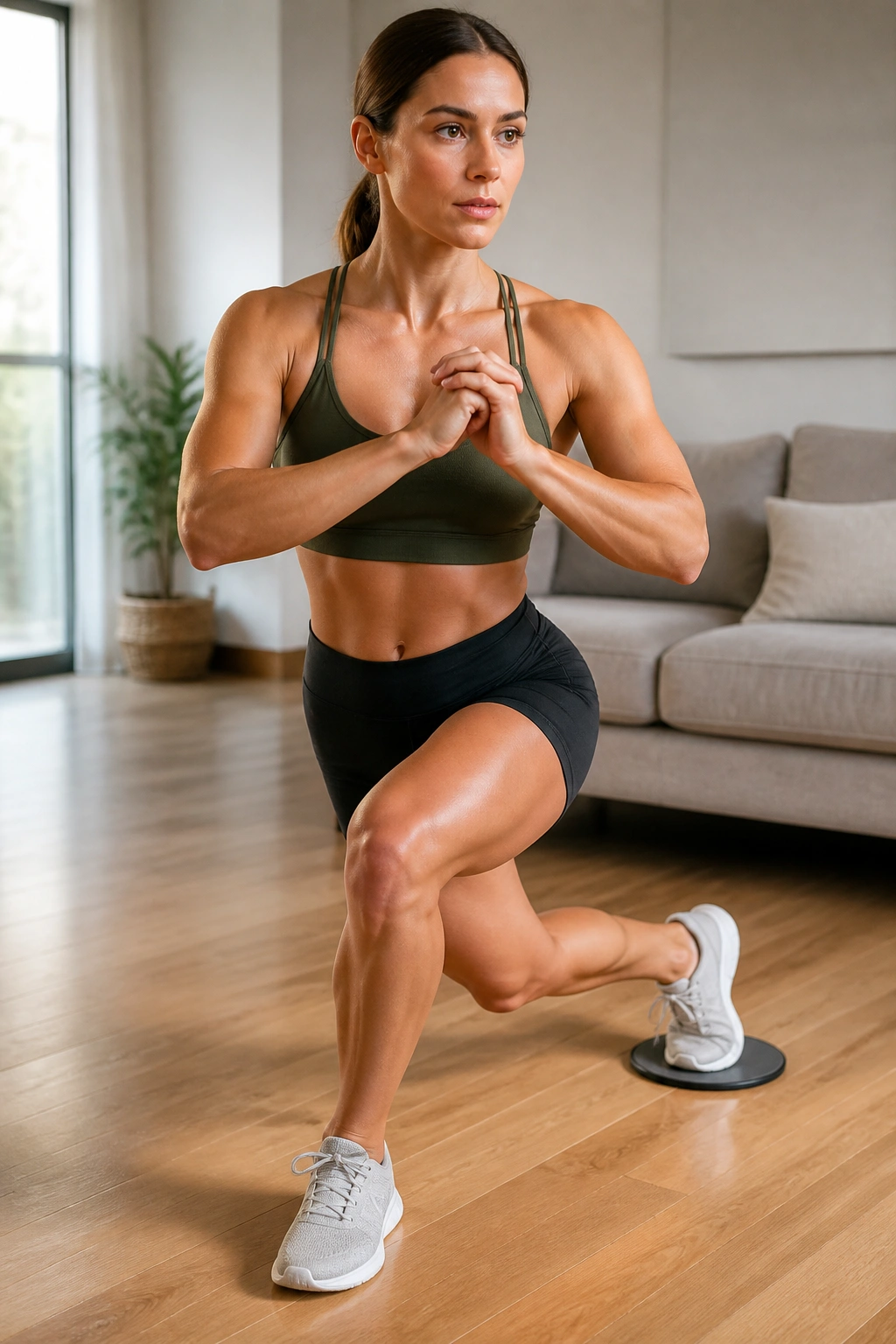
Curtsy slides are sneaky. They look graceful for half a second, and then the standing leg starts to burn from the outer hip down into the thigh. The cross-behind angle asks more of the glute med and adductors than a straight lunge does, and that matters if you want legs that feel stable, not just tired.
The line your knee should follow
Place one foot on a slider and step that leg back and across behind your planted foot. Lower with control, keep your chest tall, and drive back to center through the front heel. The front knee should track over the middle toes, not cave inward.
A few rep details help:
- Reps: 6 to 10 per side
- Tempo: 2 seconds down, 1 second up
- Range: cross behind only as far as your hips stay square
- Feel: outer hip on the standing side, not the low back
Tip: if your knee feels cranky, shorten the cross-behind step. The exercise should work the hip, not pinch the joint.
8. Sliding Frog Tucks for Hip Flexors and Lower Abs
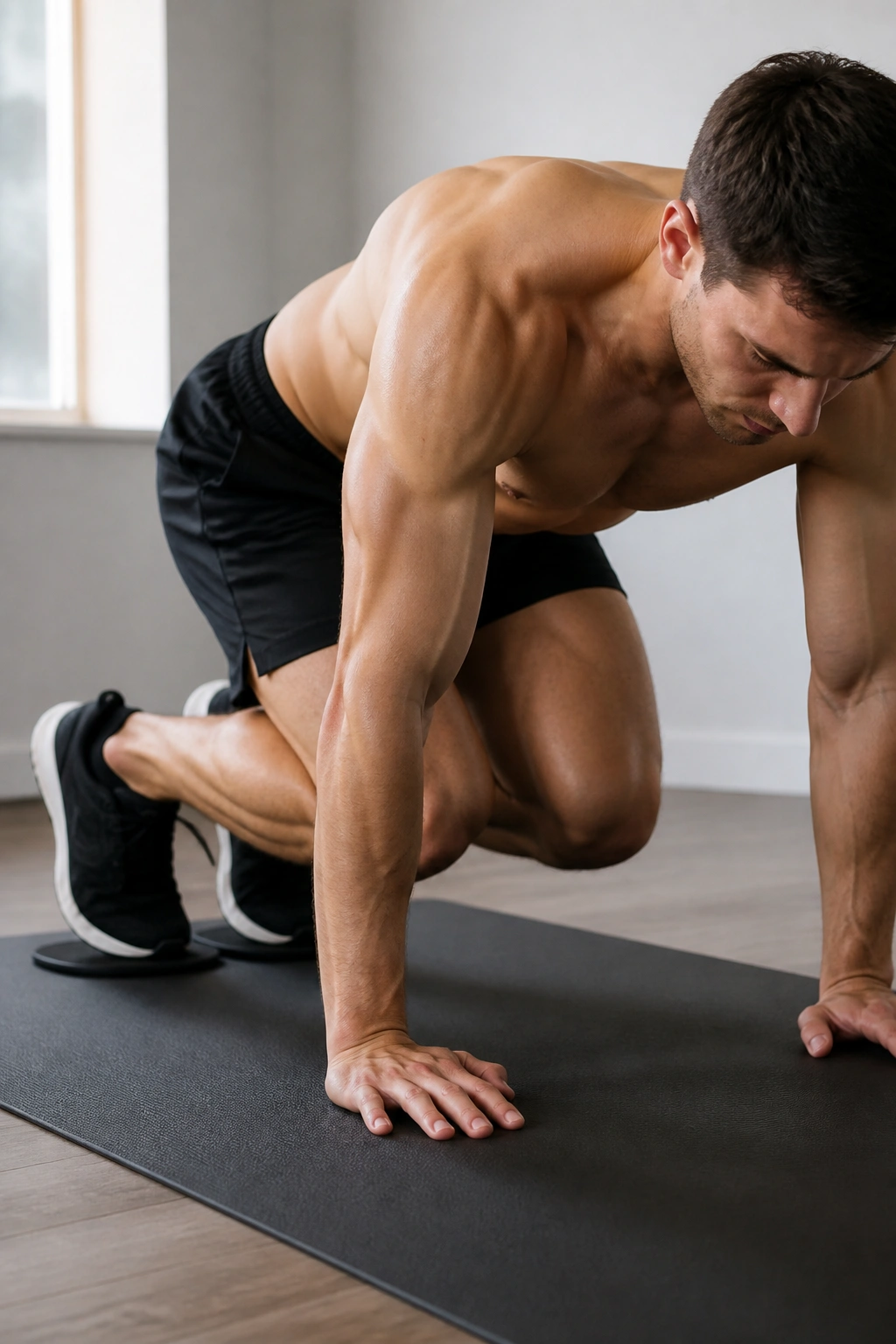
Sliding frog tucks are the move I’d hand to someone who wants lower abs, hip flexors, and inner thighs to wake up fast. The shape looks odd, but the mechanics make sense: you start wide, then pull the legs in under tension, which forces the trunk to stay braced while the hips flex hard.
Lie face down or start in a high plank variation, depending on your version. With the knees turned out slightly and the feet on sliders, draw the knees in toward your chest, then press back out with control. The slide should stay smooth. No snapping.
What makes this one good is the middle range. The legs are not long and relaxed, and they are not fully tucked either. That middle zone is where the abs have to hold the pelvis steady while the hips do their job.
Use 8 to 12 reps. If the shoulders get tired before the core does, take a longer rest and shorten the range a bit. It’s a tougher drill than it looks, and that’s fine. Some of the best core work is plain awkward.
9. Split Squat Pulse Slides for Burn Without Heavy Load
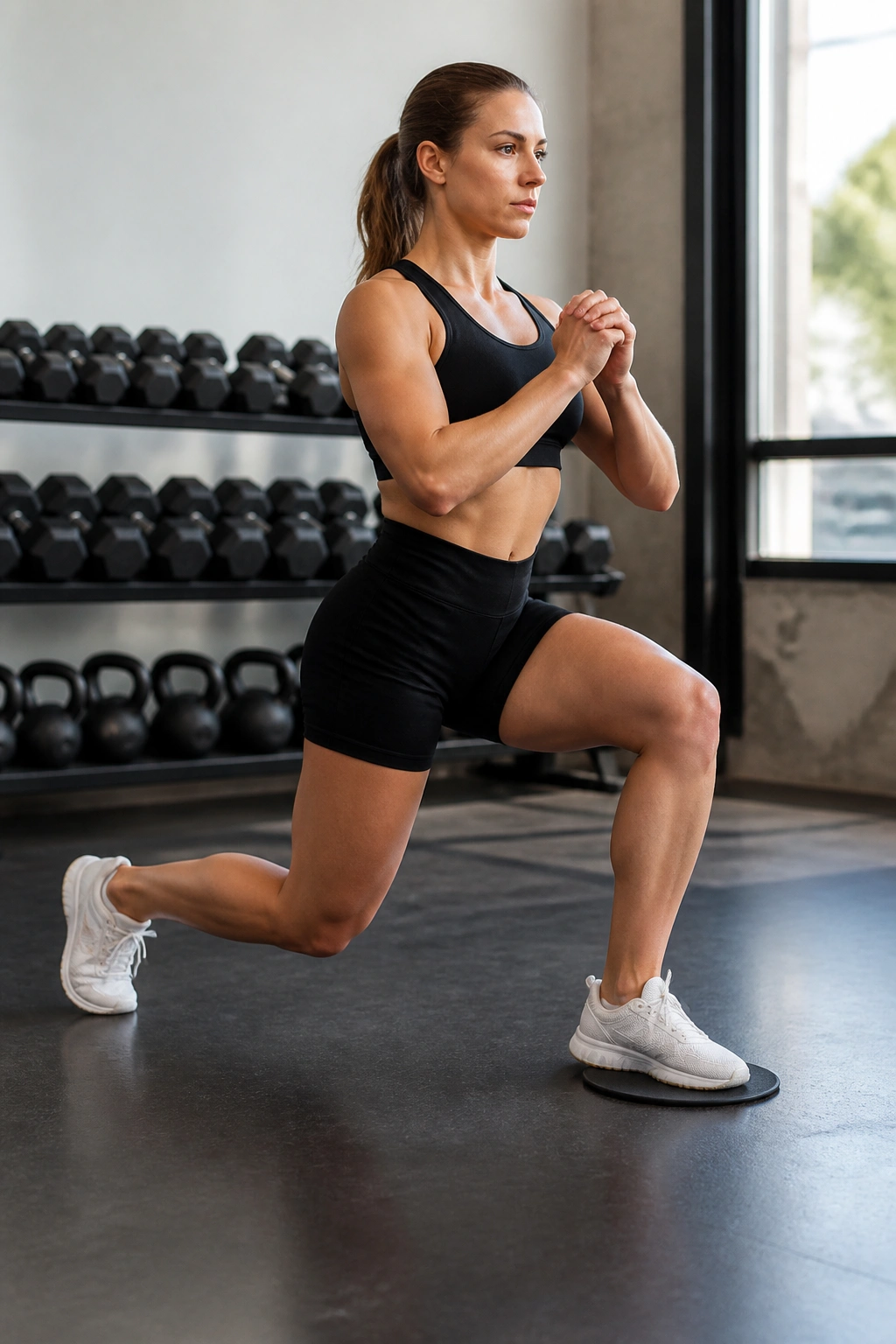
Can a split squat feel heavier when there’s less movement? Absolutely. Tiny slider pulses in the bottom half of a split squat keep the working leg under constant tension, and that steady load is brutal in the best way.
Set one foot on a slider and drop into a split stance. Lower into a split squat, then pulse a few inches up and down without fully standing. The back leg glides a little as you pulse, but the front heel stays glued down and the front thigh does the real work.
How to use it
Do 6 to 8 full split squats, then 6 to 10 small pulses at the bottom. That combo gives you both range and time under tension. Keep your torso upright and your front knee tracking over the toes. If the knee slides forward too far, you’ll lose the glute work and dump everything into the quad.
A one-sentence warning: don’t turn the pulse into a bounce.
The burn should build gradually, not from sloppy speed.
10. Single-Leg Glute Bridge Slides for the Back of the Body
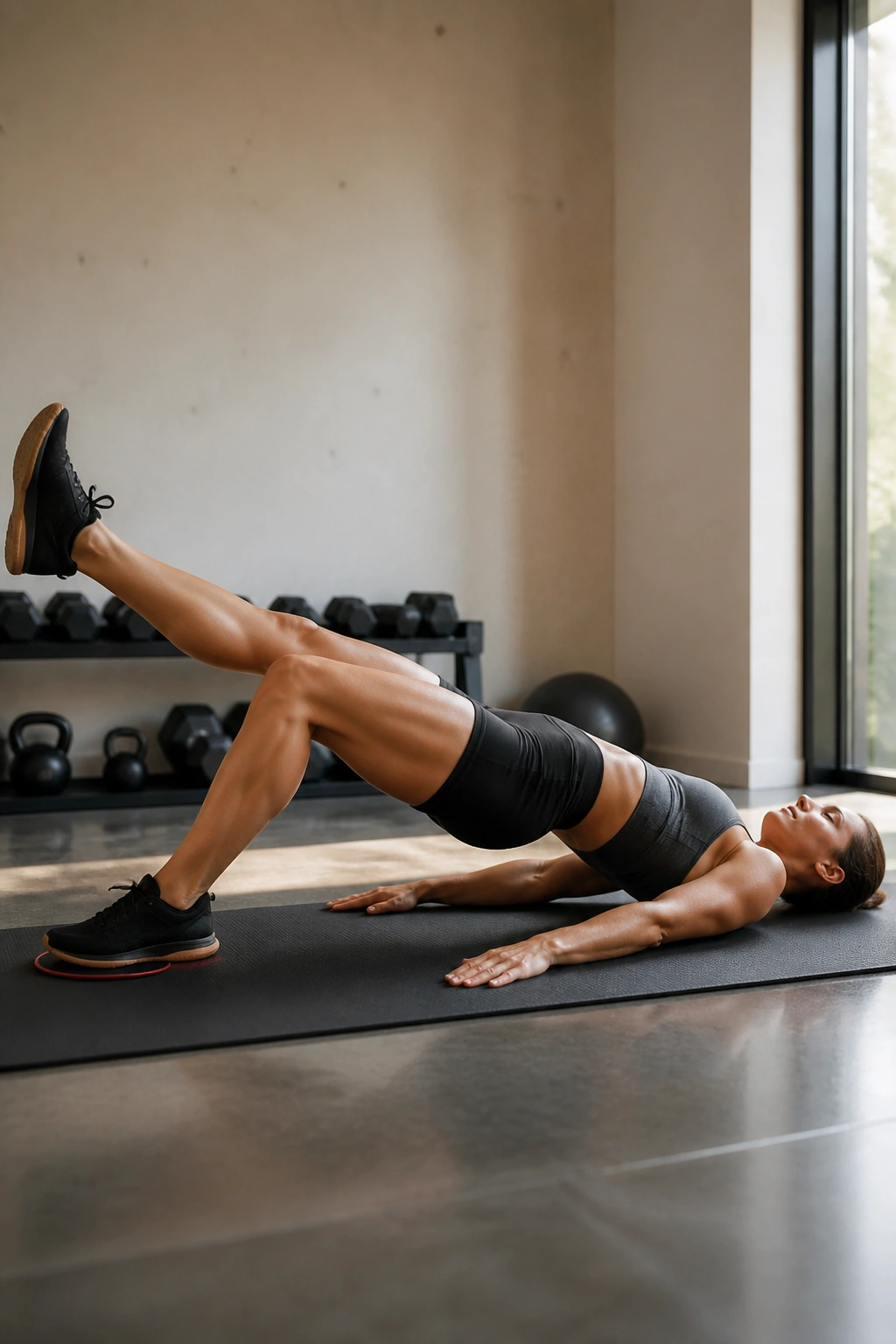
Put one heel on a slider and the floor suddenly becomes a hamstring machine. Single-leg glute bridge slides light up the glutes, the hamstrings, and the small stabilizers around the pelvis because one side has to hold while the other side travels.
Lie on your back, bend one knee, and place the other heel on the slider. Lift into a bridge, then slide the working heel away until the leg is almost straight. Pull it back in before lowering the hips. The bridge should stay high the whole time. If it drops, the hamstrings lose the line of tension.
- Best cue: keep both hip bones level
- Dose: 6 to 8 reps per side
- Harder version: pause for 2 seconds at full extension
- Common mistake: pushing through the toes instead of the heel
- Easy version: keep both feet on the floor for the bridge and slide only one leg partway
The exercise looks small. It isn’t. One good set leaves the back of the leg humming for hours.
11. Slider Bear Crawls for Full-Core Tension
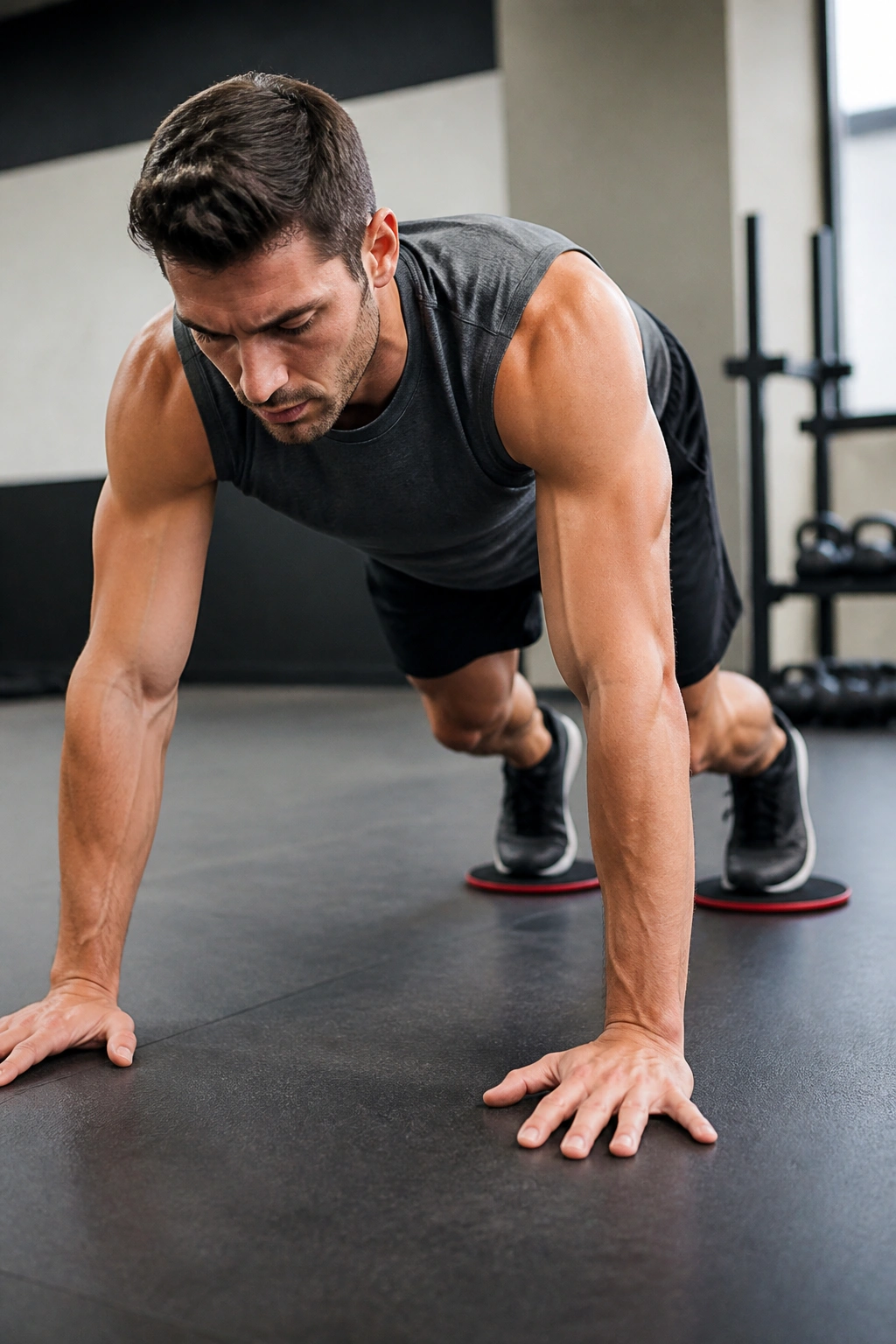
Bear crawls already ask for patience. Add sliders under the feet, and suddenly every step has to be placed with care. The knees stay just off the floor, the shoulders work hard, and the abs have to stop the torso from swinging side to side.
Start on hands and toes with knees hovering about 1 to 2 inches off the floor. Put both feet on sliders. Move the opposite hand and foot forward together, then switch sides. Keep your steps short. Big crawls look dramatic and usually fall apart halfway through.
The best version feels controlled and a little awkward. That awkwardness is useful. It tells you the core is doing its job.
I like this move in short bursts: 10 to 20 steps forward, then the same back. Rest long enough to keep the shape clean. If the hips rise too high, you’re turning it into an easy walk. If the shoulders shake and the lower back sags, cut the pace in half. Slow crawl, honest crawl.
12. Side Plank Knee Tucks on Sliders for Obliques
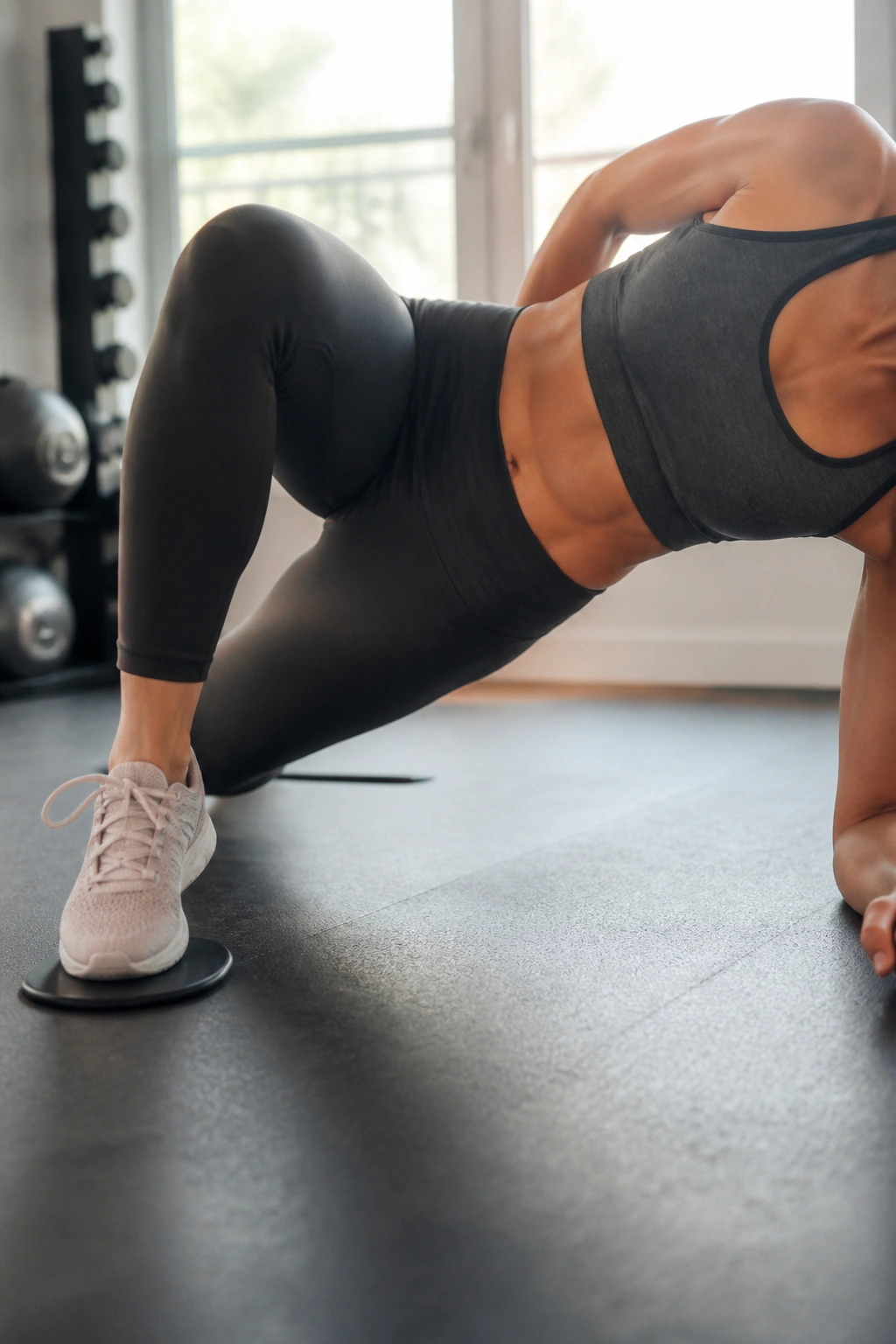
A standard side plank is solid. Add a slider under the moving foot, and the obliques have to work much harder to keep the body from twisting open.
Set up in a forearm side plank with the top foot on a slider. Pull the top knee toward the chest while keeping the hips lifted, then slide the leg back out. The move should feel like your waist is cinching tight from rib to hip. If the hips drop, the rep is over.
What makes it different
The extra movement changes the job of the core. Instead of only holding side tension, the obliques now have to stabilize while the leg moves through space. That makes the drill a better fit for people who want side-core strength with a balance challenge.
This works best for 5 to 8 reps per side. Hold each tuck for a half-second if you want more tension. Keep the neck long and the top shoulder packed down away from the ear. A sloppy shoulder ruins the line fast.
13. Squat Hover Slides for Quads and Conditioning
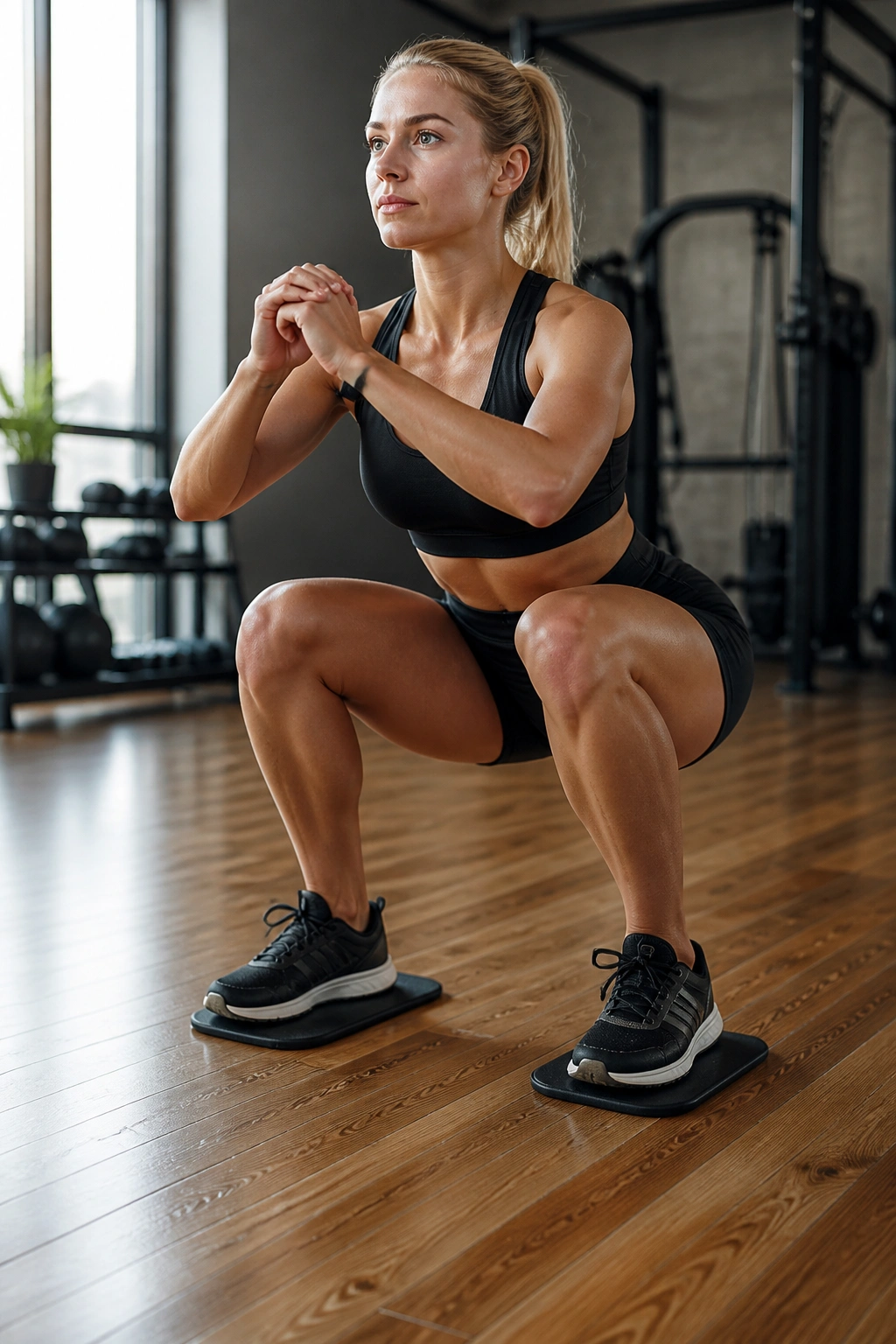
Squat hover slides are the kind of leg move that looks boring in a mirror and feels expensive in the thighs. You hold the squat, then glide the feet out and back just enough to keep the quads under pressure the whole time.
Drop into a squat and hover a few inches above your deepest comfortable position. Put one or both feet on sliders, then slide them out a short distance and pull them back in without standing up. The chest stays lifted. The knees stay soft. The hips do not shoot upward just because the legs complain.
Why the hover matters
The hover removes the rest spot. In a normal squat, you can stand tall between reps. Here, you stay trapped in tension, which is exactly why the quads light up so fast.
- Try 8 to 12 reps
- Keep the slide short, about 4 to 8 inches
- Use a chair or wall for balance if needed
- Stop if your heels start to pop up
- Breathe out on the return
The move is simple. The burn is not.
14. Skater Slides for Lateral Power and Leg Drive
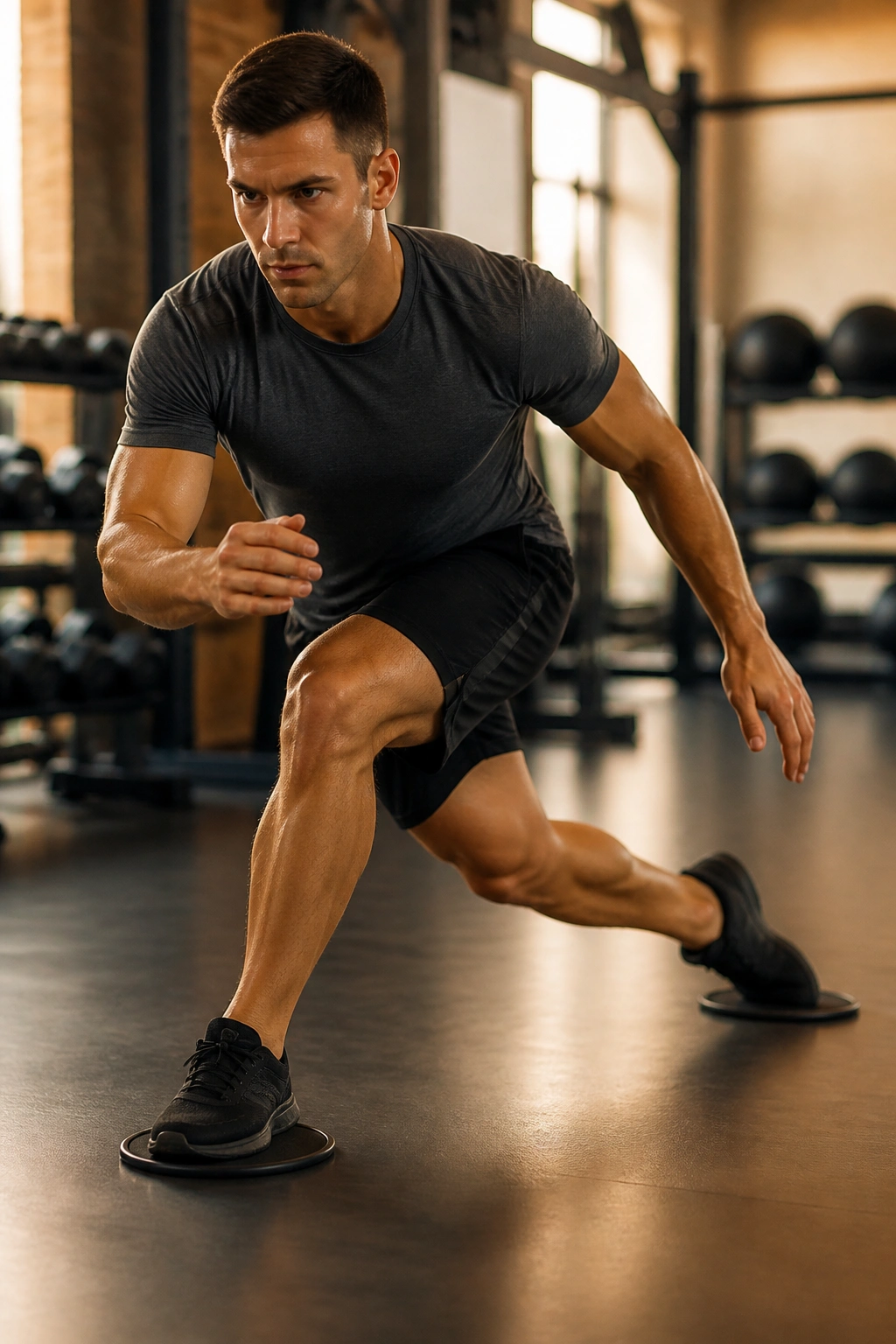
Skater slides are one of the best bodyweight moves for side-to-side strength. Unlike straight-line lunges, they ask one leg to brake while the other leg reaches away, which is why the outer hips and quads light up so fast.
Start standing with one foot on a slider. Slide that leg back and diagonally behind you while the other leg bends and supports your weight. Then drive back to center. The motion should feel athletic, not sloppy. Think of a controlled hockey stop, not a huge leap.
The practical payoff is balance. The standing leg learns to absorb force, the glute on that side gets stronger, and the ankle has to stay honest. That matters for any plan that includes running, cutting, or just walking down stairs without grumbling.
Try 10 to 16 total reps. Stay low enough that you feel the legs load, but not so low that your torso folds in half. If you want more challenge, add a 1-second hold at the farthest point of the slide. That pause is rude. It works.
15. Slider Hamstring Walkouts for Slow, Honest Strength
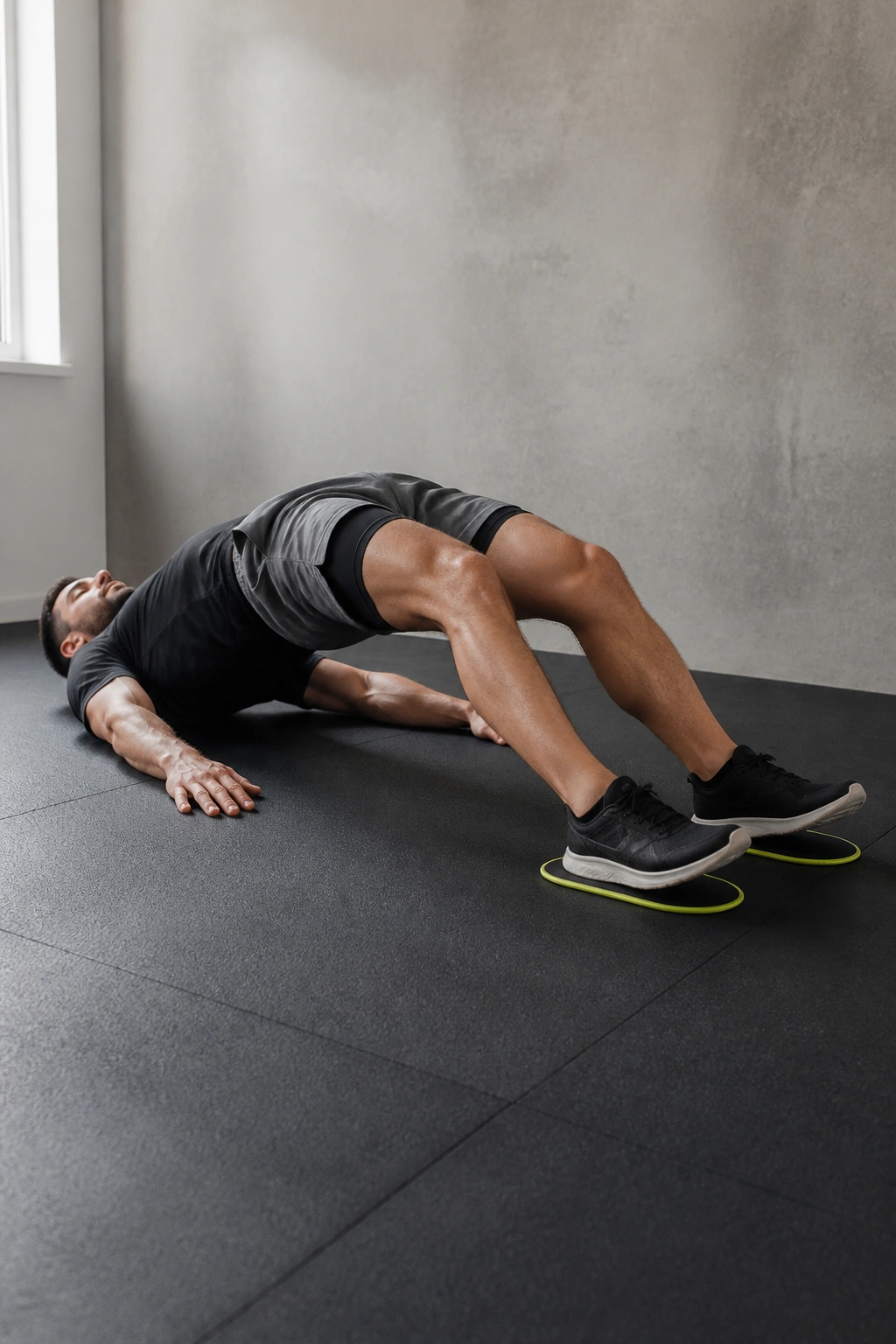
Why do hamstring walkouts sting so much? Because the legs stay under tension the entire time while the hips have to hold a bridge against a long, sliding lever. There’s no cheating that rep. None.
Lie on your back with both heels on sliders and lift into a glute bridge. Walk the heels out one small step at a time until the legs are nearly straight, then walk them back in. Keep the hips high as long as you can. If the bridge collapses, the hamstrings lose the fight.
How to use it
Start with 4 to 6 walkouts. That is usually enough. The eccentric lowering gets spicy fast, and quality matters more than volume here. Keep the ribs down and press through the heels, not the toes. If the floor is too slippery, shorten the steps and slow the tempo.
This is a great finisher after squats or lunges because it targets the back of the legs without any impact. It also teaches patience, which is underrated in leg training. The rep only works if you keep going slowly when the hips want to quit.
16. Cross-Body Mountain Climbers for Obliques and Pace
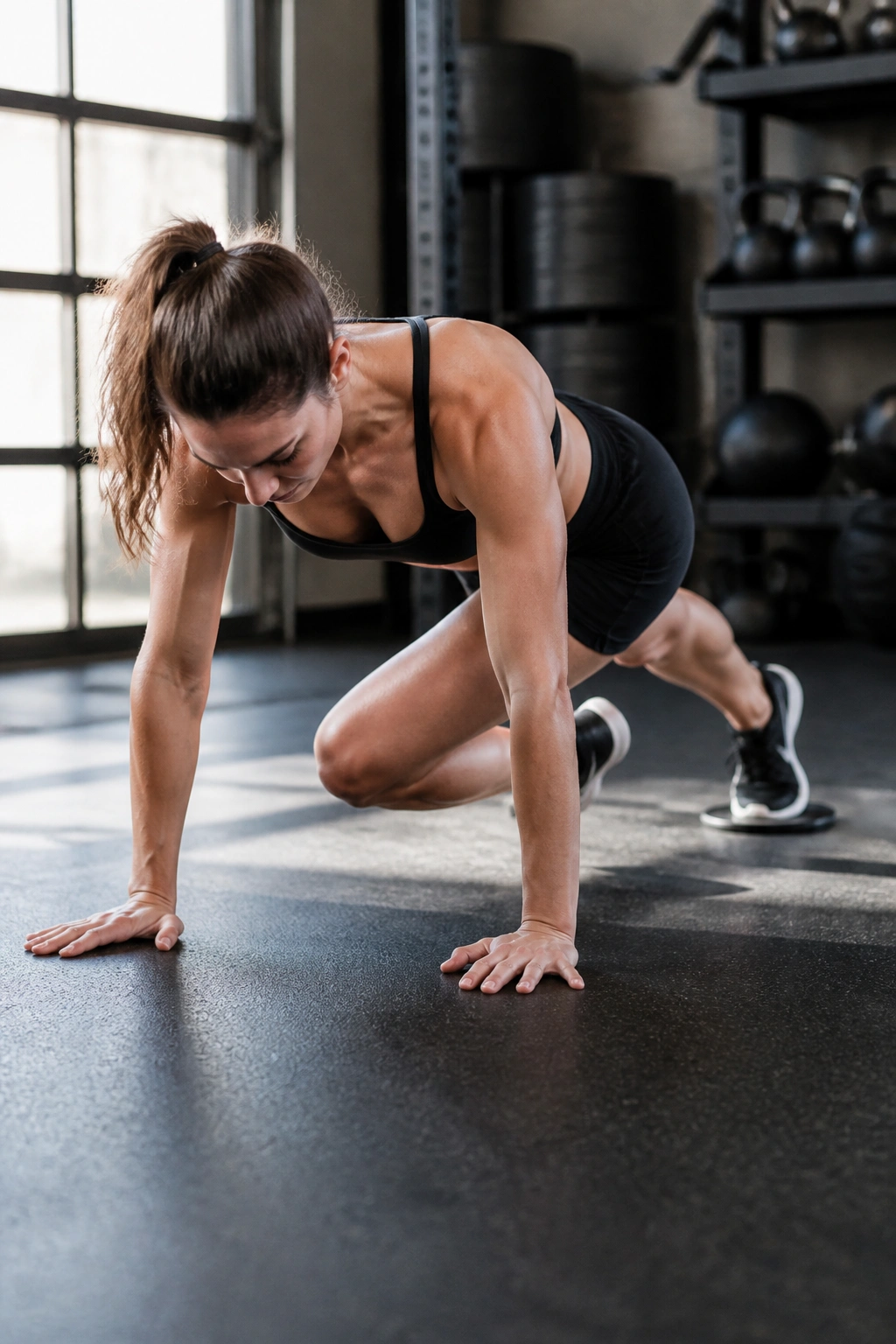
A cross-body mountain climber is what happens when the core has to fight rotation, not just flexion. The knee drives toward the opposite elbow, the torso resists twisting open, and the legs have to keep moving without turning the plank into a mess.
Set up in a high plank with feet on sliders. Drive one knee across toward the opposite elbow, then slide it back and switch sides. Keep your pelvis square to the floor. If the hips spin wildly, you’ve lost the main point of the exercise.
The best rep has a little bite at the end range. You should feel the oblique on the working side tighten as the knee crosses the body. That’s the signal that the trunk is doing real work and not just going through the motion.
Use 20 to 30 seconds or 8 to 10 reps per side. This one also works well in short intervals, especially if you want a heart-rate bump without jumping. Smooth beats fast.
17. Reverse Plank Heel Slides for Posterior Chain Control
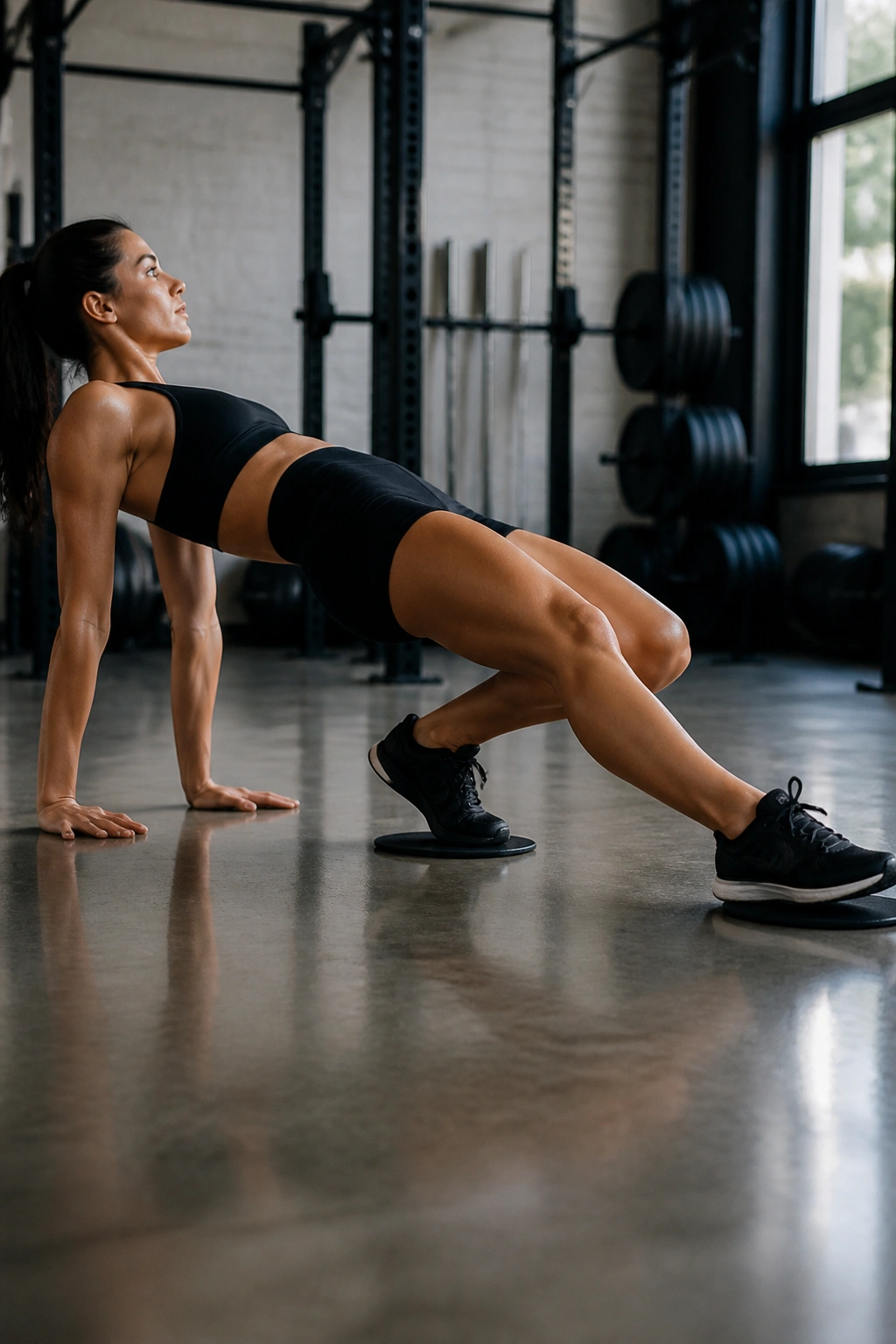
Reverse planks are underused. Add heel slides, and they become a strange little test of hamstrings, glutes, shoulders, and the upper back all at once.
Sit with your hands behind you, fingers pointing either forward or slightly out, then lift into a reverse plank. Put the heels on sliders and slide one foot out a few inches while keeping the hips lifted. Bring it back, switch sides, and keep the chest open.
The position asks a lot from the back of the body. The glutes keep the hips from sagging, the hamstrings steady the legs, and the shoulders hold the chest up. If the hips drop on the slide, you’ll feel the strain leak into the lower back fast.
Best use
Do 6 to 10 slides per side, or 20 seconds of work. Keep the range modest. This is not the move for chasing a giant leg extension. It works best when the motion is small and deliberate.
I like it as a cooldown-style strength drill because it feels different from the rest of the list. Strange, sure. Useful, also yes.
18. Slider Jackknifes for a Brutal Core Finish
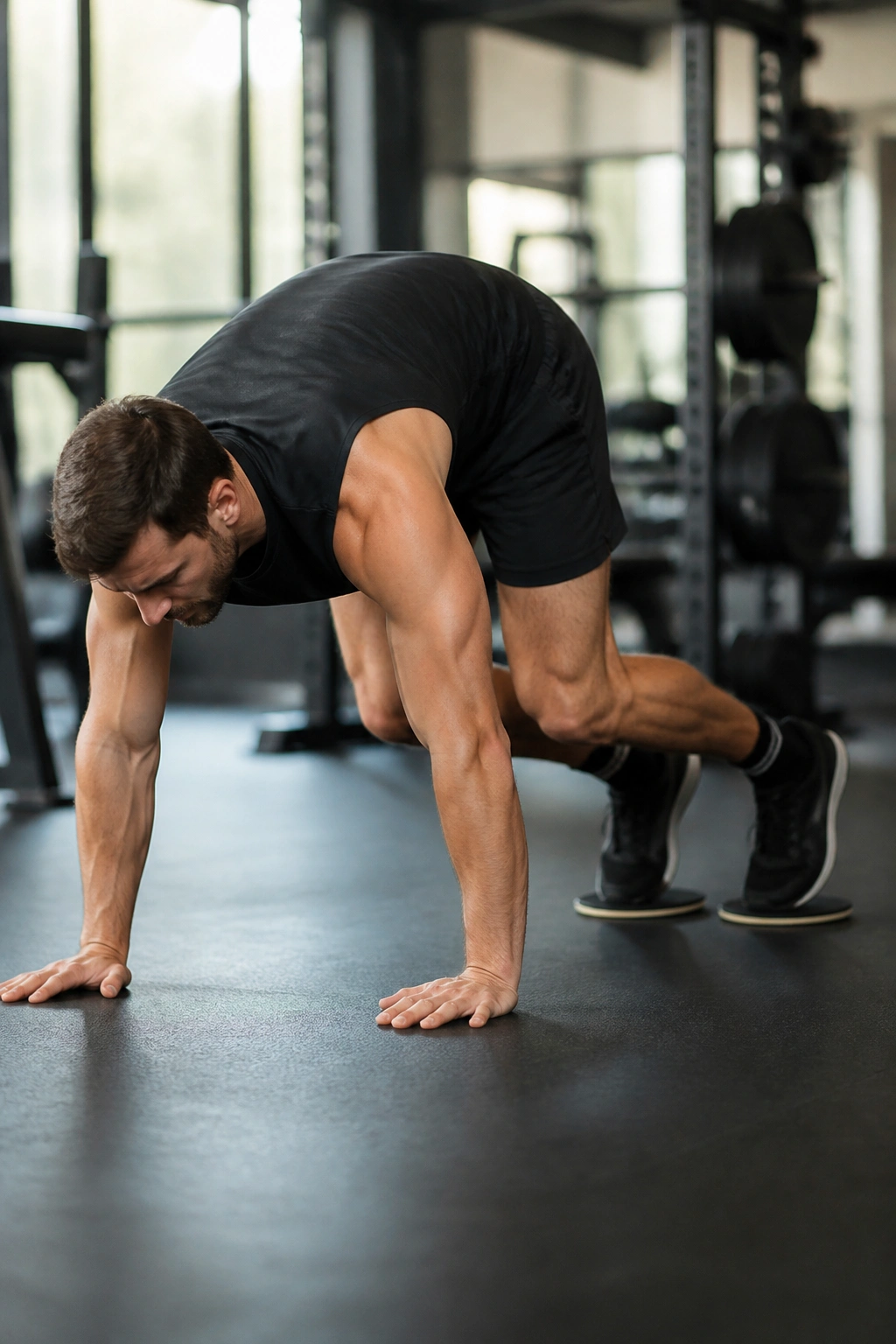
Slider jackknifes hit harder than most crunch variations because they force the abs to manage both the fold and the return. The legs stay long, the torso stays braced, and the whole midsection has to pull together against the slide.
Start in a high plank with both feet on sliders. Pull both knees toward the chest while lifting the hips slightly, then slide the legs back out to a straight plank. Do not rush the return. The extension phase is where a lot of people lose tension and dump the work into the shoulders.
What makes this the right finish
Unlike a crunch, which bends the spine over and over, the jackknife asks for full-body control. That makes it a strong closer for a core-and-legs session because it taxes the abs, hip flexors, and shoulder stabilizers at the same time.
- Aim for 6 to 10 clean reps
- Keep the movement smooth, not jerky
- Stop before the low back starts to arch
- Use a shorter range if your hamstrings are tight
- Rest 45 to 60 seconds before repeating the circuit
If you want one slider move that leaves the whole middle section feeling worked, this is the one I’d pick. It finishes the job without needing any extra equipment.
