



Period cramps can turn a normal day sour fast. The smartest response is usually not to fight your body with a hard workout; it’s to give the pelvis, lower back, and belly room to soften. Yoga poses for painful period cramps work best when they are slow, low, and almost boring in the best possible way.
Tiny moves count.
That matters more than people think. A lot of cramp relief comes from changing the pressure pattern around the abdomen, easing the hip flexors, and letting the breath drop lower instead of staying shallow in the chest. When the body stops bracing, pain often feels less sharp, less sticky, less like it’s taking up the whole room.
There’s also a line you should not cross. If your pain is severe, one-sided, paired with fever, vomiting, fainting, or very heavy bleeding, that is not a stretching problem. That is a call for medical care. Gentle yoga can be a comfort tool, not a substitute for a clinician when something feels off.
The poses below are the ones I’d reach for on a rough day: supportive, unspectacular, and actually doable when you do not have much energy. Start with the gentlest one that sounds bearable, use props without apology, and let your body tell you where relief lives.
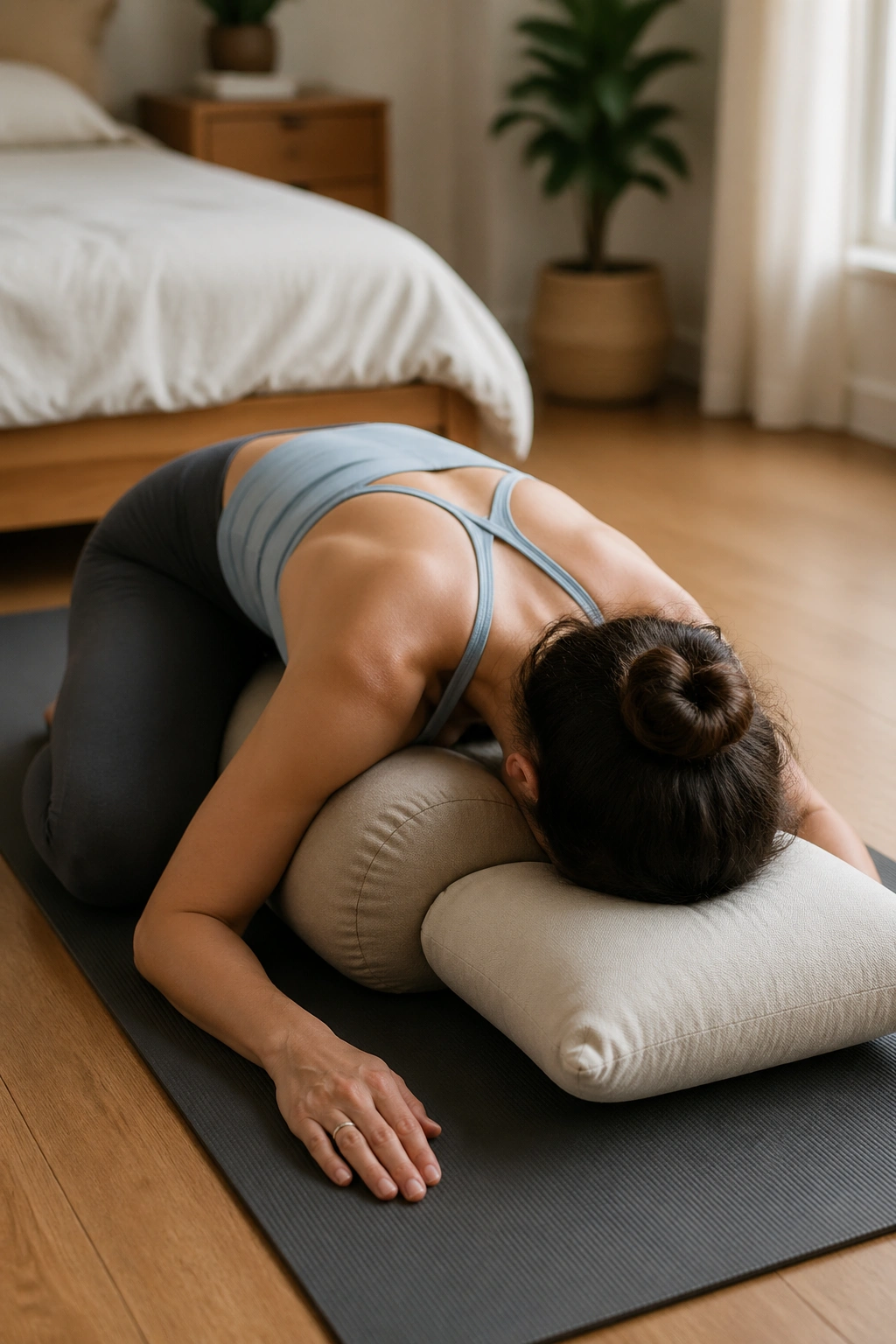
1. Child’s Pose for Period Cramps
Child’s pose is usually the first place I send someone when the lower belly feels tight and argumentative. The wide-knee version is especially useful for cramps because it gives the abdomen room to settle instead of pressing it flat against the thighs.
Why It Helps
When the knees come wide and the torso drapes forward, the lower back gets a break and the belly can hang free. That simple shift often feels better than a deep stretch, because it reduces the feeling of being compressed. If your shoulders are tense too — and they usually are — resting the arms forward or by your sides can help the whole front of the body unclench.
How to Set It Up
- Start on hands and knees.
- Separate the knees wide enough that your belly has space.
- Bring your big toes together if that feels good, or keep the feet apart if your hips prefer it.
- Lower your chest toward a pillow, bolster, or folded blanket.
- Rest your forehead on a cushion or stacked hands.
- Stay for 5 to 10 slow breaths, or longer if the pose feels steady.
Best cue: let your ribs widen into the floor every time you inhale. If the belly feels pinched, put more padding under it. No heroics here.
2. Cat-Cow to Loosen the Lower Back
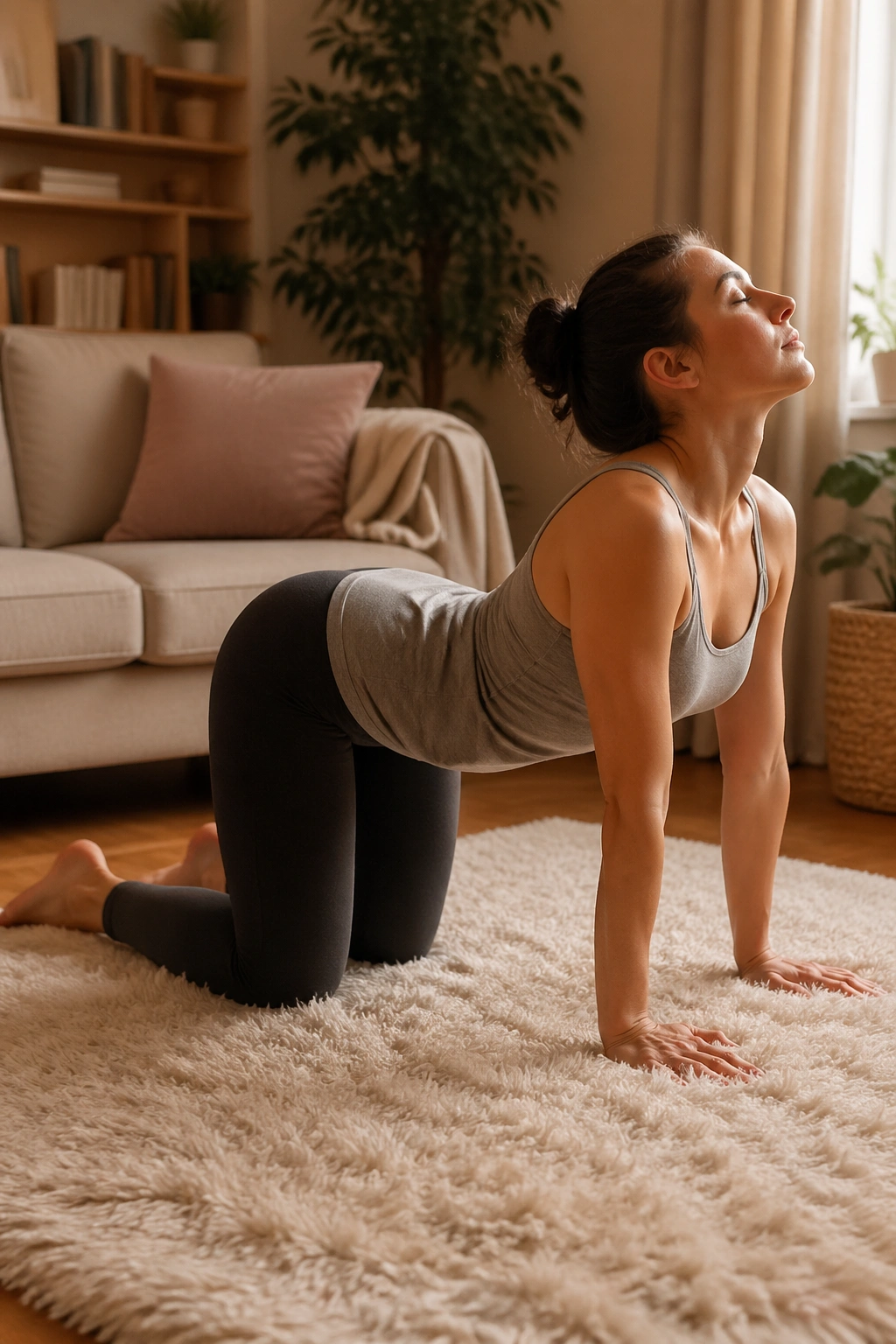
Cat-cow looks basic. Good. Basic is exactly what cramps often need.
The reason this movement helps is that it gently rocks the spine and pelvis through flexion and extension without forcing either one. That small rhythm can ease the stiff, dragged-down feeling that often shows up in the low back during menstruation. It also links movement to breath, which matters because pain tends to make breathing shallow and choppy.
What to Feel
On the inhale, let the tailbone lift and the chest open a little. On the exhale, round the back and draw the belly up softly, not hard. The key is small motion with a slow breath — not a big arch, not a dramatic cat shape, just enough movement to remind the spine that it can move without complaining.
If your wrists hate hands-and-knees work, do the same motion seated in a chair. Put your hands on your thighs, tip the pelvis forward on the inhale, then tuck and round on the exhale. That version is underrated. It gets the job done without asking your wrists to be brave.
A good starting dose is 5 to 8 rounds. More isn’t automatically better here.
3. Reclined Butterfly With Pillow Support
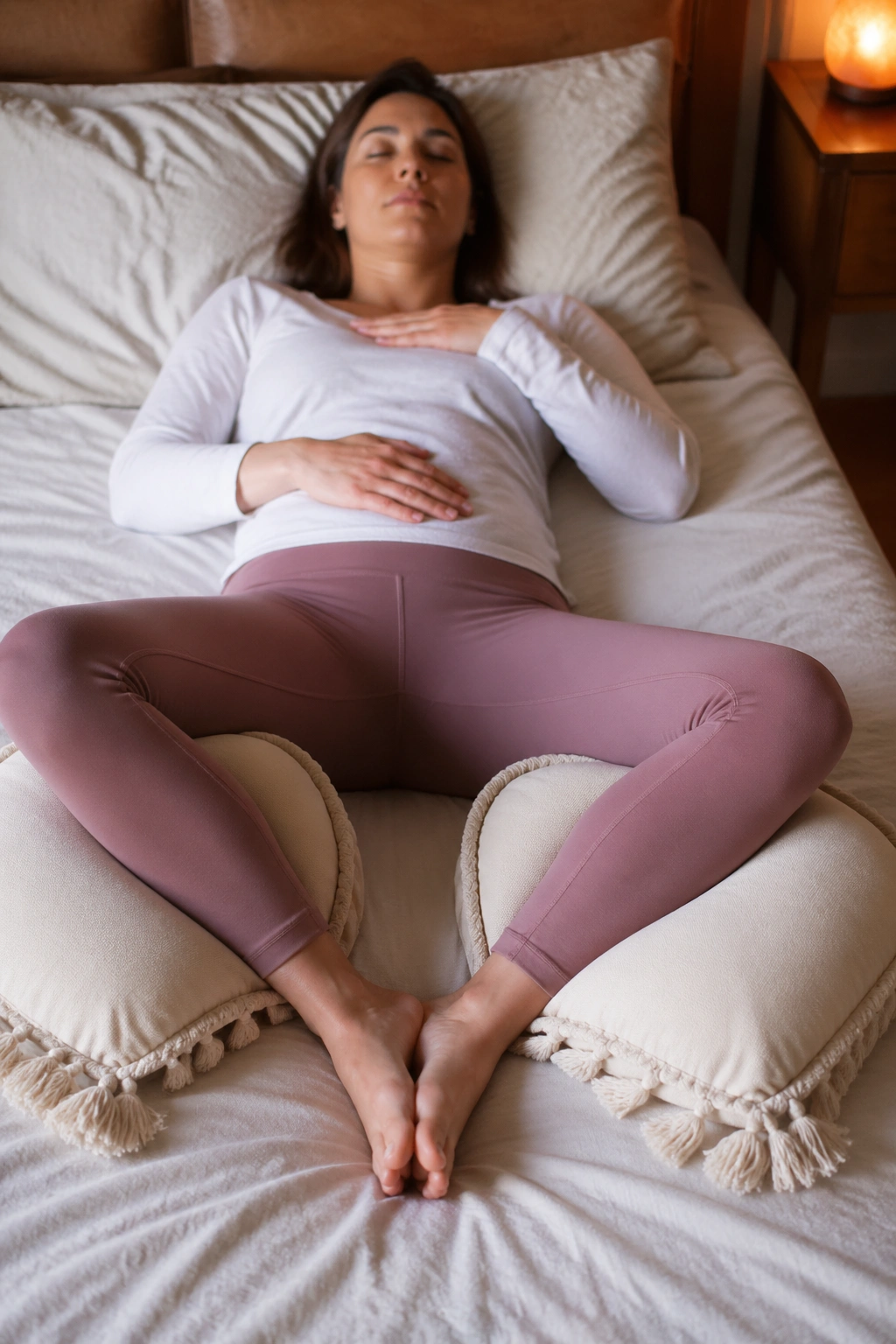
Why does this shape work so well when the pelvis feels clenched? Because it takes the inner thighs out of their usual guarding pattern and gives the front of the hips a chance to stop gripping.
Lie down, bring the soles of the feet together, and let the knees open only as far as feels calm. If the stretch in the groin feels too sharp, stack pillows or folded blankets under the outer thighs. That support changes everything. Without it, the pose can feel like work. With it, the same shape becomes a rest.
How to Use It
Keep the spine long on the floor or on a folded blanket. Put one hand on the belly and one on the chest, then breathe into the lower hand first. If the lower back arches uncomfortably, slide a pillow under the knees or use a bolster under the entire spine so the ribs are not pulling open.
Stay here for 2 to 5 minutes if the pose feels soothing. The goal is not to push the knees toward the floor. The goal is to let the hips stop arguing.
A small detail people miss: if the soles of the feet press together too hard, the inner thighs can tense up again. Let the feet be loose. Loose is better.
4. Knees-to-Chest Hold for a Tight Lower Belly
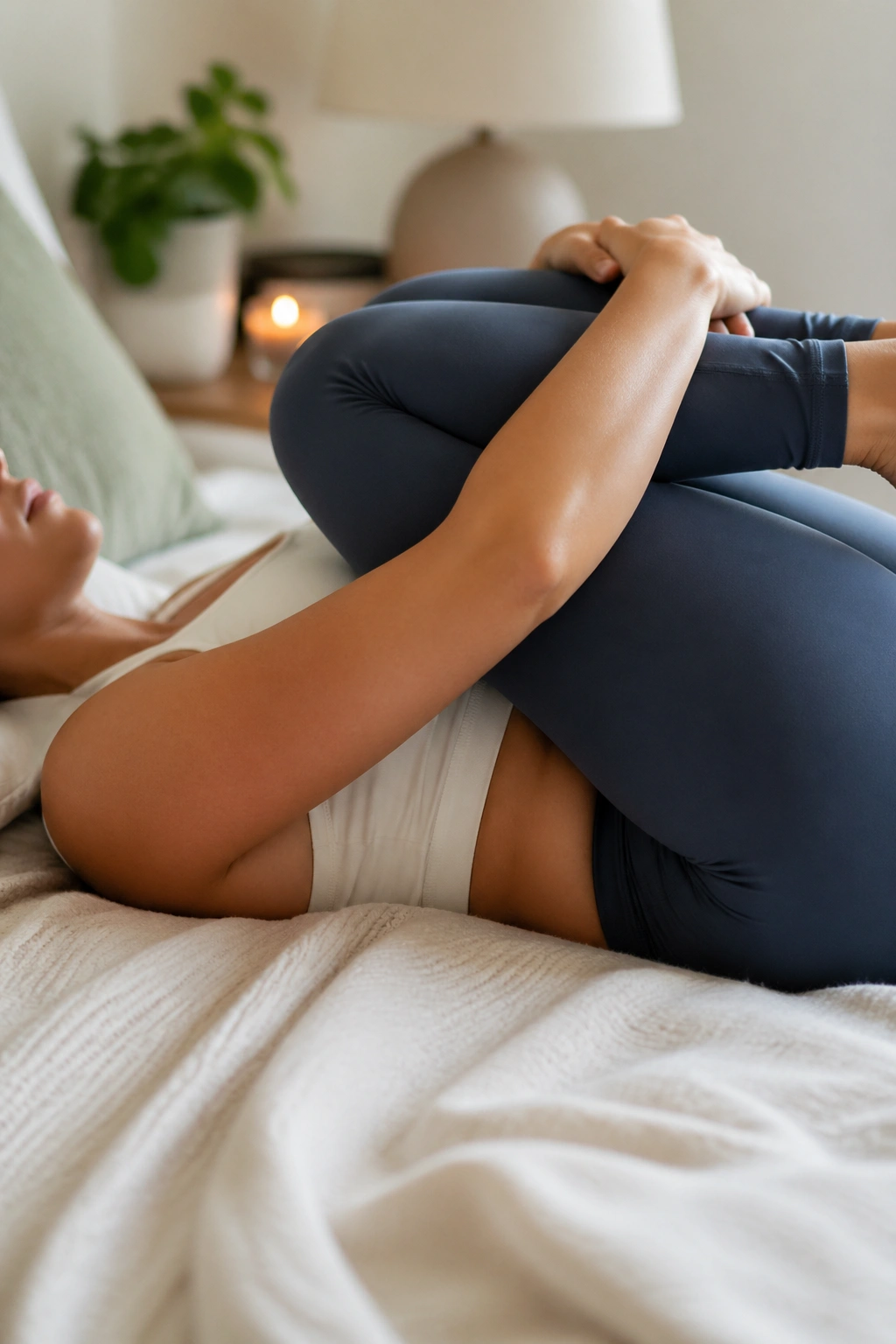
Picture the moment the cramps hit hardest. You want something simple, something that does not ask for balance, strength, or patience.
Knees-to-chest is that kind of shape. It creates a gentle compression and release around the lower back and pelvis, and for some people that pressure feels grounding in a way open shapes do not. It is especially handy if the pain has started to creep into the sacrum or the tops of the hips.
Key Details
- Lie on your back with both knees bent.
- Draw one knee in first if both knees feel like too much.
- Hold behind the thighs, not on the kneecaps.
- Keep the tailbone heavy on the floor.
- Breathe slowly for 5 to 8 breaths, then switch or release.
If your belly does not like direct pressure, do the one-knee version. Seriously. One knee at a time can be enough, and it is often kinder on a tender abdomen.
A tiny rocking motion can help too — just a few inches side to side, nothing vigorous. If rocking makes you queasy or pulls on the low back, skip it. Stillness is fine.
5. Happy Baby When Your Hips Feel Locked Up
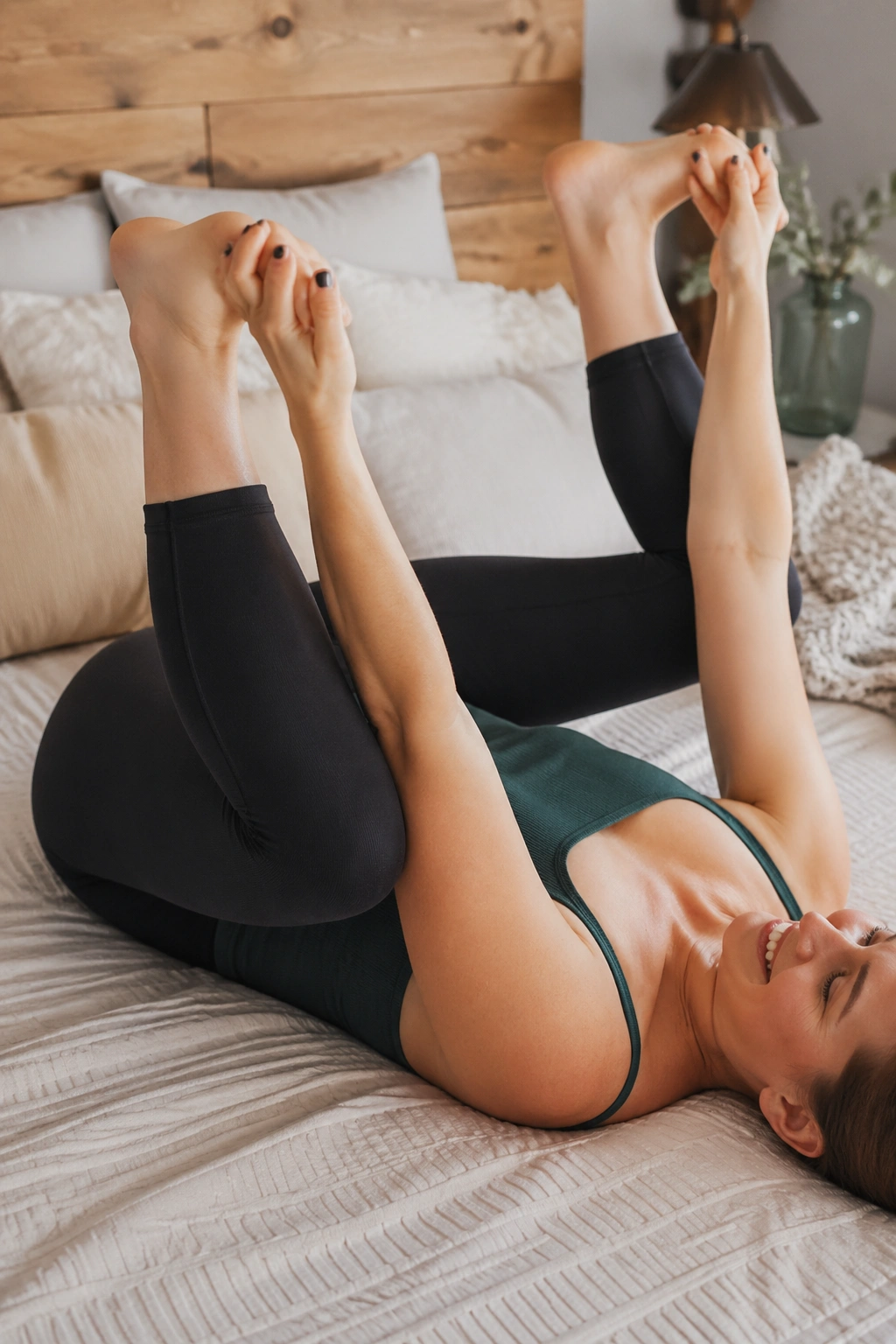
Happy baby has a funny name for a pose that can feel like medicine on a cranky day. It opens the hips, stretches the inner thighs, and gives the low back a chance to flatten into the floor, which a lot of people find strangely comforting when cramps are nagging at them.
The trick is to keep it soft. If you yank the feet down hard, the pose turns into a hamstring fight. If you pull the knees too far apart, the pelvis can feel strained. The sweet spot is gentler than most photos suggest.
Lie on your back, bend the knees toward the ribs, and hold the outer edges of the feet, shins, or backs of the thighs. Keep the ankles stacked over the knees or a little higher if that feels better. Then let the tailbone stay heavy. You should feel a stretch in the groin and the outer hips, but not a sharp pull in the knees.
A little side-to-side rocking is often lovely here. Not huge. Just enough to massage the lower back against the floor.
If your neck starts to tighten, set the head down and hold behind the thighs instead. That version is less flashy and often more useful.
6. Bent-Knee Forward Fold on a Folded Blanket
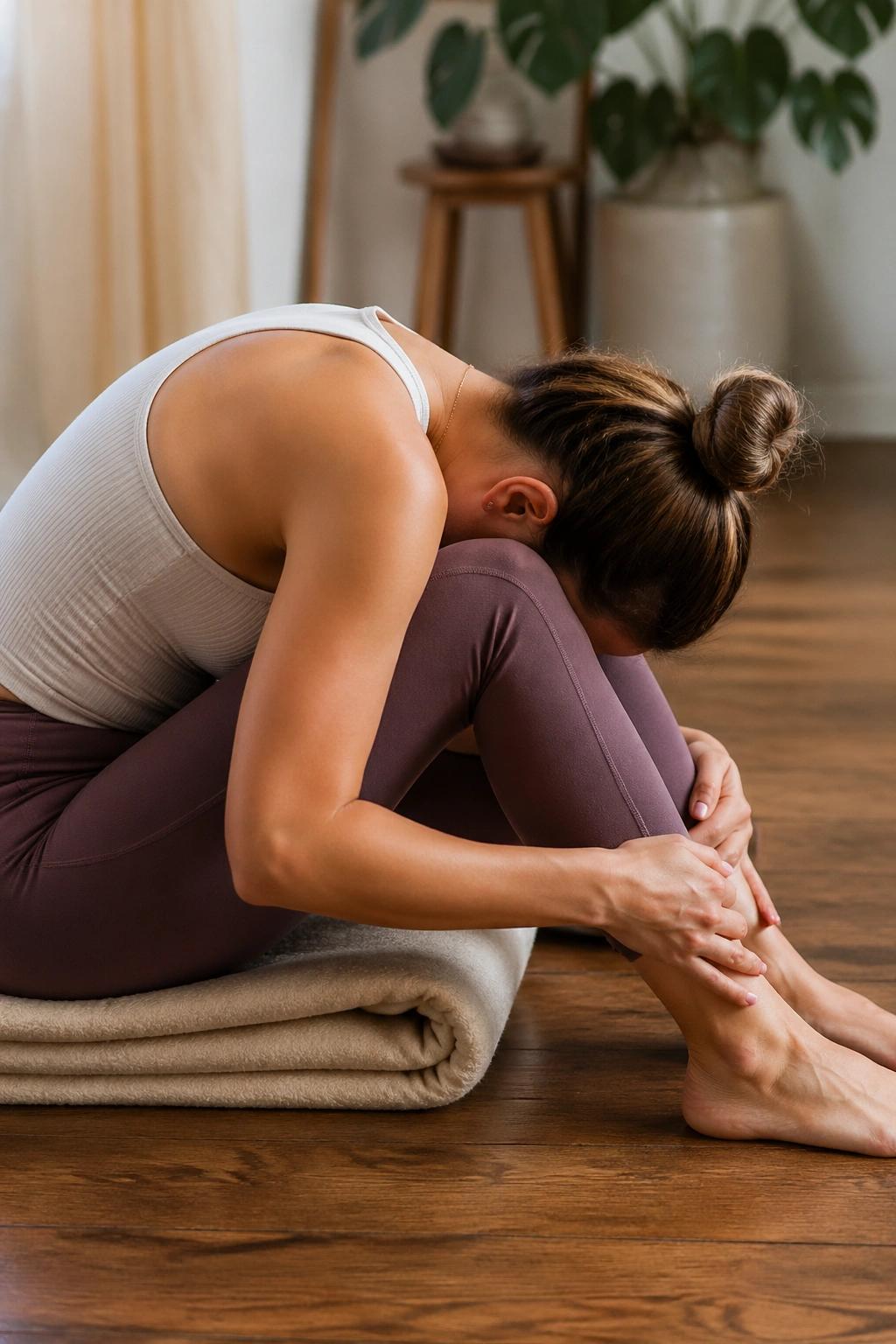
Unlike the straight-legged hamstring stretch people love to post online, this version is about comfort, not chasing range.
Sit on a folded blanket so the pelvis tips forward slightly. Bend the knees enough that the belly can rest on the thighs without strain, then fold forward from the hips. You can hold the ankles, shins, or even just let the arms drape. The important bit is not the reach. It’s the exhale.
This pose tends to help when cramps come with a wired, buzzy feeling in the body. The forward shape gives the nervous system a quieter signal than an open chest or a deep backbend does. If your pelvis feels exposed or overworked, the fold can feel like a blanket over the whole system.
If your back rounds a little, that is fine. If it rounds a lot because you are forcing yourself down, back off. Use a bolster under the chest or another cushion under the forehead so you do not have to hold yourself up.
Hold for 6 to 8 breaths, then sit up slowly. Dizziness can sneak in if you come out too fast.
7. Supported Bridge With a Block Under the Sacrum
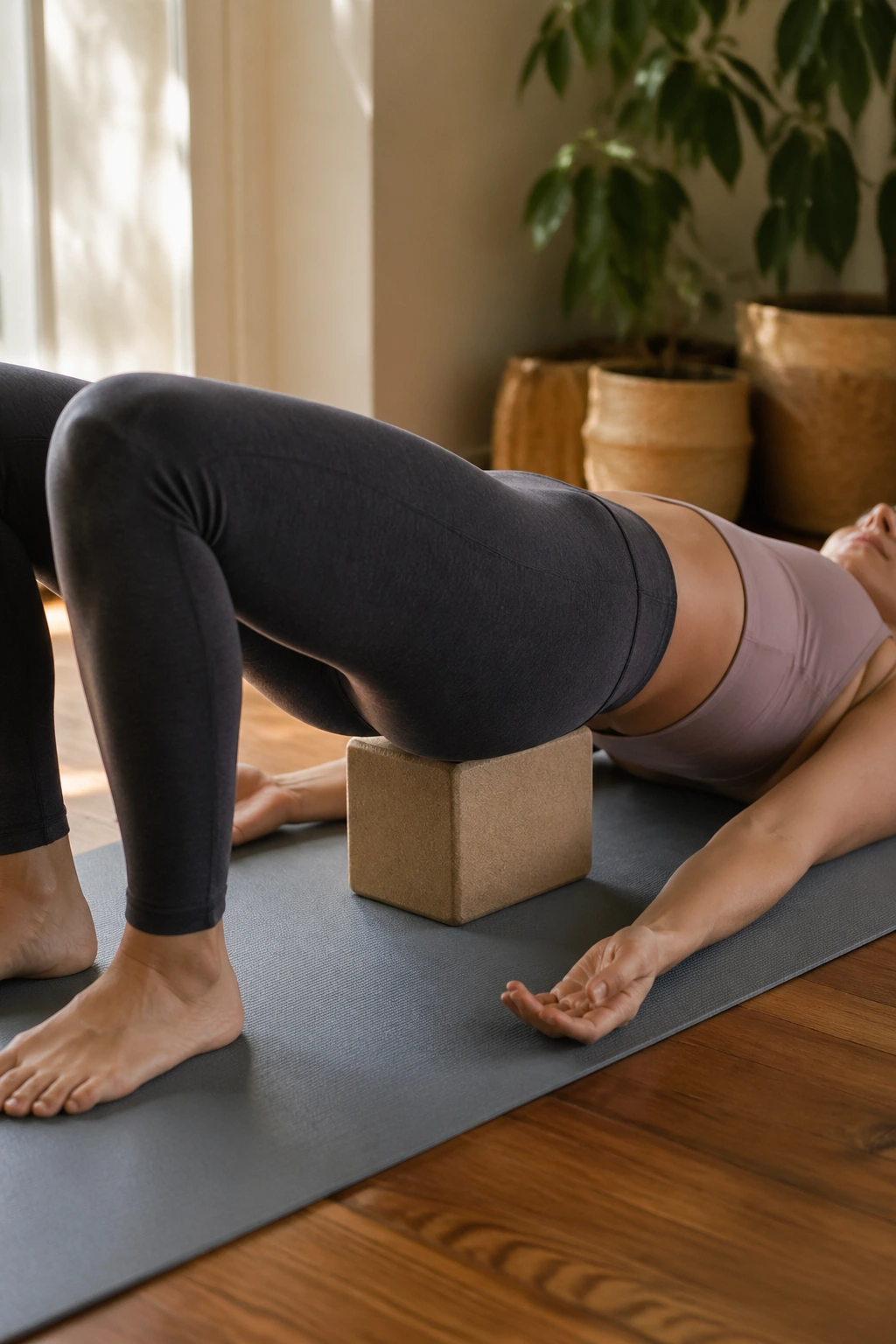
A block under the sacrum turns bridge from a shape into a pause.
That’s the whole magic. Instead of holding your hips up with effort, you lower onto support and let the front of the body open without asking the glutes to work overtime. For cramps, that often feels better than a strong backbend because it gives the low belly and hip flexors a gentle lengthening while the back gets to rest.
Build It Carefully
- Lie on your back with knees bent and feet hip-width apart.
- Press the feet down for a moment, lift the hips, and slide a block or sturdy cushion under the sacrum.
- Choose a low block height first.
- Let the arms rest by your sides and breathe for 5 to 10 breaths.
You should feel supported, not jammed. If the lower back pinches, lower the block or remove it altogether. A supported bridge should feel like a slow exhale, not a workout.
One nice detail: this pose can feel especially good if your cramps are paired with a tired, heavy low back. The support changes the pressure line across the pelvis. Small thing. Big difference.
8. Supine Twist for Crampy Back Ache
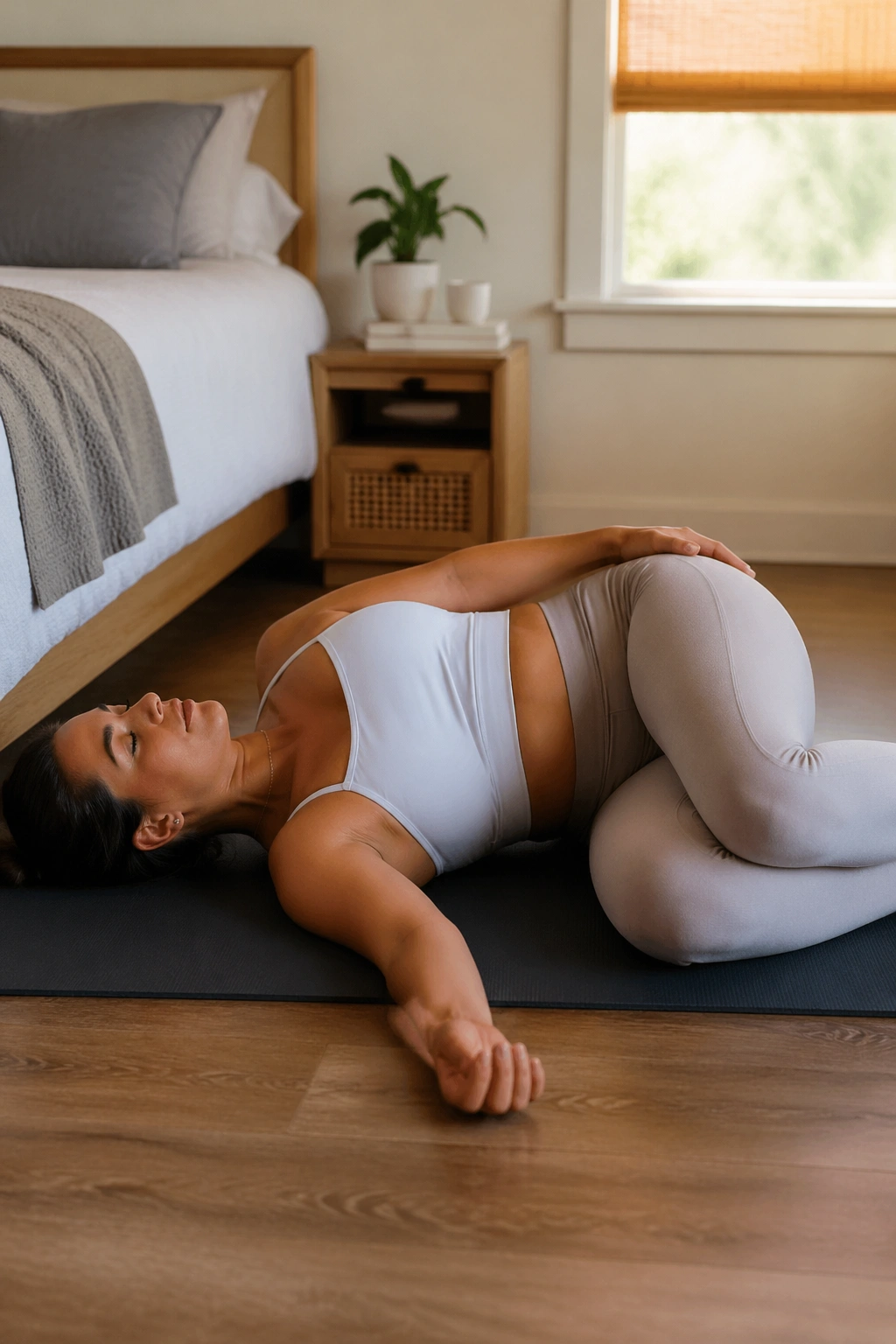
A twist can be gold when menstrual pain spreads into the low back.
Lie on your back, bend both knees, and lower them to one side while keeping the opposite shoulder heavy. If the knees do not reach the floor, place a pillow or folded blanket underneath them. That support matters. A twist that is too deep can make the body brace harder, and that is the opposite of what you want.
The aim is not to wring out the spine. It is to let the ribs, side waist, and lower back unwind one layer at a time. Keep both shoulders as relaxed as possible, and breathe into the side of the belly that’s facing the ceiling.
If your cramps feel sharp, make the twist tiny. A small angle is still a twist. It still gives the back a break.
Some people like to extend the top arm out to the side. Others feel better with both arms hugging in close. Pick the version that lets the breath stay smooth. If your knee starts to pull in the hip socket, back off immediately. That little warning sign matters.
9. Legs Up the Wall With Bent Knees if Needed
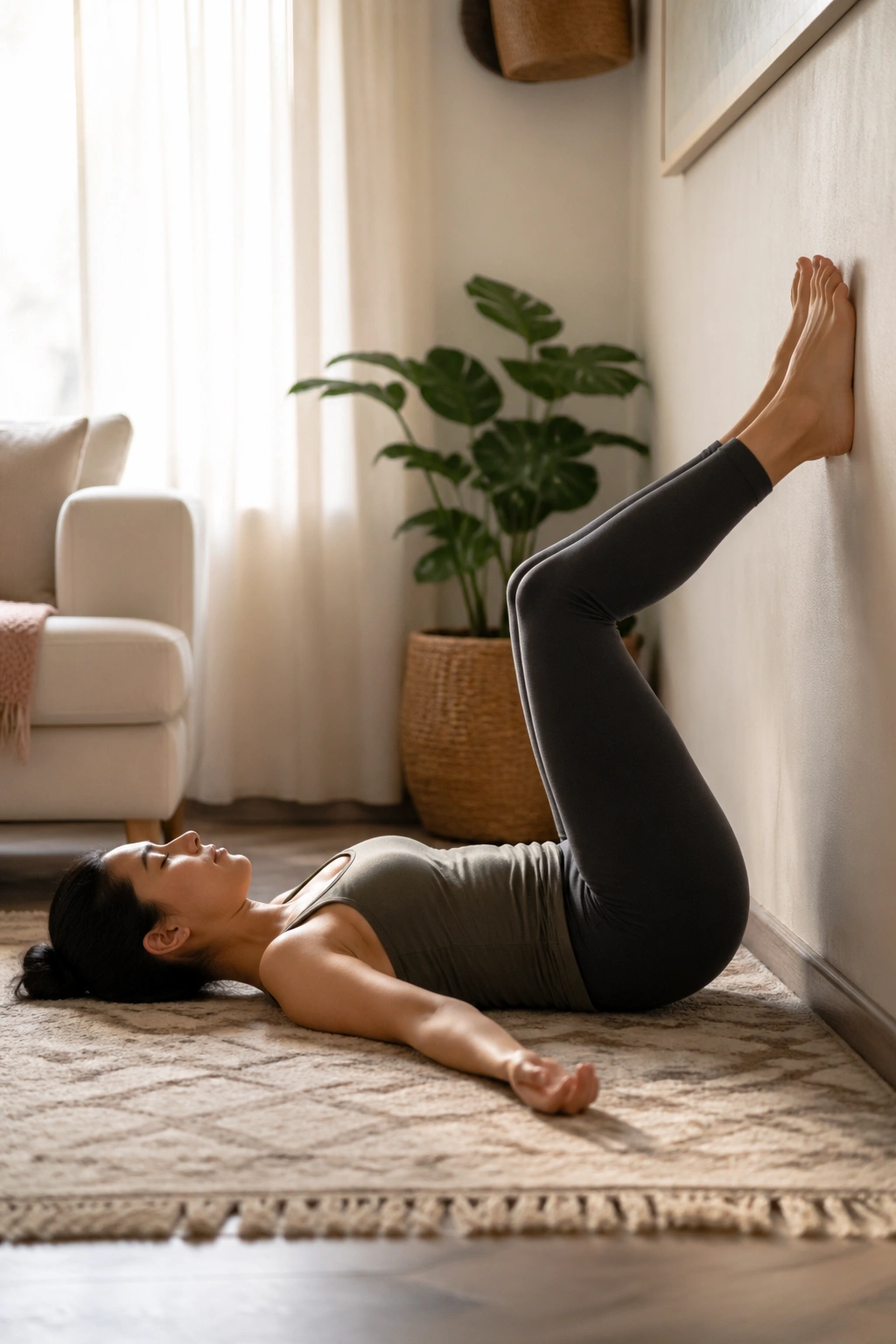
Why does lying with your legs up the wall feel so soothing when your body is annoyed with you? Because the pose takes weight off the pelvis, slows the pace of breathing, and gives the low back a chance to stop carrying everything.
Sit sideways with one hip close to the wall, then swing the legs up and lie back. If straight legs tug on your hamstrings or lower back, bend the knees a little and let the soles of the feet rest on the wall. That version is often kinder and easier to hold.
How to Stay There
- Scoot a few inches away from the wall if your hamstrings feel tight.
- Place a folded blanket under the hips if the floor feels unforgiving.
- Keep the chin neutral and the jaw soft.
- Stay for 5 to 10 minutes if it feels good.
- Roll off slowly when you finish.
The pose can be dreamy, but it is not for everyone. If your head rushes, if your low back arches too much, or if lying flat makes the cramps worse, leave it out. No guilt. There are plenty of other options.
I like this one late in a sequence, after the body has already started to soften. It feels even better then.
10. Supported Squat at a Wall or Block
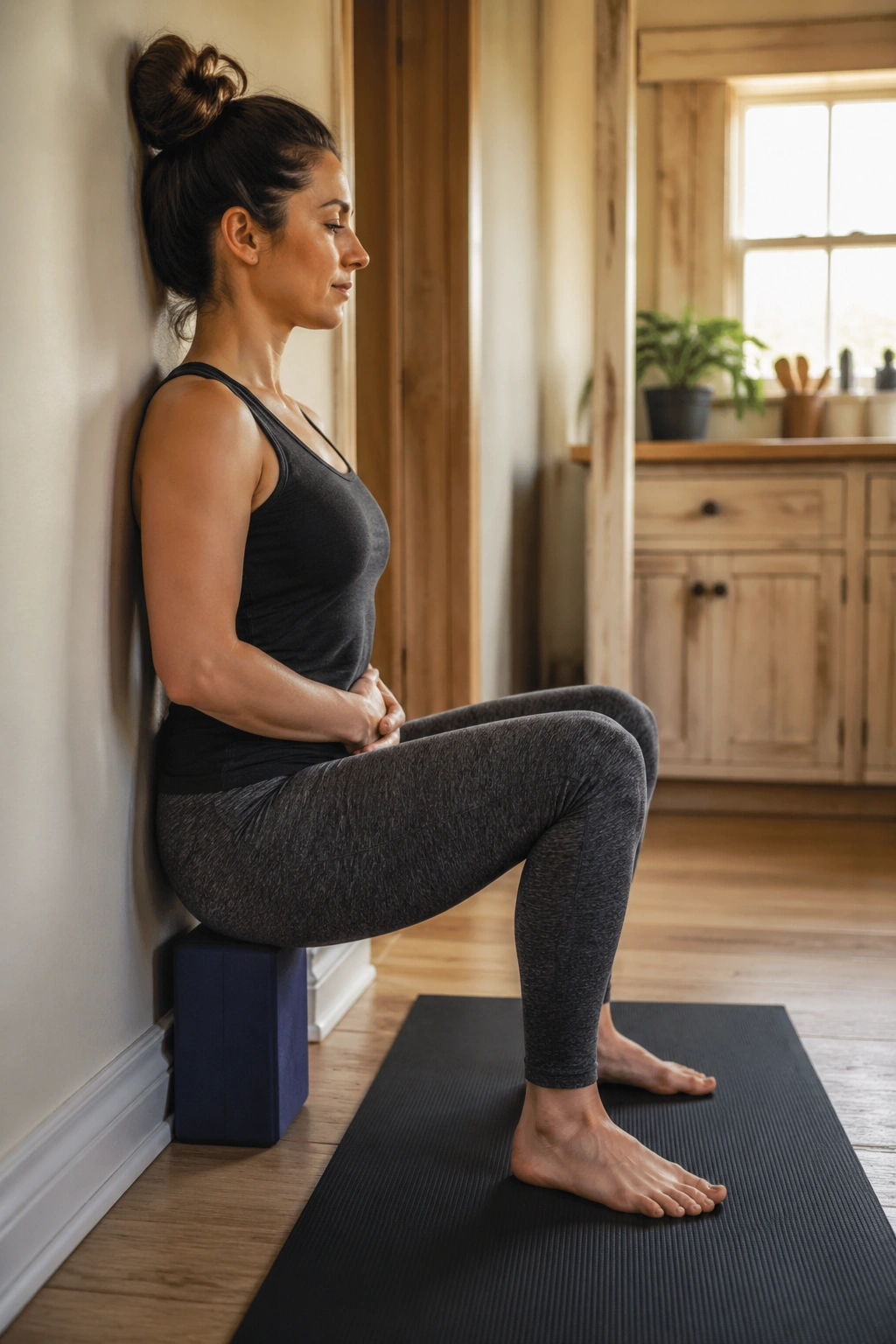
A deep squat is not automatically the answer during cramps. A supported squat, though, can be a different story.
When the pelvis feels tight, the floor of the pelvis can benefit from a gentle opening. A wall, a block, or even a sturdy stack of books can make the shape accessible enough that it does not turn into a leg workout. That is the trick. You want release, not strain.
Stand with your feet a little wider than hip-width, lower into a squat only as far as feels reasonable, and keep your heels grounded if possible. If the heels lift, place them on a folded blanket or use a block under the hips to create a partial squat instead. You can also hold a doorframe or countertop for balance.
What to watch for:
- Knees that cave inward.
- A pinching feeling in the groin.
- A breath that gets held.
- Pressure in the low back that feels sharp rather than broad.
If any of those show up, come up a notch. A supported squat should feel like a useful opening, not a test. Hold for a few breaths, then stand slowly and notice whether your lower belly feels less clenched.
11. Figure-Four Stretch on Your Back
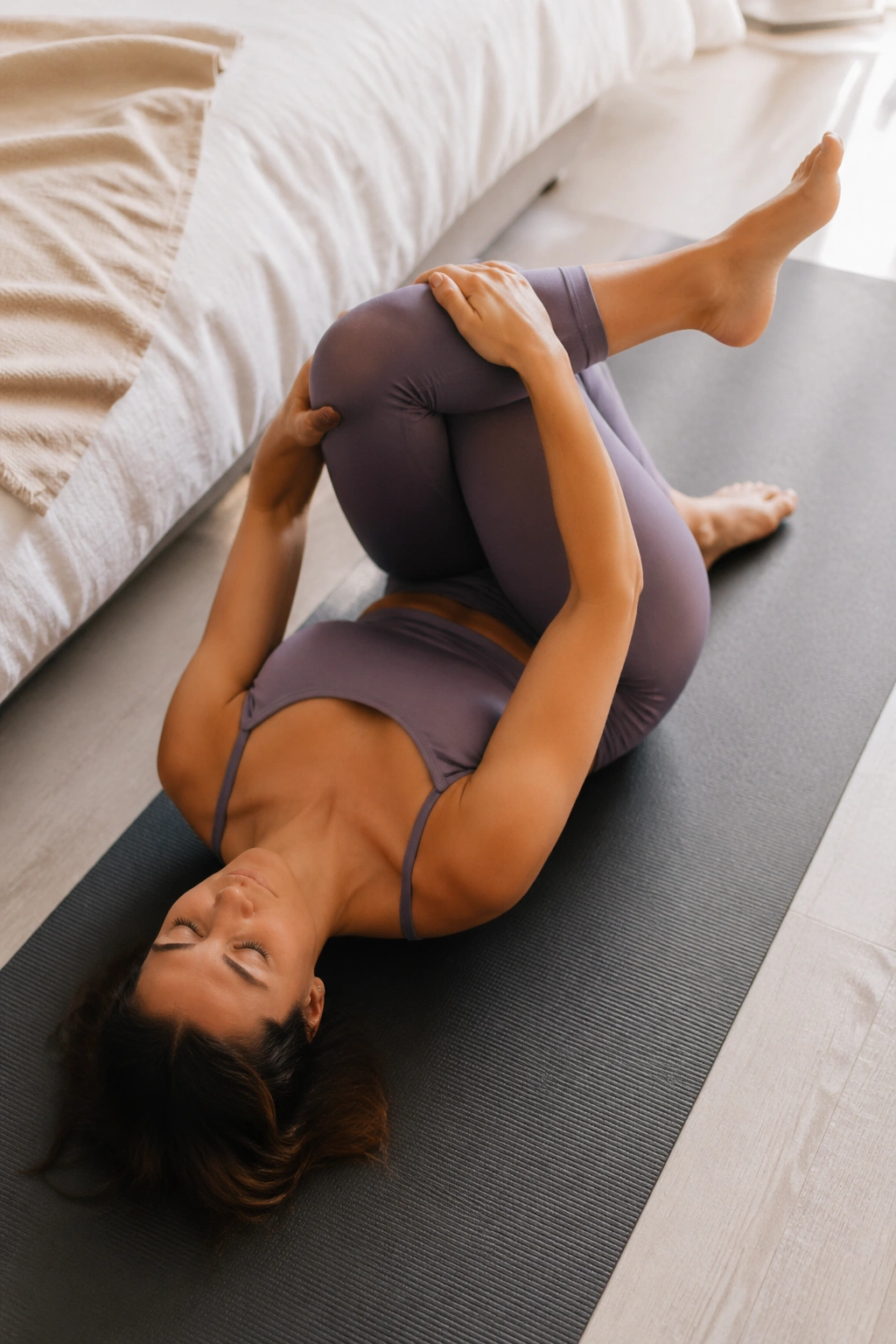
The hips can hold more tension than they get credit for, and during cramps that tension often shows up as a dull ache in the low back or outer glutes.
Figure-four on the back gives the piriformis and the outer hip a mild stretch without forcing the abdomen to work. Lie down, cross one ankle over the opposite thigh, and draw the supporting leg toward you. Keep the head and shoulders relaxed. If the knee of the crossed leg feels cranky, flex the foot and back off the pull.
This one is worth doing slowly. People rush it and then wonder why it feels off. The better approach is to let the thigh come in only as far as the sacrum stays quiet. You should feel the stretch in the outer hip, not a jam in the knee.
Switch sides after 4 to 6 breaths. If one side feels wildly different from the other, that’s common. Bodies don’t hand out symmetry coupons.
For some people, this is the pose that makes the whole sequence click. The hips loosen, the back stops nagging, and the belly gets to drop for a minute. That’s usually a clue, not a coincidence.
12. Low Lunge With a Tucked Pelvis
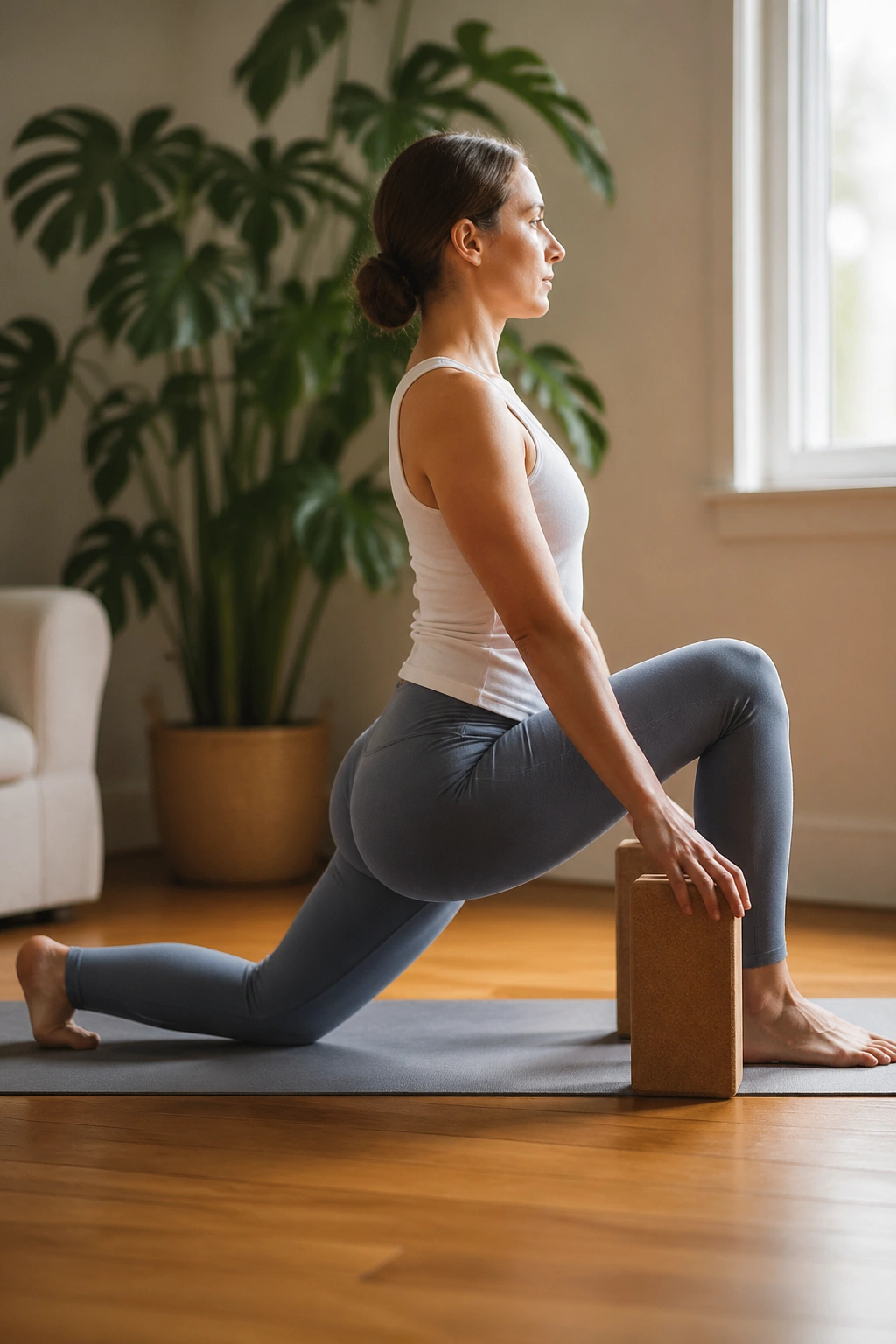
A low lunge can be useful during cramps, but only if you keep it small and controlled.
Unlike a big lunge with a deep backbend, this version is about the front of the hip. Long sitting, stress, and guarding during pain often leave the hip flexors short and grippy. A kneeling lunge with a slight pelvic tuck can give them a gentle lengthening without dumping pressure into the lower spine.
Set the back knee on a folded blanket or mat, place the front foot forward, and keep the torso upright. Put both hands on blocks if that helps you stay tall. Then draw the pelvis slightly under — just enough to feel the stretch along the front of the back thigh and hip. You are not trying to sink. You are trying to organize.
Best for: people who feel cramps more in the front hips and low back than in the belly itself.
If the pose makes the lower back pinch, shorten the stance and stand higher. If the front knee aches, move the shin a little farther forward and pad the back knee more generously. Tiny adjustments matter here. They change the whole feel.
13. Bound Angle Pose With Slow Belly Breaths
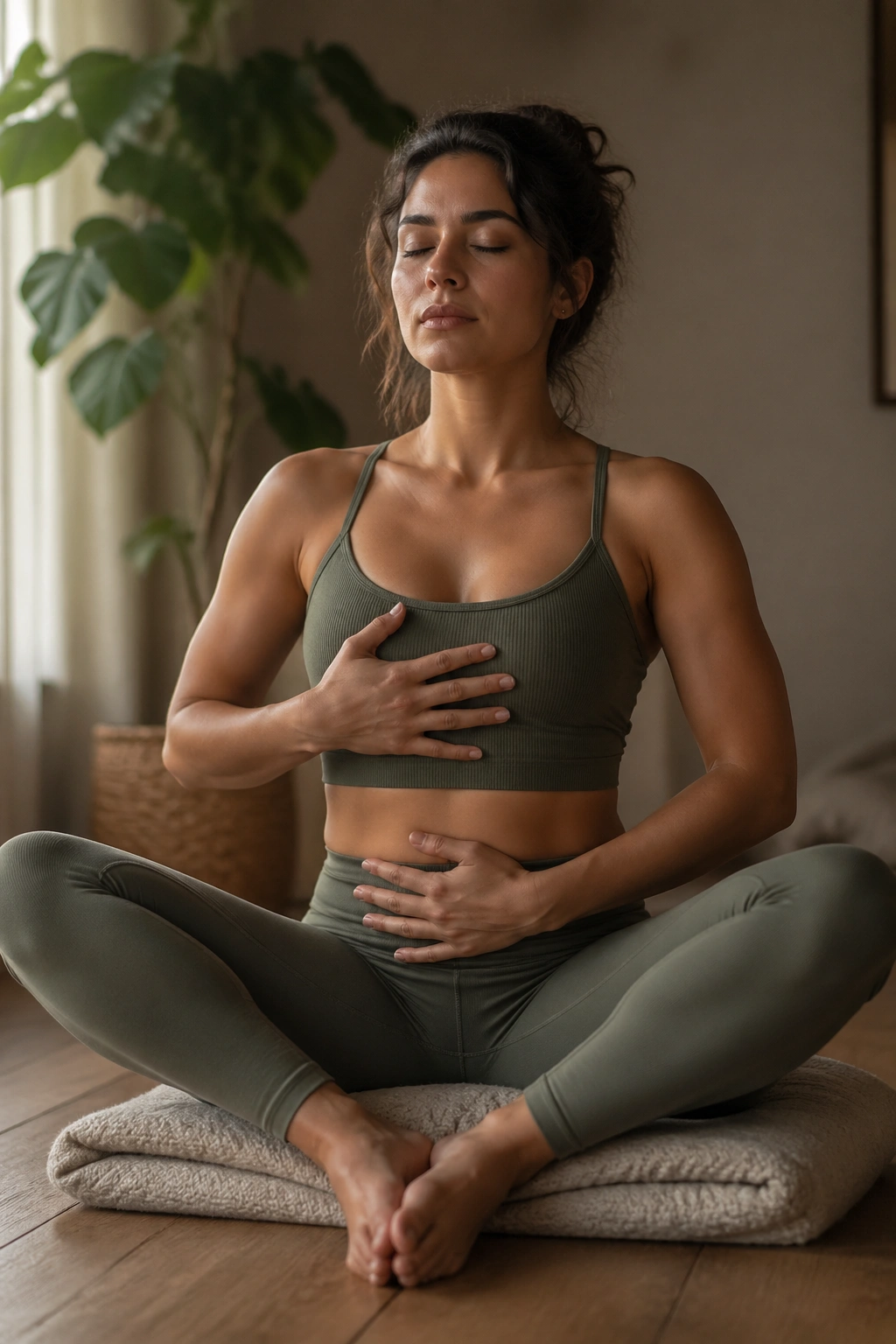
Bound angle is one of those shapes that looks simple and can still do a lot.
Sit with the soles of the feet together and the knees open to the sides. If the knees hover high, place blocks or cushions underneath them. That support turns the pose from a stretch into a rest. Then put one hand on the belly and one on the ribs and let the exhale get a little longer than the inhale.
What Makes It Work
The seated position keeps you upright enough to breathe deeply, while the open hips give the groin and inner thighs a chance to soften. During cramps, that combination can be more useful than folding all the way forward. Some days the belly wants space, not compression.
A few quiet cues help:
- Sit on a folded blanket to lift the hips.
- Keep the spine tall but not stiff.
- Let the shoulders hang.
- Relax the jaw on every exhale.
You do not need a dramatic stretch here. You need a steady breath and a body that feels safe enough to stop clenching. That’s the whole point.
14. Reclining Bound Angle on Bolsters
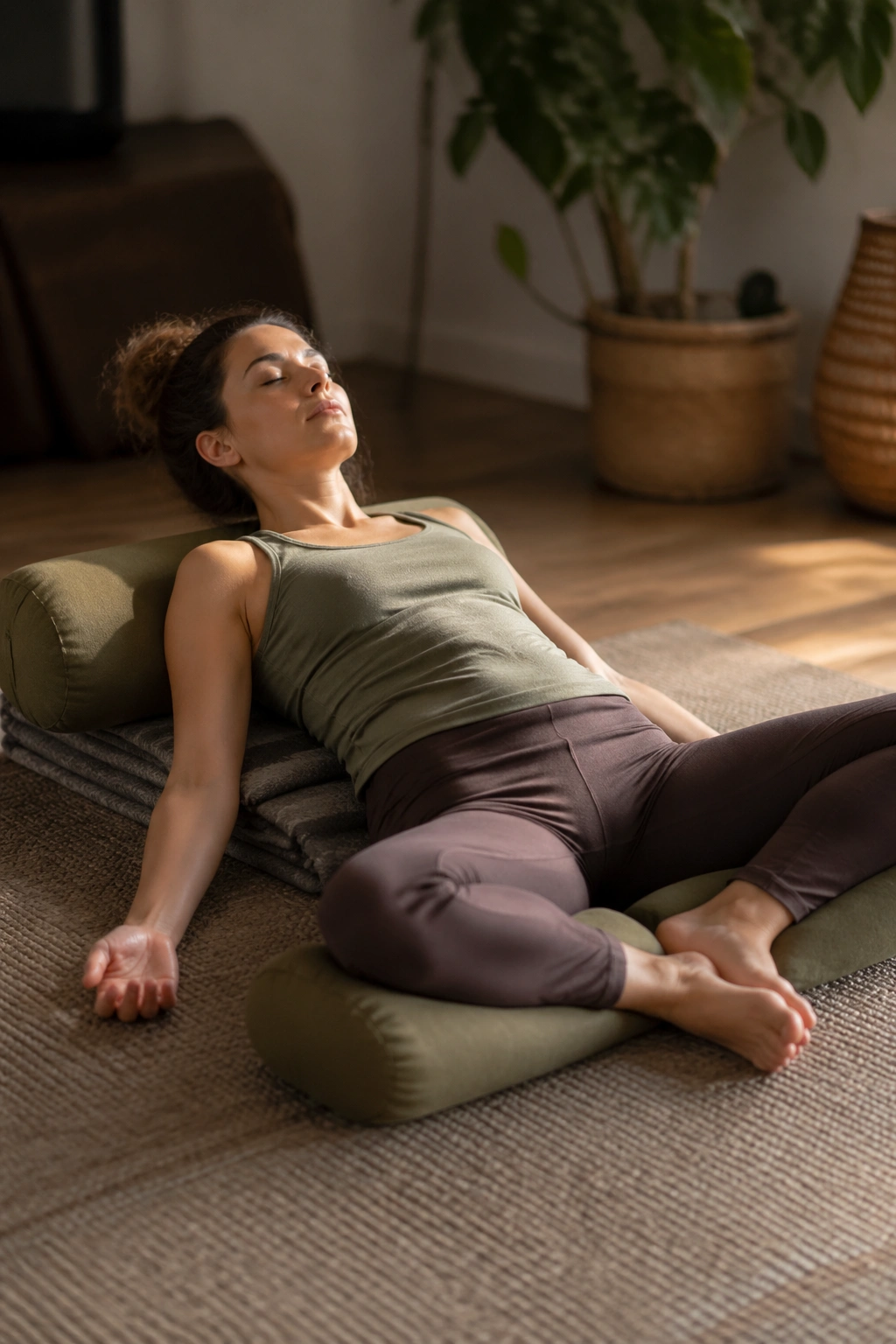
This is probably the closest thing on the list to a nap with a purpose.
Set a bolster, firm pillow, or rolled blanket lengthwise under your spine, then let the soles of the feet come together and the knees open wide with support underneath them. The more support you use, the less the inner thighs have to work. That is a good trade on a day when the body already feels taxed.
The beauty of this version is that it opens the front body without requiring you to hold the shape. The chest can widen, the belly can relax, and the hips can release while you barely do anything at all. On a rough menstrual day, that may be exactly the right amount of effort.
If the belly feels tender, place a small pillow under the knees or a folded blanket beneath the outer thighs. If your lower back does not like the arch of the bolster, lower the support or remove it. You want mild opening, not a backbend contest.
Stay for 3 to 8 minutes if it feels soothing. The body often settles after the first minute or two. Give it that chance.
15. Savasana for the Moment the Pain Finally Eases
Savasana earns its place here because it lets every other pose finish the job.
Lie down with a bolster under the knees, a blanket over the belly if you like the pressure, and one hand resting on the lower abdomen. If lying flat makes the cramps louder, bend the knees more or turn onto your side. Comfort first. Always.
A long exhale does more here than a deep inhale. Try breathing in for a slow count of four and out for a slow count of six, without making the breath noisy or exaggerated. The longer out-breath often helps the nervous system settle, and that settling can change how the pain lands. Not erase it. Change it. There’s a difference.
A heat pack over the lower belly or lower back can make this final rest feel far better. If heat usually helps your cramps, this is the time to use it. If heat makes you dizzy or nauseous, skip it and keep the blanket.
If I had to keep only one habit from this whole list, it would be this: make the end of the practice as gentle as the beginning. Don’t pop up and rush straight into errands. Stay still for a few minutes. Let the body register the quiet.
And on the months when even that feels like too much, choose one pose only. One pillow-supported shape, one slow breath, one minute on the mat. That counts. It counts more than forcing a full sequence when the body is asking for mercy.
