



Most people do not need a perfect home gym to get fit. They need a plan that fits between work, dishes, laundry, and the ten minutes before dinner when the couch starts looking suspiciously persuasive.
That’s where home workouts earn their keep. Done well, they can build strength, raise your heart rate, improve balance, and keep your joints happier than a random blast of burpees ever will. The trick is not doing more moves. It’s choosing the right ones, then scaling them so the same workout can feel doable for a beginner and still challenging for someone who trains regularly.
I like routines that pull their weight. A good home session should be simple to set up, hard to screw up, and easy to repeat three times a week without dreading it. If it only works when you feel fresh, motivated, and unhurried, it probably will not last.
The 15 workouts below lean on bodyweight training, resistance bands, stairs, a chair, a towel, and a little honesty about what actually gets people moving. Some are quiet. Some are sweaty. Some are the sort of thing you can do in socks while the kettle boils. And yes, they all scale.
1. The 20-Minute Bodyweight Circuit
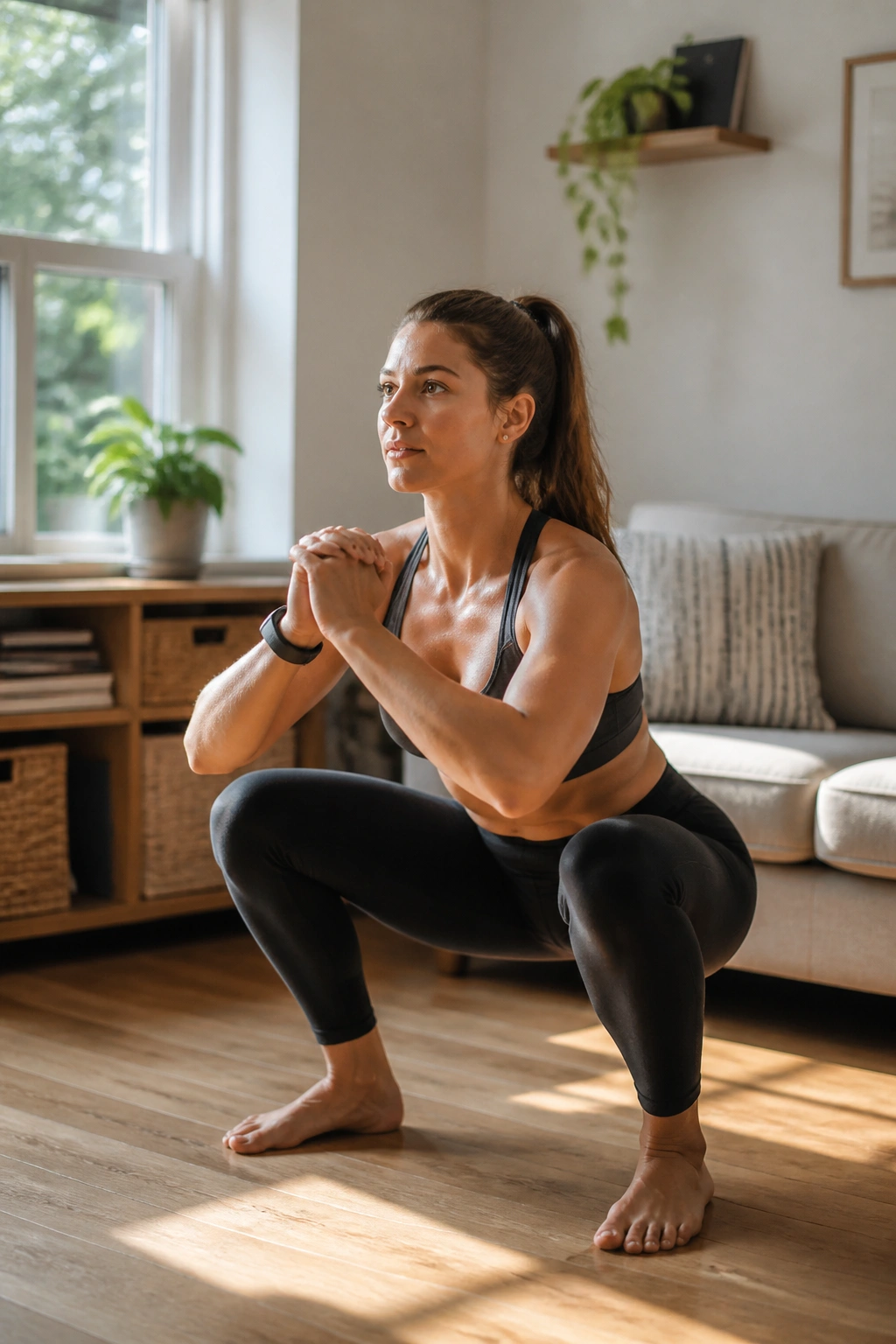
A clean bodyweight circuit is the easiest place to start if you want results without gear. It gives you strength work, a bit of cardio, and enough structure that you do not wander around your living room wondering what comes next.
Why It Works
Set a timer for 40 seconds of work and 20 seconds of rest, then repeat four moves for three rounds. A strong starter circuit looks like this: squats, incline push-ups, reverse lunges, and mountain climbers. That simple mix hits the legs, chest, shoulders, core, and heart rate in one shot.
Beginner? Cut the work periods to 30 seconds and rest for 30 seconds. Intermediate? Keep the timing and slow the lowering phase on each squat and lunge. Advanced? Add a fourth round or hold a light backpack for the squats and lunges.
What to Watch For
- Keep the squats deep enough that your thighs are working, not just your knees.
- Put your hands on a counter or sturdy table for the push-ups if floor work feels rough.
- Step back into lunges if jumping bugs your joints.
- Use mountain climbers as a fast march if your wrists are tired.
The main rule: finish each round feeling worked, not wrecked. That is the sweet spot.
2. The Incline Push-Up Ladder
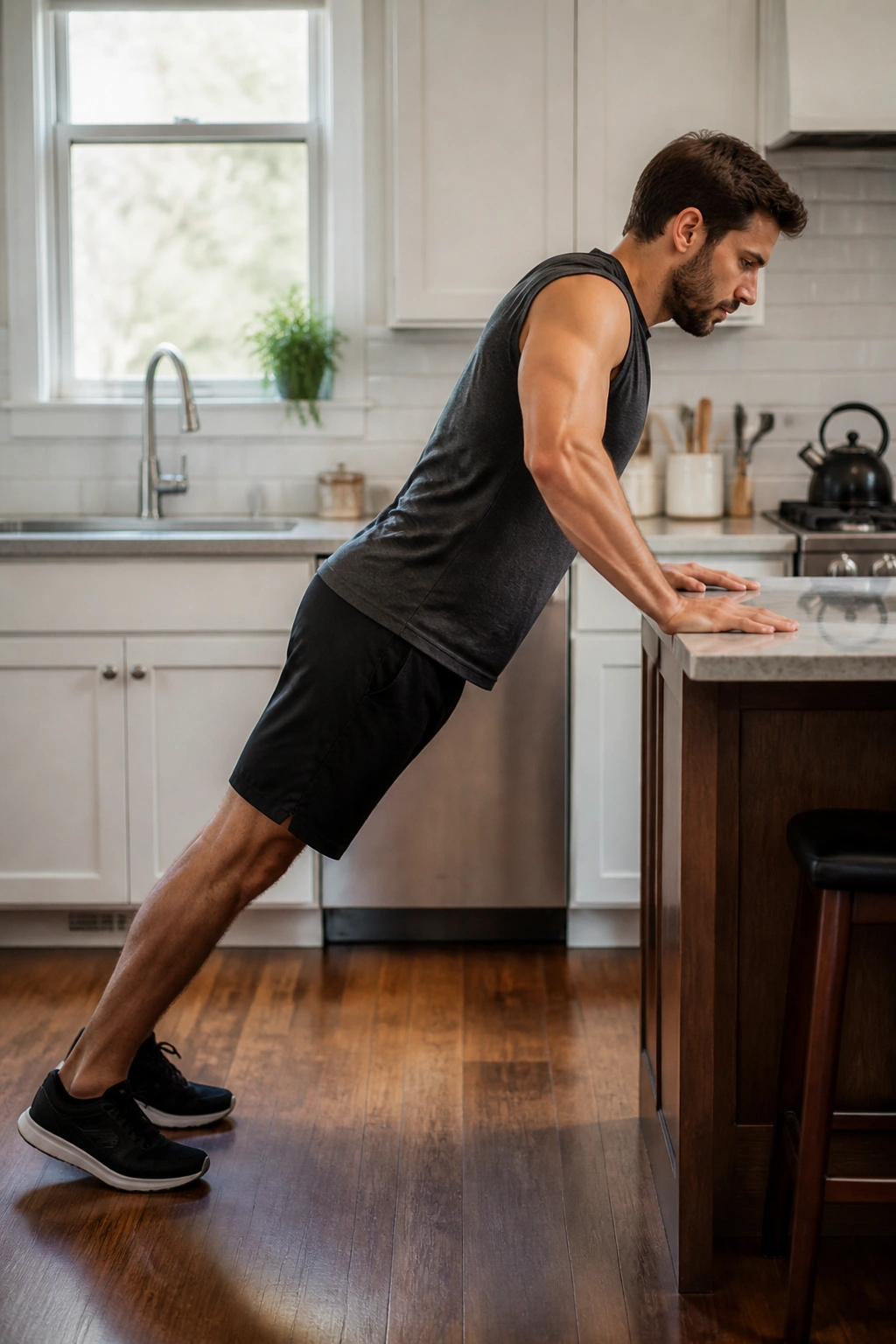
Why do push-ups feel so different at home? Because the surface matters. A push-up with your hands on a wall is one exercise; a push-up on the floor is another; a push-up with your feet elevated is another again.
Start on the wall, then move to a counter, a couch arm, a sturdy chair, and finally the floor. Do 5 to 10 reps at each level, resting long enough to keep the next set clean. The goal is not to grind. It is to make the angle a little harder only when your form stays sharp.
Ladder Setup
Easy start
Wall push-ups. Keep your body in one straight line and lower your chest toward the wall under control.
Middle rung
Counter or table push-ups. These feel more serious, and they should. Your chest, triceps, and shoulders will work harder without the full floor load.
Harder finish
Floor push-ups, or floor negatives if a full rep is not there yet. Lower for 3 seconds, then come back up however you need.
A lot of people skip push-up progressions because they assume the floor version is the “real” one. That’s backwards. The incline versions build the real one. If you cannot control your body at an angle, the floor will not suddenly forgive you.
3. Marching Cardio Intervals
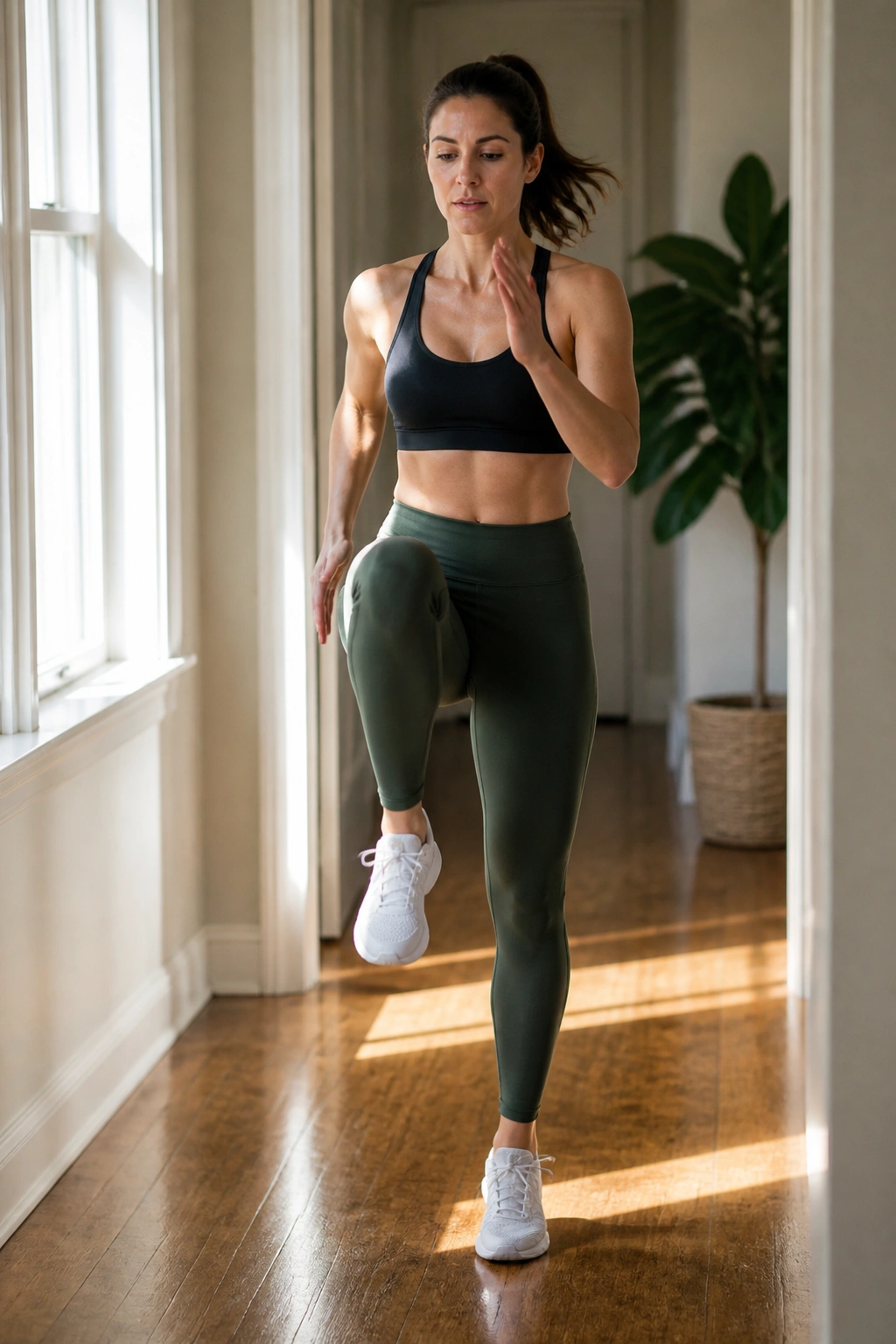
A brisk march sounds too easy until your breathing changes after the second round. That is the point.
Use 30 seconds of fast marching and 30 seconds of easy marching for 10 to 15 minutes. Swing your arms hard, lift your knees a little higher than casual walking, and keep your feet light on the floor. If you have a small space, stay in place. If you have a hallway, turn it into your track.
This is the home workout I recommend to people who hate jumping, hate complexity, or are coming back after a long break. It is also a smart choice on days when your legs feel heavy but you still want to do something real.
A few upgrades keep it from getting dull:
- Add knee lifts every third round.
- Turn the march into a side-step march.
- Hold light hand weights only if your shoulders tolerate them well.
- Use a metronome or music with a steady beat to keep you honest.
If you can talk in short phrases but not long ones, you’re in a useful zone. That’s enough.
4. The Chair-Supported Squat and Sit-to-Stand Session
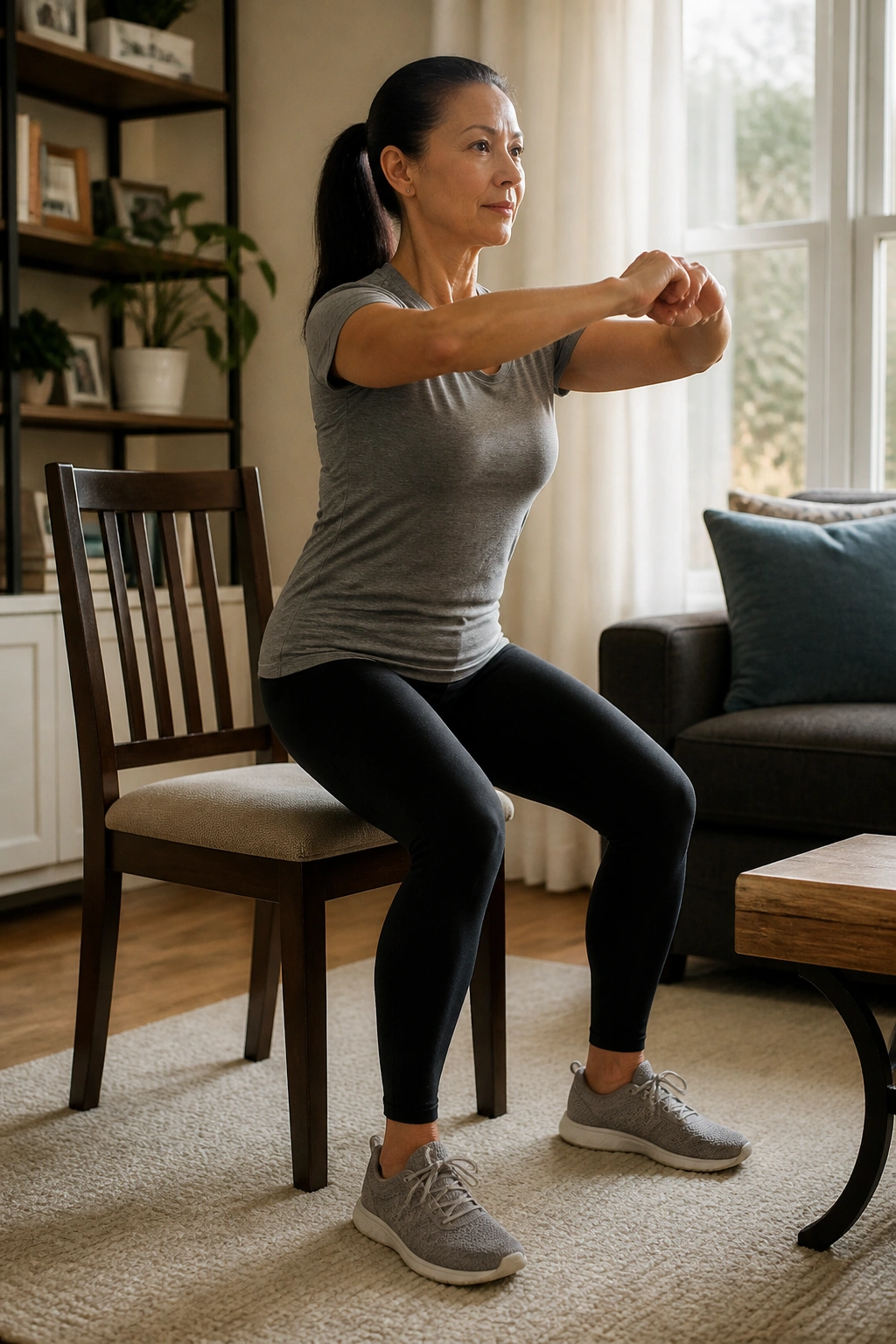
A chair is not a cheat. It is a tool.
Sit-to-stands teach the same pattern as squats, but they give beginners a clear target and a safer way to learn depth. Start by sitting on a sturdy chair, feet about hip-width apart, then stand up without flopping back down. Do 3 sets of 8 to 12 reps. If that feels easy, hover over the chair instead of fully sitting, or slow the descent to 3 full seconds.
How to Make It Harder
- Hold a backpack at chest height.
- Pause for 2 seconds just above the seat.
- Add a calf raise at the top of each rep.
- Switch to split squats once your knees and hips are comfortable with the pattern.
This workout works because it builds leg strength without making balance the whole story. That matters for beginners, and it matters for people whose coordination gets sloppy once they’re tired.
Keep the chair stable. Seriously. If it slides, fix that before you do another rep. A folded towel under the chair feet can help on smooth floors.
5. Shadow Boxing Rounds in the Living Room
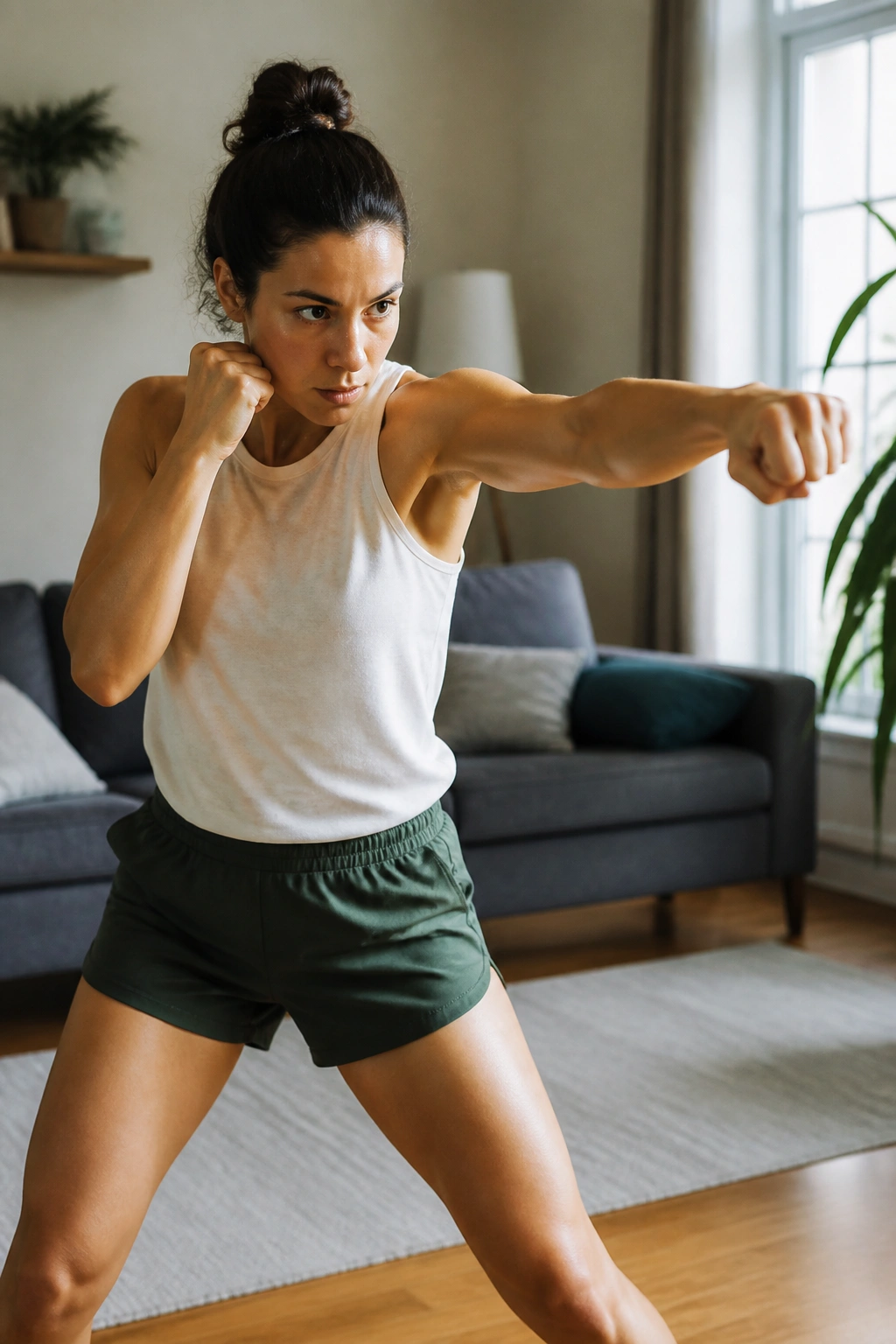
Shadow boxing smells like effort and sounds like quick feet on a hard floor. It also sneaks cardio in through the side door, which is one reason I like it more than a lot of “fun” home cardio that turns into random flailing.
Set a timer for 2-minute rounds with 30 to 45 seconds of rest. Throw simple combinations: jab-cross, jab-cross-hook, or jab-cross-slip. Stay light on your feet, even if you are not actually bouncing. The best rounds feel crisp, not wild.
Round Plan
- Round 1: only jabs and crosses
- Round 2: add hooks
- Round 3: add head movement
- Round 4: move around the room between combos
Beginners can keep both feet planted and focus on the punches. Intermediate and advanced exercisers can work the footwork harder, rotate through the hips, and keep the pace high for the full round.
A small warning: do not overreach on the punches. If your shoulder feels pinchy at the end of a combo, shorten the range and tighten your guard. Clean punches beat big sloppy ones every time.
6. The Glute Bridge and Hip-Hinge Burner
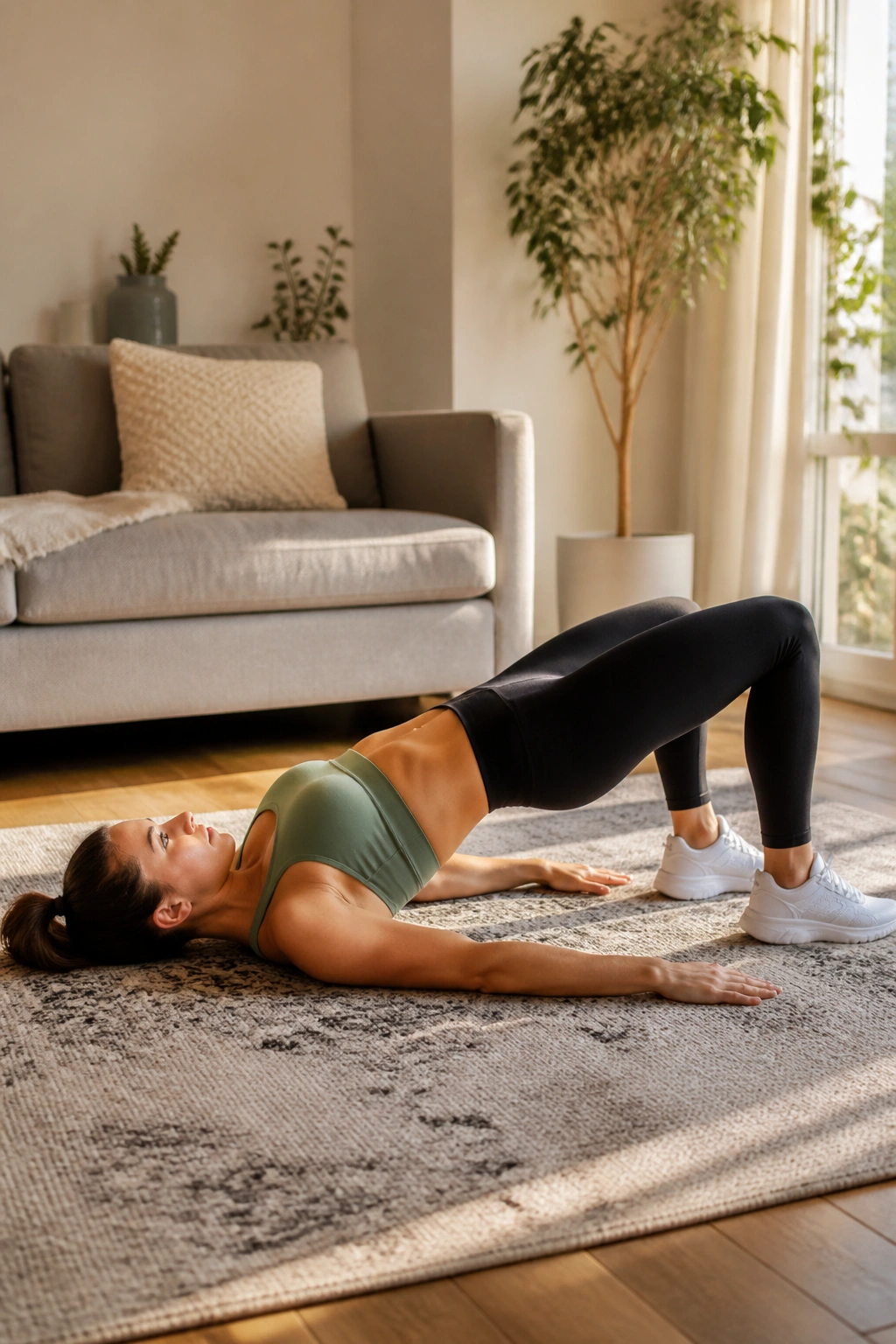
Your backside can get lazy. Sitting has a way of doing that.
Glute bridges wake up the hips, the hamstrings, and the part of your lower body that should be doing more of the work during walking and squatting anyway. Lie on your back, feet flat, knees bent, and drive through your heels until your hips line up with your shoulders and knees. Hold for 1 to 2 seconds at the top, then lower slowly.
A Simple Sequence
Do 12 glute bridges, then 10 hip hinges with your hands on your hips or a light backpack hugged to your chest. Repeat that for 3 to 4 rounds.
If you want more challenge, lift one foot for alternating single-leg bridges. If your low back takes over, stop chasing height and focus on squeezing the glutes before you lift. The bridge should feel like your hamstrings and glutes are doing the work. Not your spine.
A good bridge looks boring and feels precise. That is exactly why it works.
7. The Core Block That Trains Bracing, Not Crunching
Do crunches have a place? Sure. They are just not the whole story, and they are not the best place to start if your goal is a stronger midsection.
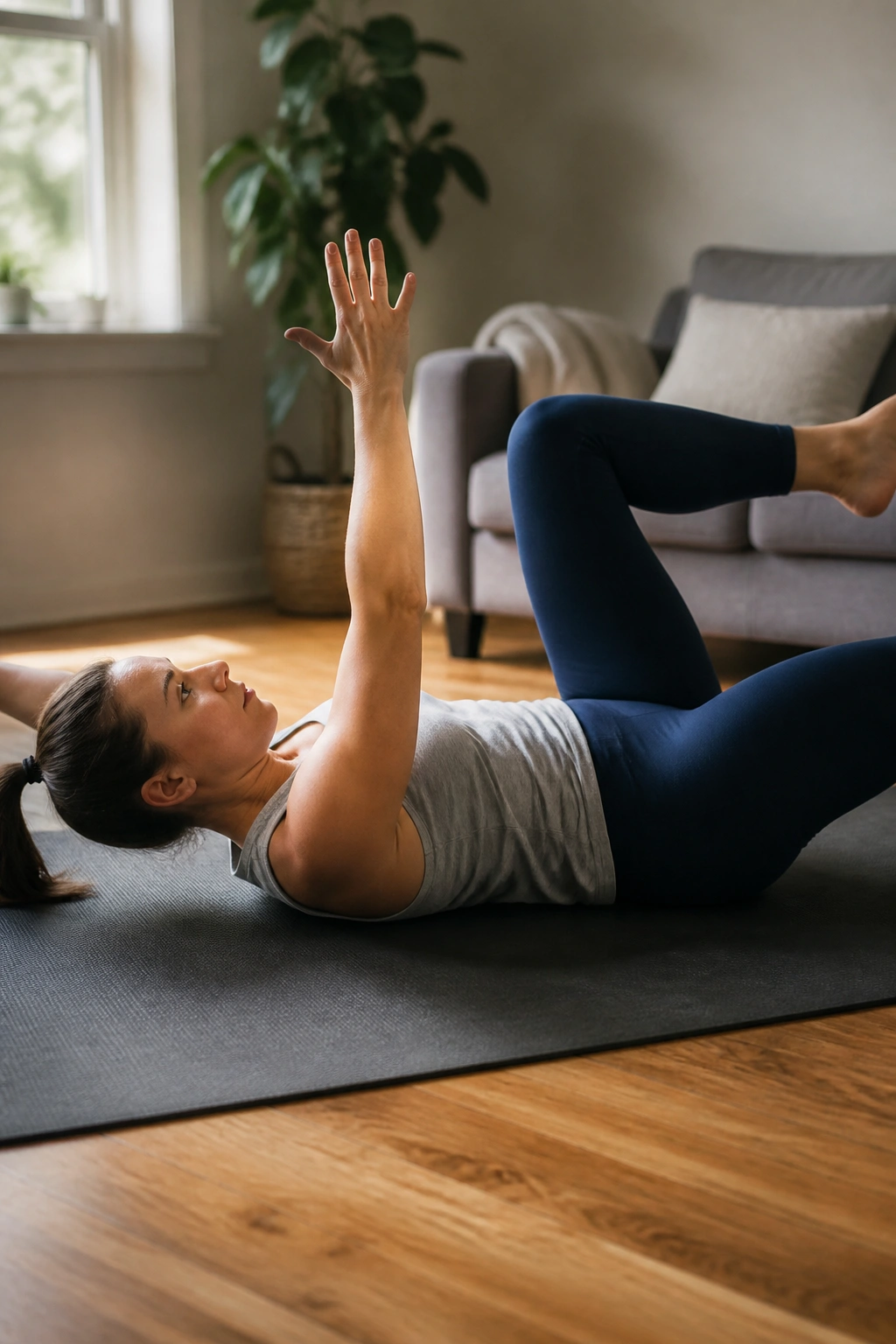
A better core block uses dead bugs, planks, and bird dogs. These moves train bracing, control, and the ability to keep your torso steady while your arms and legs move. That matters in real life, whether you are carrying groceries or climbing stairs with a laundry basket in one hand.
Three-Move Core Block
- Dead bug: 6 to 8 reps per side, slow and controlled. Keep your lower back gently pressed into the floor.
- Forearm plank: hold for 20 to 40 seconds. Stop before your hips sag.
- Bird dog: 6 reps per side with a 2-second pause when the arm and leg are fully extended.
Beginner versions use shorter holds and smaller ranges. Advanced versions add a slow exhale during the hardest part of each rep, which makes the abs work harder without adding a single piece of equipment.
The best cue I know is simple: move your limbs without letting your trunk wobble around like a loose tray. That tells you the core is doing its job.
8. Stair Climb Intervals
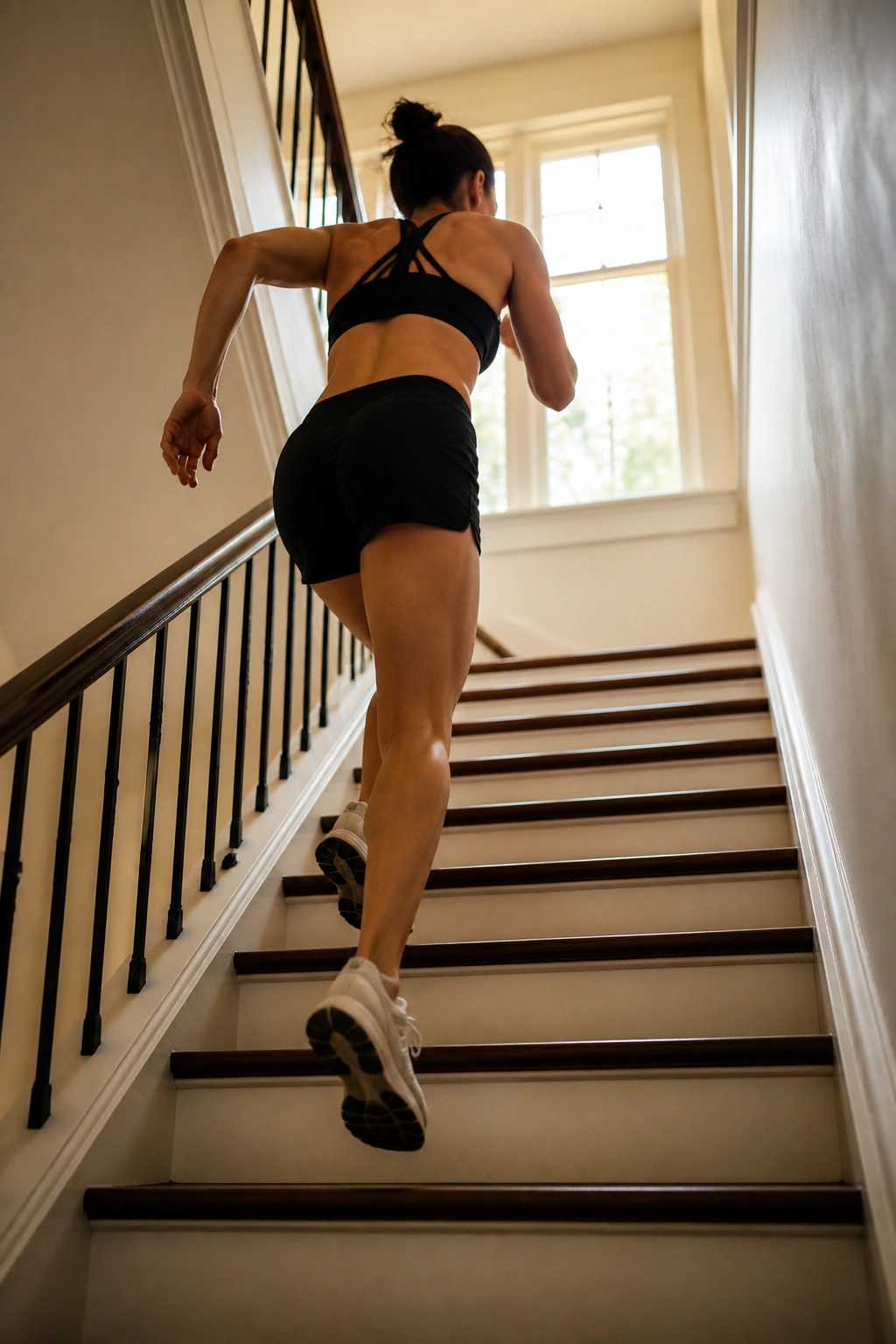
A staircase turns into a training tool fast.
Walk up at a brisk pace for 20 to 30 seconds, then walk down slowly for recovery. Repeat for 8 to 12 rounds. If your home stairs are steep, shorten the work interval. If they’re shallow, add another round or two. The climb should leave you breathing harder, but your form should stay neat.
Use the handrail if you need it. That is smart, not weak. In fact, the safer you feel on the stairs, the more likely you are to push the pace where it counts.
A few useful tweaks:
- Take the stairs one step at a time for a calmer version.
- Take two steps at once if you want more power and your knees are happy.
- Add a knee drive at the top of each climb for a little extra hip work.
- Wear shoes with a stable sole, not slippery socks.
This is one of the best no-equipment home cardio workouts because it respects space and still gets real work done. No fancy choreography. No setup. Just stairs and effort.
9. The Resistance Band Total-Body Circuit
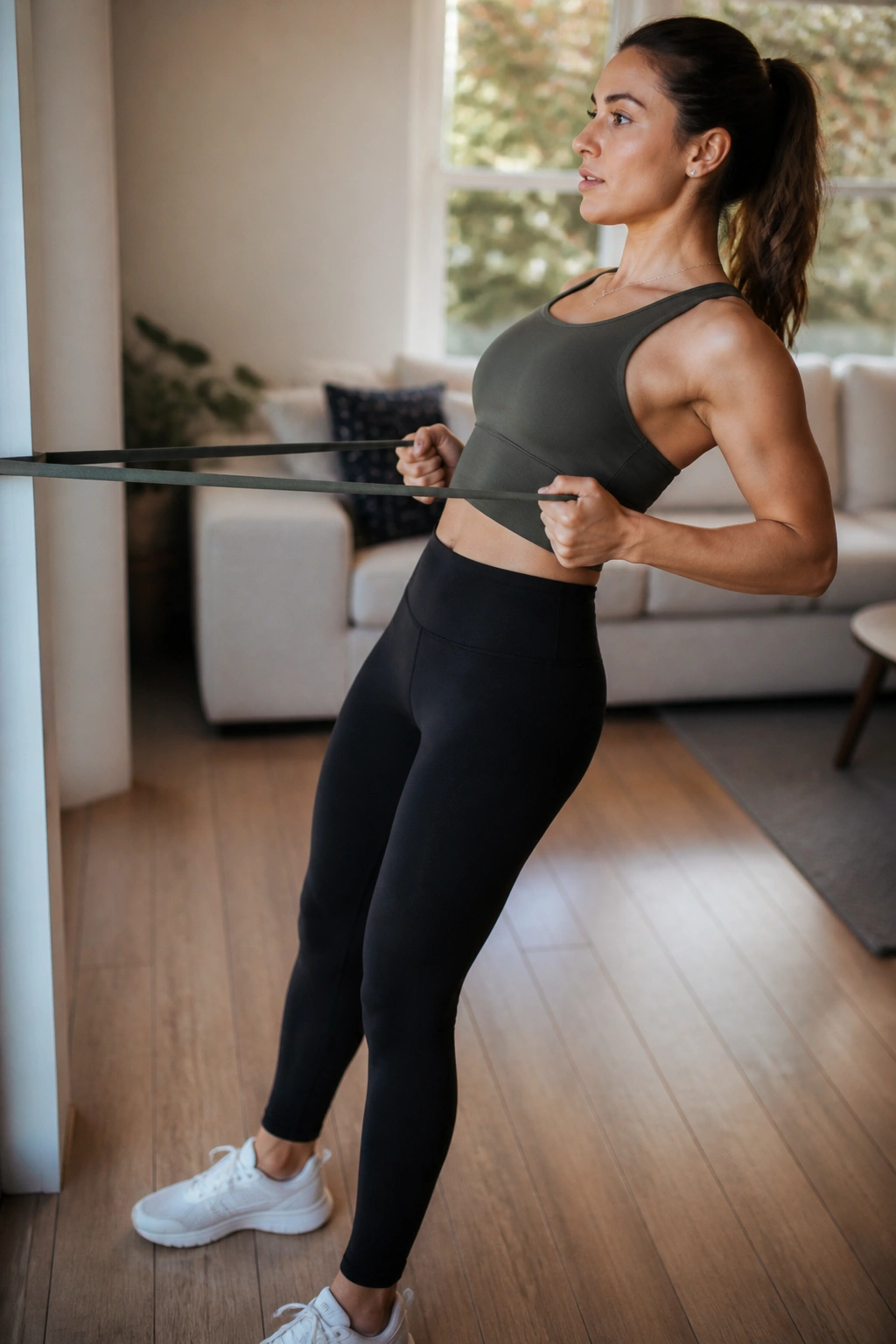
A resistance band can do more than most people think, and it takes up less space than a pair of running shoes.
Pick a loop band or a long band with handles, then cycle through rows, presses, squats, and pull-aparts. The band gives your muscles tension all the way through the rep, which is one reason it feels so different from bodyweight work. Do 10 to 15 reps per move, resting 30 to 60 seconds between rounds.
A Practical Four-Move Circuit
- Band row: squeeze the shoulder blades together.
- Band squat: stand on the band and hold it at shoulder height.
- Band chest press: anchor the band behind you.
- Band pull-apart: keep your ribs down and arms straight.
Beginners should choose a lighter band and slower pace. Intermediate exercisers can do three rounds without much rest. Advanced users can add a tempo, like 2 seconds down and 1 second up, or use a heavier band that makes the last 3 reps feel honest.
One thing I’d insist on: anchor the band correctly. A bad anchor is not a workout problem. It is a safety problem.
10. The Yoga Flow That Builds Strength Too
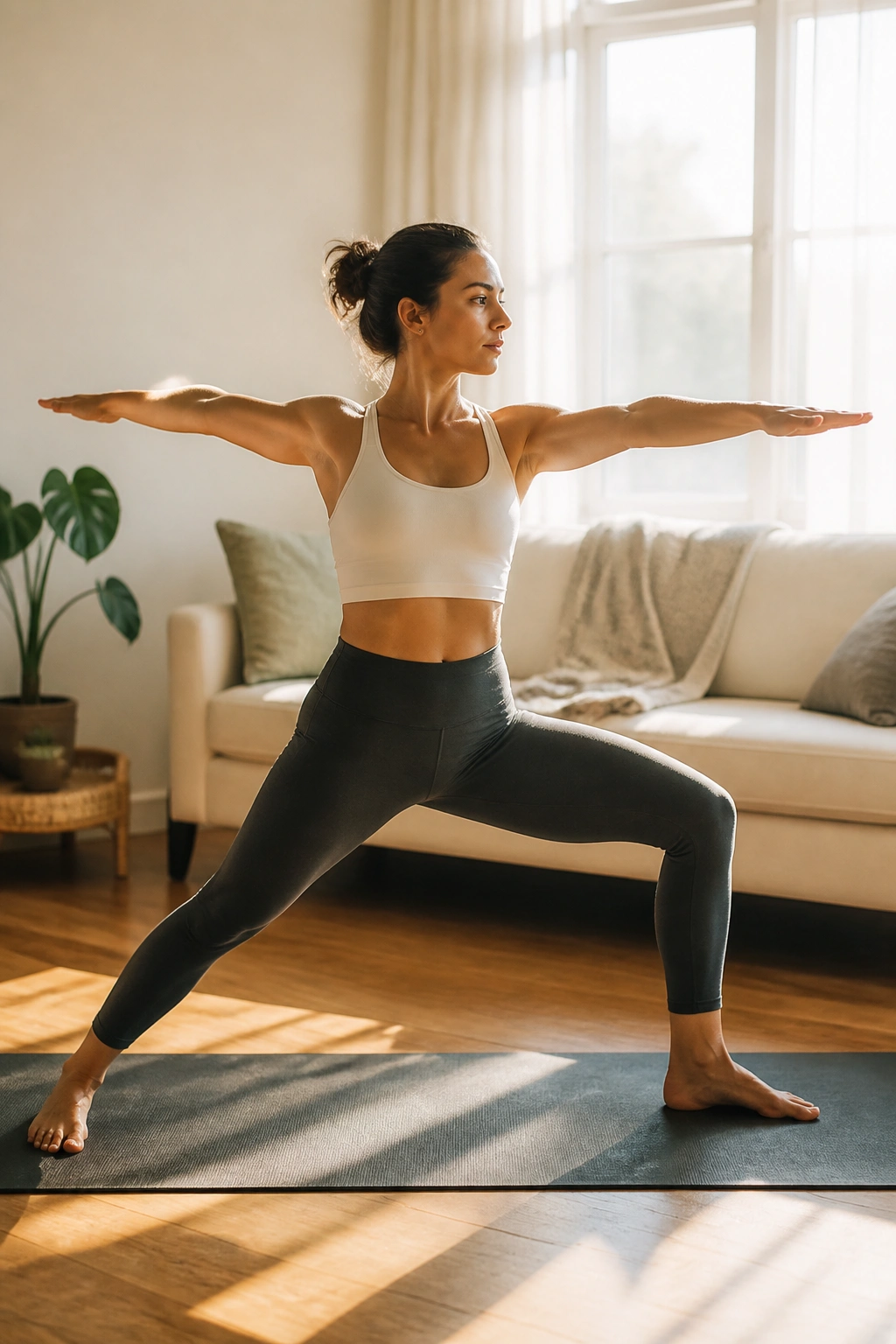
Not every yoga session is a stretchy, sleepy affair. Some flows make your shoulders, legs, and core work in a way that feels suspiciously like strength training.
Try a sequence of downward dog, plank, low lunge, warrior II, and chair pose, holding each shape for 3 to 5 breaths. Move slowly enough that your legs shake a little on the hard parts. That shaking is not a failure. It is often the point.
I like this style of home workout on days when I want to move without smashing my joints. It opens the hips, loads the ankles and calves, and asks the upper body to hold itself together. You finish feeling taller. Not in a mystical way. In a practical one.
A simple flow:
- Downward dog
- Plank
- Right low lunge
- Warrior II
- Chair pose
- Left side repeat
If balance is shaky, keep the feet a little wider. If the wrists complain, drop to forearms in plank or skip it that day. A workout that helps you recover while still doing useful work is worth keeping around.
11. Dance Cardio Blocks for People Who Hate “Exercise” Music
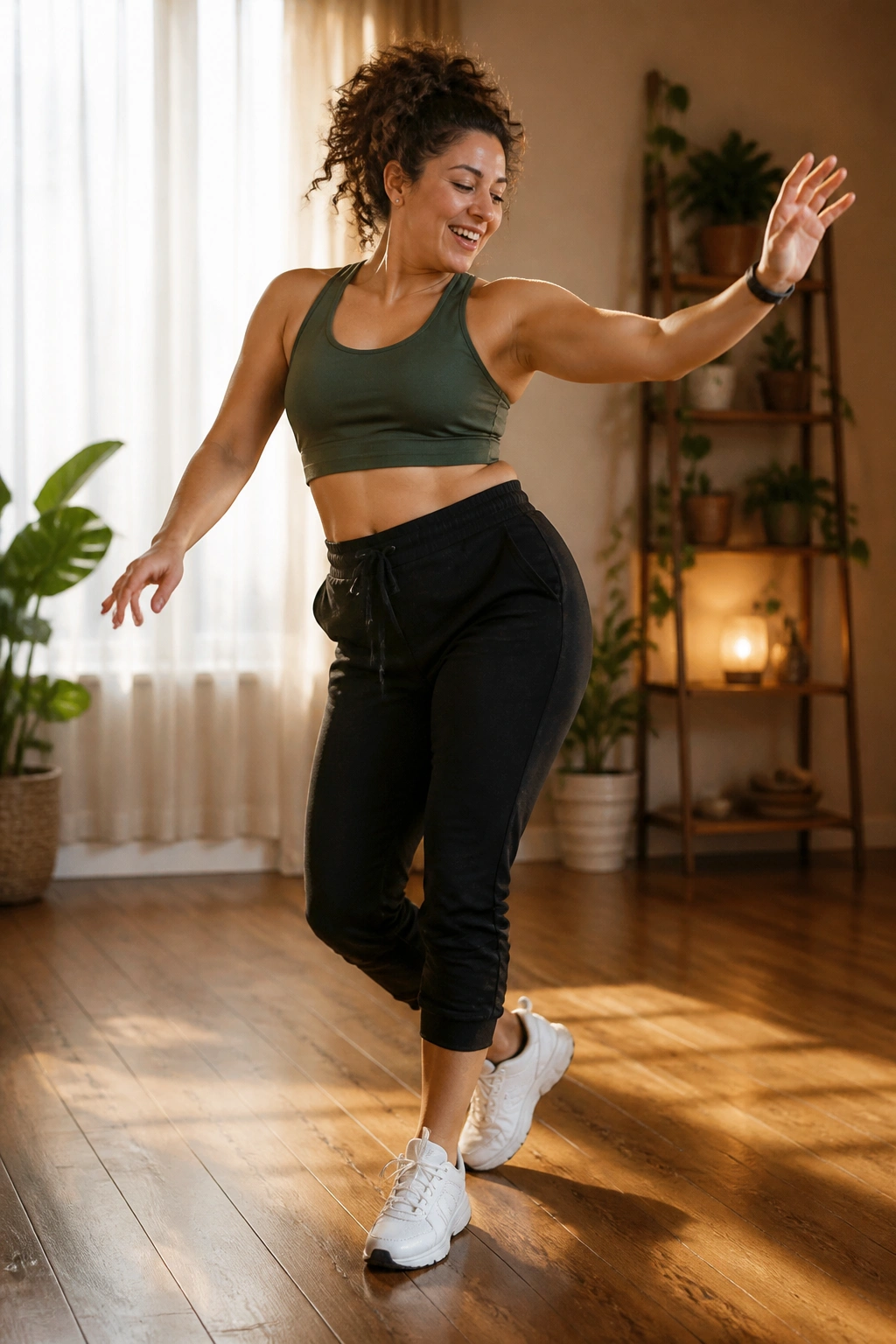
You do not need to be a good dancer to make this work. You only need enough rhythm to keep moving for a few songs.
Pick 3 songs and spend each one on a different pattern: step-touch, grapevine, knee lifts, or side shuffles. Keep the first song easy, the second song active, and the third song fast. If you like structure, do 45 seconds of movement and 15 seconds of marching between sections.
Easy Ways In
- Keep one foot on the floor at all times.
- Use your arms more before you speed up your feet.
- Repeat the same four steps until they feel automatic.
- Swap jumping jacks for side steps with arm reaches.
This is the kind of workout that gets dismissed by people who love feeling serious about exercise. I think that misses the point. If dance cardio helps you stay consistent, it wins. Period.
It also scales cleanly. Beginners can keep everything low-impact. Advanced exercisers can add turns, bigger arm sweeps, or faster changes on the chorus. Same room. Same music. Different intensity.
12. The Split Squat and Calf-Raise Stability Set
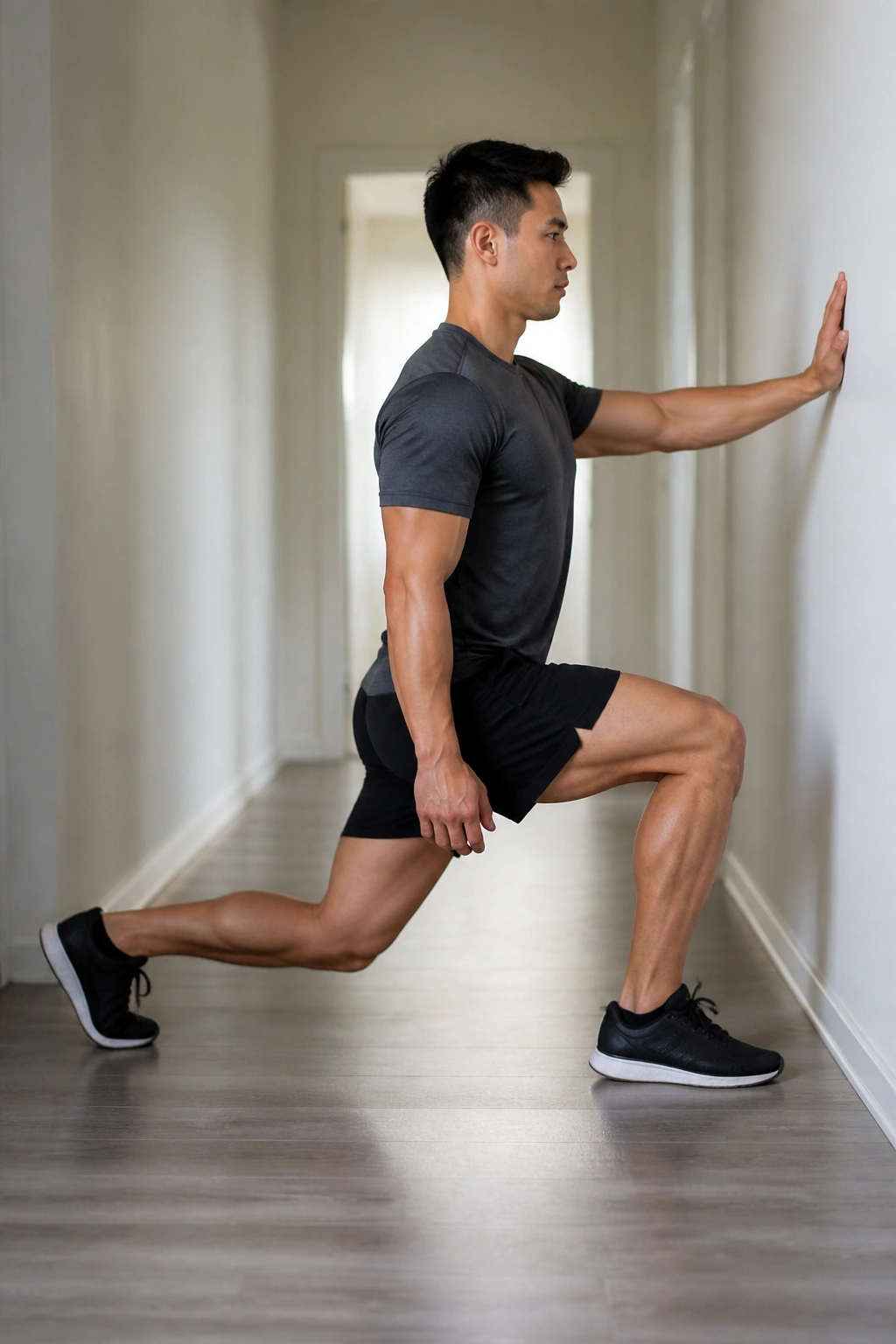
Single-leg work tells the truth fast. There is nowhere to hide.
A split squat puts one foot forward and one back, then asks you to lower straight down under control. Do 8 to 12 reps per side, then finish with 15 to 20 calf raises. If you need support, keep one hand on a wall or chair. That small touch can make the whole movement cleaner.
Why This One Matters
The split squat works the quads, glutes, and adductors while also exposing side-to-side differences. One leg may feel steady while the other wobbles like it has never met gravity before. Good. That is useful information.
For a beginner, shorten the stance and do a smaller range. For an intermediate lifter, pause at the bottom for 1 full second. For advanced training, slow the lowering phase to 4 seconds and keep the torso tall without leaning too far forward.
Calf raises deserve their place here too. Strong calves help with balance, walking speed, and stair work, and they are easy to ignore until they start barking at you. Straight up, straight down. No bouncing.
13. The Towel Slider Hamstring Workout
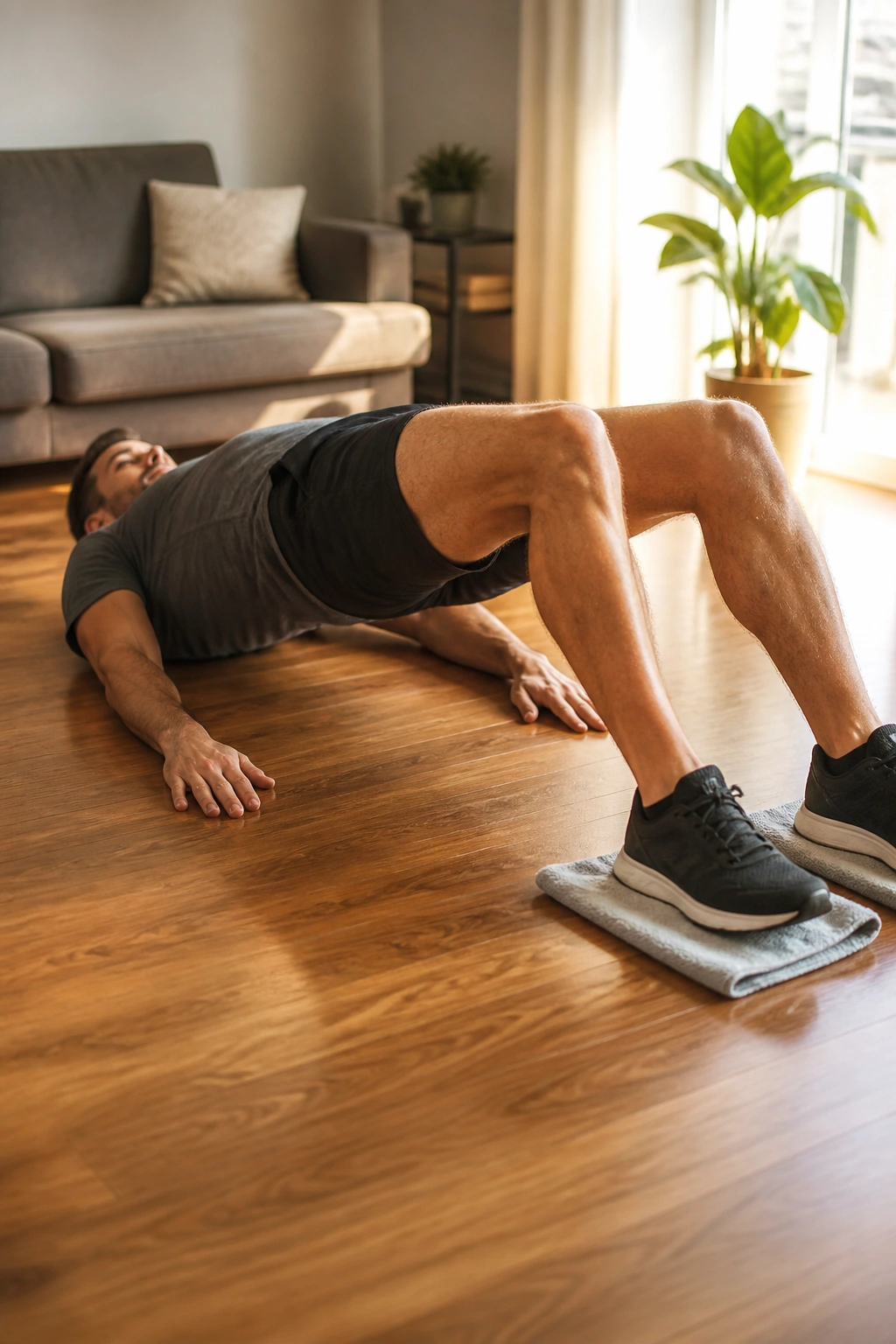
A kitchen towel on a smooth floor can humble anyone.
Lie on your back, heels on the towels, hips lifted, and slide your feet away and back in. That’s the basic hamstring curl. Do 8 to 12 reps for 3 rounds, and keep your hips as steady as you can. On hardwood, the towels glide. On carpet, you may need furniture sliders or a plastic lid under each heel.
How to Use the Floor Without Slipping
- Keep the movement slow on the way out.
- Pull the heels back using the hamstrings, not a hard yank from the hips.
- Stop if your low back arches.
- Use a yoga mat under your shoulders if the floor feels rough.
You can turn this into a bigger session by adding body saws from forearm plank or slow mountain climbers after each curl set. That makes the whole workout feel like a sneaky core-and-leg package.
One caution: if your floor is too slick, this goes from useful to chaotic fast. Test one rep before you commit to a set. Annoyingly practical, but worth it.
14. The EMOM Full-Body Burner
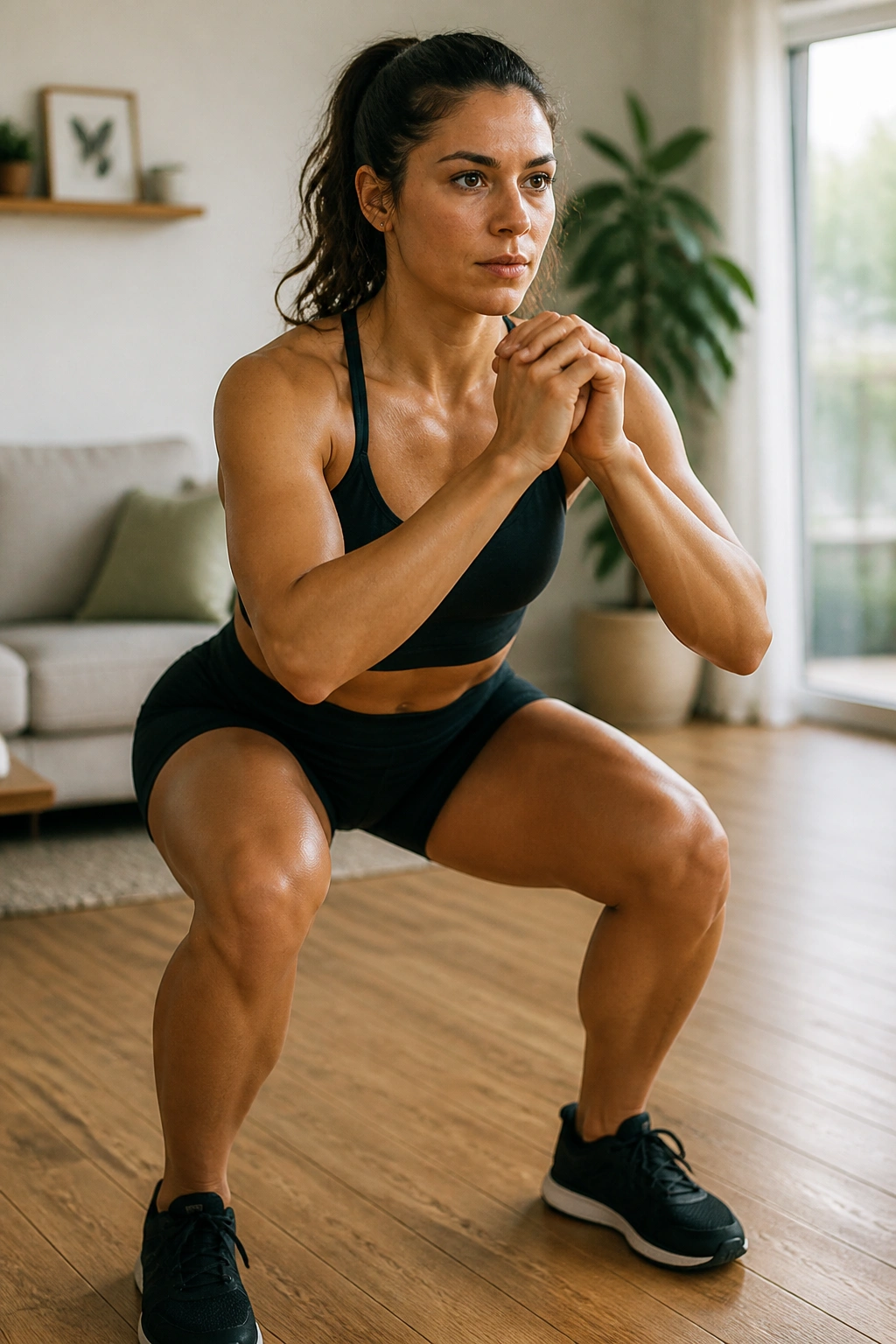
EMOM means every minute on the minute, and it’s one of the cleanest ways to build a home workout that stays moving without becoming a mess.
Pick four exercises and do one movement at the start of each minute, then rest for whatever time remains. A solid 12-minute version might be squats, push-ups, mountain climbers, and glute bridges. A tougher 16-minute version can add reverse lunges and plank shoulder taps. The work should take 30 to 40 seconds, leaving you 20 to 30 seconds to breathe before the next minute starts.
Sample EMOM
- Minute 1: 12 squats
- Minute 2: 8 push-ups or incline push-ups
- Minute 3: 20 mountain climbers per side
- Minute 4: 15 glute bridges
Repeat that cycle three or four times.
The beauty here is pacing. You cannot drift. You also cannot hide inside long rest periods. If you start too fast, the next minute punishes you. If you start too easy, the workout feels flat. That little pressure makes EMOM sessions weirdly addictive.
Beginners can keep the reps low and the exercises simple. Advanced exercisers can add load with a backpack or speed up the tempo, but only if form stays tidy.
15. The Silent Apartment Finisher
Not every good workout needs noise. Some of the best ones are quiet enough to do while other people are sleeping, studying, or pretending not to notice you exercising in the hallway.
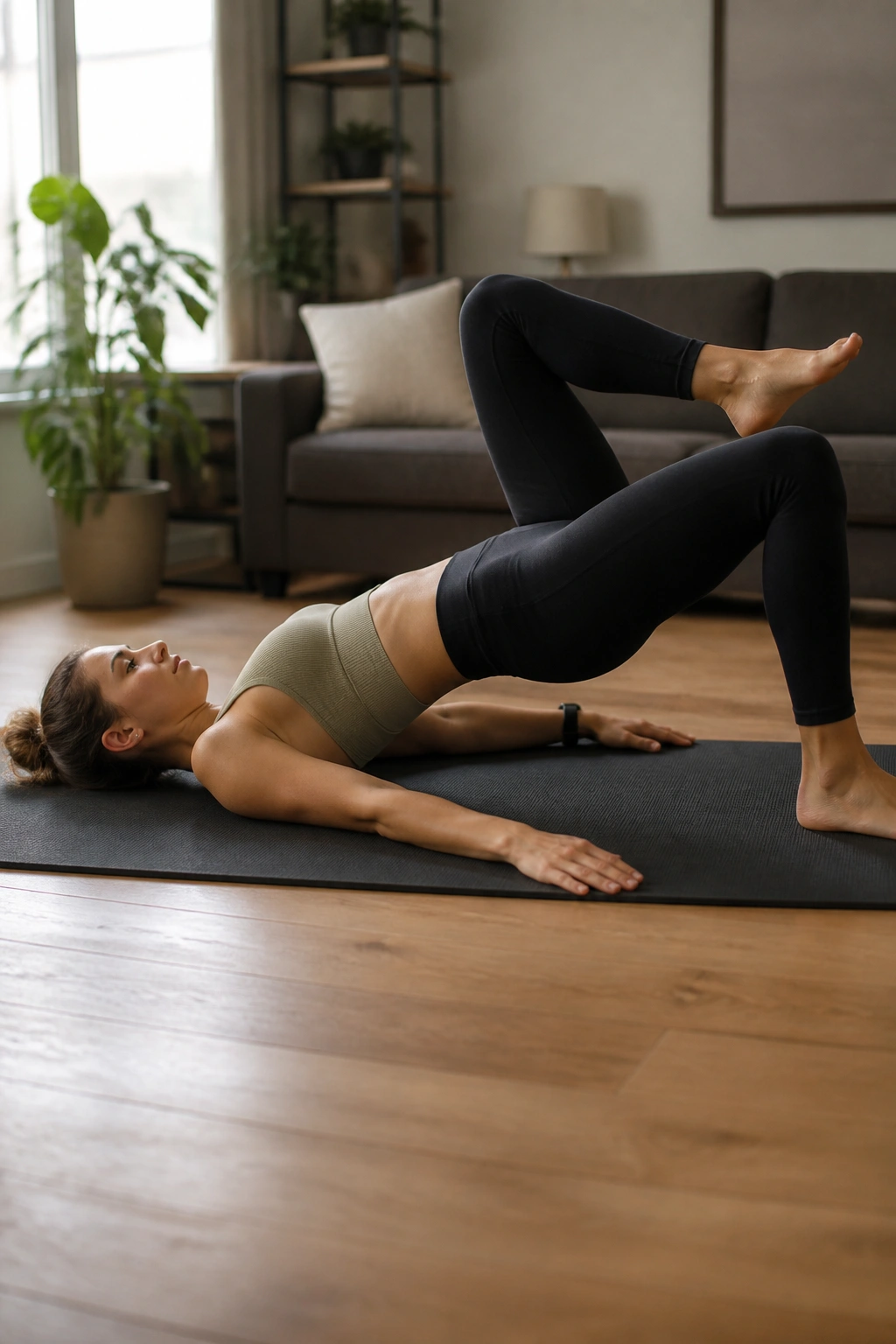
This finisher uses squat holds, glute bridge marches, dead bugs, and plank shoulder taps with no jumping at all. Work for 30 seconds, rest for 15 seconds, and cycle through all four moves for 2 to 4 rounds. It feels calm at first. Then your thighs start talking.
The Quiet Sequence
- Squat hold with chest up.
- Glute bridge march, alternating feet without dropping the hips.
- Dead bug, slow and controlled.
- Plank shoulder taps, feet wide for balance.
This is a smart option for late-night sessions, beginners who want less impact, or anyone whose knees prefer a softer approach. It also makes a solid add-on after a walk or a short strength workout when you want a little more work without waking the house.
If you need to make it easier, skip the plank taps and repeat the bridge march twice. If you want more, turn the squat hold into a wall sit. Same room. Less noise. Plenty of burn.
The Bottom Line
The best home workouts are the ones you can repeat without bargaining with yourself every time. A chair, a band, a staircase, or a clean patch of floor is enough to build a routine that covers strength, cardio, and mobility.
Pick two or three of these sessions and rotate them through the week. Keep one day light, one day harder, and one day somewhere in the middle. That pattern is boring in the best possible way.
And when a workout starts to feel easy, change one thing only: more reps, less rest, a slower lowering phase, or a harder angle. Small progress adds up fast when you can do it in your own living room.
