



A seven-day workout plan for steady strength should leave you trained, not wrecked. If Monday turns into Thursday soreness, the week is too hard.
The best weeks repeat the same big patterns: squat, hinge, press, pull, carry. That gives your body enough practice to get stronger without turning every session into a grind.
I like plans that leave one or two reps in reserve on most sets, then use walking, mobility, and easy conditioning to fill the gaps. Boring? Maybe. Effective? Usually, yes.
Pick the week that fits your equipment and your energy, then run it with honest effort. The plans below do not all look the same, and that’s the point—some are barbell-heavy, some are home-friendly, some are built for busy days, and some are for the person who needs to stop treating every workout like a test.
1. Full-Body Barbell Week for Steady Strength
If you have access to a rack and a barbell, this is the cleanest place to start.
The appeal is simple: you practice the main lifts often enough to improve, but not so often that your lower back starts filing complaints. Three real lifting days are plenty when the work is honest and the rest of the week is used for walking, light movement, and getting your legs back under you.
Weekly Layout
- Monday: Back squat 3×5, bench press 3×5, barbell row 3×6
- Tuesday: 20 to 30 minutes of walking and hip mobility
- Wednesday: Deadlift 3×3, overhead press 3×5, pull-up or lat pulldown 3×6 to 8
- Thursday: Easy bike, easy walk, or full rest
- Friday: Front squat 3×4, incline bench 3×5, split squat 2×8 each side
- Saturday: Farmer carry 6 rounds of 20 to 30 meters, plank 3 x 30 seconds
- Sunday: Off
The Loading Rule
Keep most sets around RPE 7 to 8, which means you should finish the set knowing you had a little left. Add 2.5 to 5 pounds only when all the reps feel crisp and the bar speed does not fall apart.
No grinders.
That one rule saves a lot of bad weeks. If a rep turns into a slow, ugly battle every session, the plan stops being steady strength and turns into survival training. I’m not a fan of that for most people.
2. Dumbbell-Only Home Week

No barbell? Fine.
A pair of adjustable dumbbells can build a strong, durable week if you stop chasing the idea that “real” strength work has to look loud. It doesn’t. A slow dumbbell split squat with a 2-second pause at the bottom will humble almost anyone, and a clean one-arm row done with control will do more for your back than a half-hearted gym machine circuit.
The shape of the week is simple: three lifting days, two easy movement days, one longer recovery day, and one full rest day. Monday can be a squat-and-push day with goblet squats, floor press, and rows. Wednesday can lean into hinges with Romanian deadlifts, reverse lunges, and overhead presses. Friday can repeat the same patterns with slightly different angles—front-foot elevated split squats, incline push-ups, and single-arm rows.
Use 3 sets of 6 to 10 reps on the main moves. Keep the lowering phase slow, around 3 seconds, and stop each set before your form gets sloppy. That slow eccentric matters more at home than people admit, because it gives you load without needing huge weights.
Saturday is a good day for core work and carries if you have room. Sunday can be a walk, a stretch, or nothing at all. The point is not to make your living room feel like a punishment zone.
3. Upper and Lower Alternating Days
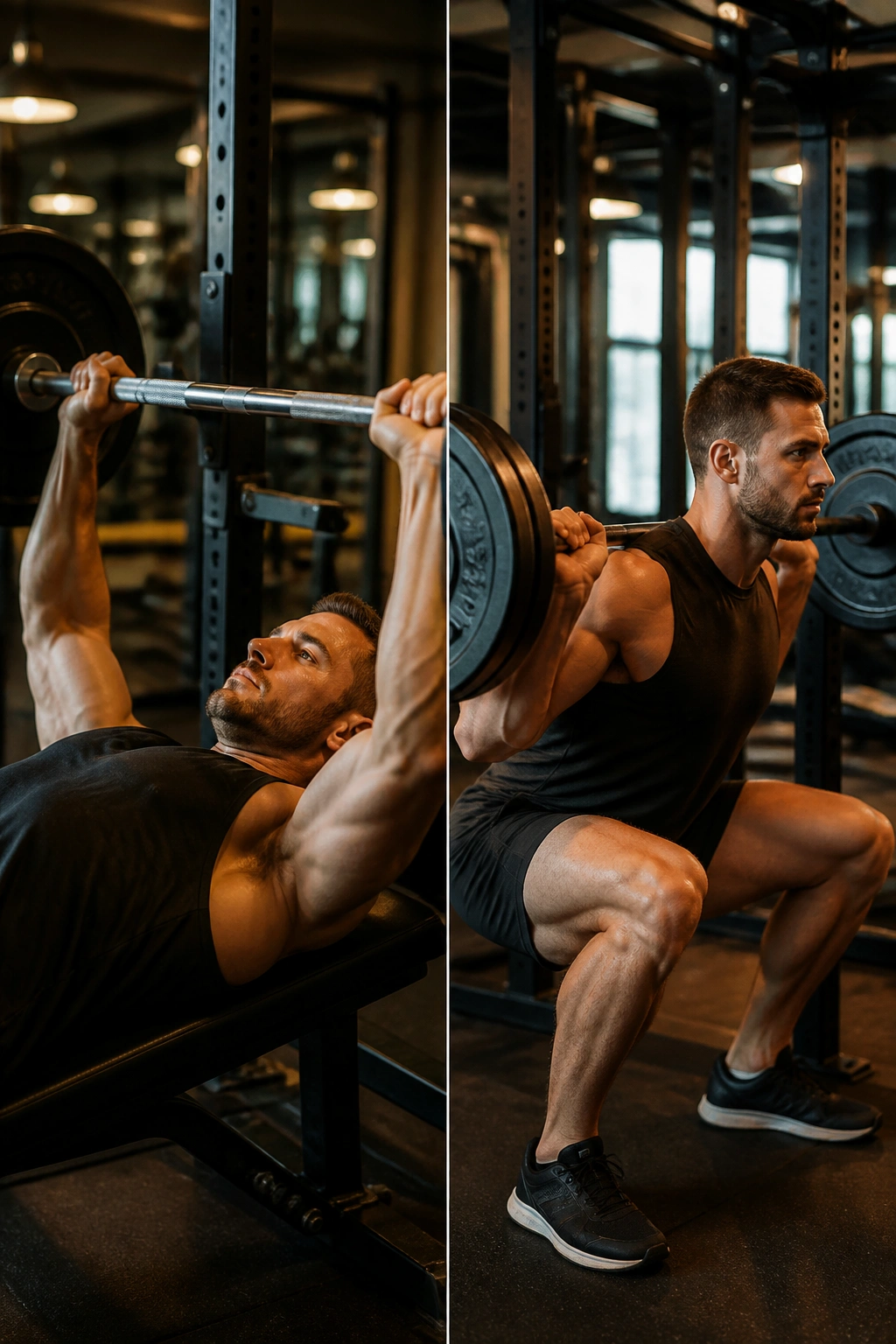
Monday upper, Tuesday lower, Wednesday off, Thursday upper, Friday lower, Saturday light work, Sunday rest. Clean. Easy to remember. Hard to mess up.
This split works because it lets one half of your body recover while the other half trains. Your lower back gets a break. Your shoulders get a break. Your nervous system stops feeling like it has to handle every major lift in the same 24-hour window.
What Each Day Looks Like
- Upper days: Bench press or dumbbell press, row variation, overhead press, pull-up or pulldown
- Lower days: Squat or leg press, hinge pattern, split squat, calf work or carries
- Light day: Walking, mobility, easy bike, or a short core circuit
Keep the main lifts in the 4 to 6 rep range and the accessory work closer to 8 to 12 reps. You do not need 20 exercises. You need enough work to improve, then enough space to recover.
I like this split for people who enjoy training four days a week and want the week to feel organized without being rigid. It’s also a nice fit if your legs get smoked by heavy squats and deadlifts in the same session. Separate them, and suddenly the whole week feels more manageable.
4. Push-Pull-Legs With a Soft Landing for Steady Strength
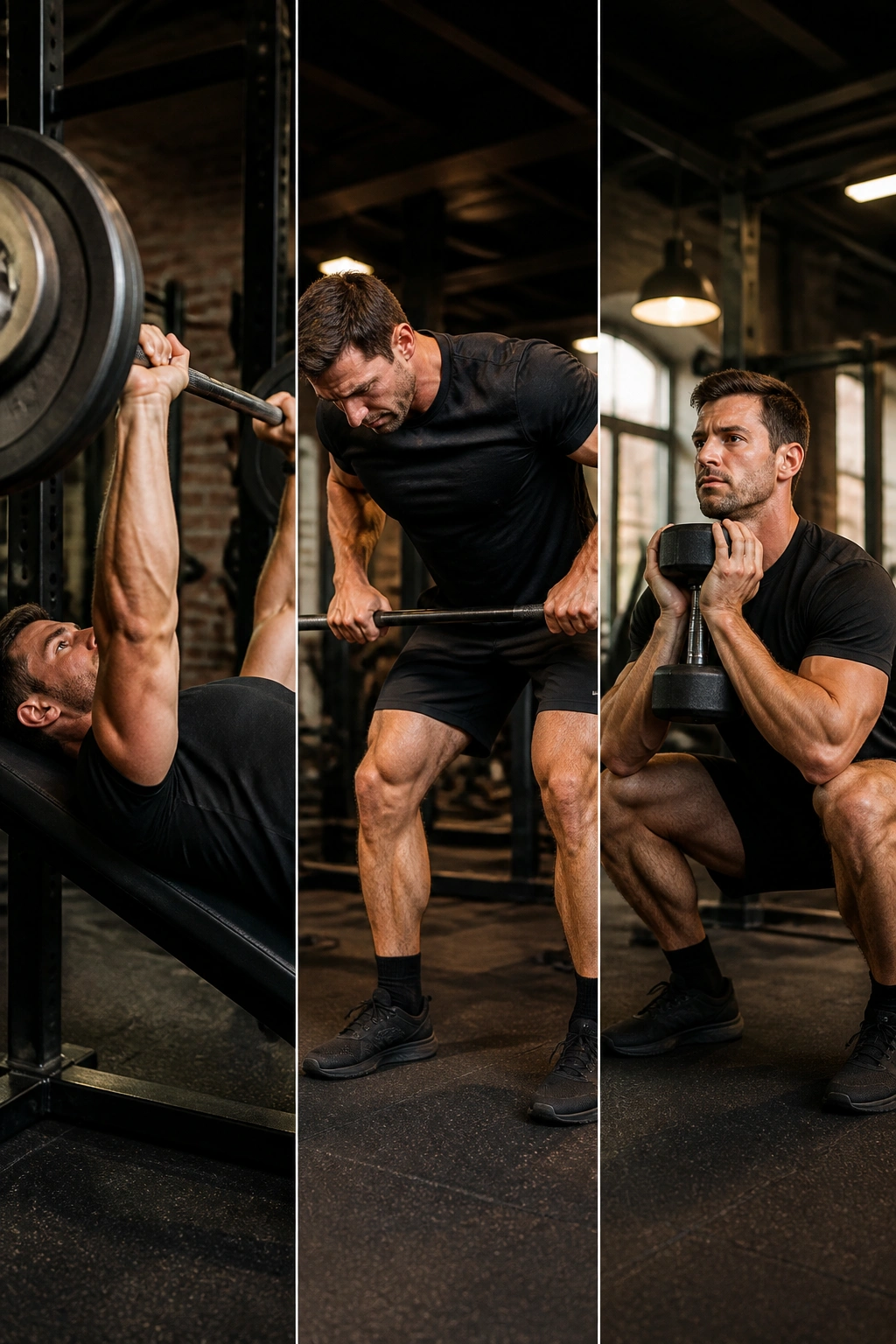
Push-pull-legs is not just a bodybuilder split.
Used badly, it turns into six days of junk volume and sore elbows. Used well, it becomes a tidy way to hit every major pattern without making any one session absurdly long. The trick is to keep the first three days honest and the second pass lighter, with fewer sets and cleaner reps.
A practical version looks like this: Monday push, Tuesday pull, Wednesday legs, Thursday recovery, Friday push, Saturday pull, Sunday legs or rest, depending on how fresh you feel. The first round can carry your heavier work—bench press, rows, squats, RDLs. The second round should be shorter, more technical, and easier on the joints.
How to Keep It From Turning Into a Marathon
- Cap working sets at 12 to 15 total per session
- Use 2 to 4 sets for most lifts
- Keep isolation work to 1 or 2 movements
- Stop when bar speed slows enough that you notice it
That last part matters. A lot.
If you feel good, great. If your sleep is off, trim the accessory work and keep the main lift. The plan should support strength, not feed the ego of the person doing it.
5. Bodyweight Strength Circuits That Still Build Real Muscle

Your chest and thighs should feel warm, not wrecked.
Bodyweight training gets dismissed by people who have never done a slow, paused split squat set to near-failure. That’s a shame, because a good bodyweight week can build steady strength if you use leverage, tempo, and single-leg work instead of trying to copy a barbell session without the barbell.
Monday can start with push-ups, inverted rows under a table or bar, and reverse lunges. Wednesday can lean on split squats, pike push-ups, hollow holds, and slow tempo squats. Friday can bring back the same movements with harder variations—feet-elevated push-ups, single-leg hip hinges, plank shoulder taps, and wall sits.
Leverage Tricks
- Use 3-second lowers on push-ups and squats
- Add 1-second pauses at the bottom
- Move from two-leg to one-leg versions
- Raise the feet, slow the tempo, or cut rest to 45 to 60 seconds
That’s enough to make the work real.
The nice part is how little setup you need. The annoying part is that bodyweight work punishes lazy reps fast, so you have to pay attention. Clean form matters more here than on most gym plans, and that is probably why people either love it or quit it.
6. Kettlebell and Carry Week

A single kettlebell can carry a week.
Not forever. Not by magic. But enough to build dense, useful strength if you stop treating the bell like a toy and start using it for swings, squats, presses, get-ups, and carries. That mix hits grip, hips, shoulders, and trunk stability in a way that feels practical rather than flashy.
Monday can be swings, goblet squats, and one-arm presses. Wednesday can shift to clean-and-press, front-rack holds, and split squats. Friday can bring deadlifts, rows, and suitcase carries. Tuesday and Thursday stay light with walking or mobility, while Saturday can be a short Turkish get-up practice day.
How to Use the Bell
- Swings: 8 to 10 sets of 10 reps with crisp hip snap
- Presses: 3 sets of 5 each side
- Goblet squats: 3 sets of 6 to 8
- Carries: 4 to 6 trips of 20 to 40 meters
- Get-ups: 2 to 4 reps per side, slow and controlled
Carry work changes everything. It lights up the grip, torso, and hips without beating up your knees.
Keep the weight honest. A kettlebell that is too light turns into cardio with a handle. A kettlebell that is too heavy turns your form into a mess. The middle is where the good stuff lives.
7. A Busy Schedule Plan for Steady Strength

Only have 40 minutes?
Then stop building a fantasy program that needs 90-minute sessions and a perfectly quiet gym. A busy week needs short, clear blocks: warm up fast, lift with purpose, leave before the workout starts wandering.
Use three strength days and two short movement days. Monday can be squat and row supersets. Wednesday can be hinge and press. Friday can be split squat and pull-up work. Tuesday and Thursday can be 20-minute walks or easy bike rides. Saturday can be a 15-minute mobility session, and Sunday can stay empty.
The 40-Minute Template
- 8-minute warm-up: bodyweight squats, hip circles, band pull-aparts, easy rows
- 20-minute main block: two supersets, 3 sets each
- 8-minute finisher: carries, planks, or sled pushes
- 4-minute cooldown: nasal breathing, light stretching, water
Supersets help, but don’t turn them into a circus. Pair a lower-body lift with an upper-body lift, then rest enough to keep the work sharp. If your heart rate is so high that your squat turns into a bounce, the session has gone off the rails.
This plan suits people who need consistency more than variety. That’s most people, by the way.
8. Walking Plus Strength Week

If your legs feel better after a walk than after a nap, this one makes sense.
There’s a reason walking keeps showing up in good strength plans. It clears the head, loosens the hips, and helps recovery without asking much from the body. Pair that with three moderate lifting days and you get a week that feels strong instead of noisy.
Monday, Wednesday, and Friday can each be full-body lifting sessions with one squat pattern, one hinge, one press, and one pull. Tuesday, Thursday, Saturday, and Sunday stay easy with 20 to 45 minutes of walking, depending on your schedule. The walks do not need to be fast. A pace where you can speak in full sentences is enough.
You can keep the lifting work simple: 3 sets of 5 on the main move, 2 sets of 8 on accessories, and stop before the last rep gets ugly. The walking takes care of the low-intensity volume that many people try to cram into the lifting itself.
I like this plan for people who sit a lot. It helps your hips, your back, and your mood without asking you to recover from another punishing circuit. Not glamorous. Pretty useful.
9. Joint-Friendly Low-Impact Strength Week

You do not need to smash yourself to get stronger.
A lot of people would keep training longer if they stopped treating every session like a fight. Machines, cables, sleds, supported split squats, and bike intervals can all build strength while being kinder to knees, ankles, and lower backs. That matters more than people admit once the joints start getting picky.
A good week here might look like this: Monday machine press, cable row, leg press; Tuesday easy bike and mobility; Wednesday sled pushes, Romanian deadlifts, reverse lunges; Thursday rest or walking; Friday chest-supported row, landmine press, hamstring curl; Saturday incline walk; Sunday off.
What to Swap In
- Leg press instead of back squat
- Chest-supported row instead of bent-over row
- Sled push instead of sprint work
- Landmine press instead of heavy overhead pressing
- Split squat with support instead of free-standing lunges
The lesson is plain: load the muscles without irritating the joints.
This plan is a smart fit for people who recover slowly, people coming back from a layoff, or anyone who feels better with stable equipment under them. Strength does not care whether the implement is romantic. It cares whether the work is there.
10. The Athlete Hybrid Week

Five hard days in a row is a bad deal for most people.
Runners, cyclists, field athletes, and weekend competitors need strength, but they also need legs that still work when they leave the gym. That means the strength work has to sit beside conditioning, not crush it. Two strength days, two skill or conditioning days, two recovery days, and one full rest day is a solid rhythm.
Monday can be lower-body strength with squats and hinges. Tuesday can be an easy run, tempo ride, or sport skill session. Wednesday can be upper-body strength. Thursday stays light with mobility and short intervals. Friday can be a second lower-body day with less load and cleaner speed. Saturday can be sport practice or a moderate conditioning session, and Sunday can rest.
Do the strength work after the skill work if both happen on the same day. That keeps the technique side fresh and lets the heavy lifting stay focused.
I’d keep the strength reps lower here—3 to 5 reps on the main lifts, 6 to 8 on accessories—because the goal is to support performance, not create wreckage. The best hybrid week leaves you feeling like you could train again tomorrow, even if you don’t need to.
11. The Beginner Confidence Week

If you’re new, less is better at first.
That sounds too easy, which is probably why people ignore it. But beginners do better when the week is clear, repeatable, and low on chaos. Three full-body sessions are enough to learn the lifts, build confidence, and keep recovery simple.
What Success Looks Like
- Monday: Goblet squat, incline push-up, cable row, dead bug
- Wednesday: Hip hinge with a dowel or light dumbbell, overhead press, split squat, plank
- Friday: Repeat Monday with small changes in grip or stance
- Tuesday/Thursday/Saturday: Walk 15 to 30 minutes
- Sunday: Rest
Use 2 sets of 5 to 8 reps for most lifts. Leave 3 reps in the tank. That is not laziness; that is skill-building. The movements should feel smooth, not desperate.
A beginner does not need to earn soreness. They need to learn what a good squat feels like, where the ribs belong during a press, and how to stop a set before form unravels. That takes a few weeks of patience, which is boring in the best possible way.
12. Progressive Overload for Steady Strength

Steady strength grows from tiny jumps, not hero sessions.
This plan is for the person who likes structure and wants to see measurable progress without making every week a gamble. The week is built around the same lifts, but the load or reps nudge upward in small steps. No wild changes. No reinvention every Monday.
A simple version uses four training days. Monday is heavy lower body, Tuesday heavy upper body, Thursday lighter lower body, Saturday lighter upper body. Wednesday, Friday, and Sunday stay open for walking, mobility, or nothing much at all. On the heavy days, use 3 to 5 reps. On the lighter days, use 6 to 8 reps with cleaner tempo and a little less load.
Progression Rules
- Add 1 rep before adding weight
- Then add 2.5 to 5 pounds
- Keep one set in reserve on most work
- If bar speed slows badly, hold the load steady next week
- Use microplates if your jumps feel too big
That last point matters more than people think. A 1-pound or 2-pound jump can keep momentum alive when a regular jump feels clumsy.
I like this plan for lifters who hate guessing. It turns progress into a paper trail, which is a pleasant relief after enough random workouts.
13. Travel Week for Hotel Rooms and Tiny Gyms
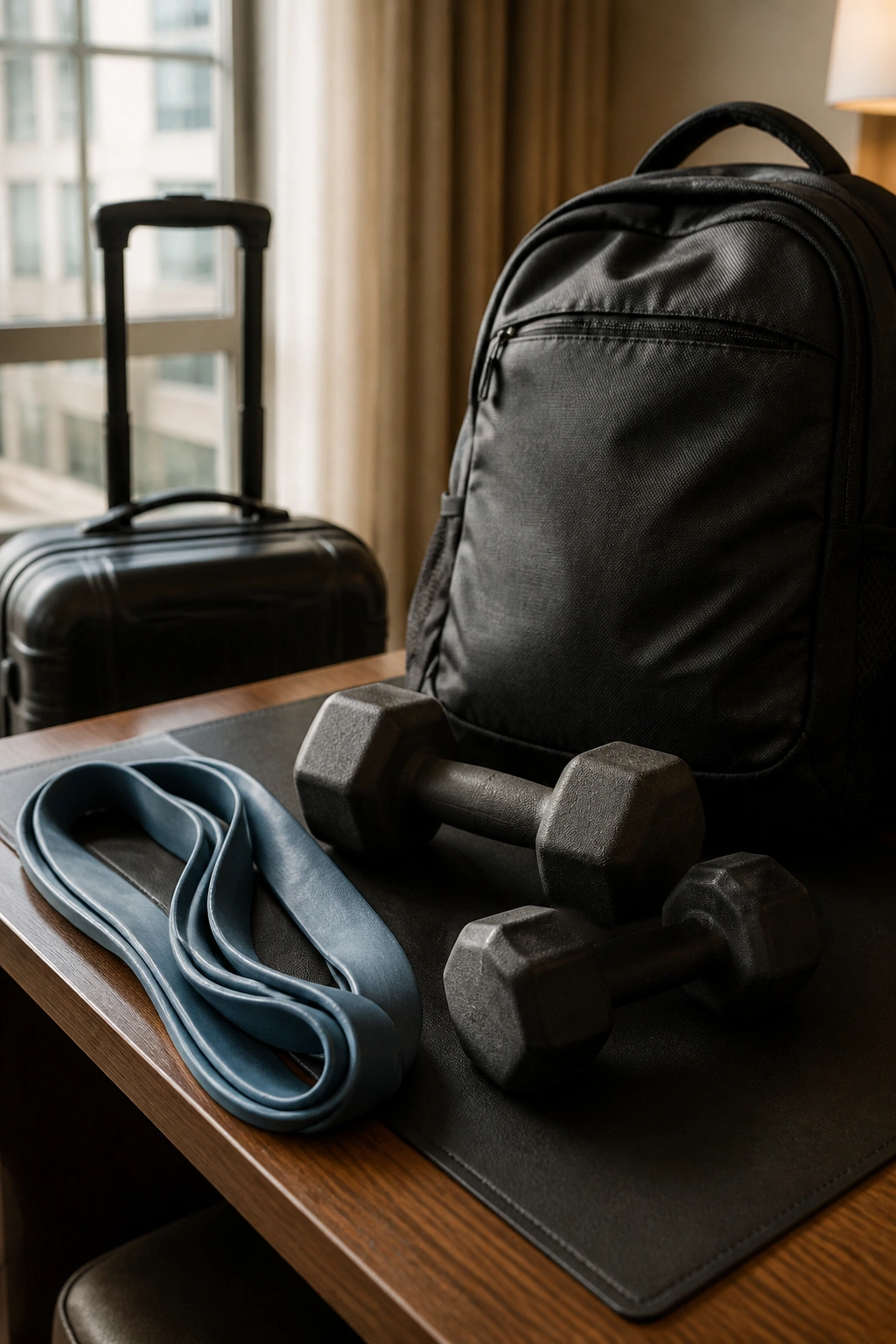
A hotel room, a suitcase, and no excuses.
Travel workouts fall apart when people expect too much from the space. You don’t need much. A resistance band, a pair of light dumbbells, or even a backpack loaded with books can keep strength moving while the week is upside down.
Monday can be push-ups, backpack squats, and band rows. Wednesday can use split squats, overhead presses with a suitcase or dumbbells, and plank drags. Friday can repeat the same patterns with different foot positions, slower tempo, or slightly more reps. Tuesday, Thursday, Saturday, and Sunday can stay as walking days, airport days, or recovery days.
Portable Gear That Helps
- A long resistance band
- A mini loop band
- A backpack you can load safely
- One light pair of dumbbells, if available
- A door anchor for rows
Keep the sessions short—20 to 25 minutes is enough. If you try to recreate a full gym day in a hotel room, you’ll waste time and probably annoy yourself. A tight circuit with good form beats a sprawling mess every time.
This is the week that protects momentum. That matters more than perfection when your routine is broken by travel.
14. Power First, Strength Second

Fast first. Heavy second.
That’s the cleanest way to think about a week that blends power and strength without turning into a speed circus. The explosive work should stay short and crisp—jumps, med-ball throws, kettlebell swings, or quick push-ups—then the heavier lifts come after, while the nervous system is still fresh.
Monday can start with box jumps or broad jumps, then move into squats and rows. Wednesday can use med-ball slams or swings before pressing and pulling. Friday can repeat the pattern with a different lower-body lift, maybe front squats or trap-bar deadlifts. Tuesday, Thursday, and Saturday stay light with mobility, walking, or short bike work. Sunday rests.
Keep the Power Work Small
- 3 to 5 reps per set
- 3 to 6 total sets
- Full rest between sets
- Stop while speed is still snappy
That’s the difference between power and conditioning. Once the movement gets slow, you’ve left the lane.
I’m a fan of this plan for people who like moving fast and still want a strong base. It keeps the week lively without letting the explosive work bleed into sloppy fatigue. And yes, that line matters. A lot of people confuse hard with useful.
15. The Deload and Reset Week

Not every good week feels hard.
A deload week is what keeps steady strength from turning into cumulative fatigue. If your joints feel cranky, your sleep gets weird, or the bar starts moving like wet cement, pulling back for a week is not weakness. It’s maintenance.
Drop your usual loads to about 60 to 70 percent and cut your sets roughly in half. If you normally squat 4 sets, do 2. If you normally press 5 reps, do 3 or 4. Keep the movement patterns the same, but make them feel easy. Walking, light cycling, mobility drills, and a few carries fit nicely here.
When to Run It
- Bar speed drops for more than a few sessions
- Your warm-ups feel unusually heavy
- Sleep quality slips
- Motivation turns into dread
- Old aches start whispering louder than usual
That list is worth paying attention to. People wait too long.
A deload week can also clean up technique. Because the load is lighter, you can notice foot position, bracing, bar path, and range of motion without fighting the weight. That makes the next hard week feel smoother, which is the whole point.
The Bottom Line

The best seven-day workout plan for steady strength is the one you can repeat without dreading the next session. That sounds plain because it is plain. Strength responds well to repetition, sensible loading, and enough recovery to let the work stick.
Barbells, dumbbells, kettlebells, bodyweight, machines, or a travel setup can all get you there. The gear matters less than the shape of the week and the size of your ego while you’re in it.
If your next workout looks manageable, you’re on the right track. If it looks like punishment, trim the sets, keep the lifts honest, and come back ready to do the work again.
