



The wrong top can make you feel fussy all day. You tug at the hem. You smooth the front. You turn sideways in every reflective surface and decide, again, that the shirt looked better on the hanger.
A better top does the opposite. It gives shape where you want it, room where you need it, and lets your midsection stop being the main event. That matters even more after 40, when a lot of women want clothes that feel polished without clinging to the stomach or riding up every time they sit down.
The trick is not to bury your body under fabric. That approach usually backfires. The smarter move is to choose tops that skim, drape, break up the center line, or create a clean waist line without squeezing you into one.
And yes, the details matter. A neckline that opens the chest, a hem that lands in the right place, a fabric with some weight, a seam that gives shape without grabbing — those are the things that make a top work in real life, not just in a fitting room mirror.
1. Wrap Tops That Tie at the Smallest Part of Your Waist
A wrap top earns its spot for one simple reason: it gives you shape without forcing you into a hard waistline. The tie sits where your body is narrowest, which pulls the eye there and leaves the stomach area free to do its own thing.
Why the tie placement matters
The best wrap tops do not sit low and sag. They cross high enough to define the ribcage, then fall in a soft line over the tummy. That little diagonal break is doing a lot of work. It keeps the center of the body from looking broad and gives the whole outfit some movement.
I like wrap tops best in matte jersey, soft crepe, or a knit with a bit of spandex. Shiny fabric can make every fold louder than it needs to be. And if the neckline gapes when you move, the whole thing starts fighting you.
- Look for a wrap point that lands at the natural waist, not below it.
- Choose sleeves that balance the front, like a short flutter or a neat three-quarter sleeve.
- Pick a hem that reaches the top of the hip bone or just below.
- If the fabric is very thin, wear a smooth cami underneath so the drape stays clean.
My favorite rule: if the tie creates a gentle V and the front panel floats instead of clings, you’ve got the right one.
2. Peplum Tops That Skim Instead of Cling
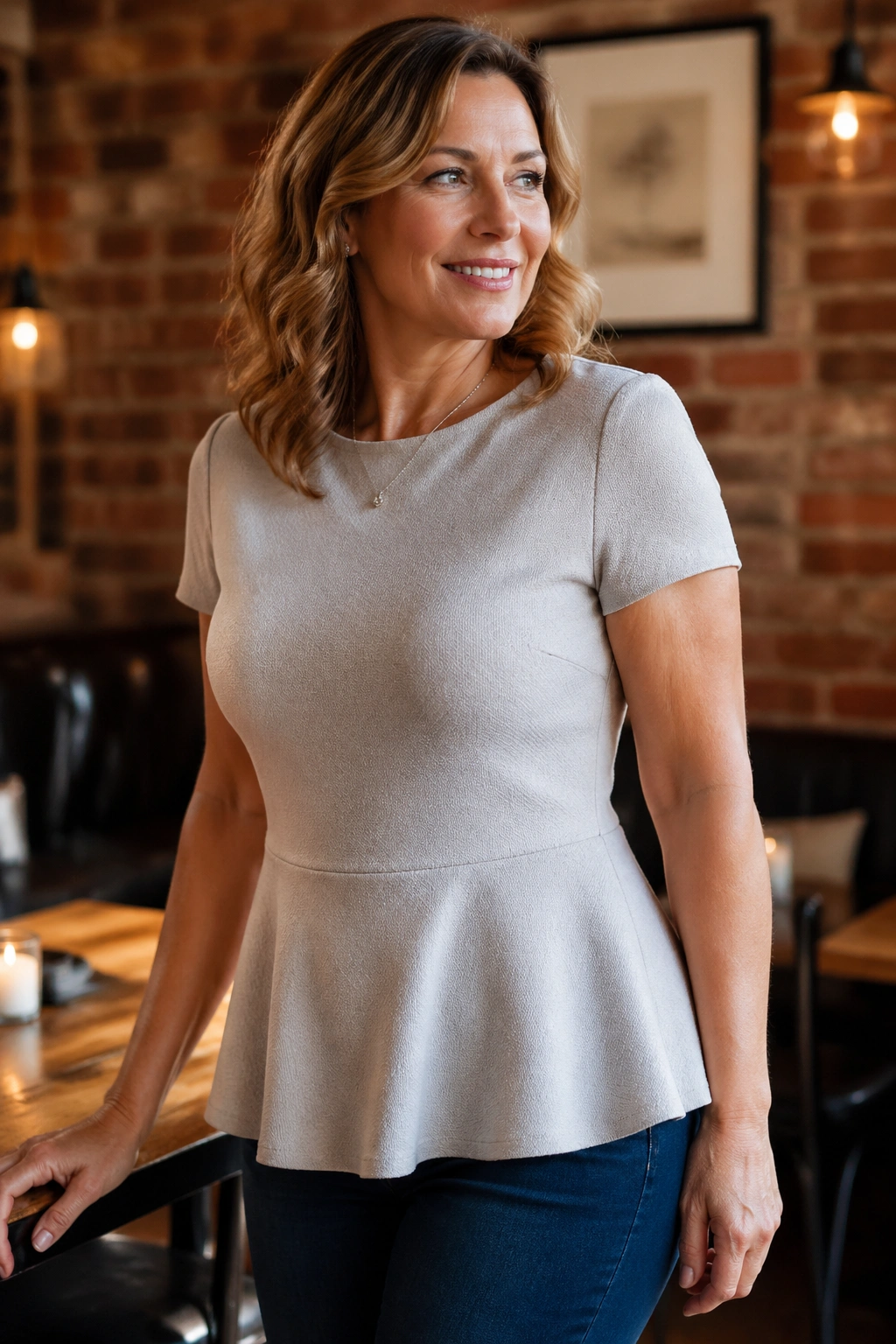
Peplum tops work because they solve a real problem with one shape change. The fitted upper section gives you definition, then the flare starts and moves away from the belly. That means the eye sees a waist, but the fabric stops short of hugging the middle.
The version I like most is the subtle one. Not the stiff, ruffled peplum that looks like it came from a costume rack. A softer flare, starting at the natural waist or just above it, is cleaner and easier to wear with straight-leg pants, cigarette trousers, or a pencil skirt.
If your stomach sits lower, pay attention to length. A peplum that ends right at the widest part of the hips can make the whole lower half look busy. One that covers the waistband and falls a couple of inches below it is usually kinder.
The best fabrics here are ponte, thicker jersey, and structured cotton blends. They hold the shape of the flare instead of collapsing into a wrinkle mess. And if you want a top that can do lunch, work, and dinner, this is one of the easiest wins.
One more thing. Keep the rest of the outfit simple. A peplum already brings shape, so the bottom half should stay sleek.
3. Empire-Waist Blouses That Float Away from the Midsection
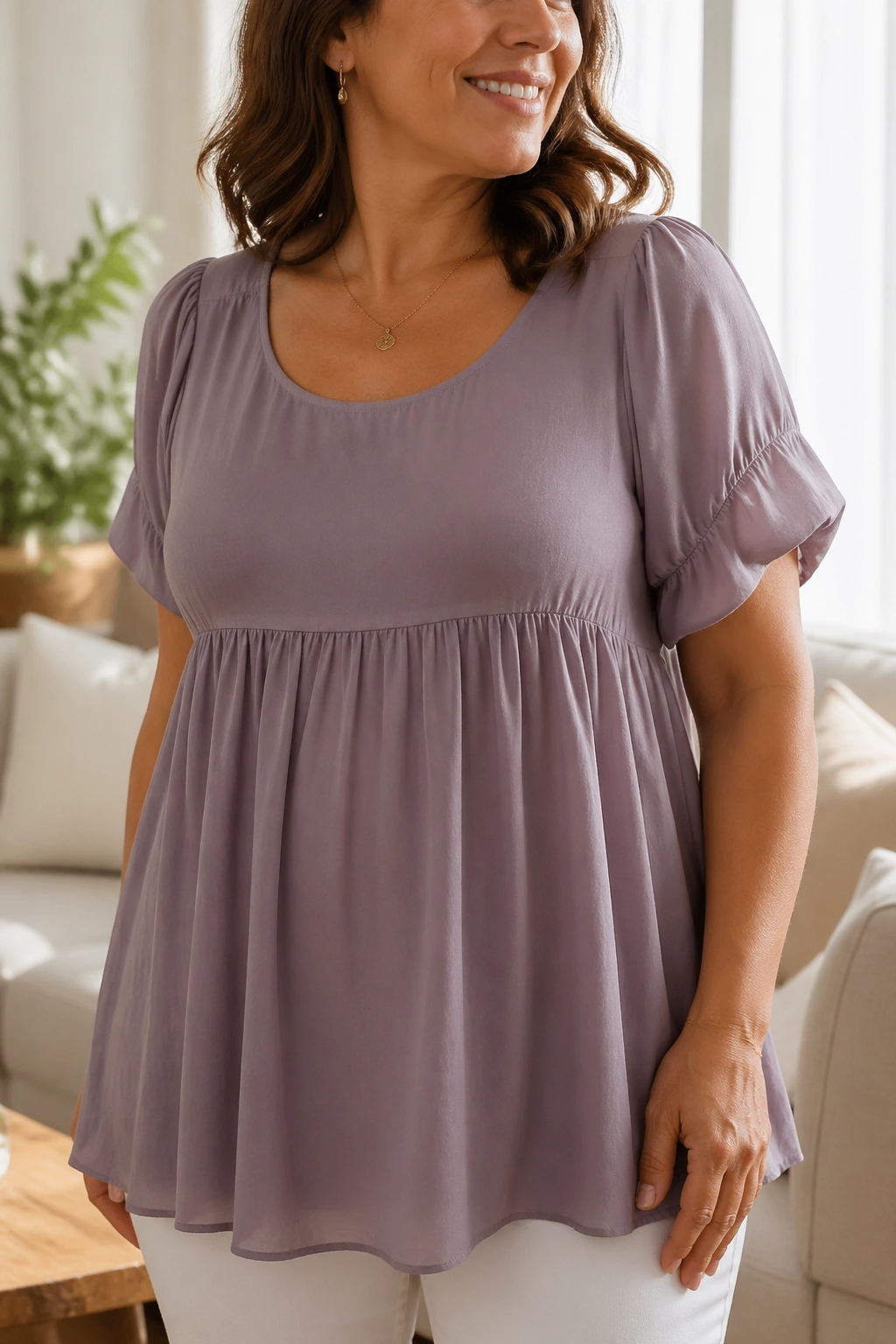
Why do empire-waist tops keep showing up in flattering tops for women over 40 lists? Because they move the visual break right under the bust and let the fabric fall away from the stomach without looking oversized.
That high seam is the whole trick. It lifts the eye, softens the middle, and gives you a little bit of drama without any squeeze. If you’ve got a shorter torso or a fuller lower belly, this shape often feels easier than a top that tries to pin the waist exactly where the stomach sits.
How to use it
- Choose a seam that sits just under the bust, not halfway down the ribcage.
- Pair it with slim or straight bottoms so the silhouette stays balanced.
- Pick a neckline that opens the chest — a V, scoop, or shallow square neck works well.
- Keep the sleeve simple if the bodice already has gathering.
An empire blouse can look romantic, but it does not have to feel fussy. A crisp fabric and a clean neckline keep it grounded. A lot of women skip this shape because they picture bridal dresses or maternity wear, and that’s a shame. In a plain cotton poplin or soft viscose, it looks fresh and easy.
The one caution: too much ruffle at the bust can add bulk right where you do not want it. Keep the volume up high and the rest calm.
4. Tunic Tops With Side Slits for Easy Movement
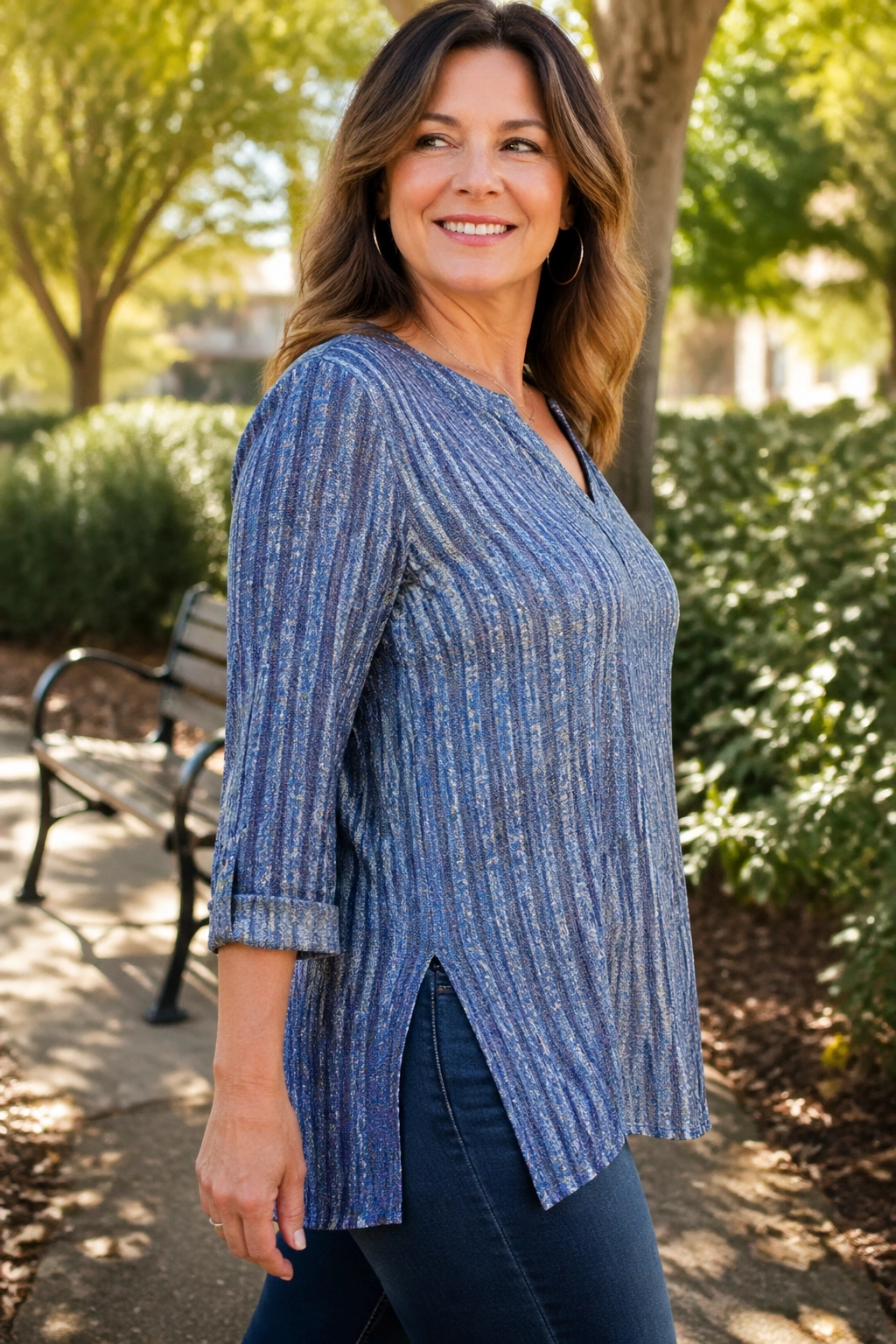
Picture a top that falls nicely when you’re standing, then starts pulling across the hips the second you sit down. Annoying, right? Side slits fix a lot of that.
The slit lets the fabric move around the body instead of fighting against it. It also keeps a longer tunic from turning into a stiff rectangle. That matters because a good tunic should skim the stomach and hips, not trap you in one shape.
I prefer side slits that start a few inches above the hem and reach about 3 to 6 inches up. That gives enough movement without making the top look unfinished. If the slit is too high, the shirt starts wandering into tunic-as-cardigan territory, and that is a different conversation.
Quick details to look for
- Hem length should cover the fullest part of the belly and stop before it behaves like a dress.
- Fabric should have some weight, like rayon blends, ponte, or soft woven cotton.
- Sleeves look best when they stay neat. Big sleeves plus a long tunic can get sloppy fast.
- Pair with slim pants, leggings, or ankle jeans so the shape stays clean.
This is one of those pieces that sounds plain and then quietly becomes a favorite. It’s comfortable. It moves. It doesn’t grab. And on days when you want zero drama from your clothes, that matters.
5. Draped Jersey Tops With Soft Ruching
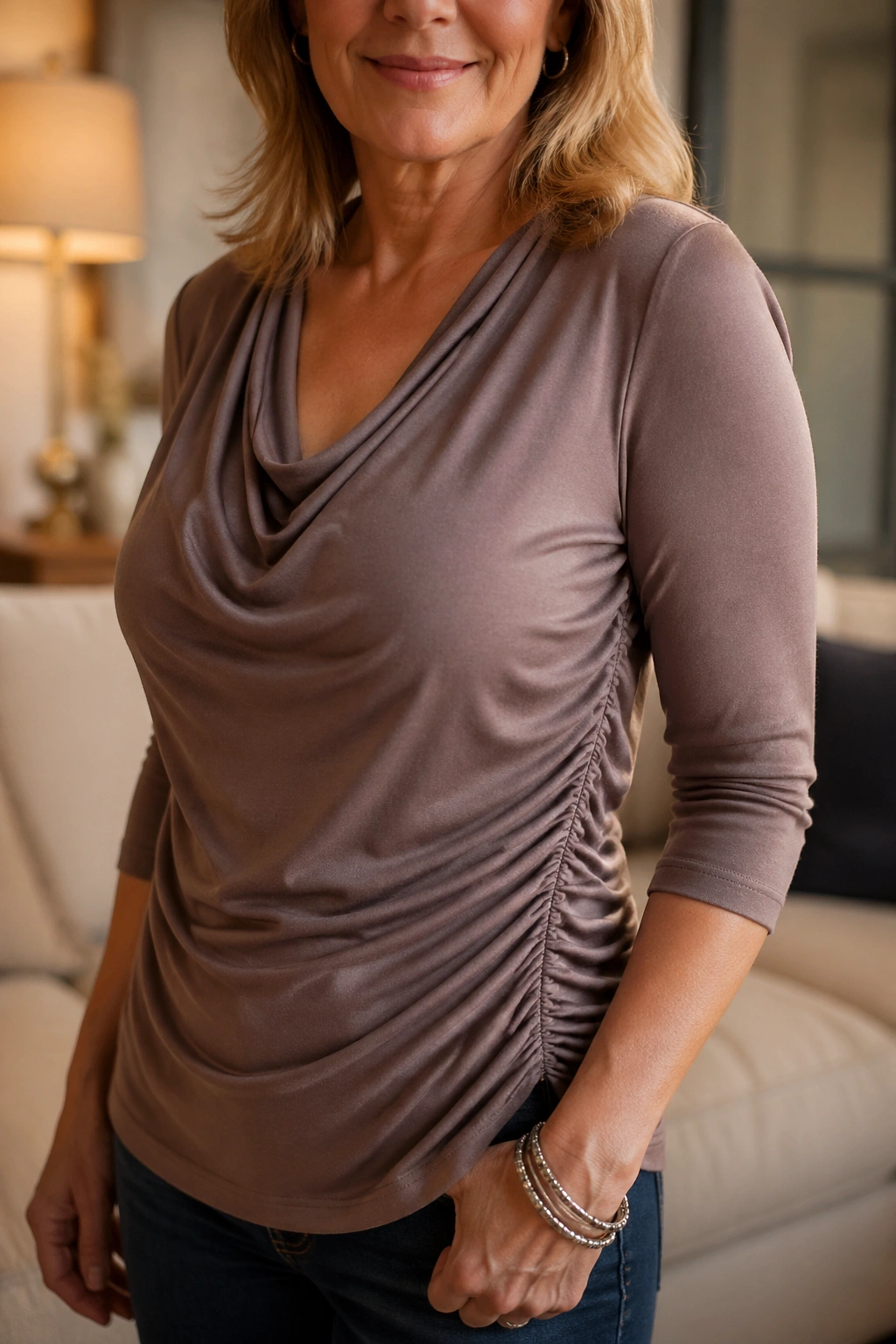
Cling is the enemy here. A draped jersey top with soft ruching works because it breaks up the stomach area instead of laying one smooth sheet of fabric over it.
The ruching does not need to be loud. In fact, the best versions are usually modest — a little gathering at one side seam, a soft twist at the waist, or a diagonal fold that keeps the eye moving. That movement matters more than people think. A flat front can make the middle look wider than it is, while a bit of texture gives the eye somewhere else to go.
I especially like this style in matte jersey or rayon-spandex blends. They stretch, but they still fall. Thin T-shirt knit can go wrong fast because it shows every bump and seems to shrink visually after lunch.
A one-sentence truth: the fabric has to hang, not stick.
If you want the most flattering version, choose ruching that starts near the waist and spreads outward rather than gathering right across the center of the stomach. Side ruching tends to be kinder than a center knot. It lets the line stay soft without making the top look like it is trying too hard.
6. A-Line Swing Tops That Move Past the Midsection
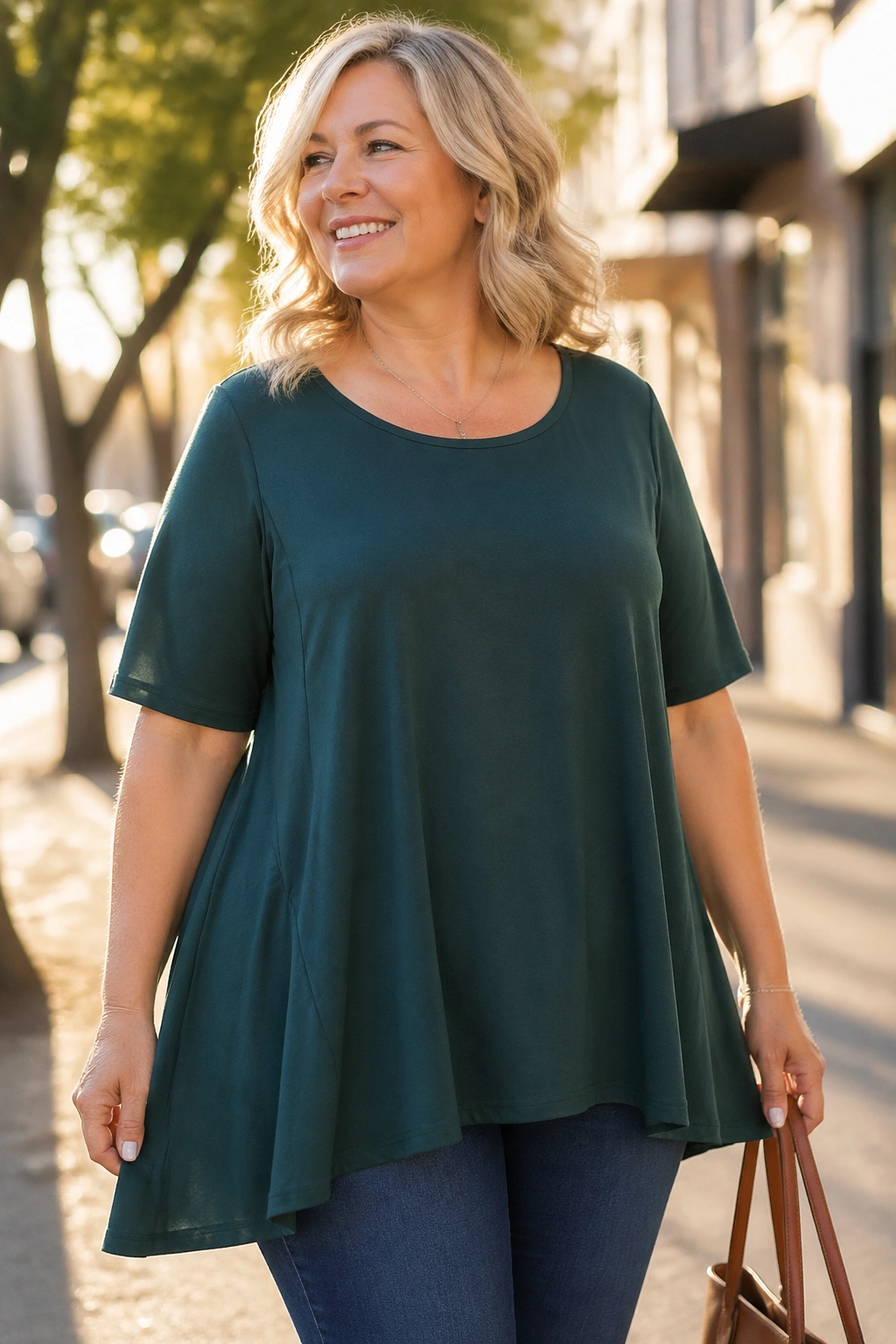
Unlike boxy tees that just sit there and widen everything, A-line swing tops create a gentle path away from the body. That slight flare from bust to hem is what gives them their edge.
They’re especially good when you want comfort without a waist seam. The top skims the chest, then opens a little. Not enough to look oversized. Just enough to avoid grabbing the middle. If the shoulders fit well, the rest of the shape can stay loose and still look deliberate.
The best swing tops usually have a clean neckline and a hem that ends a bit below the hip bone. Too short, and the flare looks chopped off. Too long, and it can start to feel like a tent. Balance is the whole game here.
I like these in cotton poplin, fluid viscose, and heavier knits that keep their outline. A flimsy fabric makes the swing collapse. A fabric with some body lets the shape read clearly.
Who wears this well? Pretty much anyone who wants an easy top that doesn’t cling, especially if you like straight jeans or narrow trousers. It’s one of the most forgiving shapes in the bunch, and I mean that in the nicest possible way.
7. Button-Down Shirts With Vertical Stripes and a Front Tuck

A good button-down can look sharp on anyone, but vertical stripes and a small front tuck make it a lot better for the tummy area. The stripes pull the eye up and down. The tuck creates a waist break without pinning the whole shirt to your body.
What makes the line work
The shirt should fit cleanly across the shoulders and bust. If the buttons strain, the whole front becomes a problem. Go up a size if needed, then use the tuck to control the shape. That is usually the smarter move.
The stripe width matters too. Fine pinstripes and narrow tonal stripes are easier to wear than wide, high-contrast bands. Wider stripes can be fine, but they need a softer fabric and a better fit so the top doesn’t feel loud.
- Leave the collar open for a longer line at the neck.
- Tuck only the center front, not the whole shirt.
- Roll the sleeves once or twice so the look feels relaxed, not stiff.
- Choose a hem that’s long enough to stay tucked without constant adjustment.
This style is one of my favorites for errands, travel, or office days when you want structure. It looks intentional. It also lets you control how much of the waist you show, which is useful when your mood changes by lunchtime.
8. V-Neck Knit Tops That Open the Upper Body
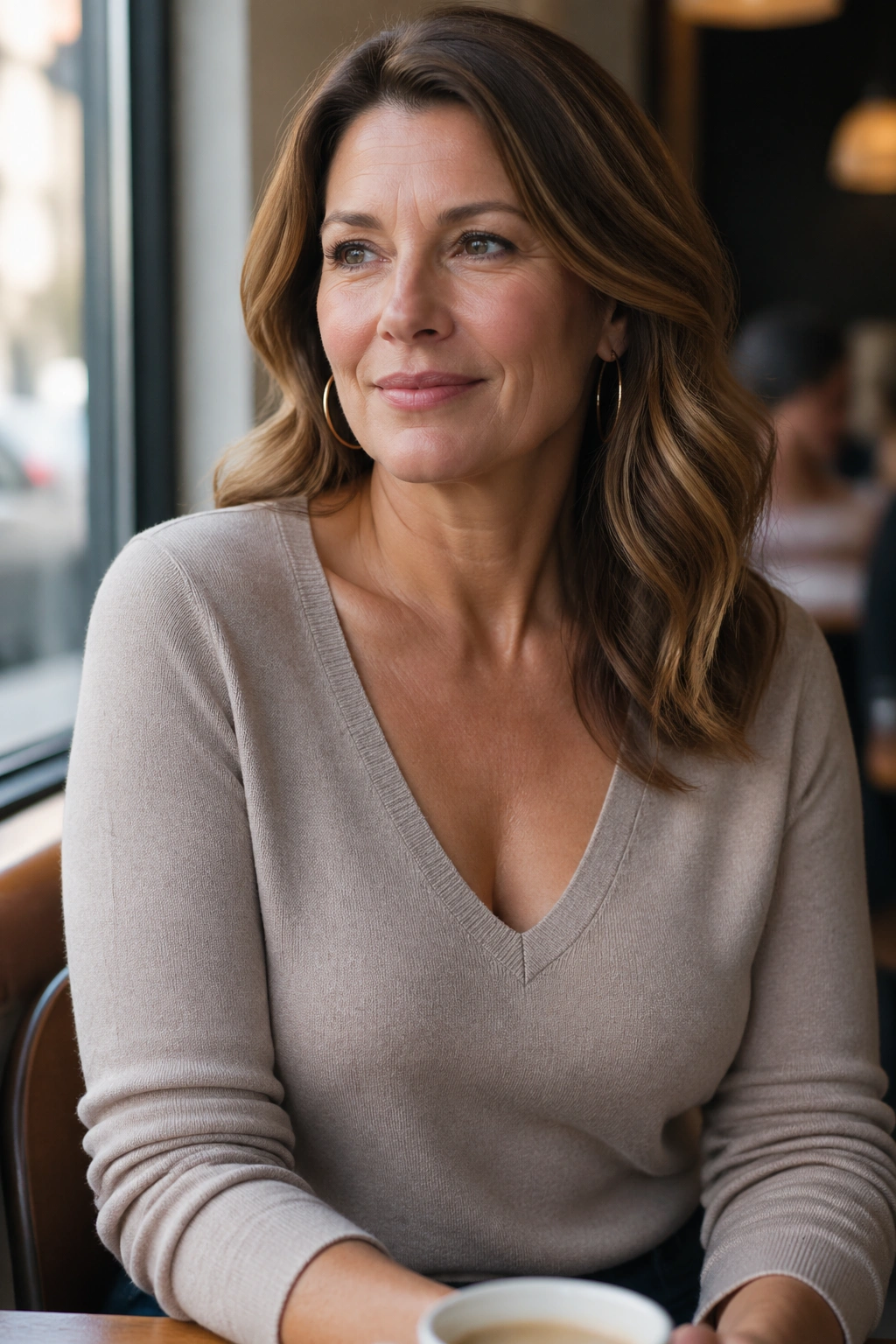
The V-neck is almost unfairly useful. It opens the chest, gives the neck more space, and keeps the visual focus away from the belly.
A shallow crew neck can sometimes make the whole torso look shorter and boxier. A V-neck breaks that block into cleaner lines. That does not mean it needs to be deep. A few inches below the collarbone is often enough. Too deep, and the top starts asking for more attention than you wanted.
Knit fabric helps here because it moves with you. A fine-gauge knit or a softly structured ponte blend tends to skim instead of grab. If you like layering necklaces, this shape also gives you room to do that without crowding your neckline.
I’d pick this shape when I want a top that works with everything. Jeans. Work trousers. A midi skirt. It slides into all of them without fighting. And because the neckline opens the top half of the body, the stomach area stops feeling like the center of the outfit.
There’s no trick here beyond good proportions. The neckline opens, the hem falls cleanly, and the fit through the shoulder stays neat.
9. Peasant Blouses With Gentle Volume and Cuffed Sleeves
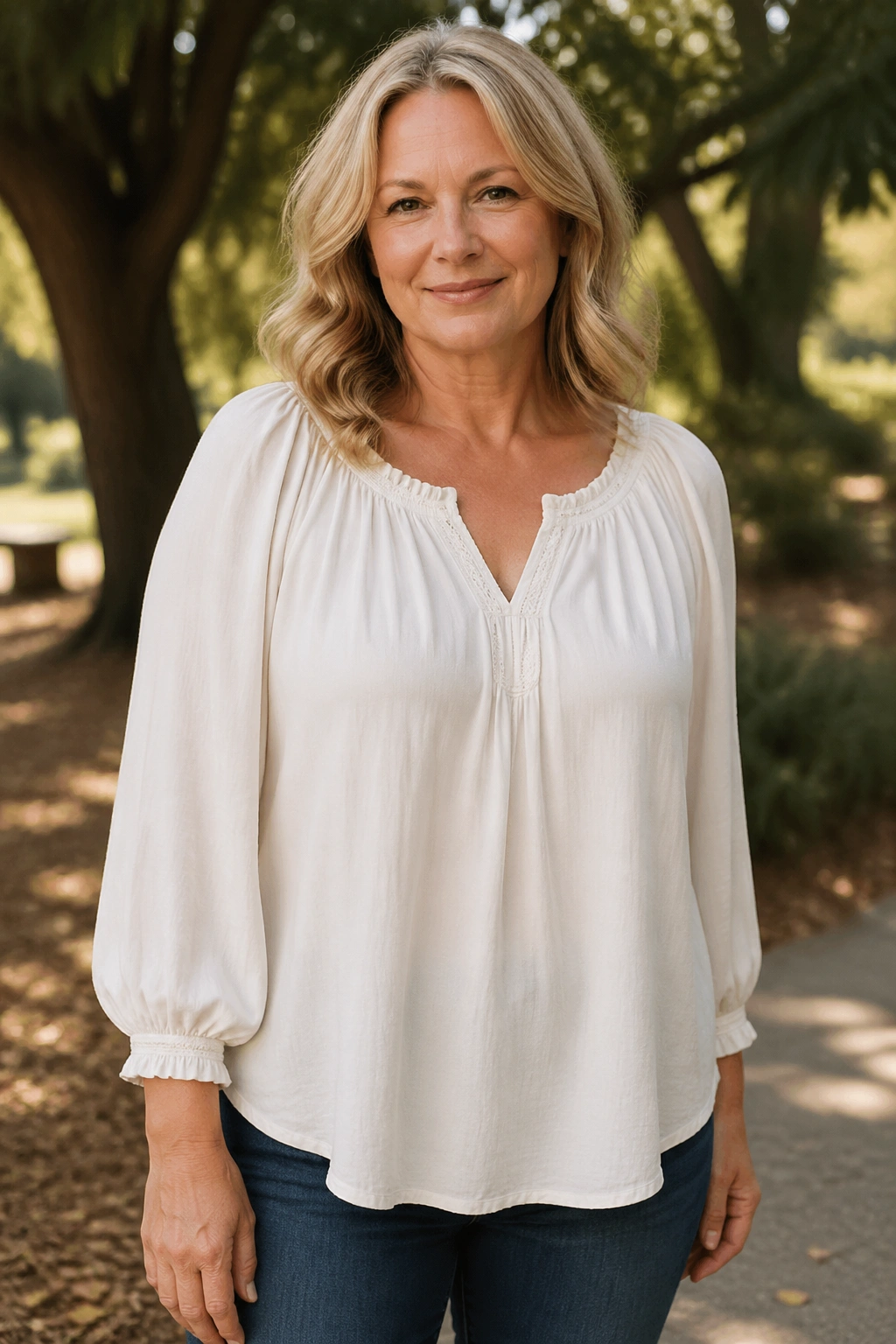
Why do peasant blouses stay useful year after year? Because they give volume in places that don’t make the middle look wider.
The volume lives in the sleeves and the upper bodice, while the body of the blouse usually falls away more softly. That means you get ease without a boxy shape. The elastic cuff also keeps the sleeve from swallowing your hand, which is a small detail that makes a big difference.
How to keep it polished
- Choose a neckline with a modest V or scoop so the top half doesn’t feel heavy.
- Look for a hem that falls at the hip, not mid-thigh.
- Keep the embroidery or trim subtle if you want to wear it more than once a month.
- Pair it with a sleek bottom, because a full skirt plus a full blouse can get messy fast.
I’m picky about peasant tops. Too much ruffle around the neck and chest, and they start looking costume-y. Too much volume in the sleeves, and you lose the shape. The best ones have a relaxed drape, a light hand, and enough structure to feel finished.
This style works especially well if you like a softer, more feminine look. It gives the belly area room without making the whole outfit look oversized.
10. Oversized Shirts Styled With a Smart French Tuck
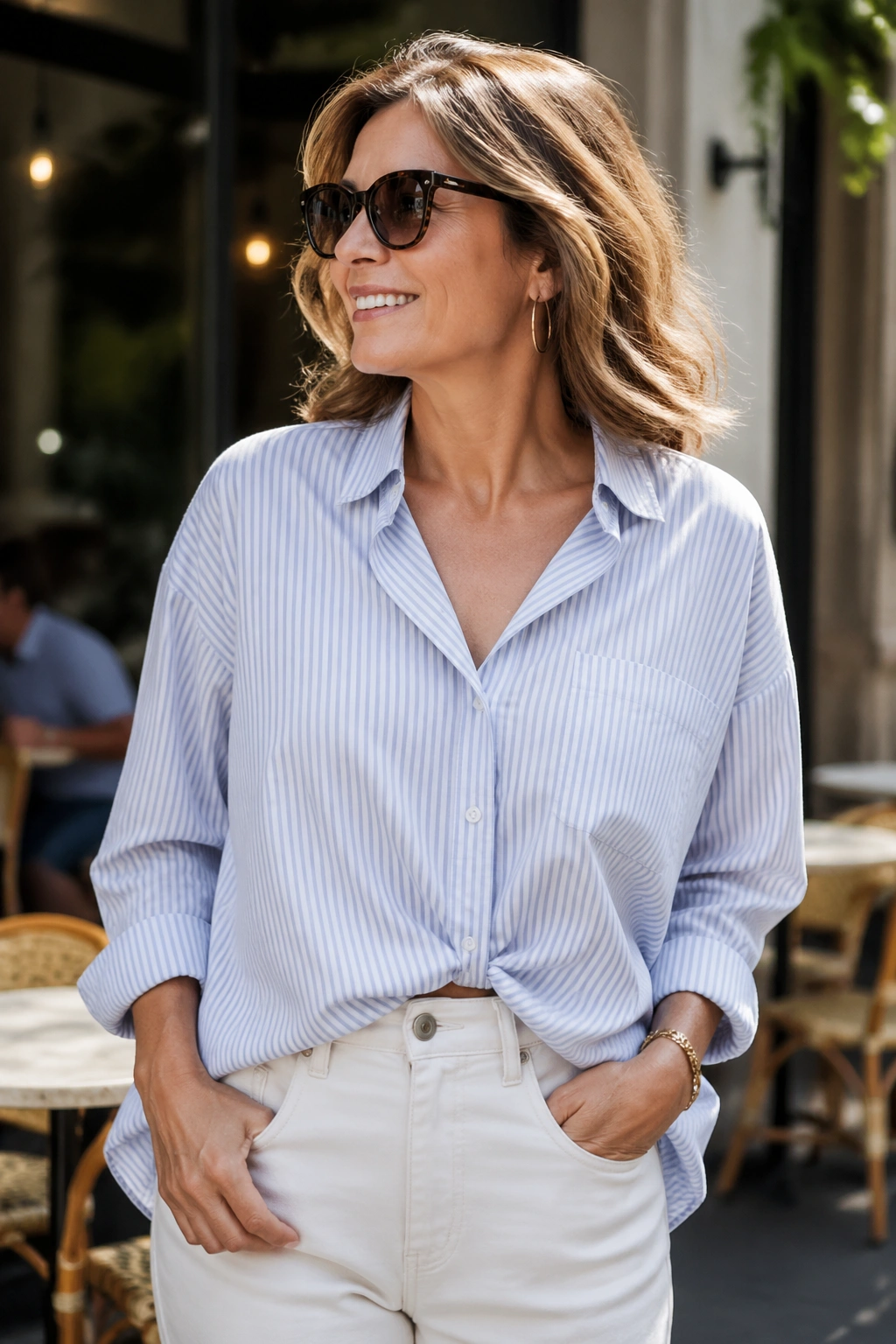
There’s a point where an oversized shirt goes from easy to shapeless. The French tuck saves it. It gives you a little waist break at the front while keeping the back loose and comfortable.
I’ve seen this work best with crisp cotton poplin, washed linen, and smooth chambray. The shirt should have enough structure to hold a line, but not so much stiffness that the tuck feels forced. Tuck only a small section at the center front — about 2 to 3 inches — then let the sides and back hang.
A full tuck can make an oversized shirt feel tight across the stomach. A half tuck keeps the ease and adds shape. That’s the part people get wrong. They either leave the whole shirt out, which can swallow the body, or they tuck everything in, which defeats the point.
Key details
- Keep the shirt slightly longer in back so it skims over the hips.
- Roll or scrunch the sleeves to break up the width.
- Wear it with straight-leg jeans, slim trousers, or fitted shorts.
- Choose a collar that sits cleanly, since the neck area carries a lot of the look.
The French tuck is simple, but it changes everything. It makes a relaxed shirt look intentional instead of accidental.
11. Structured Shell Tops Under a Lightweight Blazer
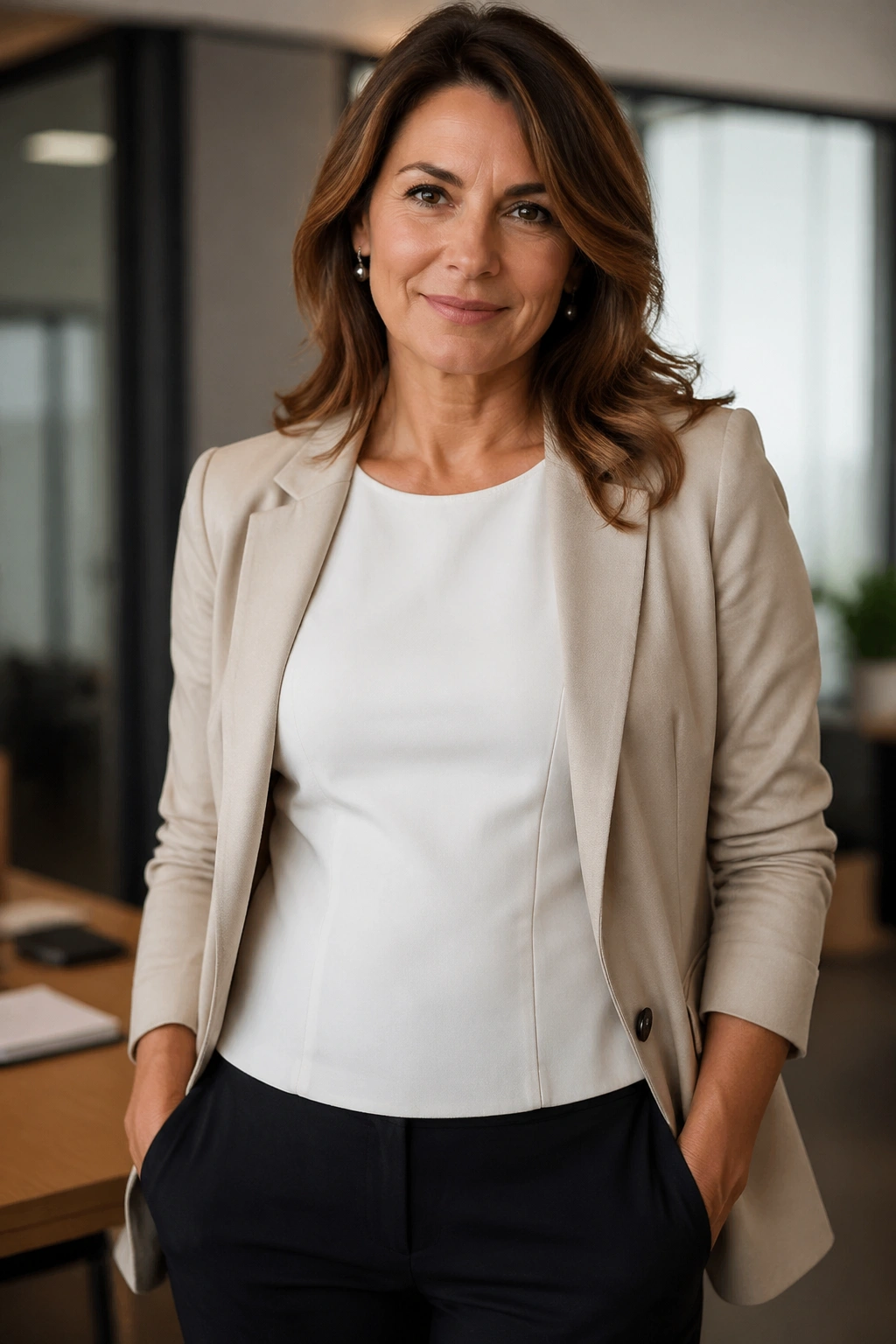
A shell top under a blazer is one of the easiest ways to make the midsection disappear into a cleaner outfit line. The blazer creates two vertical panels. The shell fills the space underneath without adding bulk. It’s neat, and it works.
What makes this combination so good is the structure. A shell top usually sits close to the body without clinging, especially if it has darts or a little shape at the bust. The blazer then hangs over the middle and gives the whole outfit a longer frame. If the blazer ends around the top of the hip or just below it, the effect is even better.
I like this pairing for dinner, work, or any setting where you want polish and ease at the same time. A sleeveless shell in crepe or ponte feels cleaner than a thin tank. If you want a bit more arm coverage, a cap-sleeve shell can work, but only if the sleeve opening is neat and not too tight.
A one-sentence warning: if the blazer is boxy and heavy, it can add more bulk than it hides.
Keep the layer lightweight. That’s the whole point.
12. Ribbed Knit Tops That Smooth, Not Squeeze
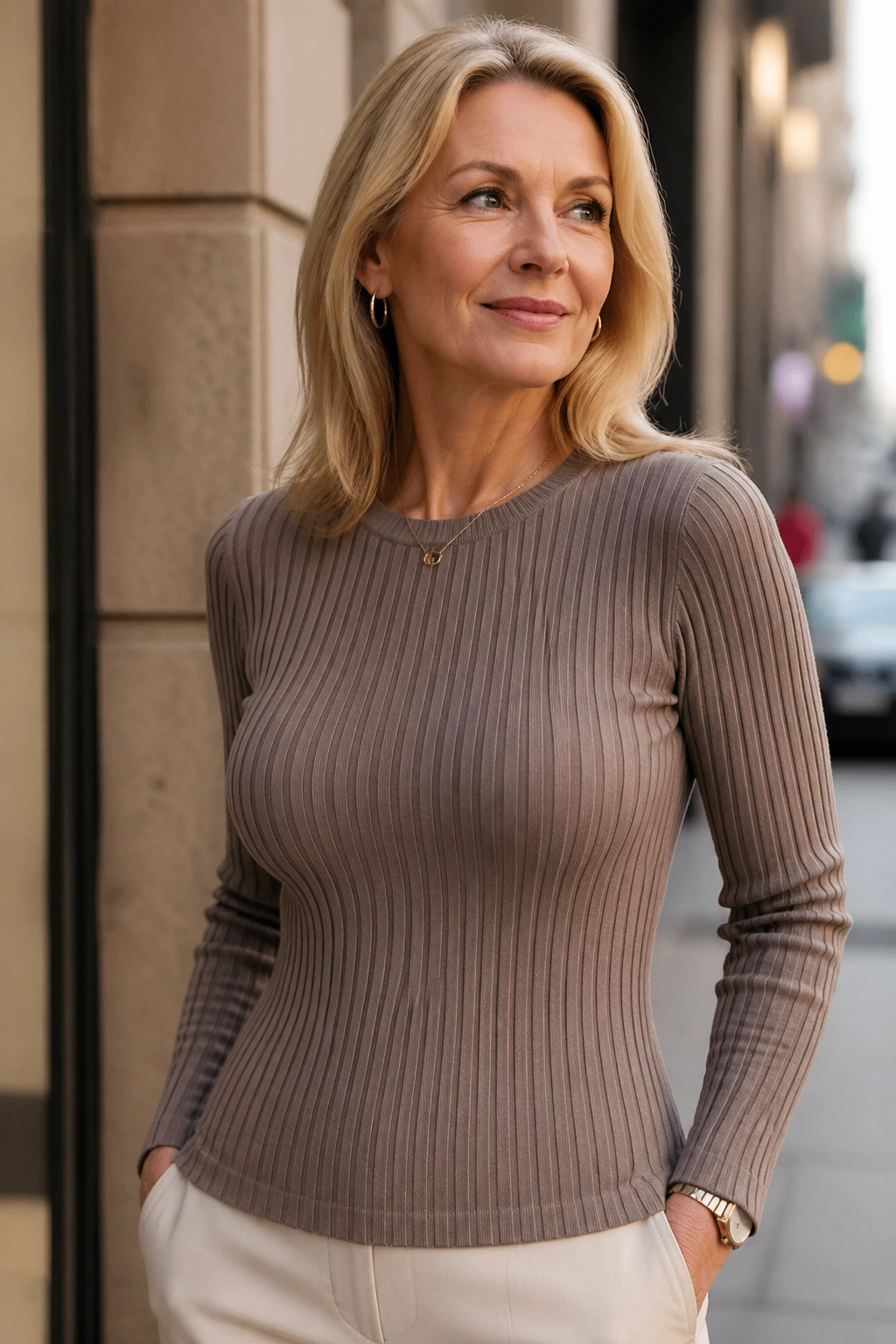
Ribbed knits can go either way. In a skinny, stretchy version, they cling to every curve and make the belly area feel louder. In a fine-gauge rib with some weight, they hold shape and skim the body instead of plastering onto it.
That’s why I think of this as a fabric choice more than a style choice. The rib itself gives texture, which breaks up a flat front. The stretch lets the top move with you. And because the vertical lines in the knit already pull the eye up and down, the stomach area gets less attention.
Compared with a plain jersey tee, a good ribbed top often looks more finished. Compared with a chunky sweater, it feels lighter and easier to layer. That middle ground is useful. It’s also why this kind of top works so well under jackets and cardigans.
I’d look for a rib that springs back after you stretch it gently in the fitting room. If it stays baggy at the elbows or pulls tight across the tummy after five minutes, skip it. The right one should feel close, but not trapped.
This is a smart pick for people who like clean lines and simple outfits. No fuss. No extra detail. Just a better fabric doing its job.
13. Asymmetric Hem Tops That Break Up the Midsection
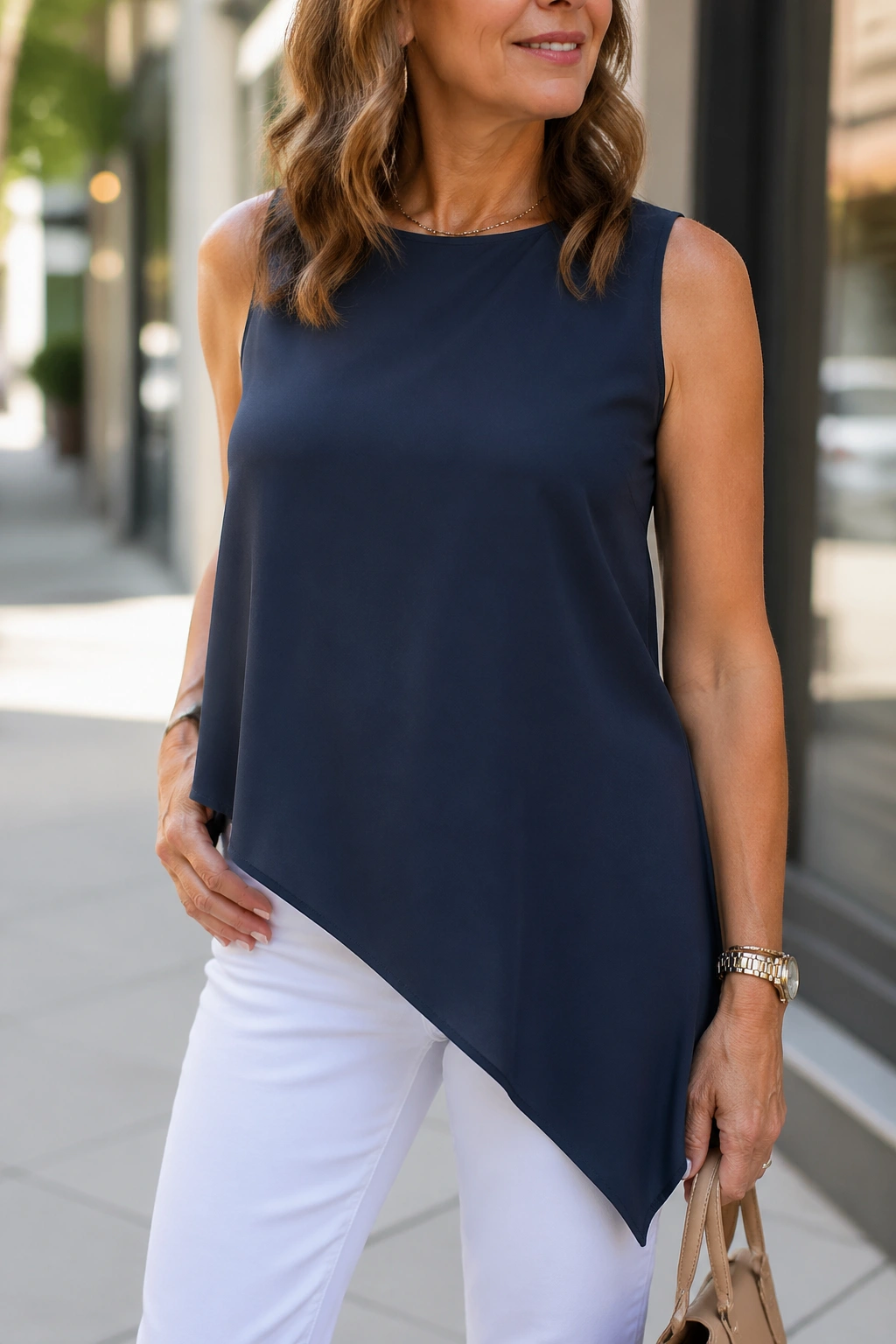
A diagonal hem changes the eye line fast. Instead of stopping the body in one straight horizontal cut, it creates movement across the middle. That little shift can make the waist and stomach area feel less boxed in.
Why the diagonal line helps
Straight hems are honest. Sometimes too honest. An asymmetric hem softens that line and gives the outfit a bit of motion. If one side dips 2 to 4 inches lower than the other, the effect is usually enough. You do not need a dramatic shark bite hem to make the point.
- Keep the fabric smooth so the hemline stays the focus.
- Pair it with straight or slim bottoms to avoid too much shape at once.
- Choose a print that stays calm, or the hem and pattern will compete.
- Avoid super-wide sleeves if the hem already has a lot going on.
I like asymmetric tops when I want something a little less predictable than a basic tee. They can look artsy without becoming costume-y, which is a hard balance to get right. The best ones still feel wearable with jeans and flats.
One catch: if the hem flares hard and the sleeves are huge, the whole top can start to look busy. Keep at least one part of the silhouette simple.
14. Tank-and-Cardigan Layers That Build a Longer Line
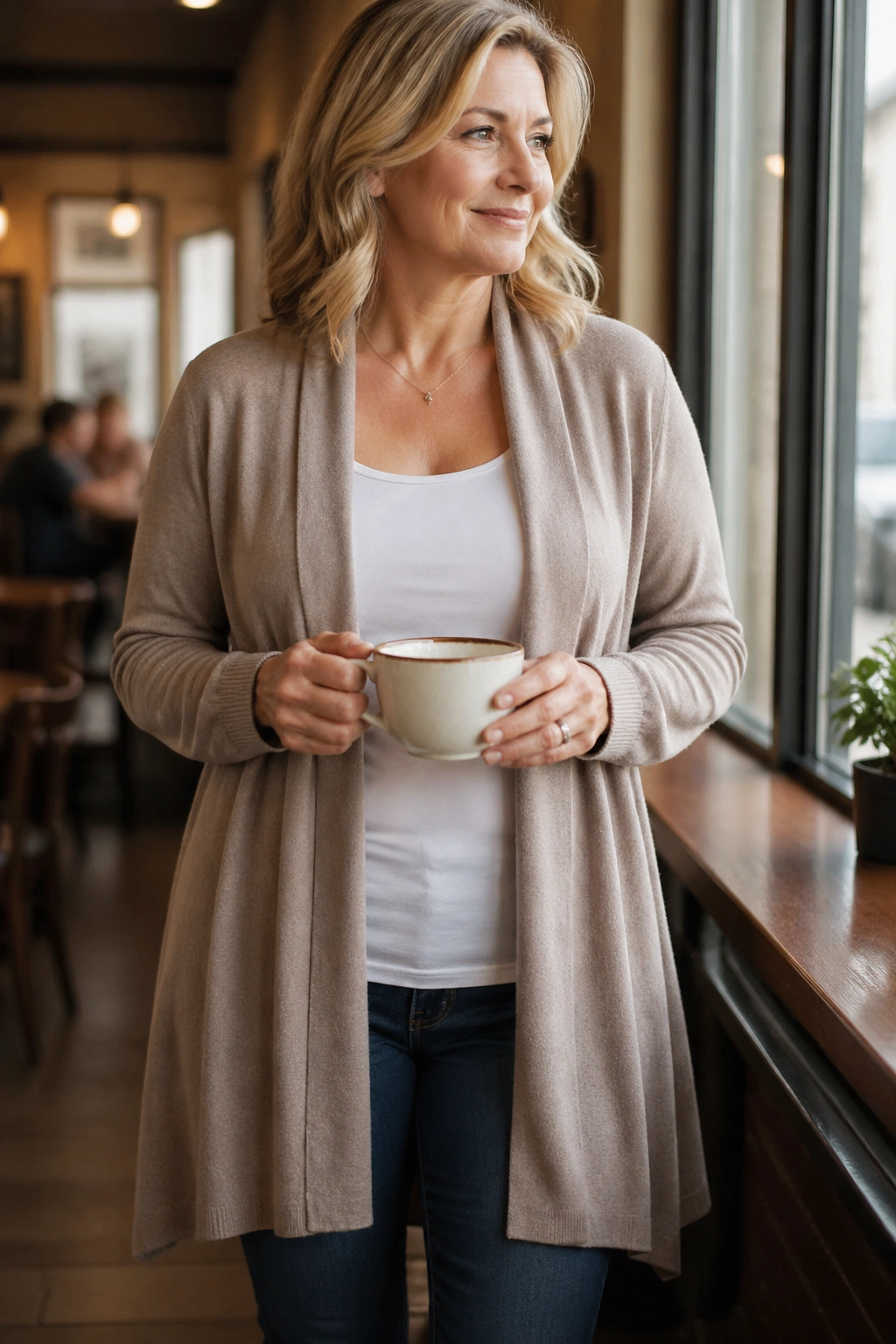
Layers can work better than a single top when you want to soften the middle. A smooth tank under an open cardigan creates two long vertical lines, and those lines are doing the heavy lifting.
The tank should be simple. No thick trim. No chunky lace. A clean neckline and a soft but not clingy knit is enough. The cardigan needs to hang open and fall past the widest part of the hips, or it can cut the body at the wrong spot. That’s the detail people miss. A cardigan that ends right at the broadest part of your torso often has the opposite effect of what you want.
I like this combo for travel and indoor settings where the temperature shifts. It gives you a little coverage without making the middle feel boxed in. If you want a bit more polish, choose the tank and cardigan in close colors — navy and navy, cream and camel, charcoal and black. The eye reads one long shape instead of two separate chunks.
A very thin cardigan can cling. A very bulky one can add weight. The sweet spot is a fabric with enough drape to hang straight.
This is not flashy. It just works.
15. Small-Print Blouses That Distract the Eye the Right Way
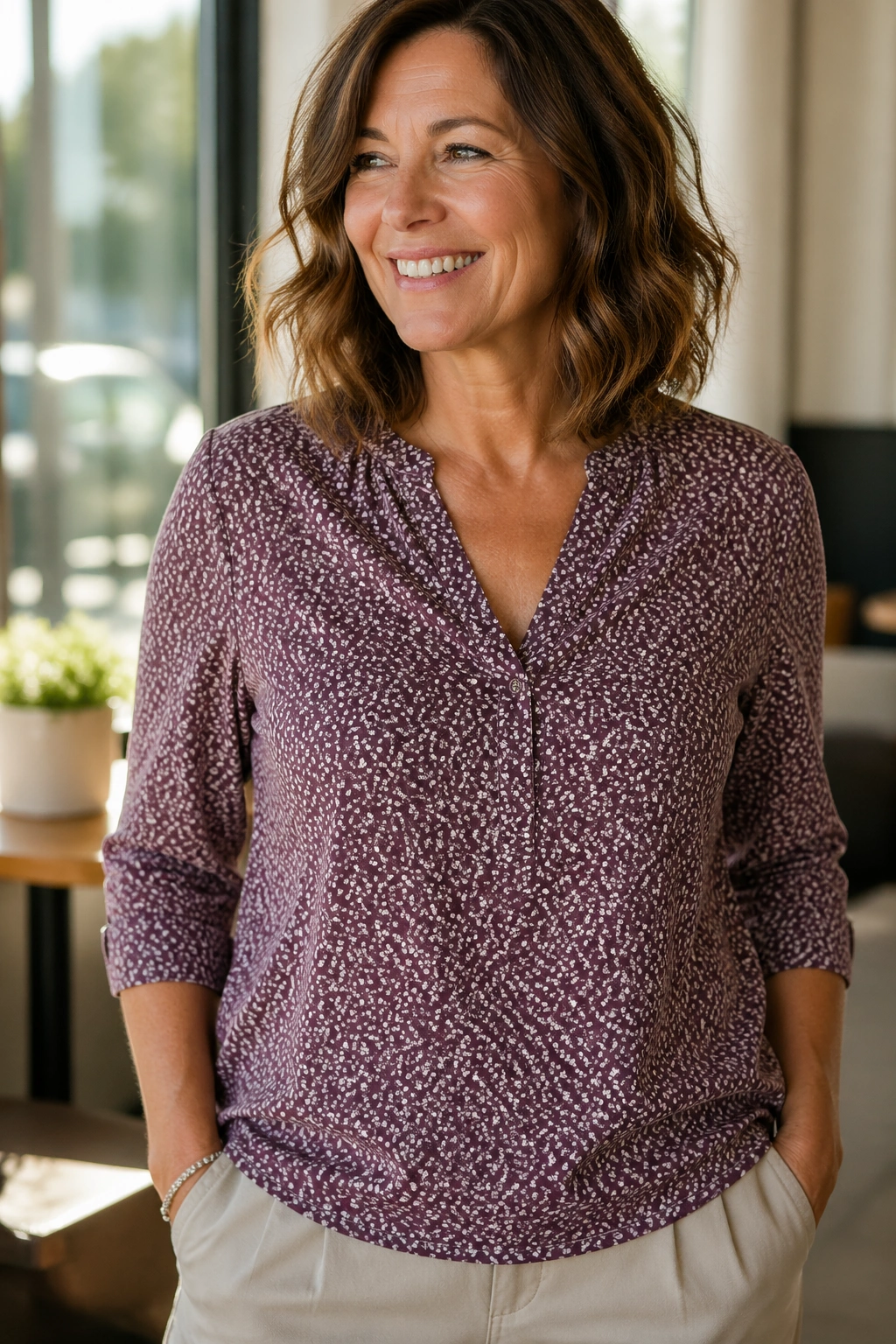
Can print help hide the belly area? Yes, if the scale is right.
Tiny florals, micro dots, broken abstract prints, and soft geometric repeats keep the front of the blouse from looking like one big flat block. That means the eye moves across the surface instead of landing hard in the center of the stomach. Large prints can be lovely, but they need more space and more careful styling. Small prints are easier.
What to look for in the print
- Choose a print with mixed tones rather than one sharp contrast.
- Keep the background darker or mid-tone if you want the most slimming effect.
- Avoid horizontal bands across the stomach.
- Pick a fabric with drape so the print follows the body cleanly.
I especially like a small-print blouse with a solid bottom half. That keeps the attention where you want it and stops the look from feeling busy. The blouse can have a V-neck, a soft sleeve, or a loose fit — the print already does a lot of the visual work.
The risk with print is obvious: too much contrast, too much size, too much shine. If all three happen at once, the top starts shouting. A quiet print in a good shape does the opposite. It settles the whole outfit down.
16. Poncho-Style Tops and Batwing Sleeves for a Soft Drape
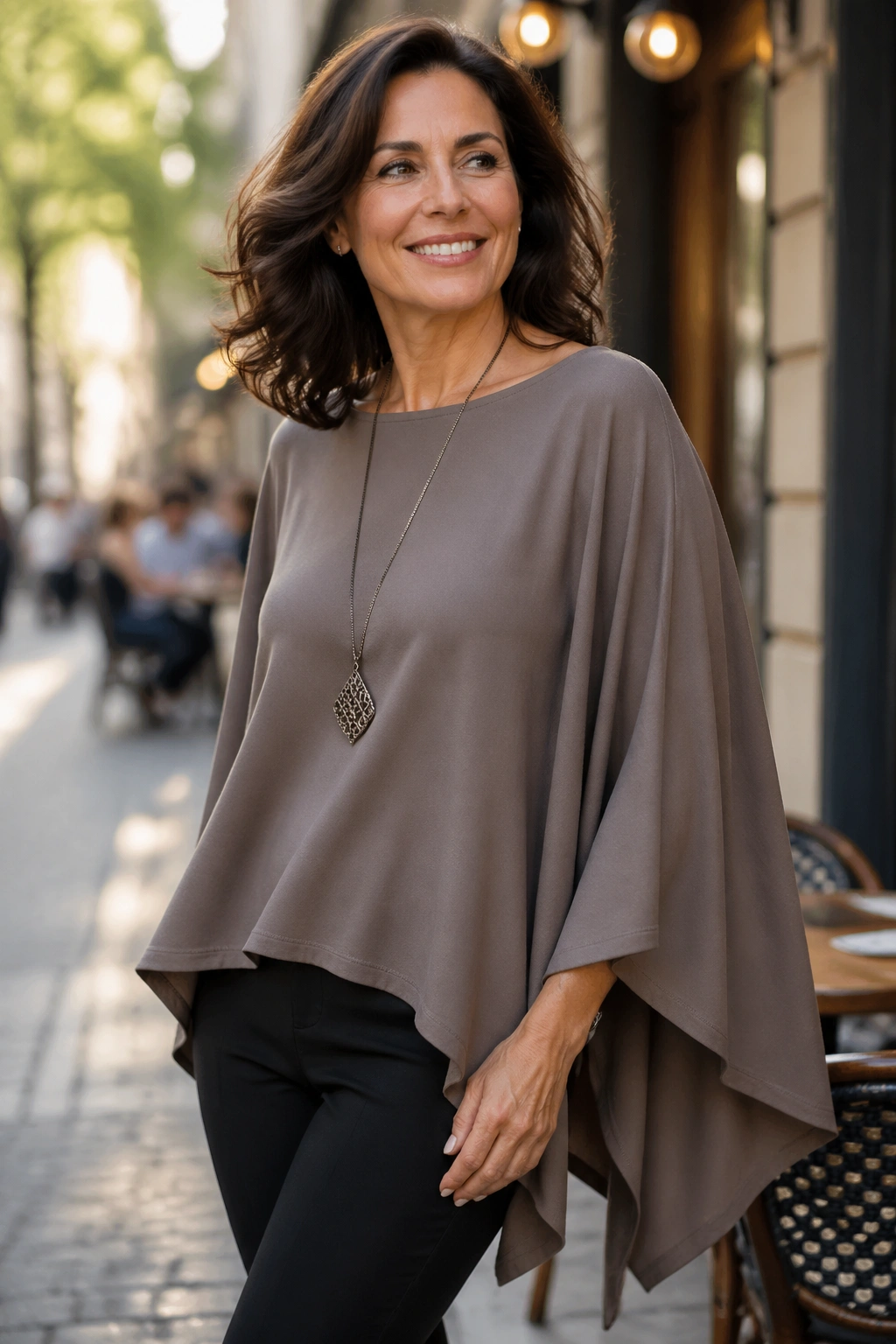
There are days when the belly area feels like the first thing a top wants to announce. Poncho-style tops and batwing sleeves solve that by floating away from the body instead of tracing it.
I remember the first time I understood why these work. The fabric didn’t sit on the stomach at all. It moved around it. That sounds obvious, but it changes the whole experience of getting dressed. You’re not negotiating with the top. You’re just wearing it.
Batwing sleeves widen the upper shape while keeping the middle free, which is useful if you like a looser fit through the torso. Poncho styles do the same thing with even more ease. The important part is balance. If the hem is too wide and too long, the body can disappear. A narrower bottom half — straight pants, slim jeans, fitted skirt — keeps the shape grounded.
A few things to check
- Necklines should stay open enough to show a little collarbone.
- The fabric should drape, not puff.
- Keep jewelry small if the top already has a strong shape.
- Shorter women often do better with a cropped poncho or one that stops at the hip.
These tops aren’t for every moment. But when you want comfort, movement, and coverage, they’re hard to beat.
17. Longline Henleys and Half-Placket Tops
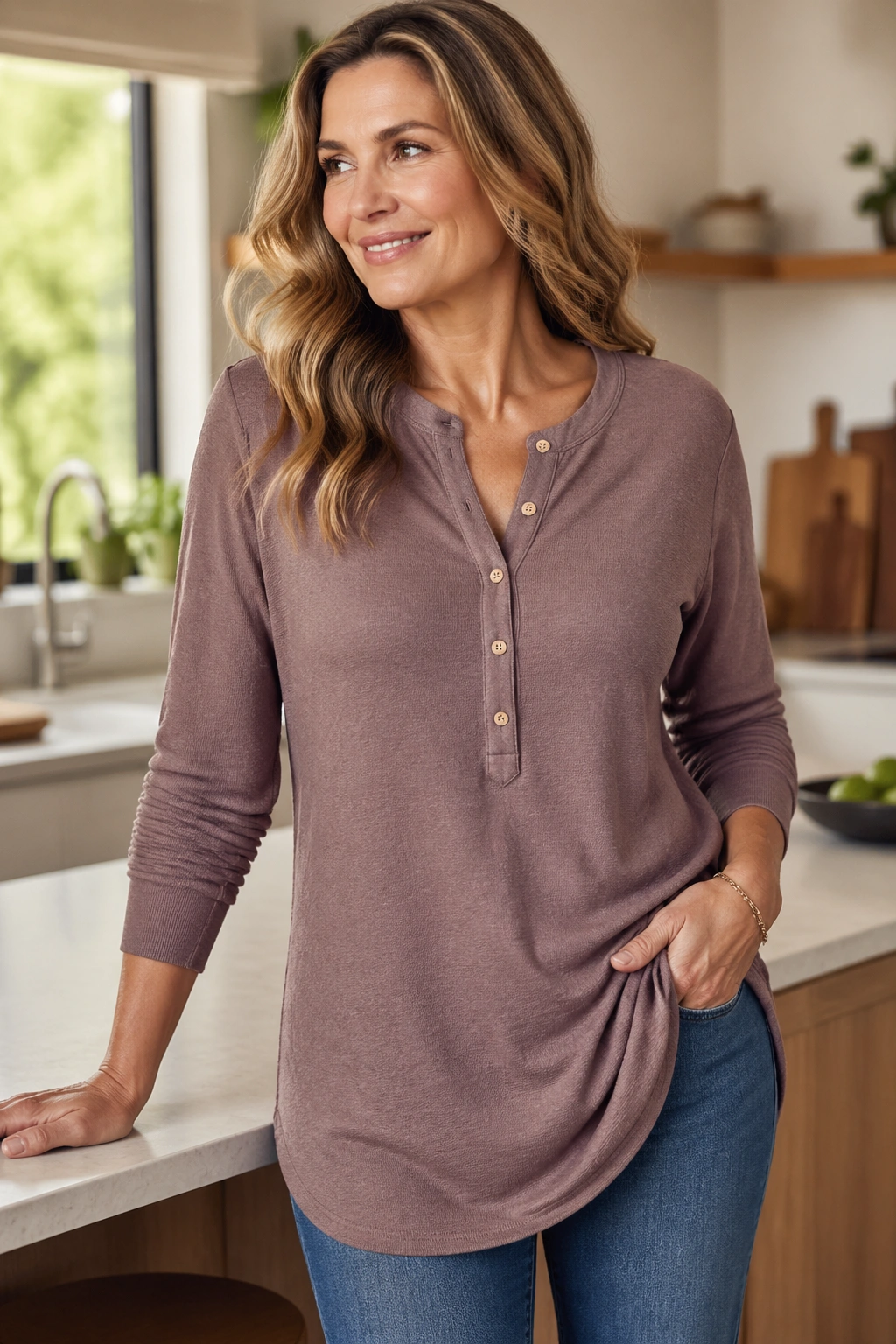
Longline Henleys are a nice middle ground between a tee and a button-down. The half-placket gives you a vertical line at the center, but the rest of the top stays soft and easy.
That placket matters more than people think. Even three or four buttons create a bit of structure at the chest, which pulls the eye upward. A longline hem then keeps the midsection covered without making the top feel oversized. If the shirt drops past the hip and has a little shape at the shoulders, it usually sits well on the body.
I like this style in cotton-modal, brushed jersey, or a smooth slub knit that does not cling too much. Very thin slub can show every little line. A slightly heavier knit holds the shape better and feels more intentional. The whole piece ends up looking casual but tidy, which is a useful combination.
You can wear the buttons closed for a neat, straightforward look, or leave the top one or two open if you want more length in the neck. That tiny adjustment changes the whole outfit.
It’s not the most dramatic top on the list. That’s why it works.
18. Tailored Tops With Princess Seams and Quiet Structure
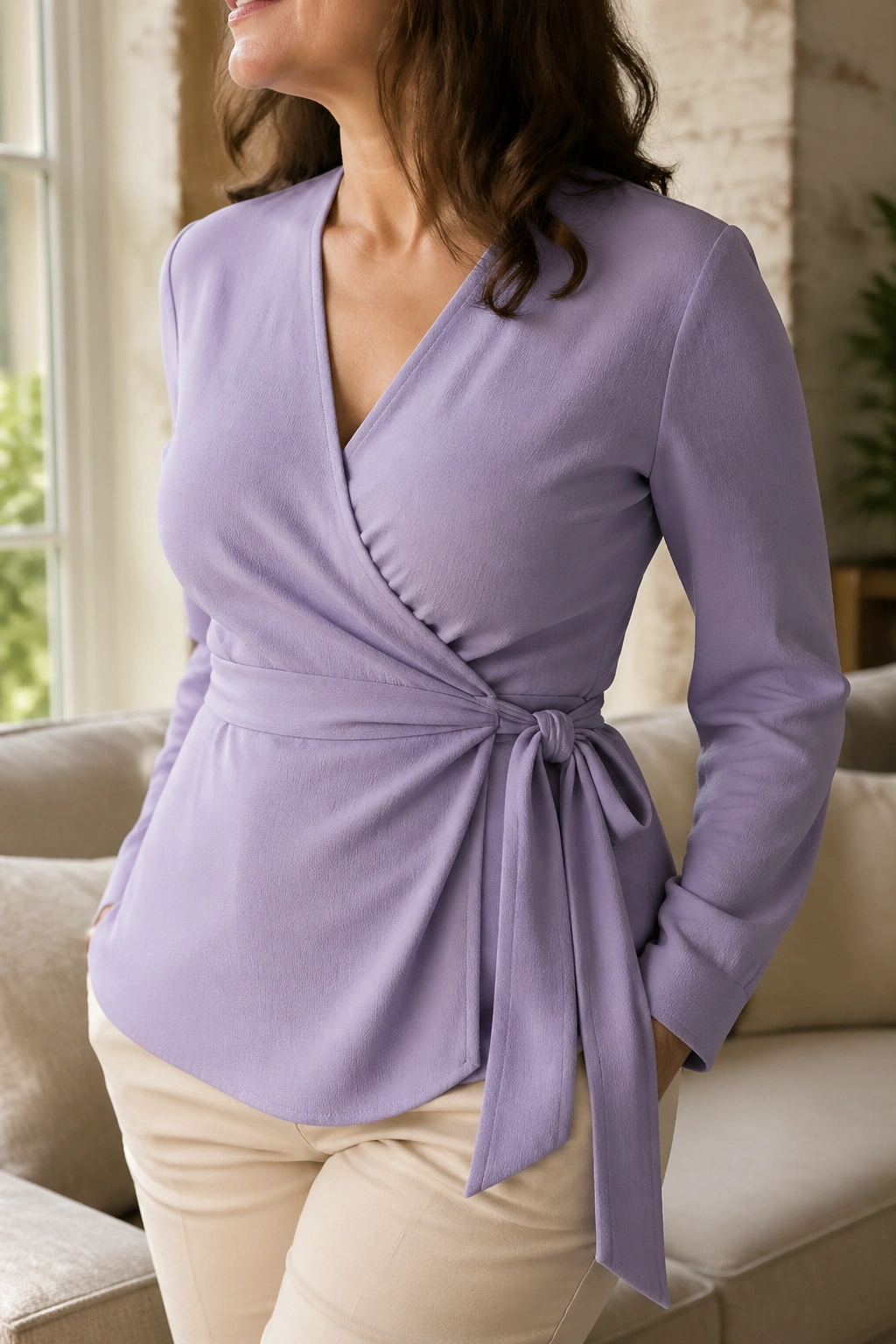
If you want one top that feels a little more dressed up and a lot more dependable, this is the one I’d reach for first. Princess seams create shape through the body without a tight waistband, which is exactly what many women over 40 are after when they want to soften the belly area but still look put together.
Unlike loose tops that rely on drape alone, this style uses construction. The seams run vertically from the bust or shoulder area down through the torso, which lengthens the body and trims the visual width of the middle. It’s a tailoring trick, not a hiding trick, and that distinction matters. You get shape without squeeze.
The best versions usually come in woven fabrics, ponte, or a stable knit with enough recovery to stay smooth. A neckline that opens slightly — not too high, not too deep — keeps the top from feeling stiff. If the shoulder fit is right, the rest of the garment falls into place without much effort.
I’d wear this to work, to dinner, or any time I wanted to look clean without fiddling with my clothes all day. It’s also one of the few styles that can work across a wide age range without feeling trendy or precious. That’s rare.
If you only remember one thing from all 18 tops, make it this: shape beats size. A well-cut top with seams, drape, or a clean waist line will do more for your silhouette than a bigger size ever will. And that’s the part worth buying into.
