



Most people chase belly fat with crunches and long, miserable plank holds. That’s a bad trade.
The gym machines that help most are the ones that raise your heart rate, recruit big muscle groups, and let you keep the work dense enough to matter. No machine melts fat off your stomach on command. Your waistline changes when your body uses more energy than it takes in, and the right machines make that easier to pull off without turning every workout into a joint-jarring slog.
That’s why a smart machine selection matters. A treadmill used with intervals feels completely different from the same treadmill used for a lazy stroll while you scroll your phone. A rower, stair climber, or air bike can leave you breathing hard in under a minute. A leg press or cable station won’t give you that same cardio punch, but it can help you build more muscle and keep your workouts hard enough to drive fat loss.
The trick is simple—pick machines that let you work hard, keep rest honest, and repeat the session next week without falling apart. Start with the treadmill, but not the boring version most people use.
1. Treadmill Intervals
The treadmill gets dismissed way too fast. Used badly, it’s dull. Used well, it’s one of the cleanest ways to burn a lot of calories without needing any special skill.
Intervals are the whole point. A 20-minute treadmill session with hard pushes and short recoveries will usually do more for fat loss than a lazy 45-minute shuffle, because the work stays high and your body never fully settles. You can run if your joints tolerate it, or keep it as a fast walk with a slight incline if that feels better on your knees.
How to use it for fat loss
- Warm up for 5 minutes at an easy walk, around 3.0 to 3.5 mph.
- Set the incline to 1% to 3% so the belt feels a little more like real ground.
- Push hard for 45 to 60 seconds, then recover for 60 to 90 seconds.
- Repeat for 8 to 10 rounds.
- Cool down for 3 to 5 minutes and let your breathing settle.
Do not hold the rails unless you need them for balance. If your hands are glued to the front, your legs are doing less work than you think. A slight forward lean from the ankles is fine. Hanging on is not.
The best treadmill sessions feel honest. Your breathing should pick up, your stride should stay controlled, and the pace should feel like work instead of a Sunday walk. That’s the sweet spot.
2. Incline Treadmill Walking
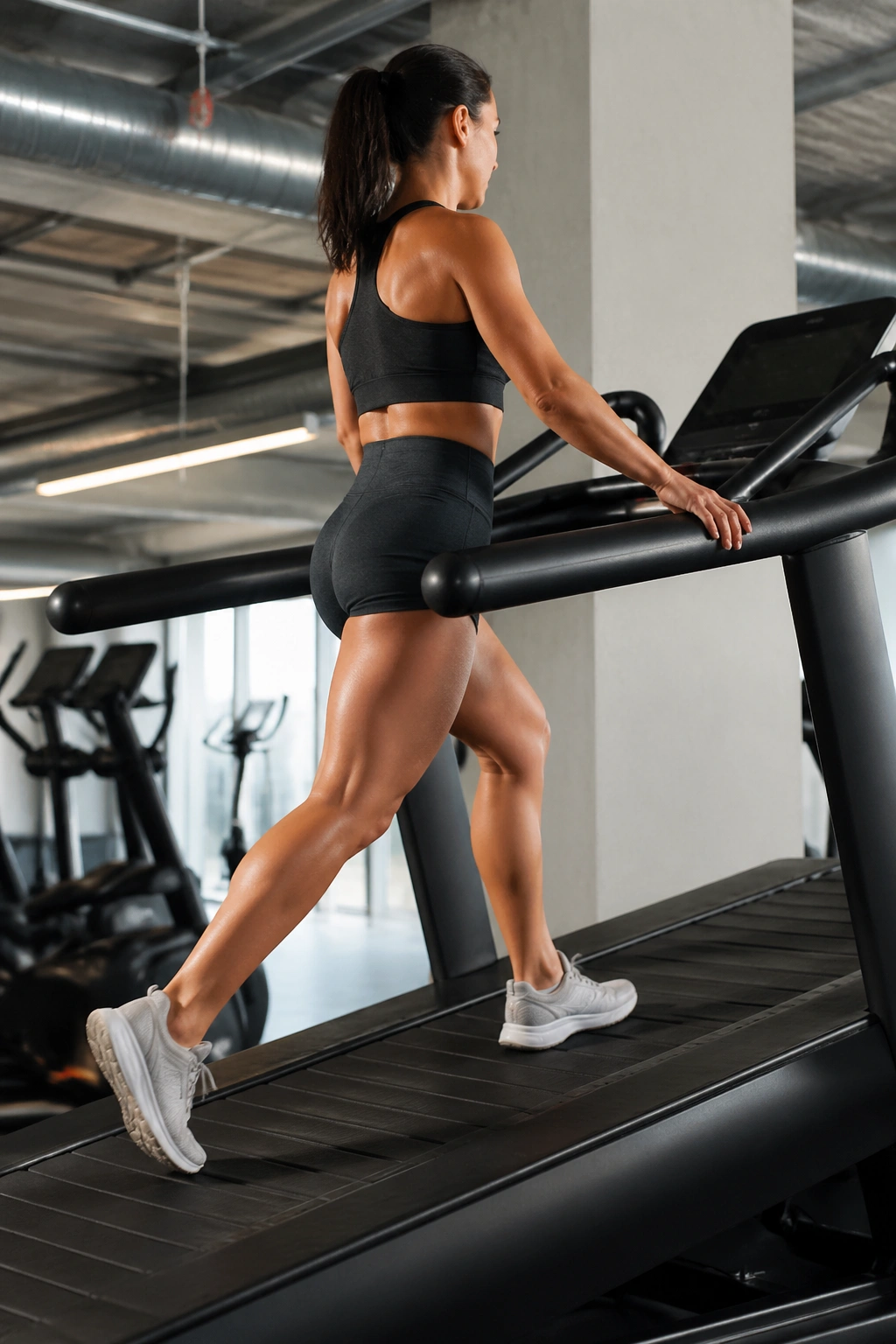
Why does walking uphill work so well? Because it sneaks a lot of work into something your body already knows how to do.
An incline treadmill session loads the glutes, hamstrings, calves, and upper legs in a way flat walking never quite matches. It also spares your joints a little more than running, which makes it useful when you want a hard session without the pounding. If belly fat is the target, this kind of walking is one of the easiest ways to build a calorie deficit without feeling wrecked afterward.
Set the incline between 8% and 15%, then walk at 3.0 to 4.0 mph depending on your fitness. The higher the incline, the more you’ll feel your backside and calves kick in. Keep your chest tall and your steps short. Long, reaching strides usually mean you’re hanging on the rails and cheating the work.
Smart settings to try
- 10 minutes at 8% incline for a warm-up-heavy day
- 20 to 30 minutes at 10% to 12% incline for a steady fat-loss session
- 5 rounds of 3 minutes at a steep incline, 1 minute flat, if you want intervals
The machine should feel hard, not sloppy. If you need to lean heavily on the handles, the grade is probably too steep.
3. Rowing Machine
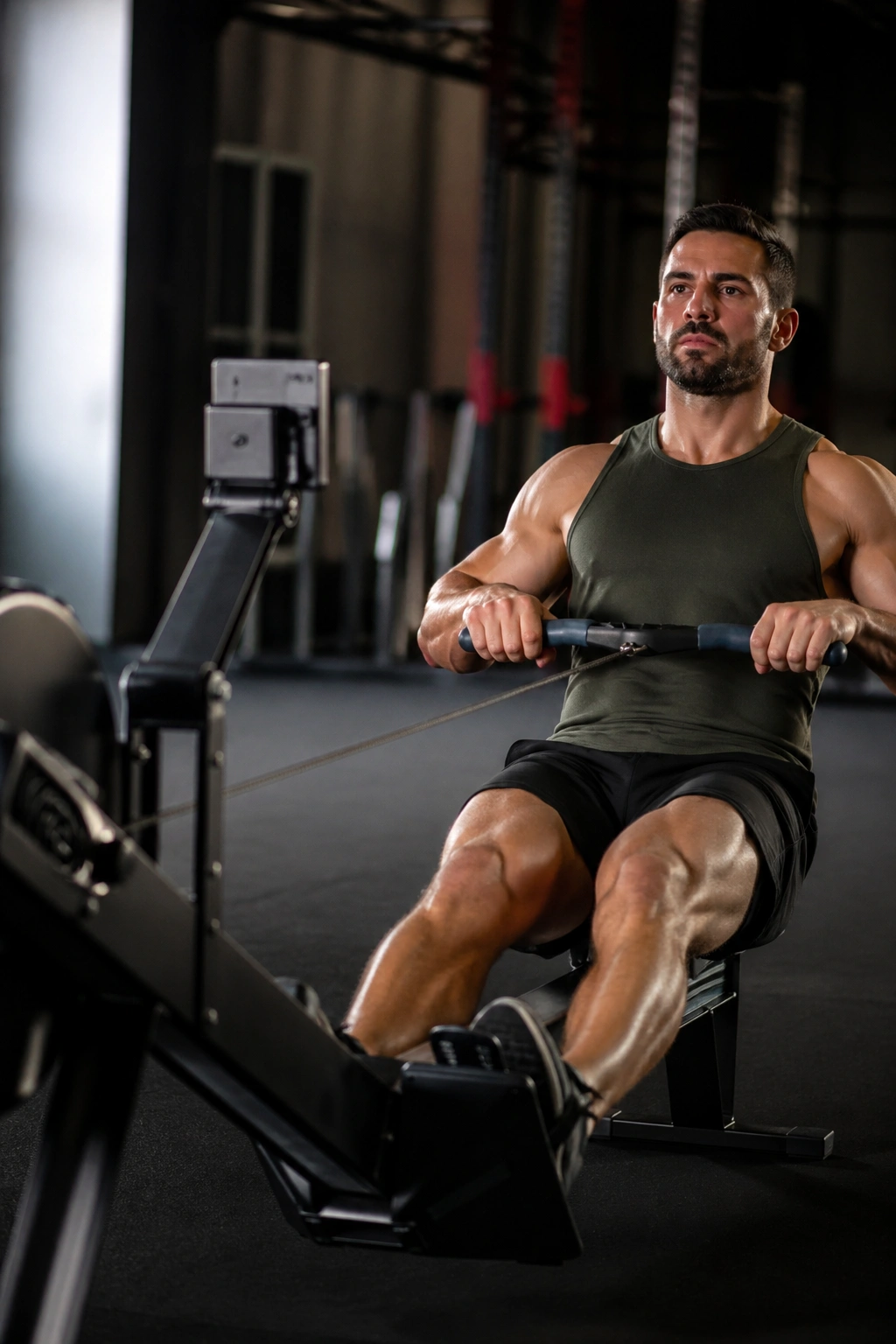
A rower looks peaceful until you pull hard for 30 seconds.
Then the lungs show up. Fast.
That’s what makes rowing so useful for weight loss workouts. You’re using the legs, glutes, back, arms, and core at the same time, which gives you a full-body hit in a compact space. The movement also has a nice rhythm to it, and that matters more than people admit. If you enjoy the machine, you’ll use it longer. If you use it longer, the fat-loss payoff gets better.
The biggest mistake is pulling with the arms too soon. The stroke starts with the legs, then the torso opens, then the arms finish the pull. On the way back, the sequence reverses. If that sounds fussy, it is a little fussy. Rowing rewards clean technique.
What to watch for
- Set the damper around 3 to 5 to start.
- Push through the legs first.
- Keep the handle path straight to the lower ribs.
- Let the handle travel forward smoothly on the recovery.
- Use 250-meter sprints or 45-seconds-hard / 75-seconds-easy intervals.
If your lower back feels lit up before your legs do, your form is off. Slow it down and clean it up. That machine punishes sloppy habits.
4. Stair Climber
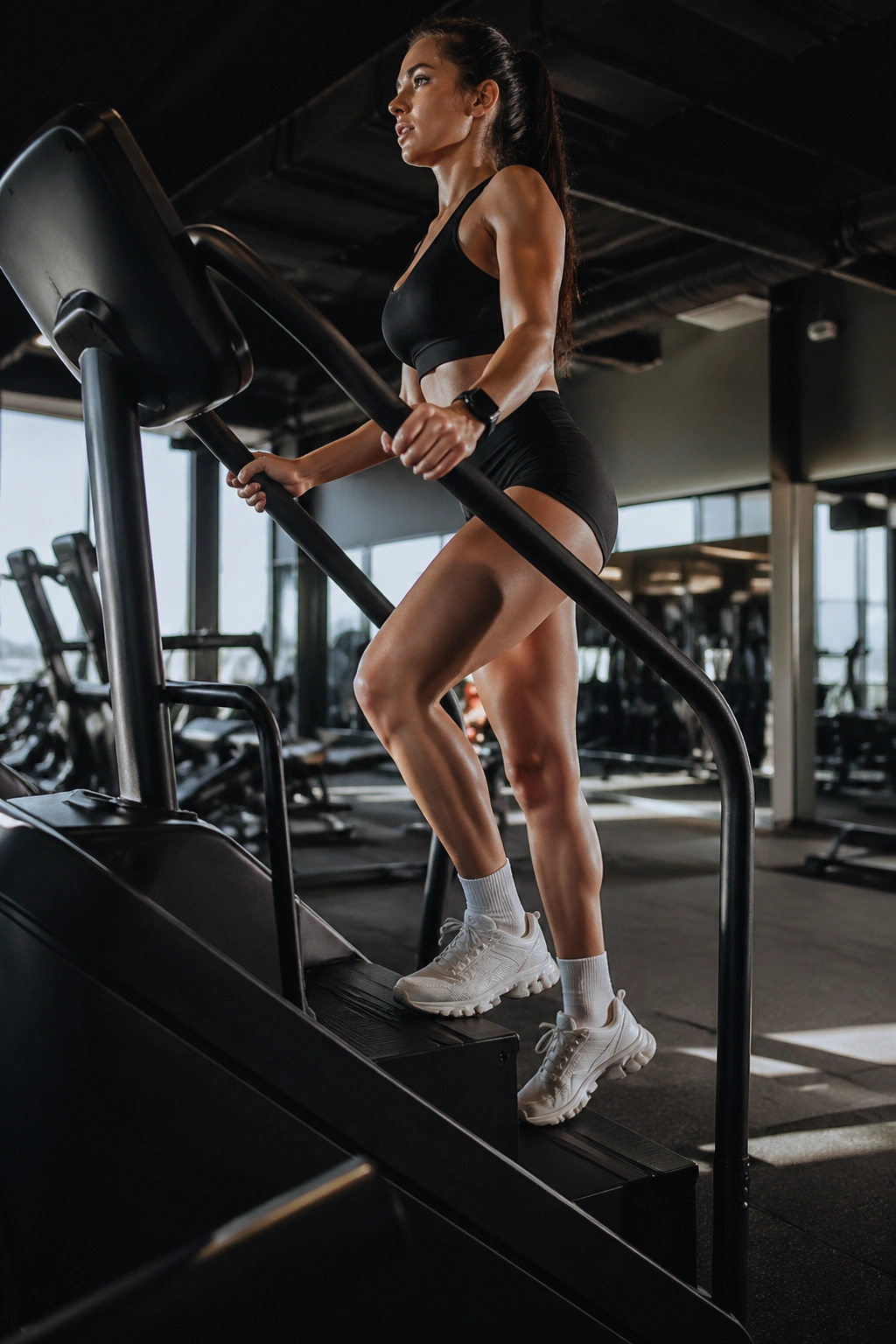
The stair climber has a sneaky little personality.
It looks civilized when you first step on. Then the burn starts creeping into your quads and glutes, and your breathing turns loud enough that you suddenly care very much about pace. That’s the appeal. You’re climbing against resistance, which means your lower body is doing real work instead of just spinning in circles.
A lot of people lean on the handles and turn the whole session into an upper-body rest break. Don’t. Keep your torso tall, place your whole foot on the step, and use the rails for balance only. One step at a time is enough for most people. Two-step skips are fine if you already have the coordination, but they’re not required to get results.
One sentence, and it matters: the stair climber is brutal in a useful way.
Use it for 10 to 20 minutes if you want a hard finisher, or stretch it to 25 minutes if you’re building endurance. A moderate level that lets you keep steady pace is better than a heroic setting that turns you into a rail-hanging statue after four minutes. Your calves will tell you the truth.
5. Air Bike
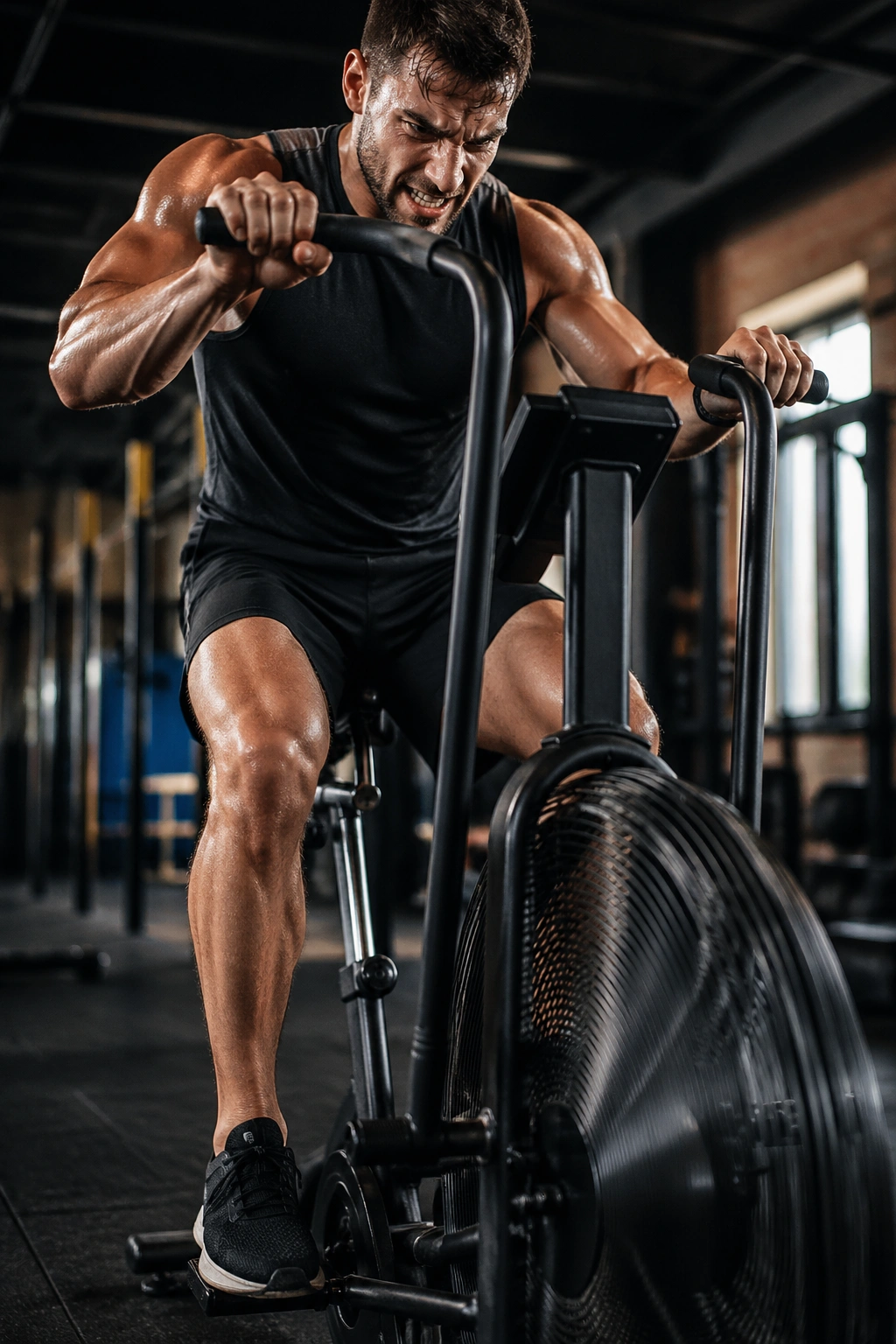
An air bike is rude in the best possible way.
The more you push, the harder it pushes back. That’s because the fan resistance rises with your effort, which makes it one of the best gym machines for short, nasty bursts that spike heart rate fast. Arms and legs both work, and that gives you a bigger demand than a simple seated bike.
This is a good machine when you want a short workout that still feels serious. A 12- to 15-minute air bike session can leave you toastier than a longer, easier cardio block on other equipment. It also works well as a finisher after strength training because it doesn’t need much setup.
A simple interval setup
- Pedal easy for 2 minutes.
- Sprint hard for 20 seconds.
- Recover for 70 to 100 seconds.
- Repeat for 8 to 12 rounds.
Do not chase speed alone. A sloppy blur of fast pedals with no resistance is mostly noise. You want force into the pedals and handles, not panic. If the handlebars are the only thing moving, you’re missing the point.
The air bike is a favorite for people who like to finish workouts with a fight.
6. Elliptical Trainer
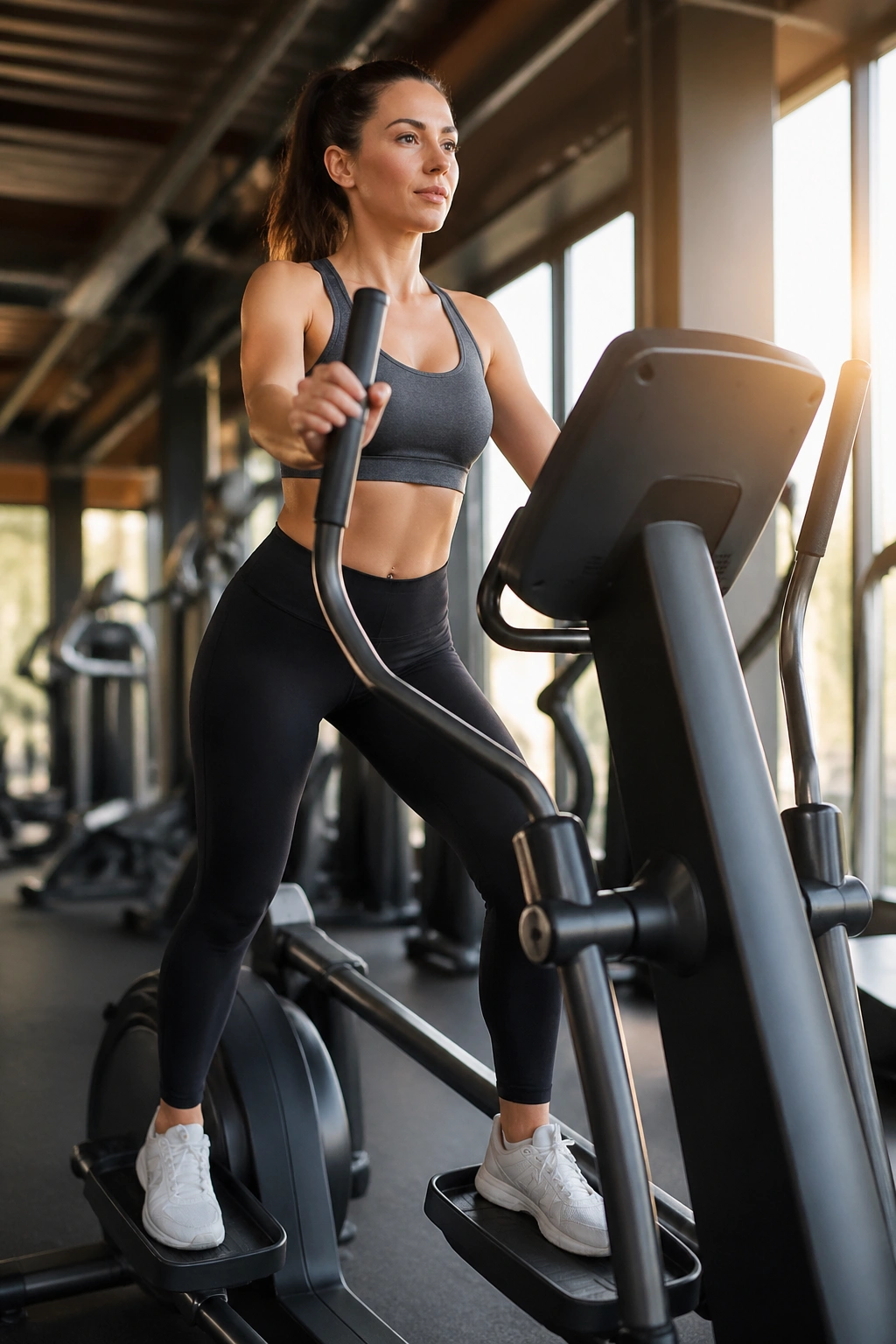
On sore-knee days, the elliptical keeps the habit alive.
That’s the main reason I like it. It lets you work hard with less impact than running, and that makes it easier to keep showing up when your joints are annoyed, your feet are tired, or you just want a long session without the pounding. It also gives you upper-body handles, which can quietly increase the work if you actually use them.
The catch is that the elliptical can become fake cardio fast. Tiny steps, low resistance, and a blank stare equal almost nothing. Raise the resistance until the pedals ask for effort, and keep your stride smooth and long enough that your hips and legs are doing something real. If your machine has incline settings, use them. They make a difference.
Try 20 to 40 minutes at a steady pace, or change resistance every 2 to 3 minutes for intervals. That keeps the session from drifting into autopilot. Lazy gliding does almost nothing.
The elliptical is not glamorous. It works anyway.
7. SkiErg
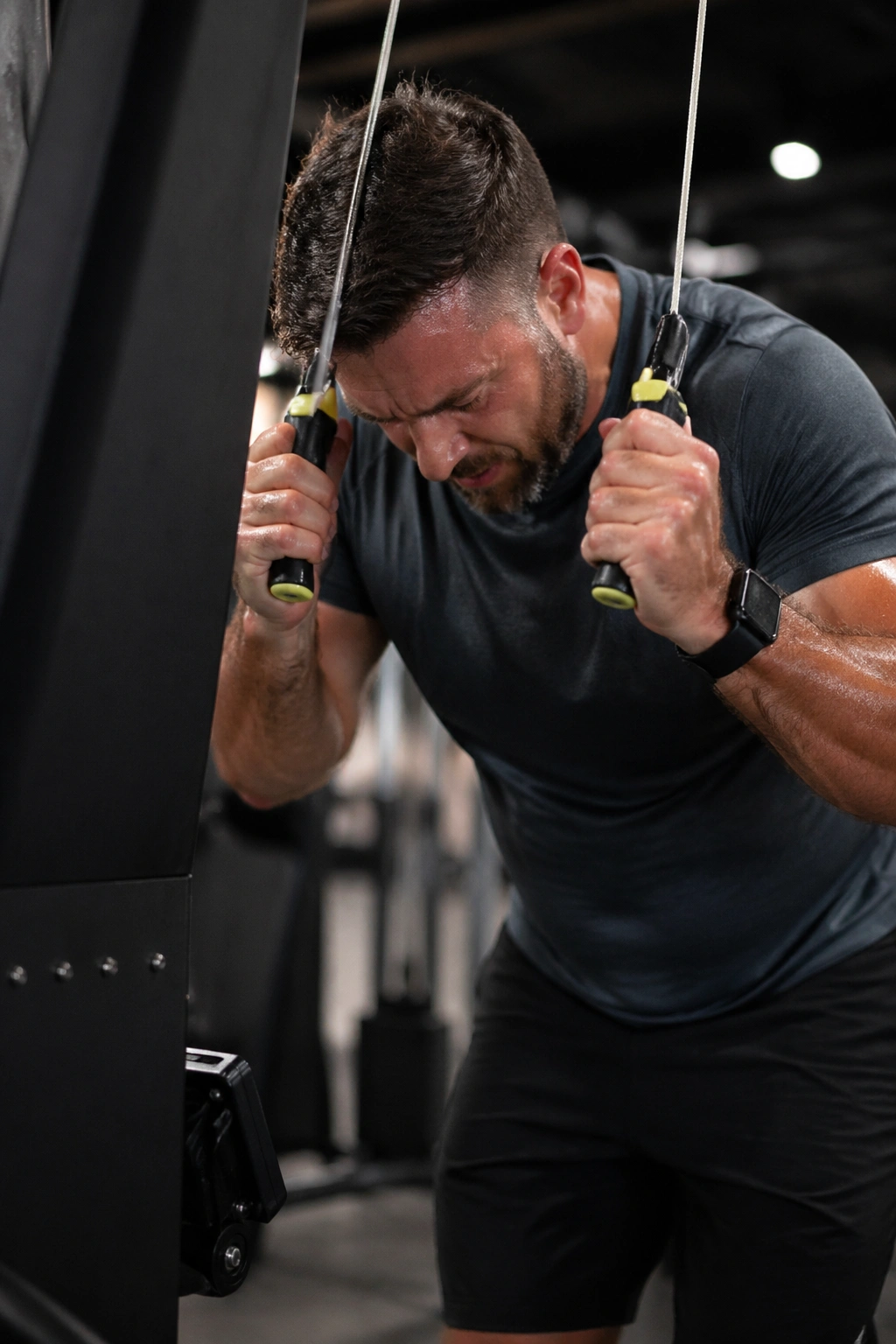
What makes a SkiErg more than an upper-body toy? It teaches you to pull hard while your core keeps your trunk from folding in half.
That combination matters. The machine uses a vertical pulling pattern that hits the lats, shoulders, abs, and back, but you still need your hips and legs to stay involved. If you just yank with the arms, the stroke gets weak and the fatigue lands in the wrong place. The better you coordinate the pull, the more useful the machine becomes for conditioning.
A good starting rhythm is 30 seconds hard, 60 seconds easy for 8 to 10 rounds. You can also row 200-meter efforts if you prefer distance markers. Keep your ribs down, hinge slightly at the hips, and drive the handles down with control. The movement should look athletic, not frantic.
A quick technique check
- Start tall with soft knees.
- Pull the handles down and in, not out to the sides.
- Brace the stomach before each drive.
- Let the arms finish the stroke, not start it.
- Breathe out during the power phase.
This machine is a monster when used with respect. It’s also one of the easier ways to make your upper back feel like it did actual work.
8. VersaClimber
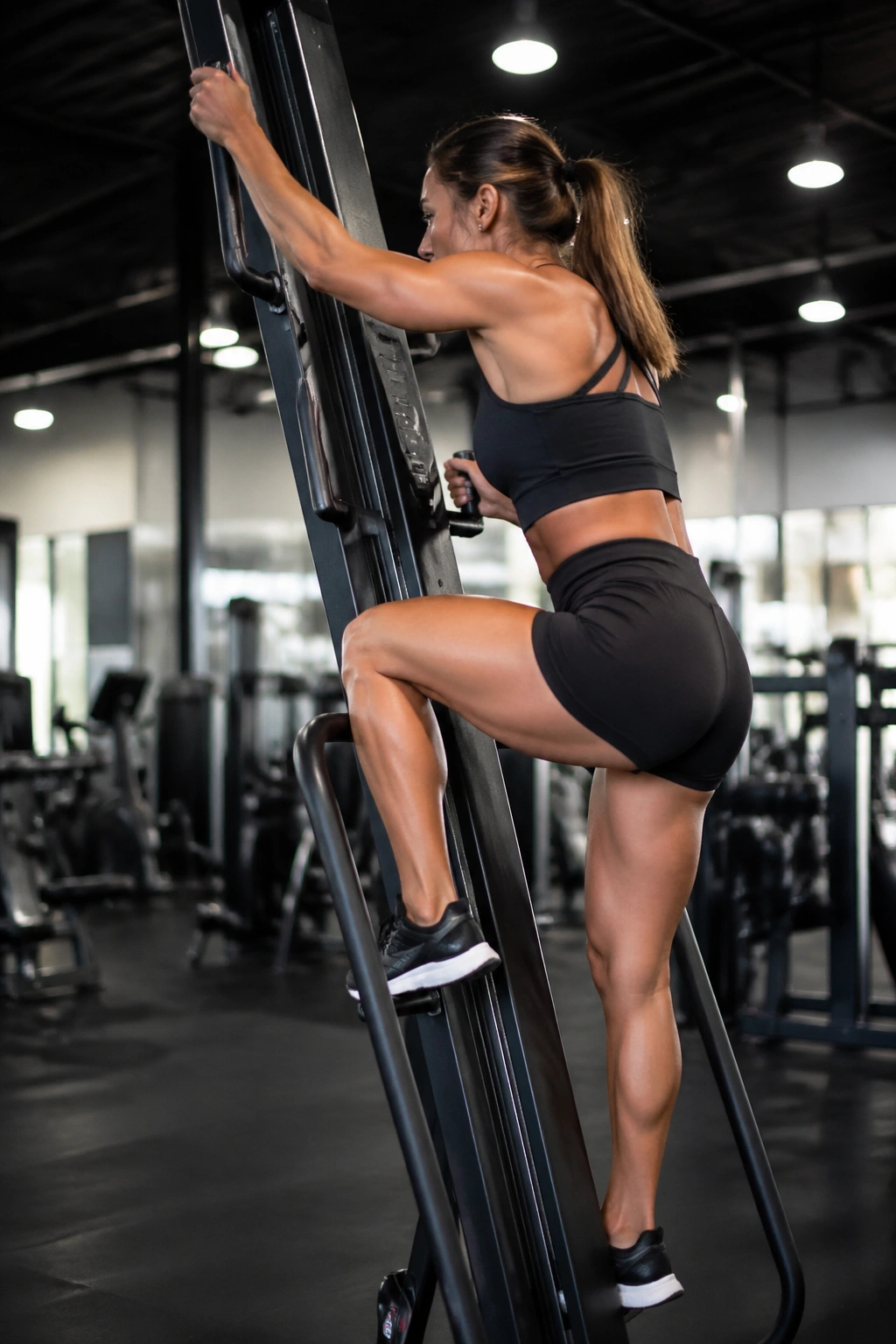
Vertical climbing changes the whole feel of a workout.
Your body is moving up a frame instead of forward on a floor, and that gives the session a strange, climbing-the-fire-escape feeling that never really goes away. The heart rate climbs fast. The forearms get involved. The legs keep pumping. There’s no coasting on a VersaClimber, which is part of why it earns a spot on any list of gym machines that burn belly fat fast.
Start slow. Seriously. People get excited on this machine and blow up after two minutes because they’re trying to move too fast with a long stride. Keep the steps controlled, stay tall, and let the machine set the pace for the first few sessions. Your calves, grip, and lungs will all adapt at different speeds.
A useful format is 5-minute blocks with 1 minute easy between them, or a ladder of 15 seconds hard, 30 seconds moderate, 45 seconds hard, then back down. The machine is intense enough that you do not need a long session to make it count.
It feels a little like climbing while the room spins.
That is the point.
9. Curved Treadmill
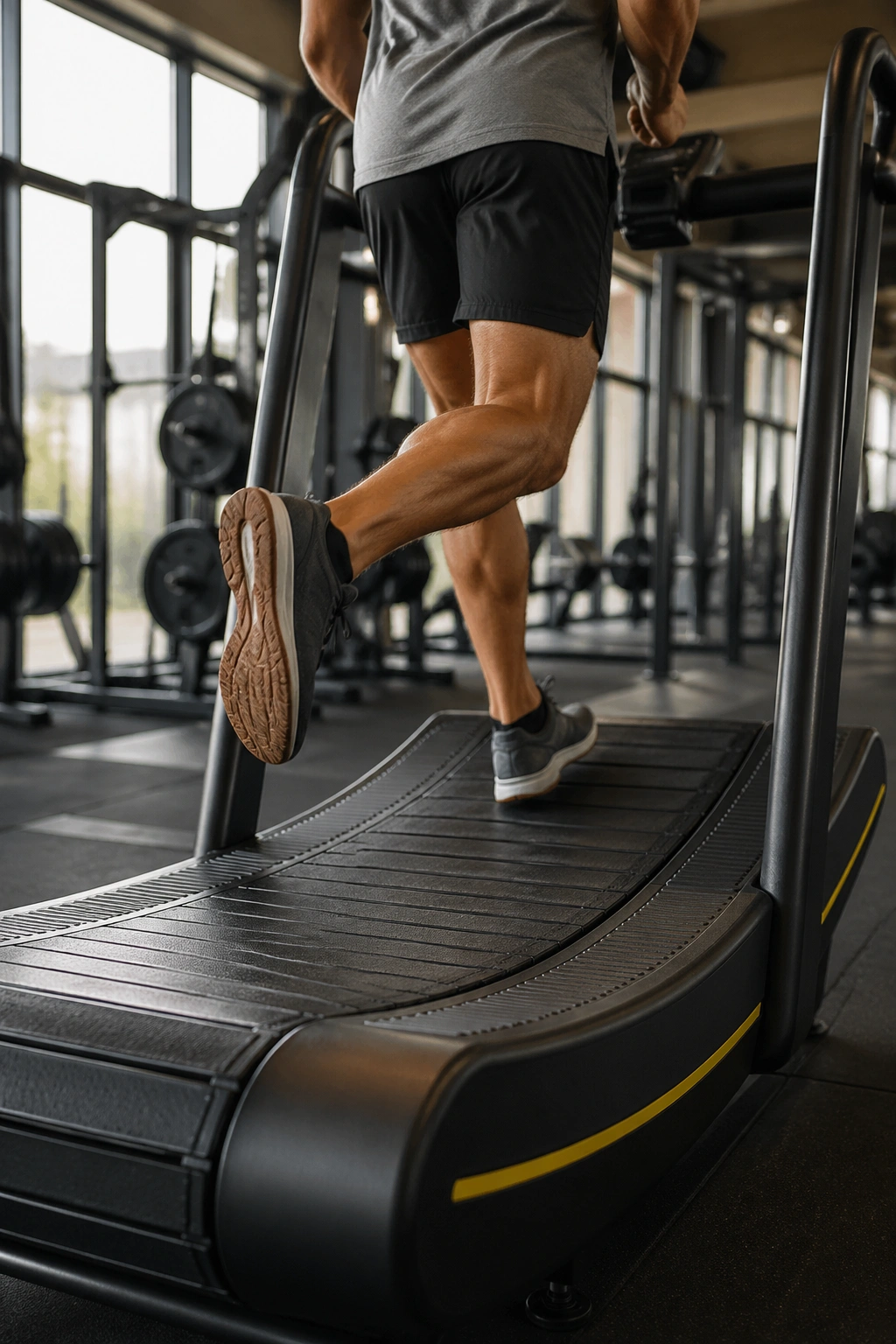
A curved treadmill doesn’t hand you free speed.
You create it. Every inch of it.
That’s why it can be such a sharp fat-loss tool. Since the belt is non-motorized, your pace depends on how hard you drive the ground under you. Walkers can use it, sprinters love it, and everyone in between gets a workout that punishes lazy form pretty quickly. The machine has a way of exposing whether you’re actually working or just pretending to.
Short intervals work best here. Try 15 to 20 seconds fast, then 60 to 90 seconds easy, repeated for 8 to 10 rounds. If running isn’t your thing, brisk walking with a deliberate arm swing still burns plenty. Stay in the middle of the belt and keep your steps quick. Reaching too far forward usually makes the machine feel awful.
What makes it different
- You control the pace entirely.
- There’s no motor to carry you.
- Short, quick steps feel smoother than long stomping strides.
- It rewards posture and rhythm more than raw effort alone.
The curved treadmill is excellent if you get bored easily. It feels alive under your feet, and that changes the whole session.
10. Spin Bike
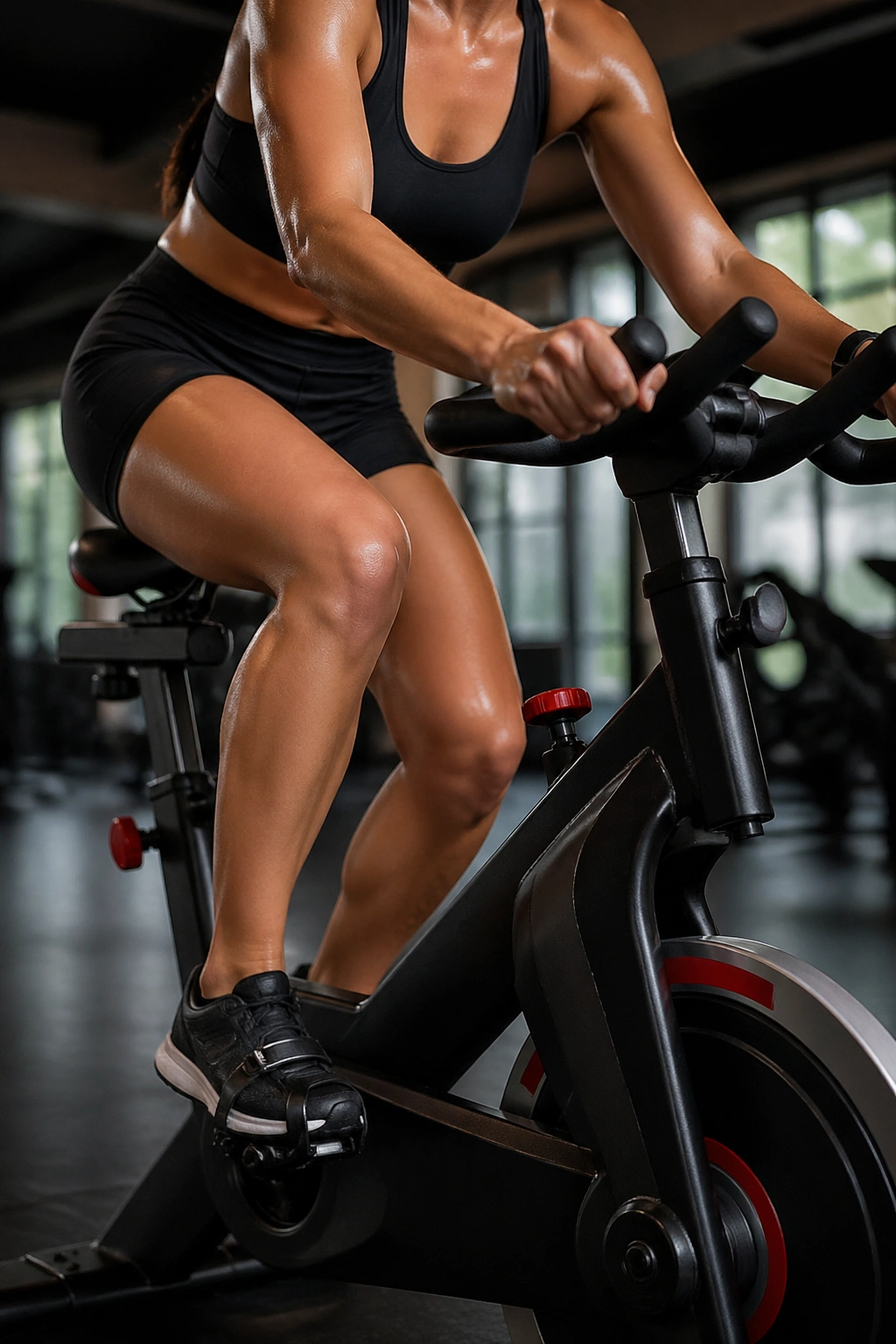
Stationary bikes only look easy from across the room.
Once you set the resistance and ride for real, the story changes. A spin bike is one of the best low-impact machines for keeping your heart rate up without beating up your knees. It’s also flexible. You can do long, steady rides, short brutal intervals, or mixed sessions that keep your breathing high and your legs burning.
Saddle height matters more than people think. Your knee should have a slight bend at the bottom of the pedal stroke, not a deep fold and not a locked-out stretch. If the seat is too low, your knees complain. If it’s too high, your hips rock side to side. That’s sloppy and it wastes power.
A clean interval ride might look like this: 3 minutes easy, 2 minutes hard, repeat 6 times. Or keep it simple with 10 rounds of 30 seconds fast and 90 seconds easy. Resistance should be real enough that your legs feel loaded, not just busy.
One sentence, because it deserves its own line: your knees should feel worked, not angry.
The bike is a strong pick when you need steady effort without impact.
11. Leg Press Machine
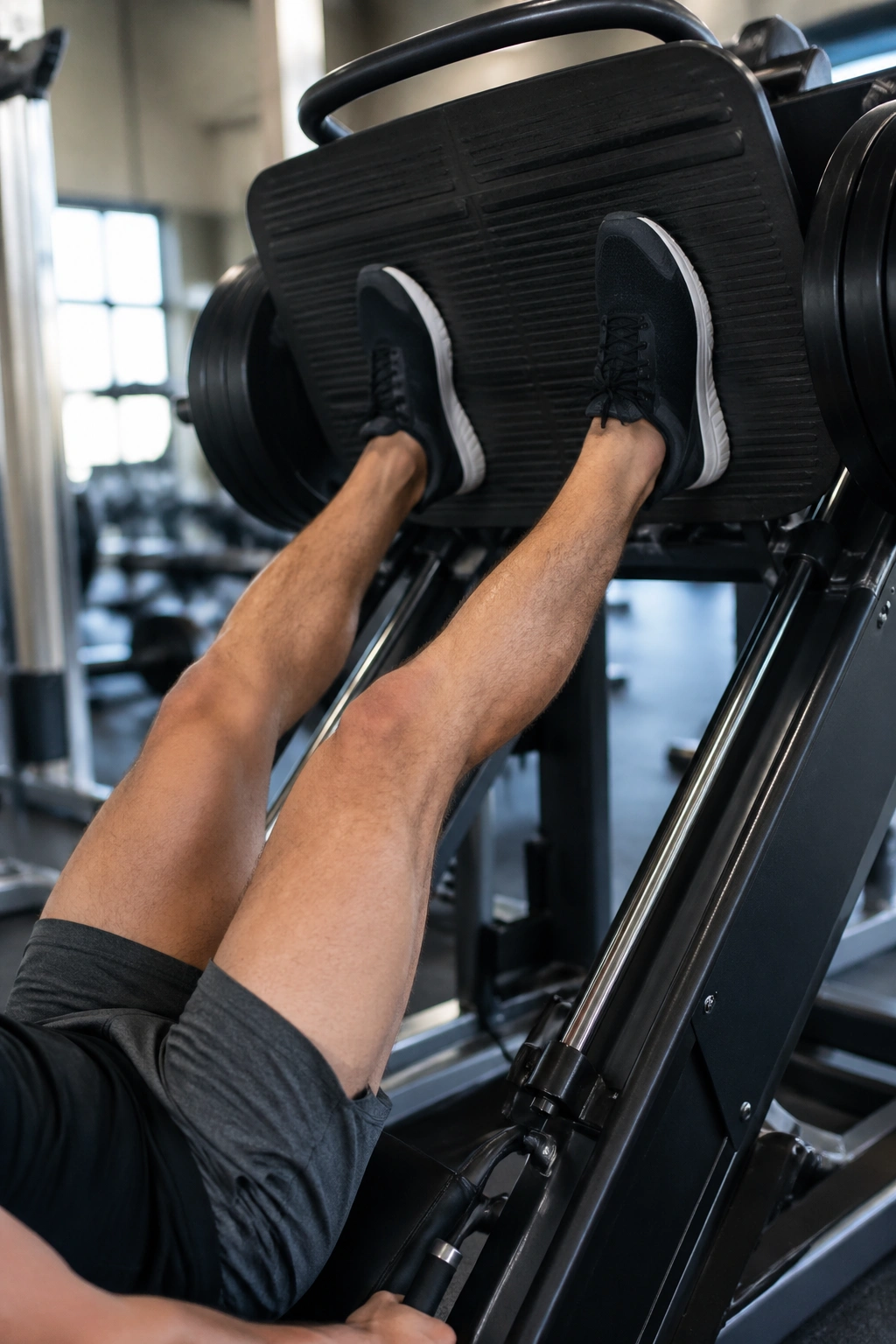
Why put a leg press in a fat-loss article? Because big muscles use fuel, and this machine lets you train them hard without the balancing act of free squats.
That matters when you’re trying to build a body that handles more work. The leg press hits quads, glutes, and hamstrings in a way that can be pushed safely for higher reps, especially when you want a dense session with short rest. It won’t spike your heart rate like a sprint machine, but it supports the bigger goal by adding muscle and making your lower-body workouts harder.
Use 3 to 4 sets of 12 to 20 reps with 45 to 60 seconds of rest. Place your feet about shoulder width on the platform, lower the sled until your thighs come near your torso, then press without slamming the knees straight. Do not lock out aggressively at the top. That habit turns a useful machine into a joint complaint.
Good form cues
- Keep your lower back glued to the pad.
- Lower under control for 2 to 3 seconds.
- Push through the whole foot, not just the toes.
- Stop before your hips curl off the seat.
The leg press is a workhorse. Boring? Sometimes. Effective? Yes.
12. Hack Squat Machine
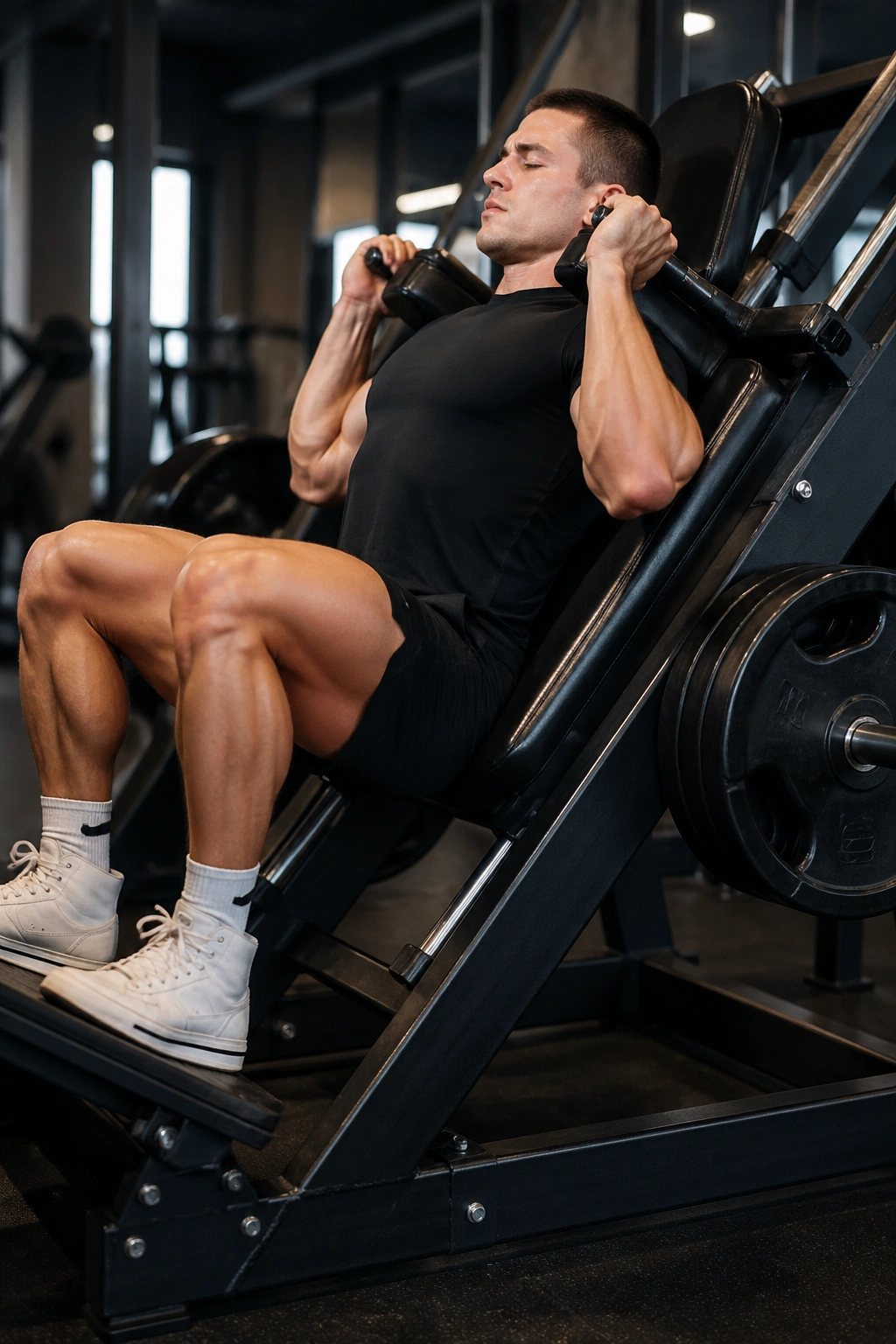
The hack squat is the machine people avoid until they try it properly.
Then they usually respect it. It locks you into a fixed path, which strips away a lot of the balance demands that make barbell squats intimidating. That also means you can push the legs hard, especially the quads, and keep the set moving with almost no setup drama. For fat loss, that kind of density is gold.
Foot placement changes the feel more than most lifters realize. Put your feet a little lower on the platform and you’ll feel more quad. Put them a touch higher and the glutes and hamstrings get more of the load. Don’t chase ego depth if your lower back rounds or your hips tuck under hard at the bottom. Clean reps matter more than impressing the mirror.
Try 8 to 15 reps for 3 to 5 sets, resting 60 to 90 seconds. The machine should feel like a leg grinder, not a spine exercise.
The hack squat gives you a lot of work in one place. That’s the selling point.
13. Smith Machine
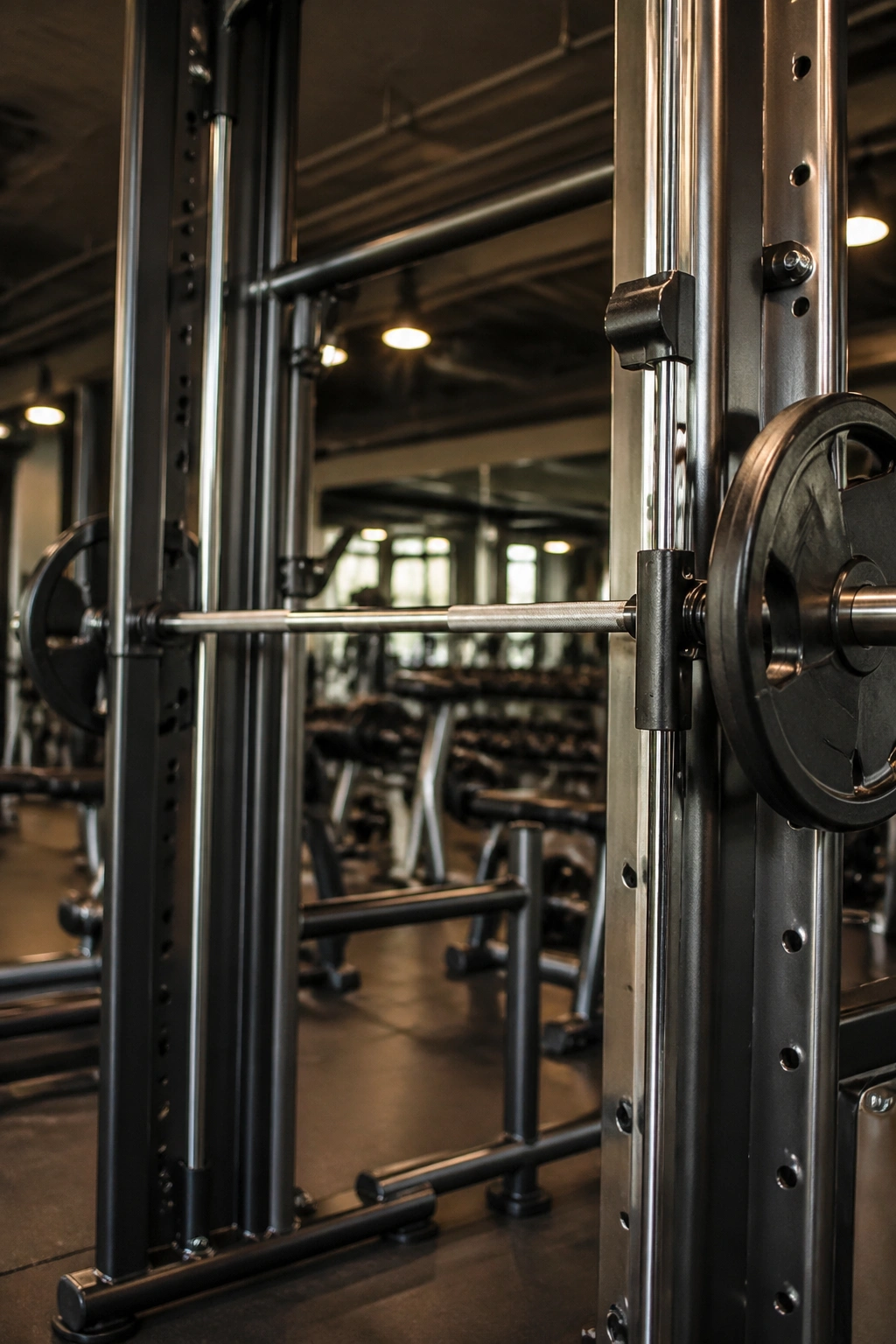
Set the Smith machine wrong and it feels awkward; set it right and it becomes a workhorse.
That fixed bar path is exactly why people use it for fat-loss-focused circuits. You can move fast between exercises without worrying about balance, and that makes it useful for squat patterns, split squats, reverse lunges, and hip thrusts. It’s not a free pass to get sloppy. It’s a tool for keeping the session tight.
For squats, place your feet slightly forward so the bar path feels natural and your torso can stay braced. For split squats, set the back foot on a bench or step and use a shorter range if your balance gets shaky. Hip thrusts on the Smith machine are also excellent because the setup is fast and the load can be heavy enough to matter.
Best moves to pair on a Smith machine
- Squats for quad and glute work
- Reverse lunges for single-leg stability
- Hip thrusts for glute load
- Calf raises for extra lower-body volume
One nice thing here: you can keep rest short and the workout dense. That is what makes it fit so well into weight loss workouts.
14. Cable Machine Circuits
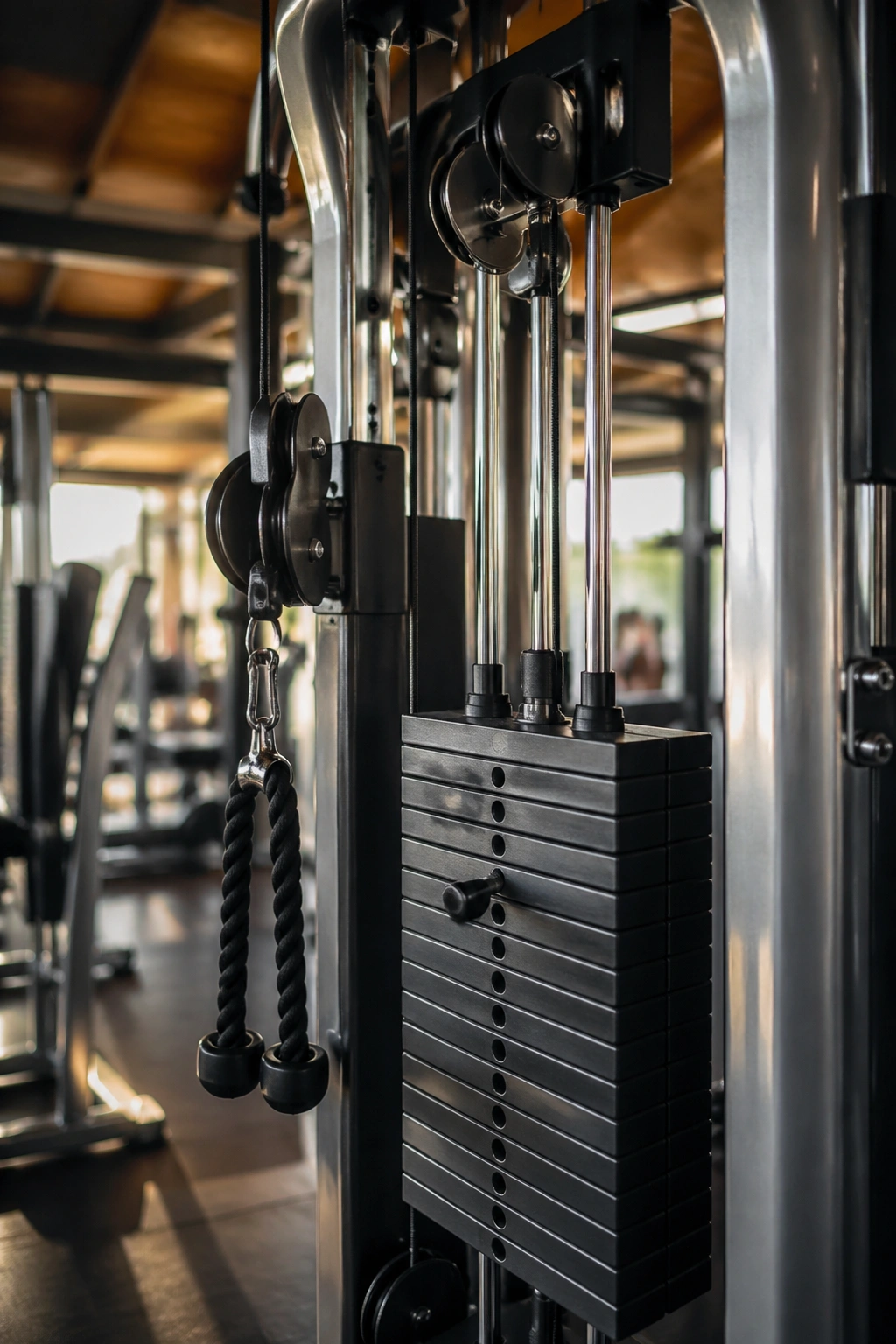
The cable stack is one of the sneakiest fat-loss tools on the gym floor.
Why? Because you can move from one exercise to the next with almost no setup time. That keeps the workout moving, and moving workouts burn more calories than the long, chatty kind where everyone stands around adjusting their headphones. The cable machine also lets you train the full body with constant tension, which means the muscles stay on longer through each rep.
A simple circuit can include cable squats, seated rows, woodchops, chest presses, and face pulls. Pick a moderate weight, work for 30 to 40 seconds, rest for 15 to 20 seconds, then move to the next station. Do 3 to 4 rounds. You should finish breathing harder than you expected for a “strength” workout.
A useful circuit template
- 12 cable squats
- 12 seated rows
- 10 woodchops per side
- 12 chest presses
- 15 face pulls
Keep the load light enough that you can move cleanly without jerking the stack. If the stack is smashing down and bouncing, it’s too heavy. Smooth tension is the goal.
This machine is not flashy. It works.
15. Assisted Pull-Up Machine
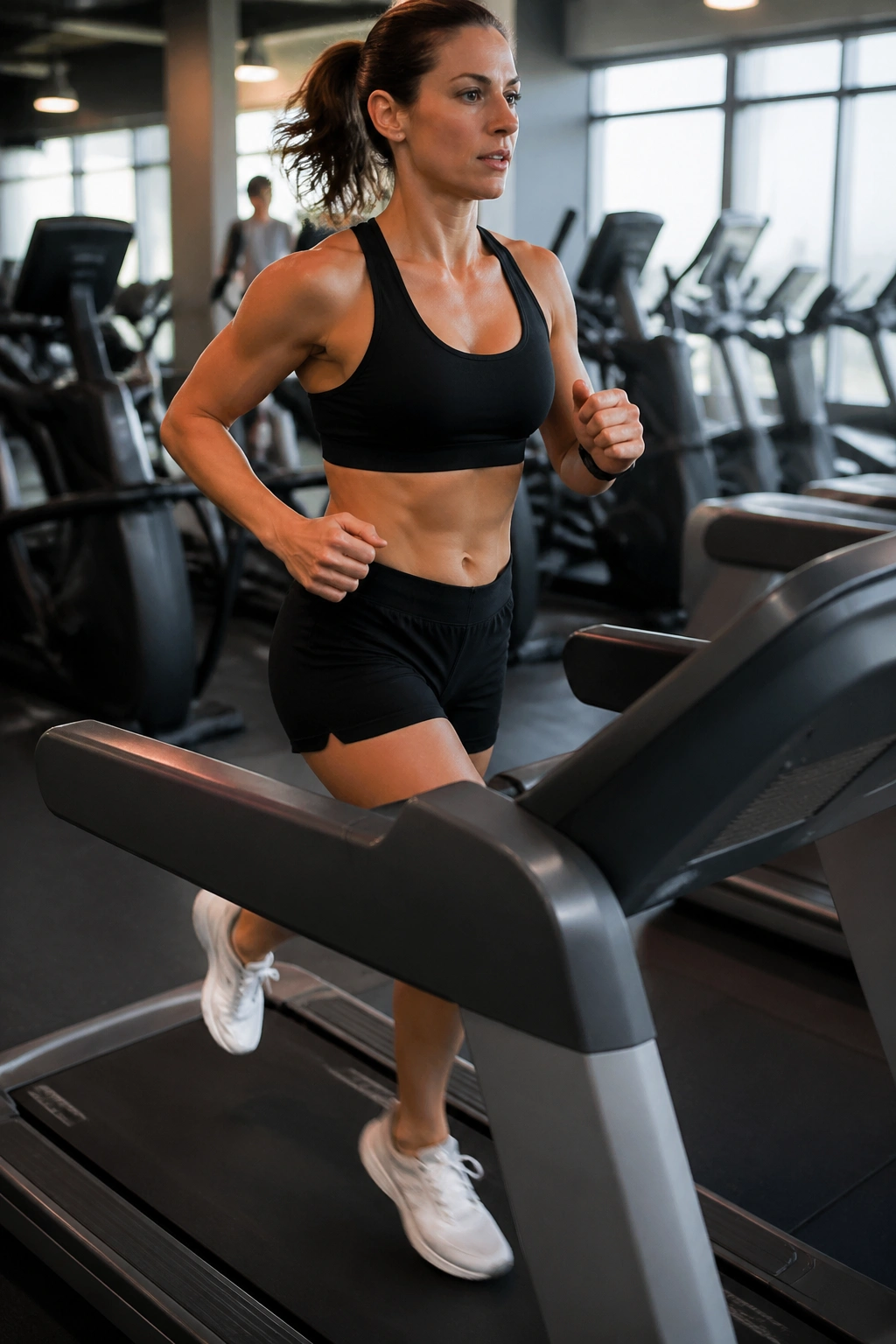
An assisted pull-up machine does not burn belly fat by magic, and that honesty matters.
What it does do is build the upper back, lats, arms, and grip while letting you work through a hard pulling pattern without failing on rep three. That’s useful because bigger muscles and better pulling strength make the rest of your training better. Better training usually means more work, and more work is what trims fat over time.
Use enough assistance to keep every rep clean. Aim for 4 to 8 controlled reps per set, lower for 2 to 3 seconds, and rest 45 to 75 seconds. If you can bang out 15 sloppy reps, the assistance is too high. If you can’t move the handles without neck strain, it’s too low.
This machine is also good in circuits. Pair it with cable rows, pushdowns, or a bike interval, and you’ve got a simple session that hits muscles and conditioning at the same time. That combination is the real win. Not magic. Work.
Pick two or three machines from this list, use them hard, and keep the rest periods honest. That’s where the belly-fat loss story starts to get interesting.
