



Belly and thigh fat workouts at home work best when they do more than make you sweat. They need to raise your heart rate, wake up the big muscles in your legs, and ask your core to keep everything steady while the rest of you is working hard.
That is the part most people miss. Crunches alone won’t peel fat off the stomach, and endless thigh squeezes won’t change your shape if the rest of the workout is lazy. Fat loss comes from a mix of movement, consistency, and a small calorie deficit, while strong legs, glutes, and midsection muscles help the whole package look tighter as the fat comes down.
No gym is required. A mat, a timer, a chair, a stair, and a little patience will take you a long way. The moves below are the ones that earn their place because they burn energy, build useful strength, and don’t ask you to buy a drawer full of gear you’ll never touch again.
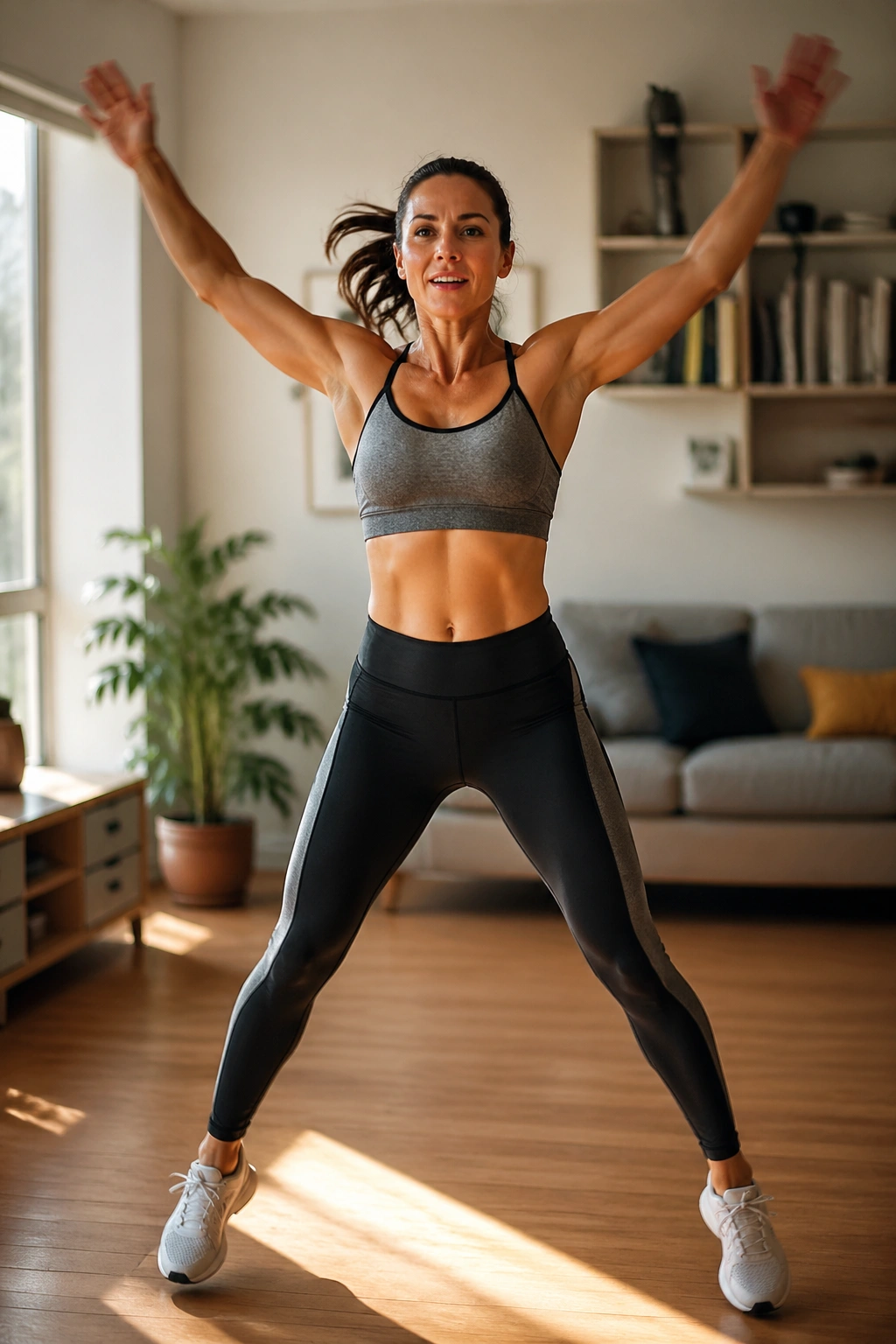
1. Jumping Jacks to Wake Up Your Whole Body
Jumping jacks are old-school, and that is exactly why they still belong in a home fat-loss routine. They get your arms, legs, calves, and core moving at the same time, which means your heart rate climbs fast without any setup.
They also make a good bridge between strength moves. Do 30 seconds of jacks before squats or lunges and your body stops feeling so stiff. That matters more than people think. A warm body moves better, lands softer, and usually burns more energy than a cold one dragging through the first set.
How to keep them useful
- Land quietly with soft knees.
- Keep your ribs down instead of flaring your chest.
- Step one foot out at a time if jumping bothers your knees.
- Work in short bursts: 20 to 40 seconds is enough for most circuits.
One clean round beats three sloppy ones.
2. High Knees for a Faster Heart Rate
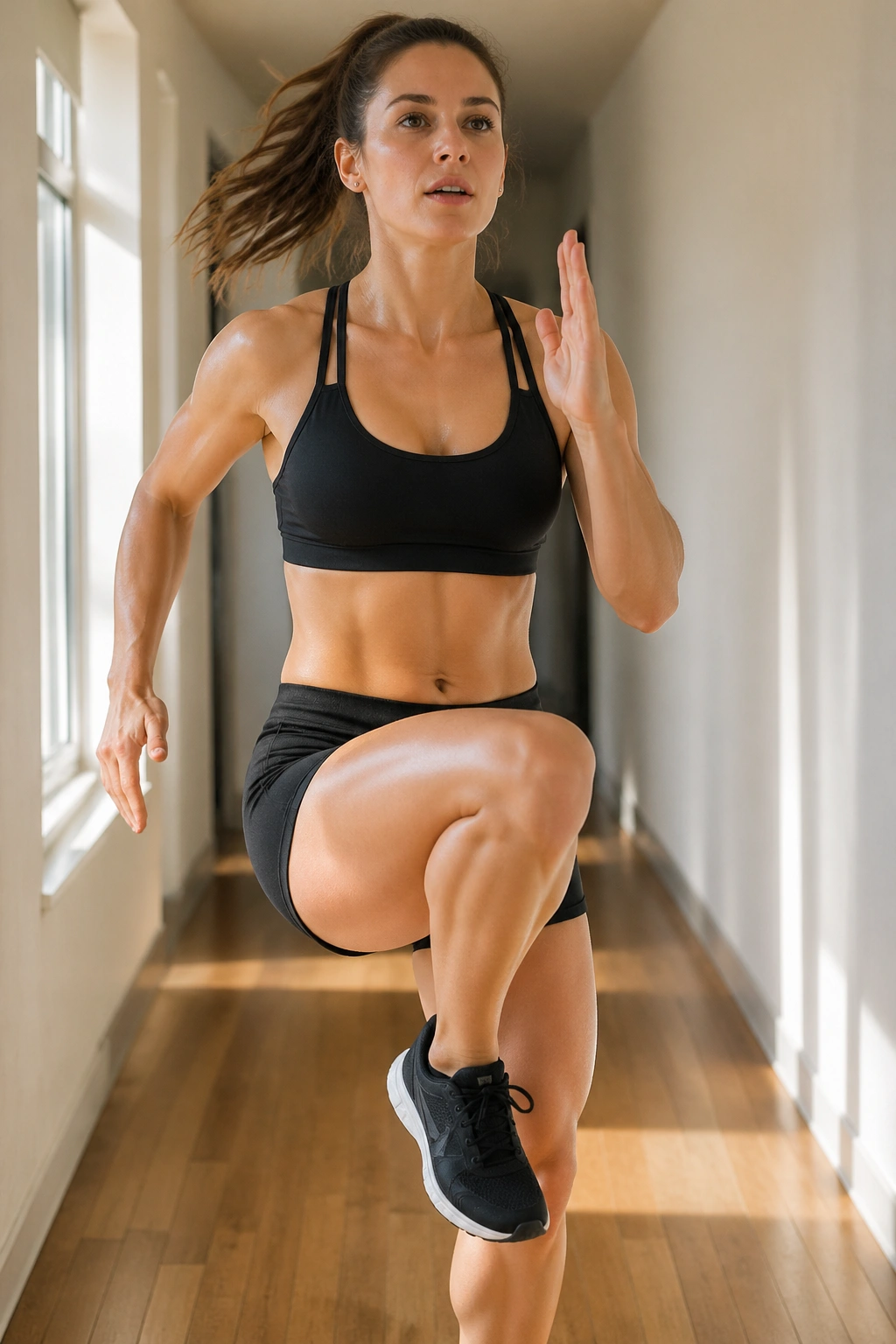
Can marching in place really count? It can, but high knees do more when you want a stronger cardio hit. Drive one knee up, switch quickly, and keep your torso tall so your abs have to help.
The move feels simple until you hold the pace for more than 20 seconds. Then your hip flexors, thighs, and breathing all start to complain in a useful way. That is the point. You are trying to ask a lot from a small piece of floor space, and high knees do that without needing any gear.
What to watch for
- Bring the knee up toward hip height, not to your chest with a big lean.
- Pump the opposite arm so the movement stays rhythmic.
- Keep your feet light and your shoulders relaxed.
- Slow the pace to a quick march if you start bouncing all over the room.
Use them as a finisher after strength work, or as a warm-up before a longer circuit.
3. Burpees When You Want No Excuses
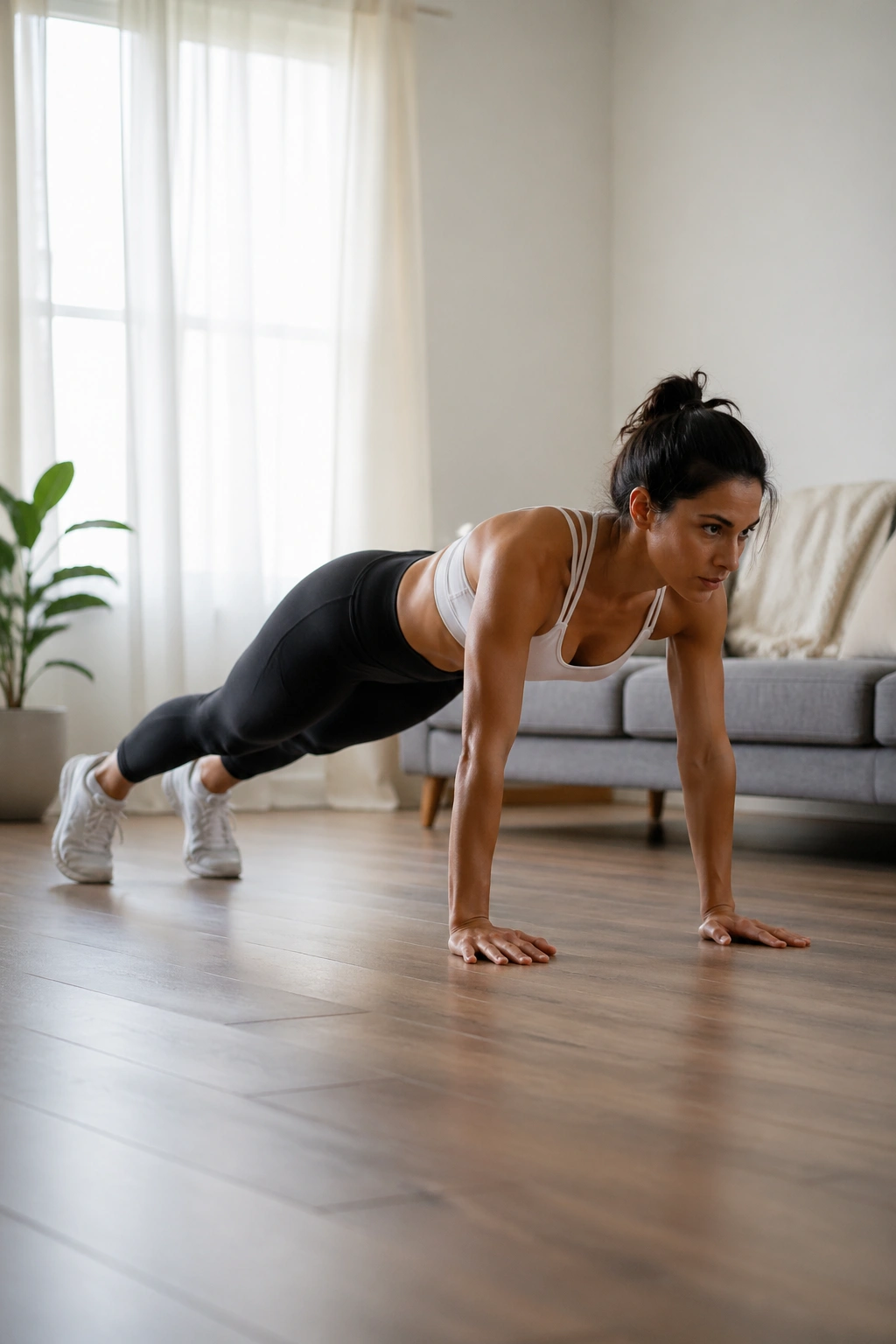
Burpees are not polite. They squat, plank, and jump in one motion, which is why they show up in so many belly and thigh fat workouts at home. If you want a move that forces the whole body to earn its keep, this is it.
A good burpee burns more energy than a soft, half-hearted shuffle between exercises. It also tests your legs and core in a way that feels honest. You cannot hide much inside a burpee. Either you lower with control, brace your middle, and stand up with purpose, or the rep falls apart fast.
Start with the easier version if needed. Step back into plank instead of jumping back. Skip the push-up at first. You will still get a hard workout, and your joints will thank you if you are returning after a long break.
How to make burpees less miserable
- Keep your hands under your shoulders on the floor.
- Step back instead of hopping back if your wrists or knees need it.
- Jump only as high as you can land softly.
- Stop one or two reps before your form goes messy.
4. Mountain Climbers for Core and Thighs
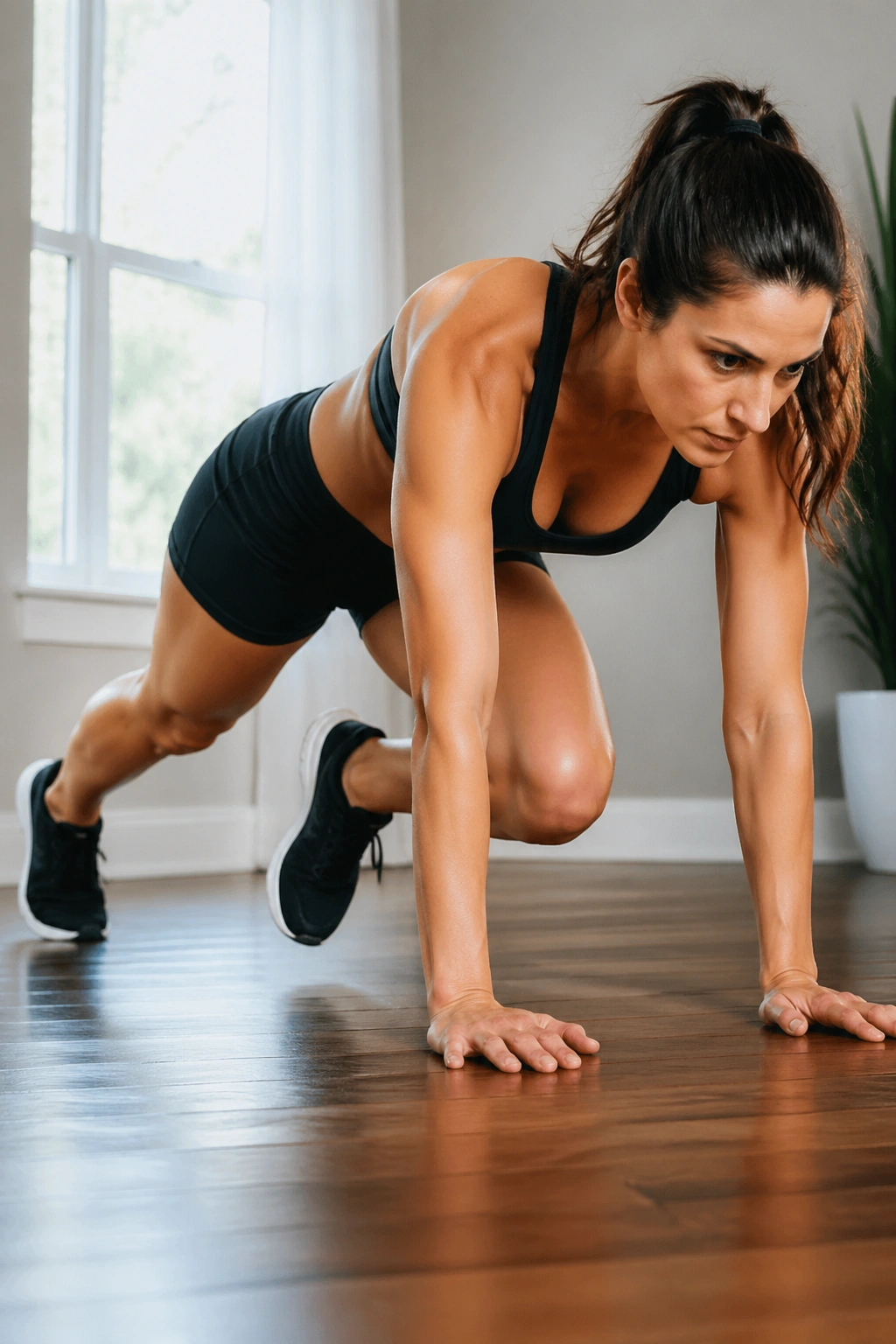
Mountain climbers look like running on the floor, but only if you keep the plank position honest. Shoulders stay over wrists. Hips stay low. Knees drive in one at a time with enough speed to make your breathing change.
That low position matters. If your hips shoot up, the move turns into a tired little march that does not ask much from your belly or thighs. Keep your back long and your ribs tucked down, and the whole front side of your body has to work.
You can make mountain climbers fast and punchy or slow and controlled. Fast feels more cardio-heavy. Slow feels meaner on the core. Both versions have a place, and both are better than sloppy speed.
Try 20 seconds hard, 20 seconds rest, then repeat for 4 to 6 rounds. Short bursts keep the quality up.
5. Bodyweight Squats for Stronger Thighs
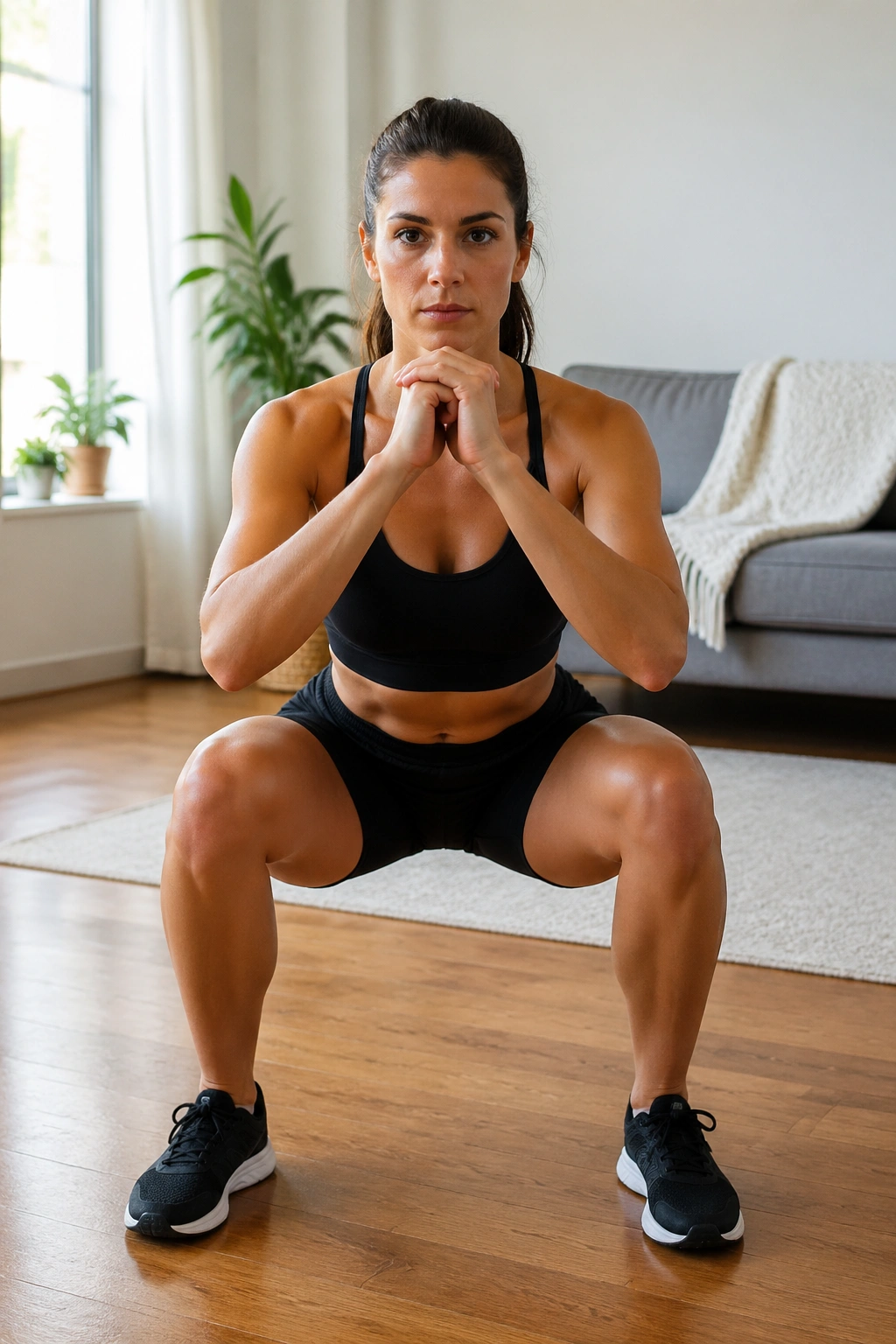
Bodyweight squats are the backbone of a home leg workout. They hit the quads, glutes, and inner thighs, and they teach your body how to sit back, stand up, and stay balanced while doing it.
The trick is not depth for its own sake. The trick is control. Drop your hips back, keep your chest lifted, and push through your heels as you stand. If you rush the rep, your knees tend to drift inward and your lower back starts stealing the work.
A squat done well is never boring. It is one of those moves that looks basic right up until your thighs start shaking halfway through a slow set.
Squat cues that help
- Feet about shoulder-width apart.
- Knees track in the same direction as your toes.
- Pause for one count at the bottom if you want more work.
- Keep your weight centered over the middle of the foot, not just the toes.
6. Sumo Squats for the Inner Thighs
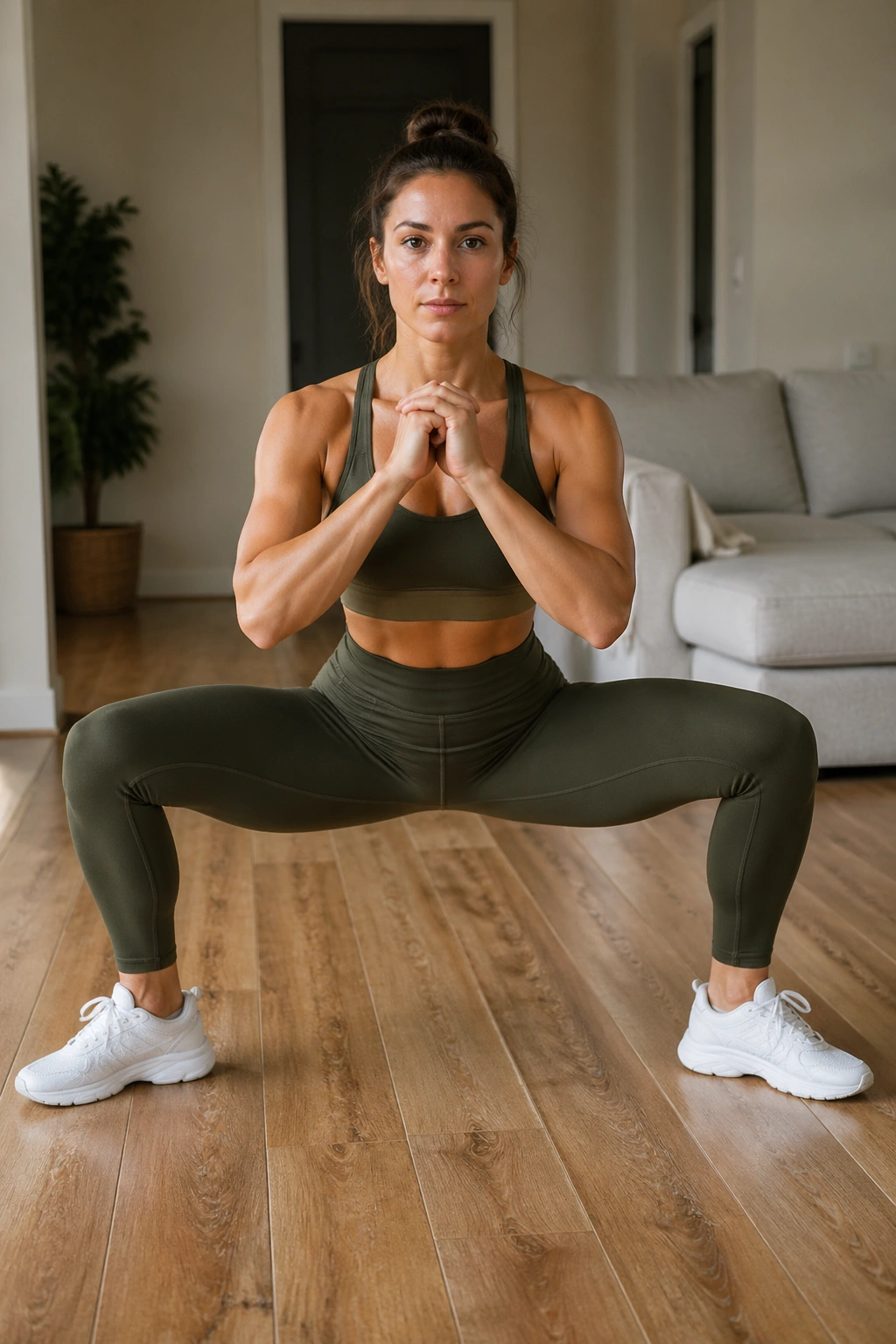
A wide stance changes everything. Sumo squats ask more from the inner thighs and glutes, and that makes them a smart choice when thigh work is the goal. Your feet are wider than shoulder width, your toes turn out a bit, and your torso stays tall as you lower.
The wide stance is useful because it shifts the stress. Instead of feeling the squat mainly in the front of the legs, you get a strong squeeze through the inside of the thighs and the back of the hips. That is a nice change when standard squats start to feel repetitive.
What to watch for
- Keep your knees tracking over your toes.
- Do not fold your chest forward to chase depth.
- Lower only as far as you can keep your heels planted.
- Squeeze your glutes at the top instead of snapping your hips forward.
A slow set of 12 to 15 reps is plenty when you are doing them with real control.
7. Reverse Lunges That Are Easier on the Knees
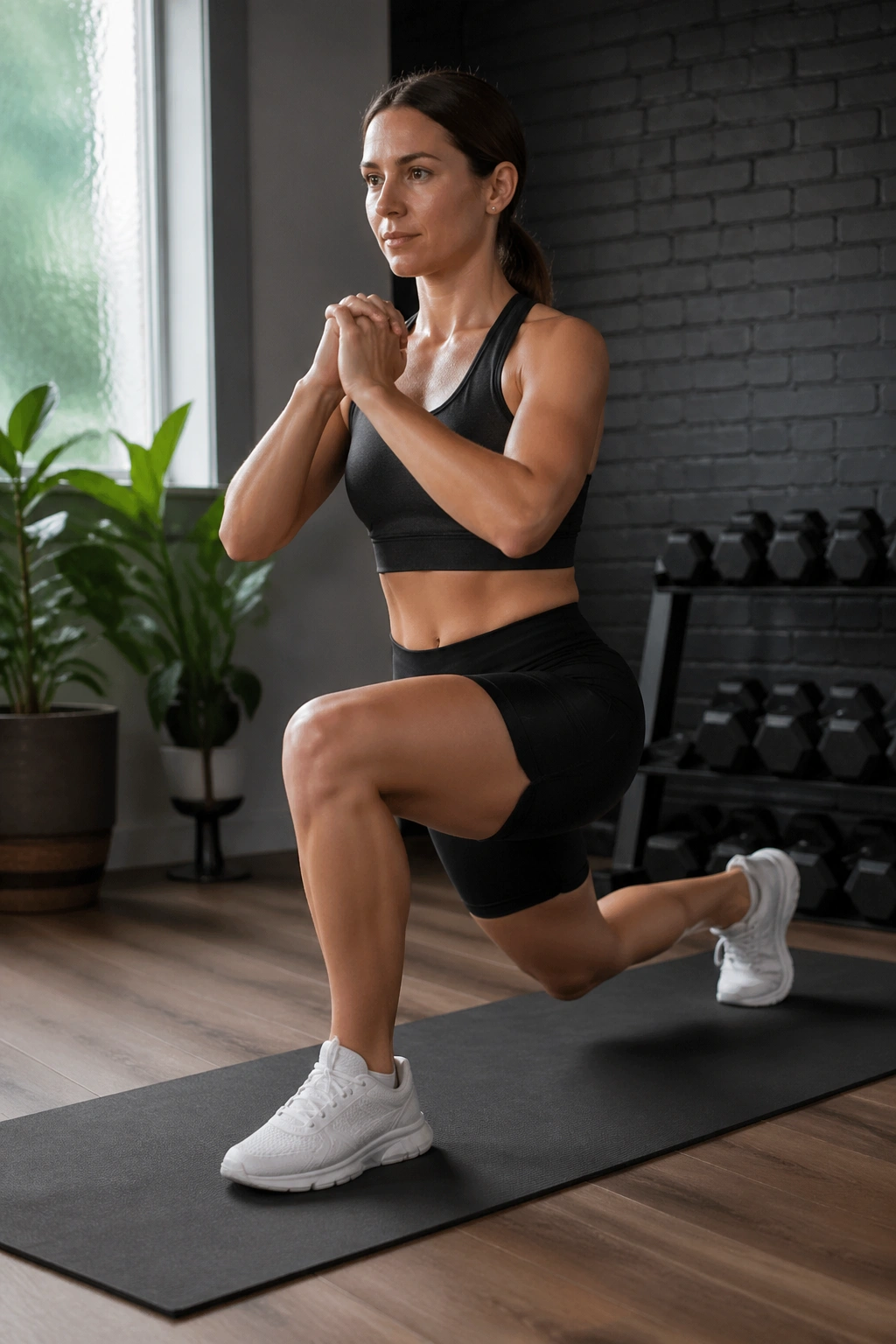
Why do reverse lunges show up in so many good home leg routines? Because they usually feel kinder on the knees than forward lunges, and they still light up the thighs, glutes, and balance muscles.
Step one leg back, lower until both knees bend, and press through the front heel to stand up. The movement looks simple on paper. In practice, it asks a lot from your stability, especially if you rush from side to side with no control. That is why reverse lunges often feel better than they look.
A wall or chair nearby can help while you learn the pattern. Use it if you need it. Nobody gets bonus points for wobbling dramatically.
If your knees complain, shorten the range a little and slow the rep down. Good form beats deep range every time.
8. Curtsy Lunges for the Outer Hips
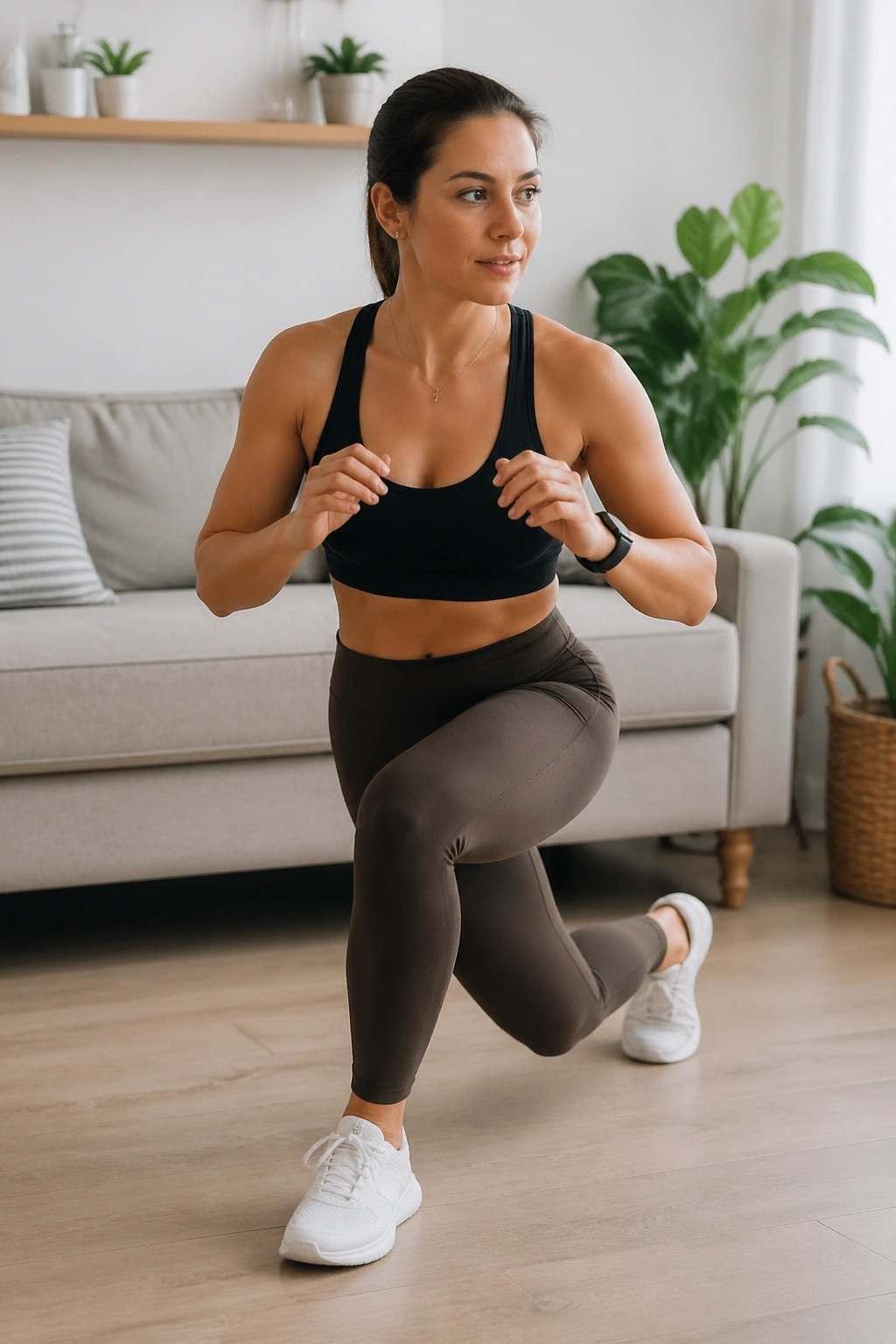
Why use a move that feels awkward the first few times? Because curtsy lunges load the outer hips and glutes in a way regular lunges do not. That side angle gives your thighs and hips a different kind of work, and variety matters when you are training at home.
Cross one leg behind the other as you lower, then stand back up with control. Keep your front foot flat and your front knee from collapsing inward. The movement should feel smooth, not twisted and pinchy. If your knees hate the cross-behind path, shorten the step and make the motion smaller.
Quick form notes
- Keep your chest tall.
- Move the back leg behind, not far across.
- Push through the front heel on the way up.
- Stop if the front knee feels jammed.
These are good in short sets of 8 to 12 per side. They are small, but they sting in a useful way.
9. Glute Bridges to Support the Thighs
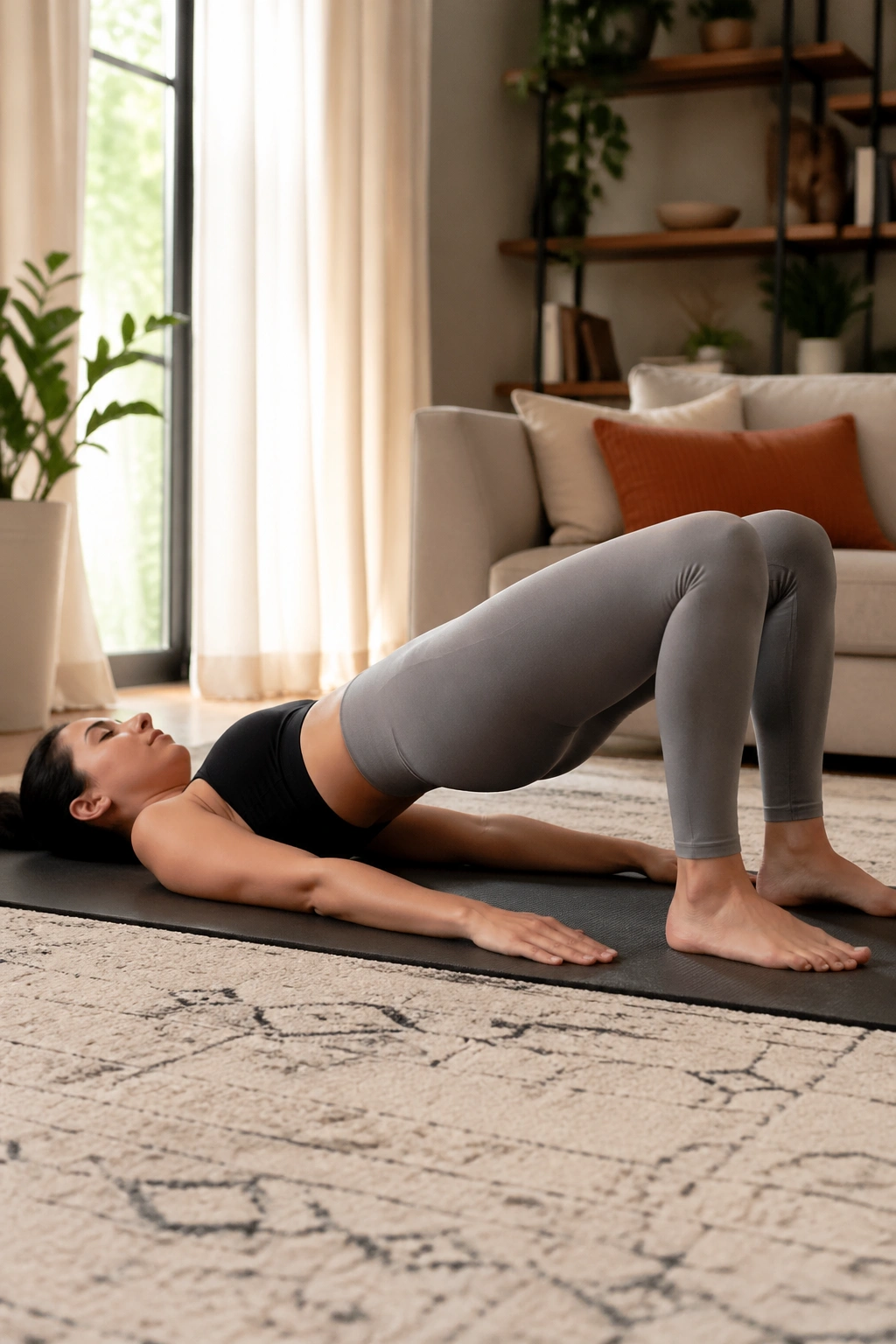
If you sit a lot, glute bridges are one of the easiest ways to wake up the back side of your body. They do not look dramatic. They do not need noise. They work by teaching your glutes to do their share, which helps the thighs and lower back stop overworking.
Lie on your back with your knees bent and feet flat. Drive through your heels, lift your hips, and squeeze at the top for a beat before lowering. The top position should feel like a firm glute squeeze, not a lower-back arch. That is the difference between a good bridge and a sloppy one.
A one-second pause at the top makes a big difference. So does keeping your feet close enough that your shins stay about vertical at the top.
Squeeze, don’t swing.
10. Planks for a Tighter Midsection
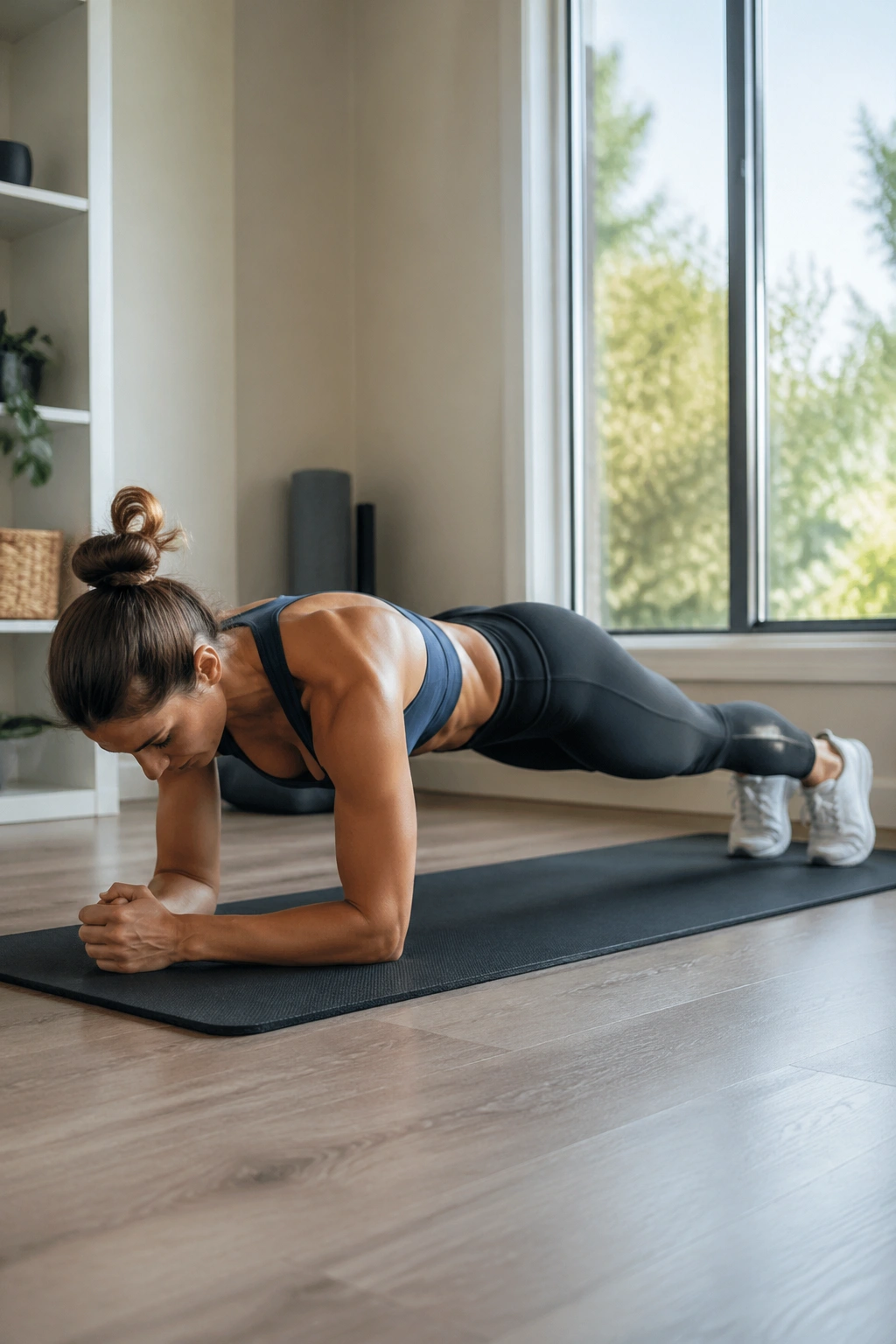
Planks are boring. That is the point.
They train the deep core muscles that keep your torso from folding while you squat, lunge, twist, or jump. A strong plank will not melt belly fat by magic, but it does make your midsection work better under load, and that matters when you are stacking exercises into a circuit.
Set your elbows under your shoulders, step your feet back, and keep your body in one long line. Your hips should not sag. Your neck should not crane forward. If your lower back starts to pinch, the hold is too long or your position is off.
How to use planks well
- Start with 20 to 30 seconds.
- Breathe through your nose if you can.
- Pull your ribs slightly toward your hips.
- Drop to your knees before your form breaks.
A hard 25-second plank is better than a shaky minute.
11. Side Plank Hip Dips for the Waist and Hips
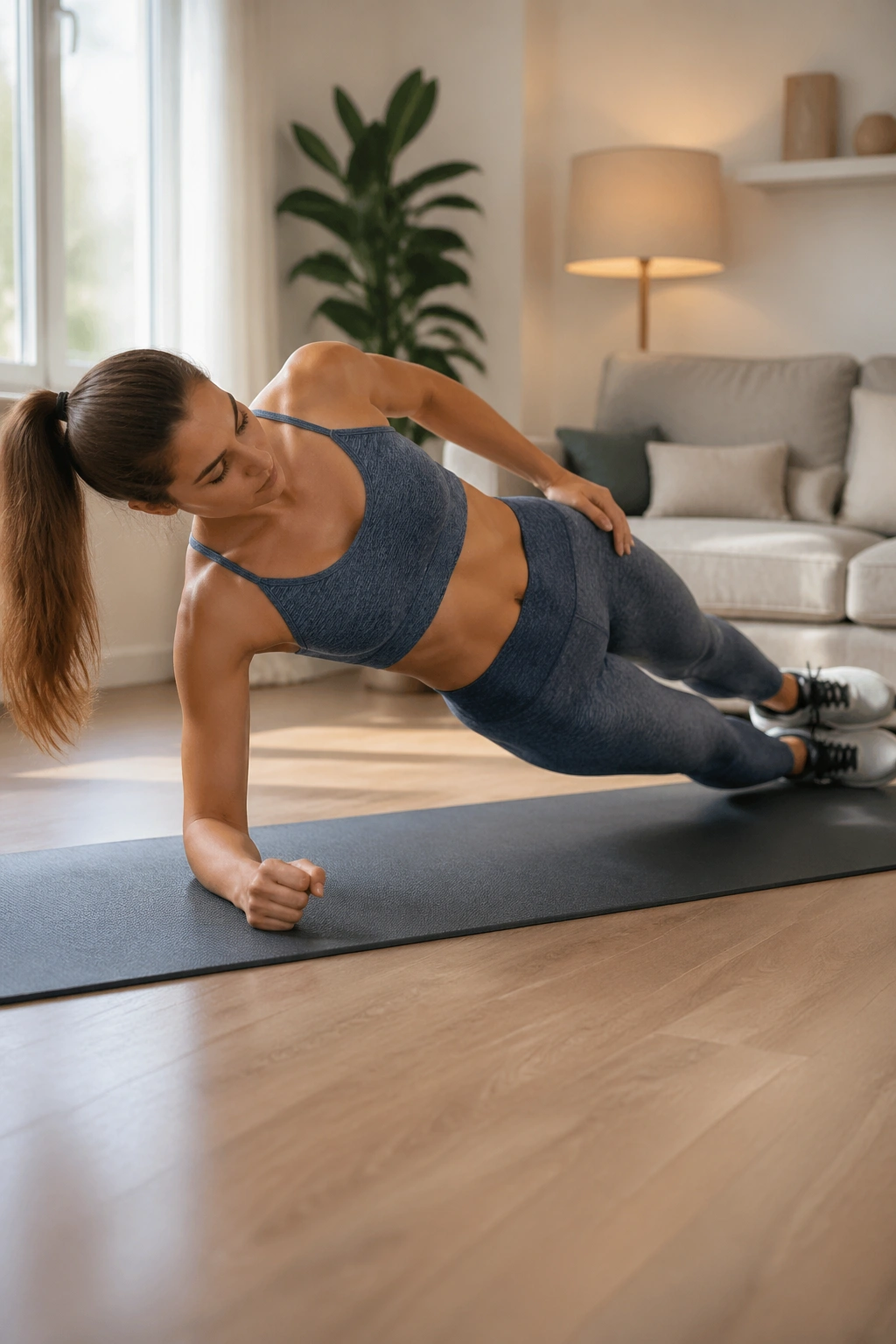
A side plank after a round of squats feels unfair. It also works. The side plank hip dip asks the obliques, hips, and shoulder stabilizers to keep your body from collapsing while you lower and lift.
Drop into a side plank on your forearm, stack your feet or place one knee down if you need a friendlier version, then dip the hips a few inches and lift them back up. The movement should stay controlled. If you swing through it, the work disappears fast.
What makes it worth doing
- It trains the side of the core, not just the front.
- It helps with stability during lunges and walks.
- It can be made easier by dropping the bottom knee.
Keep the movement smooth and small. This is not a range-of-motion contest. It is a control drill that happens to burn.
12. Bicycle Crunches Done Slowly
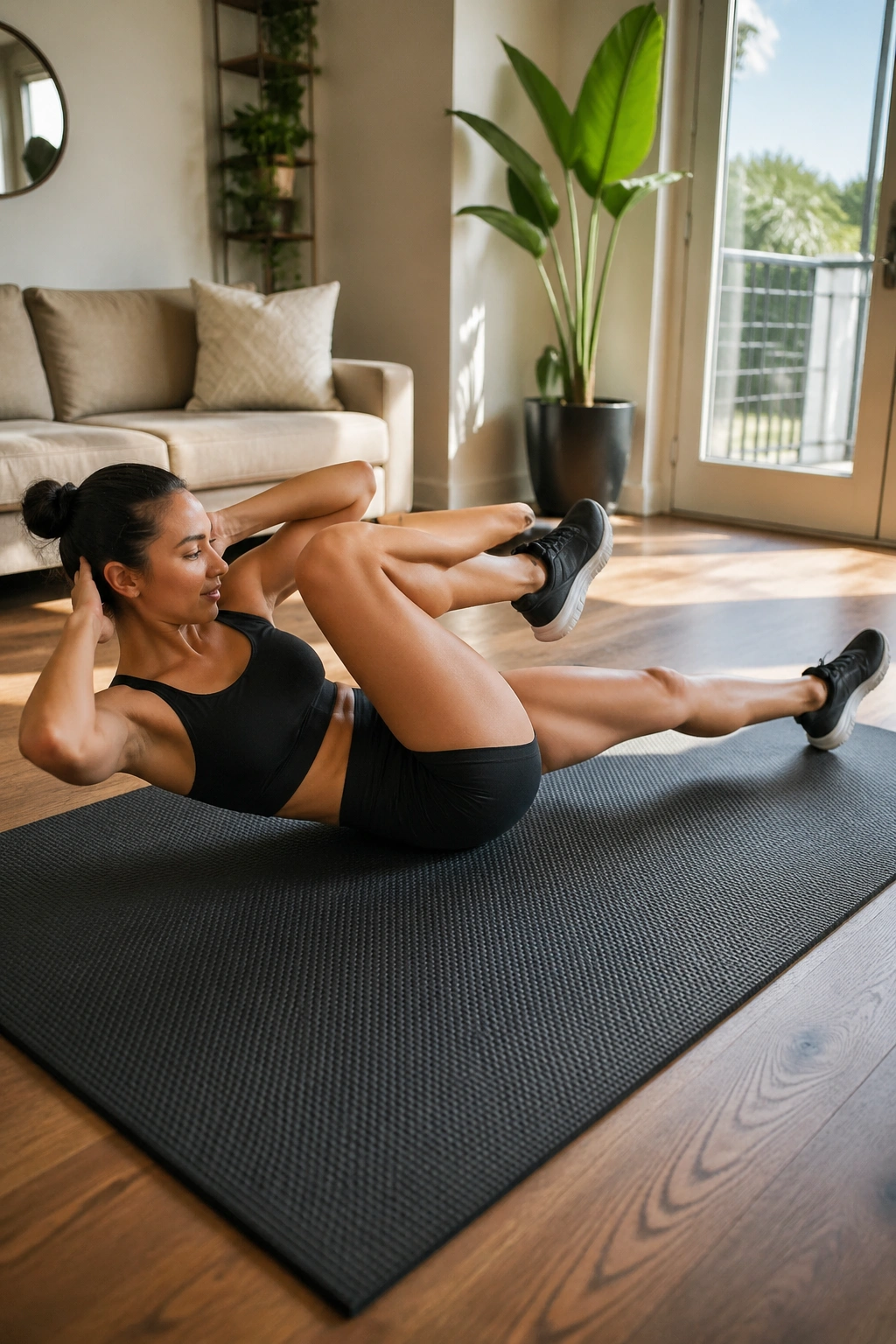
Fast bicycle crunches can turn into neck pulling and hip flinging in about three seconds. Slow them down and the exercise gets much better. Twist the rib cage toward the opposite knee, extend the other leg, and keep the lower back pressed toward the floor.
The real win here is control. Your abs have to work through rotation, and your thighs get involved too because the legs are moving the whole time. If you let the motion get sloppy, the hip flexors take over and your midsection gets less of the job.
Try exhaling as you twist. That small breath cue helps the ribs fold and keeps the movement from becoming a frantic bicycle race with no real tension.
A controlled set of 10 to 16 reps per side is plenty. Clean beats fast.
13. Dead Bugs for Lower-Belly Control
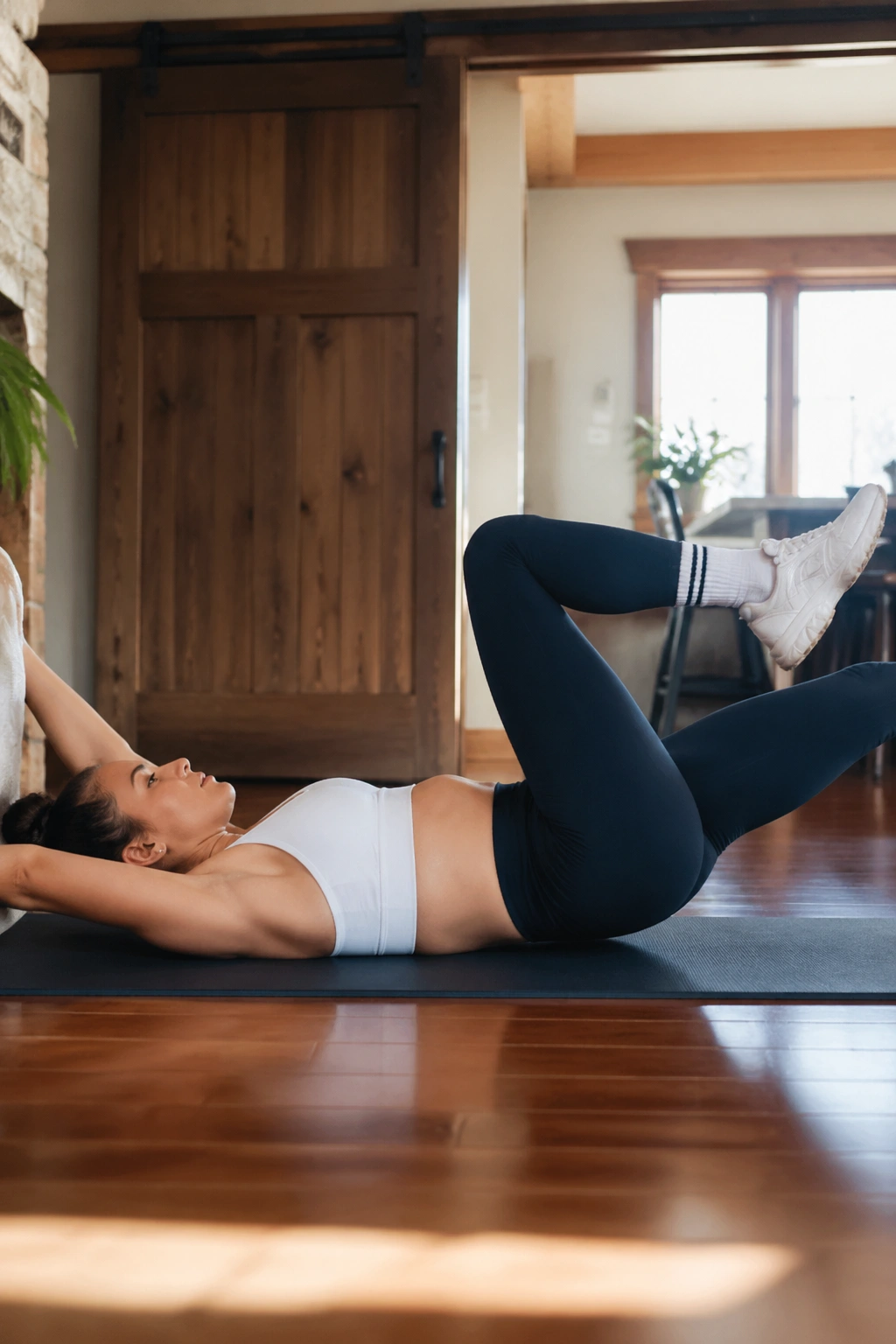
Dead bugs look almost too easy until your lower back starts trying to arch off the mat. That is why they belong in a serious home workout. They teach your core to keep the spine steady while your arms and legs move away from the center.
Lie on your back with your arms up and knees bent over your hips. Lower the opposite arm and leg slowly, then bring them back before switching sides. Keep your ribs down and your lower back lightly pressed into the floor. If your back pops up, shorten the range.
How to make them harder
- Straighten the moving leg a little more.
- Pause for one second near the floor.
- Slow the lowering phase to 3 counts.
- Hold a small water bottle in each hand.
This is one of the best quiet moves in the whole list. It looks gentle. It is not.
14. Leg Raises for the Lower Abs
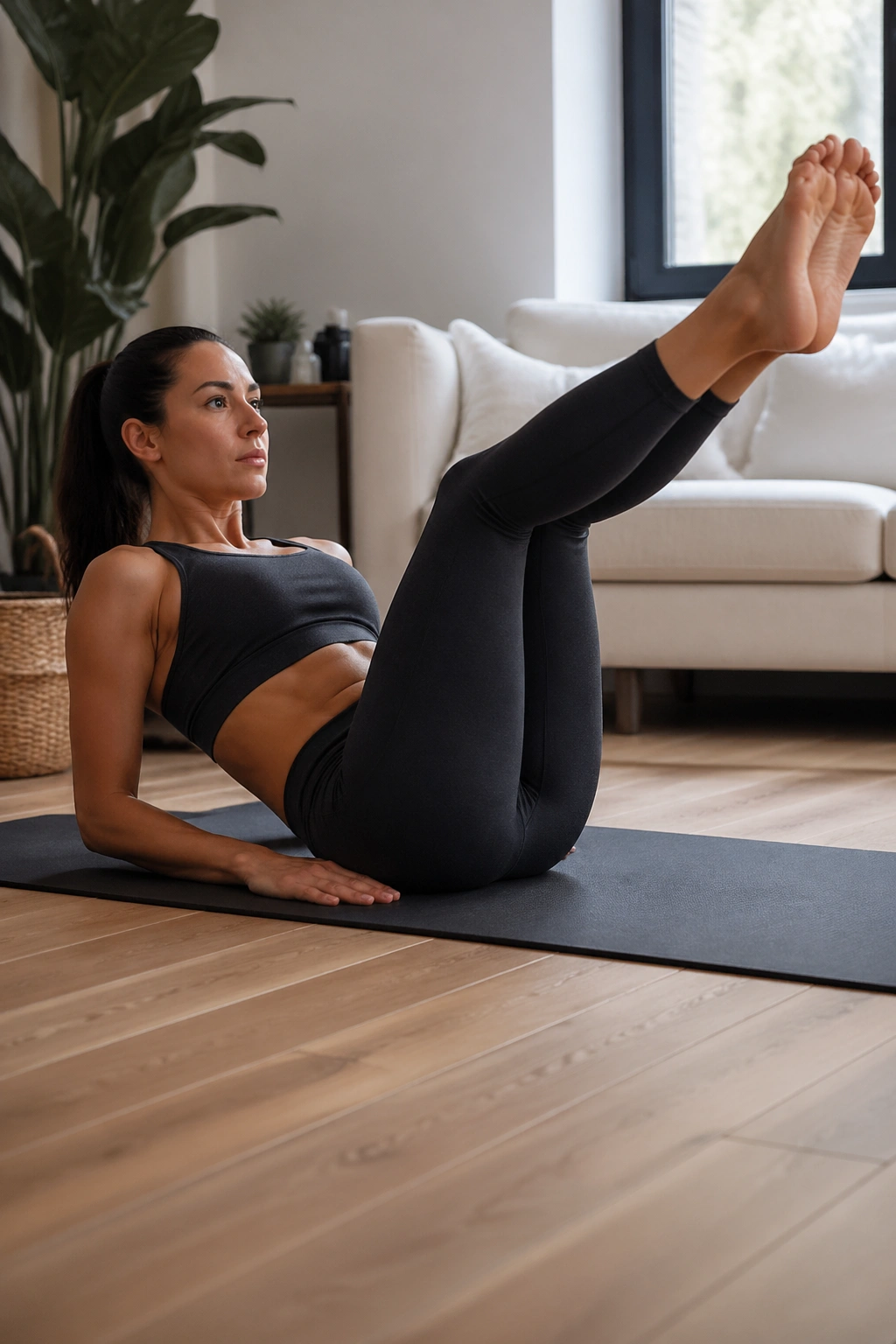
Do leg raises belong in a belly-fat workout? Yes, if you can keep your lower back from arching. That is the whole game.
Lie flat, legs together, then lift them up and lower them with control. Bent knees make the move friendlier on the back. Straight legs make it harder. Either way, the goal is to keep your midsection doing the work instead of letting the hips swing the legs around.
A lot of people drop the legs too low and let the lower back lift. That is where the trouble starts. The moment your back arches, shorten the range and try again.
Safer ways to do them
- Bend your knees if your back feels tight.
- Lower to a point where you can still press your low back into the mat.
- Keep your hands under your hips only if that helps your comfort.
- Move slowly instead of snapping the legs up and down.
15. Russian Twists With Control
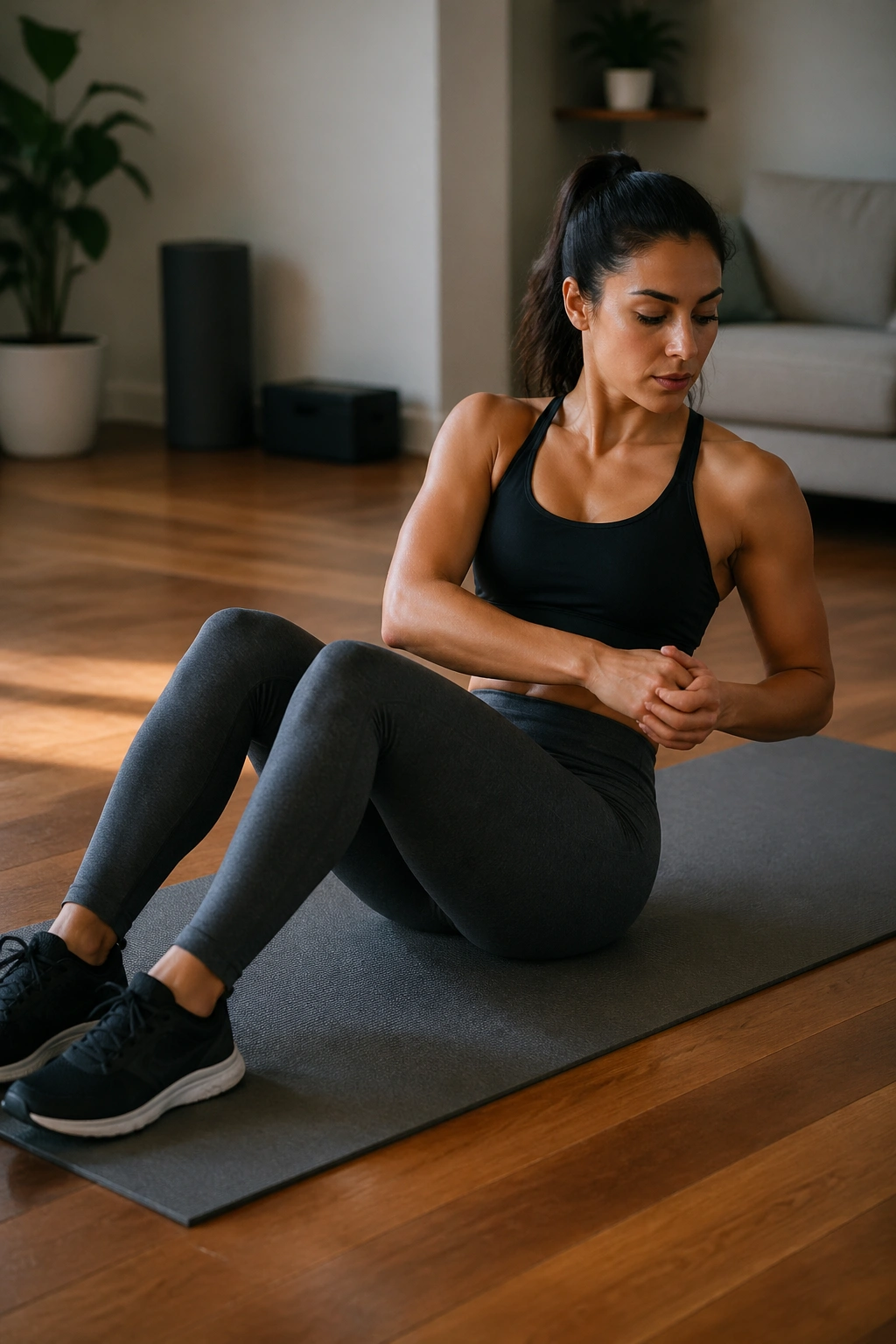
Fast twists are a mess. Slow Russian twists are useful.
Sit with your knees bent, lean back a little, and rotate your torso from side to side. The movement should come from the rib cage and waist, not from throwing the arms around like you are stirring soup in a hurry. If your back rounds hard or your feet fly up and you lose control, the rep is too ambitious.
A small weight, water bottle, or even clenched hands can make the move harder. But the load is optional. Good rotation and good posture matter more than whatever you hold.
Keep your feet on the floor if your lower back wants extra support. That version still trains the obliques and helps you learn the movement without the wobble.
Short sets work best here. Try 10 to 20 twists total and keep them tidy.
16. Squat Pulses to Finish the Thighs
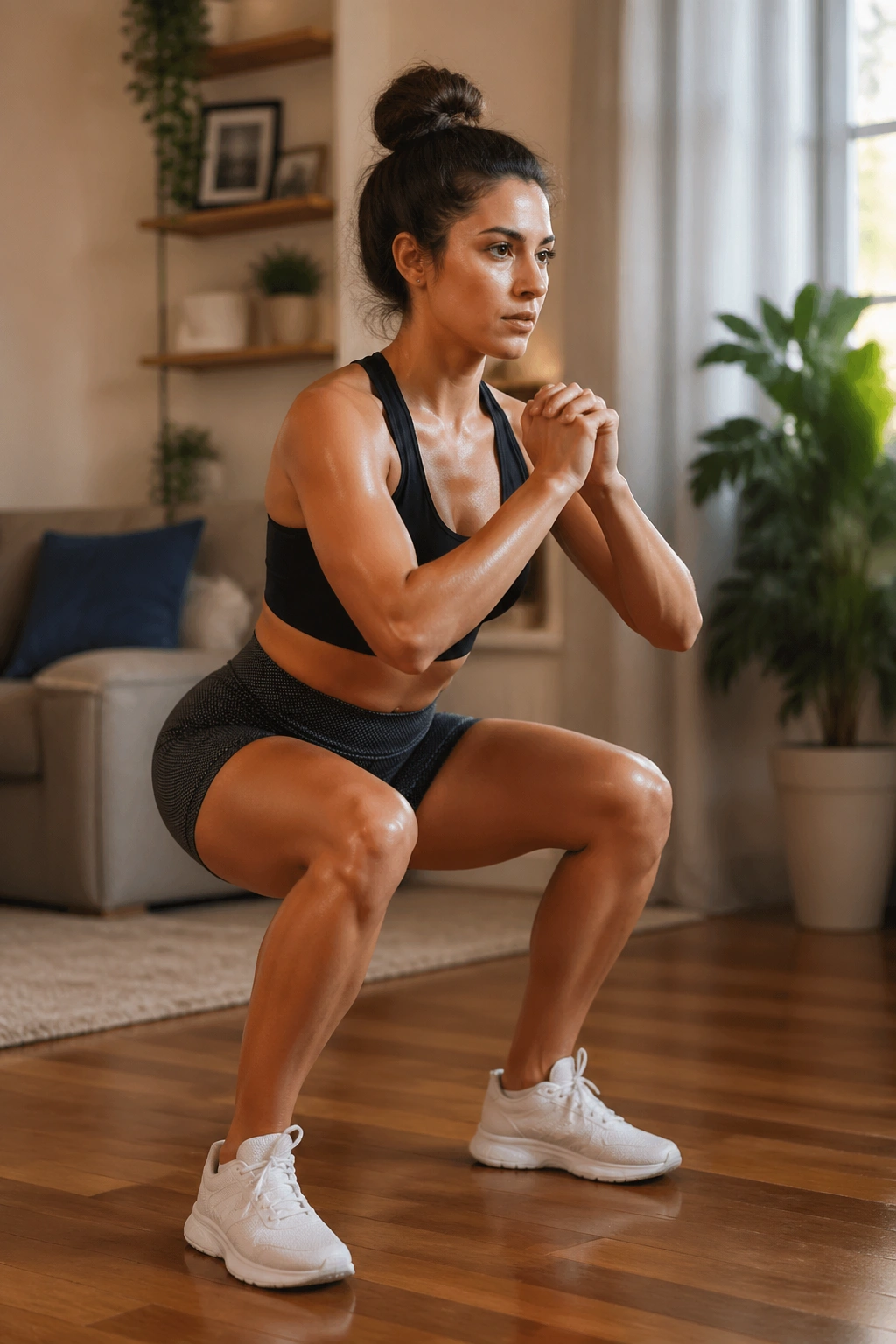
Twenty seconds of squat pulses can feel harder than ten normal reps. The small range keeps your thighs under tension the whole time, and that tension is what makes the move useful at home when you do not have weights.
Drop into the bottom half of a squat and pulse up and down a few inches. Stay low enough that the thighs keep working, but not so low that your back folds. If your knees start drifting inward, reset the stance and slow down.
Pulse rules that save your legs
- Keep the movement tiny.
- Stay on your heels or midfoot.
- Breathe out on the pulse.
- Stop before the knees wobble side to side.
Squat pulses are not fancy. They are just hard. That is why they belong in the middle or end of a lower-body circuit.
17. Wall Sits When You Want a Quiet Burn
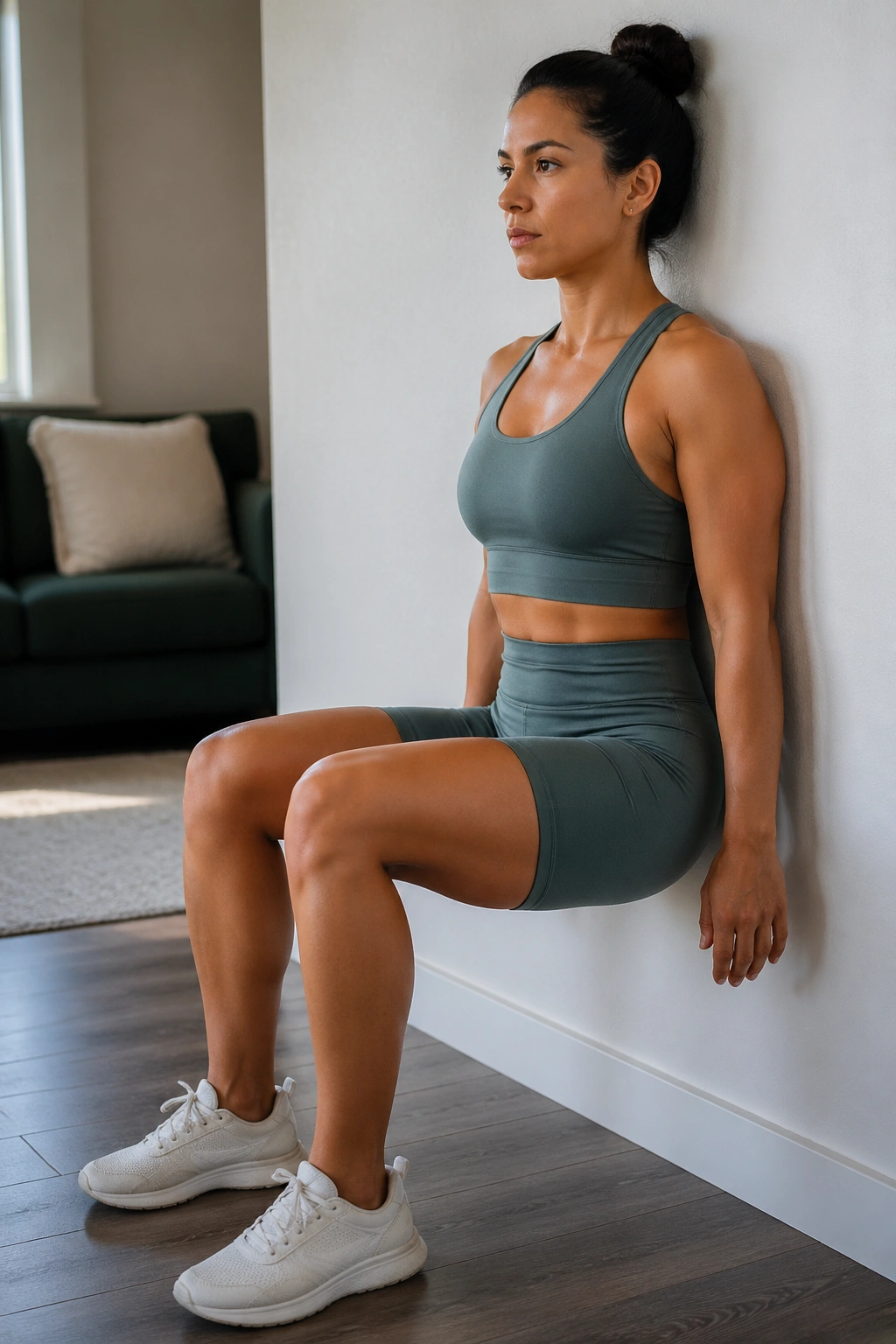
Your quads will complain before your timer does.
A wall sit is simple: slide down a wall until your knees are bent roughly at 90 degrees, press your back flat, and hold. No jumping. No swinging. No excuses. The burn builds slowly, then all at once, which makes this one a sneaky little test of patience.
It also works well when you want a low-noise option at home. No one downstairs hears a thing, but your thighs will know. Add a short hold after lunges or squats and the leg fatigue climbs fast.
How to make wall sits work
- Keep your knees over your ankles.
- Press your lower back into the wall.
- Hold a book, dumbbell, or water jug only if your posture stays clean.
- Start with 20 to 30 seconds and build from there.
A good wall sit is a simple thing done well.
18. Step-Ups on a Sturdy Stair
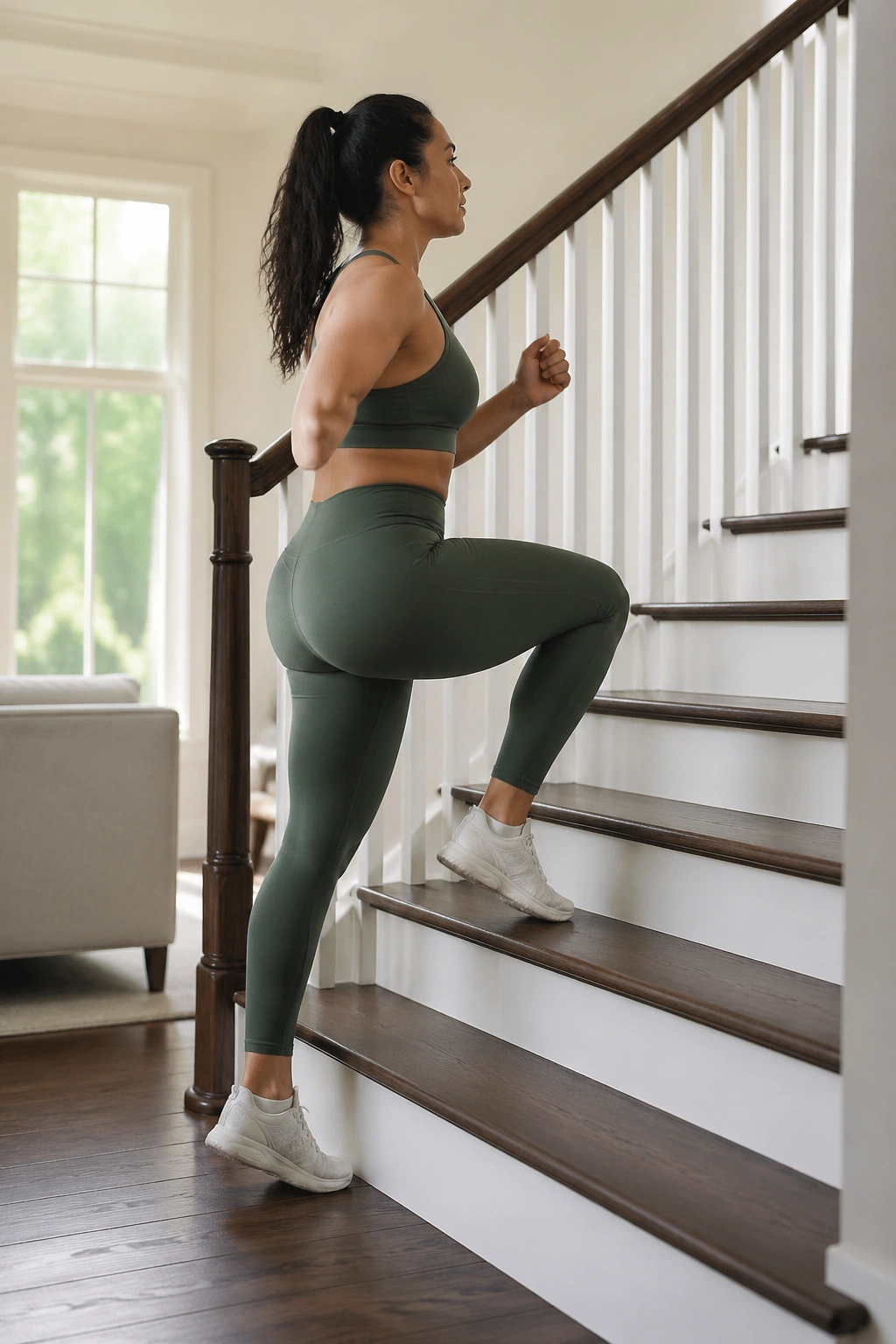
A sturdy stair can do a lot of work without any gear. Step-ups train your thighs, glutes, and balance while also nudging your heart rate up if you move with purpose.
Place one foot fully on the step, push through the heel, and stand tall before stepping back down under control. Do not bounce off the back foot like it is doing the heavy lifting. The leg on the step should earn the rep. Use a solid stair or box that does not slide. Kitchen chairs are a bad bargain unless they are heavy and stable.
A few form cues
- Keep the whole foot on the step.
- Drive the knee up only if it stays smooth.
- Switch legs every rep or every set.
- Hold a wall or railing if balance is shaky.
Step-ups are one of those humble moves that pay back more than they promise.
19. Skater Hops for Side-to-Side Power
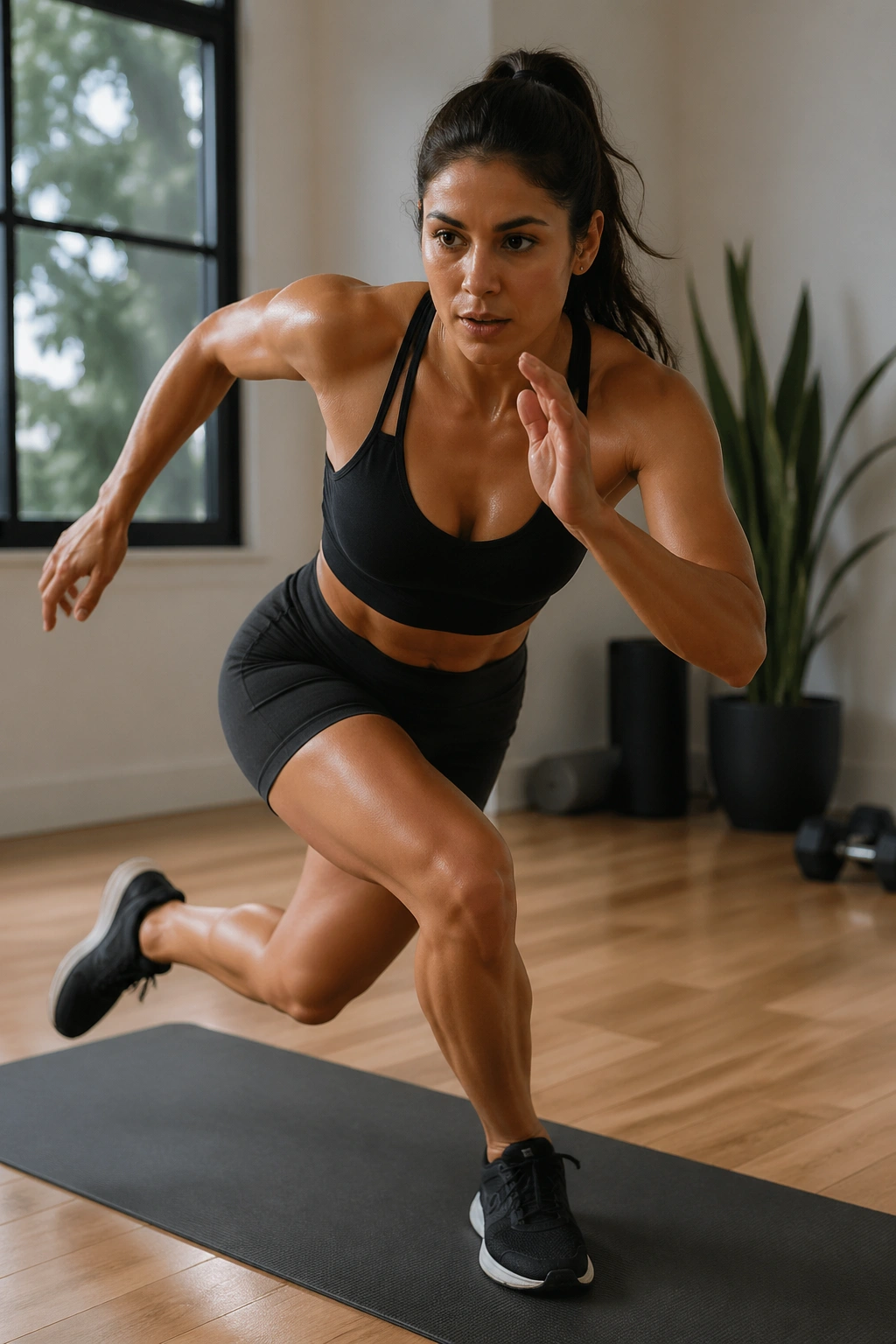
Need a move that wakes up the thighs from side to side? Skater hops do that well. They train the legs to push laterally, which is useful because walking, climbing stairs, and changing direction all ask for side control, not just straight-ahead power.
Jump or step from one side to the other, landing on a soft bent leg and sweeping the free leg behind you. The landing should feel controlled, almost quiet. If the floor sounds like a drum, slow down. If your knees cave inward, make the step smaller.
You can turn this into a low-impact drill by stepping side to side instead of hopping. That version still gets the hips and thighs working and is kinder if your joints are sensitive.
Skater hops fit well near the end of a circuit, when you want energy without needing much space.
20. Donkey Kicks for the Back of the Hips
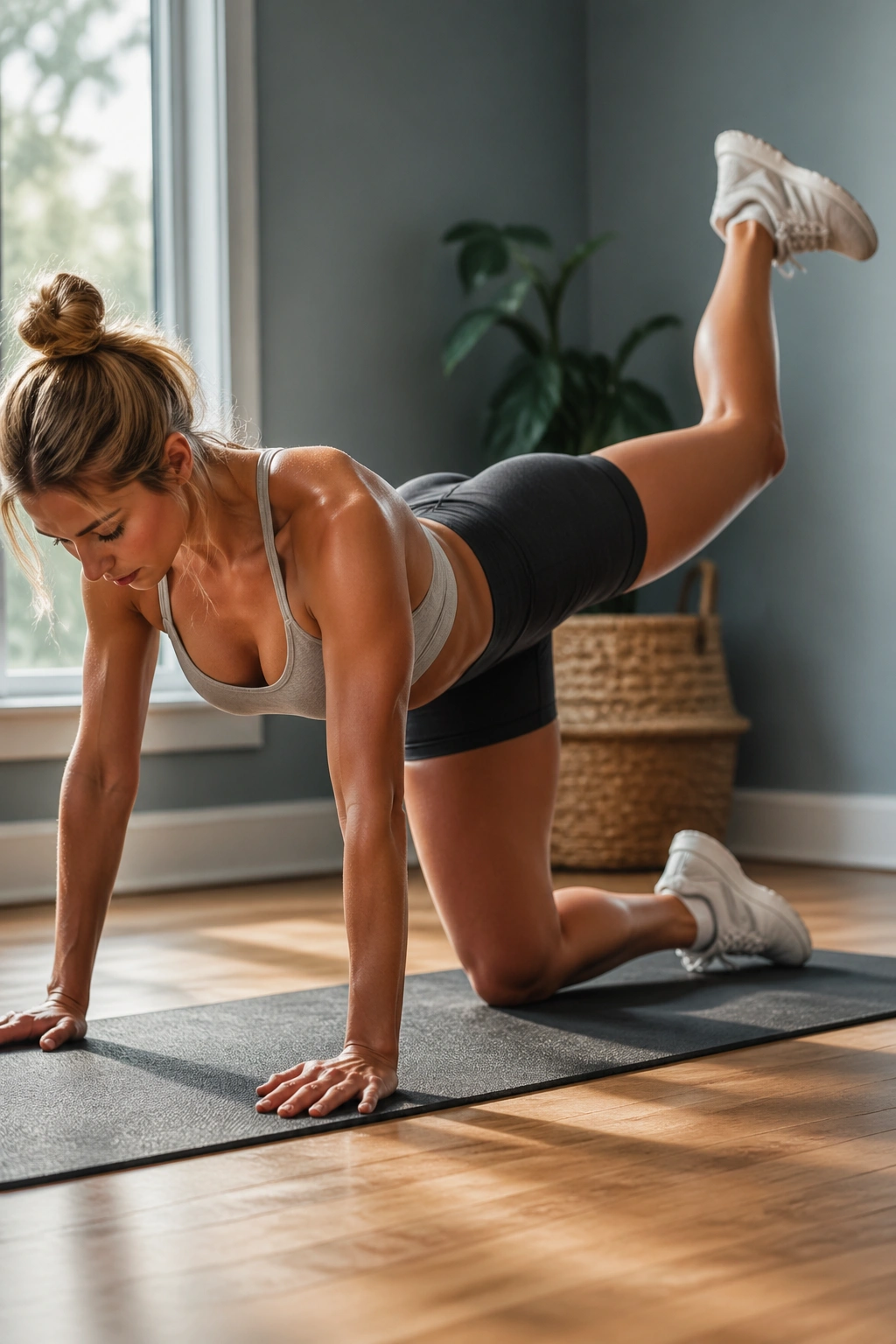
They look tiny. They light up the glutes.
Get on hands and knees, keep one knee bent, and lift that foot toward the ceiling without arching your lower back. The movement is small, but it is precise. If you swing the leg up too far, the lower back starts doing the work and the point of the exercise gets lost.
Keep your hips square to the floor. That part matters. The goal is not to turn your torso or fling your leg behind you. The goal is to squeeze the glute at the top and lower under control.
Donkey kick cues
- Keep the foot flexed.
- Stop at hip height if higher makes your back arch.
- Hold the top for one count.
- Use 10 to 15 reps per side.
A set of donkey kicks after squats or lunges gives the backside some direct attention. That usually feels good after all the standing work.
21. Fire Hydrants for the Outer Glutes and Thighs
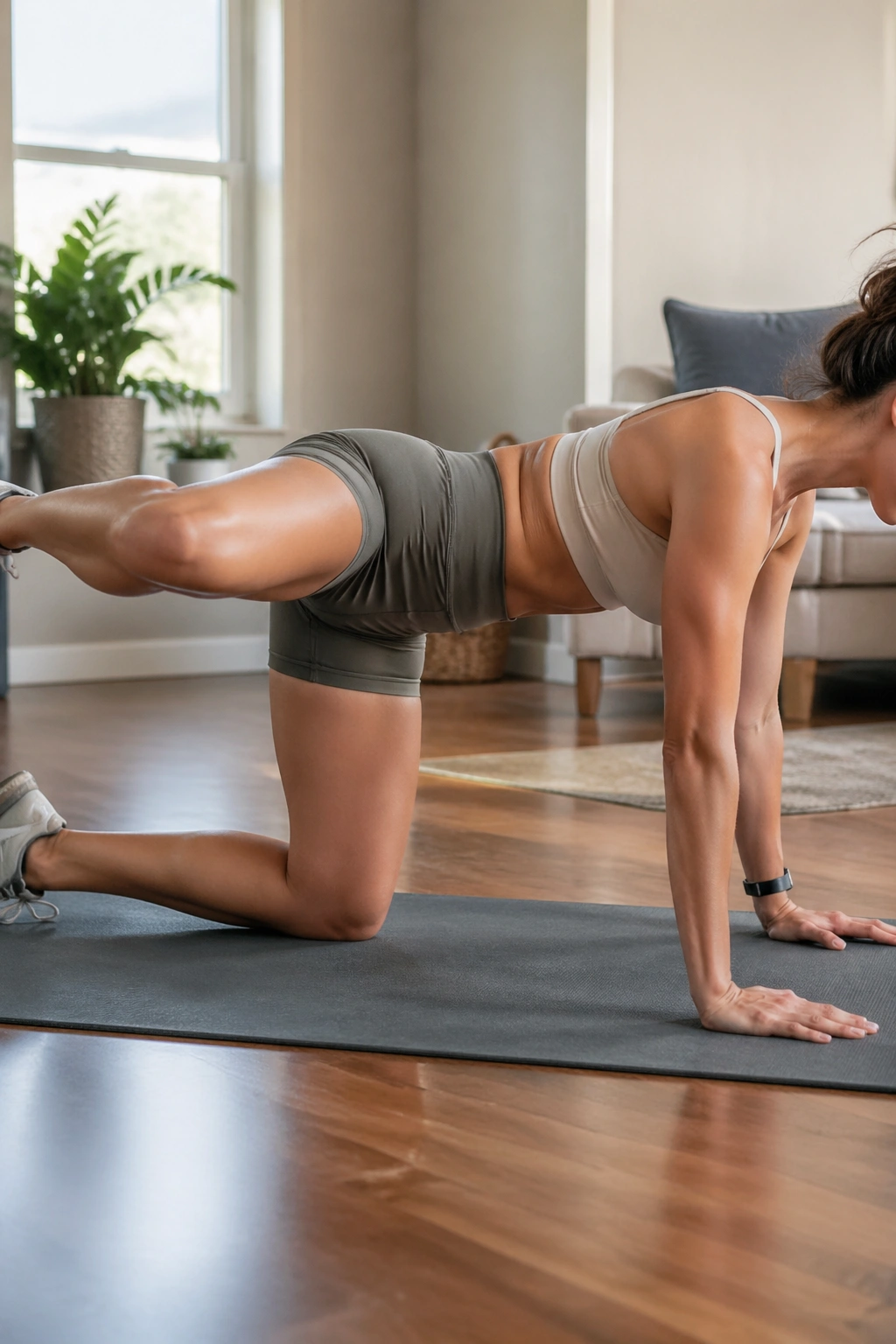
If donkey kicks hit the back of the hip, fire hydrants light up the side of it. The movement looks a little goofy, which is part of why people underestimate it. Then the glute medius starts working and the sideways burn shows up.
From hands and knees, lift one knee out to the side while keeping the knee bent. Stop before your pelvis twists open. The torso should stay square, and the movement should come from the hip rather than a big body swing.
Control matters more than height. If the knee climbs high but the back arches and the hips roll, the rep has turned into a cheat. Keep the lift smaller and cleaner.
Try these after donkey kicks or glute bridges. The pair works nicely together and hits the hips from two angles without needing anything except floor space.
22. A 20-Minute Home Circuit That Ties It All Together
Now stitch the whole thing together.
Pick 6 moves from the list and run them back to back for a short circuit. For a belly-and-thigh focus, I like a mix of cardio, squats, lunges, and core work so the heart rate stays up while the legs keep doing real work. That balance matters more than picking the flashiest move.
Simple circuit structure
- 30 seconds jumping jacks
- 30 seconds bodyweight squats
- 30 seconds mountain climbers
- 30 seconds reverse lunges
- 30 seconds plank
- 30 seconds rest
Repeat that round 3 to 4 times. If you want more thigh work, swap in sumo squats, squat pulses, or wall sits. If you want more core control, trade the plank for dead bugs or side plank hip dips.
The best part is that you can scale it without making it silly. Shorten the work to 20 seconds, lengthen the rest, or use low-impact versions when your knees are cranky. That keeps the routine honest enough to help with fat loss and flexible enough that you will actually keep doing it.
A good home workout is not the one that destroys you once. It is the one you can repeat next week, and the week after that, without dreading the floor.
