



There is a specific kind of silence that happens right before you throw your first punch at a heavy bag. Whether it is in a crowded gym or your own garage, the world outside seems to shrink down to the four-inch diameter of your target. Your shoulders drop, your breath hitches, and suddenly, the only thing that matters is the rhythm of your own movement. Cardio boxing isn’t just about getting a sweat on; it is about reclaiming the physical space around you and finding a way to vent the day’s tension through pure, kinetic force.
You do not need a championship-level coach or a ring to reap the benefits of this training. The beauty of boxing as a workout is how quickly it demands total presence. When you are focused on stringing together a jab-cross-hook combination, you physically cannot dwell on an unanswered email or a looming deadline. Your brain is occupied with the math of distance and the timing of impact. This mental shift, combined with the explosive anaerobic demands of the sport, makes it one of the most effective tools for both shedding excess weight and building functional, athletic strength.
The key to long-term success here is variety. If you step up to the bag and do the same three punches for twenty minutes every single day, your joints will get bored, and your progress will plateau. To build real strength and maximize calorie burn, you have to keep your body guessing. You have to move through different planes of motion, alternate your intensity, and force your core to stabilize under load. That is exactly where these workouts come in. From high-octane interval drills to technical flow sessions, here is a collection of workouts designed to challenge your stamina, build your shoulders, and clear your head.
1. Shadowboxing Essentials
Shadowboxing is the purest form of the discipline. Without the resistance of a bag, you are forced to rely entirely on your own muscle tension to decelerate your punches, which actually makes it harder than it looks. The goal here is not to hit air; it is to hit a target you visualize in front of you. Focus on keeping your hands tight and your core engaged as if you were sparring a phantom opponent.
Why It Builds Real Strength
When you punch without hitting a surface, your muscles have to work in reverse—the antagonists—to stop your arm from snapping at the elbow. This eccentric contraction is a massive muscle builder. It creates defined, lean shoulders and helps you understand your own body mechanics.
- Round 1: Warm up with light jabs and crosses for three minutes.
- Round 2: Incorporate light movement, shuffling side-to-side.
- Round 3: Increase speed, focusing on the “snap” at the end of every punch.
Pro tip: Stand in front of a mirror for the first few minutes. Watch your shoulders. If they are hunched up toward your ears, drop them. A relaxed shoulder is a fast shoulder.
2. Heavy Bag Power Rounds
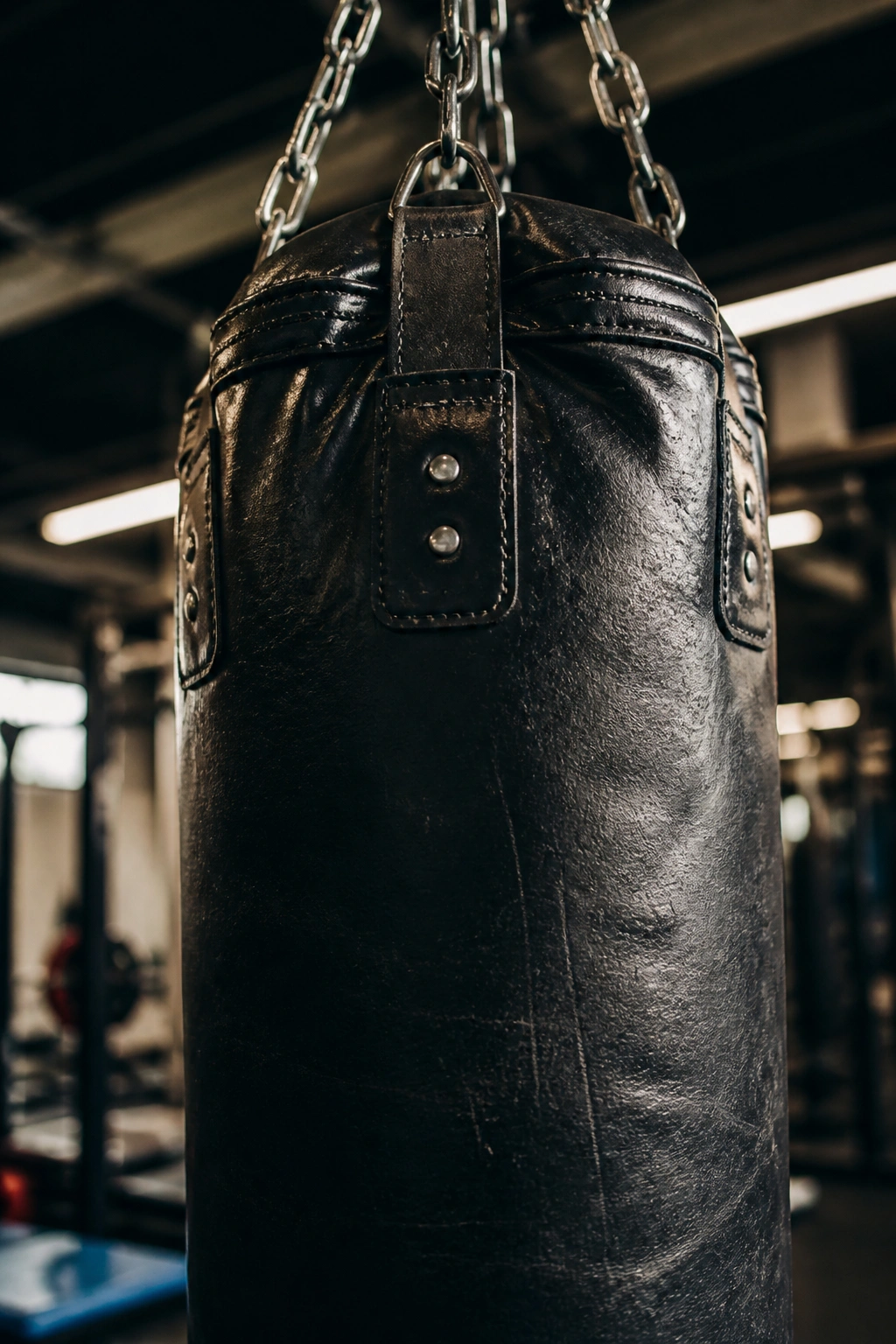
This is where you trade finesse for raw force. The heavy bag is unforgiving, and it will push back in its own way—by requiring you to stabilize your body after every impact. If you are stressed, this is your primary outlet. Do not worry about being “pretty” with your form; focus on driving your weight through the bag.
Getting the Most from the Impact
You want to hit through the target, not at it. Imagine your fist landing on the other side of the bag. This mindset shift forces you to rotate your hips and engage your entire posterior chain. Your power should come from your feet, travel up your legs, through your core, and finally out through your knuckles.
- Set a timer for 3-minute rounds.
- Focus on power crosses and hooks.
- Rest for 60 seconds between rounds.
- Aim for 5 total rounds of high-intensity output.
3. High-Intensity Interval Training (HIIT) Punching

Cardio boxing naturally lends itself to interval training. The nature of a fight—bursts of activity followed by brief resets—is the original HIIT protocol. We are going to maximize your metabolic output by shortening the rest periods and spiking the heart rate during the work phases.
Structure of the Interval
The goal is to maintain near-maximum effort for the duration of the work window. If you find your pace dropping significantly by the second half of the round, you are going too hard too early. Adjust your speed so that you are breathing heavy but still in control of your technique.
- Work: 45 seconds of continuous, high-speed combinations.
- Rest: 15 seconds of active recovery (light footwork, bouncing on your toes).
- Total duration: 20 minutes without stopping.
4. Core Rotation and Oblique Focus

Boxing is an oblique workout disguised as a striking session. Every time you throw a cross or a hook, your core is the conduit for that power. This workout isolates that rotation, forcing you to move your hips and engage your midsection with every single strike.
The Mechanism of Rotation
If your feet stay glued to the floor, you are losing power and putting stress on your knees. Pivot your back foot. That tiny, subtle turn is the secret to unlocking your obliques. When you punch, imagine you are trying to wring your torso out like a wet towel.
- Spend 3 minutes throwing only hooks.
- On every hook, exaggerate the hip pivot.
- Follow with 30 seconds of “rolling” (bending at the knees and moving your torso in a U-shape).
- Repeat this cycle for 10 rounds.
5. Defensive Slip and Weave Drills

Boxing isn’t just about offense. The “slip” is the art of moving your head off the center line to avoid a punch. It is one of the most effective ways to work your lateral abs and build spatial awareness. Most people find this mentally exhausting, which is a great sign that you are doing it right.
Why This Matters
When you learn to slip, you stop being a static target. It changes your entire posture. You begin to understand range, distance, and how to maneuver. It is essentially a high-speed squat-and-lean drill that targets your legs and lower back simultaneously.
- Set a timer for 3 minutes.
- Throw a jab, then immediately slip to the right.
- Throw a cross, then slip to the left.
- Visualize a rope hanging at shoulder height; stay underneath it.
6. Plyometric Punching Circuit

Combine your boxing with explosive bodyweight movements to spike your heart rate. This is the ultimate “fat-burning” protocol because it keeps your body guessing between upper-body strikes and lower-body jumps. You will feel the burn in your quads and lungs almost immediately.
Mixing the Modalities
The key is to transition instantly. As soon as the timer beeps for your “work” period, go. Do not walk to the next station. Do not check your phone. The density of the work is what creates the change in your conditioning.
- 1 Minute: Fast, non-stop jabs.
- 30 Seconds: Air squats.
- 1 Minute: Power hooks.
- 30 Seconds: Burpees.
- Repeat for 5 cycles.
7. Speed Bag Rhythm Work
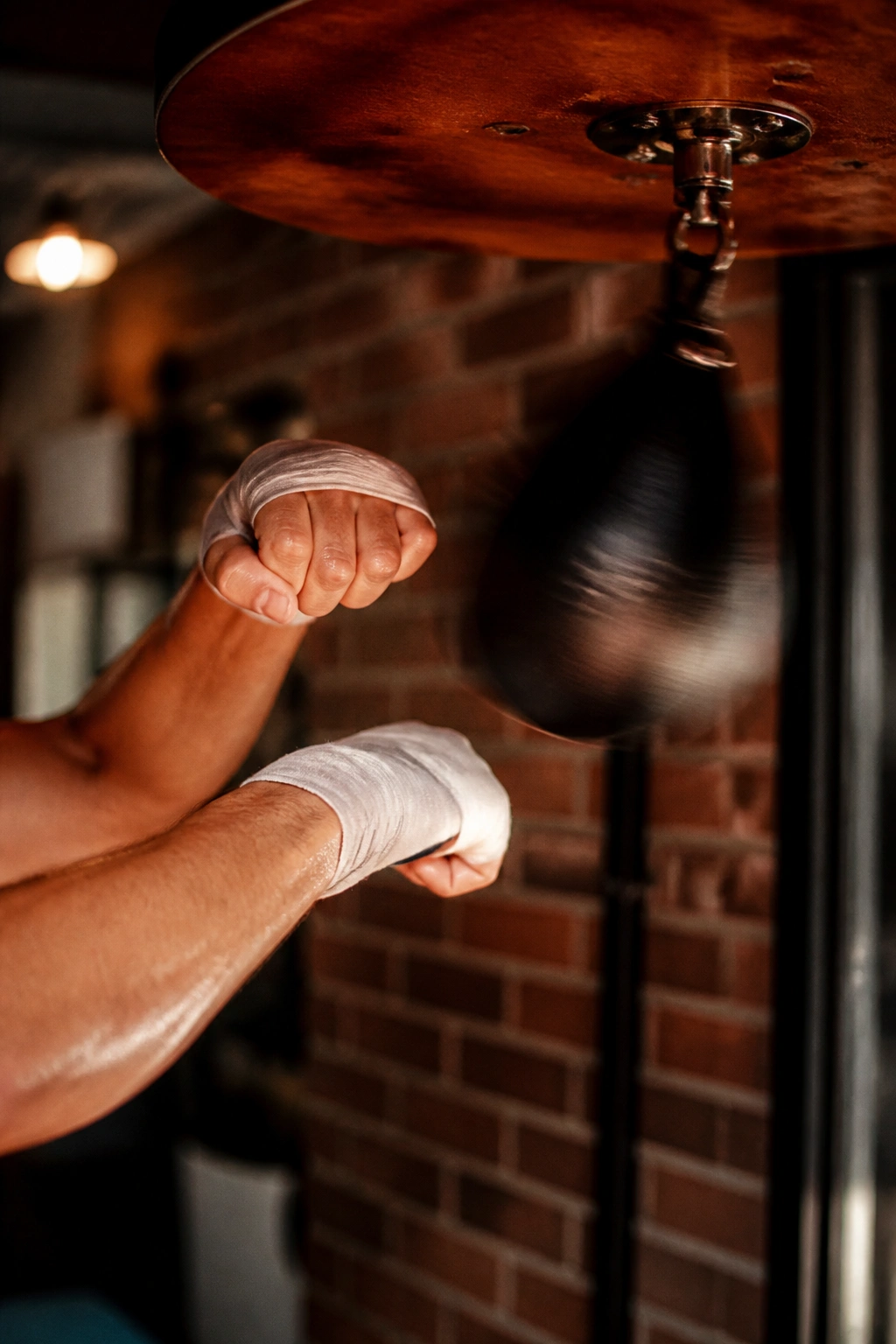
The speed bag is a humbling piece of equipment. It does not care how hard you hit; it only cares about your rhythm. If you lose your beat, the bag stops. This is the best workout for coordination and shoulder endurance. Your arms will feel like they are on fire after just two minutes of constant, circular striking.
Finding the Beat
Do not try to go fast initially. Start with a slow, steady “tap-tap-tap” rhythm. Listen to the sound the bag makes against the platform. You are looking for a consistent, melodic sound. Once you have the rhythm, you can slowly increase the tempo.
- Work in 3-minute sets.
- Keep your elbows level with your shoulders.
- Focus on small, compact strikes rather than wide, sweeping ones.
8. Ladder Combos for Mental Clarity

This is a cognitive workout as much as a physical one. You are going to build a “ladder” of combinations. Start with a simple 1-punch combo, then add a punch, and keep building until you hit 6 or 7, then climb back down.
Why It Works
It requires focus. You cannot zone out when you are trying to remember the sequence. This engagement is a form of active meditation. It forces your brain to stay locked in the present moment, which is the fastest way to flush out stress.
- Rung 1: Jab.
- Rung 2: Jab, Cross.
- Rung 3: Jab, Cross, Hook.
- Rung 4: Jab, Cross, Hook, Uppercut.
- Climb up to 7, then descend back to 1.
9. Weighted Shadowboxing for Muscle Tone
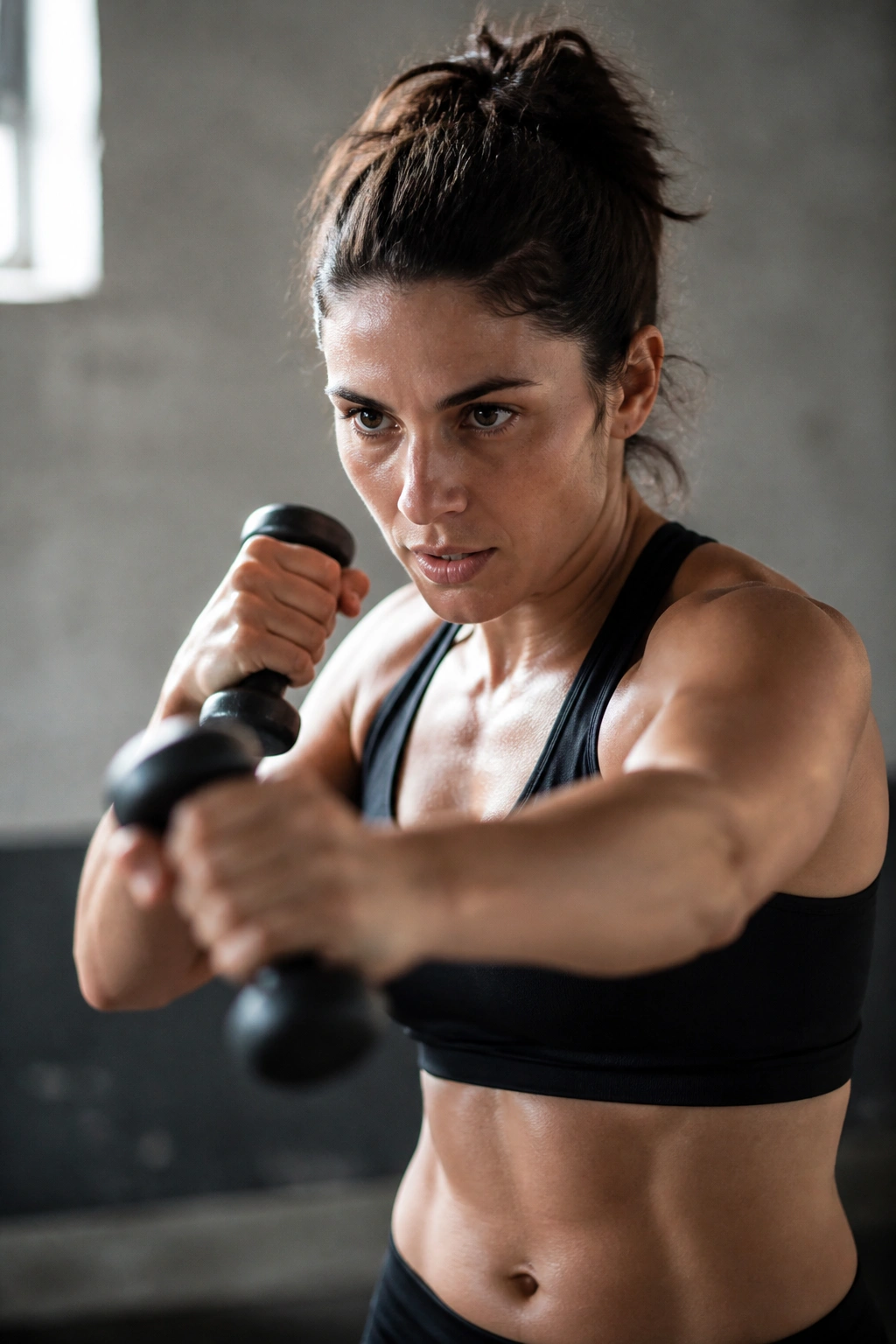
Take two light dumbbells—no more than 1 or 2 pounds—and shadowbox. It sounds deceptively easy, but the constant load on your shoulders creates significant fatigue. This is a classic endurance workout that will leave you feeling “pumped” in the best way possible.
A Critical Warning
Do not go heavy. Using 5-pound or 10-pound weights is a recipe for rotator cuff injury. You are not trying to build max strength; you are building muscular endurance. If your form starts to break down or your shoulders ache in the joints rather than the muscles, drop the weights immediately.
- Keep your punches controlled and deliberate.
- Focus on the retraction—pulling your hand back as fast as you threw it.
- Perform 3-minute rounds with 1-pound weights.
10. Punch-and-Squat Strength Combo
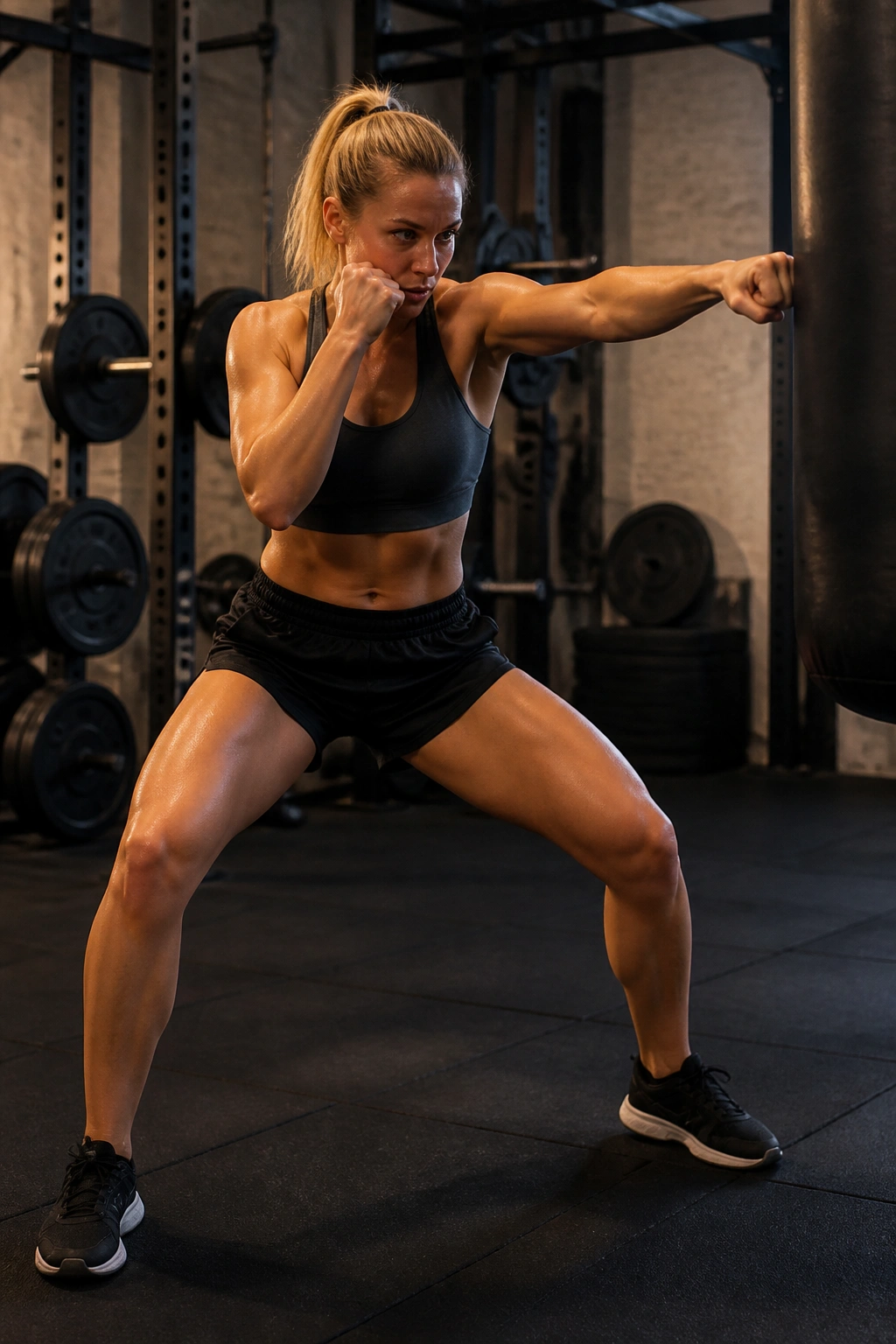
This is a full-body grind. By tying your striking to a squat, you force your heart to work harder to pump blood from your legs up to your arms. It levels the playing field, making your upper body fight for oxygen while your lower body fights for stability.
Executing the Move
When you squat, keep your hands glued to your face. Do not drop them to your knees. As you rise from the squat, that is when you release the punch. The upward momentum of your legs should flow directly into the strike.
- Perform a squat, stand up, and throw a cross.
- Repeat for 45 seconds, then rest for 15.
- Do 10 rounds of this.
11. Footwork and Agility Boxing
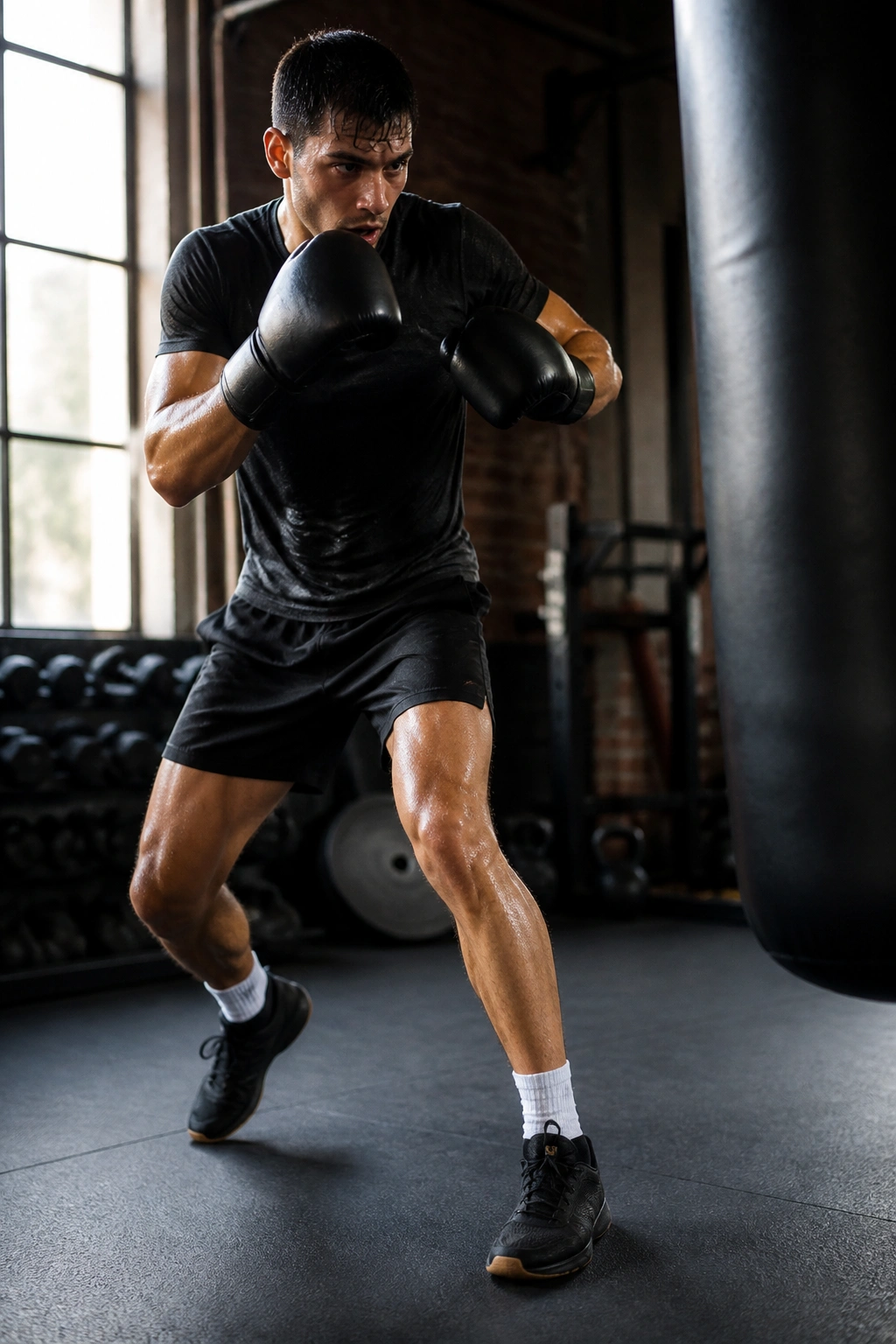
If you are just standing still, you are only doing half the work. Real boxing happens from the ground up. This workout focuses entirely on the “dance.” You are going to move around the bag, changing your angles, cutting off the ring, and striking from positions you aren’t comfortable in.
Why This Is Different
Most gym-goers neglect their feet. But if you want a lean, athletic physique, you need to be able to move your body weight with precision. This workout will improve your balance and make your midsection look tighter simply because you are engaging your core to stabilize your frame during every shuffle.
- Spend the whole round circling the bag.
- Never cross your feet; keep them shoulder-width apart.
- Throw a jab every time you change direction.
12. The “1-2” Precision Ladder

The jab-cross—or the “1-2″—is the most important sequence in boxing. It is the foundation of everything. This workout isn’t about complexity; it is about perfection. You are going to throw the 1-2 repeatedly, focusing on one specific technical detail each round.
Focusing the Details
Round one might be about hip rotation. Round two is about keeping the elbows tucked. Round three is about the speed of the retraction. By isolating the technique, you turn a simple movement into a refined skill.
- 10 rounds of 1-2 combinations.
- Rest for 30 seconds between rounds.
- Focus on maximum extension and sharp retraction.
13. Close-Quarter Inside Fighting

Step right up to the bag. I mean chest-to-bag close. This workout is all about short, compact, powerful punches. You aren’t going to have space to swing wide, so you have to use your lats and hips to generate power from a very short range.
The Feel of the Workout
This is suffocatingly intense. You are going to get warm, you are going to get tired, and you are going to feel like you have no room to breathe. It is a fantastic way to build explosive power in your triceps and lats.
- Stay pressed against the bag.
- Use short hooks and uppercuts.
- Focus on “digging” the punches into the bag rather than slapping the surface.
14. Long-Range Jab Strategy

Flip the previous workout on its head. Stay at the end of your reach. In this session, you are only working on your jab and your movement. You are keeping the “opponent” at bay. This is the best workout for building shoulder endurance and precision.
The Mechanics of Distance
You have to measure your distance perfectly. If you are too close, the jab is weak. If you are too far, you are lunging and off-balance. Finding that “goldilocks” zone is a workout for your brain and your entire kinetic chain.
- Keep your distance so that only your jab lands.
- Bounce in and out of range constantly.
- Throw the jab as a double or triple strike.
15. Reaction Time and Parrying

This is best done with a partner, but you can simulate it with a heavy bag. Practice throwing a punch and then immediately “parrying”—a defensive motion where you swat away an incoming strike. It mimics the flow of a real fight and keeps your reaction times sharp.
The Mental Game
You are playing a game of tag with the bag. It forces you to switch rapidly from offense to defense. This quick-twitch activation is what gives boxers that “cat-like” quality. It is exhausting, but it leaves you feeling incredibly sharp and awake.
- Throw a combination.
- Immediately bring your hands back to your face.
- Visualize an incoming punch and move your head or hand to “block” it.
16. Explosive Power and Push-ups

We are going to mix power punching with the ultimate chest builder: the push-up. This is a classic “burnout” set. You want to fatigue your chest and triceps to the point where they are shaking, then force them to generate power on the bag.
Why This Combination
It creates a “pre-exhaustion” effect. Your muscles are already tired from the push-ups, so they have to work even harder to maintain proper form and force on the bag. This is how you break through strength plateaus.
- 20 push-ups.
- Immediately jump up and throw 30 seconds of high-power crosses.
- Repeat 6 times.
17. Medicine Ball Ground Drills
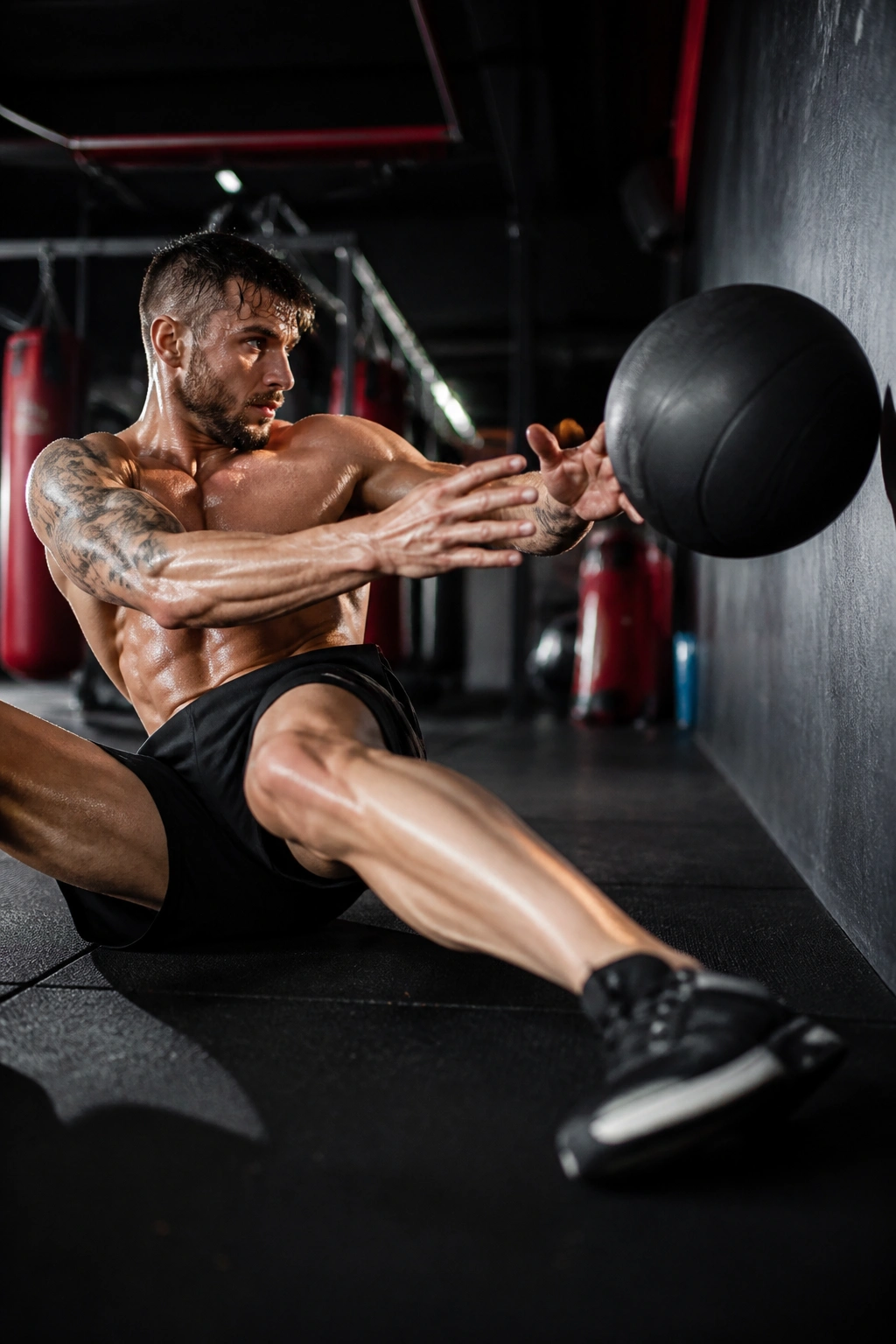
For this, you will need a medicine ball and a space to move. Throw the medicine ball into the bag (or against a wall) with a rotational strike. It mimics the feeling of a hook but adds a significant weight component. This is the single best workout for core strength.
The Power of the Throw
Don’t just push the ball; throw it. The moment of impact should be explosive. Your core should be braced the entire time. This isn’t about reps; it is about the quality of every single throw.
- 15 throws on the left.
- 15 throws on the right.
- Rest for one minute and repeat for 4 cycles.
18. Endurance Round Simulation

Sometimes, you just need to grind. Set a timer for 10 or 15 minutes and do not stop. You are not going for max power; you are going for consistency. Maintain a steady, rhythmic pace where you are constantly moving and constantly throwing light strikes.
The Psychological Benefit
This is where the mental “stress” relief happens. You aren’t forcing an intense burst; you are settling into a flow state. It is hypnotic. You will find that after five or six minutes, your mind clears entirely and you just move.
- Set a timer for 15 minutes.
- Throw light jabs, crosses, and hooks continuously.
- Focus on your breathing—inhale on the movement, exhale on the punch.
19. The “Hands-Up” Shoulder Burnout

This is a test of will. The rule is simple: your hands never leave your face. When you aren’t punching, your hands are glued to your cheeks. When you are punching, one hand is always up while the other is out. You are not allowed to drop your guard for a single second.
Why You’ll Hate (and Love) It
Your shoulders will scream at you by the end of the first round. Most people drop their hands when they get tired. By refusing to let that happen, you are building the specific muscular endurance needed to keep your guard up in the final minutes of a long workout.
- 3-minute rounds.
- Strict rule: If your hands drop, the round resets.
- Focus on volume over power.
20. Agility Ladder and Strike Work
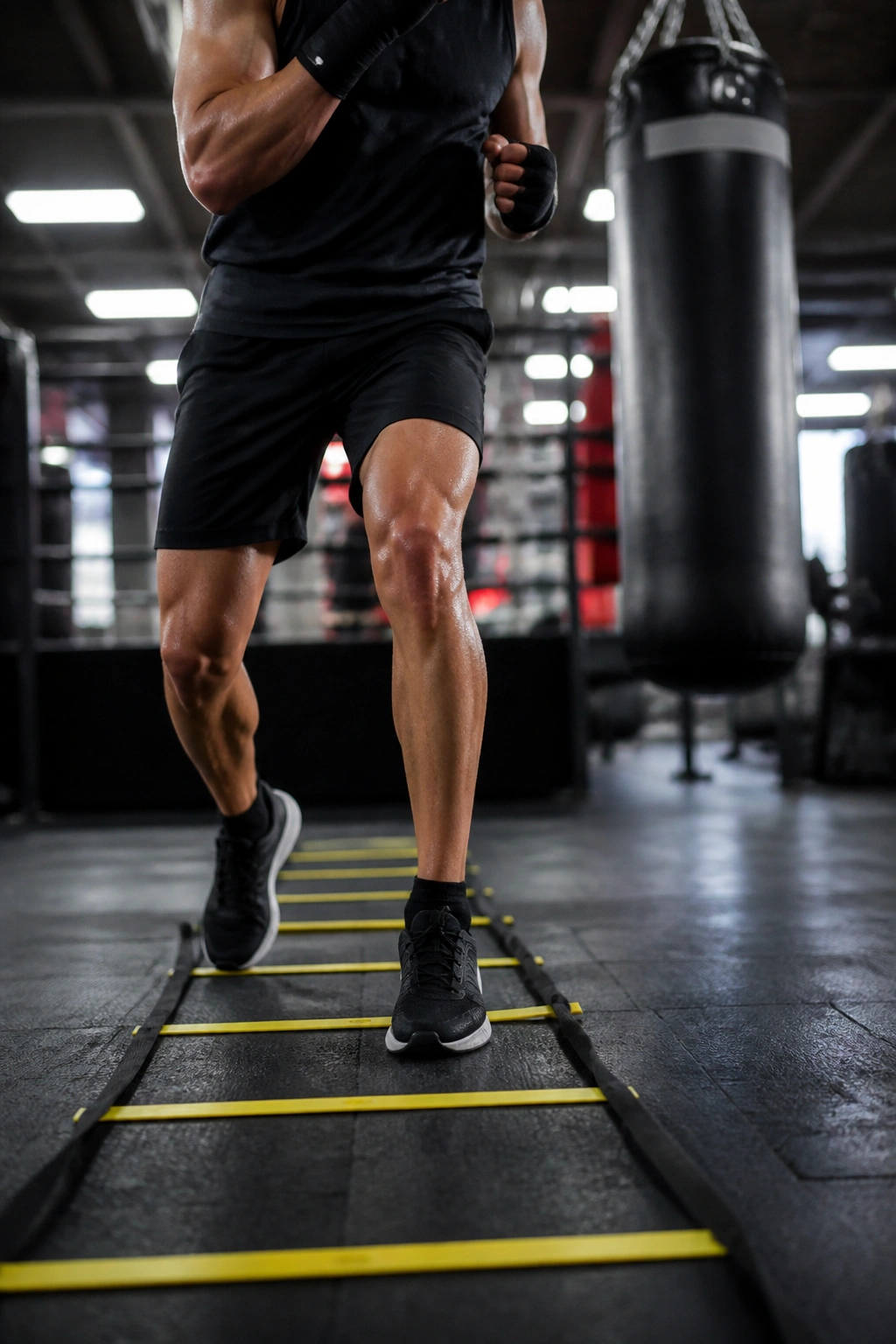
If you have an agility ladder, lay it out next to the bag. You are going to do ladder drills (high knees, in-and-out, lateral shuffles) followed immediately by a flurry of punches on the bag. This forces your brain to switch from “footwork mode” to “striking mode” in milliseconds.
Building Athleticism
This is how you bridge the gap between being a “boxer” and being a total athlete. The ladder work forces precision in your feet, and the punching forces power in your upper body. It is a dual-tasking workout that is incredibly efficient for calorie burning.
- Complete the ladder drill.
- Run to the bag.
- Throw a 5-punch combination.
- Repeat for 10 minutes.
21. Technical Flow and Mirror Work

Go back to the mirror. This is not a sweat-heavy session. This is a technical session. Slow everything down to 50% speed. Look at your feet. Look at your rotation. Look at your extension. You are refining your form so that when you do go hard, you are moving with maximum efficiency.
Why You Need This
You cannot build strength on top of bad movement patterns. If you are punching with your shoulder and not your hips, you will eventually get hurt. Use this time to “program” your body. It is the difference between an amateur and someone who knows the craft.
- Shadowbox at half-speed.
- Check your form in the mirror constantly.
- Reset if you feel yourself getting sloppy.
22. Full-Body Conditioning Finale

This is the “kitchen sink” workout. You take everything you have learned—the intervals, the power, the footwork, the core—and you combine it into one final push. This is how you end a week or a cycle. It is meant to be brutal. It is meant to be the workout that leaves you on the floor, breathing hard, with a clear head.
The Mindset of the Finish
You are emptying the tank. There is no tomorrow for this workout. Give everything you have left. If you feel like you have a little bit of energy left at the end, you didn’t work hard enough.
- Round 1: High-speed combinations (HIIT).
- Round 2: Power hooks (Strength).
- Round 3: Slip-and-weave (Agility).
- Round 4: Constant movement (Endurance).
- Round 5: Absolute max effort (The Finale).
Final Thoughts

Boxing is a lifelong study of balance—the balance between power and finesse, between stress and release, and between the effort you put in and the strength you get out. You might start for the weight loss or the shoulder definition, but you will stay because of how it makes you feel when you step away from the bag. The world outside the gym has a way of feeling a little quieter, a little more manageable, and a lot less heavy after you have spent time moving your own weight through space.
Do not stress about doing these in order or mastering them immediately. Treat the gym like a laboratory. Some days you will need the heavy bag to crush your stress, and other days you will need the mirror to refine your technique. That is the beauty of this approach. It adapts to what you need, provided you show up and do the work. Remember that the results—the improved conditioning, the tighter core, the mental clarity—are just the byproducts of showing up. The real reward is the time you spent in the moment, focused entirely on the fight in front of you.
