



Oblique workouts are easy to mess up. People either hammer out sloppy twists until their neck starts complaining, or they skip side-core work altogether and then wonder why a heavy carry, a throw, or even a hard sprint makes their trunk feel loose.
Your obliques do more than carve the sides of your waist. They help you rotate, resist rotation, and stay upright when a load tries to pull you sideways. That is a bigger job than most gym plans give them credit for.
A side plank can tell you more about your core than fifty rushed crunches. A suitcase carry can expose weak spots in one walk across a room. And a clean cable chop can train power without turning the movement into a sloppy torso whip.
So the list below leans on all three jobs those muscles do—rotation, anti-rotation, and anti-side-bending—because that’s where the useful work lives.
1. Side Plank Hold
If I had to pick one bodyweight move that tells the truth about your side-core strength, this would be it.
The side plank looks plain. That’s the charm. You set one forearm on the floor, stack your feet, lift your hips, and hold a straight line from head to heel. No momentum. No swinging. No hiding.
Why It Works
Your obliques fire hard here because they have to stop your torso from collapsing toward the floor. The deeper you think about it, the more useful it gets: the exercise is really about resisting side-bending while the shoulder, glute, and ribs all stay lined up.
That makes it useful for almost anyone. Lifters use it to keep a barbell squat more stable. Runners use it to stop the hips from wobbling. Desk-bound people use it because their trunk usually hates staying in one position for more than a minute.
- Hold for 20 to 45 seconds per side to start.
- Keep the top shoulder stacked over the bottom one.
- Squeeze the glutes so the hips do not drift back.
- Progress by raising the top leg or reaching the top arm overhead.
Best cue: keep your lower ribs “zipped” down instead of flaring toward the ceiling.
One good hold beats three ugly ones.
2. Side Plank Hip Dips
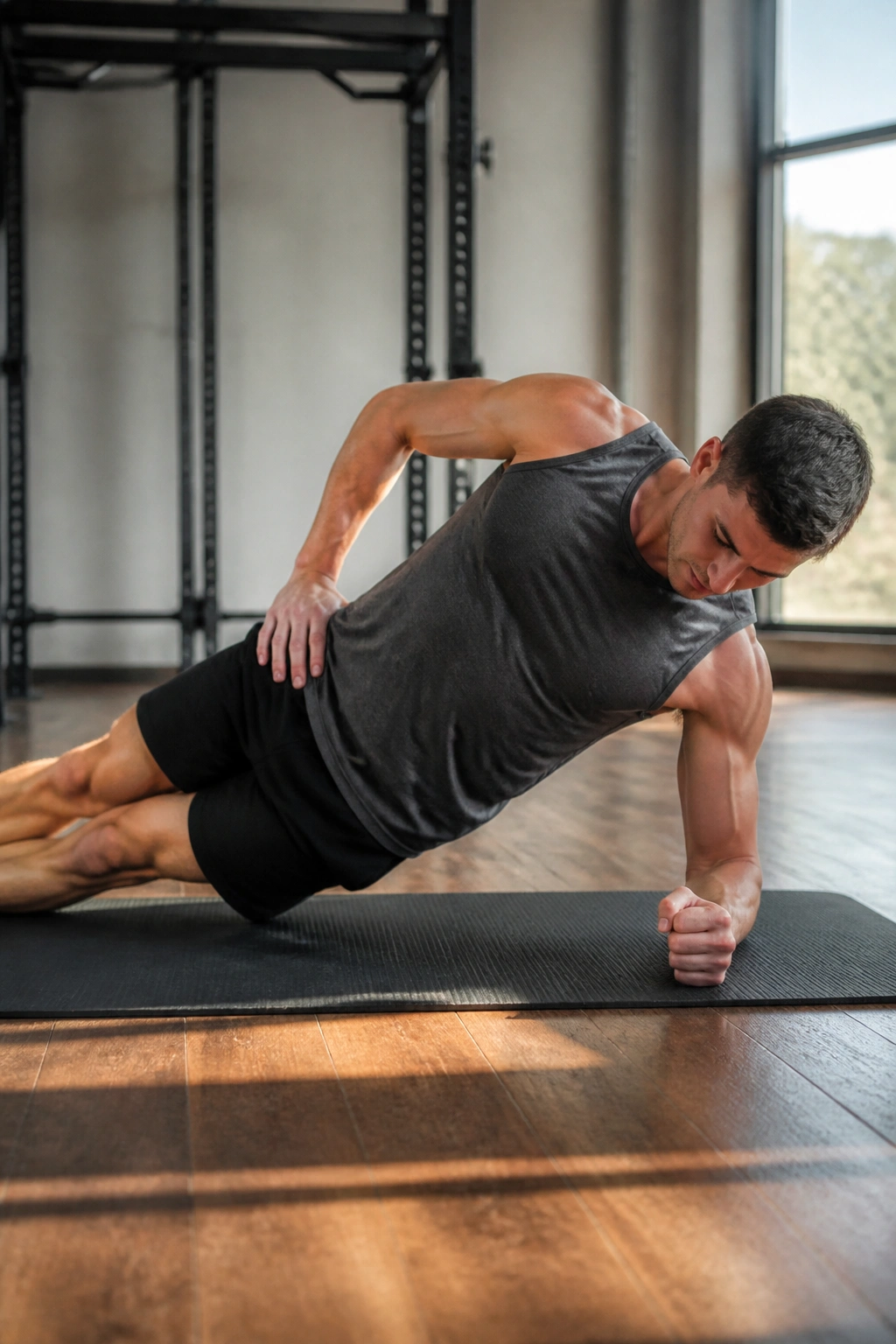
Why does such a tiny movement light up so fast? Because the range is short and the control demand is high.
From a side plank, you lower the hip a few inches toward the floor, then drive it back up. The temptation is to crash down and bounce back up. That turns the exercise into a shrug with a pulse. Not helpful.
The real work happens when the hip hovers close to the floor for a moment and then lifts under control. That little pause forces the obliques to manage the side bend instead of just reacting after the fact.
If the standard side plank feels too easy, this is a clean way to make it harder without grabbing a dumbbell right away. And if the movement feels shaky, that’s fine too. Shaky usually means the exercise found something worth fixing.
How to Keep It Honest
- Move slowly: 2 seconds down, 1 second up is plenty.
- Keep your chest turned slightly forward, not open toward the ceiling.
- Stop the descent before the shoulder starts to shrug.
- Aim for 8 to 12 reps per side.
You should feel the work along the side of the waist, not in the neck.
3. Dead Bug with Reach
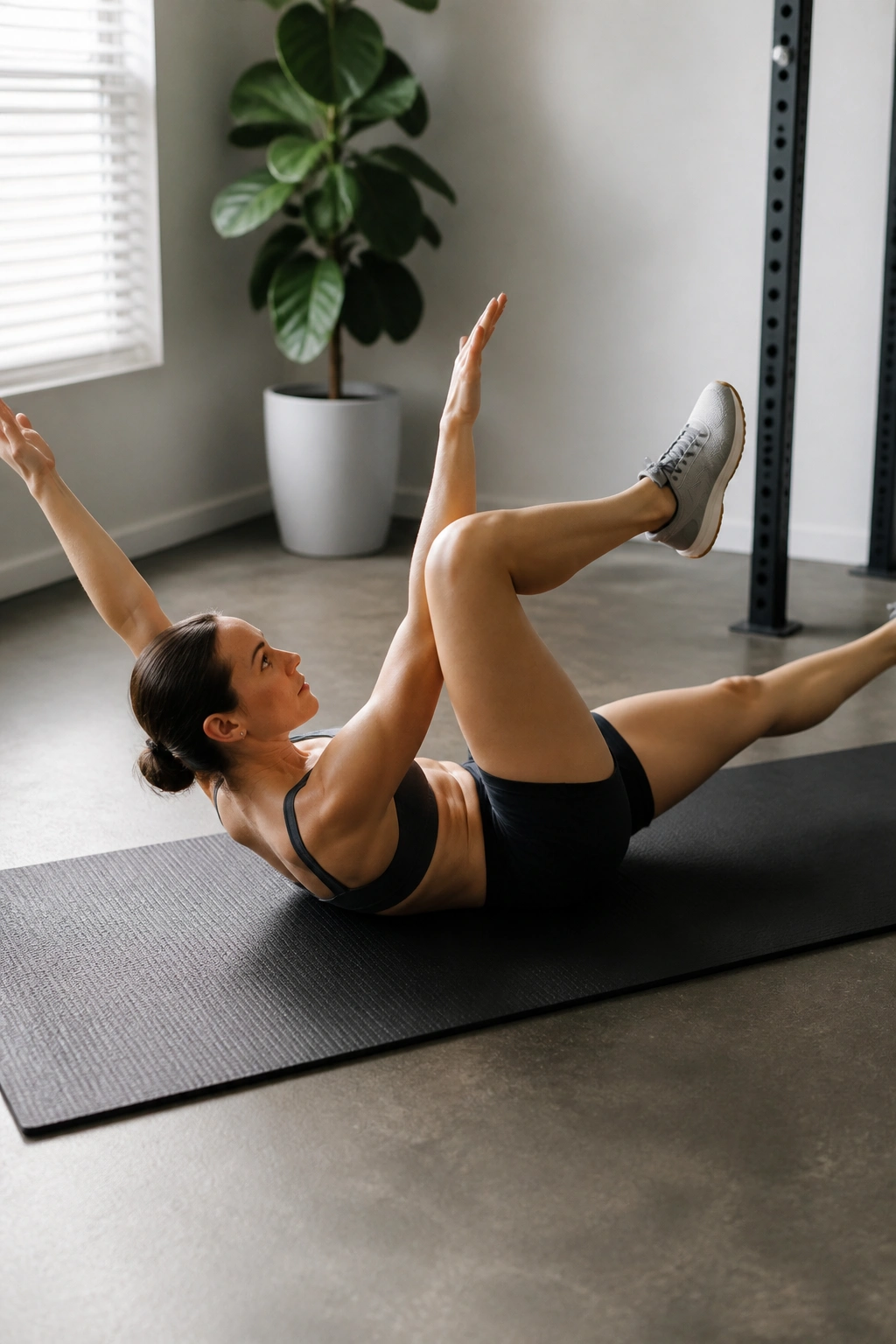
Dead bugs look boring because they are. That is also why they work.
Lie on your back, bend your hips and knees to 90 degrees, and press your lower back lightly into the floor. Then reach one arm overhead while extending the opposite leg, keeping the ribs from popping up. The obliques have to stay on to stop your torso from arching.
That anti-extension piece matters. A lot. If your ribs flare every time you move your arms and legs, your core is not bracing the way it should. This drill teaches the trunk to stay quiet while the limbs do the work.
What to Feel
The lower back should stay in contact with the floor.
The reach should feel long, not frantic.
The leg should extend low enough to challenge you, but not so low that the back arches.
A few clean reps are better than a long set with ugly form. Keep the tempo slow and the exhale deliberate. If you want to make it harder, hold a light dumbbell in the reaching hand or press a band overhead.
Good range: 6 to 10 reps per side.
4. Russian Twist
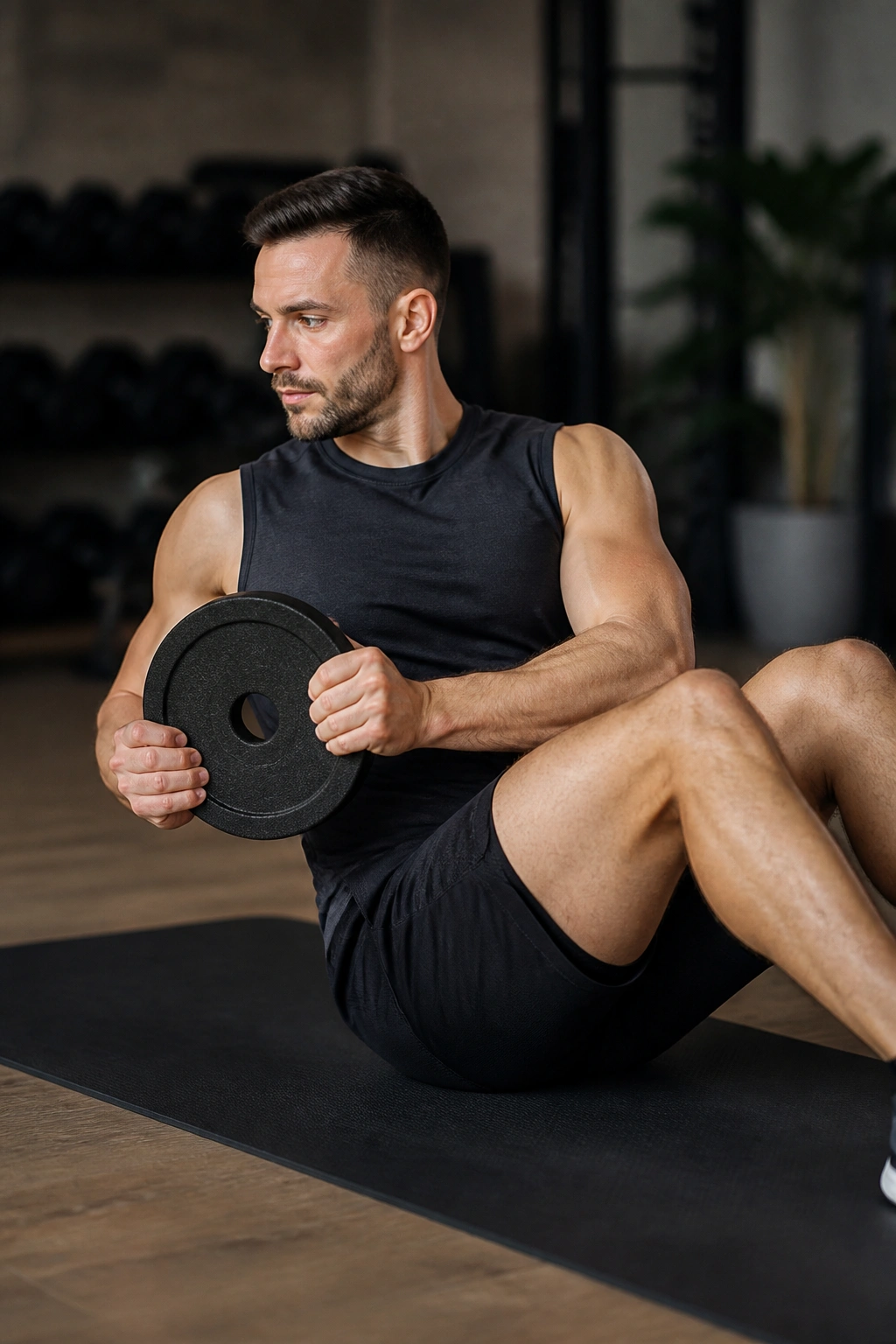
Russian twists get blamed for back pain, and sometimes they deserve it.
The move itself is not the problem. The problem is the usual version: feet flying in the air, spine rounded, and the weight swinging from side to side like a windshield wiper with bad manners. That version turns into momentum fast.
Do it with control and it becomes a useful torso rotation drill. Sit tall, lean back only as far as you can keep your ribs down, and rotate the torso as a unit. The arms move with the chest. They do not lead the show.
A Smarter Setup
- Keep your heels down if your back is touchy.
- Use a light plate or dumbbell first.
- Rotate from the rib cage, not just the arms.
- Stop when the shoulders turn; do not chase a giant range.
A slow Russian twist should feel like the midsection is doing real work. A fast one often feels like nothing until the low back complains later. Big difference.
If you want the obliques to answer, keep the reps crisp and the load modest: 10 to 16 total twists is enough for most people.
No circus acts required.
5. Bicycle Crunch
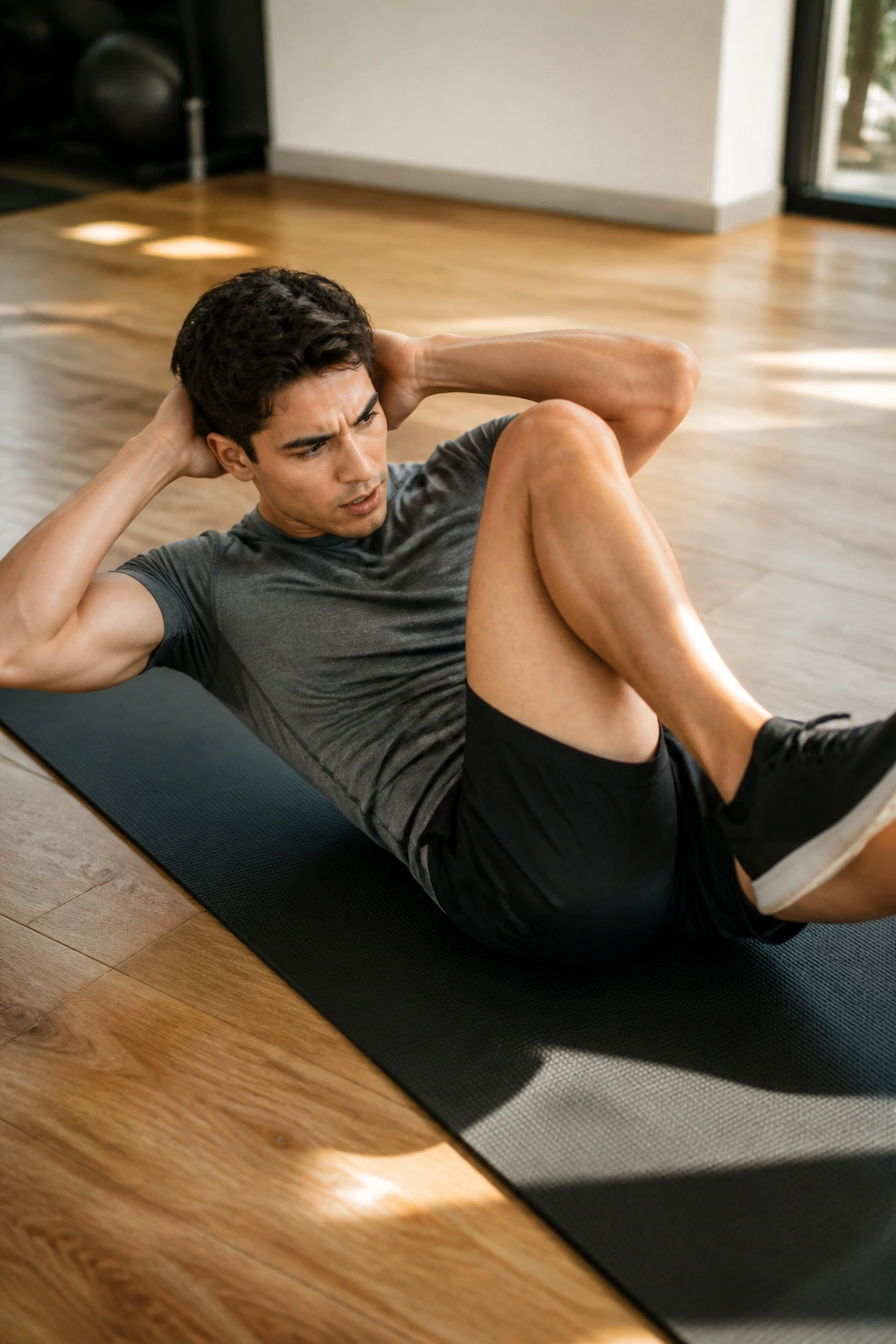
When the shoulder blades hover an inch off the floor, the bicycle crunch stops being a cardio drill and starts acting like a real torso exercise.
The move is simple: one elbow reaches toward the opposite knee while the other leg extends. The trick is to keep the torso doing the twisting, not the elbows flapping around in space. The slower you go, the better the obliques have to work.
The most common mistake is speed. People pedal like they’re trying to win a race, and the torso barely moves. That burns the hip flexors and neck more than the side abs.
Make the Rep Count
- Exhale as the shoulder blade turns across the body.
- Keep the lower back close to the floor.
- Aim for a controlled reach, not an elbow-to-knee crash.
- Think “rib to hip” rather than “elbow to knee.”
If your neck gets tight, support your head lightly and slow down. If your lower back arches, shorten the leg extension. Both fixes matter more than trying to grit through sloppy reps.
A clean set of 8 to 15 reps per side can be enough.
6. Standing Cable Wood Chop for Oblique Workouts
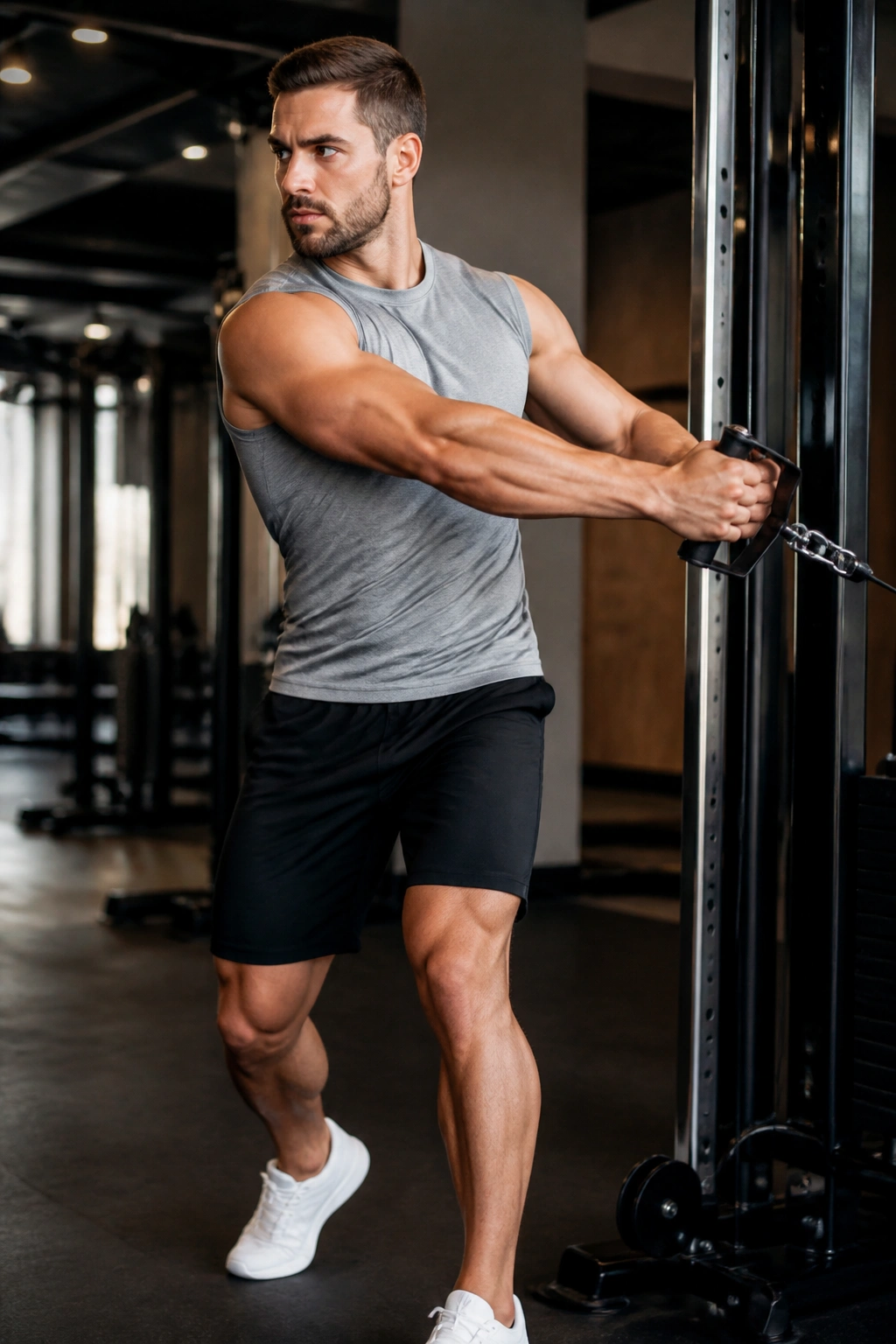
The cable stack is one of the cleanest tools for oblique work because it gives you a line of pull you can actually feel.
A wood chop usually starts high and finishes low, though you can reverse it later. Stand sideways to the stack, grab the handle with both hands, and pull the cable diagonally across your body. The hips and ribs rotate together, but the spine stays long. That’s the part people miss.
Why the Cable Feels So Good
The machine gives you constant tension through the whole arc. Bodyweight twists can drop off at certain points; cables do not. That means the obliques stay involved from the first inch of movement to the last.
A smooth chop is not about yanking hard. It’s about controlling the path and finishing with the hands near the opposite hip. If your shoulders do all the work, the movement turns into an arm swing. Waste of time.
- Use a split stance for balance.
- Keep knees soft.
- Rotate through the torso and hips together.
- Pause for a beat at the finish position.
Best rep range: 8 to 12 per side with controlled speed.
7. Standing Cable Lift
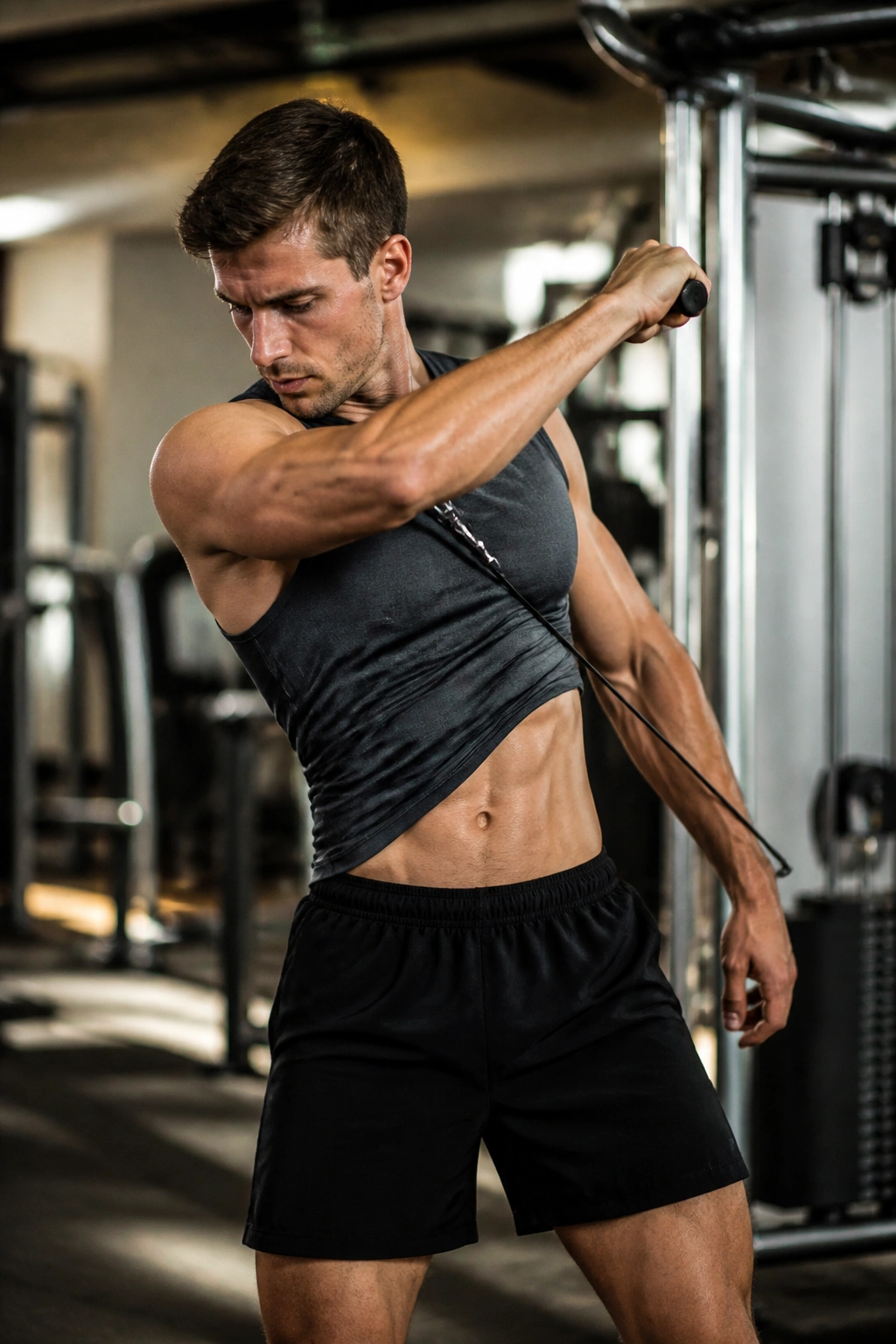
Why train the opposite diagonal? Because the body does not live in one direction.
The lift runs low to high, so the cable starts near your front hip and finishes up across the body. It feels different from a chop right away. The chop tends to pull you down and across; the lift asks you to drive up and across. That diagonal line matters for throwing, reaching, and changing direction.
A lot of people ignore this pattern because it looks less dramatic than the chop. Bad move. If your only rotation work is high-to-low, you’re leaving a whole angle on the table.
The lift is especially nice if you want to train the obliques without a huge load. The arc is long, the tension is steady, and the rep teaches the torso to coordinate with the hips instead of rushing ahead of them.
Keep the stance planted. Turn the rib cage without letting the low back crank. And don’t whip the cable around like you’re starting a lawnmower.
Try: 2 to 4 sets of 8 to 12 reps per side.
8. Pallof Press for Oblique Workouts
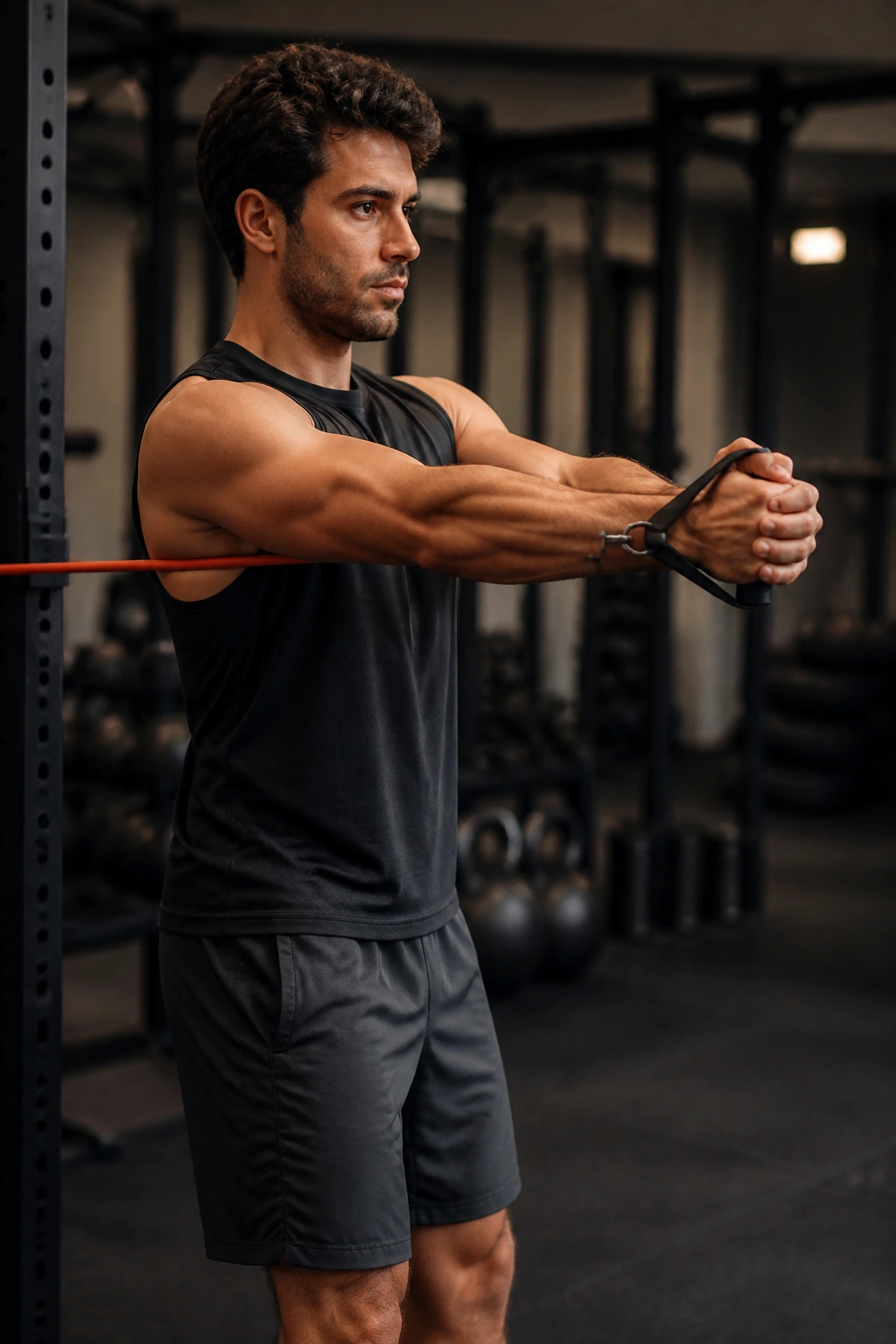
What if the goal is to fight rotation instead of create it? That’s the Pallof press.
Set a band or cable at chest height, stand sideways to the anchor, and press the handle straight out from your sternum. The load will try to twist you. Your obliques have one job here: don’t let it. The movement is subtle, but the effect is not.
How to Make It Harder
Start with a light band first. If you can’t keep your ribs and hips square, the resistance is too much.
Then progress in small steps:
- Step farther from the anchor point.
- Hold the press for 2 to 5 seconds at full extension.
- Try a split stance.
- Move to a half-kneeling position.
- Add an overhead hold only after the basic press feels solid.
That last one can get spicy fast.
The Pallof press is the kind of exercise that looks tame and then quietly ruins your plan for the next set. It is also one of the cleanest ways to train the obliques without piling motion on top of motion.
If your torso drifts or your shoulders tense up, lighten the load. This move should feel like controlled resistance, not a wrestling match.
9. Pallof Press March
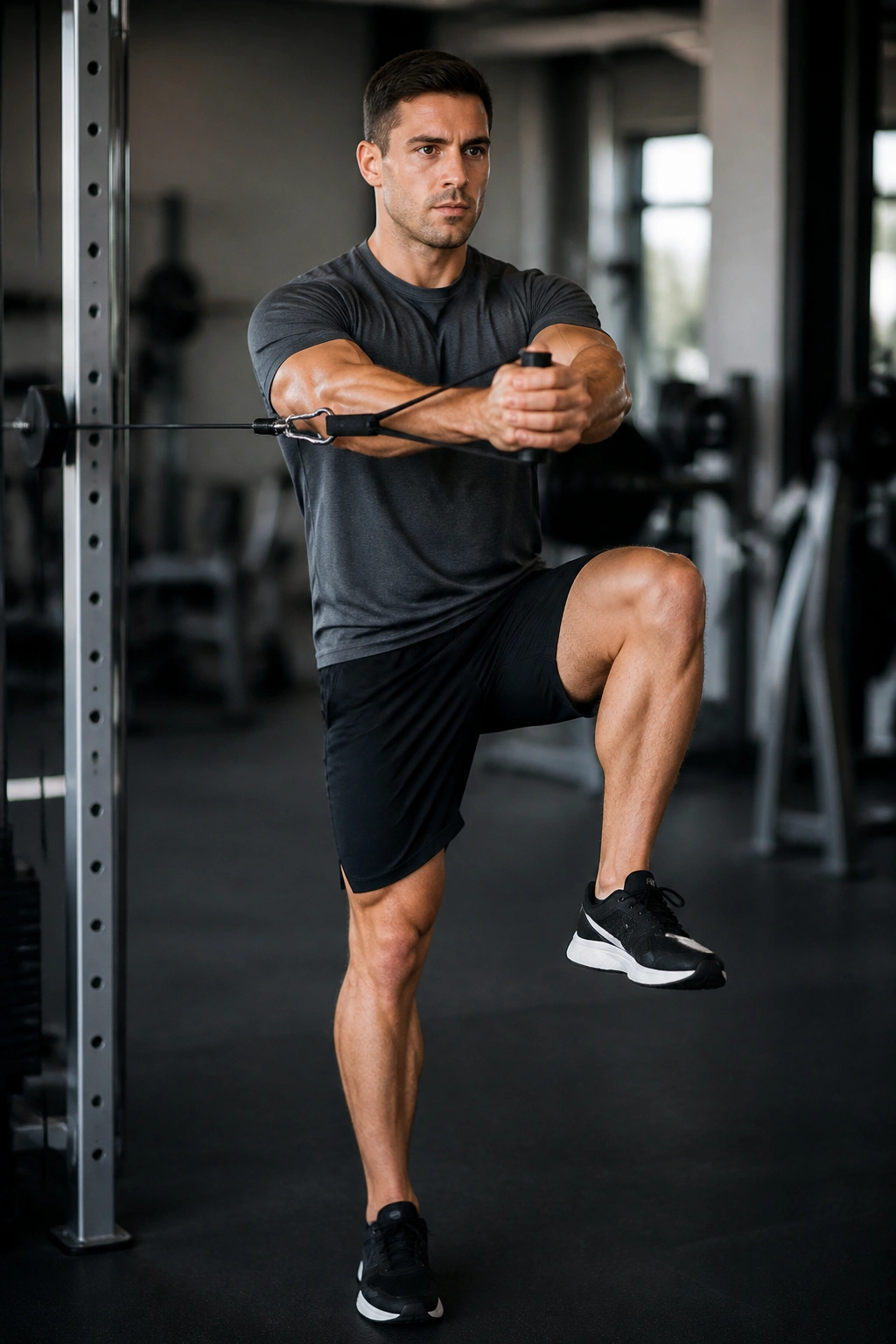
The press is steady. The march makes it honest.
Once you can hold the basic Pallof press without twisting, add a march. Press the handle out, then slowly lift one knee a few inches, set it down, and switch sides. The trunk has to keep the same shape even while one leg leaves the floor.
That is a sneaky hard version of oblique work because the lower body wants to shift. Your job is to stop the shift. The moment your torso starts leaning or the cable drags your shoulders forward, the set has gone too far.
A nice detail here: the march also teaches breathing. If you hold your breath too long, the whole shape gets stiff and messy. Short exhales help the ribs settle.
- Use a light to moderate band or cable.
- Keep each knee lift low and deliberate.
- Stay tall through the crown of the head.
- Do 6 to 10 marches per side.
This one belongs in warm-ups and main work. It’s that useful.
10. Suitcase Carry for Oblique Workouts
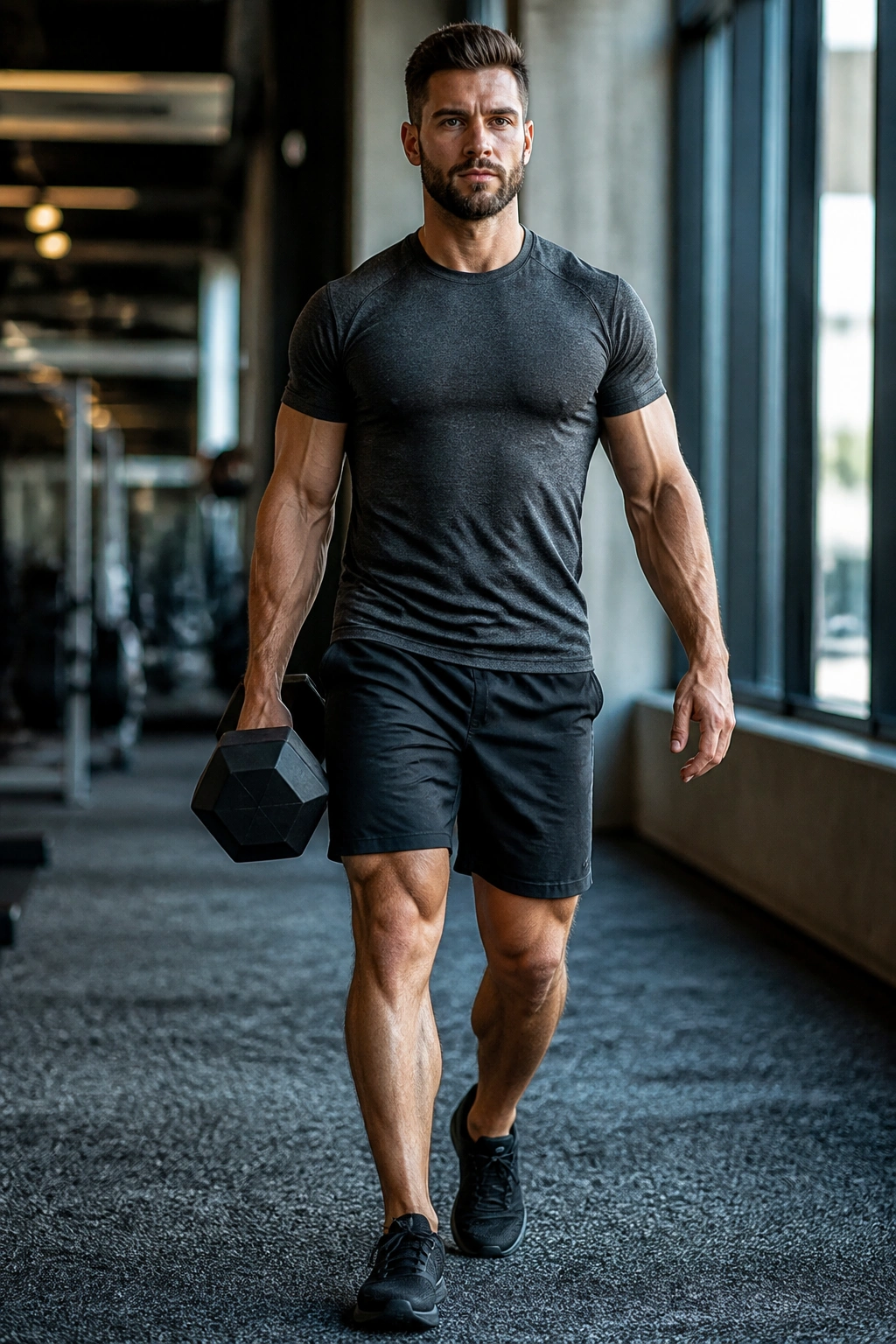
Pick up one heavy dumbbell and walk 20 meters. Your obliques will tell you the rest.
A suitcase carry is brutally simple. One hand holds a weight at your side, the other arm stays free, and you walk without leaning toward or away from the load. The side core has to keep your torso tall the whole time.
The great thing about carries is that they do not let you fake much. If the weight is too heavy, you wobble. If the steps are too big, you sway. If you let the shoulder collapse, the whole line falls apart.
What Good Looks Like
- Stand tall before you start moving.
- Keep the free hand relaxed, not flailing.
- Take short, even steps.
- Stop the set when your torso starts to tilt.
Start with 20 to 40 meters per side or a 20 to 45 second carry. That’s plenty.
I like this movement because it carries over so well to real life. Grocery bags. Suitcases. A child on one hip. Heavy tool bags. All of it. The obliques show up every time, and they do not get to pick the load.
11. Offset Front Rack Carry
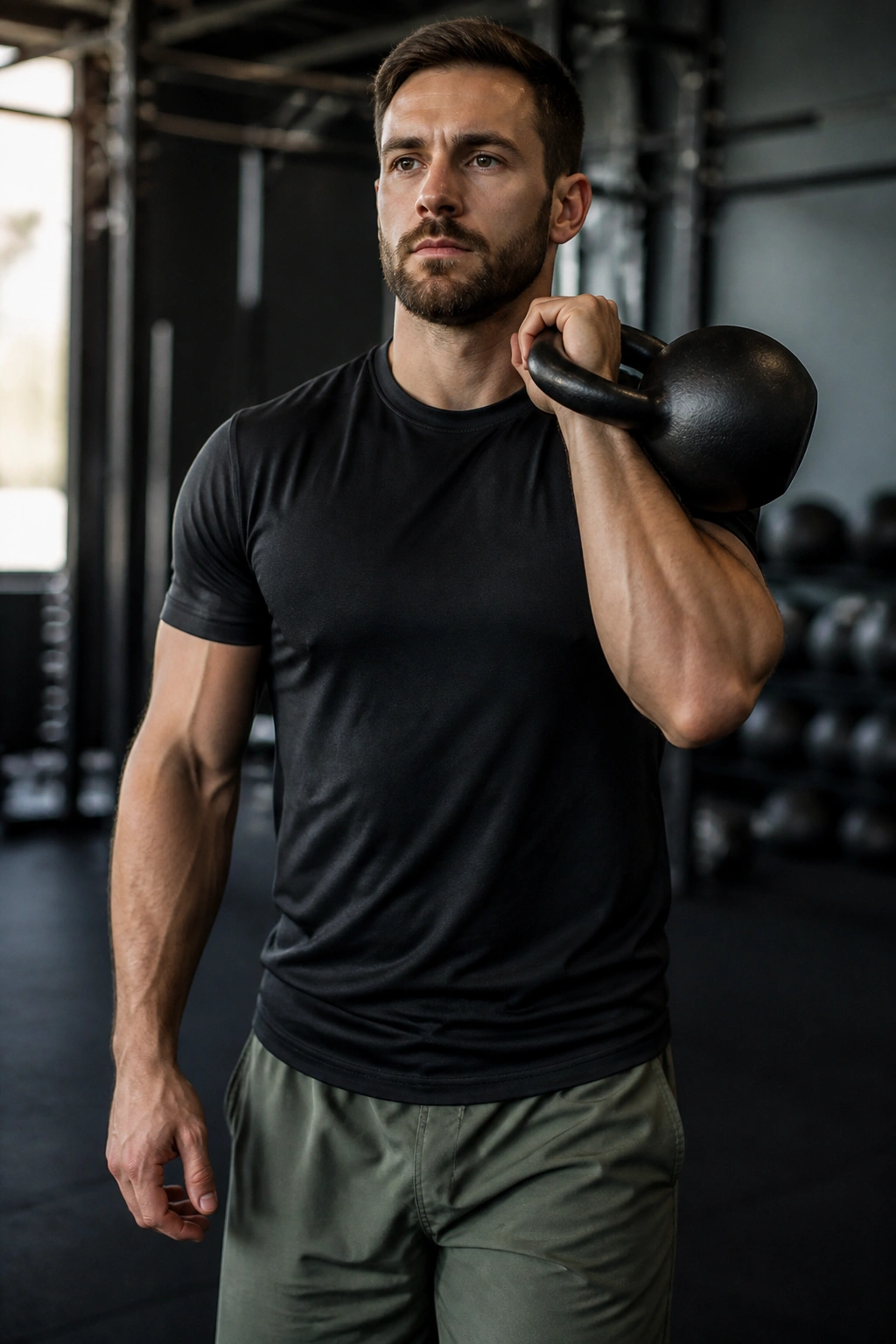
The load does not have to hang at your side to light up the side core.
In an offset front rack carry, one kettlebell or dumbbell sits in the front rack position—close to the chest, elbow down—and the other side stays empty, or you can use a one-sided front rack if the setup allows it. The weight sits closer to the center line, which changes the challenge. Now the obliques have to keep the ribs from tipping or rotating while the upper back stays braced.
That front-loaded position makes breathing more interesting too. You can’t just stand there loose and drift. The trunk has to hold shape while the front of the body works against the pressure.
This is a good choice when you want a carry that feels a little less obvious than a suitcase carry but still hits anti-side-bending hard.
What to Watch For
- Keep the rib cage stacked over the pelvis.
- Don’t let the load yank the torso forward.
- Walk slowly enough to stay smooth.
- Use a weight that lets you keep posture for the whole distance.
If your elbow keeps flaring out, the load is probably too heavy.
12. Medicine Ball Rotational Throw for Oblique Workouts
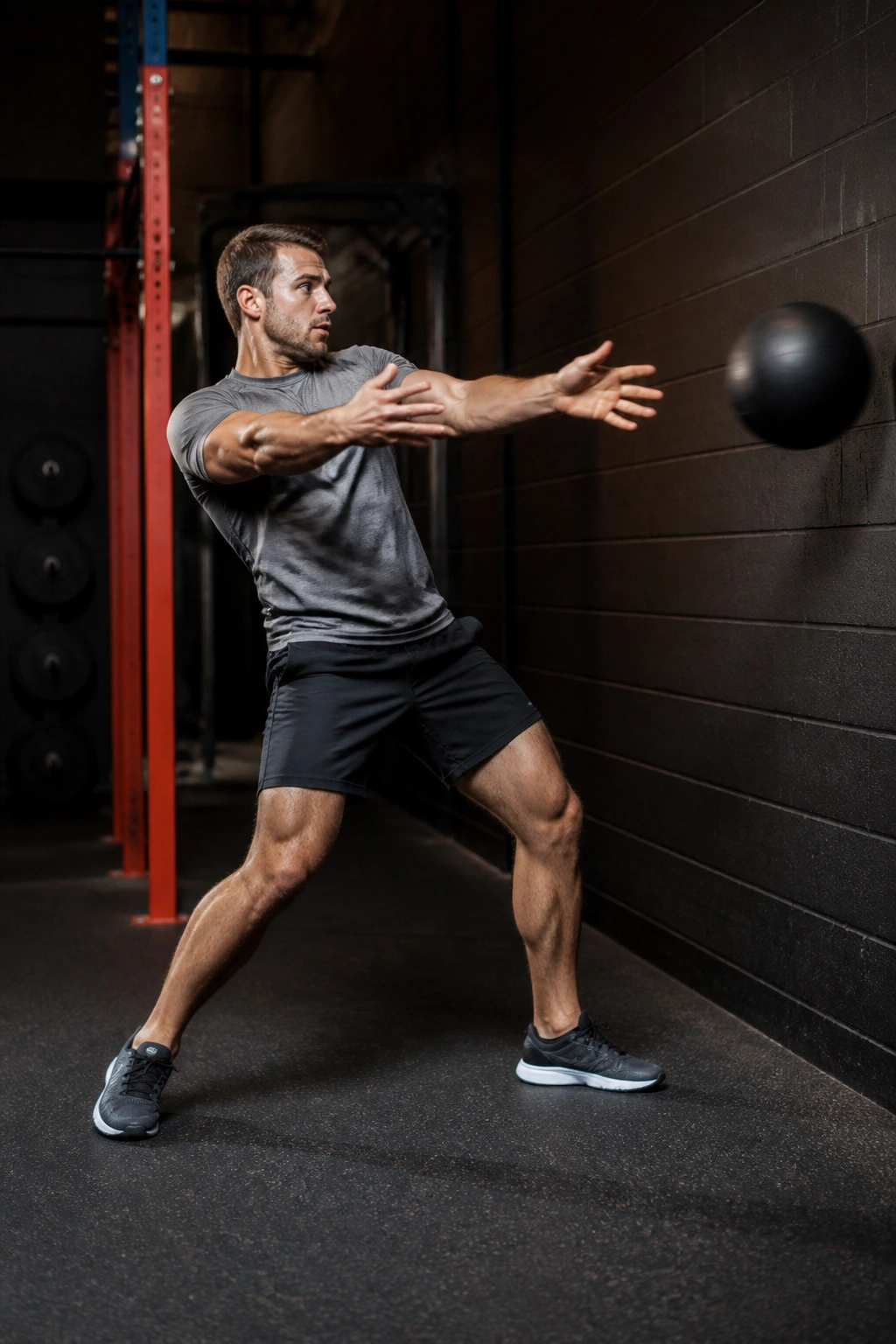
If you want power instead of a slow burn, this is one of the best oblique drills.
A rotational throw takes the side-core muscles out of the “hold this position forever” job and turns them into force transmitters. You load one side, rotate through the hips and torso, and send the medicine ball into a wall or to a partner. The obliques help create the whip, then they help stop it.
That stop matters. A lot. Deceleration is where a surprising amount of trunk work happens.
The Clean Version
Use a medicine ball that moves fast without making you strain. Usually that means lighter than people expect. If the ball is so heavy that your throw turns into a shove, the speed is gone.
- Set your feet shoulder-width apart.
- Load the back hip before you rotate.
- Drive through the ground, then the hips, then the torso.
- Catch the rebound softly or reset between reps.
Keep the knees and hips in line. Do not twist the lower back like a screwdriver. The rotation should come from the whole chain, not one cranky segment.
A set of 4 to 6 throws per side is usually enough. This is quality work, not endurance work.
13. Landmine Rotation
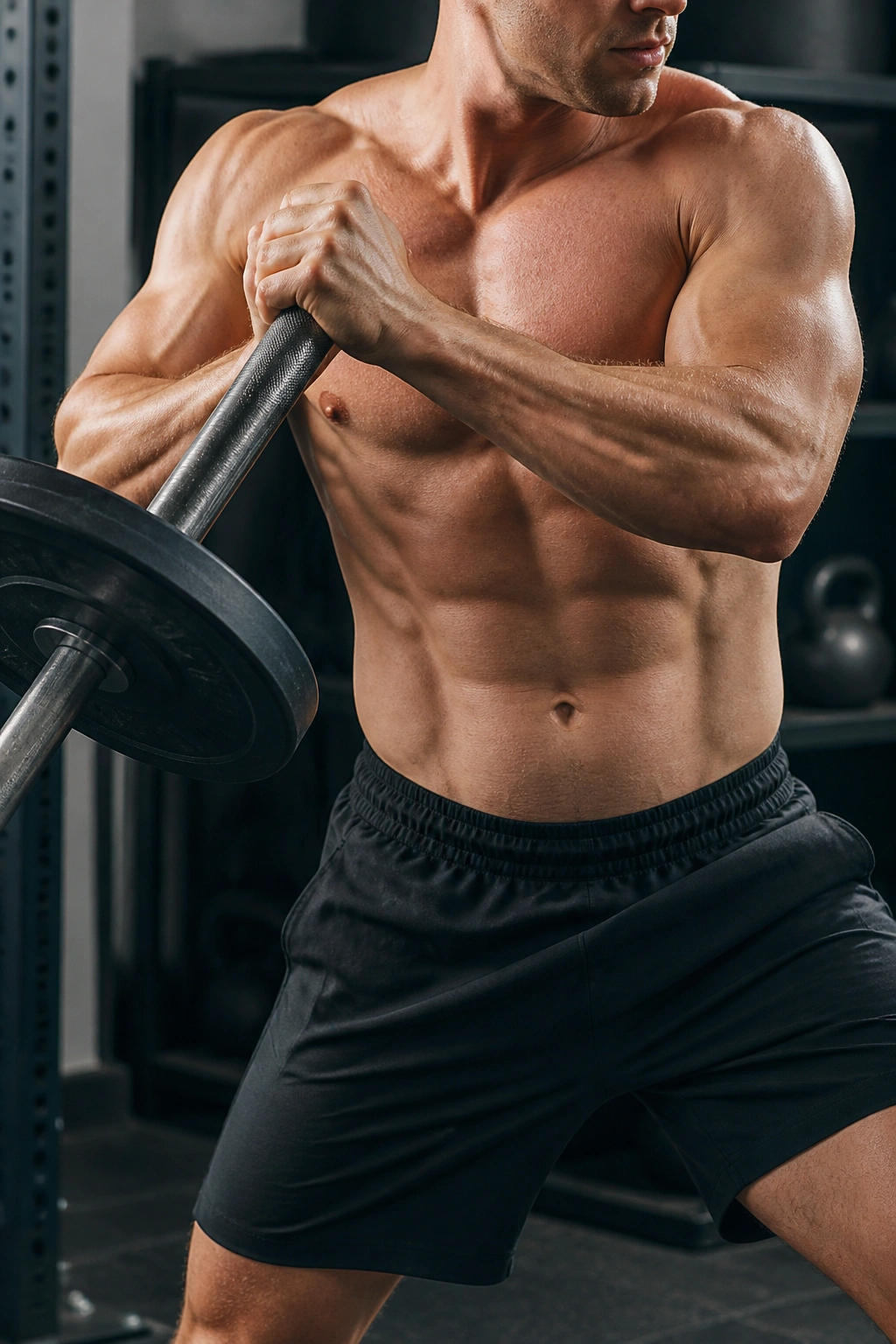
A barbell wedged in a corner looks harmless until the arc gets heavy.
Landmine rotations are a good middle ground between a cable chop and a full-speed throw. One end of the bar is anchored, and you move the free end through an arc with both hands or one hand, depending on the variation. The path forces rotation, but the fixed pivot gives the movement a predictable line.
That predictability is useful. It lets you focus on the trunk instead of trying to control a loose implement. You can feel the obliques work as the bar sweeps across the body, especially if you keep the hips steady and the ribs packed down.
What Makes It Different
The landmine does not pull straight like a cable, and it does not fly free like a medicine ball. It sits between the two.
That makes it a good pick for people who want:
- More load than a band.
- More control than a throw.
- More rotation than a Pallof press.
Use small, smooth turns. Let the feet pivot if needed, but do not spin out of control. A lot of the benefit comes from staying composed while the bar wants to travel.
If you only try one rotational strength move from this list, this one earns a serious look.
14. Hanging Knee Raise with Twist
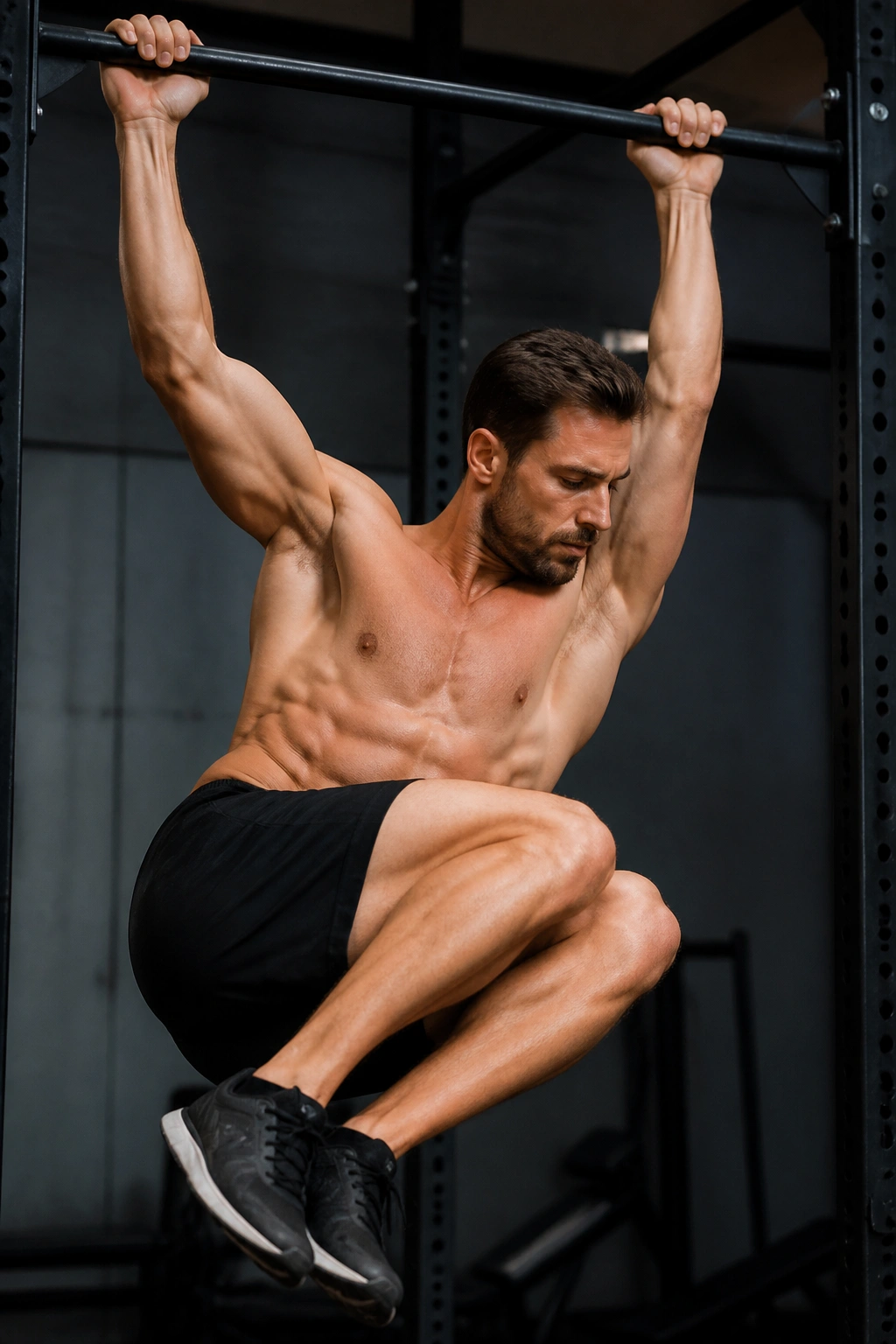
Hanging work is brutal because your grip gives up long before the abs start lying to you.
From a pull-up bar, hang with control and raise the knees toward the chest. At the top, rotate the knees slightly toward one side, then lower with the same slow control. The twist changes the line of tension and asks the obliques to help guide the pelvis instead of letting the movement stay straight up and down.
The biggest mistake is swinging. Once the body starts rocking, the abs are mostly along for the ride. Use a dead hang or a very small kip only if you know how to control it. Most people do better with no swing at all.
Keep the Rep Clean
- Start by setting the shoulders down, not shrugging up.
- Lift the knees only as high as you can control.
- Twist a few inches, not a full spin.
- Lower slowly for 2 to 4 seconds.
If hanging leg work bothers your hip flexors, shorten the range and keep the pelvis tucked. The obliques still get plenty of work helping stabilize the lower trunk.
This one is harder than it looks. Good. It should be.
15. Dumbbell Side Bend
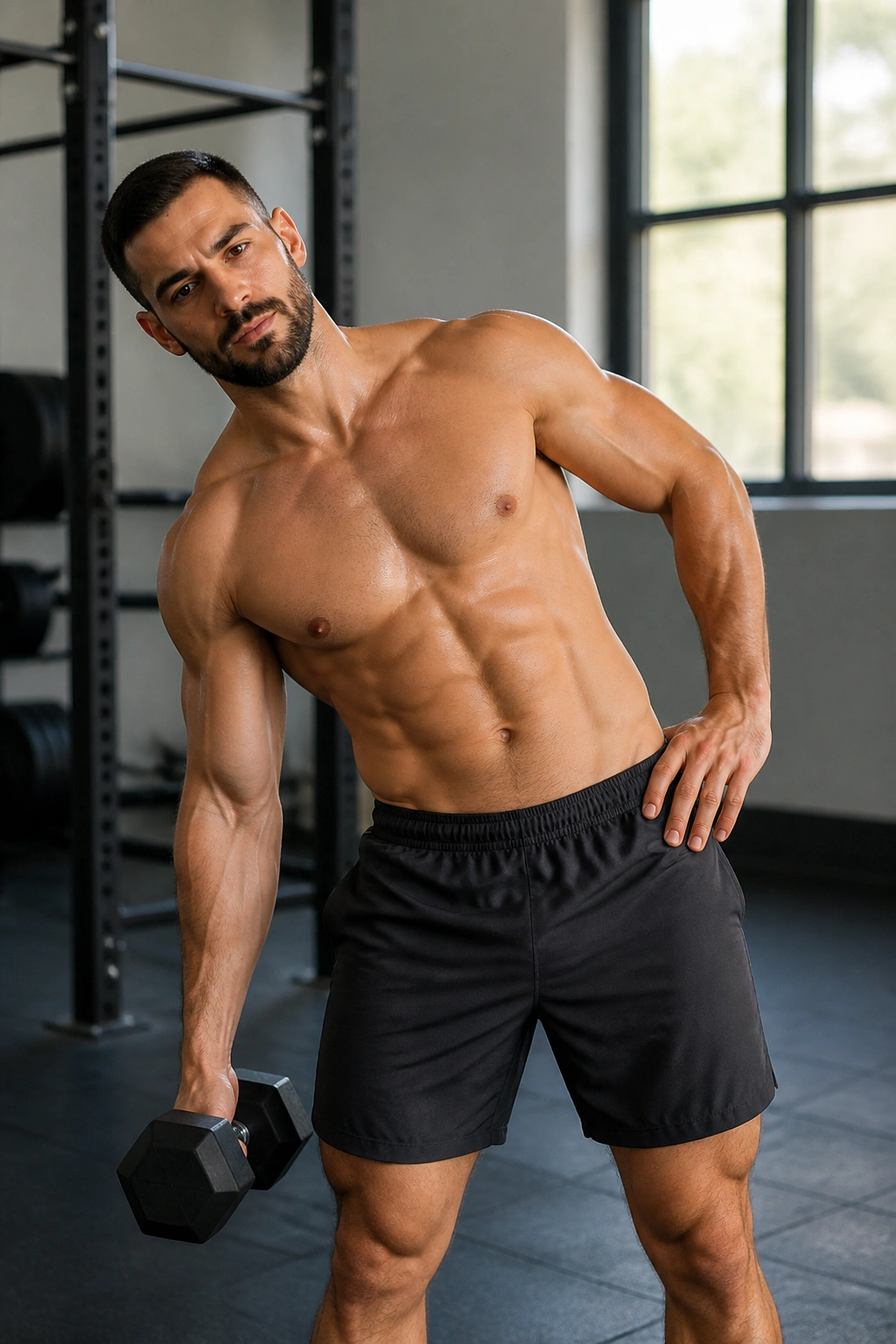
Side bends are worth keeping, but only when you treat them like strength work.
Stand tall with a dumbbell in one hand and let the weight pull you into a small side bend. Then pull yourself back to center using the obliques. The movement should stay smooth and deliberate. No bouncing. No dropping into the bottom like a hinge. Just a controlled arc.
People get weird about side bends because they imagine giant dumbbells and ugly spinal movement. Fair enough. The sloppy version is bad. The strict version has a place, especially when your goal is to build the obliques through loaded side flexion.
The Sweet Spot
- Use a moderate load you can control for the whole set.
- Keep the shoulders square.
- Let the range stay short and tidy.
- Stop before the movement turns into a lean.
A 10 to 15 rep set usually works well.
If the dumbbell drags you forward or backward, you’ve gone too heavy. If your torso bends like a folding chair, same problem. The movement should feel like the side wall of the waist doing the job, not the spine getting yanked around.
I like this one because it’s honest. No trendiness. No drama. Just load, control, and a clean contraction.
Final Thoughts
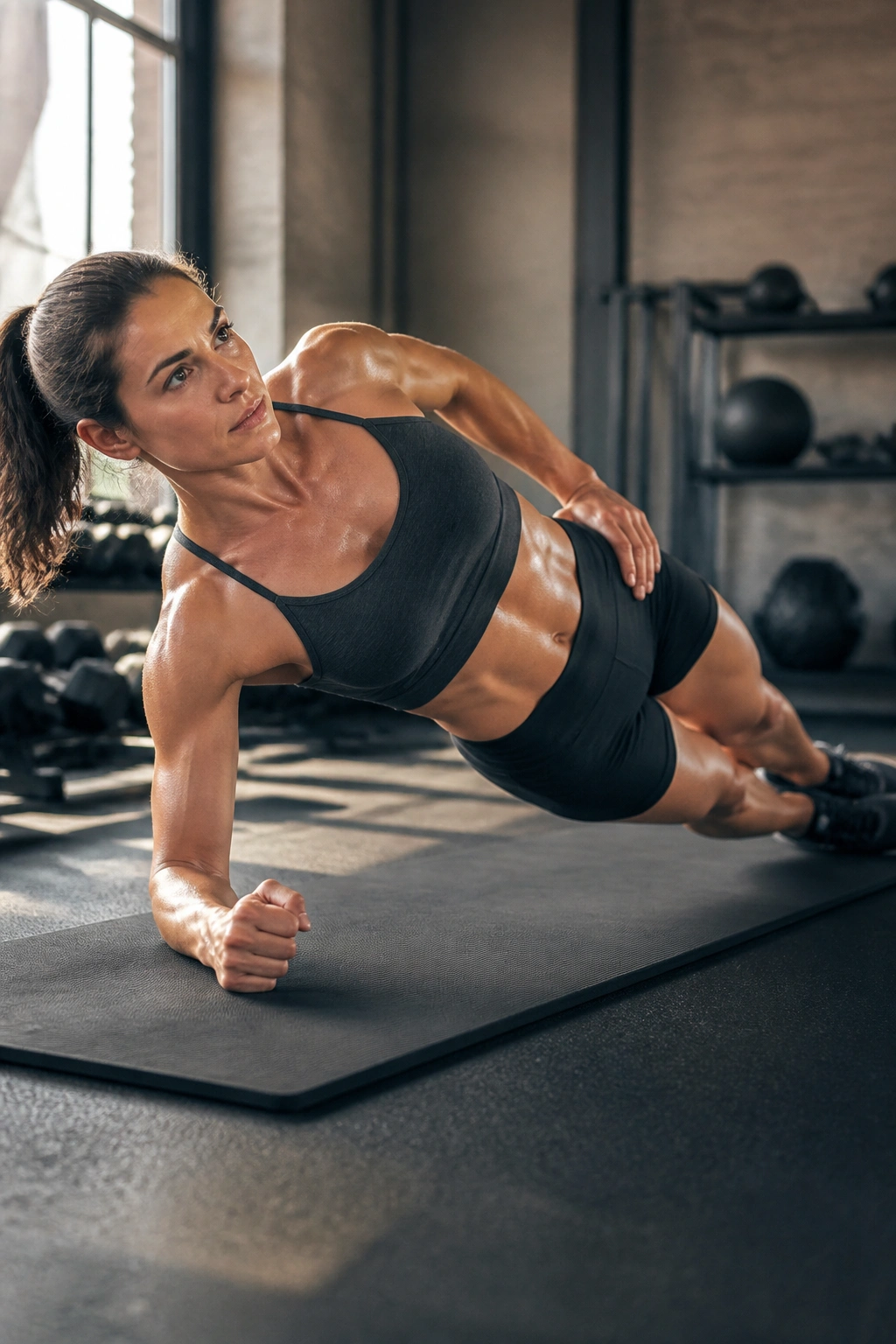
The best oblique work usually feels crisp, not chaotic. That’s true whether you’re holding a side plank, walking a suitcase carry, or sending a medicine ball into a wall.
If your side core is doing its job, your trunk feels steady under load and calm during movement. Not stiff. Just solid. That small difference matters.
Mix holds, carries, and rotation work instead of living on one exercise forever. Your obliques like variety, but they love control even more.
