



Most people start searching for “stomach toning” when they get frustrated. Maybe you caught your reflection in a shop window and didn’t like what you saw, or perhaps you just feel unstable when lifting heavy groceries. The obsession with abdominal definition often leads people down a rabbit hole of thousands of crunches, only to end up with a sore neck and zero visible results. If you want to actually change your midsection, you need to understand that the “core” isn’t just one muscle group. It is a complex, 360-degree muscular corset.
You cannot spot-reduce fat. That is a biological fact that no amount of marketing will change. If you have a layer of adipose tissue covering your abdominal wall, the best exercise in the world won’t make your abs show through. However, building the muscles underneath that layer does two things: it improves your posture, which instantly makes you look flatter, and it gives you genuine functional strength that carries over into every other aspect of your life. We are talking about deep, structural stability—the kind that prevents back pain and makes you feel like you aren’t made of glass.
Building a strong midsection requires variety and consistency. You need to target the rectus abdominis, the internal and external obliques, the transverse abdominis, and even the muscles of the lower back to create a balanced physique. If you ignore the deep stabilizers while hammering the superficial muscles, you are asking for an injury. Forget the infomercial gadgets. We are going to build this using nothing but body weight, gravity, and, occasionally, the floor.
The Anatomy of Core Stability

Your core is not just the “six-pack” muscle running down the center of your stomach. That is the rectus abdominis, and while it looks good on a magazine cover, it is only a small part of the story. The real work is done by the transverse abdominis—a deep, girdle-like muscle that wraps around your spine and holds everything in place. When this muscle is weak, your stomach pushes outward, even if you are relatively lean.
Think of your core as a pressurized canister. When you brace, you are increasing the intra-abdominal pressure that protects your lumbar spine. Many people have a weak lower back not because their back is weak, but because their front side is failing to provide enough counter-tension. If you want to tone your stomach, you have to learn to “brace.” This isn’t just sucking in your belly; it is the feeling of tightening your abs as if you are about to take a punch.
Why Traditional Crunches Often Fail
We have all seen the old-school PE class crunch. You clasp your hands behind your head, yank on your neck, and jerk your torso up. It works, sure, but it puts a massive amount of unnecessary strain on the cervical spine while barely activating the deeper, stabilizing fibers of your core. You are using momentum, not muscle control.
Worse, frequent crunching can actually contribute to a rounded-shoulder posture. You spend your day hunched over a laptop, and then you spend your workout hunched over your stomach. Instead, you need exercises that elongate the spine or require you to maintain a neutral, rigid position while your limbs move. This puts the load exactly where it belongs: on your abdominal wall.
1. Plank
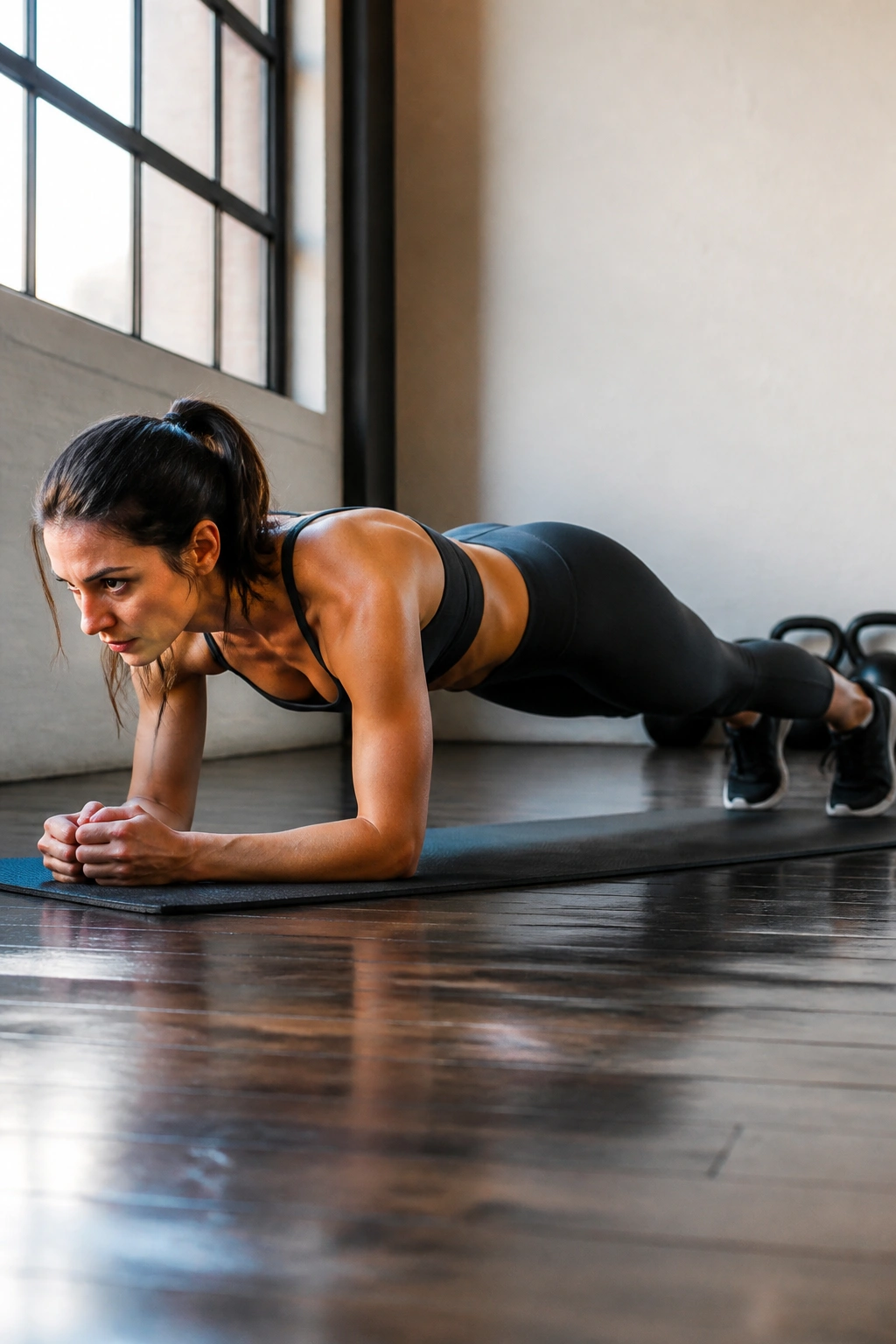
The plank is the king of isometric core work for a reason. It forces your entire body to work as a single, rigid unit against the pull of gravity. The goal here is not to see how long you can hold it, but how tight you can stay while doing it.
How to Get It Right
Start in a push-up position, but drop down to your forearms. Your elbows should be directly under your shoulders. Squeeze your glutes—hard. If your butt is in the air, you are taking the tension off your abs and putting it on your shoulders. If your hips sag, you are dumping the weight into your lower back. You want a straight line from your head to your heels. If you aren’t shaking after 30 seconds, you are probably “resting” in the position rather than actively bracing.
Pro tip: Imagine you are trying to pull your elbows toward your toes without actually moving them. This engages your lats and creates a much more intense contraction in the abs.
2. Dead Bug
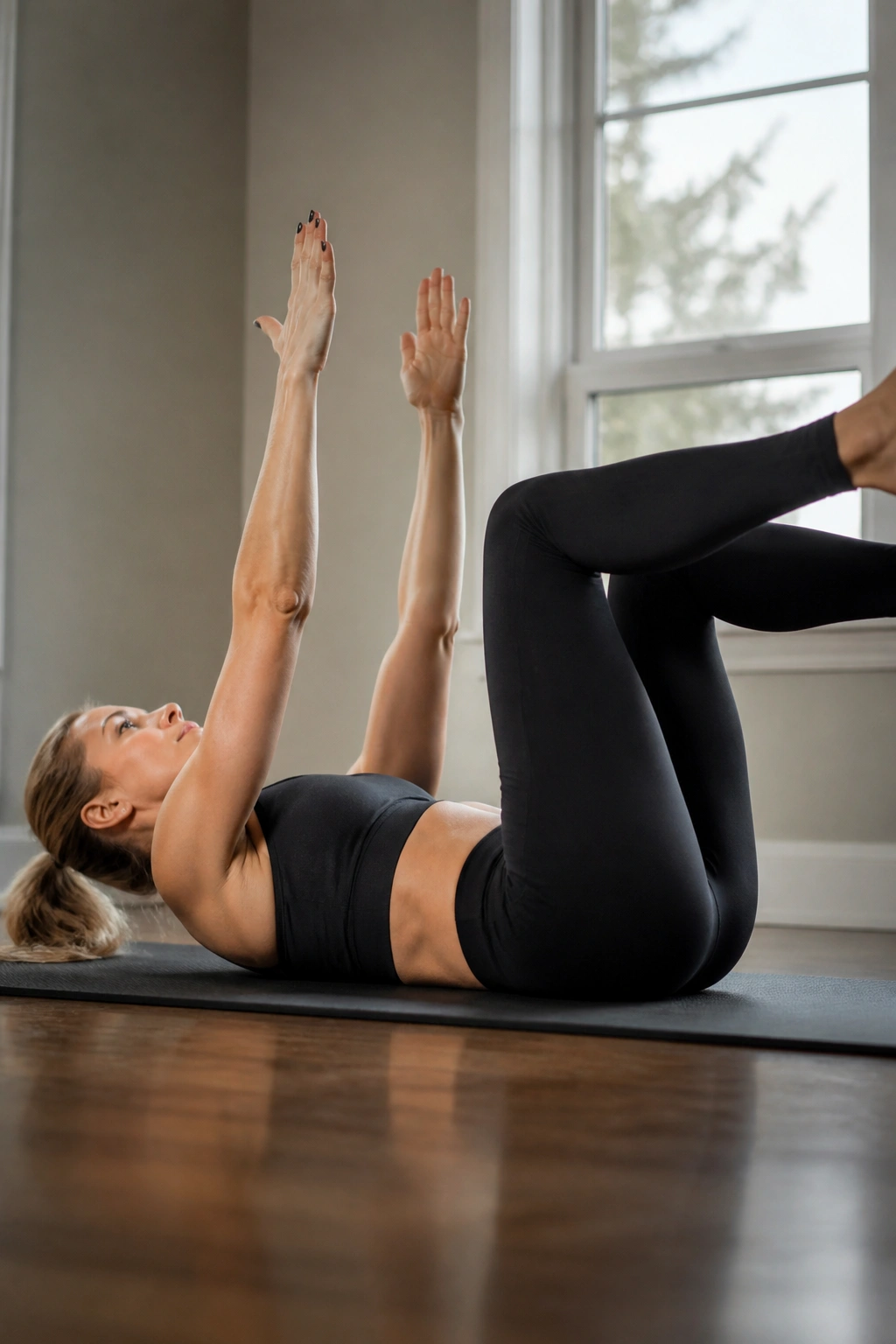
This movement is the best way to teach your core to work while your limbs are moving. It sounds easy, but it’s brutally difficult if you perform it slowly and with intent. It’s also incredibly safe for your lower back.
The Mechanism of Control
Lie on your back with your arms extended toward the ceiling and your legs in the air, knees bent at 90 degrees. This is the starting position. Press your lower back into the floor. This is the most critical part—if your lower back arches, you have lost the tension. Slowly lower your right arm behind your head while simultaneously extending your left leg straight out, hovering just an inch off the floor. Return to center and repeat on the other side. If you are rushing, you are missing the point. The movement should take a full three seconds in each direction.
3. Bird Dog
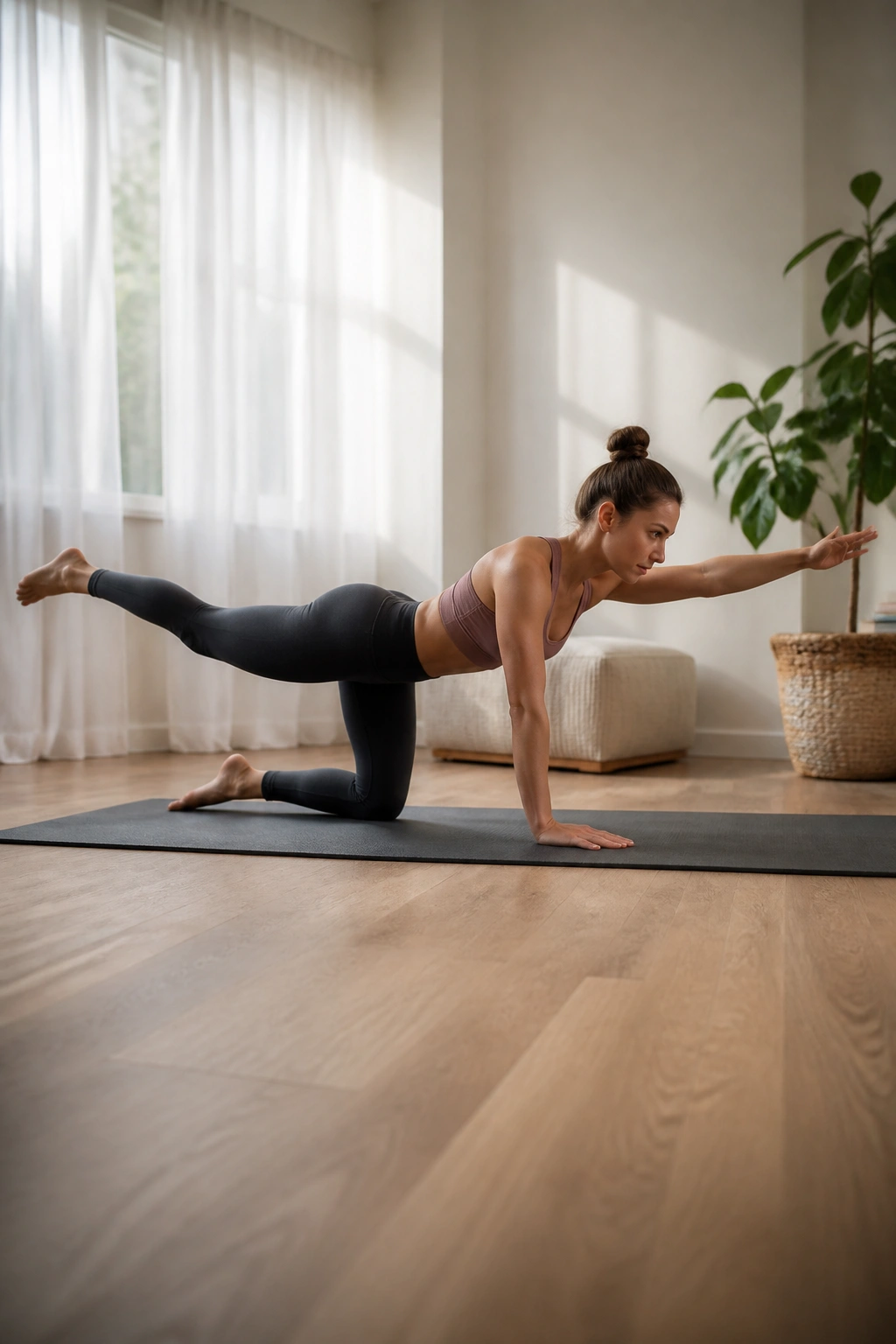
Balance is an underrated aspect of core training. The bird dog forces you to stabilize your spine against the rotation caused by removing two points of contact. It also helps with glute strength, which is essential for posture.
Start on your hands and knees in a tabletop position. Your wrists should be under your shoulders, and your knees under your hips. Reach your right arm forward and your left leg backward at the same time. Keep your torso rock-still. Do not let your hips twist or your back arch. Hold for a two-count at the top, focusing on squeezing the glute and reaching with the fingertips. Return to start and switch sides. You will feel this in your abs if you keep your belly button pulled toward your spine throughout the entire set.
4. Mountain Climbers
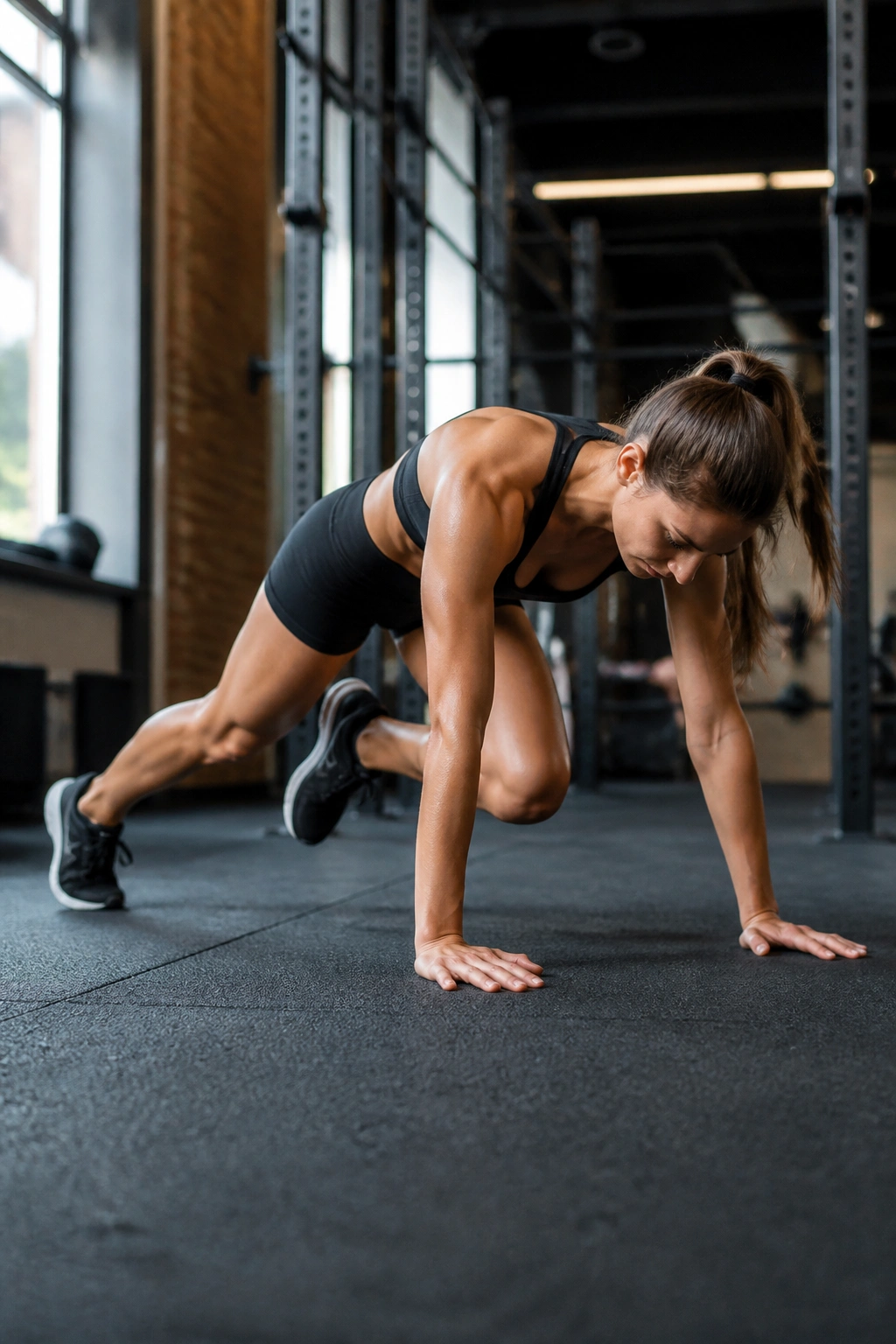
This is where we add some heart rate into the mix. While it acts as a cardio movement, the mountain climber is fundamentally a plank in motion. The challenge is to keep your torso completely level while your legs are firing.
Get into a high plank position. Drive your right knee toward your chest, tapping the floor with your toe, then quickly switch legs as if you are running in place. Most people make the mistake of bouncing their hips up and down. Keep your shoulders over your hands and your hips down. If your butt is bobbing, you aren’t working your abs; you are just doing cardio. Slow it down to feel the deep engagement.
5. Russian Twists

This move targets the obliques, which are the muscles that give your waist definition. Without strong obliques, your core lacks the rotational strength required for almost every athletic movement.
Sit on the floor, lean back slightly, and lift your feet a few inches off the ground. Your torso should be at about a 45-degree angle to the floor. Clasp your hands together or hold a weight if you want more resistance. Rotate your torso from side to side, touching your hands to the floor on each side. Keep your head looking straight forward—do not just move your arms; move your ribs. Your belly button should be pinned toward your spine the entire time to prevent lower back strain.
6. Bicycle Crunches

The bicycle crunch is widely considered one of the most effective exercises for the rectus abdominis and the obliques, based on EMG studies. It combines rotation with a crunch, hitting the muscles from multiple angles.
Lie on your back, hands lightly behind your head. Lift your knees into the air. Extend one leg out while pulling the opposite knee toward your chest. At the same time, rotate your torso so that your elbow meets the opposite knee. Think of driving your armpit toward the knee, not just your elbow. Switch sides in a controlled, fluid motion. If you feel like you are just kicking your legs, slow down and focus on the torso rotation. The crunch happens because your ribs are curling, not because you are pulling on your neck.
7. Leg Raises
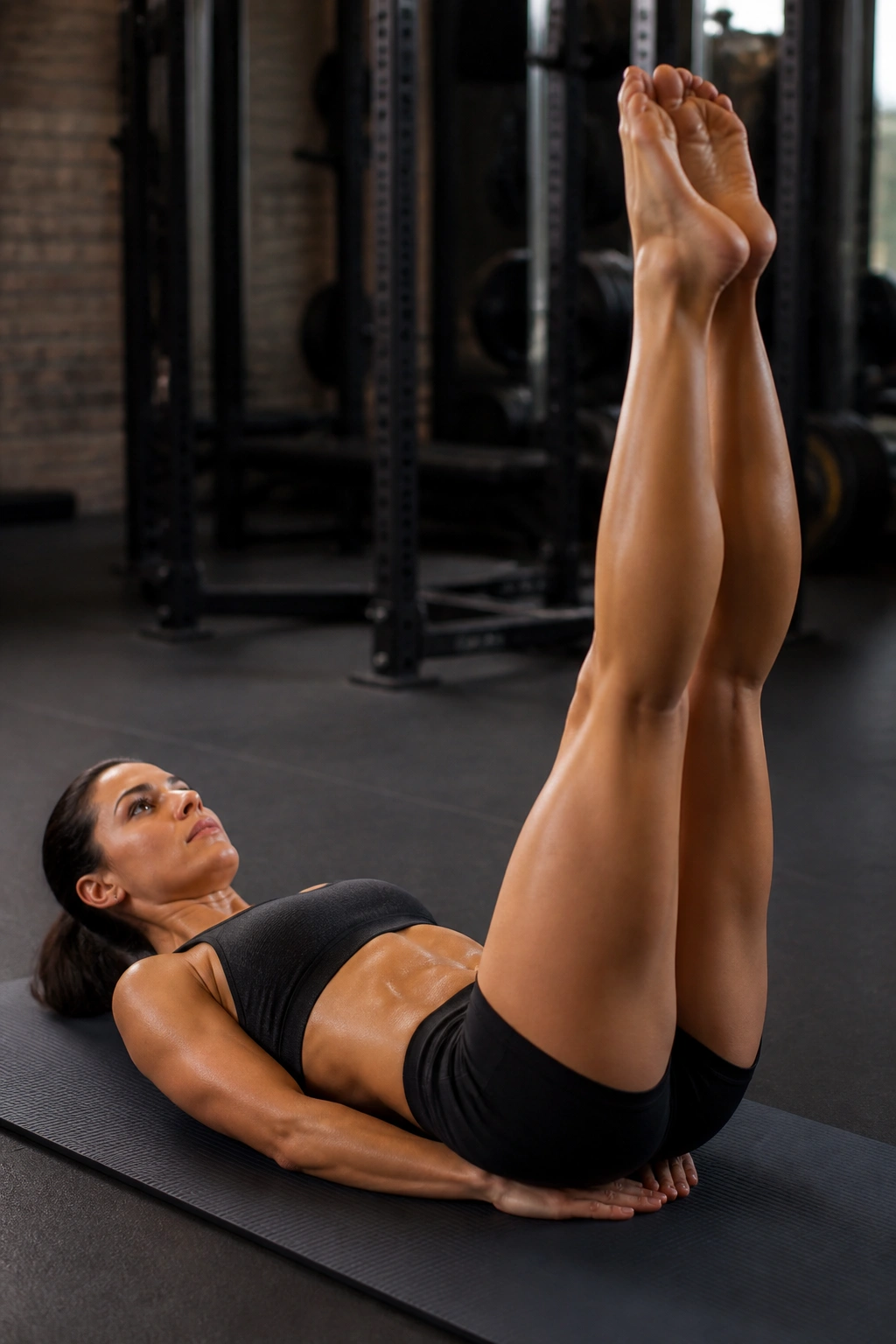
The lower portion of the abdominal wall is often the hardest part to target. Leg raises are the classic remedy, provided you do them without cheating.
Lie flat on your back, legs straight out. Place your hands under your glutes for support. Keep your legs pinned together and raise them until they are at a 90-degree angle to the floor. Here is the secret: lower them slowly. The eccentric, or lowering, phase is where the work happens. If you let them drop and bounce off the floor, you are wasting energy. Lower them until they are just hovering above the ground, then pull them right back up. If your back arches, stop and shorten your range of motion.
8. Flutter Kicks
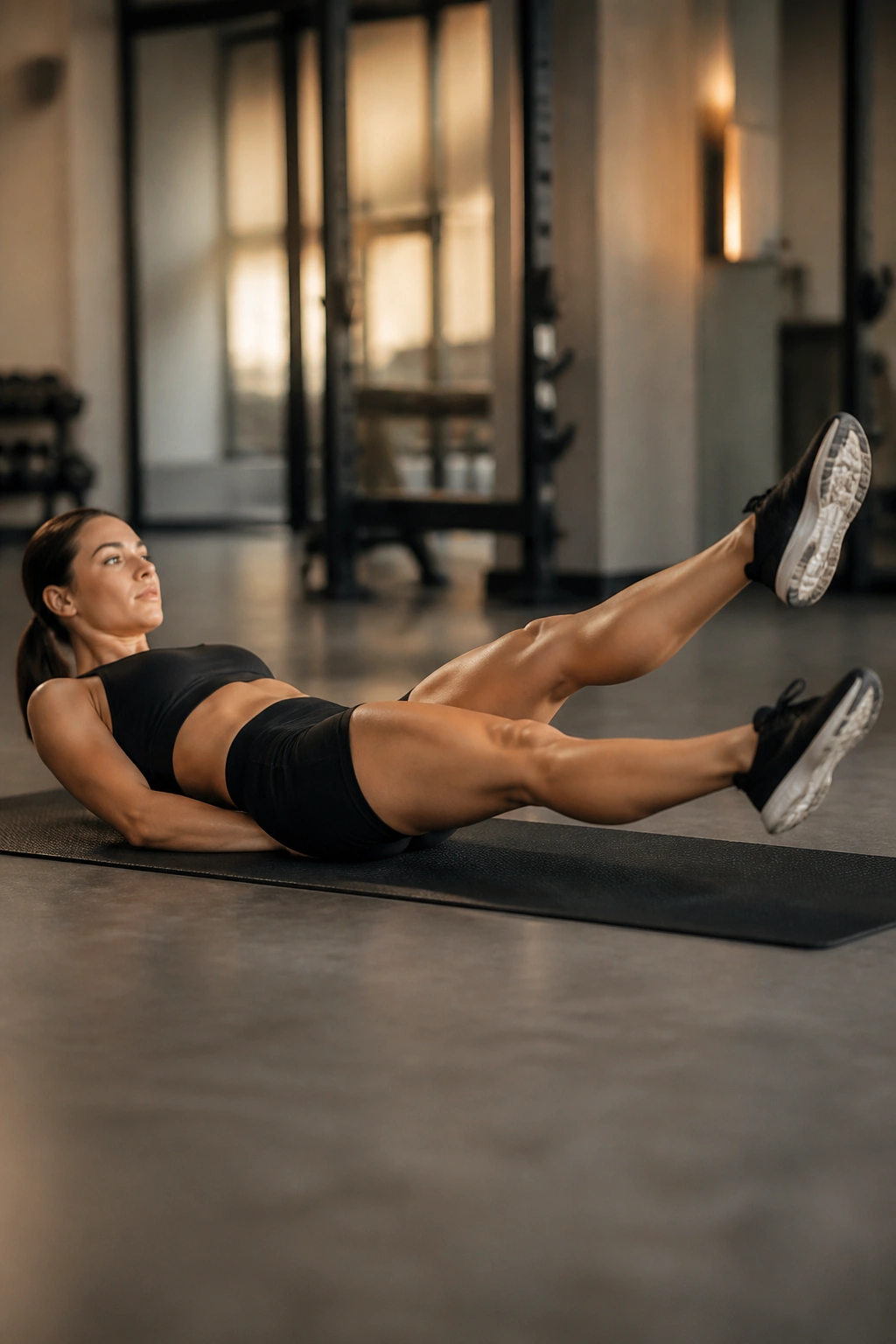
Think of these as the endurance test for your lower abs. They keep your core under constant tension, forcing the stabilizers to fire to prevent your spine from moving.
Lie on your back, legs straight out, hands under your glutes to keep your back pressed into the floor. Lift your feet about six inches off the ground. Start kicking your legs up and down in a small, quick, scissor-like motion. Keep your knees straight. If you bend your knees, you are offloading the tension onto your hip flexors, which is exactly what we want to avoid. The goal is to keep the abs burning for the duration of the set.
9. Hollow Body Hold
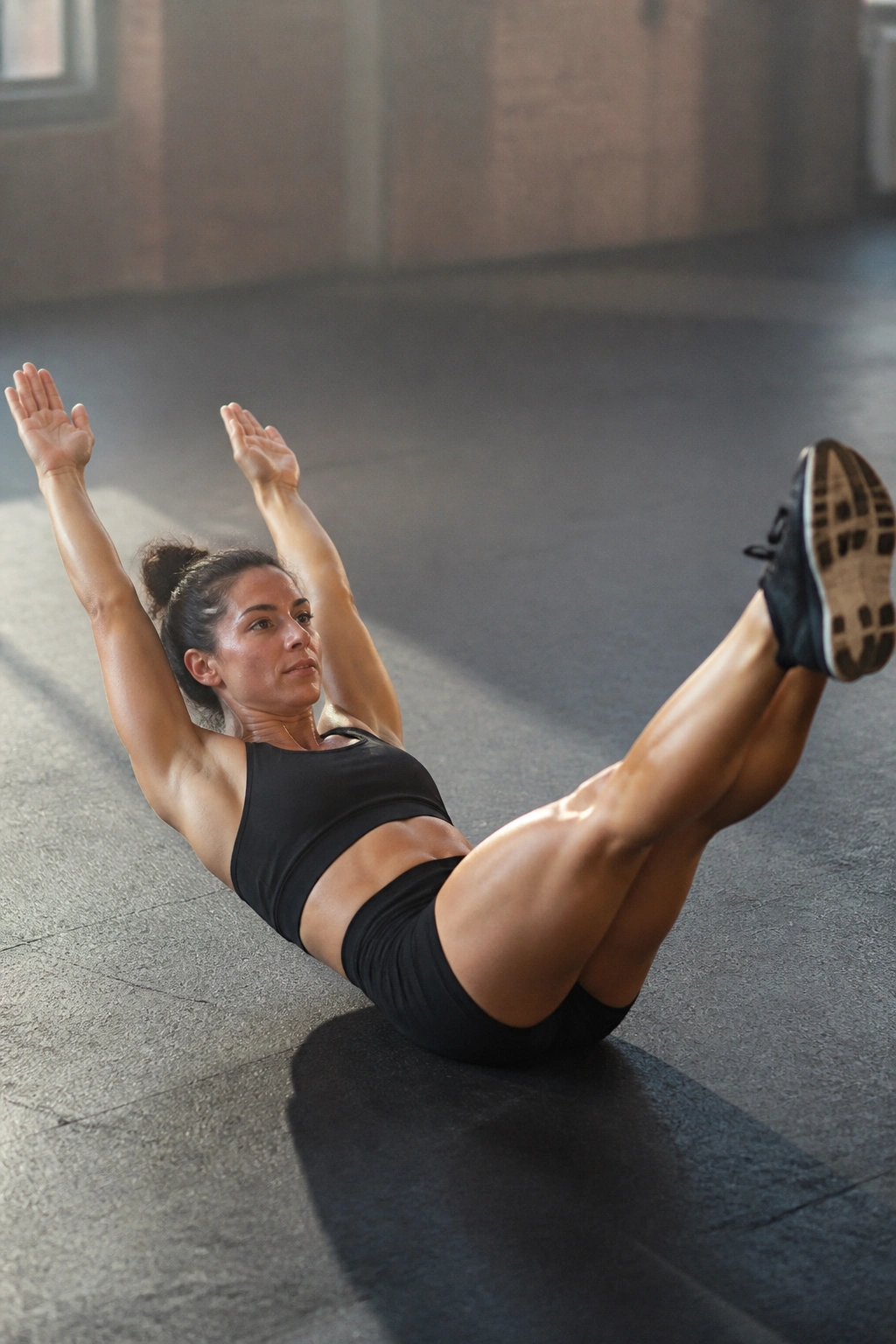
This is a staple in gymnastics, and it is perhaps the most humbling exercise on this list. It teaches you how to hold your core in a “hollow” position, which is the foundation of almost every other advanced abdominal exercise.
Lie on your back. Press your lower back into the floor—this is non-negotiable. Raise your arms and legs off the ground simultaneously. Your body should look like a banana. The higher your limbs are, the easier it is. The lower your limbs are, the harder it is. Find that sweet spot where you can hold for 30 seconds without your back popping off the floor. If your back creates a gap, your abs have failed, and you need to raise your legs higher.
10. Side Plank
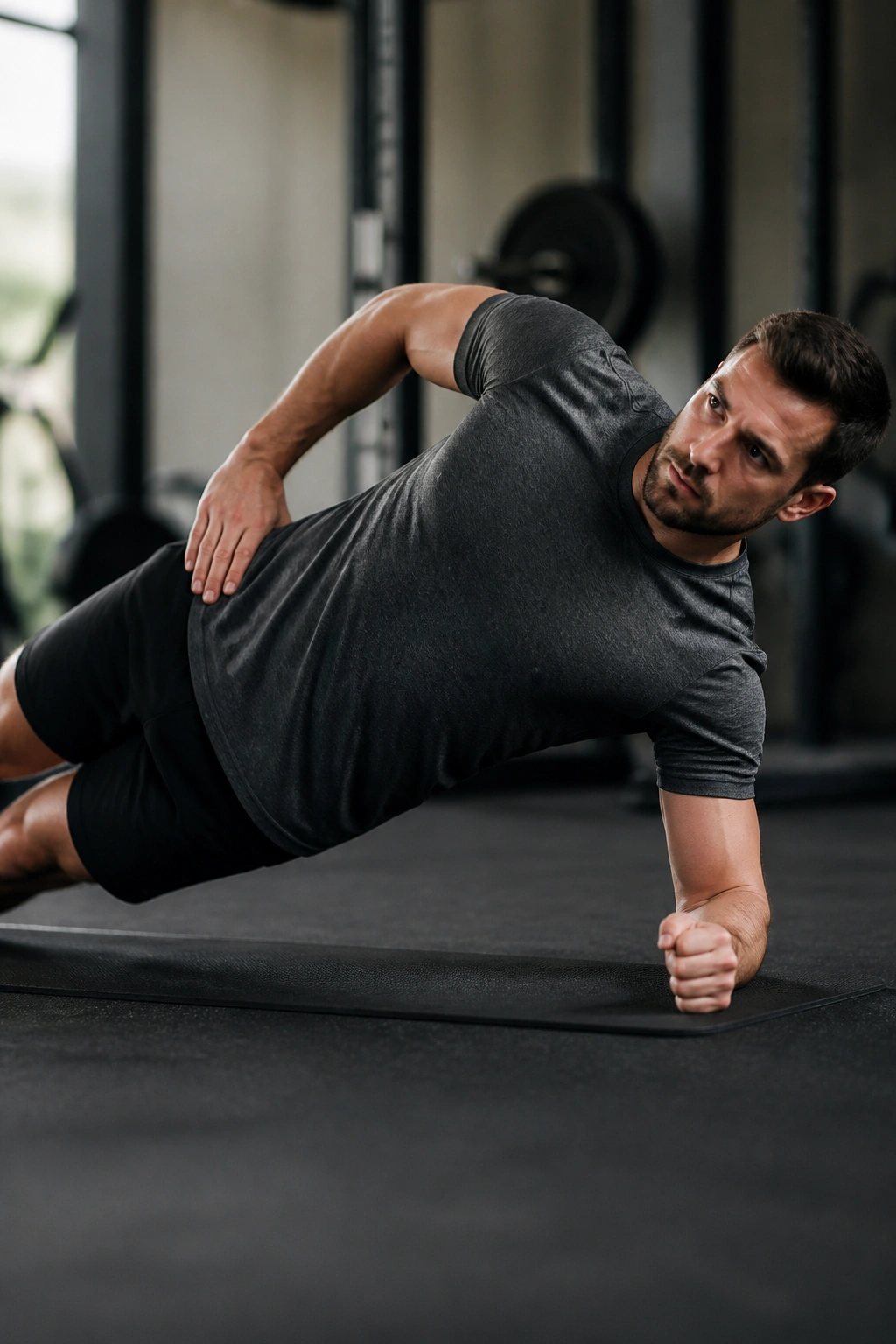
Most people neglect the obliques, but if you want a tight, defined waistline, you need these muscles. The side plank is the best way to train them without the heavy load of weighted rotation.
Lie on your side with your legs stacked. Prop yourself up on your bottom forearm. Keep your elbow directly under your shoulder. Lift your hips until your body forms a straight line from your head to your feet. If this is too hard, you can bend your bottom knee to take some weight off, but the goal is to build up to the full version. Keep your top hand on your hip or reach for the ceiling. Don’t let your top hip rotate forward; keep your chest pointed straight ahead.
11. Boat Pose
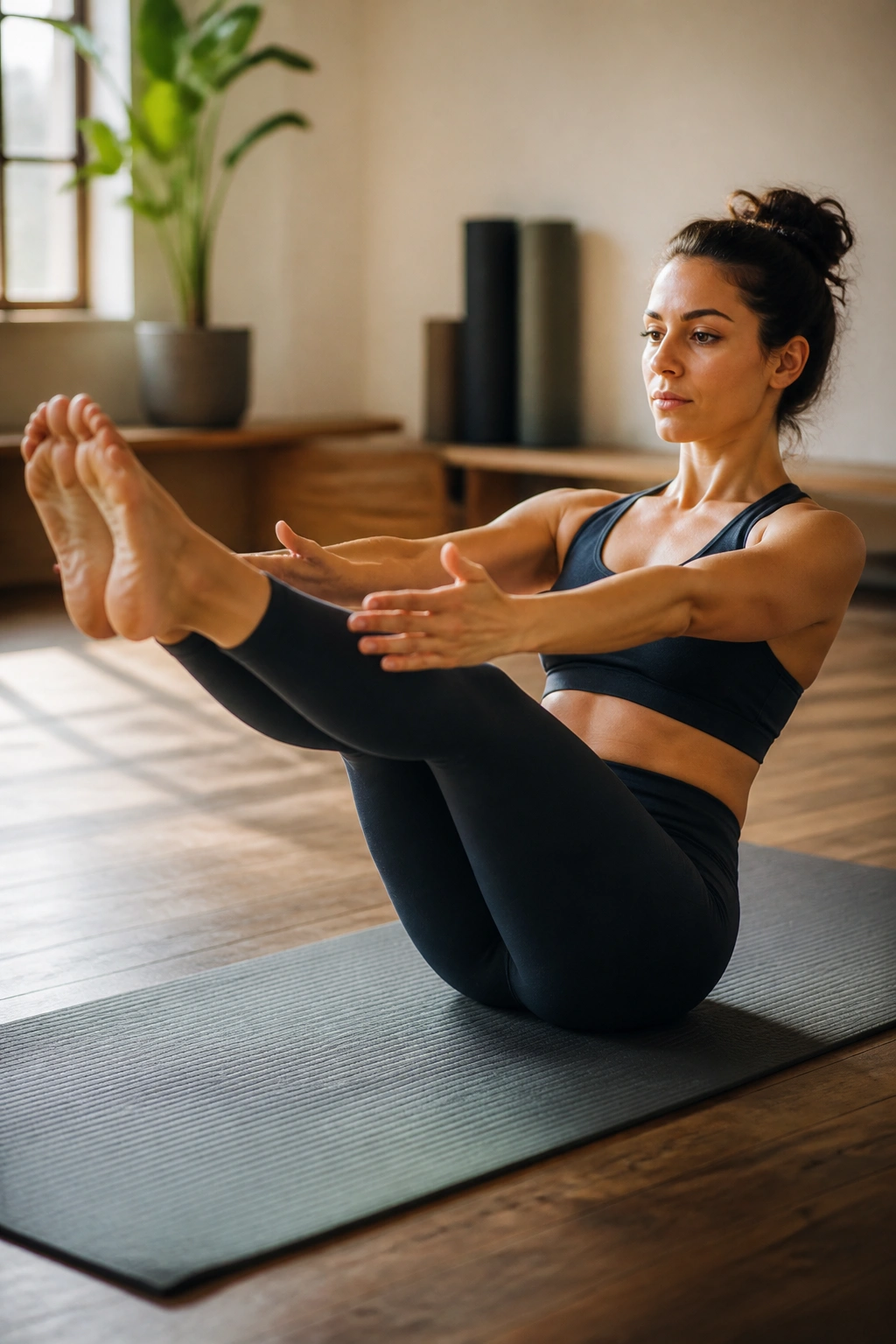
Borrowed from yoga, this is a variation of the hollow hold but performed from a seated position. It forces your deep core to contract to keep your torso upright and your legs lifted.
Sit on your butt and lean back until you feel your abs engage. Lift your legs, bending the knees so your shins are parallel to the floor. Reach your arms forward, keeping them parallel to your legs. To make it harder, straighten your legs and point your toes. You will feel a deep burn in the upper abs. Keep your chest open—do not round your spine into a “C” shape. You want to remain as tall and stable as possible.
12. Plank Jacks
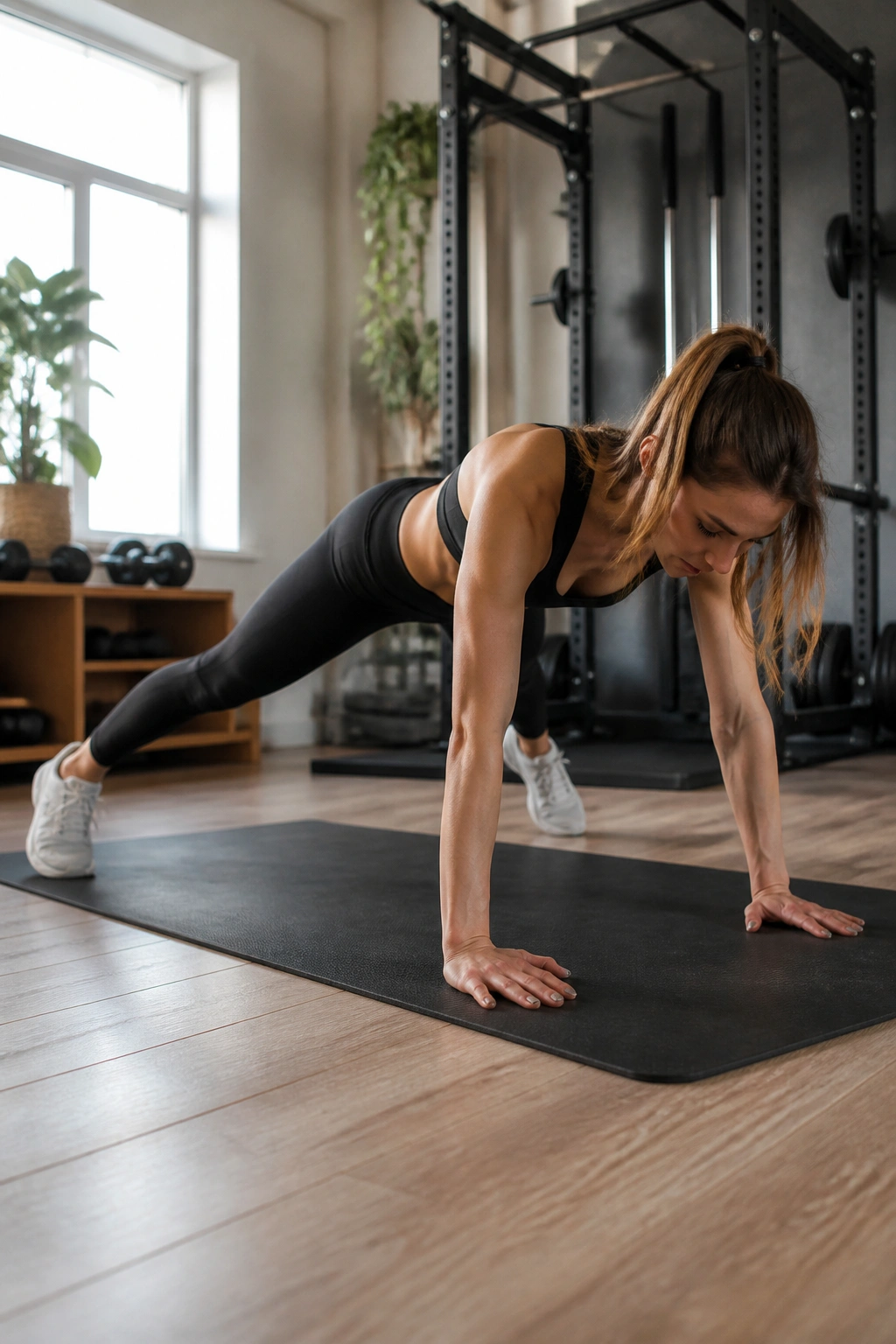
This adds a plyometric element to your static plank. It spikes your heart rate and forces your core to stabilize against sudden lateral movement.
Get into a high plank position on your hands. Keep your upper body rock solid and jump your feet out to the sides, then back together. It’s exactly like a jumping jack, but upside down. The challenge is to prevent your hips from bouncing. Your torso should stay completely level while your legs move underneath you. If you find your hips jumping into the air, slow down. Focus on keeping the core braced the entire time.
13. Reverse Crunches
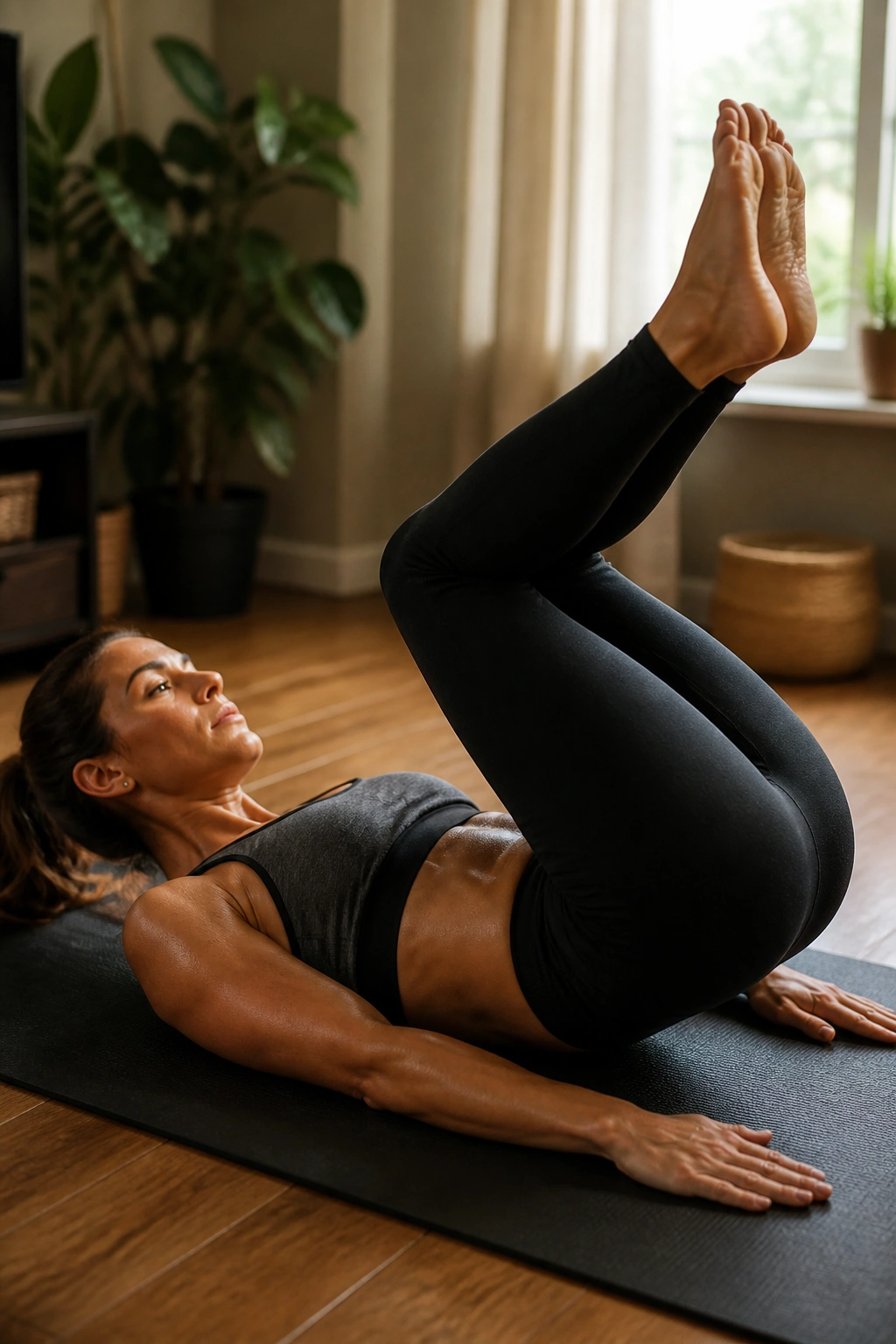
Unlike a standard crunch, the reverse crunch moves your pelvis toward your ribcage. This isolates the lower rectus abdominis effectively.
Lie on your back, knees bent, feet in the air. Place your hands on the floor by your sides for stability. Use your lower abs to curl your hips off the floor, bringing your knees toward your chest. It’s a small, controlled movement—you aren’t trying to roll your whole back off the floor, just the tailbone. Lower your hips back down with control. Do not let your feet touch the floor between reps. The movement should be deliberate and slow, emphasizing the contraction at the top.
14. Scissor Kicks
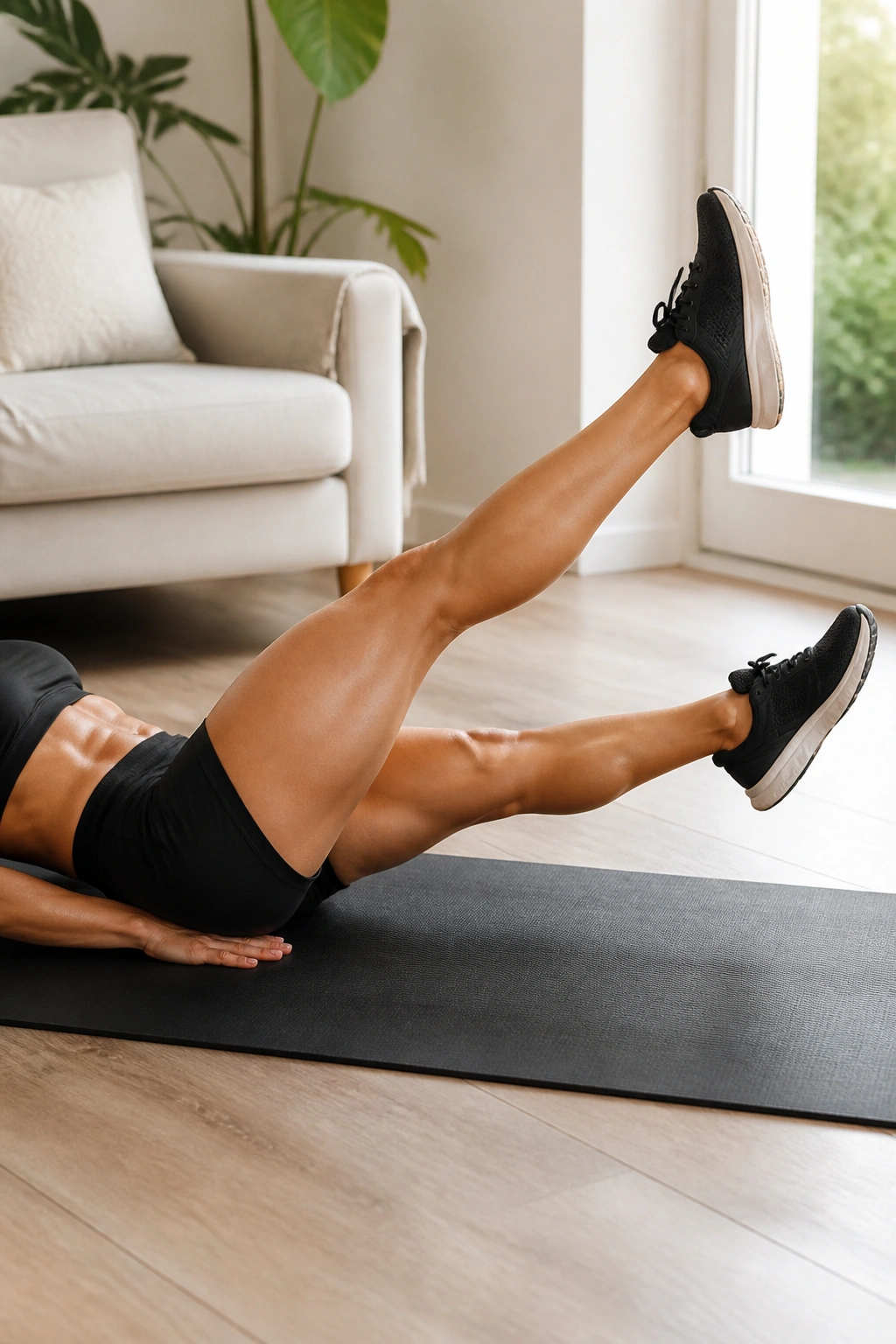
Similar to flutter kicks, but with a lateral component. This hits the lower abs and the stabilizers that keep your hips level.
Lie on your back, hands under your glutes, legs extended and hovering above the floor. Instead of up-and-down, cross your legs over and under each other in a scissoring motion. Keep the movement small and controlled. If you find your back arching, lift your legs higher. If you can keep your back flat, drop your legs closer to the floor. The lower they are, the more intense the contraction becomes.
15. Heel Touches
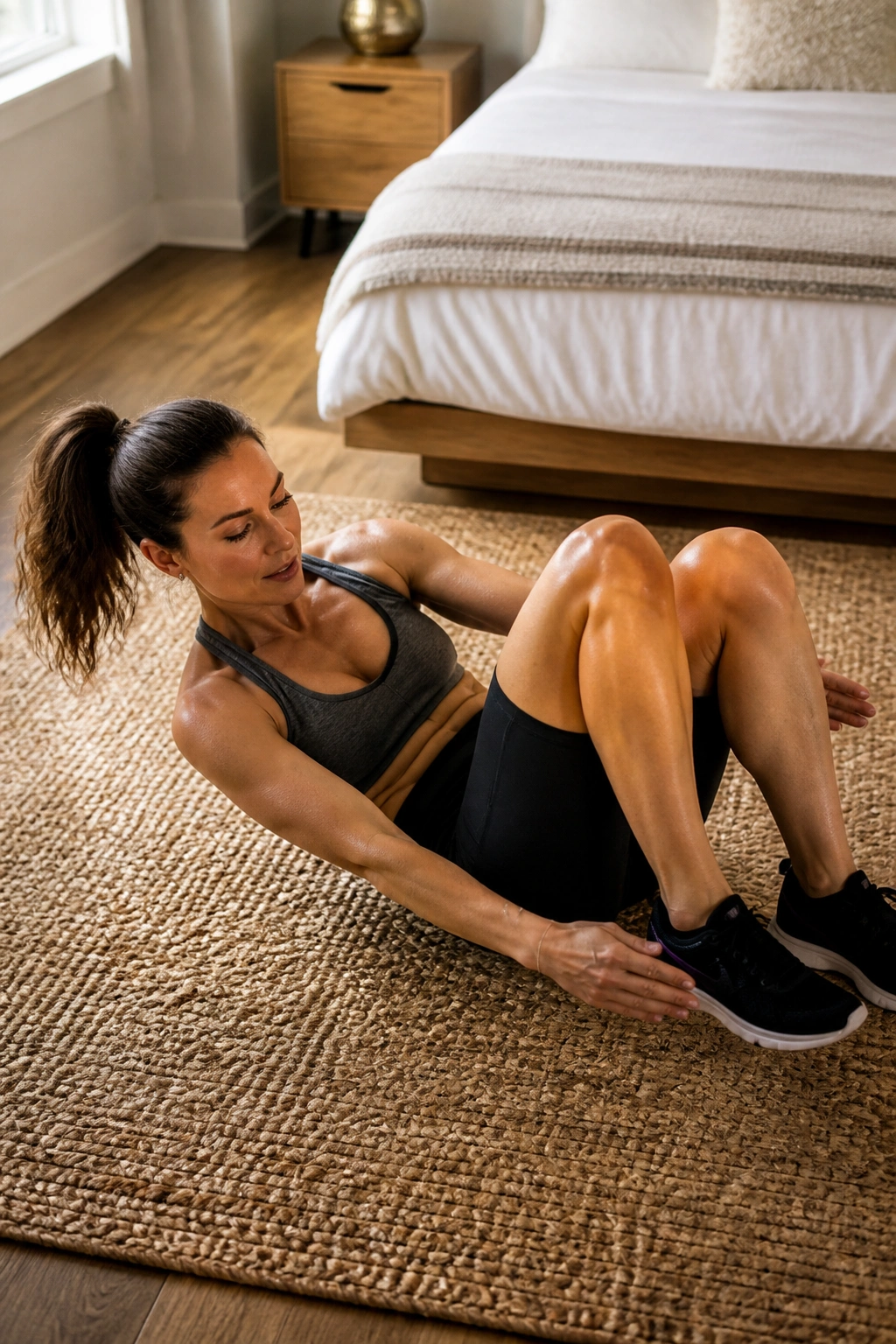
This is a focused oblique movement that is excellent for people who struggle with neck pain during crunches, as your head and neck stay on the floor.
Lie on your back, knees bent, feet flat on the floor, about hip-width apart. Lift your head and shoulders slightly off the ground—just enough to engage the abs. Reach one hand down toward the heel of the same foot. Then reach the other hand to the other heel. Imagine you are trying to crunch your ribcage toward your hip. You will feel the tension down the sides of your stomach. Keep your movements rhythmic and steady.
16. Knee-to-Elbow Planks

This is a dynamic plank that adds rotation. It helps bridge the gap between static stability and rotational power.
Start in a high plank position. Drive your right knee toward your right elbow. Pause for a second to really squeeze the obliques, then return to the start. Switch to the left knee and left elbow. You can also drive the knee across the body to the opposite elbow for more oblique engagement. Keep your hips at the same height as your shoulders the whole time. Don’t let your butt rise as you bring the knee in; that’s the easiest way to cheat.
17. Superman
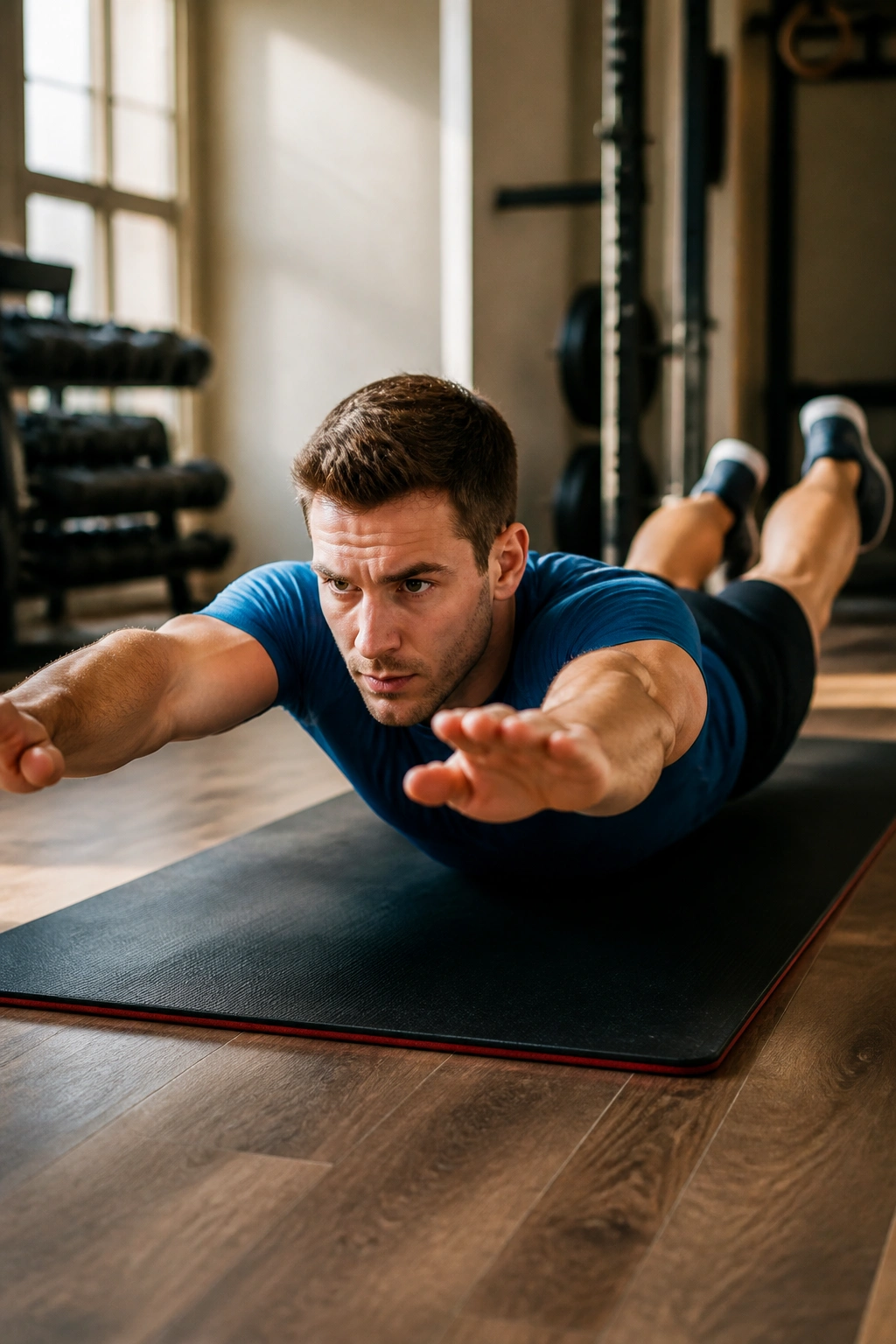
You cannot have a strong front without a strong back. The Superman exercise strengthens the erector spinae, the muscles running along your spine. This prevents the “slumping” look that makes your stomach protrude.
Lie on your stomach, arms stretched out in front of you. Simultaneously lift your arms, chest, and legs off the floor. Keep your gaze toward the floor so you don’t strain your neck. Hold for a few seconds at the top, feeling the muscles along your spine contract, then lower slowly. This isn’t about how high you can lift; it’s about controlled activation of the posterior chain. A strong back acts as the perfect anchor for your abdominal muscles.
18. Plank-to-Push-up
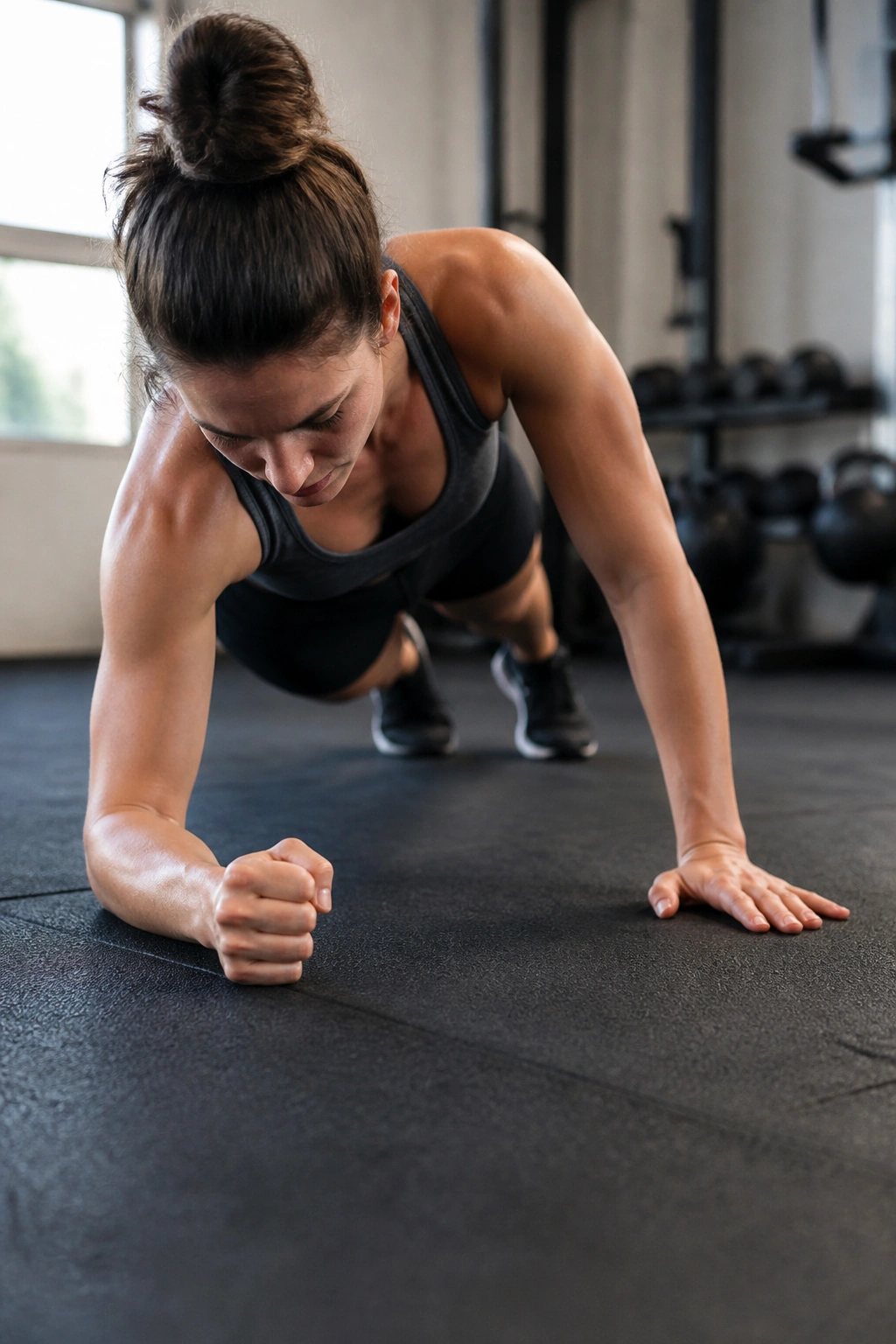
This final move is a total core integrator. It requires you to transition your center of gravity while maintaining a braced, rigid posture.
Start in a forearm plank. Push up onto your right hand, then your left, until you are in a high plank position. Then, lower back down to your right forearm, then your left. Repeat this, alternating which hand you use to push up first. The goal is to keep your hips absolutely still. It’s very tempting to let your hips rock from side to side as you move your arms, but that is exactly what you must fight against. If you have to widen your feet for balance, do it. As you get stronger, bring your feet closer together to increase the difficulty.
How to Structure Your Workout
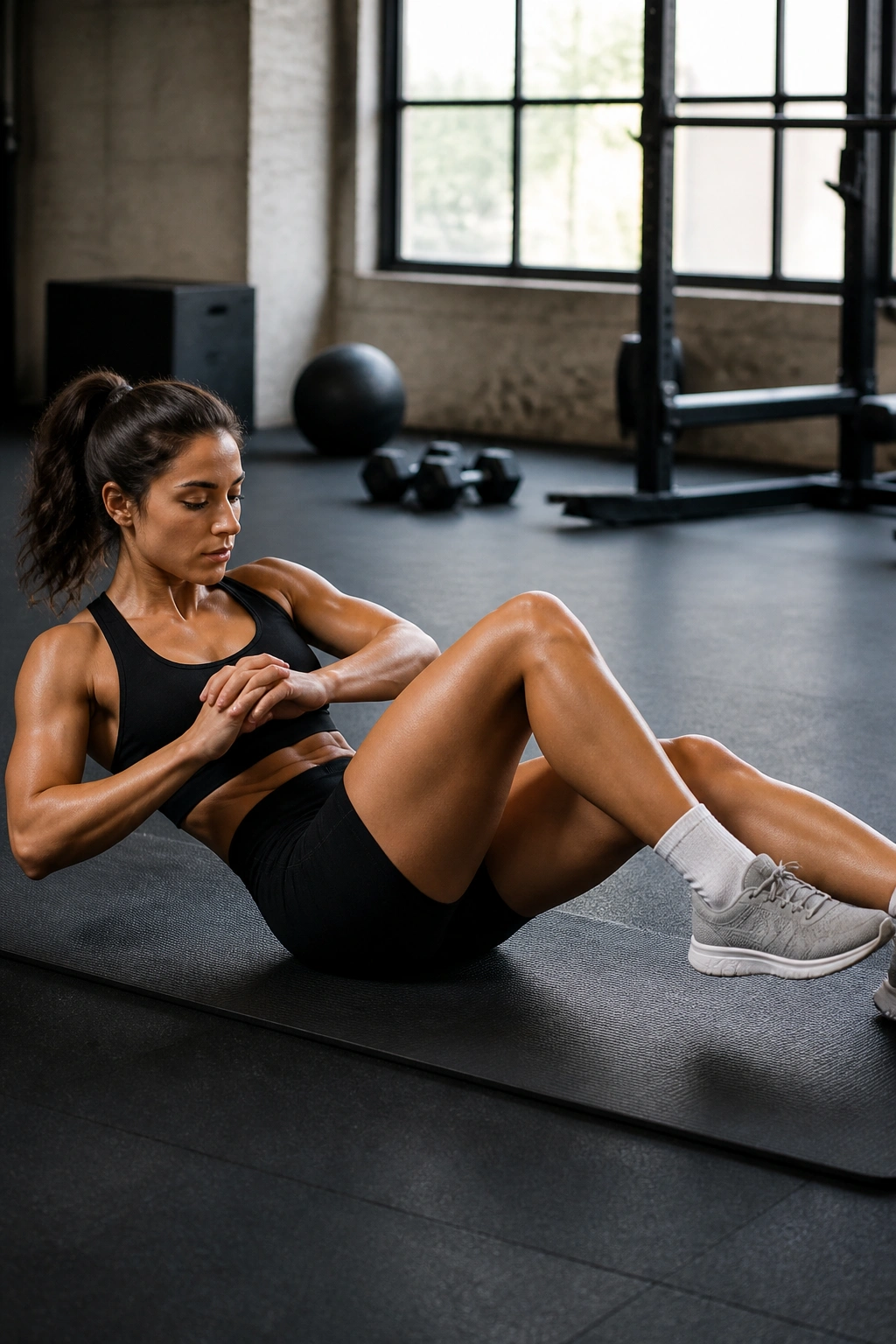
Do not try to do all 18 of these in one go. That is a recipe for burnout and poor form. Instead, treat this as a library of movements. Pick three to four exercises and create a circuit. For example, you could pair the Plank (static stability), Dead Bug (coordination), and Russian Twists (rotational strength). Perform each for 45 seconds, rest for 15 seconds, and repeat for three rounds.
If you are a beginner, focus on the static holds like the Plank and the Hollow Body Hold. Once you can hold those with perfect form, start adding the movement-based exercises like the Bicycle Crunch or Mountain Climbers. Listen to your body. If your lower back starts to ache, stop. Your abs have likely fatigued, and your back is trying to take over. That is your cue to rest or move to an easier variation.
The Role of Diet and Recovery

You might have noticed that I have not mentioned “burning fat” as the main goal of these exercises. That’s intentional. You can do 500 crunches a day, but if your nutrition isn’t aligned with your goals, those muscles will remain hidden. Abdominal definition is 90% diet. Focus on whole, minimally processed foods, plenty of protein to support muscle recovery, and staying hydrated.
Recovery is just as important as the workout. Your abs are muscles like any other—they need time to repair after you stress them. You don’t need to train them every single day. Three to four times a week is plenty for most people. If you are sore, take a day off. Consistency over the long term beats a week of intensity followed by a month of total inactivity.
Troubleshooting Common Mistakes
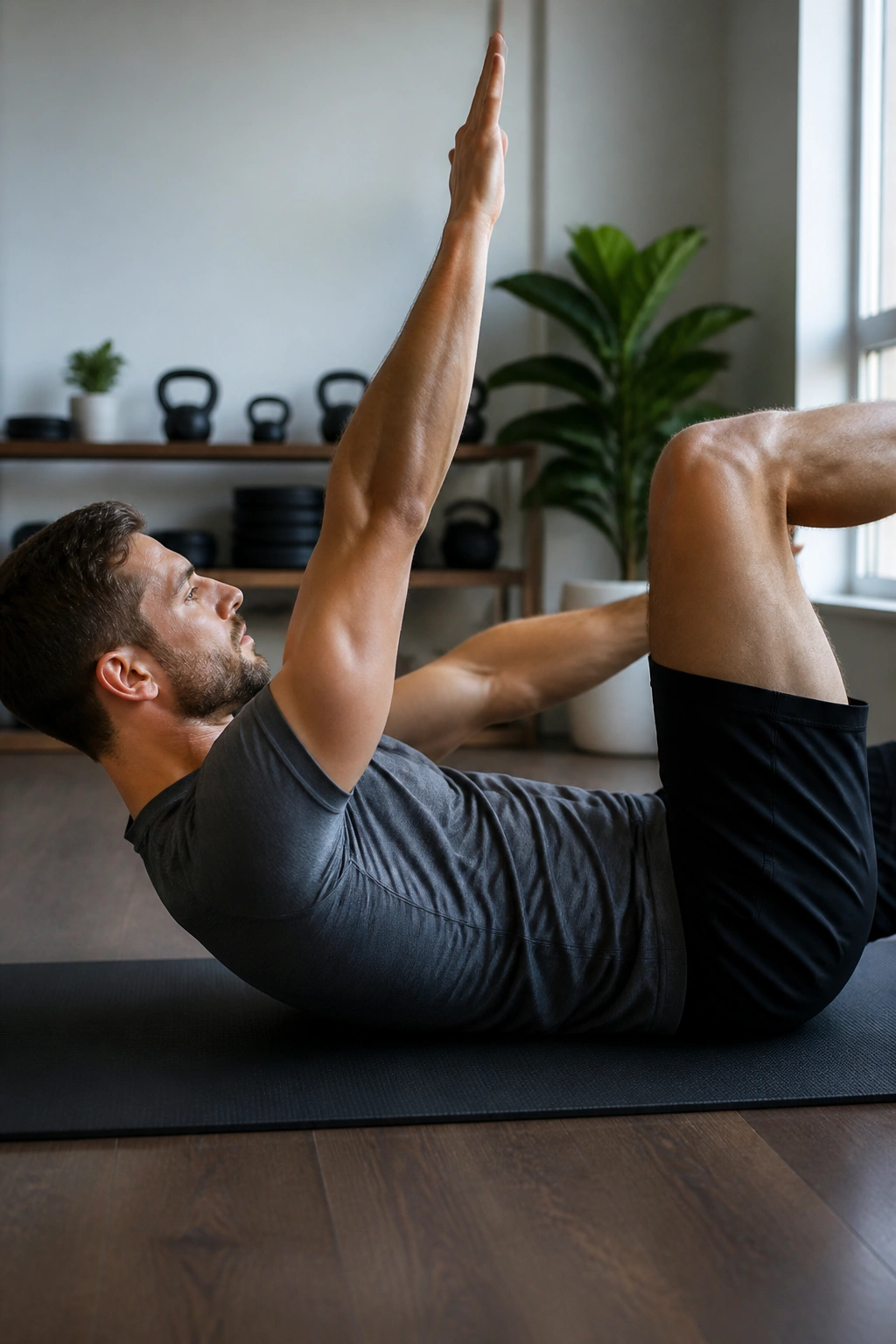
The most frequent mistake is speed. People treat core work like a race, swinging their limbs to get the repetitions over with. In core training, speed is the enemy of tension. If you want to build the muscles, you need to feel them working. If you don’t feel a burn or a deep contraction, you are probably using momentum instead of muscular control.
Another common issue is the neck. If your neck hurts after doing crunches, you are pulling on your head instead of using your abs. Try keeping your tongue pressed to the roof of your mouth while you crunch—it helps stabilize the neck muscles. Or, prioritize the floor-based moves like the Dead Bug or Heel Touches where your head stays planted on the ground. There is no shame in choosing exercises that allow you to maintain perfect form over those that just make you feel like you are struggling.
Final Thoughts

Building a strong, toned stomach is a journey, not a quick fix. There is no magic number of crunches that will suddenly reveal your abs. It is about patience, understanding how to move your body, and mastering the art of bracing under tension. Start with the foundations, focus on the quality of your movement, and the physical changes will happen as a byproduct of your increased strength and functional stability.
Respect the process of getting stronger. Pay attention to how your body feels during each set, and don’t be afraid to dial back the intensity if your form slips. A single rep done perfectly is worth more than ten done with bad technique. Keep showing up, keep focusing on that mind-muscle connection, and you will build a core that is capable, stable, and ready for whatever life throws at it.
