



Stop thinking that endless crunches are the path to a defined midsection. If you have spent hours on the floor pulling on your neck while your lower back screams in protest, you already know that something is fundamentally broken in that approach. Training your core effectively is not about how many repetitions you can grind out; it is about how much tension you can generate and how well you can stabilize your spine under load.
True core strength is about function first. Your abdominal muscles are designed to protect your spine, transfer force from your lower body to your upper body, and maintain your posture. When you train them with that objective in mind, the aesthetic results tend to follow. The following routines and exercises cover the spectrum of core training—from deep stability work to dynamic, high-intensity movements. You do not need to do all of these in one session. Pick a handful, focus on the quality of your contraction, and watch how your body responds when you actually challenge the muscles instead of just moving through the motions.
1. The Classic Plank Hold
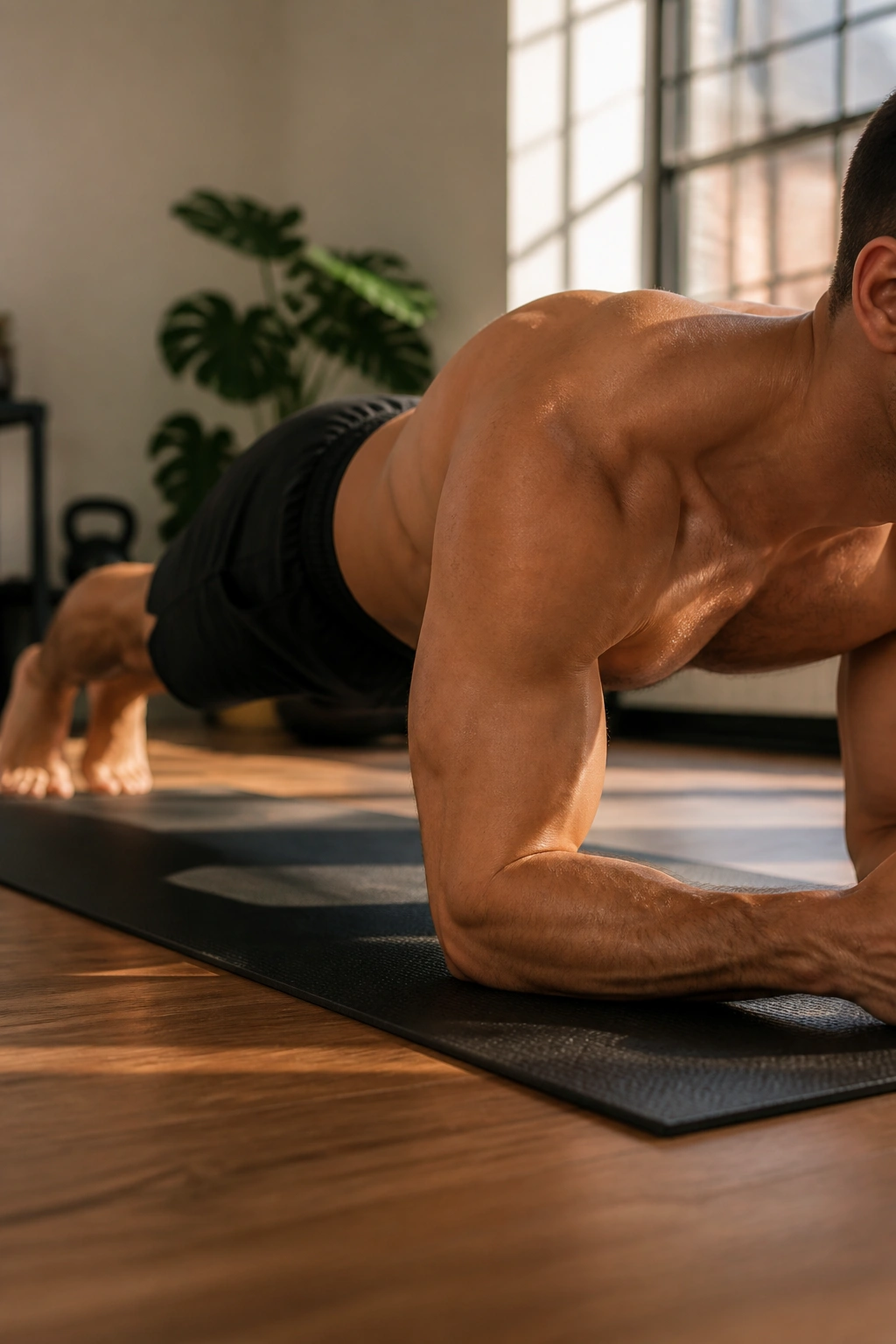
The plank is often misunderstood as a beginner’s move, but if you are doing it correctly, it should feel incredibly difficult within thirty seconds. The goal here is not to see how long you can remain motionless; it is to create a “canister” of tension through your entire midsection. You should feel your abs contracting as if you are bracing for a punch, while your glutes remain tightly squeezed to protect your lower back.
The Key to Correct Form
Most people let their hips sag or pike their butt into the air. Neither is efficient. To get this right, drive your elbows into the ground and pull them slightly back toward your toes without actually moving them. This engages your lats. Squeeze your glutes until your quads feel like they are locking out. If you are trembling by the thirty-second mark, you are doing it right. Keep your gaze neutral, looking just ahead of your hands, to keep your neck in line with your spine.
2. Dead Bugs
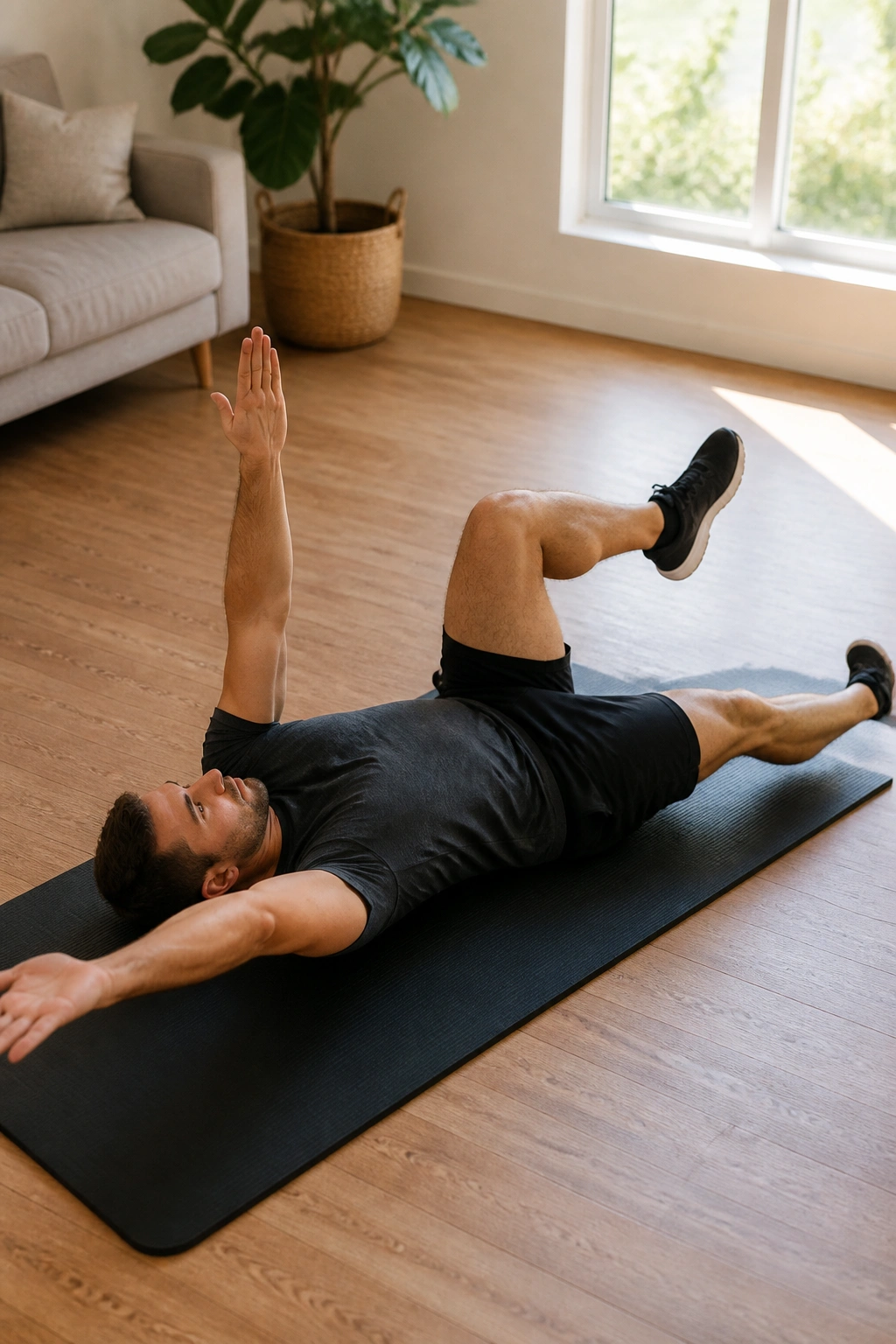
This is arguably the most effective exercise for teaching your body how to disassociate limb movement from spinal position. You lie on your back, arms extended toward the ceiling and knees bent at ninety degrees. The challenge is to lower opposite arm and leg toward the floor without letting your lower back arch. That arch is the enemy.
Why It Works for Stability
Your abs are effectively working to prevent your lower back from lifting off the ground. If your back pops up, the core engagement vanishes, and you lose the benefit. Move slowly. There is no prize for doing these quickly. Focus on the sensation of your spine glued to the floor. If you find your back lifting, keep your legs higher—do not lower them as far toward the floor until your core strength improves.
3. Bird-Dogs
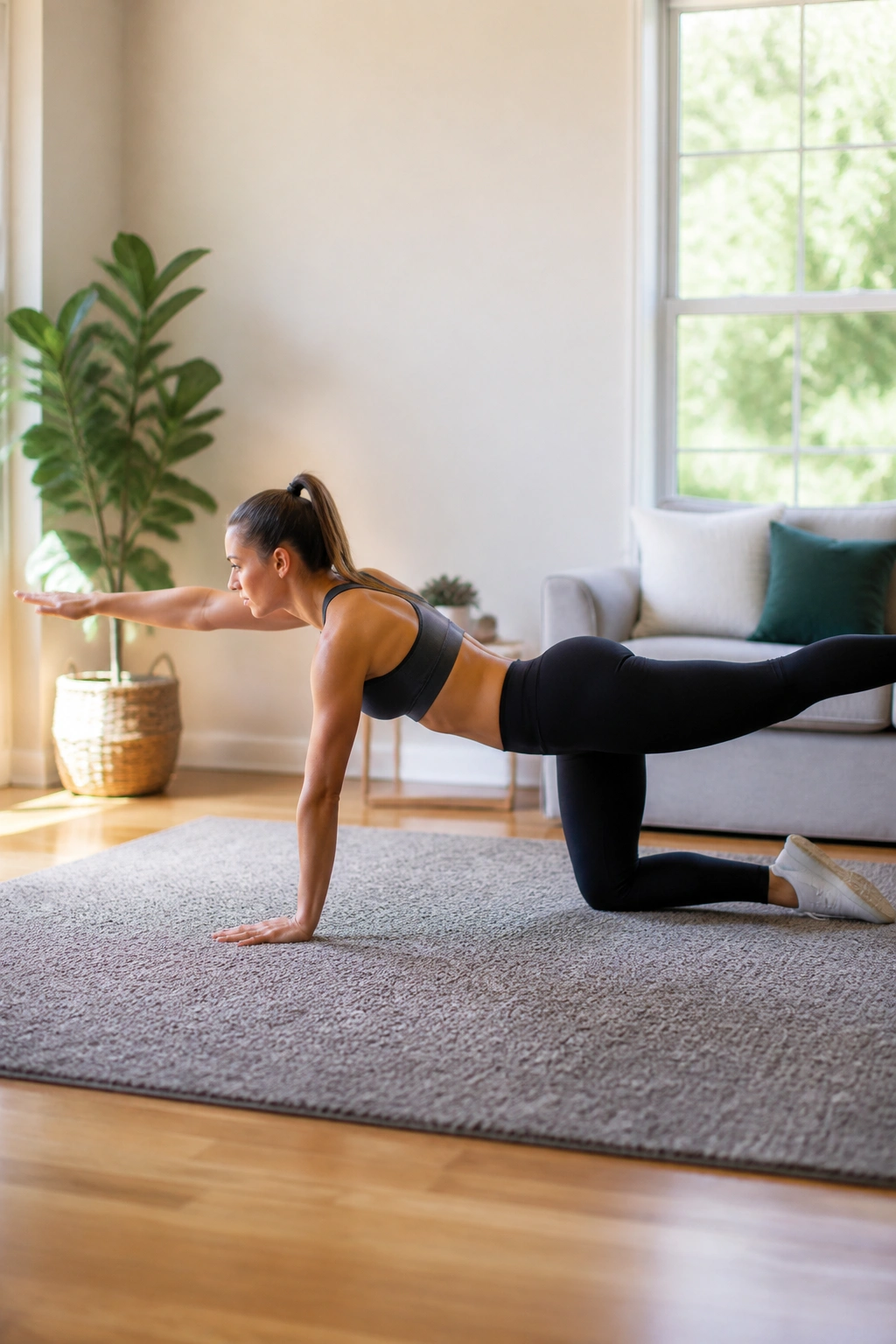
This movement targets the posterior chain as much as the abs, providing a balanced workout for your entire trunk. Start on your hands and knees in a tabletop position. Simultaneously extend your right arm forward and your left leg backward. The crucial detail is to keep your torso perfectly still. Do not let your hips rotate or your back dip.
Maximizing the Contraction
Imagine you are balancing a glass of water on your lower back. If your hips rock side to side, you spill the water. Pause at the top of the extension and squeeze your glutes and abs for a full second. This pause is where the real work happens. Switch sides with control. If you feel wobbly, widen your hand placement slightly, but avoid the urge to rush the transition.
4. Hollow Body Holds
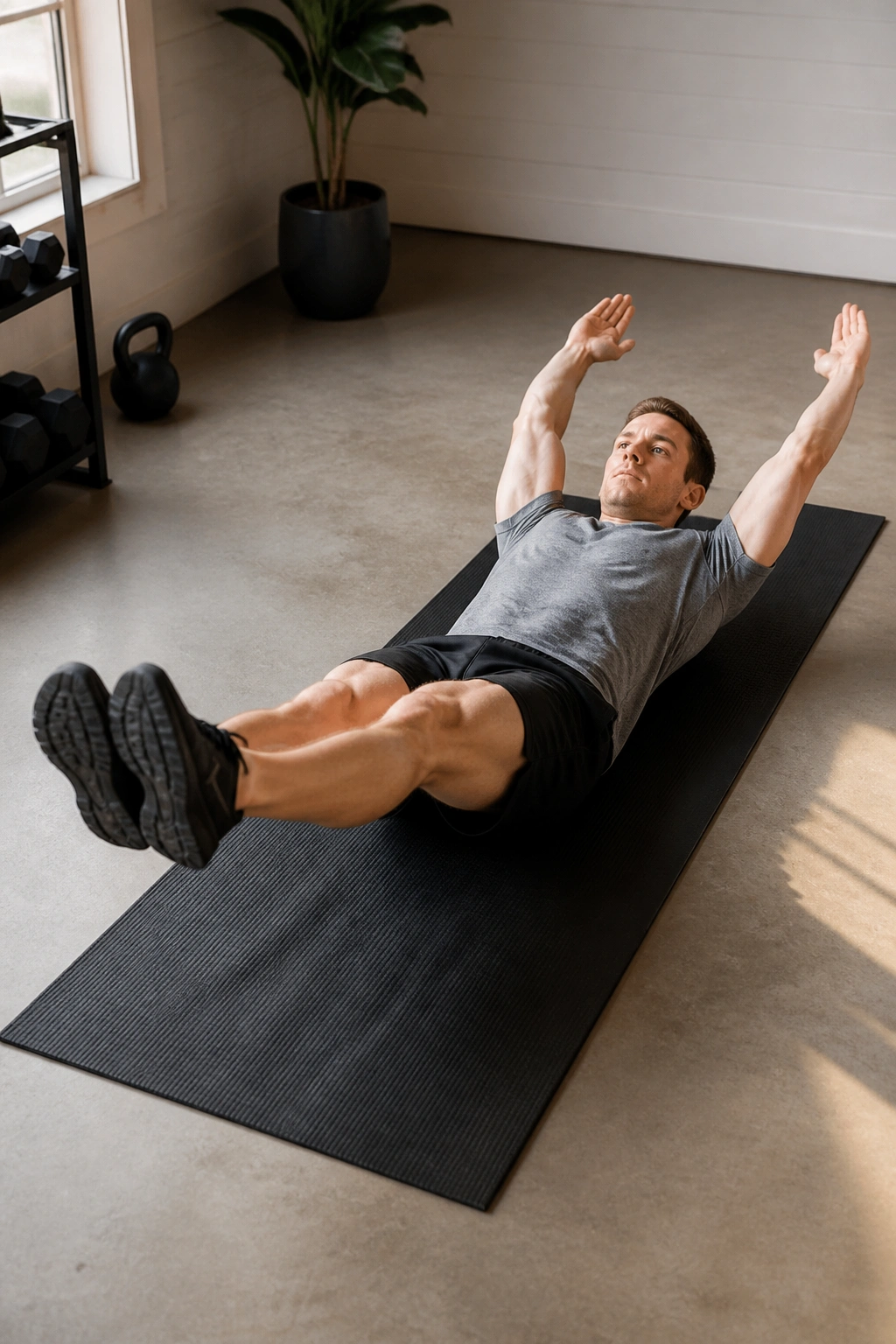
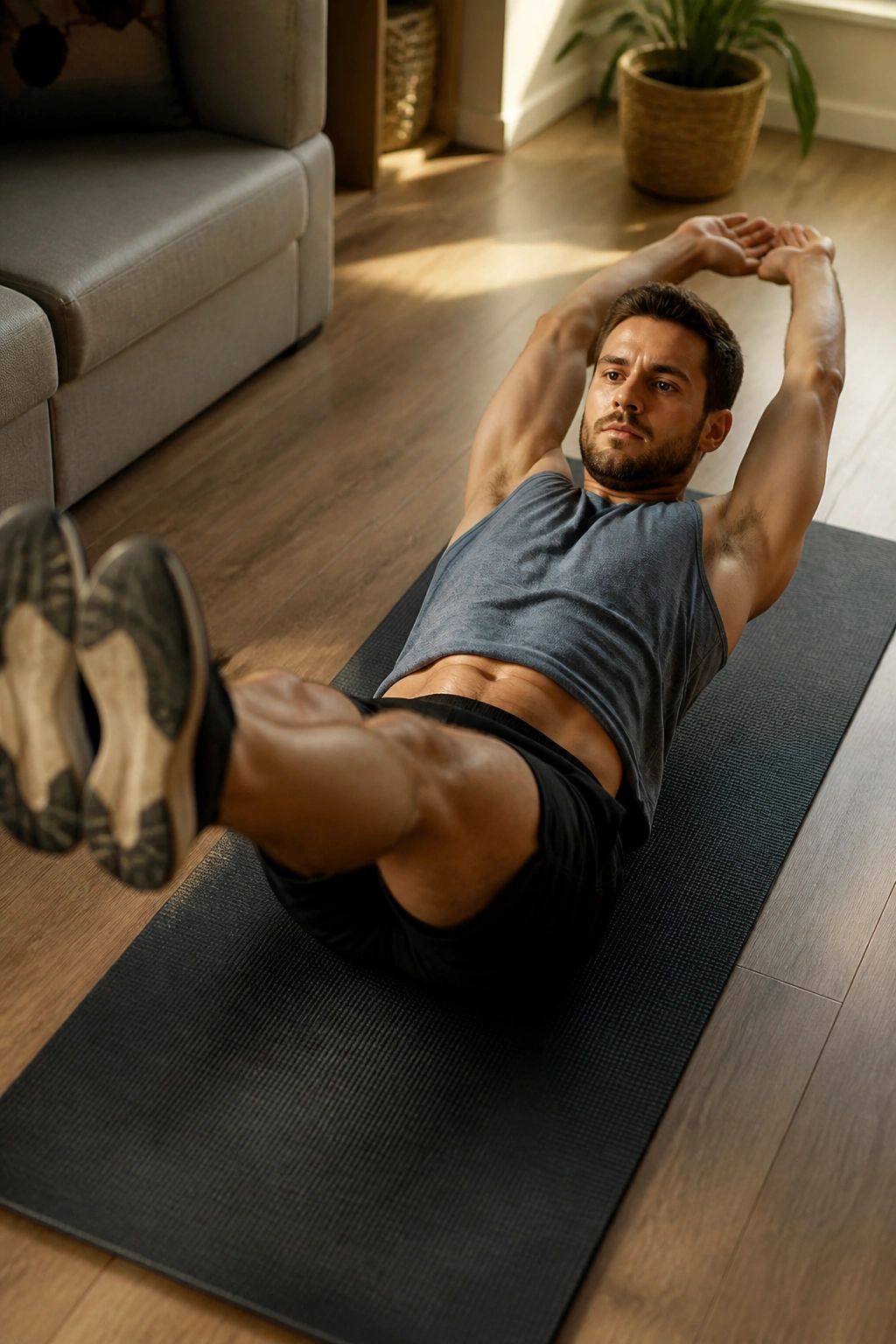
Gymnasts use this move to develop incredible core tension, and it remains one of the best ways to fry your abs without moving an inch. Lie on your back, arms overhead and legs straight out. Lift your shoulders and legs slightly off the floor, pressing your lower back firmly into the ground. Your body should form a shallow banana shape.
The Progression Strategy
If this is too difficult initially, bend your knees or keep your arms by your sides. As you get stronger, extend your limbs further away from your center of mass. This increases the leverage your abs have to fight against, making the movement exponentially harder. Aim for sets of thirty to forty-five seconds, ensuring your lower back never loses contact with the floor.
5. Bicycle Crunches
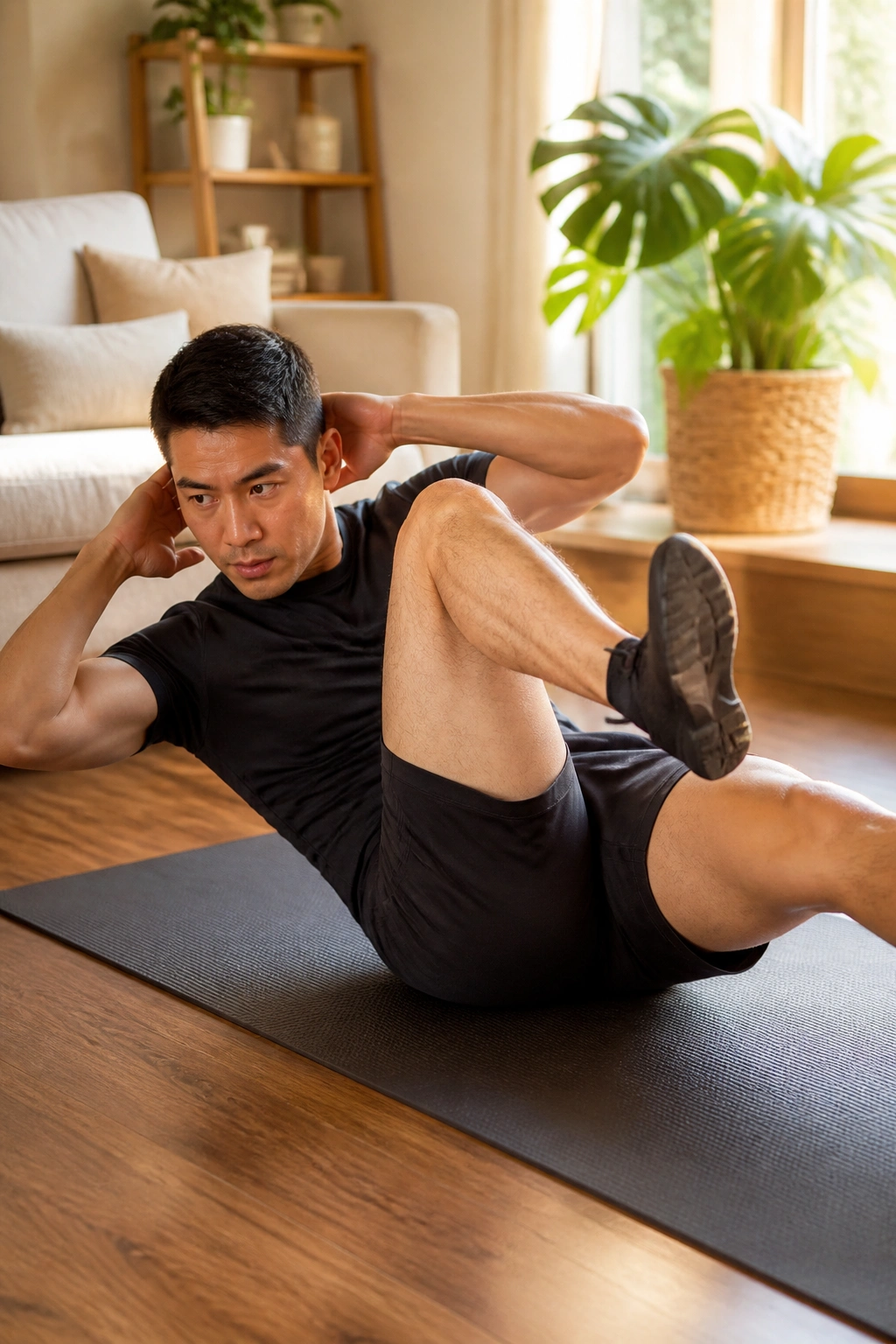
These are often done poorly because people treat them as a race. To get the benefit, you must prioritize the rotation of your torso, not the speed of your legs. Lie on your back, hands behind your head—gently, do not pull on your neck—and bring one elbow toward the opposite knee while extending the other leg.
The Slow-Motion Secret
Perform these with a two-second pause at the peak of the crunch. Twist from your ribcage, not just your elbows. You want to feel your oblique muscles firing to pull your torso across. If you just flap your legs back and forth, you are essentially doing cardio and skipping the core isolation. Control the extension of the leg; push through your heel as if you are pressing against a wall.
6. Russian Twists
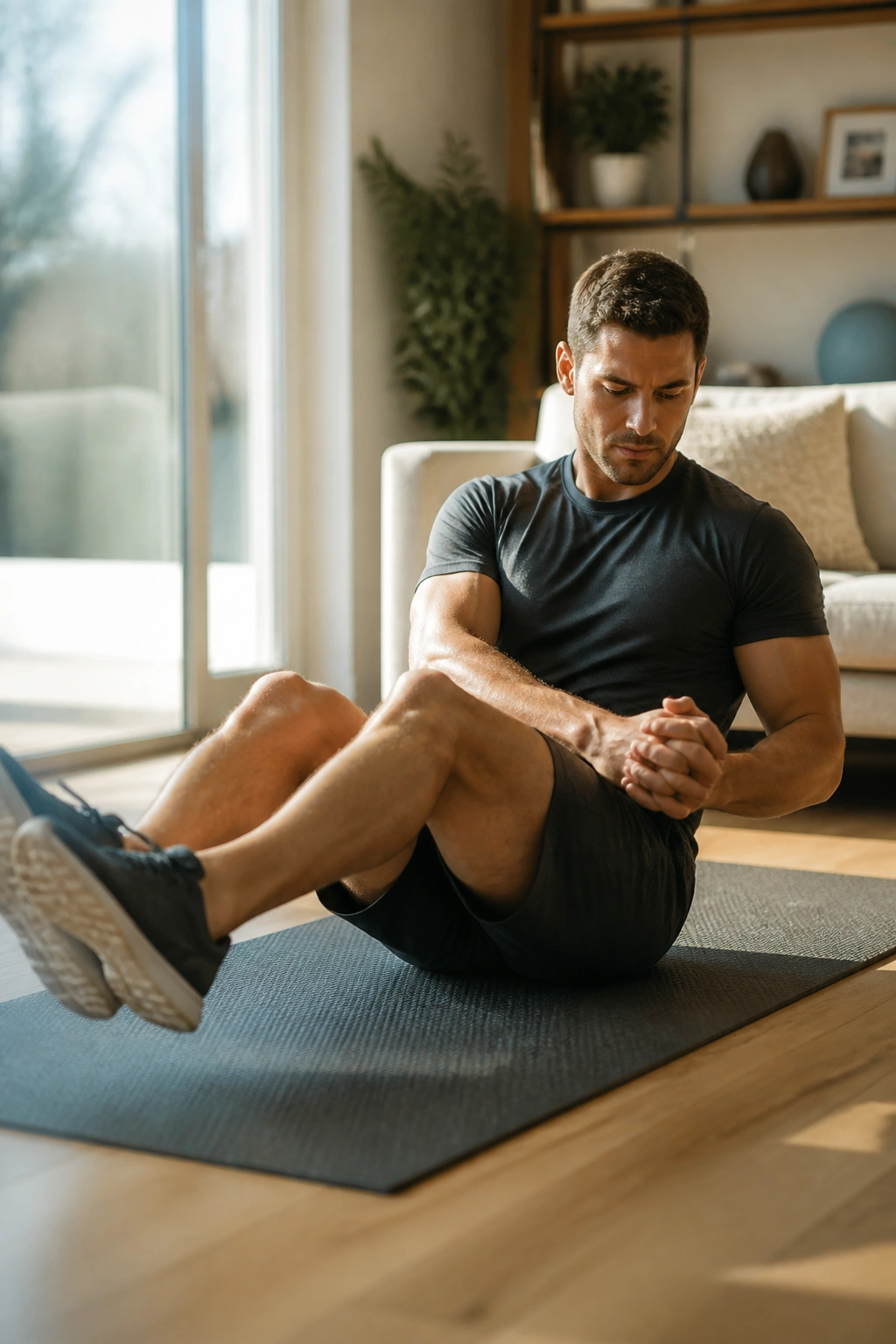
This movement is excellent for rotational strength and obliques, provided you keep your spine long. Sit on the floor with your knees bent and feet lifted slightly off the ground. Clasp your hands together and twist your torso from side to side, touching the floor beside your hips with each repetition.
Common Mistakes to Avoid
Do not slump. A rounded spine will put undue pressure on your discs rather than working your muscles. Keep your chest up and your shoulders back. If you have trouble balancing, keep your heels on the ground for a few weeks until your core can handle the leverage. Once you master the form, you can hold a weight plate or a medicine ball to increase the resistance.
7. Mountain Climbers
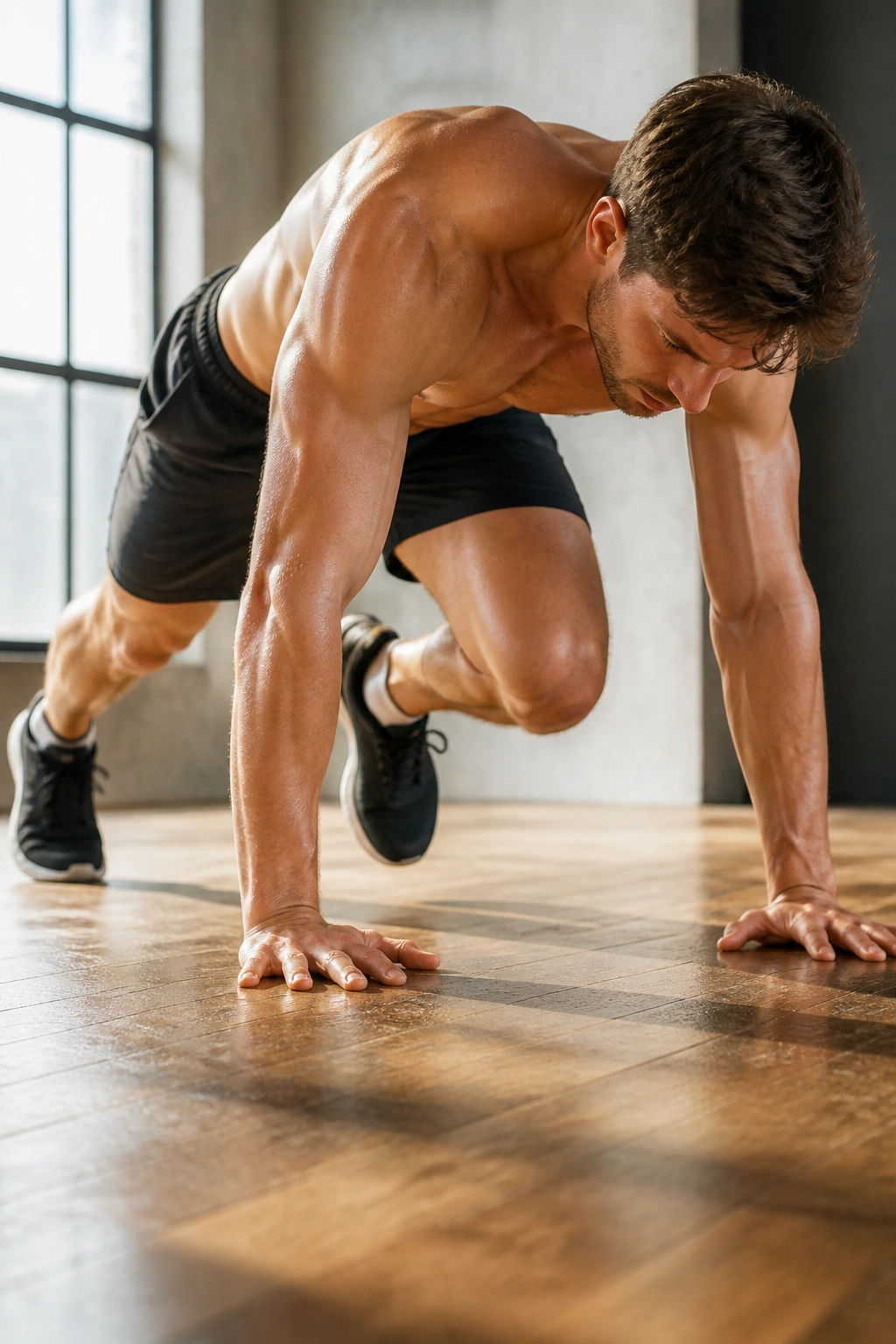
These bring an element of dynamic movement to your core training, forcing your abdominals to stabilize your body while your legs are firing. Get into a strong high-plank position. Drive one knee toward your chest, then switch legs explosively. The key here is to keep your hips level—they should not bounce up and down as you switch your feet.
Building Intensity
You can adjust the speed based on your fitness level, but prioritize form. It is better to do slow, deliberate mountain climbers with perfect hip stability than fast, sloppy ones where your lower back takes the brunt of the impact. Imagine a string pulling your head forward and your heels backward, keeping your body in a straight line the entire time.
8. Leg Raises
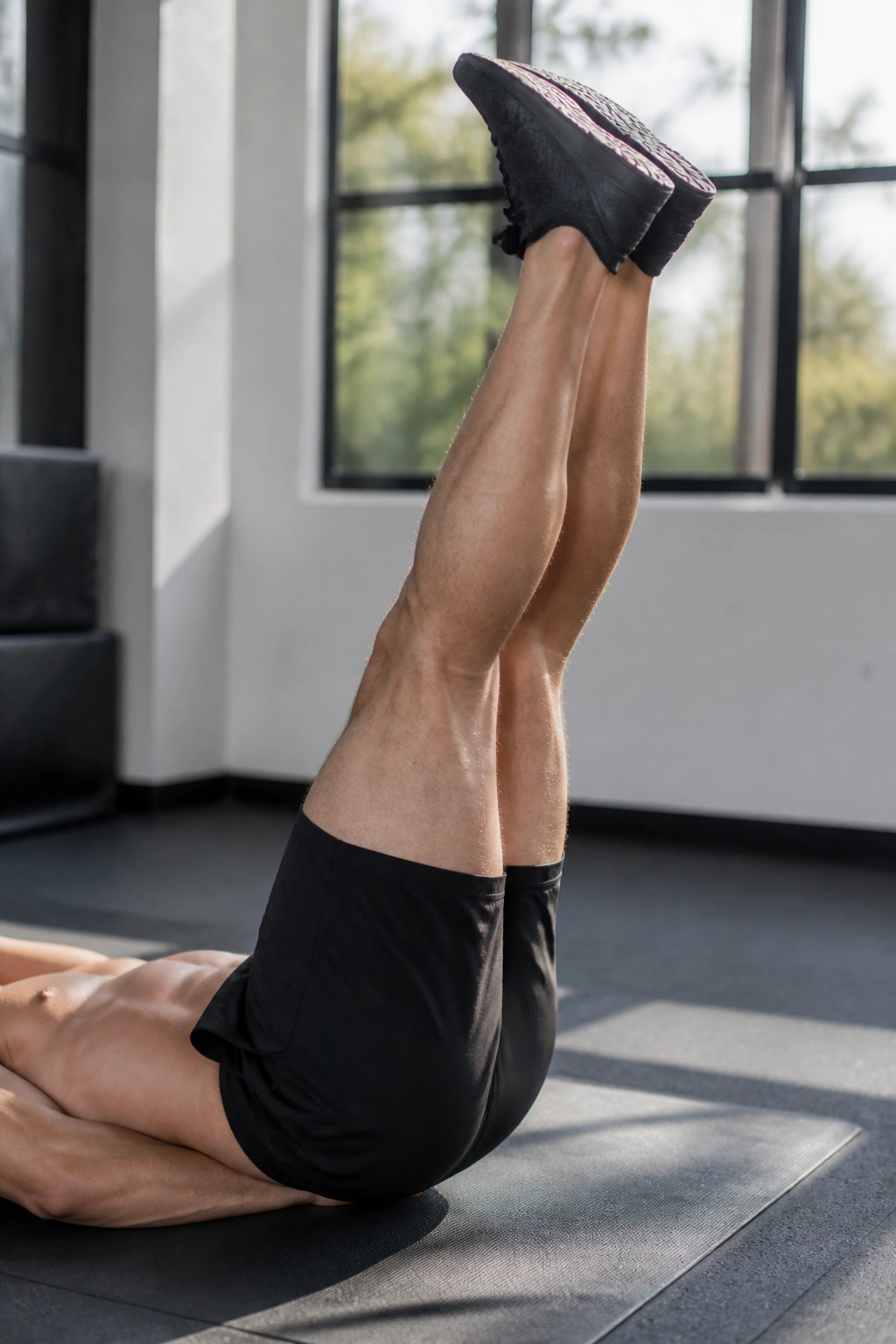
For lower abdominal development, few exercises are as effective as the basic leg raise. Lie on your back, hands tucked under your glutes for support, and lift your straight legs until they are perpendicular to the floor. Lower them slowly, stopping just an inch above the ground before raising them again.
The Critical Range of Motion
Do not rely on momentum. If you are swinging your legs, you are missing the point. The muscles work hardest during the lowering phase—the eccentric portion of the lift. Fight the urge to drop your legs quickly. If you feel your lower back arching, stop the descent early and raise back up. Your range of motion should be dictated by your ability to keep your spine flat against the floor.
9. Flutter Kicks
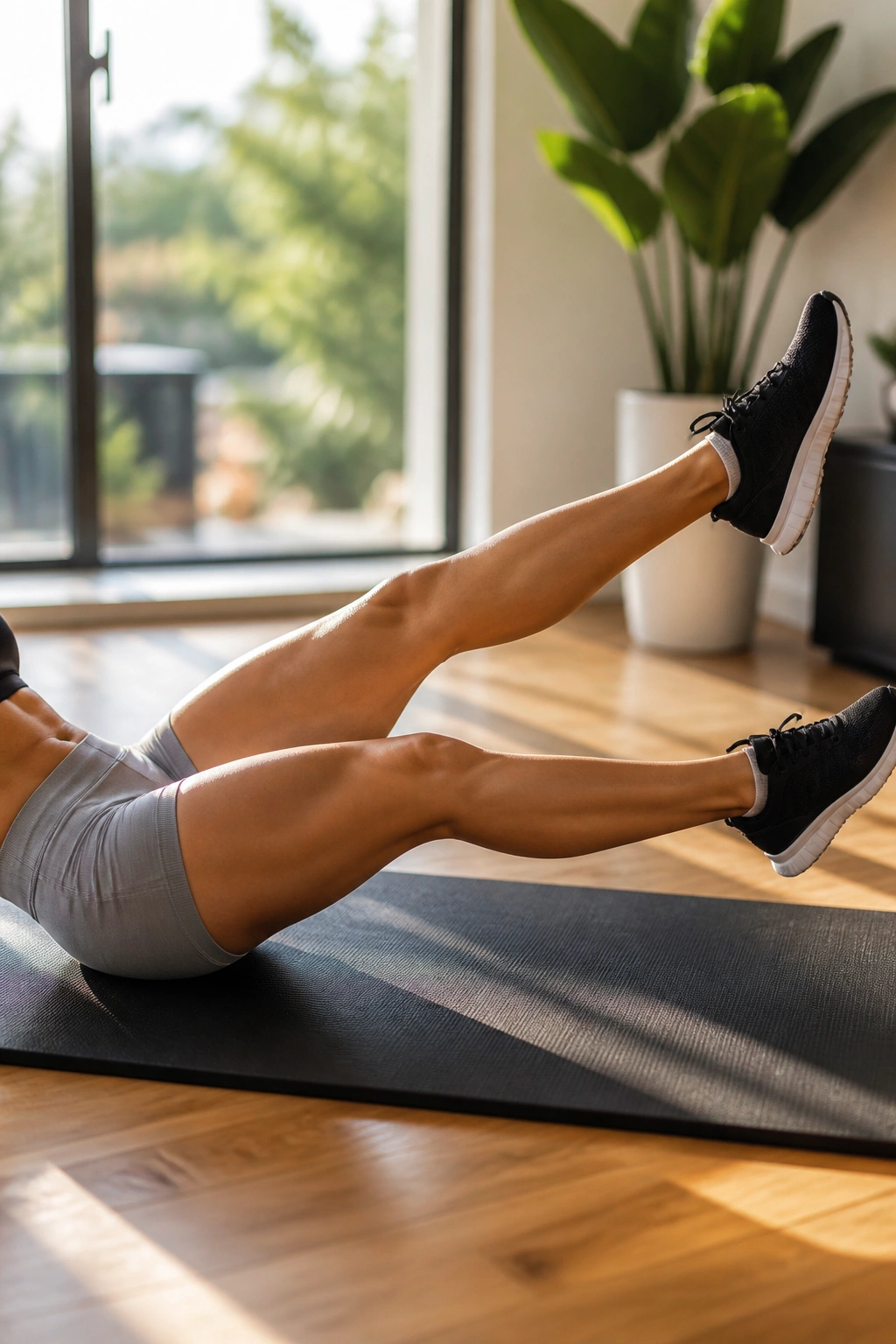
Think of these as an endurance test for your lower abs. Lie on your back, legs extended, and raise them slightly off the floor. Alternate kicking your legs up and down in a small, rapid motion. This keeps the lower abs under constant tension for the duration of the set.
How to Maintain Engagement
Keep the kicks small. Large, wide kicks tend to shift the tension to your hip flexors and lower back, which is exactly what we want to avoid. Focus on pressing your mid-back into the floor. If you find your neck straining, tuck your chin slightly and ensure your shoulders are relaxed. These are deceptive—they start easy but burn intensely after thirty seconds.
10. Reverse Crunches
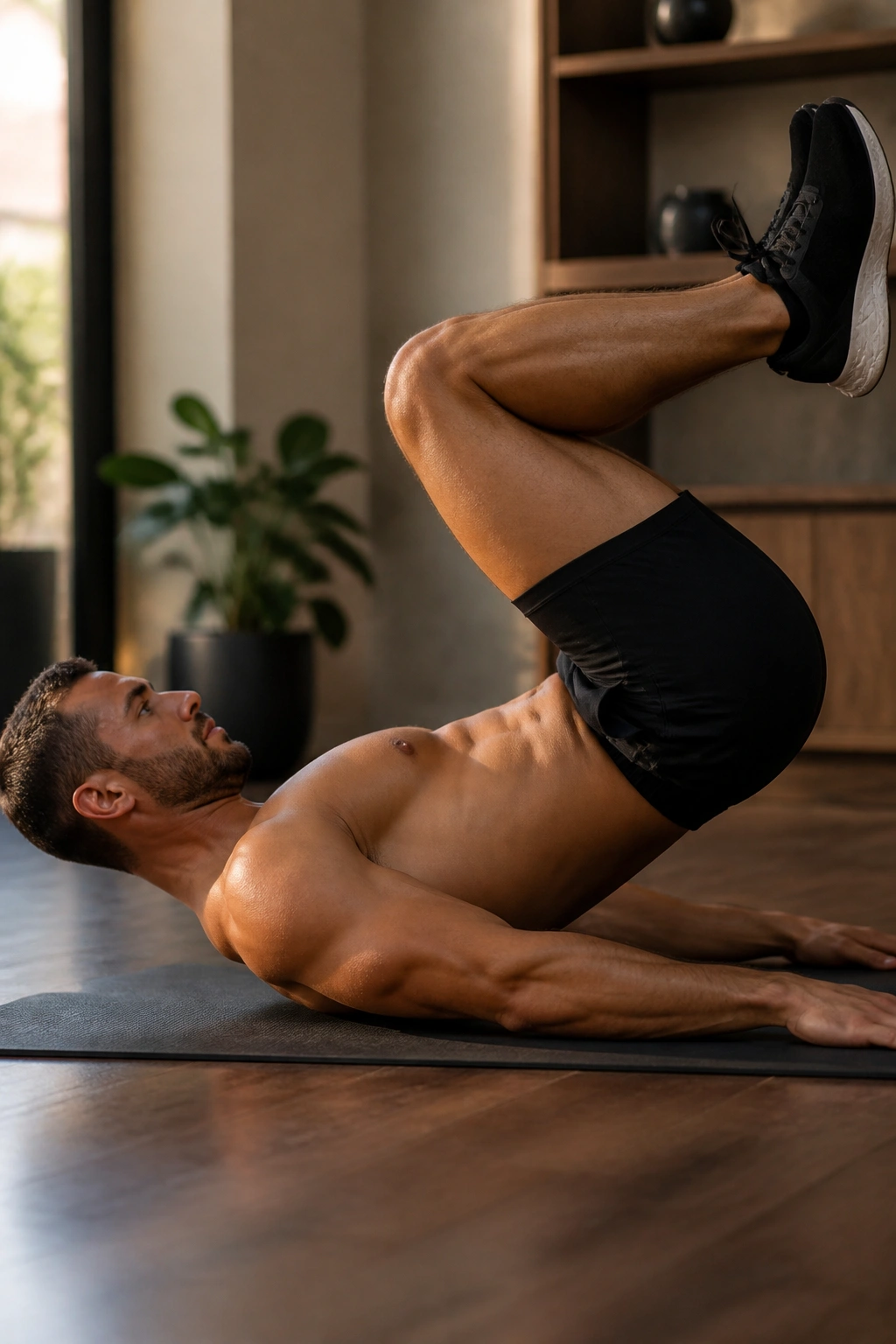
Unlike standard crunches which target the upper abs, reverse crunches focus on the lower region by curling your pelvis toward your ribcage. Lie on your back with knees bent at ninety degrees. Use your abs to lift your hips off the floor, bringing your knees toward your chest.
Avoiding the Swing
The most common error is kicking your legs to generate momentum. This makes the movement easier but kills the effectiveness. Think about lifting your hips up, not just bringing your knees in. Your feet should stay roughly above your hips. Use your arms at your sides for balance, but do not push against the floor to help you lift. It should be entirely your core doing the heavy lifting.
11. Plank Jacks
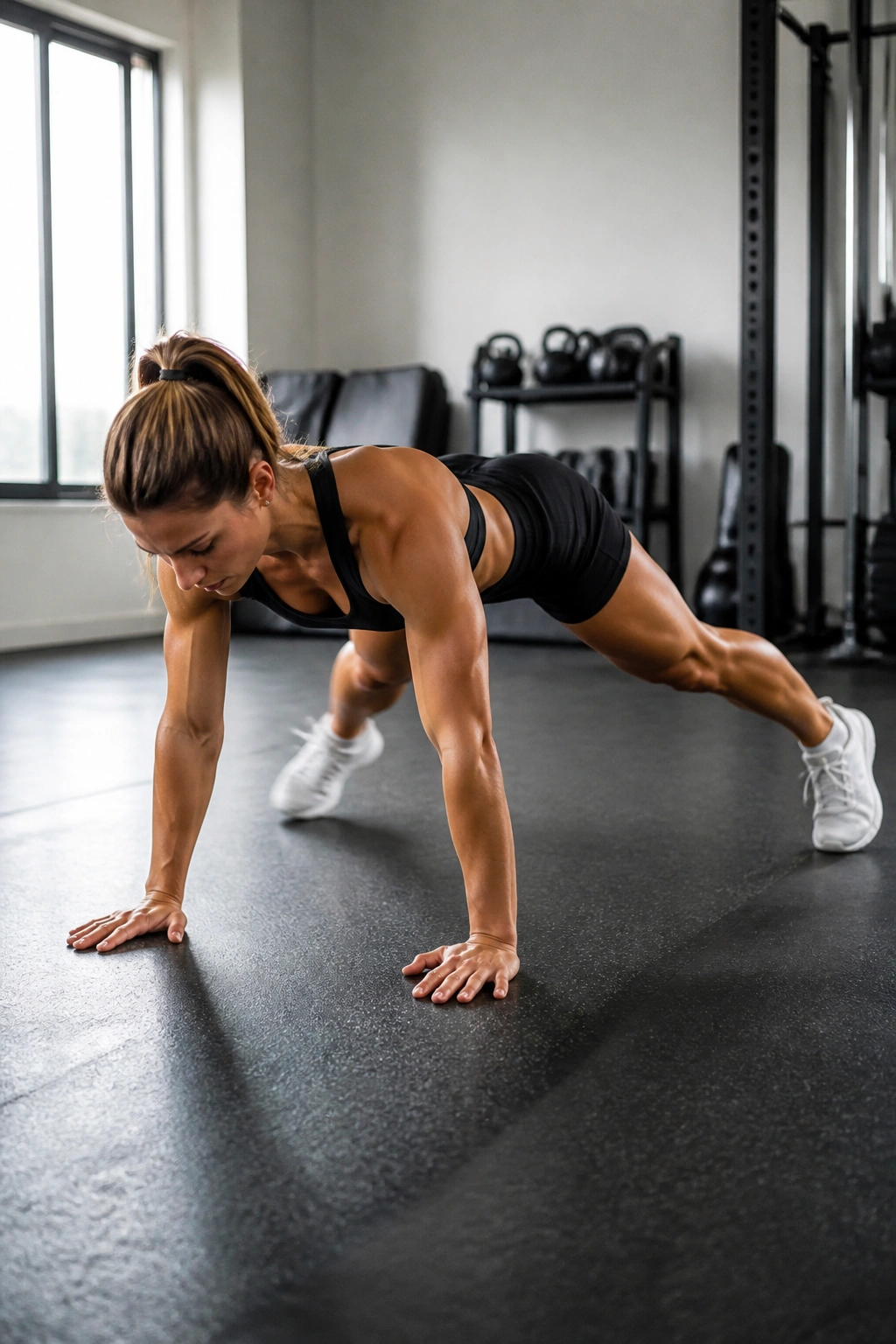
Take a standard high-plank position, but add a jumping motion with your feet, similar to a jumping jack. This introduces a lateral movement that forces your core to stabilize against shifting forces. As your feet jump out and in, your abs must fight to keep your torso perfectly still.
Controlling the Bounce
The goal is zero movement in the upper body. Your shoulders should not bounce, and your hips should not sag as you jump. If your body is wiggling all over the place, slow down the movement or switch to tapping one foot out at a time until you develop the necessary stability. This is a high-demand exercise, so keep your sets short to maintain quality.
12. Side Planks
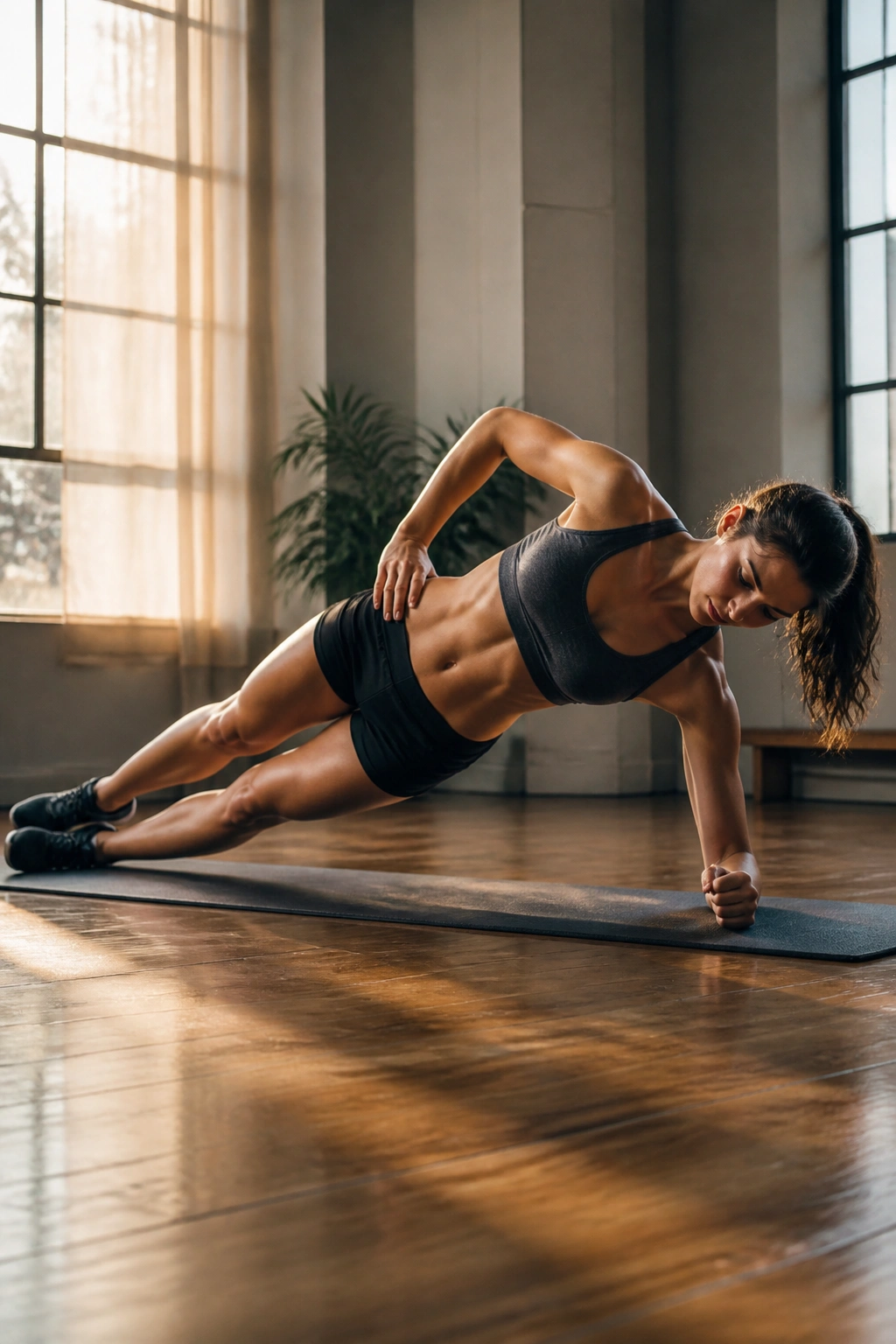
The obliques and the quadratus lumborum (a deep back muscle) are vital for spinal health and aesthetic definition. Side planks are the gold standard for isolating these areas. Prop yourself up on one forearm, stacking your feet. Lift your hips until your body forms a straight line from heels to head.
Scaling the Difficulty
If you are struggling to hold the position, you can drop your bottom knee to the floor to provide extra support. Once you can hold a standard side plank for sixty seconds with ease, increase the challenge by lifting your top leg or adding a reach-through movement where you rotate your top arm under your torso. Keep your hips elevated; do not let them drift toward the floor.
13. Boat Pose / V-Ups
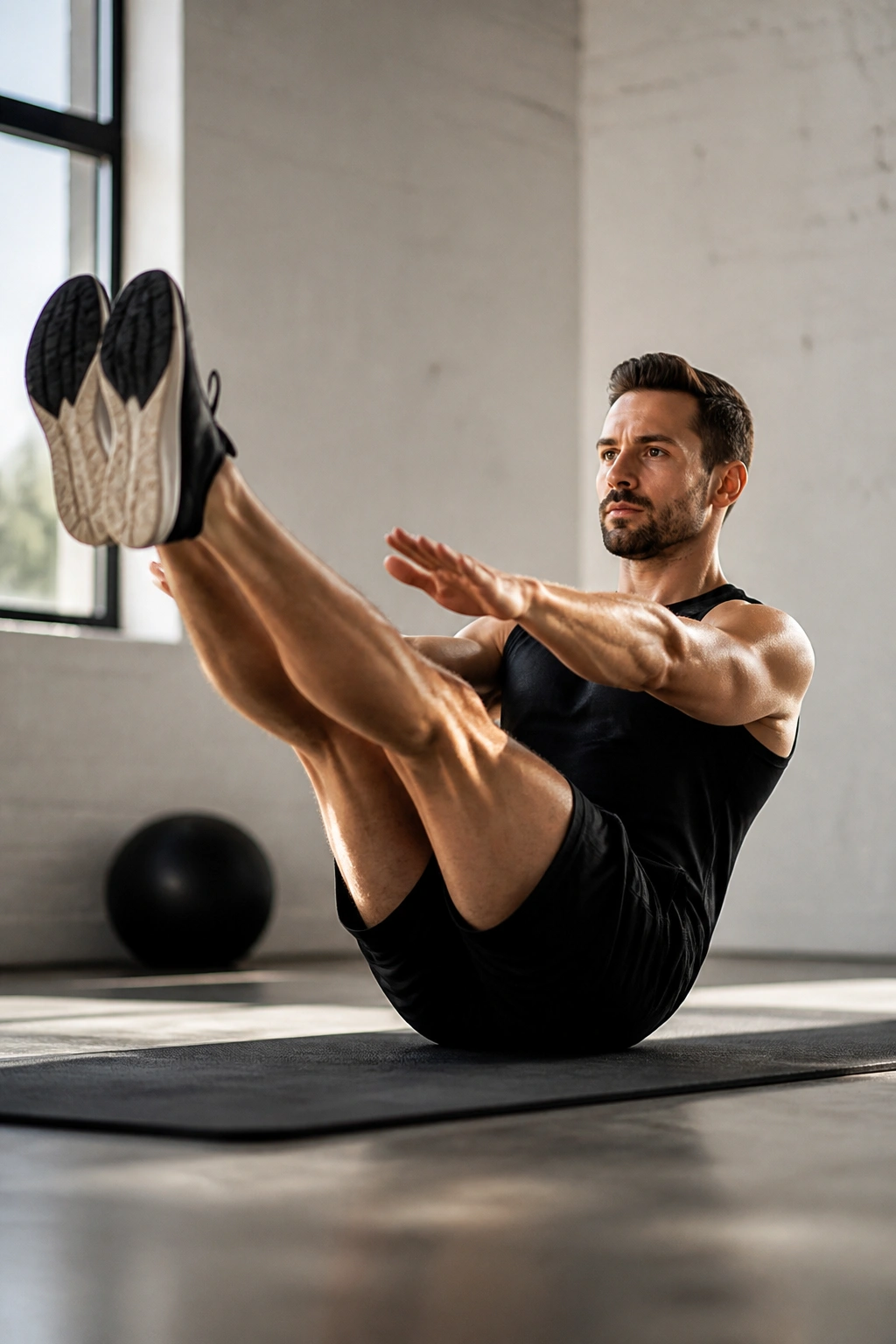
This is a comprehensive core exercise that hits both the upper and lower abs simultaneously by creating a deep “V” shape with your body. Start lying on your back, and simultaneously raise your torso and your legs, reaching for your toes with your hands. Balance on your sit bones at the peak of the movement.
The Secret to Sustained Tension
The key is the squeeze at the top. Reach as far as you can, hold for a split second, and then return to the floor with total control. Do not flop back down. Use your core to lower your body segment by segment. This control prevents injury and ensures that your abs are doing the work, not gravity.
14. Scissor Kicks
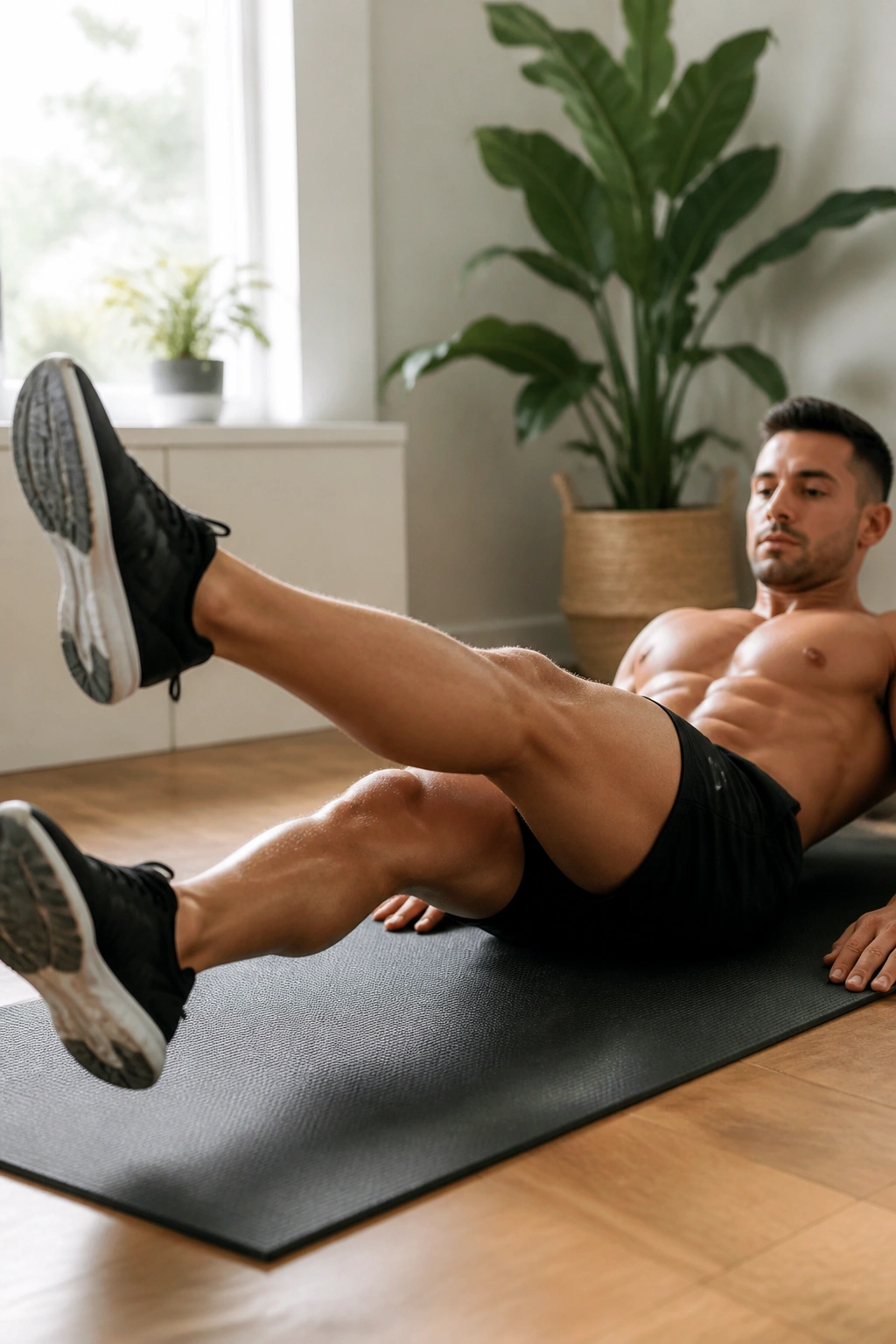
Similar to flutter kicks, but these involve moving your legs in a horizontal crossing motion. This variation targets the lower obliques and the deep transversus abdominis. Lie on your back, raise your legs slightly, and cross one leg over the other, alternating the top leg each time.
Why Quality Matters
Keep your legs low—close to the ground—to increase the demand on the lower abs. If your legs are too high, the movement becomes trivial and loses its impact. If you feel your back arching, you must lift your legs higher or decrease the intensity. Focus on keeping your head and neck relaxed, letting your abdominals handle the load.
15. Ab Wheel Rollouts
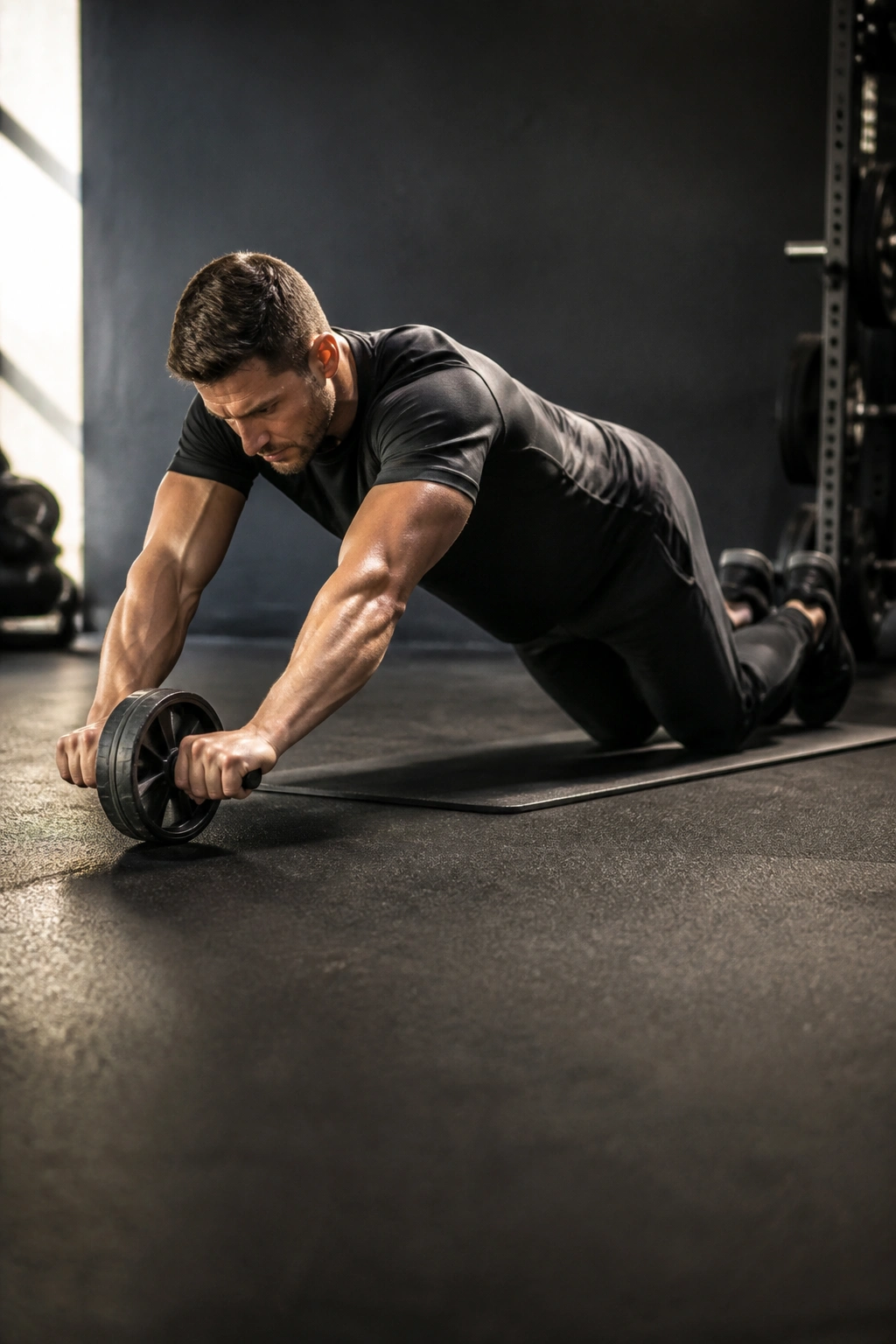
This is widely considered one of the most demanding core exercises in existence. It forces your core into an “anti-extension” position, fighting to keep your spine stable while your body is fully extended. Kneel on the floor, grip the wheel, and slowly roll out as far as you can without letting your lower back collapse.
Developing the Strength
Start by rolling out only a few inches. Do not go for maximum range of motion on day one. As your strength increases, extend further. The moment your lower back starts to arch or you feel your core losing tension, stop. It is better to roll out two inches with perfect, rigid form than to roll out six feet and injure your back.
16. Hanging Leg Raises
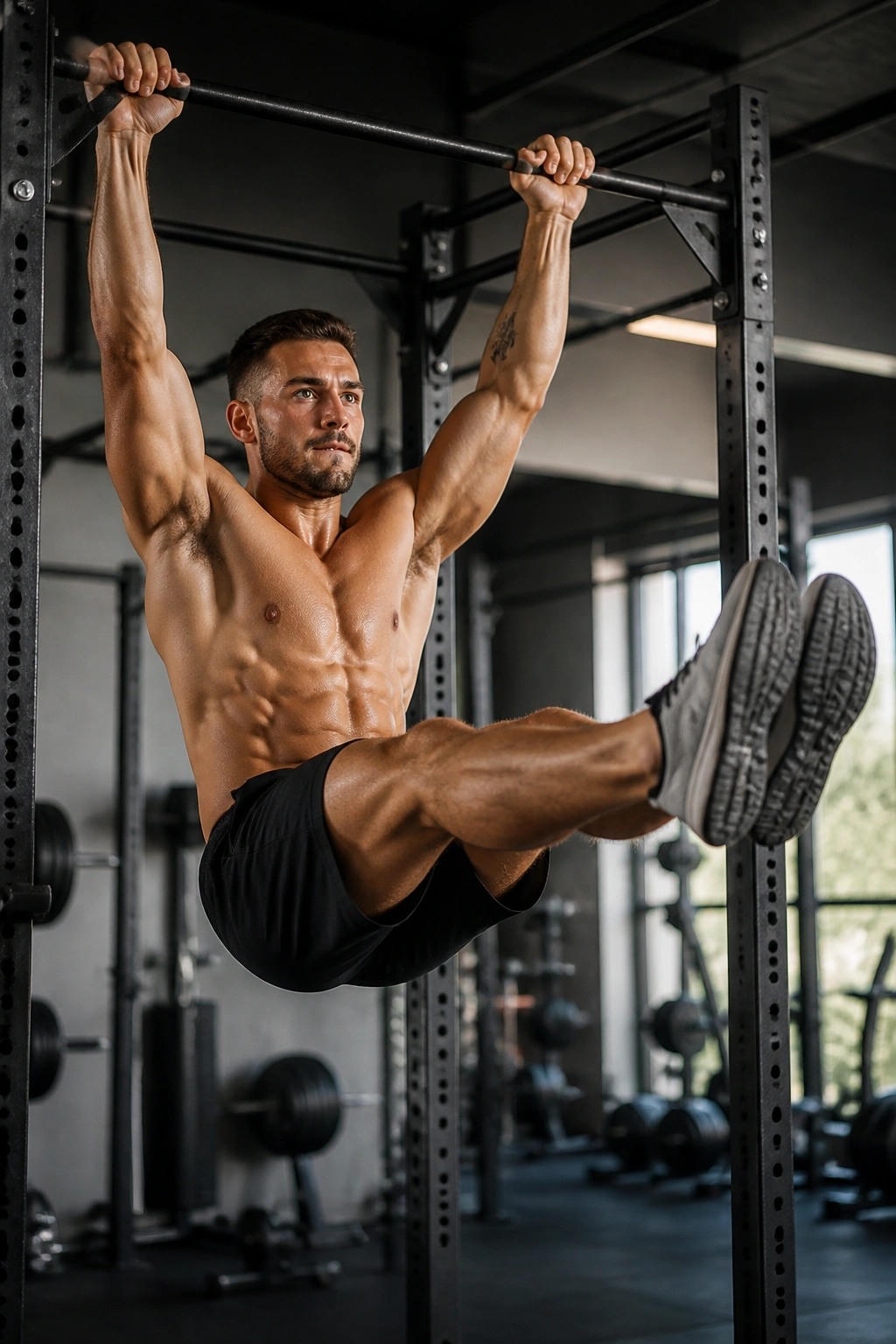
Once you have built a foundation, hanging leg raises become the ultimate test of core strength. Hang from a pull-up bar, palms facing away. Keeping your legs straight, raise them until they are parallel to the floor or higher. Your goal is to use your abs to curl your pelvis up, not just hip flexors to lift the legs.
Managing the Swing
Almost everyone swings on these at first. To stop it, think about pulling the bar down toward your hips—this engages your lats and creates a stable platform for your core. If you find yourself swinging uncontrollably, bend your knees and perform hanging knee raises instead. Master the knee raise before progressing to the full straight-leg version.
17. Weighted Crunches
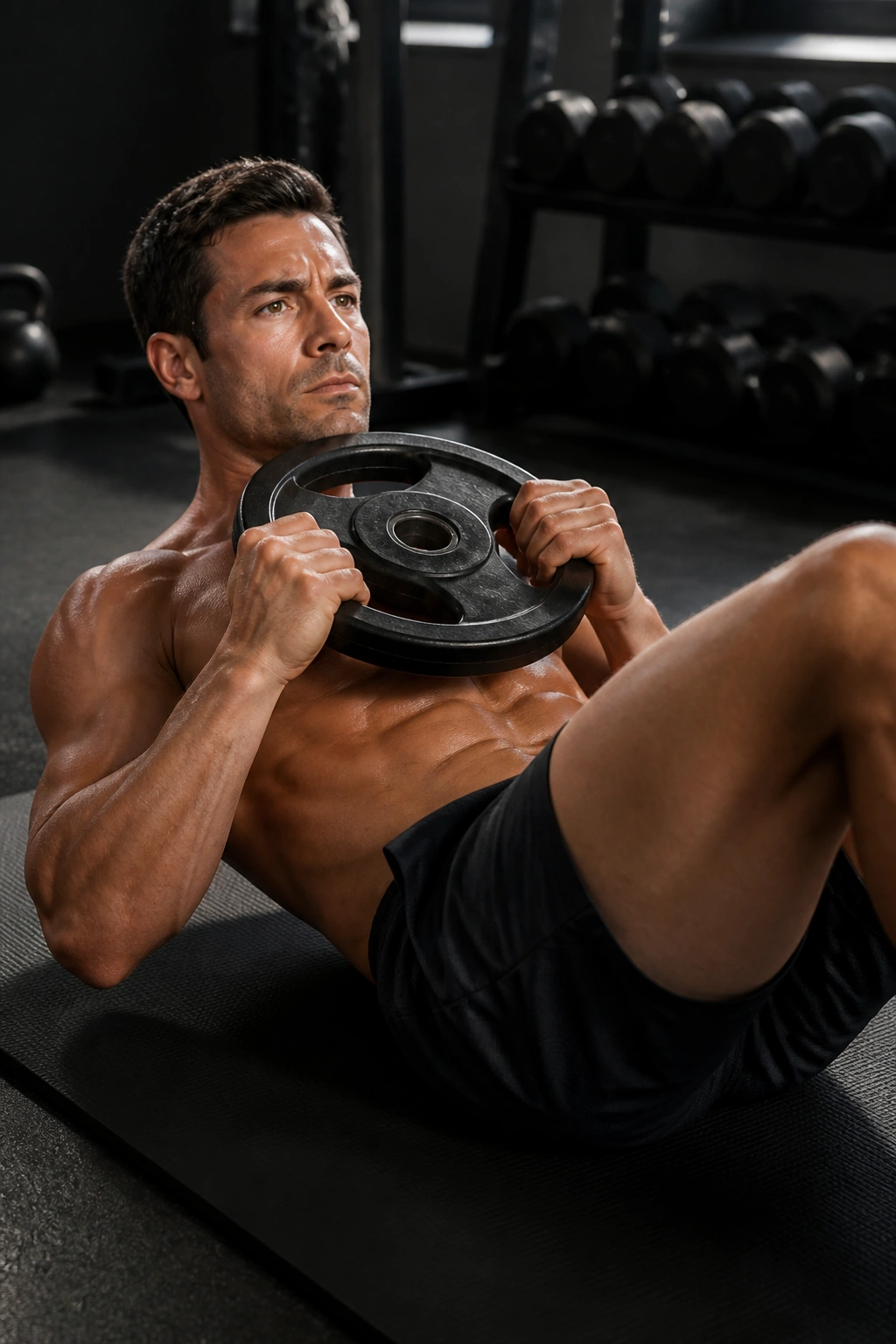
The abdominal muscles, like any other muscle group, require resistance to grow. If you can do fifty crunches, you are doing endurance work, not hypertrophy training. Add weight. Hold a dumbbell or a weight plate against your chest and perform your crunches with this added load.
Slowing Down the Tempo
Because you are using weight, the risk of injury is higher if you move too fast. Use a slow, controlled tempo. Three seconds to curl up, a one-second pause at the top, and three seconds to lower back down. This time under tension is what drives muscle growth. Keep your feet anchored or held down if you have trouble staying in place.
18. Heel Touches
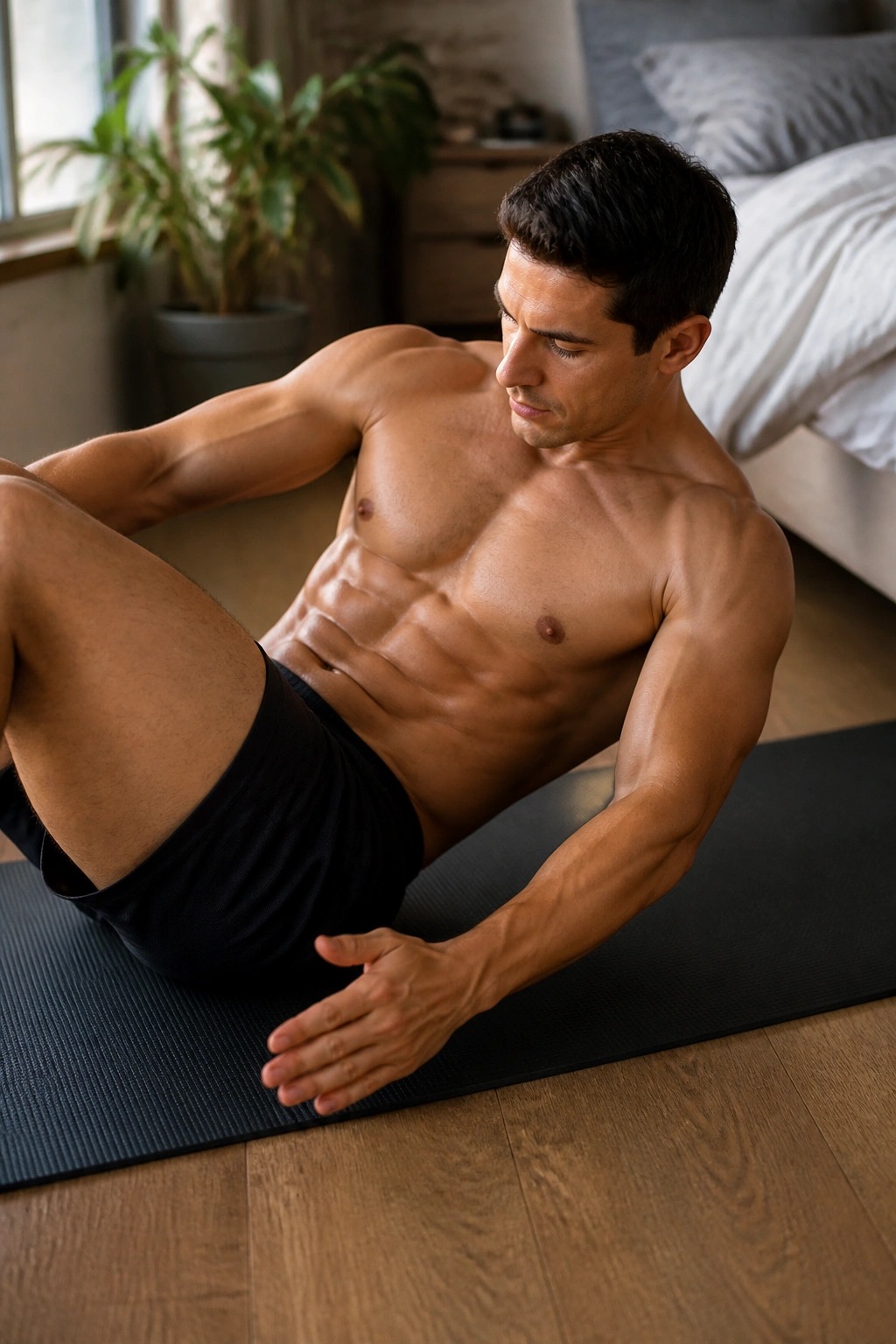
This is a fantastic exercise for the obliques. Lie on your back with knees bent and feet flat on the floor, about hip-width apart. Lift your shoulders slightly off the ground and, using your obliques, reach one hand toward the heel on the same side. Return to center, then reach for the other heel.
Focus on the Obliques
The goal is not just to touch your heel; it is to crunch your side. You should feel a distinct tightening in your side-abs with every reach. Keep your head and shoulders lifted throughout the entire set. Do not let your upper back touch the floor until the set is completely finished.
19. Starfish Crunches

This movement improves coordination and targets the core from a diagonal angle. Lie on your back, arms and legs extended to the corners of the room in a starfish shape. Bring your right hand to meet your left foot by lifting your torso and leg simultaneously.
The Full Compression
Lower your limbs back to the floor with control, but do not let them rest completely between repetitions. Maintain a small amount of tension. This diagonal movement hits the external obliques and rectus abdominis in a way that standard crunches simply cannot. Switch sides, or alternate, depending on your preferred pacing.
20. Superman Holds
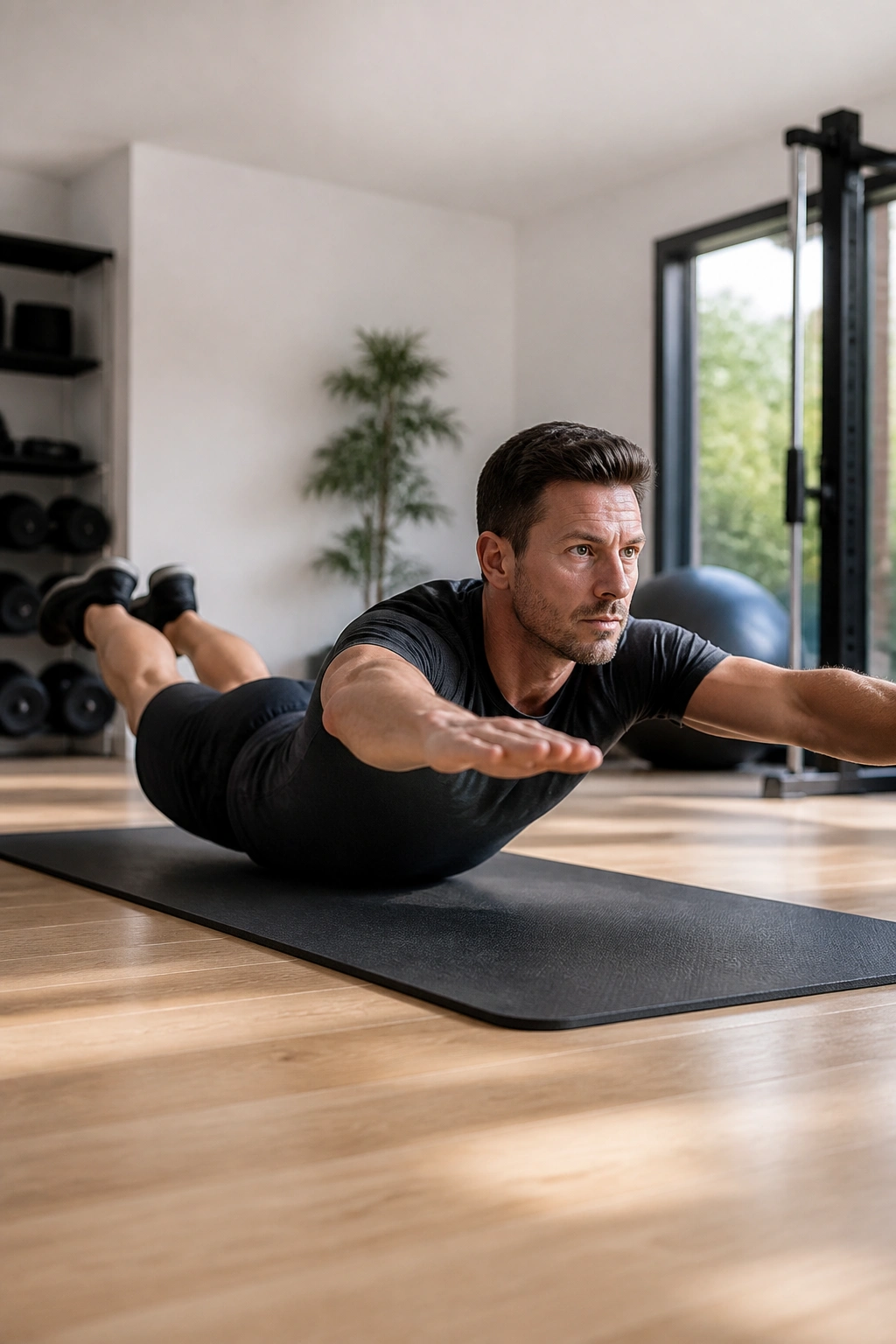
Core strength is incomplete without a strong lower back. The Superman is the antagonist move to the crunch—it strengthens the posterior chain to balance out your front-side work. Lie on your stomach, arms and legs extended. Simultaneously lift your arms, chest, and legs off the ground.
Creating the Arc
Hold the position at the top for two to three seconds, feeling your back muscles engage. Keep your gaze toward the floor to protect your neck. Do not jerk your body up; use a smooth, controlled movement. This exercise prevents the “slouching” posture that often makes stomachs appear protruded even when they are fit.
21. Spiderman Planks
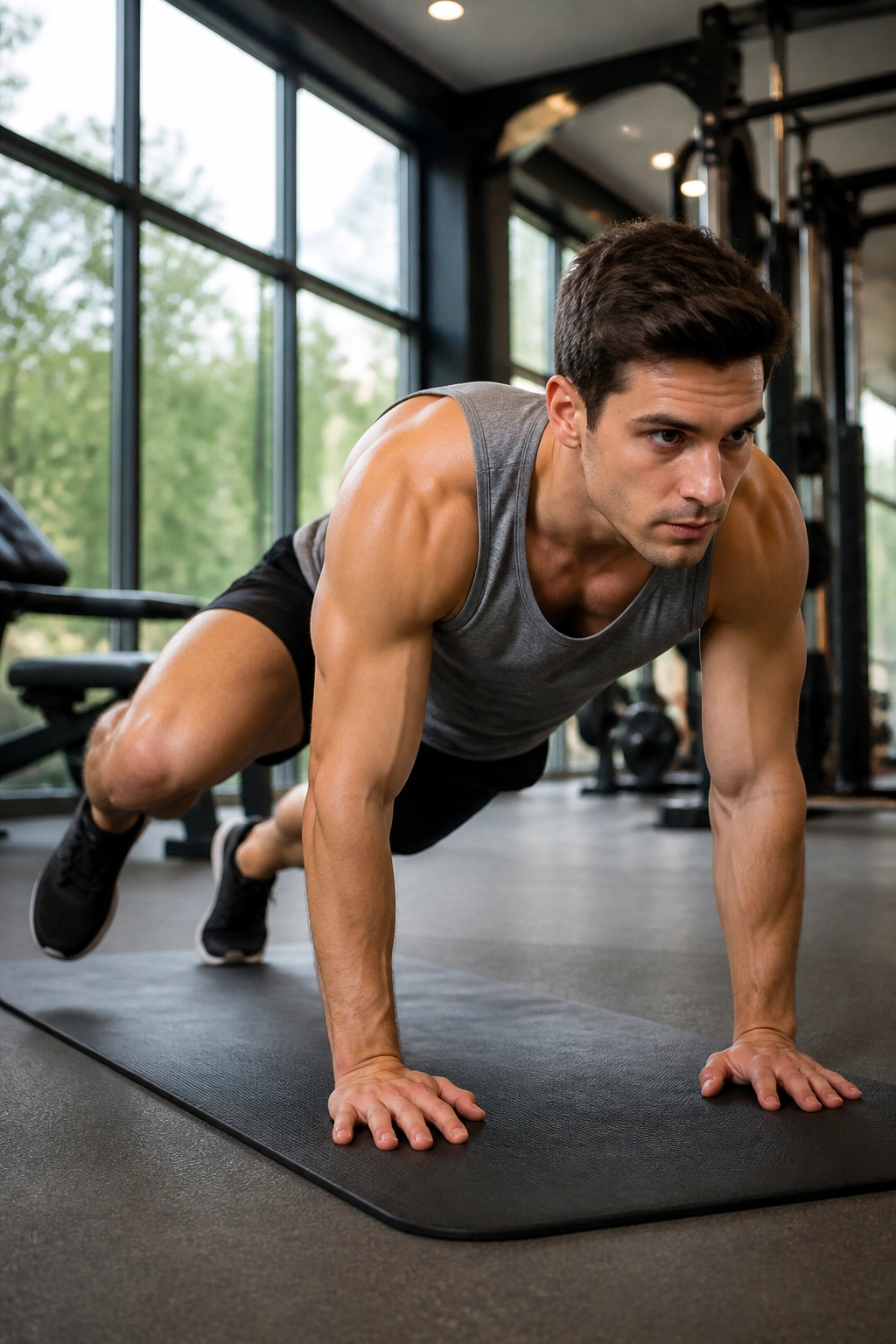
Get into a high-plank position. As you hold, bring your right knee toward your right elbow on the outside of your body. Return to start, then repeat on the left side. This creates a lateral crunch that engages the obliques while maintaining the core stability of a plank.
The Range of Motion
Try to get your knee as close to your elbow as possible. The closer you get, the more contraction you achieve in the obliques. Keep your hips low—do not let them hike up as you bring your leg forward. It should look like a controlled, deliberate crawling motion, not a hurried kick.
22. Plank-to-Pushup
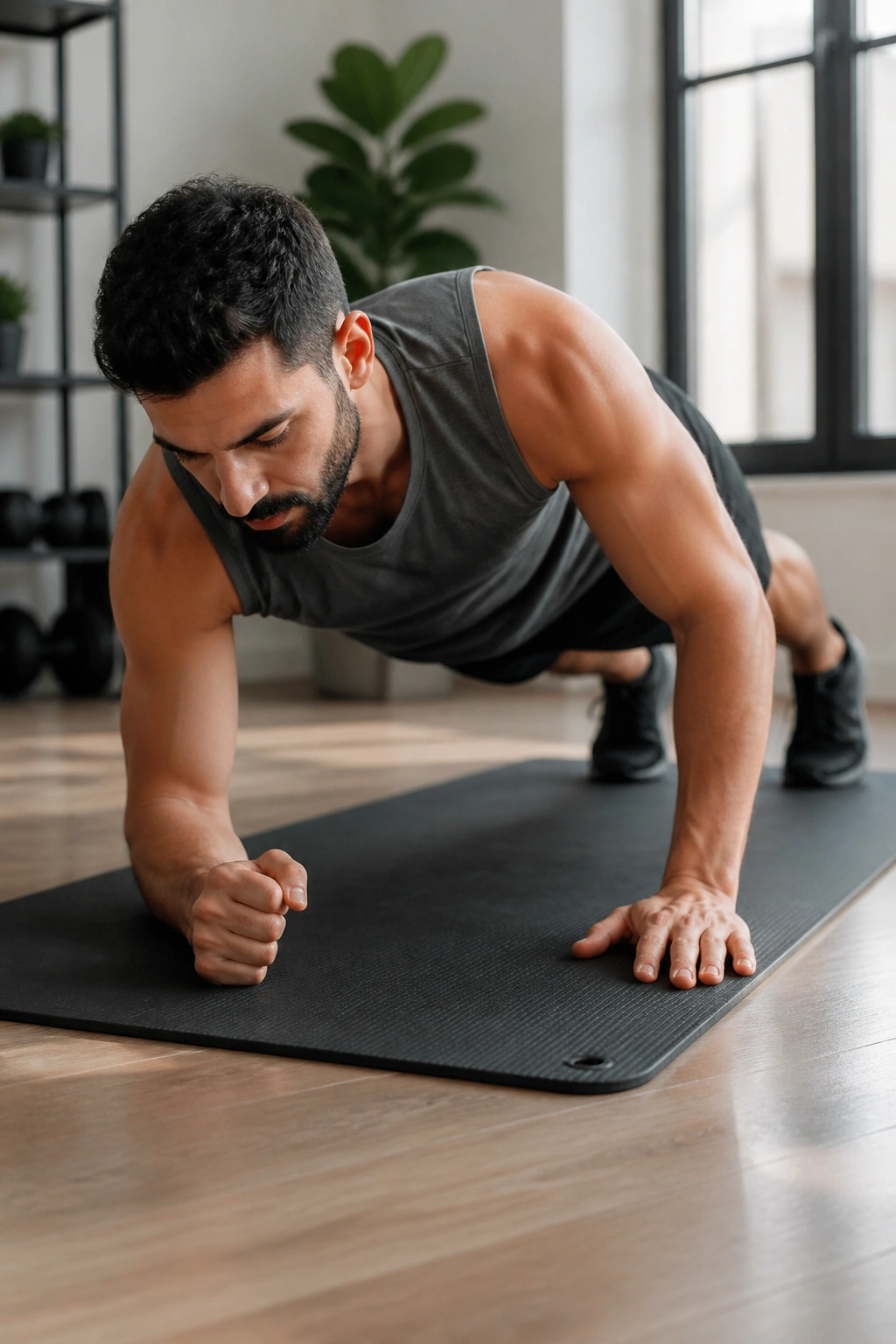
This is a functional powerhouse move. Start in a forearm plank. Push yourself up onto one hand, then the other, into a high plank. Then, lower yourself back down to your forearms, one arm at a time. This transition requires extreme core stability to prevent your torso from twisting.
Stopping the Torso Twist
If your hips are rocking side to side, you are doing it too fast. Focus on keeping your hips nailed to the floor. Imagine your core is a locked steel rod. By forcing your core to resist rotation, you train the deep stabilizing muscles that define a strong, tight midsection.
23. Toe Touches
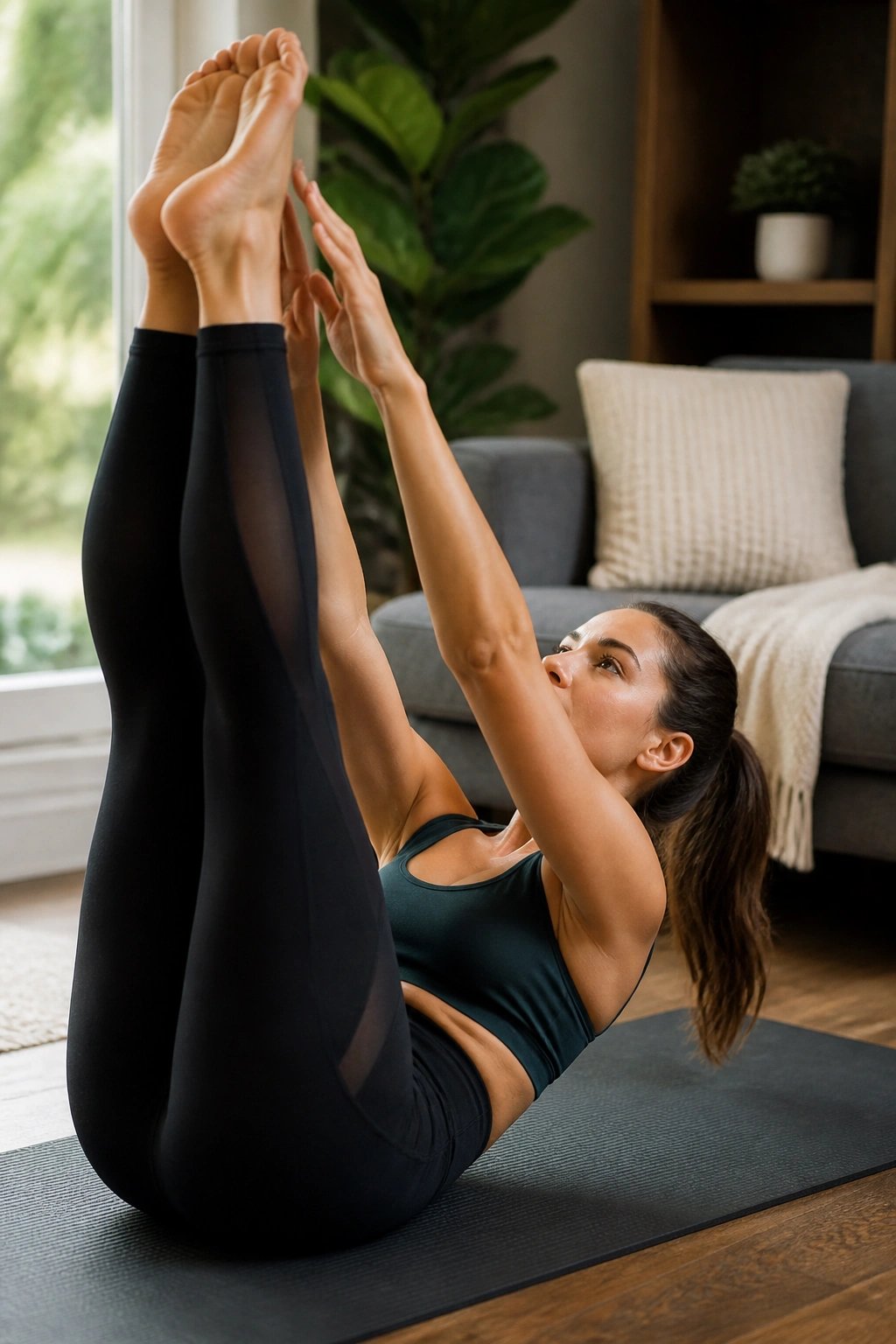
Lie on your back and extend your legs straight up toward the ceiling. Reach your hands toward your toes, lifting your shoulders off the ground. Your goal is to keep your legs as straight as possible, forcing your upper abs to do all the work.
Avoiding the Neck Strain
Do not pull on your head to get higher. If you cannot reach your toes, reach for your shins. The movement is about shortening the distance between your ribcage and your pelvis. At the top of the movement, exhale sharply—this forces an even deeper contraction of the abdominal wall.
24. Weighted Russian Twists
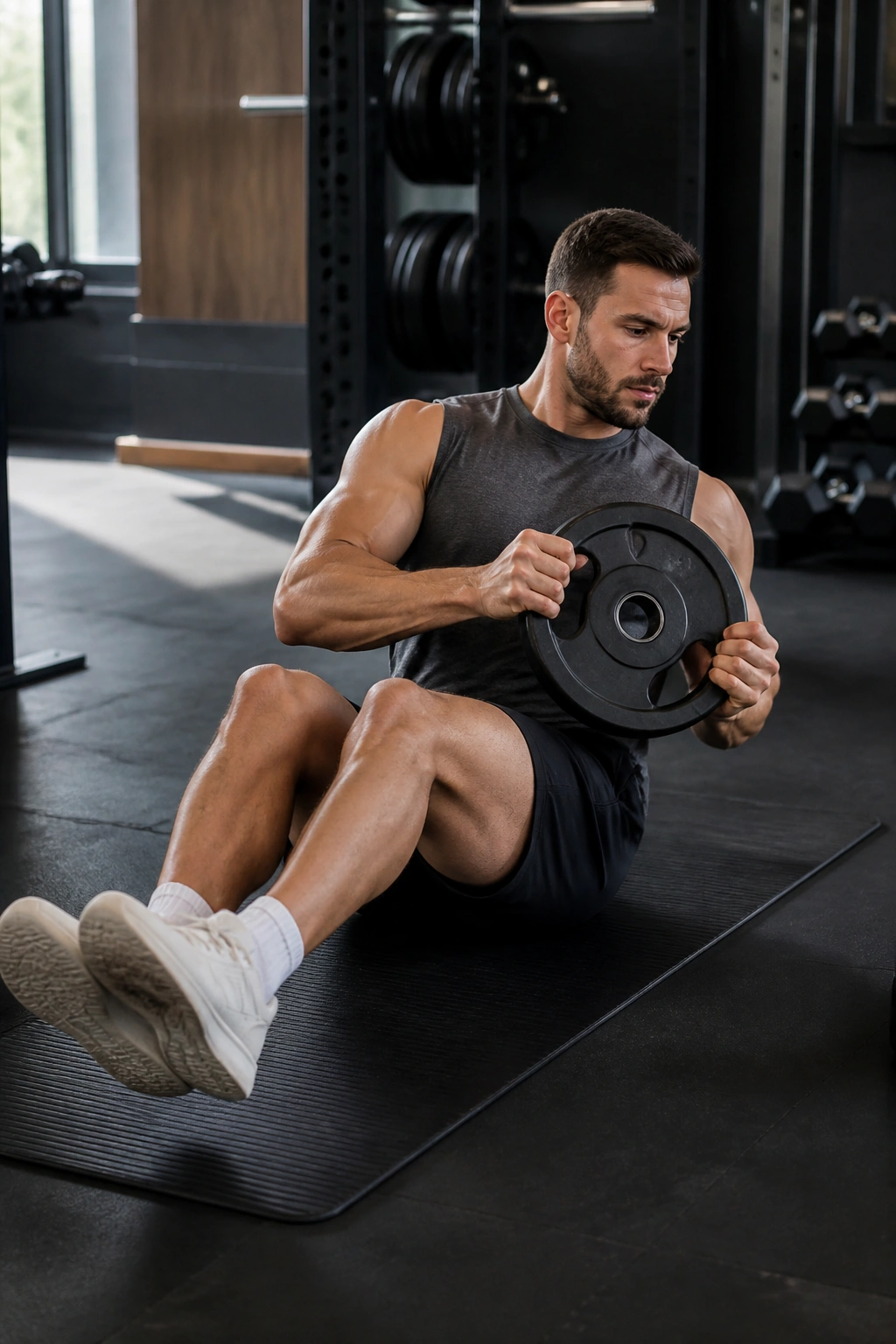
This is an advanced progression of the standard Russian twist. By holding a weight, you increase the torque on your spine, which your obliques must work harder to control. Sit on the floor, knees bent, feet elevated. Hold a weight plate or a dumbbell with both hands.
The Lever Arm
If you want to make this even harder, hold the weight further away from your chest. The longer the lever arm, the more challenging the rotational load. Move with caution. Because the resistance is higher, any sudden or jerky movement can stress the lower back. Rotate from the torso, following the weight with your eyes to ensure you are getting full range of motion.
25. The Finisher: Tabata Core Circuit
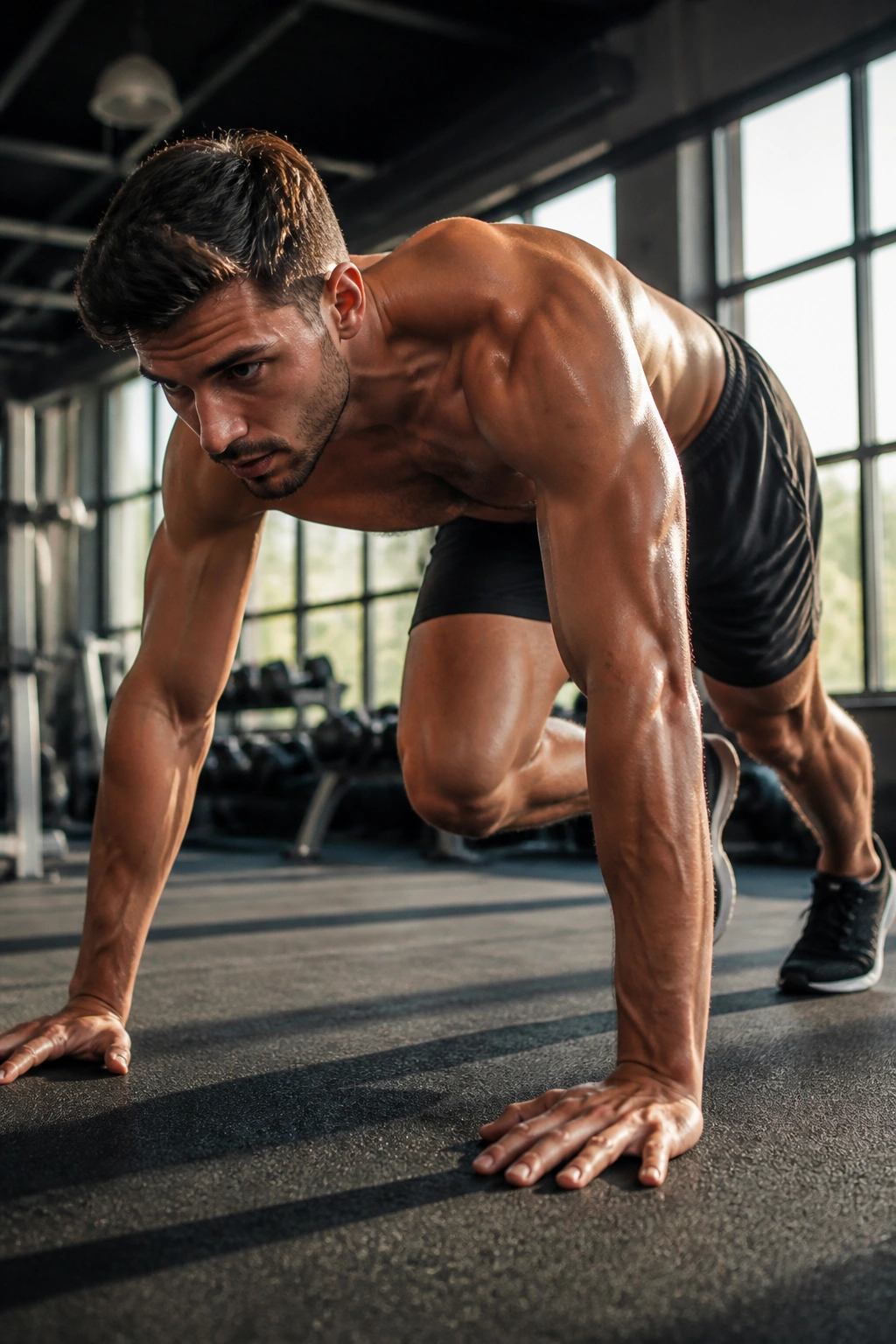
Sometimes the best routine is a structured circuit that keeps the heart rate up while blasting the abs. Choose four exercises from the list above—for example, Mountain Climbers, Bicycle Crunches, Plank Jacks, and Leg Raises. Perform each one for twenty seconds of maximum effort, followed by ten seconds of rest.
Why This Works
Repeat the four exercises for a total of eight rounds. This four-minute protocol creates an incredible metabolic demand. Because you are moving quickly between exercises, your heart rate stays high, which helps in shedding the body fat that might be hiding your abdominal definition. This is the ultimate “time-crunched” finisher.
Final Thoughts
Building a strong core is not about chasing a specific number of repetitions or following a trend. It is about respecting the anatomy of your midsection and challenging it in multiple planes of motion. You need stability, rotation, flexion, and anti-extension to create a functional, strong, and visibly defined core.
If you are just starting, focus on the static holds like planks and hollow bodies. Build that structural foundation before moving on to the more dynamic, high-torque movements. Your body will tell you when it is ready for more, usually by becoming more efficient at the basics. Do not rush the process, and above all, prioritize your spinal alignment over the ego of doing a harder, fancier move. Consistency with proper form always beats a fancy workout done poorly.
