



Belly fat does not care how many crunches you do. It cares about total fat loss, muscle retention, recovery, and whether you can keep showing up without wrecking your back, knees, or motivation.
That’s why belly fat workouts for men over 40 need a different feel from the punishing stuff younger guys brag about in the locker room. The goal is not to win a suffering contest. The goal is to burn a real amount of energy, keep strength in the big muscles, and pick movements your joints will tolerate week after week.
There’s a simple truth here that gets ignored all the time: the best midsection work for this age group usually looks a lot like full-body training. Carries, swings, rows, sled pushes, incline walks, bike sprints — those are the kinds of sessions that make your waist shrink while still leaving you able to tie your shoes the next morning.
Warm up. Seriously. Men over 40 who skip the first 5 to 8 minutes usually pay for it in the lower back or Achilles later. A brisk walk, a few bodyweight hinges, some shoulder circles, and one or two easy practice sets can make the rest of the session feel smooth instead of sketchy.
1. Incline Treadmill Intervals
Incline walking looks almost too easy, which is exactly why people underestimate it. Then they hit a 10% grade for ten minutes and start staring at the console like it insulted their family.
This is one of the cleanest belly fat workouts for men over 40 because it burns a lot of energy without the pounding you get from running. Your glutes, hamstrings, calves, and core all have to work harder on a slope, and your heart rate climbs fast enough to matter.
How to run it
Set the treadmill to a 6% to 12% incline and walk fast enough that talking in full sentences gets annoying. Start with 5 minutes easy, then work through 8 to 12 rounds of 1 minute hard and 2 minutes easier.
- Keep your chest tall.
- Do not lean on the rails like you’re waiting for a bus.
- Shorten your stride a little as the incline rises.
- Stop before your form turns sloppy.
A lot of guys over 40 like this because it doesn’t leave them wrecked. You can still lift later in the day, and that matters more than people admit. One good incline session a week is useful. Two is even better if you’re also getting steps in.
Pro tip: if your calves seize up, drop the incline a notch before you drop the pace.
2. Kettlebell Swing Rounds
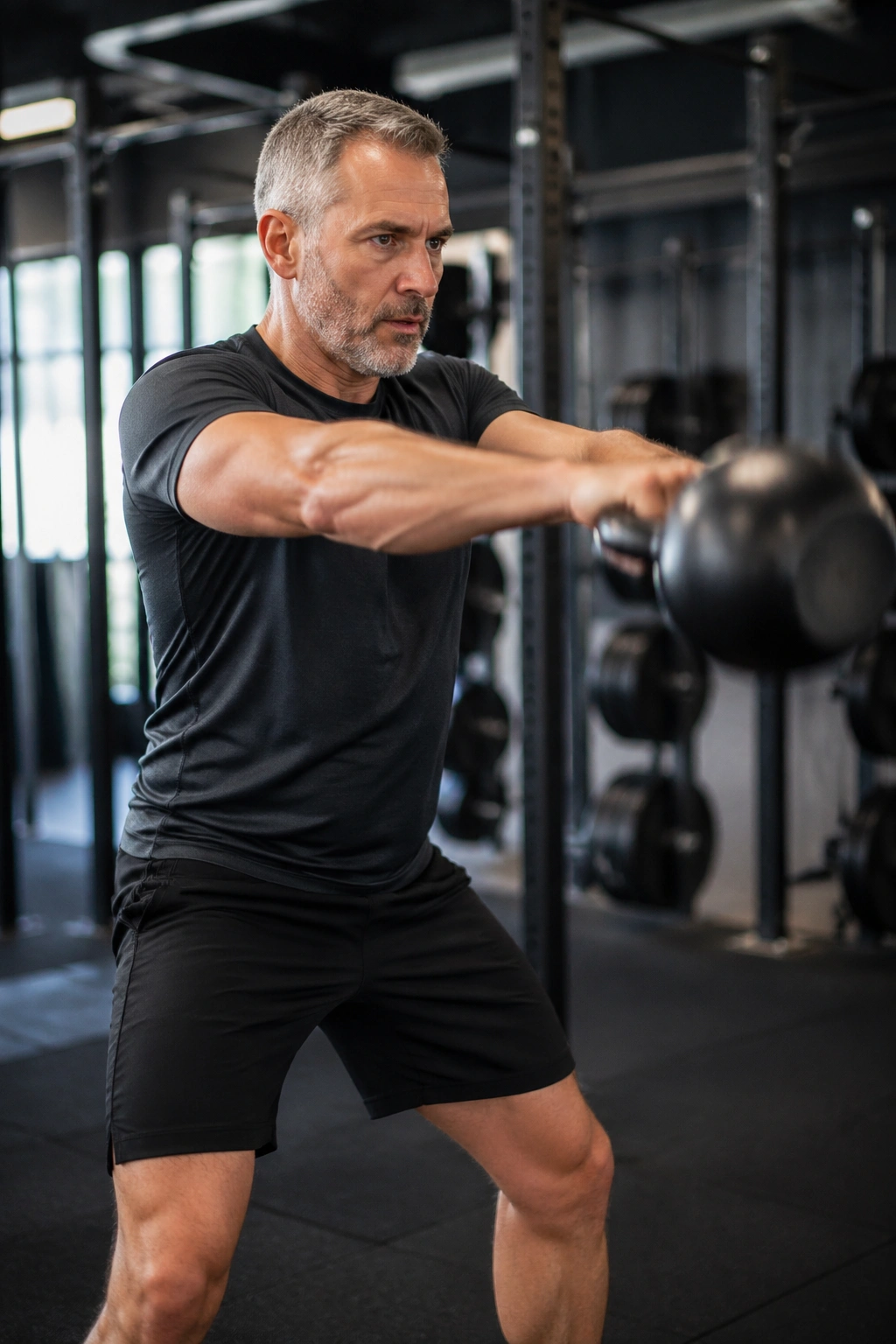
Why do kettlebell swings show up so often in smart fat-loss plans? Because they hit the hinge pattern, drive the heart rate up, and ask the midsection to brace hard without making you crunch your spine into a sad little curl.
A swing is not a squat. It’s a hip snap. That difference matters. If you hinge well, the bell floats from hip power, not from arm pull, and the whole set starts to feel like controlled violence in a small space.
What good swings feel like
The bell should snap back between your thighs on the backswing, then rise because your hips drive forward hard and fast. Your arms stay loose. Your torso stays braced. If you feel it mostly in your shoulders, something is off.
A simple session looks like this:
- 10 rounds of 15 swings
- Rest 30 to 45 seconds between rounds
- Use a bell you can control for every rep
- Stop the set the moment your back starts doing the work
A lot of men over 40 try to swing too heavy, too soon. Bad idea. A lighter bell done with perfect timing beats a monster bell that yanks your spine around. The swing is excellent, but only if your hinge is clean.
One more thing: if the bell is banging into your forearms, you’re squatting it instead of swinging it.
3. Rowing Machine Sprints
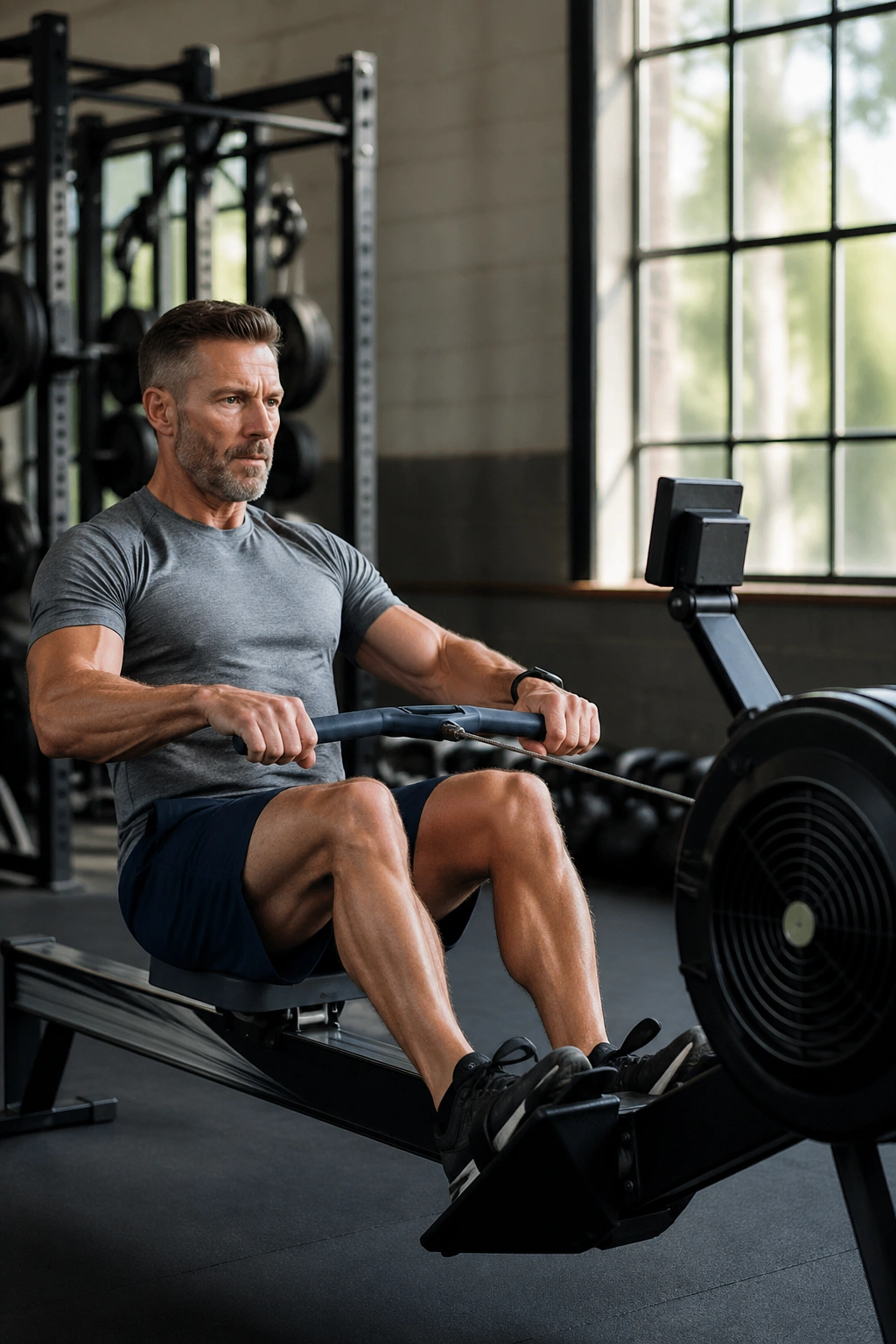
A rower is one of those machines that looks civilized from across the gym and feels rude within 90 seconds. Good. That’s the point.
If running beats up your knees or shins, rowing gives you a hard conditioning hit without the same impact. Legs drive first, then the hips, then the pull. Done well, it becomes a full-body power session that leaves your lungs begging for mercy.
Why rowers work so well
The rowing stroke hits the quads, glutes, back, and arms in one chain. That makes it efficient, and efficiency matters when you want fat loss without spending an hour doing miserable cardio you hate.
Try this structure:
- Warm up for 4 minutes at an easy pace.
- Row 30 seconds hard.
- Recover for 90 seconds.
- Repeat 8 to 10 times.
Keep the stroke rate around 24 to 28 strokes per minute during the hard pieces. That keeps the effort strong without turning into flailing. If the handle is ripping your grip apart, slow the pace and clean up the drive.
The biggest mistake is pulling with the arms first. Don’t. Push the floor away, then finish with the torso and arms. That order changes everything.
4. Sled Pushes and Backward Drags
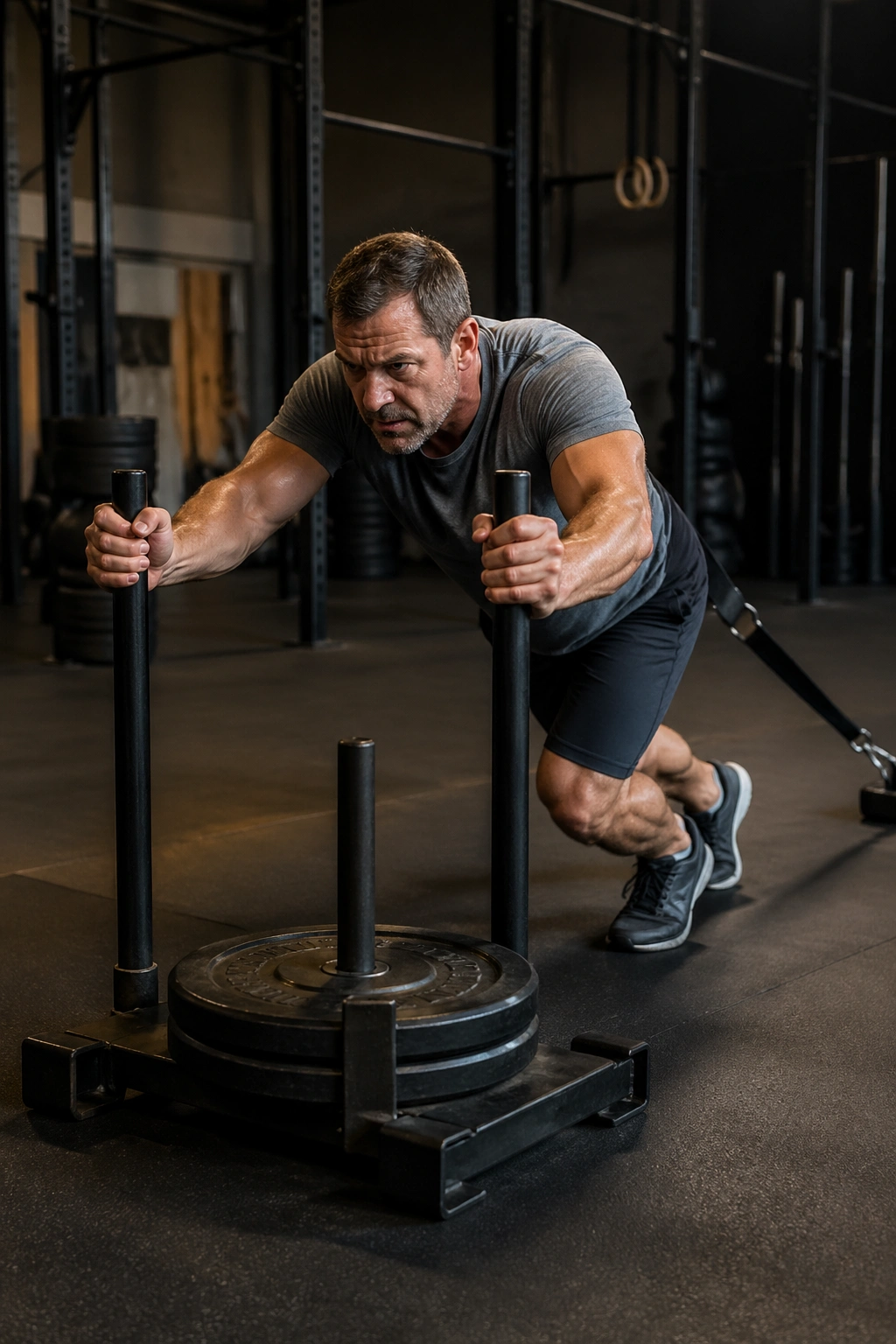
If your gym has a sled, use it. Not someday. Now. It’s one of the few tools that lets you go hard without the same soreness you get from a pile of jumping and running.
Sled work is sneaky. It looks simple. It isn’t. Your legs, lungs, and trunk all get taxed, and because there’s no eccentric lowering phase like in a squat or lunge, the recovery cost stays friendlier than people expect.
Push forward, then drag backward
A good sled session usually has two parts. Push the sled forward for 15 to 25 yards, rest, then drag it backward using a strap or handles for the same distance. The backward drag is gold for quads and knees.
- Use a load that makes the last third of the push hard.
- Keep your steps short and steady.
- Stay low without folding at the waist.
- Rest 60 to 90 seconds between trips.
The backward drag deserves more attention than it gets. It lights up the front of the legs and can feel kinder to cranky knees than more jumping or sprinting. That matters when your joints are not interested in your enthusiasm.
This is hard work. It also ages well. A lot of men can keep sleds in their plan long after flat-out running stops being a smart move.
5. Battle Rope Bursts

Battle ropes look like a boot-camp prop, and fair enough, they do have that vibe. Still, they earn their place because they spike heart rate fast and let you train hard without needing a fancy setup.
The best rope work is short and sharp. Twenty seconds of chaos, then enough recovery to repeat it with decent form. If you go too long, the movement turns into flailing and your shoulders start cheating for your lungs.
Good rope patterns to use
Pick one or two patterns and keep them clean:
- Alternating waves
- Double slams
- Inside circles
- Outside circles
- Power slams with a small hip hinge
A solid starting session is 10 rounds of 20 seconds on and 40 seconds off. If your shoulders get sloppy by round four, rest a little longer. The goal is not to look dramatic. The goal is to keep output high.
Form note: keep your ribs down and your knees soft. If your lower back starts arching every time you slam, the ropes are no longer helping.
Ropes are also useful on days when you don’t want another heavy leg session but still want a serious sweat. They fit neatly into that in-between space.
6. Dumbbell Thruster Ladders
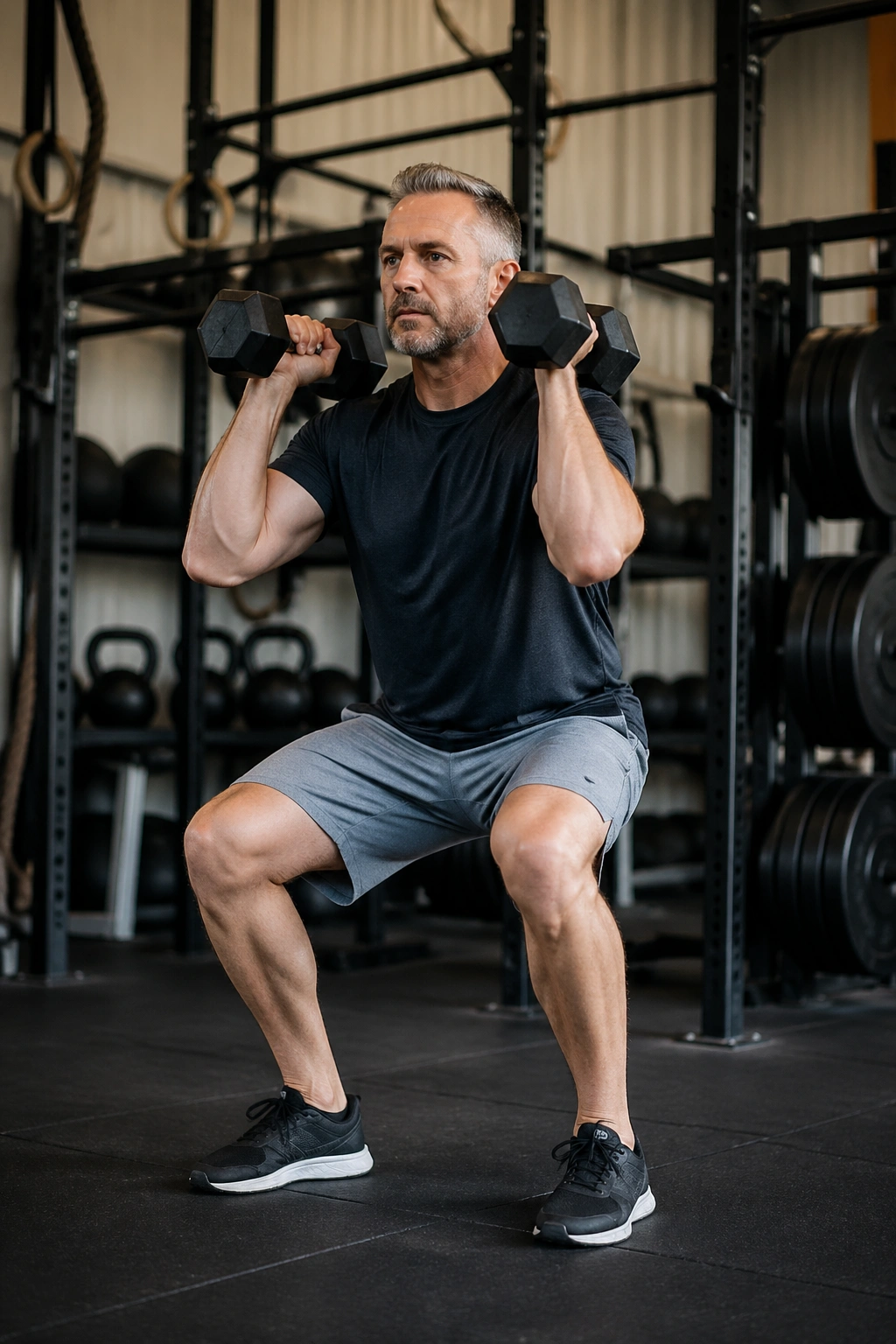
A thruster is a squat and press jammed into one move, which means it punishes laziness in a good way. You cannot fake it. The legs drive the dumbbells up, the core stabilizes, and the shoulders finish the job.
Unlike endless curls or tiny machine work, thrusters make big muscles pay rent. That makes them a smart choice when the waistline is the thing you actually care about.
How to build the ladder
Start with a pair of dumbbells you can press overhead for clean reps. Then use a rep ladder like this:
- 5 thrusters
- Rest 30 seconds
- 6 thrusters
- Rest 30 seconds
- 7 thrusters
- Rest 30 seconds
- 8 thrusters
That’s one round. If form stays tight, repeat 2 to 4 rounds. If your lower back arches on the press, the dumbbells are too heavy or you’re rushing the squat.
The best part of thrusters is how much work they cram into a small block of time. The bad part is also that they cram a lot into a small block of time. Pace yourself or you’ll turn the last few reps into a circus.
A clean thruster has a rhythm. Squat, drive, press, lock out, breathe. Then do it again.
7. Bodyweight Burn Circuit
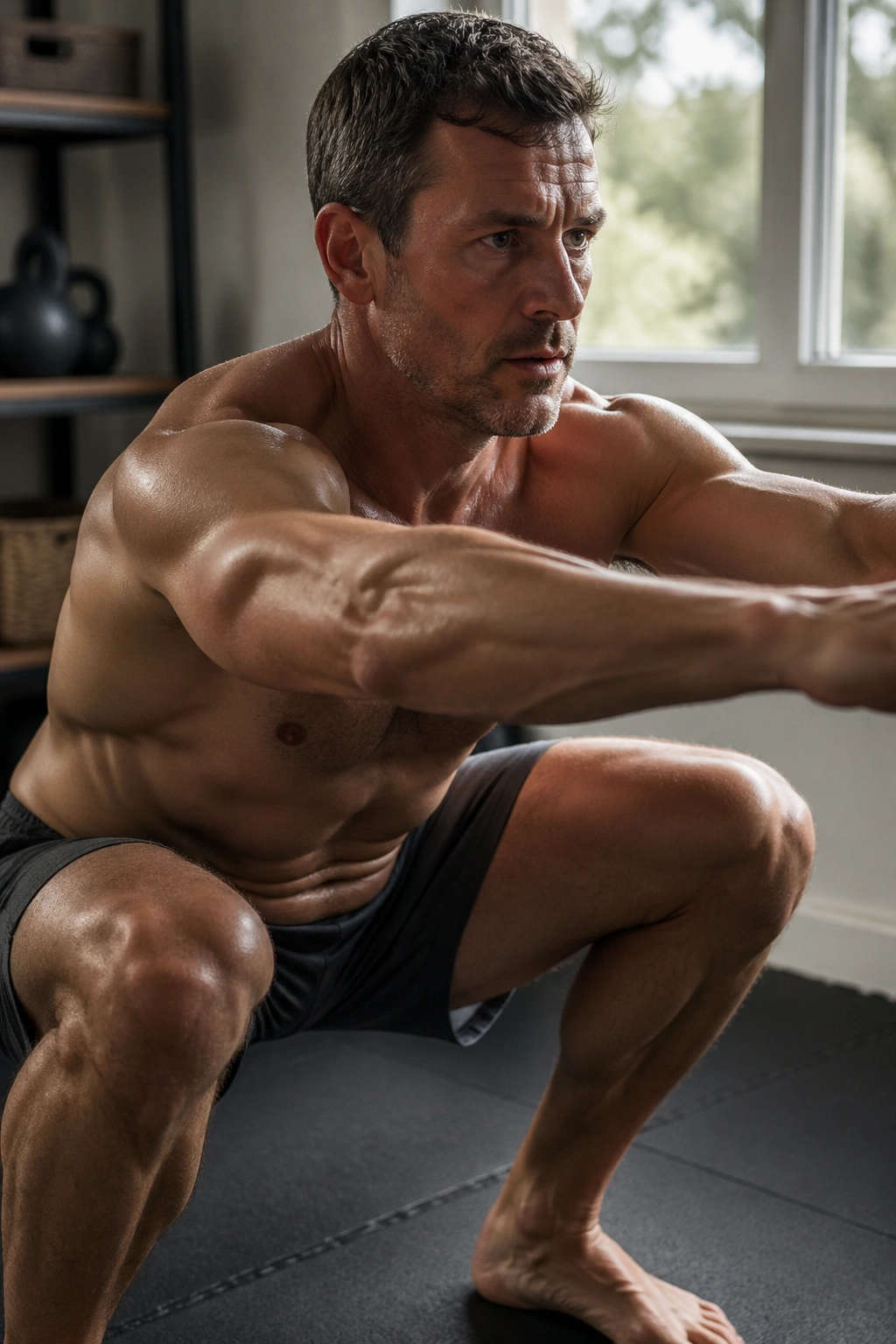
No equipment? Fine. That is not a real excuse unless you also have no floor.
A bodyweight circuit can still be nasty in the best way, especially if you keep the rest short and the movements honest. Men over 40 often do well with these because they can adjust the pace, control the range, and avoid the sloppy hero stuff that tends to end in a cranky shoulder.
Here’s a simple setup:
- 40 seconds bodyweight squats
- 40 seconds incline push-ups or floor push-ups
- 40 seconds reverse lunges
- 40 seconds mountain climbers
- 20 seconds rest after each move
Run 4 to 6 rounds.
Make it joint-friendly
If your knees complain, swap jumping for step-backs. If push-ups bother your wrists, use dumbbells as handles or do them on a bench. The circuit still works because the effort is continuous, not because every move is brutal.
The nice thing about this style is flexibility. Hotel room, basement, garage, backyard — none of that matters. You can keep the heart rate up and still get the muscle-preserving benefit of repeated bodyweight work.
8. Hill Sprints and Stair Repeats

Why do hills feel better than flat-out sprinting for so many men over 40? Because the slope slows you down just enough to protect the joints while still forcing real effort.
That does not mean they’re easy. They’re not. A 10-second hill sprint will make your calves, glutes, and lungs file a complaint fast. But the impact is usually friendlier than hammering the pavement at top speed.
Who should use them
If you still move well, recover well, and like the feeling of explosive work, hill sprints are a strong option. If your knees or Achilles get irritated easily, stair power walks are the safer first step.
Try this:
- Warm up for 8 to 10 minutes
- Sprint uphill for 10 to 15 seconds
- Walk back down slowly
- Repeat 6 to 8 times
Stairs can be handled the same way, but keep the drive strong and the posture tall. Don’t bound two steps at a time unless your mechanics are solid and your joints are happy.
Short uphill efforts have a nice side effect: they teach you to produce power without a long grind. That’s useful far beyond fat loss.
9. Farmer’s Carry Walks
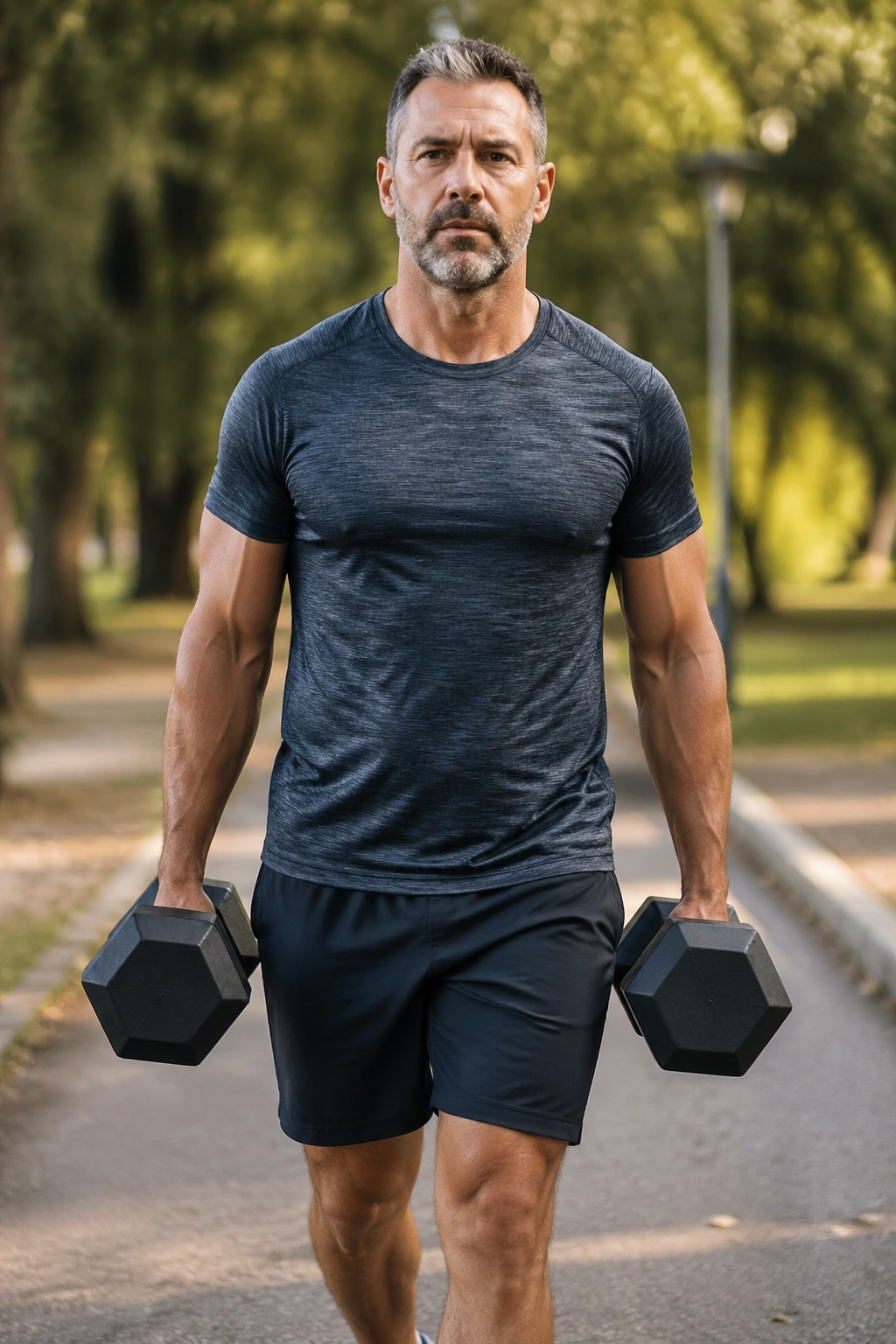
A farmer’s carry is almost insultingly simple. Pick up heavy weights. Walk. Don’t set them down too soon.
That simplicity is why it works so well. Your grip, abs, upper back, hips, and lungs all get involved, and your posture has to stay honest the whole time. If your torso leans or twists, the load tells on you fast.
How to carry without turning it into a shrug contest
Pick dumbbells or kettlebells you can hold for 30 to 60 seconds with a tall spine. Walk in a straight line, turn carefully, and keep your steps controlled.
- 4 to 8 carries
- 30 to 60 seconds each
- 45 to 90 seconds rest
- Try both hands, then one hand for suitcase carries
The suitcase carry — one weight on one side — is especially useful because it forces your core to resist side bend. That kind of trunk work matters if your waistline is the thing you want to tighten up.
This is a quiet workout. No noise, no big sweat puddle, no dramatic choreography. Still, it can hit harder than people expect when the loads get honest.
10. Step-Up Intervals
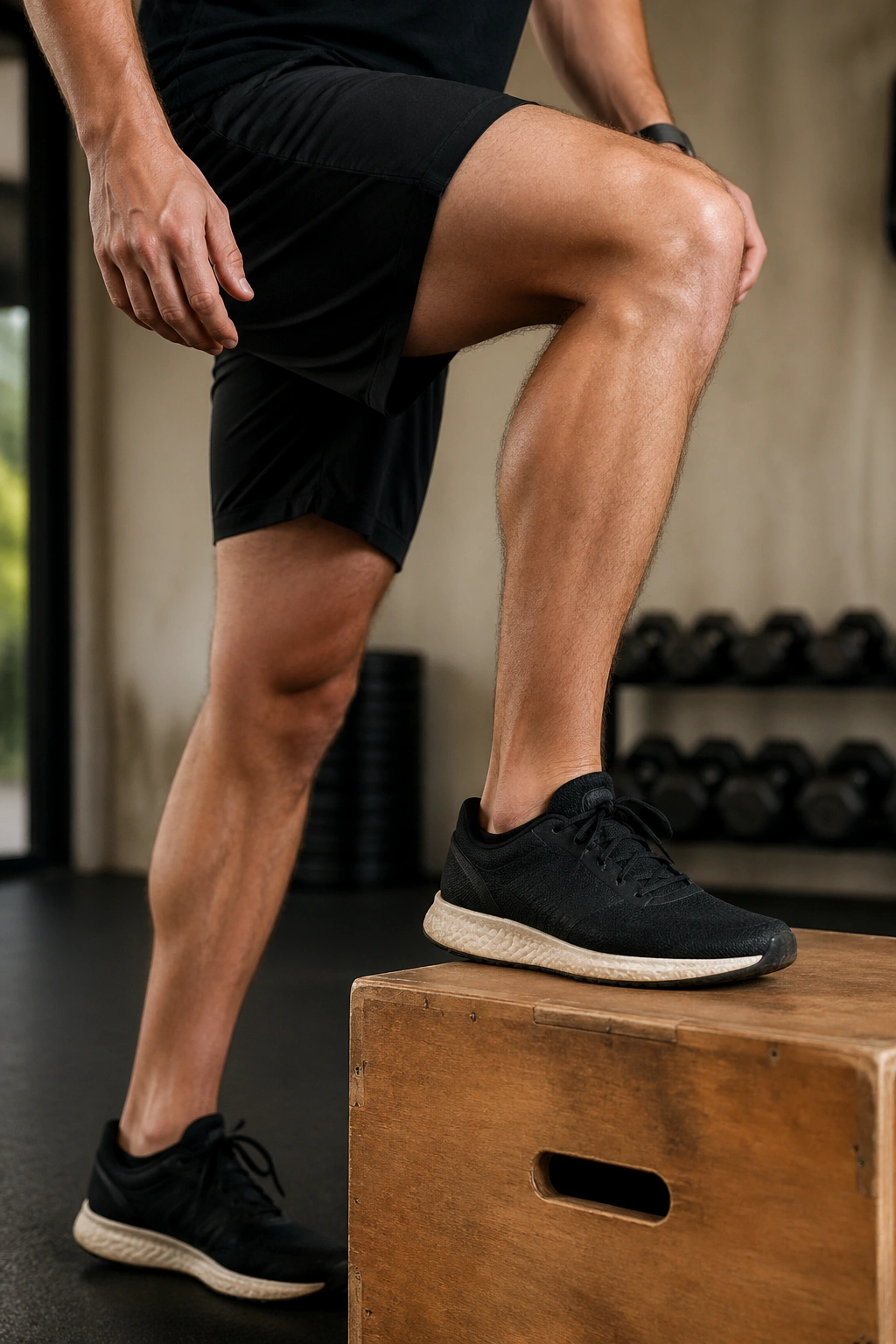
A step-up looks basic, and that’s part of the charm. One foot on a box, drive through the heel, stand tall, step down under control, repeat. It is humble work that exposes weak hips fast.
For men over 40, step-ups are a smart bridge between cardio and strength. They build single-leg control, challenge balance, and raise heart rate without the same pounding you get from jumping.
Keep the box lower than your ego
Use a box or bench that lets your working thigh stay around parallel or a little below. If you have to rock your torso or push off hard with the trailing leg, the step is too high.
Try 8 to 12 minutes of alternating step-ups, resting only when needed. Add light dumbbells once the bodyweight version feels smooth.
A slow lowering phase matters here. Don’t fall off the box. Control the descent and you’ll get more from the glute and quad work.
One thing I like about step-ups is how well they pair with walking. They don’t replace daily movement, but they make that movement more useful.
11. Stationary Bike Power Sets
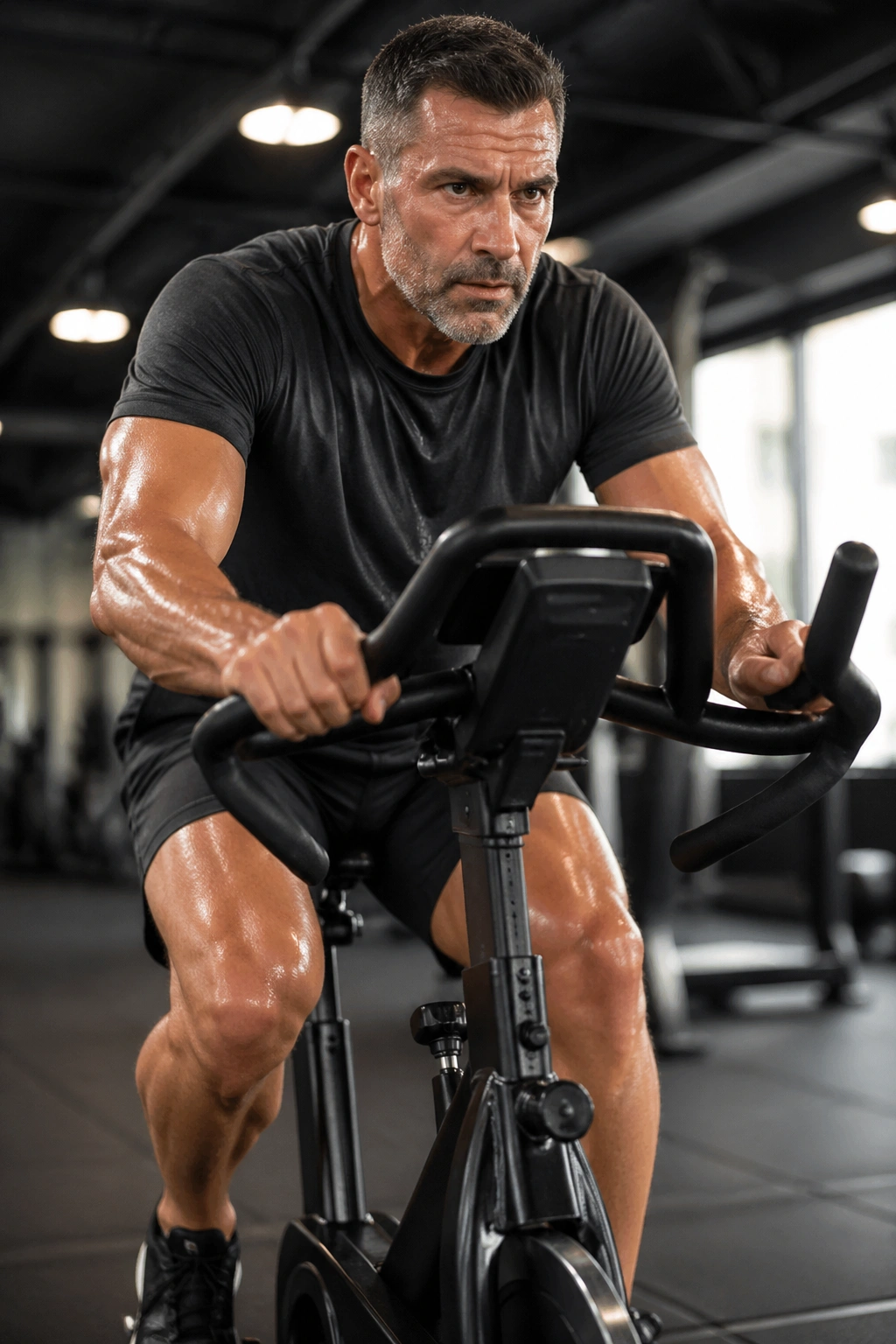
A stationary bike can be brutally effective if you stop treating it like a lazy spin and start treating it like a tool. Set the resistance high enough to matter, then put real force into the pedals.
This is one of the best options for guys whose knees don’t love running but who still want a hard conditioning hit. You stay seated, the impact stays low, and the effort can still get nasty.
Two ways to use the bike
You can go with short bursts:
- 10 seconds hard
- 50 seconds easy
- 10 rounds
Or you can use a steadier interval:
- 30 seconds hard
- 30 seconds easy
- 10 to 15 rounds
Keep the cadence brisk. If you grind so slowly that your knees feel mashed, back off the resistance a little. The hard work should come from power, not from forcing the pedal through mud.
The bike is also a good choice when you want conditioning without trashing your legs before lifting. That makes it easy to fit into a larger weekly plan.
12. Medicine Ball Slams
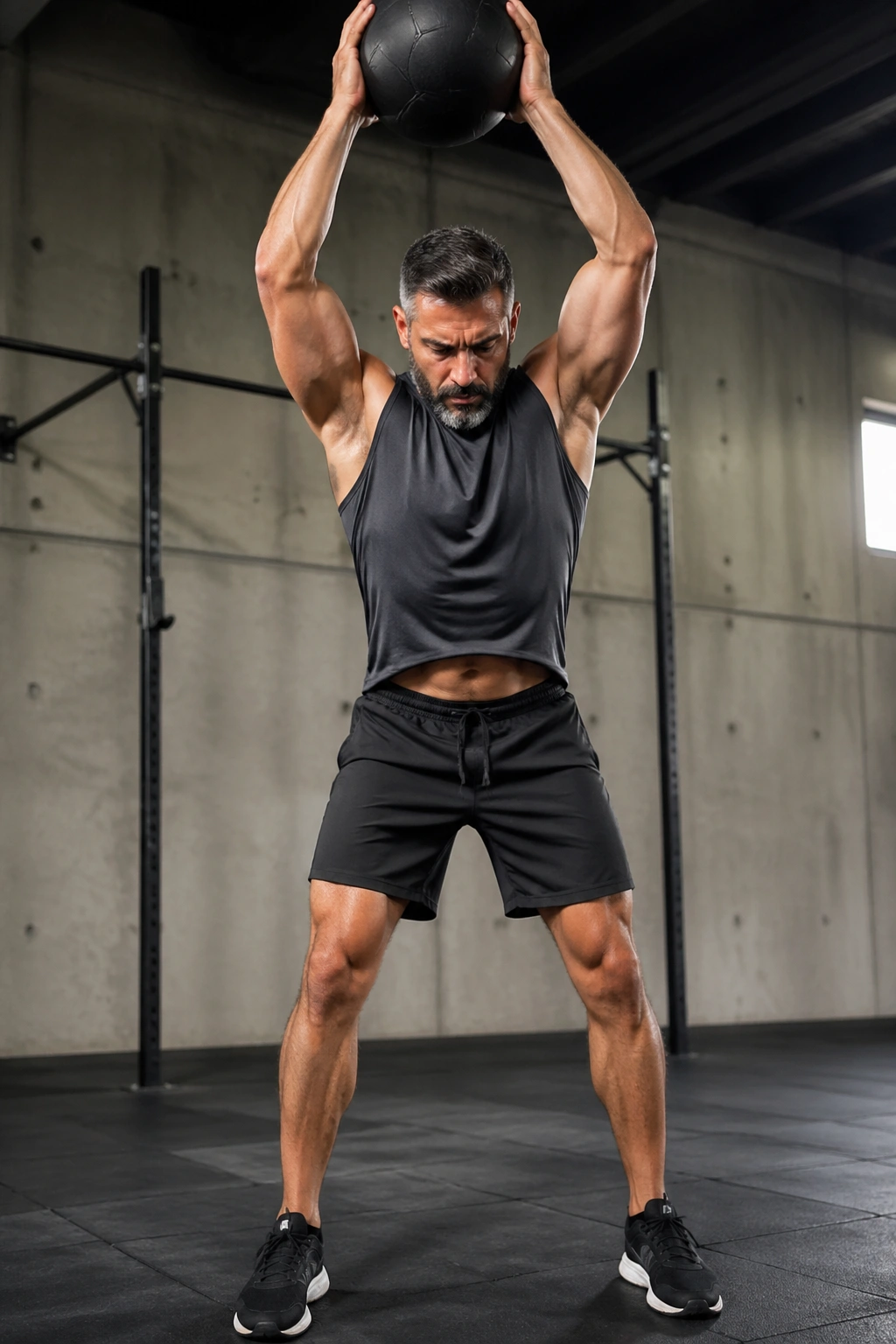
Medicine ball slams are the closest thing to anger management that still counts as training. Pick up the ball, raise it overhead, slam it down, repeat. Simple. Loud. Effective.
Why do they help with belly fat work? Because they combine power, bracing, and repeated effort in a way that keeps the heart rate up without turning into a slow grind. They also feel different from steady cardio, which helps when your brain is tired of the same old routine.
Slam it clean
Use a ball that rebounds safely or deadens on impact, depending on your space. Stand with feet about shoulder-width apart, lift the ball overhead, then slam it down by driving through the core and lats.
- 8 to 12 reps per set
- 6 to 10 sets
- Rest 30 to 45 seconds
- Keep the hinge crisp, not sloppy
Do not throw the slam from a big back arch. That turns a good drill into a lower-back gamble. The power should come from your trunk and hips, not from yanking your spine around.
This one is fast. Which is why people like it. It gives you a hard output block without needing to think too much, and sometimes that’s exactly the point.
13. Shadow Boxing Rounds
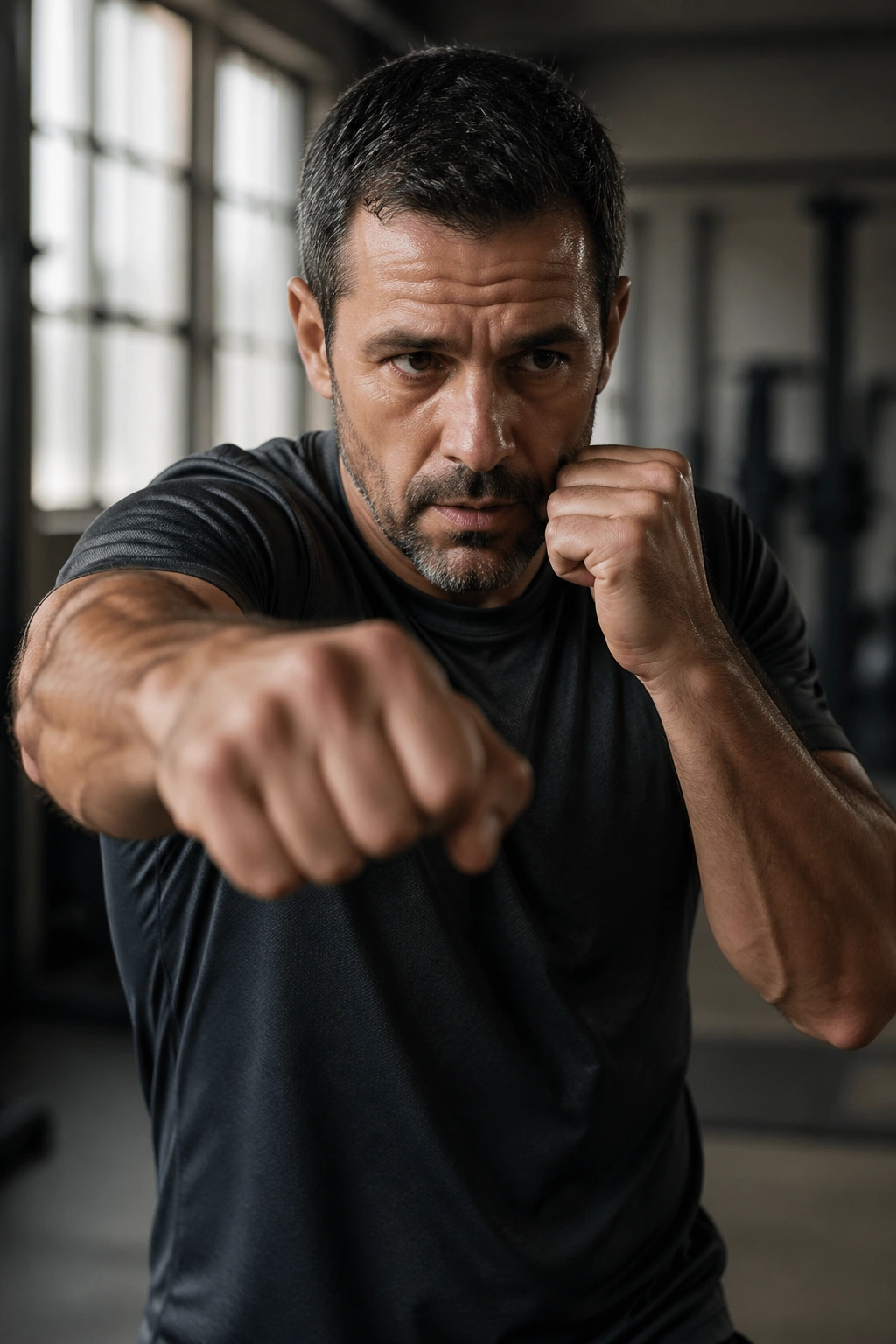
Shadow boxing is underrated because it looks too easy from the outside. Then you try three full rounds with real footwork, snaps, slips, and pivots, and your shoulders and lungs start sending messages.
It’s a great conditioning tool for men over 40 because you can control impact, keep it athletic, and work the midsection through rotation and bracing. The key is staying light on your feet without bouncing like you’re trying to escape the floor.
Build your rounds like a boxer would
Use a timer and work in 2- to 3-minute rounds with 1 minute of rest.
- Jab-cross
- Jab-cross-hook
- Slip, roll, step out
- Add knees or body shots if your space allows
Keep your hands up and your chin tucked. If your shoulders burn after 30 seconds because you’re reaching for every punch, shorten the punches and relax the grip.
A lot of guys over 40 find shadow boxing easier on the body than hard running, but it still feels athletic. That’s the sweet spot. You get sweat, coordination, and enough fatigue to matter without beating your joints into the floor.
14. Turkish Get-Up Practice
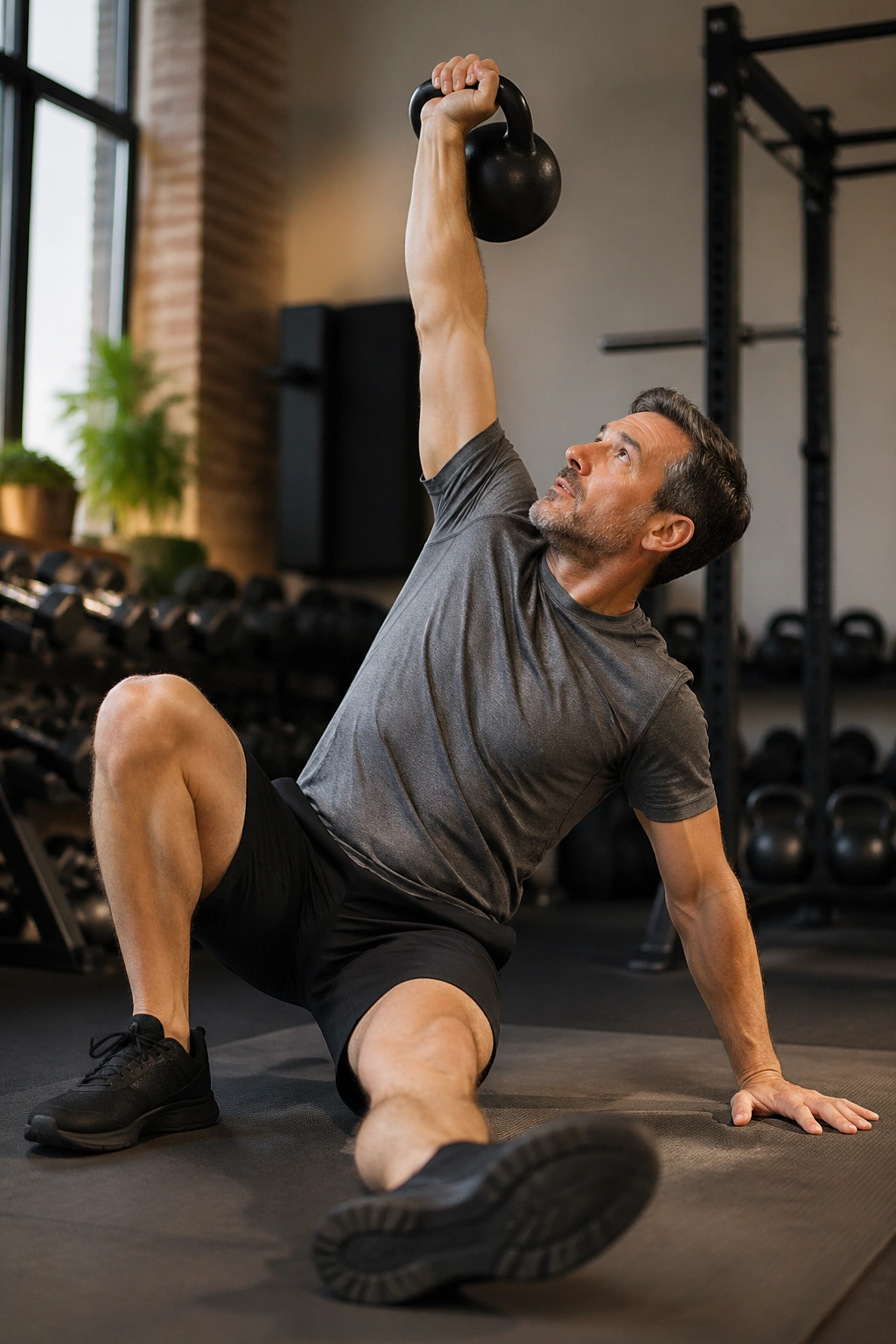
The Turkish get-up is slow work, and that is exactly why it deserves a place here. It trains the shoulders, core, hips, and balance in one long chain, and it exposes weak spots immediately.
Unlike a fast cardio drill, this one asks for patience. You move from the floor to standing and back again while keeping a weight locked overhead. That’s not flashy. It is demanding in a very honest way.
Break the movement into pieces
Start with bodyweight or a very light kettlebell if the pattern is new. Practice the sequence before chasing load.
- Roll to elbow.
- Post to hand.
- Bridge and sweep the leg.
- Kneel tall.
- Stand up.
- Reverse the same path.
Do 1 rep per side for 3 to 5 sets at first. Rest enough to keep each rep clean.
The get-up is a workout and a screen. If one side feels shaky or one shoulder wobbles, you learn fast. That feedback is useful. Painful, sometimes, but useful.
15. Dumbbell Complexes
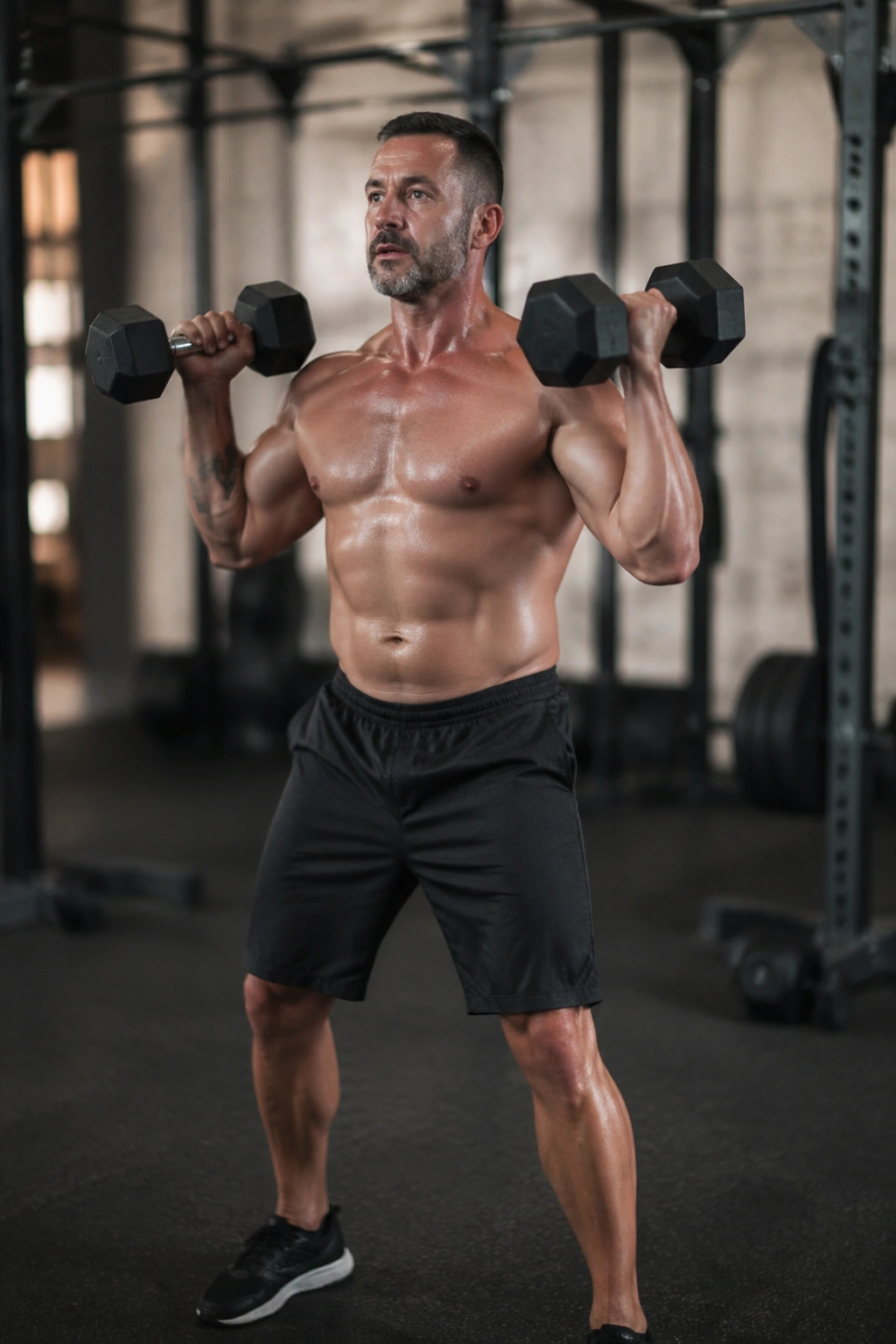
One pair of dumbbells, one round, no setting them down. That’s the whole idea, and it’s a sneaky way to pack a lot of work into a short session.
A complex is different from a normal circuit because the load stays the same across several exercises. The weight has to be light enough for the weakest move, which usually keeps your form honest and your ego in check.
A simple dumbbell complex
Try this sequence with the same pair of dumbbells:
- 6 Romanian deadlifts
- 6 bent-over rows
- 6 hang cleans
- 6 front squats
- 6 push presses
Rest 90 to 120 seconds, then repeat for 4 to 6 rounds.
If your grip or lower back breaks down early, the bells are too heavy. That’s the trap. People grab a weight that feels cool for the first movement and then spend the rest of the round fighting for survival.
This kind of session gets your heart rate up while still using enough muscle to keep the workout from turning into fluffy cardio. That balance matters a lot for men trying to trim the waist and keep size where it belongs.
16. Swimming Intervals

Water changes the conversation. The joints feel lighter, the movement feels smoother, and your breathing still gets challenged in a way that catches up with you fast.
Swimming is a strong pick for men over 40 who carry old shoulder, back, or knee annoyances. It lets you work hard without the same impact, and the resistance of the water keeps the whole body engaged.
Two pool formats that work well
If you have a lap pool, use one of these:
- 25 meters hard, 25 meters easy for 10 to 20 lengths
- 60 seconds moderate, 30 seconds easy for 12 to 16 rounds
Stay smooth. A wild thrash burns energy, sure, but it also wrecks your rhythm and can annoy your shoulders. Freestyle is usually the easiest place to start, though breaststroke and backstroke can help break up the load.
A small detail that matters: if you come up gasping every length, slow the pace by about 10%. The session should feel hard, not like a near-drowning reenactment.
Swimming is one of those workouts that people skip because it takes logistics. If you’ve got access, it’s worth the effort.
17. Elliptical Power Blocks

Why do people mock the elliptical and then use it when their knees are sore? Because it works. They just don’t like admitting it.
The machine can give you a hard interval session with very little impact, which makes it a solid choice when running feels like a bad trade. Used right, it can push heart rate plenty high while letting your joints keep a little dignity.
Make the machine earn its keep
Set the resistance high enough that your legs have to press, not just spin. Then use blocks like these:
- 1 minute hard
- 1 minute easy
- 10 to 15 rounds
If your machine has moving handles, use them for part of the workout. Then go hands-free for a few intervals so your trunk has to stabilize a bit more.
The mistake here is gliding through at a comfortable pace and calling it conditioning. That’s not what we want. You should finish a hard block with your breathing up and your legs warm.
This is especially handy on days when you want to keep the streak going but do not want pounding. That counts for a lot.
18. Rucking With a Weighted Vest
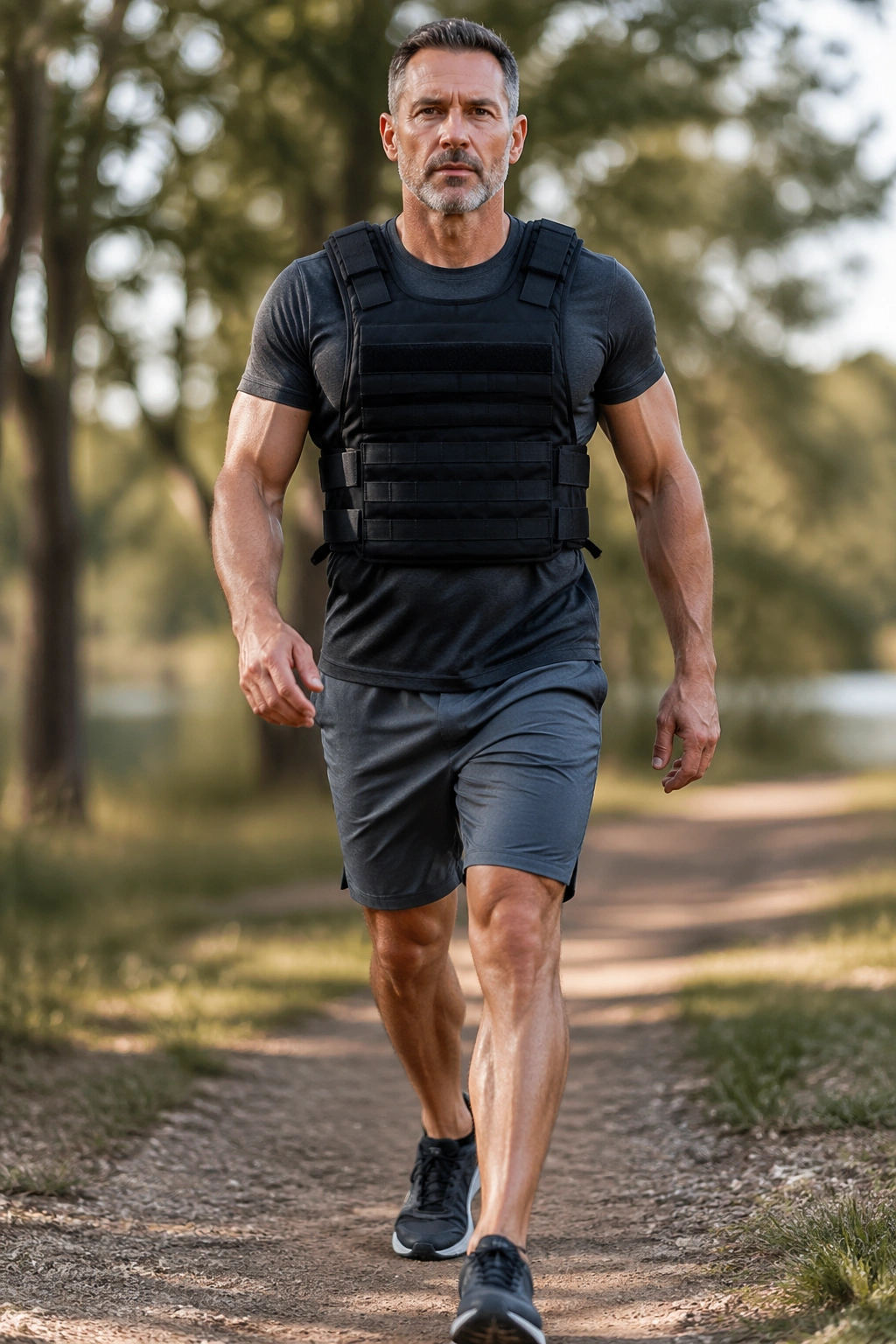
Not every fat-loss session has to look intense to work. Sometimes the smarter move is to walk with extra load and let the miles do the talking.
Rucking — or walking with a weighted vest or backpack — is great for men over 40 because it’s easy to recover from, easy to repeat, and easier on the joints than all-out sprint work. It also pairs well with a busy schedule because you can do it outside, on a treadmill, or around a trail.
Load it right
Start with 10 to 15 pounds if you’re new to it. More is not always better. A pack that sits high and tight is usually friendlier than one that slaps around on your lower back.
- Walk 20 to 45 minutes at a brisk pace
- Keep your posture tall
- Avoid leaning forward at the waist
- Add load slowly, not all at once
A ruck session sounds mild until you climb a hill with it on. Then it makes its point. The beauty is that you can recover from it and still train the next day without feeling flattened.
If you’re trying to build a habit that sticks, this is one of the easiest ones to keep.
19. Resistance-Band Circuit Training
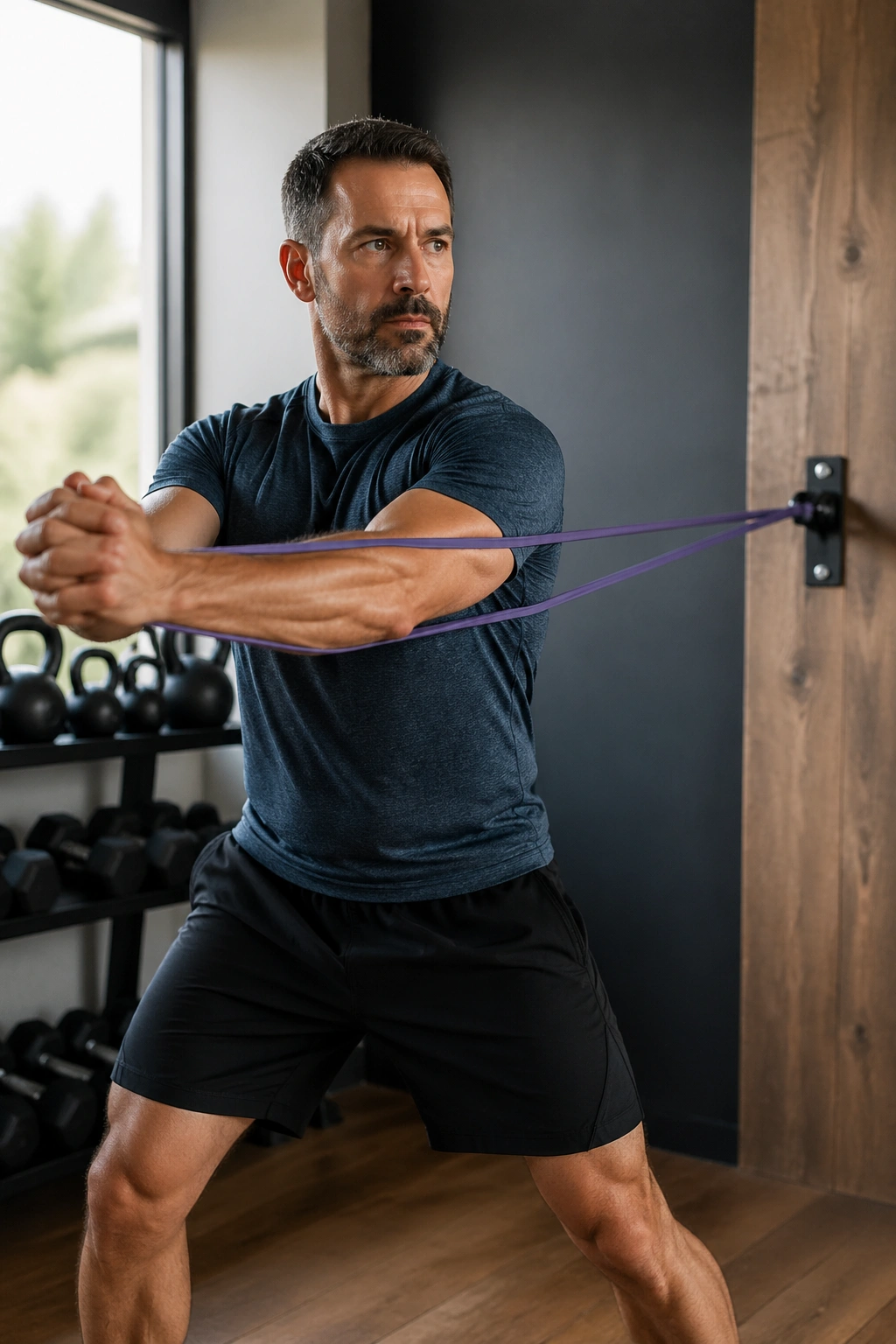
Resistance bands look harmless. Then they start pulling on your shoulders, hips, and upper back, and suddenly the workout has teeth.
Bands are useful for men over 40 because they’re cheap, easy to store, and kind to joints when you choose the right movements. They also work well for travel days or as a lighter conditioning block between heavier sessions.
A band circuit that actually does something
Try 3 to 5 rounds of the following:
- 15 banded squats
- 15 band rows
- 12 band presses
- 20 pull-aparts
- 10 Pallof presses per side
Rest 45 to 60 seconds between rounds.
The Pallof press deserves special mention because it trains anti-rotation, which means your core has to stop the band from twisting you around. That’s useful work for the midsection, and it carries over to carries, hinges, and everyday movement.
Bands won’t replace heavy lifting, but they can fill gaps. They’re especially nice on recovery days when you want to move, sweat a little, and not feel beaten up afterward.
20. Finish Strong

A mixed finisher is where all the useful stuff gets squeezed into a short block. Nothing fancy. Just a few hard movements stacked together so the whole system has to wake up.
This is the session I’d hand to a man over 40 who wants one last useful hit at the end of the week without spending an hour chasing fatigue. Pick four moves, keep the rest tight, and stay honest about form. That’s the whole game.
A clean 12-minute finisher
Rotate through this circuit for 3 to 4 rounds:
- 12 kettlebell swings
- 10 push-ups
- 30-second farmer’s carry
- 12 bike calories or 150-meter row
Rest 45 seconds between rounds.
If you do not have the equipment, swap in step-ups, mountain climbers, or battle rope waves. The exact tools matter less than the pattern: full-body effort, short rest, repeat.
The bigger point is consistency. One hard, well-placed finisher each week beats a random pile of brutal workouts that leave you sore, annoyed, and skipping the next session. Keep the moves simple, keep the pace honest, and let the work stack up over time.
