



A clean plank looks boring until your midsection starts shaking. Most plank exercises don’t ask for speed; they ask for patience, and that is where sloppy ribs, loose glutes, and lazy shoulders get exposed fast.
The appeal is not fancy. A plank teaches your body how to stay stiff without stiffening the wrong places. Done well, it lights up the abs, the sides of the waist, the glutes, and even the muscles between the shoulder blades. Done badly, it becomes a small backbend held on the floor.
That difference matters. A lot of people think a plank is just a timed suffering contest, then wonder why their lower back feels cranky after thirty seconds. The real win is a straight line from head to heels, a steady breath, and enough tension that nothing wobbles when you shift a hand or lift a foot.
Start with the version you can hold cleanly, then build toward the variations that make your core work harder without turning the whole thing into a mess. The first one is the classic for a reason.
1. Forearm Plank
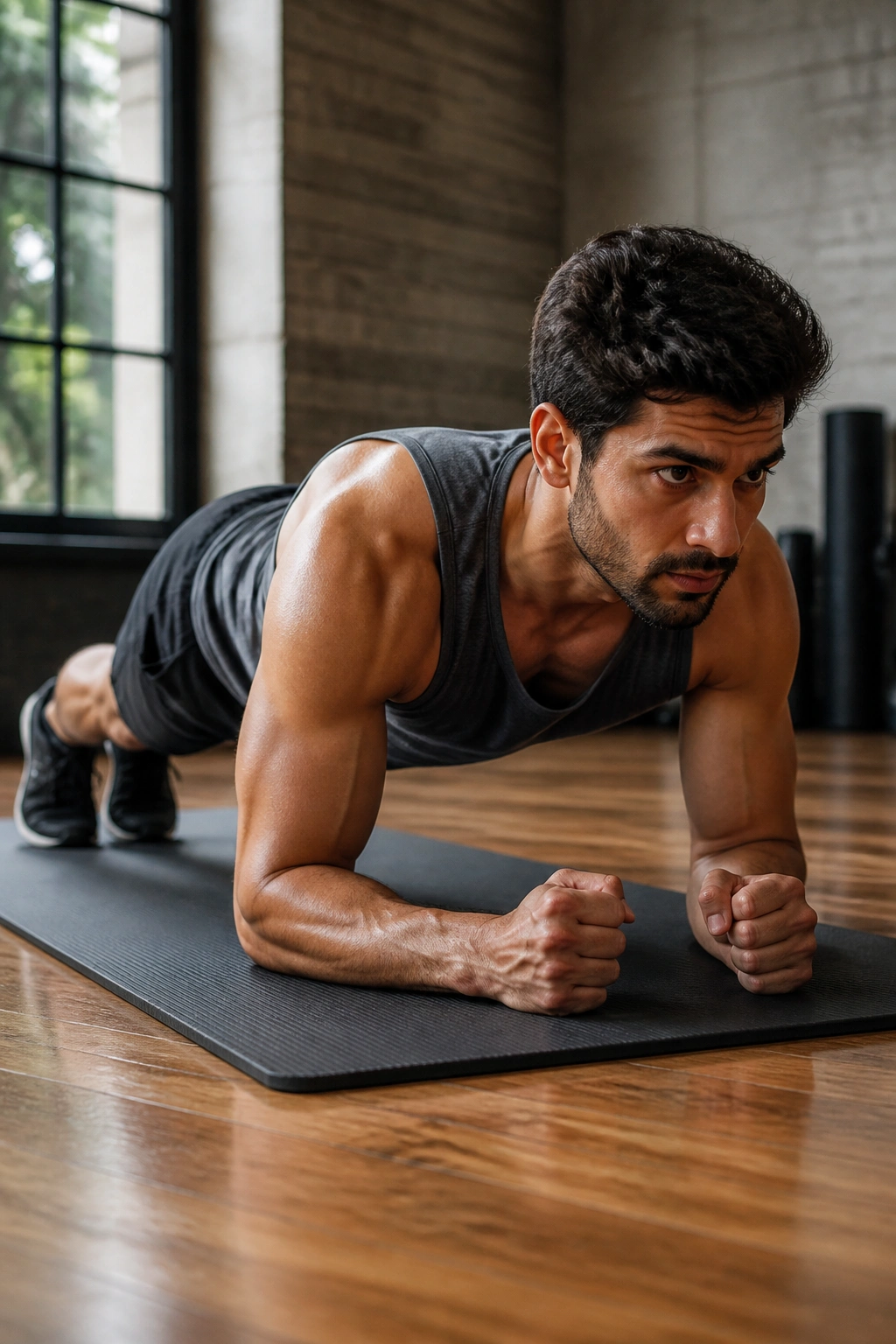
The forearm plank is the honest one. If your hips sag or your ribs flare here, the floor tells on you immediately.
Set your elbows under your shoulders, squeeze your glutes, and pull your ribs gently toward your pelvis. Your body should feel like one long board, not a hammock. If your neck cranes forward, reset it. If your lower back starts talking, shorten the hold and clean up the position.
What to Feel Before You Care About Time
A good hold is not about how long you survive. It’s about where the work shows up. You should feel the abs brace, the glutes turn on, and the shoulders pressing away from the mat without shrugging to your ears.
- Elbows stacked roughly under shoulders
- Feet about hip-width apart for a steadier base
- Glutes squeezed hard enough to stop the low back from arching
- Breath staying quiet and controlled, not held hostage
No cheating.
If you can only hold it for 15 or 20 seconds with real tension, that beats a lazy minute every time. Quality first. Always.
2. High Plank
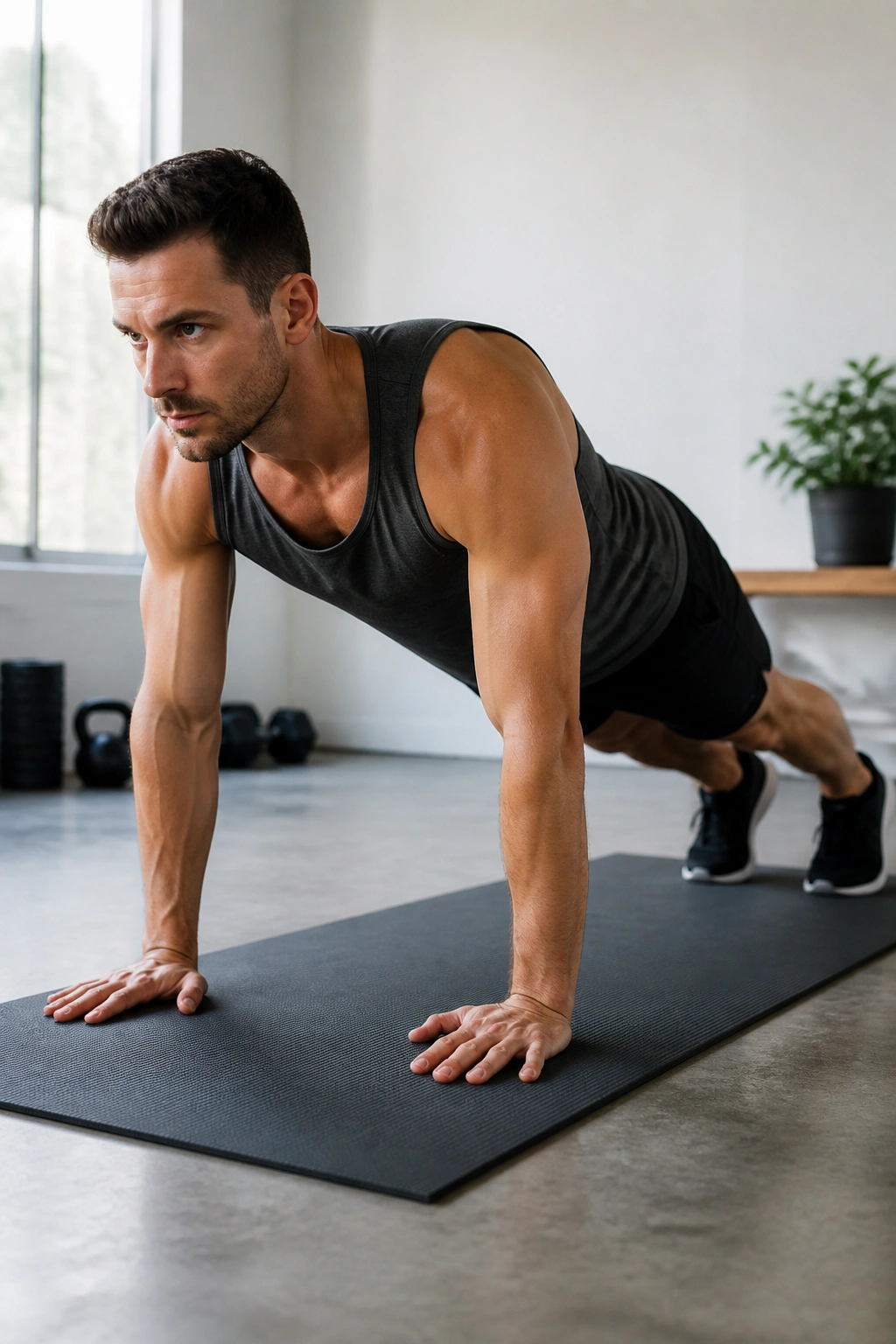
Why do some people prefer the high plank when the forearm version feels harsher? Because the wrist angle changes the whole feel of the hold, and some bodies simply line up better on straight arms.
In a high plank, your hands sit under your shoulders, your elbows stay soft, and you press the floor away as if you’re trying to make the room a little taller. That push matters. It wakes up the serratus anterior and the shoulder stabilizers in a way people often miss when they just “hang out” over the mat.
If your wrists complain, try a pair of dumbbells, push-up handles, or even a slightly elevated surface like a bench. That small adjustment can make the position usable instead of annoying. And yes, that counts.
The common mistake is turning the high plank into a collapsed hang. Don’t. Keep the upper back broad, the glutes tight, and the torso quiet. The more still your ribs stay, the more honest the exercise gets.
3. Side Plank
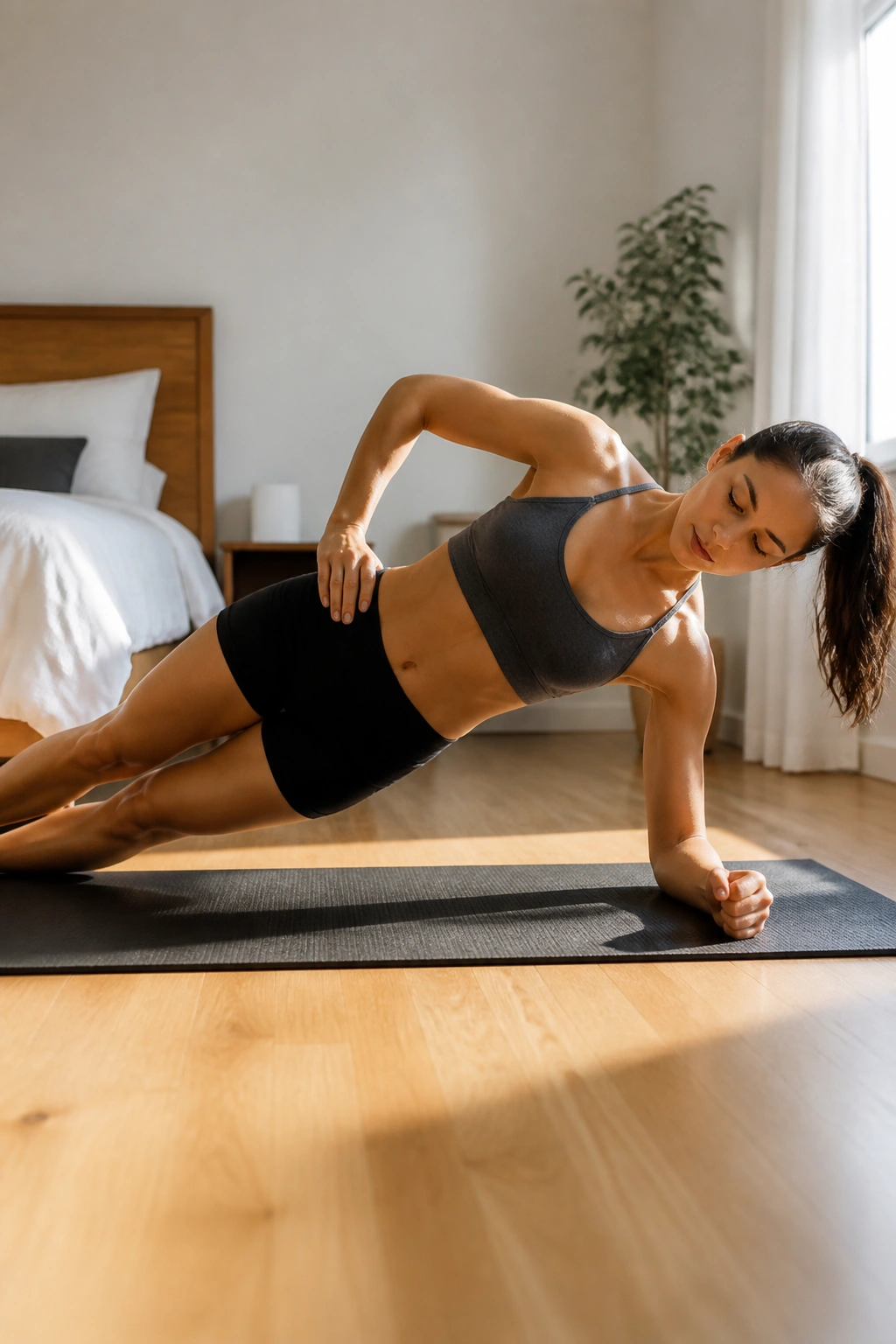
A side plank looks simple from across the room. Up close, it asks a lot more from the obliques, the hip on the floor side, and the shoulder that’s holding you up.
Think about stacking your joints like spare tires in a garage: wrist or elbow under shoulder, hips stacked, feet stacked or staggered. The top hip wants to drift forward. Keep it from doing that. That little correction changes the whole exercise.
How to Keep the Line Clean
A lot of people let the lower shoulder sink or the chest rotate toward the floor. That steals work from the waist and dumps it into places that were never meant to carry it.
- Press the floor away through the supporting forearm or hand
- Keep the top ribs from rolling forward
- Lift the bottom hip as if it were being pulled by a string
- Breathe into the side of the ribs, not the neck
If a full side plank feels ugly, drop the bottom knee first. That bent-knee version still teaches the same pattern, and it does it without making your shoulder and waist fight a losing battle.
4. Reverse Plank
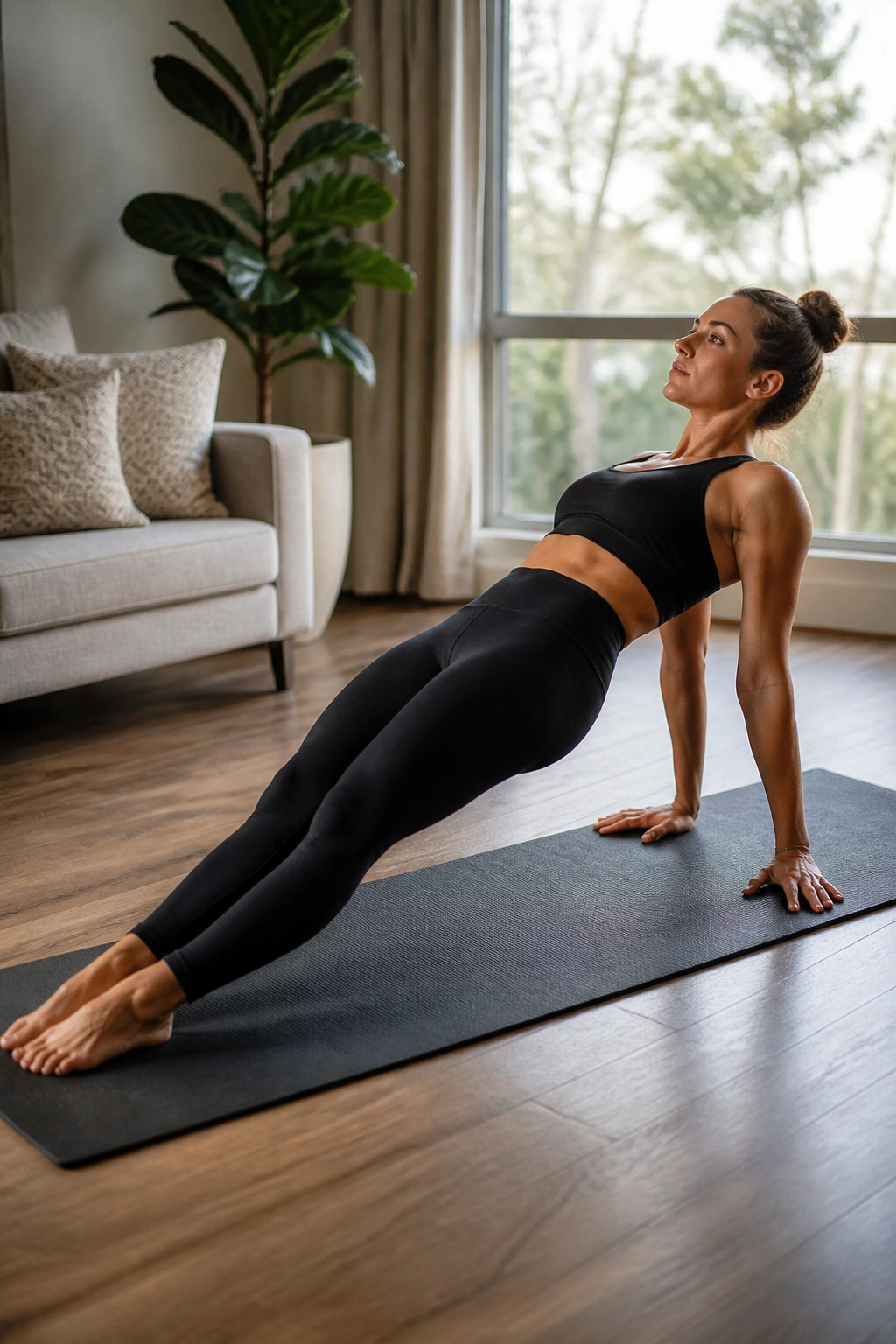
Most people train the front of the body and call it a day. The reverse plank reminds you that the back side matters too.
Sit with your legs out long, place your hands behind your hips, and lift your chest so your body makes a straight line from shoulders to heels. The glutes and hamstrings do a lot of the work here, but the chest and front of the shoulders get a nice opening too. If you sit at a desk all day, this one can feel like a breath you didn’t know you needed.
The catch is shoulder comfort. If your hands are too far behind you, the position gets cranky fast. Bring them a little closer if needed, or start with knees bent. That small bend cuts the leverage and makes the hold more manageable.
This is not a flashy plank. It’s a useful one. And useful usually beats flashy.
5. Plank Shoulder Taps
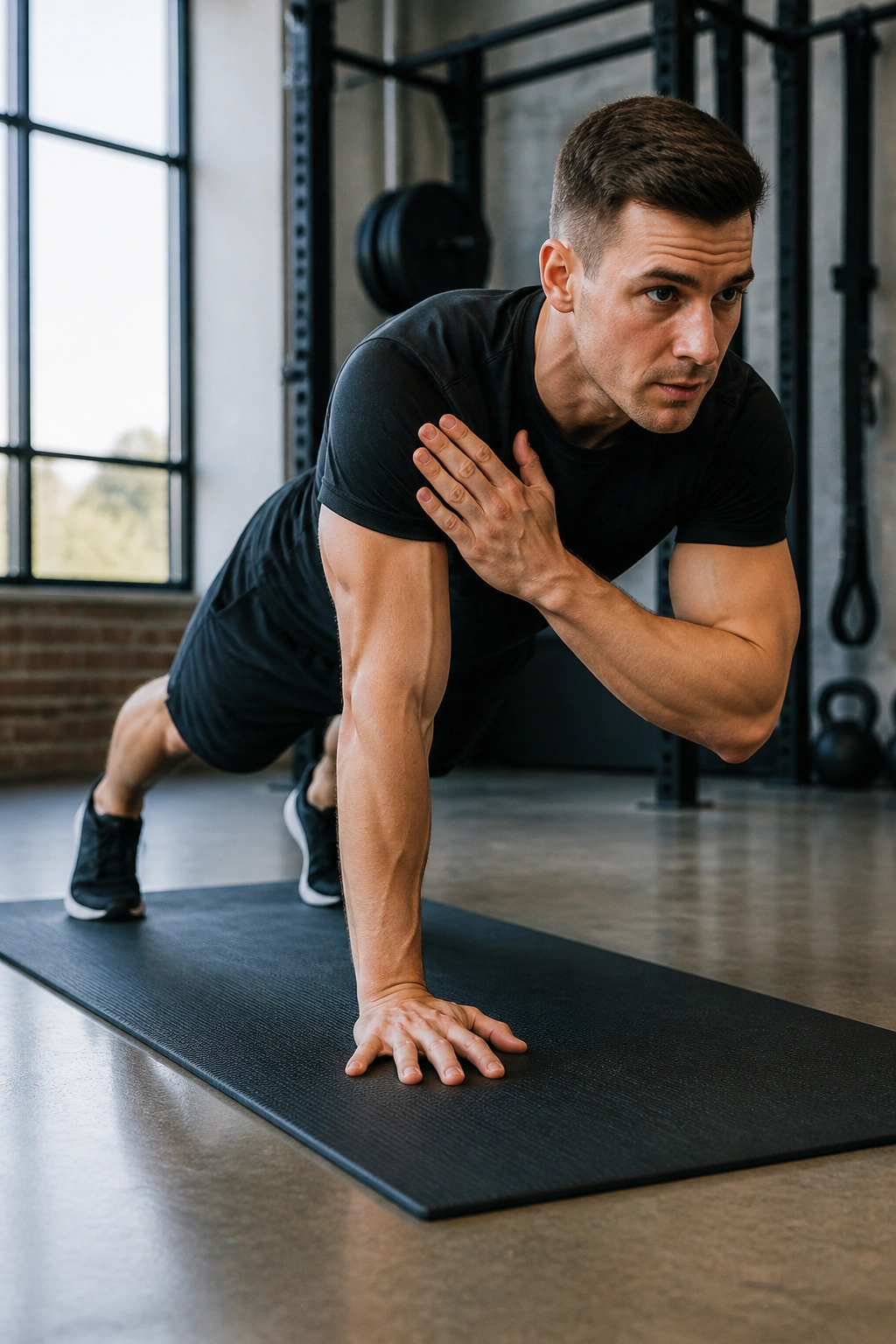
Your body wants to sway here. That’s the whole point of the exercise.
From a high plank, spread your feet a little wider than hip-width, then lift one hand and tap the opposite shoulder with as little rocking as possible. The less your hips swing, the more the anti-rotation work hits. It’s a sneaky little drill — one tap can tell you a lot about whether your trunk is doing its job.
What Usually Goes Wrong
People rush the taps and turn them into a sloppy balance drill. Slow down. The hand should leave the floor without the pelvis shifting side to side like a boat in rough water.
- Keep the feet wide enough to stay steady
- Tap the shoulder, not the ribs
- Exhale lightly as the hand lifts
- Stop if the low back starts to arch
A smaller tap is better than a dramatic reach. Short range, clean torso, steady breath. That’s the winning combo.
6. Plank Knee Drives
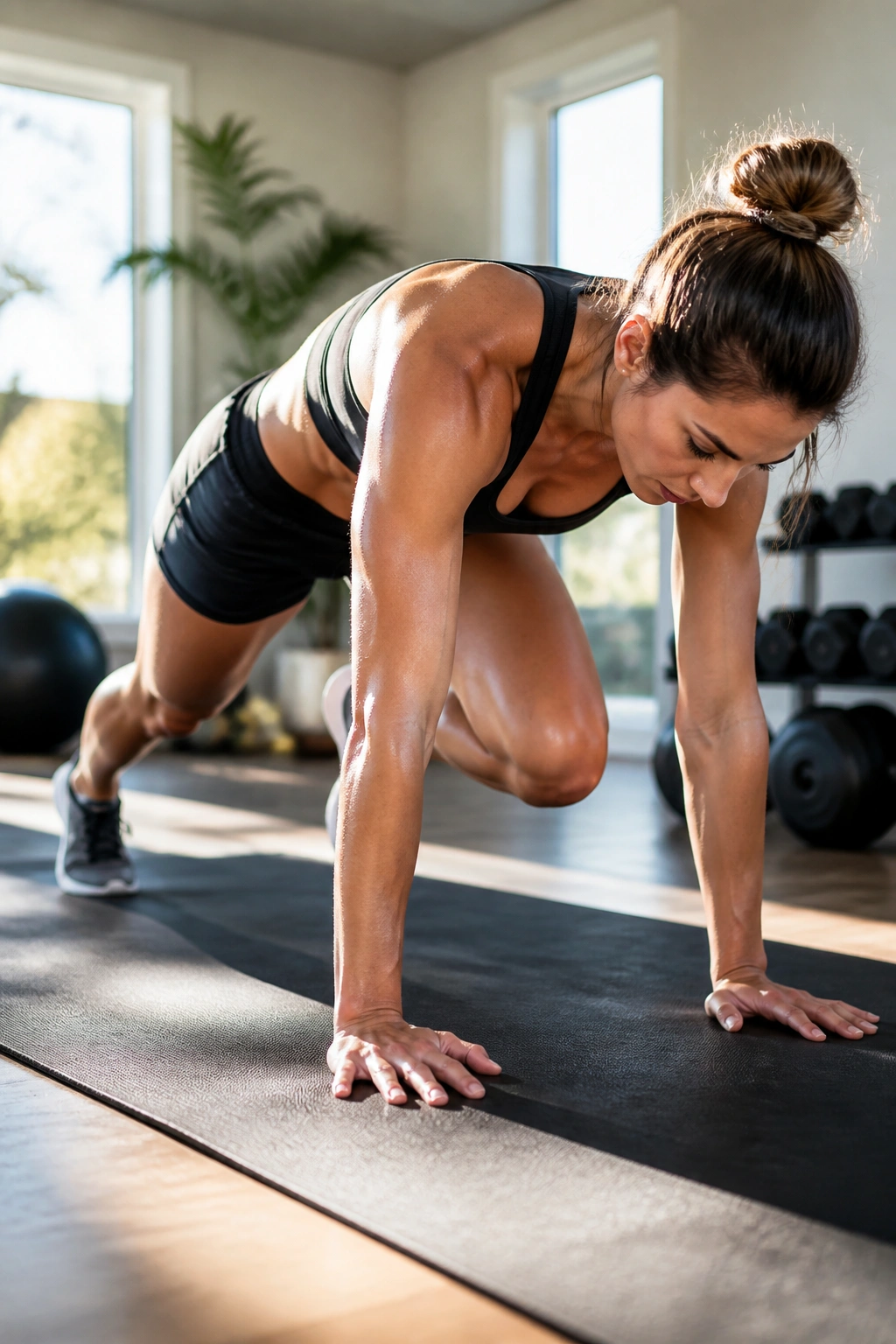
Stop treating this like a cardio drill if your torso folds every rep. The knee drive works best when the trunk stays braced and the moving leg does the moving.
From a high plank, bring one knee toward the same-side elbow or toward the centerline under your chest, then return it with control. The hips should stay level. If they hike up and down on every rep, you’re mostly training chaos.
This variation is useful because it combines core stability with hip flexion. It can also expose side-to-side weakness fast. One side often feels cleaner than the other, and that little difference is worth paying attention to.
Make the Knee Move, Not the Whole Body
Keep your shoulders over your wrists and avoid yanking the knee so far forward that your upper back collapses. A tight, deliberate drive beats a big ugly one.
Try 6 to 10 controlled reps per side. If the rhythm turns frantic, slow the pace and shorten the range. The exercise should look smooth, not frantic.
7. Up-Down Plank
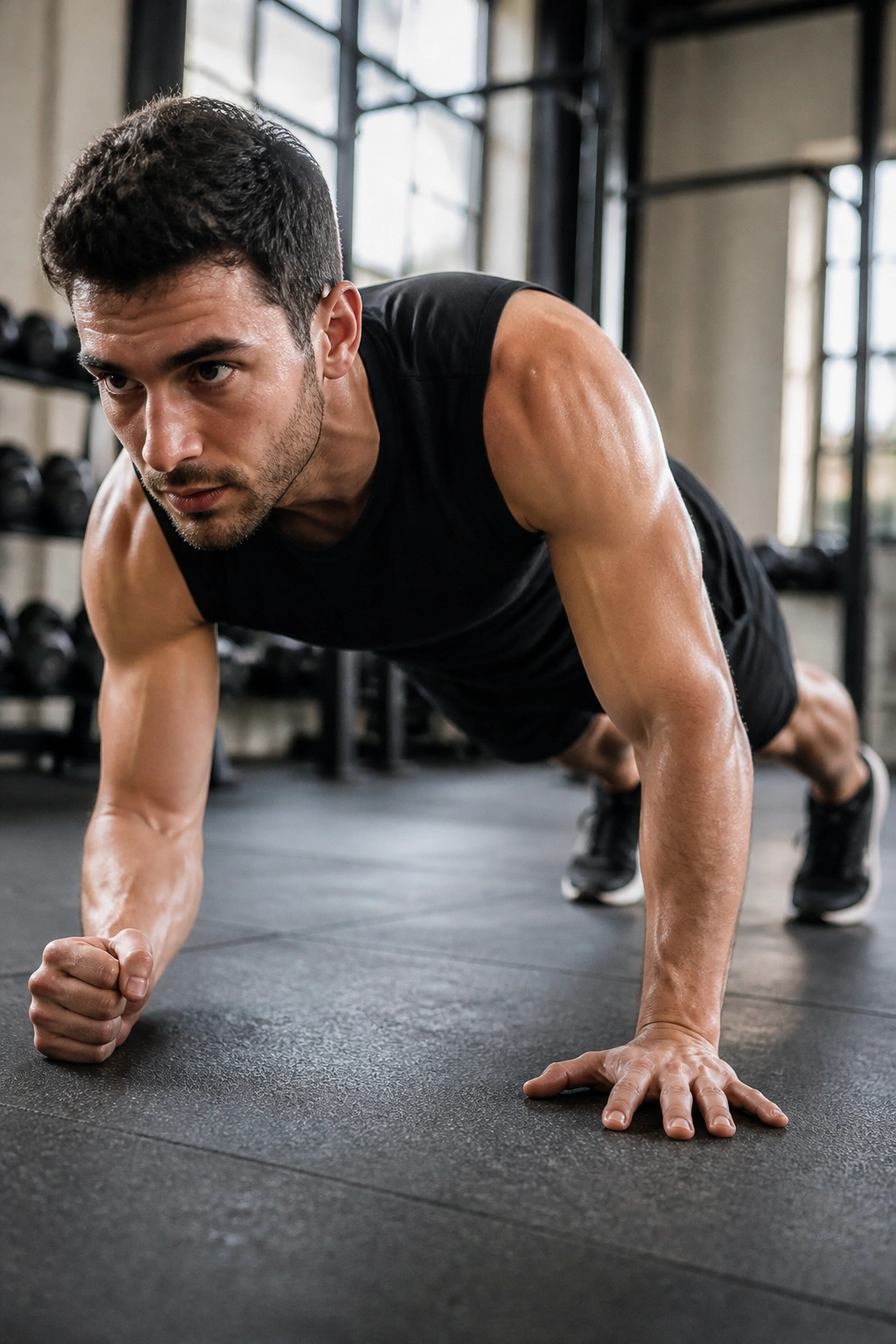
Elbows. Hands. Elbows. Hands.
That’s the game, but only if you can do it without twisting like a door hinge with bad oil. Up-down planks build shoulder endurance, triceps strength, and core control at the same time, which is why they show up in a lot of solid bodyweight routines.
Start in forearm plank, plant one hand under the shoulder, then press up to the hand on that side, followed by the other hand. Lower back down one arm at a time, and keep the hips as square as you can manage. If one side always leads, that’s fine for a start — just alternate on the next set.
The mistake is racing through the movement. Fast reps usually mean the pelvis is swinging and the lower back is doing too much. Slow it down until each hand placement feels deliberate. If your shoulders burn and your waist stays quiet, you’re in the right lane.
8. Plank Walkouts
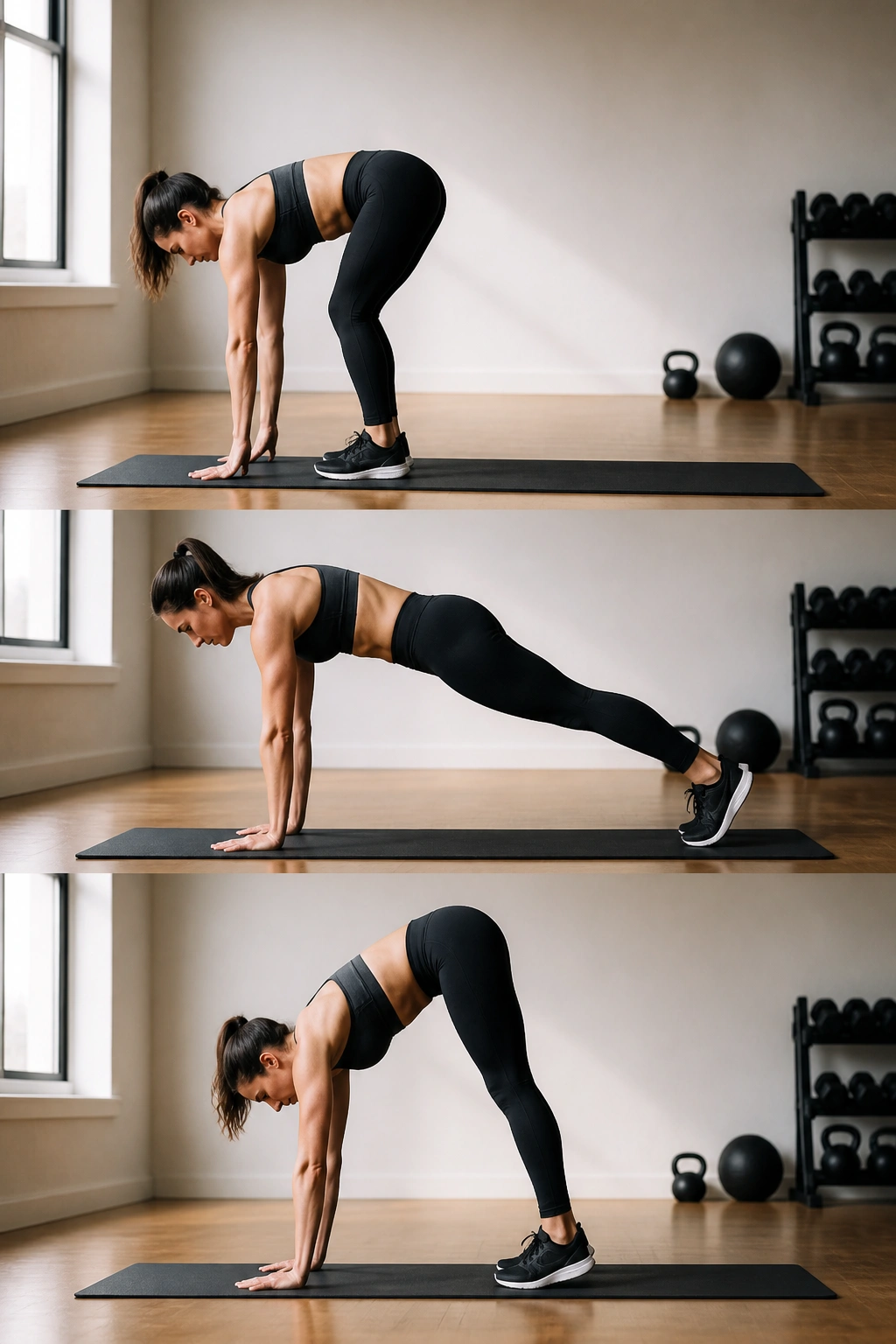
Why does walking your hands a few inches forward make a plank feel so different? Because leverage changes everything, and your abs notice the extra reach right away.
From a standing position, hinge at the hips, walk your hands forward until you land in a high plank, hold for a beat, then walk them back and stand tall again. You can also start in plank and walk the hands a little farther out and back if that version suits your space better. Either way, the long line through the body gets a lot harder to protect.
The move hits the shoulders, lats, and deep abdominal wall in a way that feels almost unfair. If the low back starts to sag as the hands move forward, shorten the range. That is not a failure. It’s feedback.
A smooth walkout should look calm from the outside. Inside, it should feel like your torso is bracing before every inch of movement. That’s the point.
9. Spider-Man Plank
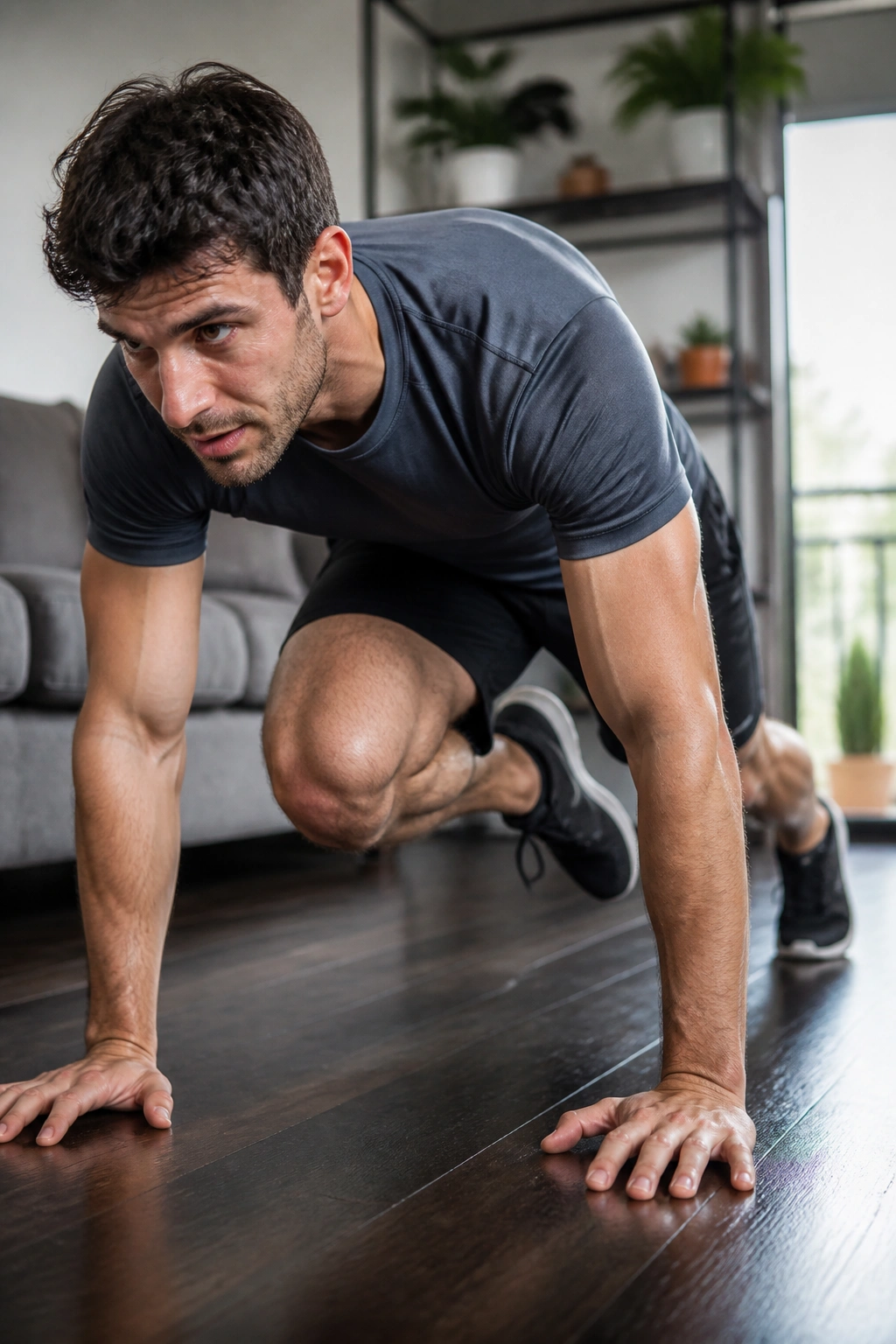
One knee out to the elbow changes the whole story.
Spider-Man plank combines core stability with a cross-body crunch, so the obliques and hip flexors both get dragged into the work. From a high plank, drive one knee toward the outside of the same-side elbow, pause for a split second, and send it back. Then switch sides. If you swing the leg wildly, you miss the point.
Why It Feels Messy When Done Well
The movement is supposed to challenge your ability to stay controlled while a leg travels across the body. That means the shoulders keep pressing down, the ribs stay tight, and the pelvis doesn’t swivel open.
- Keep the knee low and deliberate
- Avoid rounding the upper back just to chase the elbow
- Step the foot back under control instead of dropping it
- Use a slower tempo if the hips keep hiking
This is one of those plank exercises that reveals impatience fast. The cleaner the rep, the more useful it gets.
10. Plank Jacks
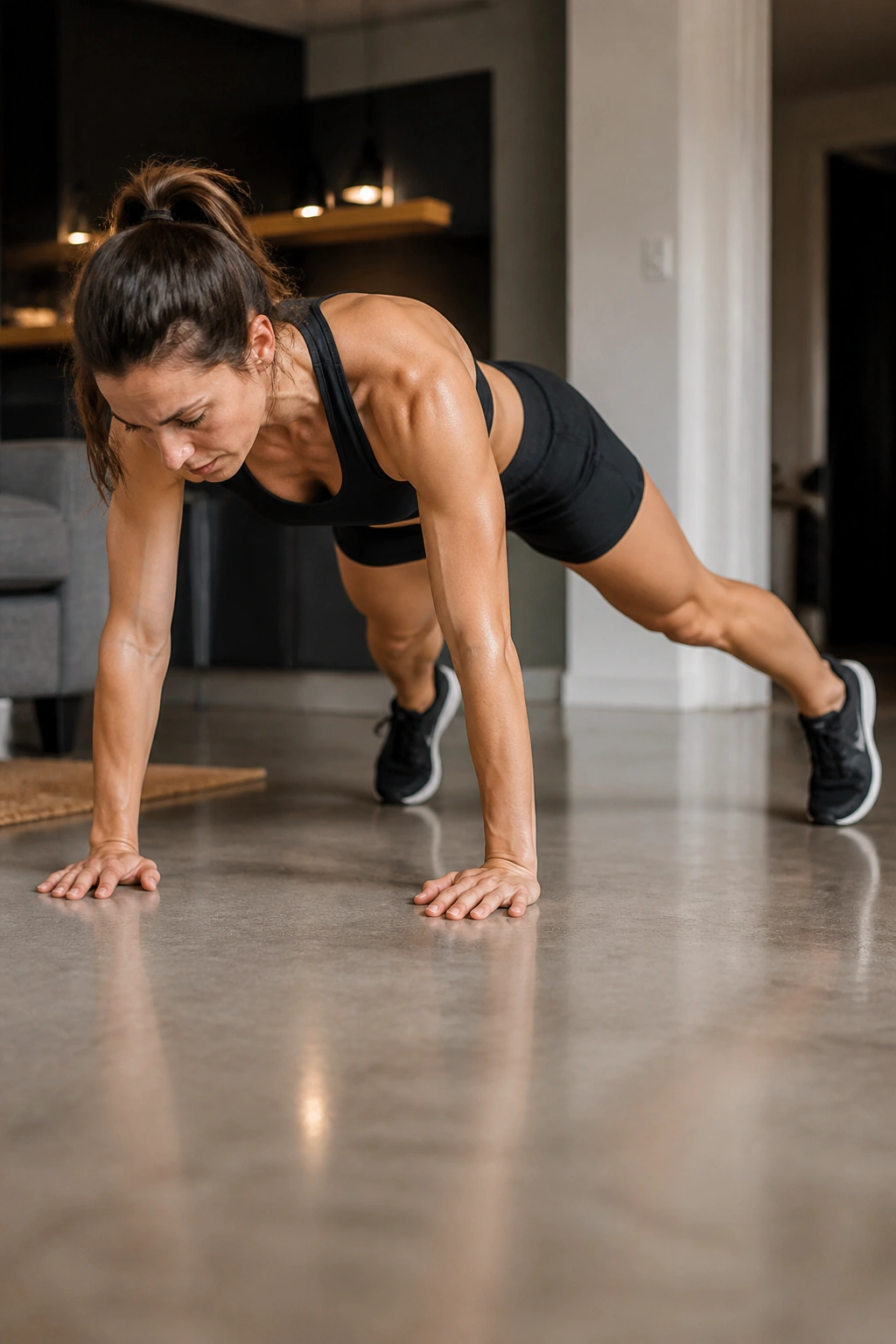
Not every plank has to be grim and still. Plank jacks bring a little pulse into the mix, and they can turn a core drill into a short conditioning set without needing any equipment.
From a high plank, hop the feet out and in like a jumping jack. Keep the hands planted, the shoulders steady, and the torso from bouncing like a cheap trampoline. If the jump makes your lower back arch, step the feet in and out instead. That slower version still counts.
The best version of this move feels springy in the legs and anchored through the shoulders. The worst version turns into a mess of foot noise and hip sway. Go smaller than you think you need to. A few inches is enough.
Plank jacks are useful as a finisher, especially when you want the heart rate up without abandoning the core entirely. They’re also a good reminder that planks do not have to be static to be disciplined.
11. Body Saw Plank
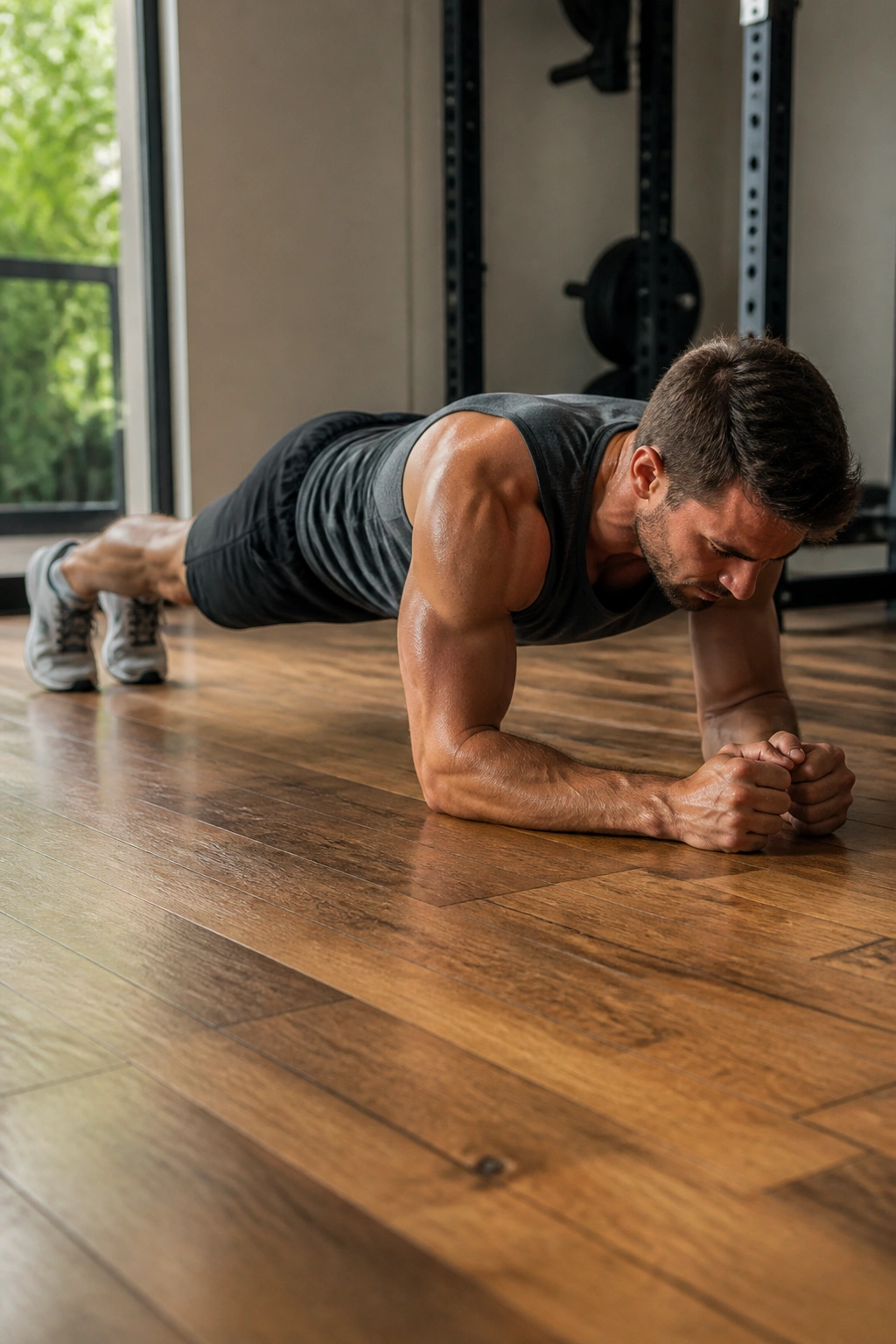
Put your elbows on towels or sliders and move only a few inches.
That tiny glide forward and back makes the body saw one of the meaner plank variations on the list. From a forearm plank, use your toes and forearms to slide the body backward a bit, then forward again. The abs have to brace hard to keep the torso from folding, and the shoulders get dragged into the party too.
How Small Is Small?
Smaller than most people think. If you sweep too far forward, the ribs pop and the low back arches. Stay in a short range until you can hold the position with a flat, quiet trunk.
A smooth floor helps here. Socks on hardwood, sliders on tile, or towels on a polished surface all work. If the slide sticks, the exercise changes in a bad way.
This one is brutal in the best sense. A short set can light up your whole center without needing many reps. Ten controlled saws is plenty for most people.
12. RKC Plank
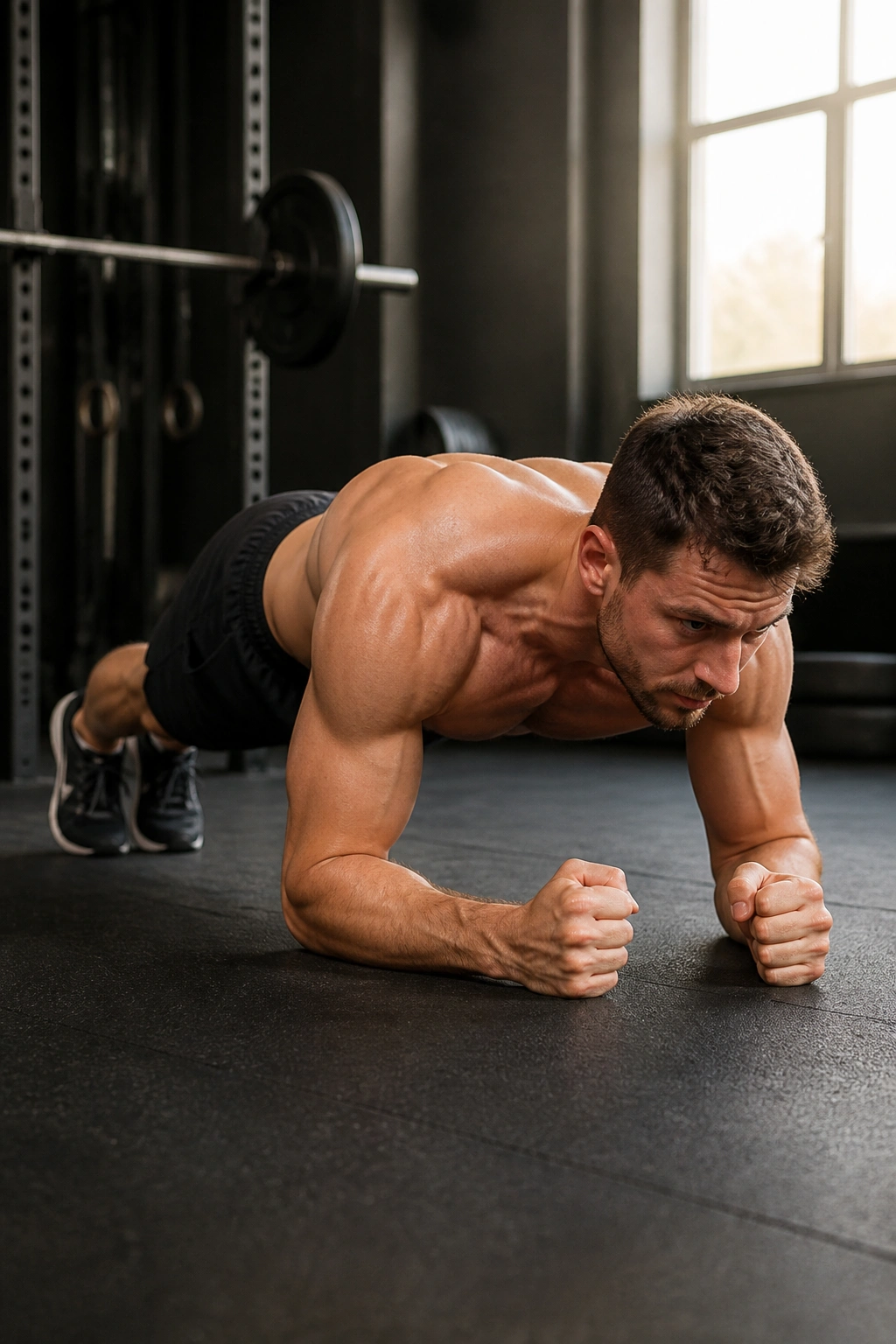
What if a 15-second plank felt harder than a full minute? That’s the whole idea behind the hard-style plank, and it’s why this variation has a loyal following.
Set up in a forearm plank, then squeeze the glutes hard, pull the elbows toward the toes without moving them, and press the forearms into the floor as if you’re trying to bend the mat. The body should feel like a coiled spring. Nothing loose. Nothing lazy.
How to Create Real Tension
- Clench the glutes before you start the timer
- Pull the kneecaps up by tightening the thighs
- Press the elbows down and slightly back
- Keep breathing, even while you’re bracing
The holds are short on purpose. Ten to 20 seconds is plenty for a tough set. Long holds with no tension can turn into junk miles. Short, sharp holds with full-body tension are the better deal here.
This is one of my favorites because it teaches honesty. You cannot fake it for long.
13. Long-Lever Plank
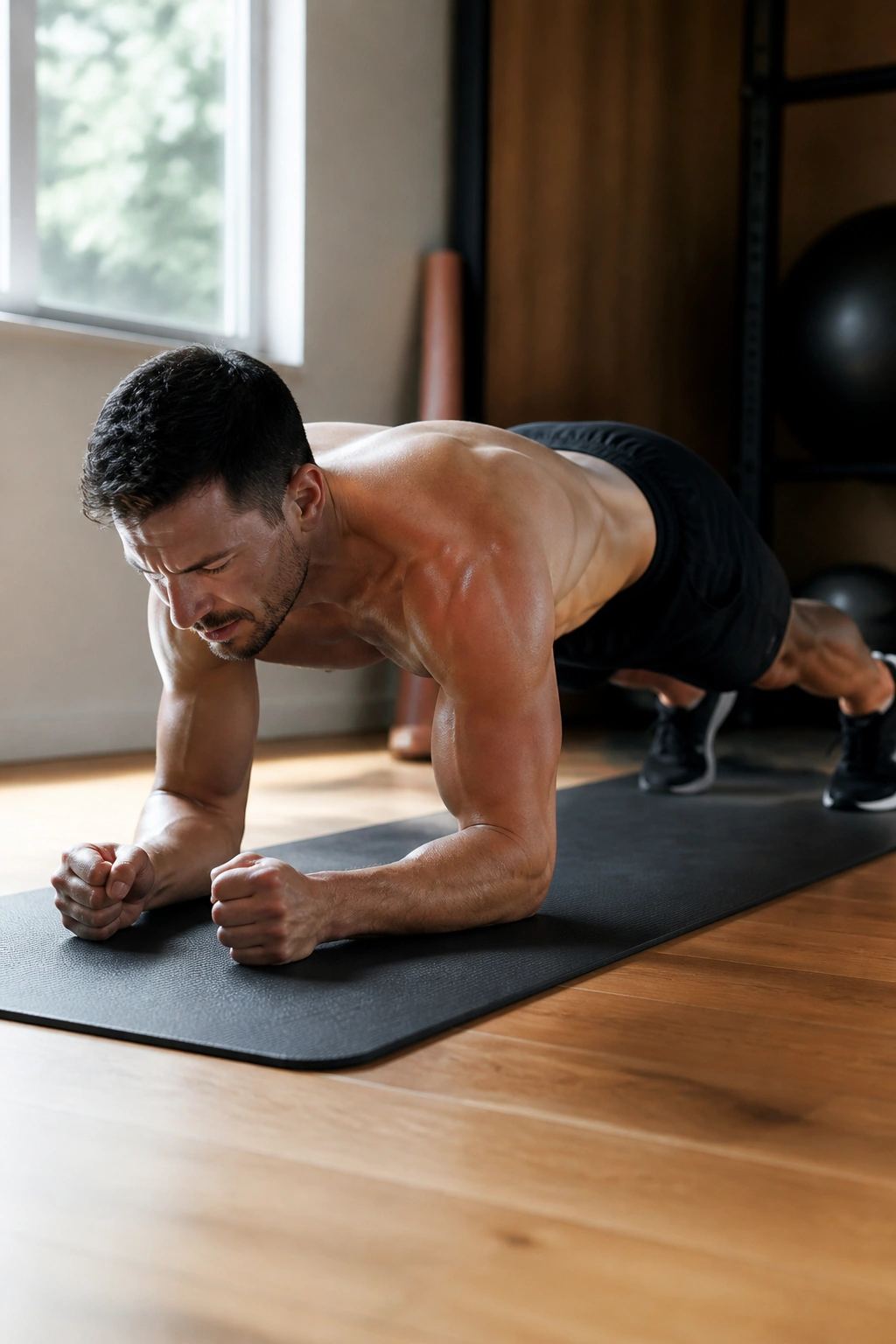
A few inches matter more than people expect. Slide the elbows forward four to six inches from the usual forearm plank position, and suddenly the abs and shoulders have to work much harder to keep you from folding.
That longer lever changes the math. The farther the elbows drift in front of the shoulders, the more the torso has to resist extension. In plain English: the low back wants to sag, and your job is to stop it.
Start small. Four inches is enough to feel the difference. If your spine stays solid there, creep a little farther forward on the next set. If the ribs pop up right away, you’ve gone too far for now.
This is not a beginner plank. It’s a progression for people who already own the basic forearm version and want more challenge without adding movement. Harder does not need to mean faster. Here, harder means stricter.
14. Single-Leg Plank
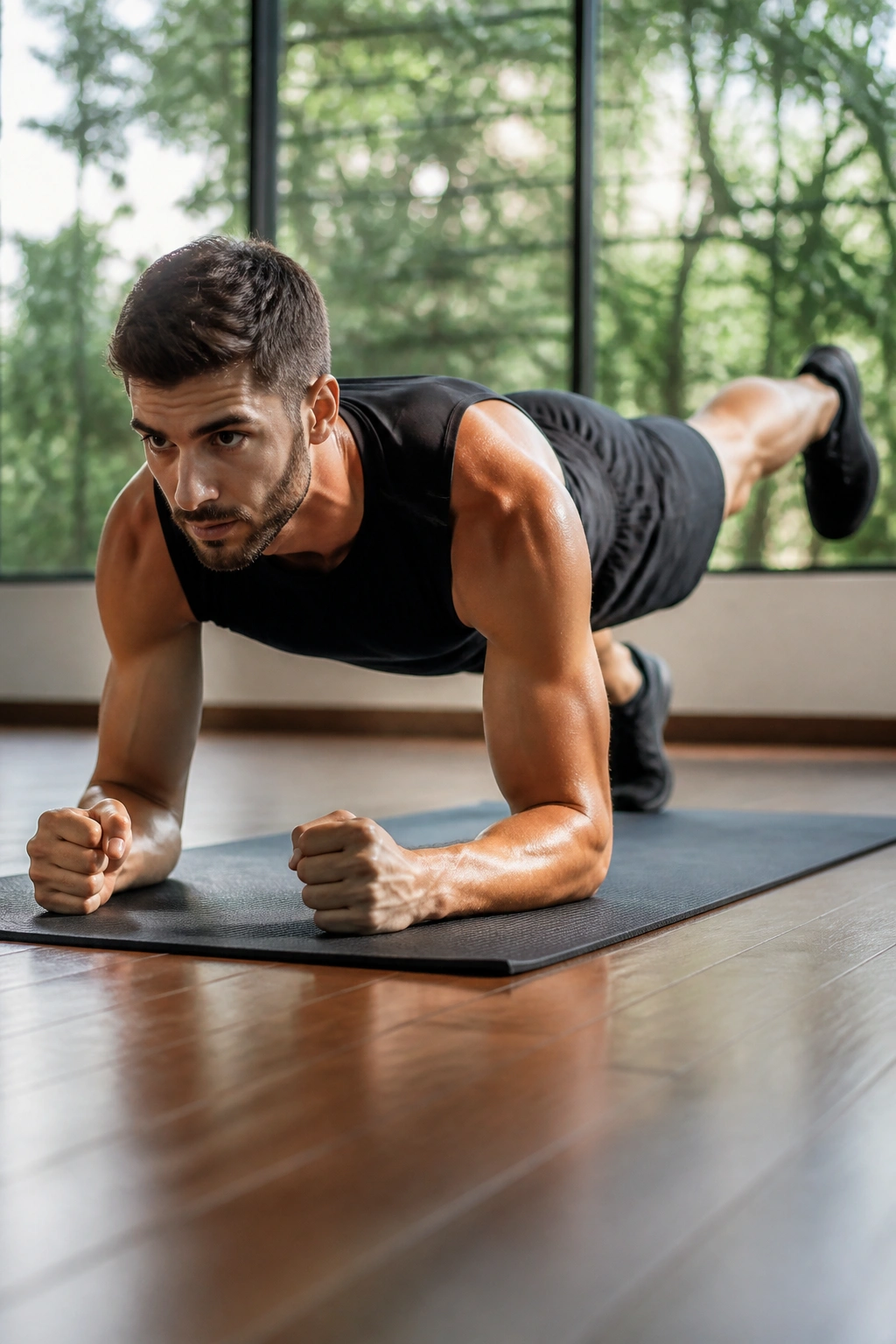
Lift one foot an inch or two, and the whole plank changes tone.
Single-leg plank challenges the body to resist rotation while one side of the pelvis loses support. From a forearm or high plank, lift one leg just enough to clear the floor, keep the hips square, and hold for a few seconds before switching sides. The glute on the standing leg works harder than people expect.
What you’re really training here is control around the pelvis. If the low back arches or the hips tilt open the second the foot lifts, reduce the hold time. Even a two-second lift can be useful when the body stays honest.
This variation has a nice side effect: it tells you which side is more stable. That matters. Stability gaps love to hide until a drill like this drags them into the light.
15. Side Plank Reach-Through
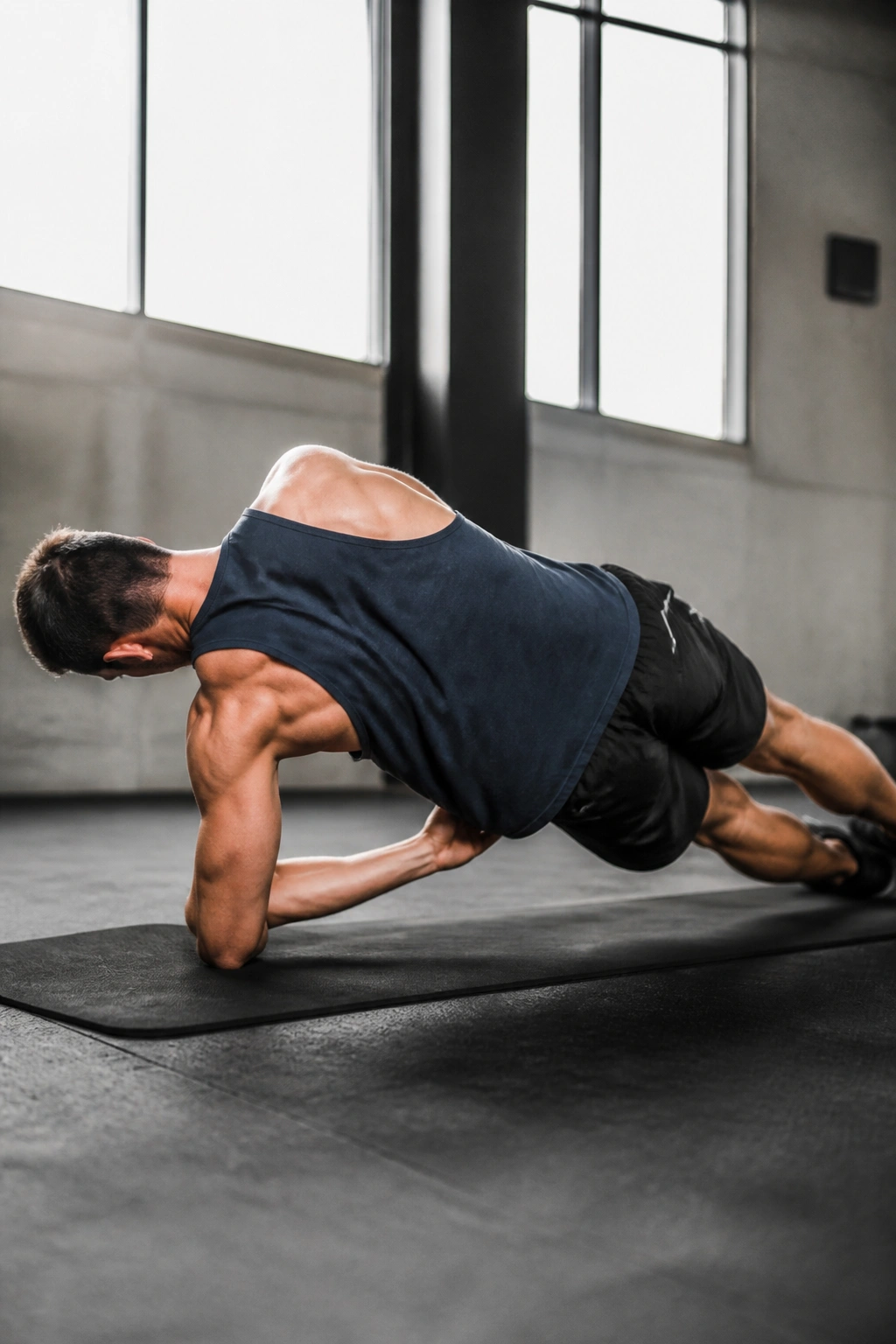
Reach under. Rotate up. Breathe.
That’s the rhythm, and it works because the side plank reach-through asks your torso to control rotation both ways. Start in a side plank, slide the top arm under your torso, then open the chest back up toward the ceiling. The obliques, shoulder, and upper back all chip in.
The move should feel controlled, not yanked. If the supporting shoulder collapses when you rotate, make the base easier first. A bent-knee side plank gives you a friendlier place to learn the motion without wobbling all over the mat.
The best part of this exercise is the mix of stability and rotation. Most core work picks one lane. This one asks for both, which is why it tends to make people breathe a little harder than expected.
16. Star Side Plank
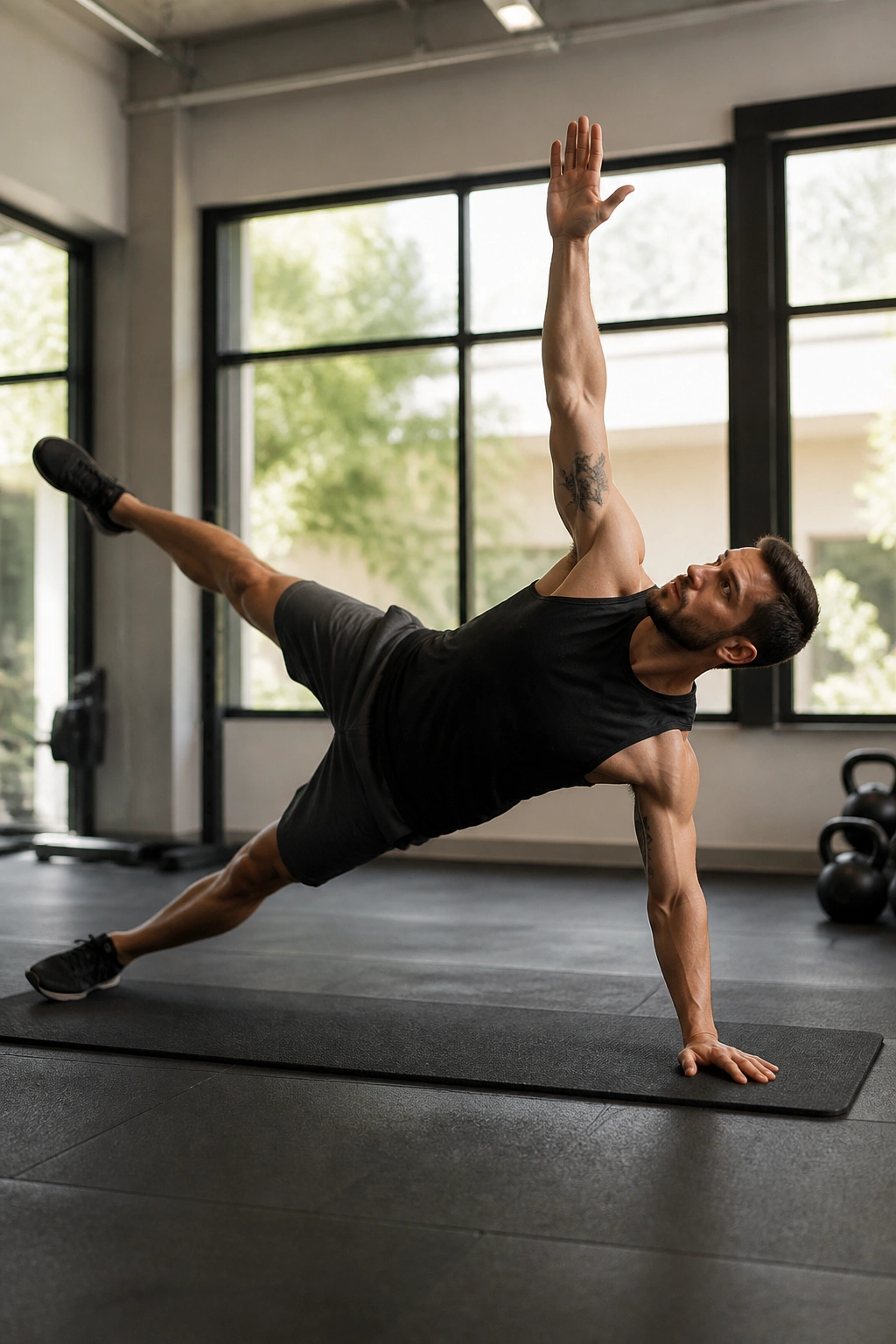
This one is not for a sleepy shoulder.
In a star side plank, you lift the top leg while keeping the side plank position intact, so the body opens into a wider shape. It looks simple. It isn’t. The supporting shoulder, the side of the waist, and the outer hip all have to stay awake at the same time.
When to Try It
Use this after the basic side plank feels boring. If you can’t hold a clean side plank for at least 20 to 30 seconds, this version will probably feel sloppy. And that’s not the goal.
- Keep the lifted leg active, not floppy
- Point the top toes forward or slightly down
- Don’t let the chest roll open so far that the waist stops working
- Stop if the shoulder pinches
The star shape makes the exercise look dramatic, but the real value is pelvic control. If the top leg lifts and the hips stay stacked, you’ve earned it.
17. Plank With Alternating Leg Lift
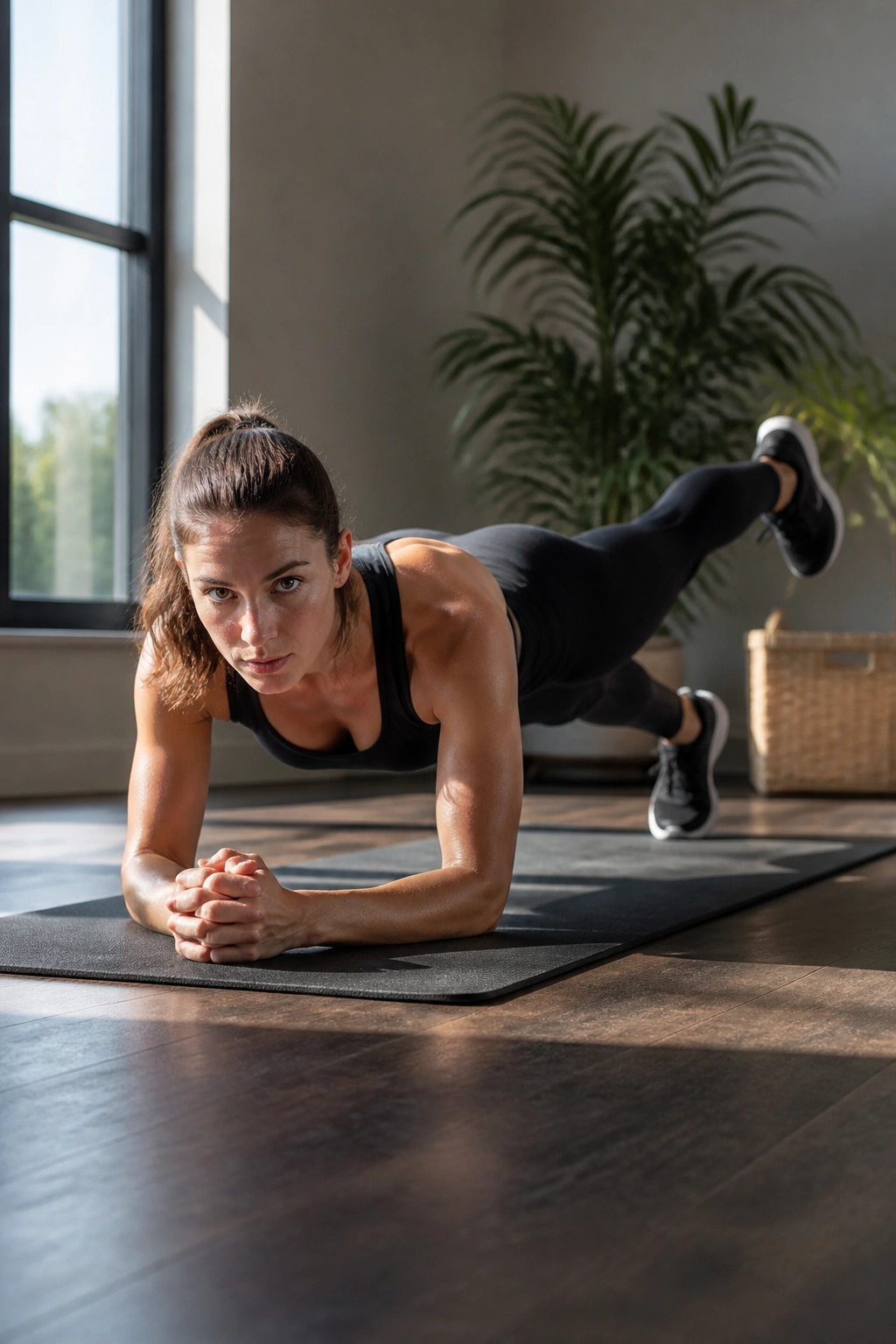
A small leg lift can expose a huge weakness. That is the charm of this one.
From a forearm or high plank, lift one leg two to four inches off the floor, hold for a beat, set it down, then lift the other side. The body wants to arch through the low back to get the leg higher. Don’t let it. The lift should be small, and the pelvis should stay level.
The glutes get involved, sure. The bigger job is anti-rotation. When one leg leaves the ground, the trunk has to fight the twist that wants to follow. That makes this a neat bridge between core work and hip work.
Keep the movement slow enough that you can tell whether one side is wobblier than the other. You usually can. And once you notice it, you stop pretending both sides are identical.
18. Plank to Pike
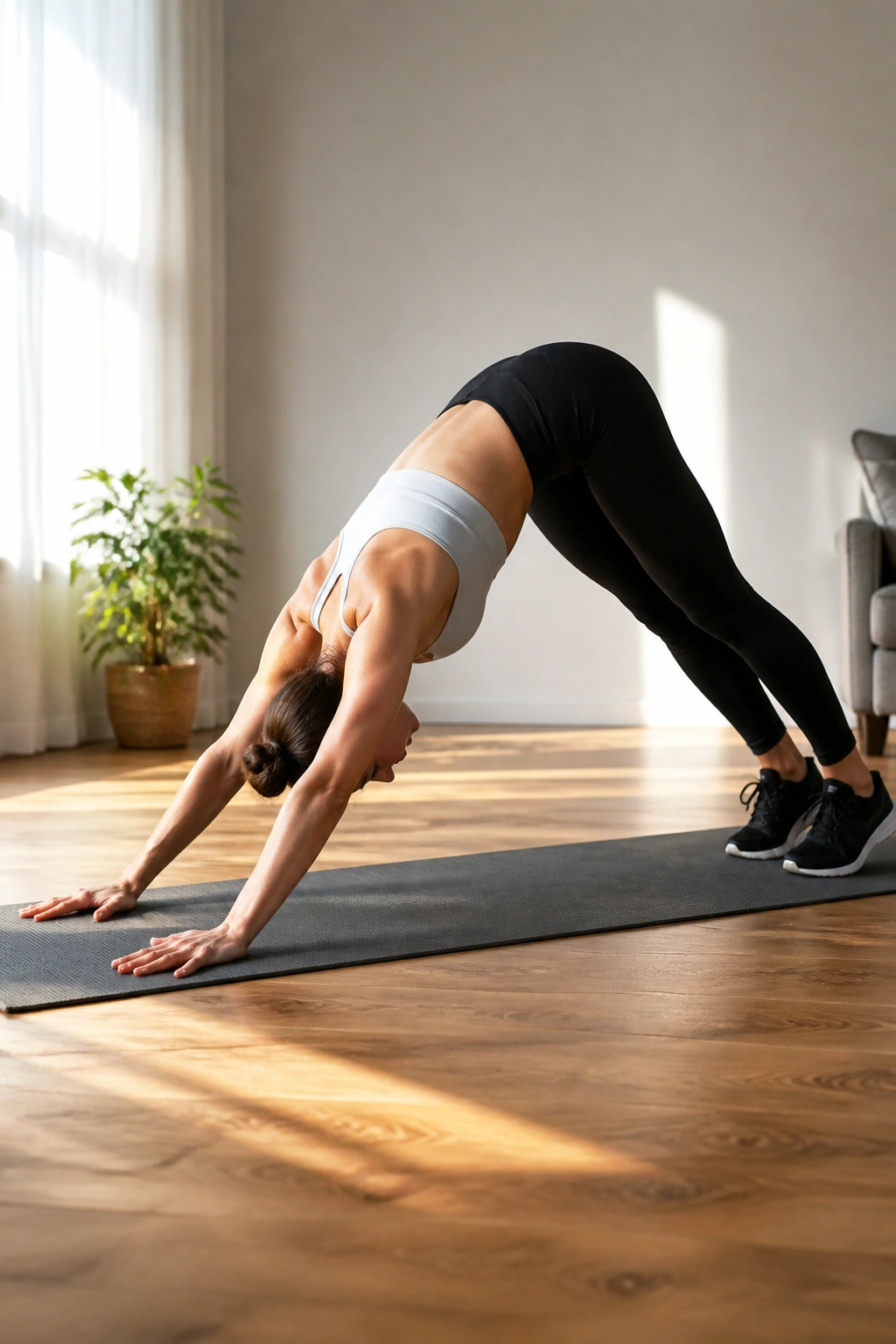
Hands down, this is one of the nastier plank exercises if you do it with control.
From a high plank, press the hips up and back into a pike, then return to the straight-body plank without crashing into the floor. If you use sliders or towels under the feet, the movement gets smoother and harder at the same time. The abs have to shorten, the shoulders have to stay active, and the hamstrings get dragged in too.
The Shape to Chase
The top position should look like an inverted V, with the head relaxed between the arms and the heels reaching toward the floor. The return to plank should be deliberate. No dumping the hips. No slamming back down.
This is a strong finisher when you want a plank variation that feels athletic instead of static. It pairs well with one or two steadier holds earlier in the session — a forearm plank, then a side plank, then this. Clean work, not a circus.
Pick three or four of these exercises and build a simple rotation around them for a week or two. The body responds well to repetition when the repetition is honest.
