



You do not need a gym to make your glutes work hard. A floor, a chair, a wall, and a little patience can give you a serious bum workout at home, and some of the best lower-body moves need nothing more than that.
What catches people off guard is how quickly the glutes stop helping when the setup is sloppy. Half a rep here, a back arch there, knees collapsing inward, and suddenly your lower back or quads are doing the job instead. That is why home work can be so useful: it strips the exercise down and shows you, fast, whether the target muscle is actually working.
The good stuff usually looks simple. A clean bridge with a hard squeeze can do more than twenty rushed reps. A slow split squat can light up more of your backside than a fancy machine if you keep your balance and own the lowering phase.
Start with the floor moves, then earn the tougher single-leg work. That order matters more than people think.
1. Glute Bridge on the Floor
This is the base move for a reason. If you want your bum to do more of the work at home, the glute bridge is where I’d begin. It teaches hip extension without much noise, without much gear, and without letting momentum hide sloppy form.
Lie on your back with your knees bent and your feet flat. Your heels should sit close enough that, at the top, your shins are near vertical. Press through your heels, tuck your pelvis slightly, and lift until your hips are in line with your ribs and knees. Hold for a count of two. That pause is where the exercise starts paying rent.
What to feel
- Glutes, not lower back. If your back feels jammed, lower a little and reset your ribs.
- A firm squeeze at the top. Think of shortening the distance between your hips and heels.
- Even pressure through both feet. If one side takes over, slow down and check your setup.
Twelve to twenty reps works well here. If it feels too easy, make the pause longer or try a slow three-second lower. Don’t chase height; chase tension. Higher is not better if your lower back is doing the lifting.
2. Single-Leg Glute Bridge
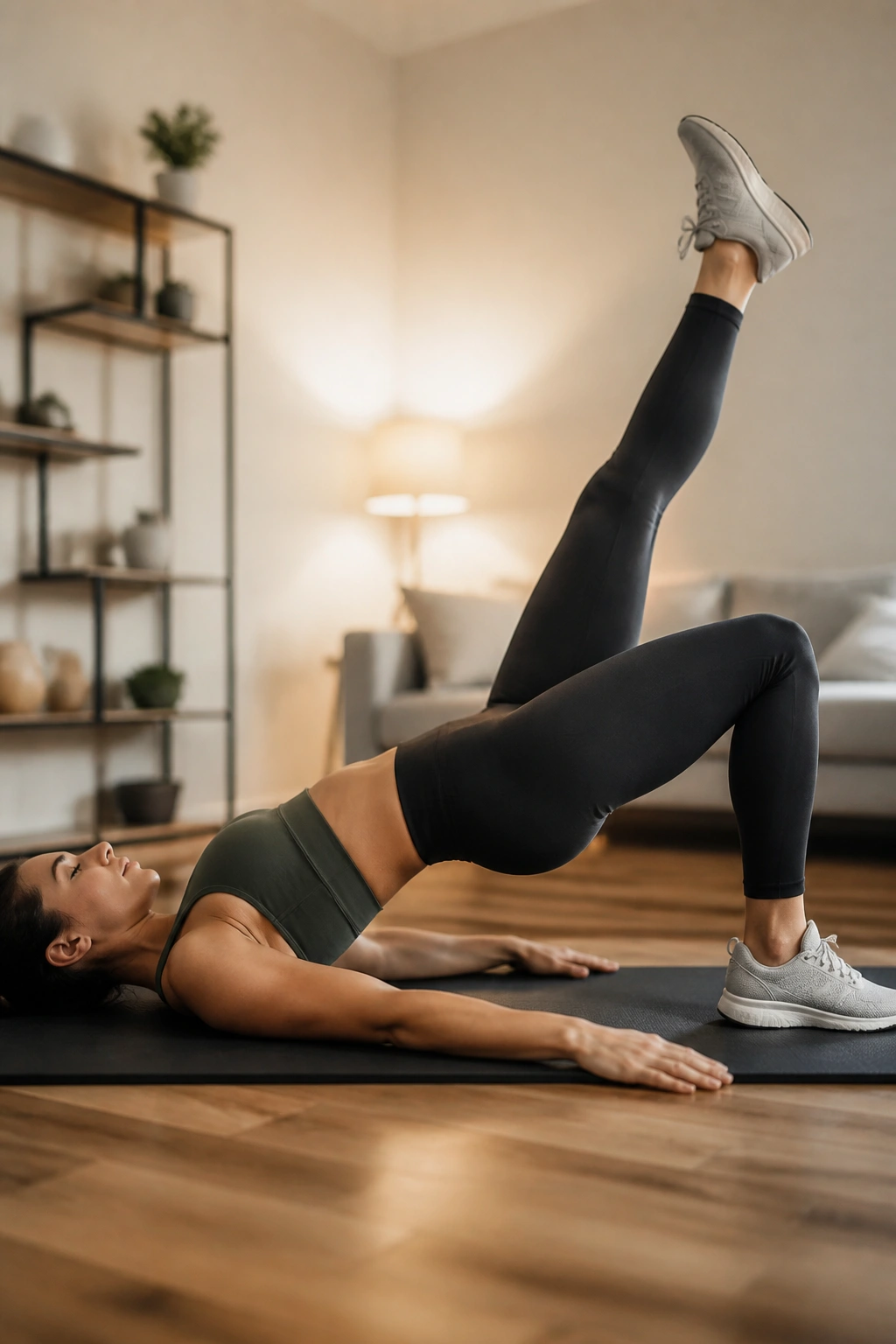
Why bother with one leg when two legs already work? Because the minute you remove the support from the other side, the working glute has to do more of the job on its own. That makes this one a sneaky little challenge.
Set up like a regular bridge, then extend one leg straight or keep the knee bent and lifted. Drive through the planted heel, keep your hips level, and lift without twisting toward the working side. The movement is smaller than people expect. That’s fine. Small and clean beats big and wobbly every time.
How to keep your hips level
- Keep your pelvis square to the ceiling.
- Press the floor away with the planted heel.
- Stop the set if your lower back starts grabbing.
A good target is 8 to 12 reps per side. If full single-leg reps are too rough, keep the non-working toe lightly on the floor for balance. That tiny bit of support can keep the reps honest while you build strength. No cheating with the back arch. That move steals the whole point.
3. Hip Thrust on a Couch
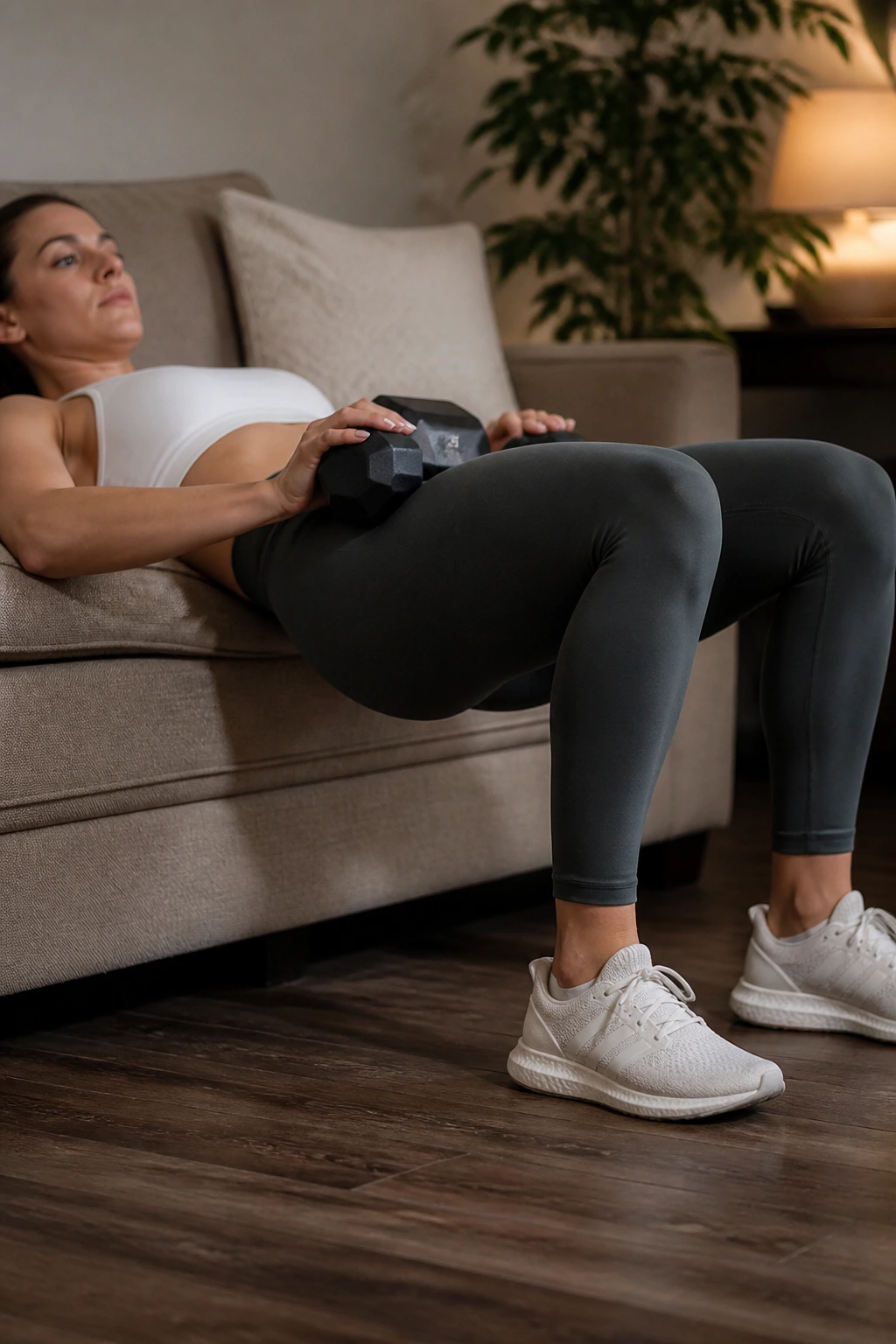
If floor bridges are feeling a little too polite, move your upper back onto a sturdy couch, bench, or bed edge and turn the same pattern into a hip thrust. The longer range makes the top position feel heavier, even without a weight plate sitting on your lap.
Plant your feet about shoulder-width apart, lean back so your shoulder blades rest on the edge, and tuck your chin slightly. Drive your hips up until your torso is roughly parallel with the floor. At the top, your ribs should stay down and your pelvis should not tip backward into a big lower-back arch. That arch is a cheat. A common one.
A backpack loaded with books can make this harder, but bodyweight works fine. I like to treat this as a slow, clean set rather than a speed drill.
- Top pause: 1 to 3 seconds
- Reps: 10 to 15
- Cue: push through the heels, then squeeze hard at lockout
If you feel this mostly in your quads, bring your feet a touch farther out. If your hamstrings cramp, shift the feet a little closer. Tiny changes matter here.
4. Frog Pumps
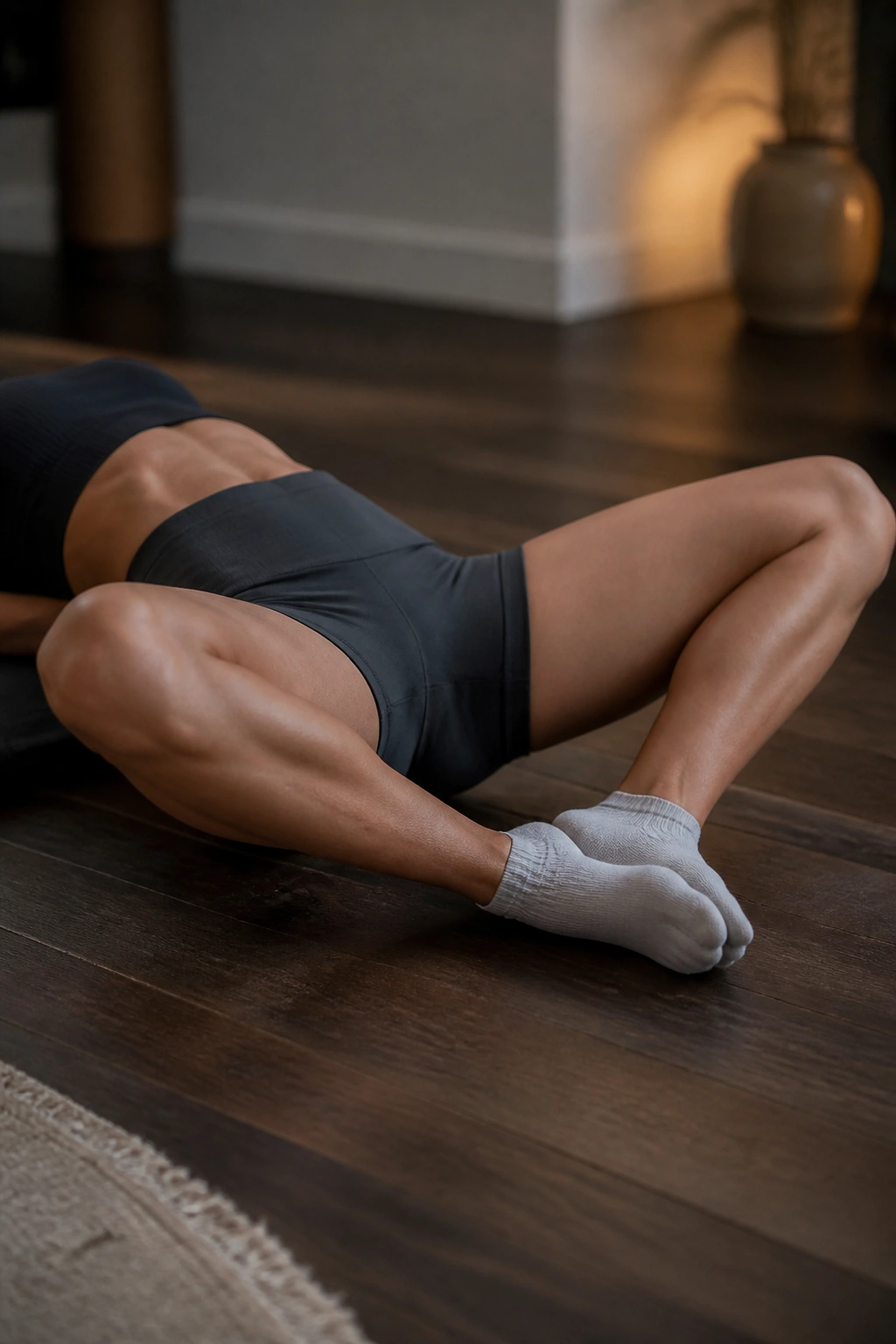
Tiny range, nasty burn. Frog pumps look almost silly the first time you do them, then your glutes start complaining within a minute. That short range is the whole trick.
Lie on your back, bring the soles of your feet together, and let your knees fall open like a diamond shape. Keep your heels close enough that your hamstrings stay quiet, tuck your pelvis just a bit, and pump your hips up in short, controlled reps. The lift does not need to be high. In fact, if it turns into a giant bridge, you’re probably missing the point.
This is a smart finisher after bridges or hip thrusts because it keeps the tension on when larger moves start to lose their sting.
Use it like this
- 20 to 30 reps
- 1 to 2 second squeeze at the top
- Slow lower, no bouncing
The mistake is turning it into a speed contest. Don’t. Keep the rhythm deliberate, and stop when the hips start rocking instead of lifting. Burn is normal; slop isn’t.
5. Donkey Kicks
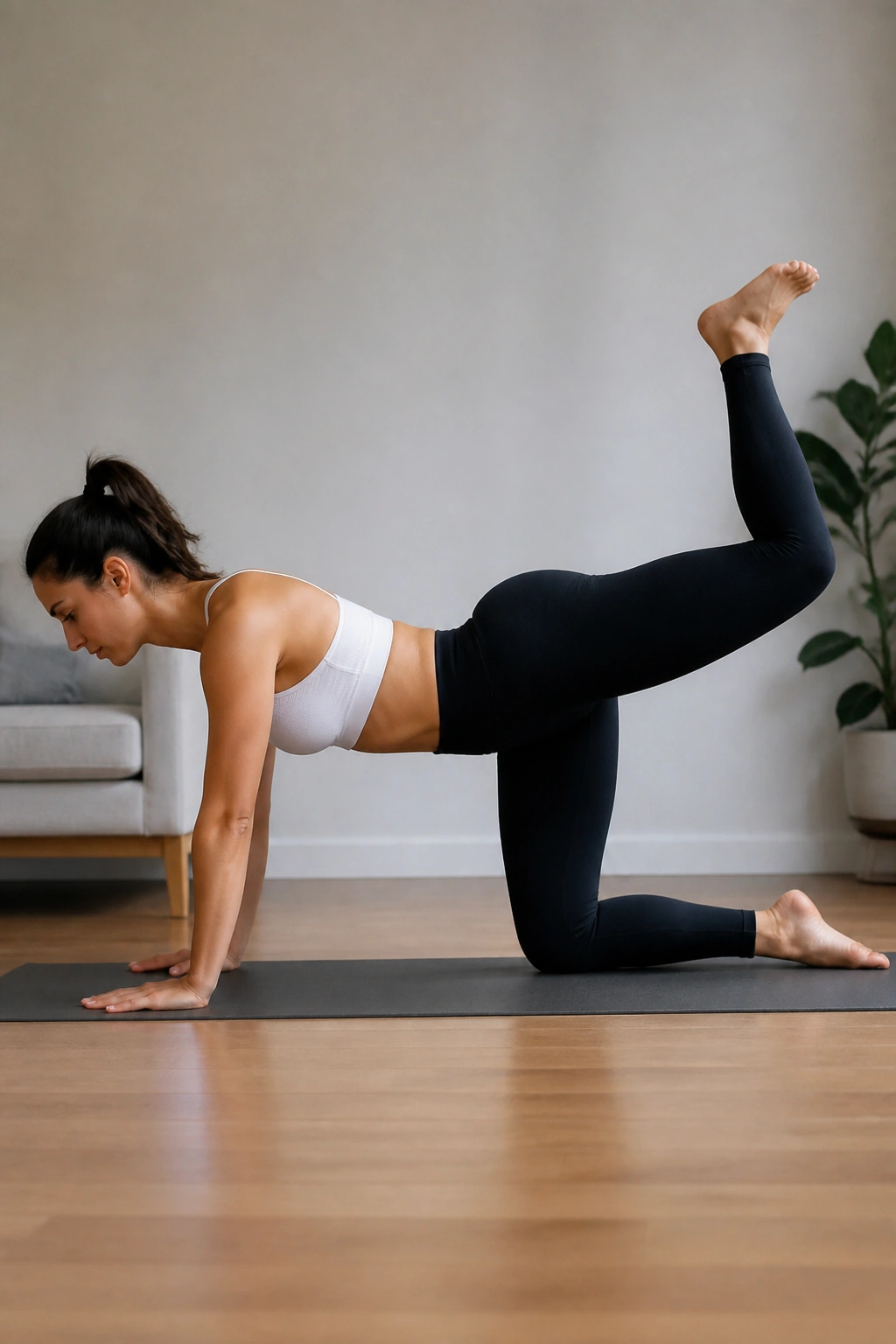
Some people write donkey kicks off because they look simple. That usually lasts about three clean reps. Then the glute on the working side starts doing exactly what it’s supposed to do.
Start on your hands and knees with your wrists under your shoulders and your knees under your hips. Keep one knee bent at about 90 degrees and press that foot up toward the ceiling without letting your lower back arch. The motion is a hip lift, not a spine bend. That distinction matters more than people think.
What to watch for
- Your hips should stay as level as possible.
- Your shoulders should stay stacked over your hands.
- Your foot should move up because the glute is working, not because you’re throwing your back into it.
Ten to fifteen reps per side is a good range. Slow is better than big. If you swing the leg and hear your lower back sag, the set is over. The rep ends when control ends.
6. Fire Hydrants
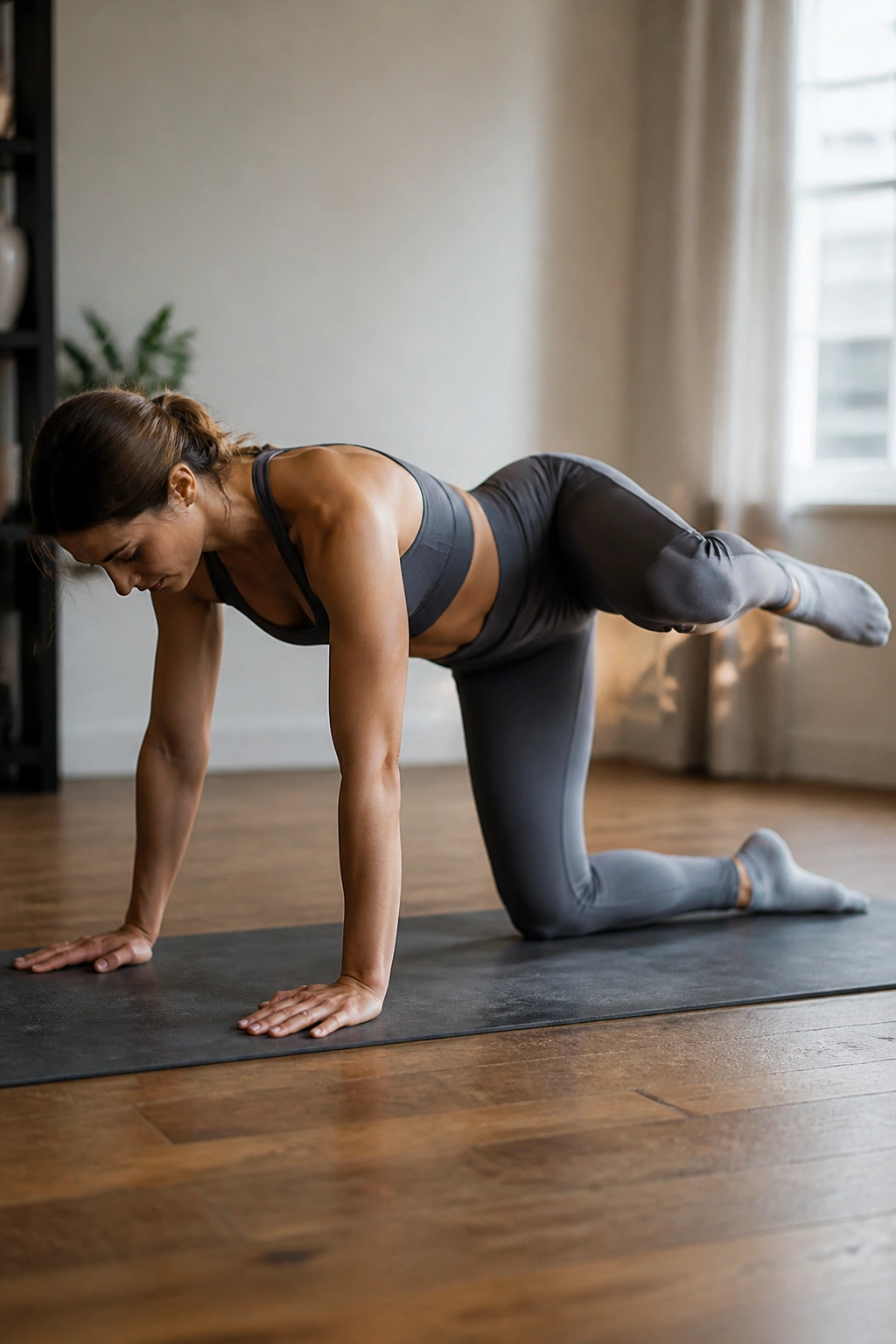
Feel the outside of your hip start to heat up? Good. That’s the point of fire hydrants. This move leans hard on the glute medius, the side muscle that helps keep your pelvis steady when you walk, climb stairs, or stand on one leg.
Get on all fours again, then lift one bent knee out to the side while keeping your torso quiet. The lift should be controlled and not huge. People often crank the knee too high, twist the hips open, and turn it into a torso rotation drill. That’s not what you want here.
Why they matter
- They help with side glute strength.
- They teach pelvic control.
- They pair well with bridges and lunges.
Try 12 to 20 reps per side. A mini pause at the top makes the move far more useful than fast repetitions. If you want a harder version, add a light band above the knees. If not, bodyweight still does the job nicely. The burn is in the side hip, not the lower back.
7. Standing Kickbacks With Hands on a Wall
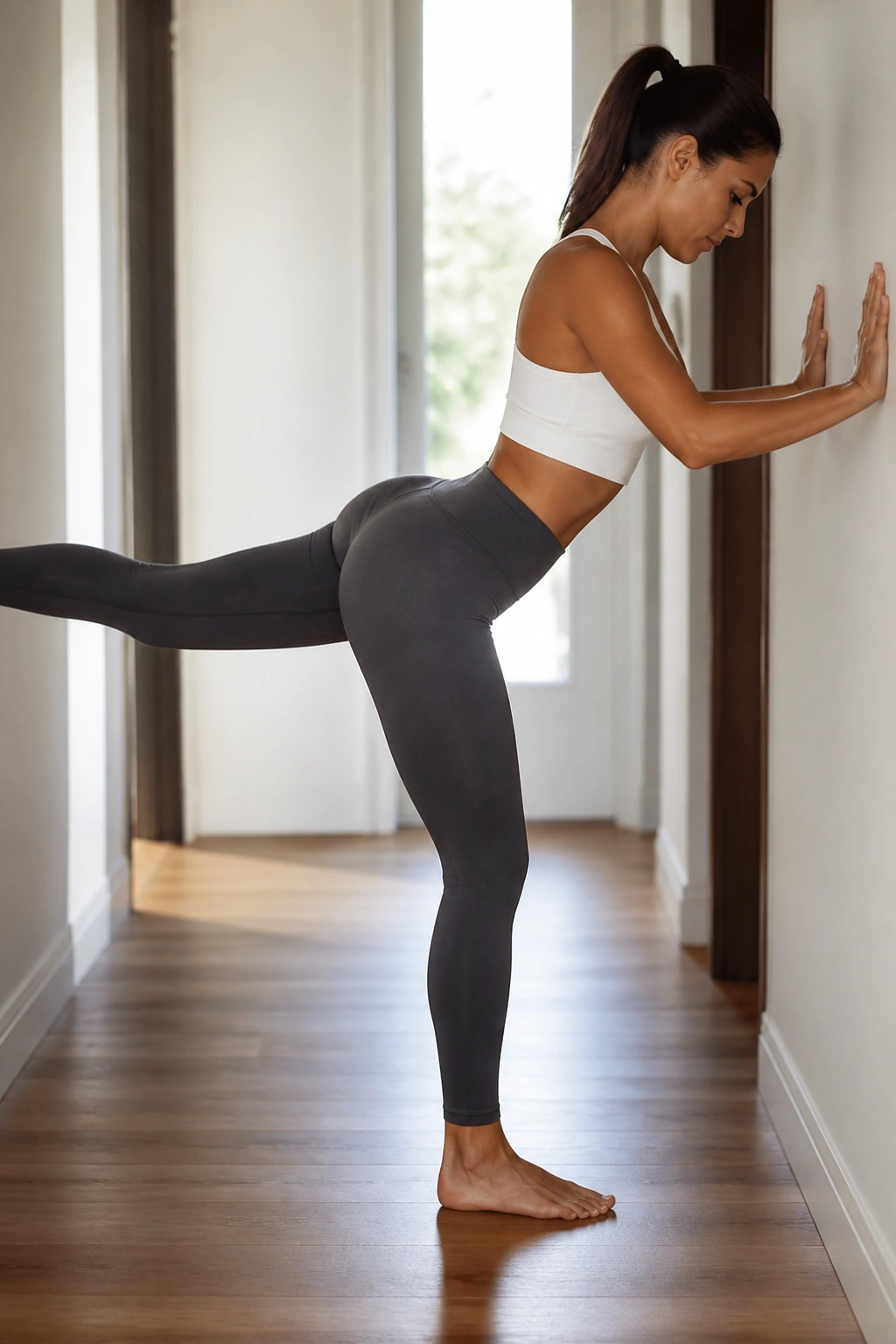
Not every bum exercise has to happen on the floor. Standing kickbacks are a nice break if your wrists are tired or you just want something you can sneak in while waiting for dinner to finish.
Face a wall, place your hands on it, and hinge forward slightly from the hips so your torso is angled. Keep one knee soft, then drive the other leg back behind you in a straight, controlled line. Don’t swing it. Don’t fling it. A smooth push and a small pause at the end are enough.
This version is useful because it forces you to keep your standing leg steady while the working glute extends the hip. That standing-side control matters more than most people notice.
- Reps: 12 to 15 each side
- Tempo: slow out, brief hold, slow return
- Cue: ribs stacked, no lower-back arch
If you hate kneeling work, keep this one. It’s simple, but not easy when you do it well.
8. Box Squat to a Chair
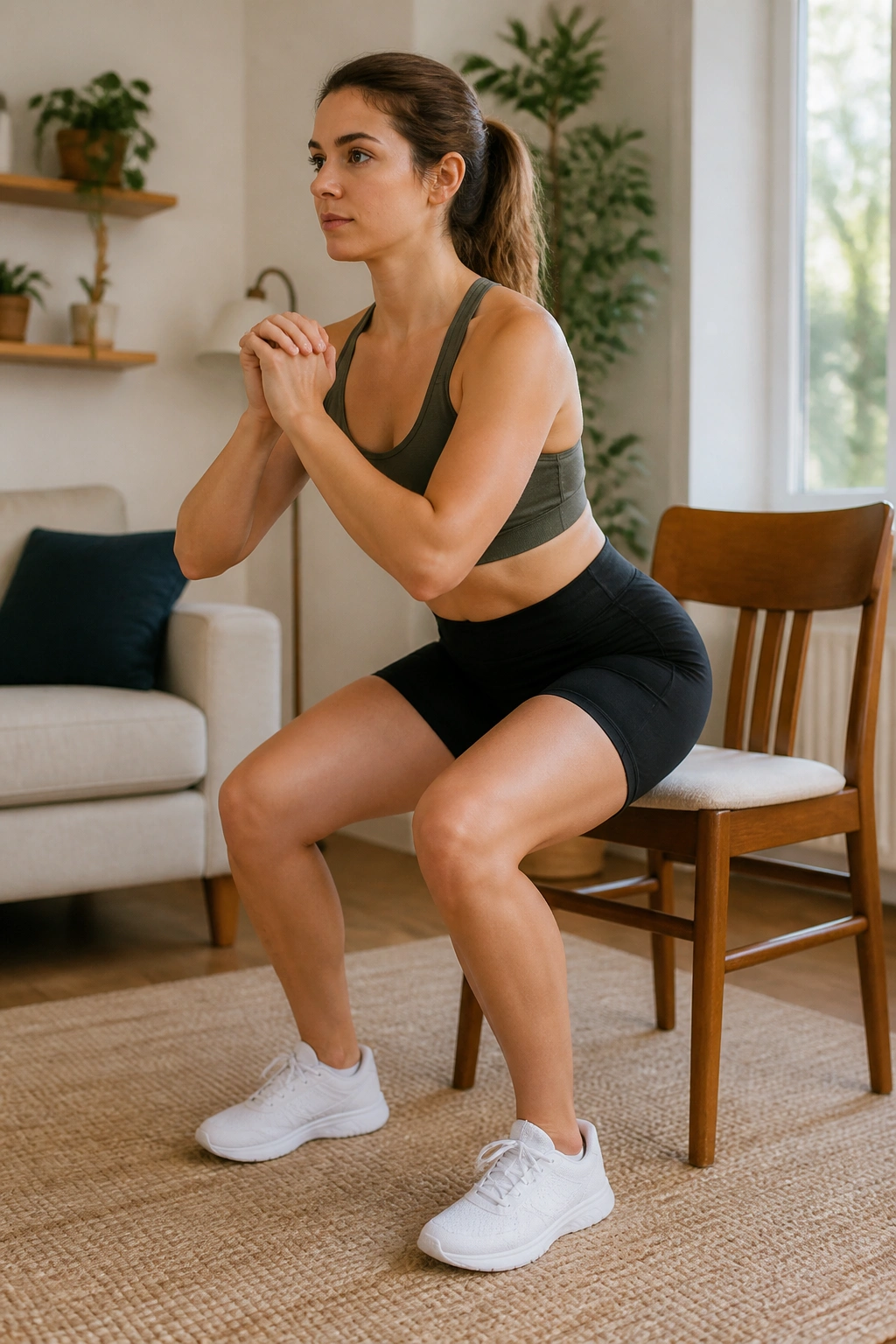
A chair gives you a target, and that target fixes a lot of bad squat habits fast. A box squat, or chair squat, is one of the friendliest bum exercises you can do at home because it teaches you to sit back under control instead of collapsing into your knees.
Stand a little in front of a sturdy chair or sofa. Feet should be about shoulder-width apart. Send your hips back, bend the knees, and tap the chair lightly before standing again. Don’t flop onto it. The tap is a checkpoint, not a rest stop.
Easy fixes if it feels off
- If your knees shoot forward, widen your stance a touch.
- If you tip too far over, keep your chest proud and slow the descent.
- If you never feel your glutes, sit your hips back a little more on the way down.
Eight to fifteen reps is plenty. You can hold a backpack at your chest once bodyweight feels tame. The goal is a controlled sit, not a crash landing.
9. Sumo Squat
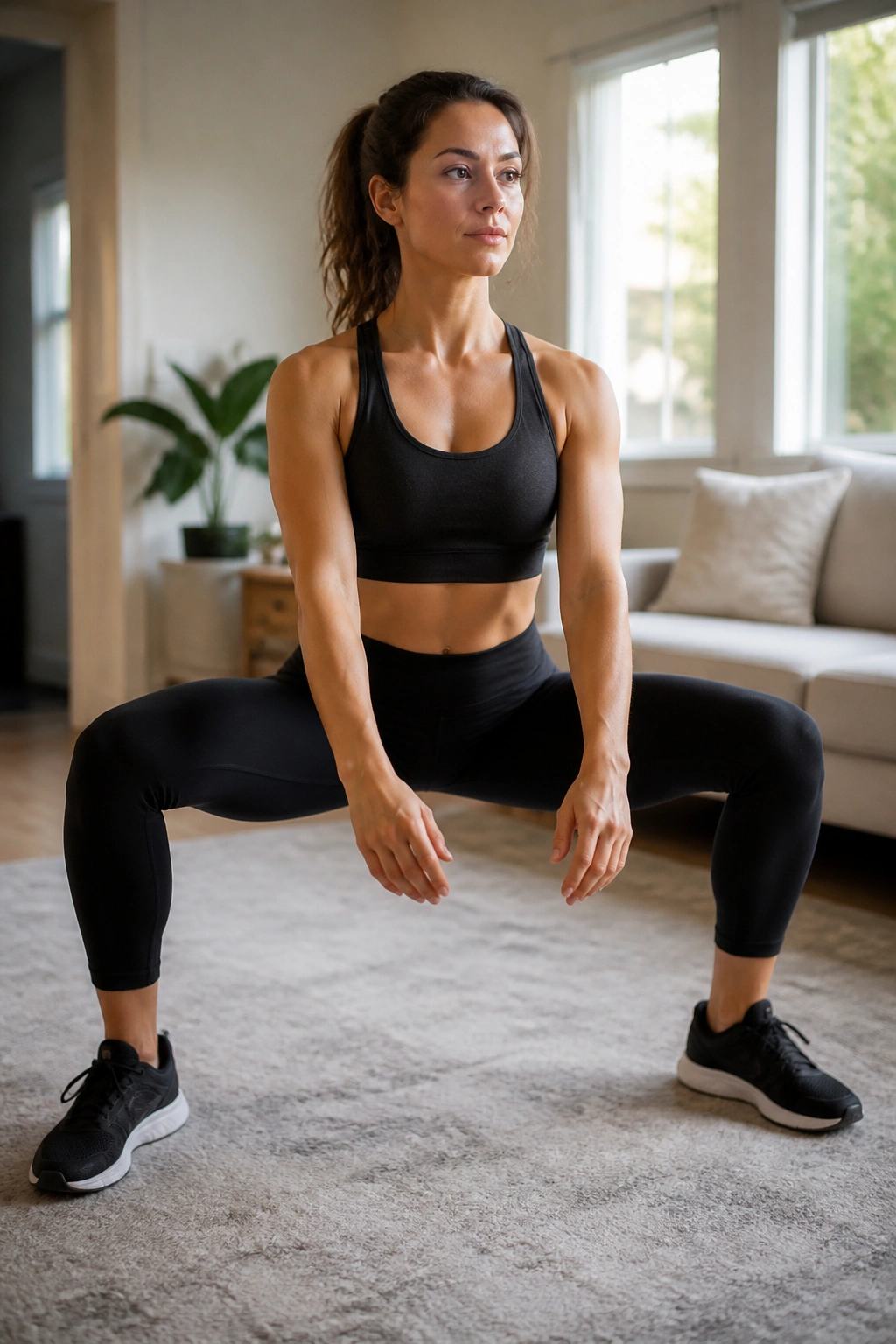
Wide stance, different feeling. The sumo squat changes the angle just enough to shift more work into the inner thighs and glutes, which makes it a useful sibling to the regular chair squat.
Set your feet wider than shoulder-width, turn the toes out a little, and lower by sending the hips down between the legs. Keep the chest tall and the knees tracking in line with the toes. If you fold forward too much, the move turns into a messy hinge. If your hips pinch, narrow the stance a bit and back off the depth.
This one likes a slow descent and a short pause at the bottom. A pause makes your muscles earn the way back up. Fast reps are fine for cardio, not so great for feeling the glutes work.
A few clean cues
- Knees press out gently.
- Weight stays through the midfoot and heel.
- Stand up by squeezing the glutes, not by bouncing.
Ten to twenty reps works well. A backpack hugged at the chest adds a simple bit of load if you want it.
10. Reverse Lunge
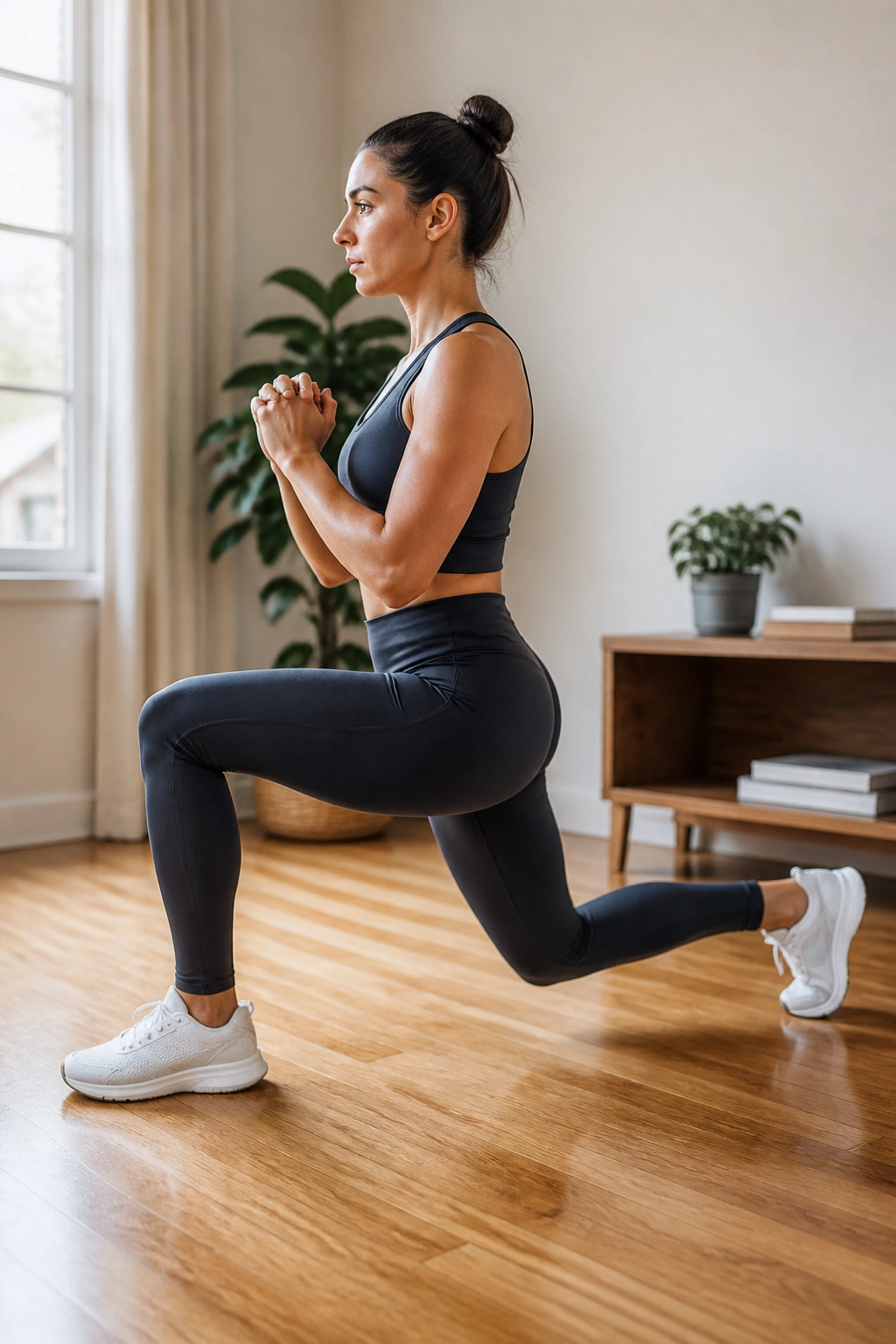
Step back, not forward. That small choice matters because reverse lunges are usually easier on the knees and often easier to balance than forward lunges, while still giving the glutes a proper job.
Stand tall, take a long step back, and lower until both knees bend. The front heel should stay planted. Push through that heel to return to standing. If you take a longer step back, the glute on the front leg tends to work harder. If you shorten the step too much, the quad steals the show.
I like this move because it feels practical. It looks like something your body actually does in real life, not a gym trick.
- Reps: 8 to 12 per leg
- Tempo: controlled down, strong up
- Cue: front knee tracks over the middle toes
If your balance wobbles, use a wall or chair for one hand. That is not “cheating.” It is smart setup.
11. Curtsy Lunge
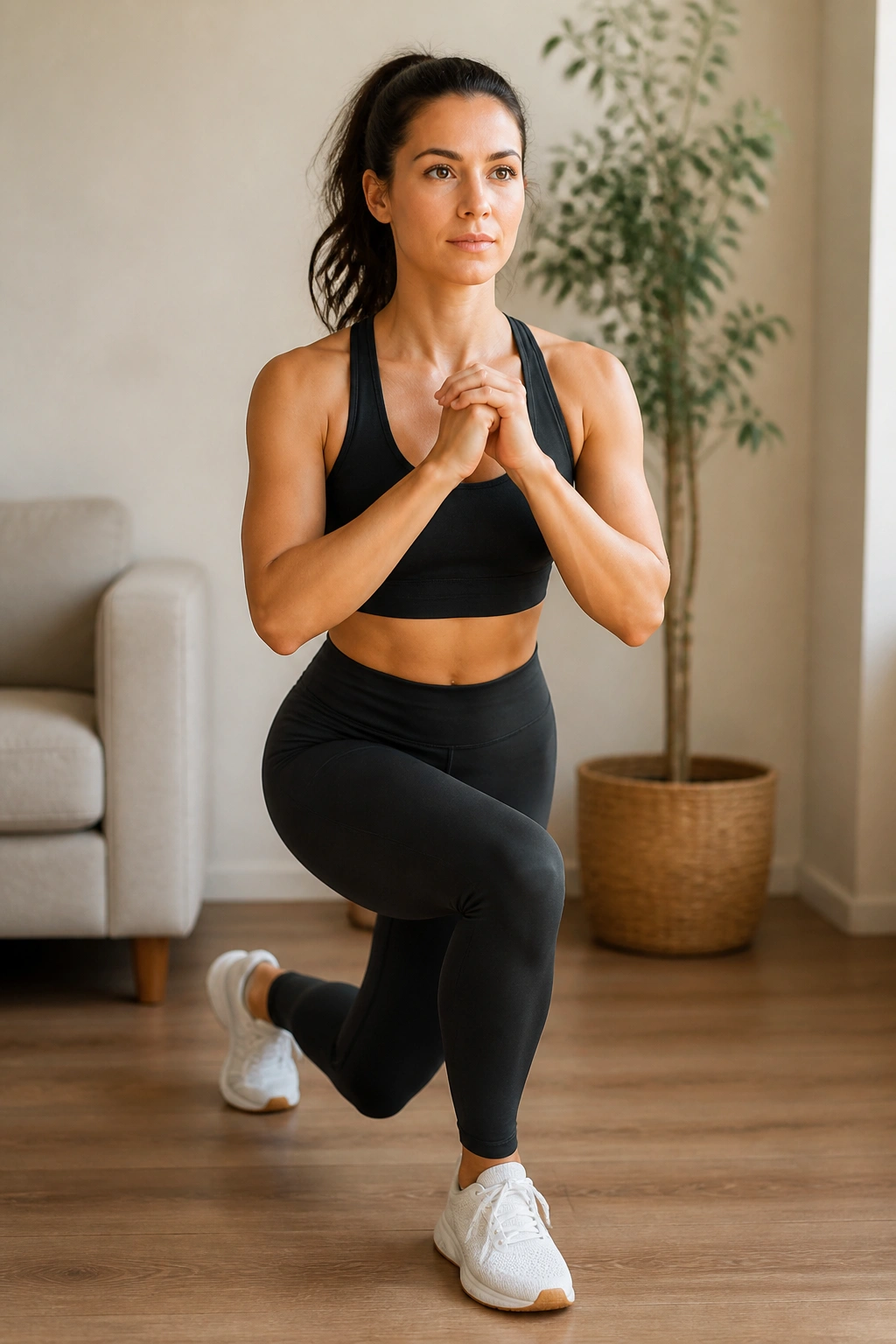
Why include a crossover move? Because the side glutes and stabilizers have to work hard when the leg crosses behind you, and that makes curtsy lunges a useful tool when your regular squats start feeling stale.
Step one leg back and across the other, dropping into a shallow lunge. Keep the torso upright and the front knee tracking as cleanly as you can. The crossover angle should feel controlled, not twisted. If the front knee complains, shorten the cross or skip this one for now. Some knees just do not love it.
That’s the honest part. It can be a great move, but it isn’t a universal favorite.
Use it well
- Stay light on the back toe.
- Keep the front foot rooted.
- Move slow enough to keep the hips square.
Eight to ten reps per side is plenty. Don’t chase depth. Chase control.
12. Bulgarian Split Squat
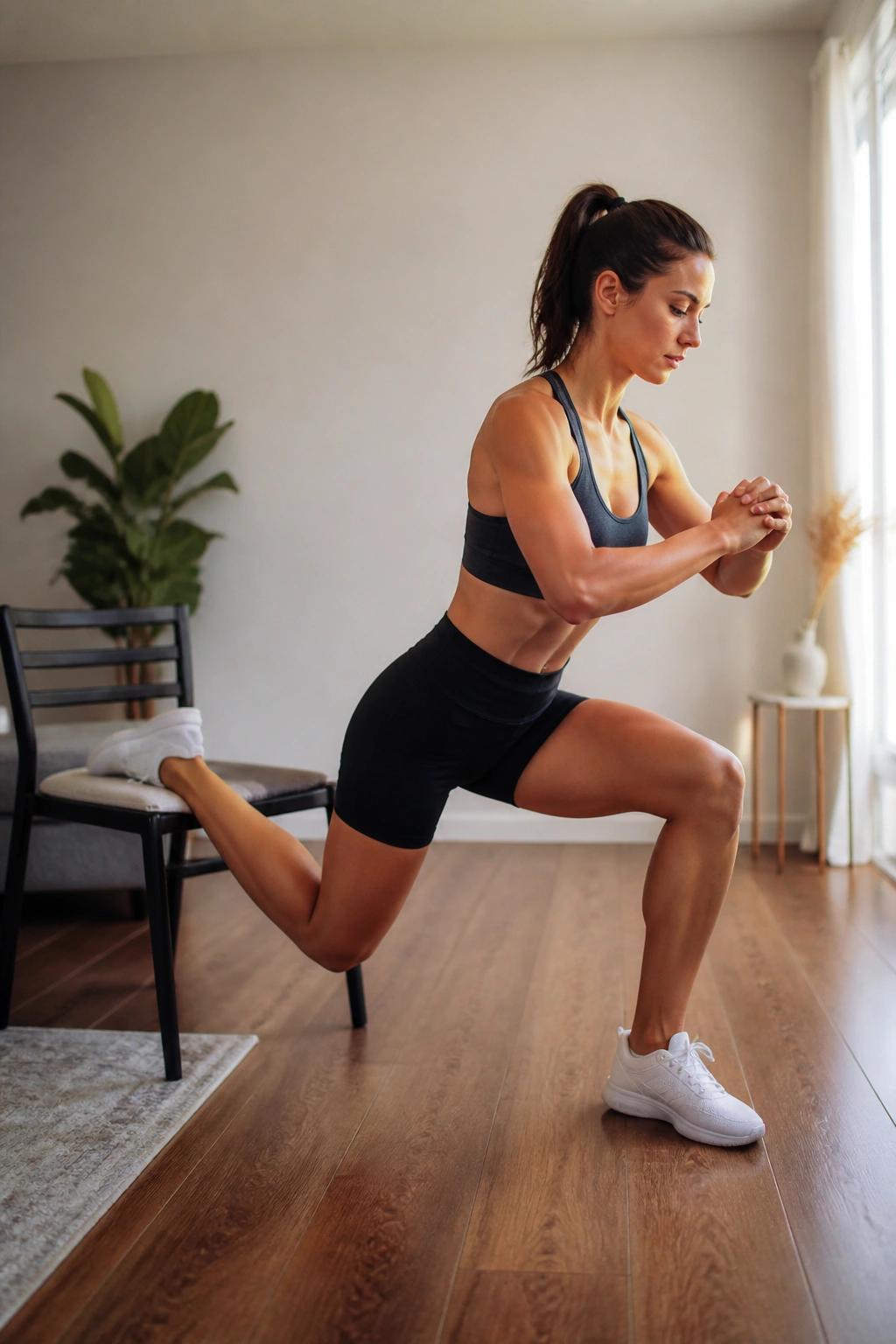
This one earns its reputation. Put your back foot on a chair, couch, or low bench, and you’ve got one of the toughest bodyweight glute exercises you can do at home. It looks neat from the outside. Inside, your front leg is doing serious work.
Set the back foot on a stable surface and step the front foot far enough forward that you can lower without the knee crashing too far ahead of the toes. Lower straight down with a slight forward lean from the hips, then drive up through the front heel. If you stay too upright, you’ll feel more quad. A little forward torso angle usually shifts more work into the glute.
Common setup mistakes
- Back foot too high and too far back.
- Front foot too close to the chair.
- Losing tension at the bottom and bouncing up.
Do 6 to 10 reps per side if you’re new to it. A backpack can add load later. Hold a wall with one hand at first if you need to. Nobody gets bonus points for wobbling around.
13. Step-Up
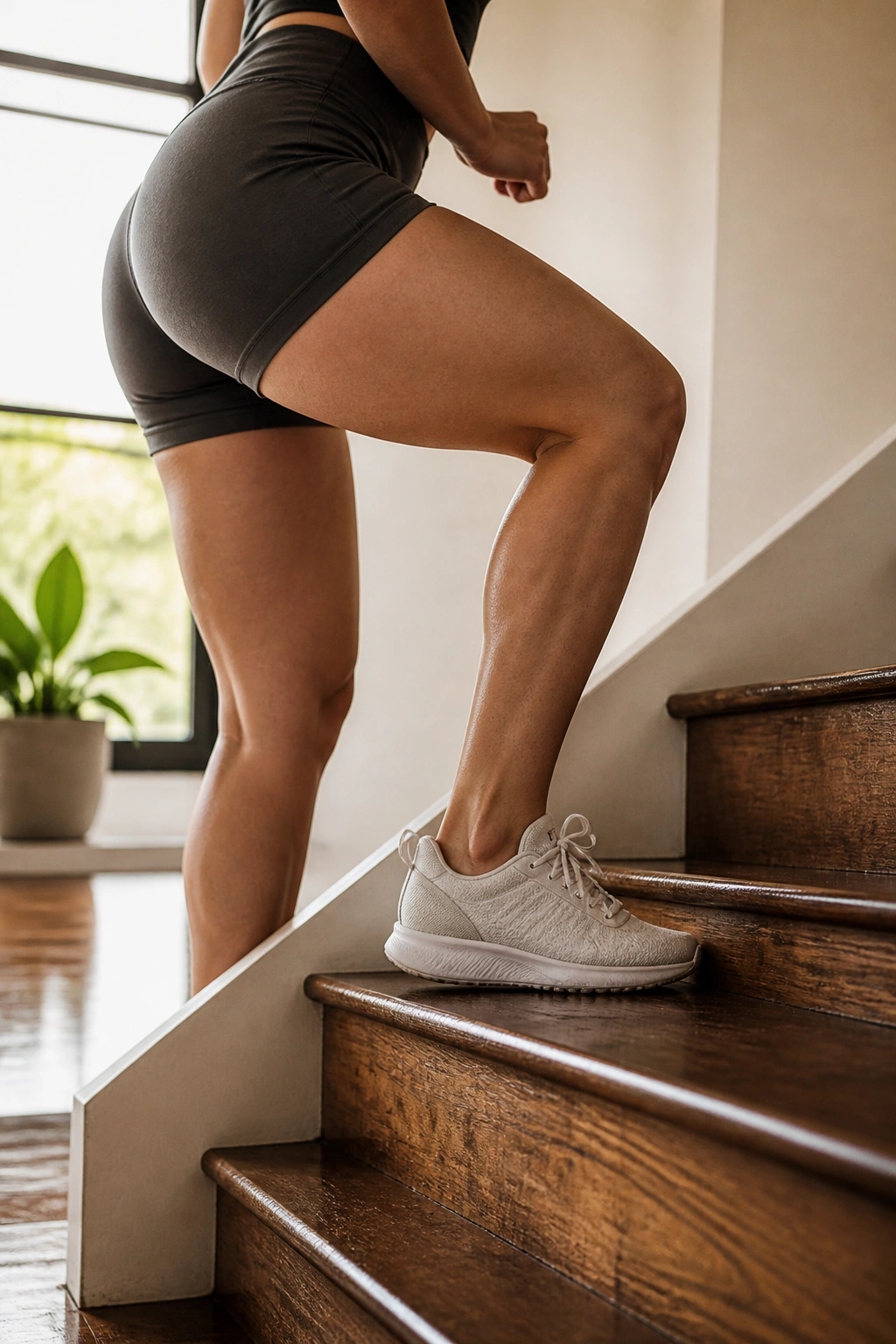
A step-up is one of those plain-looking moves that turns into a proper glute exercise as soon as you slow down and stop using the back leg for help. A sturdy stair, low box, or even a solid outdoor step works.
Put one foot fully on the step. Lean slightly forward from the hips, press through the whole foot, and stand up without launching from the trailing leg. The working glute should feel the climb. Then lower with control. The lowering phase matters more than people expect. That’s where a lot of the strength work shows up.
Choose a step height around 8 to 16 inches if you’re learning. Too high and your form gets sloppy fast. Too low and it can feel like a warm-up.
- Use the top leg to do the work.
- Keep the knee from caving in.
- Lower slowly, almost like you’re testing each inch.
Eight to twelve reps per side is a clean place to start.
14. Split Squat Pulses
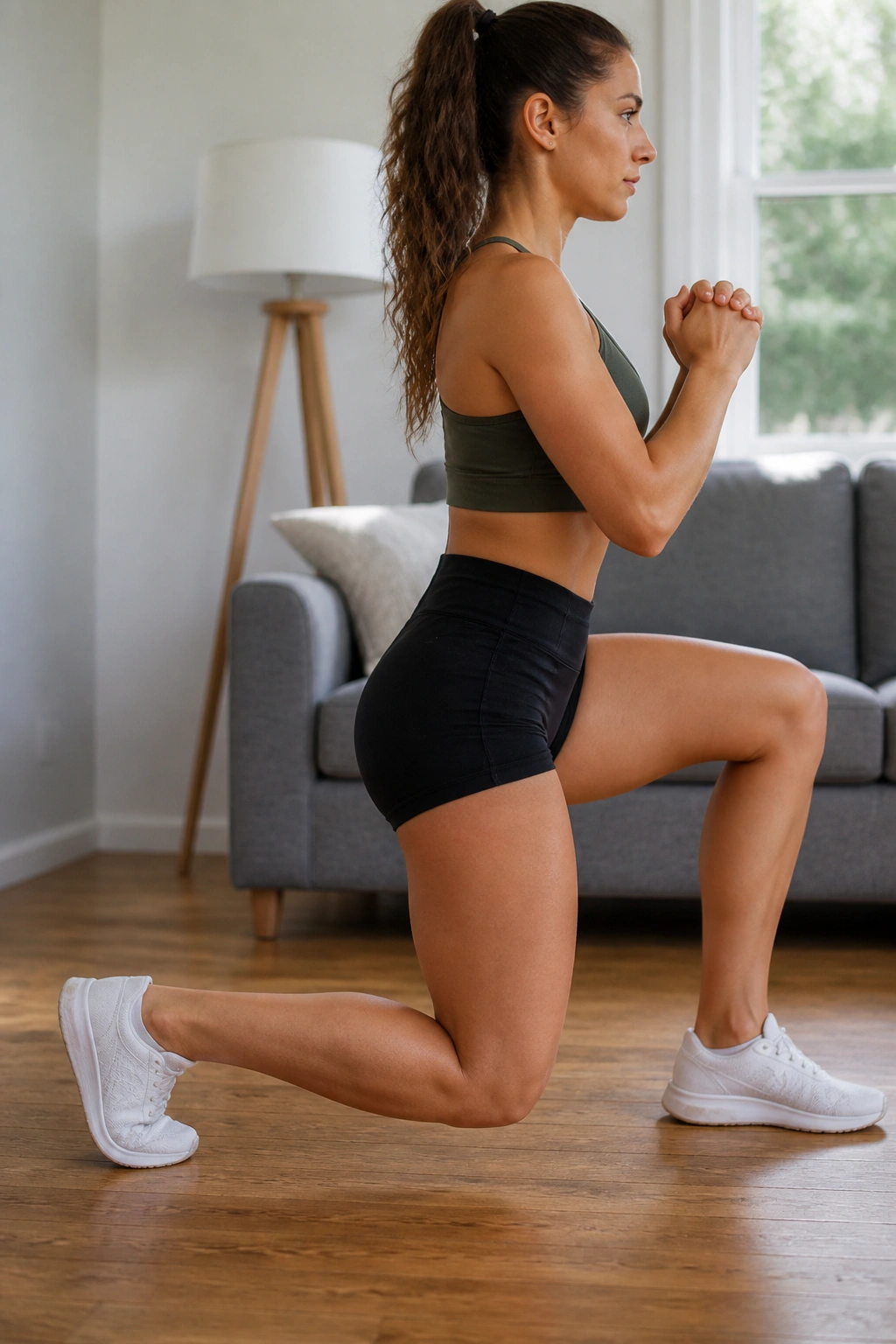
Need something meaner than a regular split squat? Use pulses. They keep the muscle under tension in that lower half of the movement where your glutes start begging for mercy.
Set up in a split stance, drop into the bottom of a lunge, then move just a few inches up and down instead of standing all the way up. Keep the range tiny and controlled. The idea is to stay in the hard part of the rep, not to bounce around and pretend it counts.
This works well as a finisher after regular split squats or reverse lunges. It also works well when time is short and you want a fast burn without needing dumbbells.
How to keep it useful
- Stay low in the legs.
- Keep pressure through the front heel.
- Stop if the movement turns into bouncing.
Fifteen to twenty-five pulses per side is enough. More is not always better here. Form falls apart fast once fatigue gets messy.
15. Side-Lying Leg Lift
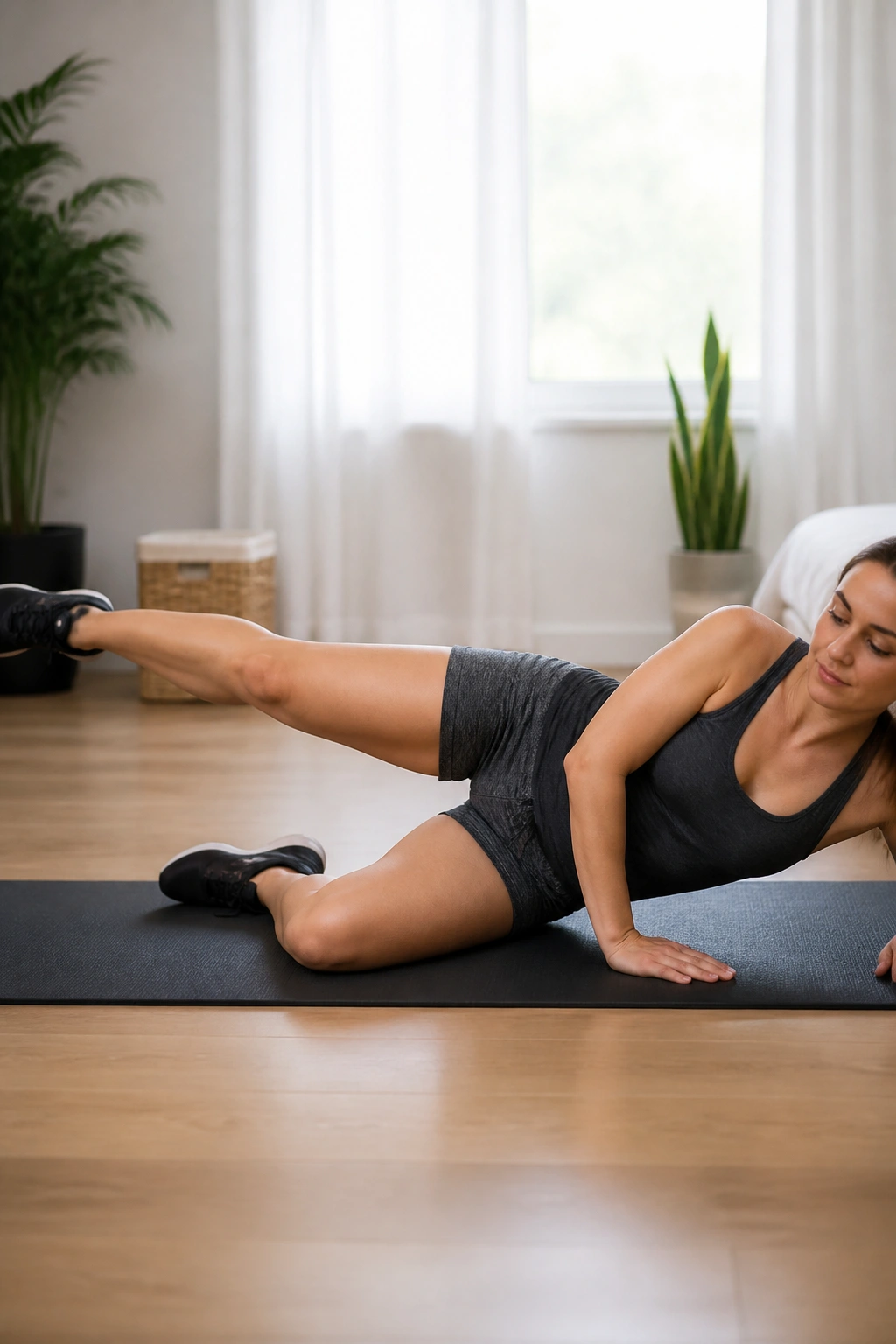
The outside of your hip will start talking during this one, and that’s exactly why it deserves a place in a home glute routine. Side-lying leg lifts are simple, but they hit the side glutes in a way squats can miss.
Lie on your side with your bottom leg bent for balance and your top leg straight. Turn the top toes slightly down, then lift the leg a few inches without rolling your hips backward. The lift should come from the side of the hip, not from swinging the whole leg like a gate.
What makes it work
- Toes point slightly down.
- The leg rises only as high as you can control.
- The pelvis stays stacked, not twisted.
Twelve to twenty reps per side is a good range. If you’re throwing the leg upward, lower the height and slow the tempo. Small, clean reps beat big sloppy ones here. That side-hip burn is the whole reason this move is on the list.
16. Clamshell
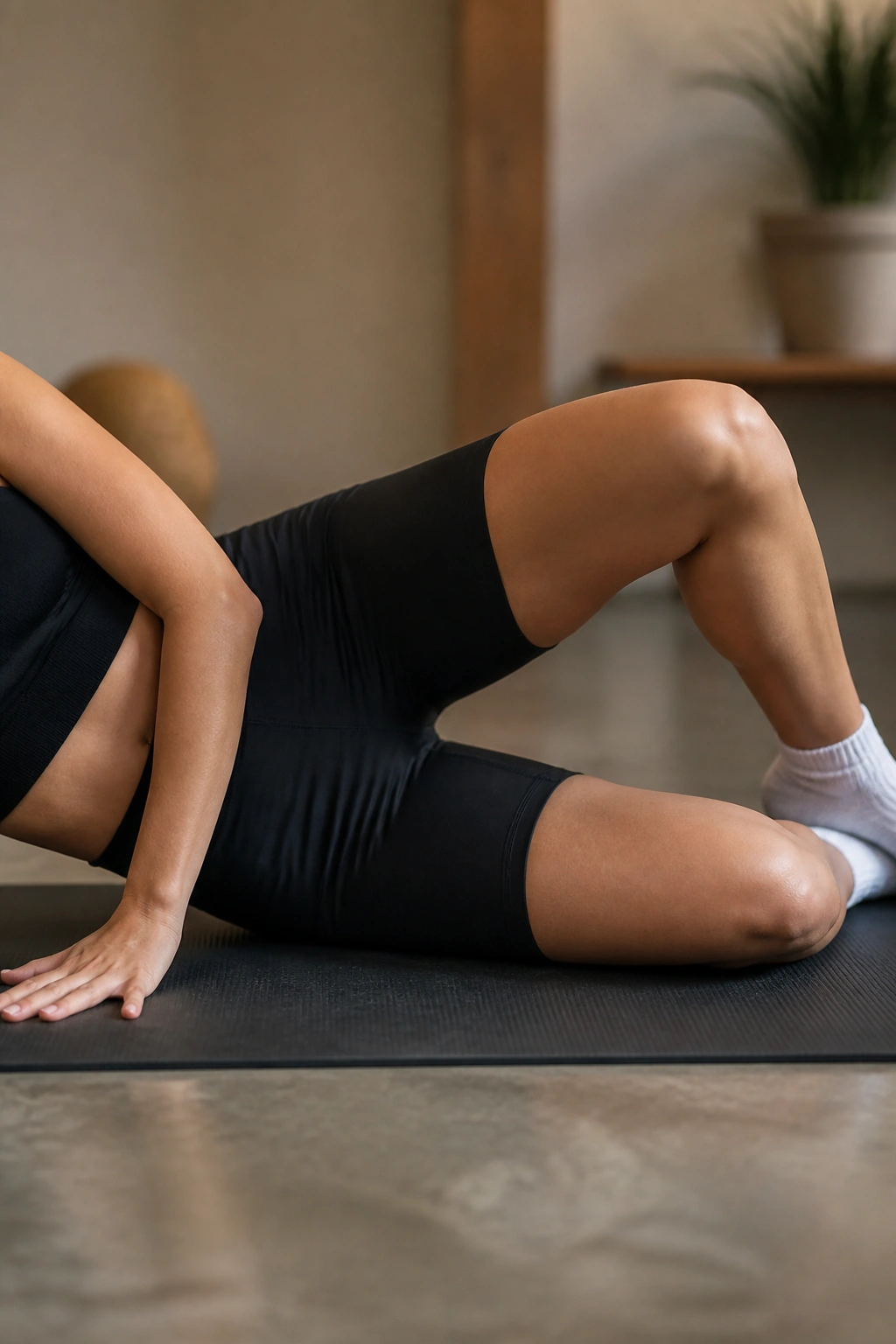
Clamshells are the quieter cousin of side-lying leg lifts. Less range, more control, and usually a lot more honesty than people expect. They target the hip external rotators and side glutes, which helps with stability when you squat, lunge, or walk upstairs.
Lie on your side with your knees bent and your feet together. Keep your hips stacked, then open the top knee like a clam shell without rolling the pelvis backward. The feet stay in contact the whole time. If your hips rock open, the exercise turns into something else.
A mini band above the knees can make this harder, but bodyweight works fine if you move slowly.
- Reps: 15 to 25 per side
- Cue: heels together, knees open
- Mistake: swinging the hip open to fake range
This one is not flashy. It works because it teaches control in a small, specific motion. That matters more than it looks like it should.
17. Lateral Band Walk
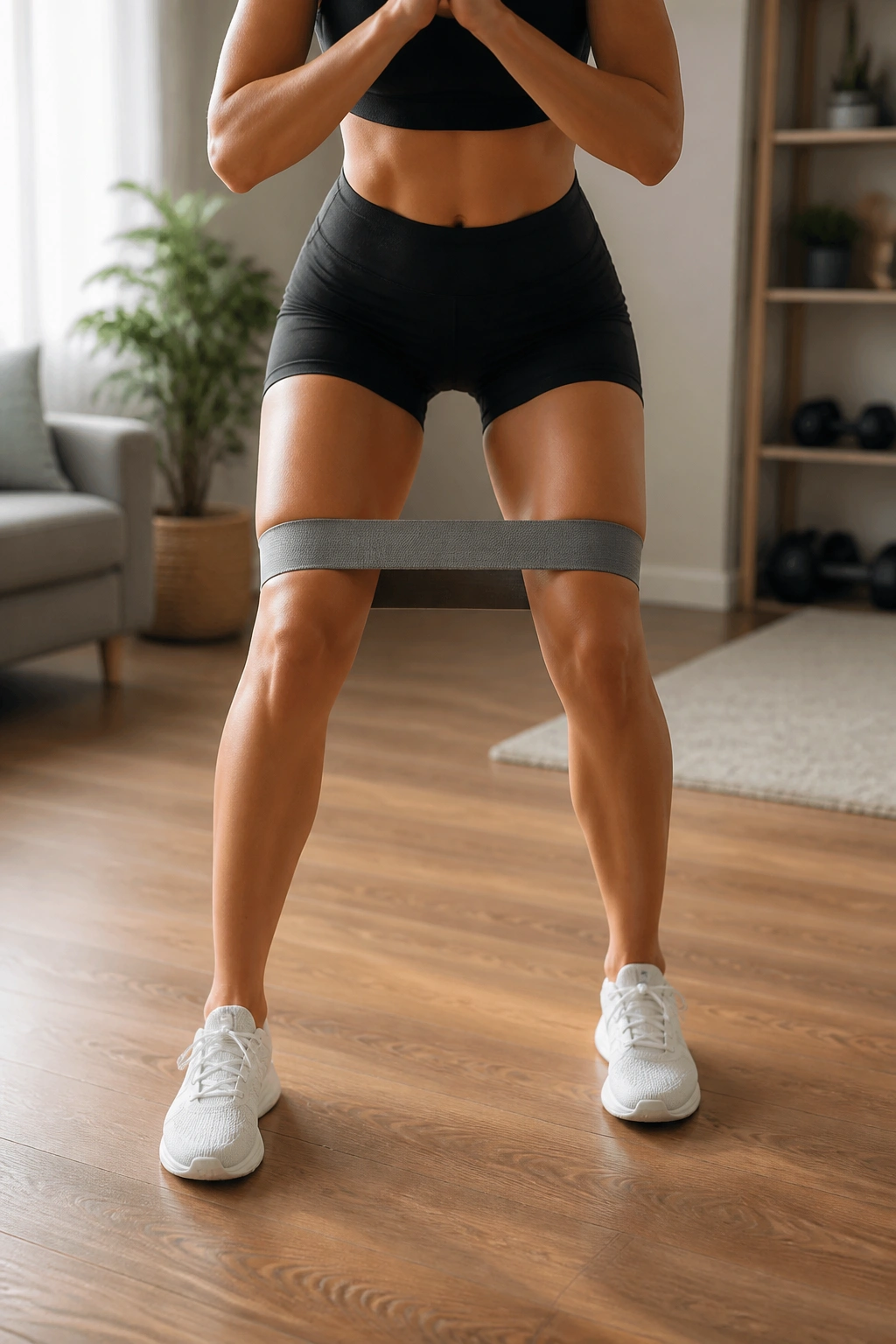
Put a mini band above the knees or around the ankles and take a few side steps. That’s the whole move, and it can still light up the side glutes like crazy when you keep the tension on the band the whole time.
Drop into a shallow athletic stance, knees soft, hips back a little, and step sideways without letting the band snap your feet together. Keep your toes mostly forward. If you turn the feet out too much, the tension gets sloppy and the move loses its bite.
The real work happens in the control between steps. Don’t stand all the way up between reps. Stay low enough to keep the glutes on.
Quick setup notes
- 8 to 12 steps each direction
- Band above knees for an easier start
- Band at ankles for a harder version
No band? You can still do slow side steps in a squat, but the band gives better constant tension. That little piece of rubber earns its keep.
18. Single-Leg Romanian Deadlift
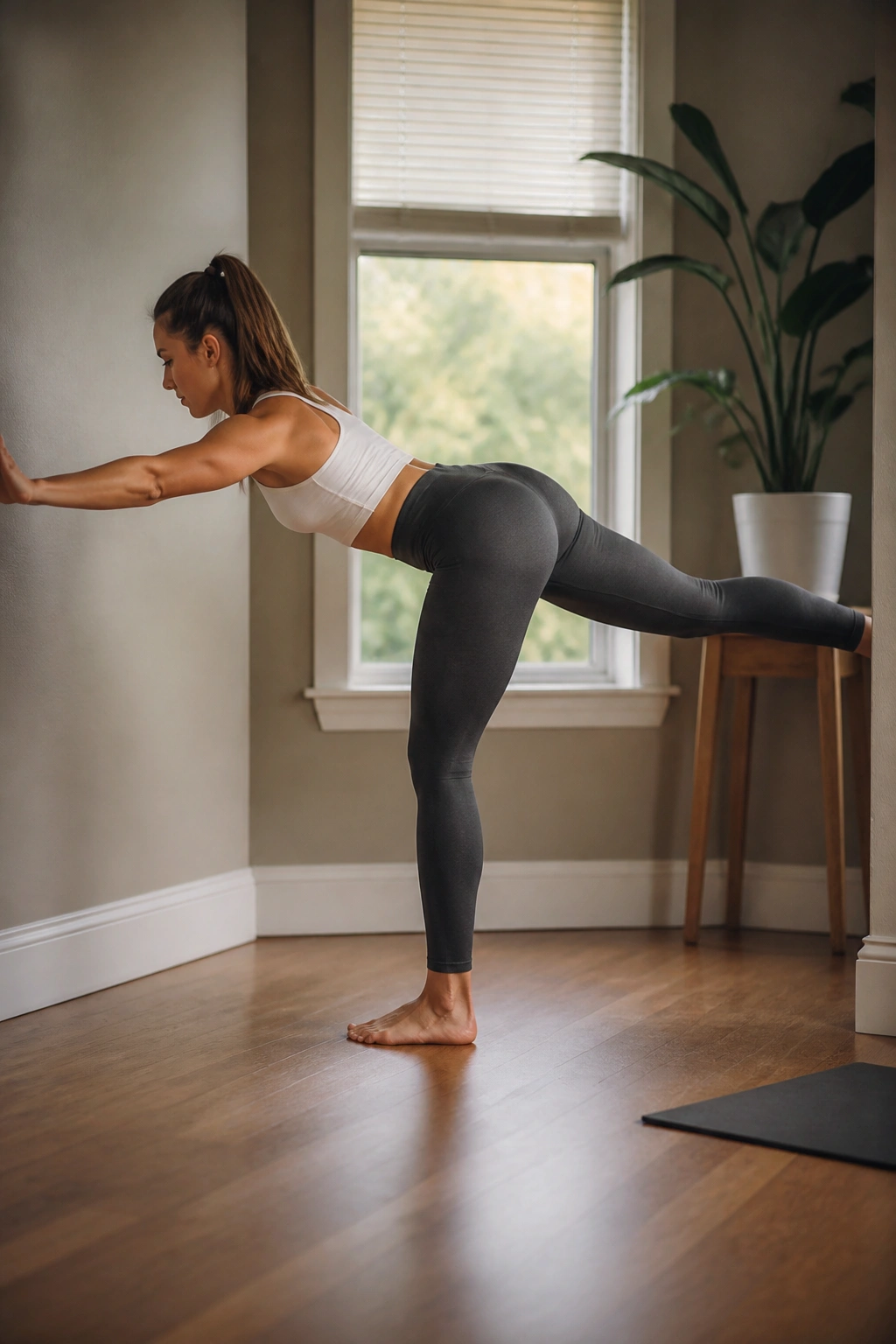
This is a glute exercise disguised as a balance drill. The single-leg Romanian deadlift teaches your hips to hinge while one side stays steady, and that’s gold for home training because it does not need a machine to feel hard.
Stand on one leg with a soft bend in the knee. Reach the free leg back as your torso tips forward from the hips, keeping your spine long and your hips square to the floor. Stop when you feel a good stretch in the standing hamstring, then squeeze the standing glute to come back up. The movement should feel smooth and controlled, not dramatic.
A wall, chair, or fingertips on a counter can help while you learn. That support is useful, not weak.
- Keep the standing knee slightly bent.
- Don’t let the hips open to the side.
- Move slower on the way down than on the way up.
Eight to twelve reps per side is a solid range. A backpack held in both hands can make it harder later.
19. Wall Sit with Glute Squeeze
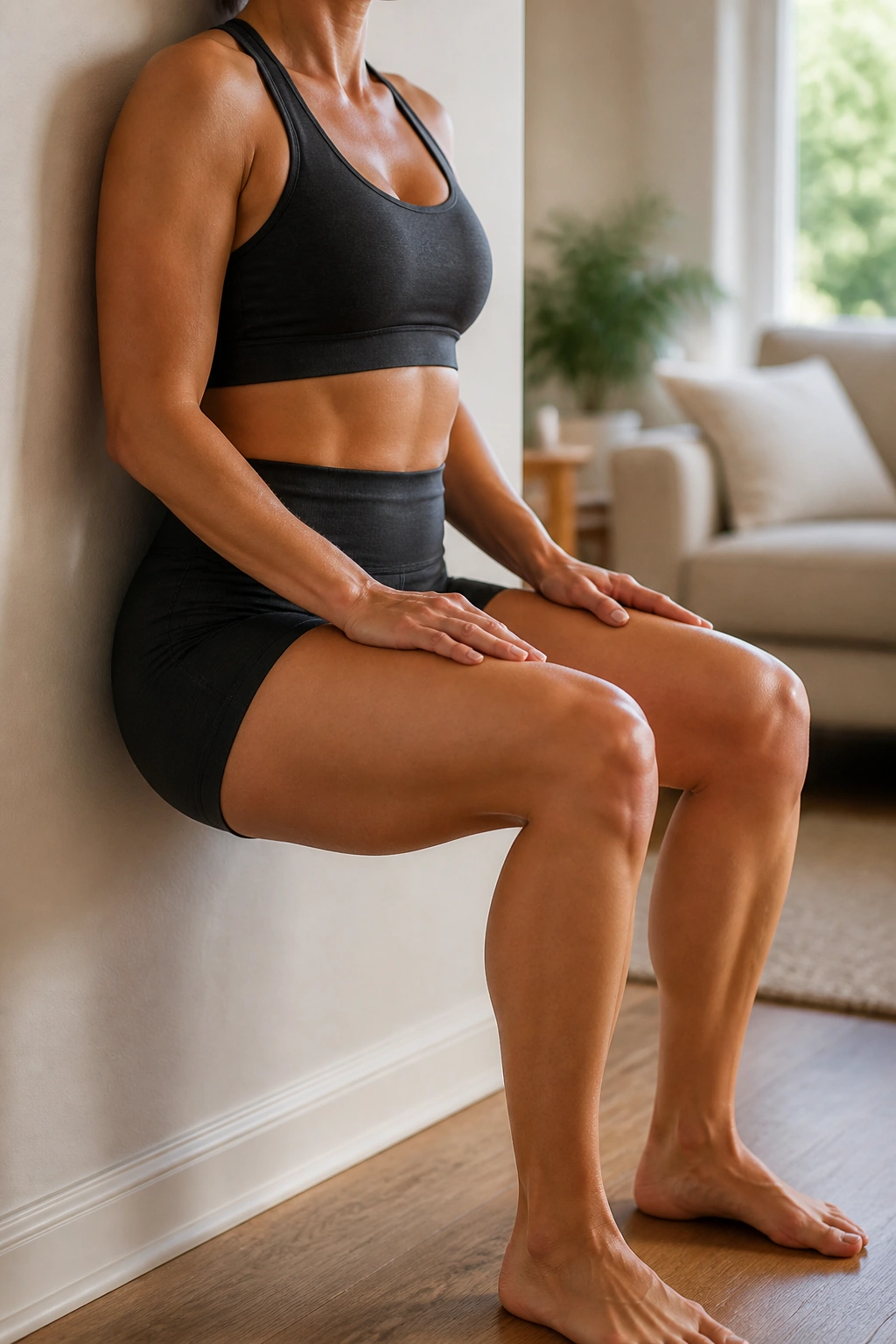
Not glamorous. Still useful. A wall sit with an active glute squeeze is a good option when you want a lower-impact burn or need something kinder to the knees than deep bending.
Stand with your back against a wall and slide down until your knees are roughly at a comfortable angle. You do not need to hit a perfect 90 degrees if that bothers your knees. Press your lower back lightly into the wall, then squeeze the glutes hard and hold. Keep breathing. People love to freeze their face and hold their breath on this one. No need.
When it helps most
- As a finisher after squats or lunges
- On days when joints feel cranky
- When you want an isometric hold instead of reps
Hold for 20 to 40 seconds, rest, then repeat. The glute squeeze is the point. If your quads take over and your butt goes limp, reset the angle and try again. This should feel like a steady burn, not a knee test.
20. Single-Leg Box Squat to a Chair
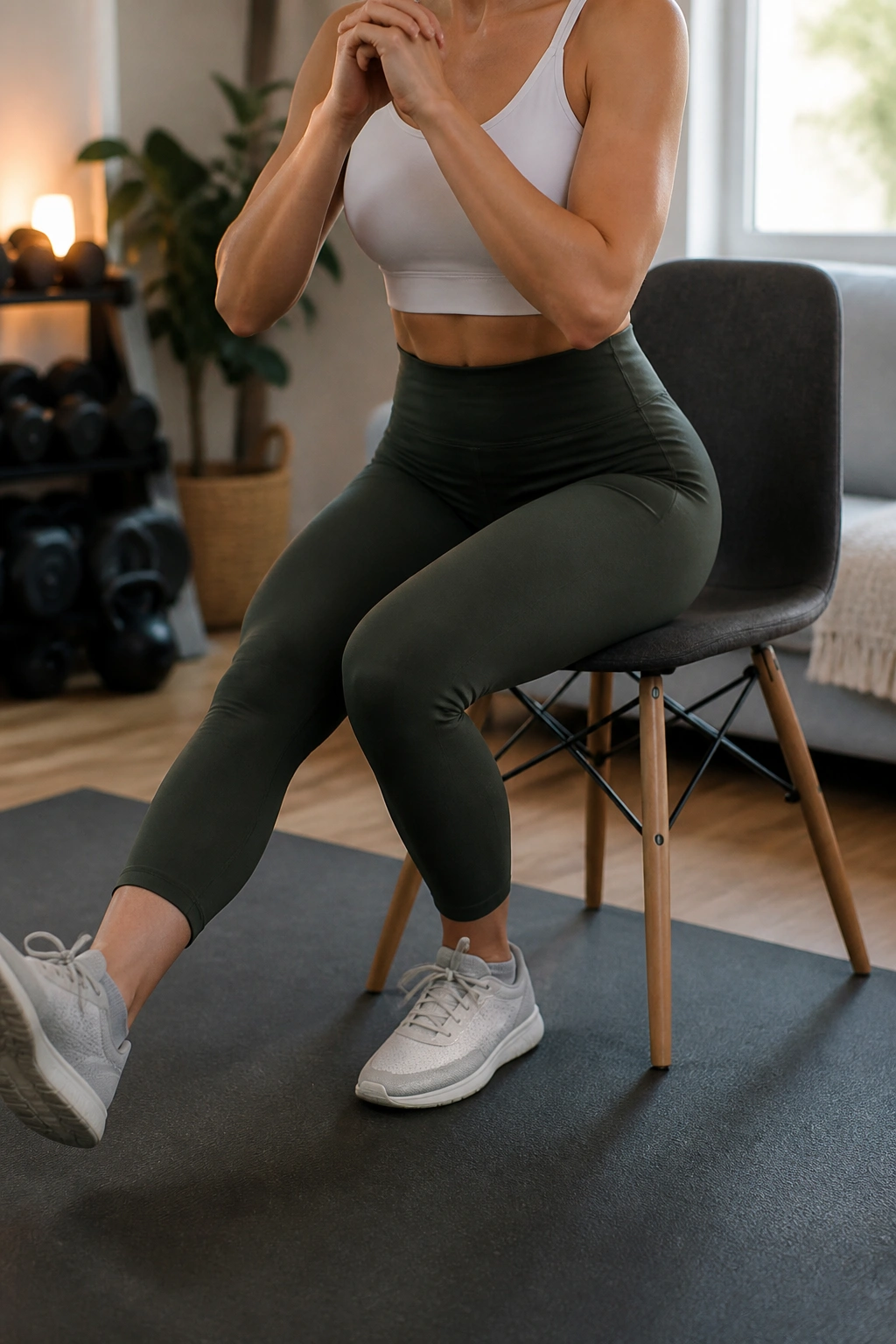
If you want one advanced move that ties everything together, this is it. The single-leg box squat to a chair asks for strength, balance, and control all at once, which is why it’s so good—and why it can be frustrating at first.
Stand in front of a sturdy chair or sofa with one leg lifted slightly off the floor. Sit back slowly onto the chair on one leg, then stand back up without collapsing or plopping down. Hold a wall with one hand if you need to. That support makes the difference between a useful rep and a wobble-fest.
Start with a higher seat before trying a lower one. A sofa cushion is easier than a deep chair. Depth comes later.
Keep these points in mind
- Chest stays proud.
- Working foot stays flat.
- Lower under control, not in a drop.
Five to eight reps per side is enough when the form is honest. This move shows you where the weak links are. That is the whole reason to keep it around.
The Bottom Line
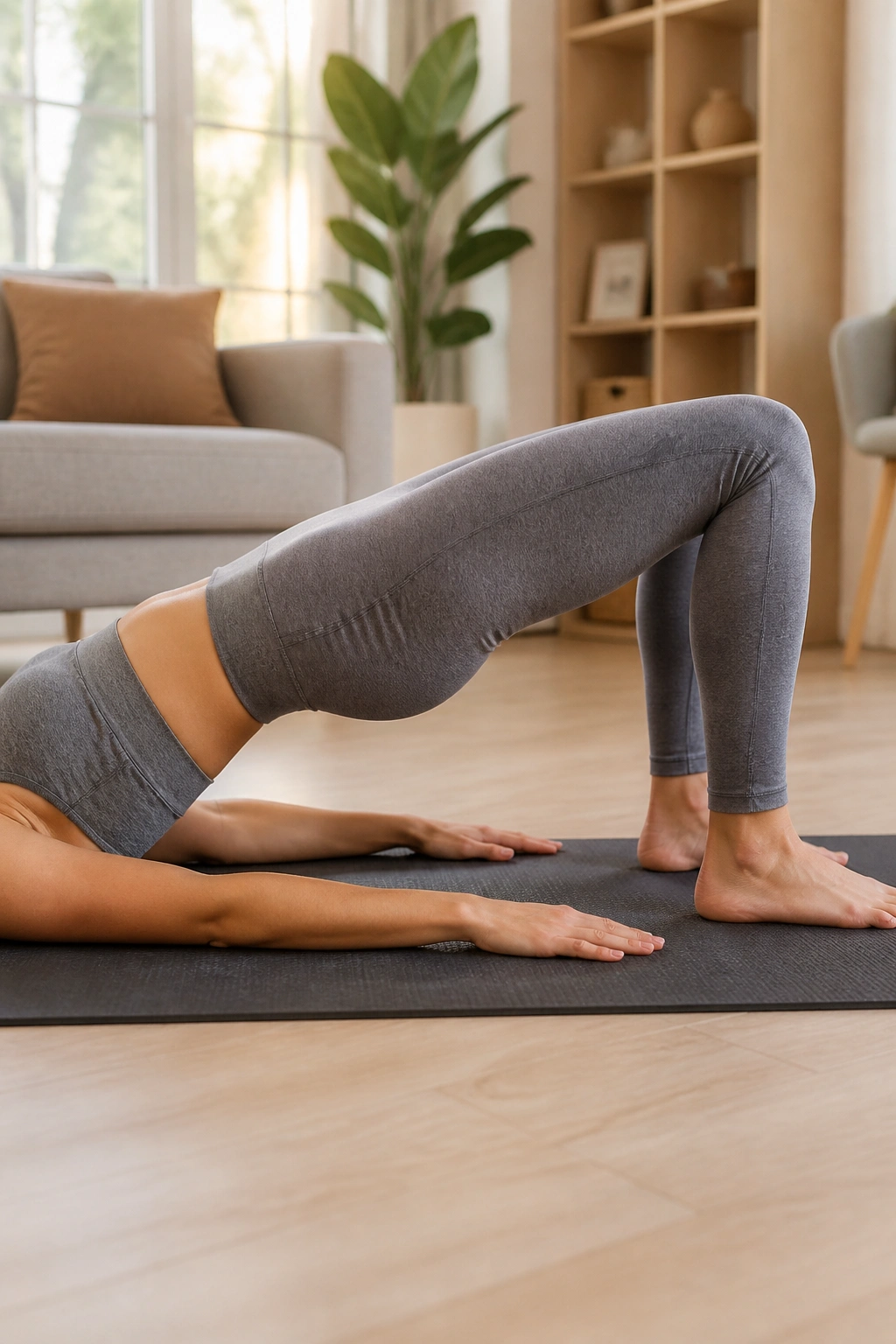
You do not need twenty exercises every session. That would be a lot, and half of them would turn into junk reps by the third round. A smarter approach is to pick one bridge, one hinge, one squat or lunge, and one side-glute move, then do them with enough control that your bum is actually doing the work.
The best home glute workouts are the ones that feel simple on paper and hard in practice. Clean reps, a little pause, some single-leg work, and a bit of patience usually beat wild tempo changes and random hopping around the room.
If you want the easiest place to start, build around glute bridges, reverse lunges, side-lying leg lifts, and single-leg Romanian deadlifts. That mix covers the main patterns without needing much space, and it tells you fast whether your form is honest.
