



A pair of dumbbells can do more for your glutes than a lot of people expect. If your home booty day has started to feel stale — same squats, same lunges, same tired burn in the front of your thighs — the problem is probably the exercise mix, not your effort.
Glutes like a few different kinds of work. Heavy hip extension. Single-leg balance. A deep stretch under load. A little side-to-side challenge to wake up the outer hip. Miss one of those, and the whole session starts to feel like busywork.
You do not need a full gym to make this happen. A couch, a sturdy chair, a step, a mat, and one or two dumbbells are enough to build a session that feels serious. If the weights are light, slow the lowering. If the weights are heavy, keep the reps clean. Simple rules. They work.
Pick four or five of these and build your day around them, or run the last section as a finisher when you want the burn to linger. Either way, the goal is the same: get the glutes doing the job they’re supposed to do.
1. Dumbbell Hip Thrust
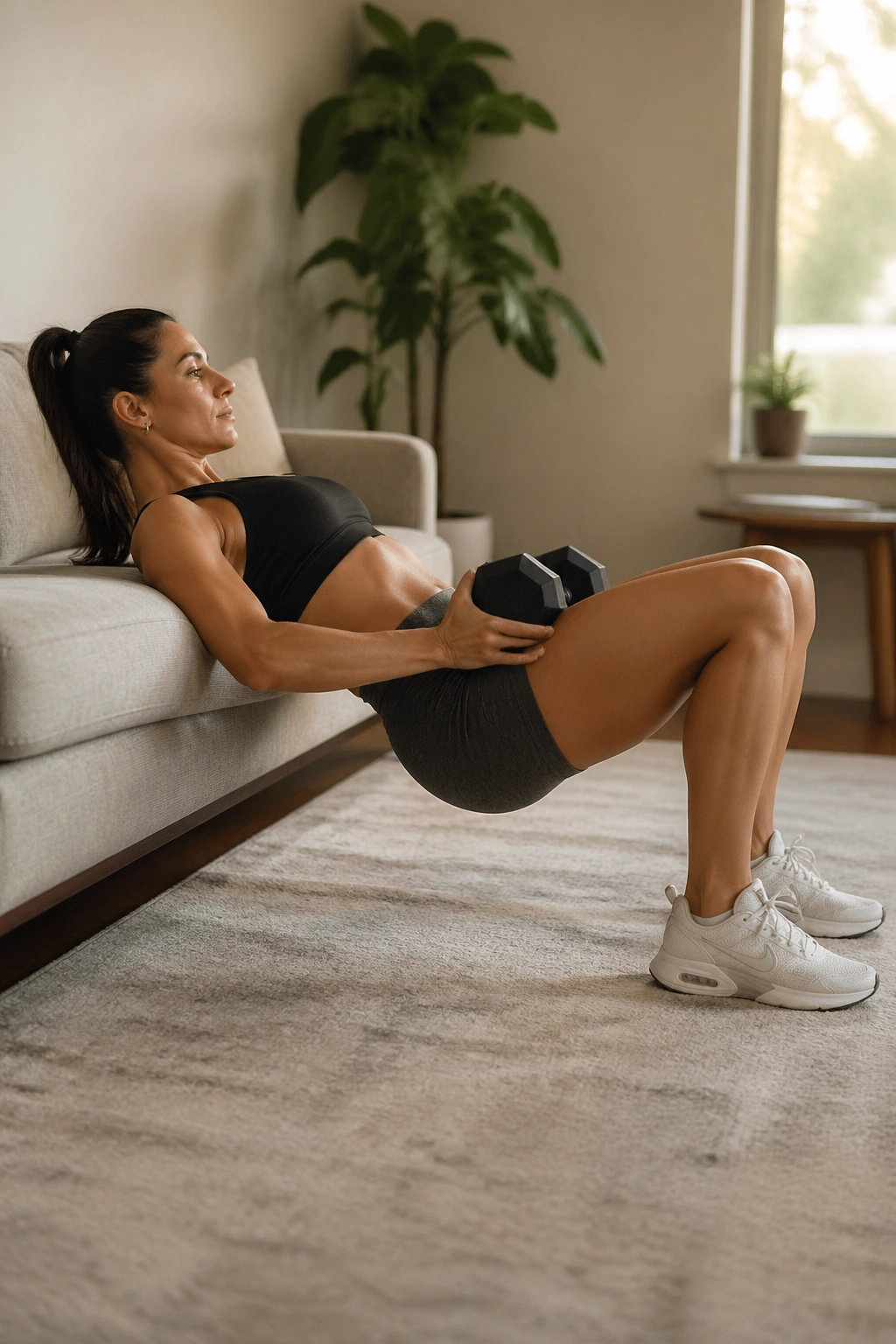
If I had to choose one move that gives the glutes the most obvious job to do at home, this would be it. The dumbbell hip thrust loads the glutes hard in the top position, which is exactly where a lot of people lose tension when they squat or lunge.
Why It Works
Your upper back rests on a couch, bench, or sturdy chair, and the hips drive upward against the dumbbell. That gives the glutes a clean, direct squeeze near full lockout. The movement is simple, but it’s not lazy. Done right, it feels like your butt is doing the main work instead of your lower back.
How to Set It Up
- Place a folded towel or pad under the dumbbell so the weight sits in the hip crease.
- Plant your feet so your shins are close to vertical at the top.
- Tuck your chin and keep your ribs down.
- Drive through your heels and pause for 1 to 2 seconds at the top.
Pro tip: if you feel this more in your lower back than your glutes, slide your feet a little closer and lighten the load. That tiny change usually fixes the problem fast.
The rep range here is easy to remember: 8 to 15 reps for strength and size, or 15 to 20 if you want a nasty finisher. Brutal. In a good way.
2. Dumbbell Romanian Deadlift
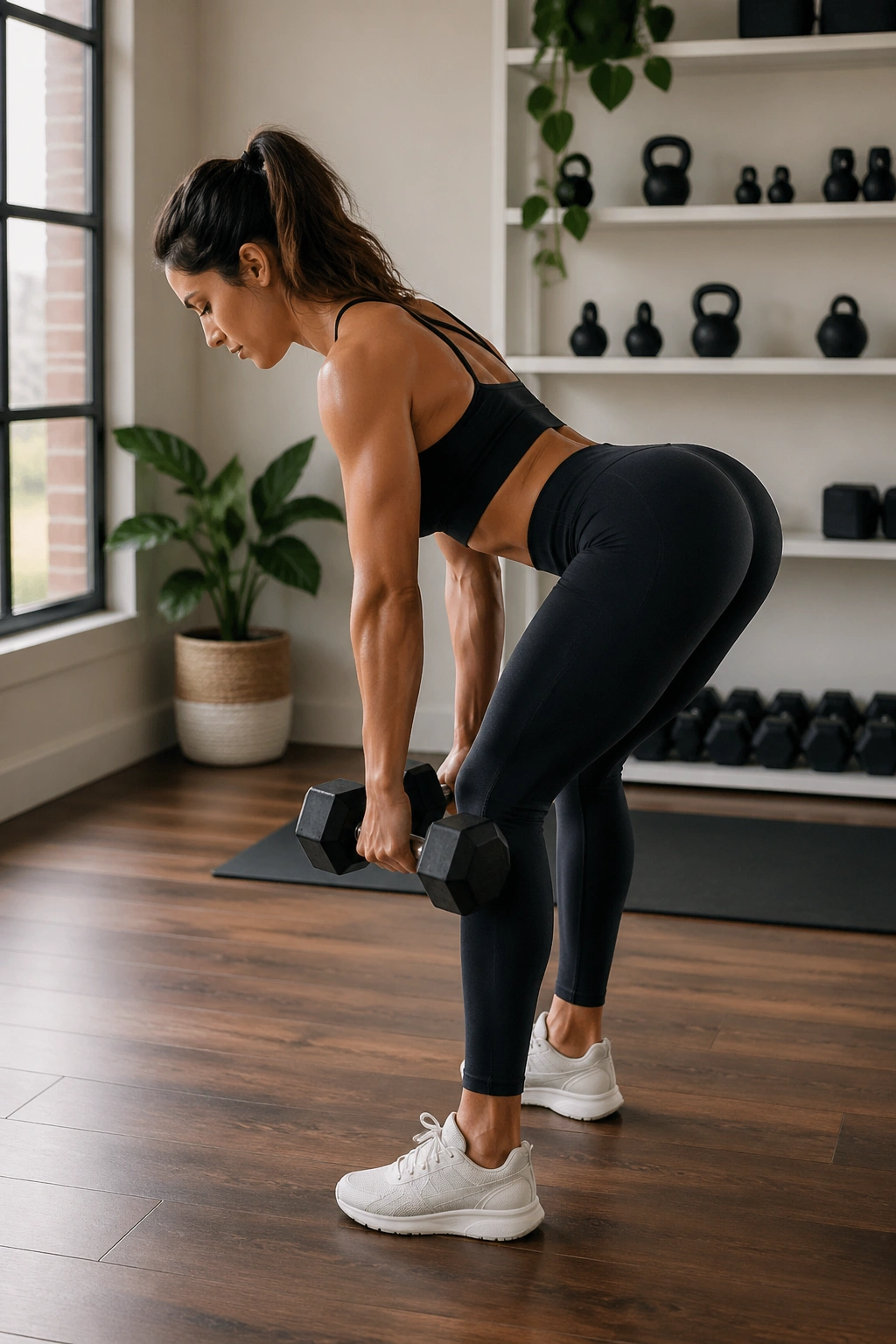
This is the move that teaches your glutes how to work through a deep hinge. A lot of home lower-body workouts skip it, which is a mistake. The Romanian deadlift gives you a long stretch through the hamstrings and glutes, and that stretch is part of why the exercise works so well.
The key is the hinge. Push your hips back, keep a soft bend in the knees, and let the dumbbells travel close to your legs. If the weights drift away from your body, your back has to fight to stay in position. If you bend too much at the knees, it turns into a squat. Both mistakes blunt the glute work.
Use a 2- to 3-second lowering phase and stop when your back wants to round. That may be just below the knees for some people, or mid-shin for others. Range matters less than control.
I like this one in the 6 to 12 rep range with a load that feels heavy by the last two reps. If your hamstrings are tight, you’ll feel this fast. That’s normal. Just don’t chase depth for its own sake.
3. Bulgarian Split Squat
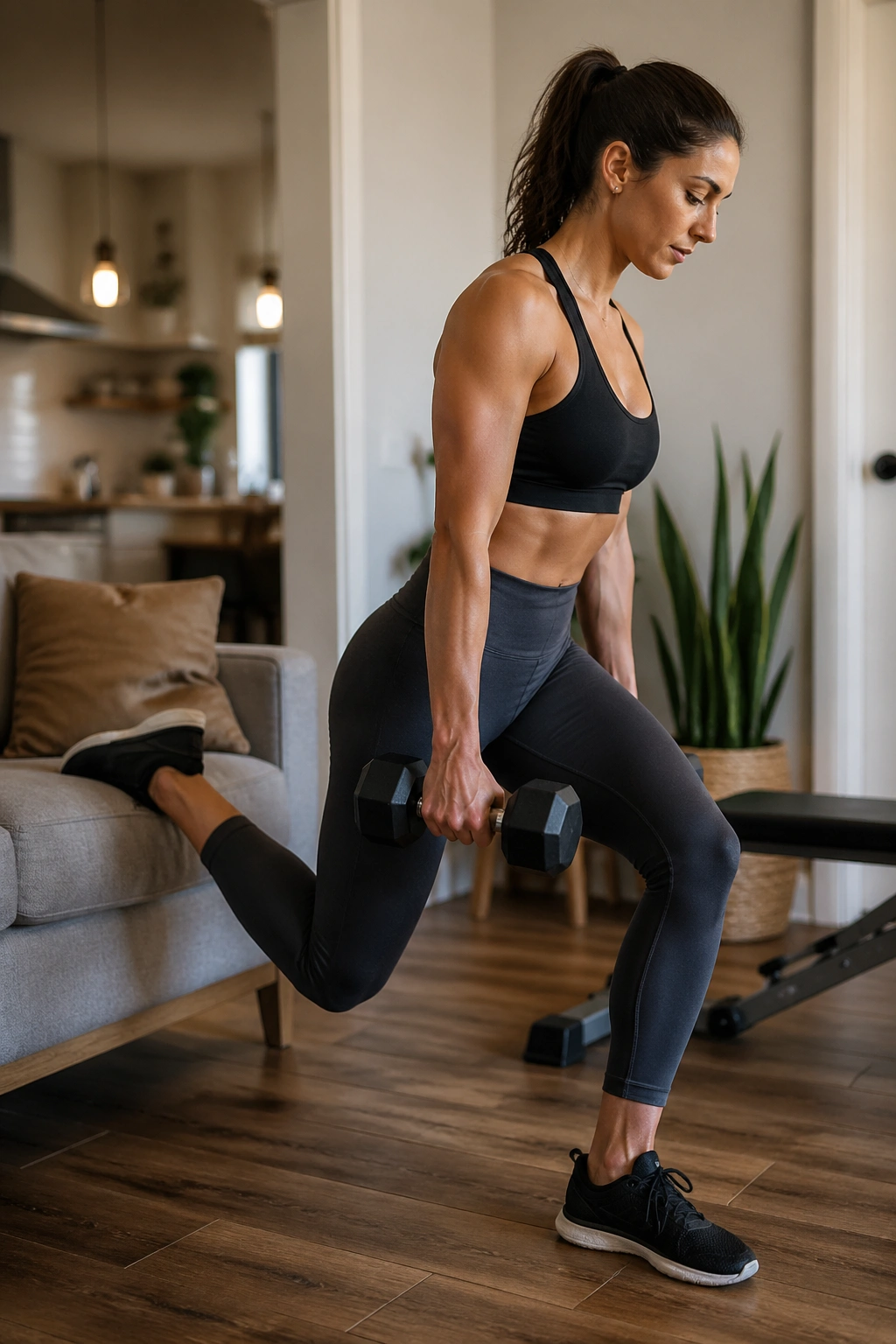
Why does this one feel so nasty? Because one leg has to do almost everything while the back foot mostly exists for balance. That makes the Bulgarian split squat one of the best dumbbell glute workouts for home booty day, especially when you want to stop hiding behind two-leg movements.
How to Use It
Put your back foot on a couch, chair, or low bench. Step the front foot far enough forward that you can drop down without your front knee shooting way over your toes. A slight forward lean is fine — actually, it’s helpful if you want more glute and less quad.
- Hold dumbbells at your sides or in a goblet position.
- Lower under control for 2 to 3 seconds.
- Keep the front heel heavy.
- Drive up through the front midfoot and heel.
The back leg should not do much. If you’re bouncing off it, the setup is too easy or the stance is too short.
This one works best in the 8 to 12 rep range per leg. Start lighter than you think. The balance demand alone can humble people before the muscles do.
4. Dumbbell Reverse Lunge
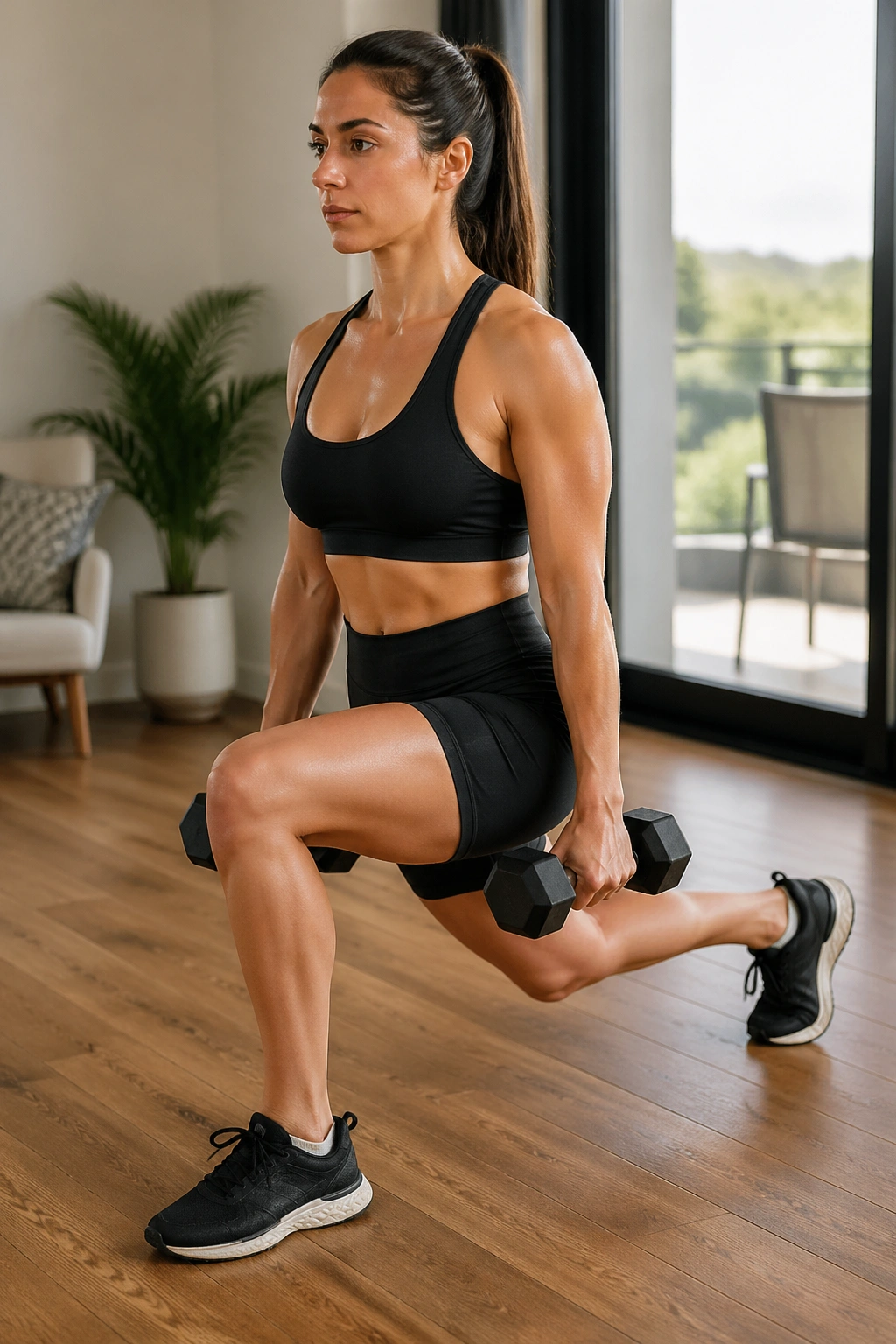
Step back, not forward. That tiny choice changes the feel of the whole exercise.
Reverse lunges are easier to control than walking lunges for a lot of people, and they usually feel friendlier on the knees. More than that, they let the front glute take a solid share of the work while you keep your torso upright enough to stay balanced. If you’ve got a little floor space and a pair of dumbbells, this is one of the most practical home booty-day moves you can do.
Key Details That Matter
- Take a longer step back than you think you need.
- Keep the front foot flat.
- Lower until both knees bend comfortably.
- Push the floor away with the front leg to stand up.
A short step turns this into more of a quad drill. A longer step shifts more work to the glute and hamstring on the front leg. That’s the version most people want.
Use 8 to 12 reps per side and keep the dumbbells at your sides. If your balance gets sloppy, drop the weight before you drop the form. A clean reverse lunge beats a wobbling one every time.
5. Dumbbell Glute Bridge
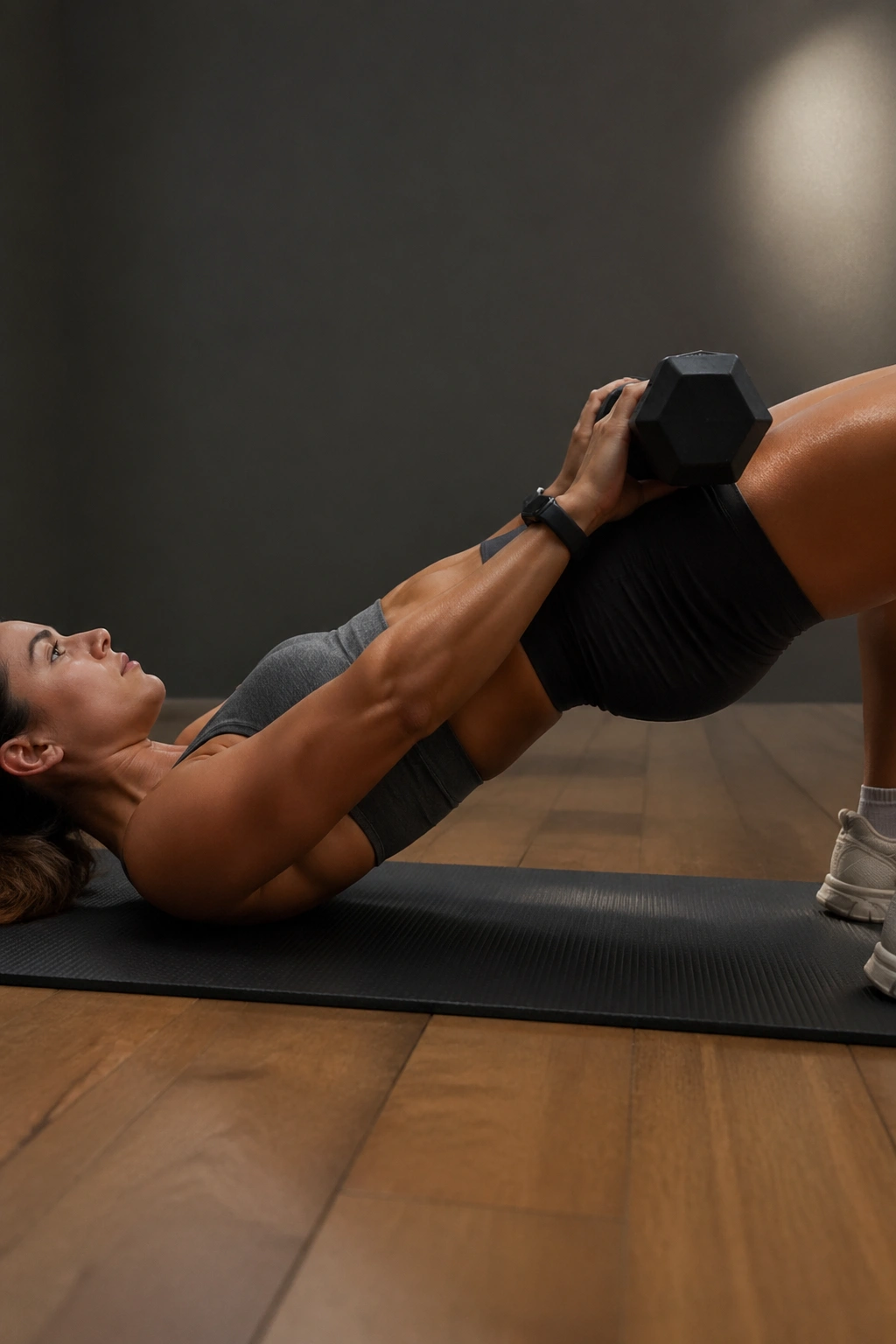
The floor version gets ignored because it looks too simple. That’s a mistake. The dumbbell glute bridge is one of the easiest ways to hit a hard glute squeeze without needing a bench, and it’s especially useful when your lower back is tired or you want a safer setup than a hip thrust.
You lie on the floor, set the dumbbell across your hips, and press upward until your torso and thighs form a straight line. The movement is shorter than a hip thrust, but the top squeeze can be vicious if you do it properly. Hold the lockout for 2 seconds and keep your ribs from flaring.
A lot of people turn this into a lower-back exercise by arching high and rushing the reps. Don’t. Tuck the pelvis slightly at the top, keep your chin tucked, and think about squeezing the glutes first, not flinging the hips up.
This move shines in higher reps — 15 to 25 is a sweet spot. It also works well as a warm-up before heavier work or as a finisher after split squats and deadlifts. Plain-looking. Not plain-feeling.
6. Sumo Goblet Squat
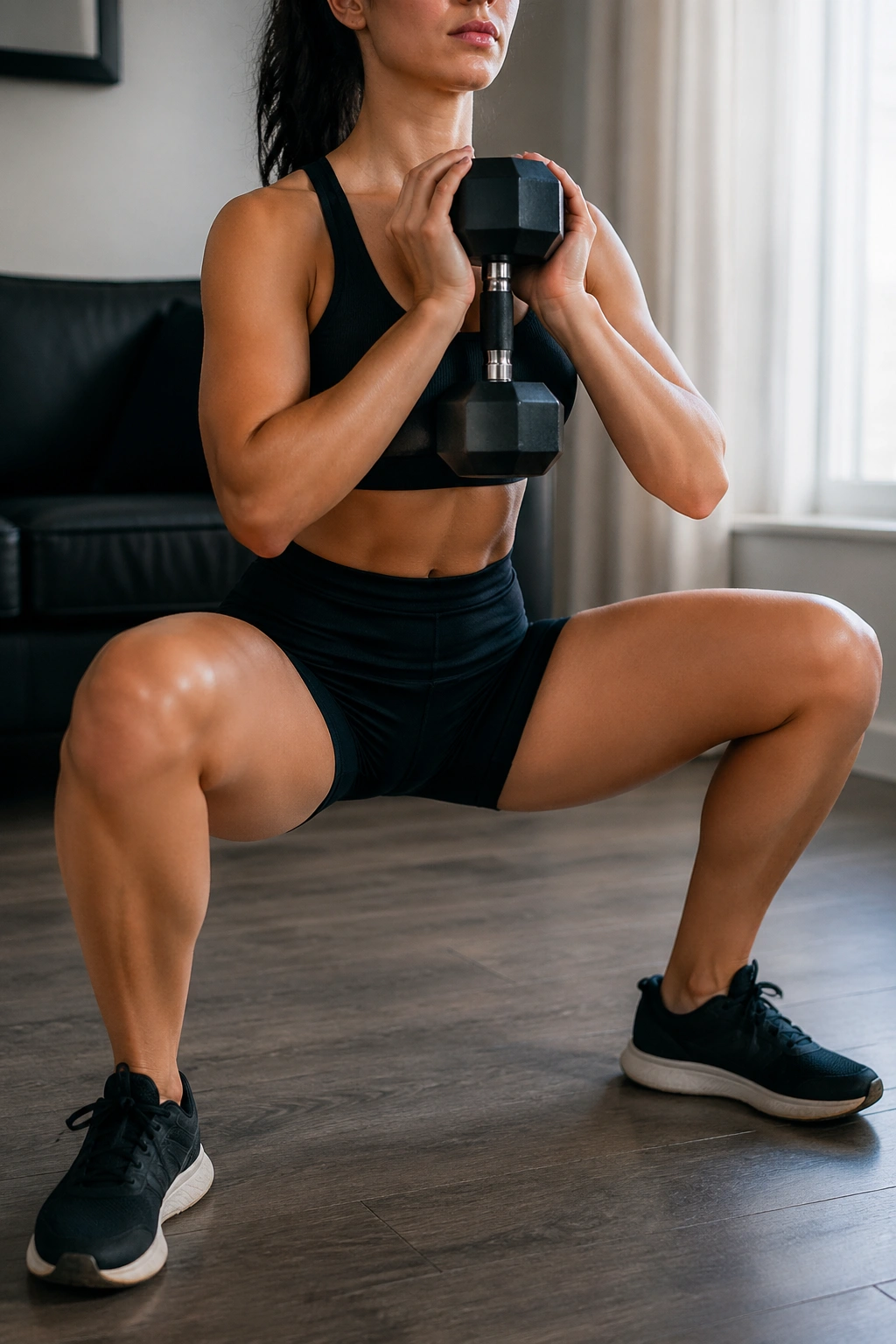
A narrow-stance squat and a sumo squat do not feel the same, and if your goal is glute work at home, that difference matters.
The wide stance opens the hips, lets the knees track out, and gives the glutes and inner thighs more to do. Hold one dumbbell vertically at your chest, set your feet wider than shoulder-width, and point your toes out about 20 to 40 degrees. Then sit down between your legs instead of folding forward over them.
What Makes It Different
The sumo goblet squat usually feels less like a pure quad builder and more like a full lower-body squat with a strong glute bias. The stance also makes it easier for some people to keep the torso upright, which is nice if regular squats send too much pressure into the lower back.
Who Should Use It
- People who want a squat pattern with a wider hip angle
- Anyone with tight hips who hates deep narrow squats
- Lifters who want a glute-and-adductor combo movement
Use 10 to 15 reps and stop chasing depth when the pelvis starts tucking hard at the bottom. That tucked position is your body telling you the range is done for today. Listen to it.
7. Single-Leg Romanian Deadlift
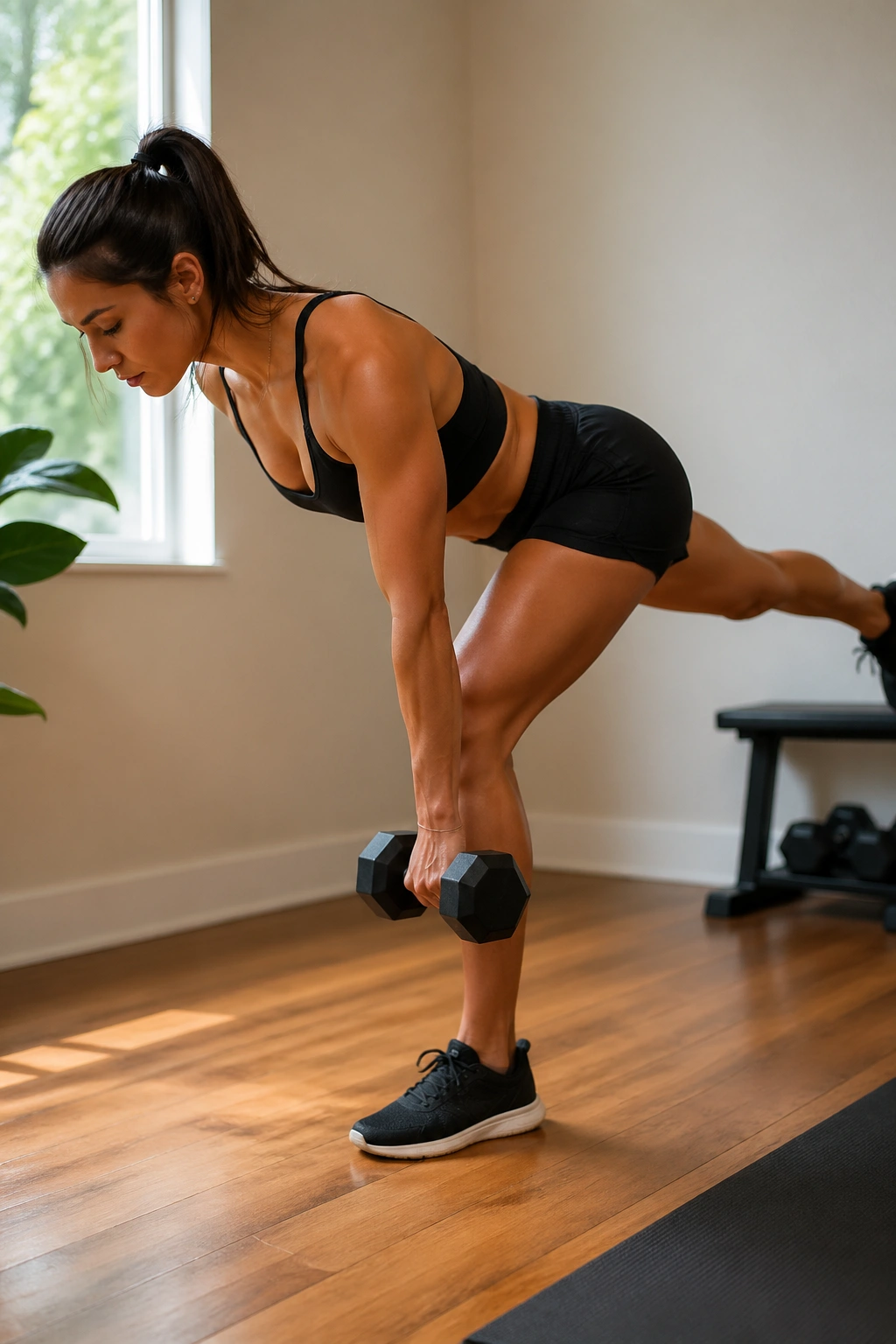
This is the move that shows you, fast, whether one side is weaker than the other. It’s also one of the best dumbbell glute workouts for home booty day if you care about balance, hip stability, and not letting one leg quietly dominate the other.
What Makes It Different
Unlike a two-leg RDL, the single-leg version forces the standing glute to stabilize the pelvis while the free leg reaches back as a counterweight. The glute on the working side has to resist rotation. That extra stabilization is a big deal, especially for the outer hip.
How to Keep Your Balance
- Keep a soft bend in the standing knee.
- Let the free leg extend back like a long lever.
- Keep the dumbbell in the opposite hand for a harder challenge, or the same-side hand for more balance.
- Use a wall or chair with the free hand if needed.
Start with 6 to 10 reps per side. Go slow. If you rush, you’ll twist open at the hips and the whole thing turns messy fast.
This one is not about loading like crazy. It’s about control. Clean reps, steady balance, and a hip hinge that stays honest.
8. Dumbbell Step-Up
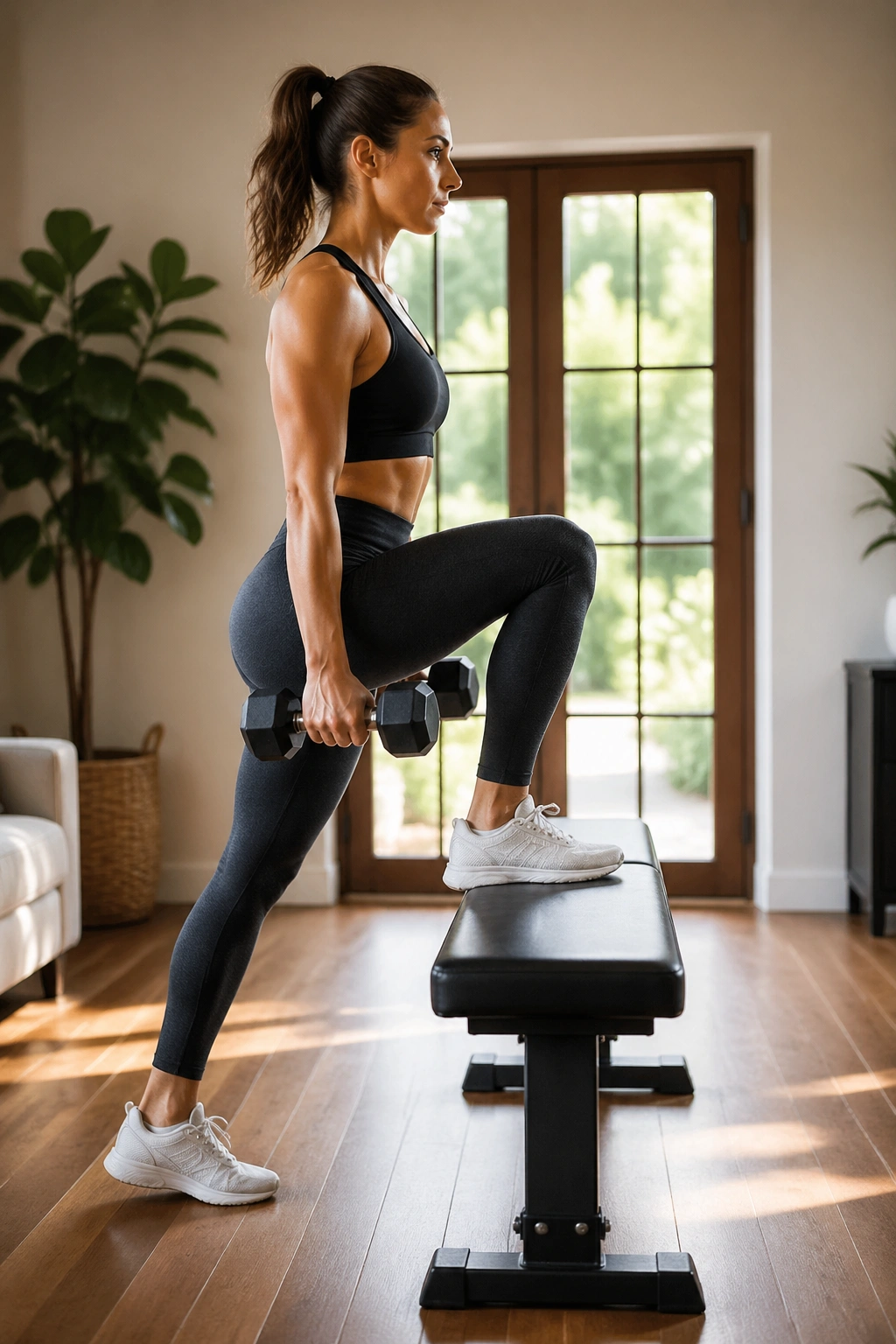
A good step-up looks boring right up until it hits your glutes and leaves your breathing a little ragged. That’s the charm of it.
Use a sturdy chair, bench, or step that puts your working knee somewhere around a right angle or a little higher. Too low, and it becomes a quad-heavy shuffle. Too high, and you start cheating with momentum or lumbar extension. The sweet spot lets the glute drive through the whole climb.
Hold the dumbbells at your sides, plant the whole foot on the step, and lean the torso slightly forward as you stand. Do not launch off the back leg. That trailing leg is there to help you balance, not to do the work.
I like 8 to 12 reps per leg with a slow lower. The eccentric matters here. Step down under control instead of dropping, because the lower phase is where a lot of the strength work happens.
Use this when: you want a movement that feels athletic, controlled, and easy to load without lying on the floor. It’s a keeper.
9. Curtsy Lunge
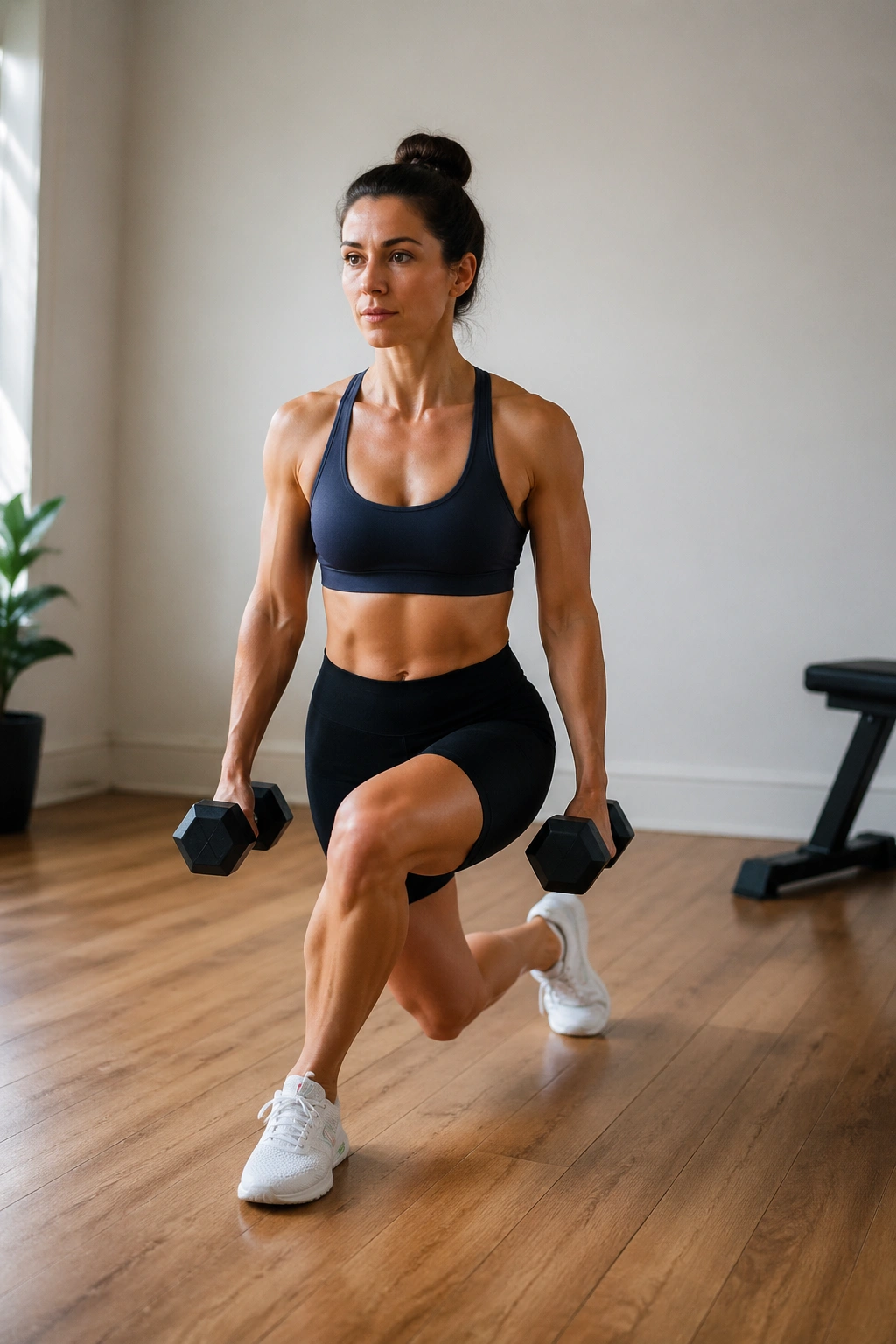
Why include a move that some trainers skip? Because the curtsy lunge hits the outer glute in a way straight-back and straight-forward lunges don’t.
The crossed-back path shifts the pelvis and challenges the glute med, the small but stubborn muscle on the side of the hip that helps keep your pelvis steady. It also makes you own the bottom position instead of just dropping straight down. Done well, it feels like a side-glute burn with a little extra thigh work.
That said, this one can annoy some knees if you force the range or throw the leg too far across. Keep the step shallow at first. The back leg crosses behind the front leg at about a 45-degree angle, but you do not need a huge curtsy to get benefit from it.
How to Use It
- Start light.
- Keep the chest tall.
- Step back and across, not straight behind.
- Stay in a comfortable range.
If your knees feel cranky, skip it. No exercise is worth a bad joint reaction. But if it feels smooth, this one earns its place quickly.
10. Dumbbell Sumo Deadlift
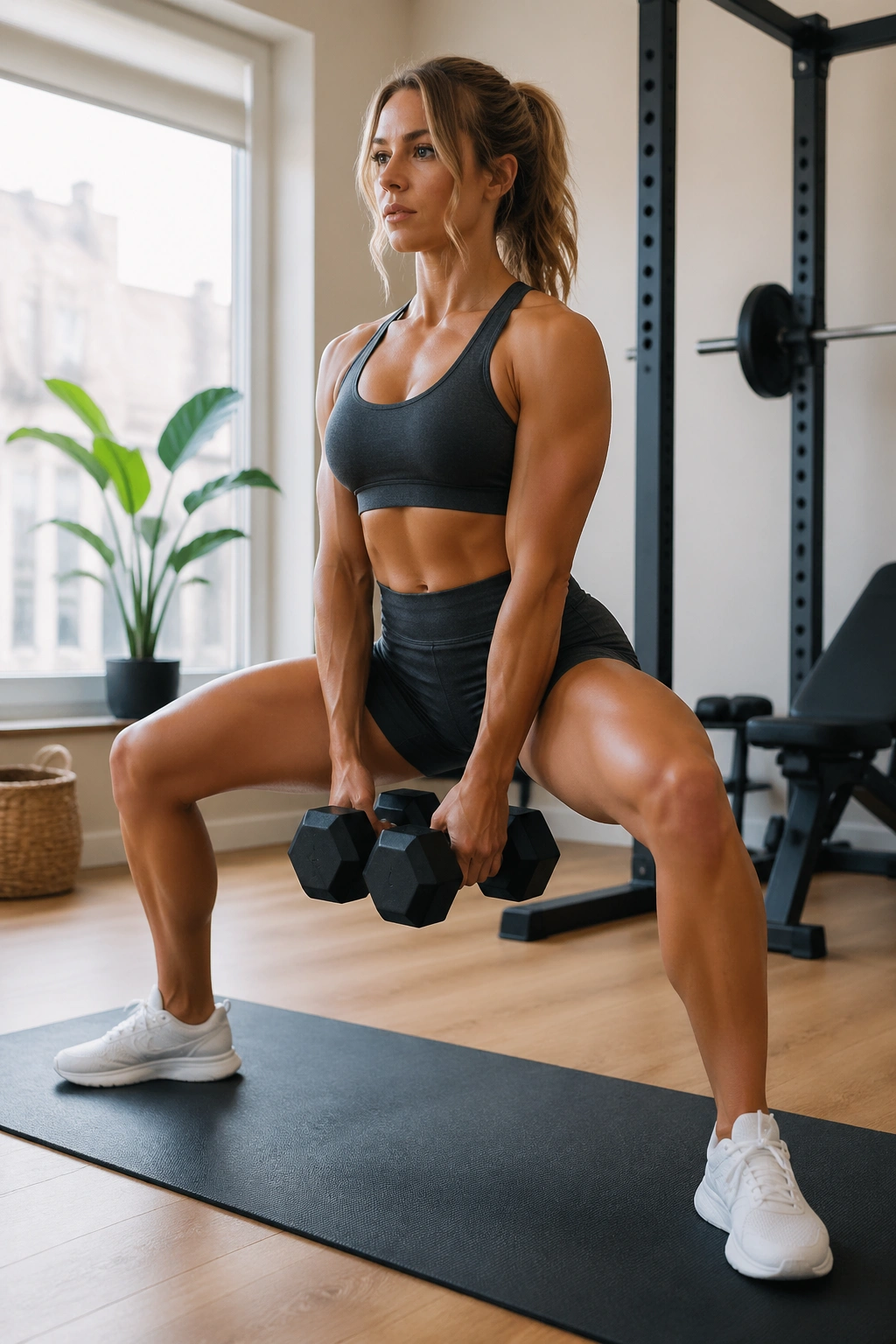
The sumo deadlift is the heavier cousin of the wide-stance squat. It gives you more floor-driven tension and a strong glute hit without demanding a full squat depth.
Stand wide, turn the toes out, and hold either one dumbbell vertically between your feet or two dumbbells at your sides. Sink the hips down between the legs, keep the chest proud, and stand up by driving the floor away. The dumbbells should stay close to your body the whole time.
Key Details
- Shins stay more vertical than in a regular squat.
- Knees track over the toes.
- Hips move down and back together.
- The lockout finishes with the glutes, not a lower-back lean.
This is a nice choice when you want a bilateral lift that feels heavy without requiring a bench. It’s also easy to progress because you can add load, slow the lowering, or pause one second on the floor before standing.
Use 6 to 10 reps if the dumbbells are heavy. Use 10 to 12 if the weights are moderate. If the back starts doing the work, reset your stance and start over. Clean reps matter here more than ego.
11. Kickstand Romanian Deadlift
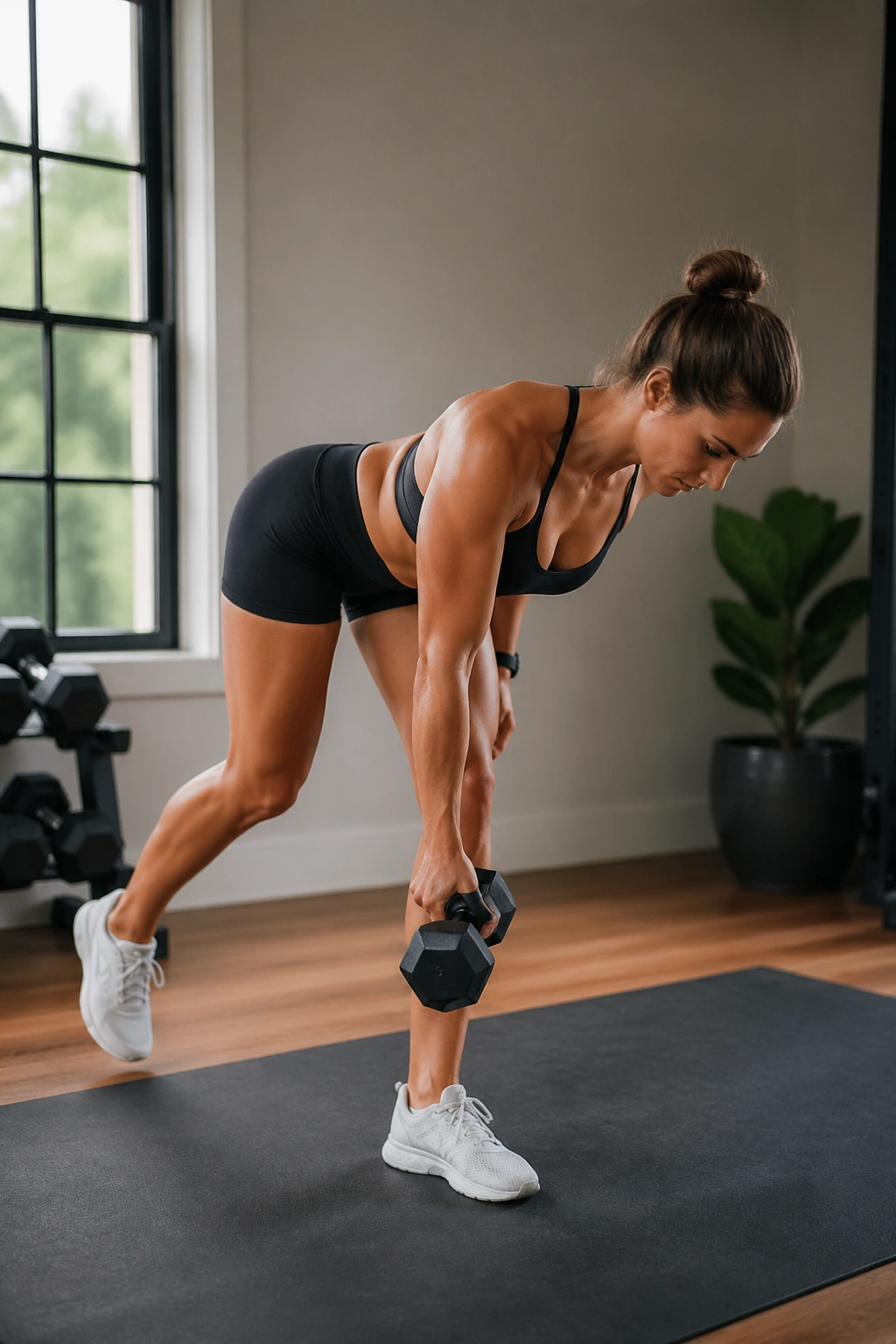
Sometimes one-leg work is too wobbly, and two-leg work doesn’t hit one side hard enough. The kickstand RDL sits right in the middle, which is why it’s such a useful home glute move.
One foot does most of the work. The other foot stays lightly behind on the toe for balance, like a little safety stand. You’ll feel the front leg glute and hamstring load up without the full circus act of a single-leg deadlift. That makes it easier to go a bit heavier and stay smooth.
This version is also called a B-stance RDL, and the name fits. Your stance is split, but the back leg is only there to help you stay upright. Keep about 80 to 90% of your weight on the front leg.
I like it for 8 to 12 reps per side with a slow hinge and a firm squeeze at the top. If one glute tends to lag behind the other, start with that side first while you’re fresh. Small detail. Big difference.
12. Front-Foot Elevated Split Squat
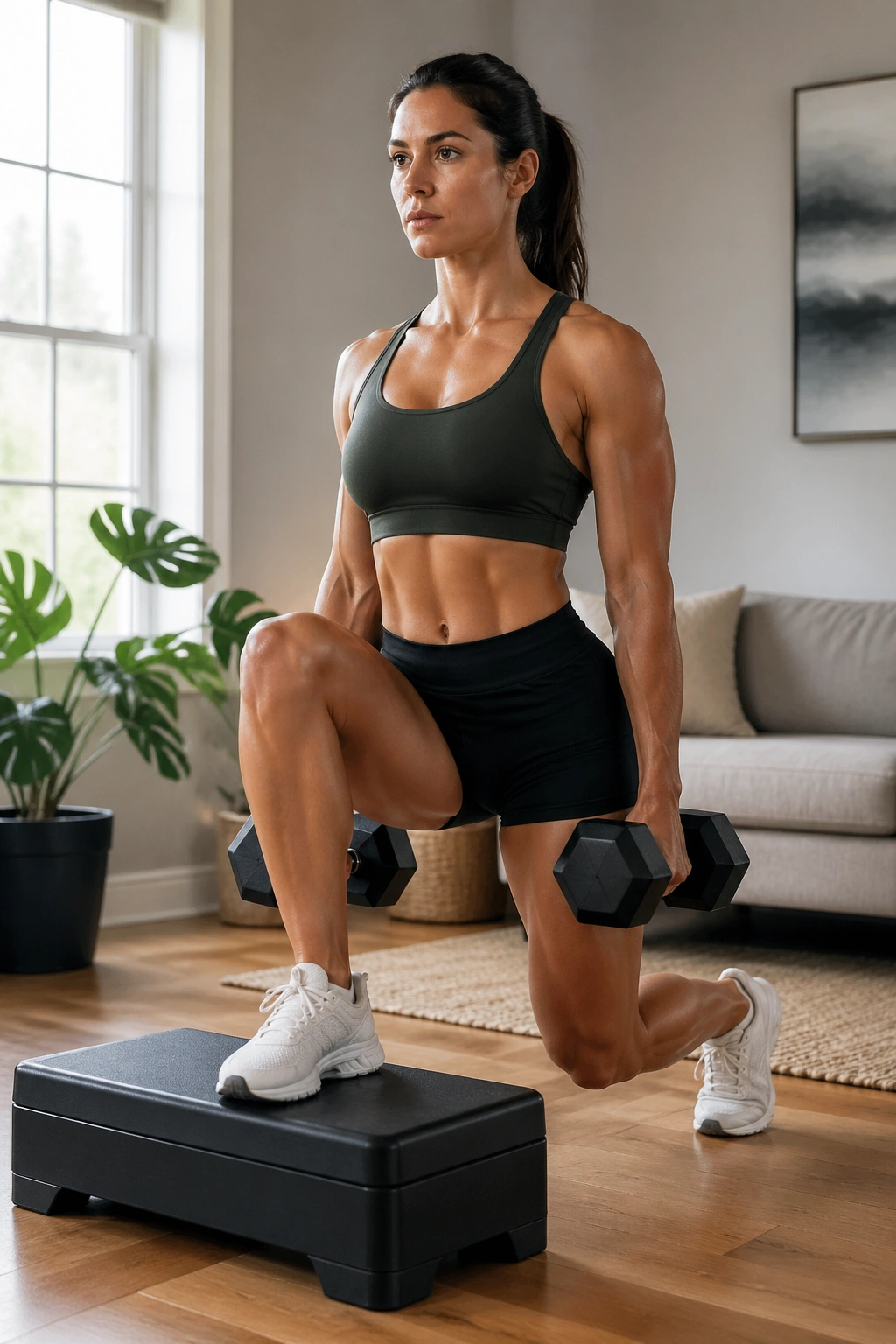
This is the more range-heavy cousin of the regular split squat, and it earns its place because it stretches the front glute a little deeper at the bottom.
Put your front foot on a low, solid platform — think 1 to 2 inches at first, not a wobbly stack of books — and keep the back foot on the floor behind you. The slight front-foot elevation lets the front hip flex a bit more as you descend, which can make the glute feel longer and more loaded in the bottom position.
Unlike the Bulgarian split squat, the back foot stays on the ground. That sounds like a small change, but it changes the balance demand and makes the movement feel less awkward for some people. If Bulgarian split squats make you feel like a baby deer on ice, this one may fit better.
Use a small forward torso lean, keep the front heel planted, and drive up through the whole foot. 8 to 10 reps per side is plenty when the range is honest.
This is a sneaky good one. It doesn’t look dramatic. It tends to feel dramatic anyway.
13. Frog Pumps with Dumbbell
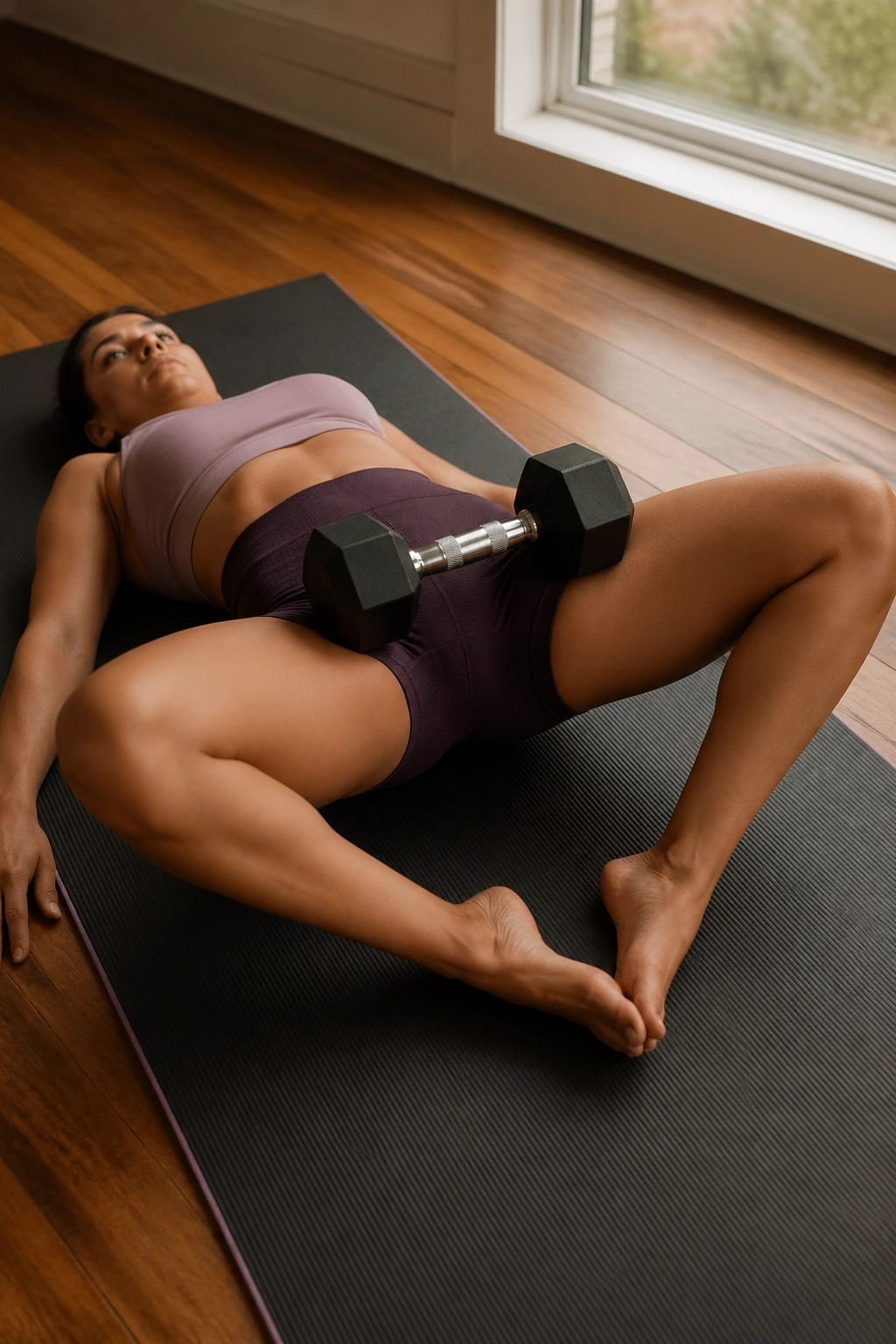
Frog pumps are one of those exercises that look almost silly until the last 10 reps make your glutes light up like they’ve had enough for the day.
Lie on your back, bring the soles of your feet together, let the knees fall out, and place a dumbbell across the hips. Then pump the hips up in a short range while keeping the feet together. The range is tiny. That is the point. You’re chasing top-end glute contraction and a fast burn, not big motion.
Why It Burns So Fast
The setup shortens the hip angle and forces the glutes to keep firing in a compact position. When you pair that with higher reps, the burn shows up fast.
- Keep the dumbbell secure with both hands.
- Lift and lower in a smooth rhythm.
- Stop if your lower back starts taking over.
- Use 20 to 40 reps.
I like frog pumps after heavier work, not before. They’re a finisher, not a warm-up. Short, ugly, effective. That’s the vibe.
14. Lateral Lunge
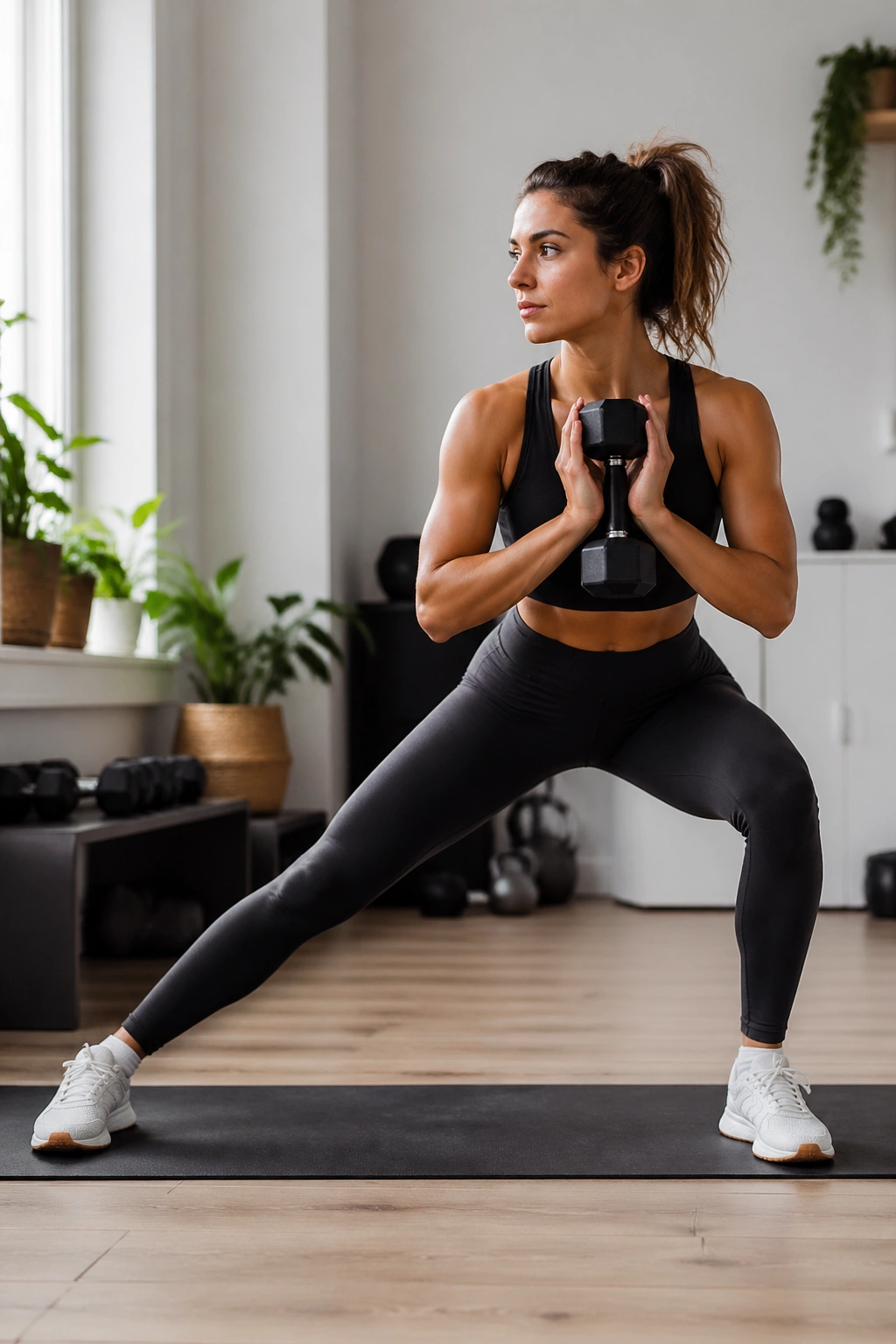
A lot of lower-body sessions stay in the forward-and-back lane. The lateral lunge changes that, and your outer hips notice.
Step out to the side, sit your hips back on the working leg, and keep the other leg long. The moving leg bends. The straight leg stays straight. That side-to-side load hits the glute med and the inner thigh at the same time, which makes the movement feel different from almost every other dumbbell glute exercise on this list.
The dumbbell can stay at your chest in a goblet hold, or you can hold one dumbbell with both hands in front of you. Keep the chest up, but don’t make the mistake of staying too upright. You still need the hip to shift back.
Best Use
- Start light.
- Take a wide but controlled step.
- Keep the planted foot flat.
- Push the floor away to return to center.
Use 8 to 10 reps per side first. If the adductor stretch feels intense, that’s normal. If the knee complains, shorten the range and slow down. No need to force it.
15. Dumbbell Glute Burnout Circuit
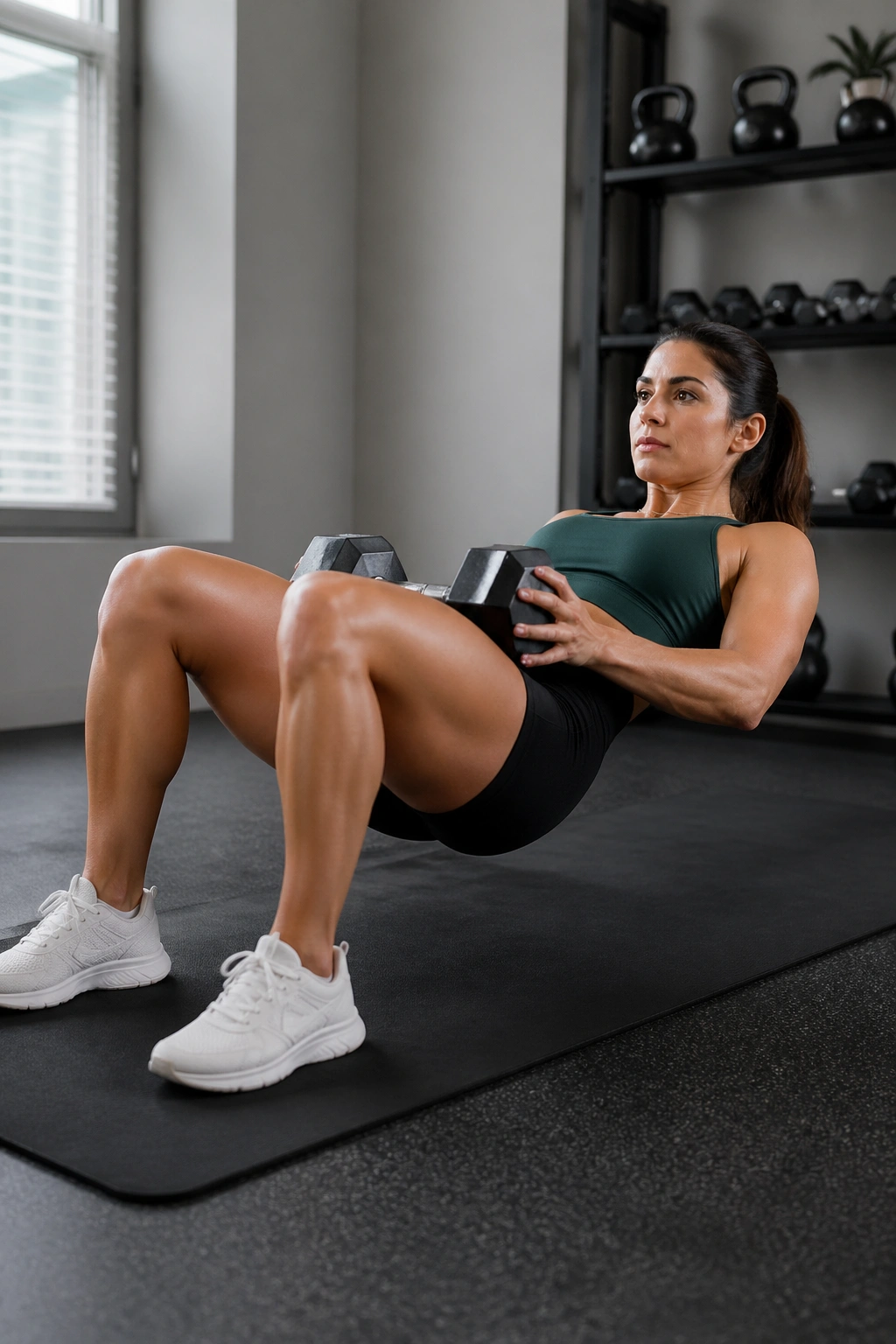
What if you want one tight finisher instead of another single exercise? Run this as a circuit. It’s the kind of home booty-day block that leaves your glutes full, warm, and a little annoyed with you.
Do 3 rounds of the sequence below:
- 12 dumbbell hip thrust reps with a 2-second hold at the top
- 10 dumbbell Romanian deadlifts
- 10 goblet squats
- 25 frog pumps
- Rest 60 to 90 seconds between rounds
Use a weight that makes the last few reps honest but still clean. If the hip thrusts turn into lower-back arches or the RDL turns into a rounded mess, the load is too heavy for the circuit. Drop it and keep moving.
This works because it stacks three different jobs back to back: a peak squeeze, a loaded hinge, and a squat pattern, then ends with a high-rep burn. The glutes never get a chance to coast. Not once.
If you want to make the whole day feel more complete, pair this circuit with two of the earlier moves — one heavy, one unilateral — and call it a session. Heavy first. Burn last. That order still makes sense when the dumbbells are the only things in the room.
