



Dumbbell strength workouts work because they strip training down to the parts that matter: load, position, control, and honest effort. A pair of dumbbells can build legs, back, chest, shoulders, and grip without a rack full of machines or a barbell setup.
That sounds simple, and it is. Simple doesn’t mean easy. The nice thing about dumbbells is that they scale cleanly; the same movement can be a cautious first session for someone new to lifting or a brutal heavy set for someone who has been training for years.
I like dumbbells for one more reason: they expose sloppy form fast. If one side is weaker, slower, or less stable, the bell tells on you right away. That feedback is useful. A 20-second suitcase carry, a slow single-leg hinge, or a strict floor press can reveal more about your strength than a flashy machine stack ever will.
The trick is matching the workout to the person and the day. Too light, and you’re just moving your arms around. Too heavy, and your reps turn into noise. The 22 dumbbell workouts below cover the whole range, from first-time lifters to people who want a harder session without chasing a barbell.
1. A Dumbbell Strength Workout That Hits Legs and Chest
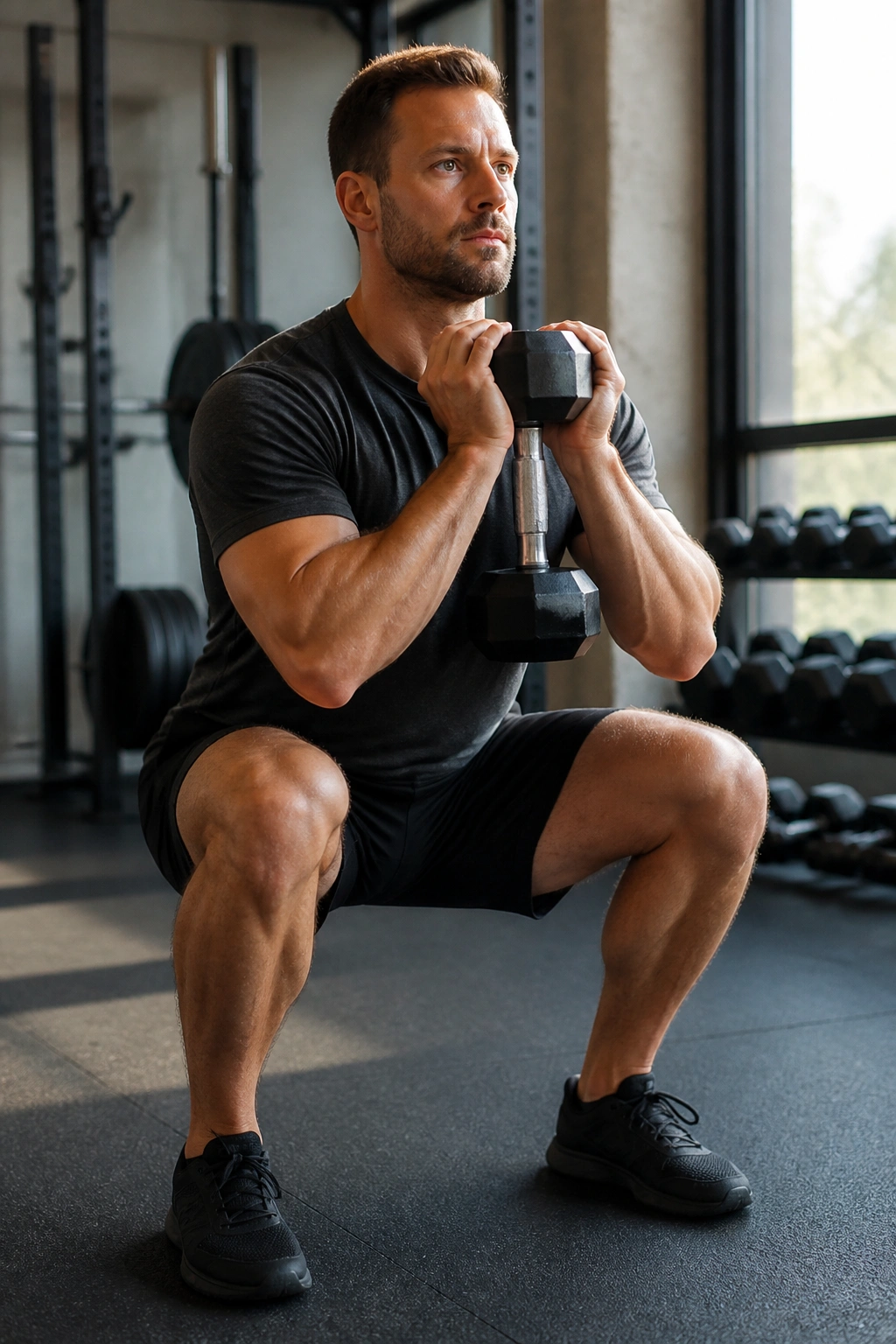
Start here if you want one session that feels balanced from top to bottom. The goblet squat and floor press pairing gives you a lower-body push and an upper-body press in the same workout, which is a tidy little combo when you want strength without a lot of setup.
Do 4 rounds of 8 goblet squats, 8 dumbbell floor presses, 10 bent-over rows, and a 30-second farmer carry. Rest 60 to 90 seconds between rounds. If you’re new, use one moderate dumbbell and keep the goblet squat smooth. If you’ve trained before, make the lowering phase last 3 seconds on the squat and the floor press. The slower descent forces you to own the movement.
The floor press is underrated. It cuts out the shoulder wobble you sometimes get on a bench and lets you load the chest and triceps without overreaching. The carry at the end ties the whole thing together. Your grip will know it happened.
2. Reverse Lunge and Row Ladder
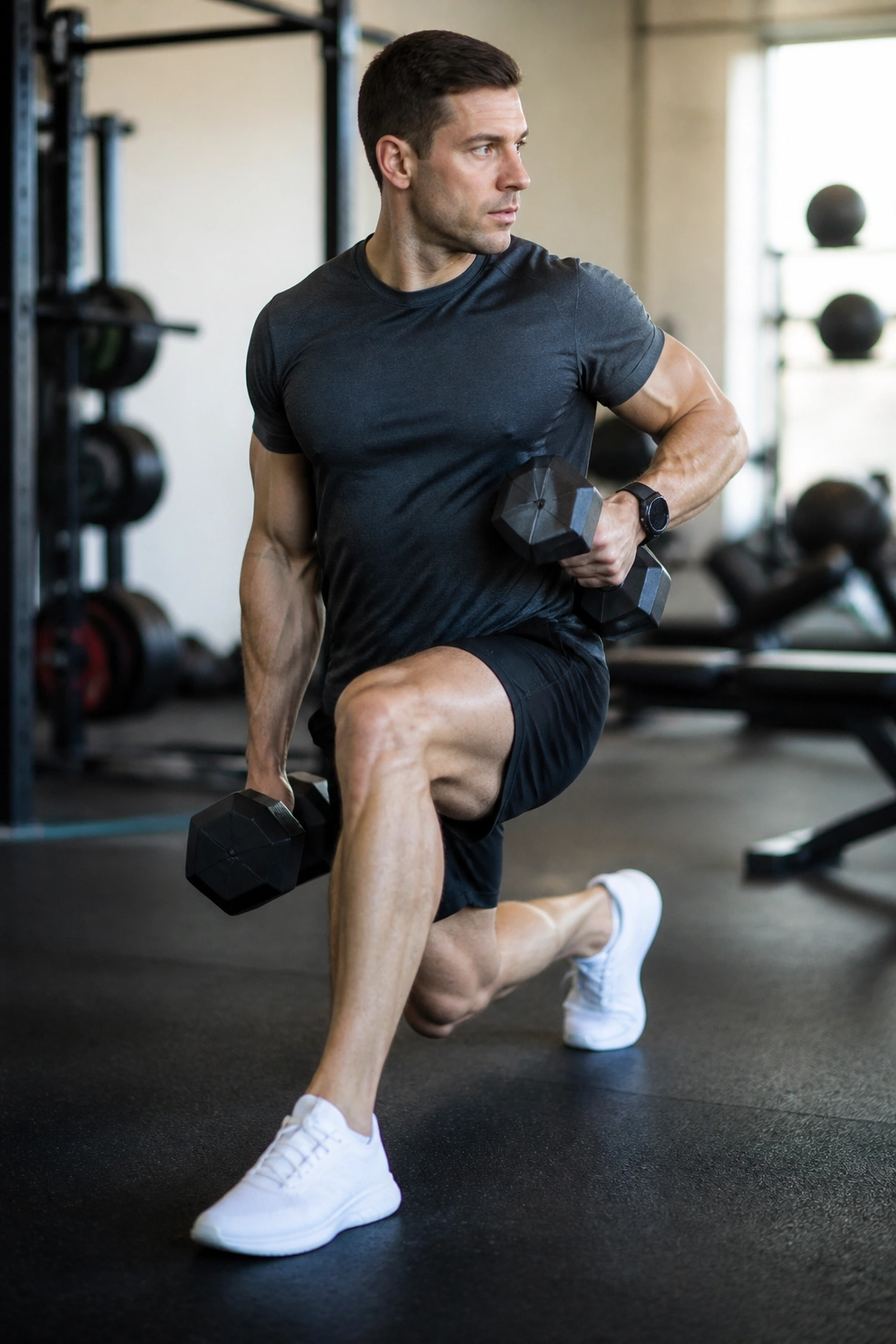
Why do reverse lunges pair so well with rows? Because both moves force you to stay honest on one side at a time. That matters more than people think, especially if one leg or one arm has been quietly doing less work for months.
How to run it
- 6 reverse lunges per leg
- 8 one-arm rows per side
- 10 standing hammer curls
- Rest 45 to 75 seconds
- Repeat for 3 to 5 rounds
The ladder style works because it keeps the heart rate up without turning the whole thing into cardio. Keep the lunges tall and step back far enough that your front heel stays planted. On the row, pull the dumbbell toward your hip, not your shoulder. That small angle matters.
Beginner: hold one dumbbell in front of your chest for the lunges and skip the curls if your grip is tired.
Intermediate: use two dumbbells on the lunges and rows.
Advanced: add a 2-second pause at the bottom of each reverse lunge.
A clean ladder like this will make your legs and back feel worked without needing a giant menu of exercises.
3. Dumbbell Deadlift, Curl, and Press Tri-Set
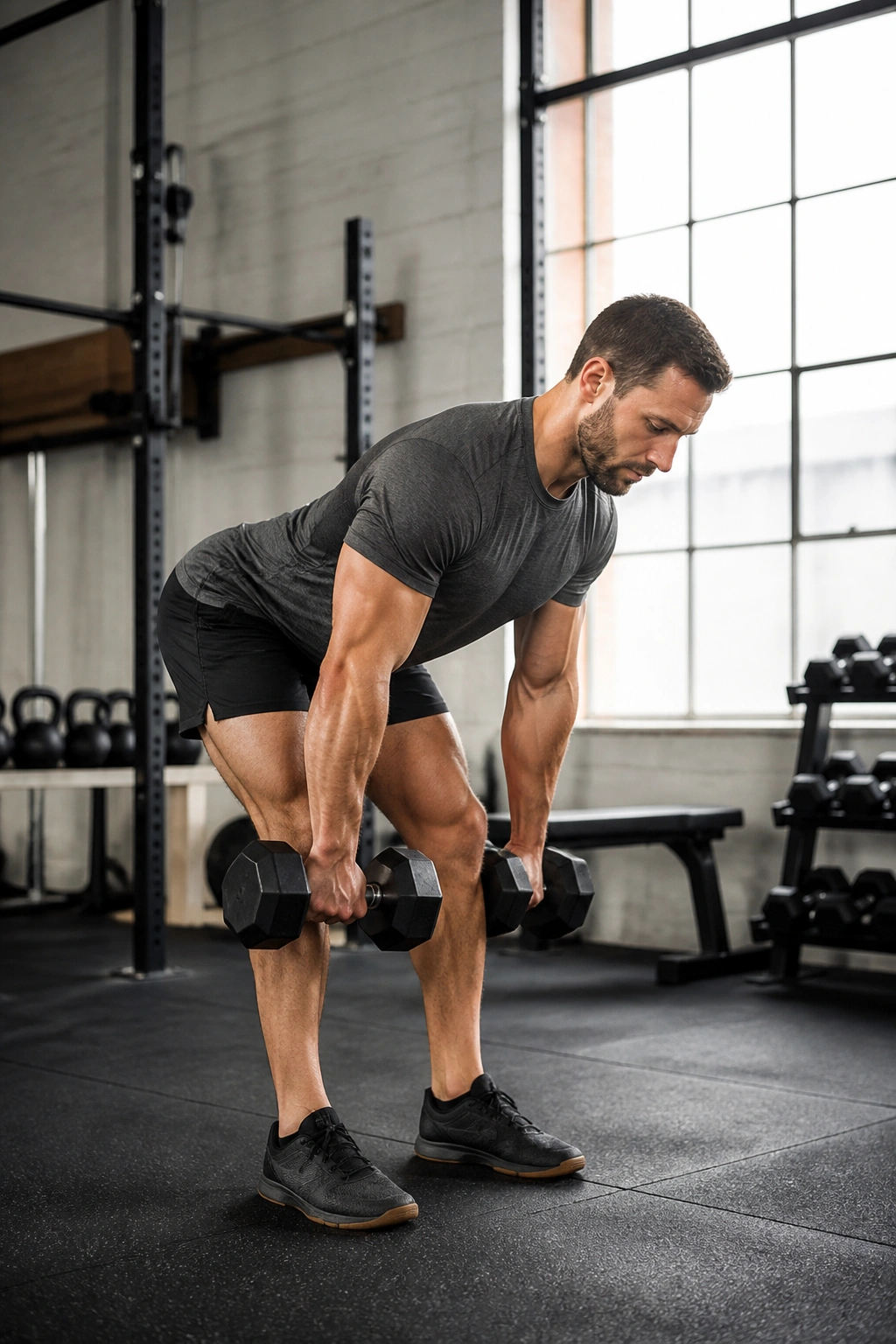
This is the workout I reach for when someone wants a full-body session and only has 30 minutes. It looks plain on paper, which is exactly why it works. No circus. No extra stuff.
Do 4 rounds of 8 Romanian deadlifts, 10 curls, and 6 push presses. Rest 90 seconds after each round. The deadlift should start from a dead stop or a controlled hinge, depending on what feels better in your body. The curl is there to build the arms, sure, but it also gives you a little break before the press. That matters when the weights are heavy enough to make you think twice.
One sentence here: your lower back should not be the hero. If it’s doing most of the work on the hinge, lower the dumbbells and slow down.
A tri-set like this feels good in the hands and shoulders because the exercises change the stress without changing the tool. Beginner lifters should keep the press strict. Stronger lifters can use a small leg drive on the push press, but not a sloppy heave.
4. Push-Pull Upper-Body Strength Session
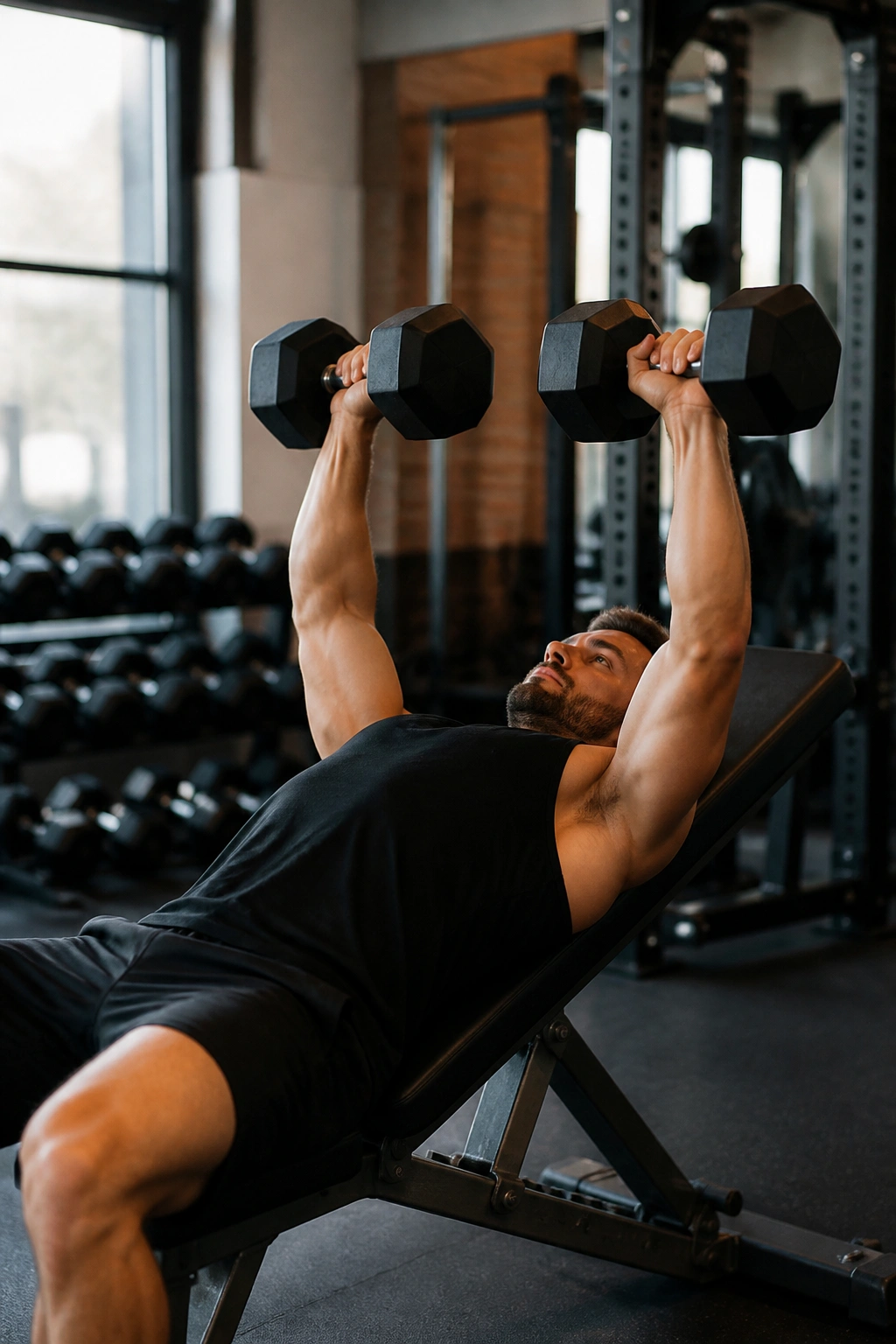
A good upper-body dumbbell workout should feel like a conversation between the front of your body and the back. Press, then row. Press, then row. That back-and-forth keeps the shoulders happier than endless pressing does.
Use 4 sets of 6 to 8 dumbbell bench presses or floor presses paired with 8 to 10 chest-supported rows. Add 2 sets of 12 lateral raises and 10 hammer curls at the end. Rest about 60 seconds between supersets. If you don’t have a bench, the floor press works fine. If your lower back tends to arch during rows, brace your ribs down and use a split stance.
The nice thing about this session is that it scales easily. Newer lifters can stay in the 10-rep range with lighter bells and still get a strong training effect. Lifters with more experience can go heavier and keep the reps crisp. Either way, the row should match the press in effort. Don’t let one side of the body get all the attention.
Shoulders like symmetry. So do elbows.
5. Front-Foot Elevated Split Squat Day
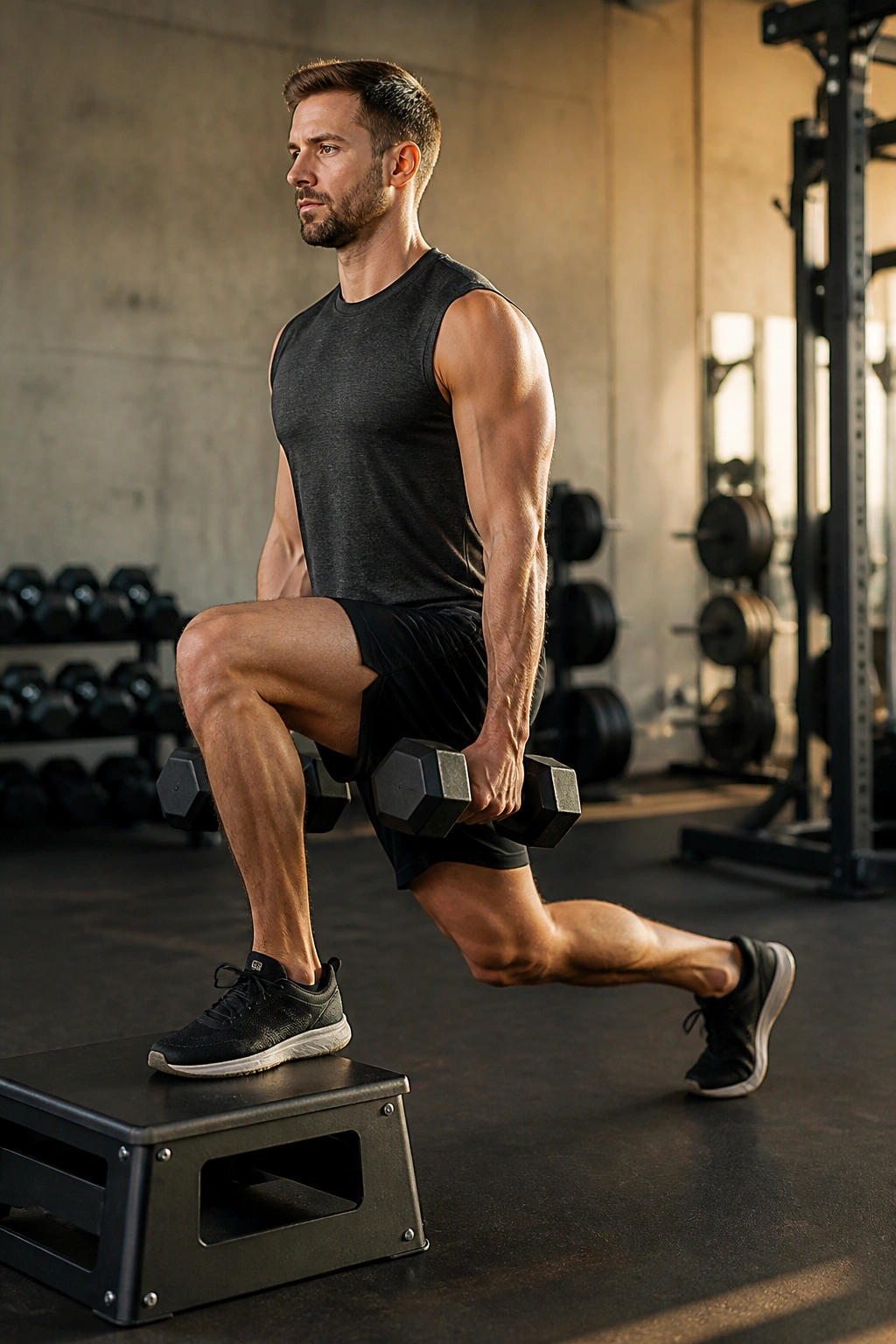
Why does a front-foot elevated split squat feel harder than it looks? Because the front leg has to do a lot of work while your balance stays under pressure the whole time. It’s a smart way to train quads and glutes without loading both sides equally.
What to do
- 4 sets of 8 front-foot elevated split squats per leg
- 3 sets of 8 single-leg Romanian deadlifts per leg
- 3 sets of 15 standing calf raises
- 3 suitcase carries of 30 to 40 seconds per side
Use a low plate, a book, or a sturdy step to raise the front foot by 1 to 2 inches. Keep the torso slightly forward and the front knee tracking over the toes. If you’re new, hold one dumbbell goblet-style. If you want more load, use two dumbbells and keep your ribs from flaring.
A split-squat session like this is brutally useful because it teaches one leg to produce force without help from the other. That’s the whole point. If your quads are the weak link, this will show it fast. If your glutes are lazy, this will show that too.
6. Renegade Row Core Stability Circuit
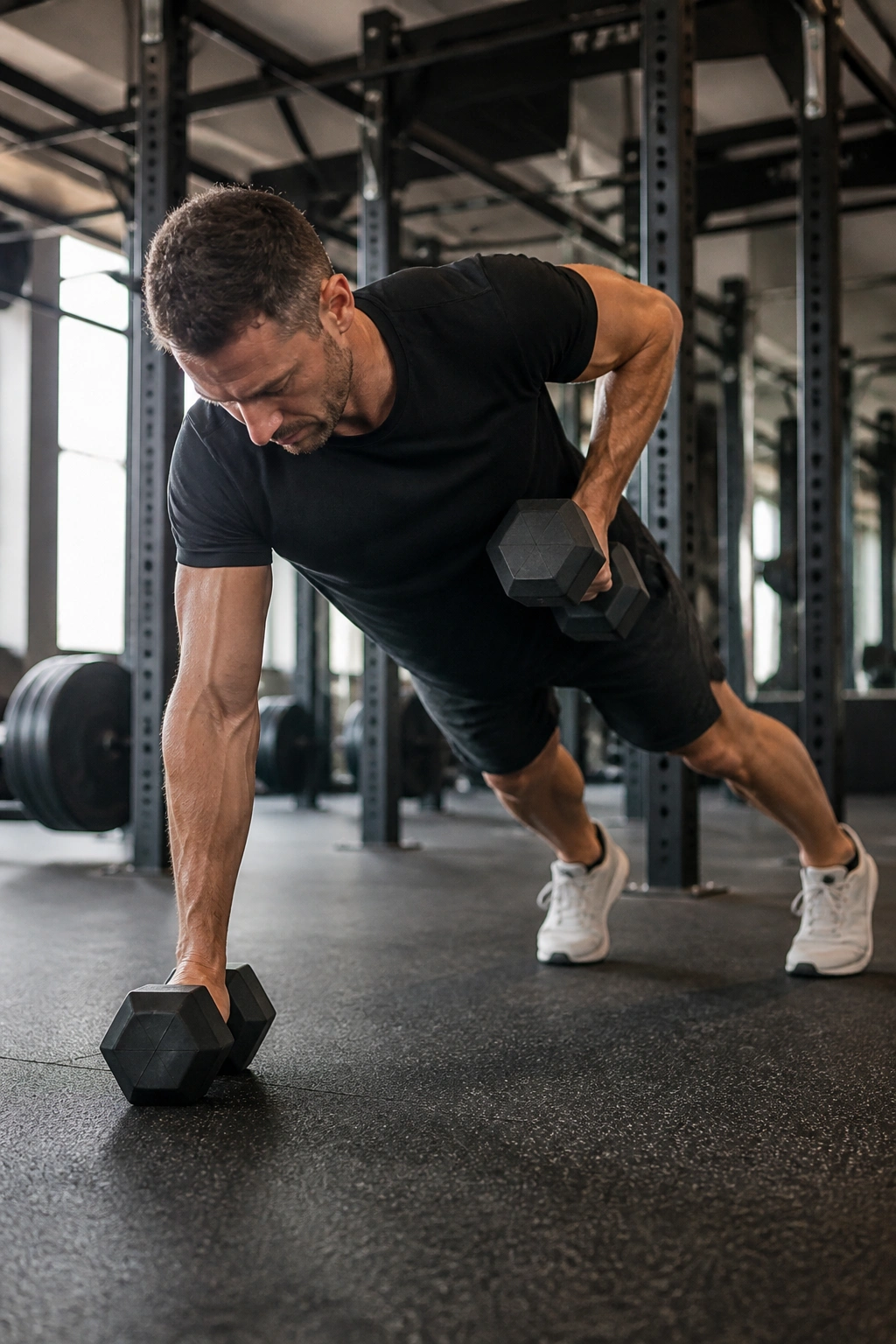
The renegade row has a bad habit of exposing people. The plank position looks neat until the hips start twisting and the dumbbells feel like they’re sliding away from you.
Do 3 to 4 rounds of 6 renegade rows per side, 8 push-ups, 10 goblet squats, and a 20-second plank hold. Rest 75 seconds between rounds. If the full row feels messy, widen your feet and use a lighter bell. If that still feels rough, drop to your knees for the row and keep the trunk steady. No shame there. Good form beats a dramatic mess every time.
What to watch for
- Hips staying square to the floor
- Dumbbell moving straight up, not drifting
- Hands planted under the shoulders
- Slow breathing instead of bracing so hard you freeze
This is a core workout, but not in the crunches-and-burning way people expect. It’s about stopping rotation when your body wants to twist. That skill carries over to rows, presses, carries, and even simple things like picking up a bag from the floor.
7. Overhead Press and Carry Builder
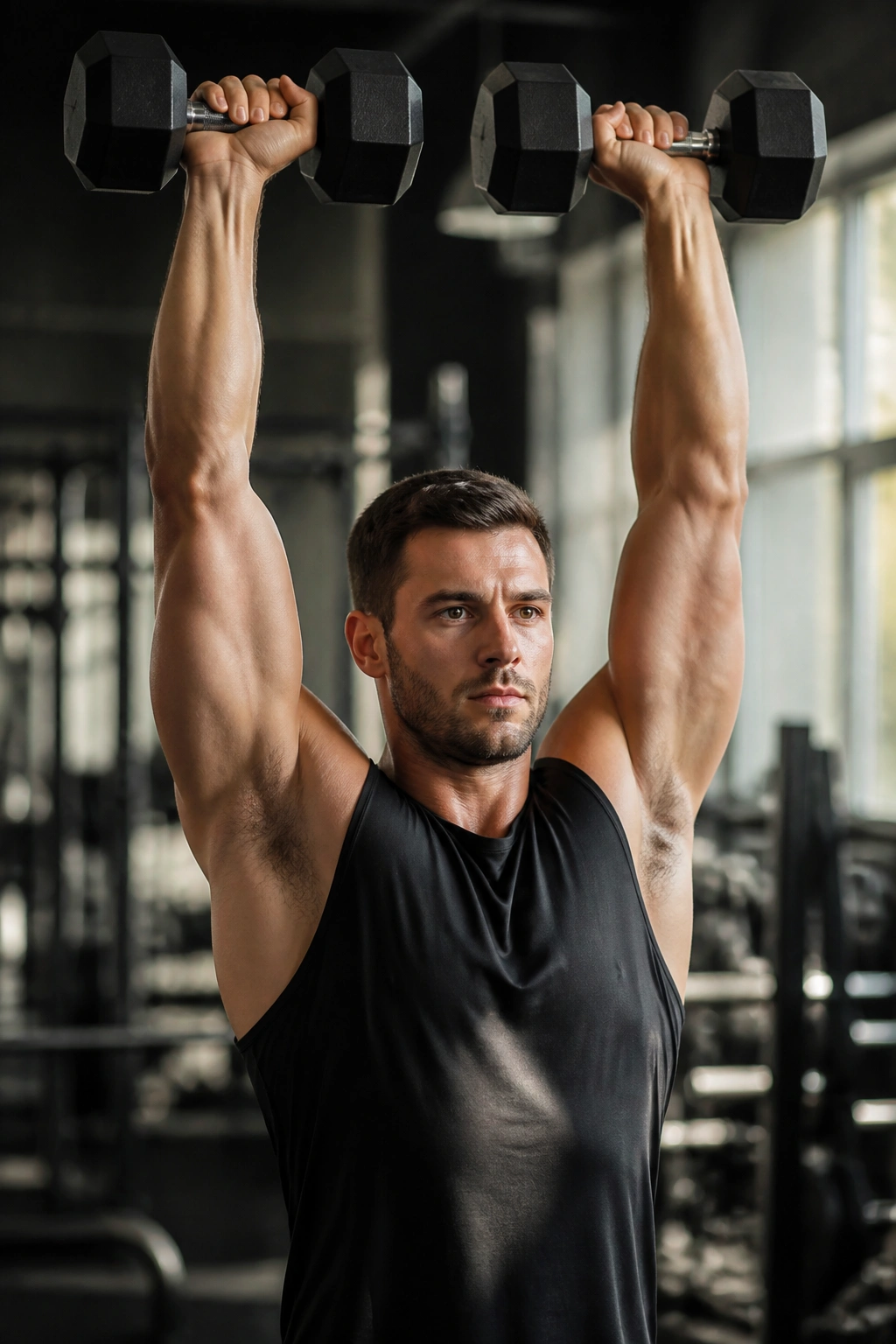
Shoulders like honest overhead work. Not shrugging, not bouncing, not turning every rep into a leg movement. Just a clean press, a stable lockout, and a slow return.
Run 5 sets of 5 strict dumbbell presses, then follow with 3 sets of 8 Arnold presses, 4 overhead carries of 20 to 30 meters, and 2 sets of 12 lateral raises. Rest 90 seconds on the presses and 45 seconds on the accessories. If your gym doesn’t have space for carries, march in place with the dumbbells locked overhead for 20 to 30 seconds.
The strict press is the anchor. Keep the ribs down and avoid leaning back like you’re trying to dodge the ceiling. The carry is where the real shoulder control shows up. A bell held overhead for distance or time will make the small stabilizers work harder than a machine ever will.
If your low back starts arching, stop and reset. That’s the warning sign people ignore, and it’s usually the one that bites later.
8. Chest-and-Back Superset Workout
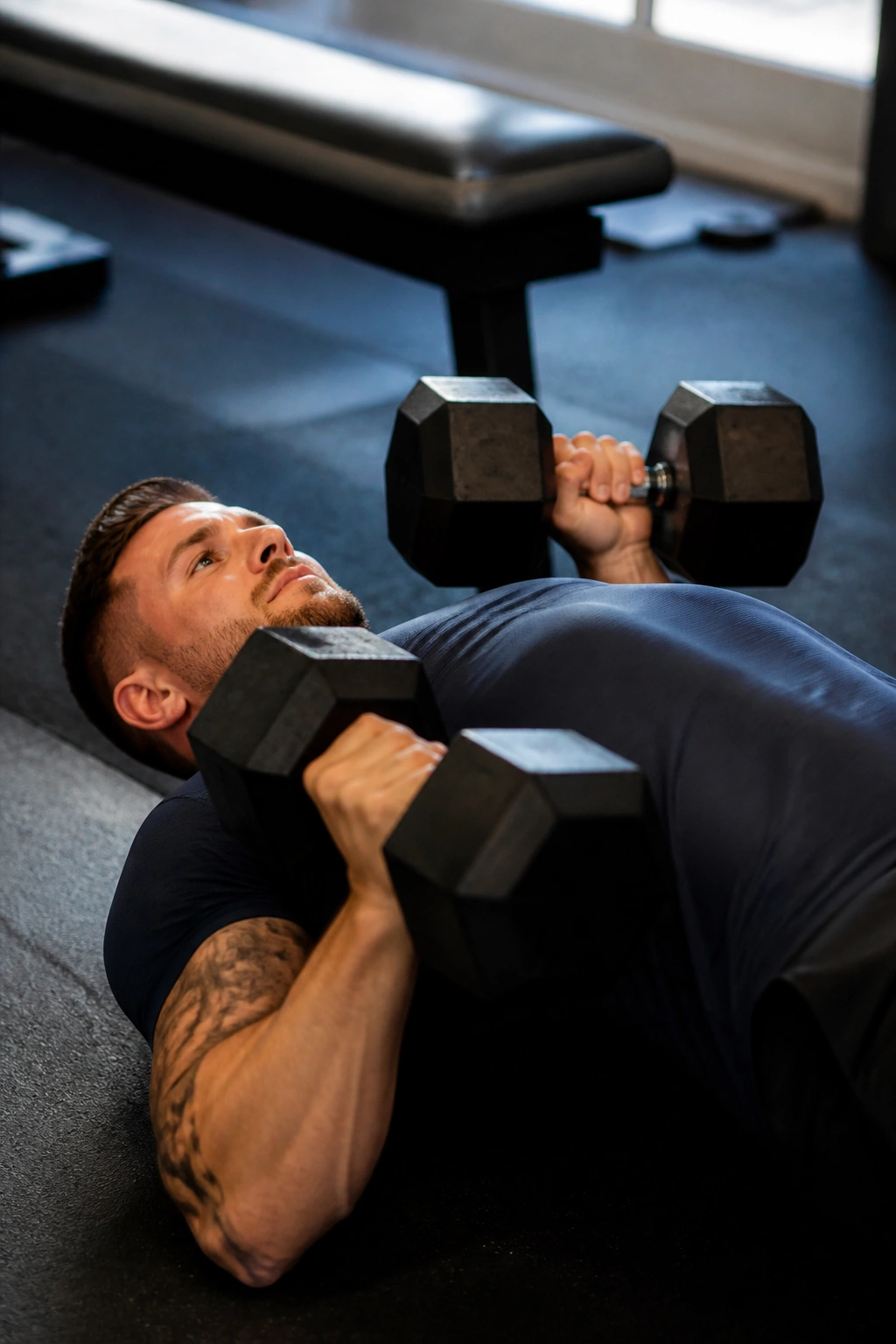
Want an upper-body session that gets you stronger without hanging around the gym forever? Pair your presses and rows, keep the rest tight, and let the work do the talking.
Run it like this
- 4 supersets
- 8 dumbbell floor presses
- 10 chest-supported rows
- 8 incline presses or neutral-grip presses
- 10 one-arm rows per side
- Rest 60 to 75 seconds after each superset
The first superset should feel heavy but controlled. The second can be a little lighter and cleaner. Keep your shoulders packed on the press and pull the row to the lower ribs. If a bench irritates your shoulders, stay on the floor. That’s not a downgrade. It’s a smarter angle.
This workout suits a wide range of lifters because it’s easy to scale with tempo. Beginners can use a lighter bell and focus on symmetry. More advanced lifters can add a 2-second squeeze at the top of each row. Either way, the balance between pushing and pulling keeps the session useful instead of lopsided.
9. Glute Bridge and Hinge Strength Session
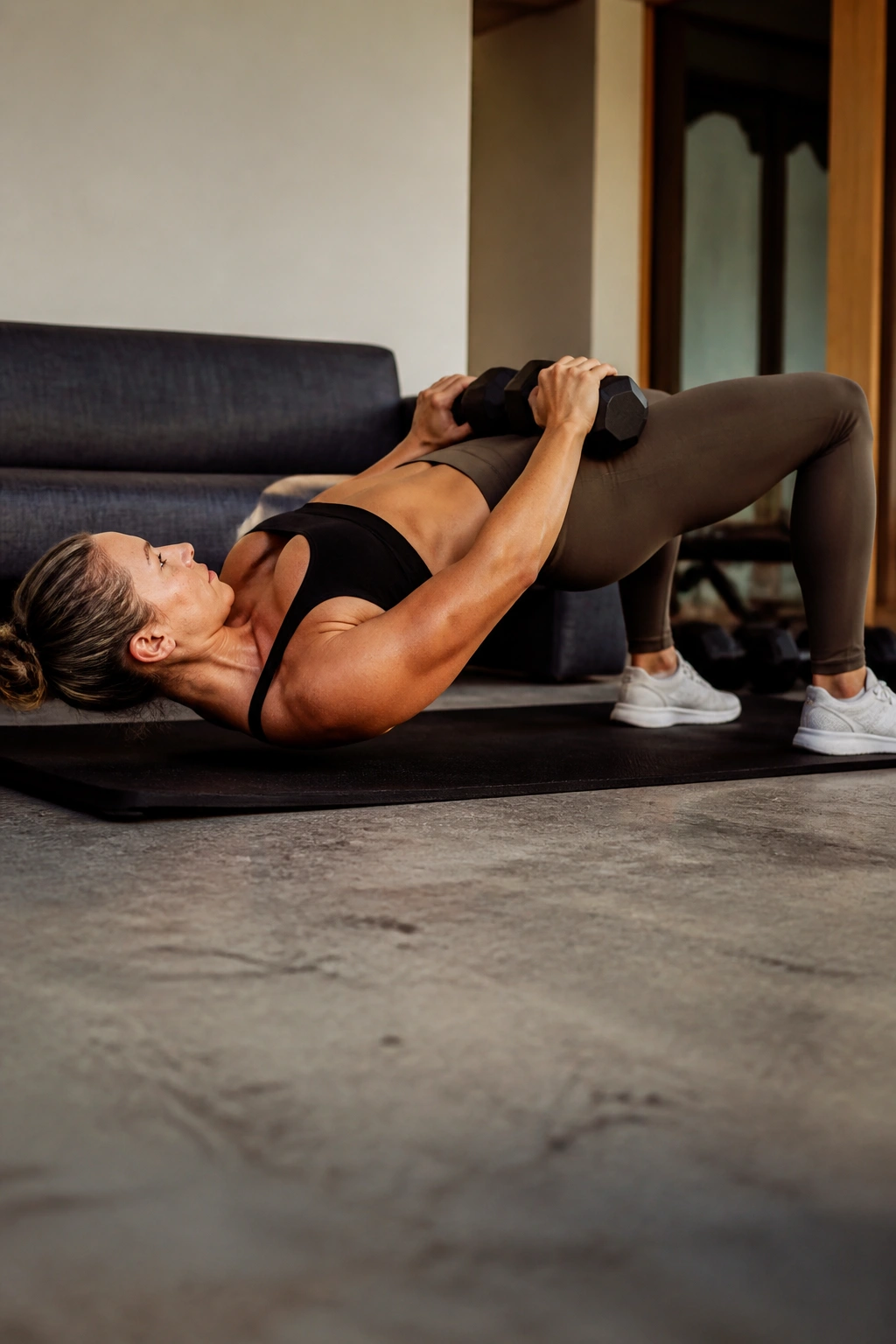
Some workouts make your legs tired. This one makes your hips feel like they actually worked. That’s the difference between random lower-body fatigue and a session that targets the posterior chain on purpose.
Start with 4 sets of 10 dumbbell hip thrusts, then move to 4 sets of 8 Romanian deadlifts, 3 sets of 12 frog pumps holding one dumbbell, and 3 suitcase marches per side for 30 seconds. Rest 60 to 90 seconds between sets. If you only have one dumbbell, place it across the hips for the bridge work and use it in one hand for the marches.
One sentence: the glutes should burn; the low back should not steal the set.
Keep your chin tucked during the bridge and squeeze at the top for one full second. On the RDL, push the hips back until the hamstrings feel long, then stand tall without yanking the shoulders back. People rush that part and miss the point. The march at the end looks simple, but it trains the hips and trunk to stay steady while one side loads at a time. That’s real-world strength, not gym theater.
10. One-Dumbbell Full-Body Home Routine
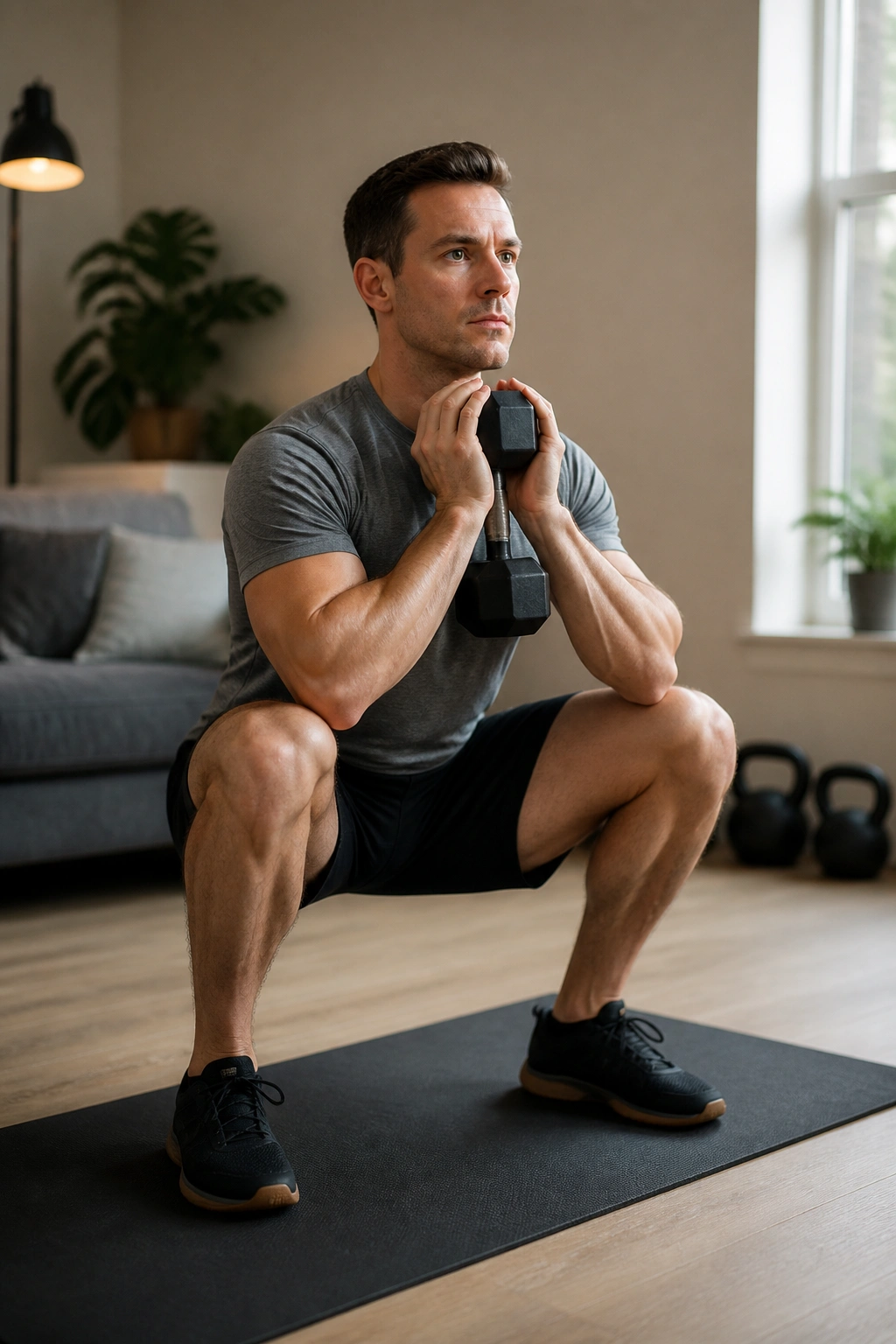
You do not need a fancy setup to get a solid dumbbell strength workout. One dumbbell, a little floor space, and some patience will carry you farther than most people expect.
Use 3 to 5 rounds of 8 goblet squats, 8 single-arm floor presses per side, 10 one-arm rows per side, 8 split squats per side, and a 30-second suitcase hold. Rest 60 seconds between rounds. If the dumbbell feels light, slow the lowering phase to 3 seconds and pause for 1 second at the hardest point of each rep.
The one-dumbbell format has a sneaky advantage. Every exercise becomes a stability drill because your body has to resist tipping, twisting, or leaning. That means the load goes where it should instead of leaking through the trunk. It also makes this a useful travel workout when equipment is limited.
I’m a fan of this one for busy days because it doesn’t ask for much. But it still asks for enough. A session like this can leave your legs, chest, back, and grip in the same conversation, which is exactly what a home workout should do.
11. Shoulder, Back, and Arms Armor Day
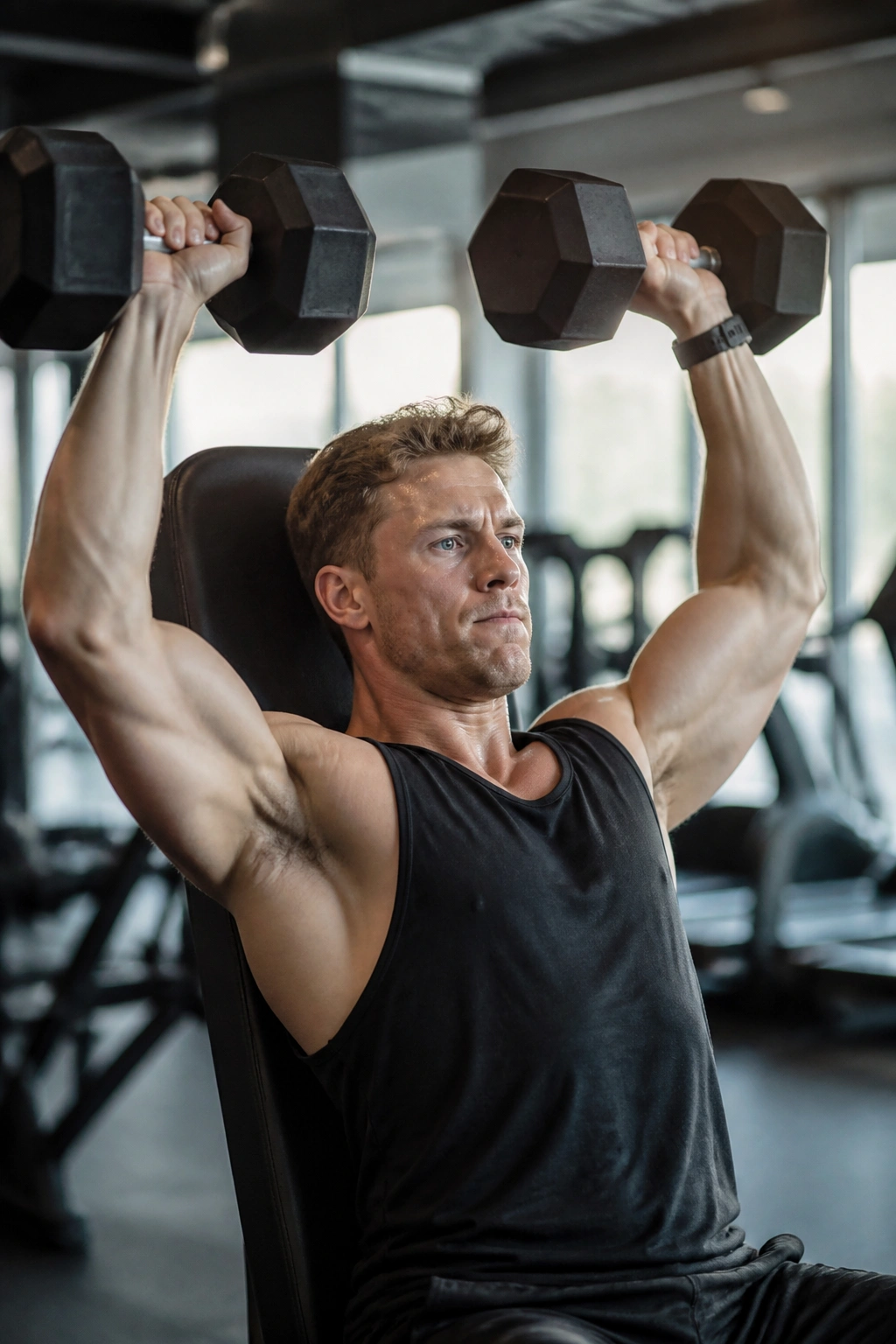
Want an upper-body day that doesn’t beat up your joints? Keep the loads moderate, use controlled reps, and give the rear delts and upper back a proper job.
The setup
- 3 sets of 8 seated dumbbell presses
- 3 sets of 10 reverse flies
- 3 sets of 10 Zottman curls
- 3 sets of 10 overhead triceps extensions
- Rest 45 to 60 seconds between sets
A seated press removes some of the temptation to turn the rep into a standing heave. The reverse fly keeps the shoulders from getting too front-heavy, which matters if you press or bench often. Zottman curls are worth keeping because they train the forearms in a way regular curls don’t. The triceps extension rounds things out without needing a cable stack.
If you’re newer, keep the dumbbells light enough that the final rep still looks tidy. If you’ve been lifting a while, use a slower lowering phase on the fly and curl. That tiny bit of control makes a medium-weight dumbbell feel a lot more serious.
12. Quad-Dominant Dumbbell Leg Burner
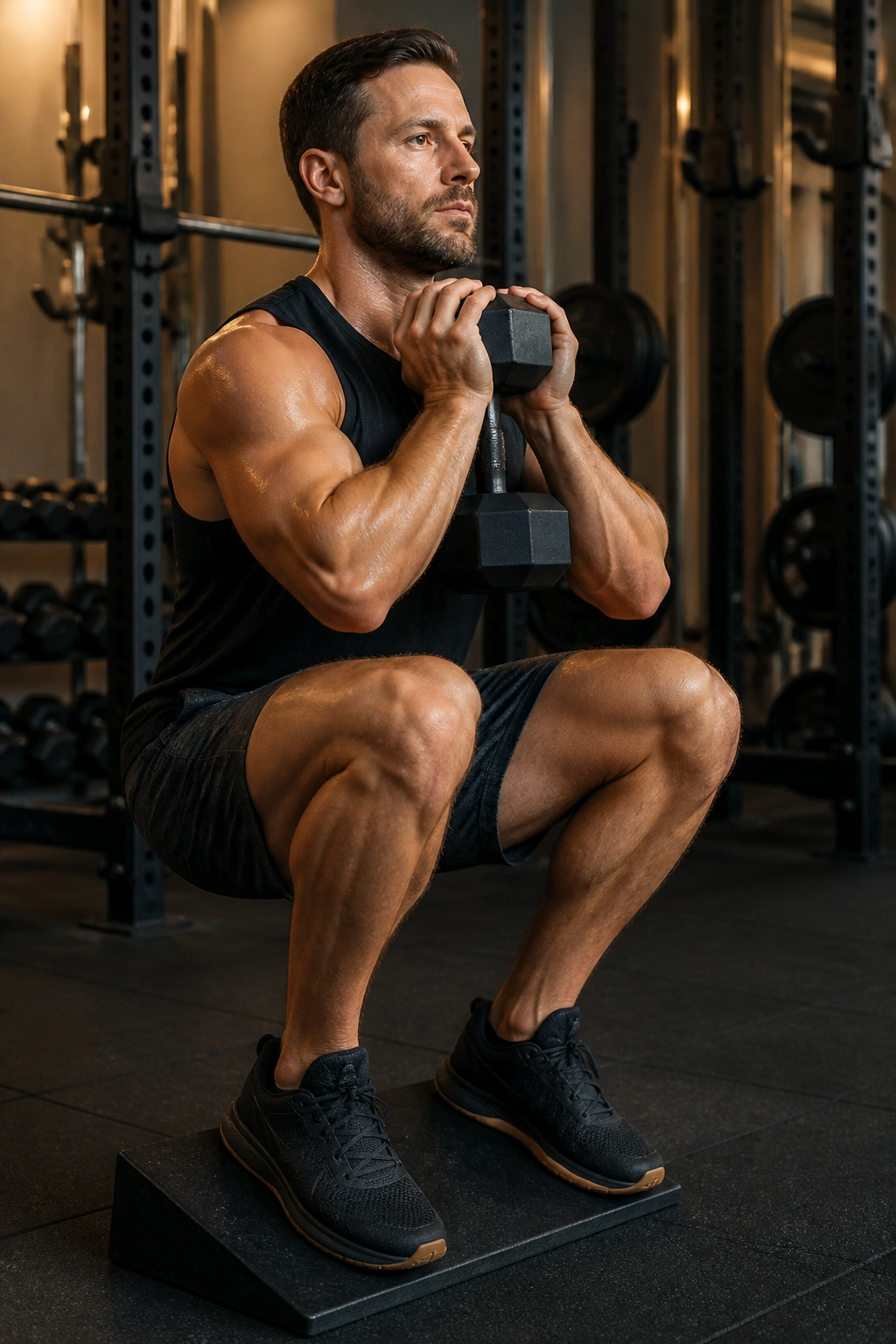
By the second round, your legs should feel it. By the third, you’ll know exactly where the work is going. This is a quad-focused dumbbell workout, and it does not try to hide that fact.
Do 4 rounds of 10 heel-elevated goblet squats, 8 step-ups per leg, 10 walking lunges per leg, and a 30-second wall sit holding one dumbbell at the chest. Rest 60 seconds between rounds. A small heel wedge or a pair of plates under the heels helps shift the load forward and light up the thighs more cleanly.
A few useful details
- Keep the torso tall on the squat
- Drive through the full foot on the step-up
- Use a bench height that lets the working leg do the lifting
- Stop one rep before form turns choppy
The wall sit is the part people grumble about, which is probably why I like it. It’s simple and mean in the best way. If you want more challenge, add a 3-second pause at the bottom of the squat instead of adding more weight.
13. Posterior Chain and Anti-Rotation Workout
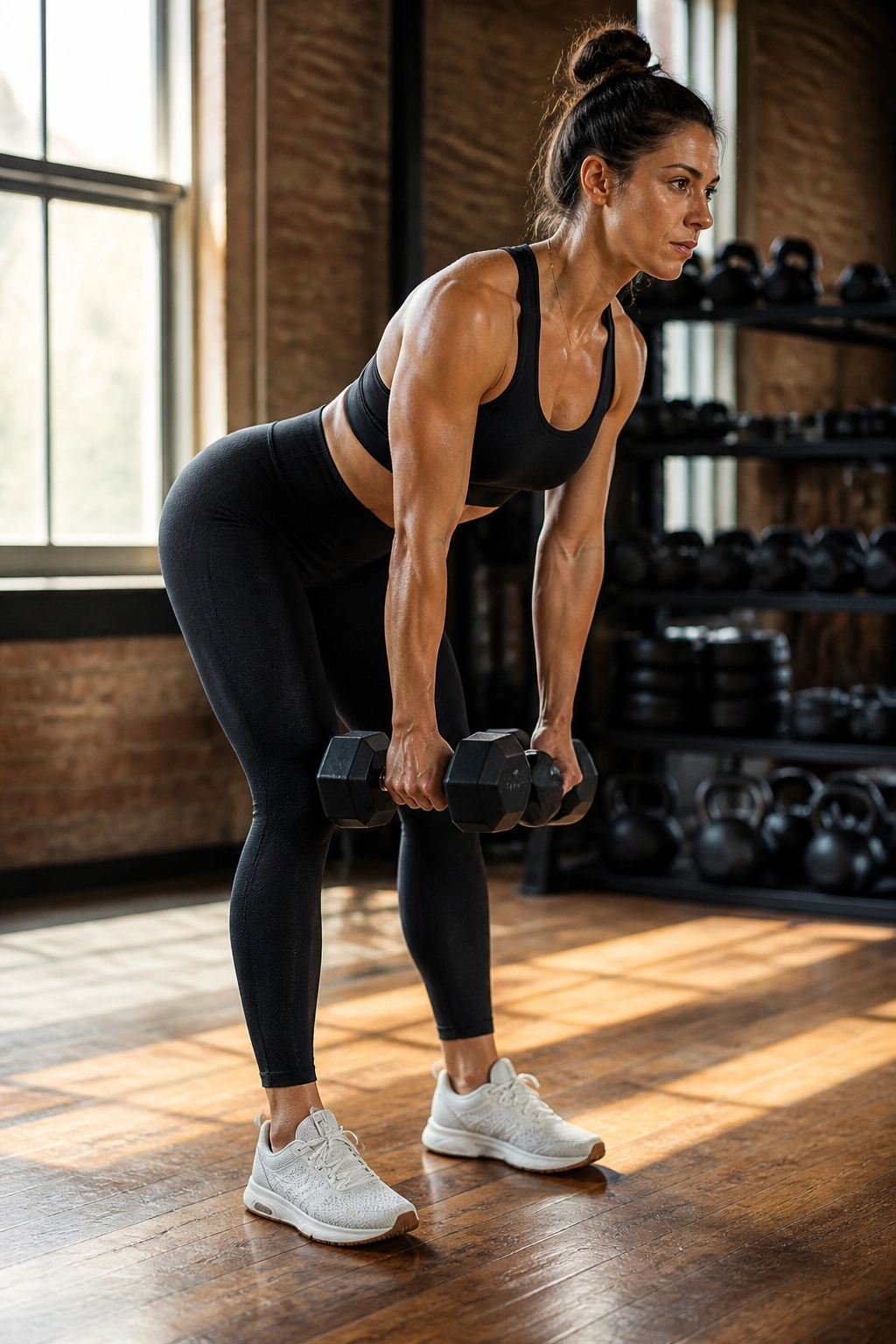
Your lower back should not be the hero here. The hamstrings, glutes, and deep core need the job, and this session gives them enough work to matter without getting cute about it.
Use 4 sets of 8 Romanian deadlifts, 3 sets of 8 single-leg RDLs per side, 3 sets of 10 staggered-stance rows per side, and 3 suitcase carries of 40 seconds per side. Rest 75 to 90 seconds between sets. The staggered stance on the row is a small trick, but it helps keep the trunk from twisting around every rep.
One sentence: the carry finishes what the hinge starts.
If you sit a lot, this workout tends to feel like relief and work at the same time. That’s because the hip hinge opens the back side of the body while the anti-rotation work teaches the torso not to wobble under load. Beginners should keep the dumbbells moderate and the movement clean. More advanced lifters can use a slower descent on the single-leg hinge and a longer carry distance.
14. Strength-Endurance Ladder Session
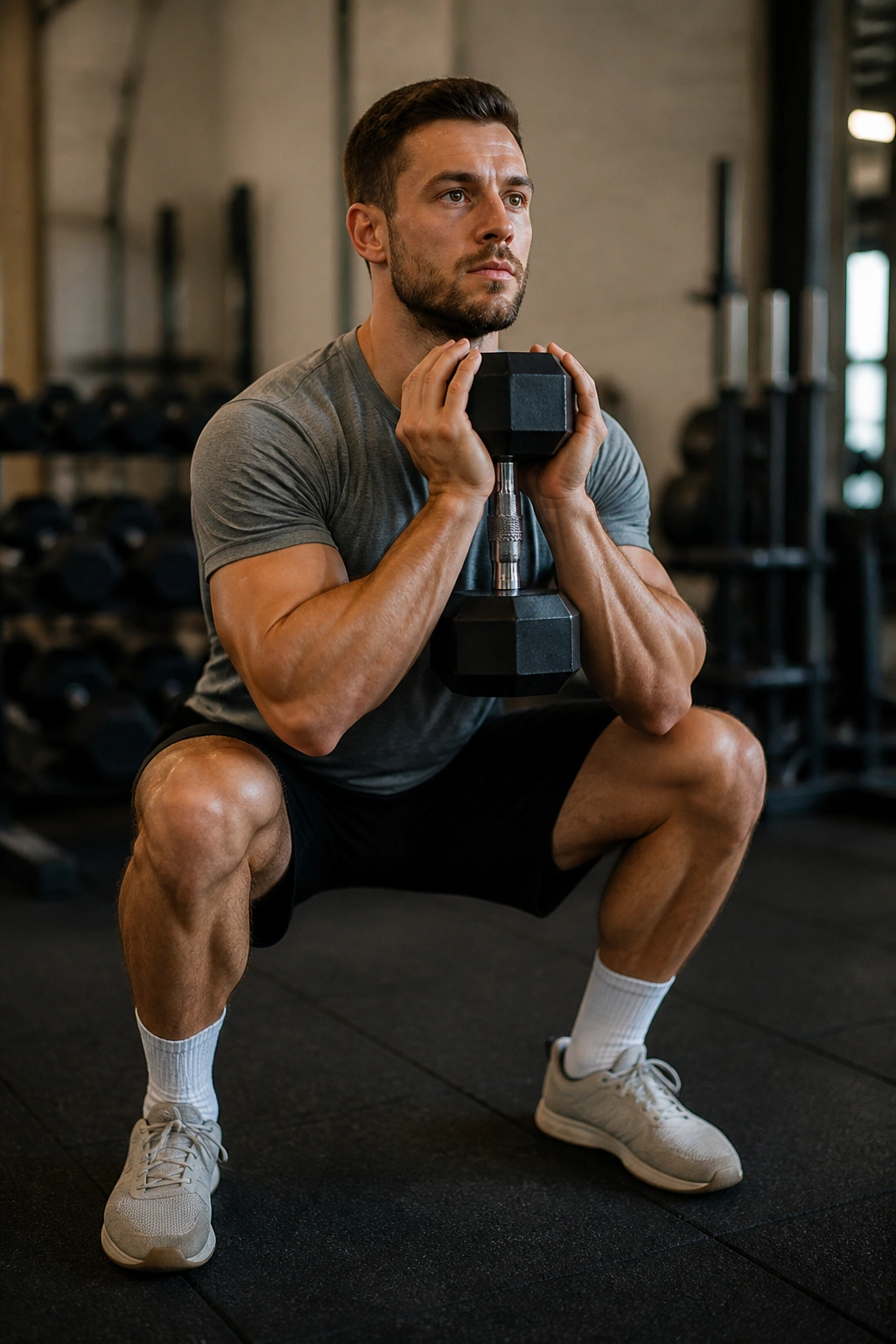
Can you build strength without chasing max weight every minute? Yes. A ladder setup keeps the reps climbing just enough to matter while the rest stays short enough to make you pay attention.
How to climb the ladder
- 2 goblet squats
- 2 dumbbell presses
- 2 bent-over rows
- 2 reverse lunges per leg
- Rest 20 to 30 seconds
- Then repeat at 4 reps, 6 reps, and 8 reps
Once you hit 8, you can either climb back down or stop there. The load should be challenging but not sloppy. If your form gets messy at 6 reps, the dumbbells are too heavy for this format. If 8 reps feels too easy, slow the lowering phase to 2 or 3 seconds.
This style works well for all levels because the ladder itself creates the challenge. Newer lifters get practice under a manageable load. Stronger lifters get volume and density without needing to chase the heaviest pair in the room. It’s a tidy little lesson in discipline.
15. Five-Move Beginner Dumbbell Circuit
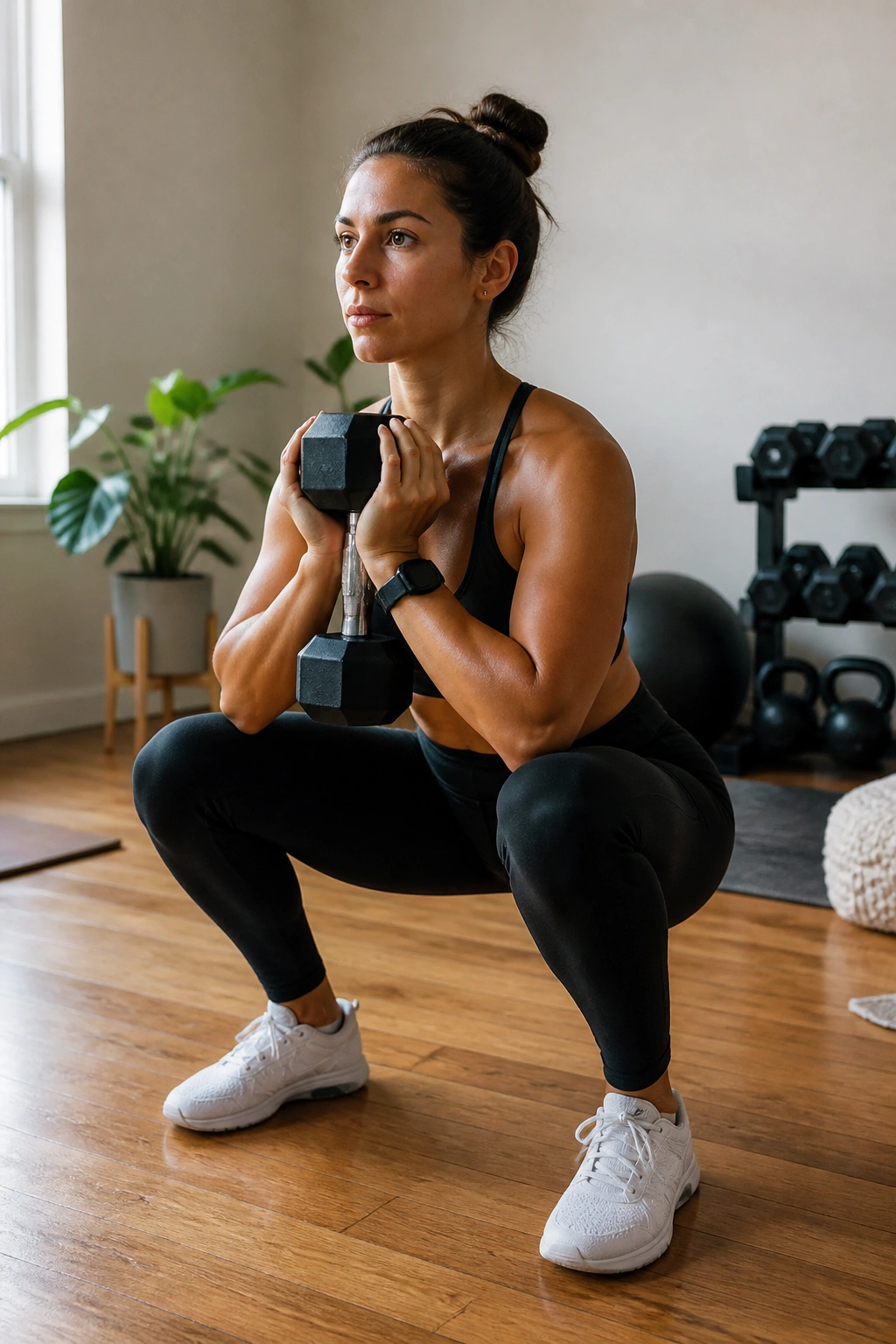
A beginner workout should feel clear, not intimidating. Five movements, modest weights, sensible rest, and enough repetition to build confidence without crushing recovery.
Do this
- 8 goblet squats
- 8 dumbbell floor presses
- 10 bent-over rows
- 8 Romanian deadlifts
- 30-second farmer carry
- Repeat for 2 to 3 rounds
- Rest 60 to 90 seconds
The goblet squat teaches bracing. The floor press teaches pressing without flaring the shoulders. The row teaches the back to pull. The RDL teaches the hinge. The carry ties the whole thing together. There’s a reason this template works so well: it covers the main movement patterns without overwhelming a first-timer.
If you’re brand new, start with one dumbbell and do the floor press one side at a time. If the rows feel awkward, use a bench or support your free hand on a sturdy surface. That little bit of setup makes the movement easier to learn and much less frustrating.
Simple workout. Good payoff.
16. Full-Body Pyramid Strength Workout
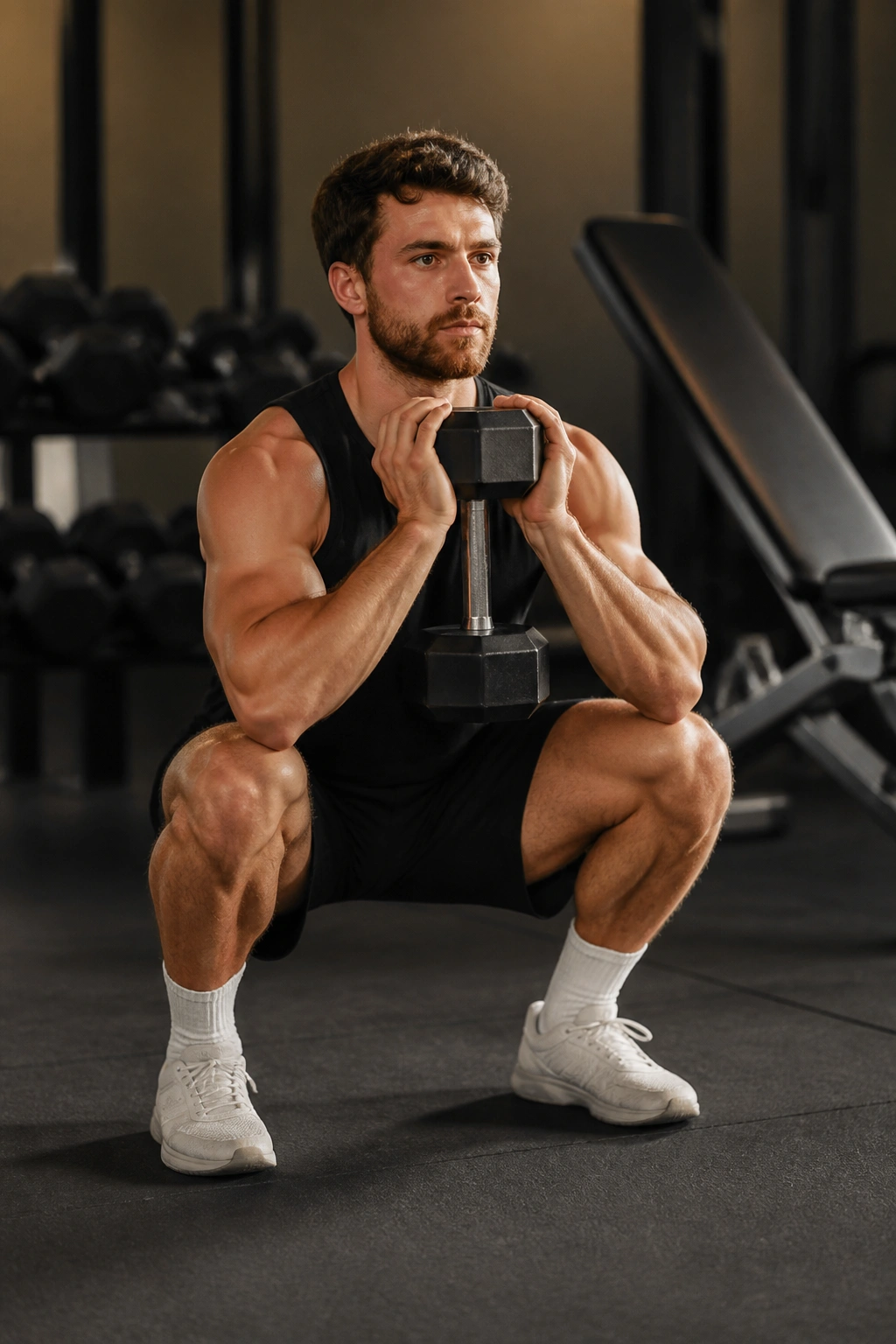
Pyramids are useful because they give you a reason to build up, then back off, without guessing what to do next. The workout feels organized, and your body gets both heavier and lighter work in the same session.
Run the same pair of movements through 5 reps, 8 reps, 10 reps, 8 reps, and 5 reps. A clean version is goblet squats and dumbbell floor presses. Another good version is Romanian deadlifts and one-arm rows. Rest 60 seconds between rounds. If you want the session to feel more complete, add 10 lateral raises after each round.
The middle round is where the work lands. The first few sets prime the movement, and the last few sets let you push a little harder because you’re already warm. That’s one reason pyramids feel satisfying in practice. You’re not just repeating the same thing until your brain checks out.
Keep the reps crisp on the way up. Don’t turn the 10-rep round into a heaving contest. If the final 5-rep round feels too easy, use a slightly heavier pair next time.
17. Heavy Dumbbell Session for Advanced Lifters
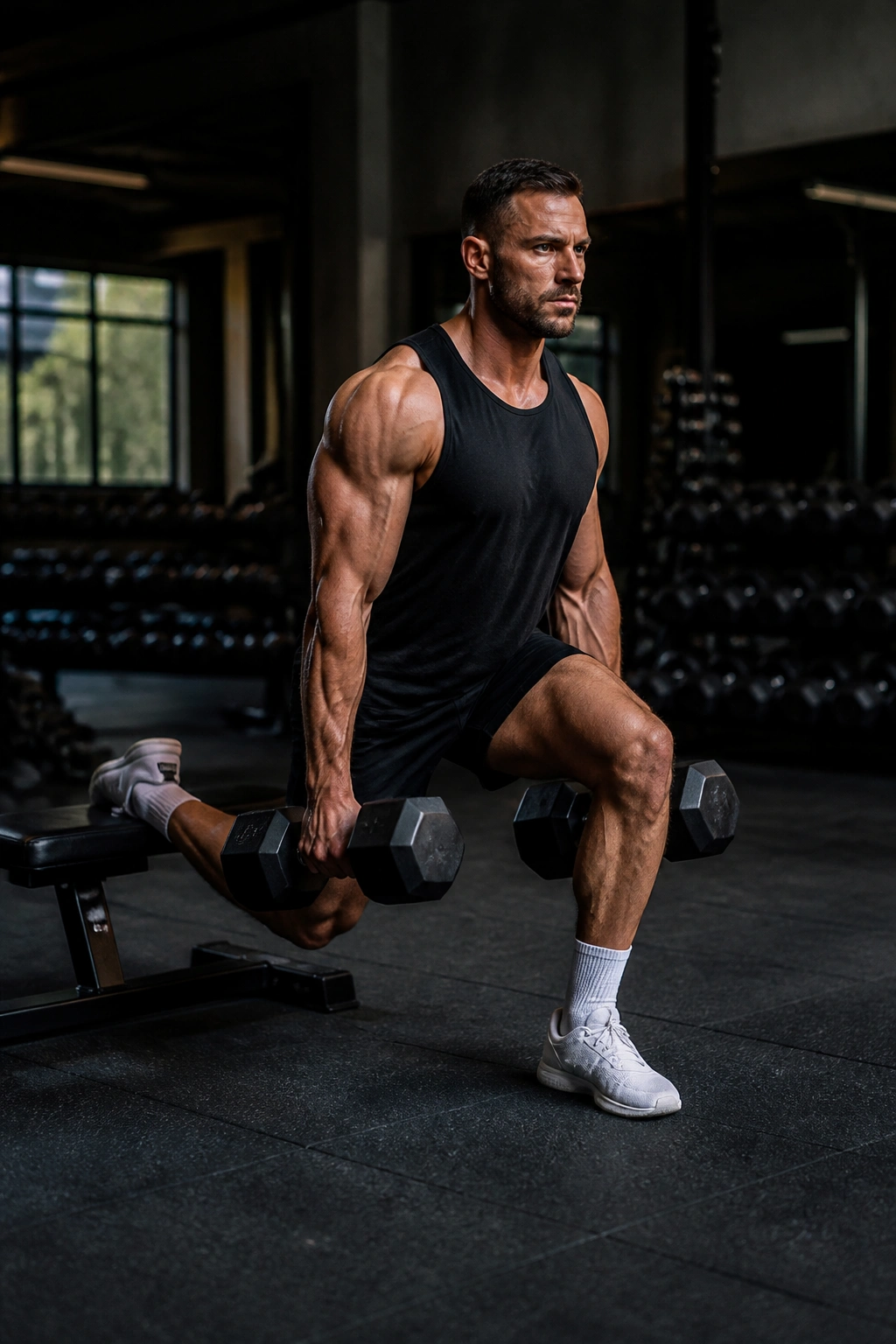
What if your dumbbells already feel too light? Then stop trying to make every workout longer and start making the same weights work harder. Unilateral work, pauses, and slower eccentrics do a lot of that heavy lifting for you.
Push the load like this
- 5 sets of 5 Bulgarian split squats per leg
- 4 sets of 6 single-arm floor presses per side
- 4 sets of 6 one-arm rows per side
- 3 sets of 8 Romanian deadlifts
- 3 farmer carries of 40 to 60 seconds
Rest 90 to 120 seconds between the big sets. If the dumbbells are not heavy enough for true grinding strength work, add a 2-second pause at the bottom of the split squat and a 3-second lower on the floor press. That changes the whole feel of the session fast.
This workout is best for lifters who already know how to brace and control position. The single-leg squat, in particular, will punish wobble. Good. That means it’s doing its job. If you can keep the torso quiet and the reps clean, you’ve got a solid advanced dumbbell day on your hands.
18. Athletic Split-Stance and Rotation Workout
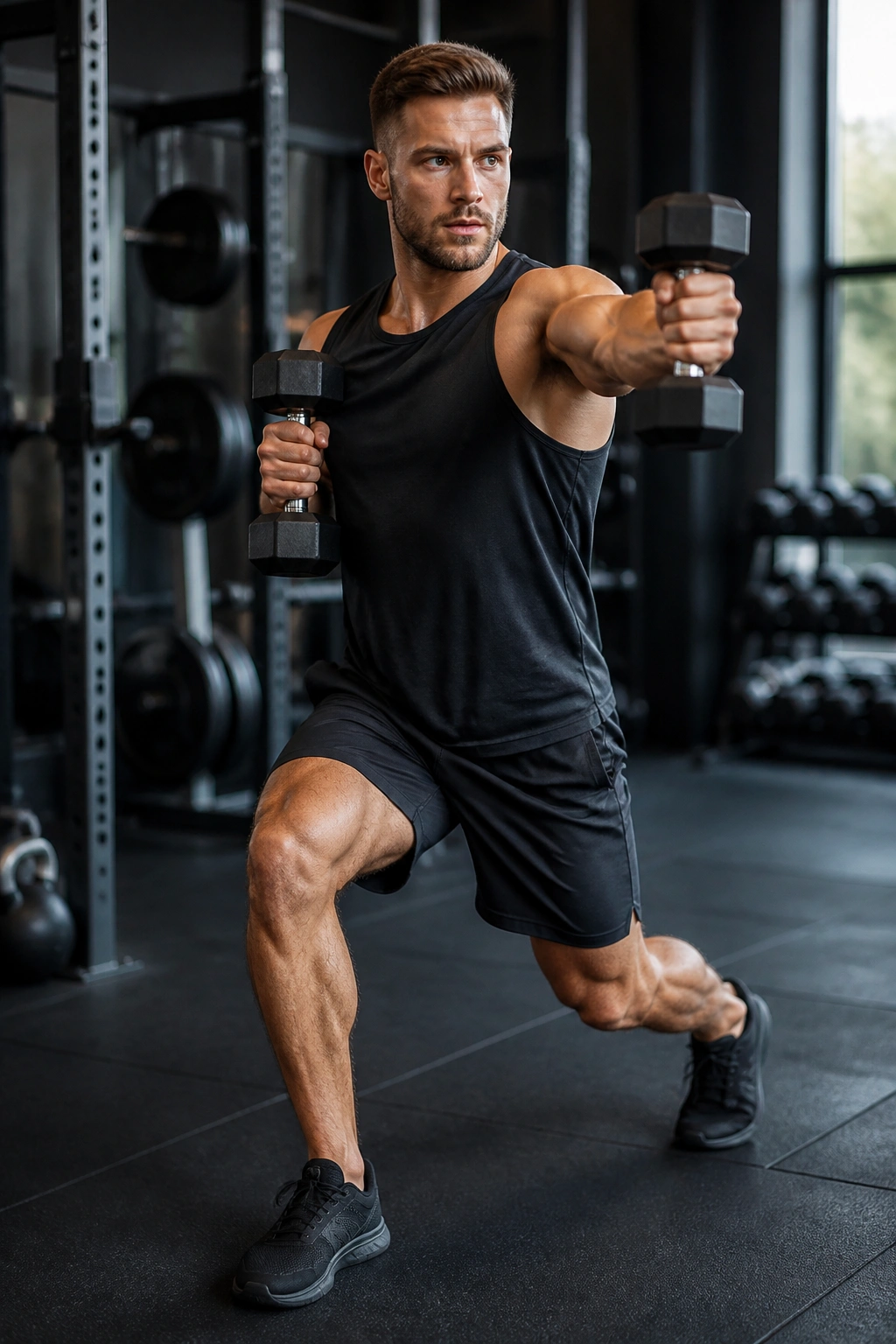
A split stance changes everything. You get more balance work, more hip control, and a little athletic feel without needing to sprint around the gym like you’re late for a bus.
Do 3 to 4 rounds of 8 split-stance presses per side, 10 staggered-stance rows per side, 8 reverse lunges per side, and 30-second offset carries per side. Rest 60 seconds between rounds. Keep the front foot planted and the back heel light on the press. The goal is control, not speed.
If you play sports, this style makes sense because it asks your body to stabilize while one side works a little harder. If you just want to move better, it still helps. Most people live too much in square, even stances. A split stance teaches the hips and trunk to manage load while one leg does more of the work.
Keep the rotation small and controlled where it appears. Big twisting reps are usually a bad trade. Small, clean shifts are the useful ones.
19. Posture Reset for Desk Days
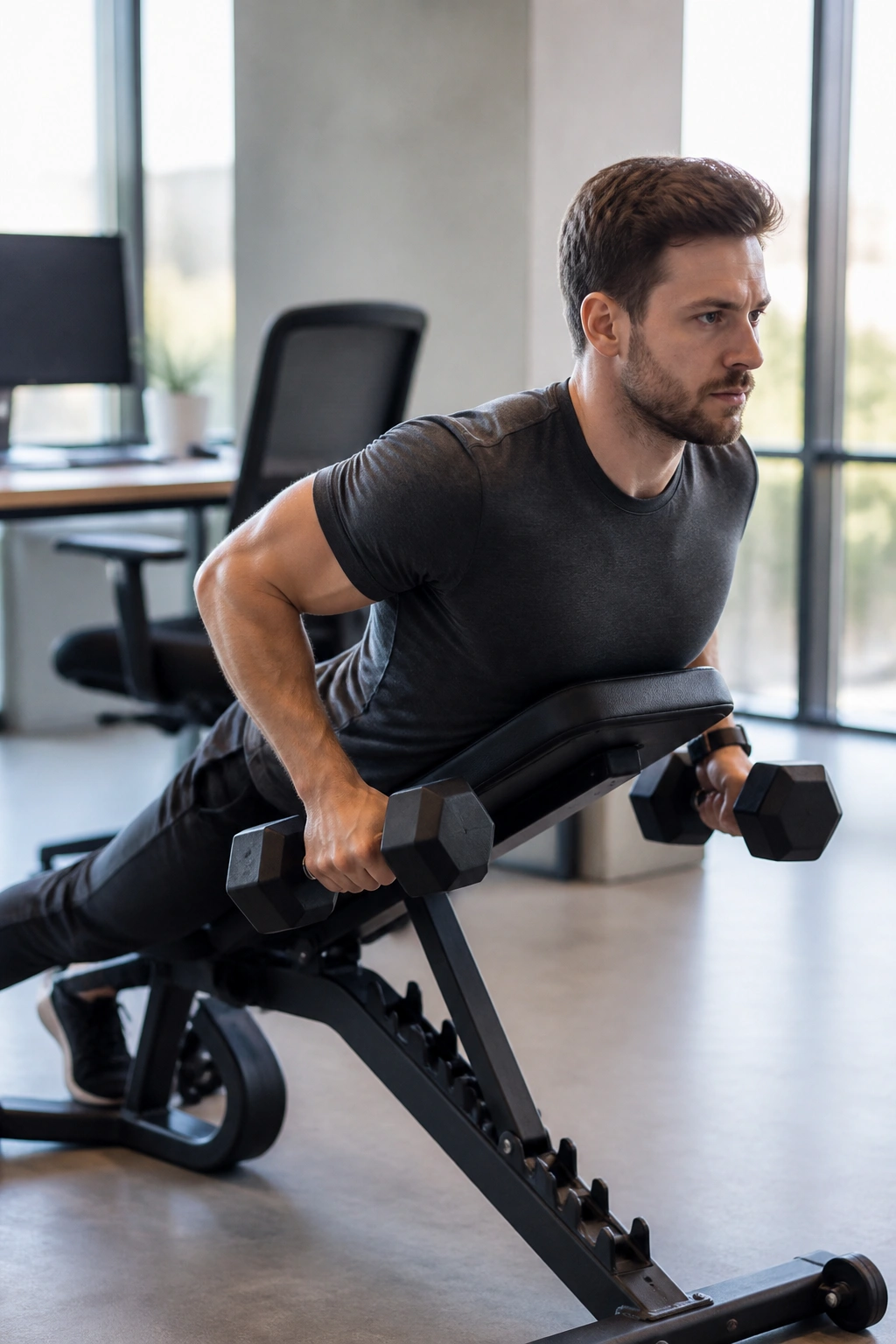
After a long stretch of sitting, the body usually wants two things: extension through the upper back and some real work for the rear chain. This workout gives both without pretending it can solve every posture problem in the universe.
Use 3 rounds of 10 chest-supported rows, 12 reverse flies, 8 prone Y-raises with very light dumbbells, 10 glute bridges holding a dumbbell across the hips, and a 30-second dead bug hold. Rest 45 to 60 seconds between exercises. If you don’t have a bench, do the rows with one hand braced on a chair or couch.
One sentence: your shoulders will sit a little better after this.
That does not mean posture gets “fixed” in one session. It means the muscles that got sleepy from sitting have a chance to wake up and do something useful. Keep the reverse fly light and controlled. If you swing the weights, you’re missing the point and probably annoying your shoulders for no reason.
20. Carry-and-Crawl Strength Session
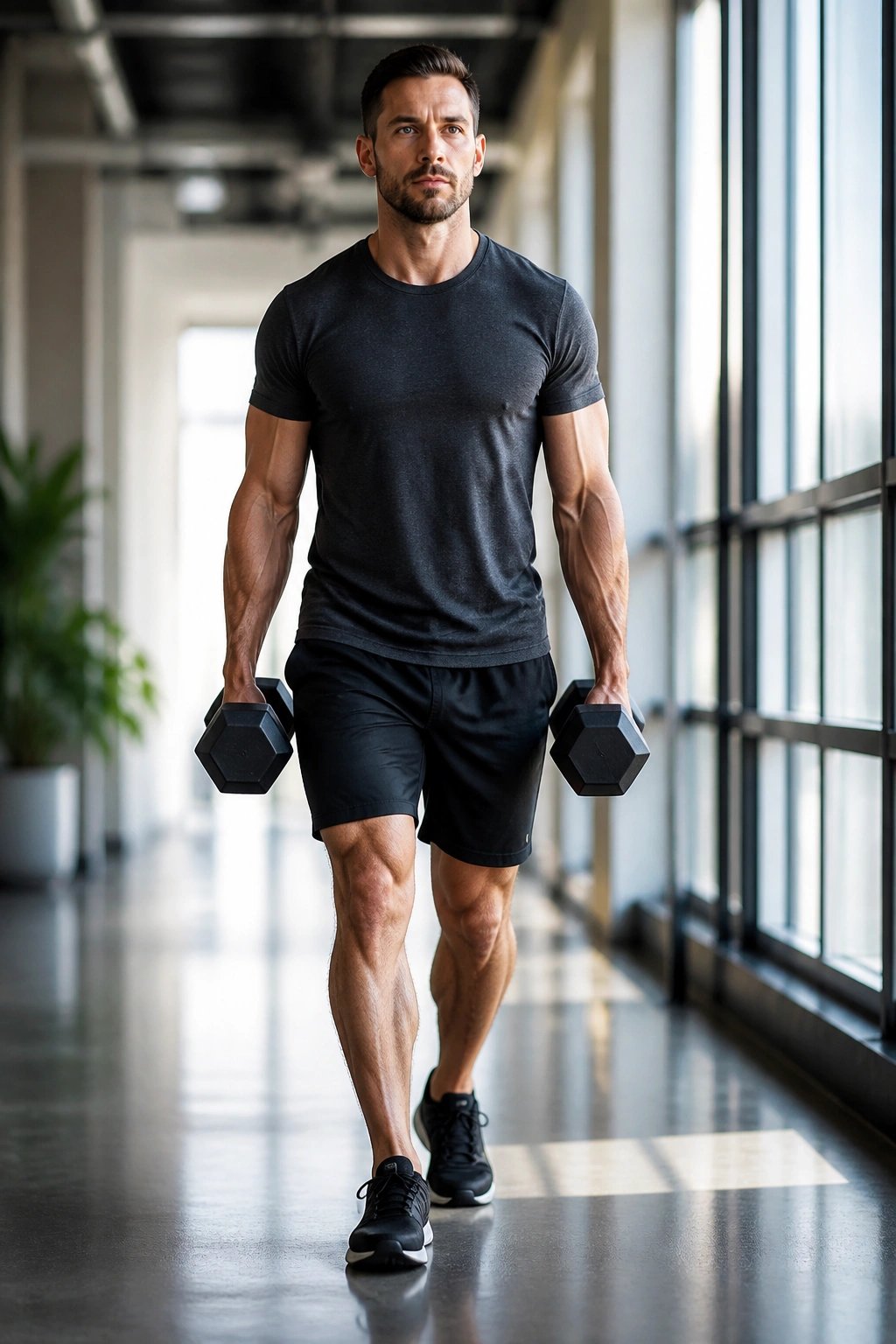
Can a workout built around carries feel hard enough to count as strength work? Absolutely. Once the load starts shifting side to side and your trunk has to keep up, the whole session gets serious fast.
The circuit
- 40-second farmer carry
- 30-second suitcase carry per side
- 20-second front rack march
- 10 plank dumbbell drags per side
- Rest 60 to 75 seconds
- Repeat for 3 to 4 rounds
Keep the farmer carry tall, the suitcase carry square, and the front rack march quiet through the torso. The plank drag is the most demanding piece, so if your hips swing all over the place, shorten the range and slow down. You want steady pressure, not a race.
This kind of training is useful for people who want core strength that shows up outside the gym. Picking up luggage, carrying groceries, walking up stairs with something awkward in one hand — all of that looks a lot more like this than like a crunch machine.
21. Minimal-Equipment Travel Workout
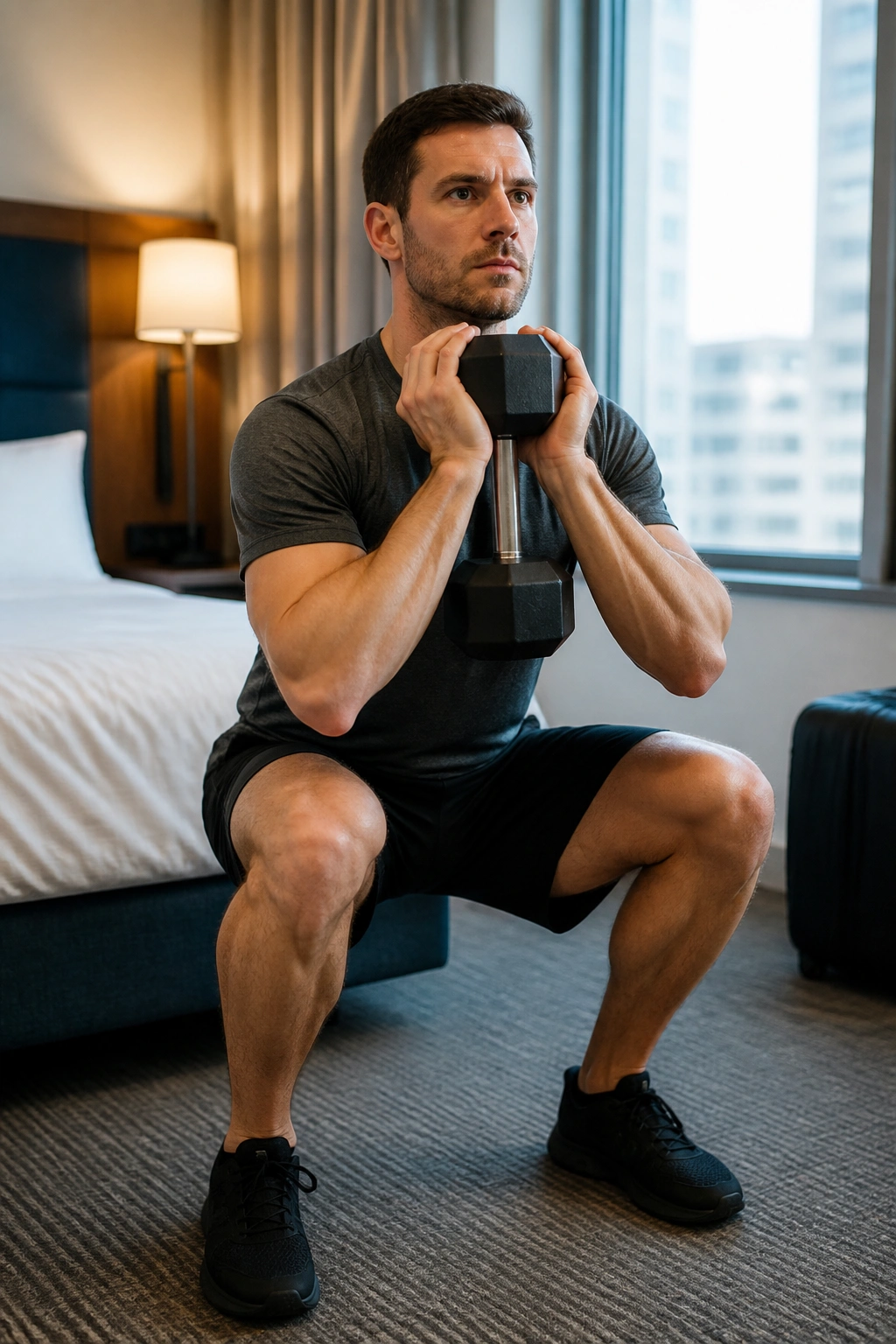
Hotel rooms and small living spaces are not a dead end for dumbbell strength training. They just ask for smarter choices. One pair of bells can cover a lot if you keep the reps deliberate and the tempo under control.
Use this format
- 10 goblet squats
- 8 single-arm floor presses per side
- 10 one-arm rows per side
- 8 reverse lunges per side
- 8 Romanian deadlifts
- Rest 45 to 60 seconds
- Run 3 rounds
If the dumbbells are light, make each lowering phase last 3 seconds. If they’re heavy, keep the reps at the lower end and stop one or two reps before form slips. That way the workout stays useful instead of turning into a sweaty shrug.
I like this one because it doesn’t depend on perfect conditions. No bench. No cable stack. No big floor space. Just a small plan and a pair of weights that you can carry, unpack, and get to work with before you talk yourself out of it.
22. The Dumbbell Strength Workout Benchmark
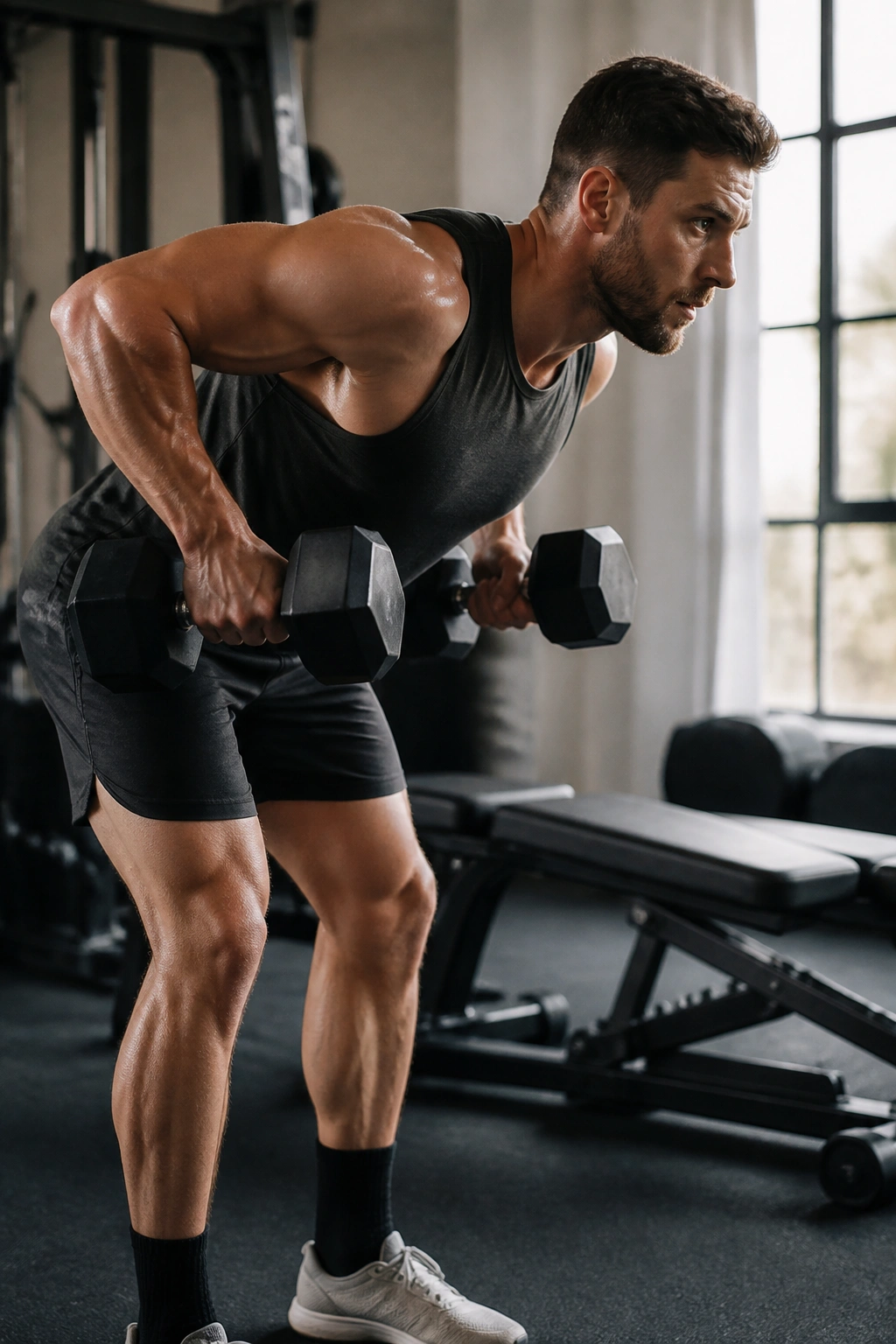
If you want one dumbbell workout to measure progress against, make it this one. It mixes squat, hinge, push, pull, and carry work in a way that gives you a clean read on what’s improving.
Do 3 rounds of 6 Romanian deadlifts, 6 bent-over rows per side, 6 front squats, 6 strict presses per side, and a 40-second farmer carry. Rest 90 seconds between rounds. The weights should feel challenging by the third round, but your reps still need to look tidy. That’s the line. If form breaks, the load is too ambitious for this benchmark.
One sentence: this is the workout I’d use to check whether dumbbells are getting easier.
The beauty of a benchmark is that it stays the same long enough to mean something. Run it every few weeks, keep the notes simple, and watch for small changes: smoother rows, steadier presses, less wobble in the front squat, a carry that doesn’t pinch your grip by the final 10 seconds. Those details tell the truth.
And truth is the point. Dumbbell training works best when you can feel the difference between a casual session and a real one. This workout makes that difference obvious.
