



Most workout routines are too polite. They spend time on the easy stuff, skip the movements that actually build useful strength, and then act surprised when progress slows.
A better plan usually needs fewer exercises, not more. A squat, a hinge, a push, a pull, a carry, a brace, and some single-leg work cover a lot of ground, especially when time is tight and you want results you can feel outside the gym.
The best workout moves do more than make a muscle tired. They teach balance, control, and a little patience under load. A goblet squat can clean up your depth. A row can save your shoulders. A carry can light up your grip and trunk without a single crunch.
That mix matters. Some of these moves build size, some build coordination, and some make the rest of your training feel less awkward. Use the list like a toolbox, not a checklist, and start with the moves that give the biggest return for the least drama.
1. Goblet Squat
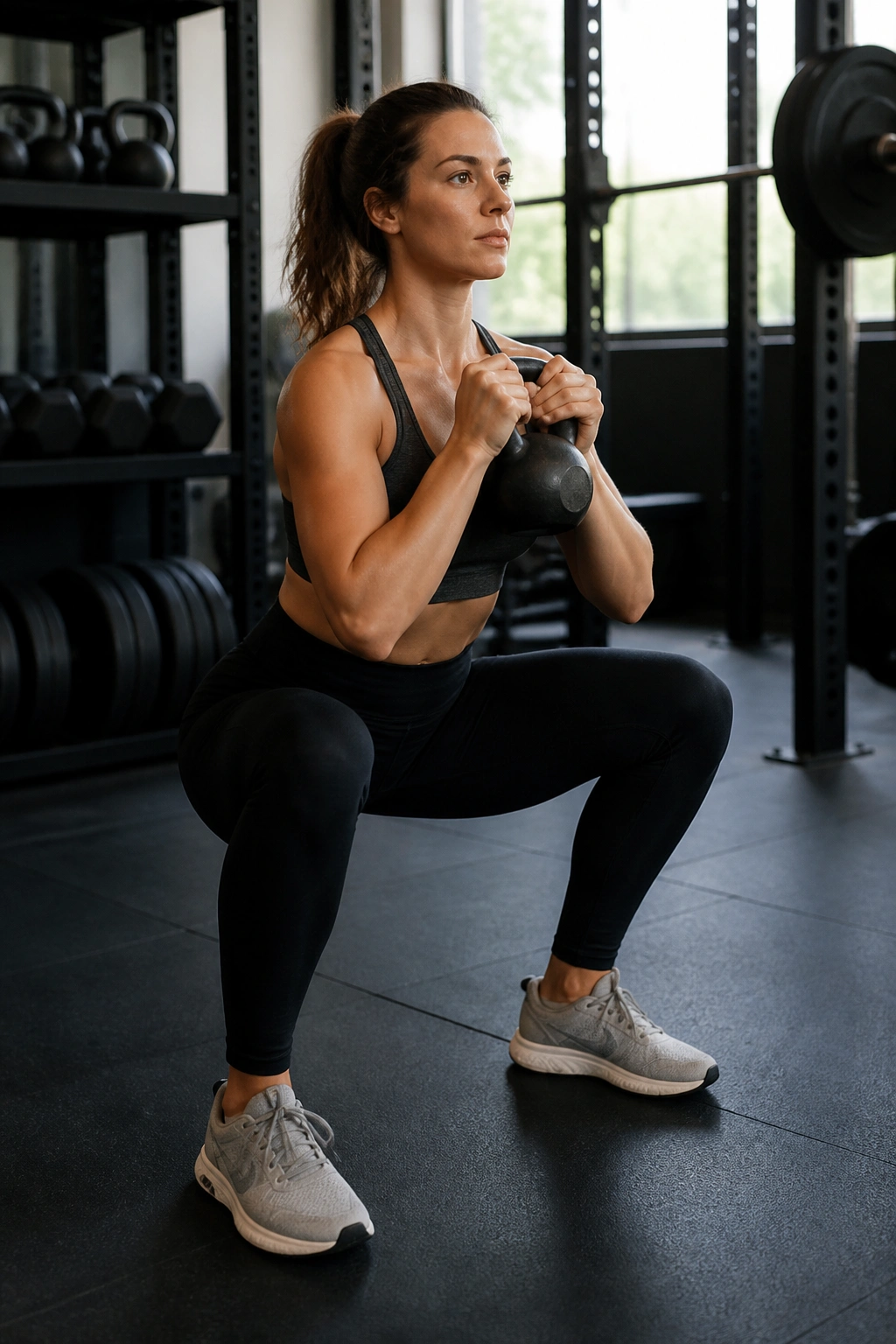
If I could hand one lower-body move to almost anyone, it would be the goblet squat. It’s one of the easiest ways to learn good squat mechanics without getting buried under a barbell. Holding a dumbbell or kettlebell at chest level keeps your torso upright, which makes depth easier to find and form easier to see.
Why It Earns Its Spot
The goblet squat trains your quads, glutes, and inner thighs, but it also forces your midsection to stay braced. That front-loaded position has a nice side effect: you can usually feel when your chest starts to collapse or your knees cave in. The feedback is immediate.
A good working range is 3 sets of 8 to 12 reps with a load that makes the last 2 reps slow but still clean. If your heels pop up, place a small plate or wedge under them. That tiny adjustment can clean up ankle limits fast.
- Keep the weight close to your sternum.
- Sit between your hips, not straight down like a plop.
- Drive through the whole foot, especially the big toe.
- Stop when your lower back starts to round.
Pro tip: if you want better squat depth, pause for 2 seconds at the bottom of each rep. The pause exposes sloppy positions in a hurry.
2. Romanian Deadlift
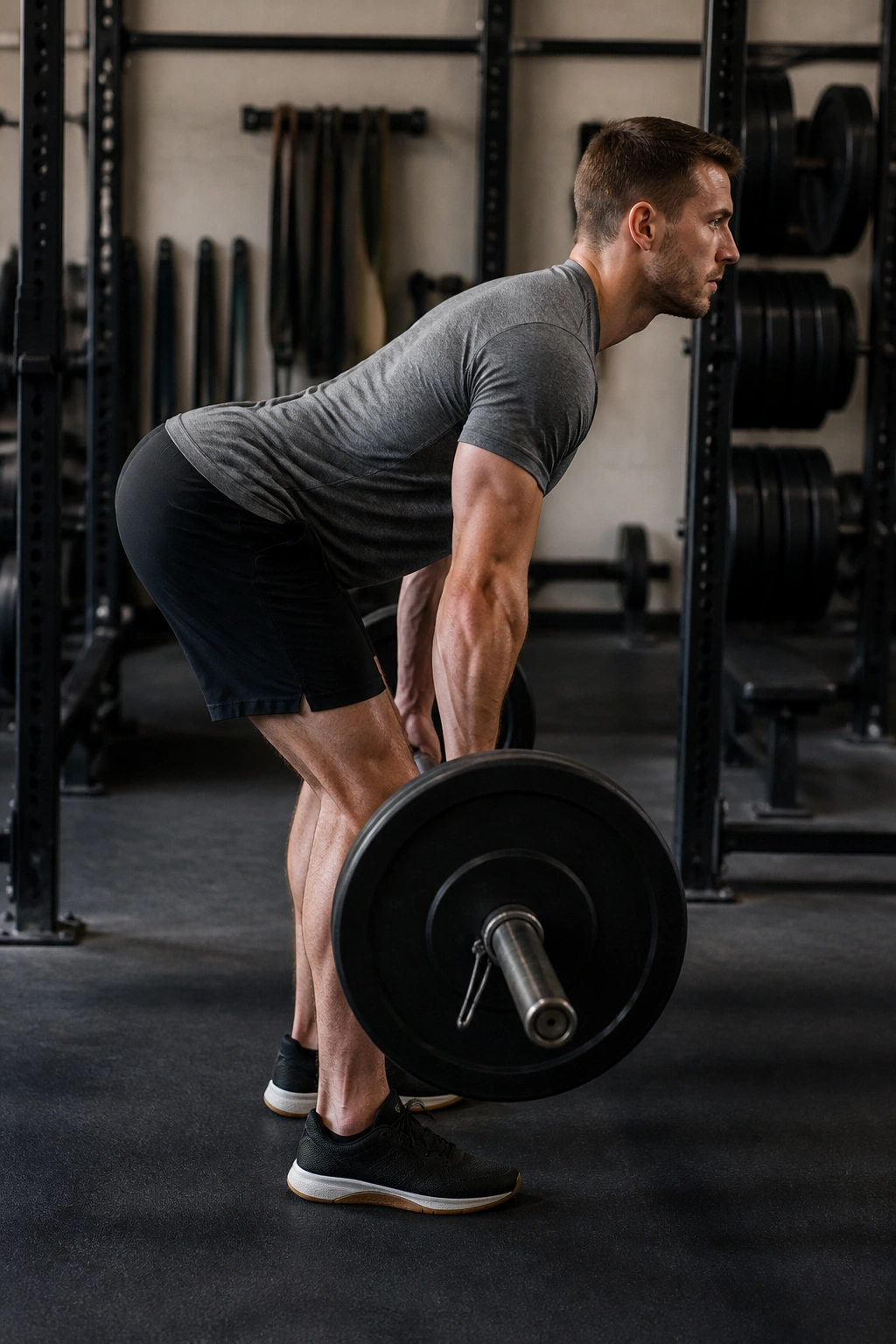
A hinge is the move most people skip, and that is a mistake. The Romanian deadlift, or RDL, teaches you how to load the back side of your body without turning every rep into a lower-back gamble. Hamstrings and glutes do the heavy lifting here, not your spine.
The big cue is simple: push your hips back until you feel a stretch along the hamstrings, then stand up by squeezing the glutes. The weights should travel close to your legs the whole time. If the dumbbells drift forward, the whole thing gets harder on your back and easier to cheat.
I like the RDL because it fills in a gap left by squats. Squats are knee-dominant. RDLs are hip-dominant. Put both in the same routine and your lower body stops feeling one-sided.
Use a barbell or dumbbells, and start with 2 to 4 sets of 6 to 10 reps. Keep a soft bend in the knees, but do not turn it into a squat. That’s the trap. The shin angle barely changes, the hips go back, and the torso tips forward just enough to load the hamstrings. Clean reps feel like tension, not strain.
3. Push-Up
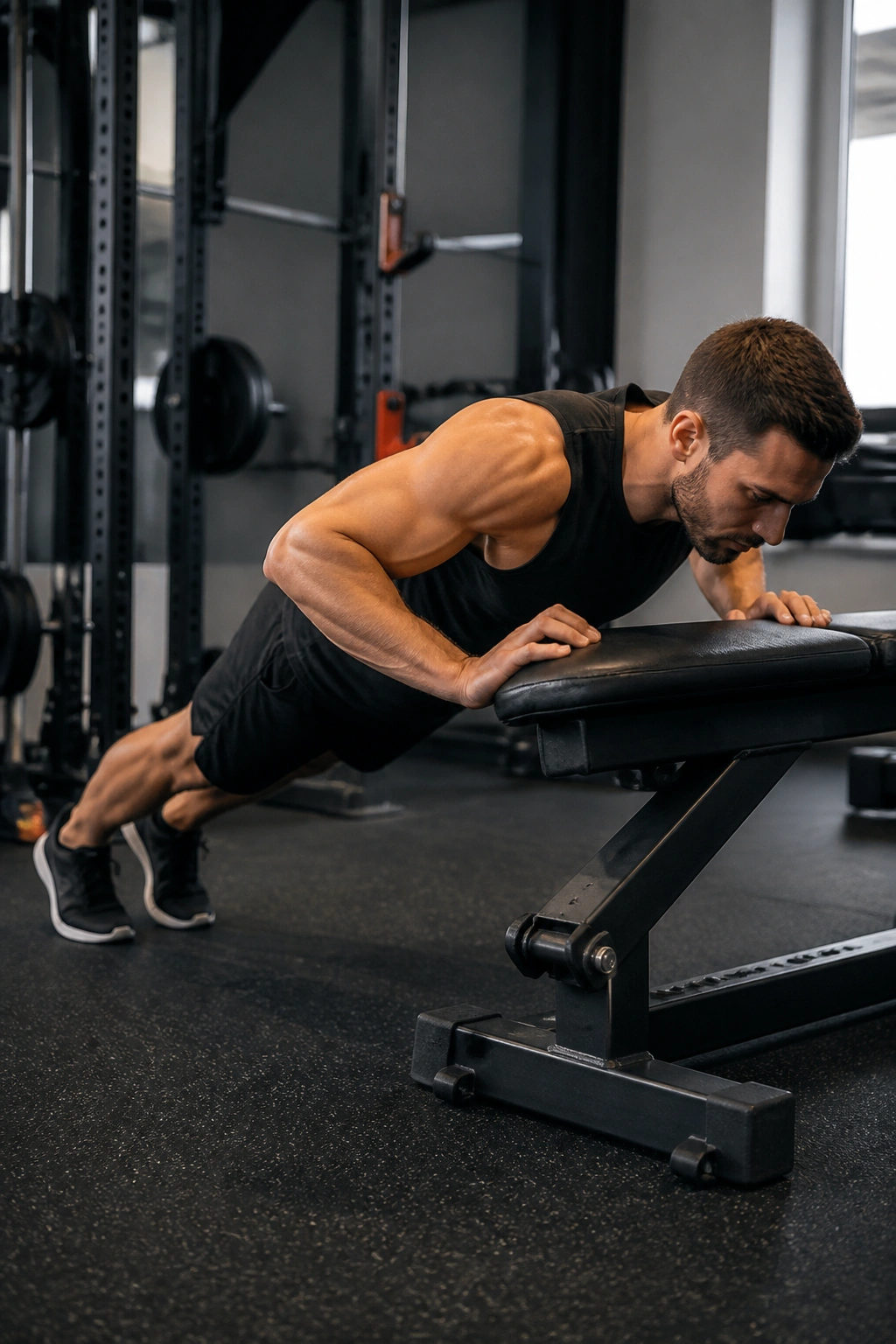
Why does a plain push-up survive every fitness fad? Because it works. It builds chest, triceps, shoulders, and trunk control at the same time, and you can scale it without fancy gear.
A good push-up is more than pressing your body away from the floor. It asks your rib cage to stay quiet, your shoulders to stay packed, and your hips to move as one unit with the rest of you. That’s why sloppy push-ups turn into lower-back sagging or head-bobbing so fast.
How to Use It
Start with an incline version if full push-ups make your form ugly. A bench, box, or sturdy countertop can be the right place to begin. Once you can knock out 3 sets of 10 to 15 controlled reps with a straight line from head to heel, lower the angle.
A few cues matter a lot:
- Hands slightly wider than shoulders.
- Elbows about 30 to 45 degrees from the ribs.
- Chest touches first, not chin.
- Press the floor away hard at the top.
Do not chase speed here. A push-up that looks smooth but caves at the middle is a bad trade. Slow down the lowering phase for 2 to 3 seconds, and the movement gets honest very quickly.
4. One-Arm Dumbbell Row
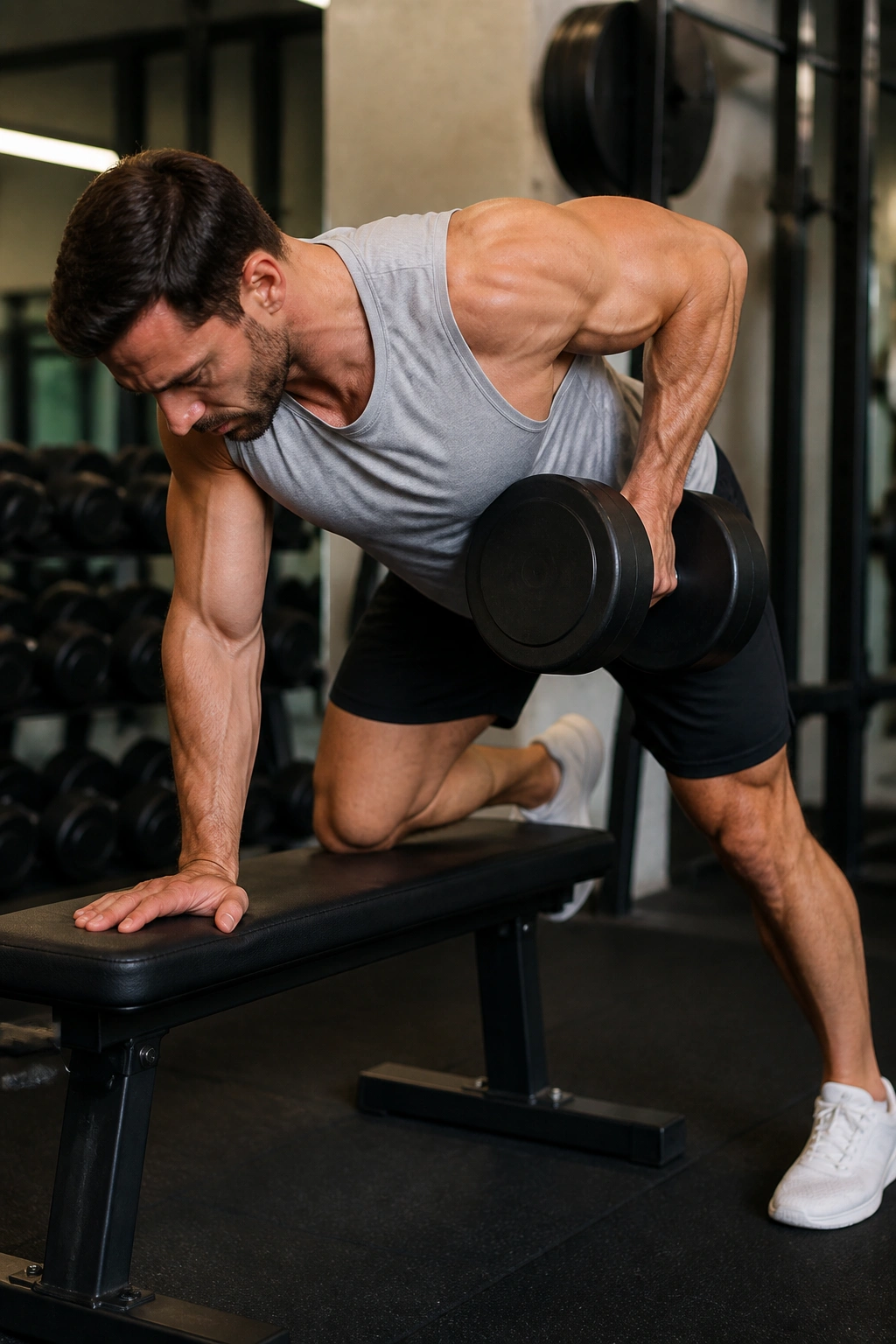
A row fixes a lot of the nonsense that pressing can create. If your routine has plenty of chest work and not much pulling, the one-arm dumbbell row is the move that helps keep your shoulders happier and your upper back stronger. It’s simple, heavy, and hard to fake.
What I like most is the angle. With one hand supported on a bench or rack, you can pull with intent instead of wrestling the whole body into motion. The goal is to drive the elbow toward the hip, not yank the dumbbell straight up toward the armpit. That one cue changes everything.
A solid row should feel like the lat, upper back, and rear shoulder all get involved. If your torso twists all over the place, the load is too heavy or the setup is too loose. Keep your ribs down. Keep the neck long. Pull, pause, lower.
If you want a practical target, use 3 to 4 sets of 8 to 12 reps per side with a brief squeeze at the top. And yes, the squeeze matters. A one-second hold at the top usually tells you more than another 20 pounds ever will.
5. Reverse Lunge
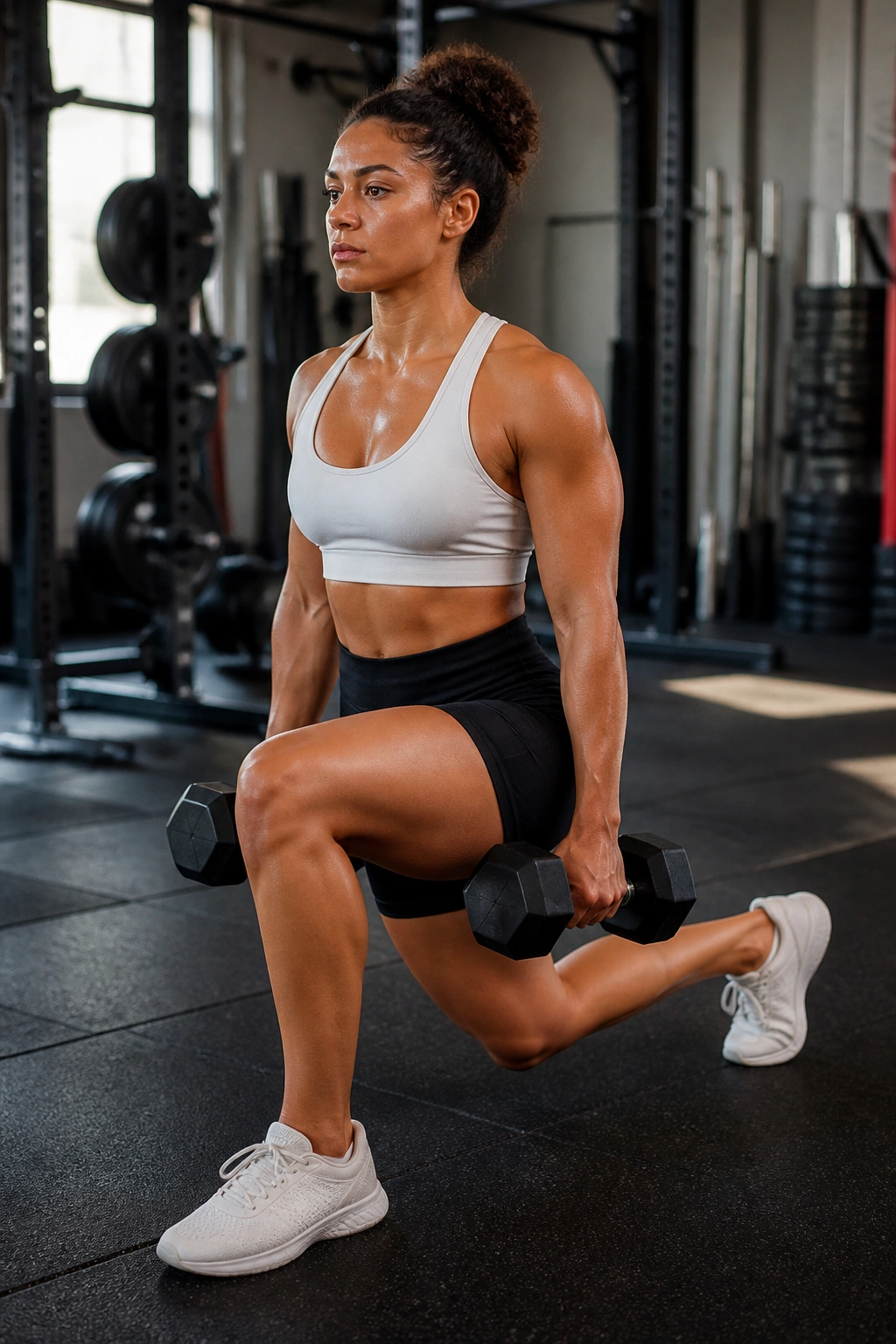
A lot of people think lunges are just for balance drills and sweaty legs. Not quite. The reverse lunge gives you single-leg strength, hip control, and a knee-friendlier entry point than the forward version.
What Makes It Different
Stepping backward tends to feel more stable than stepping forward. The front foot stays planted, the shin usually stays a little more vertical, and the glutes get a clearer job. That makes the reverse lunge a smart choice if forward lunges make your knees grumble.
The movement is simple, but the details matter. Step back softly. Lower until both knees bend to roughly 90 degrees. Keep the front heel down. Drive through the front leg to stand back up. If you lean forward a lot, the load shifts away from the target muscles and into whatever is trying to steal the job.
- Hold dumbbells at your sides for a cleaner loading pattern.
- Use a shorter step if you want more quad work.
- Use a longer step if you want more glute and hip work.
- Start with 2 to 3 sets of 8 reps per side.
Small note: if your back knee slams the floor, shorten the descent. You want control, not a dramatic finish.
6. Overhead Press
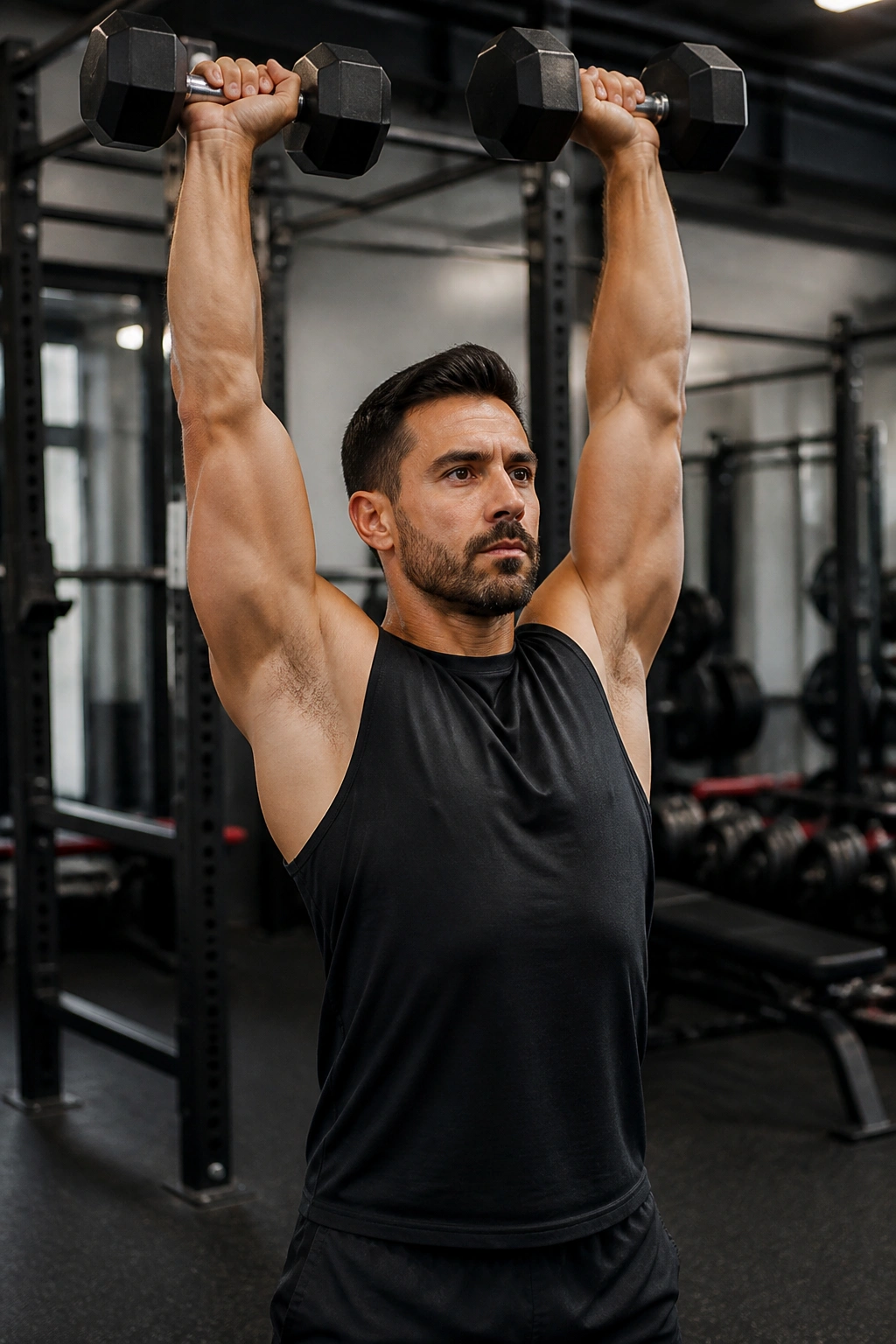
The overhead press is not just an arm exercise. It is a standing test of shoulder strength, trunk control, and patience under load. Unlike a bench press, this move does not let your back do all the lying down and hiding.
That standing position matters. Your glutes need to stay tight, your ribs need to stay stacked over your pelvis, and the weight has to travel in a clean line without turning into a half-shrug. A dumbbell press or barbell press both work, but dumbbells are usually friendlier if shoulder mobility is limited.
The press is especially useful if your routine is full of horizontal work already. Plenty of people can push forward. Fewer can press overhead without arching like a drawn bow. That gap shows up fast when the weight gets heavier.
Try 3 sets of 5 to 8 reps if strength is the goal, or 3 sets of 8 to 10 if you want a little more muscle work. Keep the forearms vertical at the bottom and finish with the biceps near the ears at the top. If your lower back takes over, the weight is too heavy or your ribs are flaring.
7. Dead Bug
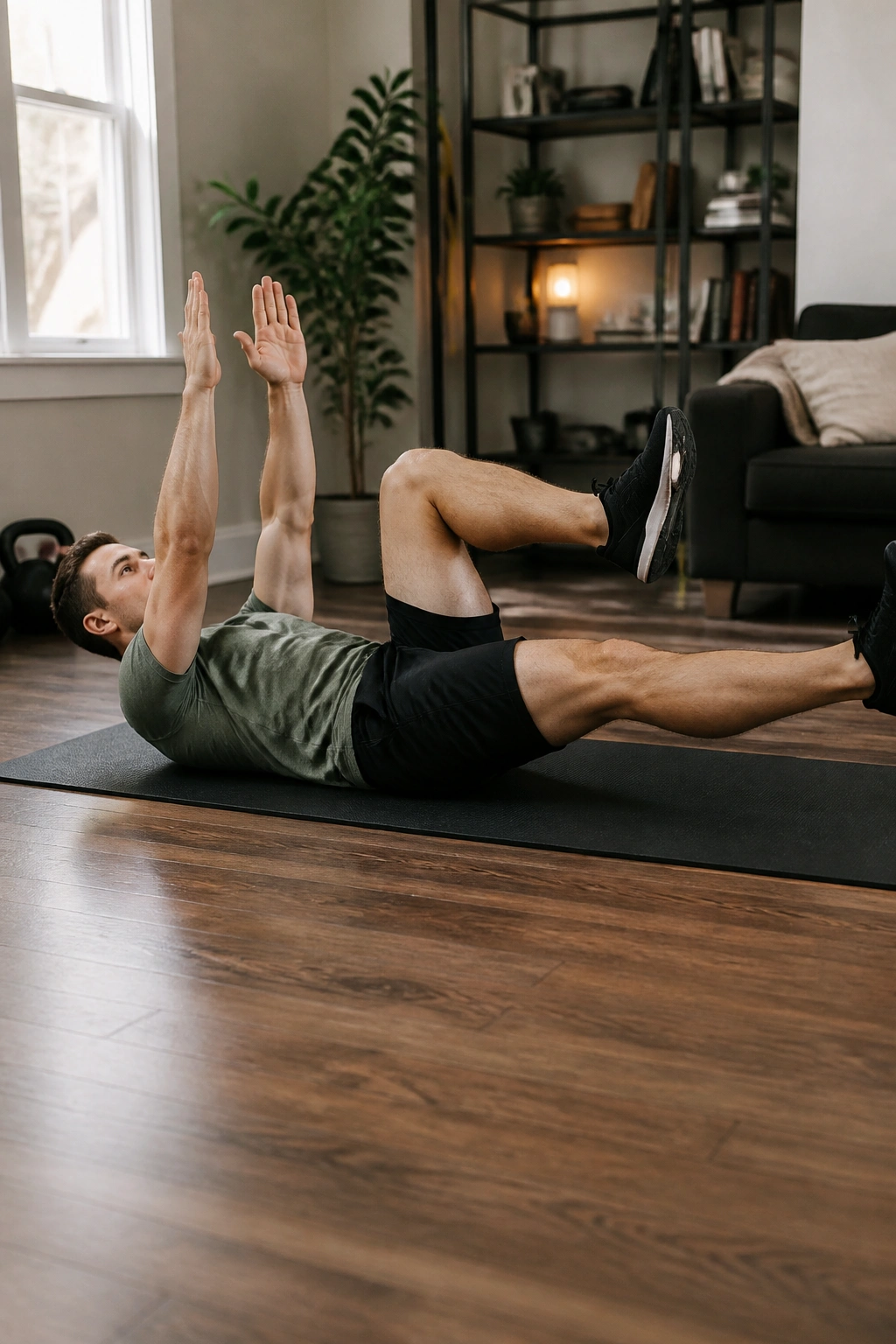
A core move does not have to burn like a furnace to matter. The dead bug is one of those quiet exercises that pays rent later. It teaches your trunk to resist arching while your arms and legs move around.
That sounds small, but it carries over everywhere. Squats feel steadier. Running feels less sloppy. Even simple things like lifting a heavy box stop feeling as awkward when your midsection knows how to stay put.
How to Get the Most From It
Lie on your back with your arms pointed up and your hips and knees bent at 90 degrees. Flatten your lower back into the floor before you move. That part is not optional. If there is a big gap under your low back, reset.
From there, slowly extend the opposite arm and leg, stop before the back arches, then return and switch sides. A slow 6- to 10-rep set per side works better than rushing through 20 messy reps. The movement should feel controlled, not frantic.
A lot of people go too far with the leg extension. Don’t. Shorter range with good control beats a bigger range with a lifted back every time.
8. Side Plank
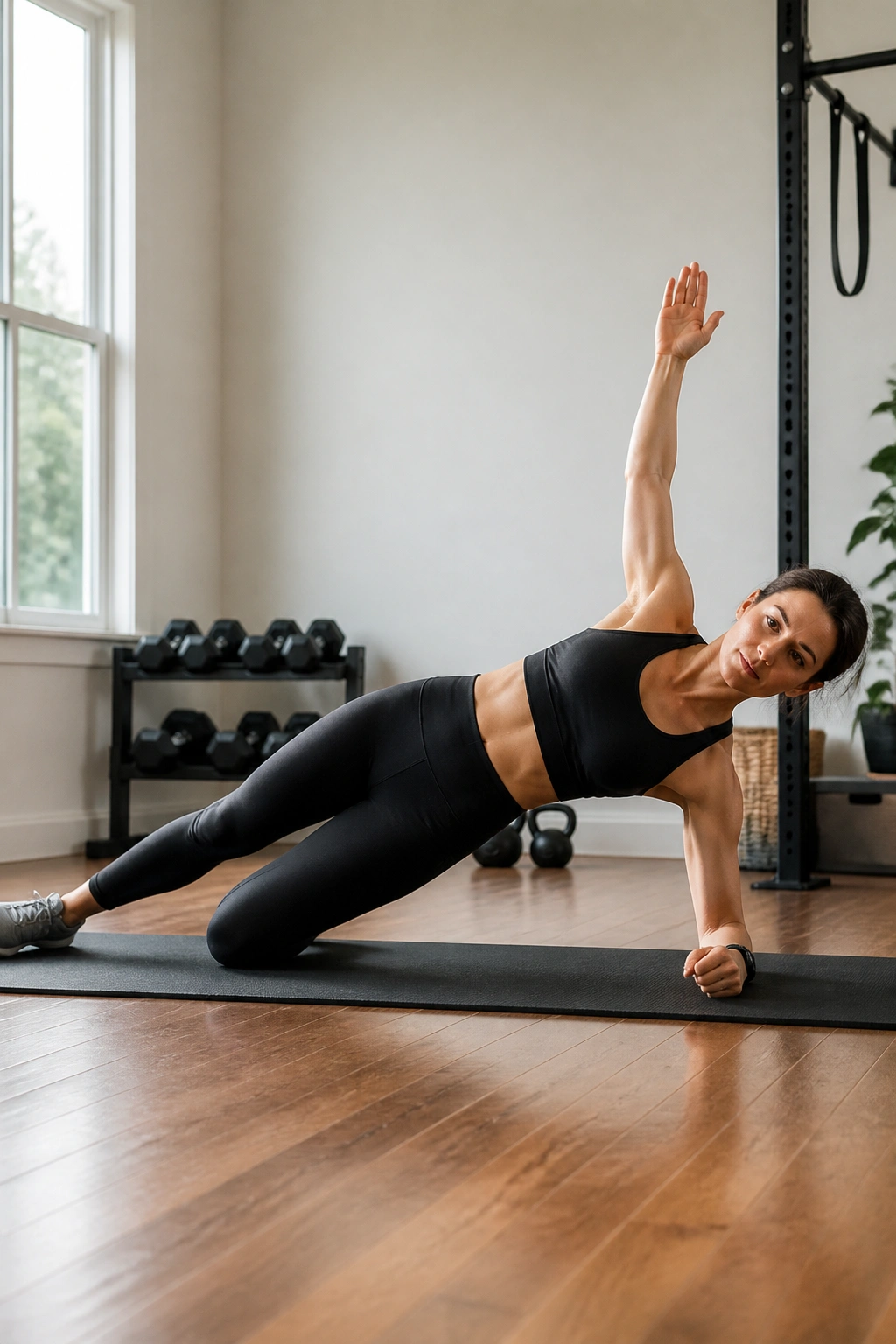
The side plank is one of the least glamorous moves in the room, and that’s part of why I trust it. It hits the obliques, glute medius, and shoulder stabilizers without needing momentum or a machine.
Most people discover very quickly that holding a side plank is harder than it looks. Good. That’s useful feedback. The body wants to twist and sag; the exercise asks it not to. You learn where your trunk leaks first, which is information you can actually use.
A clean side plank starts with the elbow under the shoulder and the body in one long line. If full feet are too much, drop the bottom knee. That version still works. Hold for 20 to 40 seconds per side, and stop before form turns into a sideways collapse.
Do not race this one. A one-sided plank with the top hip rolled back or the neck craned forward is just a shaky pause, not a strength move. If you want to make it harder, lift the top leg for the last 5 seconds or reach the top arm overhead.
9. Glute Bridge
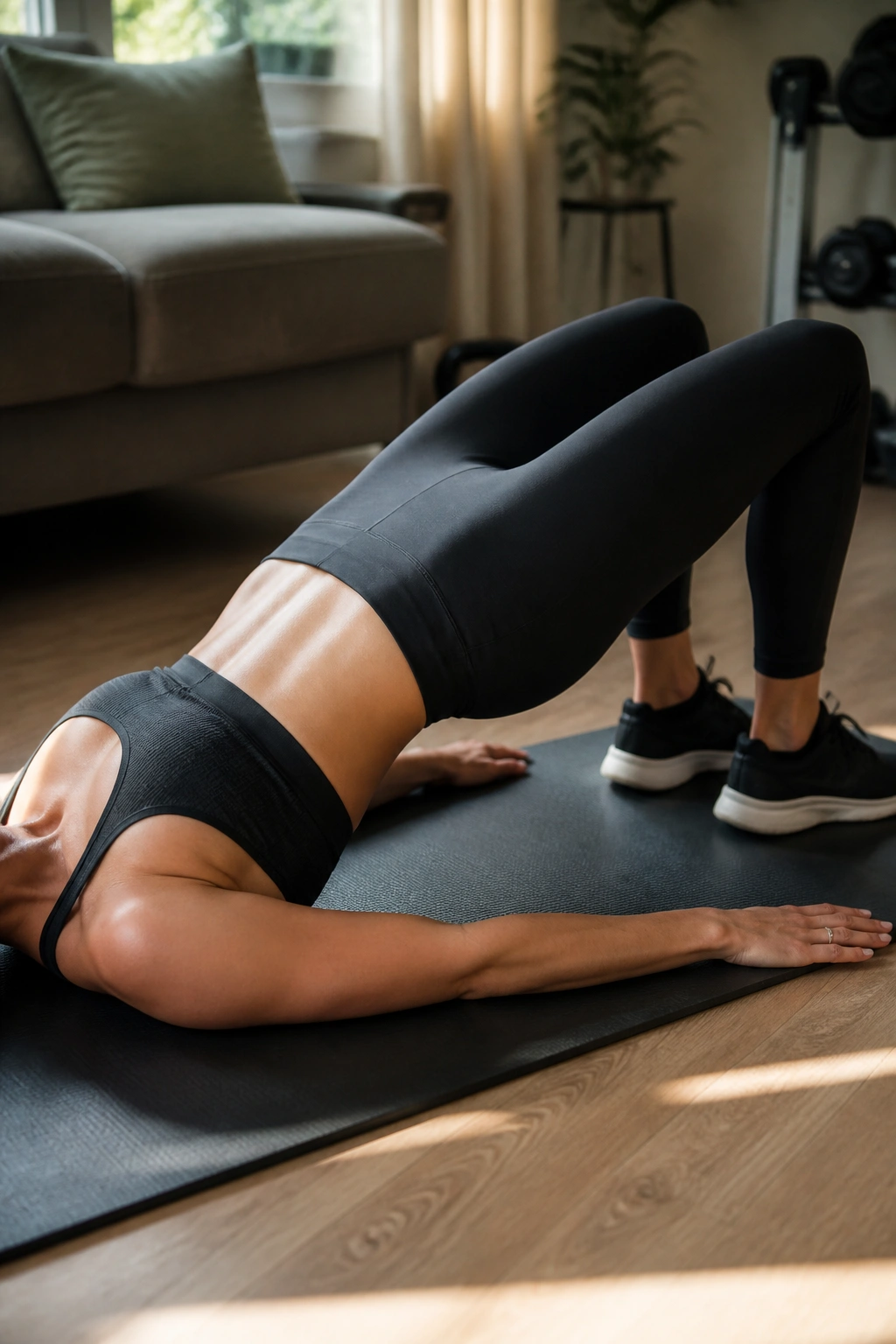
The glute bridge gets dismissed because it looks too simple. That’s a shame. It’s one of the cleanest ways to teach the hips how to extend without the lower back hogging the job.
There’s a difference between a floor bridge and a hip thrust, and both are worth knowing. The bridge has you on the floor, which limits range and makes it easy to feel the glutes. The hip thrust uses a bench and lets you load heavier. If you want to start smart, begin on the floor.
Set your feet so the shins are near vertical at the top. Tuck the ribs down, press through the heels, and squeeze the glutes until the hips line up with the torso. If you feel the hamstrings cramping, move your feet a little farther out. If your lower back arches hard, reduce the range and reset the rib cage.
This move fits well as a warm-up or accessory lift. 2 to 4 sets of 10 to 15 reps is plenty for most people. A one-second pause at the top usually tells you more than a pile of faster reps.
10. Farmer’s Carry
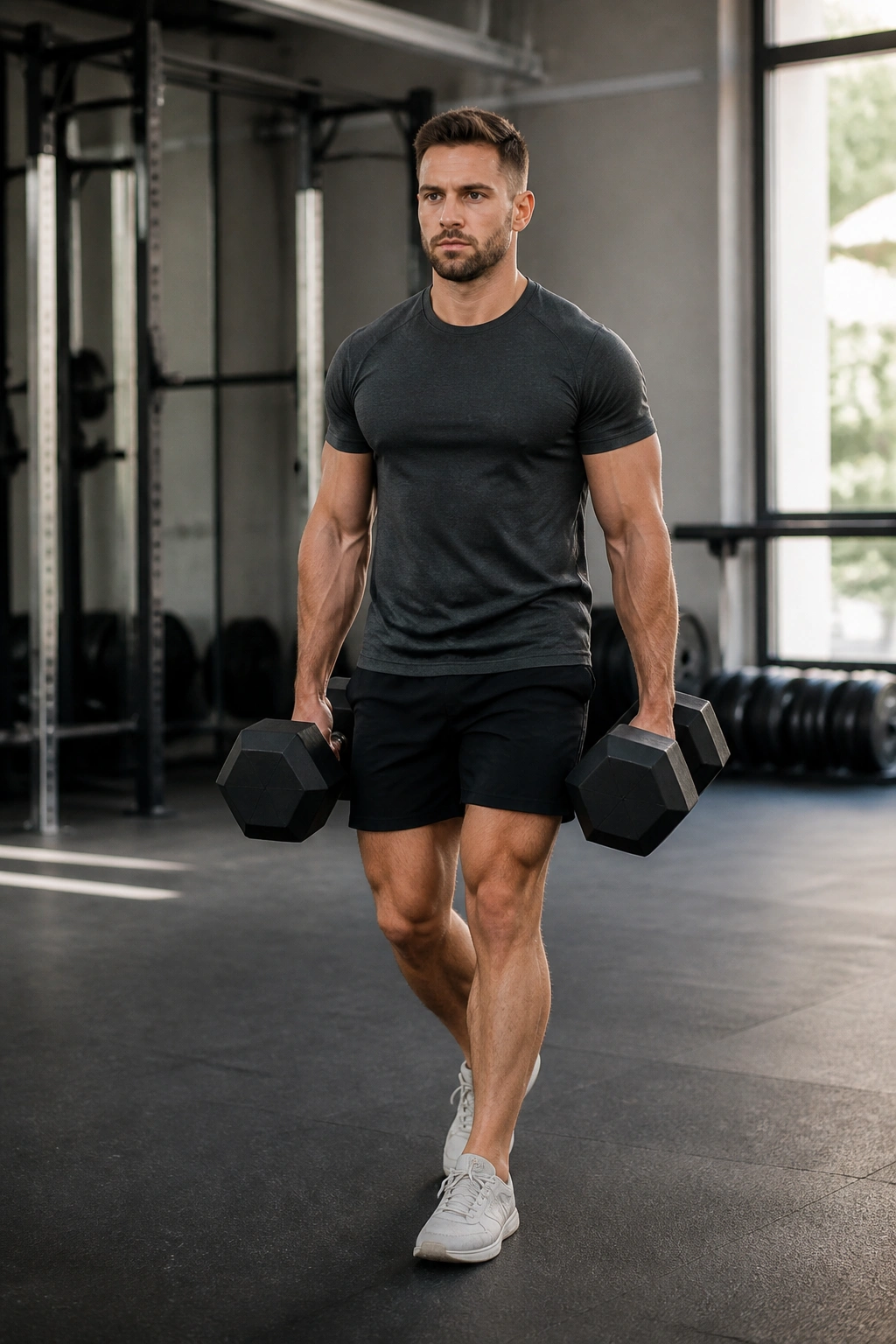
Pick up two heavy weights and walk. Sounds almost too plain to count as training, which is exactly why it works. Farmer’s carries train grip, traps, core stiffness, and posture in one shot.
Why It Works So Well
The carry exposes weak links fast. If your grip gives up first, that tells you something. If your ribs flare and you sway side to side, that tells you something else. The body has to organize itself under load, and there’s nowhere to hide.
Use dumbbells, kettlebells, trap bar handles, or even grocery-bag style loads if that’s what you’ve got. Stand tall, keep the shoulders down and back, and walk slowly for 20 to 40 meters. That slow walk matters. Fast, sloppy steps turn the drill into a mess.
- Choose a load you can hold without leaning.
- Keep your chin tucked slightly.
- Let the arms hang long.
- Stop the set before your posture falls apart.
One of the nice things about carries is that they’re hard without feeling theatrical. You can slot them at the end of a session and leave feeling worked without grinding your joints.
11. Pull-Up
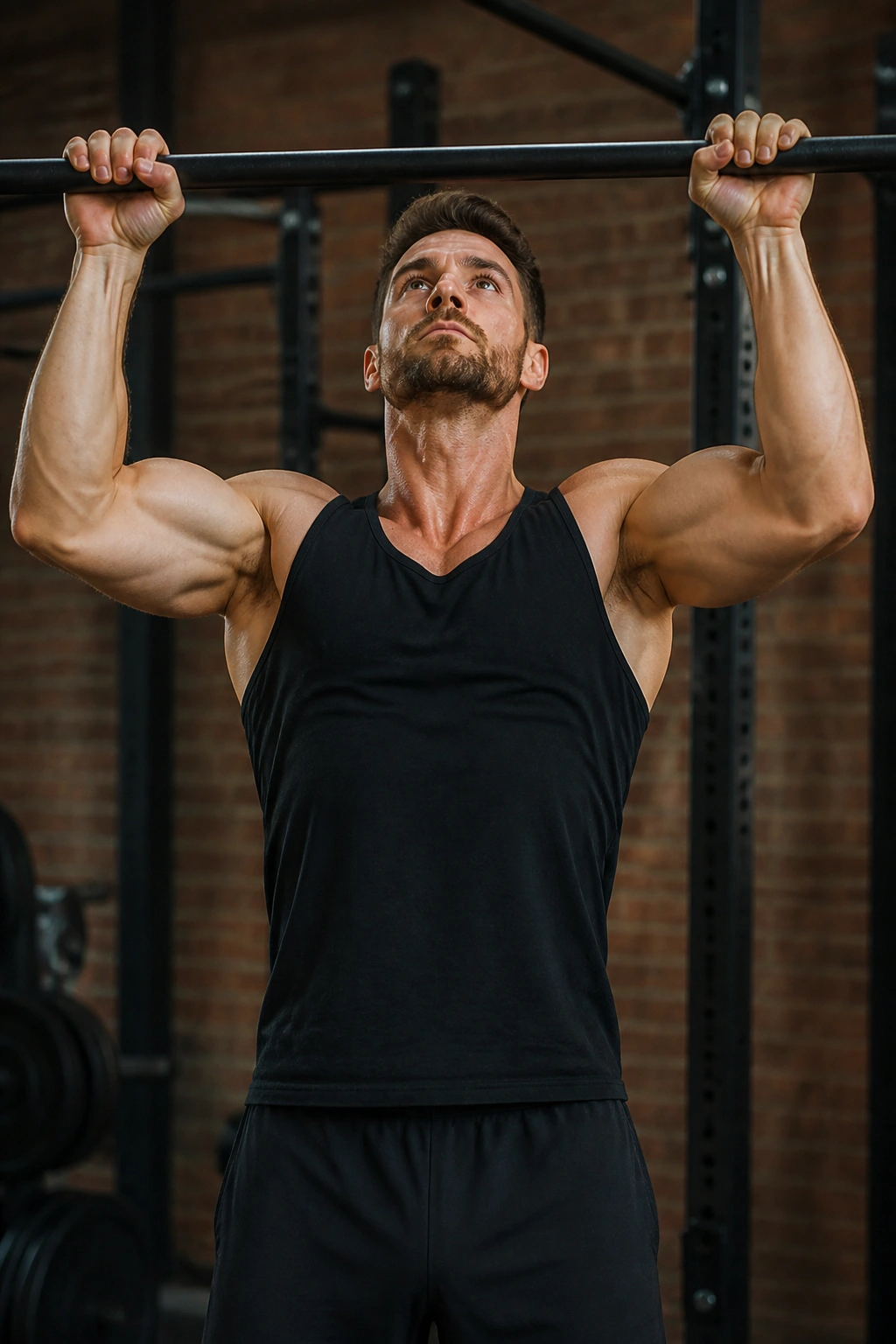
Why do people keep coming back to pull-ups? Because they’re brutally honest. If you can pull your own bodyweight up with control, your upper back and arms are doing real work.
A pull-up trains the lats, biceps, lower traps, and grip, but the bigger win is the movement itself. You learn to set the shoulders, keep the ribs from flaring, and pull from the back instead of cranking from the neck. That’s a useful skill whether you’re climbing, lifting, or just trying not to look folded over all day.
If a full pull-up is out of reach, use an assisted band, a machine, or slow negatives. Jump to the top, hold for 2 seconds, then lower yourself over 3 to 5 seconds. That eccentric work builds strength fast enough that you’ll notice it. Do not swing around like a broken gate.
How to Use It
Start with 3 to 5 sets of 3 to 6 clean reps. Quality beats numbers here. If you’re grinding through half reps, switch to assisted work and build back up. The bar isn’t the point. The pull is.
12. Step-Up
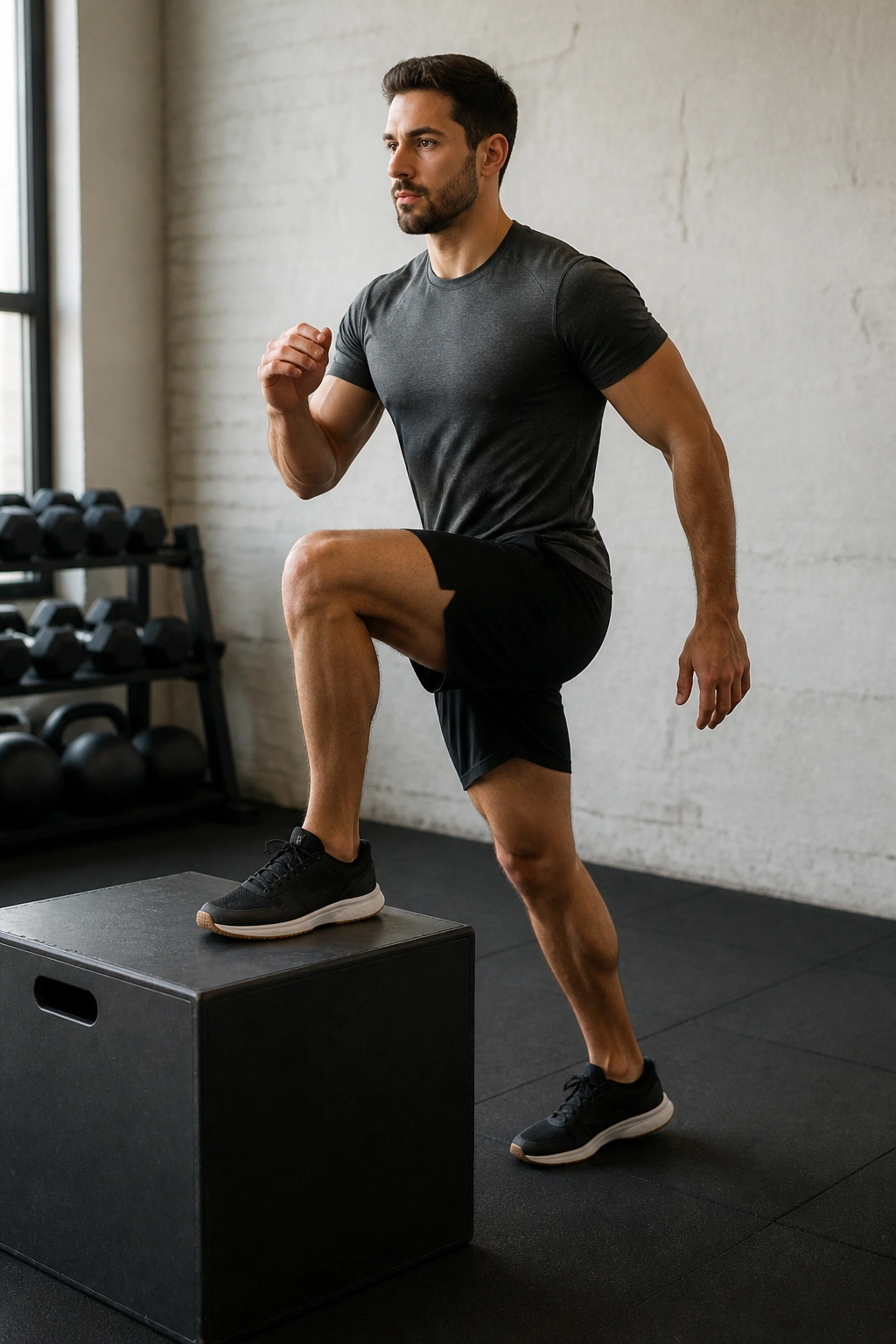
A step-up looks plain until you do it with good control. Then it gets serious. This move builds single-leg strength, balance, and the kind of hip drive that carries over to stairs, running, and field sports.
The easiest mistake is pushing off the back leg too much. Don’t. The front leg should do the lifting. Plant the whole foot on a box or bench, lean slightly forward, and drive through the heel and midfoot to stand up. The top position should feel stable, not wobbly.
Box height matters more than people think. Too high, and you start swinging around or cheating with the back leg. Too low, and it gets easy to coast. A step around knee height or a little below is a solid place to start.
I like step-ups because they reveal side-to-side differences fast. One leg will usually feel smoother. That’s normal. 2 to 3 sets of 8 reps per side is enough to make the weak side talk back a little without turning the movement into a circus.
13. Kettlebell Swing
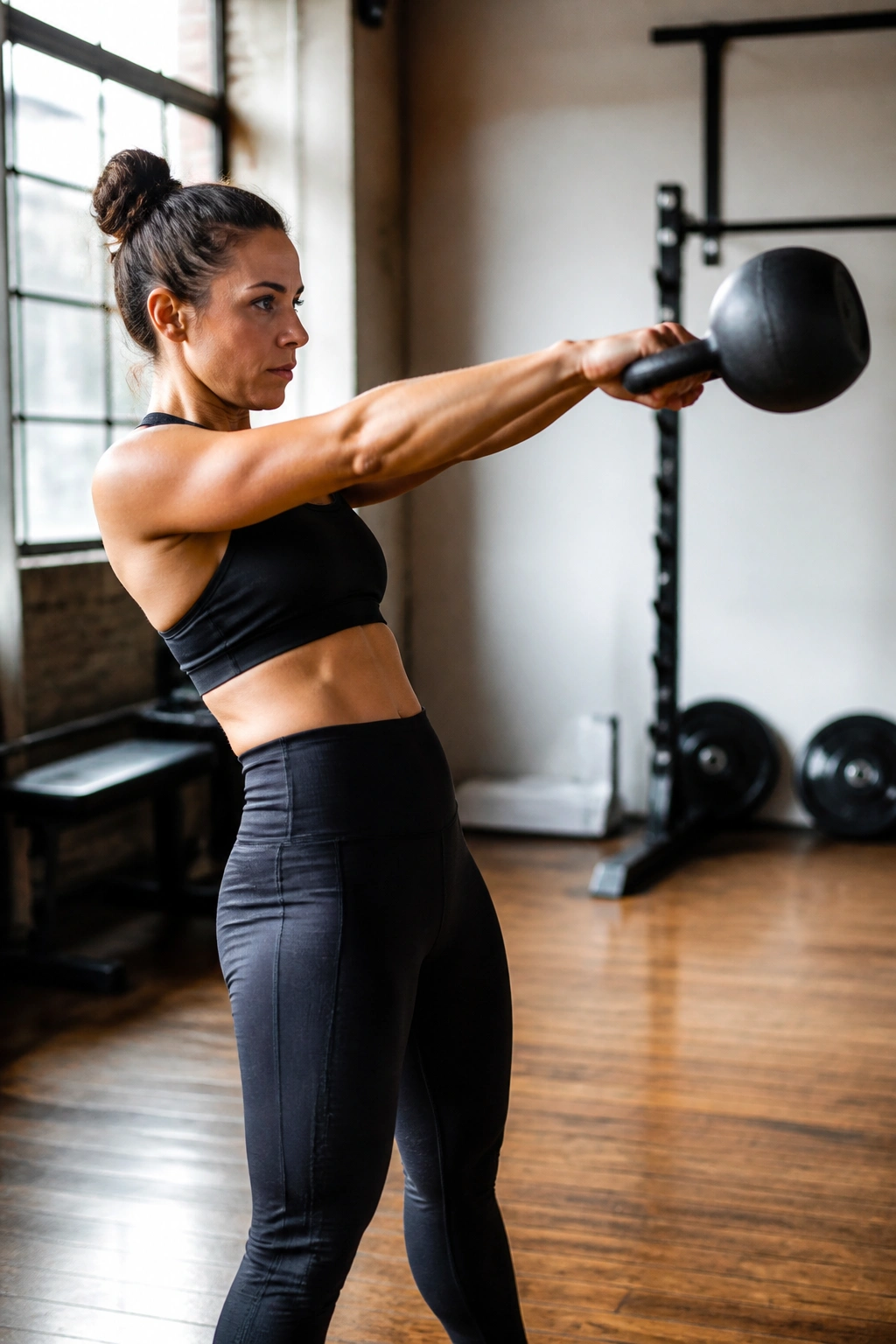
The kettlebell swing is not a squat. It is not a front raise, either. It’s a hip snap, and when it’s done right, it teaches power without needing a long workout.
That hip snap is the whole point. The bell should float because the hips fire, not because the arms heave it upward. Your shoulders guide the bell; your glutes and hamstrings create the force. If the bell is rising above chest height because you’re lifting with the arms, the pattern has drifted.
Start light. Seriously. A lot of people load the swing too soon and turn it into a sloppy back exercise. Hinge back, hike the bell, then stand up hard with a crisp glute squeeze. The bell should feel weightless for a brief second at the top.
Watch for these mistakes:
- Squatting instead of hinging.
- Hyperextending the lower back at lockout.
- Letting the bell drift away from the body.
- Using the shoulders like a front-delt raise.
Use swings sparingly at first: 10 reps for 5 to 10 rounds with enough rest to keep each set snappy. When the reps turn slow and sloppy, stop. The move loses its point once the hips quit firing.
14. Pallof Press
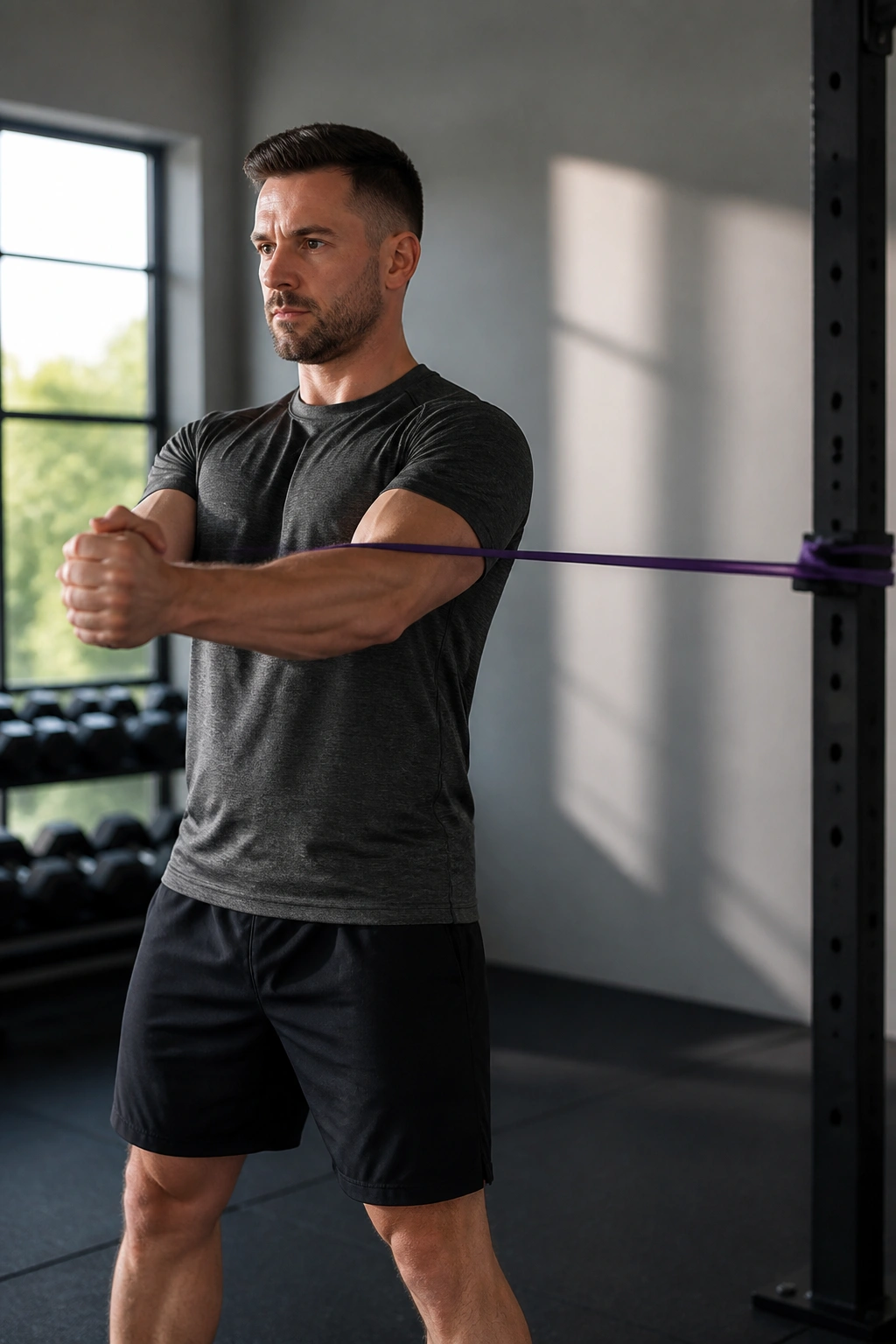
If your trunk only trains by bending and crunching, it misses a big job. The Pallof press teaches anti-rotation, which is a tidy way of saying your body learns to resist twisting when force pulls it sideways. That matters for sports, lifting, and plain old life.
Set a cable or band at chest height, stand or kneel sideways to the anchor point, and press the handle straight out from your sternum. The band will try to rotate you. Your job is to stay square. That’s the whole deal, and it’s harder than it sounds.
This move is one of my favorites for people who feel their core in their lower back all the time. The Pallof press asks the abs and glutes to organize the torso without crunching the spine. It’s a cleaner kind of core work than endless sit-ups for a lot of bodies.
How to Feel It Properly
- Keep the ribs stacked over the pelvis.
- Exhale as you press out.
- Hold for 1 to 2 seconds at full extension.
- Use 8 to 12 reps per side or a 10- to 20-second hold.
If your shoulders shrug, the load is too high. Drop it and keep the torso quiet.
15. Mountain Climber
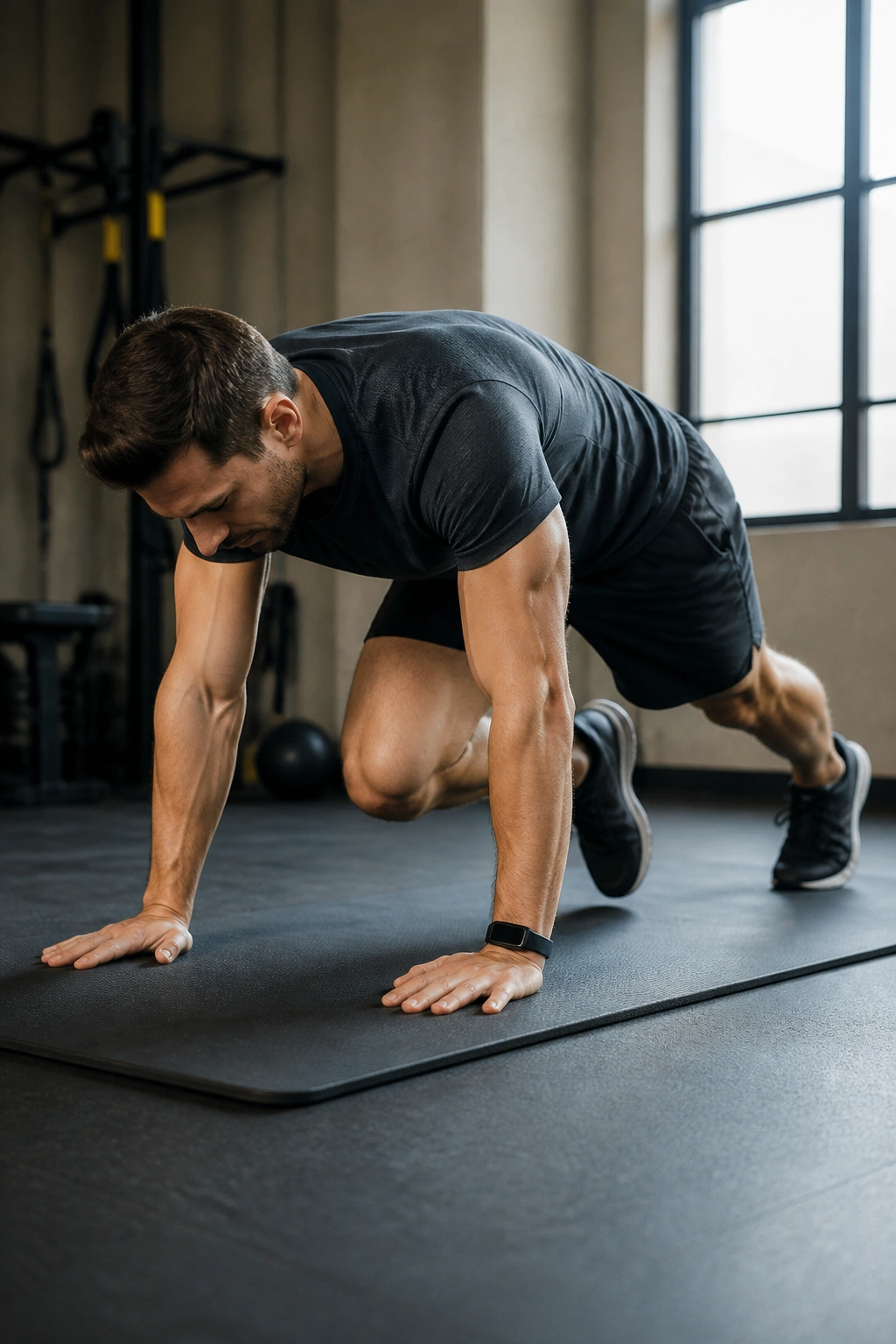
Cardio move or core move? The answer is both, if you do it with control. Mountain climbers can be a sloppy flail, sure, but they can also be a sharp little drill for heart rate, hip flexion, and shoulder stability.
Hands under shoulders. Body in a plank. Drive one knee toward the chest, switch, and keep the hips from bouncing all over the place. If you go fast, the move turns into conditioning. If you go slow and cross-body, it becomes a sneaky trunk stability exercise. Both versions have a place.
The easiest way to make mountain climbers useful is to stop treating them like a race. A controlled set of 20 to 40 seconds with steady breathing will usually teach more than 100 frantic reps. If your lower back starts sagging, the set is done.
A neat trick: pause the knee briefly at the top for one count. That pause makes the abs work harder and keeps the shoulders from taking a holiday.
16. Incline Dumbbell Press
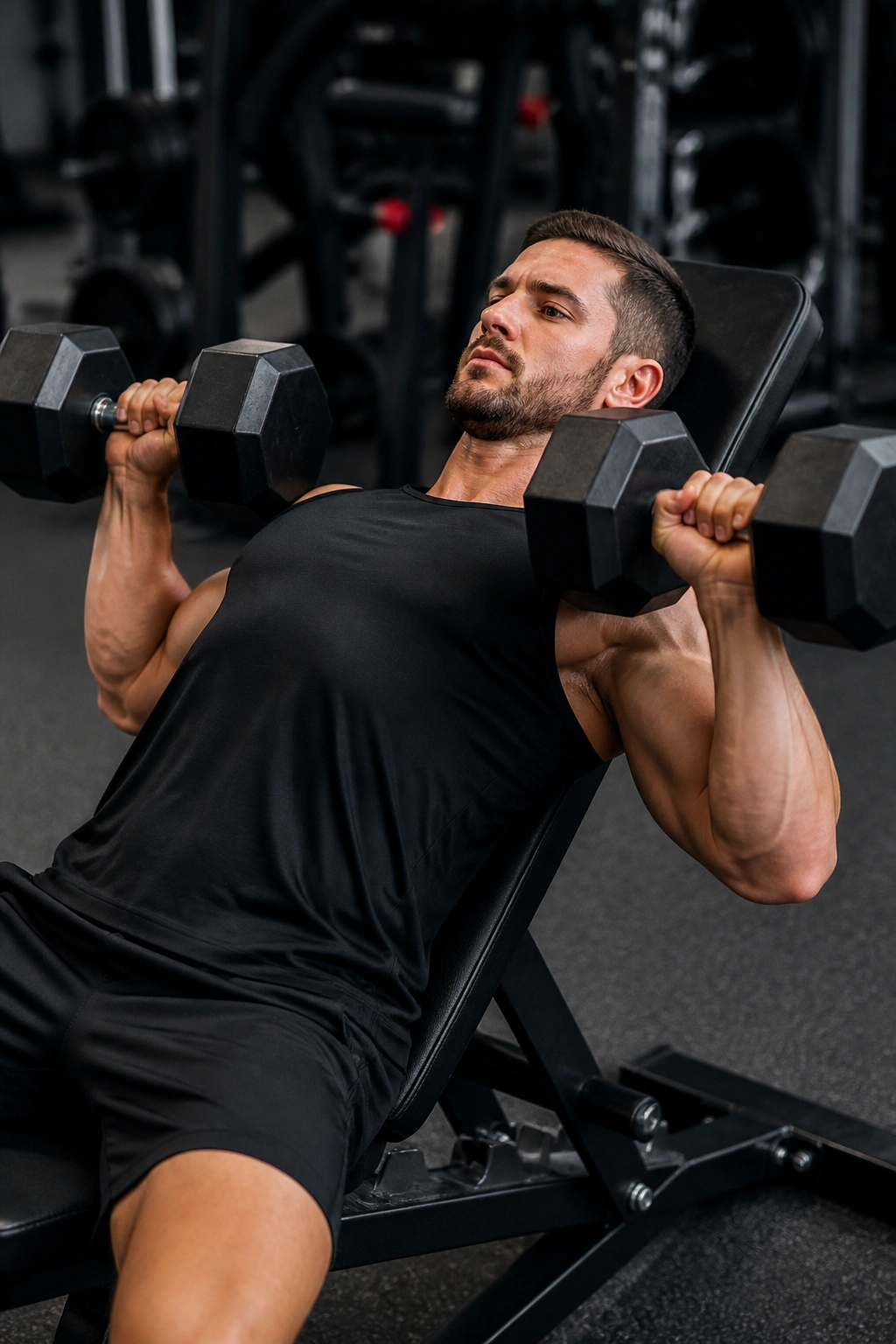
The incline dumbbell press sits in a sweet spot between a flat bench press and a standing shoulder press. It gives the upper chest and front delts plenty to do without forcing the shoulders into a cramped position.
The bench angle matters. Around 20 to 30 degrees is usually enough. Much steeper, and the movement starts feeling like a shoulder press. Much flatter, and you lose the angle that makes this version useful in the first place. Dumbbells are helpful because each arm has to track its own path, which usually feels friendlier on the shoulders.
Set your shoulder blades back and down before you press. Keep the elbows slightly tucked, not flared straight out like airplane wings. Lower under control until the upper arms are near parallel to the floor, then press up without banging the dumbbells together.
This is a good move for people who want upper-body size but don’t love the feel of a heavy barbell bench. 3 sets of 8 to 12 reps is a sensible place to work, especially if you hold the bottom for a brief second and keep the lowering phase smooth.
17. Standing Calf Raise
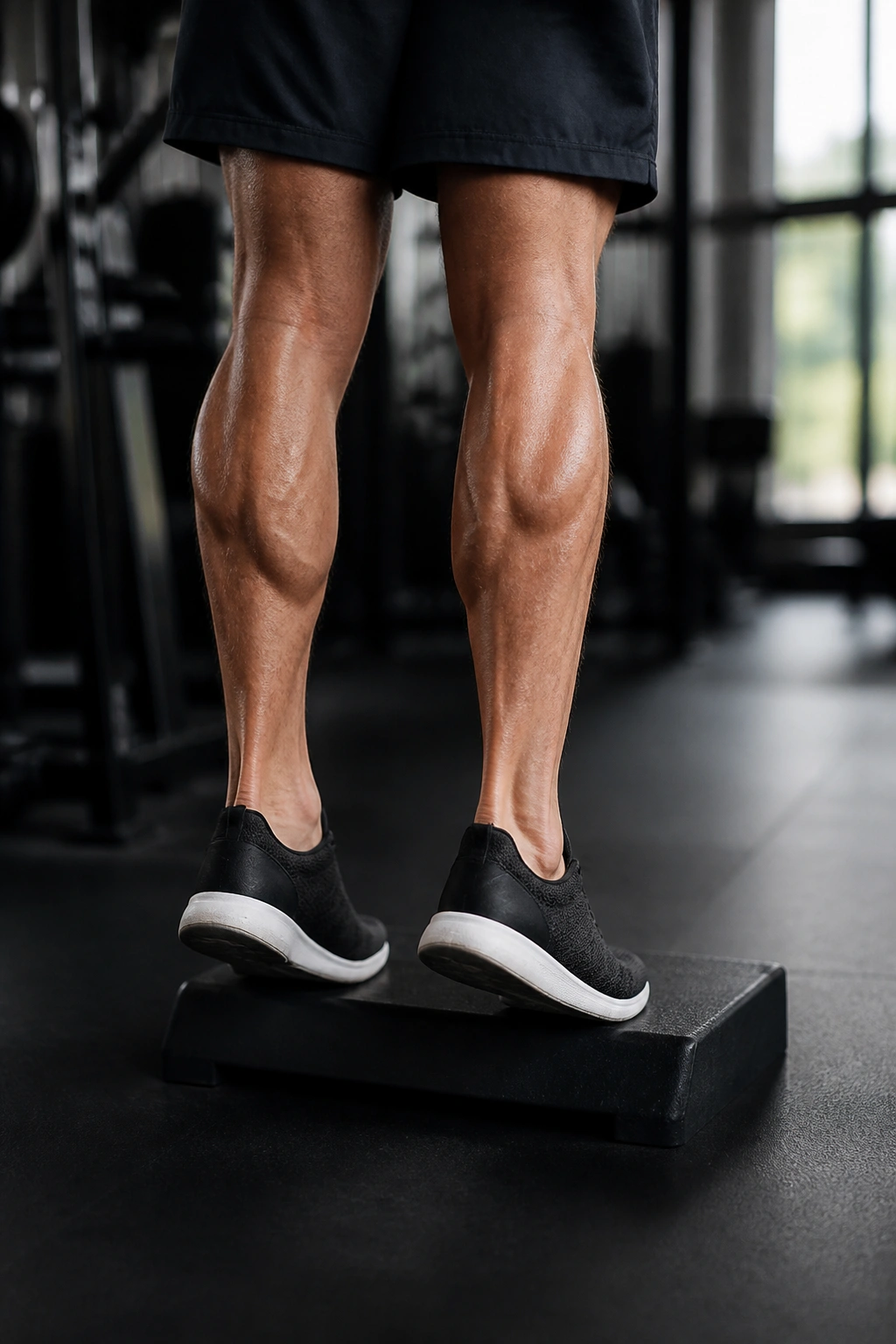
Calves get ignored until someone wants more jumping power, better ankle strength, or fewer issues walking up stairs. Then everybody remembers they exist. Standing calf raises are small, but they matter more than people admit.
The standing version hits the gastrocnemius, the larger calf muscle that crosses the knee. That makes it a good partner for seated calf raises, which bias the soleus. If you only do one, standing is a solid start because it’s easy to load with dumbbells, a machine, or even a step.
Use the full range. Lower slowly until you feel a stretch, then rise all the way up and pause for a second at the top. Do not bounce through the bottom. Bouncing turns the movement into a tendon slap instead of a muscle rep.
A good target is 2 to 4 sets of 12 to 20 reps. Higher reps work nicely here because calves often handle that load well. If your feet cramp, reduce the load and keep the motion cleaner. The burn is fine. The cramp is not.
18. Band Pull-Apart
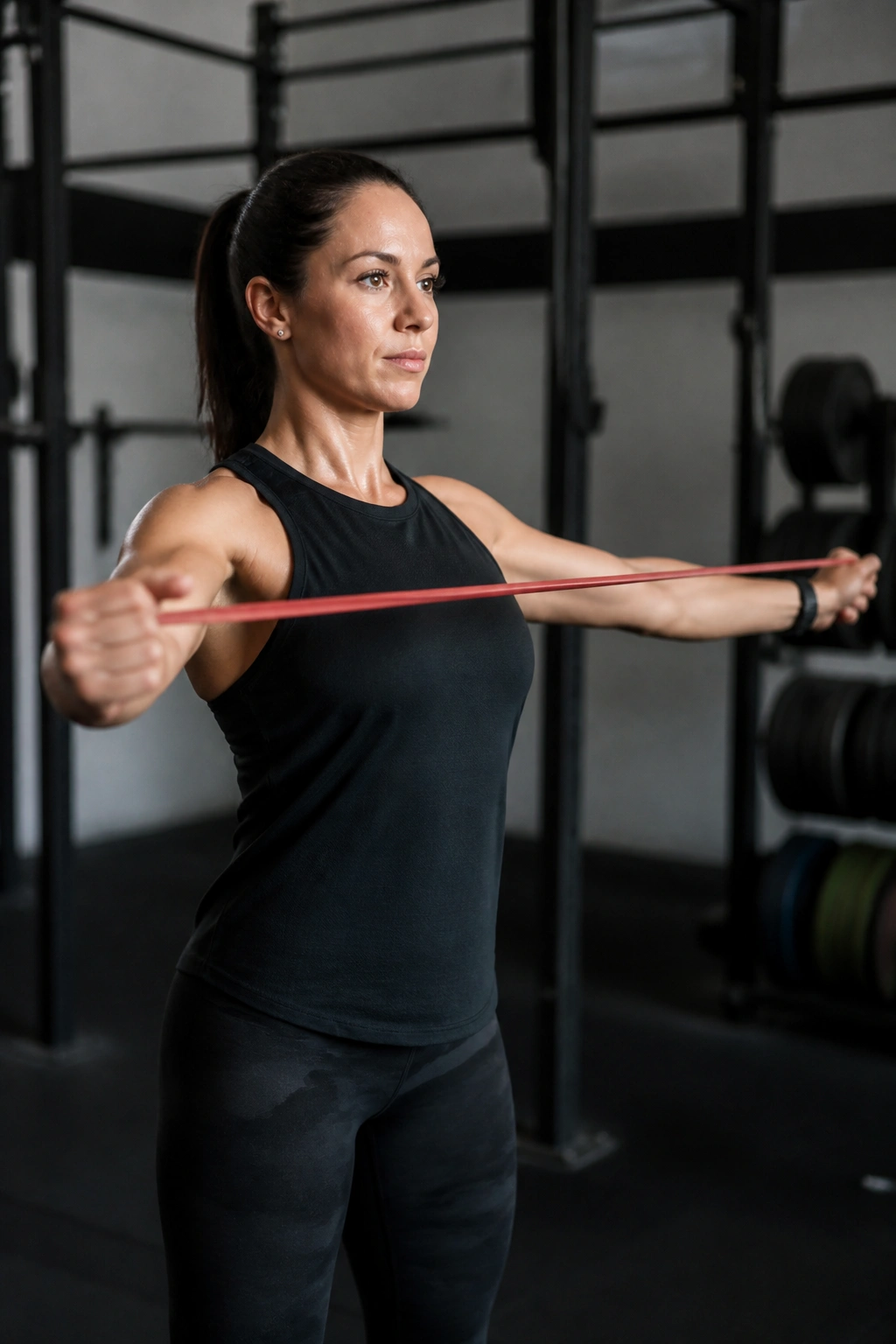
Some of the best shoulder work looks boring. The band pull-apart is one of those moves. It balances out pressing, wakes up the rear delts, and gives the upper back a job without needing a bench or bar.
The trick is to keep the arms straight and pull the band apart by moving the shoulder blades, not by shrugging up toward the ears. That little detail makes a huge difference. If the traps do everything, the rear shoulders miss the point.
This move plays nicely as a warm-up or a filler set between heavier lifts. Stand tall, hold a light band at chest height, and pull until the band touches your chest or the arms reach a wide T shape. Then return under control. A set of 15 to 25 reps should feel lively, not punishing.
Face pulls are the cable version and do a similar job with a little more external rotation. I like both. If your shoulders spend a lot of time pressing, typing, or hunching forward, this is one of the easiest fixes to keep in the program.
19. Bird Dog
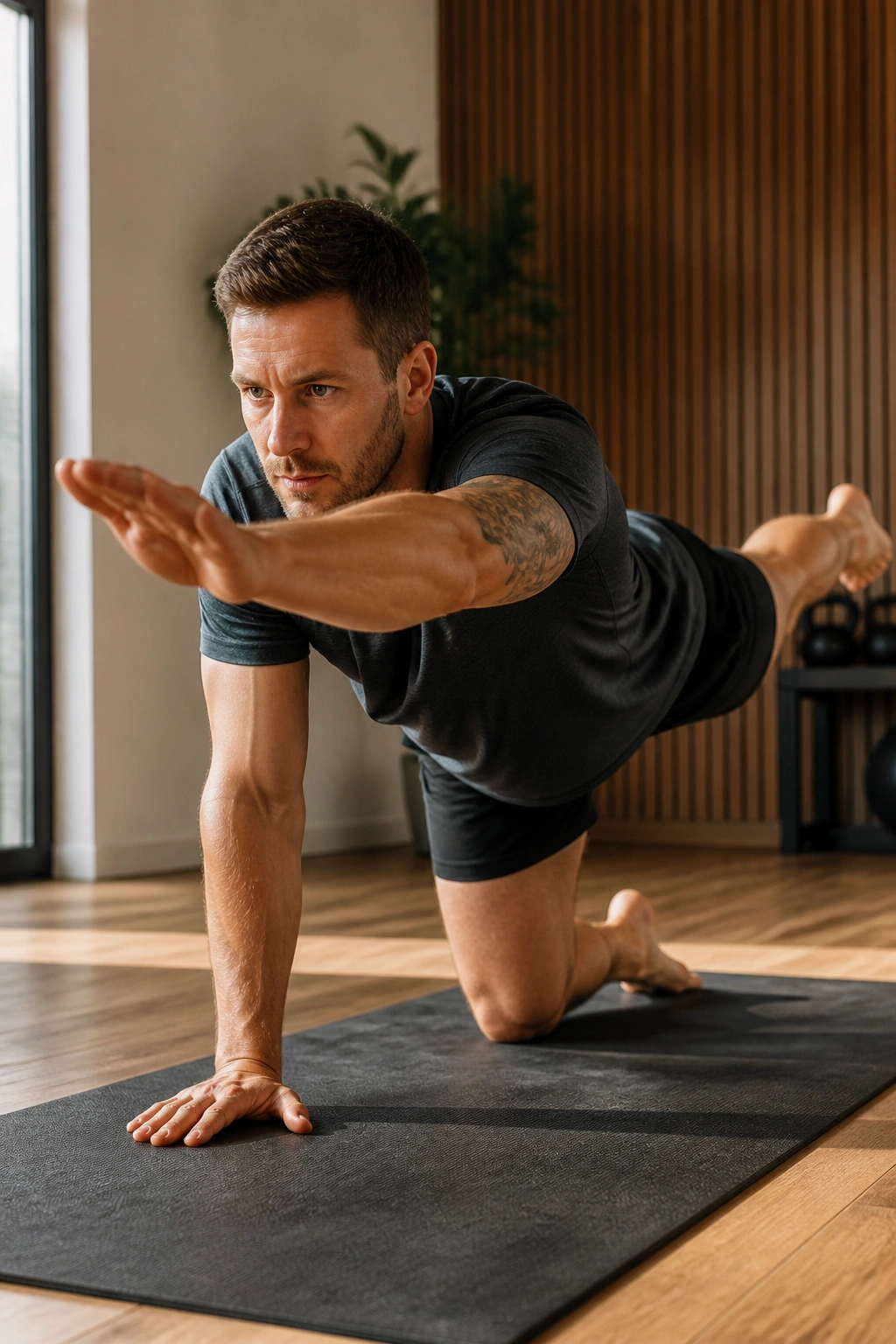
A bird dog looks almost too mild to matter, which is probably why people rush it. Bad idea. Slow bird dogs build control through the low back and hips without loading the spine aggressively.
Where It Helps Most
Get on all fours with hands under shoulders and knees under hips. Reach one arm forward and the opposite leg back, then pause long enough to keep the pelvis from rotating. The goal is not height. The goal is control. A leg kicked sky-high usually means the lower back is stealing the effort.
I like this move early in a workout or on recovery days because it teaches the body to stay organized before heavier work starts. Hold each rep for 2 to 3 seconds, and keep the movement smooth. If the opposite hip opens toward the floor, shorten the reach.
- Reach long, not high.
- Keep the neck neutral.
- Exhale as the limbs extend.
- Alternate sides slowly.
Tiny detail, big payoff: if you want more challenge, place a light foam roller or dowel on your back and keep it from falling. That one little constraint makes cheating much harder.
20. Turkish Get-Up
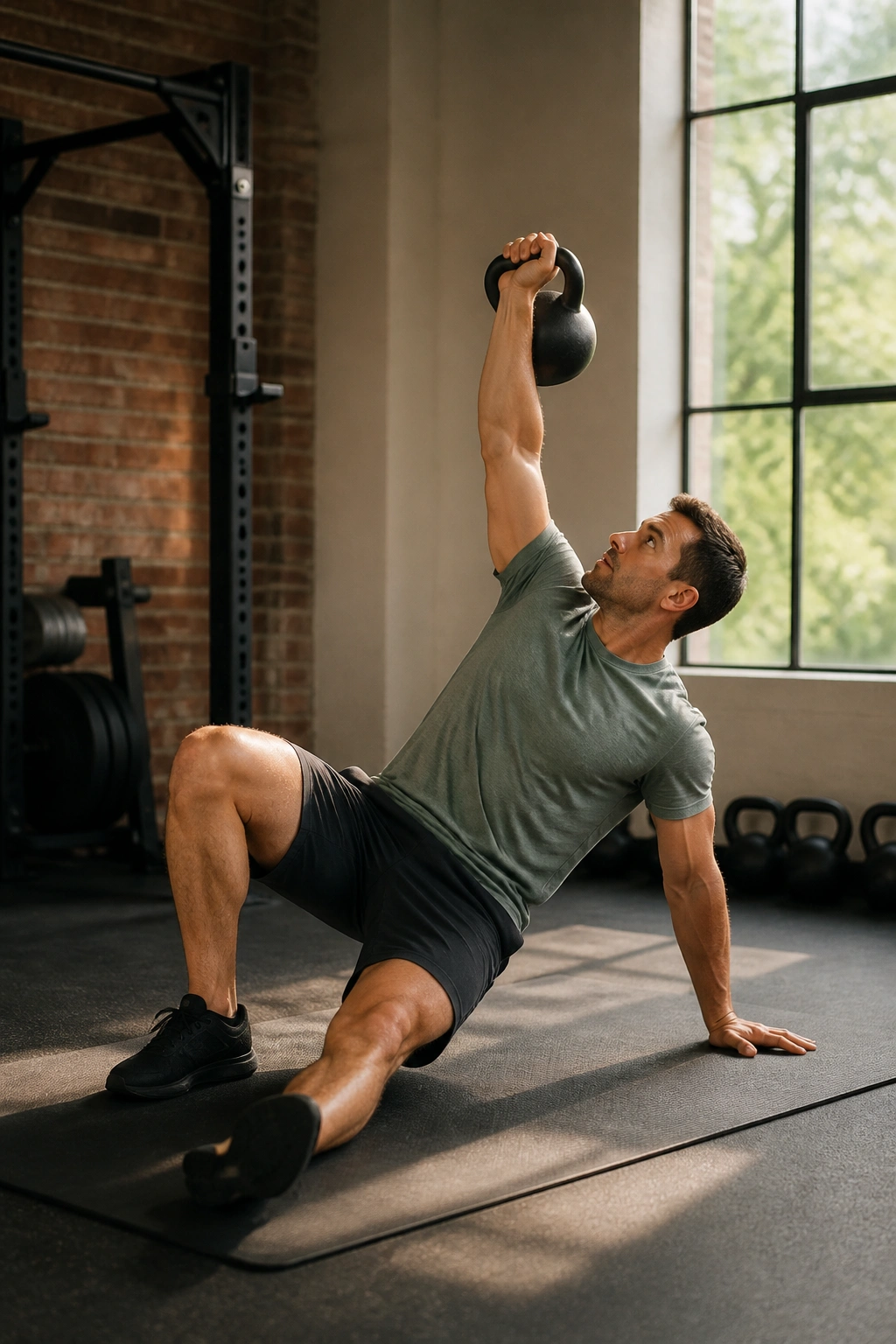
The Turkish get-up is the move people avoid until they finally try it with a light weight and realize how useful it is. It links shoulder stability, core strength, hip mobility, and balance in one long sequence.
This is not a move you race. It rewards patience and small, clean positions. Start with no weight, then use a shoe, then a light kettlebell or dumbbell. One rep per side can be enough if the movement is honest. Two or three reps per side is plenty for most sessions.
Why It Deserves the Trouble
The get-up exposes weak links in a way few other drills do. If your shoulder collapses, you feel it. If your hip lacks control, you feel it. If your trunk can’t stabilize while you shift position, you feel that too. That feedback is worth the time.
Break the move into pieces:
- Roll to the elbow.
- Post to the hand.
- Bridge the hips.
- Sweep the leg.
- Come to a half-kneel.
- Stand.
Each phase should feel controlled before you add load. A light kettlebell held overhead for the whole rep is enough. The point is not to look dramatic. The point is to move from floor to standing without losing your shape on the way.
Final Thoughts
A strong routine usually has less fluff than people expect. One squat, one hinge, one push, one pull, one carry, one core drill, and one single-leg move already cover a lot of territory. The rest is seasoning.
The smartest approach is to pick the moves that fix your weak spots. If your hips are weak, choose split squats and RDLs. If your shoulders need help, keep rows and pull-aparts close. If your trunk folds under pressure, dead bugs, side planks, and Pallof presses earn their keep fast.
You do not need all 20 moves in one session. A better workout is usually the one you can repeat with clean form, steady effort, and enough variety to keep your body from getting lazy.
