



A beginner gym setup for women does not need matching sets, expensive gear, or enough confidence to stride in like you own the place. It needs fewer decisions. The less you have to think about while standing under bright lights in a room full of clanking plates, the easier it is to keep moving.
I’d rather see a woman walk in with a scribbled plan, a supportive sports bra, and shoes that keep her steady than show up with a perfect outfit and no idea how to adjust the leg press. That sounds blunt because it is. The small stuff matters more than the motivational stuff.
Most first-week problems are tiny and fixable: a shirt rides up, headphones die, a seat is in the wrong notch, the dumbbells feel heavier than they look. None of that means you are bad at the gym. It means the setup needs work.
Less friction. More repetition.
1. Write the Workout Before You Leave Home
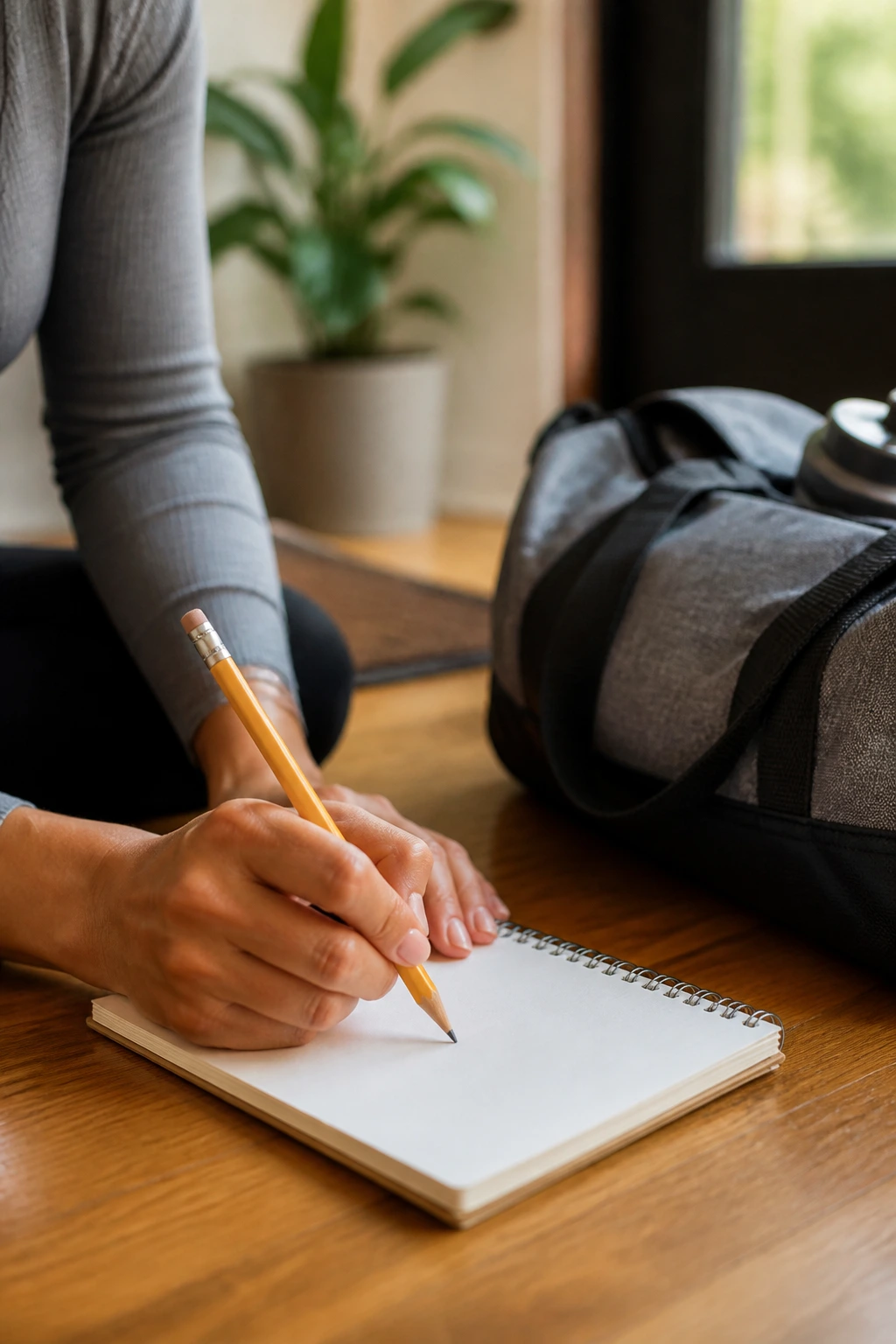
Wandering is expensive.
A written plan keeps you from doing the awkward gym lap where you check three machines, pretend to stretch, then leave because the room feels louder than you expected. Put the plan in your phone notes or on a scrap of paper and keep it tiny: three to five exercises, the sets and reps for each, and one backup move if a station is taken.
What to Put on the Page
- Exercise name: goblet squat, dumbbell row, chest press, or another move you already know.
- Sets and reps: something like 3 sets of 8 to 10.
- Starting weight: a number you can lift with clean form, not a guess based on ego.
- Rest time: 60 to 90 seconds is a clean starting point for beginners.
- Backup option: a second exercise that uses similar muscles if the area is busy.
A plan like that feels almost too plain. Good. Plain plans are easier to repeat, and repetition is where progress shows up.
If you can finish your workout from memory on day one, it was probably too vague. Give yourself enough structure that the room does not make decisions for you.
2. Wear Shoes That Match the Job
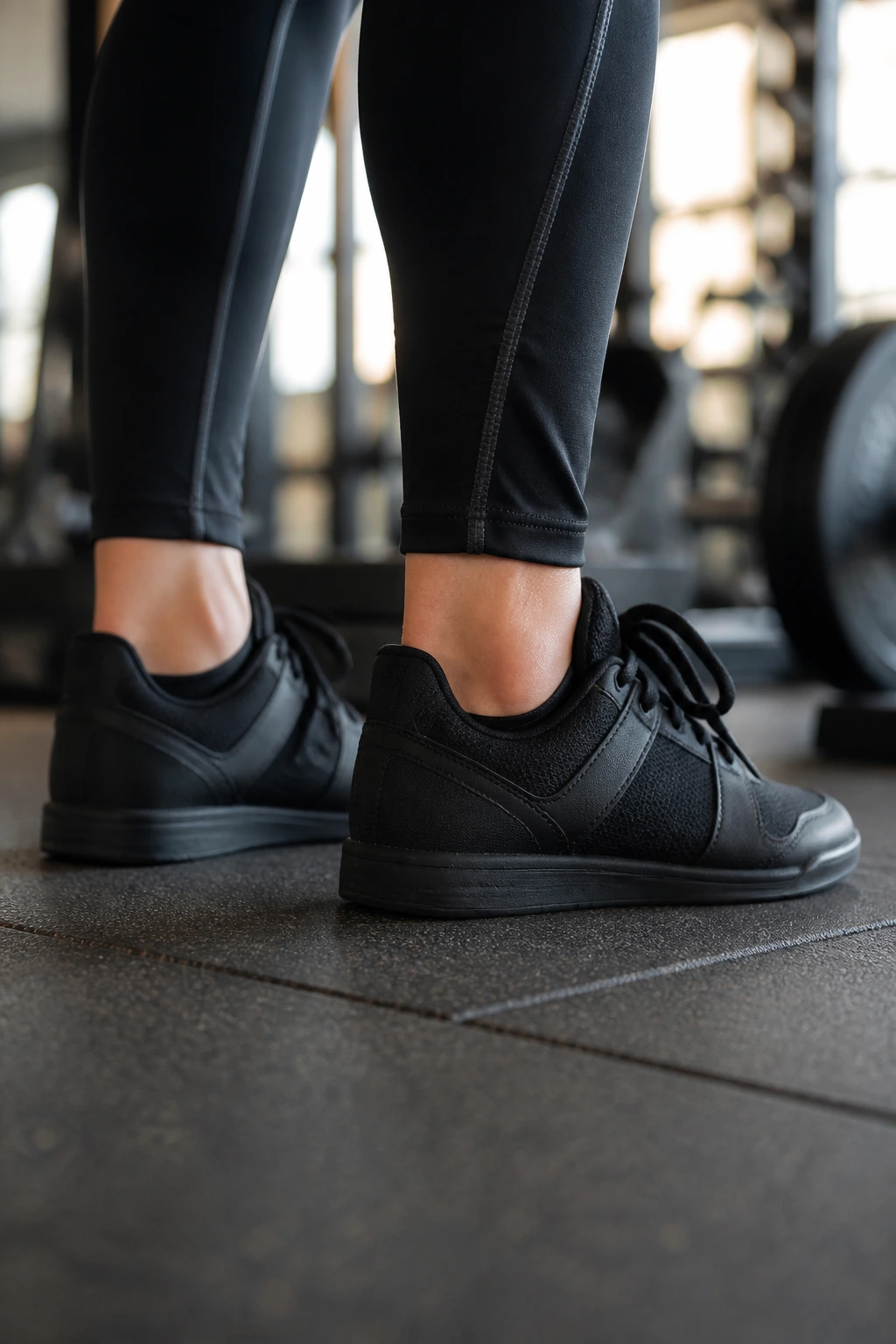
What happens when your shoes feel like marshmallows under a squat?
You wobble. That is what happens. Soft running shoes are fine for the treadmill, but for lifting they can make your feet feel unstable, especially on leg press, squats, deadlifts, and split squats. A flatter shoe with a firm sole usually gives you a steadier base.
A lot of beginners buy shoes for how they look with leggings. I get it. Still, the shoe should work for the session. If lifting is the main job, look for a snug heel, enough room for your toes to spread, and a sole that does not compress much when you press down hard.
Quick Fit Checks
- Your heel should not slide when you walk up stairs.
- Your toes should not smash into the front.
- The shoe should feel steady when you stand on one leg.
- You should be able to tie it tightly without the upper digging into the top of your foot.
If you also plan to do treadmill work, a separate running shoe makes sense. One pair can do both, but it is rarely the best at both. That little difference matters more than people admit.
3. Choose Clothes That Stay Put
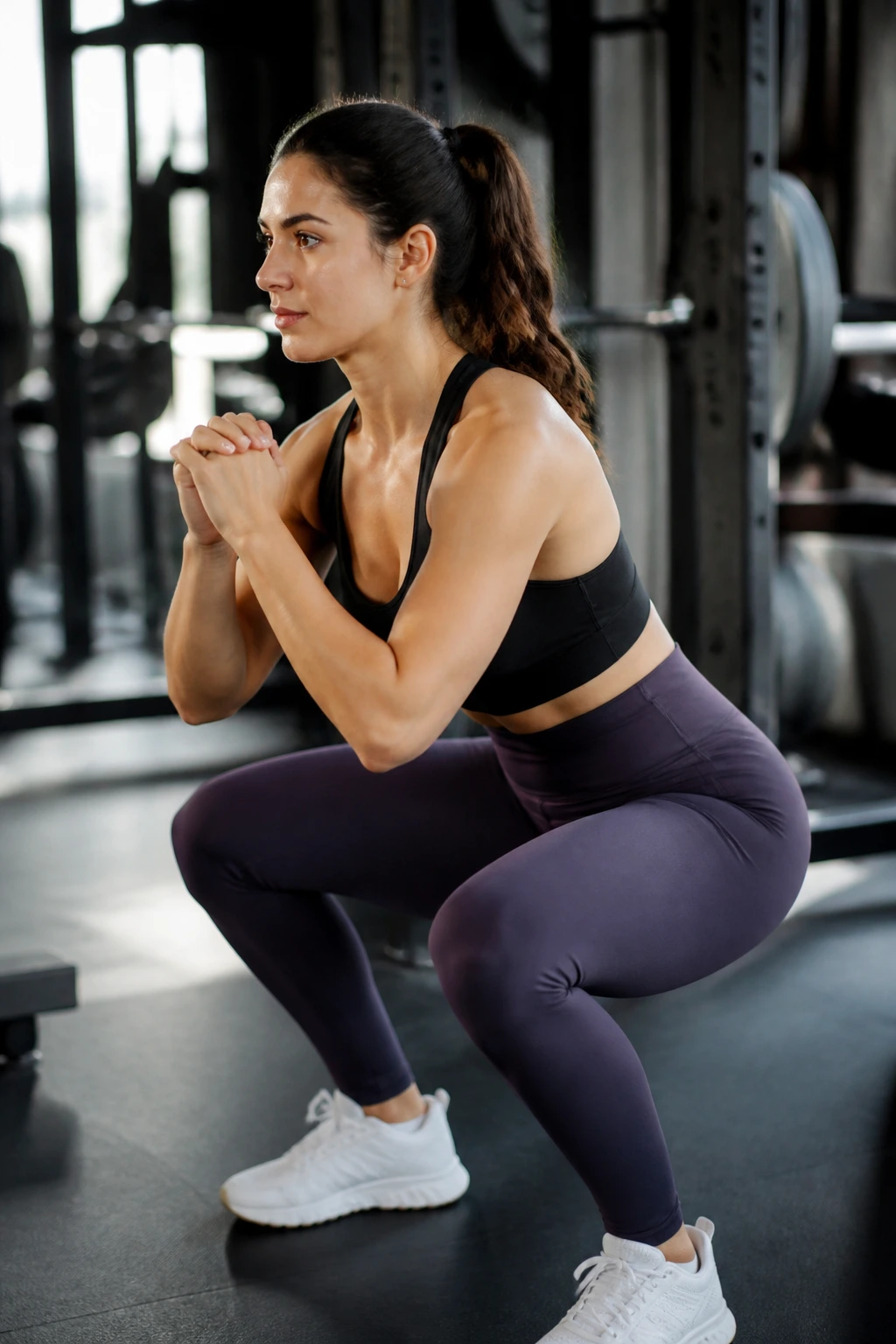
Cute is fine. Sliding straps are not.
A beginner gym outfit should let you bend, reach, sit, and sweat without you tugging at it every two minutes. High-rise leggings that stay above your hips, a top that does not drift up when you raise your arms, and a sports bra that fits your actual shape are worth more than any matching color story.
If you wear a sports bra, check the band first. The band should sit flat and stay level when you move, and the straps should support without digging into your shoulders like wire. When the bra is wrong, every other part of the workout feels harder because you spend the session thinking about it.
A good clothing test is this: do five bodyweight squats, reach overhead, and hinge forward as if you were picking something up. If anything shifts, rolls, or pinches, fix it before leg day turns into a wardrobe fight.
What to Look For
- Leggings with a high waist that does not roll down.
- A top with enough length to cover your midsection when you bend.
- Flat seams or soft seams if your skin gets rubbed raw easily.
- Pockets if you want your phone or locker key close by.
I also like a simple rule: do not wear brand-new clothes for your first heavy leg session. Test them on a short day first. Sweat reveals problems fast.
4. Pack a Gym Bag You Can Grab in Seconds
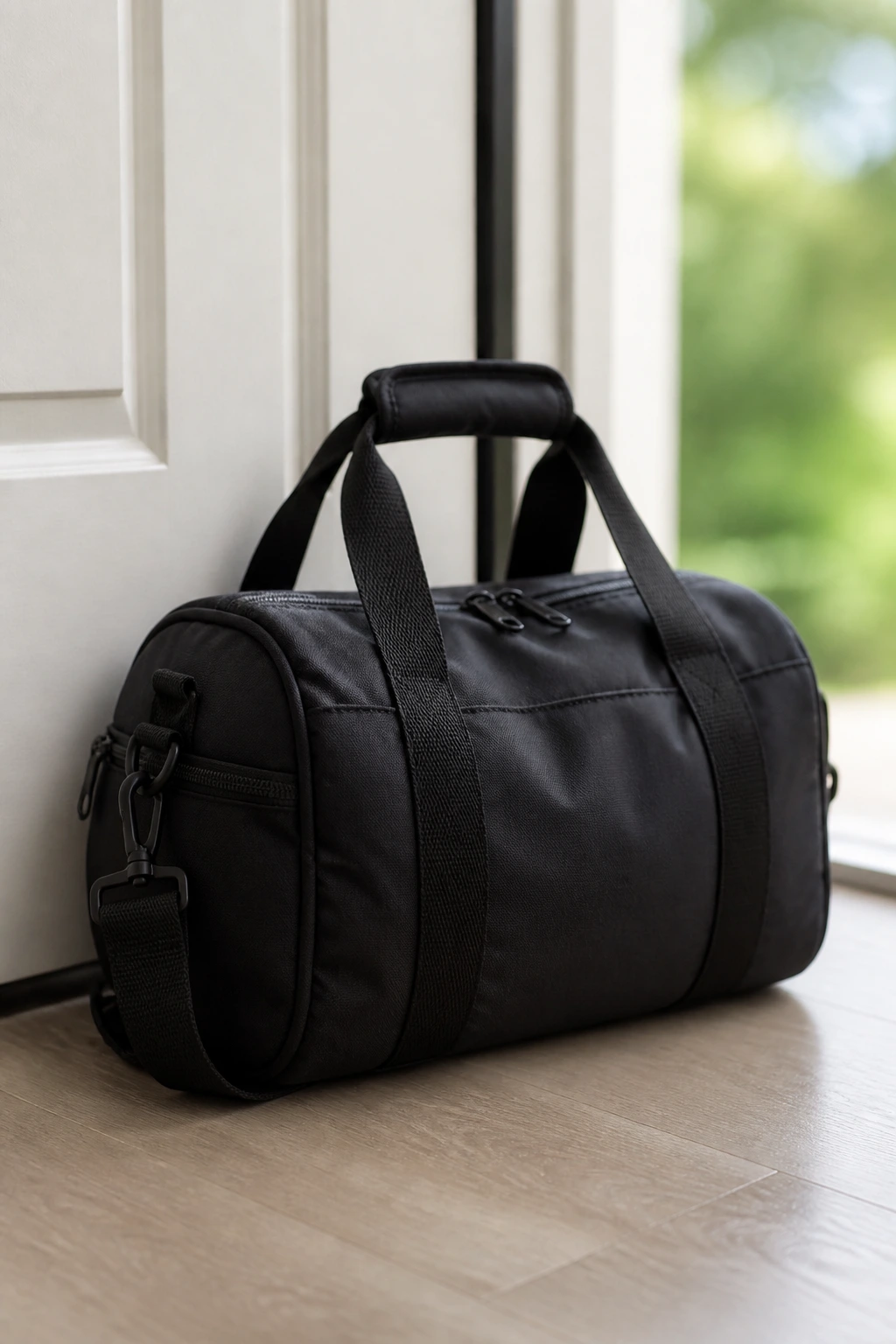
The best gym bag is boring.
It sits by the door with the same few things every time, so you are not hunting for earbuds or a hair tie while your motivation evaporates. Keep the bag small enough that you can carry it with one hand and light enough that it does not become its own workout.
The Core Items
- Water bottle
- Headphones or earbuds
- Hair ties and a spare clip
- Small towel
- Deodorant
- Padlock or locker lock, if your gym uses lockers
- ID and payment card
- Any menstrual supplies you use
- A tiny notebook or your phone note app
A spare shirt is useful if you sweat a lot. So is a snack if you train after work and arrive hungry enough to chew your own arm. That sounds dramatic, but empty energy makes the whole session feel clunky.
Keep the pouch in the same pocket every time. The whole point is to remove tiny decisions before you get to the gym door.
5. Learn the Room Before You Need It
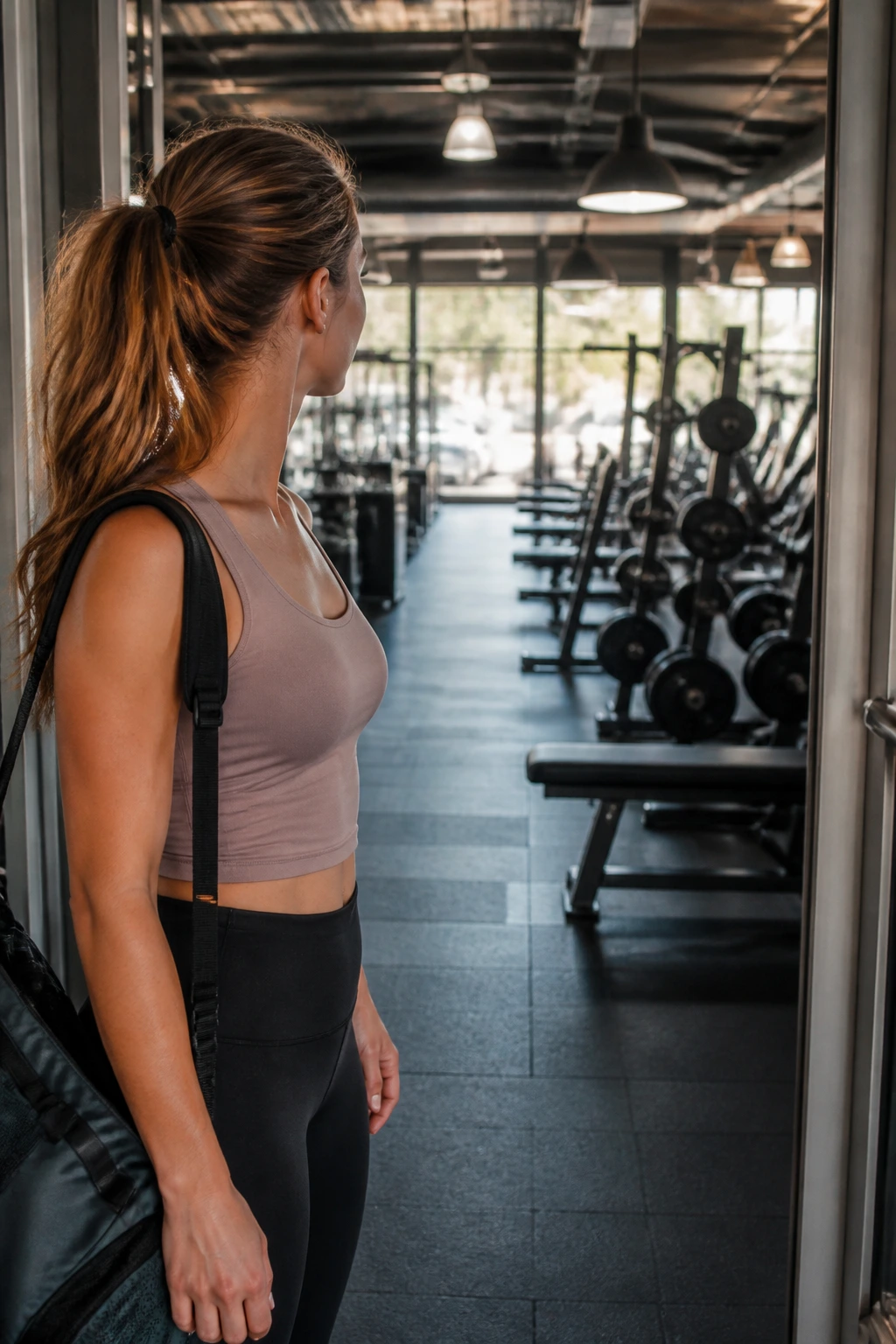
Walk in once and look around before you start lifting. Seriously.
The first five minutes are easier when you know where the dumbbells are, where the cables live, where the water fountain sits, and which corner has the mirrors that make you feel less like a lost extra in a movie scene. You do not need a tour. You need a map in your head.
Try this on your first visit: find the entrance, bathrooms, lockers, water source, treadmill area, free weights, cable station, and at least one adjustable bench. That is enough to stop you from wandering in circles. If the gym has a squat rack area, peek at it from a distance first so it stops feeling mysterious.
One sentence can save you a lot of nerves: know the route from the door to your first station.
If a place feels crowded or noisy, choose one corner and build the session around it. You do not need to use every square foot of the gym. You need to use the parts that let you train without friction.
6. Start With Machines When the Free-Weight Area Feels Busy
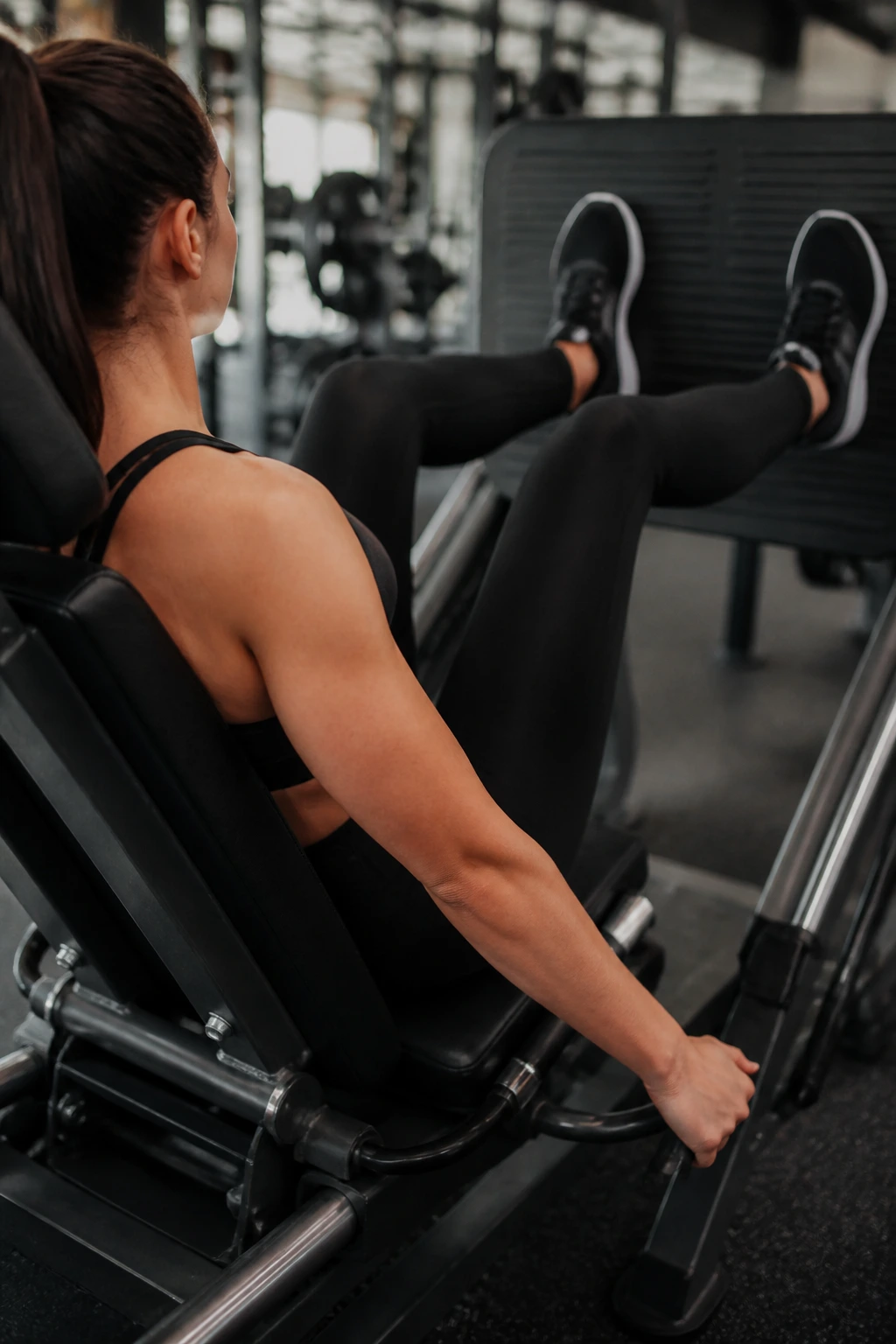
Machines are not cheating. They are a map.
A lot of beginners do better on machines first because the path is already built for them. The seat, the pad, and the handle guide the movement, which means you can focus on what your body is doing instead of wondering whether the dumbbell is drifting in the wrong direction. That is a useful trade.
Good First Machines
- Leg press for learning a squat-like leg drive.
- Chest press for pushing strength without balancing a bar.
- Lat pulldown for learning a vertical pull.
- Seated row for back work and shoulder control.
- Cable station for controlled moves like triceps pressdowns and face pulls.
Use a machine for a few sessions before chasing variety. That sounds dull, and it is a little dull, but dull is useful at the start. When you know how one machine feels, you can tell when the setup is wrong.
Later, free weights can take over more of the plan. Right now, the machine is a decent teacher. Let it be one.
7. Adjust the Seat, Pads, and Pins Every Single Time
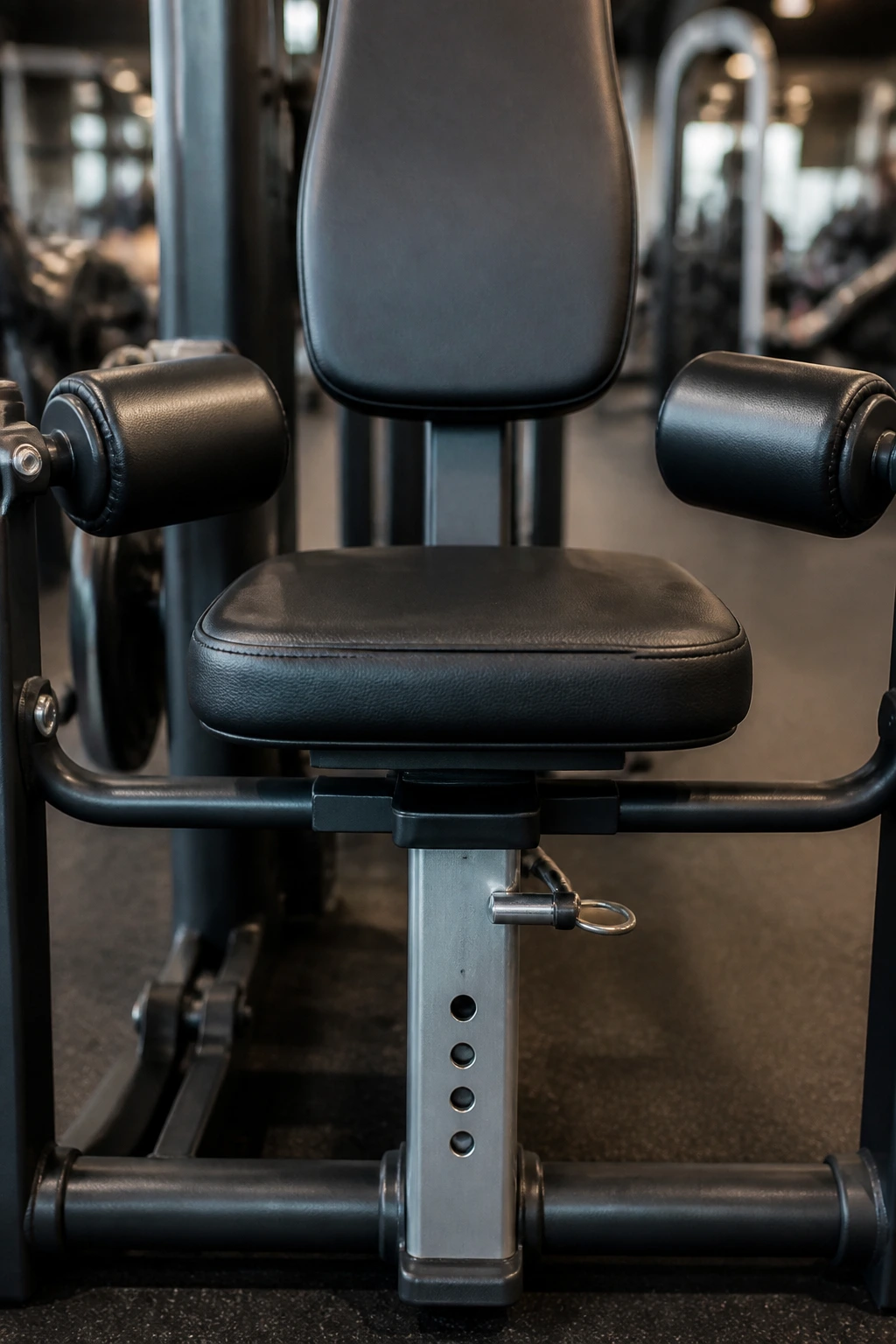
A machine set one notch off can feel awful.
Do not assume the last person set it up for your body. They did not. Your legs, torso, arm length, and range of motion are not identical to anyone else’s, so every seat and pad deserves a quick check before the first rep.
Look at where the handles land, where the padded rollers touch your legs, and whether your feet can stay flat. On a leg extension, the padded bar should sit in the lower part of the shin, not on the ankle. On a chest press, the handles should land where you can press without shrugging your shoulders up toward your ears.
Three Things to Check
- Seat height so your joints line up with the machine path.
- Pad contact so the machine feels stable, not like it is pushing you sideways.
- Stack pin so the weight you choose is the weight you actually get.
If the setting numbers confuse you, ask a staff member once and write it down. The second time is easier. The third time is boring in a good way.
A minute spent adjusting saves ten bad reps.
8. Use Light Weights Until Your Form Looks Boring
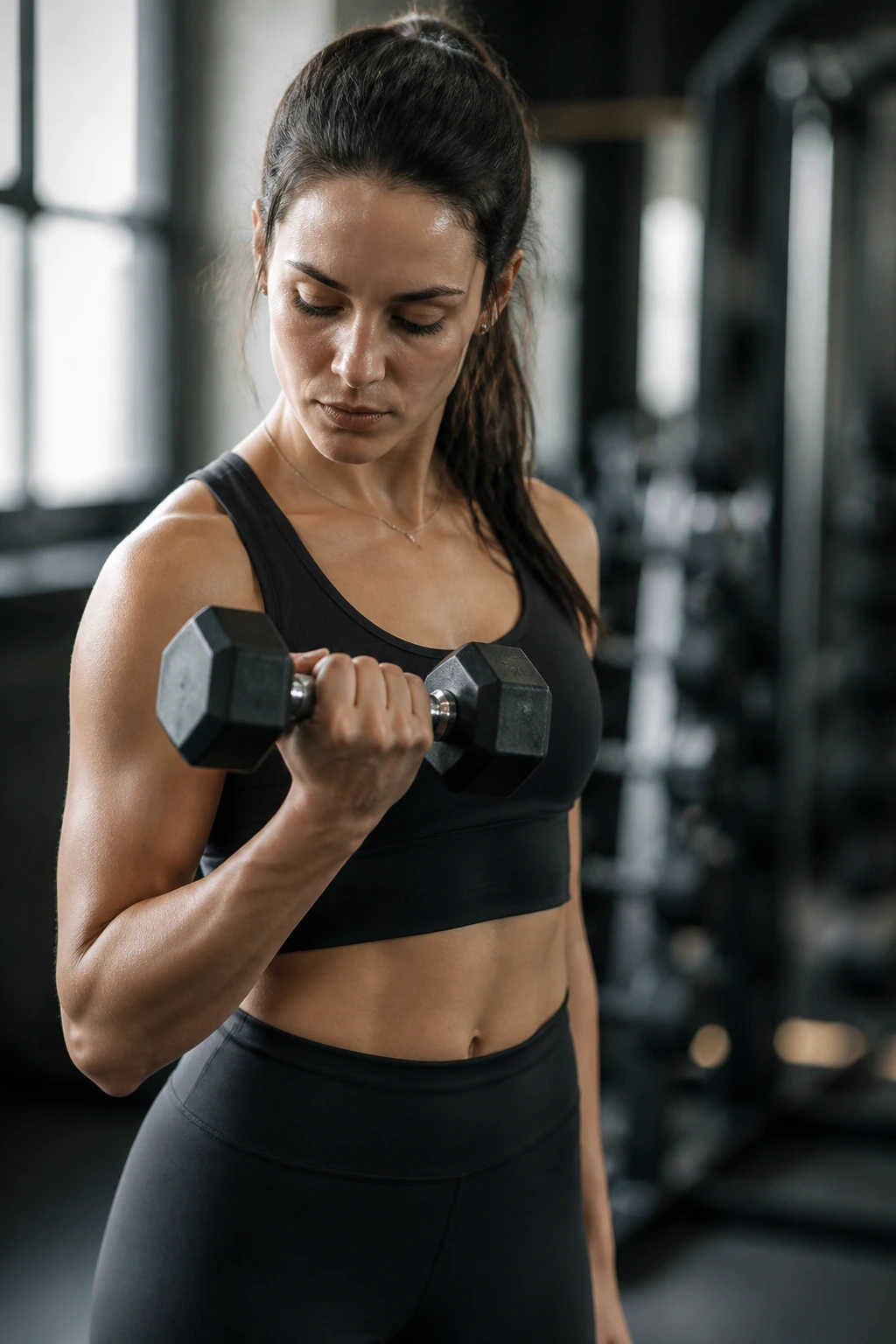
Light weights save more pride than heavy ones do.
Beginner strength work is not about proving anything to the room. It is about learning what a clean squat, row, press, or hinge feels like before you add load. If the last two reps make your shoulders shrug, your back arch, or your knees wobble, the weight is too much for that day.
I like the idea of leaving 2 to 3 reps in reserve. That means you stop while you still have a few good reps left. You are not chasing failure. You are chasing control.
The first set should almost feel too easy. That is fine. The point is to learn the path, not to earn a dramatic collapse on the bench. Once the movement feels smooth for a few sessions, add a small amount of weight, usually the smallest jump the gym allows.
If you need a blunt rule, use this one: if you cannot hold the same shape on rep 8 that you had on rep 2, the load is too heavy.
9. Warm Up With a Small Ramp, Not a Long Stroll
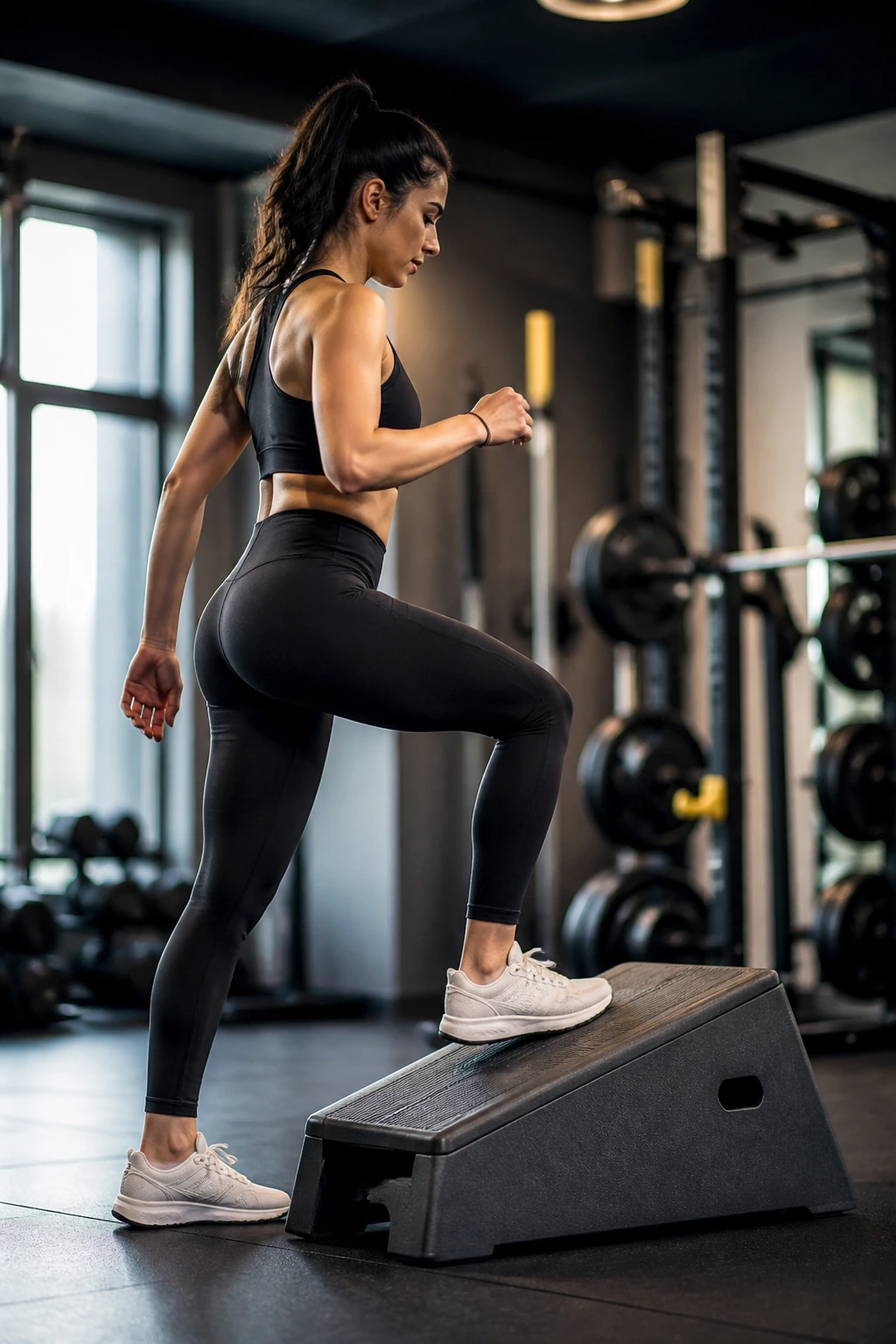
Five minutes can be enough.
A lot of beginners think they need a long, sweaty warm-up before every strength session. Usually, they do not. A short walk, a bike ride, or an easy row for 5 to 8 minutes raises your temperature, loosens the stiff feeling, and gets your head into the session without draining energy.
A Simple Warm-Up Order
- Move lightly for 5 minutes.
- Do 5 to 8 bodyweight squats or hip hinges.
- Use one or two lighter ramp sets before your working weight.
- Start the first real set only after the movement feels smooth.
That last part matters. A ramp set is a lighter version of the exercise that lets your body remember the pattern. If you are about to use a 30-pound dumbbell, you might start with 10 or 15 pounds first. The goal is to wake up the movement, not to tire yourself out.
If you arrive sweaty from walking into the gym, that counts. No need to turn the warm-up into its own workout.
10. Track Reps and Weight on Your Phone
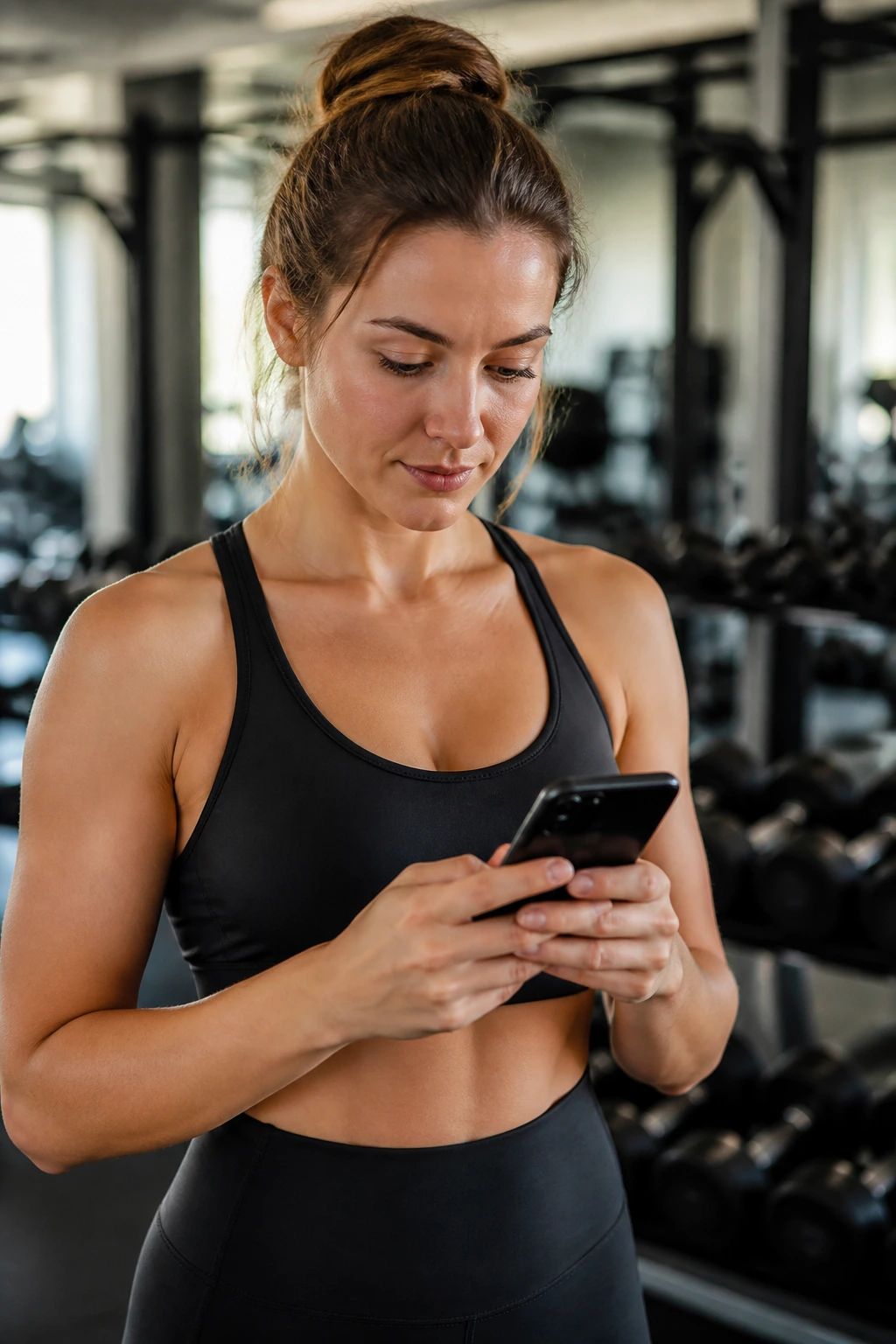
If you do not write it down, it gets blurry fast.
The gym can make everything feel more impressive than it is, which is how people accidentally repeat the same numbers for months and then wonder why nothing changed. A simple log fixes that. Note the date, the exercise, the weight, the reps, and one short comment about how it felt.
A Simple Logging Format
- Date: Monday
- Exercise: Goblet squat
- Weight: 20 lb
- Sets/Reps: 3 x 8
- Note: Last two reps were slow
That is enough. You do not need a spreadsheet unless you enjoy spreadsheets. You need a record that tells you what to do next time.
This also helps with confidence. The day you see that 15-pound dumbbell felt hard last week and easy this week, you stop guessing whether you are improving. You can see it in black and white.
Small note. Write the number before you leave the station, not later in the parking lot when your memory is already fuzzy.
11. Build a Simple Full-Body Split
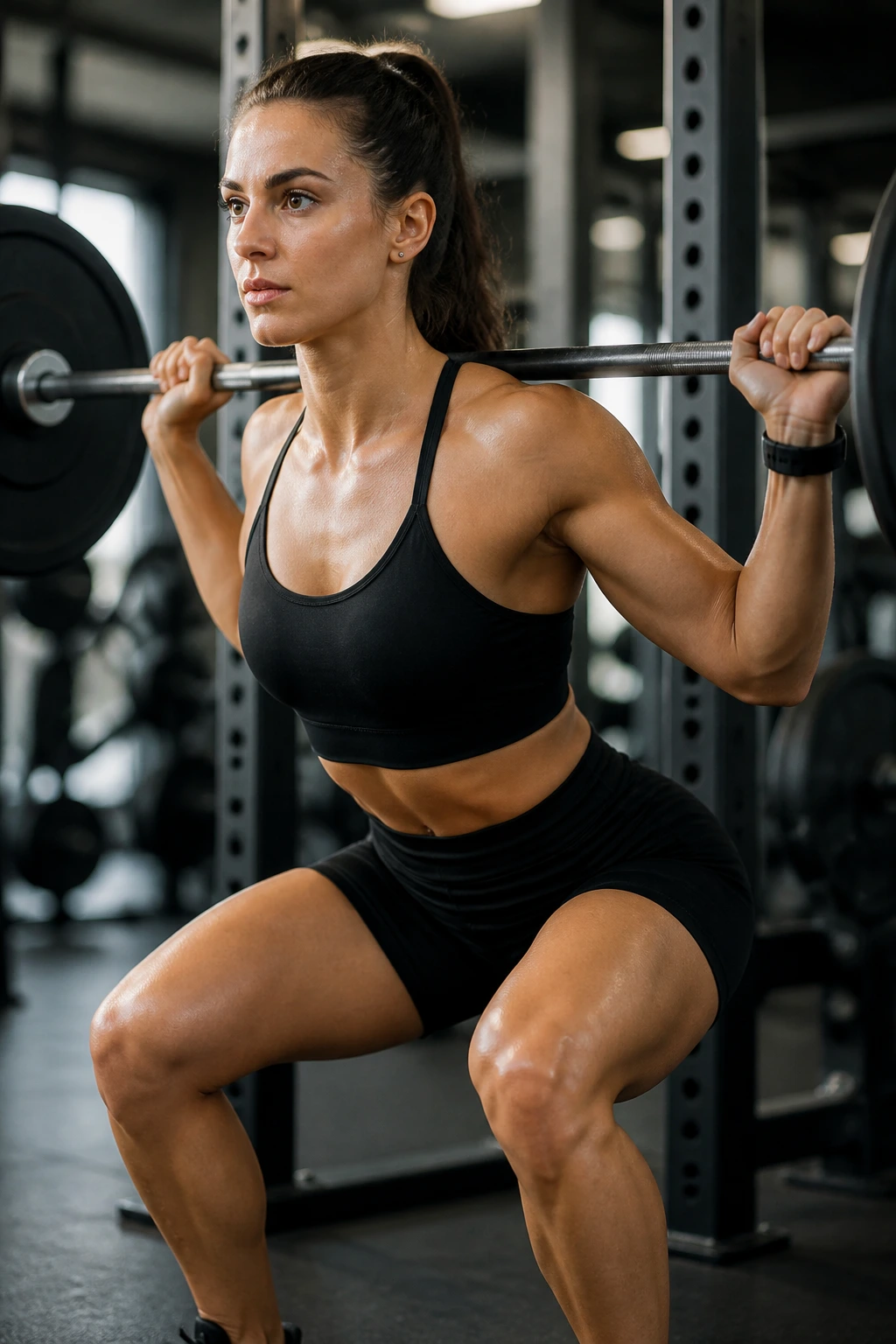
A full-body split beats random arm-day chaos.
For a beginner, training the whole body two or three times a week is easier to keep up with than bouncing between body parts that do not connect to any real plan. You do not need a dramatic split. You need a repeating structure that covers legs, push work, pull work, and a bit of core or carry work.
A Clean Beginner Template
- Squat or leg press
- Push: chest press or dumbbell press
- Pull: row or lat pulldown
- Hinge: Romanian deadlift or hip hinge
- Core or carry: plank, dead bug, or farmer carry
That list looks plain because it is plain. Plain works. You can rotate the exact exercises later, but the shape of the session should stay familiar long enough for you to learn it.
If you go only twice a week, do the same structure both days and change the load a little. If you go three times, keep the same pattern and shift the emphasis slightly so one day feels a touch lighter. That keeps progress moving without making the week feel like a puzzle.
12. Ask the Staff for a Five-Minute Demo
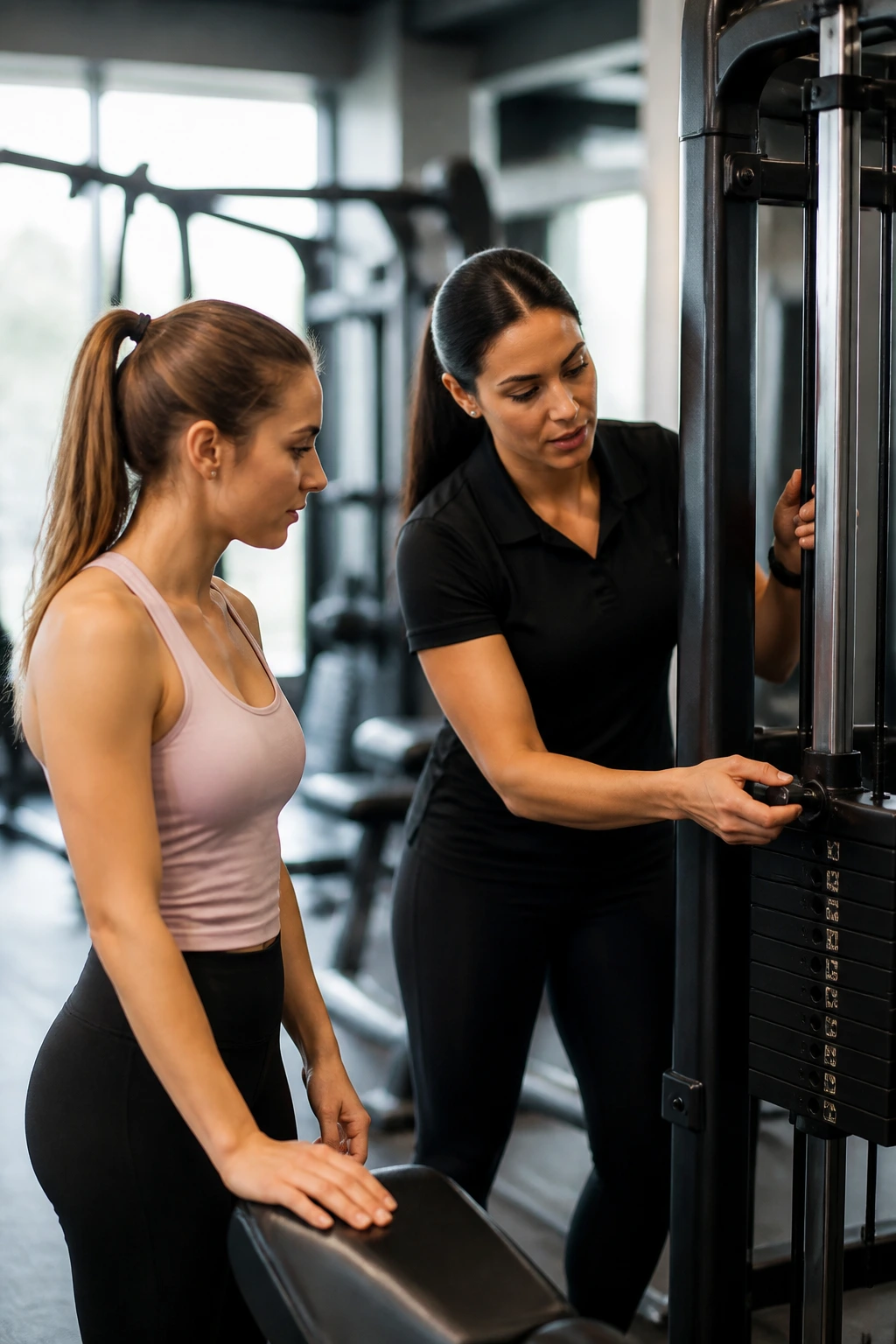
Ask the front desk. Seriously.
Most gyms would rather show you how a machine works than watch you guess and wobble around it for ten minutes. A five-minute demo can clear up seat settings, pin placement, cable heights, and the weird little tricks that make a machine feel smooth instead of awkward.
Three Things Worth Asking
- How does this seat adjust?
- Where should my body line up?
- What weight should I start with?
You can also ask how to use the safety clips, how to change dumbbell benches, or where the stretching area sits if the floor is crowded. Those are ordinary questions. Staff hear them all the time.
A lot of women wait to ask because they do not want to seem clueless. I think that is backwards. A quick question is smarter than a messy set-up and a sore shoulder two days later.
Most gyms are friendlier than they look from the parking lot. Use that.
13. Set Up Water, Snacks, and Post-Workout Food
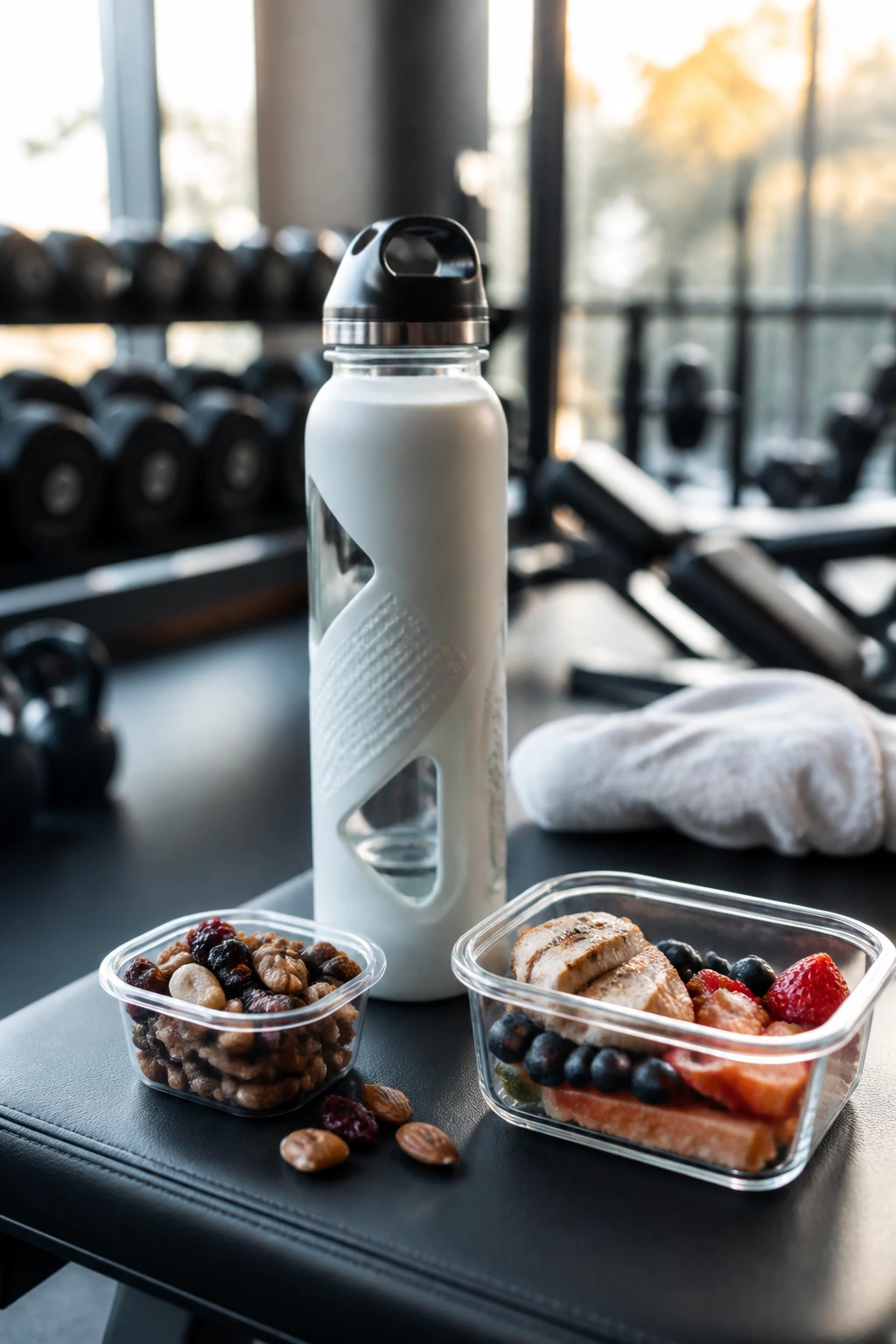
Under-fueled workouts feel harder than they should.
If you train on an empty tank, the warm-up feels slow, the weights feel louder, and your patience gets thin. A water bottle is non-negotiable. Snack timing is more personal, but a banana, yogurt, toast, crackers with cheese, or a small protein shake can make a big difference if you train after a long gap between meals.
Keep it simple. If you eat a full meal within a couple of hours before training, you may not need much else. If you walk into the gym hungry and a little shaky, a small carb-and-protein snack is the better move.
After training, eat a normal meal when you can. You do not need a perfect post-workout ritual. You need enough food to recover, feel steady, and come back the next session without dragging your feet.
I’m a fan of keeping a snack in the car or bag on longer days. Once you have been hungry in a locker room after leg day, you stop thinking that food planning is optional.
14. Pick the Time of Day That Feels Manageable
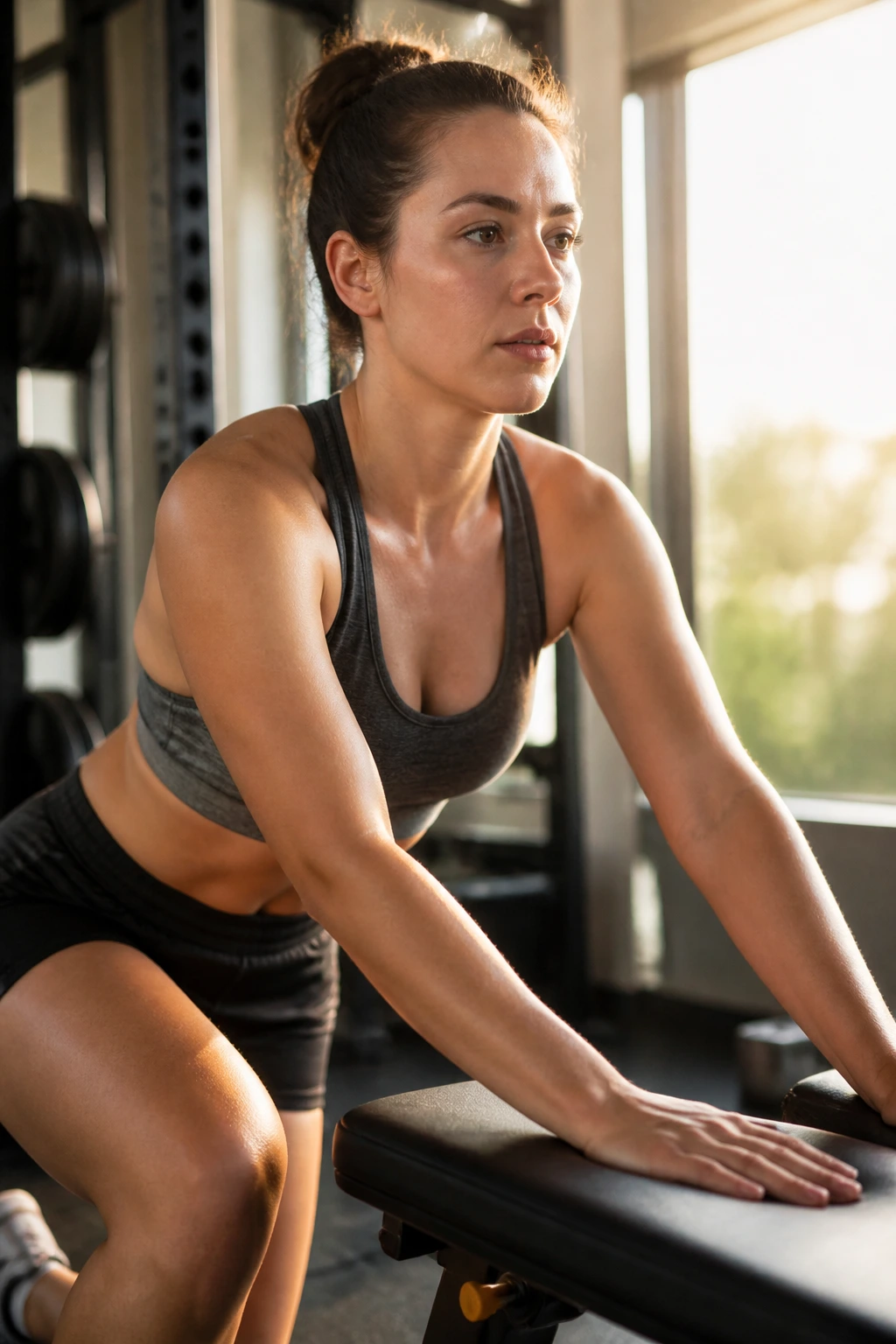
The best time is the time you can repeat.
Morning, lunch, evening — none of them are magic. What matters is whether the slot fits your real life without turning every session into a negotiation. If the gym is less crowded at a certain hour, that matters. If you feel strongest after work, that matters too.
Try two different time slots if you can. One might feel calmer, the other might feel more energetic. The “best” slot is not the one that sounds disciplined on paper. It is the one you can keep without dreading it.
Some beginners like early sessions because they feel private and calm. Others hate them because their body is stiff and their brain is still waking up. There is no prize for suffering through the wrong schedule.
Pick the slot that lets you show up, train, and leave with enough gas to do it again.
15. Use Mirrors for Alignment, Not Self-Critique
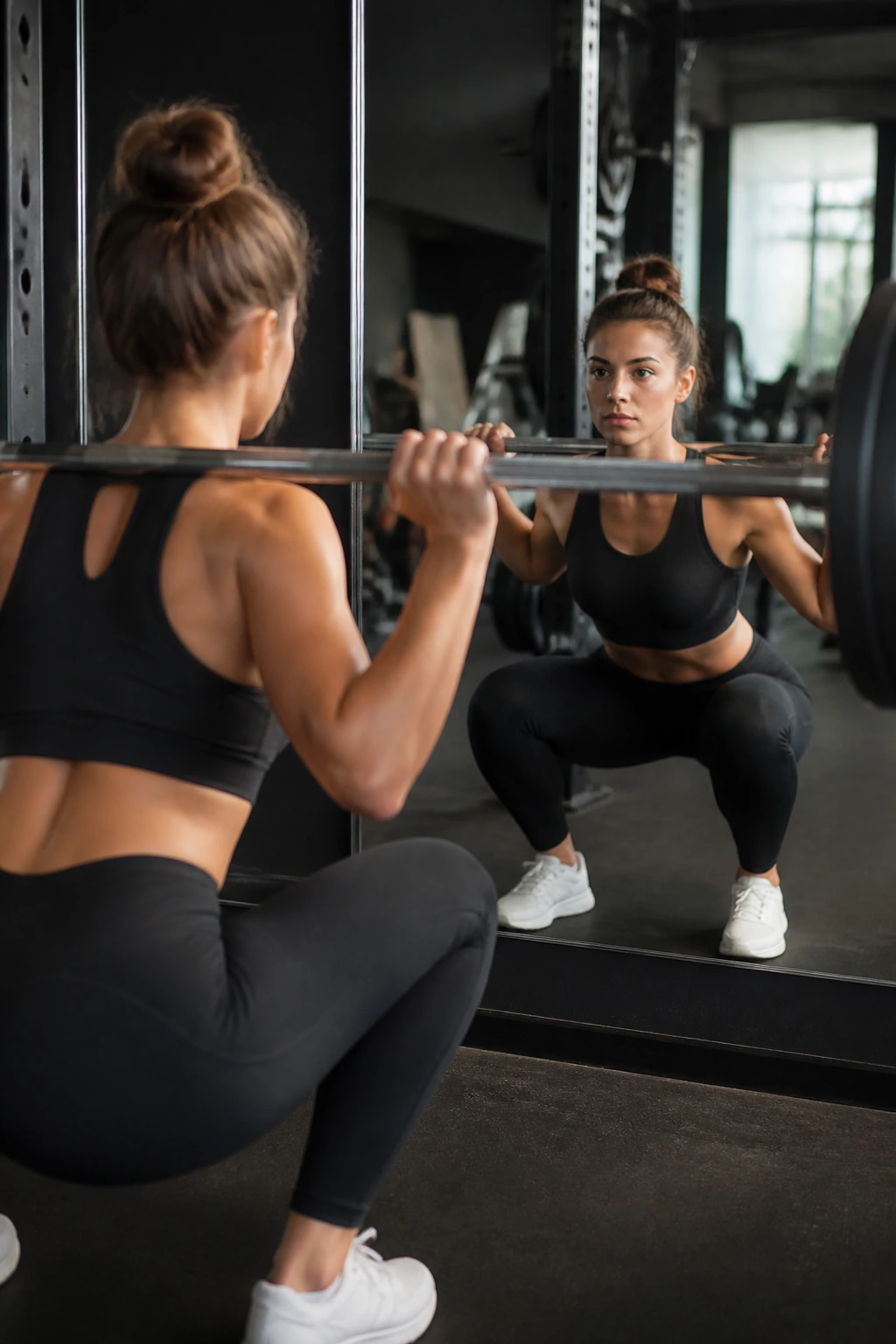
Mirrors are for checking lines, not judging yourself.
A mirror can show you if your knees cave in, if your shoulders creep up, or if the bar path drifts forward when you squat. That is useful. Staring at your reflection for the sake of picking apart your face, your hair, or your stomach is not useful, and it will pull attention away from the lift.
Three Quick Checks
- Ribs stacked over pelvis instead of flared out.
- Knees tracking over toes on squats and lunges.
- Shoulders down and back on rows and presses without pinching hard.
If the mirror makes you tense up, turn a bit away from it and use the side reflection instead. You only need a quick look, not a full-body inspection between every rep.
Good form often feels a little plain. That is a compliment. When your body stops fighting the movement, the mirror becomes a tool rather than a spotlight.
16. Plan Rest Days the Same Way You Plan Workouts
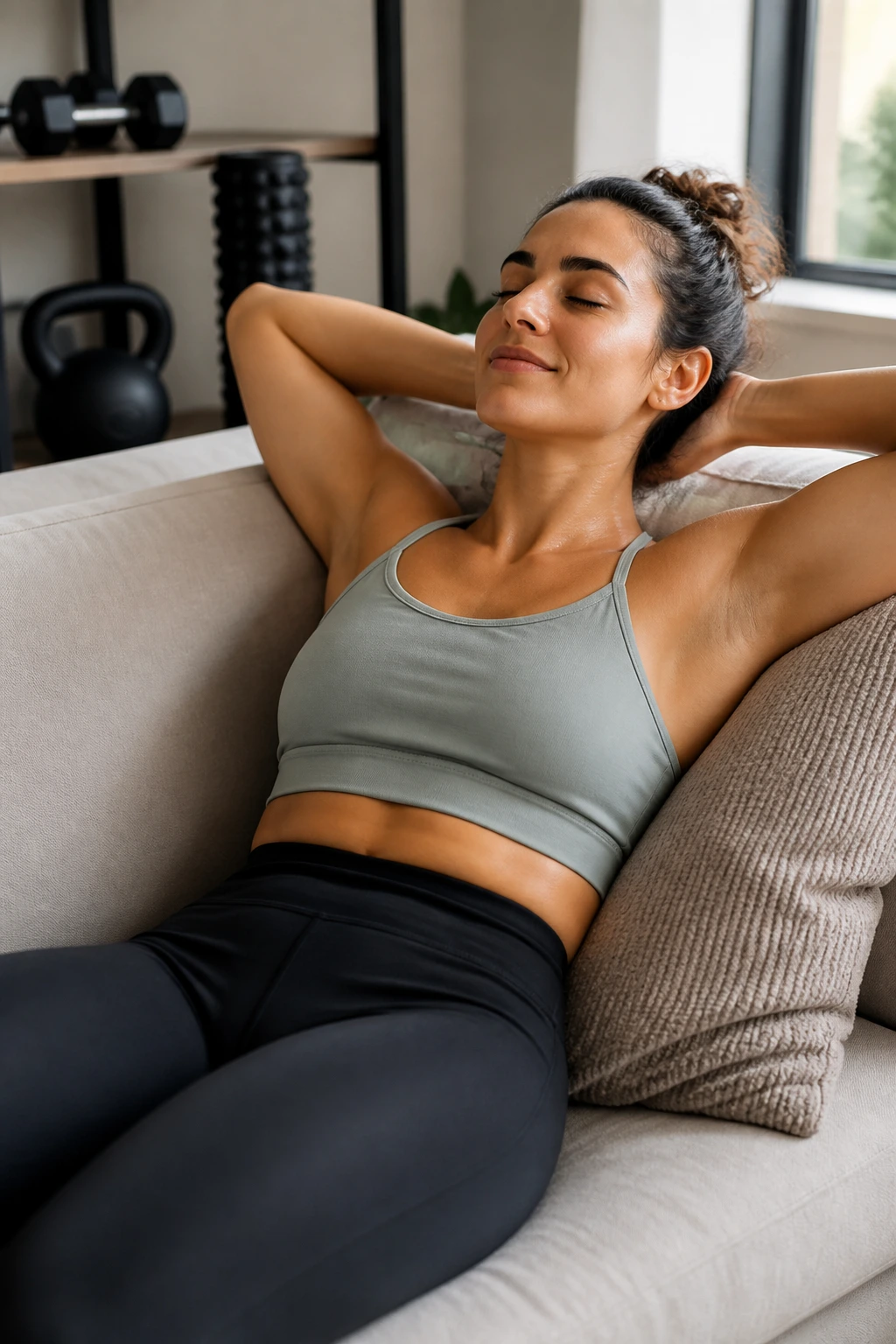
Rest is part of the setup.
A beginner body does not need a hard session every day. It needs enough recovery to adapt. That can mean one to three training days a week, depending on the rest of your life and how your body feels. Walks, easy mobility, and normal sleep count too.
There is a difference between sore muscles and an angry joint. Muscles that feel heavy the day after training are common. Sharp pain, pinching, or pain that gets worse while you move is a different story. When that happens, scale back and check your form or ask someone to watch you.
If you tend to push too hard early, plan rest days in advance so you are not making the decision while tired. That tiny bit of structure helps a lot.
And no, rest does not mean you failed. It means you are building something you can keep.
17. Keep Hair, Jewelry, and Straps Out of the Way
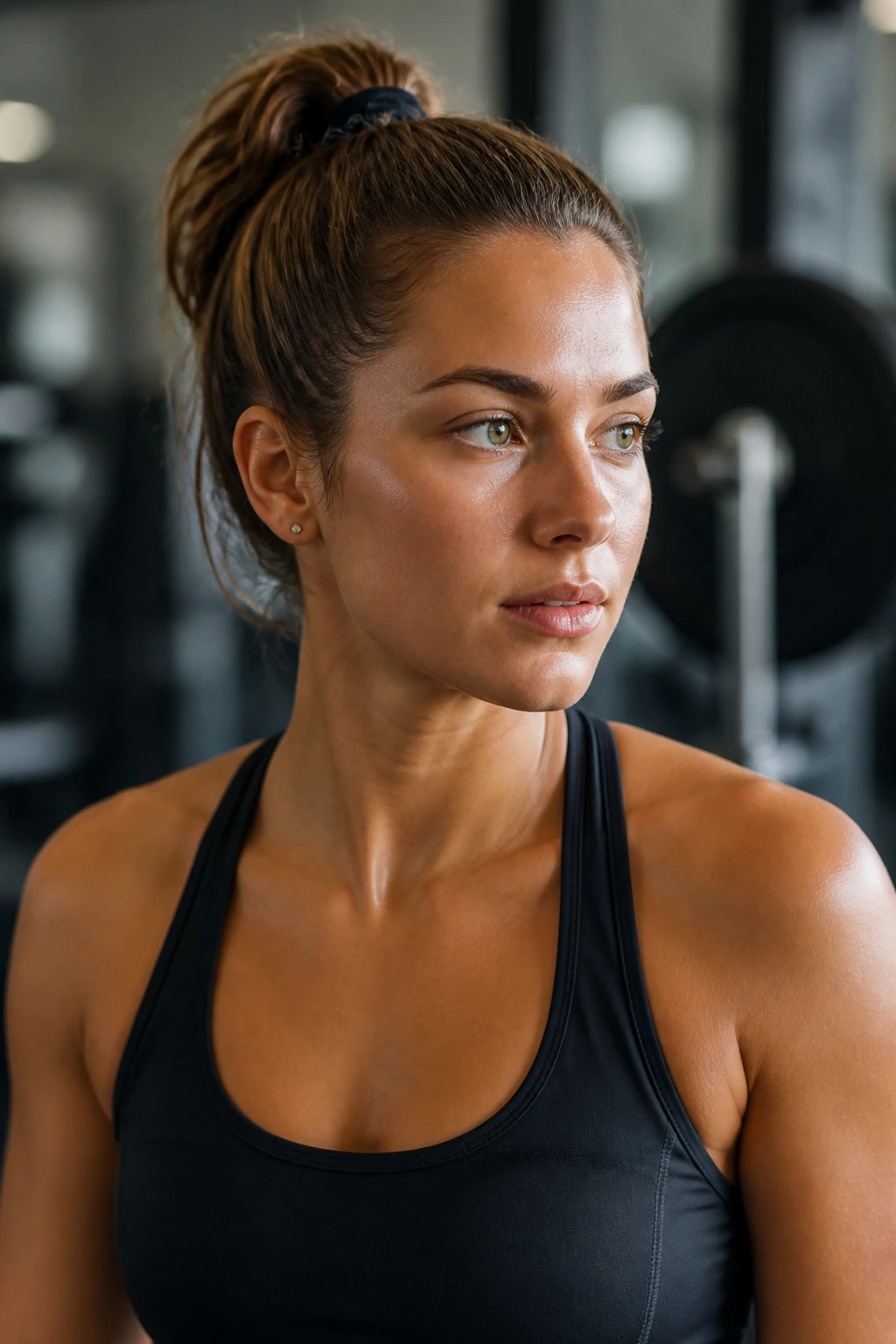
Small stuff gets in the way faster than people expect.
Long hair that falls into your face during a hinge, loose hoop earrings that swing when you press, hoodie strings that hit the bar, or bra straps that slide under your shoulders can turn a decent session into a fussy one. Put the clutter away before you start.
A sturdy hair tie beats a cute one that snaps on the first set. A low bun can work for floor exercises, while a high ponytail is fine for cardio or lighter lifting. Remove bracelets and anything that can snag. If your top has dangling cords or a zipper pull that taps your chest on a bench, fix that before you lie down.
This is also where a good sports bra earns its keep. If the straps dig or twist, you will spend half the workout thinking about them. That is a bad trade.
Tiny comfort changes are not vanity. They are friction reducers.
18. Carry the Small Hygiene Items People Forget
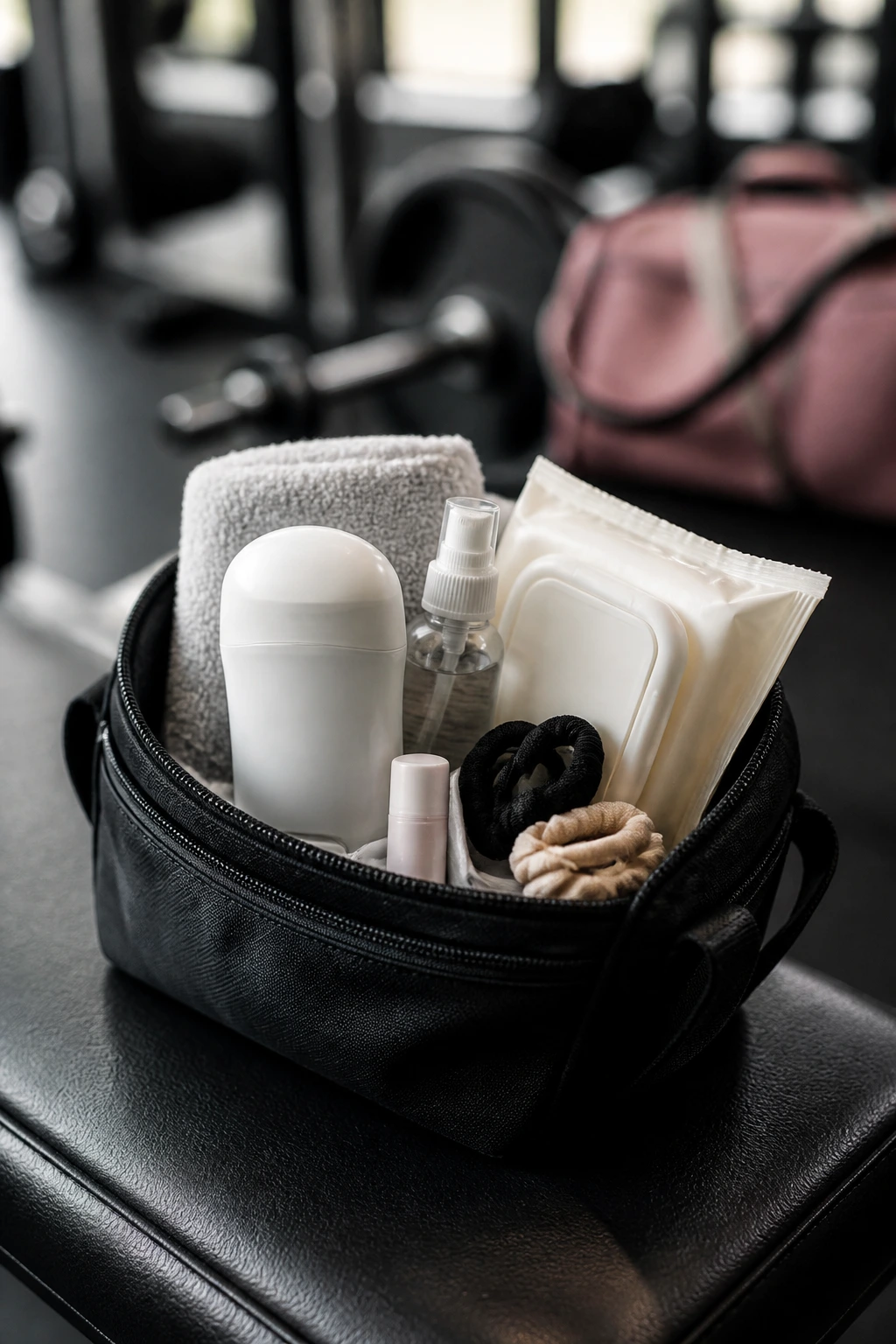
A tiny hygiene pouch saves the mood of the whole session.
Keep it in your gym bag and leave it there. One small zip pouch can hold everything you keep wishing you had: deodorant, face wipes, hand sanitizer, a small towel, lip balm, a blister bandage, and menstrual supplies if you use them. That is a much nicer feeling than rummaging through the whole bag while sweaty.
A Smart Mini Kit
- Deodorant
- Face or body wipes
- Hand sanitizer
- Bandage or blister patch
- Hair ties
- Menstrual supplies
- Travel-size lotion or lip balm
If your skin is sensitive, choose unscented wipes and basic products. If your gym has a locker room, a small pouch with a comb can help with post-workout hair without turning the sink into a mess.
I like this kind of setup because it solves the annoying part before it starts. You finish the workout, clean up in two minutes, and leave looking like you had a plan.
19. Decide How You’ll Handle Crowds and Space
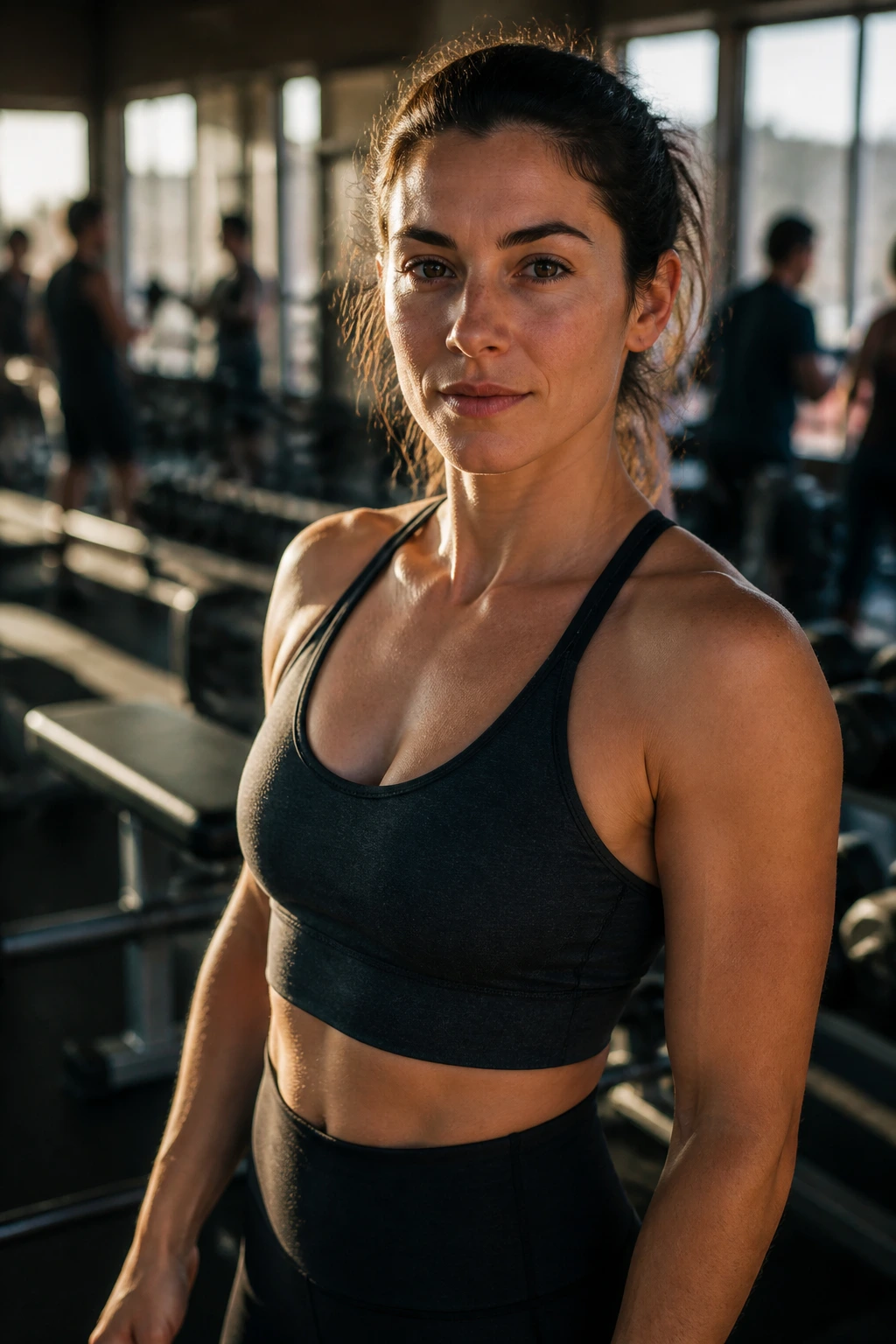
Crowds are easier when you have a plan for them.
A busy gym can make beginners freeze, especially around free weights where everyone seems to know where to stand. You do not need to act tougher than you feel. You need a backup path. If the bench area is packed, switch to dumbbells and a floor space. If the cable station is taken, use a machine or bodyweight move that hits the same muscle.
Learn the basic gym script too. “Mind if I work in?” is normal. So is “Are you using this bench?” People say these things all the time. The first time feels odd, then it stops feeling odd.
A Few Crowd Rules Worth Keeping
- Keep your setup tight so you do not spread across three stations.
- Put plates back where you found them.
- Leave enough space for the next person to move safely.
- Do not occupy equipment while scrolling for long stretches.
That last point is where a lot of gym tension starts. If you need to rest between sets, sit to the side and let other people work. The room runs smoother that way.
20. Rebuild the Setup After the First Two Weeks
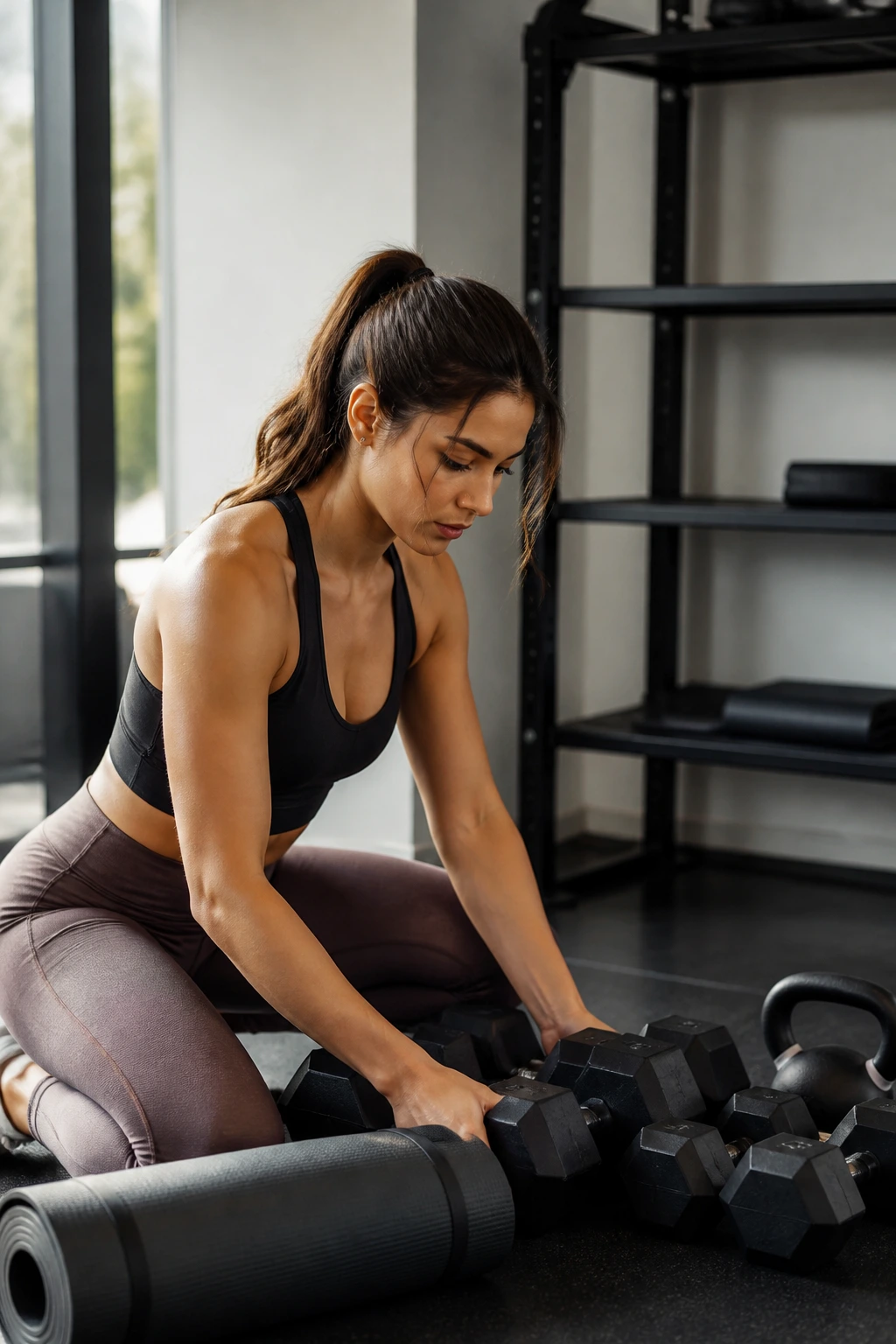
After a few sessions, change the parts that keep annoying you.
Your first setup is a draft, not a verdict. Maybe your shirt rides up. Maybe the dumbbells you chose were too light, or the machine you loved felt awkward when the gym got crowded. Write that down and fix one thing at a time.
What to Review
- Clothes: Did anything pinch, roll, or slip?
- Shoes: Did your feet feel stable during lower-body work?
- Plan: Were the exercises easy to follow?
- Timing: Did the gym feel calm enough?
- Bag: Was anything missing twice in a row?
That small review matters more than people think. A setup that fits your real habits feels quieter, and quiet is useful. You stop negotiating with your gear, and the workout starts earlier.
I like a simple rule here: keep what reduced friction, cut what annoyed you, and swap one thing only if it keeps bothering you. That keeps the process from turning into a shopping habit.
A good beginner gym setup gets out of the way. Once it does, the work feels much less mysterious.
