



Saggy arms usually send people straight to the lightest dumbbells in the room. Bad move. The back of the arm responds better to real triceps work — close-grip presses, overhead extensions, pushdowns, and a few bodyweight moves that make the last five reps feel expensive.
That word, tone, gets thrown around a lot. If the skin over the back of the arm looks soft because body fat is sitting there, no single exercise will erase that on its own. But stronger triceps change the shape underneath, and that matters more than most people expect when sleeves start fitting differently.
The triceps have three heads, and the long head is the one people keep skipping. Overhead work loads it in a stretched position, while pressdowns and push-ups hit the lockout side of the muscle. That combination is what gives the back of the arm a firmer look over time, not endless tiny swings with pink weights.
A good rule is simple: use one overhead move, one pressdown, one pressing variation, and one bodyweight drill. That mix trains the triceps from different angles and keeps your elbows happier than hammering the same motion all week.
1. Close-Grip Push-Up
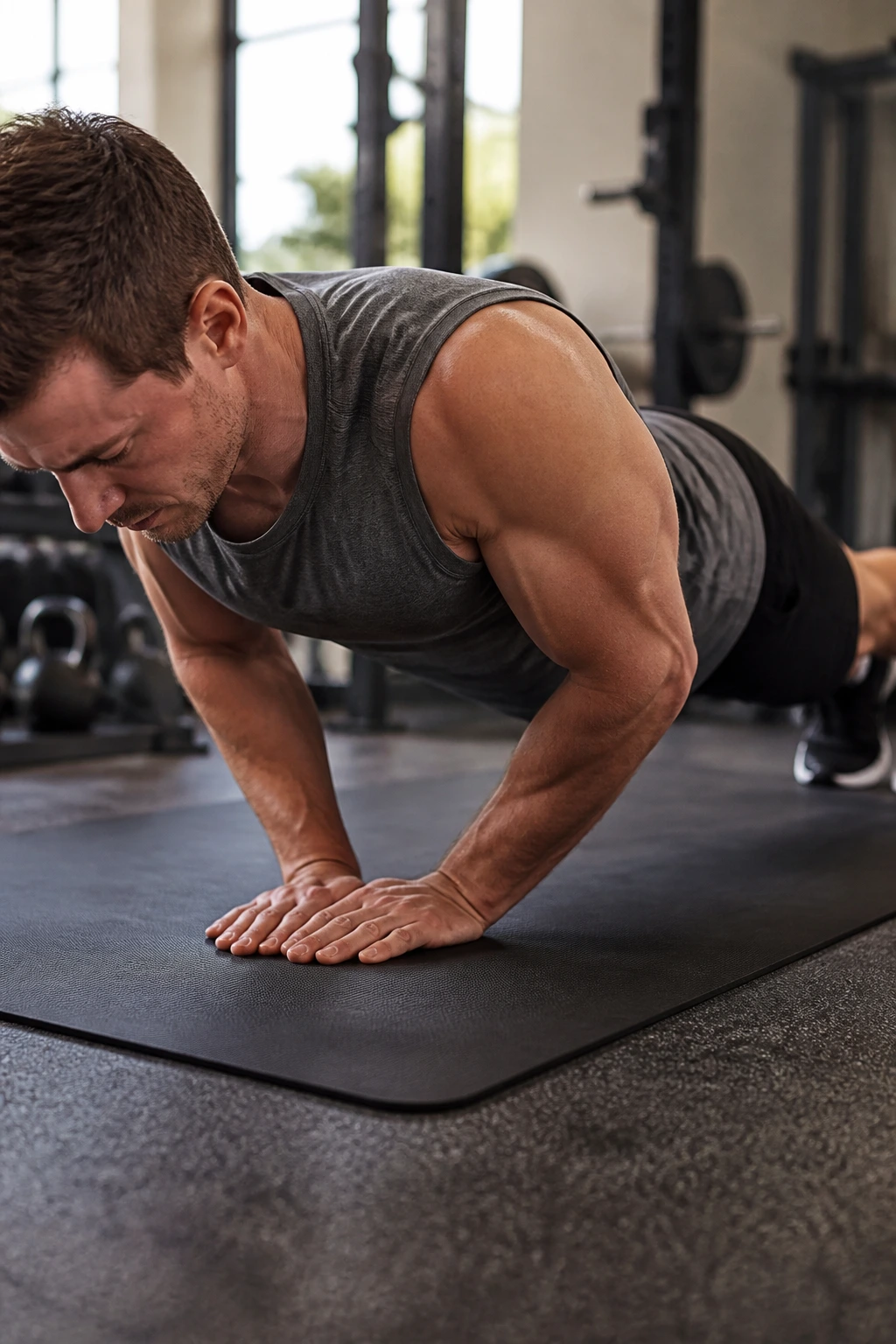
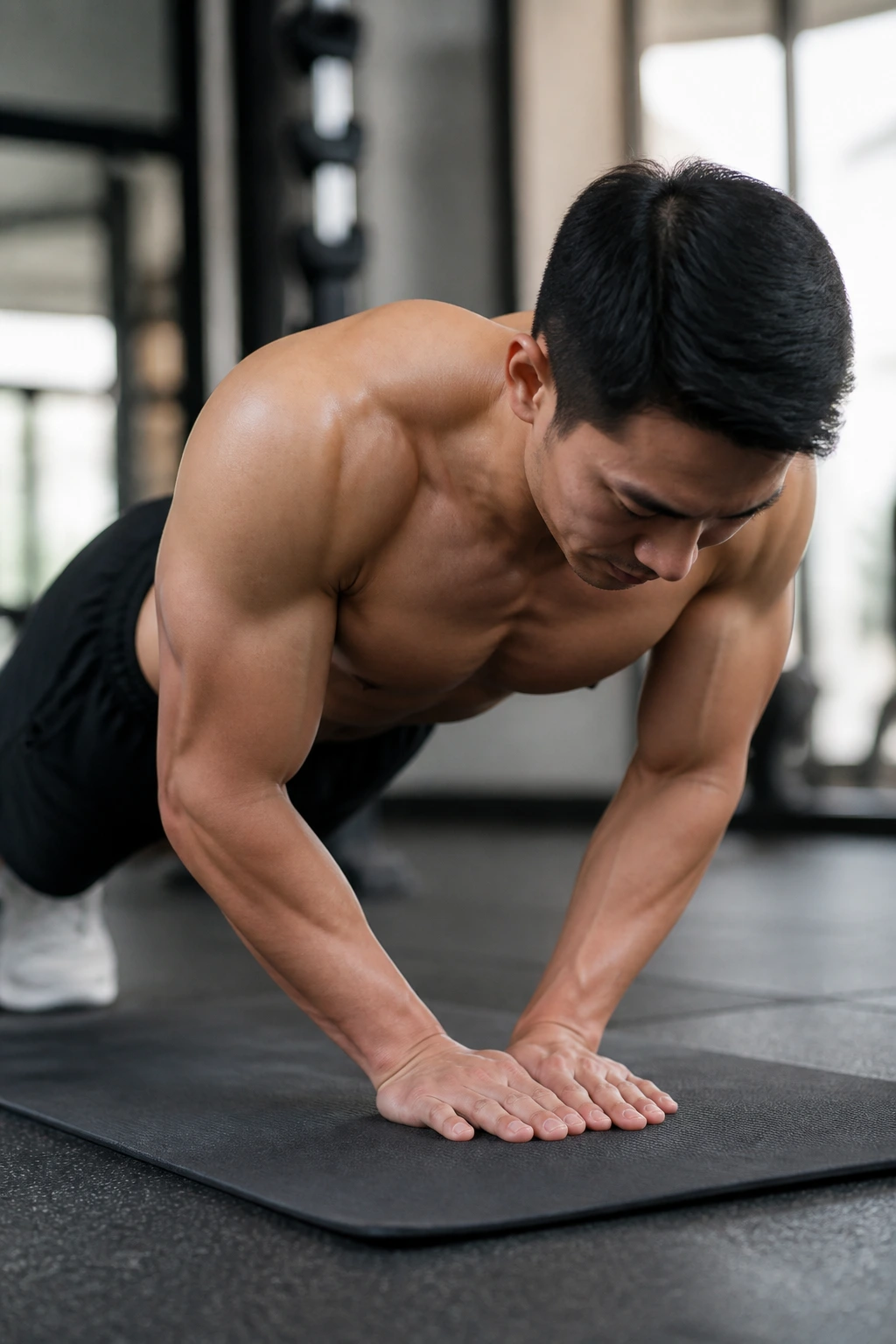
Close-grip push-ups are the kind of move that looks easy until your last three reps. Then the triceps start talking back.
Why It Works
With your hands placed just inside shoulder width, you shift more of the load onto the triceps without turning the movement into a wrist torture test. Keep your elbows tucked at about a 30 to 45 degree angle from your ribs, lower under control, and press the floor away hard.
The part most people miss is body tension. If your hips sag or your head drops, the triceps never get a clean job. A straight line from shoulders to heels keeps the movement honest. Quality beats quantity here — six clean reps are worth more than fifteen ugly ones.
How to Use It
- Start with 3 sets of 6 to 12 reps.
- Elevate your hands on a bench if the floor version falls apart.
- Slow the lower to about 2 seconds if you want more tension.
- Stop when your chest is a few inches from the floor; do not collapse.
Pro tip: if your wrists get cranky, hold dumbbells on the floor or use push-up handles. Same exercise. Less drama.
2. Overhead Dumbbell Triceps Extension
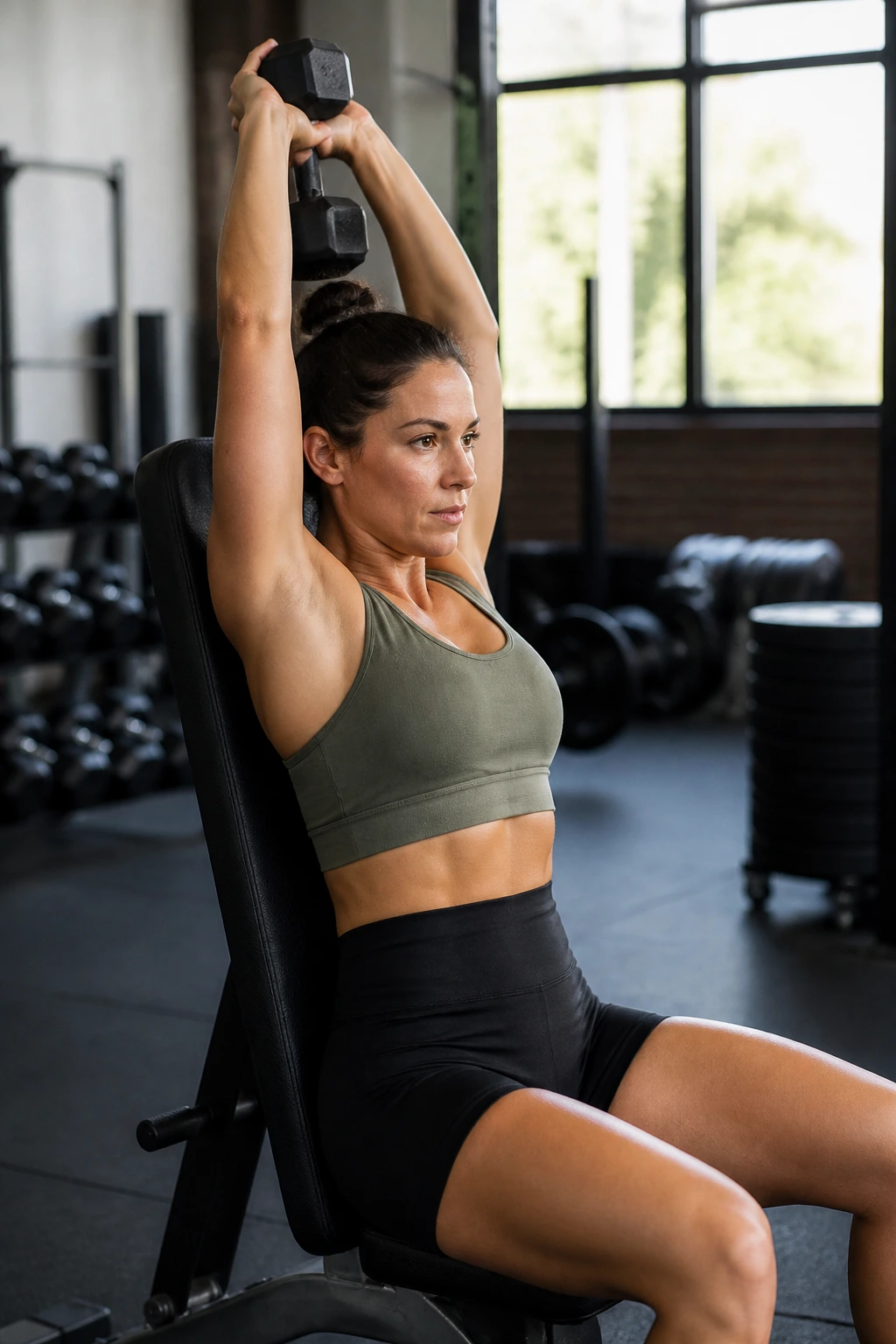
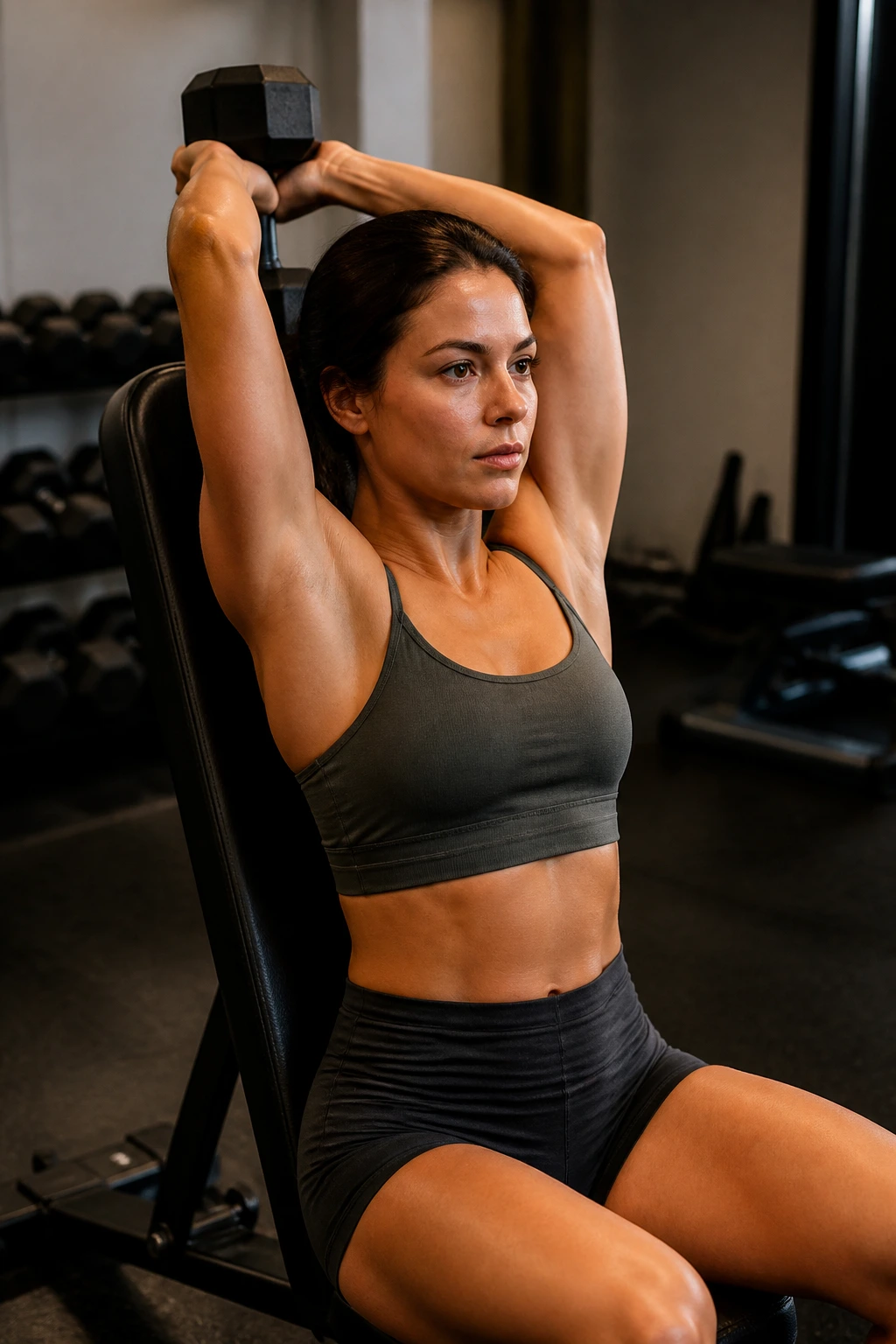
Want the triceps move that usually gives the fastest back-of-arm burn? Overhead extensions are hard to beat.
The reason is simple. Your upper arm sits beside your head, which puts the long head of the triceps on stretch before the rep even starts. That matters a lot for the look people usually mean when they say “tone my arms.” A single dumbbell held with both hands works fine, and so do two dumbbells if your shoulders prefer that.
Keep your ribs down. Seriously. The common cheat is turning the rep into a lower-back arch and a weird half-bench press. Let the elbows point forward, lower until you feel a deep stretch behind the arm, then extend without snapping the joints at the top.
One sentence is enough here: don’t chase heavy weight first.
Use this as a main accessory move for 3 sets of 8 to 12 reps. If standing overhead work bugs your back, sit on a bench with a backrest or kneel on the floor. That small change usually cleans up the whole rep.
3. Rope Cable Pushdown
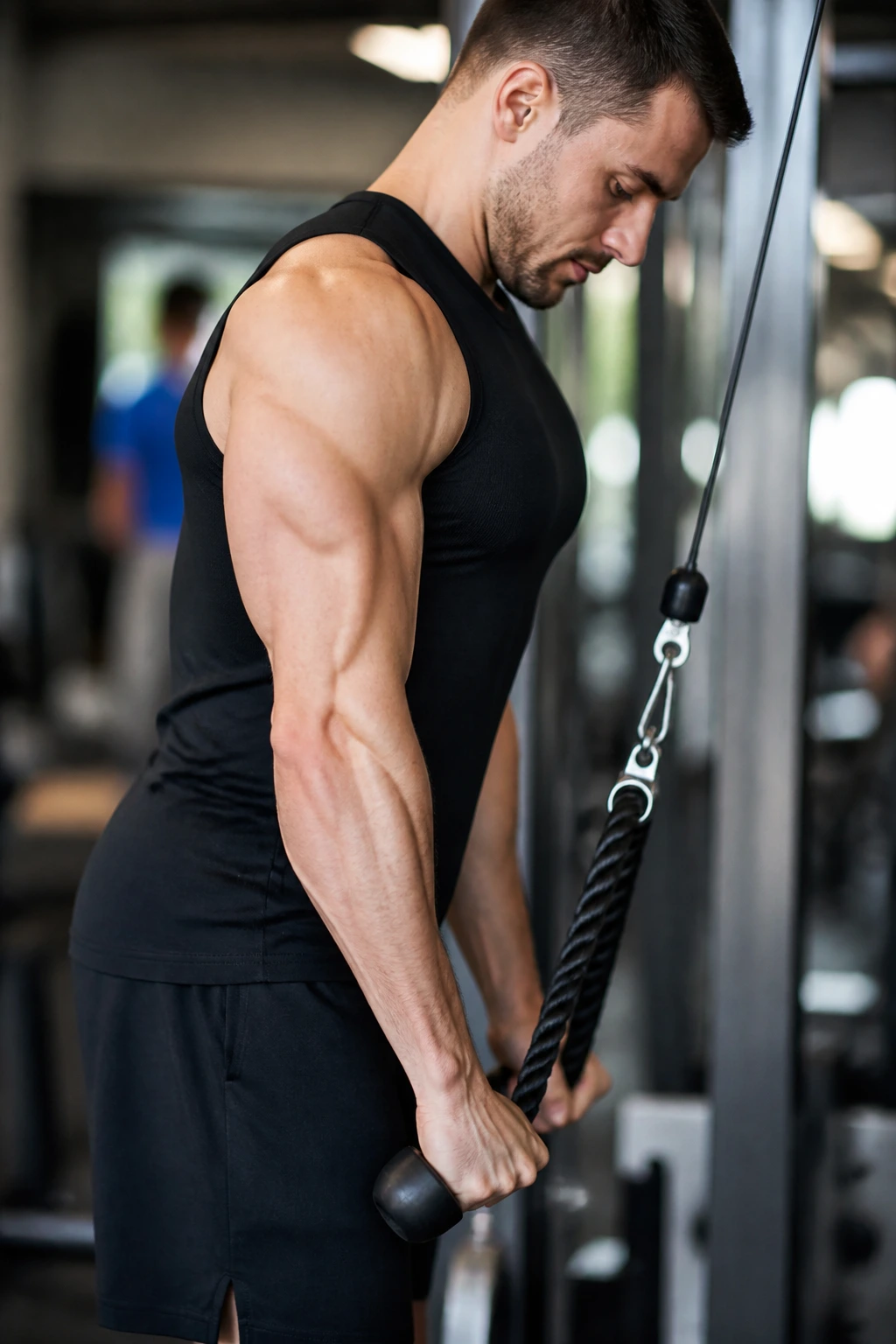
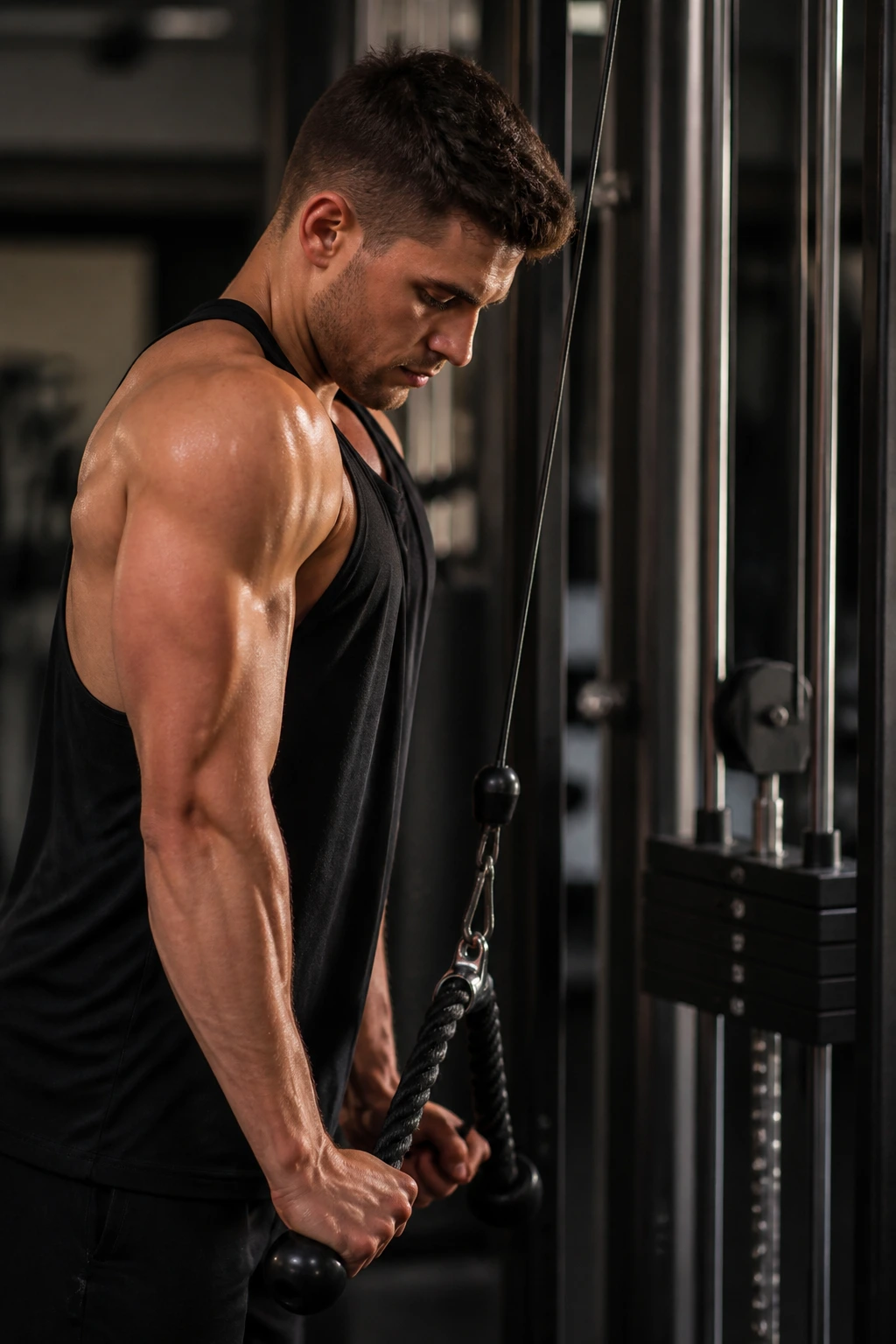
A rope pushdown can look boring from ten feet away. It isn’t.
Cable Setup
Set the pulley high, grab the rope with palms facing each other, and pin your elbows near your sides. The rope should move in a straight path until the last inch, where you split the ends slightly apart and squeeze hard. That little flare at the bottom is not for show — it gives you a better contraction and keeps the wrists from feeling locked up.
Cable work gives constant tension. That means the triceps stay busy through the whole rep instead of getting a break at the top, which is one reason this move shows up in so many arm routines that actually work. Keep the torso quiet. A tiny lean is fine. A whole-body shove is not.
Quick Coaching Notes
- Use 10 to 15 reps for most sets.
- Keep the shoulders down, not shrugged.
- Let the forearms move; keep the upper arms still.
- If you feel it more in your chest, the elbows are drifting forward.
One good rule: the stack should be heavy enough that the last 3 reps slow down, but not so heavy that your back starts doing the work.
4. Bench Dip
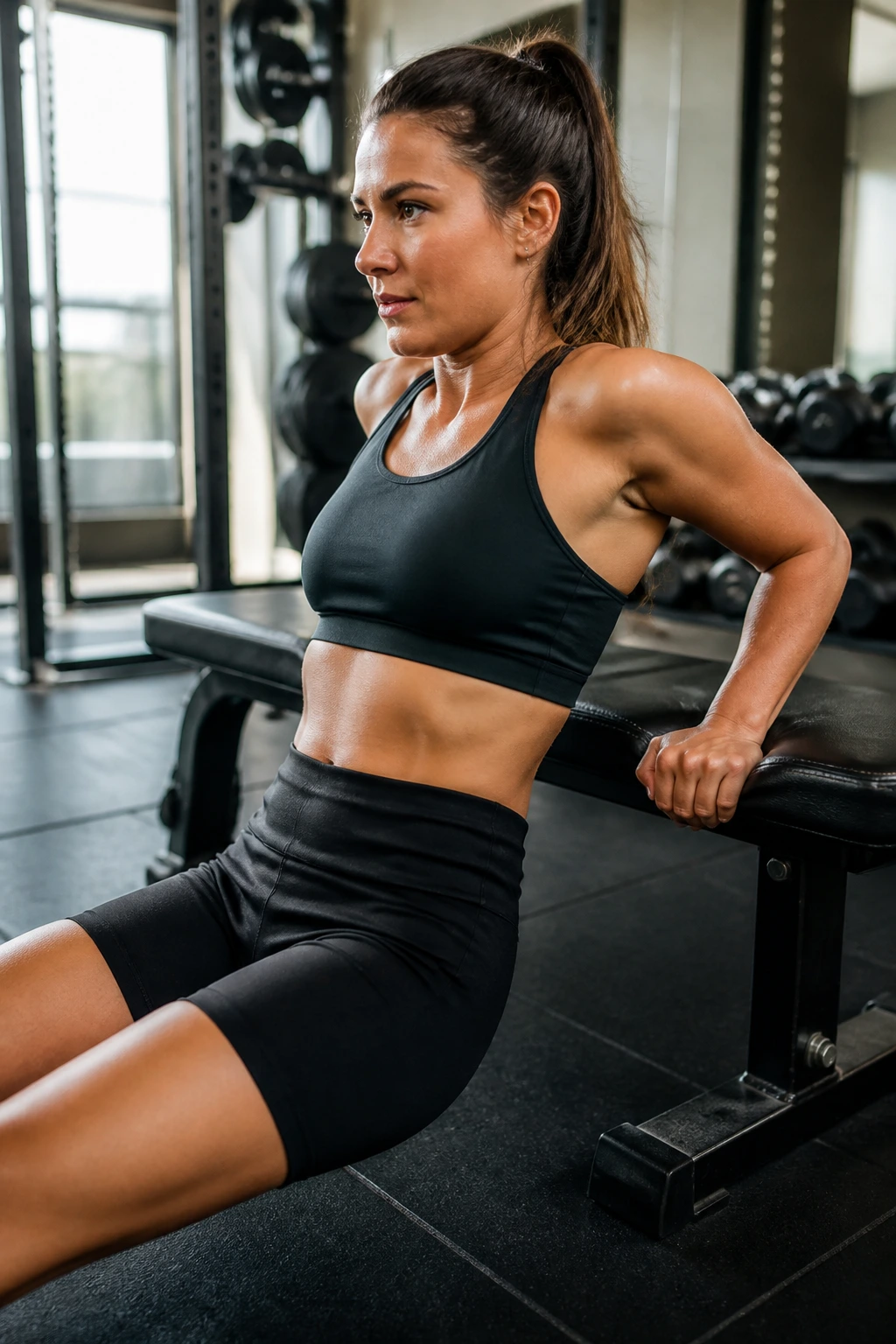
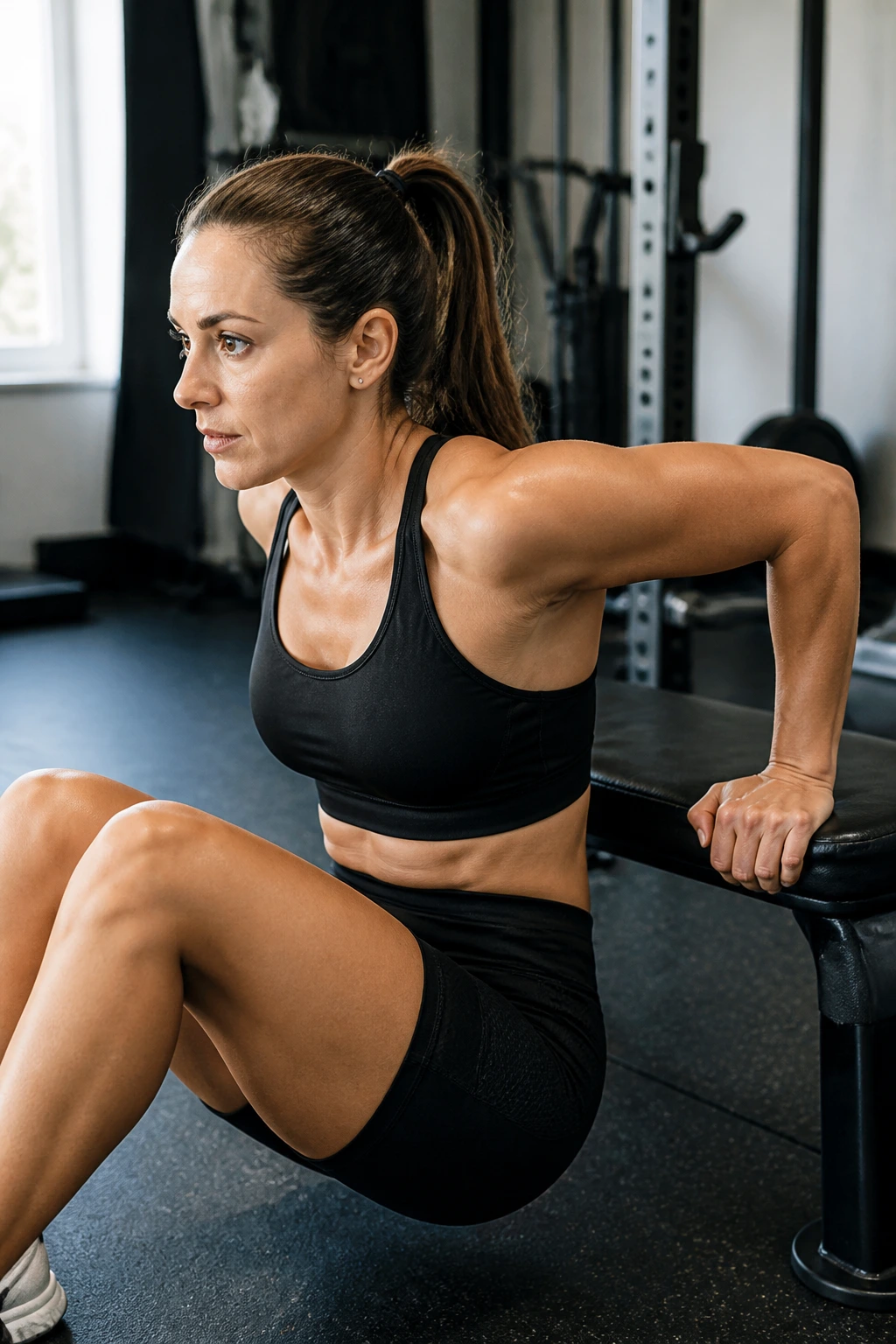
Bench dips split opinion for a reason. They’re effective, and they can be annoying if you rush them.
The setup is straightforward: hands on a bench, fingers forward or slightly out, legs bent for an easier version or extended for more load. The mistake comes when people sink too low, shrug their shoulders, and then wonder why the front of the shoulder feels cranky. Keep the descent controlled and stop when the upper arm is about parallel to the floor.
That shorter range is usually enough. You do not need to turn this into a deep shoulder stretch contest. If your shoulders already complain during dips, skip them and use close-grip push-ups instead. No exercise is worth nursing a sore joint for a week.
Bench dips feel best as a mid-to-high rep finisher: 2 to 4 sets of 10 to 20 reps. The higher reps are not because the move is easy. They’re because form falls apart fast once fatigue sets in, and sloppy dips are not a badge of honor.
5. Lying Dumbbell Skull Crusher
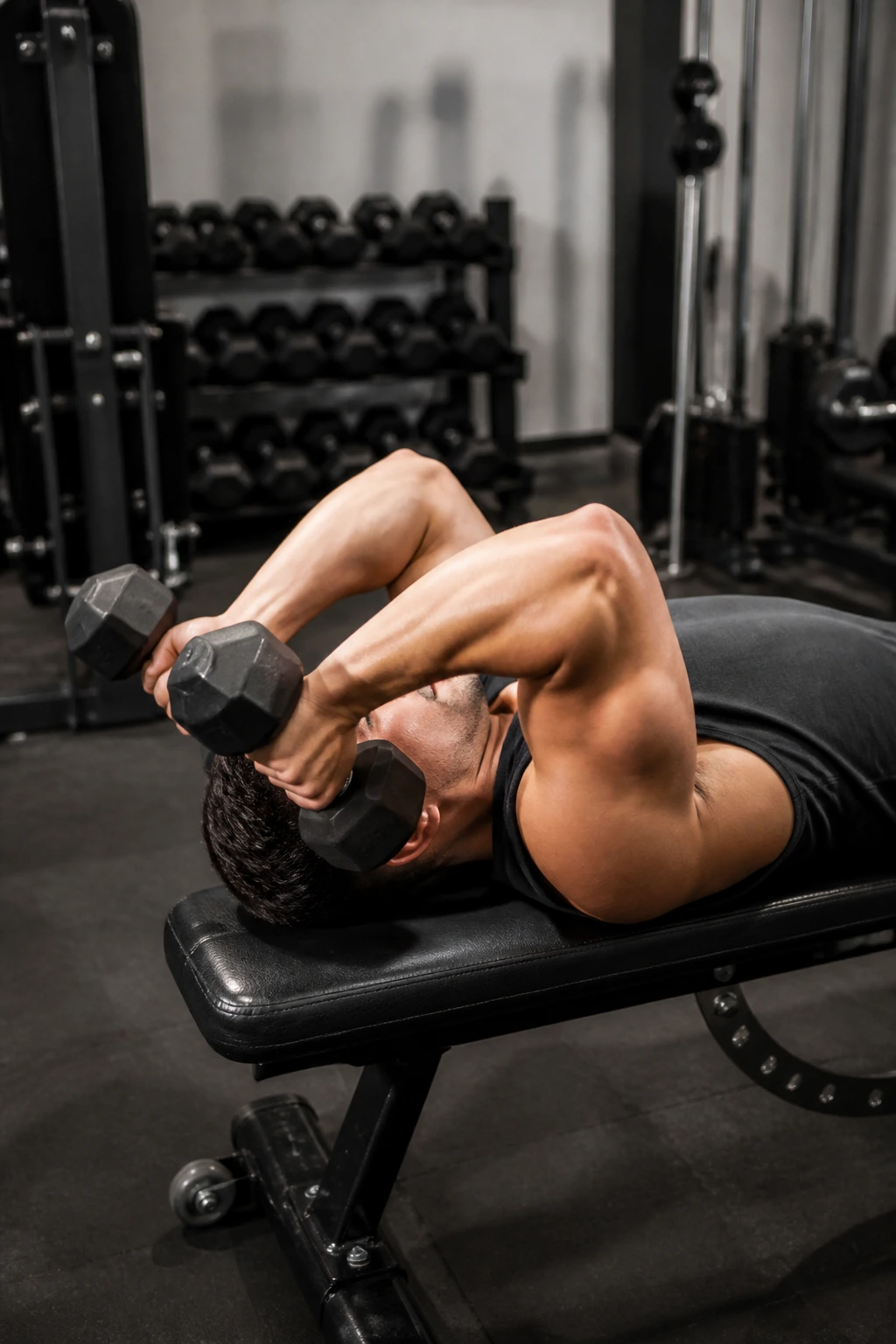
Skull crushers have a rude nickname for a reason. They can light up the triceps fast, and they punish lazy setup just as fast.
What to Watch For
Lie on a flat bench with a dumbbell in each hand or one EZ-bar if you prefer a bar. Start with the arms stacked over the shoulders, then bend only at the elbows as you lower the weight. The upper arms should stay nearly still. If they drift all over the place, the load shifts away from the triceps and the whole thing turns messy.
A small adjustment helps a lot: lower the weight slightly behind the forehead instead of directly to the bridge of the nose. That angle often feels better on the elbows and gives the triceps a better stretch. A slow eccentric — around 2 to 4 seconds on the way down — makes the rep worth more than simply heaving weight up and down.
Use 3 sets of 8 to 12 reps. If your elbows get sore, use dumbbells with a neutral grip and lighten the load. This is one of those exercises where the joints tell the truth quickly.
6. Single-Arm Dumbbell Kickback
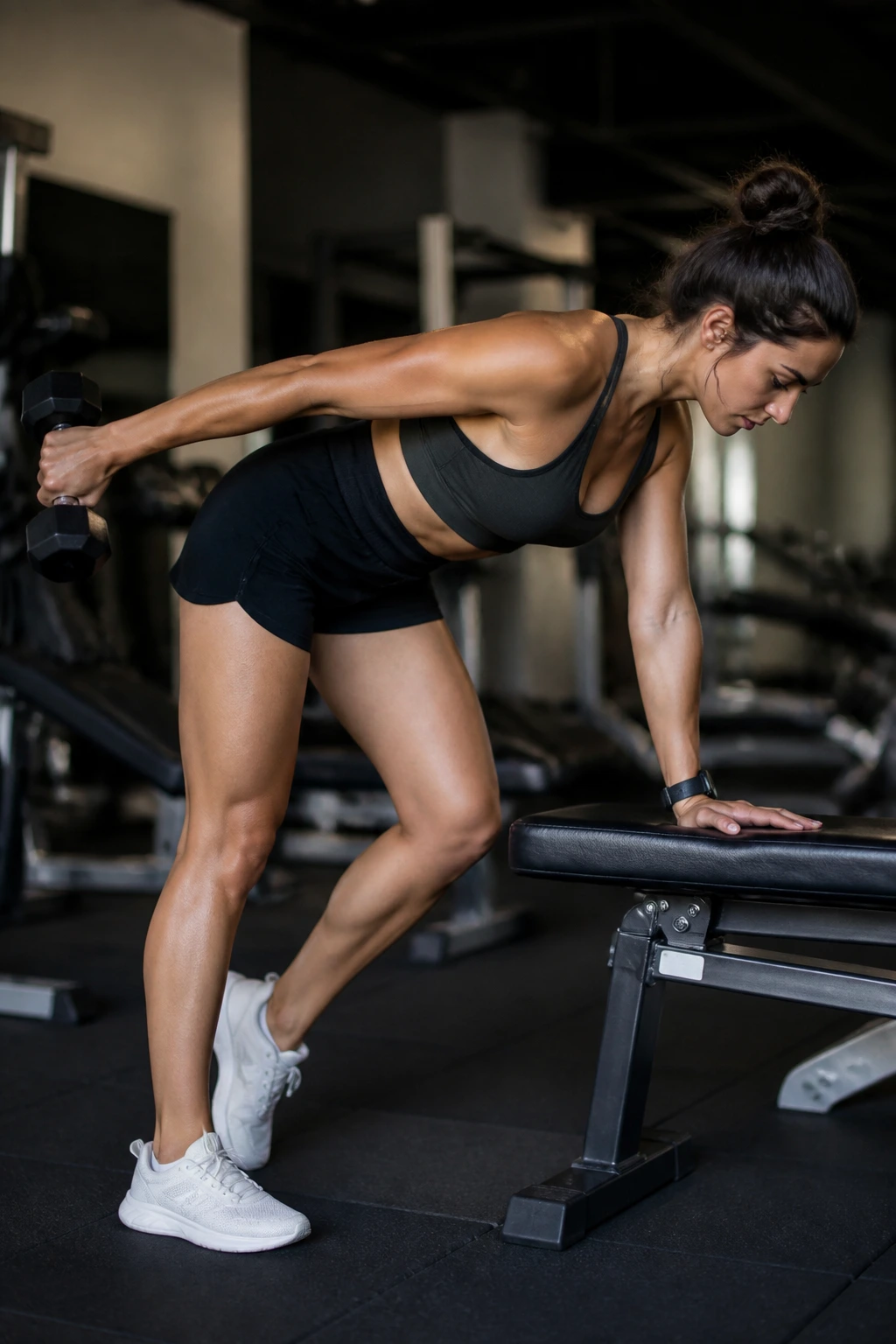
Kickbacks are small, fussy, and worth it when you use them the right way.
The trick is to hinge forward until your torso is close to parallel with the floor, then lock the upper arm beside your ribs. From there, only the forearm moves. That’s the whole point. When the elbow swings back and forth, the movement stops being a triceps exercise and turns into a body English competition. Nobody wins that.
These are excellent at the very end of a session when the muscle is already warm and a little tired. The shortened range gives a hard squeeze at lockout, which is why the burn shows up fast even with a light dumbbell. Use a slower tempo than you think you need. Fast kickbacks look busy. Slow kickbacks do the work.
A good target is 12 to 20 reps per arm. If the dumbbell feels too light before the set starts, grab a cable or a band instead. Same movement pattern, better resistance.
7. Diamond Push-Up
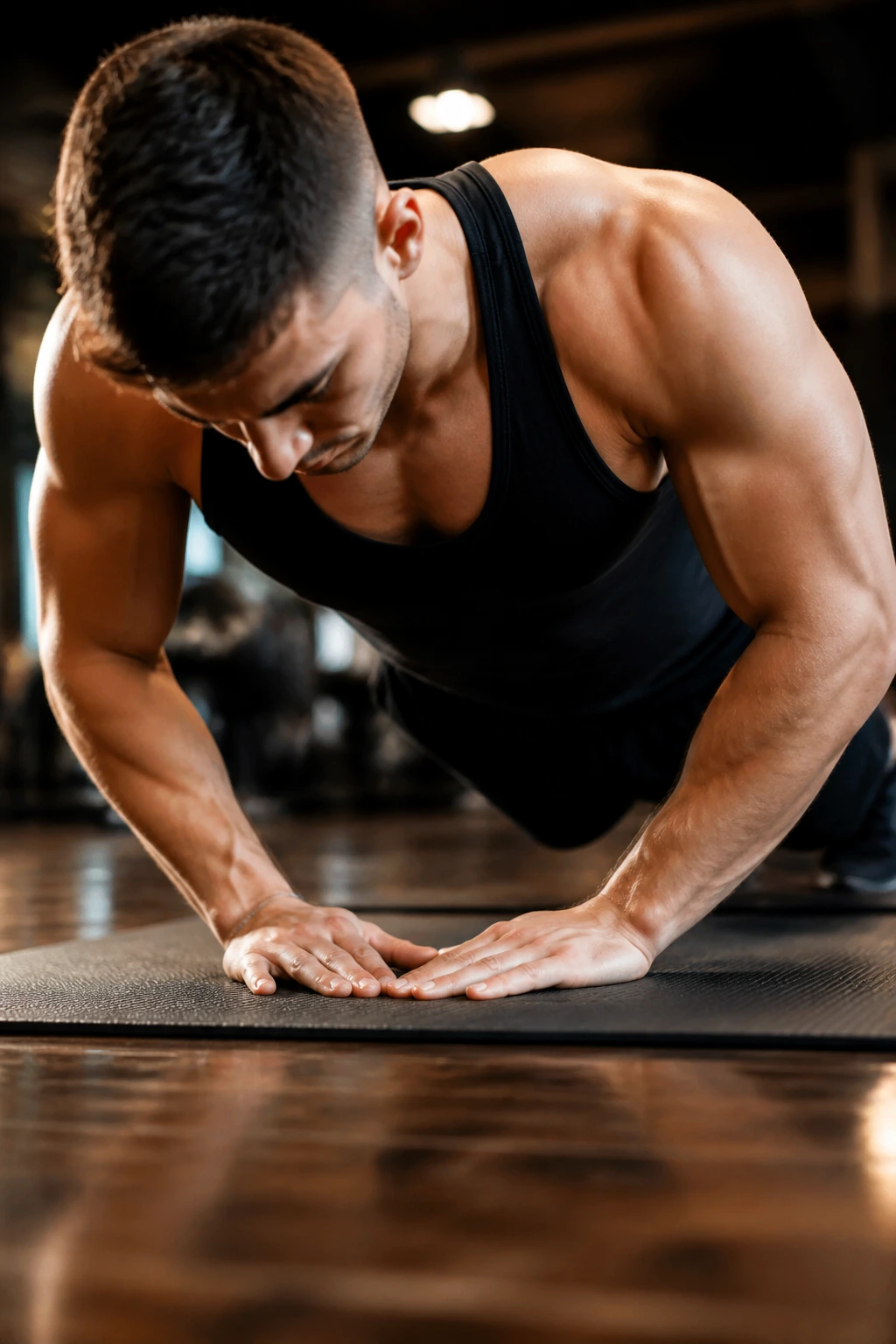
Diamond push-ups are a chest move masquerading as an arm exercise.
How to Get the Most From It
Place your hands so your thumbs and index fingers form a diamond or narrow triangle under your sternum. Lower with the elbows tucked close, then press up without letting the hips sag. The narrow hand position shifts a lot of the demand into the triceps, especially when you keep the body tight and avoid a half-rep.
The floor version is brutally honest. If you can’t hold good shape, elevate the hands on a bench, box, or sturdy step and keep the same hand position. That change makes the rep cleaner and usually lets you get enough volume to matter. A sloppy diamond push-up is worse than a clean elevated one.
Try 2 to 4 sets of 6 to 15 reps. If your wrists dislike the hand shape, rotate them slightly outward or use handles. Tiny change. Big difference.
8. Single-Arm Cable Pushdown
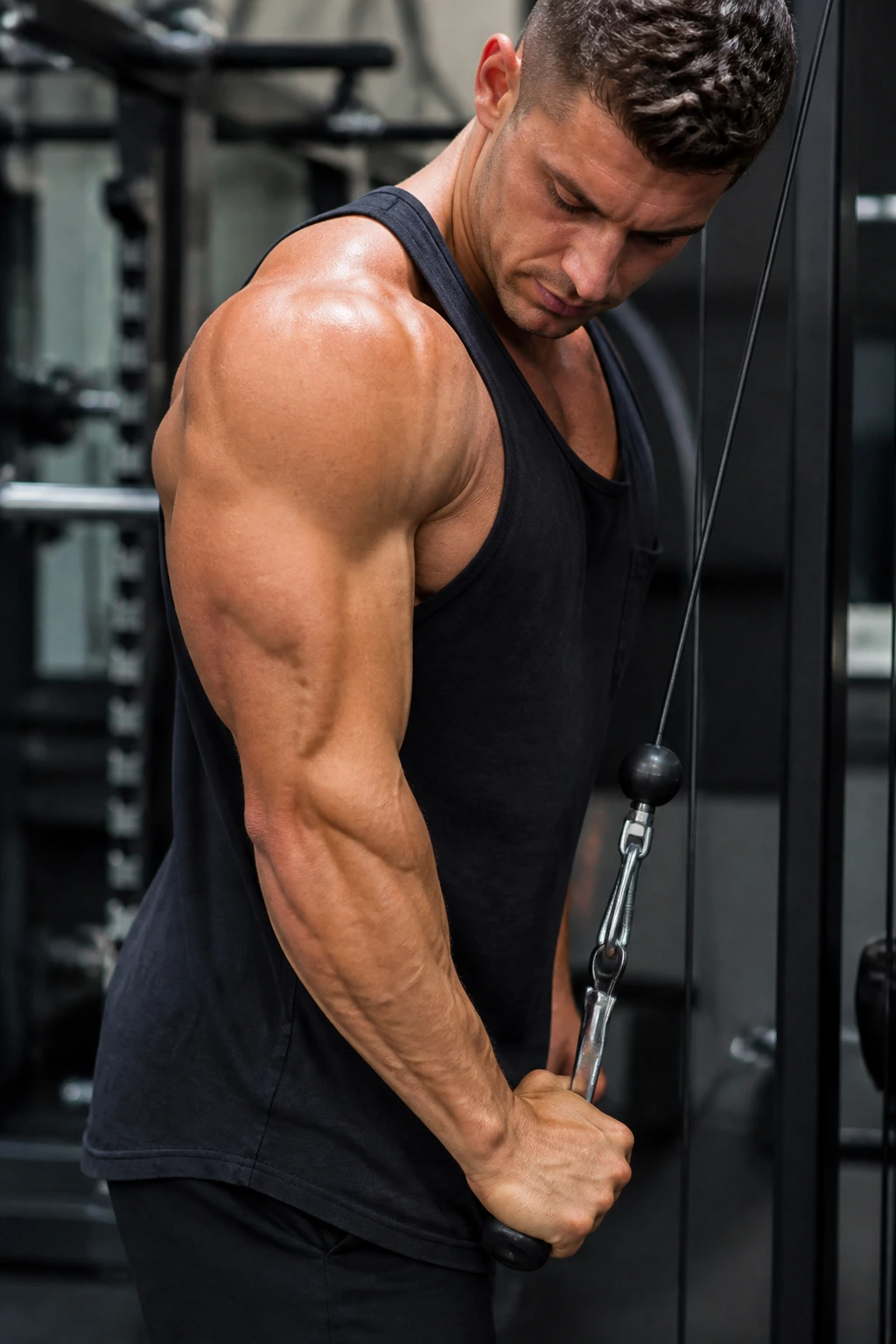
Single-arm cable pushdowns fix a problem most people don’t notice: one arm cheats more than the other.
When both hands work together, the stronger side often steals the rep. A unilateral pushdown makes each triceps do its own job. Set the handle high, keep the upper arm pinned near the ribcage, and press down until the elbow reaches full extension without snapping hard into lockout. The cable path should stay smooth from top to bottom.
This version is useful if one elbow feels weird on two-arm pushdowns, too. The load is easier to fine-tune, and the shoulder stays quieter because you can line up the arm exactly where it needs to be. A small amount of torso rotation is fine. A big twist means the weight is too heavy.
Use 10 to 15 controlled reps per arm. The return phase matters. If the handle flies back up, the rep is too fast.
9. Tate Press
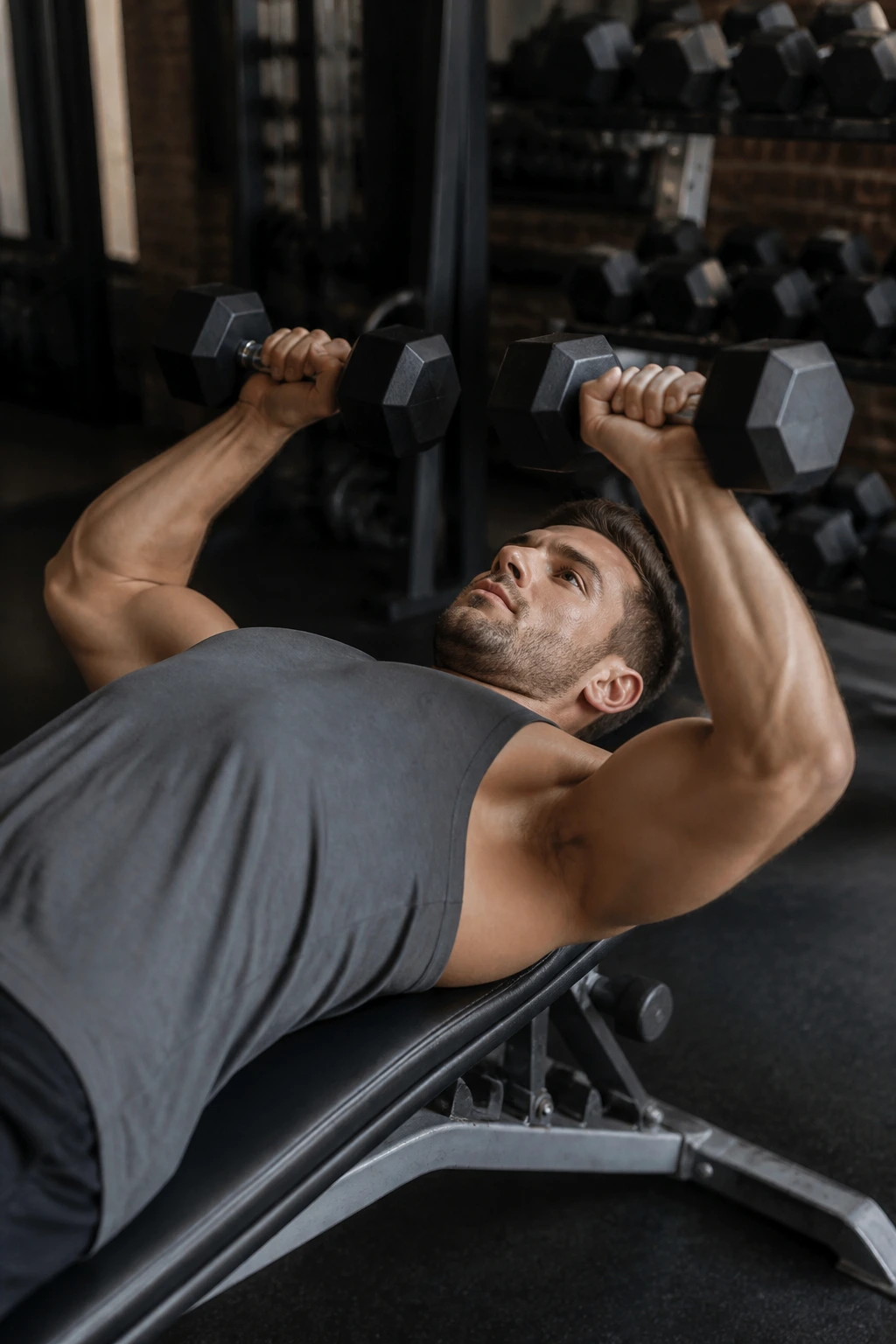
Tate presses feel odd the first time. That’s normal.
You lie on a bench with dumbbells above the chest, palms facing your feet, elbows flared out to the sides. Lower the dumbbells by bending at the elbows until they come near the upper chest, then press them back up by straightening the arms. The range is shorter than a skull crusher, but the triceps still have to work hard, especially near the bottom of the rep.
Grip and Angle
The flared elbow position changes the stress a little and can feel friendlier if straight overhead work or skull crushers bother your joints. It also gives a different line of pull than standard pushdowns, which is useful when your arms have gotten stubborn and seem to ignore the same old exercises.
Keep the wrists stacked over the elbows as much as you can. If the dumbbells drift around like loose shopping bags, the movement gets sloppy fast. Use lighter weights than your ego wants.
A clean target is 3 sets of 8 to 12 reps. Tight control matters more than load on this one.
10. Assisted Dip Machine
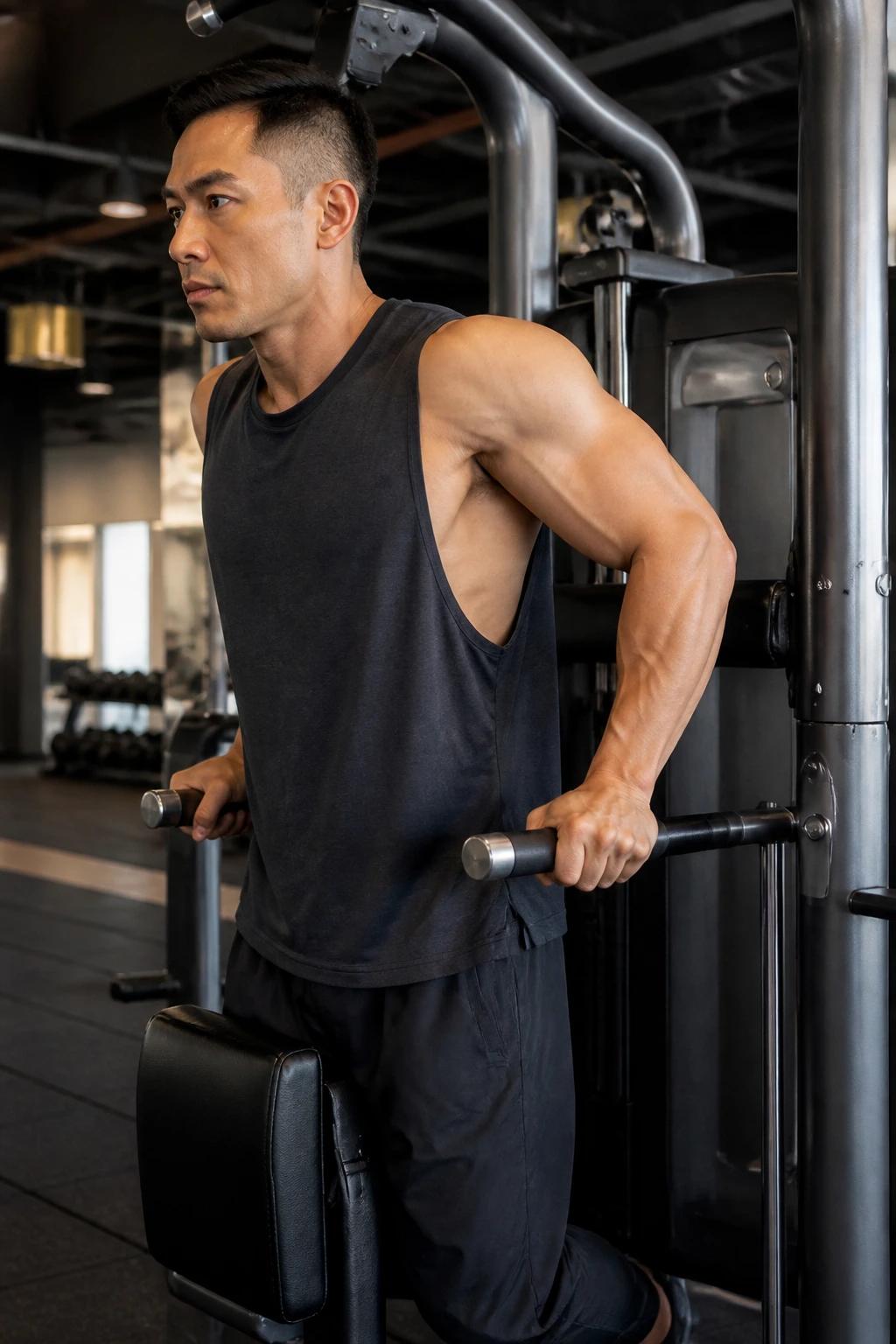
The assisted dip machine removes some of the shoulder drama from dips.
That’s a good thing. Parallel-bar dips can be outstanding, but they’re also easy to butcher if you drop too deep or lean too far forward. The machine gives you a stable path and lets you control how much assistance you need. Keep the torso upright if the triceps are your main target; a big forward lean shifts more load toward the chest.
At the top, lock out smoothly and pause for a split second. At the bottom, stop before the shoulders roll forward or the elbows feel jammed. You want a strong, steady rep, not a dive-bomb. A controlled dip usually beats a heavier ugly one.
This move sits nicely in the middle of an arm workout because it’s harder than a pushdown but less fussy than free dips. Use assistance that lets you get 6 to 10 controlled reps with one more rep left in the tank.
11. Resistance Band Pushdown
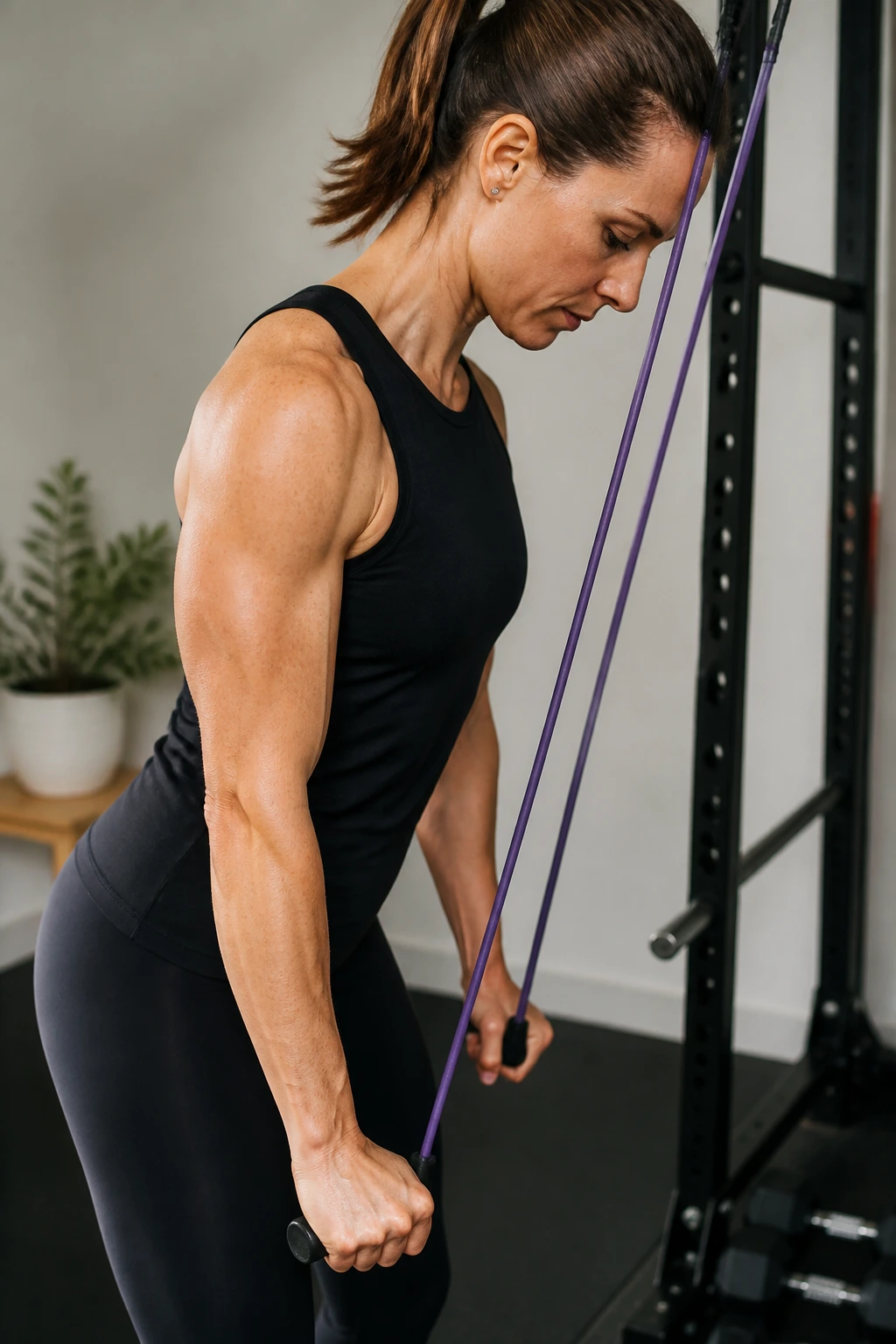
Resistance bands are not a consolation prize.
They’re useful because the tension climbs as the band stretches, which means the lockout gets harder right when people usually coast. Anchor the band high on a sturdy door anchor, pull-up bar, or similar fixed point, then pin the elbows to your sides and press down until the arms straighten. Keep the shoulders quiet. If the torso starts bobbing, the band is too heavy or your stance is too loose.
Band pushdowns are great for home workouts, travel sessions, and warm-ups before heavier pressing. They also let you hit a lot of volume without beating up the elbows. High reps work well here — 15 to 30 reps is normal, and the last quarter of the set should feel sticky.
A small tip: stand far enough from the anchor that the band already has tension before the first rep starts. Slack bands waste time.
12. Incline Close-Grip Push-Up
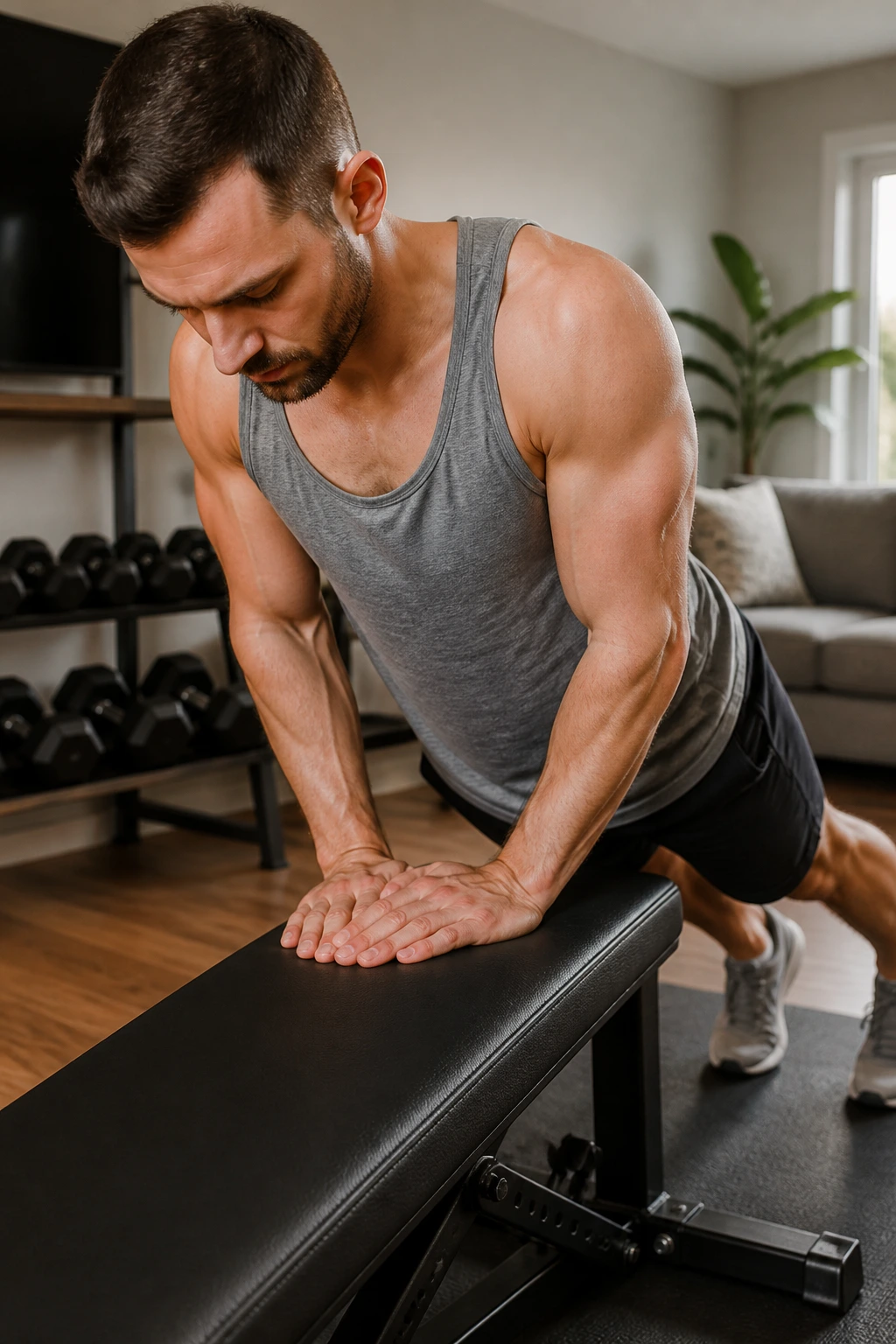
Want a version of close-grip push-ups that lets you build clean reps? Put your hands on a bench.
The incline changes the load in your favor, which is useful if the floor version is still a grind or your shoulders get tired before your triceps do. Keep the hands narrow, the body straight, and the elbows tucked. The move looks simple. It isn’t easy when you keep the range honest and avoid bouncing off the bench.
This is one of the nicer exercises for building confidence because you can start with a fairly high incline and lower it over time. A sturdy countertop, bench, or box all work. The higher the surface, the easier the rep. Lower it only when your current setup feels controlled.
Use 3 sets of 8 to 15 reps. If you can do fifteen clean reps without losing shape, the next workout should lower the incline a bit. Progress should be boring and obvious.
13. EZ-Bar JM Press
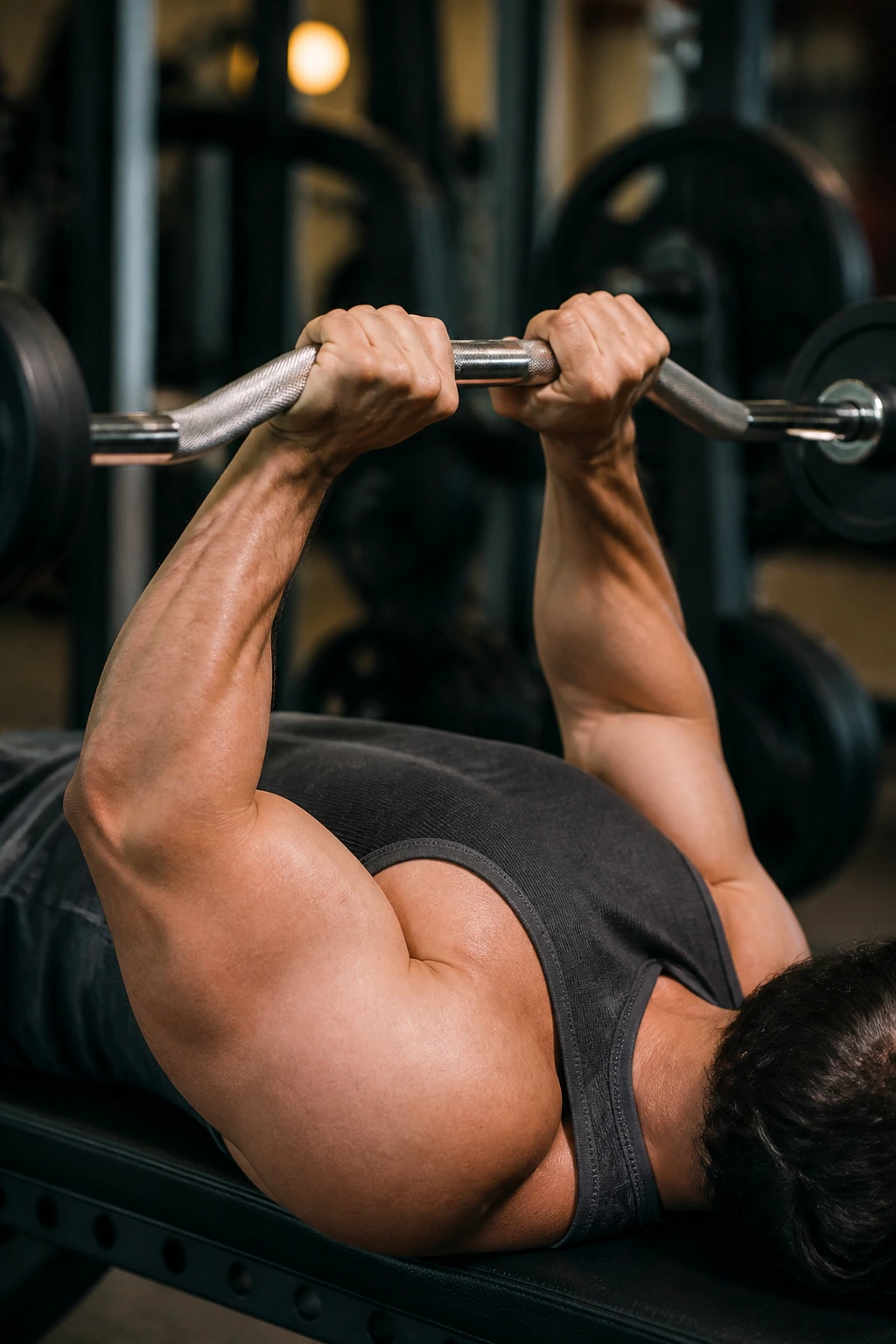
The JM press sits in the awkward middle ground between a close-grip bench and a skull crusher. That sounds strange, and it is — but strange doesn’t mean useless.
You lie on a bench with an EZ-bar, lower it toward the upper chest or lower face area while bending the elbows, then press it back up by combining a short press with an elbow extension. The bar path is small. The triceps load is not. Lifters who like heavy work but hate the shoulder stretch of skull crushers often take to this move fast.
Why Lifters Like It
The JM press keeps the elbows tucked more than a traditional skull crusher and lets you use a bit more load than a pure isolation move. That makes it a useful bridge exercise if you want triceps strength, not only a burn. It also teaches the lockout portion of pressing, which carries over to bench work.
Do not turn it into a full bench press. That ruins the point. Use a moderate weight, controlled lower, and a smooth press. Six to ten reps is plenty. Elbow irritation shows up fast if you get greedy, so keep the form neat and the ego parked.
14. Cross-Body Cable Triceps Extension
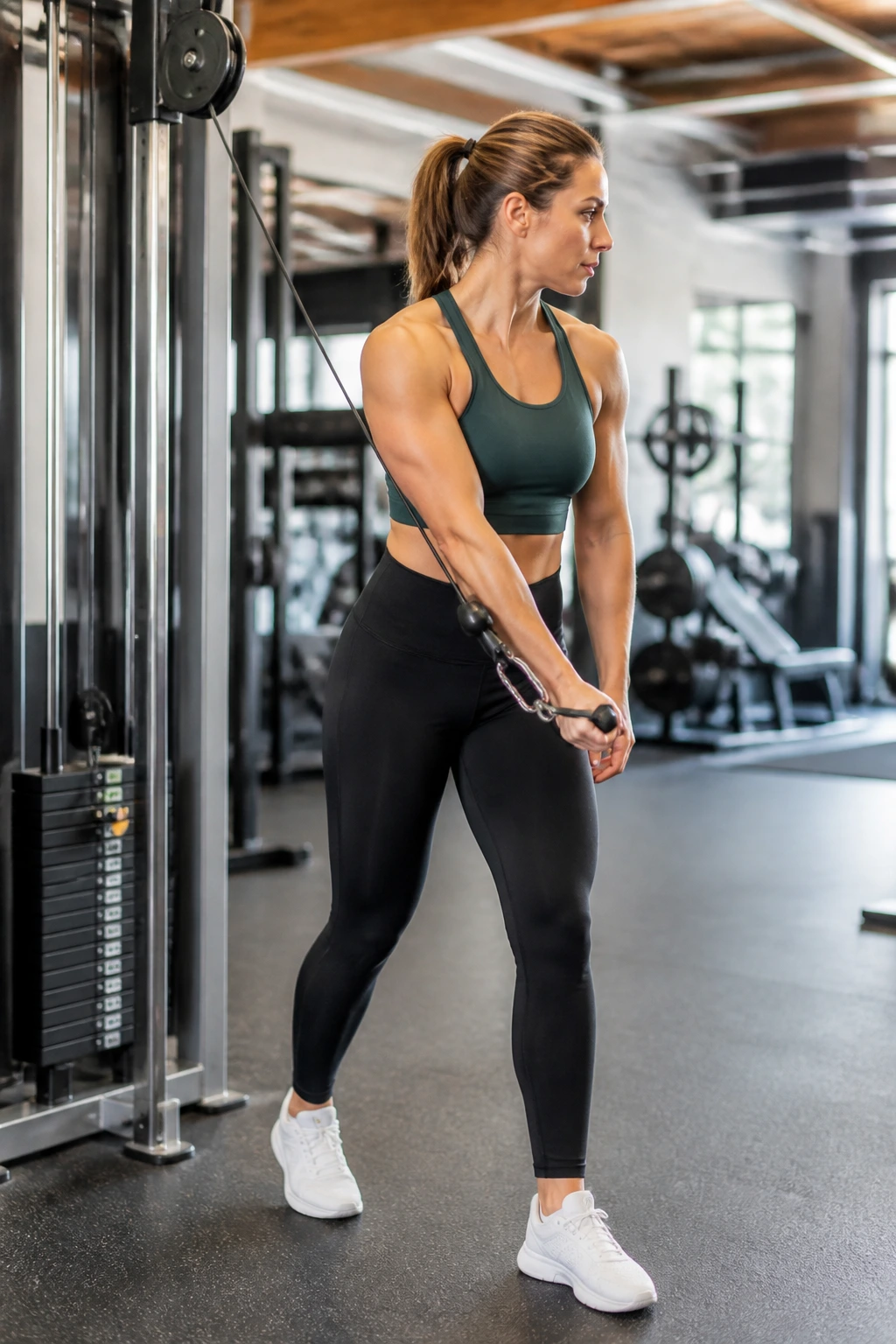
Cross-body cable extensions hit the triceps from a different line of pull, and that’s why they earn a spot.
Stand sideways to a high cable, grab a single handle, and bring your working hand across the body toward the opposite hip as you extend the elbow. The upper arm stays fairly still, but the cable angle changes the feel enough to wake up parts of the triceps that straight-down pushdowns can miss. If you’re tired of the same old elbow-hugging motion, this is a nice change.
The movement is smooth, not explosive. Keep the shoulder from rolling forward at the finish, and don’t let the torso twist into a mini-rotation. A little body movement is fine. A lot means the weight is too heavy. That’s the pattern, honestly.
Use 10 to 15 reps per side. This is a good one for people who want more variety without leaving the cable stack.
15. Suspension Trainer Triceps Extension
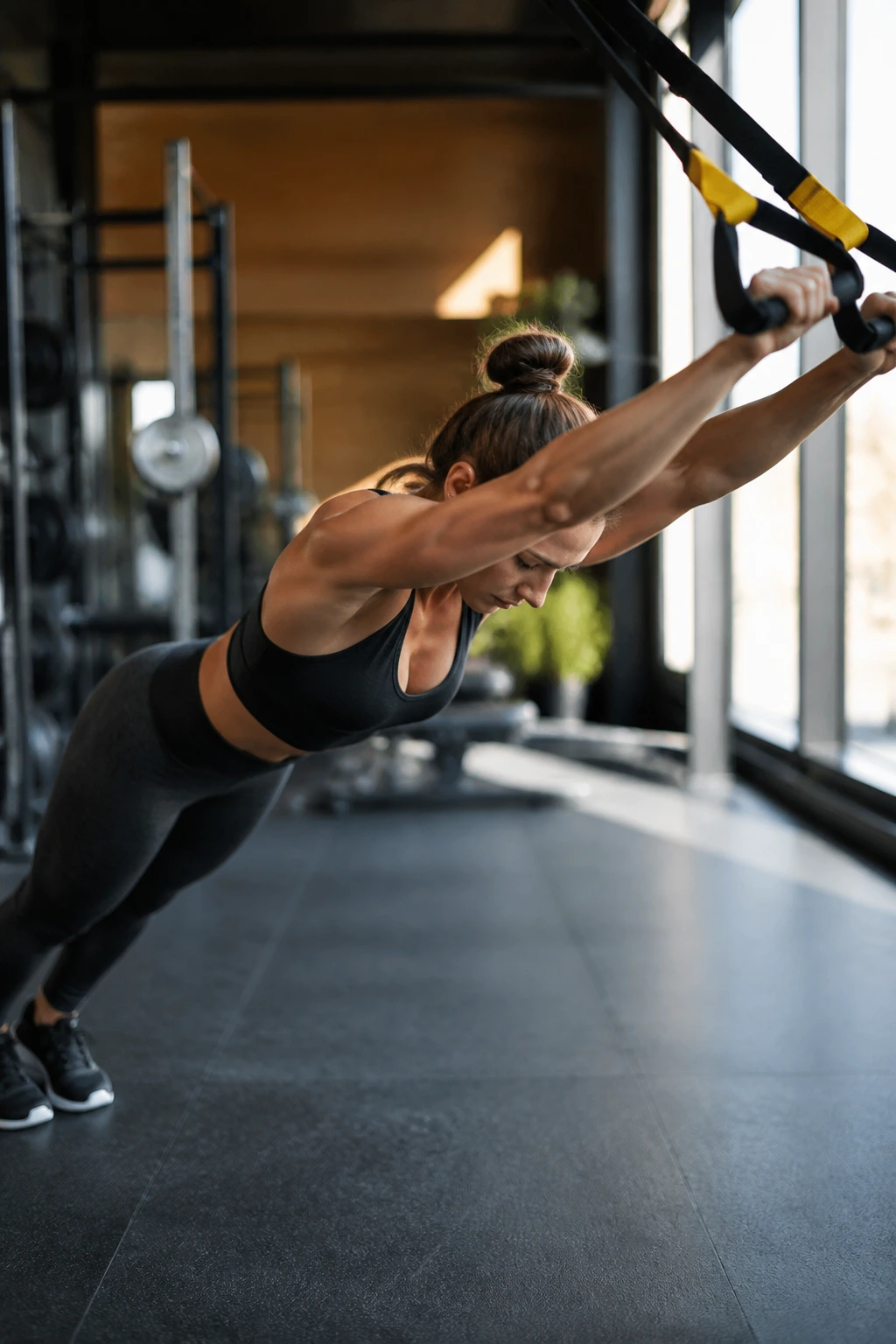
Suspension trainer triceps extensions punish sloppy form immediately.
Set the straps high, grab the handles, and lean your body forward so you’re at an angle. Bend the elbows and let your forehead drift between your hands, then extend back to straight arms while keeping the body in one long line. The exercise looks a lot like a standing skull crusher, except the instability makes every weak point obvious. If your core gives out, the triceps get less work. Simple and annoying.
The angle controls the difficulty. Walk your feet forward to make it harder. Step back to make it easier. That makes the move useful for a lot of strength levels, and it’s one reason TRX-style work sticks around in arm training. If you can own this movement, your push-up pattern usually improves too.
Aim for 3 sets of 8 to 12 reps with a clean pause at the bent-elbow position. If your shoulders feel shaky, shorten the range and slow the lowering phase. The straps will tell you the truth fast.
Pick two or three of these and train them hard enough to matter. One overhead move, one pressdown or band variation, and one bodyweight or pressing exercise is a solid mix. That combination does more for the back of the arm than chasing the same easy set over and over, and it leaves you with elbows that still want to show up for the next workout.
