



A newborn changes the math. The tidy workout plan you had before birth does not survive night feeds, healing tissue, or a core that feels oddly disconnected from the rest of you. That is why postpartum fitness routines have to be smaller, calmer, and a lot more honest than the usual “get back in shape” advice.
If you had a C-section, tearing, pelvic floor pain, or a delivery that left you feeling shaky, the first move is not grit. It’s clearance, then caution. Leakage, heaviness, bulging along the midline, or a pulling feeling near a scar are all signs to back off and get checked, not push through because a calendar says you should.
The best routines for new moms rarely look impressive. A five-minute breathing drill can matter more than a sweaty circuit, because breathing down into the ribs helps the pelvis, the abs, and the nervous system settle. Walking counts. So does standing from a chair with control. So does strength work that doesn’t make your abdomen dome or your back steal every rep.
What follows is a stack of routines that move from gentlest to more demanding, so you can pick the one that fits your stage, your energy, and the kind of day you got handed. Start where your body feels steady. The first one is the one most new moms need before anything else.
1. The 5-Minute Postpartum Fitness Routine That Starts Everything Else
Before squats, before planks, before you chase sweat, the breath has to settle. This little reset looks almost too easy, which is exactly why people skip it. They shouldn’t.
Lie on your back with your knees bent, or sit tall on the edge of the bed if the floor feels like too much. One hand goes on your ribs, one on your lower belly. Inhale through your nose for about 4 seconds, then exhale for 6 seconds and let the ribs soften down. That exhale is the money part. It helps the deep core and pelvic floor work together instead of bracing like you’re about to get punched.
What to Do
- Take 5 slow breaths with your hands on your ribs.
- On each exhale, think “lift and soften” in the pelvic floor, not a hard squeeze.
- Add 5 gentle pelvic tilts if your lower back feels tight.
- Finish with 3 shoulder rolls in each direction.
Best tip: if your belly pushes up into a dome when you exhale, shorten the range and make the breath smaller. Small is fine. Small is smart.
2. Stroller Walk Intervals for Days That Feel Messy
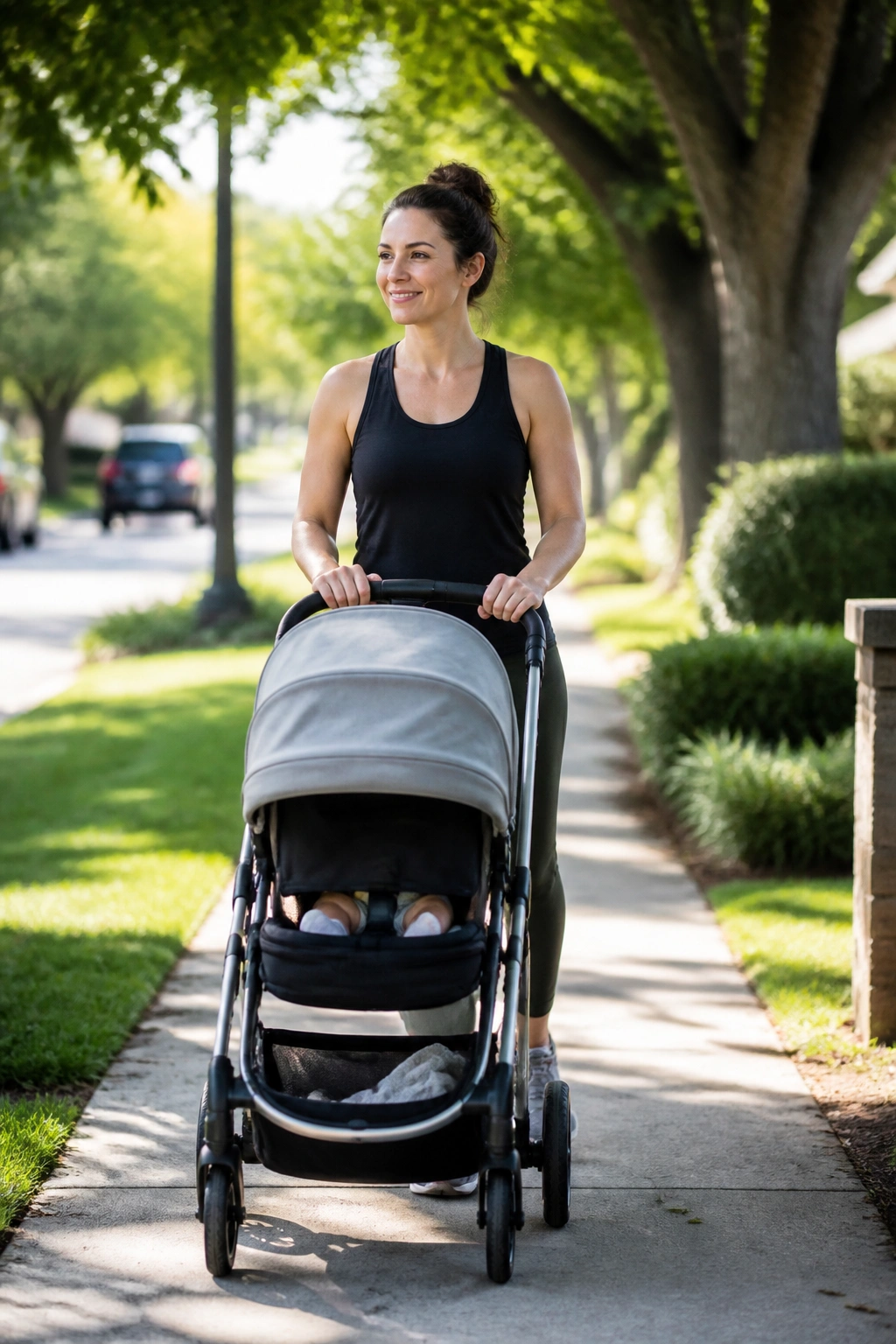
Walking is not the “easy option” here. It’s the workhorse.
A stroller walk gives you movement, daylight, and a rhythm that doesn’t demand perfect sleep or a quiet room. The trick is to stop treating it like a casual wander. Give it shape. Try 2 minutes easy, 1 minute brisk for 6 to 10 rounds, depending on how much time the baby gives you before the next meltdown.
Keep your shoulders loose and your hands light on the stroller. If you lean forward and hang your weight into the handle, your neck will complain later. A flat route is fine, but a gentle hill does a nice job waking up the glutes and core without turning the outing into a race.
One honest reason this works so well: you can bail early without “failing” the workout. A 12-minute loop still counts. So does turning around when the nap ends three blocks from home. That’s real life.
3. Pelvic Floor and Deep Core Reconnect for the First Weeks Back
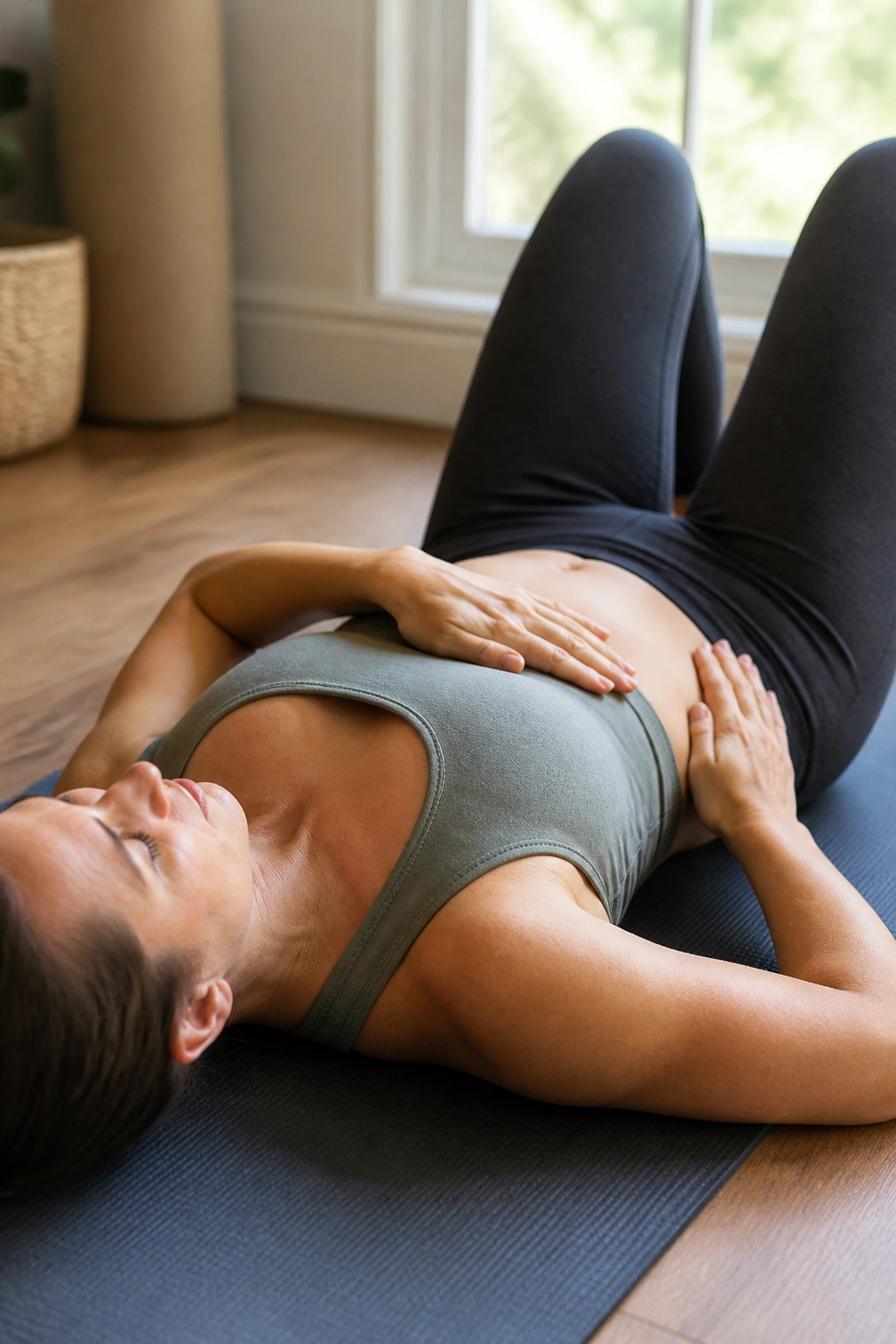
Why does a crunch feel wrong after birth? Because the job right now is not to smash the abs into submission. It’s to teach the deep system to turn on again without pressure shooting downward.
Start with the simplest setup you can tolerate: lying on your back, knees bent, feet flat. Take a slow inhale, then exhale and gently draw the lower belly inward as if you’re closing a zipper from pubic bone toward your ribs. Keep the effort at about 20 to 30 percent. If it feels like a hard grip, you’re doing too much.
How to Use It
- 5 breaths with ribcage expansion
- 6 heel slides on each side
- 8 seated knee lifts while exhaling
- 5 gentle pelvic floor lifts at the end, then relax fully
That last part matters. Relaxing is part of the rep. A tight, clenched pelvic floor is not stronger just because it’s tired. If anything feels heavy, stop and simplify. You are training control, not proving toughness.
4. Chair-Supported Lower Body Strength You Can Do in Socks
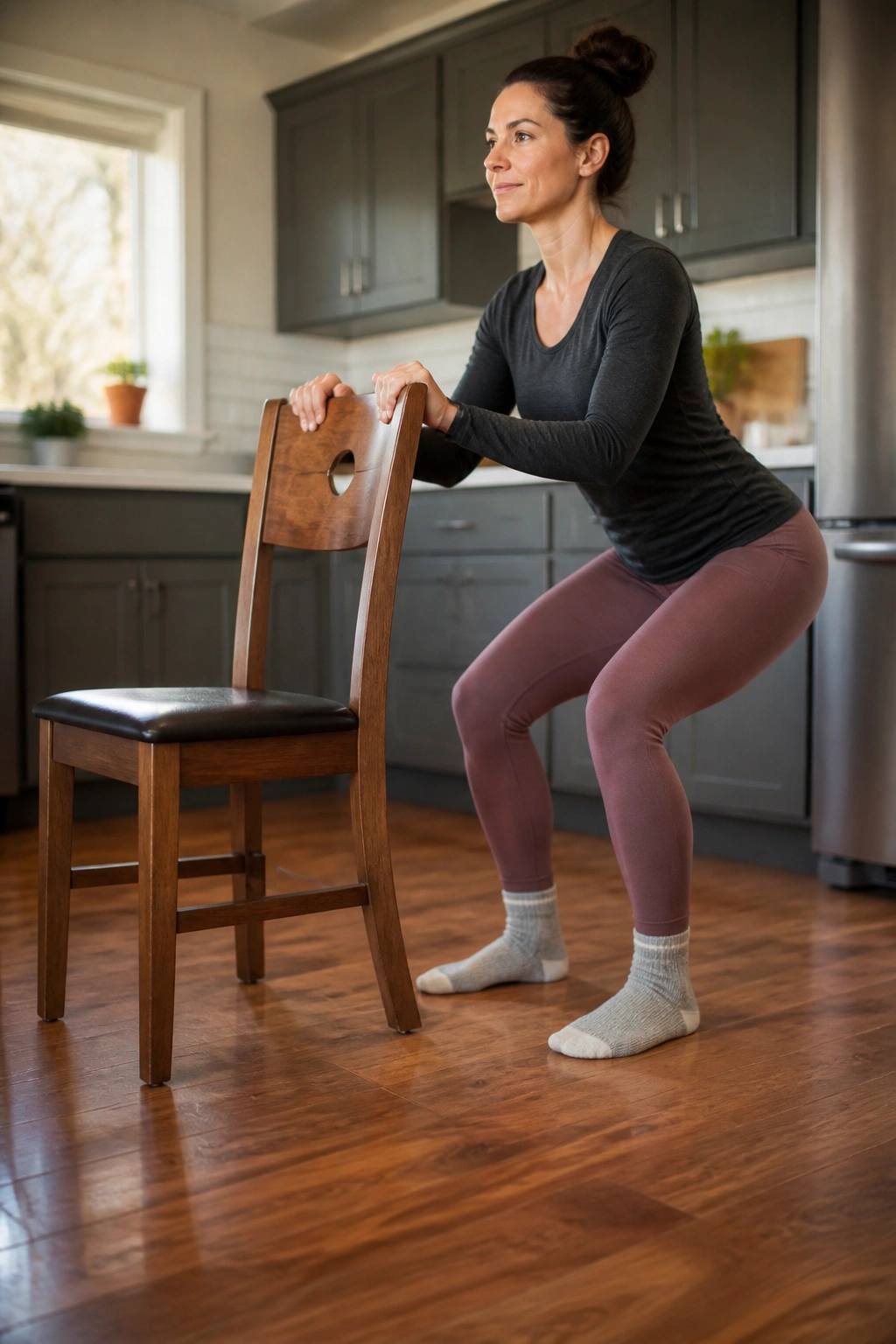
A kitchen chair has saved more workouts than most expensive gear ever will.
This routine is for the days when you want your legs to remember how to work without asking your whole body to put on a show. Stand in front of a sturdy chair, feet about hip-width apart, and move with control. The pace should feel almost annoyingly slow at first.
The Quick Circuit
- Sit-to-stand: 8 reps
- Split squat hold with one foot back: 15 seconds each side
- Calf raises: 12 reps
- Wall sit: 15 to 20 seconds
Do 2 rounds with about 45 seconds of rest between moves. Keep the knees tracking over the second or third toe, and let the chair catch you only as low as you need. If your hips feel wobbly, shorten the range and slow down even more.
The point is not to get wrecked. The point is to get up and down with less drama than yesterday.
5. Wall and Counter Upper Body Work for Carrying, Feeding, and Reaching
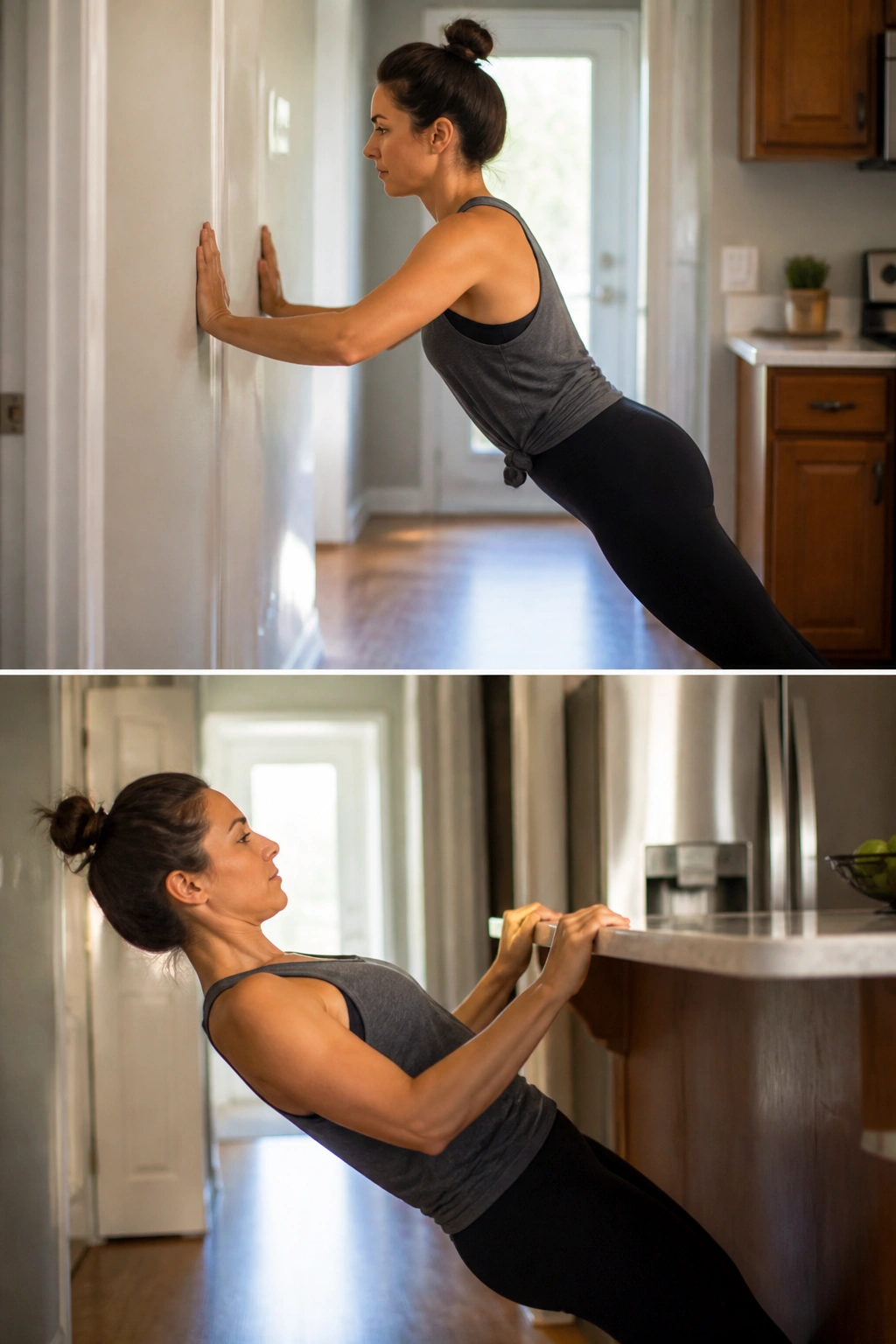
The neck knows. So do the shoulders.
Feeding, rocking, lifting, and reaching into a crib can make the upper body feel like it’s been in one long bad posture contest. A regular push day at the gym is too much for some new moms, but a smart wall-based session hits the same muscles without the strain.
Start with wall push-ups. Hands a little wider than shoulders, body in one line, elbows at about 45 degrees. Then add counter rows with a light resistance band or even a towel pulled isometrically if you’re working around a sleeping baby. Finish with shoulder blade squeezes and a gentle chest opener in a doorway.
A tiny detail that matters: keep your ribs from flaring up like a rooster tail. If the chest thrusts forward every time you press, the neck will take over and the workout turns into a shrug-fest.
Three rounds of 8 push-ups, 10 rows, and 8 slow shoulder blade squeezes is enough. Boring? Maybe. Useful? Absolutely.
6. Babywearing Marches and Posture Resets for Short Windows
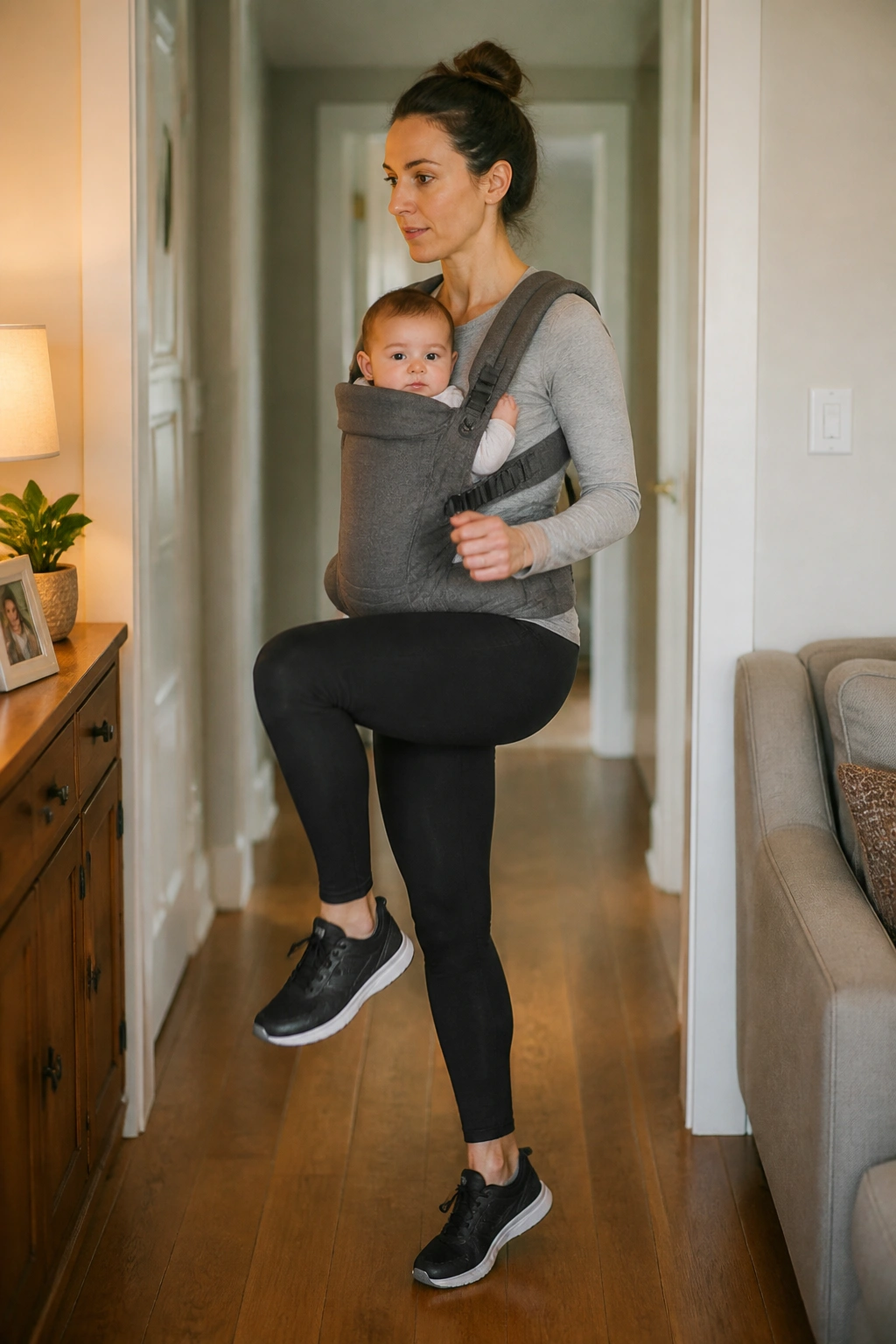
Unlike a run, this one lets you keep the baby close and your hands mostly free.
Babywearing marches work best when you treat them like a posture drill first and a cardio drill second. Put the carrier on snugly, stand tall, and check that your ribs are stacked over your pelvis instead of thrusting forward. Then march in place for 30 seconds, rest for 15, and repeat for 6 to 10 rounds.
Add small side steps, heel lifts, or a slow knee raise if the room allows it. The movement should feel smooth, almost quiet. If the carrier shifts, the bra line creeps upward, or your low back starts arching hard, stop and reset the fit.
Good Fit Cues
- Baby sits high enough to kiss
- Shoulder straps feel even
- Waistband is snug, not crushing
- Your breath stays easy
This routine is best for parents who need motion but can’t leave the baby alone for half an hour. It’s a tidy little fix. Not glamorous. Very useful.
7. Resistance Band Full-Body Circuit That Fits Beside a Play Mat
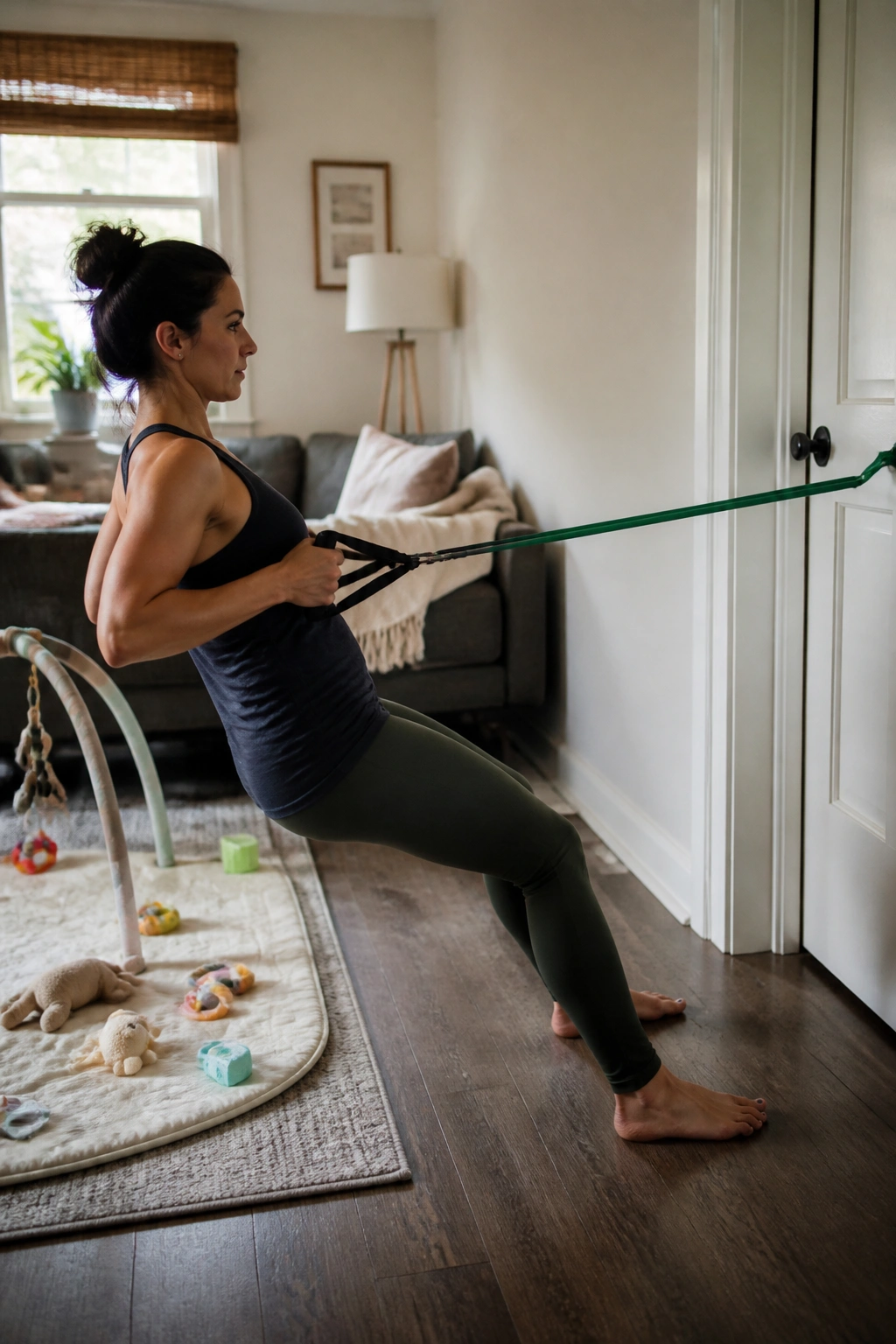
A band and a small patch of floor can cover more than people think.
This is the workout I’d hand to a mom who says, “I need something real, but I have exactly 14 minutes.” Loop the band around a safe anchor or use it under your feet, then move through a circuit that hits the upper body, lower body, and core without wrecking you.
One Round
- Band rows: 12 reps
- Mini squats: 10 reps
- Lateral band walks: 8 steps each way
- Standing band press: 8 reps
Do 2 to 3 rounds, resting 30 to 45 seconds between rounds. Keep the band tension moderate; you should feel the muscles working by the middle of the set, not the joints getting yanked around.
A small warning: don’t anchor a band to something flimsy because it “seems fine.” It needs to be sturdy. A snapped band can sting, and that’s a stupid way to ruin a decent workout.
8. A Postpartum Fitness Routine for Nap Time Yoga
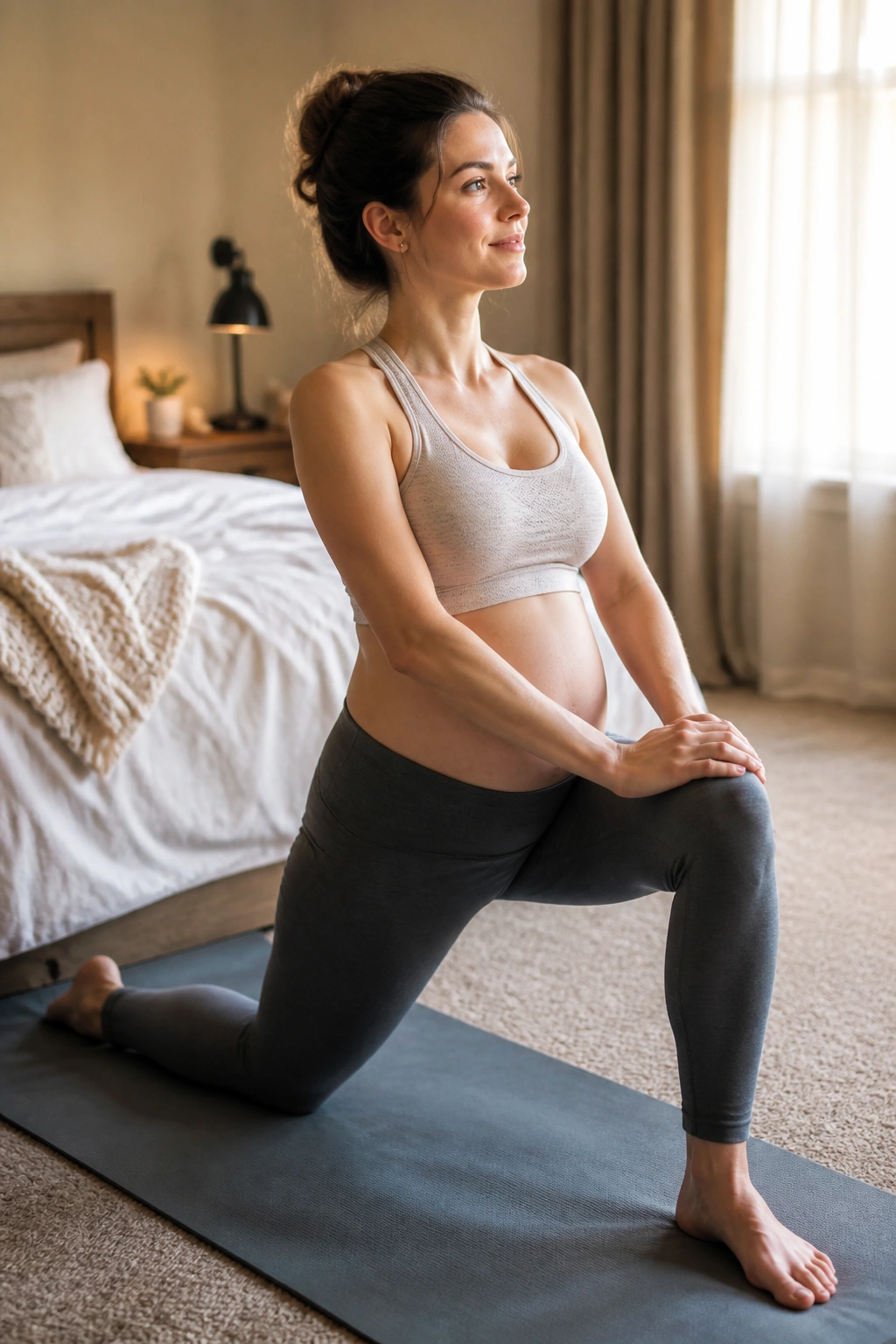
Shoulders up by the ears. Lower back tight. One hip feels like it carries the whole baby, the bag, and the emotional load too.
This is the routine for that day. Keep it slow and give yourself enough room to breathe through the shapes. Begin with cat-cow for 6 slow rounds, moving the spine one vertebra at a time instead of flinging the chest around. Then thread one arm under the other for 30 seconds on each side, and let your upper back actually soften.
Three Moves to Keep
- Wide-knee child’s pose with 5 long breaths
- Low lunge with the back knee down, 20 seconds each side
- Seated side bend for 3 breaths per side
If your scar tugs or your belly domes when you twist, cut the range in half. No prize is waiting at the end of a deep stretch. The prize is that you stand up feeling less pinched and more like yourself.
This routine won’t make you sweat much. That’s the point.
9. The 15-Minute Dumbbell Routine for When You Miss Strength Training
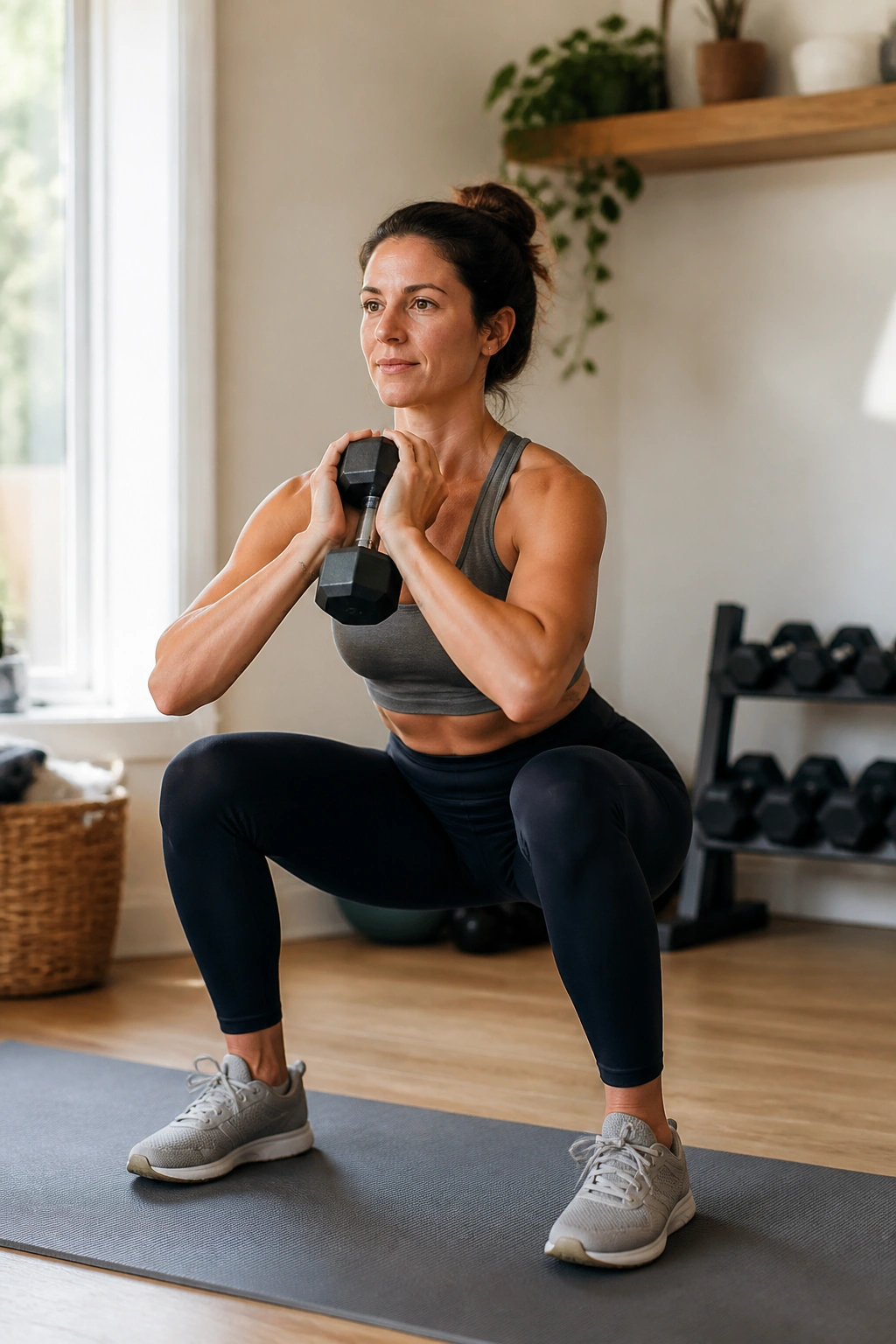
A pair of light dumbbells can bring back a sense of normal faster than people expect.
The trick is to choose weights that let you stay crisp. If your last two reps are slow but clean, you’re in the right zone. If your ribs flare, your neck tightens, or the weights get thrown around like groceries in a trunk, they’re too heavy for today.
One Simple Sequence
- Goblet squat to a box or chair — 8 reps
- One-arm row — 10 reps each side
- Floor press — 8 reps
- Romanian deadlift — 8 reps
Do 2 rounds. Rest about 45 seconds between exercises if you need it, or keep moving if you feel steady. The box squat is there for control, not because you can’t squat. The floor press gives the chest and triceps work without a lot of strain on the shoulders.
It’s a straightforward session. That’s the appeal. You finish feeling strong, not scraped thin.
10. Low-Impact Cardio Without Jumping or Slamming the Floor
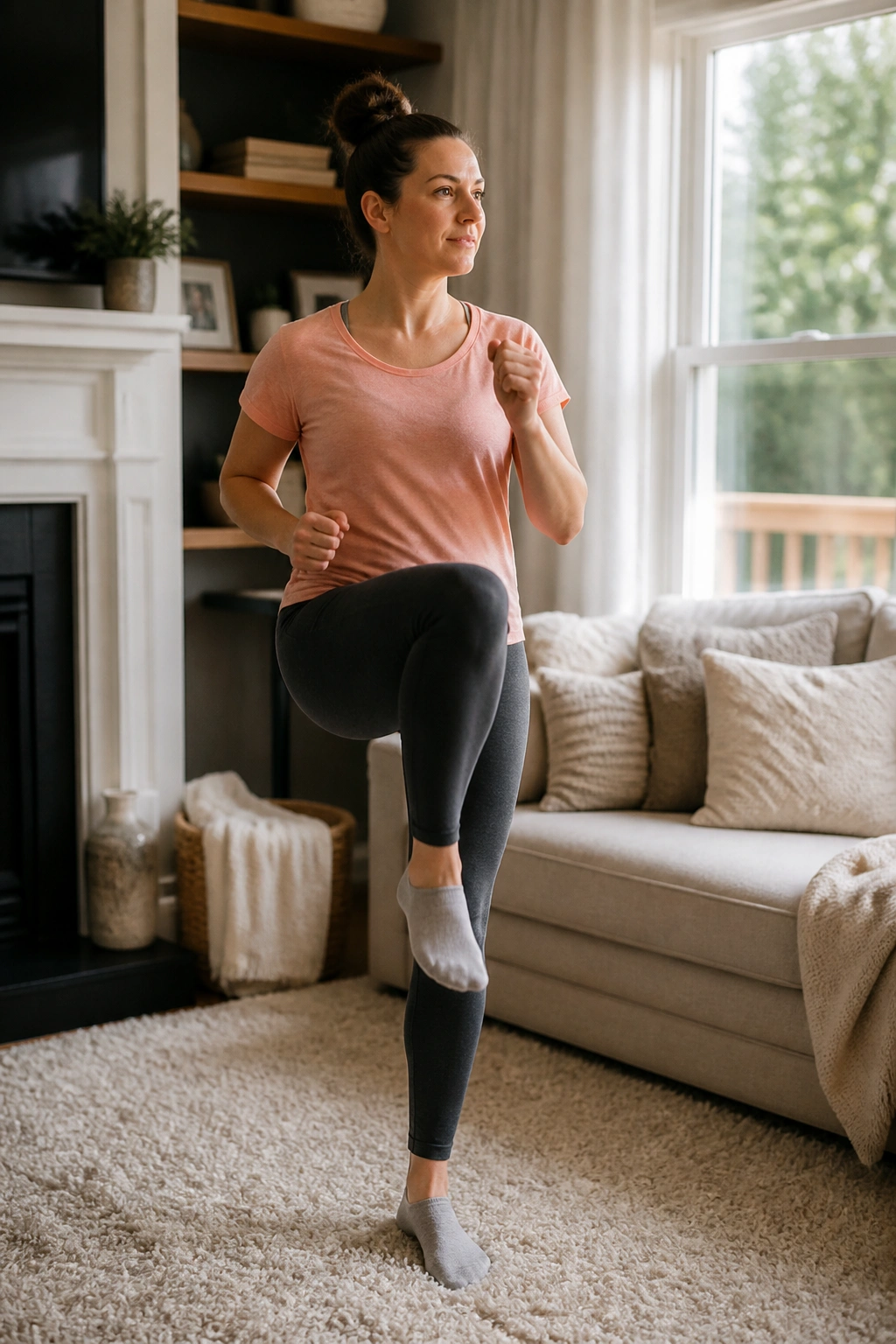
Can cardio be quiet? Yes. And for a lot of new moms, quiet is a blessing.
You don’t need jumping jacks or burpees to get your heart rate up. Try 30 seconds of work, 30 seconds easy for 8 to 12 minutes. March in place, step side to side, shadow box, tap one foot forward and one back, then walk around the room while catching your breath.
A Simple 12-Minute Format
- 1 minute march
- 1 minute side step
- 1 minute shadow box
- 1 minute easy walk
- Repeat 3 times
That’s it. If the pelvic floor feels heavy, shorten the work periods and slow the pace. If your energy is flat, use a smaller range and stay with the march. Cardio that doesn’t punish your body is still cardio.
A useful rule: if you can’t talk in short sentences, you’re probably pushing harder than postpartum recovery wants that day.
11. Glute Bridge and Hip Stability Work That Helps Your Back
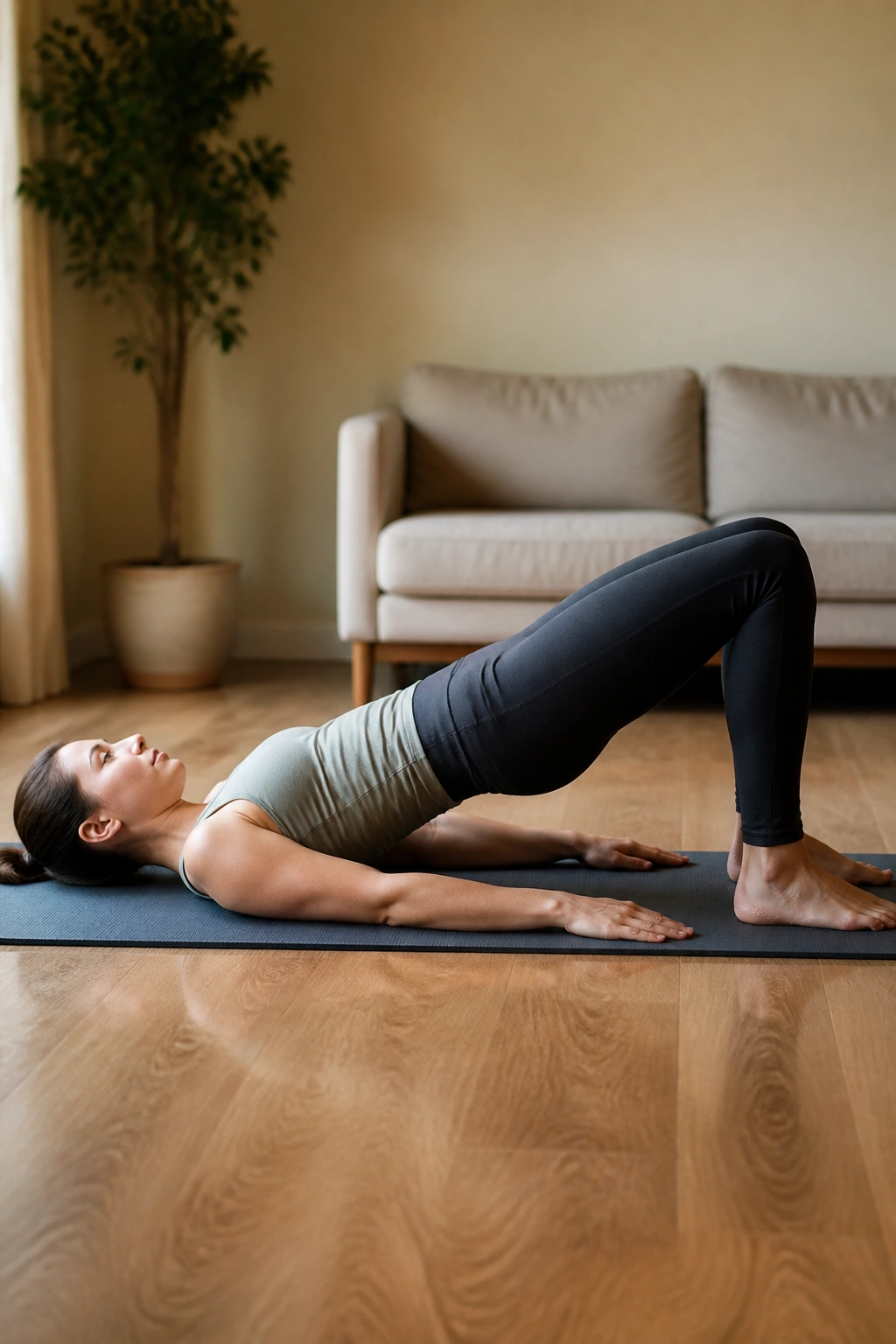
Your glutes do more than fill out jeans. They help your back stop doing everyone else’s job.
When the hips get sleepy, the low back and pelvic floor tend to overwork. That’s especially common when you’re carrying a baby on one side all day and standing from the floor a hundred times. A bridge routine brings the hips back into the conversation.
Why Glutes Matter
A strong glute set helps with stairs, loading the car seat, and standing up from the couch without the slow groan that starts to feel permanent.
What to Do
- Glute bridges: 10 reps, pause for 2 seconds at the top
- Clamshells: 10 reps each side
- Side-lying leg lifts: 8 reps each side
- Mini bridge holds: 15 seconds
Keep your feet close enough that your hamstrings don’t take over. The lift should come from the back of the hips, not from flinging your ribs upward. If that happens, lower the hips and try again with less range.
A bridge done well feels tidy. Almost dull. That’s good.
12. Mobility for the Neck, Shoulders, and Upper Back
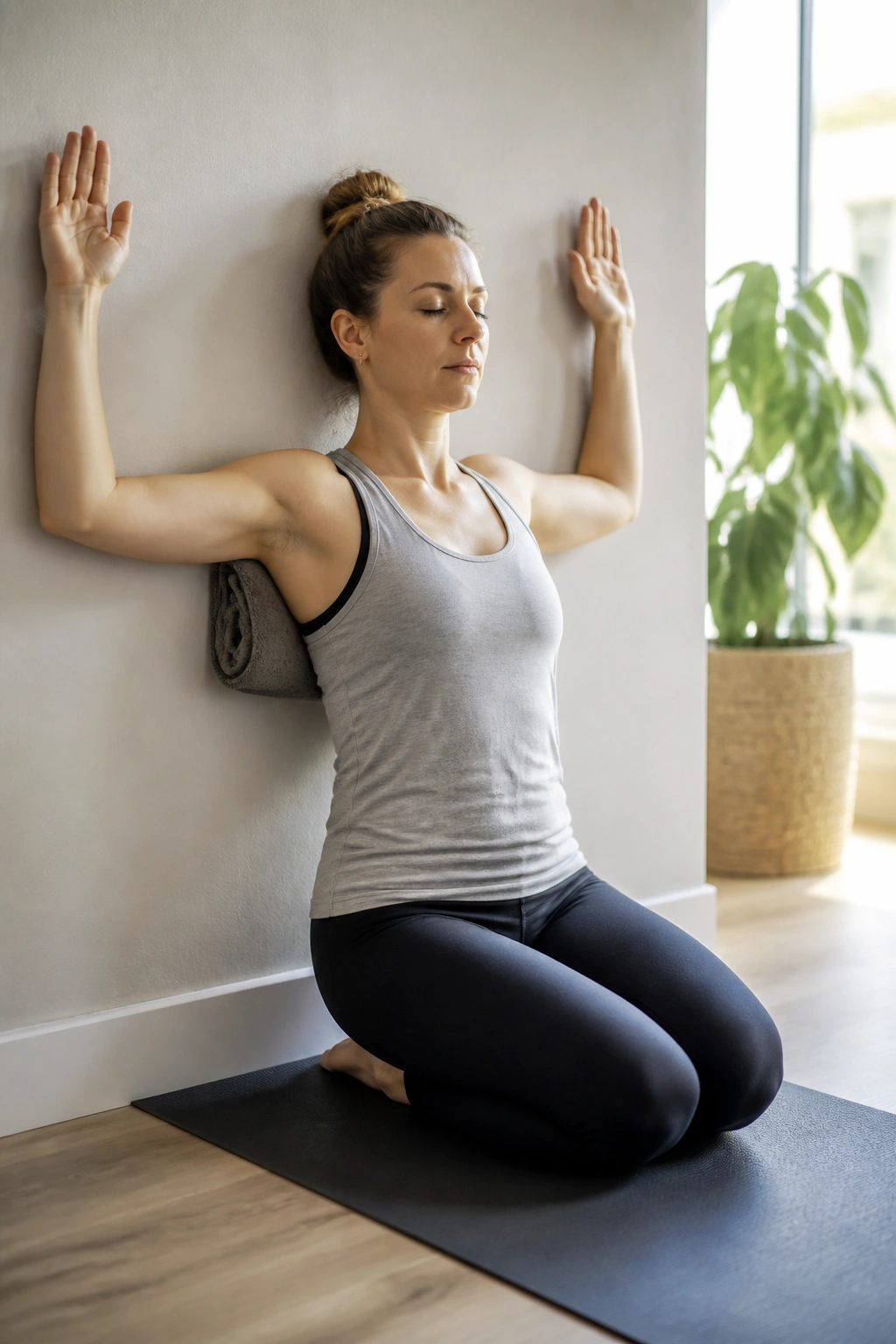
After a long feeding session, the upper body can feel folded in half.
This is one of those routines that sounds too small to matter until you do it. Start with neck nods—not rolls, just small yes-and-no motions—to reduce the stiff, caught feeling around the base of the skull. Then do 10 shoulder rolls back and 10 forward, slowly enough that you can feel the scapula moving.
A towel rolled under the upper back can make a big difference too. Lie back with it placed across the shoulder blades, breathe for 5 slow breaths, and let the chest open without forcing the ribs to flare.
Move List
- Neck nods: 5 each direction
- Shoulder rolls: 10 each way
- Wall angels: 6 reps
- Wrist circles: 10 each direction
- Thoracic extension over a rolled towel: 5 breaths
Start on the side that feels tighter. It usually is.
13. Core Stability on the Floor Without Crunches
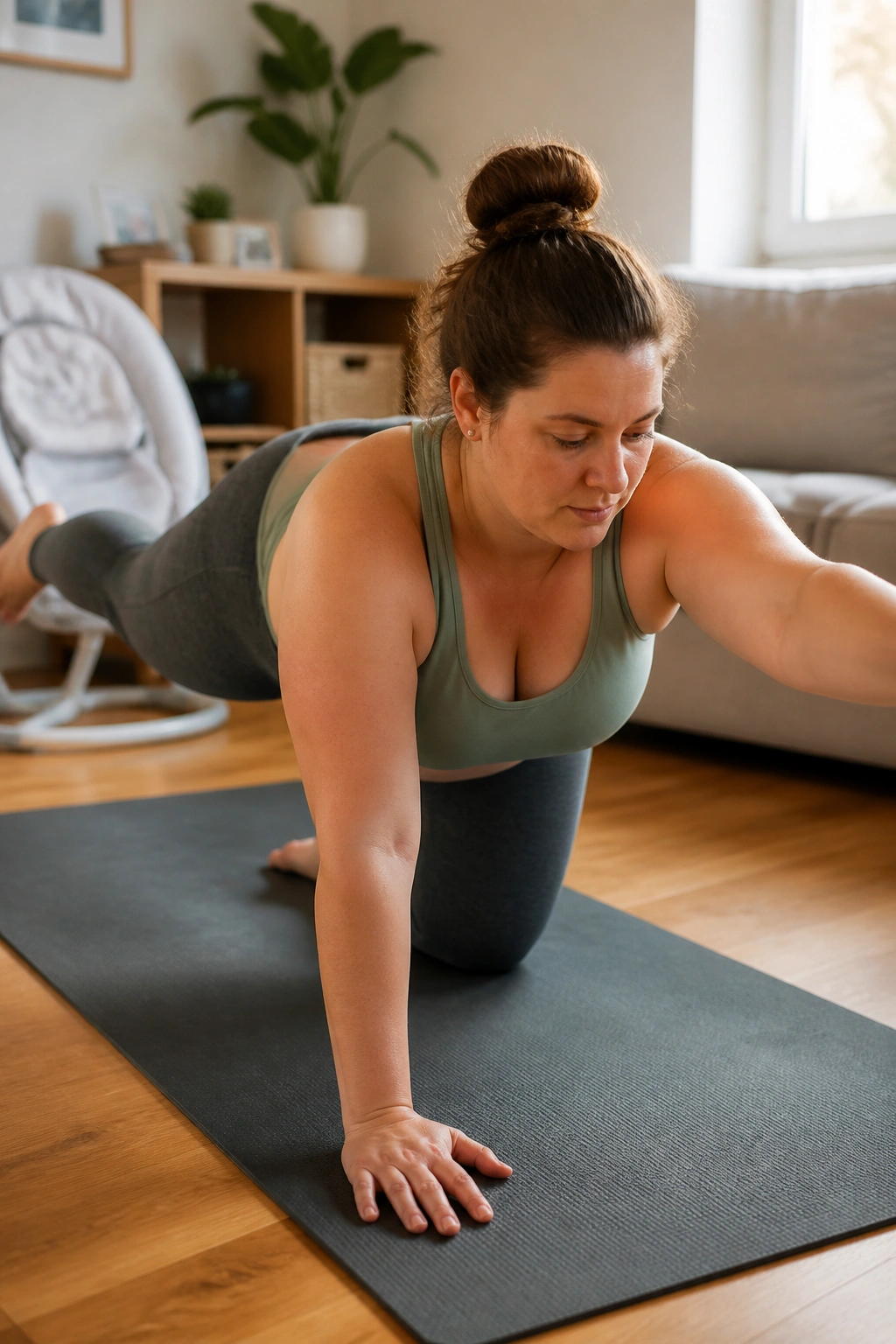
Crunches are loud. Postpartum core work doesn’t need to be.
What the body usually needs here is anti-movement: the ability to hold steady while limbs move. That’s a better fit for healing tissue, a cautious pelvis, and the kind of day where the baby may interrupt every third rep anyway.
Exercises That Earn Their Keep
- Heel taps with one foot at a time: 6 each side
- Bird dog arm reach only: 6 each side
- Dead bug arms only: 8 reps
- Knee-supported side plank: 15 seconds each side
Keep the belly from doming upward. If you see a ridge forming down the center, make the move smaller or stop the set. You are not trying to flatten your stomach. You are trying to teach your trunk to stay organized under load.
That shift matters more than most people think. It’s the difference between “I worked my abs” and “my body handled the day better.”
14. Stair-and-Walk Intervals for the Mom Who Wants to Sweat
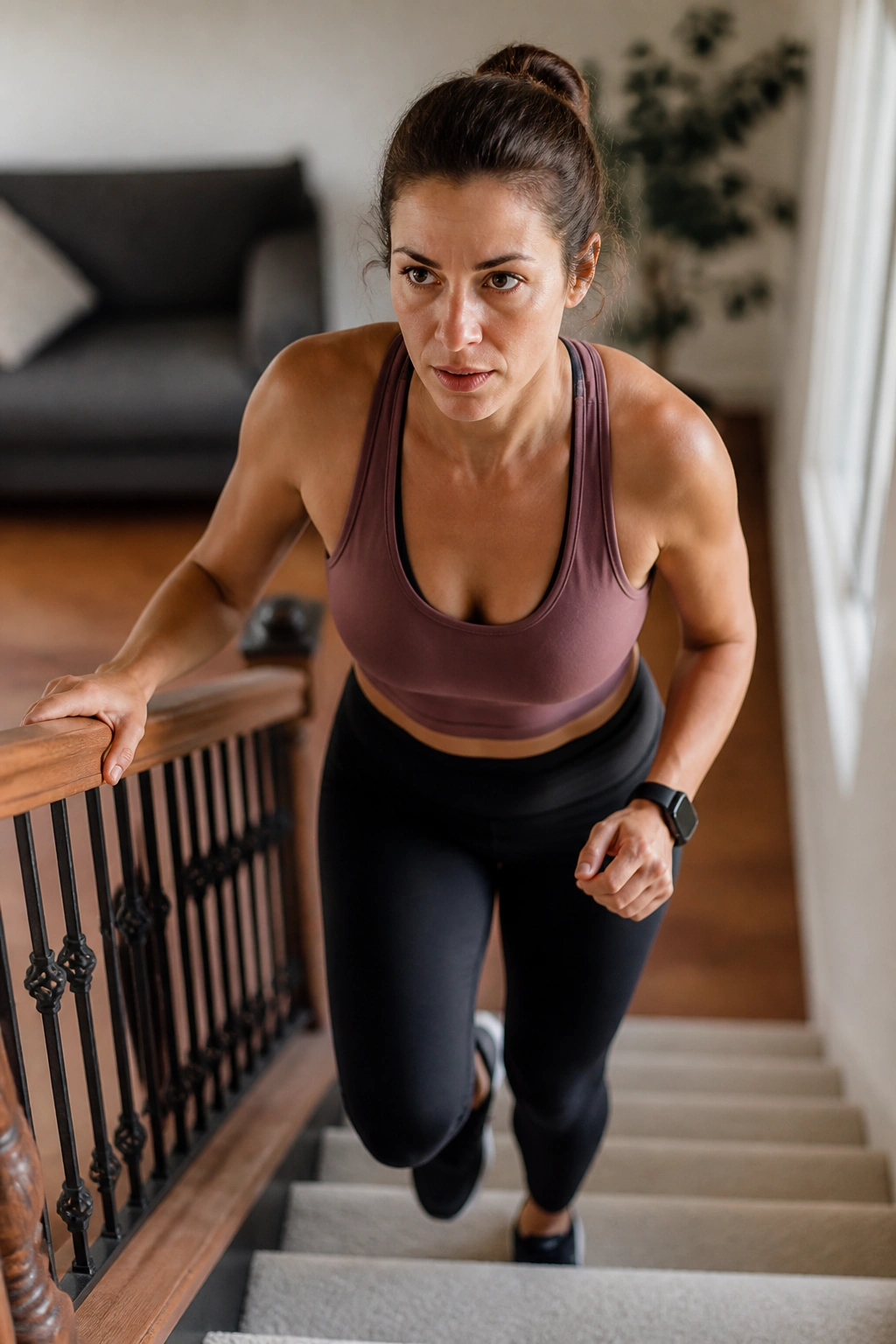
Sometimes you want a routine that feels like exercise, not rehab.
Stairs do that fast. They also demand balance, so this is not the routine to perform while holding a baby, a laundry basket, and your pride. Use the handrail. Wear shoes with grip. Keep the focus on form, not speed.
A Clean Format
- Walk up one flight at a steady pace
- Walk down carefully
- Rest or walk flat for 60 to 90 seconds
- Repeat 6 to 8 times
If you’re doing this inside, a single staircase works fine. If you’re outside, a hill gives the same kind of effect with less pounding than running. Keep your torso tall and let the glutes push you up rather than yanking yourself with the lower back.
This one should leave you breathing harder, but not wrecked. If your knees chatter or your pelvis feels unstable, switch to flat walking that day. No shame in that at all.
15. Mini Pilates for the Midline
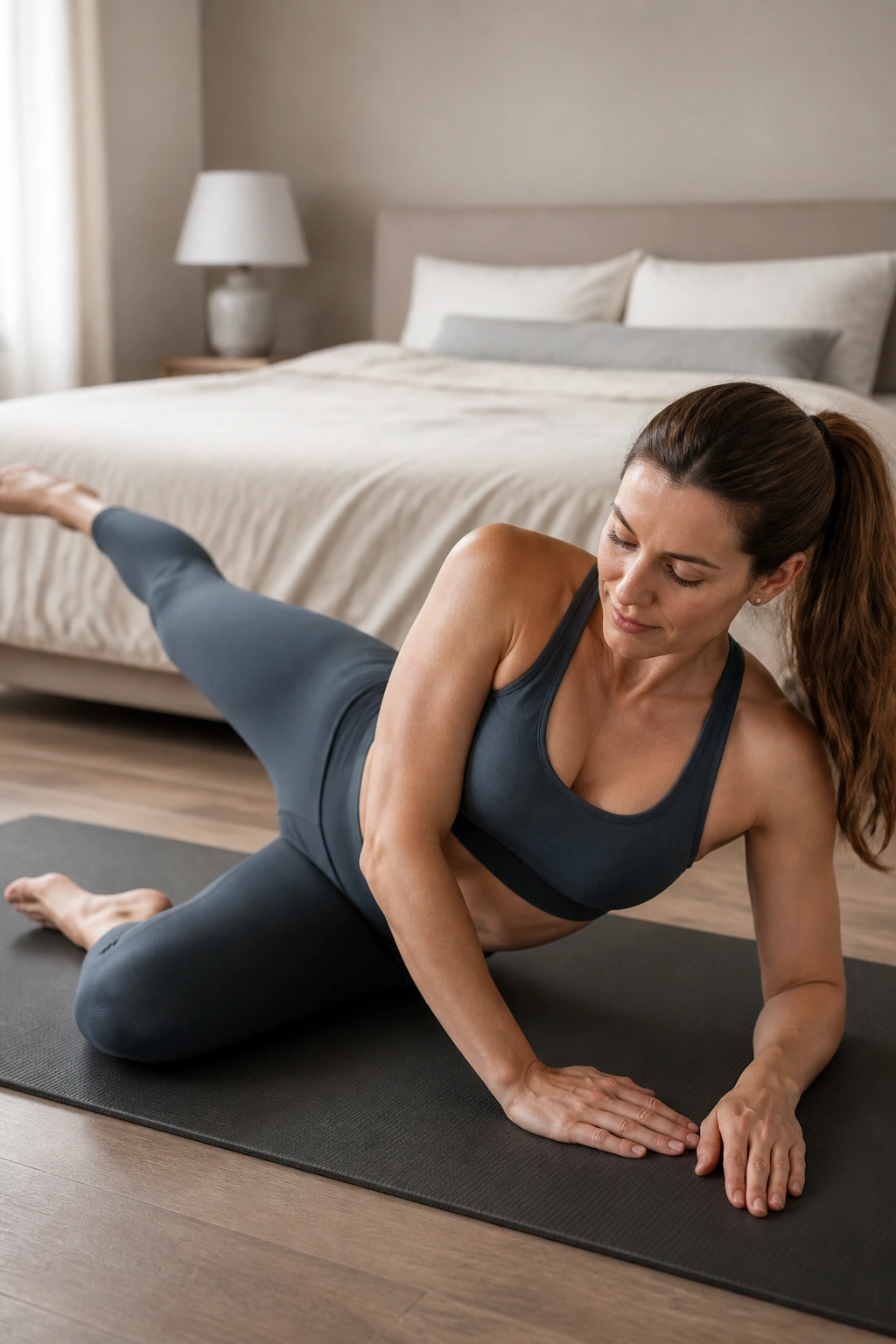
Slow core work can feel boring. It also tends to work.
Pilates-style movement shines when you want controlled reps, small ranges, and a clear feel for what the trunk is doing. The point here is not fancy choreography. It’s precision. A tiny move done well beats a bigger move that turns into a wobble.
How to Get the Most From It
- Pelvic clock: 5 slow circles
- Toe taps: 6 each side
- Clamshells: 10 each side
- Side-lying leg circles: 5 each direction
Keep your exhale longer than the inhale. If a move makes the belly push out in the middle or the low back arch hard, scale it down. A smaller range is still training.
This is a good choice for moms who want to rebuild the center without jumping straight into hard lifting or fast cardio. It also pairs well with a short walk later in the day, if life allows that kind of neatness.
16. Rest-Day Movement for Sleep-Deprived Mornings

Some days are not training days. They are rescue days.
That does not mean you sit still and stiffen up. It means you move enough to feel human, then stop. Five minutes can be enough when sleep has been chopped into pieces and your brain feels like wet cotton.
Try a few ankle pumps, gentle marching in place, and a doorway chest stretch. Add a child’s pose with a pillow under the hips if the floor feels good, or just sit on the bed and breathe while rolling the shoulders back.
One sentence matters here: doing a little is better than doing none. Not as a slogan. As a practical survival tool.
If you keep this kind of reset nearby, you’re less likely to turn a tired day into an all-or-nothing spiral.
17. A Two-Day Strength Split That Keeps You Consistent
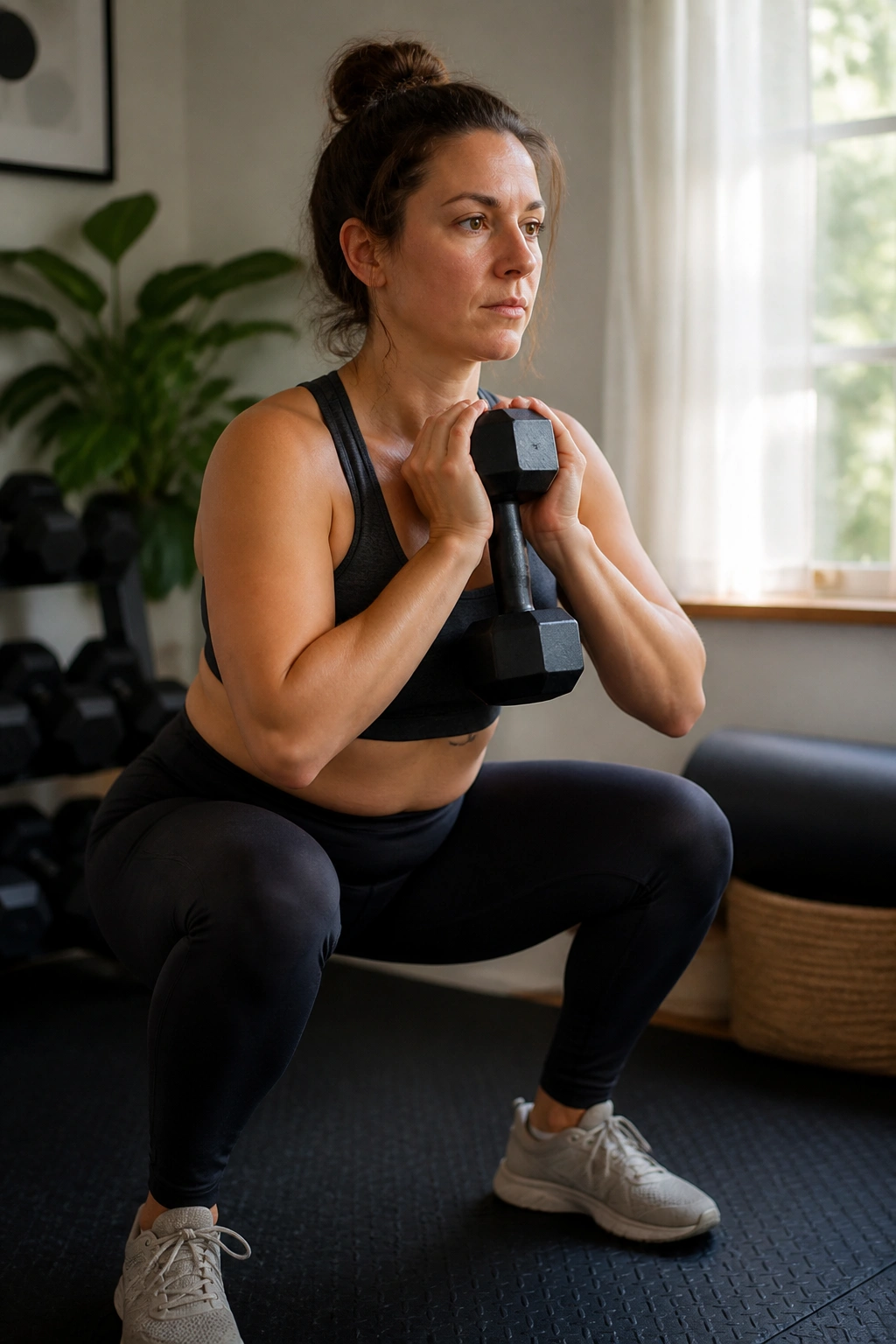
Trying to cram everything into one heroic session is a trap.
A two-day split usually works better for new moms because it gives you enough structure without asking for a perfect schedule. Day A hits squat and push patterns. Day B covers hinge, pull, and core. Each session can live in 20 minutes if you keep the rest tight.
Day A
- Chair squat or goblet squat: 8 reps
- Wall or incline push-up: 8 reps
- Glute bridge: 10 reps
- Farmer carry with one or two light weights: 30 seconds
Day B
- Romanian deadlift: 8 reps
- One-arm row: 10 reps each side
- Side plank from knees: 15 seconds each side
- Step-up to a low step: 6 each side
If two sessions a week is all you can do, this is where I’d spend them. You get more from repeated, manageable strength work than from a rare, exhausting blowout that leaves you sore for three days.
18. The Return-to-Impact Postpartum Fitness Routine for Running, Jumping, and Faster Work

Impact should feel earned, not forced.
Before you add hops or a run-walk plan, look for a few clean signs: no leaking, no pelvic heaviness, no midline doming, and no sharp pain with brisk walking or stairs. You should also be able to do 20 comfortable calf raises per side and 20 minutes of brisk walking without symptoms flaring later.
Green Lights
- Walking feels steady
- The core stays flat under effort
- A small jump does not trigger pressure
- The pelvic floor stays quiet during the day
Red Flags
- Leaking
- Heaviness or dragging in the pelvis
- Pain near the scar or pubic bone
- A bulge or ridge down the abdomen
Start with marching, then tiny heel raises, then a few gentle pogo hops in place if everything still feels calm. After that, shift into short walk-jog intervals like 30 seconds easy jog, 90 seconds walk. Keep the first sessions short. Short is honest here.
If your body complains the next day, that is useful information, not a failure.
The Bottom Line
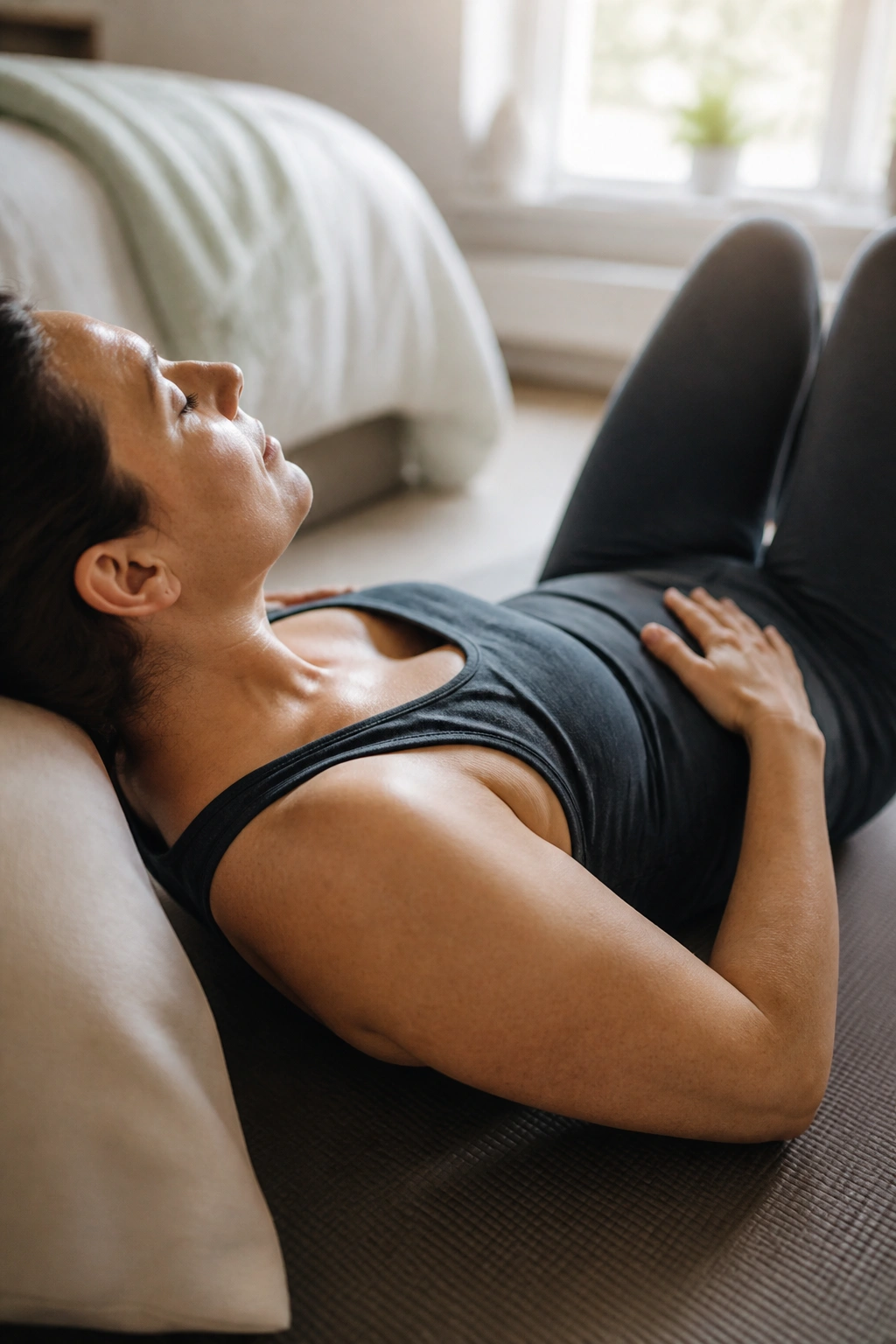
The best thing about postpartum training is also the least flashy part: it can start small and still matter. Breathing, walking, chair work, and light strength sessions are not consolation prizes. They’re the base layer.
If you only pick three routines, make them the breathing reset, the stroller walk, and one strength day. Those three cover recovery, conditioning, and the feeling that you’re getting your body back under your own terms. That combination carries more weight than any punishing “bounce back” plan ever will.
And if a workout feels like too much, cut it in half before you cut it out entirely. A five-minute version done often beats the perfect version you keep postponing.
