



An anxious day has a way of changing the breath before you even notice it. The chest creeps upward. The jaw tightens. The exhale turns short, and that is a lousy trade when your body is already acting like the fire alarm is going off.
Yoga breathing techniques for anxious days work because they give the nervous system a different rhythm to follow. Not a magical one. Not a perfect one. Just a steadier one, which is often enough to take the edge off a racing mind or a body that feels a little too loud.
There’s one catch, and it matters. Breath holds can feel useful for some people and irritating for others, especially when anxiety already has you feeling pinned down. If that happens, skip the hold and choose a softer pattern. No medals for forcing it.
The list below moves from easy exhale-based breathing to more structured pranayama, then into a few practices that add sound or gentle movement. Some are small enough to do at a desk. Some work best on a mat. A couple are better when you’re restless and don’t want to sit still for long. Start with the one that asks the least.
1. Lengthen the Exhale First
If your breath has turned shallow and choppy, don’t start by trying to “breathe deep.” Start by making the exhale longer than the inhale. That alone can change the feel of a rough moment fast enough to matter.
A simple version is inhale for 4, exhale for 6 through the nose. You can repeat that for 5 to 10 rounds, or longer if it feels steady. The inhale should stay quiet. The exhale should feel smooth, not squeezed.
What to notice
- Your shoulders may drop a little on the third or fourth round.
- The jaw often unclenches before the chest does.
- If your exhale feels shaky, shorten the count and keep it easy.
This is the one I reach for first. It asks almost nothing, and that’s the point. On anxious days, low friction matters more than perfect technique.
If even counting feels like too much, count only the exhale. Inhale normally, then let the breath leave a little longer than it came in. That’s enough.
2. Box Breathing for Racing Thoughts
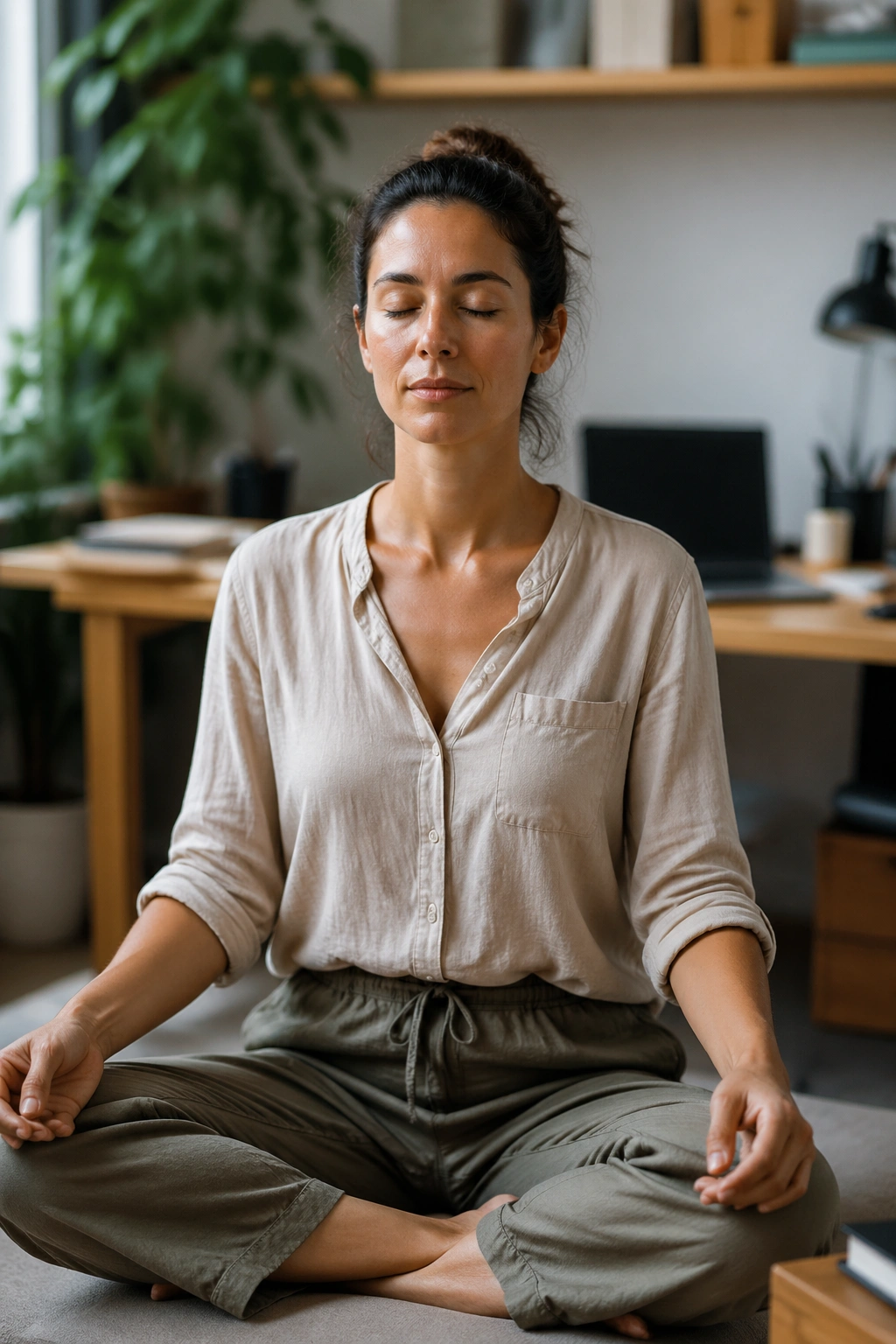
A square breath can be oddly reassuring when your mind feels like three tabs are open and one of them is blasting music. The rhythm gives your attention something clean and repetitive to hold onto.
The classic pattern is 4 in, 4 hold, 4 out, 4 hold. If that feels too tight, use 3-3-3-3. I’d rather see you do a softer version well than a stricter version with a clenched face and a tight throat. The body knows the difference.
Box breathing is useful when anxiety shows up as mental noise rather than physical panic. It gives the brain a job. Count. Pause. Count. Pause. That tiny bit of structure can help when you’re trying to answer email, sit in traffic, or stand in a grocery line that feels endless.
Skip the holds if they make you feel trapped. You can turn it into a “rectangle” instead: 4 in, 2 pause, 4 out, 2 pause. Less dramatic. Often more usable.
3. 4-7-8 Breathing When Sleepy Calm Feels Far Away
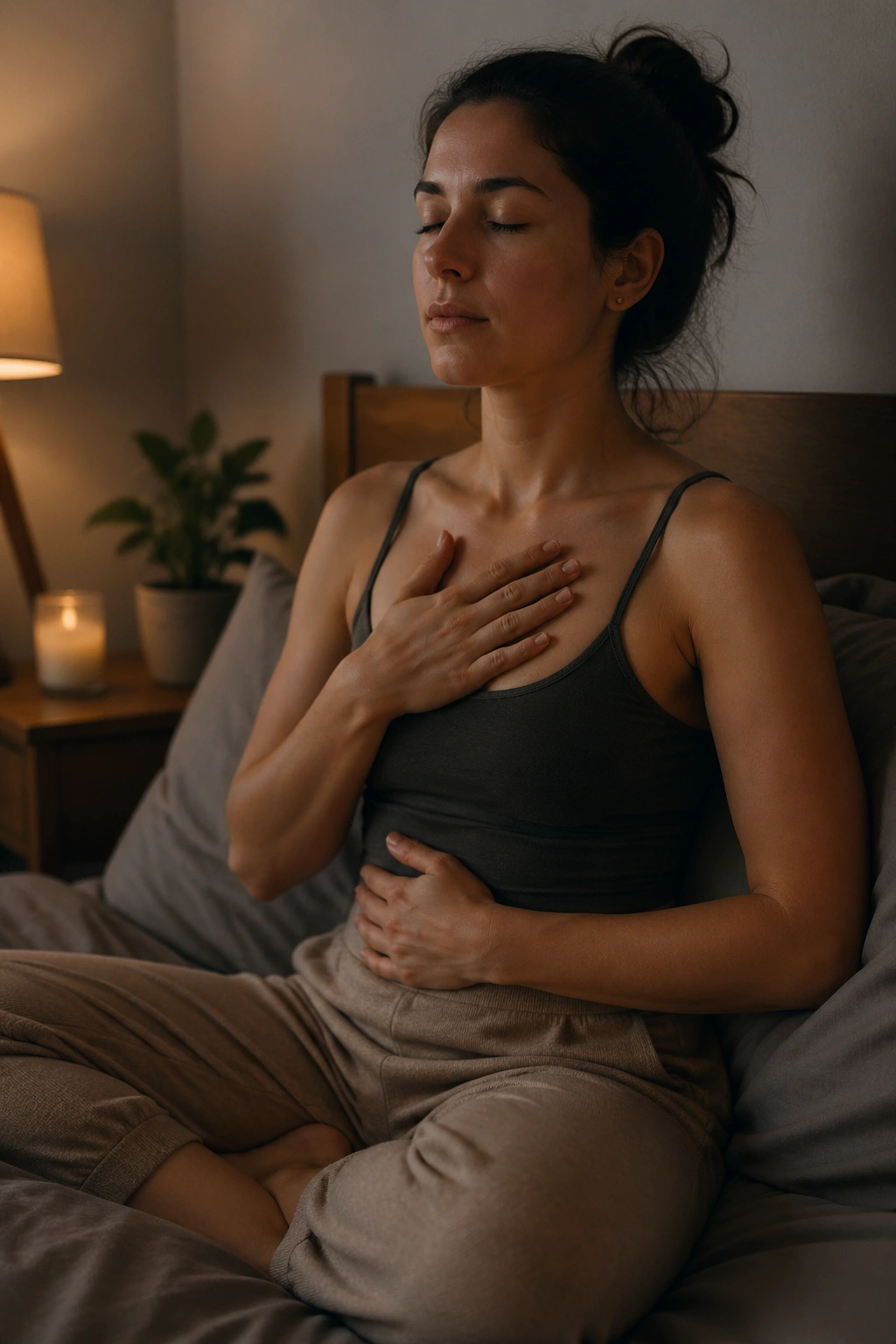
Why does a simple count feel so strong? Because the long exhale and the pause after it change the tempo fast. 4-7-8 breathing is one of those patterns that can feel almost heavy in the best way, which is why people often use it when they want to come down from a frazzled state.
Here’s the catch: the full version can be too much for some anxious bodies. If the 7-count hold makes your chest tighten, shorten it. Try 4 in, 4 hold, 6 out first, or even 4 in, 2 hold, 6 out. The point is not to impress anyone. The point is to make the breath feel less urgent.
A softer version
Sit with your back supported. Inhale quietly through the nose for 4 counts. Hold for 2 to 4 counts if that feels fine. Then exhale through the mouth or nose for 6 to 8 counts, like you’re slowly fogging a mirror but with almost no effort.
That’s it. Two or three rounds may be enough. Five is plenty.
If a breath hold makes you edgy, skip this one and come back to it on a calmer day. No need to wrestle with it.
4. Belly Breathing You Can Feel in the Ribs
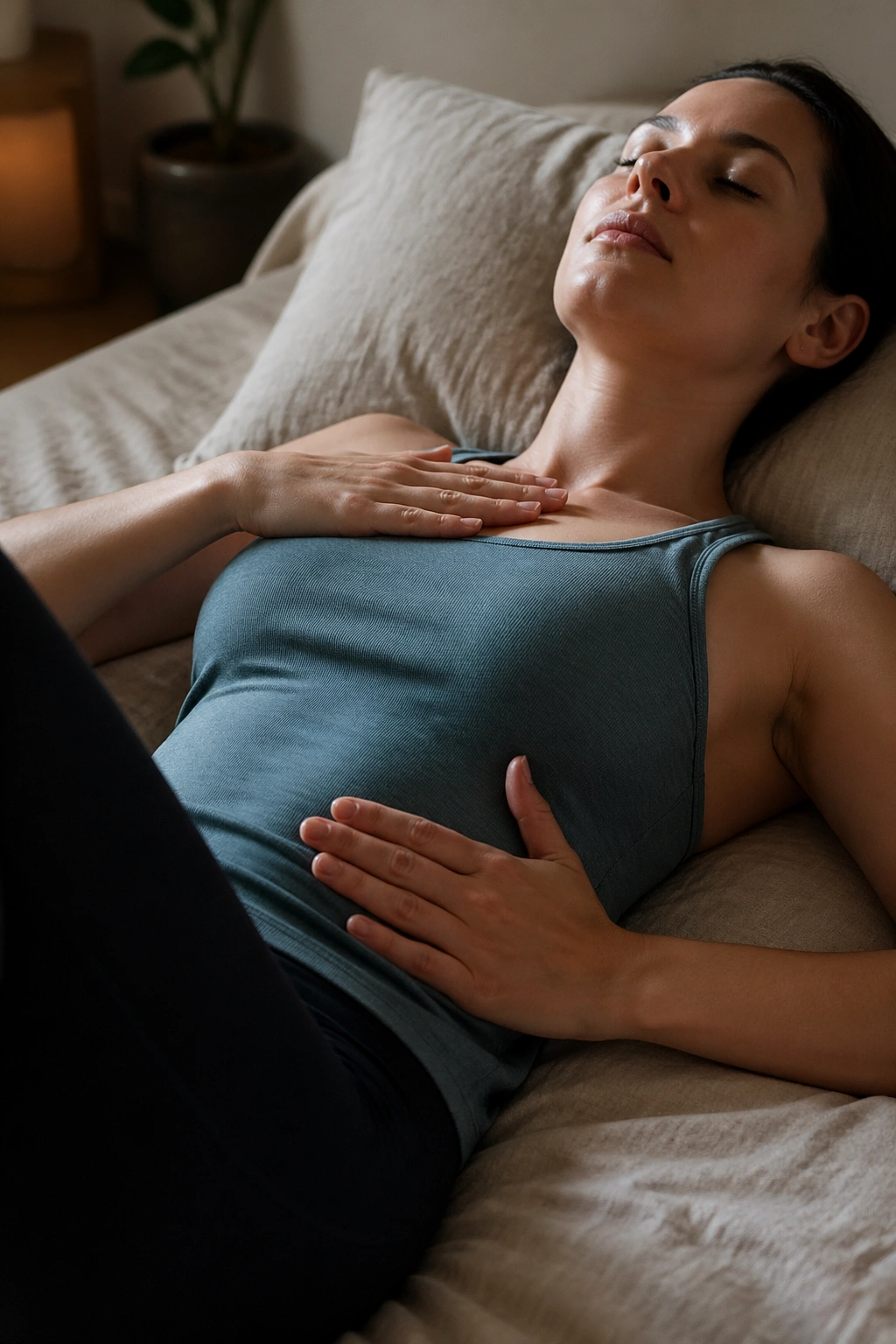
A lot of people hear “belly breathing” and start pushing their stomach out like they’re posing for a photo. That’s not the move. What you want is a breath that lets the diaphragm drop naturally, so the lower ribs widen and the belly softens a bit on the inhale.
Put one hand on the upper chest and one on the lower ribs. Breathe through the nose and notice which hand moves first. If the top hand is doing all the work, slow down. Smaller breaths often work better than giant ones when you’re anxious.
What to feel under your hands
- The lower hand should rise a little on the inhale.
- The upper hand should stay mostly quiet.
- The exhale should feel like the body is deflating by a few degrees, not collapsing.
Lying on your back makes this easier. So does placing your feet on the floor with knees bent. The body gets less interested in guarding itself when it doesn’t have to stand tall.
Belly breathing is boring in the best possible way. That boringness is useful. Keep it.
5. Alternate Nostril Breathing Without the Fiddle
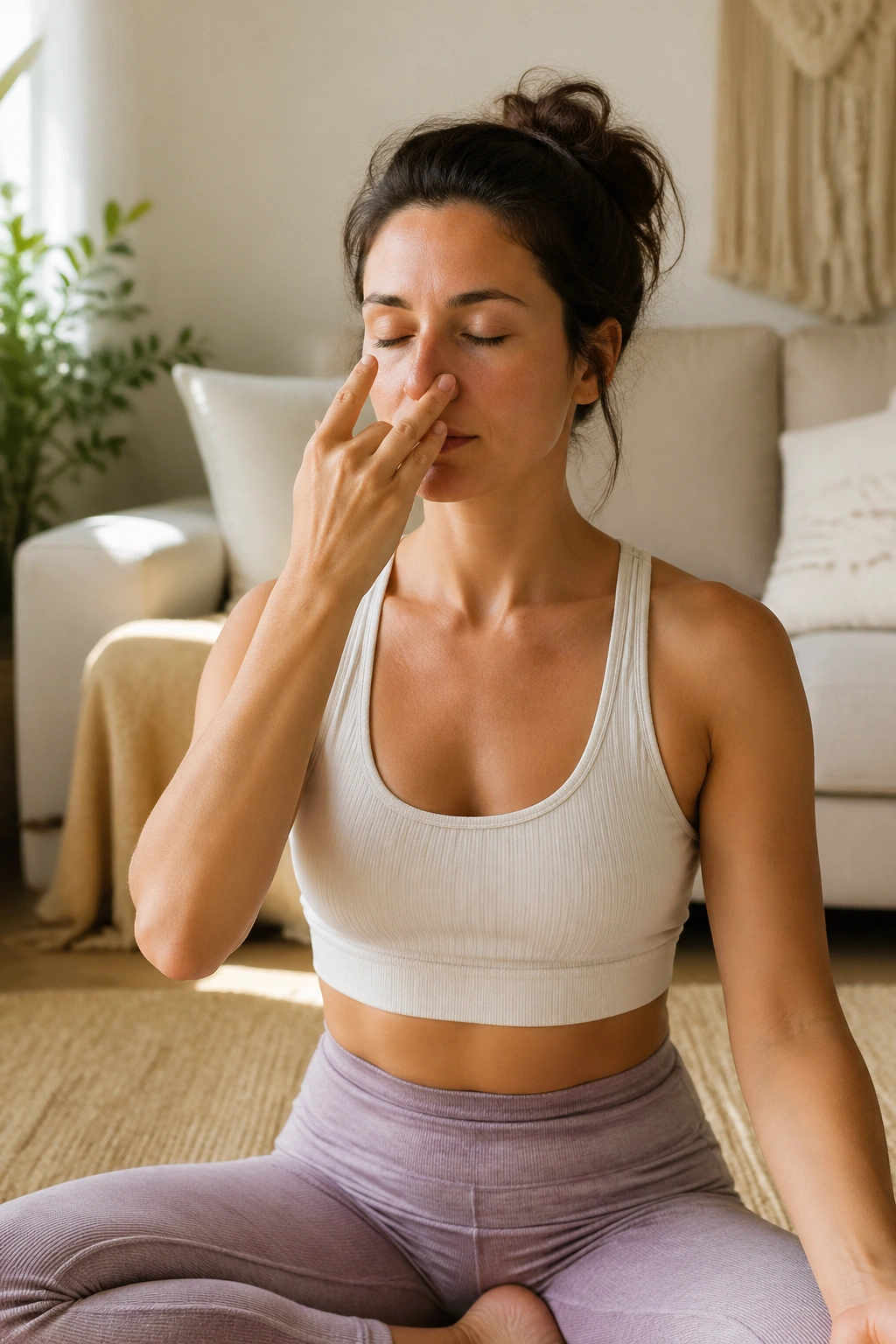
Not every calming breath has to be loud or dramatic. Alternate nostril breathing, or nadi shodhana, is quieter than most people expect, and that quietness is part of why it works so well on anxious days.
Use it when you want a sense of balance, not a jolt. The pattern usually involves gently closing one nostril at a time and breathing through the other in a steady rhythm. You do not need to pinch hard. The face should stay relaxed. If your brow is scrunched, the technique has already gone sideways.
How to keep it gentle
- Keep the breath slow and nasal.
- Skip long holds if they make you tense.
- If one nostril is stuffed up, choose something simpler.
A lot of people like this practice before sitting down to work or before sleep because it feels orderly without being forceful. I like that it gives the hands something to do, too. Anxiety often hates small, deliberate actions. That’s useful information.
If you have a cold, a deviated septum, or a nose that just won’t cooperate, move on. The breath should help. Not irritate.
6. Equal Breathing for Steady Ground
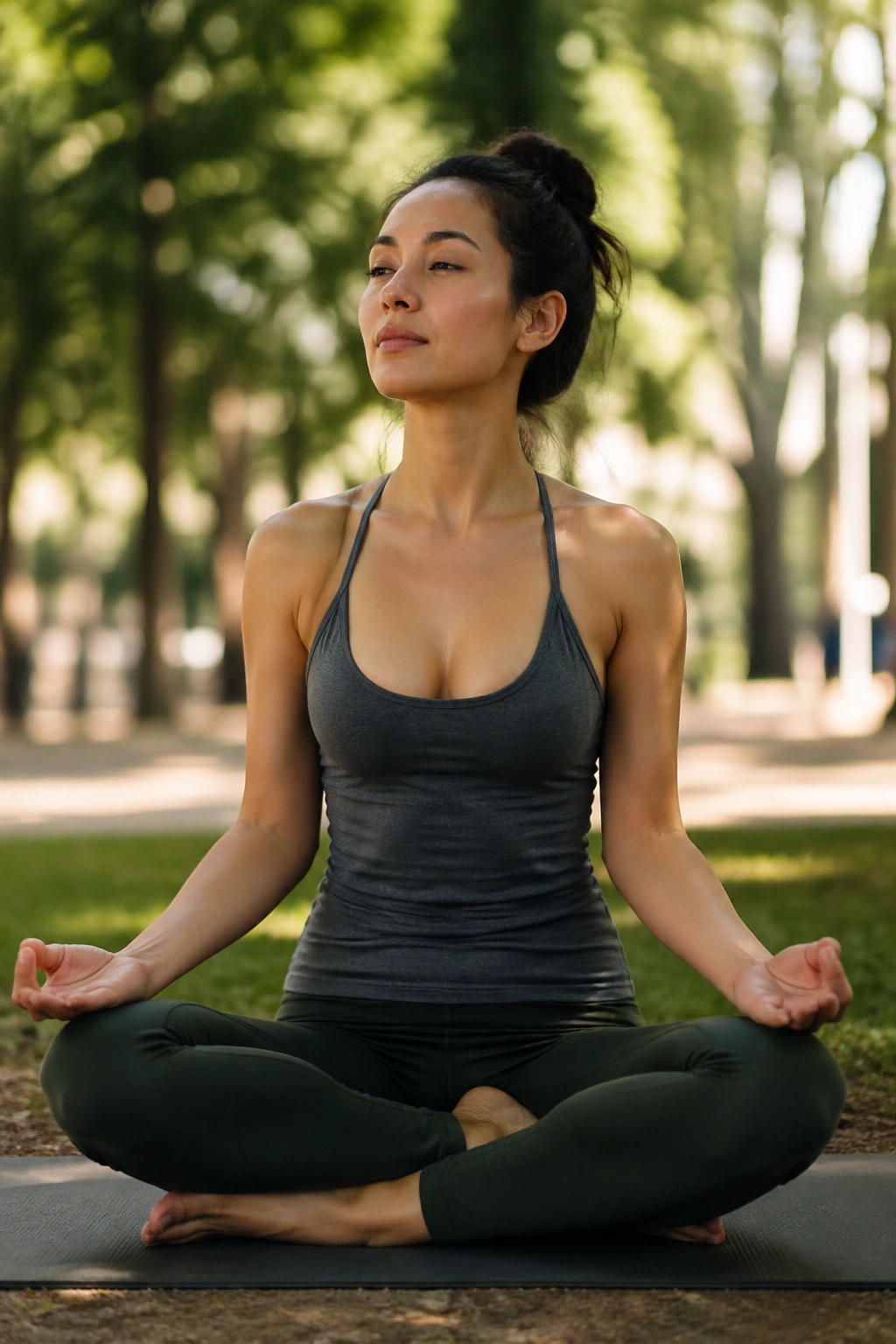
Equal breathing is plain, and that’s its strength. Inhale for the same count you exhale for — 4 and 4, or 5 and 5 if you’re comfortable there. No holds. No tricks. Just a clean, even rhythm.
This is the practice I’d pick when someone wants calm without sleepiness. A longer exhale can feel more soothing, sure, but equal breathing gives a steadier middle ground. The breath becomes a metronome instead of a warning siren.
It also works well when you’re walking slowly or sitting at the edge of a chair. The point is to keep the breath smooth enough that the mind can stop checking it every five seconds. That checking is often half the problem.
If you start to overthink the count, shrink it. A 3-and-3 or 4-and-4 pattern is plenty. The count only matters if it stays easy enough to repeat.
7. Three-Part Breath from Belly to Collarbones
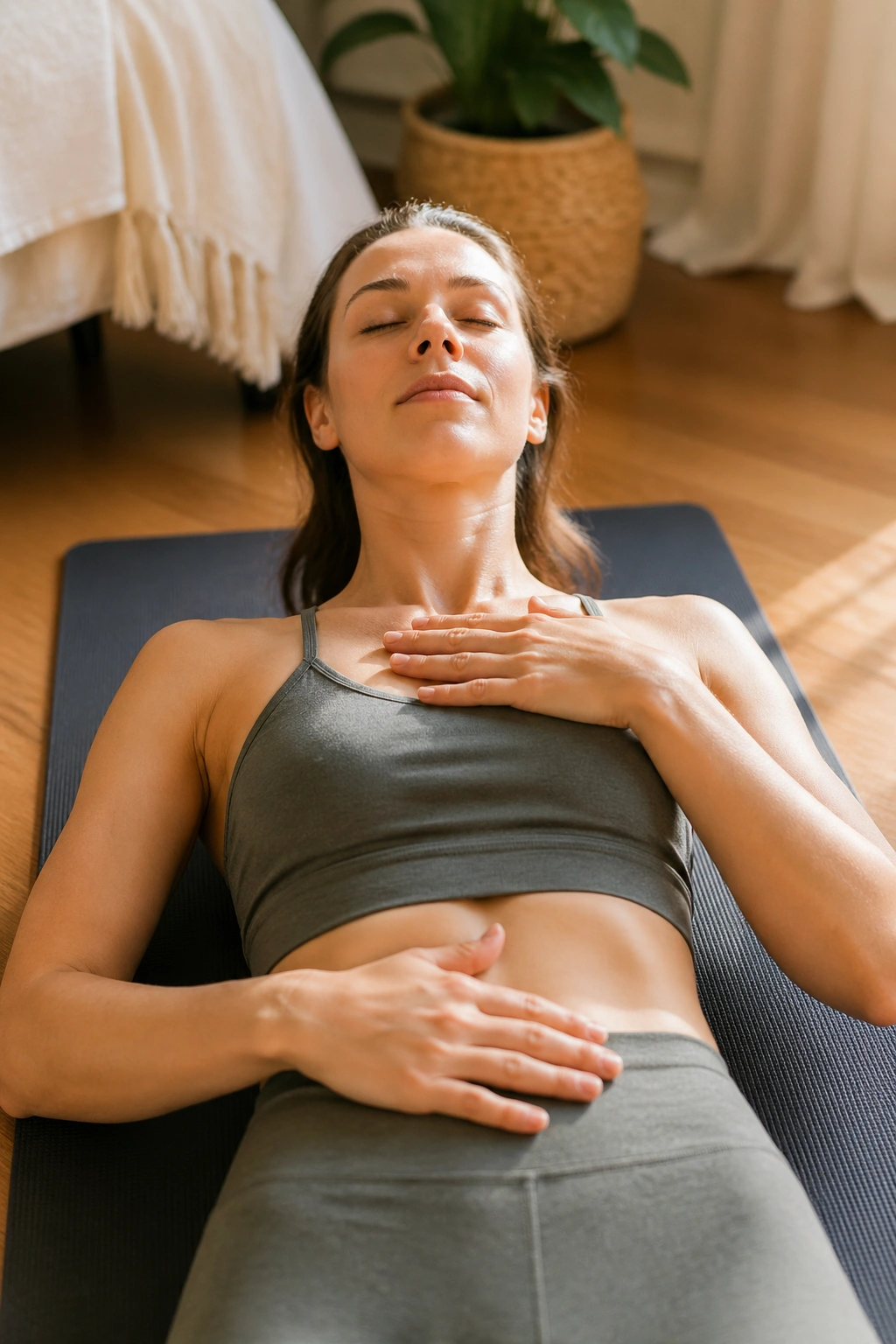
Three-part breathing, or dirga pranayama, is the one that teaches you how breath moves through the whole torso instead of getting stuck high in the chest. It’s best done lying down at first, because the floor makes it easier to feel what’s actually happening.
Breathe in slowly and notice three zones: the belly softens, the lower ribs widen, then the upper chest lifts a little at the end. Exhale in the reverse order. The whole thing should feel smooth, not staged. You are not trying to inflate yourself like a parade balloon.
Where the breath goes
- First: the lower belly.
- Second: the side ribs.
- Third: the upper chest and collarbones.
A lot of anxious breathing lives in the top third alone. That’s the shallow, tight, unsatisfying place where air barely seems to settle. Three-part breath redistributes the effort. It can feel odd at first, then surprisingly calming once the body learns the pattern.
Try 5 slow rounds. If your neck tightens, shorten the breath and keep the upper chest softer.
One sentence, because it matters: this should feel spacious, not big.
8. Bee Breath When the Mind Won’t Stop Talking
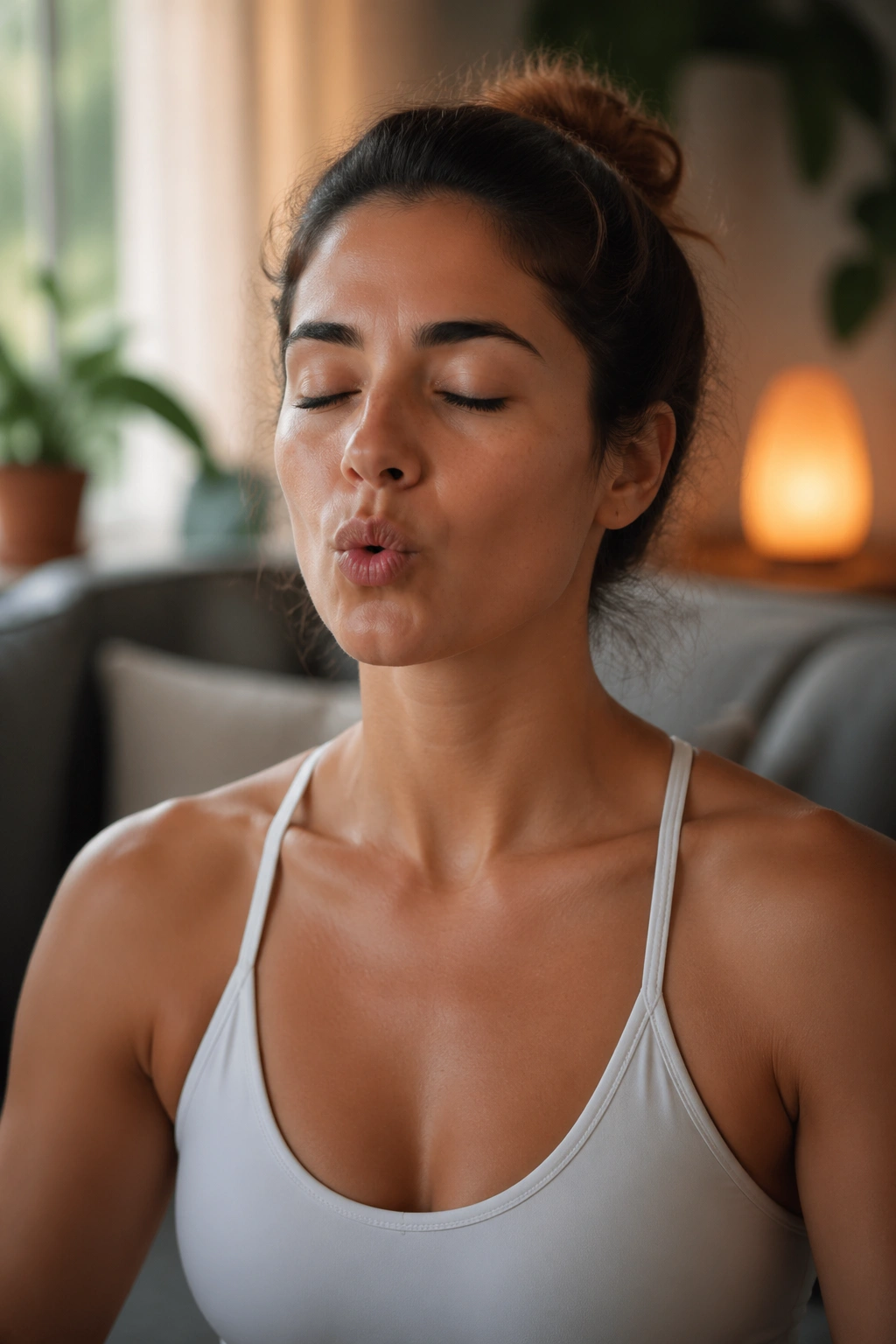
A humming exhale can be a small miracle on a noisy day. Bee breath, or bhramari, uses vibration to give the mind a single place to land, which is handy when your thoughts are racing in five directions at once.
Sit comfortably, close the lips, and inhale through the nose. Then hum on the exhale, keeping the sound soft and smooth. You should feel the vibration in the face, lips, and maybe the throat or cheekbones. If it sounds loud and brassy, back off. A gentle hum is enough.
Quick ways to use it
- Do 3 to 5 rounds before a meeting.
- Try it after a tense phone call.
- Use it in bed if your head is busy and your mouth feels dry.
There’s something grounding about the vibration. It gives the nervous system a low-level anchor, and it can also loosen the face a bit, which is helpful because the face and jaw like to hold onto stress for dear life.
If humming feels embarrassing in a shared space, a long soft exhale through the nose can work as a quiet substitute. Not as much vibration. Still useful.
9. Sitali, the Tongue-Roll Cooling Breath
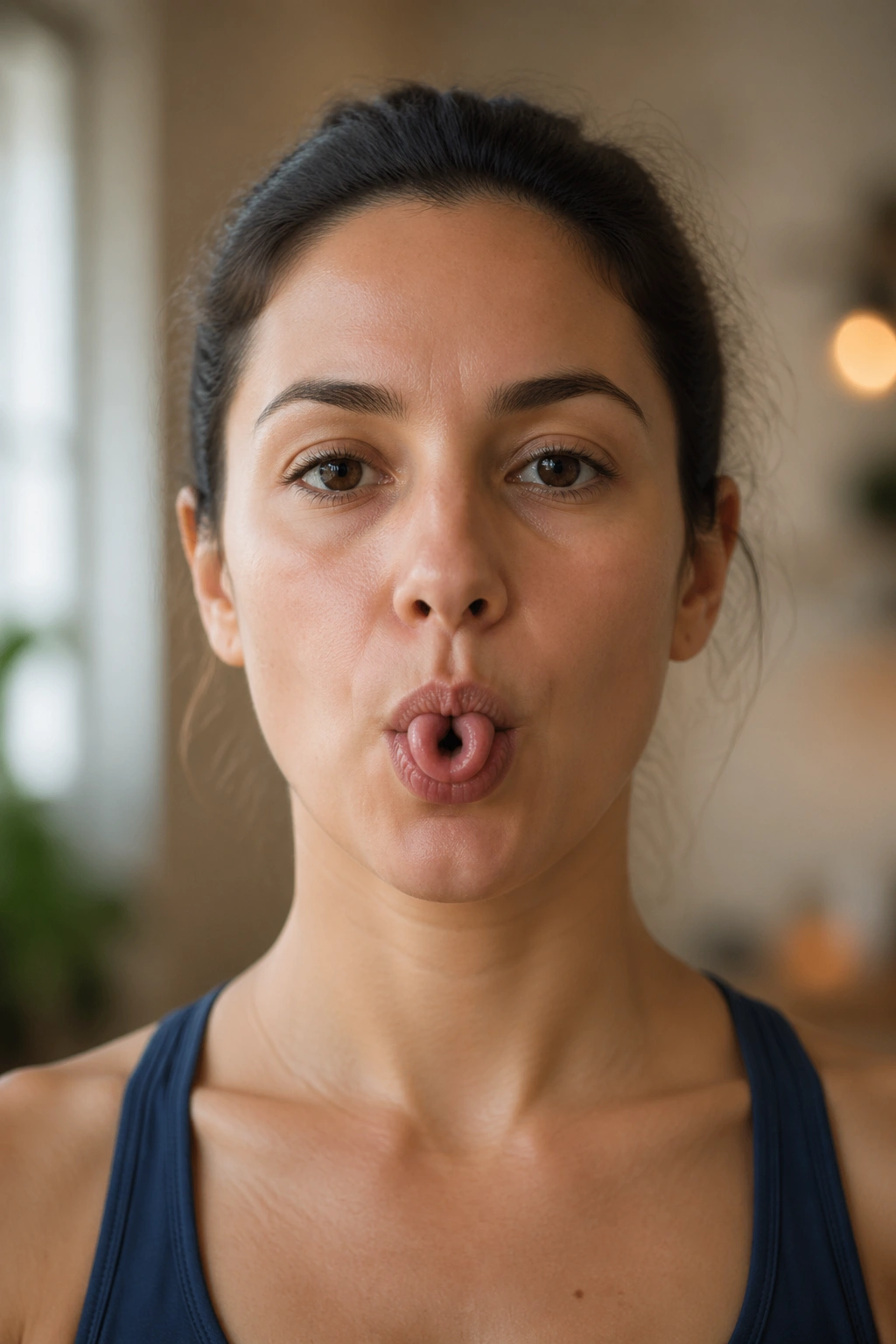
When anxiety feels hot — flushed face, tight throat, sharp pulse — cooling breath can be a relief. Sitali is the version where you roll the tongue into a tube, inhale through it, then exhale through the nose.
Not everyone can roll the tongue. If you can’t, that’s fine. Skip to Sitkari in the next section. No need to force a trick your mouth doesn’t naturally do. The breath matters more than the pose.
Sitali is often pleasant when the room feels stuffy or your body feels overheated from stress. The cool inhale can make the whole face feel less crowded. Use it gently. Ten slow breaths is plenty.
A warning worth keeping in mind: if cold air makes your chest feel tight, or if you have a sensitive throat, try just a soft nasal breath instead. Cooling practices are not the same as calming practices for everyone. Sometimes they help. Sometimes they annoy the body.
10. Sitkari, the Teeth-Sipped Cooling Breath
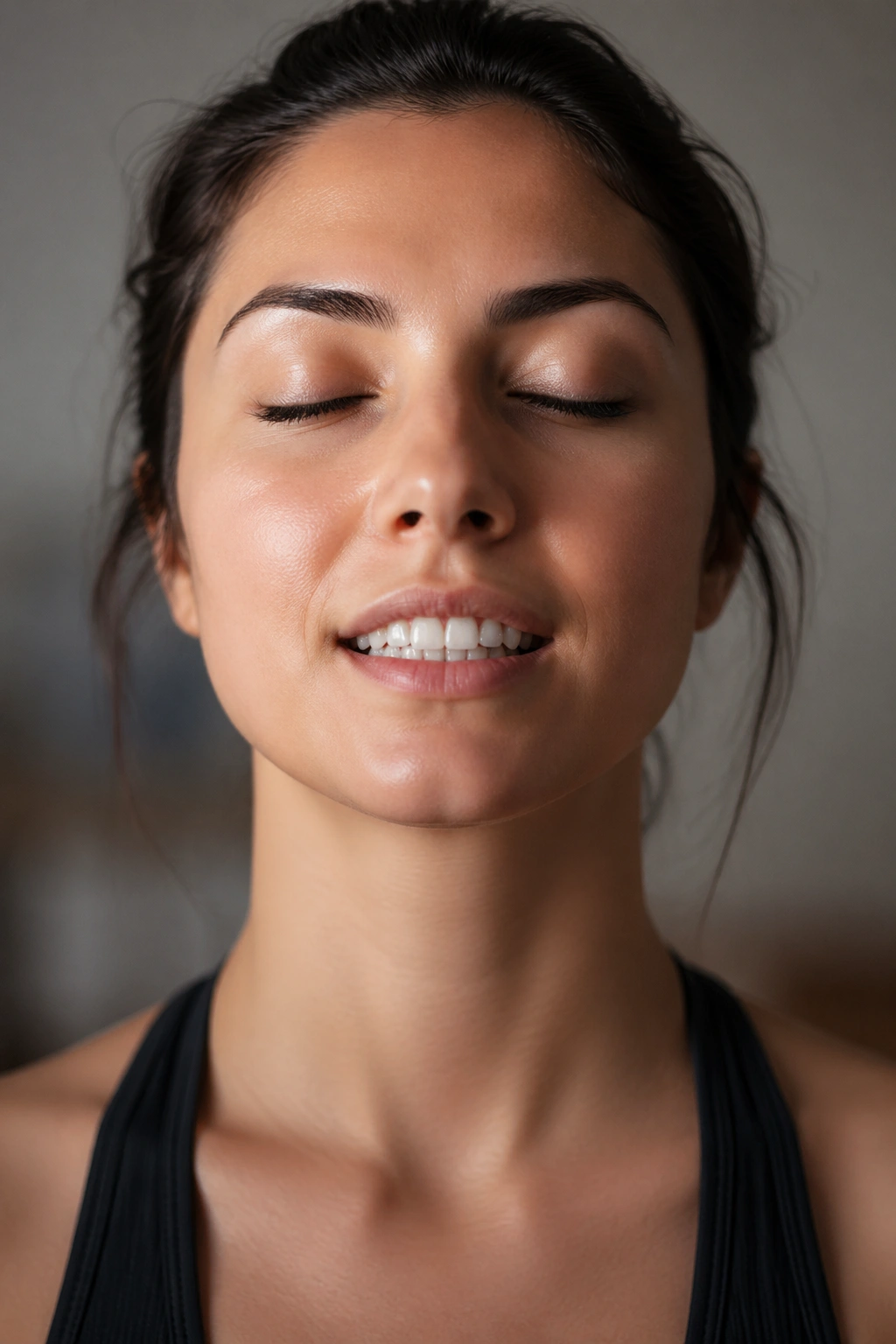
Can’t roll your tongue? Good. Use Sitkari instead. It gives you a similar cooling effect without the tongue curl, and it’s often easier to learn on the first try.
Press the tongue lightly behind the teeth, part the lips, and inhale through the teeth with a soft sipping sound. Then exhale through the nose. The inhale should feel cool, almost crisp, but never harsh. If you start to shiver, you’ve gone too far.
This one is useful when anxiety shows up as heat in the face or a sense that your body is running a few degrees too warm. It can also help when the mouth is dry and you want a breath pattern that feels a little refreshing.
What to watch for
- Sensitive teeth may dislike cold air.
- A sore throat may prefer a gentler nasal breath.
- If the sound makes you self-conscious, keep it quiet and stay home with the practice.
Sitali and Sitkari are cousins, not rivals. Pick the one your mouth can do without argument.
11. Soft Ujjayi for a Quiet Inner Sound
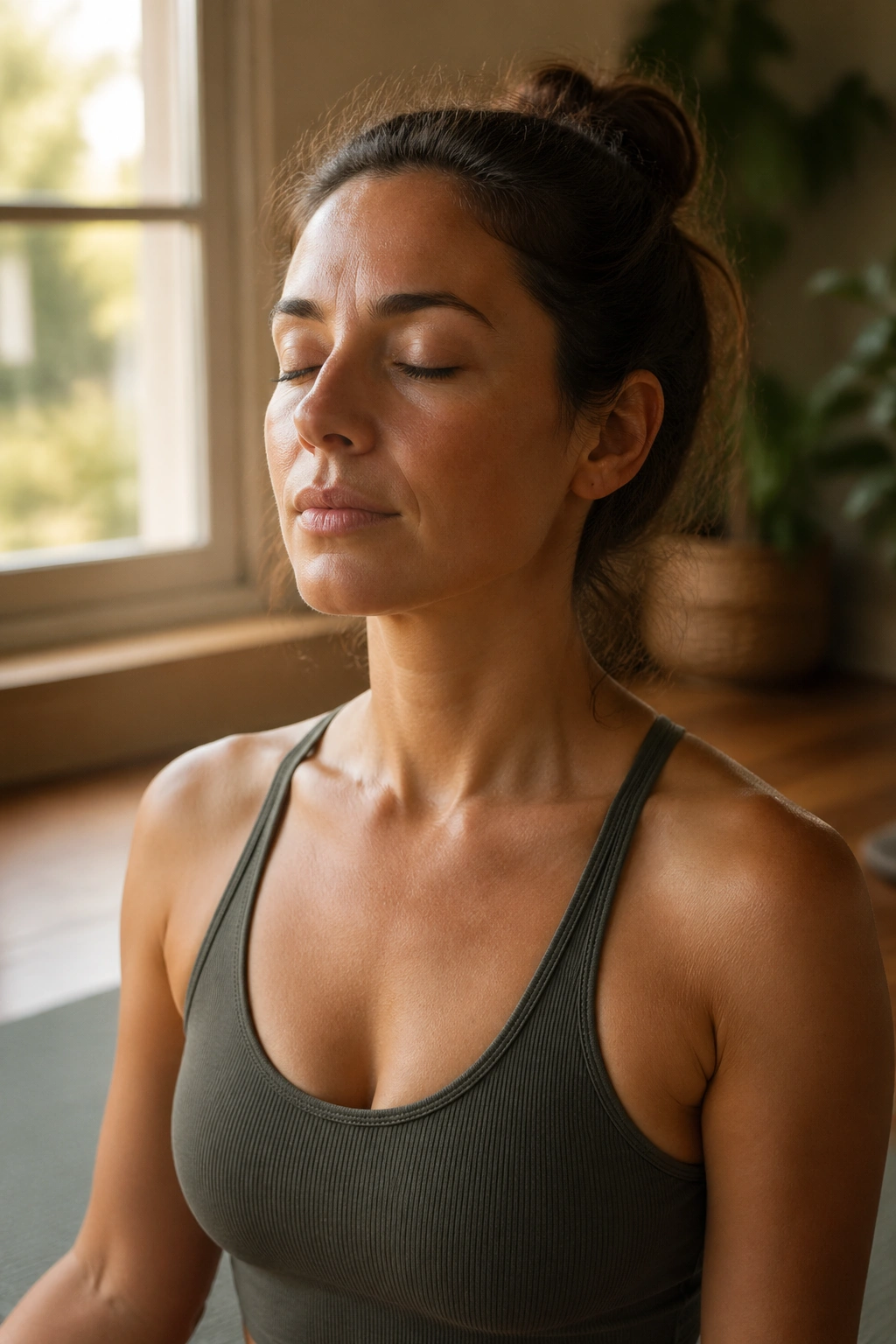
Ujjayi breath is the ocean-sounding one, but on anxious days I prefer it softened way down. No theatrical noise. No throat squeezing. Just a slightly narrowed throat that makes the breath sound faintly oceanic.
The nice thing about soft ujjayi is that it gives your mind something steady to follow without needing a count every second. It works well during a slow yoga flow, or while sitting if you want a little internal focus. The sound becomes a kind of rail to hold onto.
Here’s the part people get wrong: they make it too tight. If the throat feels pinched, the breath is already too aggressive. The sound should be mild, more like a hush than a hiss.
A simple way to check it
- Inhale through the nose for 4 or 5 counts.
- Exhale through the nose for the same amount.
- Add the soft throat shape only until the breath sounds smooth.
If ujjayi makes your face tense, skip it. A calming breath should not feel like a performance. I’ve always liked it better as a background rhythm than as a thing to chase.
12. Breath Counting When Thoughts Keep Interrupting
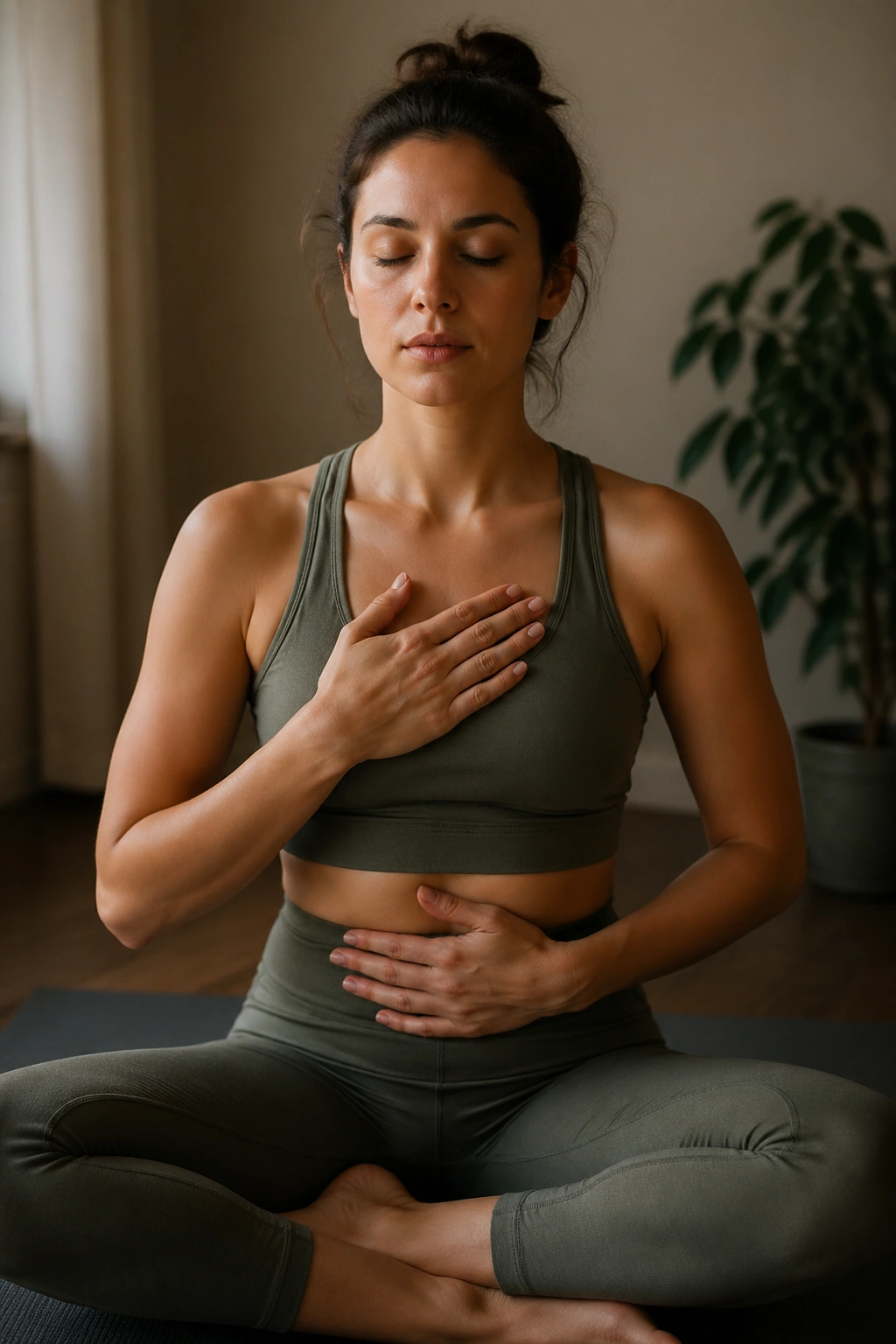
A busy mind hates empty space. Breath counting gives it a task that’s too plain to argue with: count each exhale from 1 to 10, then start over.
You can count the inhale too, but I usually like counting the exhale only on anxious days. It keeps the practice from getting fussy. If you lose your place, start again at 1 without a little inner lecture. That reset is part of the practice.
When you lose count
- Start over at 1.
- Keep the breath slower than usual.
- If the numbers distract you, count only 3 breaths and stop.
This works well when anxiety feels like scattered attention. The number is boring enough to pull you out of the spiral, but still concrete enough to hold your focus. A lot of people like it while lying in bed because it gives the brain something clean to chew on.
One honest note: if counting makes you tense, don’t keep forcing it. Some people find numbers soothing. Others turn the count into homework. That’s a bad trade.
13. Coherent Breathing at a Slow, Even Pace
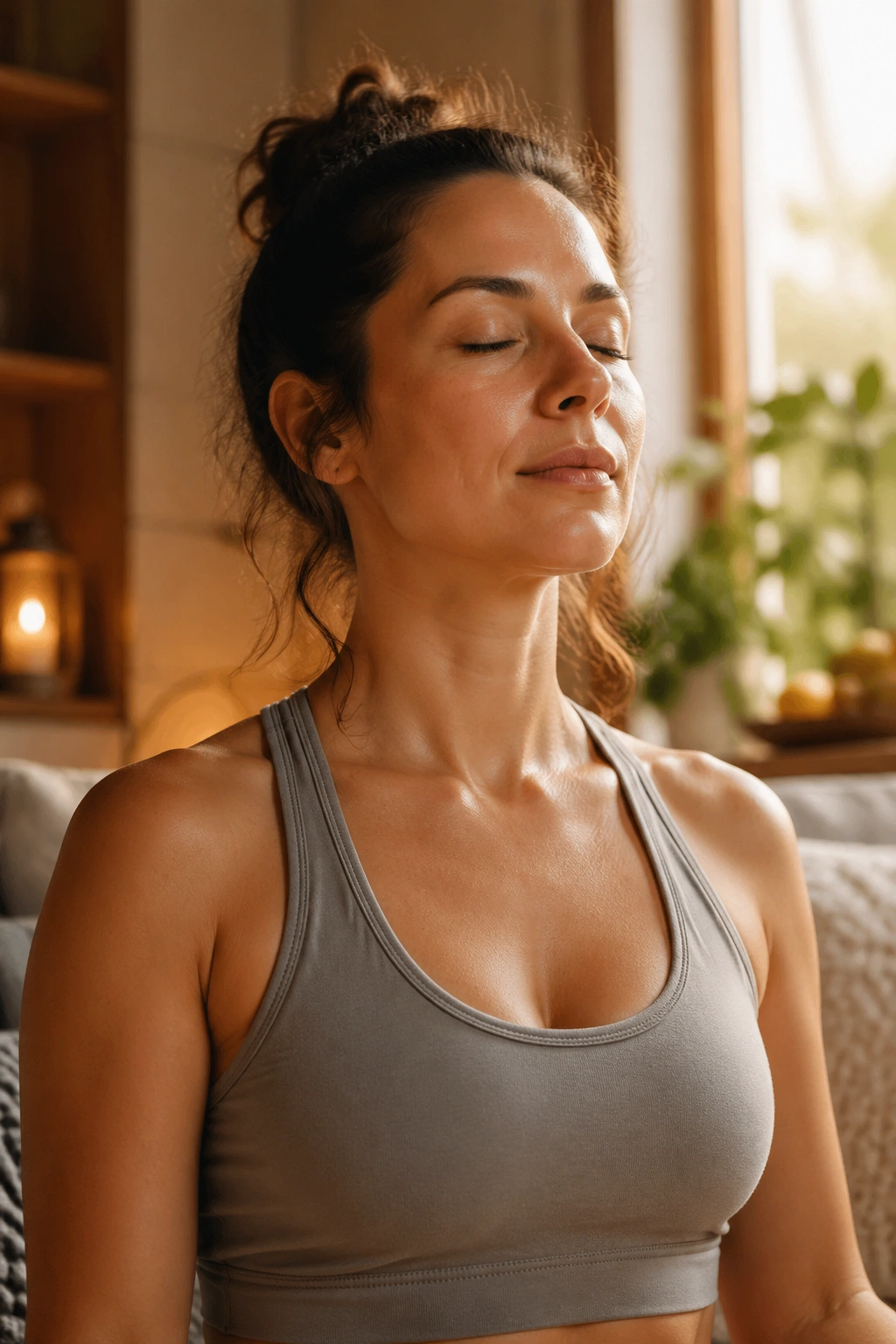
Five or six breaths a minute sounds slow because it is. That’s the point. Coherent breathing usually means a steady rhythm like 5 in and 5 out, or 6 in and 6 out, with no hold in between.
This pattern feels different from box breathing. Box breathing has edges. Coherent breathing is softer, more round, and often easier to sustain for several minutes. It’s a good choice when you want something that feels meditative without turning into sleep breathing.
I like this one for the late-evening slump after a noisy day. Sit upright or lie down, and let the count settle into something almost dull. Dull can be welcome. Dull is underrated.
If 5 and 5 feels too slow, use 4 and 4. If 6 and 6 makes you light-headed, shorten it. The body will tell you when the rhythm is too much. Listen early, not after you’re dizzy.
14. Breath-Synced Cat-Cow on the Mat
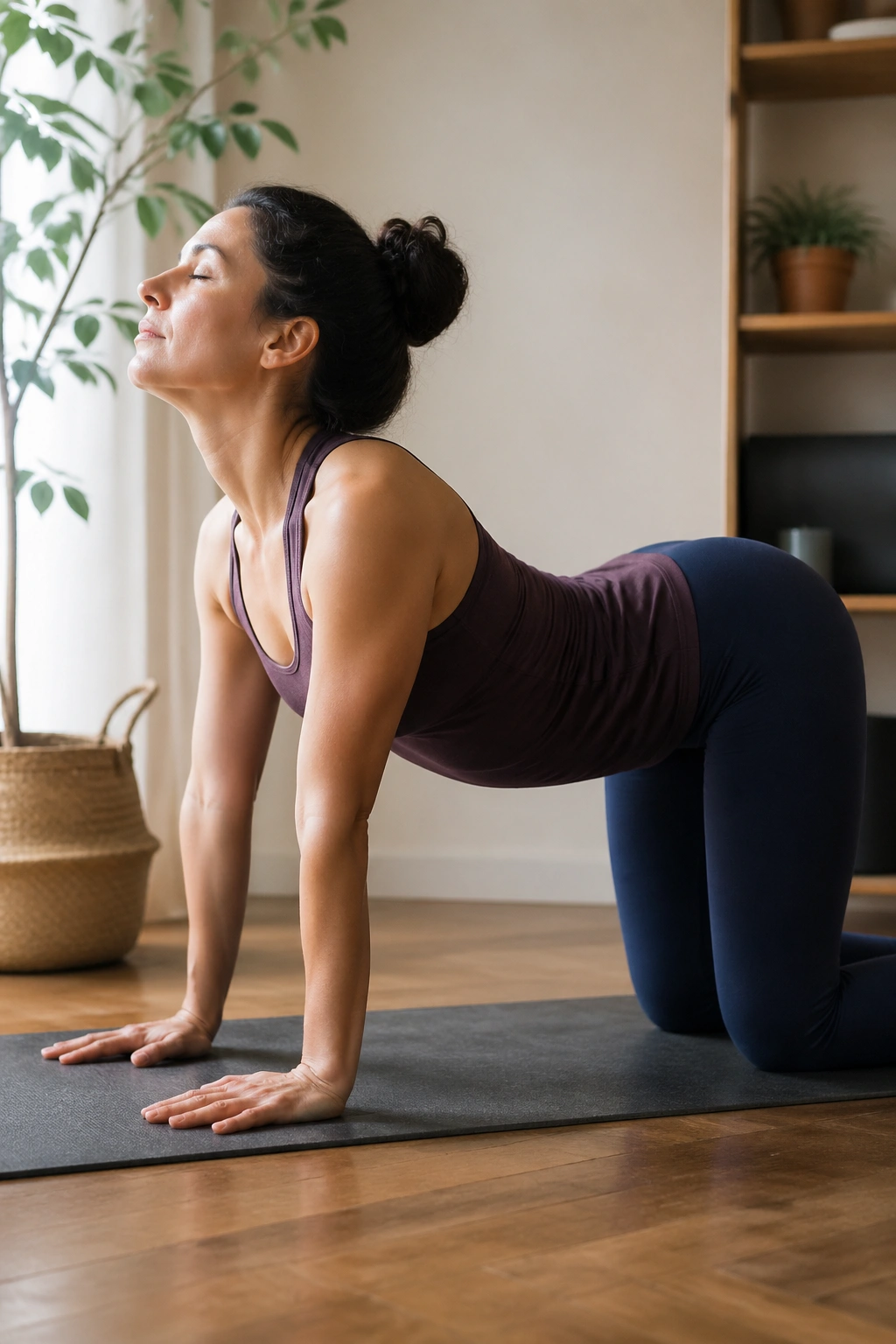
Some anxious bodies do not want to sit still and stare at the wall. Fine. Give them movement. Cat-cow with breath links the inhale to a gentle arch and the exhale to a soft round, which keeps the breath from feeling trapped.
Get onto hands and knees, or do it seated if the floor is annoying. Inhale as the chest opens and the spine lengthens. Exhale as the back rounds and the belly draws in a little. The movement should be slow enough that the breath leads, not the other way around.
Why movement helps
- It gives restless energy somewhere to go.
- It keeps the breath from turning into a test.
- It often loosens the lower back, which gets cranky under stress.
This is the one I reach for when stillness feels impossible. You don’t have to sit in perfect quiet to calm down. Sometimes the body wants to move before it wants to settle. That’s not failure. That’s data.
A couple of rounds may be enough. A dozen is fine too. Stop before the movement gets sloppy.
15. The One-Minute Return to Natural Breath
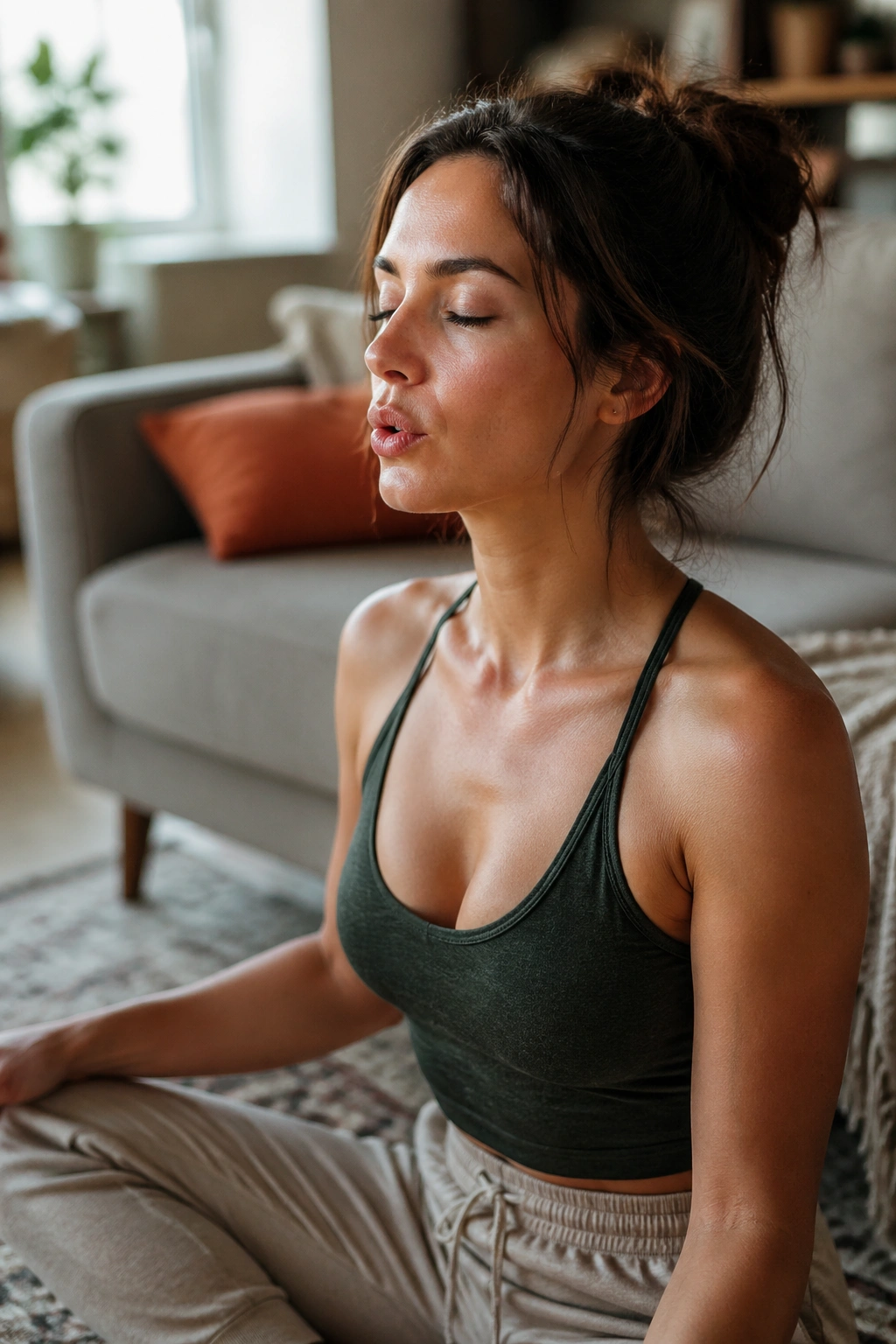
Sometimes the best technique is the one that asks the least. Sit down, or lie on the floor, and let the breath happen on its own for a minute. Then nudge only one thing: make the exhale a little longer than the inhale.
That’s it. No fancy count. No nostril switching. No humming. Just a hand on the belly if that helps, eyes open if closing them makes you feel boxed in, and a quiet return to a slower out-breath. If your mind starts yelling about whether you’re doing it right, ignore it and keep breathing.
A tiny reset like this is useful between tasks, after an argument, before sleep, or right when you catch yourself doom-scrolling with your shoulders somewhere near your ears. It’s small enough to repeat several times a day without turning into a project.
Use this one as your fallback. Use it on the bad days. Use it when the nice-looking techniques feel like too much work. Simple usually wins when anxiety is already spending your attention. And if all you manage is a longer exhale, that still counts.
